


Picking between a modern kitchen and a farmhouse kitchen is really a question about how you want the room to feel every single day, not just how it photographs. Modern kitchens lean into clean lines, integrated appliances, and a low-clutter feel that suits people who want their kitchen to look effortless with minimal daily upkeep. Farmhouse kitchens lean into warmth, character, and everyday practicality, suiting people who want a kitchen that feels lived-in and forgiving rather than showroom-perfect.
Neither is objectively “better” — but one is almost certainly the better fit for your home, your budget, and how you actually use the space, and this guide will help you land on the right one with real numbers instead of vibes.
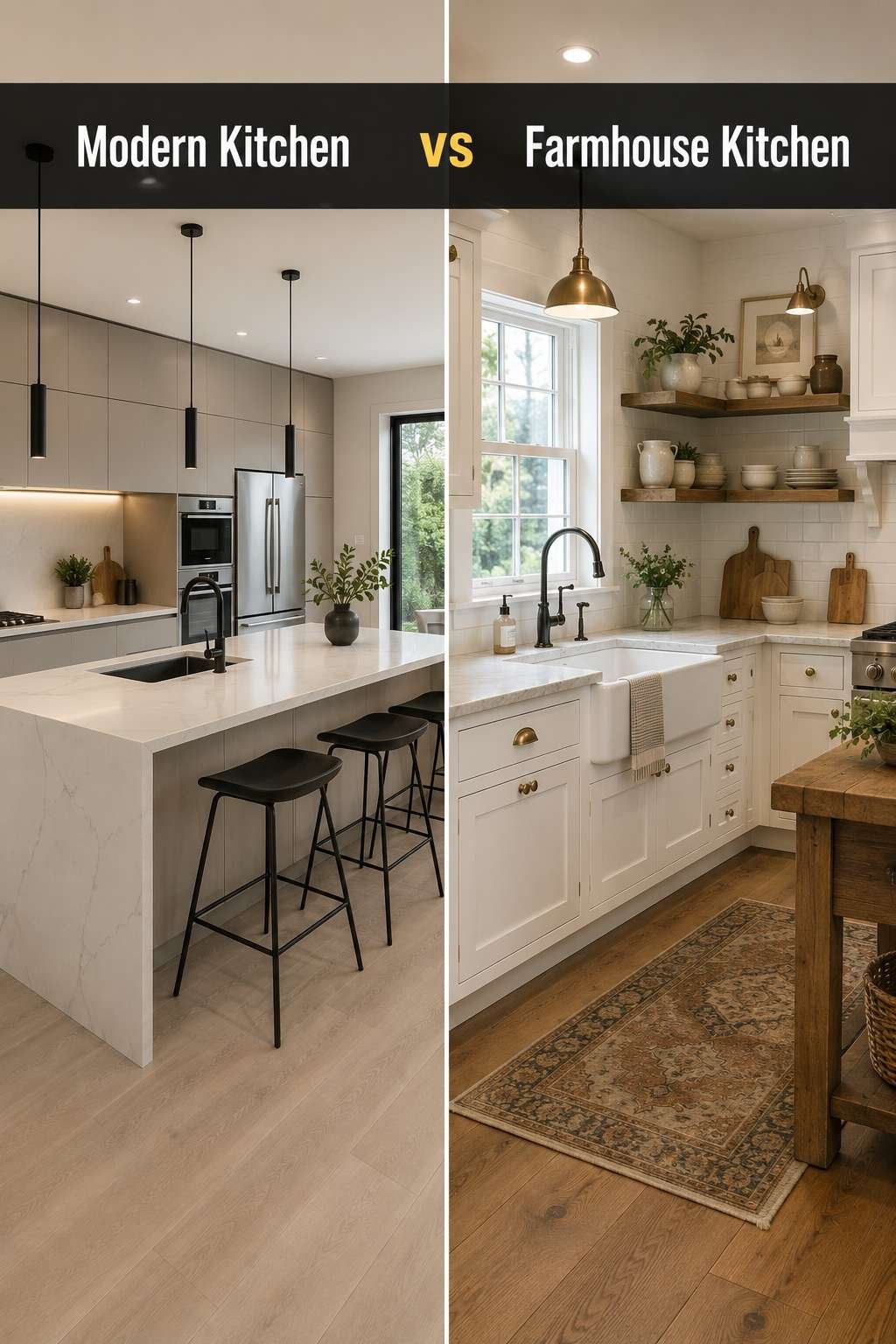
Modern Kitchen vs Farmhouse Kitchen: The Full Comparison
Here’s how the two styles actually stack up across the factors that matter most in a renovation decision — cost, durability, upkeep, and how well each one holds its value over time. Our guide on how to decorate a kitchen shelf walks through this step by step.
| Criteria | Modern Kitchen | Farmhouse Kitchen |
|---|---|---|
| Average Cost | $150–$300 per sq ft installed, driven up by slab surfaces and integrated appliances | $140–$280 per sq ft installed, driven up by custom apron sinks and reclaimed wood accents |
| Durability | High — quartz and engineered surfaces resist daily wear well | High but variable — natural wood and butcher block need regular care to hold up |
| Maintenance | Low to moderate — easy-wipe surfaces, but matte black hardware shows fingerprints | Moderate — open shelving collects dust and apron sinks need regular cleaning |
| Install Difficulty | Moderate — panel-ready and integrated appliances require precise fitting | Moderate to high — apron-front sinks need custom cabinet modification |
| Lifespan (style relevance) | 15–20 years before the look starts to feel dated | 20–25+ years — a traditional style that ages slowly |
| Aesthetic Flexibility | Lower — a minimal palette is harder to soften once it’s built | Higher — blends easily with traditional, coastal, and transitional homes |
| Resale Value | Strong in urban and new-build markets, especially with buyers who want move-in-ready | Strong broad appeal, especially in suburban and rural markets with family buyers |
How we compared: each criterion above was weighted using current national average material and installation pricing, typical style longevity based on design trend cycles, and how each style tends to perform with real families and resale buyers — not just how it looks in a single photo.
What These Numbers Actually Mean in a Real Kitchen
The cost ranges overlap more than most people expect — the real cost driver is your material choices, not the style label itself. Where the styles actually diverge is upkeep and longevity: a modern kitchen rewards you with less daily maintenance but a shorter window before it needs a refresh, while a farmhouse kitchen asks for more regular care from you but tends to stay relevant for much longer without a remodel. If you’re the type who wants to set it and forget it, that trade-off matters more than the sticker price.
Quick Look: Modern Kitchen vs Farmhouse Kitchen at a Glance
Modern Kitchen
Flat-panel cabinetry, quartz surfaces, and integrated appliances for a clean, low-maintenance everyday feel.
View on Amazon →Farmhouse Kitchen
Apron-front sink, open wood shelving, and warm hardware for a lived-in, family-friendly character. Our how to decorate open kitchen shelves guide covers this in more detail.
View on Amazon →Deep Dive: Modern Kitchen
A modern kitchen is the right call if you want the room to feel calm and uncluttered without much daily effort — it suits busy households, open-concept homes, and anyone who wants their kitchen to look intentional even when it’s not perfectly tidy. It’s also a strong pick if you’re renovating with resale in mind for an urban or newer-construction market.
Pros
- Closed, handle-less storage keeps surfaces looking clear with minimal effort
- Non-porous quartz and engineered surfaces resist stains and are easy to wipe down
- Reads as move-in-ready to buyers in urban and new-build markets
- Pairs well with open-concept layouts and larger windows
Cons
- Matte black hardware and appliance finishes show fingerprints quickly
- A minimal palette can feel cold without warm wood or texture added in
- Trend-driven finishes may need a refresh sooner than a traditional style
- Integrated, panel-ready appliances cost more and complicate installation
Real cost range: a full modern kitchen renovation typically runs $150–$300 per square foot installed, depending on cabinet finish, countertop material, and how much of the appliance package is fully integrated.
Deep Dive: Farmhouse Kitchen
A farmhouse kitchen is the right call if you want the room to feel warm and welcoming, especially in a household where the kitchen is the actual center of daily life — cooking, homework, and everyone gathering around the island. It also tends to suit older or traditional-style homes better than a strictly modern build-out.
Pros
- Timeless look that tends to age slower than trend-driven styles
- Broad buyer appeal across suburban and rural resale markets
- Warm materials feel forgiving with kids, pets, and daily mess
- Blends naturally with traditional, coastal, and transitional homes
Cons
- Open shelving requires regular tidying and dusting to look intentional, not messy
- Apron-front sinks cost more to install due to custom cabinet work
- Butcher block counters need periodic oiling to stay protected
- Can feel busy or cluttered if not edited carefully
Real cost range: a full farmhouse kitchen renovation typically runs $140–$280 per square foot installed, with the apron sink and any reclaimed or solid wood elements being the biggest cost variables.
Which Style Wins in Your Kitchen? Real Room Scenarios
Small Kitchen
Modern wins. Handle-less cabinets and light, unbroken surfaces make a tight footprint feel larger. Our guide on how to make your kitchen look expensive walks through this step by step.
Budget Renovation
Farmhouse wins. Painted stock cabinets and a single apron sink deliver the look without a full custom build.
Luxury Build
Modern wins. Waterfall islands and panel-ready appliances read as premium and photograph beautifully for resale.
Rental-Friendly
Farmhouse wins. Removable hardware and open shelving inserts borrow the look without permanent changes.
High-Traffic Family Household
Farmhouse wins. Deep apron sinks and forgiving, durable surfaces hold up best to daily family use.
Professional Tips
- Designer tie-breaker: if you’re torn, think about how you want to feel walking in tired at 6pm — modern rewards calm and order, farmhouse rewards warmth even when things are a little messy.
- Common regret mistake: going fully minimal modern without any warm material (wood, woven texture, warm-toned stone) — it’s the single biggest reason people say their modern kitchen feels cold.
- Resale-value note: if you’re renovating specifically to sell within 1–2 years, match the style to your neighborhood’s dominant home style rather than your personal preference.
- Maintenance reality-check: if you already avoid hand-washing dishes and wiping counters daily, skip open shelving and matte black fixtures regardless of which style you choose — both show mess quickly.
Shop the Winner: Kitchen Faucets
Whichever direction you land on, the faucet is one of the fastest ways to commit to the look without touching cabinetry. If you’re leaning modern, look for a single-lever pull-down faucet in matte black or brushed nickel. If you’re leaning farmhouse, look for a bridge-style or gooseneck faucet in brushed brass or unlacquered brass that pairs naturally with an apron sink.
Best Overall
A matte black single-lever pull-down faucet — works for modern kitchens and simplified farmhouse looks alike.
Best Budget
A polished chrome standard pull-down faucet — reliable, widely available, and easy to install.
Best Premium
An unlacquered brass bridge faucet — the classic farmhouse pairing that develops a living patina over time.
Frequently Asked Questions
Is a modern kitchen or a farmhouse kitchen better for resale value?
Both can perform well at resale, but the winner depends on the market. Modern kitchens tend to photograph strongly in urban and new-build listings, while farmhouse kitchens have broad, durable appeal across suburban and rural markets because the look reads as timeless rather than trend-driven.
Will a farmhouse kitchen look dated in a few years?
Farmhouse is one of the more stable kitchen styles because it borrows from traditional, long-standing design elements rather than a passing trend, so it tends to age slower than highly minimal modern looks.
Is a modern kitchen more expensive than a farmhouse kitchen?
Costs overlap heavily and depend more on material choices than the style itself. Modern kitchens often carry slightly higher costs when they lean on large slab surfaces and fully integrated appliances, while farmhouse costs rise when custom apron sinks or reclaimed wood elements are involved.
Which style is easier to keep clean with kids and pets?
Modern kitchens with closed storage and non-porous quartz counters are generally easier for quick daily cleanup, though matte black hardware shows fingerprints. Farmhouse kitchens with open shelving look charming but require more regular tidying and dusting.
Can I mix modern and farmhouse elements in one kitchen?
Yes, this is often called modern farmhouse and is one of the most popular current directions. It typically pairs flat or shaker cabinets with a farmhouse sink, mixed metal hardware, and simplified, less rustic finishes.
Do farmhouse sinks cost more to install than standard sinks?
Yes, apron-front farmhouse sinks usually cost more to install because they require custom cabinetry modifications and countertop cutouts, unlike a standard drop-in sink that fits a typical cabinet opening.
What countertop material works best for a modern kitchen?
Quartz is the most common choice for modern kitchens because of its consistent, low-veining look and low maintenance, though large-format porcelain slabs are also popular for an ultra-clean finish.
What countertop material works best for a farmhouse kitchen?
Butcher block and honed quartz or soapstone-look surfaces are common in farmhouse kitchens, since they pair well with warm wood tones, though butcher block requires periodic oiling to stay protected.
Is open shelving practical in a farmhouse kitchen?
Open shelving looks great and is a signature farmhouse element, but it requires more upkeep since dishware collects dust and needs to stay tidy at all times, since there are no doors to hide clutter.
Which style suits a small kitchen better?
Modern kitchens tend to suit small kitchens slightly better because handle-less cabinets and light, uninterrupted surfaces make a tight space feel larger, though a simplified farmhouse look with light cabinetry can also work well.
What cabinet hardware pairs best with a modern kitchen?
Modern kitchens often use minimal or handle-less cabinets, and when hardware is used, slim matte black or brushed nickel bar pulls are the most common choice.
What cabinet hardware pairs best with a farmhouse kitchen?
Farmhouse kitchens typically use black iron bin pulls, cup pulls, or warm brass hardware, which reinforce the vintage-inspired character of the style.
Is a farmhouse kitchen good for a rental property?
Full farmhouse renovations are usually too costly and permanent for a rental, but renters can borrow the look with removable hardware, open shelving inserts, and peel-and-stick tile without altering the existing layout.
How long does a modern kitchen typically last before needing an update?
A well-built modern kitchen typically holds its look for around 15 to 20 years before feeling dated, since it relies on current material trends more than farmhouse’s traditional foundation.
How long does a farmhouse kitchen typically last before needing an update?
A farmhouse kitchen can often go 20 to 25 years or more without feeling dated, since the style draws on traditional design elements that have stayed popular for decades.
Which style is harder to install?
Farmhouse kitchens are often slightly more involved to install because an apron-front sink requires custom cabinet modification, while modern kitchens are more involved when integrated, panel-ready appliances need precise fitting.
What flooring works best with a modern kitchen?
Large-format porcelain tile or wide-plank engineered wood in a neutral tone are common choices for modern kitchens, keeping the floor from competing with clean cabinet lines.
What flooring works best with a farmhouse kitchen?
Wide-plank white oak, reclaimed wood look flooring, or classic patterned tile all pair naturally with a farmhouse kitchen’s warm, lived-in character.
Does a modern kitchen feel cold or unwelcoming?
It can if every surface is glossy white or gray, but warming the palette with wood tones, textured surfaces, or a natural stone island keeps a modern kitchen feeling inviting rather than sterile.
Which kitchen style is better for a family that cooks often?
Farmhouse kitchens often suit heavy daily cooking well because the deep apron sink and durable, forgiving surfaces hold up to constant use, though a well-planned modern kitchen with durable quartz can perform just as well.
The Verdict
Choose a modern kitchen if you want the lowest daily upkeep, you’re renovating an open-concept or newer home, or resale value in an urban market is your top priority. Choose a farmhouse kitchen if you want a space that feels warm and forgiving with kids and pets, you’re in a traditional or suburban home, and you’d rather do a little more upkeep in exchange for a look that won’t need a refresh for decades. If you’re genuinely torn, farmhouse is the safer long-term bet for most family households, while modern is the stronger short-term resale play — either way, the comparison chart above should make the trade-offs clear enough to decide with confidence.

