


Orange wood floors have a reputation problem they don’t deserve. Many homeowners inherit these warm, honey-toned or reddish-orange floors and immediately think about ripping them out. But with the right approach, orange undertones can become the soul of a genuinely striking room instead of an obstacle to work around. The key is understanding color theory and choosing finishes that complement rather than fight the wood’s natural warmth.
Every design style, from coastal minimalism to moody maximalism, can actually work with orange-toned floors when you know which colors, textures, and furniture pieces to lean into. This article walks through practical, tested strategies for balancing warm undertones, selecting the right wall colors, and building a cohesive palette. Whether you’re dealing with oak, pine, or cherry flooring, these ideas will help you transform a “problem” floor into a design asset.
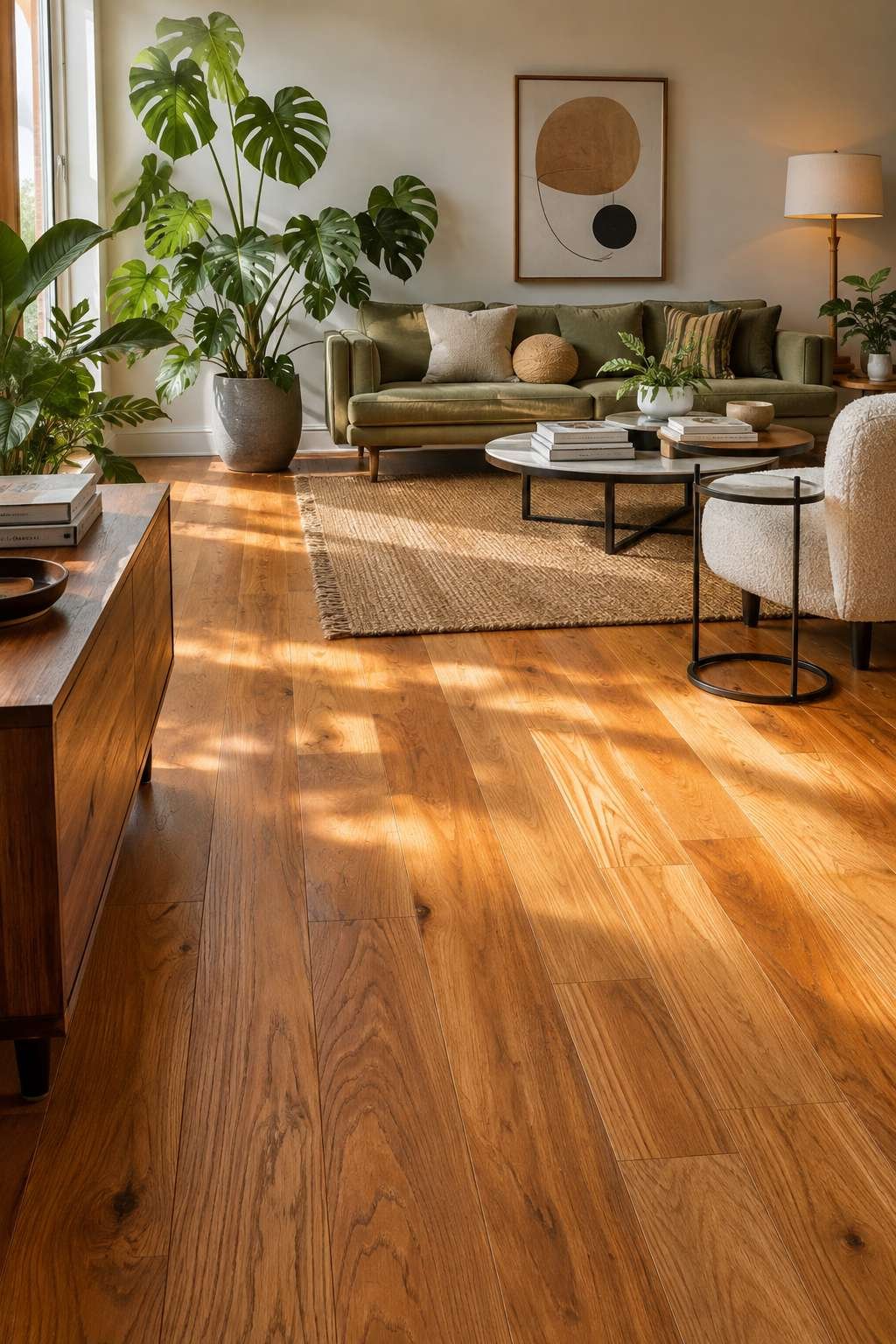
1. Identify Your Floor’s Exact Undertone
Before choosing paint or furniture, identify the undertone accurately. Orange wood floors aren’t all the same; some lean reddish-orange, while others carry yellow-orange or golden hues. Hold a white sheet of paper next to the floor in natural daylight to see the true color clearly. This single step prevents costly mismatches later in the process.
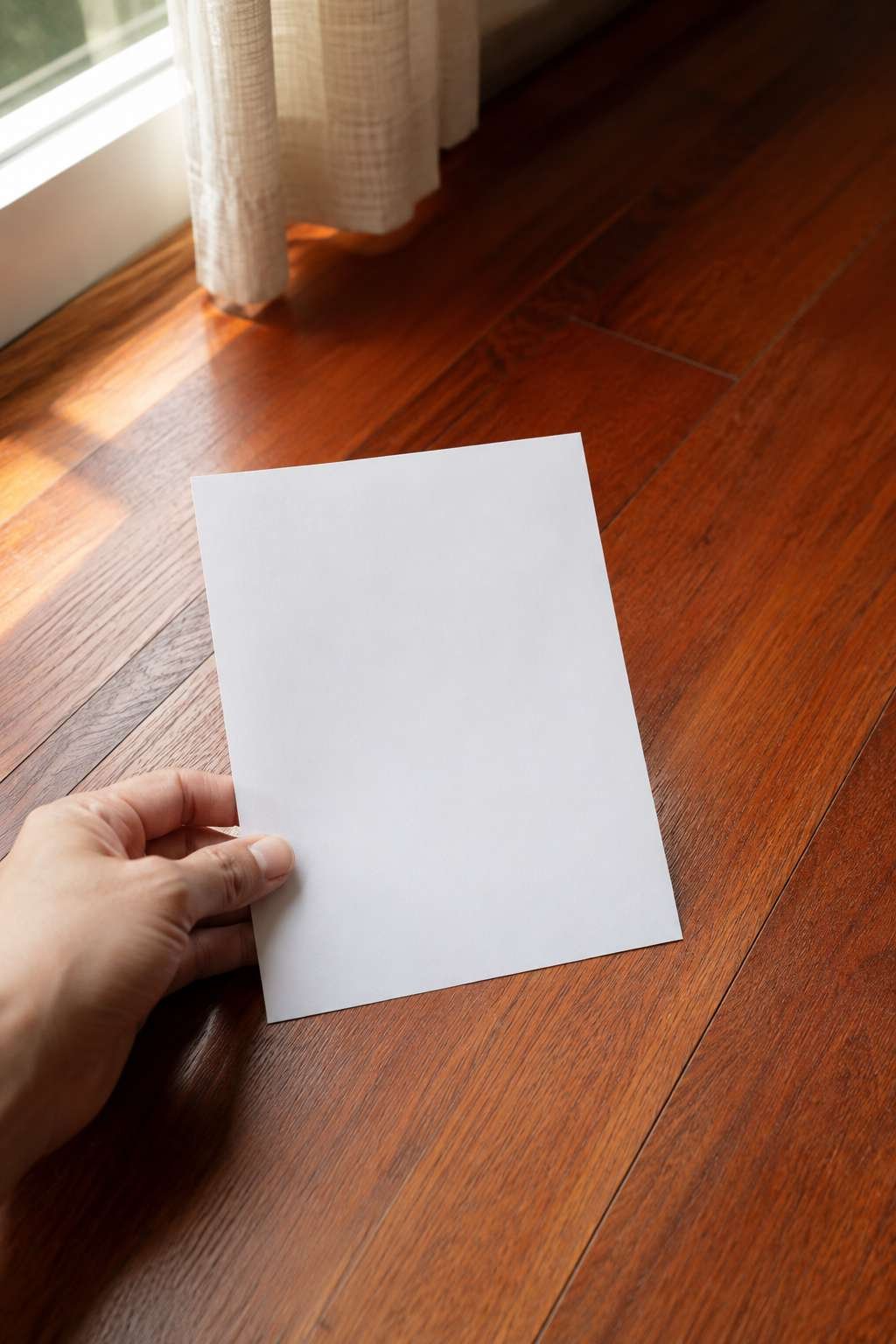
Understanding the undertone determines your entire palette strategy going forward. A golden-orange floor pairs beautifully with cooler blues and greens, while a reddish-orange floor often looks best with deeper, earthier tones. Photographing the floor in different lighting throughout the day also reveals how much the color shifts between morning and evening light.
- Test the floor color under both warm and cool lighting
- Photograph swatches next to the floor before buying paint
- Note whether the undertone reads more red or yellow
- Avoid judging color under artificial store lighting alone
2. Choose Cool Wall Colors to Balance Warmth
The fastest way to tame an orange wood floor is pairing it with cool wall colors. Soft blues, sage greens, and muted grays create visual contrast that neutralizes excessive warmth. This approach uses basic color theory, since blue and orange sit opposite each other on the color wheel, creating natural balance.
Avoid warm whites or creamy tones, which can amplify the orange rather than calm it. Instead, reach for greige or dove gray shades with subtle blue undertones. These colors read as sophisticated and neutral while still allowing the floor’s natural character to shine through as a focal point rather than a flaw.
- Test paint swatches directly against the flooring first
- Choose cool-toned grays over warm beige options
- Try sage green for an earthy, grounded look
- Consider soft denim blue for a fresher contrast
3. Layer in Black and Charcoal Accents
Black accents are one of the most effective tools for styling orange floors. Black furniture legs, matte black light fixtures, and charcoal textiles create sharp contrast that makes the wood tone look intentional rather than dated. This technique works because black absorbs visual attention and grounds a warm-toned room.
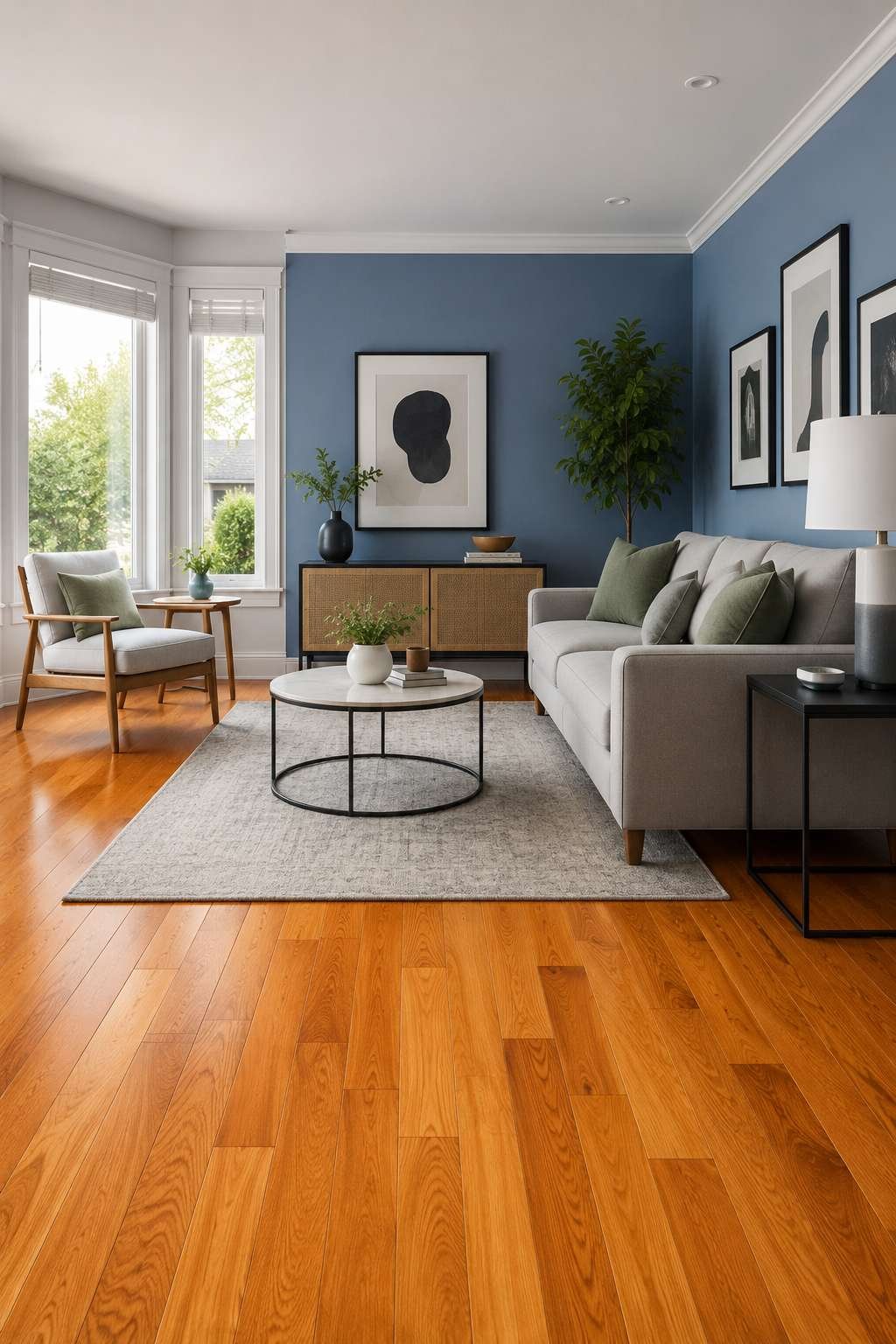
Think beyond just furniture when adding these accents throughout the space. Black picture frames, iron curtain rods, and dark hardware on cabinets all contribute to this grounding effect. The goal is distributing these darker tones evenly so the eye moves naturally around the room instead of fixating on the floor alone.
- Add matte black hardware to cabinets and doors
- Choose furniture with black or dark bronze legs
- Use charcoal throw pillows to echo the accent color
- Hang black-framed artwork at eye level for balance
4. Embrace a Mid-Century Modern Palette
Mid-century modern design naturally complements orange wood floors because the style originated alongside similar warm-toned flooring. Leaning into this aesthetic means combining teak or walnut furniture, geometric patterns, and a mix of mustard, olive, and burnt sienna accents that harmonize rather than clash with the floor.
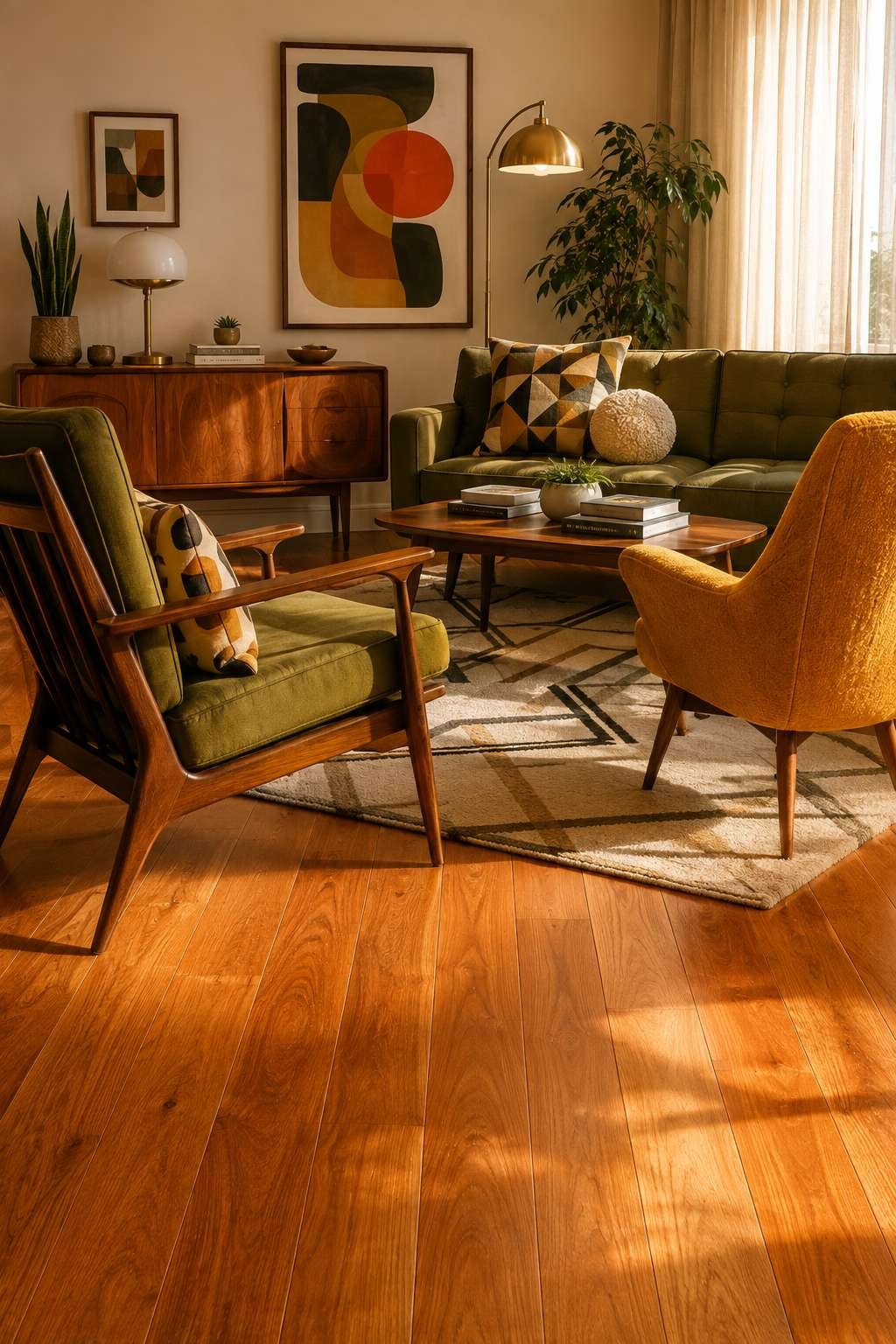
This approach feels authentic rather than forced because the color palette shares the same warm family as the wood itself. Adding retro-inspired lighting, tapered furniture legs, and clean-lined sofas reinforces the era-appropriate feel. The result is a room that looks curated and confident instead of accidental.
- Choose walnut-toned furniture to complement the floor
- Add mustard yellow or olive green textiles
- Select tapered wooden legs on chairs and tables
- Use brass accents sparingly for retro warmth
5. Add Texture Through Rugs and Layered Fabrics
Textural contrast softens the visual weight of orange flooring more effectively than color alone. A large jute or wool rug in a neutral tone breaks up the expanse of wood while adding tactile warmth underfoot. Layering multiple textures, like linen curtains and boucle upholstery, creates depth that distracts from any color mismatch. If you’re also weighing curtains vs blinds, that’s worth deciding early too.
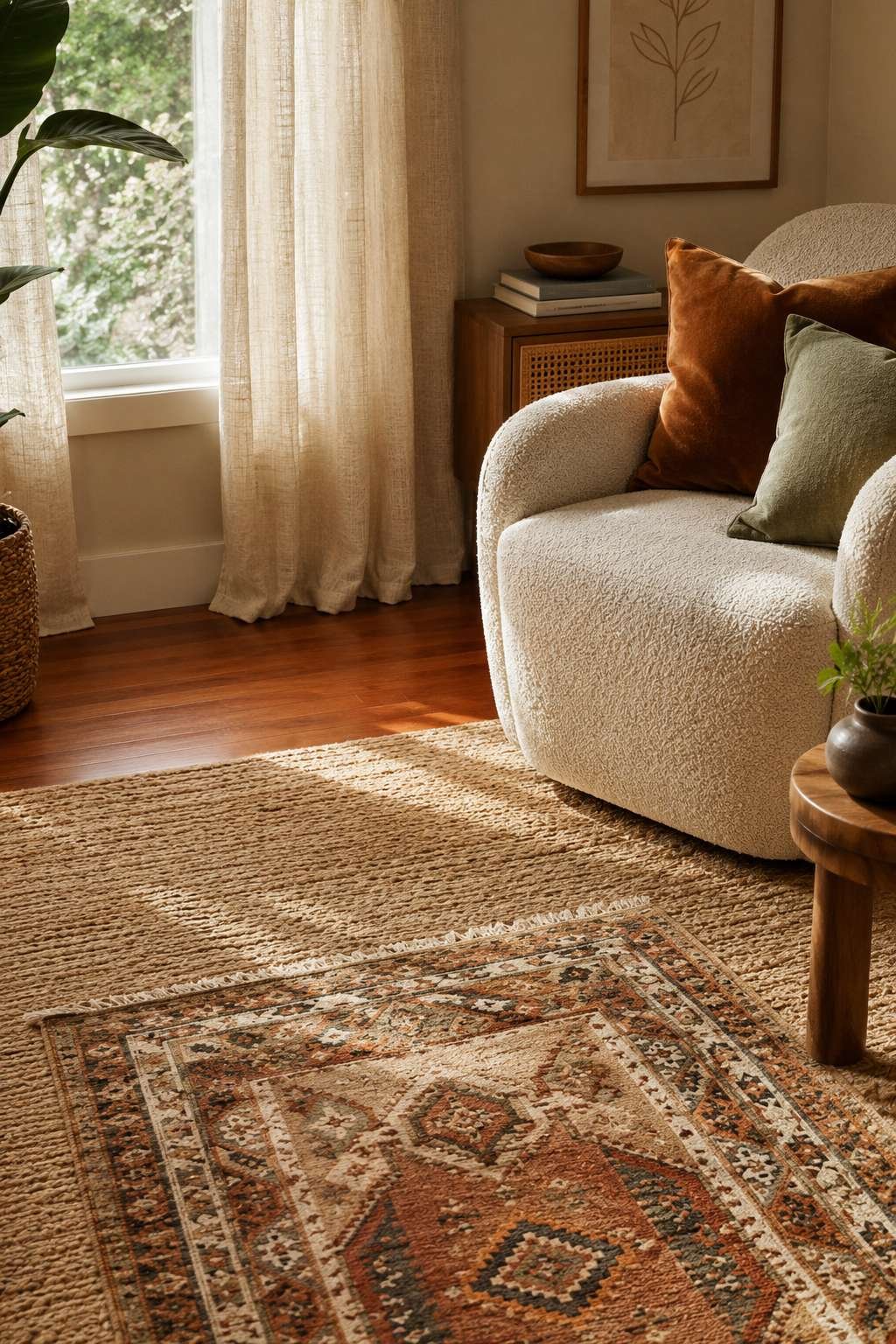
Consider the rug’s undertone carefully before purchasing, since the wrong shade can clash rather than complement. A cream or oatmeal rug with subtle gray fibers tends to work well across most orange wood tones. Rugs also help define separate zones within open-concept spaces where flooring color feels most dominant.
- Choose natural fiber rugs like jute or sisal
- Layer a smaller patterned rug over a neutral base
- Add linen curtains for softness near windows
- Mix textures like boucle, wool, and velvet upholstery
6. Use Greenery to Bridge Warm and Cool Tones
Houseplants offer one of the simplest, most affordable fixes for orange wood floors. Green sits naturally between warm and cool on the color wheel, making it an effortless bridging tone. Large leafy plants like fiddle leaf figs or snake plants in neutral pots add life without competing with the floor’s color.
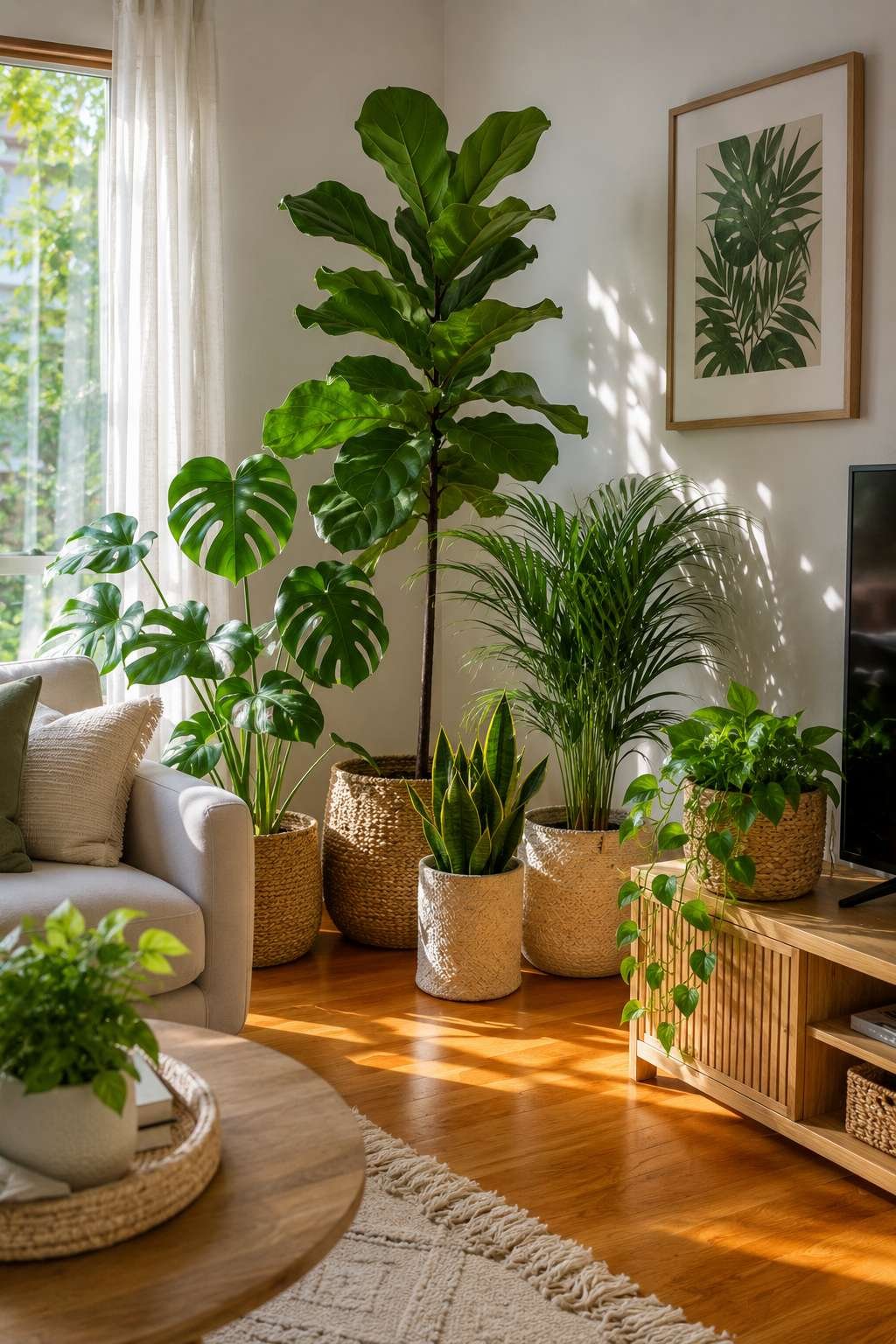
Beyond aesthetics, plants introduce organic texture that softens hard surfaces throughout the room. Grouping three to five plants of varying heights creates a layered, intentional look rather than scattered greenery. This strategy works in nearly any design style, from bohemian to modern farmhouse interiors.
- Choose large-leafed plants for maximum visual impact
- Use neutral ceramic or woven pots for cohesion
- Group plants in odd numbers for natural balance
- Place plants near windows for healthy growth
7. Commit to a Warm, Monochromatic Scheme
Rather than fighting the orange tone, some homeowners find success embracing warmth fully. A monochromatic warm palette using terracotta, rust, cream, and amber creates a cohesive, intentional look. This approach works especially well in bohemian or Mediterranean-inspired spaces where warmth is the design goal itself.
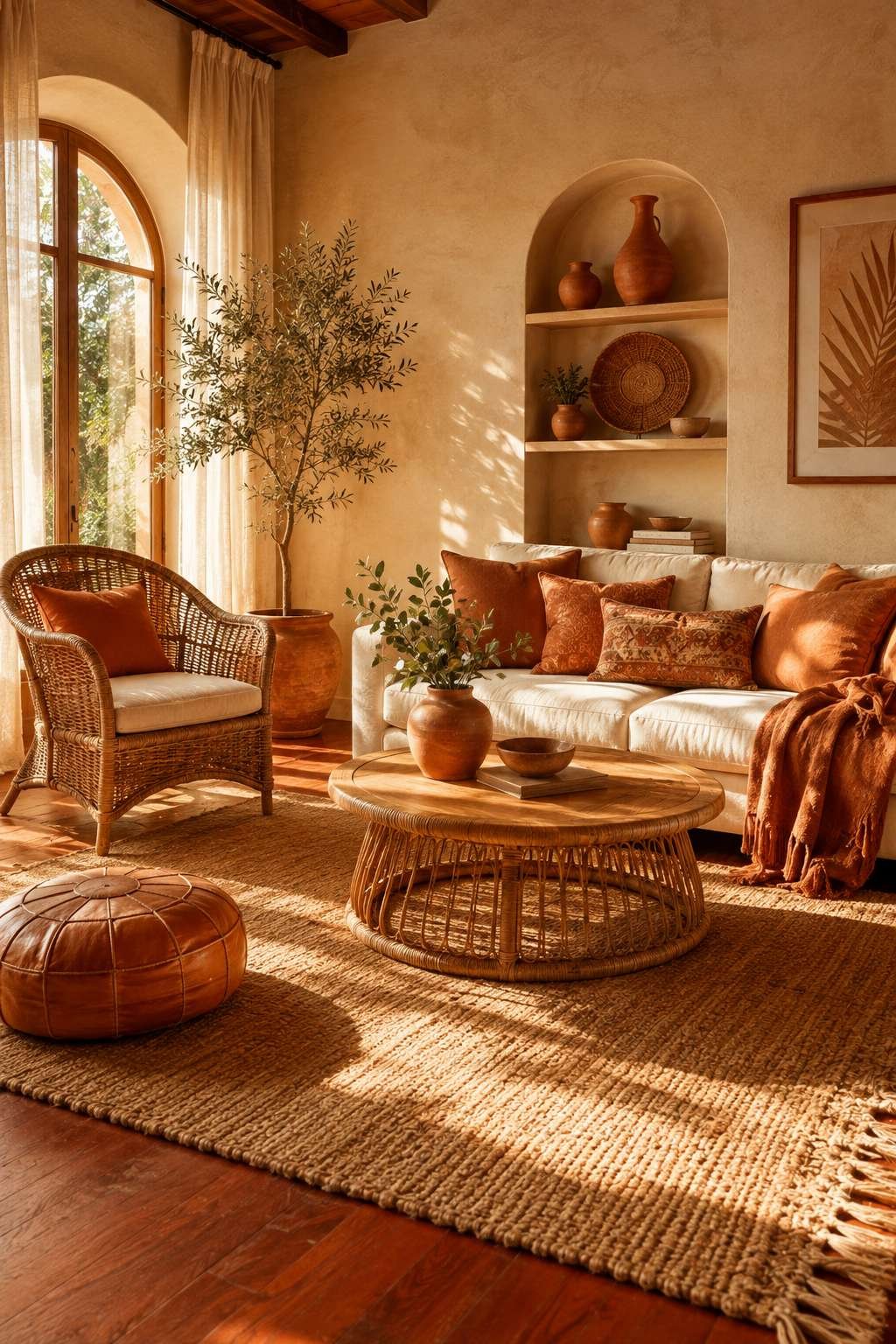
The key to executing this well is varying the saturation and value of each warm tone used. Pair the floor with lighter creams on walls, medium rust-toned textiles, and deep amber accent pieces for depth. This layered warmth reads as deliberate design rather than a room that simply matches its floor by accident.
- Select wall paint in soft cream or sand tones
- Add terracotta and rust textiles for depth
- Use woven, natural materials like rattan and jute
- Balance warmth with plenty of natural light
Orange wood floors don’t have to feel like a limitation once you understand how to work with their undertones. Whether you choose cool contrasting colors, lean into a mid-century palette, or embrace the warmth fully with a monochromatic scheme, the right approach turns these floors into a defining feature of your home. Start with small changes like textiles or plants, then build toward a full palette once you see what resonates.
Don’t be afraid to experiment with samples before committing to paint or furniture. The most successful spaces come from testing combinations directly against your specific floor tone. With a little patience and the right color strategy, your orange wood floors can become the warm, inviting foundation your home has been missing.

