


If you’ve ever wondered what is a gazebo while flipping through backyard inspiration photos, you’re not alone — it’s one of the most searched outdoor structure terms for a reason. A gazebo is a freestanding, roofed structure, usually open on all sides, built to provide shade and shelter while still letting you enjoy the view around you. Whether you’ve typed what is gazebo, whats a gazebo, or what’s a gazebo into a search bar, the answer is the same: it’s a decorative, functional outdoor room that has been part of garden design for centuries.
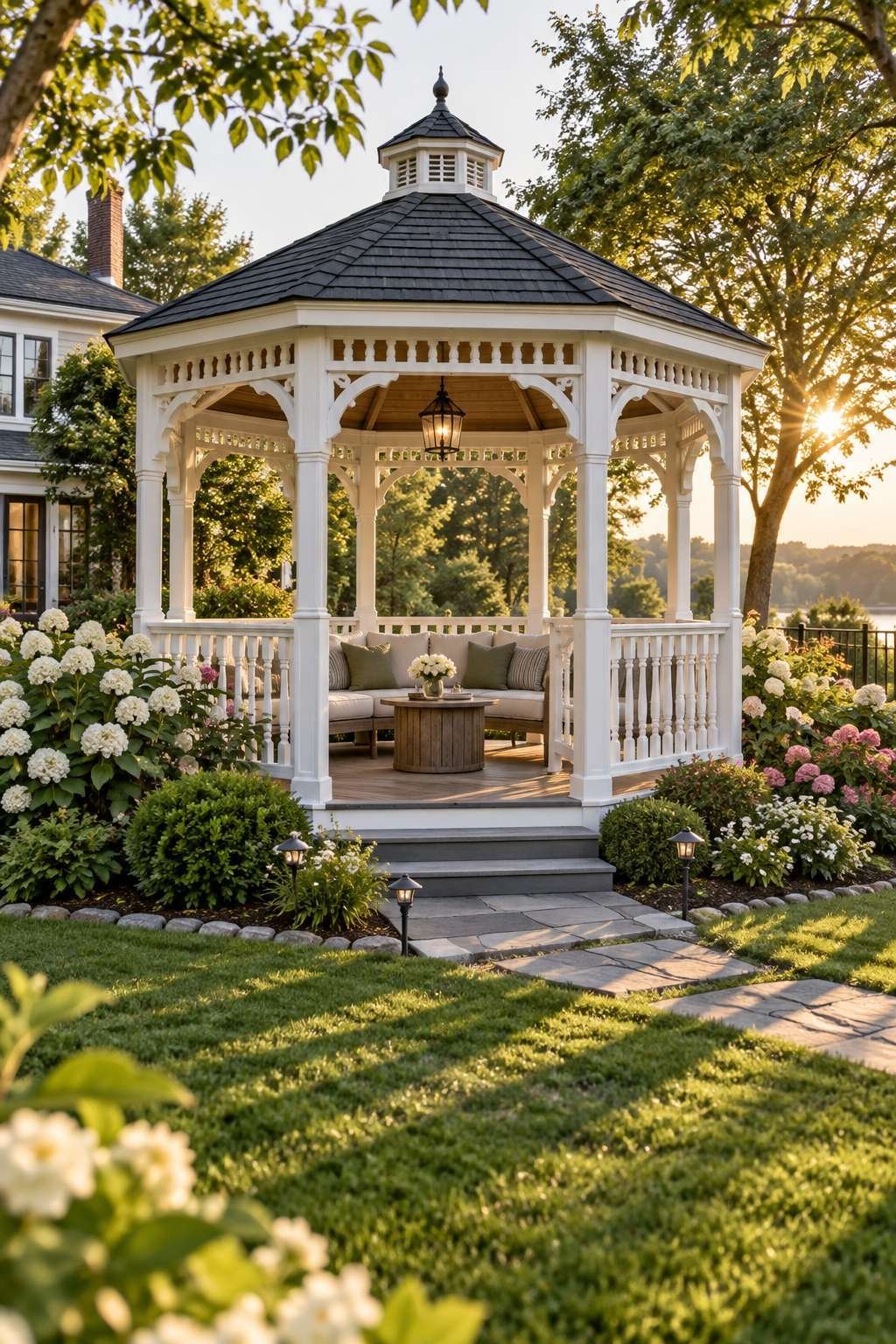
1. The Basic Definition of a Gazebo
At its core, a gazebo is a freestanding roofed pavilion typically found in gardens, parks, and backyards. Unlike a shed or a sunroom, it has no solid walls — instead, open sides (sometimes with decorative railings or half-walls) let air and light flow through while the roof shields you from sun and light rain.
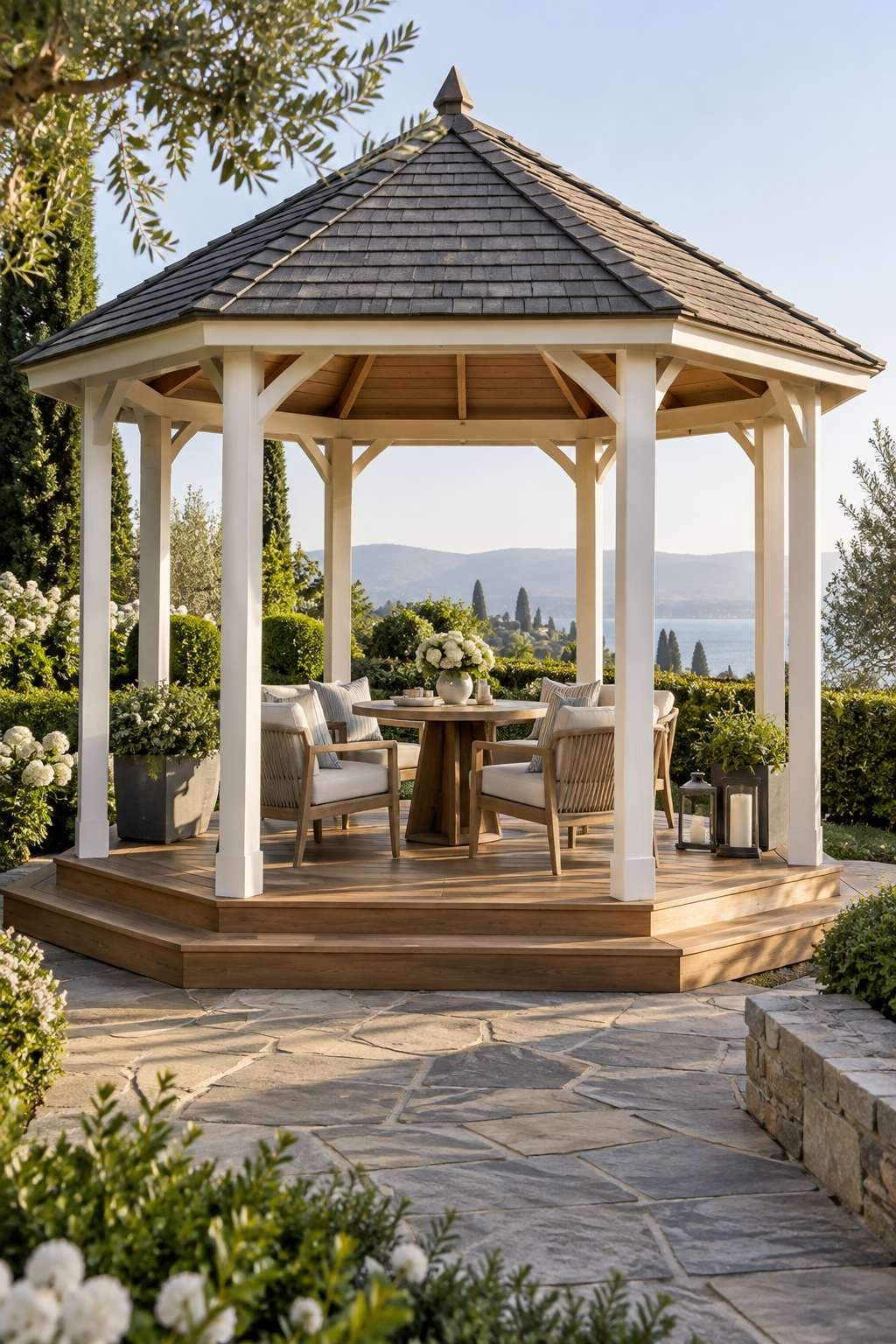
People asking what is the gazebo in their neighbor’s yard are usually describing this exact silhouette: a raised platform, several support posts, and a peaked or domed roof.
- Look for a freestanding structure with no attached walls to a house
- Expect a raised floor or platform, often wood or stone
- Notice the roof shape — hexagonal and octagonal are the most iconic
- Check for open or semi-open sides rather than solid walls
- Confirm it sits in a garden, park, or backyard setting
2. History and Origins of the Gazebo
The gazebo’s roots stretch back thousands of years, with early versions appearing in ancient Egyptian gardens as shaded resting spots near ponds. The concept traveled through Persian, Chinese, and eventually European garden design, evolving into the ornate Victorian gazebos many people picture today.
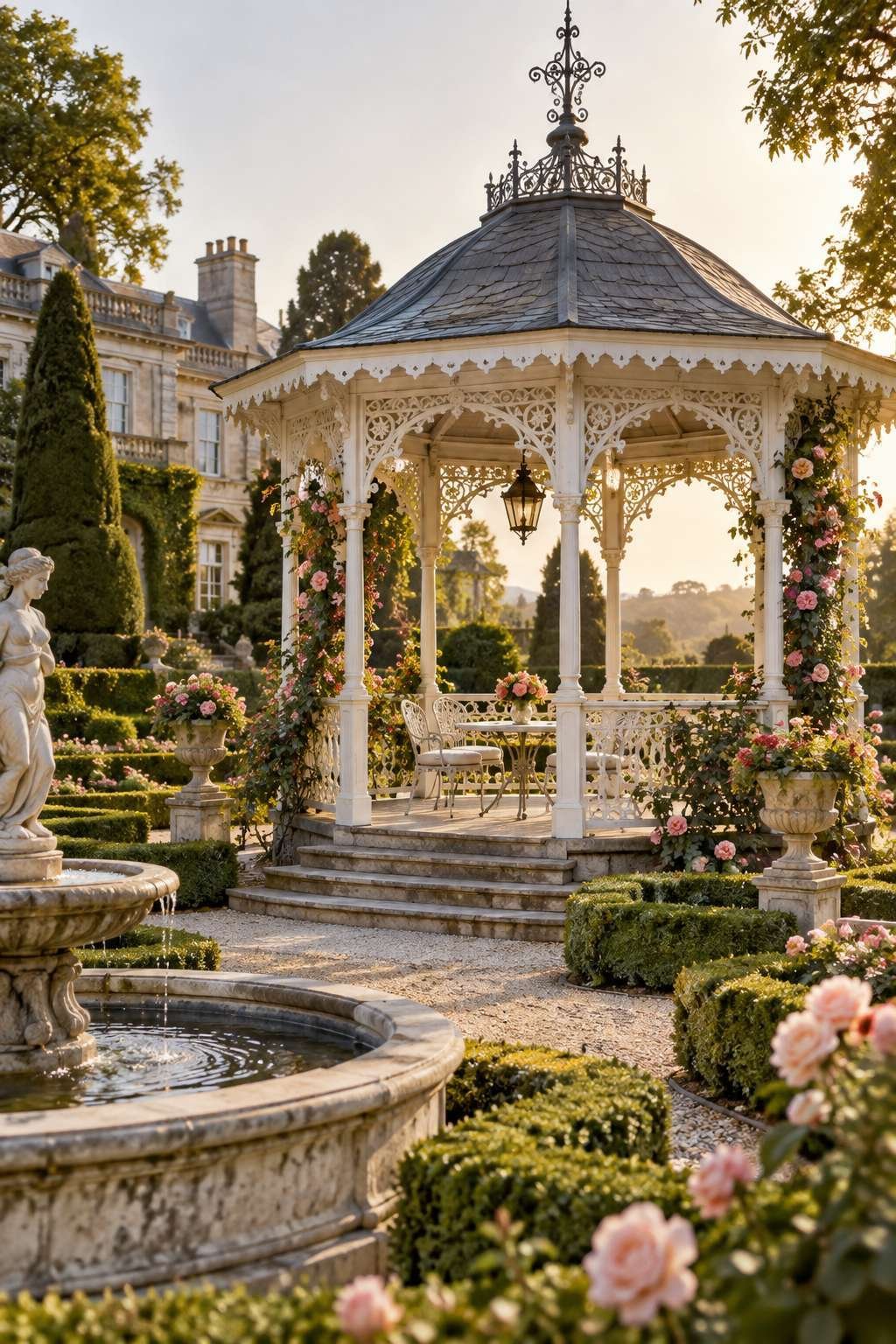
By the 18th and 19th centuries, wealthy estates across Europe and America used gazebos as social gathering spots for tea, music, and conversation.
- Trace early examples to Egyptian and Persian gardens
- Note the influence of Chinese pavilion architecture
- Recognize the Victorian era as the golden age of ornate gazebo design
- Understand gazebos were once status symbols on large estates
- See how modern versions kept the shape but simplified the detail
3. Key Structural Features That Define a Gazebo
A true gazebo shares a handful of structural traits no matter its style. The roof is almost always the star, often peaked, domed, or tiered to shed rain efficiently. Support posts, usually four, six, or eight, hold the roof up while leaving the sides open.
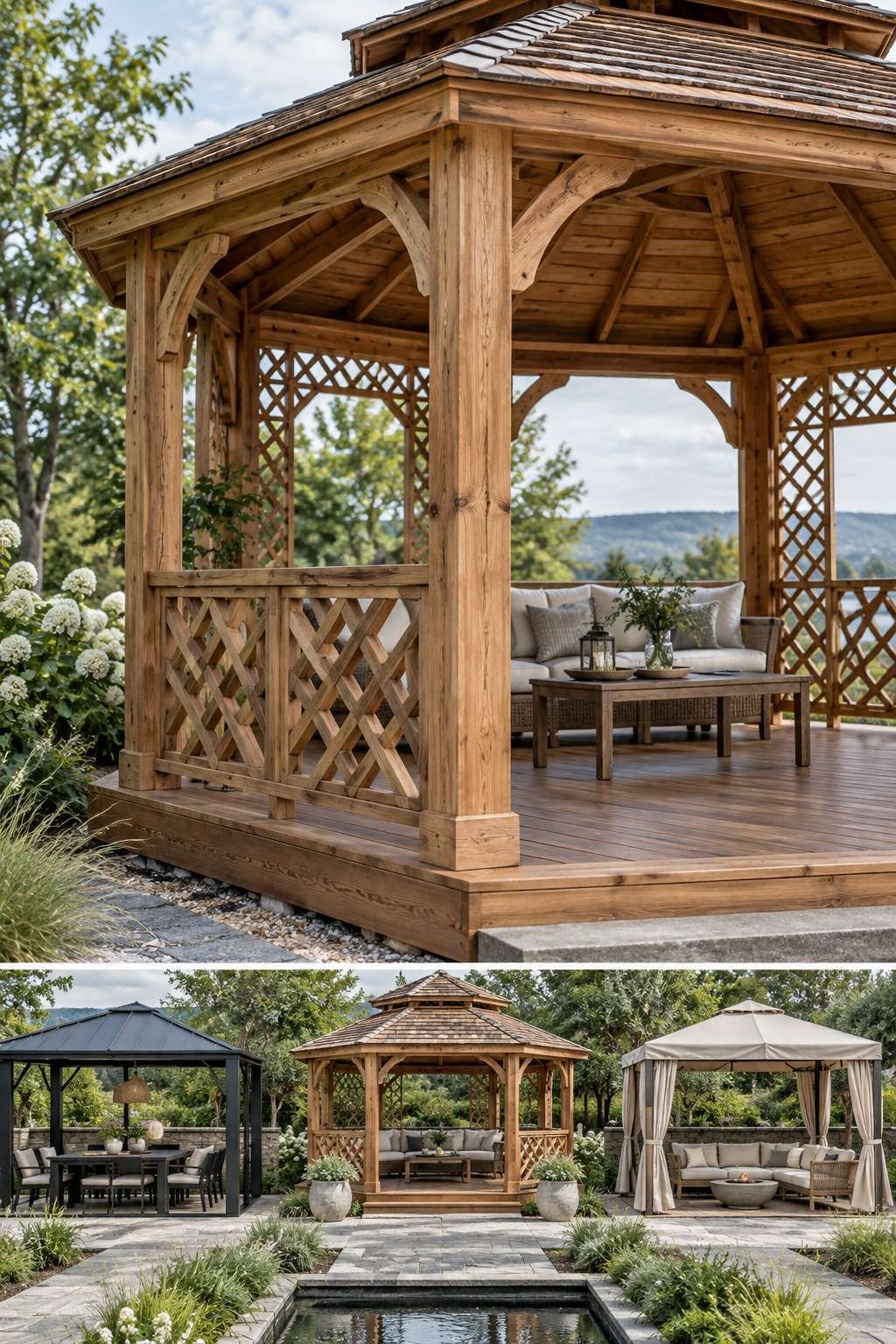
A raised floor keeps moisture and pests at bay, and decorative railings or lattice add a finished look without blocking airflow.
- Identify the roof style: peaked, domed, or tiered
- Count the support posts — commonly 6 or 8 for hexagon/octagon shapes
- Check for a raised, level floor built above ground moisture
- Look for decorative trim, lattice, or railings
- Note whether it includes built-in seating around the perimeter
4. Common Types of Gazebos
Not every gazebo looks the same, and the type often answers what is gazebo best suited for your space. Hardtop gazebos use metal or polycarbonate roofing for year-round durability.
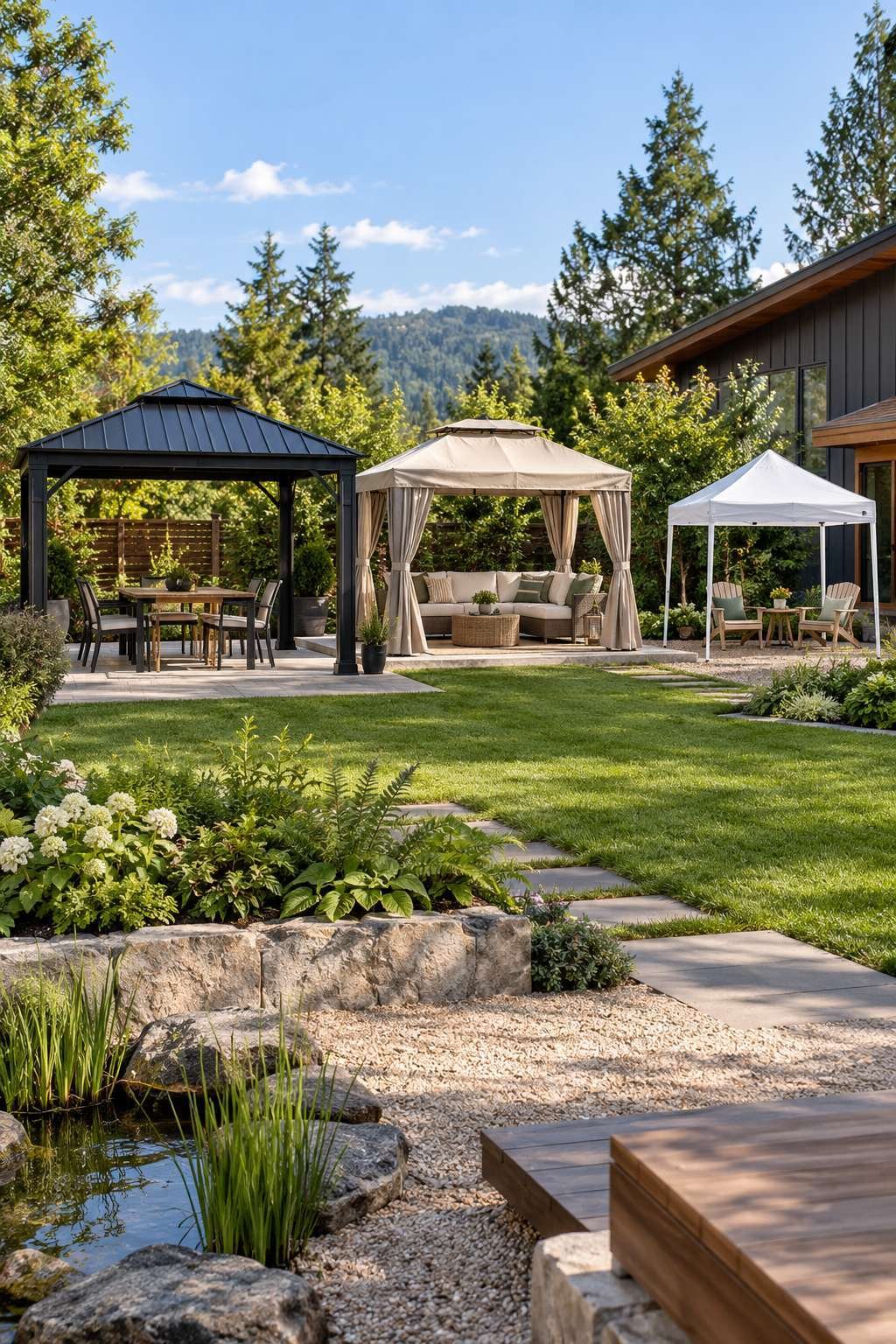
Soft-top gazebos use fabric canopies and are easier to move or fold away. Pop-up gazebos prioritize portability for events, while pergola-style gazebos blend open lattice roofing with gazebo framing for a hybrid look.
- Compare hardtop gazebos for durability and permanence
- Consider soft-top styles for a lighter, more flexible option
- Choose pop-up gazebos for parties, markets, or camping
- Look at screened gazebos if bugs are a major concern
- Explore pergola-hybrid designs for partial shade with an open feel
5. Materials Used to Build a Gazebo
Material choice shapes both the price and lifespan of a gazebo. Wood — cedar, pine, or redwood — remains the classic choice for a warm, natural look, though it needs regular sealing.
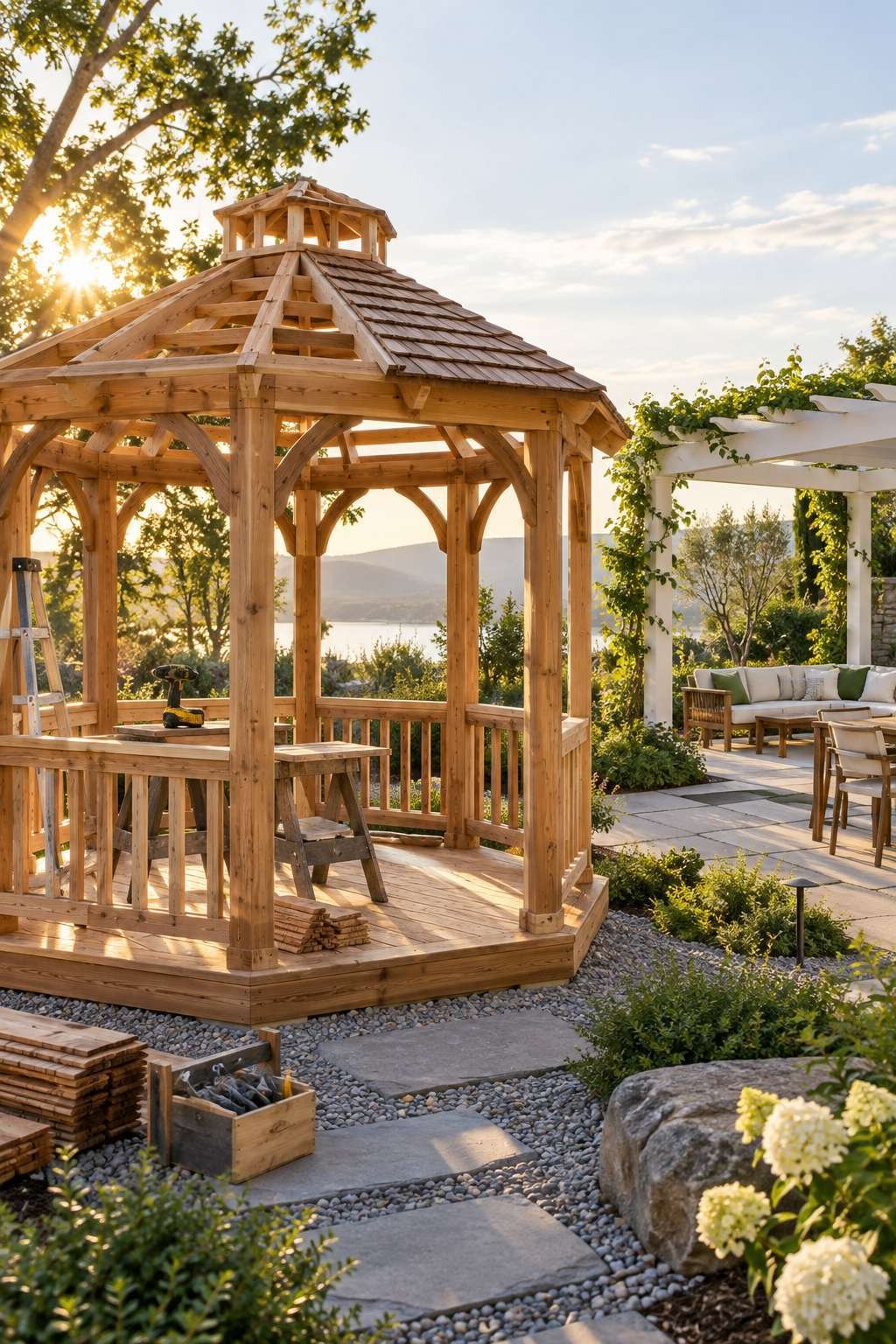
Vinyl and aluminum resist rot and require minimal upkeep, making them popular for busy homeowners. Steel-framed fabric gazebos offer an affordable middle ground for temporary or seasonal use.
- Pick cedar or redwood for natural rot resistance
- Choose vinyl for a low-maintenance, paint-free finish
- Consider aluminum for lightweight strength that won’t rust
- Use steel-and-fabric builds for budget-friendly, seasonal setups
- Factor in your local climate before finalizing a material
6. Gazebo vs. Pergola vs. Pavilion vs. Pop-Up Canopy
People frequently confuse a gazebo with similar backyard structures, so it helps to draw clear lines between them. A pergola has an open, slatted roof meant for partial shade and climbing plants, while a gazebo’s solid roof blocks sun and rain fully.
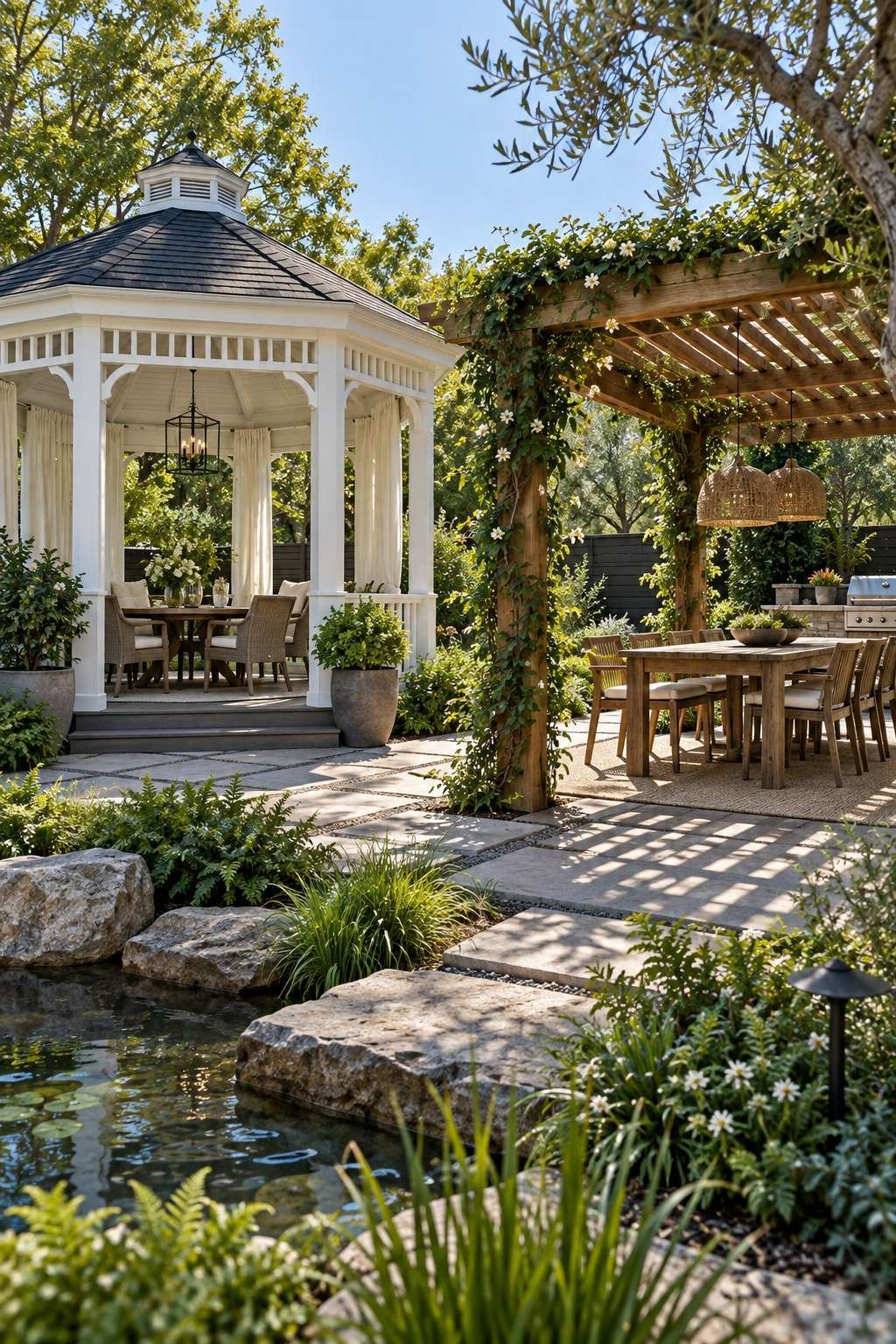
A pavilion is typically larger, often attached to a park or event venue, and may include solid walls. A pop-up canopy is a temporary, lightweight version of the same shade concept, but it lacks a gazebo’s permanent framing.
- Remember a pergola roof is open, not solid like a gazebo’s
- Note that pavilions are larger and sometimes semi-enclosed
- Treat pop-up canopies as temporary, not permanent structures
- Use roof solidity as the quickest way to tell them apart
- Ask whether the structure is meant to be moved or fixed in place
7. Popular Uses for a Gazebo
Once you know what is the gazebo actually for, the uses multiply quickly. Homeowners use them as a shaded dining area, a hot tub enclosure, or a quiet reading nook away from direct sun.
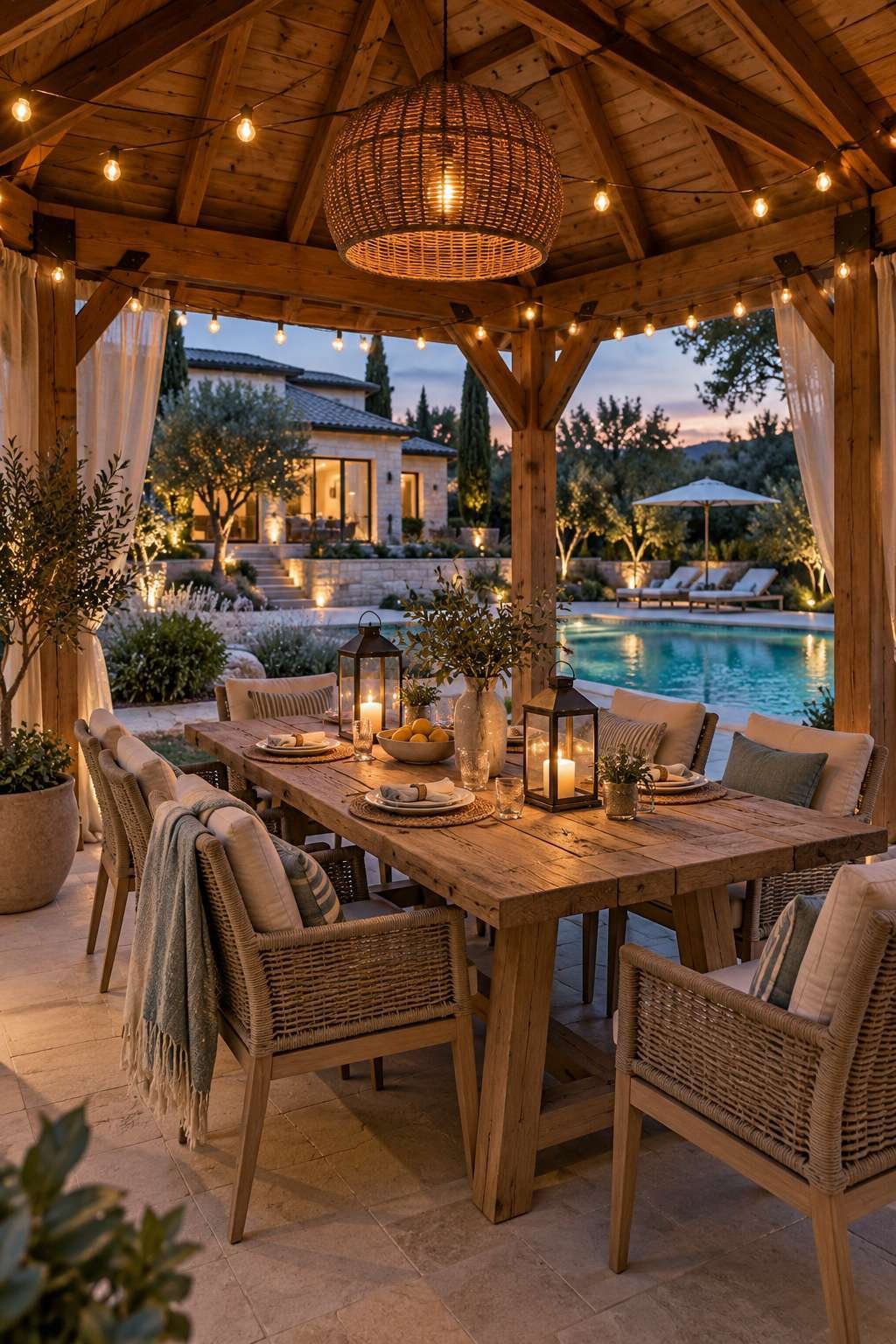
Gazebos also double as event backdrops for weddings and parties, and many public parks install them as community gathering spots for concerts or markets.
- Set up a shaded outdoor dining table underneath
- Enclose a hot tub or small pool lounge area
- Create a reading or meditation nook in the garden
- Use it as a wedding or party focal point
- Host small gatherings protected from sun and light rain
8. Where to Place a Gazebo in Your Backyard
Placement affects both function and how much you’ll actually use the structure. Most homeowners position a gazebo near a patio or deck for easy flow between indoor and outdoor living.
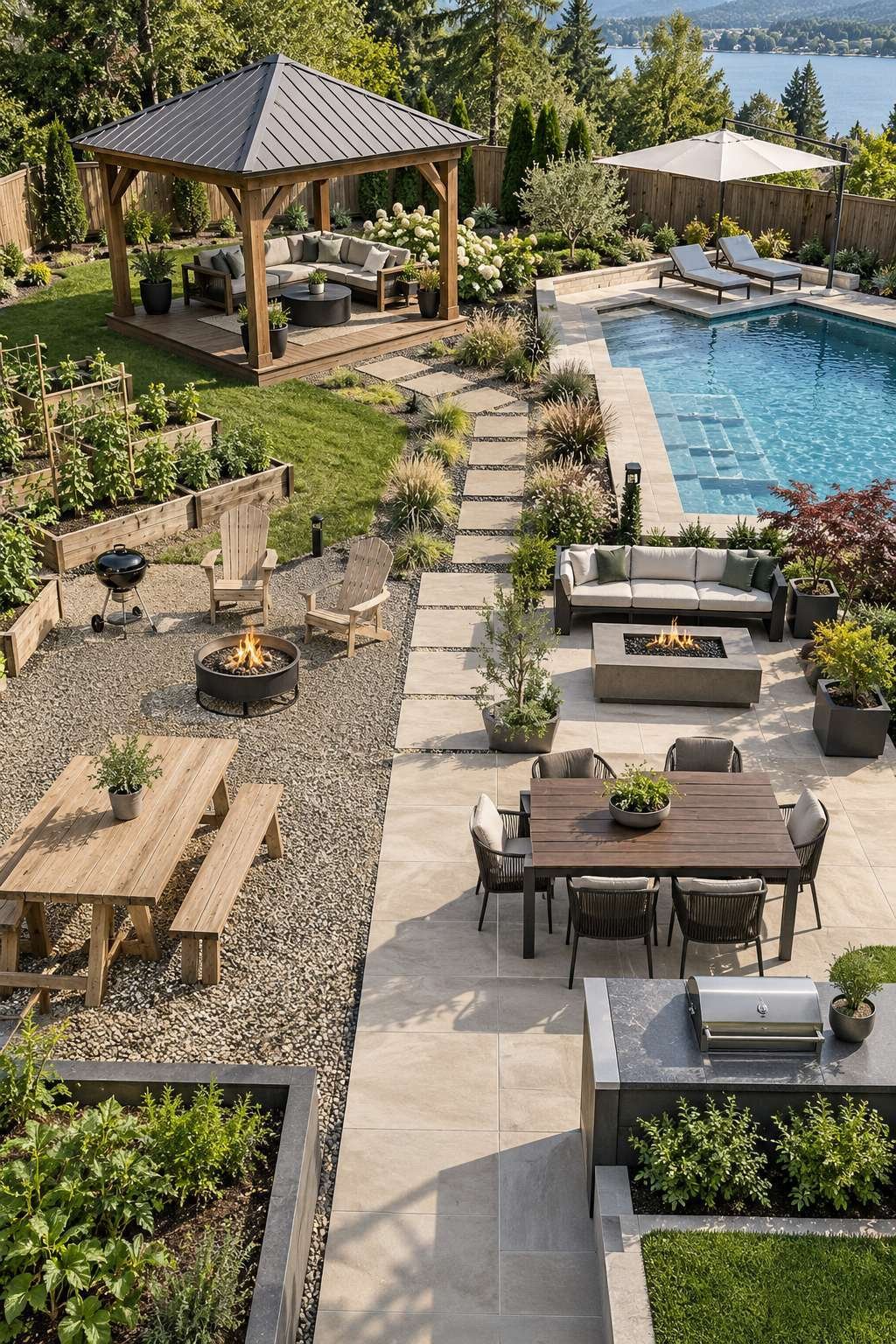
Others tuck it into a garden corner for a private retreat, or place it near a pool to double as a changing or lounging area. Sun exposure, wind direction, and views should all factor into the final spot.
- Position near a patio or deck for easy access
- Choose a garden corner for a more private feel
- Place beside a pool for shade during swim breaks
- Check prevailing wind direction before anchoring the structure
- Confirm the spot has a decent view worth sitting toward
9. Average Cost of a Gazebo
Budget is often the deciding factor once the basic question of what is gazebo construction involves has been answered. A simple pop-up or soft-top gazebo can cost a few hundred dollars, while a mid-range wood or vinyl kit typically runs into the low thousands.
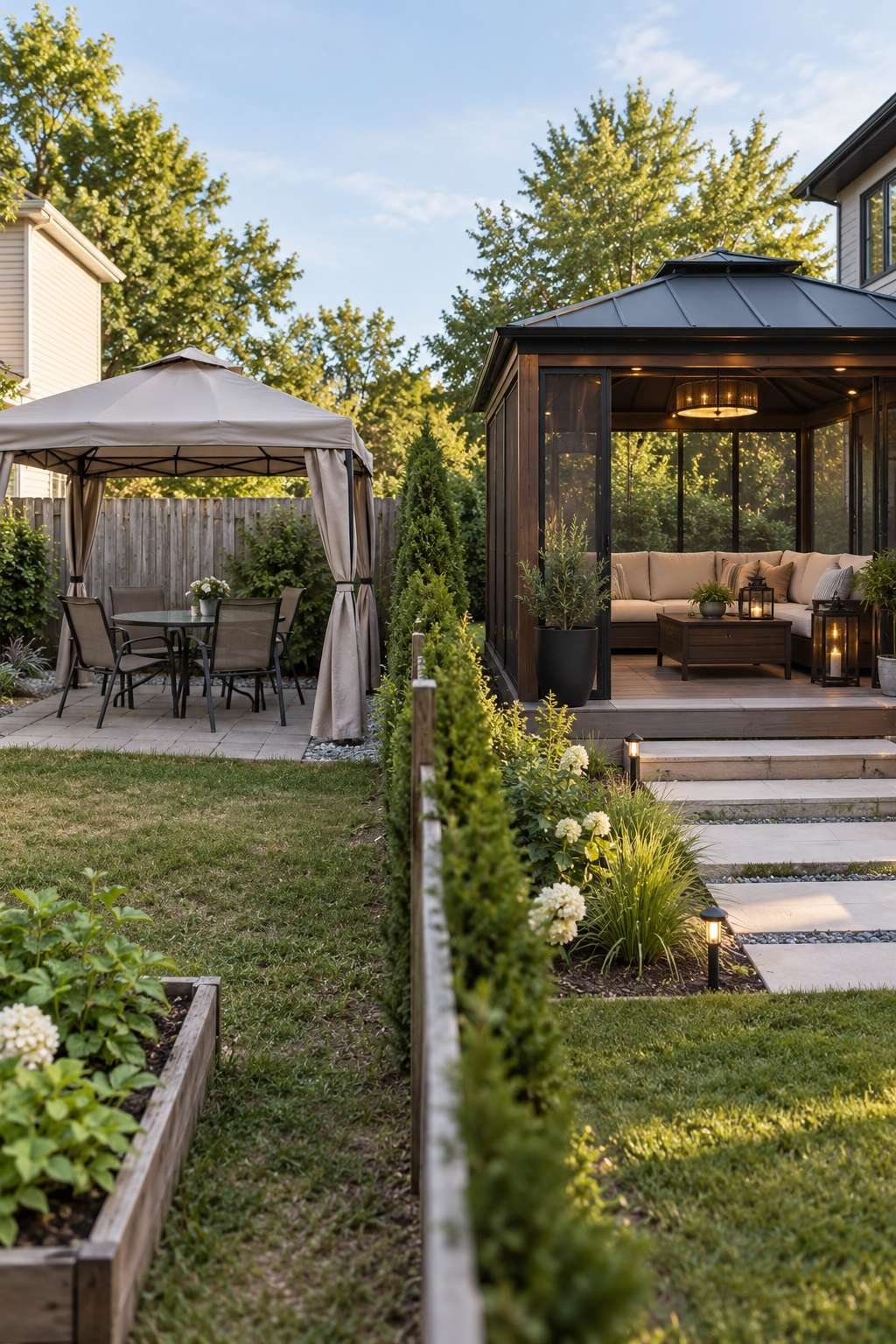
Custom-built, permanent gazebos with electrical wiring, screens, and premium roofing can climb significantly higher depending on size and materials.
- Expect budget pop-ups to be the cheapest entry point
- Plan for mid-range kits if you want a semi-permanent structure
- Budget more for custom carpentry and electrical work
- Factor in delivery and installation costs separately
- Get multiple quotes before committing to a custom build
10. Choosing the Right Gazebo for Your Home
The right gazebo comes down to matching structure to lifestyle. Think about how often you’ll use it, whether it needs to withstand harsh winters, and how much maintenance you’re willing to take on.
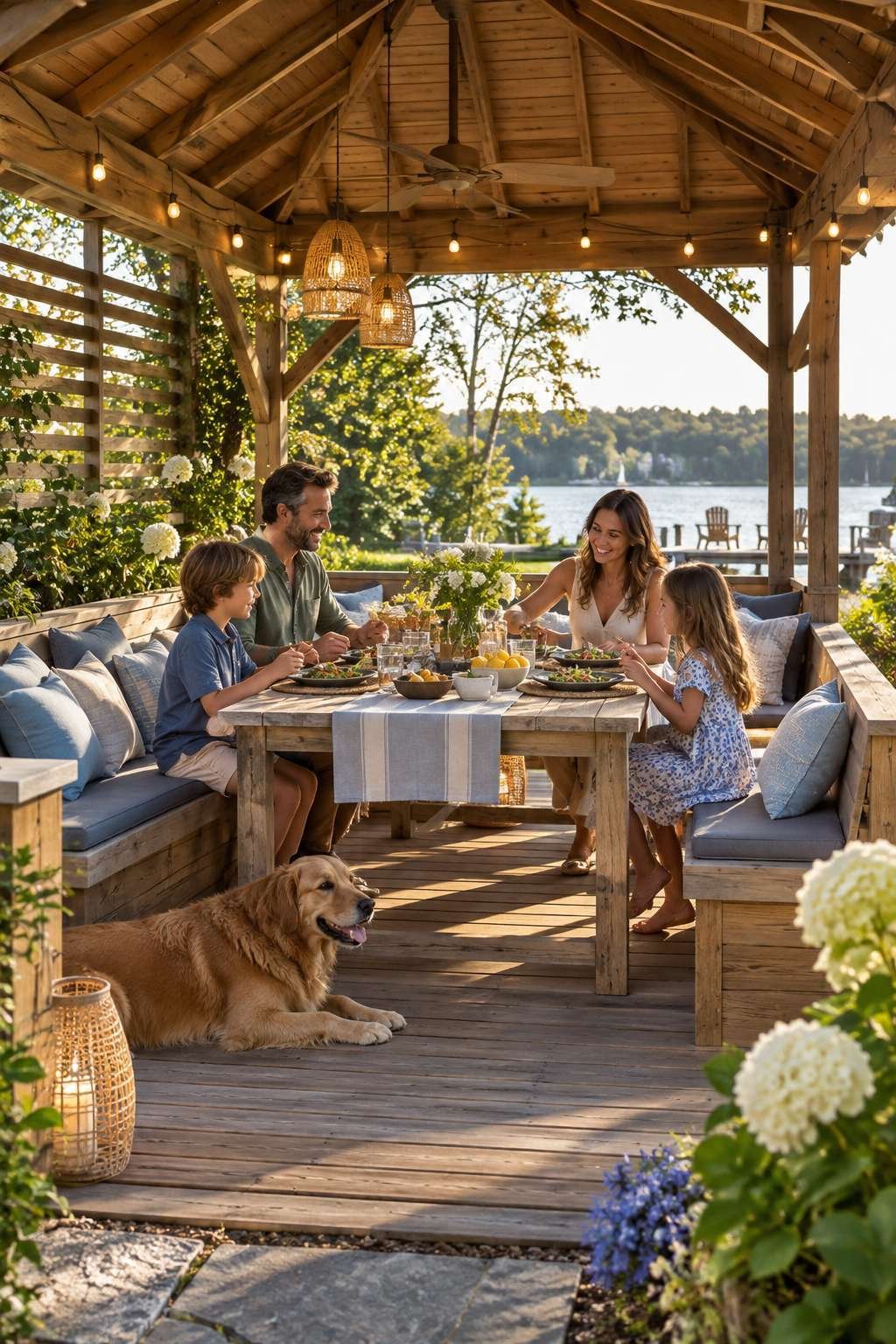
A family that hosts frequent dinners might prioritize a hardtop wood gazebo with built-in lighting, while someone wanting occasional shade might be happy with a portable soft-top option instead.
- Match the size to your intended use, not just your yard space
- Weigh maintenance tolerance against material choice
- Consider year-round versus seasonal use before buying
- Check local permit requirements for permanent structures
- Balance budget against how long you want it to last
Conclusion
A gazebo is far more than a garden decoration — it’s a versatile, roofed retreat that has adapted from ancient shaded courtyards into today’s backyard centerpieces. Whether you’re drawn to a classic wooden hexagon or a modern hardtop design, understanding the structure, materials, and placement options makes it much easier to choose one that fits your space and lifestyle. Take the time to picture how you’ll actually use it, and the right gazebo will feel like a natural extension of your home.

