


Your bedroom should feel like a retreat from the rest of the world. Learning how to decorate a bedroom well means balancing comfort, style, and function in one shared space. Whether you’re starting from a blank room or refreshing a tired layout, a thoughtful approach makes all the difference.
Many people jump straight to buying furniture before deciding on a mood or theme. That’s usually the fastest way to end up with a room that feels disjointed. This guide walks through every stage, from color choices to final styling touches, so you can decorate with confidence.
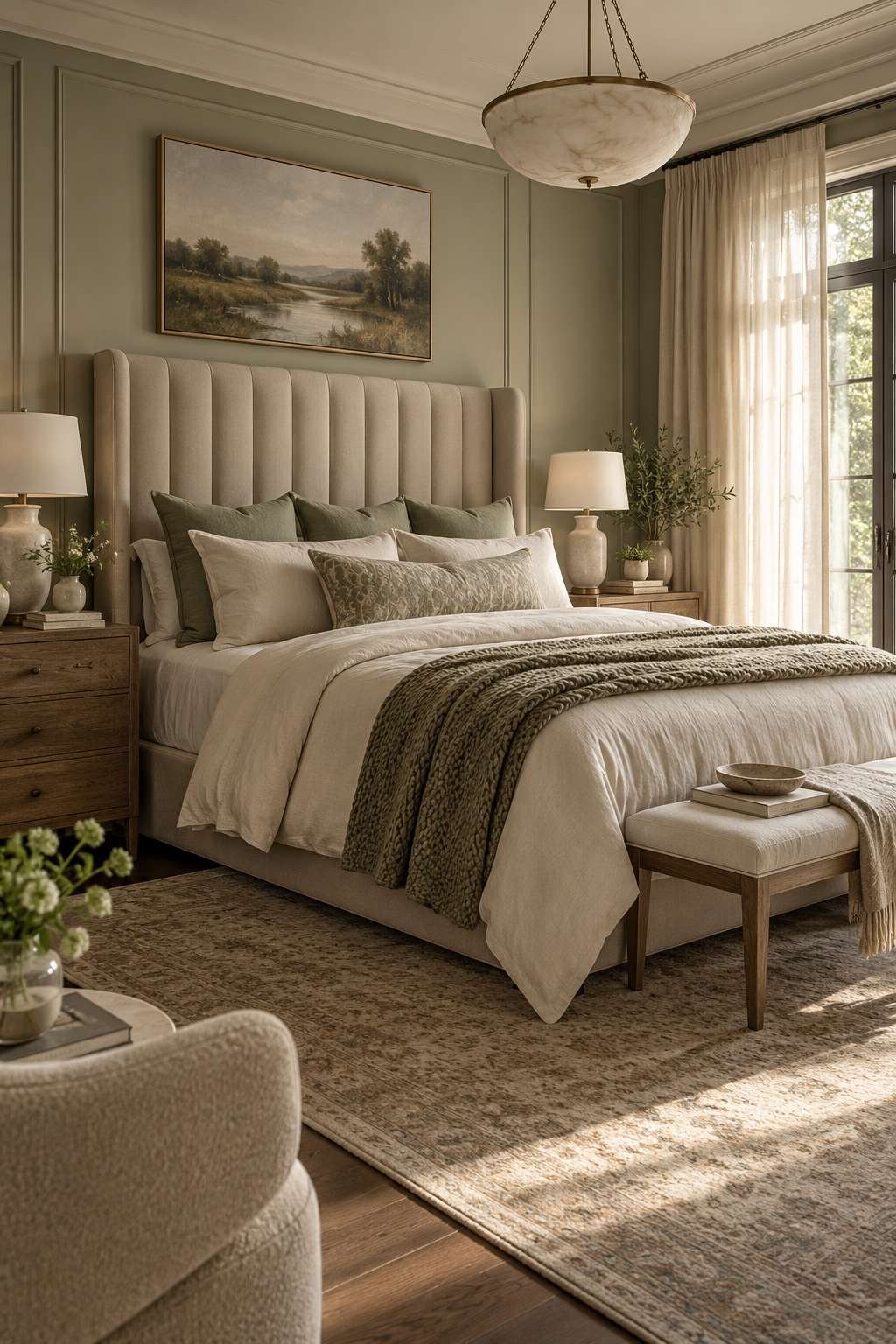
Along the way, we’ll cover how to decorate your bedroom for different styles, how to decorate bedroom walls without overspending, and simple tricks anyone can use to decorate a bedroom that actually gets used and enjoyed.
1. Start With a Clear Vision and Color Palette
Before buying anything, decide on the overall mood you want the room to have. Calm and airy, cozy and warm, or bold and dramatic are all valid starting points. Your color palette should support that mood rather than fight against it.
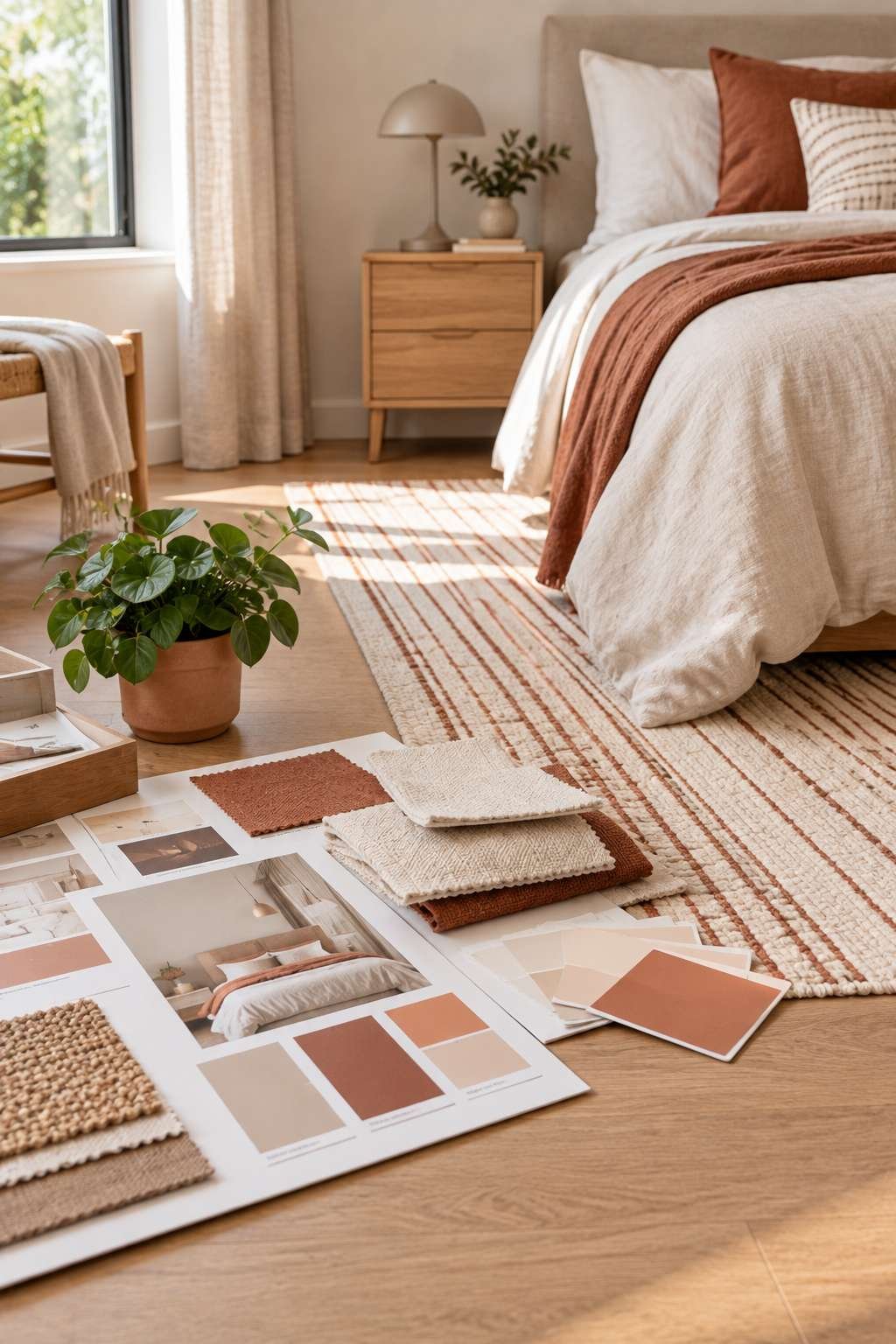
Soft neutrals like warm white, greige, and sage tend to feel restful. Deeper tones like navy, terracotta, or charcoal add drama but pair best with plenty of natural light. Pick one dominant color, one supporting neutral, and one accent shade to keep things cohesive.
Pull inspiration from a favorite textile, artwork, or even a photo you love before committing to paint. This keeps the palette grounded in something you already respond to emotionally.
- Choose a dominant color for walls or bedding
- Pick a neutral to balance bold choices
- Select one accent color for small details
- Test paint swatches in both daylight and lamp light
- Limit your palette to three main colors
2. Choose the Right Bed and Bedding
The bed is the visual and functional anchor of any bedroom, so it deserves the most attention. A properly sized bed frame should leave enough clearance to walk comfortably around the room. Oversized frames in small rooms make everything feel cramped.
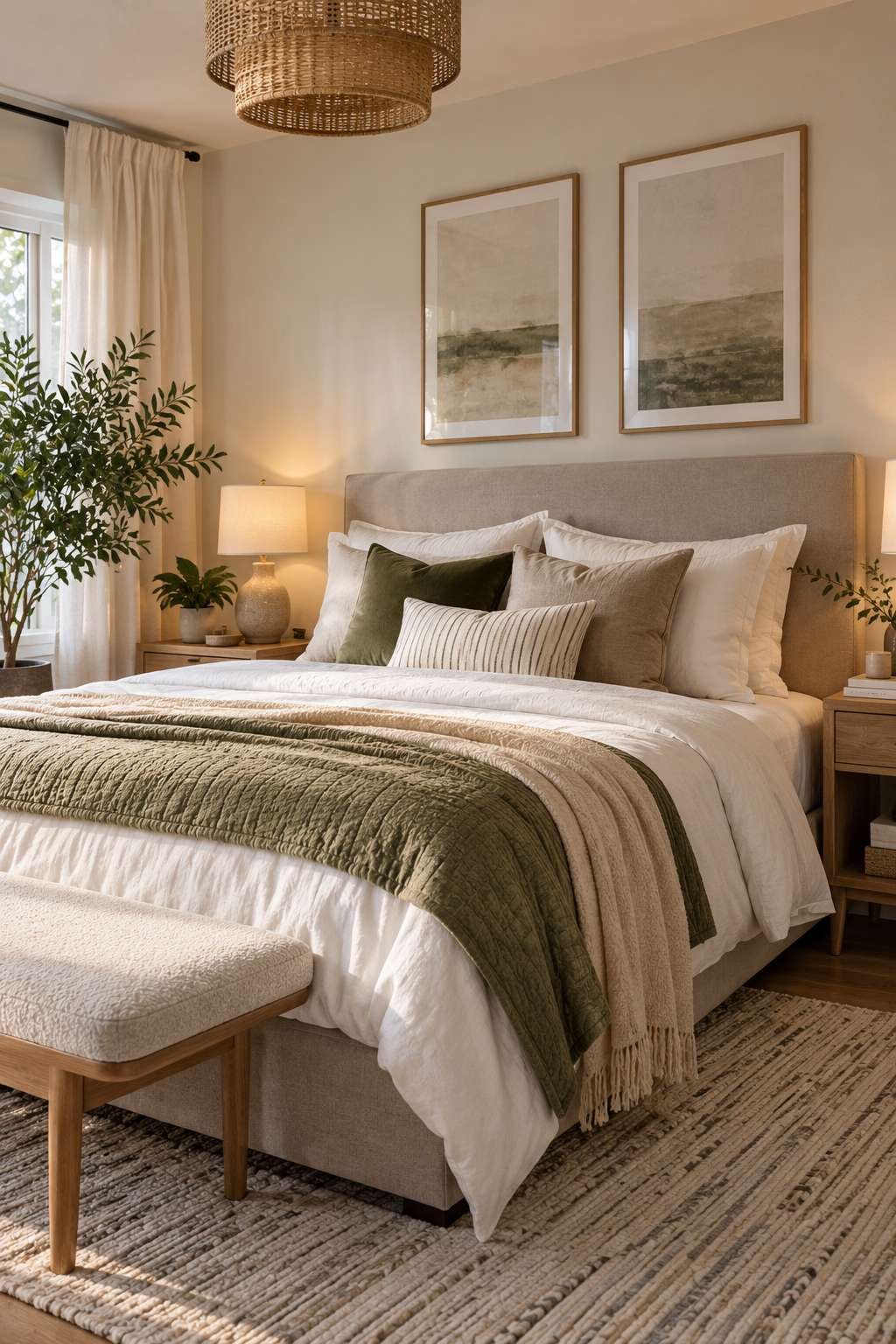
Layer your bedding the way a hotel would: a fitted sheet, a flat sheet, a lightweight blanket, and a duvet or coverlet on top. Add two to four pillows in varying sizes for depth. A textured throw folded at the foot of the bed adds warmth without extra effort.
Headboards do more work than people expect. A tall, upholstered headboard instantly makes a room feel finished, even before anything else is added.
- Measure your room before choosing a bed size
- Mix pillow sizes and textures for visual depth
- Add a throw blanket at the foot of the bed
- Choose a headboard that matches your style direction
- Wash and rotate bedding seasonally for freshness
3. Plan Your Furniture Layout
Good furniture placement makes a room feel larger, even in tight footprints. Start by identifying the natural focal point, usually the bed or a window, and arrange everything else around it. Avoid pushing every piece against the walls, which can make a room feel stiff.
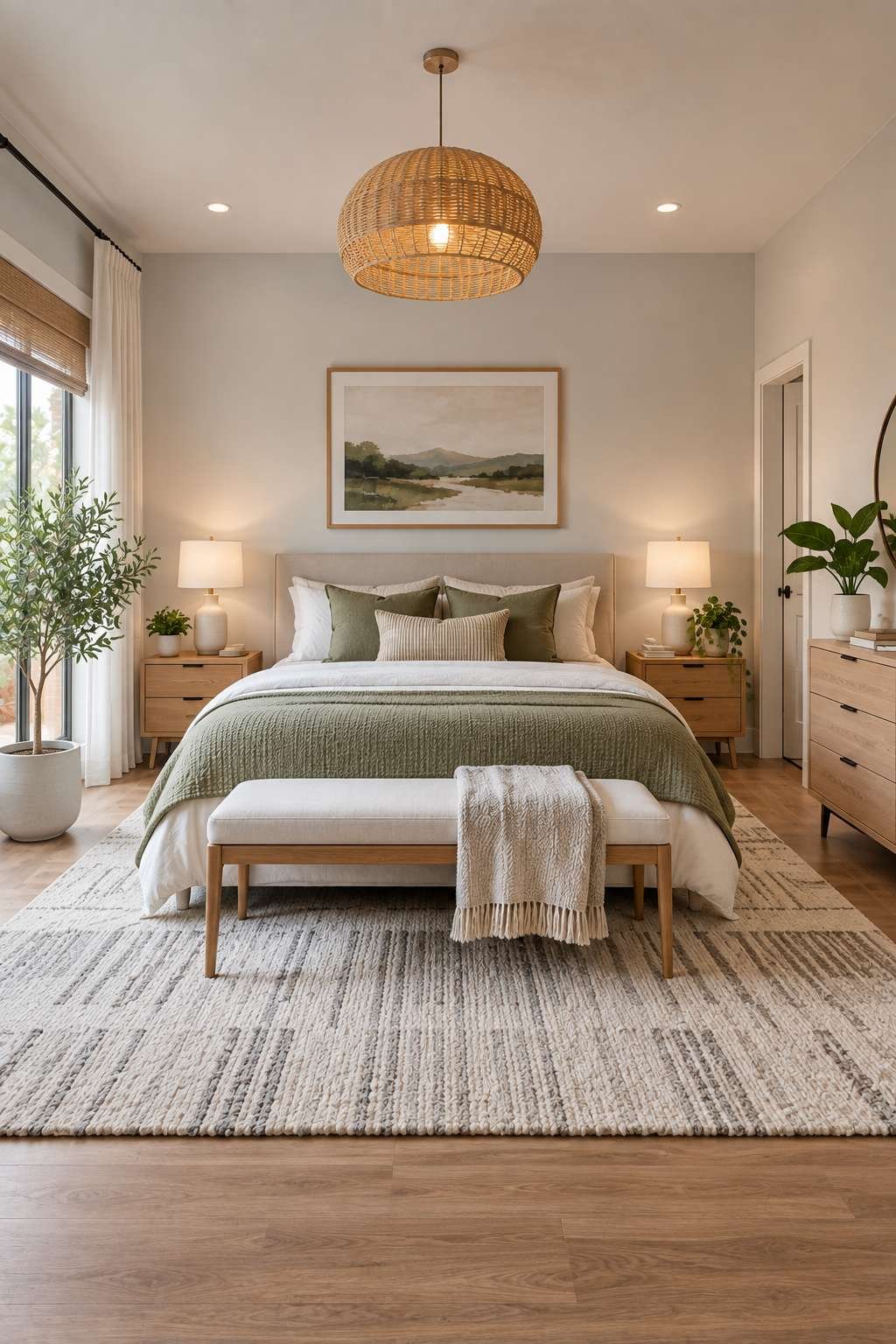
Leave at least two feet of clearance around the bed for movement. Nightstands should sit at a height close to your mattress top for easy reach. If space allows, a small bench or chair at the foot of the bed adds function without clutter.
Symmetry tends to feel calming in a bedroom, so matching nightstands and lamps on either side of the bed is a reliable, low-risk choice.
- Identify the room’s natural focal point first
- Leave walking space of at least two feet
- Match nightstand height to the mattress top
- Use symmetry for a calmer, balanced feel
- Avoid oversized furniture in small rooms
4. Decorate the Walls Thoughtfully
Wall treatments set the tone before anyone even sees the furniture. A single accent wall in a deeper shade or textured wallpaper can transform a plain room instantly. Gallery walls, mirrors, and woven wall hangings all add personality without permanent commitment.
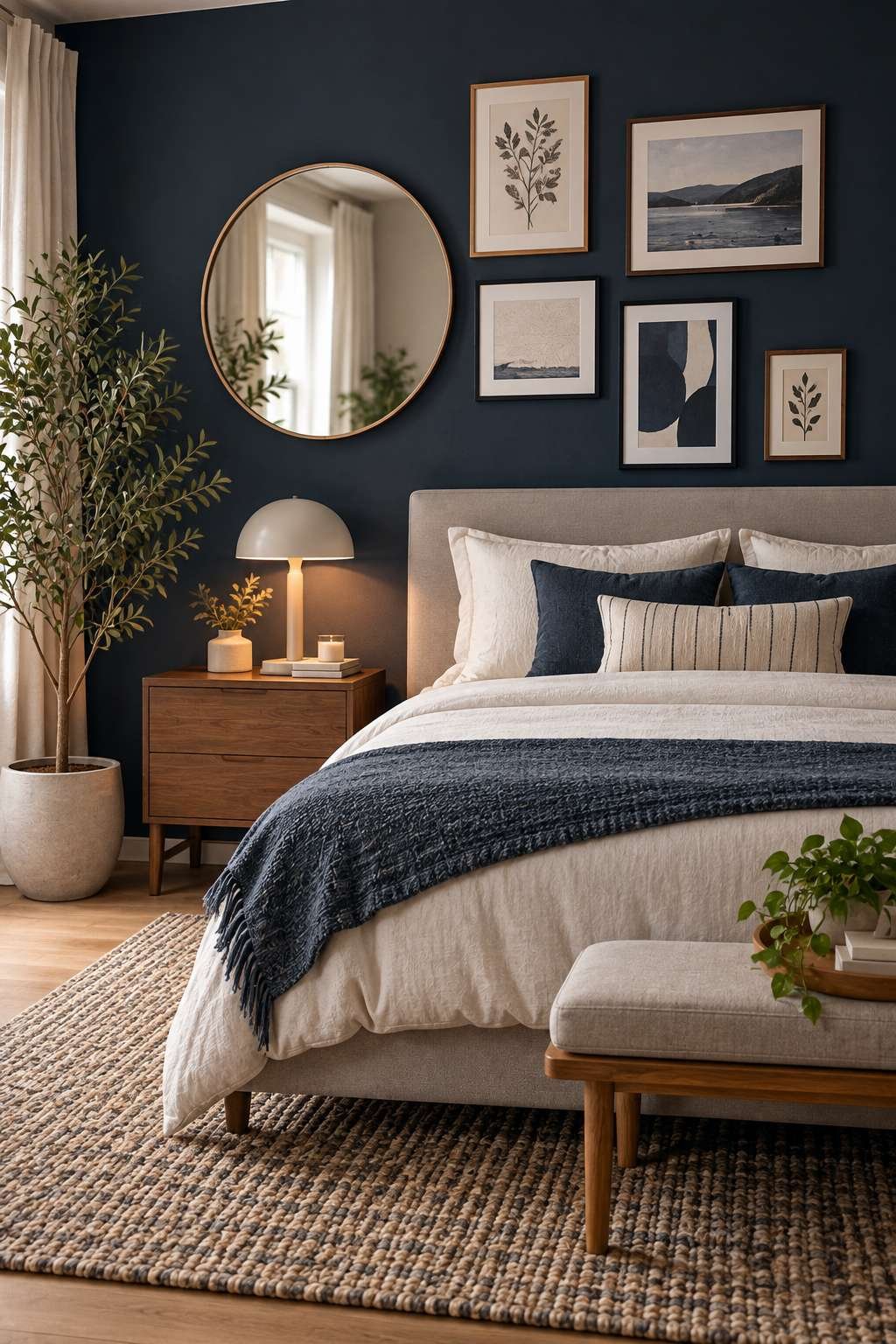
Hang artwork so the center sits roughly at eye level, generally 57 to 60 inches from the floor. Grouping three to five pieces in varying sizes usually reads better than one large piece alone. For a deeper dive into layout grids, spacing, and material choices, our guide on How to Decorate Bedroom Walls walks through the process step by step.
Mirrors deserve special mention here. Placed opposite a window, a large mirror bounces natural light around the room and makes it feel noticeably brighter.
- Hang art at roughly eye level
- Group pieces in odd numbers for balance
- Use a mirror to reflect natural light
- Try textured wallpaper for a low-effort accent wall
- Keep heavier pieces on structural walls only
5. Layer Your Lighting
Relying on a single overhead fixture is one of the most common bedroom decorating mistakes. Layered lighting combines ambient, task, and accent sources so the room adapts to different times of day. Dimmable options give you even more flexibility.
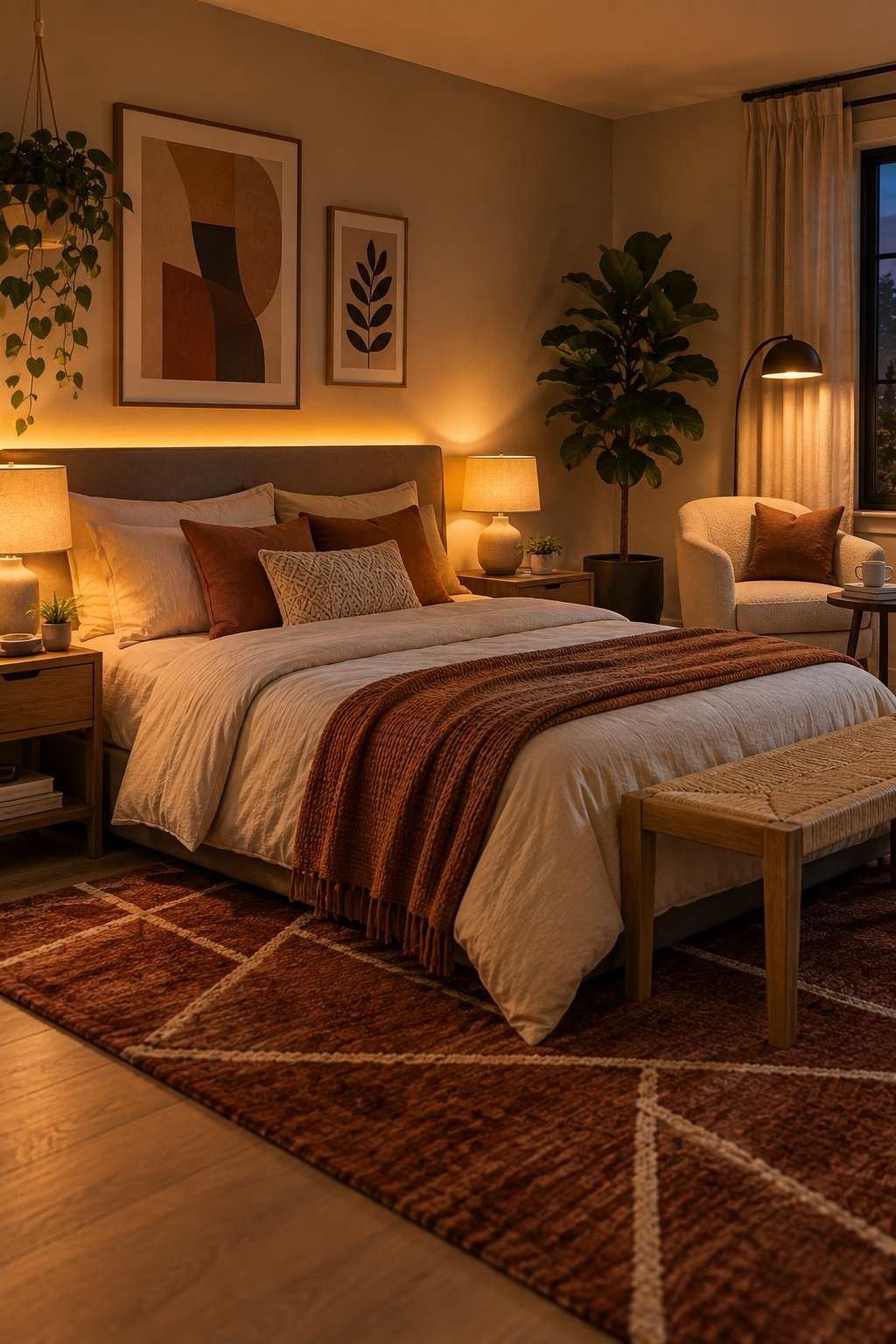
Bedside lamps handle reading and late-night tasks without flooding the whole room with light. A floor lamp in a reading nook adds warmth to an otherwise dark corner. String lights or a plug-in sconce can introduce a softer, more atmospheric glow in the evening.
Warm bulbs, generally in the 2700K to 3000K range, tend to feel cozier than cooler daylight bulbs in a bedroom setting.
- Add at least two light sources beyond the ceiling fixture
- Use dimmers wherever possible
- Choose warm-toned bulbs for a cozier feel
- Place a lamp within reach of the bed
- Light dark corners to avoid flat, uneven rooms
6. Add Texture With Textiles and Rugs
Texture is what separates a flat, showroom-style room from one that feels lived-in and warm. Mixing materials like linen, wool, velvet, and knit fabrics adds depth even within a single color family. A large area rug anchors the furniture and softens hard flooring underfoot.
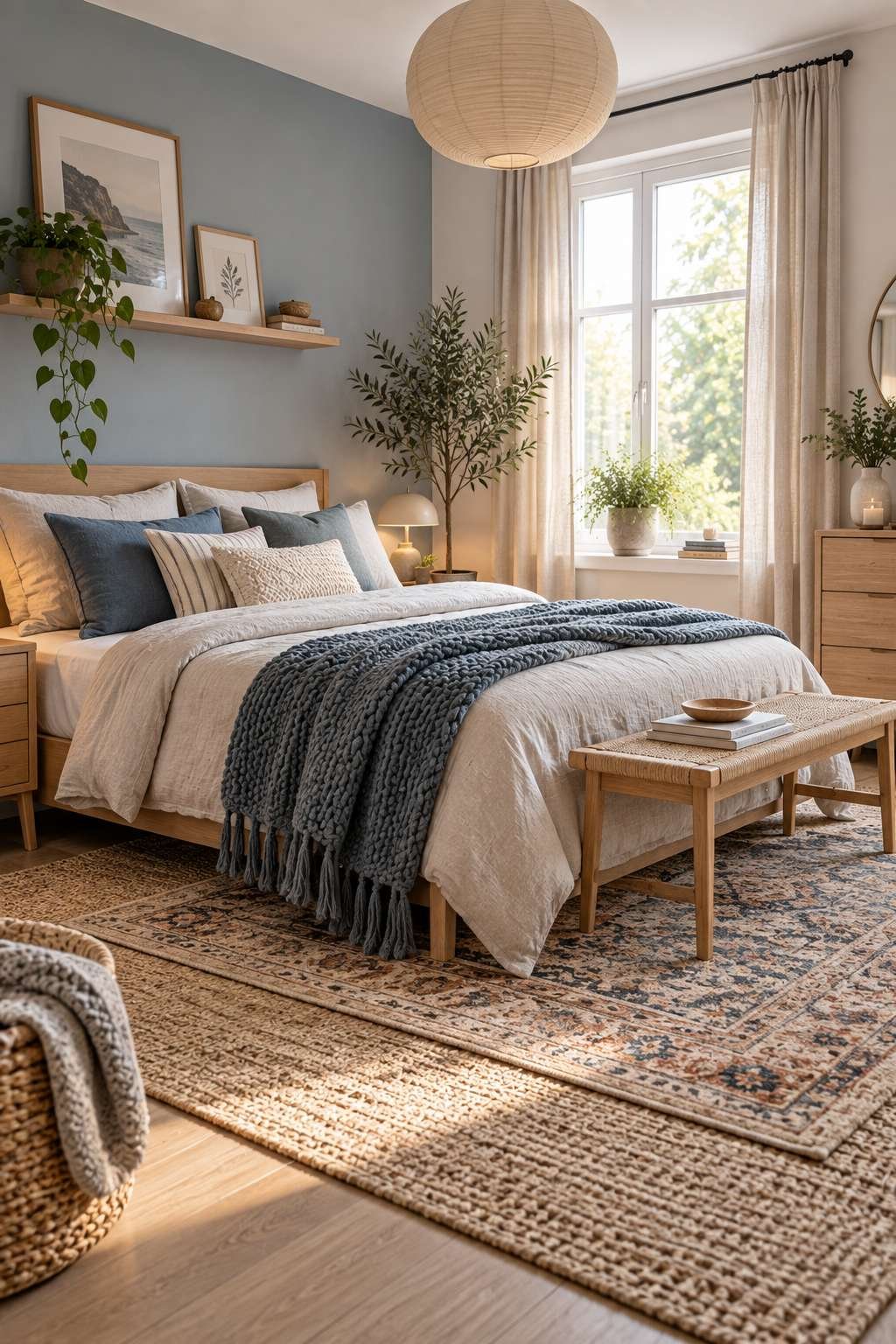
Size your rug so at least the front legs of the bed and nightstands rest on it. Layering a smaller vintage or patterned rug over a larger neutral one is a popular way to add character without overwhelming the space.
Curtains matter more than most people expect. Hanging them close to the ceiling and letting them fall just past the floor makes windows, and the whole room, appear taller.
- Mix at least three different textile textures
- Size the rug so key furniture legs sit on it
- Hang curtains high and long for height
- Layer a patterned rug over a neutral base
- Choose natural fibers where possible for texture variety
7. Create a Functional Desk or Workspace
Many bedrooms now double as a workspace, especially in smaller homes. A small dedicated desk area keeps work materials contained instead of spreading across the whole room. Position it near natural light when possible, but out of the direct line of sight from the bed.
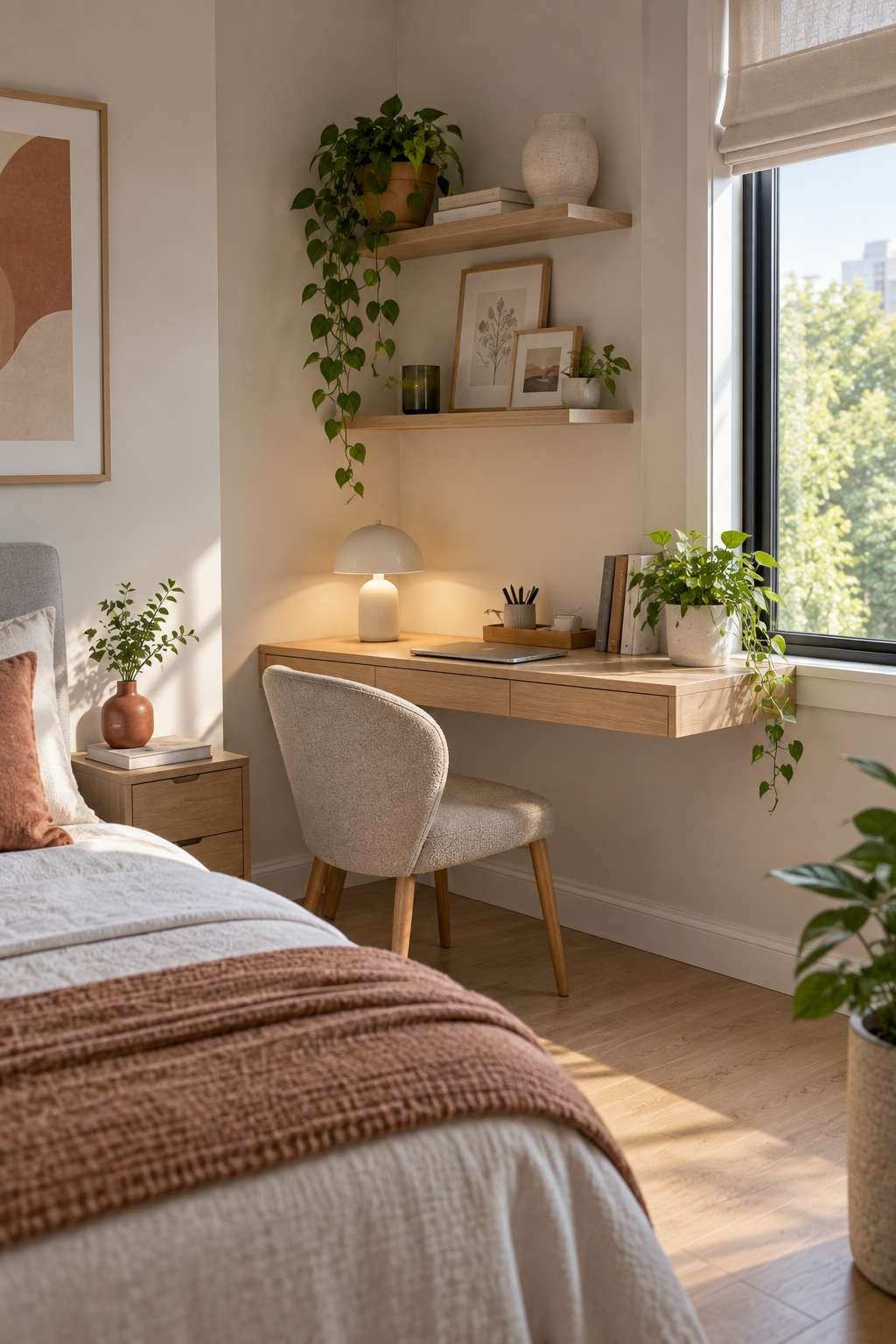
Keep the surface as clear as possible when not in use, since visual clutter near a bed can affect sleep quality. A stylish desk lamp, a small tray for supplies, and a comfortable chair are usually all you need. For a full breakdown of layouts, cord management, and furniture picks, see our companion guide, How to Decorate Bedroom Desk Area.
If floor space is limited, a slim floating desk or a repurposed console table can handle the job without dominating the room.
- Position the desk near a window if possible
- Choose a chair that’s actually comfortable for hours of use
- Keep the surface clear when work is done
- Use a floating desk to save floor space
- Add a small lamp for focused task lighting
8. Incorporate Storage Solutions
Clutter undoes even the most carefully planned bedroom, so storage needs to be part of the design from the start. Under-bed storage bins make use of otherwise wasted space, especially in smaller rooms. A well-organized closet system prevents overflow onto chairs and floors.
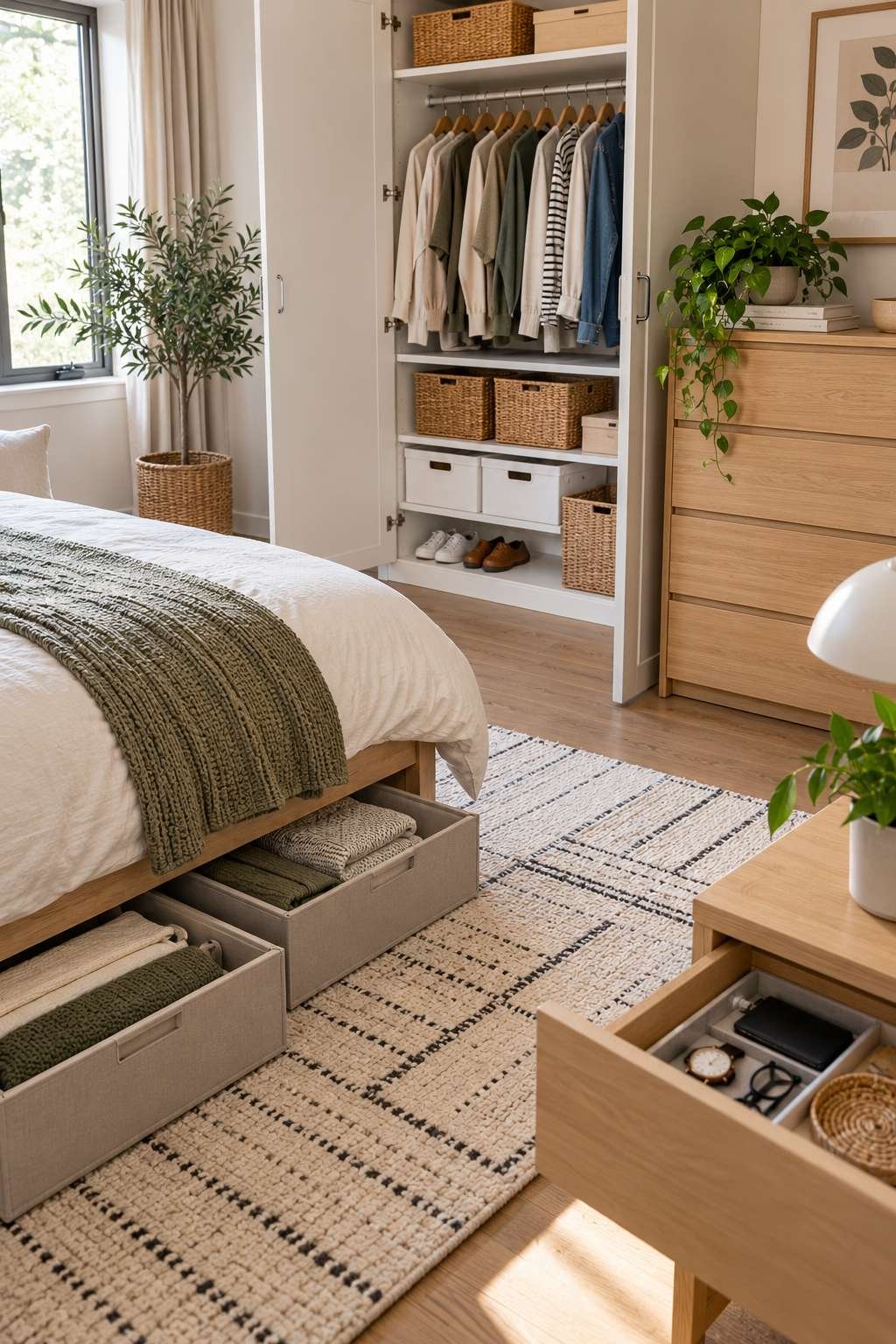
Nightstands with drawers hide daily essentials better than open shelves. Baskets and decorative boxes on a dresser corral small items while still looking intentional. Built-in shelving, where possible, blends storage directly into the room’s architecture.
The goal is storage that supports the room’s look rather than competing with it, so choose finishes that match your existing furniture.
- Use under-bed bins for seasonal items
- Choose nightstands with at least one drawer
- Add baskets to corral small loose items
- Match storage finishes to existing furniture
- Reassess and declutter storage every few months
9. Personalize With Art and Accessories
A bedroom without personal touches can feel more like a hotel room than a home. Framed photos, travel finds, or a piece of art tied to a memory make the space feel genuinely yours. Personal accessories are what separate a Pinterest-perfect room from one that actually feels like you.
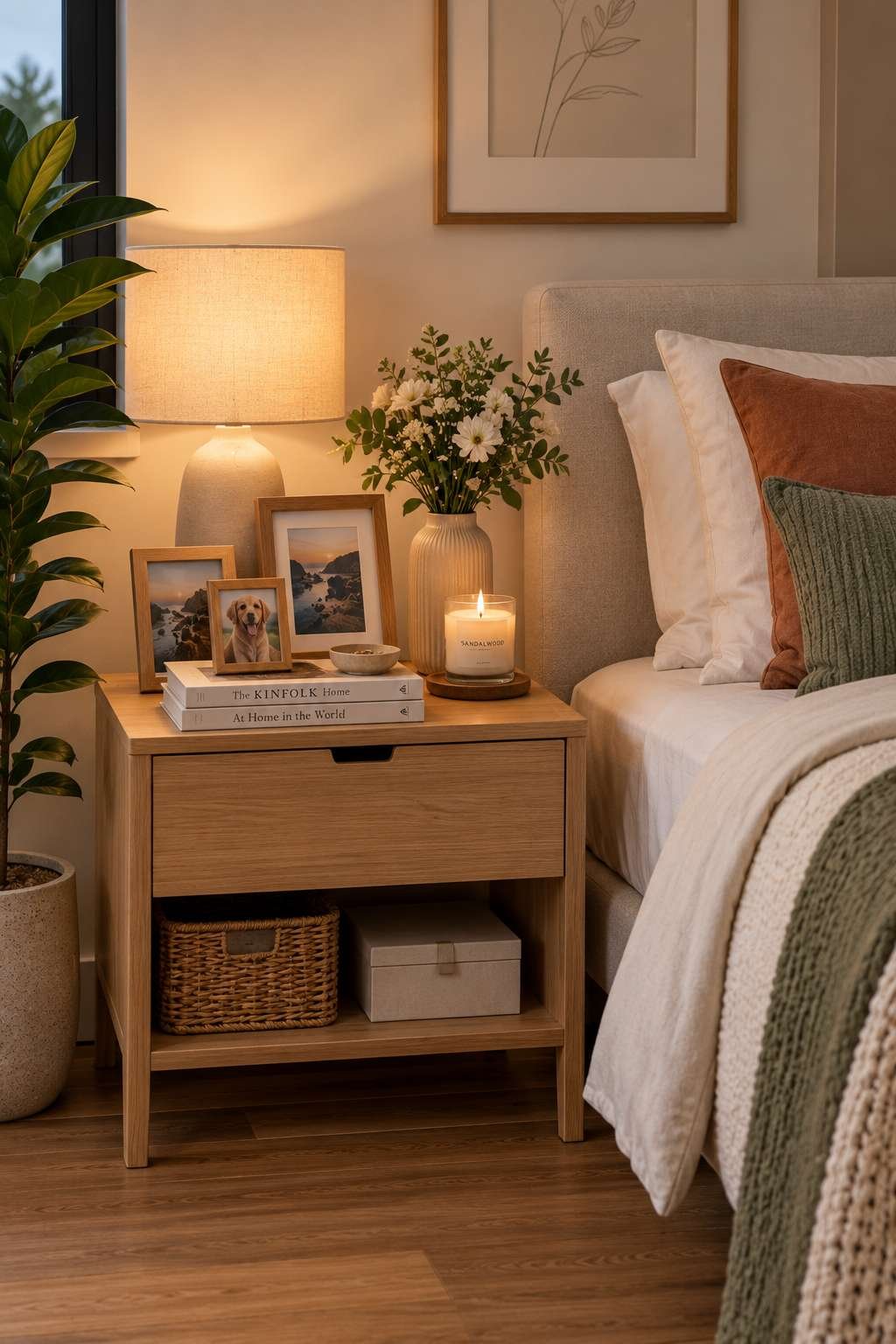
Rotate smaller decor items seasonally to keep the room feeling fresh without a full redesign. A scented candle, a small vase of fresh flowers, or a stack of favorite books on the nightstand all add character in minutes.
Avoid over-styling every surface. Leaving some negative space actually makes the personal items you do display stand out more.
- Display at least one meaningful personal item
- Rotate small decor pieces seasonally
- Keep some surfaces intentionally empty
- Add a scented candle for atmosphere
- Choose accessories that reflect your actual interests
10. Add Final Touches and Greenery
The last ten percent of decorating is what makes a room feel finished rather than merely furnished. A potted plant or two adds life and softens hard edges throughout the space. Low-light varieties like pothos or snake plants thrive even in bedrooms with limited natural light.
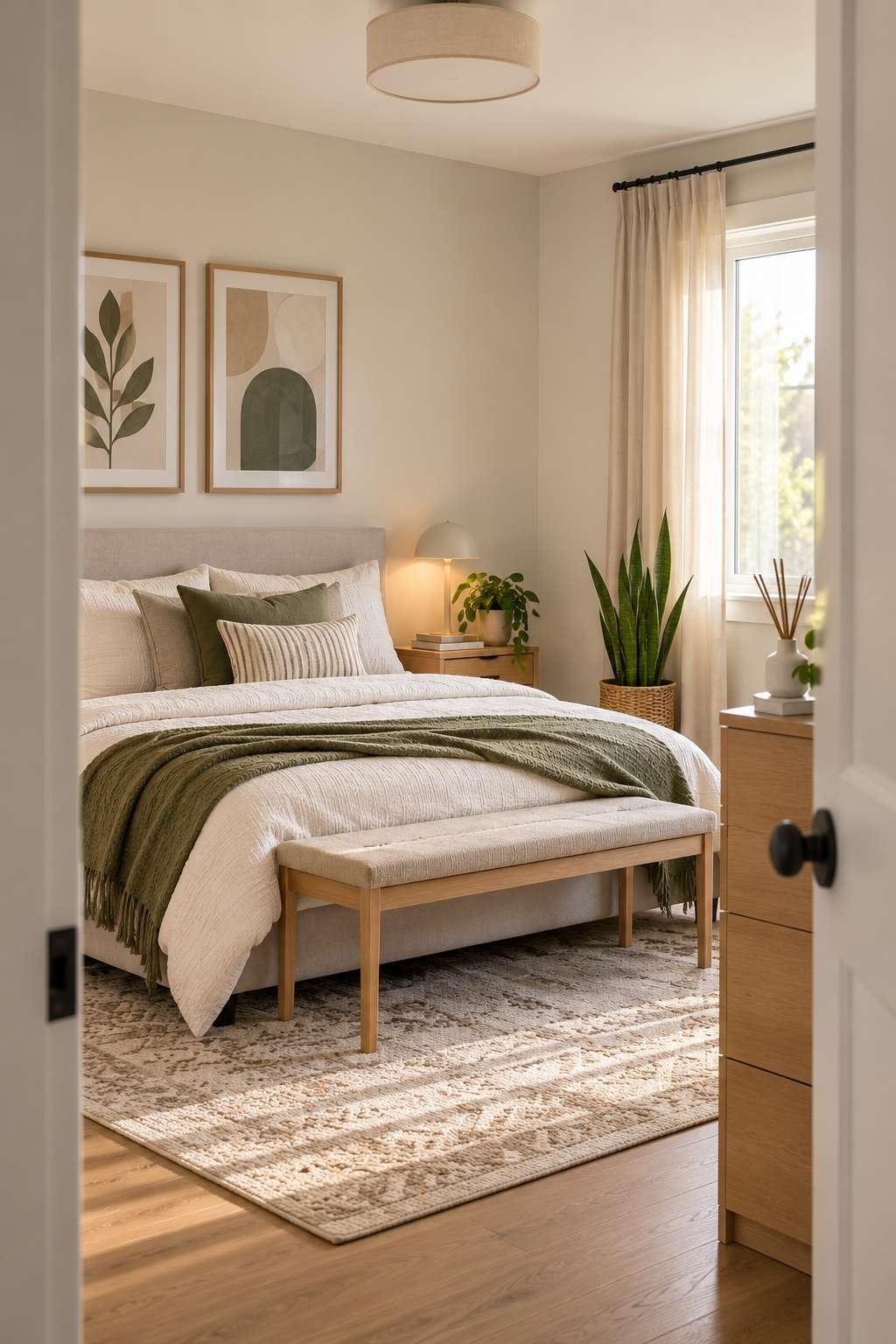
Scent plays a bigger role than most people realize. A quality candle or diffuser in a signature scent creates an emotional association with the room over time. Finally, step back and view the room from the doorway, since that’s the angle you’ll see most often.
Small adjustments at this stage, like swapping a lampshade or repositioning a chair, often make a bigger visual difference than expected.
- Add one or two easy-care plants
- Introduce a signature scent with a candle or diffuser
- View the finished room from the doorway
- Make small adjustments before calling it done
- Live in the space for a week before final tweaks
Conclusion
Decorating a bedroom well comes down to layering thoughtful decisions, one stage at a time, rather than chasing a single perfect purchase. Start with a clear color palette, build around a well-chosen bed, and let lighting, texture, and personal touches do the rest.
Give yourself permission to experiment as you go. The best bedrooms evolve over time, and small adjustments now will keep the space feeling right for years to come.

