


Most people eyeball their detergent every wash day, but getting how much laundry detergent to use right actually matters more than it seems. Too much leaves residue and shortens the life of your machine; too little means clothes come out less clean than they should. This guide breaks down exactly how to measure correctly for your specific machine, water type, and load.
Detergent dosing isn’t one-size-fits-all, and the “right” amount depends on several factors working together. Once you understand those factors, you’ll never have to guess again.
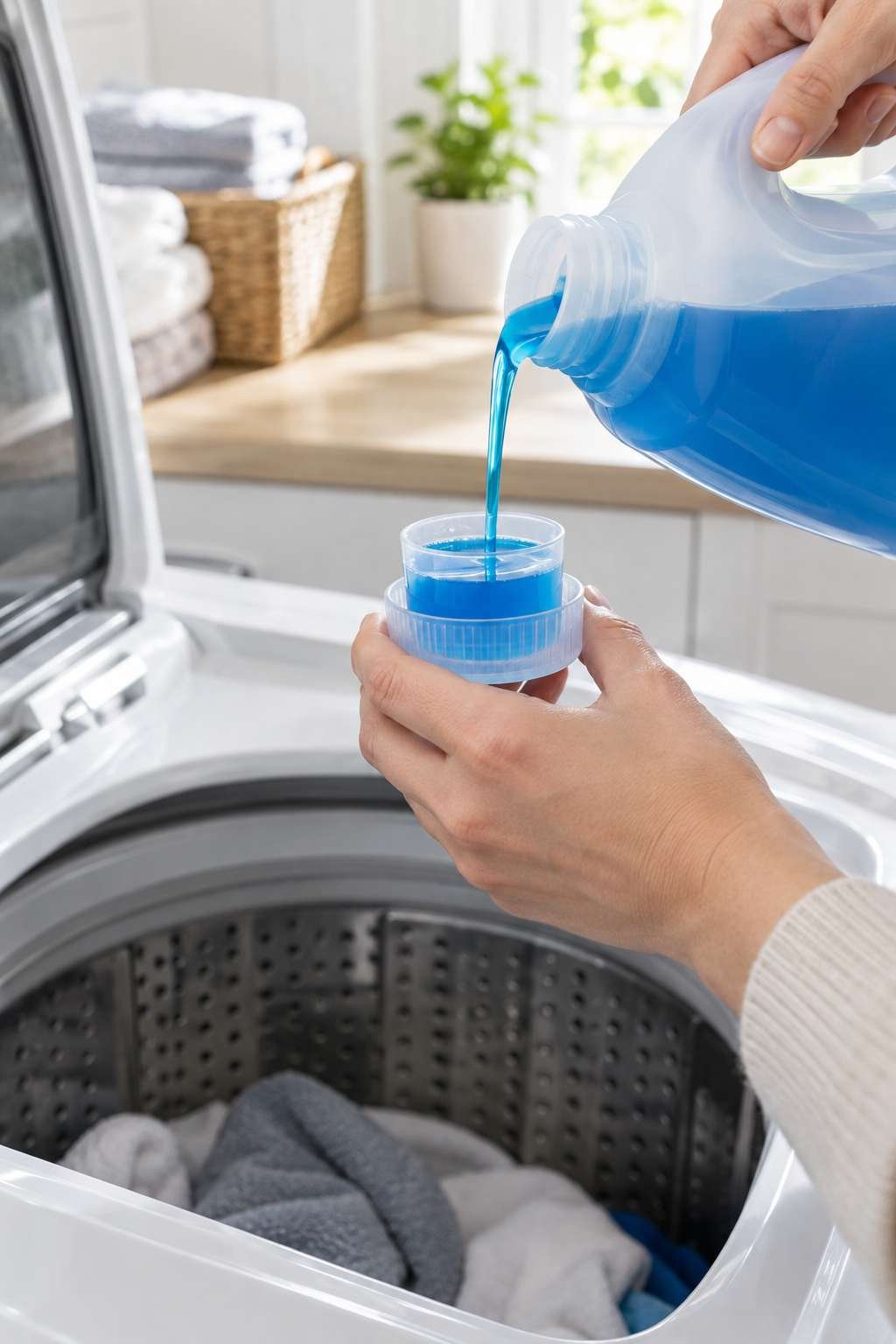
1. Why the Right Detergent Amount Matters
Using too much detergent doesn’t mean cleaner clothes — it usually means the opposite. Excess suds trap dirt back into fabric instead of rinsing it away, and leftover residue can irritate skin or build up inside your machine over time.
There’s also a safety and ingredient angle worth considering, since some detergent formulas contain harsher chemicals than others. If you’re curious how your current brand compares, it’s worth reading up on which formulas rank among the more concerning options, including a breakdown of what’s considered the most toxic laundry detergent on the market today.
- Understand that more detergent doesn’t equal cleaner clothes
- Recognize that excess suds can redeposit dirt onto fabric
- Consider ingredient safety alongside cleaning performance
- Know that residue buildup can affect your machine over time
- Factor in skin sensitivity when choosing dosage and formula
- Read the label fully before assuming the “fill line” is universal
2. Check Your Detergent’s Cap or Scoop Measurements
Every detergent bottle or box includes a built-in measuring cap or scoop, and this is your starting reference point for any load. Manufacturers calibrate these markings to their specific formula concentration, so don’t assume one brand’s cap line matches another’s.
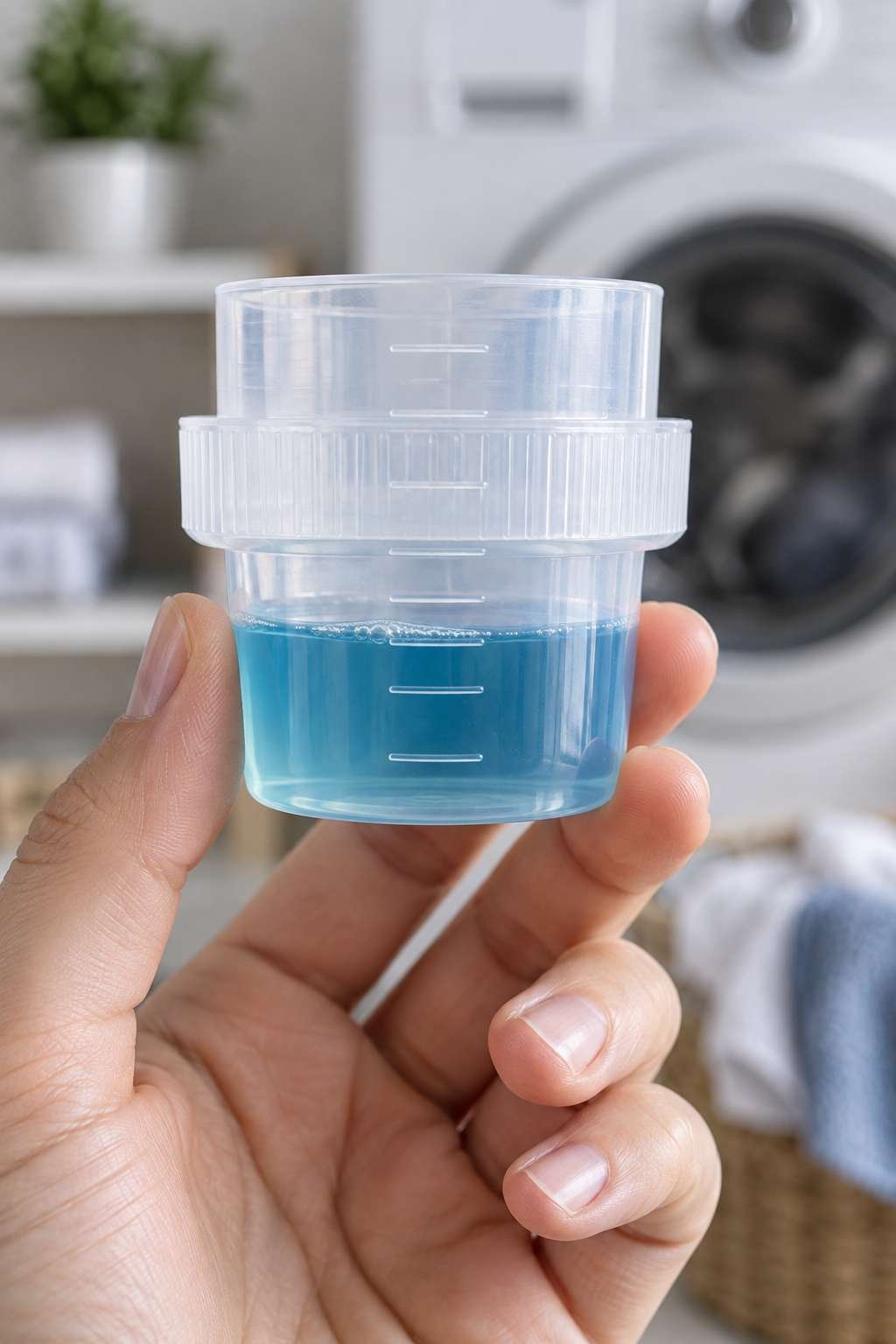
Look closely at the cap, since many have multiple fill lines representing small, medium, and large loads. Using the correct line for your actual load size prevents the most common dosing mistake people make.
- Locate the fill lines printed on your detergent cap or scoop
- Match the fill line to your actual load size, not habit
- Avoid guessing based on a different brand’s cap markings
- Rinse the cap after each use to keep markings visible
- Replace a lost or damaged cap with the manufacturer’s official one
- Check for updated fill line instructions if you switch formulas
3. Adjust for Load Size
A small load of a few items needs far less detergent than a full drum of towels and bedding. Many machines offer load-size settings, and pairing the correct detergent amount with the correct setting keeps both water usage and cleaning power balanced.
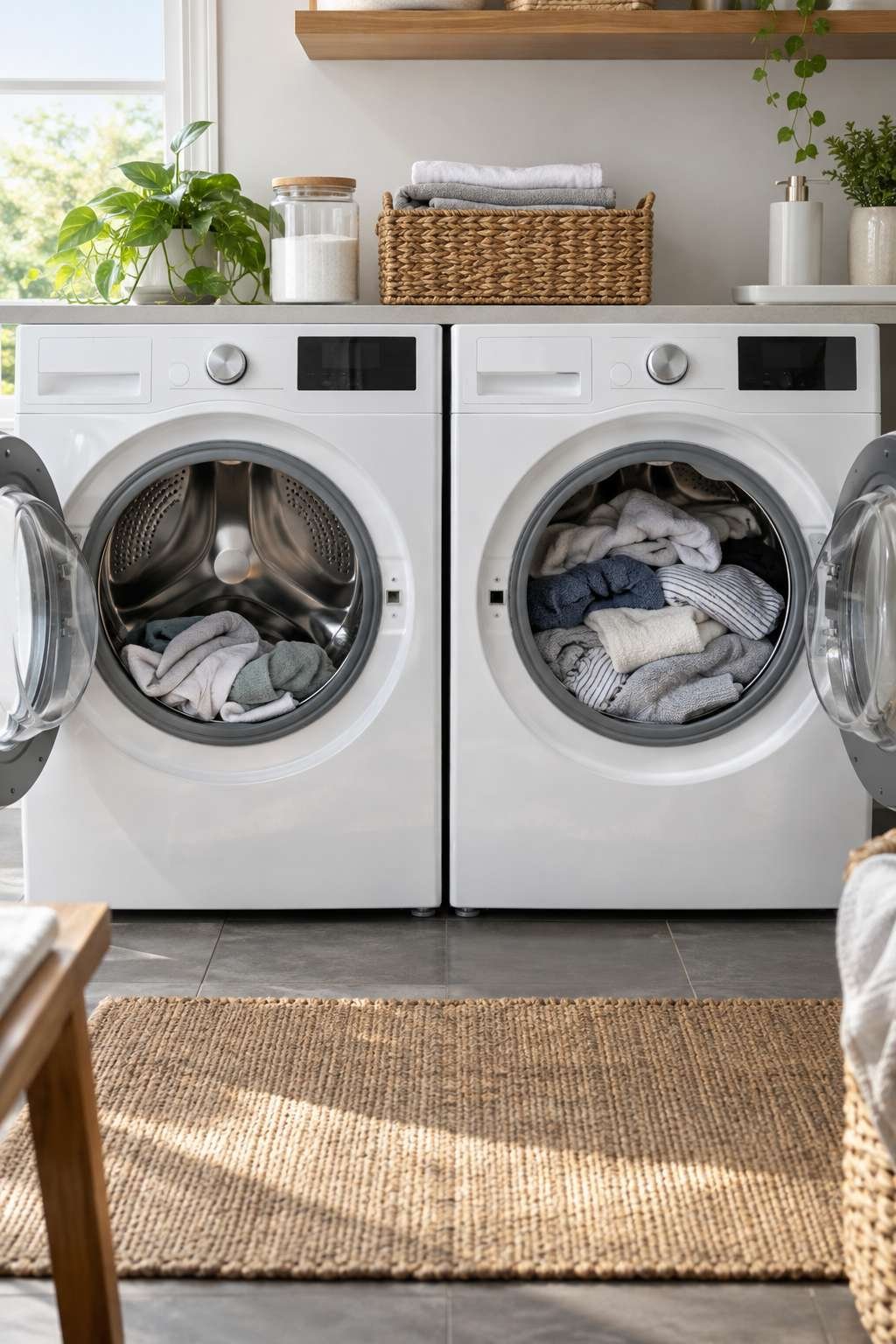
Overestimating load size is a common habit, especially when people combine several small loads into one large wash without adjusting detergent accordingly. Weigh or visually estimate your load honestly before measuring.
- Use the smallest fill line for loads under half the drum
- Increase to the medium line for a moderately full drum
- Reserve the largest line only for a completely full load
- Recalculate detergent amount when combining multiple small loads
- Avoid overfilling the drum, which reduces cleaning effectiveness anyway
- Adjust downward if you notice suds still visible after rinsing
4. Adjust for Water Hardness
Hard water requires more detergent to achieve the same cleaning power, since minerals in the water interfere with how well soap and surfactants work. Soft water, on the other hand, often needs less than the label suggests.

If you’re unsure about your water hardness, a simple test kit from a hardware store can tell you within minutes. Adjusting your dosage based on this single factor often solves persistent “clothes don’t feel clean” complaints.
- Test your home’s water hardness if you’re unsure
- Increase detergent slightly for known hard water areas
- Reduce detergent slightly if you have naturally soft water
- Consider a water softener if hardness is consistently high
- Watch for stiff, scratchy fabric as a hard-water dosing clue
- Re-test water hardness periodically, since it can change seasonally
5. Adjust for Soil Level
Heavily soiled clothing, like workwear or gym clothes, generally needs a bit more detergent than lightly worn everyday items. Most detergent caps include a soil-level guide alongside the load-size markings, so check both together rather than relying on just one.
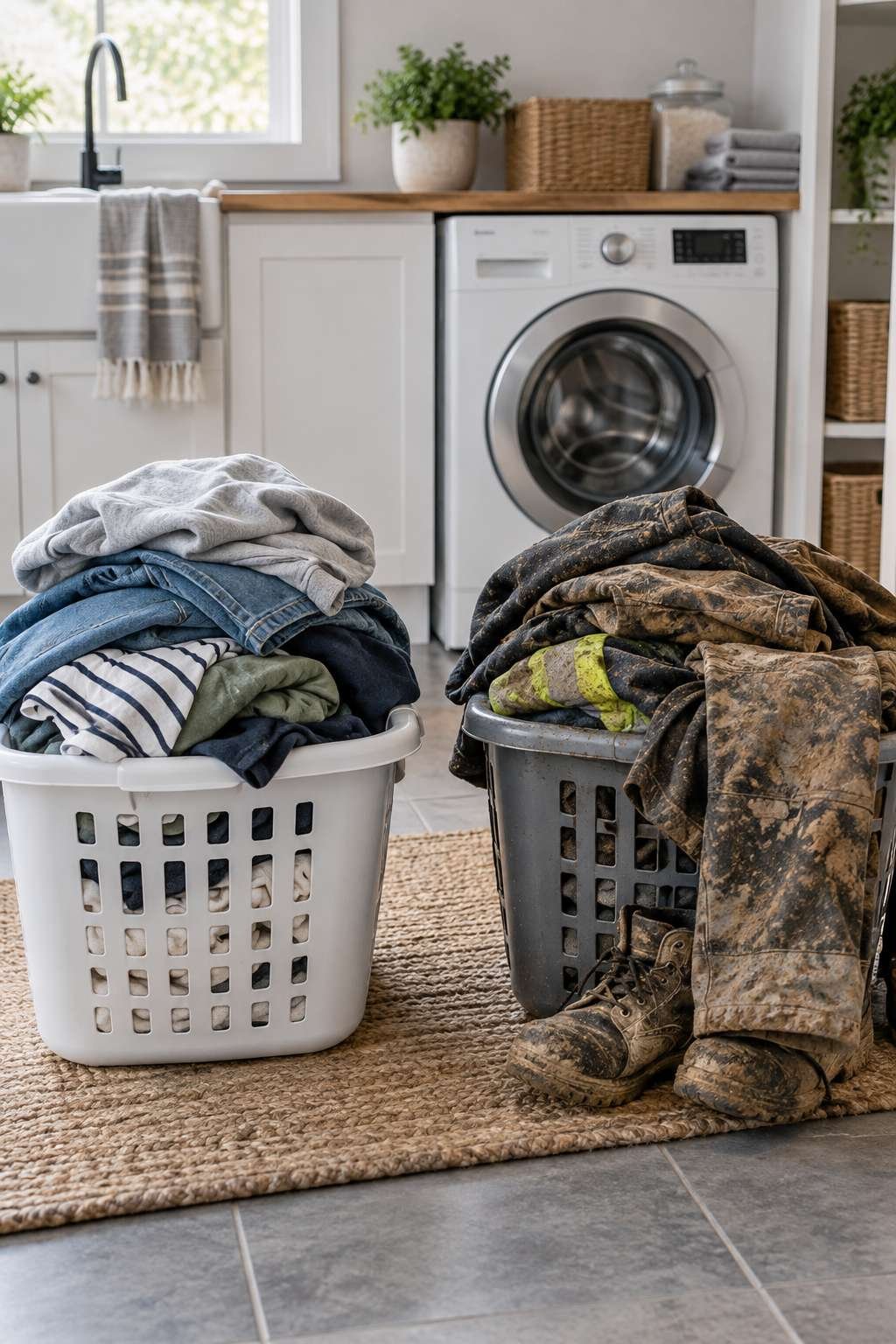
Pre-treating especially dirty items separately, rather than dumping extra detergent into the whole load, usually produces better results than simply increasing the overall dose.
- Match detergent amount to both load size and soil level together
- Pre-treat heavily soiled spots instead of adding more detergent overall
- Use a slightly higher dose only for genuinely dirty loads
- Keep lightly soiled loads at the standard or lower fill line
- Separate very dirty items into their own load when possible
- Avoid the instinct to “add a little extra” out of habit
6. High Efficiency vs Standard Machines
High efficiency (HE) machines require specially formulated low-sudsing detergent, and using regular detergent in an HE machine often means overdosing without realizing it. If you’re not sure whether your detergent is HE-compatible, check the label for the “HE” symbol.
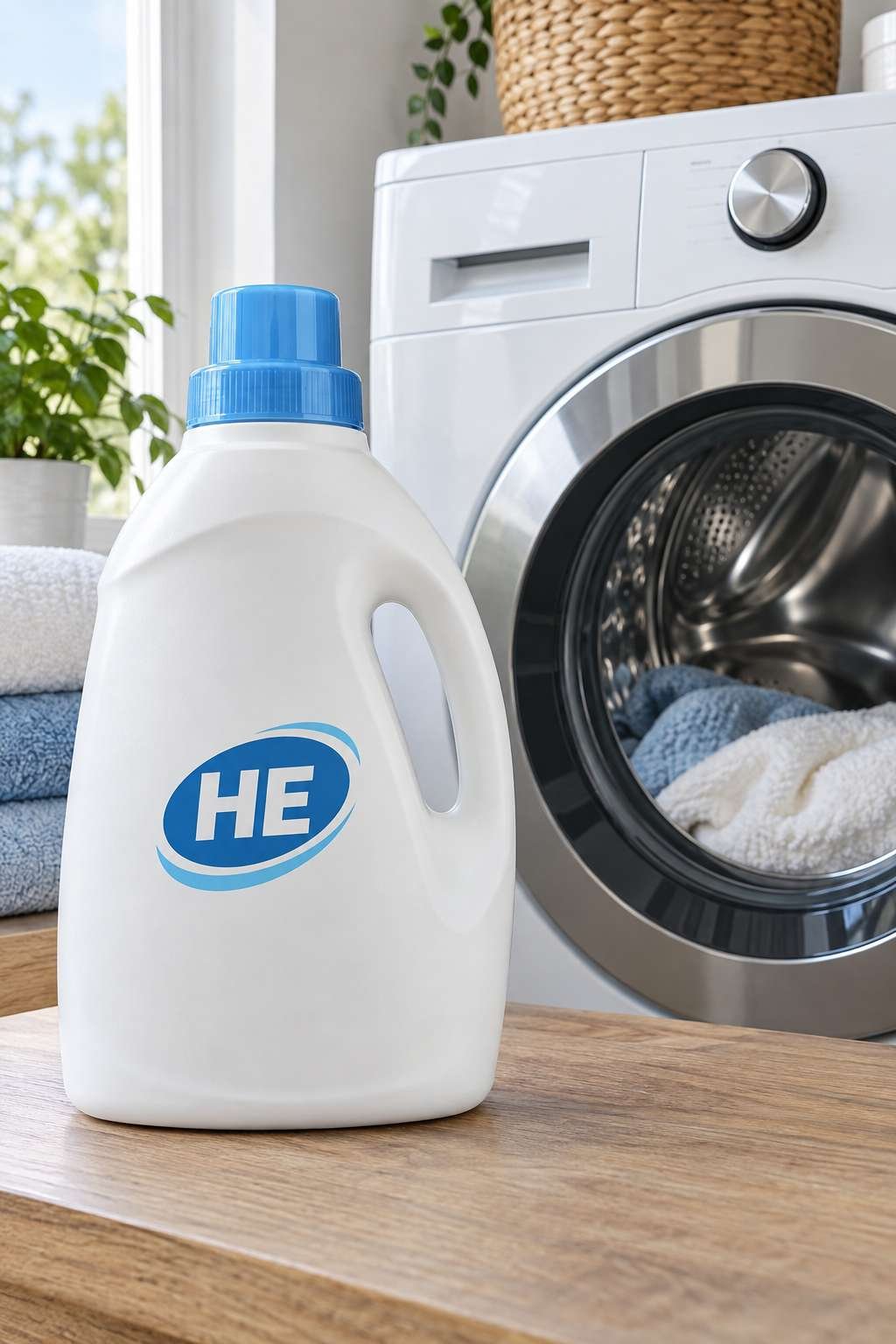
Understanding exactly what high efficiency laundry detergent actually is — and how it differs chemically from standard formulas — helps explain why the dosing instructions on HE bottles are usually smaller than what you might expect from older detergent habits.
- Confirm your machine is HE before buying detergent
- Look for the HE symbol printed on compatible detergent bottles
- Use less detergent than you might with a standard-machine habit
- Avoid switching between HE and non-HE detergent without adjusting dose
- Watch for excess suds as a sign of using non-HE formula in an HE machine
- Follow the HE-specific fill lines rather than general guidelines
7. Powder vs Liquid vs Pods Dosing
Each detergent format measures differently. Powder detergent is measured by scoop, liquid by cap volume, and pods are pre-measured as a single unit per load, which removes guesswork entirely but offers less flexibility for adjusting dose.
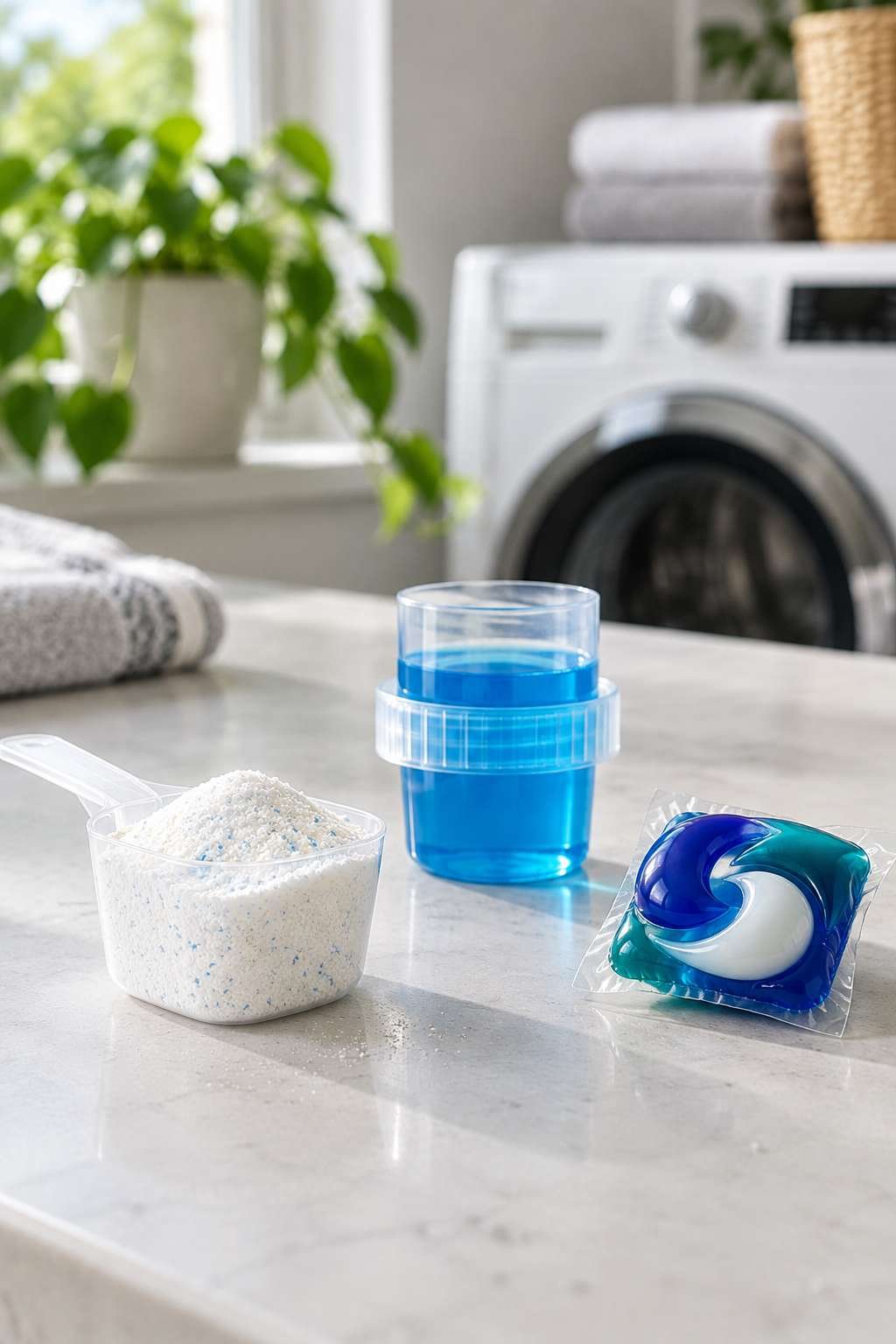
If you’re interested in more control over your formula and dosing, some people prefer mixing their own, and our guide on how to make powder laundry detergent at home walks through building a custom recipe with adjustable measurements.
- Measure powder detergent by scoop, leveled rather than heaping
- Measure liquid detergent to the correct cap fill line
- Use one pod per standard load, two only for very large or dirty loads
- Avoid cutting pods open to “adjust” the dose, which is imprecise and messy
- Store powder in a dry container to keep scoop measurements accurate
- Choose the format that best matches how much control you want over dosing
8. Signs You’re Using Too Much Detergent
Visible suds still present after the rinse cycle is the clearest sign of overdosing. Other signs include a stiff or waxy feel to fabric, a lingering soapy smell even after drying, or faint white residue marks on dark clothing.
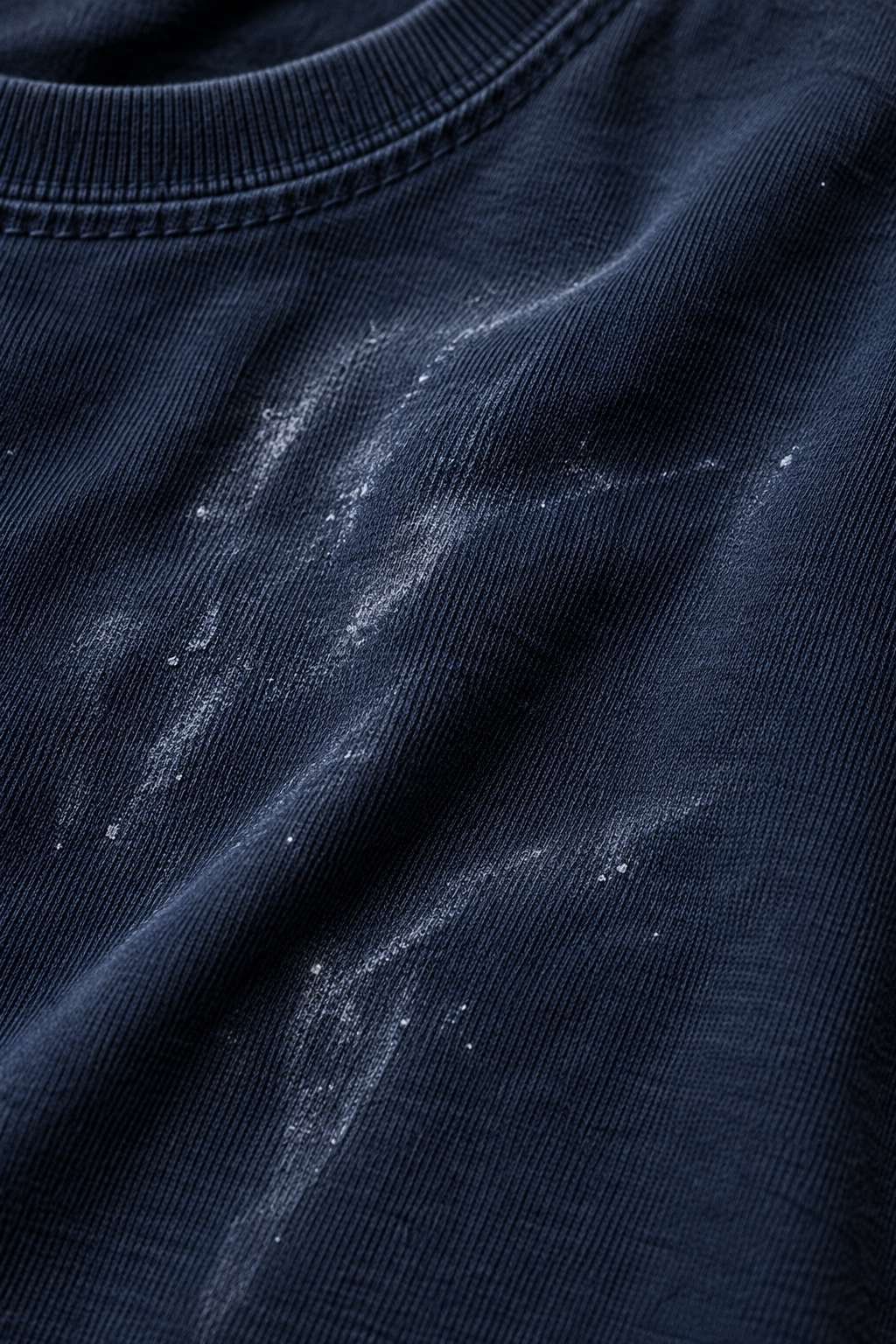
If you’re already noticing marks on clothes, it’s worth learning how to get laundry detergent stains out of clothes you’ve already washed, since a simple re-wash with less detergent and an extra rinse cycle often resolves the issue.
- Watch for suds still visible at the end of the rinse cycle
- Feel fabric for a stiff or waxy texture after drying
- Notice any lingering soapy smell on clean, dry clothes
- Check dark clothing for faint white detergent residue marks
- Run an extra rinse cycle if residue appears on a recent load
- Reduce your dose gradually until these signs disappear
9. Signs You’re Using Too Little Detergent
Underdosing shows up differently: clothes may still smell faintly of sweat or odor after washing, visible stains may not lift completely, and whites can gradually look dingy over repeated washes. This is especially common in hard water areas without an adjusted dose.
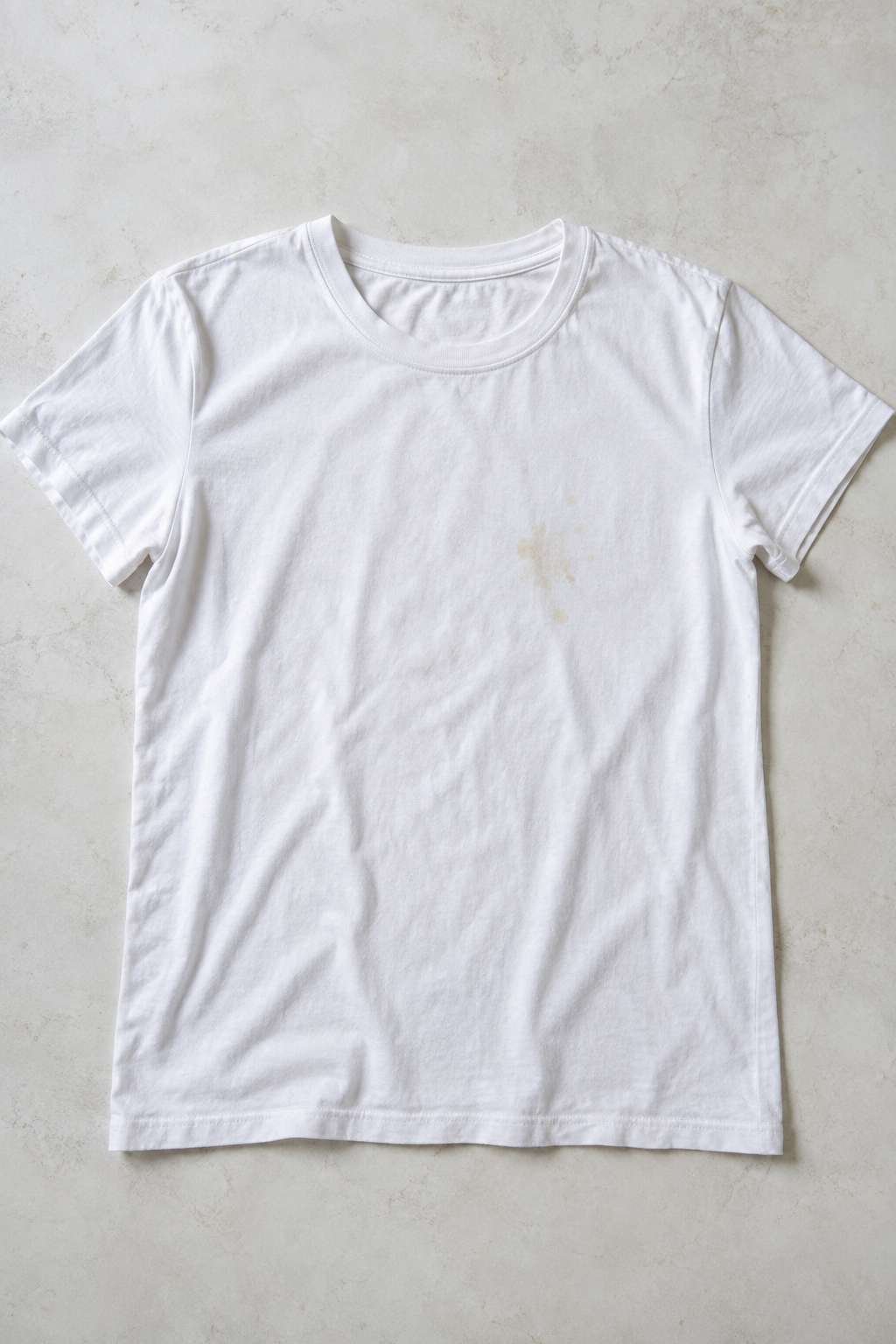
If you’re consistently seeing these signs, increase your detergent gradually rather than dramatically, checking results after each adjustment before increasing further.
- Notice lingering odor in clothes after a completed wash cycle
- Watch for stains that don’t fully lift despite a normal cycle
- Check whites periodically for gradual dinginess over time
- Increase dose incrementally rather than doubling it at once
- Reassess water hardness if underdosing symptoms persist
- Confirm you’re using the correct fill line for your actual load size
10. Building a Consistent Dosing Routine
Once you understand the variables — load size, water hardness, soil level, and machine type — dosing becomes second nature rather than a guessing game. Keep your detergent’s cap or scoop as your consistent reference point every single time.
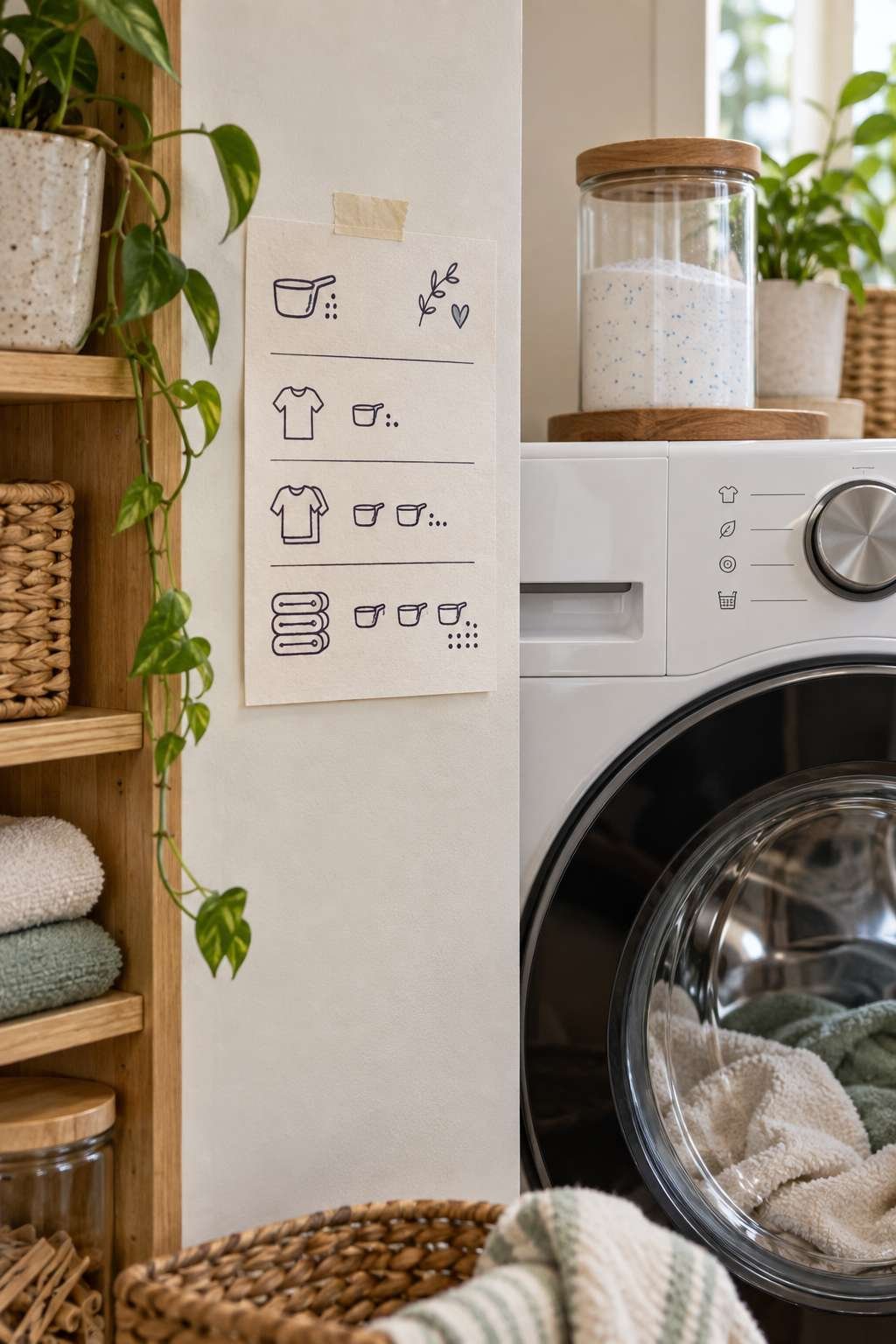
Consider keeping a small note near your machine listing your household’s typical adjustments, especially if multiple people in your home do laundry. This small habit keeps everyone using a consistent, correctly measured amount instead of reverting to guesswork.
- Use the same measuring cap or scoop consistently for accuracy
- Post a quick reference note near the machine for household members
- Reassess your routine if you switch detergent brands or formulas
- Revisit water hardness and soil-level adjustments periodically
- Teach household members the correct fill lines, not rough estimates
- Treat detergent dosing as a habit worth getting right, not an afterthought
Frequently Asked Questions
How do you use powder laundry detergent?
Measure powder detergent using the scoop provided, leveling it off rather than heaping for an accurate dose, and add it directly to the drum or designated dispenser compartment before starting the cycle. Make sure the powder is fully dry and free of clumps for the most even distribution during the wash.
How do you remove laundry detergent stains?
Re-wash the affected clothing using an extra rinse cycle and little to no additional detergent, since the stain is usually residue rather than dirt. For stubborn marks, gently rub the spot with a damp cloth before rewashing, or soak the item briefly in plain water first.
Getting your detergent dose right is one of the simplest changes you can make to improve laundry results without buying new equipment or switching detergent entirely. Pay attention to your cap’s fill lines, adjust for your specific water and load conditions, and watch for the signs of over- or under-dosing along the way.
With a little attention, this small daily habit pays off in cleaner clothes, a healthier machine, and less detergent wasted over time.

