


Not every door in a living room adds to the design. Closet doors, utility doors, and awkwardly placed entries can break the flow of an otherwise beautiful space. Hiding or disguising these doors creates a seamless and polished look that keeps the room feeling cohesive.
You do not need a major renovation to make a door disappear. Creative solutions using paint, curtains, furniture, and clever styling can effectively camouflage an unwanted door while keeping it fully functional. These practical ideas work for renters and homeowners alike. It’s a similar trade-off to deciding on these shower curtain vs glass door elsewhere in the space.
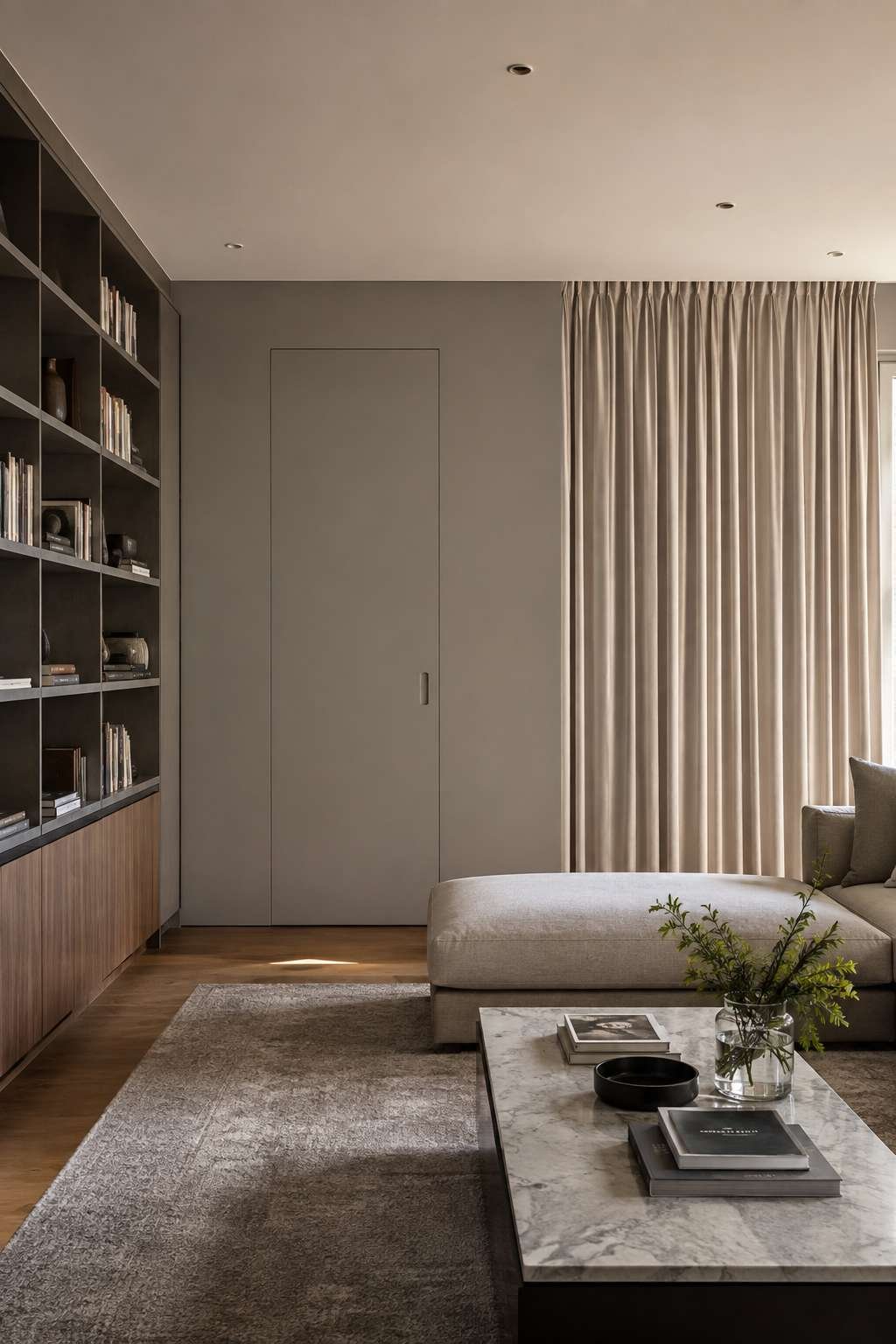
1. Paint the Door to Match the Wall
The simplest way to hide a door is to make it blend into the surrounding wall. Paint the door, frame, and trim the exact same color as the wall. Use the same finish as well, whether that is matte, eggshell, or satin. When everything matches, the door visually disappears.
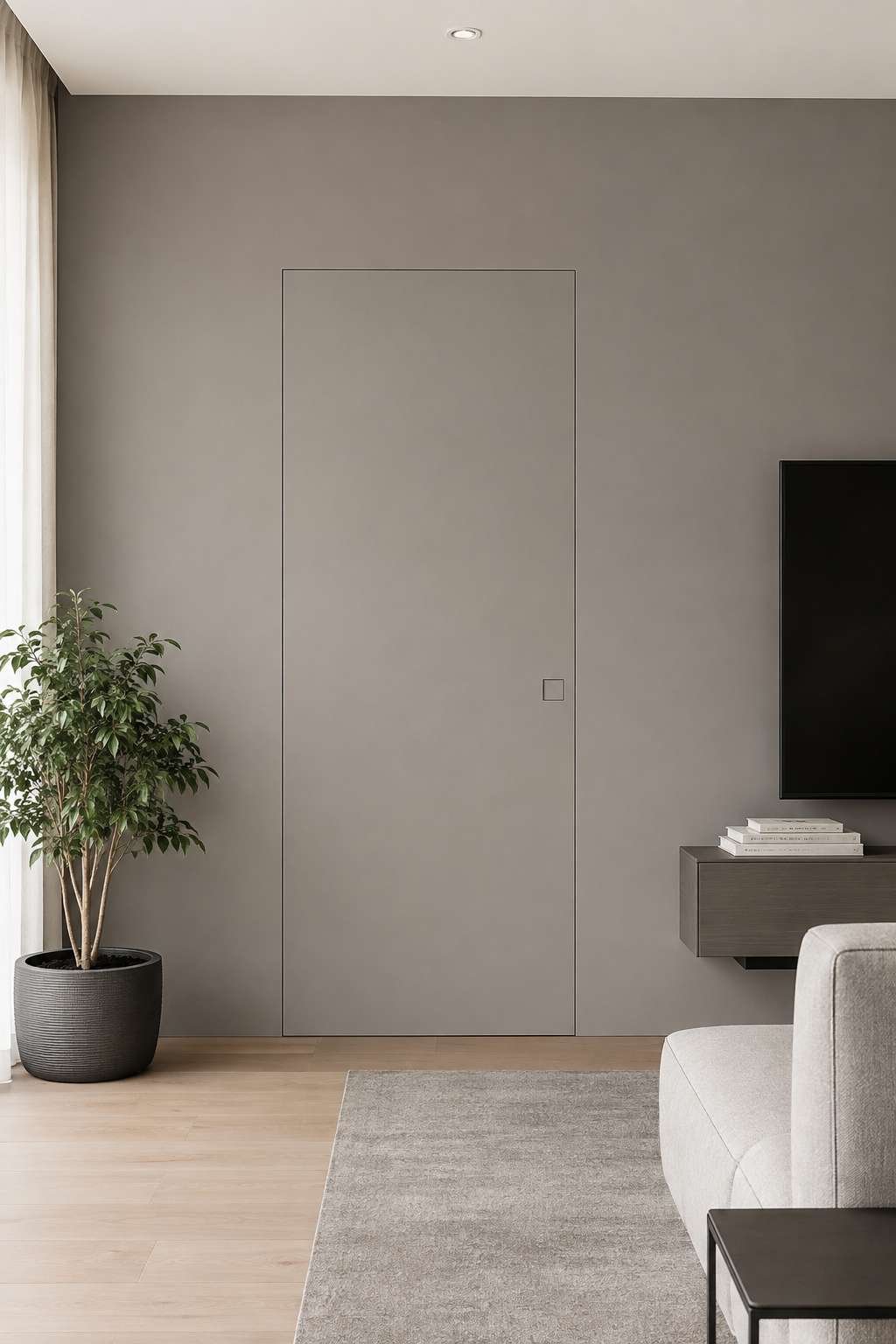
For maximum effect, swap a standard knob for a flush or recessed handle . This eliminates the protruding hardware that draws attention. A painted door with minimal hardware becomes just another section of wall, especially in rooms with neutral or light-colored walls. Our neutral living room ideas has more inspiration along these same lines.
- Paint the door, frame, and trim in the identical wall color
- Use the same paint finish across both surfaces
- Replace the knob with a flush or push-latch mechanism
- Remove decorative molding from the door for a flat profile
- Touch up paint regularly to maintain the seamless illusion
2. Cover the Door With a Curtain or Drape
A floor-to-ceiling curtain is a stylish way to conceal a door completely. Install a curtain rod above the door frame that extends wider than the door. Choose a fabric that matches your existing curtains or complements your living room palette.
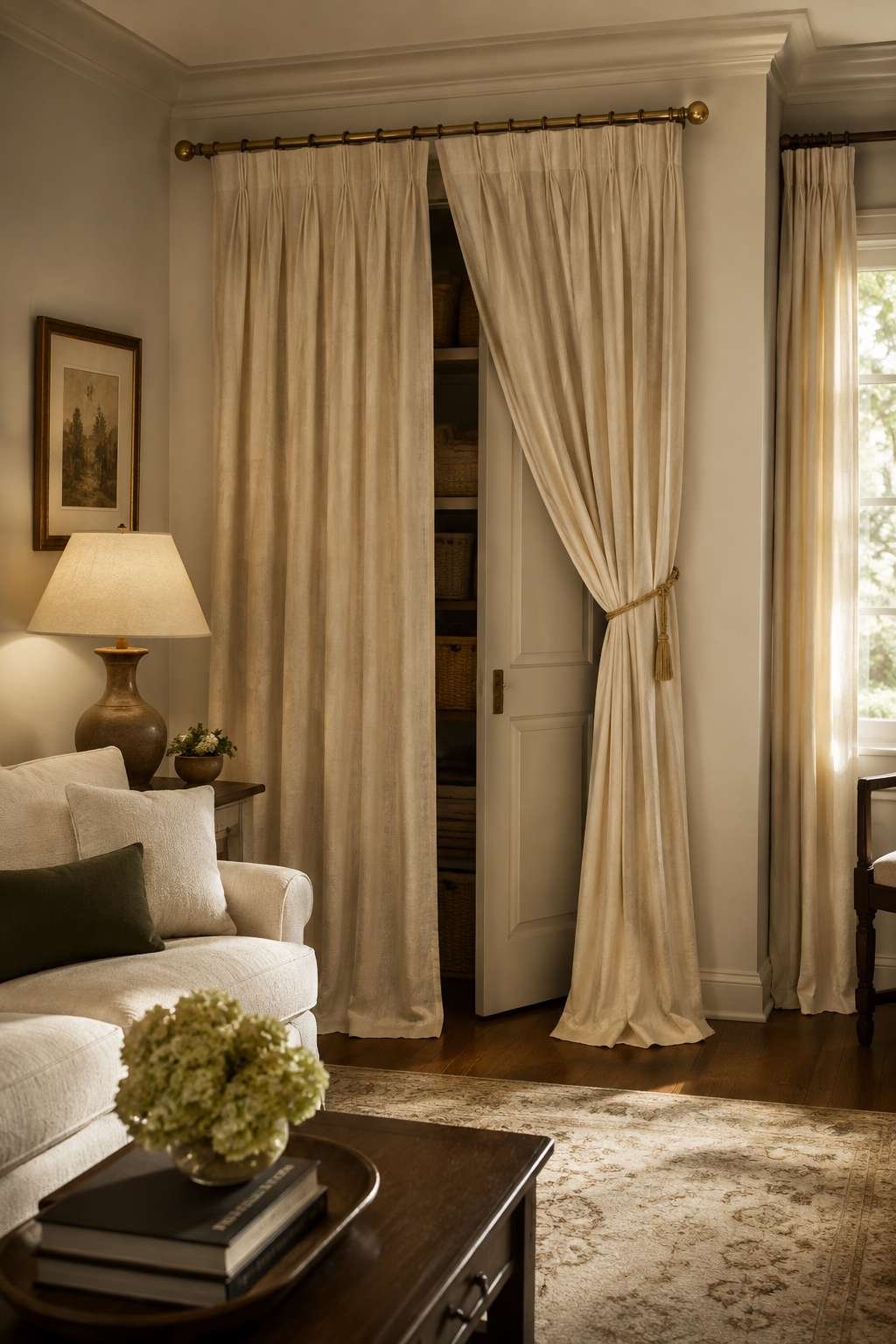
This method works especially well for closet doors or storage areas accessed less frequently. A heavy linen or velvet drape hides the door while adding texture and softness to the room. When you need access, simply pull the curtain aside.
- Mount the rod several inches above and wider than the door frame
- Use floor-length curtains that pool slightly at the bottom
- Choose fabric that matches or coordinates with room textiles
- Select a curtain color that blends with the wall tone
- Add a tieback on one side for easy access when needed
3. Place Furniture Strategically in Front
If the door is rarely used, positioning furniture in front of it is an effective visual disguise . A tall bookshelf, a console table, or a large plant placed against the door draws attention away from it. The door fades into the background behind the furniture. Our guide on how to place a rug in a living room walks through this step by step.
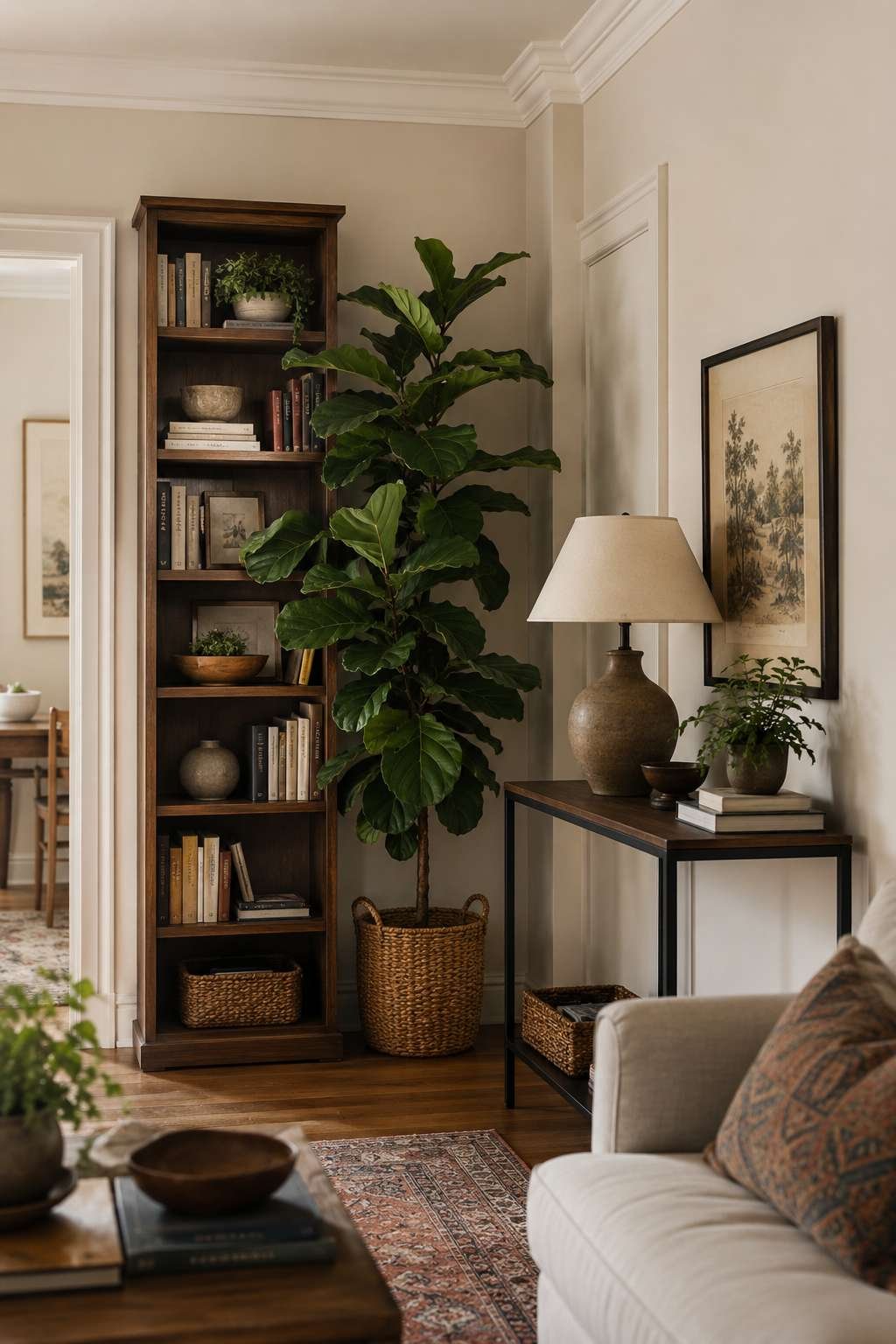
For doors that still need occasional access, use lightweight or movable pieces. A slim console table with décor on top partially hides the door while being easy to shift. A tall folding screen placed in front adds an architectural element that completely conceals the entrance.
- Place a tall bookshelf or étagère against an unused door
- Use a slim console table for doors needing occasional access
- Position a large floor plant or tree to block the door visually
- Add a decorative folding screen for a dramatic concealment
- Avoid blocking doors that serve as emergency exits
4. Create a Gallery Wall Around the Door
A gallery wall draws the eye to the artwork rather than the door itself. Extend framed prints and photographs across the wall and onto the door surface. When the door becomes part of a larger visual arrangement, it loses its identity as a separate element.
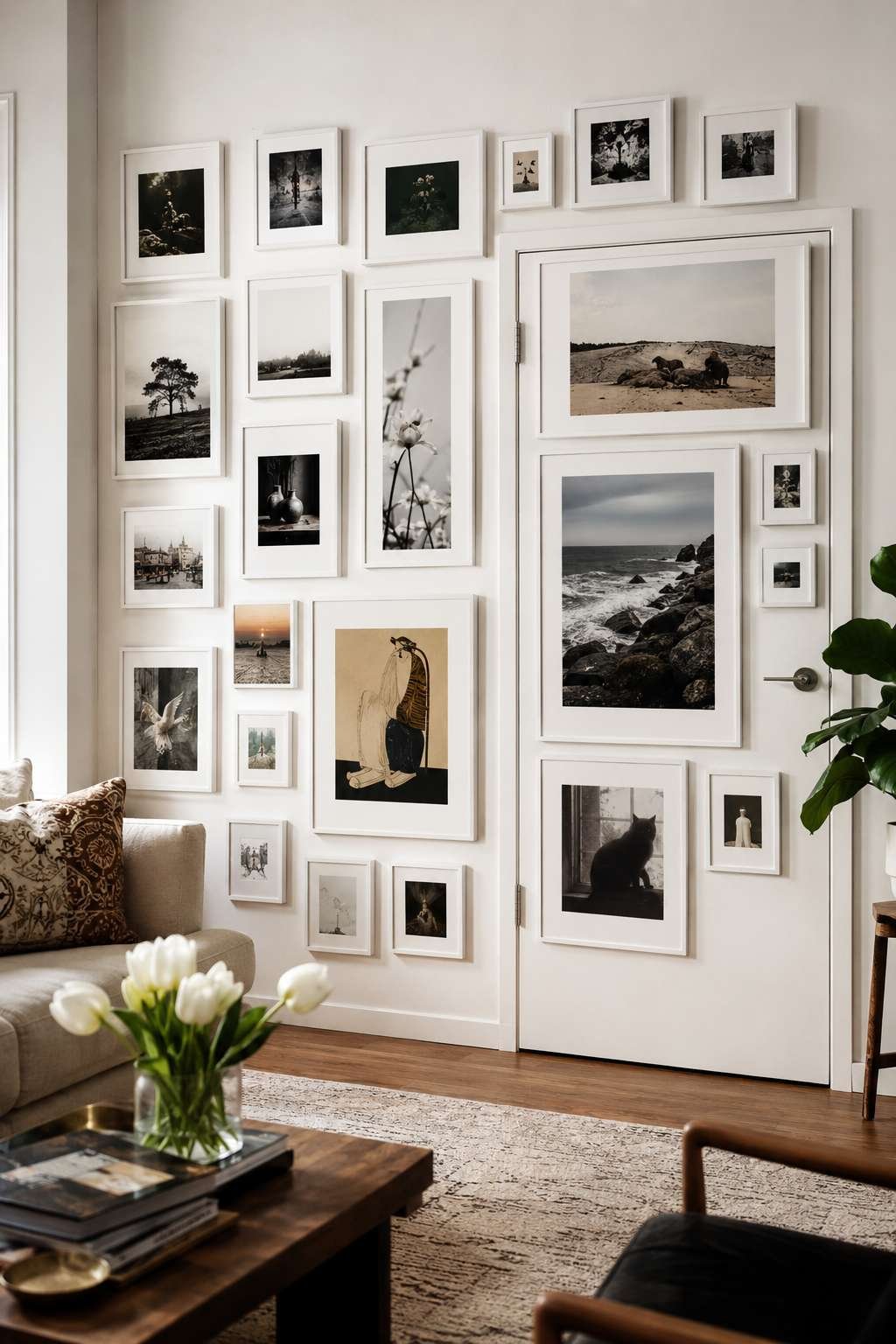
Use lightweight frames with adhesive strips on the door to avoid damage. Keep the spacing and frame styles consistent across the wall and door for a unified composition. This method works best on flat-panel doors without heavy molding.
- Hang frames on both the wall and the door surface itself
- Use adhesive hanging strips to avoid drilling into the door
- Keep frame styles and spacing consistent across the entire display
- Choose artwork that covers a large portion of the door
- Step back frequently to ensure the arrangement feels balanced
Conclusion
Hiding a door in your living room is easier than you think. Whether you paint it to match the wall, drape a curtain, place furniture strategically, or integrate it into a gallery wall, each method keeps the room looking intentional and uninterrupted.
Choose the solution that fits your lifestyle and access needs. The best hidden door is one that stays fully functional while blending effortlessly into your living room design.

