


Creating a neutral living room offers endless possibilities for sophisticated, timeless design. These versatile spaces provide the perfect canvas for personal expression. Neutral palettes create calm, balanced environments that adapt to changing styles and seasons.
Neutral living rooms have become increasingly popular for their ability to create serene sanctuaries. They offer visual rest in our busy modern lives. The beauty of neutral design lies in its complexity—far from boring, these spaces celebrate texture, material quality, and thoughtful layering. From warm beiges to cool greys, natural fibers to polished stones, neutral palettes encompass a rich spectrum of tones and materials.
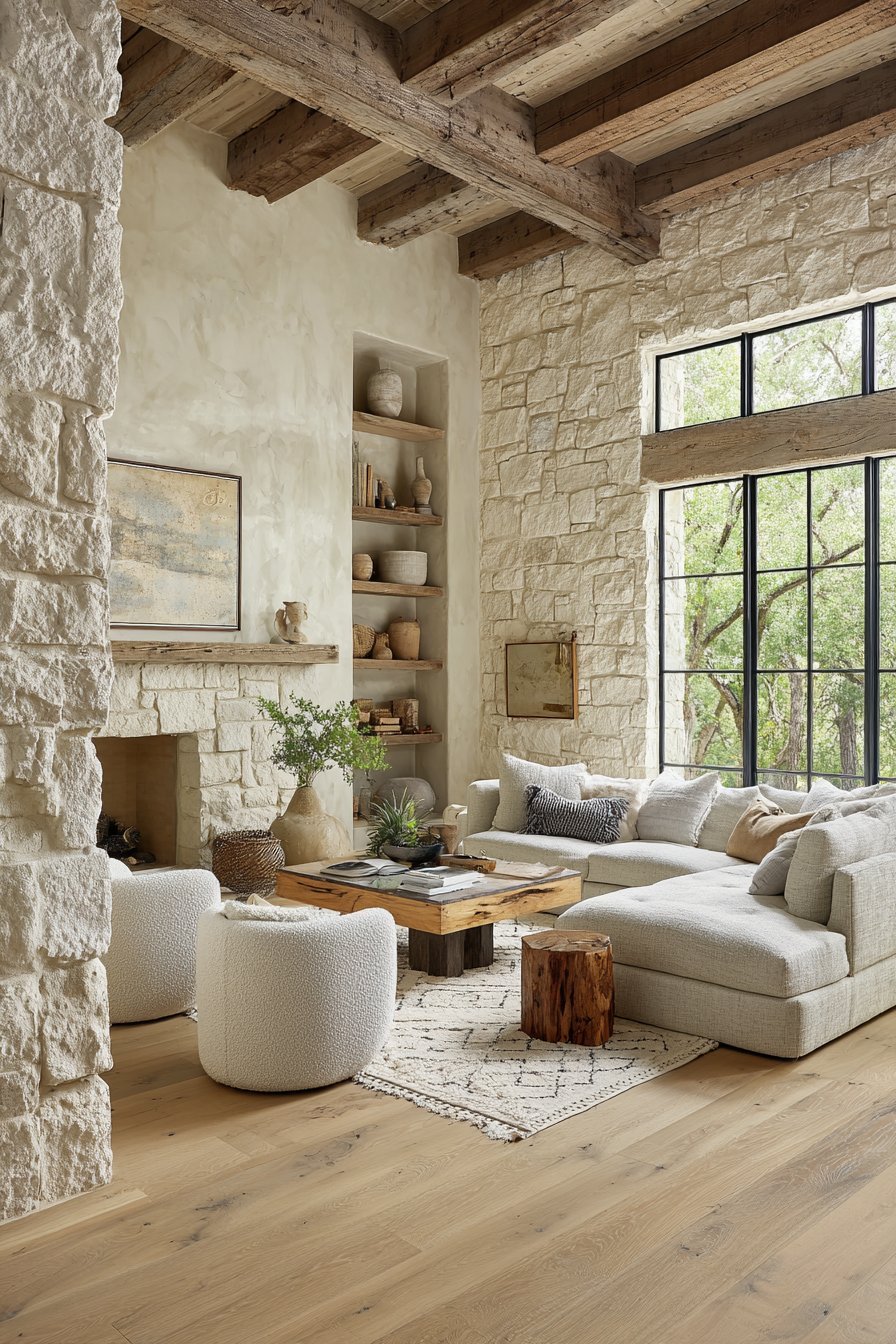
This comprehensive guide explores thirty distinctive neutral living room concepts. Each design demonstrates unique approaches to material selection, spatial arrangement, and lighting strategies. Whether you prefer minimalist Scandinavian aesthetics, rustic farmhouse charm, or contemporary luxury, you’ll discover inspiring ideas that prove neutral spaces can be anything but ordinary.
1. Serene Linen and Jute Natural Retreat
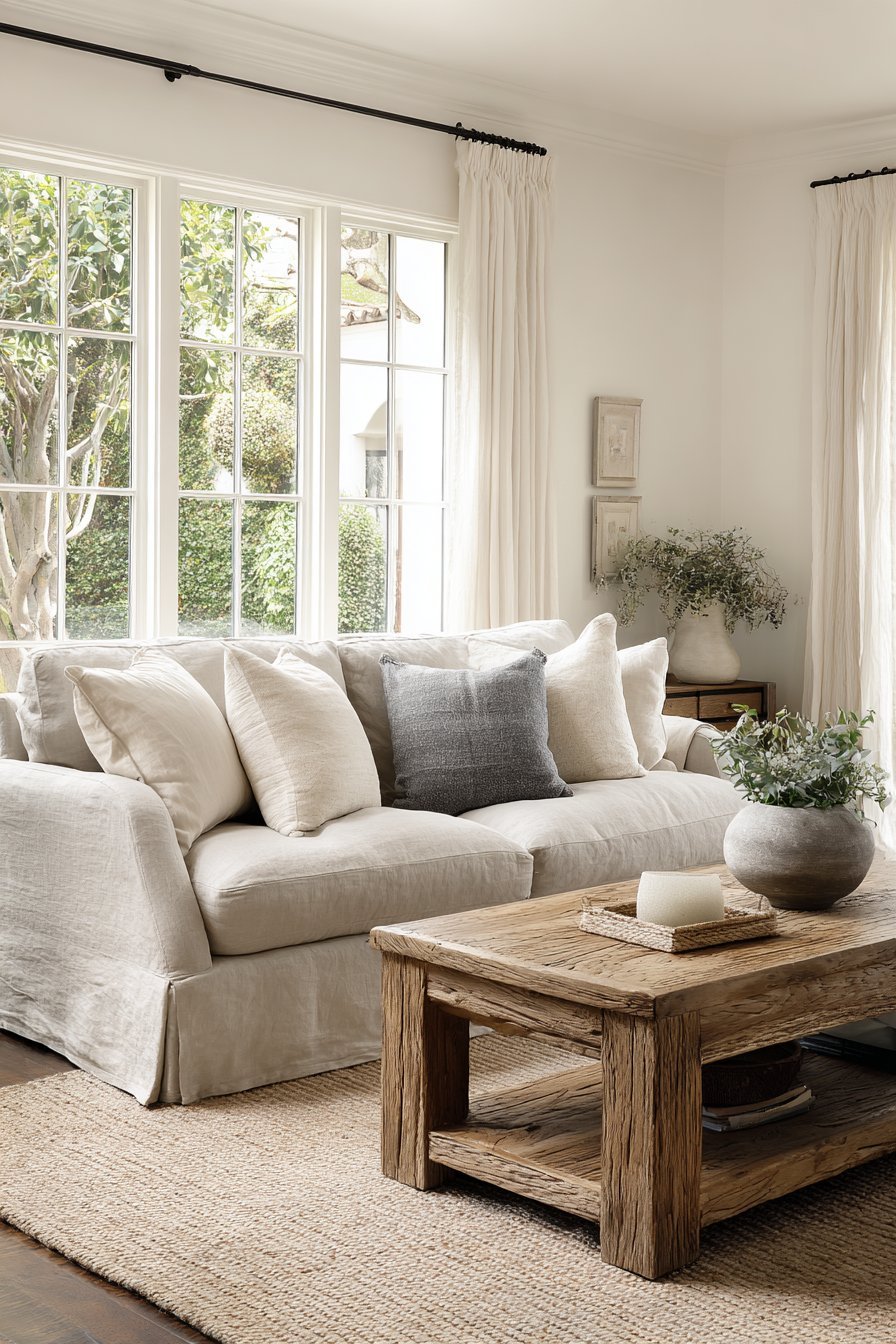
A linen-upholstered sofa in warm beige anchors this peaceful living room. The fabric’s natural weave creates subtle visual interest. Textured ivory walls provide a soft backdrop that enhances the room’s tranquil atmosphere. The overall effect feels both sophisticated and welcoming.
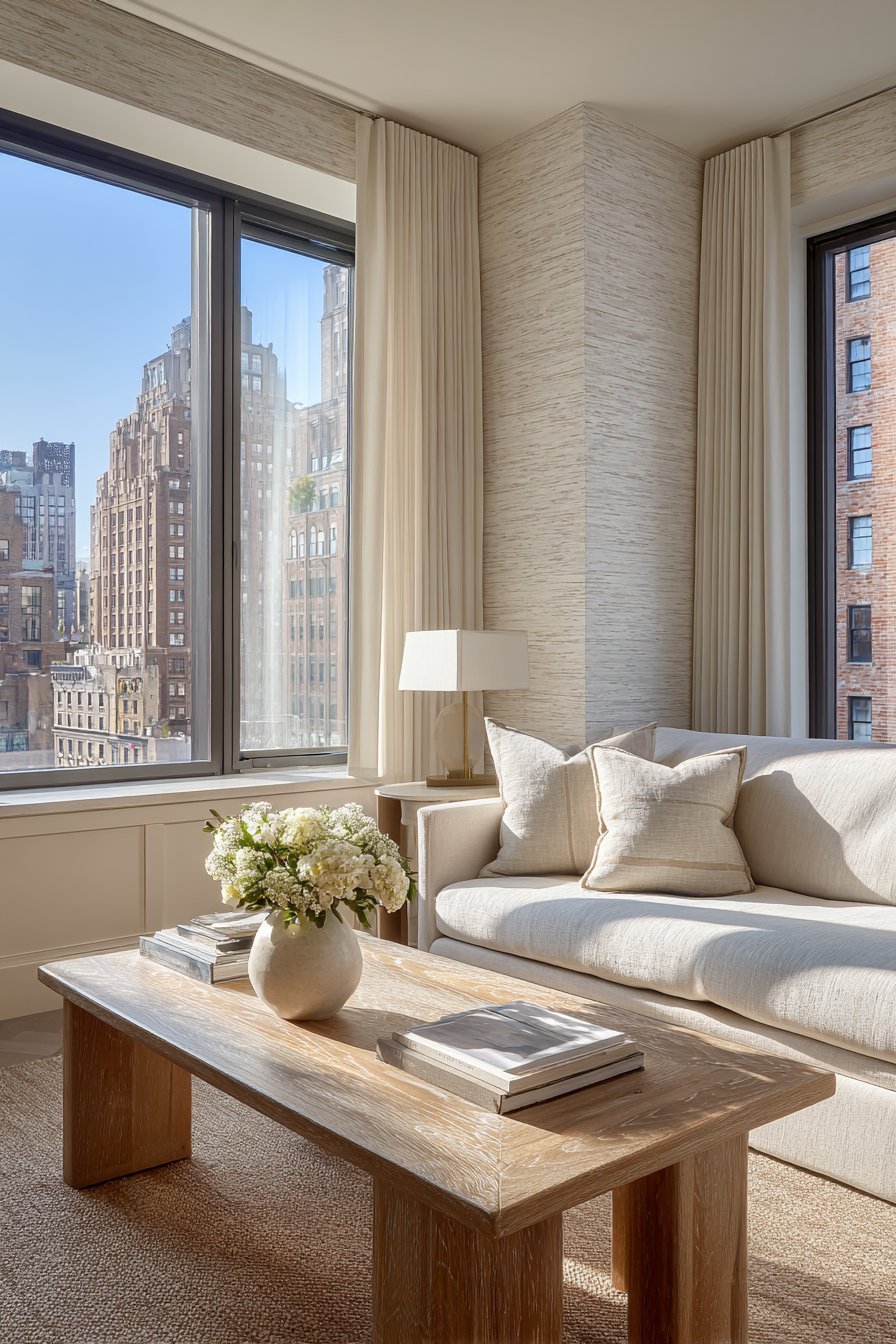
Natural oak furniture pieces introduce warm wood tones throughout the space. A coffee table with visible grain patterns serves as the room’s centerpiece. Hand-woven jute rugs add organic texture underfoot. These natural materials create connections to the outdoors while maintaining elegant simplicity. If you’re also weighing this area rug vs carpet, that’s worth deciding early too.
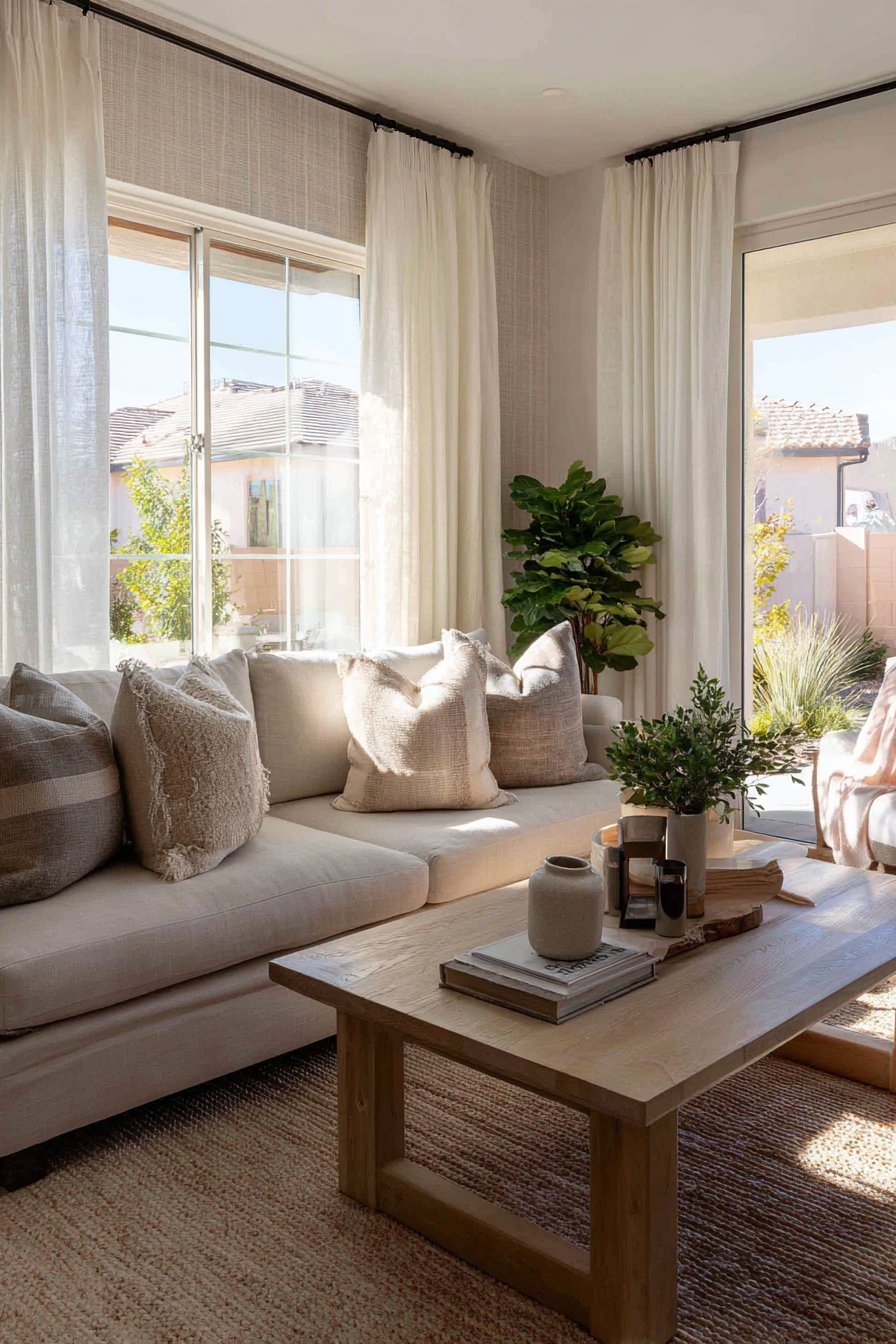
Floor-to-ceiling sheer linen curtains frame expansive windows beautifully. They filter daylight into soft, diffused illumination. The gentle light highlights layered neutral tones throughout the room. Cream-colored throw pillows in varied fabrics add tactile richness. Raw silk and cotton canvas create depth through texture rather than color.
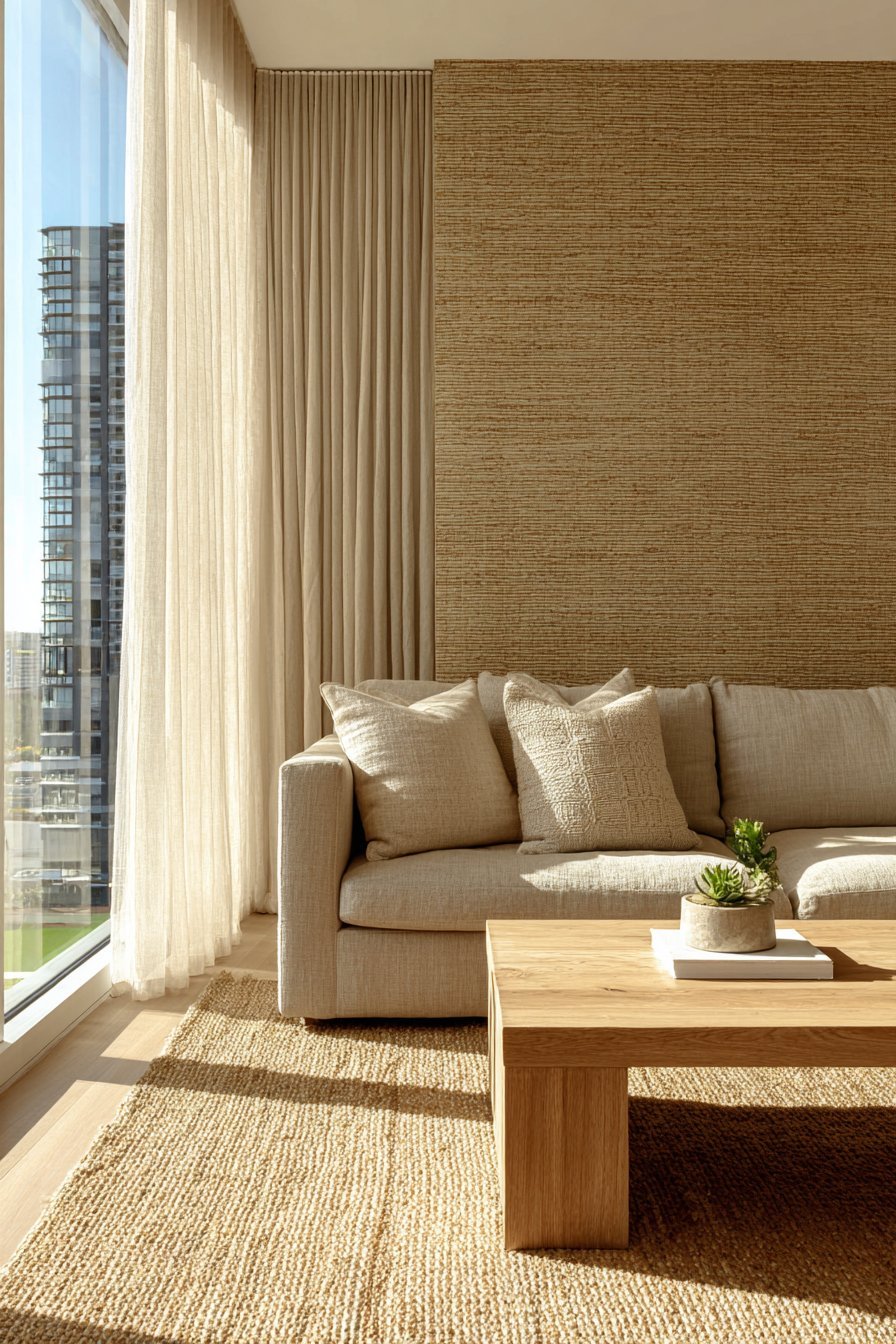
The monochromatic palette gains dimension through careful material selection. Each surface offers unique textural qualities that catch light differently. The space demonstrates how neutral design celebrates material authenticity and craftsmanship.
Key Design Tips:
- Choose linen upholstery for breathable, natural texture that ages beautifully
- Layer multiple neutral tones from warm beige to soft ivory for depth
- Incorporate hand-woven natural fiber rugs for organic grounding elements
- Select sheer window treatments to maximize soft natural light
- Mix fabric textures like raw silk and cotton canvas for tactile interest
- Display natural oak pieces to introduce warm wood grain patterns
2. Sophisticated Grey Velvet with Reclaimed Wood
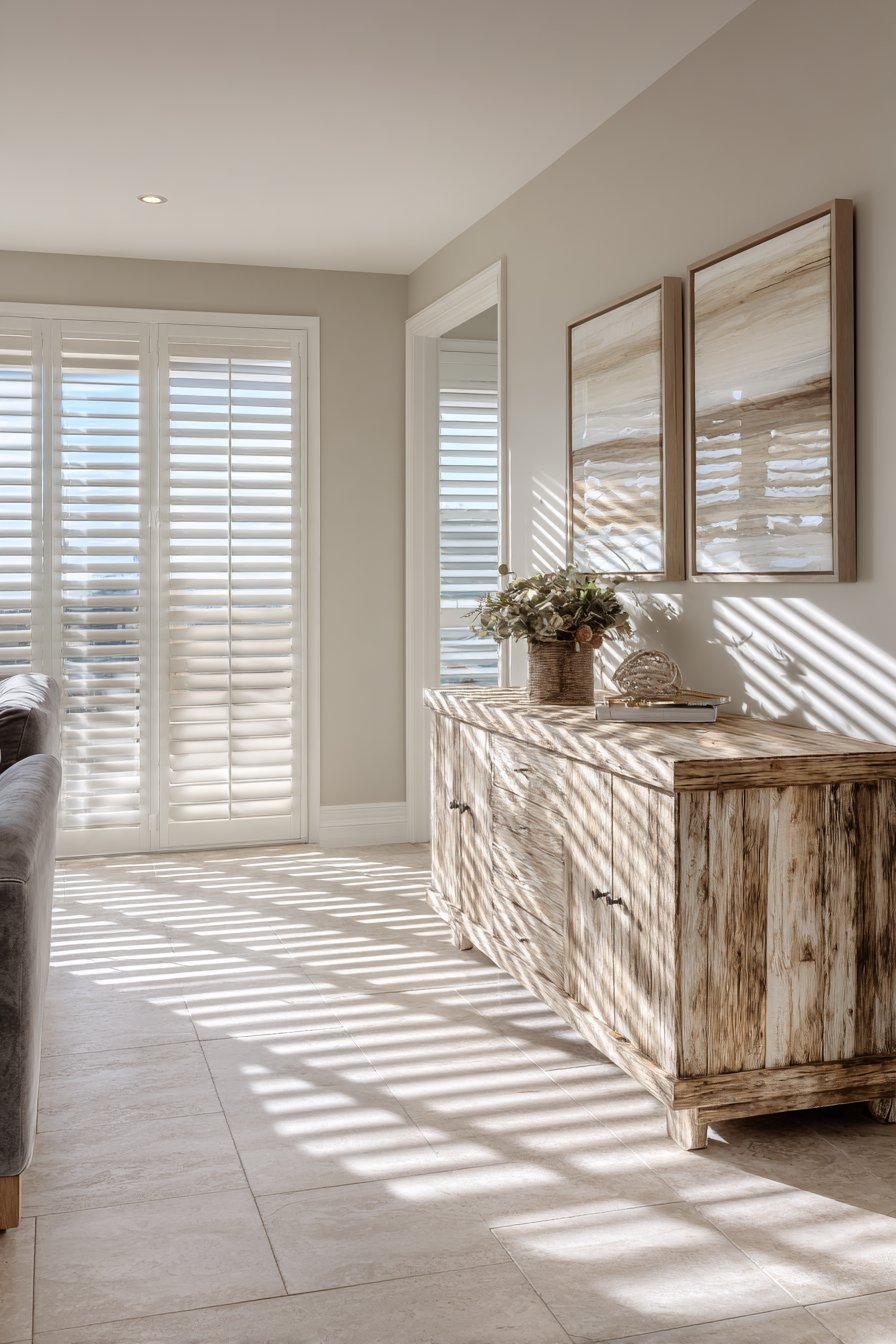
Channeled velvet upholstery in mushroom grey creates luxurious seating in this refined space. The fabric’s subtle sheen shifts beautifully with changing light. A reclaimed wood media console introduces rustic character through visible grain and natural imperfections. This combination balances contemporary elegance with organic warmth.
Walls painted in warm greige establish a cocoon-like atmosphere. The color maintains brightness while adding enveloping comfort. Three abstract art pieces hang above the console in sand, taupe, and cream. They create visual interest without disrupting the neutral harmony.
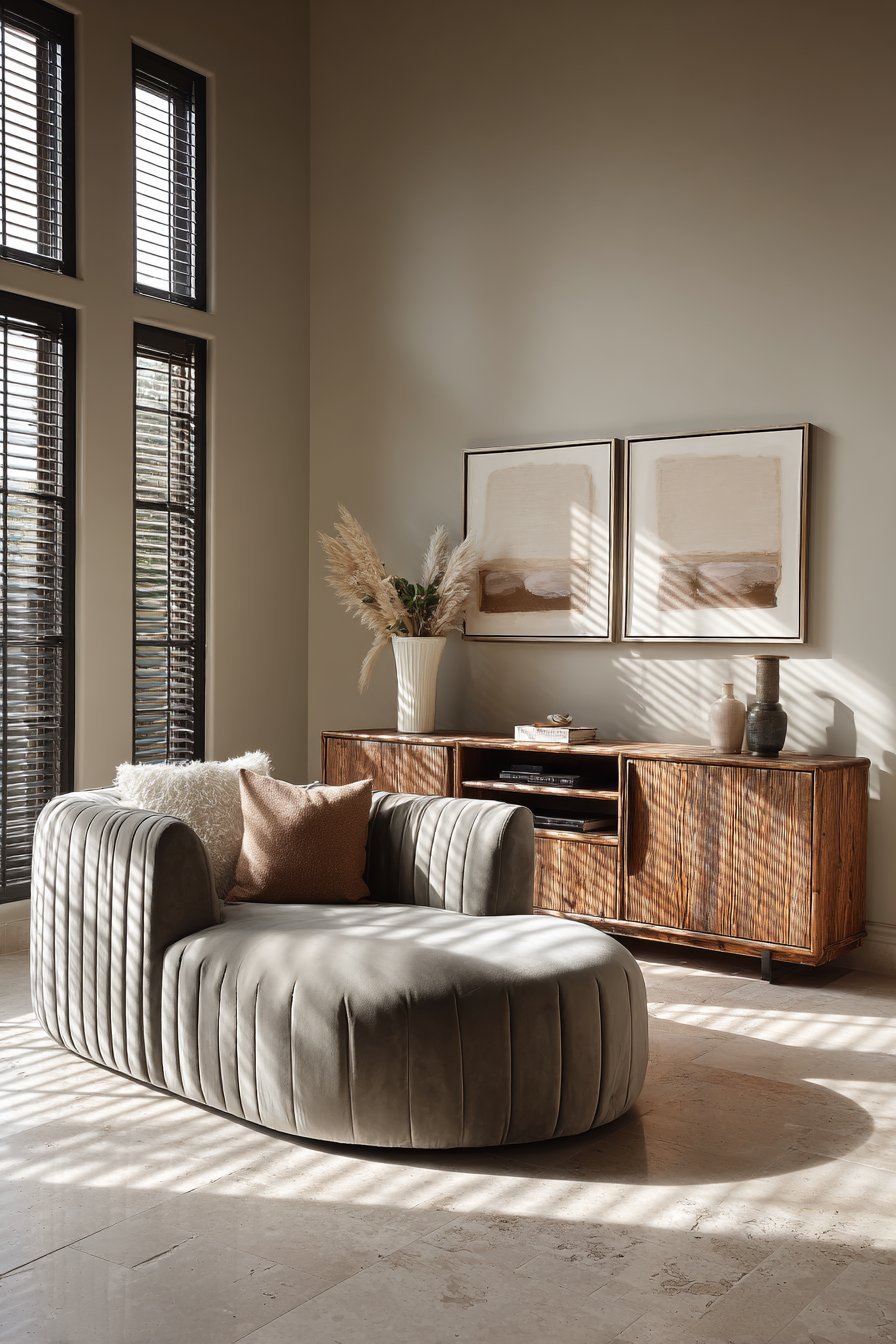
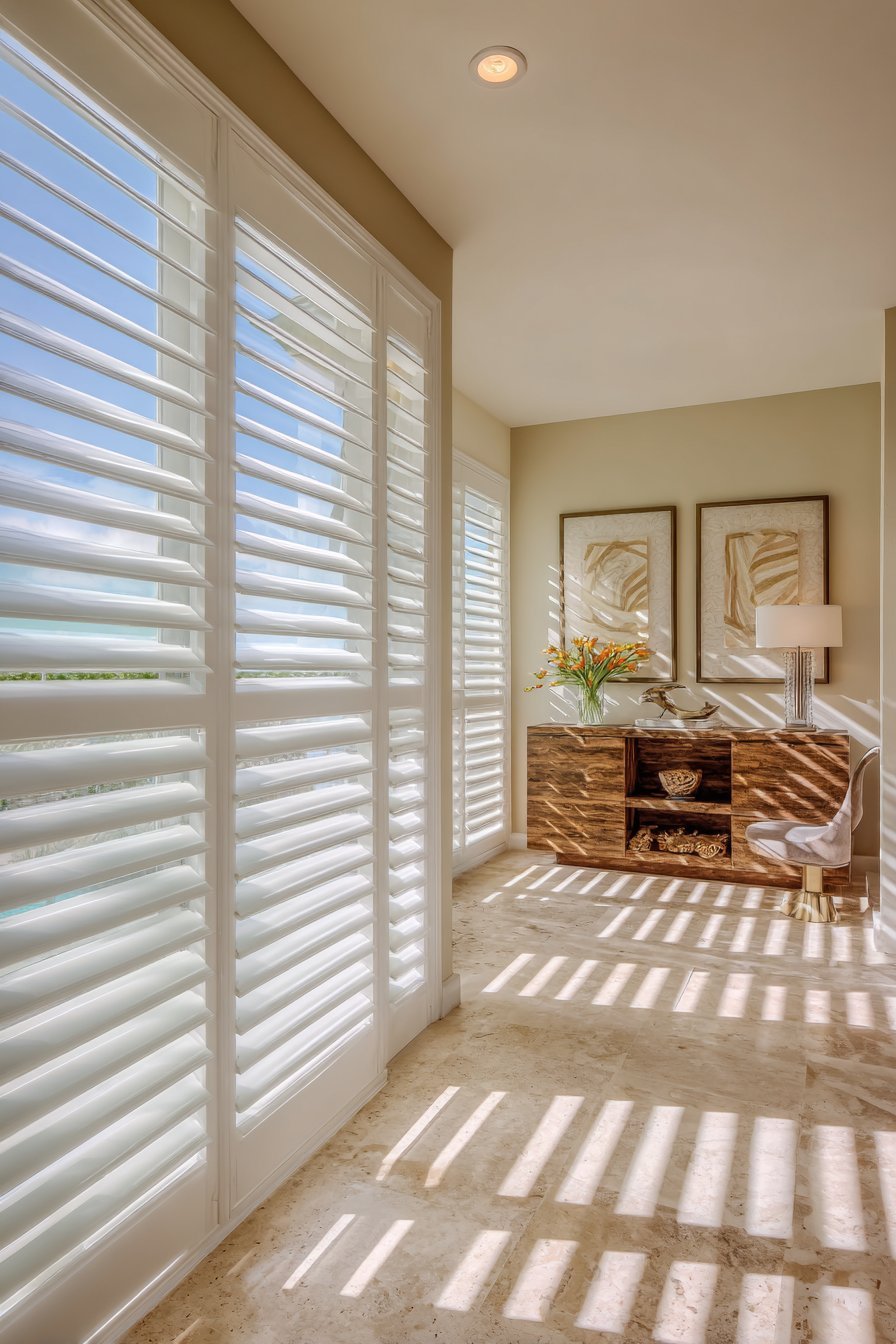
Plantation shutters filter morning light into distinctive striped patterns. These shadows play across travertine tile flooring throughout the day. The natural stone adds another textural layer with its characteristic surface variations. The careful balance of cool grey and warm wood tones creates sophisticated equilibrium. Our the floor lamp vs table lamp comparison covers that decision in more depth.
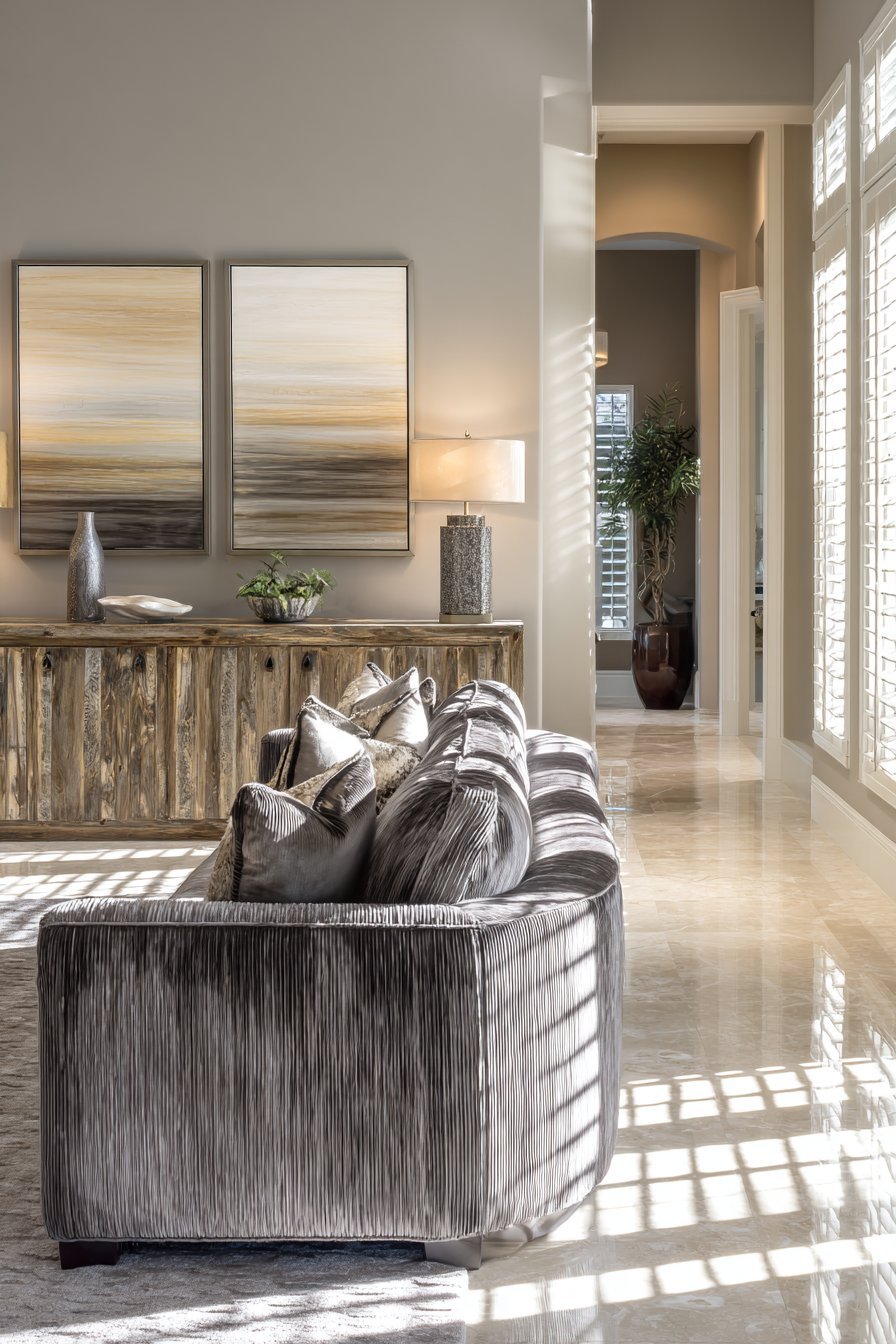
This design proves that neutral spaces can feel both cozy and elegant. The interplay between smooth velvet and rough wood demonstrates effective contrast. Strategic lighting enhances the room’s dimensional quality.
Key Design Tips:
- Select channeled velvet for sophisticated texture with subtle light reflection
- Balance cool grey tones with warm wood elements for visual harmony
- Choose reclaimed wood furniture to add character and sustainability
- Paint walls in warm greige to create inviting yet bright atmospheres
- Install plantation shutters for adjustable light control and architectural interest
- Use travertine or natural stone flooring for enduring neutral foundations
3. Minimalist Concrete and Linen Composition
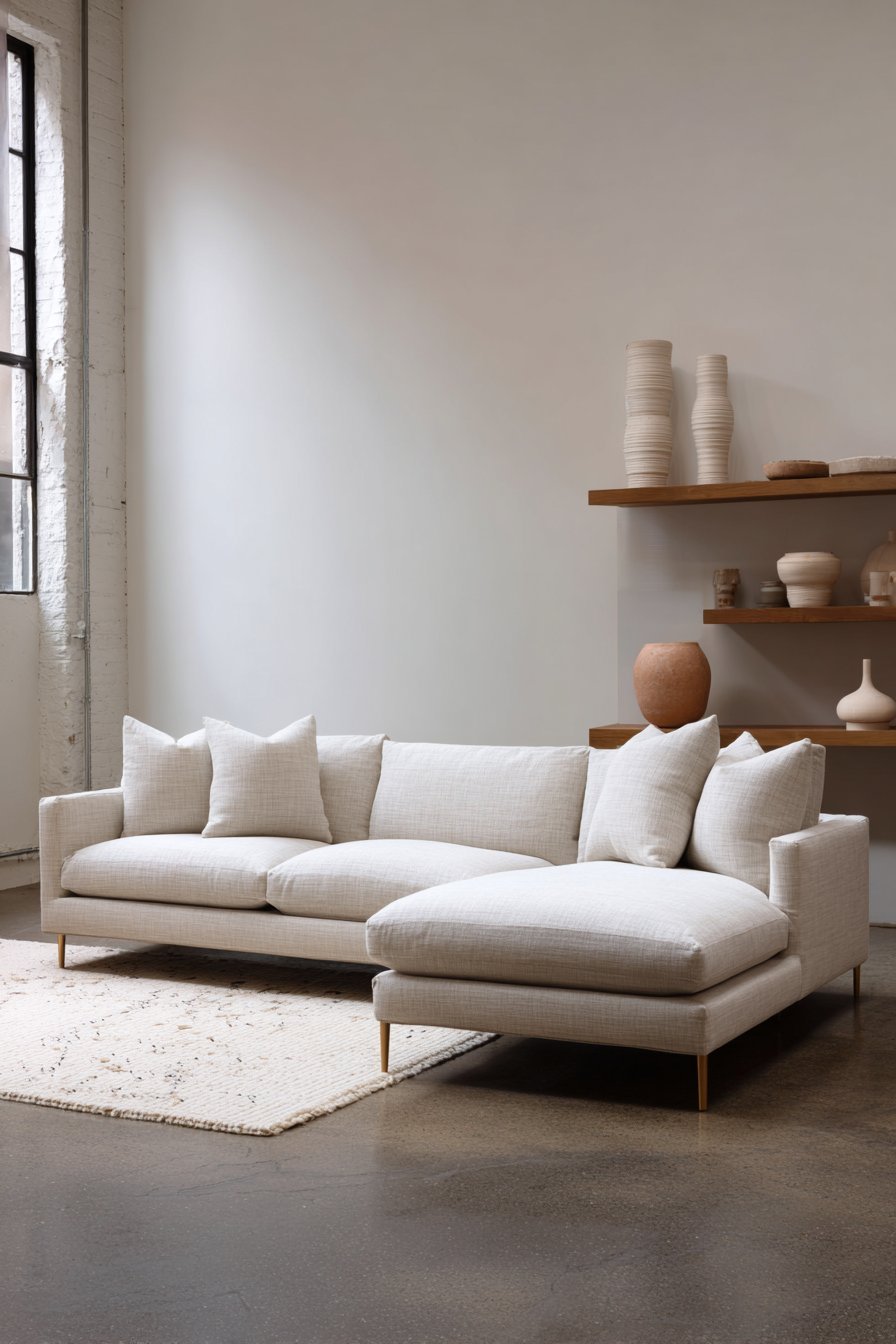
A low-profile sectional in oatmeal linen defines this minimalist retreat. Clean lines and visible fabric weave emphasize honest material beauty. Floating walnut shelves display ceramic vessels in matte white and natural terracotta. The sculptural quality of each piece receives careful attention in this edited space.
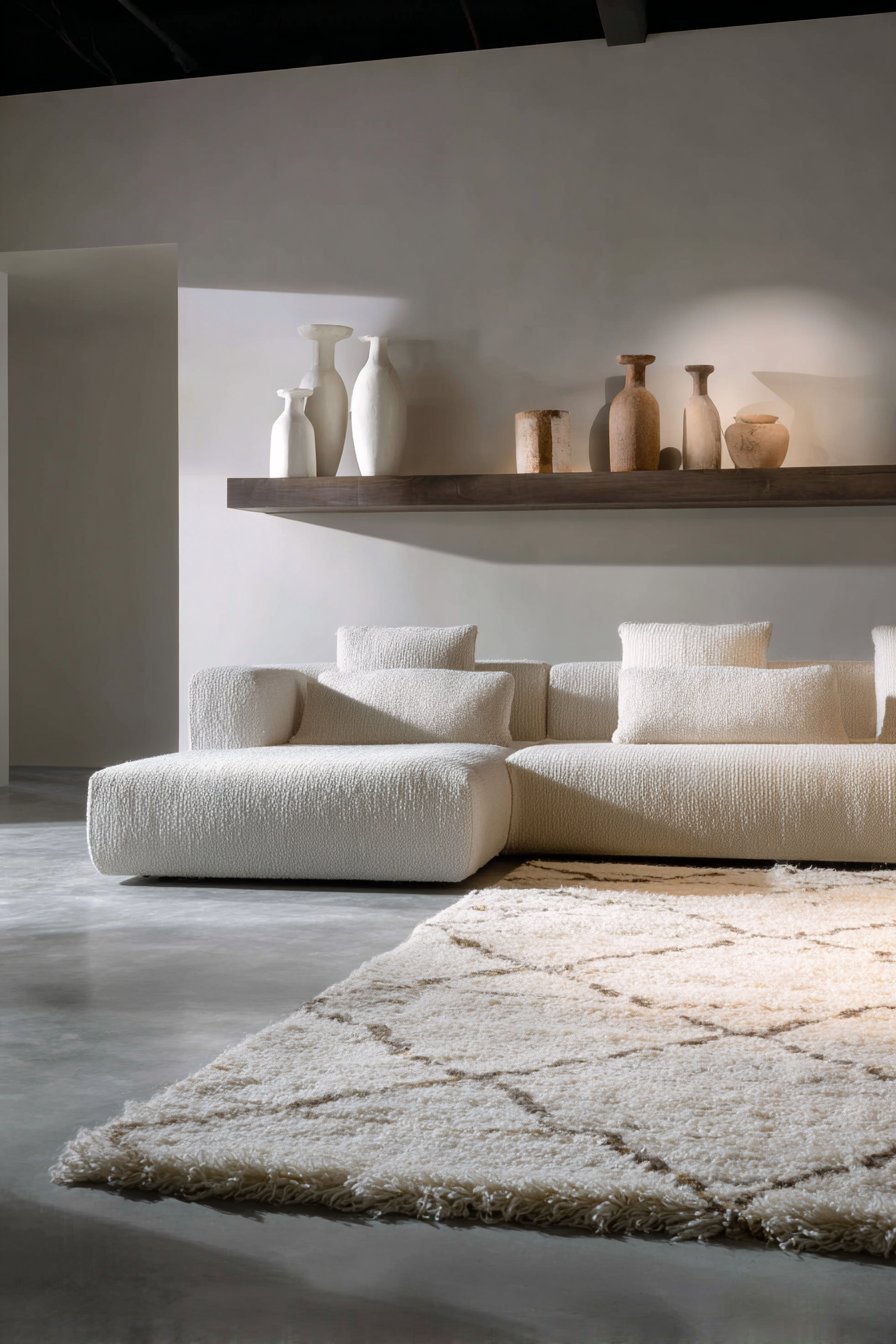
Polished concrete flooring provides an industrial foundation with subtle color variations. A hand-tufted wool area rug in cream with organic geometric patterns softens the hard surface. The contrast between rough concrete and soft wool creates sensory interest. Natural materials take center stage without excessive decoration.
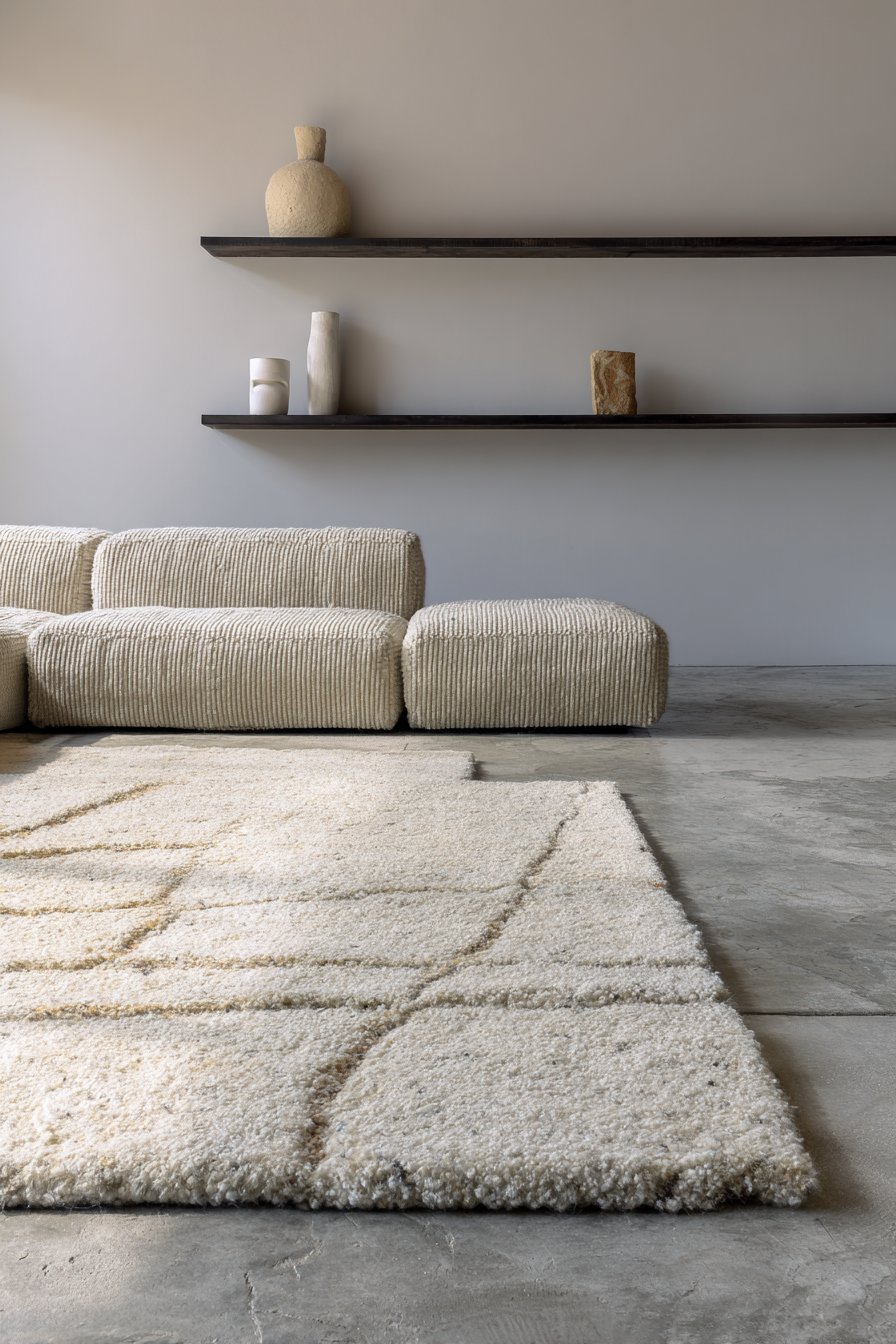
Directional lighting emphasizes the architectural quality of furniture silhouettes. Each piece stands as a carefully considered sculpture. The space demonstrates restraint and intentionality in every design decision. Empty space becomes as important as filled areas in this composition.
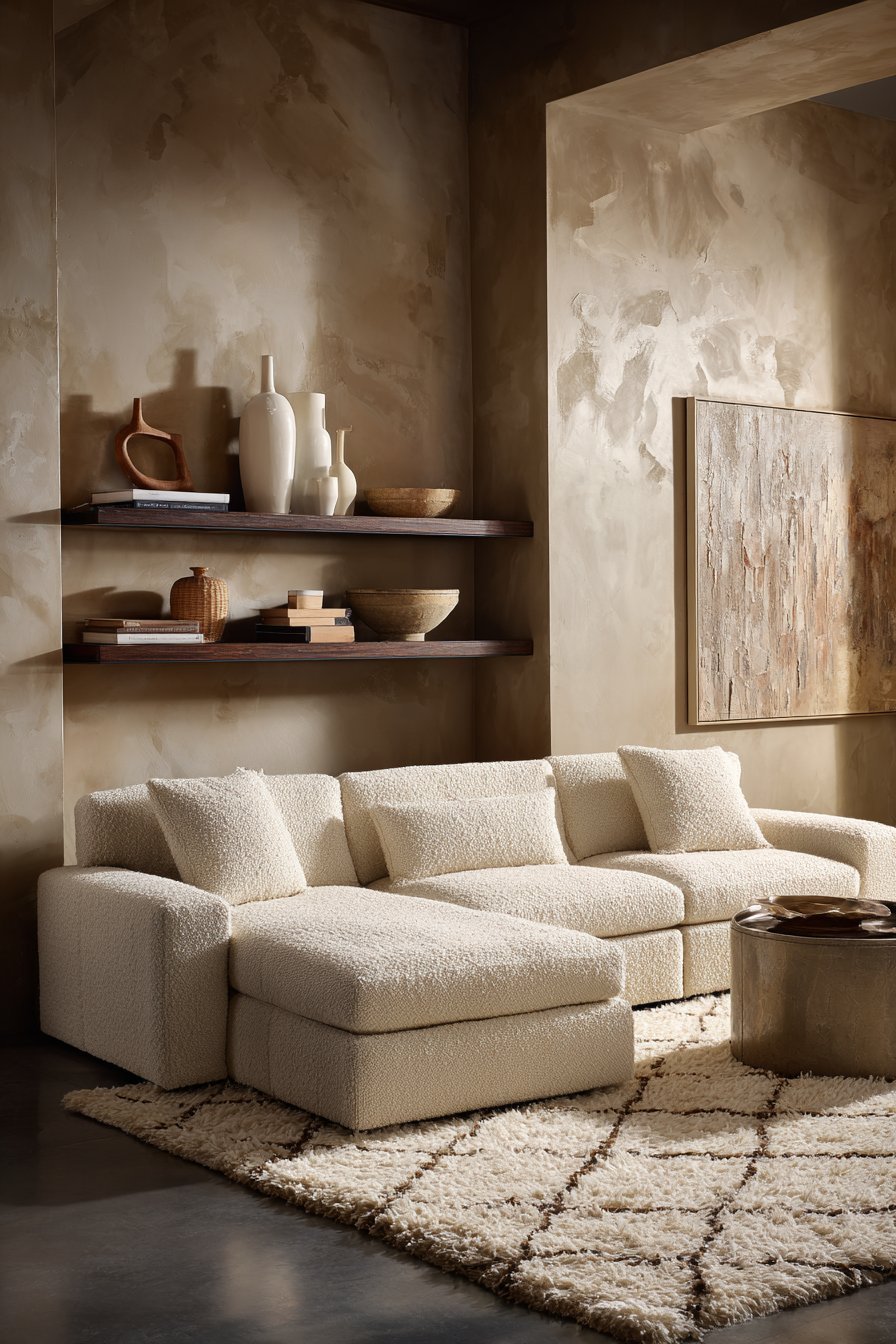
This approach celebrates quality over quantity in neutral design. The limited palette focuses attention on form and material authenticity. Simplicity reveals the beauty inherent in well-crafted objects.
Key Design Tips:
- Choose low-profile furniture with clean lines for minimalist aesthetics
- Display ceramic pieces as sculptural elements rather than mere decoration
- Install polished concrete flooring for durable, modern neutral foundations
- Layer hand-tufted wool rugs to soften industrial materials
- Use floating shelves to create visual lightness and display space
- Employ directional lighting to highlight architectural furniture qualities
4. Cozy Limestone Fireplace Haven
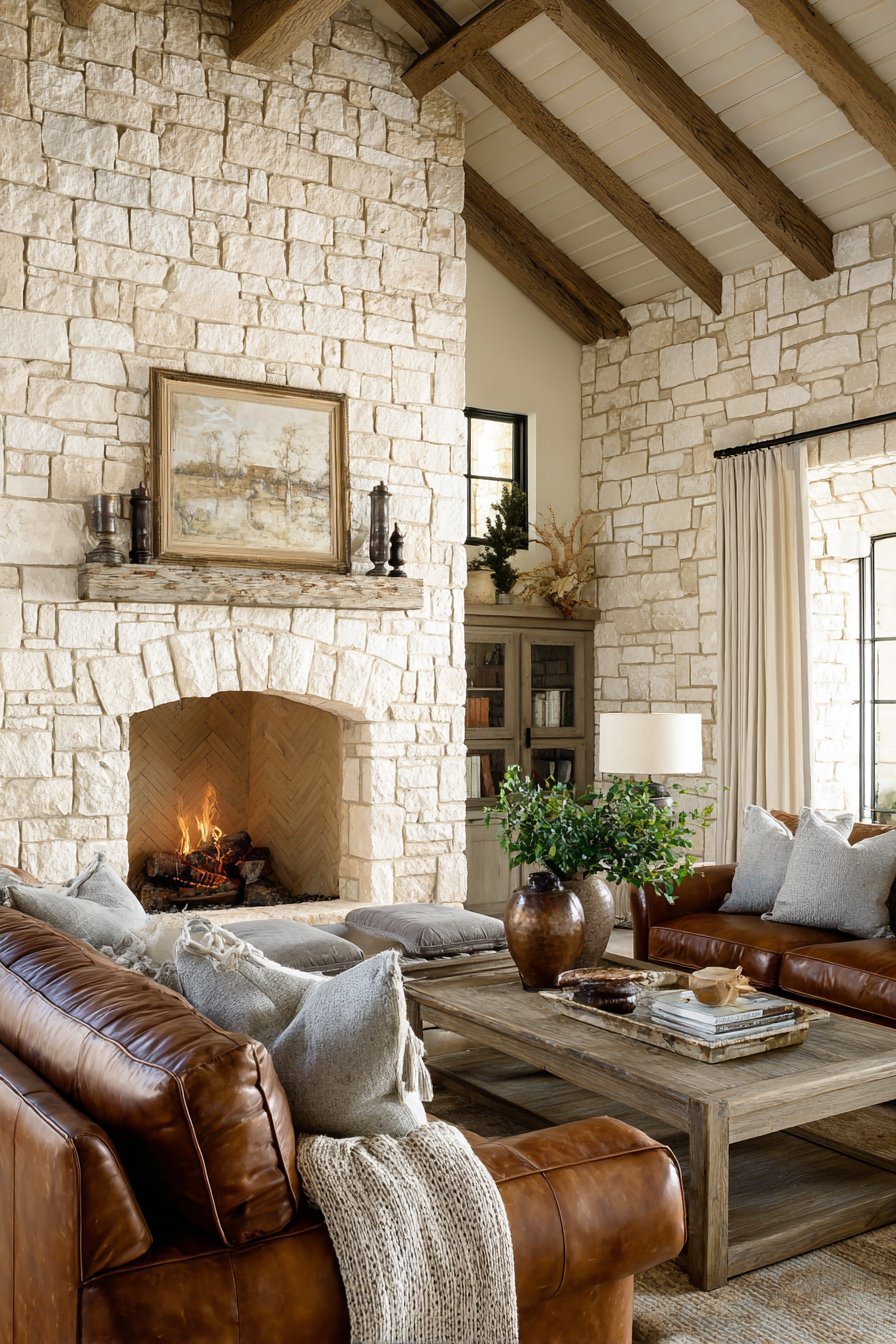
Natural limestone facing creates a stunning fireplace focal point in this inviting room. Authentic color variations and texture provide organic visual interest. A camel-colored leather sofa develops gentle patina that tells stories of use. The warm leather tones complement the stone’s natural earthiness beautifully.
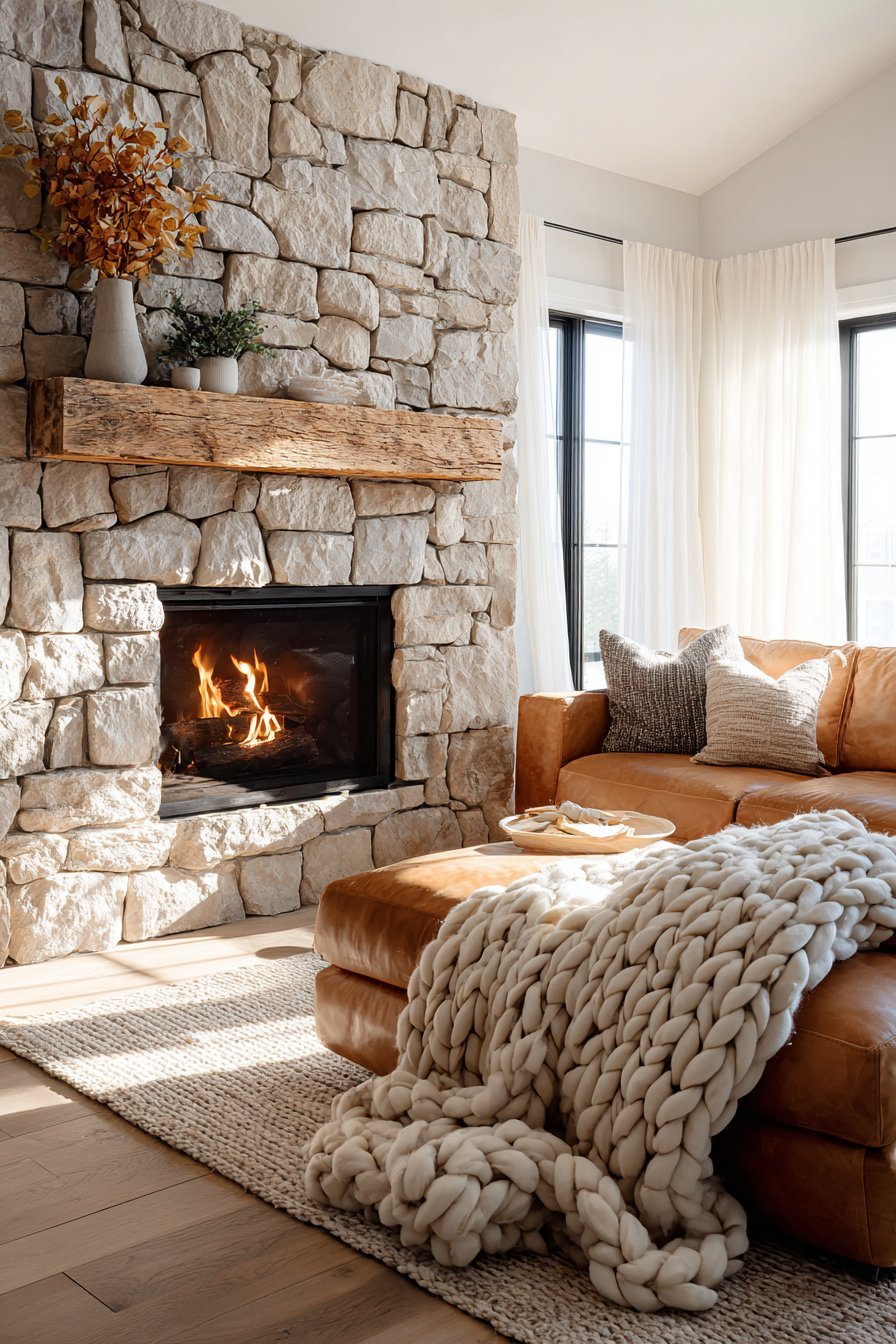
Chunky knit throw blankets in undyed wool drape naturally over seating areas. These textiles add comfort and visual softness to the space. Wide-plank white oak flooring shows subtle grain patterns throughout. The matte finish prevents excessive shine while highlighting natural wood character.
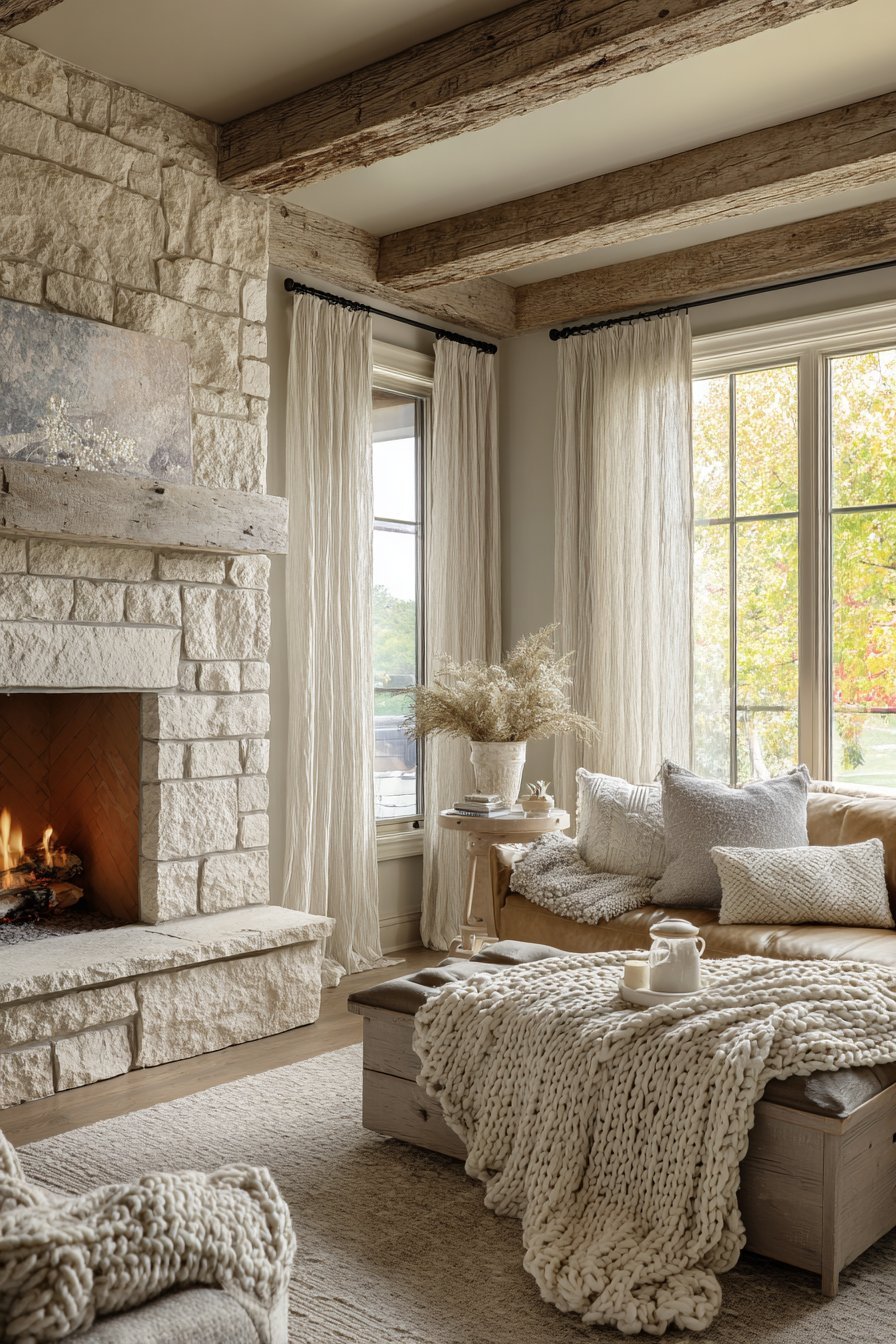
Golden hour sunlight filters through gauzy curtains creating magical illumination. The warm light enhances every neutral surface in the room. It creates inviting pools of brightness that shift throughout the day. This natural lighting transforms the space from morning through evening.
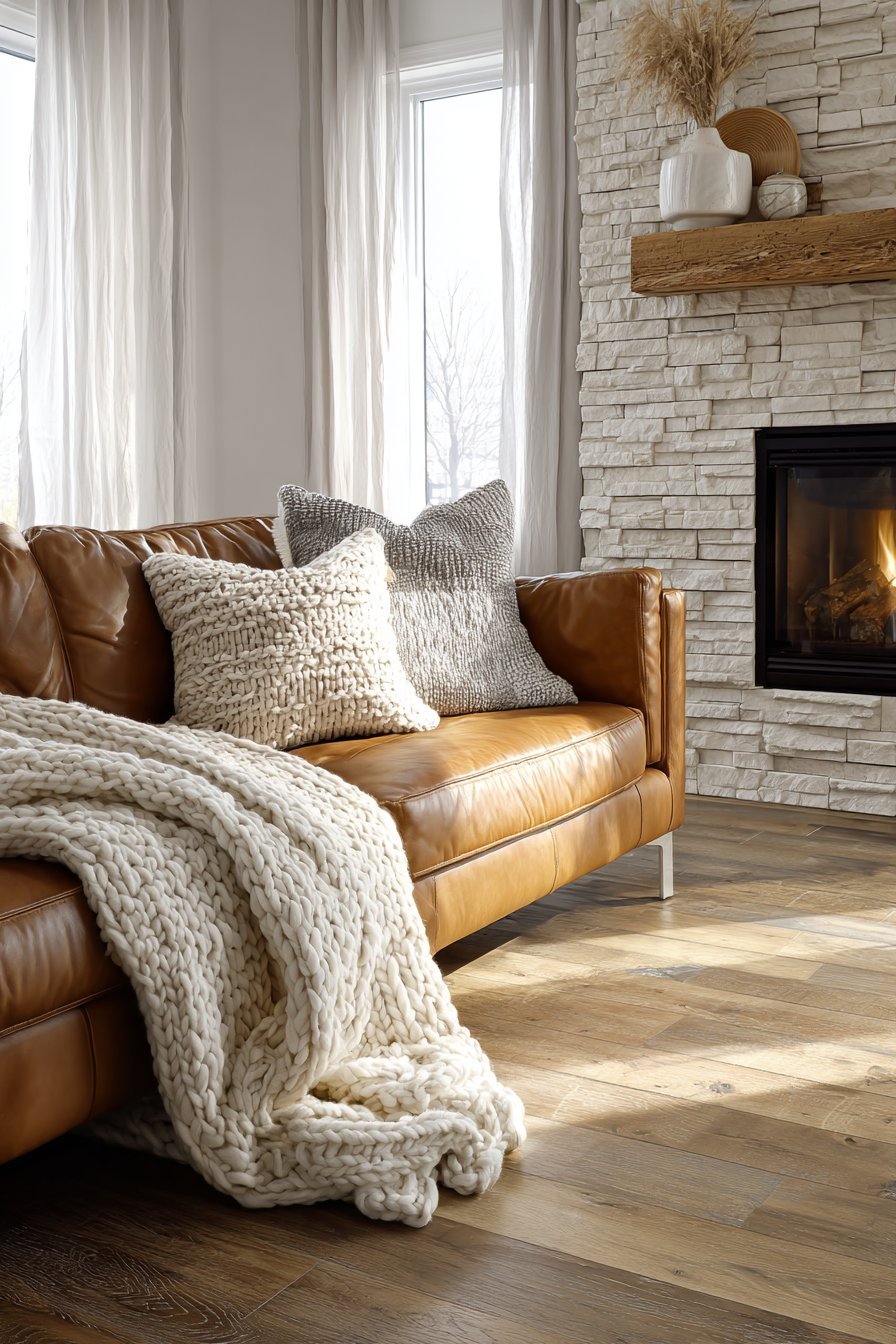
The design emphasizes comfort without sacrificing sophistication. Natural materials age gracefully, developing character over time. The room feels lived-in and welcoming rather than precious or untouchable.
Key Design Tips:
- Feature natural stone fireplaces as authentic architectural focal points
- Select leather furniture that develops beautiful patina with age
- Choose undyed wool textiles for natural fiber color and texture
- Install wide-plank oak flooring to showcase genuine wood grain
- Hang gauzy curtains that filter rather than block natural light
- Position seating to maximize golden hour sunlight exposure
5. Scandinavian White Oak Sanctuary
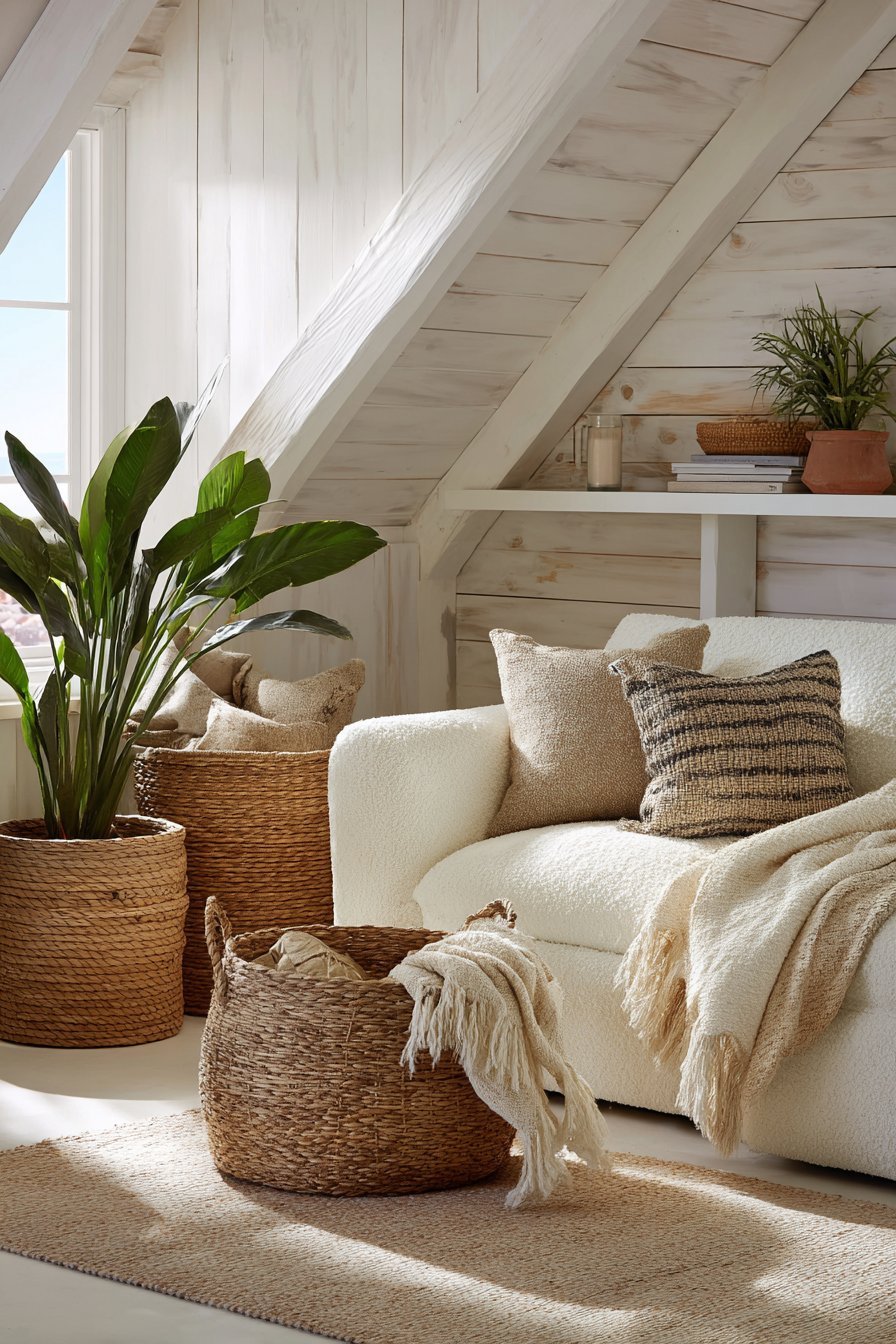
Whitewashed pine walls and ceiling create an airy envelope in this Nordic-inspired space. The light wood treatment maximizes brightness while adding subtle texture. A bouclé sofa in ivory features irregular looped texture visible in close detail. The characteristic fabric adds touchable dimension to the minimal palette.
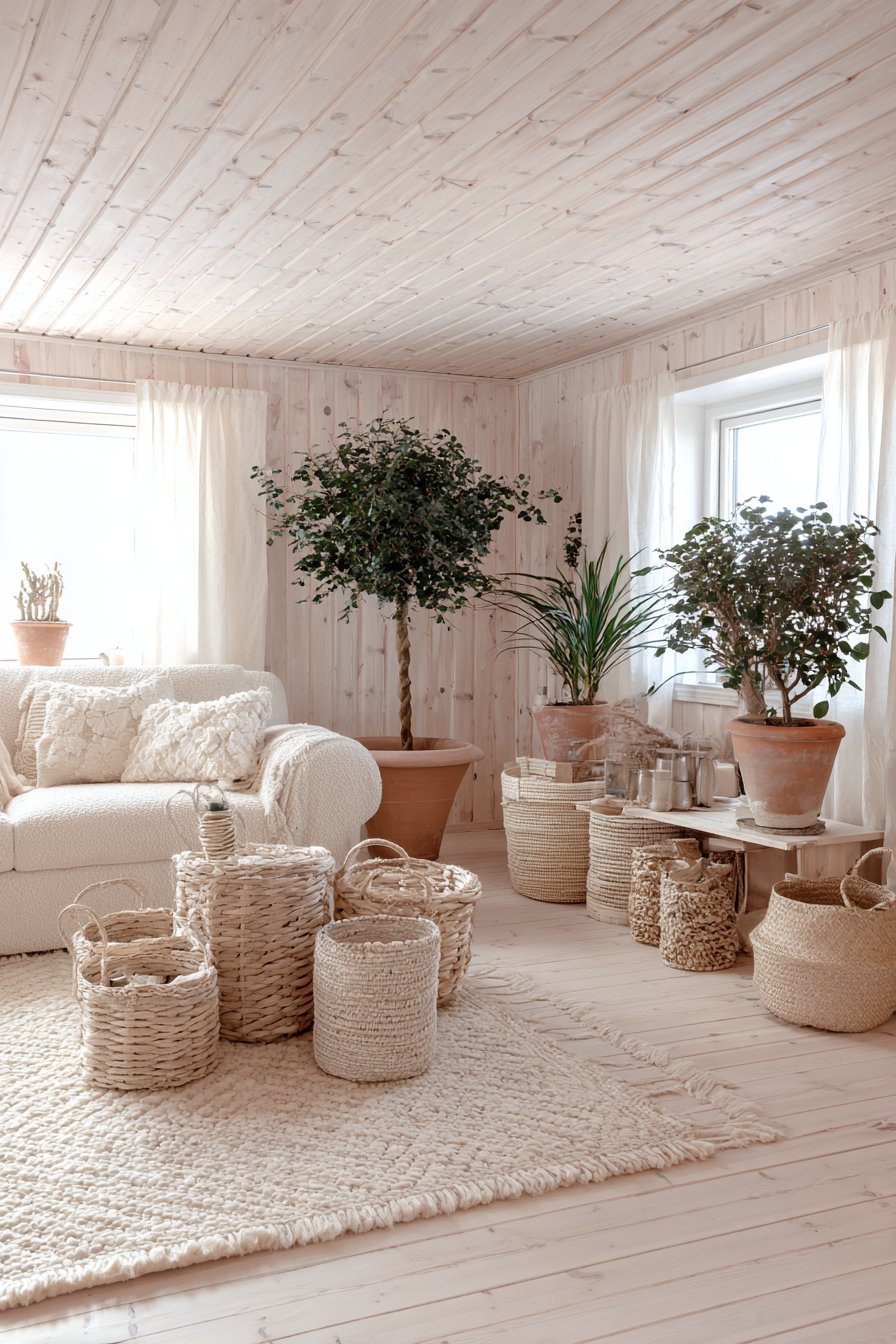
Natural fiber storage baskets in varying shades organize the space practically. They range from tan to wheat, providing storage that enhances rather than detracts. Large potted plants in terracotta containers introduce organic living elements. The greenery provides the only color deviation in this carefully neutral scheme.
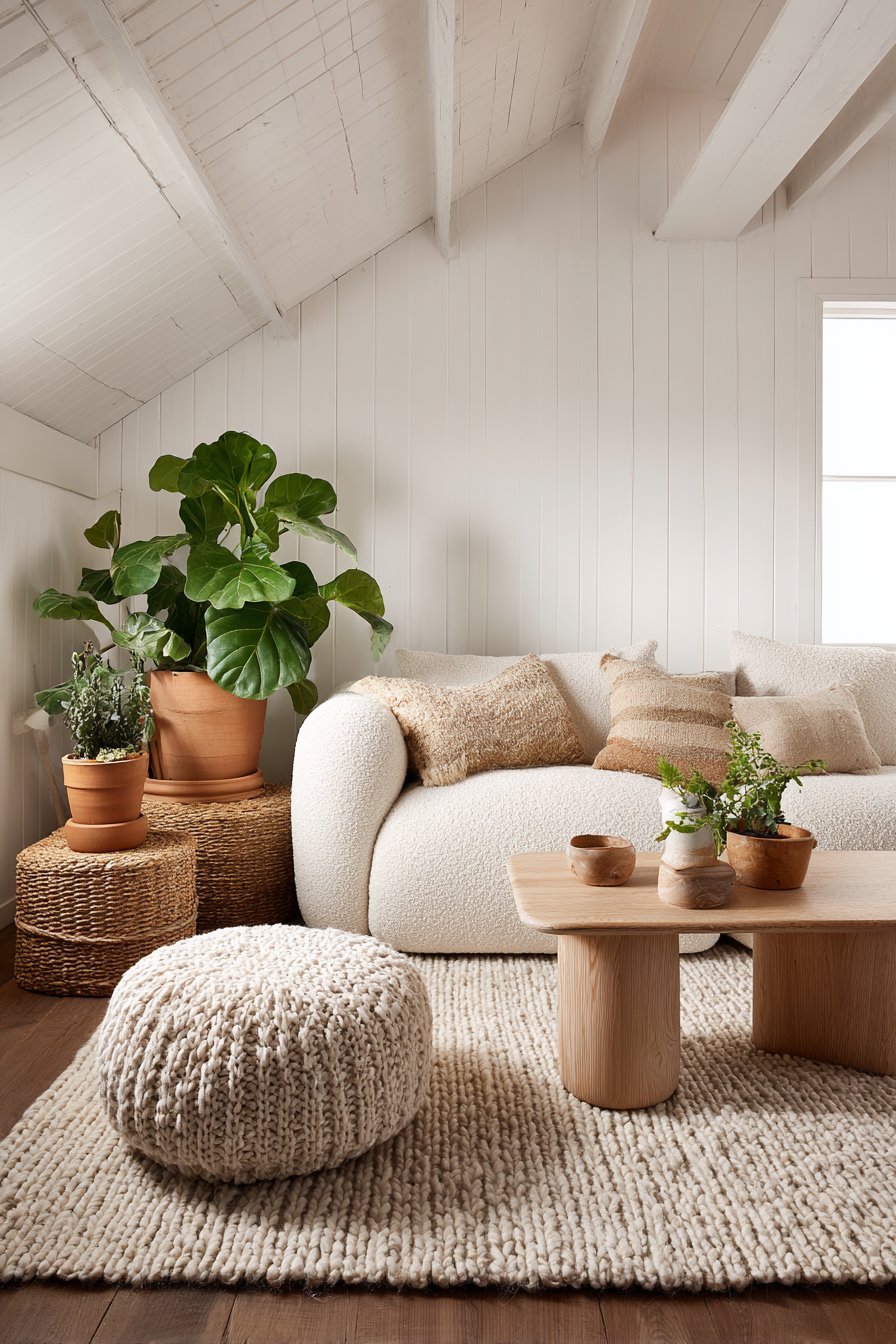
Diffused northern light interacts beautifully with layered whites and creams throughout. The illumination reveals subtle tonal variations often missed in harsher lighting. Wide-angle perspective shows thoughtful spatial arrangement and functional design. Every element serves a purpose while maintaining aesthetic appeal.
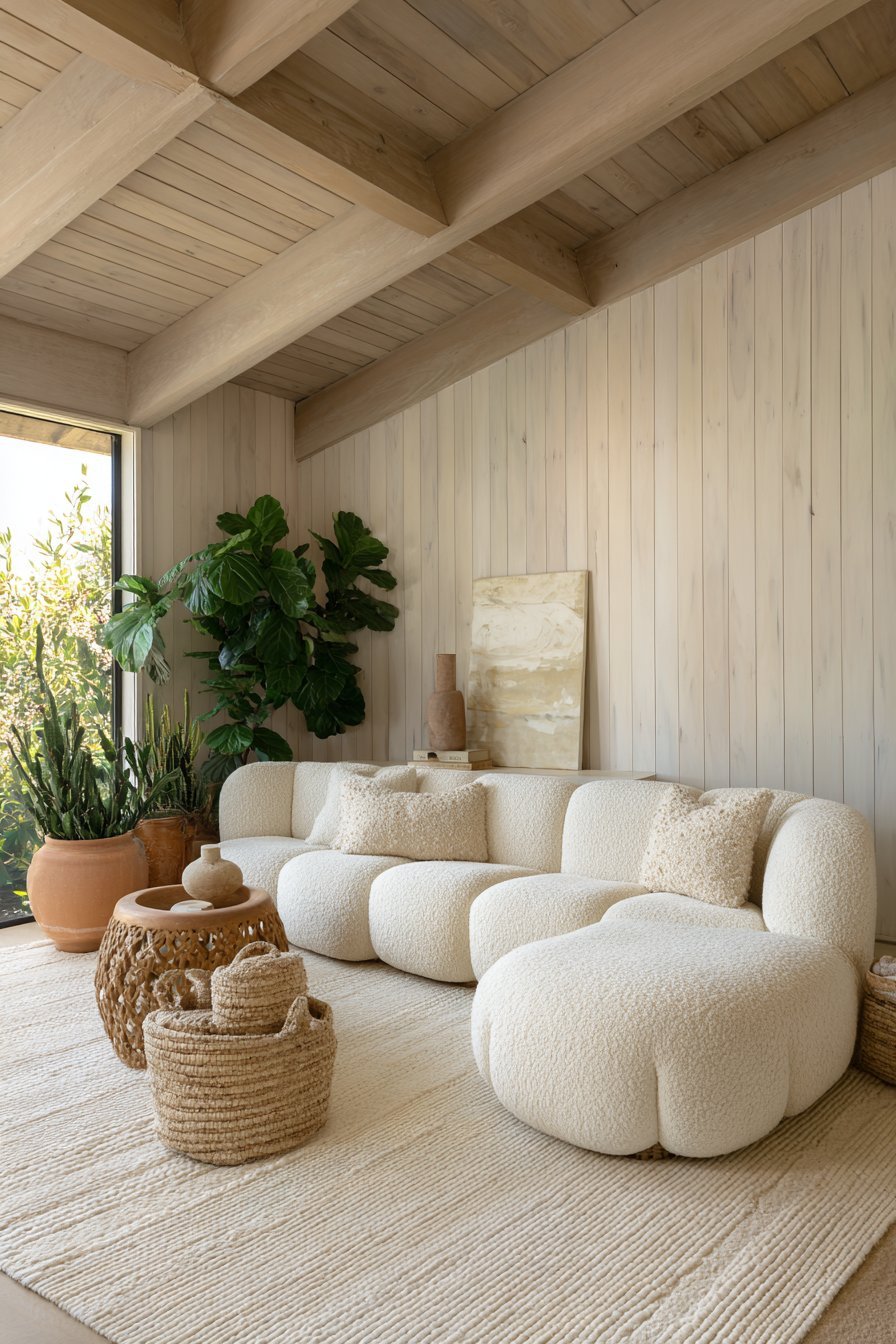
This approach demonstrates democratic design principles central to Scandinavian philosophy. Quality materials remain accessible and honest in their presentation. The space feels open, clean, and genuinely livable.
Key Design Tips:
- Whitewash wood surfaces to maximize light reflection and brightness
- Choose bouclé upholstery for characteristic Nordic texture and comfort
- Incorporate natural fiber baskets for storage that enhances aesthetics
- Display plants in terracotta containers for organic warmth
- Design for abundant natural light to interact with neutral surfaces
- Arrange furniture to maximize both function and spatial flow
6. Transitional Tufted Linen Elegance
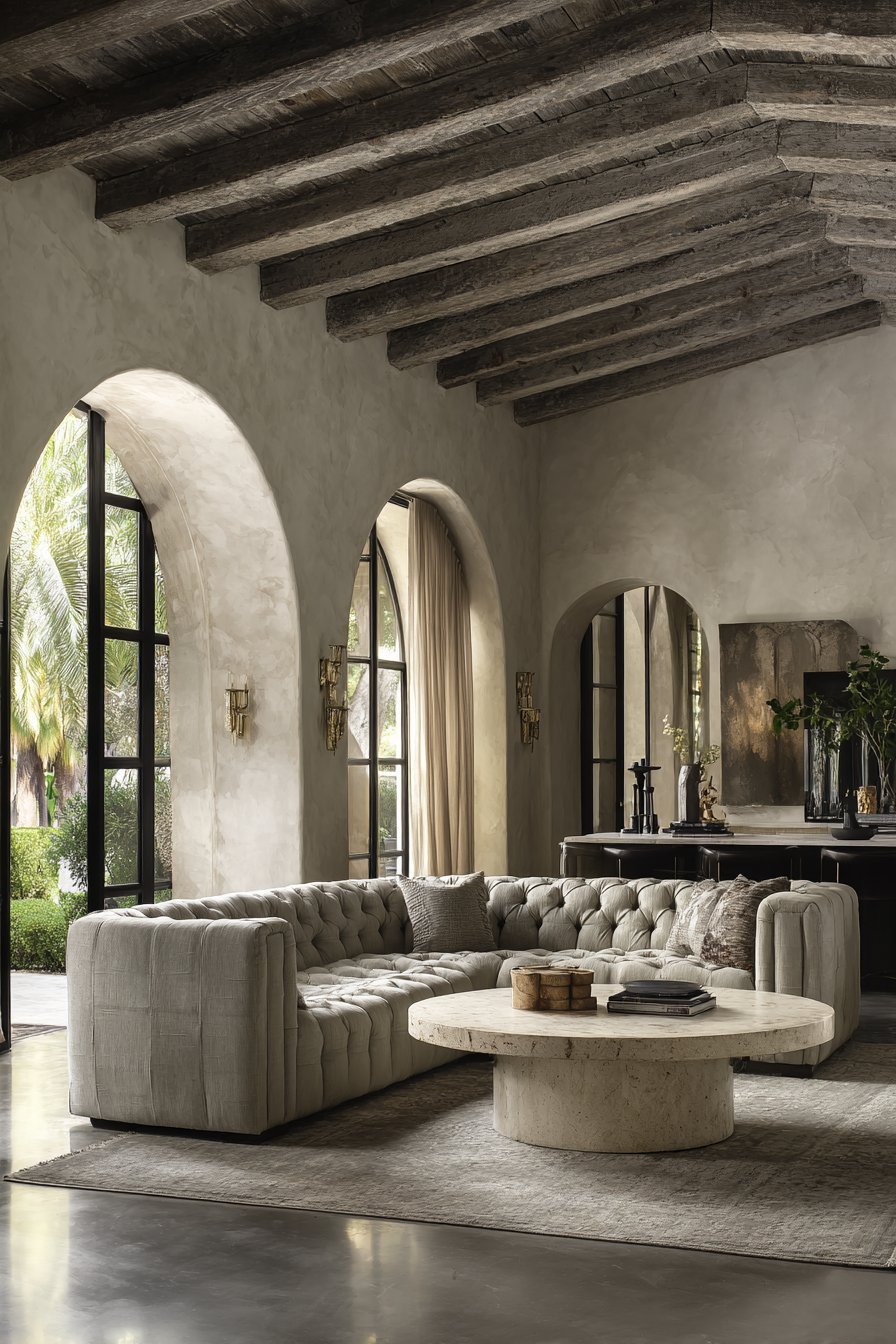
A tufted linen sectional in greige features antique brass nailhead trim detailing. This classic upholstery technique adds subtle traditional character. A round marble coffee table in honed beige travertine centers the seating area. Natural veining patterns and surface variations make each piece unique.
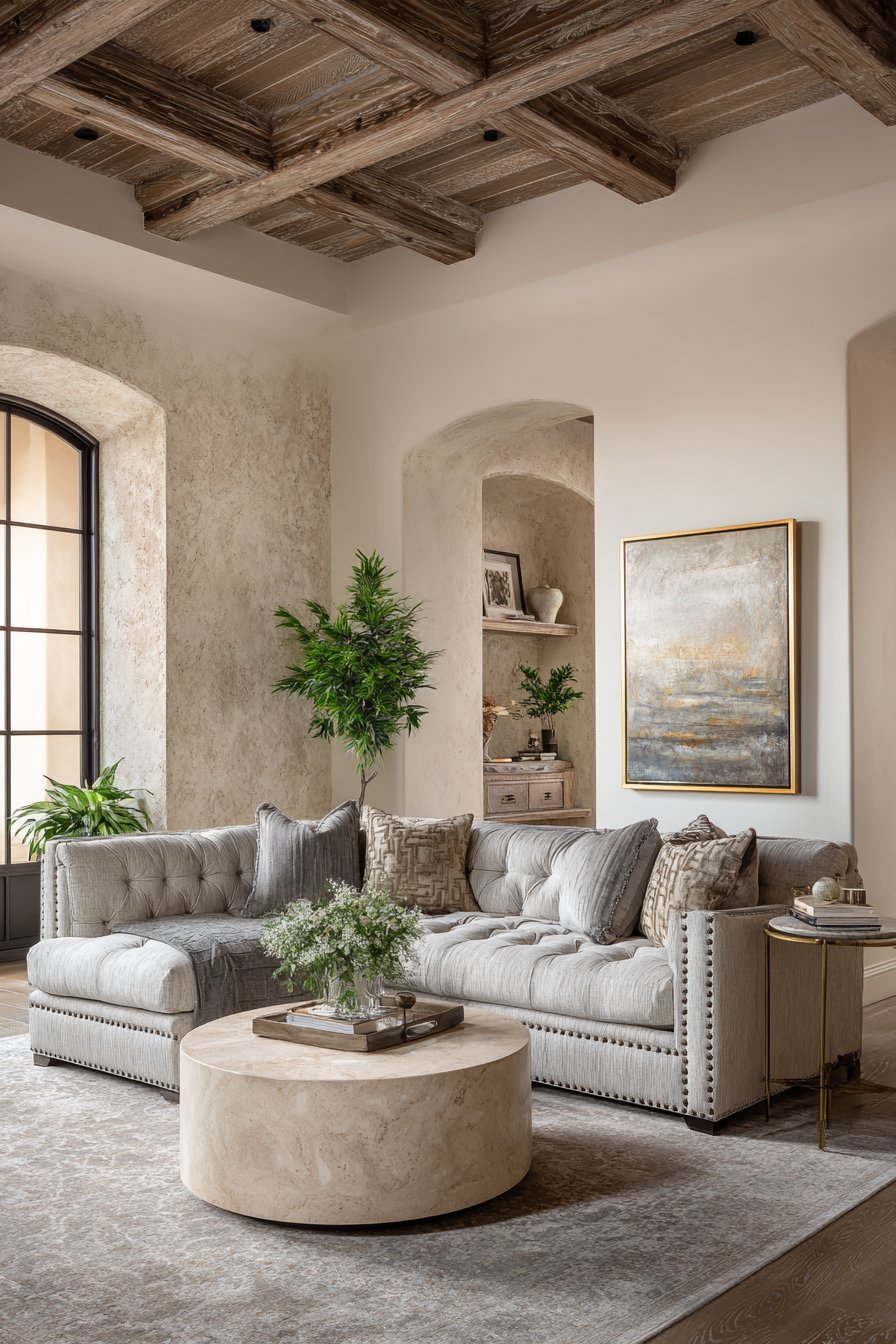
Walls finished in lime-washed plaster technique display organic texture and tonal depth. The hand-applied finish creates subtle variations impossible to replicate mechanically. A vintage Persian rug in faded neutrals grounds the arrangement with timeless appeal. The aged textile adds history and artistic value to the space.
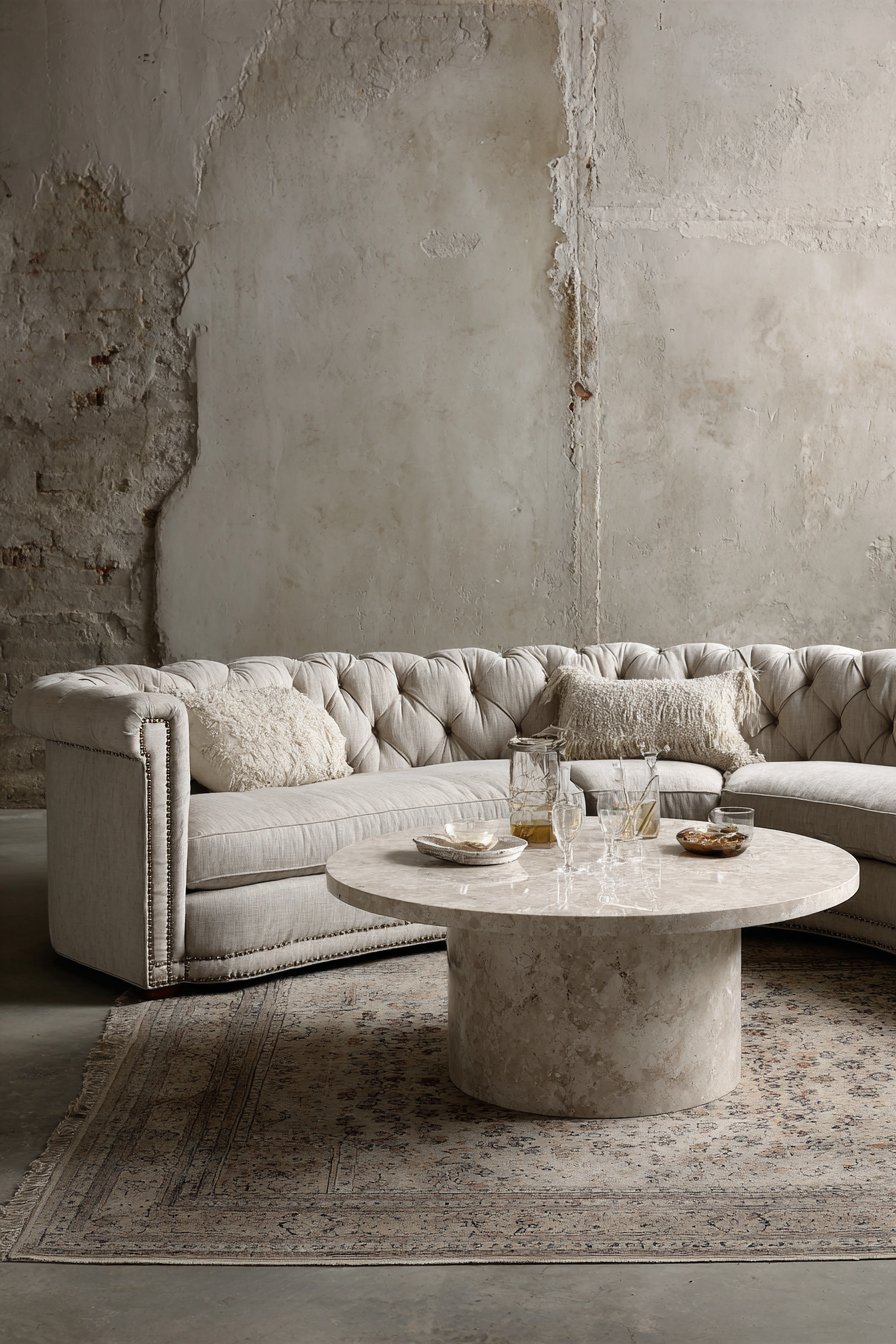
Balanced exposure in architectural photography captures sophisticated texture layering. Smooth marble contrasts beautifully with rough plaster surfaces. Soft linen upholstery provides another textural dimension in this rich composition. The combination demonstrates masterful material mixing in neutral palettes.
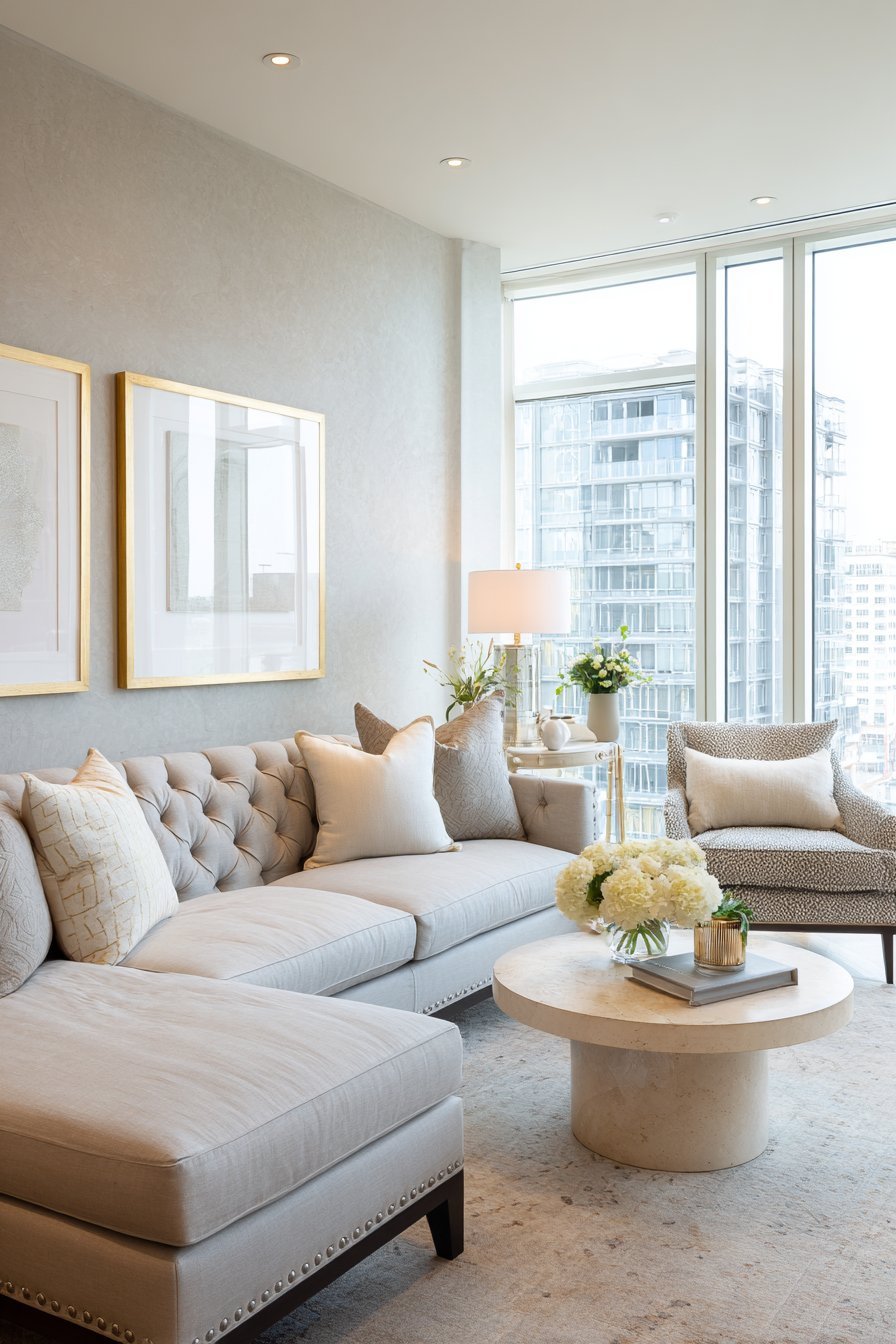
This design bridges traditional and contemporary aesthetics seamlessly. Classic elements like tufting and vintage rugs meet modern simplicity. The result feels collected and curated rather than decorated all at once.
Key Design Tips:
- Add brass nailhead trim for subtle traditional detailing on upholstery
- Select honed marble tables to showcase natural stone veining patterns
- Apply lime-wash plaster techniques for authentic textured wall finishes
- Layer vintage rugs in faded neutrals for character and warmth
- Balance smooth and rough surfaces for tactile contrast
- Mix traditional and modern elements for transitional sophistication
7. Modern Farmhouse Shiplap Comfort
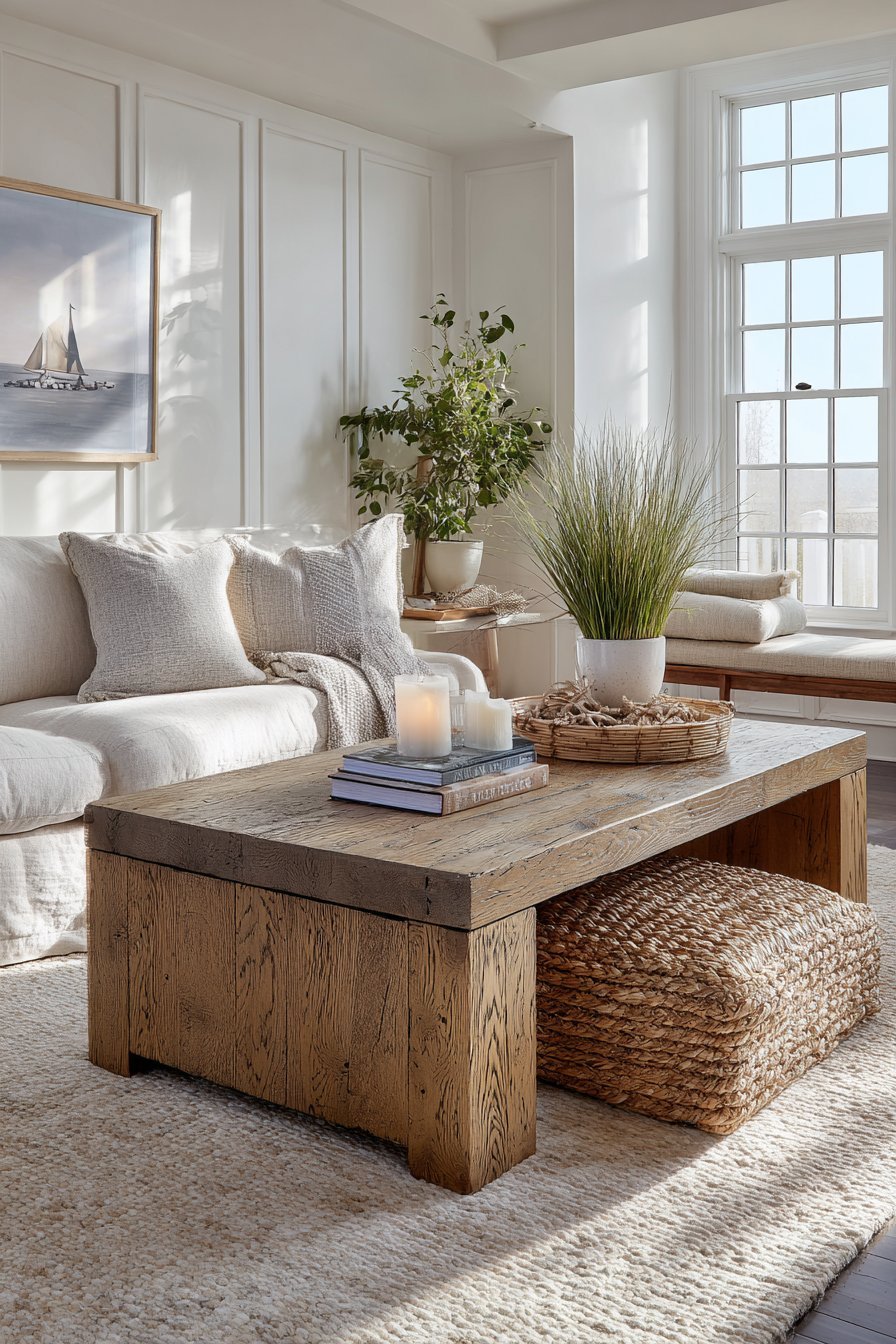
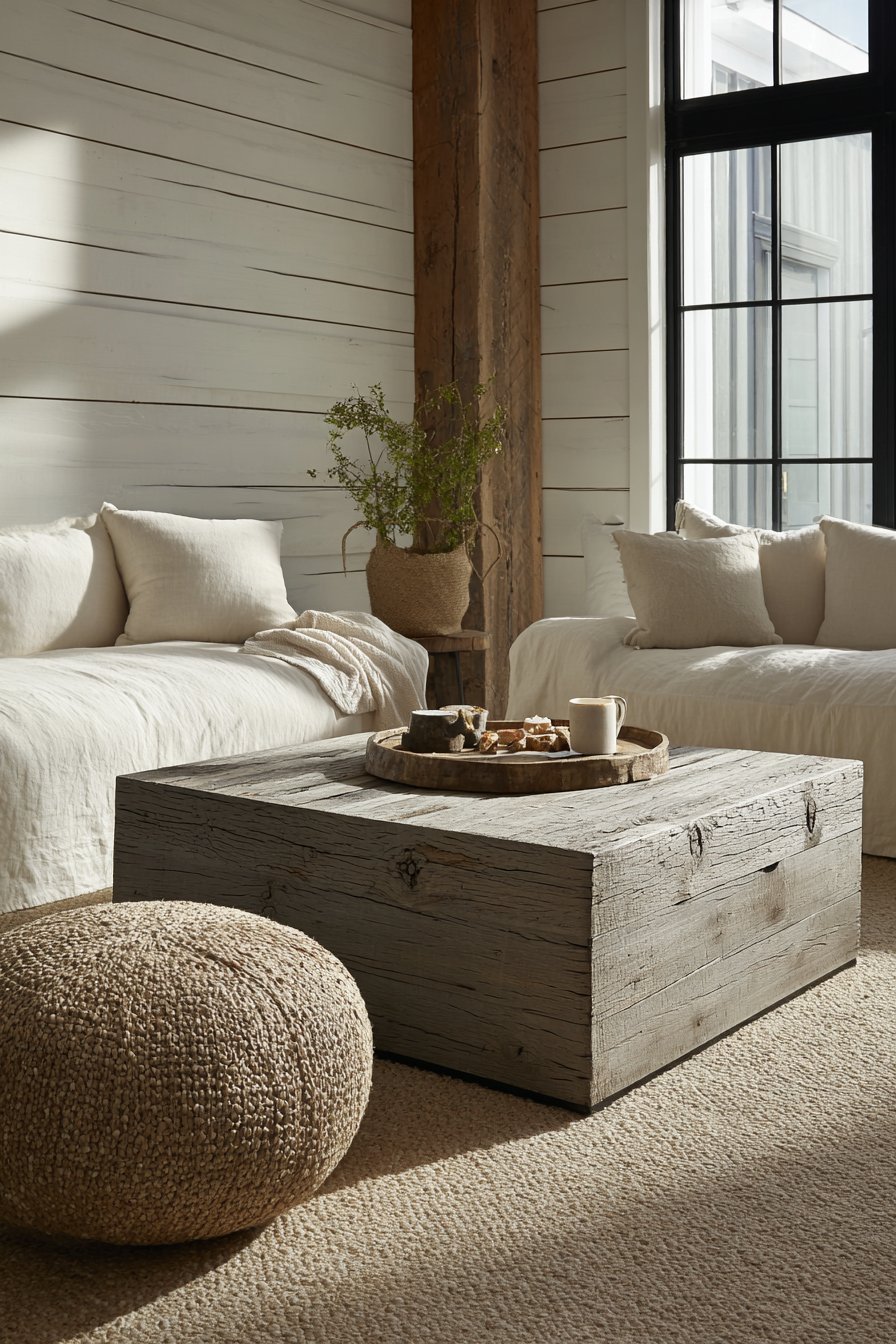
A shiplap accent wall painted in warm white reveals authentic wood grain beneath. This architectural detail adds farmhouse character without overwhelming the space. A slipcovered sofa in natural linen features a relaxed, lived-in appearance with gentle wrinkles. The casual fabric choice emphasizes comfort over formality.
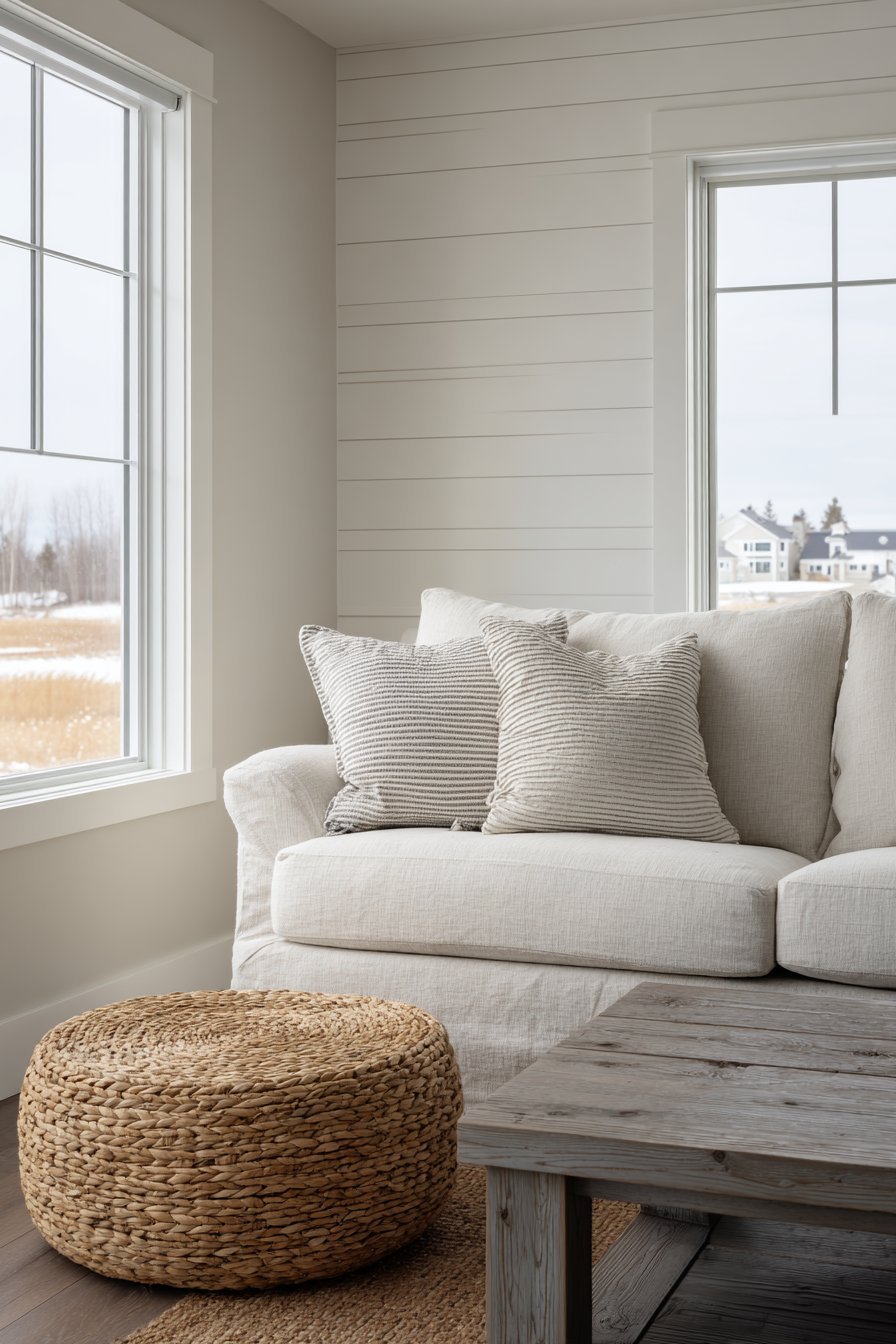
A reclaimed barn wood coffee table displays weathered grey patina beautifully. Nail holes from previous use tell stories of the wood’s history. Woven seagrass ottoman provides additional textured seating and functional flexibility. These honest materials create approachable, attainable aesthetic appeal. It’s a similar trade-off to deciding on this coffee table vs ottoman elsewhere in the space.
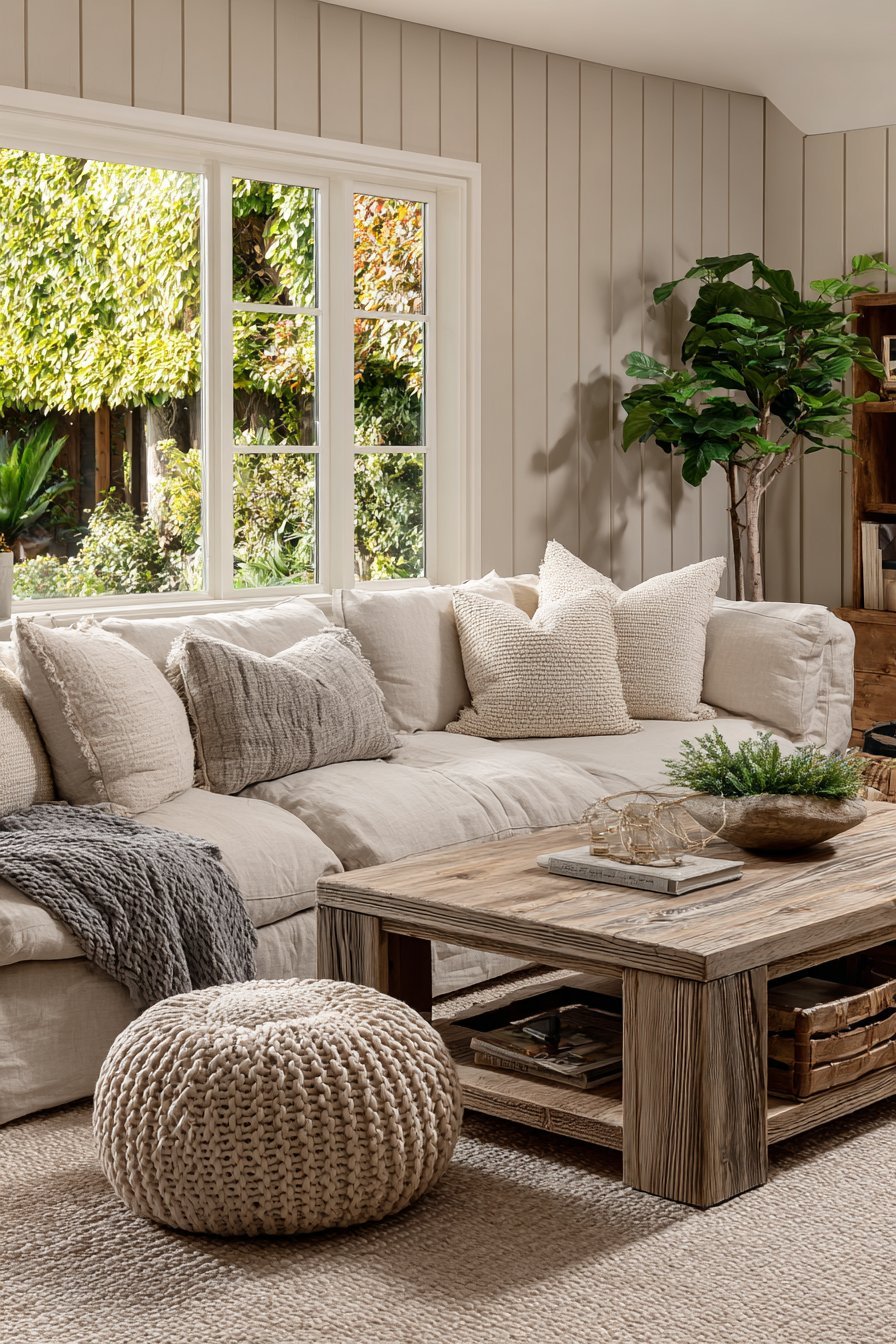
Natural window light creates soft highlights on varied neutral surfaces throughout. The illumination emphasizes texture in fabrics and wood equally. The design celebrates imperfection and authentic material character. Nothing feels precious or overly styled in this welcoming environment.
This approach makes sophisticated design feel accessible to everyone. The farmhouse style emphasizes comfort and family-friendly durability. Natural materials and washable fabrics support real life in beautiful spaces.
Key Design Tips:
- Install shiplap walls to add architectural interest and farmhouse character
- Choose slipcovered furniture for washable, family-friendly practicality
- Incorporate reclaimed barn wood for sustainable pieces with history
- Add woven seagrass ottomans for versatile, textured seating options
- Embrace natural wrinkles in linen fabrics for lived-in comfort
- Design with honest materials that show authentic wear beautifully
8. Contemporary Grasscloth and Velvet Refinement
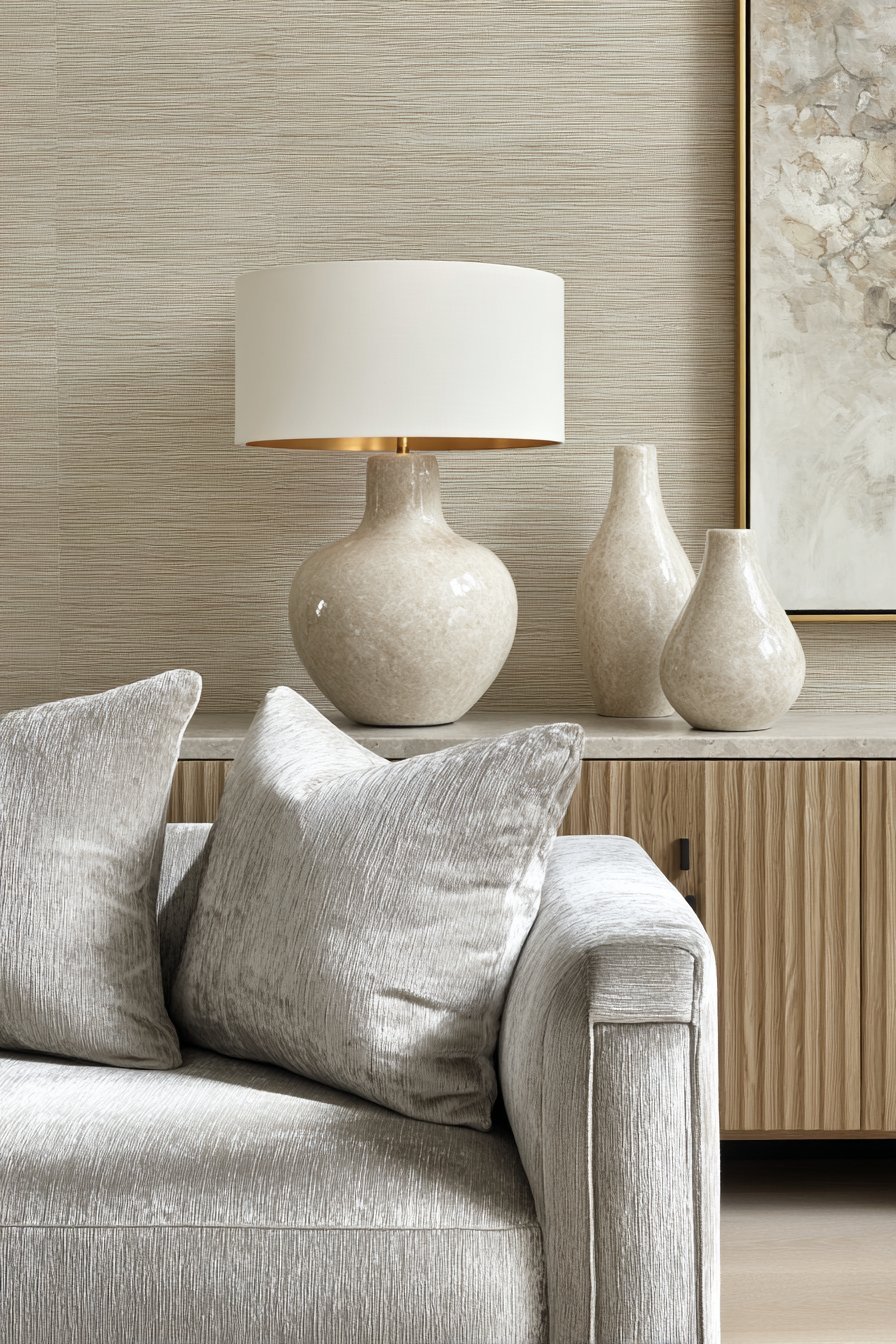
Performance velvet upholstery in soft grey creates sophisticated seating with subtle sheen. The fabric’s pile direction creates tonal shifts in different lighting conditions. Textured grasscloth wallpaper in natural beige fiber adds dimensional wall interest. The organic material introduces nature indoors while maintaining refined elegance.
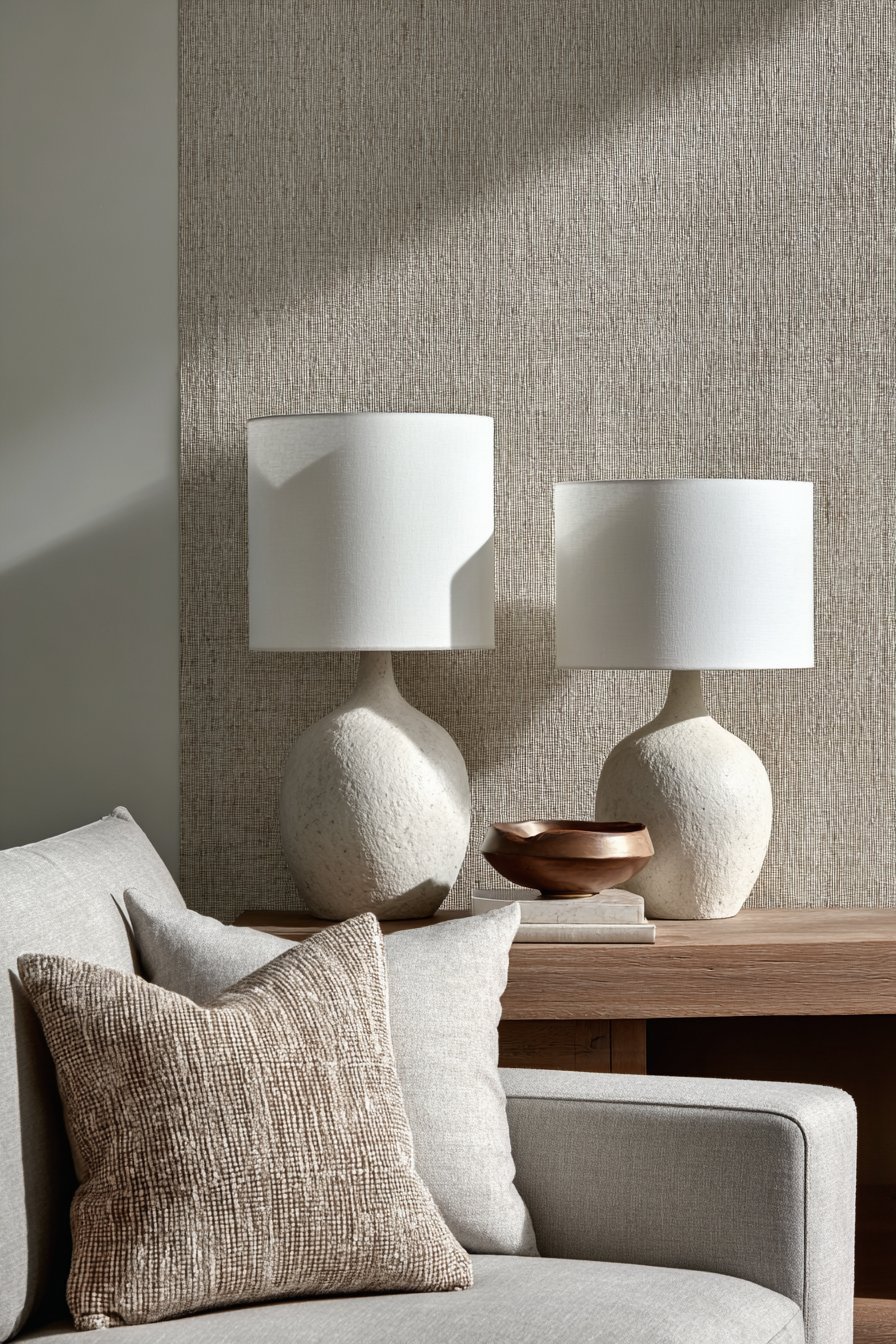
A sleek console table in light ash wood features book-matched veneer patterns. The symmetrical grain creates natural artwork in the wood itself. Handmade ceramic table lamps with organic irregular shapes sit atop marble side tables. These artisanal pieces add human touch to the contemporary space.
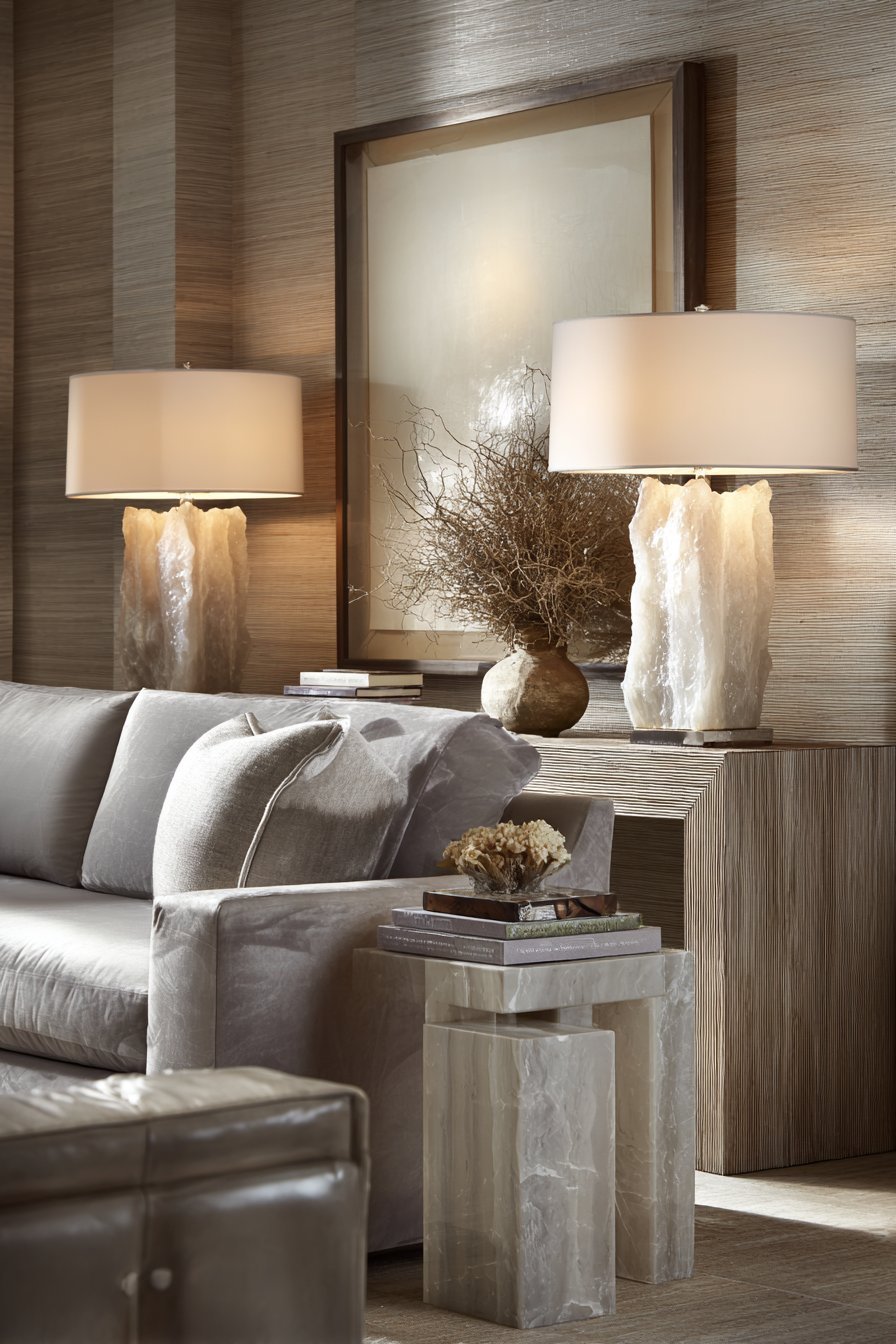
Professional photography captures the interplay between matte and reflective surfaces masterfully. Afternoon light reveals texture depth and material quality throughout. The neutral palette ranges from cool grey to warm beige seamlessly. Each surface contributes unique visual and tactile qualities to the composition.
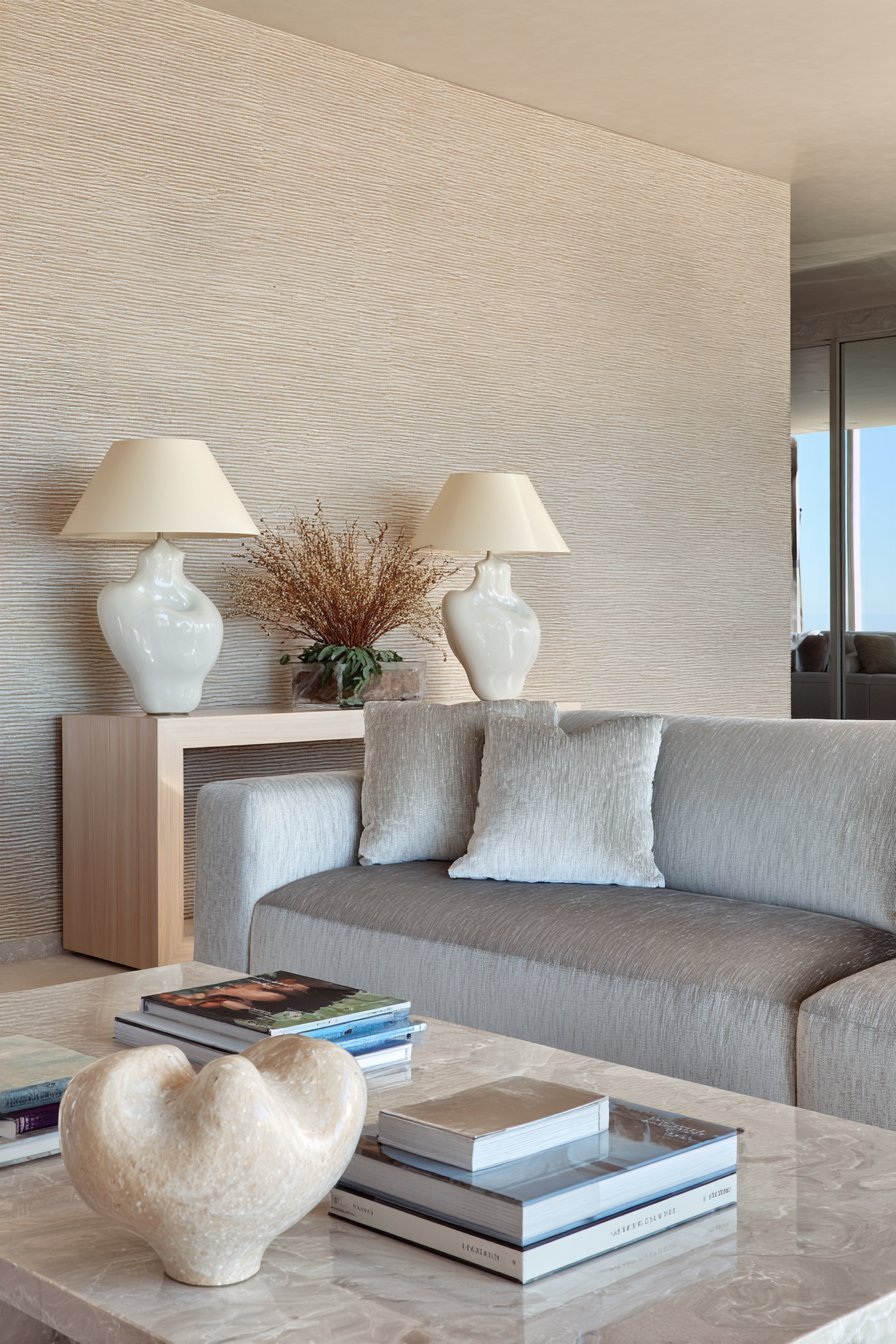
This design demonstrates that contemporary spaces can feel warm and inviting. The combination of natural grasscloth and luxurious velvet creates balance. Modern aesthetics need not sacrifice comfort or sensory richness.
Key Design Tips:
- Select performance velvet for durable luxury with beautiful sheen variation
- Install grasscloth wallpaper for organic texture and dimensional interest
- Choose book-matched wood veneer to showcase natural grain patterns
- Display handmade ceramics as sculptural lighting elements
- Mix matte and reflective surfaces for visual depth
- Layer cool and warm neutral tones for sophisticated balance
9. Coastal Sand-Washed Linen Breeziness
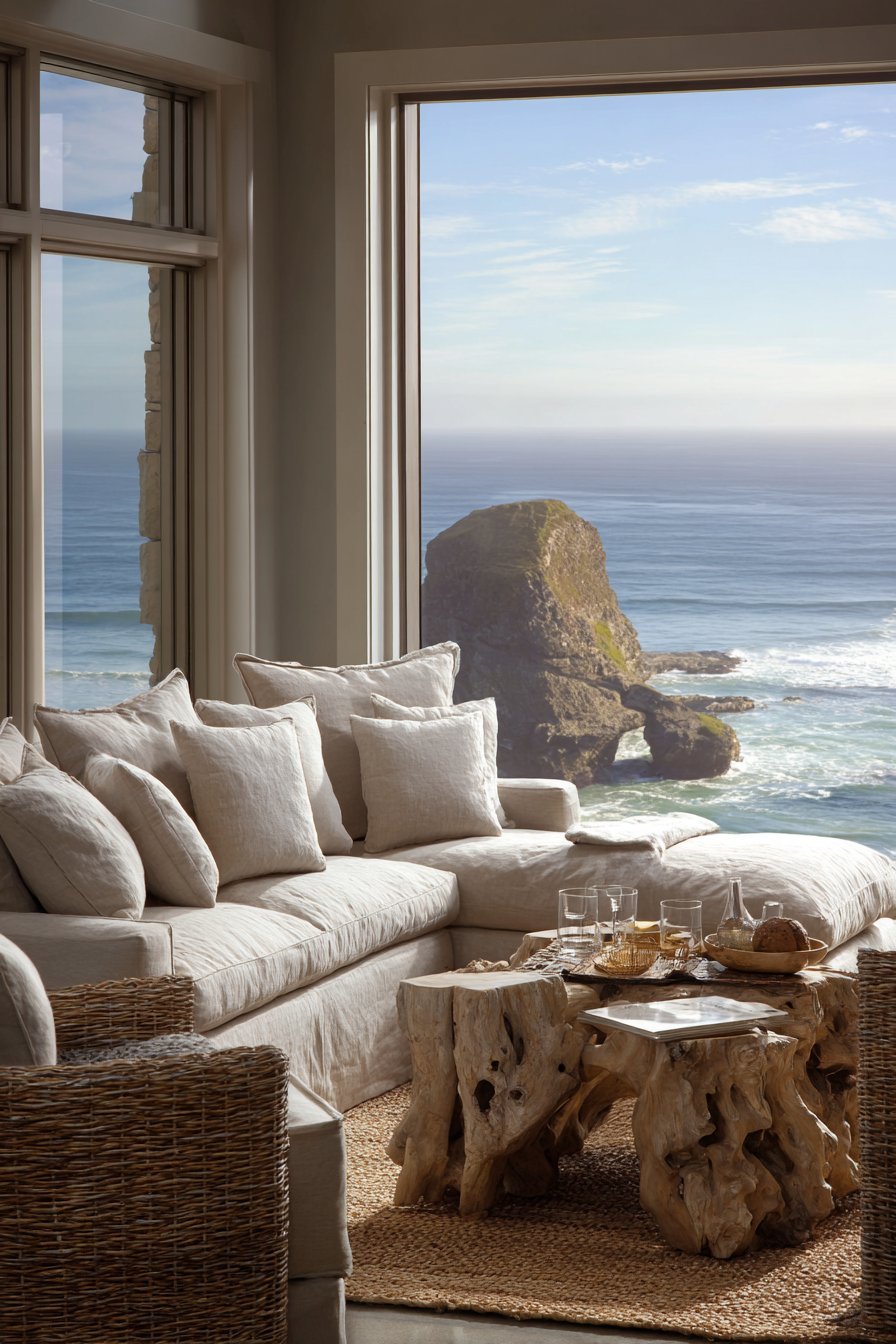
A slipcovered sectional in sand-washed linen shows natural wrinkles and relaxed drape. The casual fabric treatment emphasizes easy coastal living aesthetics. A driftwood coffee table with organic sculptural form serves as an artistic centerpiece. The bleached finish and natural curves bring beach-found treasures indoors.
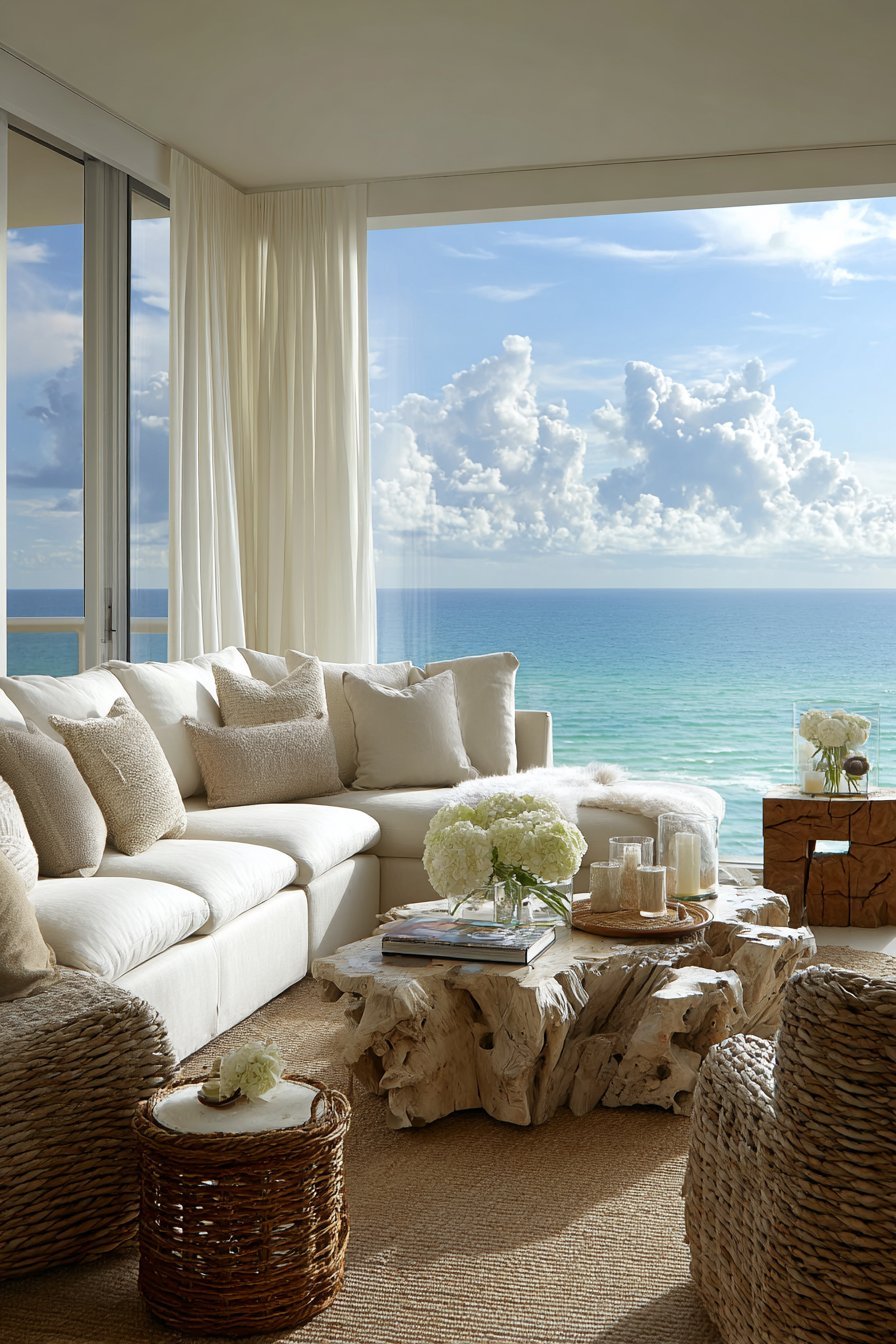
Walls in pale seafoam grey complement natural jute area rug beautifully. The chunky braided texture adds substantial visual weight to the neutral scheme. Rattan accent chairs introduce woven texture variety and bohemian warmth. These natural fiber pieces feel light and airy in the coastal setting.
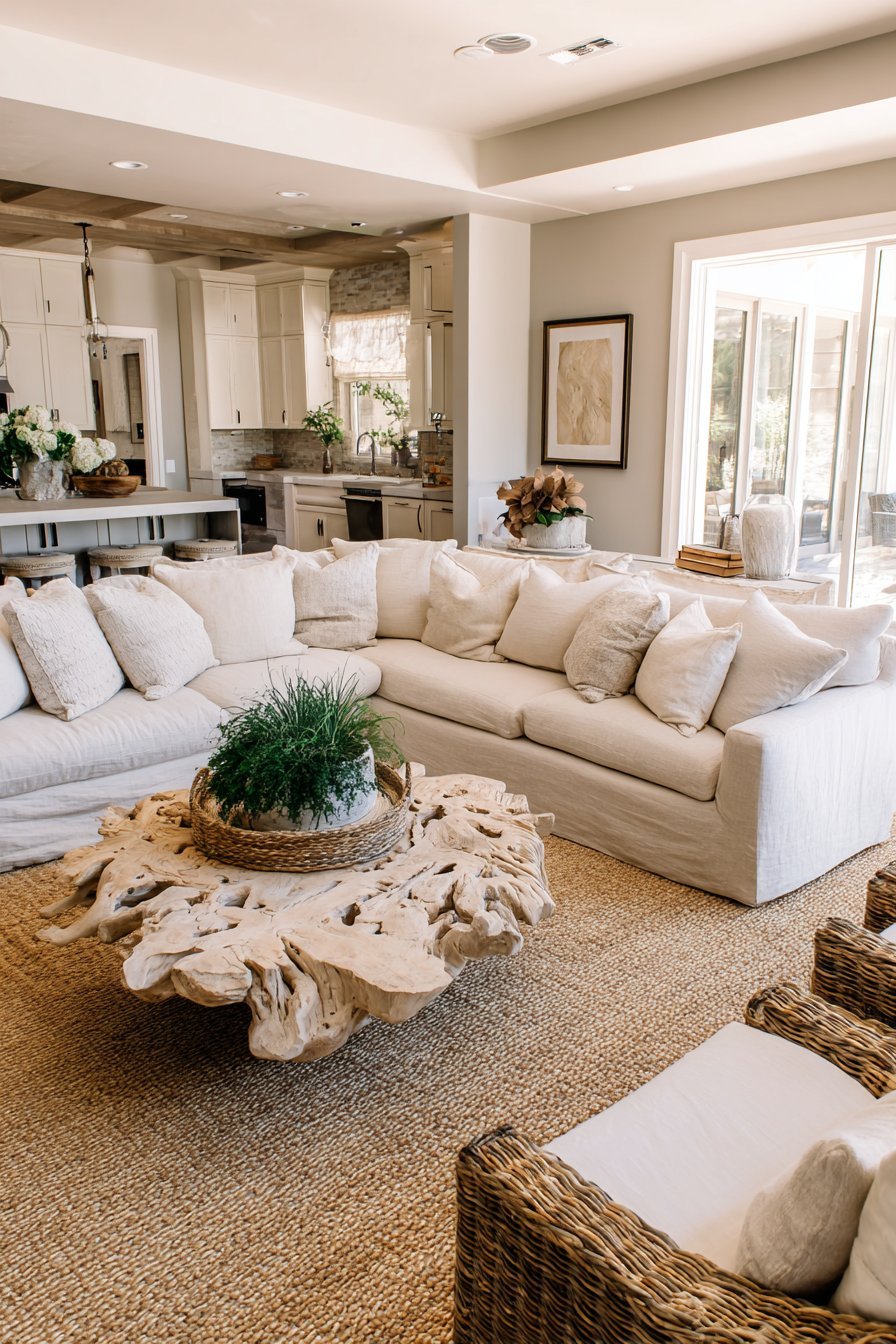
Bright coastal light floods the space through generous windows. The illumination highlights breezy neutral palette and natural imperfections throughout. Nothing feels overly perfect or styled in this relaxed environment. The design celebrates livable authenticity over showroom perfection.
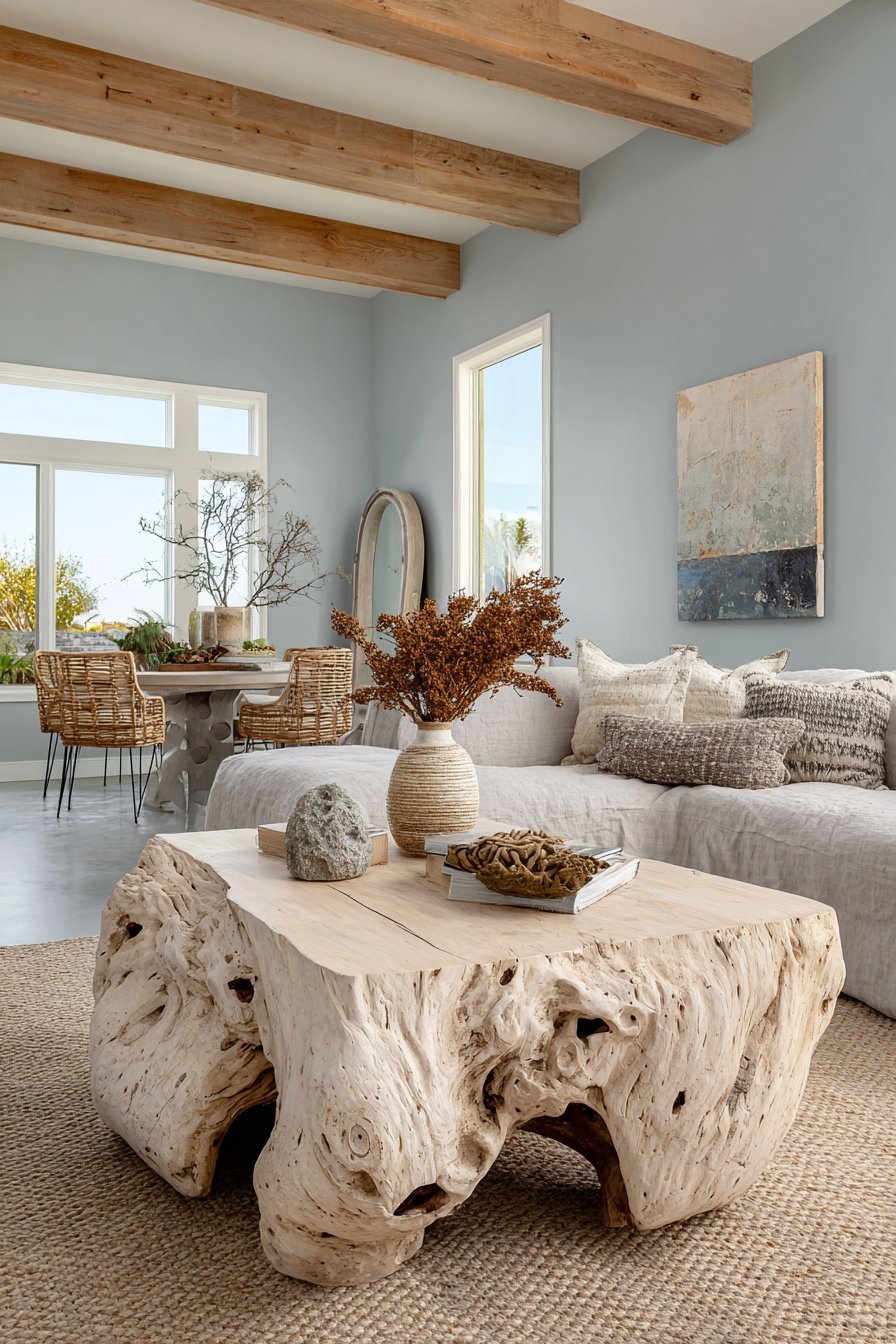
This approach captures vacation home relaxation in everyday living spaces. The coastal aesthetic prioritizes comfort and natural materials. The result feels perpetually vacation-ready and stress-free.
Key Design Tips:
- Choose sand-washed linen for perfectly imperfect coastal texture
- Feature driftwood furniture as sculptural natural artwork
- Paint walls in pale seafoam grey for subtle coastal color
- Layer chunky braided jute rugs for substantial natural texture
- Add rattan accent chairs for woven bohemian warmth
- Maximize natural light to enhance breezy coastal atmosphere
10. Refined Wool Herringbone Sophistication
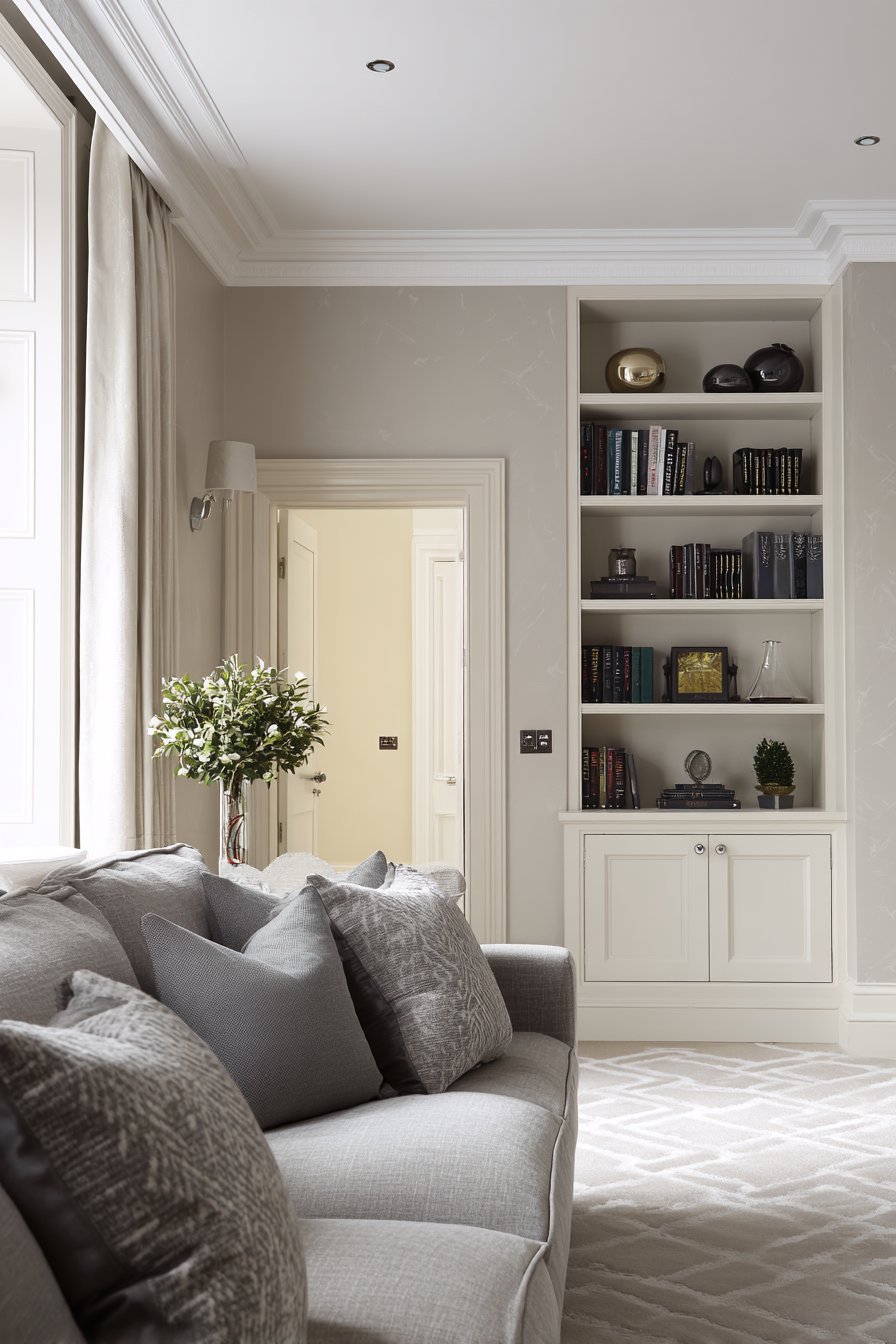
A tailored sofa in dove grey wool blend shows subtle herringbone weave. The classic pattern adds quiet sophistication without visual loudness. Built-in bookcases in painted white oak display curated collections thoughtfully. Books and objects in neutral tones create cohesive visual calm.
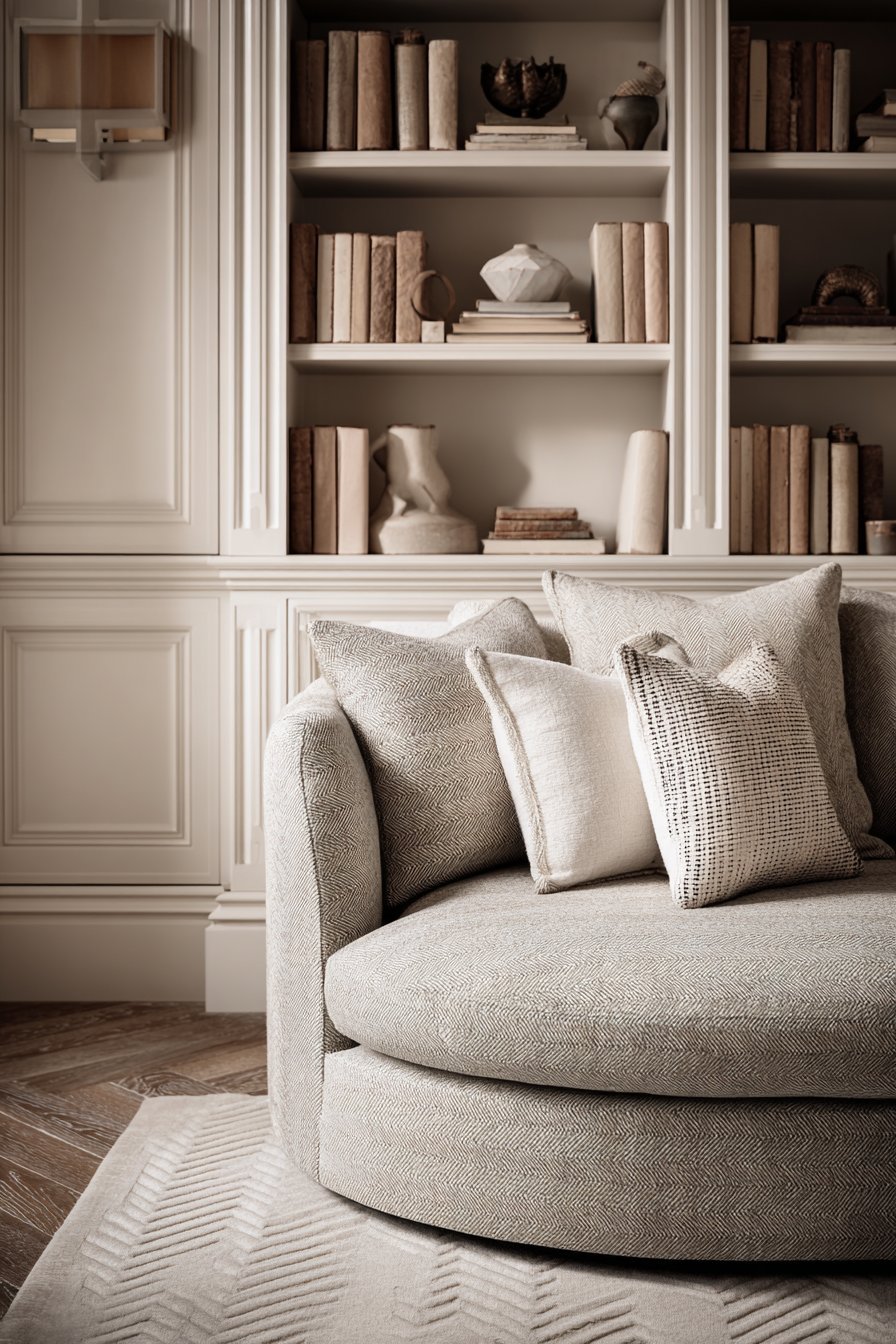
Plaster walls with Venetian finish technique create subtle movement and depth. The hand-troweled application produces luminous surfaces that shift with light. A silk-wool blend area rug features tone-on-tone geometric patterns. The subtle design adds interest while maintaining neutral serenity.
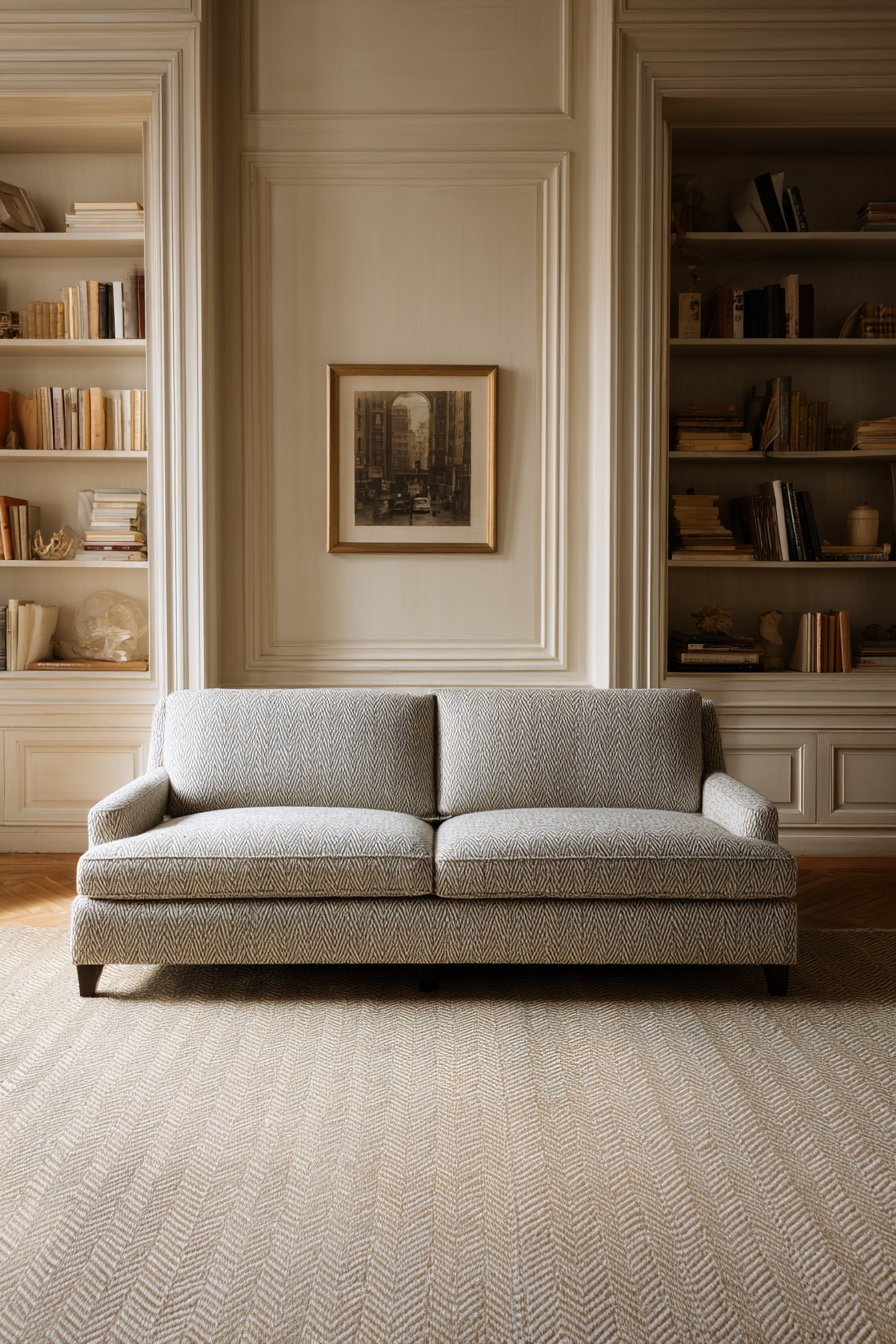
Soft diffused lighting reveals sophisticated simplicity throughout the space. Careful attention to material quality shows in every detail. The monochromatic neutral scheme demonstrates that restraint creates elegance. Quality craftsmanship becomes the primary decorative element.
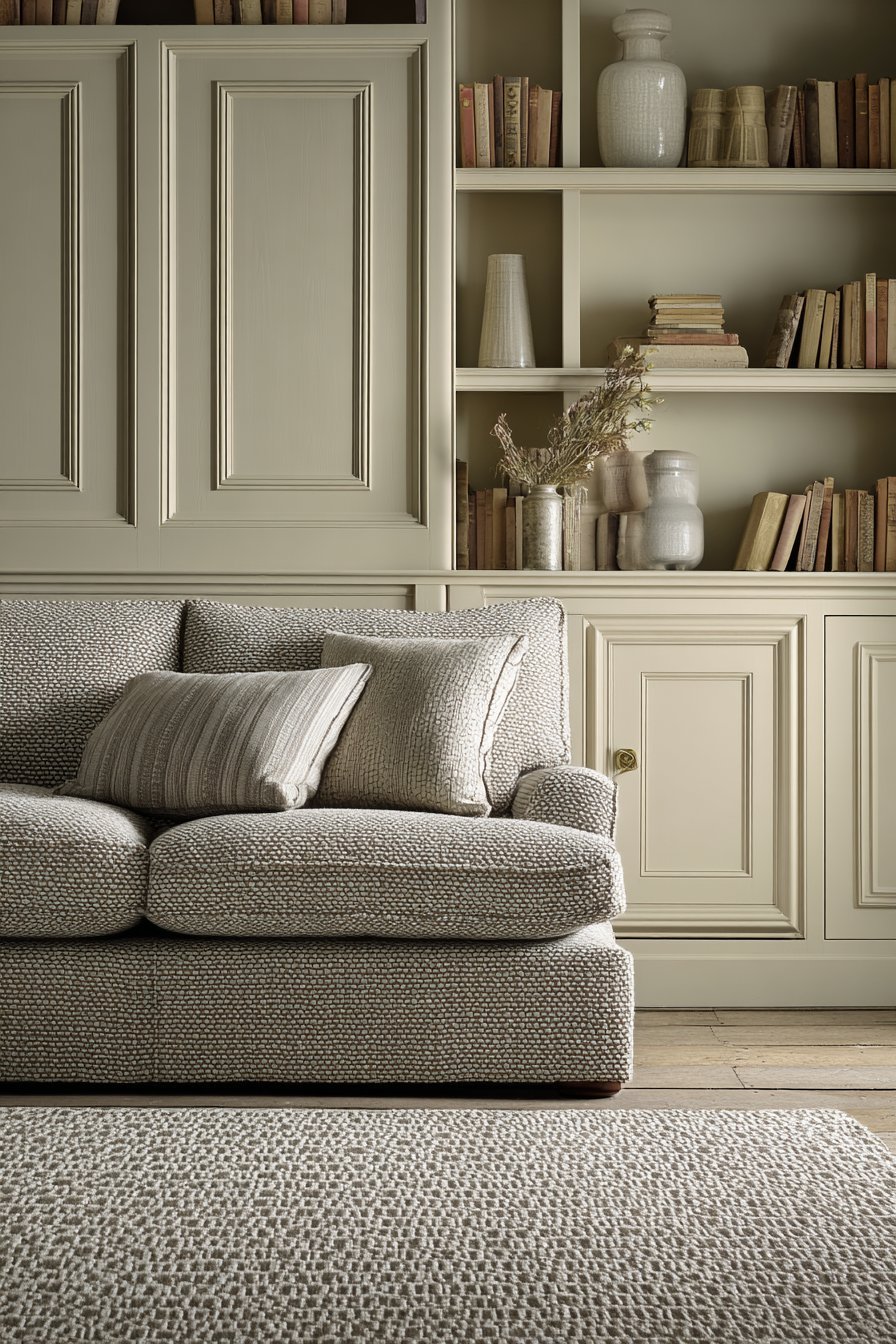
This design proves neutral spaces can achieve formal sophistication. The refined materials and careful curation create gallery-like quality. Yet the room remains inviting rather than intimidating in its elegance.
Key Design Tips:
- Select herringbone weave fabrics for subtle pattern in neutral upholstery
- Install built-in bookcases for architectural storage and display
- Apply Venetian plaster finishes for luminous textured walls
- Choose silk-wool blend rugs for luxurious tone-on-tone patterns
- Curate displays in neutral tones for cohesive visual calm
- Use diffused lighting to enhance sophisticated material qualities
11. Warm Curved Bouclé Embrace
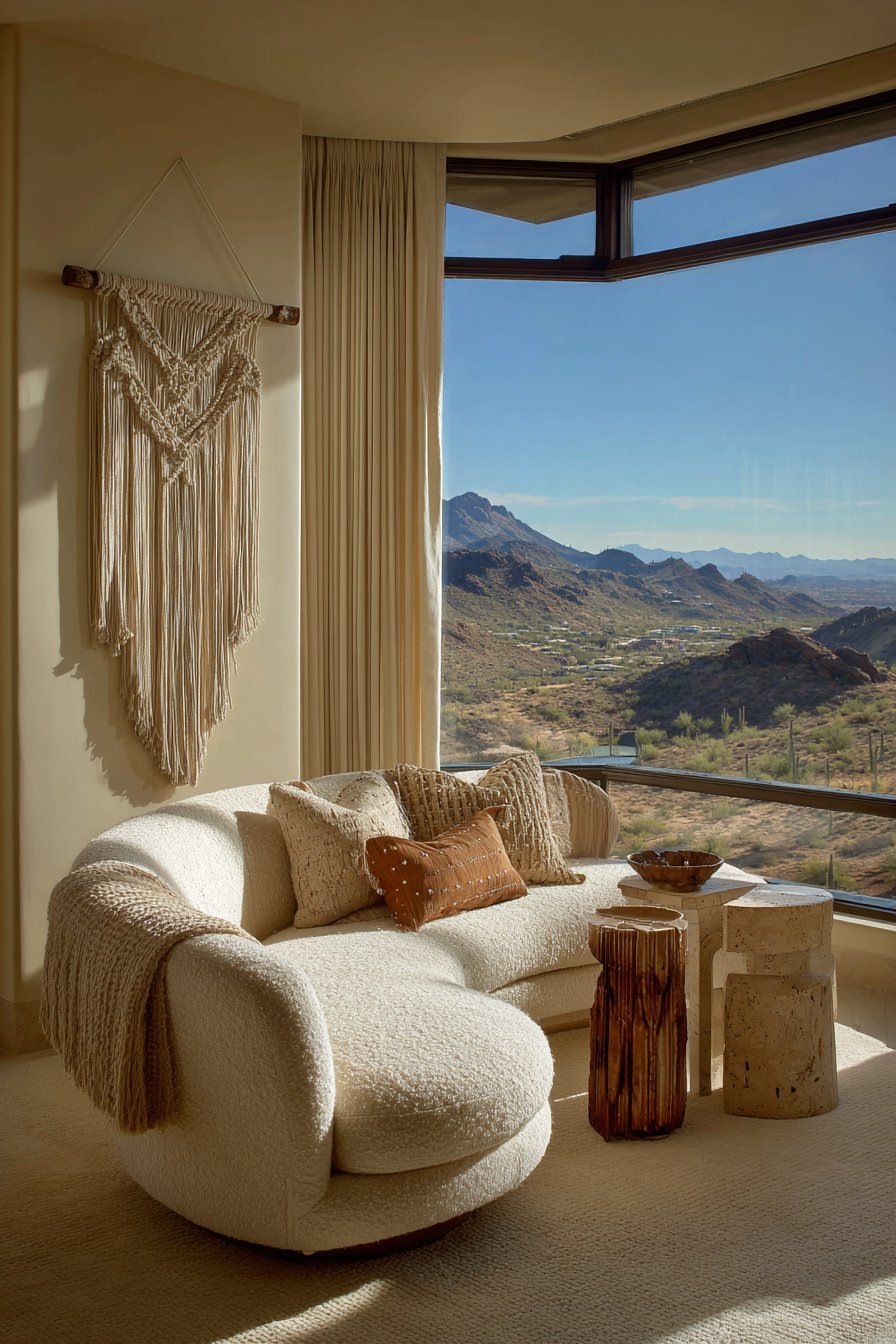
A curved sofa upholstered in bouclé fabric in caramel tone centers this cozy space. The characteristic textured loops create visual and tactile interest. Travertine side tables with unfilled natural holes flank the seating beautifully. The stone’s inherent color variations add organic visual movement.
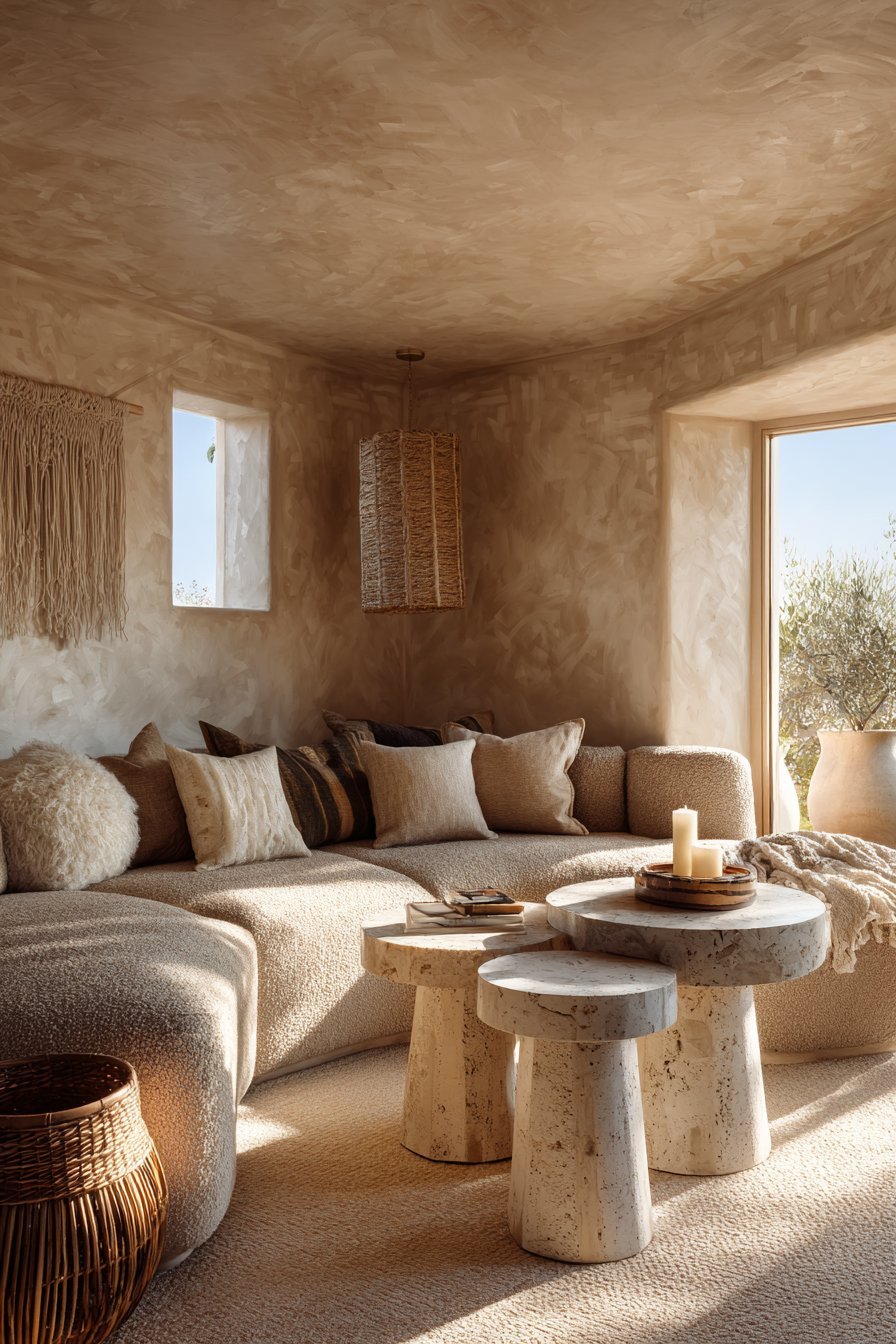
Walls painted in terracotta-tinted cream create enveloping warmth throughout. The subtle color infusion maintains neutrality while adding personality. Macramé wall hanging in natural cotton adds handcrafted texture and bohemian charm. The artisanal element introduces human touch to the space.
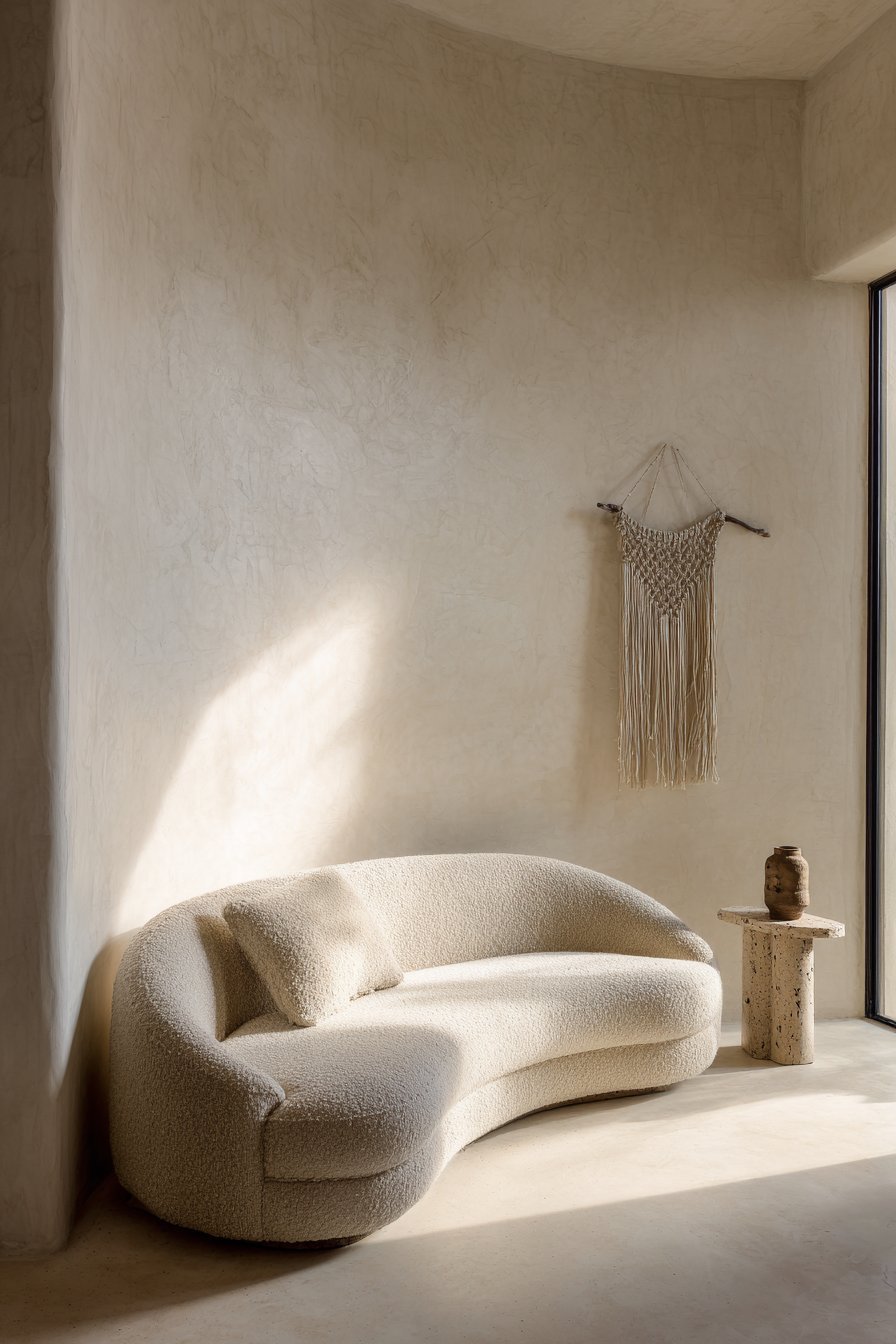
Western-facing window light warms the already-cozy neutral palette dramatically. The illumination emphasizes varied tactile surfaces from smooth stone to nubby fabric. Detail focus on textures creates sensory richness in the monochromatic scheme. Every surface invites touching and interaction.
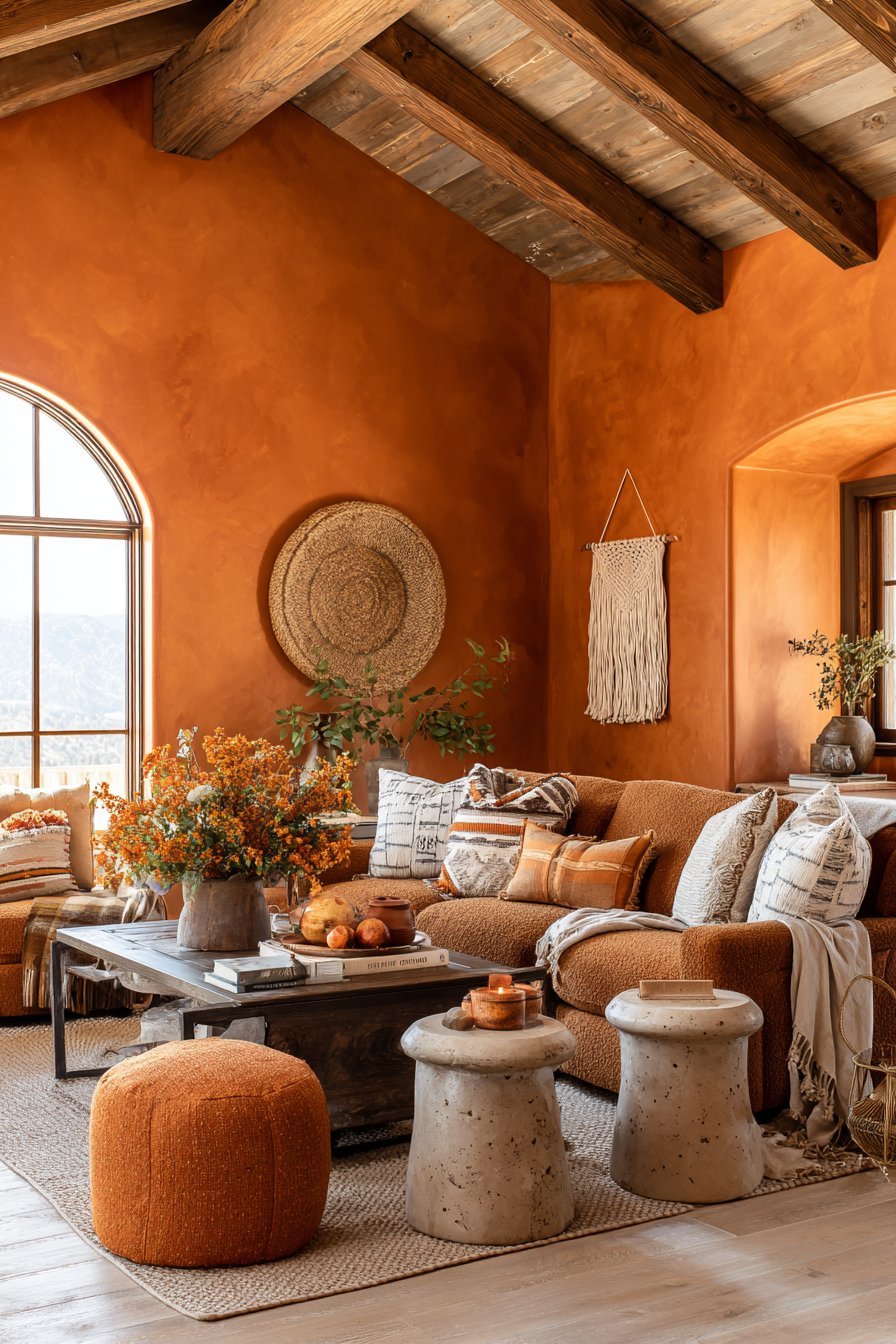
This design demonstrates how warm neutrals create nurturing environments. The curved furniture and soft textiles promote relaxation and comfort. The space feels like a perpetual warm embrace.
Key Design Tips:
- Choose curved sofas to soften spaces and encourage conversation
- Select bouclé fabrics in warm tones for cozy textured upholstery
- Feature travertine tables to showcase natural stone character
- Paint walls in terracotta-tinted neutrals for enveloping warmth
- Add macramé art for handcrafted bohemian texture
- Position seating to capture warm afternoon and evening light
12. Minimalist Japanese-Inspired Zen
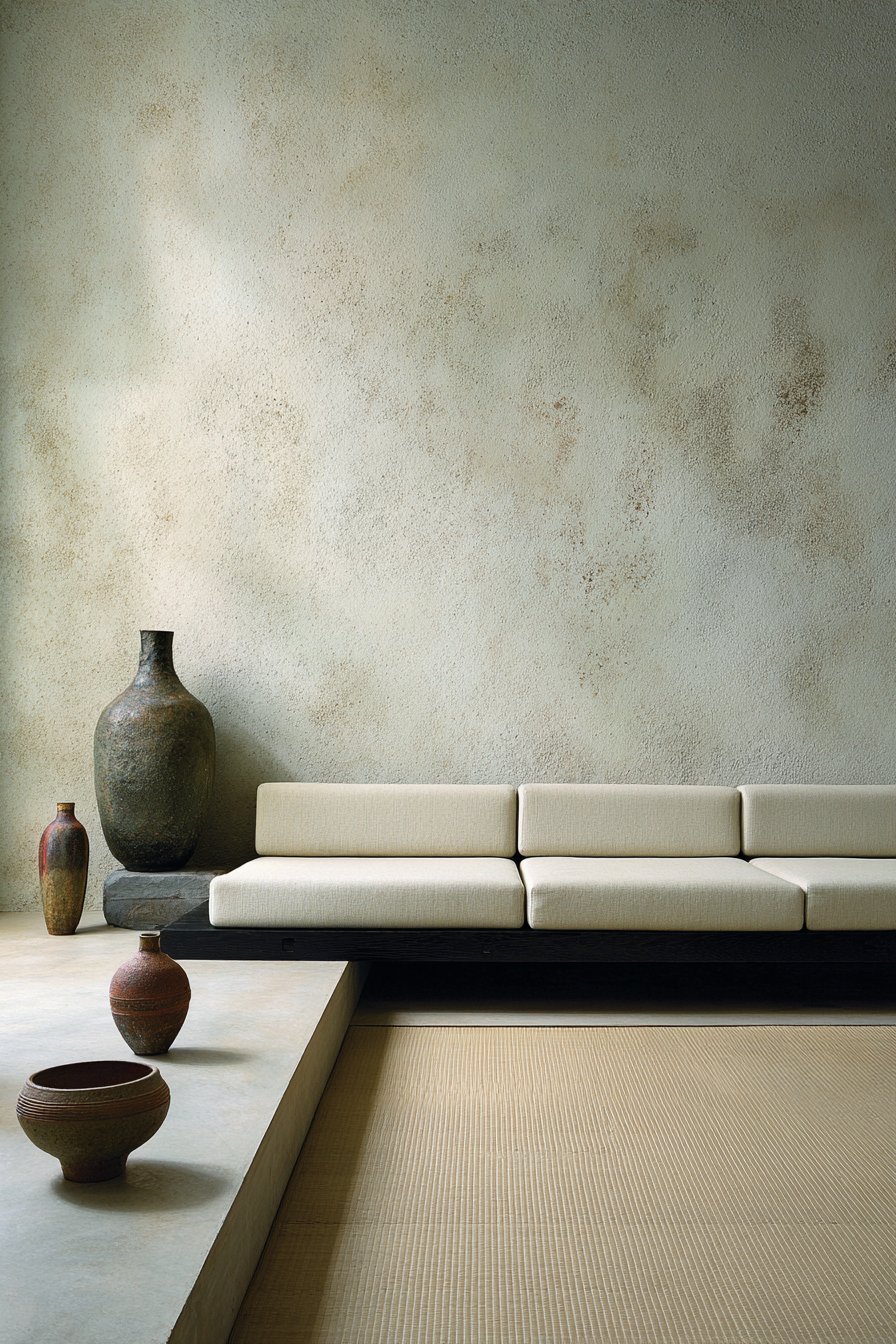
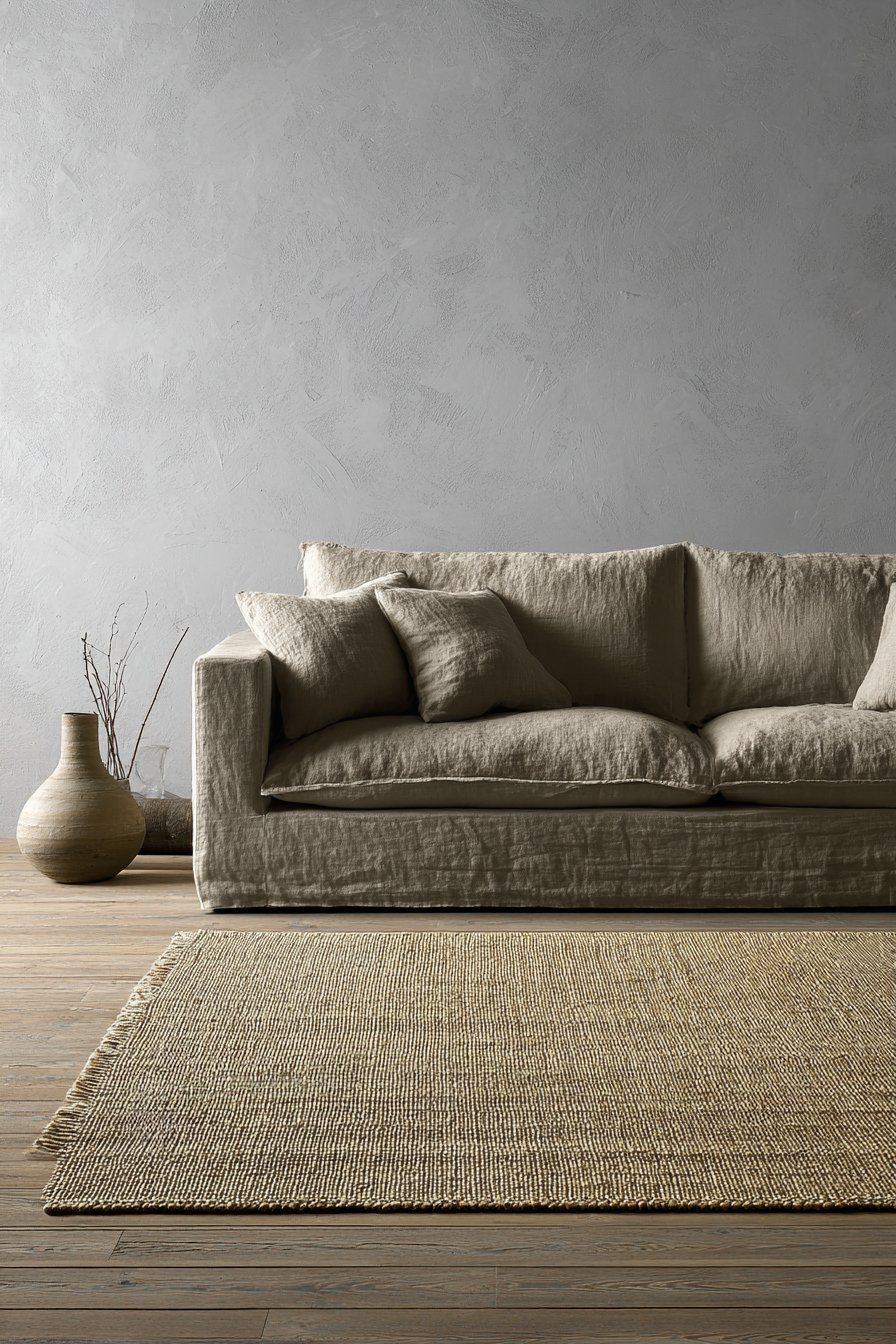
A low platform sofa in natural linen with visible slub texture grounds this serene space. The Japanese-inspired silhouette creates calm horizontal lines. Tatami mat area rug in wheat tone provides a traditional textural element. The natural grass material connects to centuries of Japanese design wisdom.
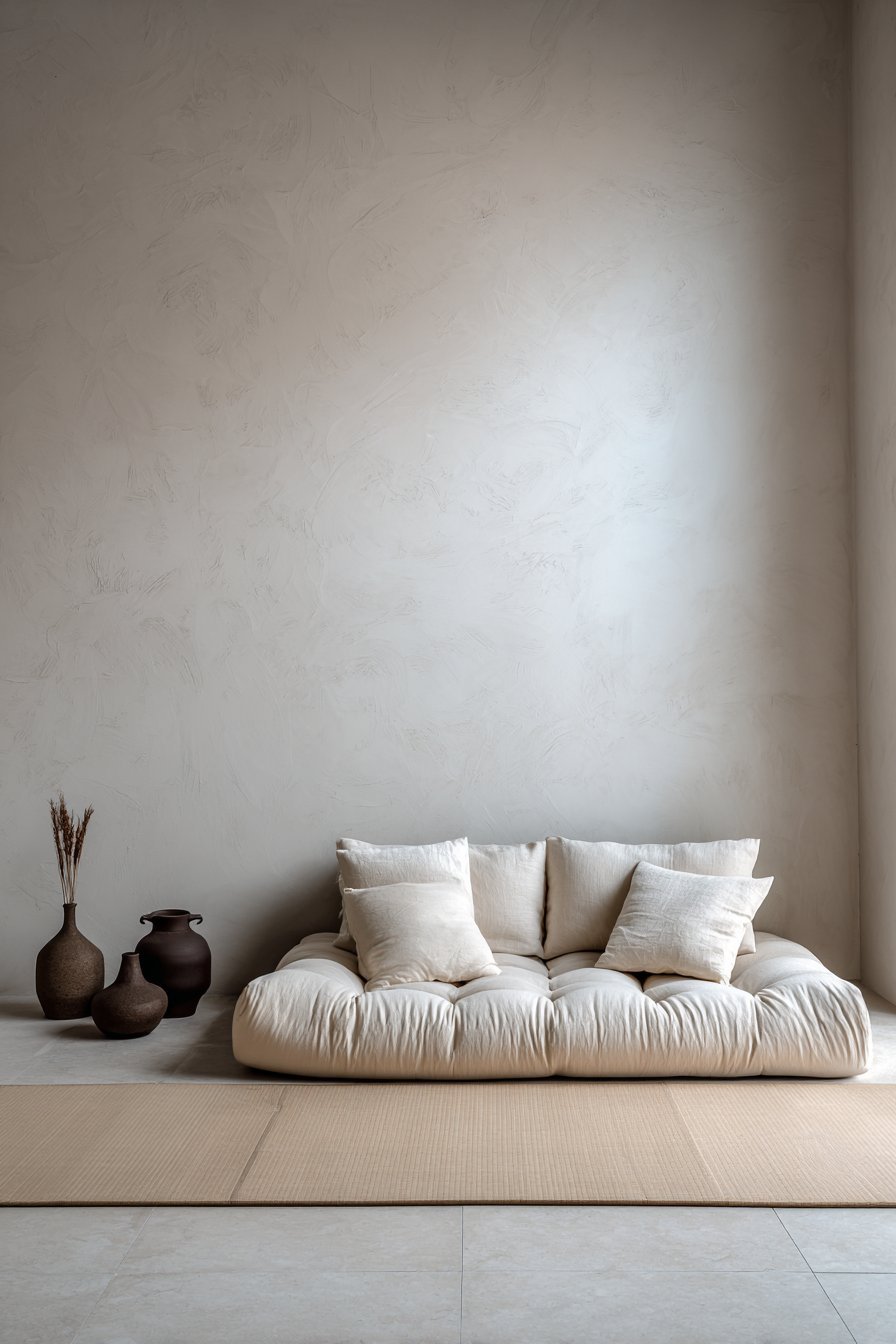
Walls finished in smooth tadelakt plaster in pale grey create perfectly serene backdrop. The Moroccan technique produces waterproof, polished surfaces with subtle variation. Simple ceramic vessels in earth tones serve as sculptural accents. Each piece receives careful placement in the minimal composition.
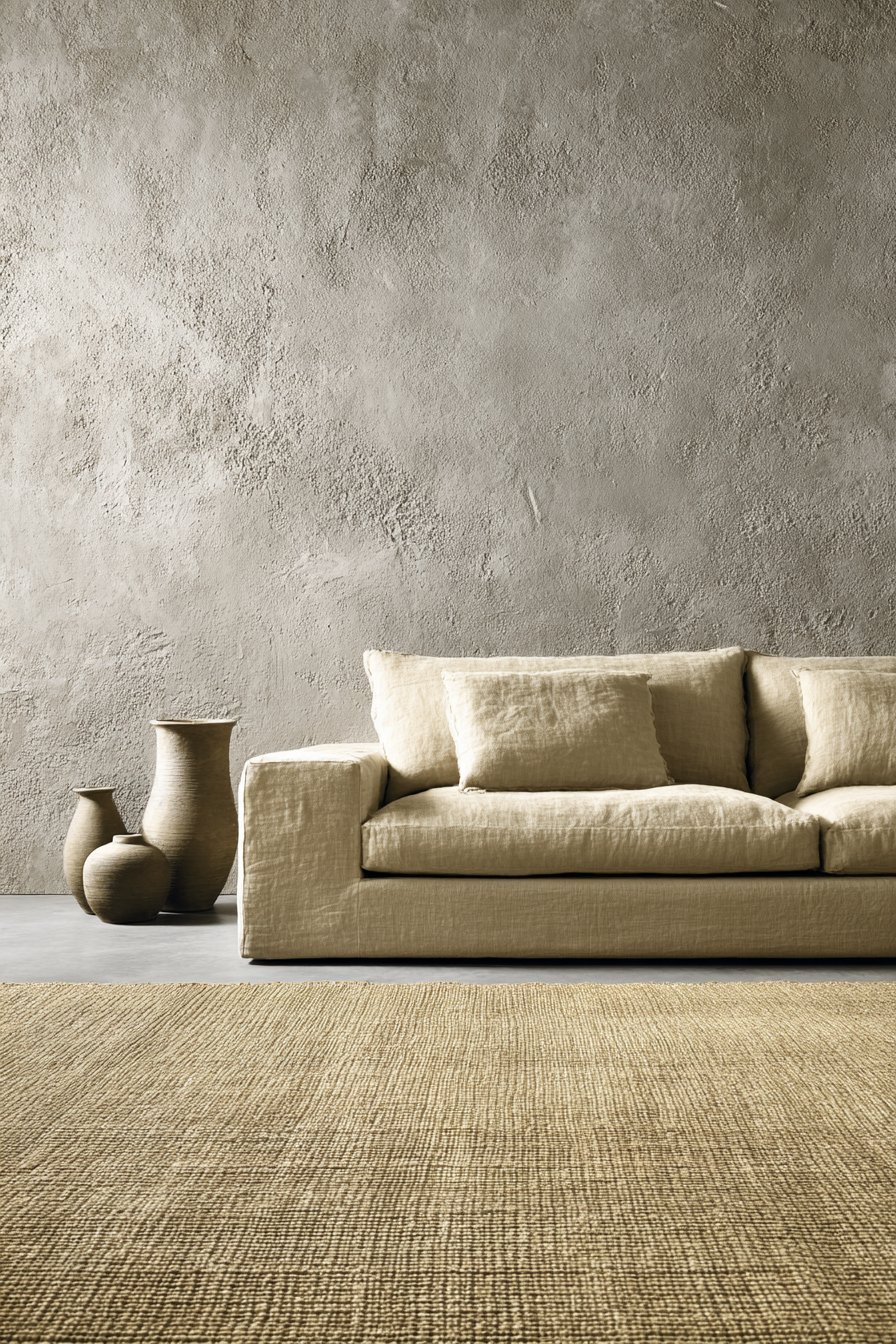
Soft even lighting emphasizes zen-like quality throughout the neutral space. The illumination highlights beauty in simple materials and honest construction. Every element serves an essential purpose without excess decoration. The space encourages meditation and peaceful contemplation.
This approach demonstrates cross-cultural design fusion at its finest. Japanese minimalism meets Moroccan craft techniques seamlessly. The result transcends cultural boundaries to create universal calm.
Key Design Tips:
- Select low platform furniture for Japanese-inspired horizontal emphasis
- Layer tatami mats for traditional natural texture and cultural authenticity
- Apply tadelakt plaster for smooth, luminous waterproof wall finishes
- Display ceramic vessels as sculptural elements in minimal arrangements
- Use even, soft lighting to create a meditative atmosphere
- Edit ruthlessly to include only essential, beautiful elements
13. Bohemian Layered Textile Haven
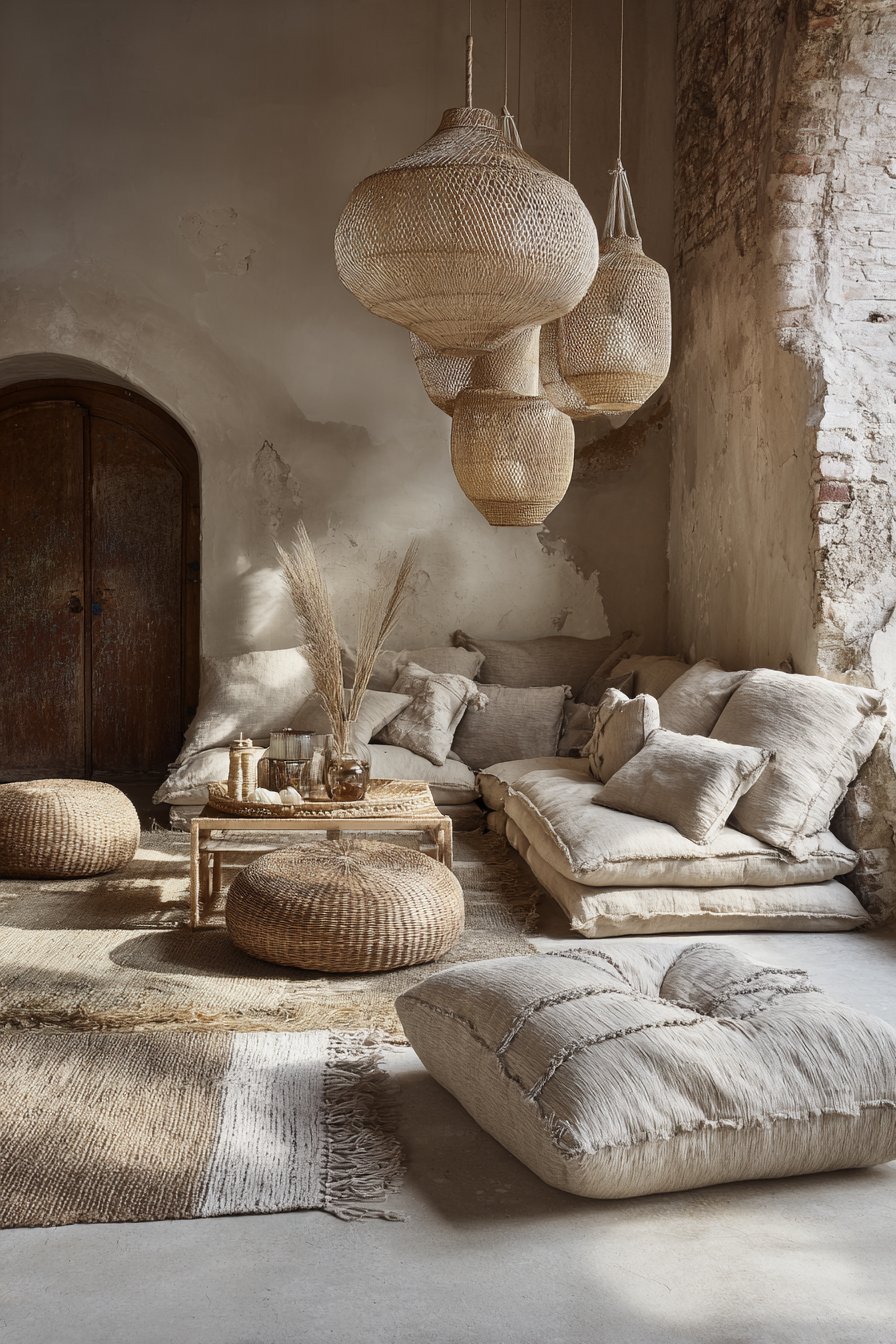
Layered textiles create rich visual interest in this collected bohemian space. A vintage kilim rug in faded neutrals anchors the eclectic arrangement. Woven floor cushions in natural wool provide casual, flexible seating. Macramé plant hangers in raw cotton suspend greenery at varying heights.
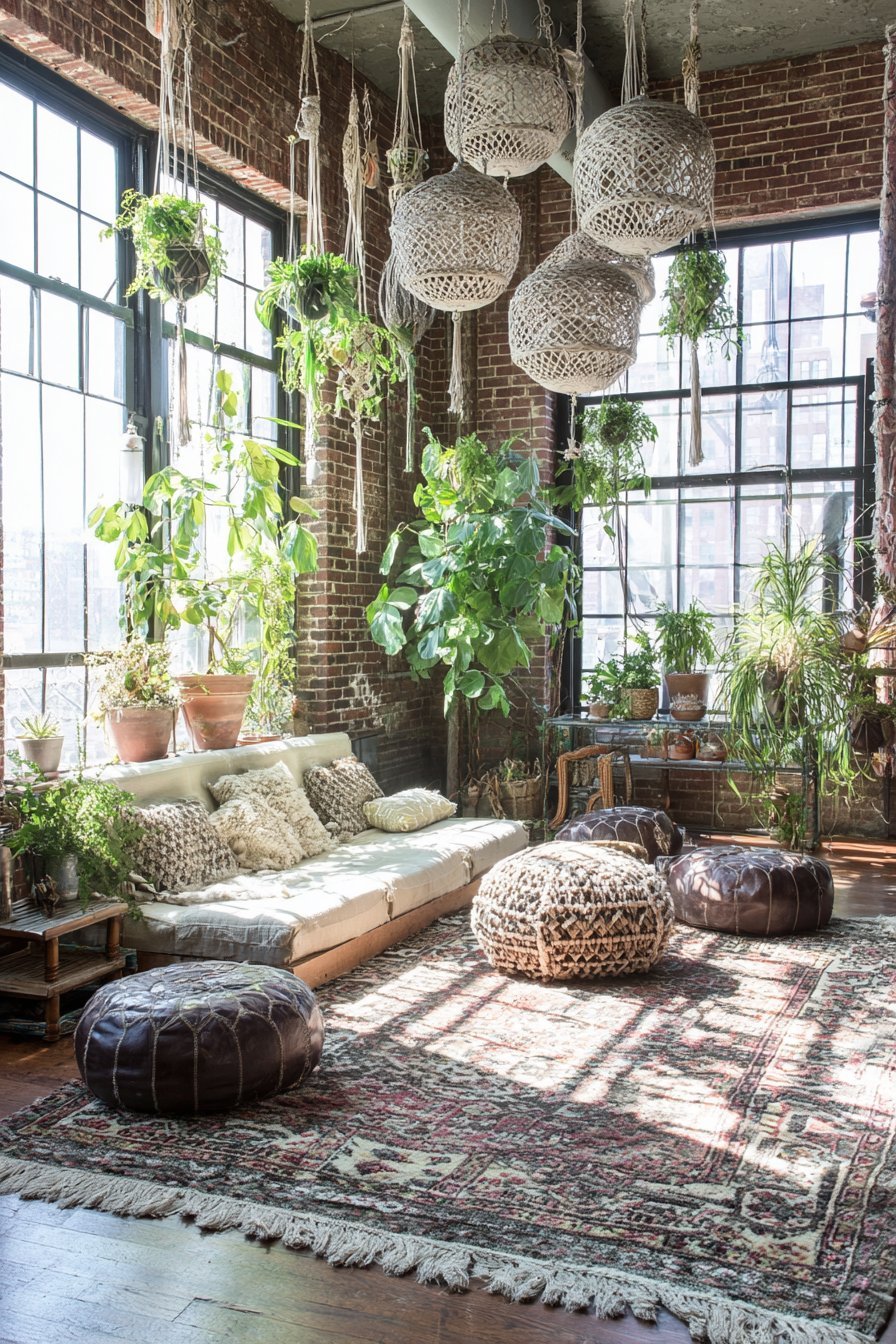
A low-profile sofa with linen slipcover in oatmeal serves as neutral anchor. The simple form allows layered textiles to take center stage. Exposed brick wall painted in limewash shows texture and tonal variation. The breathing paint finish allows moisture movement while adding organic beauty.
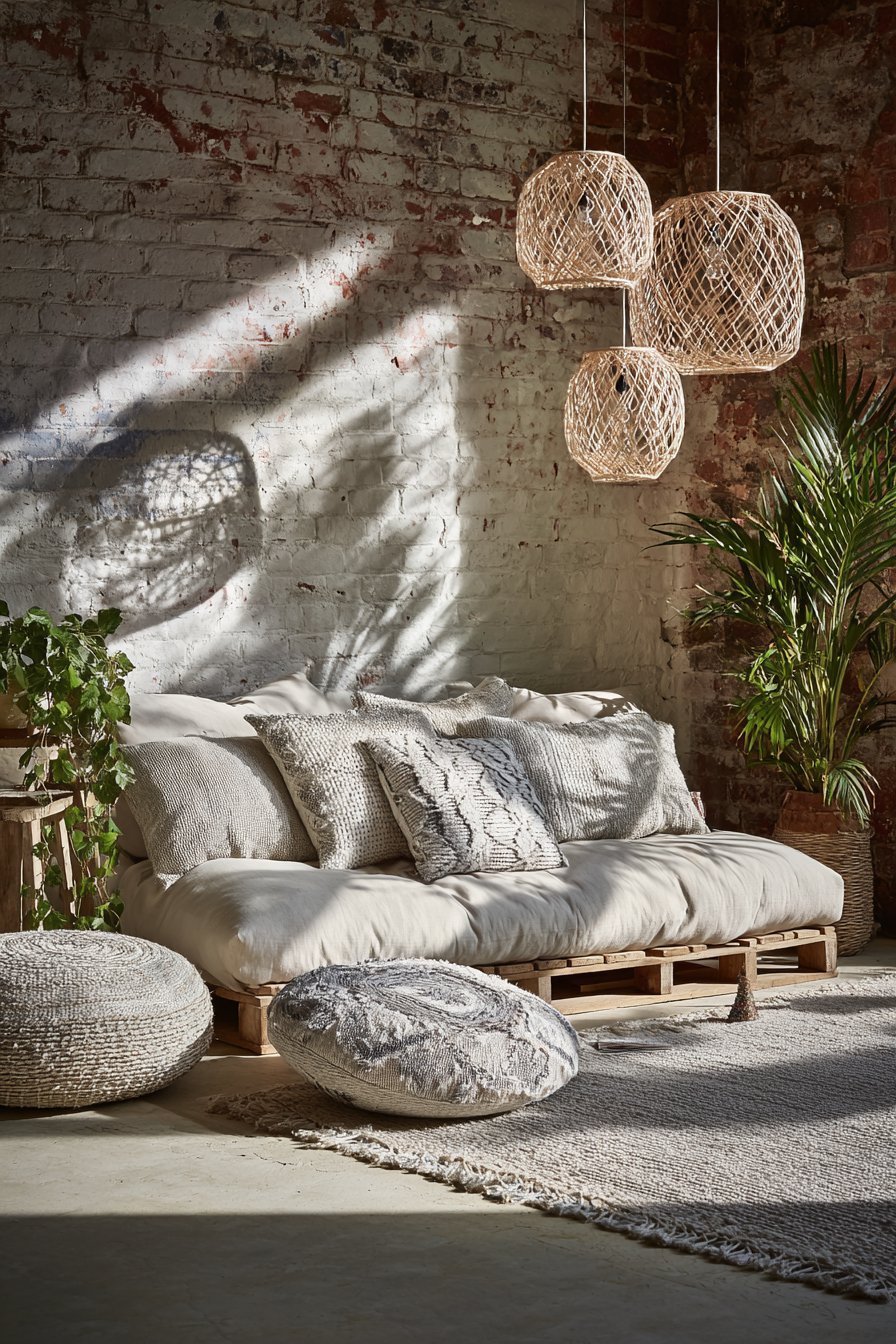
Rattan pendant lights cast interesting shadow patterns throughout the space. Natural light reveals rich variety of neutral textures and organic materials. The collected-over-time aesthetic feels authentic and personal. Nothing matches too perfectly in this welcoming environment.
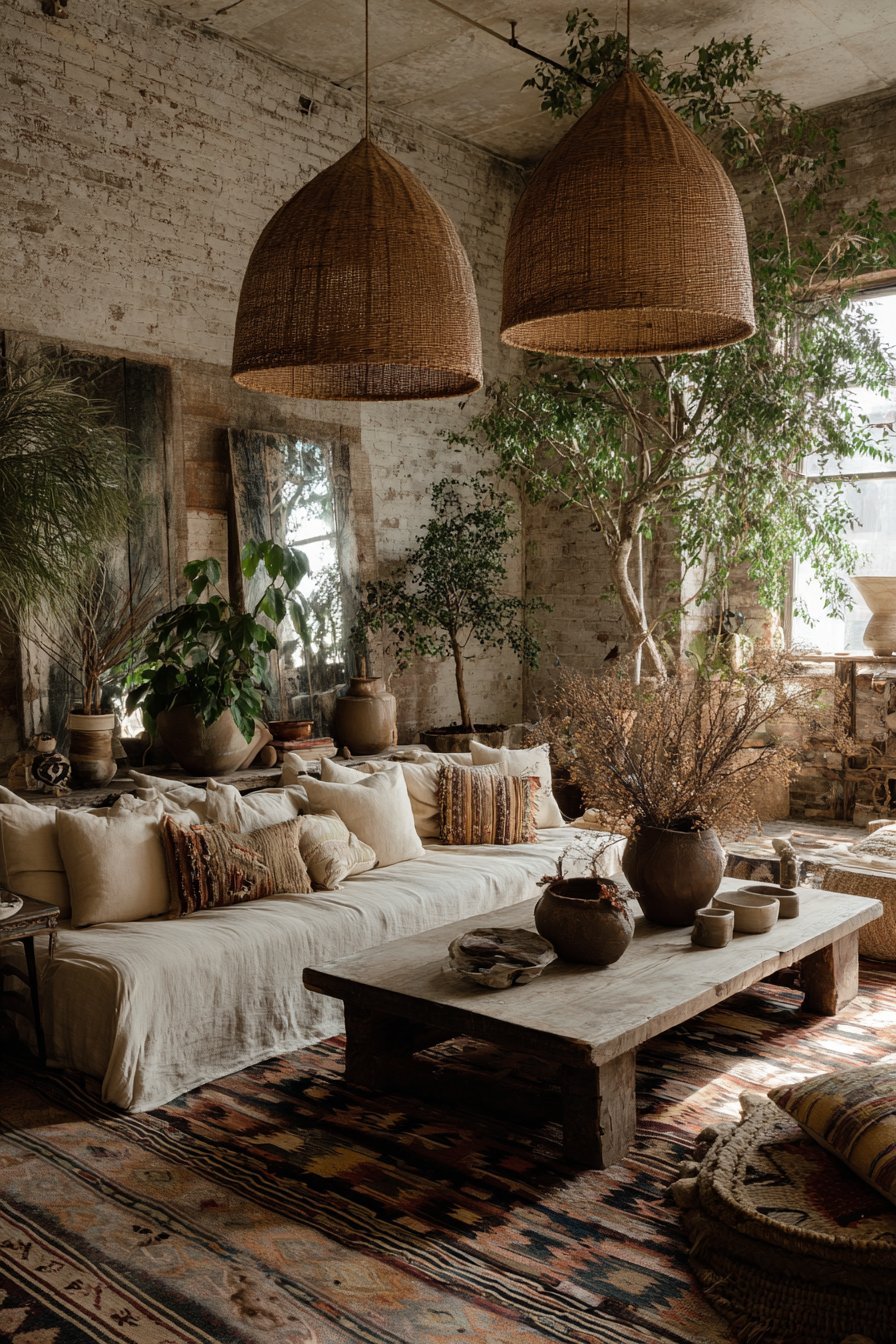
This design celebrates individual expression and global craft traditions. The bohemian approach values handmade items and cultural artifacts. The result feels traveled and worldly while remaining grounded in neutrals.
Key Design Tips:
- Layer vintage textiles like kilim rugs for bohemian character
- Add woven floor cushions for casual, flexible seating options
- Hang macramé plant holders to introduce vertical greenery
- Paint exposed brick with limewash for breathable textured finish
- Install rattan pendant lights for natural material and shadow play
- Collect pieces over time for authentic, personal aesthetic
14. Luxurious Belgian Linen and Marble
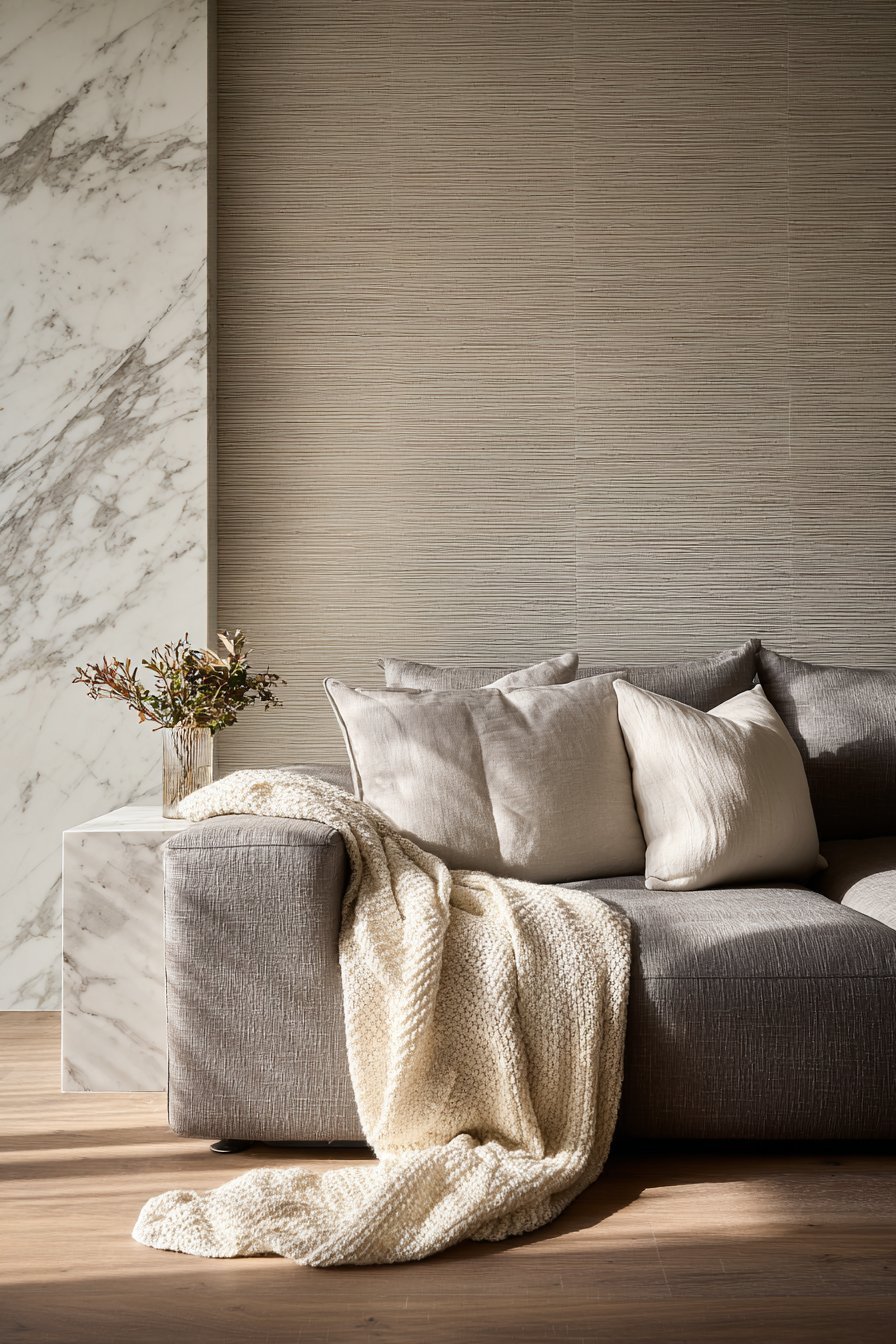
A deep-seated sofa in Belgian linen in mushroom grey anchors this sumptuous space. Down-filled cushions show natural compression that invites sinking in. A honed marble coffee table in Calacatta with subtle grey veining provides an elegant centerpiece. The luxurious stone creates refined focal point in the room.
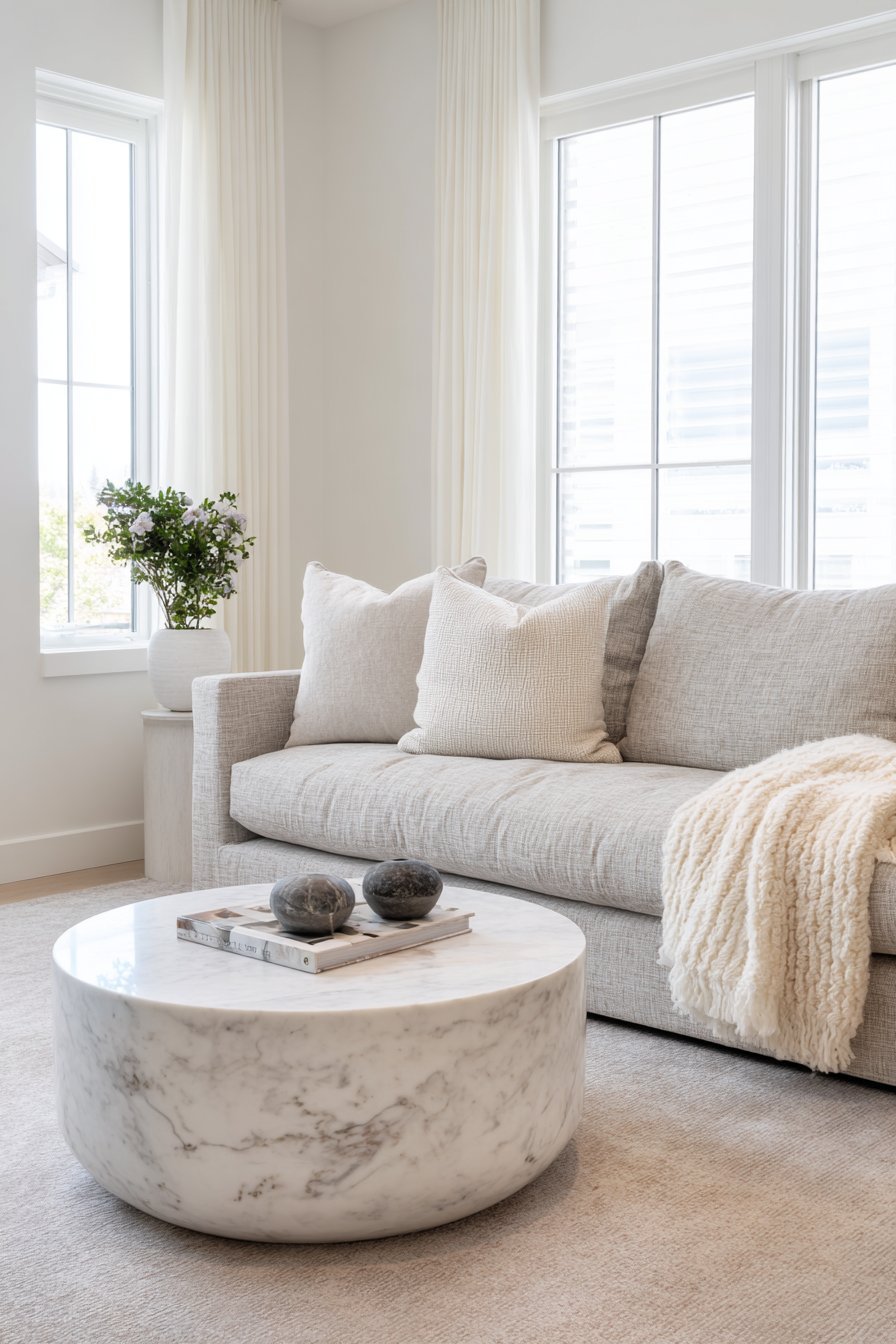
Walls upholstered in natural silk grasscloth add refined dimensional texture. The shimmering fibers catch light beautifully throughout the day. Cashmere throw blankets in cream drape organically across seating. These premium textiles create tactile luxury in every touchpoint.
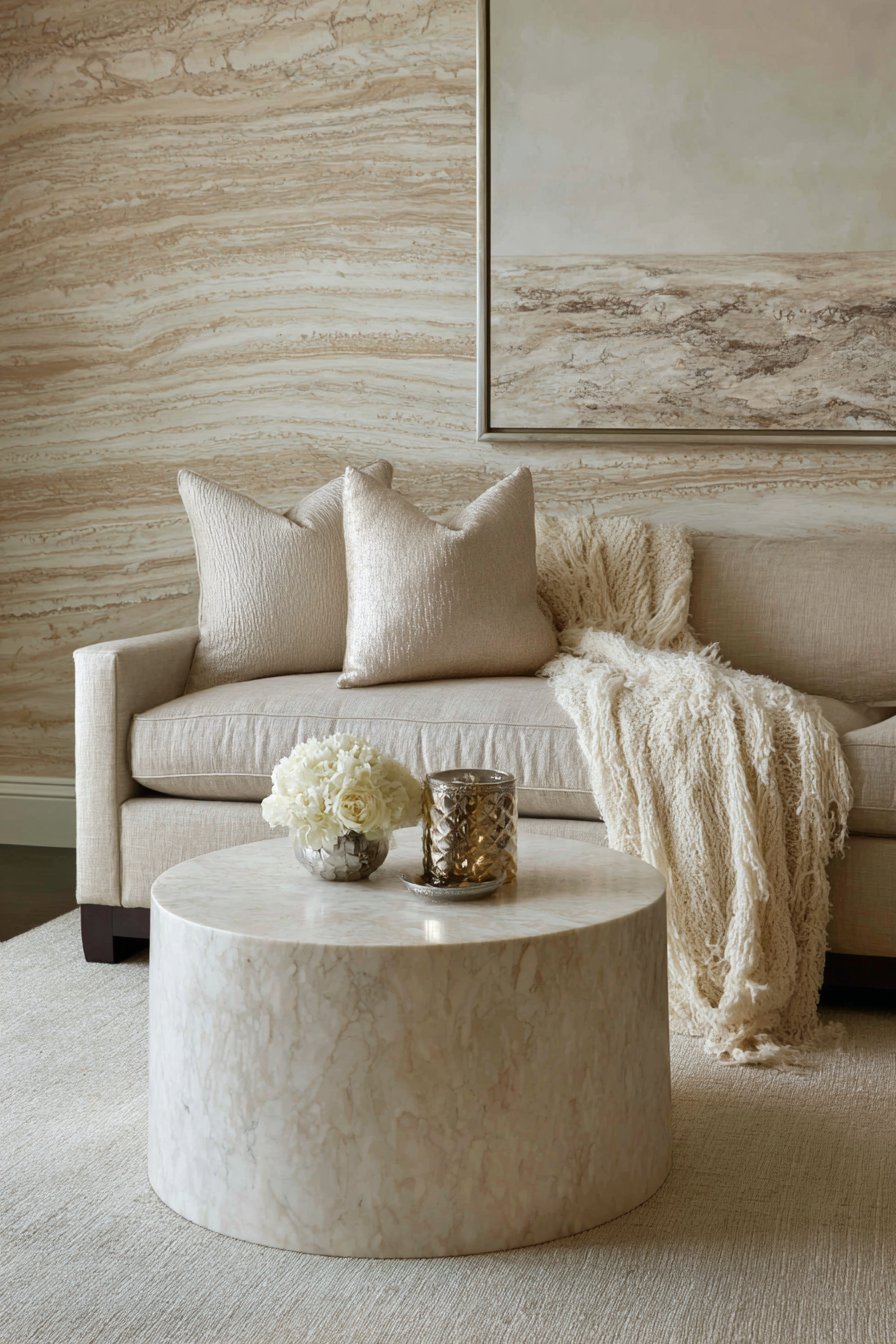
Professional lighting captures the sumptuous quality of premium materials masterfully. The illumination reveals how light plays differently across various sheens. Matte linen contrasts beautifully with lustrous silk wall coverings. Each surface contributes unique light-reflecting qualities to the sophisticated composition.
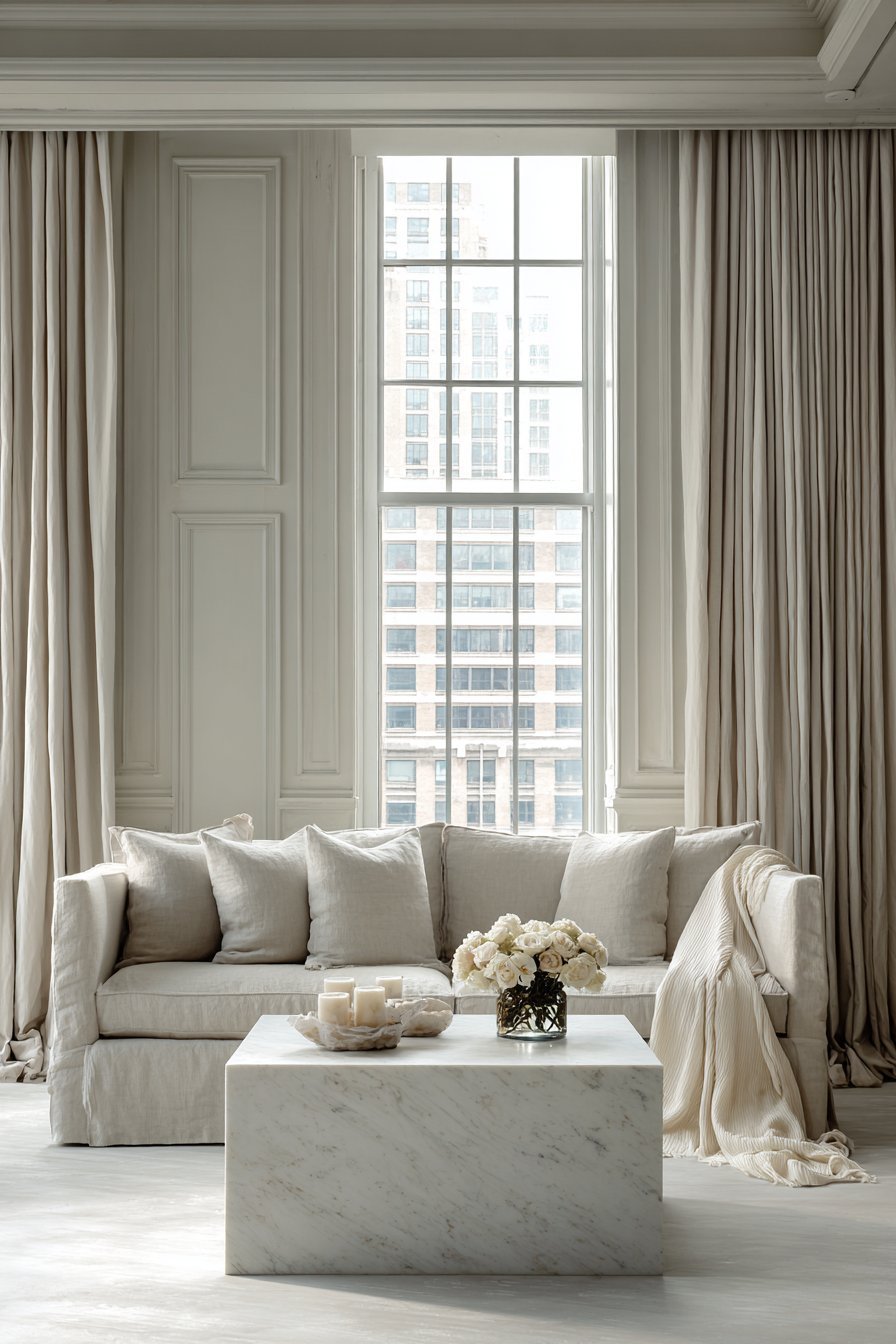
This design demonstrates that neutral palettes accommodate high luxury. Investment in quality materials creates lasting value and beauty. The space feels indulgent without ostentation or excessive decoration.
Key Design Tips:
- Invest in Belgian linen upholstery for premium neutral luxury
- Choose down-filled cushions for supremely comfortable seating
- Feature honed Calacatta marble for elegant natural stone centerpieces
- Upholster walls in silk grasscloth for refined shimmering texture
- Layer cashmere throws for tactile luxury and warmth
- Use professional lighting to highlight premium material qualities
15. Rustic Exposed Beam Character
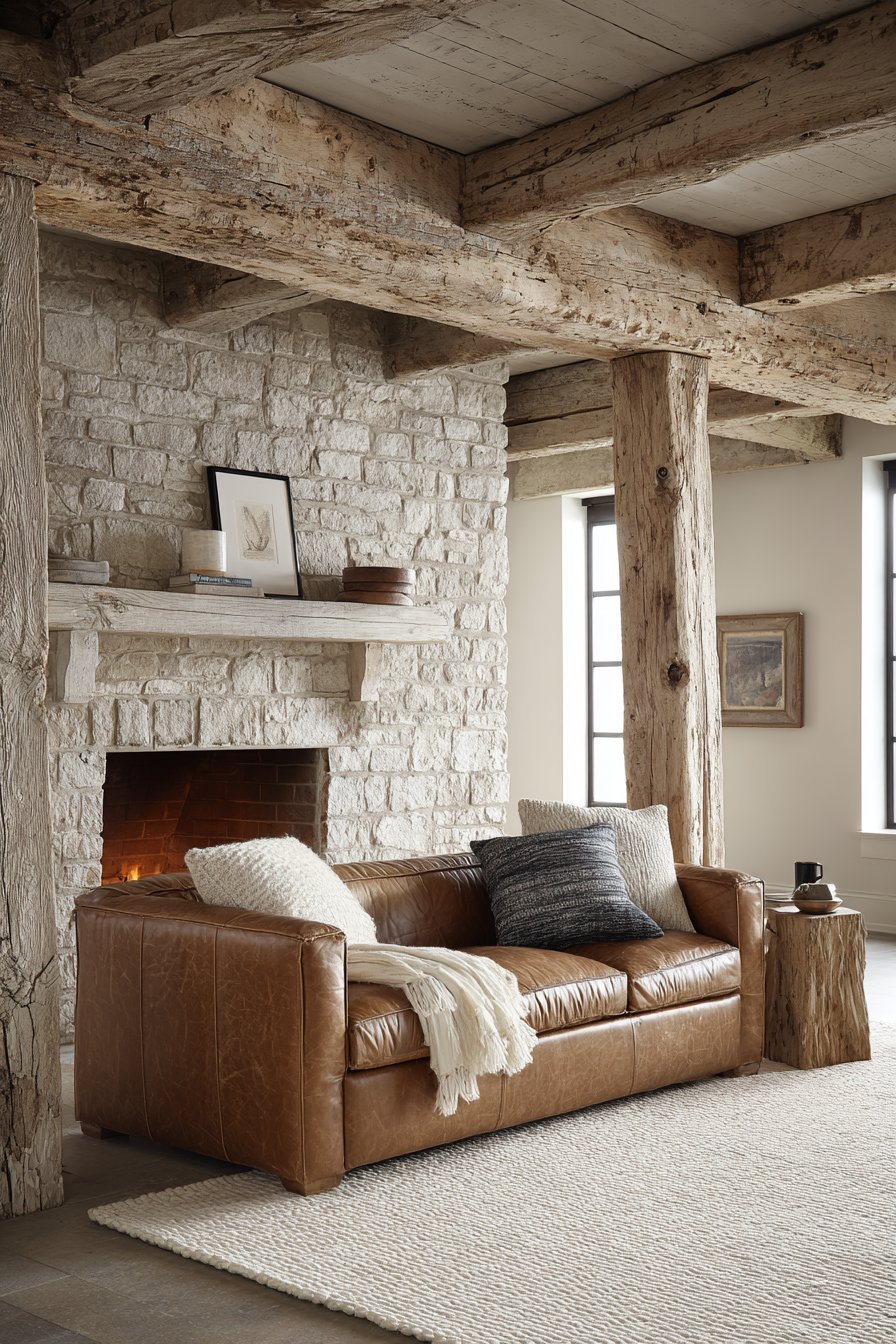
Exposed ceiling beams in weathered wood show authentic age marks and knots. The architectural elements add rustic character and visual interest overhead. A distressed leather sofa in tobacco brown develops natural patina and creasing. The well-loved furniture feels comfortable and welcoming immediately.
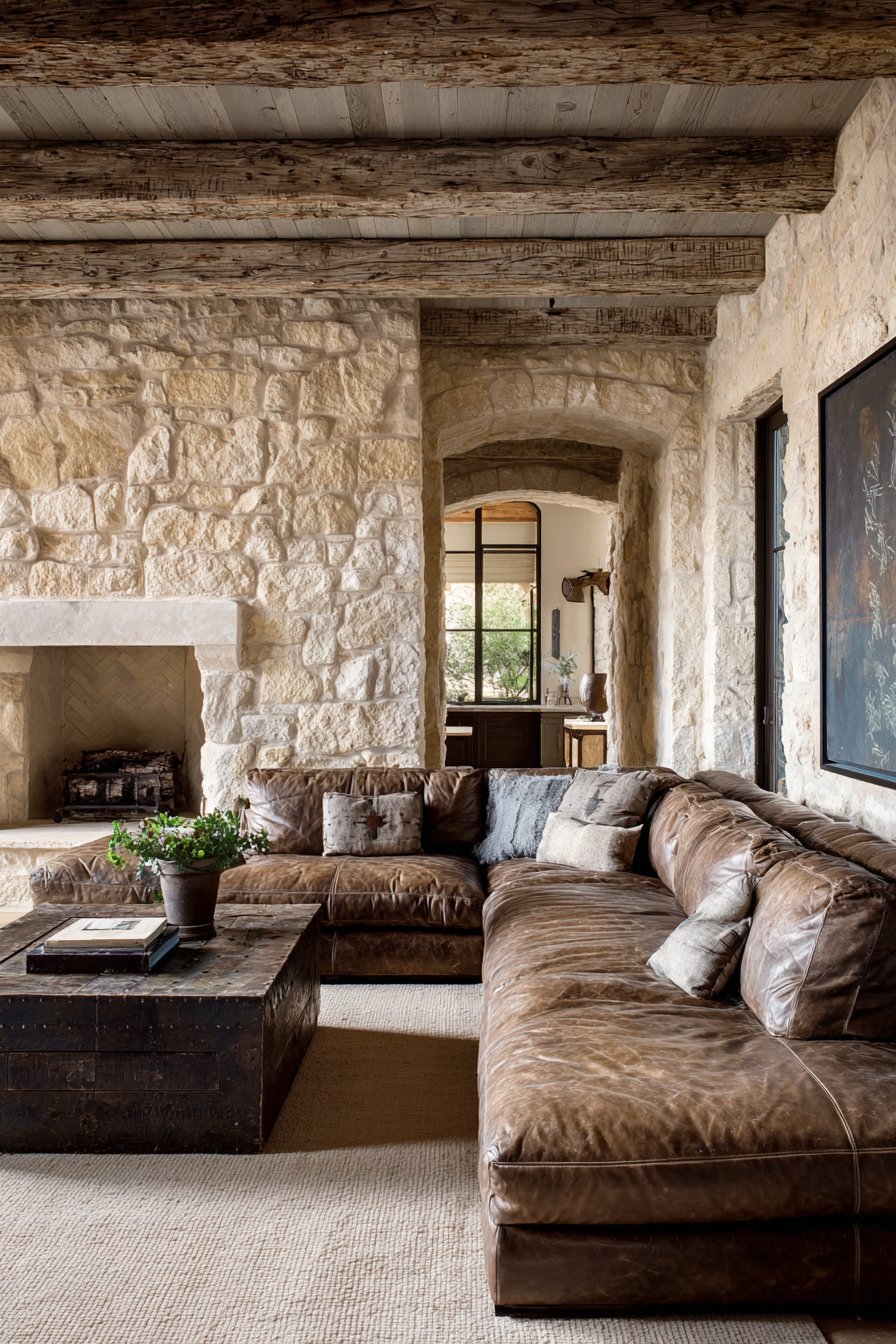
A stone fireplace surround features fieldstone in varied grey and tan tones. Irregular shapes and mortar texture create organic focal point. Wool area rug in natural undyed cream shows subtle color variation. The handwoven textile grounds the space with artisanal warmth.
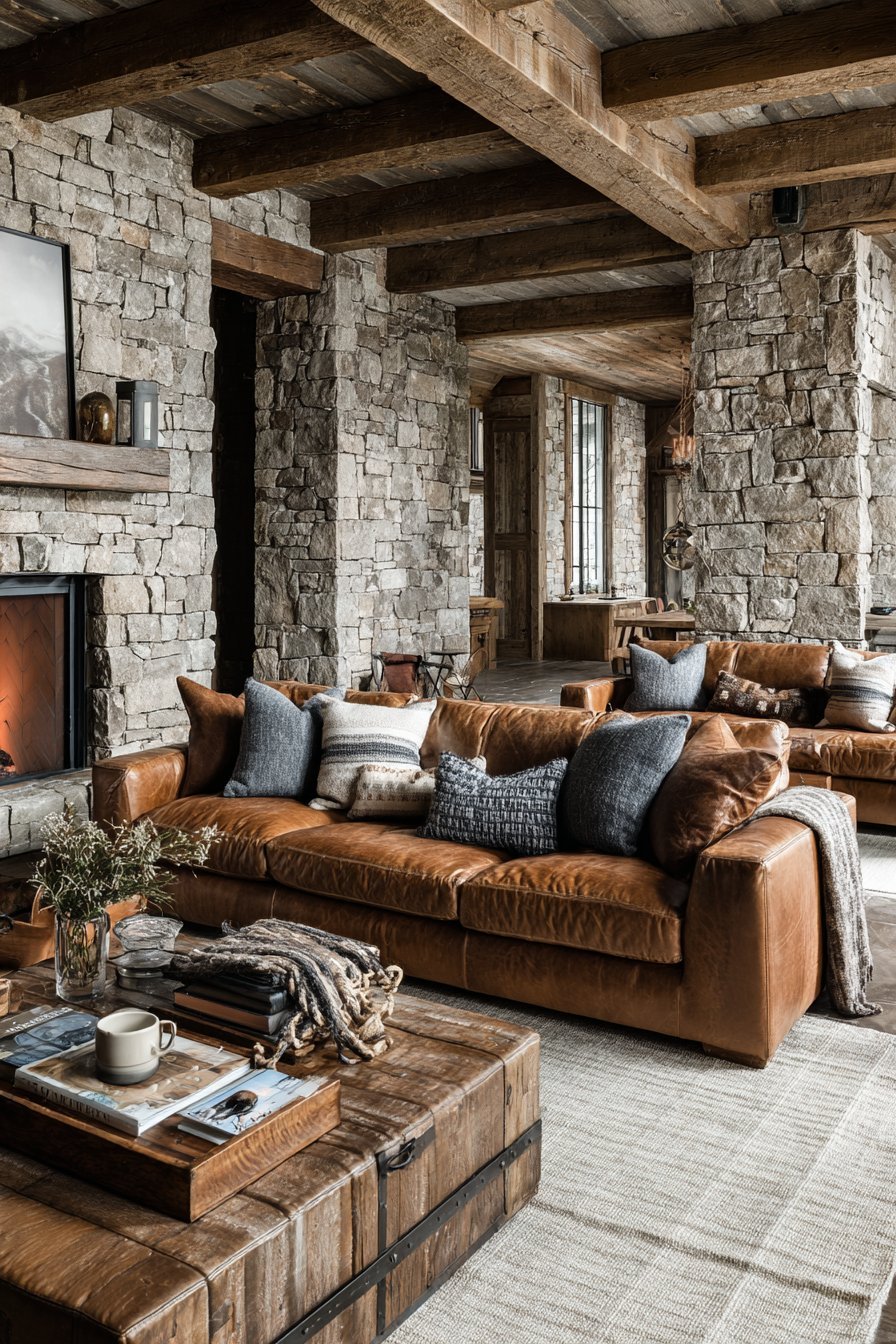
Natural light from clerestory windows highlights authentic wear and beautiful imperfections. The illumination celebrates honest materials and aged character throughout. Nothing feels too new or perfect in this lived-in environment. The design honors patina and the passage of time.
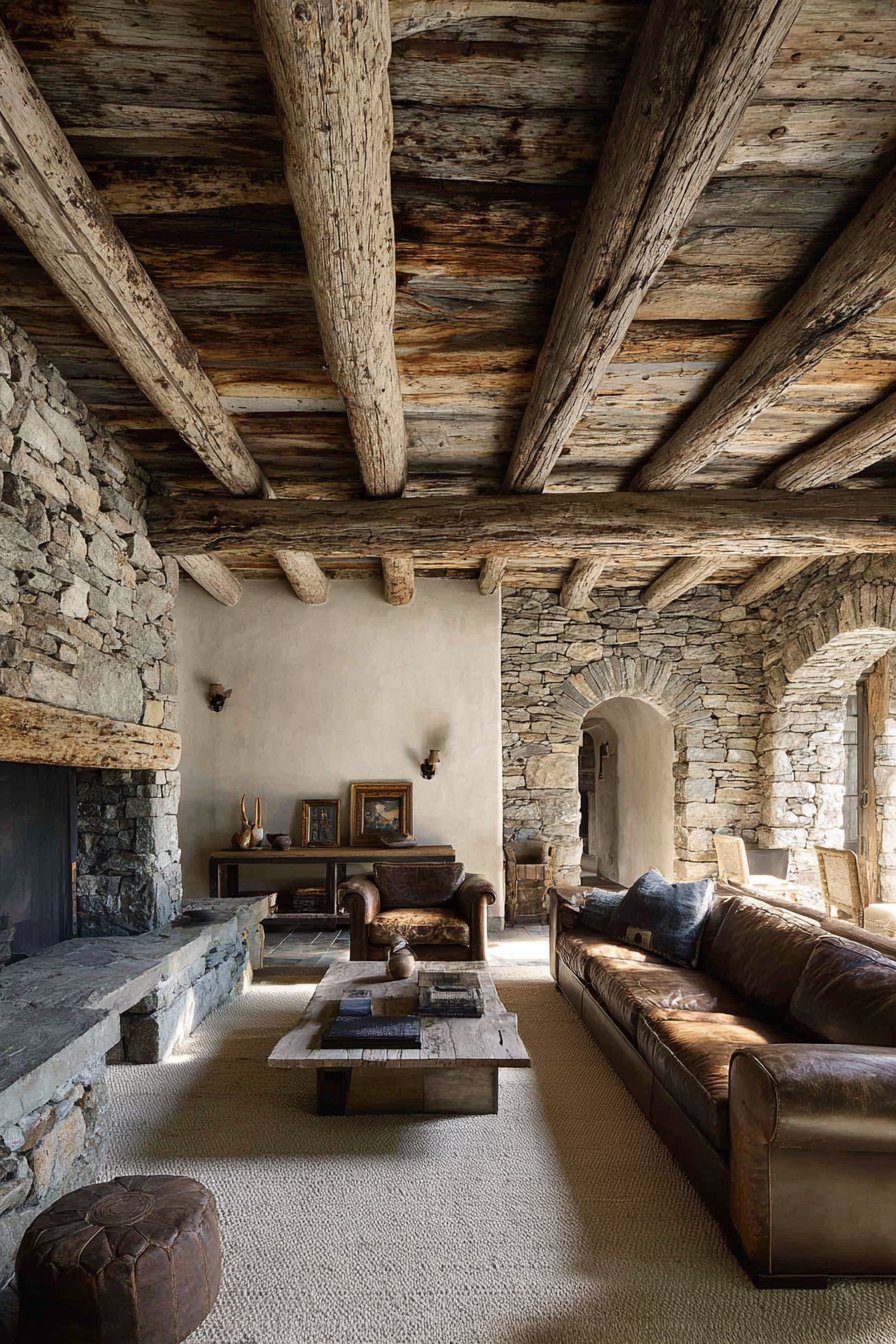
This approach creates spaces that improve with age. Natural materials develop character rather than showing mere wear. The rustic aesthetic feels timeless and enduring.
Key Design Tips:
- Expose ceiling beams to showcase authentic architectural character
- Choose distressed leather that develops beautiful patina with use
- Build stone fireplaces with irregular fieldstone for organic texture
- Select undyed wool rugs to appreciate natural fiber color variation
- Install clerestory windows for natural overhead illumination
- Embrace imperfections as design features rather than flaws
16. Mid-Century Modern Teak Warmth
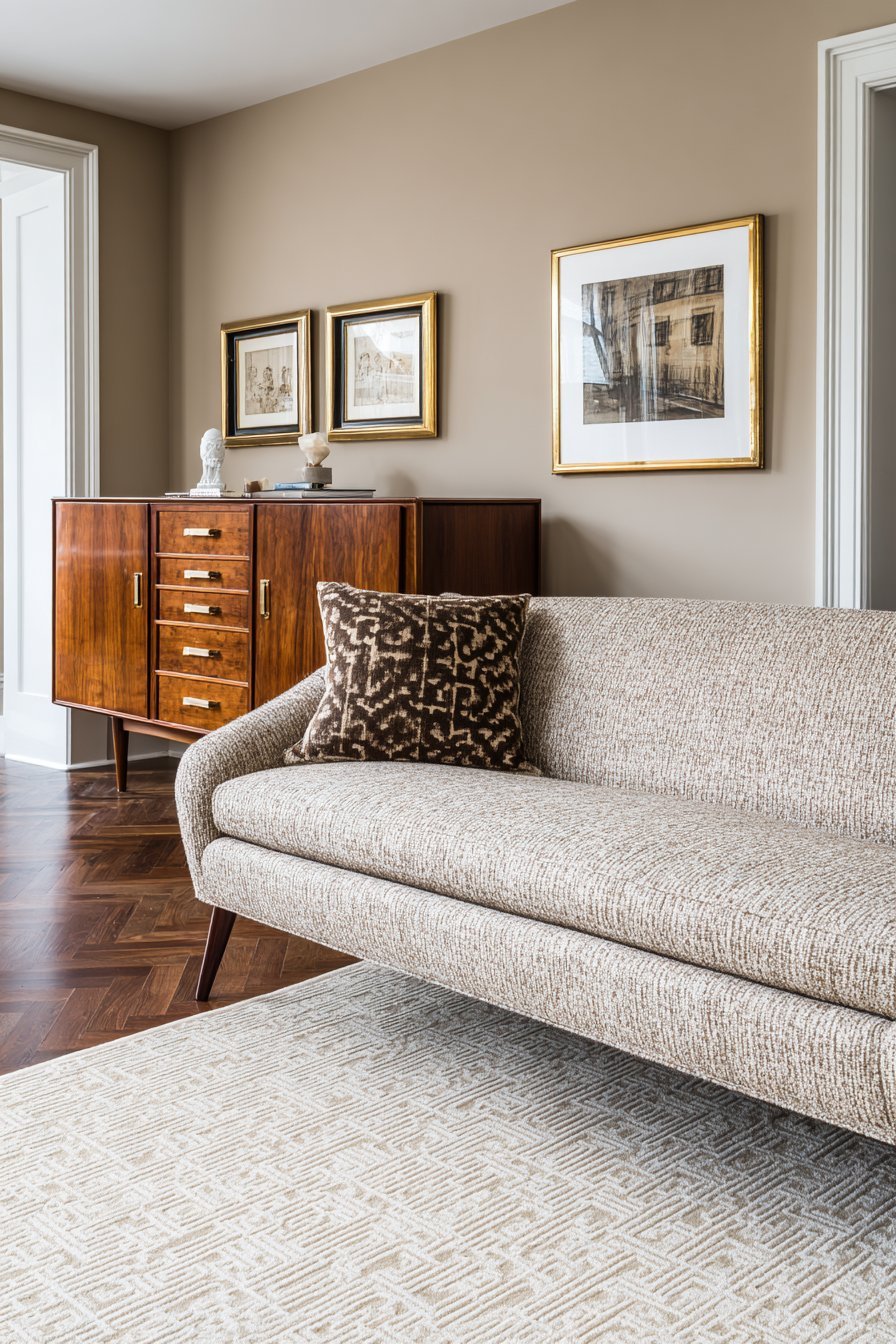
A low-slung sofa with walnut legs and taupe tweed upholstery anchors this period space. The characteristic flecked texture adds visual interest to neutral fabric. A teak credenza with original finish displays natural amber wood tones. Brass hardware with gentle patina adds authentic vintage detail.
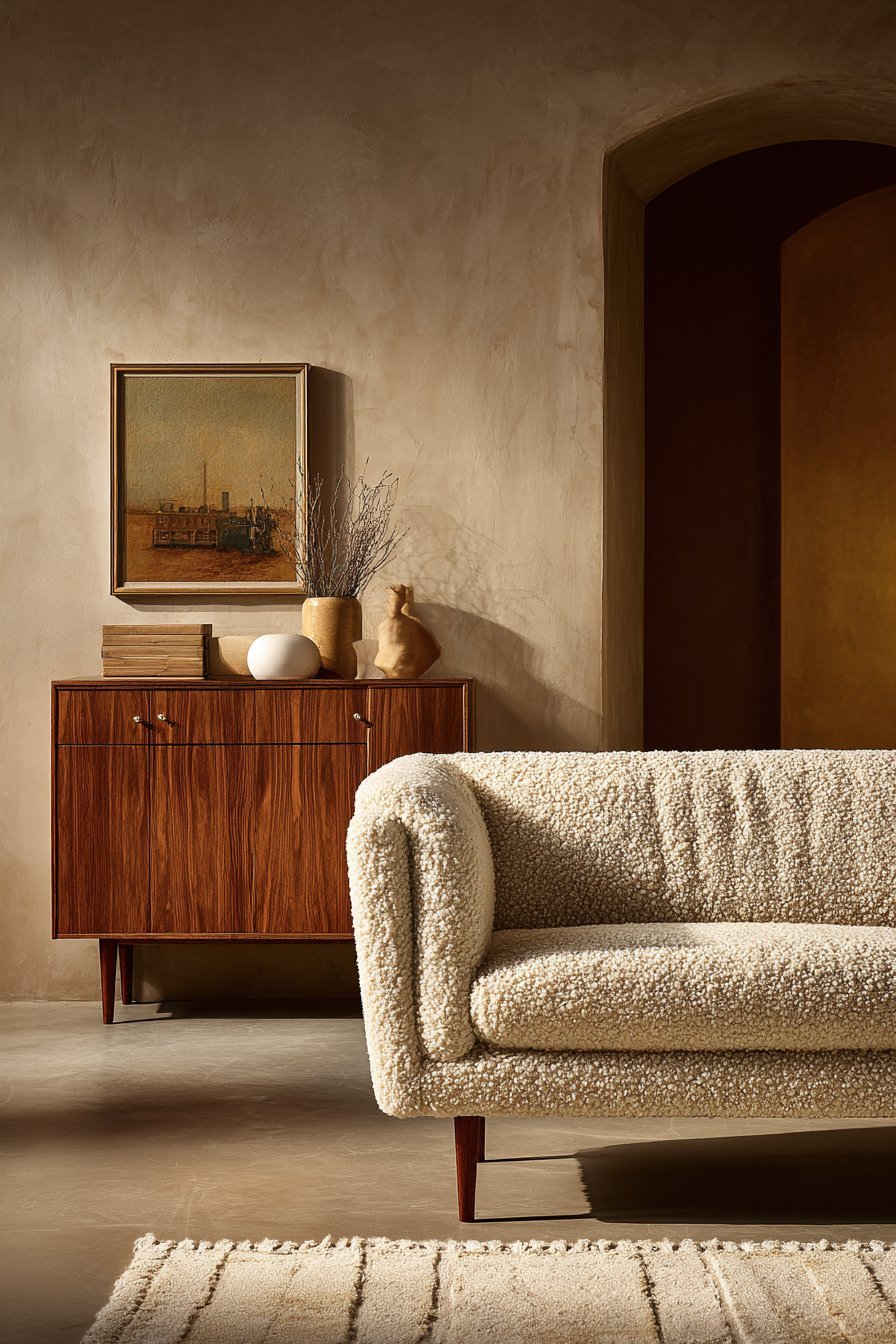
Walls in warm greige provide neutral backdrop for vintage art. The neutral tones allow iconic furniture silhouettes to take center stage. A geometric wool rug in cream and tan grounds the seating area. The pattern references mid-century design without overwhelming the space.
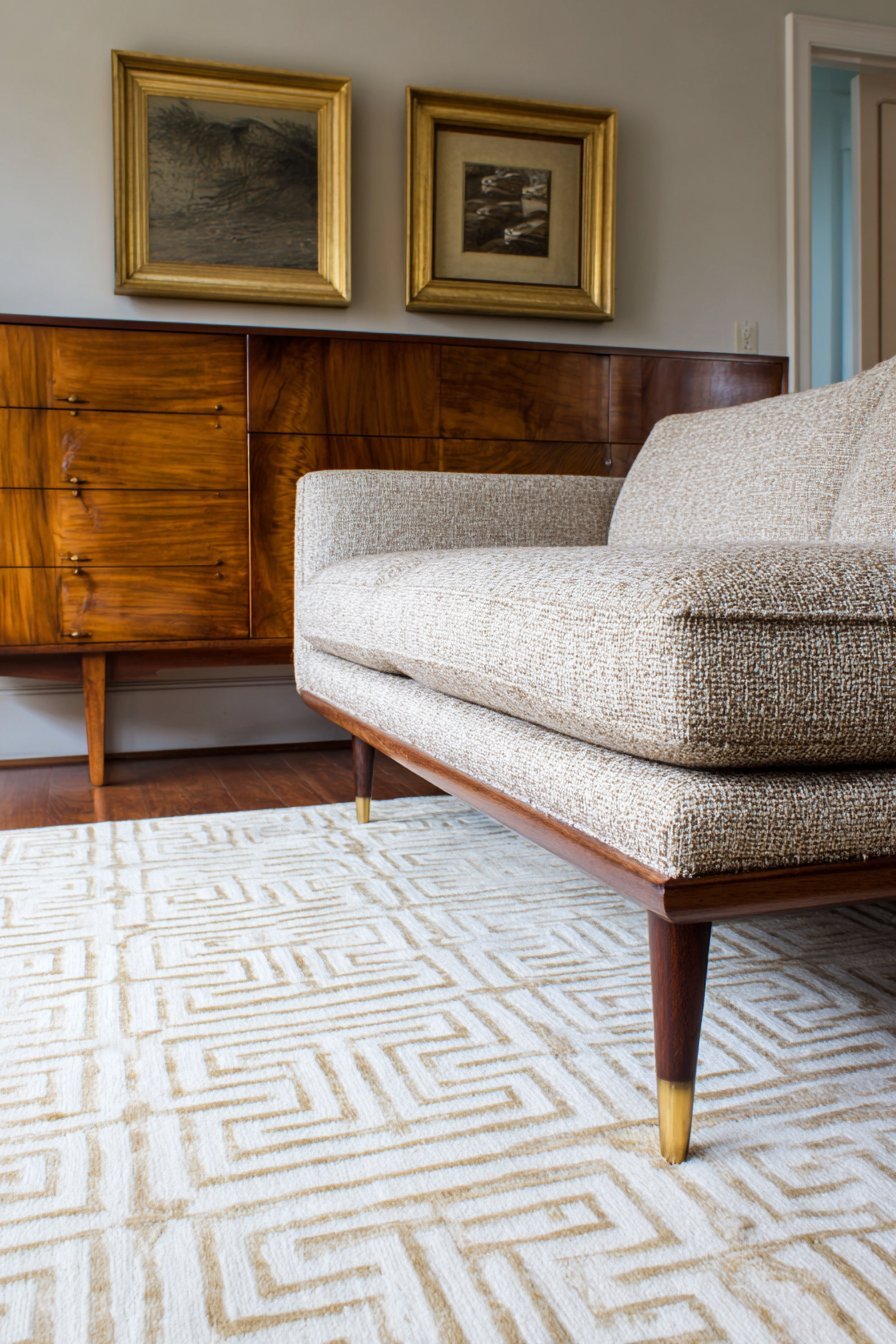
Balanced lighting honors warm neutral aesthetic and quality craftsmanship. The illumination showcases authentic period materials and construction techniques. Iconic furniture forms create visual interest through shape rather than color. The design celebrates an important design era faithfully.
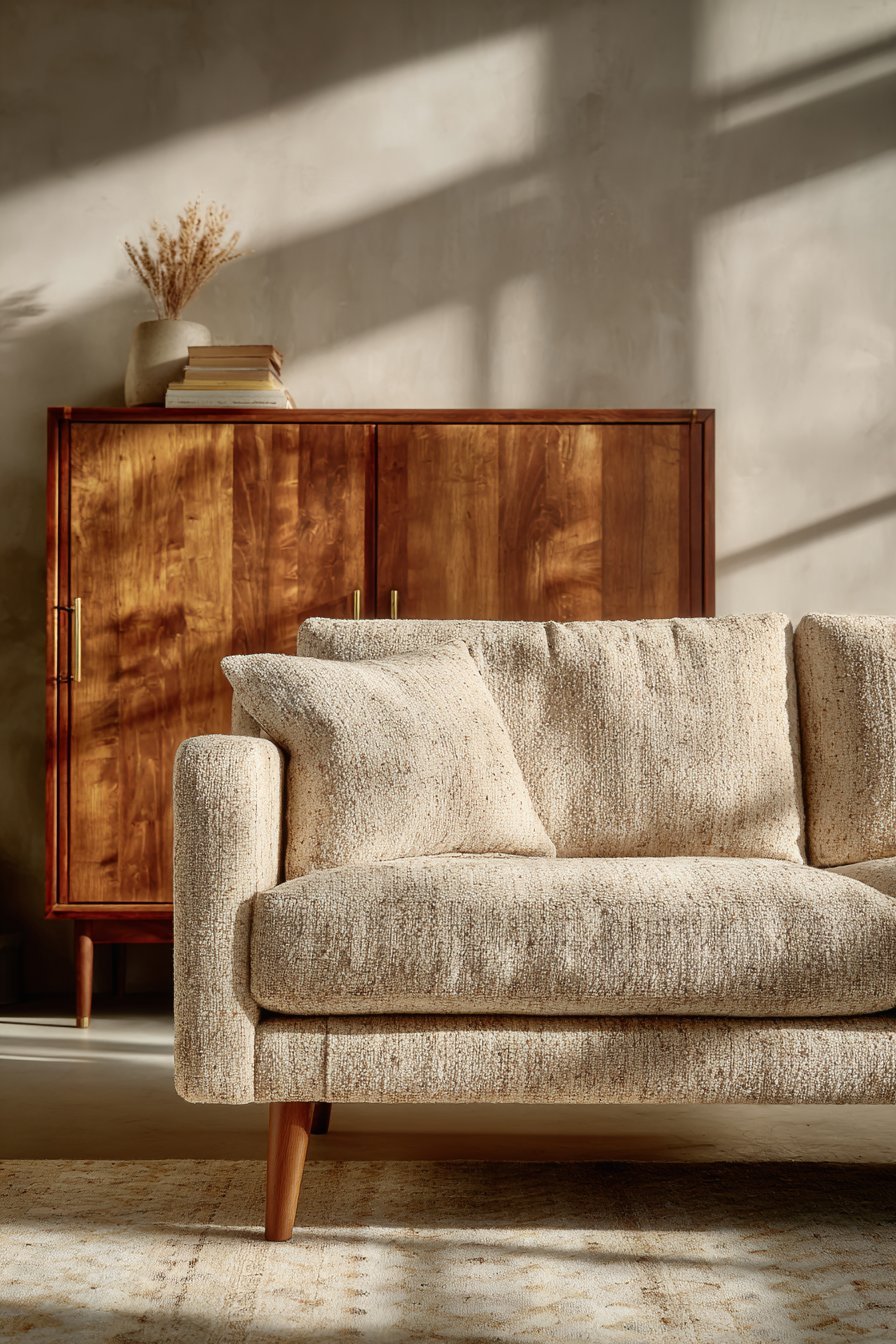
This approach demonstrates respect for design history and craftsmanship. Original vintage pieces or quality reproductions maintain period authenticity. The result feels curated by a knowledgeable collector.
Key Design Tips:
- Select furniture with characteristic mid-century silhouettes and proportions
- Feature teak and walnut woods for authentic warm amber tones
- Choose tweed upholstery for period-appropriate flecked neutral texture
- Display vintage brass hardware with natural aged patina
- Add geometric wool rugs referencing classic mid-century patterns
- Use balanced lighting to showcase quality craftsmanship and materials
17. Serene Floor-to-Ceiling Linen Light
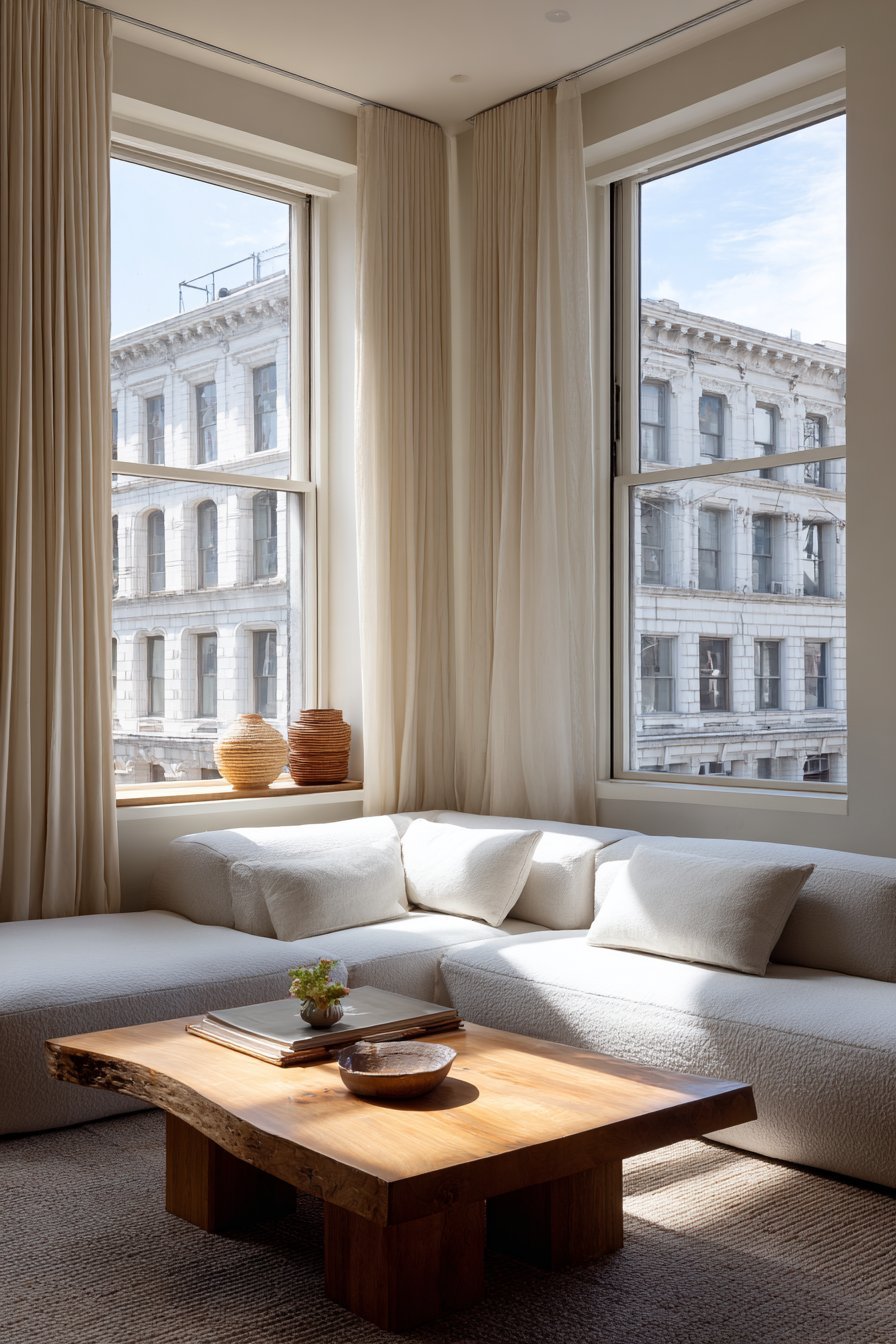
Floor-to-ceiling linen curtains in natural flax filter daylight beautifully. The sheer fabric creates soft ambient glow throughout the space. A modular sectional in performance fabric in warm grey shows realistic seating indentations. The honest furniture appearance acknowledges real-world use patterns.
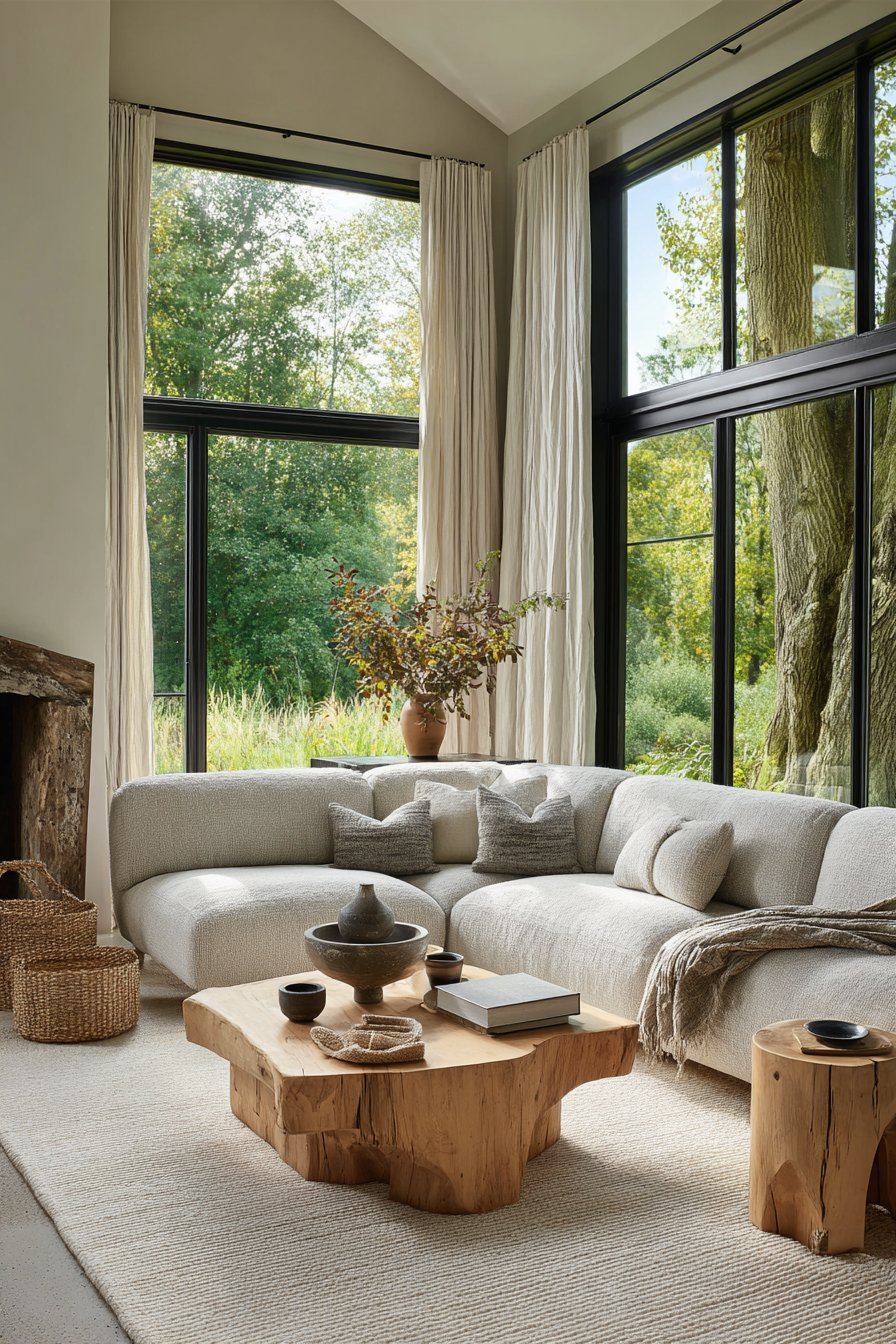
A live-edge wood coffee table in light oak displays organic form. Natural grain patterns and edge contours make each piece unique. Handwoven basket collection in various neutral tones provides textural storage. The practical organization enhances rather than detracts from aesthetics.
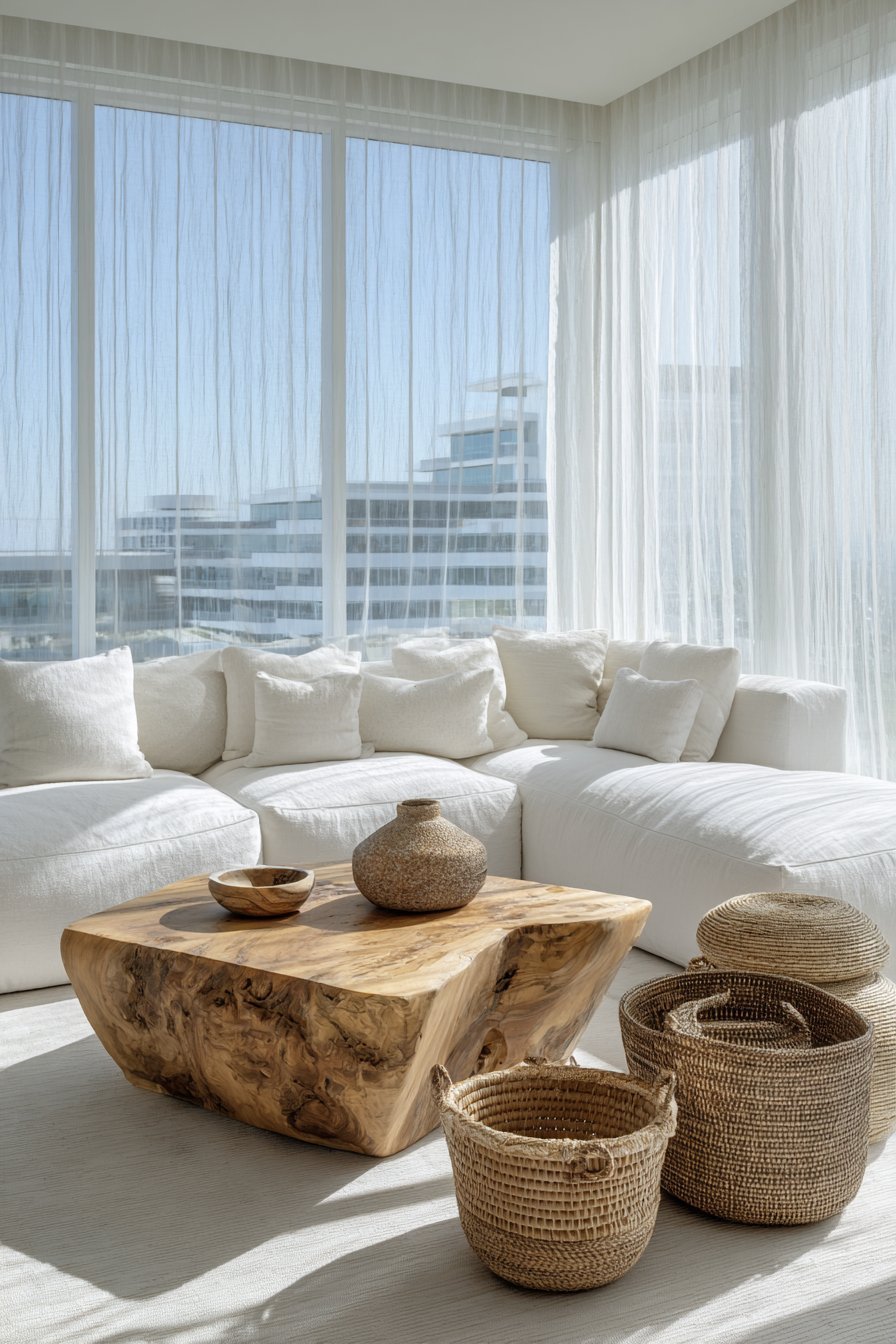
Abundant natural light interacts beautifully with layered neutral surfaces throughout. The illumination creates depth through subtle shadows on various materials. Authentic material characteristics receive emphasis in this honest design. Nothing feels artificially styled or overly precious.
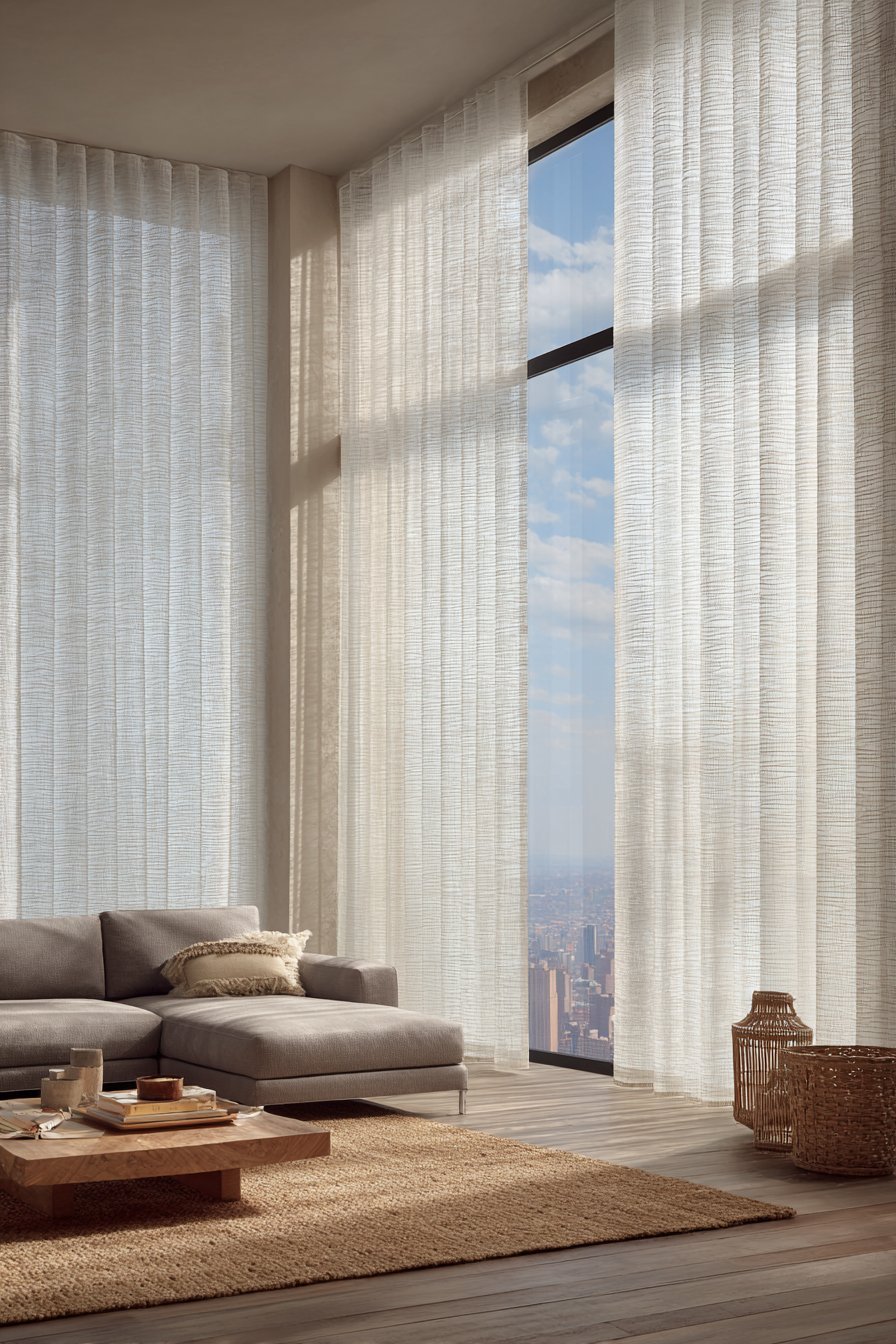
This design celebrates natural light as primary decorative element. The neutral palette allows changing daylight to transform the space. The room feels different at every hour yet consistently beautiful.
Key Design Tips:
- Install floor-to-ceiling curtains to maximize vertical space and light filtering
- Choose performance fabrics that honestly show real-world use patterns
- Feature live-edge wood to celebrate organic natural forms
- Collect handwoven baskets for storage that enhances neutral aesthetics
- Design to maximize natural light interaction with surfaces
- Embrace realistic furniture appearance over showroom perfection
18. Contemporary Sculptural Plaster Art
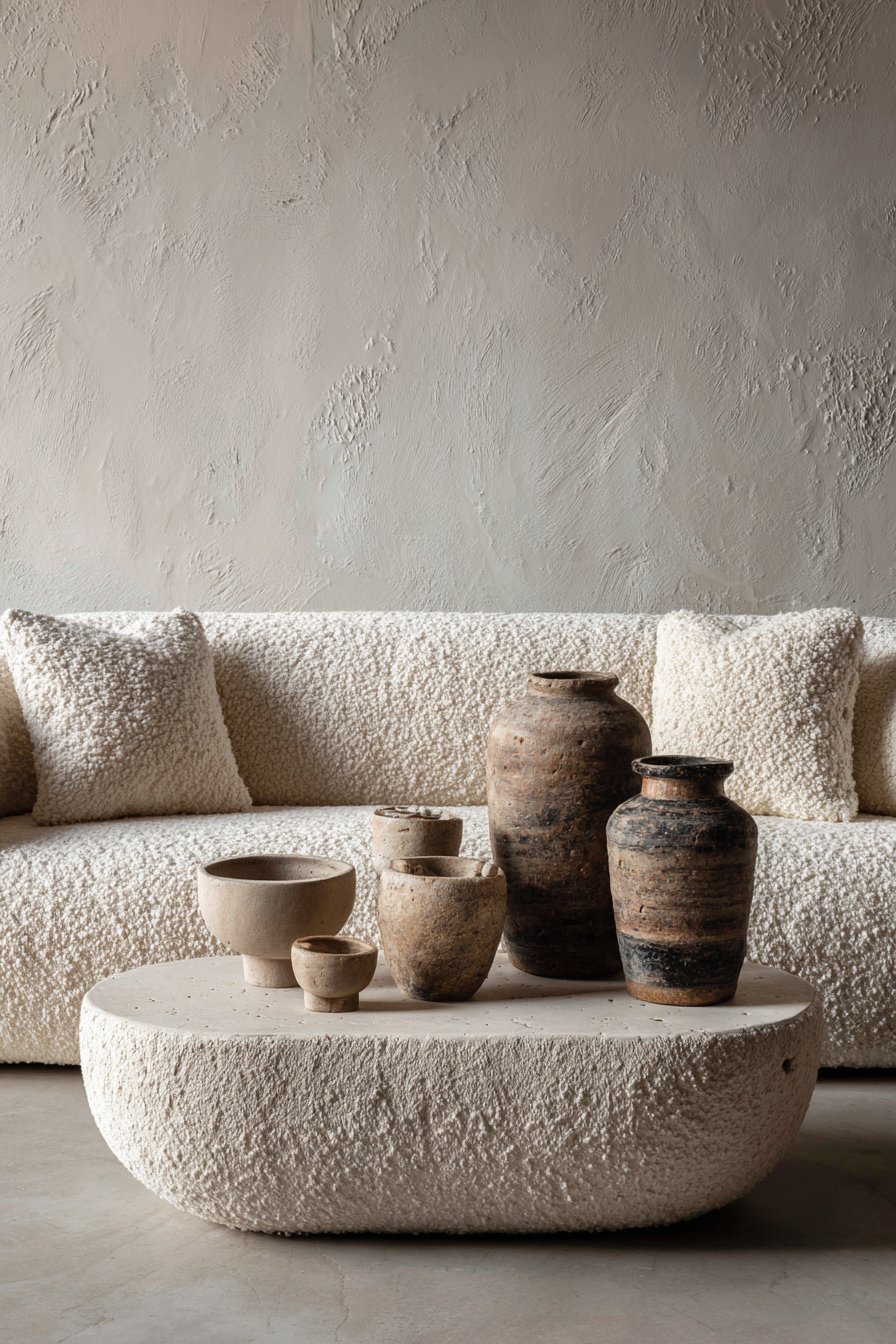
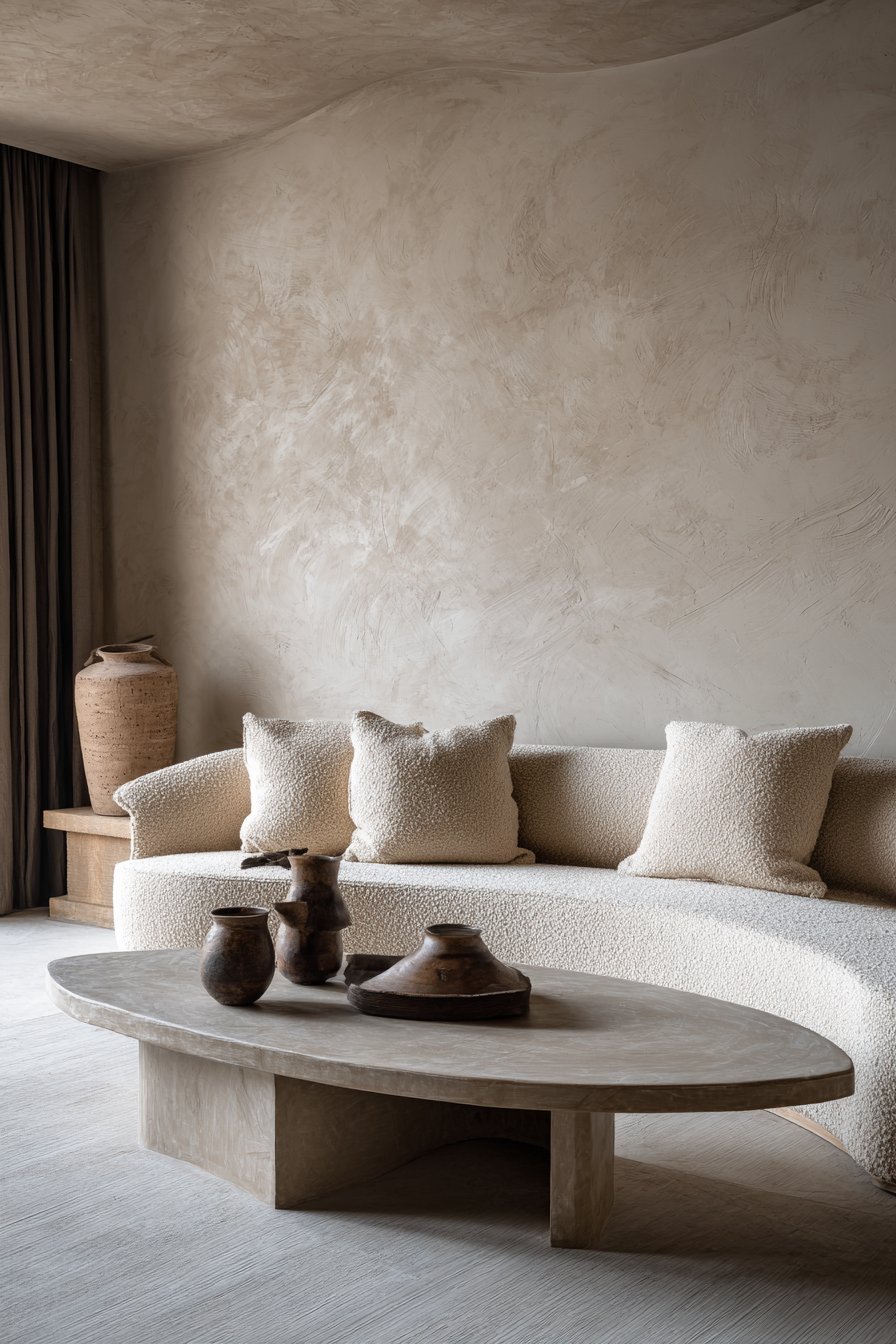
A sculptural sofa in bouclé in cream shows irregular looped texture. Subtle shading variations create visual interest in the monochromatic form. A plaster coffee table with organic curved form demonstrates artisanal craftsmanship. The hand-formed piece serves as functional sculpture in the space.
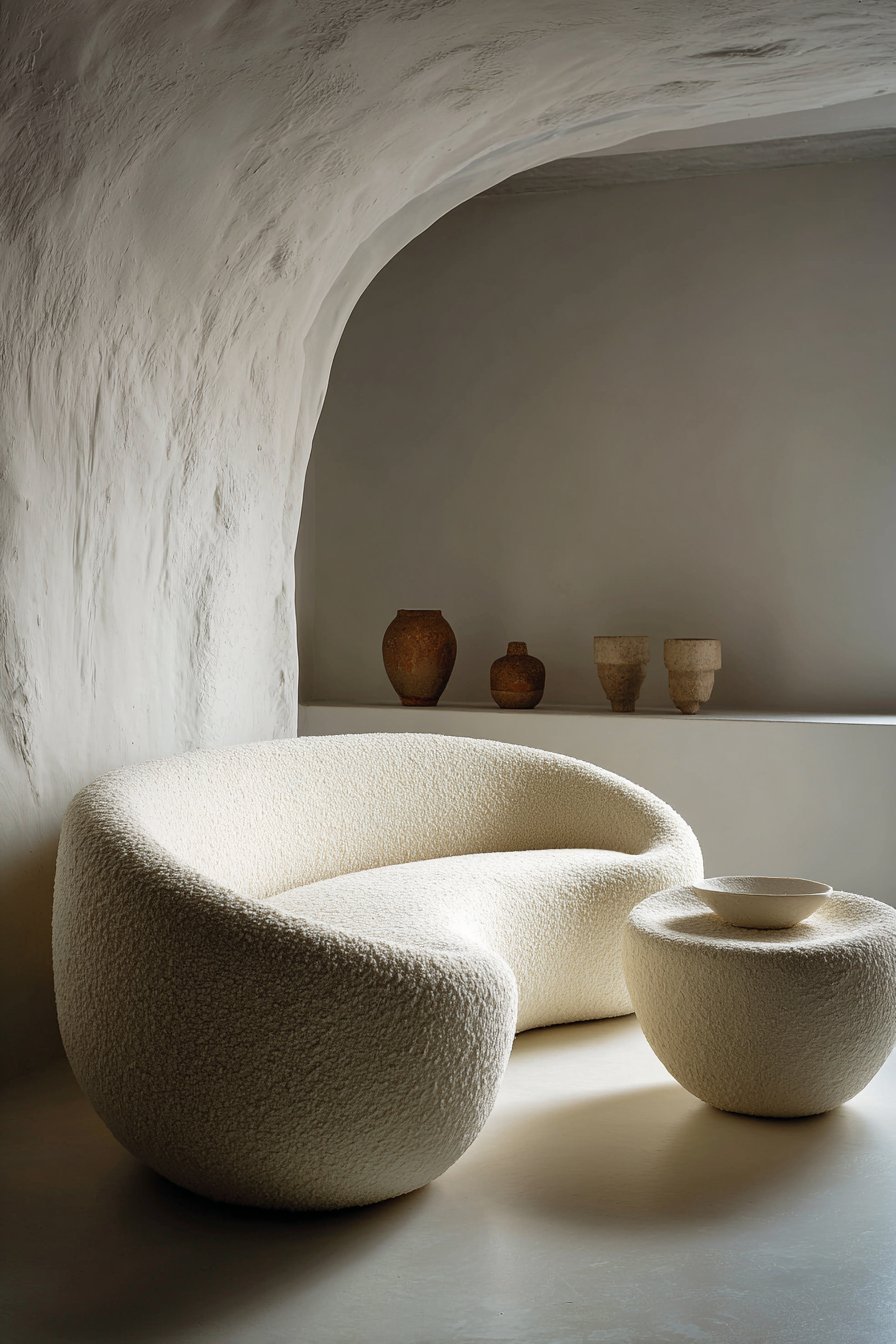
Walls finished in microcement in warm grey provide smooth modern backdrop. The seamless surface creates gallery-like quality for furniture display. Handmade ceramic vessels in earth tones add organic sculptural elements. Each piece demonstrates unique maker’s touch and artistic vision.
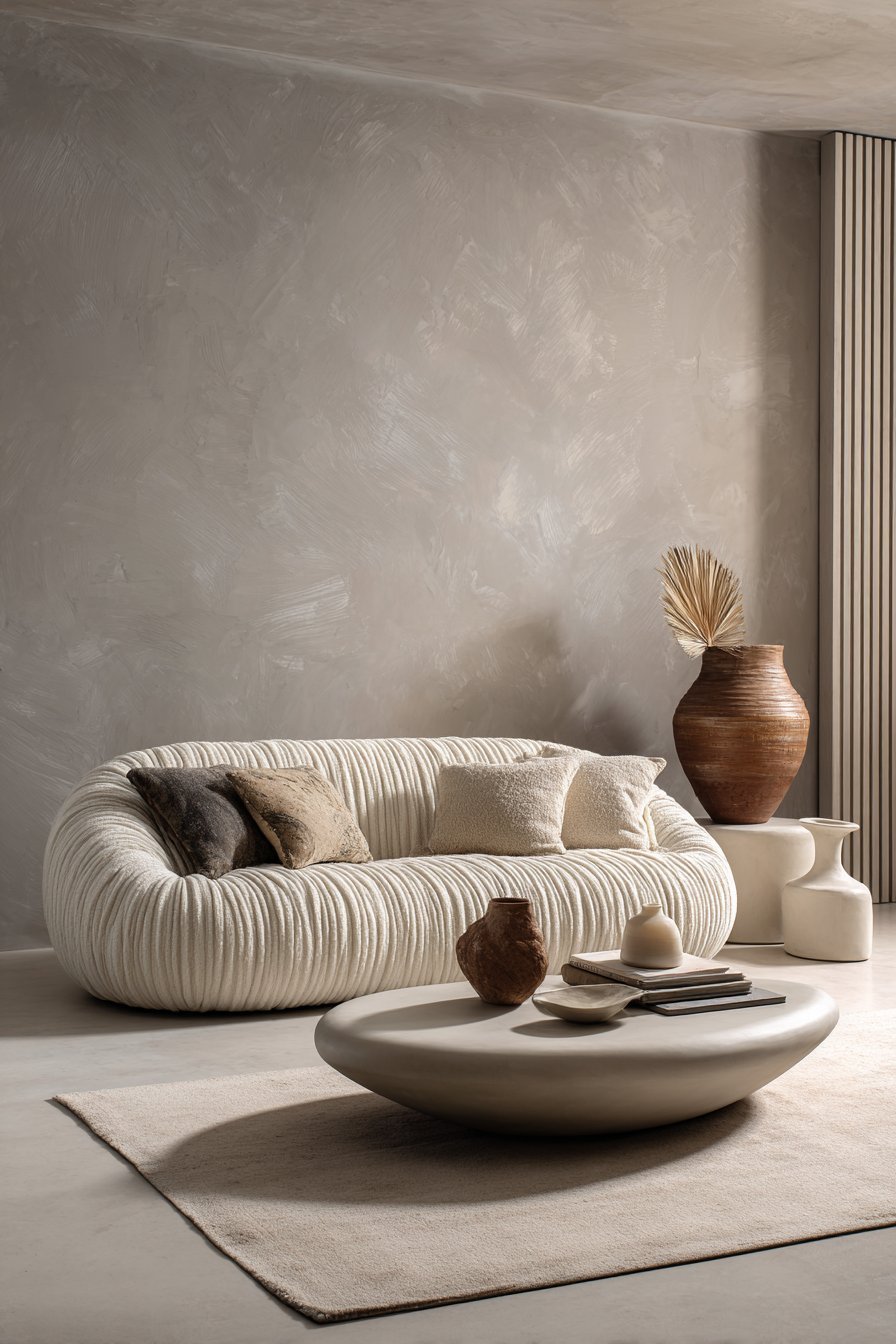
Soft directional lighting emphasizes the artistic quality of each carefully selected piece. The illumination highlights imperfect handmade textures and organic forms. The cohesive neutral color story allows focus on shape and material. Contemporary art meets functional furniture in this sophisticated space.
This approach elevates everyday objects to artistic status. The design demonstrates that furniture can be sculptural and functional simultaneously. The result feels like living in a contemporary art gallery.
Key Design Tips:
- Choose sculptural furniture with artistic forms and silhouettes
- Feature handmade plaster pieces as functional sculpture
- Apply microcement finishes for seamless modern wall surfaces
- Display handmade ceramics as organic sculptural elements
- Use directional lighting to emphasize artistic furniture qualities
- Maintain cohesive neutral palette to focus on form and texture
19. Family-Friendly Durable Comfort
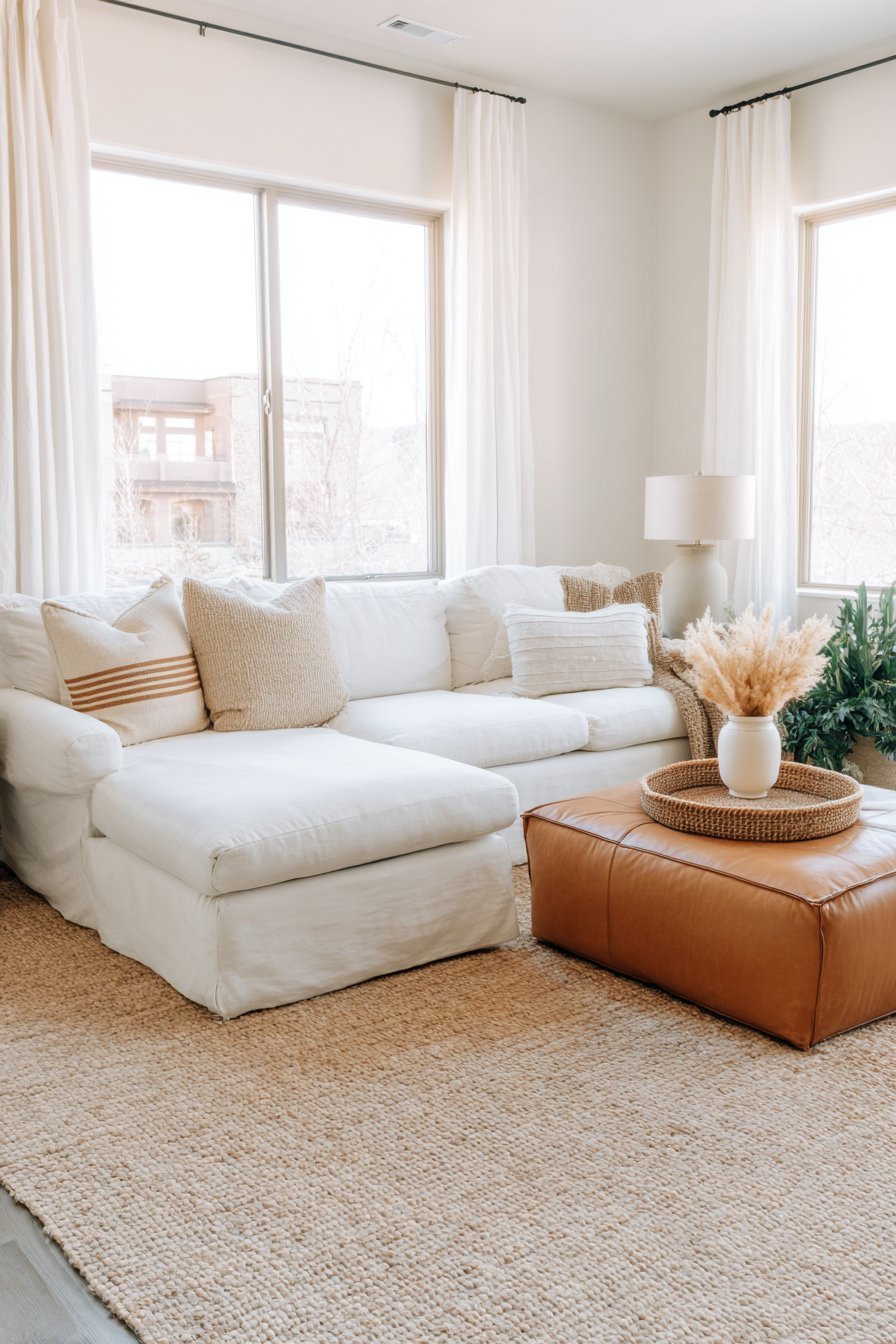
A durable slipcovered sectional in sand-colored linen-cotton blend shows realistic lived-in appearance. Gentle wrinkles and natural drape acknowledge real family life. A storage ottoman in tan leather shows authentic grain texture. Minor surface variations add character to the hardworking piece.
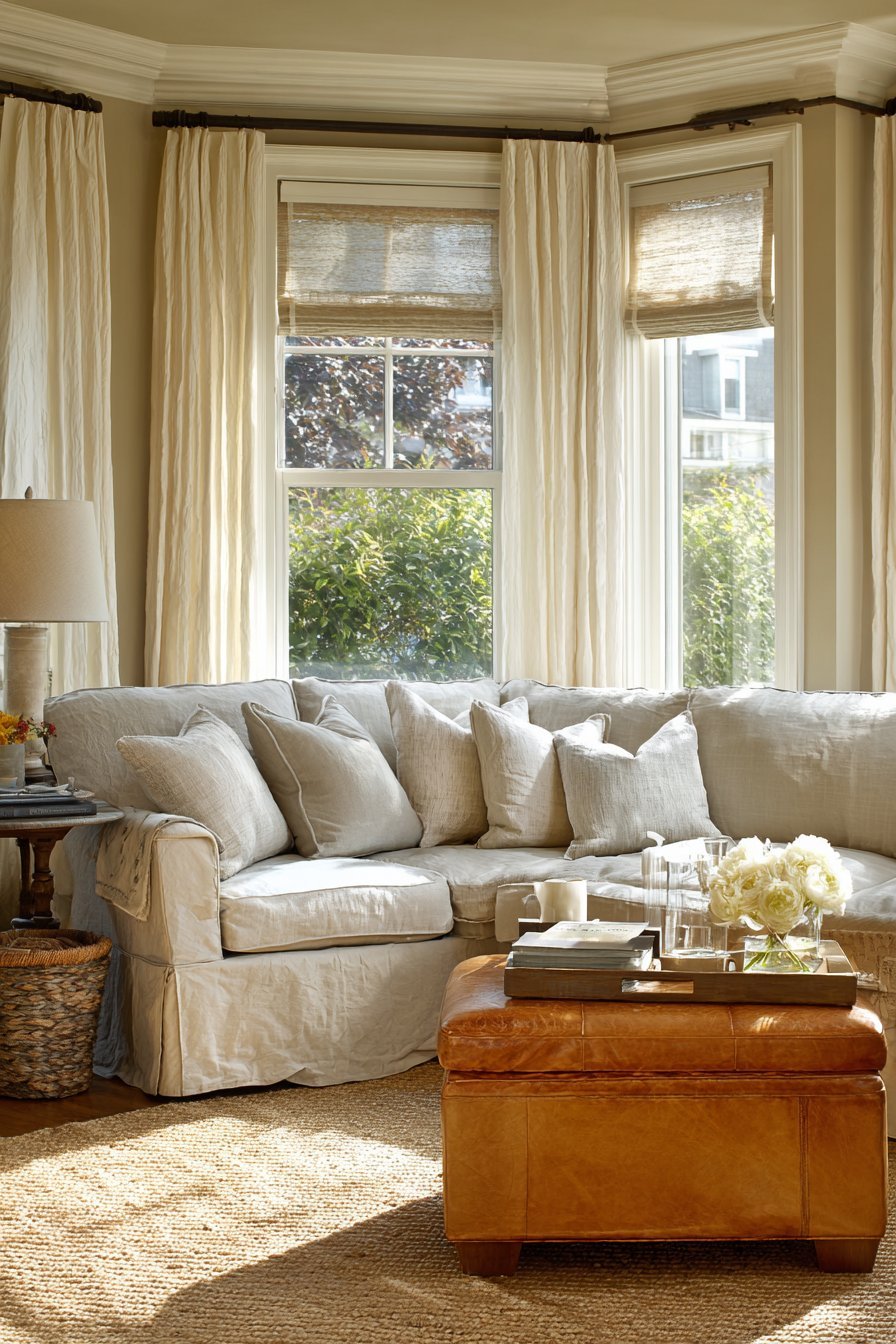
Walls in warm white provide bright neutral backdrop for active living. The cheerful color maintains cleanliness while feeling inviting. Sisal area rug in natural fiber adds practical textured layer. The durable material withstands heavy traffic while looking beautiful.
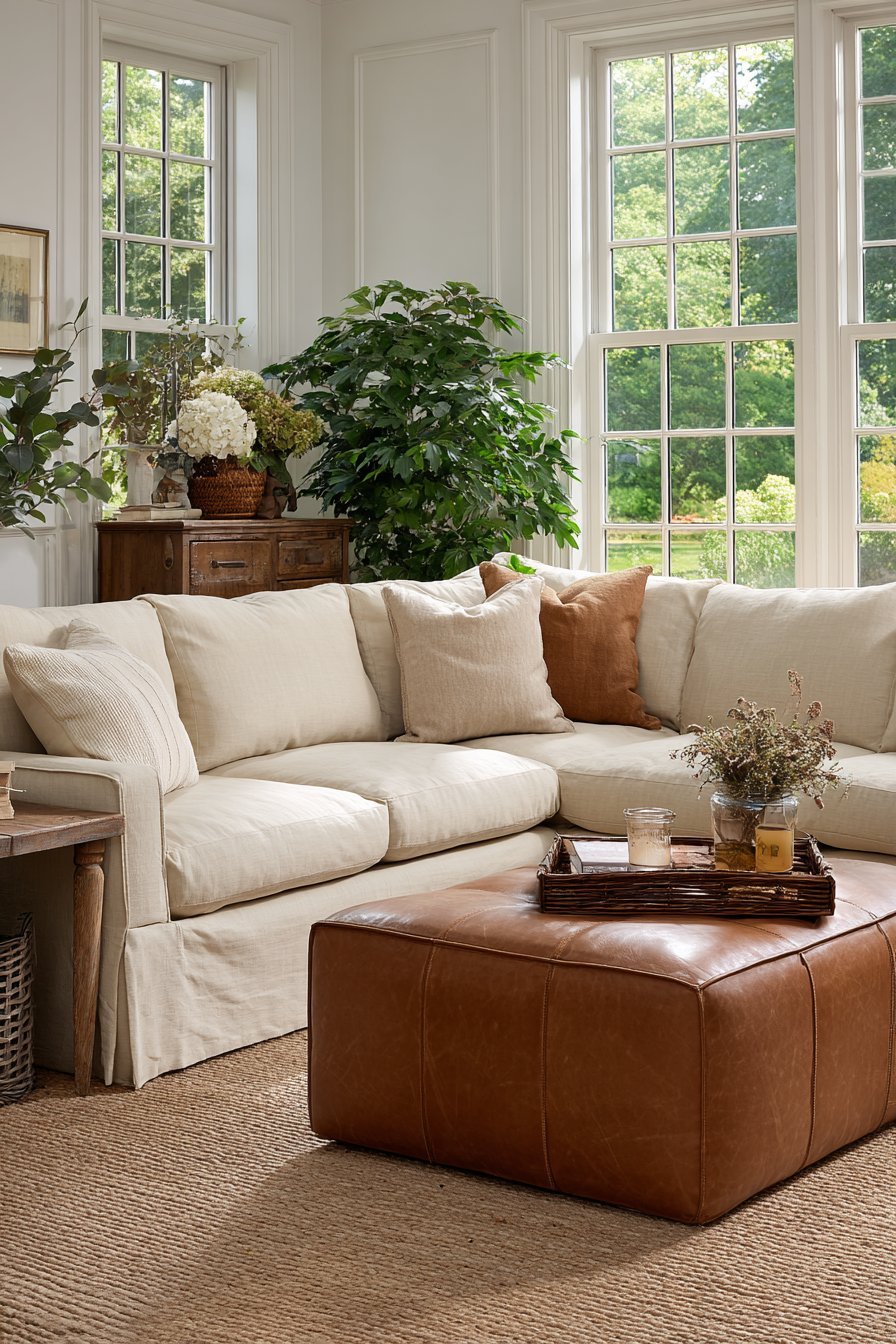
Natural afternoon light reveals practical beauty of washable fabrics throughout. The illumination emphasizes attainable neutral palette and family-friendly materials. Nothing feels too precious or untouchable in this welcoming environment. The design supports real life in beautiful spaces.
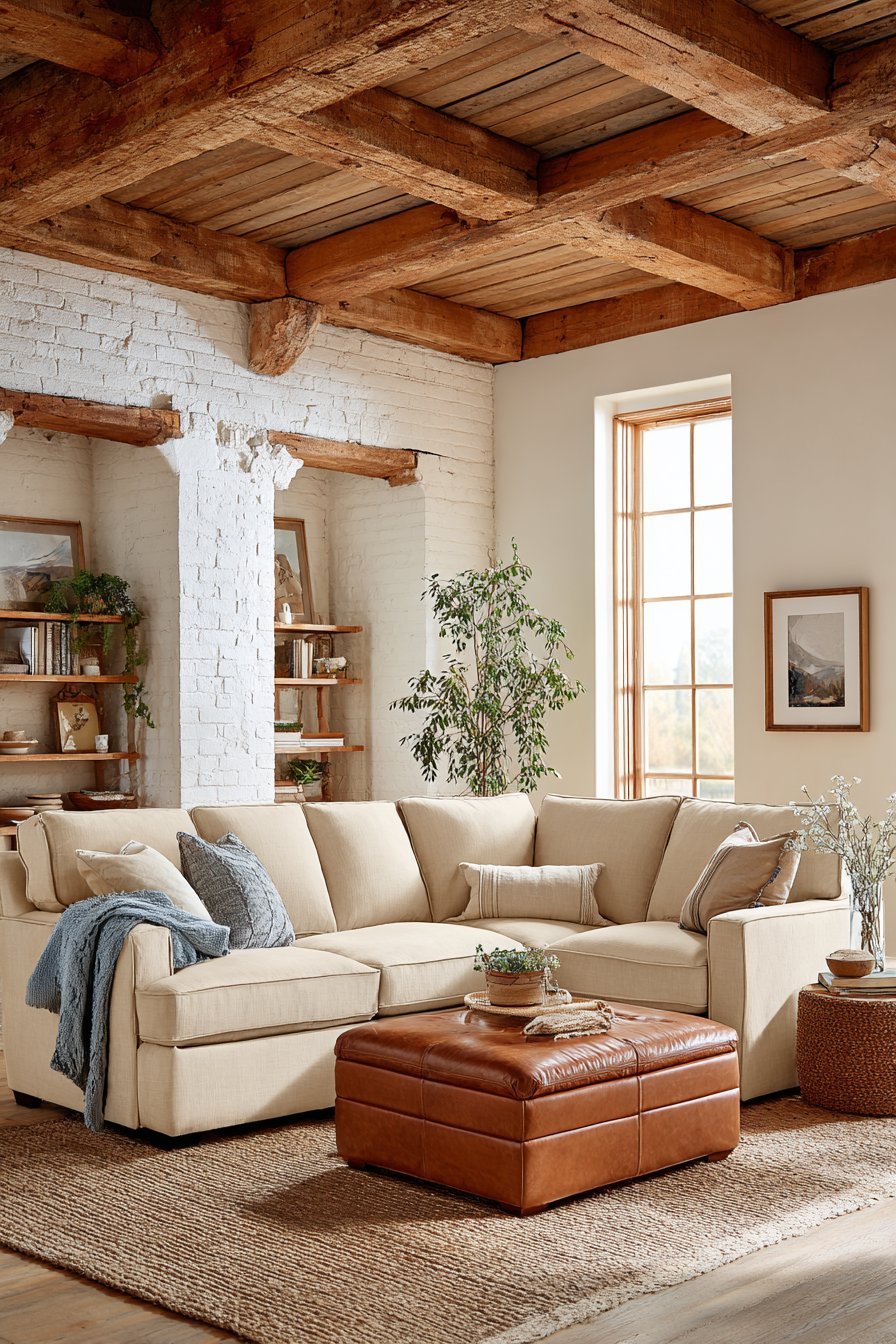
This approach proves family-friendly design need not sacrifice aesthetics. Durable materials and washable fabrics create sustainable beauty. The room serves everyone’s needs while maintaining visual appeal.
Key Design Tips:
- Select slipcovered furniture with removable, washable covers
- Choose linen-cotton blends for durability and family-friendly performance
- Add leather storage ottomans for practical multifunctional seating
- Paint walls in warm white for bright, forgiving neutral backdrop
- Layer sisal rugs for durable natural fiber that withstands traffic
- Design with washable, practical materials that maintain beauty
20. Sophisticated Champagne Velvet Layers
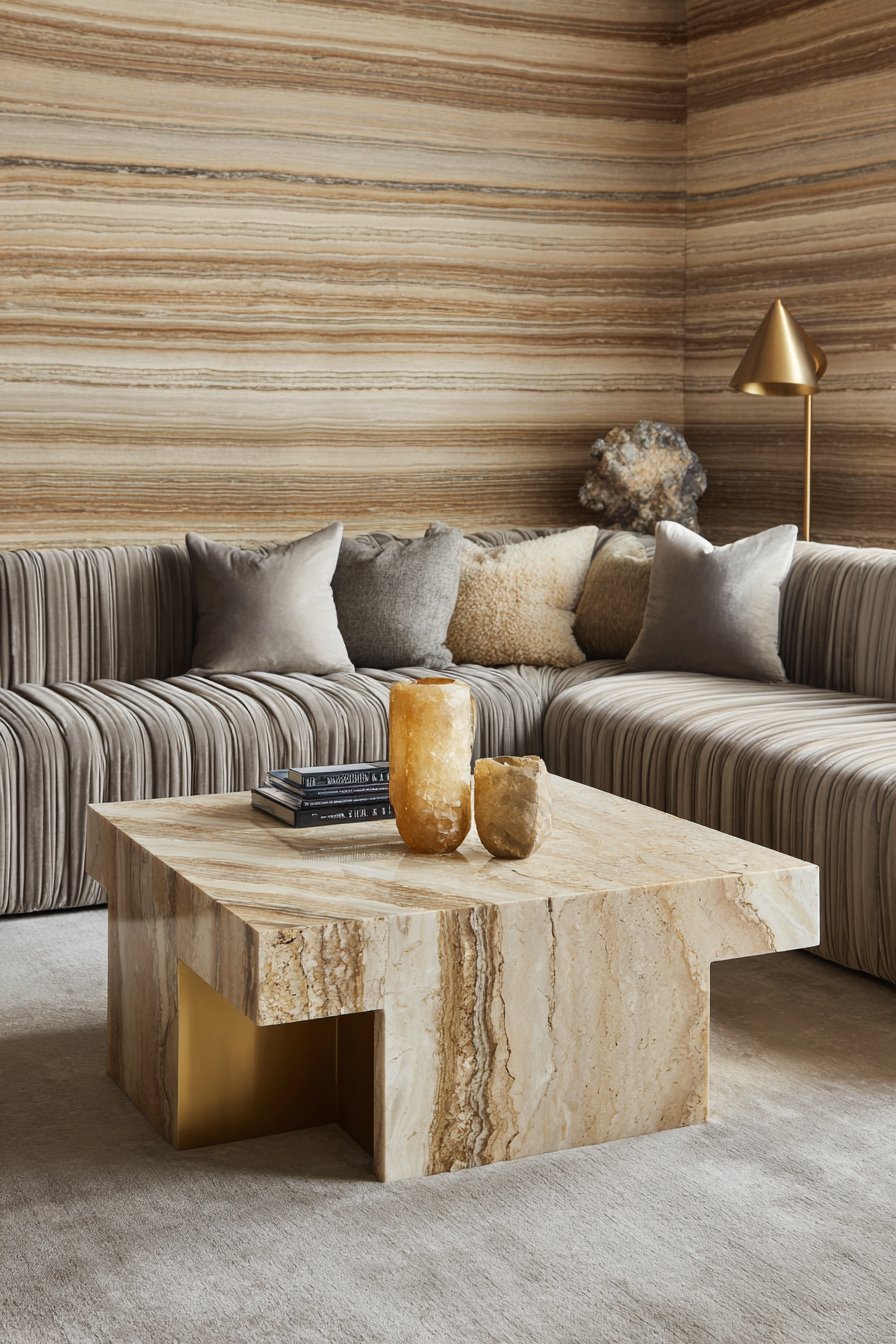
Channel-tufted upholstery in champagne velvet creates elegant seating. Varying pile direction creates subtle tone shifts as light changes. A marble-topped coffee table with brass base shows natural stone veining. The luxurious materials create refined focal point in the arrangement.
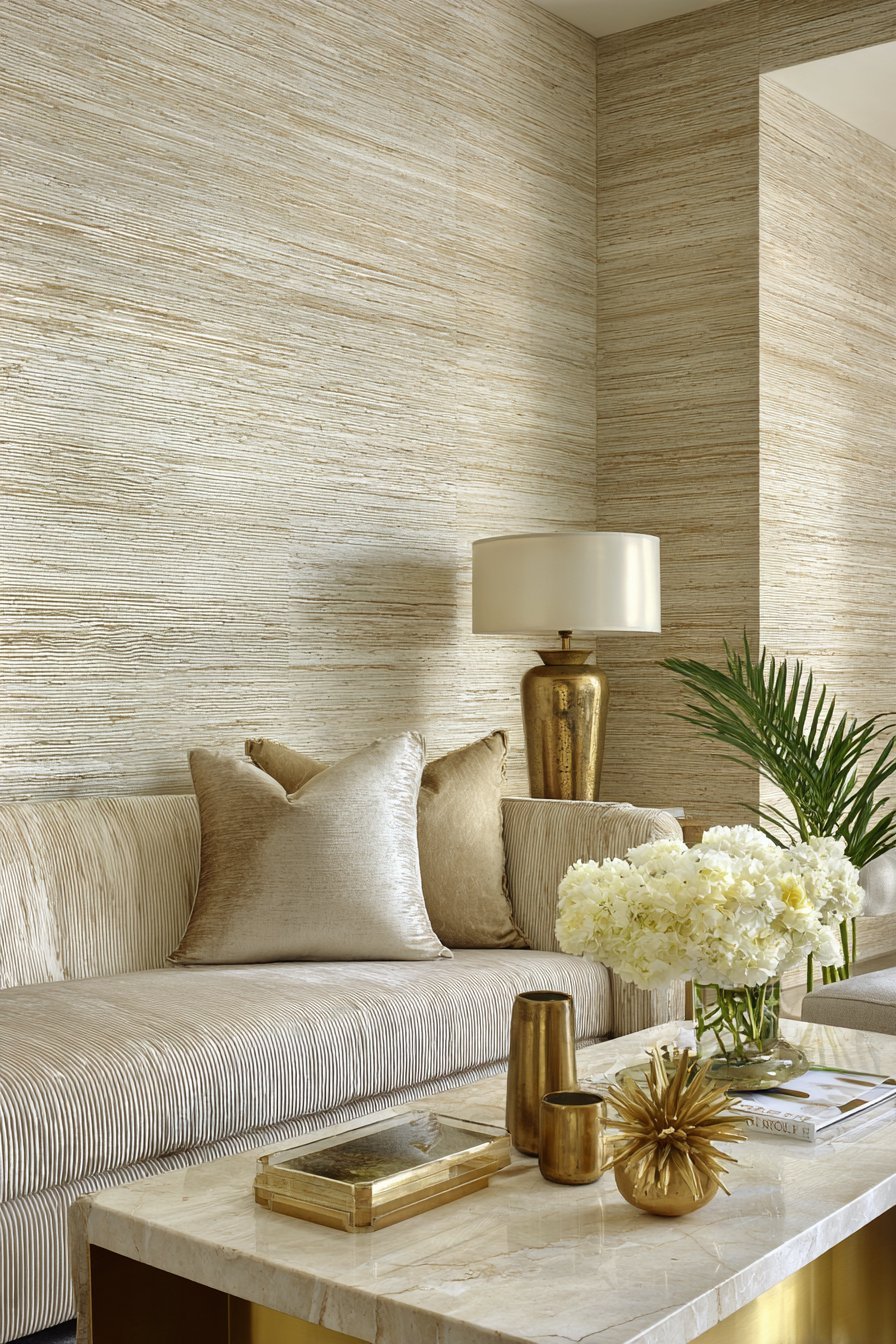
Walls covered in natural grasscloth in wheat tone add organic dimensional texture. The woven fibers create subtle movement and visual interest. A vintage brass floor lamp with aged patina provides ambient lighting. The warm metal finish adds historical character to the neutral scheme.
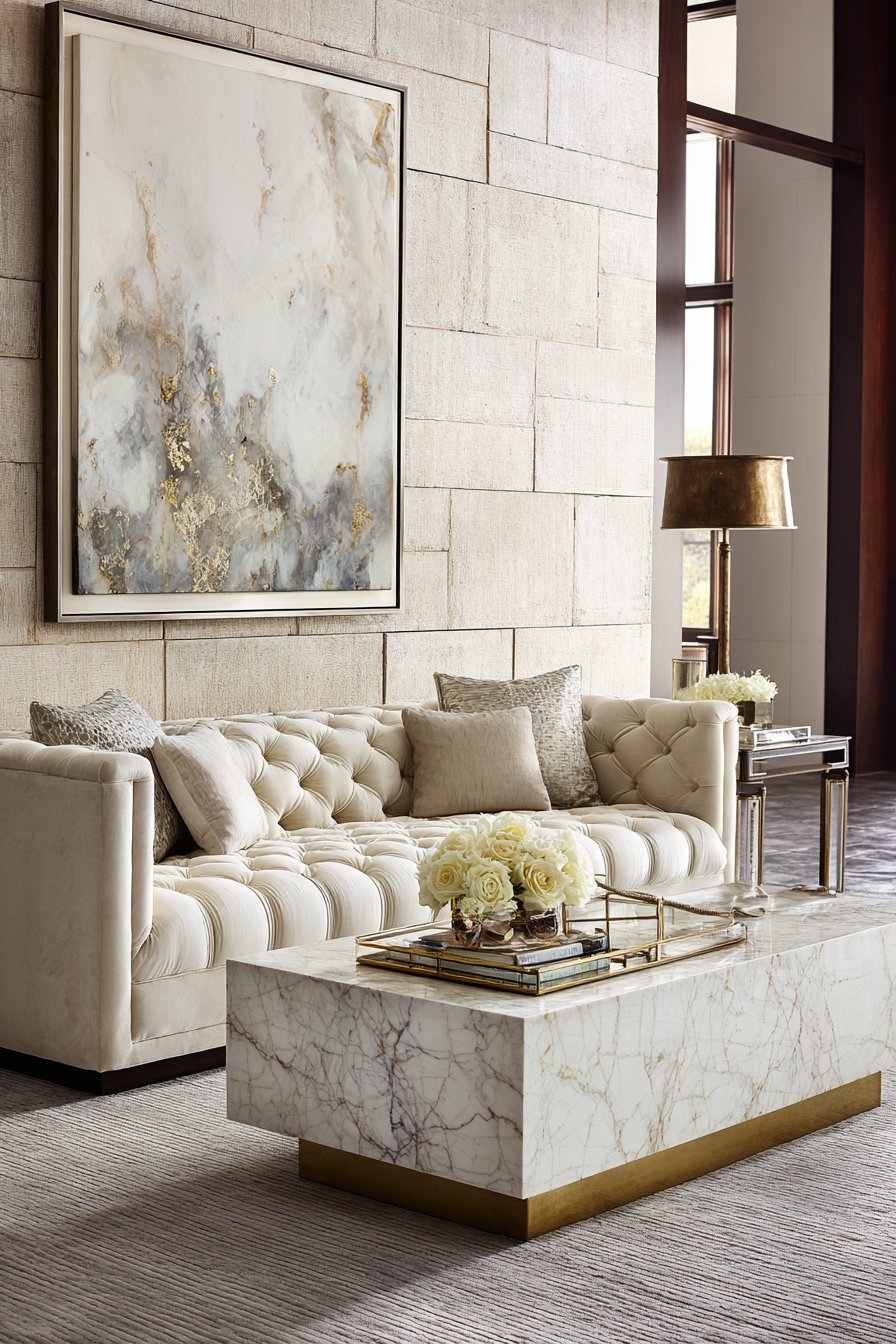
Balanced exposure captures elegant layering of neutral tones from cool to warm. The photography emphasizes how different materials reflect and absorb light differently. Each surface contributes unique qualities to the refined composition. The sophisticated space demonstrates masterful neutral design execution.
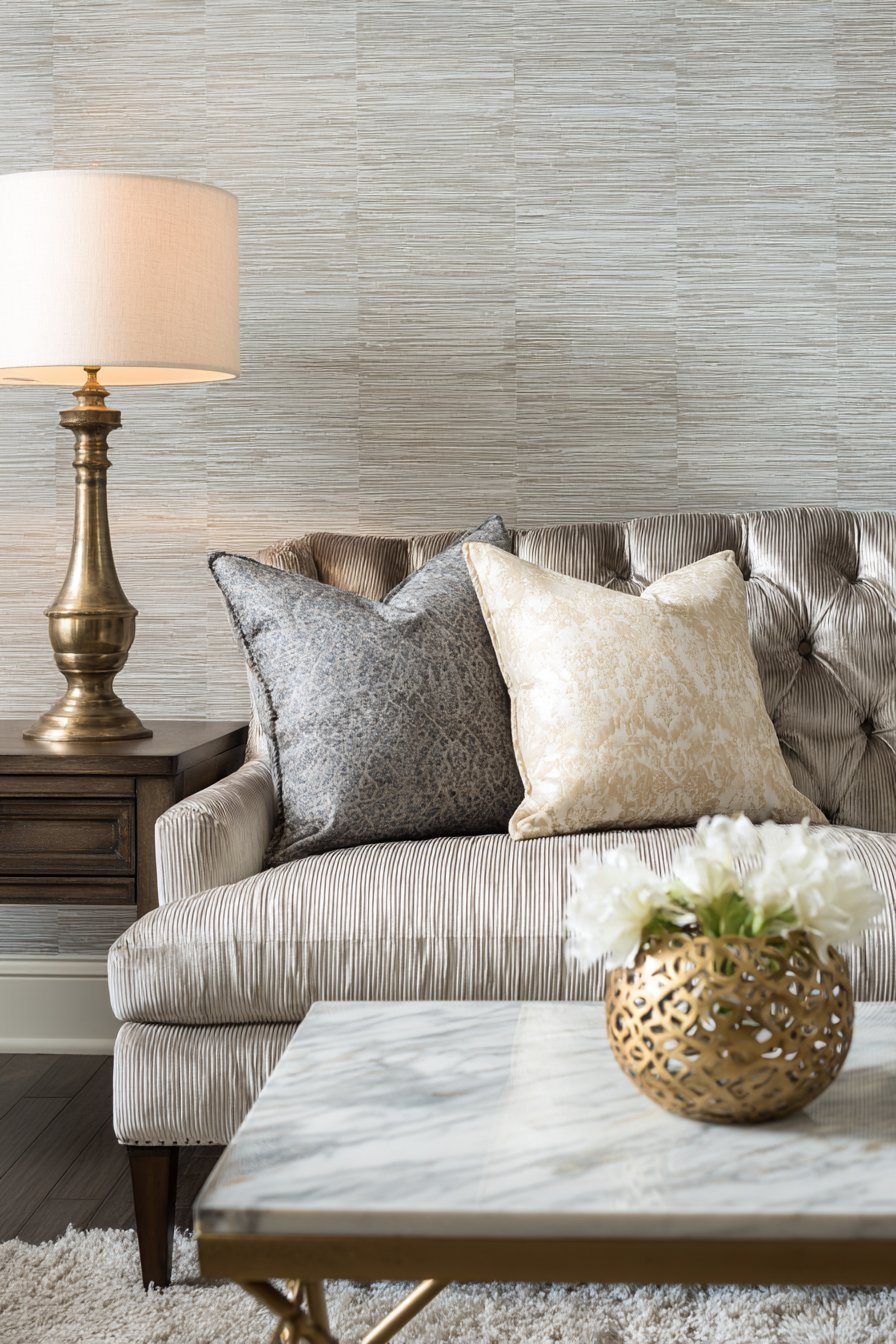
This design proves neutral palettes can achieve formal elegance. The combination of luxurious materials creates opulent yet understated beauty. The room feels special occasion-ready while remaining approachable.
Key Design Tips:
- Choose channel-tufted velvet for sophisticated textured upholstery
- Feature marble tables with brass bases for luxurious material mixing
- Install natural grasscloth wallcoverings for organic dimensional texture
- Add vintage brass lighting for warm aged metal character
- Layer cool and warm neutrals for sophisticated tonal range
- Balance materials that reflect and absorb light differently
21. Textural Concrete and Wool Contrast
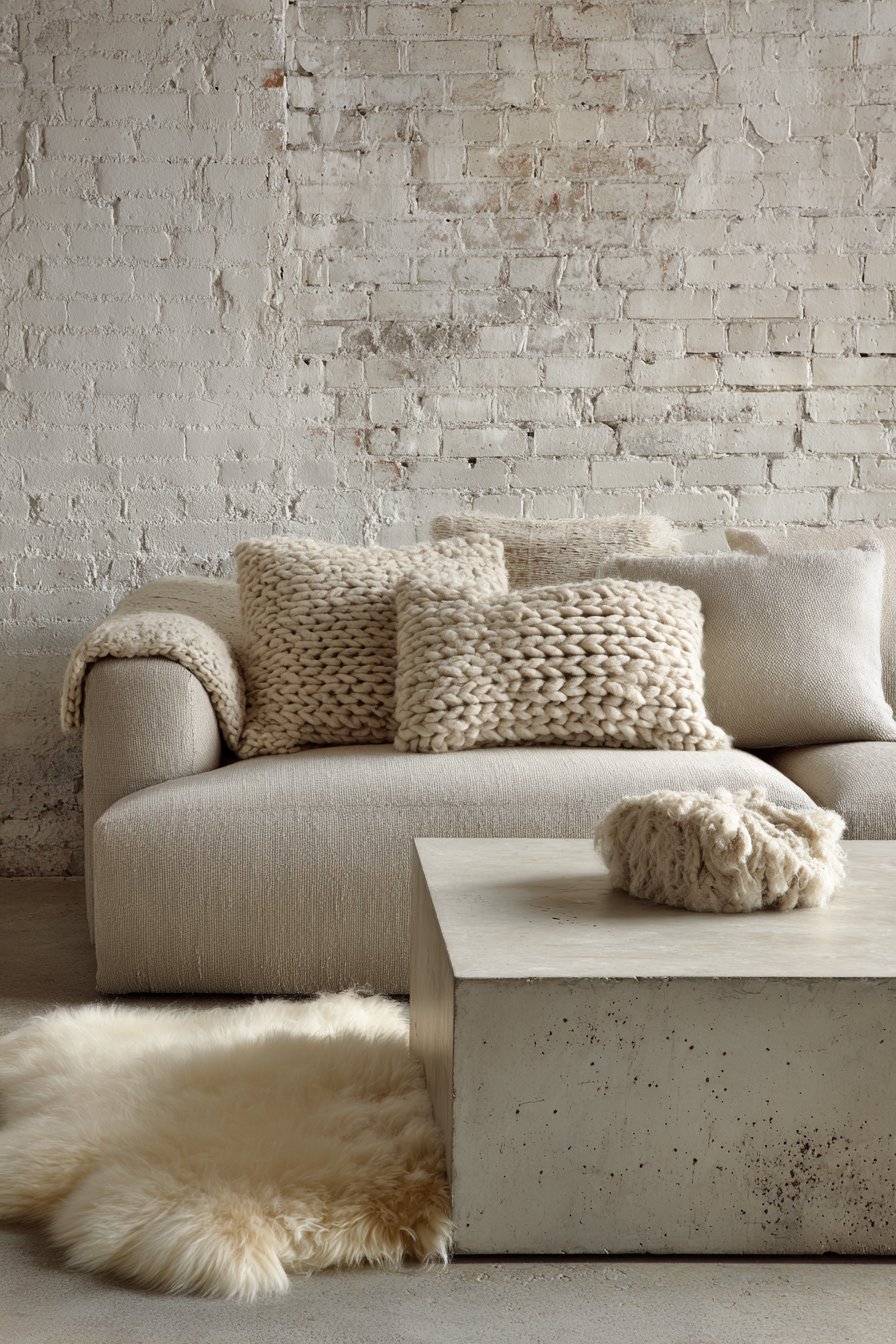
A linen sofa in putty grey pairs beautifully with chunky knit pillows. The undyed wool shows natural fiber color variation throughout. A concrete coffee table with hand-troweled finish displays subtle surface irregularities. The visible aggregate adds industrial character to the substantial piece.
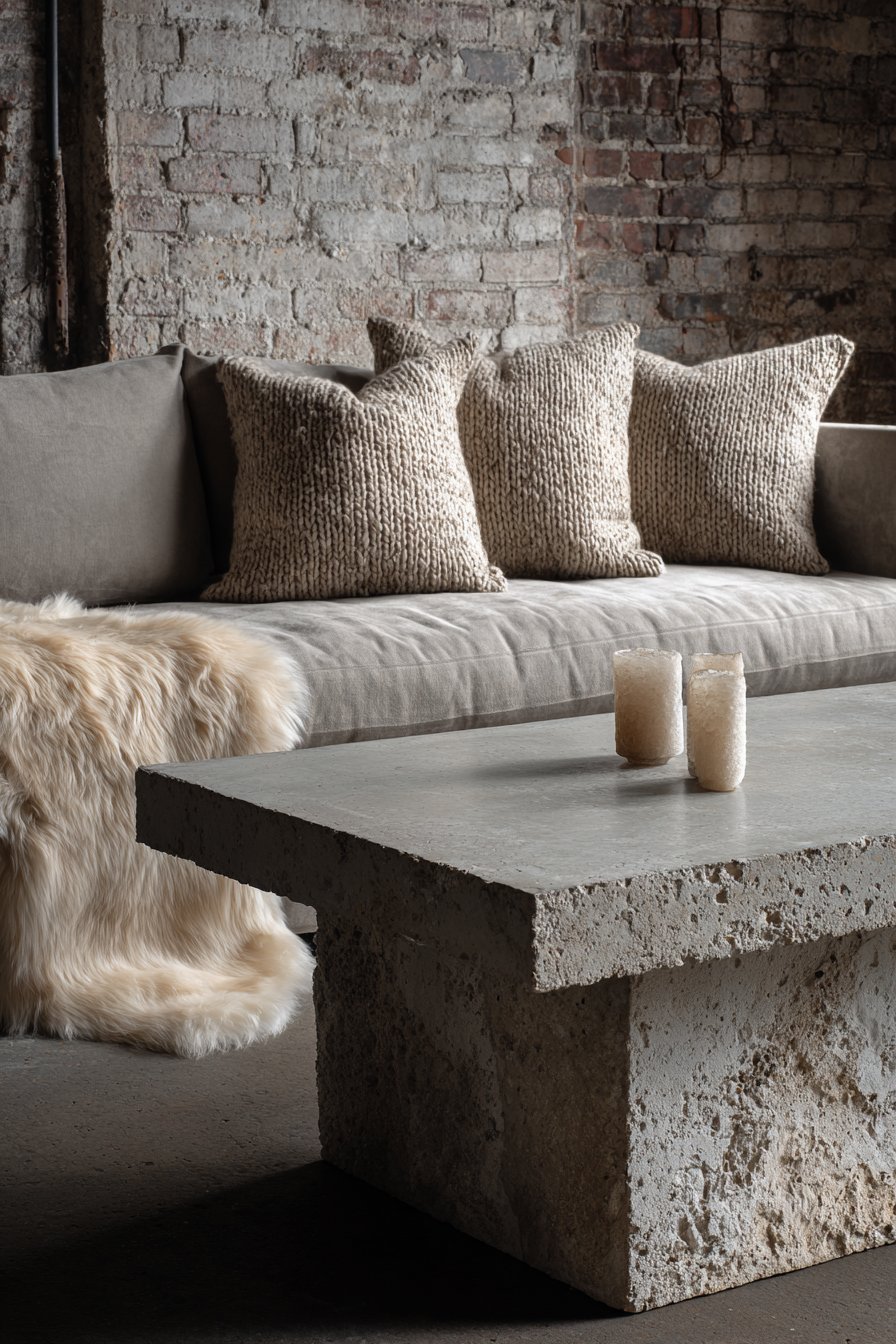
Whitewashed brick wall adds rough architectural texture as focal point. The breathing paint finish allows moisture movement naturally. Sheepskin throw rugs in natural cream show realistic fiber variation. The organic materials add softness to industrial foundations.
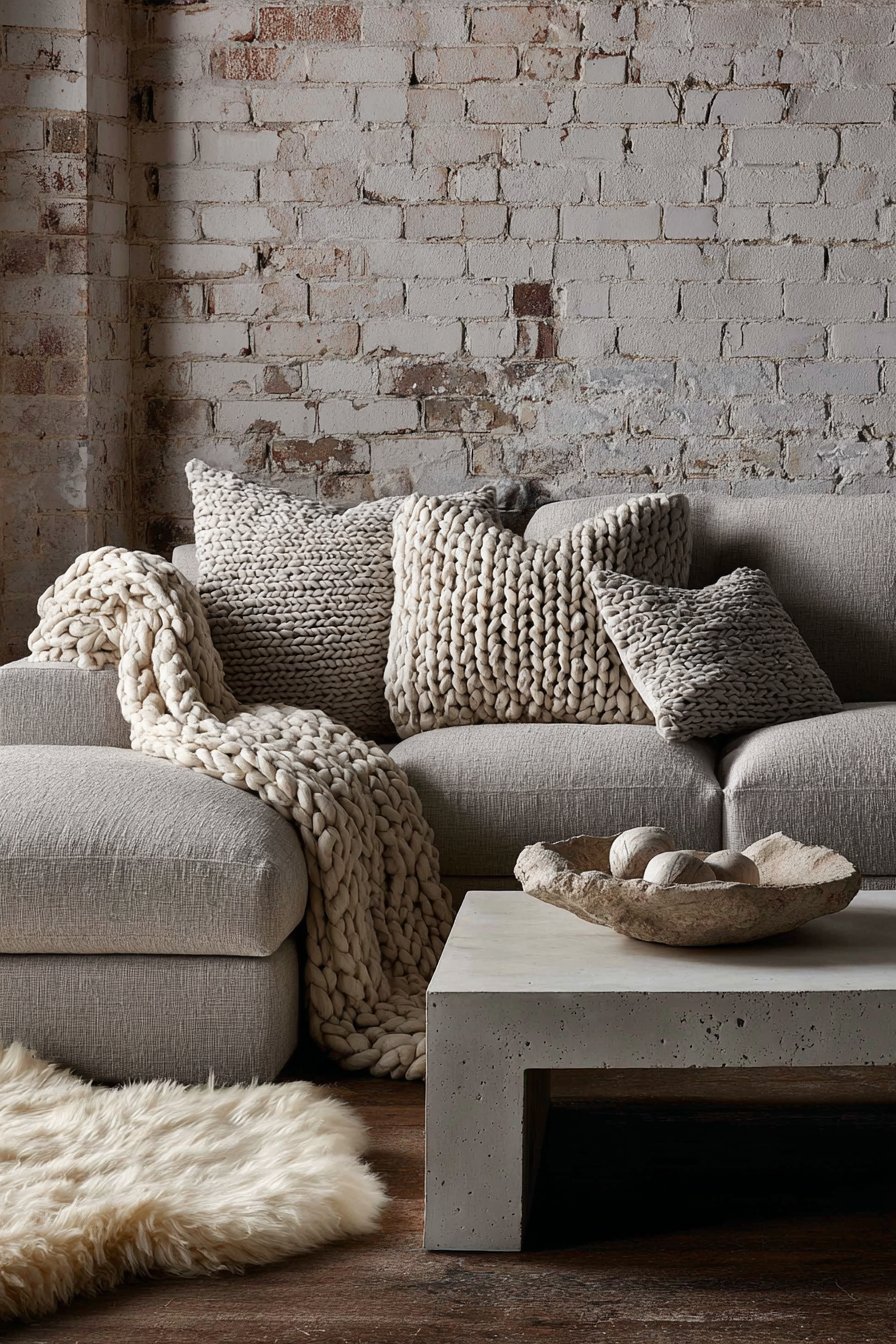
Soft lighting highlights tactile quality of materials throughout the composition. The illumination reveals texture depth from smooth concrete to fluffy wool. The harmonious neutral scheme celebrates material diversity and contrast. Every surface invites touching and sensory exploration.
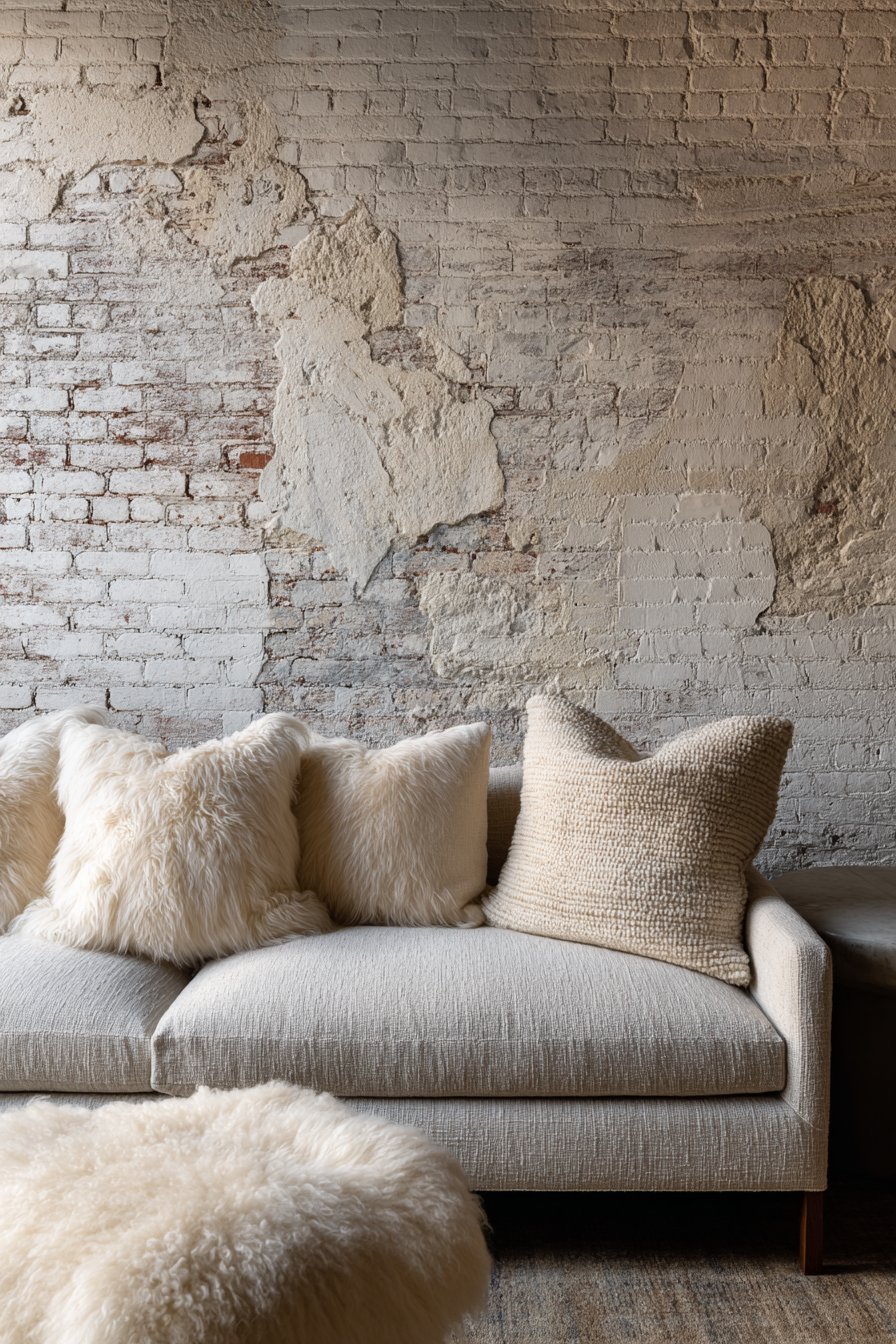
This design demonstrates successful pairing of industrial and organic materials. The contrast creates visual interest within neutral palette. The result feels current and sophisticated while remaining warm.
Key Design Tips:
- Mix industrial materials like concrete with soft organic textiles
- Choose chunky knit pillows in undyed wool for natural texture
- Feature hand-troweled concrete for authentic surface character
- Whitewash brick walls for breathing textured architectural interest
- Layer sheepskin throws for softness against hard surfaces
- Use lighting to emphasize tactile material qualities and contrast
22. Parisian Antique Linen Elegance
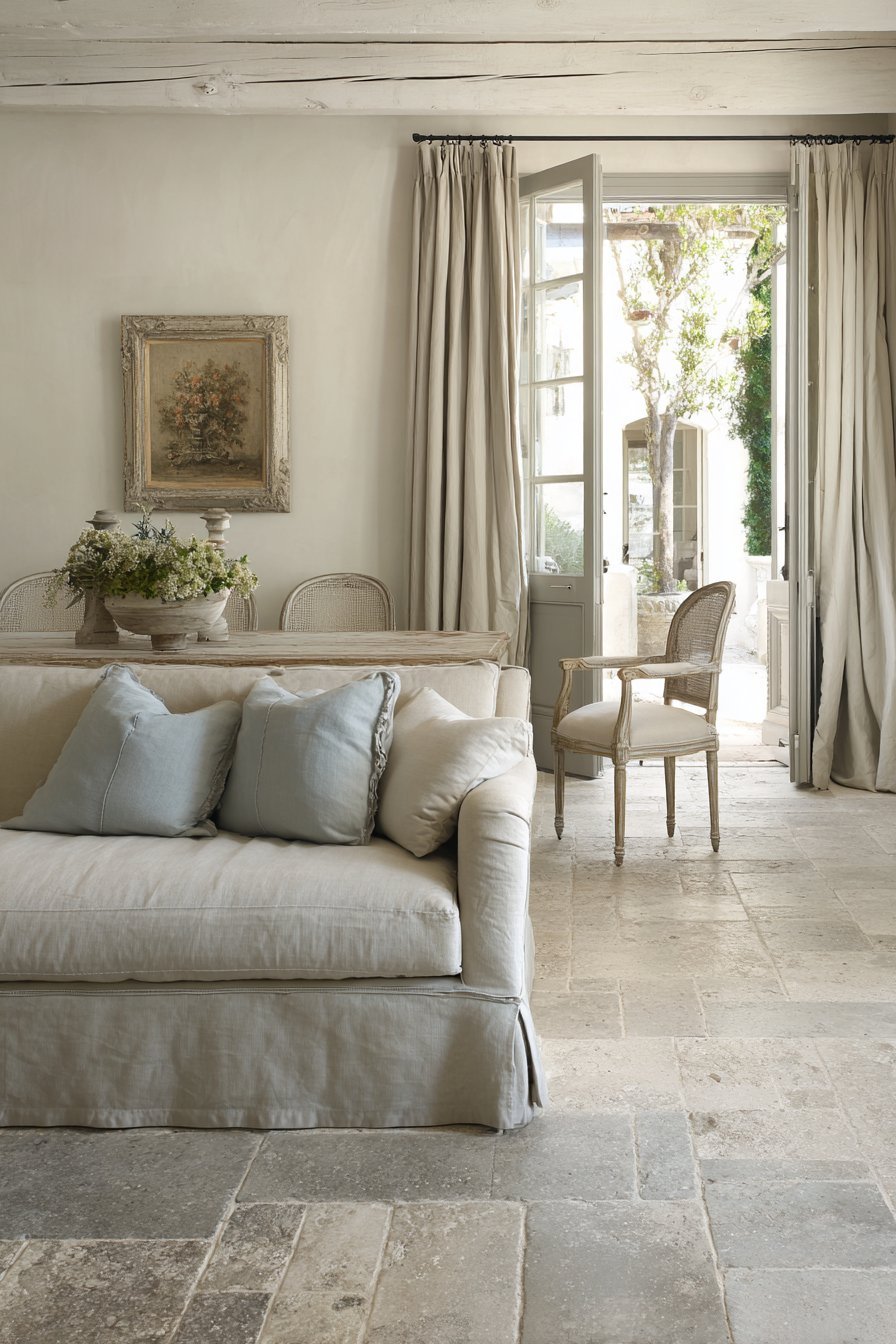
An antique linen sofa with rolled arms shows aged ivory fabric character. Authentic vintage fabric displays gentle wear patterns that tell stories. Painted Louis XVI chairs in weathered cream show distressed finish. The intentional paint aging reveals layers beneath for historical character.
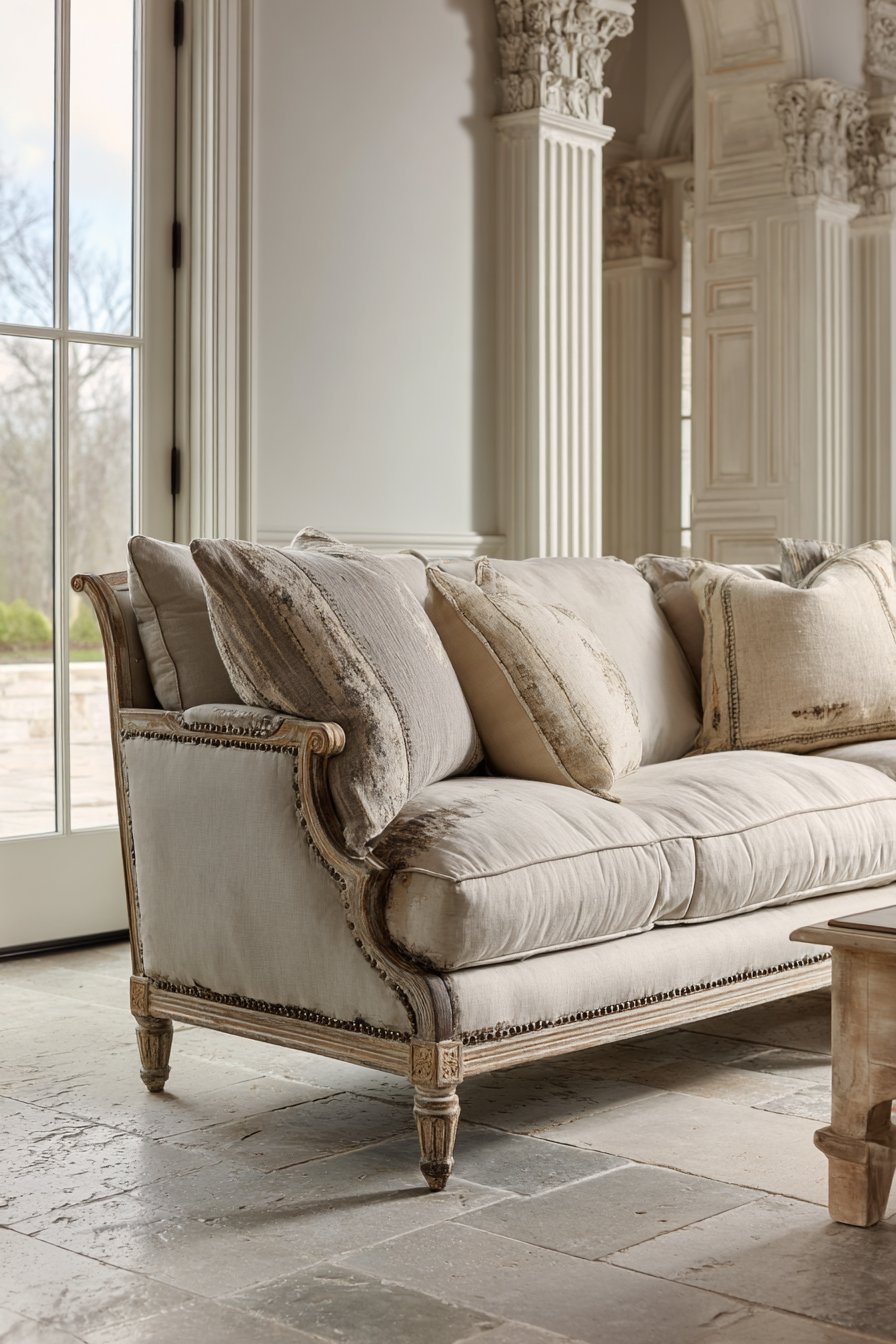
Limestone tile flooring in pale grey features natural color variation. The honed finish provides matte elegance without excessive shine. Ornate plaster moldings painted in soft white add architectural detail. The classical elements create refined European atmosphere.
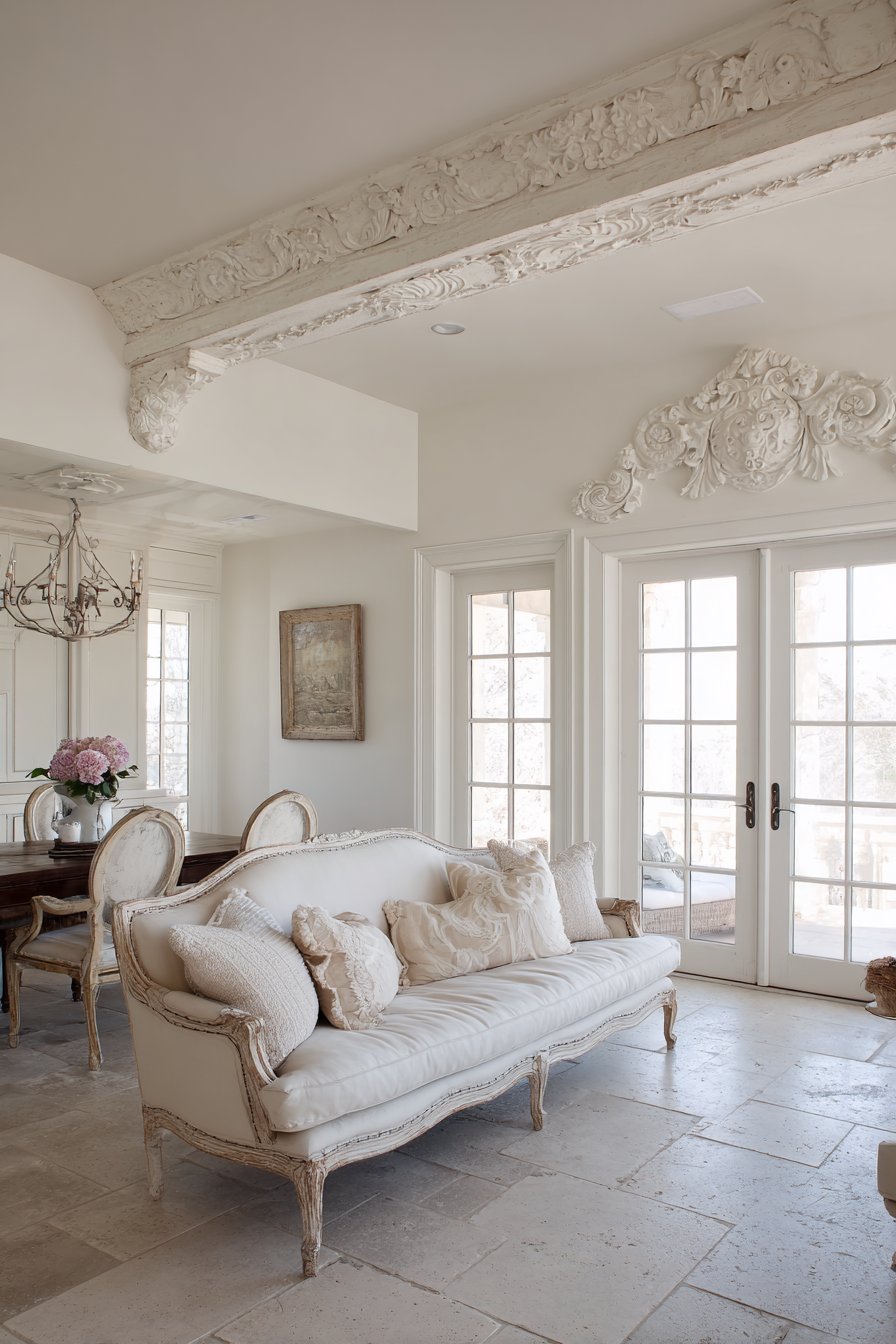
Natural light from French doors creates classic illumination. The soft daylight enhances elegant aged quality of materials throughout. The design feels transported from a Parisian apartment with authentic character. Historical elements combine to create timeless sophisticated beauty.
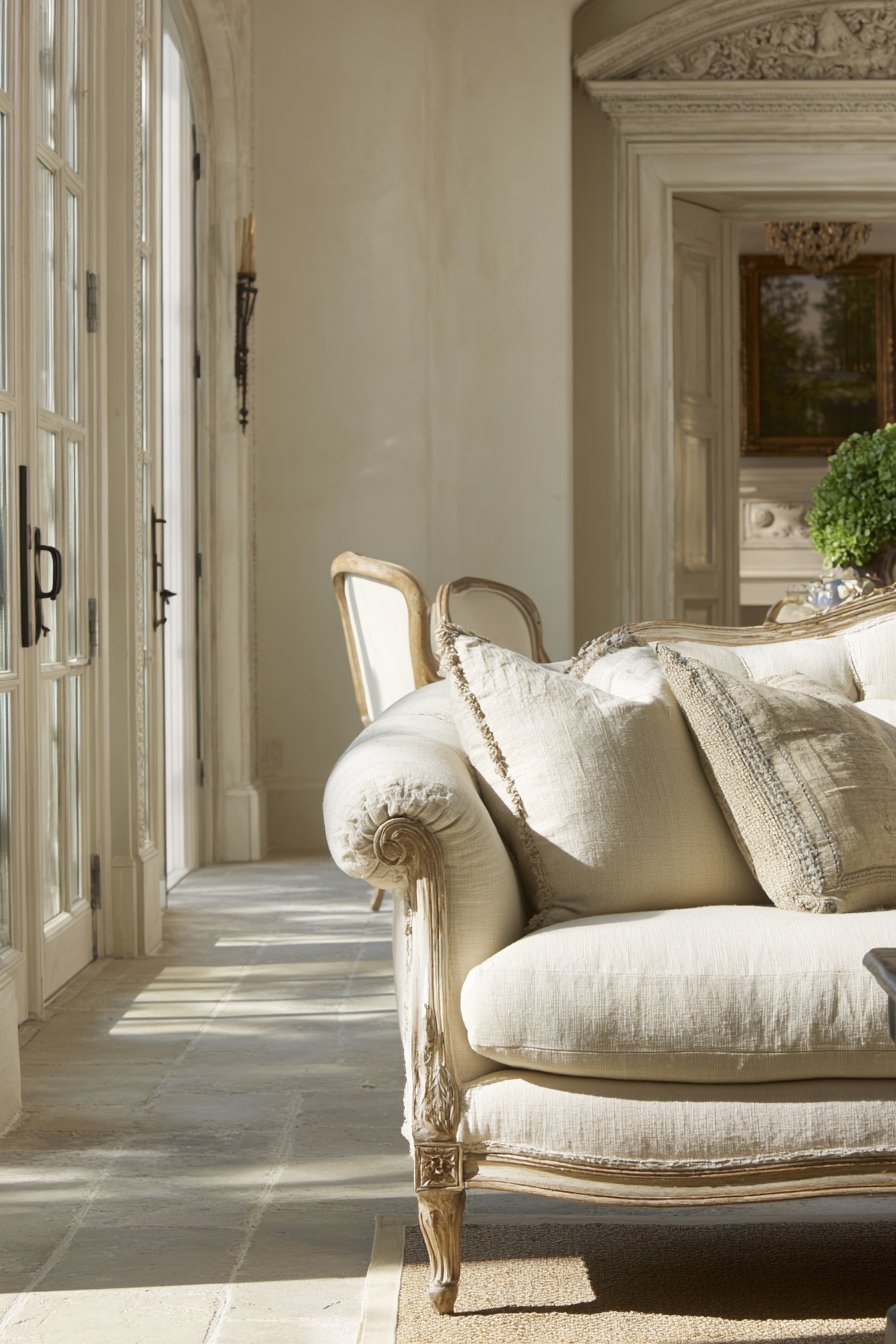
This approach celebrates European design heritage and craftsmanship. Antique and vintage pieces bring genuine history into spaces. The result feels collected over generations rather than decorated all at once.
Key Design Tips:
- Source antique linen upholstery for authentic aged fabric character
- Choose painted furniture with distressed finishes showing layers
- Install limestone flooring for elegant European natural stone
- Add ornate plaster moldings for classical architectural detail
- Maximize French door lighting for soft European illumination
- Collect authentic vintage pieces rather than reproduction furniture
23. Modern Monochromatic White Oak Serenity
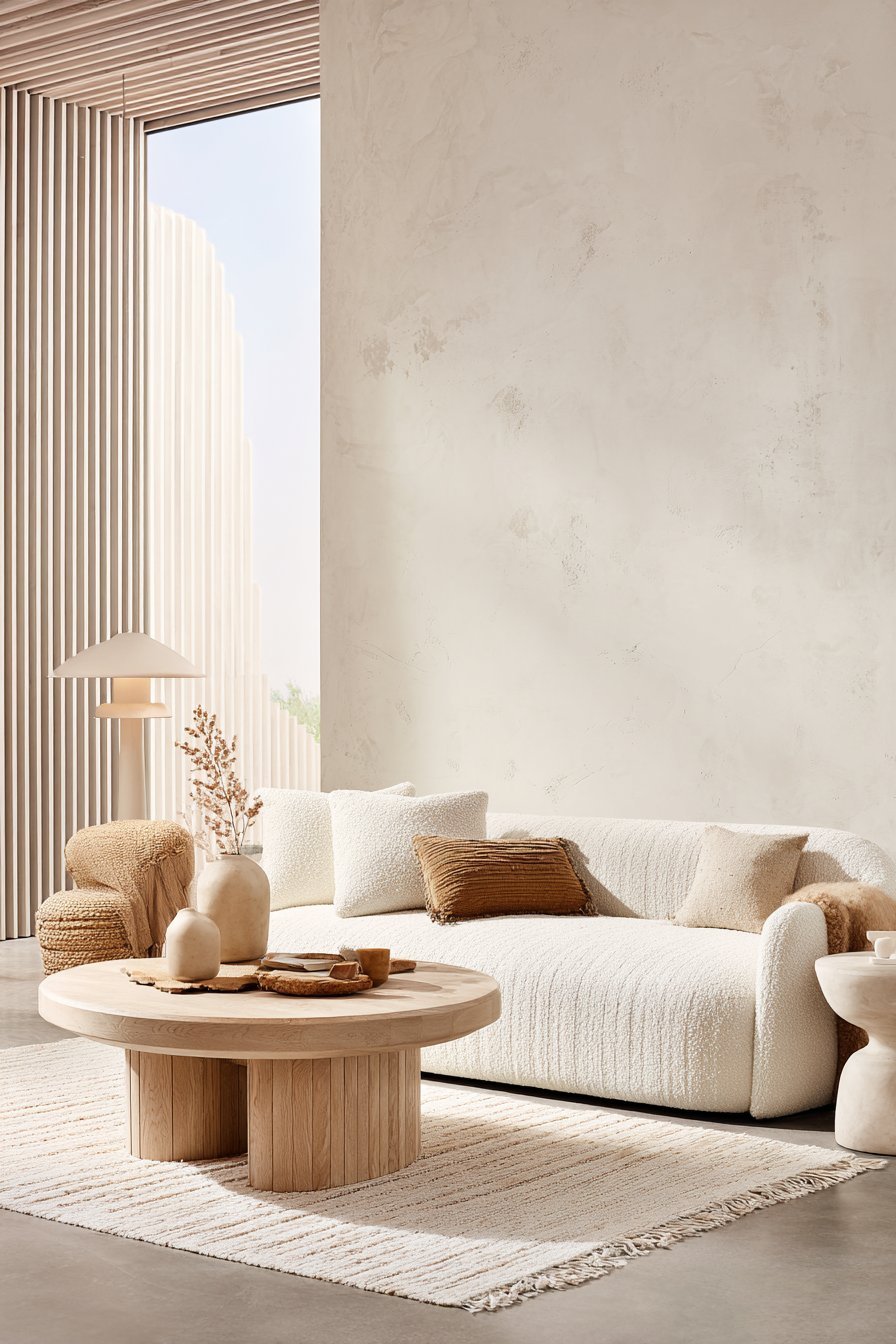
Performance bouclé upholstery in warm white creates textured monochromatic seating. A coffee table in white oak with cerused finish highlights natural grain. The wood treatment emphasizes texture while maintaining light neutral palette. Smooth plaster walls in bone white create seamless backdrop.
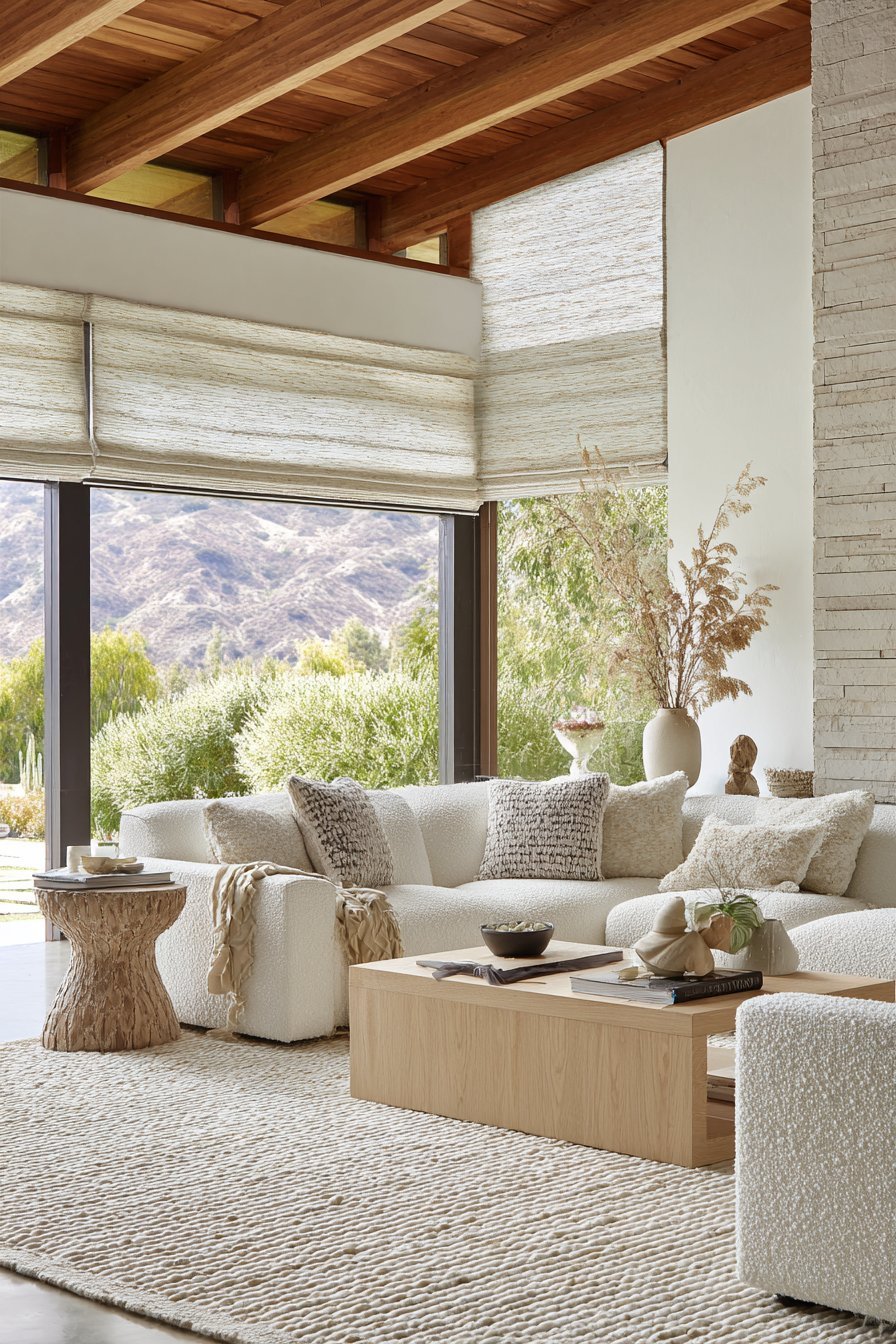
Natural linen Roman shades in ecru filter light softly throughout the day. The neutral window treatments maintain privacy while allowing illumination. A handwoven wool rug in ivory shows slight color variation. The natural dyeing process creates organic tonal shifts.
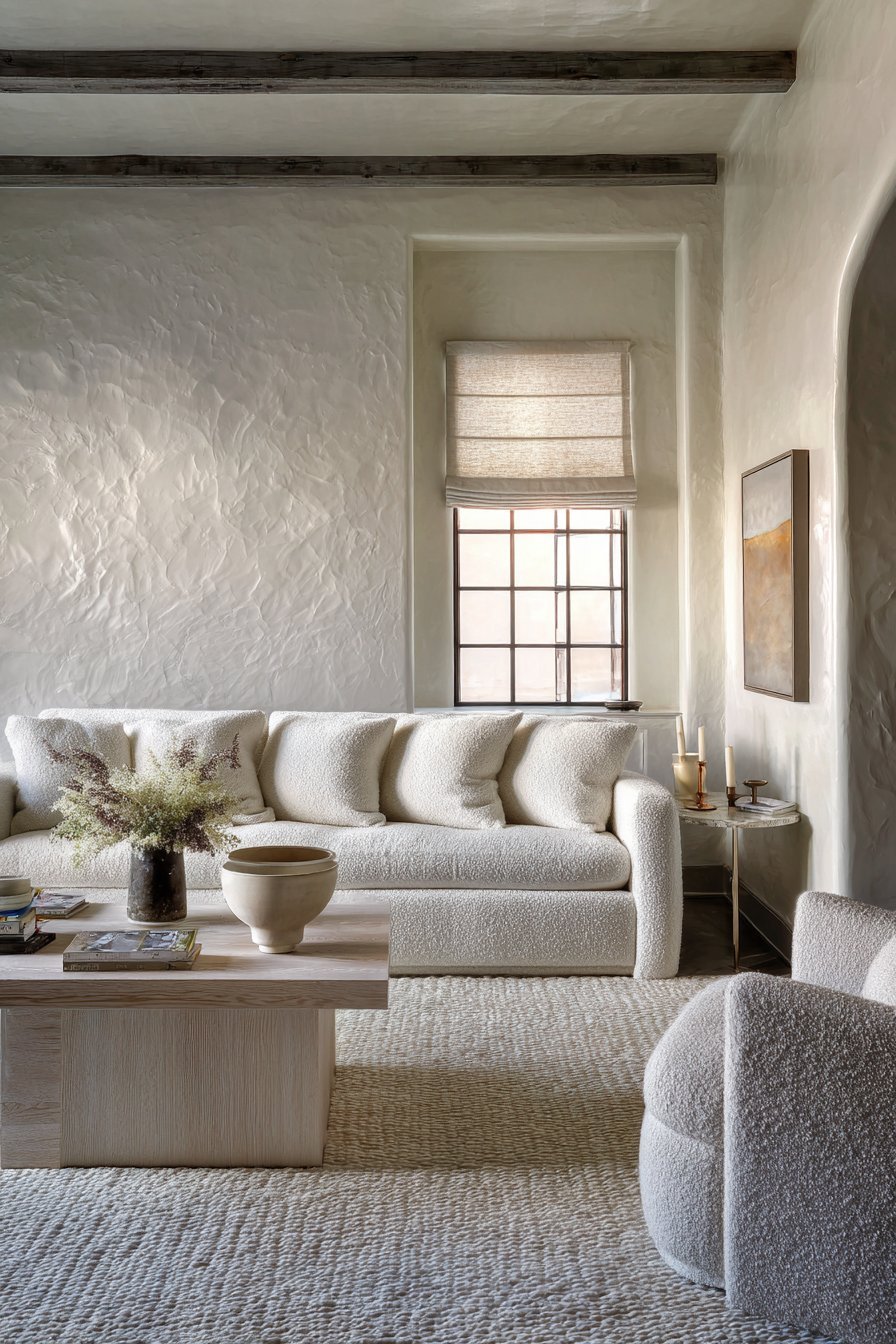
Soft diffused lighting reveals tonal depth within the tight neutral palette. The illumination emphasizes varied textures from rough bouclé to smooth plaster. The serene uniformity creates meditative quality and visual rest. Every element contributes to the peaceful monochromatic composition.
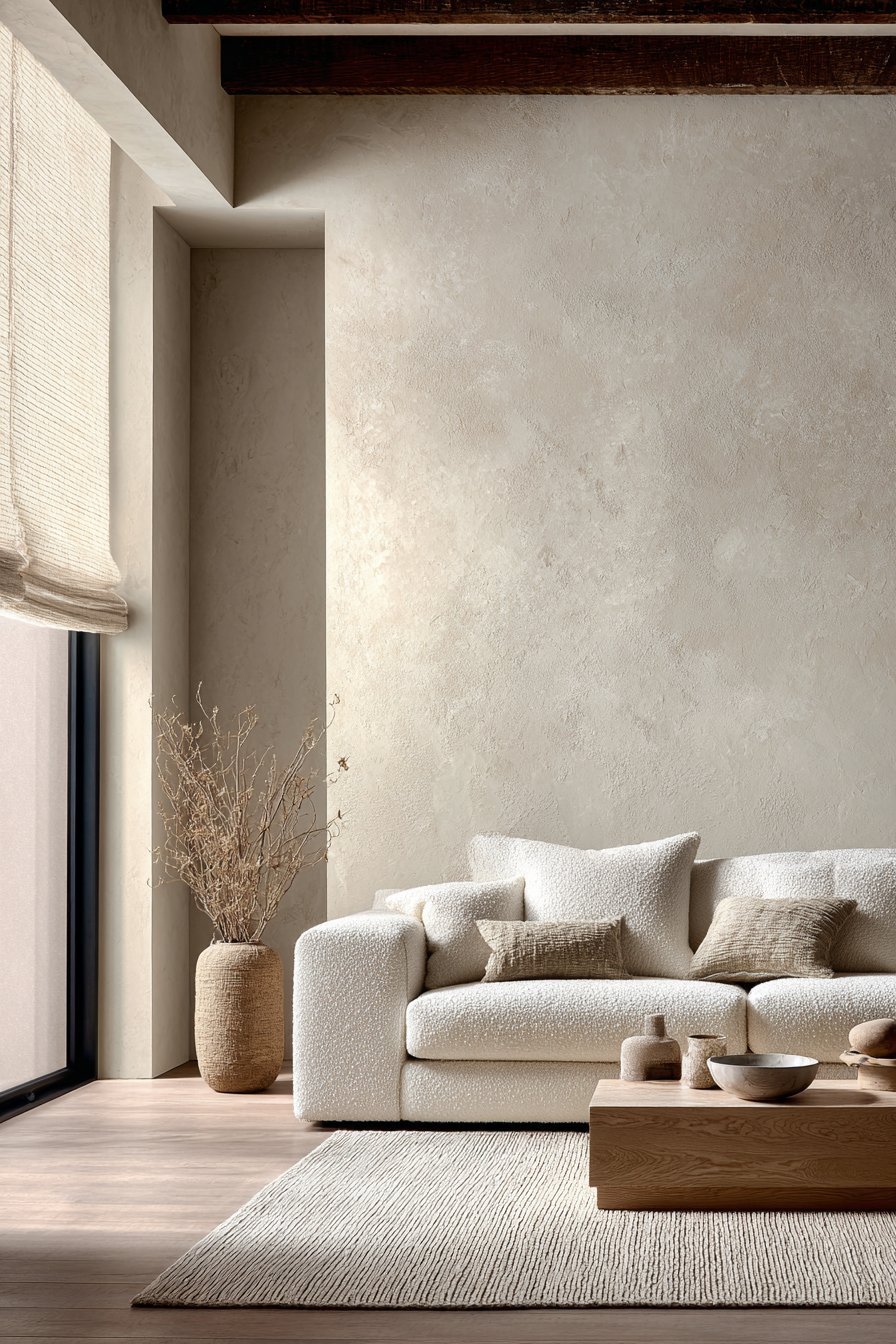
This design demonstrates beauty in subtle variation within limited palette. The monochromatic approach requires attention to texture and material quality. The result feels calming and spiritually restorative.
Key Design Tips:
- Create monochromatic schemes using multiple textures in similar tones
- Choose cerused wood finishes to highlight grain in light palettes
- Apply smooth plaster finishes for seamless neutral backdrops
- Install linen Roman shades for soft light filtering and privacy
- Select naturally dyed textiles for organic color variation
- Use diffused lighting to reveal subtle tonal depth and texture
24. Organic Modern Curved Hemp-Linen Forms
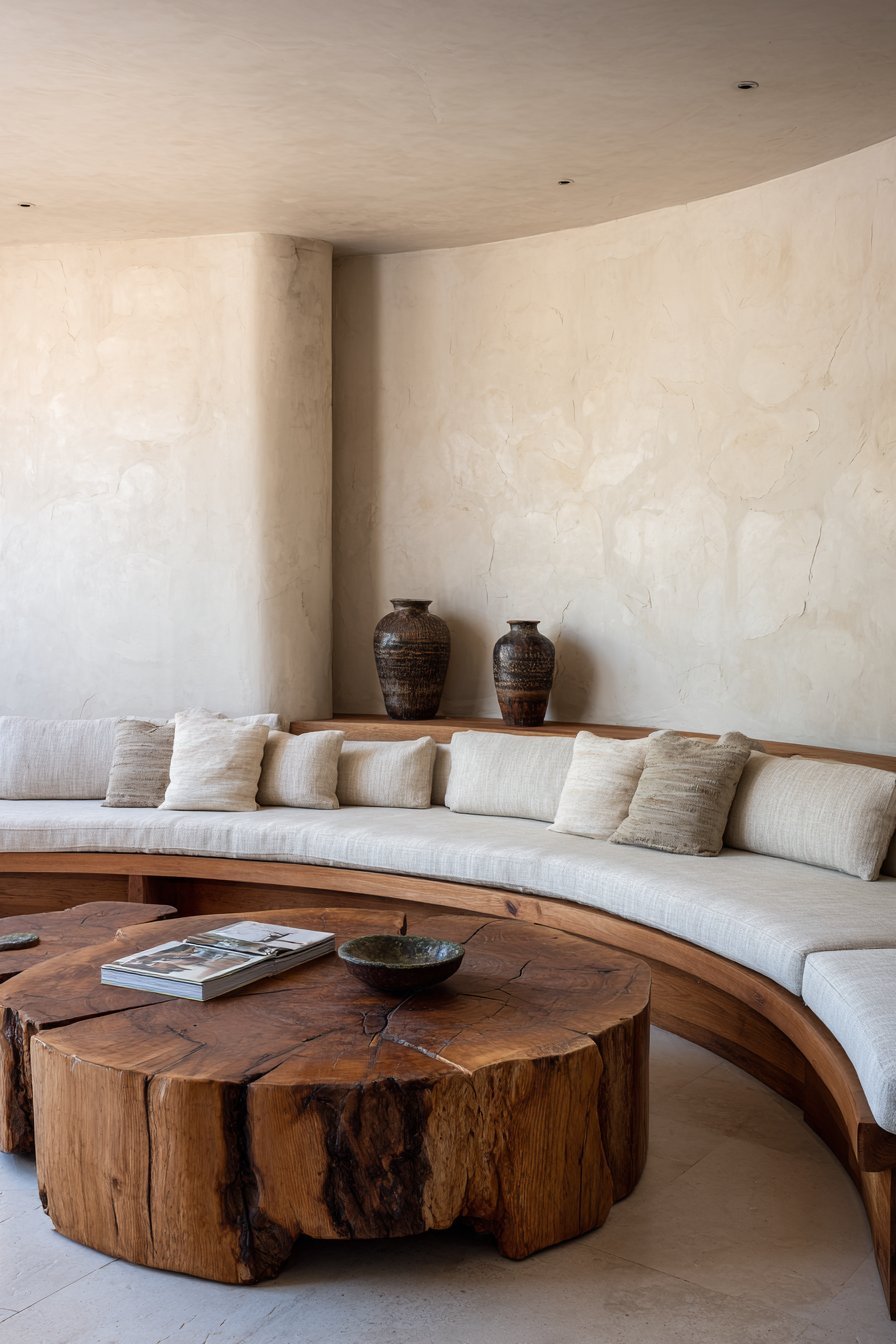
A curved sofa in natural hemp-linen blend in flax shows characteristic slub texture. The organic fabric weave adds visual interest to the flowing form. A live-edge walnut coffee table displays book-matched grain pattern. Natural edge contours celebrate the tree’s original growth patterns.
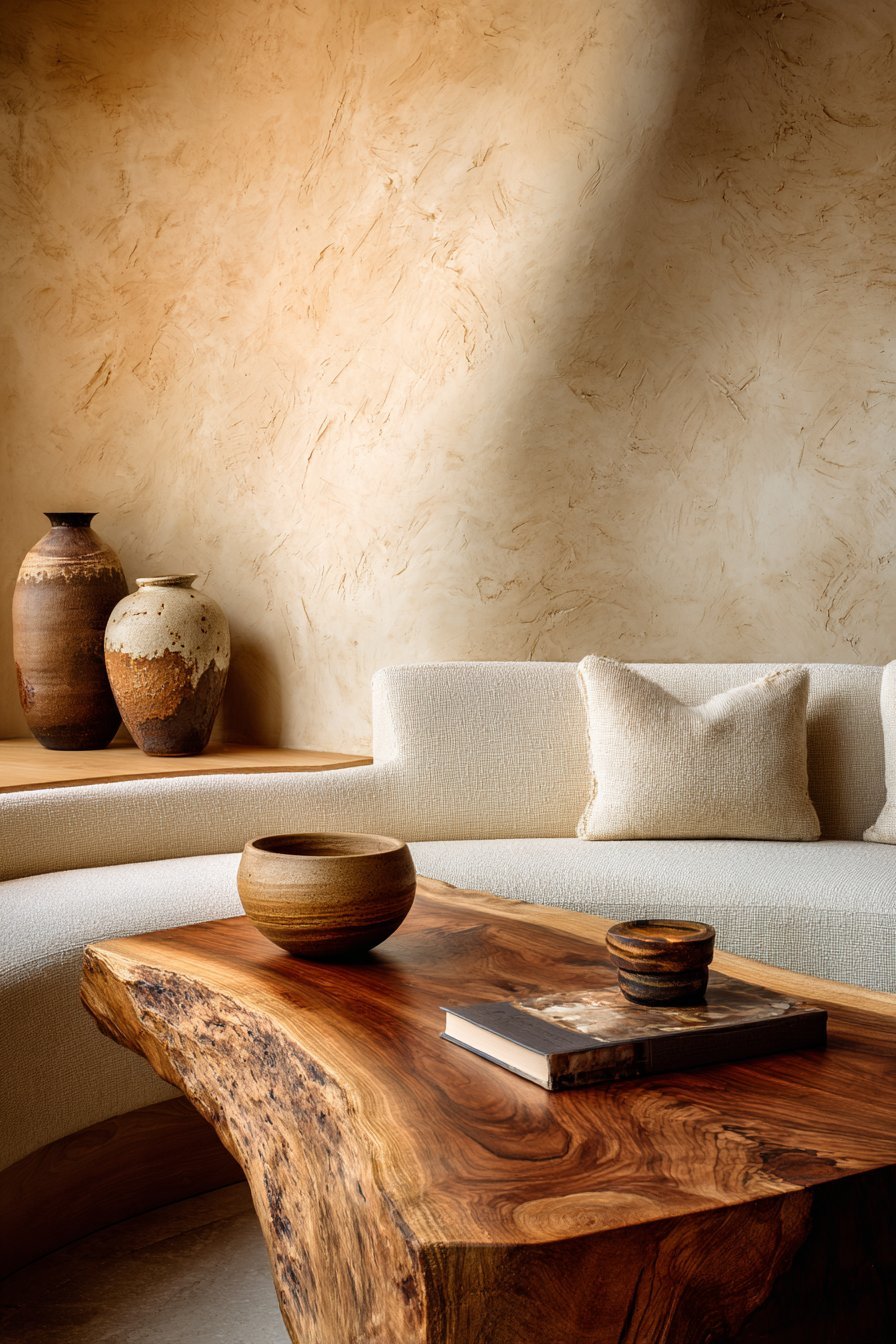
Adobe-style plaster walls in warm sand create textured envelope. The hand-applied finish shows trowel marks and organic variation. Ceramic vessels in earth tones with visible throwing marks add handcrafted elements. Each piece demonstrates maker’s touch and artistic process.
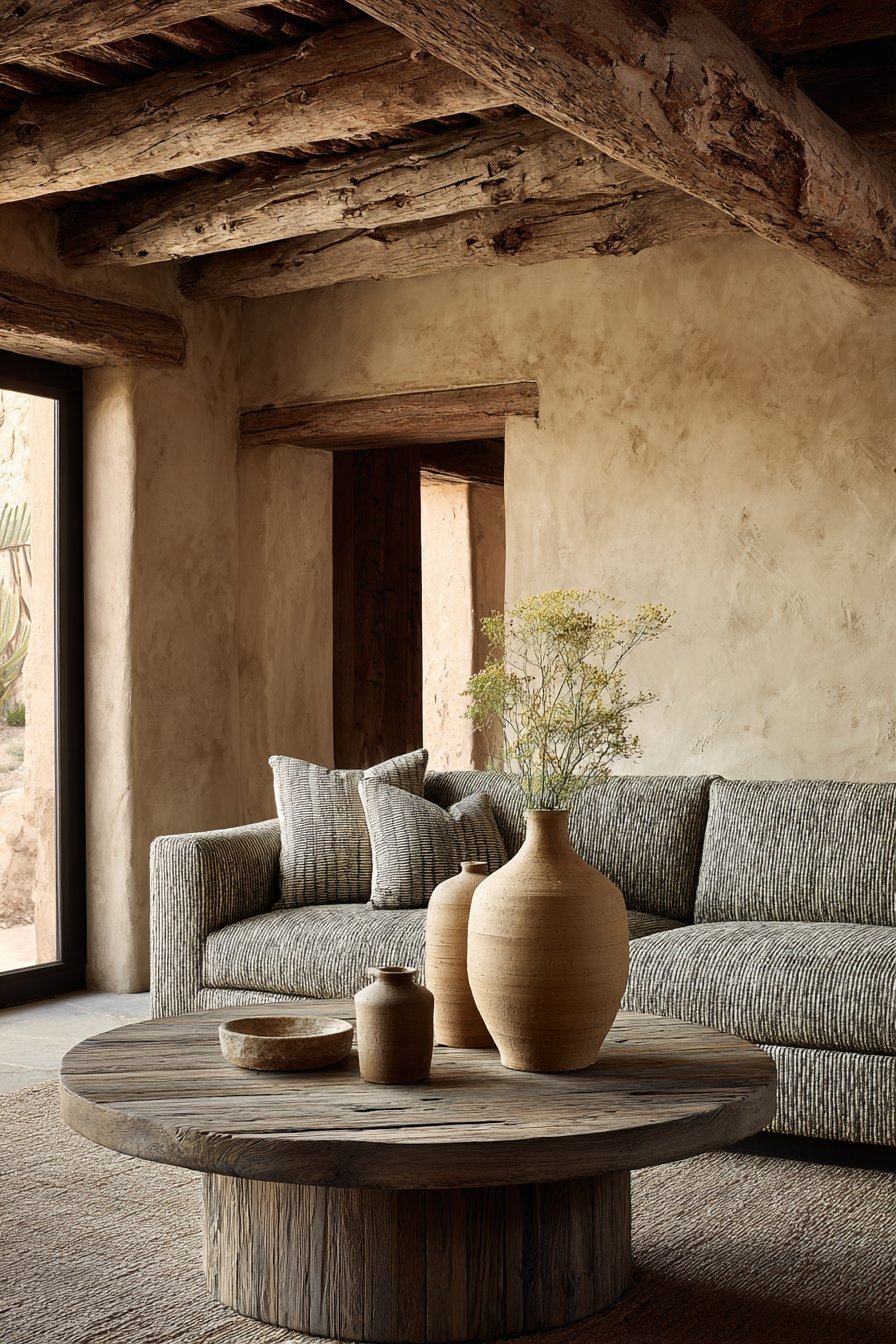
Warm directional light emphasizes organic forms and honest construction throughout. The illumination highlights connection to natural materials and processes. The earth-toned neutral space feels grounded and connected to nature. Every element celebrates organic beauty and authentic craftsmanship.
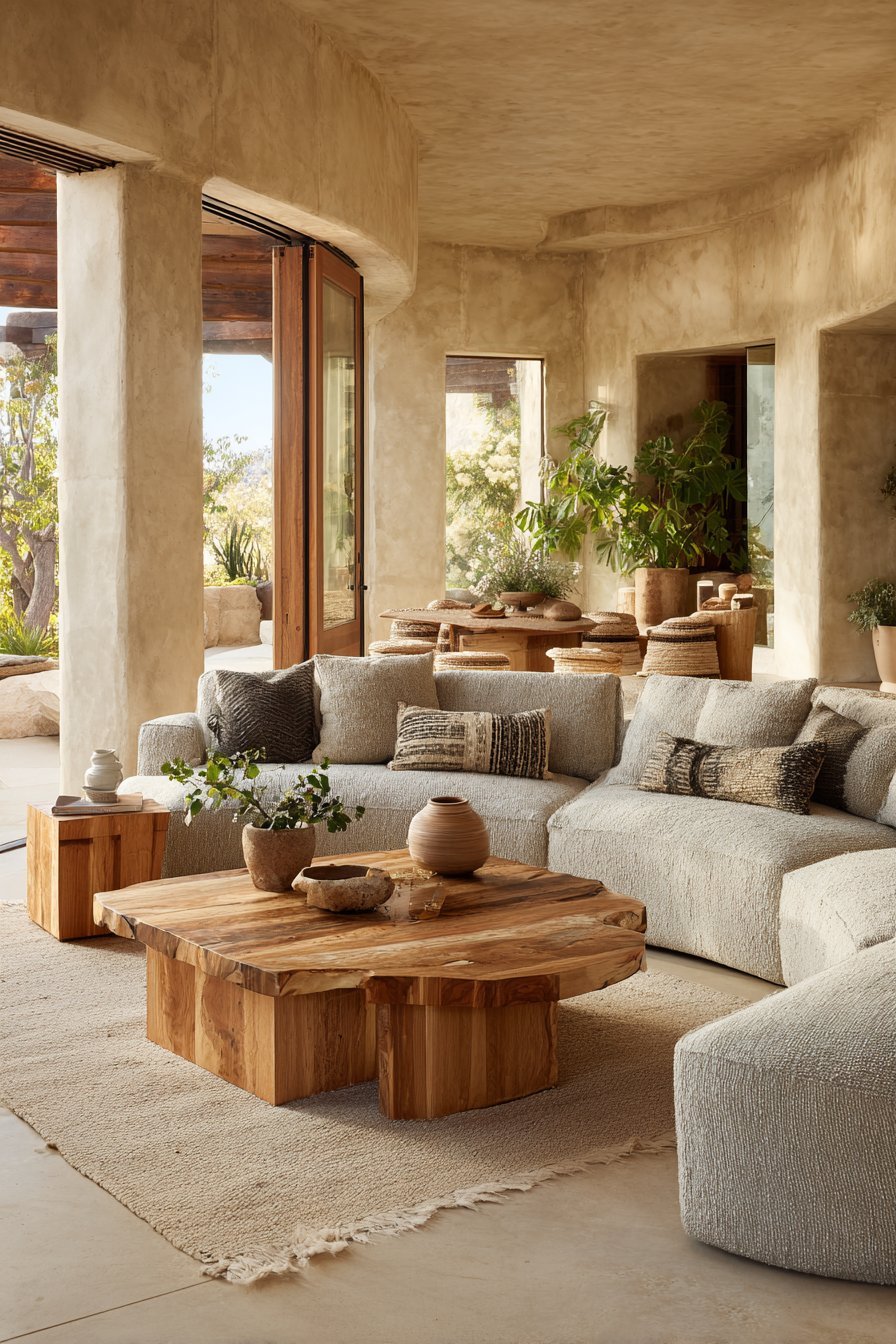
This approach brings natural world indoors through material selection. The organic modern aesthetic prioritizes sustainability and craftsmanship. The result feels environmentally conscious and artistically sophisticated.
Key Design Tips:
- Choose hemp-linen blend fabrics for sustainable organic texture
- Feature live-edge wood with book-matched grain for natural artistry
- Apply adobe-style plaster for handcrafted textured wall finishes
- Display ceramics with visible throwing marks as handmade art
- Use warm lighting to emphasize organic forms and materials
- Select natural, sustainable materials throughout design scheme
25. Transitional Mixed Material Sophistication
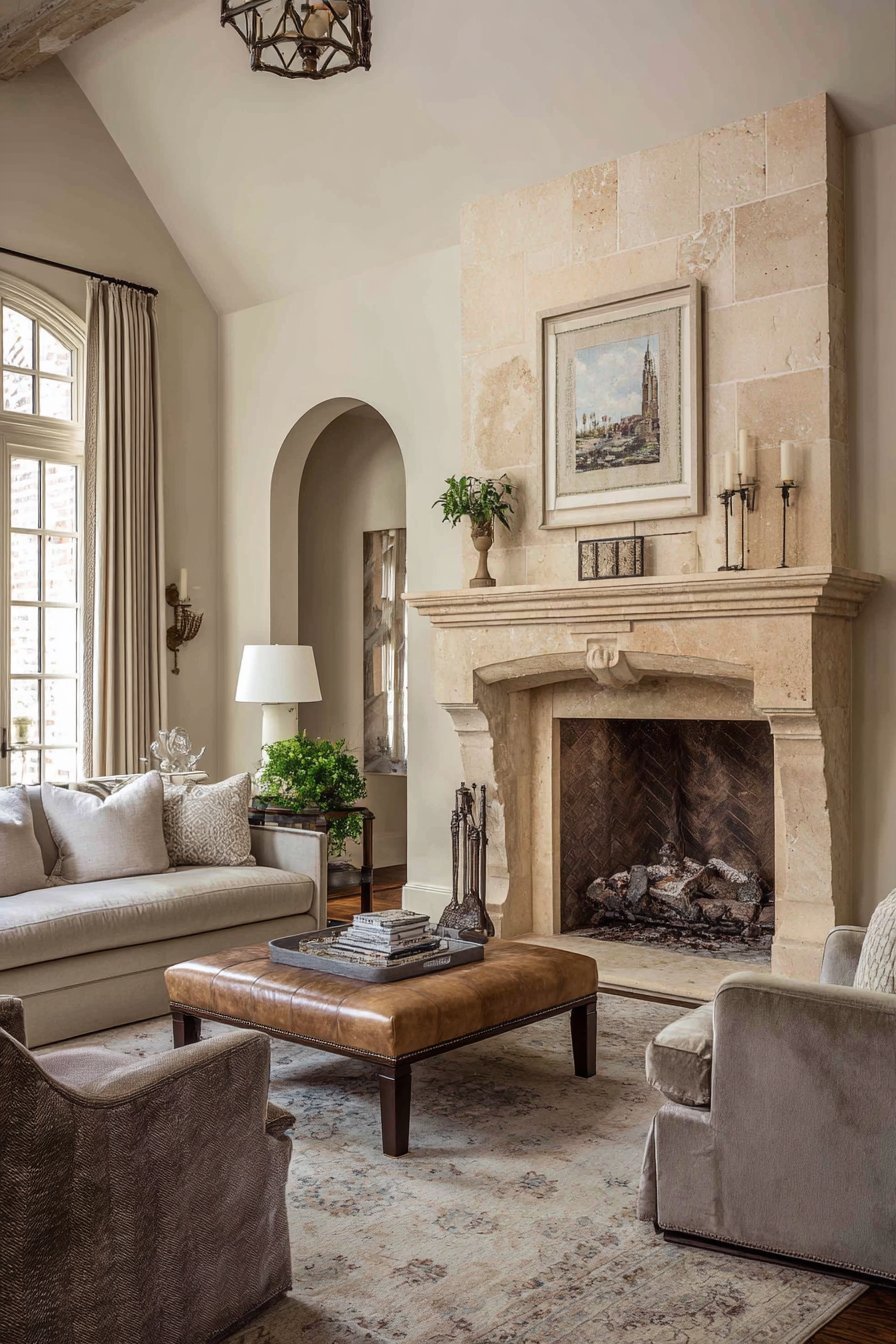
Layered seating creates rich textural variety in this eclectic space. A linen sofa in greige anchors the neutral foundation. Velvet armchairs in taupe show pile direction variation that creates subtle pattern. A leather ottoman in cognac develops natural patina beautifully over time.
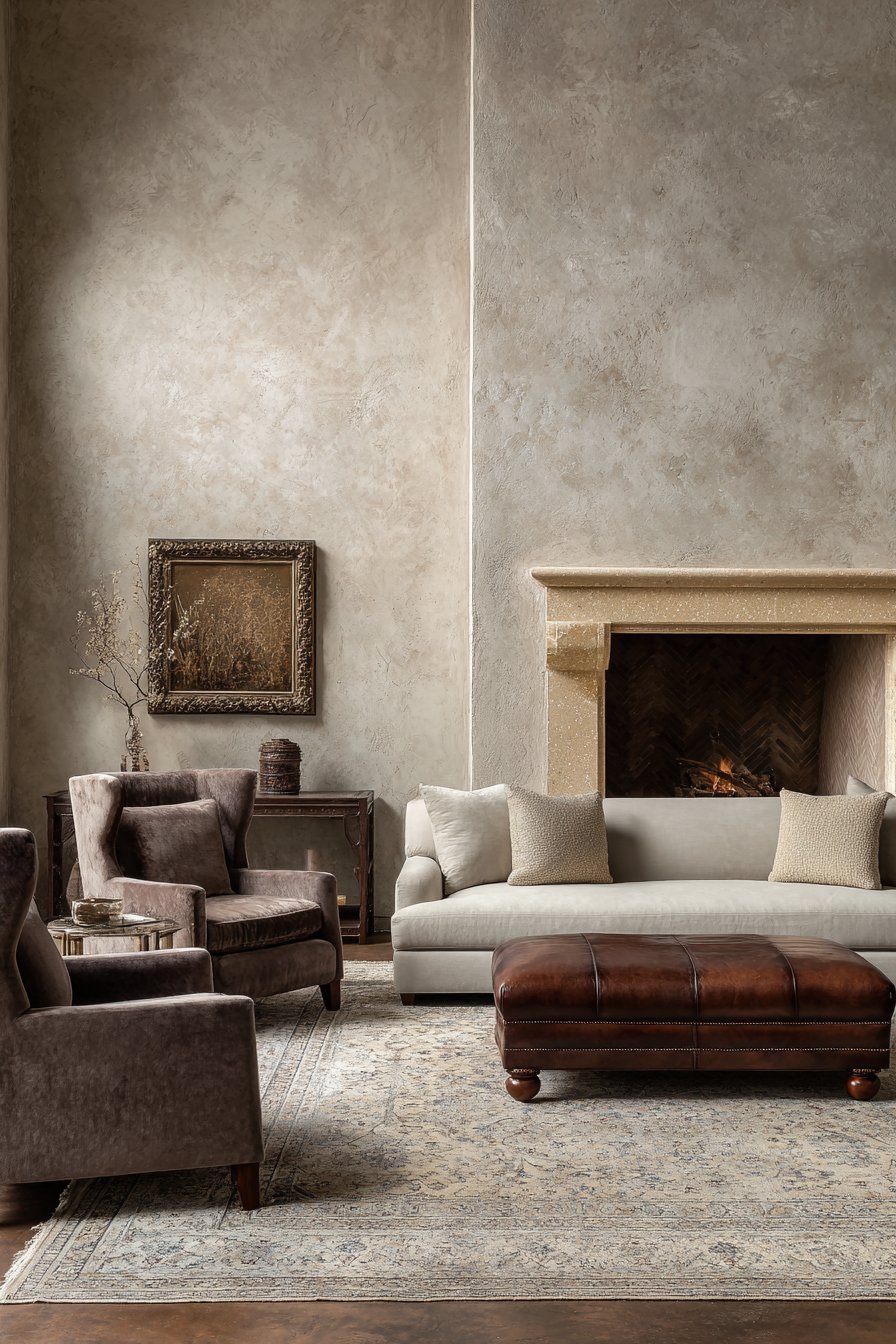
A marble fireplace in honed beige travertine shows natural veining. The subtle surface texture adds organic interest to the architectural element. Walls in warm grey paint provide versatile neutral backdrop. An antique Persian rug in faded neutrals grounds the sophisticated mix.
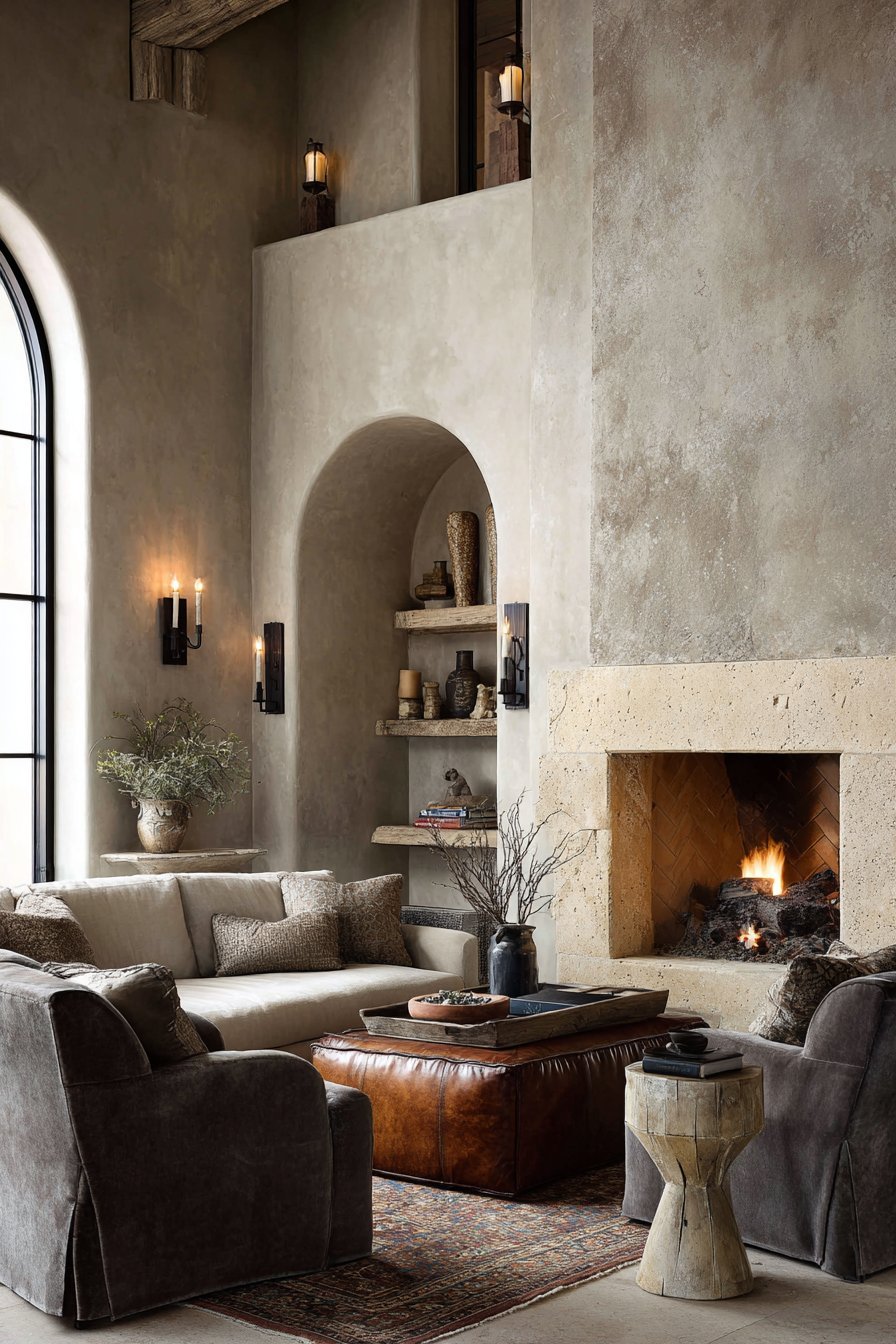
Balanced lighting reveals how different materials age and wear beautifully. The illumination emphasizes the curated quality of the eclectic composition. Each material brings unique characteristics to the neutral palette. The sophisticated space demonstrates masterful mixing of textures and materials.
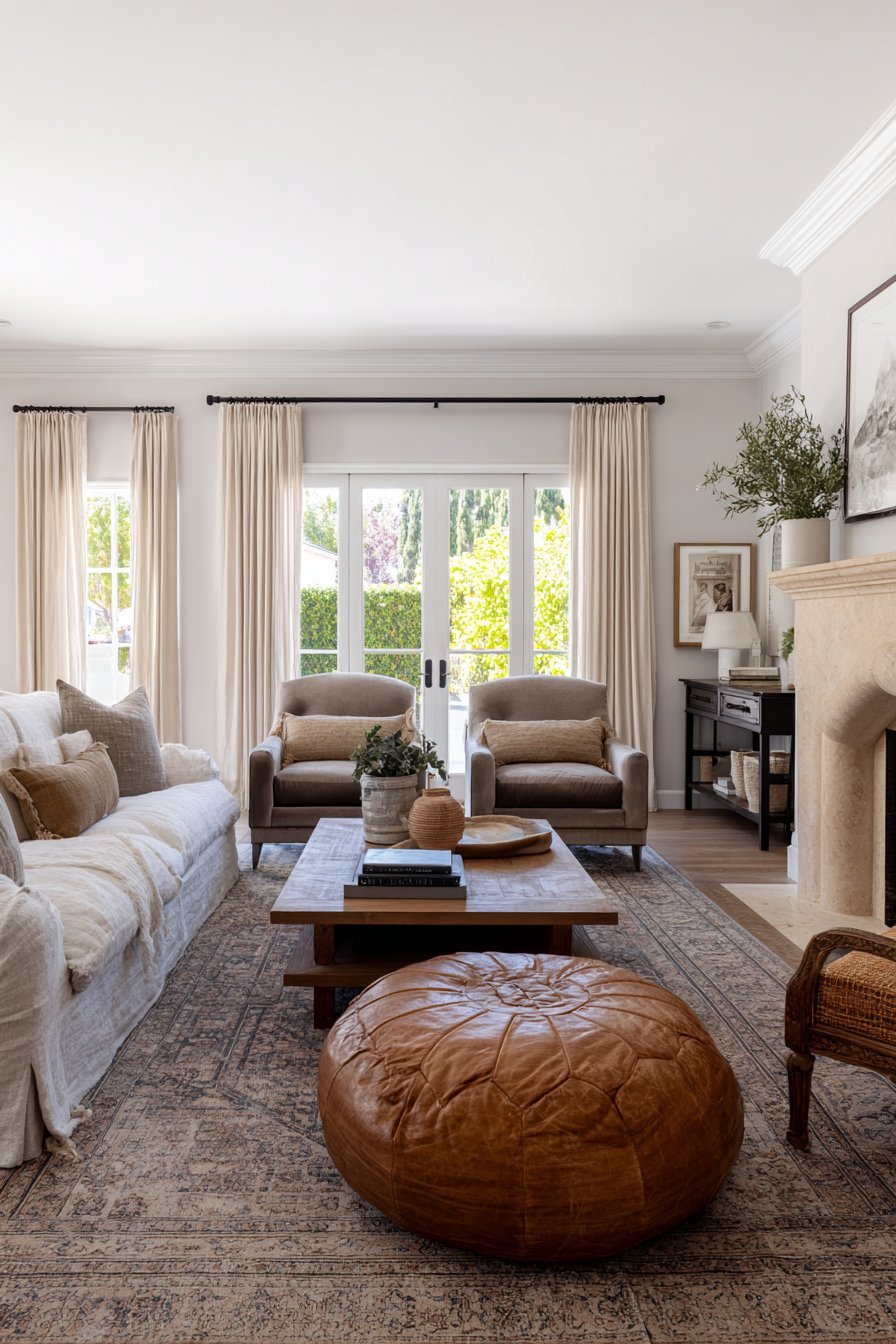
This design celebrates diversity within cohesive neutral framework. The transitional approach bridges multiple design eras and styles. The result feels collected by a discerning eye over time.
Key Design Tips:
- Mix multiple upholstery materials for textural variety and interest
- Choose materials that develop beautiful patina with age
- Feature marble fireplaces for architectural natural stone focal points
- Layer antique rugs in faded neutrals for historical character
- Use warm grey paint as versatile neutral backdrop
- Curate eclectic collections within cohesive neutral color story
26. Scandinavian Modular White-Washed Ash
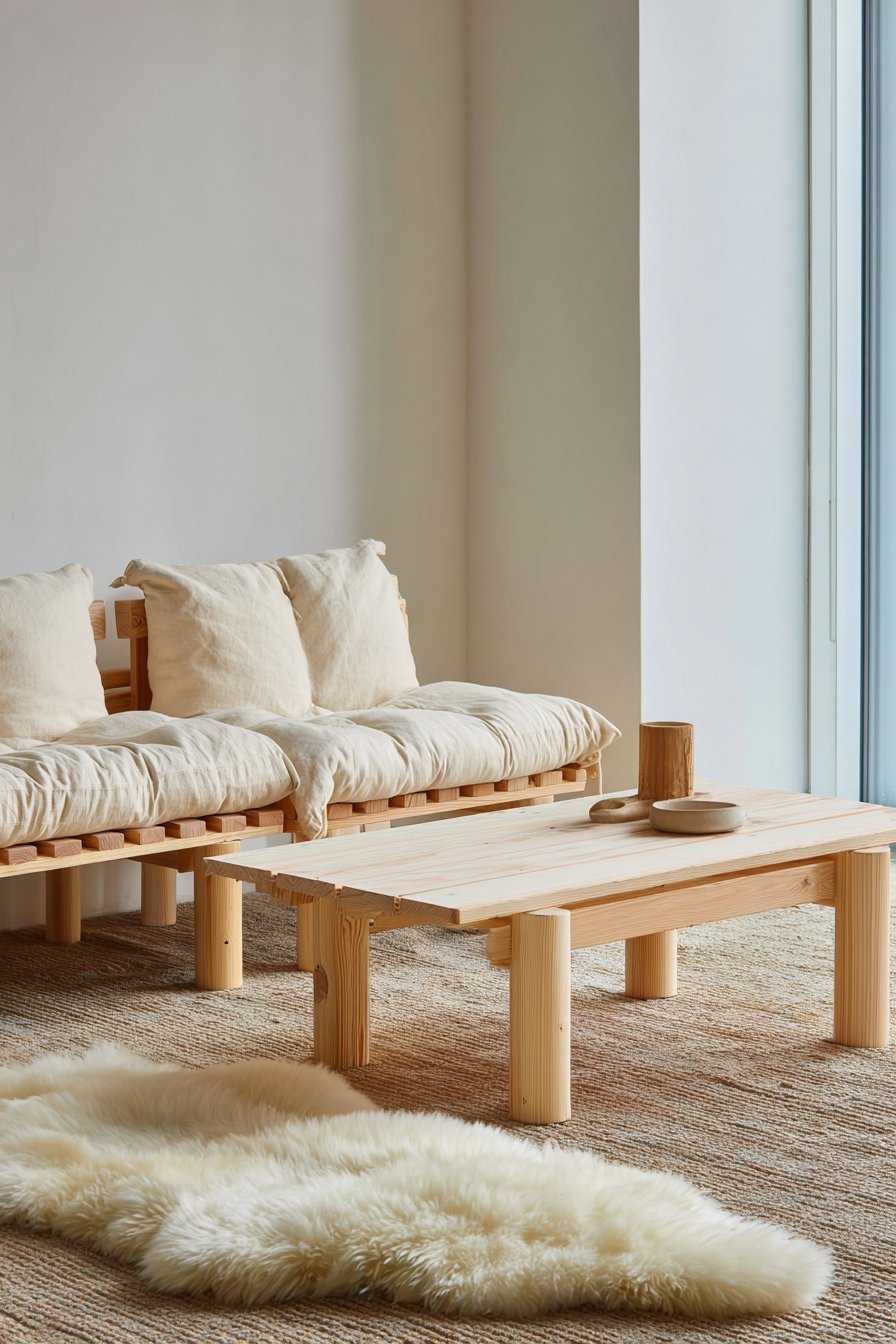
A modular sofa system in natural linen in oatmeal offers flexible arrangement. Removable covers show slight wrinkle texture acknowledging real use. A white-washed ash coffee table displays light wood grain beautifully. Simple joinery details demonstrate honest construction and quality craftsmanship.
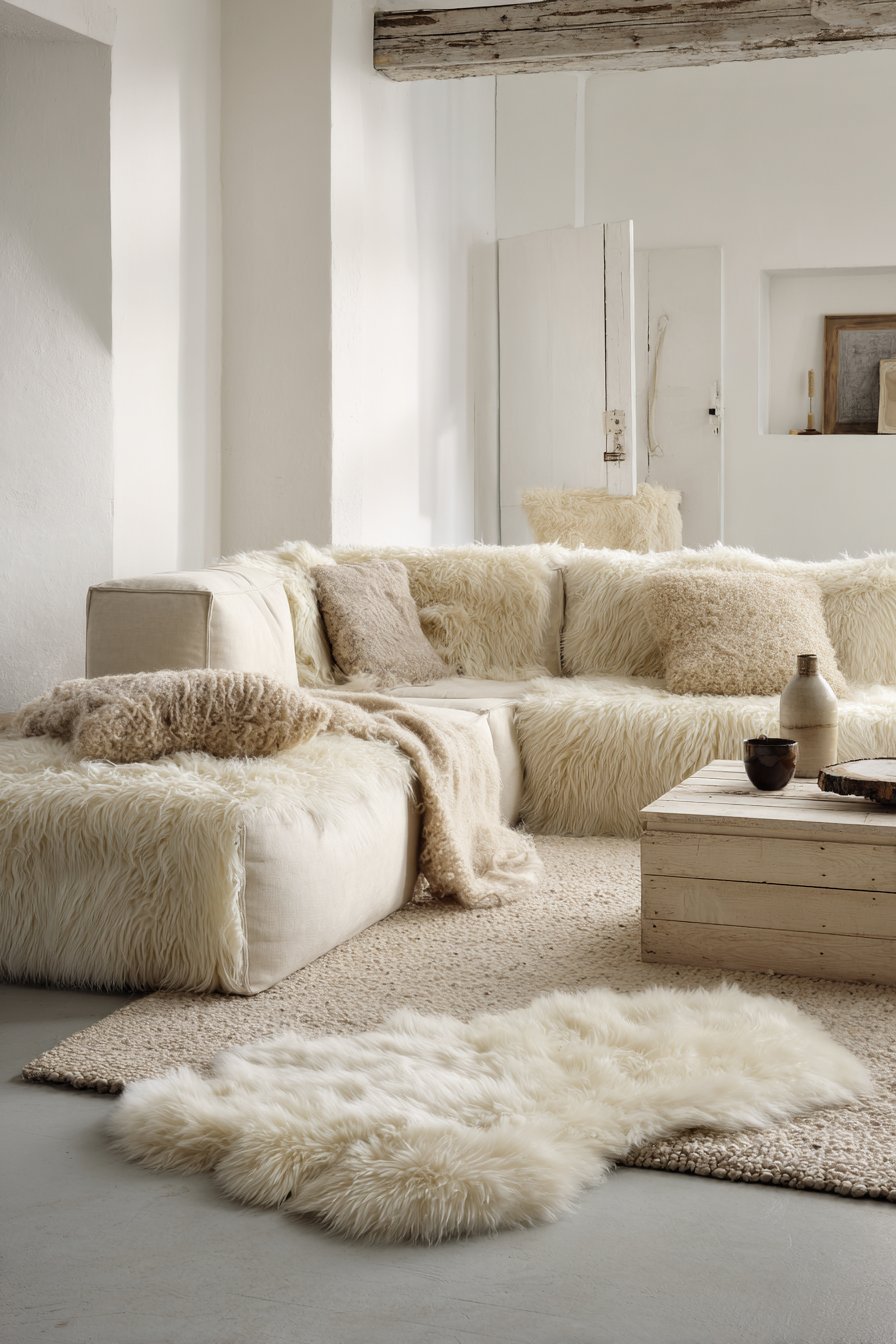
Walls in pure white create bright Nordic backdrop. The clean surface maximizes light reflection and spaciousness. A wool throw in undyed cream shows natural lanolin sheen. Sheepskin accent rugs add organic softness underfoot and on seating.
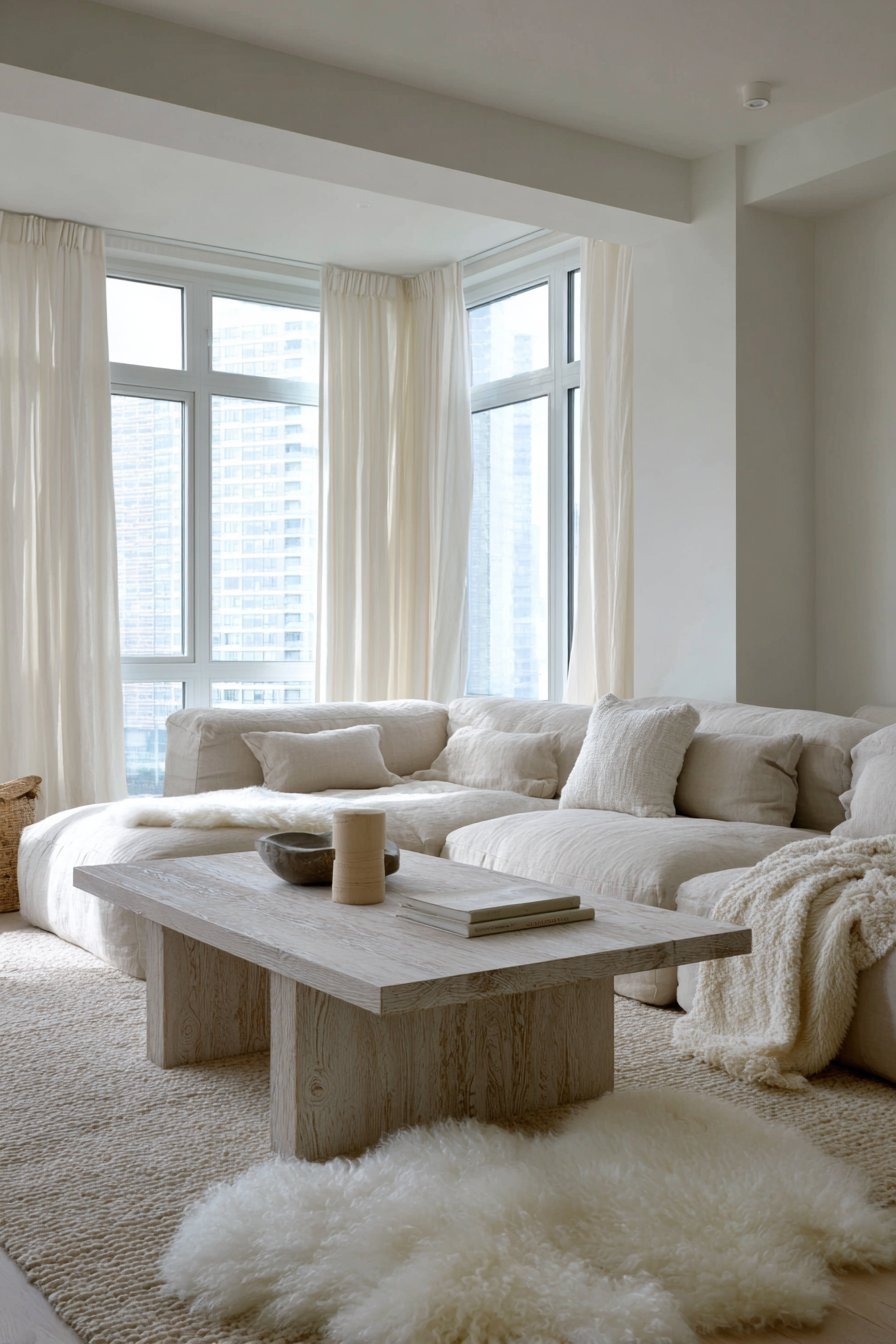
Bright diffused light captures democratic design principles central to Nordic philosophy. The illumination reveals honest materials and functional beauty throughout. The fresh neutral palette feels clean and optimistic. Every element serves purpose while maintaining aesthetic appeal.
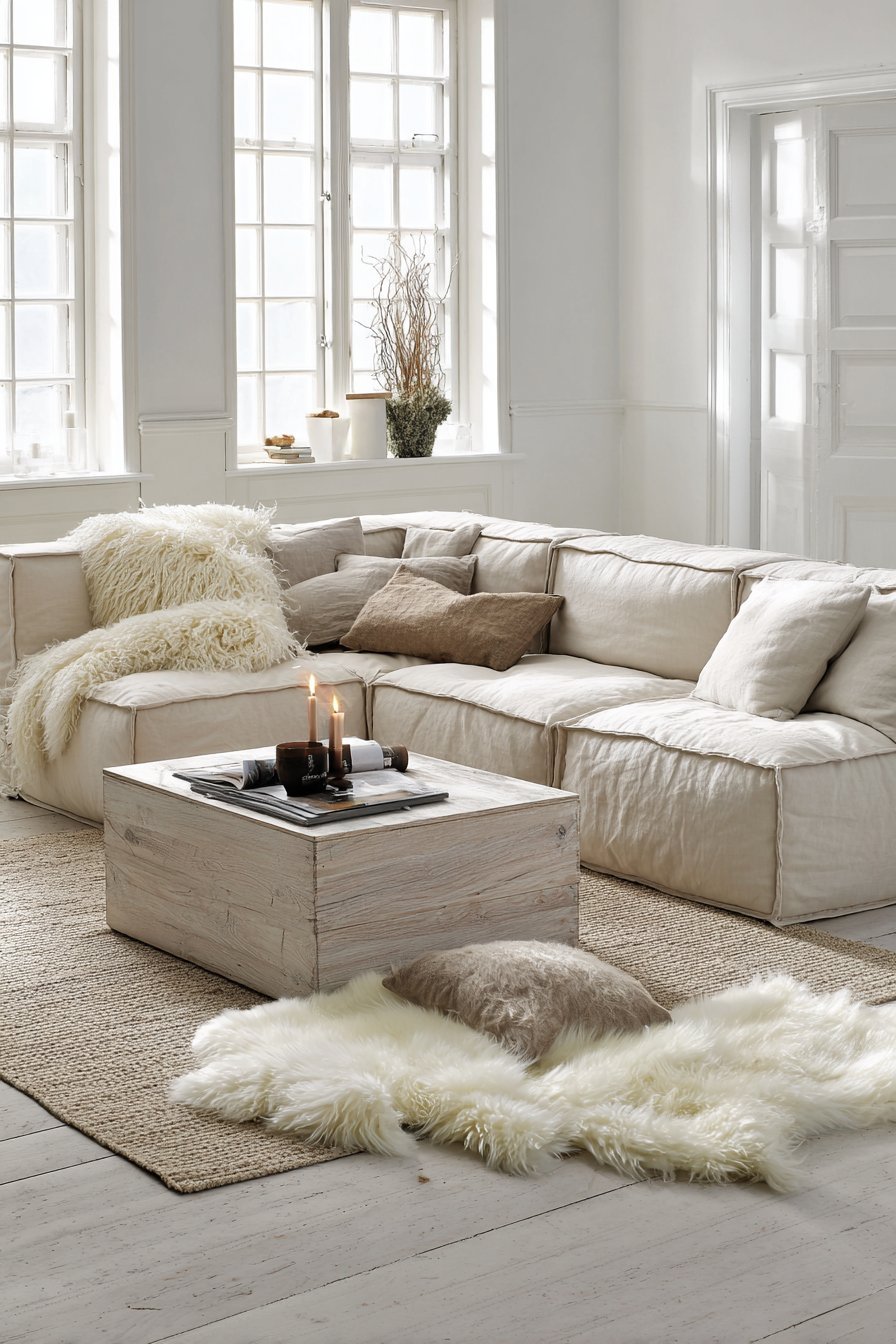
This approach demonstrates that beautiful design should be accessible. The Scandinavian philosophy values function, sustainability, and honest materials. The result feels egalitarian and unpretentious yet sophisticated.
Key Design Tips:
- Choose modular furniture systems for flexible arrangement options
- Select removable, washable covers for practical maintenance
- Feature white-washed wood to showcase light grain patterns
- Display undyed wool textiles showing natural lanolin character
- Paint walls pure white for maximum Nordic brightness
- Design with honest materials and visible quality construction
27. Warm Minimalist Platform Simplicity
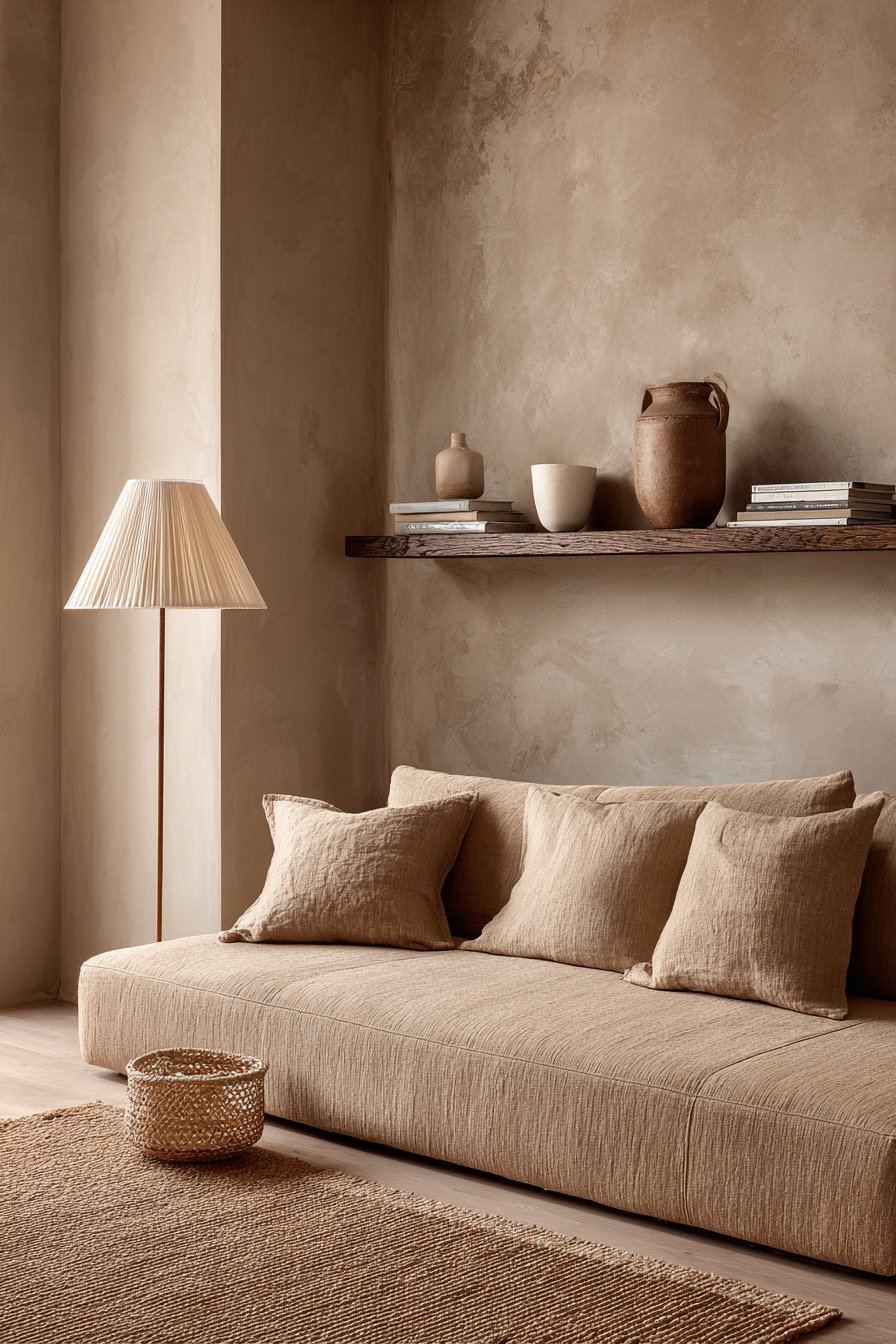
A platform sofa in camel-colored performance linen features clean lines. Visible topstitching details demonstrate quality construction techniques. Walnut floating shelves with invisible mounting display minimal accessories. The concealed hardware creates visual lightness and modern simplicity.
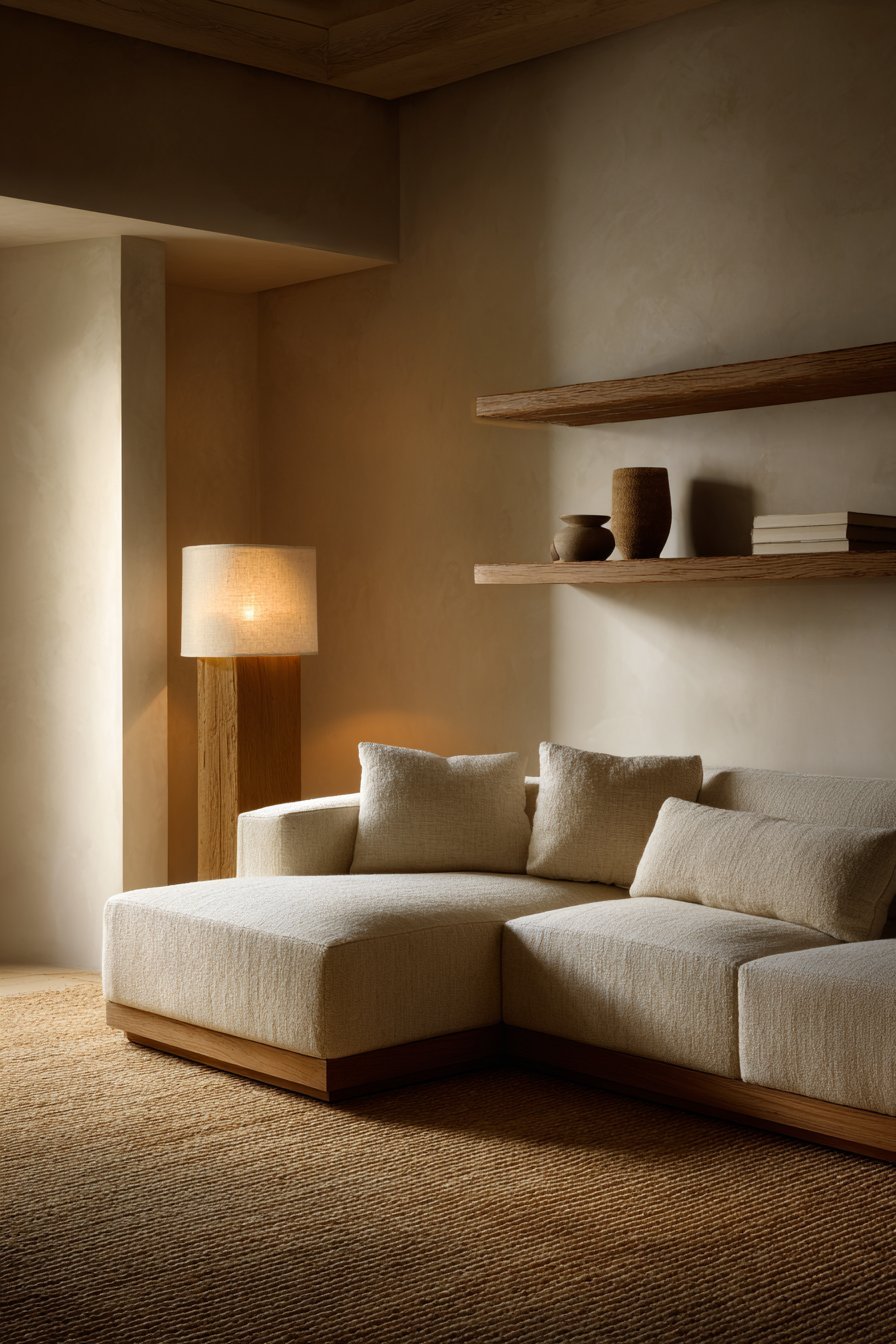
Walls in clay-tinted plaster create subtle warmth and depth. The natural material adds organic character to the minimal space. A handwoven jute rug in natural fiber adds grounding texture. A floor lamp with linen shade in cream provides warm ambient illumination.
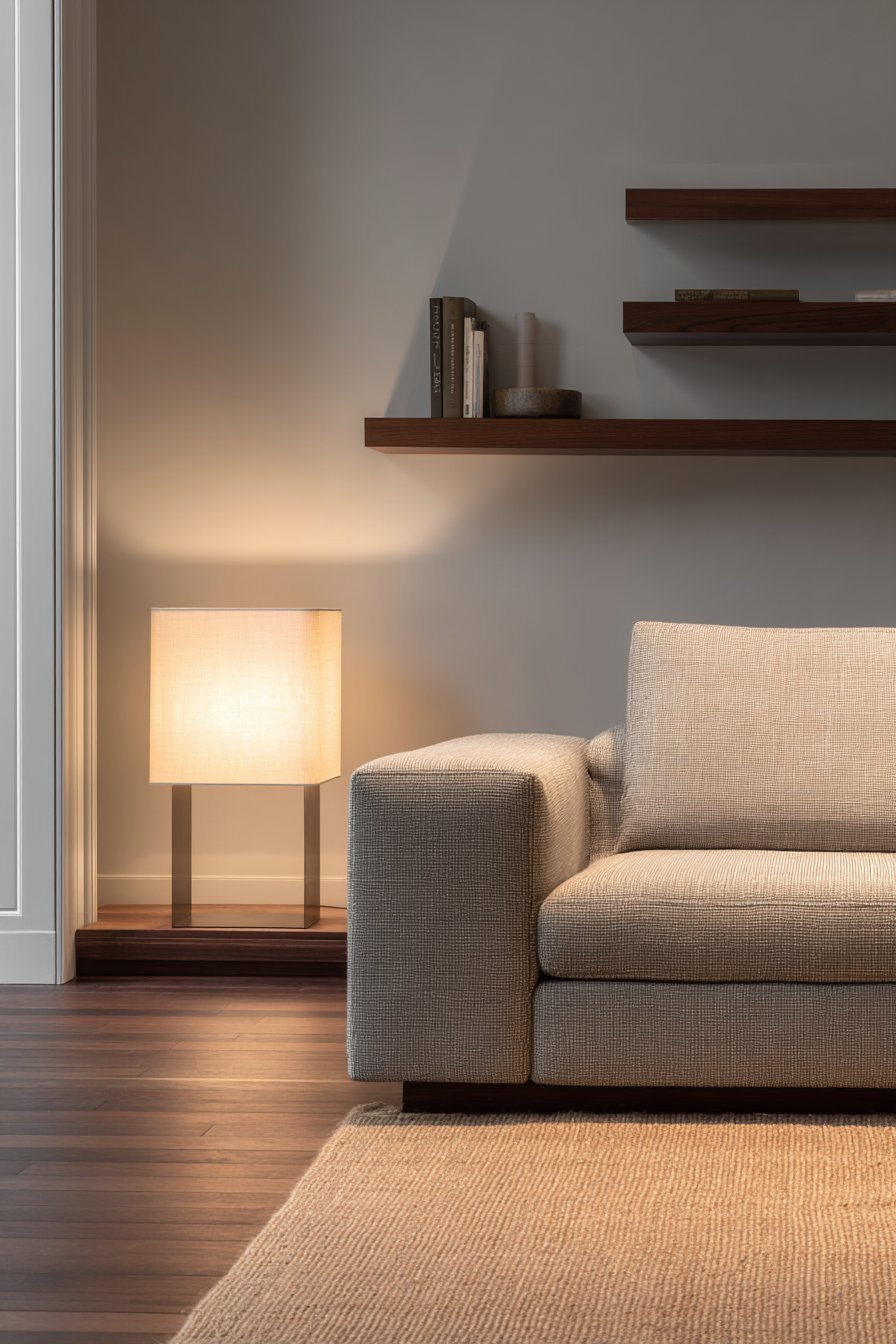
Soft lighting emphasizes intentional simplicity and quality over quantity. The illumination reveals careful editing and thoughtful selection throughout. The warm minimalist aesthetic proves less can indeed be more. Every remaining element justifies its presence through beauty or function.
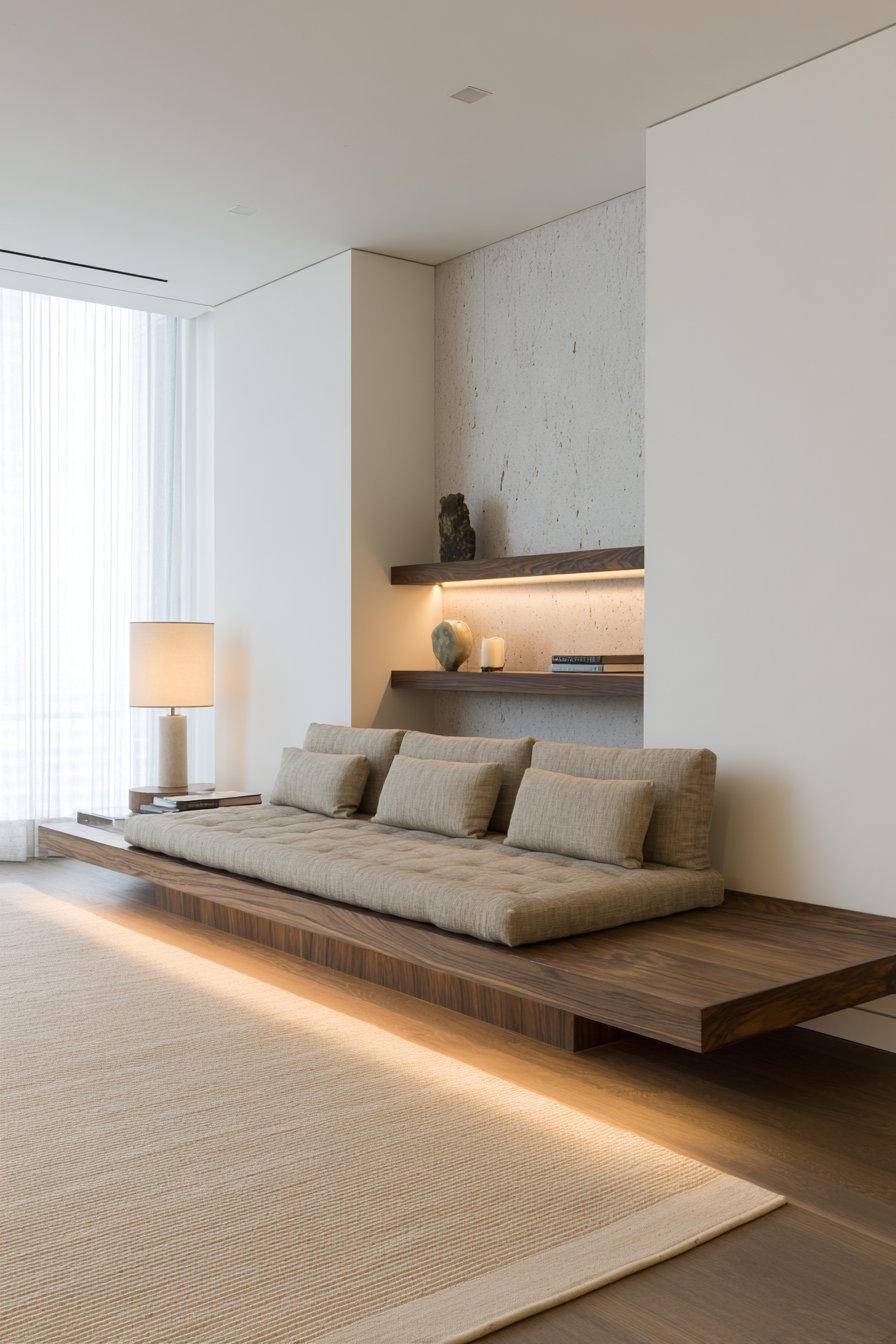
This design demonstrates restraint and intentionality in neutral spaces. The edited approach focuses attention on essential quality pieces. The result feels calm and uncluttered yet warm and inviting.
Key Design Tips:
- Select platform furniture with clean lines and minimal profiles
- Install floating shelves with invisible mounting for visual lightness
- Apply clay-tinted plaster for warm subtle wall color and texture
- Choose handwoven jute rugs for natural grounding texture
- Edit ruthlessly to include only essential quality pieces
- Use warm ambient lighting to soften minimalist aesthetics
28. Architectural Vaulted Beam Sophistication
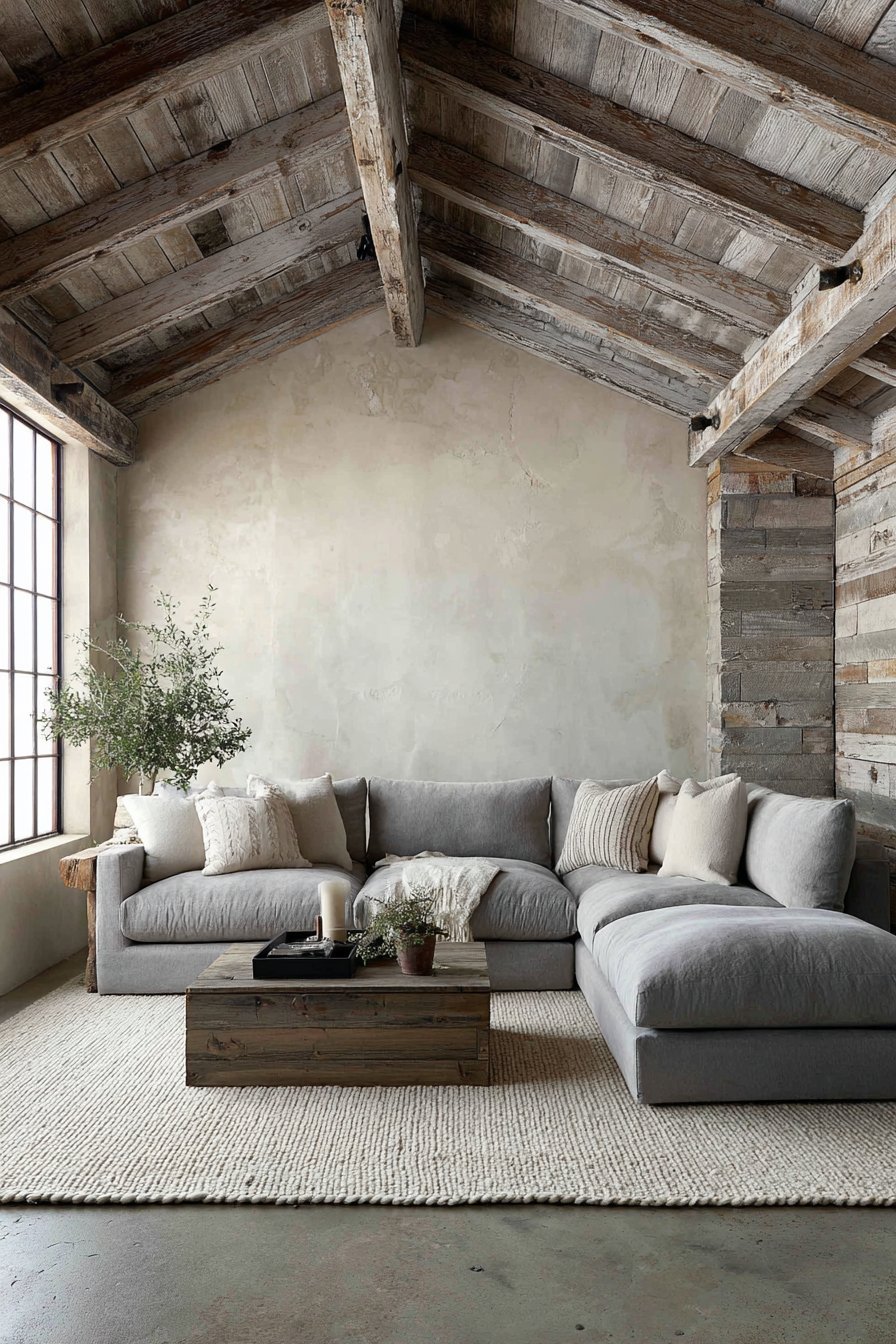
A sectional in grey performance fabric positions to highlight vaulted ceiling. Exposed whitewashed wood beams show authentic grain and knots overhead. Natural stone accent wall in stacked ledgestone adds dimensional texture. The varied grey tones create an organic focal point in the architectural space.
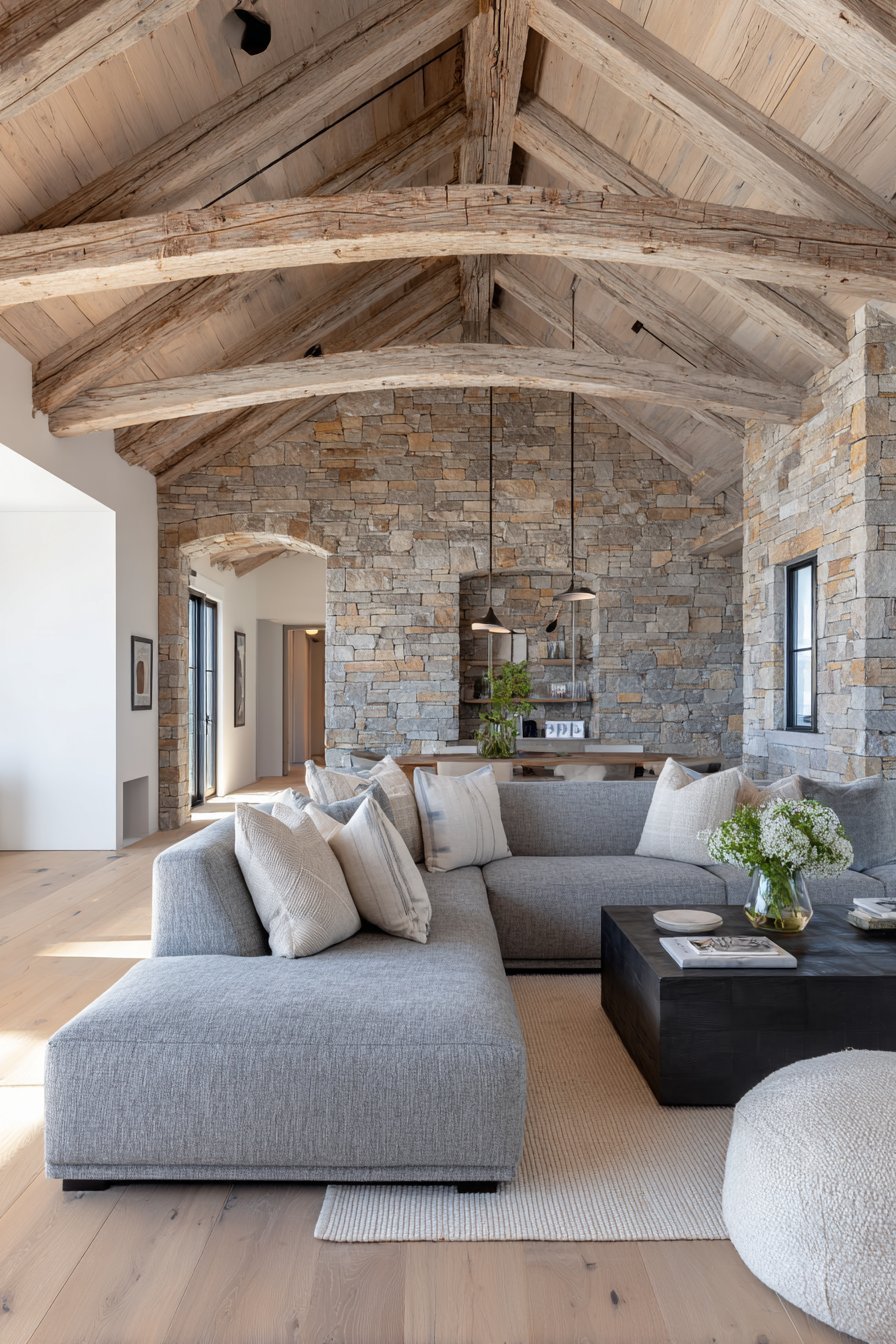
Concrete flooring with radiant heat shows natural trowel marks. Slight color variations add character to the industrial foundation. A wool area rug in cream defines the seating zone. The soft textile contrasts beautifully with hard architectural surfaces.
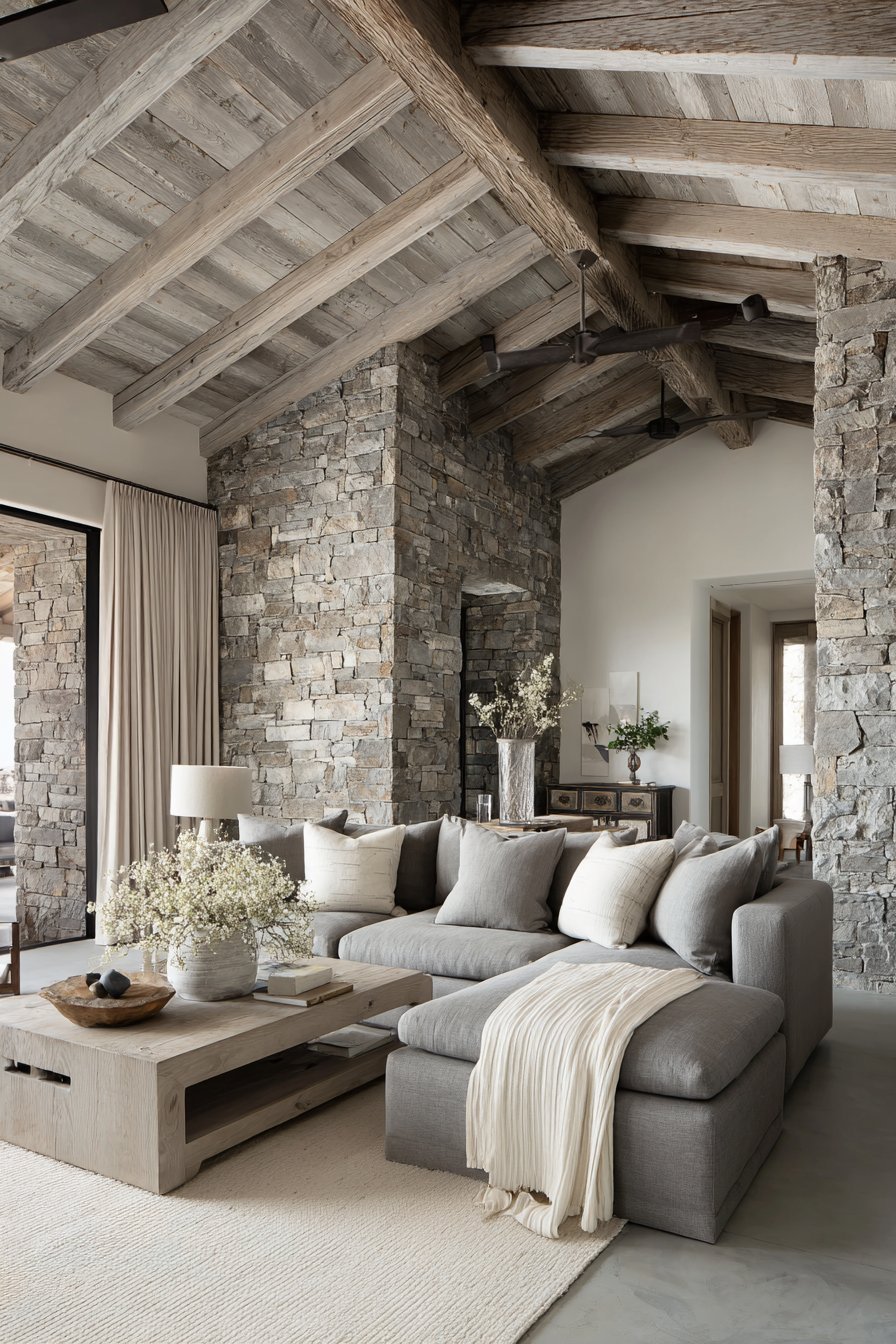
Natural skylight illumination reveals texture depth throughout the neutral space. The overhead light emphasizes the interplay of raw materials and clean lines. The architectural elements become primary decorative features. The design celebrates honest construction and structural beauty.
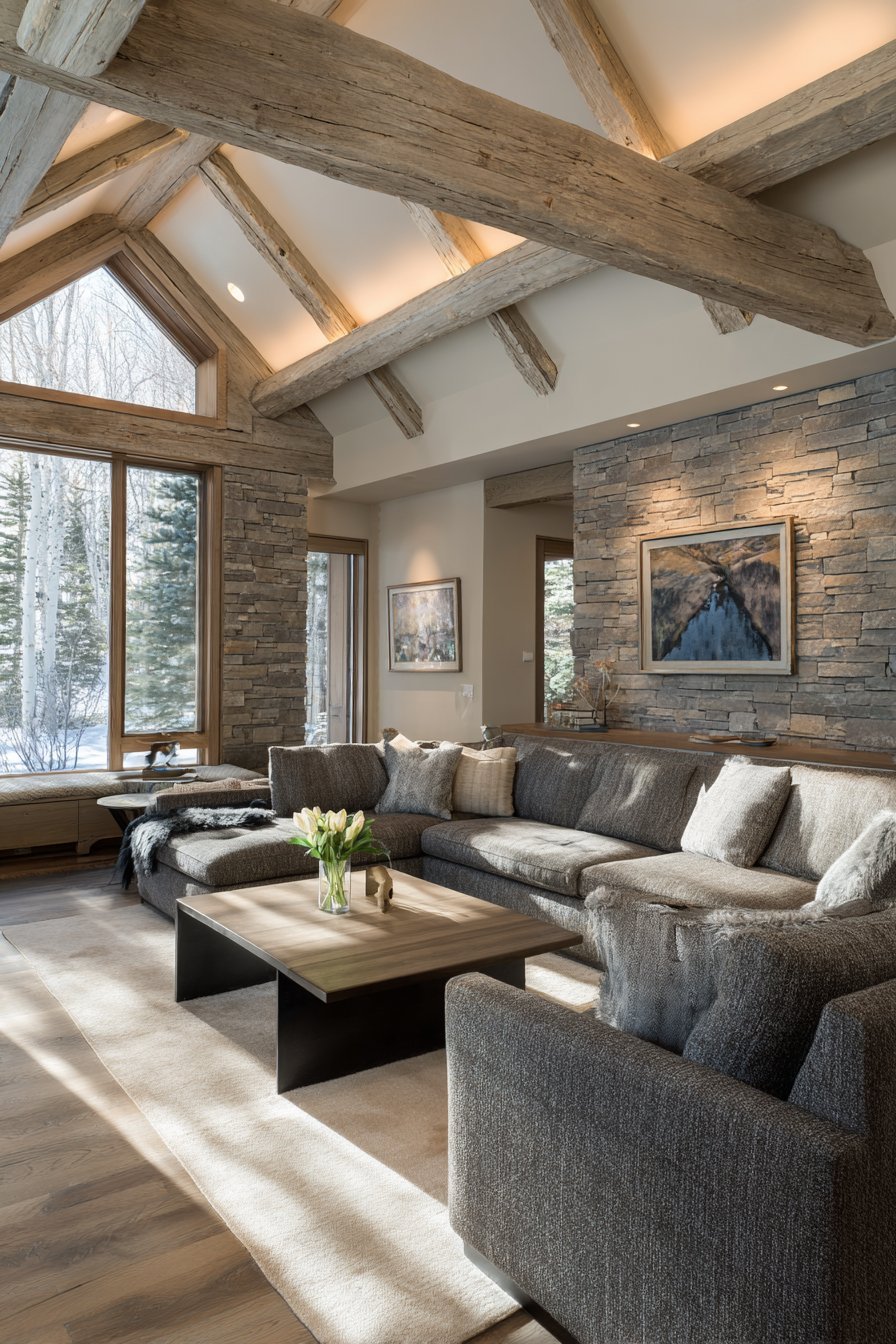
This approach highlights architecture as art in neutral spaces. The raw materials create dramatic interest without added decoration. The result feels modern and sophisticated through structural honesty.
Key Design Tips:
- Expose architectural elements like beams to showcase structure
- Feature natural stone accent walls for dimensional texture
- Install concrete flooring with radiant heat for industrial comfort
- Add skylights to maximize natural overhead illumination
- Define zones with area rugs on hard flooring surfaces
- Let architecture serve as primary decorative element
29. Coastal Modern Bleached Teak Relaxation
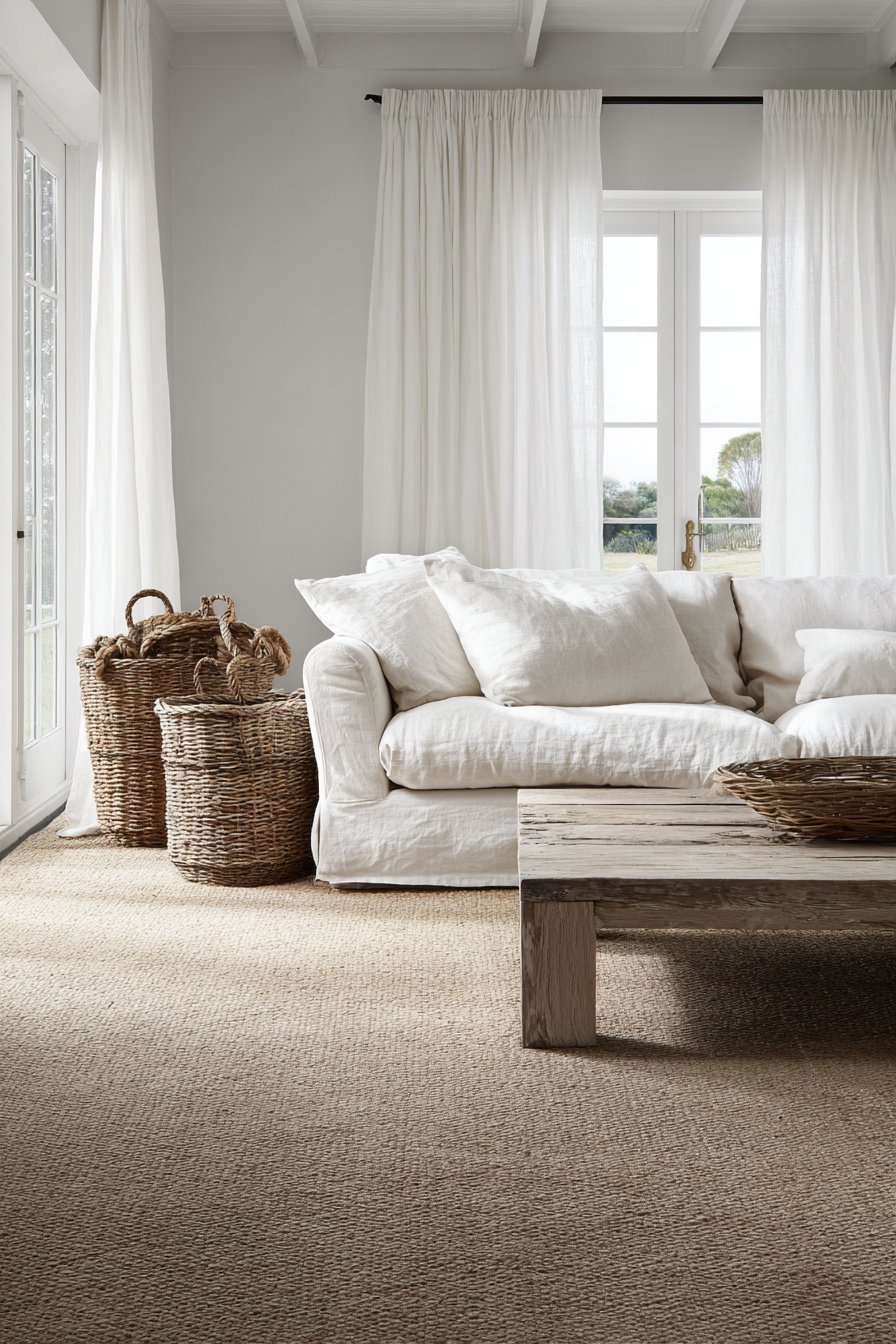
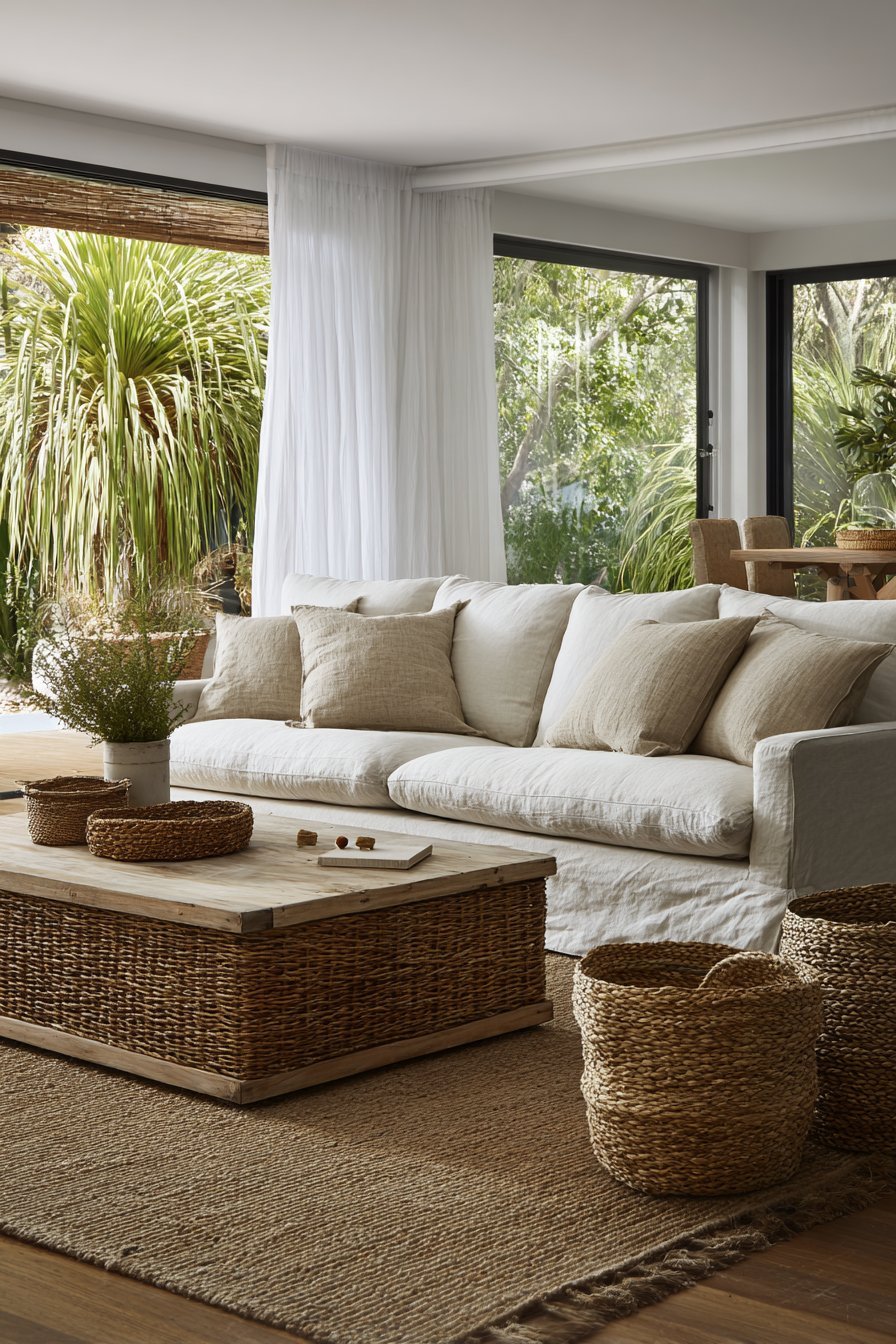
A slipcovered sofa in natural linen in sand features relaxed fit. Gentle folds and realistic drape acknowledge casual coastal living. A bleached teak coffee table with weathered finish displays authentic sun-fading. The natural grain exposure creates beautiful organic pattern.
Walls in pale grey-blue provide soft neutral backdrop. The subtle color suggests distant horizons and calm waters. Seagrass baskets in natural tan offer textural storage solutions. Vintage nautical rope details add character and coastal authenticity.
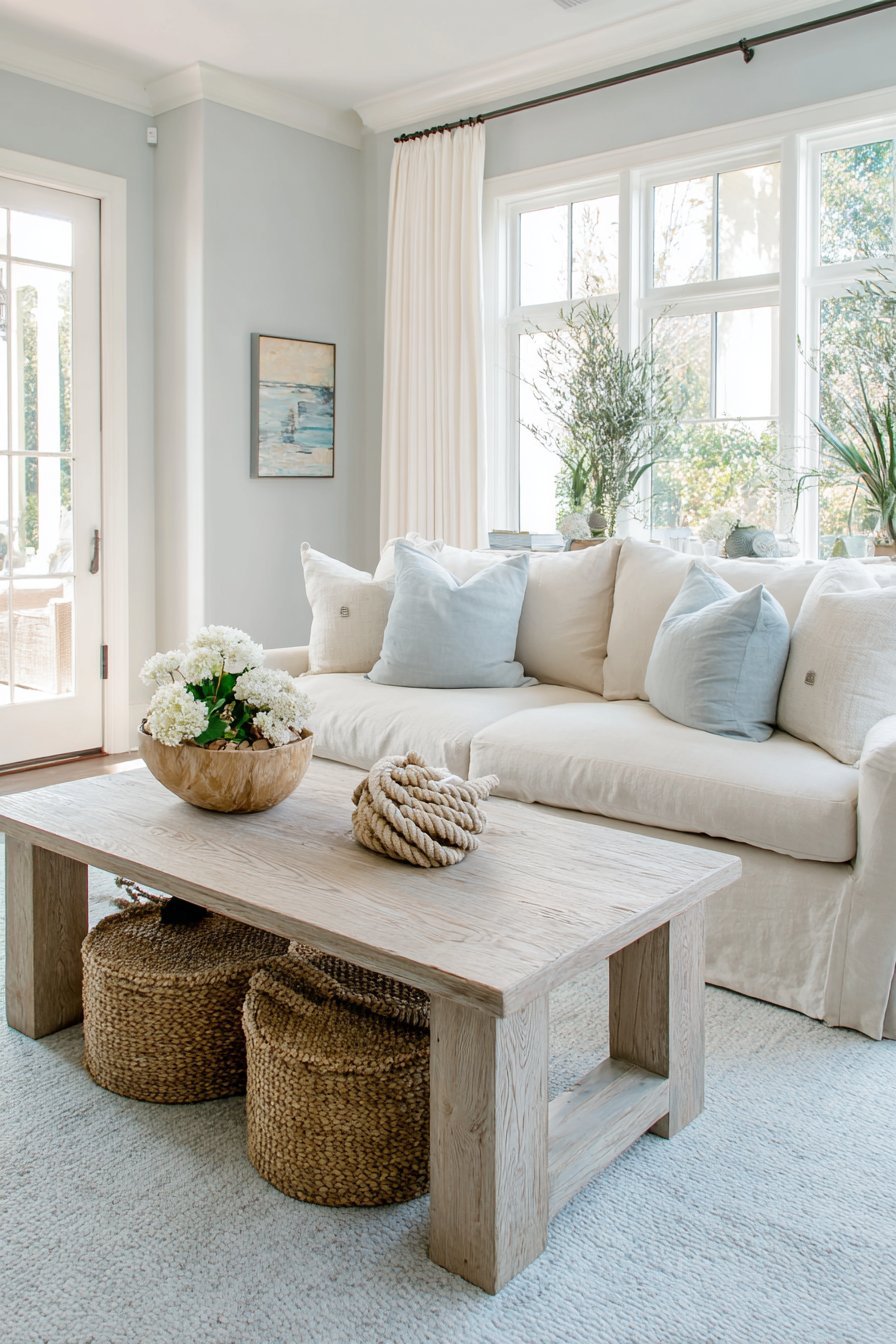
Bright coastal light floods through sheer curtains creating airy atmosphere. The illumination highlights easy-living aesthetic and natural materials throughout. The breezy neutral palette feels perpetually vacation-ready. Nothing feels precious or overly styled in this relaxed environment.
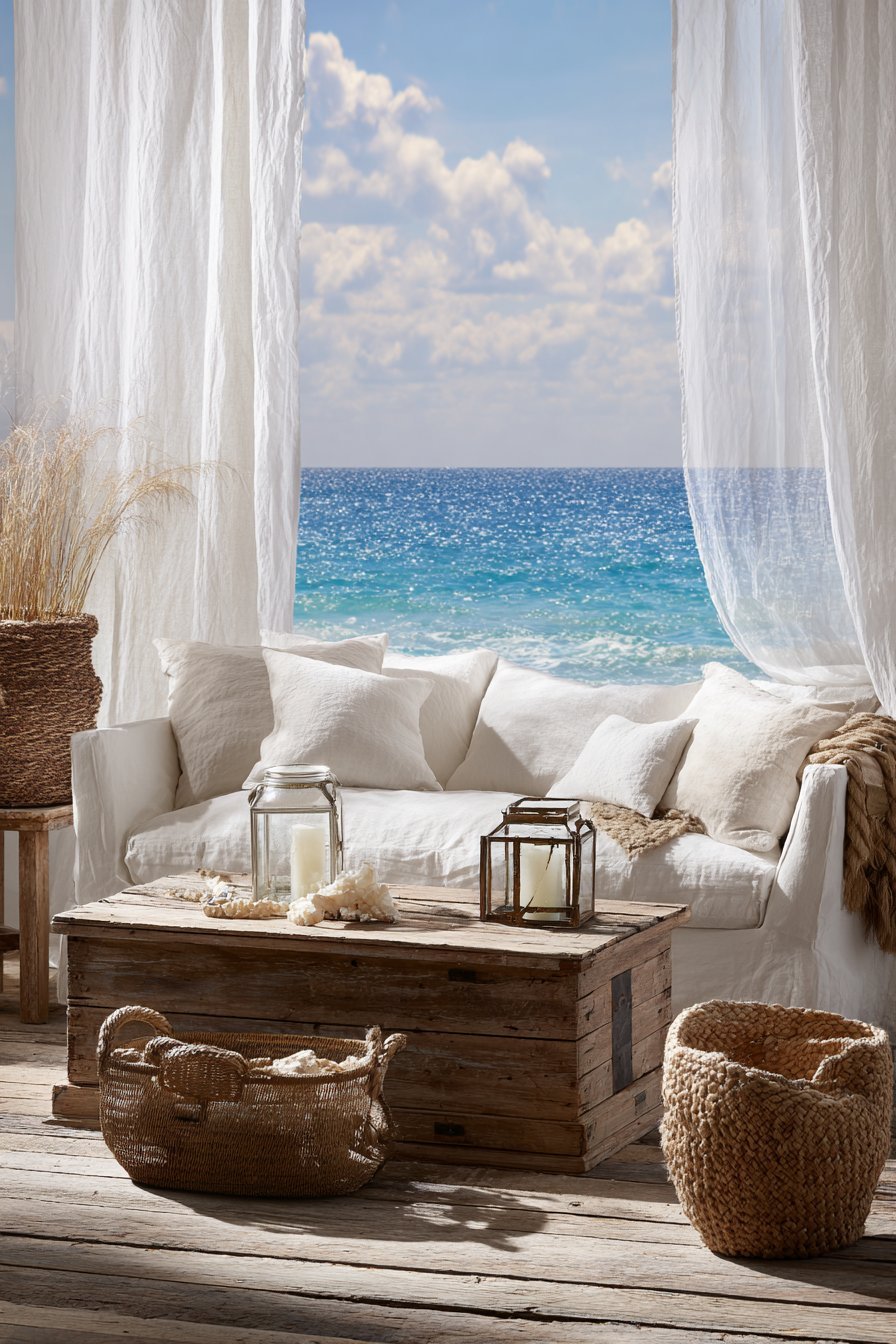
This design captures beach house relaxation in everyday spaces. The coastal modern aesthetic prioritizes comfort and natural elements. The result feels effortlessly beautiful and genuinely livable.
Key Design Tips:
- Choose relaxed-fit slipcovers for casual coastal comfort
- Feature bleached teak furniture showing authentic weathering
- Paint walls in pale grey-blue for subtle coastal color
- Add seagrass baskets for natural textural storage
- Incorporate nautical details for authentic coastal character
- Maximize natural light for bright, airy coastal atmosphere
30. Refined Mohair Velvet Textural Contrast
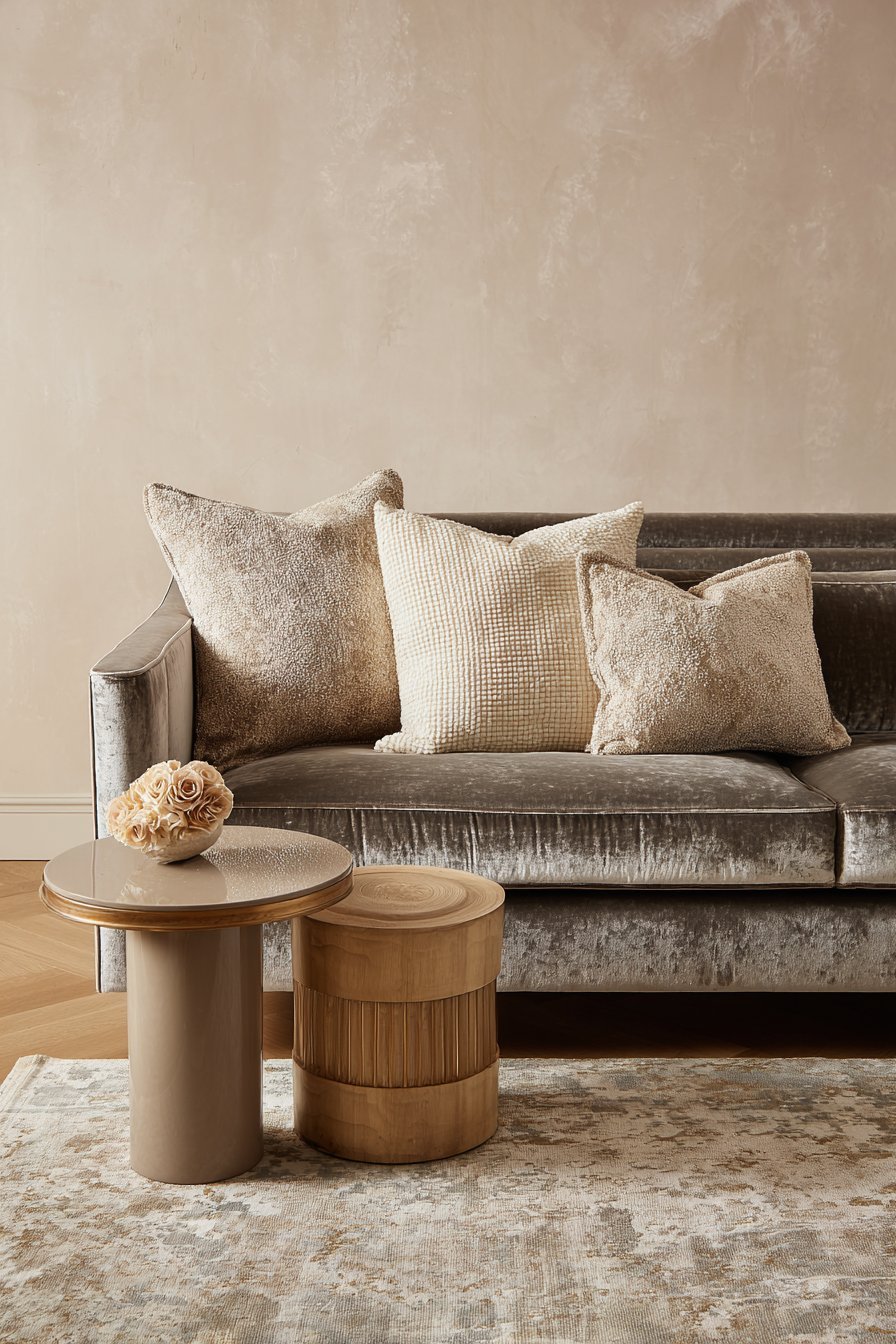
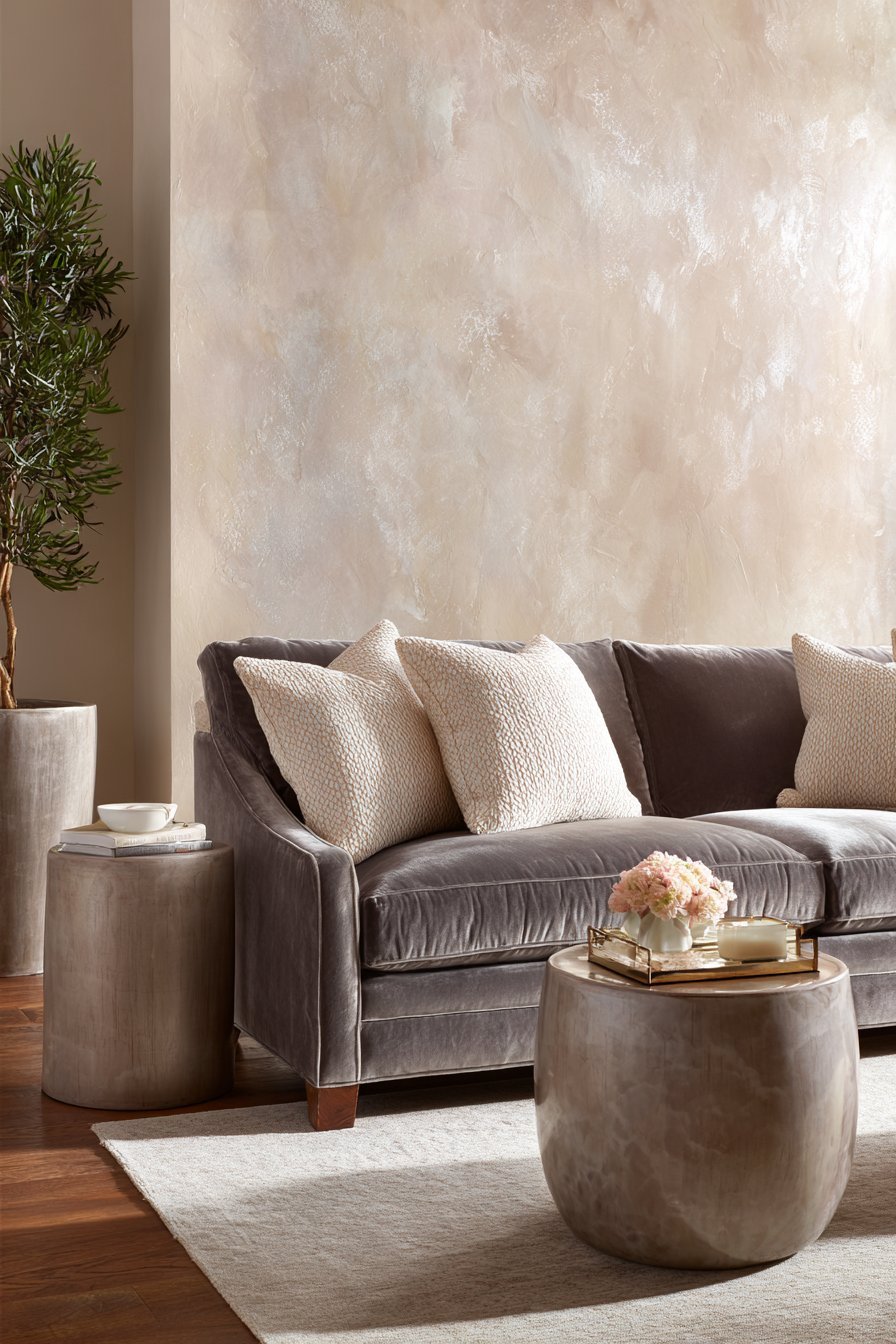
Tight-back upholstery in mohair velvet in pearl grey shows subtle sheen. The luxurious fabric pairs beautifully with nubby linen pillows in cream. Polished plaster side tables in warm taupe show hand-troweled texture. The artisanal surfaces add organic character to refined space.
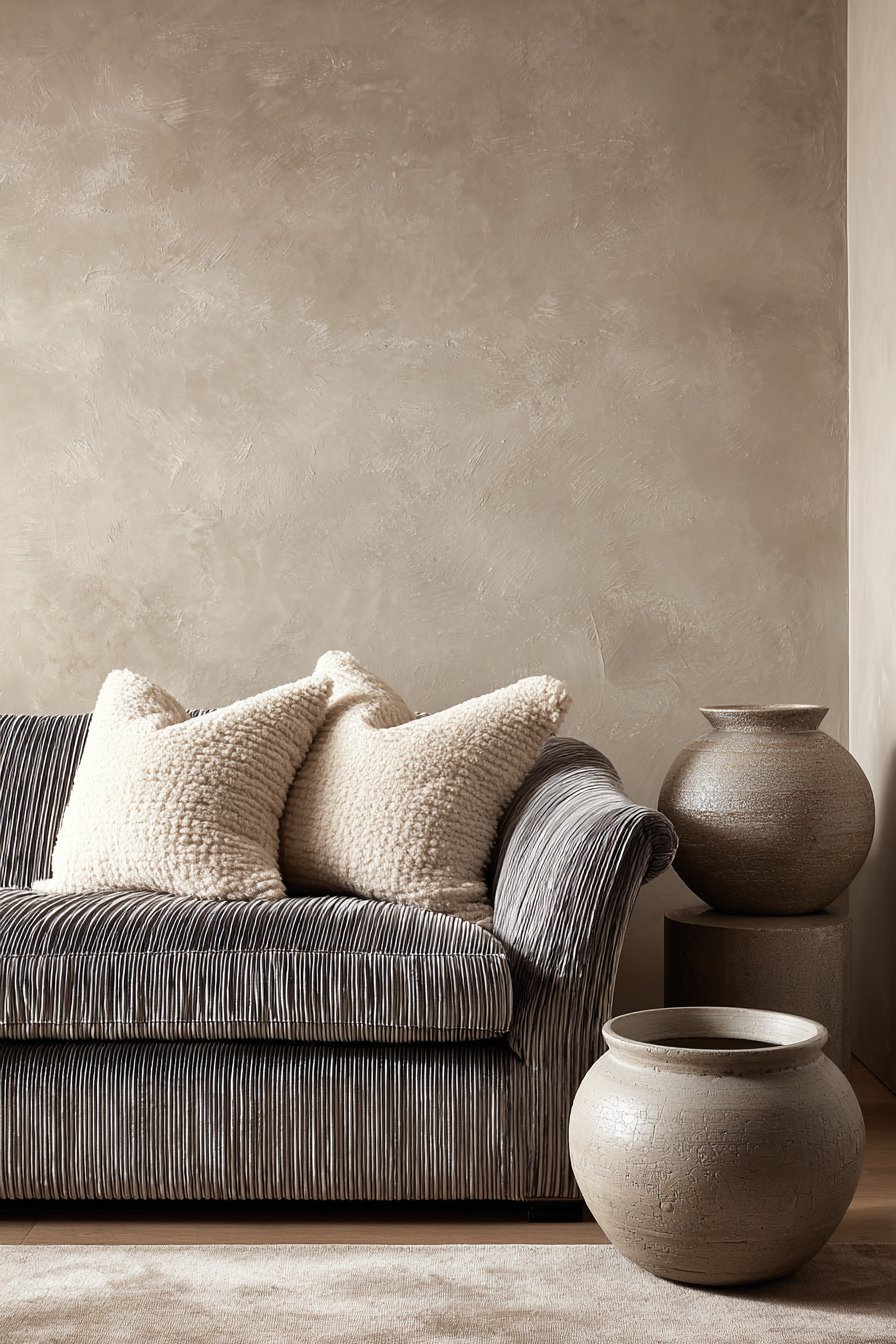
Walls in Venetian plaster technique in soft beige create luminous backdrop. The hand-applied finish produces subtle movement and depth. A silk-blend area rug in tone-on-tone pattern adds understated luxury. The refined textile enhances rather than overwhelms the neutral scheme.
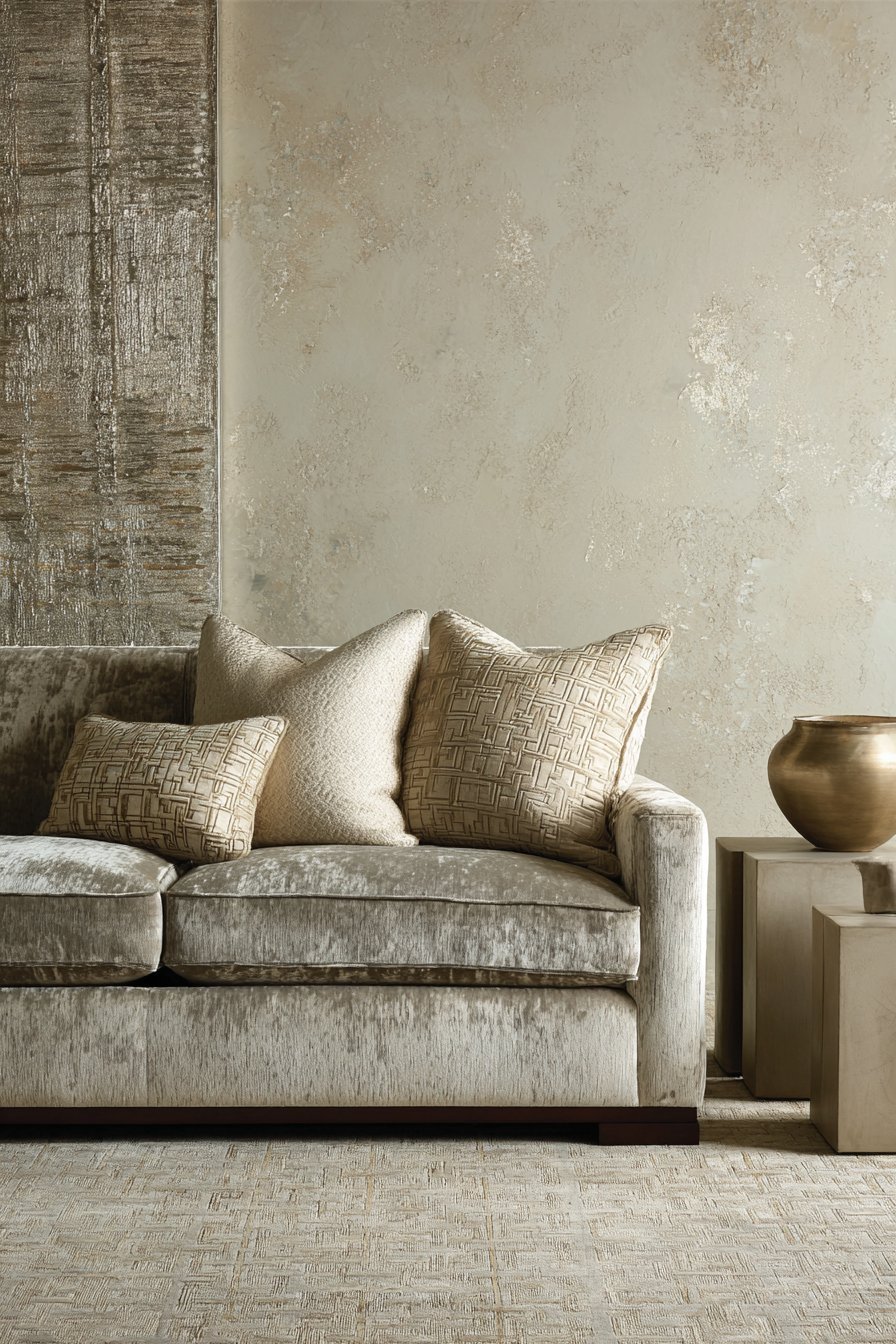
Sophisticated lighting captures the interplay of matte and lustrous surfaces throughout. The illumination reveals contrast between rough and smooth textures. The cohesive refined neutral palette demonstrates masterful material mixing. Every surface contributes unique textural and visual qualities.
This design proves neutral spaces can achieve sophisticated luxury. The careful contrast of textures creates sensory richness. The result feels refined and elegant while remaining approachable.
Key Design Tips:
- Select mohair velvet for luxurious subtle sheen in upholstery
- Mix lustrous and matte fabrics for textural contrast
- Feature polished plaster furniture for handcrafted artisan character
- Apply Venetian plaster walls for luminous textured backdrops
- Choose silk-blend rugs for understated tone-on-tone luxury
- Use sophisticated lighting to emphasize textural contrasts
Why These Neutral Living Room Designs Are the Best
These neutral living room designs represent the finest approaches to creating timeless, versatile spaces. Each concept demonstrates thoughtful consideration of materials, textures, and spatial composition. The designs showcase remarkable versatility that suits different home styles and personal preferences.
The incorporation of natural materials adds sustainability to beautiful design choices. Materials like linen, wool, wood, stone, and leather bring authenticity that synthetic alternatives cannot replicate. These elements develop character over time rather than simply showing wear. The neutral aesthetic creates comfortable environments where families gather naturally.
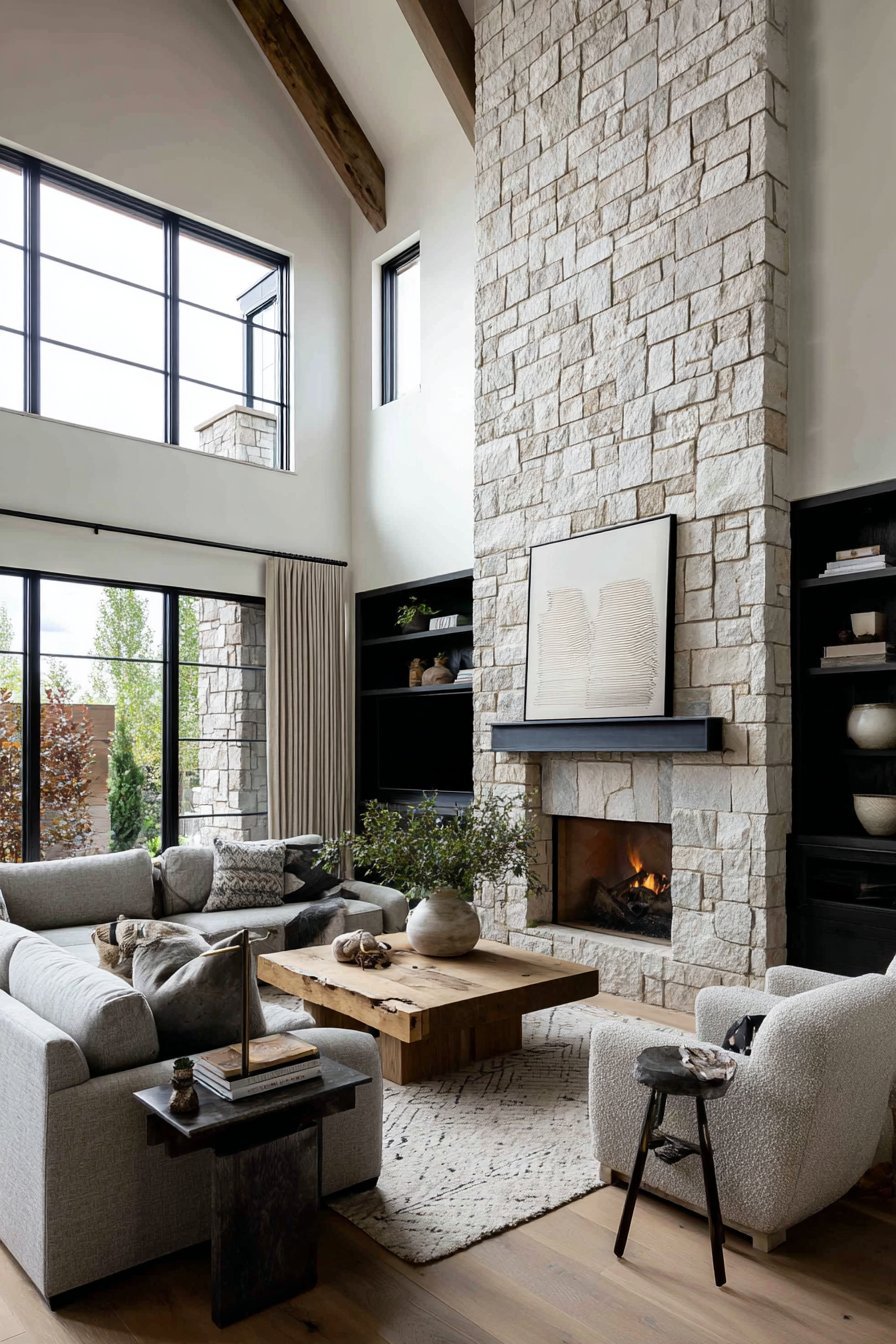
Color theory applications throughout these designs prove that neutral doesn’t mean boring. The spectrum from warm beiges to cool greys offers endless combination possibilities. Layering multiple neutral tones creates depth and visual interest. Strategic accent materials provide personality without overwhelming peaceful foundations.
Material quality takes precedence in successful neutral design. Premium fabrics, genuine stone, and solid wood create lasting value. These investments withstand trend cycles while maintaining relevance. The designs demonstrate that fewer, higher-quality pieces outperform quantity-focused approaches.
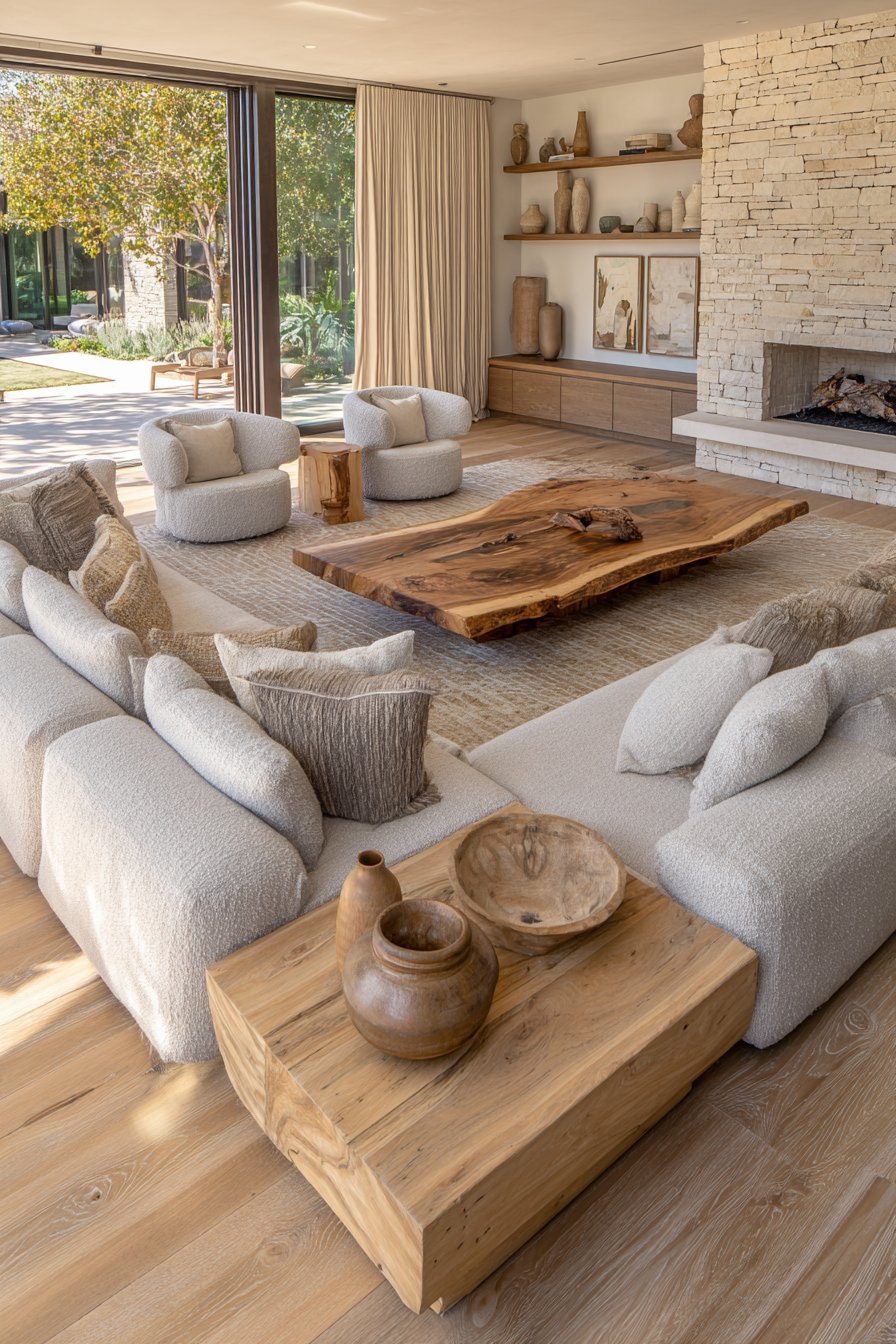
Lighting strategies prove essential in neutral spaces. Multiple light sources at different heights combine ambient, task, and accent illumination. Natural daylight interaction with surfaces creates changing atmospheres throughout the day. The designs show how light reveals texture depth and material authenticity.
Functional beauty integration appears throughout these concepts. Storage solutions, durable fabrics, and practical layouts serve daily life. The designs prove aesthetics and functionality need not compete. Successful spaces support real living while maintaining visual appeal.
Conclusion
These thirty neutral living room designs demonstrate that restraint creates elegance. Quality materials combined with thoughtful composition produce spaces that feel both beautiful and welcoming. The key takeaways include investing in authentic materials, layering varied textures, and maximizing natural light interaction.
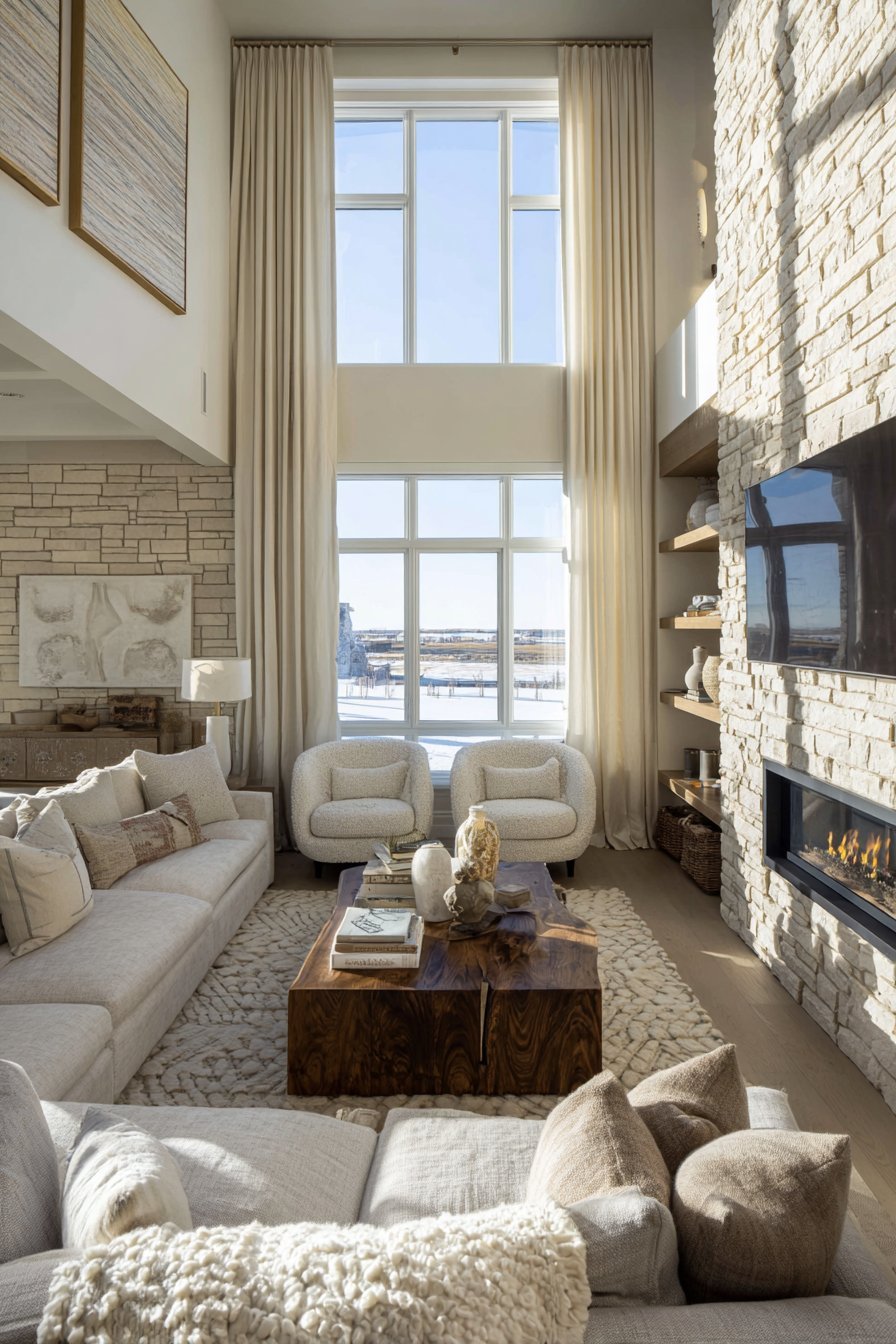
Successful neutral design balances aesthetic appeal with practical functionality. Start small by introducing one quality natural material piece or textured neutral textile. Build your vision gradually through careful curation and attention to material quality. Your dream neutral living room awaits creation through thoughtful planning and creative expression.

