


Dining room shelves offer a wonderful opportunity to add personality and function beyond the dinner table itself. Whether built-in or freestanding, these shelves can display cherished collections, useful serveware, or purely decorative pieces that reflect your style. A well-styled shelf transforms a simple storage solution into a genuine design focal point.
From formal dining rooms to casual eat-in kitchens, shelf styling looks different depending on the overall aesthetic you’re pursuing. Some homeowners prioritize curated collections like china or glassware, while others lean toward a more relaxed, eclectic mix. This guide covers proven techniques for arranging dining room shelves that feel both intentional and inviting. Our dining table decor ideas has more inspiration along these same lines.
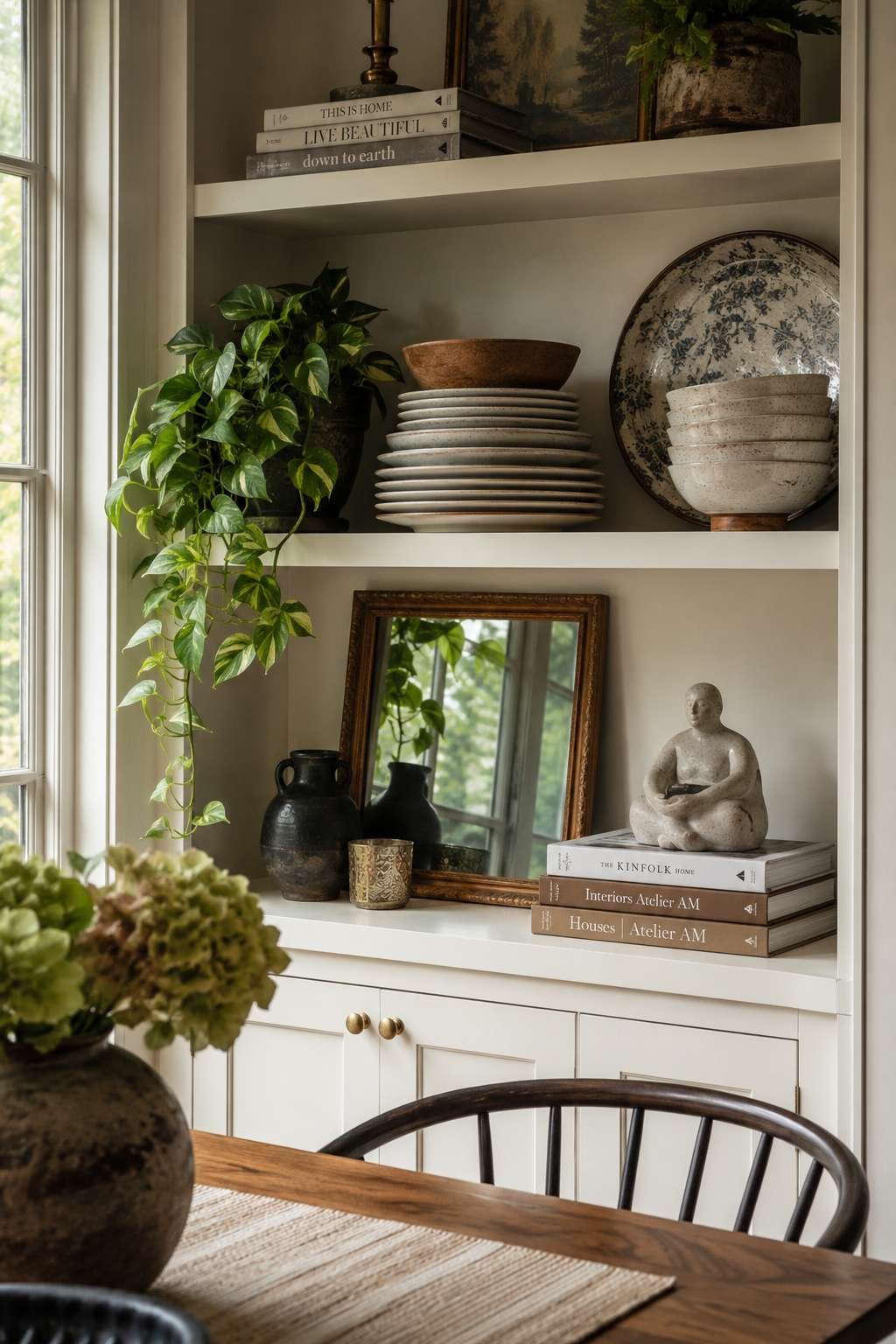
1. Start With a Balanced Foundation
Before adding smaller decorative pieces, establish a balanced foundation using your largest items first. This might include a stack of dinner plates, a decorative platter, or a substantial vase positioned as an anchor piece. Placing larger items first prevents the overall arrangement from feeling top-heavy or disorganized.
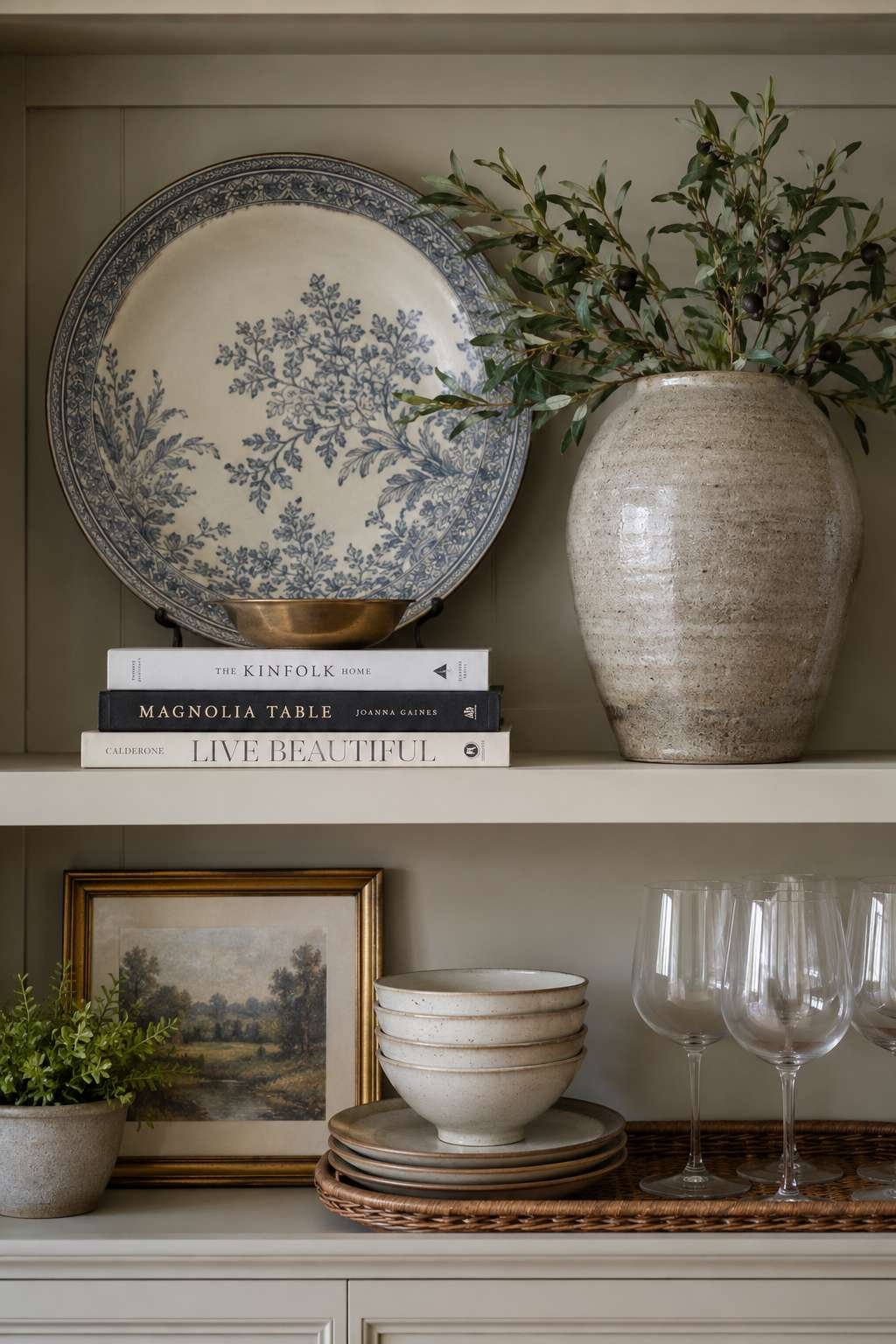
Distribute these anchor pieces across the shelf rather than clustering them all in one section. Aim for a mix of height and visual weight, positioning taller items toward the back and shorter pieces in front. This layered approach creates depth and ensures every item remains visible from a standing position.
- Place largest items first as anchor pieces
- Distribute weight evenly across the shelf
- Position taller pieces toward the back
- Leave breathing room between anchor items
2. Mix Functional and Decorative Pieces
The best dining room shelves balance genuine function with visual appeal rather than serving purely decorative purposes. Include items you actually use, like cloth napkins, serving trays, or a favorite pitcher, alongside purely decorative objects. This combination keeps the display feeling authentic rather than staged. Our dining room dimensions breaks down the exact measurements to plan around.
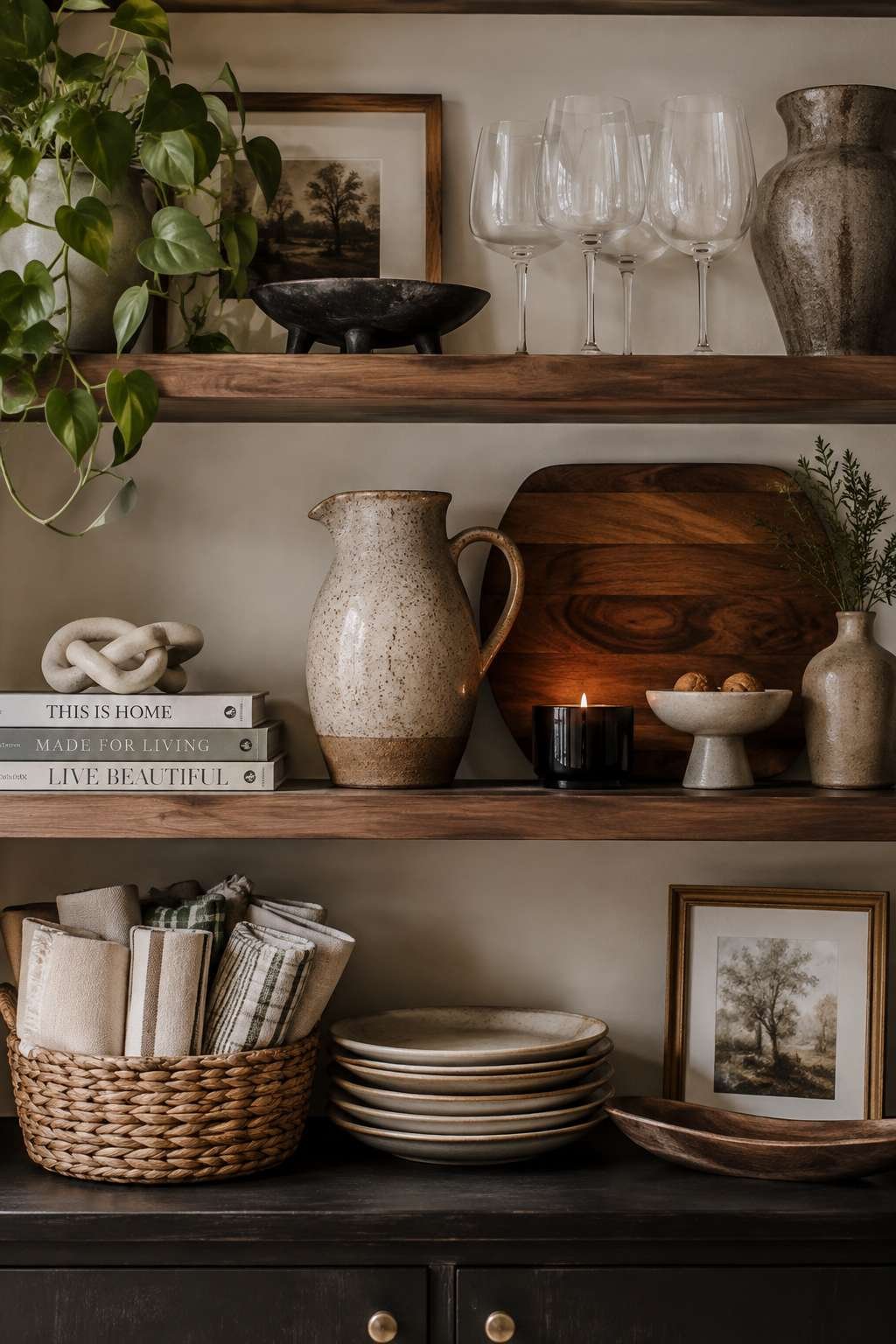
Rotate functional pieces back into everyday use periodically, replacing them with different items from your collection. This natural rotation keeps the shelf feeling fresh and evolving rather than static and forgotten. Blending function with beauty ensures the shelves earn their place in your daily routine.
- Include frequently used serveware in the display
- Rotate items back into everyday use periodically
- Mix decorative objects with functional pieces
- Choose items that reflect your actual entertaining style
3. Layer in Books and Printed Material
Stacked books add unexpected texture and height variation to dining room shelves. Choose books with interesting spine colors or cover designs that complement your existing color palette. Stacking two or three books horizontally creates a natural pedestal for smaller decorative objects placed on top.
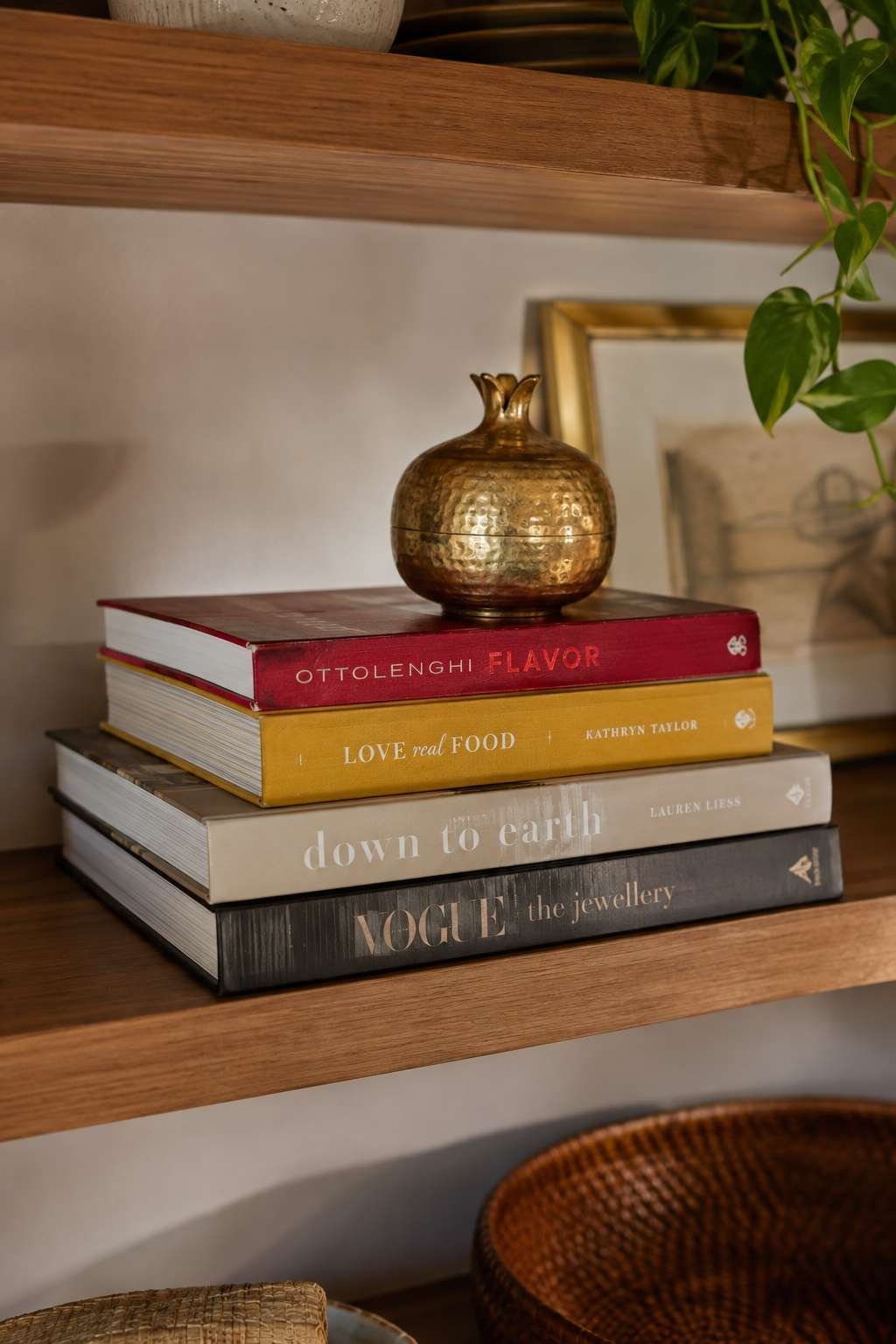
Cookbooks work particularly well in dining spaces, reinforcing the room’s culinary connection while adding personal character. Consider mixing in a few coffee table books related to art, travel, or design for broader visual interest. This layering technique adds sophistication without requiring expensive decorative purchases.
- Stack two or three books for added height
- Choose spines with complementary colors
- Use cookbooks for a relevant, personal touch
- Place small objects on top of book stacks
4. Incorporate Greenery for Organic Softness
Plants bring essential organic texture to shelves that might otherwise feel rigid or overly formal. A trailing pothos or ivy cascading over the shelf edge softens hard lines and adds movement to the display. Smaller potted succulents work well for shelves with limited depth or clearance.
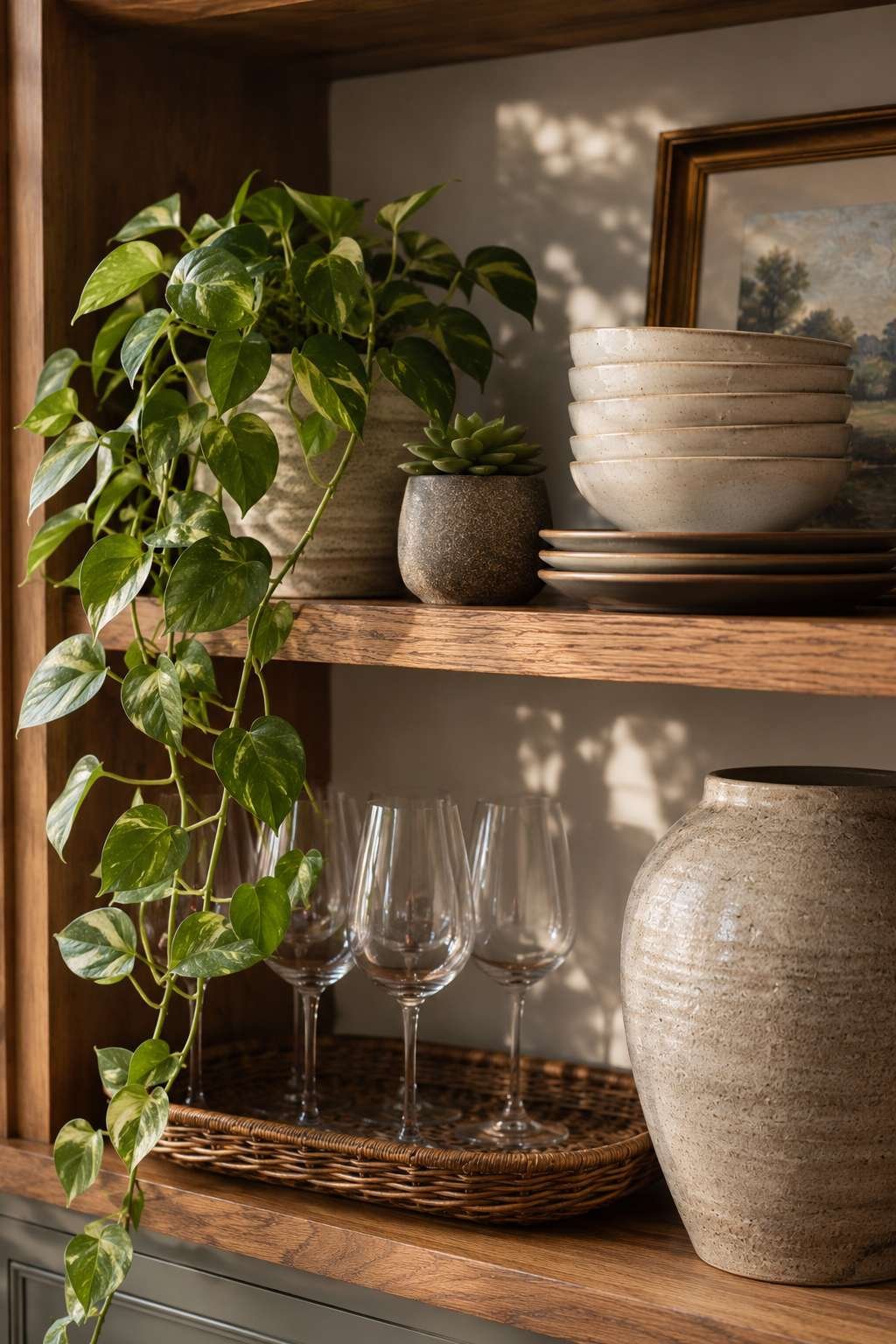
Choose plant varieties suited to your dining room’s available natural light, opting for low-light tolerant options if needed. Faux greenery offers a maintenance-free alternative that still delivers the same visual softness real plants provide. This organic element balances the more structured, formal pieces typically found on dining room shelves.
- Choose trailing plants to soften shelf edges
- Select low-light varieties for darker rooms
- Use faux greenery for a maintenance-free option
- Position plants to cascade over shelf fronts
5. Group Items in Odd Numbers
Odd-numbered groupings, typically three or five items, create more visually interesting arrangements than even pairs. This principle, rooted in classic design theory , feels more natural and dynamic to the human eye. Grouping candlesticks, vases, or small sculptures in threes creates immediate visual harmony. See our candle holder ideas for more direction in this style.
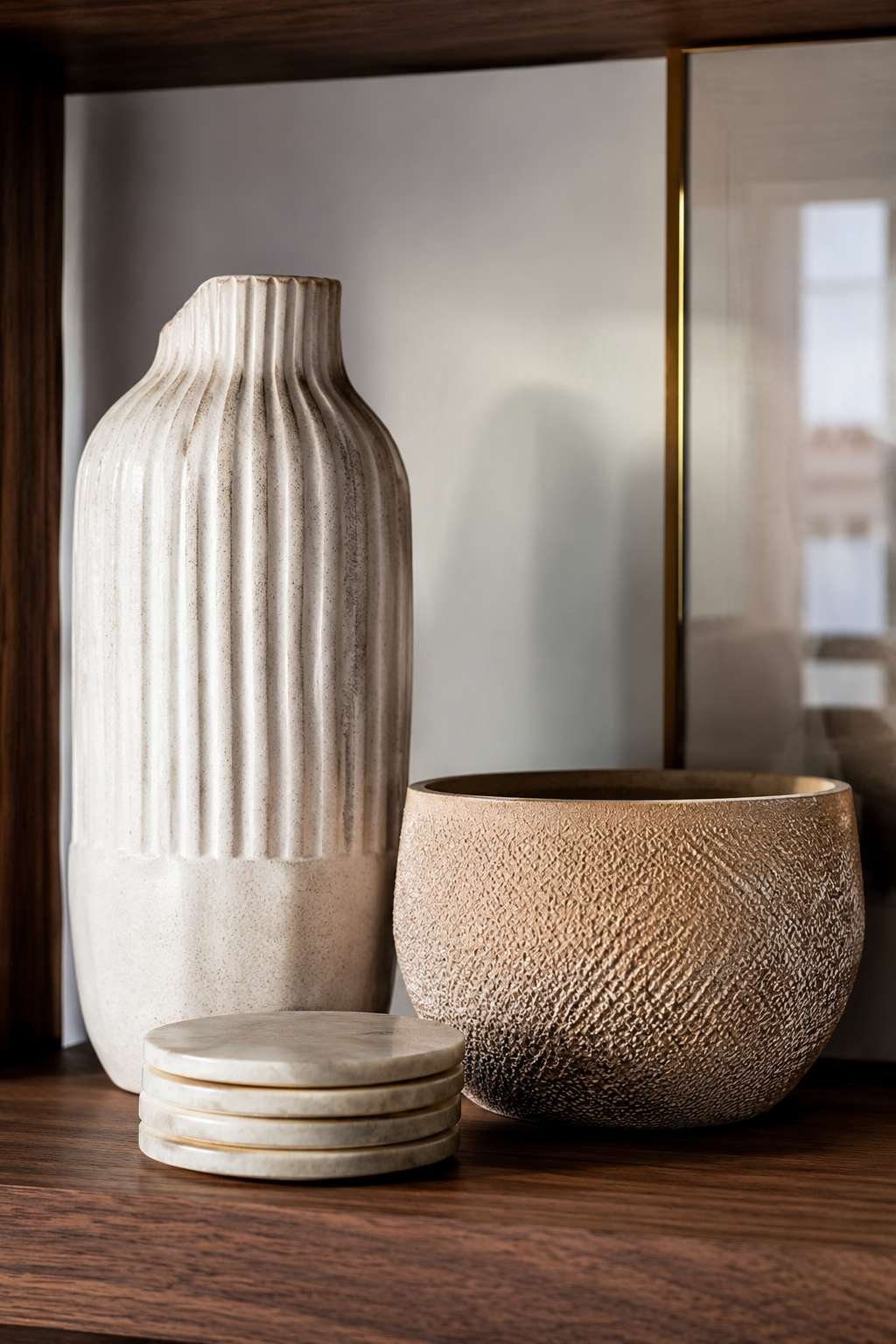
Vary the height, texture, and shape within each grouping to avoid a flat, repetitive appearance. A tall vase, a medium ceramic bowl, and a small stack of coasters together forms a balanced trio. This technique applies across nearly every shelf styling project, regardless of the overall design style.
- Group decorative items in threes or fives
- Vary height and texture within each grouping
- Avoid placing identical items side by side
- Use groupings to create visual rhythm across shelves
6. Add Artwork or Leaning Frames
Leaning artwork against the wall behind shelf items adds an unexpected layer of visual interest. A small framed print or mirror propped against the back wall creates depth without requiring wall-mounted hanging hardware. This technique also allows for easy seasonal updates whenever you want to refresh the display.
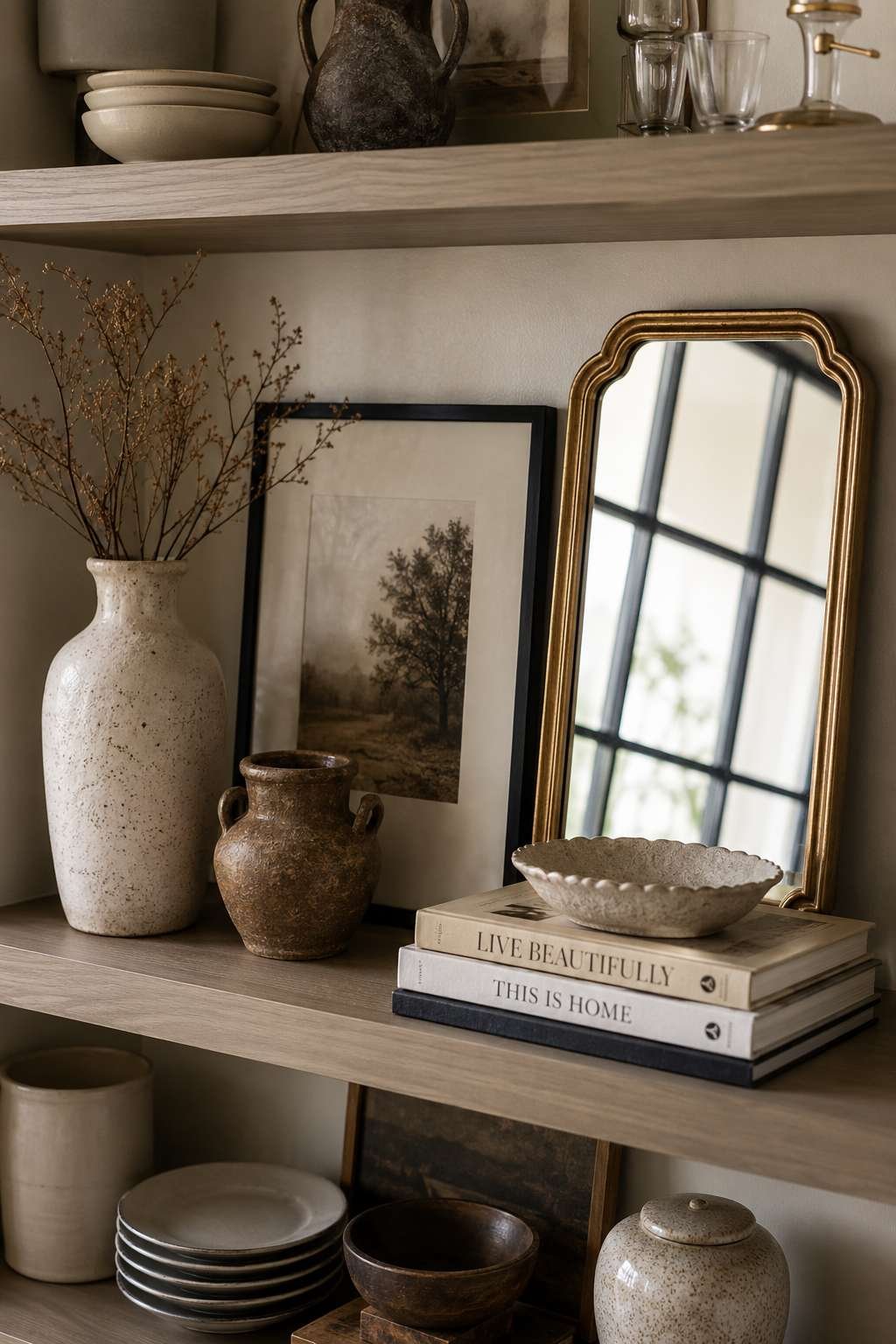
Choose frame sizes proportional to your shelf depth, ensuring artwork doesn’t overwhelm smaller decorative pieces in front. A mix of frame finishes, such as gold and black together, adds sophistication without appearing mismatched. This layering technique works particularly well on deeper built-in shelving.
- Lean framed art or mirrors against the back wall
- Choose frame sizes proportional to shelf depth
- Mix frame finishes for added sophistication
- Update leaning art seasonally for variety
Styling dining room shelves successfully comes down to balancing function, texture, and visual rhythm throughout the display. Combining anchor pieces, books, greenery, and thoughtful groupings creates a shelf that feels curated rather than cluttered. Each element works together to reflect your personal style and entertaining habits.
Take time to step back and view your shelves from across the room, adjusting as needed. With a little patience and these proven techniques, your dining room shelves can become a genuinely inviting design feature.

