


A rug has the power to transform a living room completely. It anchors furniture, defines zones, adds warmth, and ties the entire design together. Yet placing a rug incorrectly can make even the most beautiful space feel awkward and unbalanced. Understanding proper rug placement is one of the most important design skills you can learn.
The biggest mistake people make is choosing a rug that is too small or positioning it without considering the furniture layout. A well-placed rug creates harmony between your seating, tables, and the room itself. Whether you have a compact apartment or a spacious open-concept home, these guidelines will help you place a rug in a living room with confidence and precision. If you’re also weighing area rugs vs carpets, that’s worth deciding early too.
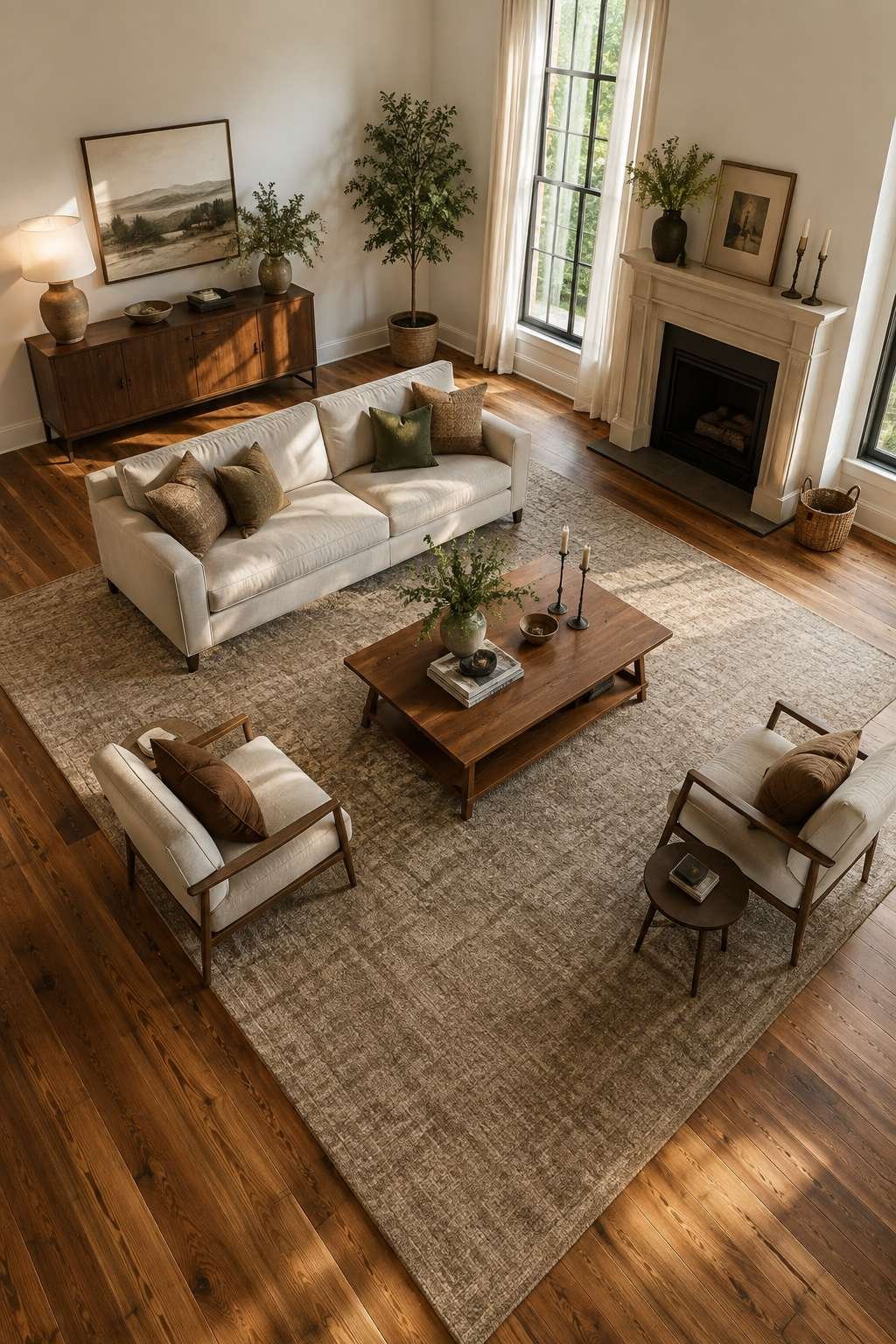
1. Understand the Three Basic Placement Rules
There are three fundamental approaches to rug placement. The first is all legs on, where every piece of furniture sits entirely on the rug. This creates a unified and luxurious look that works best in larger rooms with generously sized rugs.
The second approach is front legs on. Only the front legs of your sofa and chairs rest on the rug. This is the most popular and versatile method. It connects the furniture to the rug while allowing for a slightly smaller size.
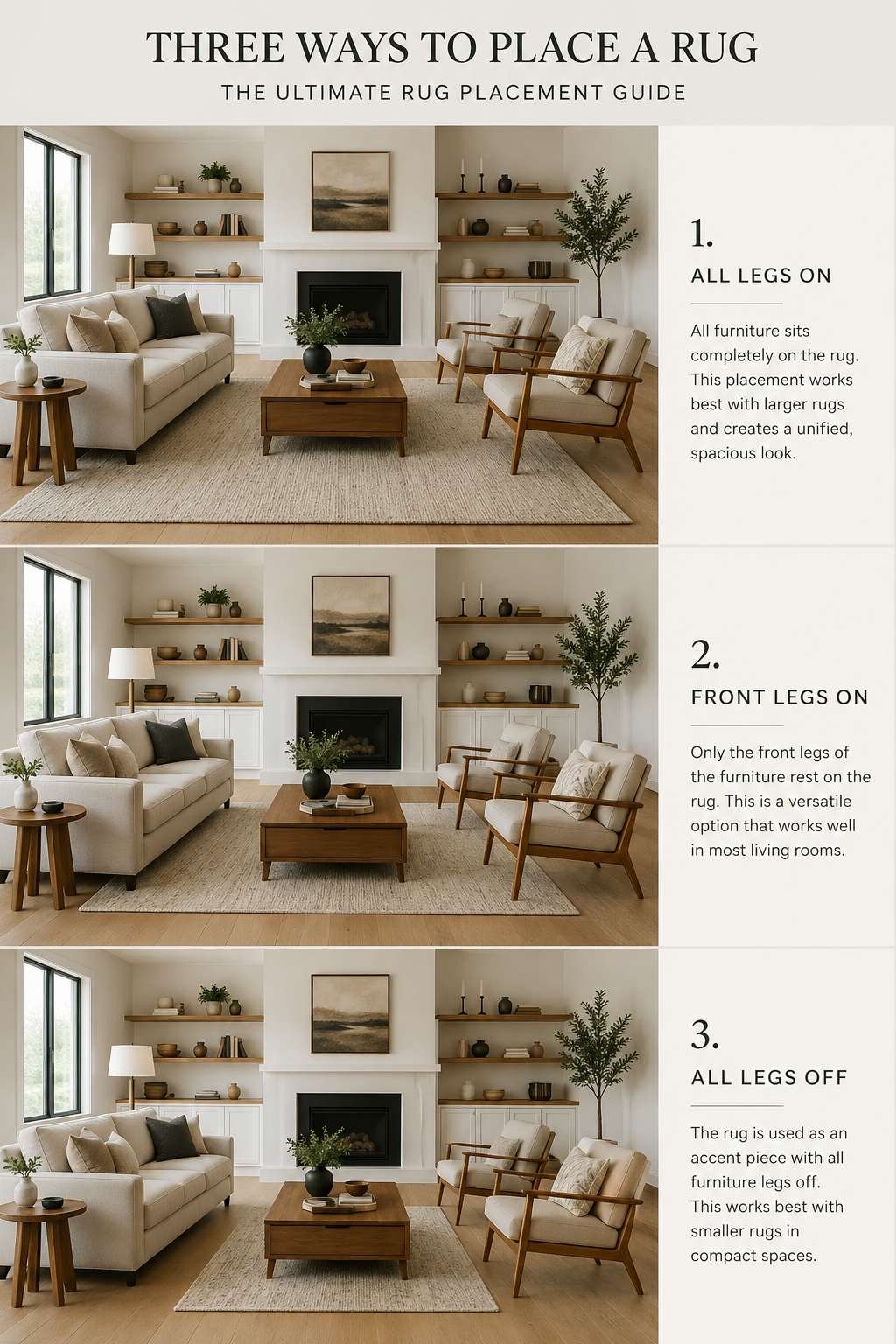
The third is all legs off, where the rug sits in the center without touching any furniture. This works only with very intentional styling and is best suited for smaller accent rugs in minimalist spaces. For most living rooms, the first two methods deliver the best results.
- All legs on works best for rooms larger than 12 by 15 feet
- Front legs on suits most standard-sized living rooms
- All legs off is risky and requires careful proportioning
- Never let just the back legs sit on the rug
- Choose your method before shopping for size
2. Choose the Right Rug Size for Your Room
Size is the single most important factor in rug placement. A rug that is too small looks like an afterthought floating in the middle of the room. It disconnects the furniture and makes the space feel fragmented. Always err on the side of going larger.
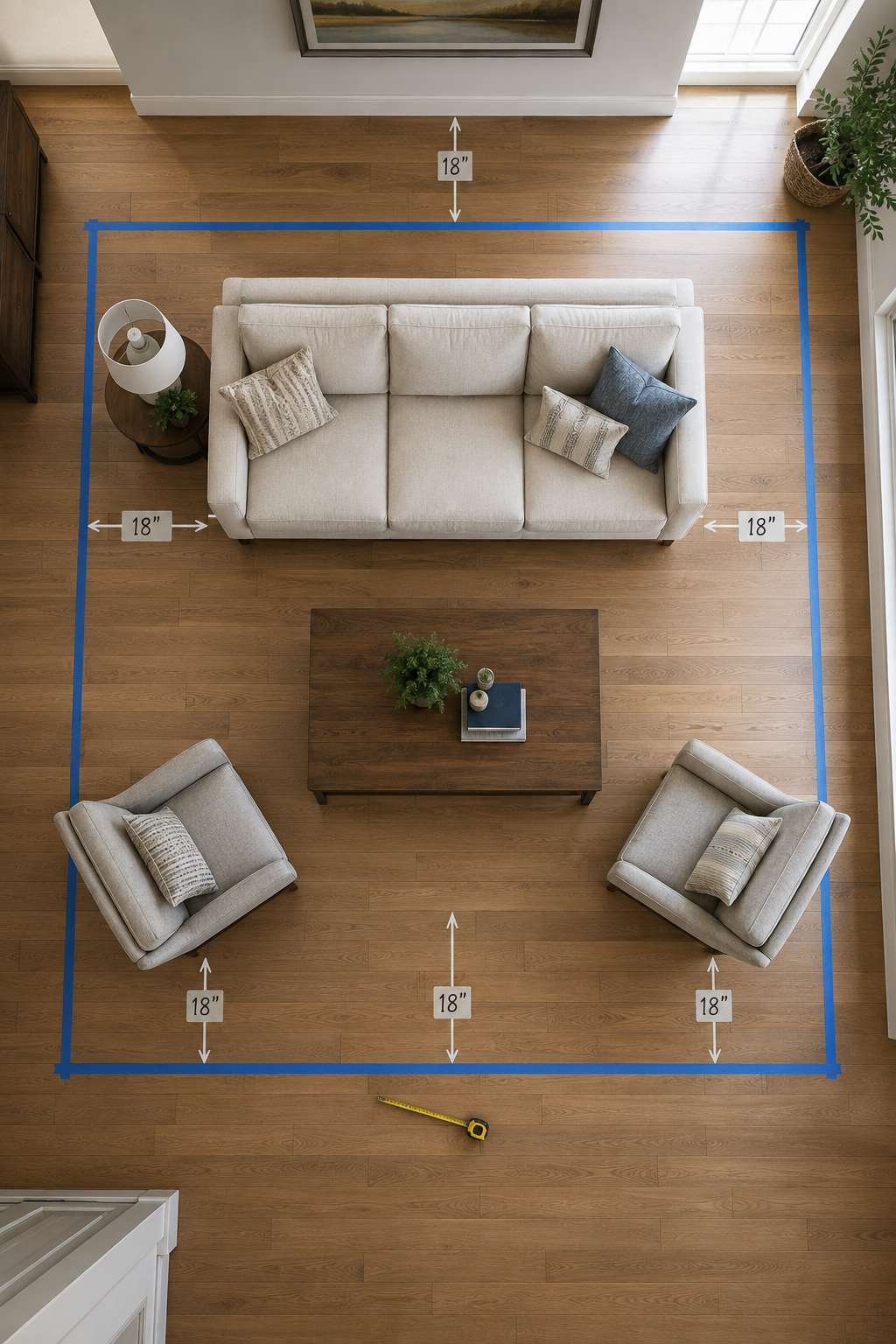
For a standard living room, an 8 by 10 foot rug works well with a typical sofa and two accent chairs. Larger rooms with sectionals may need a 9 by 12 or even a 10 by 14 foot rug. Measure your seating arrangement first and then add 18 to 24 inches on each side to determine the ideal rug dimensions.
- Measure the full seating area before choosing a rug size
- Add at least 18 inches of rug space beyond the furniture edges
- An 8 by 10 rug fits most medium living rooms comfortably
- Use a 9 by 12 or larger for sectionals and open floor plans. Our these floor lamp vs table lamp comparison covers that decision in more depth.
- Lay painter’s tape on the floor to visualize the size before buying
3. Leave Equal Bare Floor on All Sides
A well-placed rug should have balanced exposure of bare floor on every side. This framing effect makes the rug look intentional and proportional to the room. Aim for 12 to 18 inches of bare floor between the rug edges and the walls.
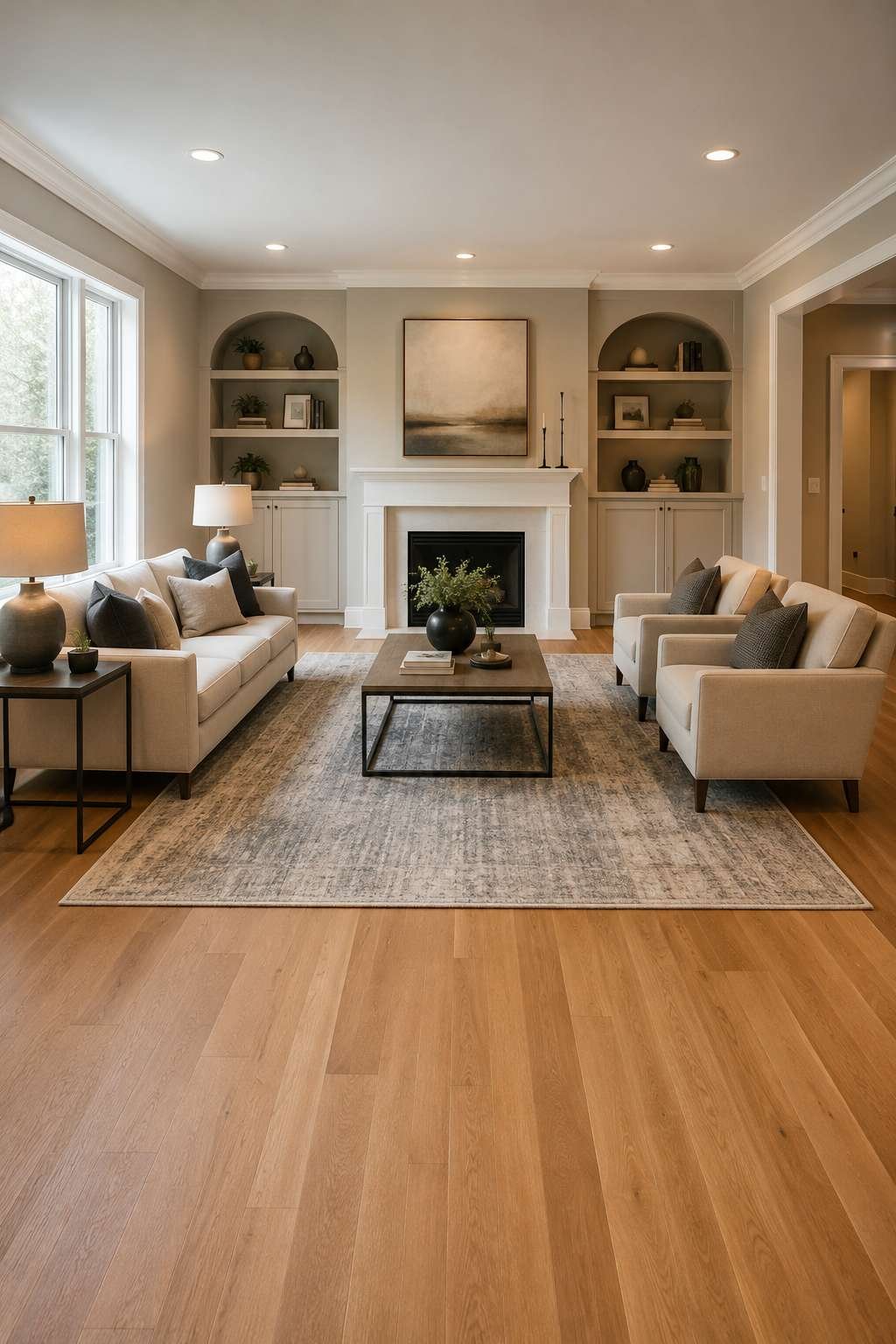
Uneven spacing looks sloppy and draws attention to the imbalance. Measure from each wall to ensure the rug is centered within the seating area. In rooms with asymmetrical layouts, center the rug under the furniture grouping rather than the room itself.
- Leave 12 to 18 inches of bare floor on all sides
- Center the rug under the furniture arrangement, not the room
- Use a tape measure to check spacing on all four sides
- Adjust furniture positions to align with the rug symmetrically
- Avoid pushing the rug flush against any wall
4. Anchor the Sofa With the Rug
The sofa is the largest piece in most living rooms. Your rug placement should start with the sofa. Position the rug so that at least the front legs of the sofa sit on it. This visually connects the sofa to the rest of the seating arrangement.
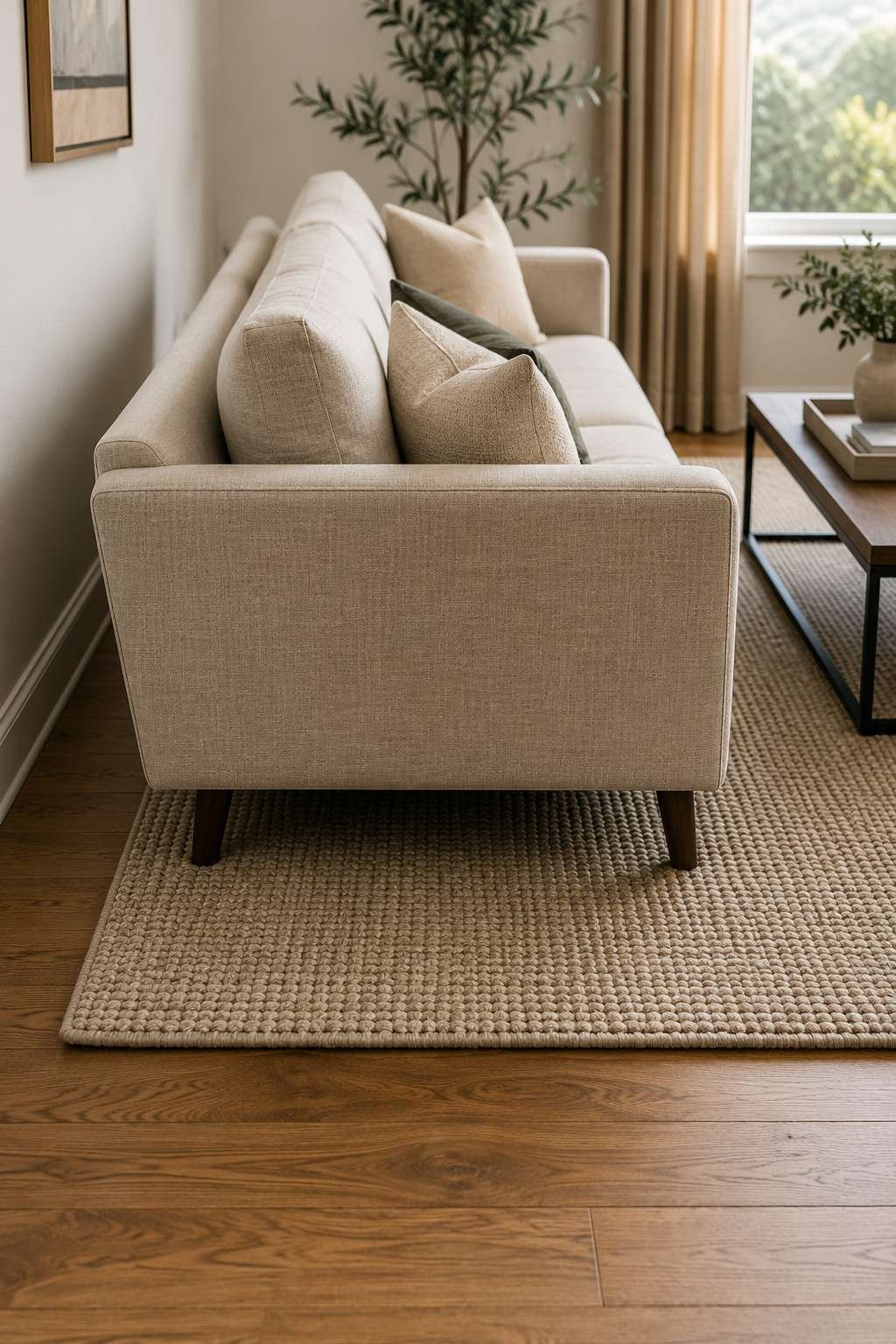
If your rug is large enough, placing the entire sofa on the rug creates a more polished and cohesive look. The sofa should sit parallel to one edge of the rug with equal spacing on both sides. This alignment keeps the layout feeling structured and deliberate.
- Place at least the front legs of the sofa on the rug
- Center the sofa along one edge of the rug for symmetrical balance
- Avoid letting the sofa hang halfway on and halfway off
- Pull the sofa a few inches away from the wall for better proportions
- The rug should extend at least six inches beyond each end of the sofa
5. Position Accent Chairs on the Rug
Accent chairs should follow the same logic as the sofa. Their front legs should rest on the rug at minimum. This ties them into the conversation area and creates a unified seating zone. Chairs floating completely off the rug feel disconnected and random.
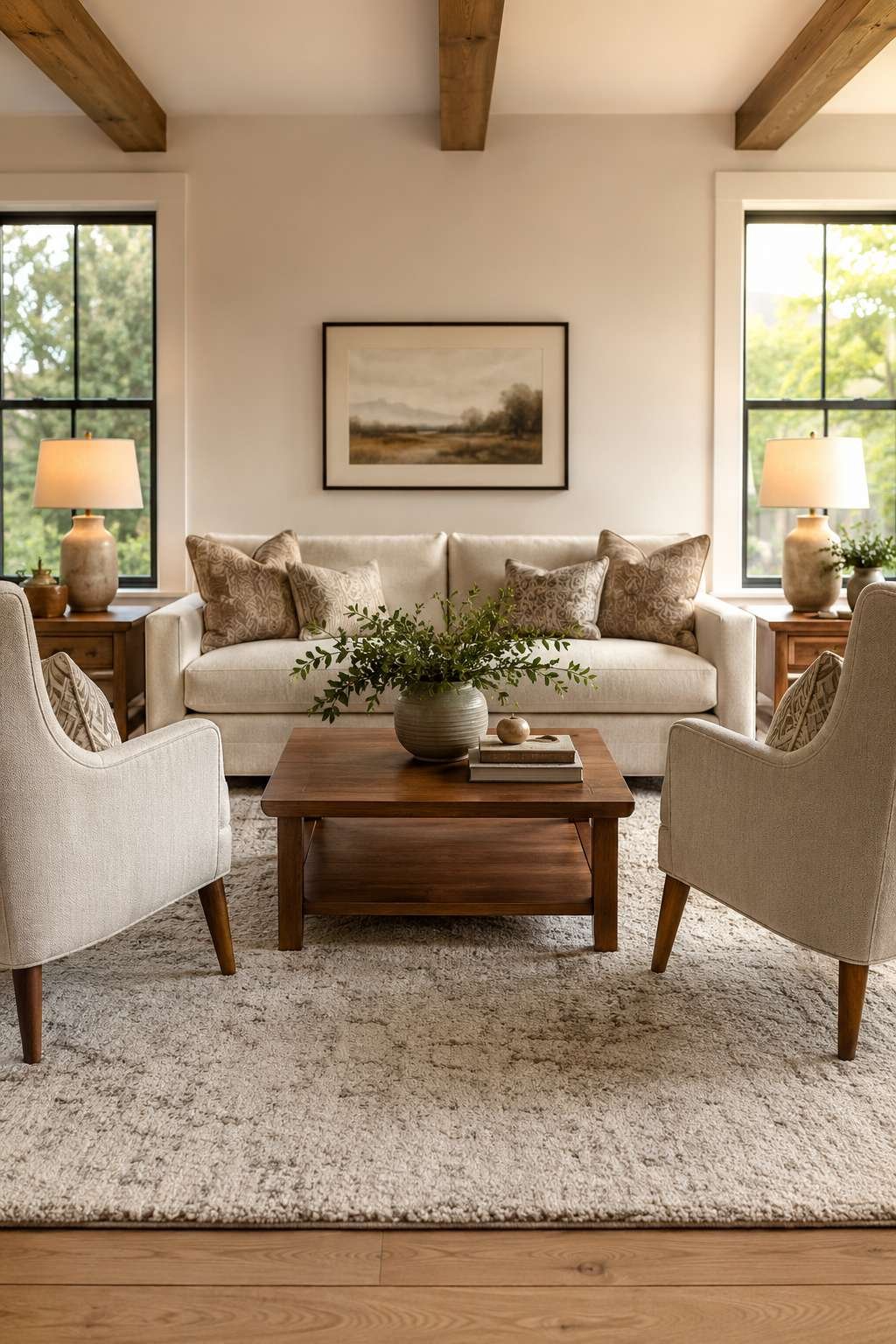
Angle chairs slightly toward the sofa for a natural conversational layout. The rug beneath them reinforces the grouping and signals that these pieces belong together. If space allows, place the chairs entirely on the rug for maximum cohesion.
- Rest at least the front legs of each accent chair on the rug
- Angle chairs toward the center of the seating arrangement
- Keep chair placement symmetrical on both sides when possible
- Avoid placing one chair on and one completely off the rug
- Use the rug edges as a guide for consistent chair positioning
6. Center the Coffee Table on the Rug
The coffee table should sit completely on the rug with equal space on all sides. It acts as the visual center of the seating arrangement. A coffee table hanging off the rug edge or sitting on bare floor breaks the design connection. It’s a similar trade-off to deciding on coffee table vs ottoman elsewhere in the space.
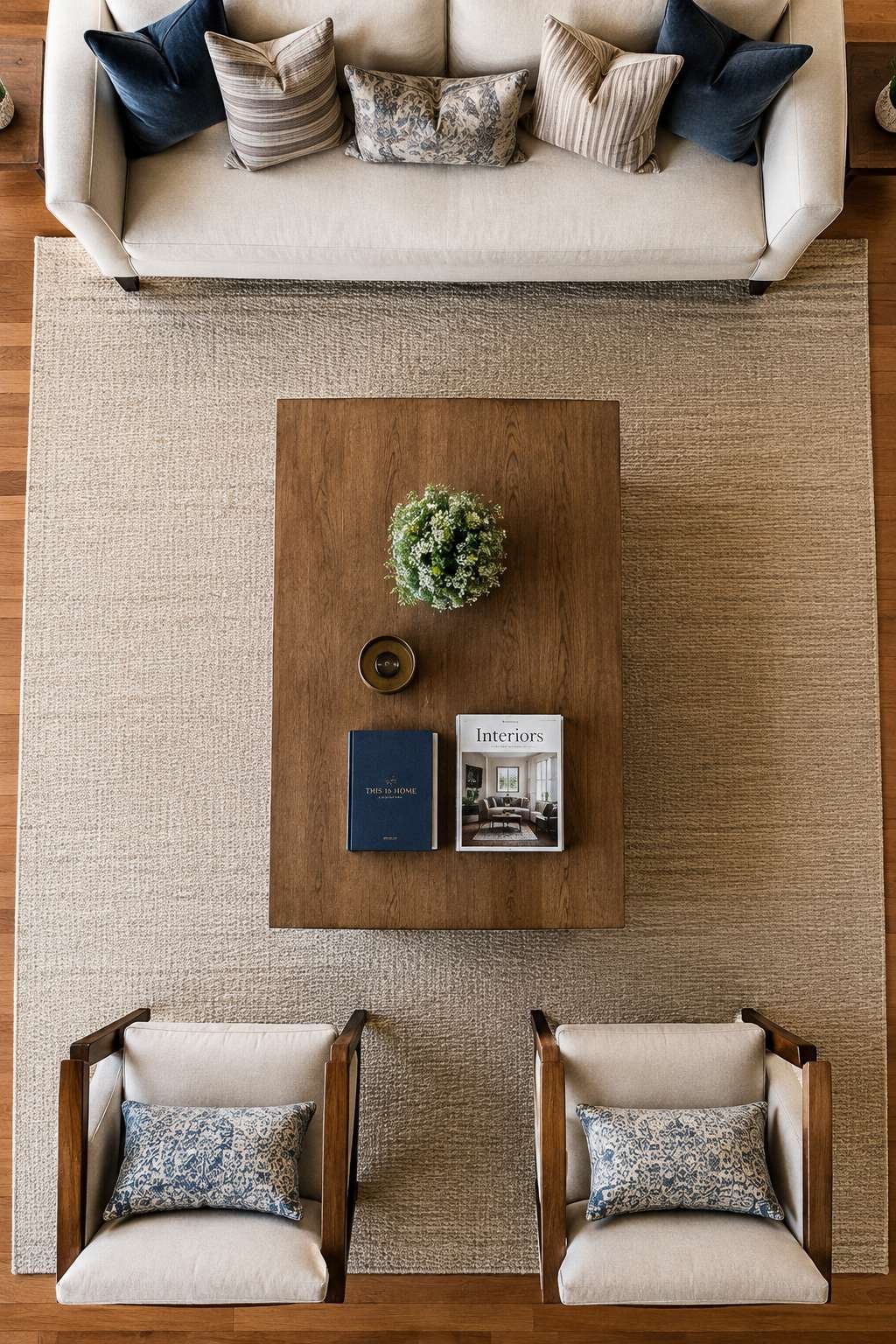
Leave at least 14 to 18 inches between the coffee table and the sofa for comfortable legroom. The same clearance should exist between the table and any facing chairs. This spacing ensures the arrangement feels functional and not cramped.
- Place the coffee table fully on the rug at all times
- Center it between the sofa and any facing seating pieces
- Maintain 14 to 18 inches of clearance from the sofa
- The table should be roughly two-thirds the length of the sofa
- A round rug works well with a round coffee table for visual echo
7. Use Rugs to Define Zones in Open Floor Plans
In open-concept living spaces, rugs serve as invisible room dividers. A rug under the living room seating separates it from the dining area or kitchen without walls or barriers. Each zone gets its own rug to define its purpose and boundaries.

Make sure the rugs in adjacent zones complement each other without matching exactly. Similar color families or textures create flow while maintaining distinction. Leave a clear strip of bare floor between rugs to keep each zone feeling separate and intentional.
- Use separate rugs to define living, dining, and reading zones
- Leave 8 to 12 inches of bare floor between adjacent rugs
- Coordinate colors and textures across zones for visual harmony
- Keep each rug proportional to the furniture within its zone
- Avoid overlapping rugs as this creates visual clutter
8. Consider the Shape of Your Rug
Rectangular rugs are the most common choice, but they are not the only option. Round rugs work beautifully under round coffee tables, in curved seating arrangements, or in small conversation nooks. They soften angular rooms and add unexpected visual interest.
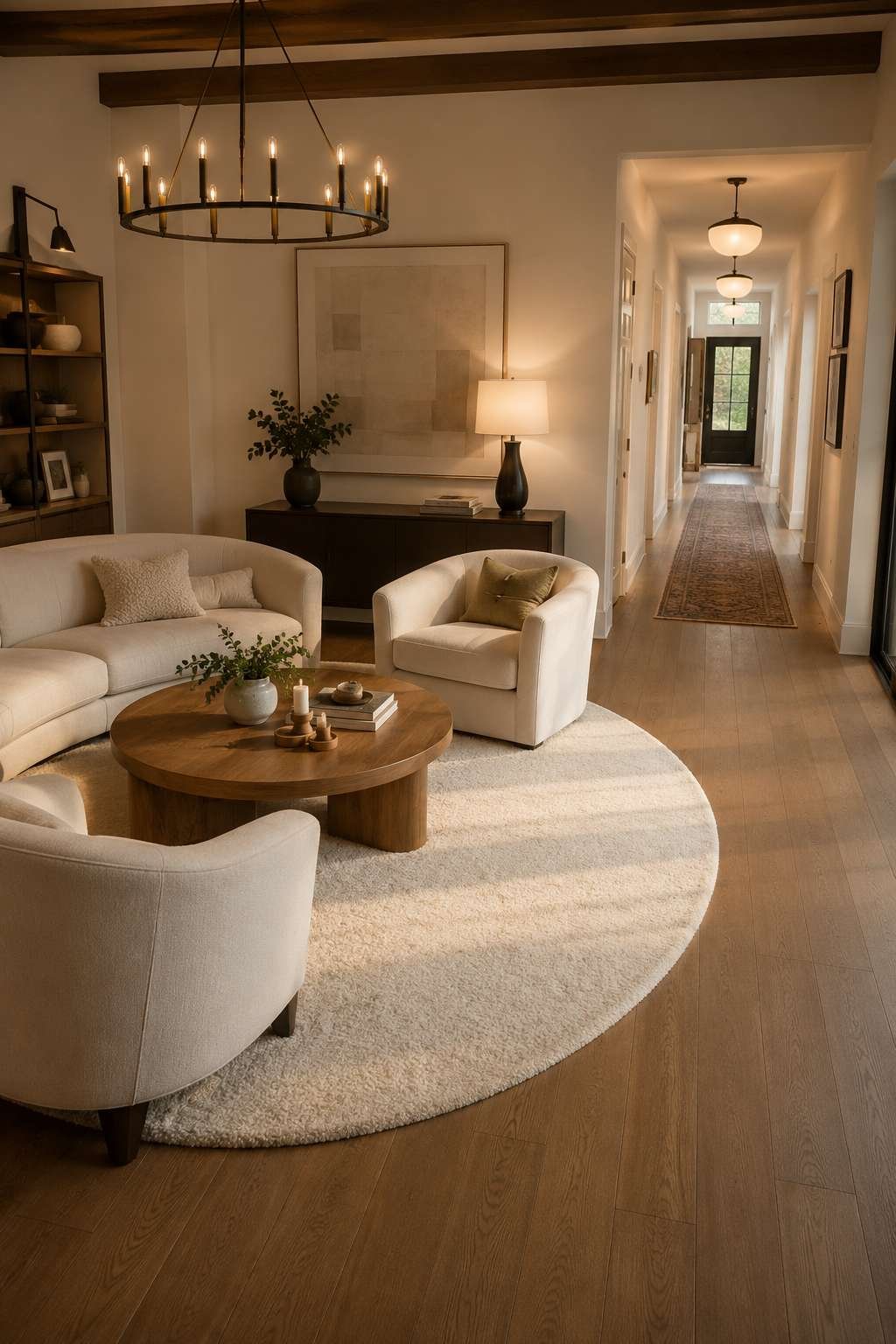
Square rugs suit square rooms or symmetrical furniture layouts. Runner-style rugs work well in narrow living rooms or alongside a long sofa against a wall. Match the rug shape to your furniture configuration and room proportions for the most natural fit.
- Use rectangular rugs for standard sofa and chair arrangements
- Choose a round rug for circular seating or round tables
- Try a square rug in perfectly square living rooms
- Use runners in narrow or elongated spaces
- Let the room shape and furniture layout guide your choice
9. Layer Rugs for Added Depth and Texture
Rug layering is a designer trick that adds richness and personality to a living room. Start with a larger neutral rug as your base. Then place a smaller patterned or textured rug on top at an angle. This creates dimension and visual interest without overwhelming the space.
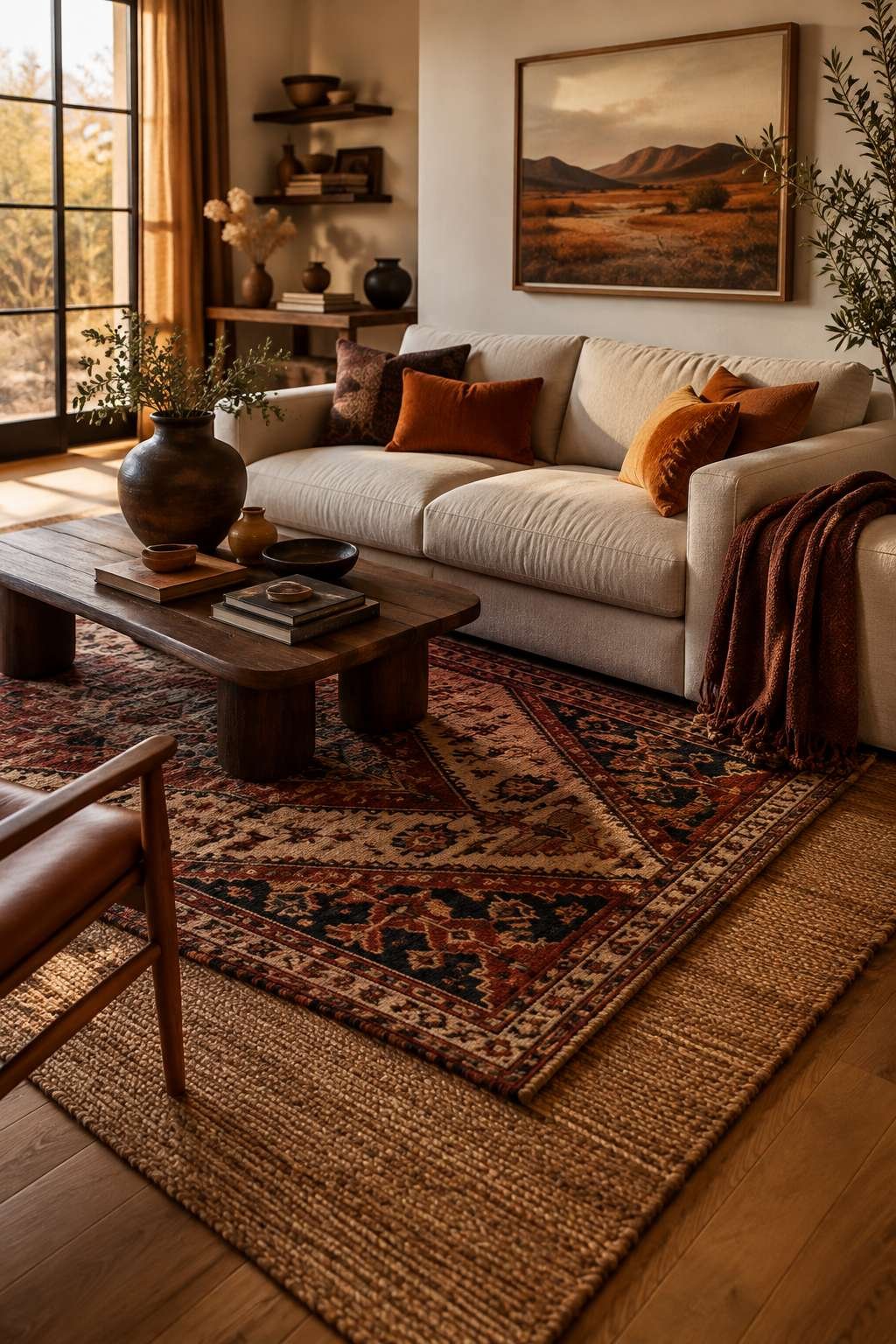
The base rug should be a simple solid or low-pile texture like jute, sisal, or flatweave cotton. The top rug can be bolder with patterns, colors, or plush textures like wool or shag. Layering works especially well when you love a rug that is too small for the room on its own.
- Start with a large neutral base rug in natural fiber
- Layer a smaller statement rug on top at a slight angle
- Keep the base rug simple so the top rug stands out
- Use layering to make a small rug work in a larger space
- Secure layers with rug tape to prevent slipping and bunching
10. Avoid the Most Common Placement Mistakes
Even beautiful rugs fall flat when placed incorrectly. The most common mistake is choosing a rug that is too small for the furniture grouping. A tiny rug surrounded by large furniture looks like a floating island and disrupts the room’s balance.
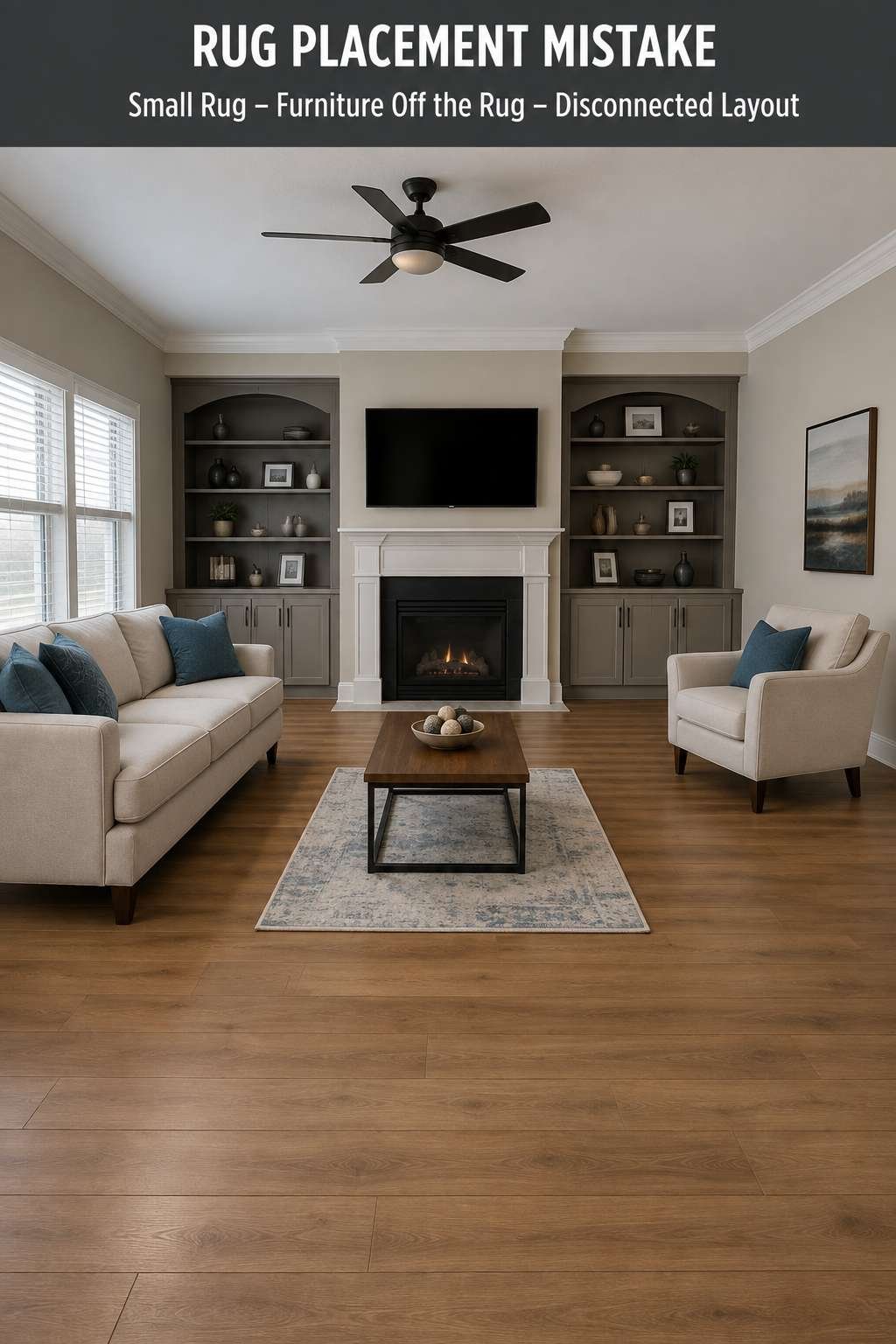
Another frequent error is placing the rug off-center or at an awkward angle. Unless you are intentionally layering, your rug should sit parallel to the walls and centered under the furniture. Also avoid placing heavy furniture on the rug edges, as this causes curling and uneven wear over time.
- Never use a rug that only fits under the coffee table
- Avoid placing the rug off-center or crooked in the room
- Do not let furniture sit on only the rug corners
- Use a rug pad underneath to prevent slipping and protect floors
- Replace rugs that are too worn, wrinkled, or undersized for the space
Conclusion
Placing a rug in a living room is about creating a foundation that brings everything together. The right size, position, and relationship to your furniture turns a simple rug into the design anchor of the entire space.
Measure carefully, follow the front-legs-on rule when in doubt, and always leave balanced bare floor around the edges. A properly placed rug makes your living room feel cohesive, warm, and intentionally designed. It is one of the simplest changes with the biggest impact.

