


Creating an organized playroom transforms chaos into functional beauty. Smart storage solutions make cleanup easier for children and parents alike. The right organizational systems encourage independence and creativity in young minds.
Playroom storage requires careful planning to balance accessibility with aesthetics. Children need to reach their toys easily while maintaining order. These storage ideas combine practical functionality with appealing designs that grow with your family.
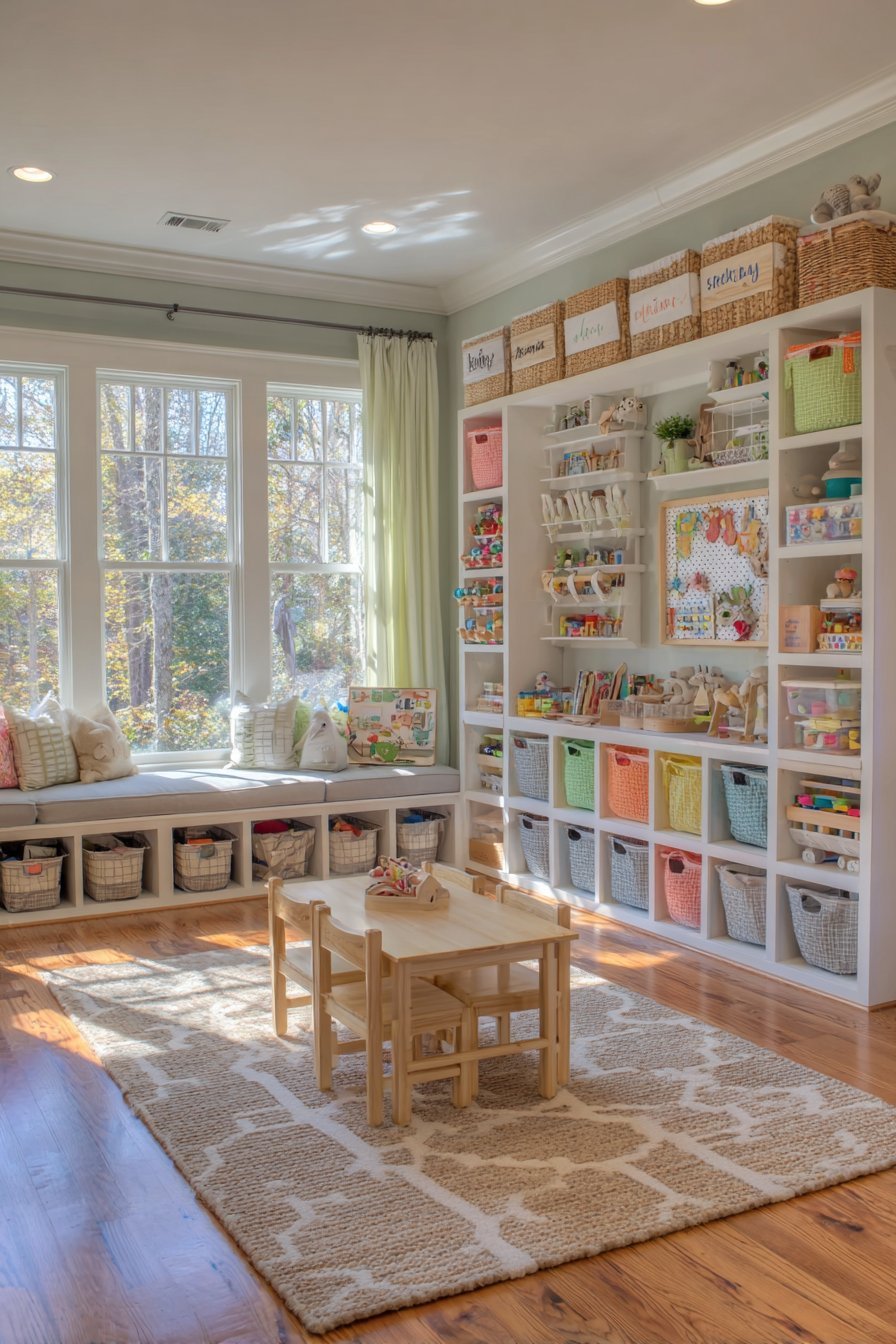
The following concepts showcase diverse approaches to playroom organization. From built-in systems to mobile solutions, each design addresses specific storage challenges. These ideas prove that organization and style can coexist beautifully in children’s spaces.
1. Floor-to-Ceiling Built-In Storage Wall
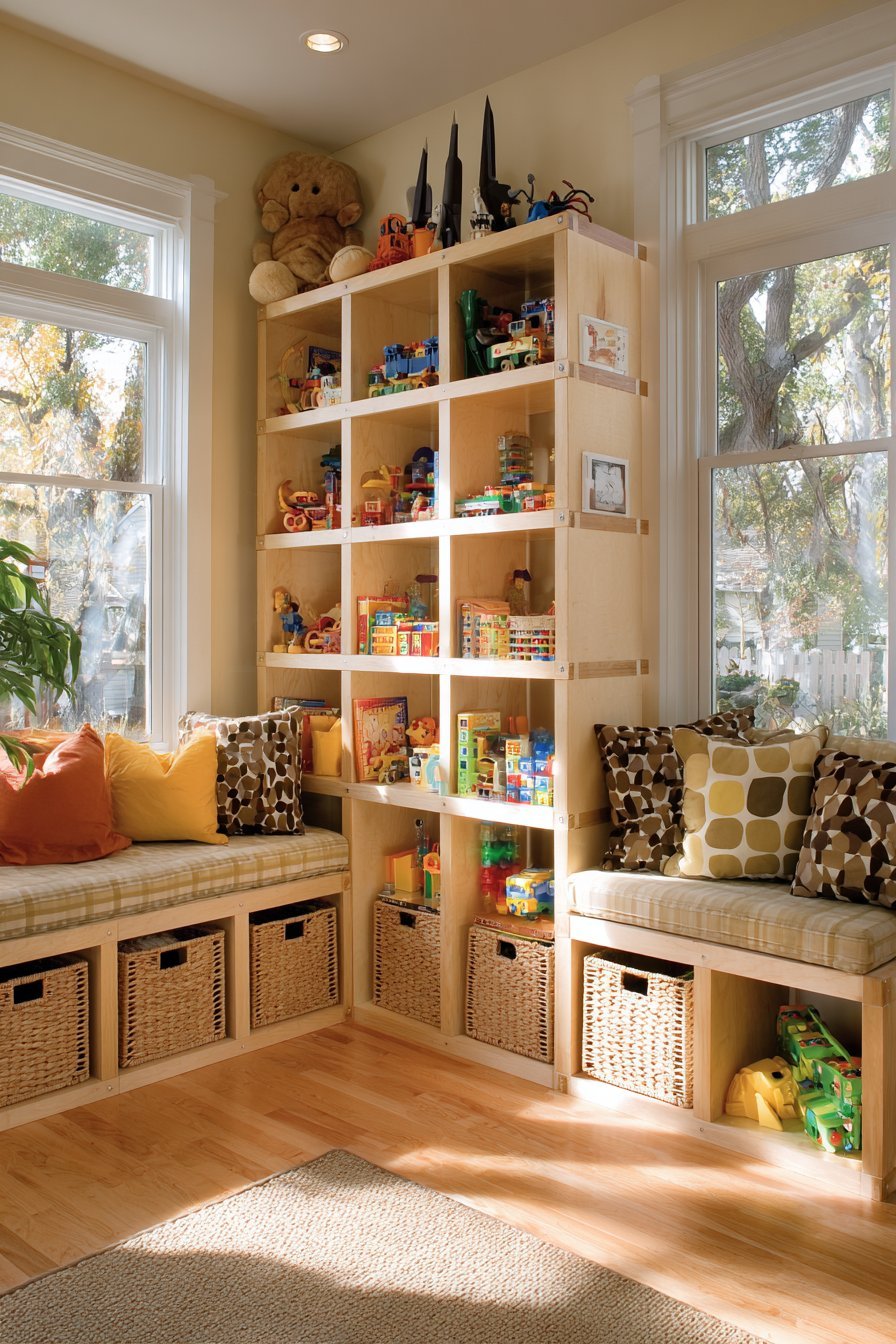
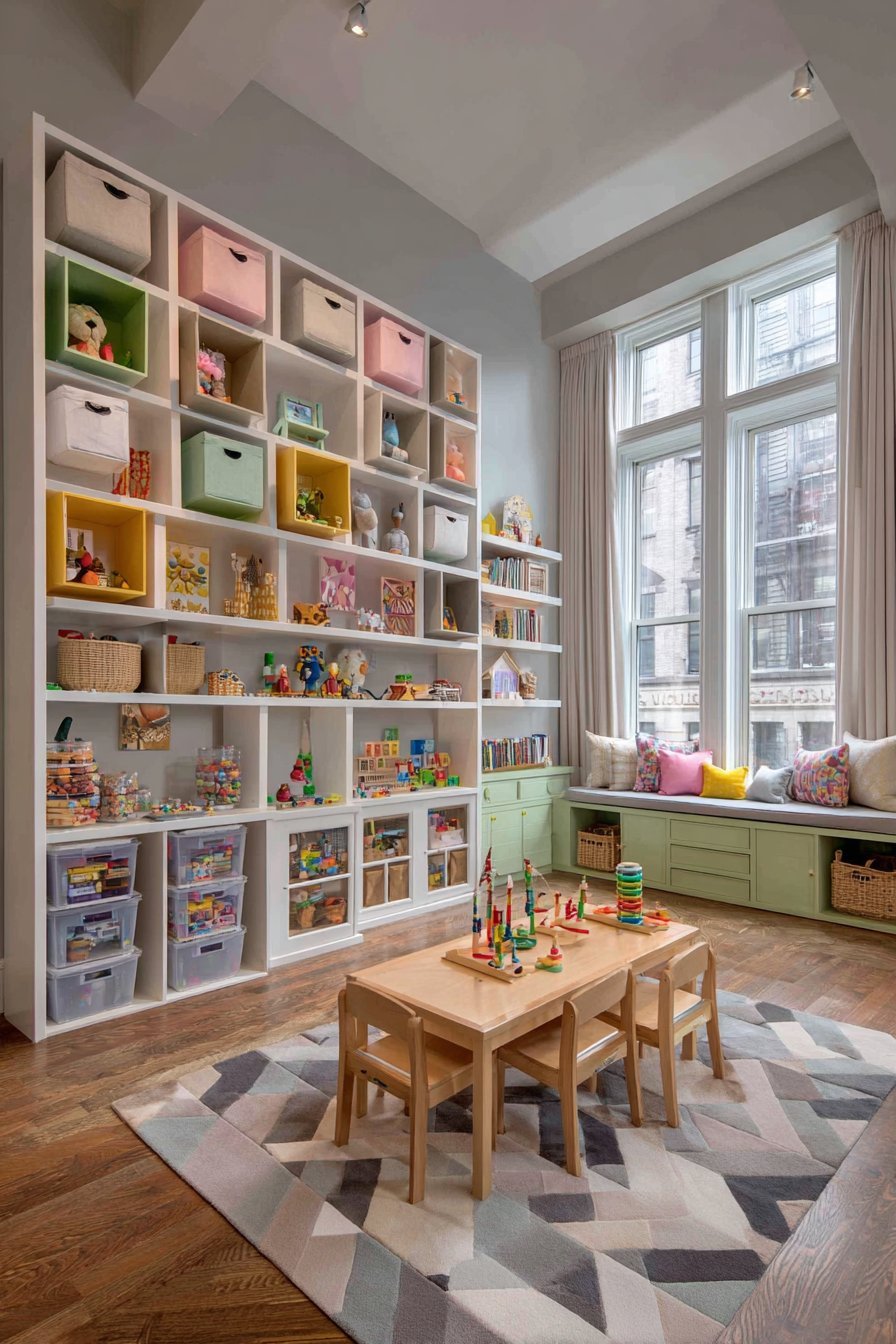
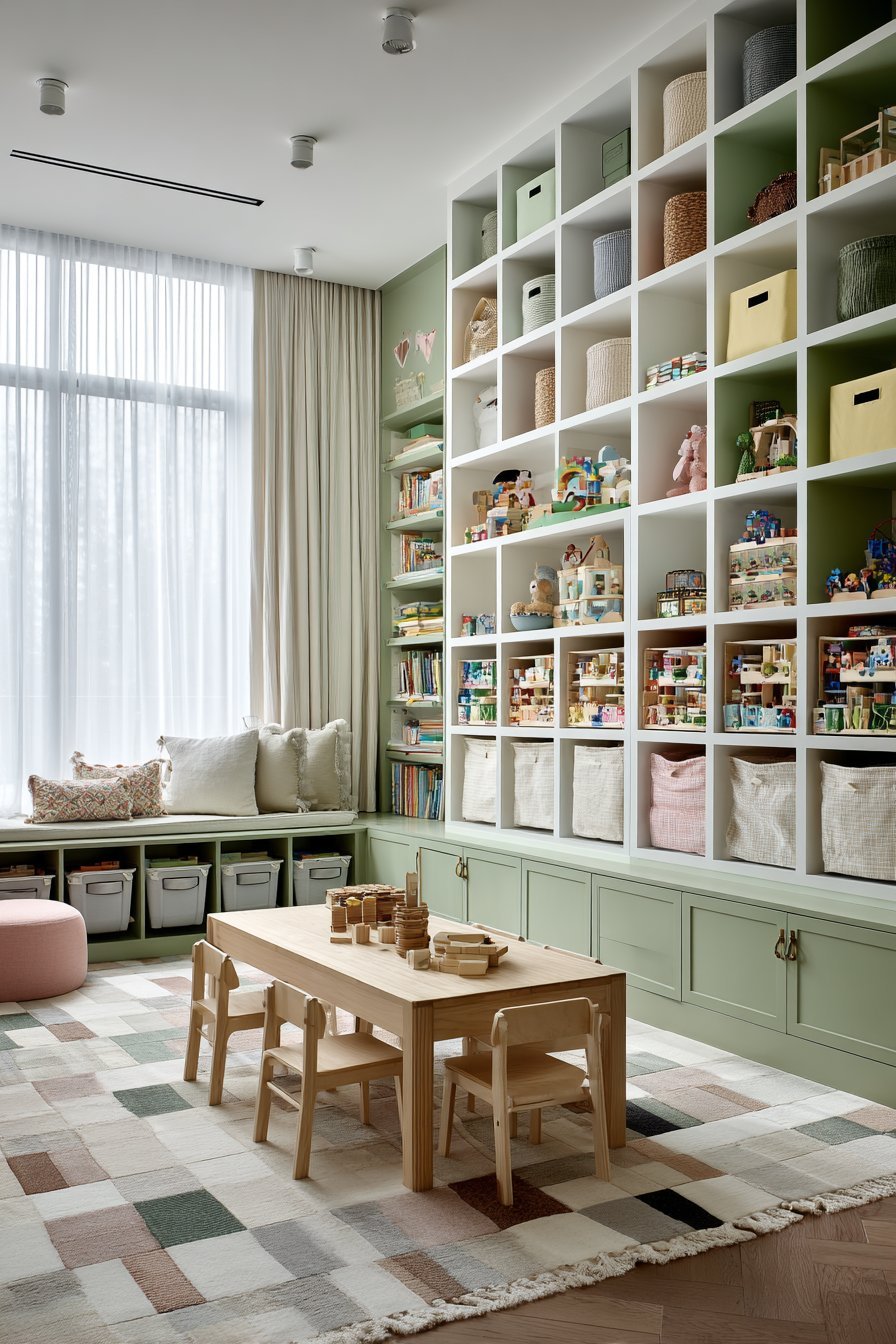
A cheerful playroom features an impressive floor-to-ceiling built-in storage wall. White painted wood creates a clean, bright foundation for organization. Each cubby contains colorful fabric storage bins in vibrant primary colors. Picture tags on each bin help young children identify contents quickly.
The system includes both open cubbies and closed cabinets for versatile storage. This combination allows for visible toy display and hidden clutter control. A natural oak floating bench runs along the bottom section. Cushioned seating with hidden storage underneath maximizes functionality beautifully.
Wide-angle views capture the entire organized wall system in natural daylight. Soft illumination from adjacent windows highlights the practical storage solutions. The child-friendly accessibility encourages independent cleanup routines. This comprehensive system proves that organization can be both beautiful and functional.
The color-coded fabric bins create visual interest while maintaining order. Children quickly learn where each toy category belongs through picture associations. The white painted wood provides a neutral backdrop that complements any decor style.
Key Design Tips:
- Install storage from floor to ceiling to maximize vertical space
- Use picture labels on bins for pre-reading children
- Combine open and closed storage for flexibility
- Choose durable painted wood that withstands daily use
- Add cushioned bench seating for dual functionality
- Select washable fabric bins in coordinating colors
2. Rolling Toy Carts for Mobile Organization
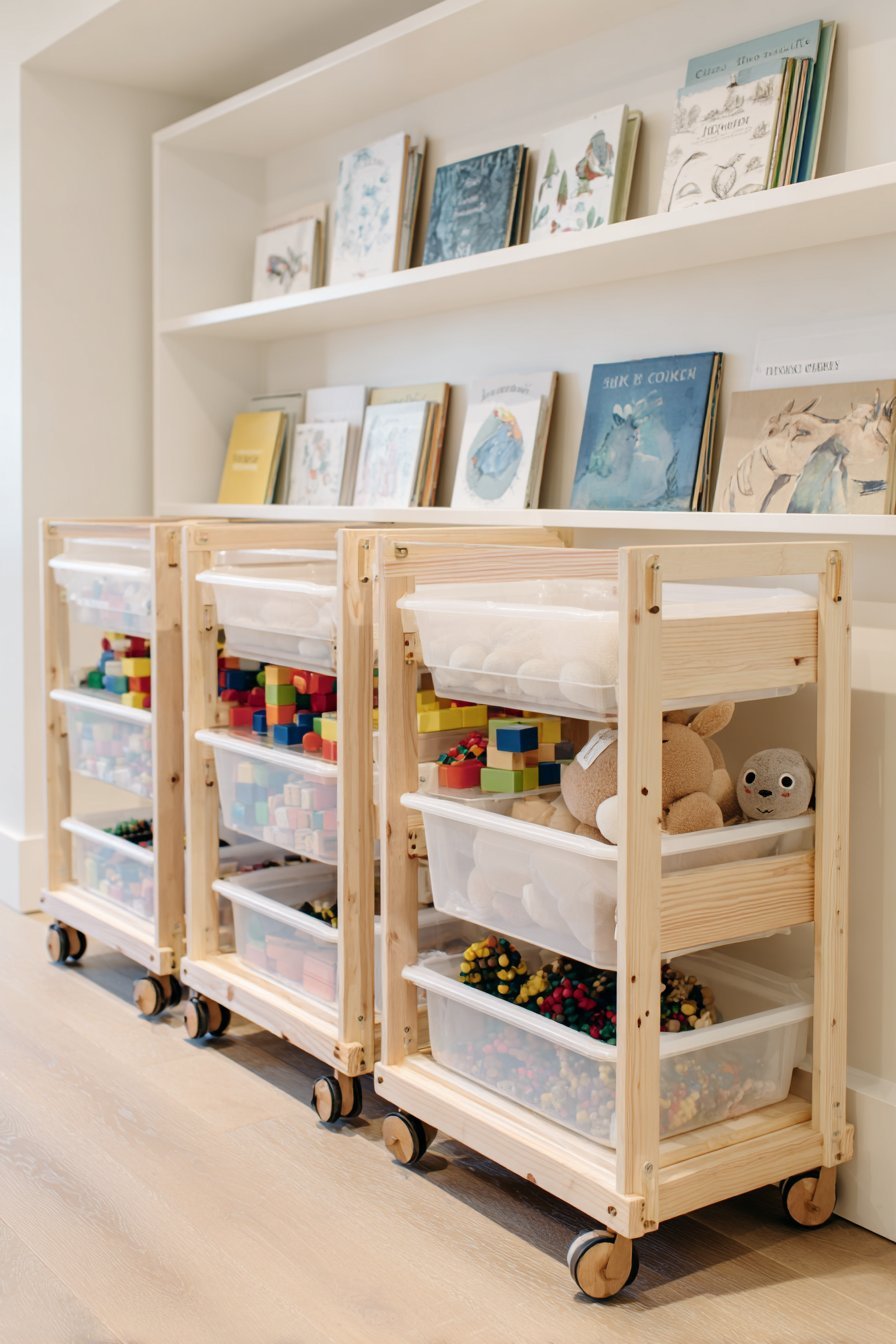
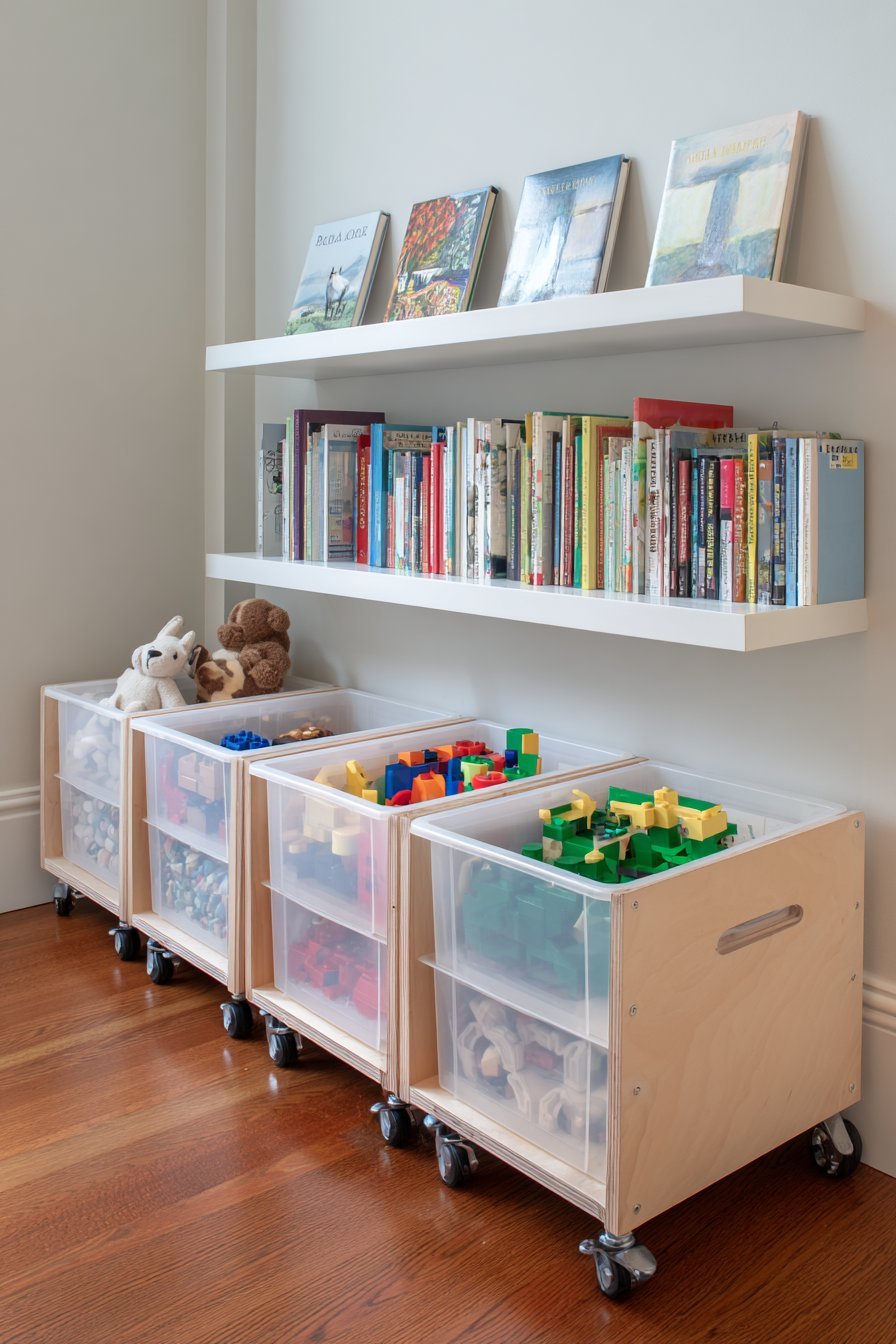
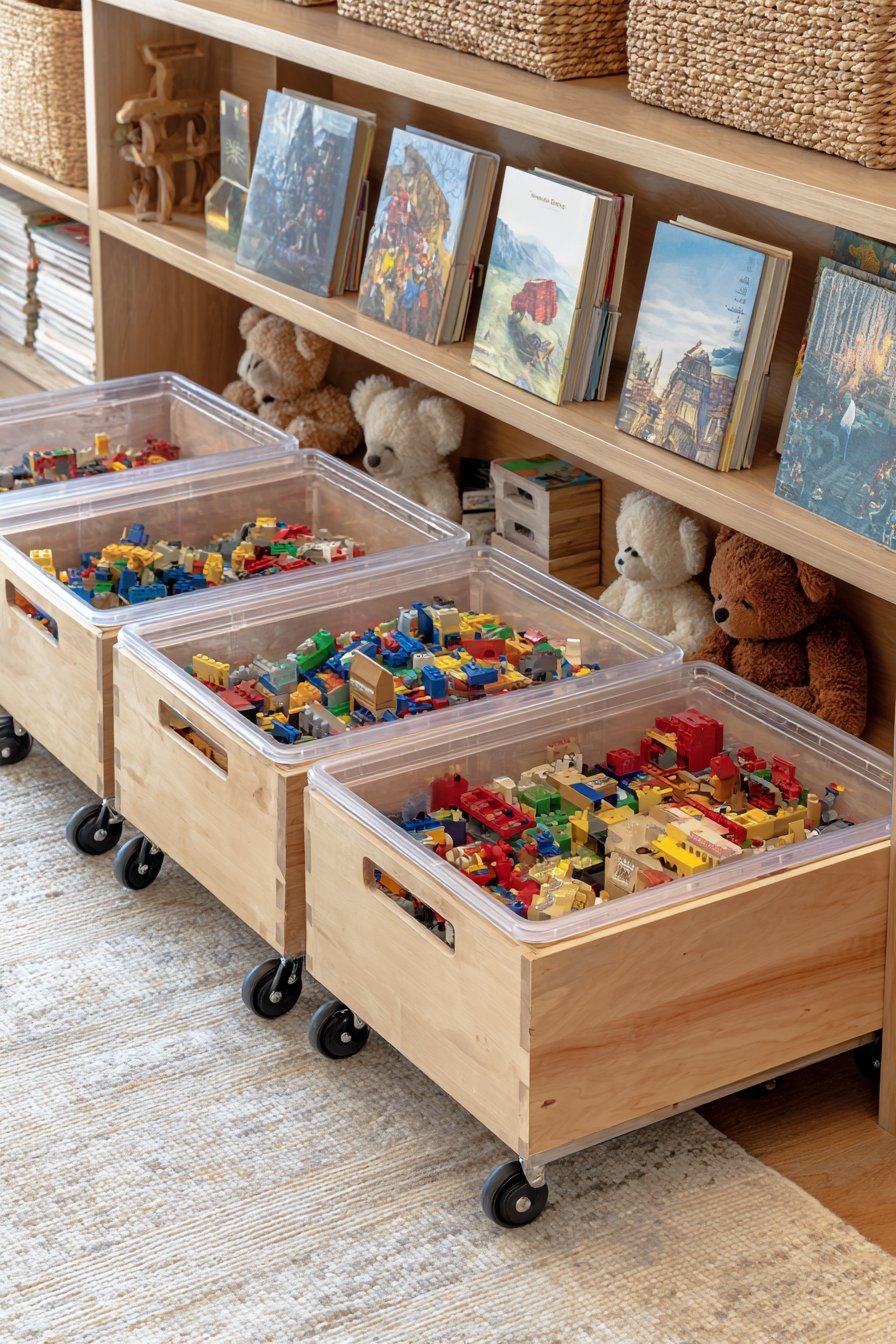
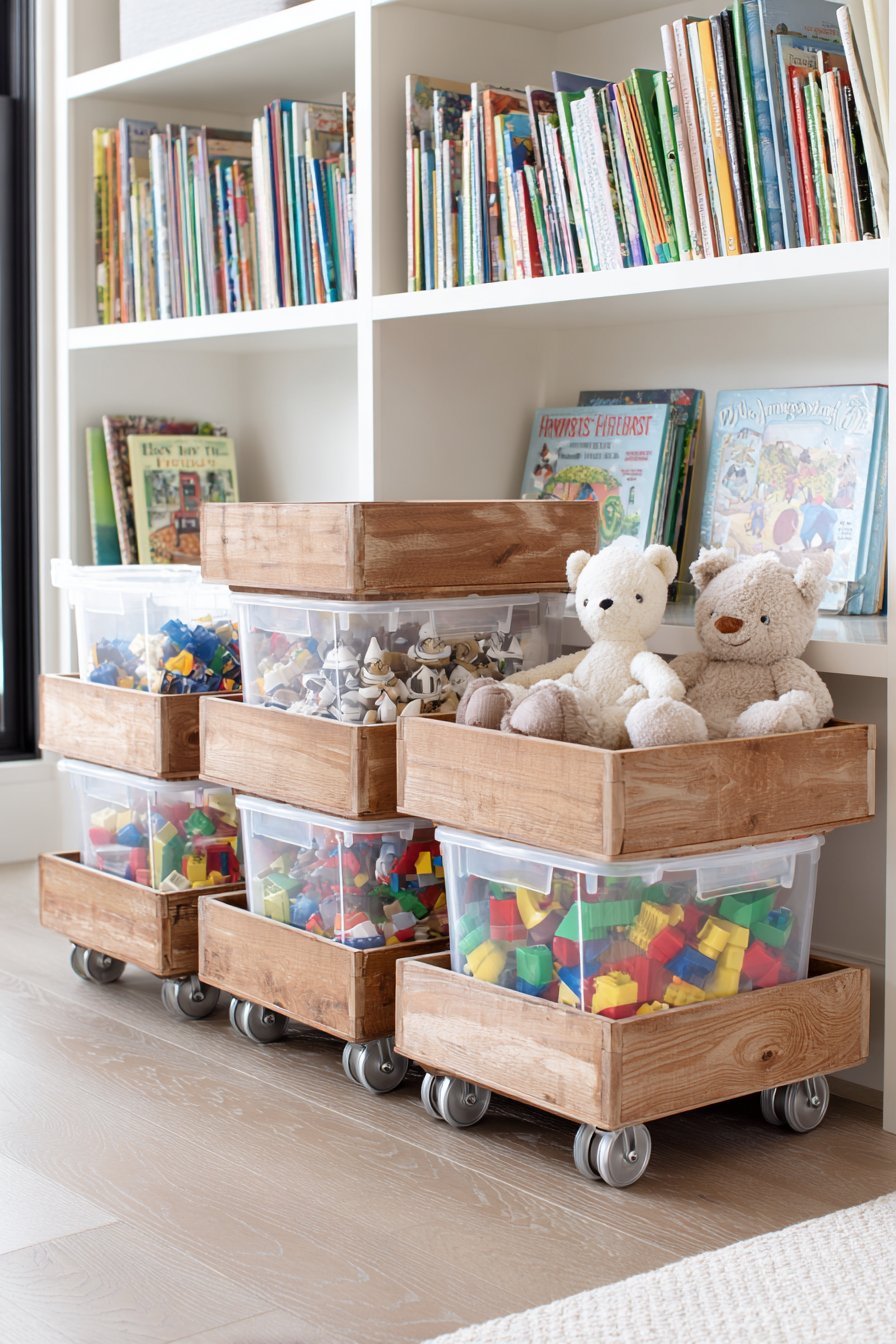
Practical playroom storage showcases rolling toy carts made from natural wood. Caster wheels provide easy mobility throughout the space. Open-sided carts display neatly organized building blocks and art supplies. Clear plastic bins within the carts keep smaller items contained.
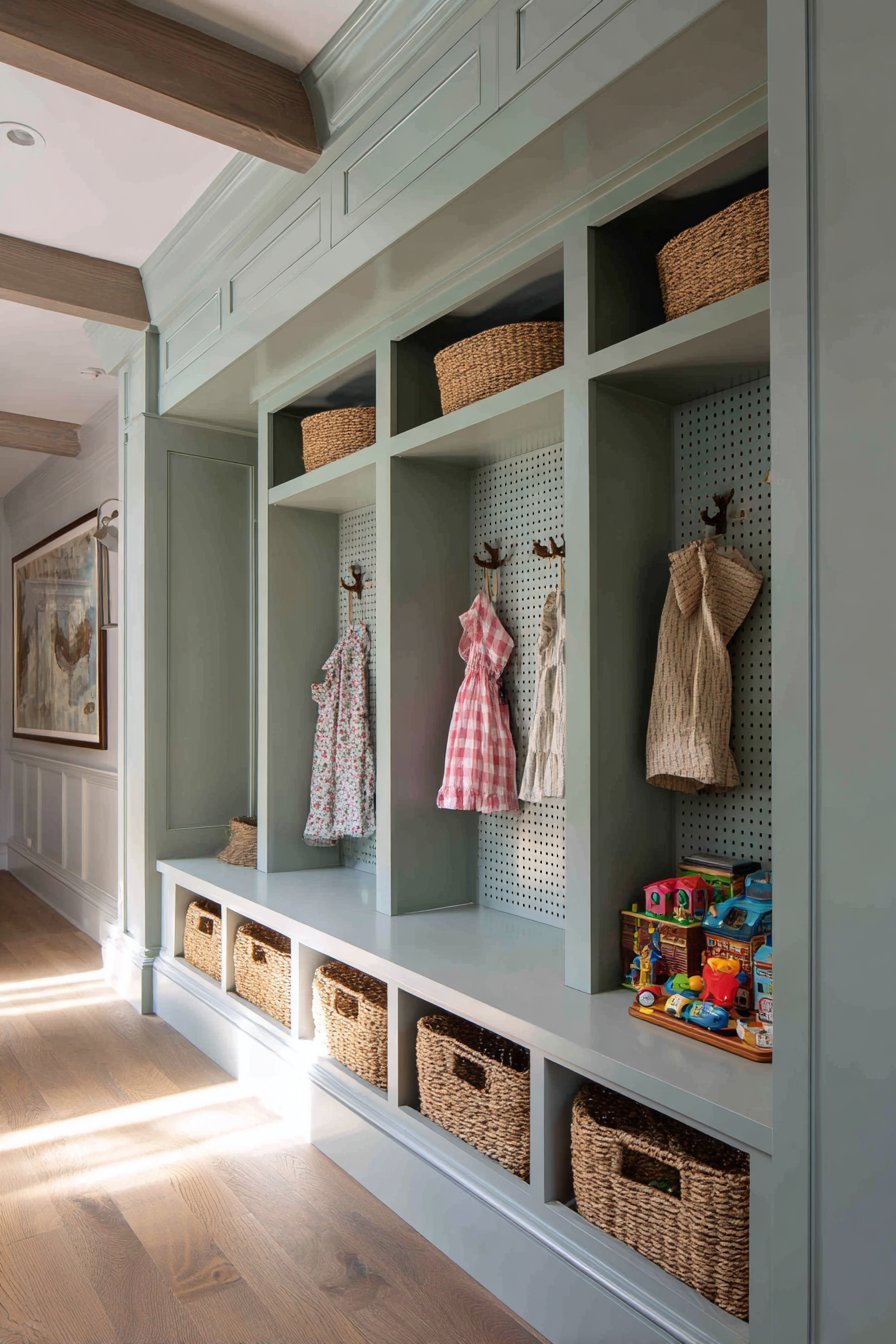
The wooden construction adds warmth to the organizational system. Children can roll carts to different play areas as activities change. A low white bookshelf beside the carts holds children’s books attractively. Covers facing forward create visual appeal and encourage reading habits.
Professional photography captures the accessible height perfect for independent child use. Balanced exposure emphasizes the clean organization system throughout. The mobility factor teaches children to clean up by moving toys to designated areas. This flexible approach adapts to changing play patterns and developmental stages.
Natural wood grain adds textural interest to the functional design. The carts nest together when not in use to save floor space. Multiple carts allow for category separation like blocks, dolls, and vehicles.
Key Design Tips:
- Choose carts with locking wheels for safety during use
- Select natural wood for durability and timeless appeal
- Use clear bins inside carts for easy content identification
- Keep cart height low for toddler and preschooler access
- Display books with covers forward to encourage selection
- Invest in quality casters that roll smoothly on various flooring
3. Custom Pegboard Storage Wall
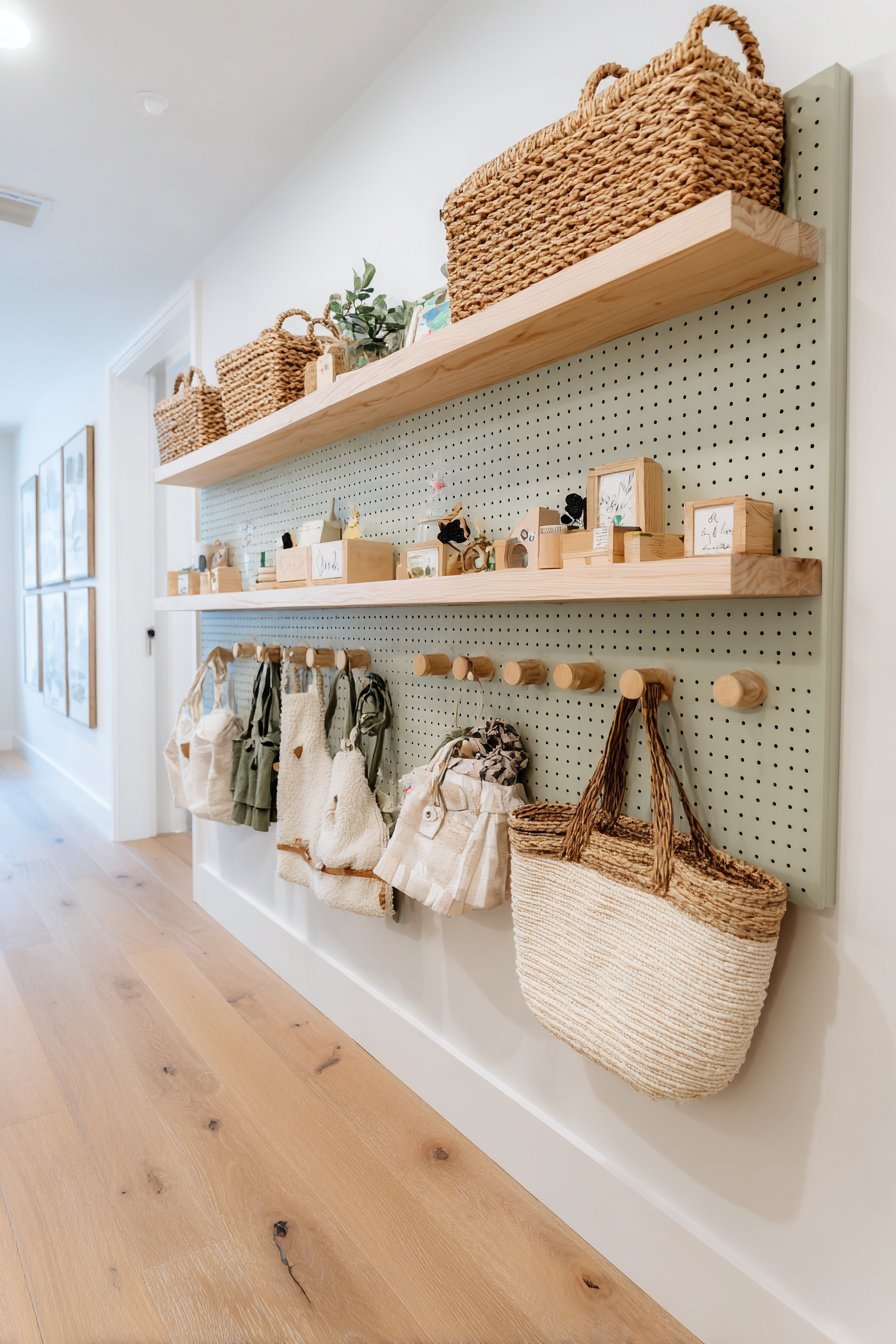
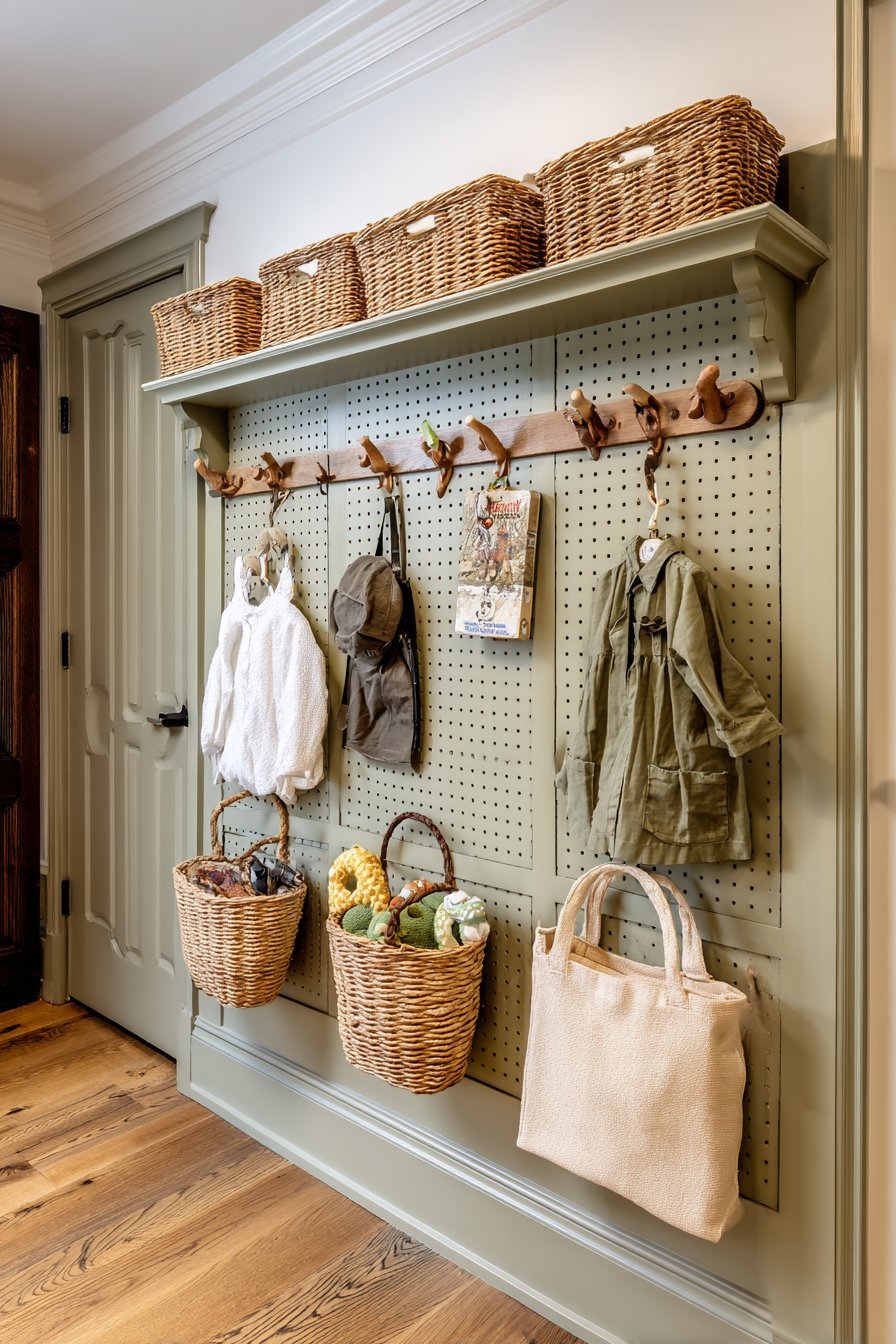
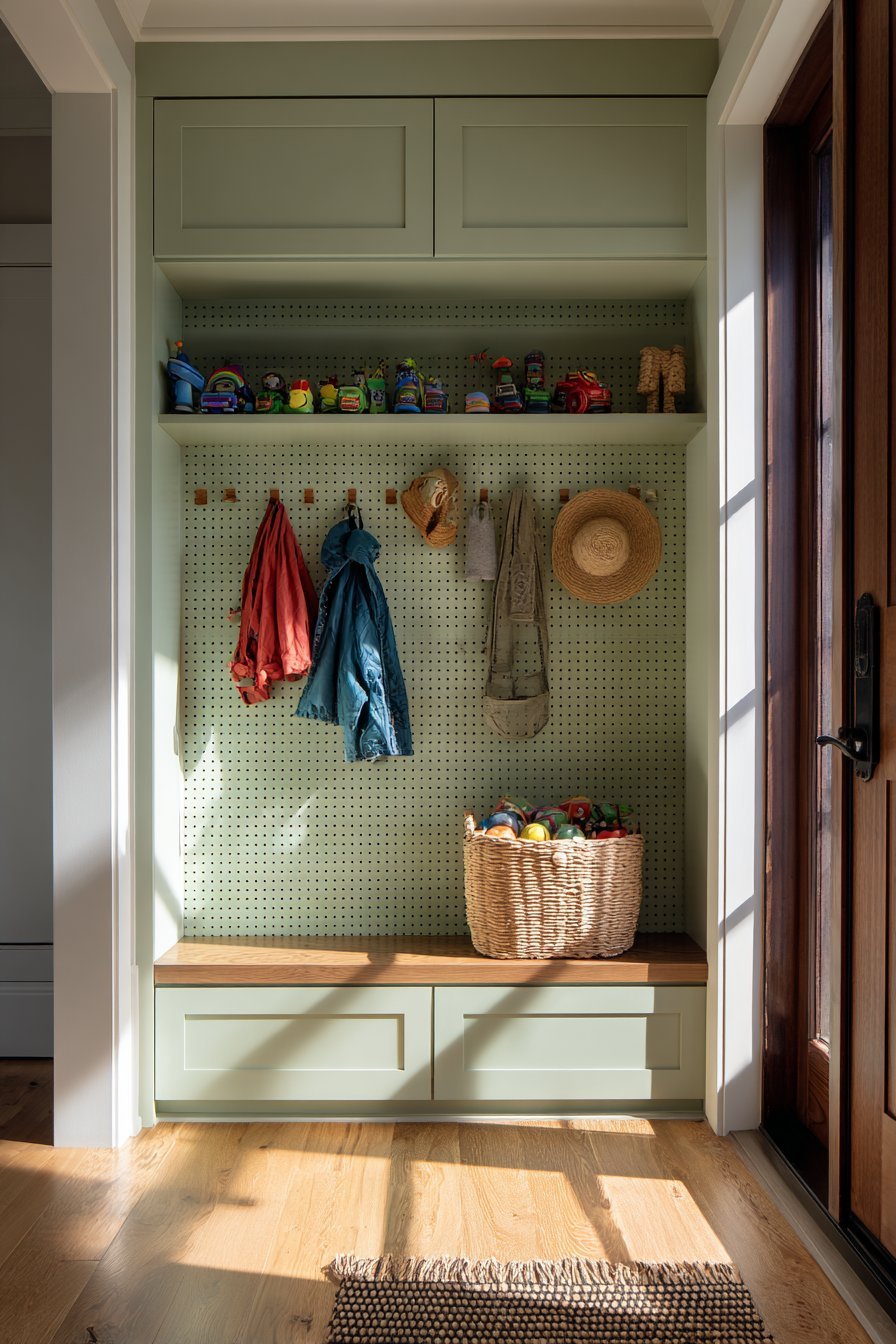
A playroom corner features a custom pegboard storage wall in soft sage green. Wooden pegs hold baskets filled with art supplies and small toys. Hooks display colorful dress-up costumes at child-appropriate heights. Small shelves attached to the pegboard showcase collectible toys beautifully.
The pegboard extends from floor to approximately four feet high. This height ensures children can reach everything independently without climbing. Natural pine flooring shows authentic wear from active play activity. The patina adds character rather than detracting from the design.
Detail-focused photography captures the texture and dimension of the pegboard system. Natural light creates subtle shadows that emphasize the three-dimensional storage. The reconfigurable nature allows parents to adjust as storage needs evolve. This adaptable solution grows with children through different developmental phases.
The soft sage green paint adds a calming element to the active space. Wooden pegs and natural materials create an organic, welcoming aesthetic. The vertical storage maximizes floor space for creative play activities.
Key Design Tips:
- Paint pegboard in calming colors rather than bright primaries
- Install at child height for maximum accessibility
- Use various peg accessories like hooks, baskets, and shelves
- Secure pegboard firmly to wall studs for safety
- Choose wooden pegs over metal for a softer look
- Rearrange configuration seasonally to refresh the space
4. Modular Cube Storage Units in L-Shape
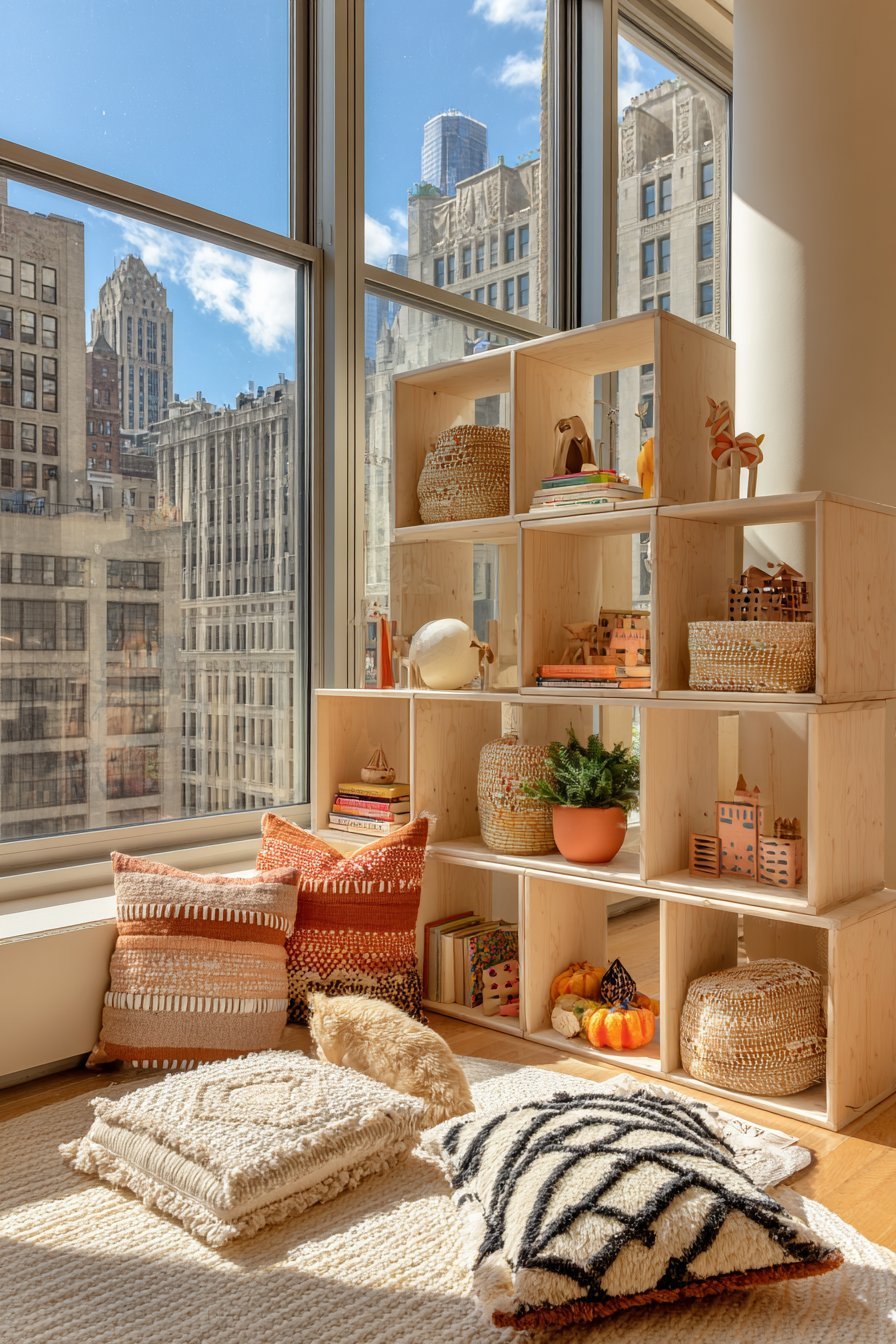
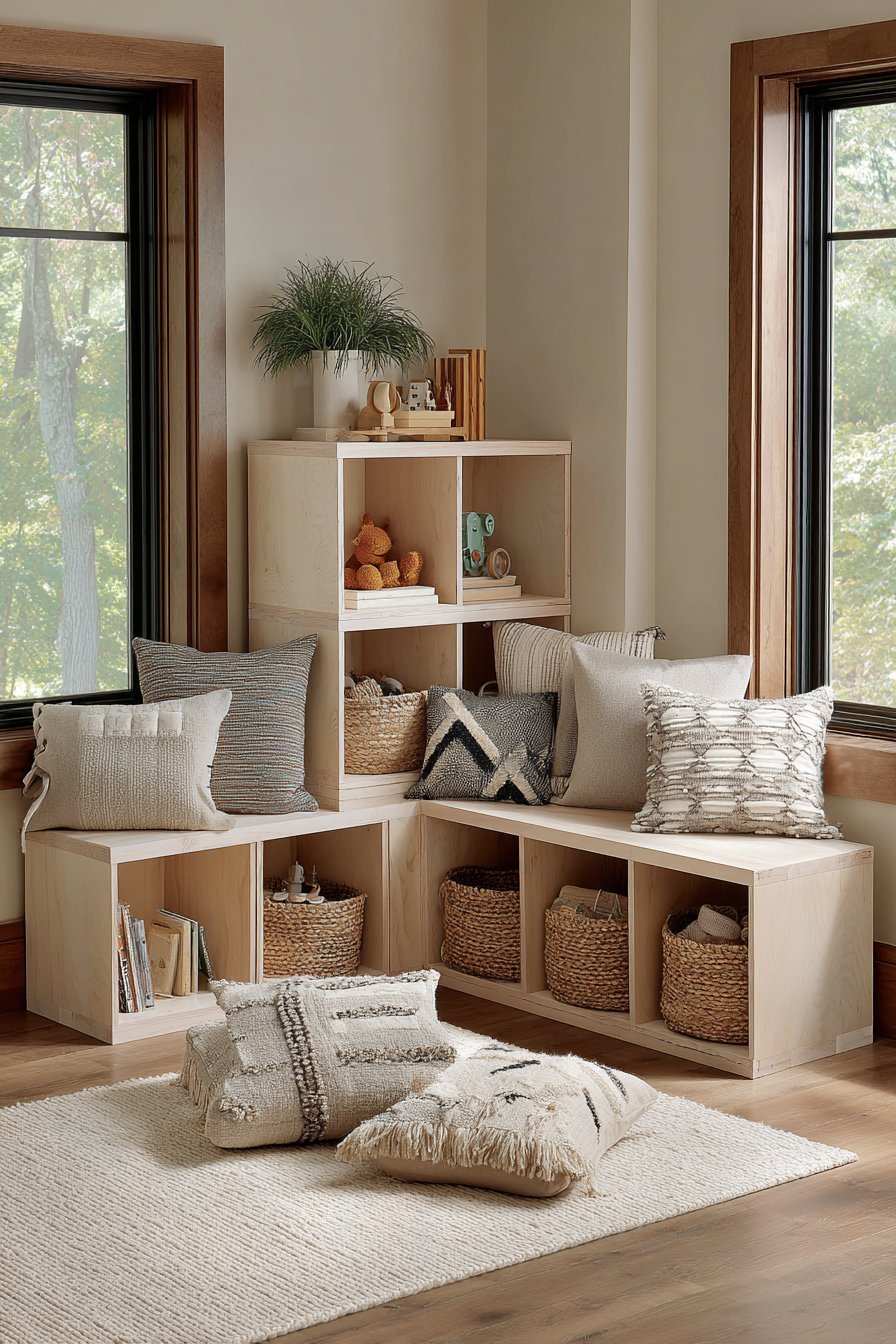
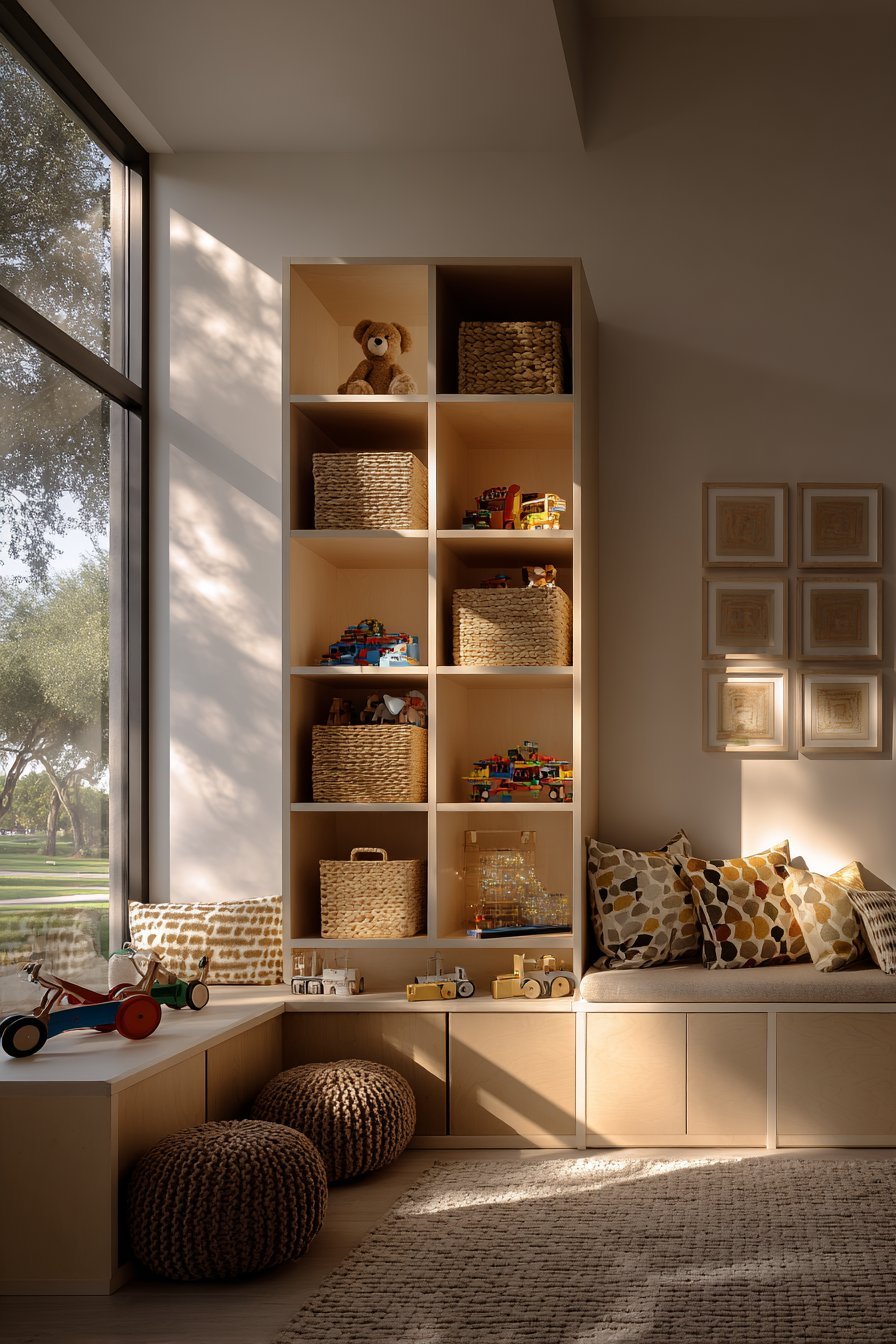
Modular cube storage units in natural birch wood form an L-shape configuration. Some cubes contain woven seagrass baskets for closed storage options. Others display toys on open shelves for easy selection. A cozy reading nook nestles within the arrangement with floor cushions.
The birch wood brings warmth and natural beauty to the organization system. Geometric patterned cushions add color and comfort to the reading area. The L-shape creates defined zones within the larger playroom space. This layout separates active play areas from quiet reading corners effectively.
Wide-angle architectural photography shows the versatile storage layout comprehensively. Morning sunlight streams through nearby windows highlighting warm wood tones. The organized toy collection appears intentional rather than cluttered or overwhelming. The modular nature allows reconfiguration as family needs change over time.
Woven seagrass baskets add textural contrast to the smooth wood surfaces. The natural materials create a cohesive, organic aesthetic throughout the space. Open shelving encourages children to see and select toys independently.
Key Design Tips:
- Choose modular units that can be reconfigured as needs change
- Mix open and closed storage with basket inserts
- Create defined zones using furniture placement
- Select natural wood finishes for timeless appeal
- Add comfortable floor cushions for reading areas
- Ensure units are properly anchored to prevent tipping
5. Wall-Mounted Floating Shelves at Varied Heights
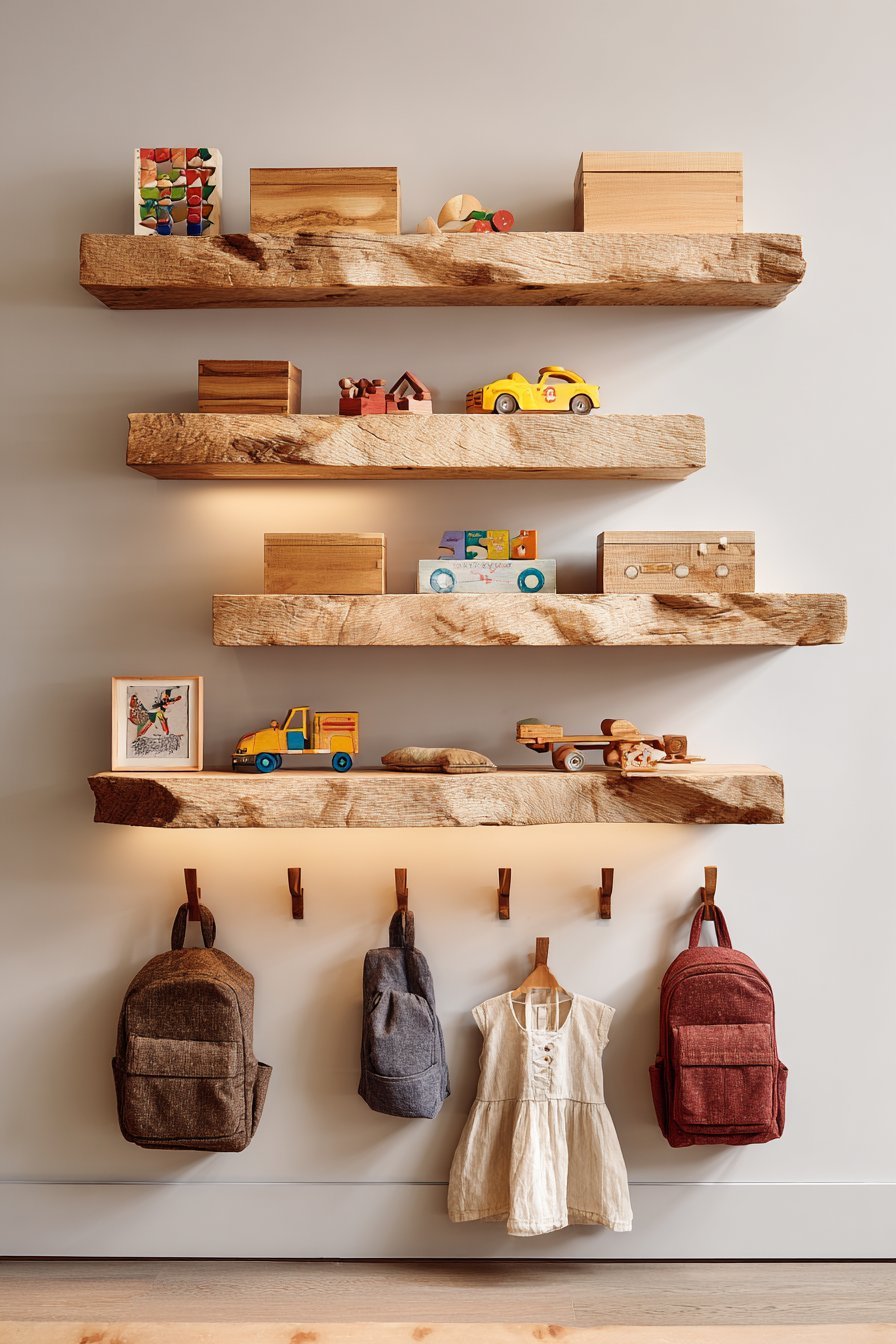
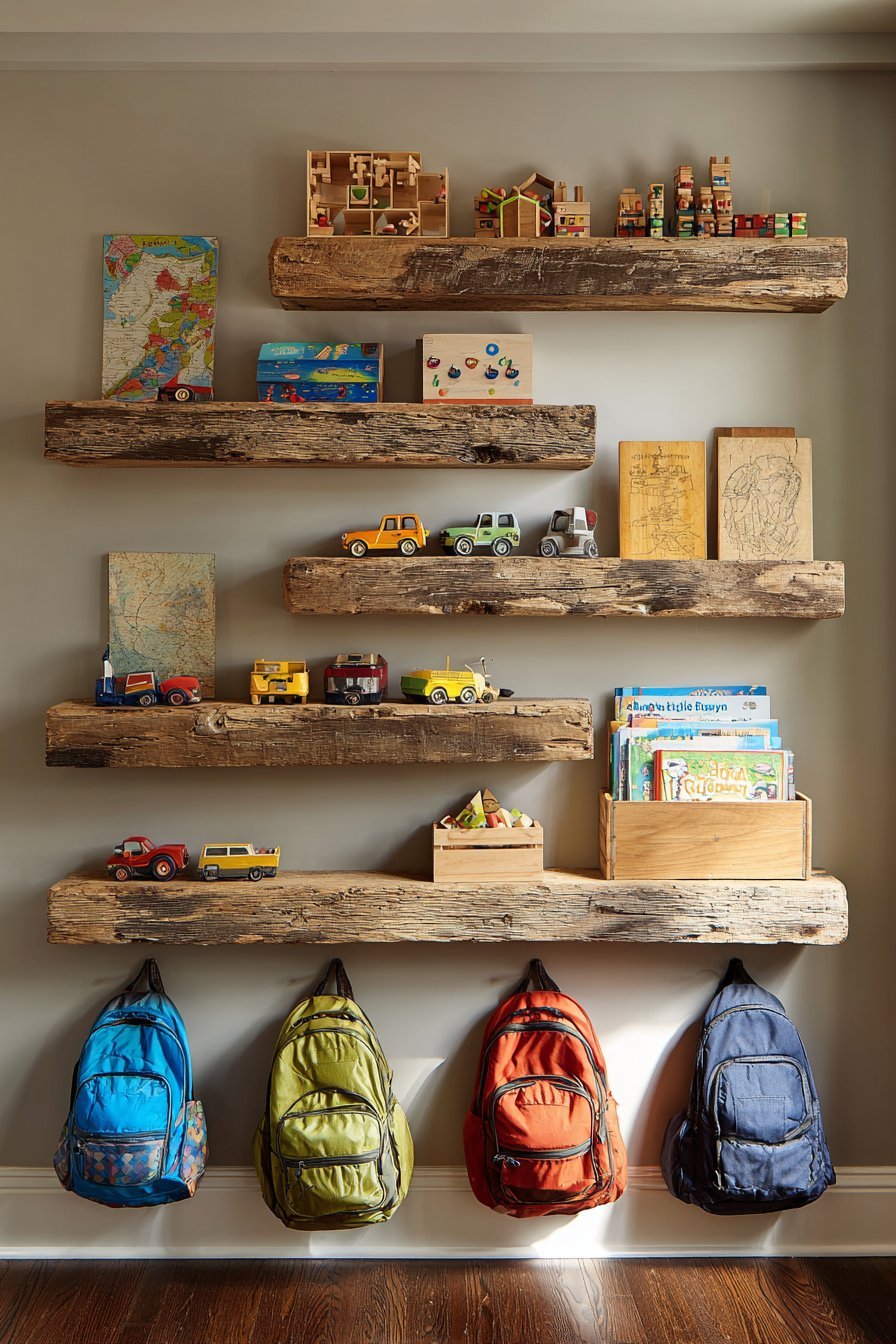
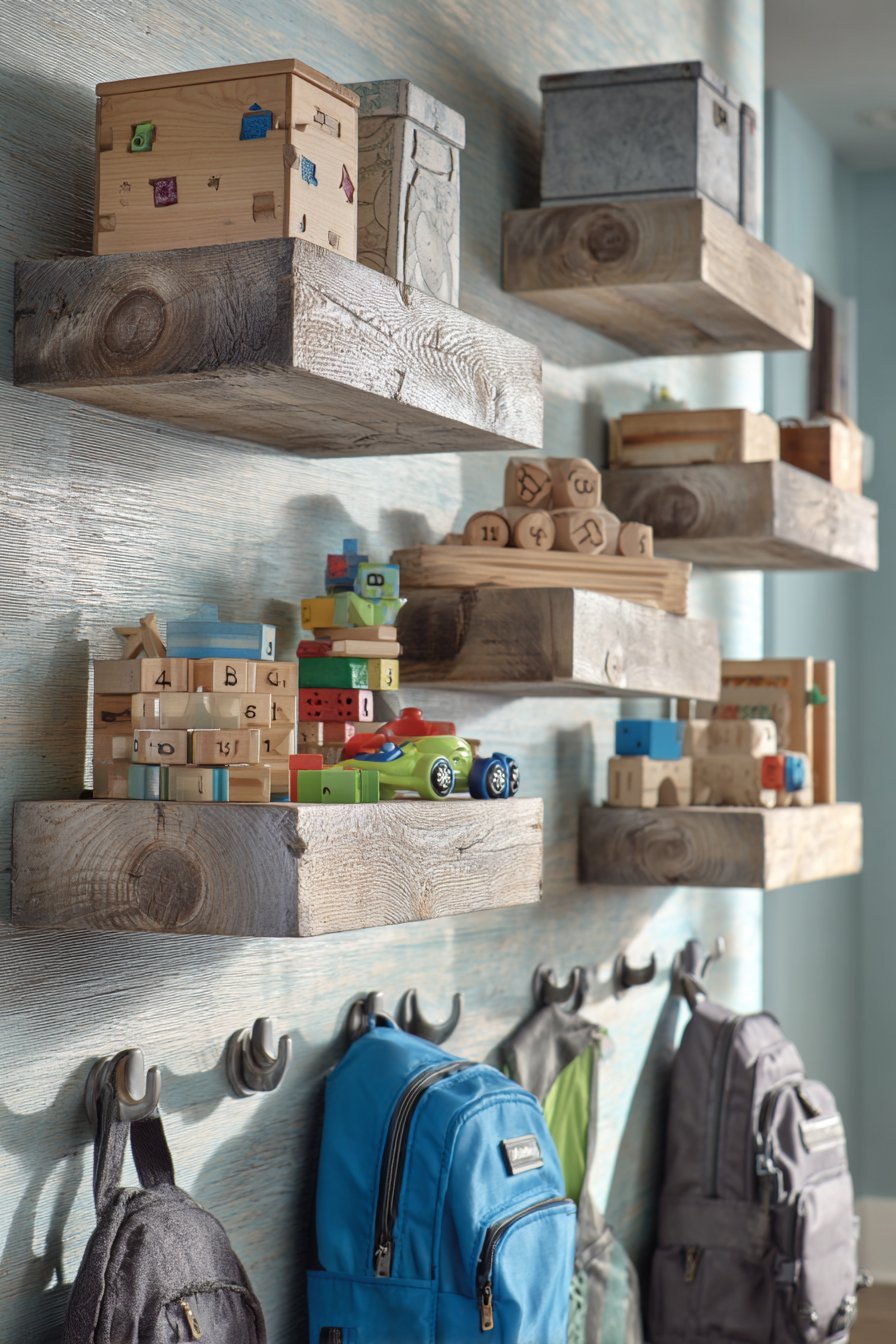
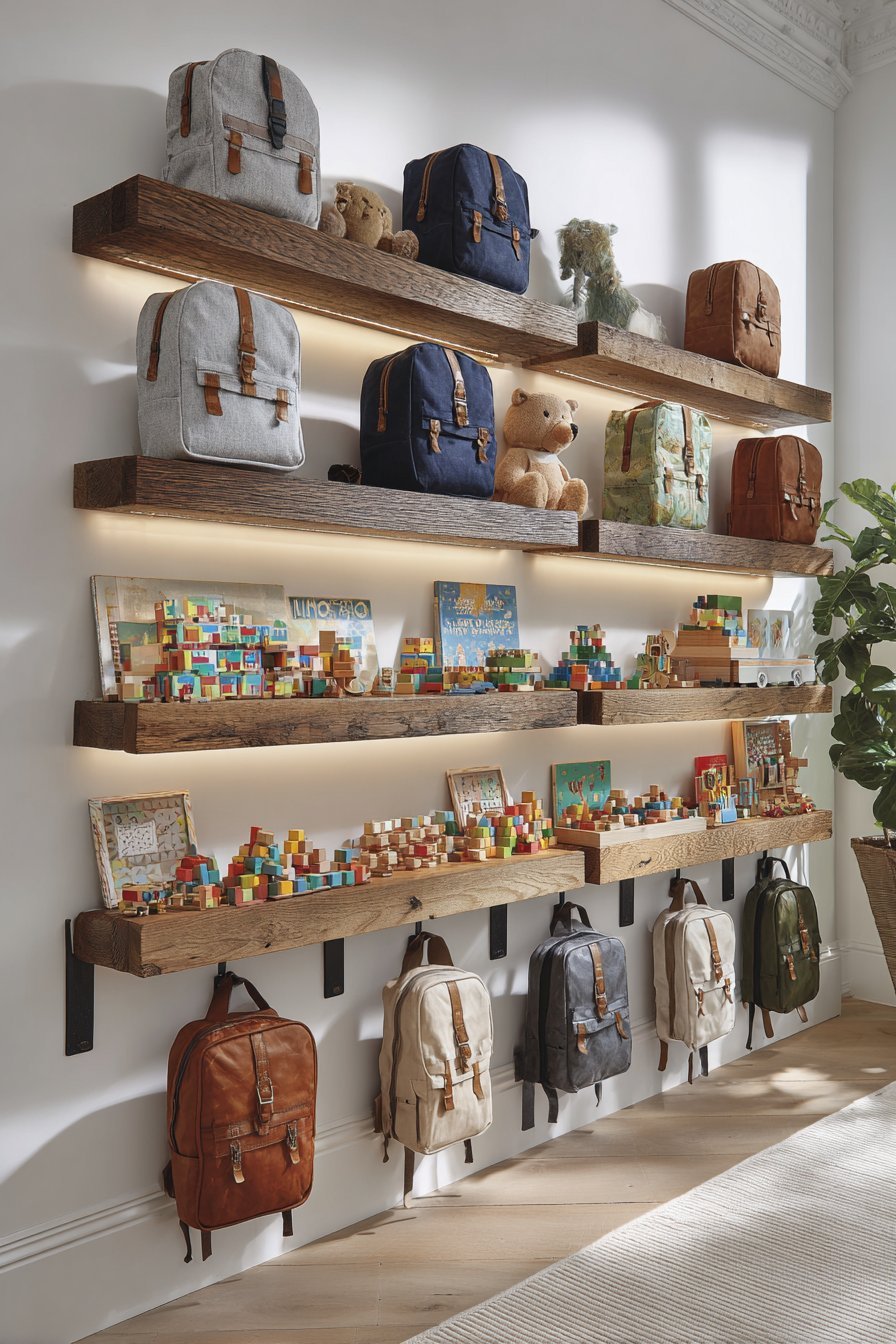
Wall-mounted floating shelves in varying lengths showcase reclaimed oak. Visible grain texture adds character and natural beauty throughout. The shelves display curated educational toys and wooden puzzles intentionally. Decorative storage boxes at different heights accommodate growing children’s needs.
Below the shelves, wall-mounted hooks hold backpacks and dress-up accessories. This vertical storage solution maximizes valuable floor space dramatically. Items remain visible and accessible without cluttering horizontal surfaces. The system encourages children to return items to designated spots easily.
Interior design photography with soft diffused lighting emphasizes the vertical approach. The reclaimed oak brings history and sustainability to modern organization. Different shelf lengths create visual interest along the wall plane. This arrangement proves that storage can be both functional and aesthetically pleasing.
The varied heights allow parents to place age-appropriate items within reach. As children grow, items can move to different shelf levels seamlessly. The reclaimed wood adds warmth that contrasts beautifully with painted walls.
Key Design Tips:
- Stagger shelf heights for visual interest and functionality
- Use reclaimed wood for sustainable design choices
- Install hooks below shelves for hanging storage
- Curate displayed items to avoid cluttered appearance
- Secure shelves with proper wall anchors and weight ratings
- Rotate displayed toys seasonally to maintain interest
6. Practical Lift-Top Storage Bench
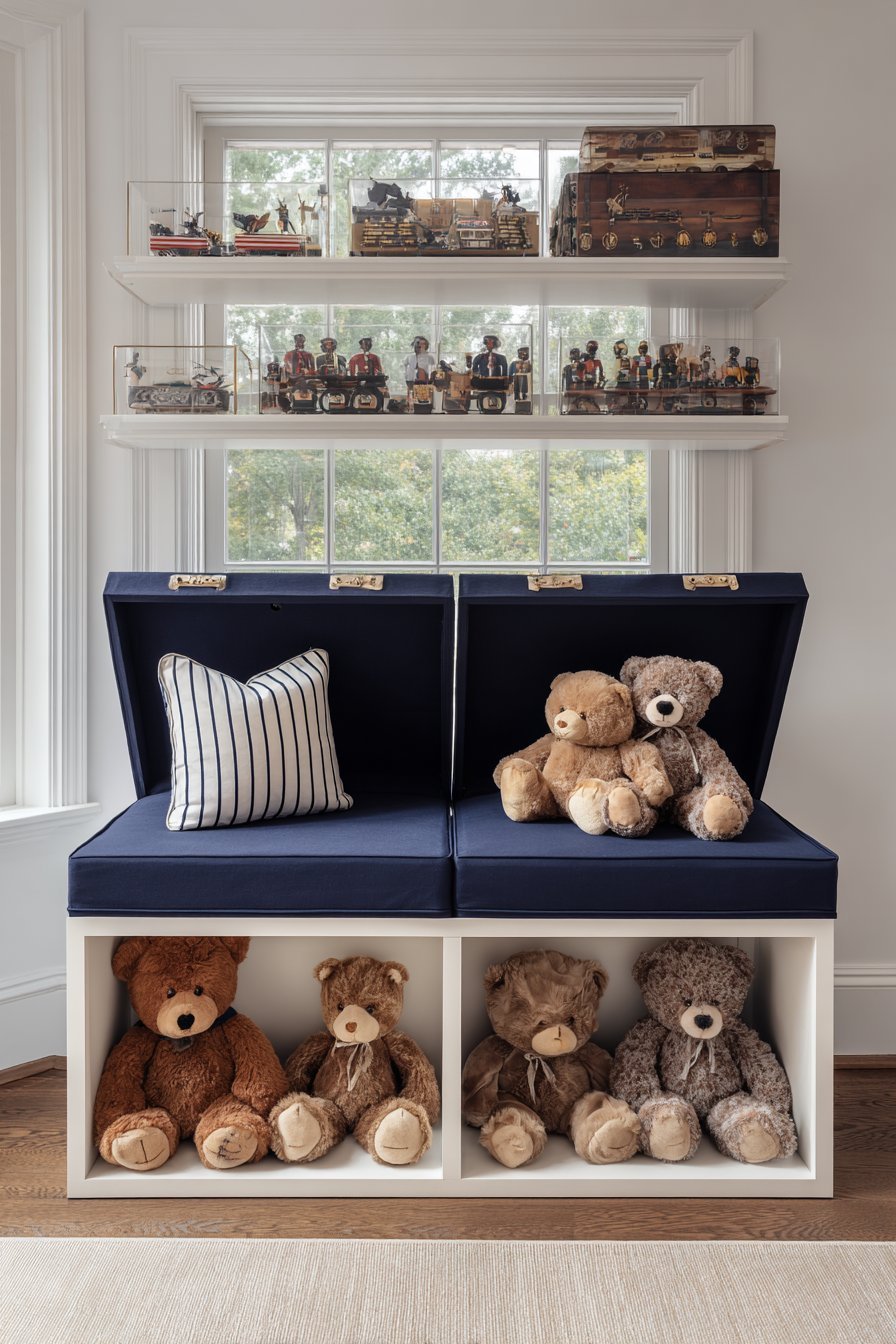
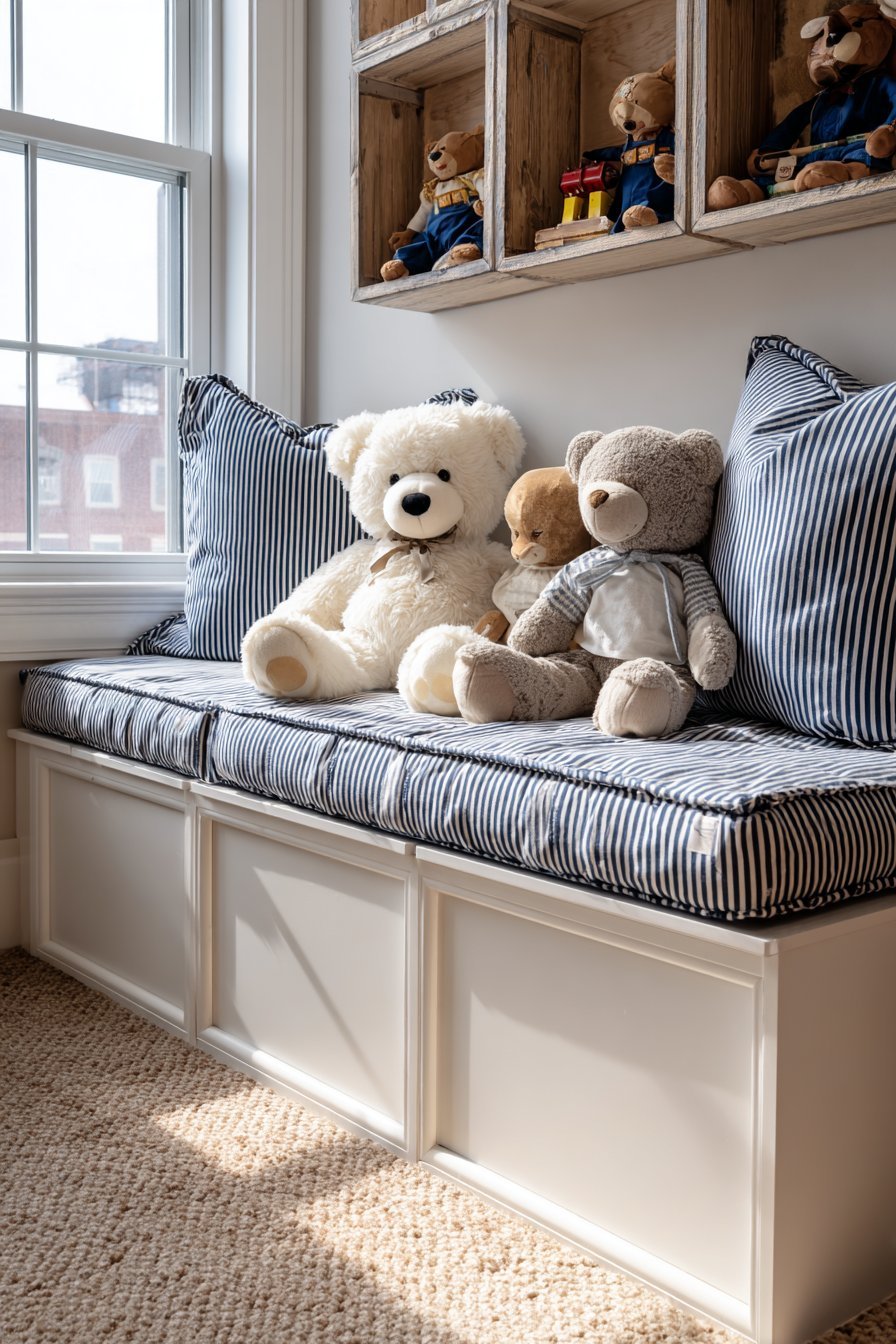
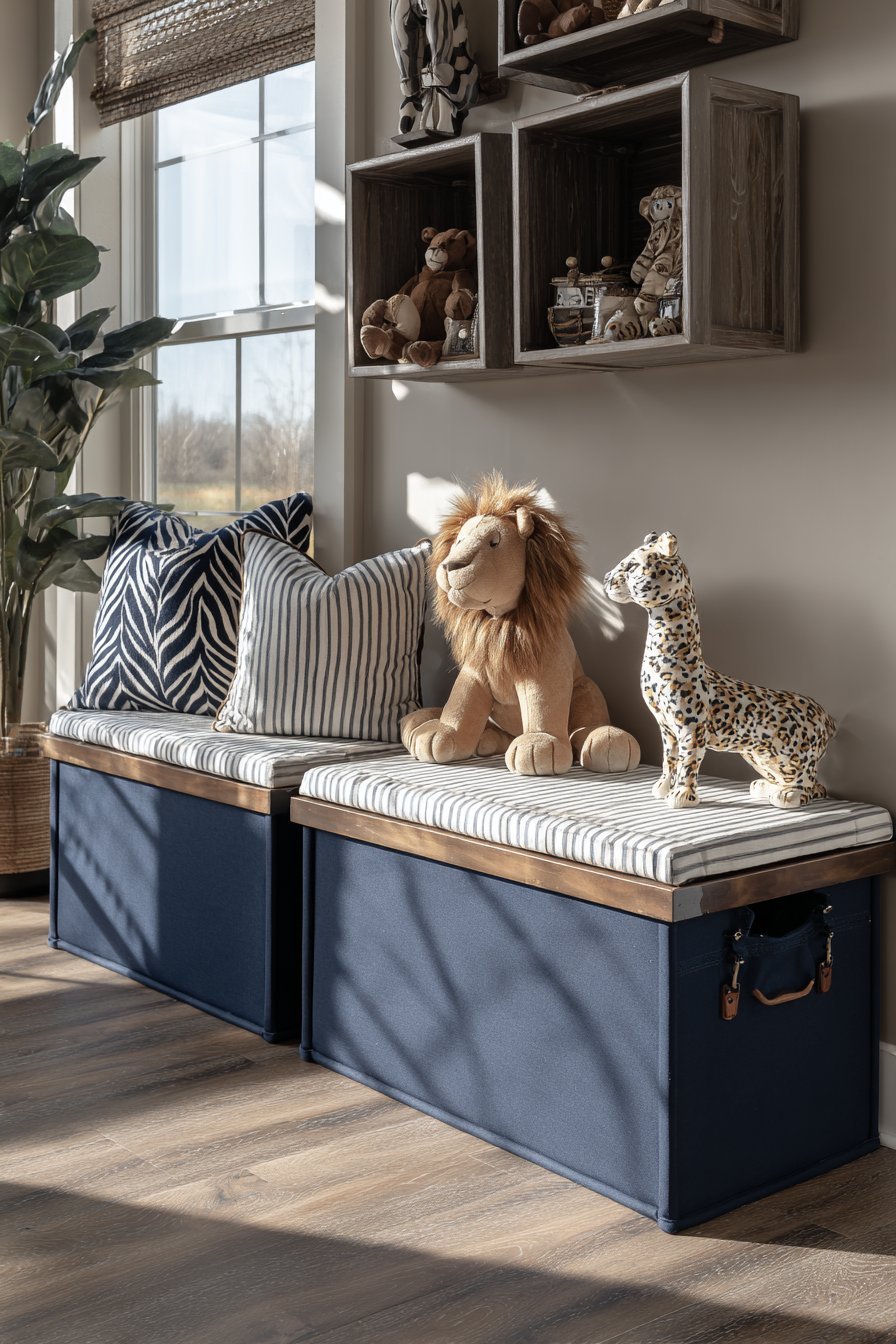
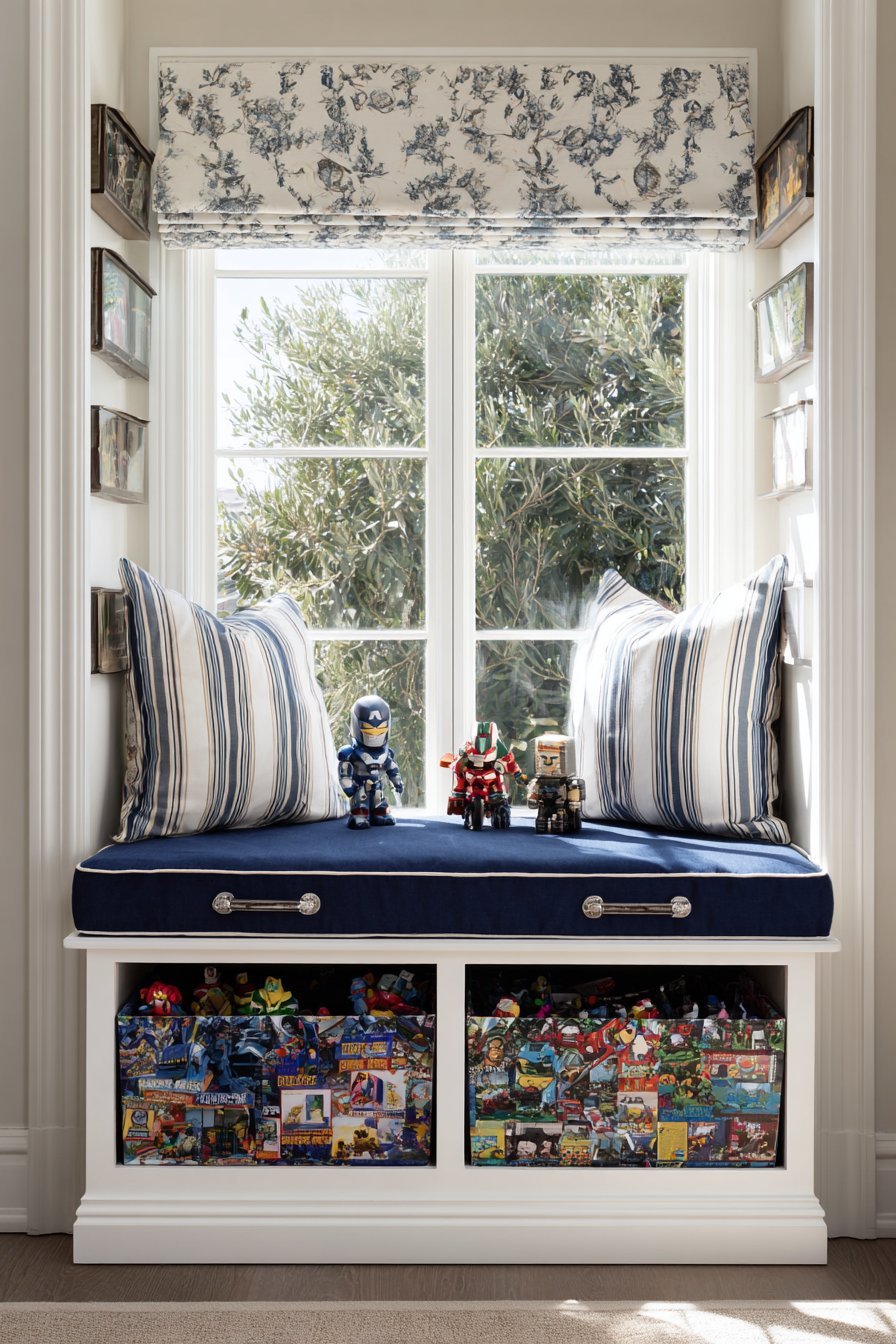
A practical playroom storage bench features lift-top compartments for hidden storage. Durable navy canvas fabric upholsters the functional furniture piece. The bench sits beneath a window with natural light flooding the area. Above the bench, wall-mounted shadow boxes display collectible toys safely.

The bench top features removable cushions in complementary striped fabric patterns. Comfortable seating during playtime serves dual purposes beautifully. Foam padding provides comfort while maintaining practical durability for active children. The navy canvas withstands daily wear while maintaining its attractive appearance.
Professional interior photography captures the dual-function furniture piece comprehensively. Attention to fabric texture and storage capacity highlights quality construction. The lift-top mechanism operates smoothly for young children to manage independently. Shadow boxes above keep special collections safe while remaining visible and appreciated.
The window placement provides natural task lighting for reading or crafts. The bench creates a dedicated spot for quiet activities within the playroom. Navy fabric hides stains better than lighter colors while remaining stylish.
Key Design Tips:
- Choose durable upholstery fabrics that resist stains and wear
- Install soft-close hinges on lift-top compartments for safety
- Position bench near windows for natural lighting benefits
- Add removable cushions for easy cleaning and maintenance
- Display special collections in shadow boxes above seating
- Select colors that complement overall room design scheme
7. DIY Galvanized Metal Bucket Storage
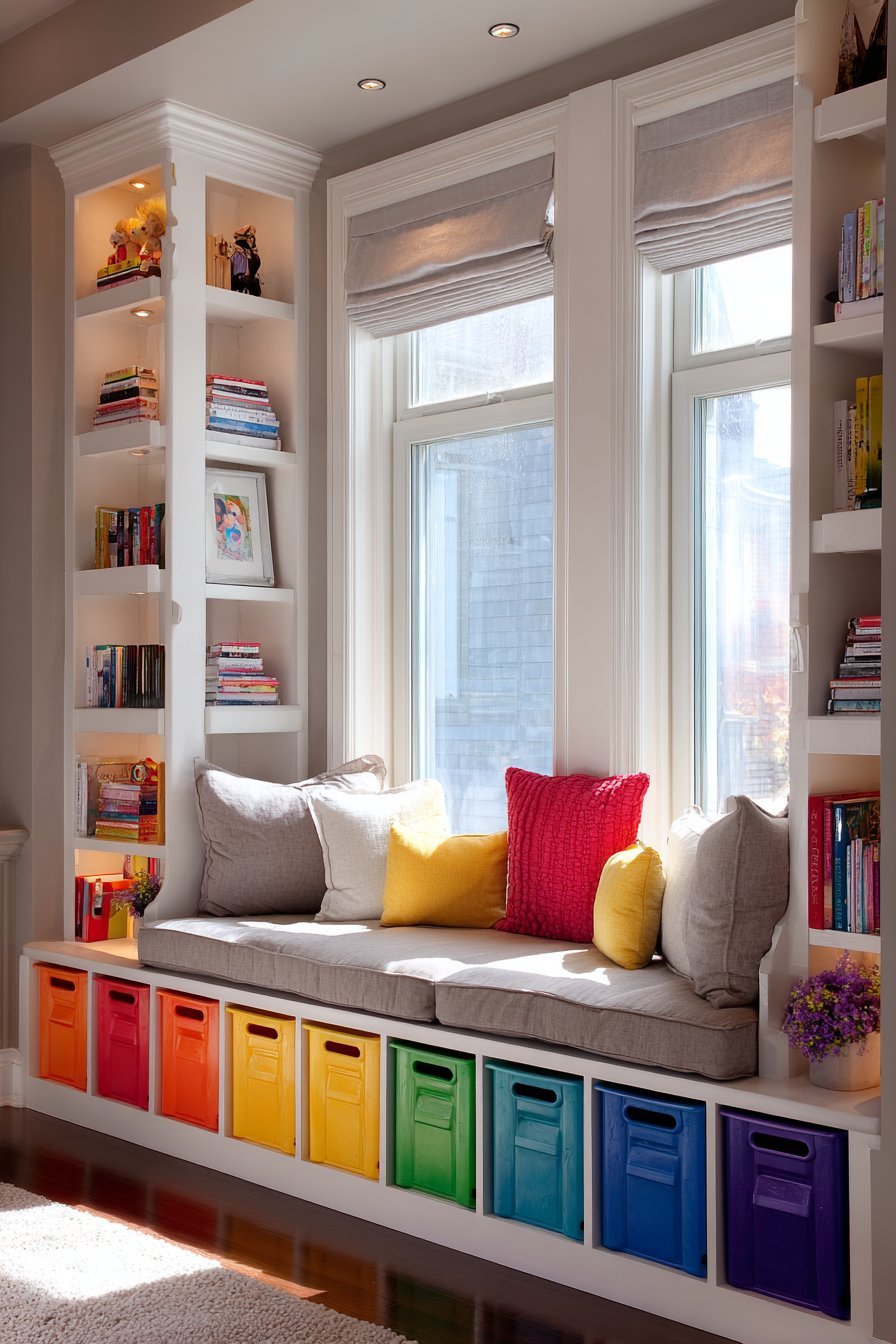
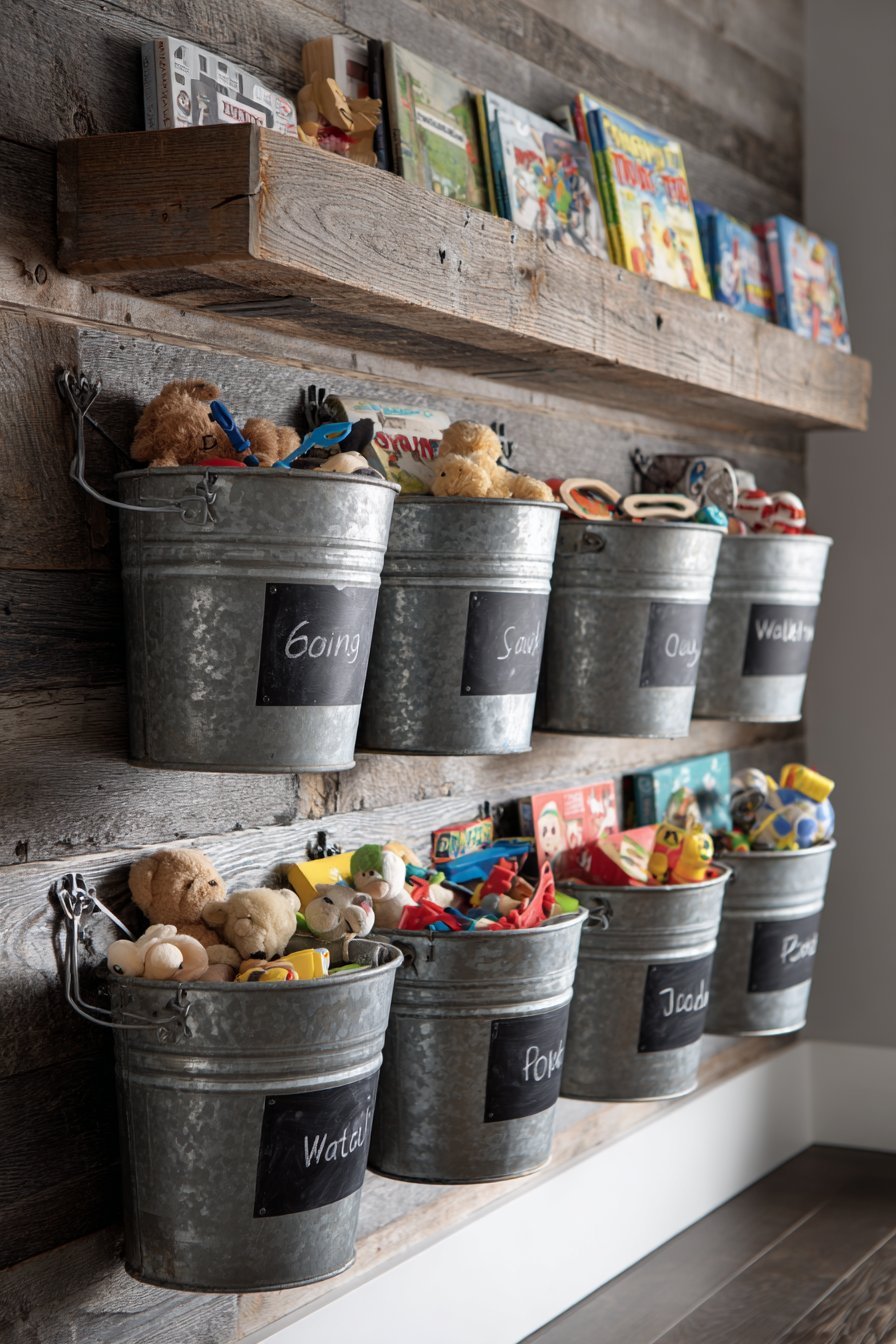
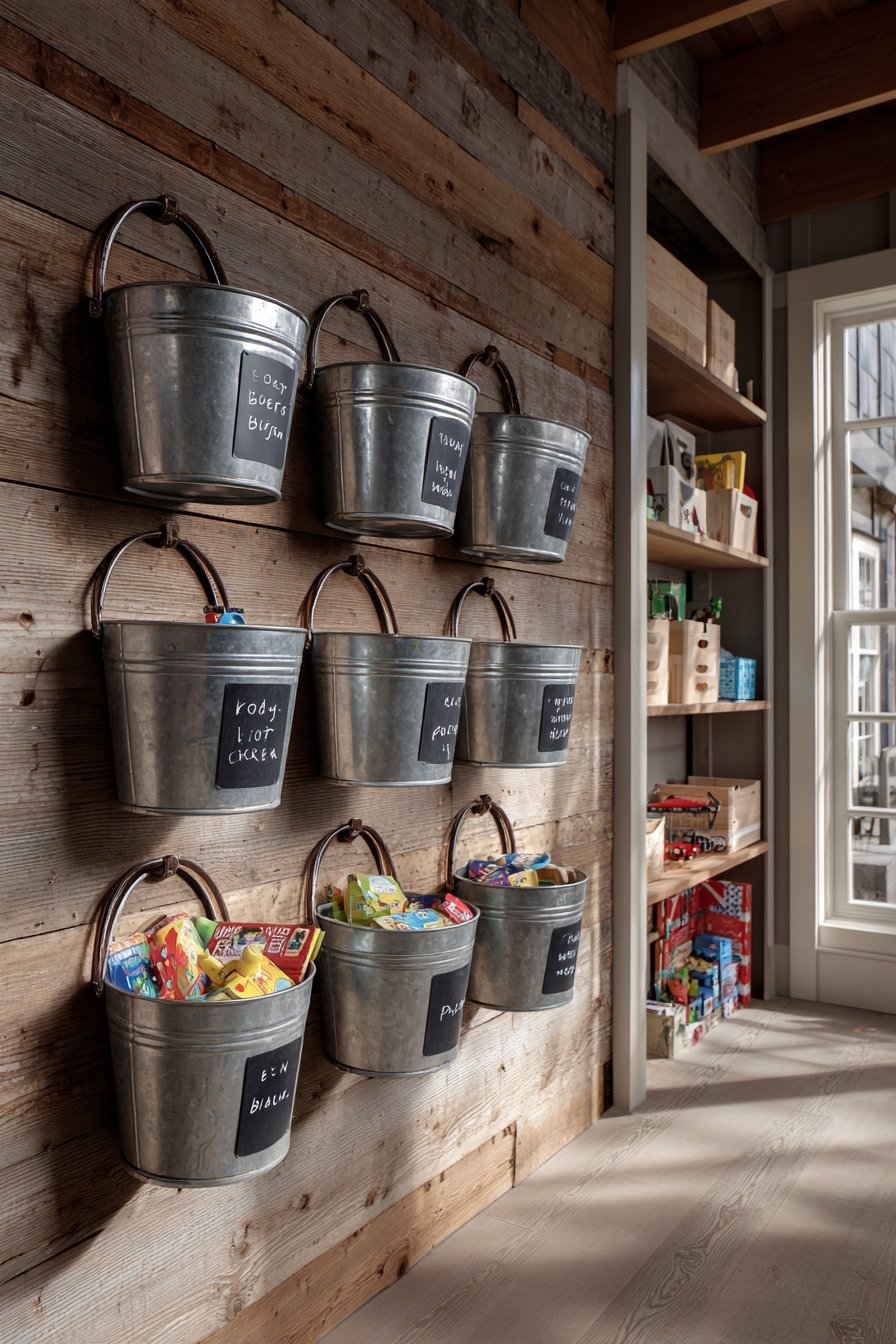
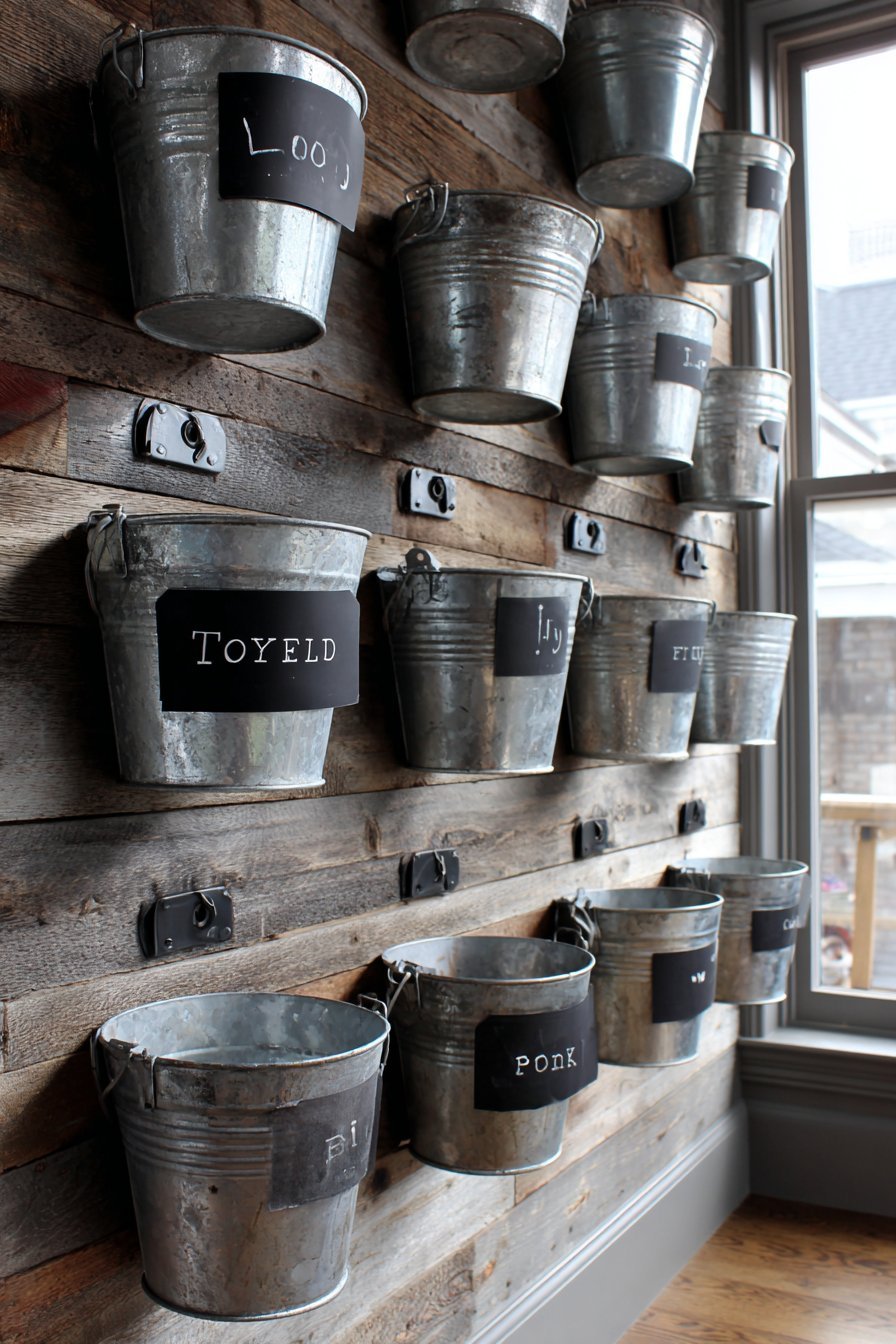
A playroom showcases creative DIY storage using galvanized metal buckets. Buckets mount on wooden plank walls at various functional heights. Chalkboard paint tags label each bucket for different toy categories. The rustic industrial aesthetic pairs beautifully with neutral color palettes.
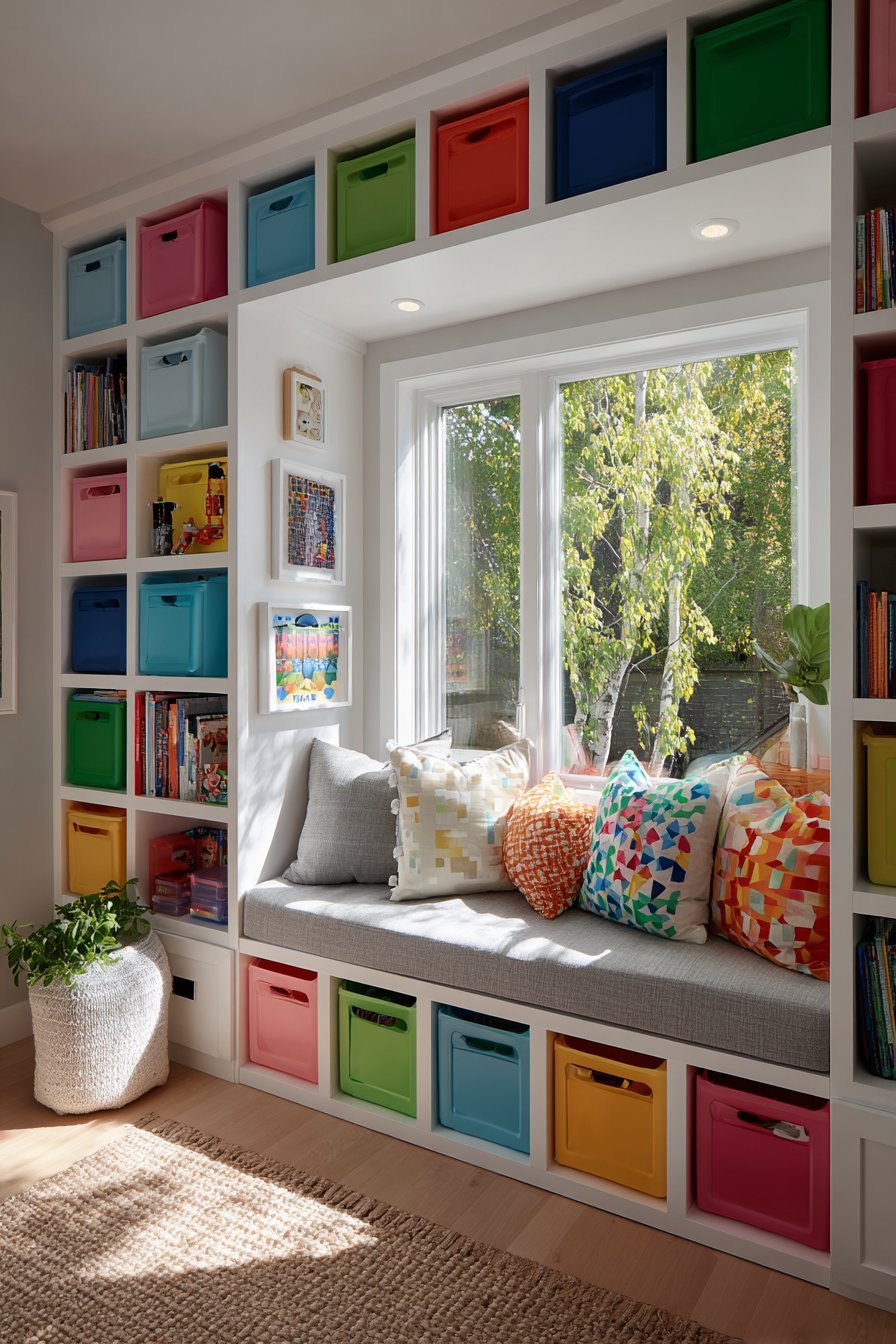
Gray and white tones create a sophisticated backdrop for children’s spaces. Natural light from side windows creates gentle highlights on metal surfaces. The repurposed everyday items become functional playroom storage inexpensively. This creative approach demonstrates that organization doesn’t require expensive systems.
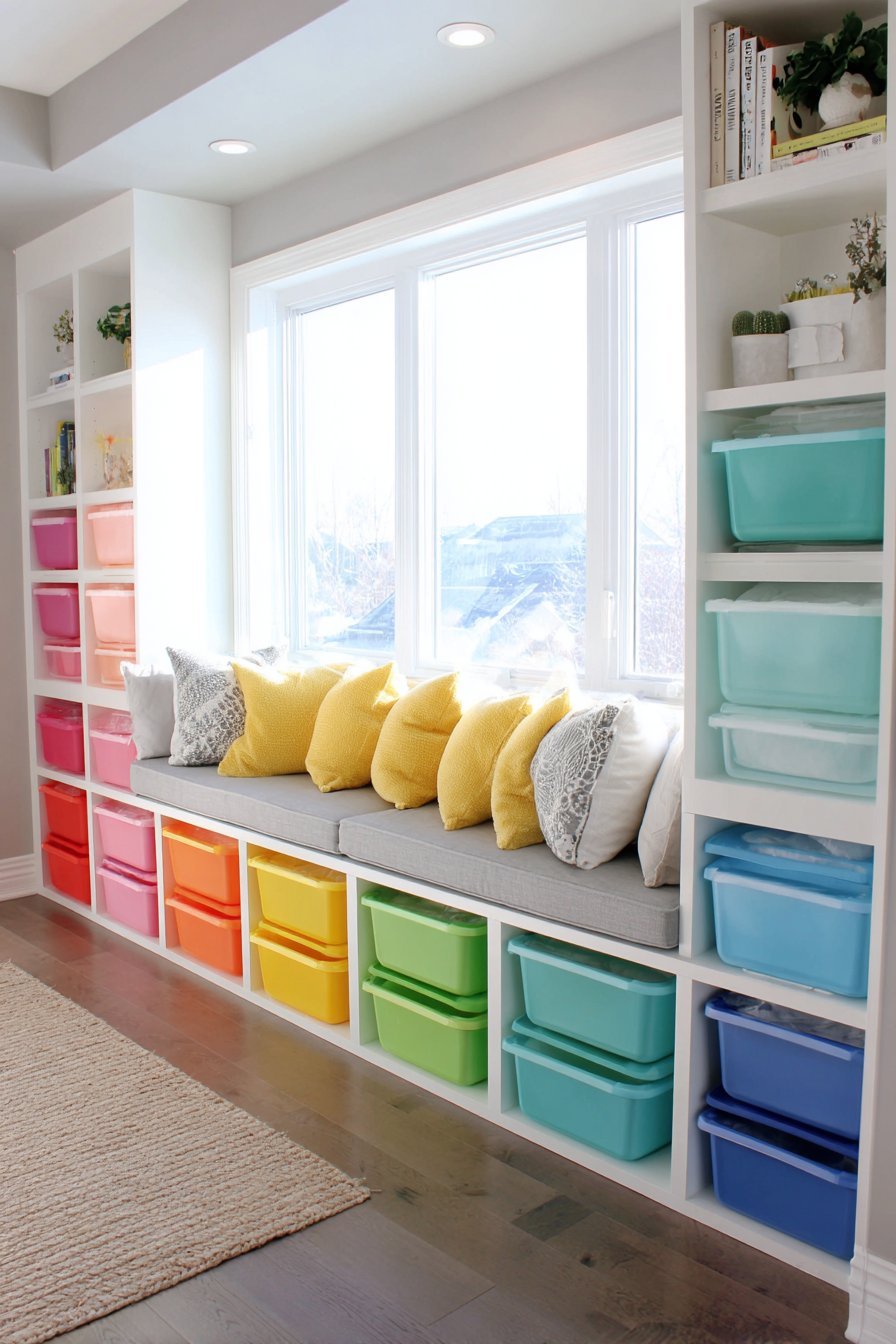
Interior design photography emphasizes the inventive repurposing of common materials. The industrial aesthetic appeals to modern and farmhouse design preferences equally. Chalkboard labels can be updated as toy collections and interests change. This flexibility makes the system adaptable throughout childhood development stages.
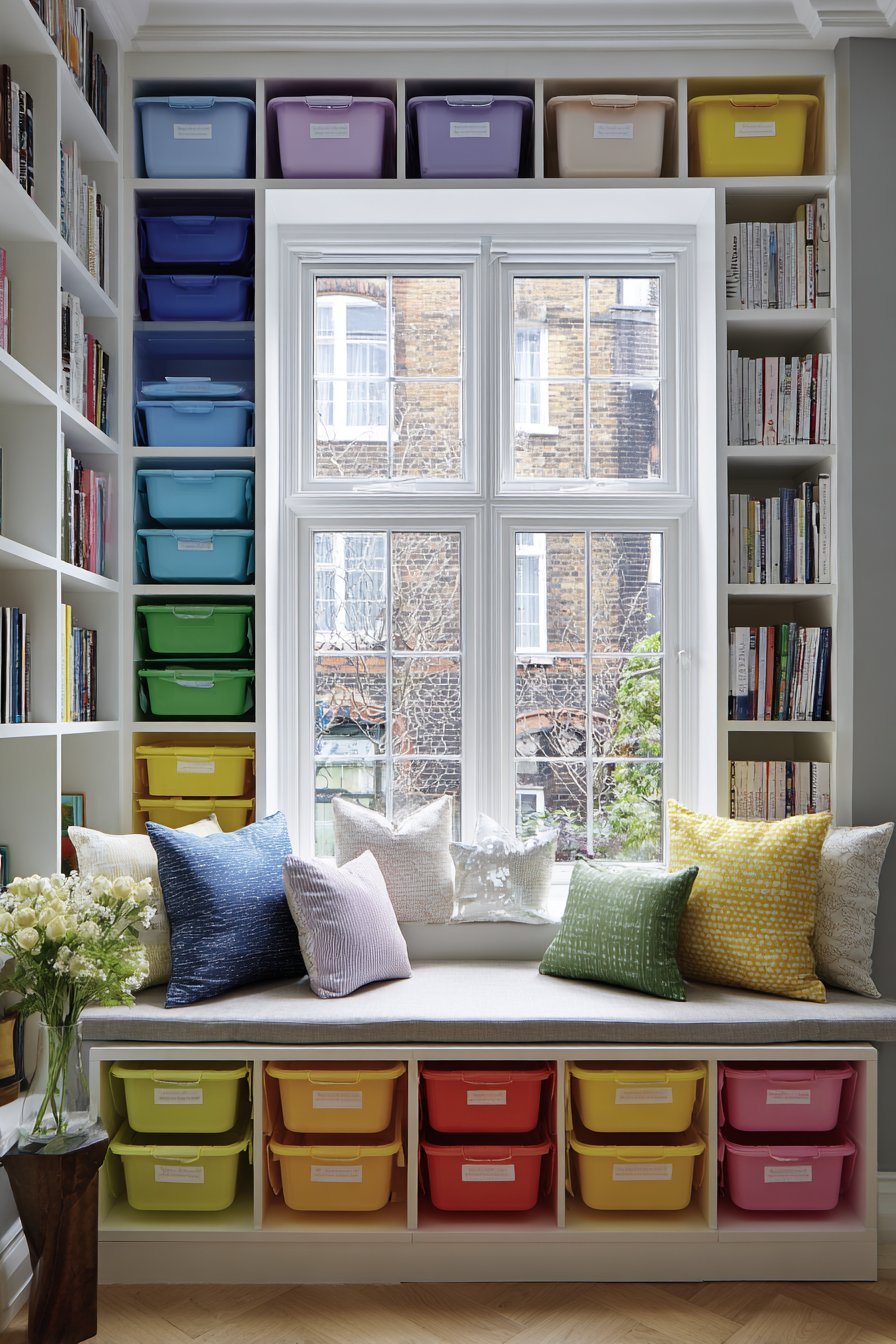
The metal buckets are lightweight enough for children to remove and carry. The rustic finish complements natural wood and neutral paint colors beautifully. The DIY aspect allows for customization to specific space requirements.
Key Design Tips:
- Source galvanized buckets from hardware or farm supply stores
- Mount securely with appropriate weight-bearing hardware
- Use chalkboard paint for easily updatable labels
- Stagger heights to accommodate different toy sizes
- Combine with wooden elements for warmth and texture
- Ensure bucket edges are smooth to prevent injury
8. IKEA-Style Rainbow Bin Organization
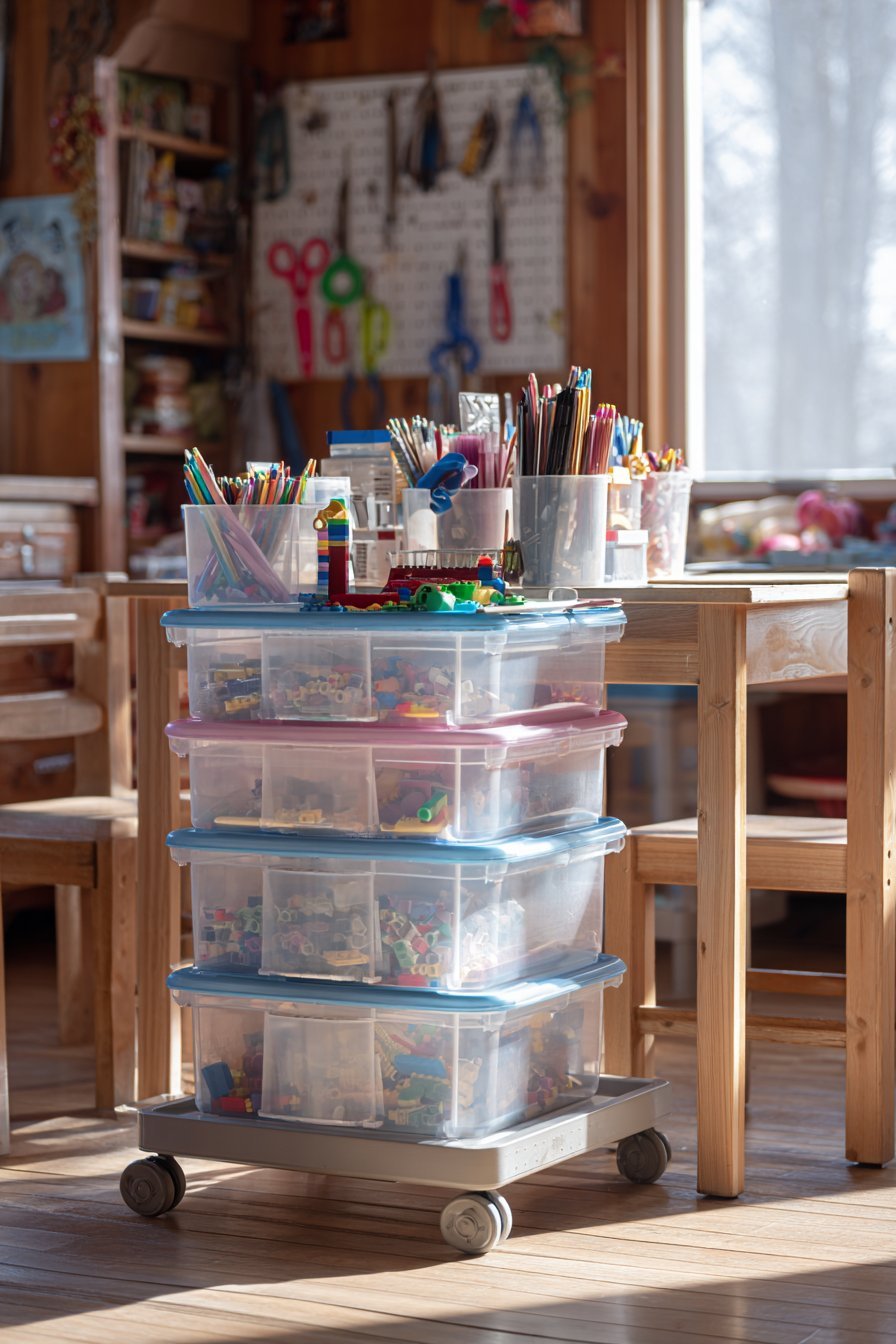
A playroom storage wall features systematic organization with colorful plastic bins. White frames create individual compartments in a rainbow arrangement pattern. The storage system extends across an entire wall at child-accessible heights. Colorful plastic bins pull out easily for toy selection and cleanup.
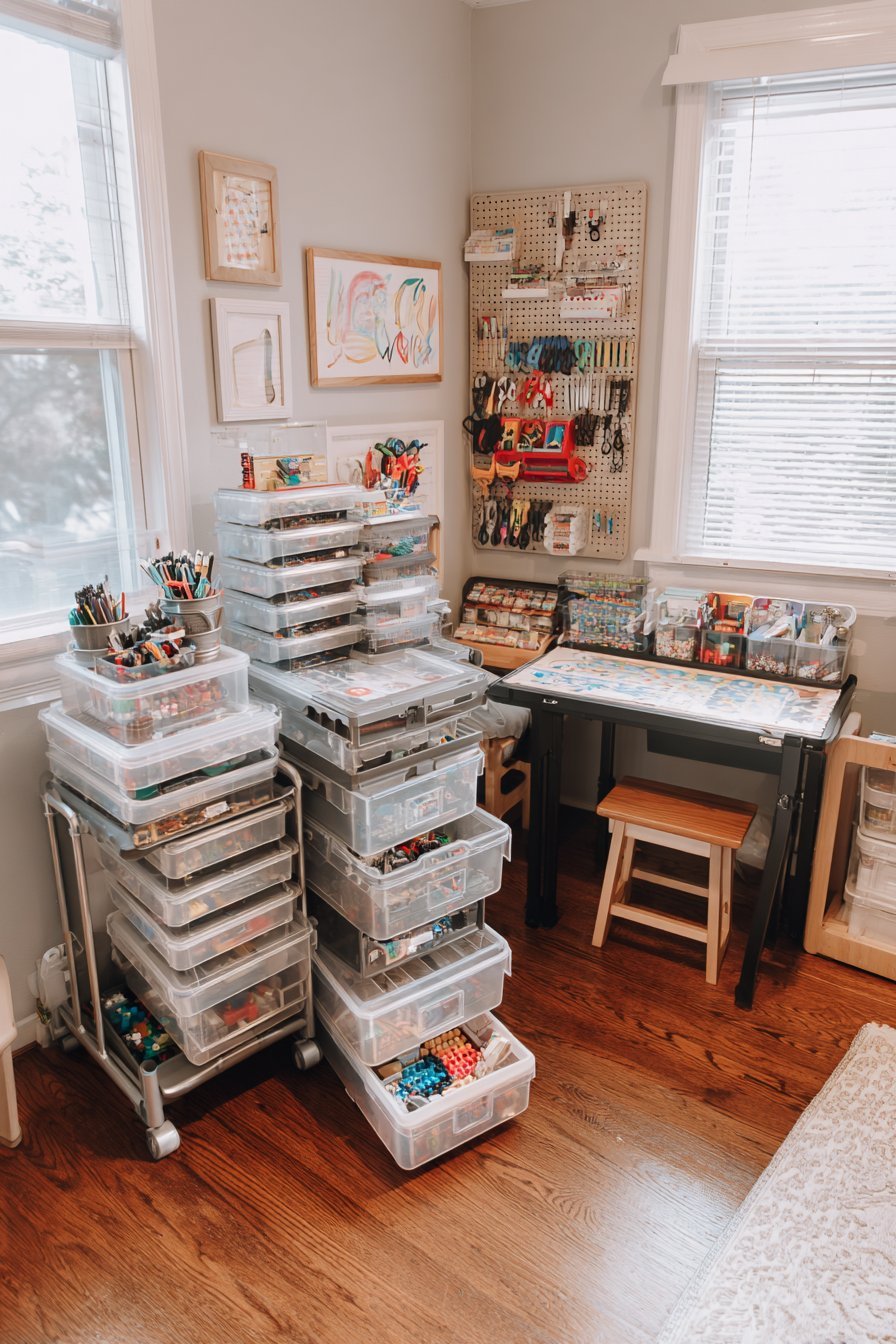
A low activity table with child-sized chairs sits in front for craft projects. The systematic organization encourages independent play and cleanup routines effectively. Wide-angle interior photography captures the complete organizational system comprehensively. Balanced exposure shows how colorful bins create visual interest while maintaining order.
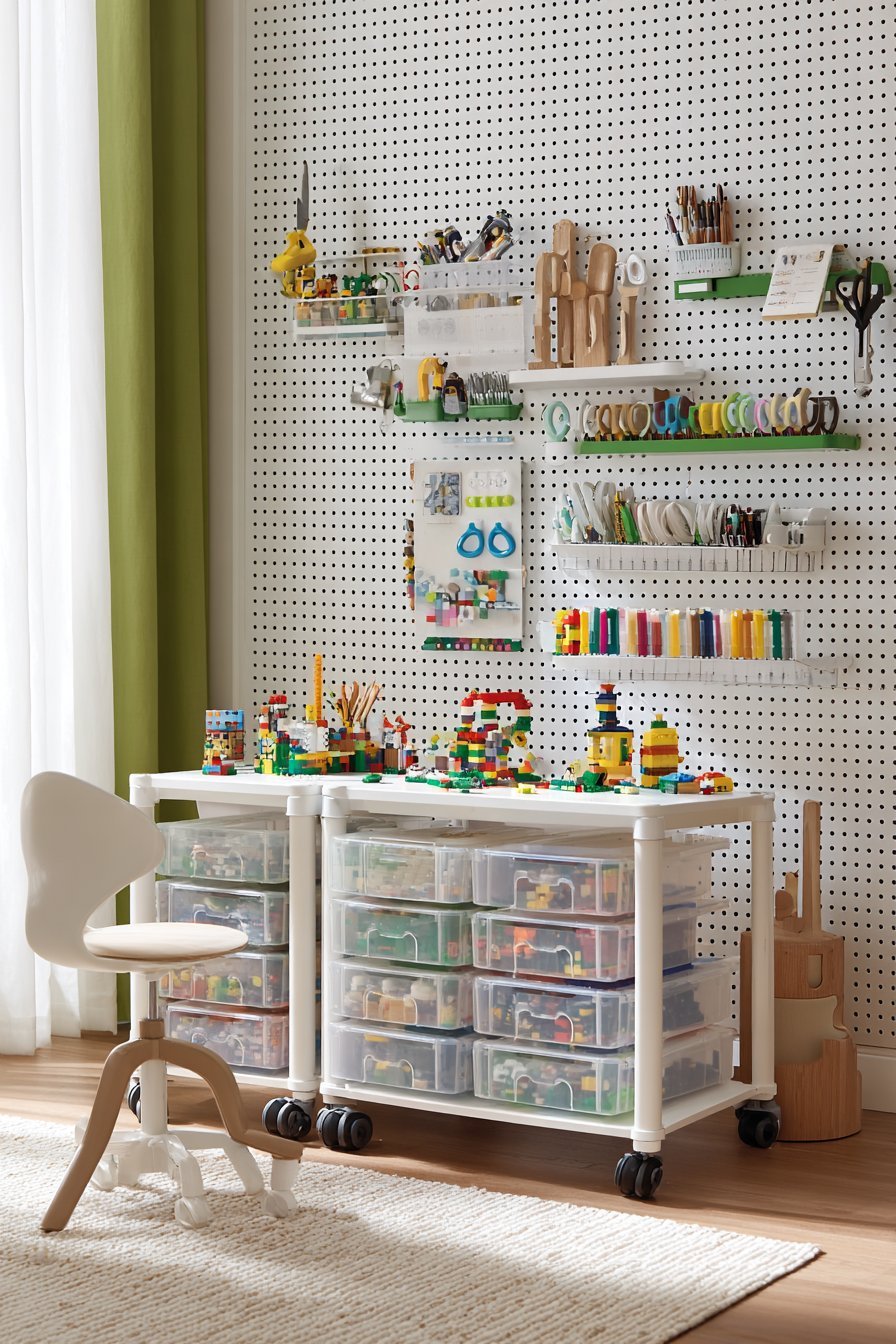
The rainbow arrangement teaches color recognition while serving practical purposes. Children quickly learn to associate colors with specific toy categories. The pull-out bins eliminate the need to dump entire containers during play. This feature significantly reduces mess during active play sessions throughout the day.
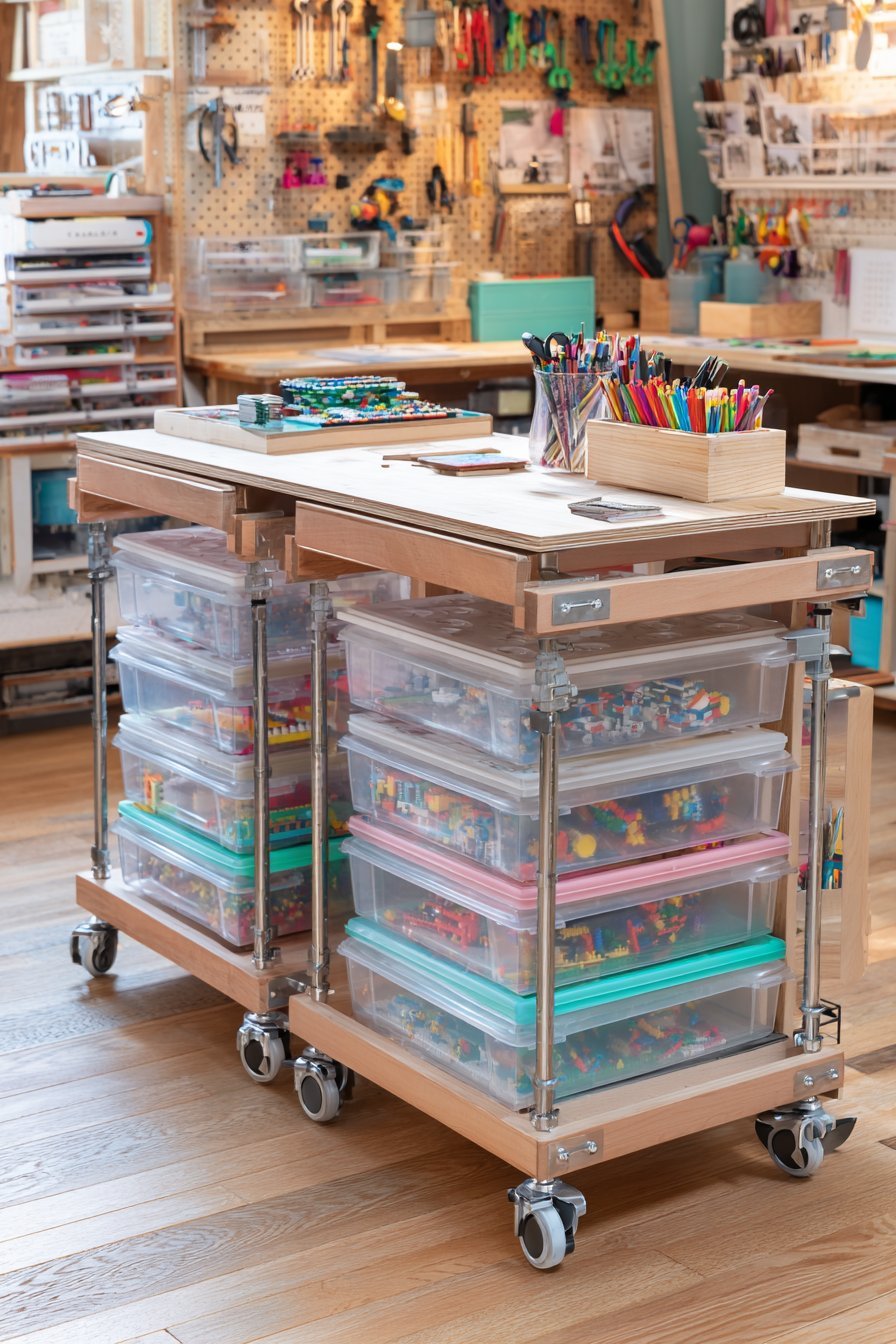
The white frames provide clean lines that prevent visual overwhelm. The modular system allows for easy expansion or reconfiguration as needed. Large windows ensure excellent visibility of drawer contents throughout the day.
Key Design Tips:
- Organize bins by color to teach sorting skills
- Keep system at floor level for youngest children
- Choose bins that slide smoothly without effort
- Label each bin with pictures and words
- Place activity table nearby for convenient material access
- Select durable plastic bins that withstand repeated use
9. Built-In Window Seat Storage
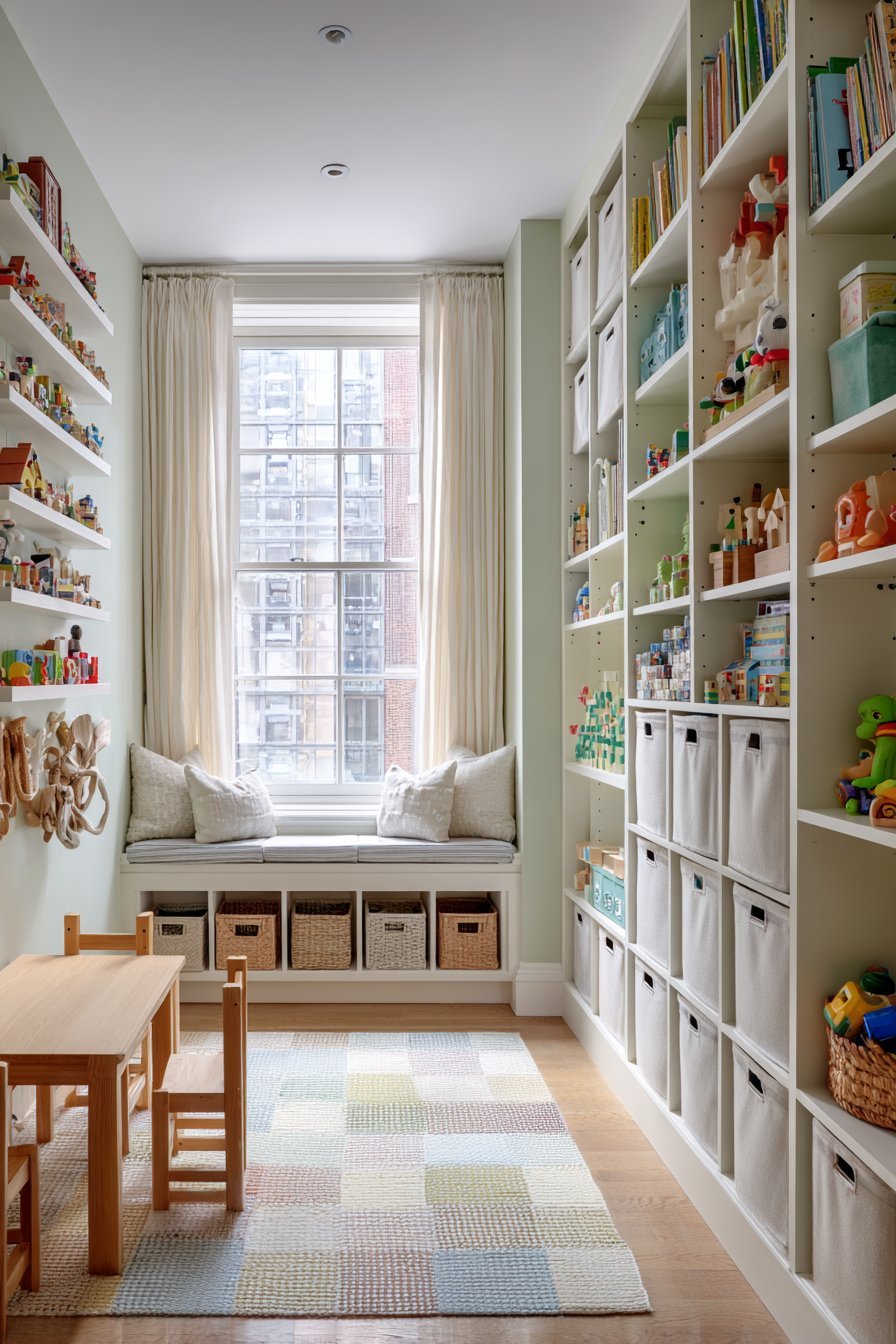
A playroom corner features built-in window seat storage with hinged lids. Each section lifts independently for accessing stored items beneath. Gray linen upholsters the seat cushions for washable durability and style. Colorful throw pillows add personality and comfort to the seating area.
Built-in bookcases flank both sides of the window seat beautifully. The arrangement creates a cozy reading alcove with abundant storage options. Natural daylight floods the space through the window above the seating. Professional interior design photography captures the integrated storage solution comprehensively.
Attention to natural light enhancement shows thoughtful design consideration throughout. The window seat becomes a favorite spot for quiet reading time. The built-in nature maximizes awkward space that might otherwise go unused. This custom solution adds both storage capacity and functional seating simultaneously.
The gray linen provides a neutral backdrop for colorful accessories. The washable fabric ensures practical maintenance for active play spaces. The alcove creates a semi-private retreat within the larger playroom.
Key Design Tips:
- Build window seats with separate compartments for organization
- Choose washable upholstery fabrics for easy maintenance
- Add soft-close hinges to prevent finger injuries
- Install flanking bookcases for maximum storage integration
- Use neutral cushion colors with colorful accent pillows
- Position reading lights above for evening use
10. Mobile Clear Drawer Storage System
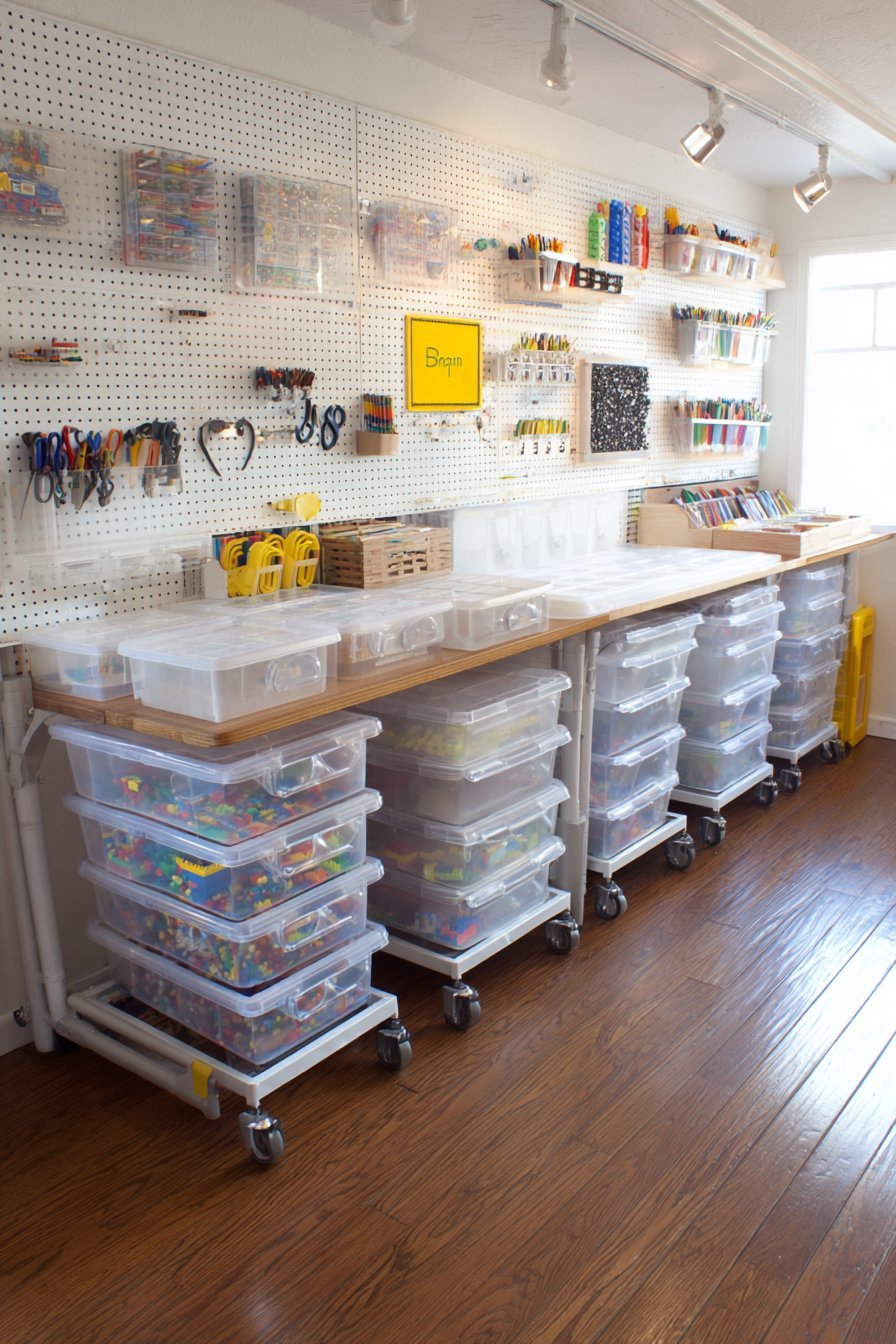
A playroom features mobile storage cart systems with clear plastic drawers. Visibility of contents from LEGO bricks to art supplies aids selection. The cart stations roll to different play areas as activities require. A pegboard tool wall above a craft table provides vertical organization.

Clear containers on the pegboard hold scissors, tape, and markers accessibly. Natural lighting illuminates the practical organization system throughout the space. The transparent drawers encourage independent cleanup and material access effectively. Children see exactly where items belong without opening multiple containers unnecessarily.
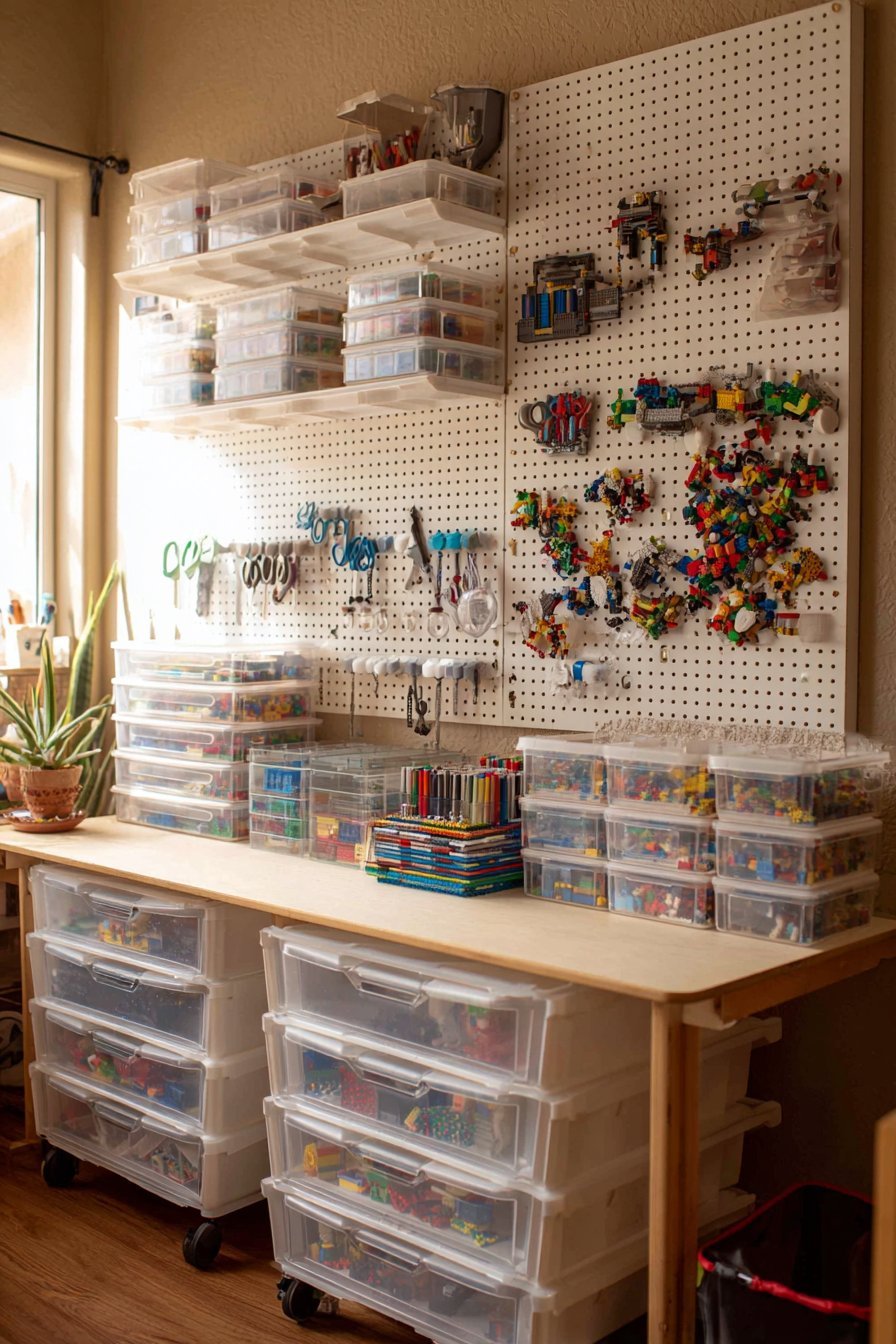
Interior photography with soft natural lighting shows the systematic approach comprehensively. The practical organization system promotes responsibility and independence in young children. Rolling carts adapt to changing play patterns throughout the day seamlessly. The pegboard provides easy access to frequently used craft supplies attractively.
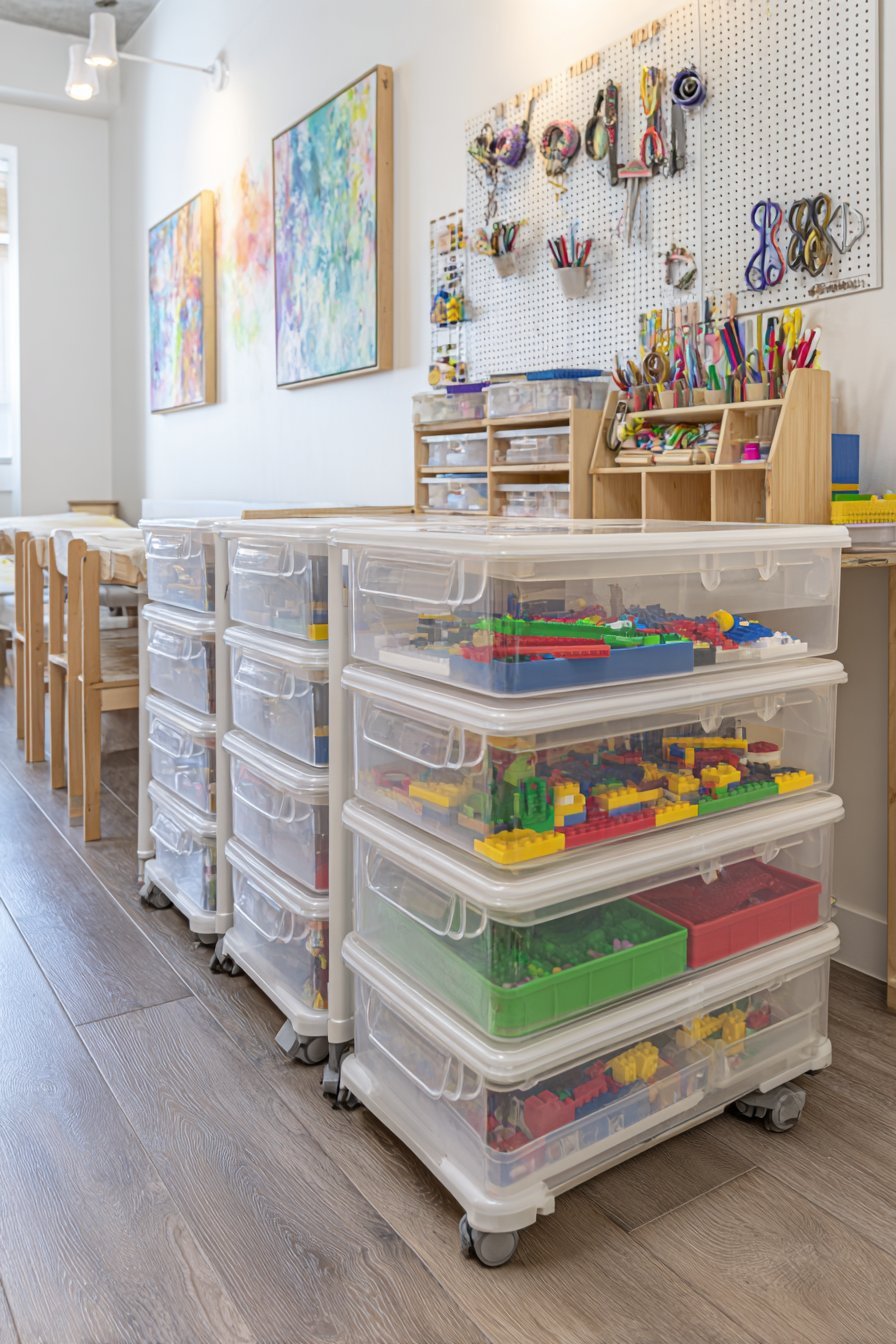
The clear plastic allows for quick inventory assessment without opening drawers. The mobile nature means supplies travel to wherever creativity strikes. The combination of vertical and horizontal storage maximizes efficiency dramatically.
Key Design Tips:
- Select clear drawers for easy content identification
- Choose carts with smooth-rolling, locking wheels
- Organize pegboard tools with clear labeled containers
- Position carts near activity tables for convenience
- Sort supplies by type and frequency of use
- Maintain transparency with regular cleaning of plastic surfaces
11. Converted Armoire Storage Solution

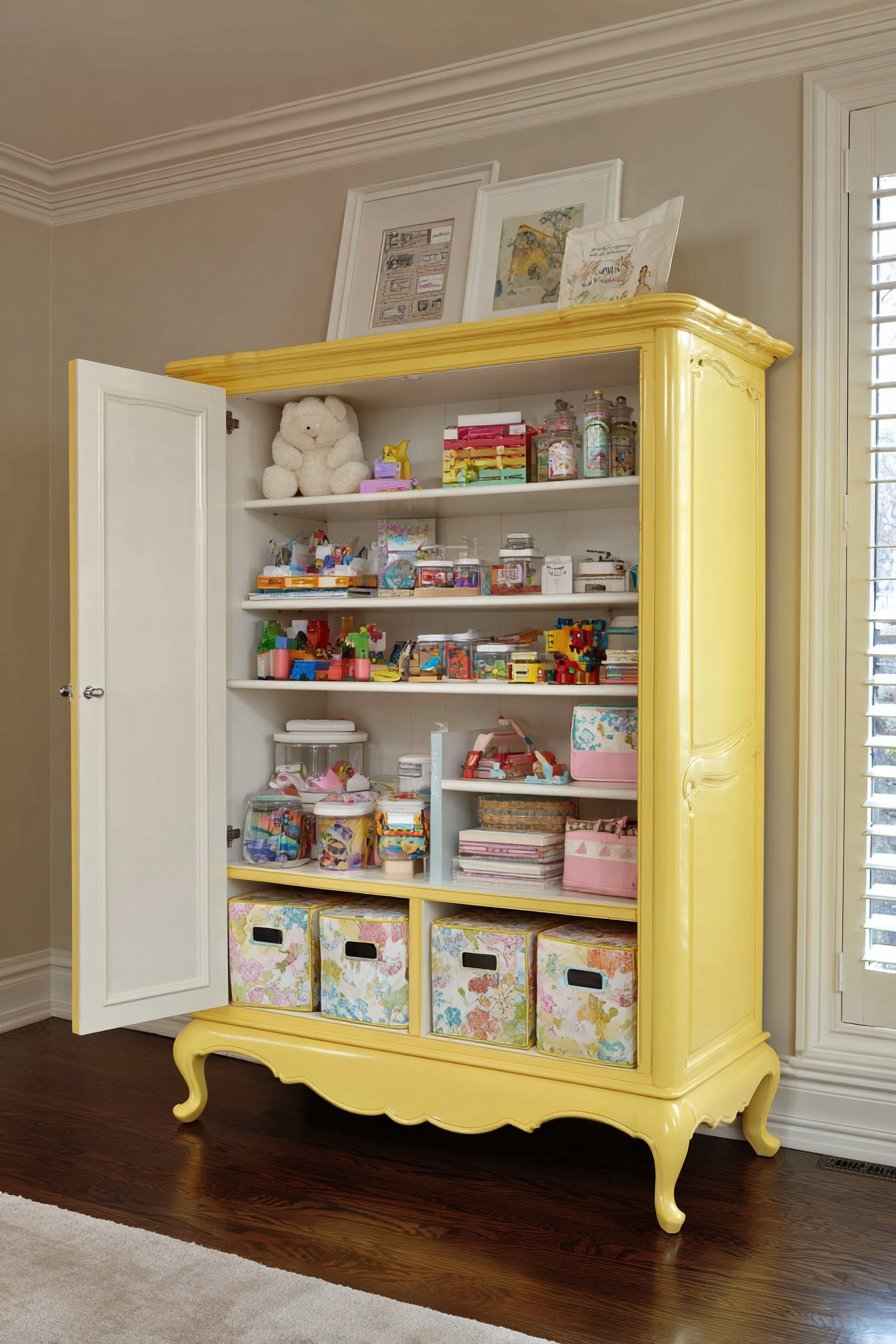
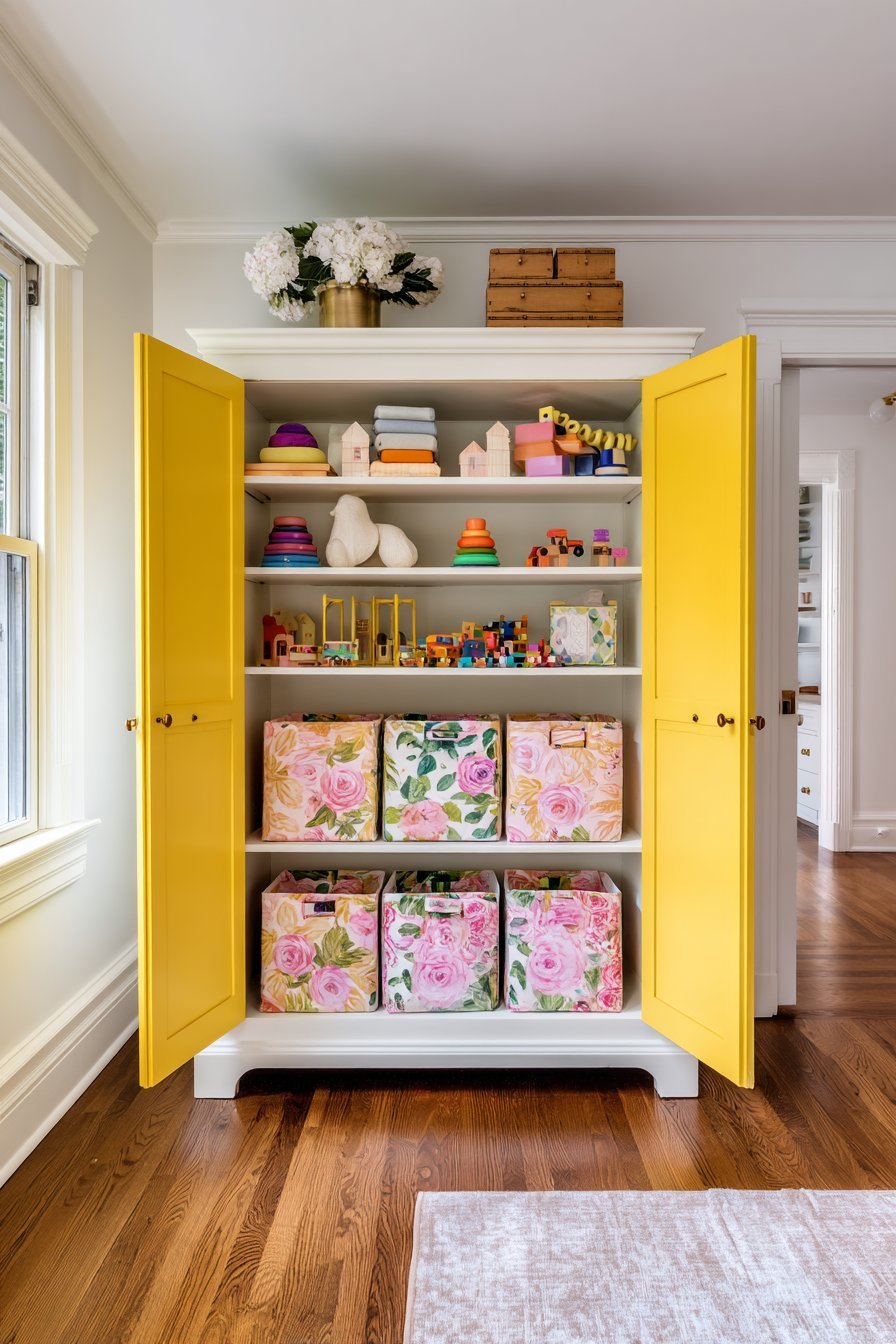
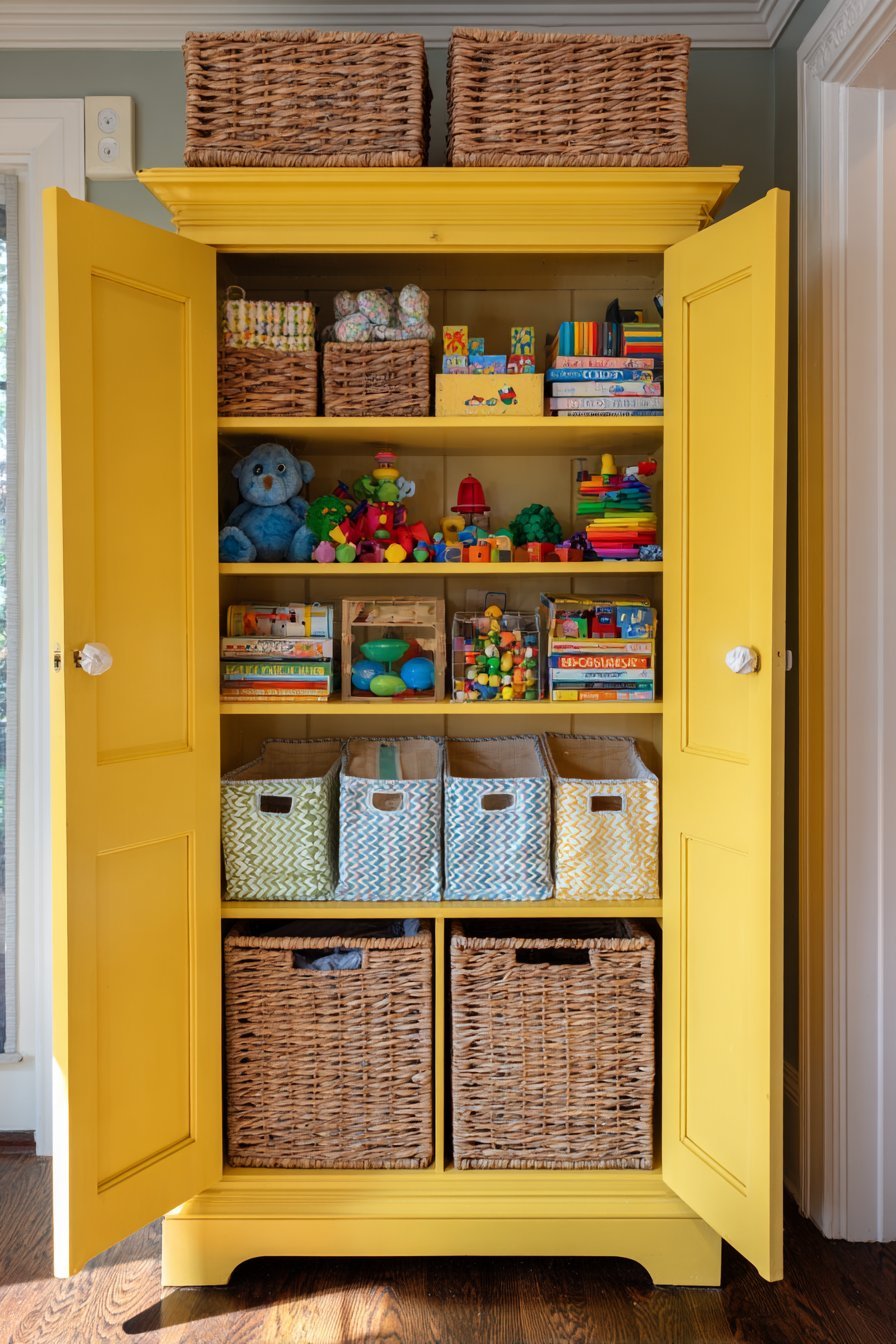
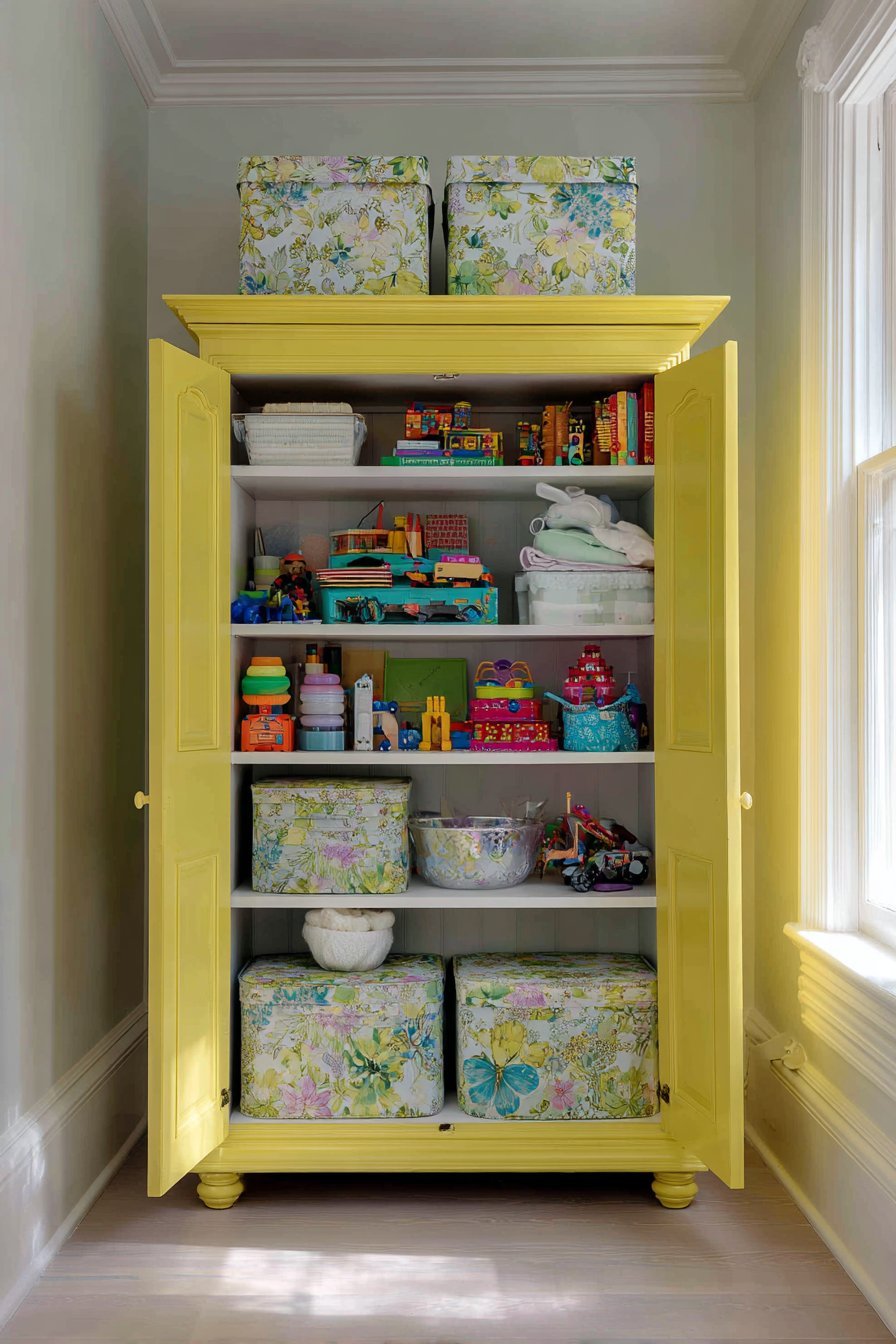
A playroom storage showcase features a converted armoire painted cheerful yellow. Removed doors reveal organized shelving inside for complete visibility. Fabric bins in coordinating patterns hold different toy categories systematically. Adjustable shelves accommodate toys of varying sizes and shapes effectively.
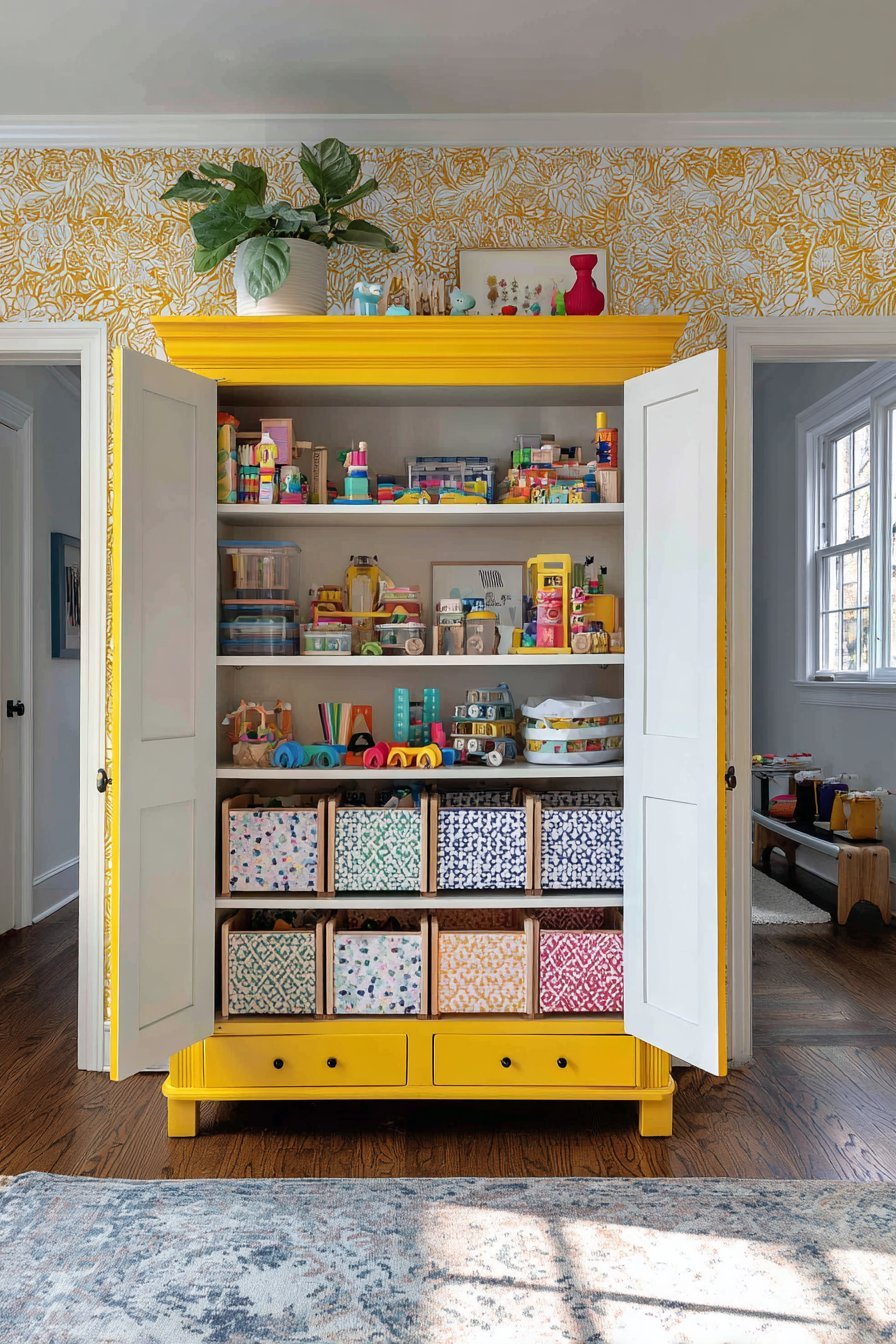
The upper cabinet section stores less-frequently used items and seasonal toys. Wide-angle interior design photography captures the repurposed furniture piece beautifully. Morning light highlights the cheerful yellow color and practical interior organization. The conversion demonstrates how traditional furniture adapts to modern storage needs.
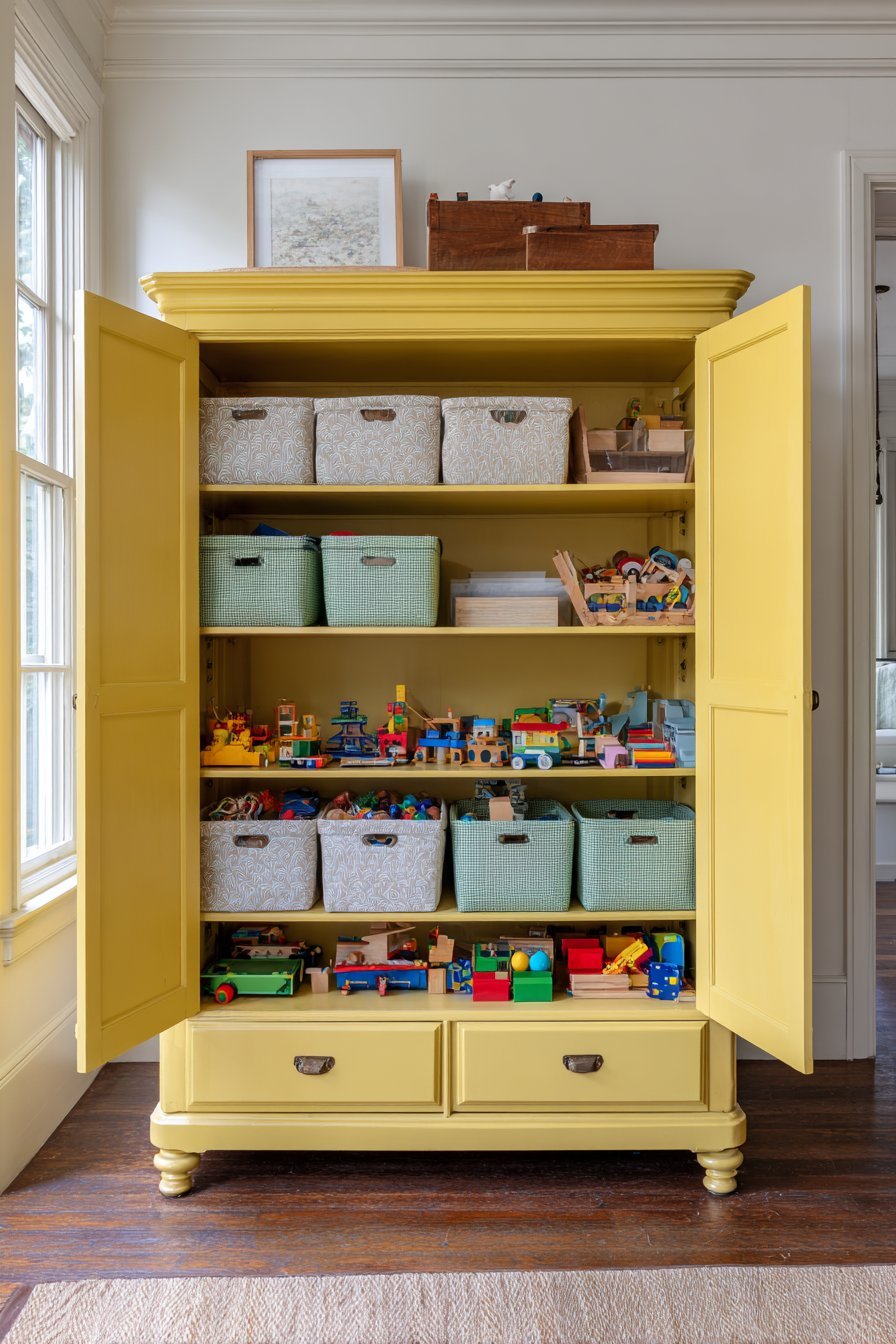
Coordinating fabric patterns unify the look while maintaining organizational functionality. The cheerful yellow brings sunshine and happiness to the playroom environment. The armoire’s doors can be reinstalled if closed storage becomes preferable. This flexibility allows the piece to evolve with changing family preferences.
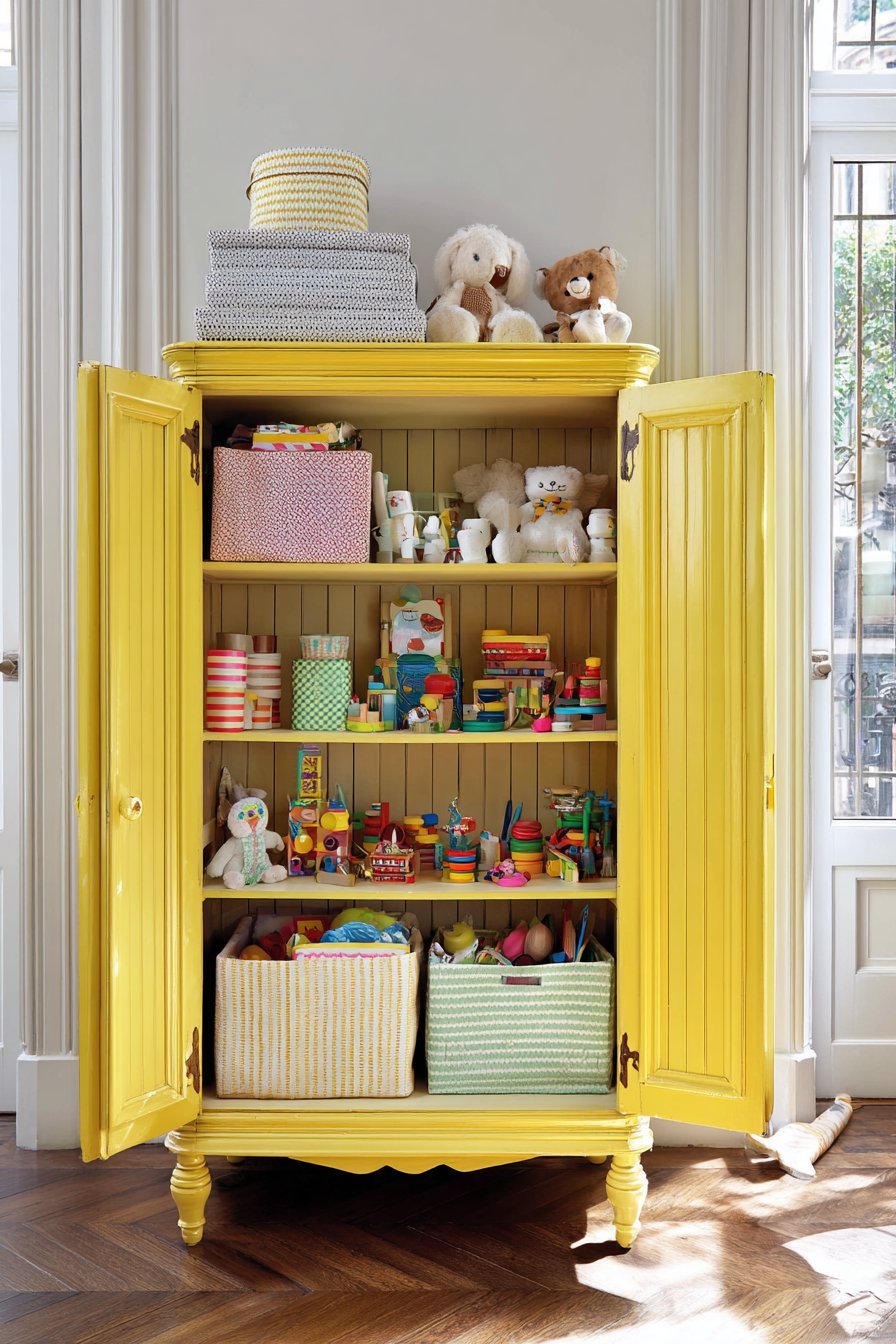
The substantial furniture piece anchors the room design while providing significant storage. The vintage character adds charm that new furniture cannot replicate easily. The height provides storage without consuming excessive floor space.
Key Design Tips:
- Remove armoire doors for open, accessible storage
- Paint in bright colors to energize the space
- Use coordinating fabric bins for cohesive appearance
- Adjust shelving to fit current toy collection sizes
- Store seasonal items in upper sections out of reach
- Secure tall furniture to walls to prevent tipping
12. Montessori-Style Low-Profile Shelving
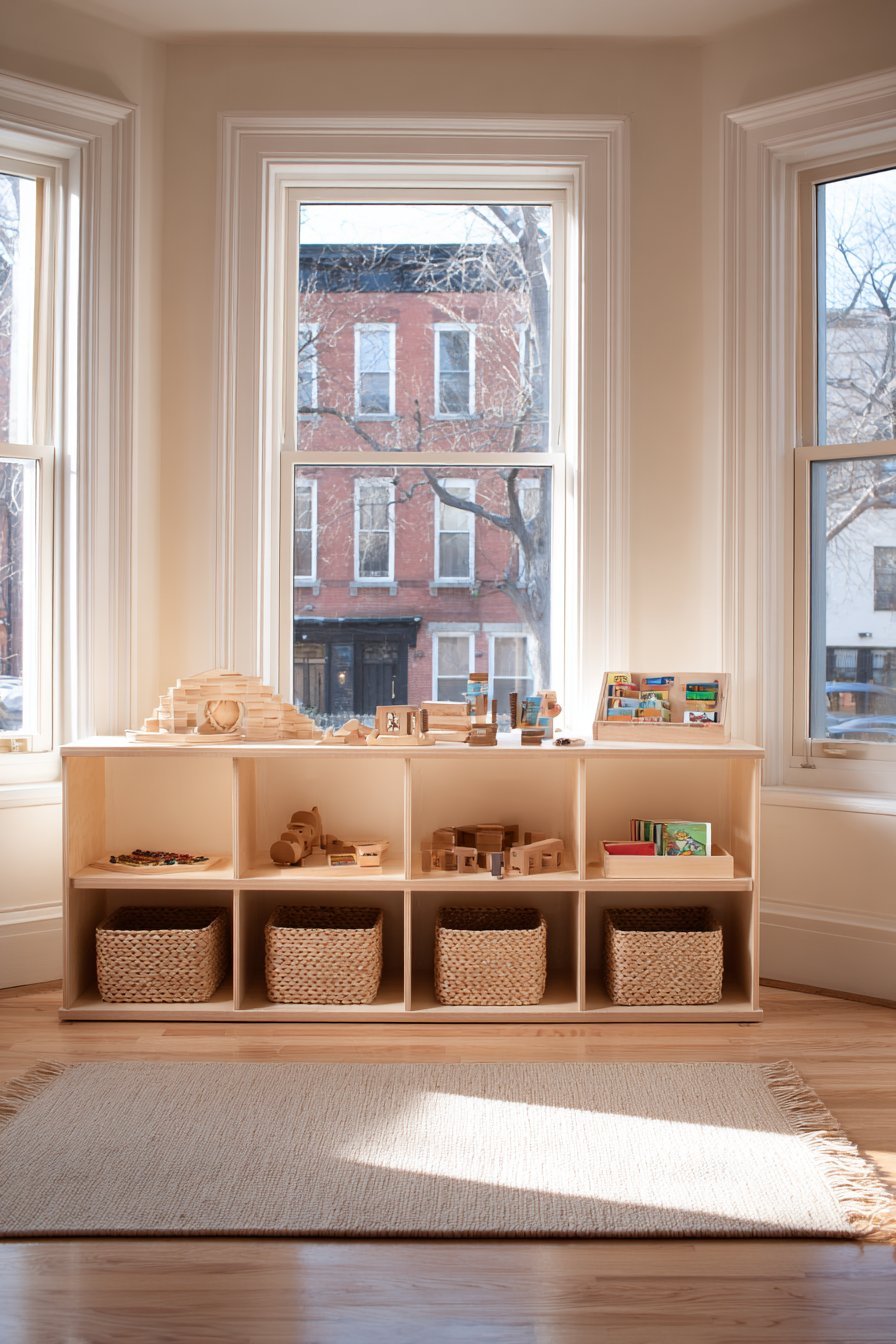
A playroom features low-profile shelving made from Baltic birch plywood. Rounded edges provide safety for young children exploring independently. The open shelving displays Montessori-style toy rotation thoughtfully and intentionally. Wooden toys, puzzles, and books organize in woven baskets beautifully.
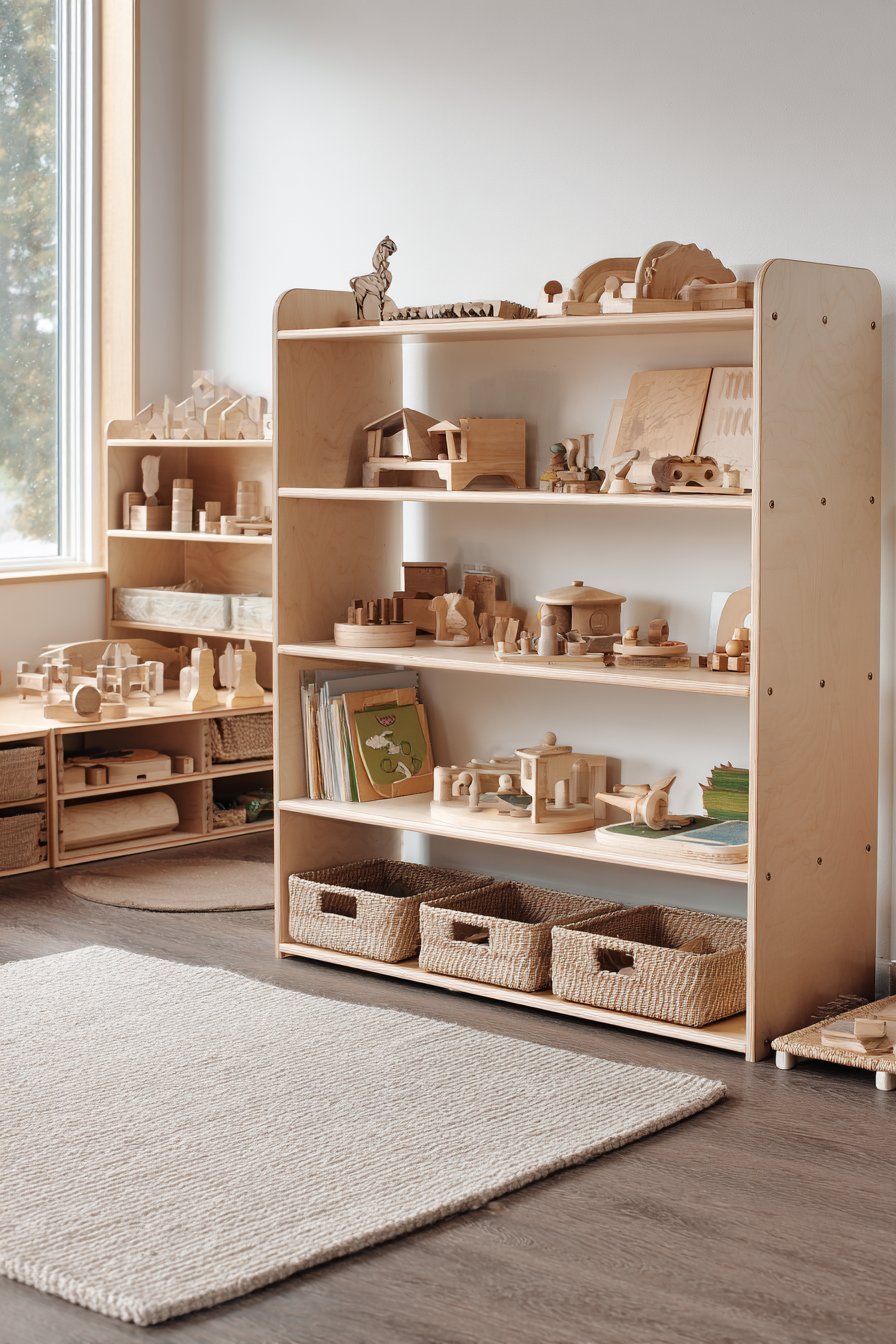
A neutral area rug defines the play space in front of the shelving. Professional interior photography with balanced exposure emphasizes the minimalist approach. The focused toy selection promotes concentrated play and easy cleanup routines. Limited choices prevent overwhelming young children during independent play sessions.
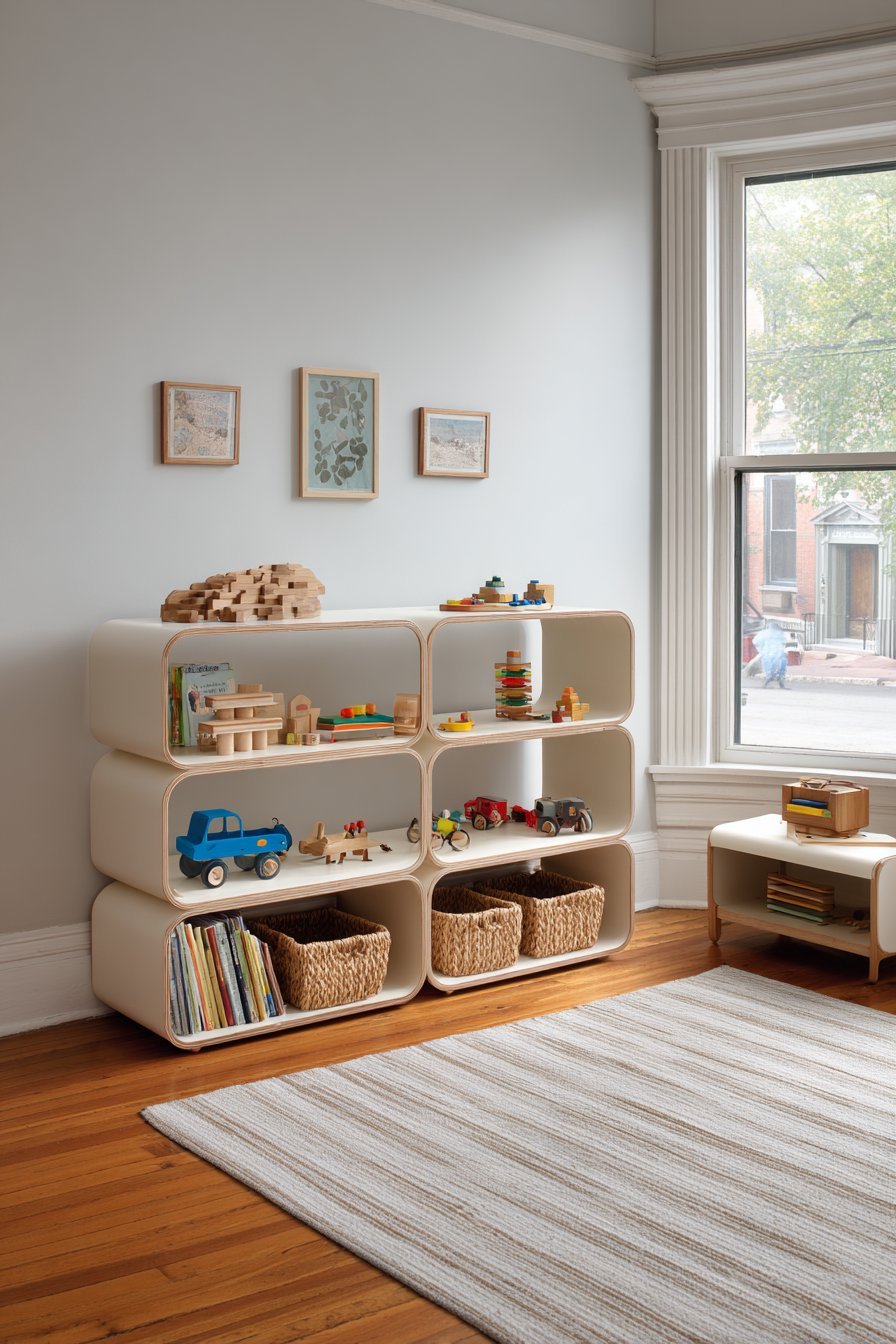
The Baltic birch plywood brings natural warmth without overwhelming the senses. The minimalist approach creates calm environments conducive to focused learning. Toy rotation keeps interest high without requiring constant purchasing. This philosophical approach values quality over quantity in toy selection consistently.
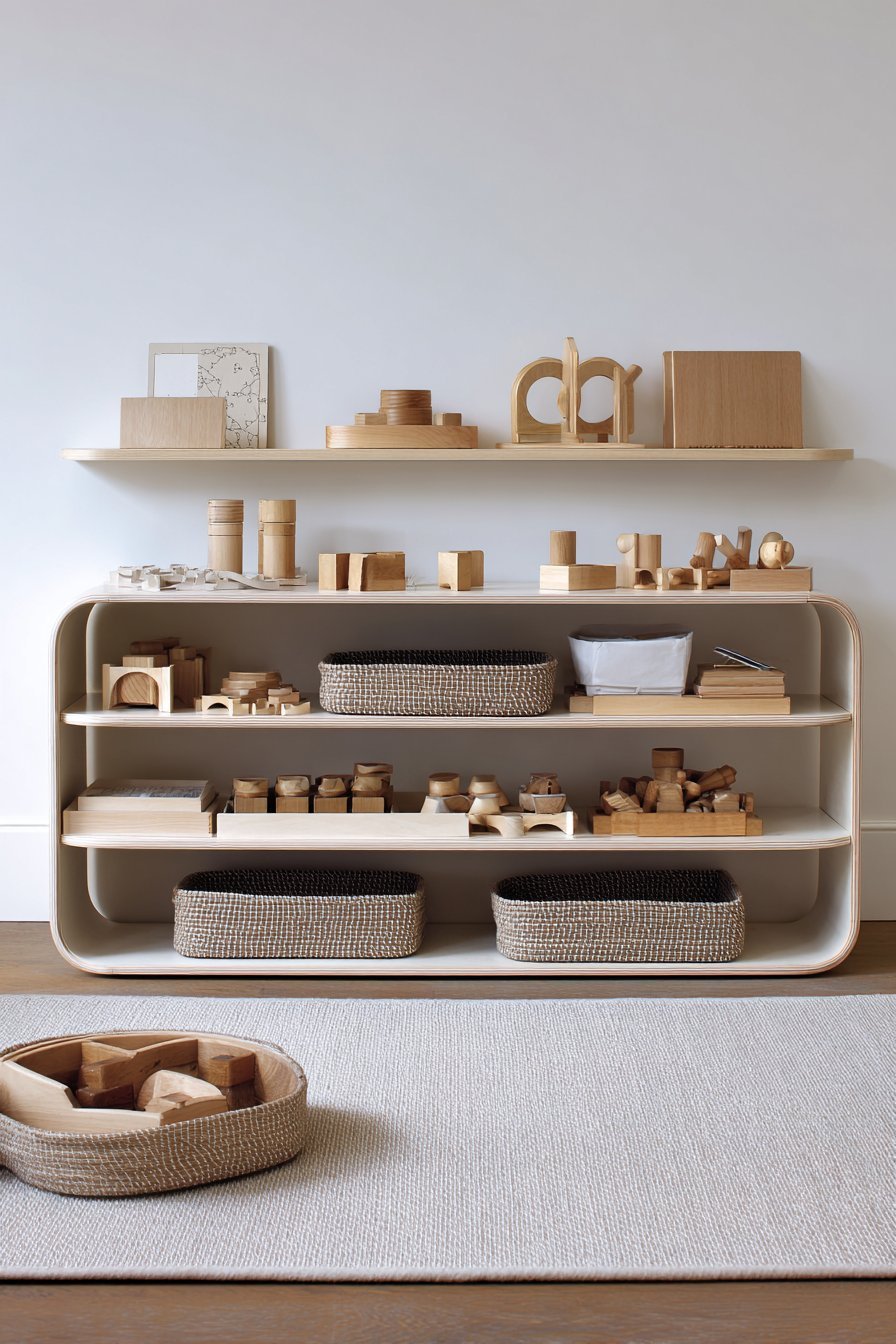
The low height allows even toddlers to see and access items independently. The rounded edges eliminate sharp corners that pose safety concerns. The neutral rug provides soft landing for seated floor play.
Key Design Tips:
- Select low shelving that toddlers can reach easily
- Choose Baltic birch for durability and natural beauty
- Round all edges and corners for safety
- Display fewer toys to encourage focused play
- Rotate toys weekly to maintain interest and novelty
- Use natural woven baskets for texture and warmth
13. Garage-Style Slatwall Storage
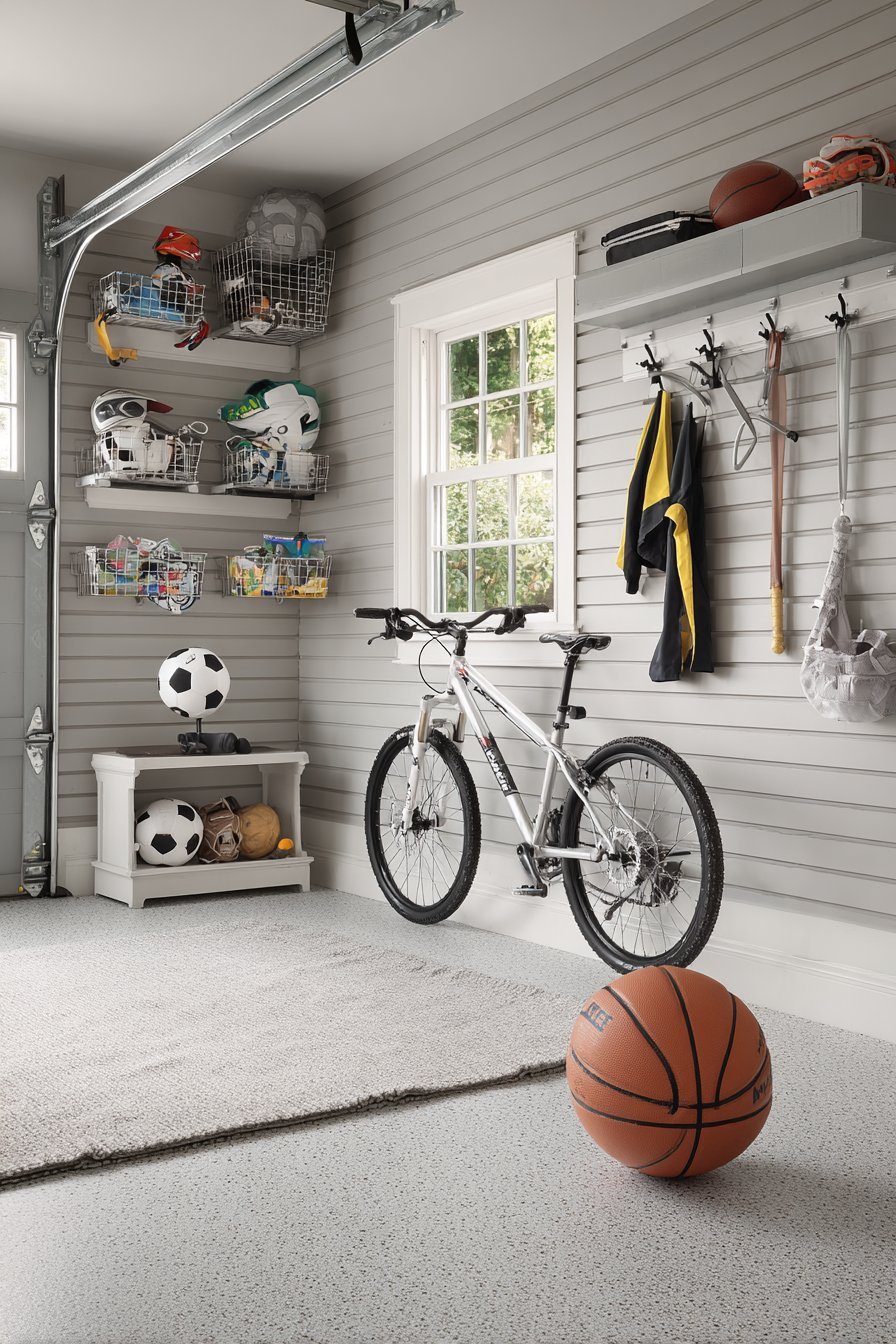
A playroom features garage-style slatwall storage with adjustable hooks and baskets. Sports equipment, costumes, and outdoor toys hang on the heavy-duty system. The gray finish provides an industrial aesthetic that appeals to older children. Adjustable configuration allows flexibility as storage needs change over time.
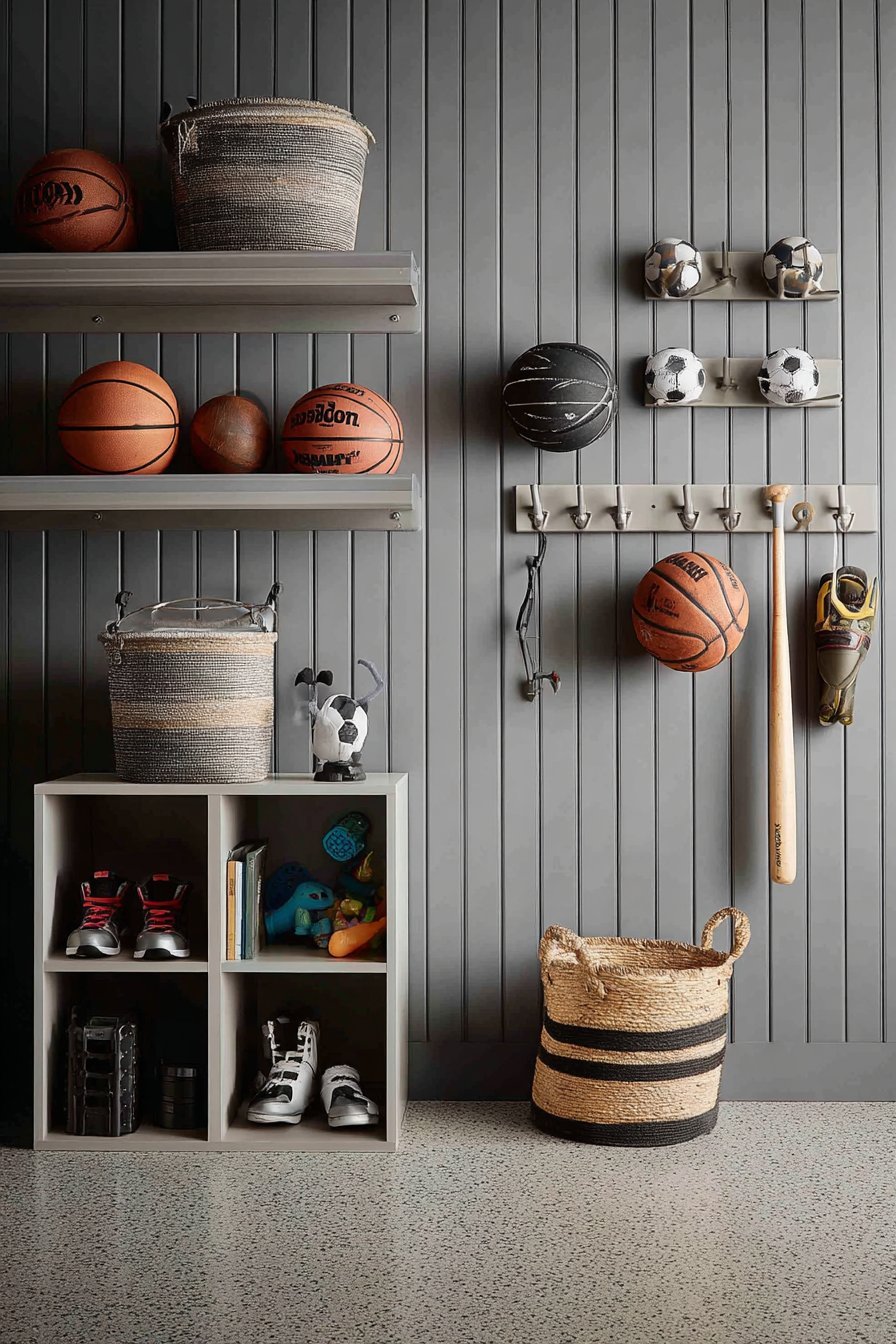
Rubber flooring in speckled gray provides durability for extremely active play. Interior design photography captures the utilitarian storage solution comprehensively. Attention to the versatile hook system shows practical functionality clearly. Items display for easy access and visibility during play sessions throughout the day.
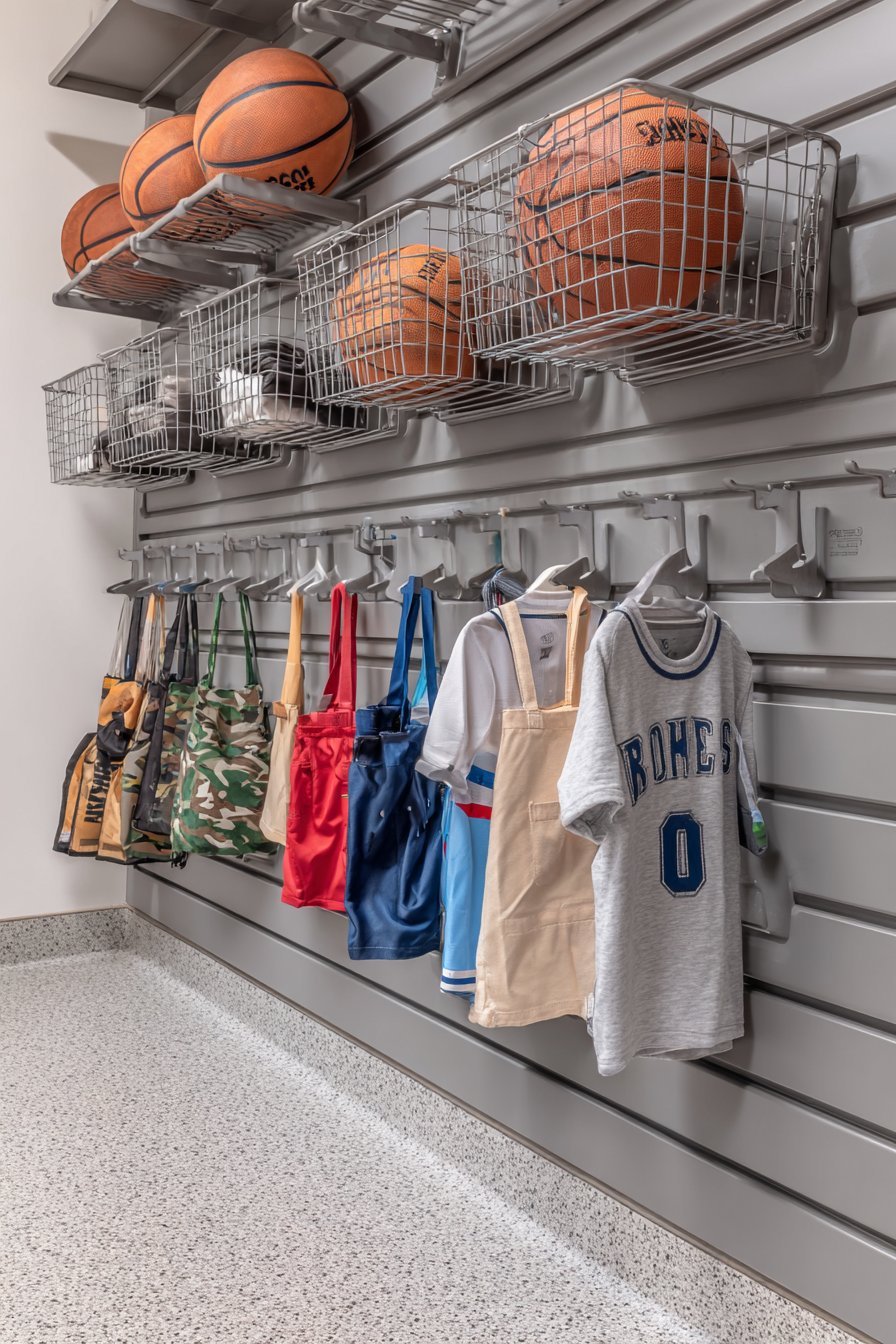
The slatwall system handles heavy items like bikes and sports gear securely. The industrial aesthetic works particularly well in basement or garage playrooms. The neutral gray color scheme coordinates with any toy or equipment colors. The utilitarian approach prioritizes function without sacrificing visual appeal completely.
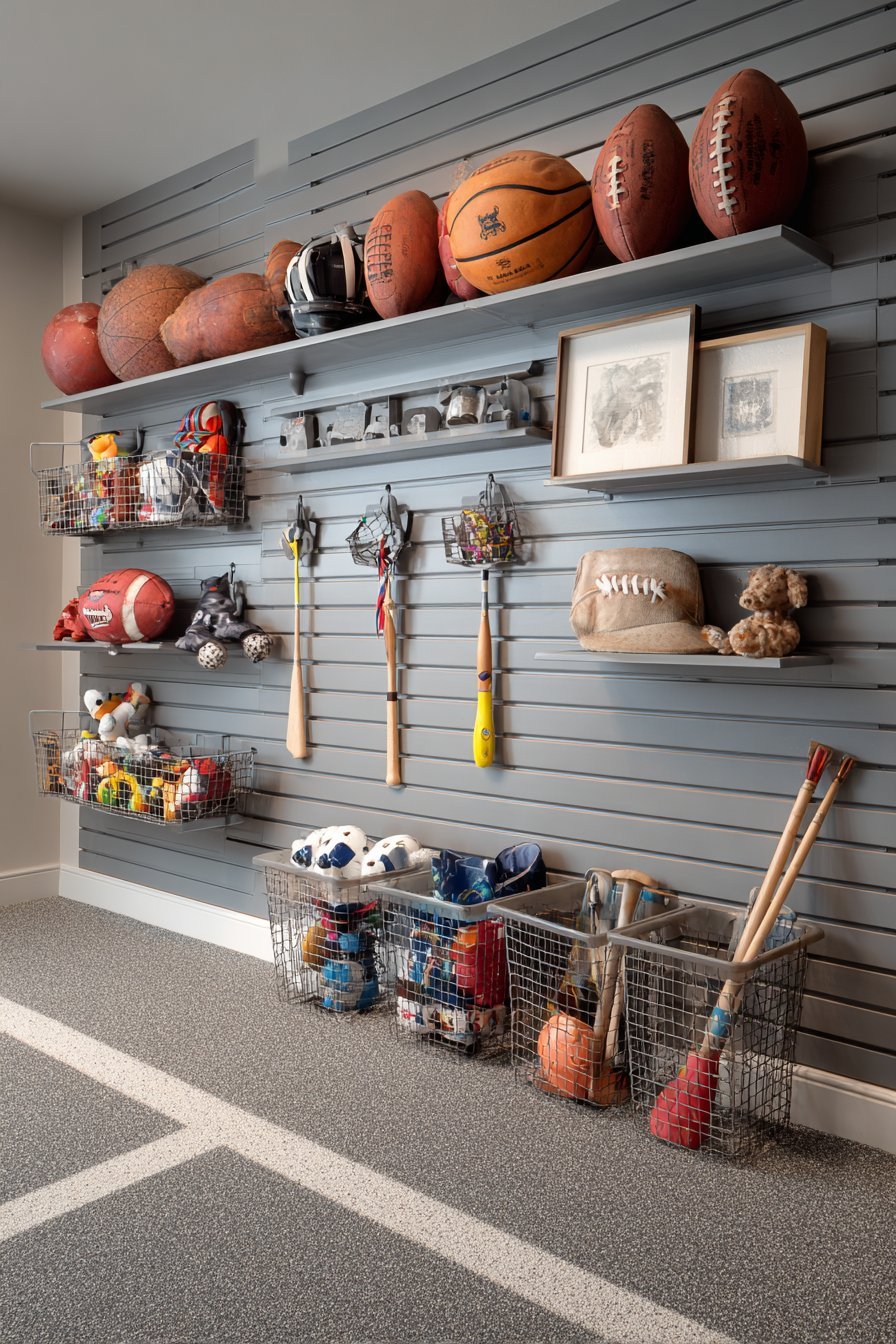
The adjustable nature means the system adapts as children grow and interests change. The heavy-duty construction withstands rough use from active children and equipment. The open display encourages children to return items to their designated spots.
Key Design Tips:
- Install slatwall with proper anchoring for heavy loads
- Choose industrial finishes for durability and style
- Use adjustable hooks and baskets for flexibility
- Pair with durable flooring like rubber or vinyl
- Organize by activity type for easy selection
- Leave room for growth and changing interests
14. Personalized Cubby Storage Bench
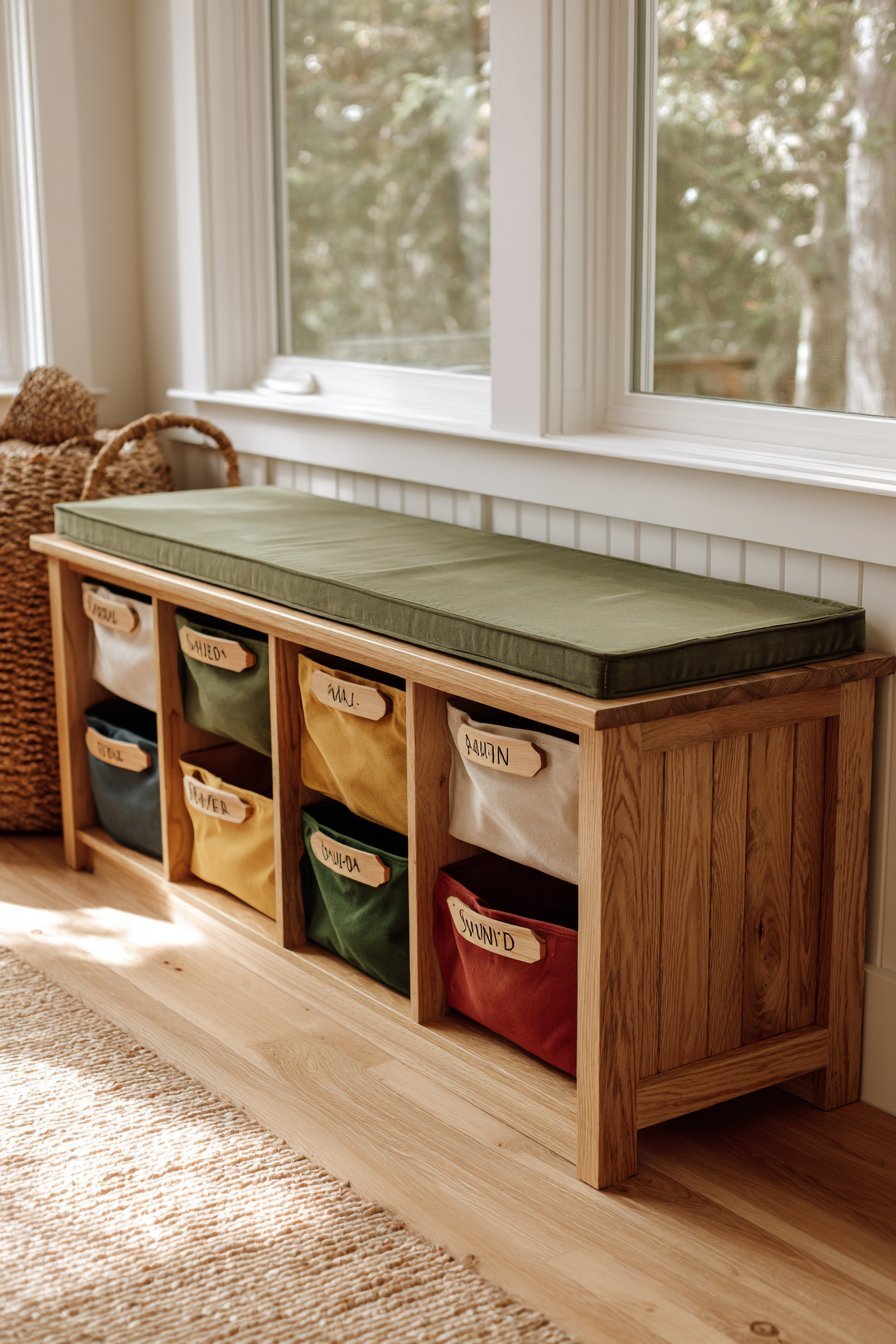
A playroom storage bench features individual cubbies labeled for each child. Wooden tags with names identify personal storage spaces clearly and permanently. Each cubby contains a fabric bin in a unique color for easy identification. The bench top features cushioned seating with foam padding throughout.
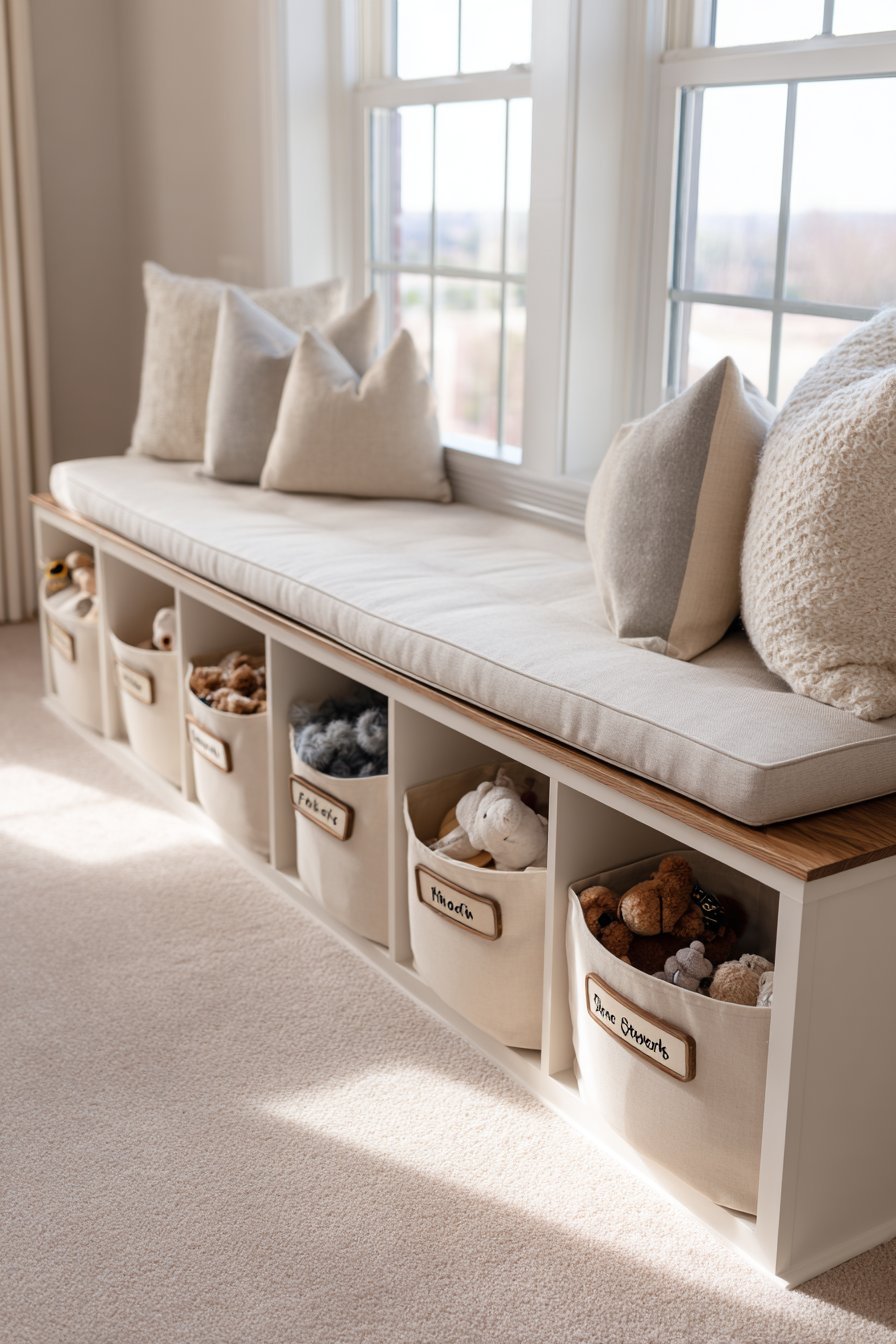
Wipe-clean vinyl covers the foam padding for practical maintenance and durability. Natural oak construction matches other furniture pieces throughout the room. Wide-angle interior photography shows the personalized storage solution comprehensively. Soft natural lighting from nearby windows creates warm, organized atmosphere beautifully.
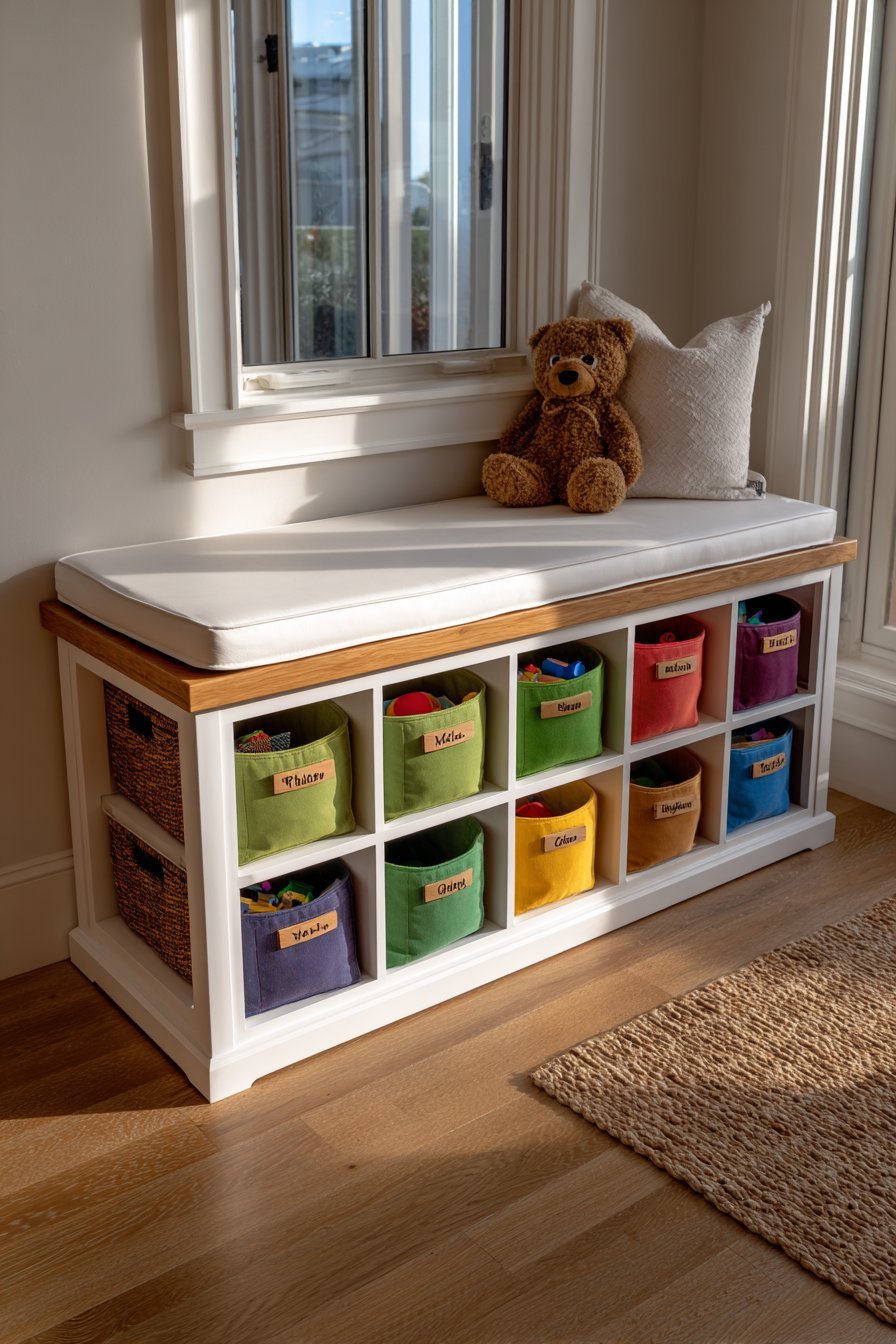
The personalized approach teaches children responsibility for their own belongings. Each child develops ownership over their designated storage space naturally. Color coding by child simplifies sorting during family cleanup sessions. The bench seating provides comfortable spots for putting on shoes before playtime.
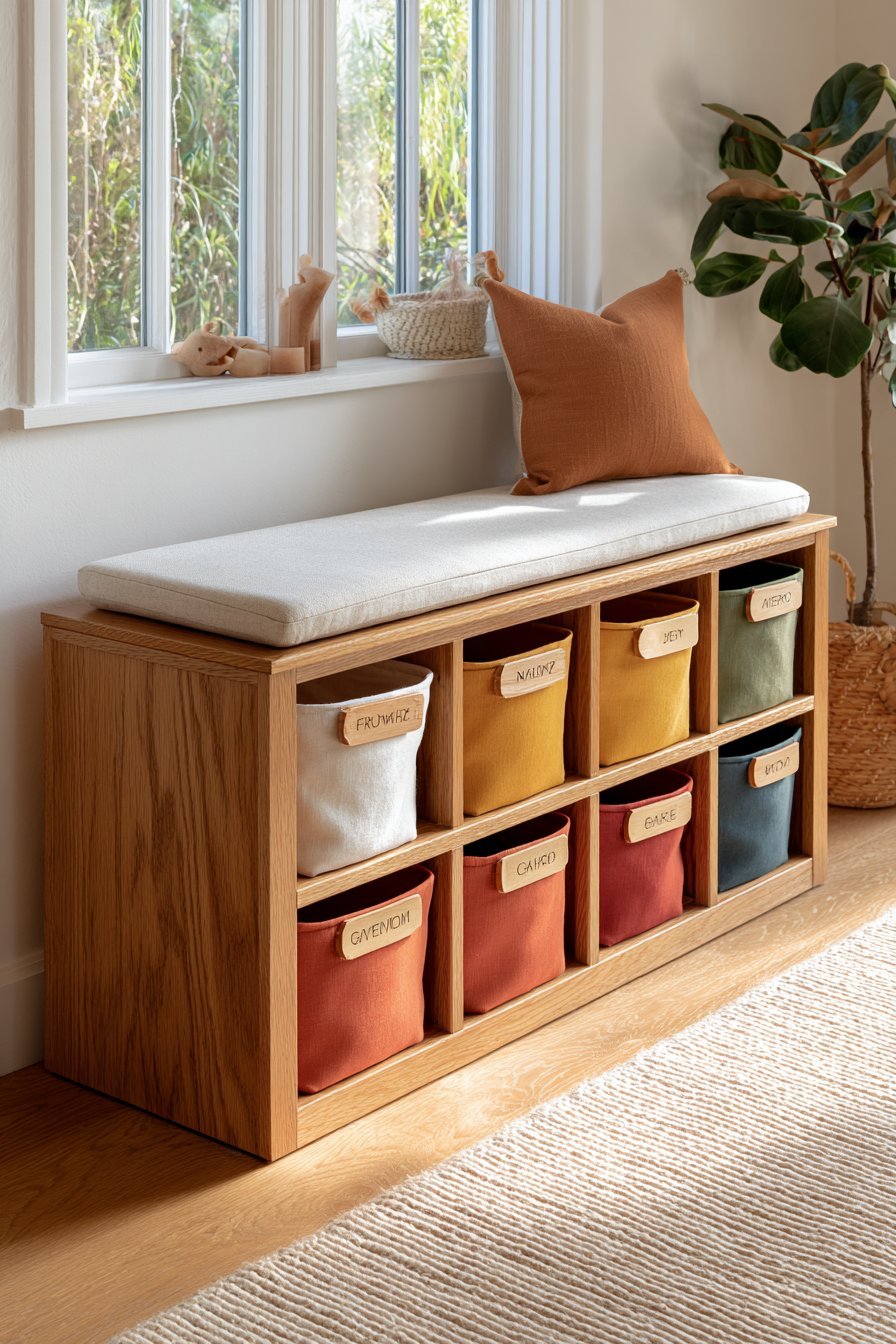
The wipe-clean vinyl ensures easy maintenance in high-traffic areas. The natural oak brings warmth without requiring constant upkeep or refinishing. The bench height works perfectly for young children to access independently.
Key Design Tips:
- Assign each child their own cubby with name label
- Use different colored bins for easy child identification
- Choose wipe-clean upholstery for the bench top
- Match wood finish to existing room furniture
- Position near room entrance for easy access
- Add cushioning for comfortable seating during activities
15. Hanging Net and Ladder Shelf Storage
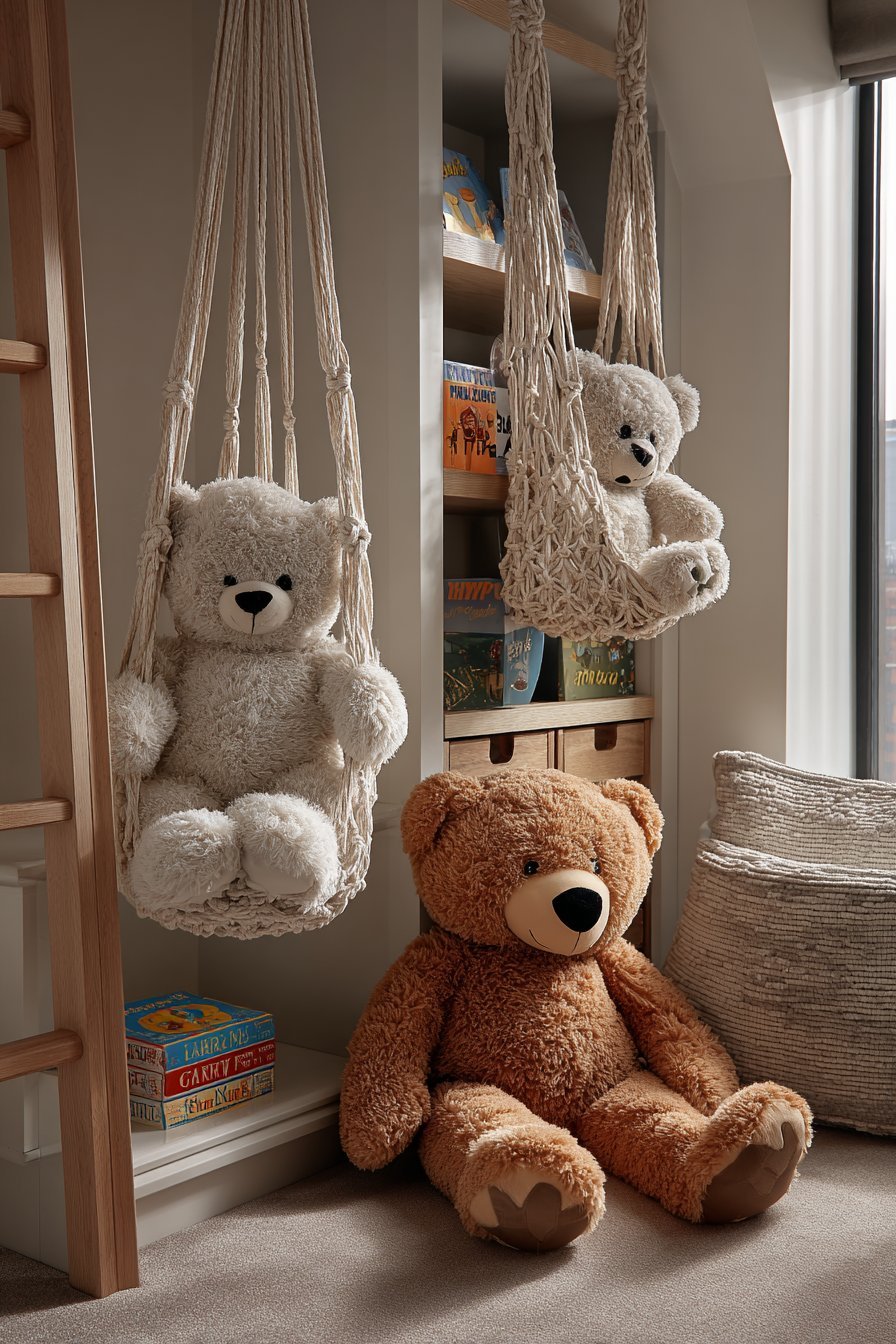
A playroom corner showcases creative hanging storage solutions throughout. Macramé nets suspended from ceiling hooks hold stuffed animals attractively. Below, a rolling ladder-style shelf provides accessible book and game storage. The vertical storage approach maximizes floor space for active play dramatically.
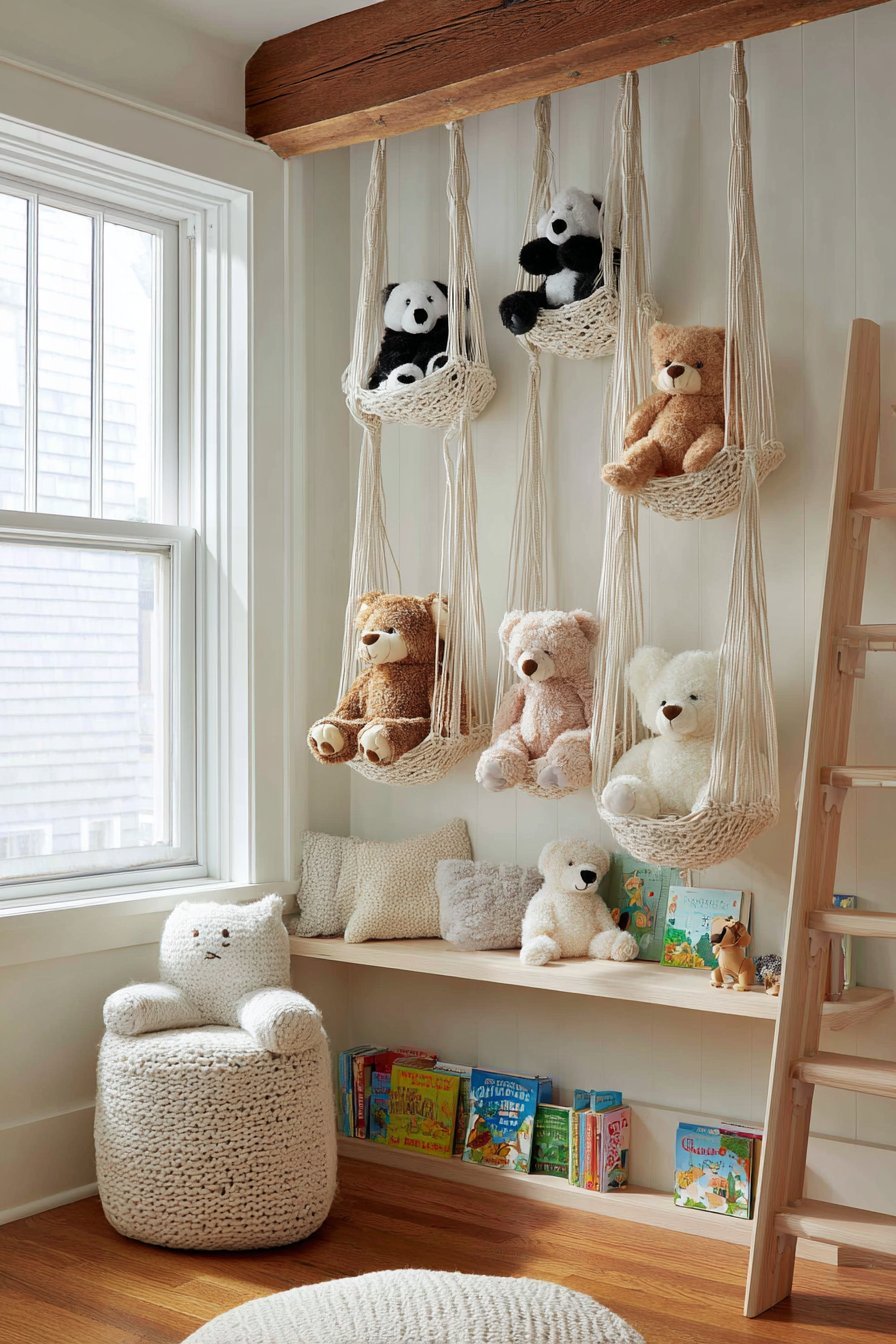
Professional interior design photography captures the creative vertical space utilization. Balanced lighting highlights the texture of macramé and natural wood elements. The ladder shelf rolls easily for flexible positioning throughout the space. The vertical emphasis creates interest on walls while freeing floor area.
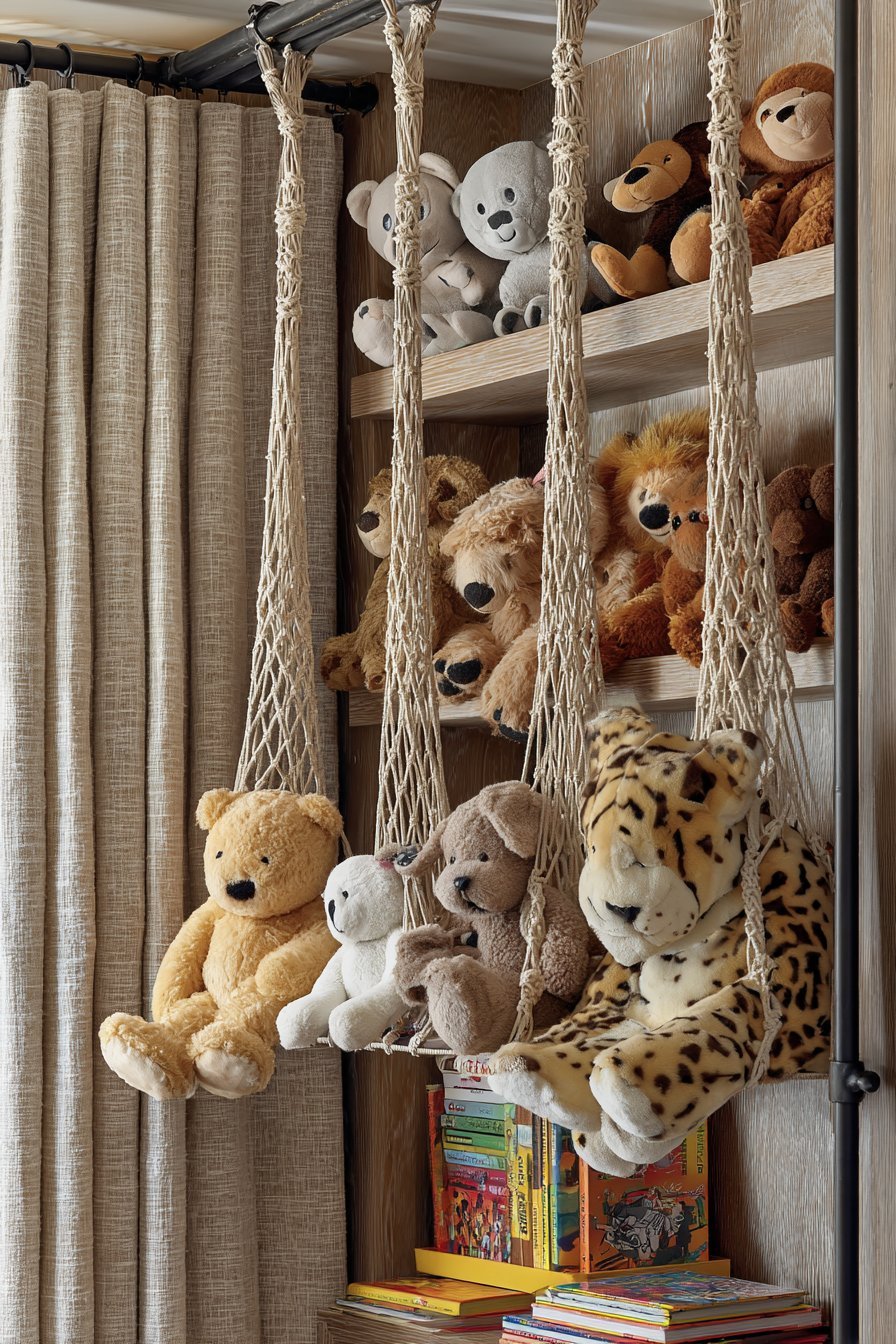
The macramé nets add bohemian texture while serving practical purposes. Stuffed animals remain visible but off the floor and away from clutter. The ladder shelf brings industrial charm with its wheels and metal framework. Natural wood shelves warm the industrial elements beautifully and organically.
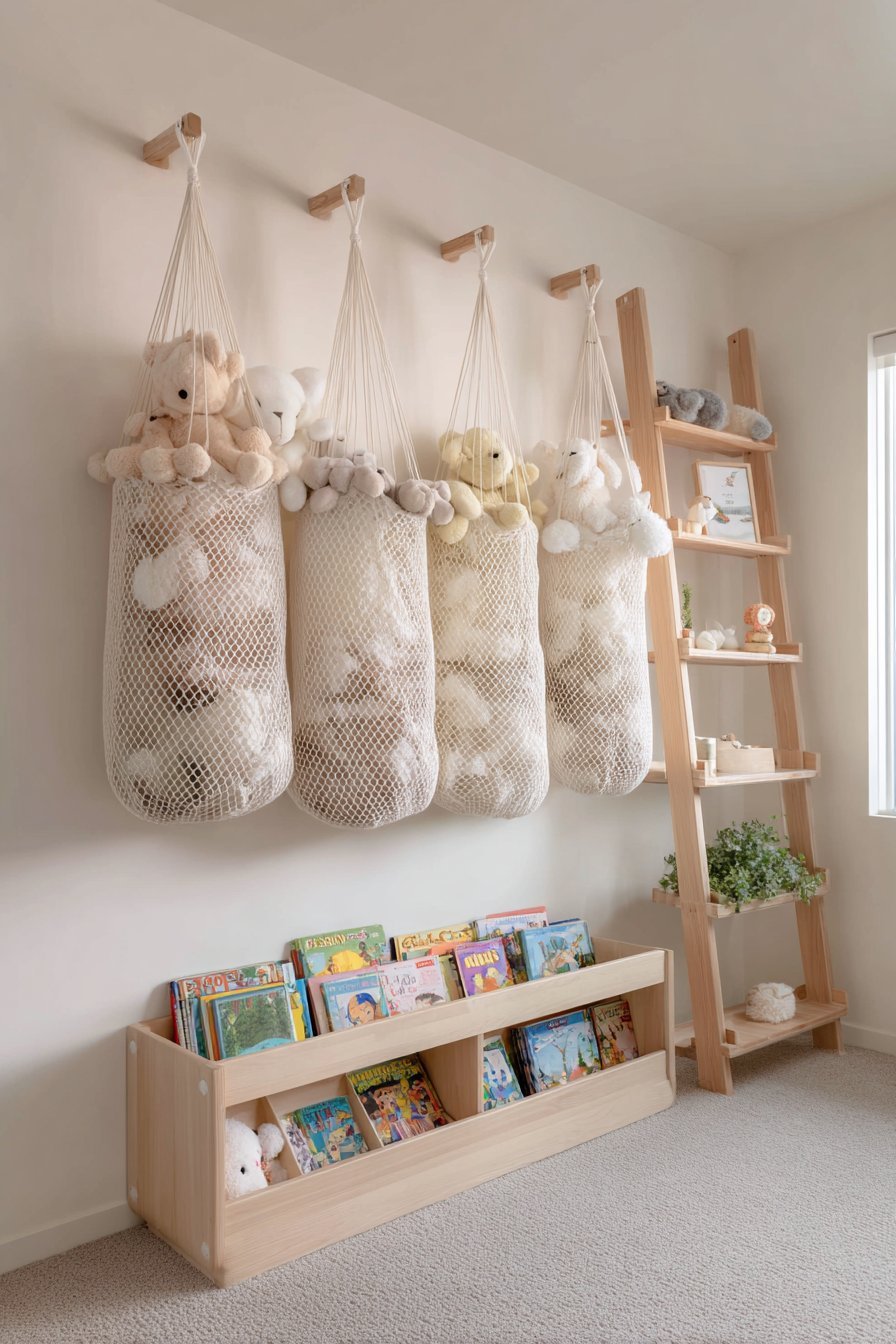
The hanging solution works particularly well for soft, lightweight toys. The nets can be removed easily for washing or seasonal changes. The ladder shelf adapts to different room configurations as layouts evolve.
Key Design Tips:
- Hang nets from ceiling studs with proper hardware
- Use ladder shelves with locking wheels for safety
- Combine textures like macramé with wood and metal
- Store soft toys in nets to keep floors clear
- Position rolling shelves where flexibility is needed
- Ensure hanging storage is properly weight rated
16. Magnetic Wall Storage System
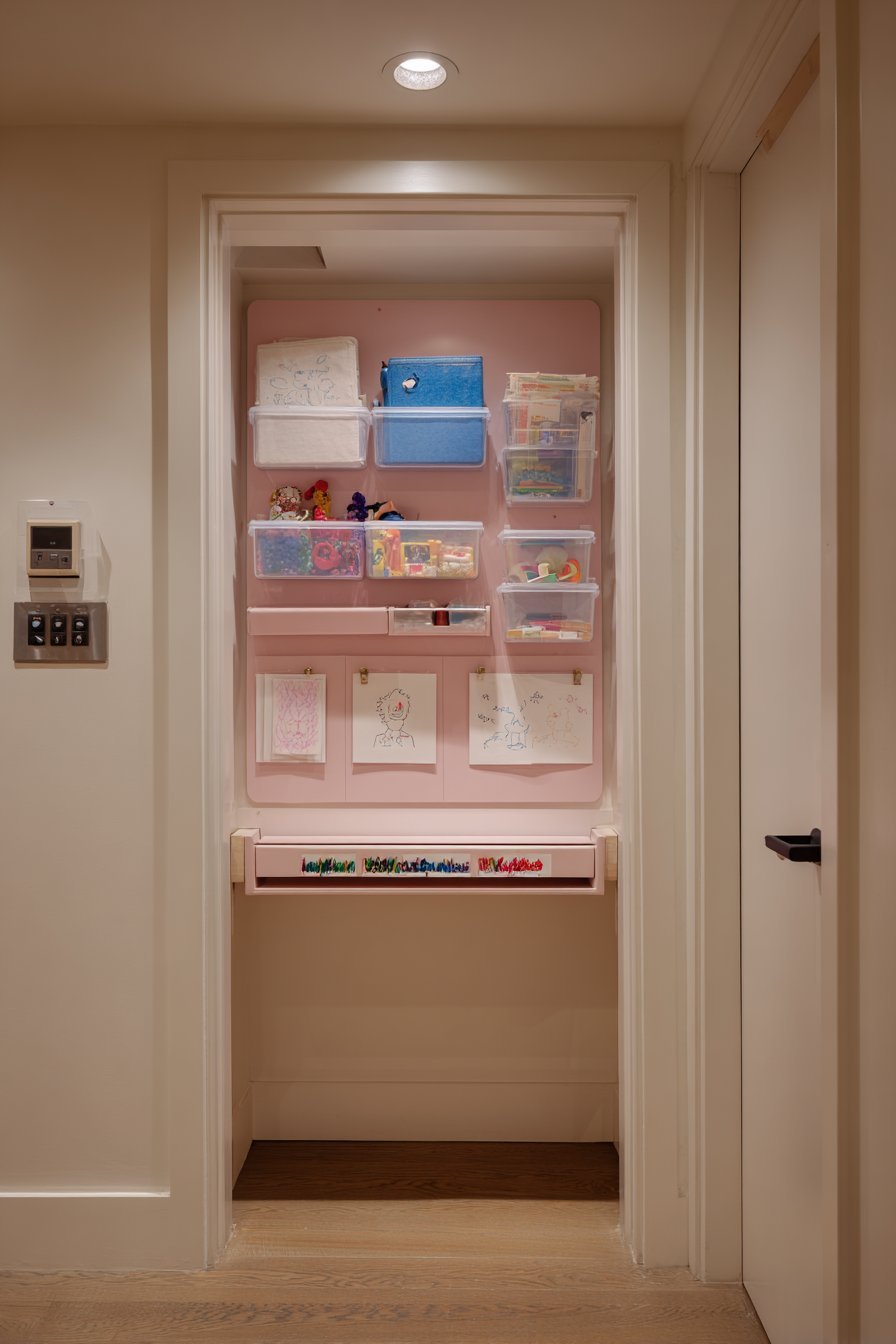
A playroom features an innovative magnetic wall storage system throughout. Metal panels painted in soft pastels provide attractive magnetic surfaces. Magnetic containers and baskets hold small toys and craft supplies securely. A lower magnetic strip at child height displays artwork with magnetic clips.
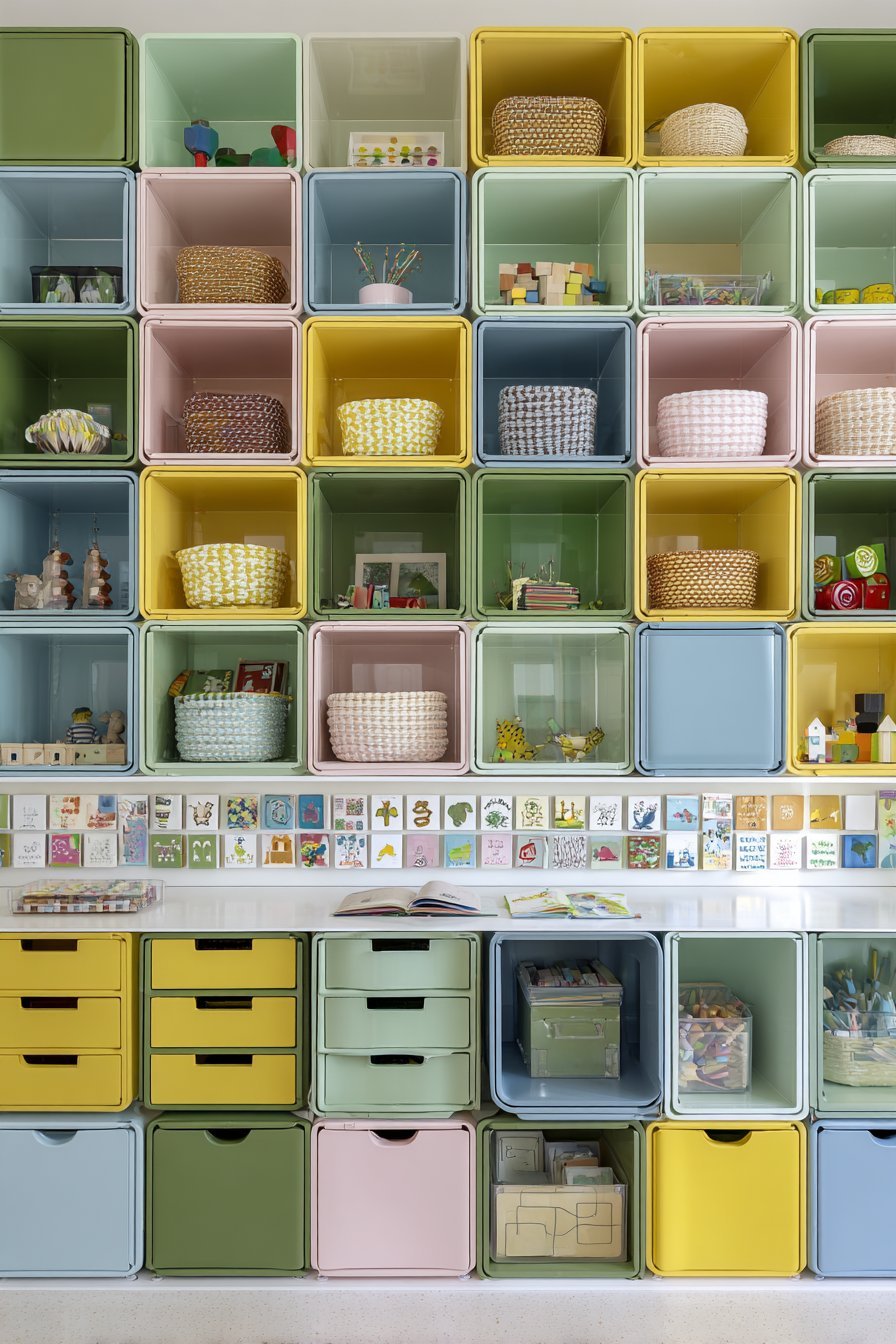
The innovative storage solution keeps items visible and easily accessible always. Interior photography with detail focus shows magnetic system functionality comprehensively. Natural diffused light creates subtle reflections on metal panels beautifully. The magnetic approach allows constant reconfiguration without tools or permanent fixtures.
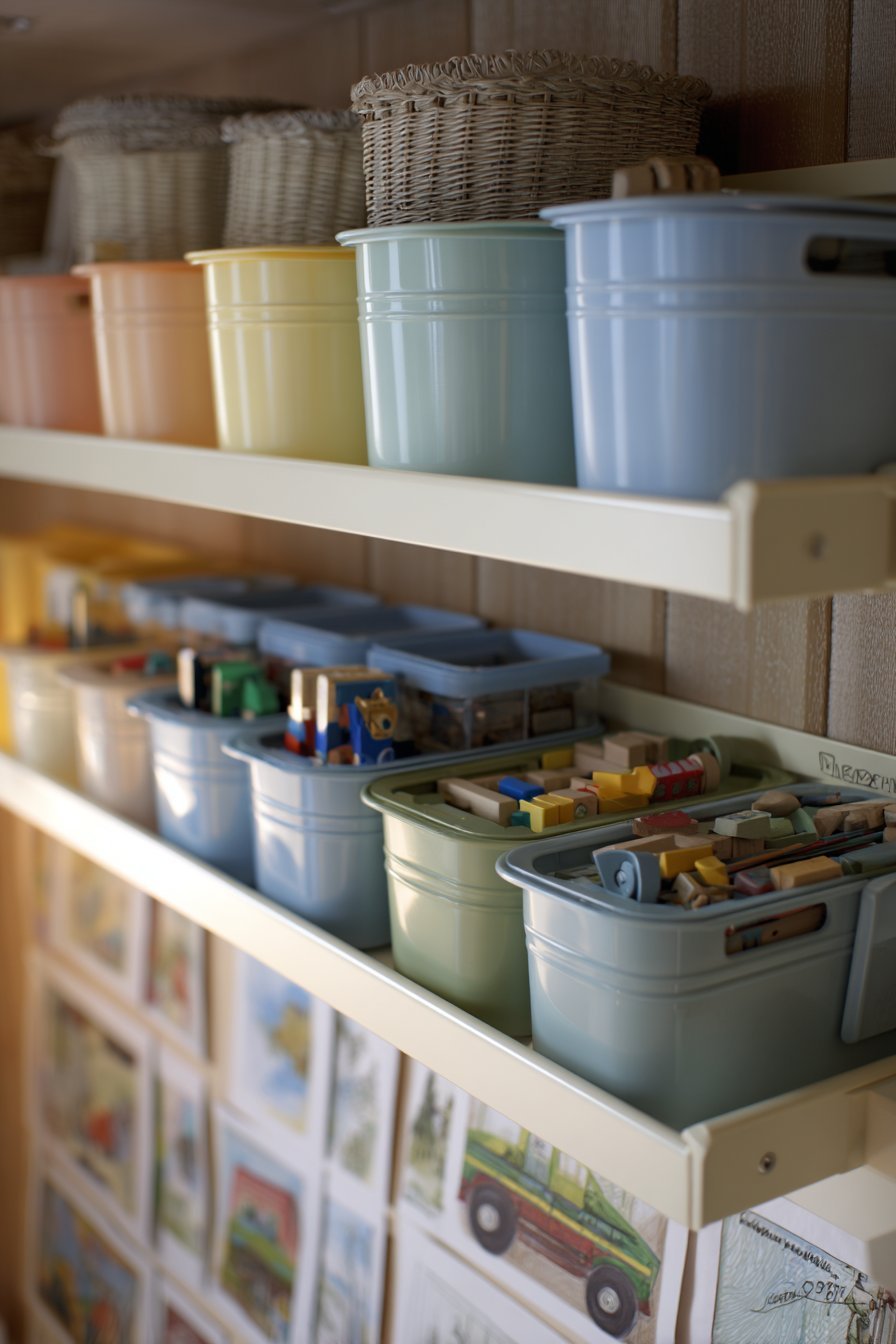
The soft pastel paint transforms utilitarian metal into decorative wall features. Children can rearrange their own storage systems independently with ease. The artwork display strip encourages creativity and pride in accomplishments. The ever-changing display keeps the room feeling fresh and personalized constantly.
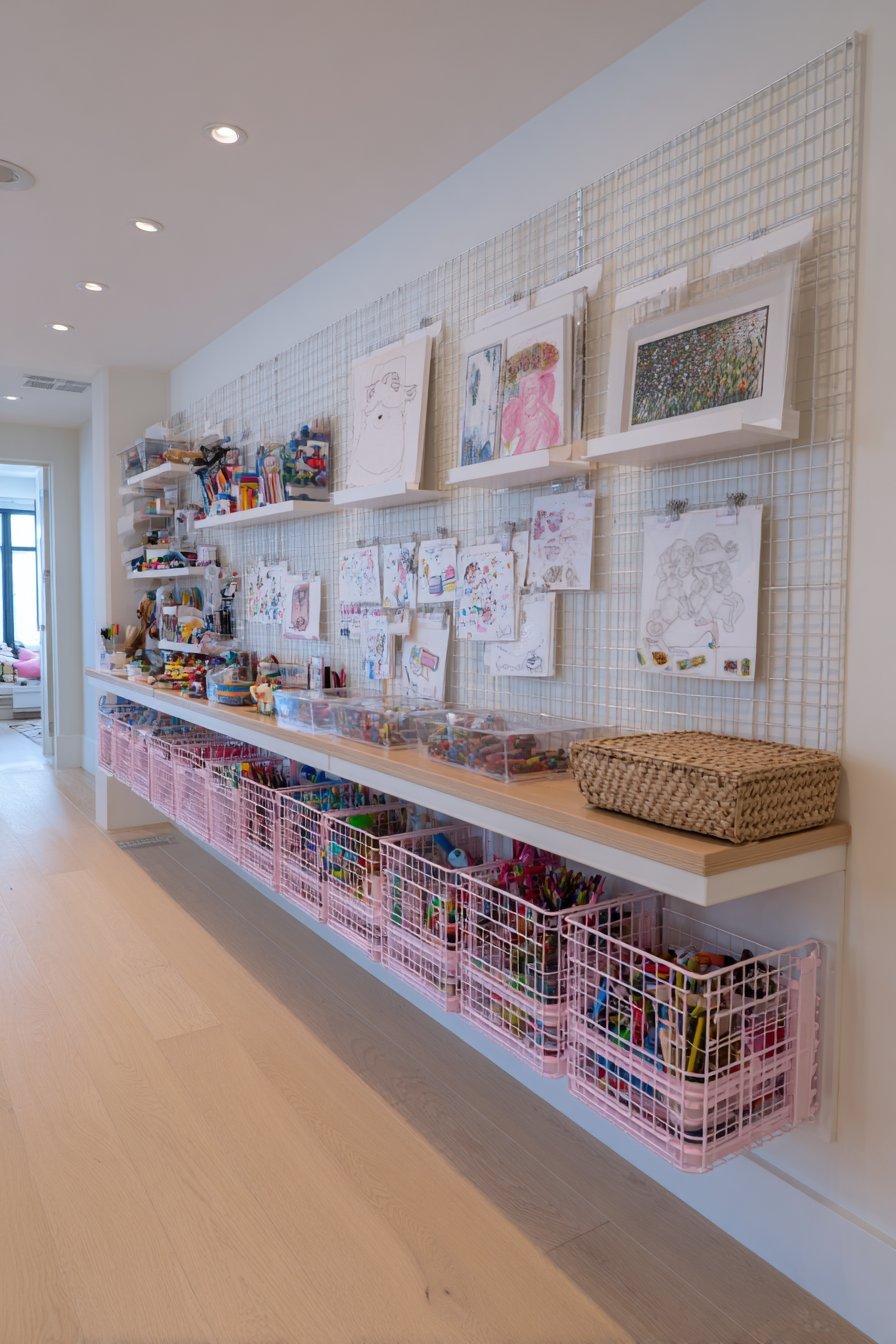
The magnetic containers attach securely but remove easily when needed. The system handles daily rearranging without wear or damage to walls. The smooth metal surfaces clean easily with simple wiping motions.
Key Design Tips:
- Paint metal panels in soft colors rather than industrial finishes
- Install at multiple heights for different age groups
- Use various magnetic accessories for flexibility
- Create artwork display area at child eye level
- Choose magnetic containers in coordinating colors
- Clean metal surfaces regularly to maintain magnetic strength
17. Under-Stairs Built-In Cabinetry
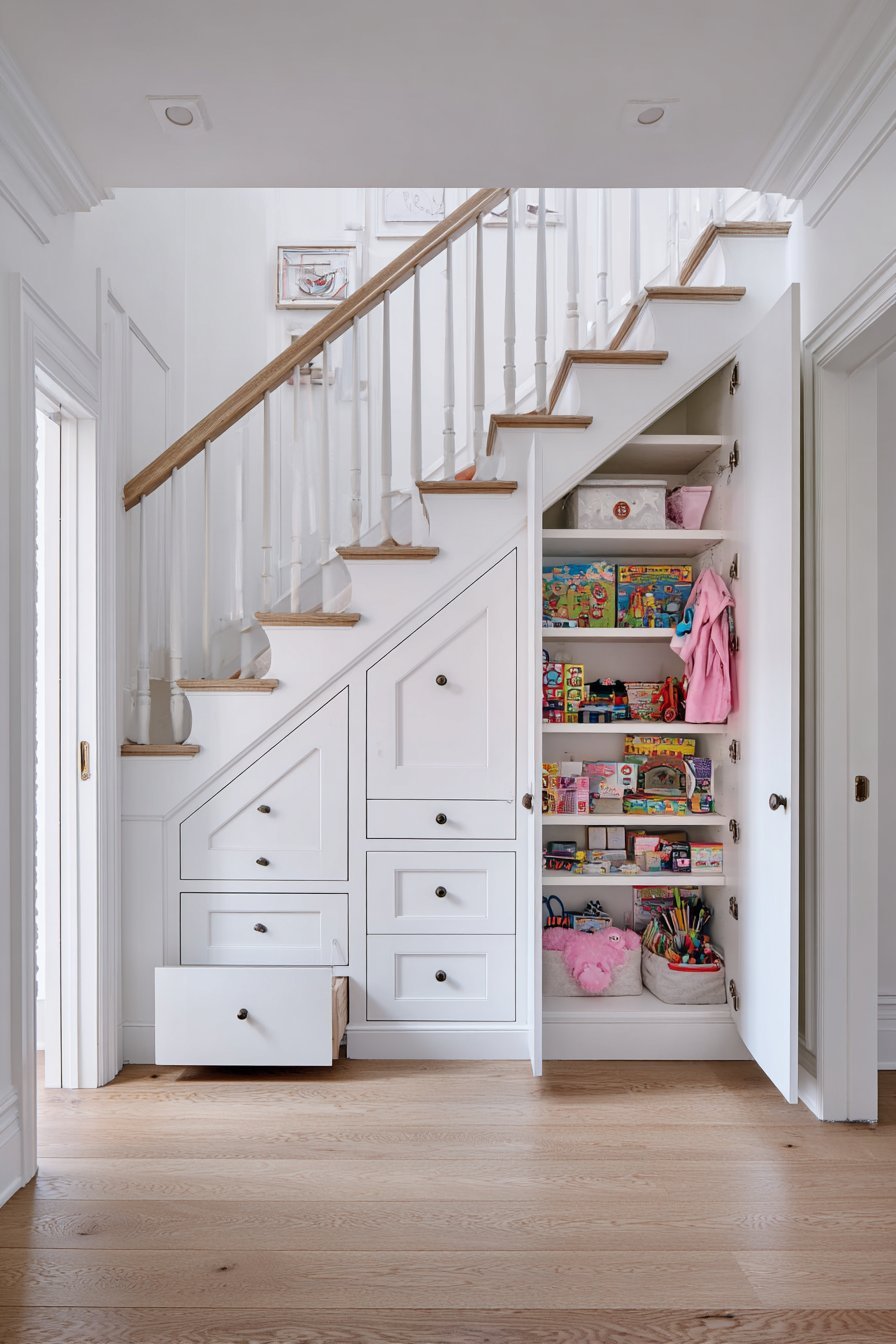
A playroom storage implementation features under-stairs built-in cabinetry throughout. Custom pull-out drawers, cubbies, and hanging rods optimize awkward spaces. White painted cabinets feature simple round knobs in brushed nickel finish. Each section customizes for different storage needs from board games to costumes.
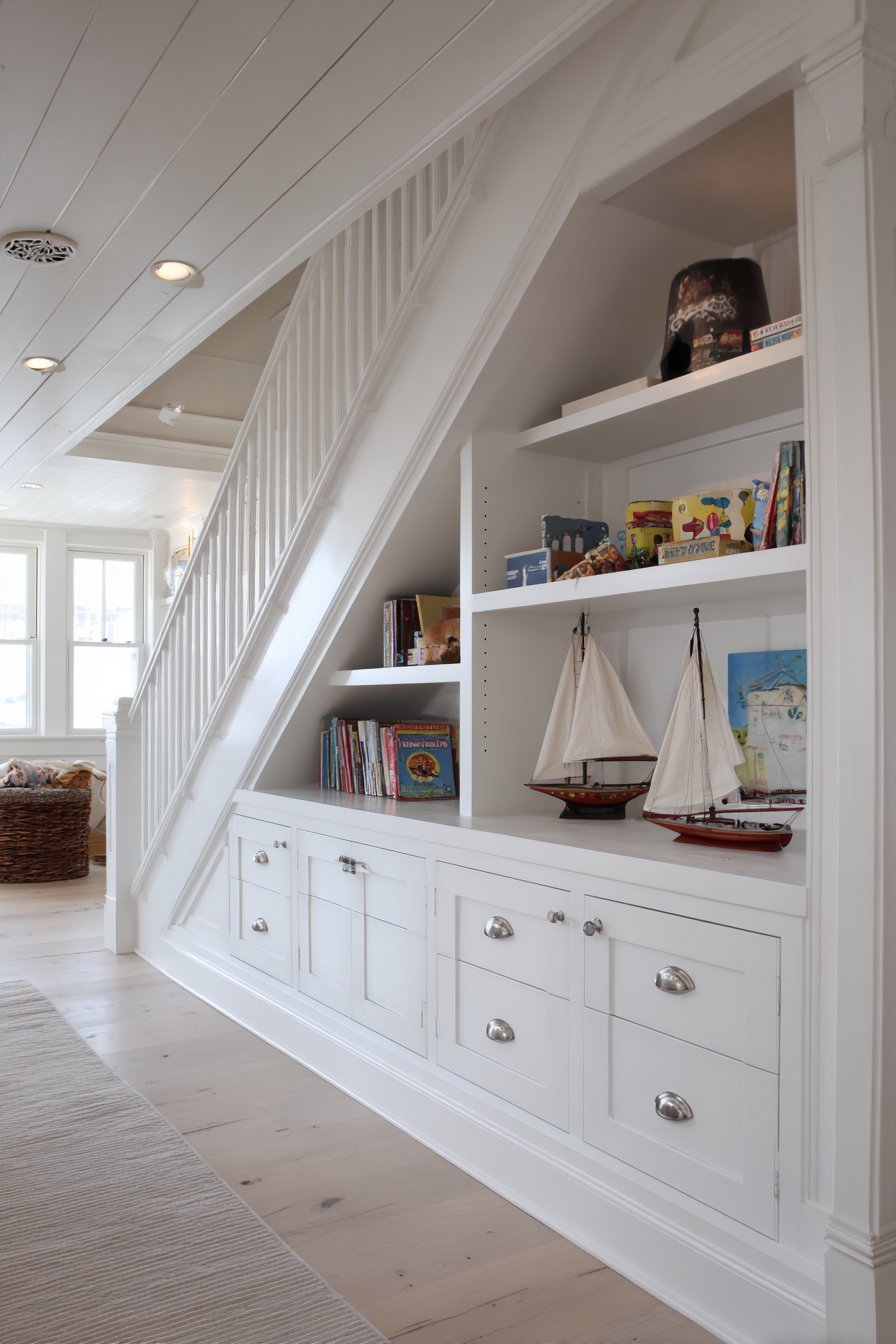
Natural light from the adjacent playroom illuminates the organized storage beautifully. Wide-angle architectural photography captures the typically unused under-stair space transformation. Professional attention to custom carpentry details shows quality craftsmanship throughout. The built-in solution maximizes every inch of available vertical and horizontal space.
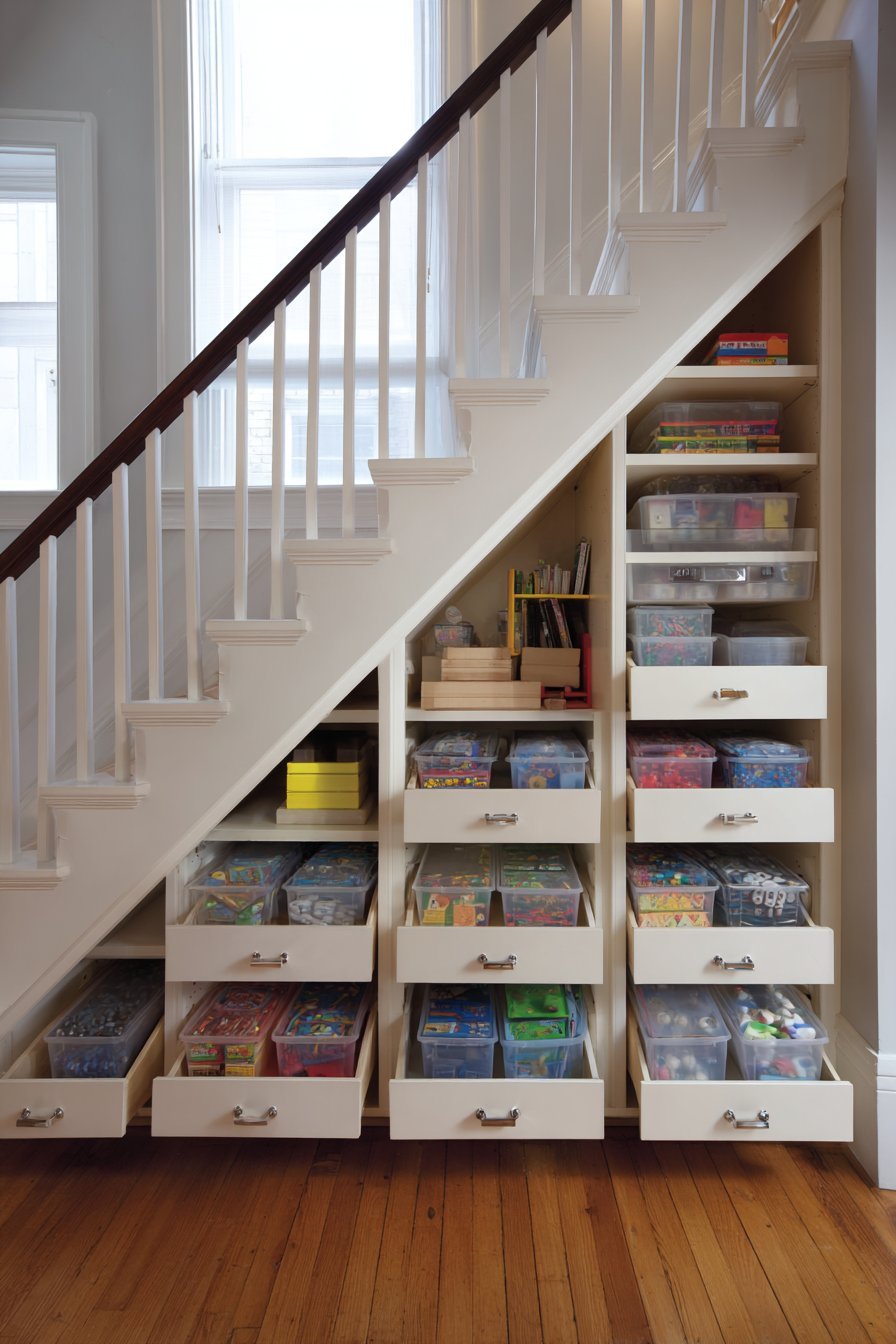
The white painted finish brightens the typically dark under-stair area considerably. Pull-out drawers bring items forward for easy access in deep spaces. Hanging rods accommodate dress-up clothes and costumes at appropriate heights. The custom approach addresses specific family storage needs rather than generic solutions.
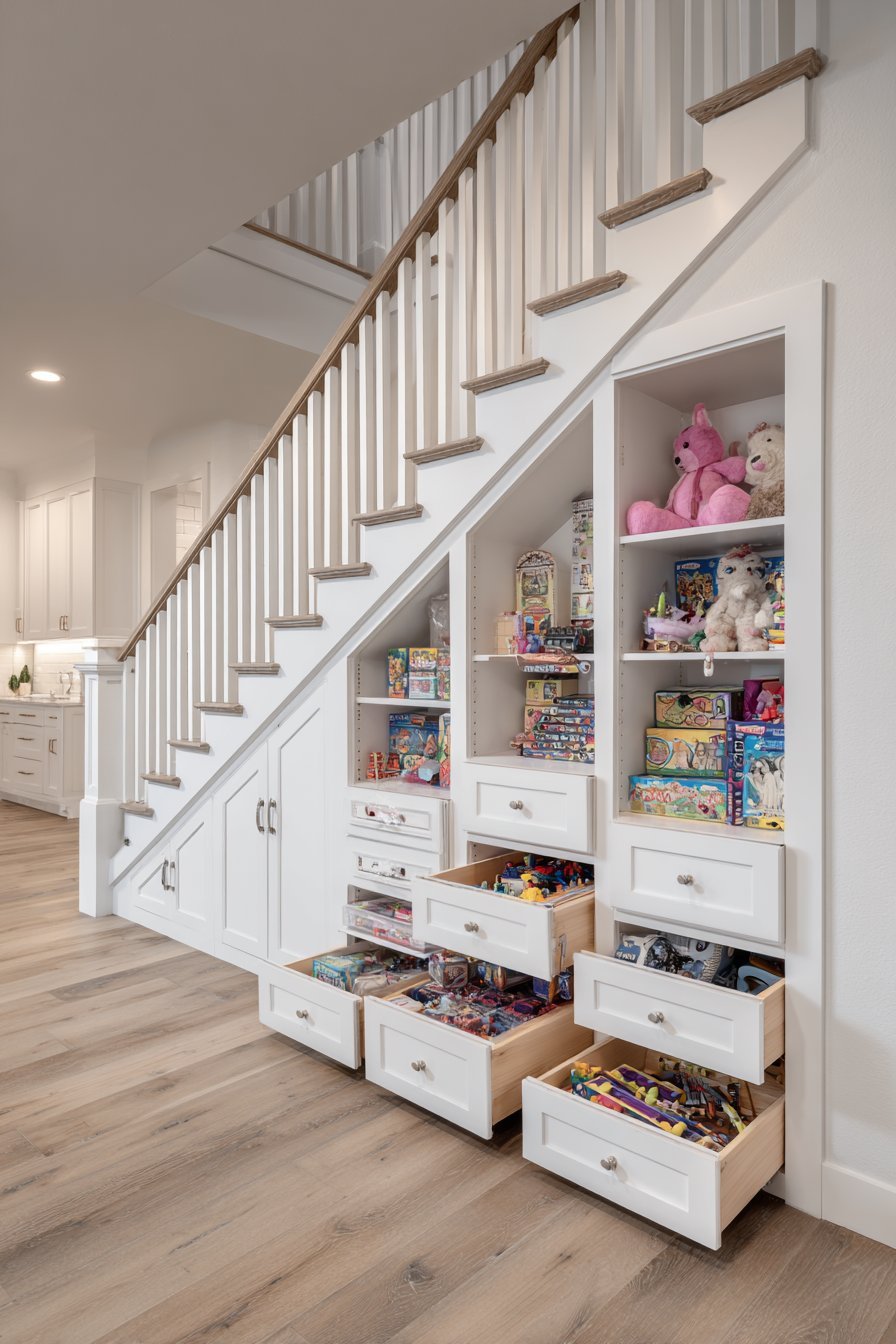
The brushed nickel hardware adds subtle sophistication to the functional design. The various compartment sizes accommodate everything from small toys to large games. The built-in nature creates seamless integration with surrounding architecture beautifully.
Key Design Tips:
- Maximize under-stair space with custom built-ins
- Include pull-out drawers for deep space accessibility
- Paint bright colors to lighten typically dark areas
- Add hanging rods for costume and clothing storage
- Choose simple hardware that children can operate easily
- Design each section for specific storage categories
18. Modular Foam Block Storage Seats
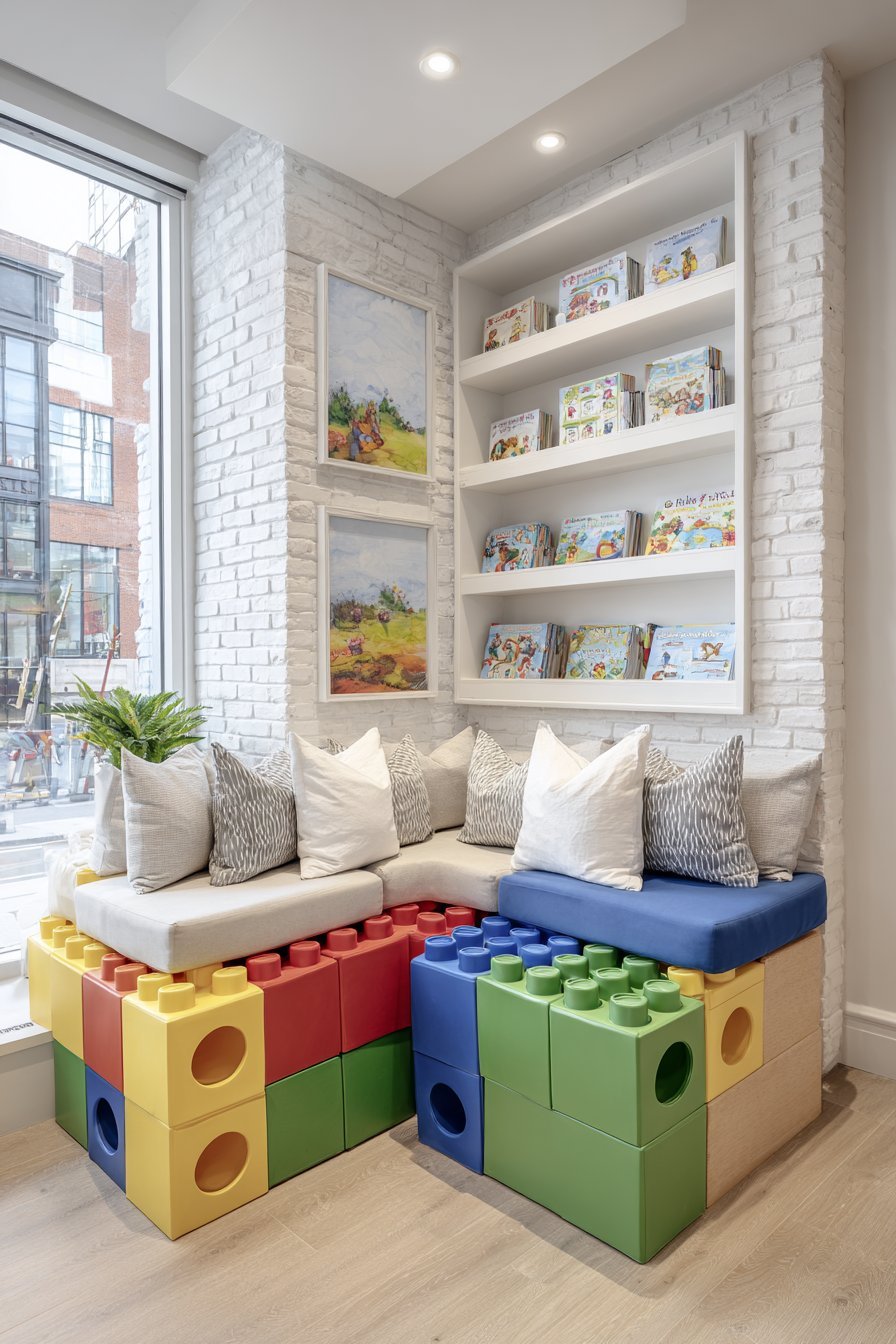
A playroom features modular foam block storage seats in bright primaries. The hollow blocks stack and rearrange while storing items inside securely. Children use the blocks as both building toys and functional storage. A simple white shelving unit along one wall provides additional book storage.
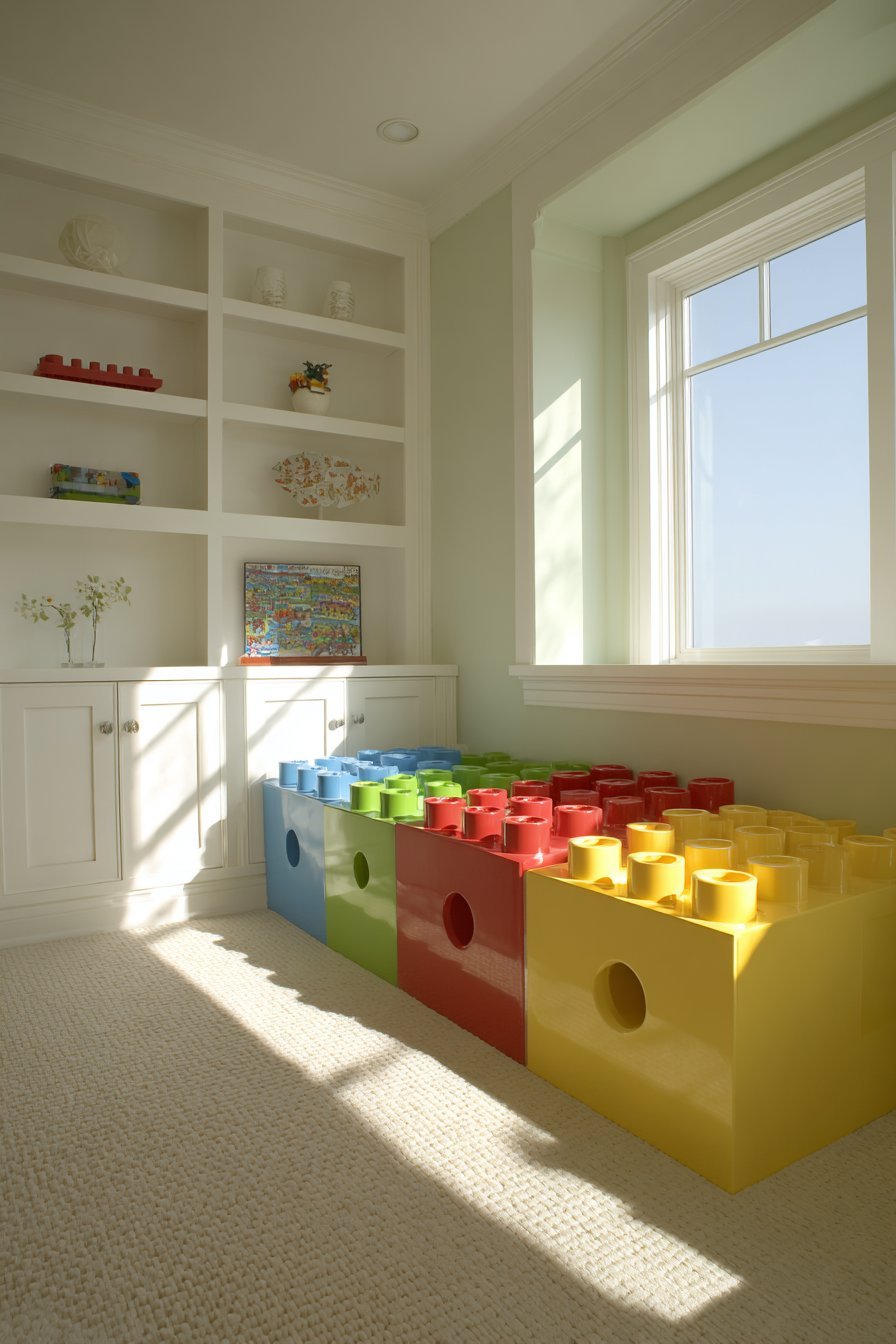
Interior design photography with bright natural lighting captures the playful concept. The flexible storage solution encourages creativity while maintaining organization effectively. The foam blocks are lightweight enough for children to move independently. The dual-purpose design maximizes value and functionality in limited spaces dramatically.
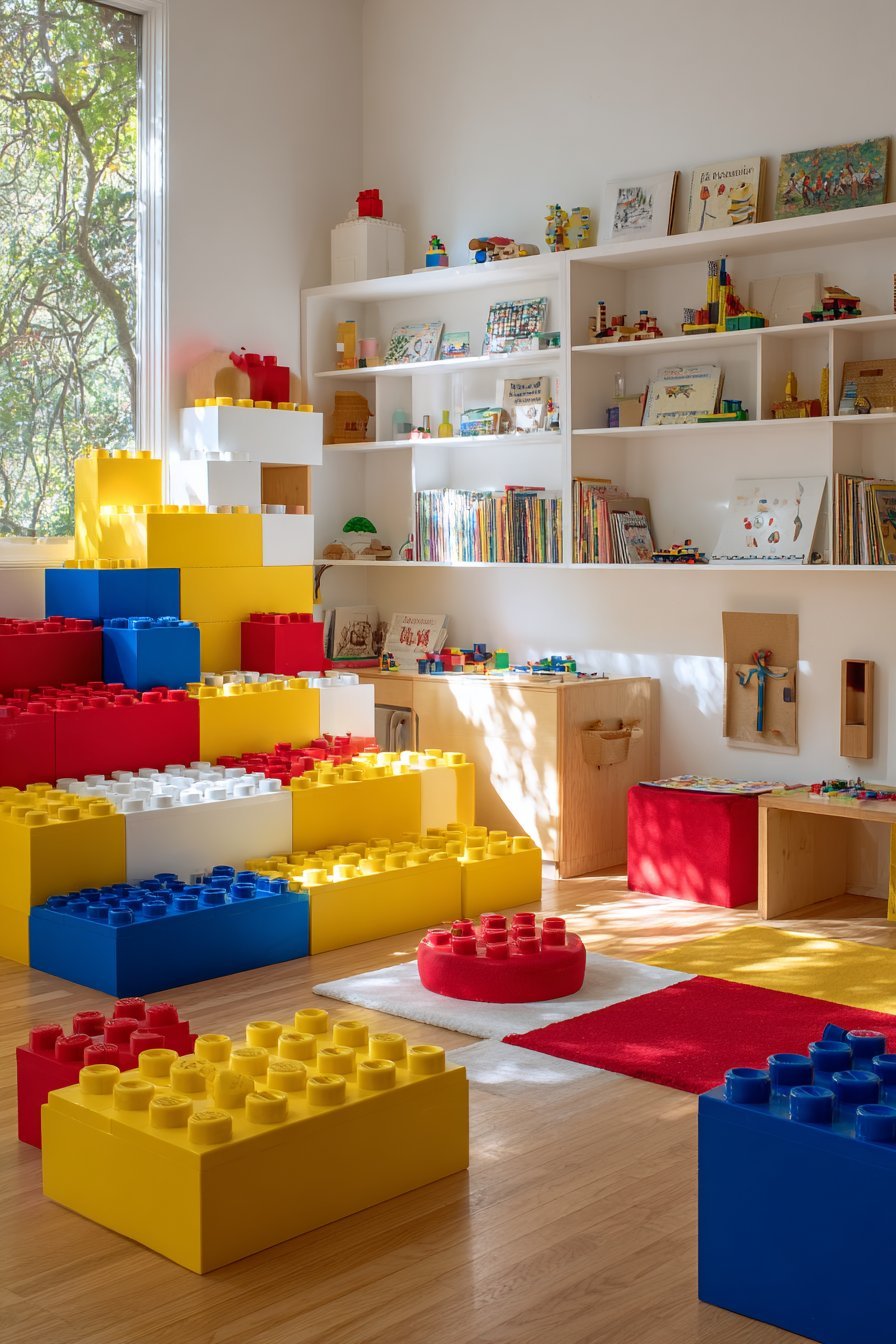
The primary colors energize the space and appeal to young children. The modular nature means the configuration changes with play activities and moods. The blocks nest together for efficient storage when not in active use. The simple white shelving provides a calm backdrop for colorful play elements.
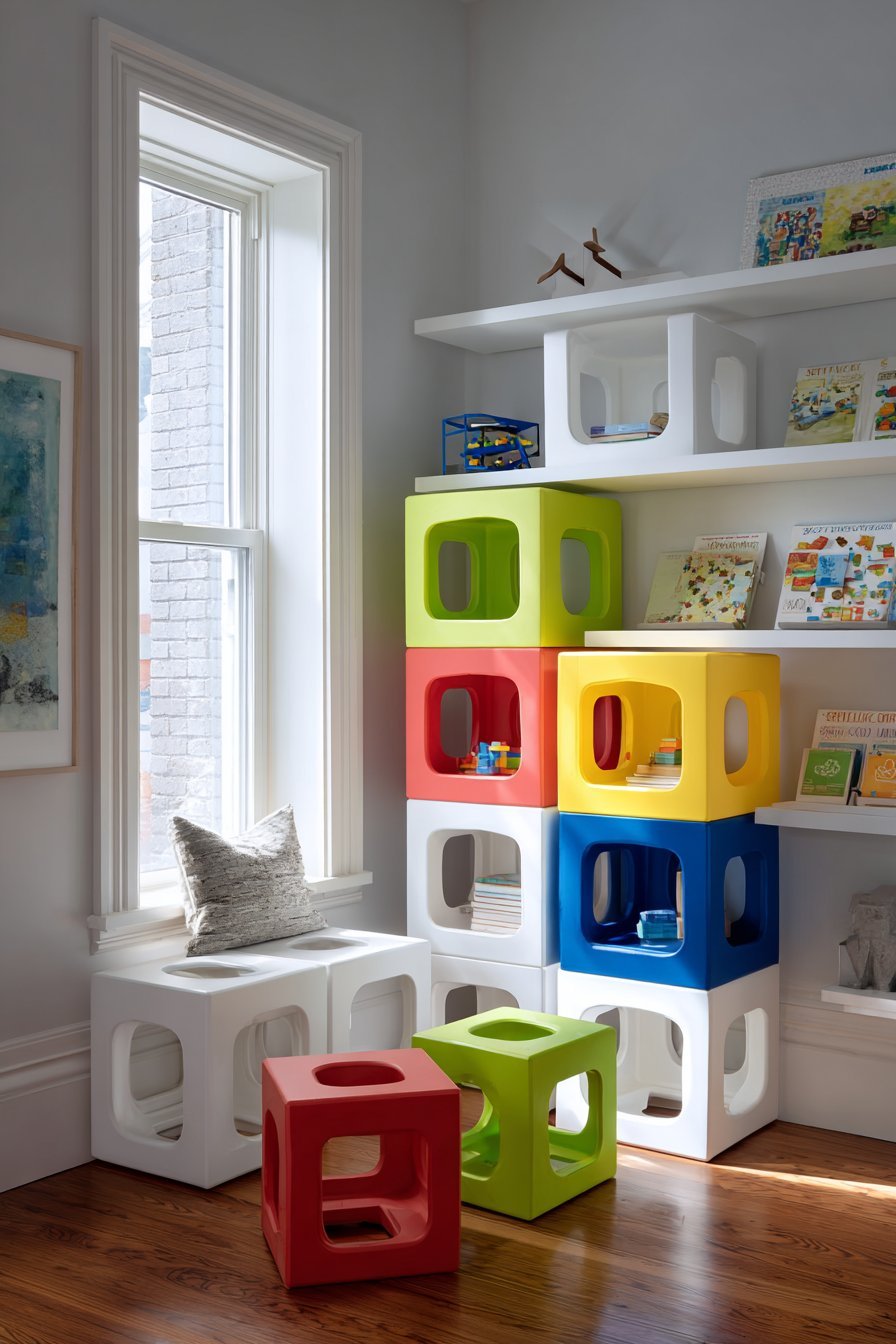
The foam construction ensures safety during active play and building activities. The storage capacity inside each block surprises with its generous dimensions. The stackable design teaches spatial relationships and engineering concepts naturally.
Key Design Tips:
- Choose lightweight foam blocks children can move independently
- Select bright colors that energize the play space
- Ensure blocks are hollow for internal storage capacity
- Combine with simple shelving for balance and stability
- Look for wipeable foam surfaces for easy cleaning
- Verify blocks nest together for compact storage options
19. Wall-Mounted Rail with Hanging Organizers
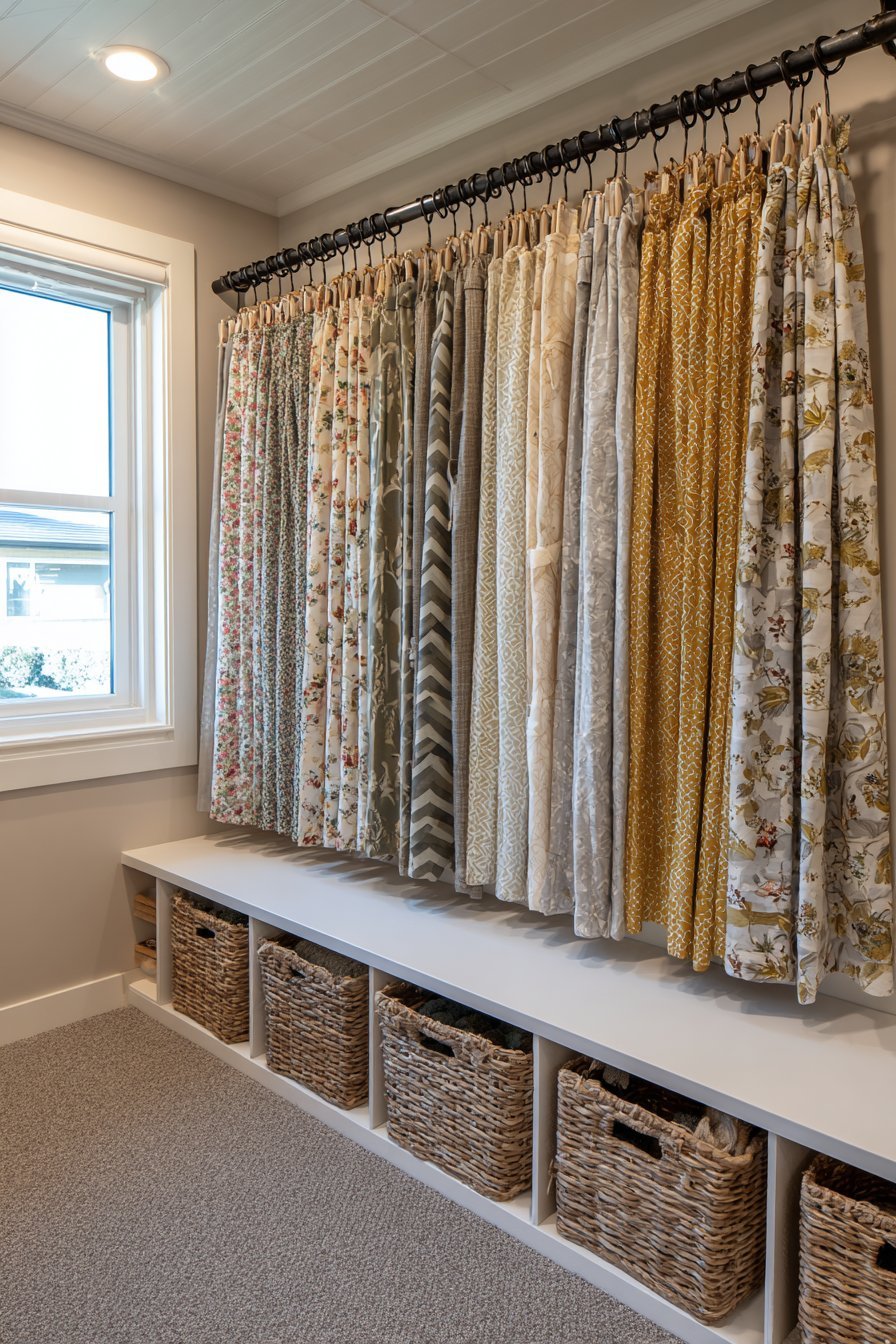
A playroom features a wall-mounted rail system with hanging fabric organizers. Various sizes and patterns accommodate different storage needs throughout the space. S-hooks and clips allow easy reconfiguration as requirements change over time. Below the rail, a low bench with woven baskets provides closed storage.
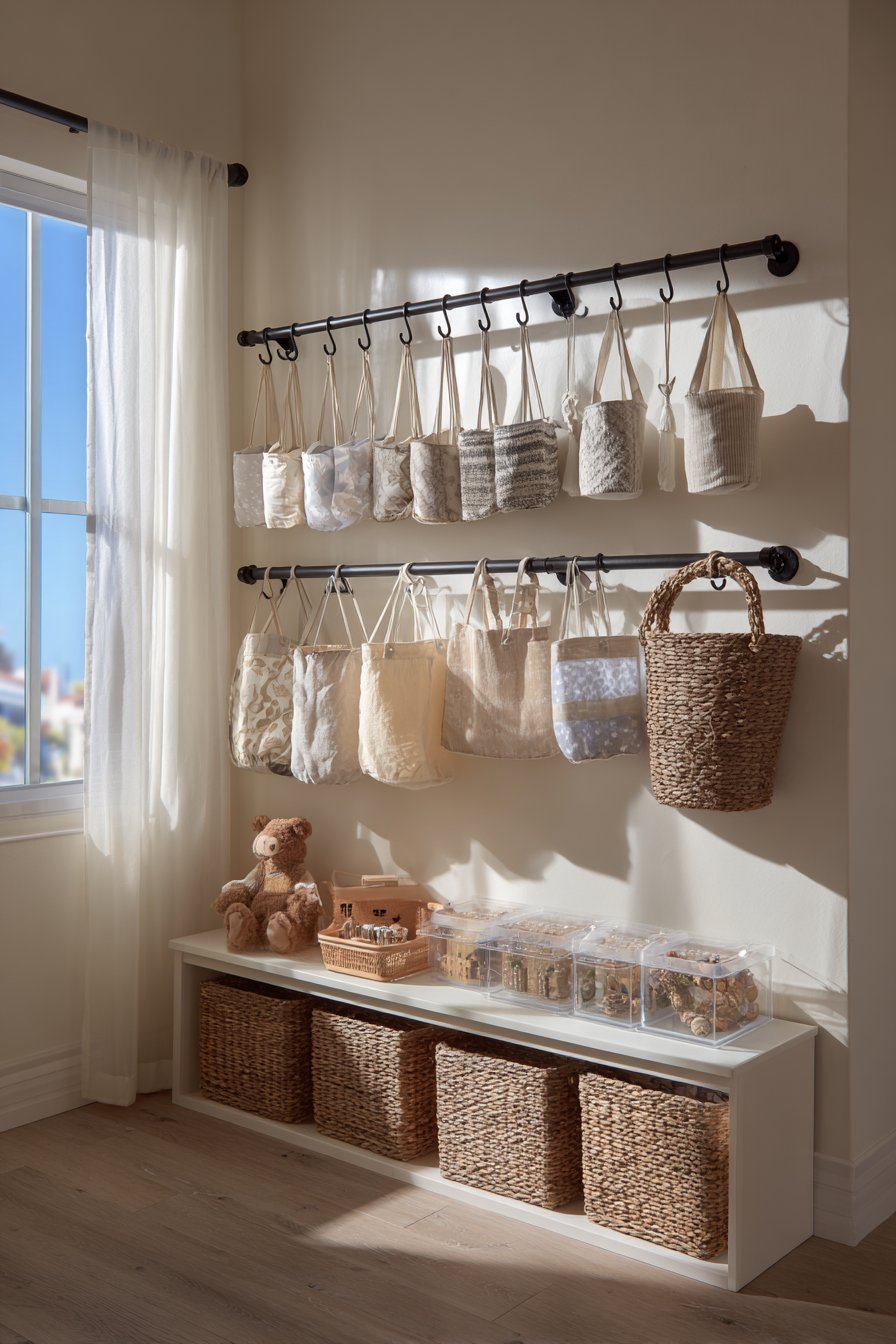
Professional interior photography captures the adaptable storage system comprehensively and clearly. Soft window light highlights textured fabrics and organized arrangements beautifully. The hanging organizers can move along the rail for optimal positioning. The fabric storage adds softness to the room’s overall aesthetic appealingly.
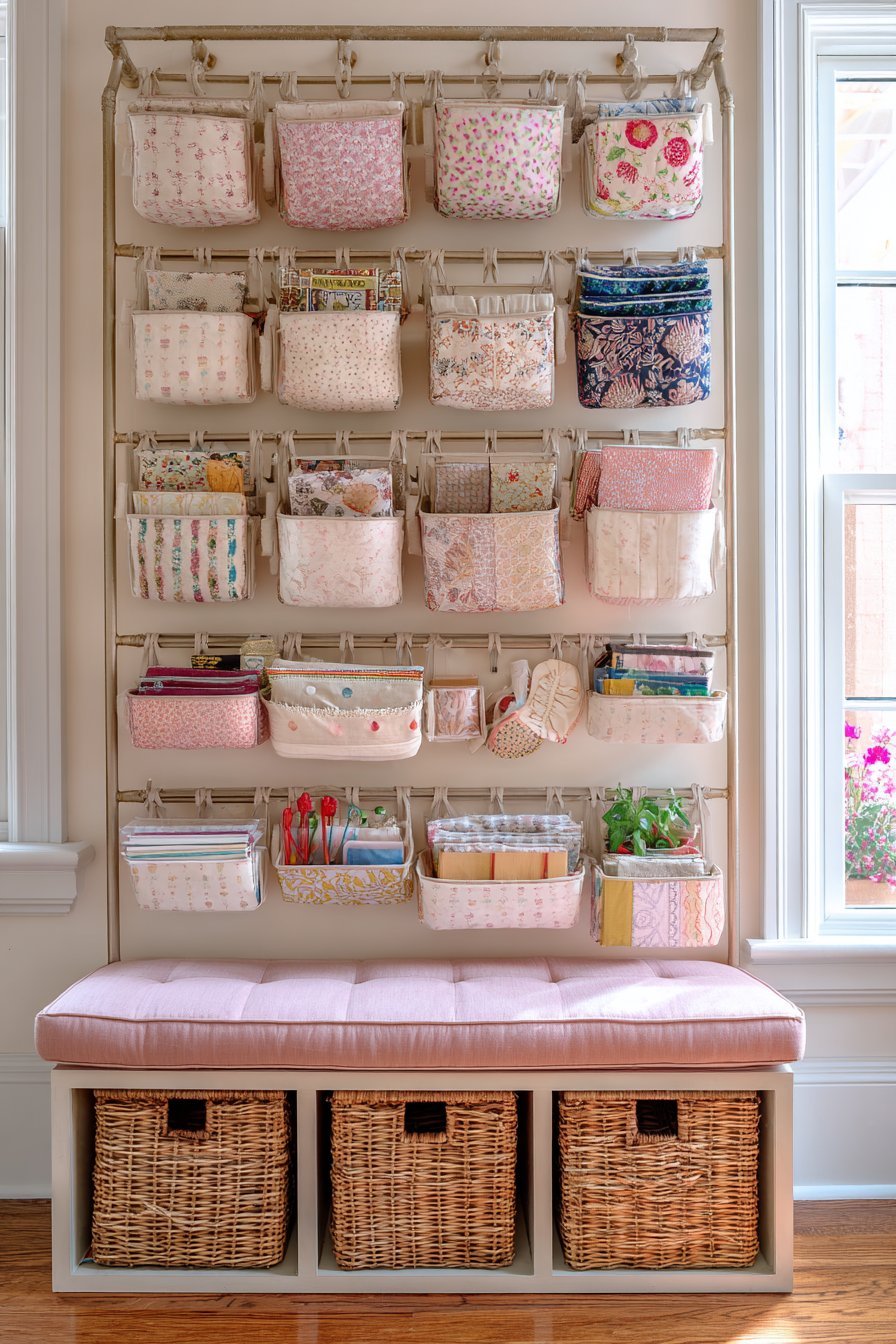
The rail system installs simply without extensive carpentry or permanent alterations. Hanging organizers can be removed easily for washing or seasonal changes. The bench below provides sturdy seating while concealing less attractive items. Woven baskets add natural texture that warms the overall design scheme.
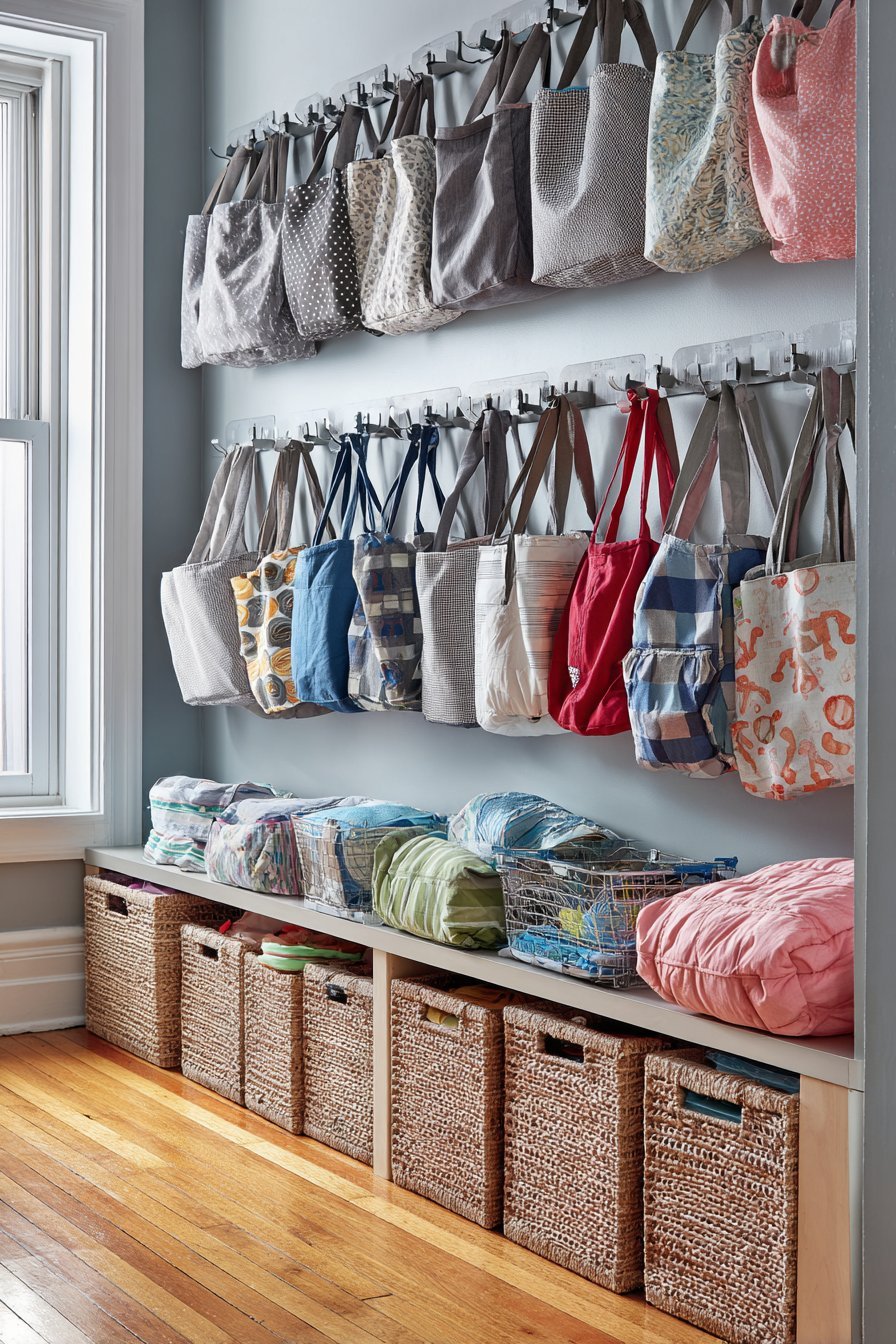
The adaptable nature means the system grows with changing storage needs. The fabric organizers come in countless patterns and colors for personalization. The S-hooks and clips require no tools for repositioning or adjustments.
Key Design Tips:
- Install sturdy rails with proper wall anchoring
- Use S-hooks for easy sliding adjustments
- Choose washable fabric organizers for maintenance
- Combine hanging storage with bench seating below
- Select coordinating patterns for visual cohesion
- Position rail at height appropriate for users
20. Clear Acrylic Wall-Mounted Bins
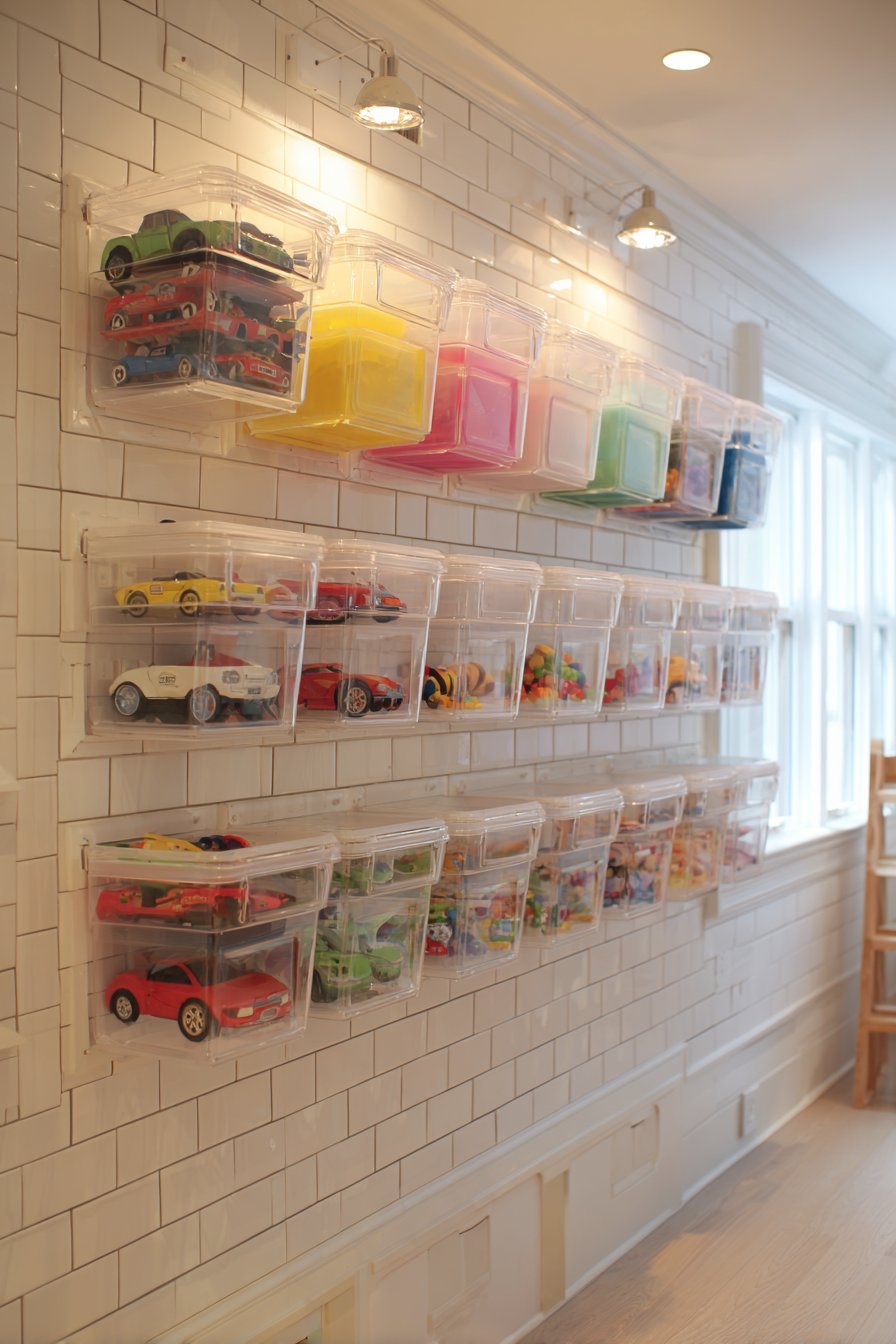
A playroom storage solution showcases clear acrylic wall-mounted bins throughout. Child eye level positioning allows easy visibility of contents always. Small toy cars to craft supplies organize in the transparent containers. The acrylic mounts on white subway tile walls for easy cleaning.
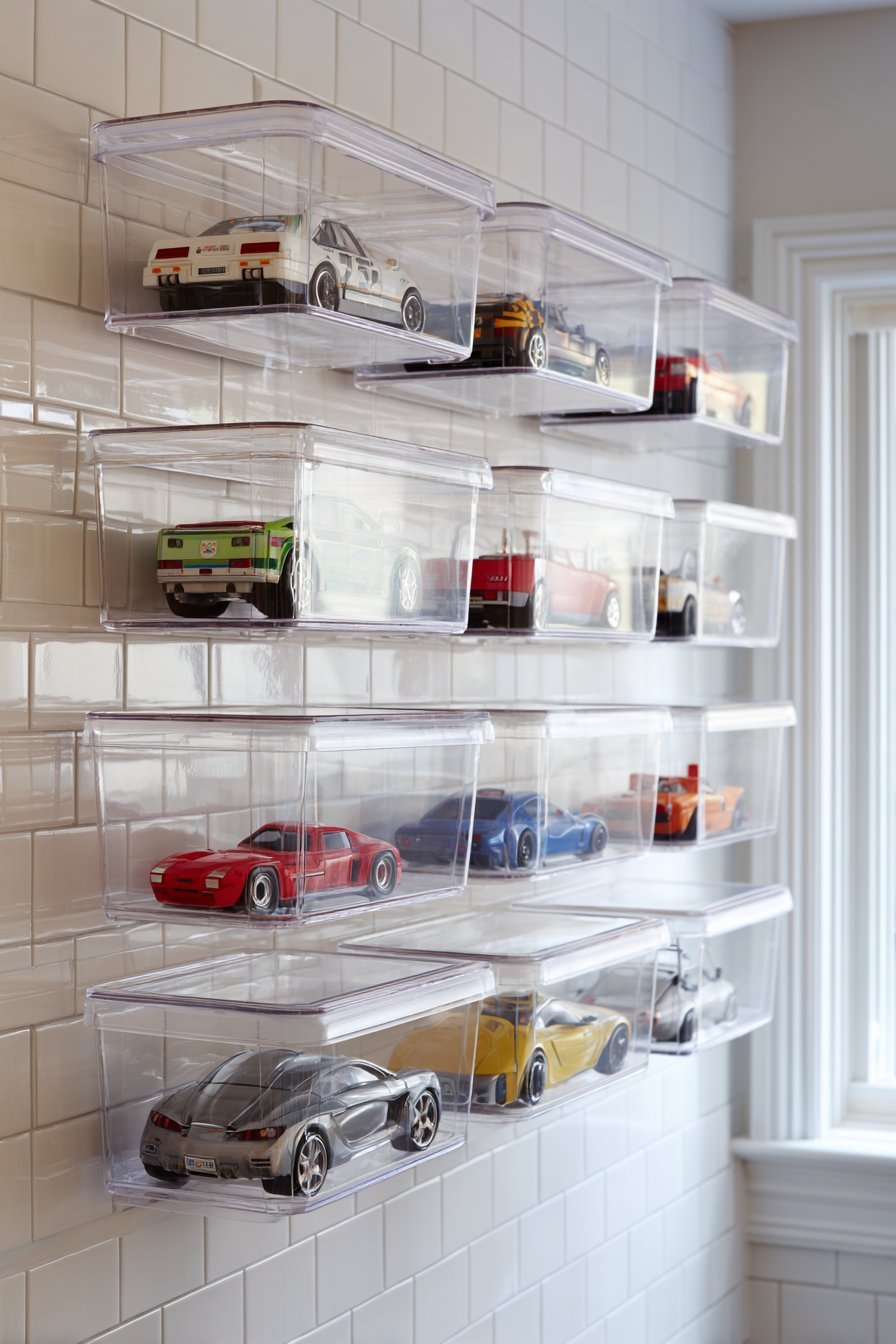
A small step stool with built-in storage helps children reach higher shelves safely. Wide-angle interior design photography captures the transparent storage system comprehensively. Balanced exposure shows how natural light passes through acrylic bins beautifully. The organized, accessible display encourages children to maintain order independently and consistently.
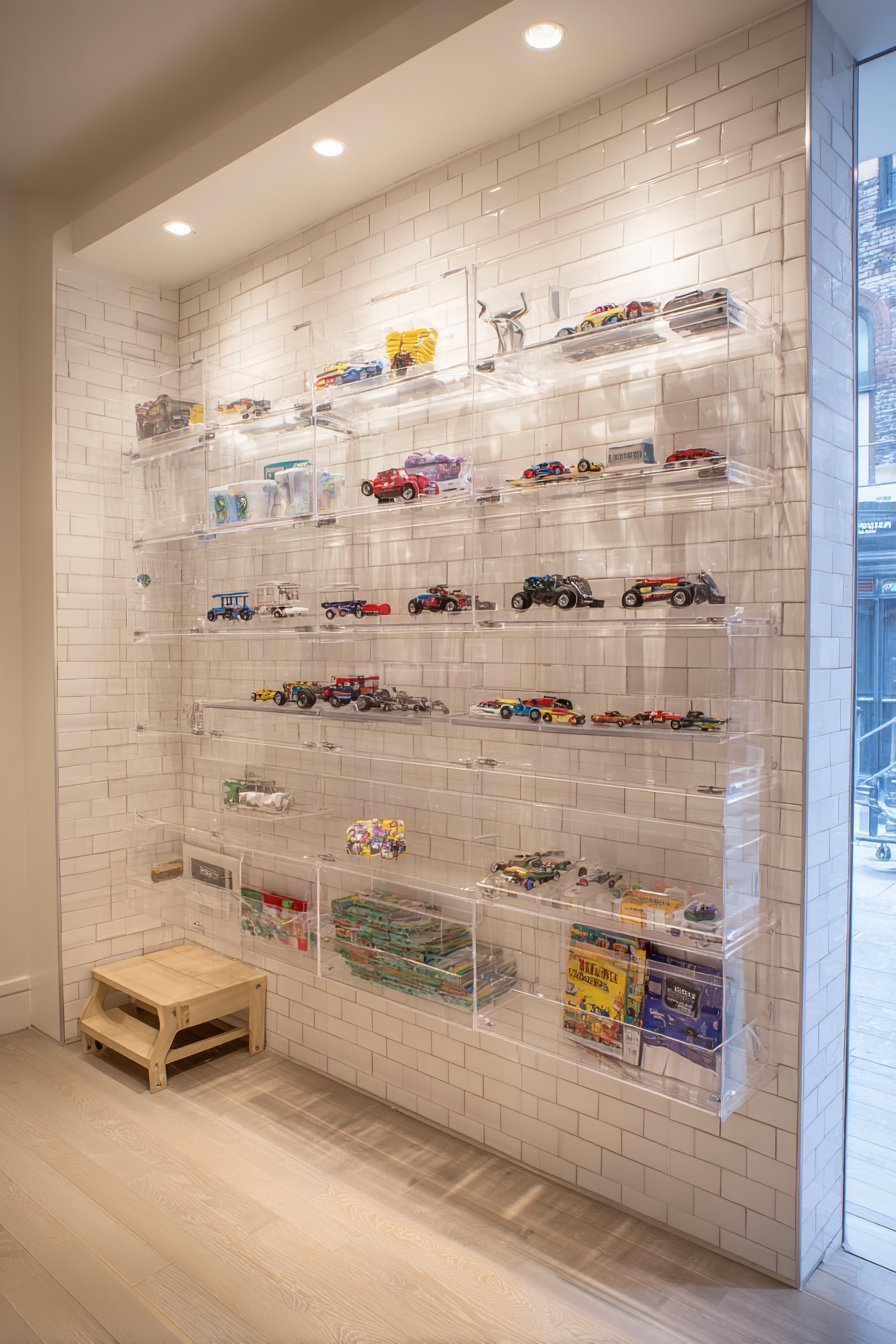
The transparent nature eliminates guessing about container contents during play. The acrylic material is more durable than glass while maintaining clarity. The white tile background creates a bright, clean appearance throughout. The step stool provides both access and additional hidden storage capacity.
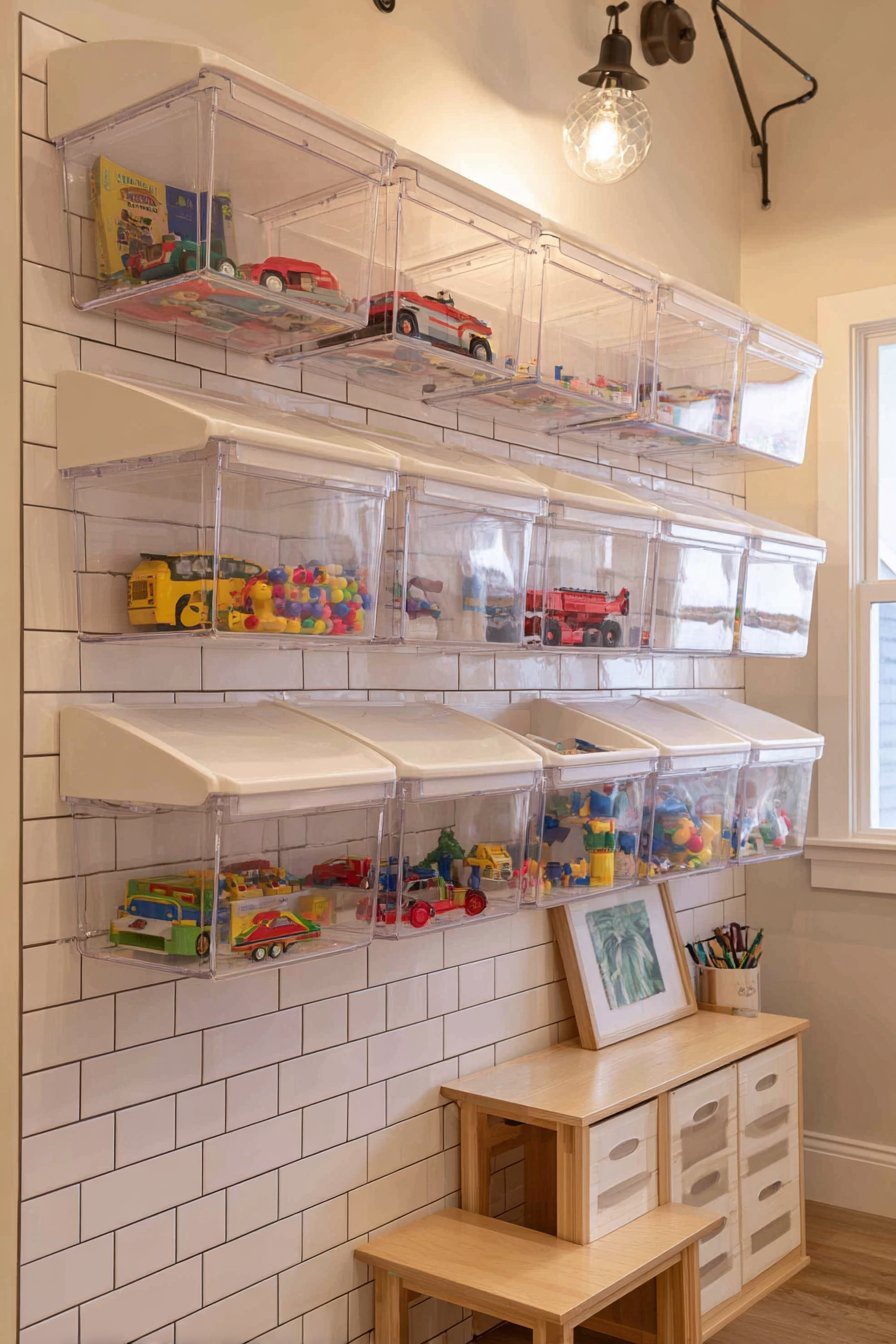
The wall-mounted positioning keeps floor space completely clear for play. The subway tile allows for easy cleaning of inevitable spills and messes. The acrylic bins can be removed for thorough cleaning when necessary.
Key Design Tips:
- Mount clear bins at child eye level for visibility
- Use white or light backgrounds to enhance transparency
- Organize by toy type with one category per bin
- Include safe step stool for accessing higher storage
- Clean acrylic regularly to maintain clarity and appeal
- Ensure proper weight ratings for wall-mounted bins
21. Custom Closet Organization System
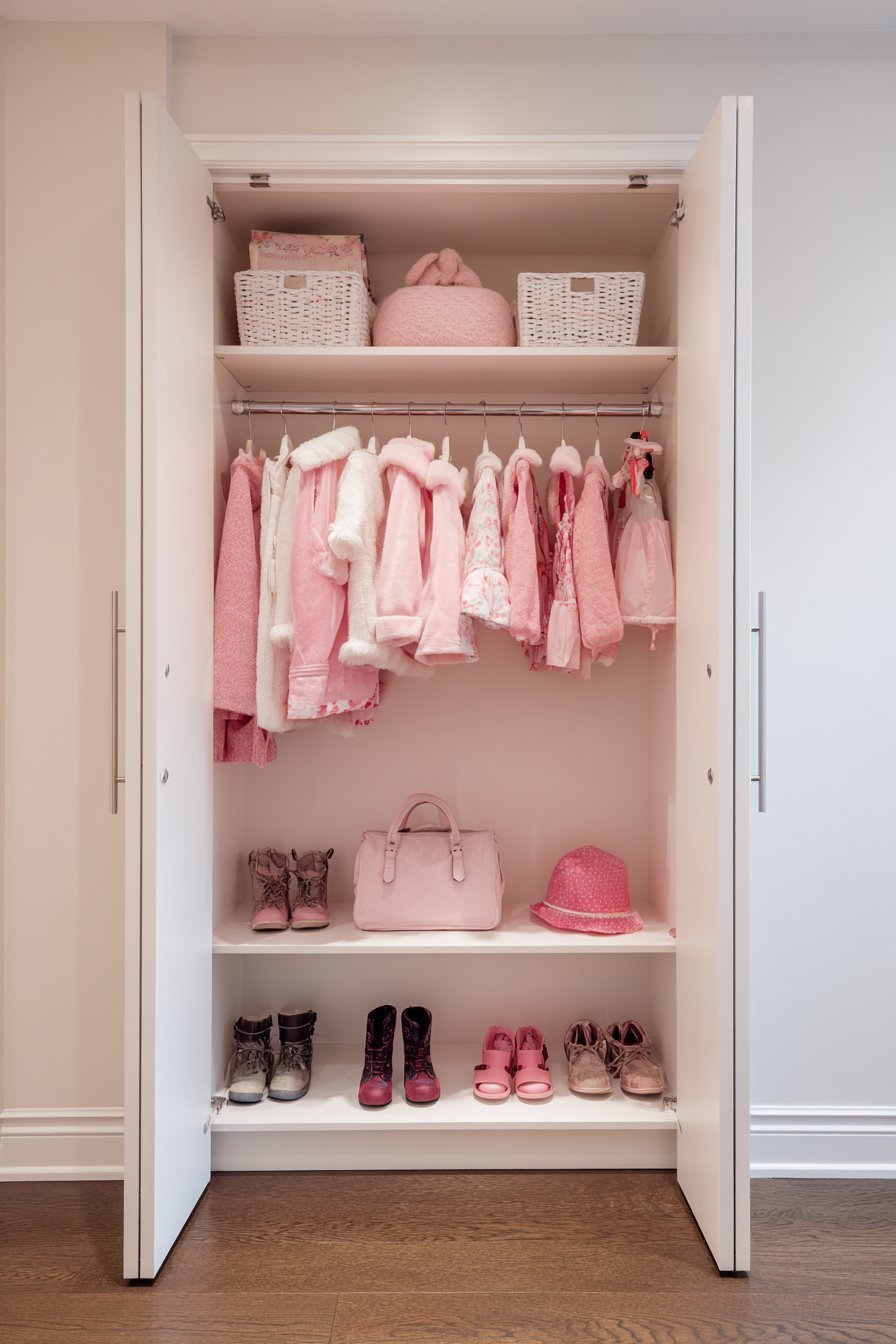
A playroom features a custom closet organization system with double hanging rods. Costumes hang on the upper and lower rods for maximum capacity. Cubbies organize shoes and accessories in designated sections systematically. Upper shelving stores seasonal items and less frequently used toys safely.
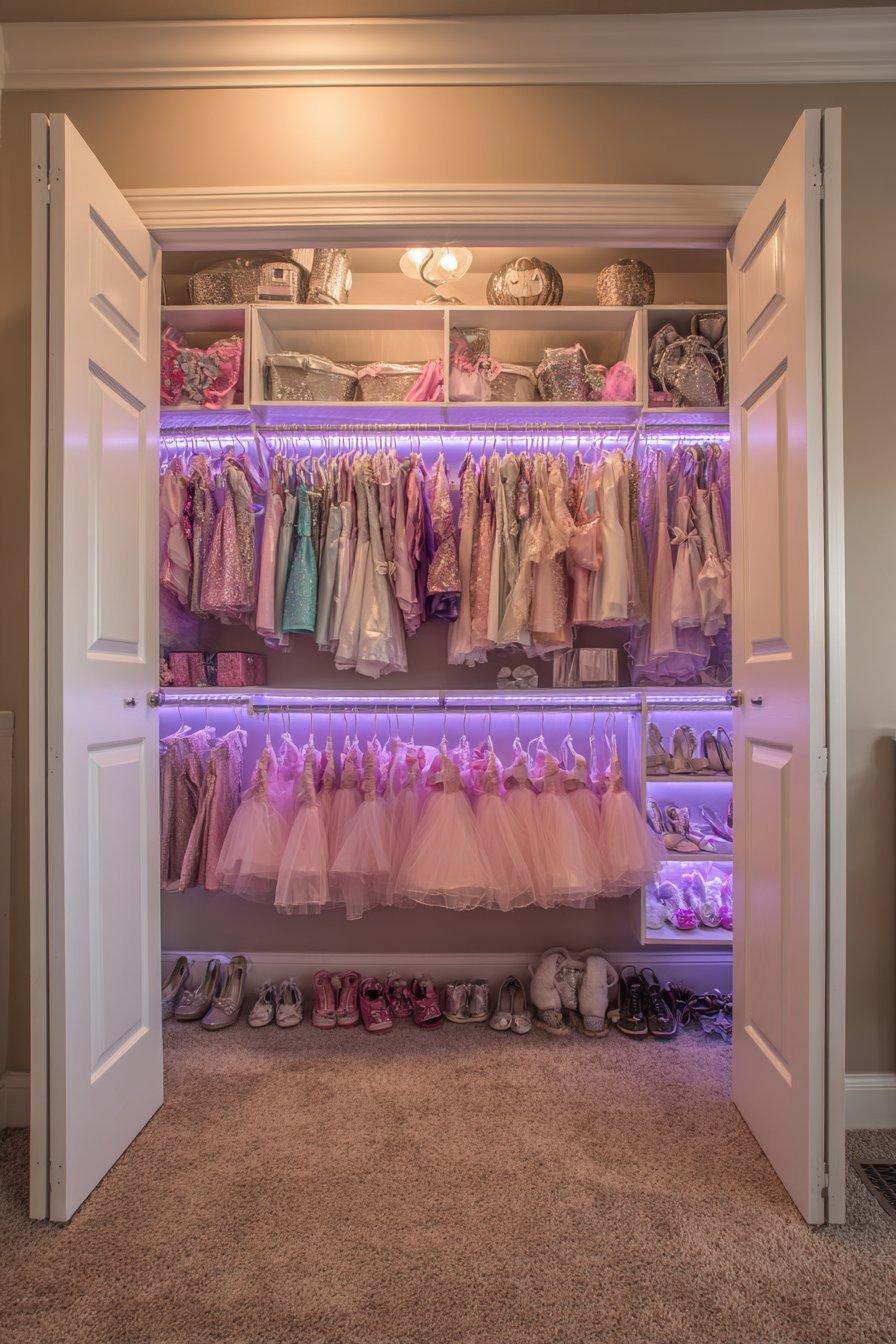
The white melamine system features adjustable shelving for growth and flexibility. LED closet lighting ensures complete visibility of items during selection. Interior photography captures the complete closet organization with doors open wide. The maximized vertical storage shows systematic arrangement of playroom items clearly.
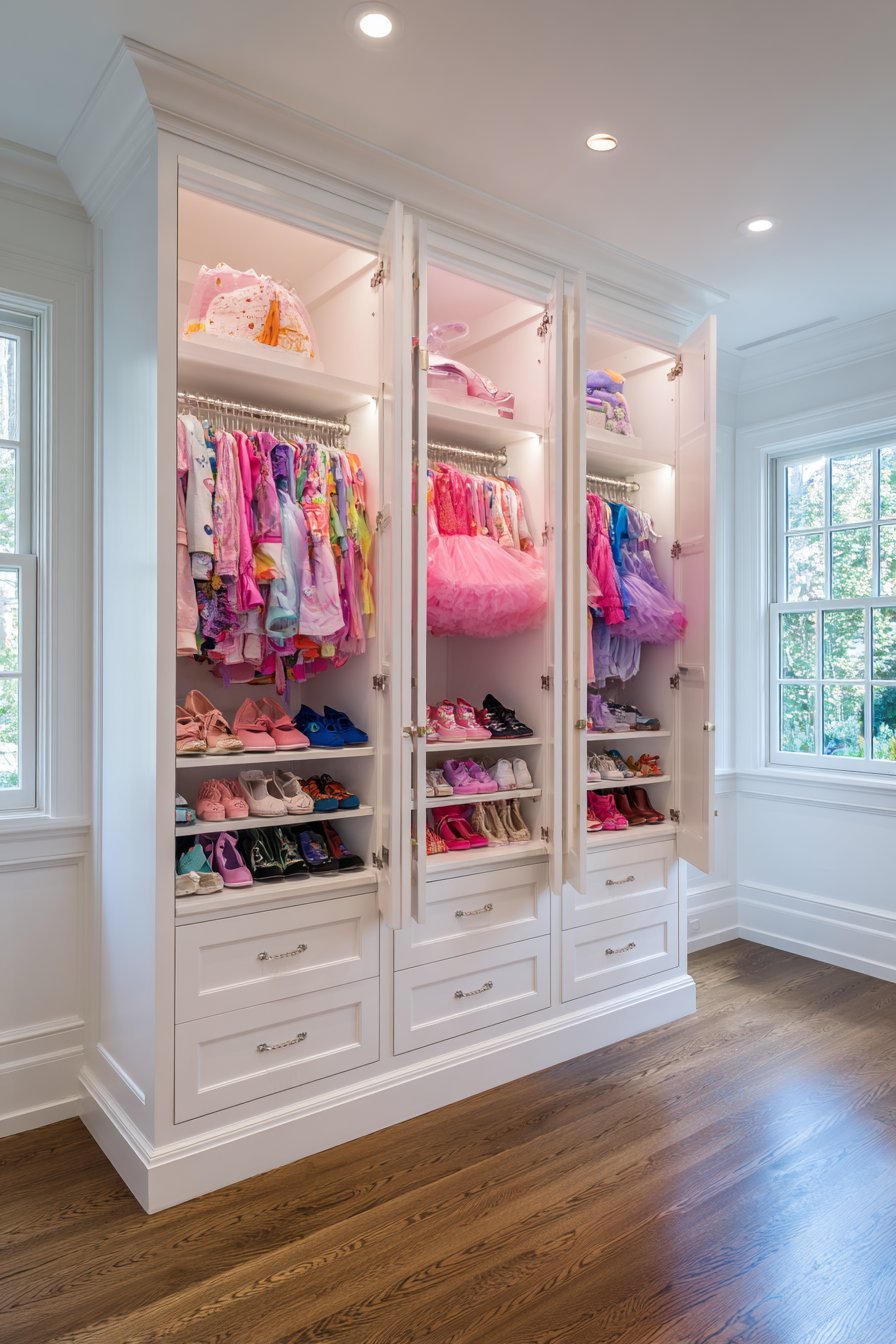
The double hanging rods double the costume storage capacity significantly. The adjustable nature means the system adapts as children grow taller. The LED lighting eliminates dark closet corners where items get lost. The white melamine surface cleans easily and reflects light throughout the space.
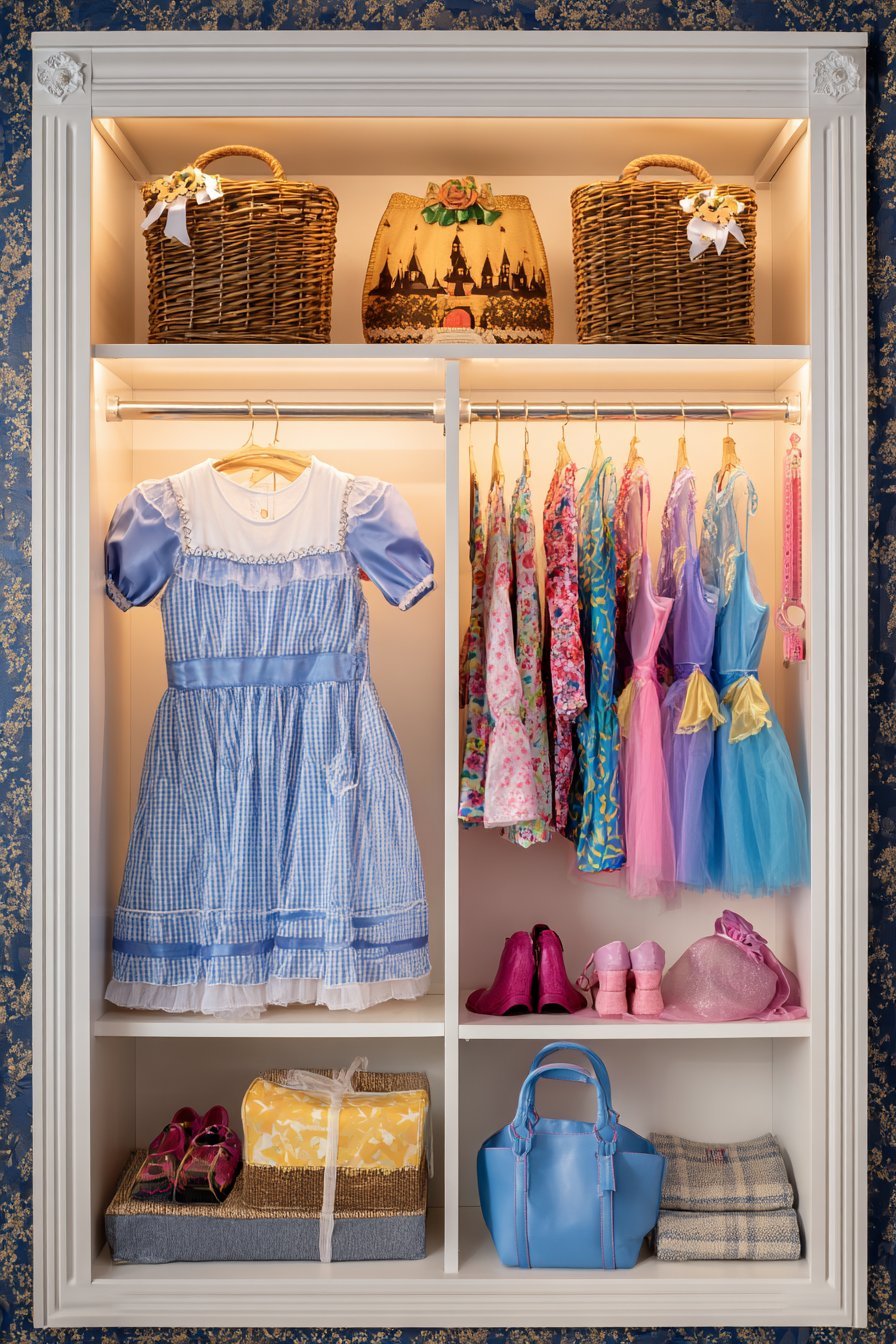
The custom approach addresses specific family needs and storage challenges. The organized closet encourages children to maintain order through clear systems. The door-open photography demonstrates the transformation from cluttered to organized beautifully.
Key Design Tips:
- Install double hanging rods to maximize vertical space
- Use adjustable shelving systems for long-term flexibility
- Add LED lighting for complete visibility always
- Choose white or light colors to brighten closet interiors
- Organize by category with designated sections for each
- Consider child’s current height when positioning elements
22. Vintage Dresser Repurposed for Toys
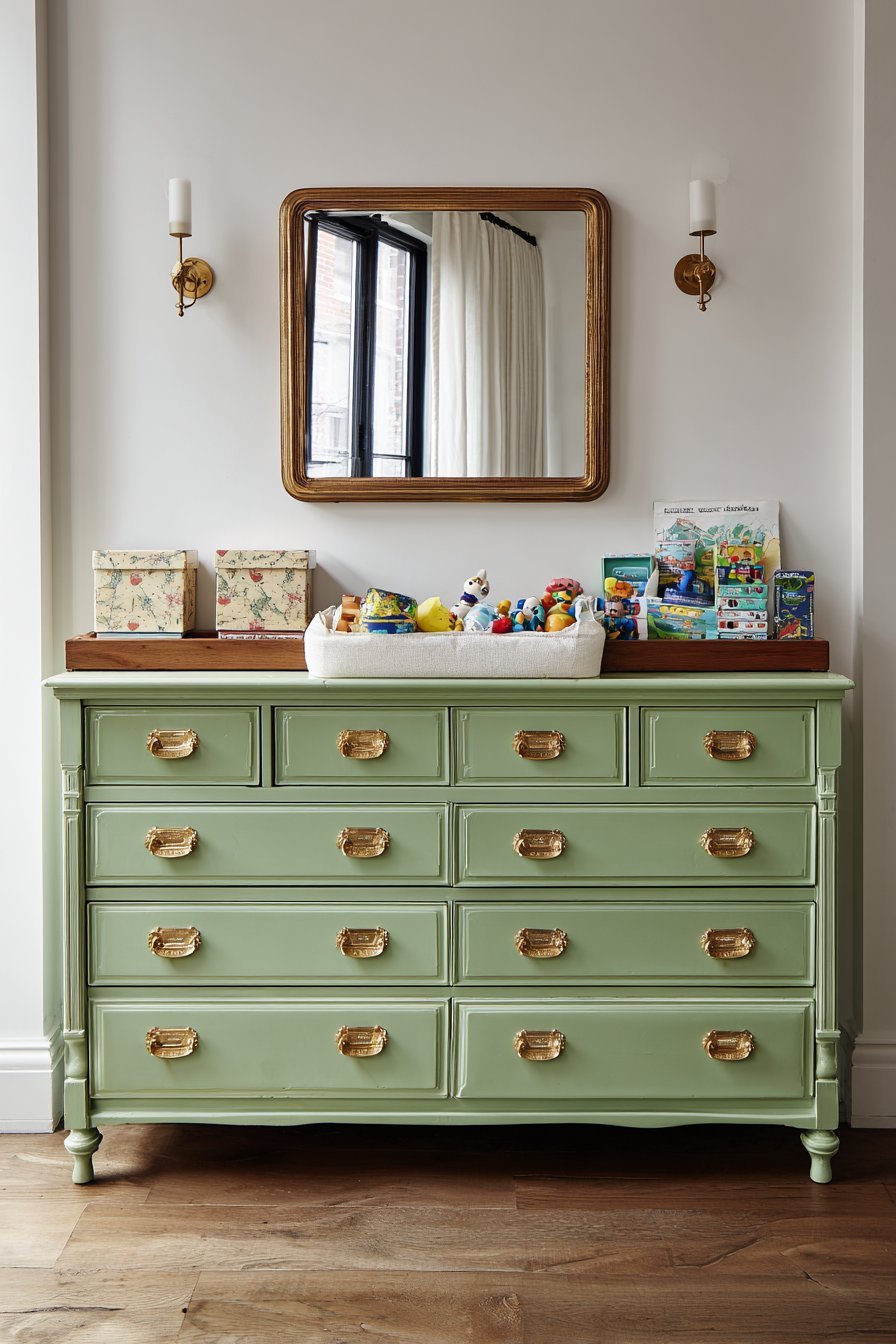
A playroom features a vintage dresser repurposed for toy storage beautifully. Soft mint green paint refreshes the piece while maintaining original character. Original brass hardware adds authenticity and vintage charm throughout the piece. Each drawer organizes with dividers for different toy categories systematically.
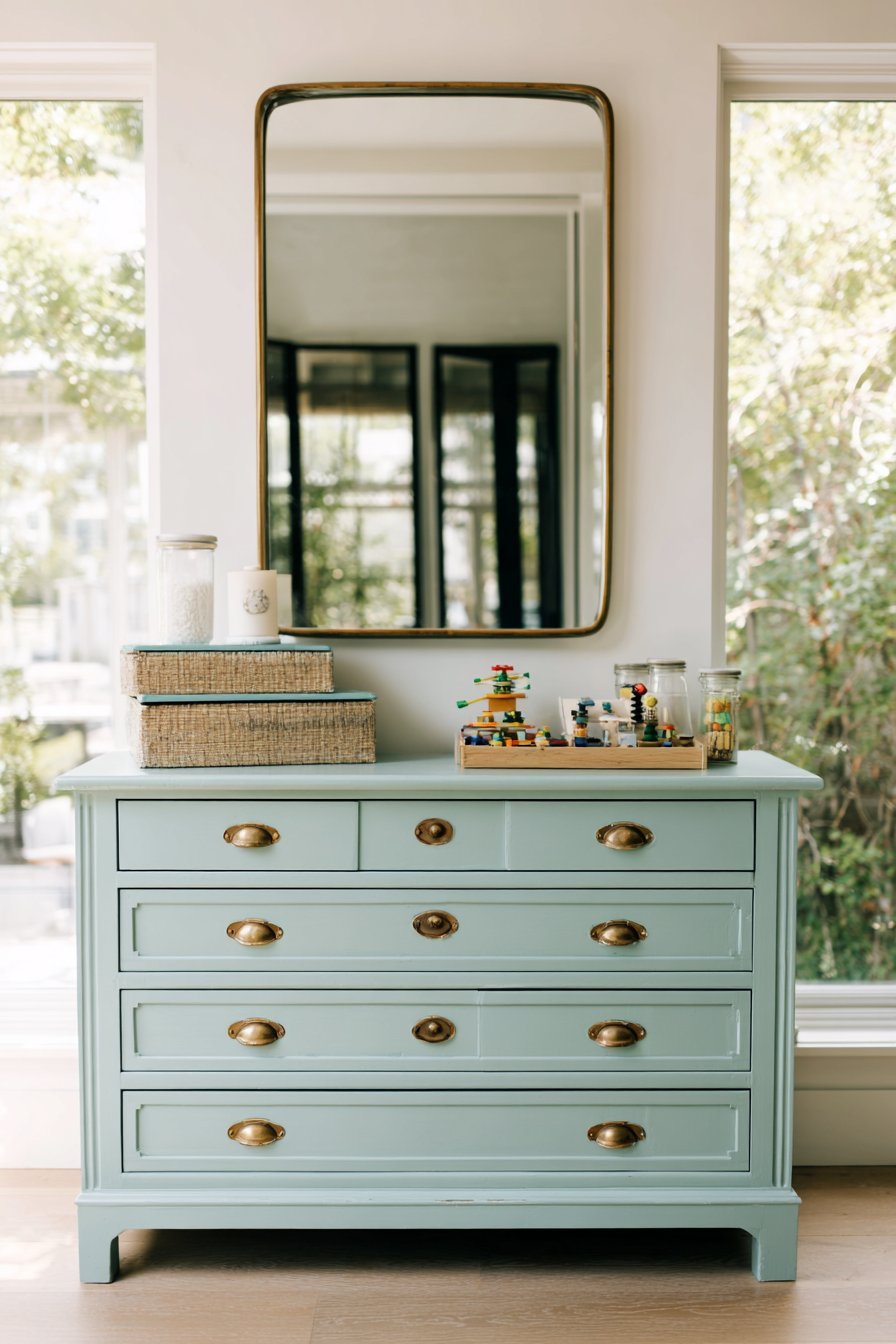
The dresser top displays a few curated items in decorative boxes. A simple wall-mounted mirror above reflects natural light from nearby windows. Professional interior design photography emphasizes the upcycled furniture piece comprehensively. Attention to painted finish shows how traditional furniture adapts to modern needs.

The mint green color brings freshness without overwhelming the space visually. The original brass hardware provides authentic detail that new pieces lack. Drawer dividers prevent the mixing of different toy types during use. The dresser’s substantial construction ensures stability and longevity through years of use.
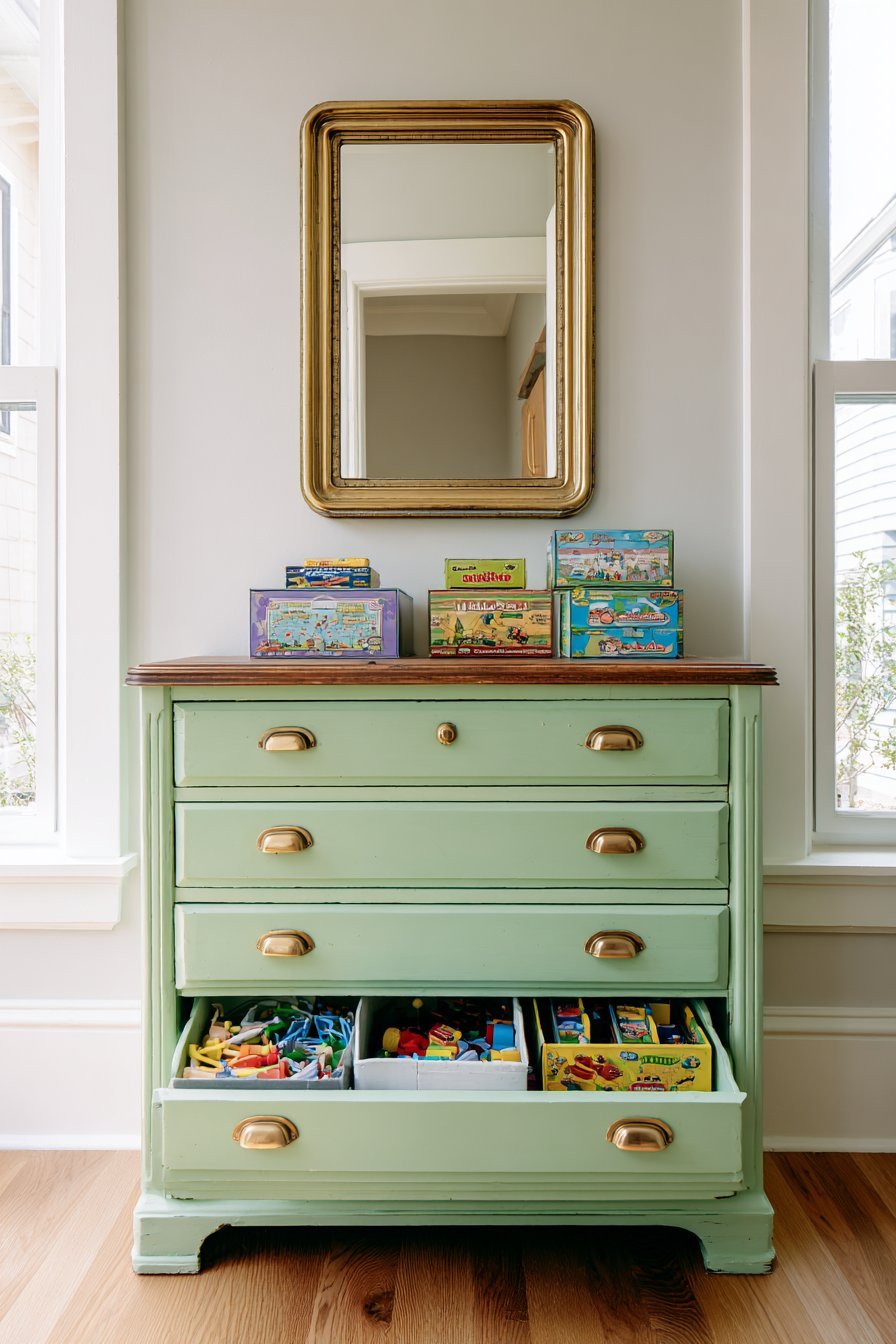
The vintage character adds charm and personality to the playroom design. The mirror above increases perceived space while serving functional purposes. The curated top display prevents the surface from becoming a dumping ground.
Key Design Tips:
- Paint vintage furniture in fresh, modern colors
- Preserve original hardware for authentic character
- Add drawer dividers for organizational effectiveness
- Display only curated items on dresser top
- Position mirror above to reflect light and space
- Secure furniture to walls to prevent tip-over accidents
23. Corner Reading Nook with Built-In Storage
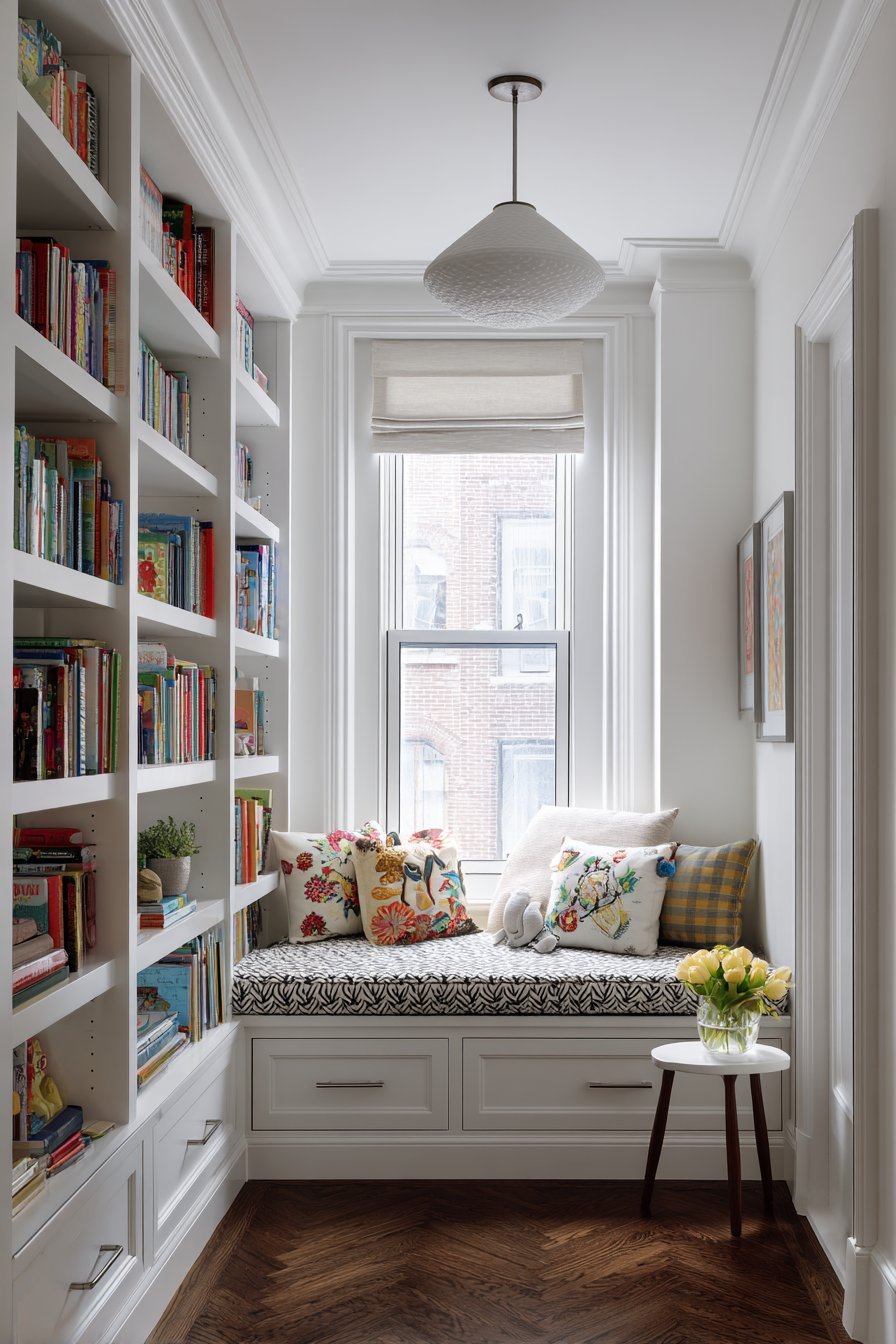
A playroom storage showcase features a corner reading nook design. Built-in bench seating with surrounding floor-to-ceiling bookshelves creates a cozy retreat. The bookshelves mix traditional shelving with forward-facing picture book displays. Storage drawers built into the bench base provide hidden capacity beautifully.
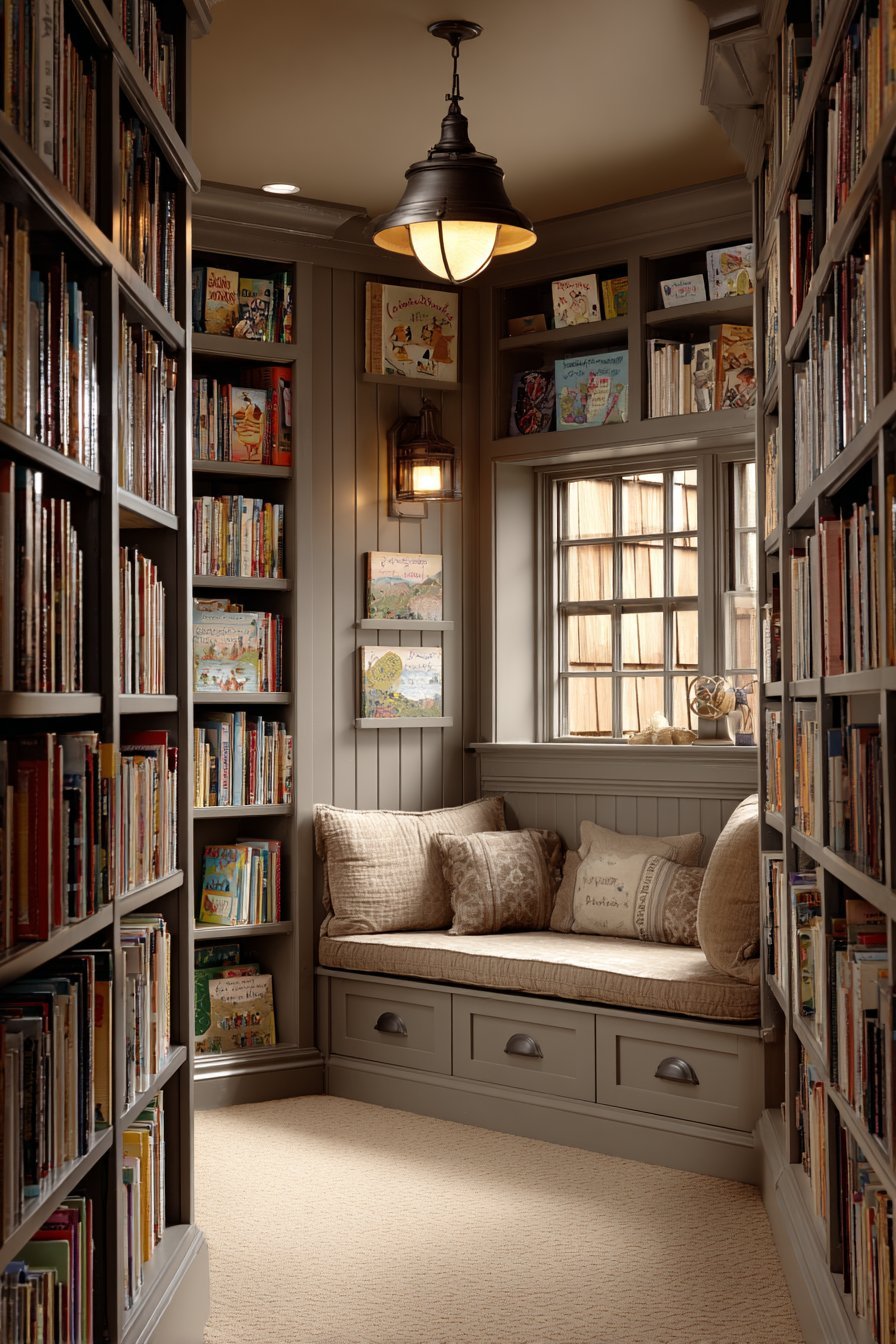
Soft pendant lighting illuminates the cozy corner for evening reading sessions. Wide-angle interior photography captures the comprehensive corner storage solution effectively. Warm lighting creates an inviting reading and storage space simultaneously. The integrated design maximizes awkward corner space that often goes underutilized completely.
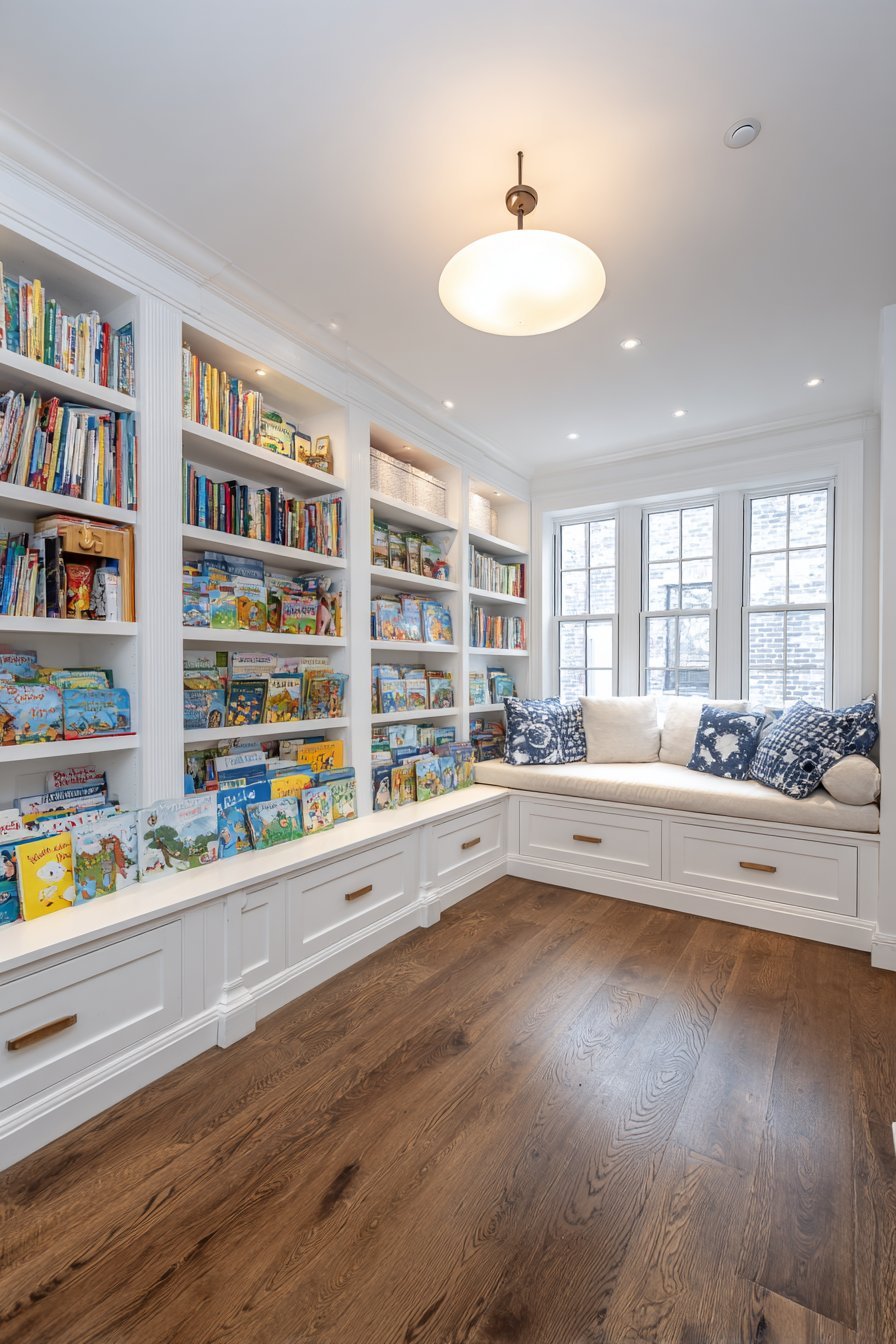
The floor-to-ceiling shelves provide enormous storage capacity in compact footprint. Forward-facing displays showcase picture book covers for easy selection by children. The bench seating creates a dedicated reading spot within the larger playroom. Hidden storage in the bench base keeps the area clutter-free and organized.
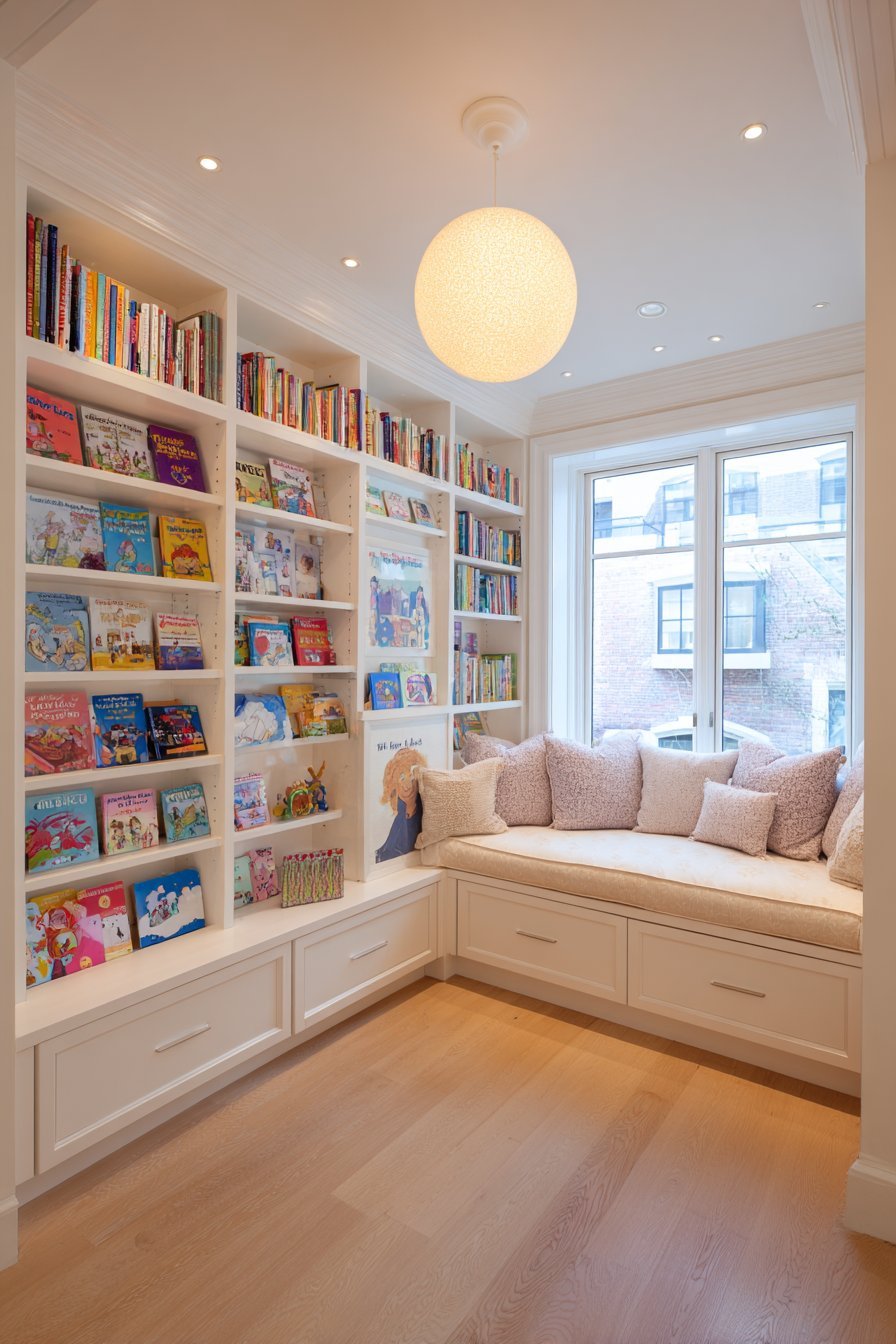
The pendant lighting provides focused illumination without harsh overhead glare. The corner location creates a semi-private retreat for quiet activities. The built-in nature gives the reading nook a custom, intentional appearance.
Key Design Tips:
- Maximize corner spaces with built-in reading nooks
- Include both traditional and forward-facing book displays
- Build storage into bench seating for hidden capacity
- Add focused pendant lighting for evening use
- Create cozy atmosphere with cushions and pillows
- Extend shelving to ceiling height for maximum capacity
24. Labeled Clear Drawer Tower System
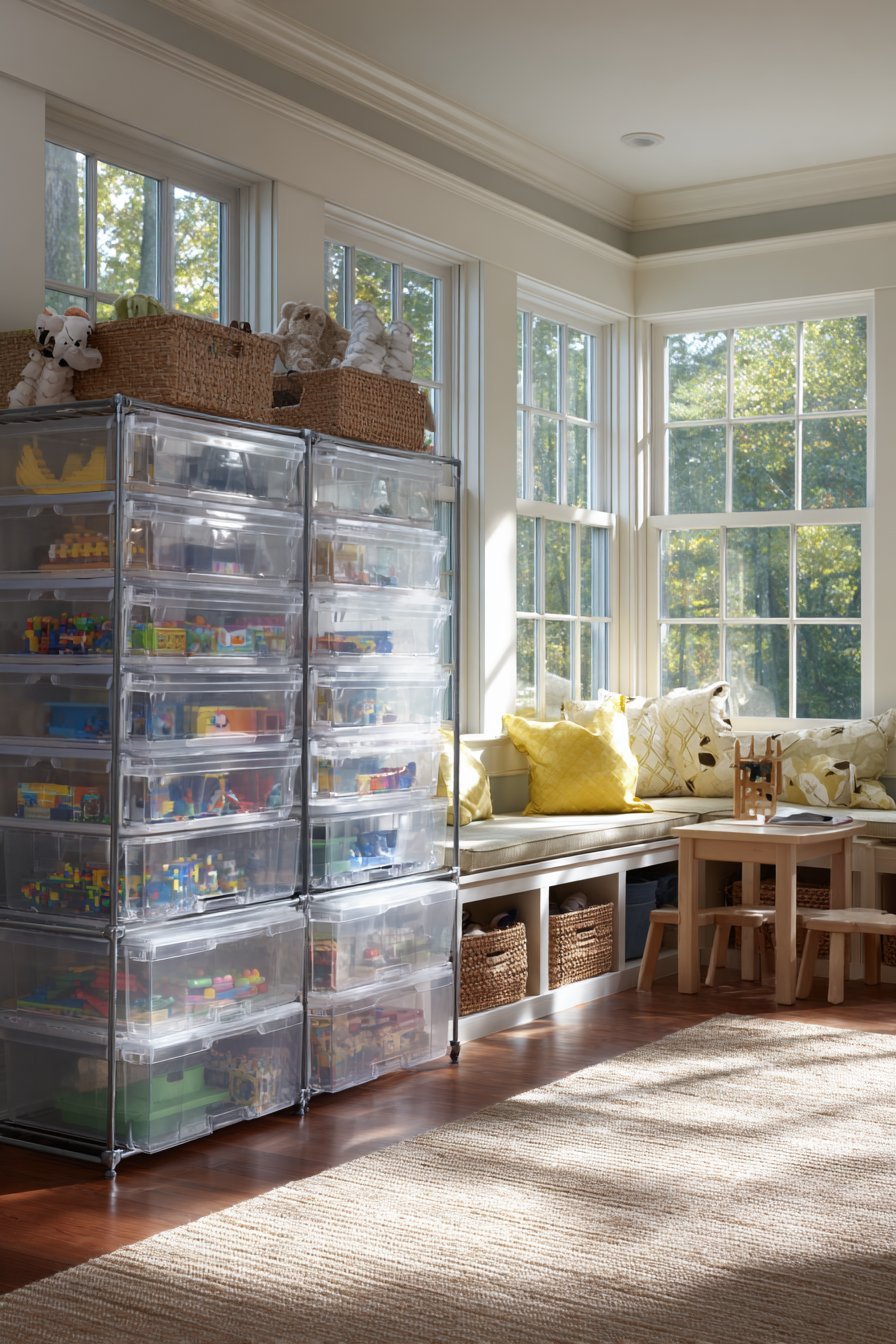
A playroom features labeled clear plastic drawer towers throughout the space. Organization by toy type from art supplies to building sets ensures clarity. Stackable drawer units sit on open metal shelving frames for stability. A nearby activity table shows the system in active use conveniently.
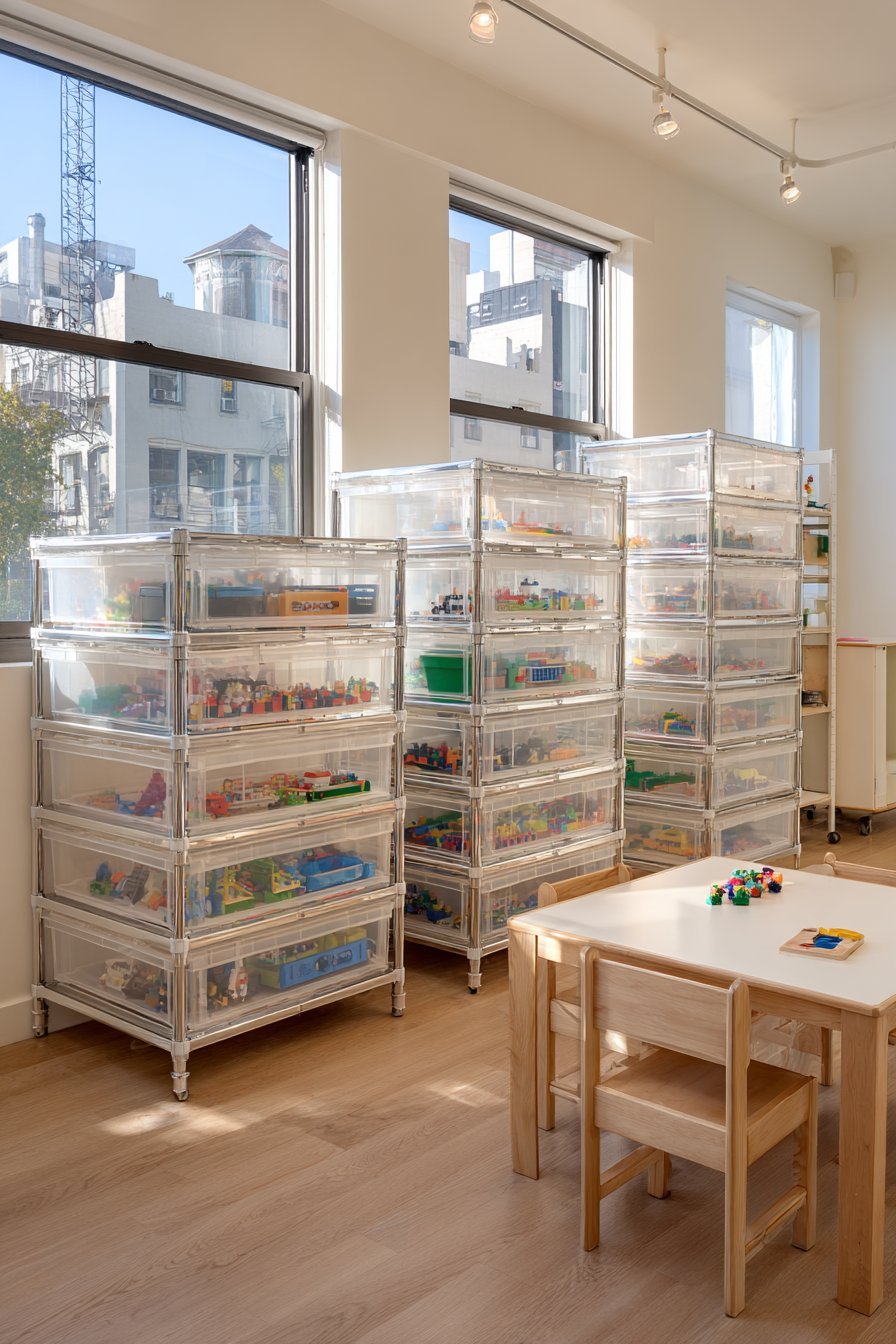
Natural light from large windows ensures excellent visibility of drawer contents. Interior design photography with balanced exposure captures the transparent organizational system. Labeling helps children maintain order independently without adult assistance constantly. The stackable nature allows system growth as toy collections expand over time.
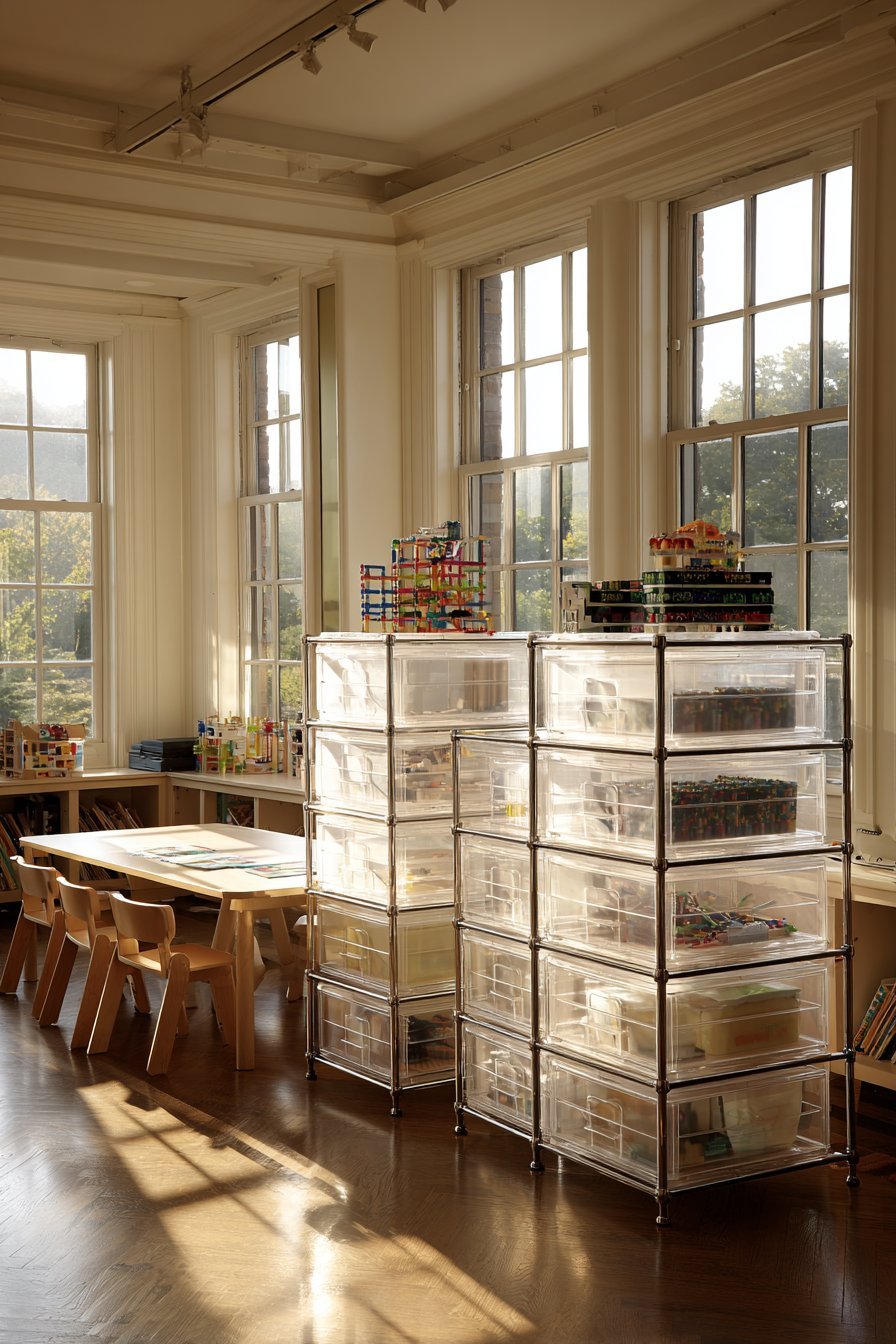
The clear plastic eliminates searching through multiple closed containers unnecessarily. The metal shelving frames provide industrial aesthetic while ensuring structural stability. Labels with both pictures and words support children at various literacy levels. The adjacent activity table demonstrates how the system supports active play effectively.
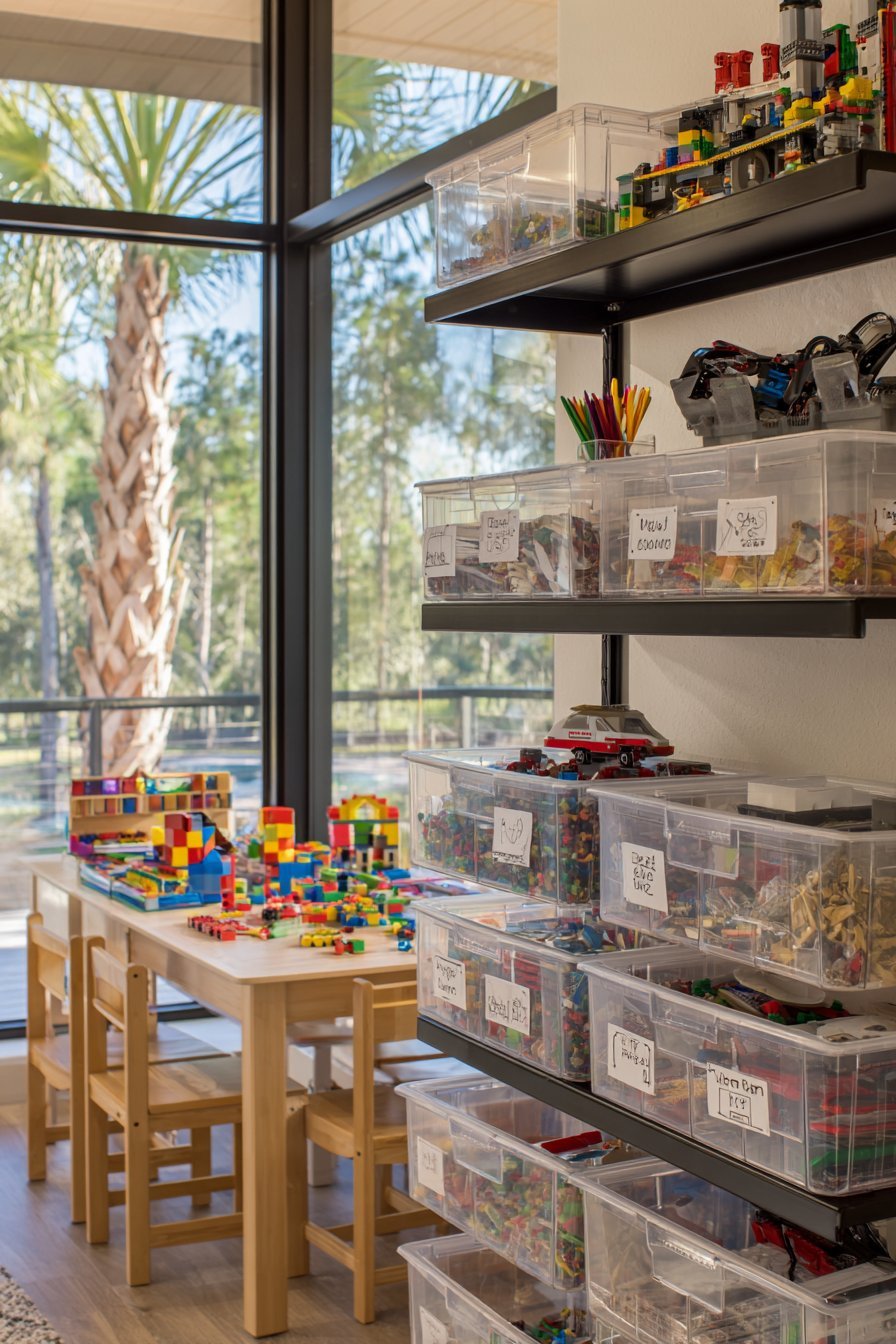
The drawer towers can rearrange easily to accommodate changing room layouts. The transparency prevents the accumulation of forgotten toys in bottom drawers. The labels make returning items to proper locations straightforward and simple.
Key Design Tips:
- Choose clear drawers for complete content visibility
- Label each drawer with pictures and words both
- Stack on metal frames for stability and support
- Position near activity tables for convenient access
- Organize by toy type and frequency of use
- Select drawers that pull out smoothly without jamming
25. Sensory-Friendly Soft Storage Solution
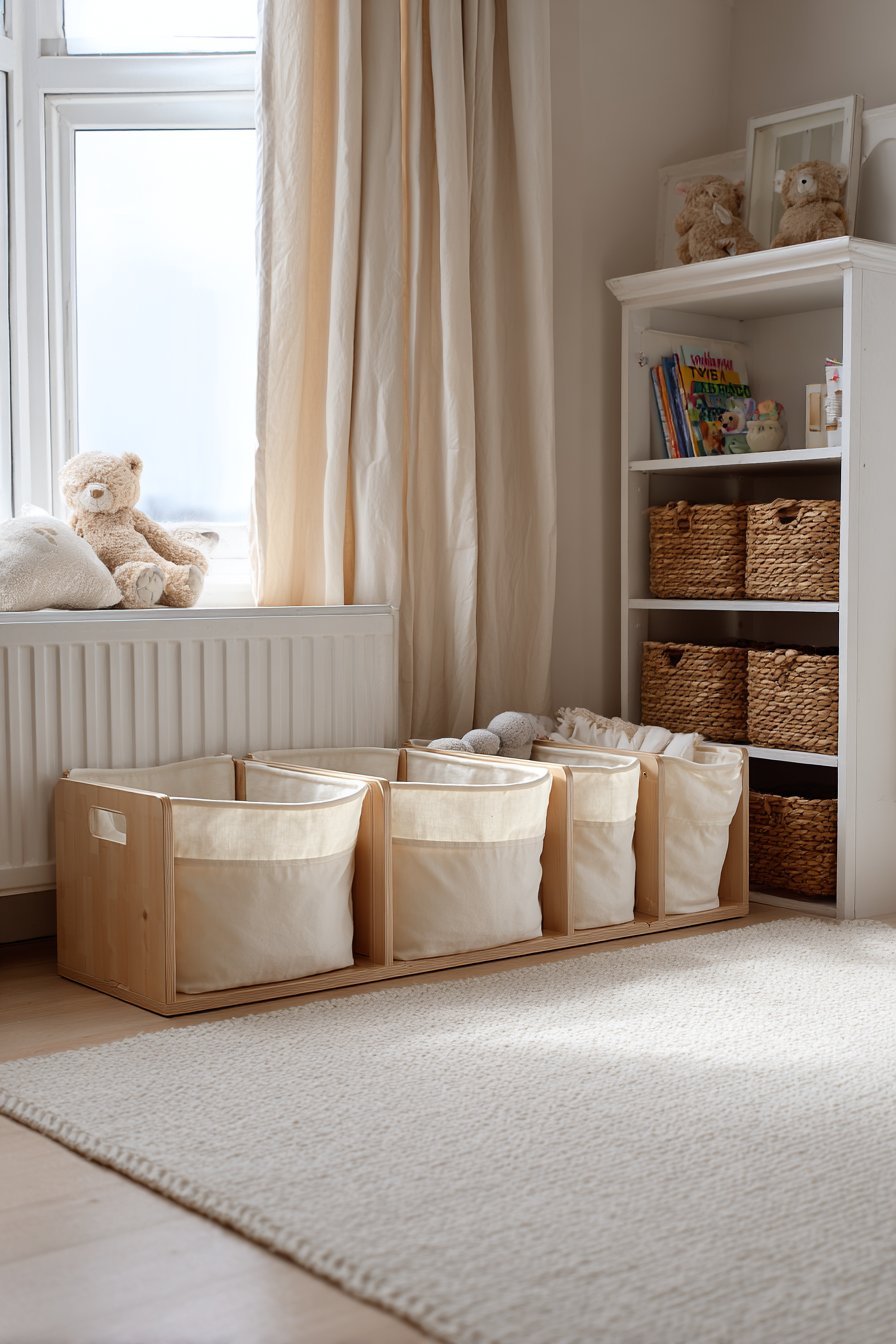
A playroom features sensory-friendly storage with fabric bins in soft neutrals. The low wooden frame provides open-topped bins without complicated closures. Easy access promotes independence without frustrating mechanical difficulties constantly. A calm color palette of beiges and soft grays creates soothing environments.
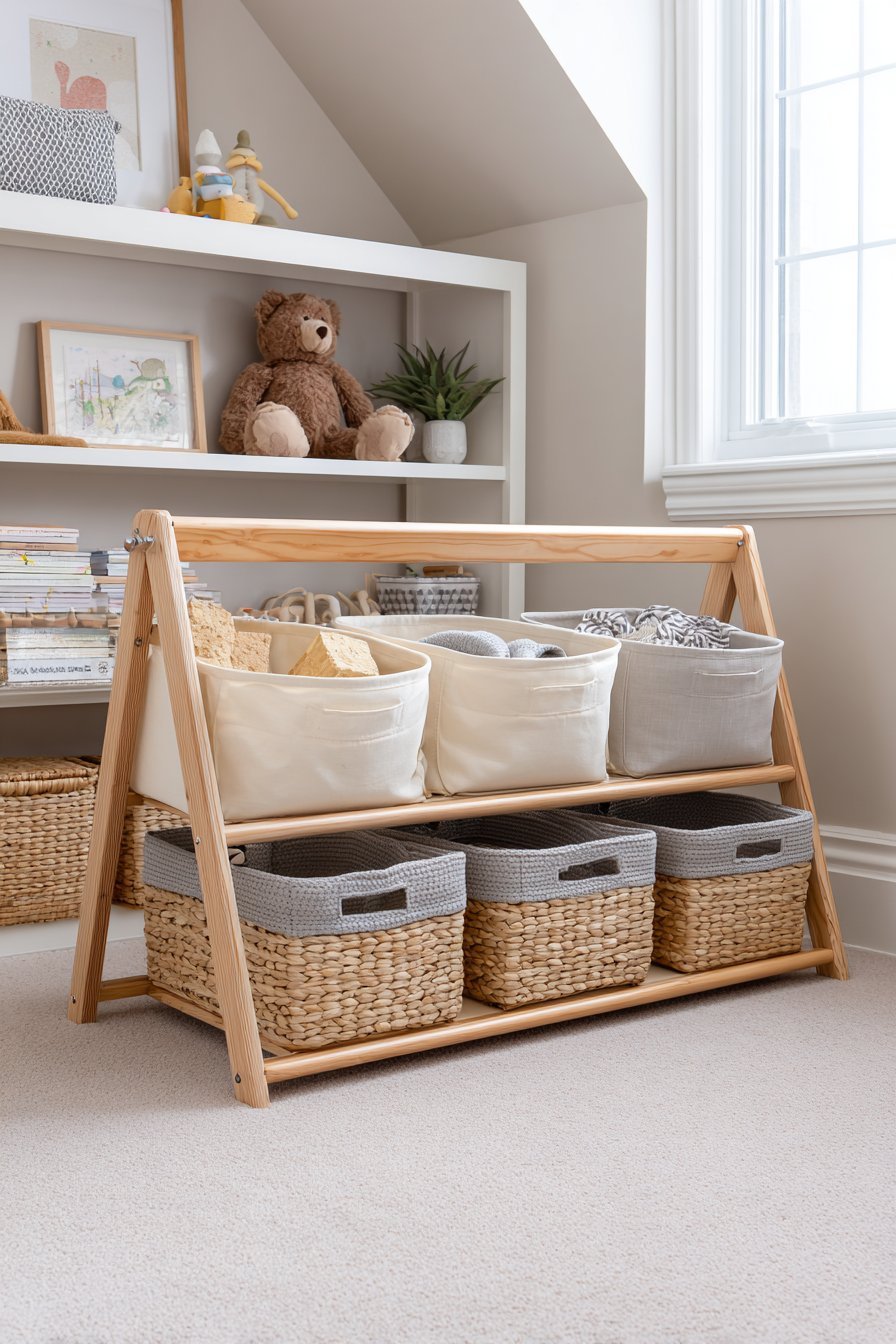
Natural woven baskets on lower shelves provide additional textural variety beautifully. Professional interior photography captures thoughtful organization with soft diffused lighting. The calming storage approach suits sensitive children who feel overwhelmed easily. Neutral tones prevent visual overstimulation in busy play environments constantly.
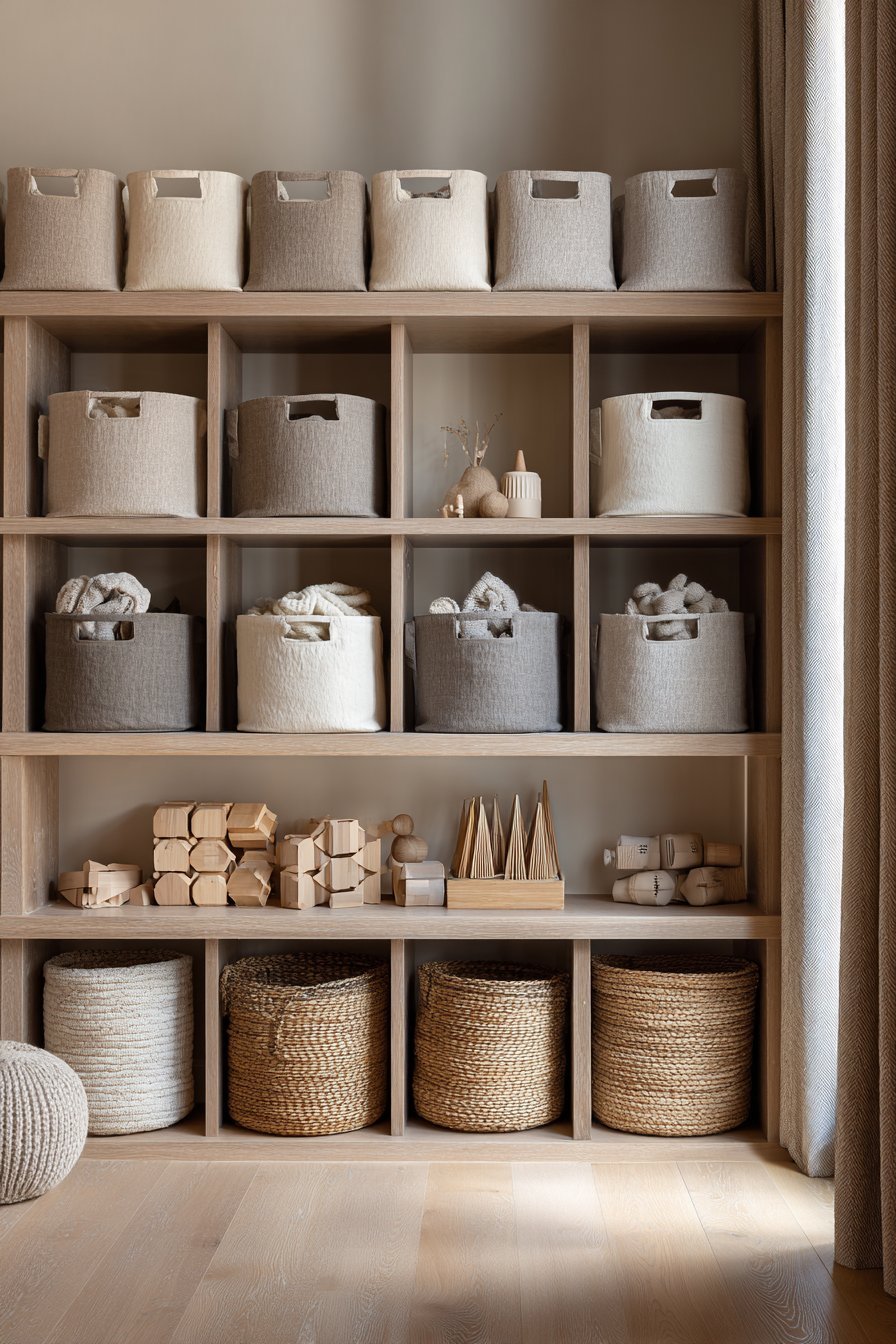
The fabric bins feel soft to touch rather than hard plastic edges. The open-topped design eliminates frustrating lid mechanisms for young children. The neutral palette calms rather than energizes the sensory environment. Natural woven materials add warmth without introducing intense visual patterns.
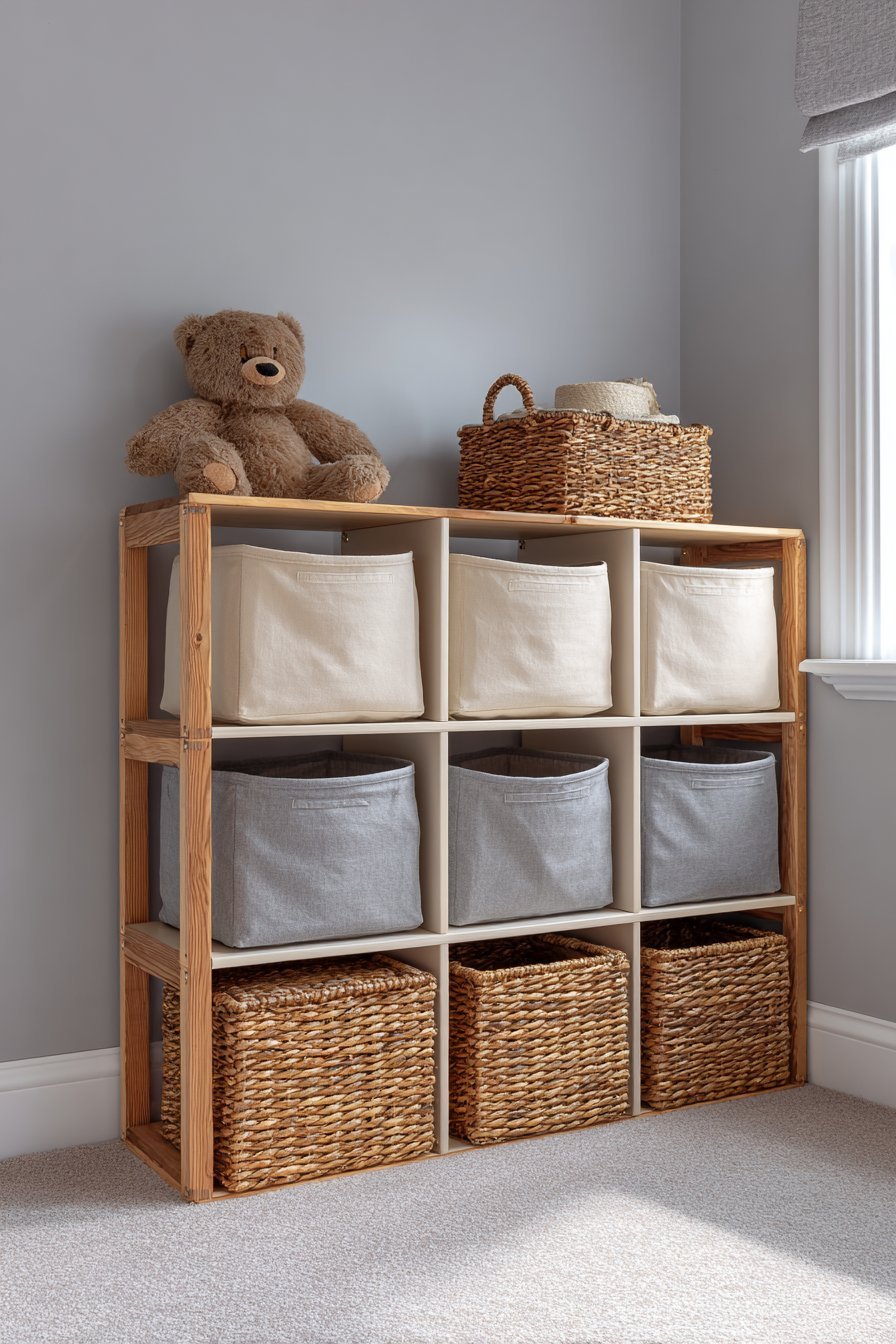
The low frame ensures everything remains at easily accessible heights always. The thoughtful approach considers sensory processing challenges during play and cleanup. The soft materials reduce noise during cleanup compared to plastic alternatives.
Key Design Tips:
- Choose soft neutral colors for calming effects
- Select fabric bins without lids or complicated closures
- Use natural materials like wood and woven baskets
- Keep everything at low, accessible heights consistently
- Avoid bright colors that may cause overstimulation
- Consider textures that are pleasant to sensitive touch
26. Overhead Ceiling Storage Hammocks
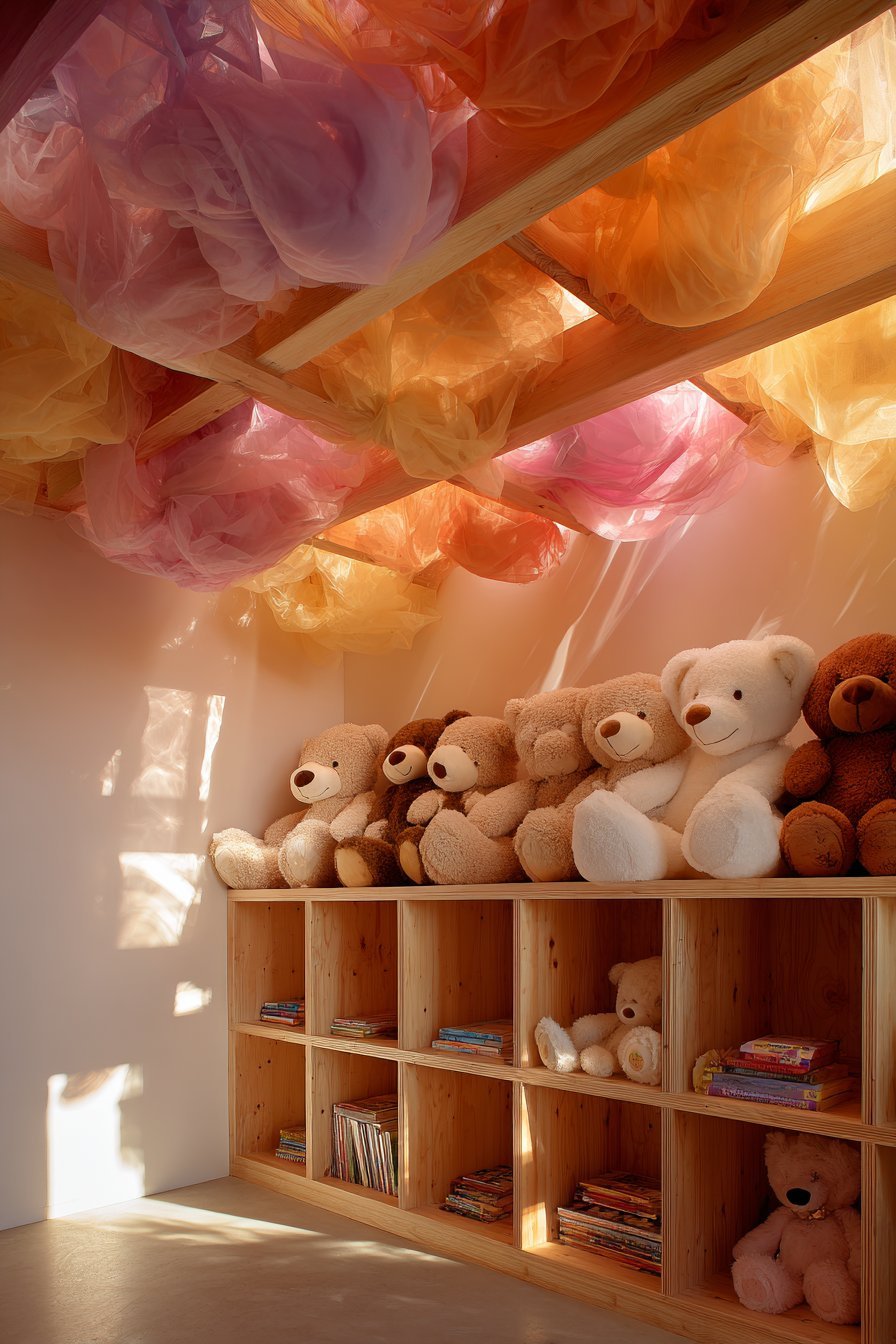
A playroom features innovative overhead ceiling storage using suspended fabric hammocks. Bright colored hammocks hold stuffed animals visible but elevated safely. The ceiling-mounted solution keeps soft toys off floors during active play. Below, a simple low bookshelf in natural wood provides accessible daily storage.
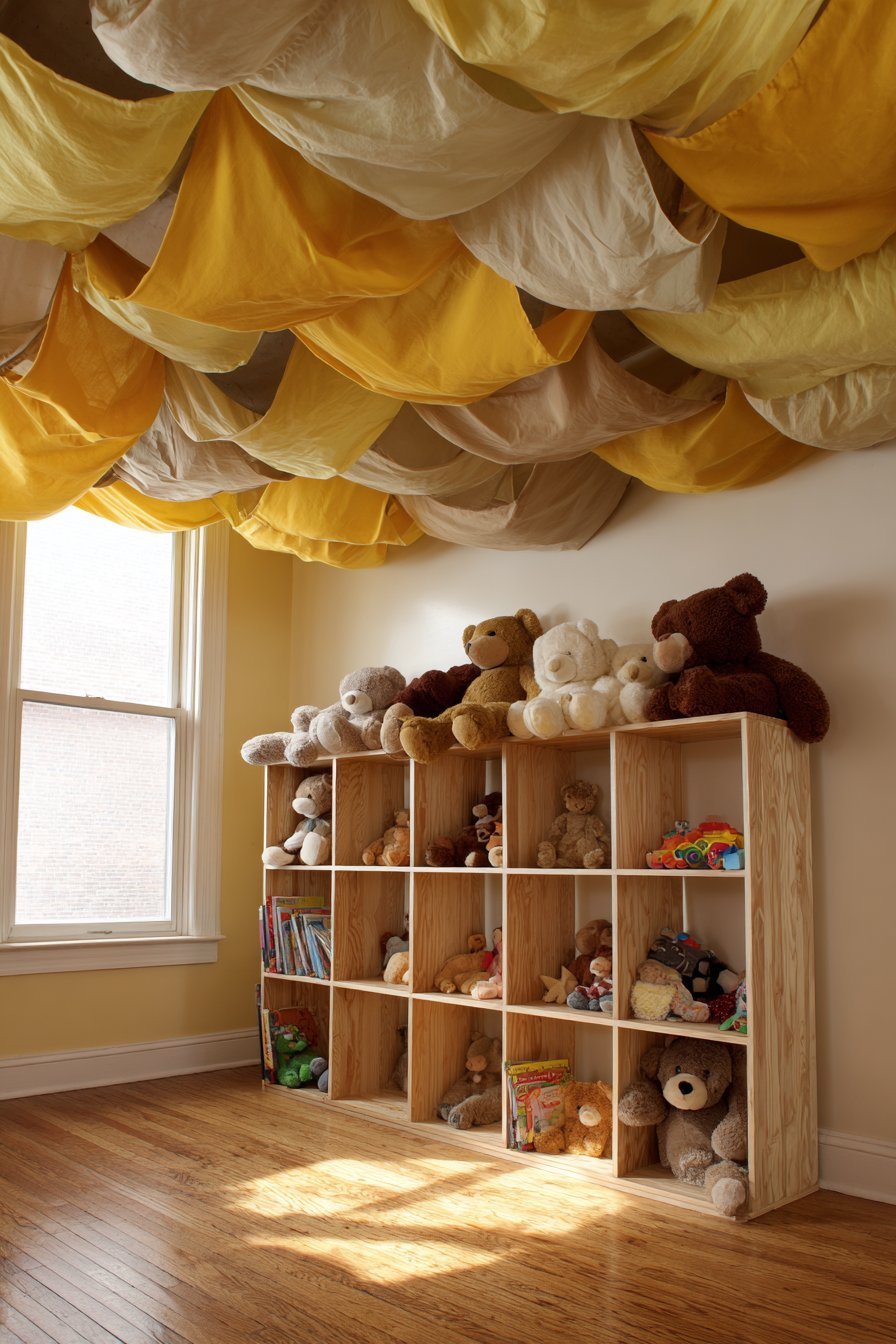
Interior design photography captures innovative vertical space utilization comprehensively and clearly. Natural window light creates dynamic shadows from suspended hammocks throughout. The overhead storage frees considerable floor space for movement and activities. The hammocks add visual interest to typically unused ceiling areas effectively.
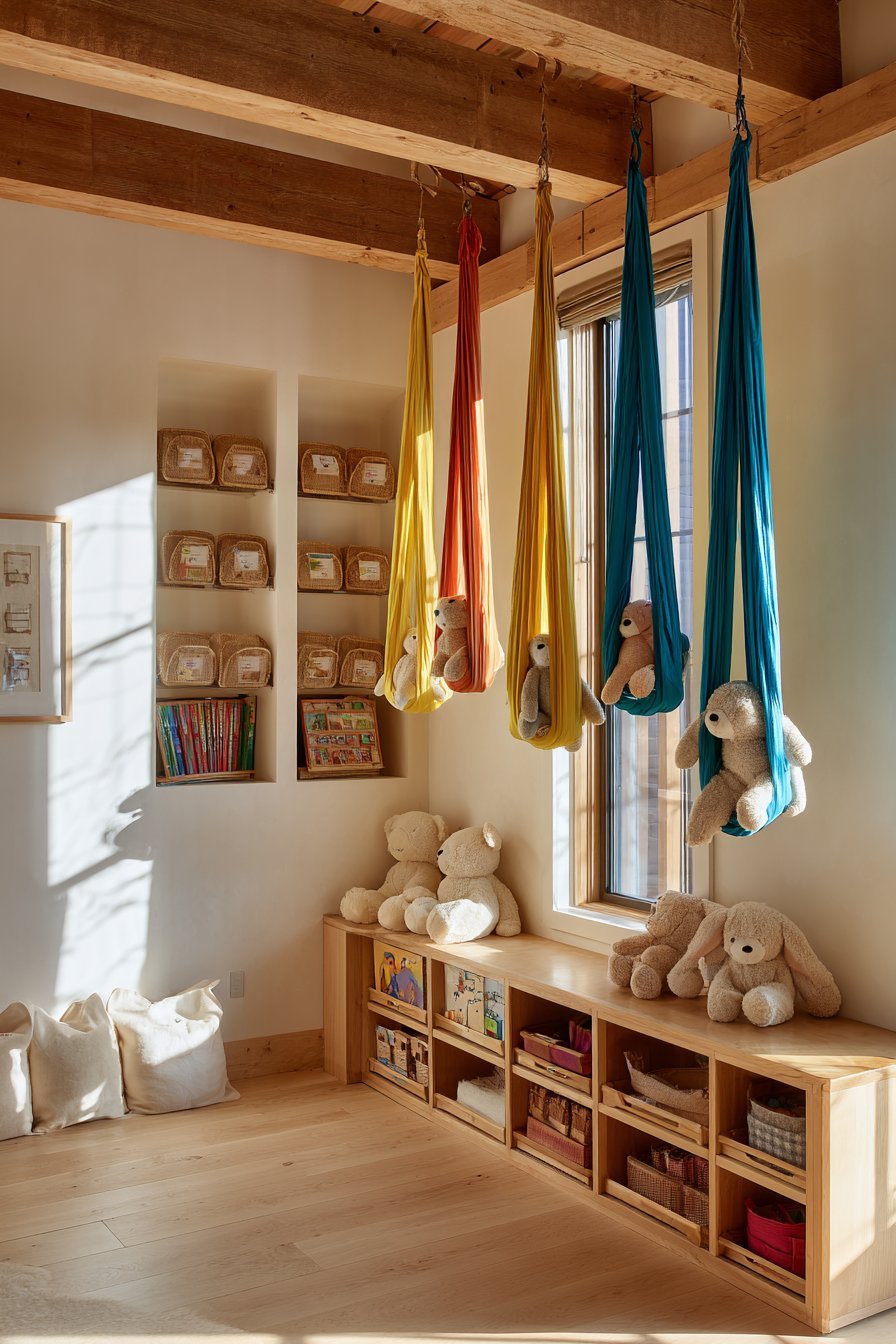
The bright hammock colors coordinate with the overall playroom color scheme. The suspended storage keeps stuffed animal collections visible and decorative simultaneously. The natural wood bookshelf grounds the design with warm, stable elements. The combination of overhead and floor storage maximizes all available space dimensions.
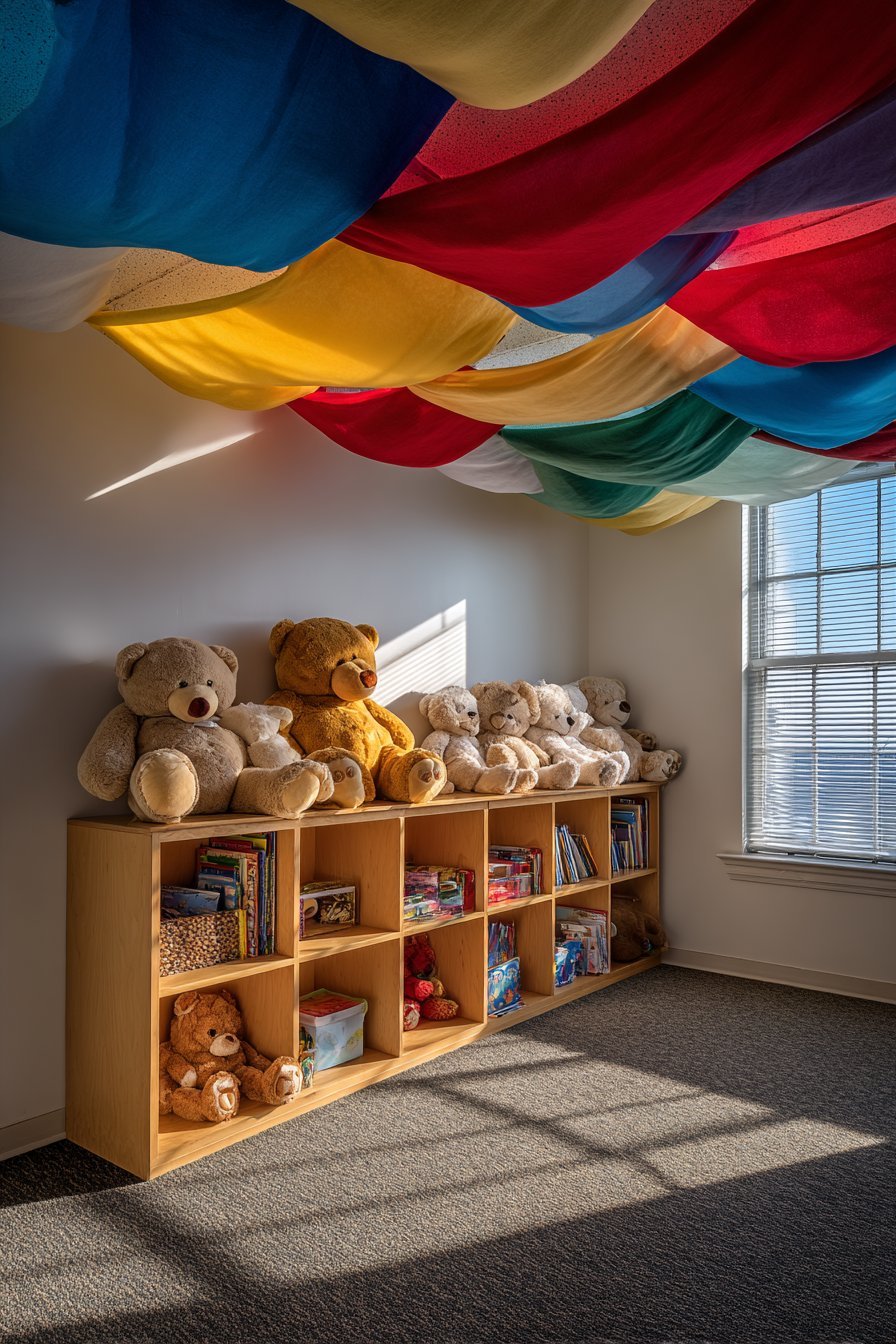
The hammocks install with ceiling hooks properly anchored to joists. The fabric material allows air circulation preventing dust accumulation on toys. The decorative appearance transforms storage into a design feature rather than necessity.
Key Design Tips:
- Anchor ceiling hooks to structural joists securely
- Use bright fabric hammocks as decorative elements
- Store only soft, lightweight toys overhead safely
- Combine with low storage for frequently used items
- Ensure hammocks hang high enough to avoid head bumps
- Choose washable fabrics for easy maintenance schedules
27. Tech-Integrated Storage Bench
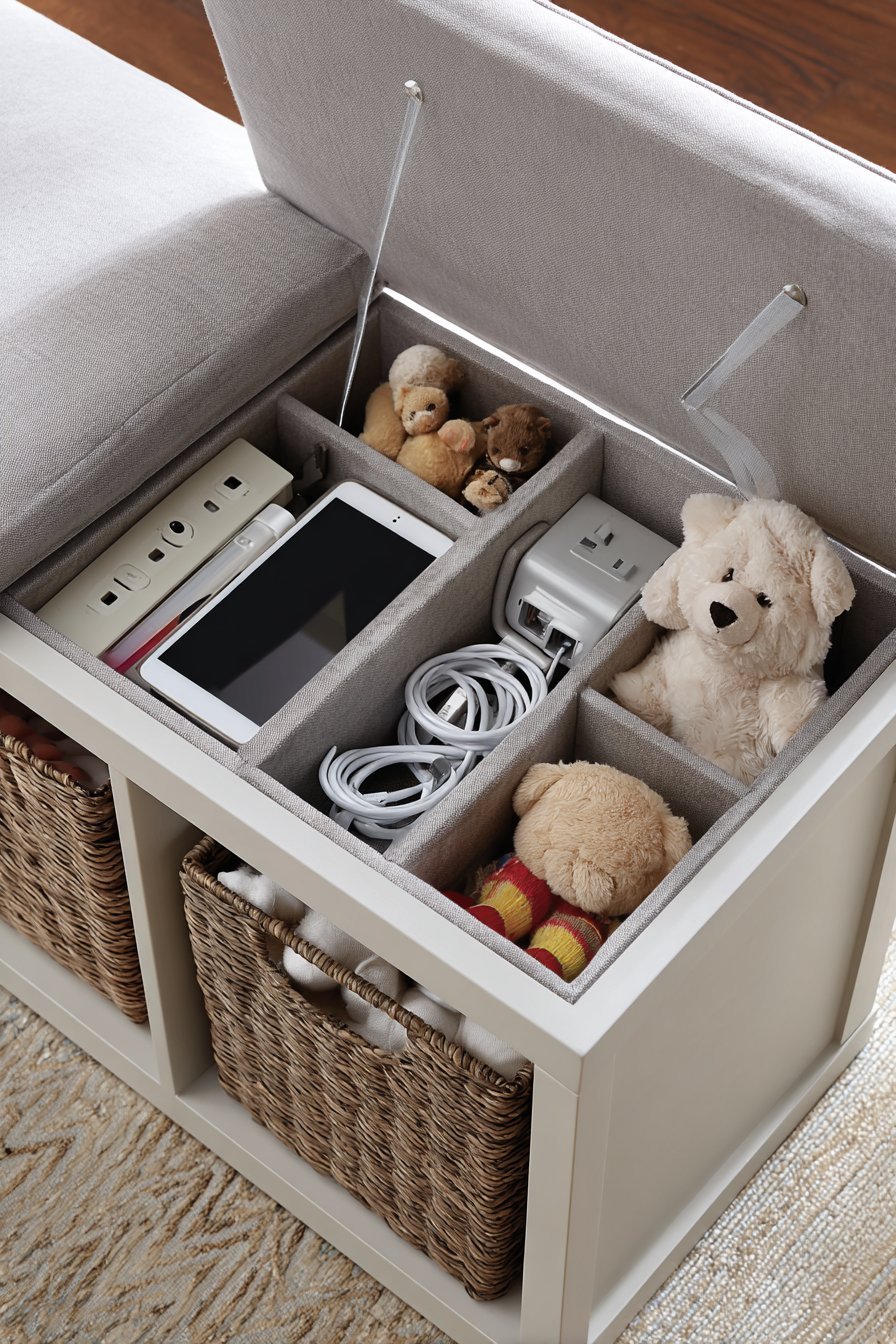
A playroom storage bench features a built-in charging station for devices. The bench accommodates electronic devices and tablets securely within dedicated slots. Lift-top section provides larger toy storage while open cubbies hold baskets. Cable management holes keep charging cords organized and untangled always.
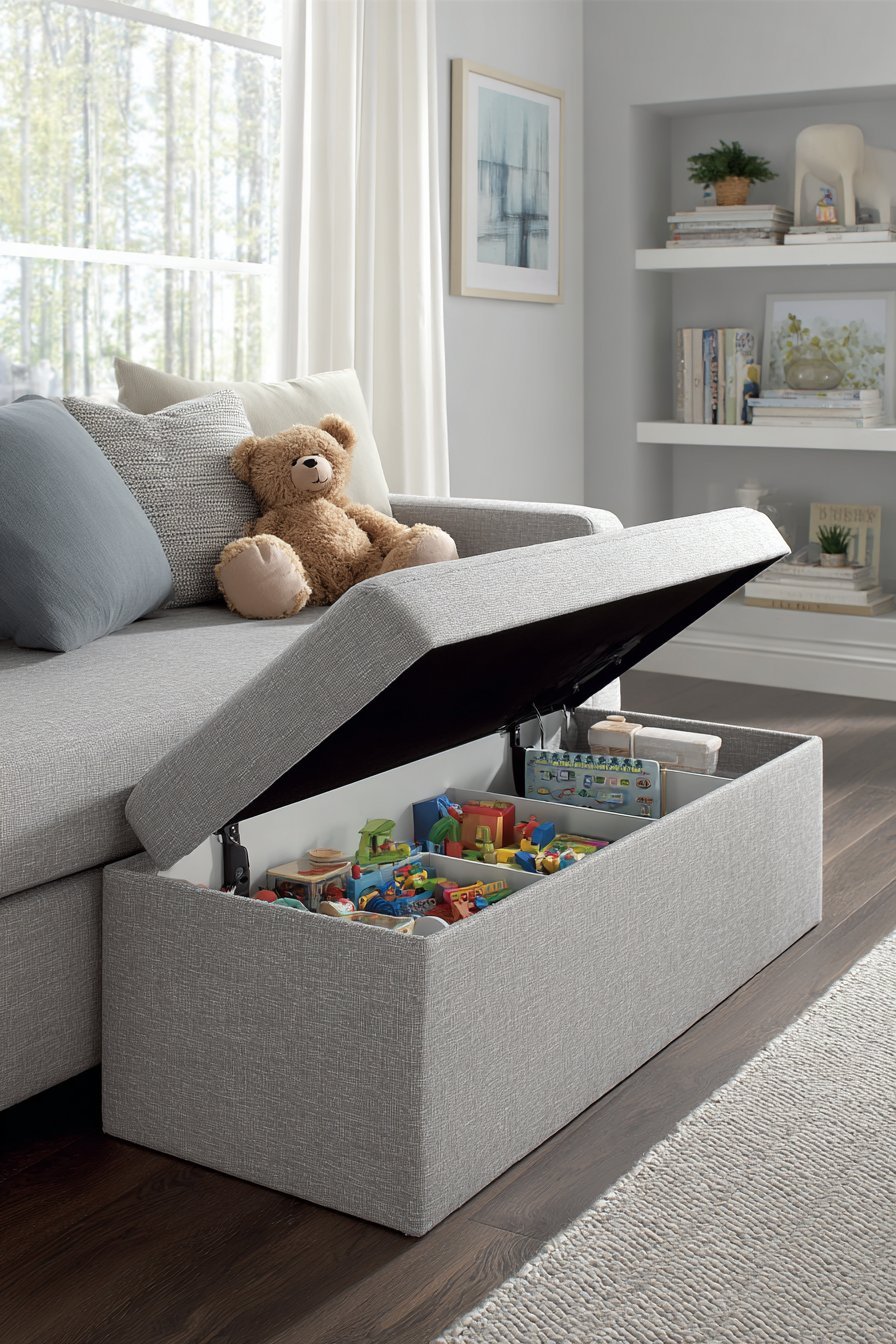
Modern gray fabric upholstery covers cushioned seating area throughout the bench. Wide-angle interior photography shows tech-integrated storage solution comprehensively and practically. Attention to practical cable management demonstrates contemporary design for modern families. The integrated charging ensures devices have designated storage locations rather than scattered placement.
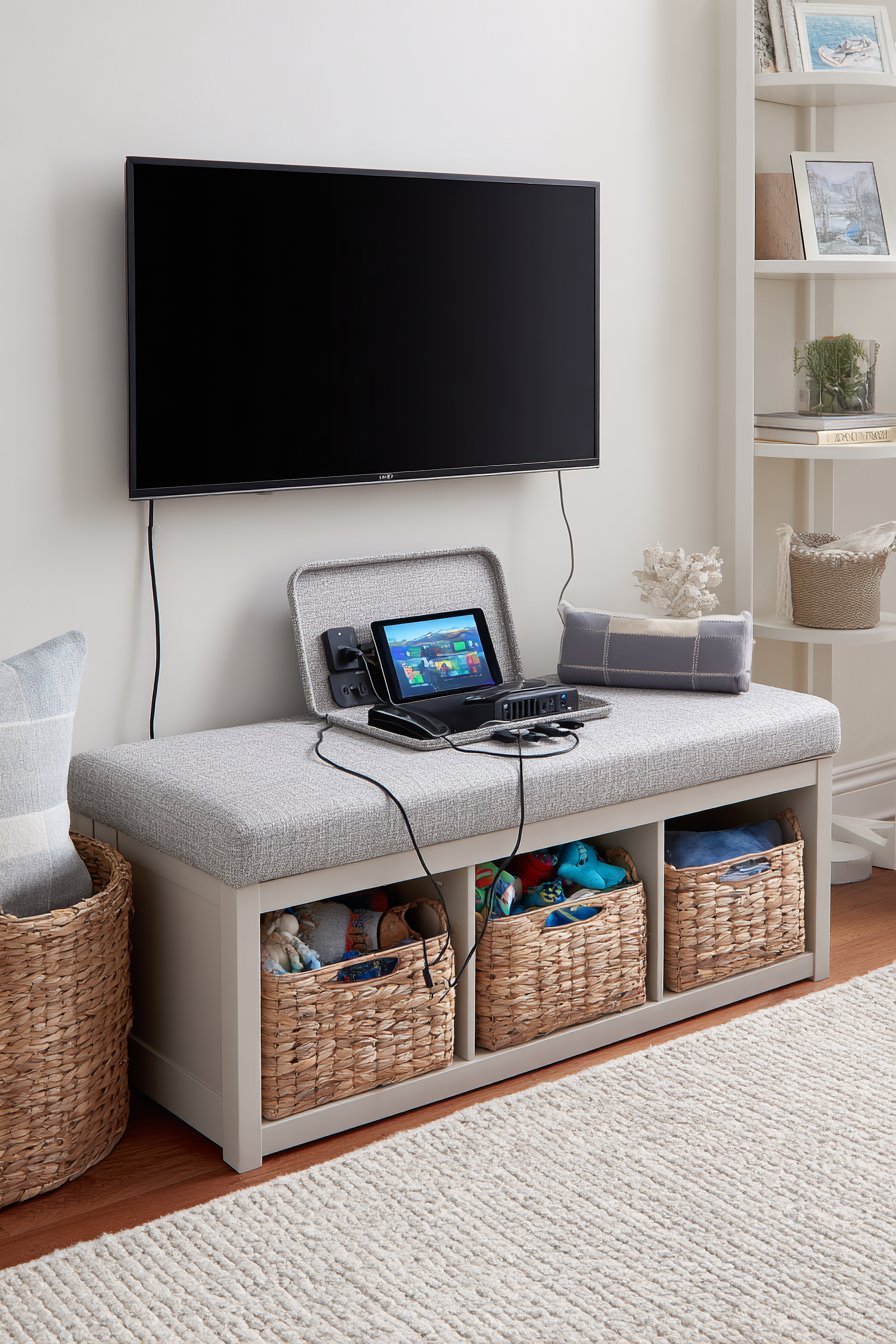
The gray fabric provides contemporary aesthetic while hiding typical wear and stains. The cable management prevents the tangled mess common with multiple devices. The lift-top storage conceals larger items while maintaining surface seating space. The open cubbies provide easy access to frequently used items without lifting lids.
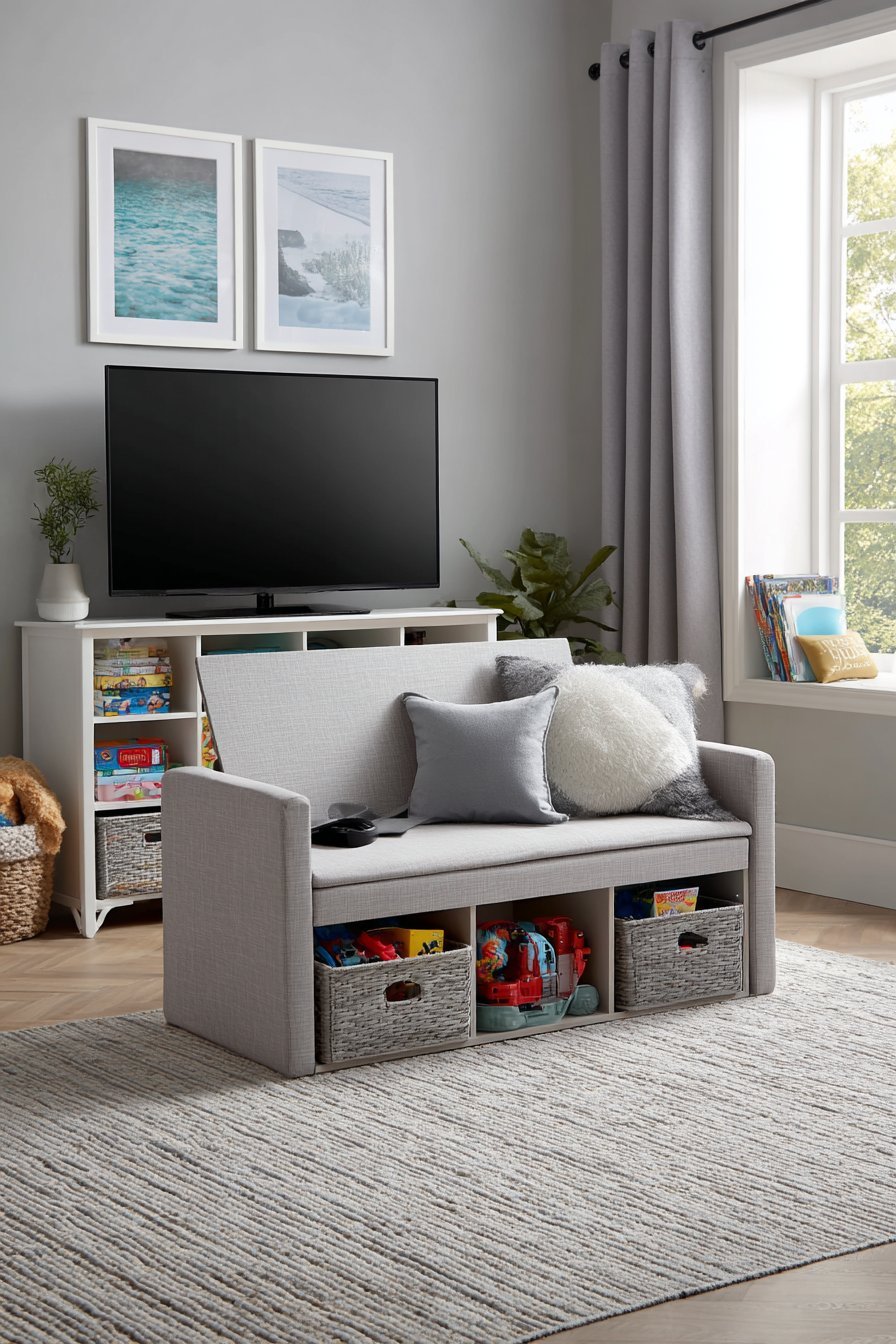
The charging station teaches children responsibility for device care and charging. The designated device slots prevent loss or damage during active play. The contemporary design acknowledges technology’s role in modern childhood experiences realistically.
Key Design Tips:
- Include built-in charging stations for modern device storage
- Add cable management features to prevent tangled cords
- Choose stain-resistant upholstery for technology areas
- Create designated device slots with protective dividers
- Combine tech storage with traditional toy storage seamlessly
- Use lift-top and open storage for organizational variety
28. Rotating Storage Tower Design
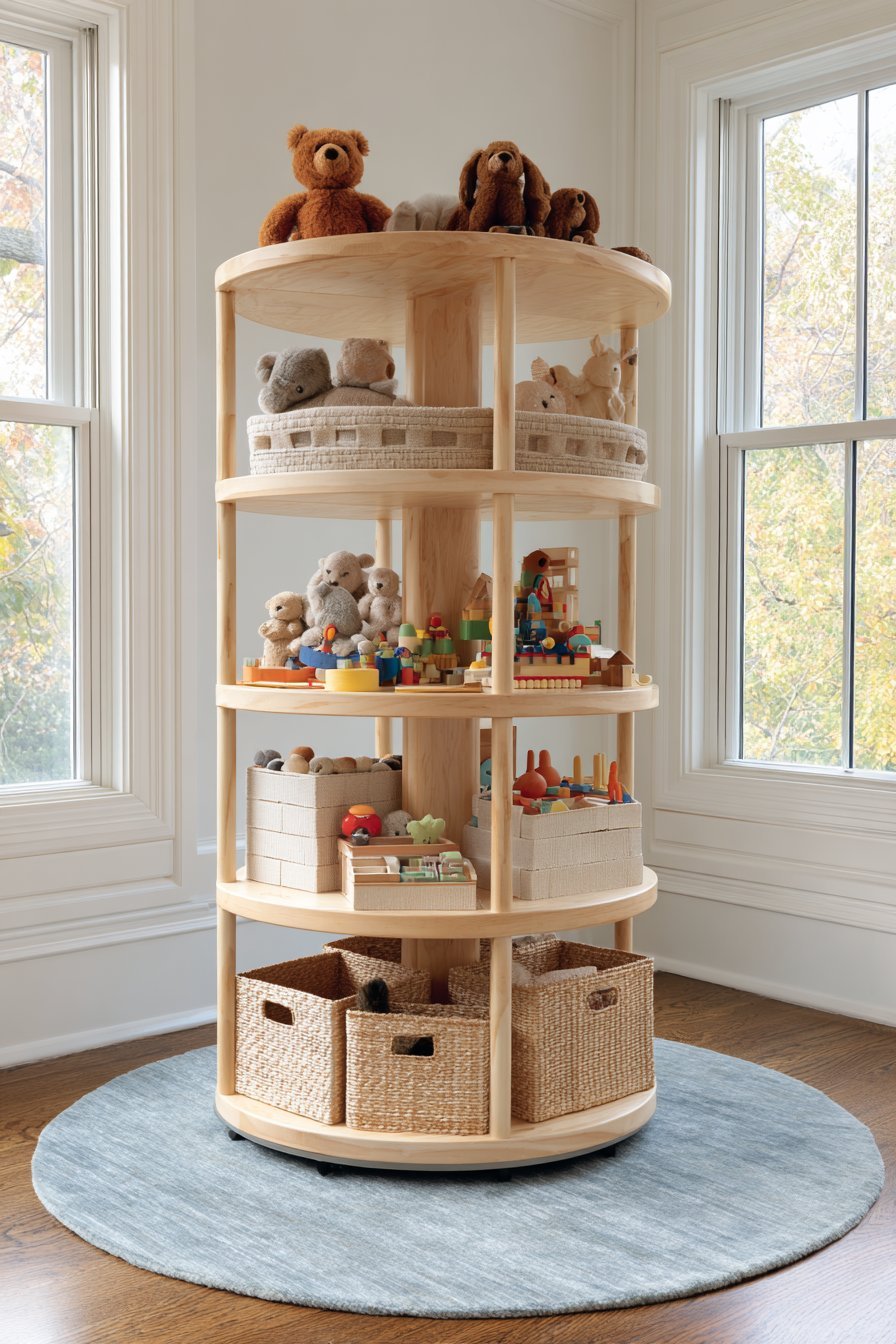
A playroom features a space-saving rotating storage tower with multiple shelves. The tower spins for easy access to toys from all sides efficiently. Natural wood construction provides small footprint but maximum storage capacity. Colorful toys display on each level with some items in baskets.
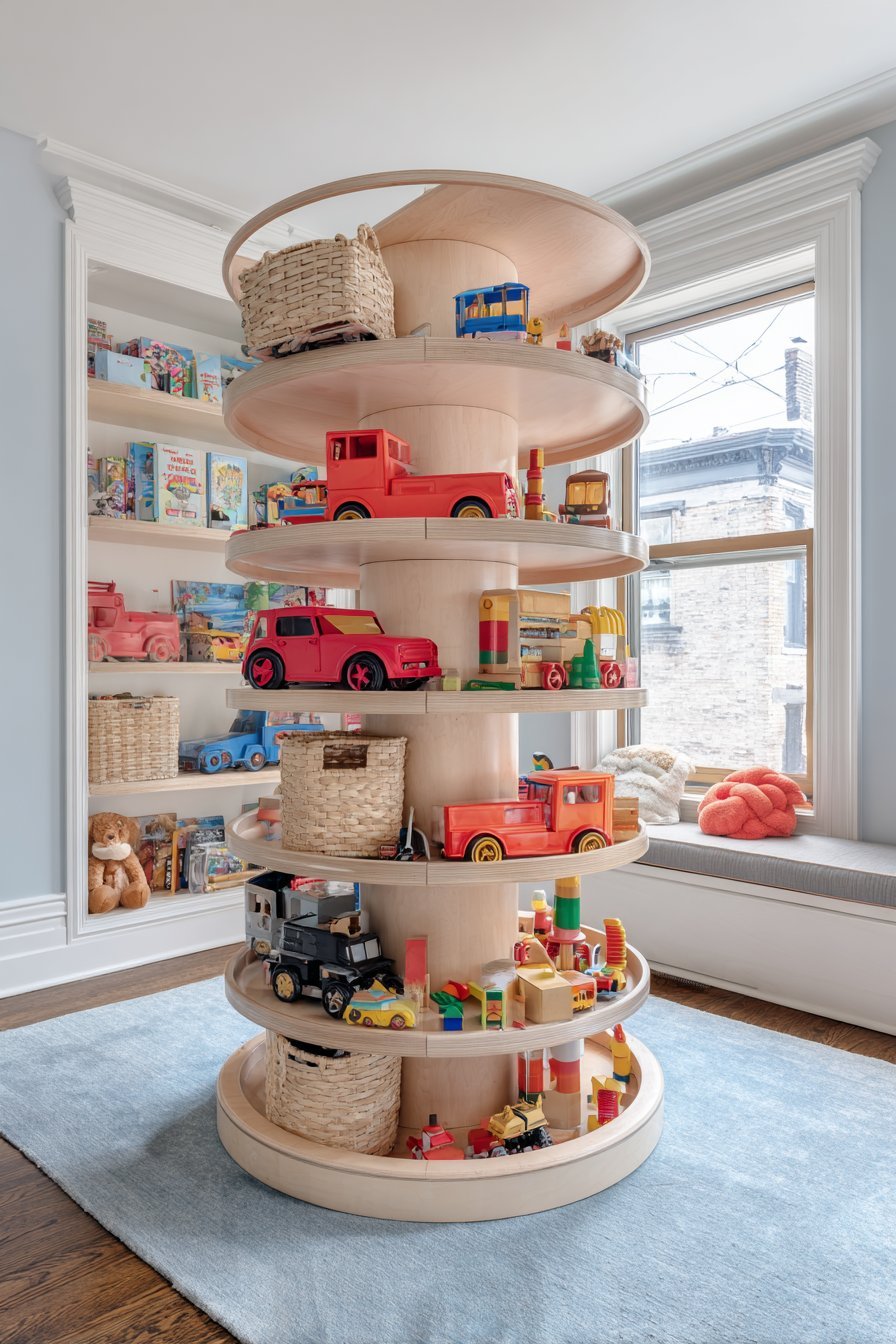
The tower sits on a washable area rug in soft blue color. Professional interior photography captures the space-saving storage solution from multiple angles. Balanced lighting shows the tower’s complete circumference through single wide composition. The rotating mechanism allows children to browse entire toy selection without moving furniture.
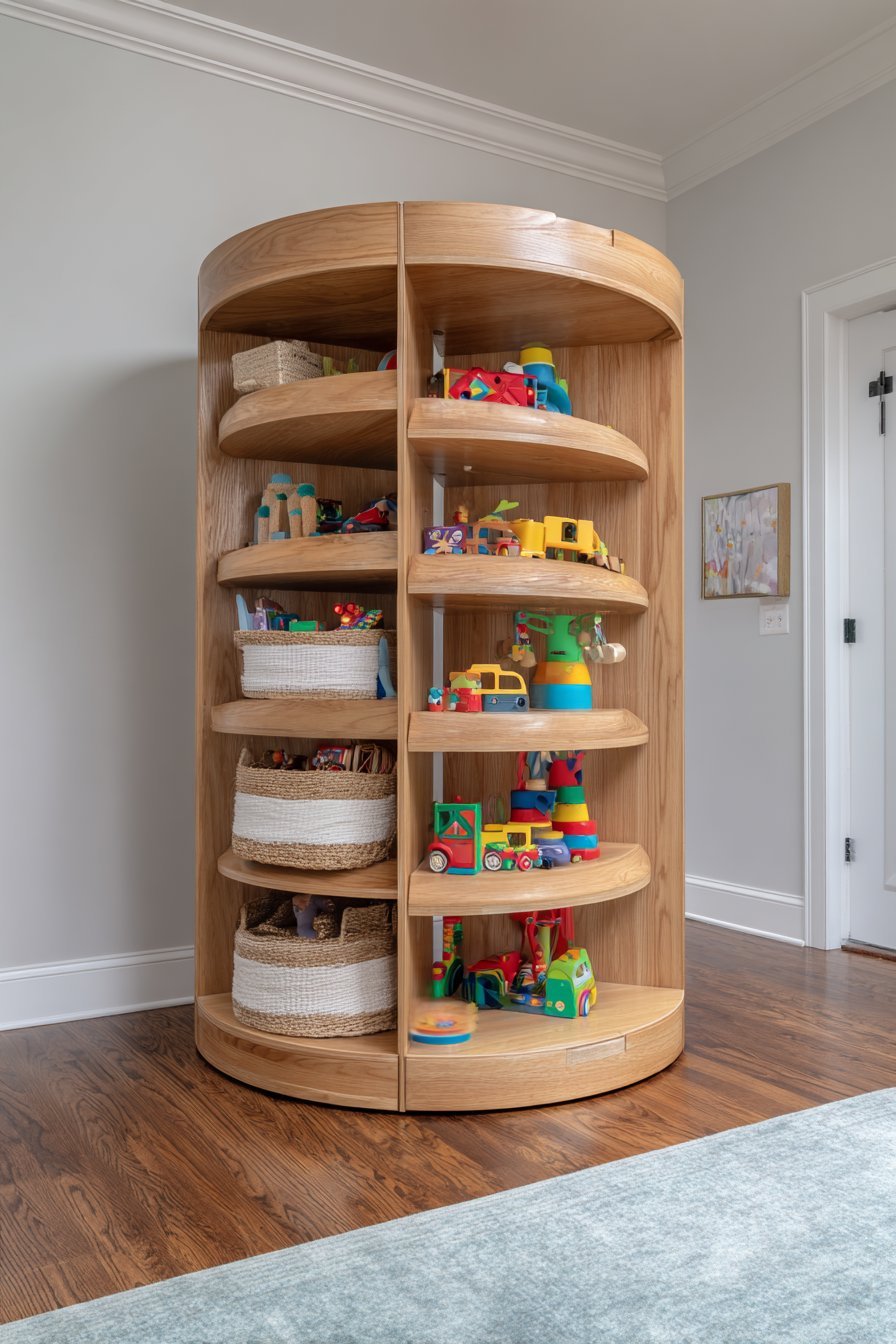
The natural wood brings warmth to the functional rotating design throughout. Multiple shelf levels accommodate toys of varying heights and sizes effectively. The compact footprint makes the tower ideal for smaller playrooms particularly. The soft blue rug defines the tower’s zone while protecting flooring underneath.
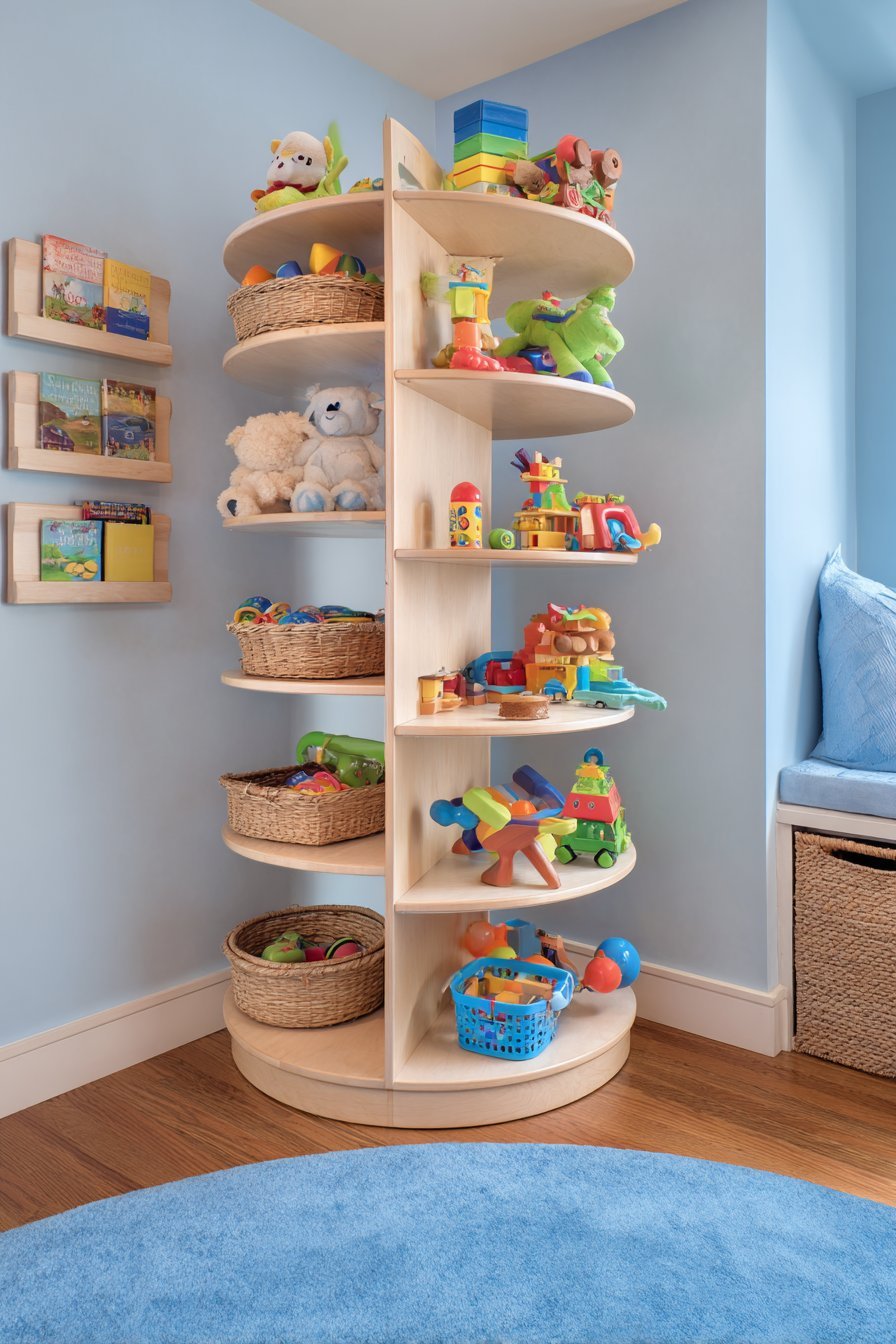
The rotation mechanism operates smoothly with minimal effort from small hands. The tower’s stability prevents tipping during enthusiastic spinning by children. The visibility from all sides encourages children to see complete toy options.
Key Design Tips:
- Choose rotating towers with smooth, easy-spin mechanisms
- Select natural wood for durability and timeless appeal
- Keep tower footprint small for space efficiency always
- Use multiple shelf levels for maximum capacity utilization
- Position on washable rugs to protect flooring below
- Ensure tower has wide, stable base preventing tip-over
29. Command Center Storage Wall
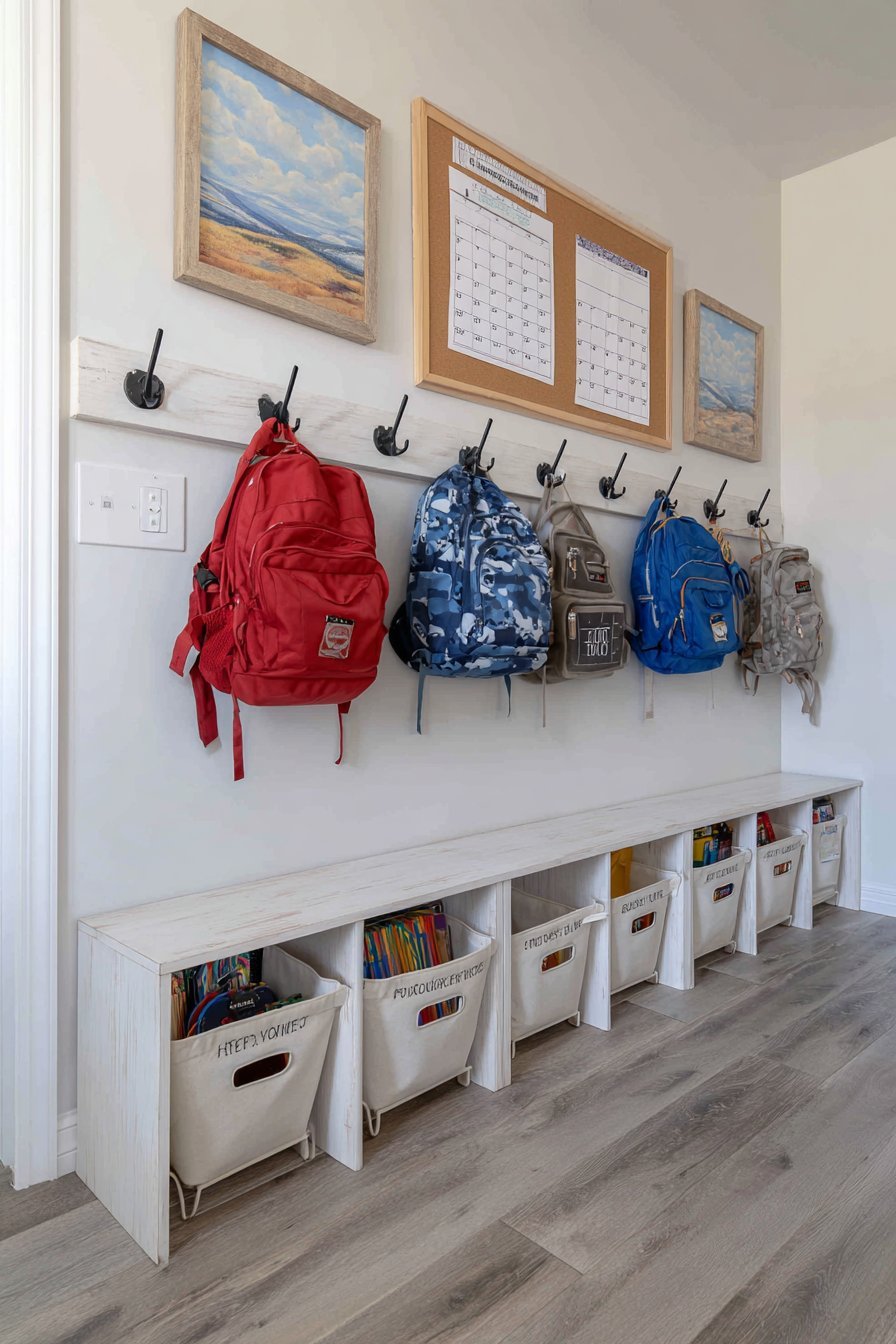
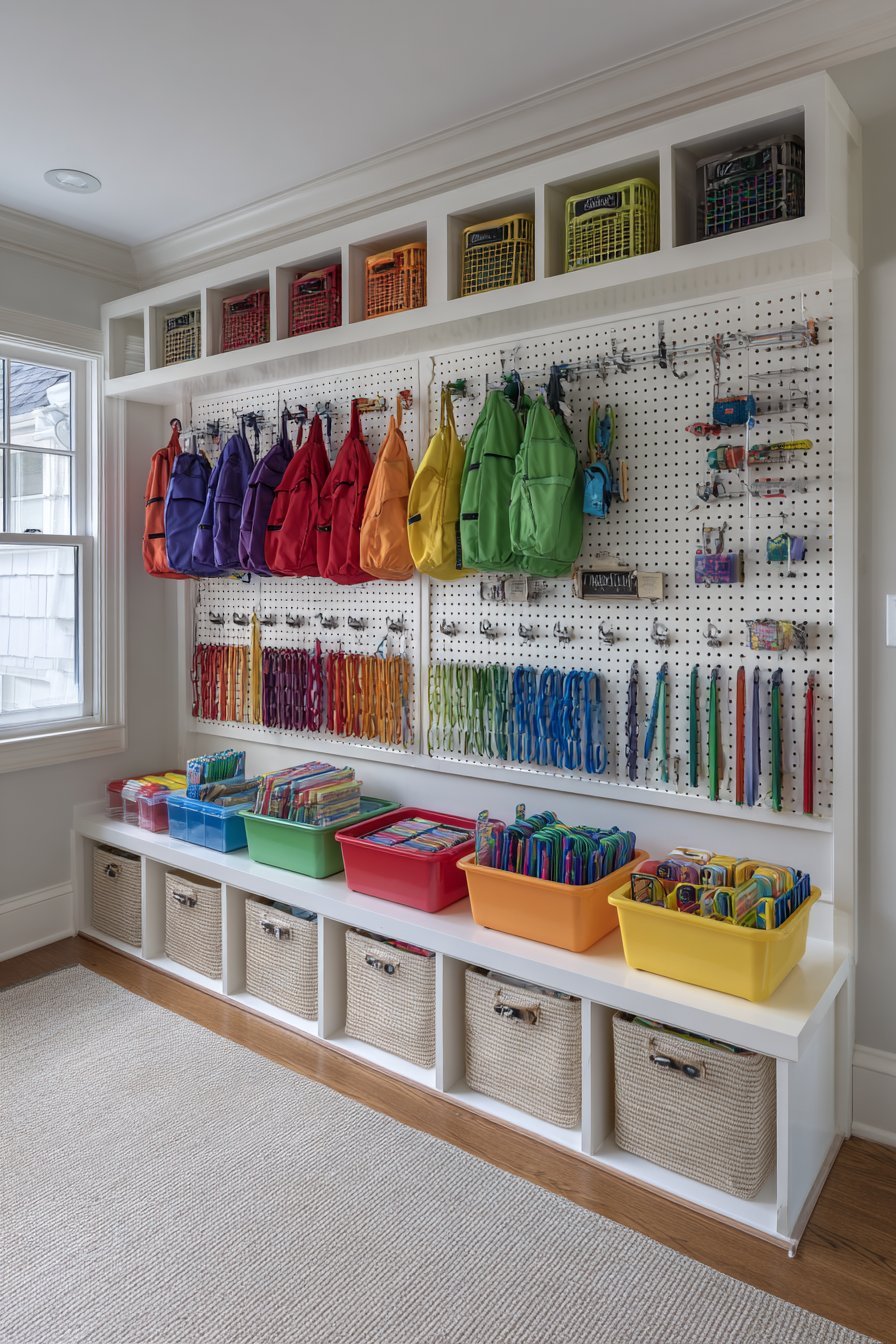
A playroom features command center storage wall with organizational components throughout. Large bulletin board displays important reminders and children’s artwork proudly. Wall calendar helps children understand daily and weekly schedules visually. Hooks hold backpacks while cubbies organize school supplies systematically and accessibly.
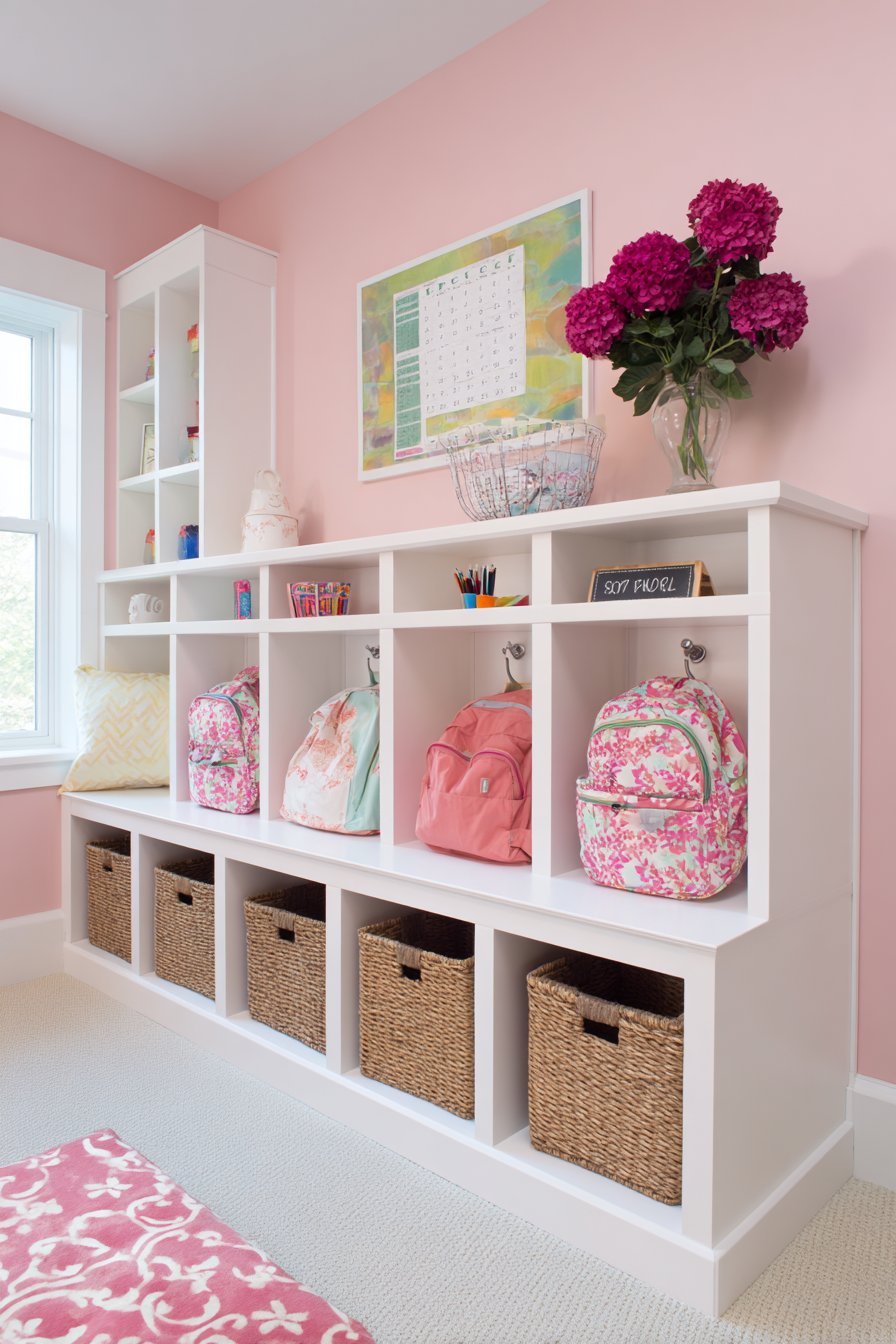
The organized system helps children prepare for activities independently without constant reminders. White painted wood construction keeps the appearance clean and bright always. Chalkboard labels on storage bins update easily as contents change seasonally. Interior design photography with natural lighting captures functional family organization hub clearly.
The command center teaches time management and organizational skills naturally through use. The bulletin board rotates artwork displays preventing overwhelming accumulation of papers. The calendar provides visual schedule reference reducing anxiety about upcoming events. The dedicated backpack hooks prevent floor clutter near doorways constantly.
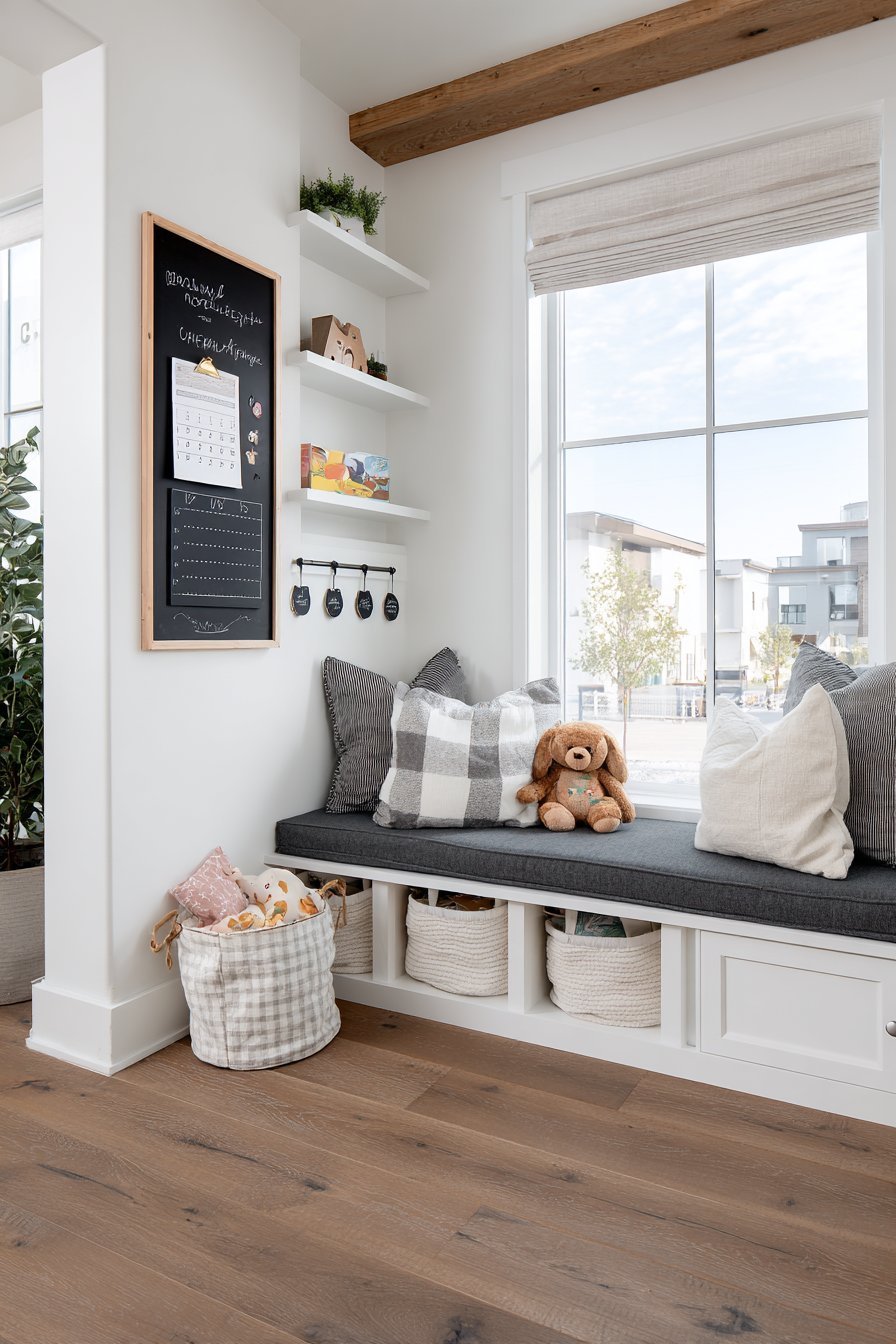
The white painted finish brightens the organizational wall while coordinating universally. The chalkboard labels provide flexibility without permanent label commitment long-term. The systematic storage keeps school-related items separate from general toys effectively.
Key Design Tips:
- Include bulletin board for artwork and reminder display
- Add wall calendar for visual schedule reference always
- Install hooks at child height for backpack storage
- Use chalkboard labels for easily updatable organization
- Paint in bright colors to energize organizational routines
- Position near room entrance for convenient daily access
30. Toy Library Rotation System
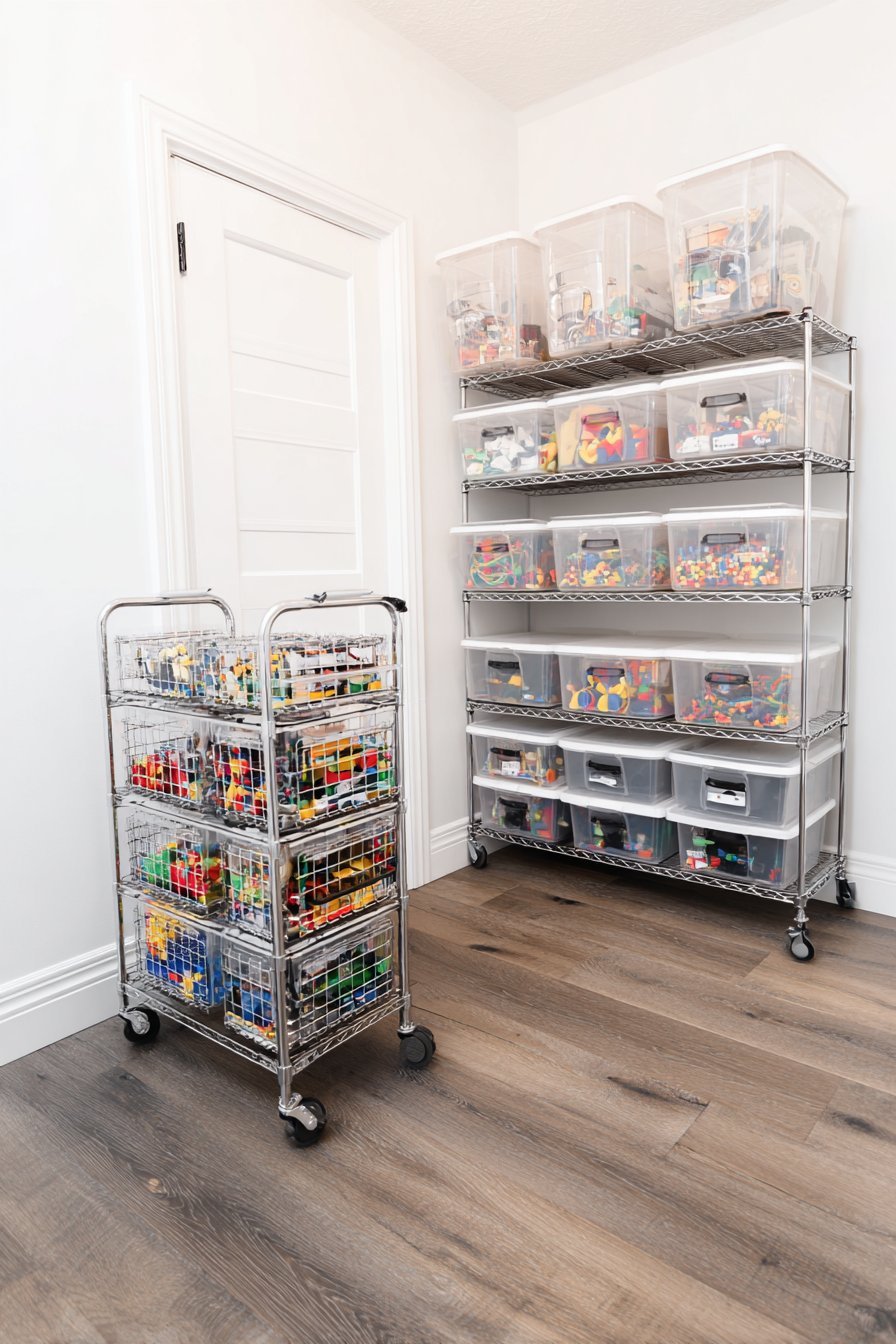
A playroom storage implementation features an innovative toy library rotation system. Rolling carts rotate from storage closet with different themed toy collections. The visible storage cart holds current toy selection in clear organized bins. A simple checkout system teaches organizational skills through structured processes naturally.
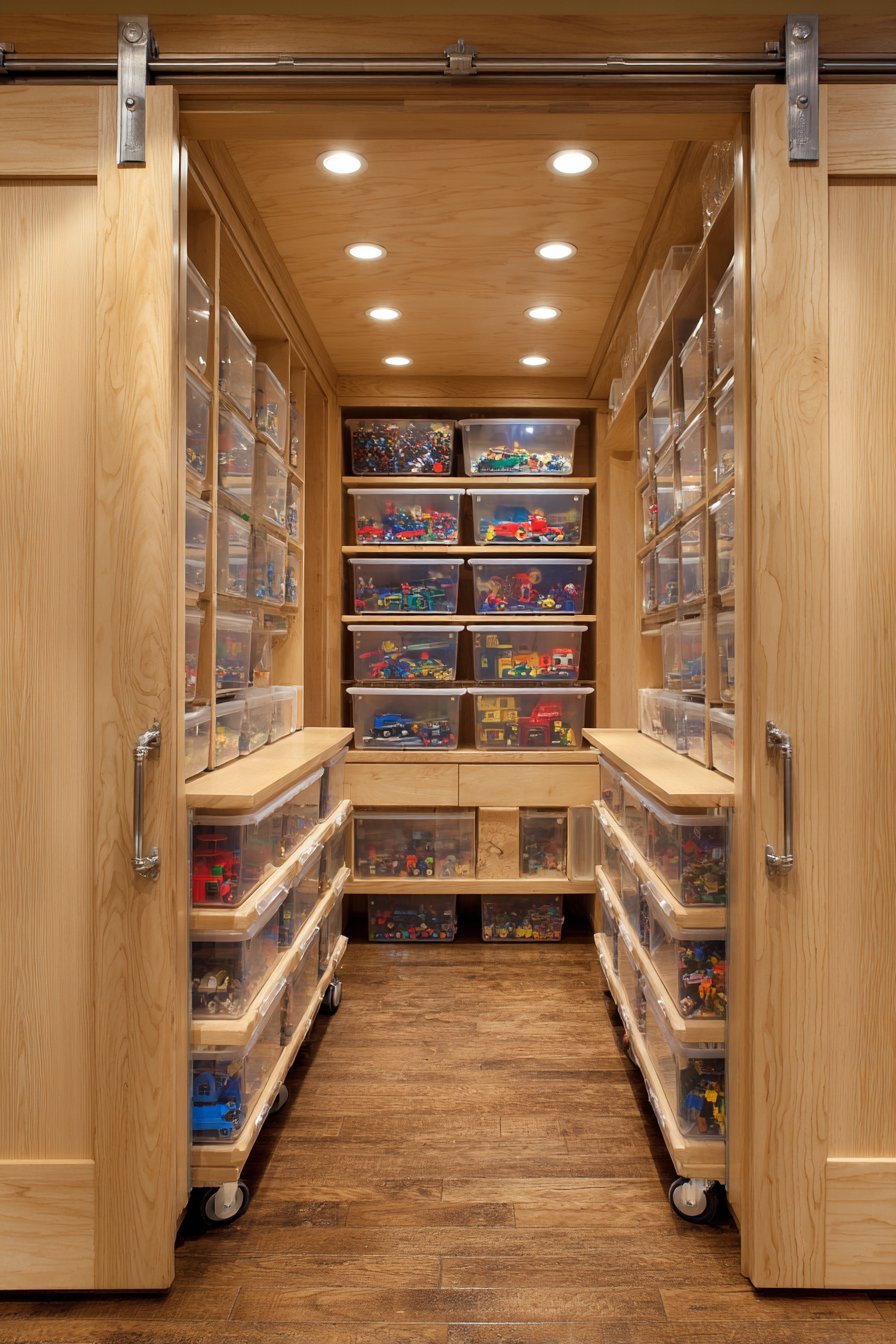
Wide-angle architectural photography captures the toy rotation concept with professional clarity. Lighting shows both active play cart and organized storage approach effectively. The rotation strategy reduces clutter by limiting active toys in circulation. This systematic approach keeps play fresh without requiring constant toy purchases unnecessarily.
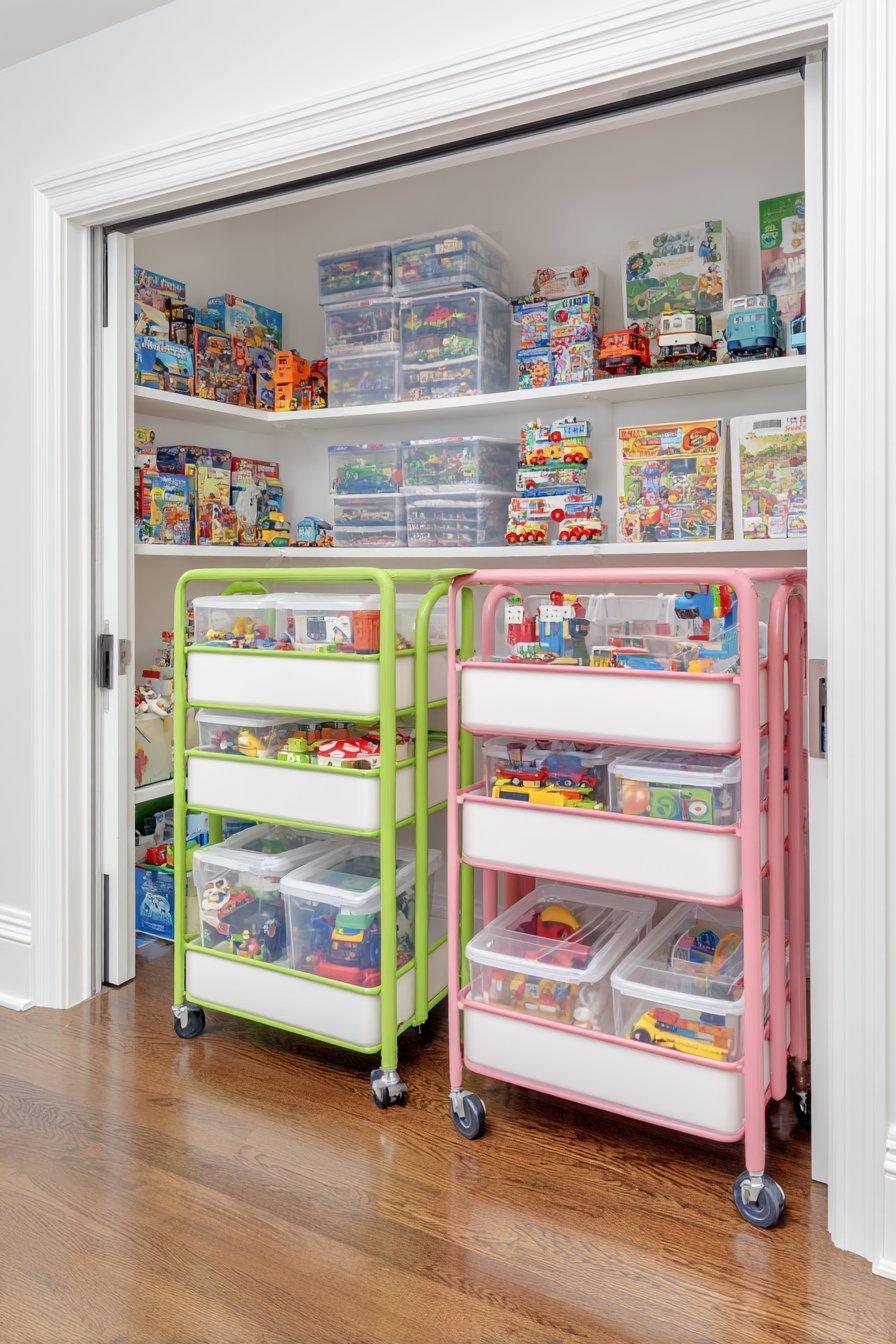
The rolling carts transport easily between closet storage and active playroom area. Themed collections might include building toys, pretend play, arts, or outdoor items. The checkout system creates anticipation and teaches responsibility for borrowed items. The limited selection encourages deeper engagement with available toys rather than superficial play.
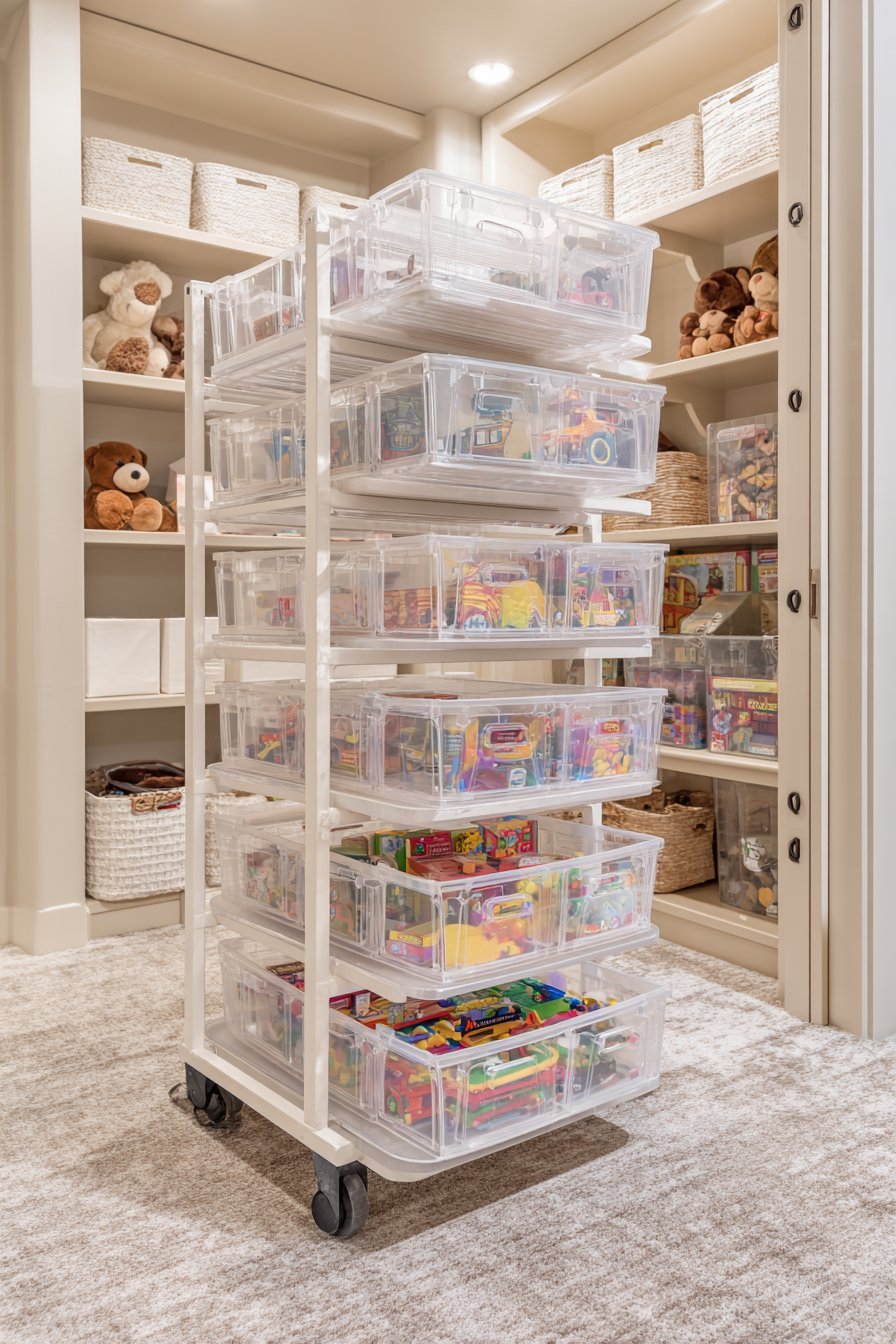
The closet storage keeps inactive collections organized and protected from damage. The clear bins in active carts maintain visibility during current rotation period. The rotation schedule might be weekly, biweekly, or monthly based on preferences.
Key Design Tips:
- Create themed toy collections for systematic rotation schedules
- Use rolling carts for easy transport between storage and play
- Store inactive collections in organized closet space properly
- Implement simple checkout system for responsibility teaching
- Rotate collections regularly to maintain interest and novelty
- Limit active toys to encourage focused, creative play
Why These Playroom Storage Ideas Are the Best
These playroom storage designs represent the finest approaches to organizing children’s spaces effectively. Each concept demonstrates thoughtful consideration of child development, accessibility, and practical family life. The designs showcase remarkable versatility that adapts to different home styles and spatial constraints.
The incorporation of natural materials like wood and woven fibers adds sustainability to beautiful design. These quality materials withstand years of active use while developing character over time. The storage solutions balance open display with closed storage, accommodating different organizational preferences effectively.
Child-centered design principles appear throughout these concepts consistently. Storage positioned at child height encourages independence and develops organizational skills naturally. Systems using visual cues like pictures, colors, and transparent containers support children at various developmental stages. The designs recognize that successful playroom storage must work for both children and parents.
Flexibility emerges as a crucial element across multiple storage approaches presented. Modular systems, adjustable shelving, and mobile carts adapt as children grow and interests evolve. This adaptability provides long-term value that justifies initial investment in quality storage solutions.
The variety of aesthetic styles from industrial slatwall to soft sensory-friendly fabrics ensures compatibility with diverse home designs. Natural wood finishes provide timeless appeal while painted options add personality and color. The designs prove that playroom storage can be both functional and visually attractive.
Spatial considerations receive careful attention throughout these storage ideas consistently. Vertical storage solutions maximize floor space for active play in smaller rooms. Corner utilization and under-stair built-ins transform typically wasted space into valuable storage capacity. Creative ceiling-mounted options further expand storage possibilities without consuming precious floor area.
The emphasis on systematic organization teaches valuable life skills to children naturally. Color-coded systems, labeled bins, and designated zones create clear expectations for cleanup routines. These structured approaches reduce daily conflicts while fostering independence and responsibility in young children.
Conclusion
These playroom storage ideas demonstrate that organization enhances rather than restricts creative play. The key takeaways include the importance of child-accessible heights, systematic organization, and flexible solutions. Quality materials combined with thoughtful design create spaces that serve families throughout childhood years.
Successful playroom storage balances aesthetic appeal with practical functionality for real family life. Start by assessing your specific needs, available space, and children’s developmental stages carefully. Your organized, functional playroom awaits creation through thoughtful planning and creative implementation of these proven storage strategies.

