


The dining table is more than a place to eat. It is the gathering spot where meals are shared, conversations flow, and memories are made. A well-decorated dining table sets the tone for the entire room and makes even a casual weeknight dinner feel intentional and special.
Many people leave their dining table bare or cluttered with mail and random items. Others overthink the styling and end up with something that feels stiff and impractical. The key is finding a balance between beauty and function . Your table should look inviting while still being easy to use every day. These practical tips will help you decorate your dining table with confidence and style. Our dining room dimensions is worth checking before you finalize the sizing.
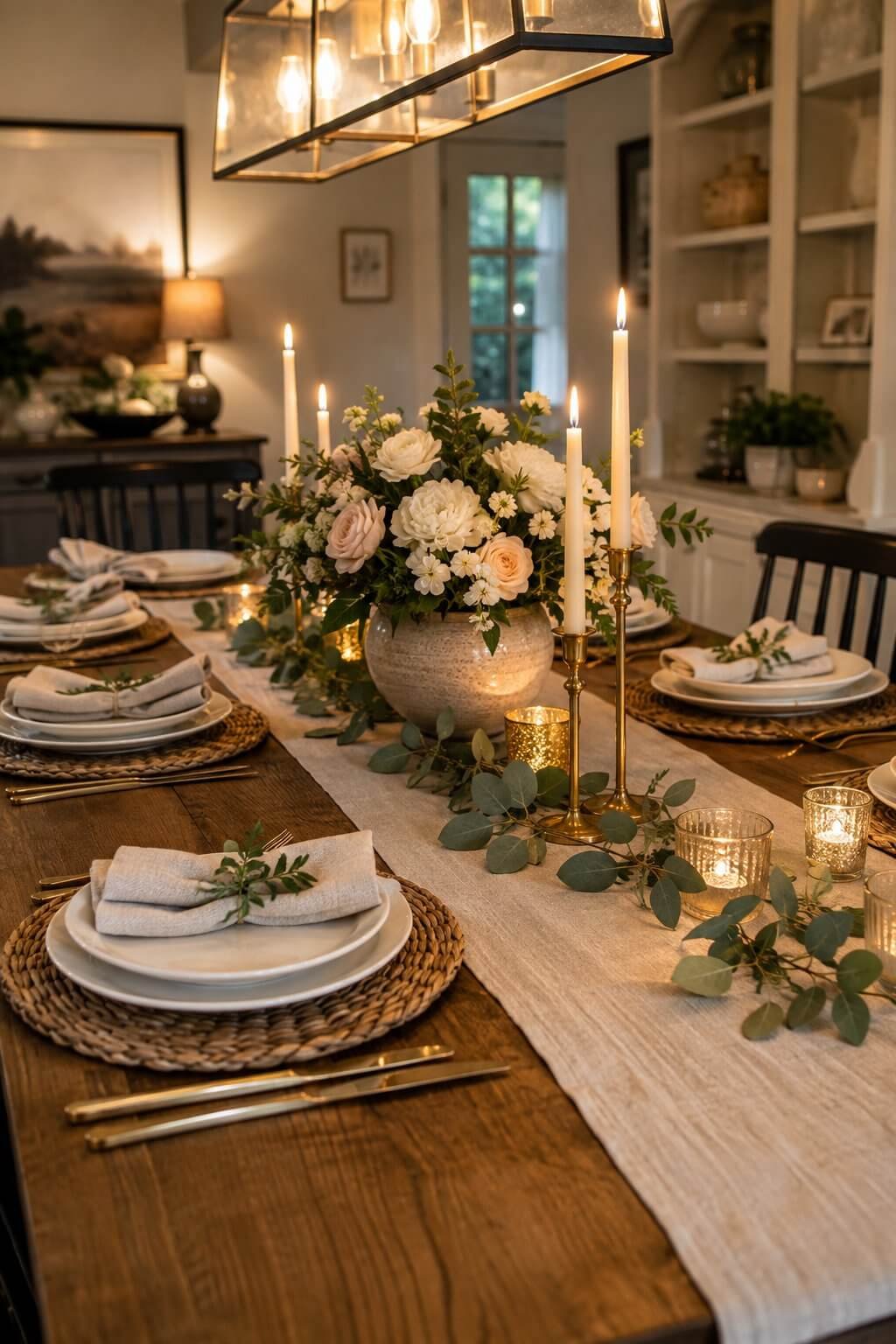
1. Start With a Strong Centerpiece
Every dining table needs a visual anchor at its center. A centerpiece draws the eye and gives the table a finished look. It does not need to be elaborate or expensive. A simple vase of fresh flowers, a wooden bowl filled with seasonal fruit, or a cluster of candles works beautifully.
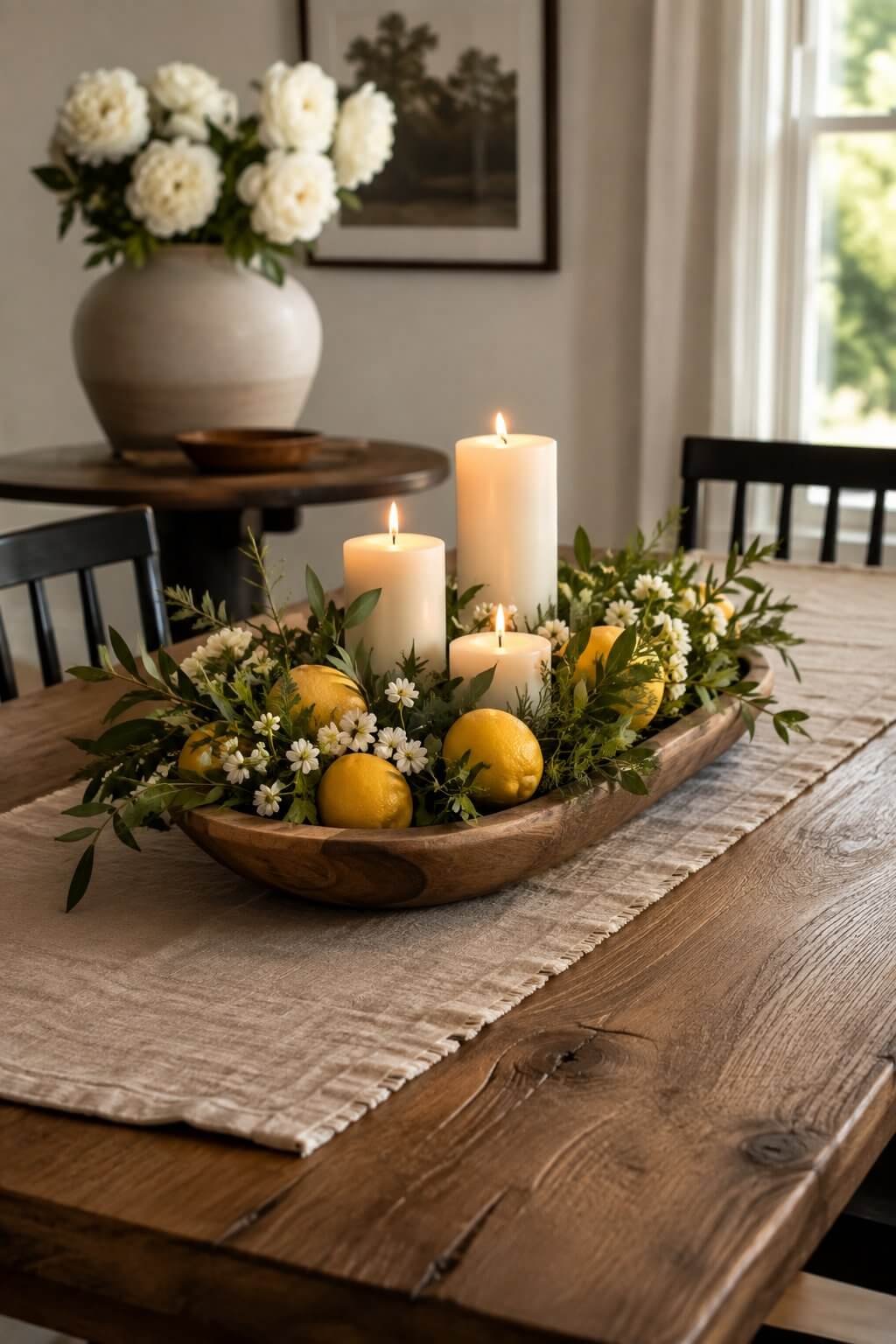
Scale your centerpiece to the size of your table. A large farmhouse table can handle a long trough filled with greenery. A smaller round table looks best with a single statement vase or a compact candle arrangement. The centerpiece should never block sightlines across the table.
- Choose a centerpiece that complements your dining room style. See our dining table decor ideas for more direction in this style.
- Keep it low enough so seated guests can see each other easily
- Rotate seasonal elements like pinecones, flowers, or citrus
- Use odd numbers of objects for a naturally balanced look
- Avoid anything too fragile for a table used daily
2. Add a Table Runner or Placemats
A bare table surface can feel cold and unfinished. Adding a table runner or placemats introduces color, texture, and visual structure. A linen runner down the center softens a wooden table instantly. Woven placemats add warmth and define each place setting.
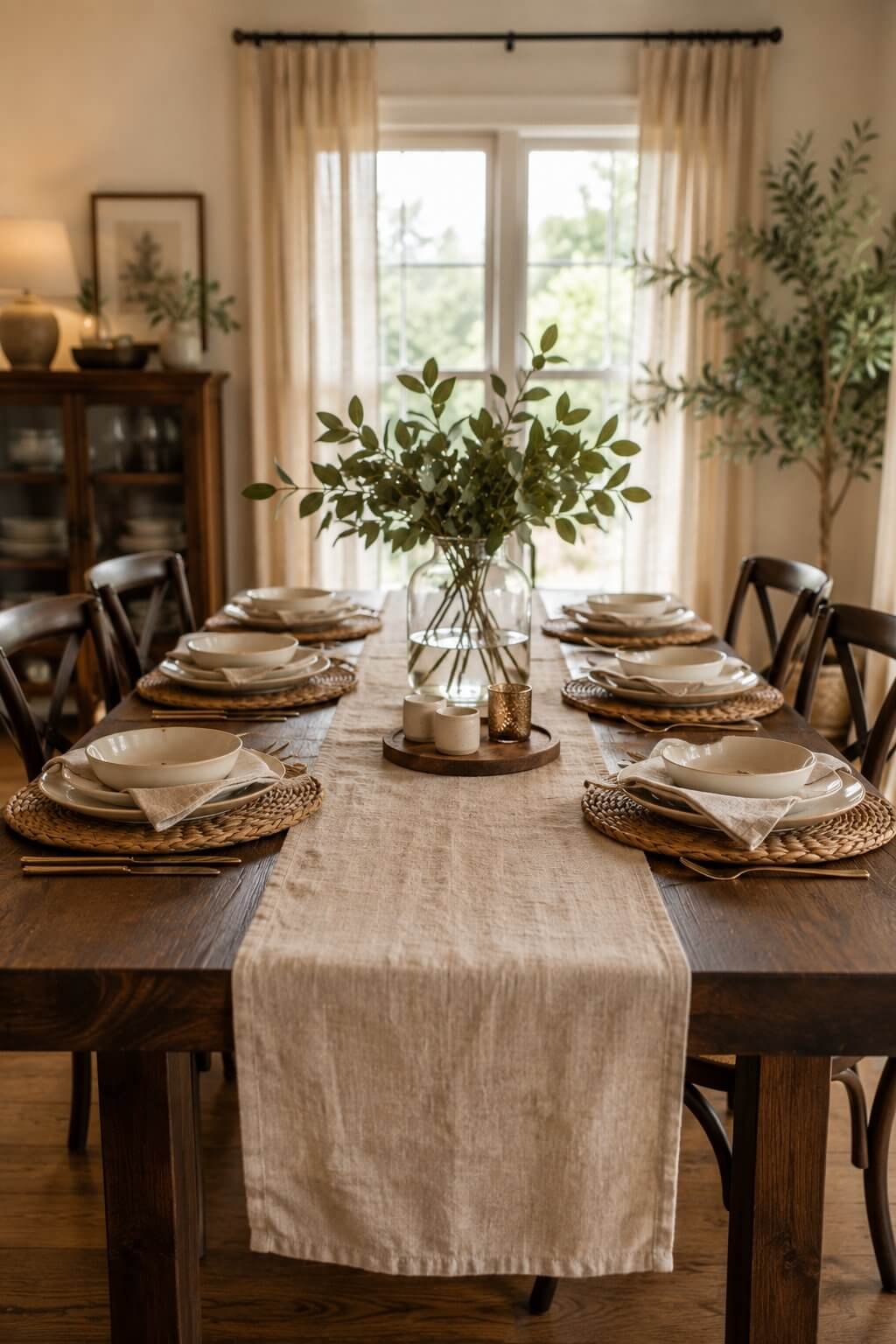
Choose materials that suit your lifestyle. Machine-washable cotton or linen works best for families with children. Woven seagrass or rattan placemats add bohemian texture. For a more formal look, opt for a crisp white runner paired with elegant cloth napkins.
- Use a runner that hangs six to eight inches over each end
- Choose placemats that contrast with your table surface color
- Layer a runner over placemats for added depth and interest
- Match runner fabric to your dining room curtains or cushions. Our guide on how to stage a dining room table walks through this step by step.
- Keep extras on hand to swap for seasons or special occasions
3. Incorporate Candles for Warmth and Ambiance
Candles transform a dining table from ordinary to romantic and inviting. Even unlit, they add height, shape, and elegance to the setting. Taper candles in sleek holders create a formal mood. Pillar candles on a wooden tray feel relaxed and rustic.
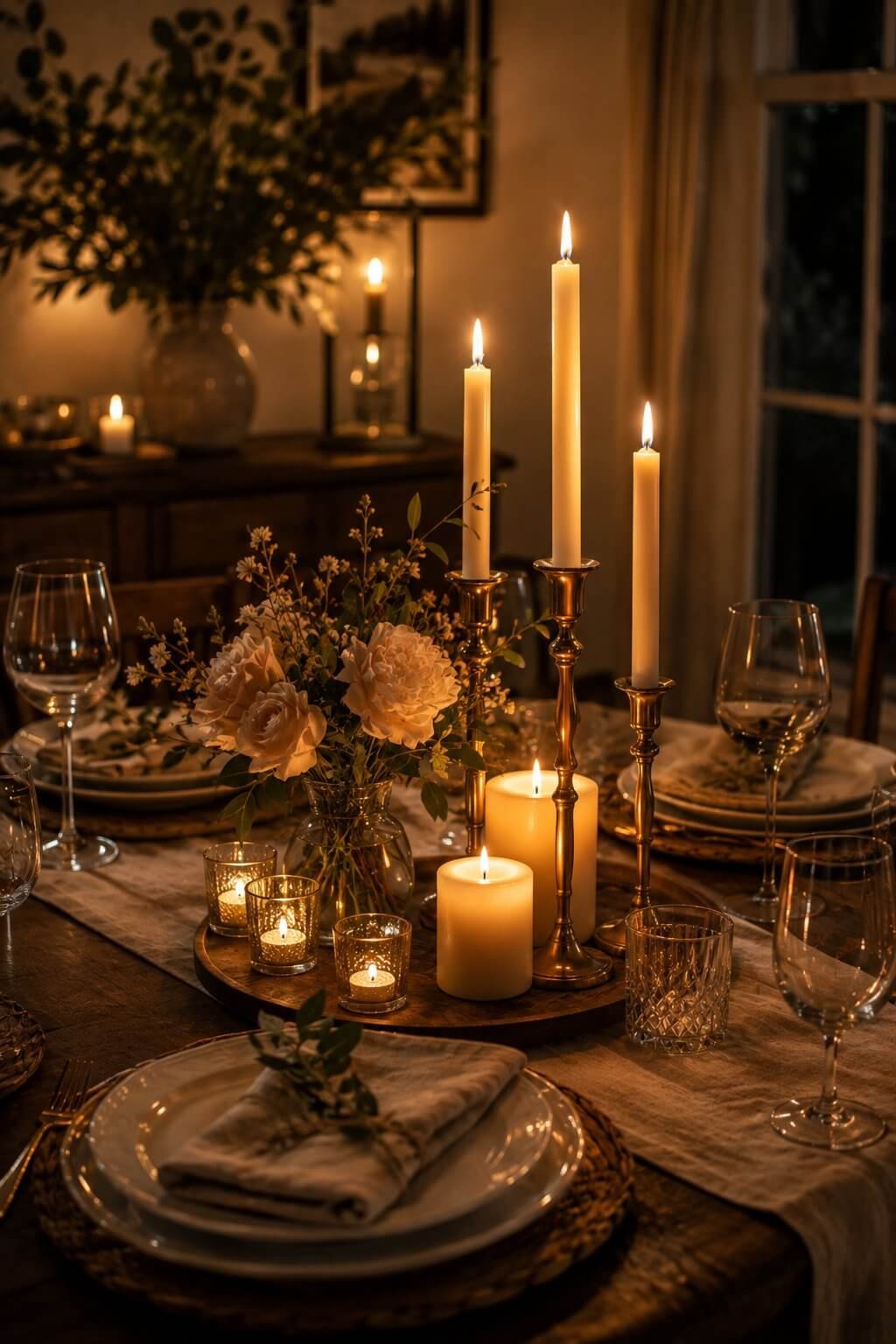
Group candles in clusters of varying heights for visual interest. Place them near the center alongside your main centerpiece. For everyday safety, use high-quality LED candles that flicker realistically. They provide the same ambiance without the worry of open flames around food and children.
- Mix taper, pillar, and votive candles for layered lighting
- Choose candle holders that match your hardware and fixtures
- Use unscented candles for the dining table to avoid competing with food aromas
- Place candles on a tray or plate to protect the table surface
- Light candles during dinner to instantly elevate the experience
4. Use Fresh or Dried Greenery
Nothing brings a dining table to life like natural greenery. A small potted herb, a eucalyptus garland, or a few branches of olive leaves add organic beauty and freshness. Greenery works with every design style from modern minimalist to rustic farmhouse.
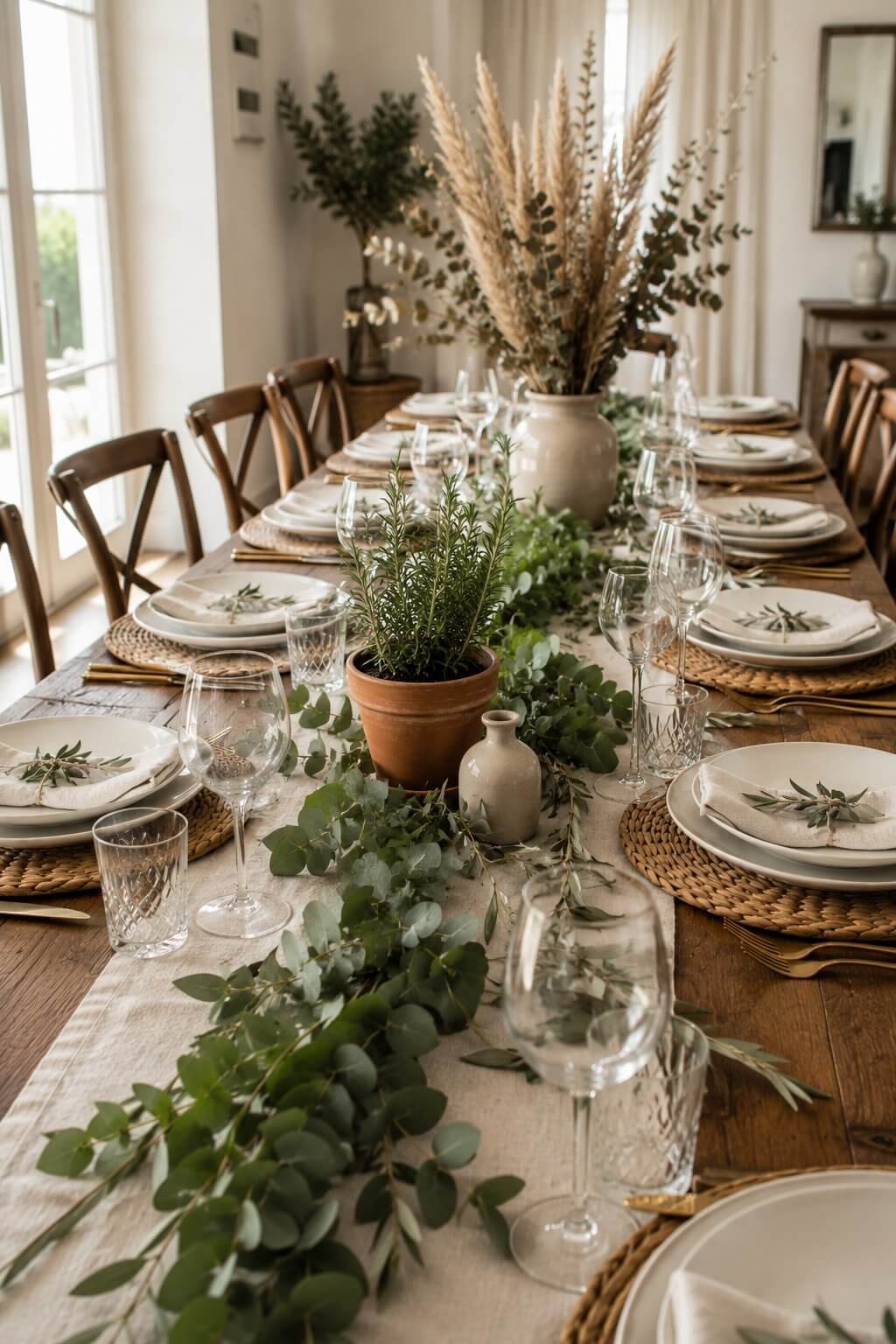
Dried options like pampas grass, preserved eucalyptus, or dried lavender last for months without maintenance. They are perfect for people who want a styled table without the upkeep of fresh flowers. Tuck stems into your centerpiece arrangement or scatter small sprigs along a runner.
- Place a low potted succulent or herb at the center
- Drape a eucalyptus garland along the length of a runner
- Use dried florals in a neutral-toned ceramic vase
- Mix greenery with candles for a layered centerpiece
- Change fresh stems weekly to keep the display vibrant
5. Set a Simple Everyday Place Setting
A dining table looks best when it feels ready to use. Setting a simple everyday place setting communicates warmth and hospitality. You do not need fine china. A clean dinner plate, a cloth napkin, and a water glass at each seat is enough.
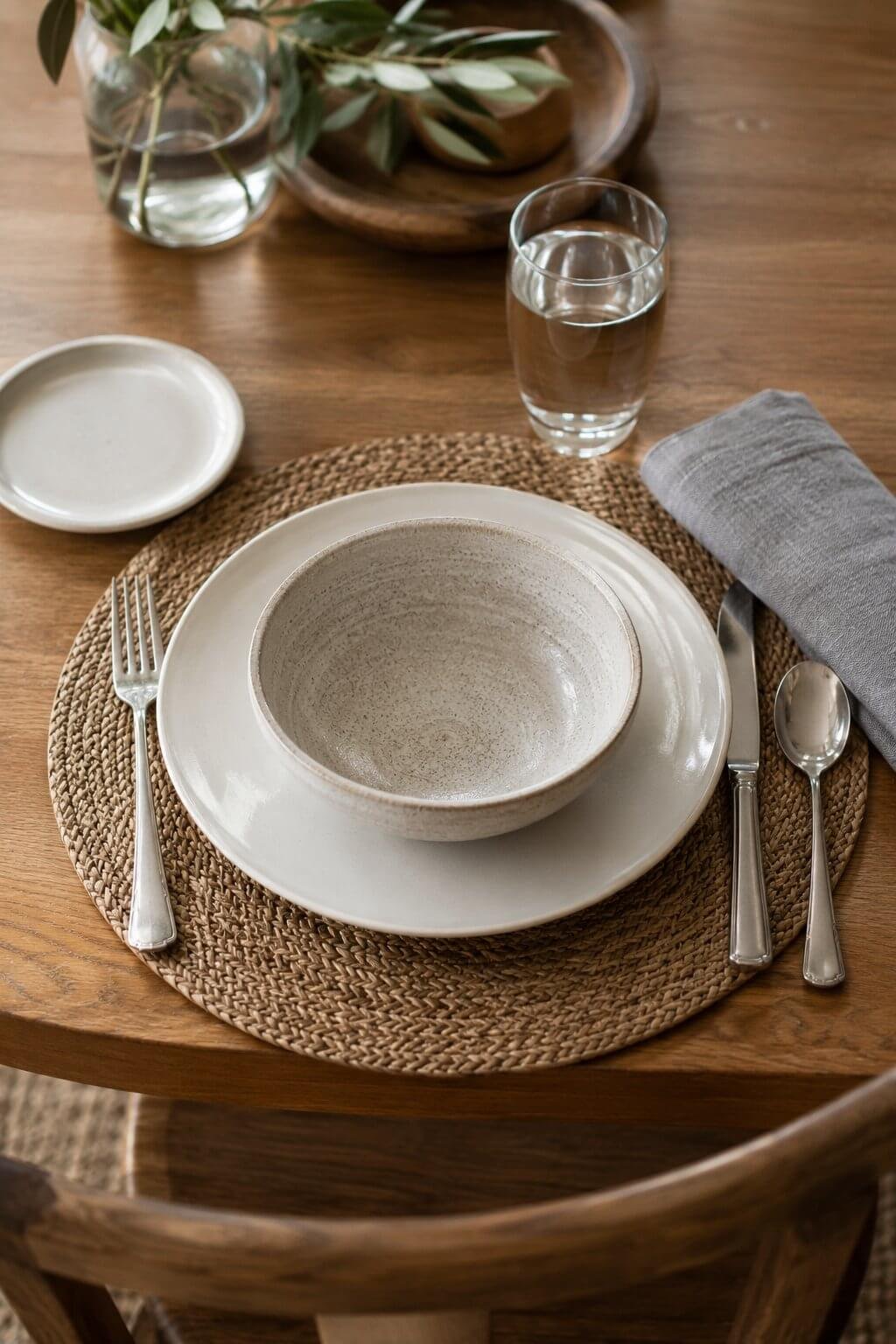
Stack a smaller plate or bowl on top of the dinner plate for a layered café-style look. Fold napkins simply and place them beside or on top of the plate. This minimal setting keeps the table functional while looking intentionally styled at all times.
- Use matching or coordinated dinnerware for a cohesive look
- Fold cloth napkins into simple rectangles or triangles
- Place a water glass above the knife on the right side
- Add a small bread plate to the left for a polished touch
- Keep everyday settings minimal and easy to clear quickly
6. Play With Height and Dimension
A flat table arrangement feels lifeless. Adding varying heights creates dimension and visual energy. Combine low bowls with tall candlesticks. Place a raised cake stand or pedestal tray alongside a flat runner for contrast.
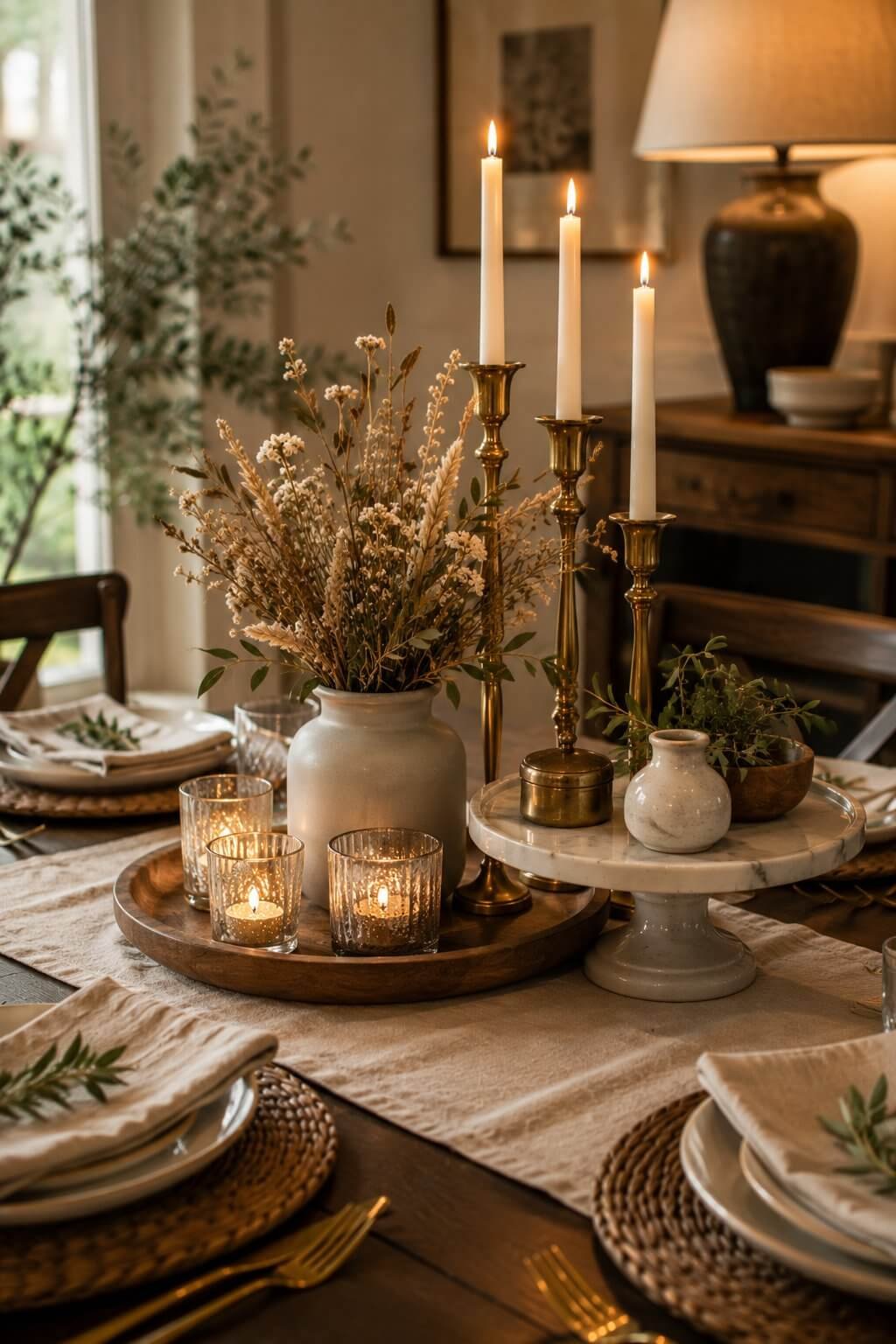
Think of your table décor in layers of low, medium, and high. A low tray with candles sits beside a medium-height vase and a tall taper holder. This layered approach gives the eye places to travel and makes even a simple arrangement feel curated and dynamic.
- Combine elements at three different height levels
- Use a pedestal tray or cake stand to elevate smaller items
- Pair tall taper candles with low votives for contrast
- Avoid making everything the same height across the table
- Step back and assess the arrangement from a seated perspective
7. Coordinate With Your Dining Room Style
Your table décor should feel like a natural extension of the room. A modern dining room calls for sleek lines, minimal objects, and a monochromatic palette. A farmhouse space embraces wood, linen, and casual floral arrangements. A bohemian room welcomes mixed textures, brass accents, and eclectic pottery.
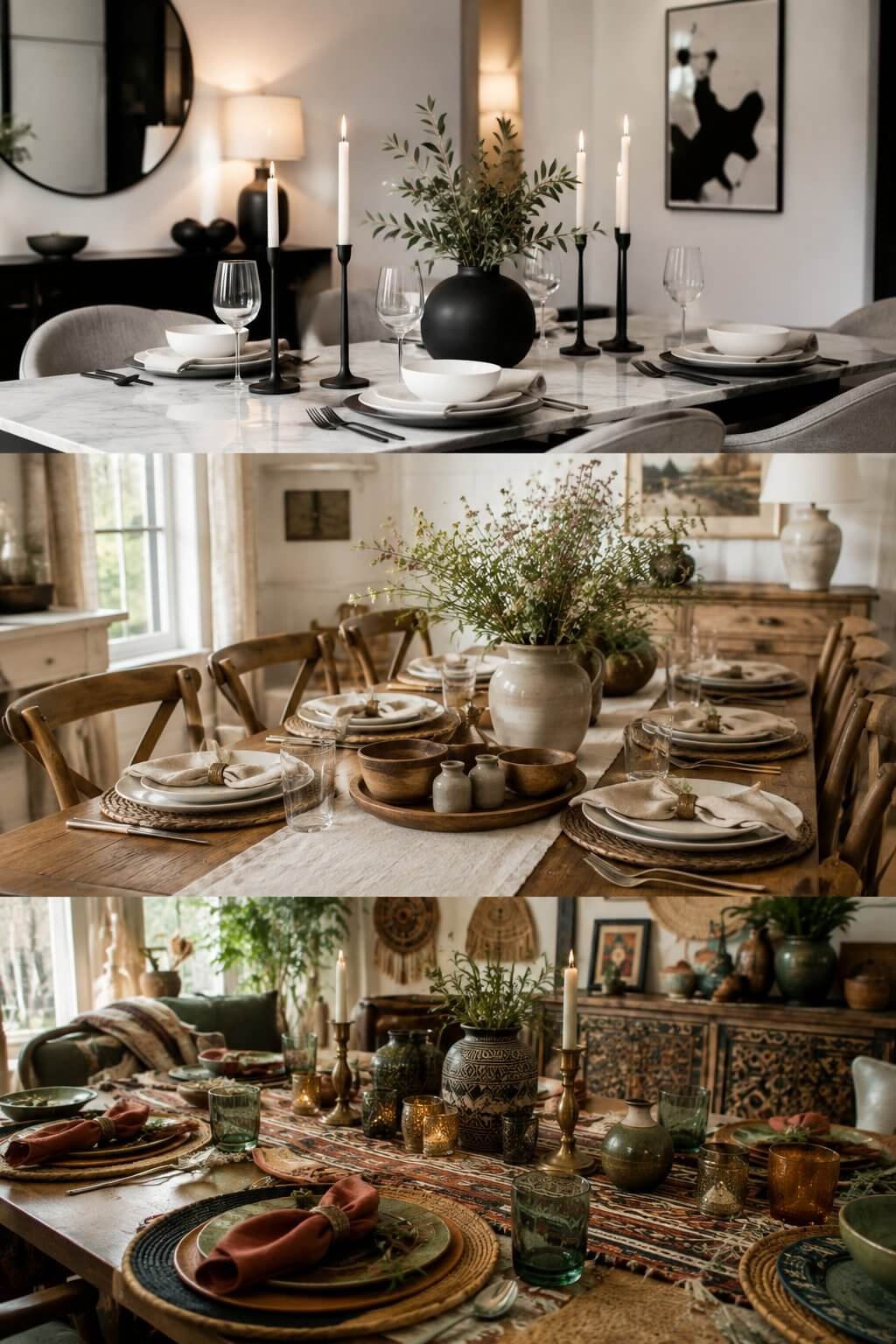
Pull colors from your dining room walls, curtains, or rug into your table accessories. If your room features warm wood tones, choose ceramic or wooden centerpiece elements. If your space is cool and contemporary, opt for glass, marble, or matte black accents.
- Match table décor materials to your room’s dominant textures
- Echo wall colors in your napkins, runner, or candle holders
- Keep the style consistent between the table and surrounding furniture
- Avoid introducing a completely different aesthetic on the table
- Let the dining room’s mood guide every decorative choice
Conclusion
Decorating a dining table is about creating a space that feels welcoming every single day. A thoughtful centerpiece, textured runner, warm candles, fresh greenery, and a simple place setting work together to make your table the heart of the room.
You do not need to style it perfectly every morning. Start with a few key pieces and adjust as your taste evolves. The most beautiful dining tables are the ones that invite people to sit down, stay awhile, and enjoy the moment.

