


Coffee table or ottoman? It’s one of the most common living room decisions, and it’s not just about looks. A coffee table gives you a hard, reliable surface for drinks, laptops, and game night, while an ottoman trades that hard surface for softness, flexibility, and often hidden storage. If you’re furnishing a small apartment, childproofing a first home, or just replacing a piece that’s never quite worked, the right pick depends on how your household actually lives in that room, not which one looks better in a catalog photo. Here’s the full breakdown, room by room, so you can make the call with confidence.
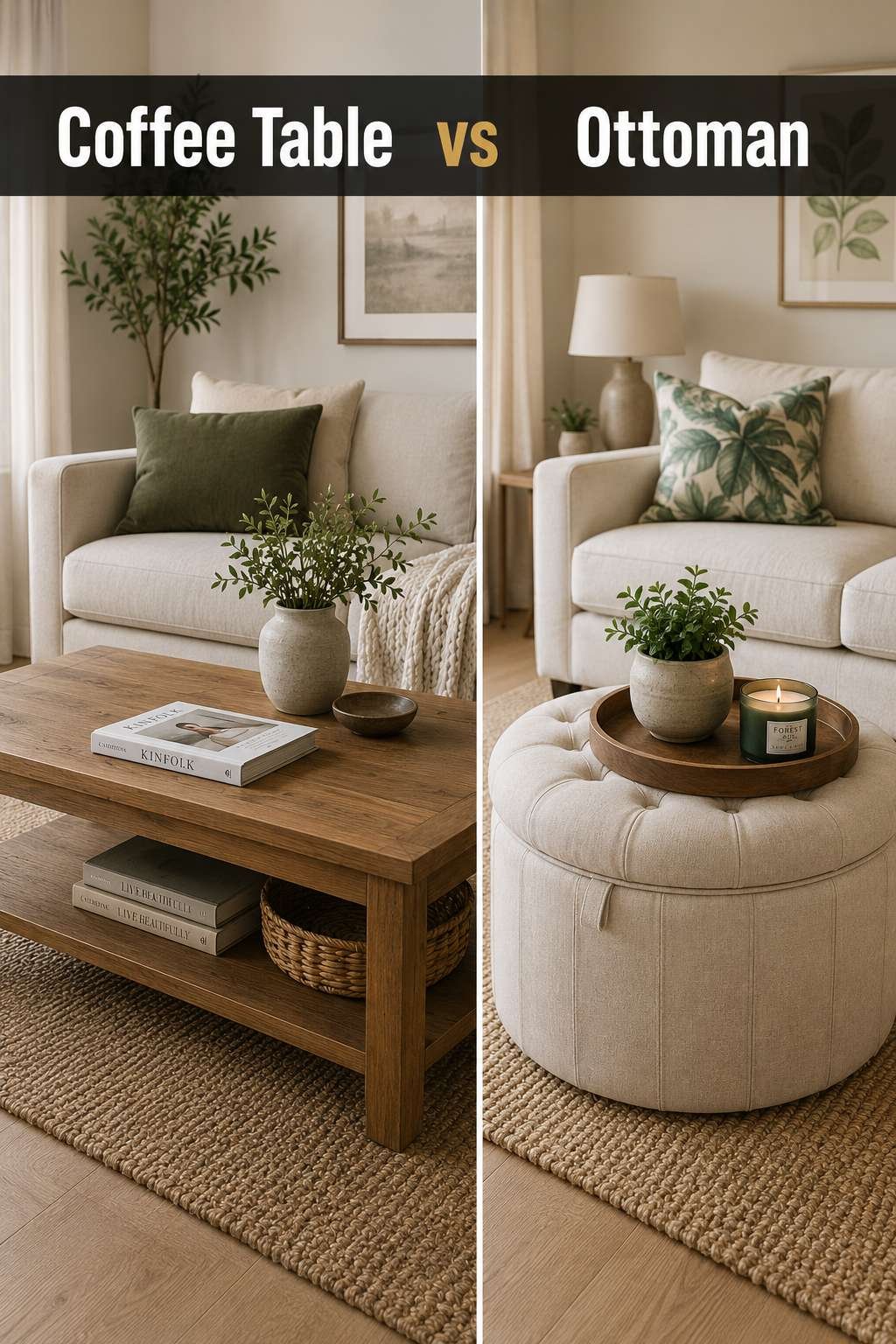
Coffee Table vs Ottoman: The Full Comparison Chart
| Criteria | Coffee Table | Ottoman |
|---|---|---|
| Cost | $60–$1,200+ depending on material | $80–$900+ depending on upholstery |
| Durability | High — solid wood or glass holds up for years of daily use | Moderate — fabric upholstery wears faster with heavy use |
| Maintenance | Low — wipe clean, occasional polish or oil | Moderate — regular vacuuming and spot-cleaning fabric |
| Assembly | Easy — most ship pre-assembled or with simple leg attachment | Easy — usually delivered fully assembled |
| Storage | None, unless it’s a shelf or drawer model | High — many models include hidden interior storage |
| Surface Use | Excellent — hard flat surface for drinks, laptops, and games | Limited — needs a tray for hard-surface tasks |
| Resale Value | Moderate to high — solid wood holds resale value well | Low — upholstery wear reduces resale appeal |
| Kid/Pet Friendly | Lower — hard corners and edges | Higher — soft, forgiving surface and edges |
What the Chart Actually Means in Your Living Room
On paper, a coffee table wins on hard-surface usability and resale value, while an ottoman wins on safety, storage, and flexibility. In practice, that plays out very differently depending on who’s using the room. A coffee table’s flat, stable top is genuinely better for laptops, board games, and holding drinks steady, but that same hard edge is exactly what makes it a hazard for a toddler learning to walk. An ottoman softens that risk and often quietly solves a storage problem too, but only if you’re willing to add a tray for everyday tasks and accept that the fabric will need more upkeep over time.
Quick Look: Coffee Table vs Ottoman at a Glance
Coffee Table
A hard, flat surface built for drinks, laptops, and everyday living room use.
View on Amazon →Ottoman
A soft, flexible piece that doubles as seating, storage, and a tray-topped surface.
View on Amazon →Deep Dive: Coffee Table
A coffee table is the right call for households that want a reliable hard surface and don’t have small kids underfoot. It shines in entertaining spaces, homes without toddlers, and anywhere you want a defined, formal centerpiece rather than a soft, casual one. Our small living room decor ideas has more inspiration along these same lines.
Pros
- Hard, stable surface for drinks, laptops, and board games
- Wide range of styles and materials, from wood to glass to marble
- Solid wood options hold resale value well
- No extra tray accessory needed for everyday use
Cons
- Hard corners can be a hazard around toddlers Our how to decorate living room corner guide covers this in more detail.
- No built-in storage unless it’s a shelf or drawer design
- Solid wood, marble, and glass options can be pricier
- Can scratch or dent from heavy daily use
Real cost range: budget flat-pack coffee tables start around $60, while solid wood, marble, or designer pieces can run $1,200 or more.
Deep Dive: Ottoman
An ottoman is the right call for small apartments, homes with kids or pets, and anyone who wants extra seating and storage in one piece of furniture. It’s the more forgiving, flexible option, but it asks for a bit more upkeep in return.
Pros
- Soft, forgiving edges that are safer around kids and pets
- Many models include hidden interior storage
- Doubles as extra seating when entertaining
- Lighter and easier to move than most coffee tables
Cons
- Upholstery shows wear and stains over time
- Needs a tray to function as a usable hard surface
- Lower resale value once fabric is worn
- Less sturdy for heavy laptop or dining use without a tray
Real cost range: budget faux-leather poufs start around $80, while premium tufted storage ottomans in leather or performance fabric can run $900 or more.
Real Room Examples: Which One Wins Where
Small Studio Apartment
Every inch counts and hidden storage matters most.
Ottoman winsBusy Family Room
Soft edges matter more than a hard tabletop with kids around.
Ottoman winsRental-Friendly Space
Lightweight and easy to move without any assembly commitment.
Ottoman winsLuxury Formal Living Room
Wood, marble, or glass reads more polished and intentional.
Coffee table winsHigh-Traffic Entertaining Space
More reliable surface area for guests’ drinks and food.
Coffee table winsProfessional Tips
- Designer tie-breaker: if you’re torn, measure your walking paths first. Under about 30 inches of clearance around the piece usually favors the softer, more forgiving ottoman.
- Common regret mistake: buying an ottoman without checking upholstery durability ratings, then being surprised when it shows wear within a year of daily use.
- Resale-value note: if you move often or like to refresh furniture every few years, a solid wood coffee table is the safer long-term investment.
- Maintenance reality-check: a coffee table needs an occasional wipe-down; a fabric ottoman needs real upkeep, including vacuuming and prompt spill blotting.
Shop the Winner
If you’re leaning toward the coffee table, here’s what to get started with:
Best Overall
A solid wood coffee table with clean lines that fits most living room styles without dominating the room.
Best Budget
A simple flat-pack coffee table that’s sturdy enough for everyday use without a big upfront cost.
Best Premium
A marble-top or designer wood coffee table built as a true centerpiece for a formal living room.
If you’re leaning toward the ottoman, here’s what to get started with:
Best Overall
A round tufted storage ottoman with a removable tray, giving you seating, storage, and a usable surface in one.
Best Budget
A lightweight faux-leather pouf that’s easy to move and simple to wipe clean.
Best Premium
A leather storage ottoman built to hold up to years of daily family use without showing wear.
Frequently Asked Questions
Is an ottoman a good substitute for a coffee table?
Yes, as long as you add a tray on top for drinks, plates, or laptops. A tray-topped ottoman gives you a usable flat surface while still offering soft edges and often hidden storage.
What is more durable, a coffee table or an ottoman?
A solid wood or glass coffee table generally holds up longer than an ottoman, since upholstery wears, fades, and stains faster than a hard surface.
Do ottomans stain easily?
Fabric ottomans can stain if drinks or food are placed directly on them, which is why most owners use a tray. Performance fabrics and leather or faux-leather options resist stains better than plain cotton or linen blends. Our guide on how to place a rug in a living room walks through this step by step.
Can you put a coffee table and an ottoman together in the same room?
Yes, many living rooms use a smaller coffee table alongside an ottoman as an extra footrest or seat, especially in larger rooms with space for both.
Which is safer for toddlers, a coffee table or an ottoman?
An ottoman is generally safer around toddlers because it has soft, forgiving edges instead of hard corners, which lowers the risk of bumps and injuries.
How much does a good storage ottoman cost?
Budget storage ottomans start around $80 to $150, mid-range tufted or linen options run $200 to $400, and premium leather or designer storage ottomans can run $500 to $900 or more.
How much does a good coffee table cost?
Budget flat-pack coffee tables start around $60 to $150, solid wood mid-range options run $250 to $600, and premium marble, stone, or designer pieces can run $700 to $1,200 or more.
Do ottomans need a tray to use as a coffee table?
For everyday use like drinks, laptops, or games, yes, a tray is strongly recommended since most ottoman tops are upholstered and not designed to hold items directly.
Which is easier to move, a coffee table or an ottoman?
Ottomans are typically lighter and easier to reposition than solid wood, glass, or stone coffee tables, which makes them convenient for rearranging a room or making space for guests.
What material coffee table is most durable?
Solid hardwood and tempered glass with a metal frame are among the most durable coffee table materials, standing up well to daily use, spills, and years of wear.
Are storage ottomans good for small apartments?
Yes, storage ottomans are one of the best small-apartment picks because they combine a footrest, extra seating, and hidden storage for blankets or remotes in a single footprint.
Can a coffee table double as extra seating?
A sturdy, low coffee table can occasionally double as a perch, but it is not designed for regular seating the way an ottoman is, and doing so can scratch the surface or strain the legs over time.
What’s the best coffee table alternative for renters?
A lightweight storage ottoman is usually the best renter-friendly option since it requires no wall mounting, is easy to move between apartments, and doubles as extra seating in smaller spaces.
Do ottomans hold up with pets?
Performance fabric or leather ottomans generally hold up well with pets, but plain fabric upholstery can show scratches, fur, and stains faster than a hard-surfaced coffee table.
Which has better resale value, a coffee table or an ottoman?
Solid wood coffee tables tend to hold resale value better than ottomans, since upholstery wear and fabric staining make used ottomans harder to resell at a good price.
Can you put food and drinks directly on an ottoman?
It’s best to avoid placing food or drinks directly on an ottoman’s upholstery. Using a sturdy tray protects the fabric while still giving you a usable flat surface.
What size ottoman replaces a standard coffee table?
A round ottoman around 30 to 36 inches in diameter, or a rectangular ottoman around 40 to 50 inches long, generally matches the footprint of a standard coffee table.
Is a round or rectangular coffee table better for small living rooms?
A round coffee table is often better for small living rooms because it has no sharp corners to navigate around and can make tight walking paths feel less cramped.
How do you clean a fabric storage ottoman?
Vacuum regularly with an upholstery attachment, blot spills immediately rather than rubbing, and spot-clean with a fabric-safe cleaner matched to the ottoman’s specific material care tag.
Which is better for a formal living room, a coffee table or an ottoman?
A coffee table, especially in wood, marble, or glass, typically reads as more formal and polished, which makes it the stronger pick for a formal or entertaining-focused living room.
The Verdict
If you’re in a small apartment, have young kids or pets, or you’re renting: go with the ottoman. The soft edges, hidden storage, and flexibility solve more real problems than a hard surface does in these situations.
If you’re furnishing a formal living room, entertain often, or don’t have small children underfoot: go with the coffee table. The hard, reliable surface and stronger resale value make it the smarter long-term pick.
Neither option is universally “better” — the right one is the one that matches how your household actually uses the room every day.

