Glass doors represent one of the most transformative elements in interior design. They create visual connections between spaces while maintaining functional separation. The transparency allows natural light to flow freely throughout your home. Modern homeowners increasingly recognize the value these architectural features bring to residential spaces.
The versatility of glass doors extends across every design style imaginable. From minimalist contemporary to traditional craftsman, glass doors adapt beautifully. They serve practical purposes while elevating aesthetic appeal. Whether separating rooms, enclosing showers, or creating indoor-outdoor transitions, glass doors perform multiple roles seamlessly.
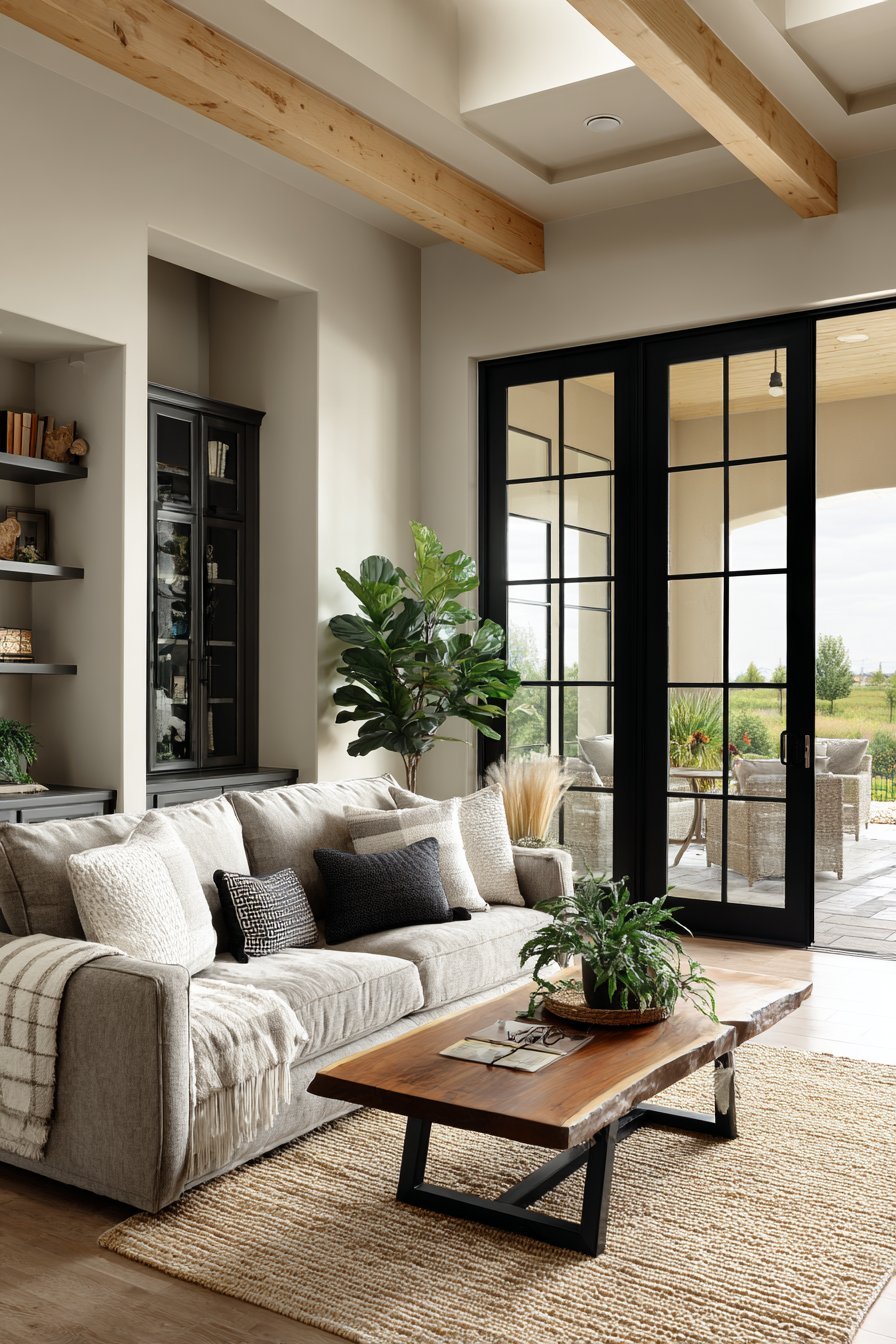
This comprehensive guide explores thirty distinctive glass door applications. Each design showcases unique materials, finishes, and architectural approaches. You’ll discover how different frame styles, glass treatments, and hardware choices create varied atmosphics. These concepts span budget-friendly solutions to luxury installations, ensuring inspiration for every project scope.
1. Contemporary Sliding Glass Doors with Indoor-Outdoor Flow
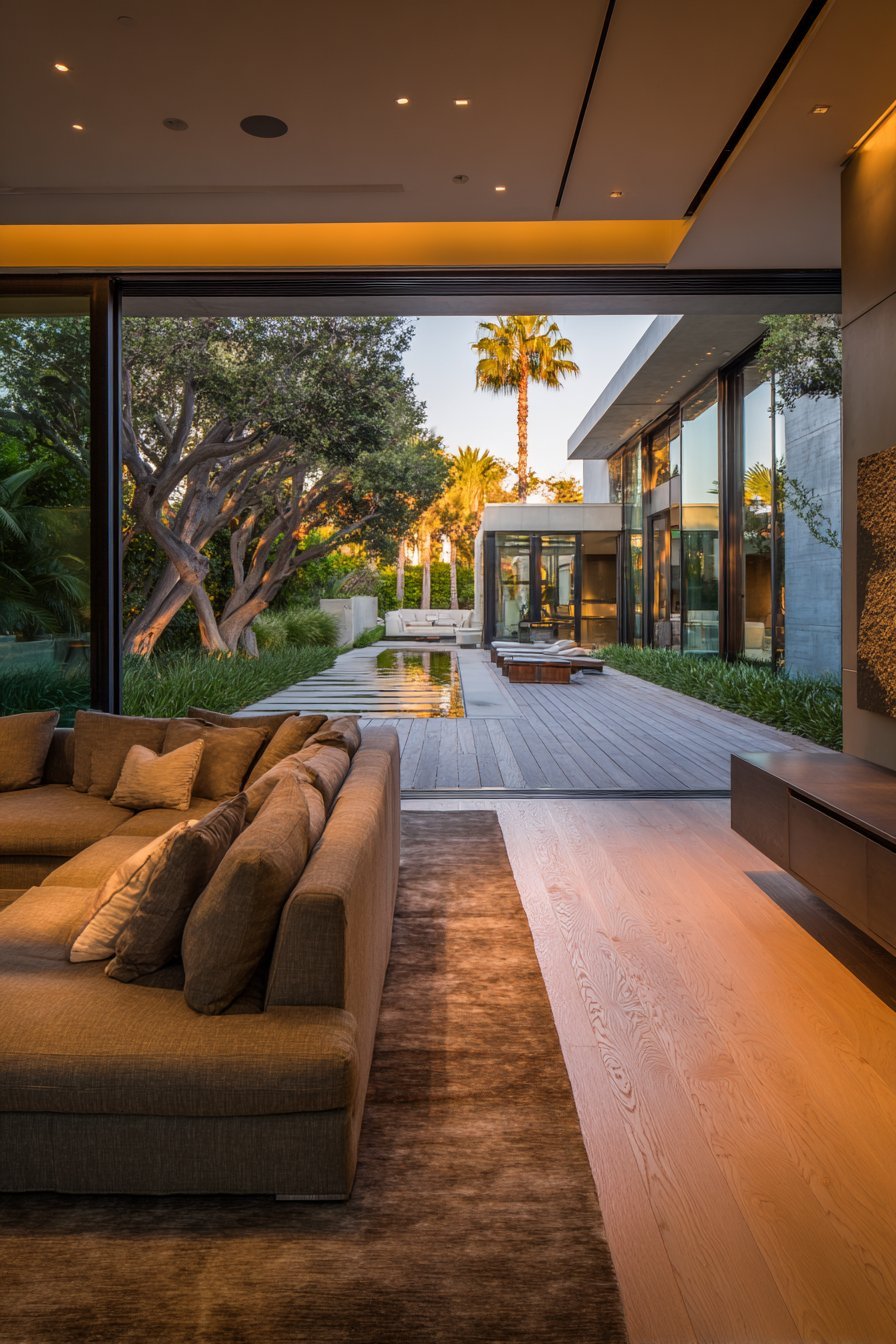
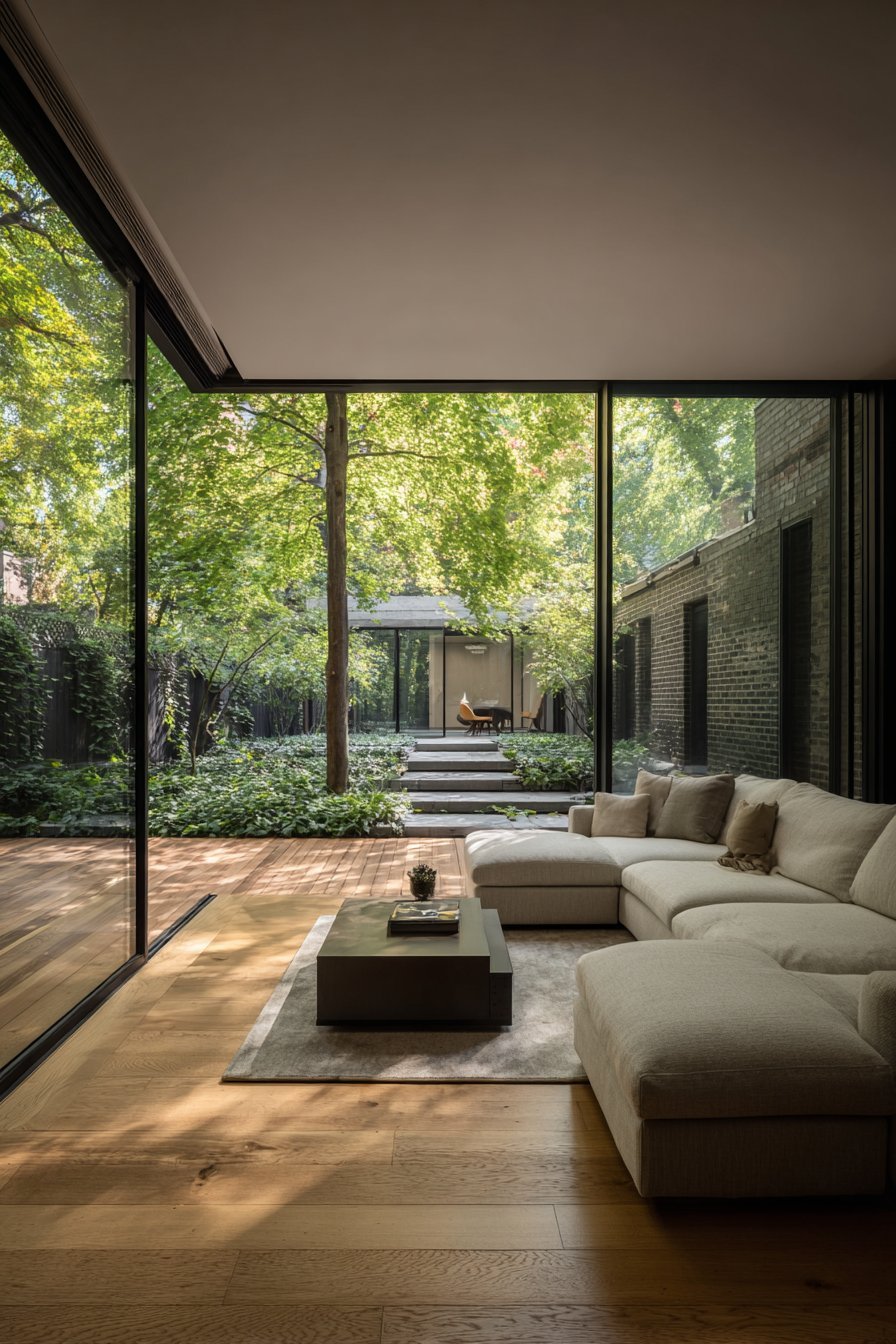
Floor-to-ceiling glass sliding doors create dramatic architectural statements in modern living spaces. Black aluminum frames provide crisp definition against expansive transparent panels. The slim profiles maximize glass area while maintaining structural integrity. Natural daylight floods interior spaces, eliminating the boundary between inside and outside environments. Our sliding door ideas has more inspiration along these same lines.
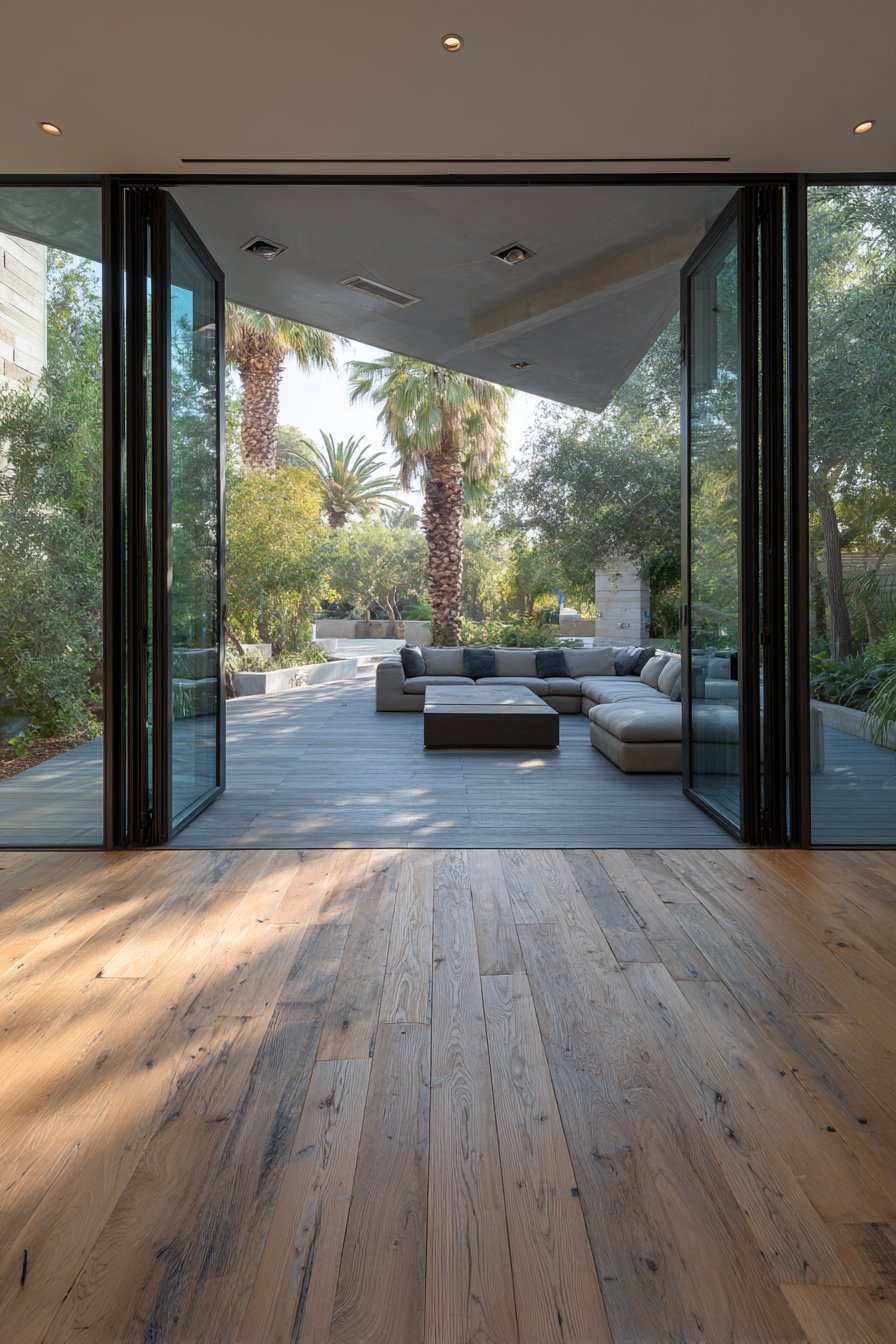
The seamless transition extends through matching flooring materials. Light oak planks continue from living room to exterior deck without interruption. This visual trick expands perceived square footage significantly. A neutral linen sectional faces the glass wall, oriented to capture garden views. The low-profile coffee table preserves sightlines to the landscape beyond.
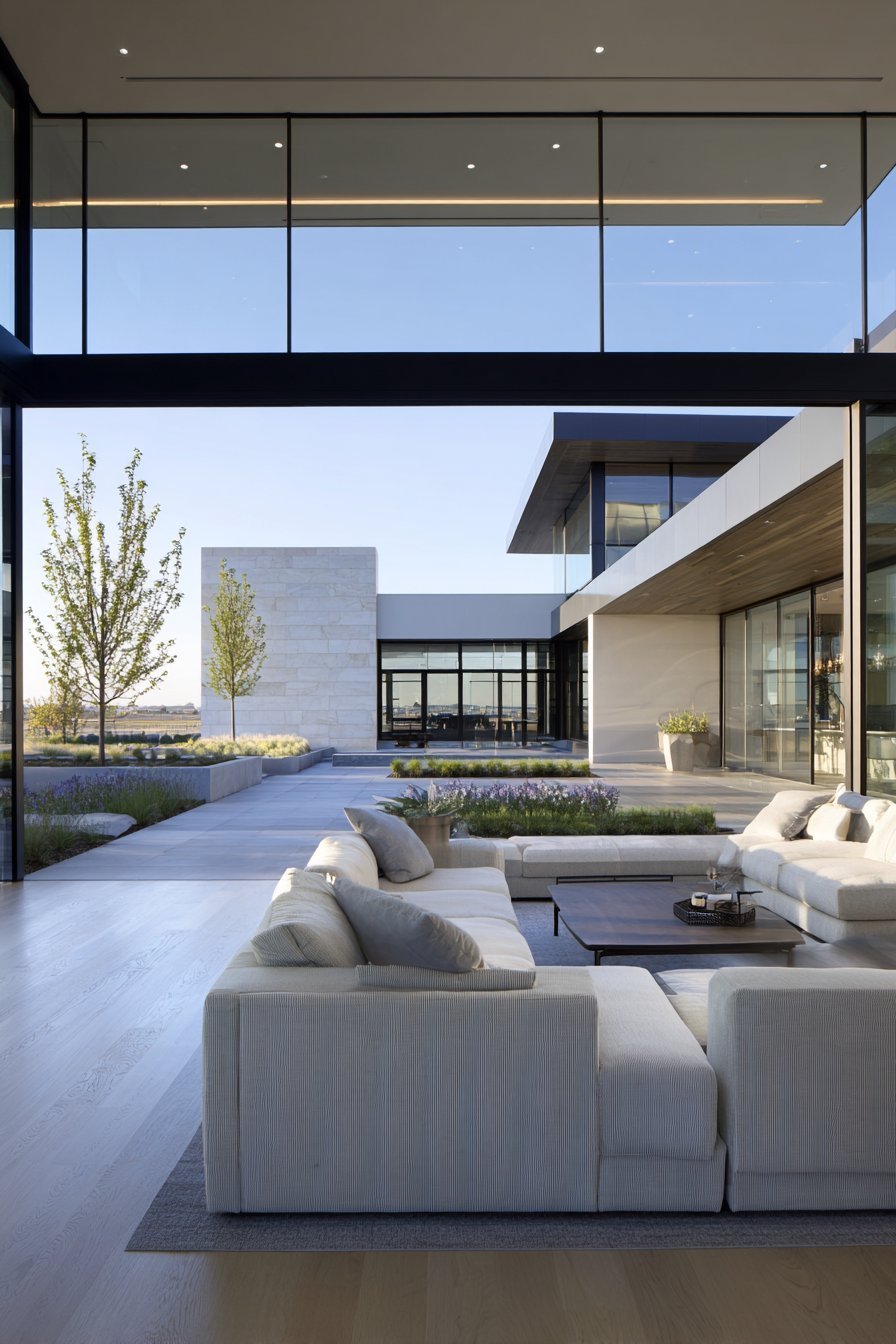
Professional installation ensures smooth operation of the sliding mechanism. Quality hardware prevents binding and maintains alignment over years of use. The doors stack neatly when opened, creating unobstructed access. Weather sealing protects against drafts while maintaining the clean aesthetic. Proper glazing selection controls heat gain in sunny exposures.
Key Design Tips:
- Choose narrow frame profiles to maximize glass area and views
- Match interior and exterior flooring materials for visual continuity
- Position furniture to take advantage of natural light and outdoor vistas
- Invest in quality hardware for smooth, reliable operation
- Select appropriate glazing for your climate to control heat transfer
- Consider motorized options for oversized door systems
- Maintain regular cleaning schedules to keep glass sparkling
2. Minimalist Steel-Framed French Door for Home Office
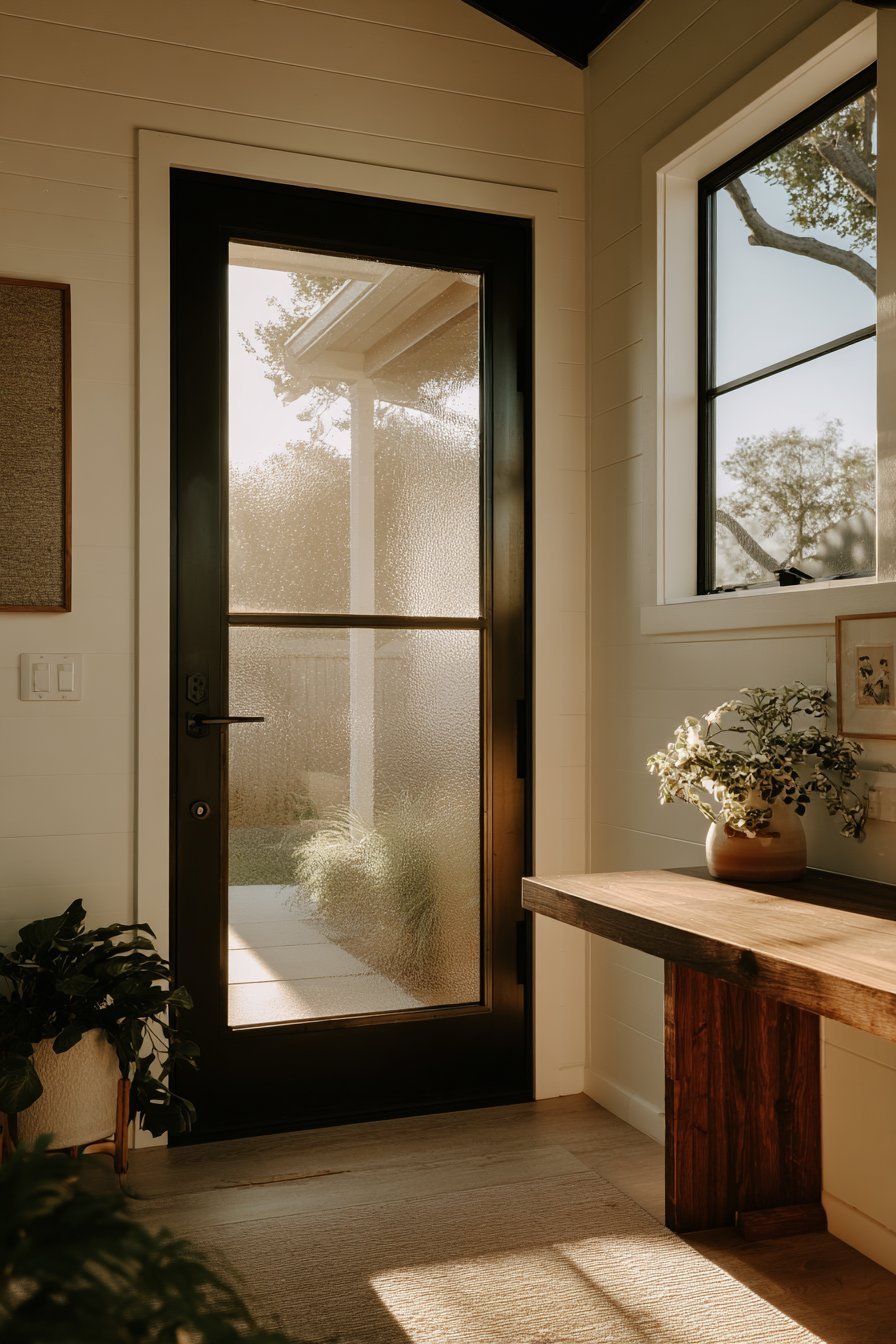
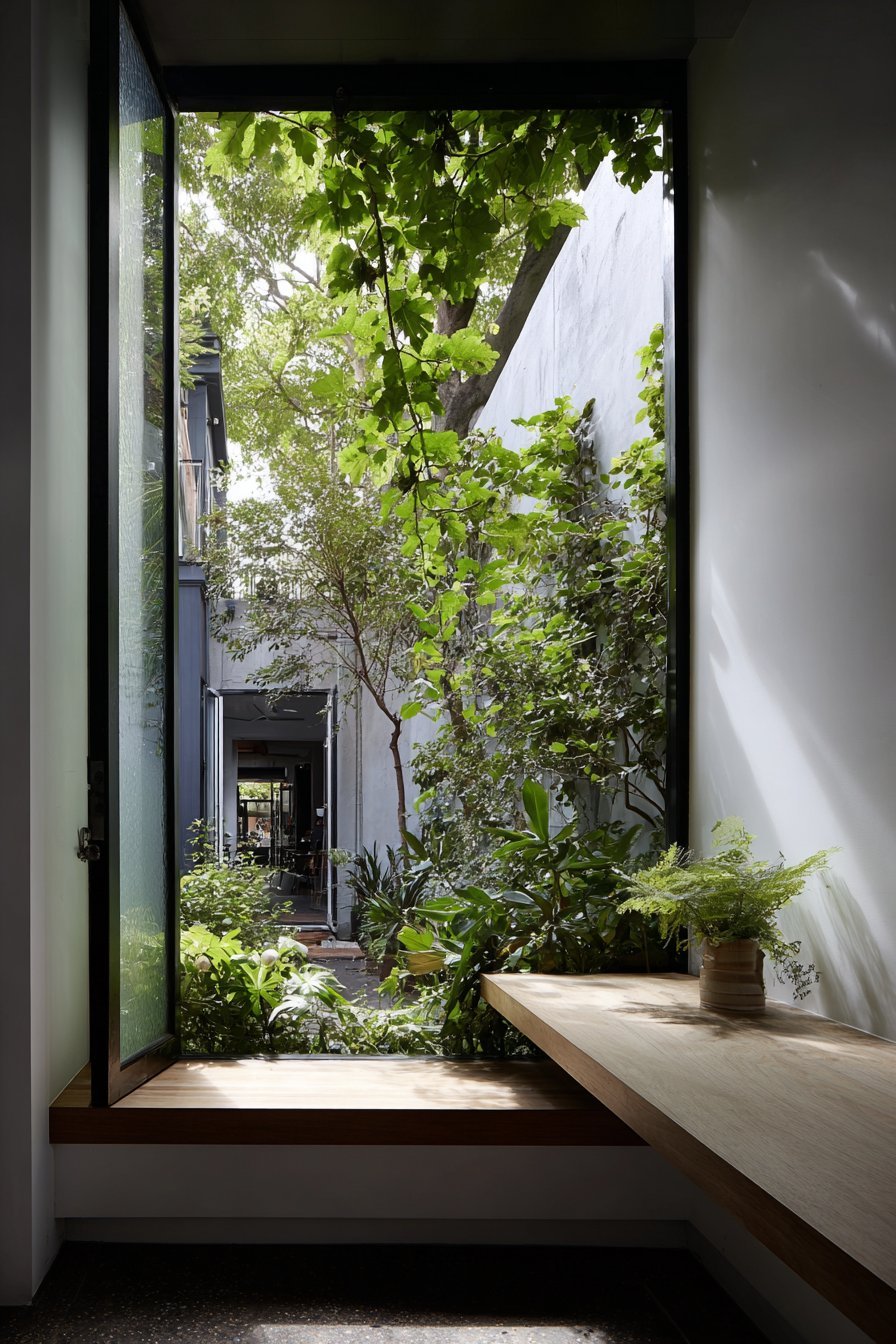
A single glass French door creates elegant separation for dedicated workspace. Matte black steel framing delivers industrial sophistication at minimal visual weight. Frosted glass lower panels balance privacy needs with light transmission. The door connects a home office to a private courtyard, bringing nature into the work environment.
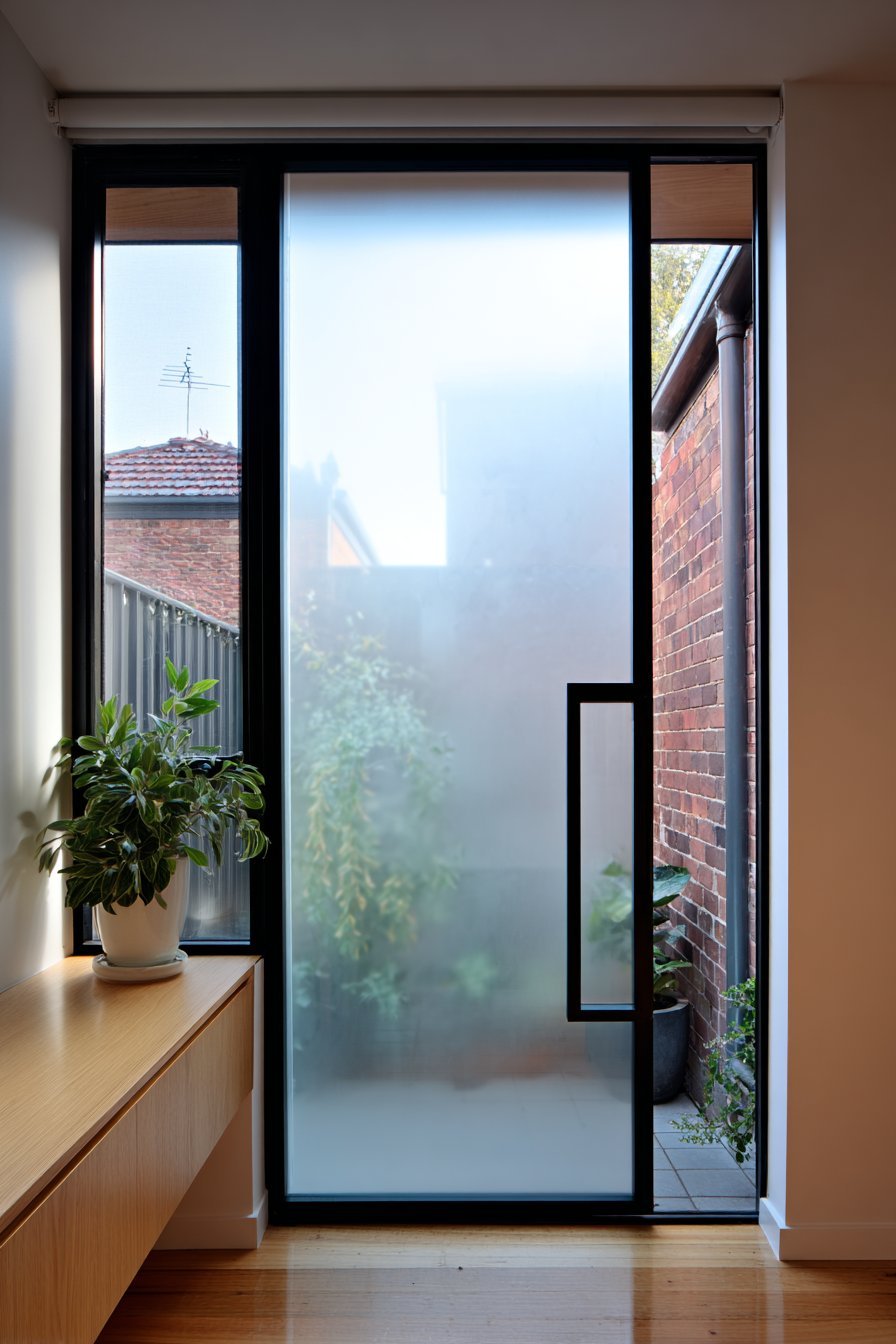
The slim frame design maintains contemporary aesthetics while providing necessary structure. A simple wooden desk positions perpendicular to the door, capitalizing on natural illumination. White walls create bright backdrop that enhances the black frame’s contrast. Potted plants visible through transparent upper panels add organic visual interest throughout the workday.
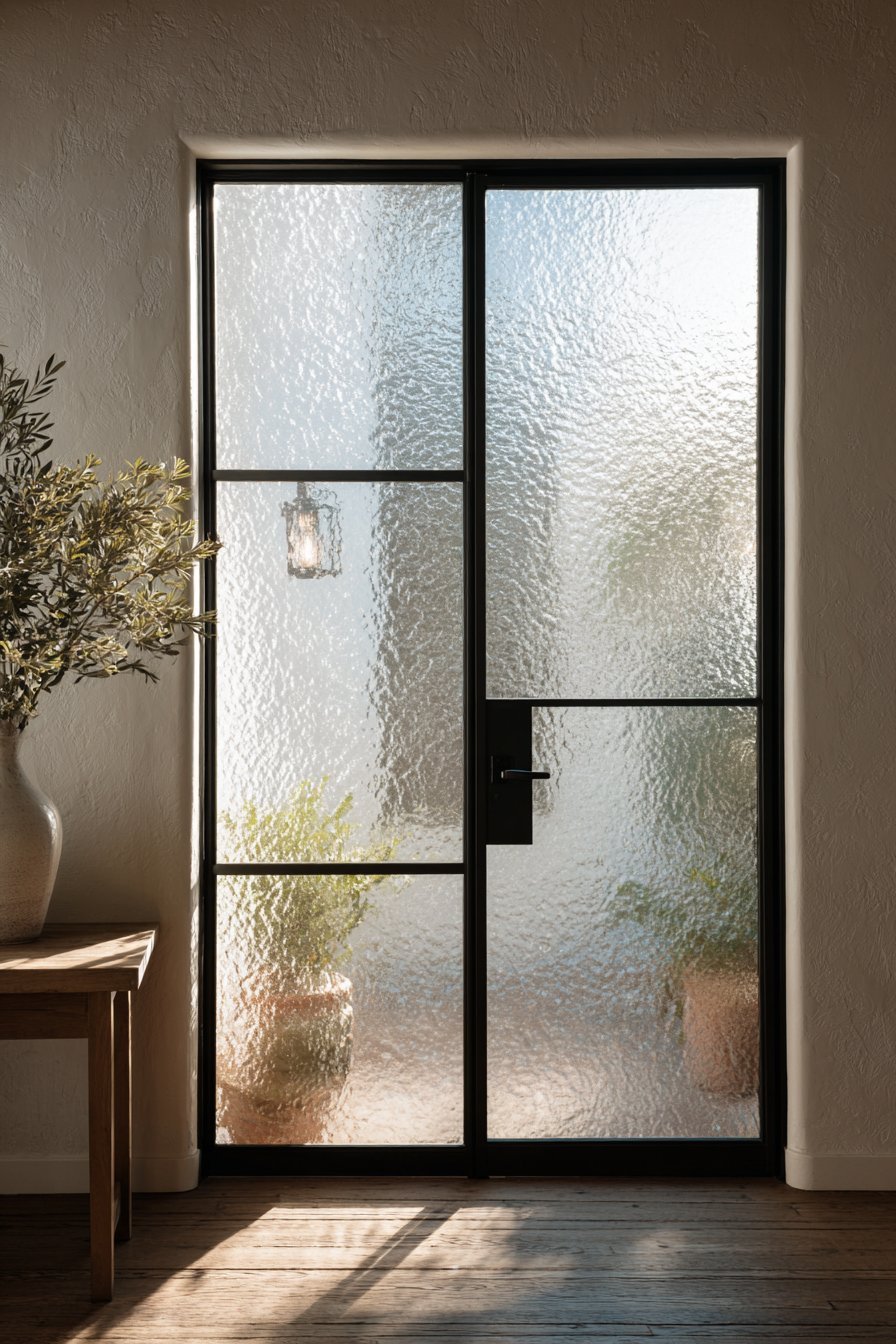
Morning light streams through the glass, reducing dependence on artificial lighting. This natural illumination reduces eye strain during computer work. The courtyard view provides visual breaks that support mental wellbeing. The frosted lower section prevents distracting movement while maintaining overall brightness. This thoughtful design supports both productivity and comfort.
Key Design Tips:
- Use frosted glass strategically for privacy without sacrificing light
- Position work surfaces to benefit from natural daylight
- Choose matte black finishes for contemporary, non-reflective aesthetics
- Incorporate plants on both sides of glass for biophilic connection
- Consider door swing direction for optimal space utilization
- Select hardware that complements your overall design language
- Ensure proper door sealing for climate control in conditioned spaces
3. Traditional Glass-Paneled Kitchen Cabinets in Sage Green
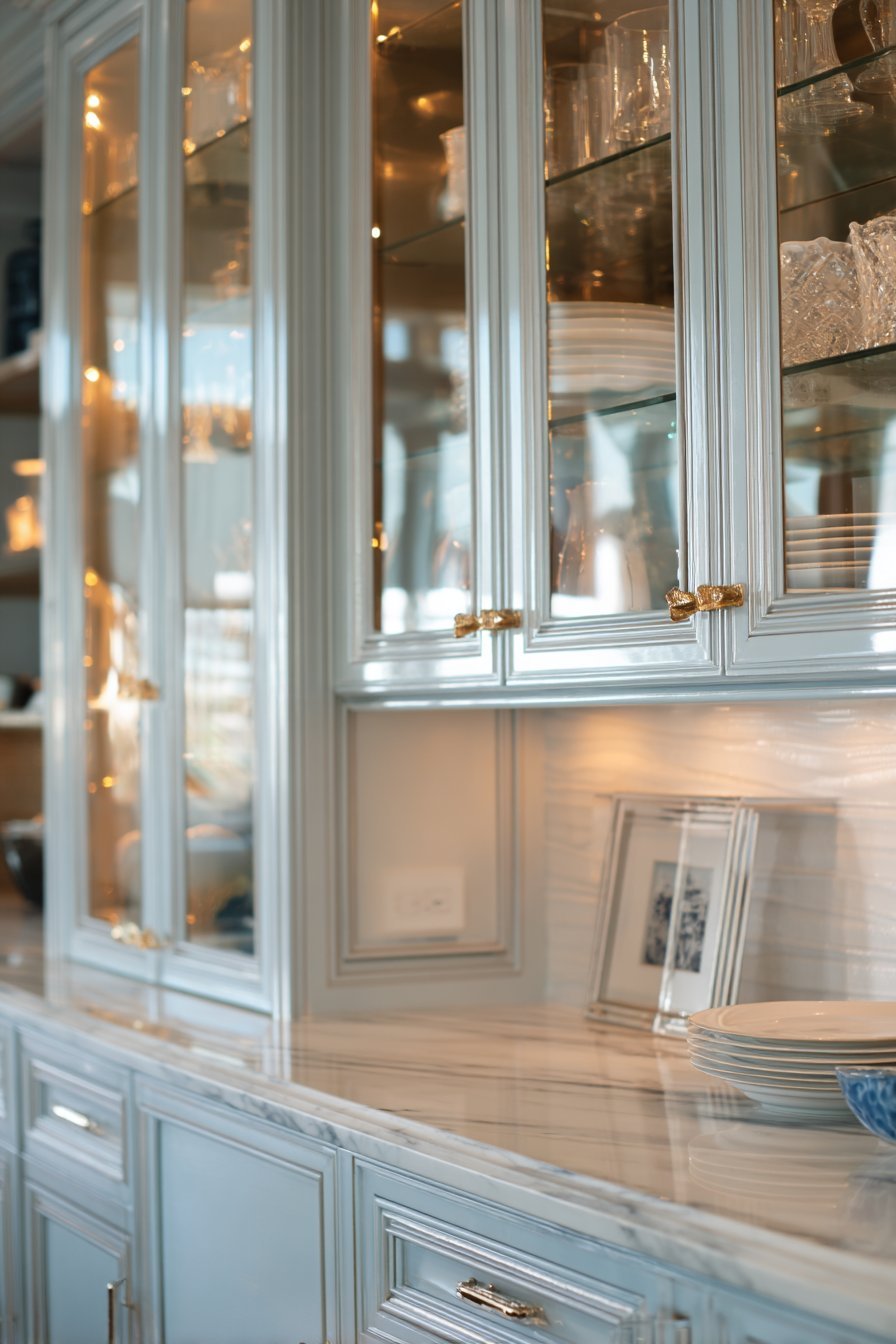
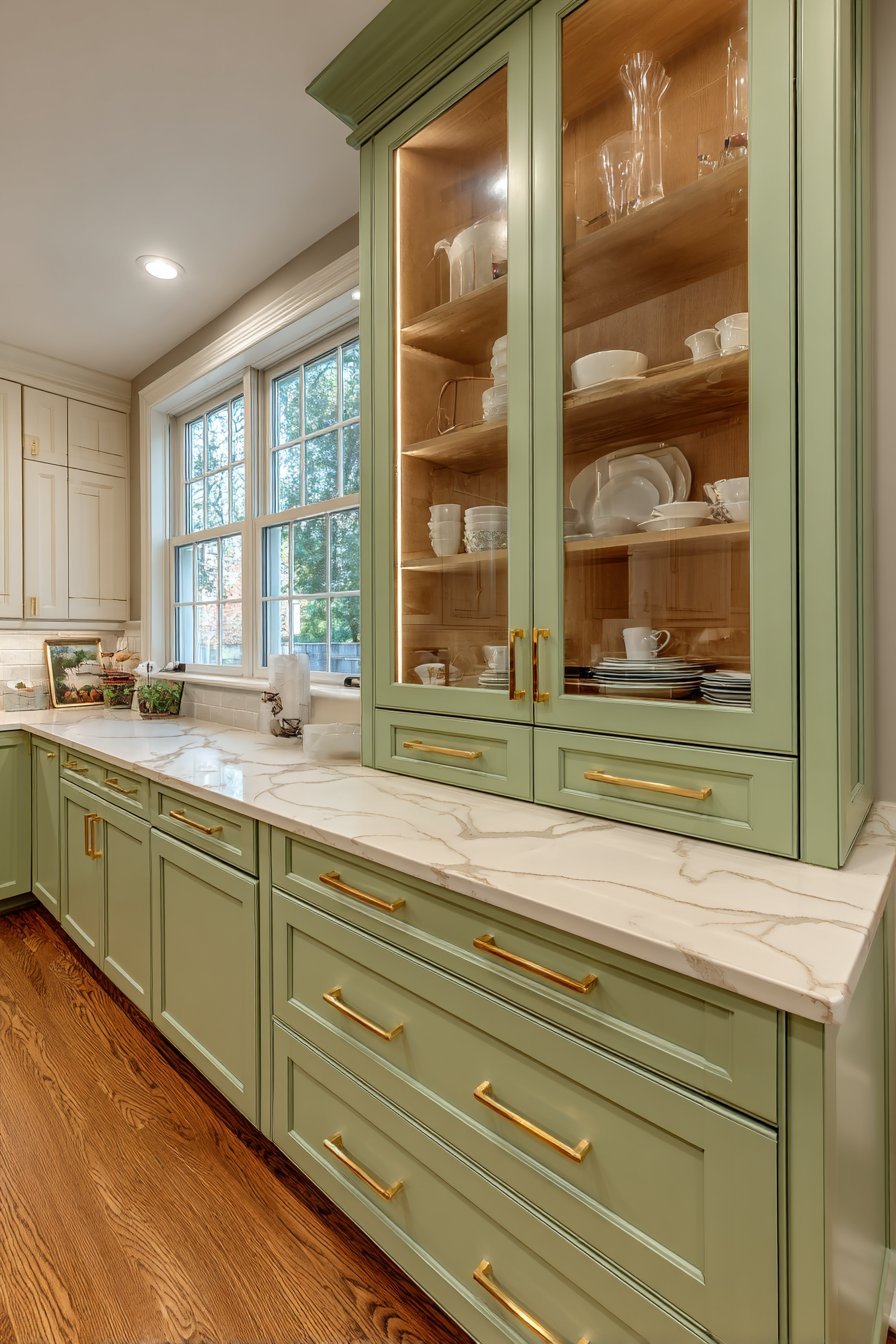
Glass-fronted cabinet doors transform kitchen storage into beautiful display opportunities. Soft sage green paint on traditional raised-panel frames creates timeless appeal. Clear glass inserts reveal organized white dishware and glassware collections. Under-cabinet lighting illuminates the glass-fronted sections, creating depth and visual interest after dark.
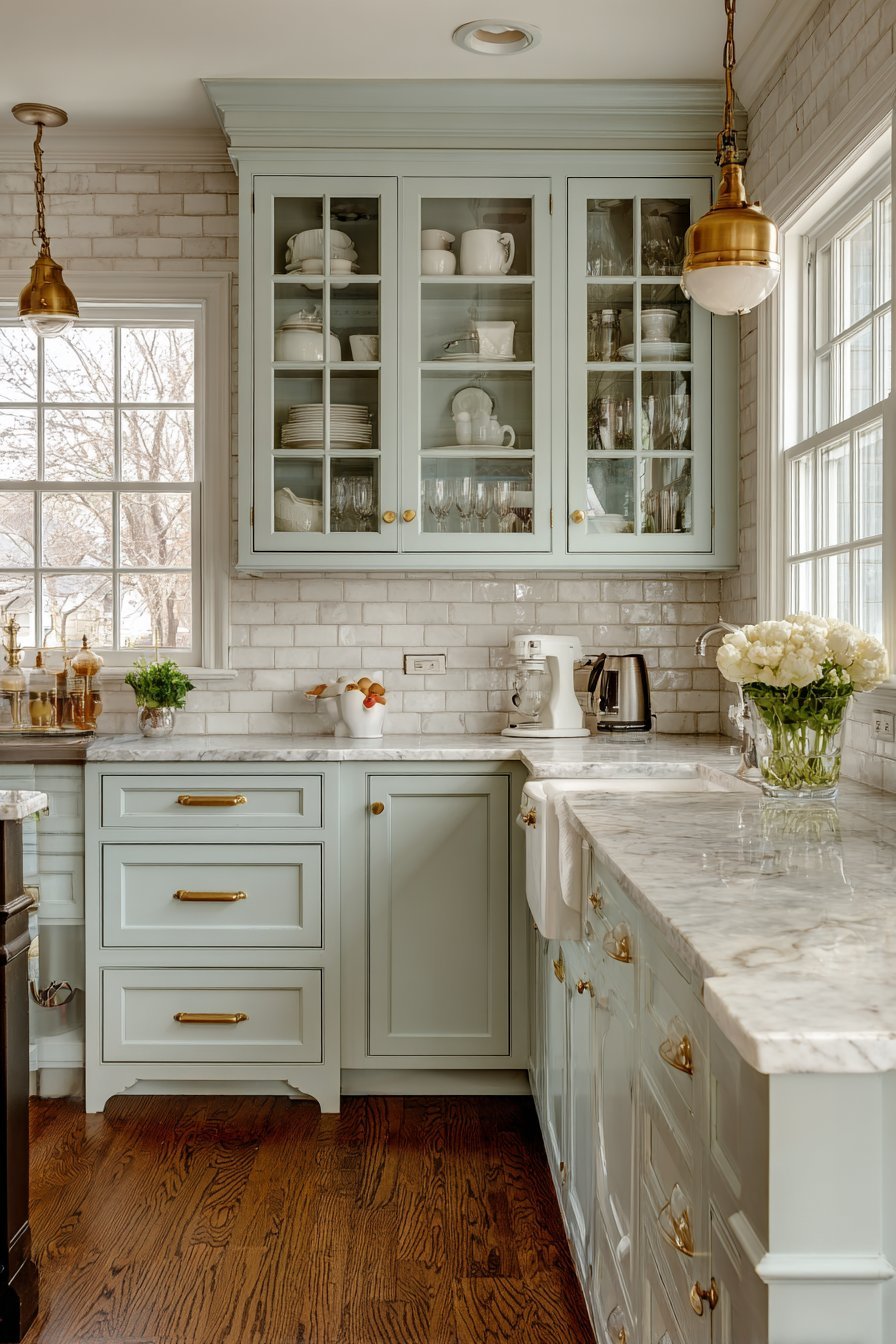
Brass hardware adds warm metallic notes that complement the sage green beautifully. White subway tile backsplash provides classic contrast against the colored cabinetry. Marble countertops complete the refined aesthetic with natural stone elegance. The glass cabinets encourage organization, as contents remain visible at all times.
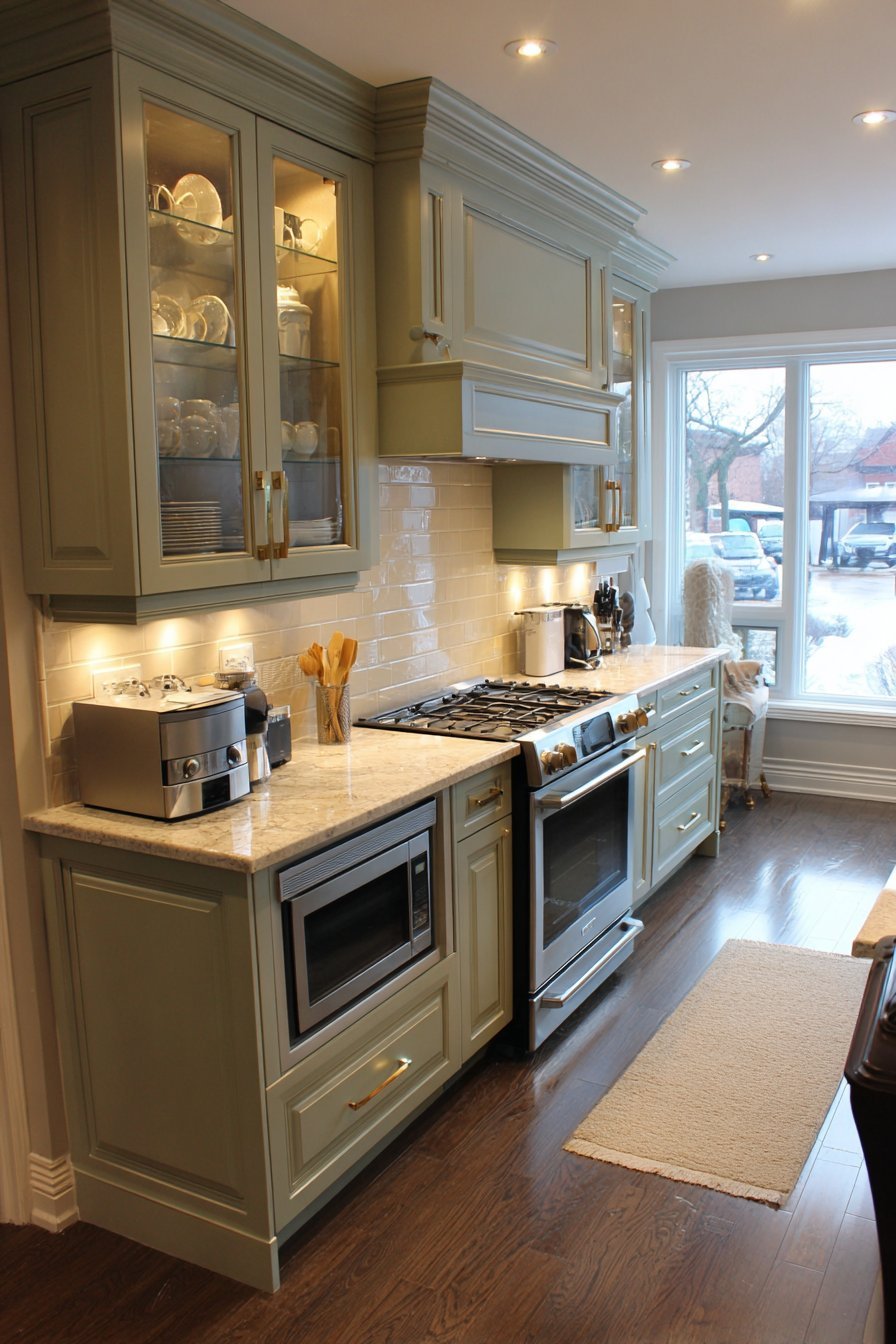
This design approach balances openness with traditional kitchen styling. The transparency lightens what might otherwise feel heavy with solid doors. Carefully curated dish collections become part of the decorative scheme. The glass reflects light throughout the kitchen, brightening the entire workspace. This creates an airy feel even in smaller kitchen footprints. If you’re also weighing solid core vs hollow core door, that’s worth deciding early too.
Key Design Tips:
- Paint cabinet frames in colors that complement your overall palette
- Use under-cabinet lighting to illuminate glass-fronted sections
- Organize cabinet contents thoughtfully since they remain visible
- Choose matching dishware sets for cohesive display appearance
- Polish hardware regularly to maintain its lustrous finish
- Consider seeded or textured glass for subtle variation
- Balance glass-front cabinets with solid doors for concealed storage
4. Scandinavian Frosted Glass Entry Door with Vertical Striping
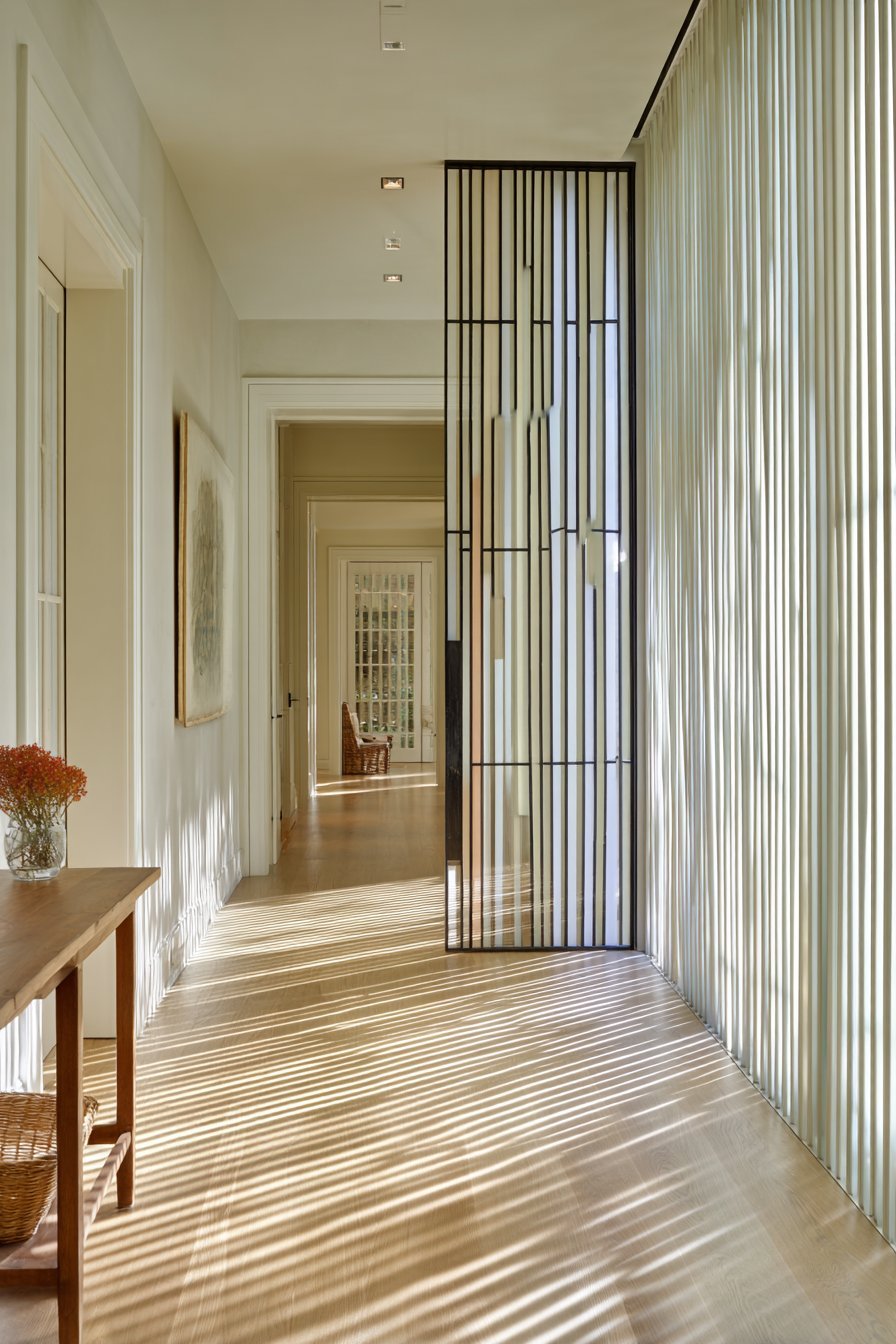
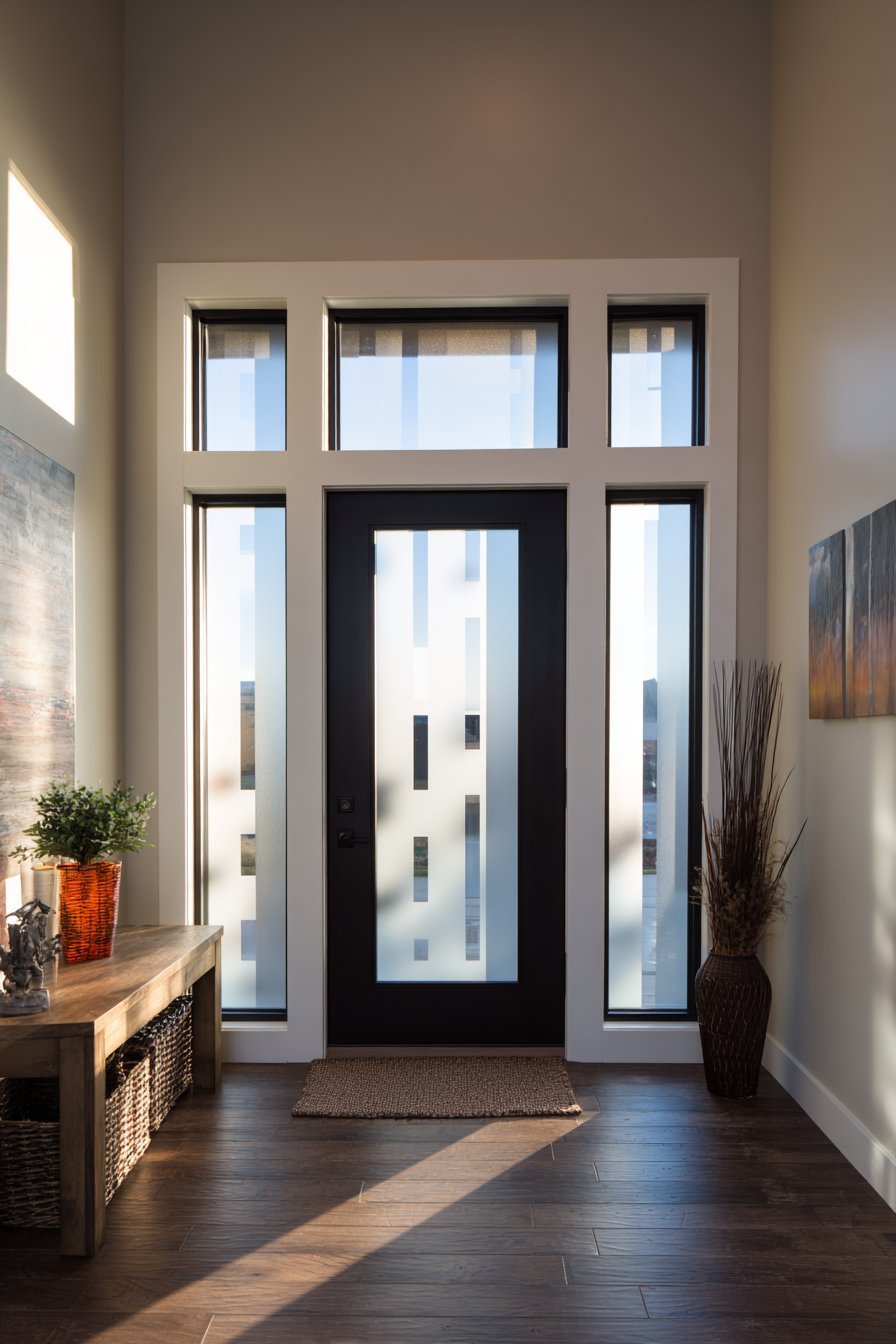
A glass panel front door welcomes visitors while protecting privacy through clever design. Vertical frosted glass strips alternate with clear sections within black metal framework. This pattern allows natural light penetration without exposing interior activities. The Nordic-inspired aesthetic celebrates clean lines and functional beauty.
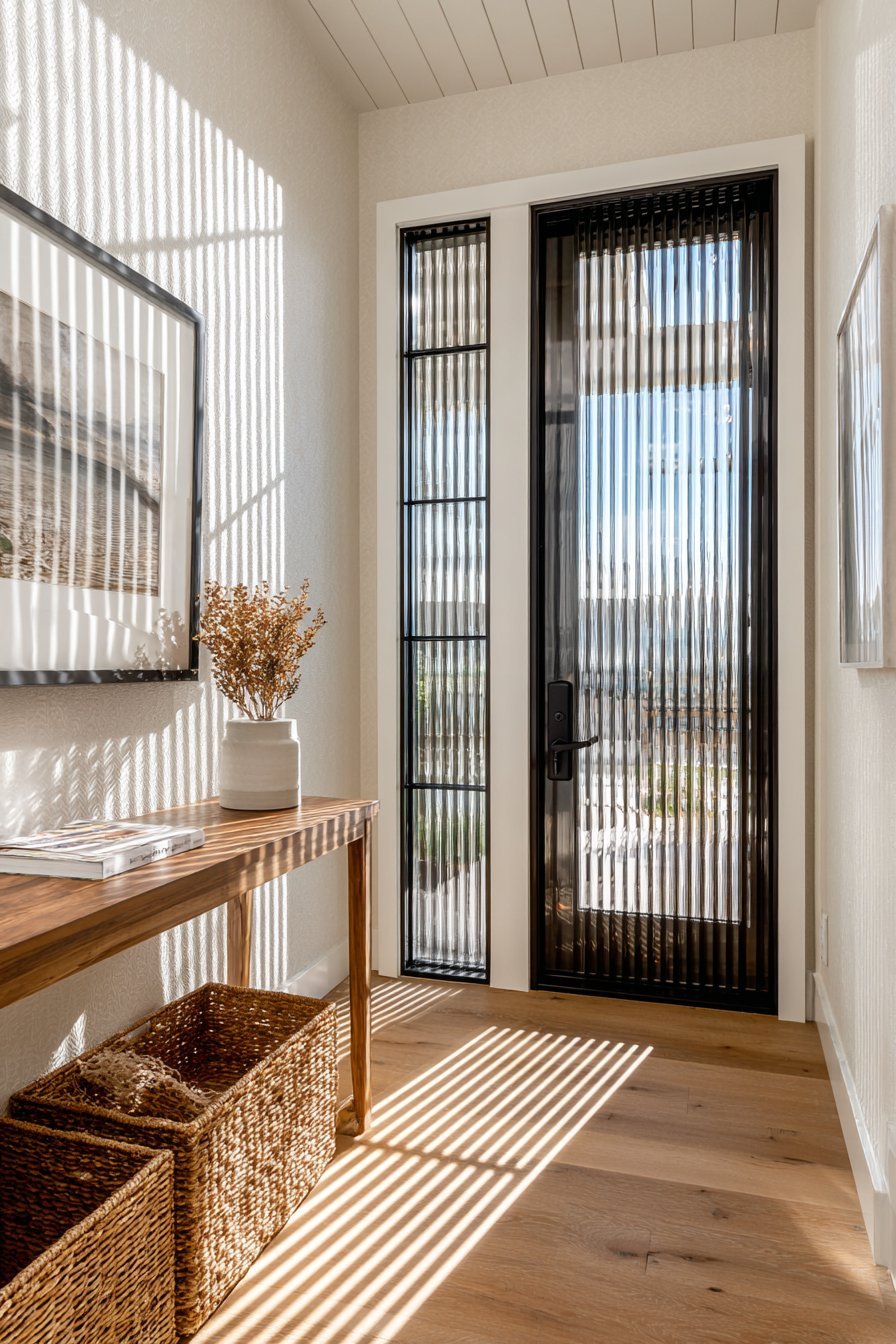
Light wood console table and woven basket storage maintain the Scandinavian simplicity. Warm white walls reflect filtered daylight throughout the narrow entry hall. The geometric striping creates interesting shadow patterns on oak flooring. Morning light transforms these patterns throughout the day as sun angles shift.
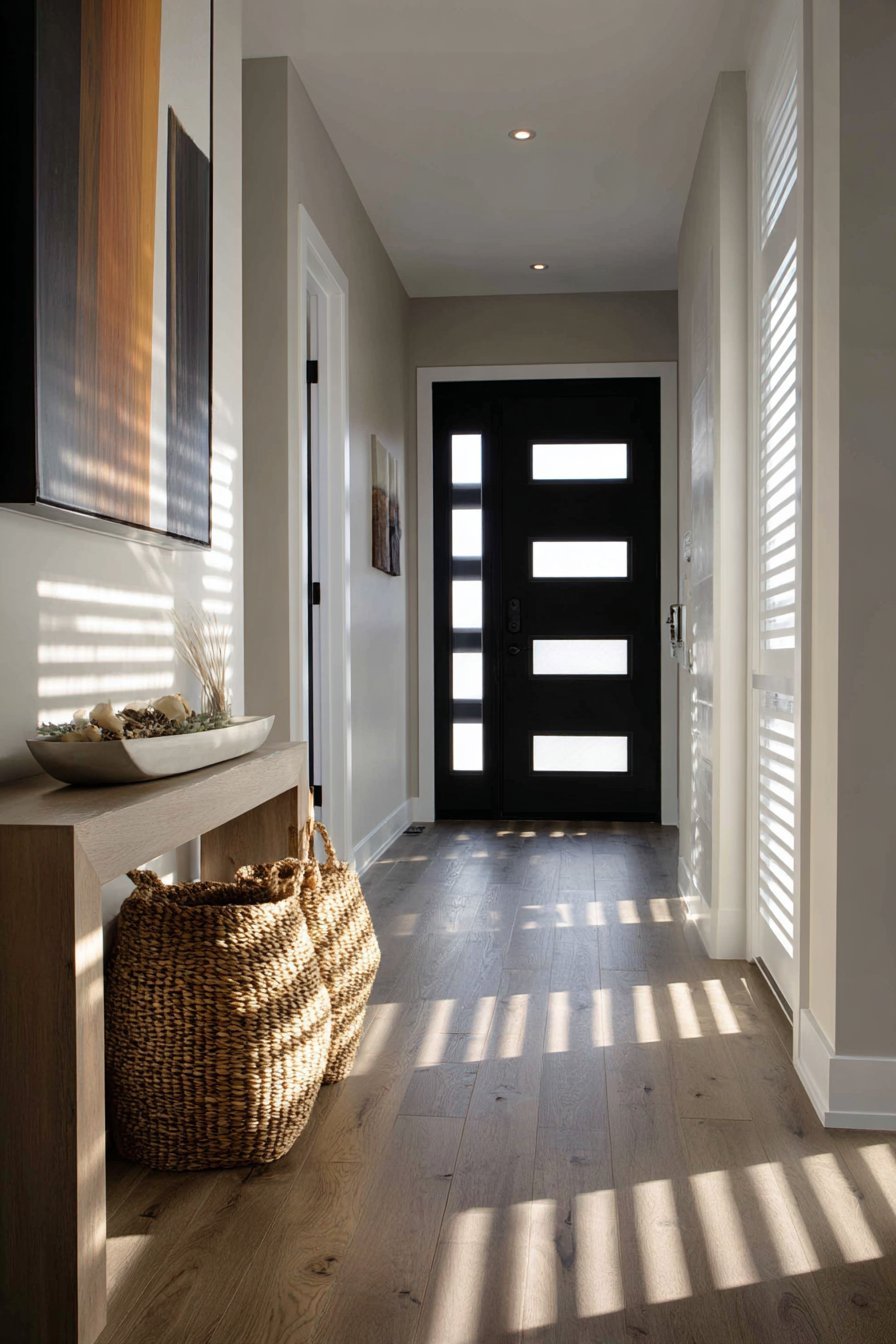
The door’s design demonstrates how functional requirements need not compromise aesthetics. Privacy concerns dissolve through thoughtful frosted glass placement. Clear sections maintain visual connection to exterior without full transparency. The black metal grid framework adds contemporary structure. This balance makes the entrance feel both secure and welcoming.
Key Design Tips:
- Combine frosted and clear glass for privacy with light transmission
- Choose geometric patterns that complement your architectural style
- Use light-colored walls to maximize reflected natural light
- Select flooring that showcases interesting shadow patterns
- Keep entry furniture minimal to maintain Scandinavian simplicity
- Consider seasonal lighting needs when selecting glass treatments
- Ensure proper weatherstripping for energy efficiency
5. Luxury Frameless Glass Shower Enclosure
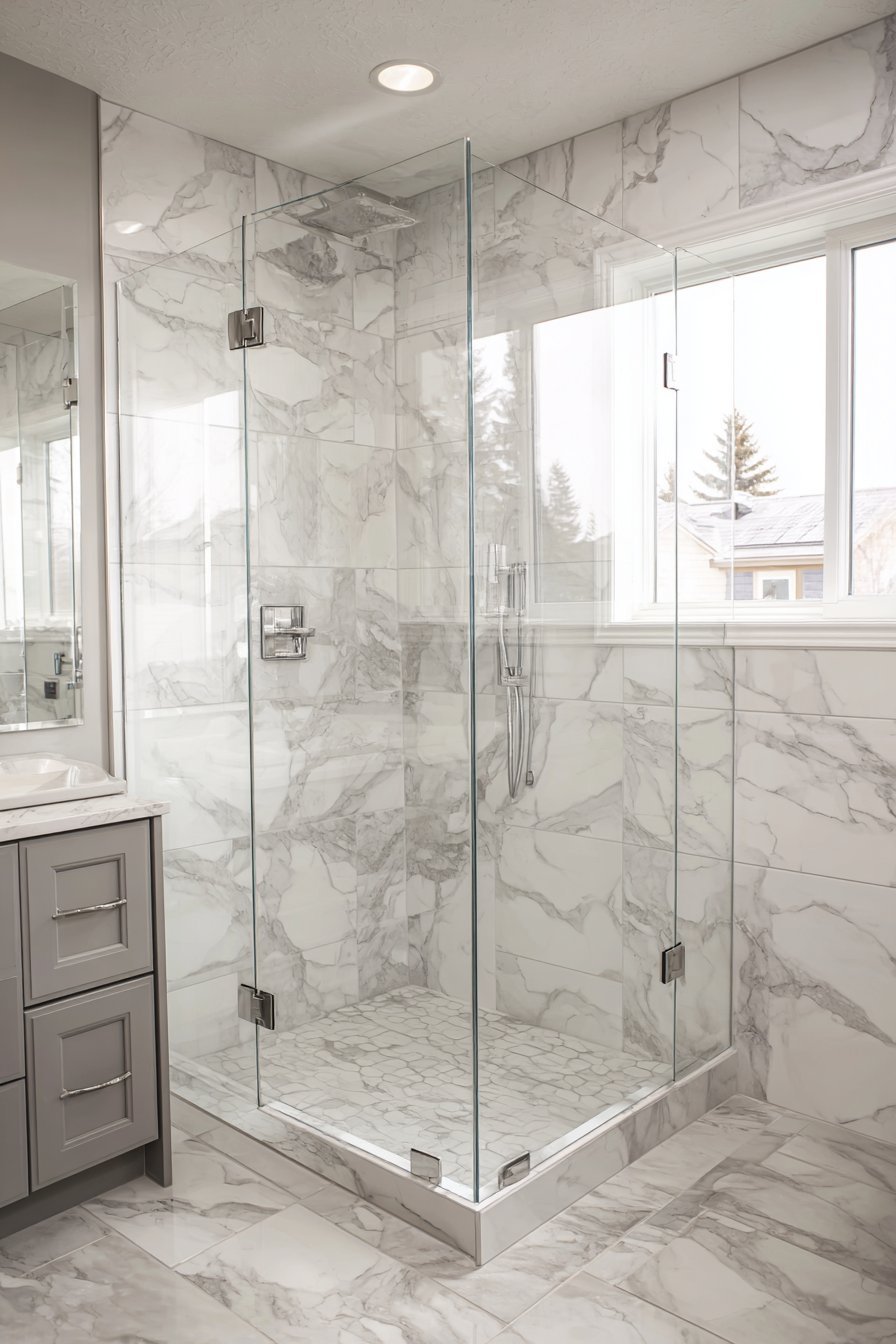
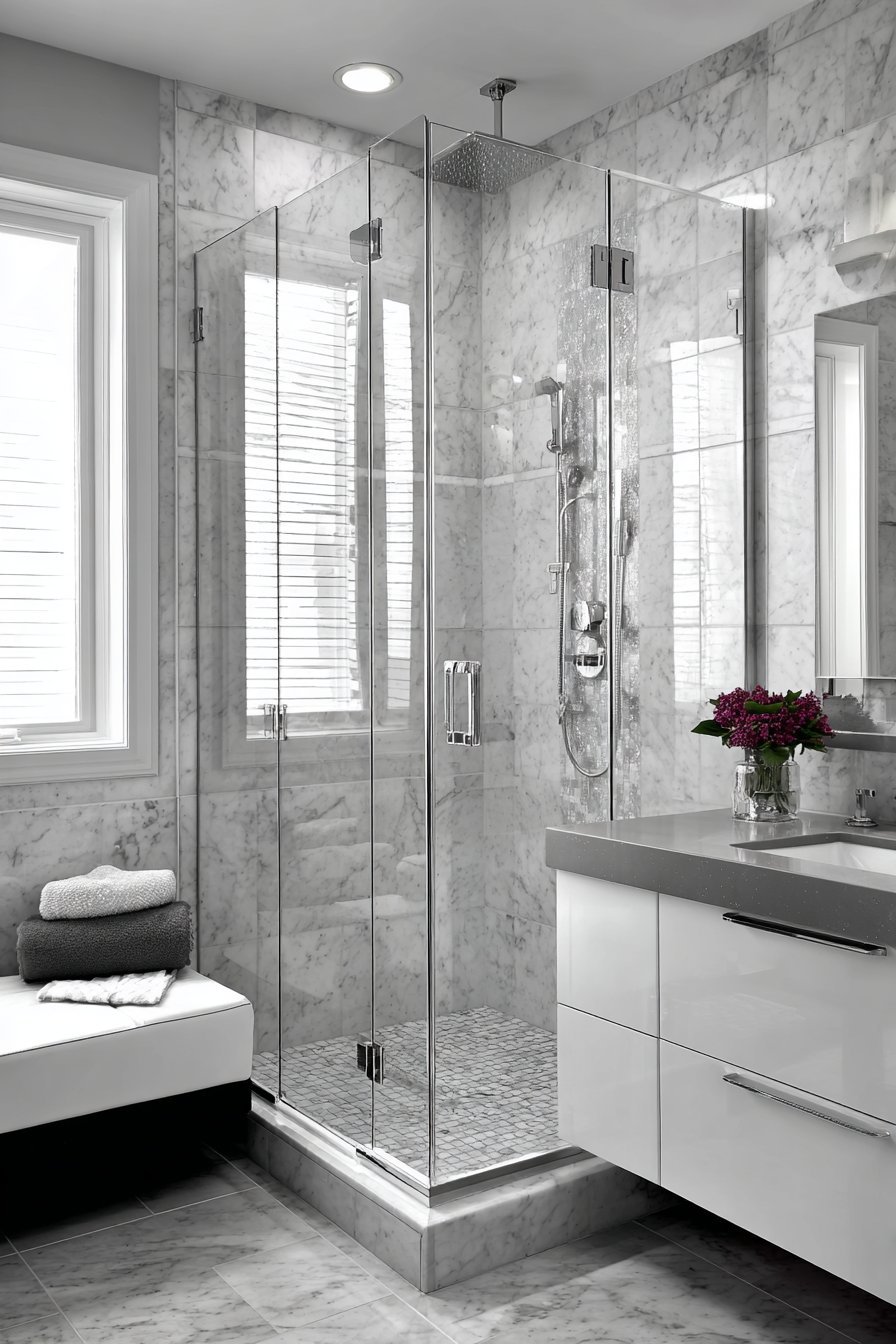
Frameless glass shower enclosures represent the pinnacle of bathroom luxury. Three-eighths inch thick tempered glass panels require minimal chrome hardware. The transparent walls showcase white marble tile with grey veining extending floor-to-ceiling. A rainfall showerhead and handheld wand gleam behind crystal-clear glass surfaces.
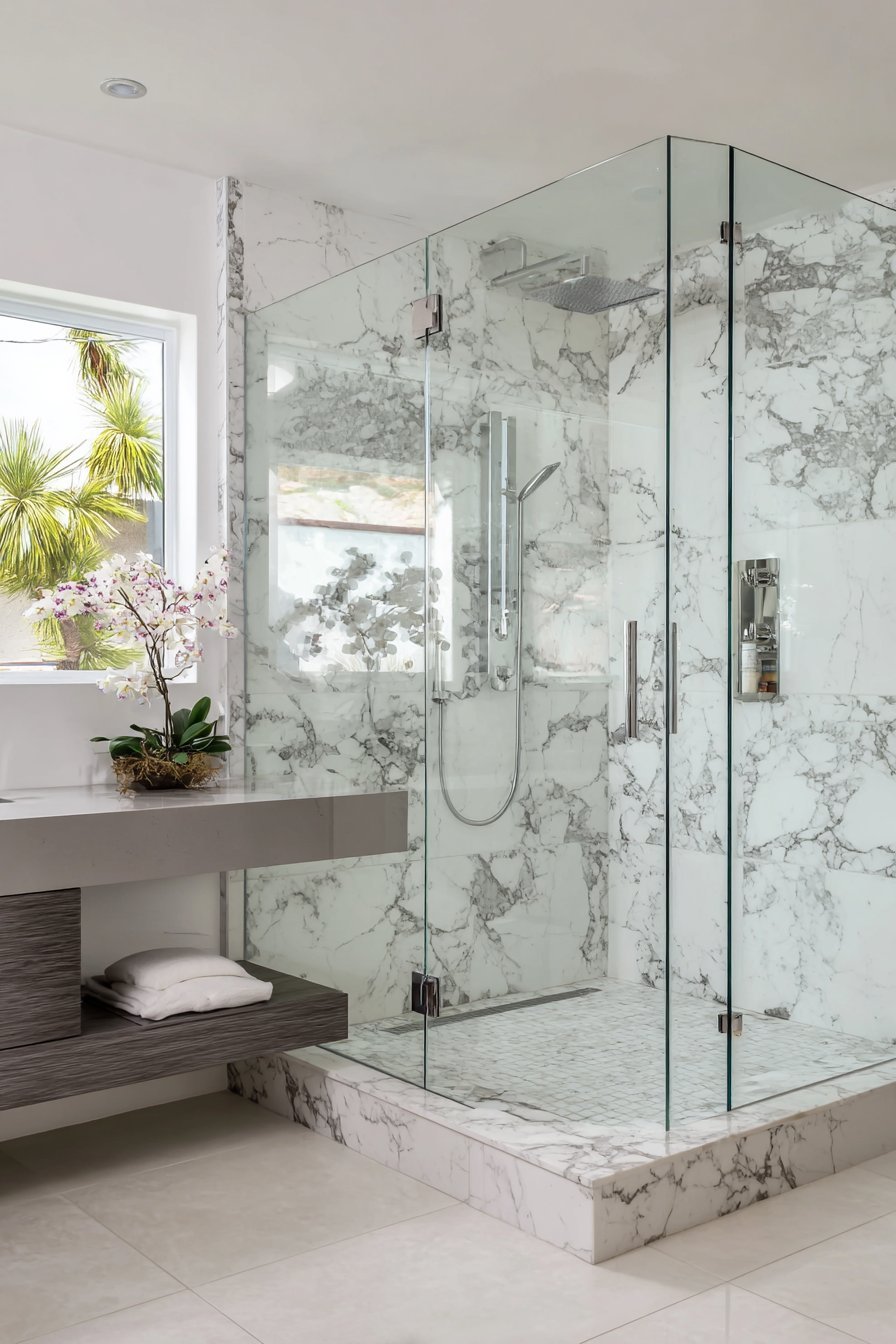
The frameless design eliminates visual barriers, making bathrooms feel significantly larger. Floating vanity with grey quartz countertop complements the shower enclosure. Natural light from frosted windows creates subtle highlights on pristine glass. Water droplets on glass surfaces catch light, adding dynamic visual interest.
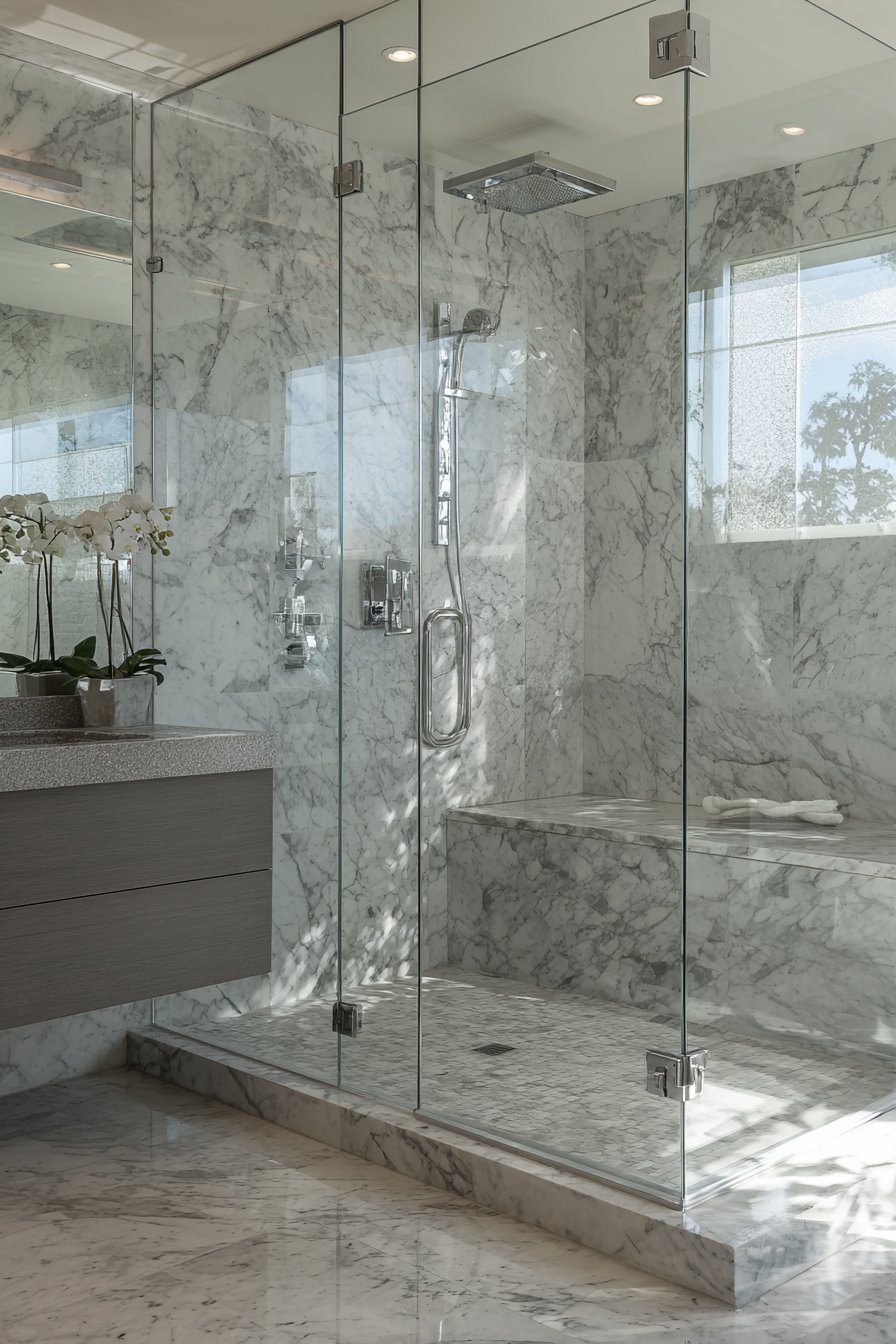
Professional installation ensures proper pitch for water drainage off glass panels. Quality seals prevent water escape while maintaining the minimal aesthetic. The ultra-clear glass contains less greenish tint than standard options. This clarity showcases tile work and fixtures without color distortion. Regular squeegee use maintains the sparkling appearance.
Key Design Tips:
- Invest in thick tempered glass for safety and reduced flex
- Choose ultra-clear low-iron glass for truest color representation
- Install proper drainage pitch to encourage water runoff
- Use daily squeegee routine to prevent water spot buildup. Our guide on how to build a shed door walks through this step by step.
- Select minimal hardware in finishes matching other fixtures
- Consider glass coating treatments for easier maintenance
- Ensure adequate ventilation to prevent excessive moisture buildup
6. Modern Farmhouse Glass Barn Door
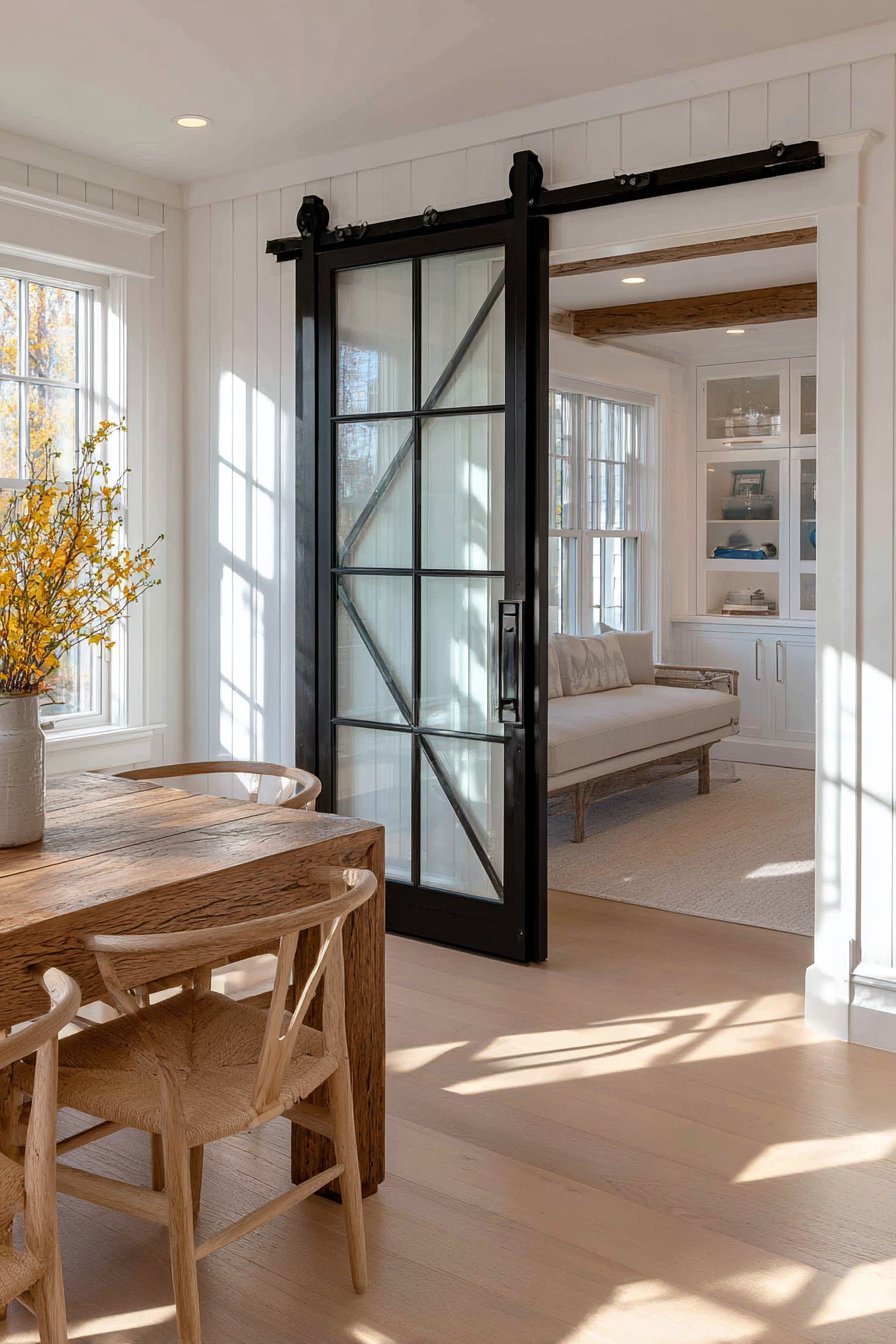
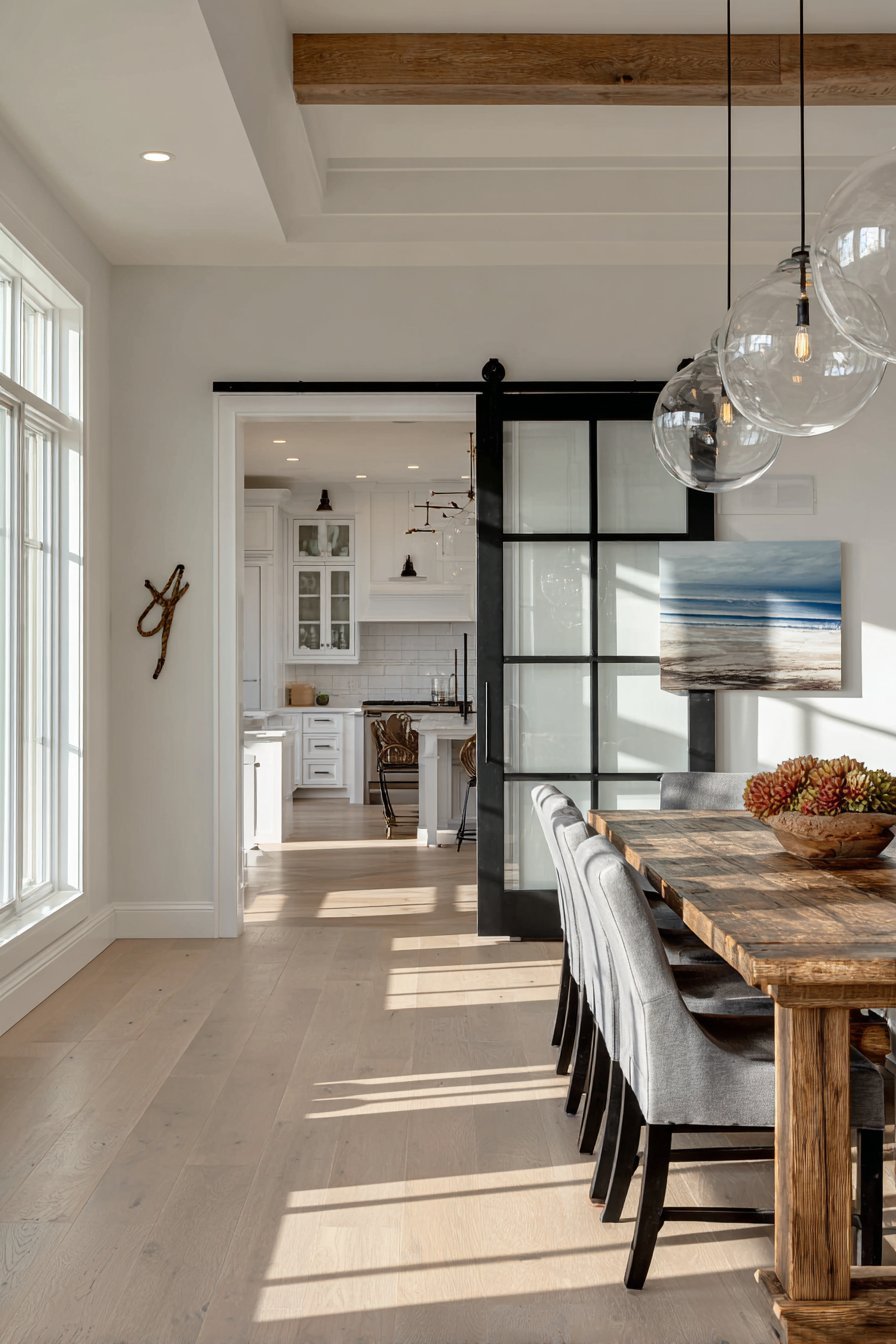
A glass-paneled barn door perfectly bridges modern and farmhouse aesthetics. Eight individual glass panels sit within black painted wood frame with X-brace detail. The door slides on black metal hardware track, separating dining area from butler’s pantry. This functional element becomes a striking design feature.
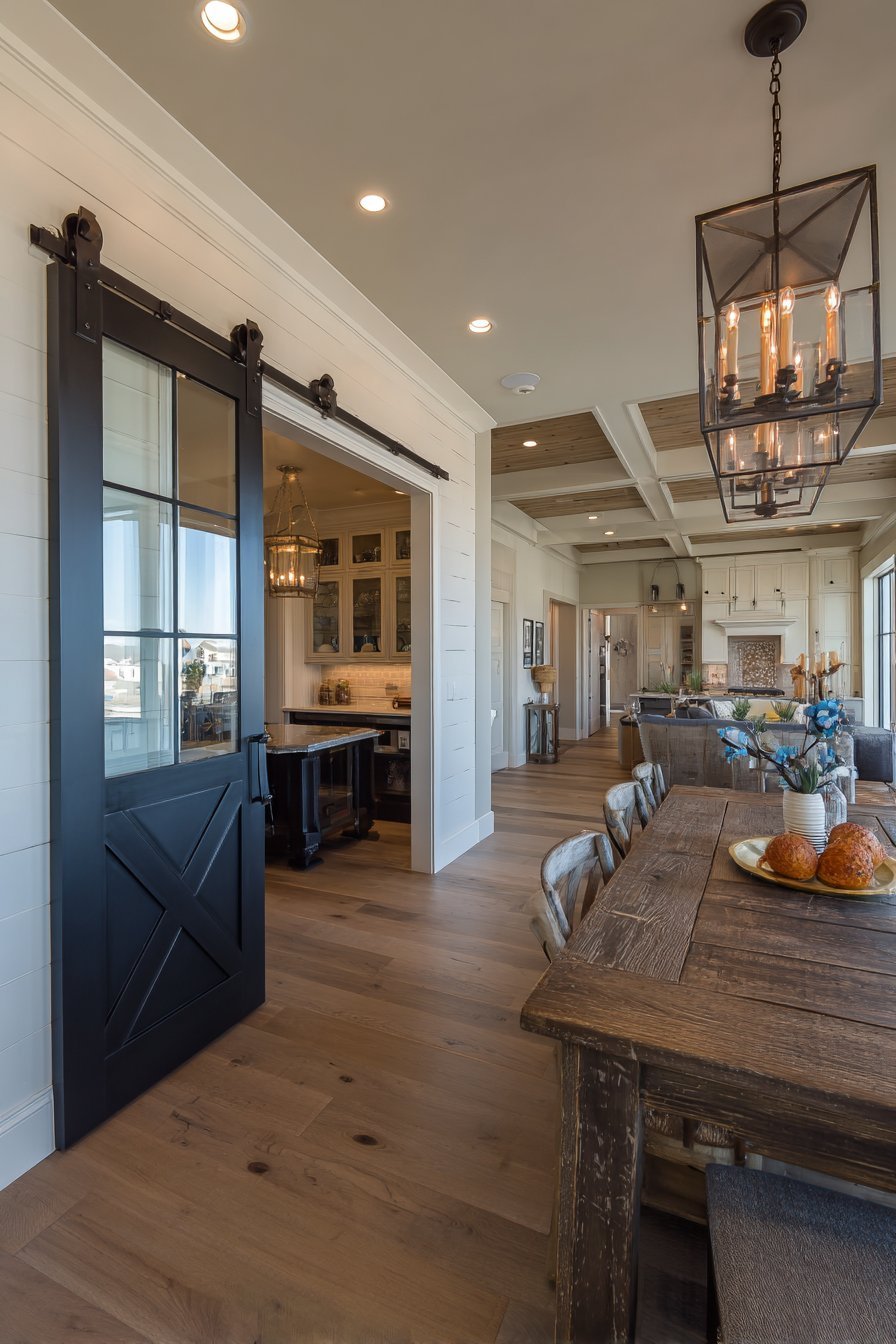
The combination of traditional barn door styling with glass transparency feels fresh. Rustic wooden dining table with mixed seating sits in the foreground. Shiplap accent wall painted white provides textural contrast behind the door. Afternoon light streams through glass panels, creating geometric shadow patterns on flooring.
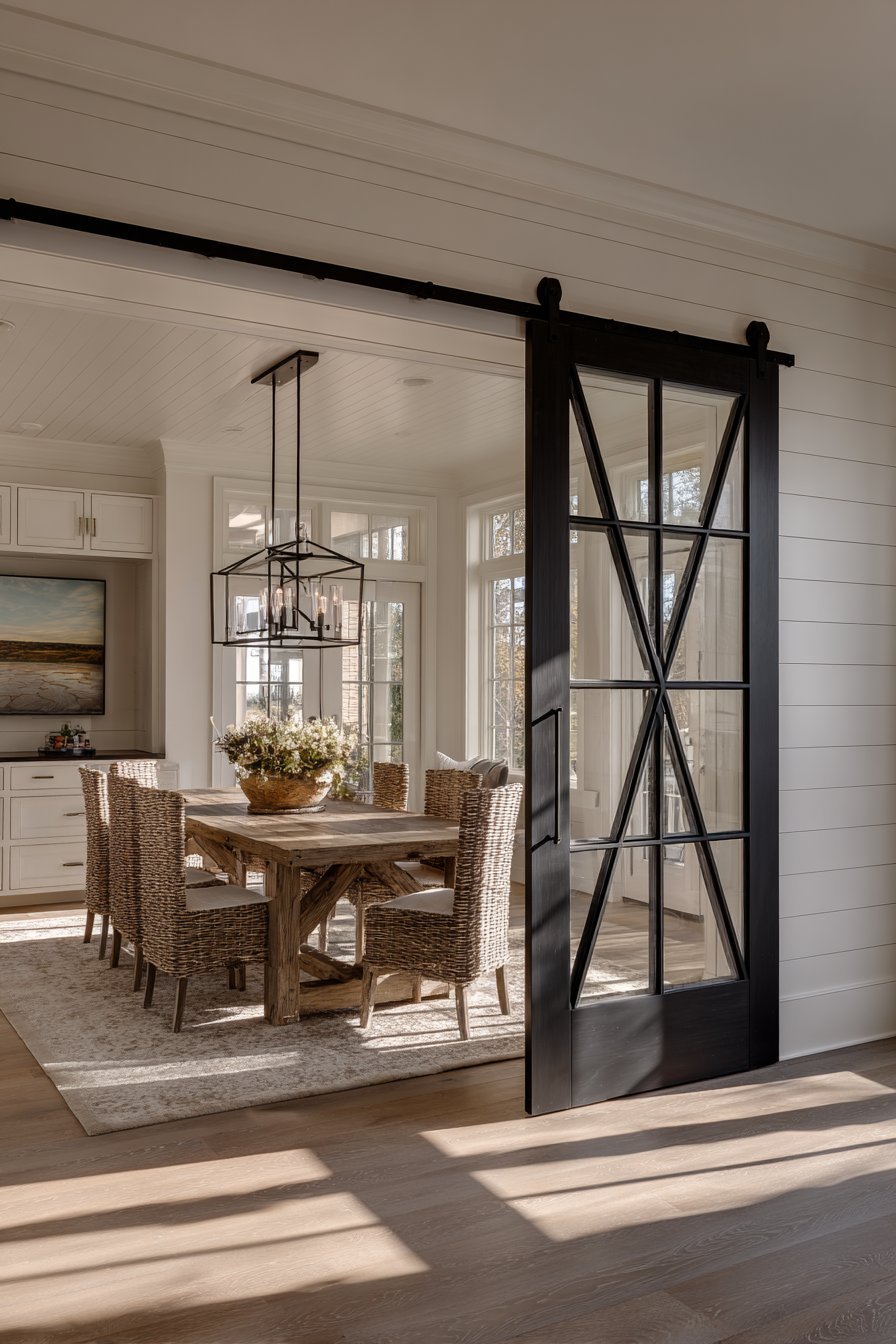
The barn door’s partial opening reveals glimpses of the pantry beyond. This creates visual intrigue while maintaining separation between spaces. The black frame and hardware create strong lines against white walls. Glass panels ensure the door doesn’t feel heavy or oppressive when closed. This design solution works beautifully in open-concept homes.
Key Design Tips:
- Choose substantial hardware rated for door weight and glass
- Paint wood frames in colors that complement your palette
- Install proper floor guides to prevent door swing
- Consider frosted glass for areas needing more privacy
- Ensure adequate wall space for door to slide fully open
- Match barn door style to your overall design language
- Regularly check and tighten hardware for safe operation
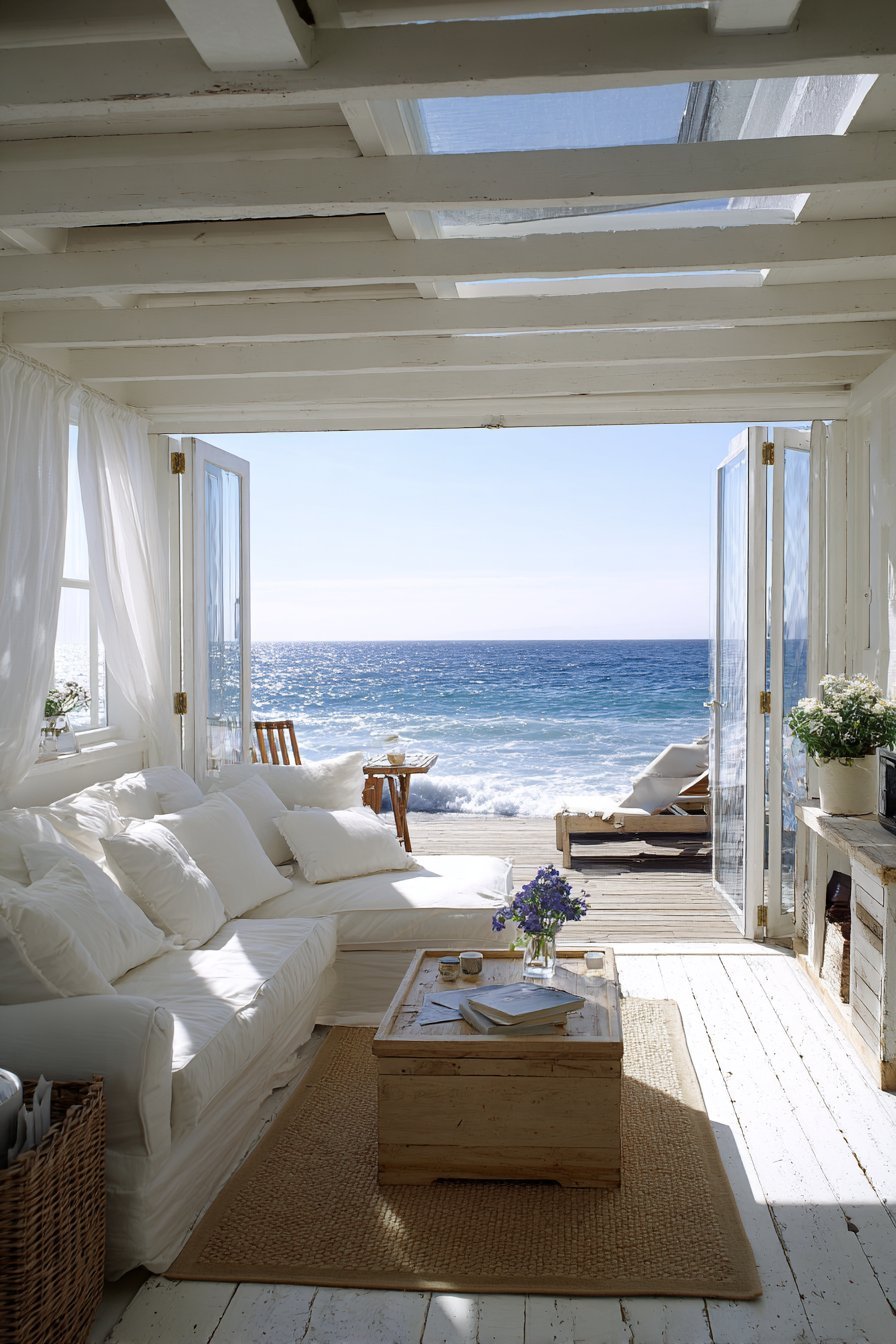
7. Coastal Bi-Fold Glass Doors Opening to Beachfront
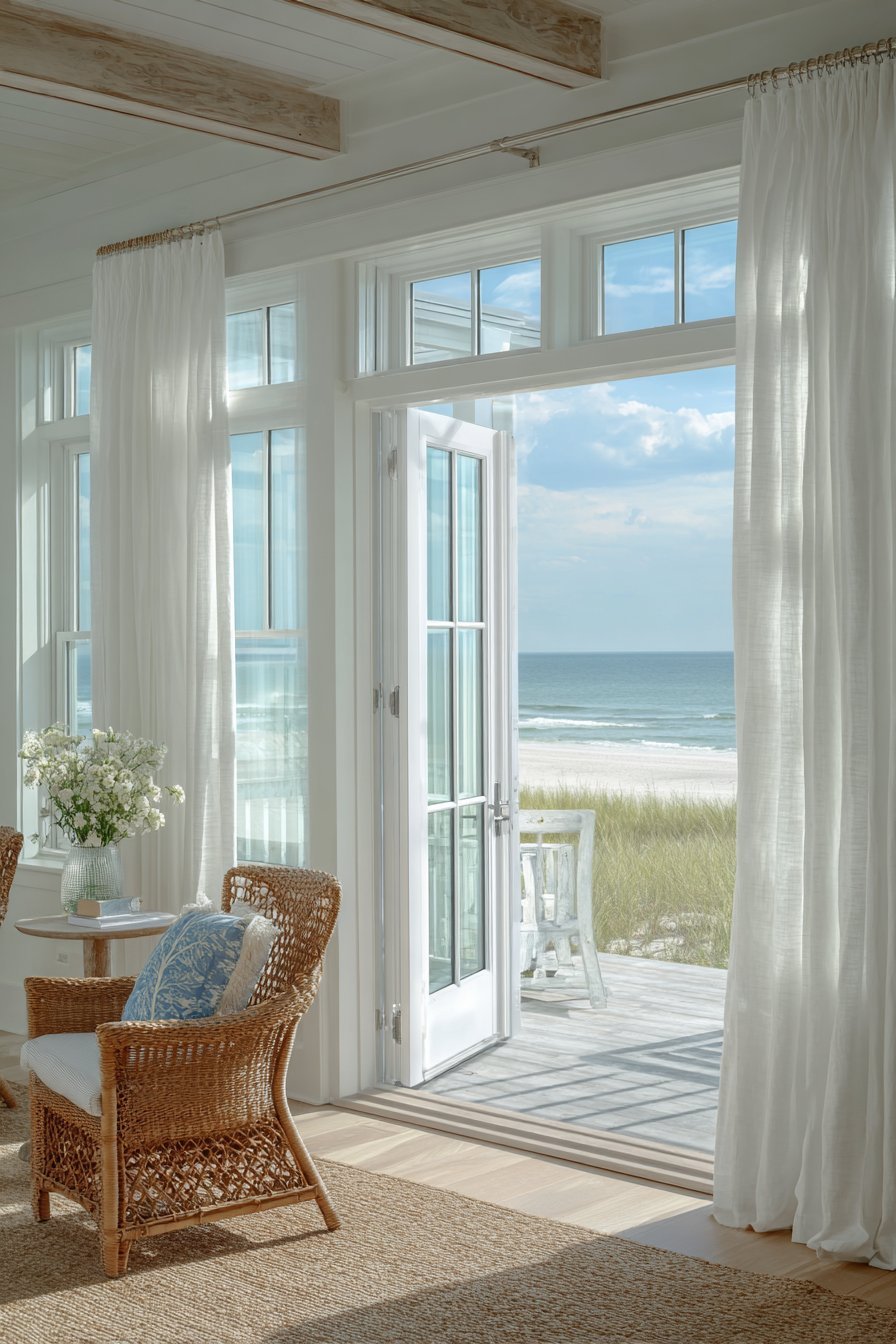
Bi-fold glass doors create transformative connections to outdoor living spaces. White aluminum frames resist salt air corrosion in coastal environments. When opened, the doors stack completely to one side, creating an unobstructed wall opening. Natural fiber rug and whitewashed wood furniture complement the breezy coastal aesthetic.
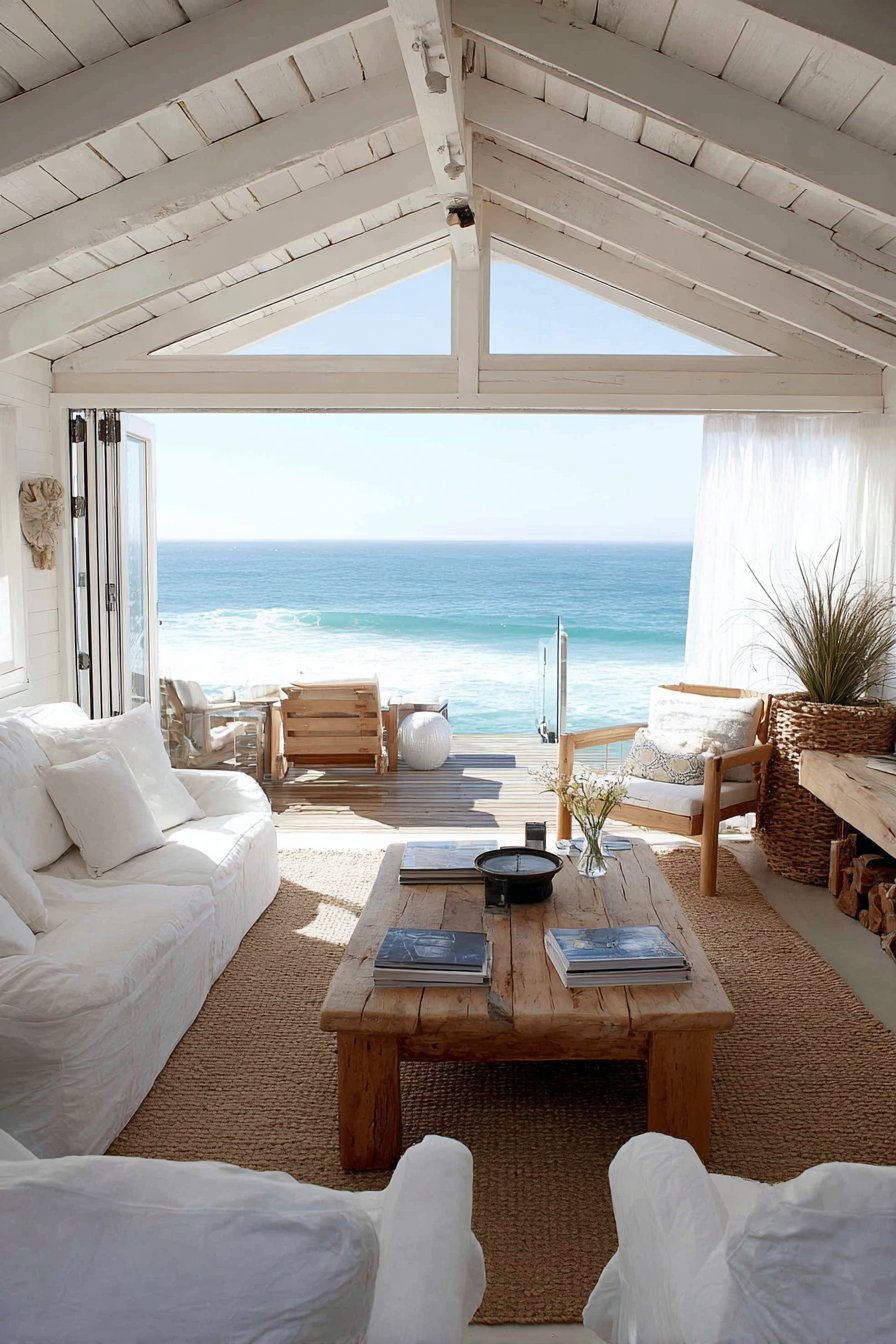
Sheer white curtains frame the opening, moving gently in ocean breezes. The indoor-outdoor flow feels effortless when doors stand fully open. During inclement weather, the transparent closure maintains ocean views. The white frames keep the aesthetic light and maintenance-free over years of exposure.
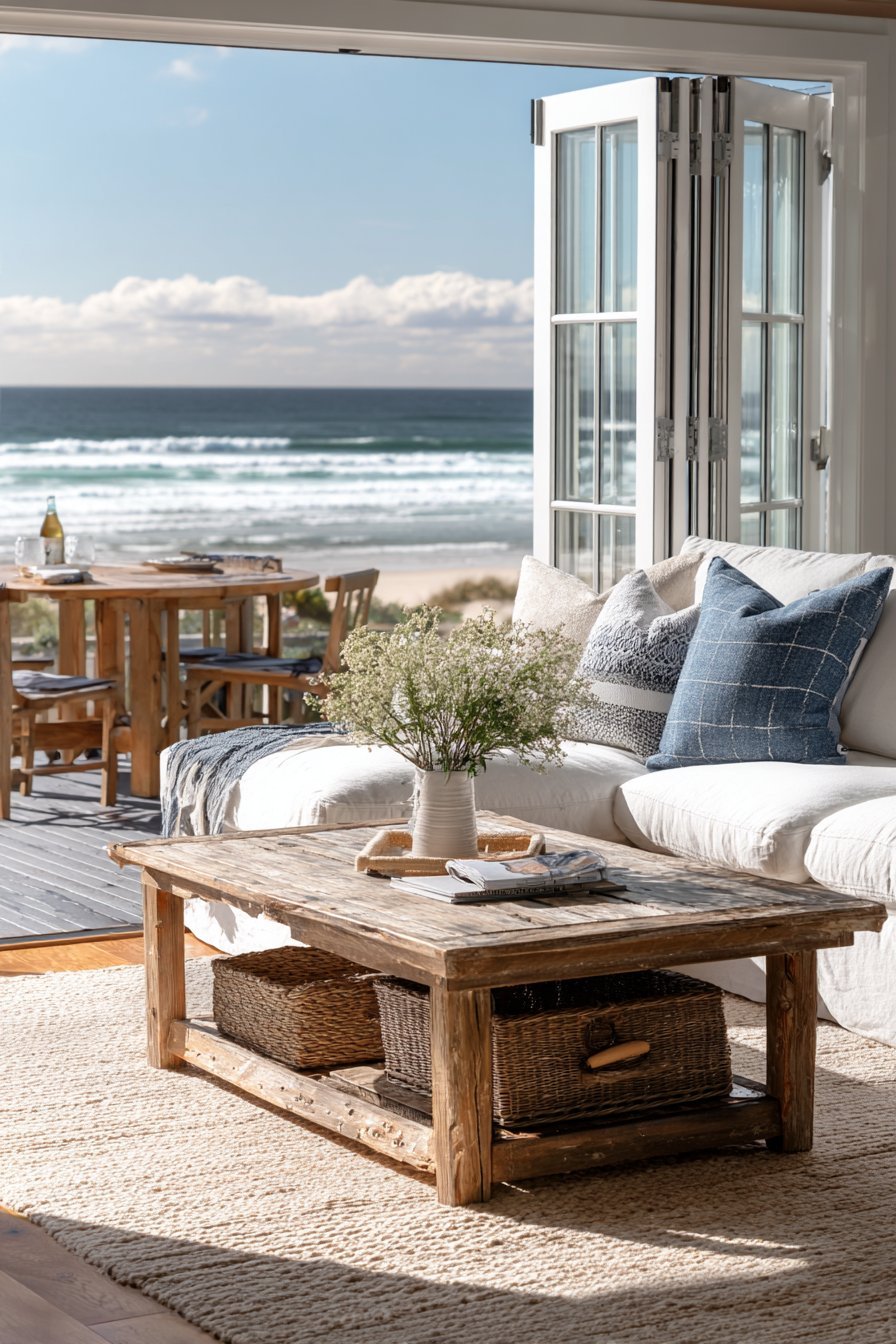
This door system transforms living spaces with dramatic effect. Closed configuration provides storm protection while preserving sightlines. Open configuration extends living space onto adjacent terrace or deck. The folding mechanism operates smoothly with quality hardware systems. This versatility makes bi-fold doors ideal for coastal properties. It’s a similar trade-off to deciding on folding door vs sliding door elsewhere in the space.
Key Design Tips:
- Select corrosion-resistant materials for coastal installations
- Choose white or light-colored frames for beach house aesthetics
- Ensure proper drainage at door threshold for rain protection
- Consider impact-resistant glass in hurricane-prone regions
- Plan furniture placement for traffic flow when doors open
- Add sheer curtains for privacy and light filtering options
- Schedule regular hardware maintenance in salt air environments
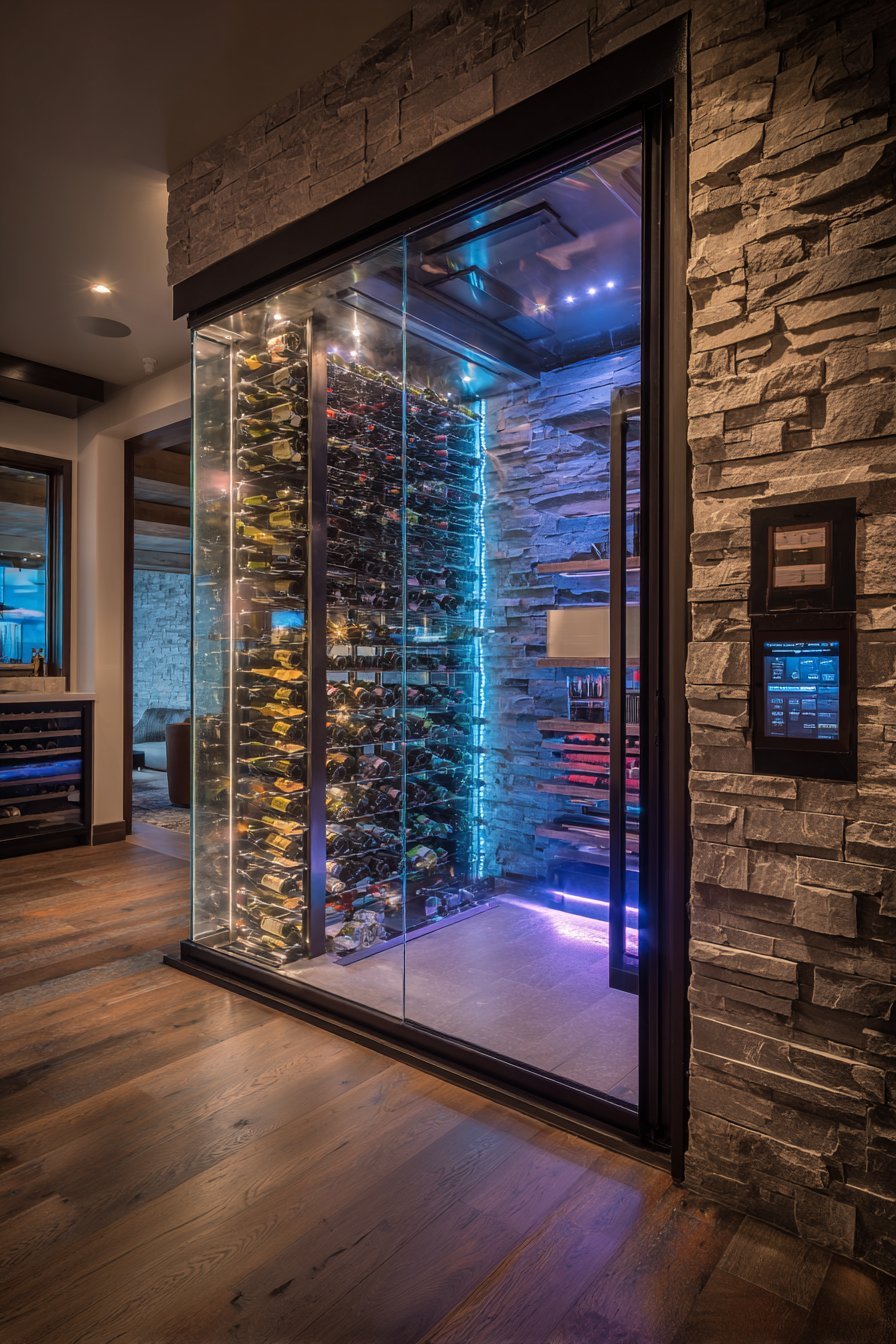
8. Contemporary Wine Cellar Glass Door
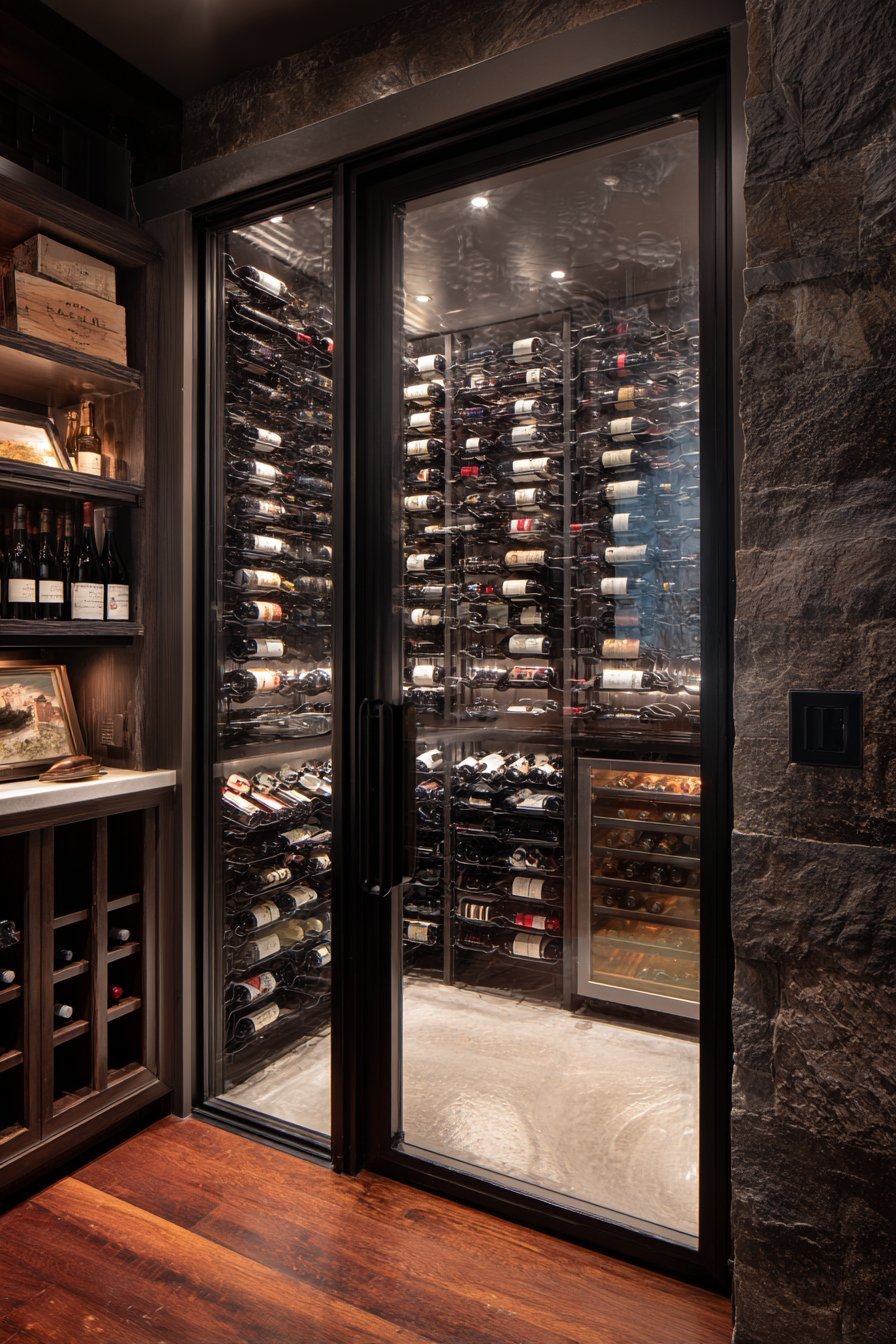
A full-length glass door showcases wine collections while maintaining proper storage conditions. Insulated dual-pane construction prevents temperature fluctuation affecting valuable vintages. Brushed stainless steel frame provides modern sophistication matching wine room’s purpose. The transparent door transforms storage into display.
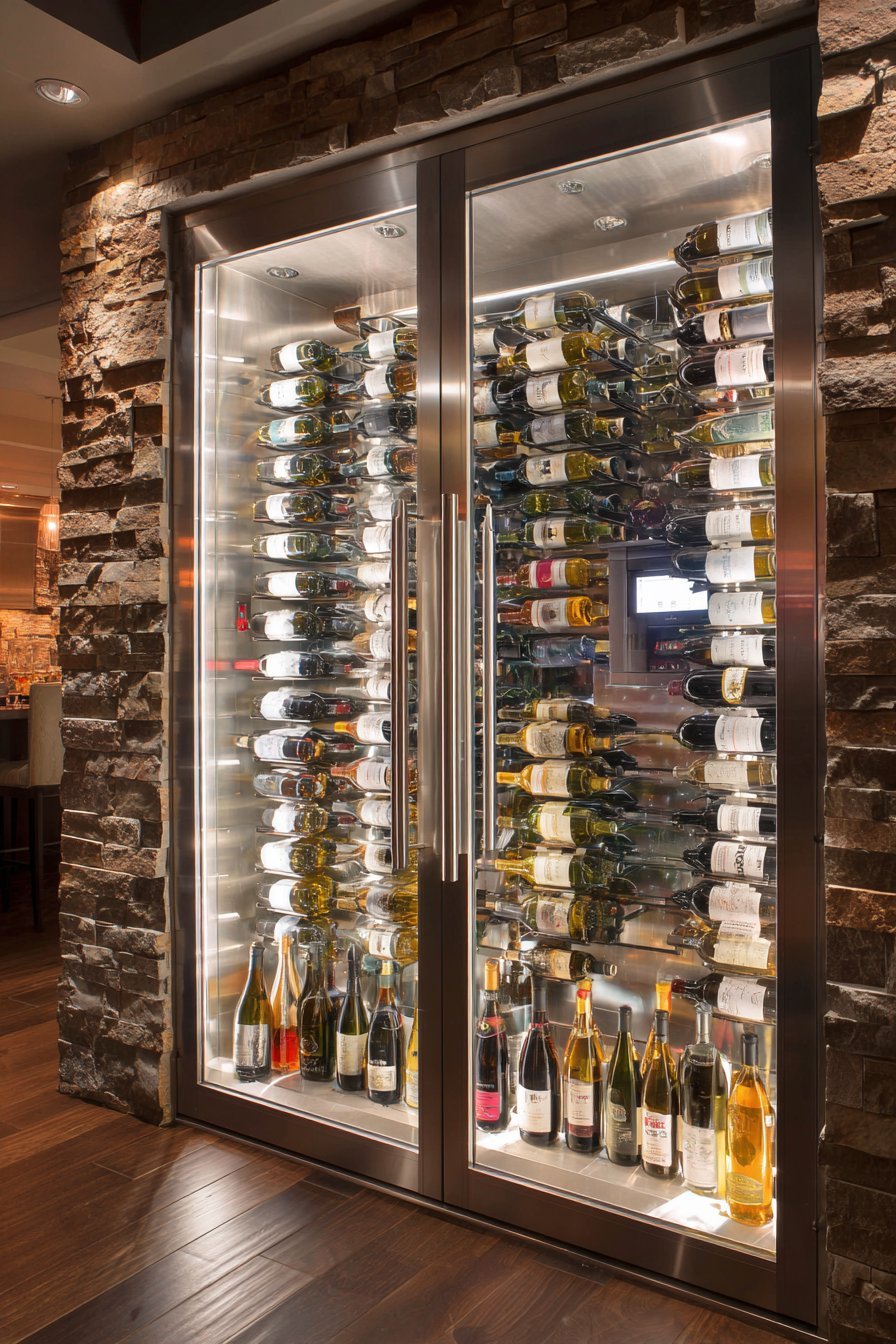
Floor-to-ceiling wine rack storage fills the visible interior with organized bottle collections. Ambient LED lighting illuminates labels and creates warm glow through glass. Temperature control panel mounts discreetly beside the door frame. Dark stained wood flooring and stone accent wall create ideal storage environment.
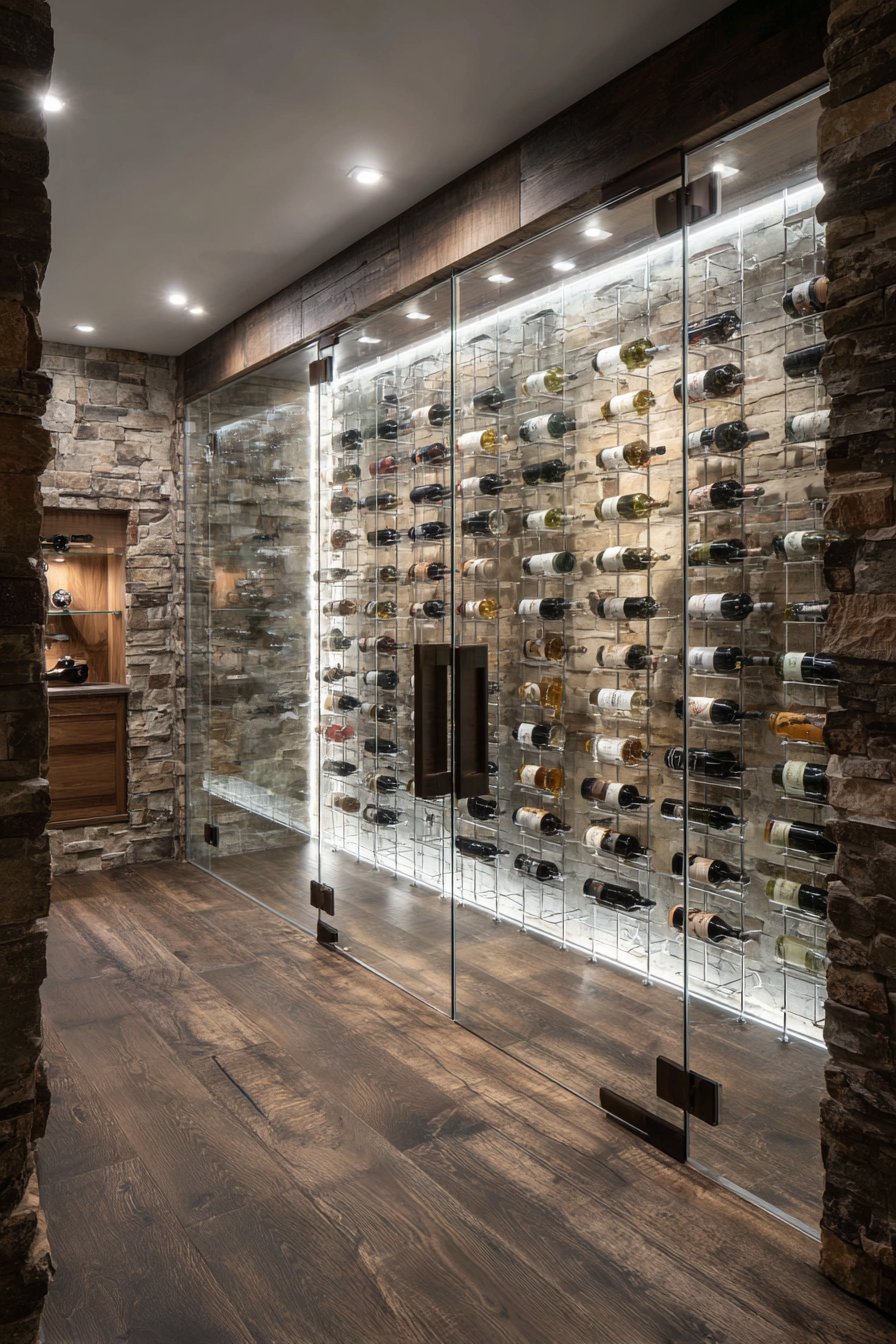
The glass door serves multiple purposes beyond mere separation. It allows inventory viewing without opening the climate-controlled space. This reduces temperature fluctuations that can harm wine quality. The display aspect adds visual interest to adjacent living areas. Guests appreciate seeing curated collections without entering the cellar.
Key Design Tips:
- Specify insulated glass to maintain consistent temperature control
- Choose low-emissivity coatings to reduce heat transfer
- Install proper door sealing to prevent climate loss
- Use LED lighting to minimize heat generation near wines
- Consider tinted glass to reduce light exposure to bottles
- Select hardware that complements wine cellar’s aesthetic
- Ensure door opens away from wine racks for safe access
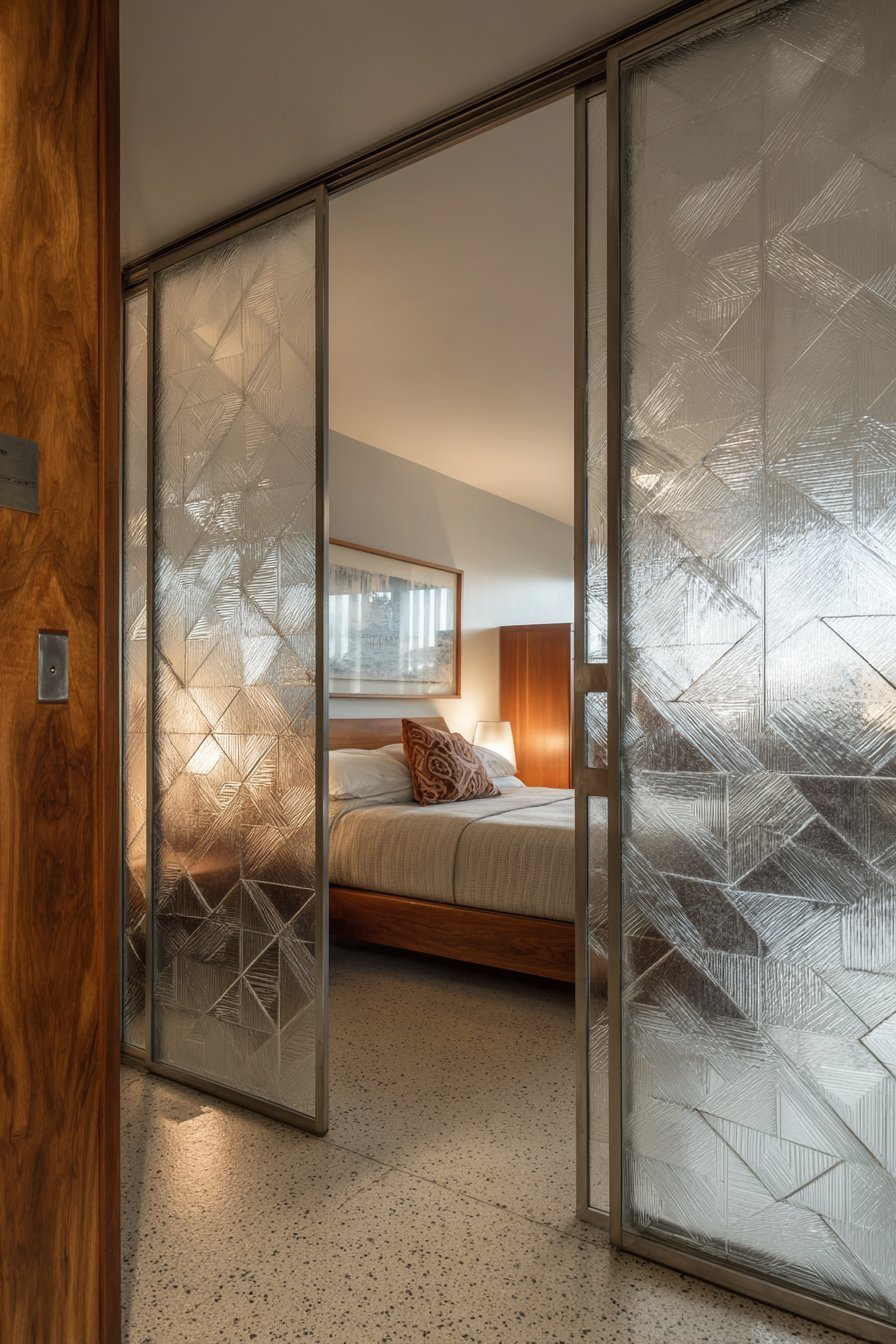
9. Mid-Century Modern Frosted Glass Closet Doors
Original 1960s glass sliding closet doors showcase authentic period design. Aluminum frames hold frosted glass panels featuring geometric etched patterns. The vintage doors span an entire wall, providing access to built-in storage. Low-profile platform bed with walnut frame faces the doors across terrazzo flooring.
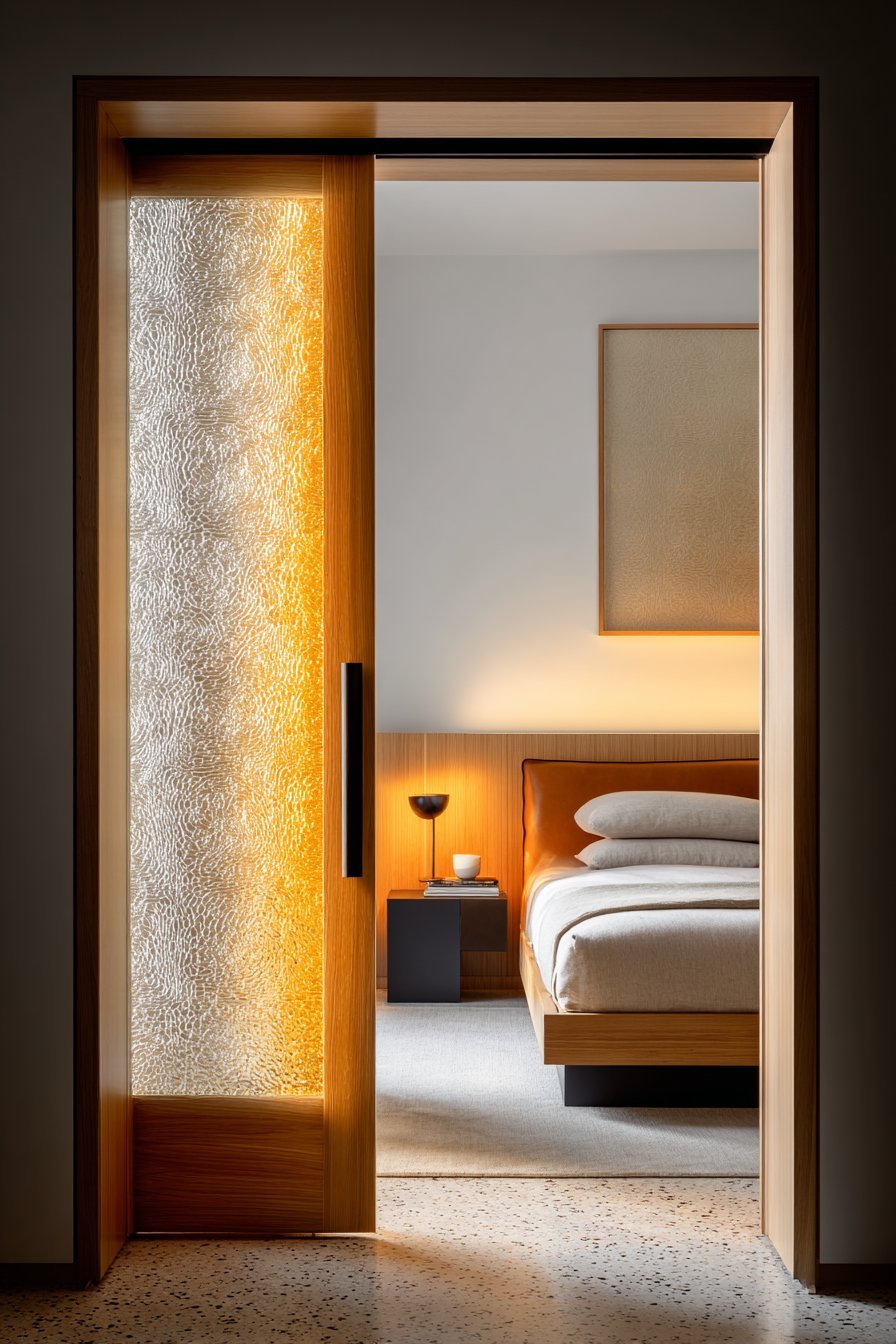
The slim aluminum framing represents characteristic mid-century minimalism. Frosted treatment maintains privacy while allowing light transmission through closets. Geometric etchings add visual interest true to the era’s design language. These vintage elements cannot be authentically replicated with modern reproductions.
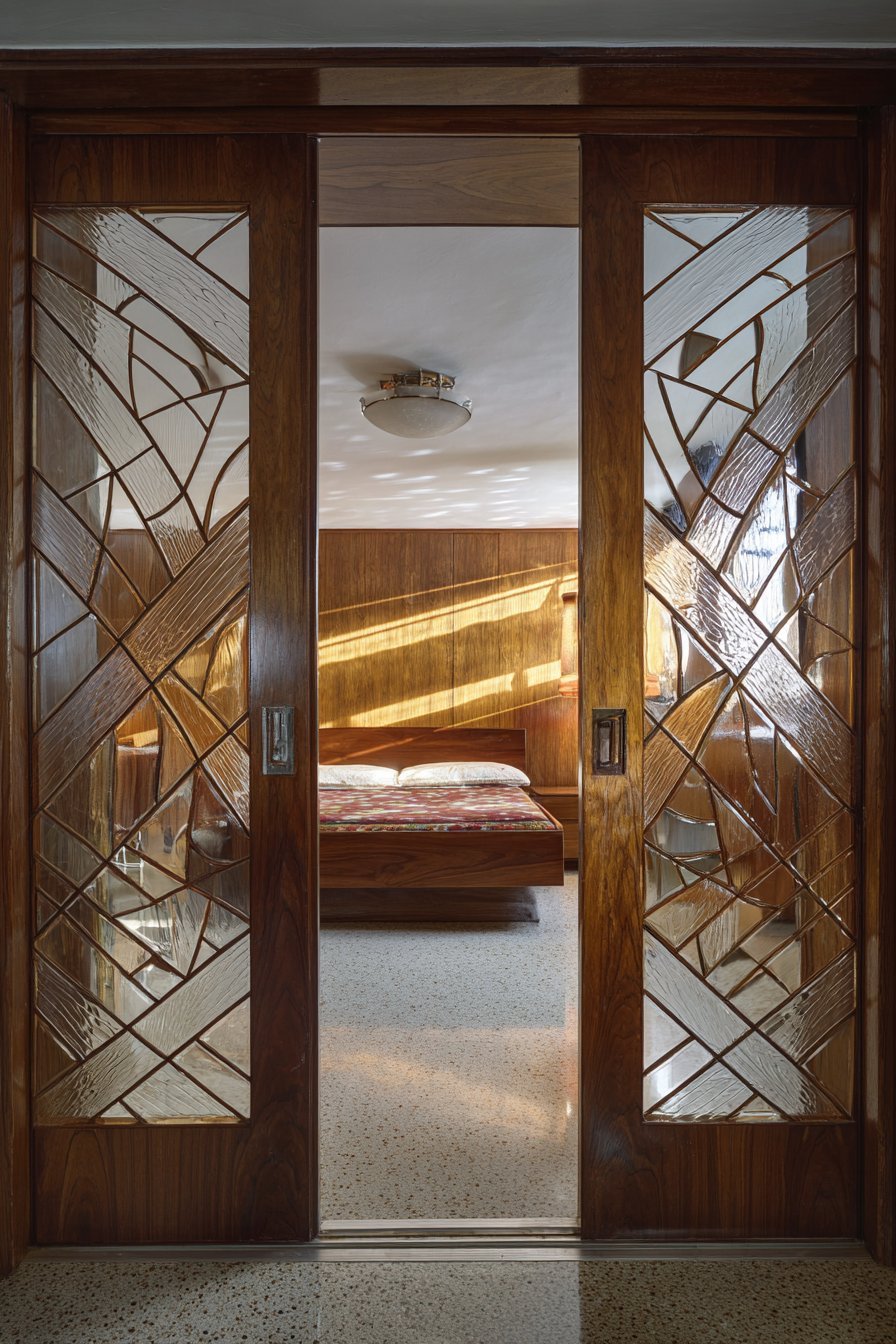
Period-appropriate furnishings complete the cohesive mid-century aesthetic. The doors’ length creates striking horizontal lines across the bedroom wall. Soft diffused lighting emphasizes textured glass patterns throughout the day. These original architectural elements significantly increase property value for design-conscious buyers. Preserving such features honors the home’s architectural heritage.
Key Design Tips:
- Preserve original mid-century elements whenever possible
- Research period-appropriate hardware for authentic restoration
- Clean vintage glass with gentle, non-abrasive products
- Consider professional restoration for damaged frame finishes
- Complement vintage doors with period furniture selections
- Maintain original sliding track mechanisms with proper lubrication
- Document original features before any renovation work begins
10. Urban Apartment Glass Pocket Door
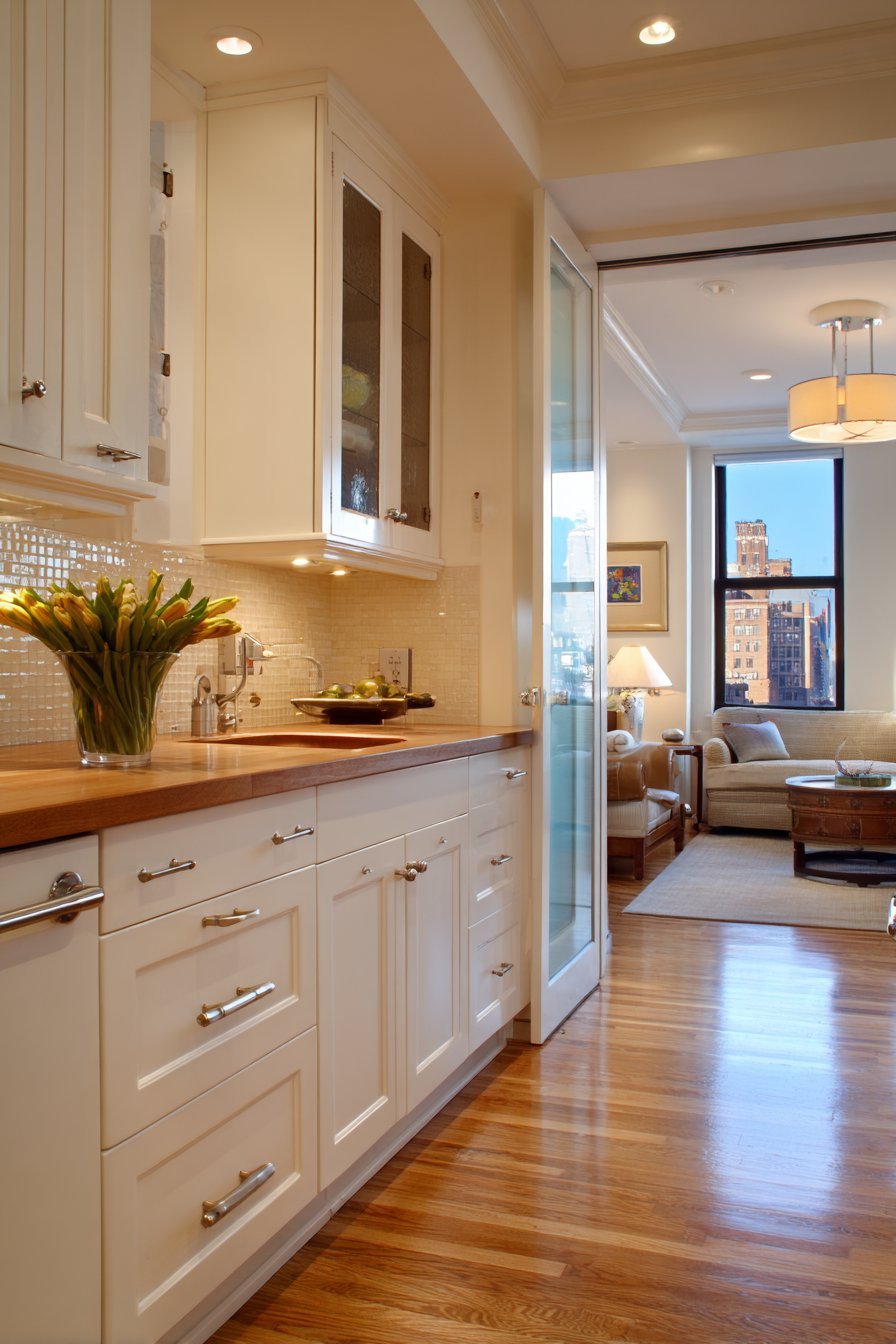
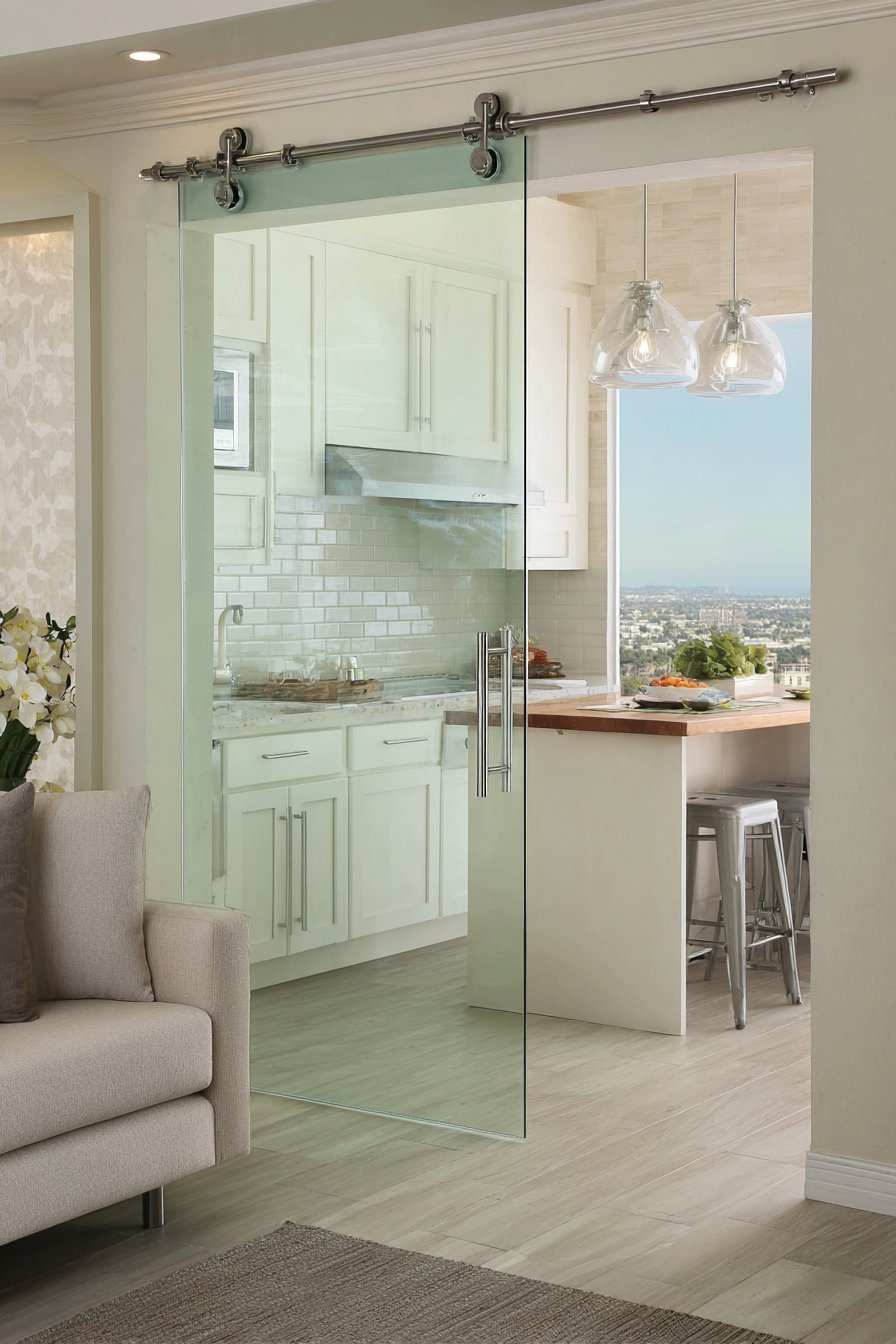
Clever glass pocket door solutions maximize limited urban square footage. Clear glass with brushed nickel hardware slides into wall cavity when open. This compact kitchen separates from living area without permanent barrier. White shaker cabinets and butcher block countertops create an efficient workspace visible through glass.
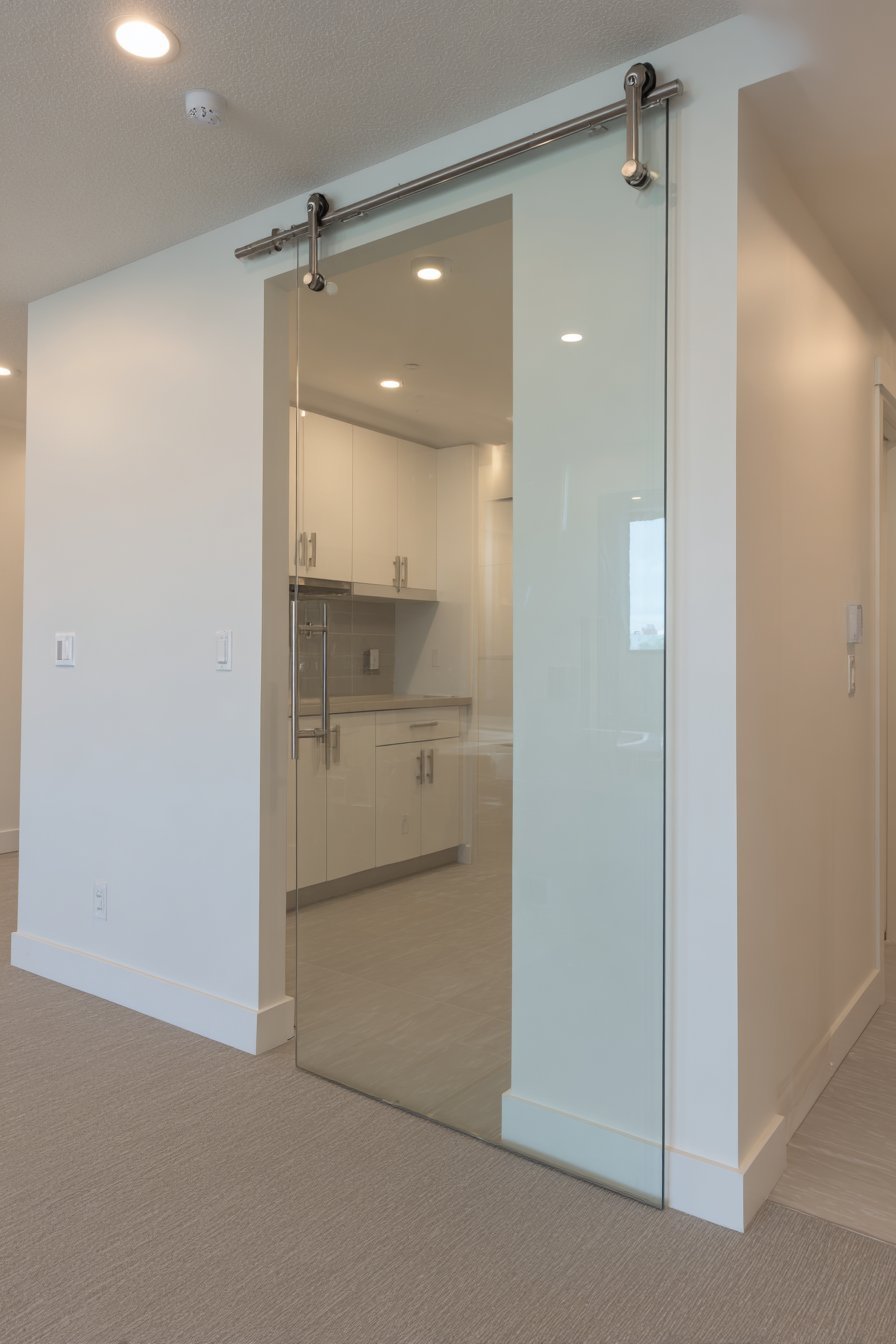
The space-saving design eliminates door swing clearance requirements. When closed, the glass maintains visual connection between spaces. This prevents the small apartment from feeling choppy or confined. Pendant lighting provides task illumination visible through transparent door. The brushed nickel hardware complements other fixtures throughout the apartment.
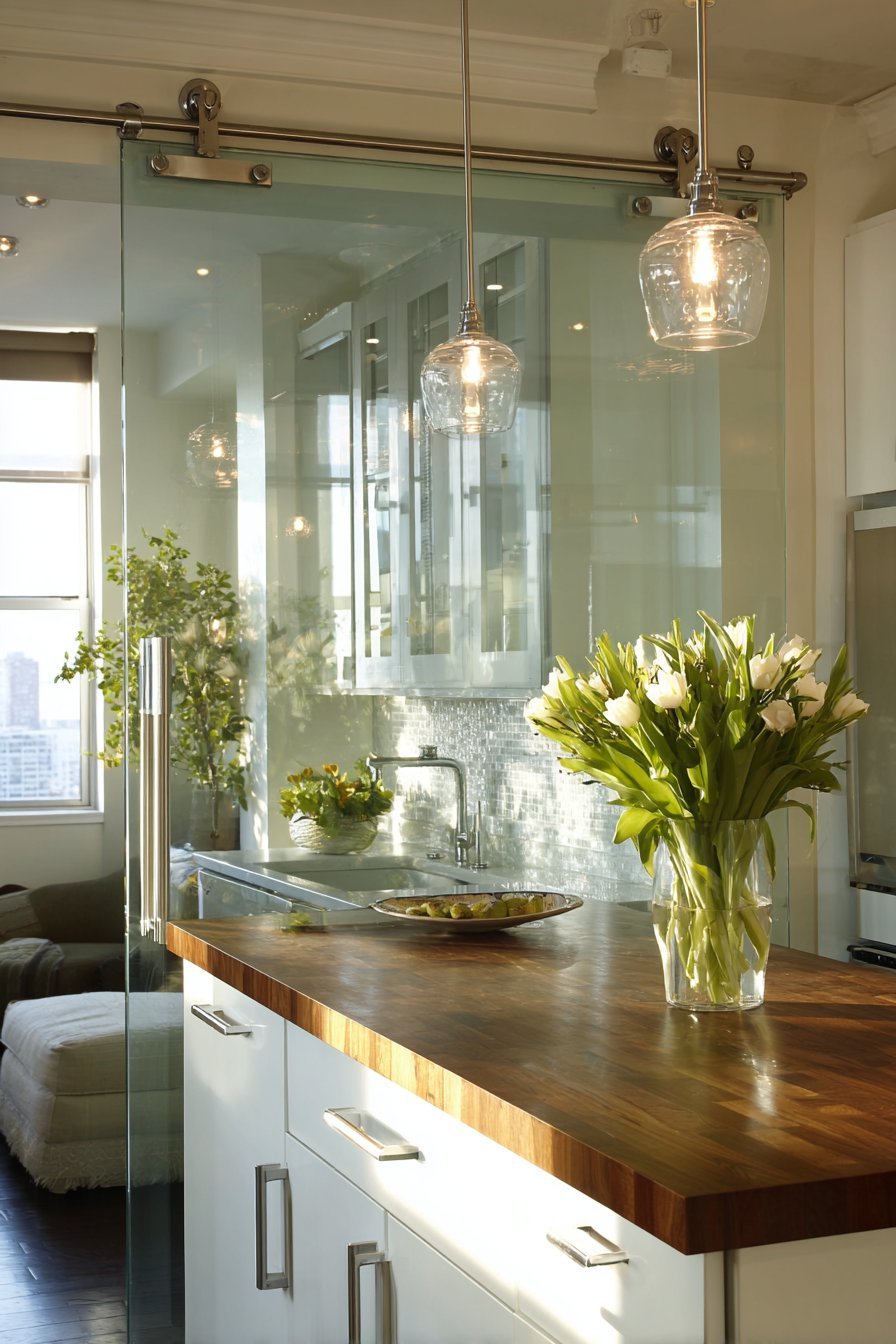
Pocket doors represent ideal solutions for tight urban living conditions. The glass version preserves openness while defining separate zones. Cooking activities remain contained when door closes for entertaining. The transparency allows conversation flow between kitchen and living areas. This flexibility supports various living and entertaining scenarios.
Key Design Tips:
- Ensure adequate wall cavity depth for pocket door installation
- Choose slim frame profiles to maximize wall opening width
- Install quality sliding mechanisms for smooth, reliable operation
- Consider frosted glass if privacy needs outweigh transparency
- Plan electrical and plumbing around pocket door cavity locations
- Use soft-close mechanisms to prevent glass damage
- Maintain regular track cleaning for optimal door performance
11. Traditional Library French Doors with Beveled Glass
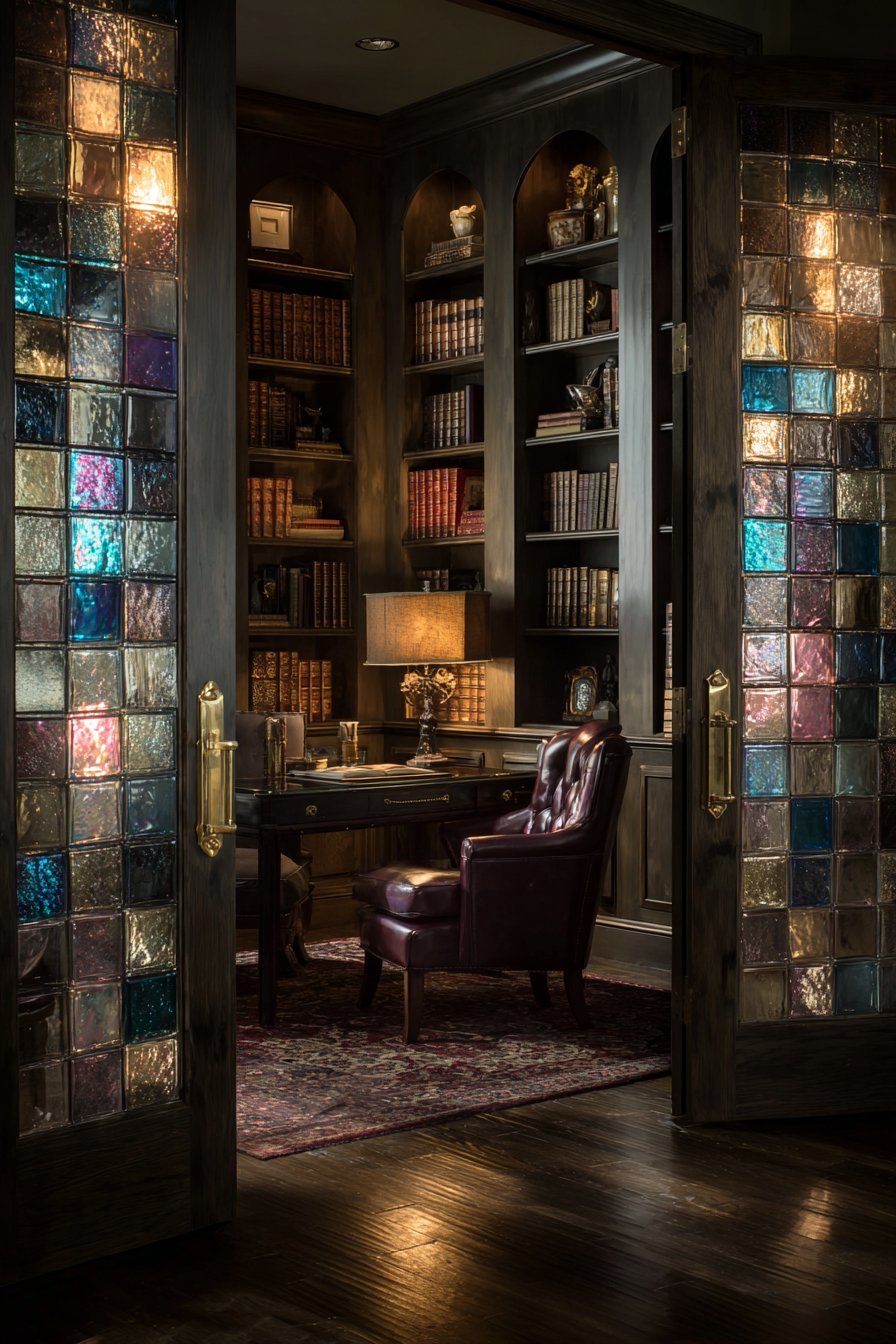
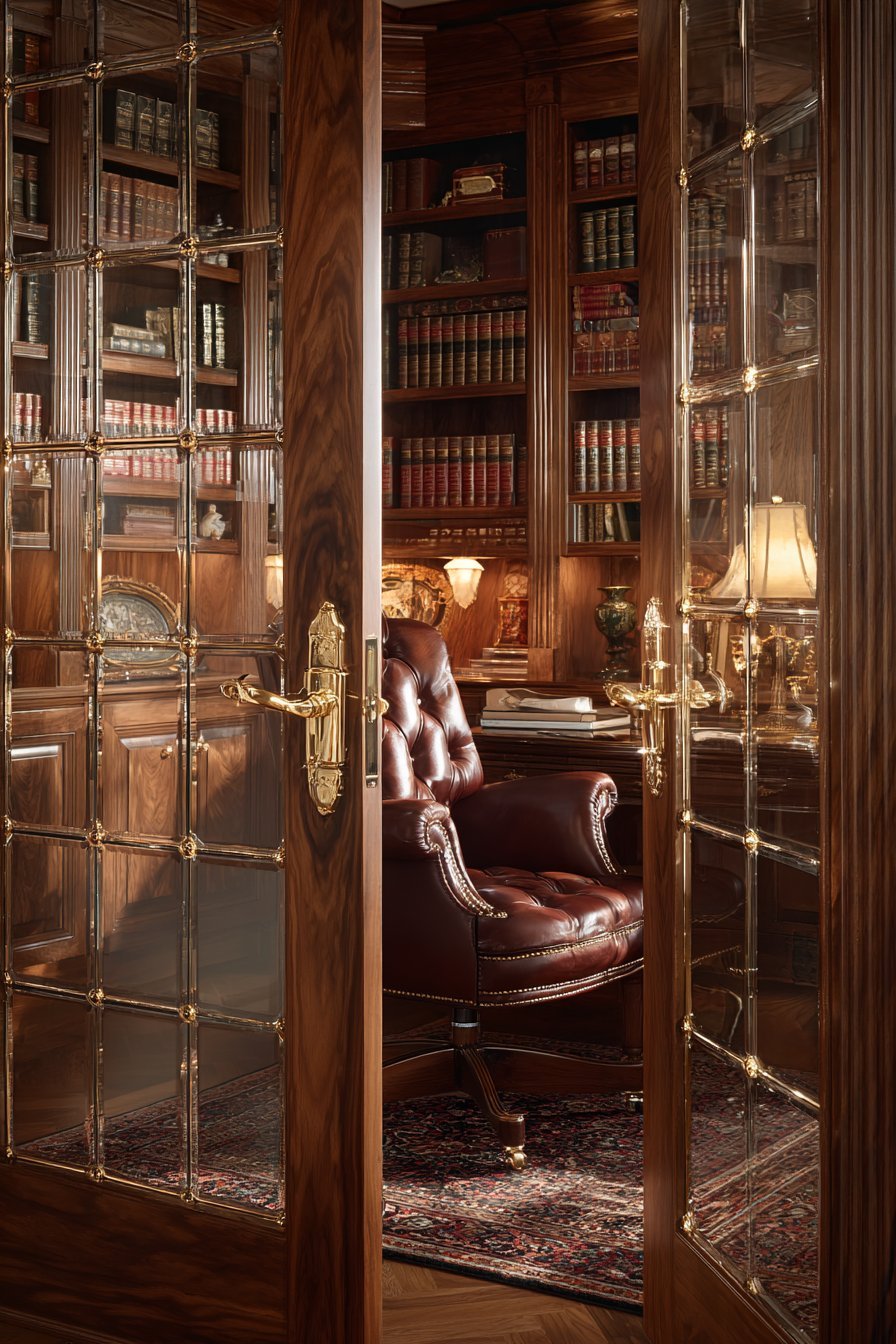
Glass-paned French doors connect traditional library spaces with timeless elegance. Dark walnut wood frames hold twelve individual beveled glass panels. Brass hardware adds warm metallic detailing appropriate to the classical styling. Built-in bookshelves filled with leather-bound volumes line the walls beyond.
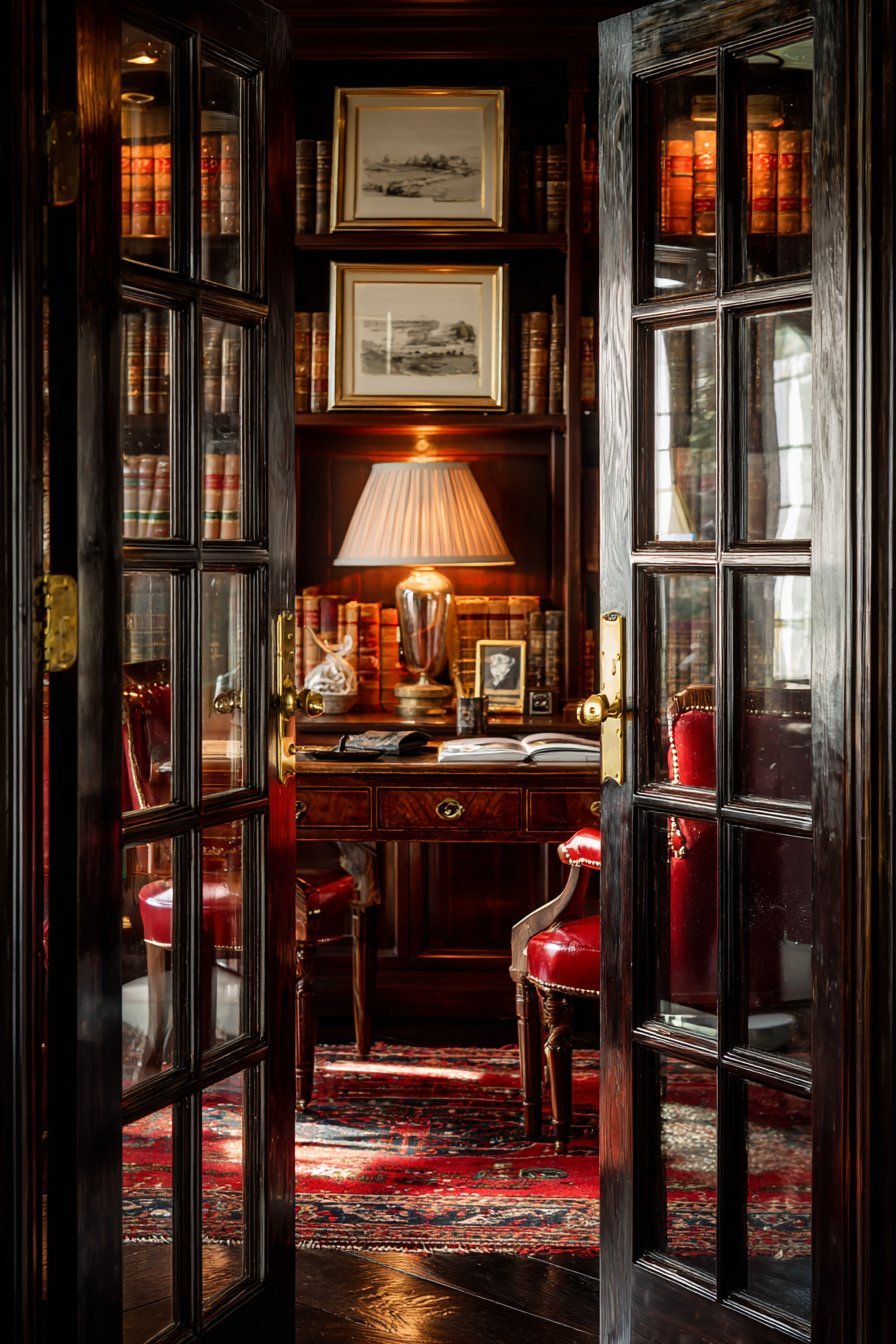
The beveled glass panels create prismatic effects when light passes through. This adds dynamic visual interest throughout the day as sun angles change. Persian rug in burgundy and navy anchors leather desk chair and an antique writing desk. Warm lamplight from within reflects on beveled glass surfaces after dark.
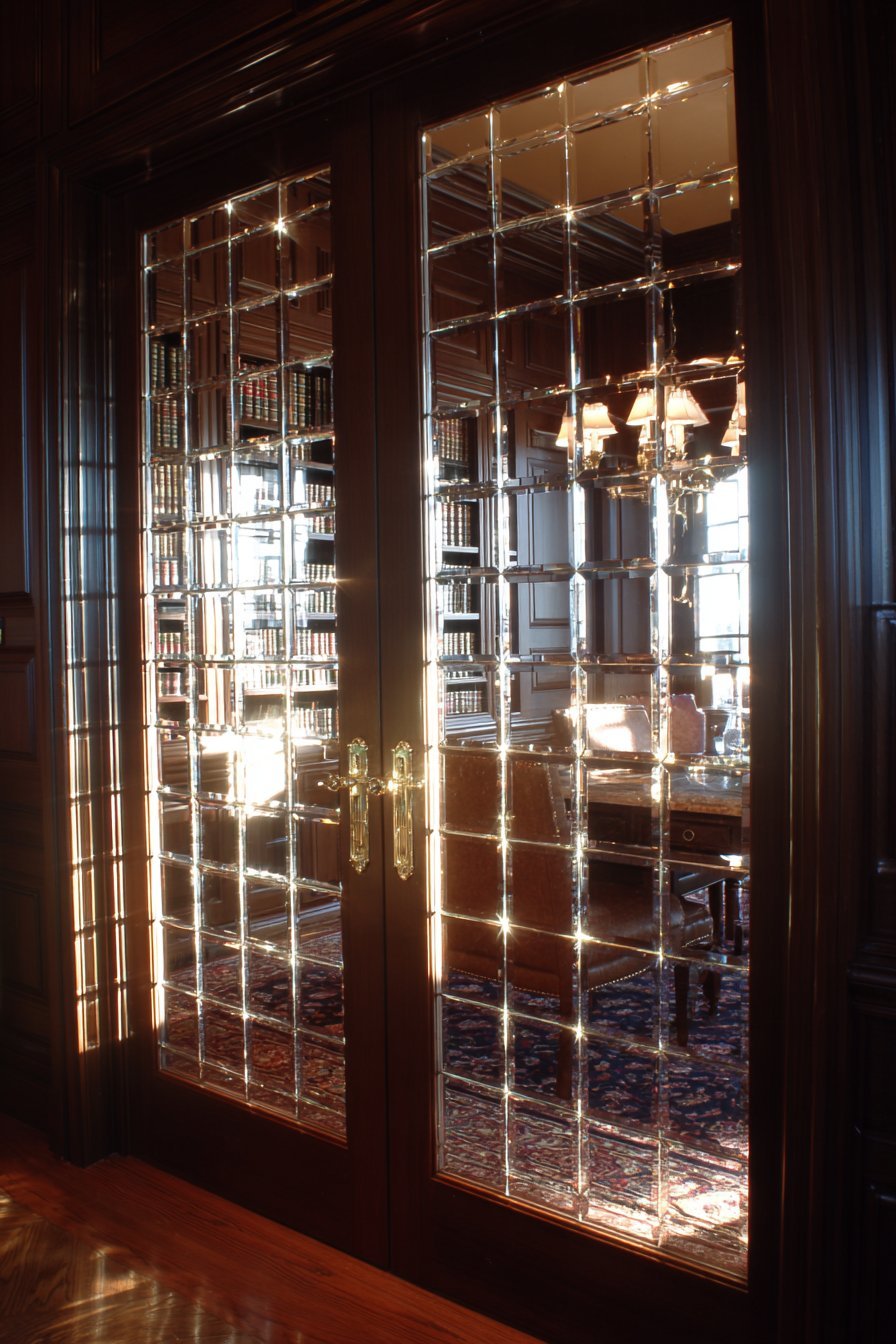
These doors represent traditional craftsmanship at its finest. The multiple glass panels require skilled joinery for proper installation. Beveled edges demonstrate quality detailing that elevates the overall design. The doors’ partial opening invites glimpses into the book-filled sanctuary. This creates an intellectual atmosphere appropriate for serious study or work.
Key Design Tips:
- Choose beveled glass for traditional or formal applications
- Match wood species and finish to existing trim and millwork
- Select brass hardware for authentic traditional styling
- Ensure proper door swing clearance in library layout
- Consider sound dampening for quiet study environments
- Maintain wood frames with appropriate furniture polish
- Install in pairs for symmetrical, formal appearance
12. Practical Dutch Door with Glass Panels
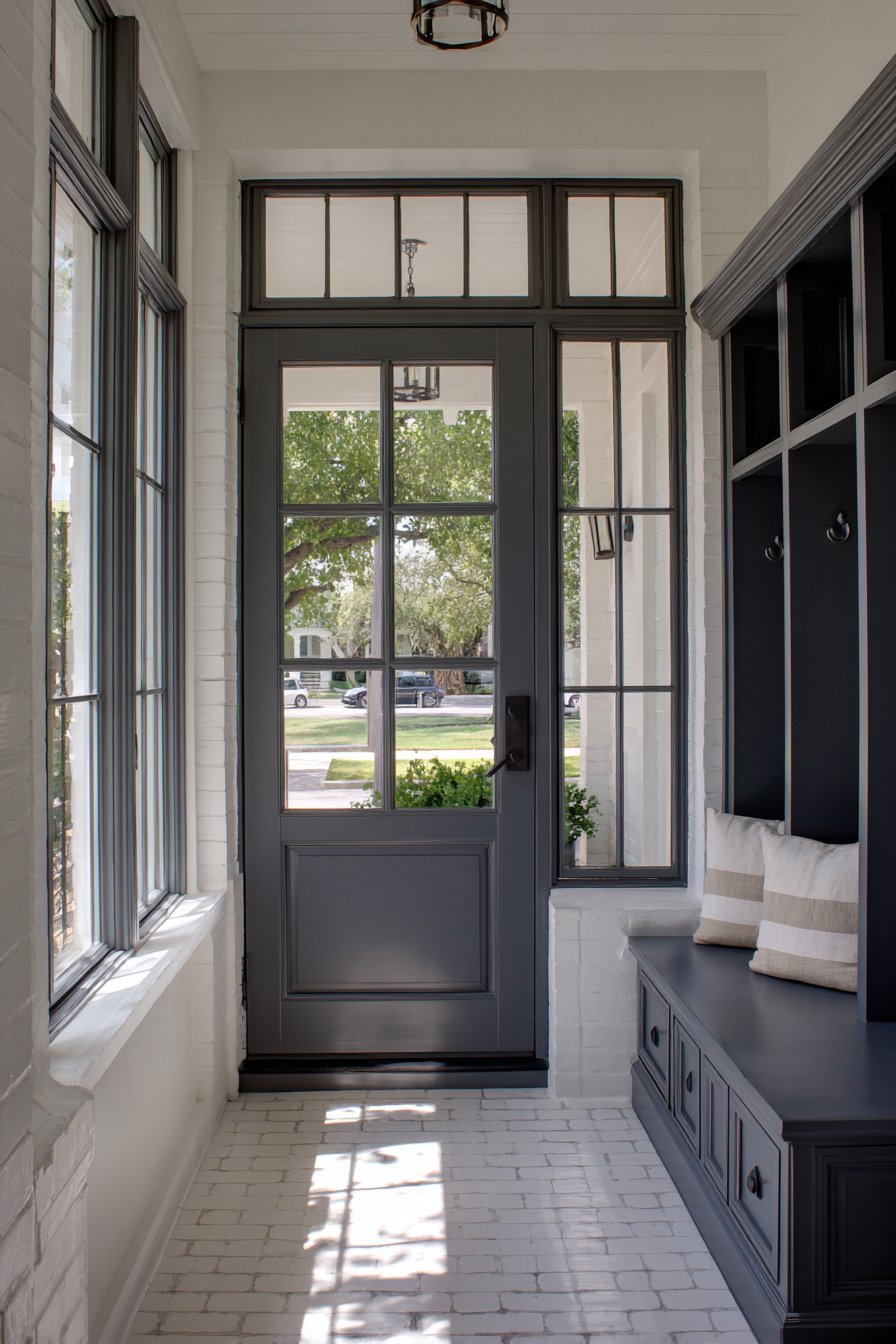
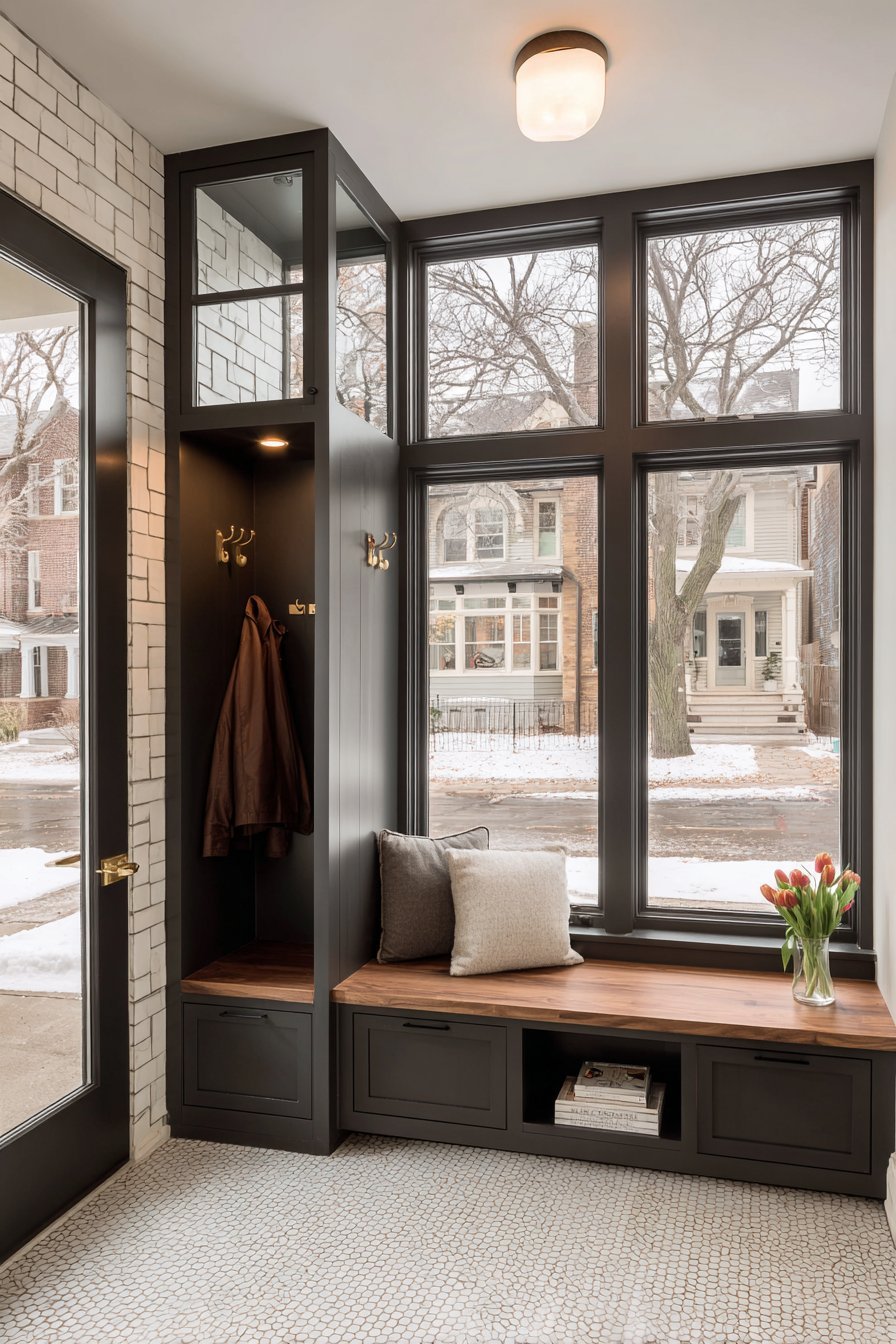
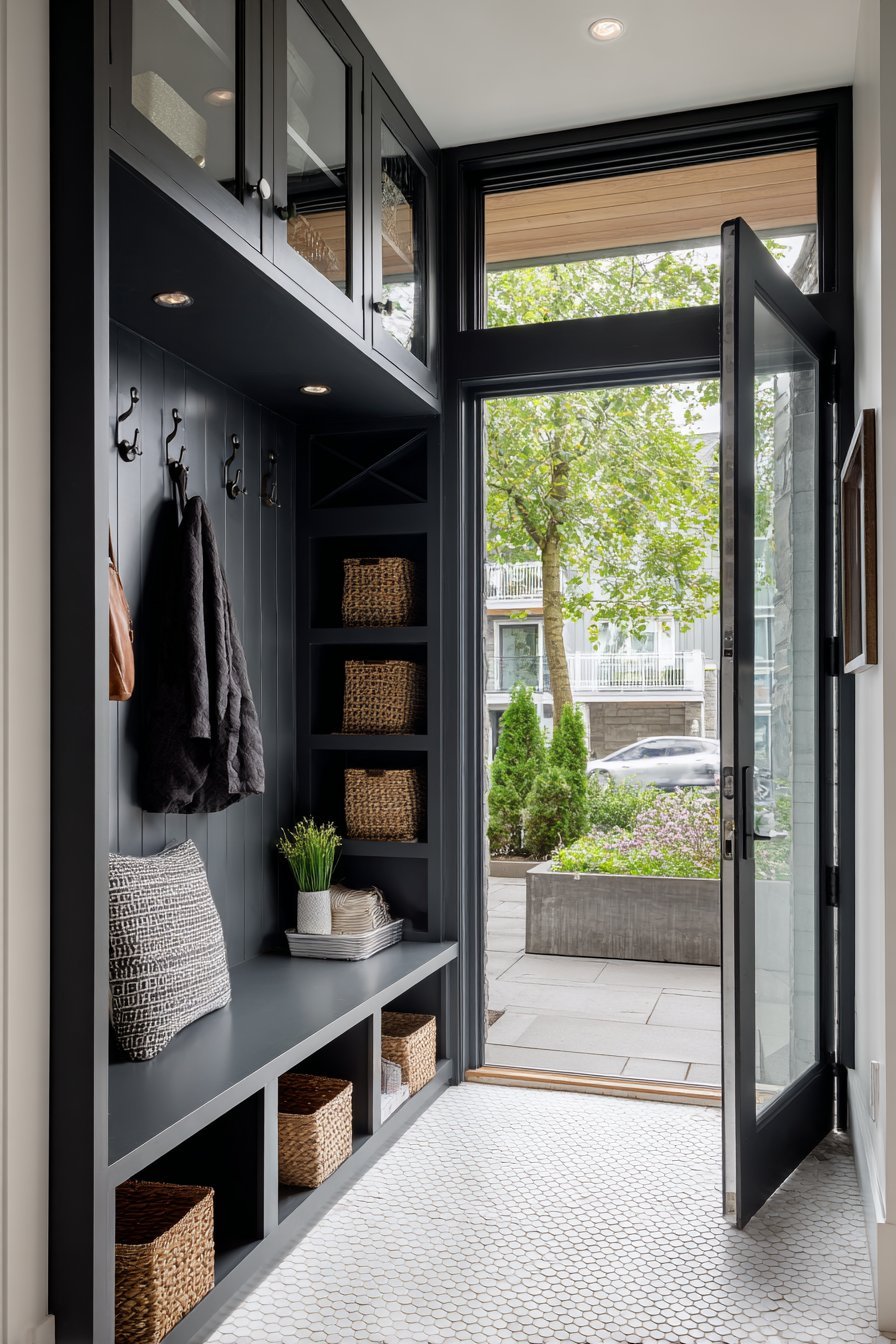
Glass Dutch door painted in deep charcoal grey offers clever functionality. The split design allows independent operation of upper and lower sections. Clear glass panels in both halves provide visibility to front porch areas. Built-in bench with storage cubbies creates organized mudroom entry.
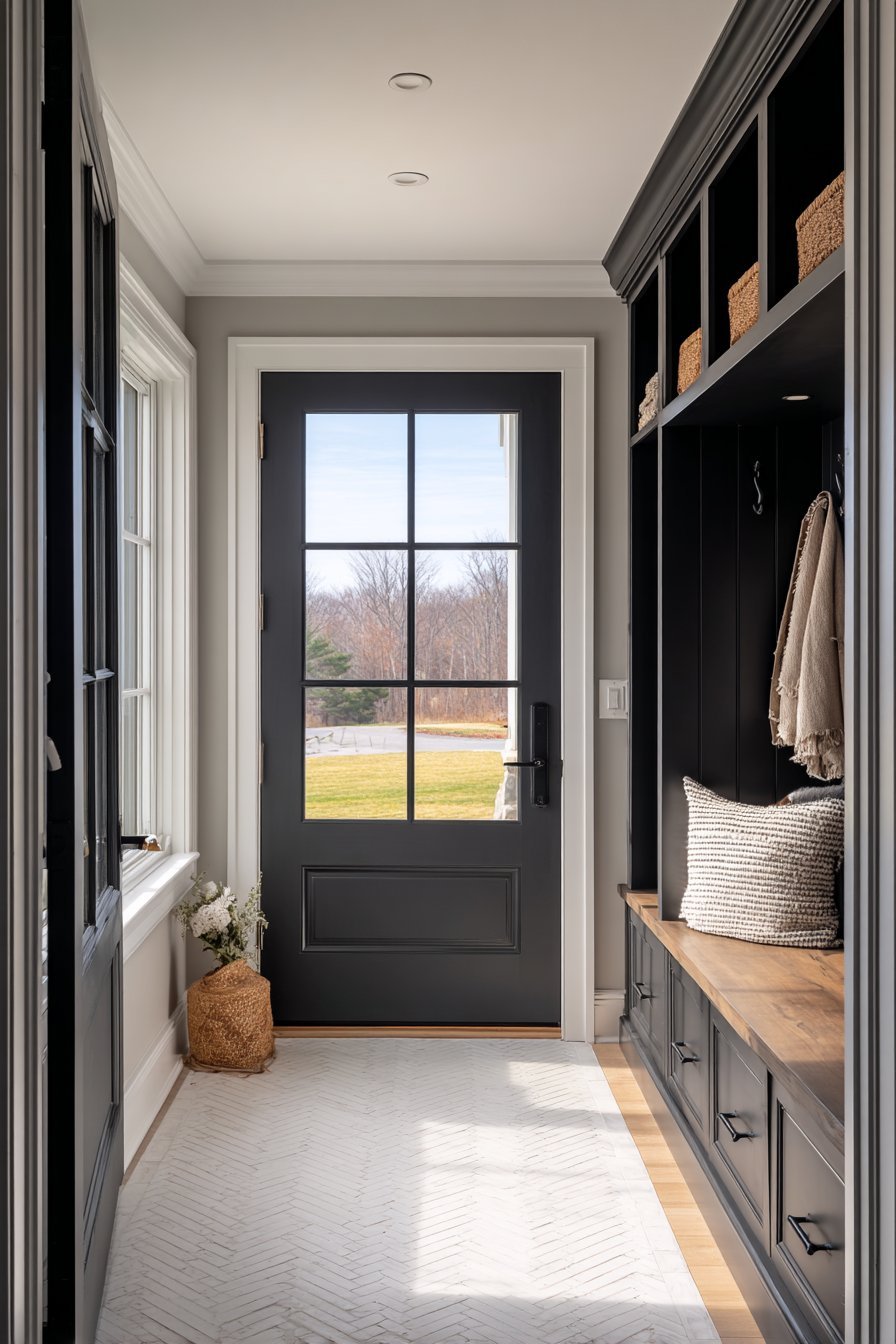
The Dutch door’s traditional form serves modern practical purposes beautifully. Opening the top half alone provides ventilation while maintaining security. This proves especially useful during pleasant weather or when monitoring children outdoors. White subway tile flooring withstands heavy traffic typical of entry areas. Wall-mounted coat hooks complete the functional organization.
Natural daylight streams through the open top section, brightening the entry. The glass panels ensure visibility even when both sections remain closed. This security feature allows screening visitors before opening the door. The charcoal grey paint adds contemporary sophistication to traditional door style. This combination suits both classic and modern home designs.
Key Design Tips:
- Paint Dutch doors in colors complementing your exterior palette
- Install quality hardware ensuring both sections align properly
- Use durable flooring materials appropriate for high-traffic entries
- Add storage solutions to maximize mudroom functionality
- Consider screen inserts for top section during insect seasons
- Ensure proper weatherstripping on both door sections
- Choose child-safe latching mechanisms for lower section
13. Transitional Frosted Glass Water Closet Door
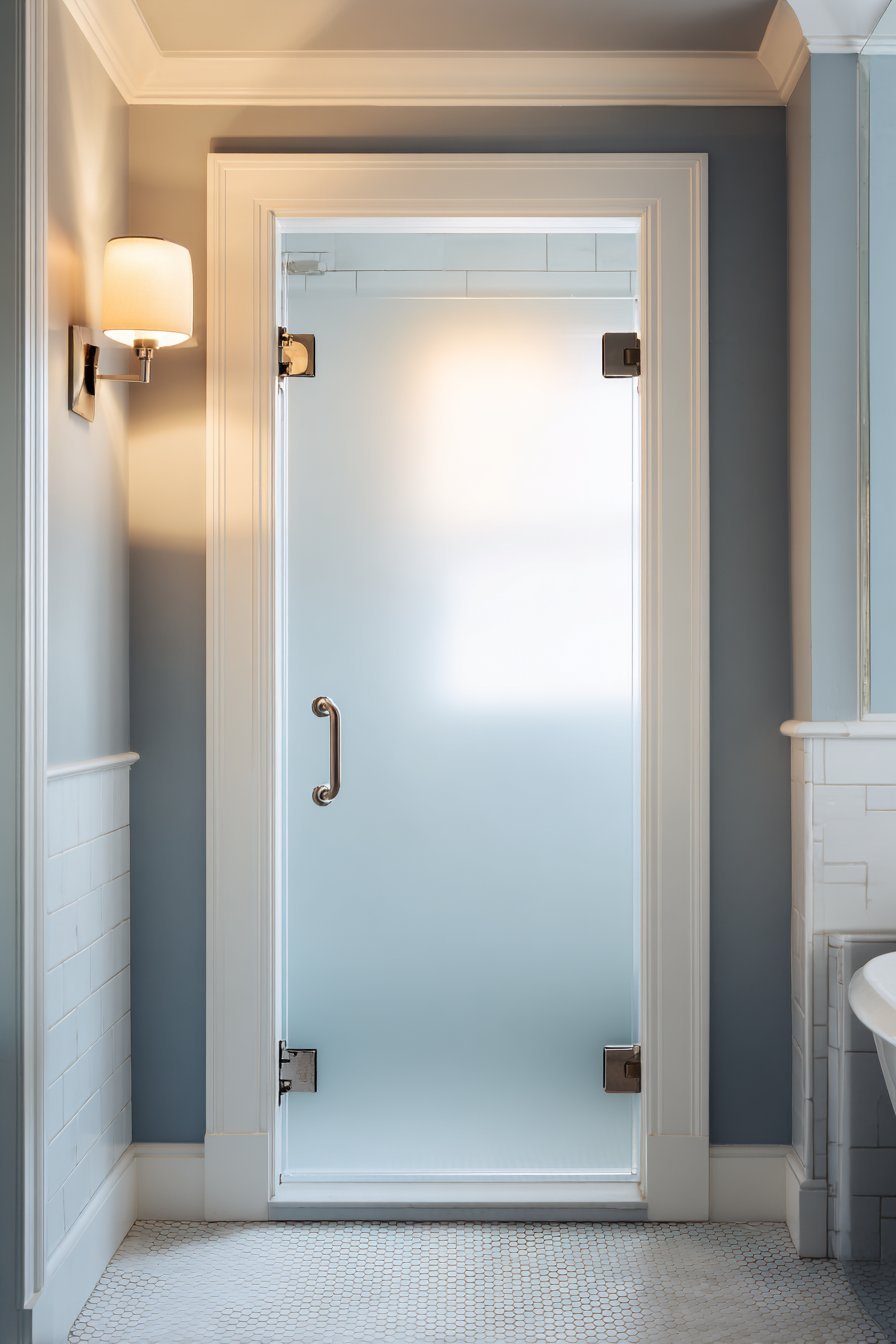
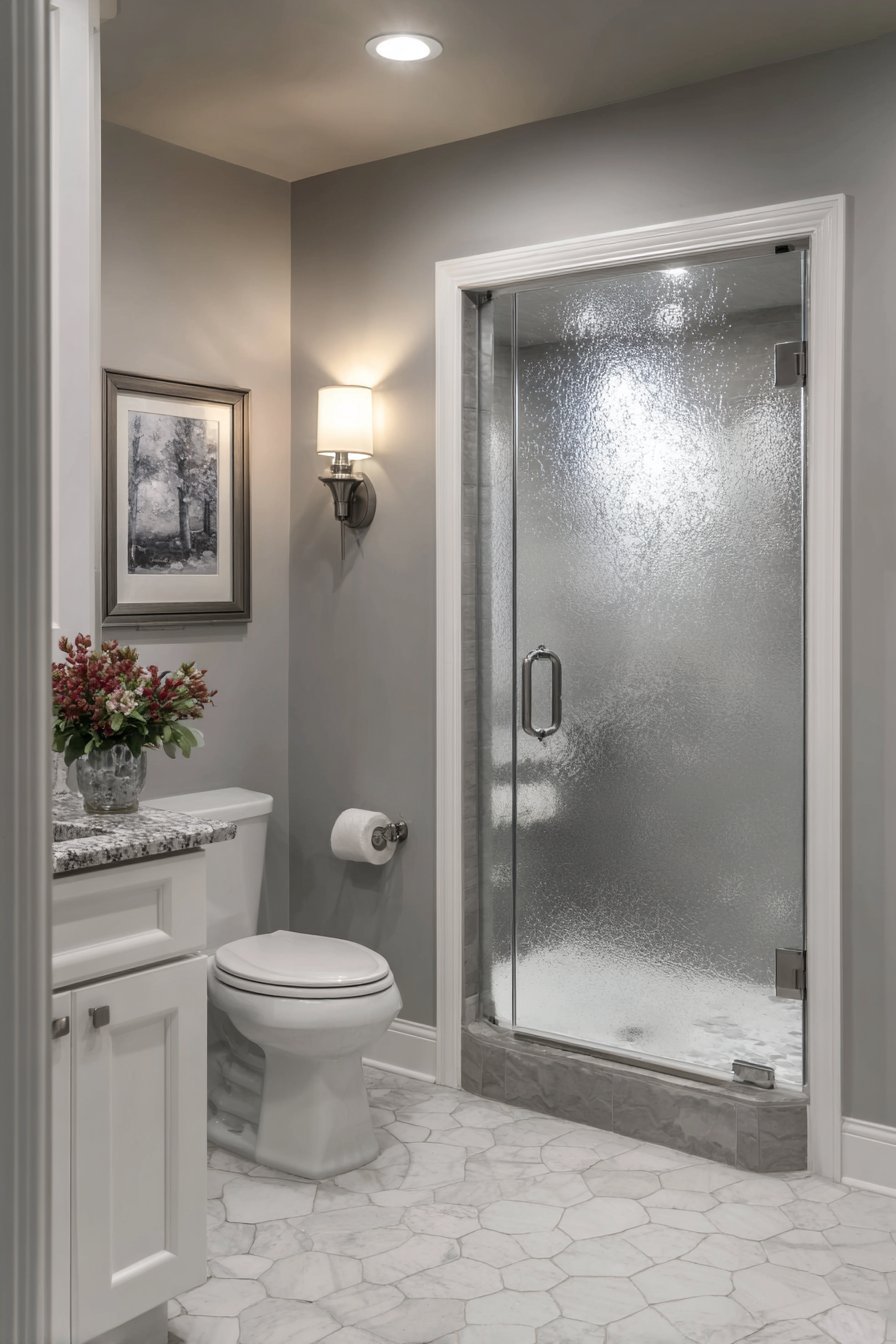
Frosted glass door with rain pattern texture provides elegant privacy solutions. The textured surface diffuses light while ensuring complete visual privacy. Brushed nickel handle and hinges complement other bathroom fixtures seamlessly. White hexagonal floor tiles and grey painted walls create serene backdrop.
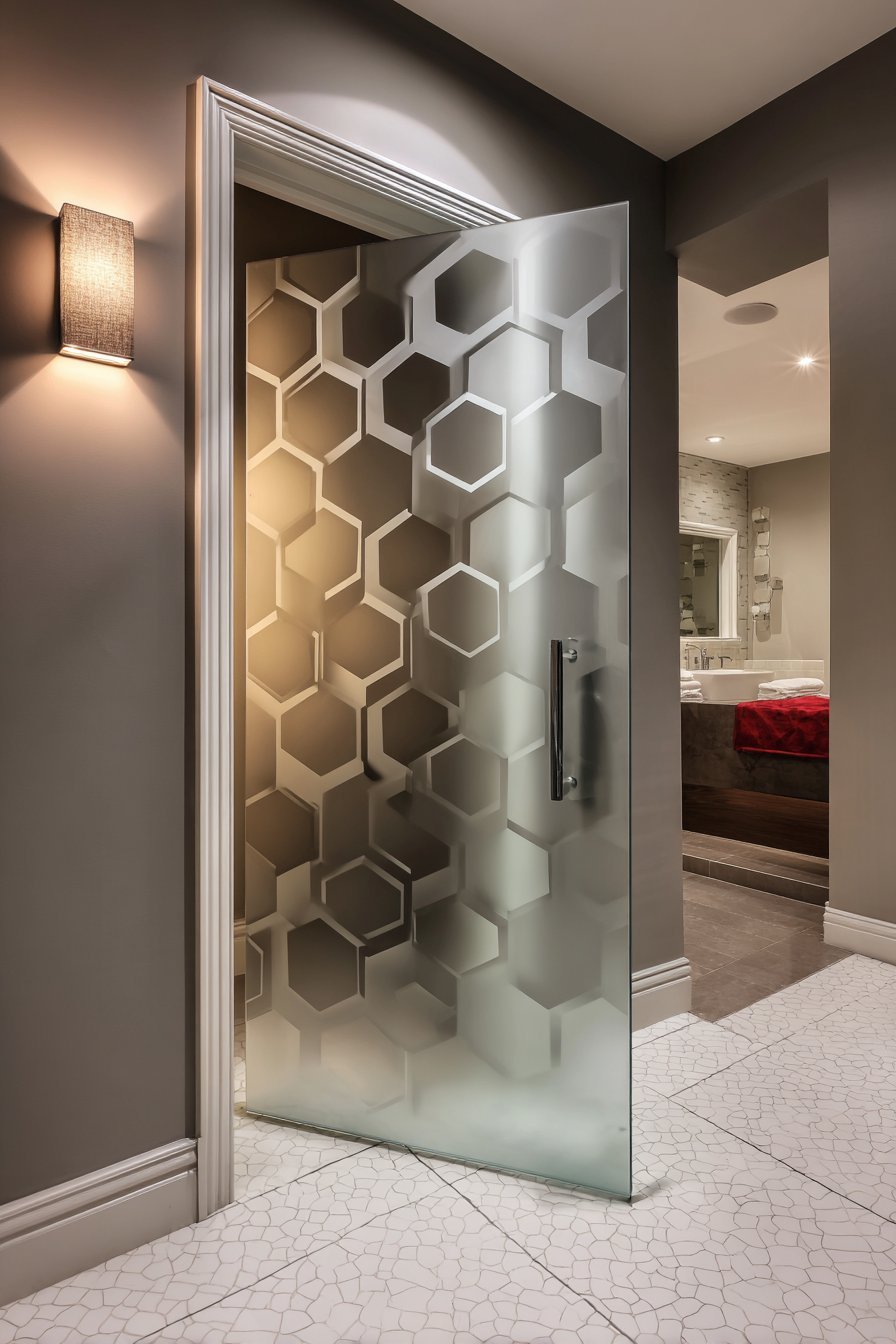
Wall-sconce provides ambient lighting that creates soft glow through textured glass. This eliminates harsh shadows while maintaining comfortable illumination levels. The frosted treatment proves superior to solid doors for maintaining spaciousness. Light flows throughout the bathroom even with water closet door closed.
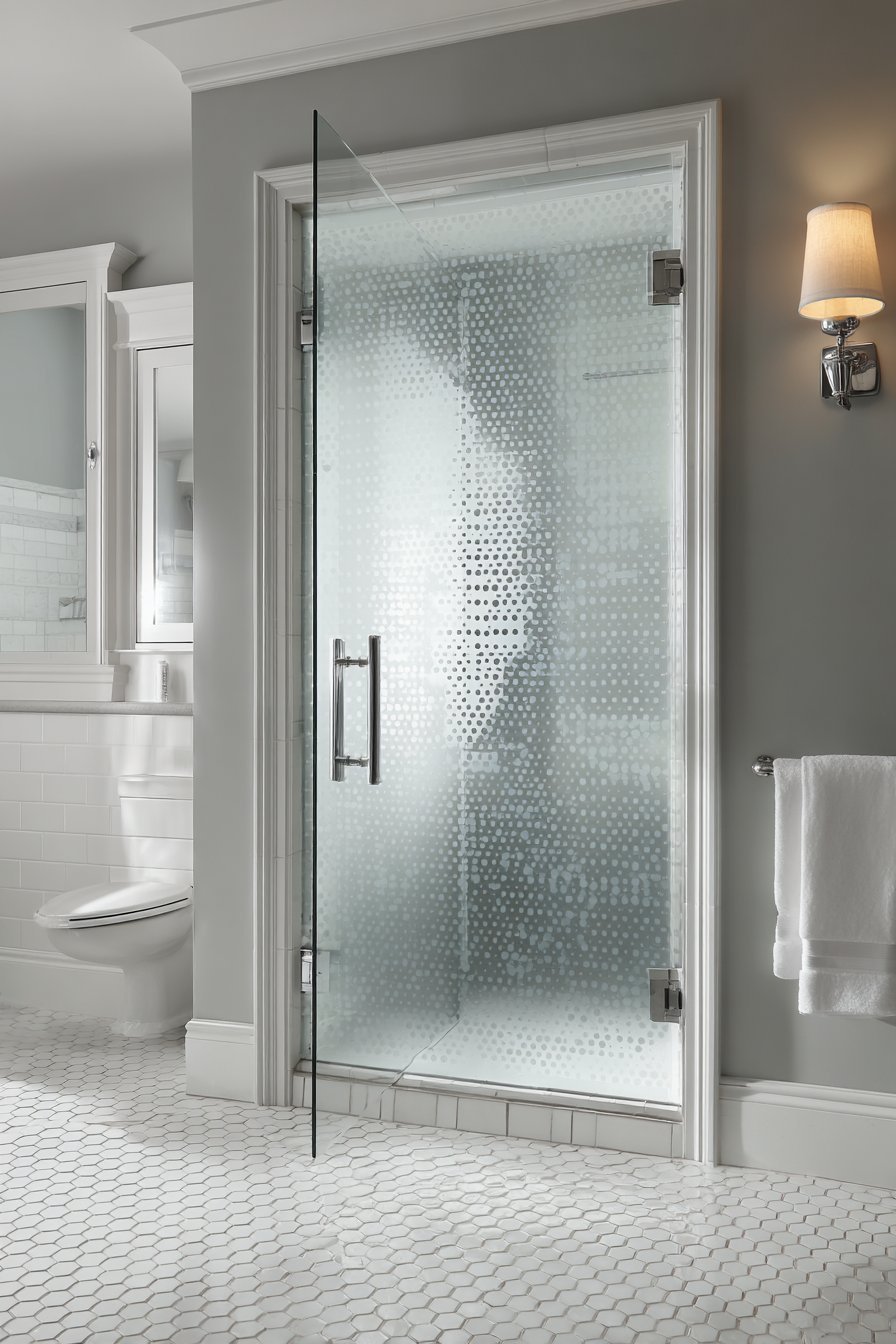
The rain pattern texture adds tactile interest without overwhelming the space. This subtle detailing elevates the door beyond basic functionality. The transitional styling bridges traditional and contemporary bathroom designs. Quality installation ensures smooth operation and proper alignment over time. This practical solution maintains dignity without sacrificing design quality.
Key Design Tips:
- Choose textured frosted glass for complete privacy with light transmission
- Match door hardware to other bathroom fixture finishes
- Install wall-mounted lighting that highlights glass texture beautifully
- Consider door swing direction for optimal space utilization
- Use same glass texture throughout bathroom for cohesive design
- Ensure adequate door width for comfortable accessibility
- Specify tempered glass for safety in bathroom applications
14. Bohemian Vintage Glass Doors to Garden
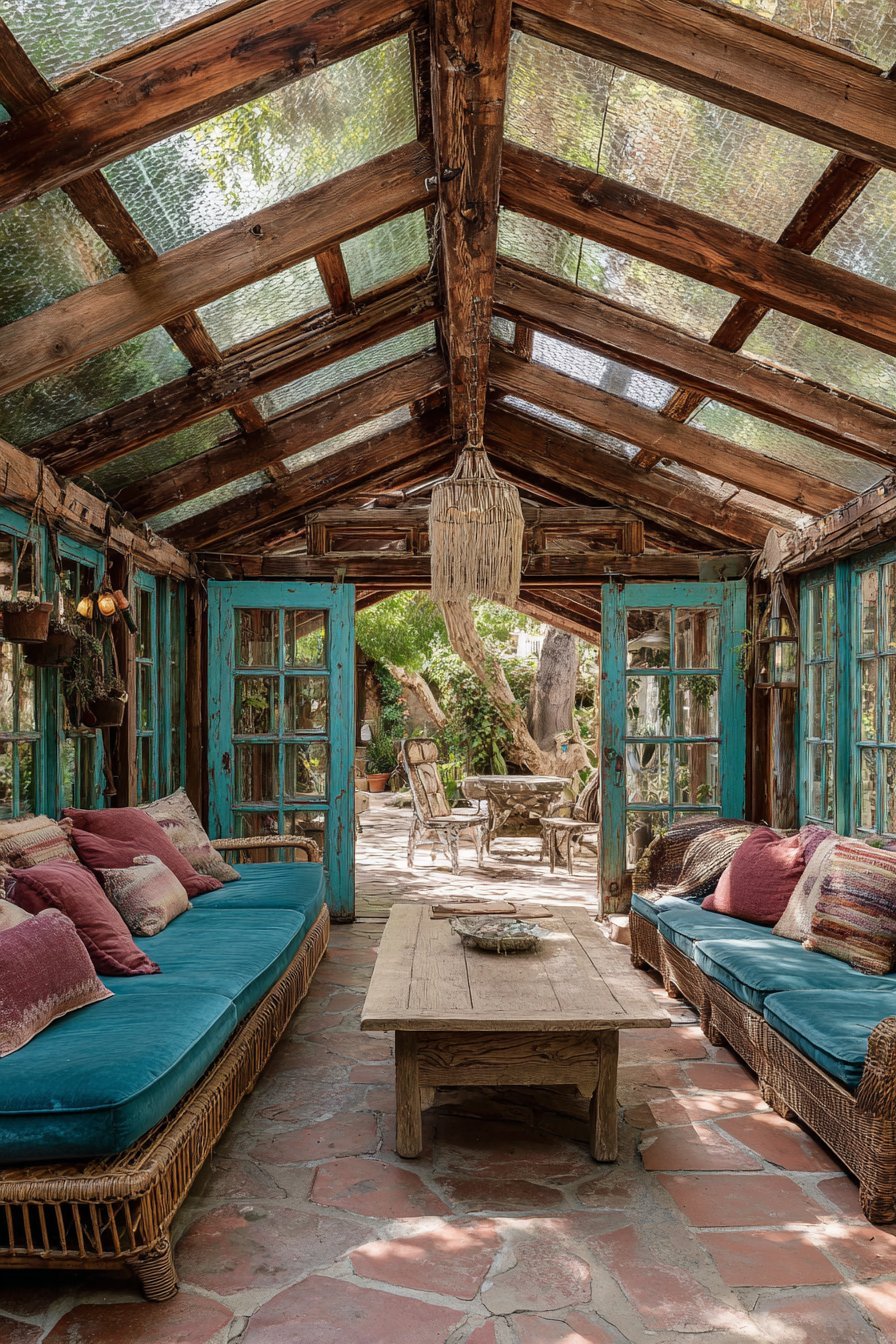
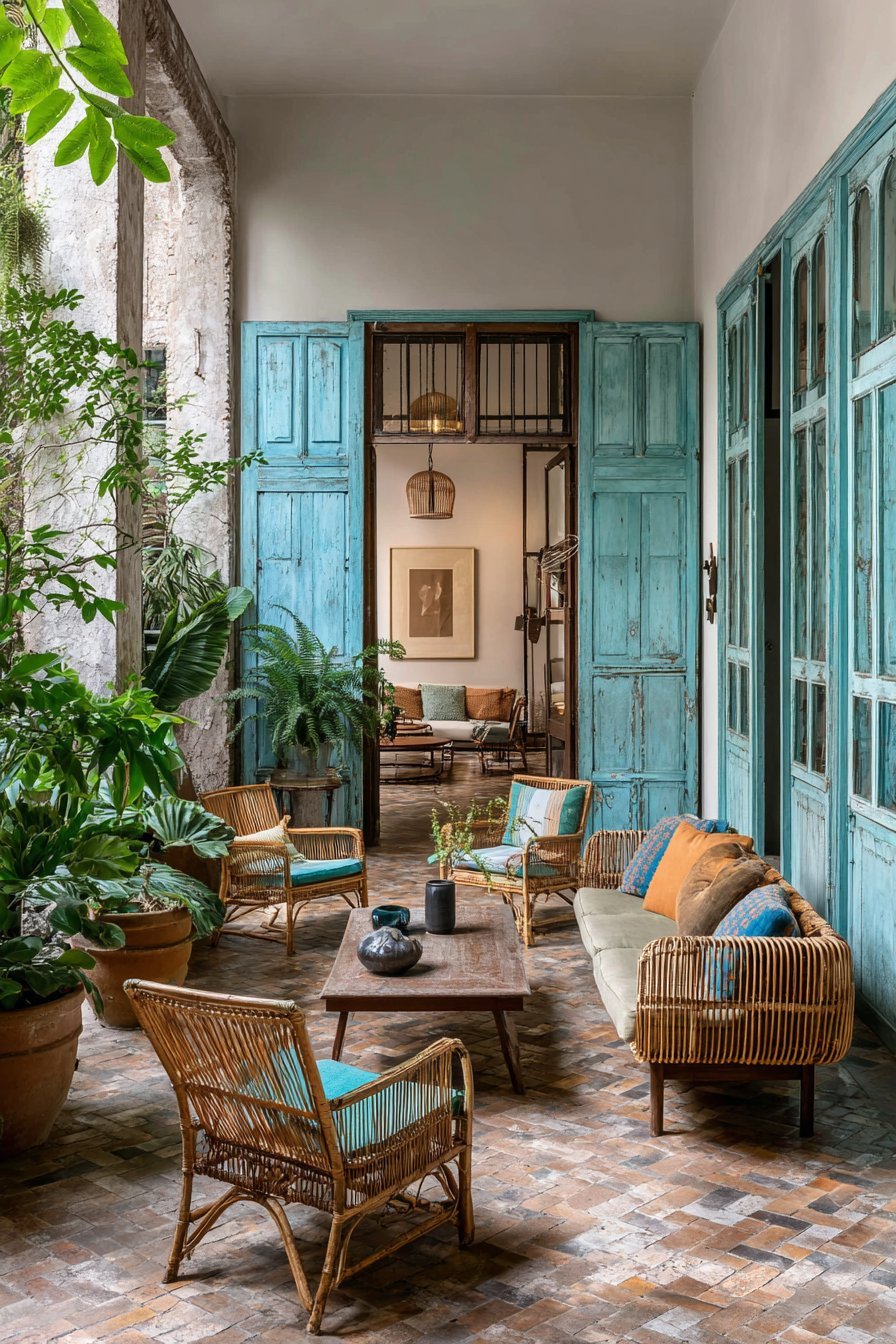
Vintage salvaged glass doors showcase original wavy glass panes with authentic character. Weathered wood frames painted in distressed turquoise create bohemian charm. The antique doors open to garden patio, connecting indoor plants with outdoor greenery. Rattan furniture with colorful cushions embraces an eclectic boho aesthetic.
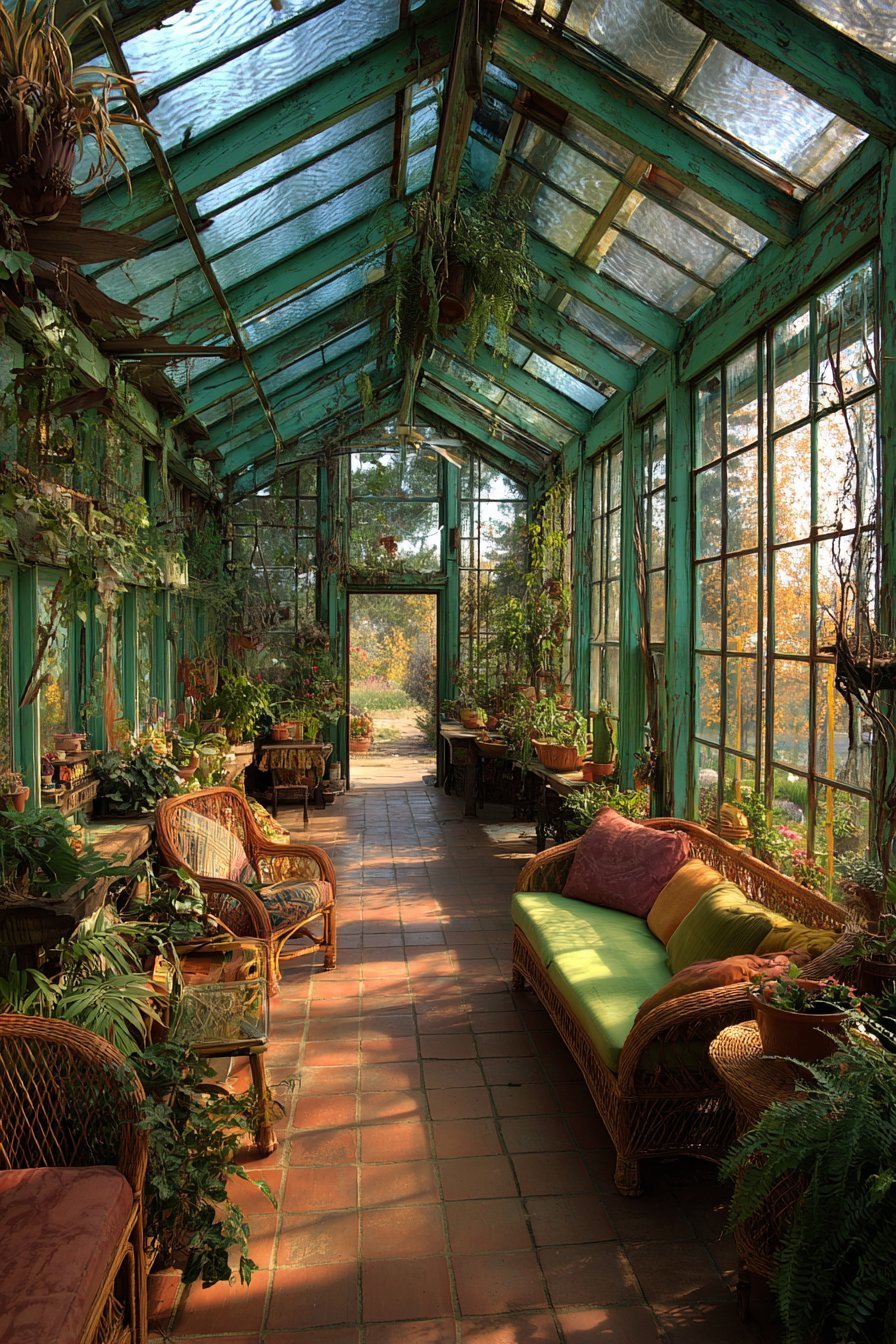
The original wavy glass contains organic irregularities impossible to replicate. Bubbles and imperfections in antique glass create unique light diffusion patterns. Terracotta tile flooring adds warmth and Mediterranean influence. Macramé wall hangings complete the collected-over-time bohemian atmosphere.
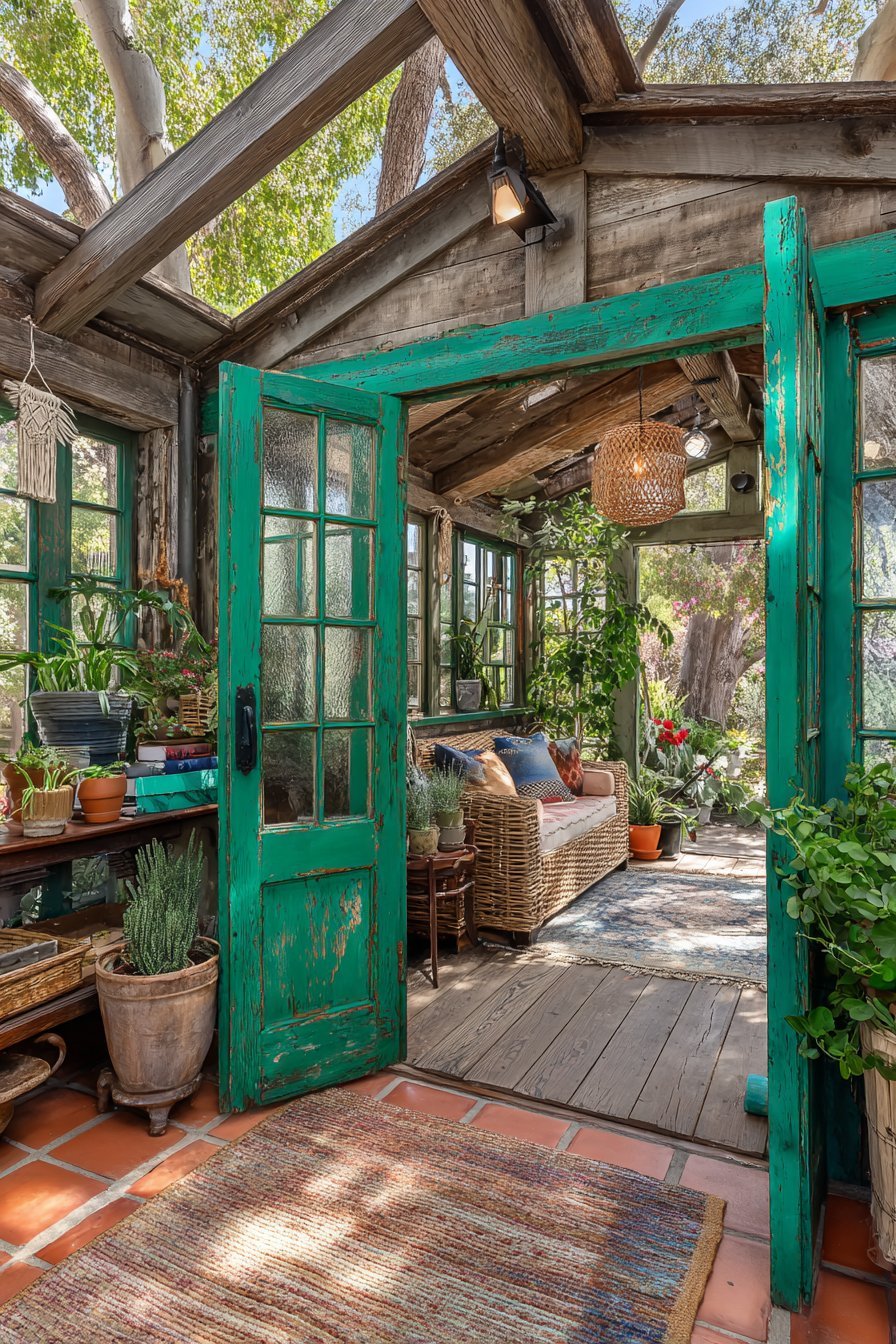
These salvaged doors represent sustainable design choices with unmatched personality. Each imperfection tells stories of decades of use. The turquoise paint shows intentional distressing revealing wood grain beneath. Natural afternoon light through wavy glass creates an ethereal quality. This approach suits creative spirits valuing authenticity over perfection.
Key Design Tips:
- Source salvaged doors from architectural salvage yards
- Embrace imperfections as character-adding features
- Use distressed paint finishes for an authentic vintage appearance
- Combine with eclectic furniture for cohesive bohemian style
- Ensure salvaged doors meet current safety and security needs
- Consider professional restoration for structural soundness
- Celebrate unique glass characteristics rather than seeking uniformity
15. Luxury Home Gym Sound-Dampening Glass Doors
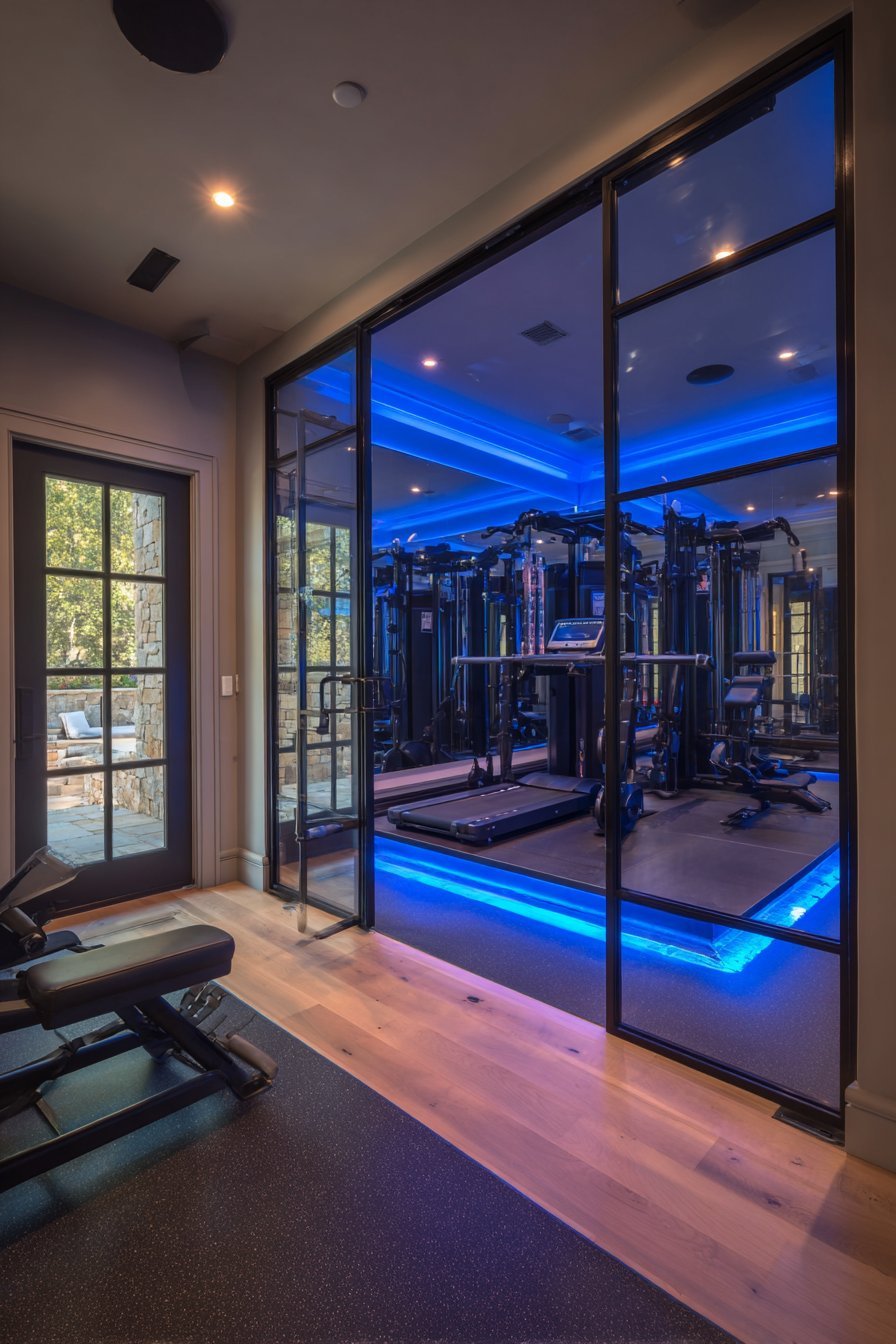
Full-height glass doors with sound-dampening properties separate dedicated fitness spaces. Black powder-coated aluminum frames provide contemporary industrial aesthetics. The transparent closure allows visual connection while providing acoustic isolation. Rubber flooring and mirrored walls reflect professional gym equipment beyond glass.
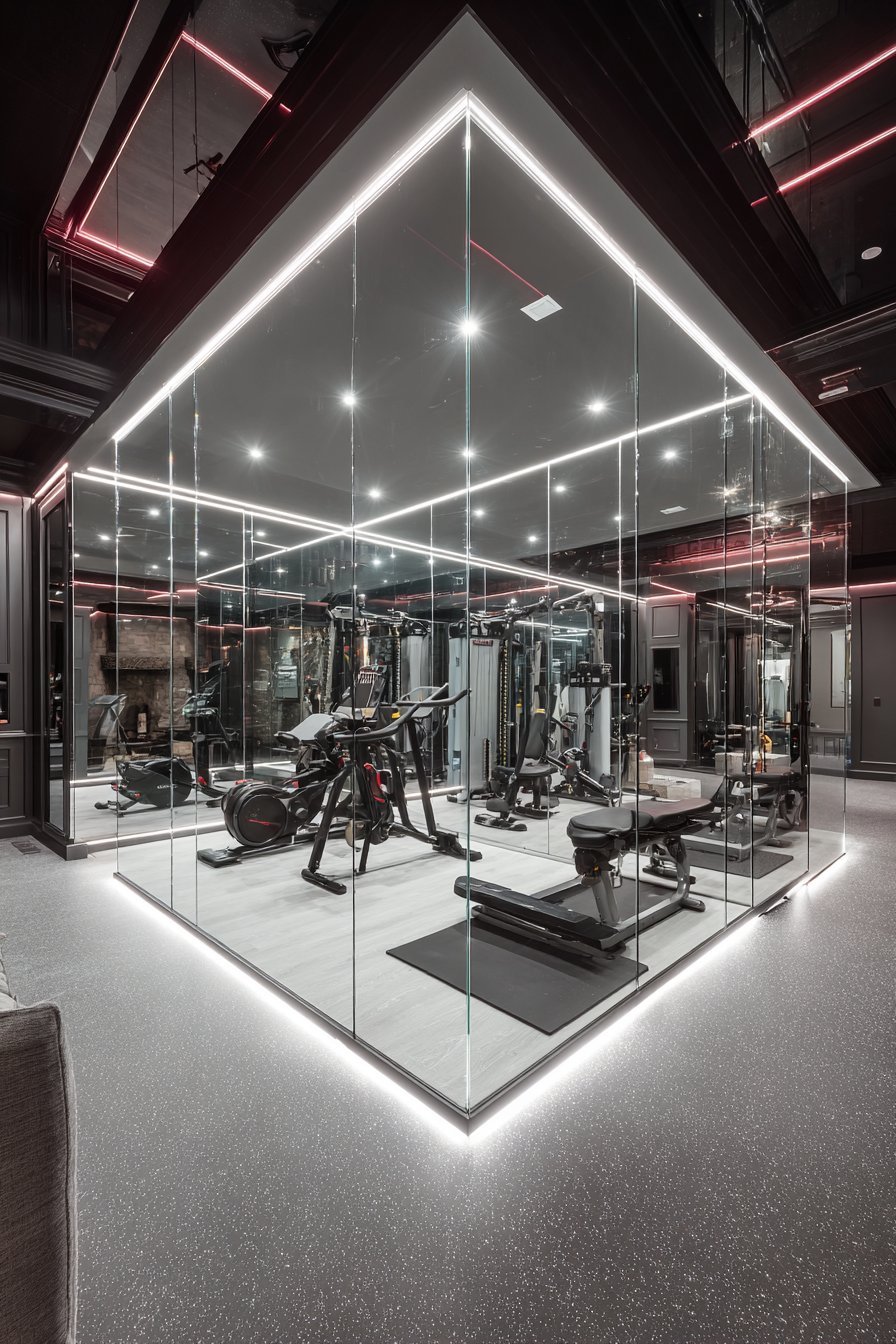
The specialized glass construction reduces sound transmission between spaces. This allows simultaneous activities without disturbing adjacent rooms. LED strip lighting along ceiling creates energizing ambiance for workouts. The transparency maintains openness while defining the gym as separate zone.
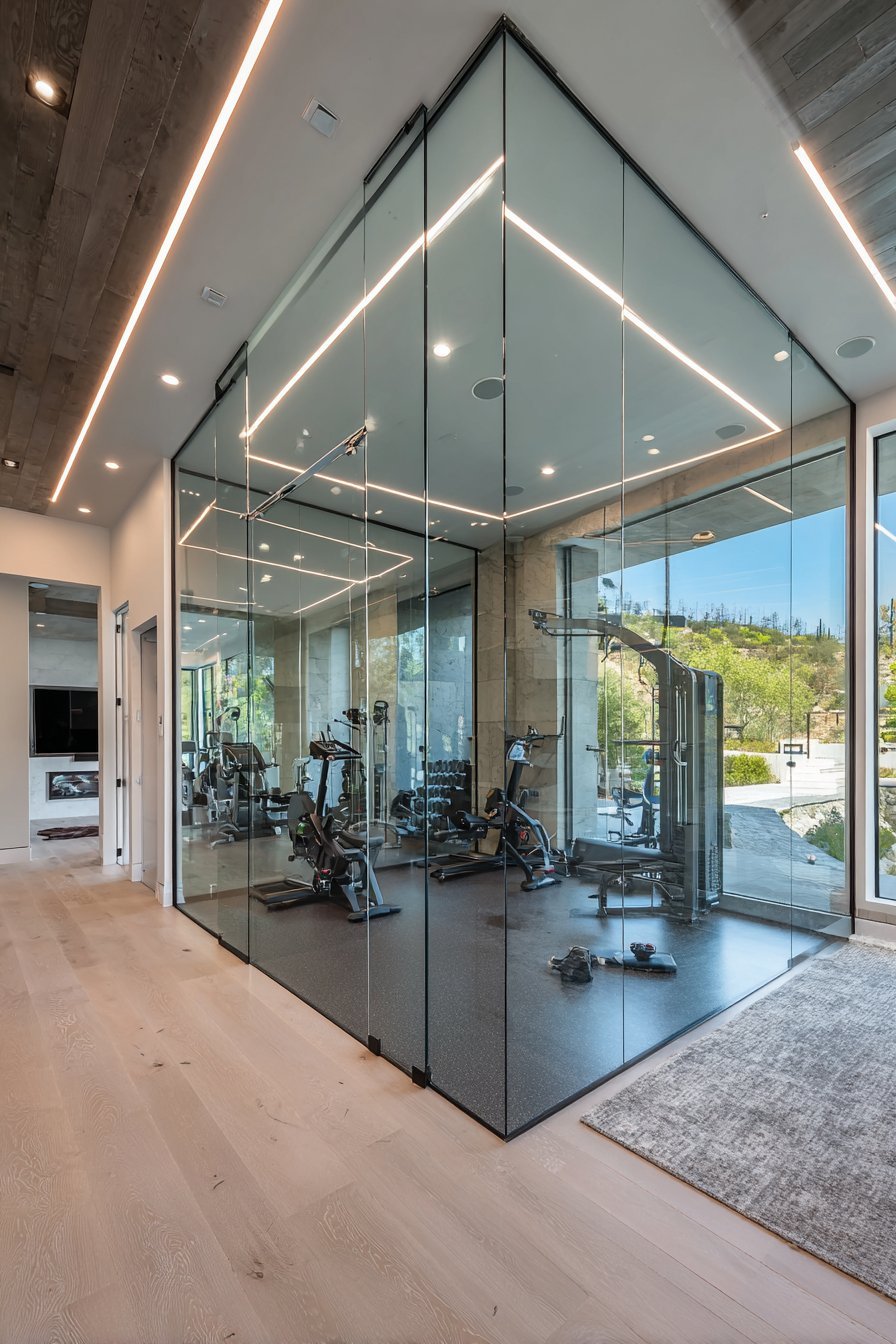
These doors represent investment in both fitness and home design quality. The sound dampening proves especially valuable in multi-use households. Visual connection through glass encourages regular gym use. Family members can monitor workout progress or join activities. The professional appearance motivates consistent fitness routines.
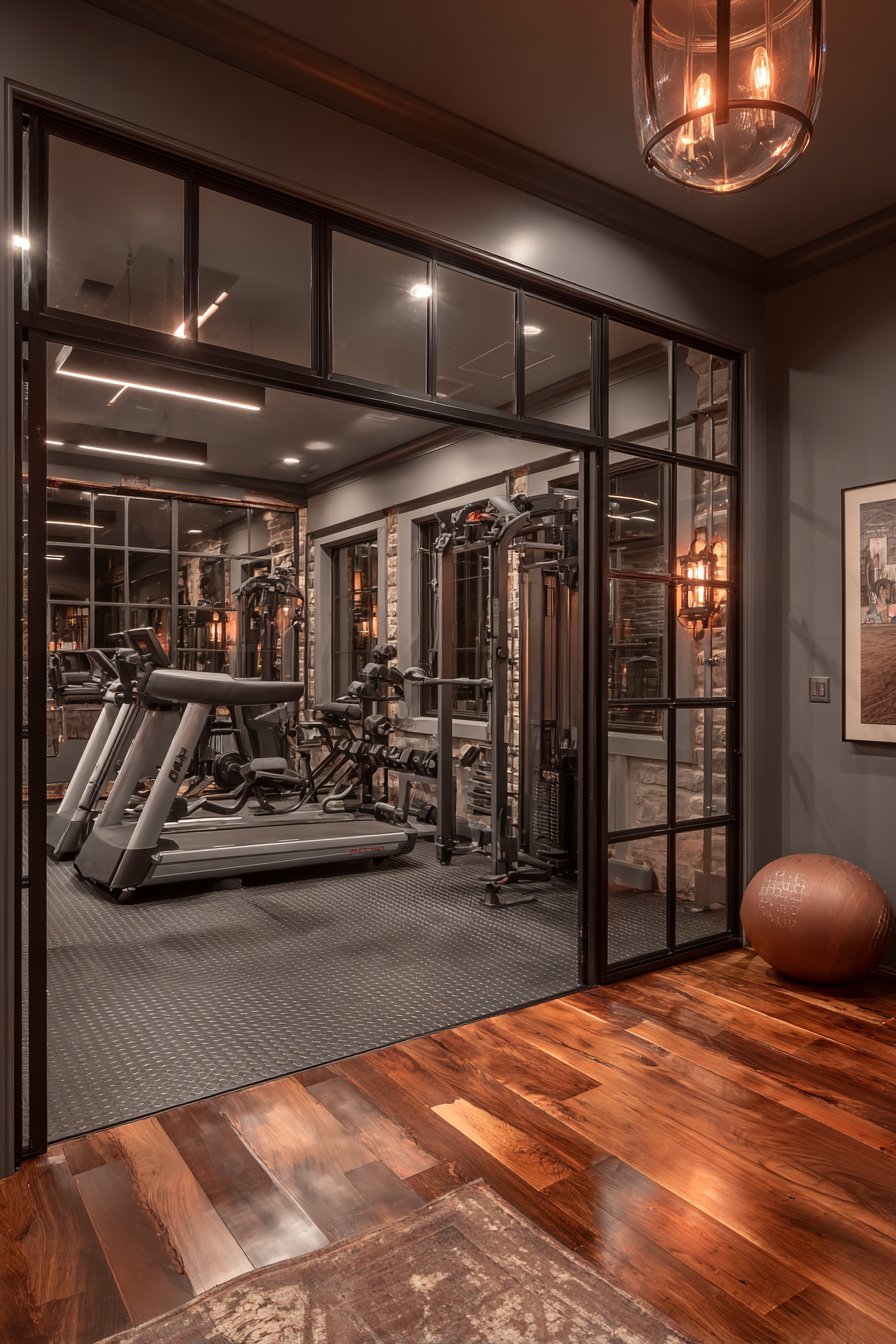
Key Design Tips:
- Specify laminated glass for enhanced sound reduction properties
- Choose durable frame finishes appropriate for gym environments
- Ensure adequate ventilation despite sound-dampening construction
- Install proper door sealing for optimal acoustic performance
- Consider privacy glass options if needed for certain exercises
- Select hardware rated for frequent daily operation
- Maintain glass cleanliness in high-humidity workout environments
16. Craftsman Leaded Glass Cabinet Doors
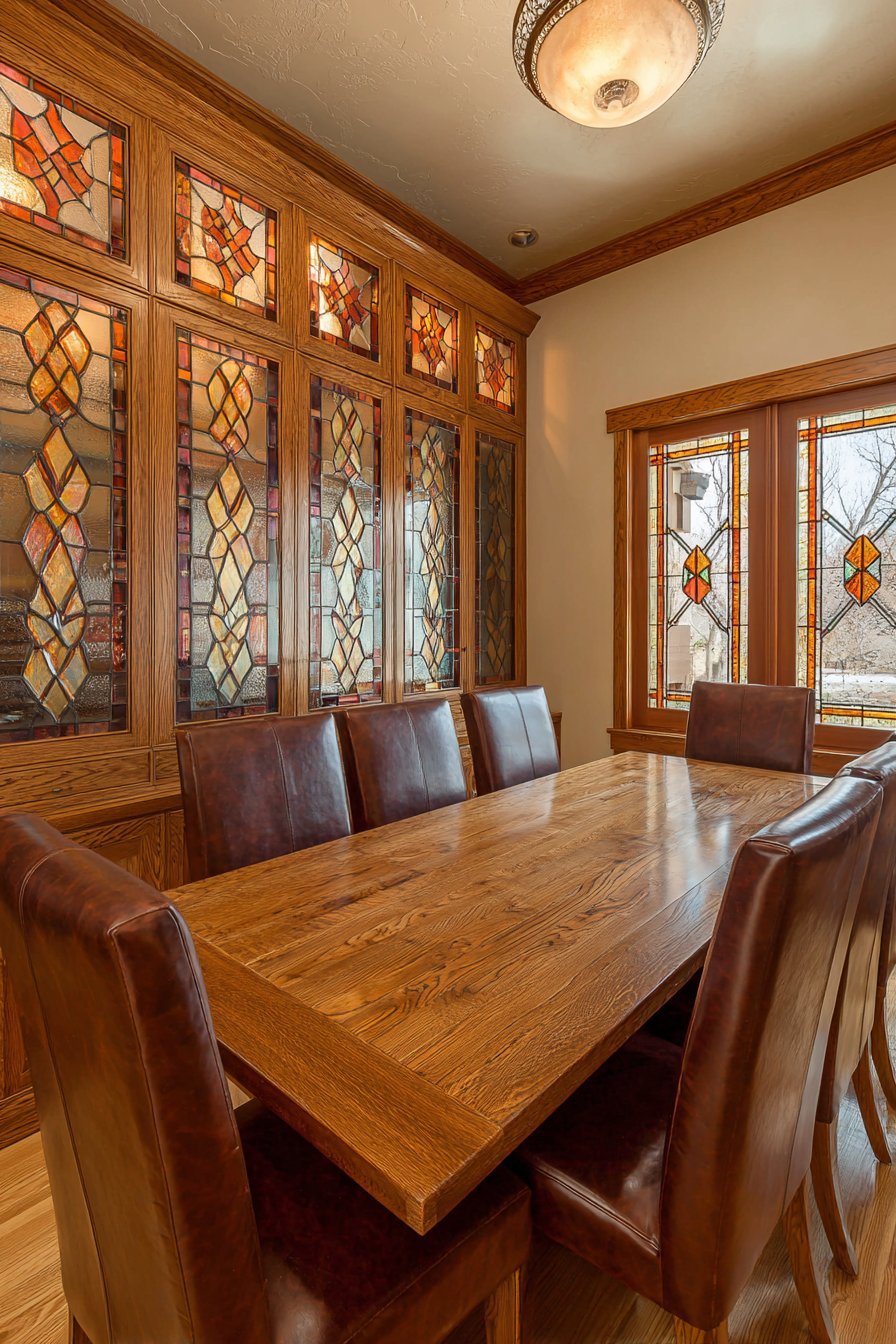
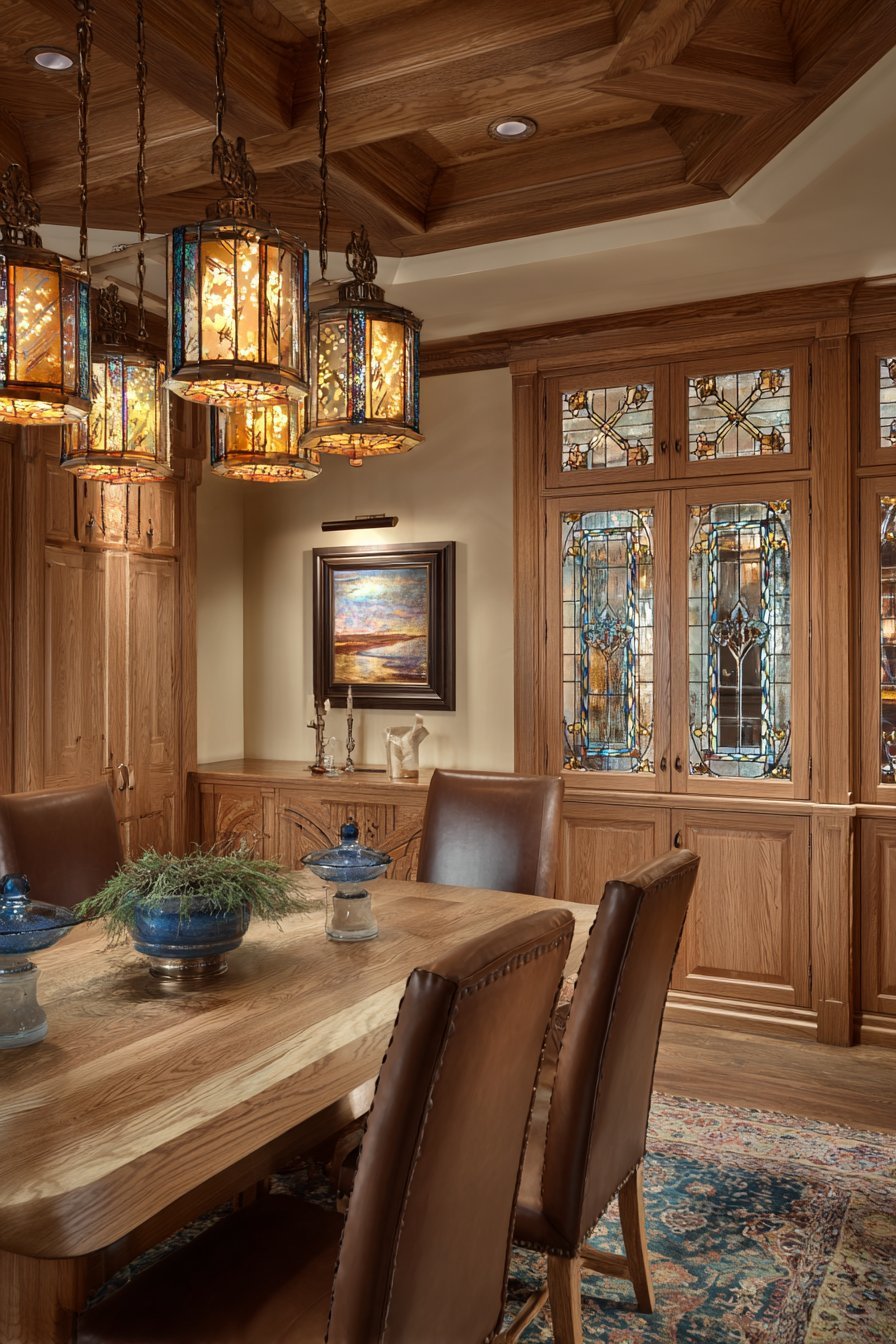
Glass-paned cabinet doors featuring leaded glass showcase arts-and-crafts heritage. Geometric patterns combine amber and clear glass sections. Quarter-sawn oak cabinetry houses china and serving pieces visible through decorative glass. Mission-style dining table with leather-seated chairs centers the craftsman room.
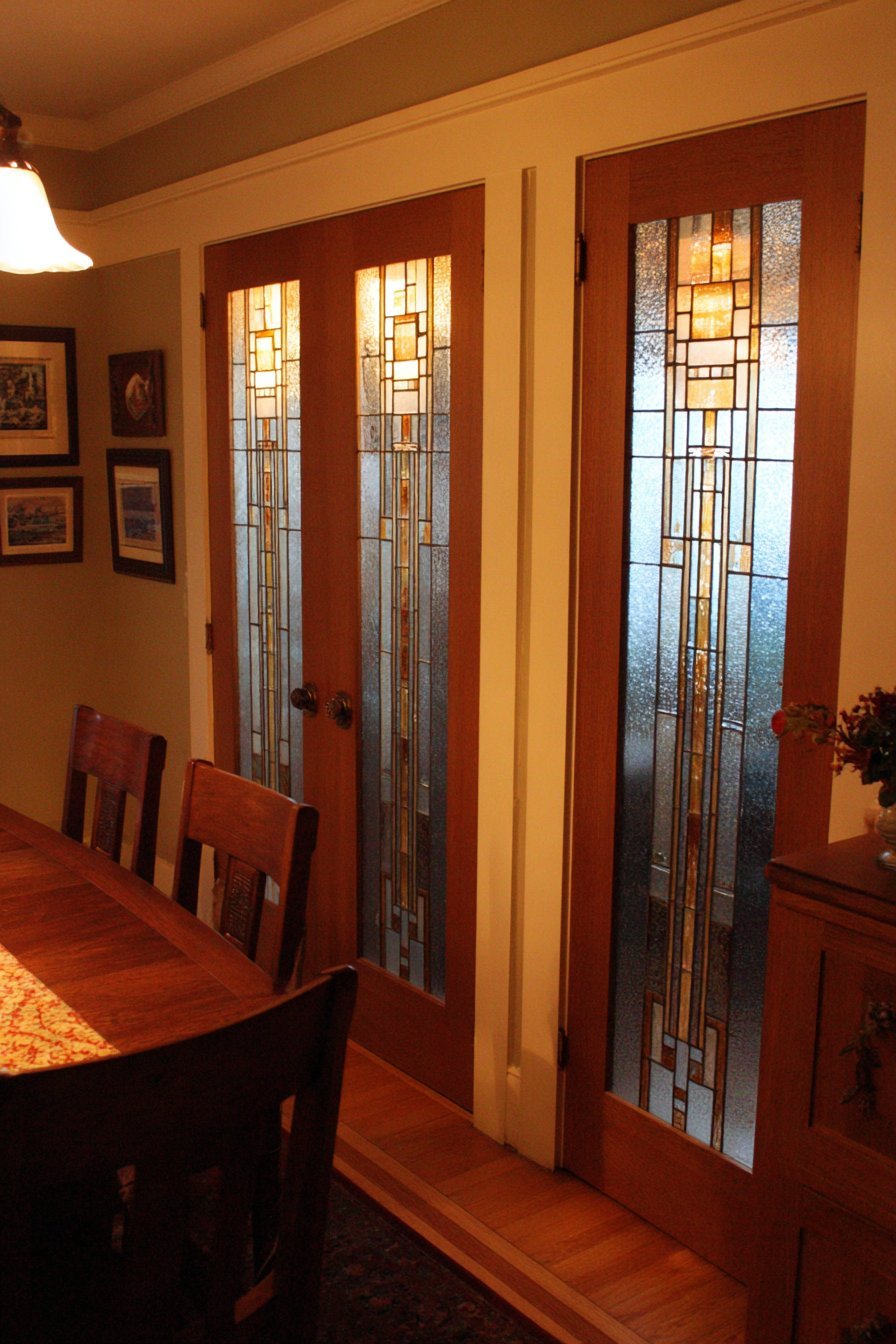
The leaded glass represents skilled artisan work characteristic of the period. Amber glass sections create jewel-toned reflections when backlit. Crown molding and picture rail molding add authentic period details. Warm interior lighting transforms the glass into glowing focal points.
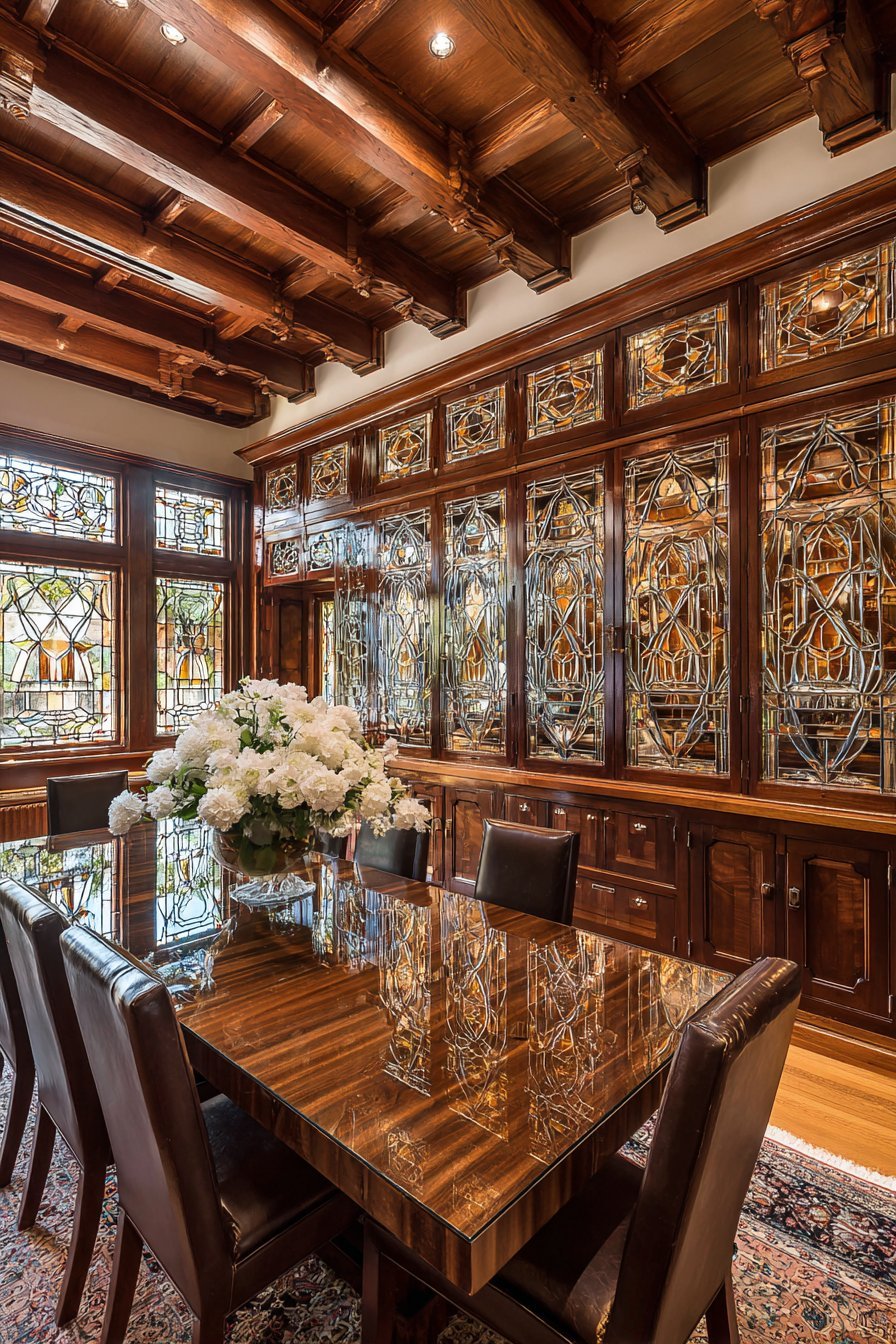
This traditional approach elevates utilitarian storage into artistic display. The geometric patterns reflect prairie school design philosophy. Quarter-sawn oak grain patterns complement the leaded glass beautifully. These custom cabinets represent significant investment in quality and authenticity. The result creates timeless appeal that transcends trendy design movements.
Key Design Tips:
- Commission custom leaded glass from qualified artisans
- Choose patterns appropriate to craftsman design principles
- Use amber glass strategically for warm, inviting illumination
- Match cabinet wood species to other room millwork
- Install interior cabinet lighting to showcase glass work
- Maintain leaded glass with gentle cleaning methods
- Consider reproduction hardware true to craftsman period
17. Frameless Pivot Glass Shower Door
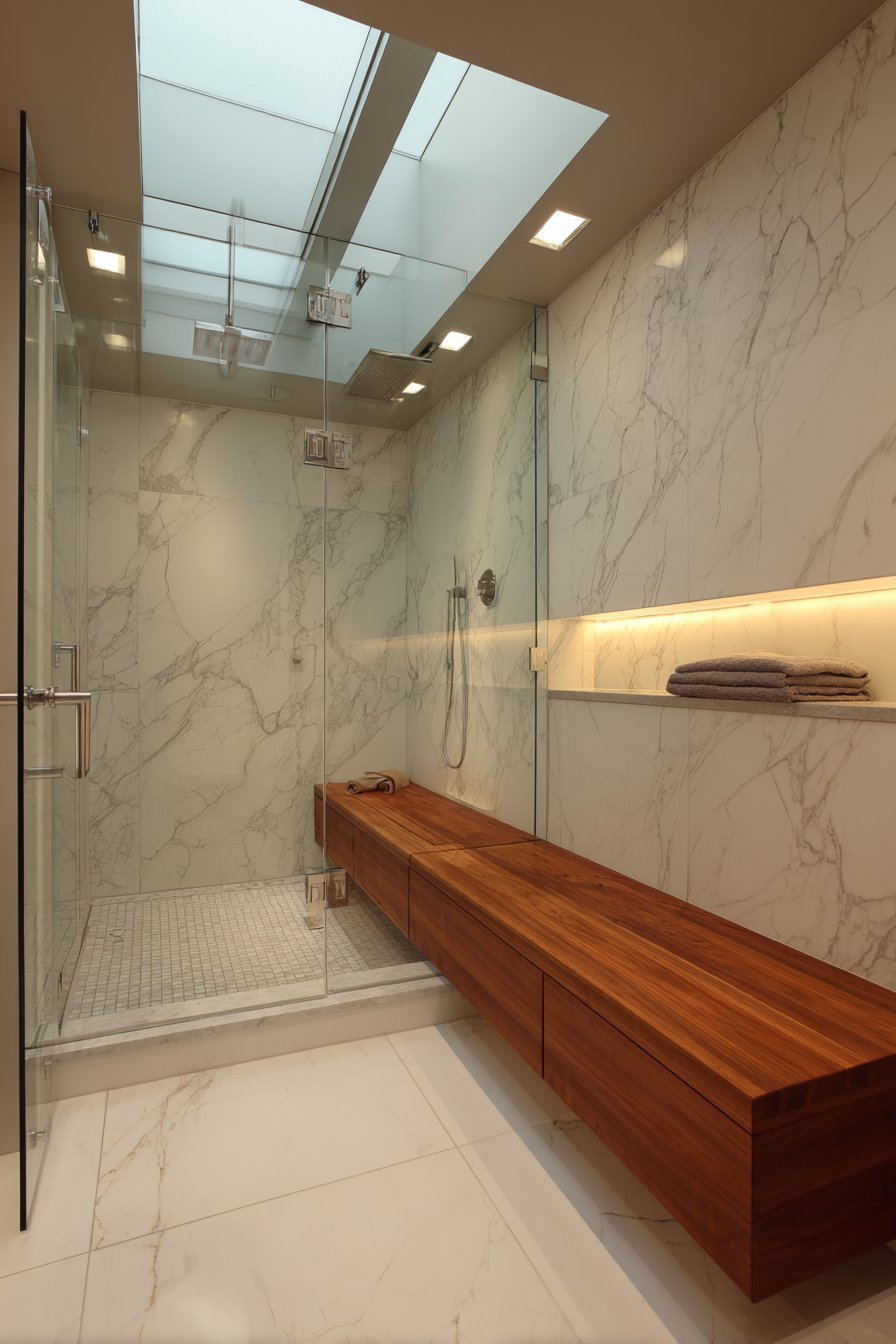
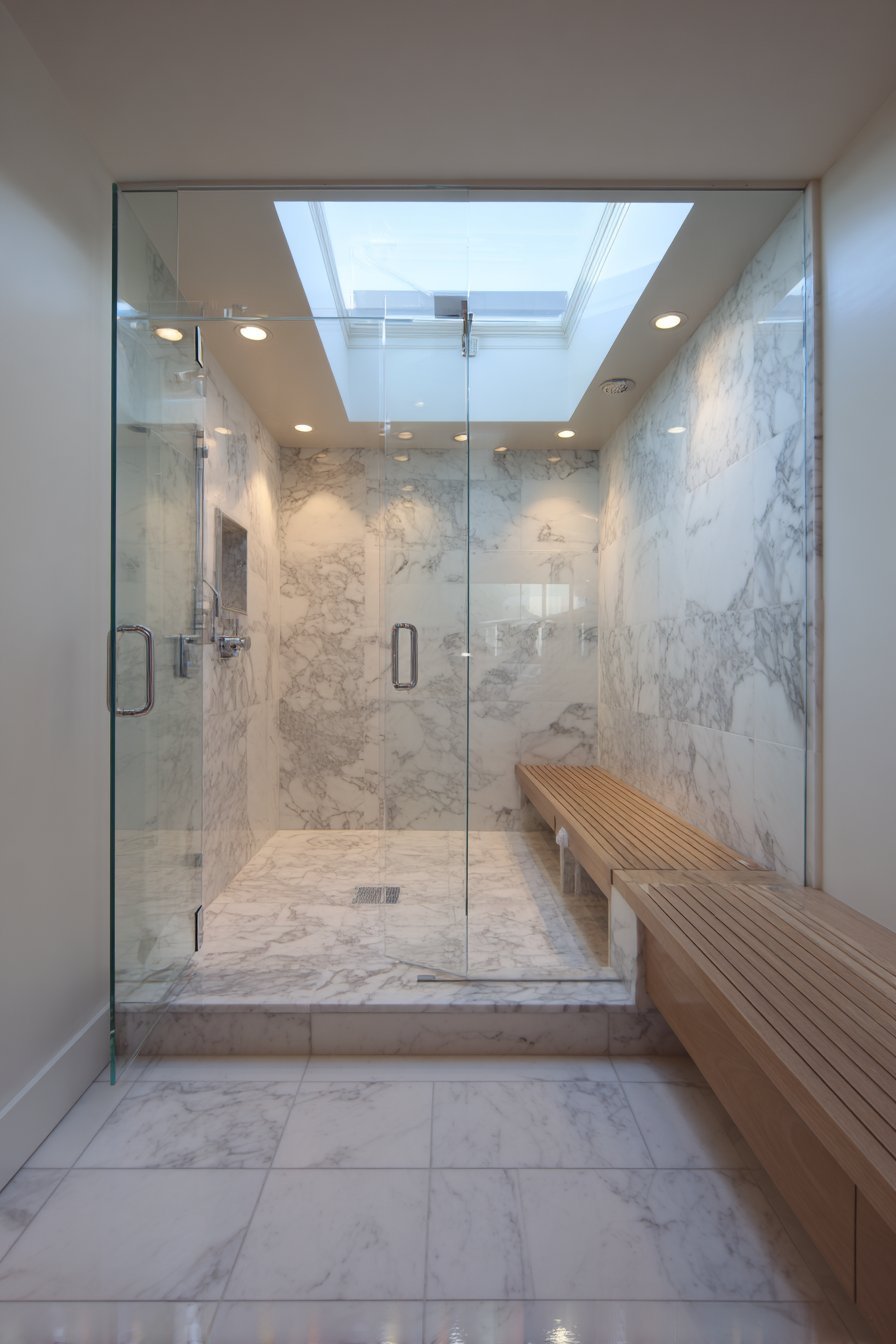
Pivot glass shower door in frameless design showcases ultimate bathroom luxury. Minimal chrome hardware supports half-inch thick ultra-clear low-iron glass. The pivot mechanism allows smooth opening into spacious shower area. Large-format porcelain slabs in marble-look finish line the enclosure.
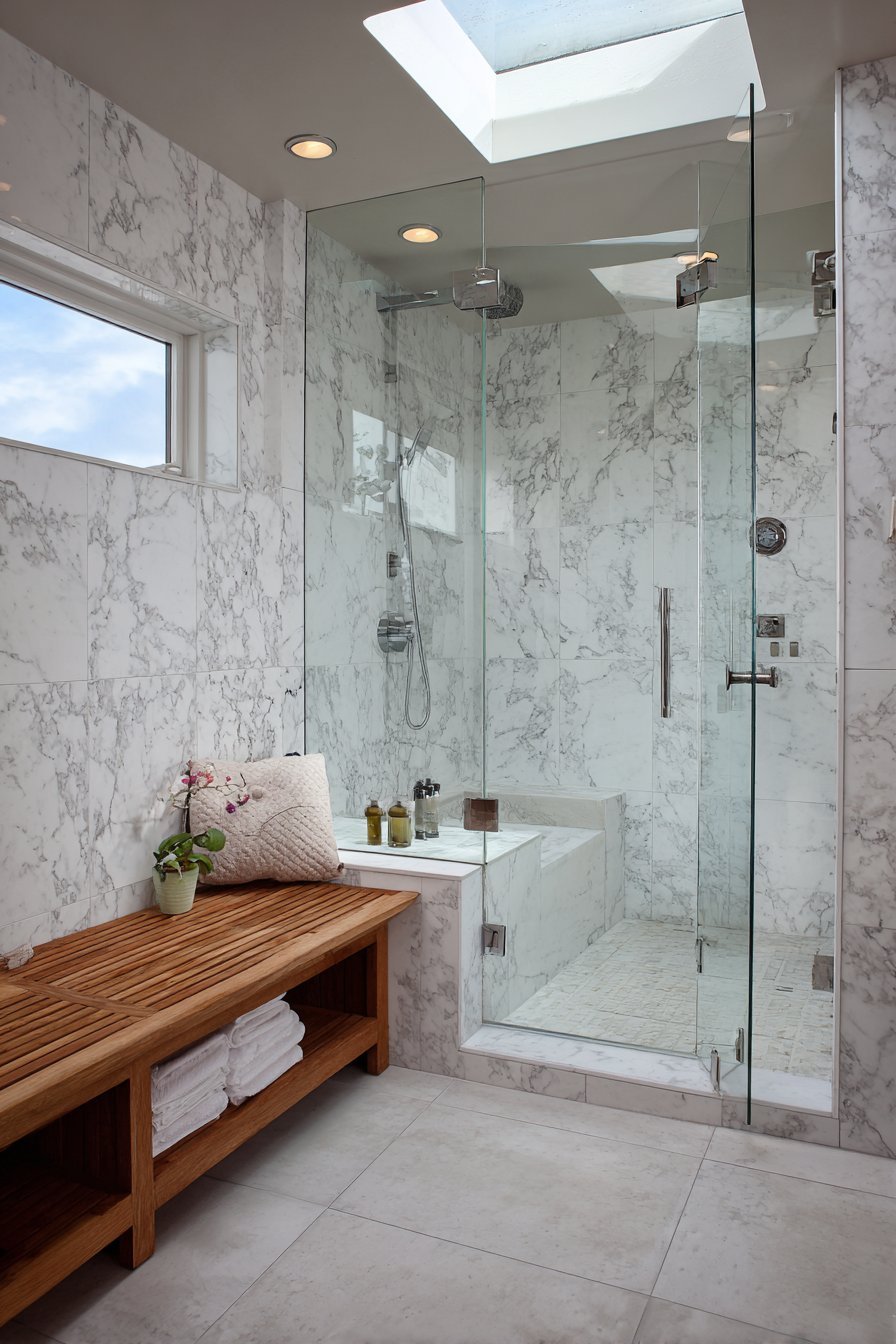
Built-in teak bench and rainfall shower system gleam behind crystal-clear glass. The frameless design eliminates visual barriers for seamless appearance. Natural light from skylight creates highlights on wet glass surfaces. Ultra-clear low-iron glass contains minimal greenish tint for truest transparency.
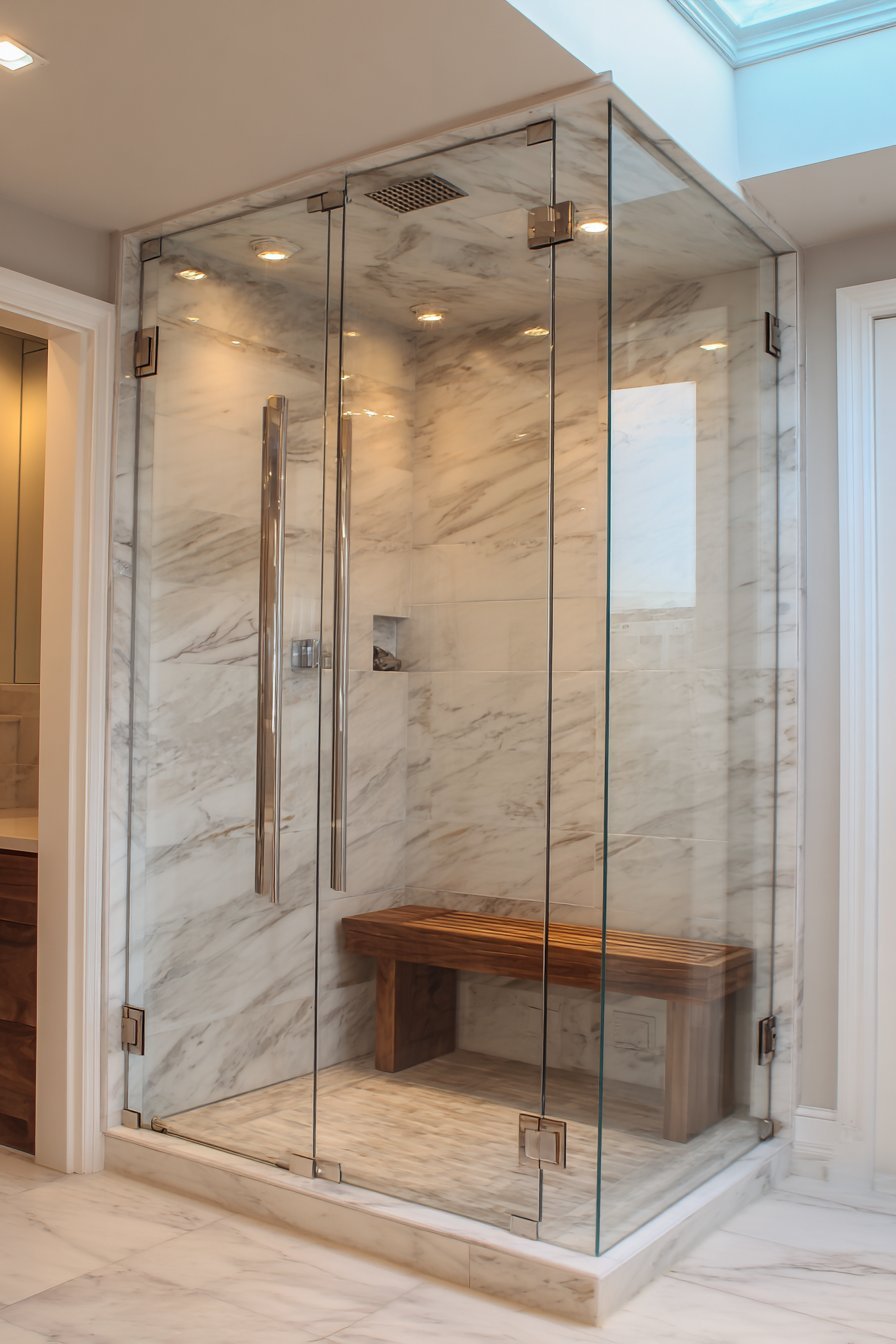
The pivot mechanism represents engineering excellence in bathroom design. Proper counterbalancing ensures effortless door operation despite substantial glass weight. Quality installation prevents water leakage while maintaining clean aesthetics. This shower enclosure becomes the bathroom’s primary architectural feature. The transparency showcases premium tile and fixture selections beautifully.
Key Design Tips:
- Specify ultra-clear low-iron glass for premium transparency
- Choose substantial glass thickness for reduced flex and improved safety
- Install professional-grade pivot hardware for reliable operation
- Ensure proper floor support for pivot mechanism weight
- Use daily squeegee routine to maintain pristine appearance
- Consider glass coating for easier water spot prevention
- Plan shower layout allowing proper door swing clearance
18. Rustic Barn Door with Wire Glass
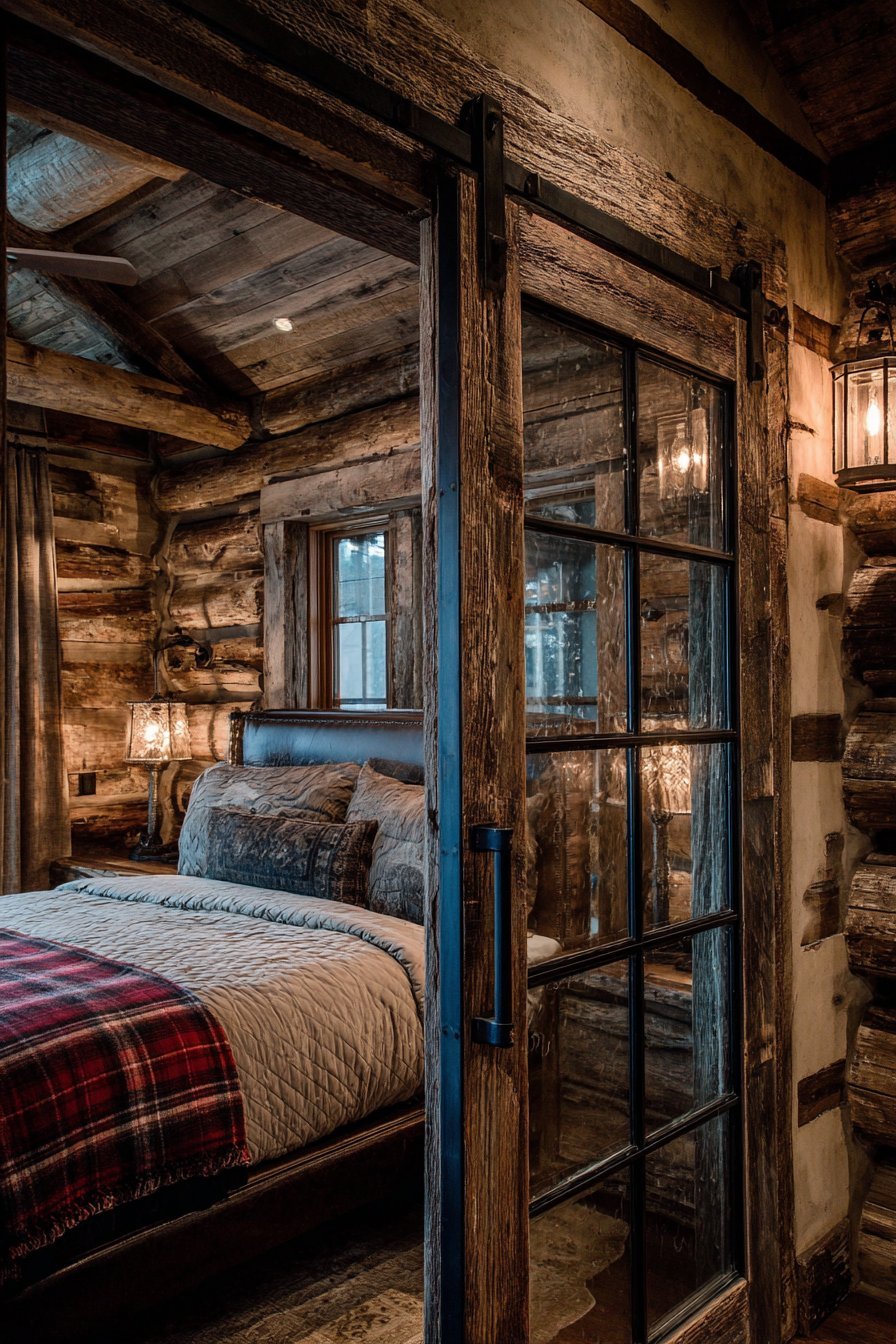
Reclaimed wood sliding barn door features chicken wire glass panels. The vintage industrial character combines transparency with rustic authenticity. Heavy-duty black iron hardware supports the substantial door weight. Exposed log walls and plaid wool bedding create cozy cabin atmosphere.
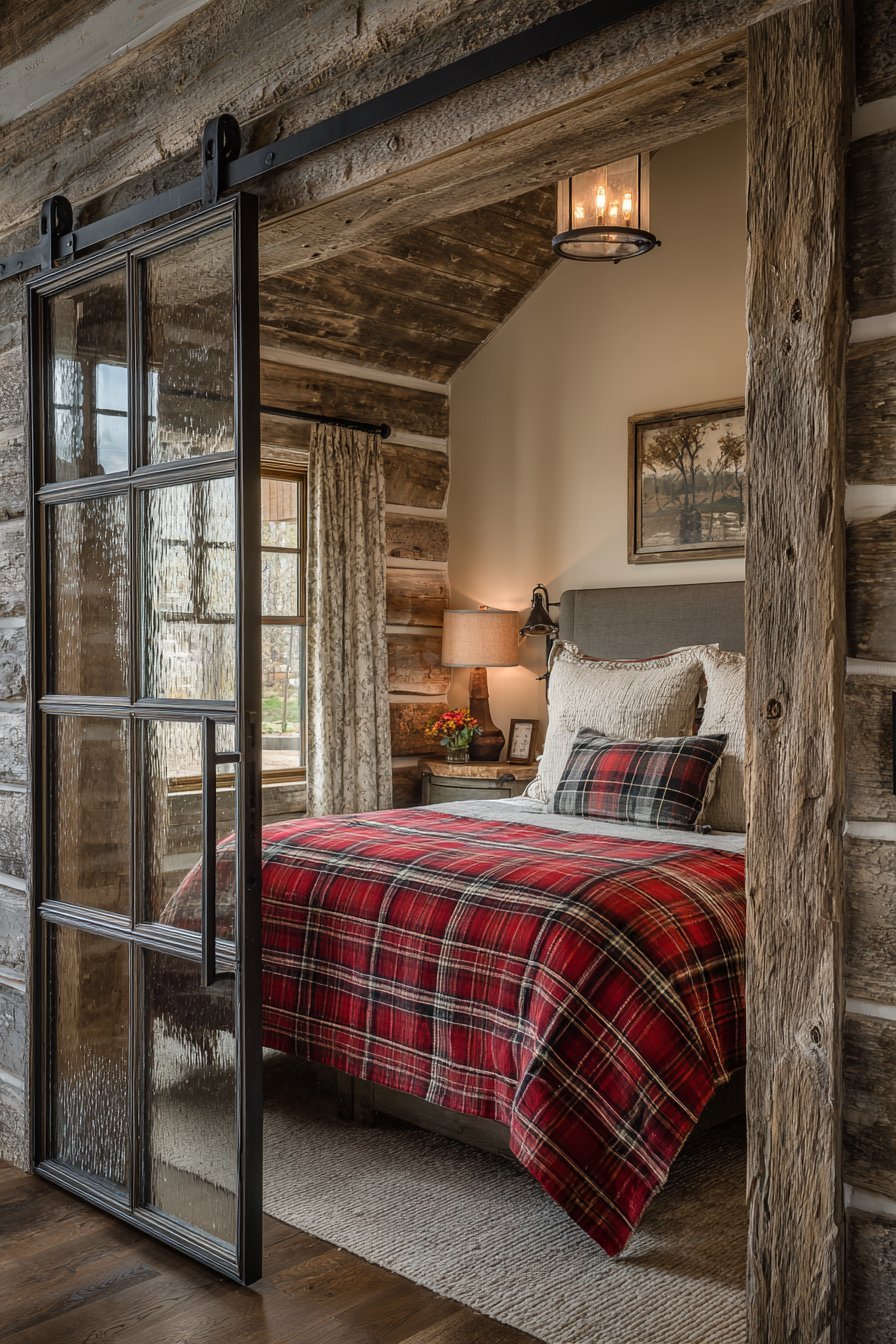
The chicken wire reinforcement adds texture and historical reference. This glass treatment suits rustic and industrial design approaches equally. Vintage lantern-style lighting illuminates the door’s textural contrasts. The door separates sleeping area from the en-suite bathroom while maintaining openness.
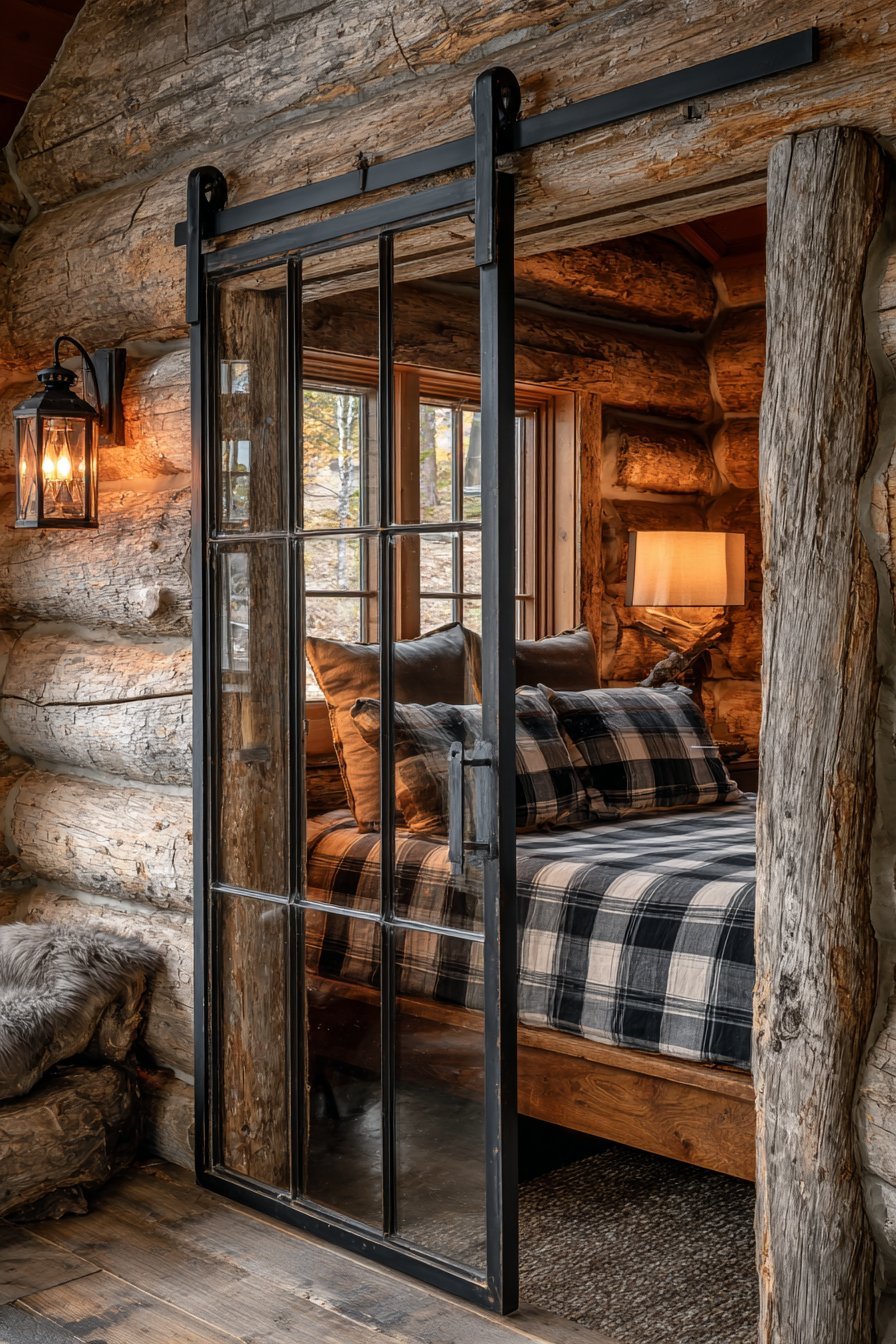
Rough-hewn wood frame showcases natural grain patterns and weathering. The wire-reinforced glass provides durability appropriate for active households. Warm ambient lighting emphasizes the door’s characterful materials. This design approach celebrates imperfection and authentic materials. The result feels collected and curated rather than purchased complete.
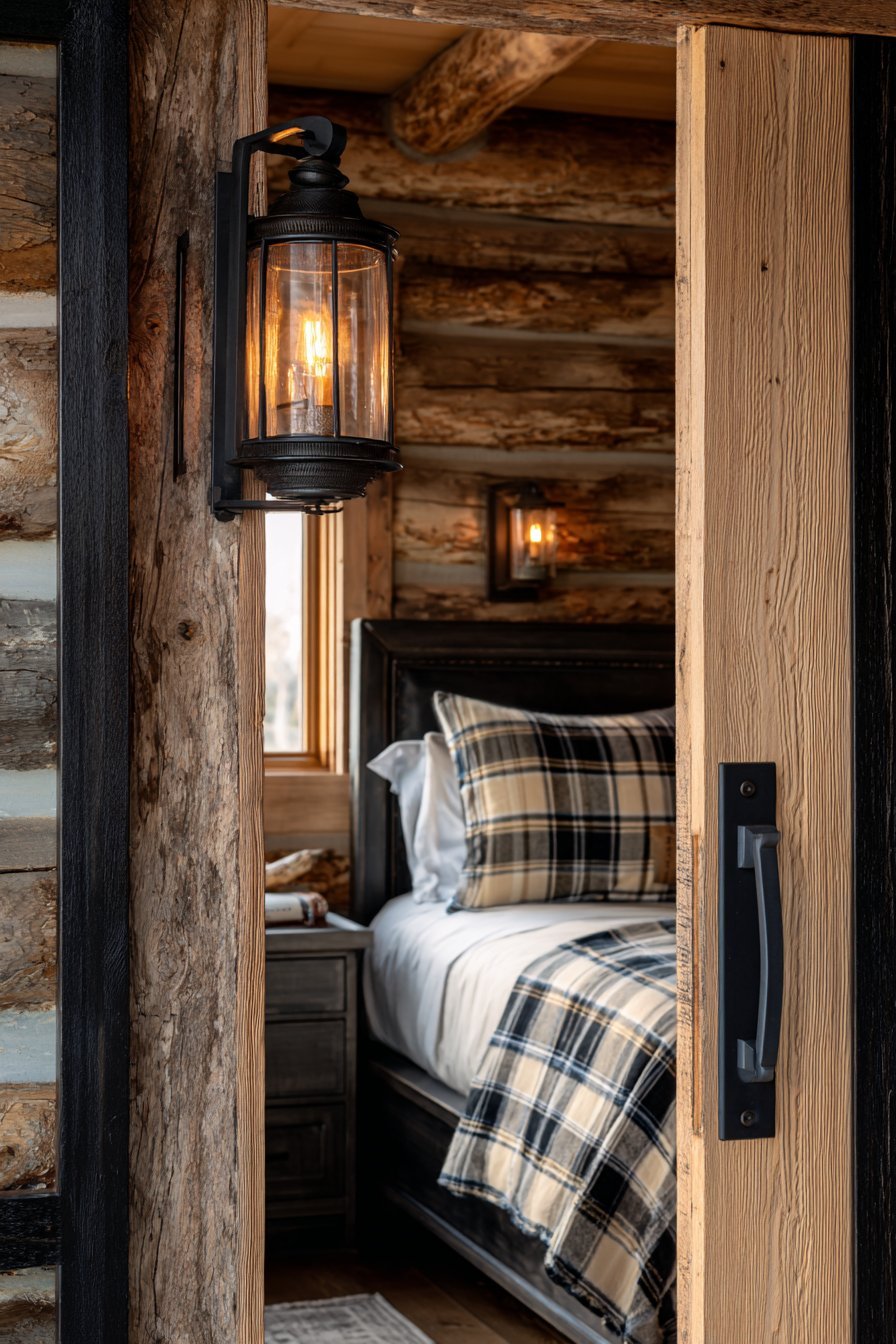
Key Design Tips:
- Source reclaimed wood with authentic weathering and patina
- Choose wire glass appropriate for interior applications
- Install heavy-duty hardware rated for substantial door weight
- Embrace wood imperfections as character-adding features
- Use warm lighting to highlight textural contrasts
- Ensure proper wall mounting for barn door track system
- Consider professional installation for heavy reclaimed wood doors
19. Japanese Shoji-Style Glass Doors
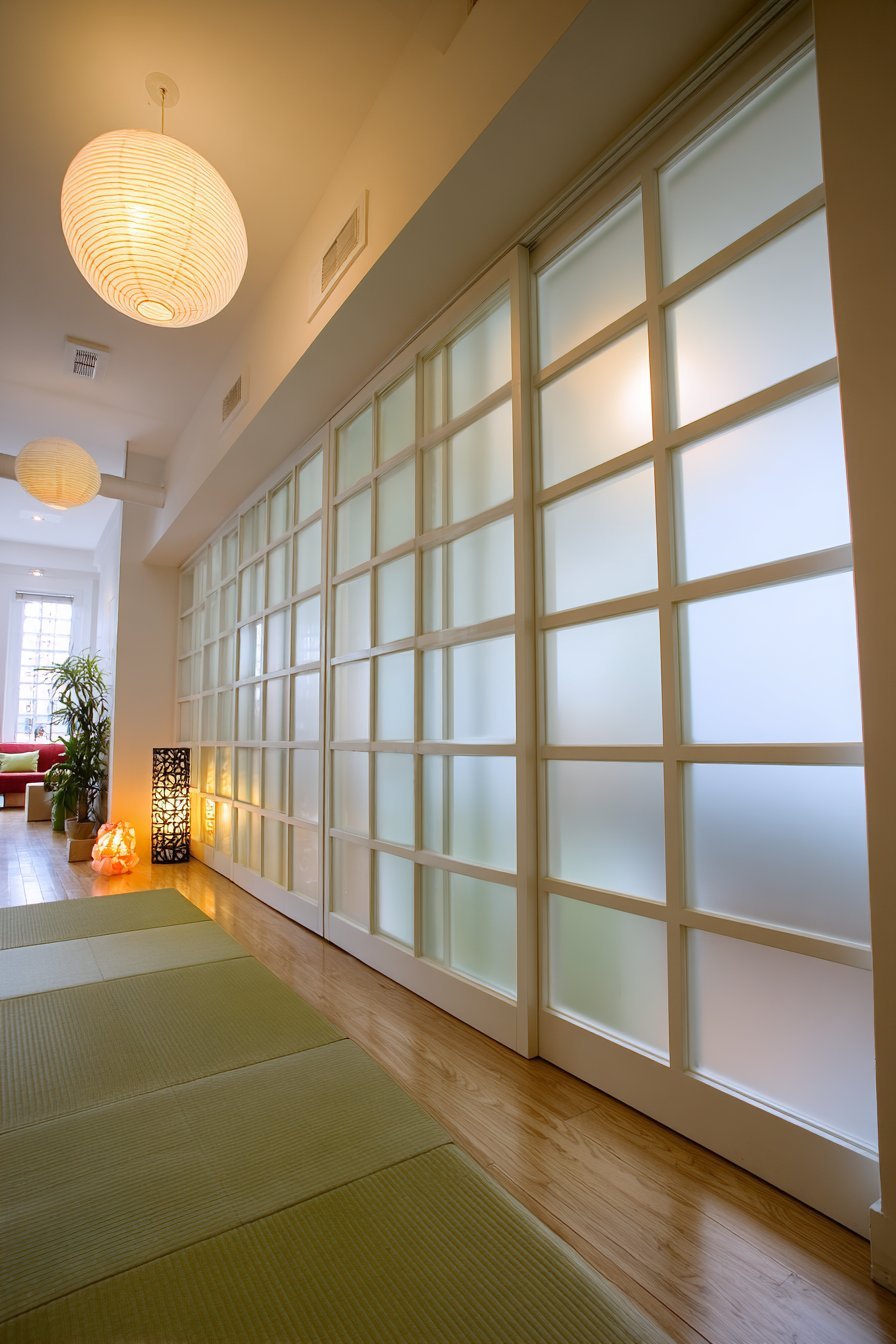
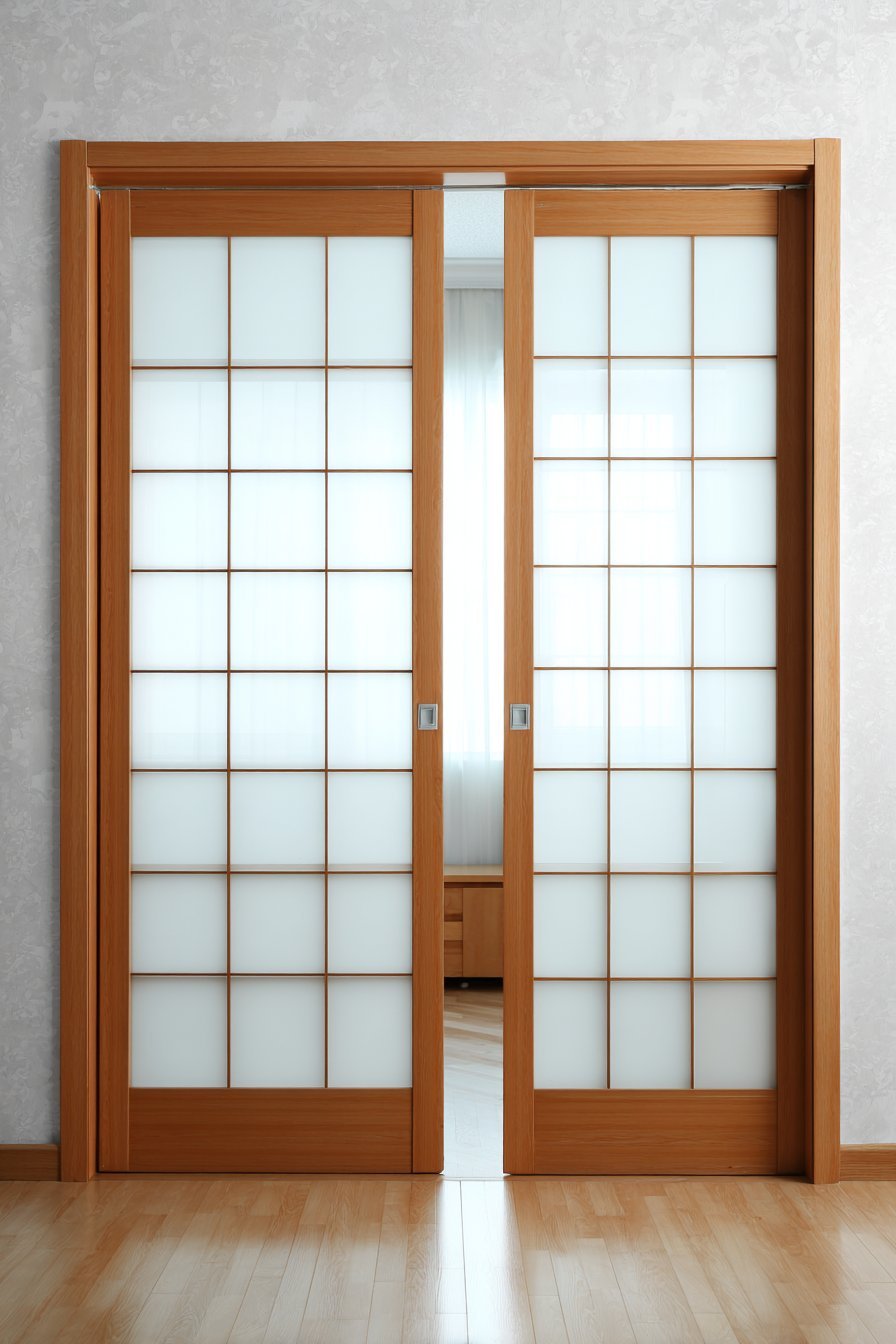
Minimalist shoji-style glass sliding doors feature white painted wood frames. Frosted glass panels sit within traditional grid pattern framework. The doors separate main living area from meditation room or guest space. Tatami mat flooring and low-profile furniture maintain zen aesthetic.
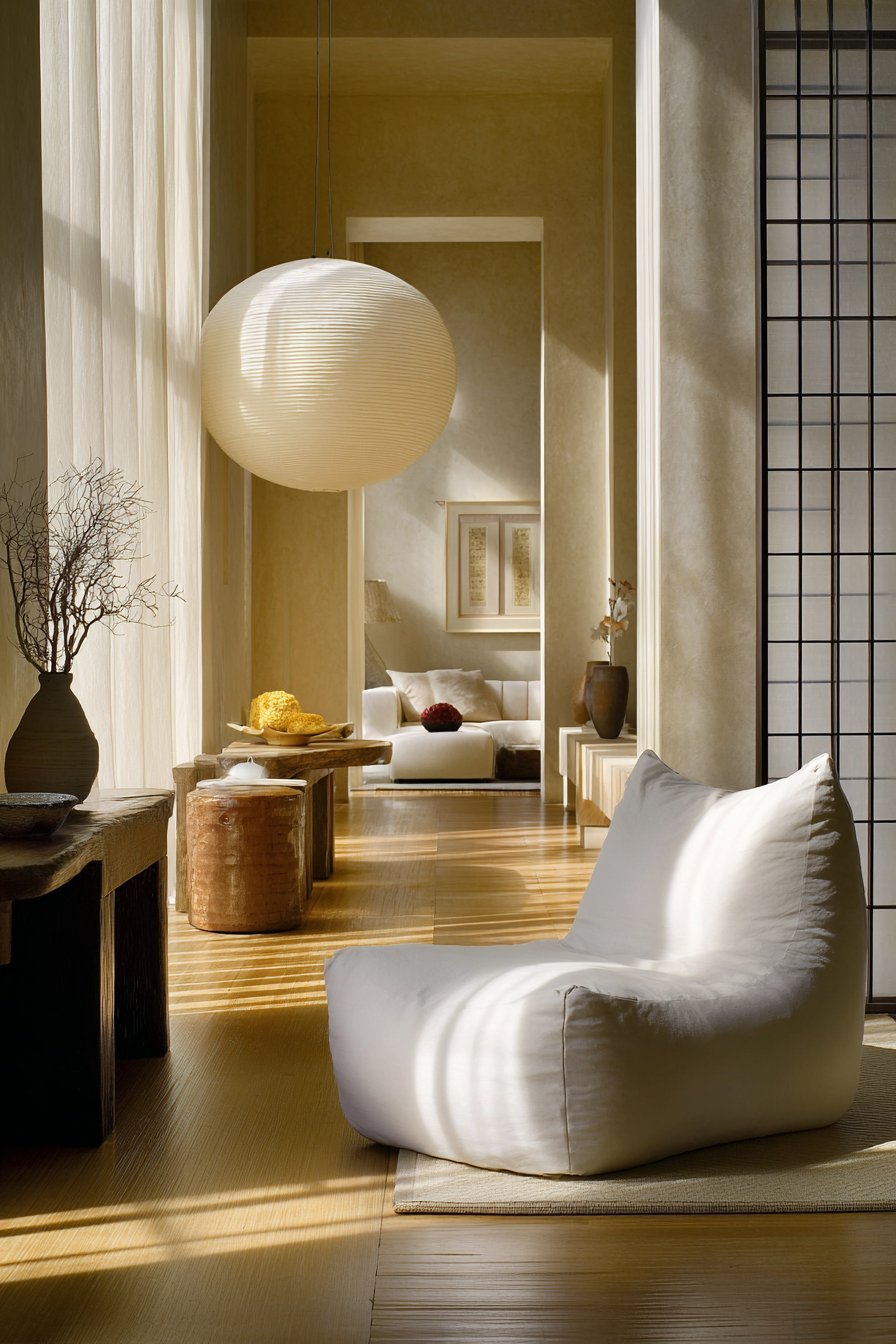
Natural bamboo accents and paper lanterns complete serene Japanese-inspired design. The doors slide smoothly on floor tracks without overhead mechanisms. Soft diffused natural light filters through frosted glass creating gentle ambiance. Geometric shadow patterns characteristic of shoji design appear throughout the day.
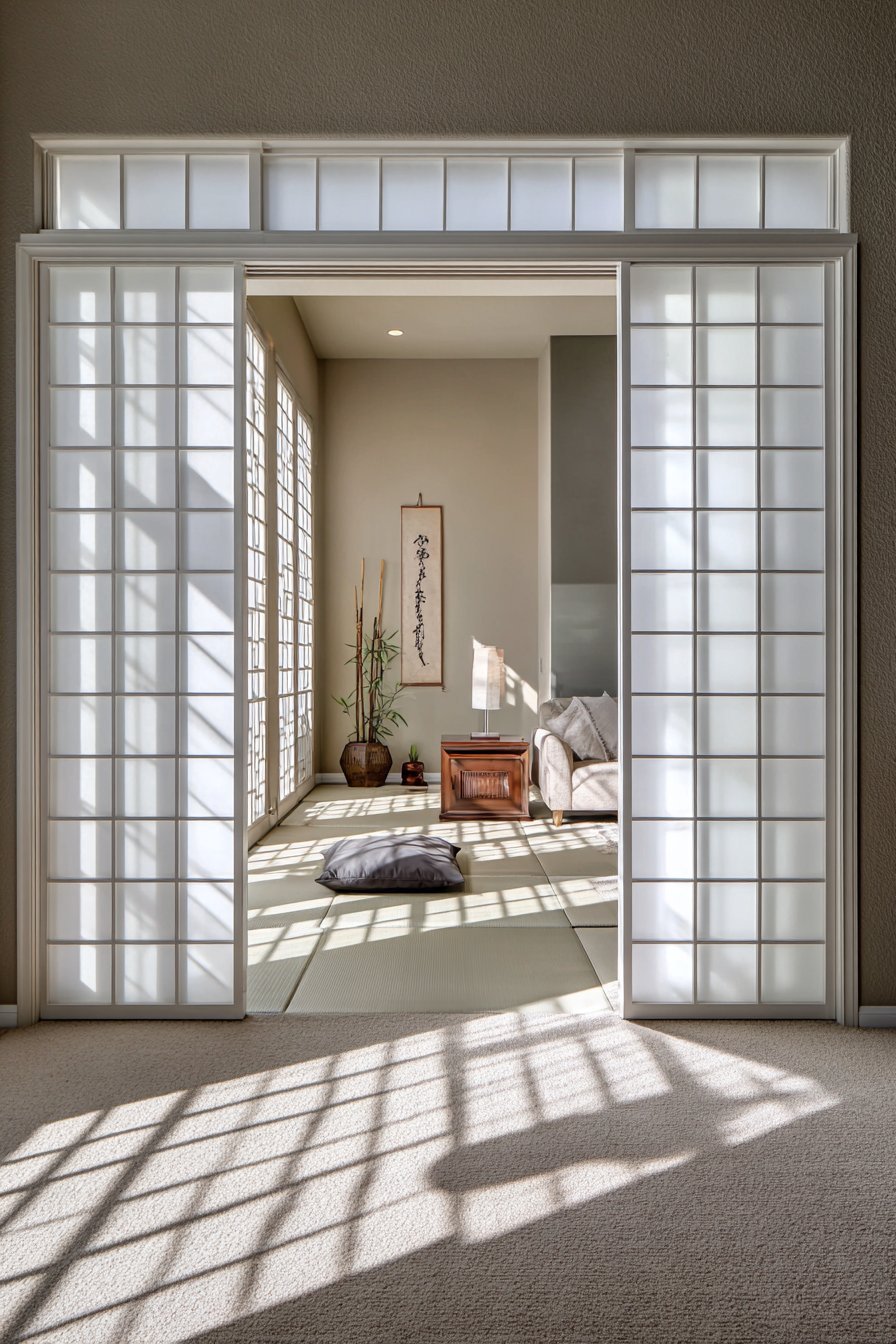
This approach demonstrates cultural design principles adapted to Western homes. The grid pattern creates meditative repetition and visual calm. Frosted glass provides privacy while maintaining spatial connection. The white frames keep the aesthetic light and contemplative. This design supports mindfulness and intentional living practices.
Key Design Tips:
- Use white or natural wood finishes for an authentic aesthetic
- Choose frosted glass for soft, diffused light quality
- Install floor track systems for traditional sliding operation
- Maintain grid proportions true to Japanese design principles
- Complement with low-profile, minimal furniture selections
- Use natural materials like bamboo and paper throughout space
- Keep color palette neutral and serene
20. Industrial Loft Steel-Framed Glass Partition
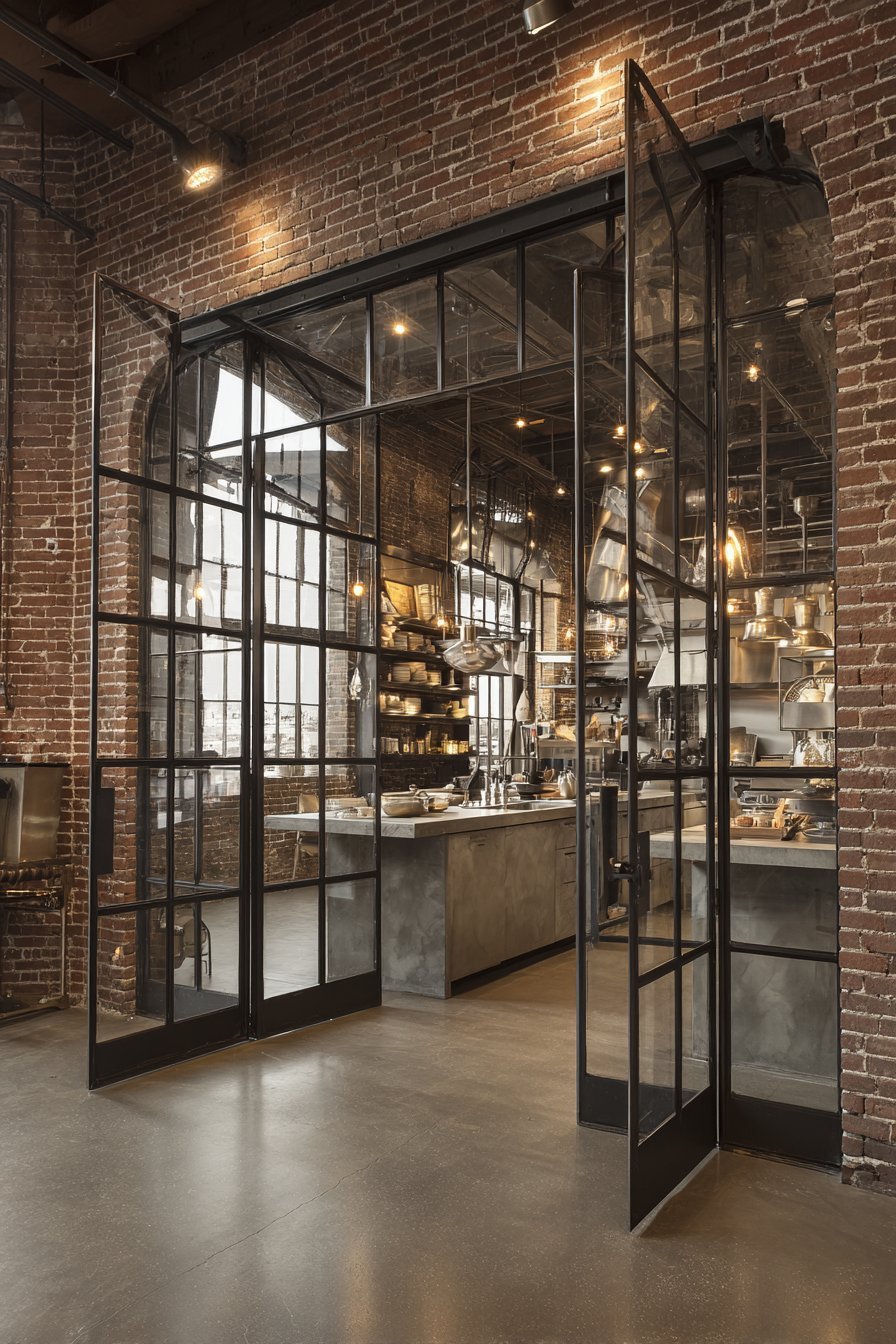
Steel-framed glass partition doors separate industrial loft kitchens from living areas. Black powder-coated metal framework holds large clear glass panels. The doors slide on exposed ceiling-mounted tracks adding industrial character. Concrete countertops and open shelving showcase minimalist organization through glass.
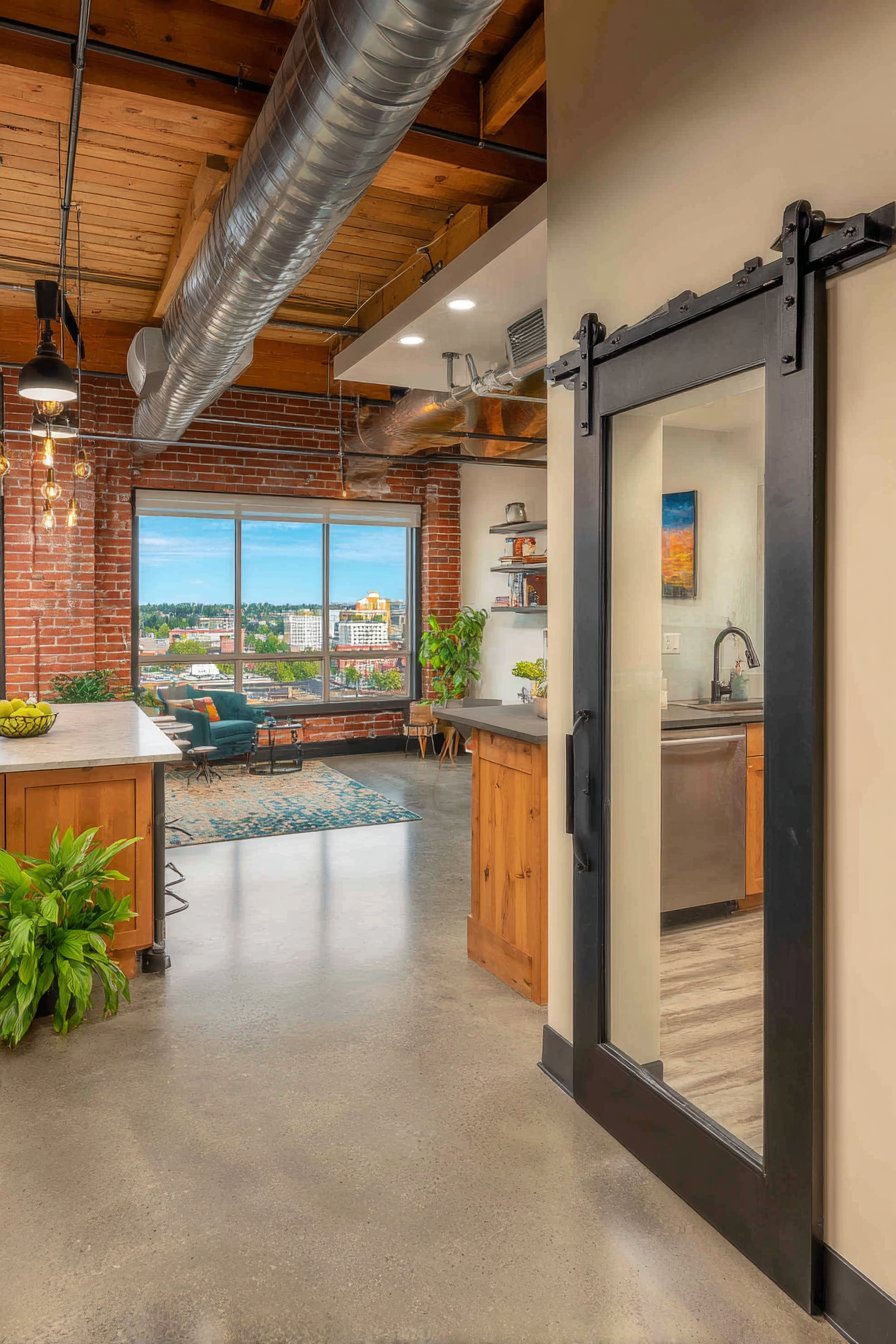
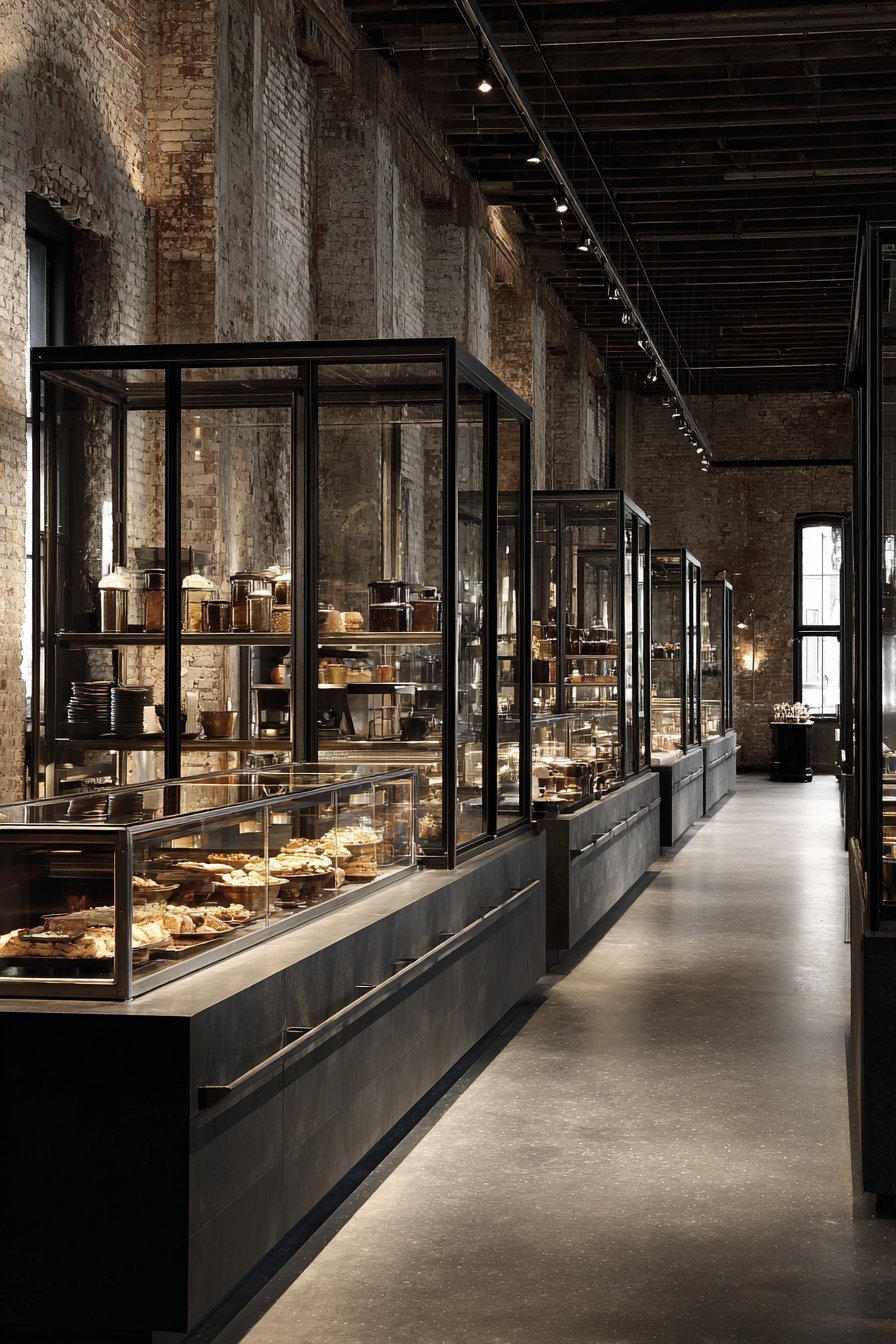
Exposed brick walls and polished concrete floors complete urban loft styling. The substantial steel framework creates an architectural presence appropriate to warehouse spaces. Natural light from oversized windows floods through transparent partitions. The doors’ industrial aesthetic honors the building’s commercial heritage.
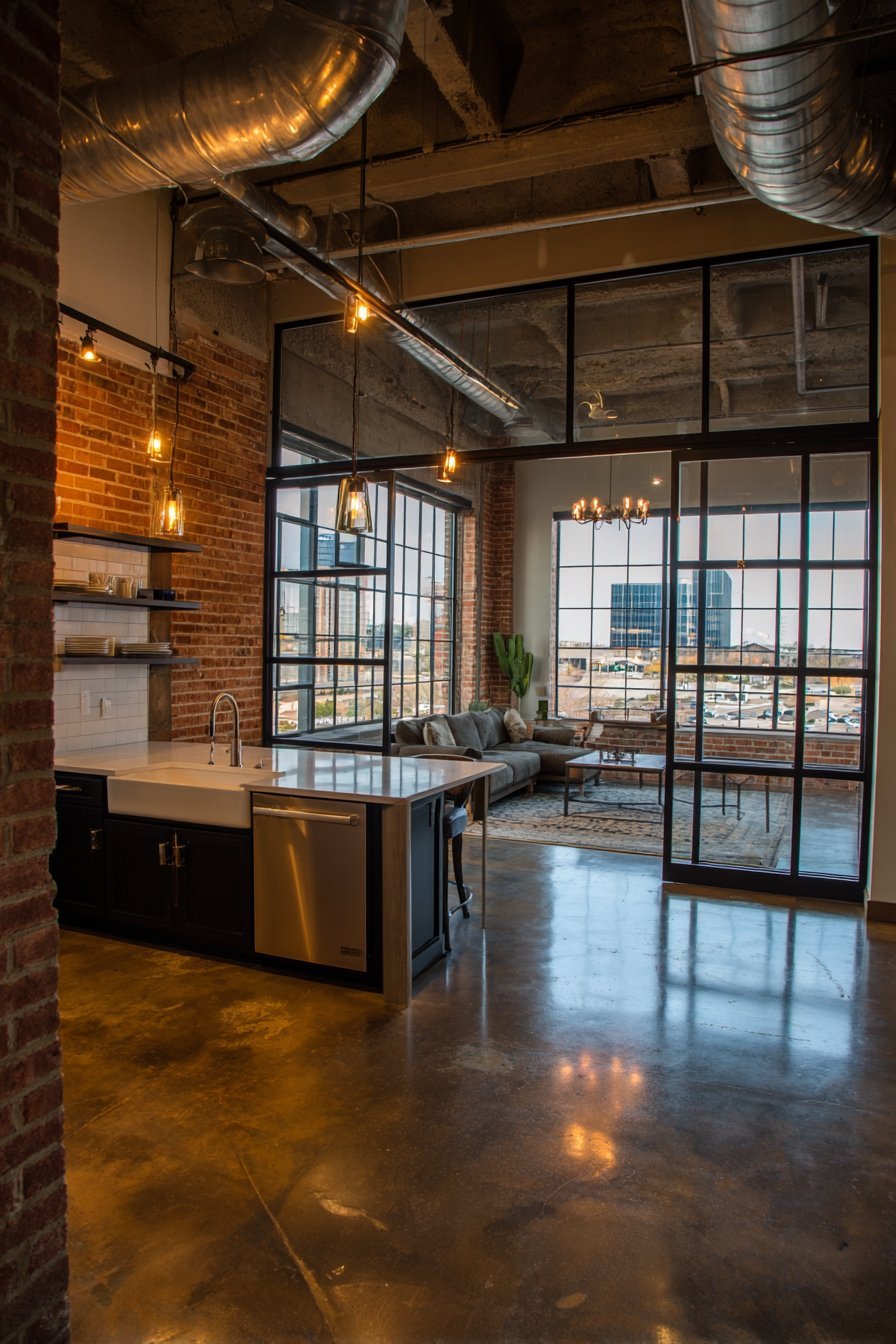
This design approach celebrates raw materials and honest construction methods. The transparency maintains loft’s signature open feeling while defining zones. Sliding mechanism operates smoothly despite door’s substantial weight. The black steel frames create strong graphic lines against lighter surfaces. This solution perfectly suits converted industrial spaces.
Key Design Tips:
- Choose powder-coated finishes for durability in kitchen environments
- Specify commercial-grade sliding hardware for reliable operation
- Ensure ceiling structure supports track mounting weight
- Use large glass panels to minimize frame visibility
- Complement with other industrial materials like concrete and steel
- Maintain exposed mechanical systems for authentic loft aesthetic
- Consider acoustic properties if sound control matters
21. Victorian Conservatory Glass French Doors
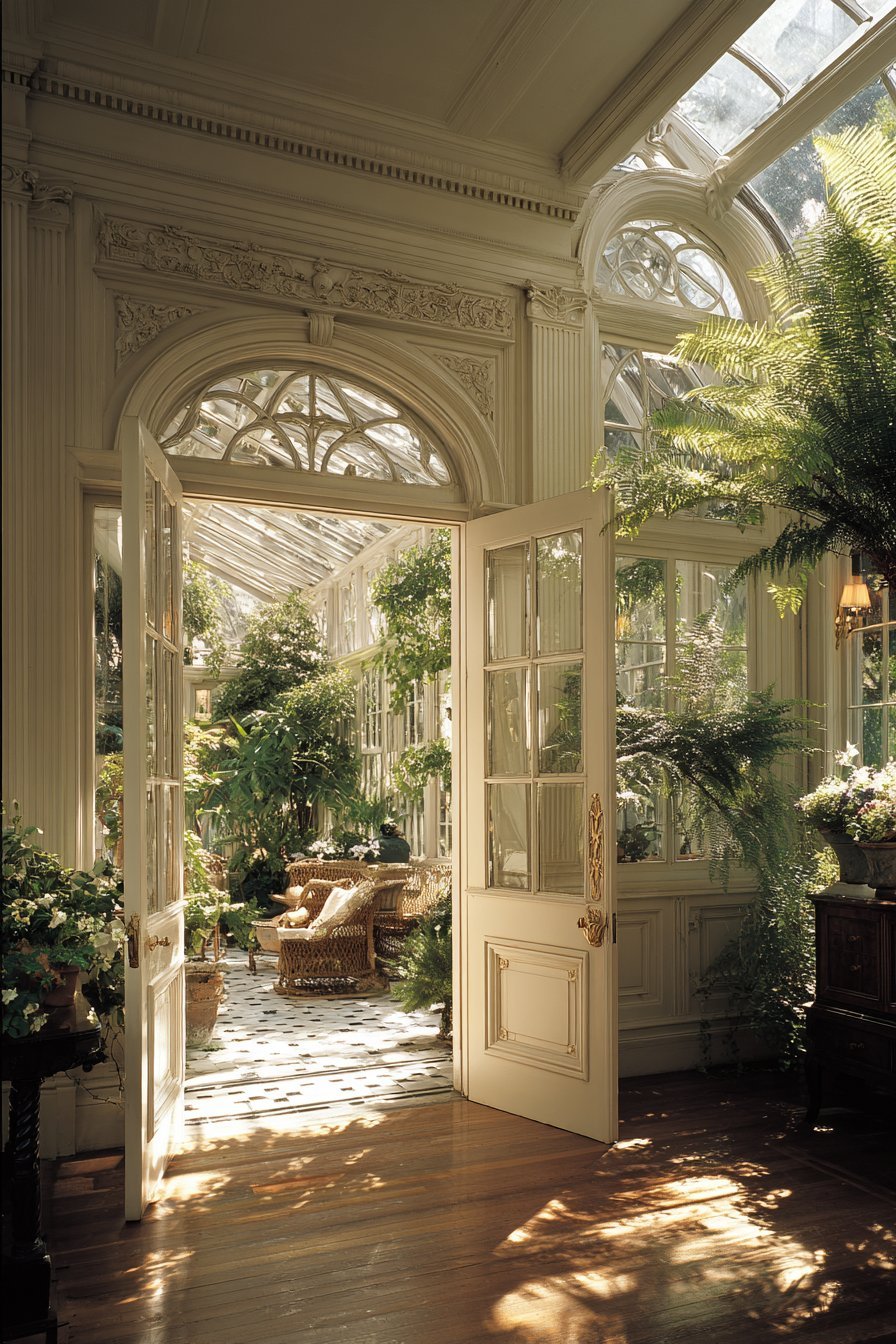
Original glass French doors showcase ornate carved wood frames from Victorian era. Heritage cream paint honors the period’s color preferences. Multiple individual glass panes with decorative mullions create authentic detail. The doors connect formal parlor to plant-filled conservatory addition.
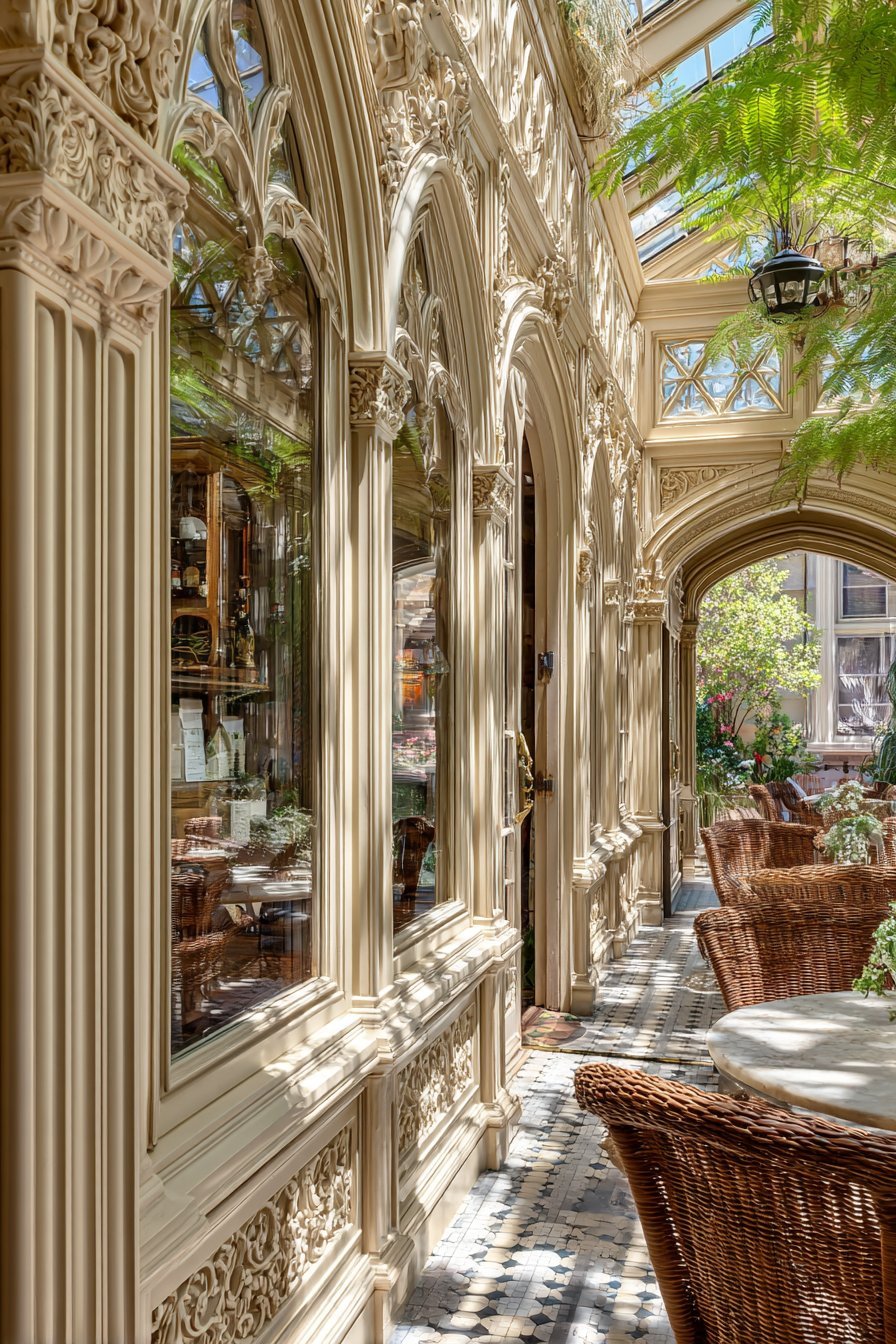
Antique wicker furniture and ferns maintain the historical conservatory purpose. Original tile flooring adds pattern and color characteristic of the period. Afternoon sunlight through ornate doors creates dappled light patterns. The elaborate carved wood frames represent craftsmanship rarely seen today.
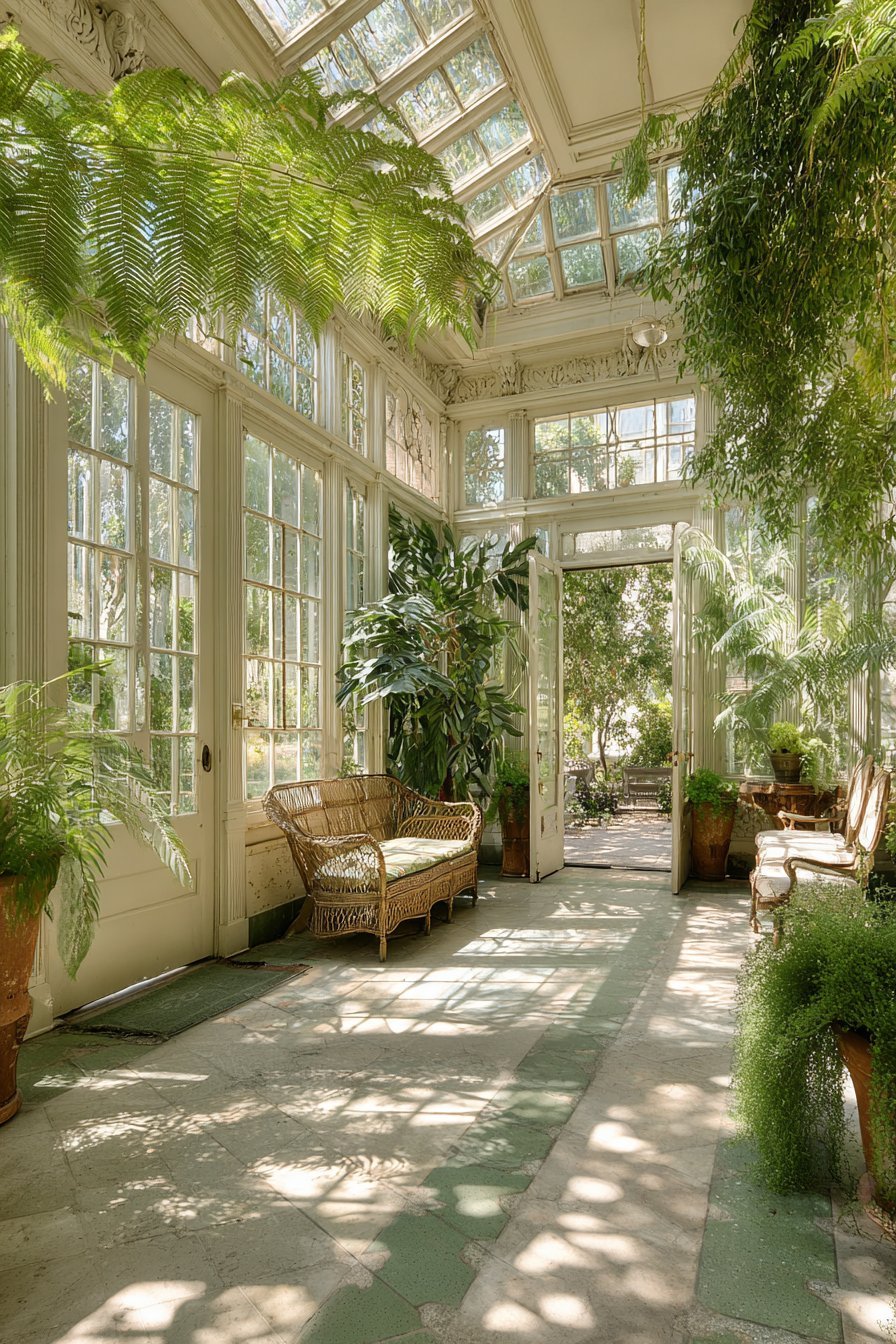
These architectural elements significantly increase property value for historic homes. Preservation honors the building’s cultural and architectural significance. The doors’ complexity reflects Victorian era’s celebration of ornamentation. Modern reproductions cannot replicate authentic period construction methods. Maintaining such features requires specialized restoration knowledge and care.
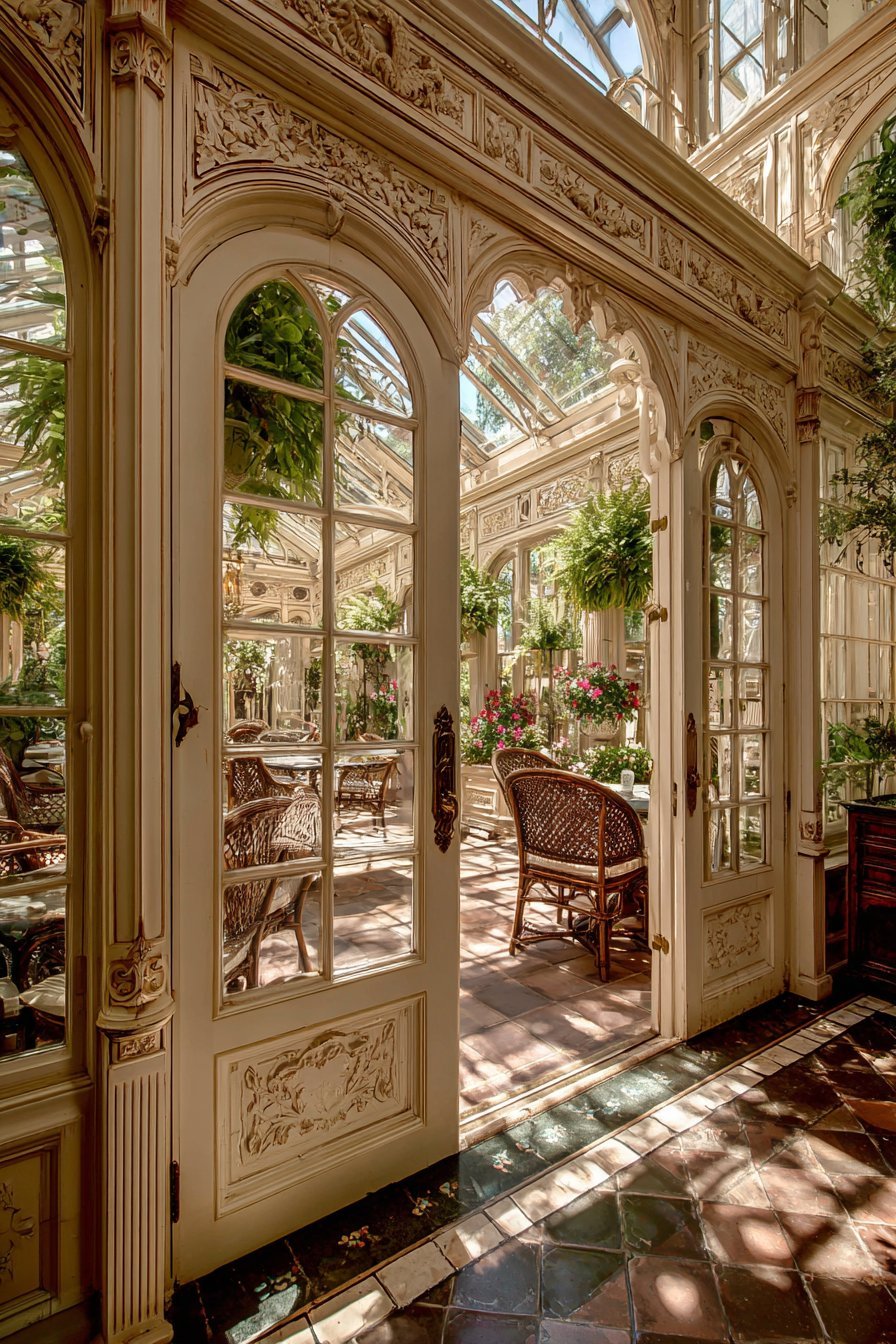
Key Design Tips:
- Preserve original Victorian elements whenever feasible
- Research period-appropriate paint colors for authenticity
- Commission professional restoration for damaged carved details
- Maintain original hardware or source period replacements
- Use appropriate cleaning methods for antique glass
- Document historical features before any renovation work
- Consider interior storm windows for energy efficiency without alteration
22. Modern Nursery Safety Glass Doors
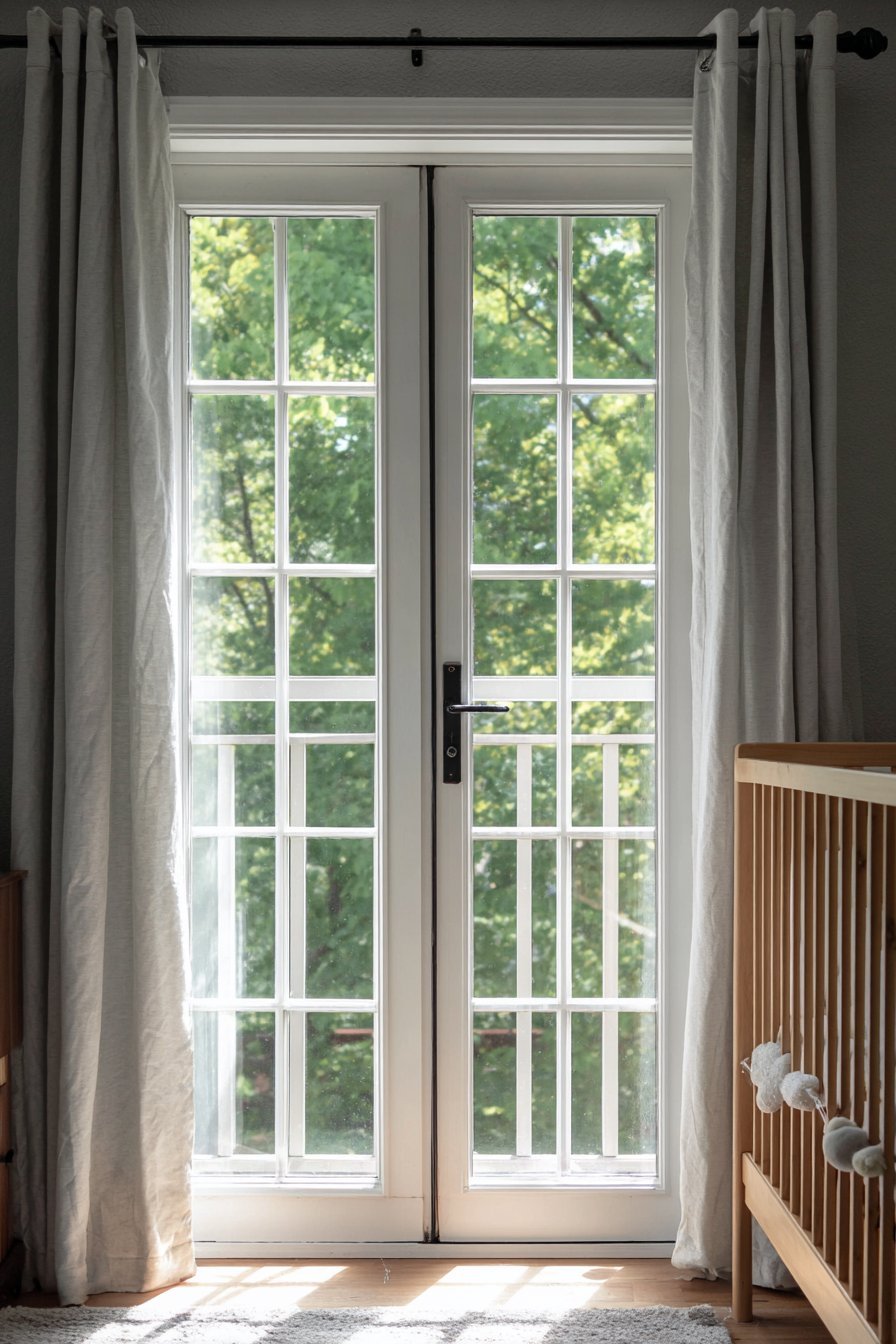
Safety-rated glass French doors connect nursery to private balcony areas. Shatter-resistant film and childproof locks ensure child safety. White painted wood frames with six panels maintain traditional proportions. Soft grey walls and natural wood crib create calm environment.
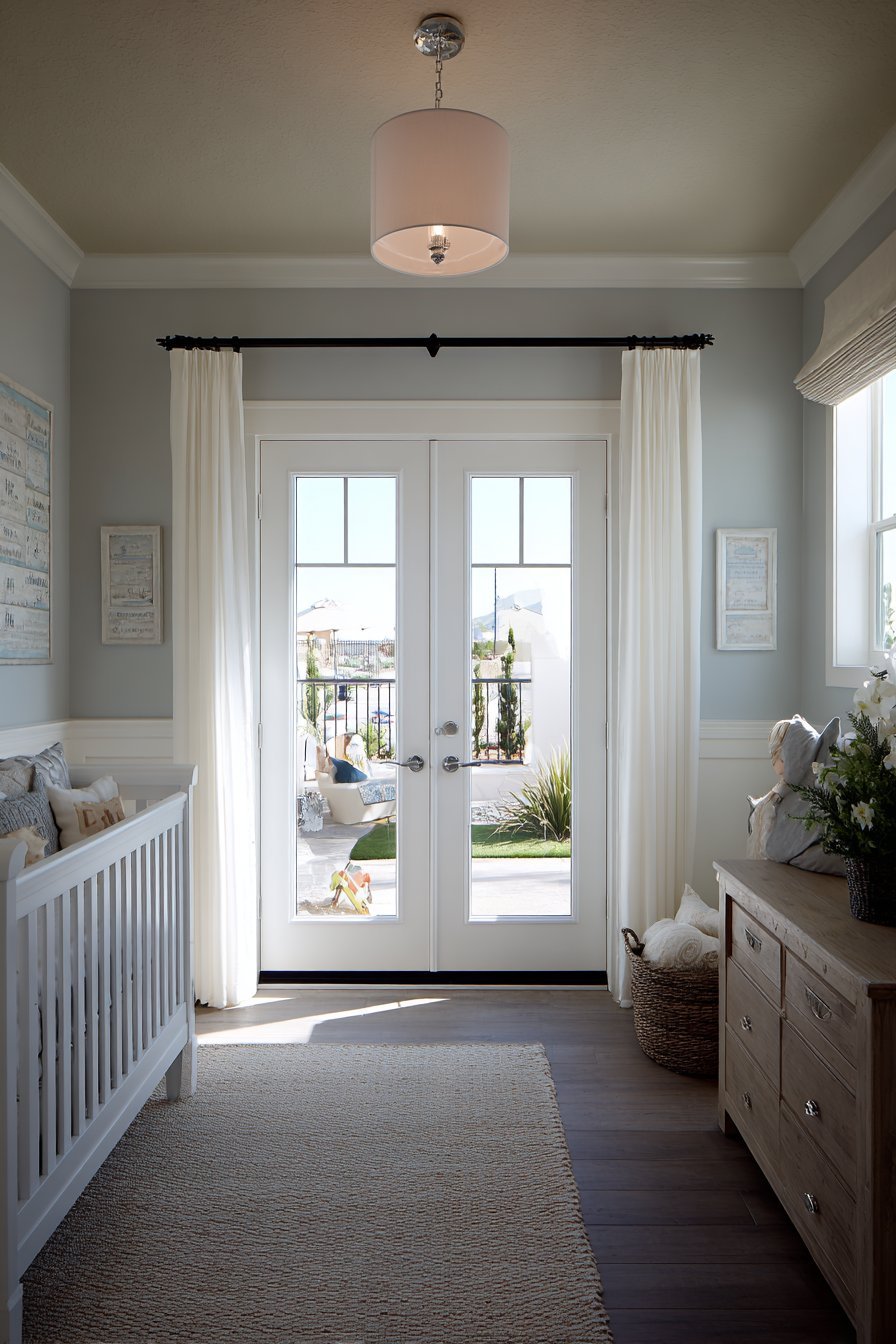
Blackout curtains frame doors for naptime light control flexibility. The doors provide natural ventilation during supervised outdoor play. Clear glass maintains visual supervision of balcony activities. Safety glass construction prevents injury if breakage occurs despite precautions.
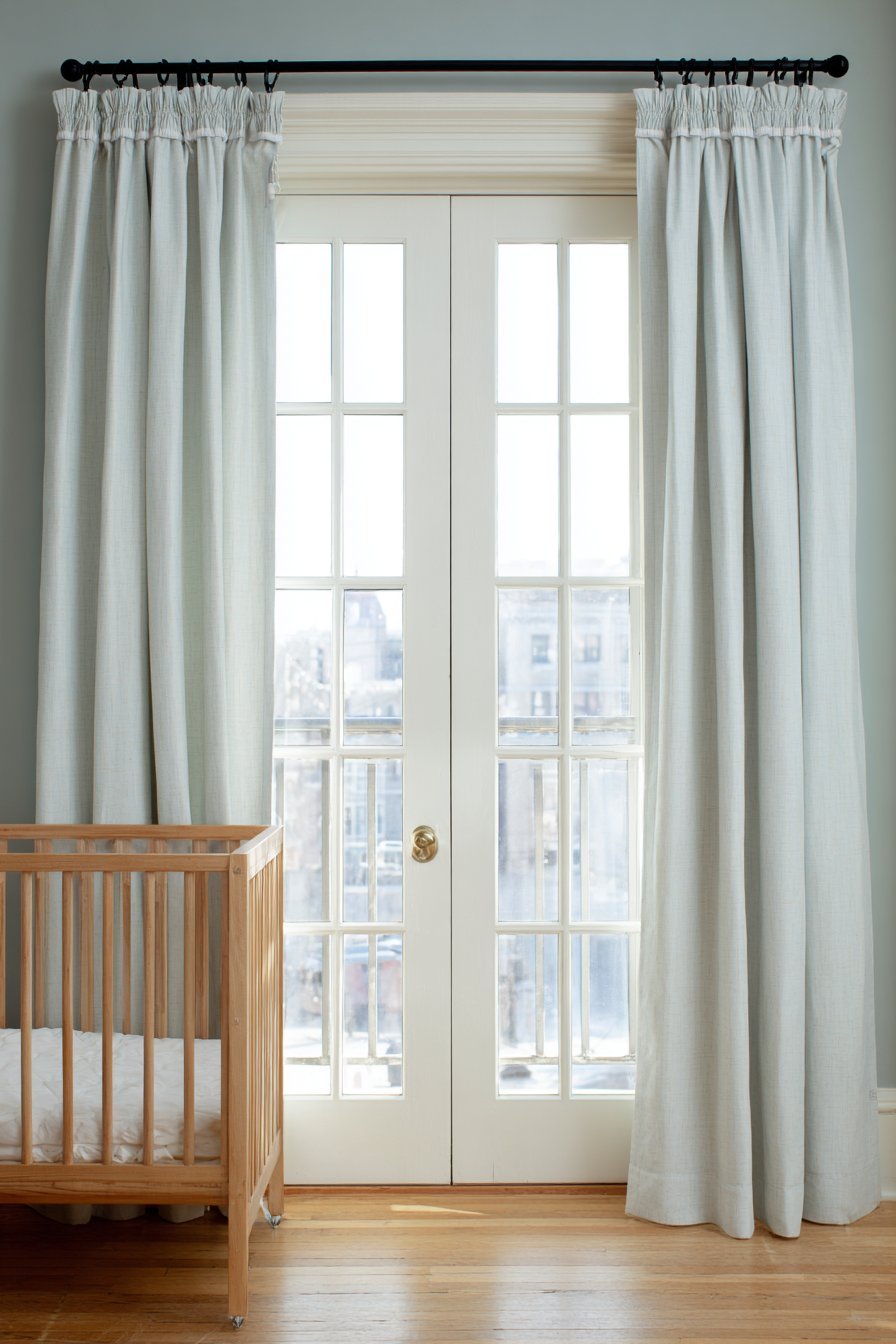
These doors demonstrate how safety requirements enhance rather than compromise design. The traditional French door styling suits various nursery aesthetics. Natural light benefits infant development and circadian rhythm establishment. Outdoor access provides fresh air and nature connection. This thoughtful design supports both safety and wellbeing.
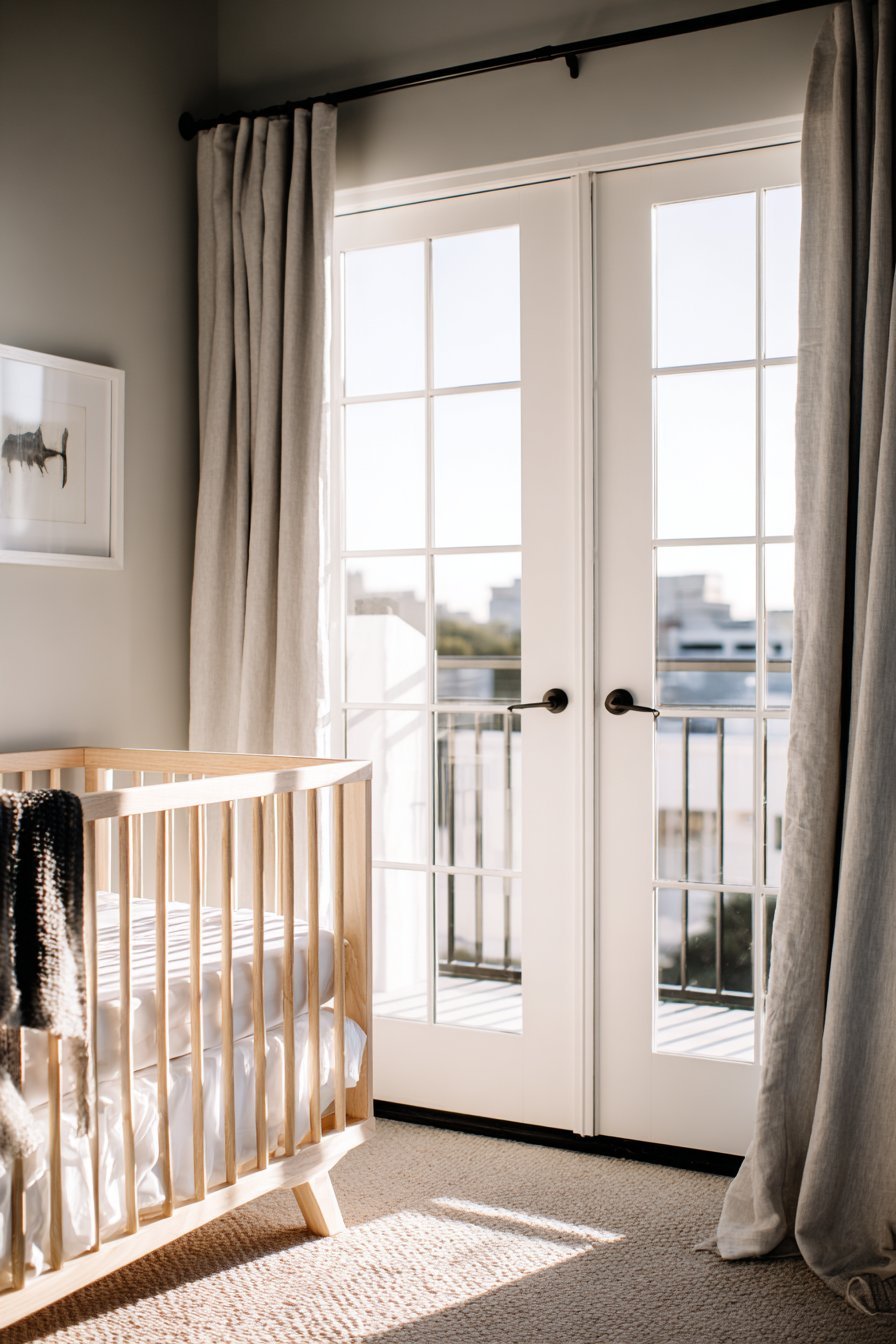
Key Design Tips:
- Specify laminated safety glass with shatter-resistant film
- Install childproof locks beyond young children’s reach
- Choose white or light painted finishes for nursery brightness
- Add blackout curtains for naptime light control
- Ensure balcony railings meet current safety codes
- Consider impact-resistant glass in active households
- Maintain clear sightlines for supervision of outdoor play
23. Transitional Laundry Room Dutch Door
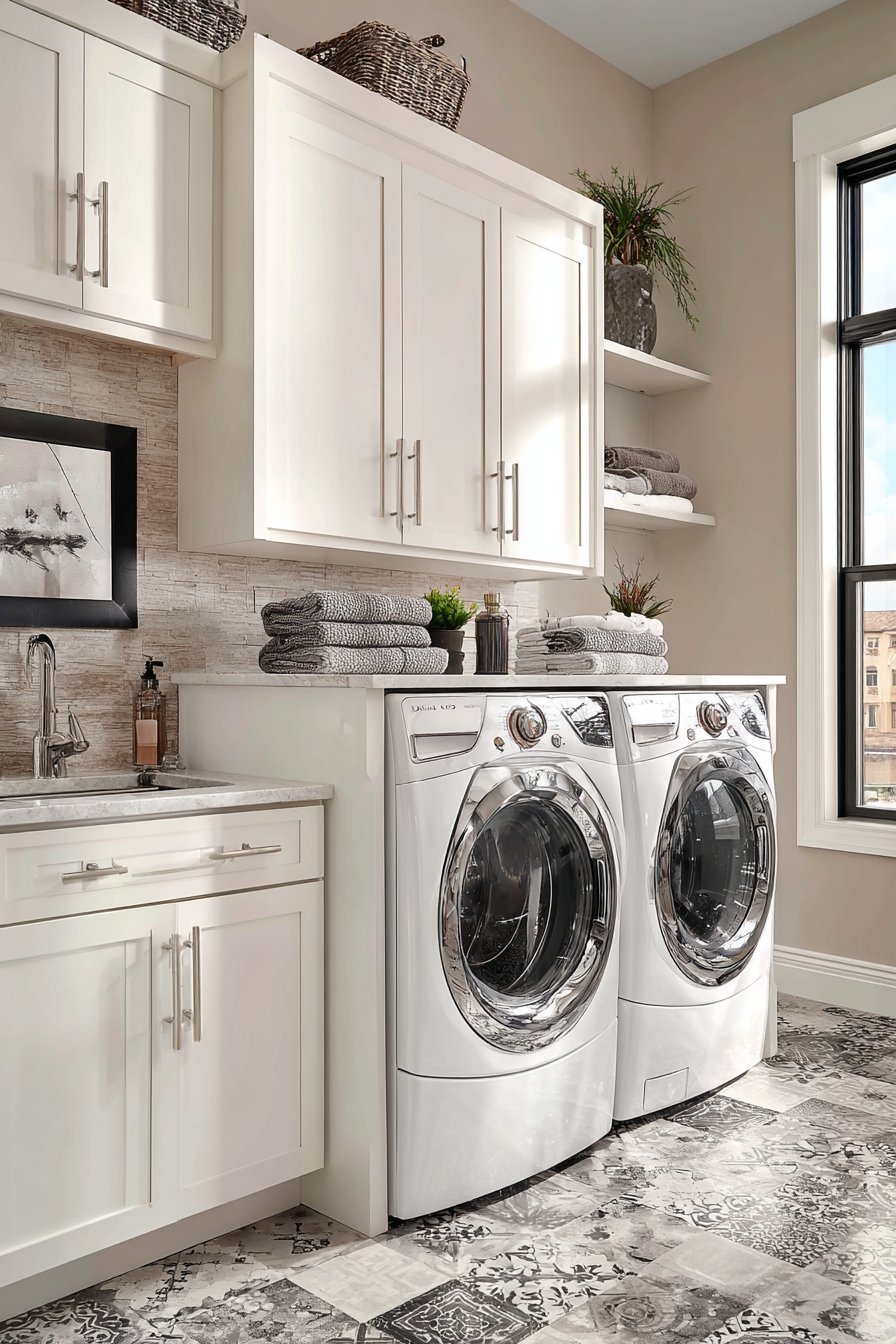
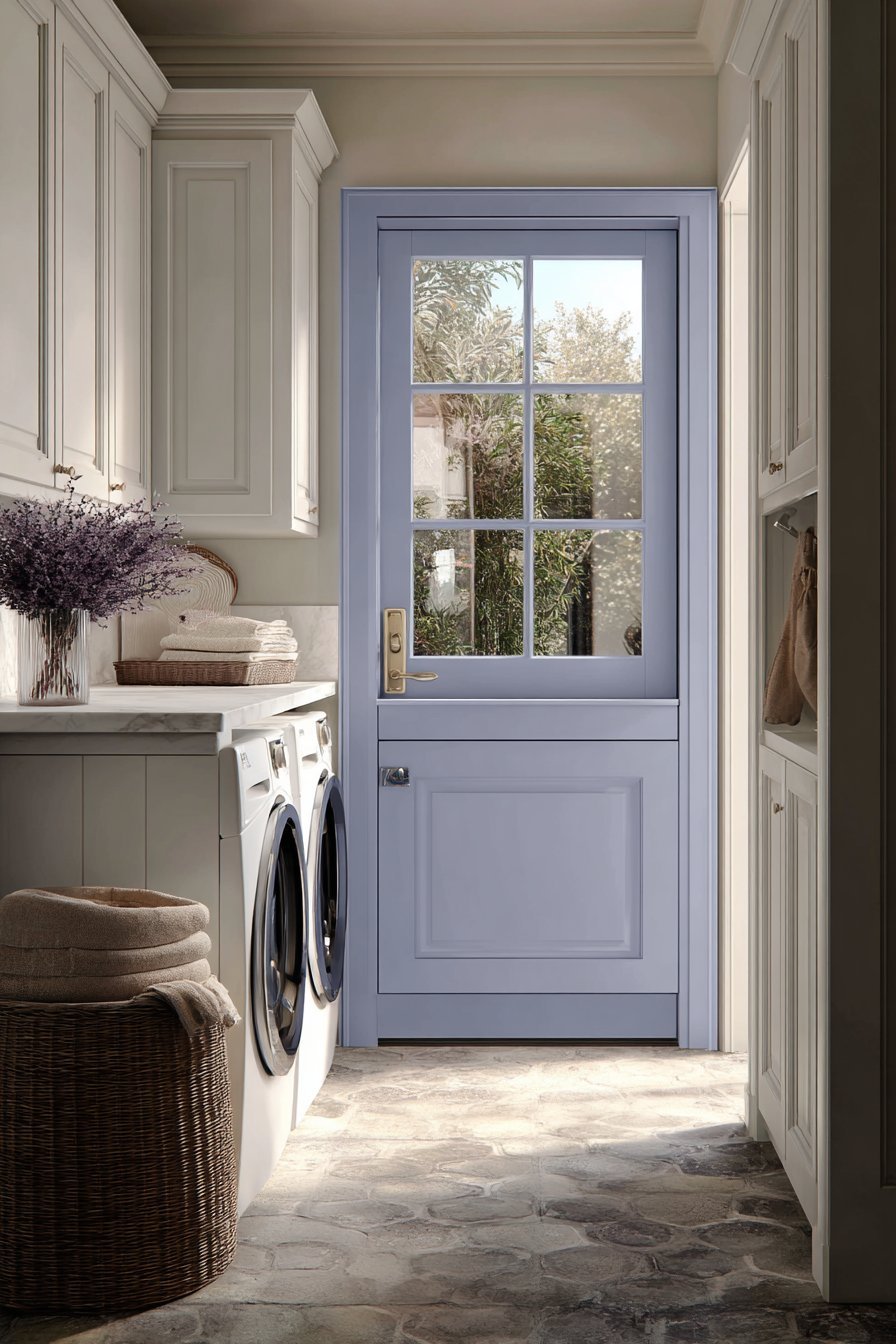
Half-glass Dutch door in soft blue-grey separates laundry from main hallway. The upper glass section allows light and air circulation benefits. Solid lower half conceals laundry in progress from view. White shaker cabinets and marble-look quartz create functional folding workspace.
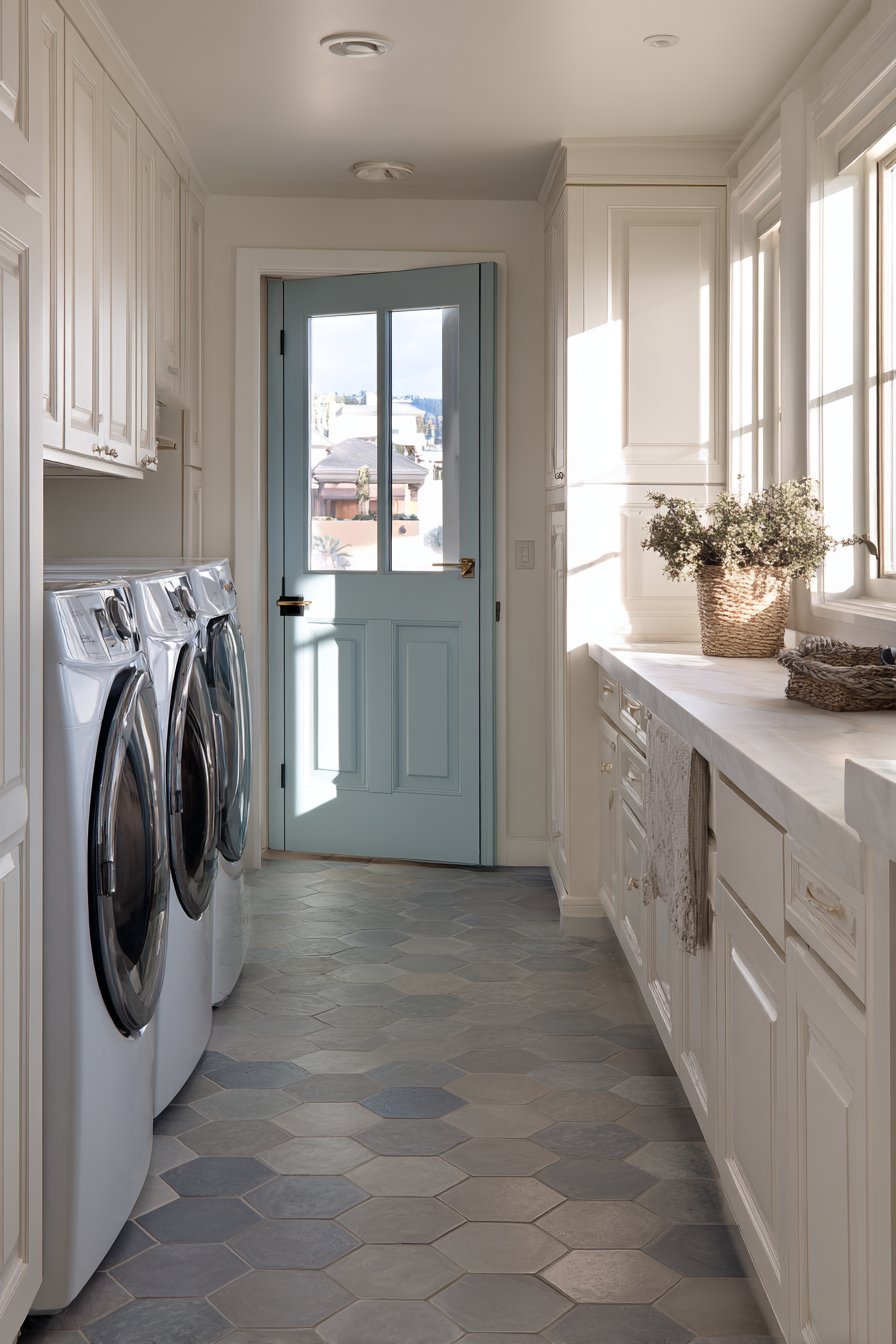
Hexagonal cement tile flooring adds pattern interest to a utilitarian space. The split door design balances privacy needs with openness desires. Natural light from nearby window supplements the borrowed light. The blue-grey paint adds personality to often-overlooked utility room.
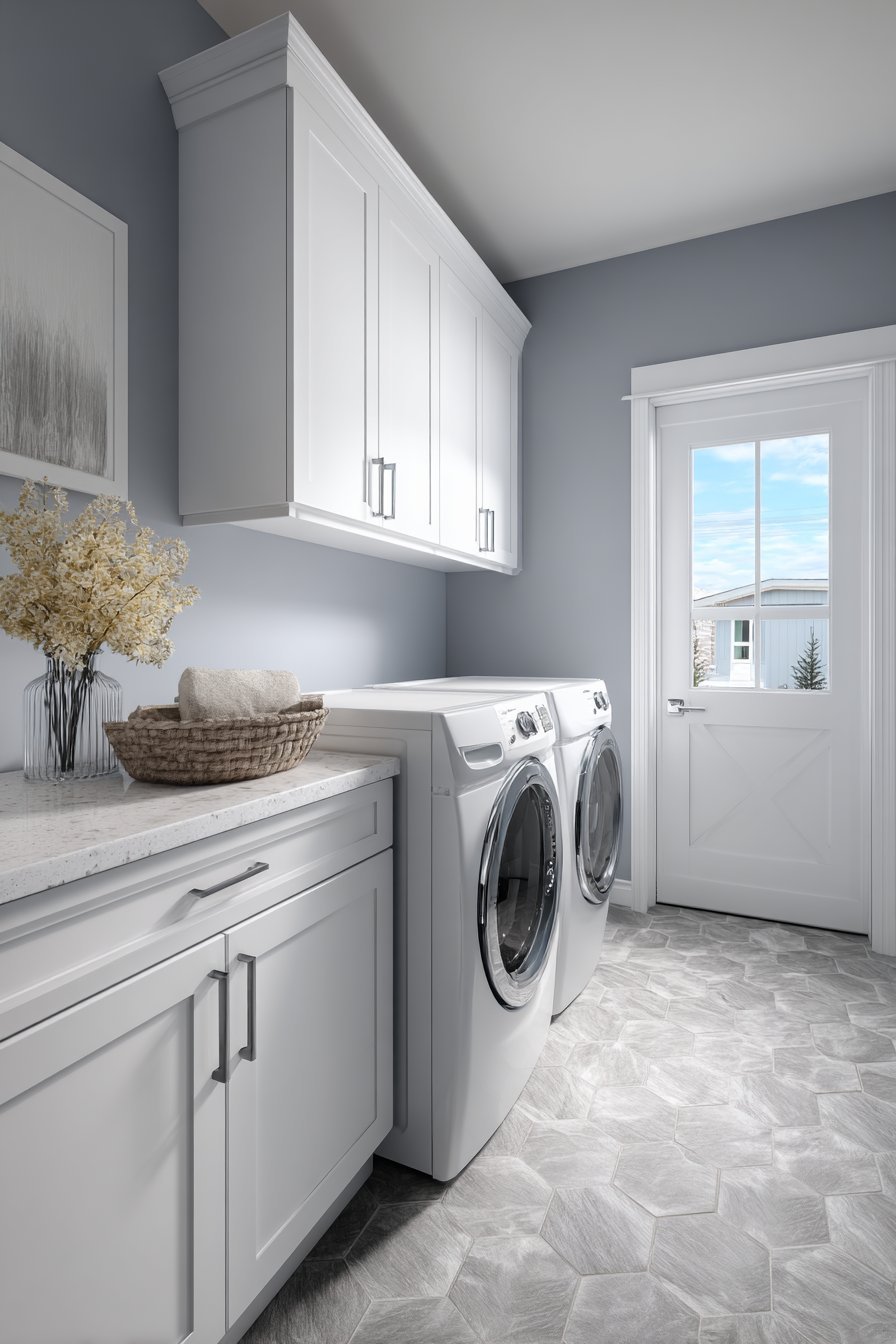
This design proves Dutch doors work beyond traditional farmhouse applications. The partial visibility maintains household connection during laundry tasks. Air circulation prevents musty odors in small laundry spaces. The glass upper section feels less isolating than solid doors. This solution demonstrates creative problem-solving for everyday spaces.
Key Design Tips:
- Paint Dutch doors in colors adding personality to utility spaces
- Ensure both sections align properly for complete closure
- Use durable flooring appropriate for moisture exposure
- Add adequate task lighting for laundry activities
- Install proper ventilation to prevent moisture buildup
- Choose hardware matching other home finishes
- Consider pocket door alternative if space allows
24. Home Office Glass Wall System
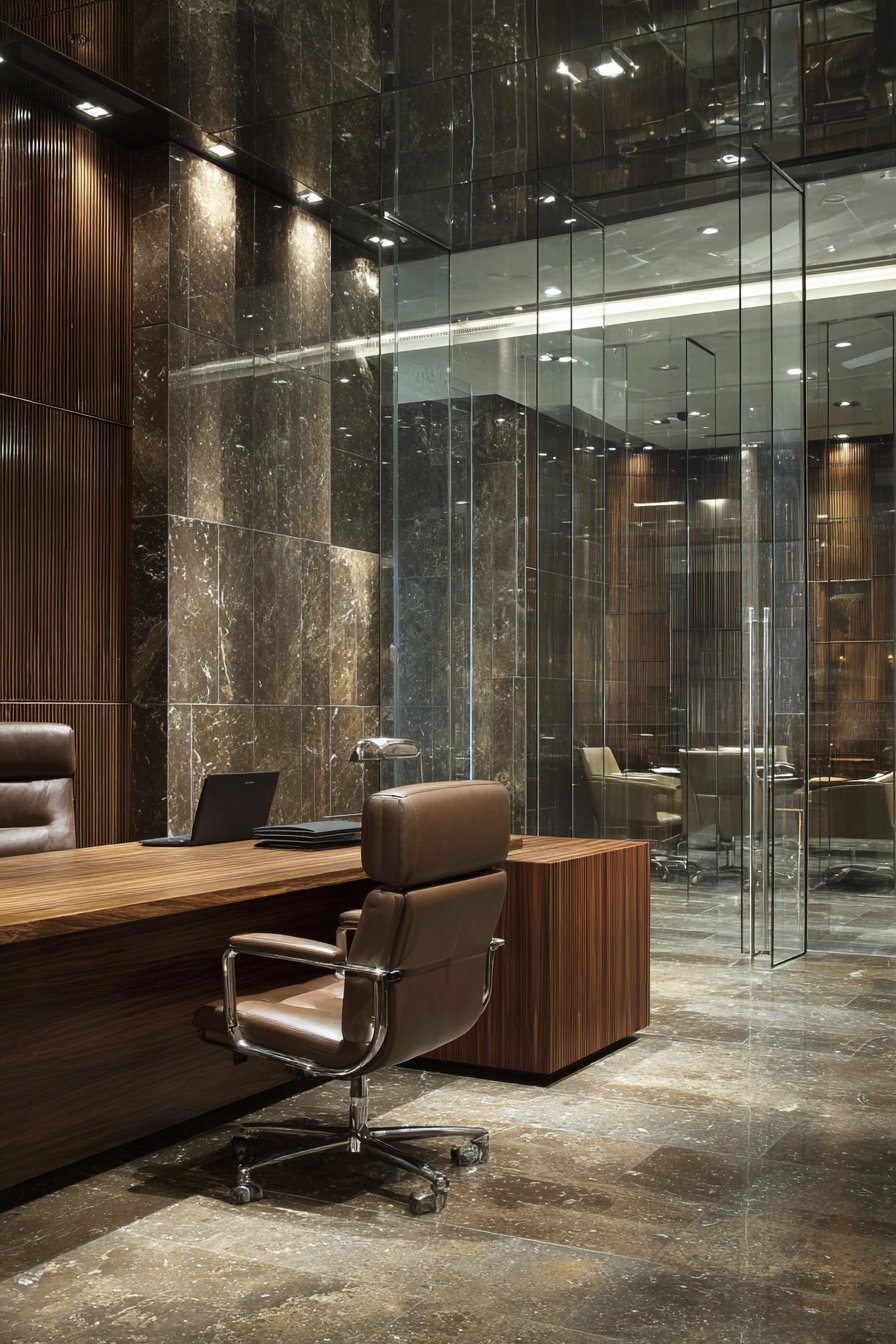
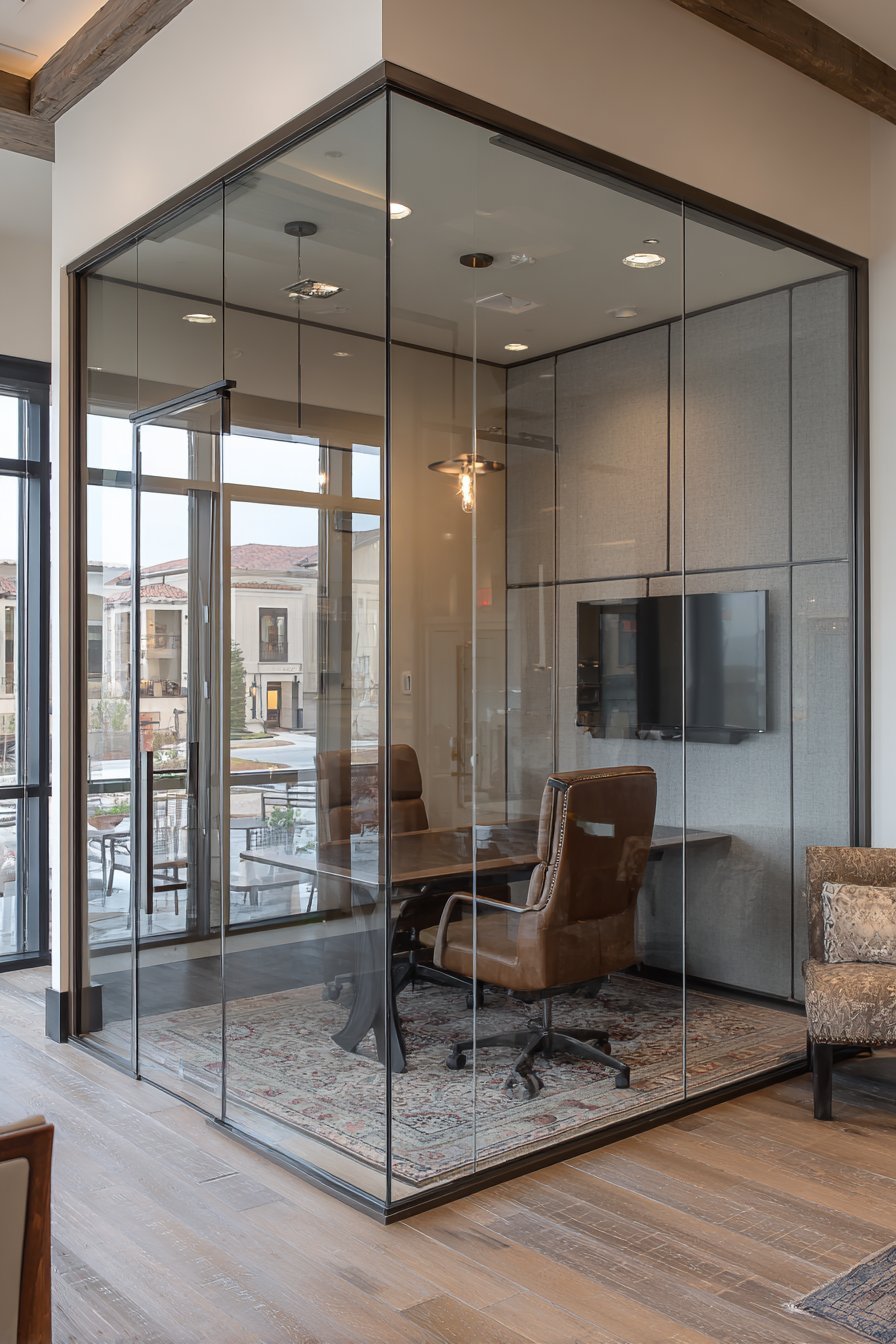
Contemporary glass wall system creates professional office environments within homes. Floor-to-ceiling glass panels feature bronze anodized aluminum frames. The glass door has concealed hinges and a magnetic catch. Walnut desk and leather executive chair convey serious workspace through transparency.
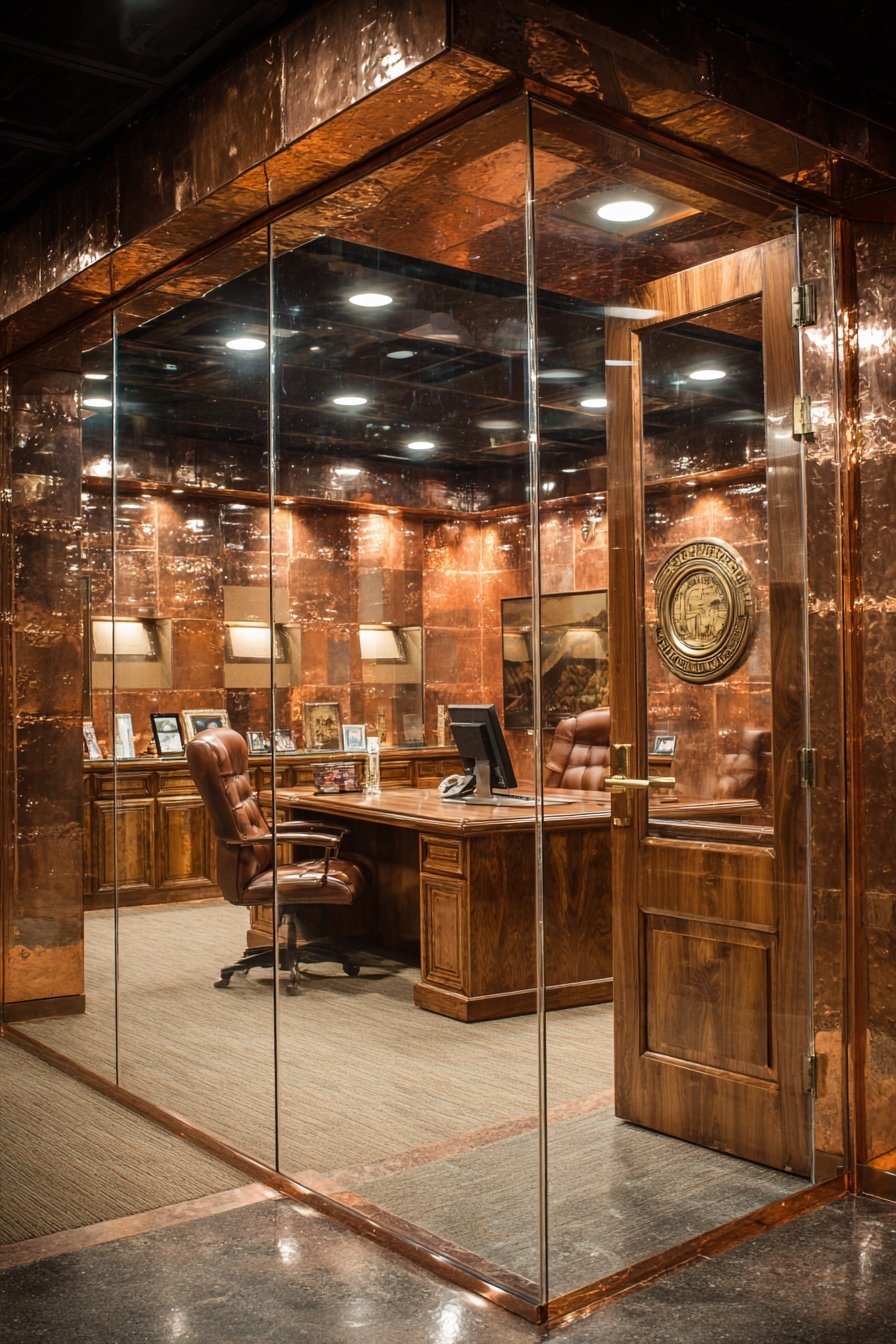
Acoustic panels on remaining walls control sound in the glass-enclosed space. The professional conference room aesthetic supports focused work activities. Bronze finish adds warmth to otherwise cool glass and metal. Quality construction rivals commercial office installations in residential settings.
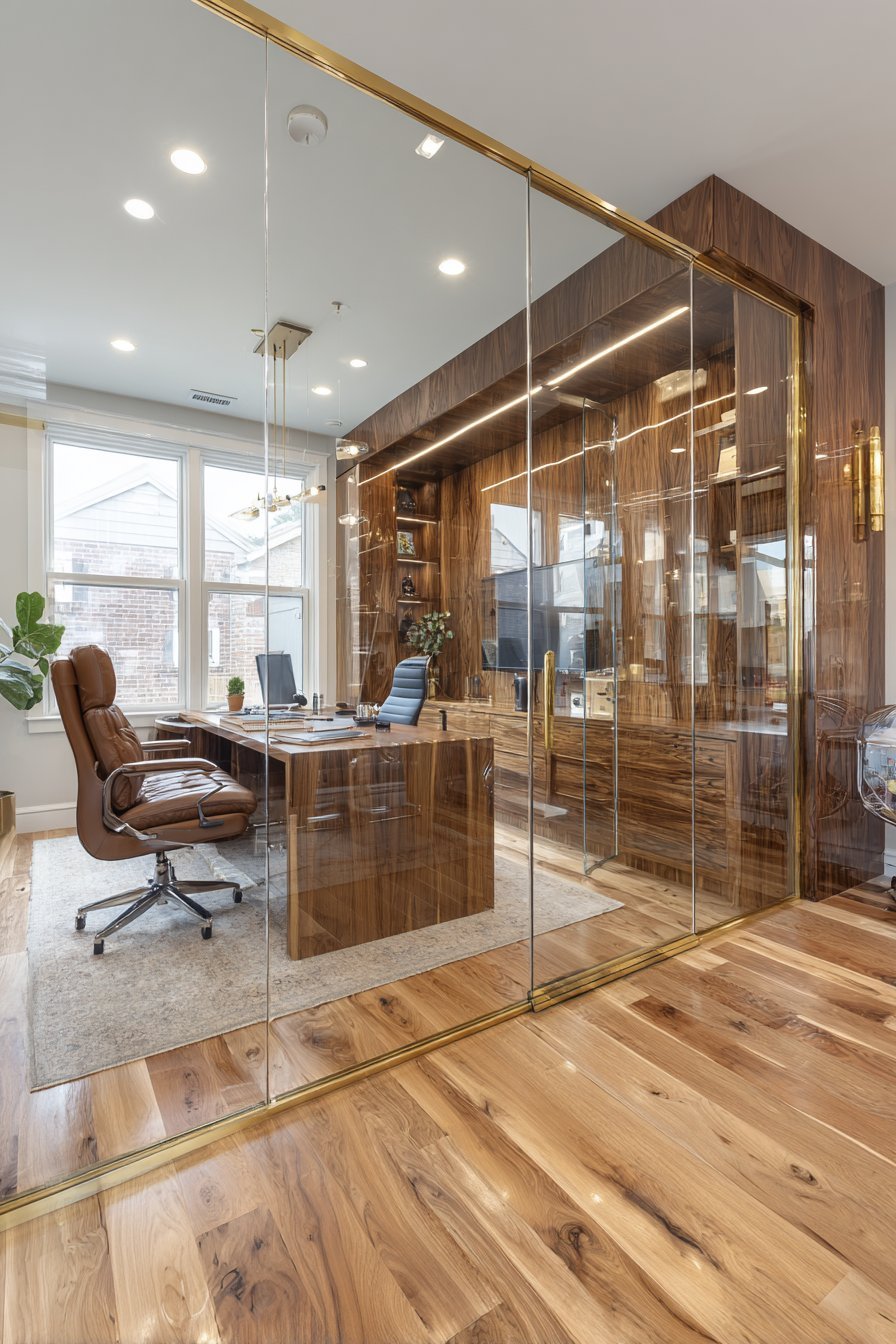
This approach separates work from home life while maintaining visual connection. The transparency allows family awareness without constant interruption. Professional appearance benefits video calls and client meetings. The enclosed space provides acoustic privacy for confidential conversations. This investment supports productive work-from-home arrangements.
Key Design Tips:
- Specify commercial-grade aluminum frames for durability
- Choose anodized finishes for maintenance-free performance
- Install acoustic treatments for sound control
- Use concealed hinges for clean, minimal appearance
- Ensure adequate electrical outlets for office equipment
- Consider frosted glass if privacy outweighs transparency
- Plan proper HVAC for enclosed glass office spaces
25. Scandinavian Bedroom Closet Glass Doors
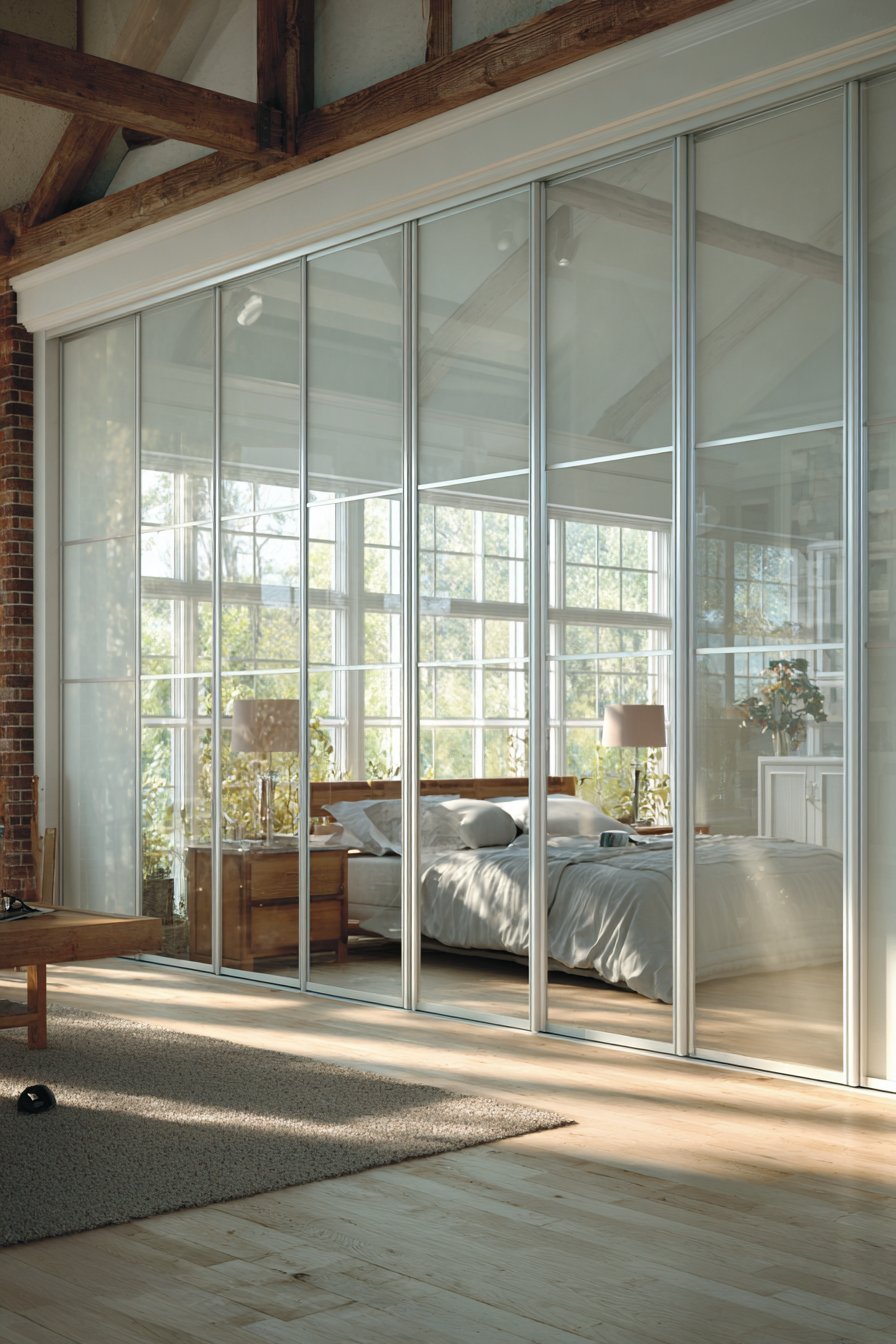
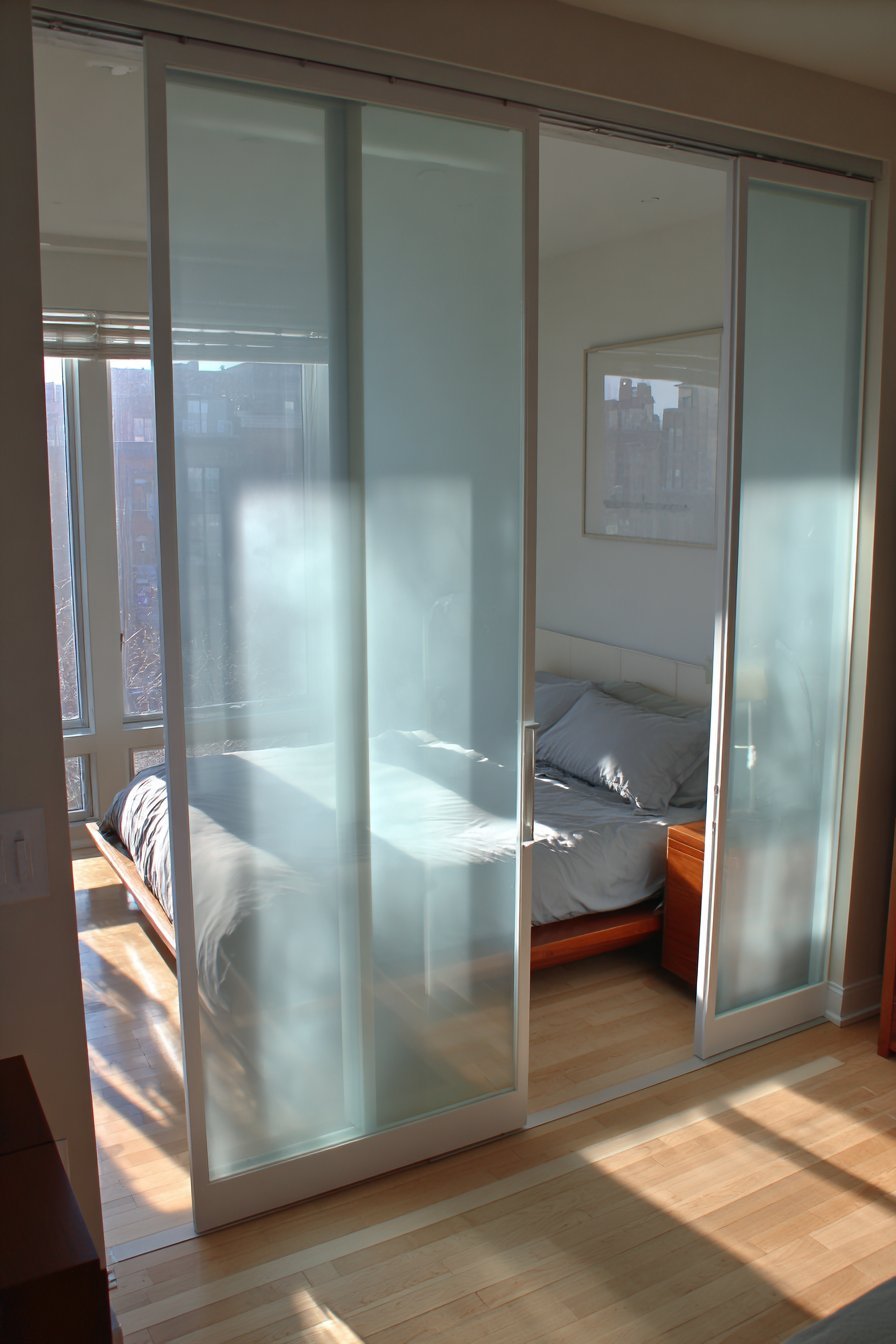
Glass panel sliding closet doors feature ultra-minimal white aluminum frames. Frosted glass inserts reflect natural light throughout the bedroom. The sleek doors span complete wall providing walk-in closet access. Low platform bed with grey linen bedding maintains Nordic minimalism.
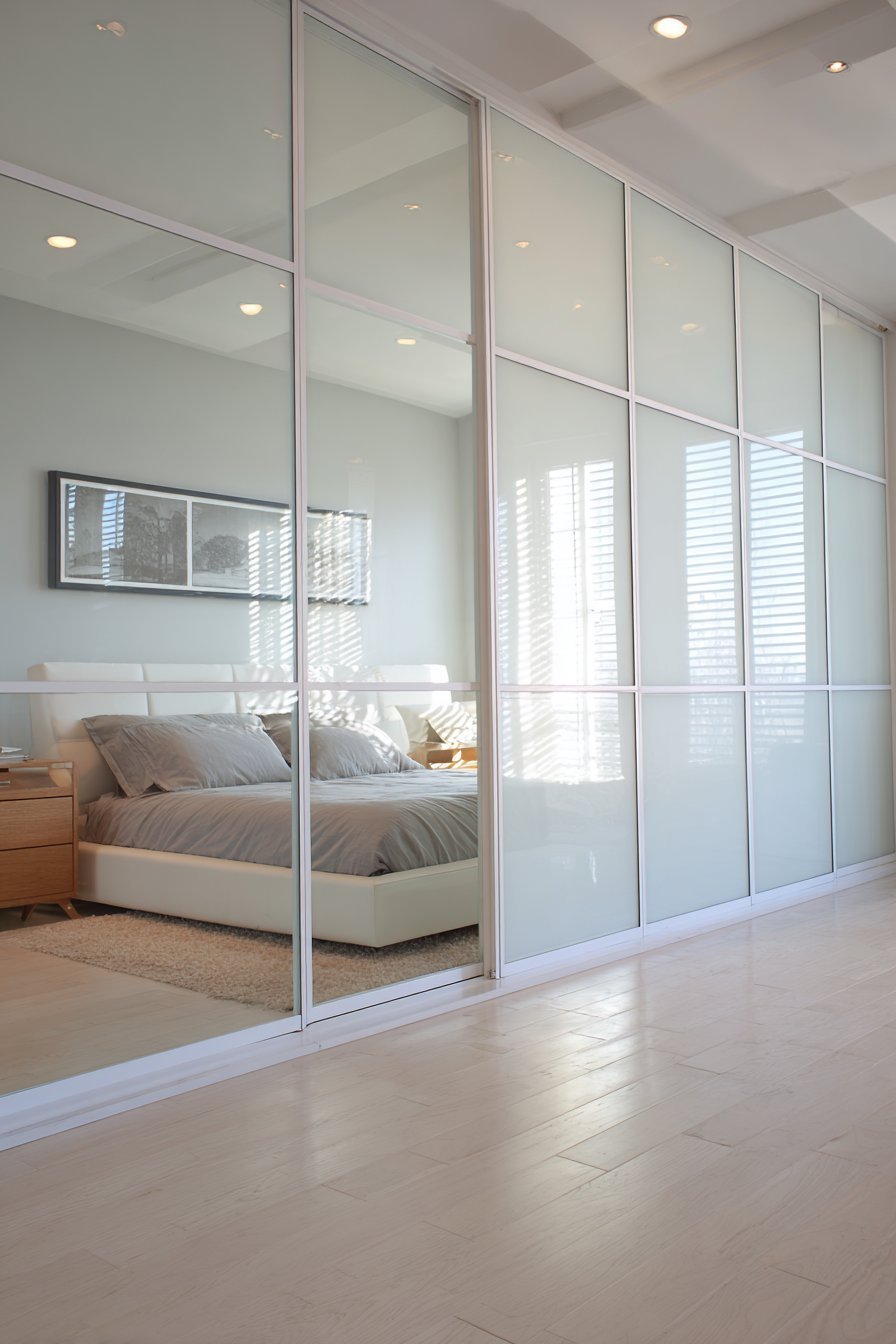
Natural oak nightstands add warmth to the predominantly white palette. White oak flooring continues the light, airy Scandinavian aesthetic. Morning light reflecting off frosted glass creates luminous quality. The minimal frame system demonstrates contemporary Nordic design principles.
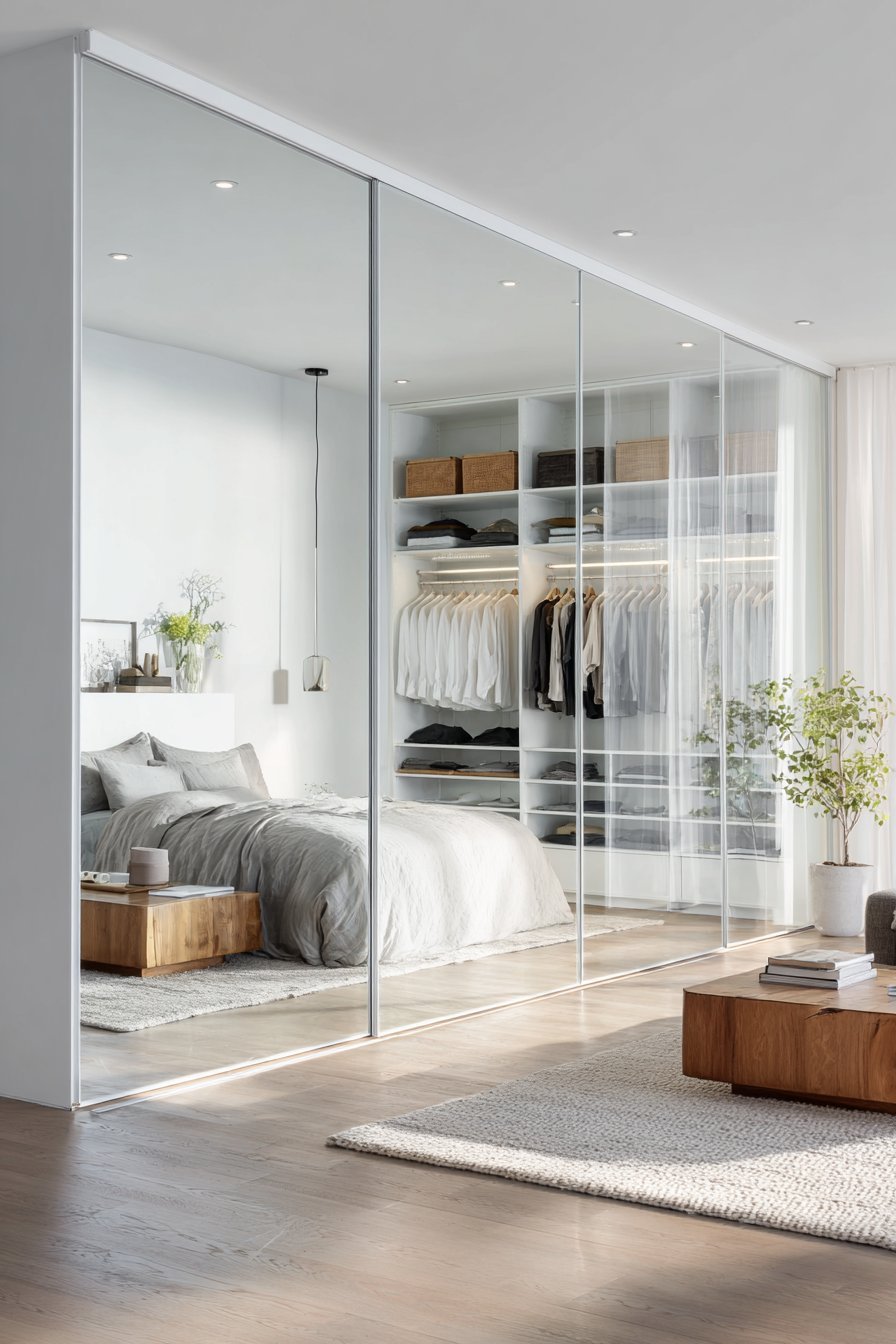
This approach transforms closet doors from purely functional to design elements. The frosted glass maintains privacy while bouncing light around the room. Sliding mechanism eliminates door swing space requirements. The white frames disappear against white walls for seamless integration. This design celebrates simplicity and natural light maximization.
Key Design Tips:
- Choose ultra-minimal frame profiles for Scandinavian aesthetics
- Use frosted glass to reflect and diffuse natural light
- Match frame colors to wall finishes for seamless integration
- Complement with light wood furniture and textiles
- Maintain clutter-free surfaces for true minimalist effect
- Install quality sliding hardware for smooth operation
- Keep color palette neutral with natural material accents
26. Wine Tasting Room Accordion Glass Doors
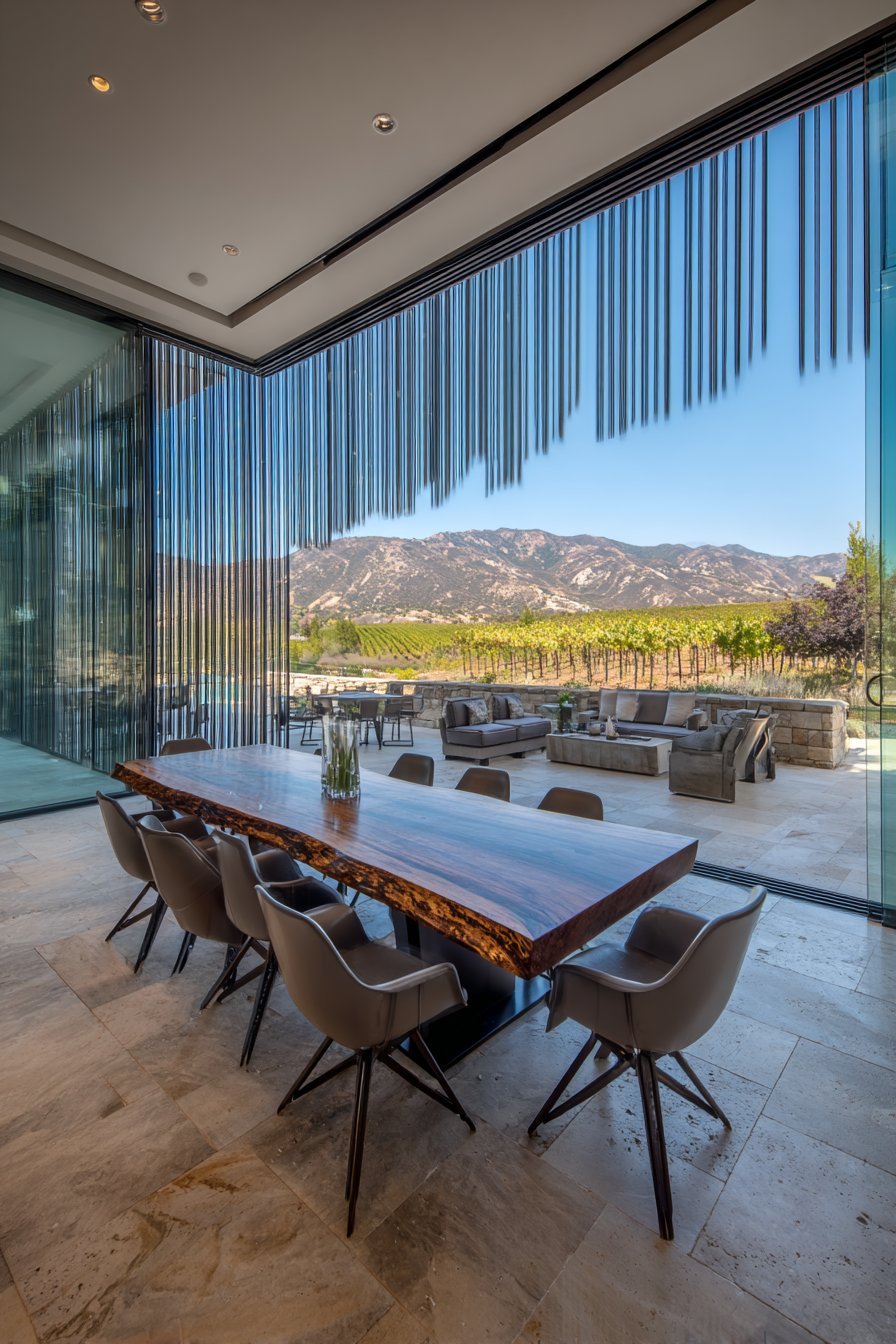
Accordion-style glass folding doors create dramatic opening to outdoor spaces. Narrow vertical glass panels in black aluminum frames fold completely aside. When fully open, the sixteen-foot wide opening connects tasting room to vineyard terrace. Live-edge wood table with modern metal-legged stools centers the interior.
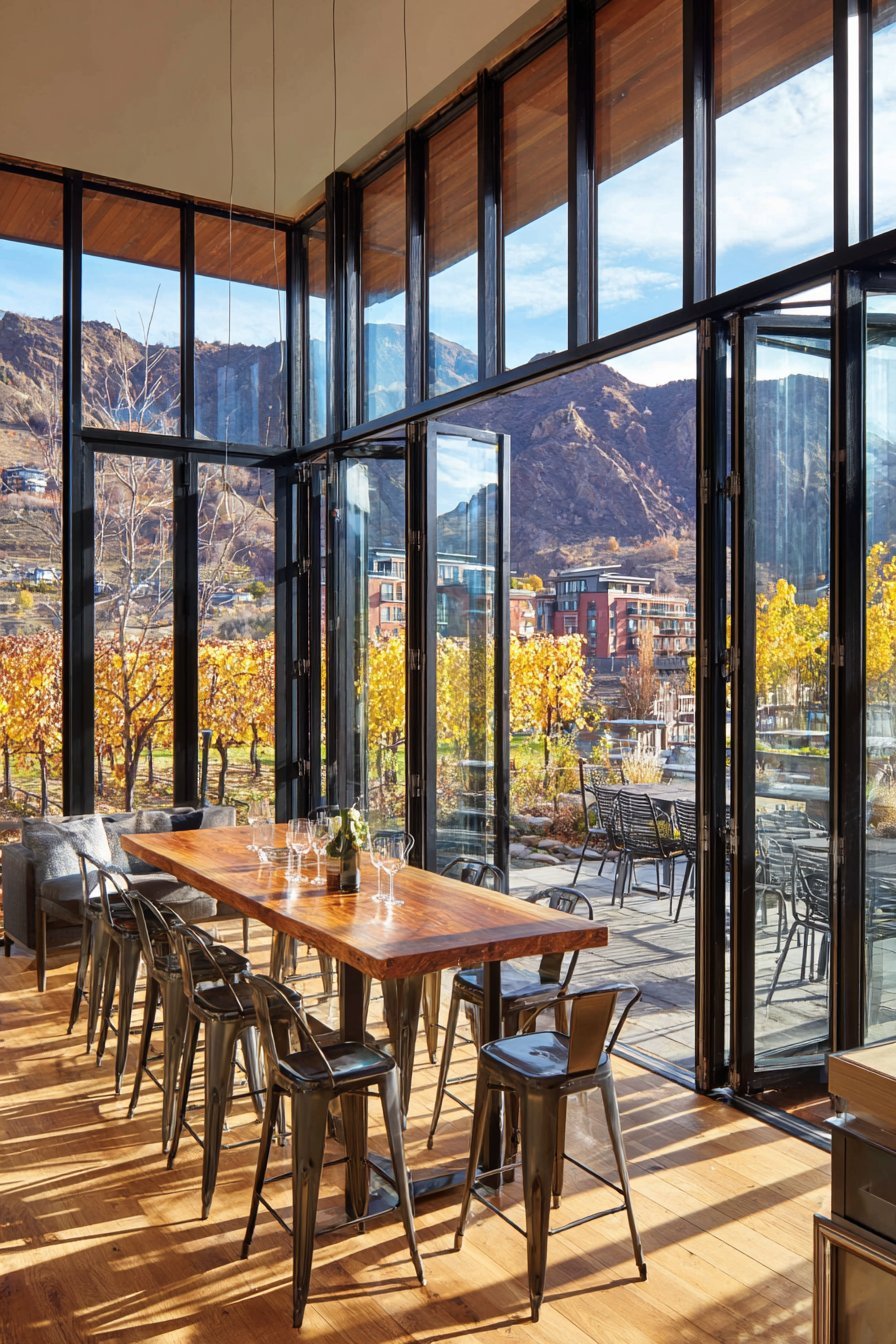
Stone flooring extends seamlessly from interior to exterior spaces. The folding mechanism stacks neatly to one side when retracted. Natural light floods the tasting room through expansive glass panels. Vineyard views become integral part of the tasting experience. This transformative door system blurs indoor-outdoor boundaries completely.
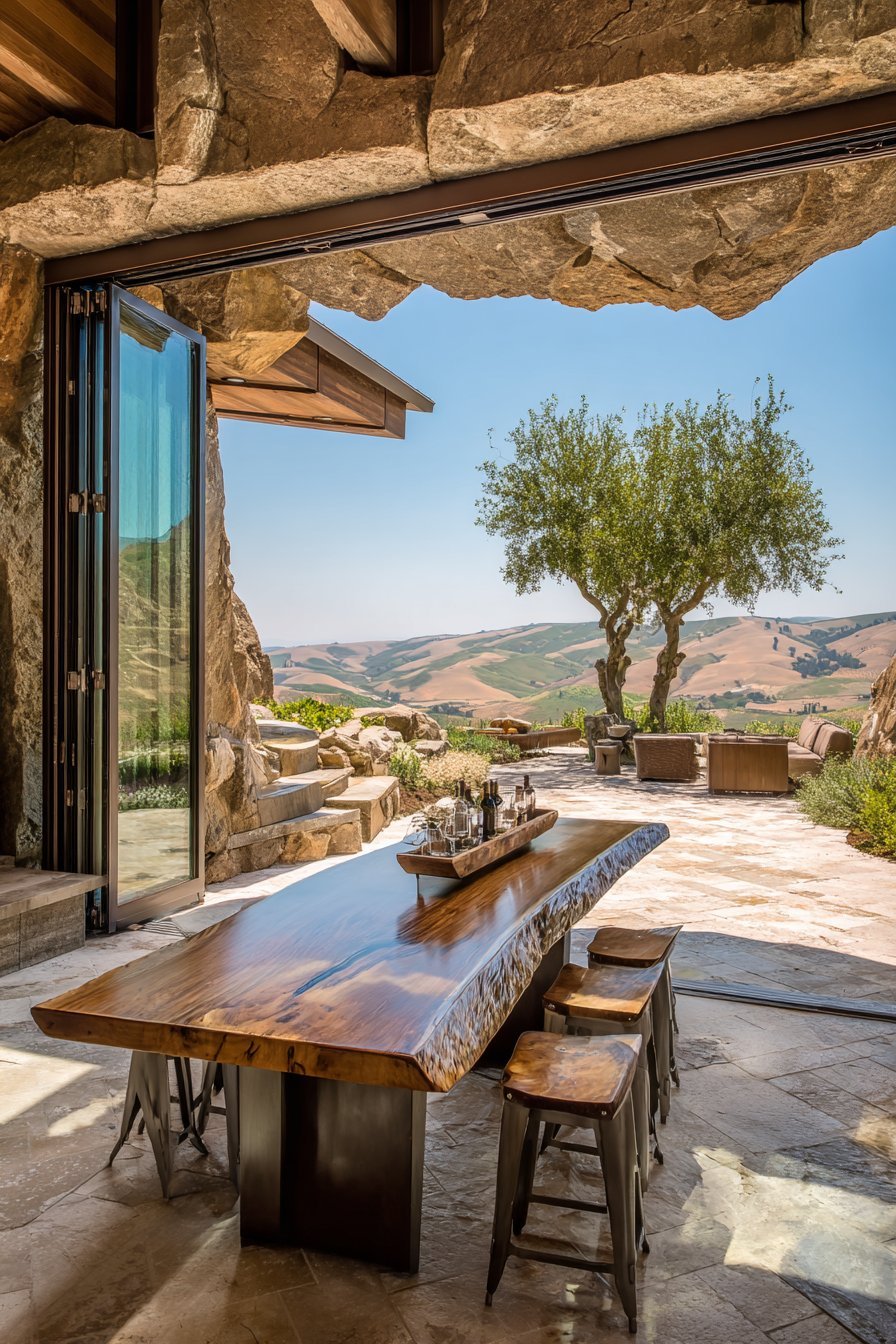
The accordion configuration provides maximum opening width from limited wall space. Quality hardware ensures smooth operation despite multiple panel coordination. The black frames create strong architectural lines against landscape views. This installation represents significant investment in architectural drama. The result transforms entertaining and daily living experiences.
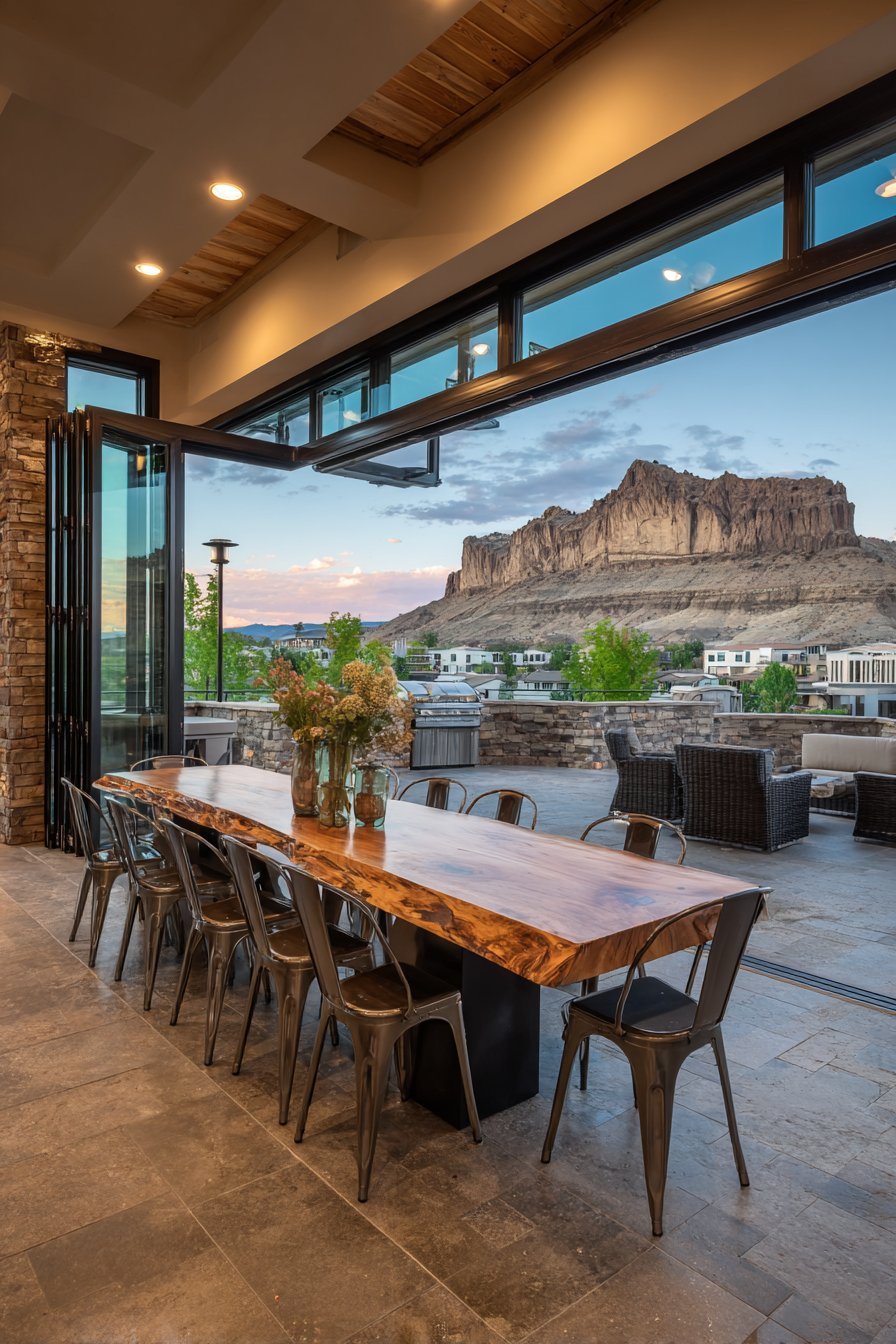
Key Design Tips:
- Specify heavy-duty hardware for multiple panel coordination
- Choose narrow panel widths for compact stacking
- Match interior and exterior flooring for visual continuity
- Plan adequate stacking space along one wall
- Consider motorized operation for large systems
- Ensure proper drainage at threshold for weather protection
- Maintain regular hardware lubrication for smooth operation
27. Cottage-Style Glass Cabinet Display
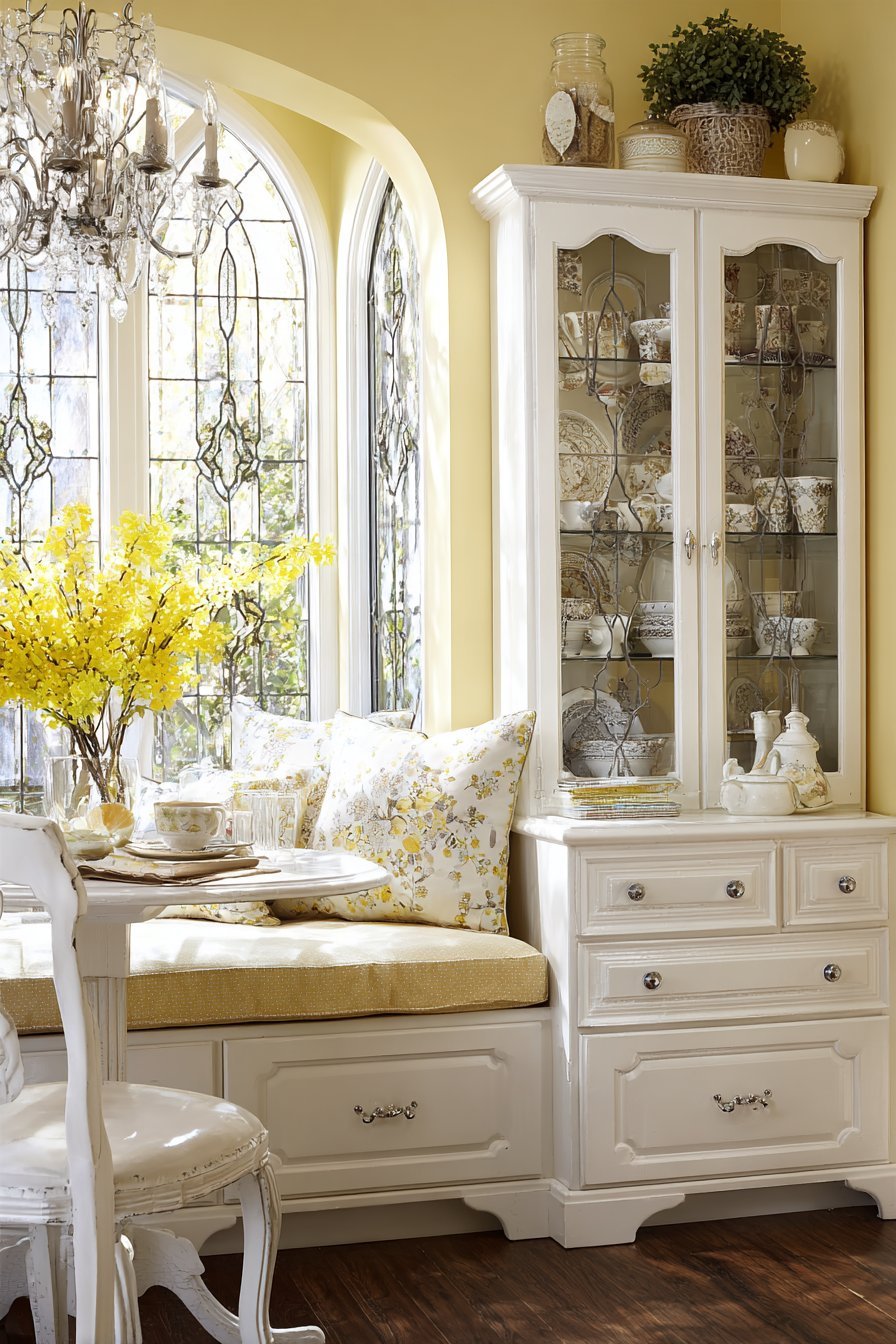
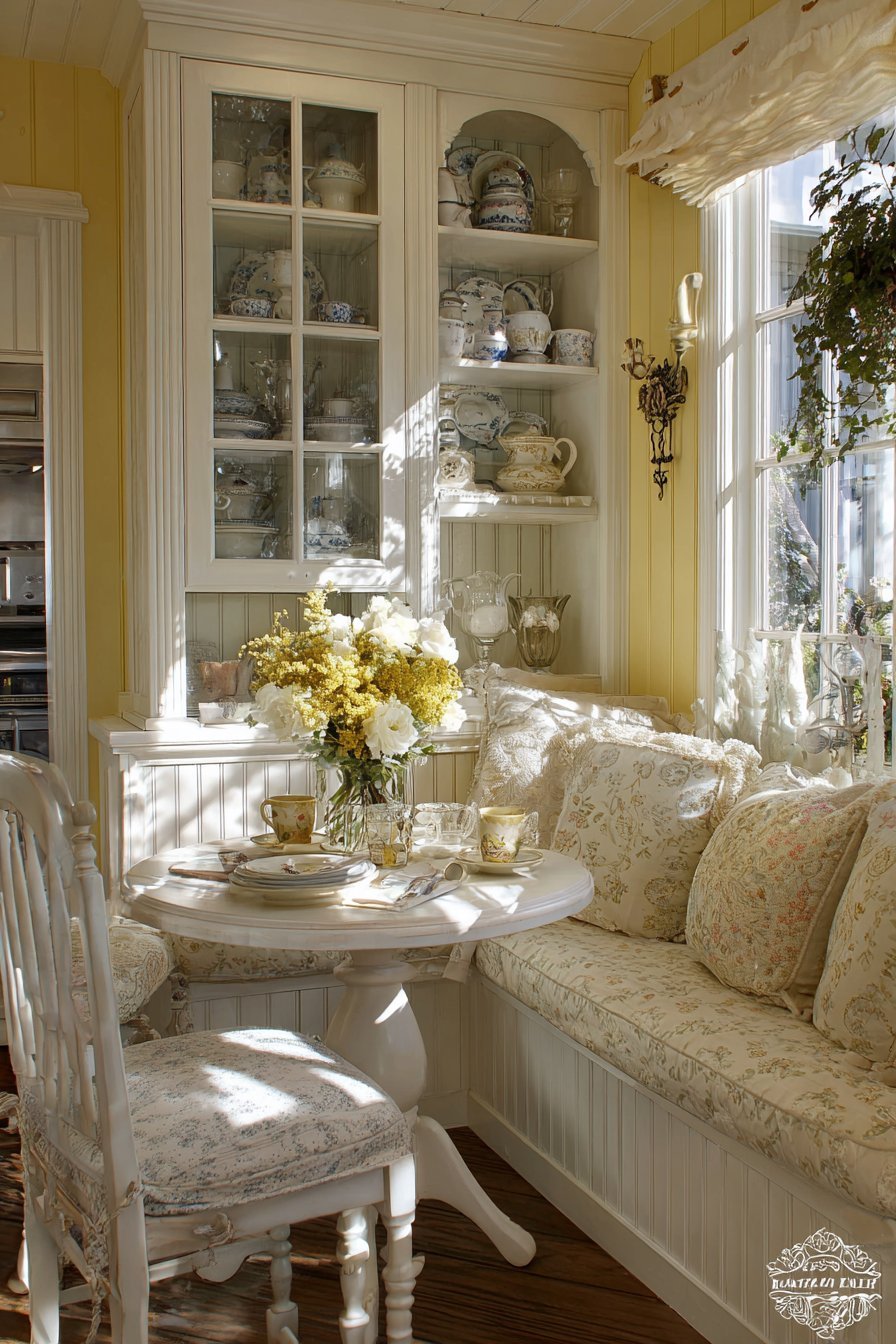
Vintage-inspired glass door cabinet displays ironstone dishes and collectibles. Mullioned glass doors feature simple white painted wood frames. Four-panel classic design suits traditional cottage styling. Built-in bench with floral cushions creates cozy breakfast nook dining.
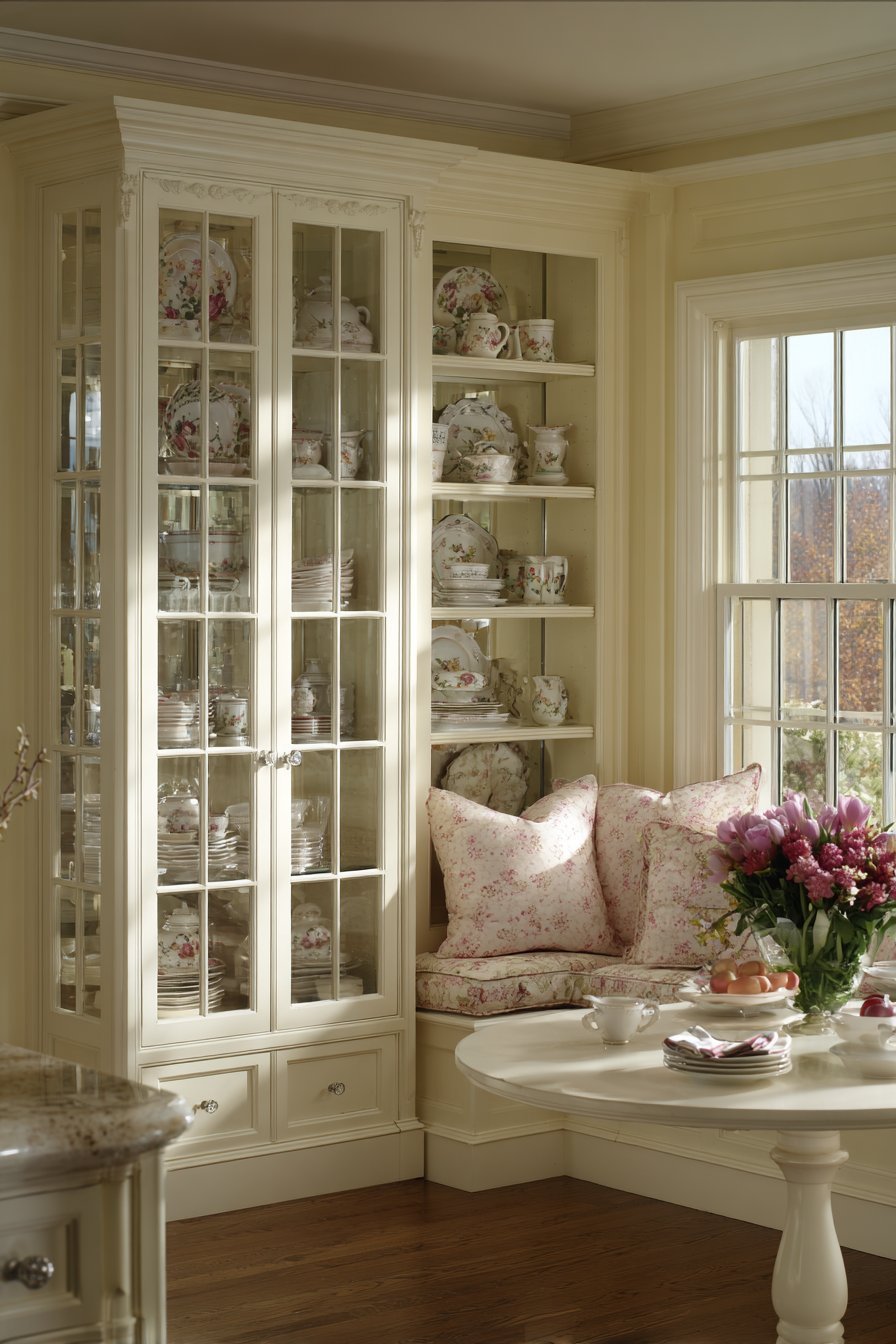
Round pedestal table complements the cottage charm perfectly. Beadboard wainscoting and soft yellow walls maintain cheerful atmosphere. Natural light from nearby window illuminates display cabinet contents. Morning light creates gentle reflections on glass surfaces throughout the space.
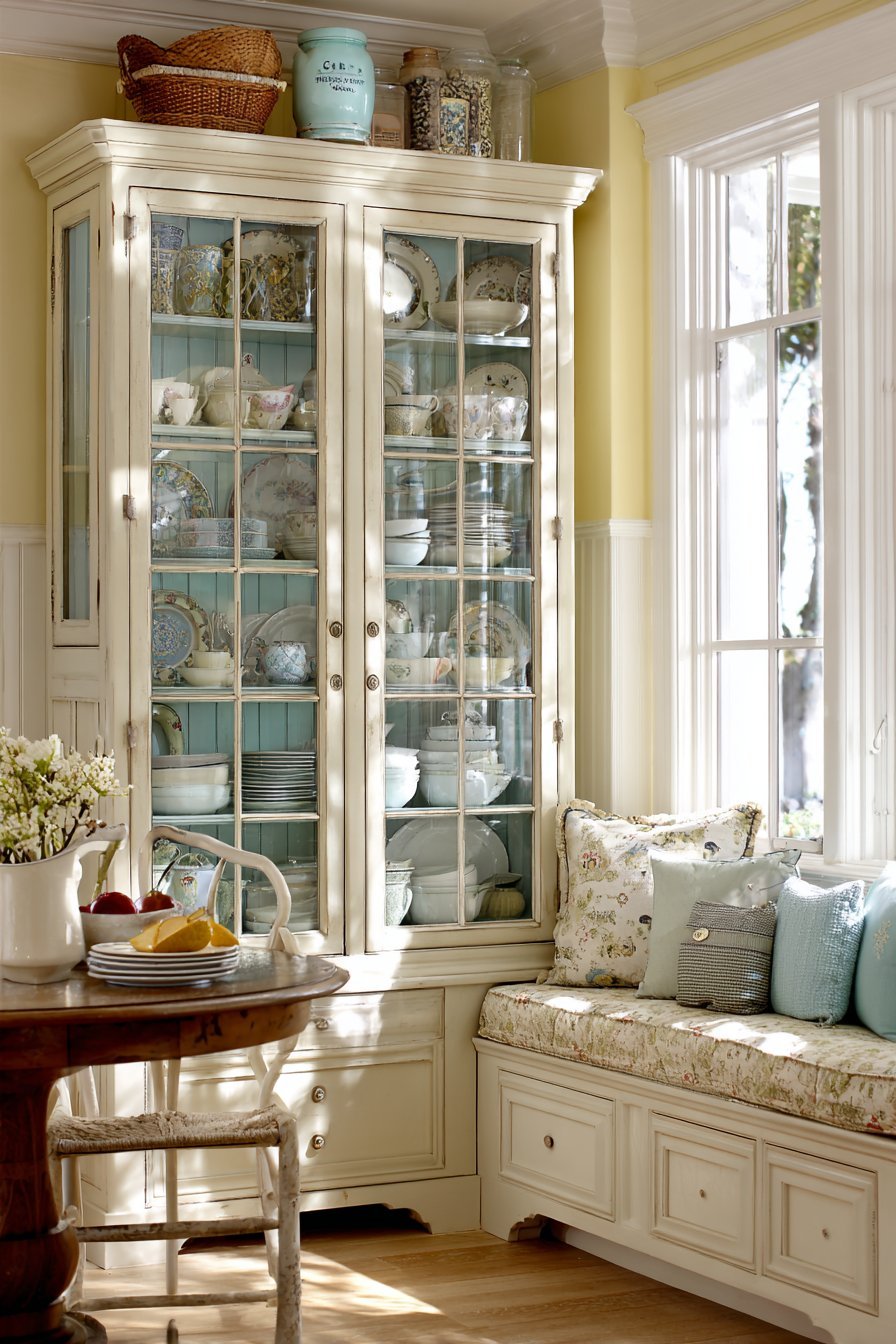
This cabinet demonstrates how glass-fronted storage serves decorative purposes. Organized collections become part of the cottage’s visual appeal. The white painted finish keeps the aesthetic light and fresh. Traditional mullion patterns add architectural interest without overwhelming the small space. This approach celebrates cottage living’s collected-over-time quality.
Key Design Tips:
- Use white painted finishes for traditional cottage aesthetics
- Organize cabinet contents as curated display
- Choose classic mullion patterns for authentic styling
- Complement with period-appropriate furniture selections
- Add interior cabinet lighting for evening display
- Use vintage or reproduction hardware for authenticity
- Keep collections edited for maximum visual impact
28. Modern Black-Framed Shower Enclosure
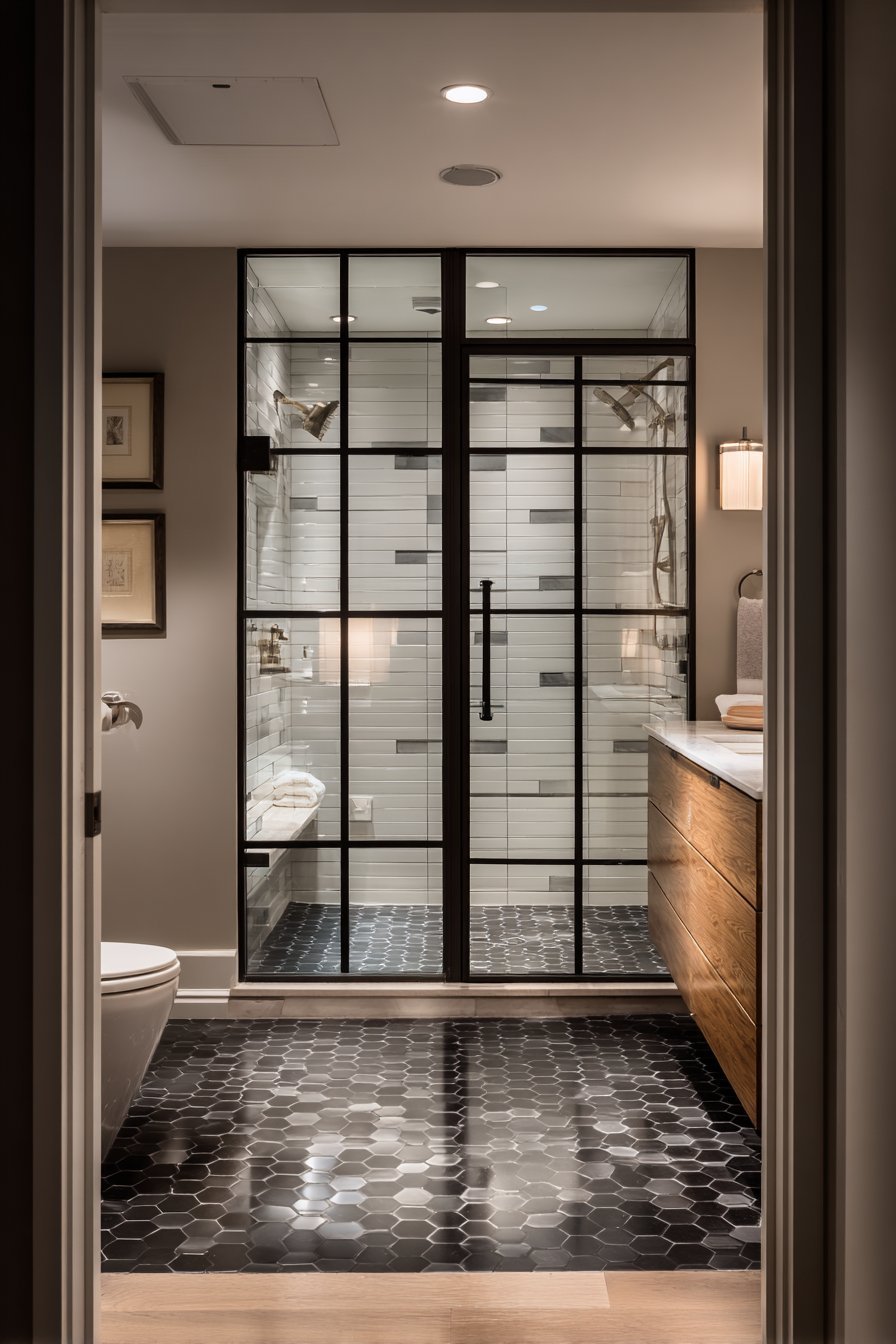
Black-framed glass shower enclosure features geometric grid pattern in metal framework. Clear glass panels set into matte black aluminum create contemporary cage aesthetic. White subway tile and black hex floor tile provide high-contrast backdrop. Floating double vanity in white oak balances the bold shower enclosure.
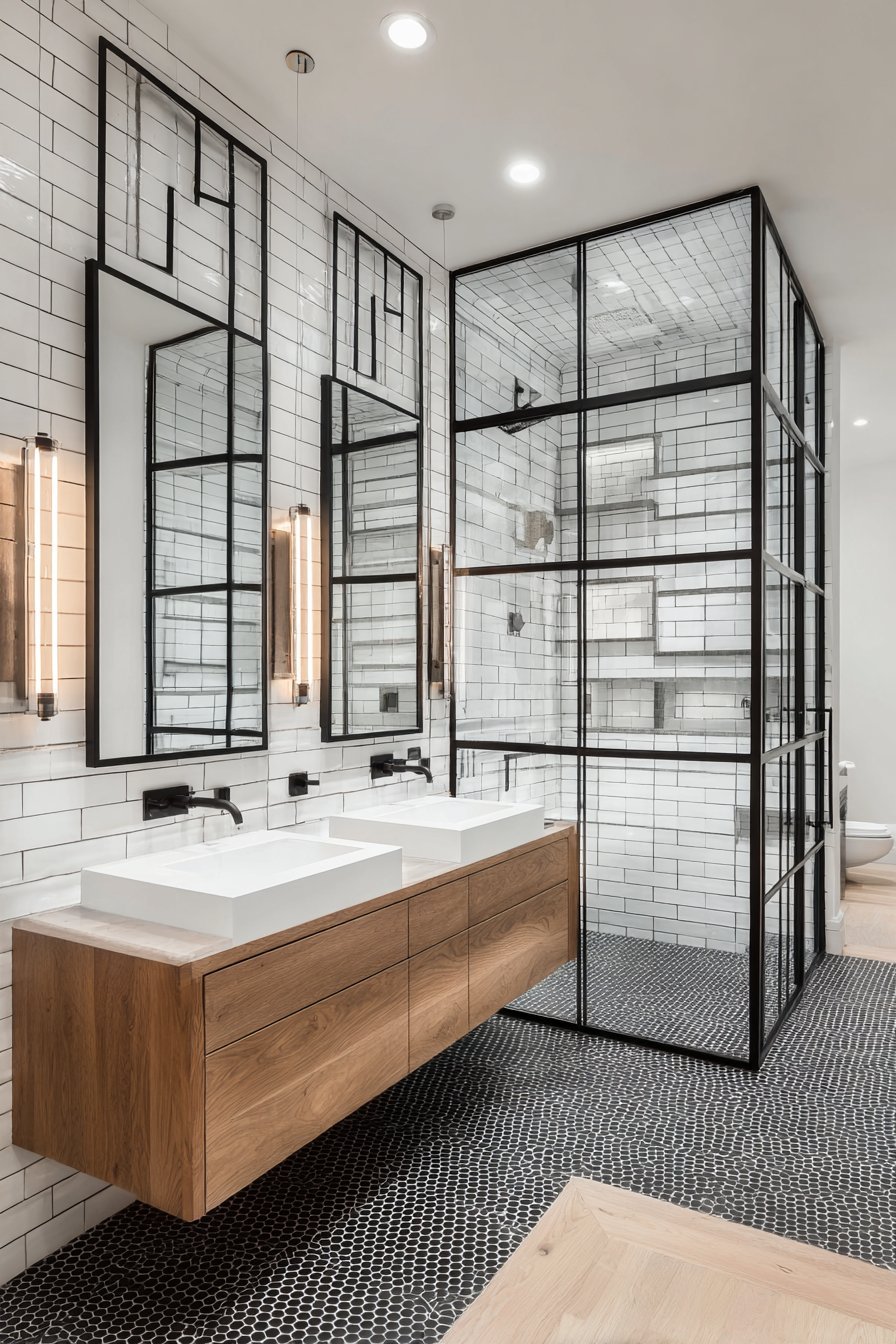
The geometric framework creates architectural statement in the bathroom. Matte black finish resists water spots better than chrome alternatives. Clear glass showcases premium tile selections without color distortion. The grid pattern adds industrial edge to otherwise soft bathroom design.
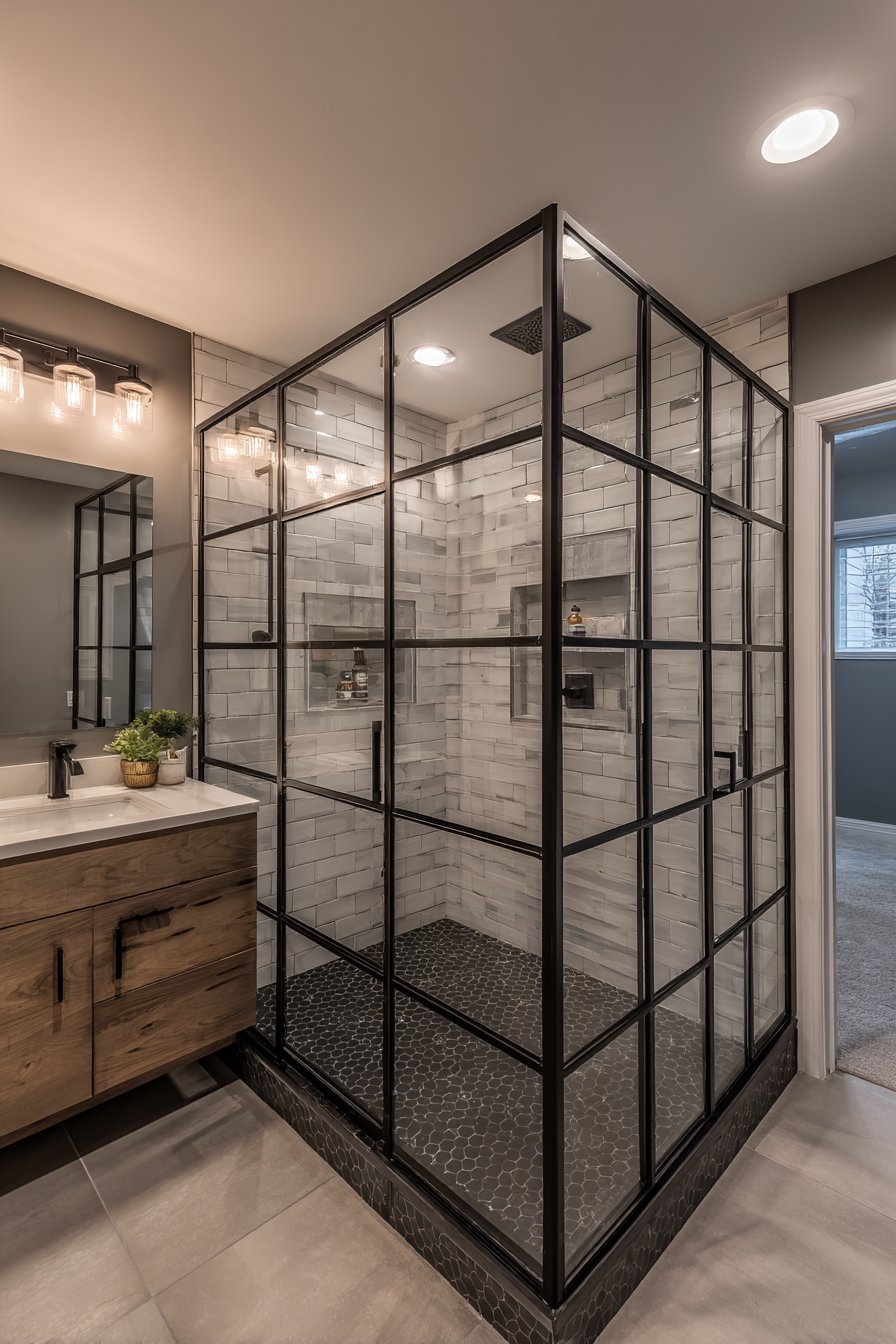
This enclosure demonstrates how frame color dramatically impacts bathroom aesthetics. The black grid creates strong graphic element commanding attention. Quality powder-coating ensures finish durability in wet environments. Proper installation maintains grid alignment and prevents warping. This bold choice suits confident designers willing to commit to statement-making design.
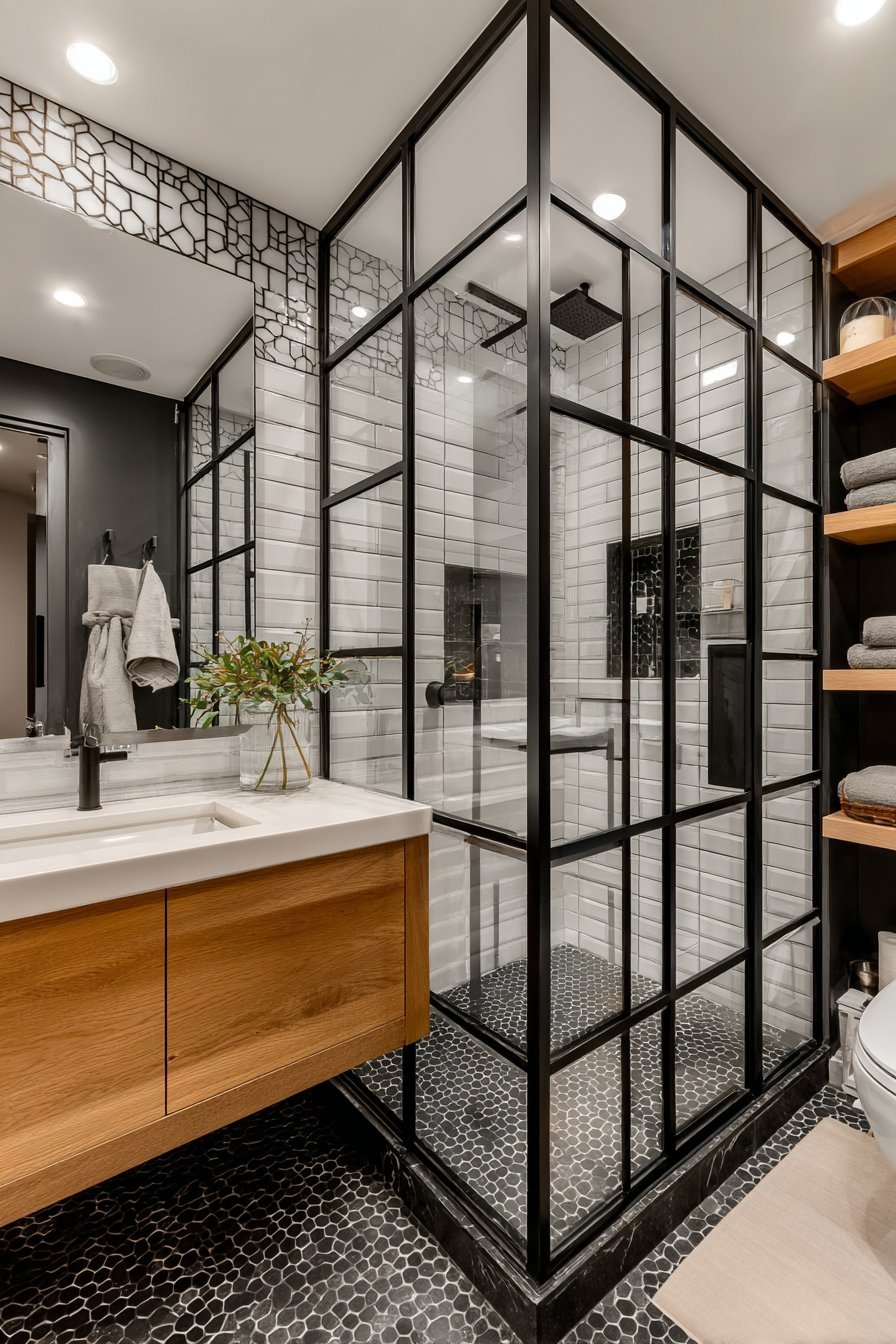
Key Design Tips:
- Choose matte black finishes for modern, spot-resistant appearance
- Use geometric grid patterns for contemporary industrial aesthetics
- Balance bold framing with simpler tile and fixture selections
- Ensure quality powder-coating for wet environment durability
- Install professional-grade hardware for proper alignment
- Use daily squeegee to maintain glass clarity
- Consider grid pattern scale relative to shower size
29. Traditional Library Glass Bookcase Doors
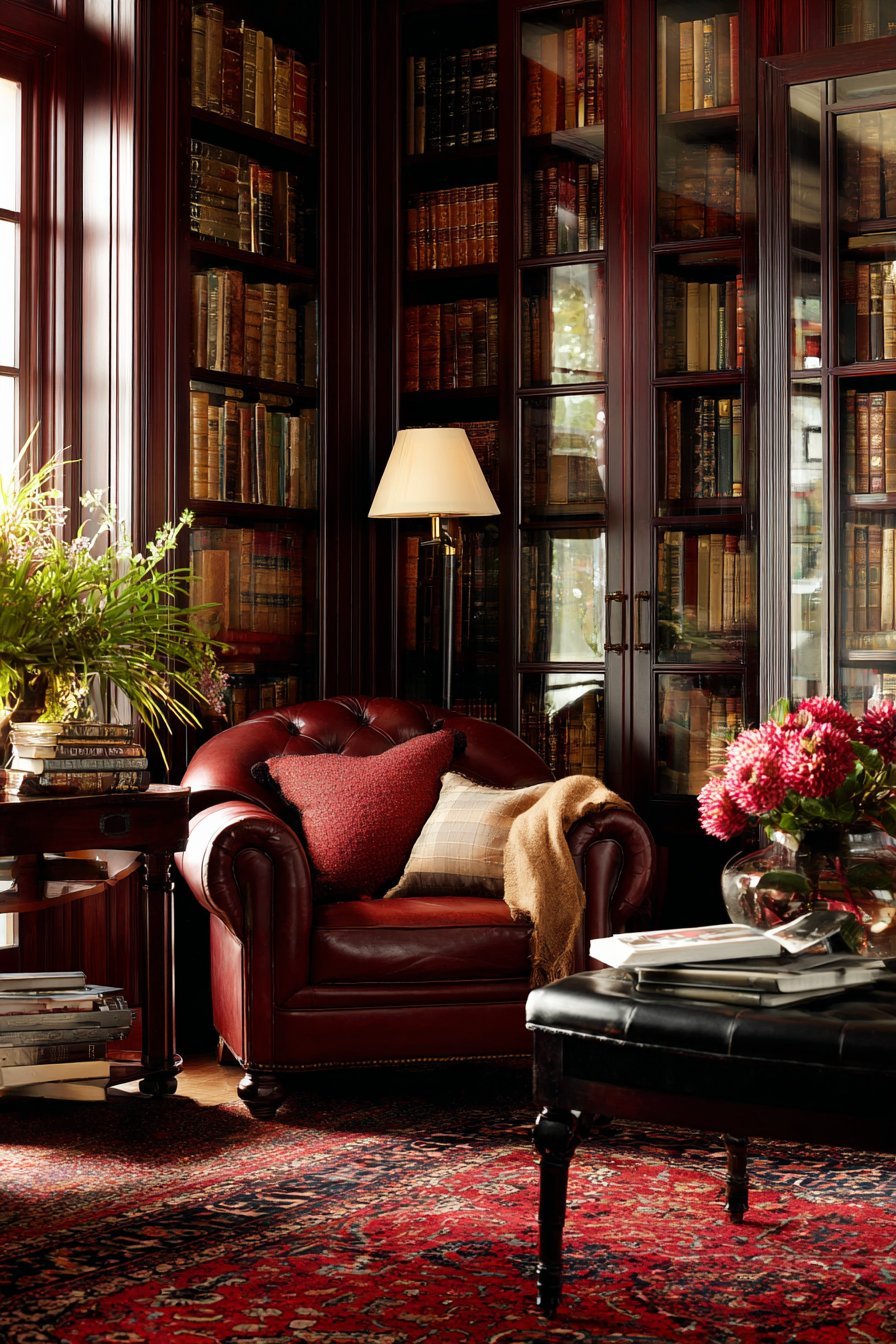
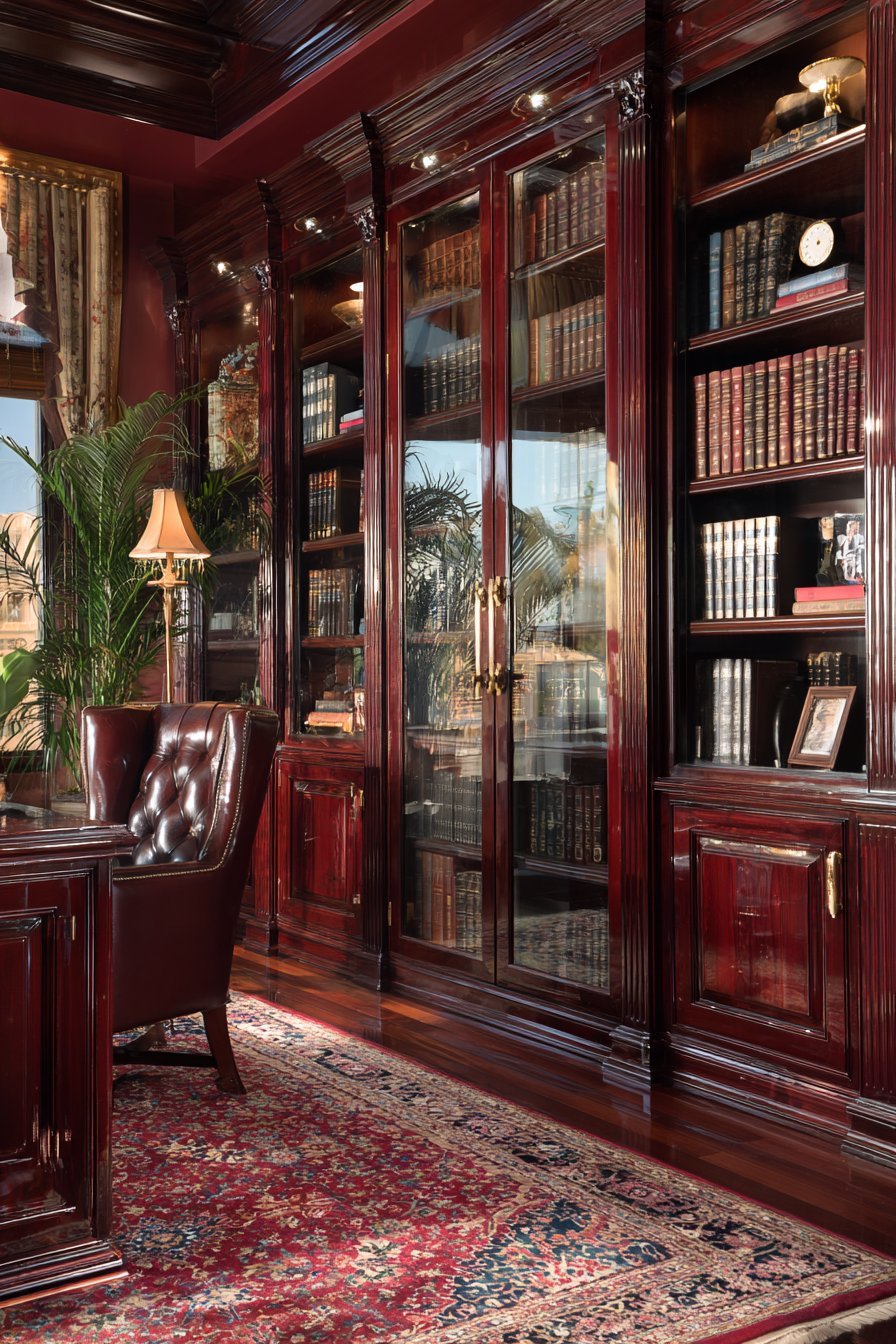
Classic glass-paned bookcase doors protect valuable book collections. Dark cherry wood frames with antique brass hardware suit traditional libraries. Built-in floor-to-ceiling bookcases with glass doors line complete wall. Leather reading chair and standing lamp create dedicated reading corner.
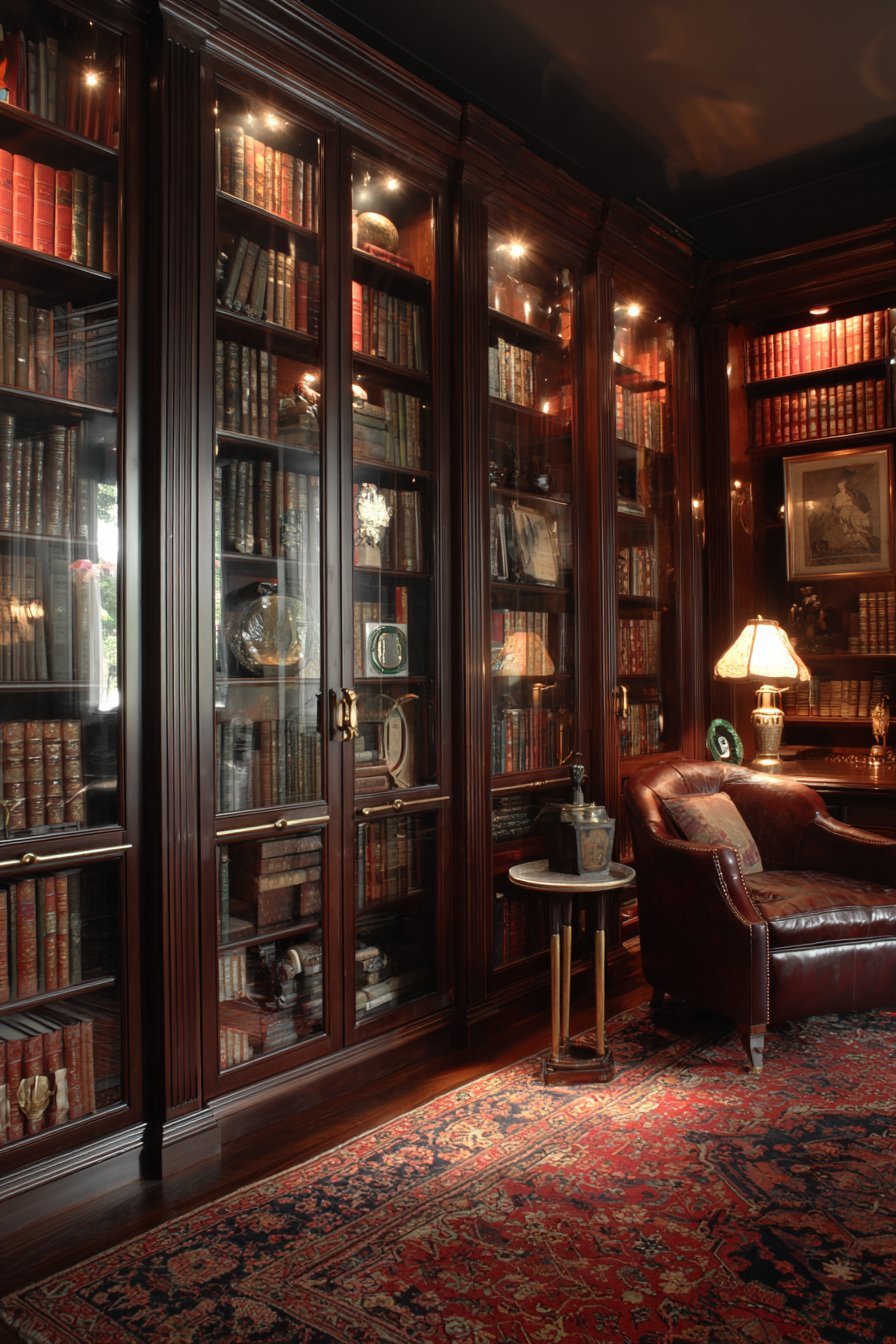
Oriental rug in deep reds and blues anchors the scholarly space. Warm ambient lighting reflects on glass surfaces creating inviting glow. The glass protection prevents dust accumulation on first-edition collections. Visual access allows appreciating leather-bound volumes without removing them. This design celebrates knowledge and literary pursuits.
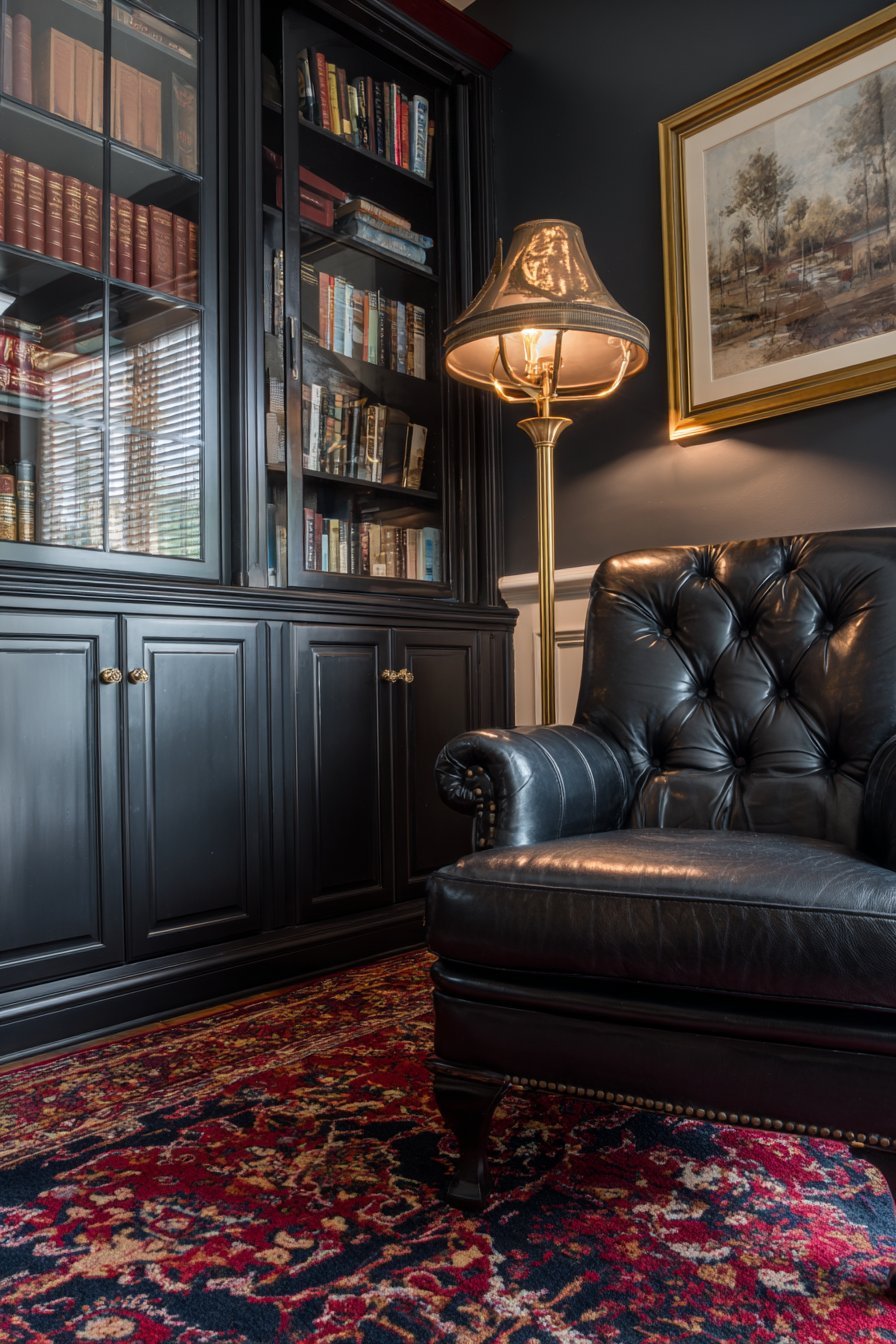
Glass-fronted bookcases represent investment in both books and their protection. The traditional styling honors classical library design principles. Antique brass hardware adds appropriate metallic warmth. Quality construction ensures doors remain aligned over decades of use. This approach creates rooms that feel both beautiful and intellectually substantial.
Key Design Tips:
- Choose dark wood finishes for traditional library aesthetics
- Use antique brass hardware for authentic period styling
- Install interior cabinet lighting to highlight book spines
- Organize books by size and color for visual appeal
- Ensure proper humidity control to protect valuable collections
- Clean glass regularly to maintain clear views
- Consider UV-filtering glass for rare book protection
30. Artist Studio Oversized Glass Sliding Doors
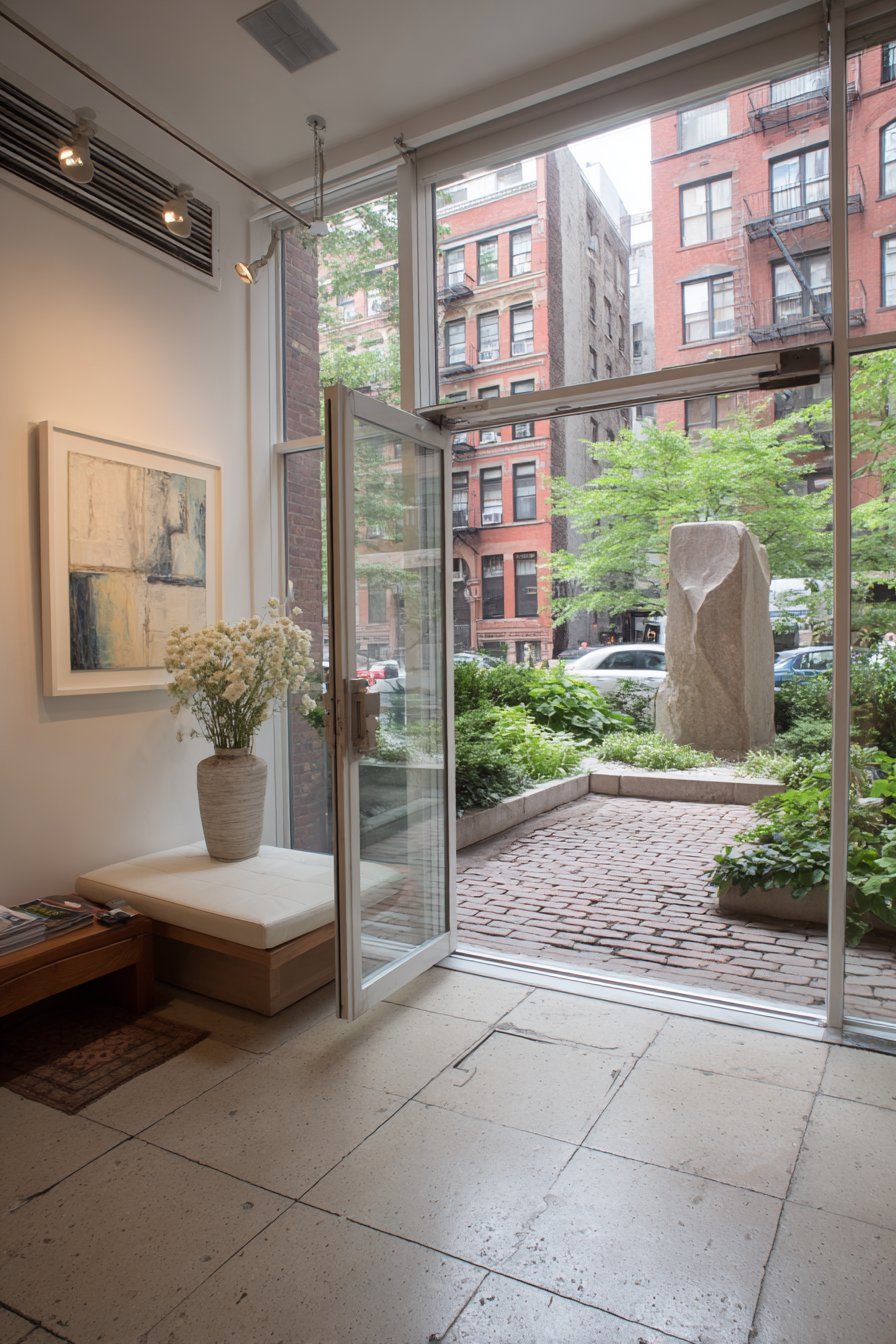
Oversized glass sliding door system features minimal white aluminum frames. The twelve-foot wide doors open to private sculpture garden spaces. Polished concrete floors and white walls create neutral gallery backdrop. Track lighting supplements abundant natural light flooding the studio.
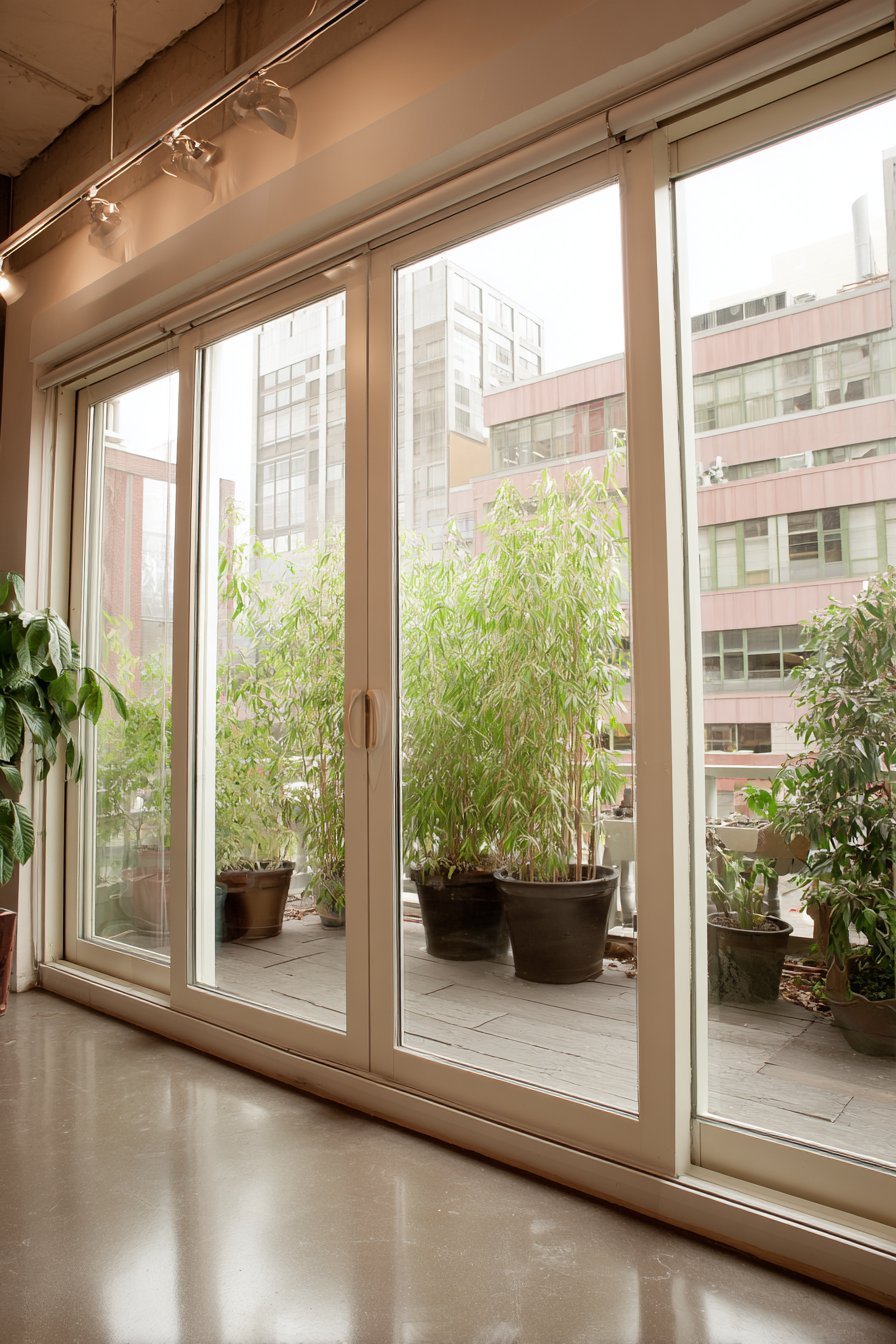
The gallery-like natural light proves ideal for artistic work. The massive doors blur boundaries between indoor studio and outdoor exhibition. Minimal framing maximizes glass area and views to garden. Quality hardware handles substantial door weight smoothly. This installation creates optimal conditions for creative pursuits.
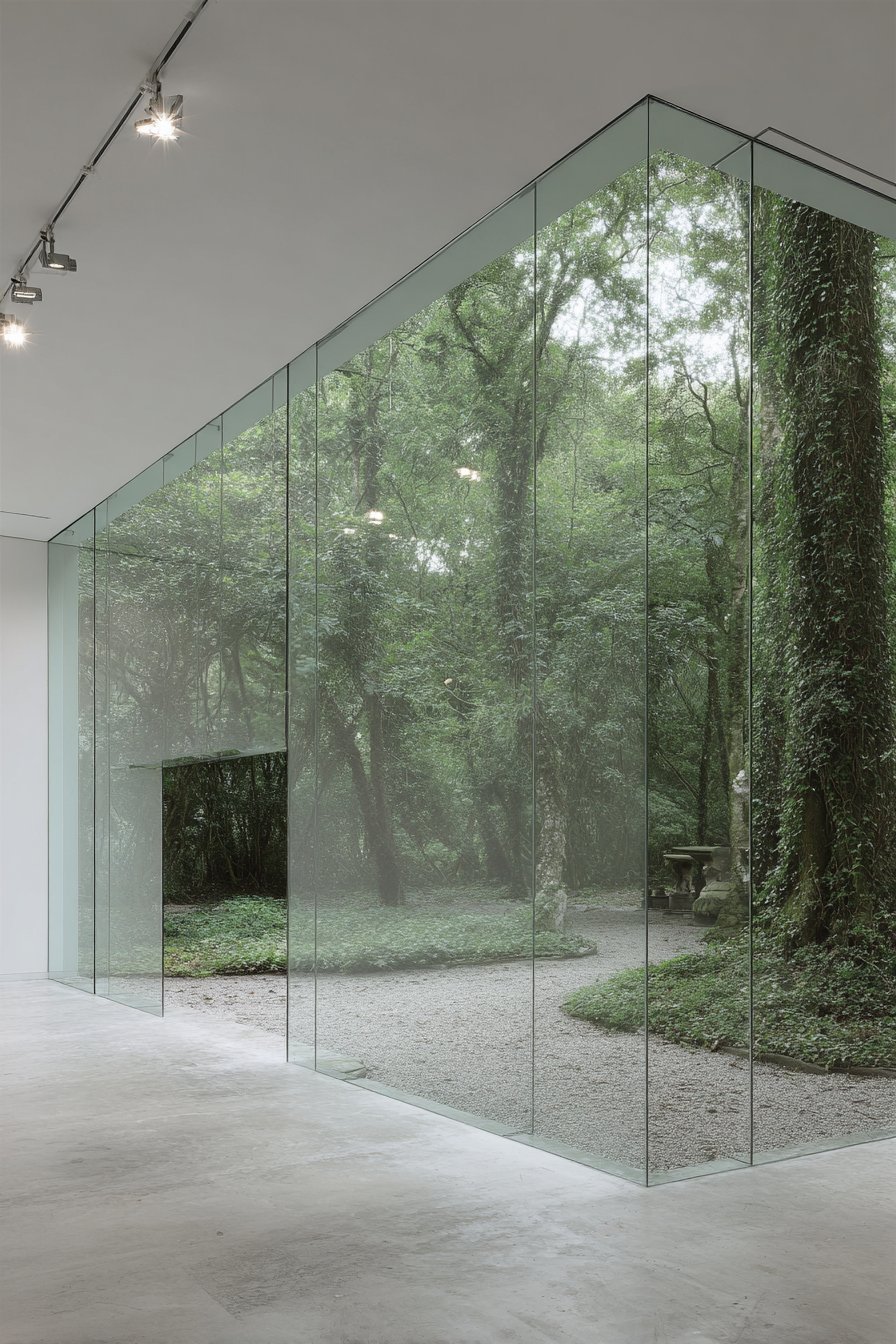
Artists require specific lighting conditions for accurate color perception. Natural north light through these doors provides consistent illumination. The connection to sculpture garden inspires creative exploration. Large-scale door systems require professional installation and engineering. The investment supports serious artistic practice within residential settings.
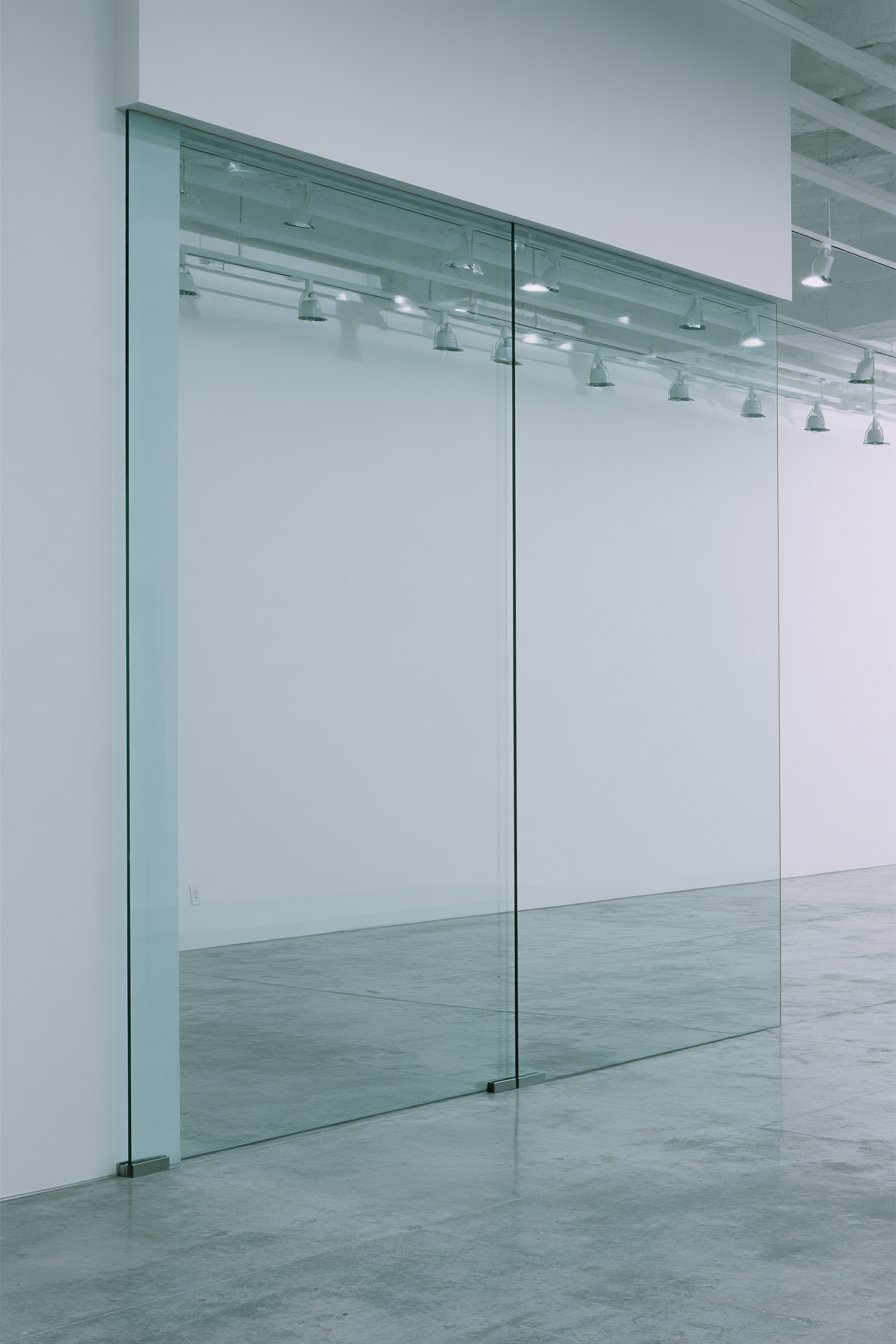
Key Design Tips:
- Specify minimal frame profiles to maximize glass area
- Choose white finishes for neutral, gallery-like aesthetics
- Install commercial-grade hardware for oversized door weight
- Ensure proper structural support for wide-span systems
- Plan traffic flow for door opening swing patterns
- Complement with neutral finishes showcasing artwork
- Consider motorized operation for convenience
Why These Glass Door Designs Are the Best
These glass door designs represent comprehensive exploration of how transparent architectural elements transform residential spaces. Each concept addresses specific functional requirements while maintaining aesthetic excellence. The variety demonstrates glass doors’ remarkable versatility across traditional, contemporary, and transitional design approaches.
Material quality forms the foundation of successful glass door installations. Tempered safety glass prevents dangerous breakage in high-traffic areas. Low-iron ultra-clear glass provides truest transparency without greenish tints. Insulated dual-pane construction maintains climate control while reducing sound transmission. These material choices directly impact long-term performance and user satisfaction.
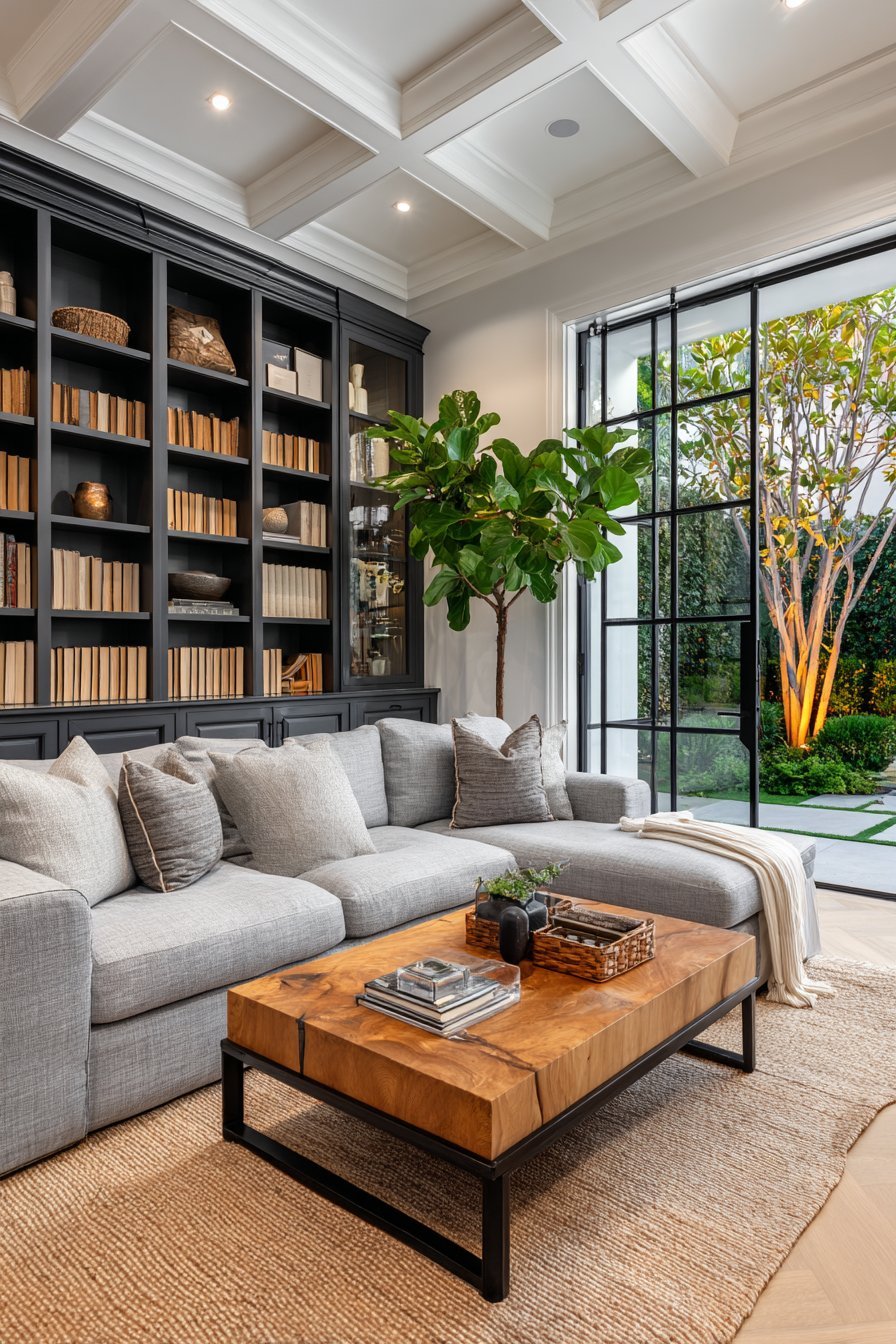
Frame selection proves equally important to overall door performance. Aluminum frames resist corrosion in humid environments like bathrooms and coastal areas. Steel frames provide industrial aesthetics with superior strength for large installations. Wood frames offer traditional warmth and can be painted to match evolving color schemes. Powder-coated finishes ensure durability without constant maintenance requirements.
The designs showcase how glass doors solve spatial challenges creatively. Pocket doors maximize floor space in compact urban apartments. Bi-fold configurations create expansive openings from limited wall space. Sliding barn doors add character while maintaining traffic flow. Dutch doors provide versatility for various ventilation and privacy needs throughout the day.
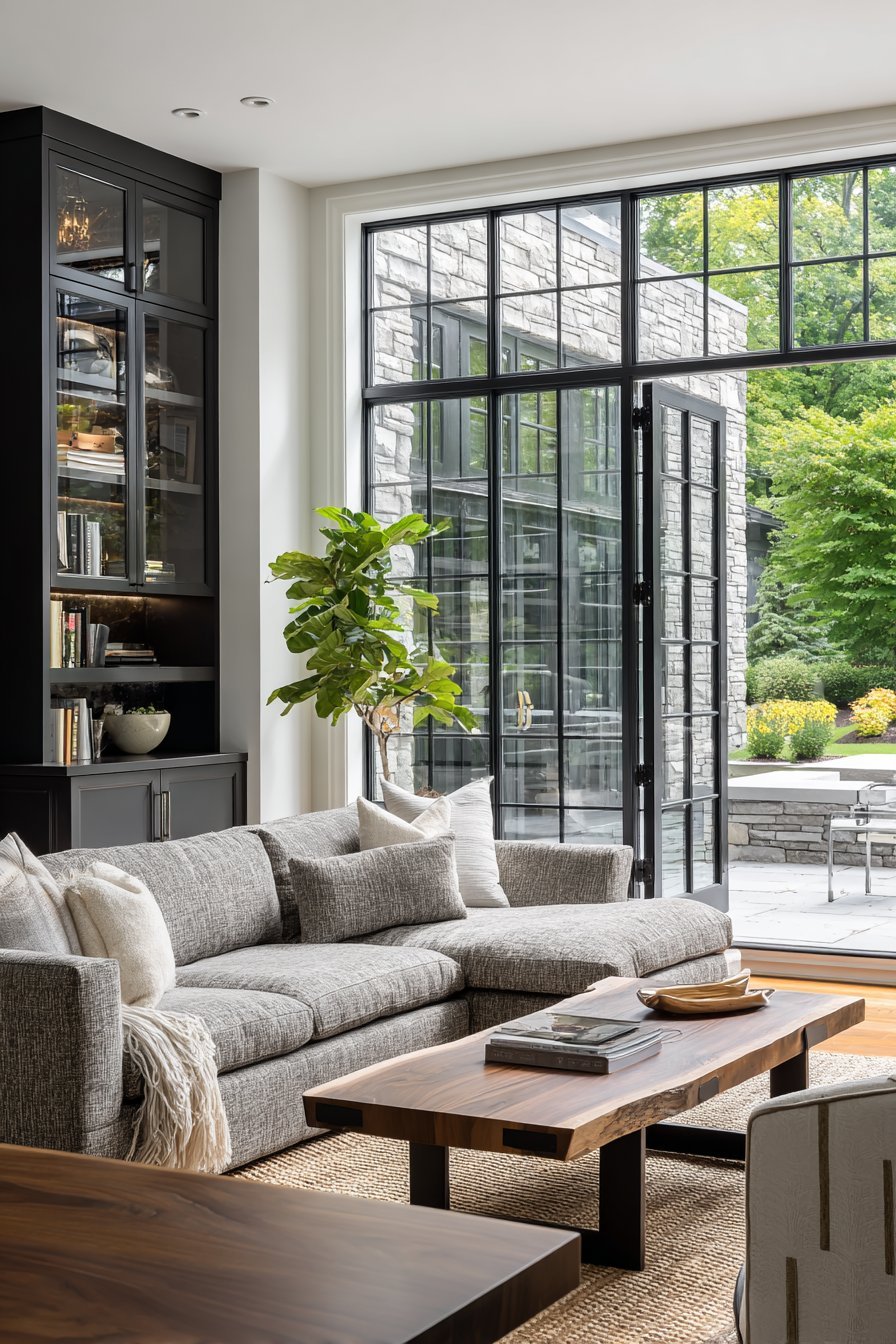
Color theory applications appear throughout these concepts demonstrating thoughtful design decisions. Black frames create strong architectural lines suiting contemporary and industrial aesthetics. White frames maintain lightness appropriate for Scandinavian and coastal styles. Bronze and brass tones add warmth to transitional and traditional applications. Frame color dramatically impacts perceived door weight and spatial effect.
Sustainability considerations emerge naturally from quality material selection. Investing in substantial glass thickness and premium hardware ensures decades of reliable service. Choosing timeless frame styles prevents premature replacement due to dated aesthetics. Energy-efficient glazing reduces heating and cooling costs throughout the door’s lifespan. These choices support environmental responsibility while providing economic value.
Conclusion
Glass doors transform residential spaces through their unique combination of transparency and functional separation. The thirty designs explored demonstrate remarkable versatility across every room type and design style. From frameless shower enclosures to industrial steel partitions, glass doors serve countless purposes beautifully.
The key principles emerge consistently across these varied applications. Quality materials ensure long-term performance and safety. Appropriate frame selection complements overall design aesthetics. Thoughtful glass treatments balance transparency with privacy needs. Professional installation guarantees proper operation and weather protection.
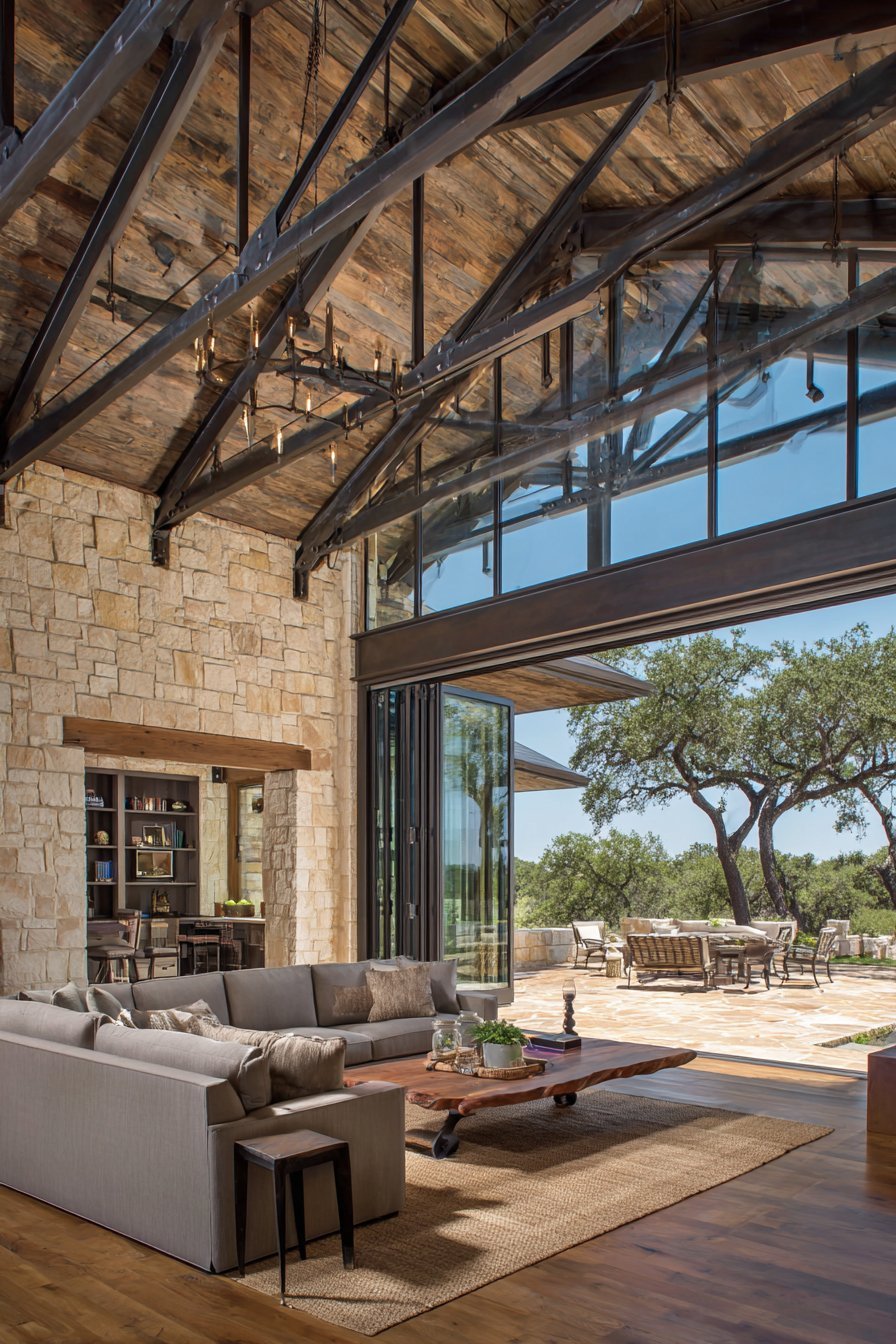
Your glass door selections should reflect both practical requirements and design aspirations. Consider how natural light flows through your spaces. Evaluate privacy needs against desires for visual connection. Balance architectural statements against budget constraints. These thoughtful considerations lead to selections you’ll appreciate for decades.
Begin planning your glass door project by identifying specific functional needs. Measure spaces carefully and research local building codes. Consult professionals for complex installations requiring structural modifications. Invest in quality materials that will serve your household reliably. Your home deserves the transformative beauty that well-chosen glass doors provide.