Open shelving has become one of the most popular ways to add personality and function to modern kitchens. Unlike closed cabinets, kitchen shelves put everyday items on display, turning practical storage into a design opportunity. Learning how to decorate a kitchen shelf well means balancing beauty with everyday usability.
Every kitchen has its own rhythm, from minimalist spaces to warm, collected interiors. The right shelf styling can reflect that personality while still keeping frequently used items within easy reach. This guide walks through practical, stylish ways to fill kitchen shelves without creating clutter. If you’re also weighing our floating shelves vs cabinets, that’s worth deciding early too.
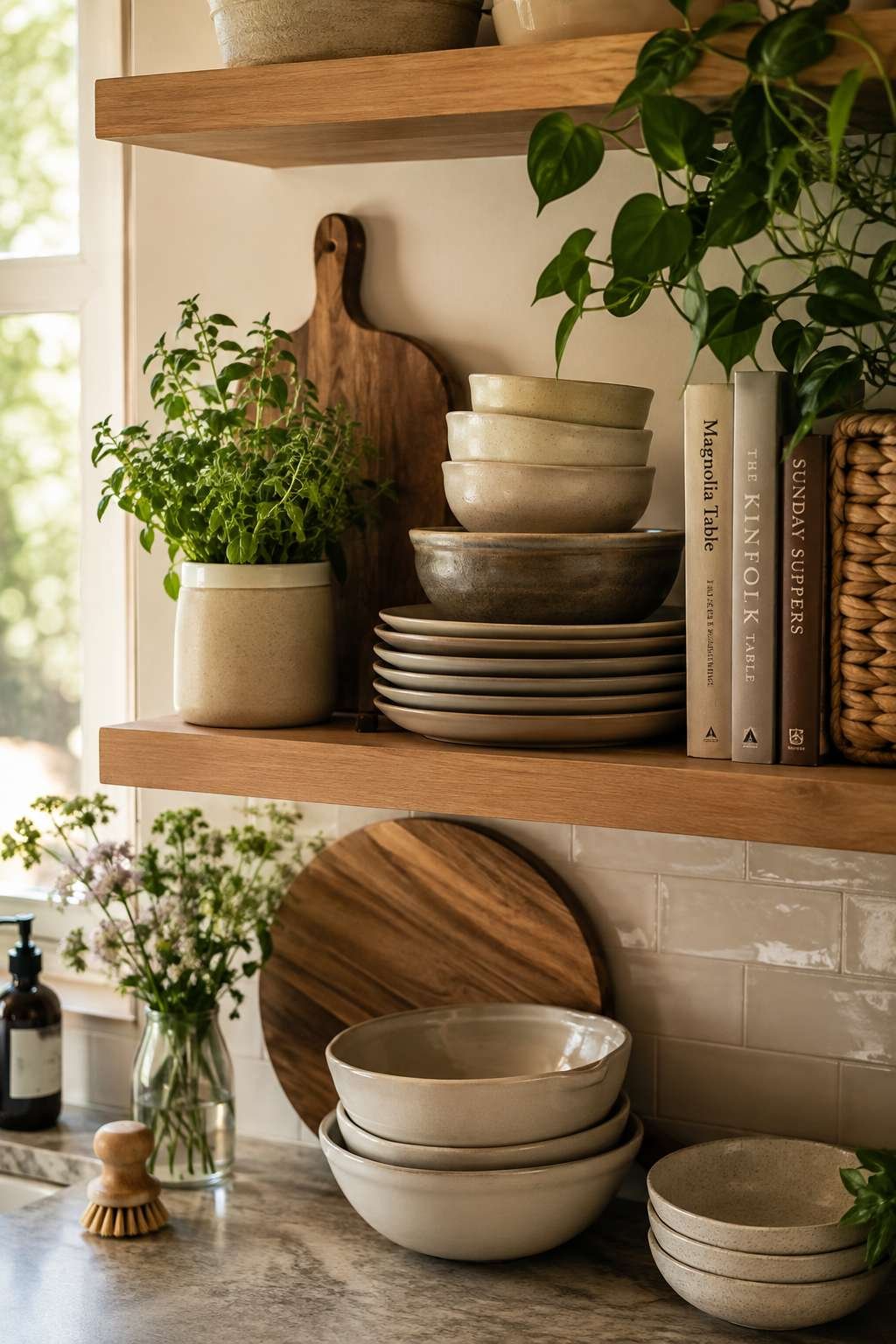
1. Start with a Color Palette
Before placing a single item, it helps to settle on a cohesive color palette for the shelf. Choosing two or three complementary tones keeps the display feeling intentional rather than random. This might mean sticking to neutrals like white, wood, and black.
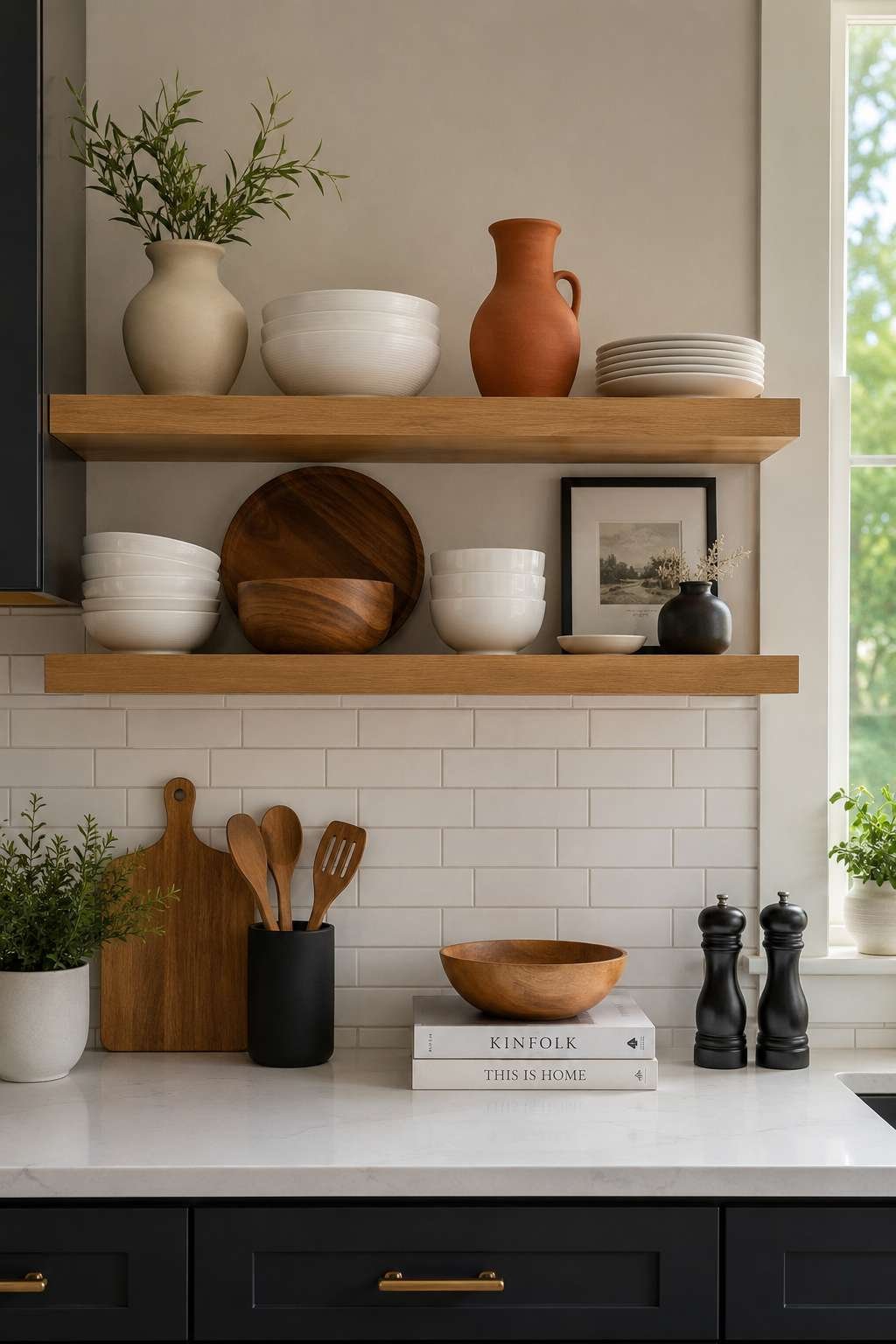
A consistent palette also makes it easier to mix and match items over time. When new dishware or decor pieces are added later, they’ll blend naturally if they follow the same color scheme. This small planning step makes the biggest difference in the final look.
- Choose two to three main colors for consistency
- Stick to neutral tones for a timeless look
- Use one accent color for visual interest
- Consider your kitchen’s existing color scheme
- Avoid mixing too many bold patterns together
2. Mix Height and Texture
Flat, same-sized items on a shelf can look visually boring no matter how nice they are individually. Mixing varying heights, from tall vases to short bowls, creates a more dynamic display. This layering technique draws the eye across the entire shelf naturally.
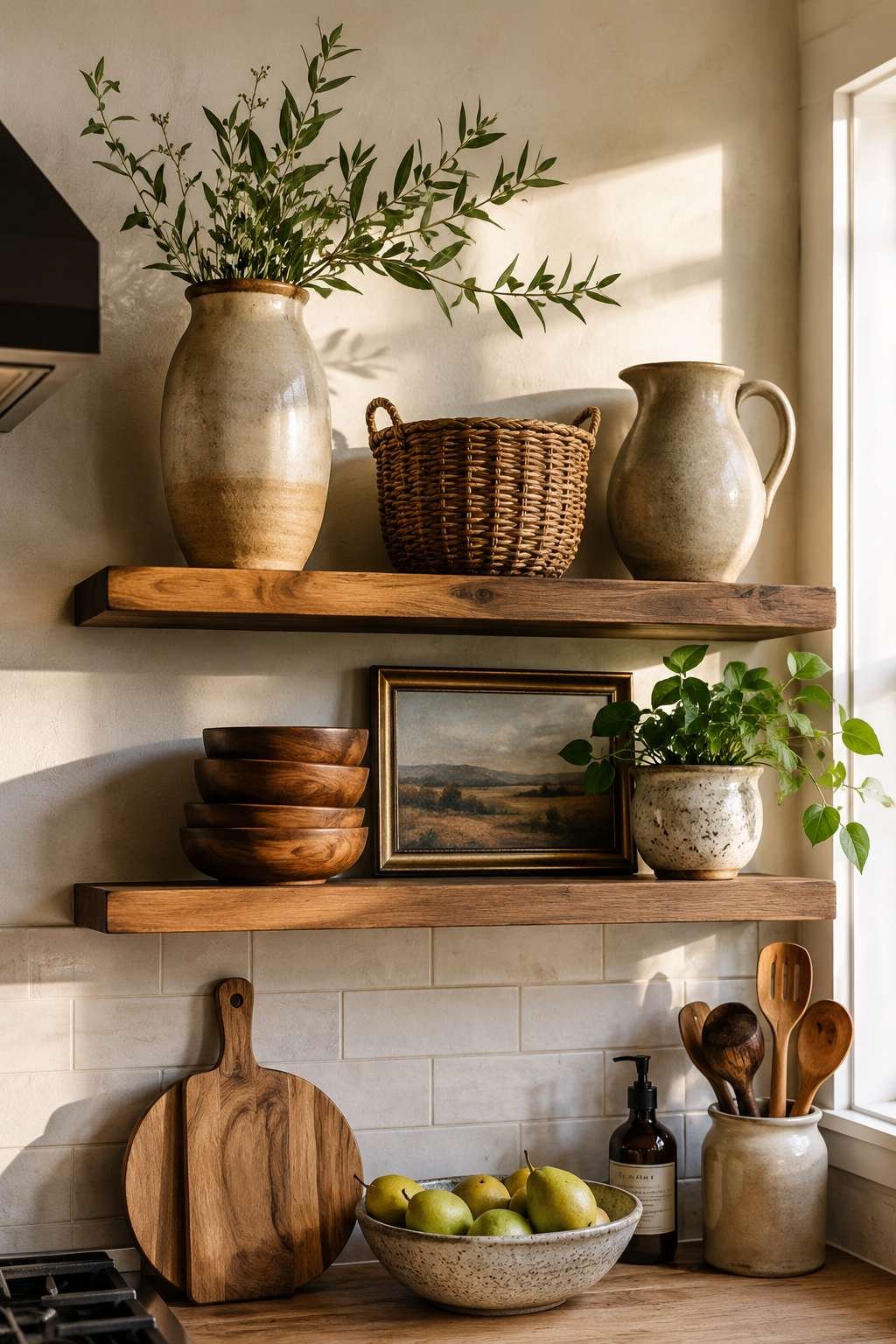
Texture plays an equally important role in keeping the display interesting. Combining smooth ceramics with woven baskets or rustic wood adds depth and warmth. This contrast prevents the shelf from feeling flat or one-dimensional.
- Combine tall and short items for balance
- Mix ceramic, wood, and woven textures
- Group items in odd numbers for visual appeal
- Avoid lining everything up at the same height
- Use risers or stands to add extra levels
3. Display Everyday Dishware
One of the most practical uses for open shelving is showcasing everyday dishware. Stacking plates, bowls, and mugs neatly keeps essentials accessible while adding a collected, lived-in charm. Choosing dishware with interesting patterns or colors turns function into decoration.
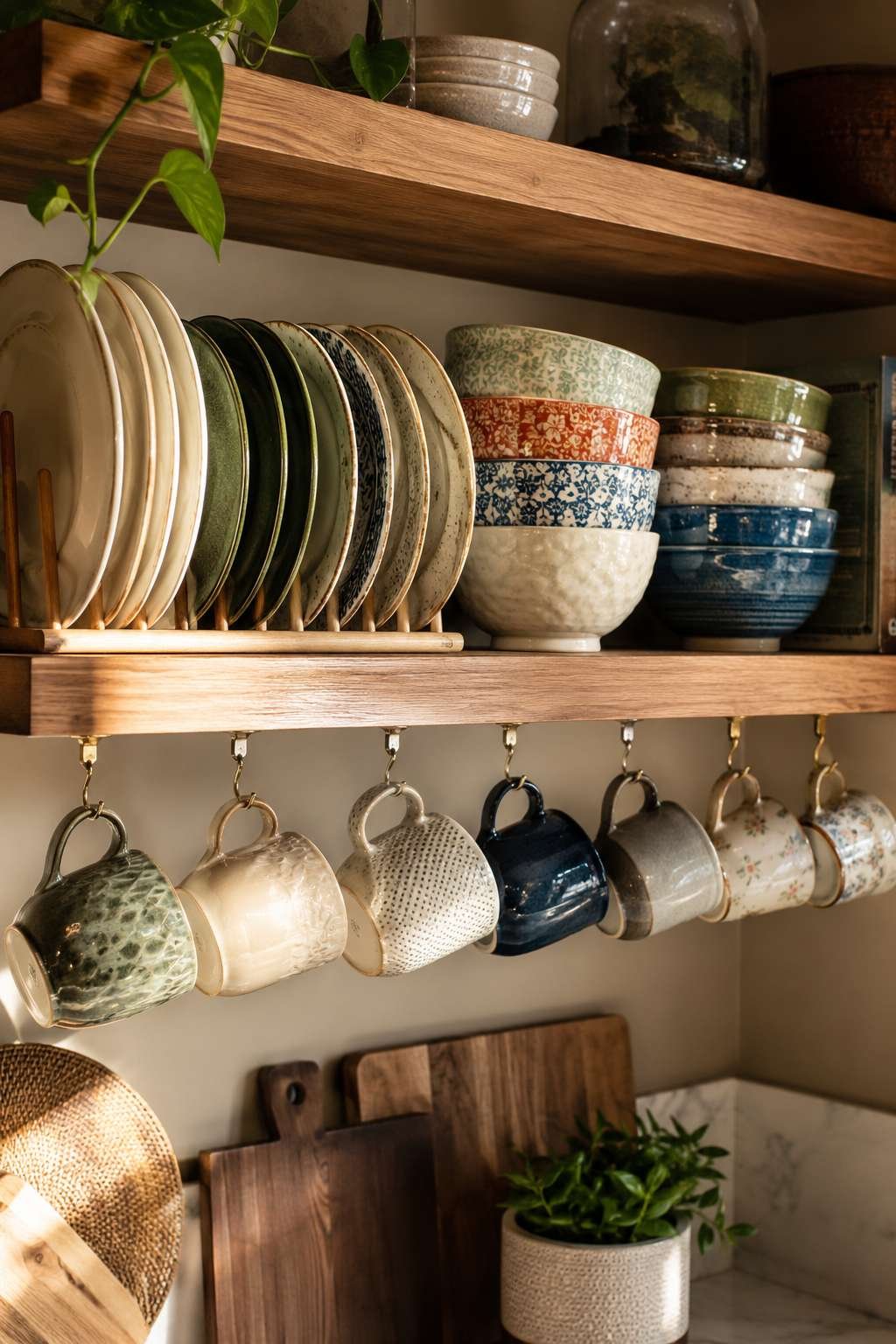
Organizing by type and size makes the display look tidy and intentional. Stacking plates from largest to smallest, for example, creates a clean visual line. This approach works especially well for kitchens with limited cabinet space. Organizing by type and size makes the display look tidy and intentional. Stacking plates from largest to smallest, for example, creates a clean visual line. This approach works especially well for kitchens with limited cabinet space . If you’re also weighing cabinet handles vs knobs, that’s worth deciding early too.
- Stack plates from largest to smallest
- Hang mugs on small hooks underneath shelves. It’s a similar trade-off to deciding on open shelves vs closed cabinets elsewhere in the space.
- Group bowls by color or size
- Choose dishware with interesting patterns or glazes
- Keep only frequently used pieces on display
4. Add Greenery for Freshness
A touch of greenery instantly makes kitchen shelves feel more alive and inviting. Small potted herbs like basil or rosemary add both beauty and function, since they can be used in cooking. Trailing plants like pothos soften the shelf’s harder edges. Our guide on this how to decorate open kitchen shelves walks through this step by step.
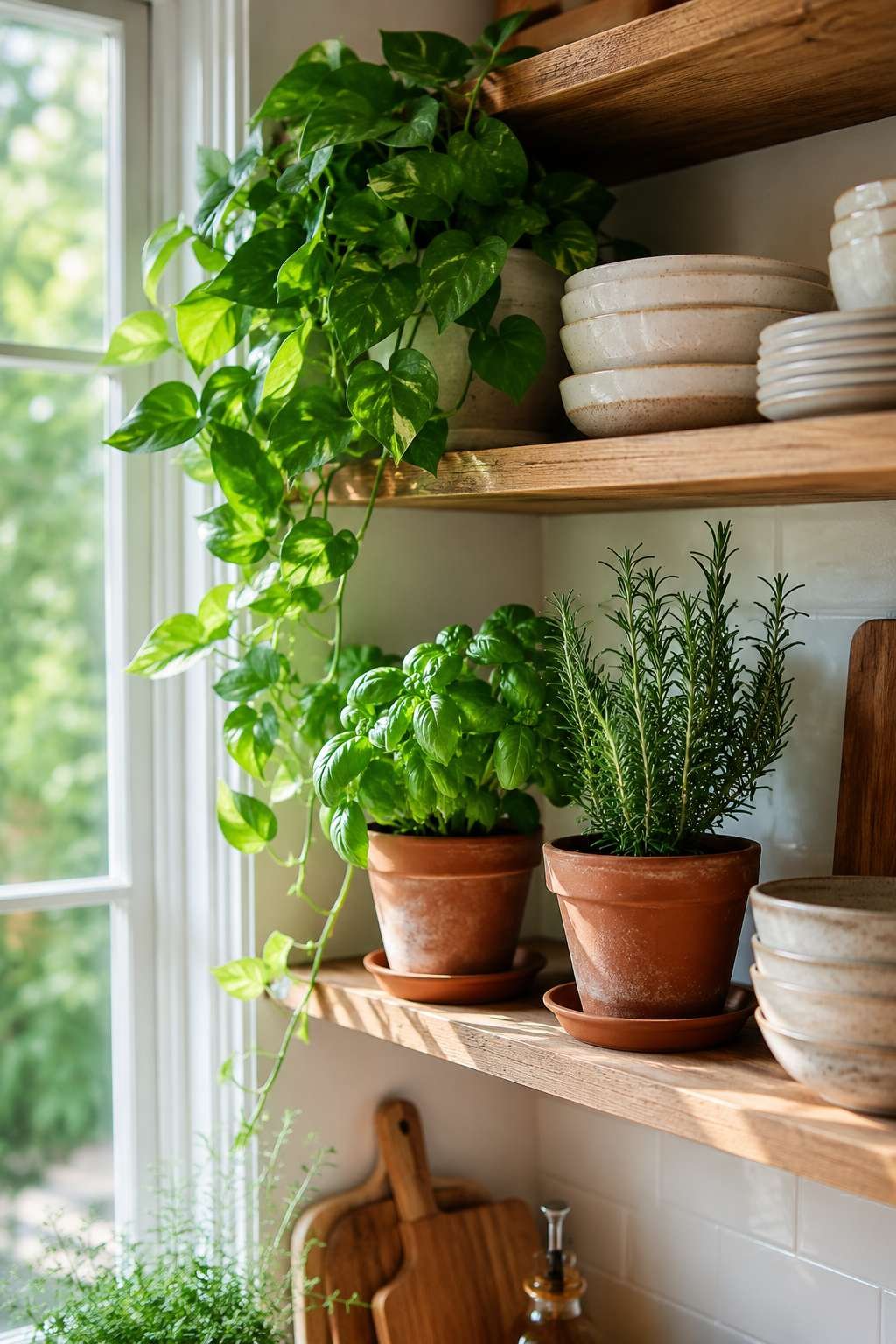
Choosing low-maintenance plants ensures the greenery survives kitchen conditions like heat and humidity. Placing pots near natural light sources, when possible, keeps them healthy longer. A small plant collection adds a refreshing, organic contrast to dishware and cookware.
- Choose herbs for a functional touch of green
- Use trailing plants to soften shelf edges
- Place plants near natural light when possible
- Select low-maintenance varieties for busy kitchens
- Rotate plants seasonally for a fresh look
5. Incorporate Cookbooks and Boards
Cookbooks and wooden cutting boards make excellent additions to a styled kitchen shelf. Standing a few favorite cookbooks upright adds height variation while staying true to the kitchen’s function. Leaning a cutting board against the wall creates an easy backdrop element.
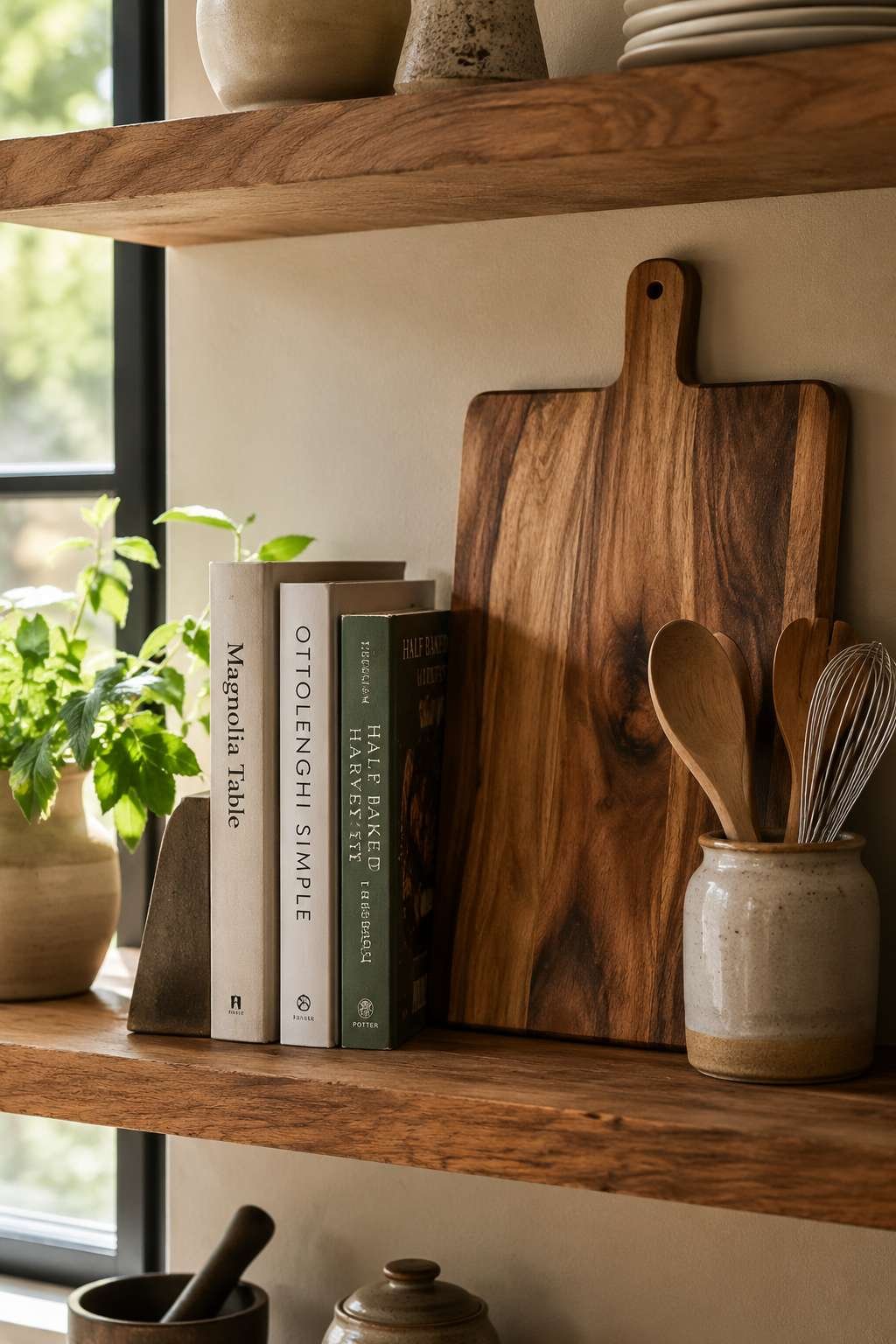
These items also serve as conversation starters, reflecting personal taste and cooking style. Choosing boards with interesting wood grain or unique shapes adds organic texture to the display. This combination keeps the shelf feeling both practical and personal.
- Stand a few favorite cookbooks upright
- Lean a cutting board as a backdrop
- Choose boards with interesting wood grain
- Rotate cookbooks seasonally to match cooking habits
- Keep only well-used, attractive titles on display
6. Edit and Rotate Regularly
Even the most beautifully styled shelf needs regular editing and maintenance to stay effective. Removing items that no longer serve a purpose keeps the display feeling fresh and clutter-free. A shelf overloaded with too many objects quickly loses its visual impact.
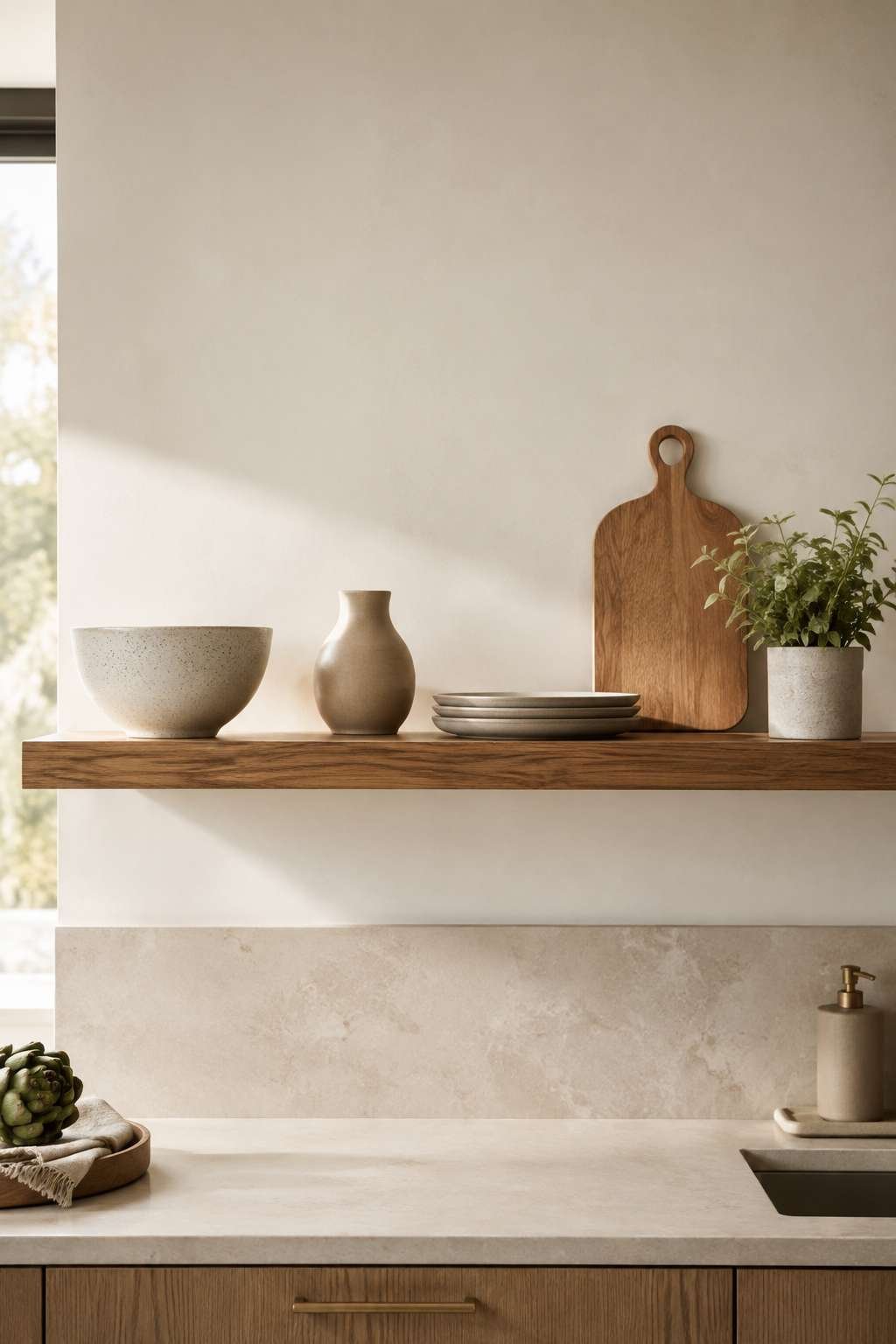
Rotating decor seasonally keeps the kitchen feeling current without requiring a full redesign. Swapping in warm tones for fall or bright colors for summer adds variety throughout the year. This ongoing habit keeps the shelf functional and visually engaging.
- Remove items that no longer serve a purpose
- Rotate decor seasonally for variety
- Limit each shelf to five to seven items
- Reassess the display every few months
- Keep a mix of function and decoration
Decorating a kitchen shelf comes down to balancing beauty with everyday usefulness. Starting with a clear color palette and layering in texture, greenery, and personal touches creates a display that feels both stylish and practical. Experiment with different combinations until the shelf truly reflects your kitchen’s character.