


A slow-draining sink is one of the most common headaches in any kitchen, and learning how to clear a clogged kitchen sink doesn’t require a professional visit or expensive tools. Most clogs are caused by grease, food particles, or soap scum building up inside the pipes over time. With a few household items and some patience, you can restore your sink’s drainage and get back to a functional, stress-free kitchen.
Every kitchen develops its own rhythm, and a healthy sink is central to that rhythm. Whether you’re rinsing vegetables or washing a stack of dishes, water needs to flow freely for the space to feel calm and organized. This guide walks you through every method, from the gentlest home remedies to the tools you’ll need for a truly stubborn blockage.
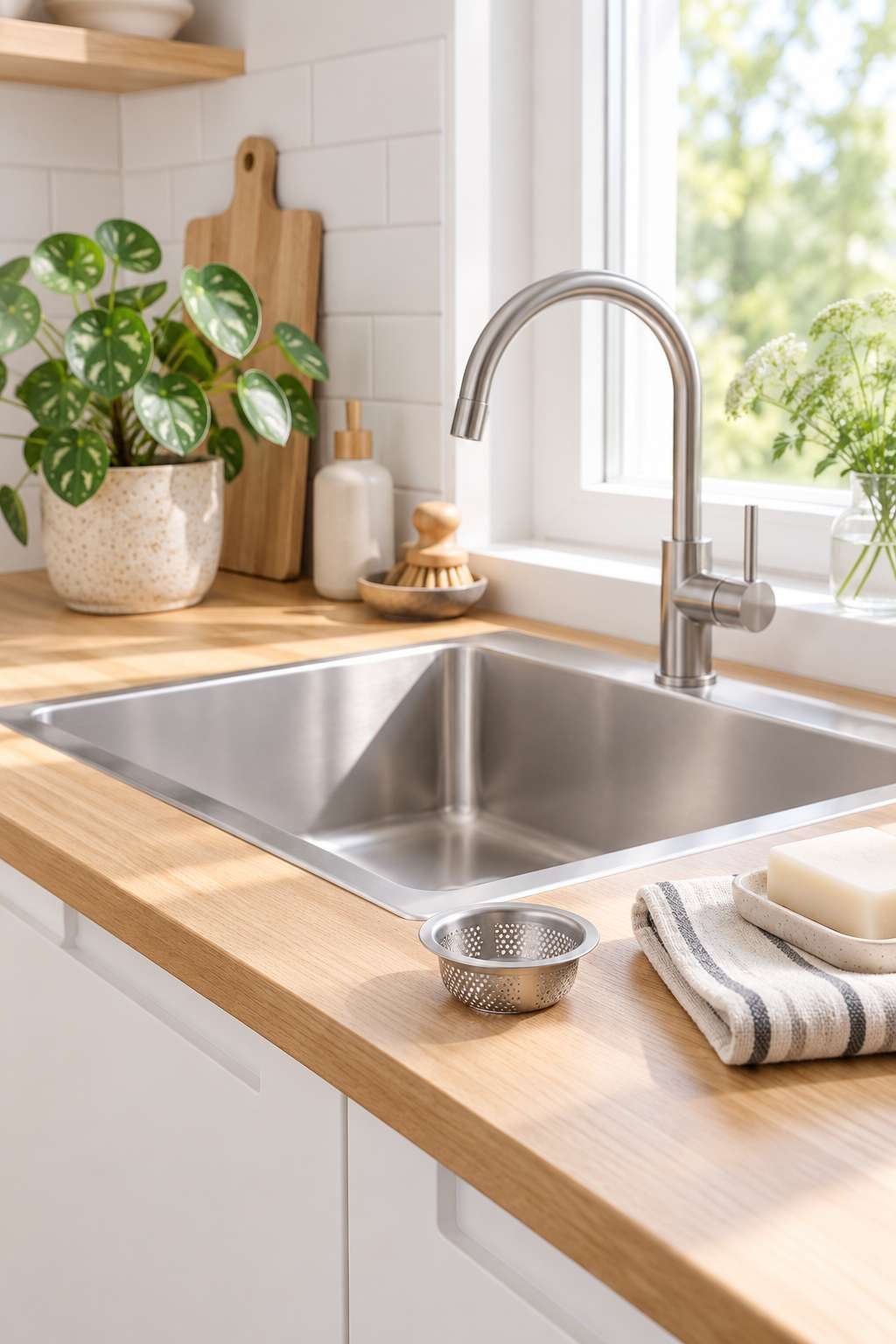
Below, you’ll find ten practical approaches covering everything from boiling water tricks to knowing when it’s time to call in a professional. Each one is beginner-friendly, requires minimal equipment, and can be done in under thirty minutes.
1. Understand What’s Causing the Clog
Before reaching for any tool, it helps to know what you’re dealing with. Kitchen sink clogs are almost always caused by a mix of grease buildup, food scraps, and mineral deposits from hard water. Grease is especially troublesome because it solidifies as it cools, coating the inside of pipes and trapping smaller debris.
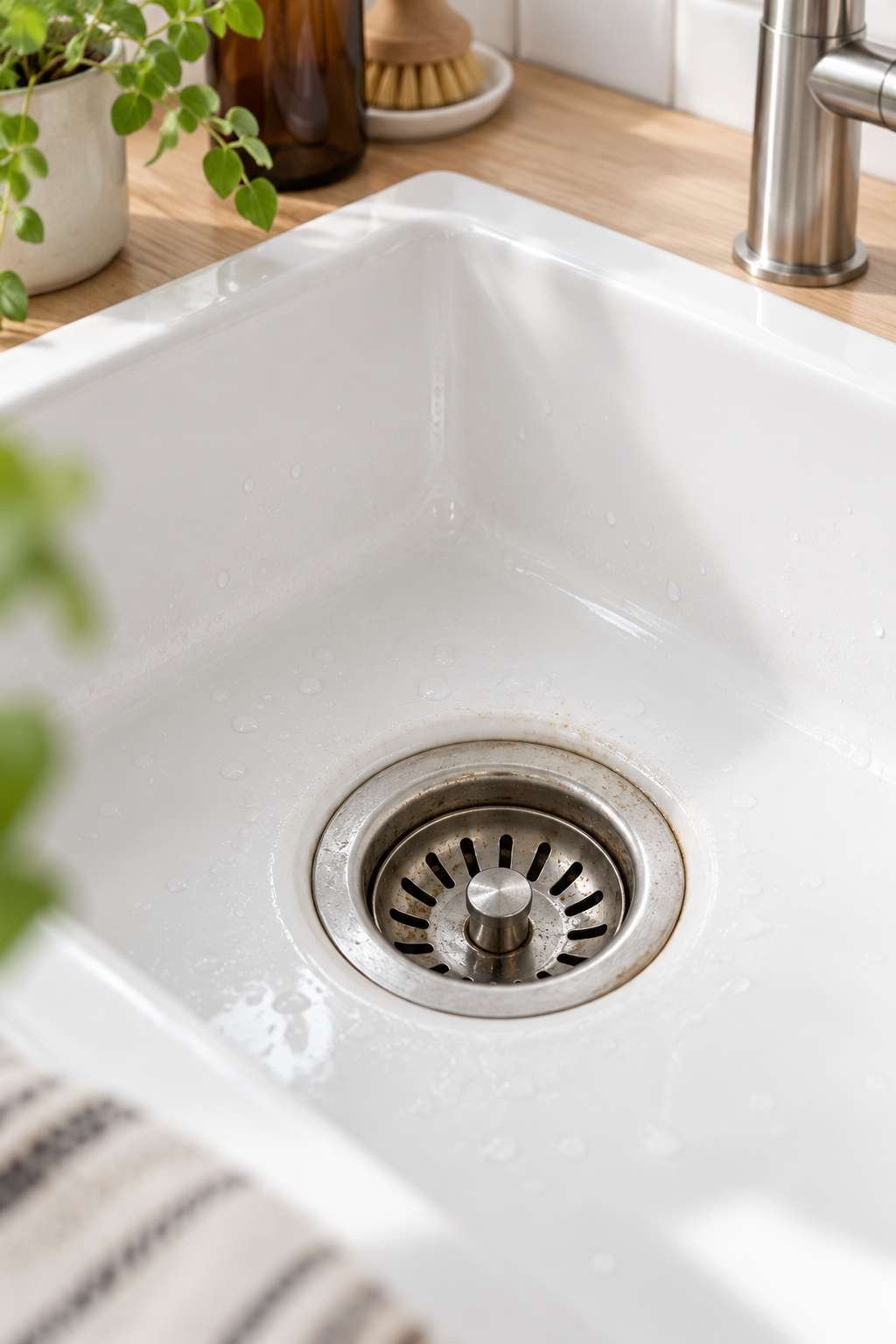
If your sink drains slowly rather than being fully blocked, the clog is likely a partial obstruction somewhere in the trap or the first few feet of piping. A completely stopped sink, on the other hand, often points to a deeper blockage or a problem with the venting system.
Knowing the difference matters because it determines which method you should try first.
- Notice whether water drains slowly or not at all
- Check for foul odors, which usually mean organic buildup
- Look at how quickly the clog developed
- Consider what’s recently gone down the drain
- Rule out a garbage disposal issue if you have one
- Decide whether a DIY fix is realistic before you begin
2. Start With Boiling Water
Boiling water is the simplest first step for how to clear kitchen sink clogged situations caused by grease or soap residue. The heat melts fatty buildup so it can move through the pipes instead of hardening in place.
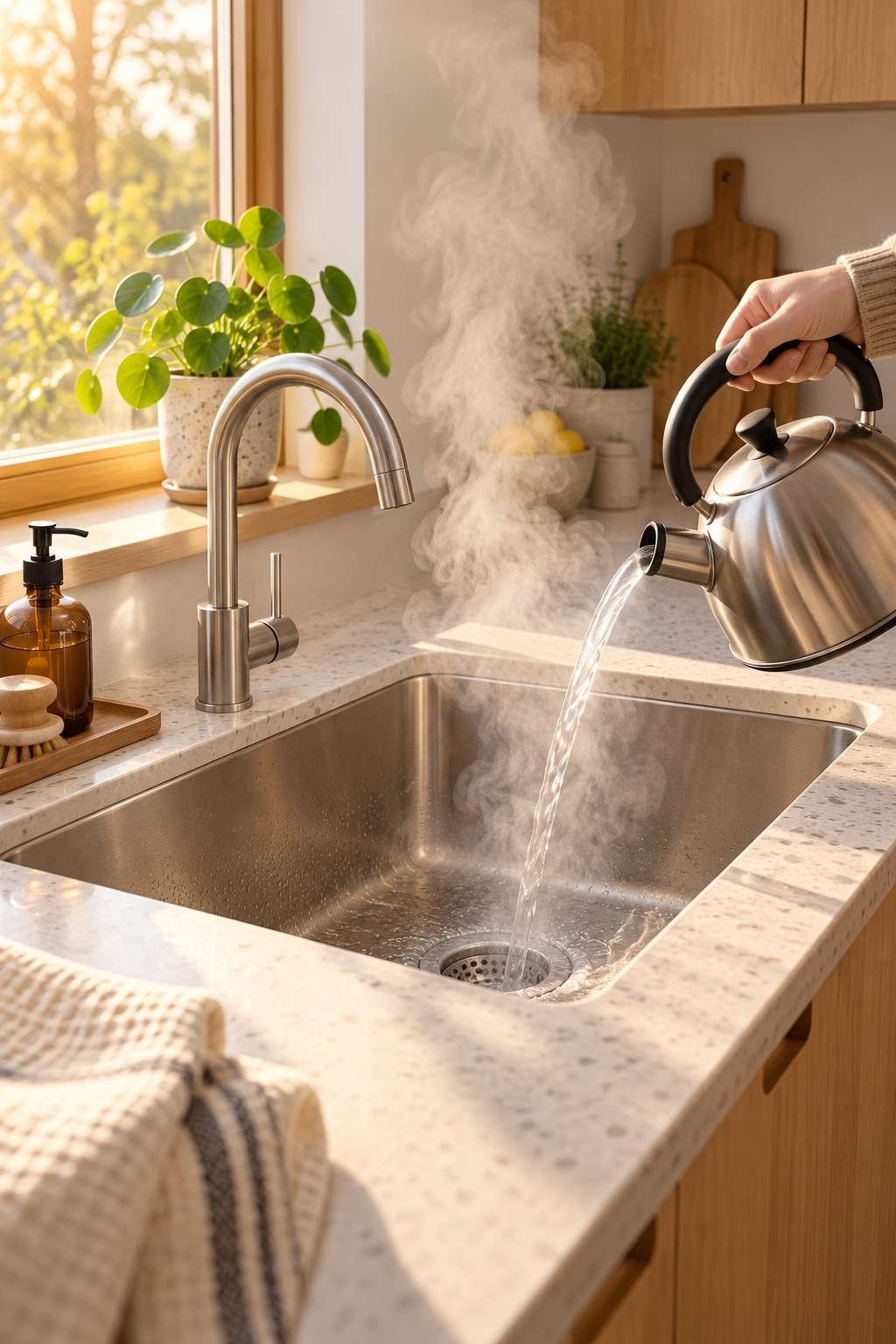
Pour the water slowly in two or three stages, giving each pour a minute to work before adding more. This gradual approach gives the heat time to soften stubborn grease deposits without overwhelming the pipe with pressure it can’t handle.
This method works best on plastic pipes when done carefully, though extreme heat should still be avoided with older or fragile plumbing.
- Boil a full kettle or large pot of water
- Pour in two to three separate stages
- Wait 30-60 seconds between pours
- Avoid this method on PVC pipes that feel brittle
- Run cold water afterward to flush residue
- Repeat once more if drainage is still slow
3. Try the Baking Soda and Vinegar Method
This classic combination creates a natural fizzing reaction that helps break apart organic buildup clinging to pipe walls. It’s a favorite because it uses ingredients most households already have on hand.
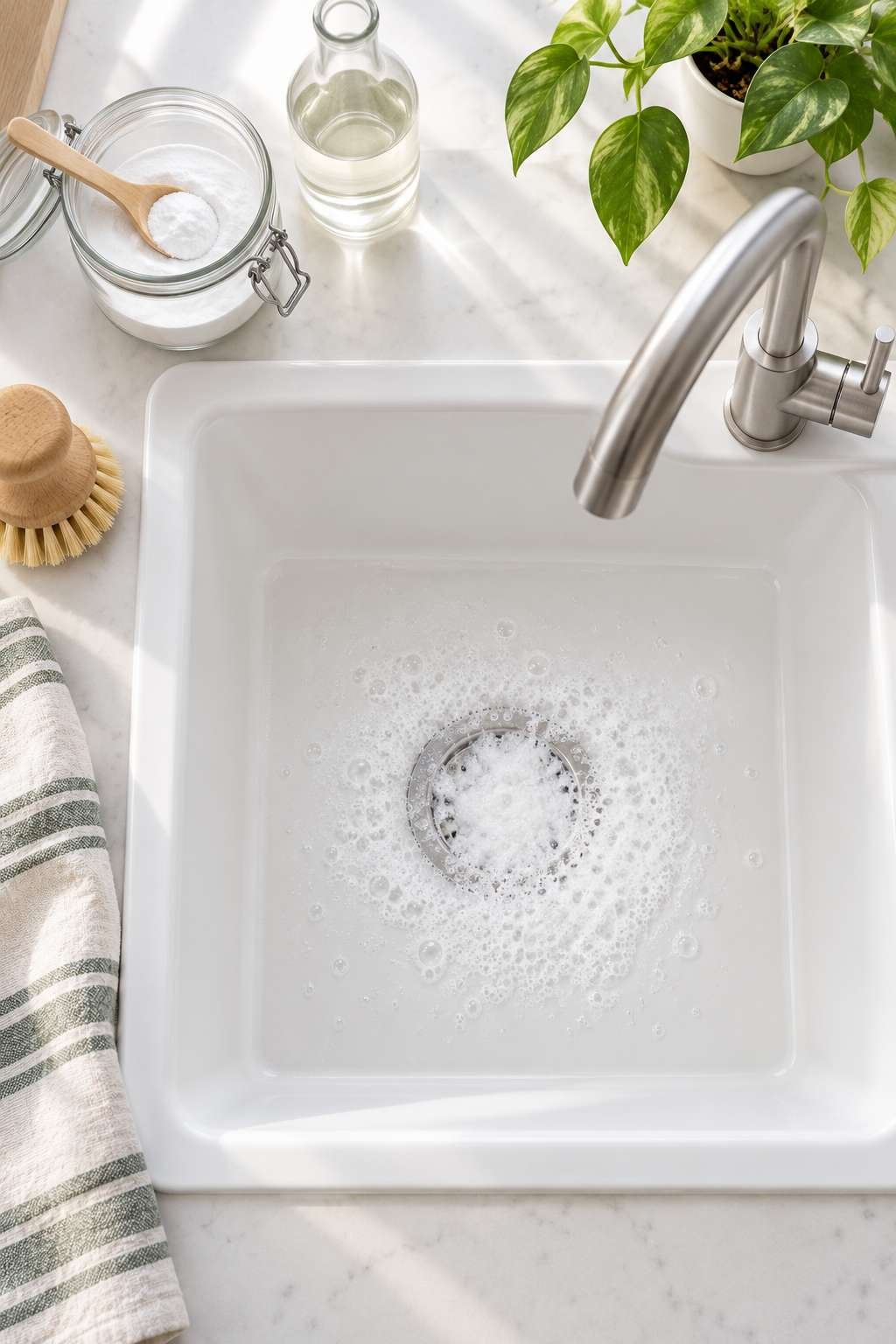
Start by pouring roughly half a cup of baking soda directly down the drain, followed by an equal amount of white vinegar. The chemical reaction will bubble and foam, which is exactly what helps dislodge trapped debris from the interior surface of the pipe.
Let the mixture sit, covered if possible, before rinsing everything away with hot water.
- Pour half a cup of baking soda into the drain
- Follow immediately with half a cup of vinegar
- Cover the drain opening to trap the fizzing action
- Let it sit for 15-20 minutes undisturbed
- Flush with hot water once the time is up
- Repeat for particularly greasy or smelly drains
4. Use a Sink Plunger the Right Way
A sink plunger creates pressure that can physically dislodge a clog rather than dissolve it chemically. Unlike a toilet plunger, a flat-bottomed cup plunger forms a tighter seal against a sink’s flat basin surface.
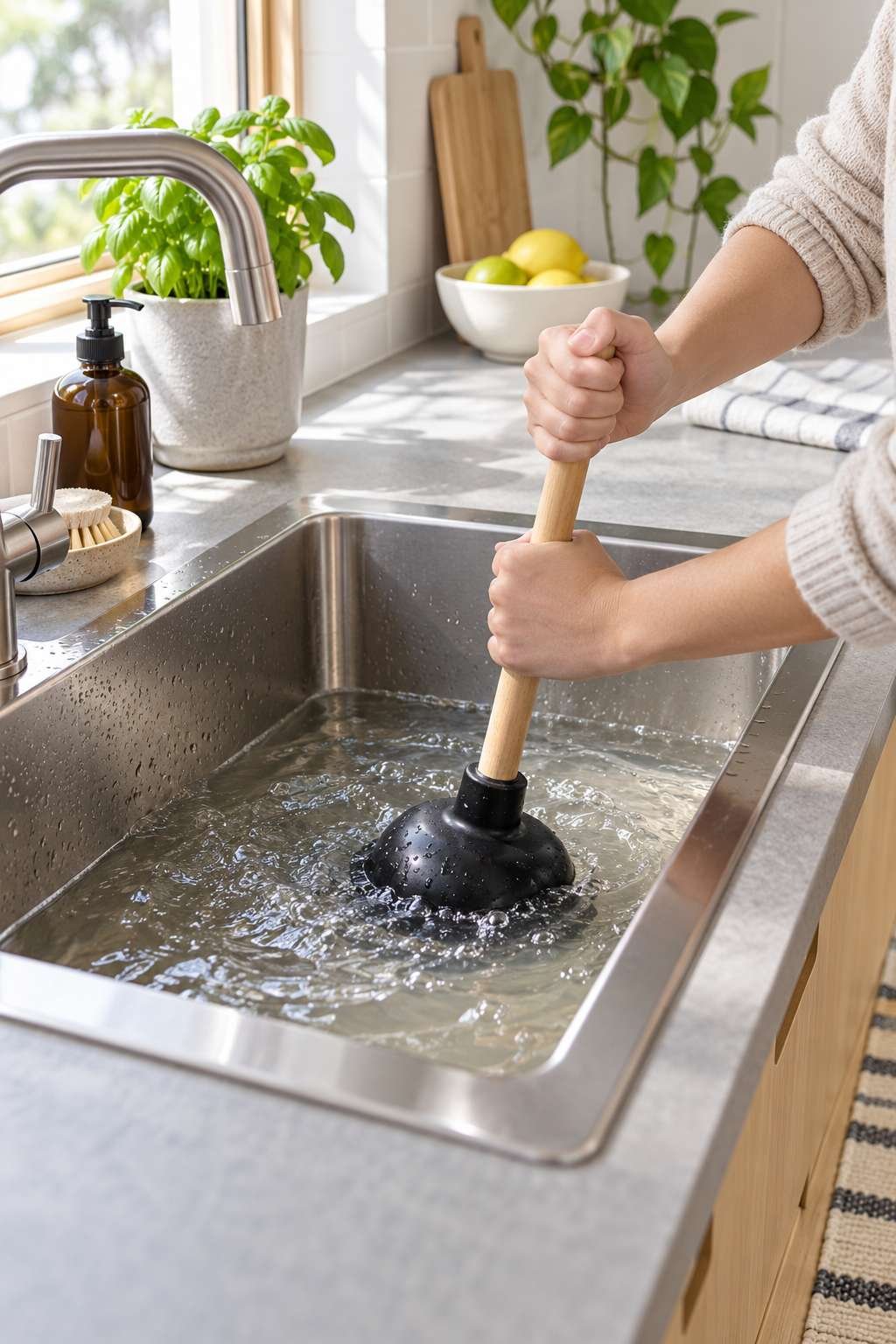
Before plunging, block the overflow opening and the second basin drain if you have a double sink, since air escaping through those openings will reduce suction. A few firm, steady strokes are more effective than fast, shallow ones.
Add just enough water to cover the plunger’s cup for the best seal and pressure transfer.
- Fill the sink with a few inches of water
- Cover the overflow hole with a wet cloth
- Block the second drain in double sinks
- Plunge with firm, even strokes for 20-30 seconds
- Check drainage speed after each attempt
- Repeat two or three times if needed
5. Check and Clean the P-Trap
The P-trap is the curved pipe beneath your sink, and it’s one of the most common places where clogs settle since debris naturally collects at the bend. Cleaning it directly is more effective than any liquid method when the blockage is physical.
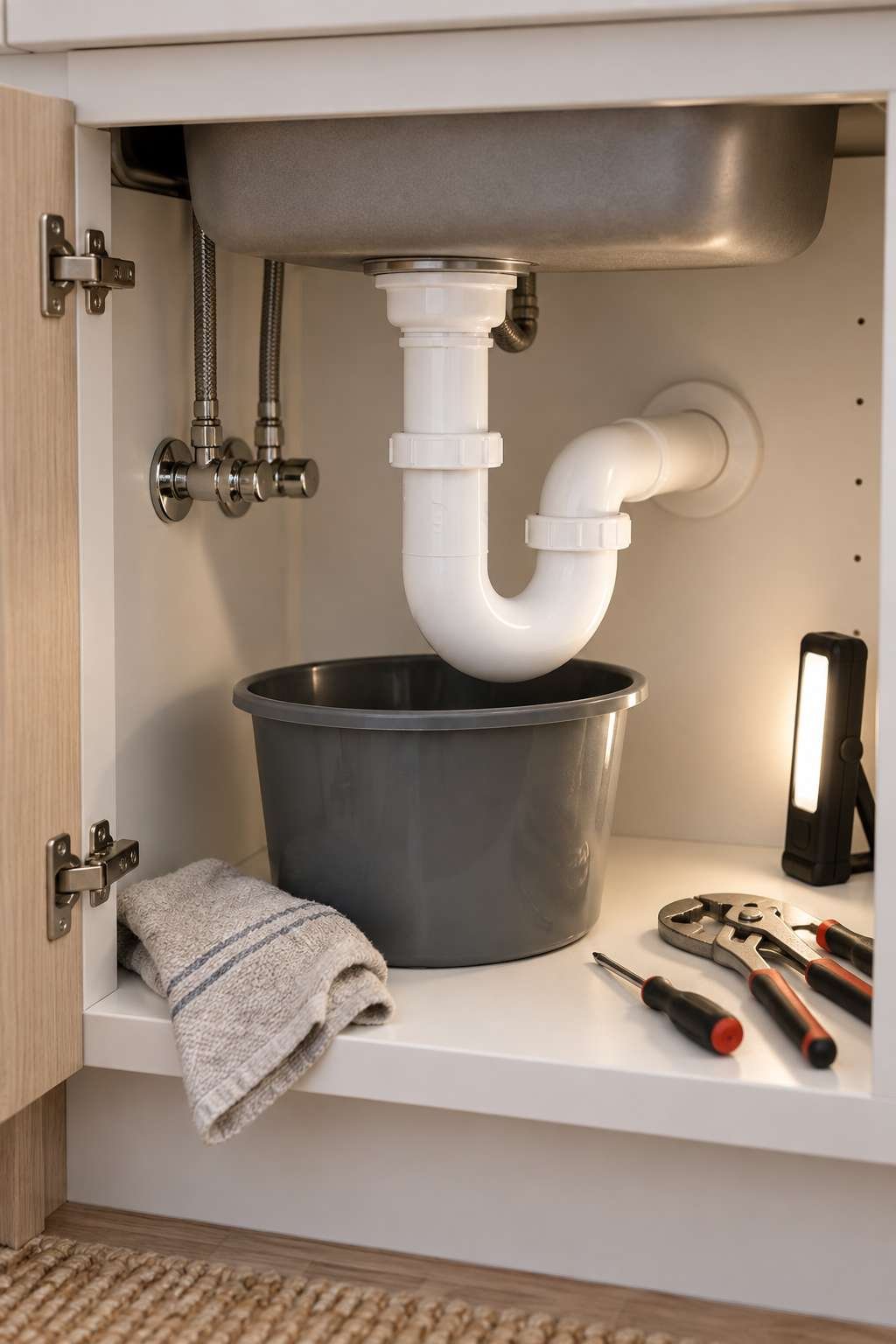
Place a bucket underneath before loosening the slip nuts on either side of the trap, since residual water and debris will spill out immediately. Once removed, you can usually see and clear the blockage by hand or with a small brush.
Reassemble carefully to avoid leaks once the trap is clean.
- Place a bucket directly under the P-trap
- Loosen the slip nuts with pliers or by hand
- Remove the trap and empty its contents
- Clear visible debris with a brush or wire
- Rinse the trap thoroughly before reinstalling
- Test for leaks by running water briefly
6. Use a Drain Snake for Stubborn Clogs
When boiling water and plunging don’t work, a drain snake (also called an auger) can reach clogs further down the line. This flexible tool physically breaks apart or hooks onto debris that’s out of reach for other methods.
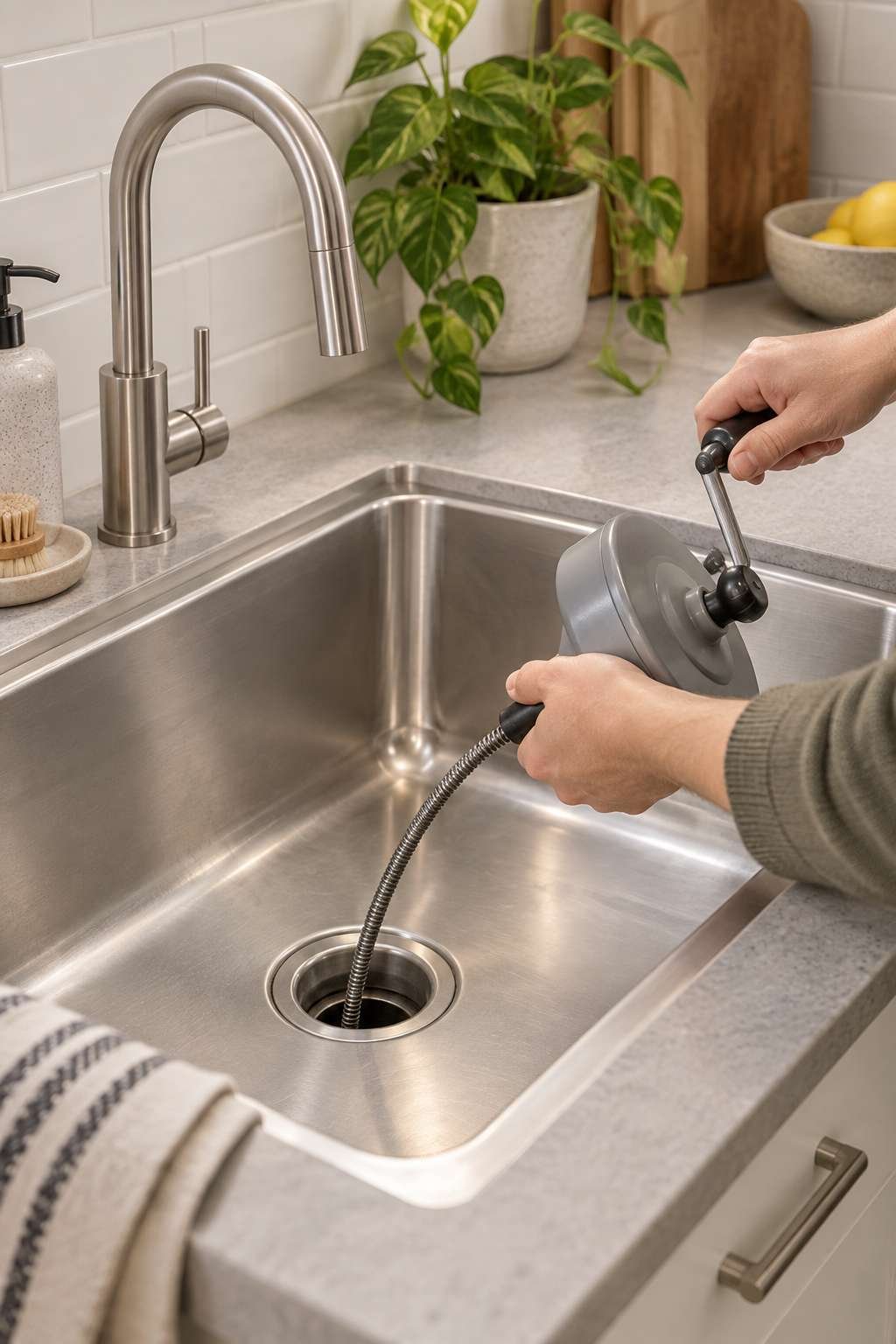
Insert the snake slowly into the drain opening, turning the handle as you feed the cable through the pipe. You’ll feel resistance when it meets the clog; continue turning gently to break through or catch the material so you can pull it back out.
A budget drain snake is inexpensive and reusable for future kitchen clogs.
- Feed the snake slowly into the drain
- Turn the handle clockwise as you advance
- Stop when you feel resistance from the clog
- Twist gently to break apart or hook debris
- Pull the snake back out slowly
- Flush with hot water once it’s clear
7. Clear the Garbage Disposal If You Have One
If your sink includes a garbage disposal, the clog may actually originate there rather than further down the pipe. A jammed disposal can mimic the symptoms of a standard drain clog, so it’s worth checking before you dismantle any plumbing.
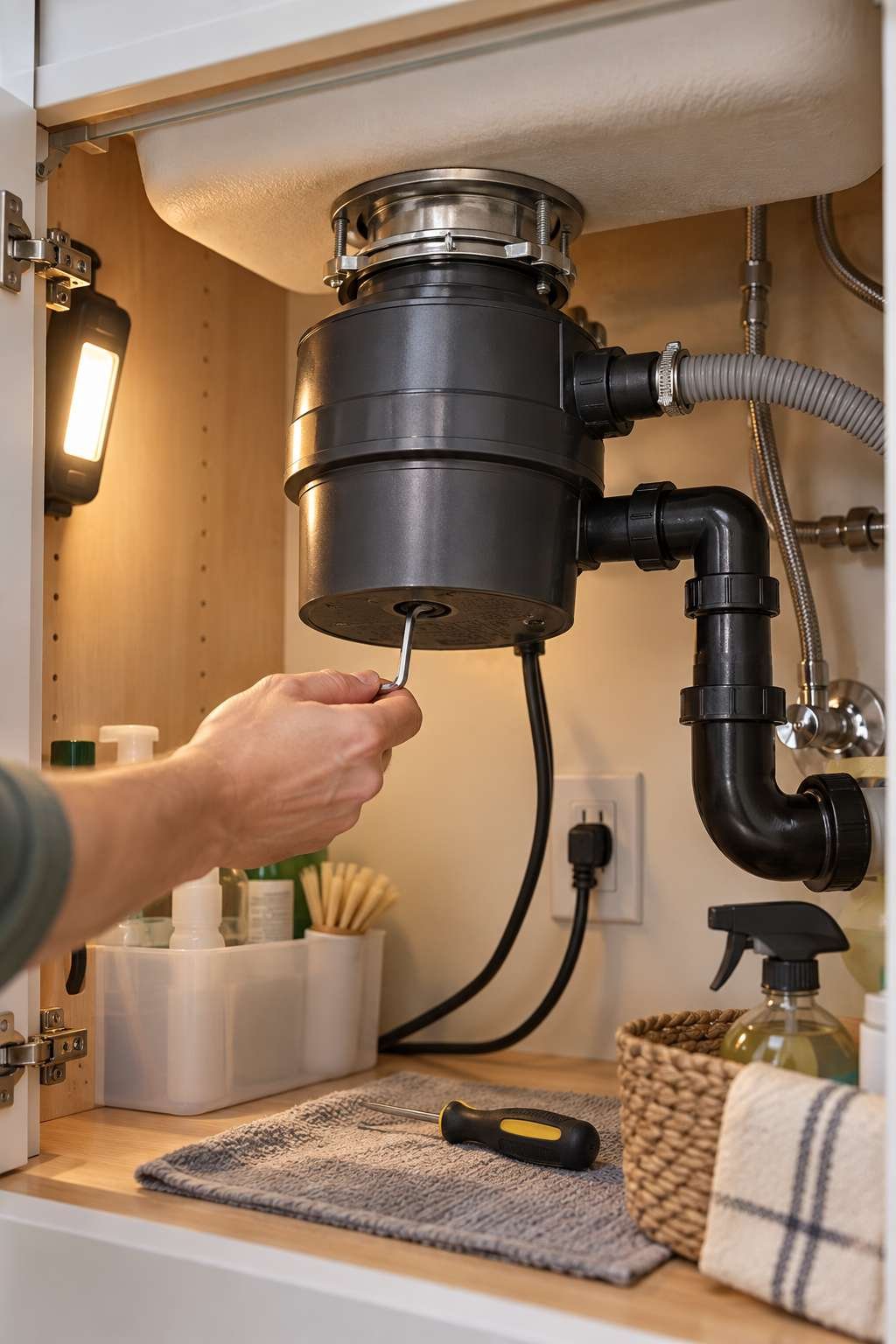
Always turn off the power at the switch or breaker before attempting any manual work near the blades. Many disposals have a small reset button on the underside that resolves jams caused by an overloaded motor.
An Allen wrench inserted into the bottom socket can manually rotate the blades to release stuck debris.
- Turn off power to the disposal completely
- Press the reset button on the unit’s base
- Use an Allen wrench in the bottom socket if needed
- Manually rotate the blades to loosen debris
- Never place your hand inside the disposal
- Restore power and test with cold water running
8. Flush With Hot Water and Dish Soap
A soapy hot water flush is a gentle way to clear greasy residue that’s still loosely clinging to pipe walls after a bigger clog has been removed. It’s often used as a final rinse after any of the methods above.
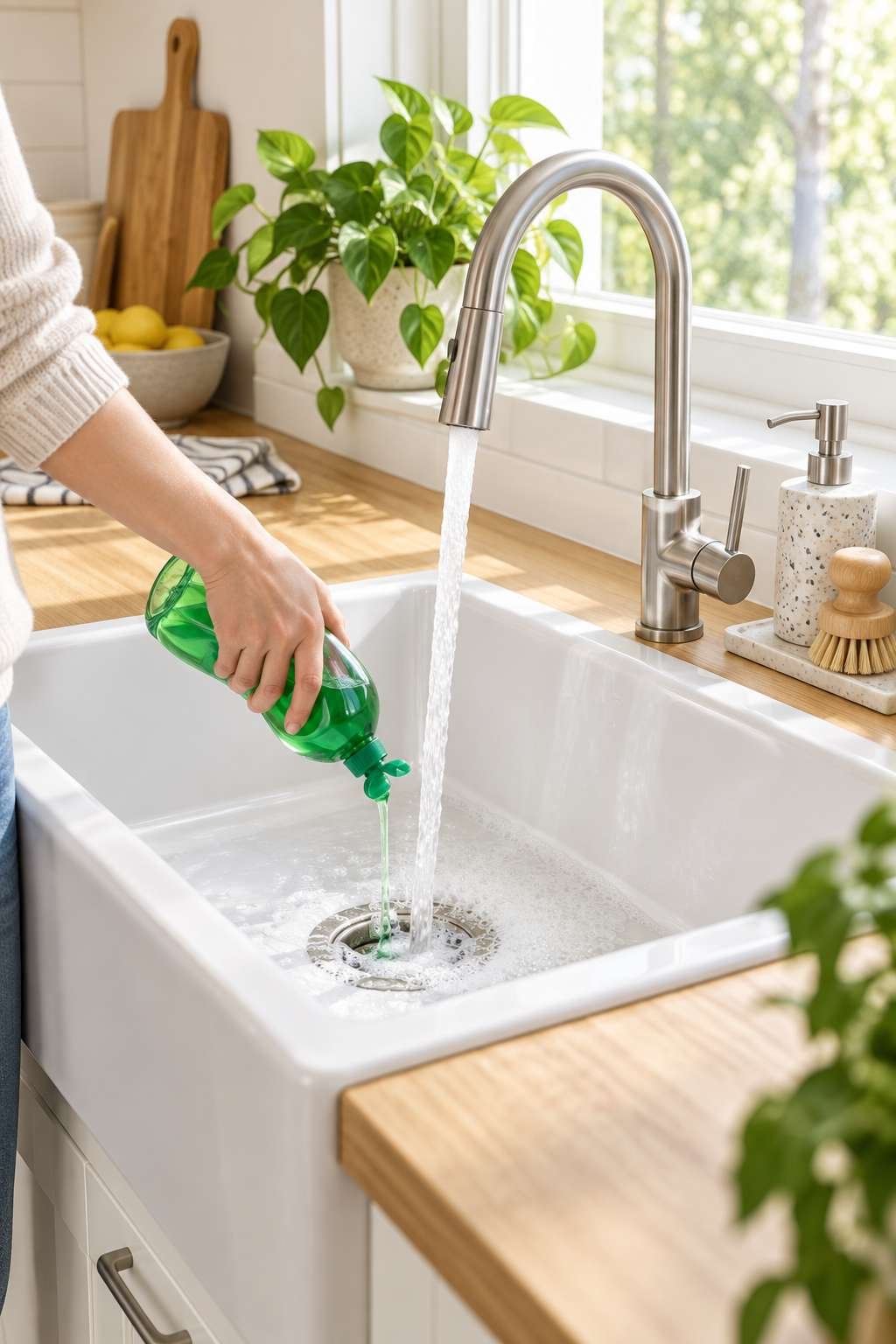
Squirt a generous amount of dish soap directly into the drain, then follow with a steady stream of hot water for several minutes. The soap breaks down remaining fat while the water carries it fully out of the system.
This is also a great routine maintenance step even when your sink isn’t currently clogged.
- Squeeze dish soap generously into the drain opening
- Run hot water continuously for two to three minutes
- Watch for improved drainage speed as you flush
- Repeat weekly as light preventive maintenance
- Pair with the baking soda method for extra strength
- Avoid boiling water directly after this step
9. Prevent Future Clogs With Daily Habits
Prevention is far easier than repeated fixes, and a few consistent habits can keep your kitchen sink running smoothly for months at a time. Most future clogs come from the same small mistakes repeated daily.
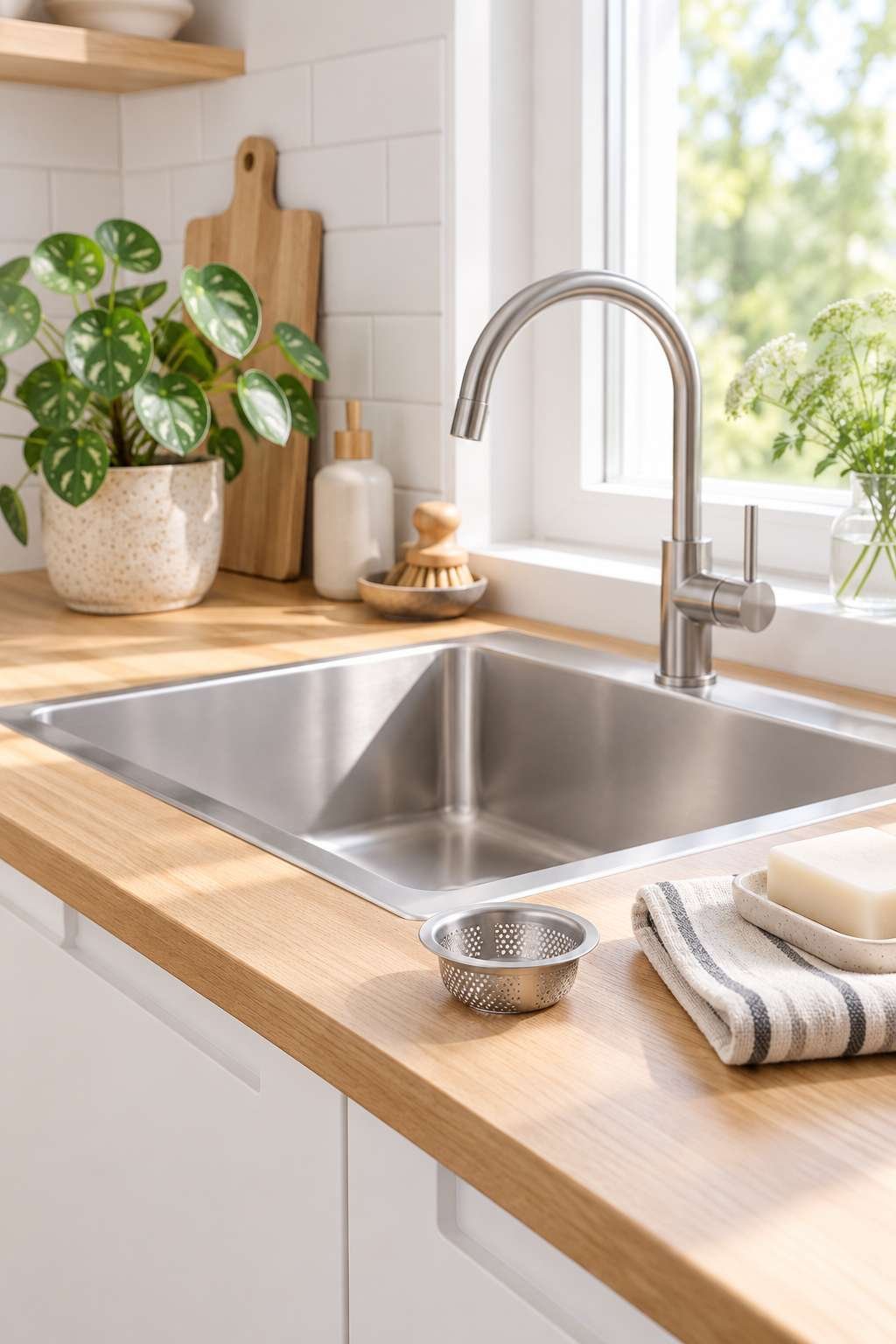
Wipe greasy pans with a paper towel before washing them, since grease is the single biggest contributor to pipe buildup. A simple mesh drain strainer catches food scraps before they ever reach the pipe, making it one of the cheapest tools you can buy for long-term prevention.
Small changes in your daily routine add up to significantly fewer clogs over time.
- Wipe excess grease from pans before rinsing
- Install a mesh strainer over the drain opening
- Avoid pouring coffee grounds down the sink
- Run hot water after every dish-washing session
- Flush with baking soda and vinegar monthly
- Keep a small compost bin for food scraps
10. Know When to Call a Plumber
Some clogs go beyond what home methods can fix, especially when they involve main line blockages or recurring problems in the same spot. If you’ve tried multiple approaches without success, it’s a sign the issue may be deeper in your plumbing system.
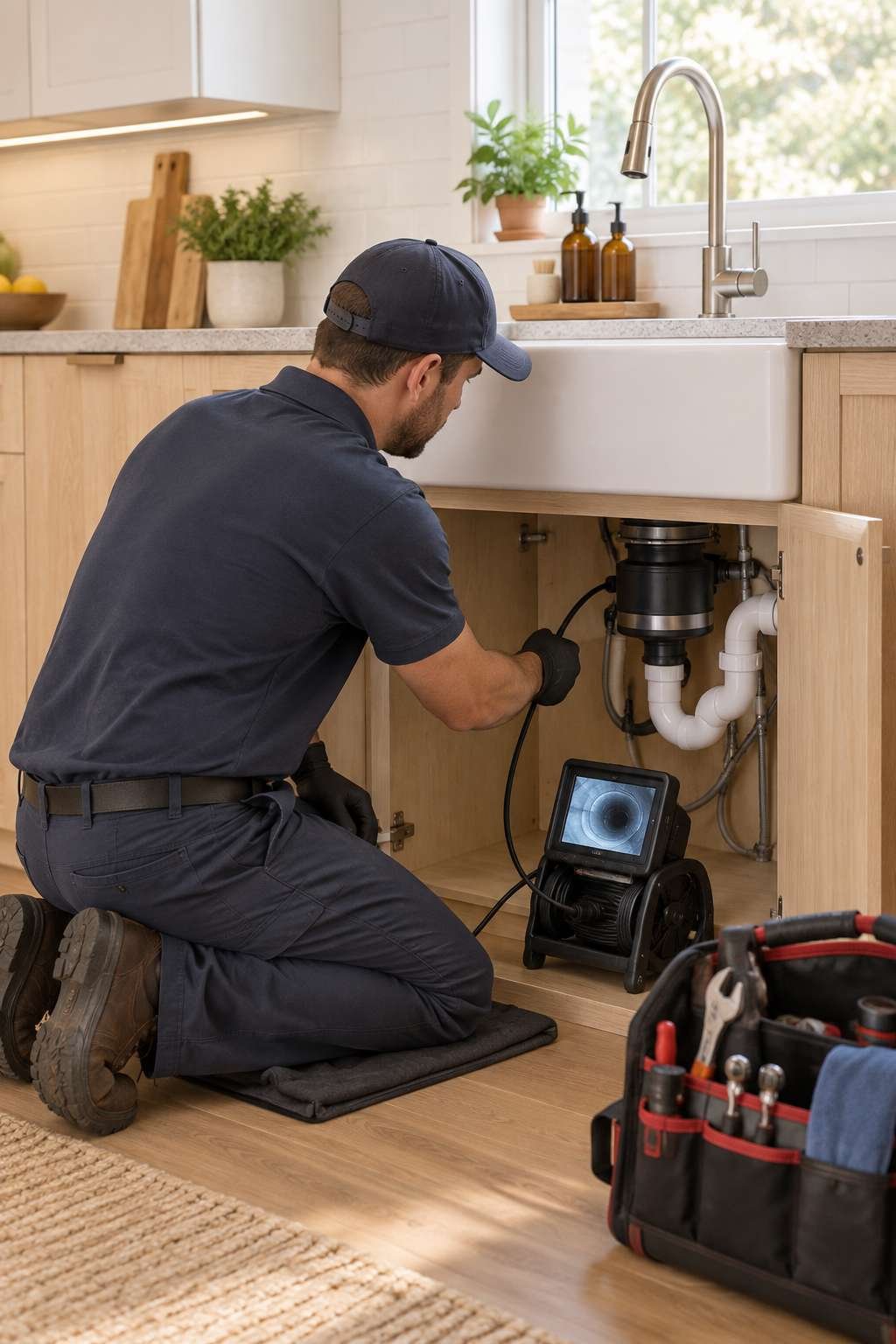
Persistent gurgling sounds, water backing up into other fixtures, or clogs that return within days of clearing them are all signs worth taking seriously. A licensed plumber has access to professional-grade equipment, including motorized augers and camera inspection tools, that can diagnose issues invisible to the naked eye.
If your sink drain is clogged repeatedly despite your best efforts, it usually needs a different fix than a slow, everyday drain — which is exactly what our guide on How to Clear Blocked Kitchen Sink covers in more depth.
- Watch for gurgling sounds from other drains
- Note if clogs return within a week of clearing
- Check for water backing up in other fixtures
- Consider a camera inspection for recurring issues
- Call a licensed plumber for main line concerns
- Don’t rely on repeated chemical drain cleaners
Frequently Asked Questions
How do I clear a kitchen sink clog?
Start with boiling water or a baking soda and vinegar flush, since these handle most everyday clogs caused by grease and food residue. If the sink is still slow after that, try plunging or removing the P-trap to physically clear the blockage. For deeper or recurring issues, a drain snake or a call to a plumber may be needed.
Conclusion
Clearing a clogged kitchen sink is almost always manageable with tools you already have at home, from boiling water and a plunger to a simple drain snake for tougher jobs. Working through these methods in order, starting gentle and escalating only when needed, protects your pipes while getting your sink back to full function quickly.
Try building a few of these habits, like using a mesh strainer and doing a monthly baking soda flush, into your regular kitchen routine. A little consistency now means far fewer clogged-sink mornings in the future.

