


A kitchen doesn’t need a massive renovation budget to feel luxurious and high-end. Thoughtful design choices, from lighting to hardware, can completely transform the perception of a space. Understanding how to make your kitchen look expensive often comes down to small, strategic upgrades rather than sweeping changes.
Different homeowners have different budgets and priorities, but certain design principles apply universally. Layering texture, lighting, and color creates depth that instantly reads as sophisticated. This guide explores practical ways to elevate a kitchen’s appearance without draining your savings.
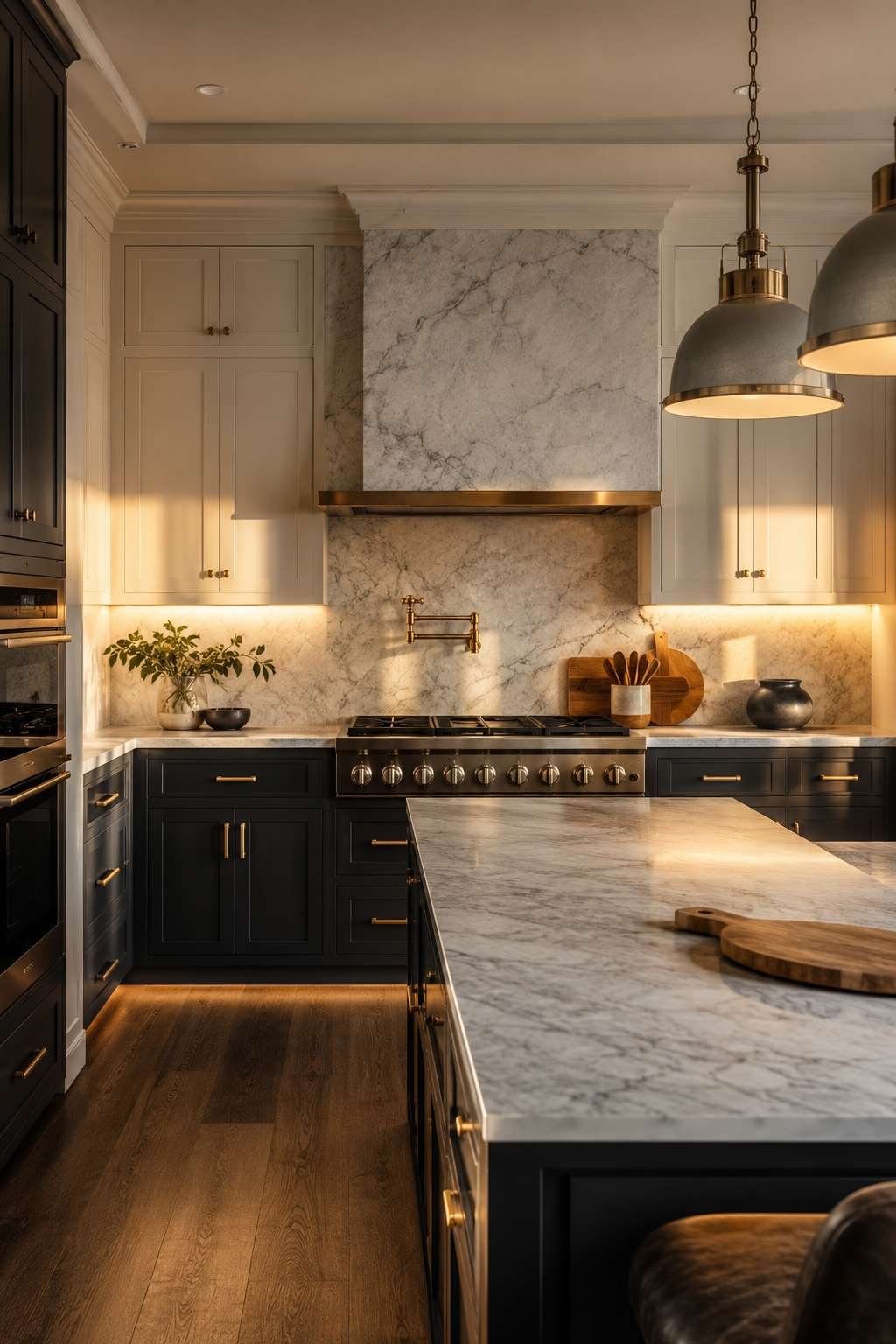
1. Upgrade Cabinet Hardware
Swapping out builder-grade knobs and pulls is one of the fastest, most affordable upgrades available. New hardware in brushed brass or matte black instantly modernizes even outdated cabinetry. This small change often has an outsized impact on the room’s overall feel.
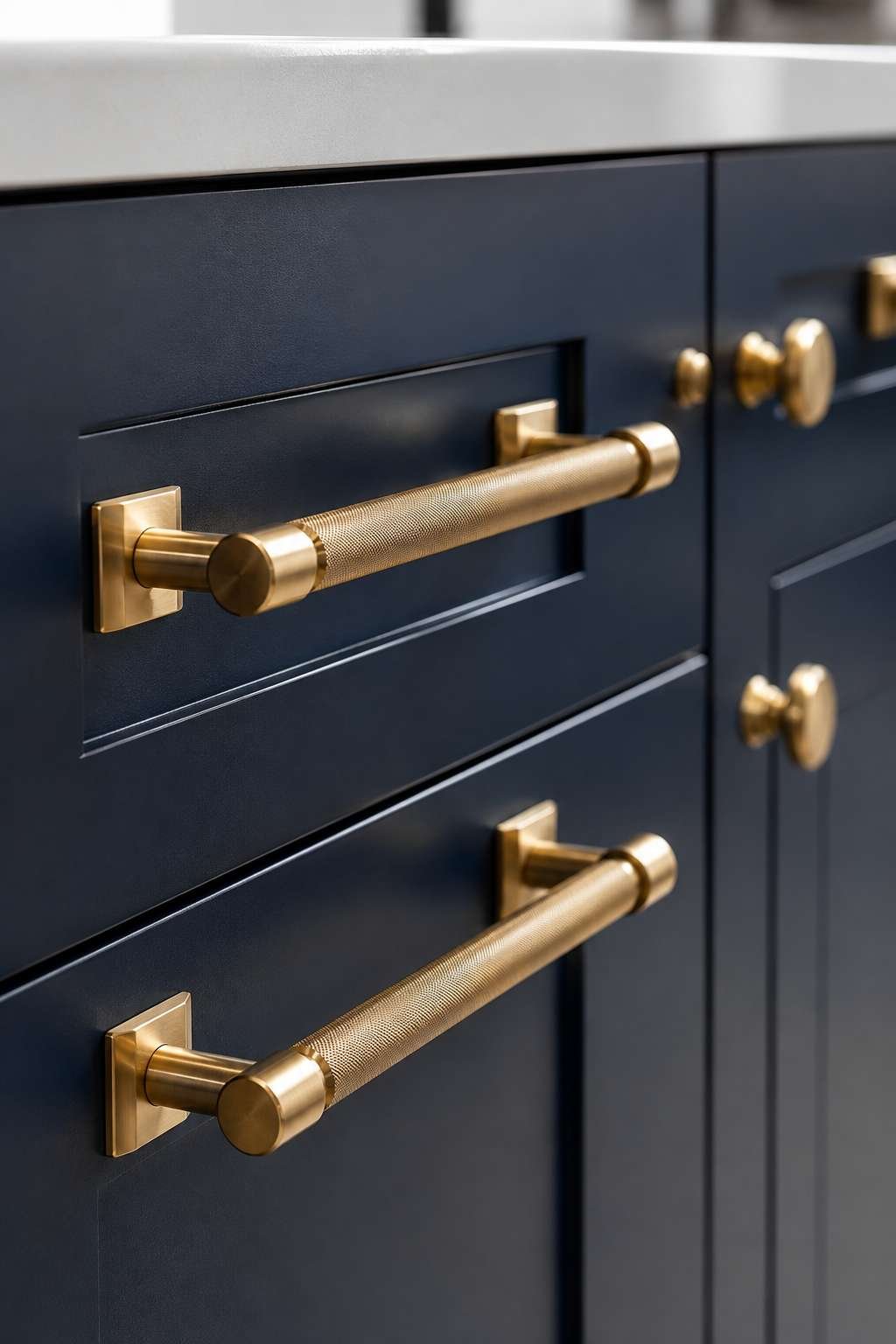
Consistency matters when choosing new hardware finishes. Mixing metals randomly can look unintentional, while a cohesive finish throughout ties the kitchen together. Choosing slightly oversized pulls also adds a subtle sense of custom craftsmanship.
- Choose a cohesive finish across all hardware
- Consider brushed brass or matte black options
- Opt for slightly oversized pulls for impact
- Replace hinges to match new hardware
- Budget carefully since small pieces add up
2. Add Layered Lighting
Harsh overhead lighting is one of the biggest culprits behind a flat, uninspired kitchen. Adding layered lighting, including under-cabinet strips and pendant fixtures, creates warmth and dimension. This approach mimics the ambiance found in high-end restaurants and showrooms.
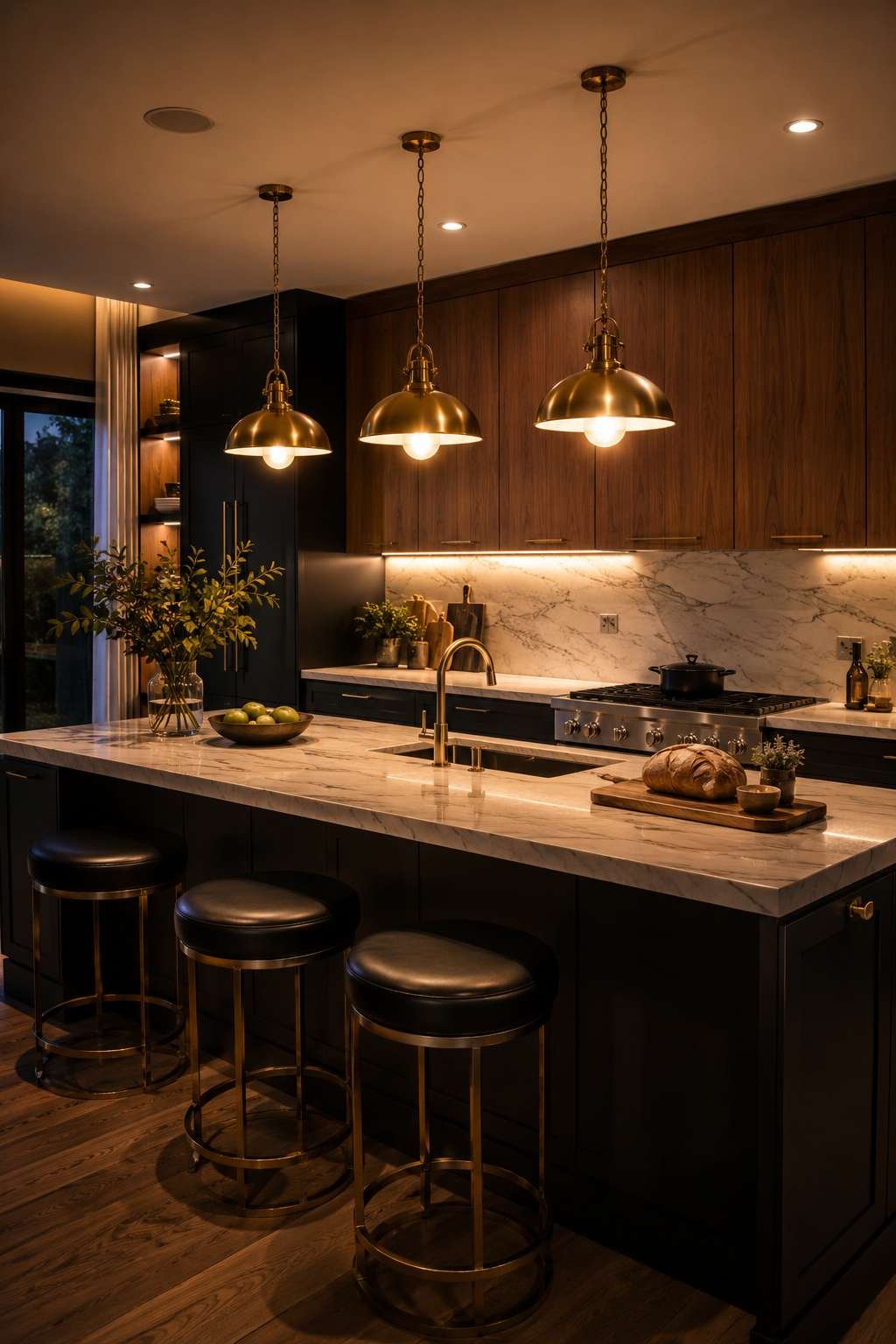
Dimmer switches allow the mood to shift depending on the time of day or occasion. Pendant lights over an island add a designer touch while providing task lighting where it’s needed most. Warm-toned bulbs, rather than cool white, make the space feel inviting rather than clinical. Our these kitchen island ideas has more inspiration along these same lines.
- Install under-cabinet lighting for a warm glow
- Add pendant lights above islands or sinks
- Use dimmer switches for flexible ambiance
- Choose warm-toned bulbs over cool white
- Layer at least three light sources per room
3. Invest in a Statement Backsplash
A statement backsplash can single-handedly elevate a kitchen’s entire aesthetic. Materials like marble, zellige tile, or handmade ceramic instantly signal quality craftsmanship. Even a small accent area behind the stove can make a dramatic difference. It’s a similar trade-off to deciding on gas stove vs induction cooktop guide elsewhere in the space.
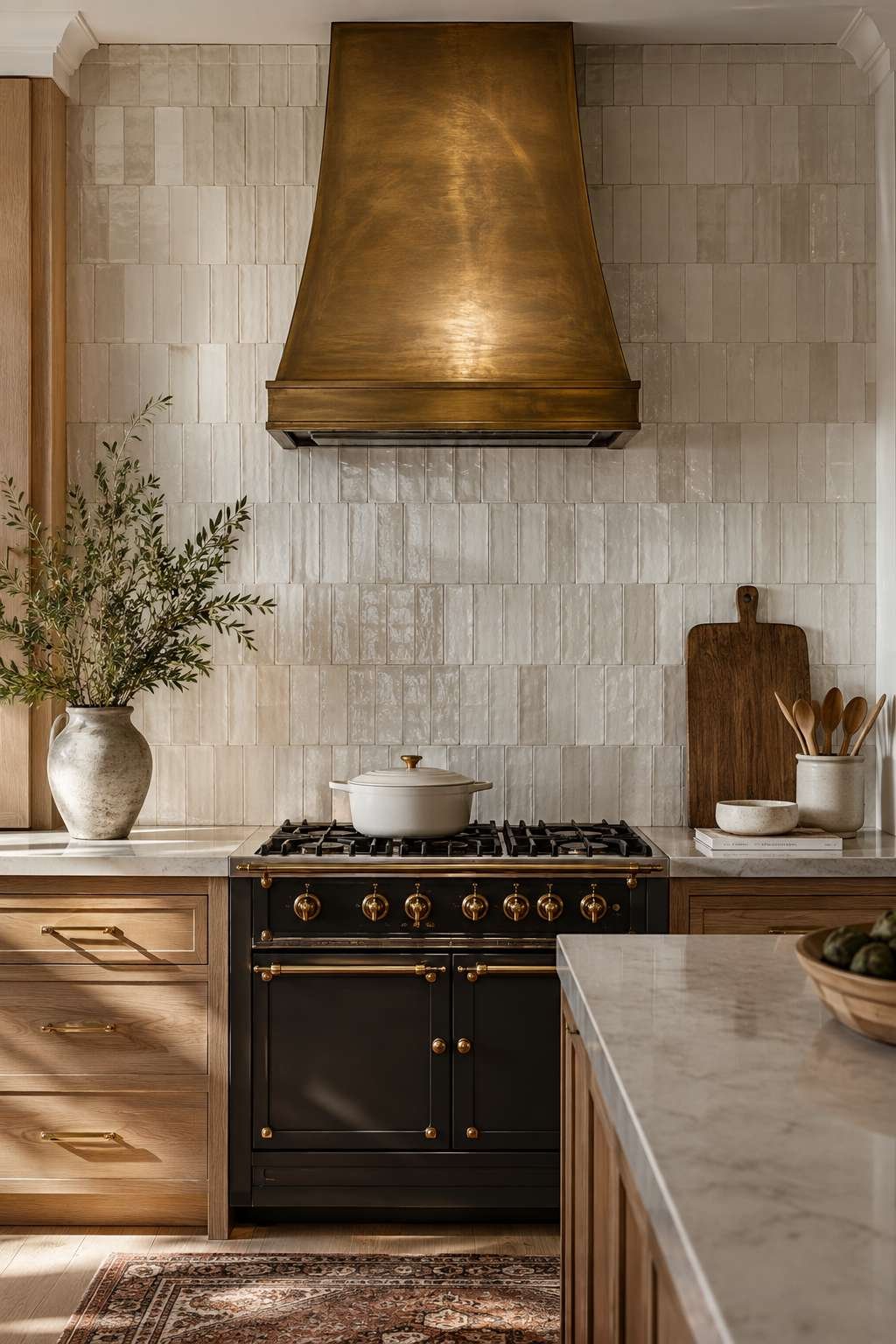
For those on a tighter budget, peel-and-stick options now mimic natural stone convincingly. Extending the backsplash to the ceiling, rather than stopping at standard height, adds a sense of custom design. This vertical extension is a favorite trick among professional designers.
- Choose marble or zellige tile for texture
- Extend the backsplash to the ceiling if possible
- Consider peel-and-stick options for budget projects
- Keep grout lines thin for a seamless look
- Add a focal point behind the stove
4. Declutter Countertops
Cluttered counters are one of the fastest ways to make a kitchen feel cheap and chaotic. Clearing away small appliances and unnecessary items instantly creates a sense of calm sophistication. Storing items like toasters and blenders in cabinets keeps surfaces clean. If you’re also weighing this floating shelves vs cabinets, that’s worth deciding early too.
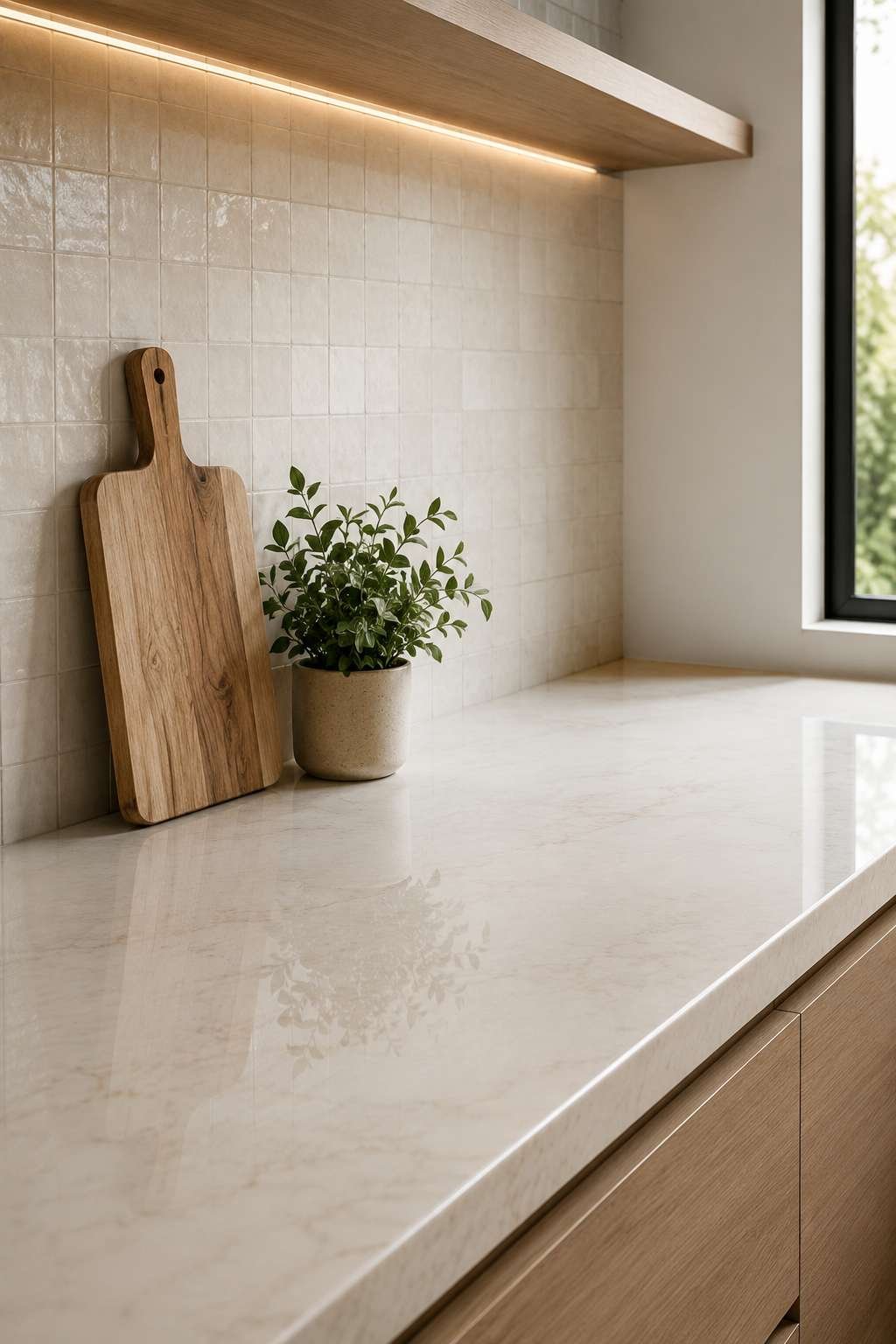
Leaving only a few curated items, like a cutting board or a small plant, gives the counters intentional style. This minimalist approach mirrors the styling seen in luxury kitchen showrooms. Fewer objects also make the natural beauty of the countertop material stand out.
- Store small appliances in cabinets or pantries
- Leave only two or three curated items out
- Choose a stylish cutting board as a display piece
- Wipe counters daily to maintain the clean look
- Use trays to corral necessary daily items
5. Choose a Rich Color Palette
Bright white kitchens have their place, but a rich color palette often reads as more expensive. Deep tones like forest green, navy, or charcoal on lower cabinets add drama and depth. Pairing dark bases with lighter upper cabinets balances the overall look.
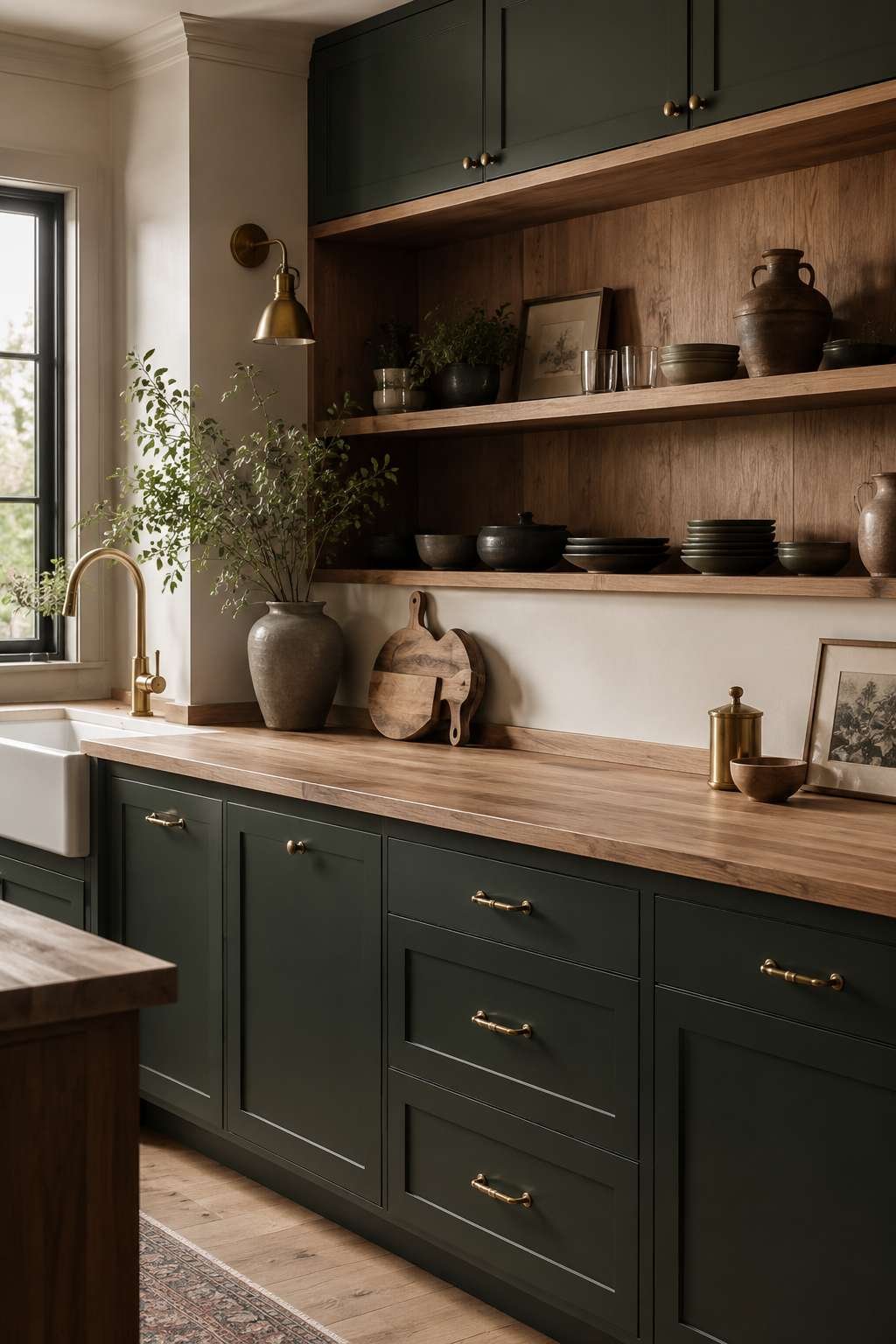
Color choice also affects how light interacts with the room throughout the day. Matte finishes, rather than glossy ones, tend to look more sophisticated and less like a budget renovation. Adding warm wood tones alongside darker cabinetry introduces natural balance.
- Consider deep, moody tones for lower cabinets
- Use matte finishes over glossy paint
- Balance dark colors with lighter uppers
- Introduce natural wood tones for warmth
- Test paint samples under different lighting first
6. Upgrade the Faucet
A kitchen faucet gets used constantly, making it one of the most noticeable fixtures in the room. Swapping a basic faucet for a high-arc, matte black or brushed gold model instantly elevates the sink area. This upgrade requires minimal plumbing work in most cases.
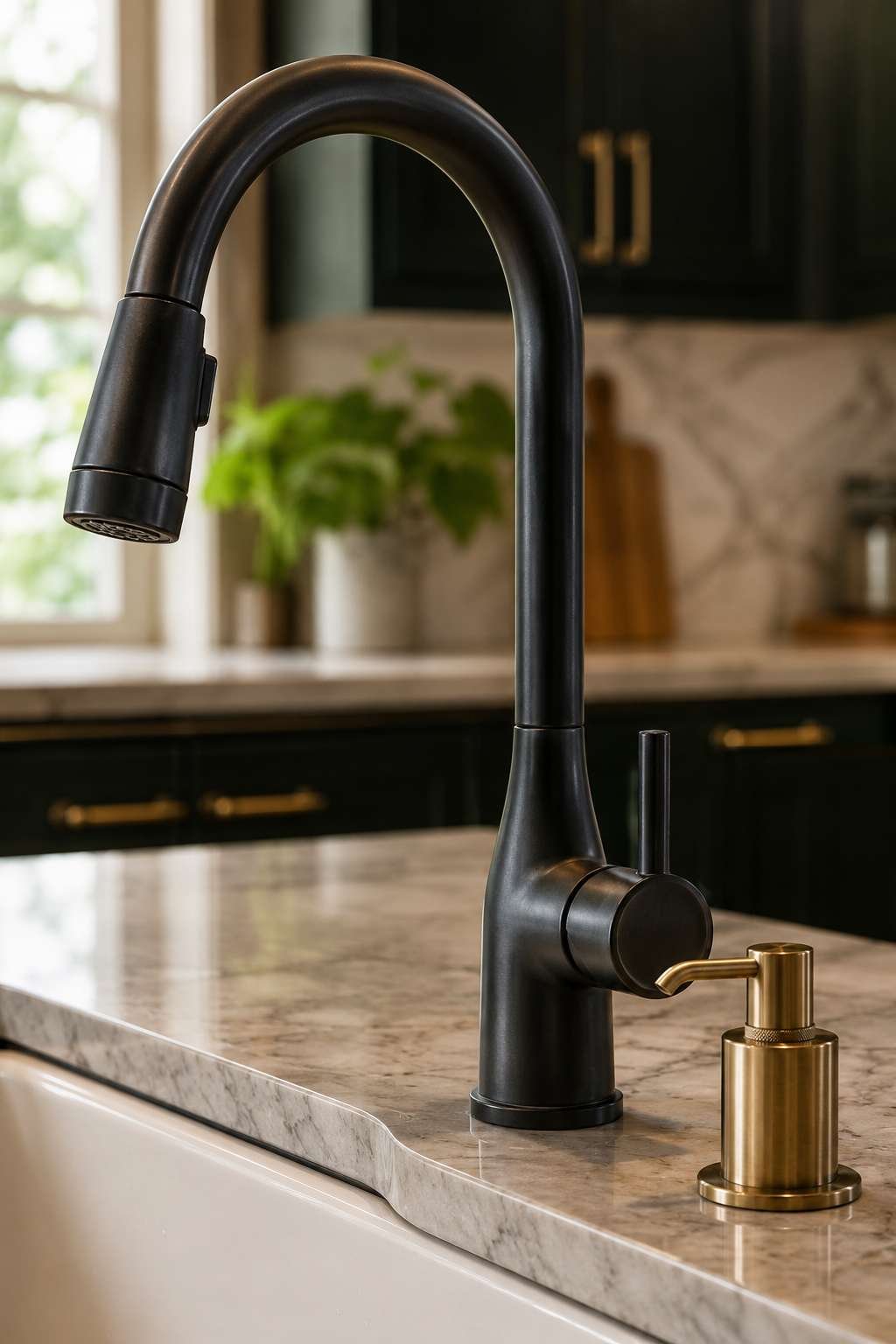
Choosing a faucet that matches the cabinet hardware finish creates a cohesive, designer-level consistency. Pull-down sprayers and touchless features add function alongside the visual upgrade. This single fixture change often surprises homeowners with its impact.
- Match the faucet finish to cabinet hardware
- Choose a high-arc design for visual impact
- Consider touchless or pull-down features
- Install a matching soap dispenser nearby
- Budget for professional installation if needed
7. Add Open Shelving Accents
A touch of open shelving introduces texture and personality that closed cabinets can’t achieve alone. Displaying a few curated pieces, like ceramic bowls or glassware, adds visual interest without overwhelming the space. This styling technique is common in high-end kitchen photography.
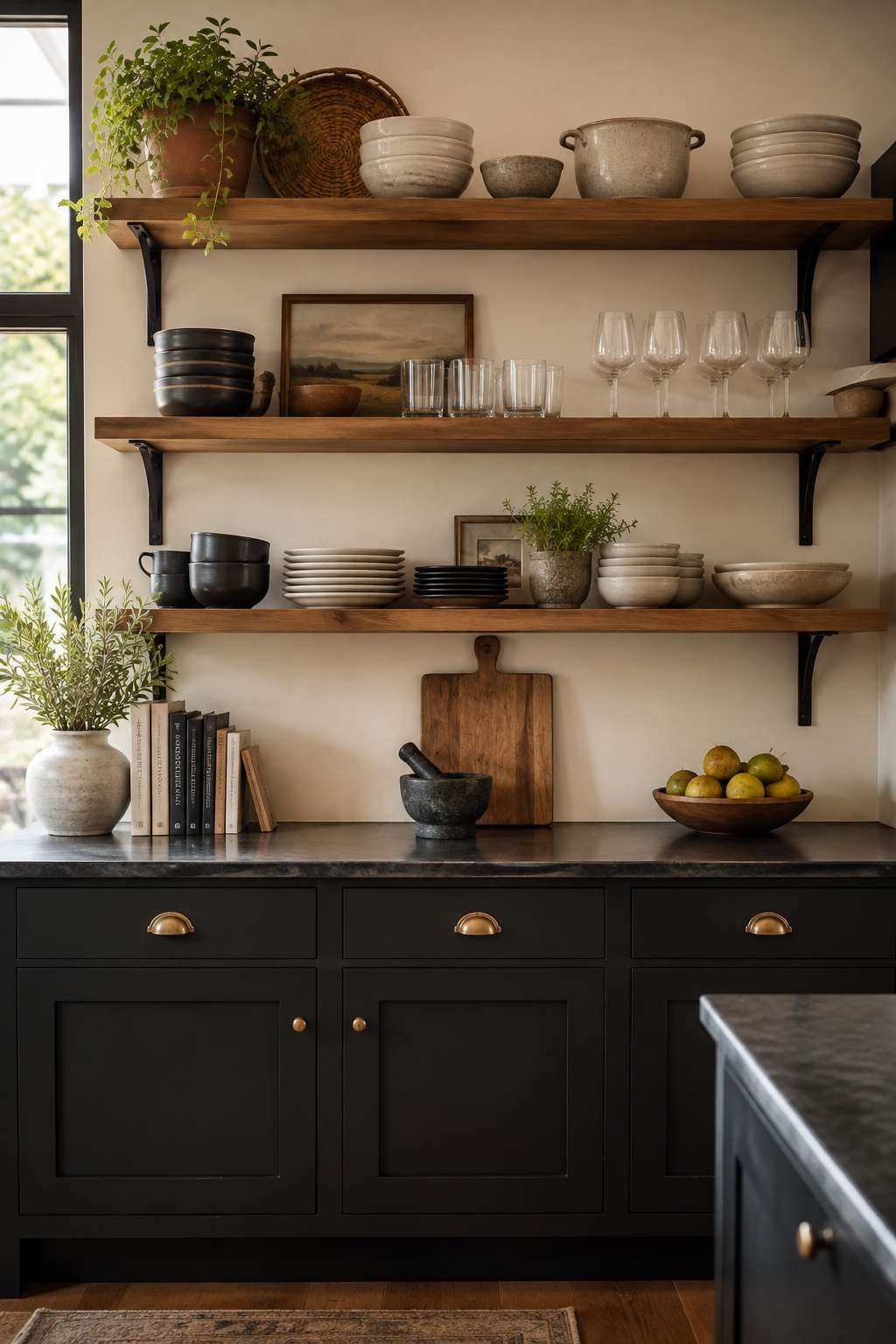
Balancing open shelving with closed storage keeps the kitchen functional and tidy. Choosing shelving in natural wood or matte black metal ties into the broader design scheme. Even one small shelf can add a boutique, curated feel to the room.
- Limit open shelving to one or two areas
- Display five to seven curated items maximum
- Choose shelving material that matches cabinetry tones
- Rotate displayed items seasonally for freshness
- Balance with closed storage to avoid clutter
8. Incorporate Natural Materials
Natural materials like wood, stone, and rattan bring warmth and authenticity that synthetic materials often lack. Adding a wooden cutting board, woven bread basket, or stone coasters introduces organic texture throughout the kitchen. These small details signal quality and intentional design.
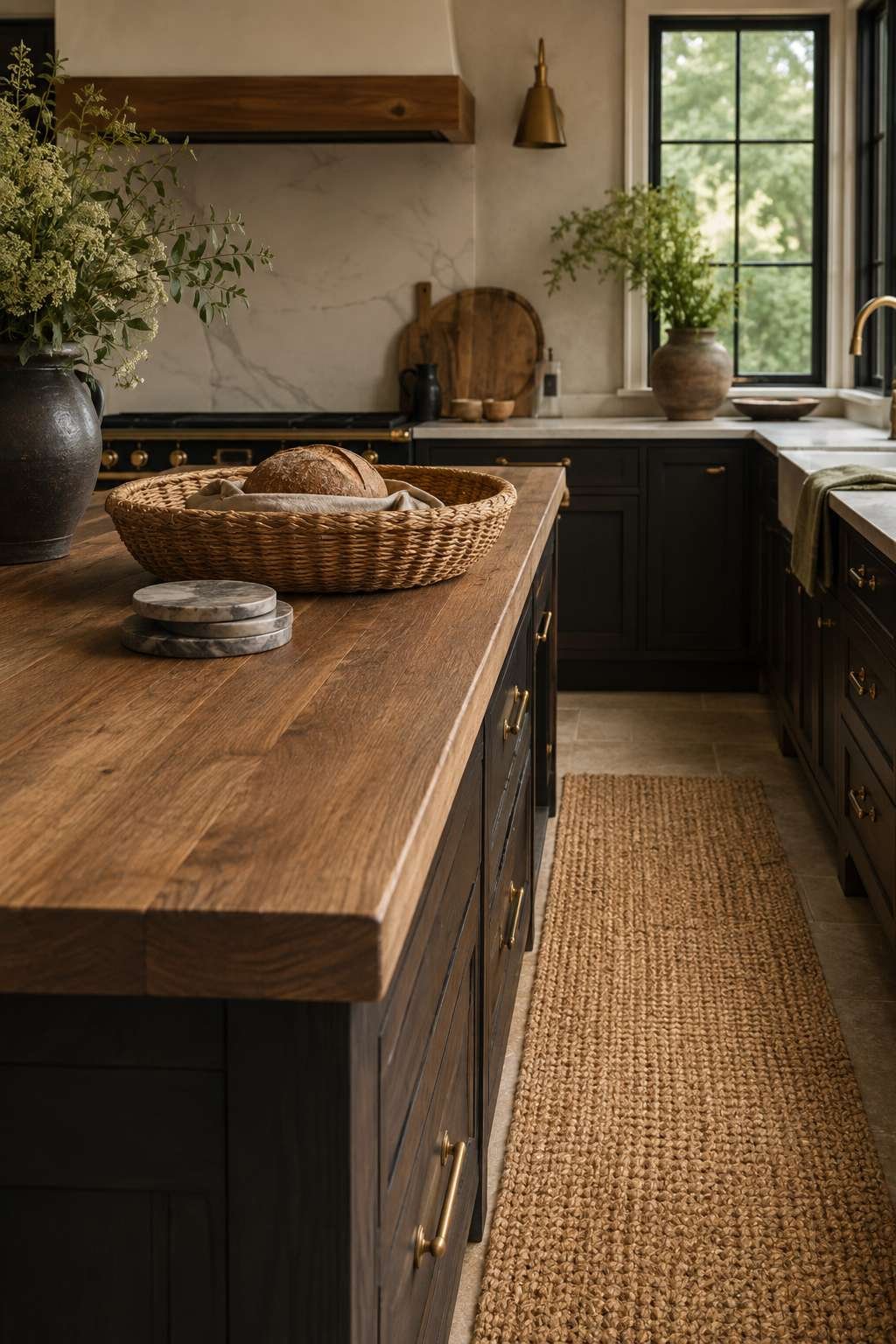
Even a single natural element, like a wood island top, can shift the entire room’s perceived value. Mixing these materials with metal and stone creates the layered look found in professionally designed spaces. This blend of textures is what separates a builder-grade kitchen from a custom-designed one.
- Add wooden accents like boards or bowls
- Introduce woven baskets for texture
- Consider a stone or wood island top
- Mix materials for a layered, custom feel
- Choose natural fiber rugs for added warmth
Making a kitchen look expensive doesn’t require a complete overhaul or unlimited budget. Small, intentional updates like new hardware, layered lighting, and a curated color palette can transform the entire space. Start with one or two changes and watch how quickly the kitchen begins to feel like a designer showroom.

