


Picking between white cabinets and wood cabinets shapes almost everything else about a kitchen renovation — the budget, the maintenance you’ll sign up for, and even how the space shows to future buyers. White cabinets tend to suit smaller, darker kitchens and rental-friendly flips where broad appeal matters most. Wood cabinets tend to win in busy family kitchens and higher-end custom builds where warmth and durability matter more than trend-chasing. Neither is the “wrong” answer, but one is usually the right answer for your specific kitchen — here’s how to tell which.
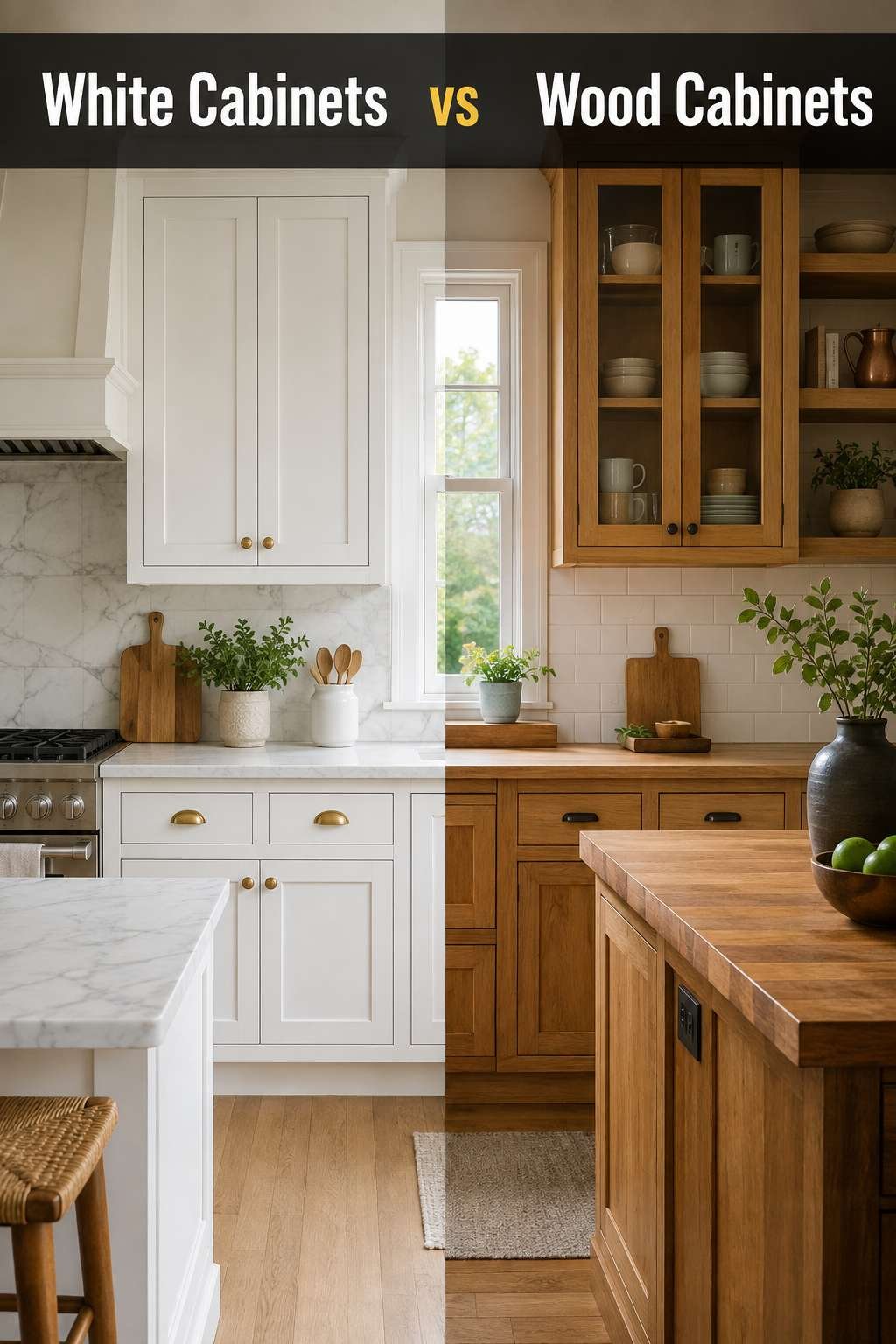
White Cabinets vs Wood Cabinets: The Master Comparison
| Cost | Durability & Maintenance | Install Difficulty | Lifespan | Aesthetic Flexibility | Resale Value | |
|---|---|---|---|---|---|---|
| White Cabinets | $150–$380 per linear ft installed (painted) | Shows grease, fingerprints, and water spots quickly — needs regular wiping and occasional touch-up painting | Moderate — most painted lines install like standard cabinetry | 15–20 yrs | Pairs with almost any style or countertop choice | Strong, broad buyer appeal in most markets |
| Wood Cabinets | $120–$400+ per linear ft (species-dependent) | Hides daily marks and wear well; benefits from oiling or resealing every 1–2 years | Moderate to high, depending on species and custom milling | 20–30+ yrs | Best suited to farmhouse, rustic, or traditional-leaning styles | Strong in higher-end or custom-home markets |
What These Numbers Actually Mean in a Real Kitchen
The cost gap between the two is smaller than most people expect — the real difference shows up in day-to-day living. In a white kitchen, you’ll notice grease near the stove knobs and fingerprints around the handles within days, not months, and you’ll likely be doing a quick wipe-down more often than you would with wood. In a wood kitchen, those same marks disappear into the grain, but you’re trading that convenience for a look that’s more tied to a specific species and stain than to a universally “safe” color. The install-difficulty and lifespan numbers matter most if you’re planning to stay in the home long-term: wood’s longer lifespan pays off over a decade-plus, while white’s lower reinstall cost pays off if you expect to update the kitchen again within 10–15 years anyway.
Quick Look: White Cabinets vs Wood Cabinets at a Glance
White Cabinets
Bright, neutral, and endlessly pairable — the safer bet for small kitchens and broad resale appeal.
View on Amazon →Wood Cabinets
Warm, durable, and forgiving of daily wear — the stronger pick for busy households and luxury builds.
View on Amazon →Deep Dive: White Cabinets
White cabinets are the go-to choice when a kitchen needs to feel bigger, brighter, or more broadly marketable. They work especially well in small or galley kitchens with limited natural light, in rental properties and flips where you’re selling to the widest possible buyer pool, and in modern, coastal, or farmhouse-adjacent kitchens where you want the cabinetry to stay quiet while a bold countertop or backsplash does the talking. Real-world installed cost runs $150–$380 per linear foot for a quality painted finish.
Pros
- Brightens small or dark kitchens noticeably
- Pairs with almost any countertop, backsplash, or flooring choice
- Broad, neutral resale appeal across most buyer types
- Easy to refresh the whole kitchen’s look with a repaint or new hardware
Cons
- Shows grease, fingerprints, and water spots quickly
- Needs more frequent cleaning and occasional touch-up painting
- Lower-quality paint can yellow near heat sources over time
- Typically needs a full repaint every 15–20 years
Deep Dive: Wood Cabinets
Wood cabinets earn their keep in kitchens that see real daily use — busy family households, luxury custom builds, and farmhouse, rustic, or traditional-leaning spaces where warmth and texture are part of the design goal. The natural grain does a lot of quiet work hiding smudges and daily wear that would show immediately on a painted surface. Real-world installed cost runs $120–$400+ per linear foot, depending on species (oak and maple sit at the affordable end, walnut and cherry at the premium end).
Pros
- Hides daily marks, fingerprints, and wear far better than paint
- Longer lifespan before any refinishing is needed
- Strong resale value in higher-end and custom-home markets
- Natural texture adds warmth a flat painted surface can’t match
Cons
- A specific stain or finish trend can date faster than neutral white
- Premium species cost noticeably more than standard paint-grade options
- Darker stains can make a small room feel heavier or more closed-in Our guide on how to make your kitchen look expensive walks through this step by step.
- Refinishing an entire kitchen later is a bigger job than repainting
Which One Wins in Your Kitchen? Real Room Scenarios
Small / Galley Kitchen
Tight footprint, limited natural light, needs to feel as open as possible. Our how to decorate open kitchen shelves guide covers this in more detail.
White Cabinets winBudget Renovation
Cost-conscious remodel prioritizing value over showroom polish.
Wood Cabinets winLuxury Custom Build
High-end finishes throughout, buyers expect a premium material story.
Wood Cabinets winRental-Friendly Flip
Needs to read as clean and move-in ready to the widest audience.
White Cabinets winHigh-Traffic Family Kitchen
Kids, pets, and daily cooking put real wear on every surface.
Wood Cabinets winProfessional Tips
Designer tie-breaker: if you genuinely can’t decide, go two-tone — white uppers with a wood island or lower cabinets gives you brightness and warmth in the same room without fully committing to one side.
Common regret mistake: choosing all-white without a durable, easy-clean countertop and backsplash to offset the maintenance, or choosing a trendy dark wood stain without checking how it’ll read in five years once the trend moves on. Our guide on how to decorate a kitchen shelf walks through this step by step.
Resale-value reality-check: “neutral sells” is generally true, but it’s not universal — pull a few comparable local listings before assuming white automatically wins in your specific market.
Maintenance honesty: be realistic about how often you’ll actually wipe down cabinets near the stove. If the honest answer is “rarely,” wood will look better, longer, with less effort.
Shop the Winner
If you’re leaning toward White Cabinets, here’s what to get started with:
Best Overall
A cabinet-grade white paint and primer kit formulated to resist yellowing and hold up to daily kitchen wear.
Best Budget
A basic brass or matte-black cabinet pull hardware set to freshen up stock white cabinets fast.
Best Premium
A professional-grade fine-finish sprayer and complete paint kit for a factory-smooth painted finish.
If you’re leaning toward Wood Cabinets, here’s what to get started with:
Best Overall
A wood stain and sealant kit designed for cabinetry, built to resist kitchen moisture and daily handling.
Best Budget
A matte-black cabinet hardware set that adds contrast and a modern edge to a stock wood finish.
Best Premium
A hand-rubbed oil finish and restoration kit for a deep, furniture-grade wood look.
Frequently Asked Questions
Are white cabinets more expensive than wood cabinets?
Not necessarily. Painted white cabinets typically run $150–$380 per linear foot installed, while wood cabinets range from $120–$400+ depending on species and finish. Mid-range wood can cost less than premium painted lines, but premium wood species like walnut often costs more than standard white.
Do white cabinets show dirt and stains more than wood?
Yes. White surfaces show grease splatters, fingerprints, and water spots far more visibly than wood grain, which naturally camouflages daily marks. White kitchens need more frequent wiping to stay looking fresh.
Which cabinets last longer, white or wood?
Solid wood cabinets generally last longer — 20 to 30+ years with occasional resealing — while painted white cabinets typically need a repaint after 15 to 20 years as the finish wears and yellows.
Do white cabinets increase home resale value more than wood?
In most markets, yes. White cabinets have broad, neutral buyer appeal that photographs well and suits more staging styles, though wood holds strong resale value in higher-end or custom-home markets.
Are wood cabinets going out of style?
No. Wood cabinets have moved away from the heavy honey-oak look of the 1990s toward cleaner Shaker profiles in walnut, white oak, and maple, and remain a steady, non-trend-dependent choice.
Can you paint wood cabinets white later if you change your mind?
Yes, in most cases, as long as the boxes and doors are solid wood or paint-grade MDF in good condition. Budget for proper sanding, priming, and at least two coats for a durable finish.
Which is easier to keep clean, white or wood cabinets?
Wood cabinets are generally easier to keep looking clean day-to-day since marks blend into the grain, while white cabinets need more frequent spot-cleaning near handles and the stove.
Do white cabinets make a small kitchen look bigger?
Yes. White cabinets reflect more light and reduce visual weight, which is especially effective in small, galley-style, or low-natural-light kitchens.
What’s the average cost per linear foot for wood cabinets?
Wood cabinets typically range from $120–$400+ per linear foot installed, depending on the species and whether they’re stock, semi-custom, or fully custom.
What’s the average cost per linear foot for white cabinets?
Painted white cabinets typically run $150–$380 per linear foot installed, with price driven mostly by the paint quality and finish process.
Are white cabinets harder to maintain in a high-traffic kitchen?
Yes. In a busy household with kids or heavy cooking, white cabinets need more frequent cleaning and occasional touch-up painting near handles and the stove.
Do wood cabinets need to be refinished, and how often?
Most wood cabinets only need light oiling or resealing every 1–2 years, and a full refinish is typically not needed for well over a decade under normal use.
Which cabinet color hides fingerprints better?
Wood cabinets hide fingerprints and smudges noticeably better than white, thanks to the natural grain pattern and typically satin or matte sheen.
Is MDF or solid wood better for white cabinets?
Paint-grade MDF is often preferred for white cabinets because it takes a smooth painted finish more evenly than wood grain, which can show through the paint over time.
What wood species are most popular for cabinets?
Oak, maple, and white oak are the most common and budget-friendly choices, while walnut and cherry are popular premium options for a richer look.
Do white cabinets yellow over time?
Lower-quality paint or finishes can yellow with age, especially near heat sources like the stove, which is why a quality cabinet-grade paint matters for white finishes.
Are two-tone cabinets (white and wood) a good compromise?
Yes. Pairing white upper cabinets with a wood island or lower cabinets is a popular way to get brightness and warmth in the same kitchen.
Which cabinets are better for a rental property?
White cabinets tend to work better for rentals since they read as clean, neutral, and move-in ready to the widest range of tenants or buyers.
How long do painted white cabinets typically last before needing a repaint?
Most painted white cabinets need a repaint or significant touch-up after about 15 to 20 years, sooner in high-heat or high-humidity kitchens.
Which is the better choice for a luxury kitchen remodel?
Wood cabinets, especially in walnut or custom stained finishes, are generally the stronger choice for a luxury remodel, since buyers and designers associate solid wood with higher-end craftsmanship.
Final Verdict
Choose White Cabinets if: your kitchen is small, dark, or you’re renovating a rental or flip where broad buyer appeal matters most. White is the safer, more universally marketable choice — as long as you’re honest about the extra cleaning it demands.
Choose Wood Cabinets if: you’re renovating a high-traffic family kitchen or a luxury custom build, and you’d rather trade a bit more upfront cost and cleaning-honesty tolerance for a finish that hides daily life and lasts longer before needing attention.
For most homeowners weighing resale and everyday brightness against real-world durability, there’s no universally “correct” pick — but there is a correct pick for your kitchen, and the room-by-room verdicts above should make it clear which side you’re on.

