


Quartz and granite are the two most requested countertop materials for a reason: both are durable, both look premium, and both can carry a kitchen for decades. But they behave very differently once you’re actually cooking, cleaning, and living with them day to day. Quartz is engineered for consistency and never needs sealing; granite is a genuine natural stone with one-of-a-kind veining that asks for a little annual upkeep in return. Below, we break down the real costs, the everyday trade-offs, and which one wins for your specific kitchen — no fence-sitting, just a clear answer.
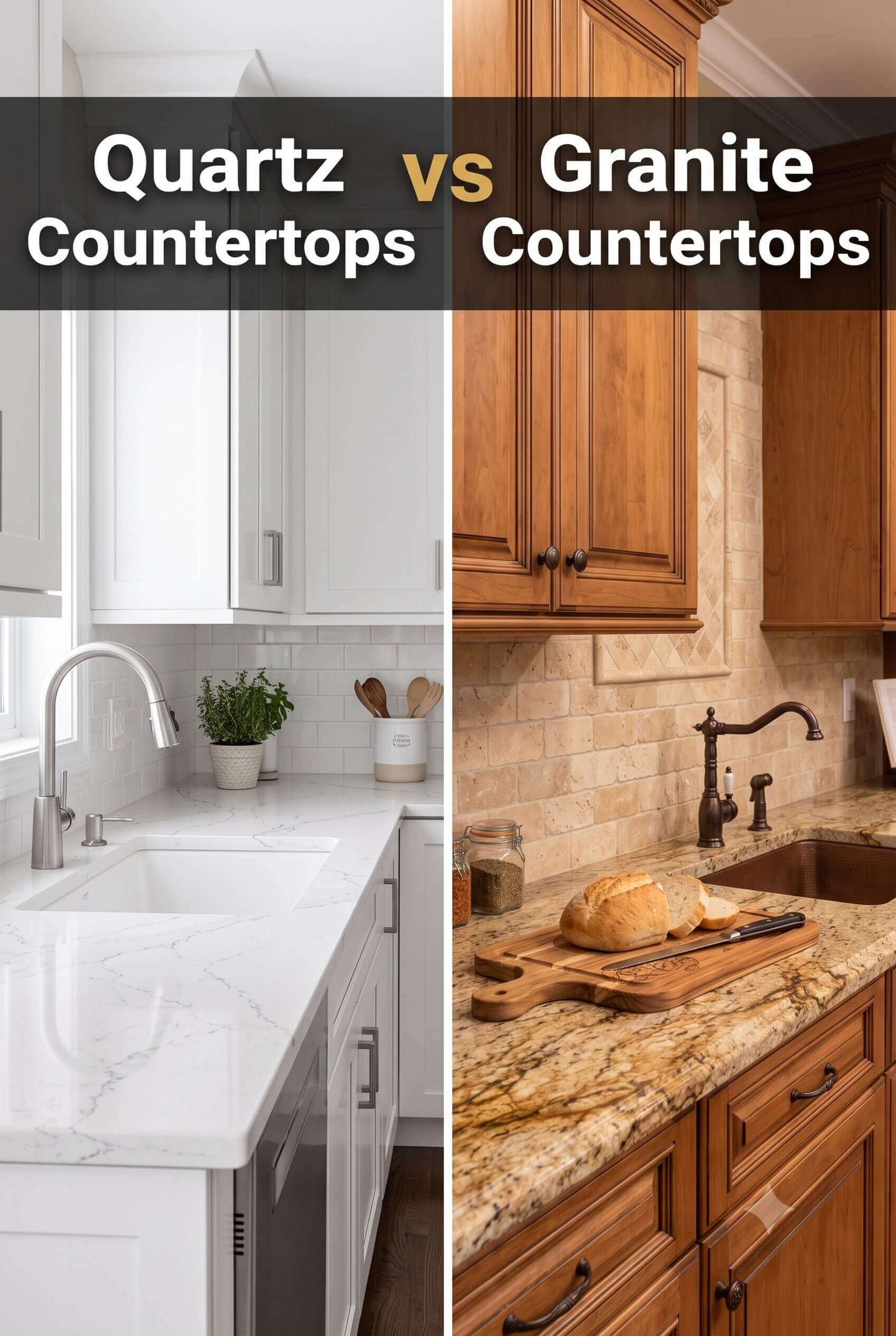
Quartz vs Granite: Master Comparison Chart
| Criteria | Quartz | Granite |
|---|---|---|
| Material Type | Engineered stone (crushed quartz + resin) | Natural stone, quarried in solid slabs |
| Installed Cost | $50–$120 per sq ft installed | $40–$100 per sq ft installed |
| Durability | Very high — resists chips and scratches well | High — can chip on hard, direct impact |
| Heat Resistance | Moderate — avoid setting hot pans directly on it | Excellent — tolerates direct heat well |
| Stain Resistance | Excellent — non-porous, resists stains without sealing | Good — needs sealing to stay stain-resistant |
| Maintenance | None — never needs sealing | Reseal roughly every 1–2 years |
| Lifespan | 25–30+ years | 25–100+ years with proper sealing |
| Aesthetic Flexibility | Very consistent pattern, slab to slab | Unique, one-of-a-kind veining per slab |
| Resale Value | Strong, consistent buyer appeal | Strong, especially in natural-stone markets |
What this actually means in a real kitchen: “very high durability” for quartz means it shrugs off the daily wear of a busy household without a second thought, while granite’s “high durability” still holds up great — it just prefers a cutting board and a trivet under hot pans. “Moderate maintenance” for granite isn’t a dealbreaker; resealing takes under half an hour once a year. The bigger practical difference is what happens when you skip that maintenance: quartz forgives you, granite doesn’t.
Quick Look: Quartz vs Granite at a Glance
Quartz Countertops
Consistent, engineered stone that never needs sealing — built for low-maintenance living.
View on Amazon →Granite Countertops
Genuine natural stone with one-of-a-kind veining — built for authentic character.
View on Amazon →Deep Dive: Quartz Countertops
Quartz tends to suit busy households, first-time homeowners who don’t want maintenance on their to-do list, and kitchens where matching color across a big island matters more than natural variation. Because it’s engineered, you can order more of the exact same slab years later — something granite can’t guarantee. Our kitchen island ideas has more inspiration along these same lines.
Pros
- Never needs sealing or resealing
- Highly consistent color and pattern from slab to slab
- Non-porous surface resists stains without extra care
- Wide range of colors, including patterns that mimic marble
Cons
- Not recommended for outdoor kitchens — fades in direct sun
- Can scorch or discolor from direct hot-pan contact
- Budget lines can look less natural than genuine stone up close
- Chip repairs are trickier to blend seamlessly than granite’s
Real cost range: roughly $50–$120 per sq ft installed, depending on brand and edge profile.
Deep Dive: Granite Countertops
Granite tends to suit buyers who want a genuinely natural, one-of-a-kind stone and households that cook with a lot of direct heat. If “no two kitchens look alike” matters to you more than perfect consistency, granite is the more emotionally satisfying choice.
Pros
- Genuine natural stone — every slab is truly one-of-a-kind
- Excellent heat resistance, tolerates direct hot pans
- Handles outdoor kitchens and UV exposure well
- Strong, authentic appeal in traditional and luxury markets
Cons
- Needs resealing roughly every 1–2 years to resist stains
- More porous — unsealed spots can stain from oil or wine
- Pattern and color vary by batch, harder to match later
- Pricing swings more widely by color rarity
Real cost range: roughly $40–$100 per sq ft installed, with rare colors running well above that.
Which One Wins for Your Kitchen?
Small Kitchen / Condo
Winner: Quartz — consistent slabs stretch a small footprint without visible seams.
Budget Renovation
Winner: Granite — remnant slabs and lower average pricing win on a tight budget.
Luxury Build
Winner: Granite — one-of-a-kind veining reads as higher-end in a premium kitchen.
Rental-Friendly
Winner: Quartz — zero sealing tolerates inconsistent tenant maintenance.
High-Traffic Household
Winner: Quartz — non-porous surface shrugs off daily spills and mess.
Professional Tips
- Designer tie-breaker: if you’re still undecided, choose based on your maintenance tolerance, not looks alone — both materials can look excellent when installed well. Our guide on how to make your kitchen look expensive walks through this step by step.
- Common regret mistake: picking a granite slab under showroom lighting that looks completely different once it’s under your kitchen’s actual light.
- Resale-value note: quartz’s consistency photographs better for listing photos; granite’s “natural stone” label still carries real weight in higher-end markets.
- Maintenance reality-check: granite sealing takes under 30 minutes once a year — it’s a smaller chore than most homeowners expect.
Shop the Winner
If you’re leaning toward quartz or granite, here’s what to get started with. The right cleaning and care kit protects your investment from day one — non-porous quartz just needs the right everyday cleaner, while granite needs a stone-safe cleaner and a sealant on hand for its annual refresh. Pair this with our kitchen cleaning checklist to stay on top of the rest.
Best Overall
A balanced kit with a stone-safe cleaner, microfiber cloths, and a sealant applicator — works for both quartz and granite.
Best Budget
A simple spray cleaner and cloth combo that covers daily wipe-downs without the extras.
Best Premium
A full care system with a dedicated sealant, polish, and stain-guard formulated for natural stone.
Frequently Asked Questions
Is quartz or granite more expensive?
On average, quartz runs $50–$120 per square foot installed, while granite runs $40–$100 per square foot installed, though rare granite colors and premium quartz brands can cost more than either range suggests.
Which countertop lasts longer, quartz or granite?
Both can last 25+ years with normal care. Granite can last even longer since it’s solid stone, but only if it’s resealed on schedule — skip sealing and it becomes more vulnerable to staining over time.
Does granite need to be sealed every year?
Most granite needs resealing every 1–2 years, though the exact interval depends on the stone’s porosity — a simple water-drop test once a year tells you if it’s due.
Can quartz crack or chip like granite?
Quartz is highly chip-resistant thanks to its resin binder, but it isn’t chip-proof — a hard, direct impact on an edge or corner can still damage it, just less easily than granite.
Is quartz heat resistant enough for hot pans?
Quartz handles brief heat exposure fine, but its resin content means direct contact with a hot pan can scorch or discolor it — granite tolerates direct heat noticeably better.
Which countertop is better for resale value?
Quartz’s consistent look photographs well for listings and appeals to buyers who want low maintenance; granite still carries strong natural-stone appeal in many higher-end markets — neither is a clear resale loser.
Do quartz countertops look fake compared to granite?
Higher-end quartz brands replicate natural stone patterns closely, but very budget quartz can look flatter and more uniform than real granite up close.
Can you cut directly on quartz or granite?
Both can technically survive an occasional cut, but neither should be used as an everyday cutting surface — knife marks dull blades and can leave faint scratches on both materials over time.
Which is easier to clean, quartz or granite?
Quartz is easier day to day since it’s non-porous and just needs soap and water; granite needs a stone-safe cleaner and periodic sealing to stay easy to wipe clean.
Does granite stain more than quartz?
Yes, granite is more stain-prone because it’s porous — oil, wine, and acidic foods can soak in if the sealant has worn off, while quartz’s non-porous surface resists staining without sealing.
Is quartz better for a small kitchen or large island?
Quartz’s consistent pattern makes large islands and long runs look seamless without visible slab seams; granite’s natural variation can make a big single-slab island feel more dramatic and one-of-a-kind.
How much does it cost to install granite countertops?
Expect roughly $40–$100 per square foot installed for granite, depending on color rarity, edge profile, and cutouts for sinks or cooktops.
How much does it cost to install quartz countertops?
Expect roughly $50–$120 per square foot installed for quartz, with pricing varying by brand, pattern complexity, and edge treatment.
Can quartz be repaired if it chips?
Minor quartz chips can often be filled and polished by a professional so they’re barely visible; larger damage may require a section replacement since quartz doesn’t take stain-matching repairs as well as granite.
Is granite still popular in 2026 kitchens?
Yes — granite remains a strong choice for buyers who want a natural, one-of-a-kind stone, especially in traditional and higher-end kitchen styles, even as quartz has grown in market share.
Which is more eco-friendly, quartz or granite?
Granite is a natural material with less processing, but it’s quarried and shipped, which has its own footprint; quartz involves resin and manufacturing but often uses recycled stone content — neither has a clear-cut environmental edge.
Do quartz countertops fade in sunlight?
Yes, prolonged direct sunlight can gradually fade quartz’s resin-based color, which is why it’s not recommended for outdoor kitchens; granite’s natural mineral color doesn’t fade the same way.
Is granite a good choice for outdoor kitchens?
Yes, granite’s natural heat and UV resistance make it one of the better choices for outdoor kitchens, while quartz is generally not recommended outdoors due to fading and heat sensitivity.
What is the average lifespan of a granite countertop?
A well-maintained, properly sealed granite countertop can last 25 to 100+ years, since it’s a durable natural stone that mainly needs periodic resealing to stay in good shape.
Should I choose quartz or granite for a rental property?
Quartz is often the lower-maintenance choice for a rental since it never needs sealing and tolerates inconsistent care better; granite can work too if you’re comfortable keeping up with an annual reseal.
The Verdict
Choose quartz if you want a low-maintenance, consistent-looking counter that never needs sealing — it’s the safer pick for busy families, rentals, and small kitchens.
Choose granite if you want a genuine natural stone with one-of-a-kind character and don’t mind an annual reseal — it’s the stronger pick for luxury builds, outdoor kitchens, and buyers who prioritize authenticity over convenience.
Still torn? Let your maintenance tolerance decide: if sealing sounds like a chore you’ll skip, go quartz.

