


A clean kitchen doesn’t happen from one exhausting weekend scrub-down — it happens from a handful of small habits repeated at the right frequency. This kitchen cleaning checklist breaks every task into daily, weekly, monthly, and deep-clean groups, so instead of one overwhelming list, you get a system you can actually keep up with.
It’s built for anyone who wants a genuinely clean kitchen without guessing what needs attention: new homeowners setting up a routine for the first time, renters who want their kitchen guest-ready on short notice, or anyone who’s tired of realizing the range hood filter hasn’t been touched in a year. Every task below includes a quick note on why it matters, plus a free printable version at the end so you can check things off as you go.
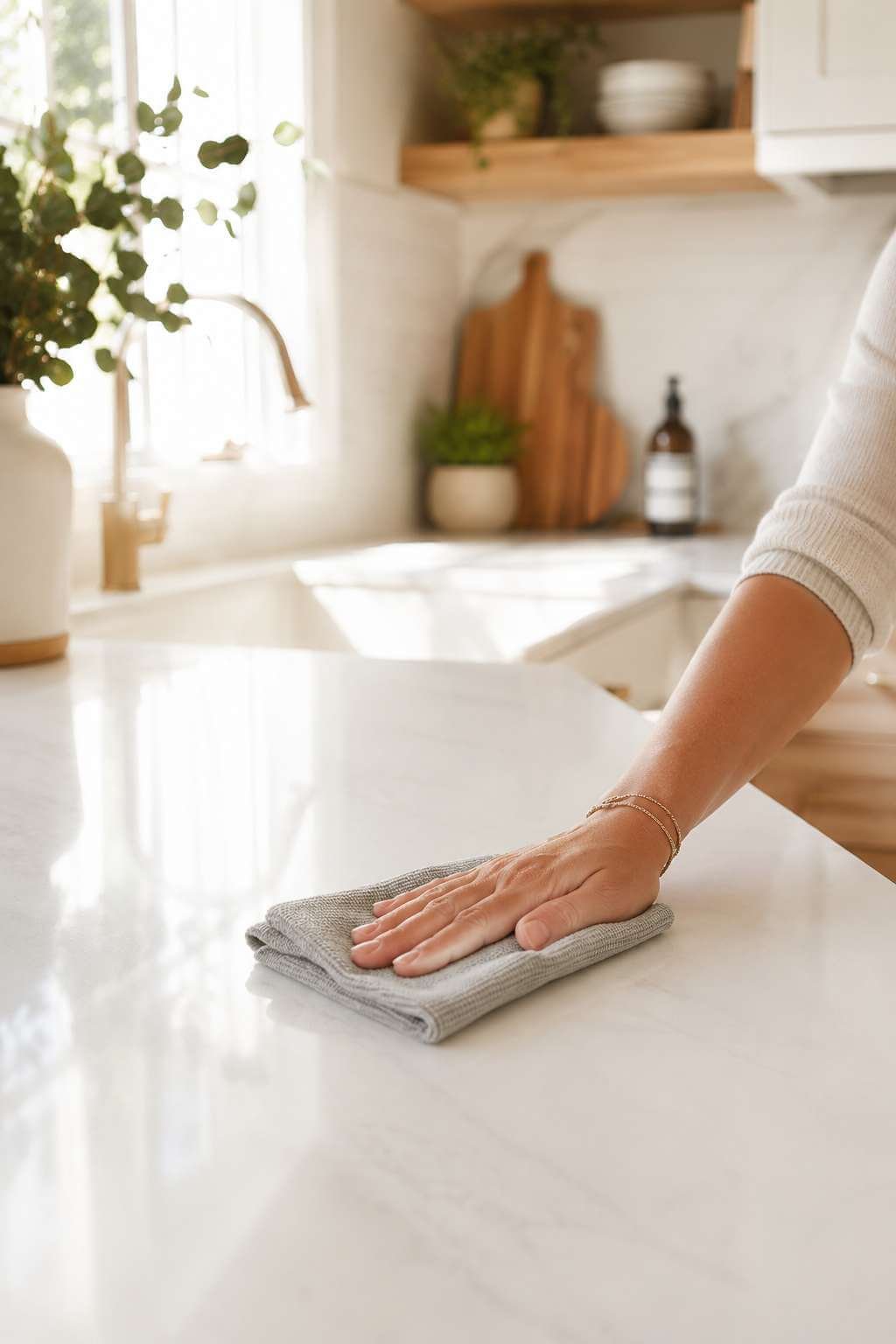
Daily Kitchen Cleaning Checklist
-
Leftover food hardens fast and turns a two-minute rinse into a scrub-fest by morning.
-
Crumbs and splatter attract pests and dry into stains if left overnight.
-
Fresh grease wipes off in seconds; baked-on grease needs a degreaser and real effort. It’s a similar trade-off to deciding on gas stove vs induction cooktop elsewhere in the space.
-
A quick sweep keeps crumbs from tracking through the rest of the house.
-
A clear sink resets the whole room and stops water spots from setting in.
-
Food waste left overnight is the single biggest source of kitchen odor.
Weekly Kitchen Cleaning Checklist
-
The sink handles raw food daily and needs more than a rinse to stay sanitary.
-
Splatters bake on fast and become genuinely hard to remove after a week.
-
Handles and fronts collect fingerprints and grease that a daily wipe-down usually skips.
-
Sweeping removes debris but not the sticky film cooking leaves behind.
-
Handles get touched constantly and pick up grease from cooking hands.
-
These trap grease in crevices that a quick stovetop wipe never reaches.
-
Forgotten produce is the top source of hidden fridge odor and mold.
-
Damp towels and sponges are some of the most bacteria-heavy items in the home.
Monthly Kitchen Cleaning Checklist
-
Spills and residue build up quietly on shelves that never get a weekly wipe. If you’re also weighing floating shelves vs cabinets, that’s worth deciding early too.
-
Mineral buildup affects both taste and how well the machine actually heats water.
-
Food particles and grease film build up inside the machine itself, not just your dishes.
-
Spilled flour, sugar, and crumbs collect in shelves that go unseen for weeks.
-
Grease from cooking steam settles here even when the stovetop itself looks clean.
-
Food particles trapped in the blades cause most of the odor people blame on the drain.
-
Liners leak more often than people notice, leaving residue on the bin itself.
-
Dust collects overhead where it’s easy to forget and can drift down onto clean counters.
Deep-Clean & Seasonal Kitchen Checklist
-
Baked-on residue from months of cooking needs a dedicated cleaner or self-clean cycle to fully lift.
-
A caked filter blocks airflow and becomes a genuine grease-fire risk over time.
-
This is the most-skipped spot in any kitchen and collects dust, crumbs, and grease for years if ignored.
-
A full empty-and-wipe catches crumbs and sticky spots a monthly spot-check misses.
-
Grout traps grime that regular surface wiping can’t touch and needs a dedicated brush.
-
Cooking steam leaves a film on glass that builds up gradually and goes unnoticed.
-
These are touched constantly with food-prep hands and rarely make it onto a regular routine.
-
Untreated boards dry out, crack, and hold onto bacteria in the grooves.
-
Forgotten items take up space and are the most common source of pantry pests.
-
Fabric in the kitchen absorbs grease and odor faster than almost anything else in the room.
Appliance-Specific Deep Clean Checklist
-
A clogged filter is the most common reason dishes come out gritty or still dirty.
-
Dusty coils make the compressor work harder and can shorten the fridge’s lifespan.
-
A neglected filter affects both water taste and ice quality over time.
-
A bowl of water and lemon steamed for a few minutes loosens baked-on splatter without scrubbing.
-
Mineral scale builds up inside and can affect both boil time and taste.
-
A full crumb tray is a fire hazard most people don’t think to check.
-
Blenders, mixers, and toasters get handled constantly but rarely get their own cleaning pass.
-
Food debris and mildew collect in the rubber seal and are a common source of dishwasher odor.
Pro Tips
- ✓Clean top to bottom, then left to right, so dust and crumbs land on surfaces you haven’t cleaned yet instead of ones you just finished.
- ✓Let cleaning sprays sit for three to five minutes before wiping — that’s what actually breaks down grease, not the wiping itself.
- ✓On stainless steel, always wipe with the grain to avoid streaks, and finish with a light squeegee pass for a genuinely clean look.
- ✓Keep a small caddy of daily-use supplies under the sink so cleanup takes seconds instead of a trip to the closet.
- ✓Run the dishwasher’s cleaning cycle or the oven’s self-clean overnight so it’s done by the time you’re back in the kitchen.
- ✓For stuck-on stovetop grease, a baking soda paste lifts residue without the scratching risk of an abrasive scrubber.
- ✓Wipe spills the moment they happen — a fresh spill takes seconds, a dried one can take real scrubbing.
- ✓Rotate one deep-clean task into your week instead of saving them all for a single exhausting weekend session.
- ✓Vacuum before you mop — sweeping alone can smear fine crumbs into a wet floor instead of lifting them.
- ✓If you decant cleaning products into new bottles, label them clearly so you never accidentally grab the wrong one for stone or wood.
Common Mistakes
- ✕Using vinegar on granite or marble. It etches the sealant and dulls the surface over time — use a pH-neutral stone cleaner instead. Our quartz vs granite countertops comparison covers that decision in more depth.
- ✕Wiping grease off immediately after spraying. Give heavy buildup three to five minutes to actually break down before you wipe.
- ✕Mixing bleach and ammonia-based cleaners. Never combine them — the fumes are genuinely dangerous. Always check labels first.
- ✕Using the same sponge for weeks without sanitizing it. Microwave a damp sponge for one to two minutes every couple of days, or replace it weekly.
- ✕Ignoring the dishwasher’s own filter. A clogged filter is why dishes come out gritty even after a full cycle — check it monthly.
- ✕Scrubbing stainless steel against the grain. It leaves fine scratches and streaks — always wipe in the direction the metal is brushed.
- ✕Letting the range hood filter go months without cleaning. Caked grease is a real fire risk, not just a cosmetic issue.
- ✕Never pulling out the fridge or stove to clean behind them. Dust and grease collect there for years if it’s not on a seasonal routine.
- ✕Overloading the dishwasher. Blocked spray arms mean dishes — and the machine itself — don’t actually get clean.
Supplies & Tools Checklist
Want the simplified, print-ready version? Download the free printable Kitchen Cleaning Checklist — every task from this guide condensed into checkboxes only, organized by frequency and ready to print or stick on the fridge.
Download the Free Printable Kitchen Cleaning ChecklistFrequently Asked Questions
How often should I deep clean my kitchen?
Plan on a full deep clean every one to three months, depending on how often you cook. Households that cook daily should lean toward the one-month mark, since grease and food residue build up faster than they seem to.
What’s the best order to clean a kitchen in?
Work top to bottom and dry to wet: dust and wipe higher surfaces first, tackle appliances and cabinets next, and finish by sweeping and mopping the floor so anything that falls gets cleaned up last.
How often should I clean my oven?
A thorough interior oven clean every one to three months is enough for most households, with a quick wipe-down after any major spill or bake so it doesn’t bake on and get harder to remove.
Is vinegar safe to use on granite or quartz countertops?
No. Vinegar is acidic and can etch or dull the sealant on natural stone like granite and marble over time. Use a pH-neutral stone cleaner instead, and save vinegar for glass, most plastic, and sealed non-porous surfaces.
What’s the fastest way to cut through grease buildup?
A baking soda and warm water paste works well on stovetops and range hoods, and a degreasing spray left to sit for three to five minutes before wiping handles tougher, older buildup without heavy scrubbing.
How often should I replace or sanitize my kitchen sponge?
Sanitize a damp sponge every two days by microwaving it for one to two minutes, and replace it entirely every one to two weeks, since sponges hold onto bacteria faster than almost anything else in the kitchen.
What cleaning supplies do I actually need for a kitchen?
A short list covers most jobs: an all-purpose spray, dish soap, microfiber cloths, baking soda, white vinegar, a degreaser, and rubber gloves. Everything else on this checklist’s supply list is optional depending on your surfaces.
How long does a full kitchen deep clean take?
Most kitchens take two to three hours for a complete deep clean when tackled in one sitting, though splitting the deep-clean tasks across a few weekends is just as effective and far less exhausting.
Can I clean my kitchen without harsh chemicals?
Yes. Baking soda, white vinegar (on the right surfaces), and castile soap handle the majority of kitchen cleaning tasks, and plenty of store-bought “natural” all-purpose sprays perform just as well as conventional ones.
How do I keep my kitchen clean between deep cleans?
Stick to the daily and weekly tasks on this checklist. A five-minute daily reset and one slightly longer weekly session prevent the kind of buildup that turns into a multi-hour deep clean later.
A clean kitchen isn’t about one big effort — it’s about small habits done consistently. Start with the daily list this week, add the weekly tasks once that feels automatic, and let the monthly and deep-clean sections catch everything else. Print the checklist, stick it somewhere visible, and check things off as you go.

