


Empty corners and bare walls can make a living room feel incomplete and uninviting. While open space is important for flow, too much of it leaves a room feeling cold and disconnected. The challenge is filling those gaps with pieces that add purpose and personality without creating clutter.
The best approach is intentional styling. Every item you add should either serve a function or contribute to the room’s visual story. Whether you are dealing with an awkward corner, a blank wall, or an oversized room that feels sparse, these strategies will help you fill empty space in your living room thoughtfully and beautifully.
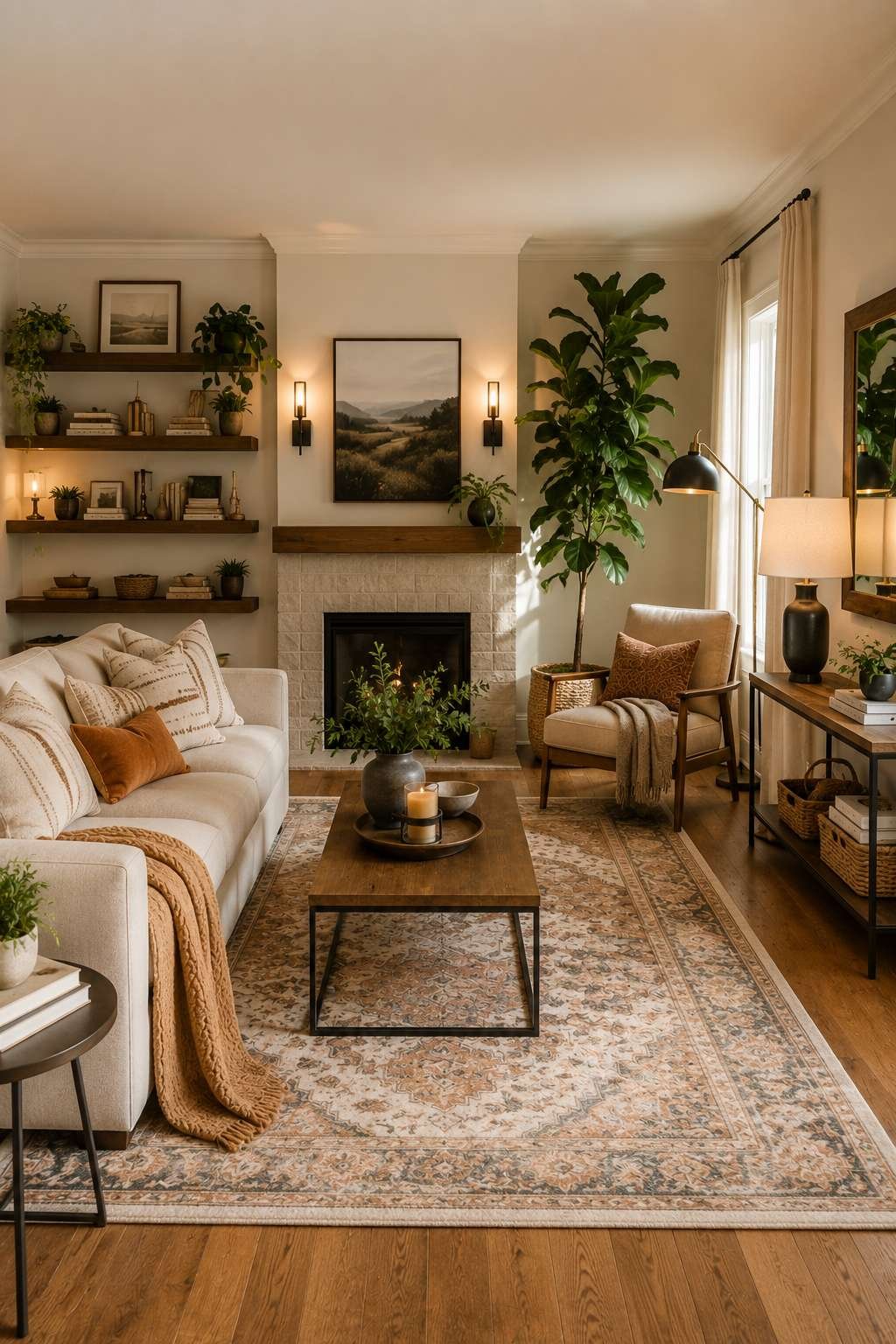
1. Add a Statement Floor Plant
A large floor plant is one of the easiest ways to fill an empty corner. It brings life, color, and organic texture to a space instantly. Tall plants like fiddle leaf figs, birds of paradise, and snake plants add vertical interest without taking up much floor area. Our the floor lamp vs table lamp comparison covers that decision in more depth.
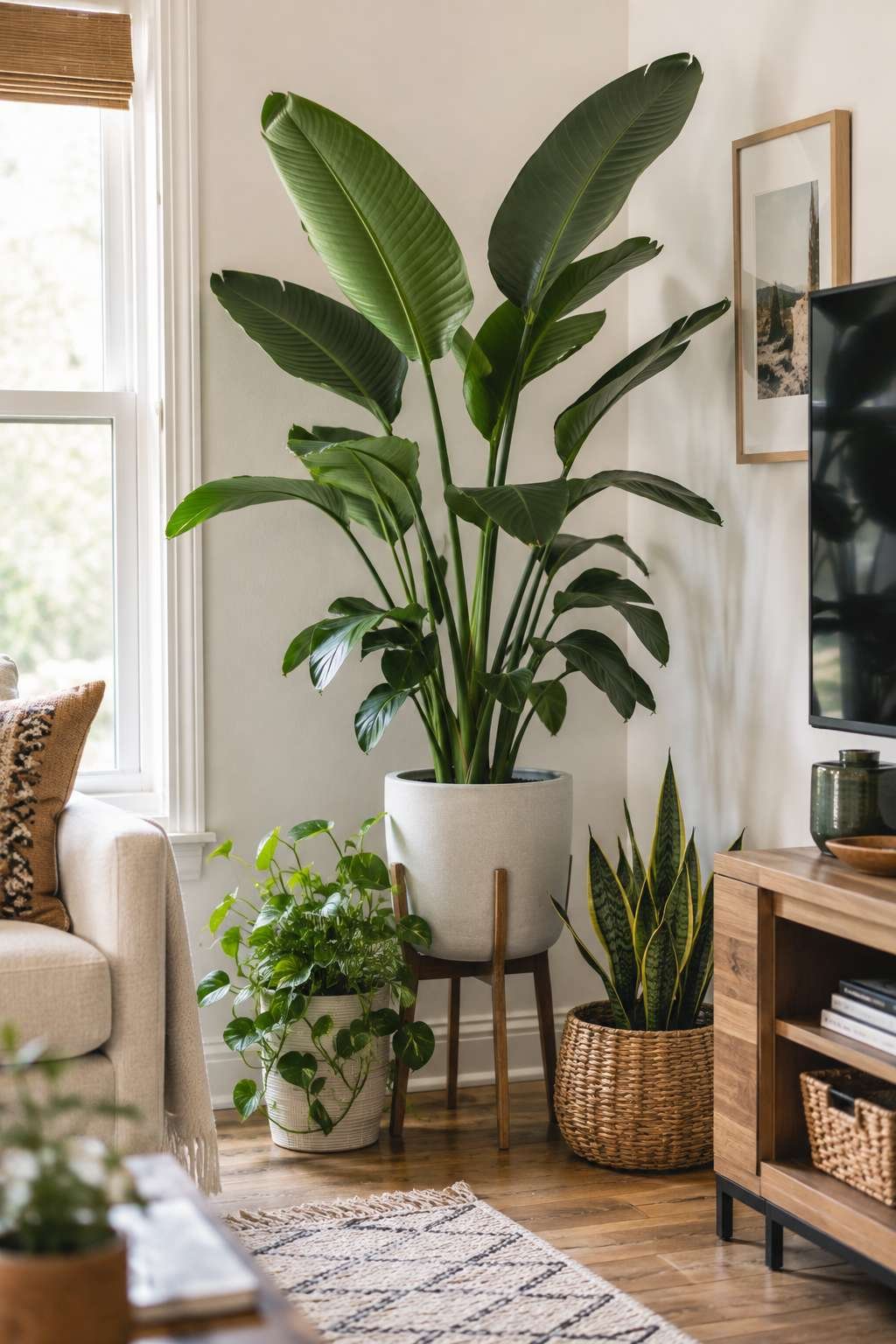
Place the plant in a decorative pot or woven basket that complements your décor style. A matte ceramic planter suits modern spaces while a rattan basket works perfectly in bohemian or farmhouse rooms. Group a tall plant with one or two smaller potted plants at its base for a lush, layered look.
- Choose low-maintenance plants like snake plants or pothos for easy care
- Use a plant stand to add extra height in shorter corners
- Group plants in clusters of odd numbers for visual balance
- Match planter materials to your room’s existing textures
- Rotate plants toward the light periodically for even growth
2. Create a Cozy Reading Nook
An empty corner is the perfect spot for a dedicated reading nook . Place a comfortable accent chair or a small loveseat at an angle. Add a floor lamp beside it for focused lighting. Drape a soft throw over the armrest and stack a few books on a side table. It’s a similar trade-off to deciding on our coffee table vs ottoman elsewhere in the space.
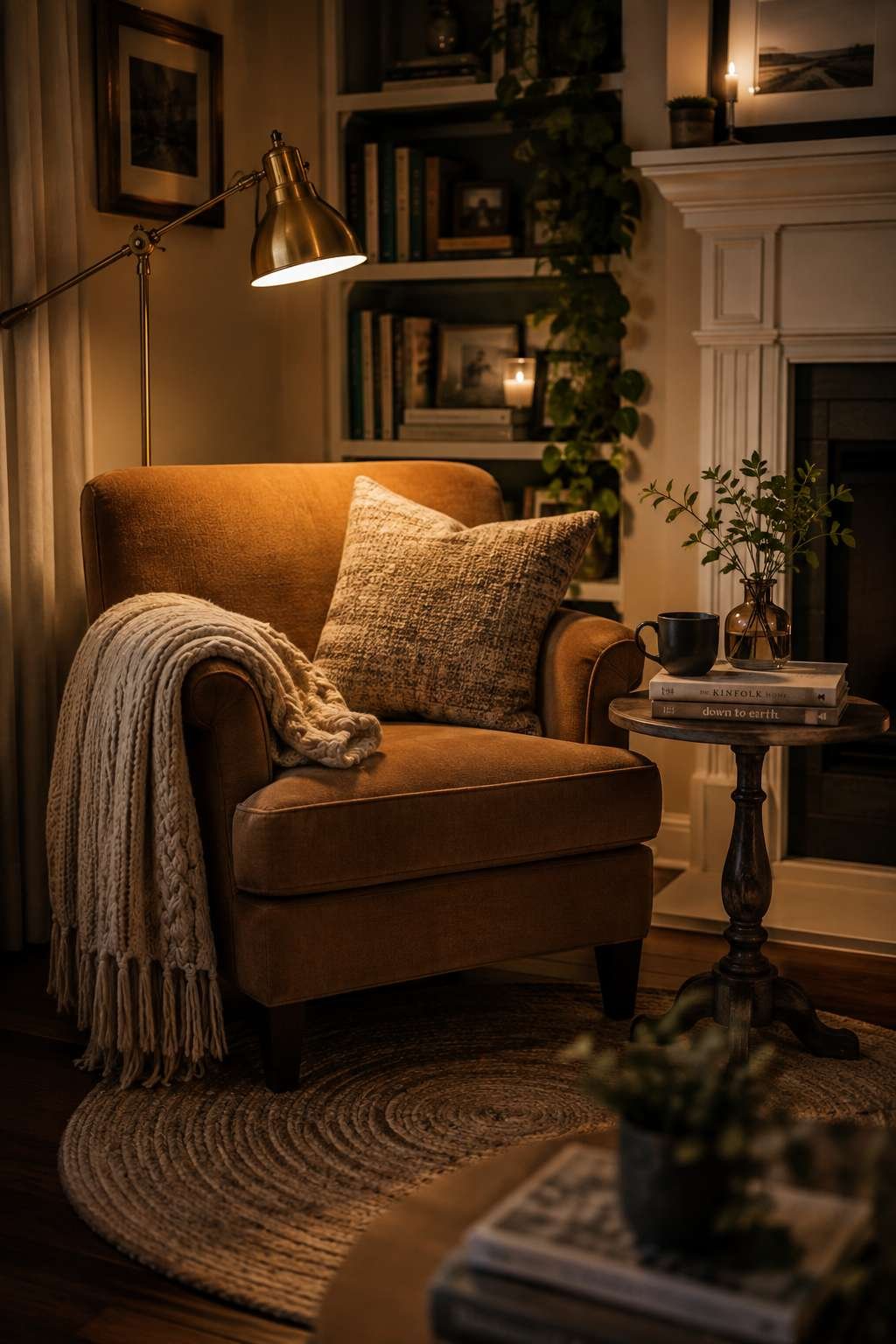
This transforms dead space into a functional and inviting zone. Even if you are not an avid reader, a cozy chair with a lamp and a small table creates a quiet retreat within the living room. It fills the corner with purpose while adding warmth and character.
- Choose a chair with soft upholstery in a warm tone
- Add a slim side table for a mug or book stack
- Position a floor lamp with an adjustable arm for reading light
- Include a plush throw and a textured cushion for comfort
- Place a small rug beneath the chair to define the nook. If you’re also weighing our area rug vs carpet, that’s worth deciding early too.
3. Install Floating Shelves or a Gallery Wall
Blank walls are the most obvious empty spaces in a living room. Floating shelves offer both storage and display opportunities. Arrange books, small plants, candles, framed photos, and decorative objects across two or three shelves for a styled look.
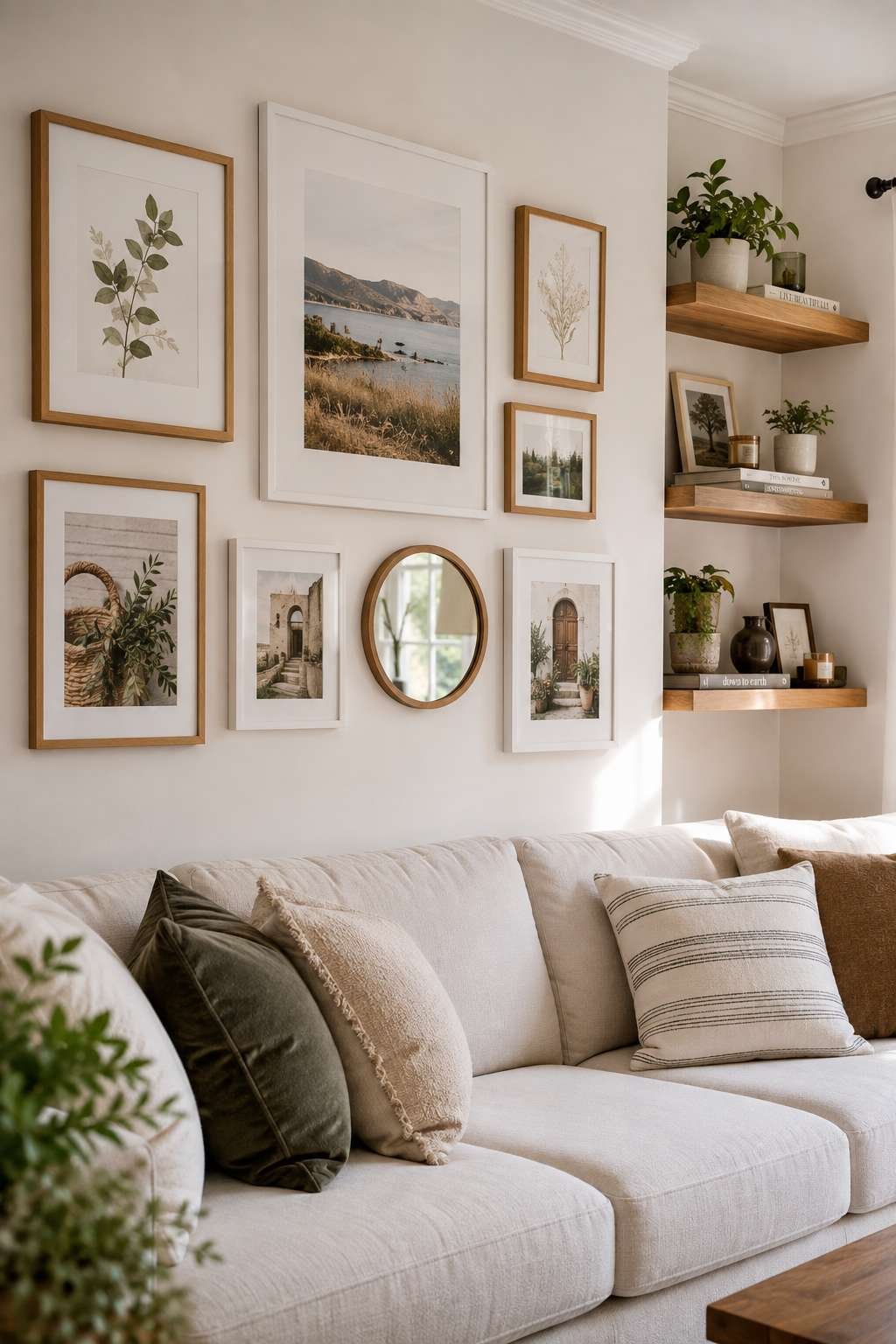
A gallery wall is another powerful option. Mix framed artwork, photographs, and mirrors in coordinating frames. Start with the largest piece in the center and build outward. Gallery walls fill large expanses of wall space and inject personality into the room immediately.
- Hang floating shelves at staggered heights for visual movement
- Style shelves with a mix of functional and decorative items
- Use a gallery wall to fill space above a sofa or console table
- Keep frame colors within the same family for cohesion
- Add one or two mirrors within the arrangement to reflect light
4. Introduce a Console Table or Sideboard
A long empty wall behind a sofa or near an entryway benefits from a console table or sideboard. These narrow pieces add surface area for lamps, décor, and storage without protruding too far into the room. They fill horizontal space elegantly and provide practical function.
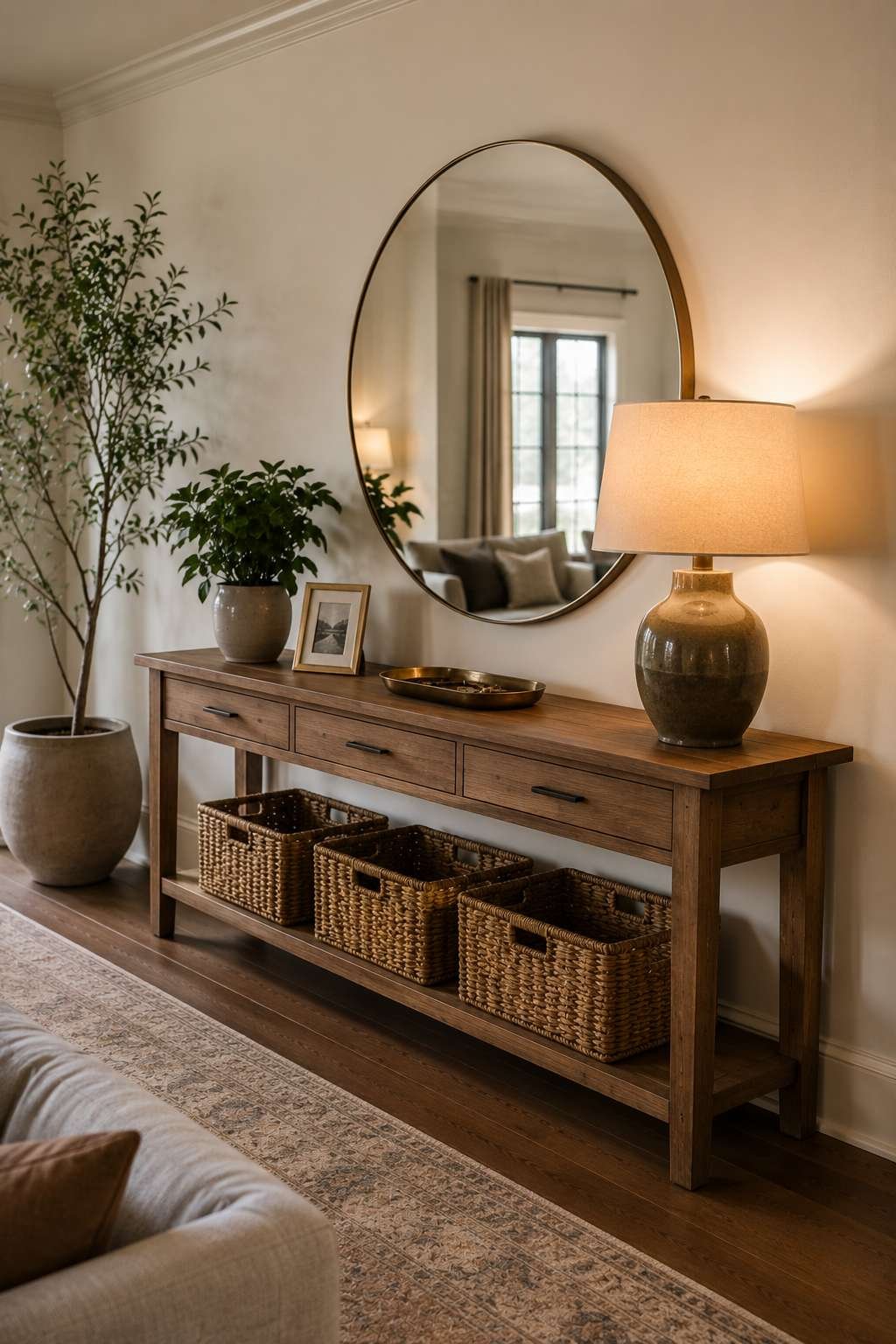
Style the top with a table lamp, a small plant, a decorative tray, and a framed photo or mirror above it. A console with lower shelving or drawers offers hidden storage for blankets, remotes, and board games. It turns an empty wall into a functional design moment.
- Choose a console table that is roughly two-thirds the width of the wall
- Hang a mirror or artwork centered above the table
- Add a table lamp on one end for warm ambient lighting
- Use baskets or bins on lower shelves for discreet storage
- Keep the surface styled but not overcrowded
5. Use an Area Rug to Ground the Space
An empty-feeling room often lacks a grounding element. A well-sized area rug pulls furniture together and fills the visual void between pieces. It defines the seating area and makes the room feel complete and connected.
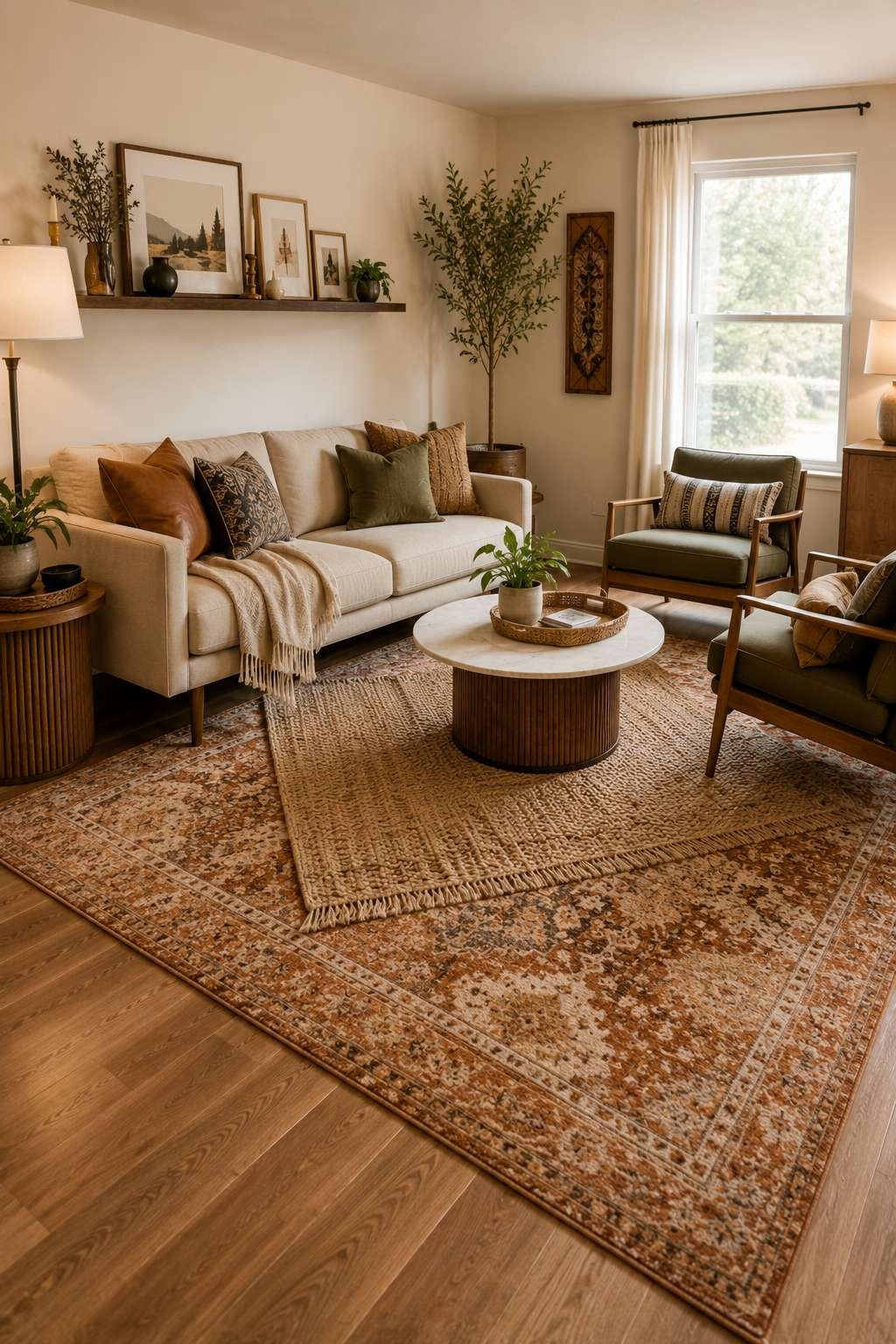
Choose a rug large enough so that at least the front legs of your sofa and chairs sit on it. This anchors the arrangement and prevents furniture from looking scattered. A textured or patterned rug adds warmth and visual interest to an otherwise sparse floor.
- Select a rug that extends beyond the furniture grouping on all sides
- Use warm tones or bold patterns to add energy to a neutral room
- Layer a smaller rug over a larger neutral one for added depth
- Leave 12 to 18 inches of bare floor between the rug and walls
- Add a rug pad underneath for grip and cushioning
6. Place a Decorative Screen or Room Divider
In larger living rooms, a decorative folding screen fills empty space while adding architectural interest. Place it behind a chair, in a bare corner, or along an open wall. Screens come in wood, rattan, metal, and fabric, offering texture and depth that flat walls cannot provide.
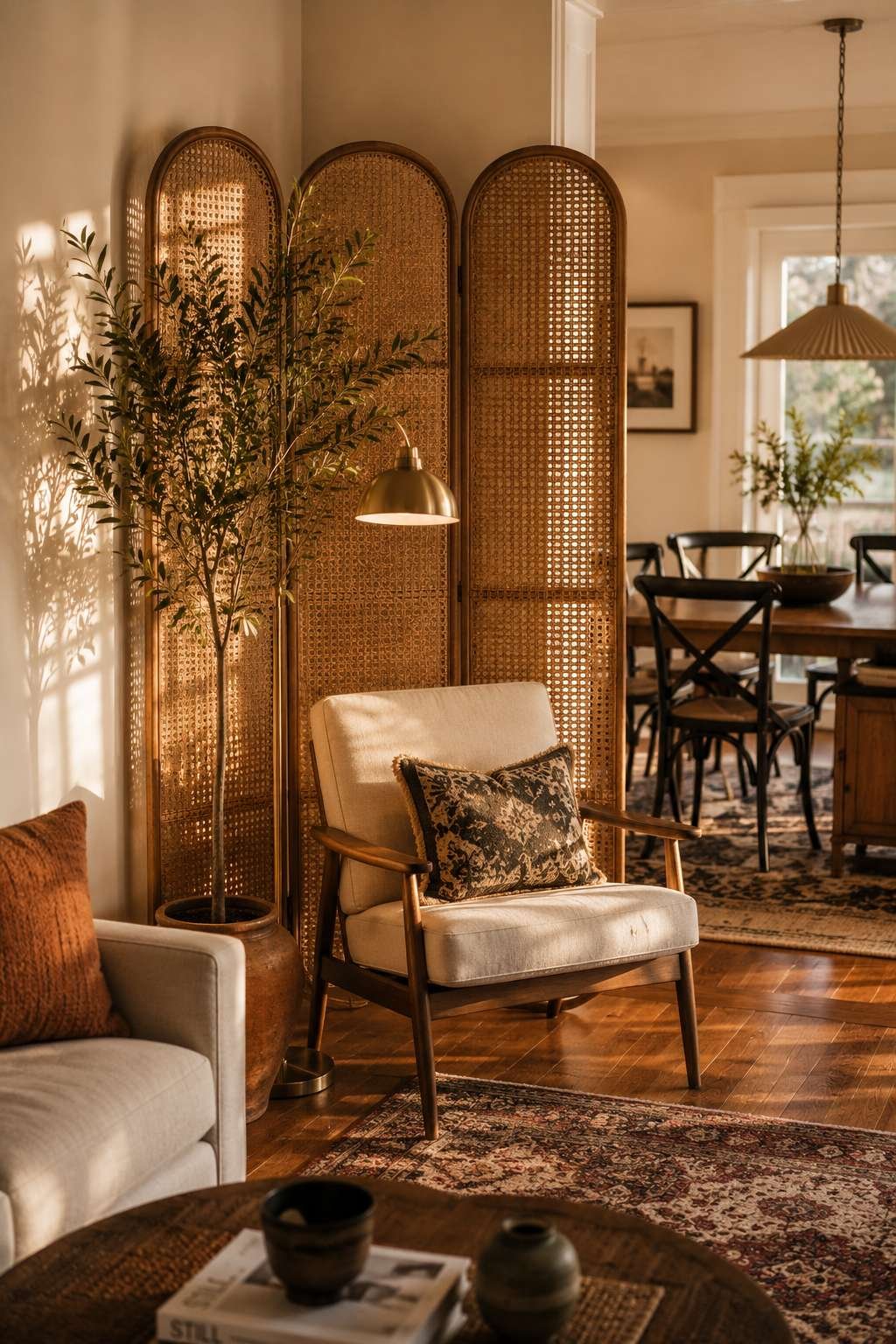
A room divider also works well in open-concept spaces to subtly separate the living area from a dining zone or home office. It creates visual boundaries without permanent walls and adds an element of surprise and sophistication.
- Choose a screen material that matches your room’s design style
- Place it in a corner to create depth and visual layering
- Use a three-panel screen for smaller spaces and wider ones for large walls
- Position a floor plant or lamp beside the screen for a styled vignette
- Consider a mirrored screen to reflect light and open up dark corners
Conclusion
Filling empty space in a living room is about adding elements that bring function, warmth, and visual interest without overcrowding. From statement plants and reading nooks to gallery walls and console tables, every addition should feel purposeful and connected to your overall design.
Start with the most noticeable gap and work from there. The goal is not to fill every inch. It is to create a room that feels balanced, complete, and inviting from every angle.

