


The living room serves as the heart of your home where daily life unfolds. This central gathering space deserves thoughtful design attention. Creating a beautiful living room requires balancing aesthetics with functionality. The right decor transforms an ordinary room into an extraordinary sanctuary.
Living room design has evolved dramatically over recent decades. Today’s homeowners enjoy unprecedented freedom in style choices. From minimalist Scandinavian aesthetics to maximalist bohemian expressions, every approach offers unique benefits. The designs presented here showcase diverse interpretations that cater to different personalities and lifestyles.

These thirty living room concepts demonstrate how wall decor, furniture selection, and material choices work together. Each design tells a distinct story through color palettes, textures, and spatial arrangements. Whether you prefer contemporary sophistication or traditional warmth, these ideas provide inspiration for transforming your living space into a reflection of your personal style.
1. Contemporary Charcoal Sophistication
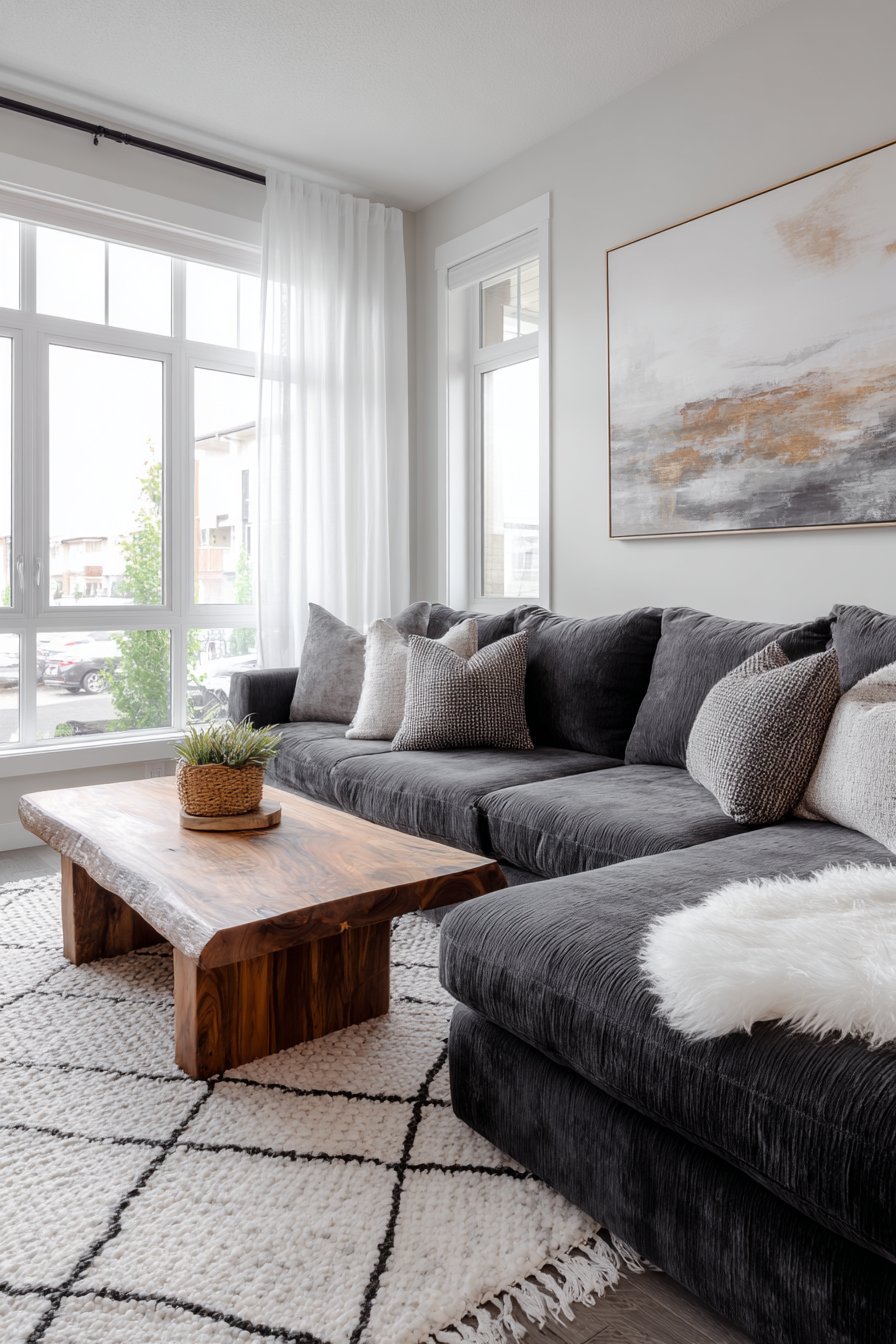
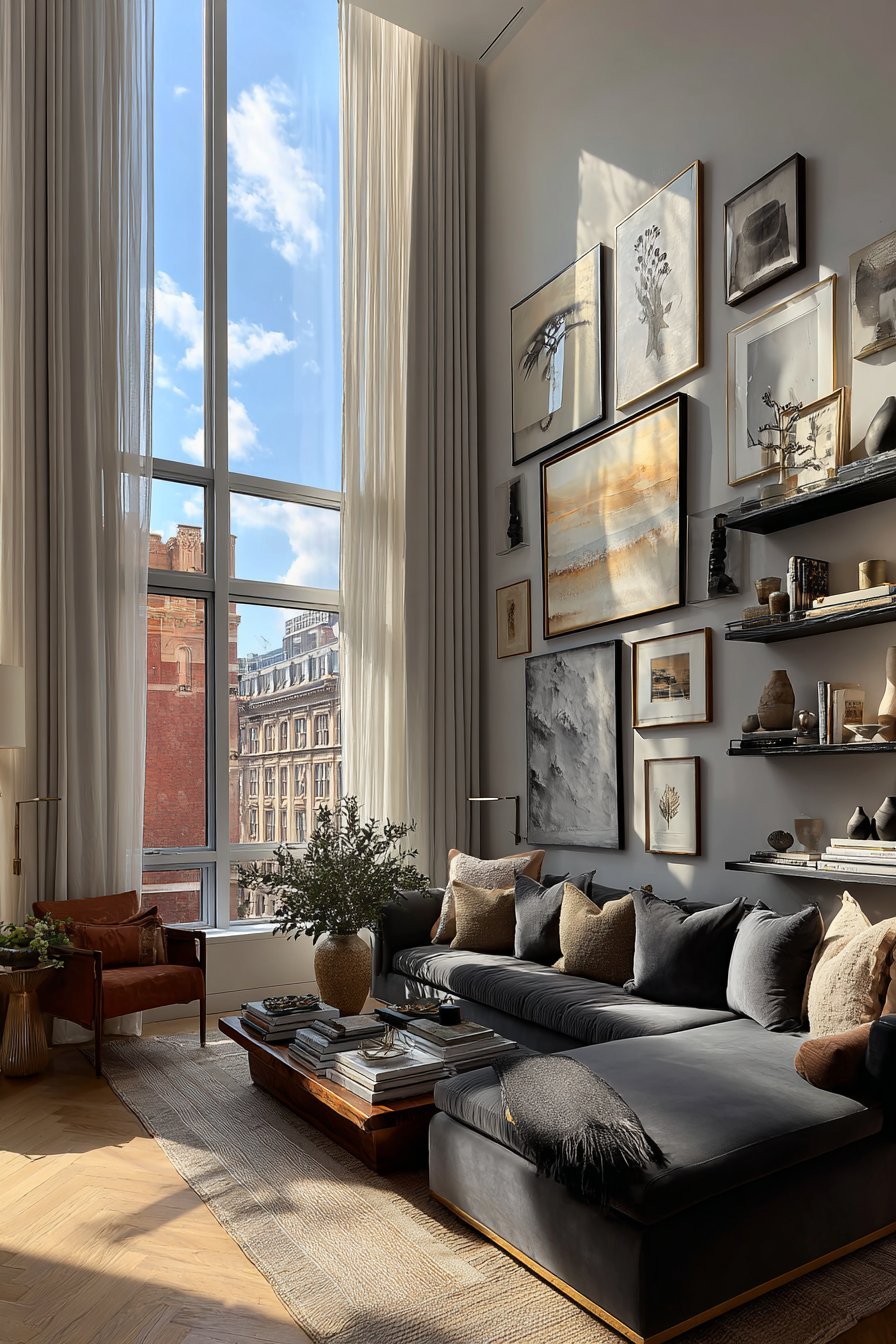
A plush charcoal grey sectional sofa anchors this contemporary living space with textured linen upholstery. Scattered velvet throw pillows in muted tones add layers of tactile interest. The low-profile walnut coffee table features live edge detail that celebrates natural wood character. This centerpiece sits atop a hand-woven jute rug with subtle geometric patterns.
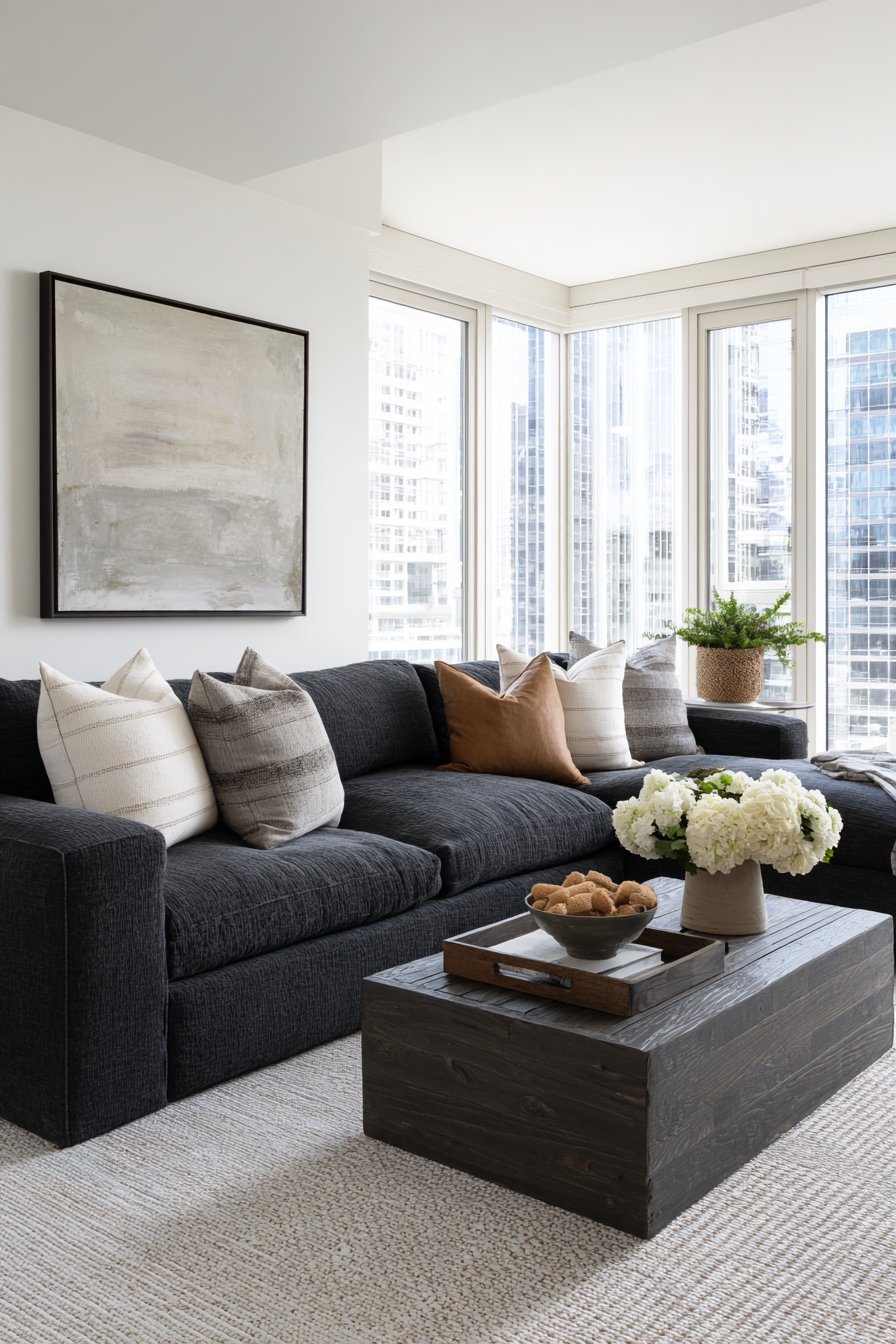
Floor-to-ceiling windows dressed in sheer white curtains transform natural light into soft, diffused illumination. The gentle glow highlights material textures throughout the space. Large-scale abstract canvas art in earth tones commands attention above the sofa. The artwork creates a focal point that ties together the neutral color palette.
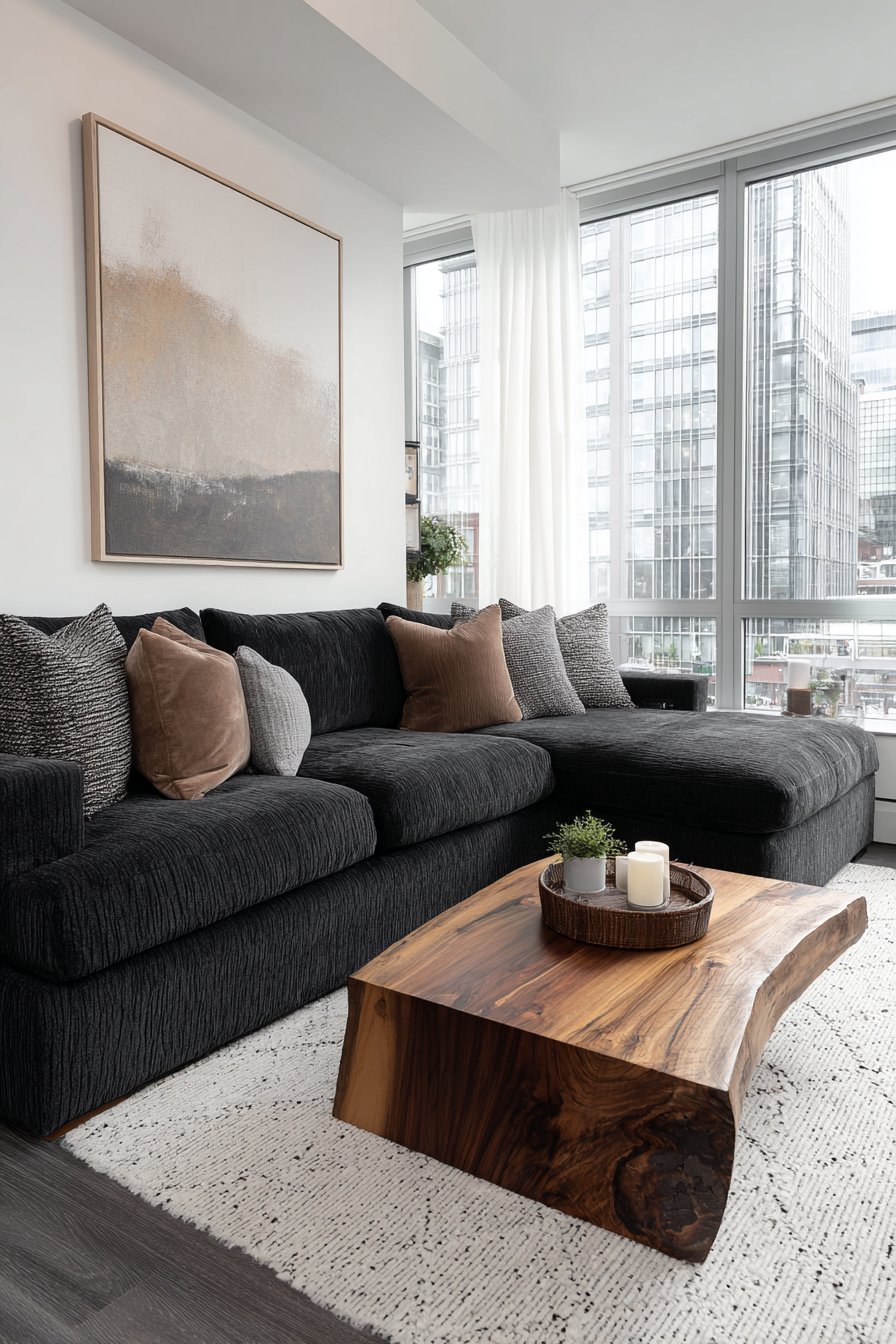
The balanced composition demonstrates how restraint in color creates visual calm. Wide-angle perspectives capture how professional lighting creates gentle shadows across surfaces. These shadows add depth and dimension to the monochromatic scheme. The space feels both sophisticated and approachable.
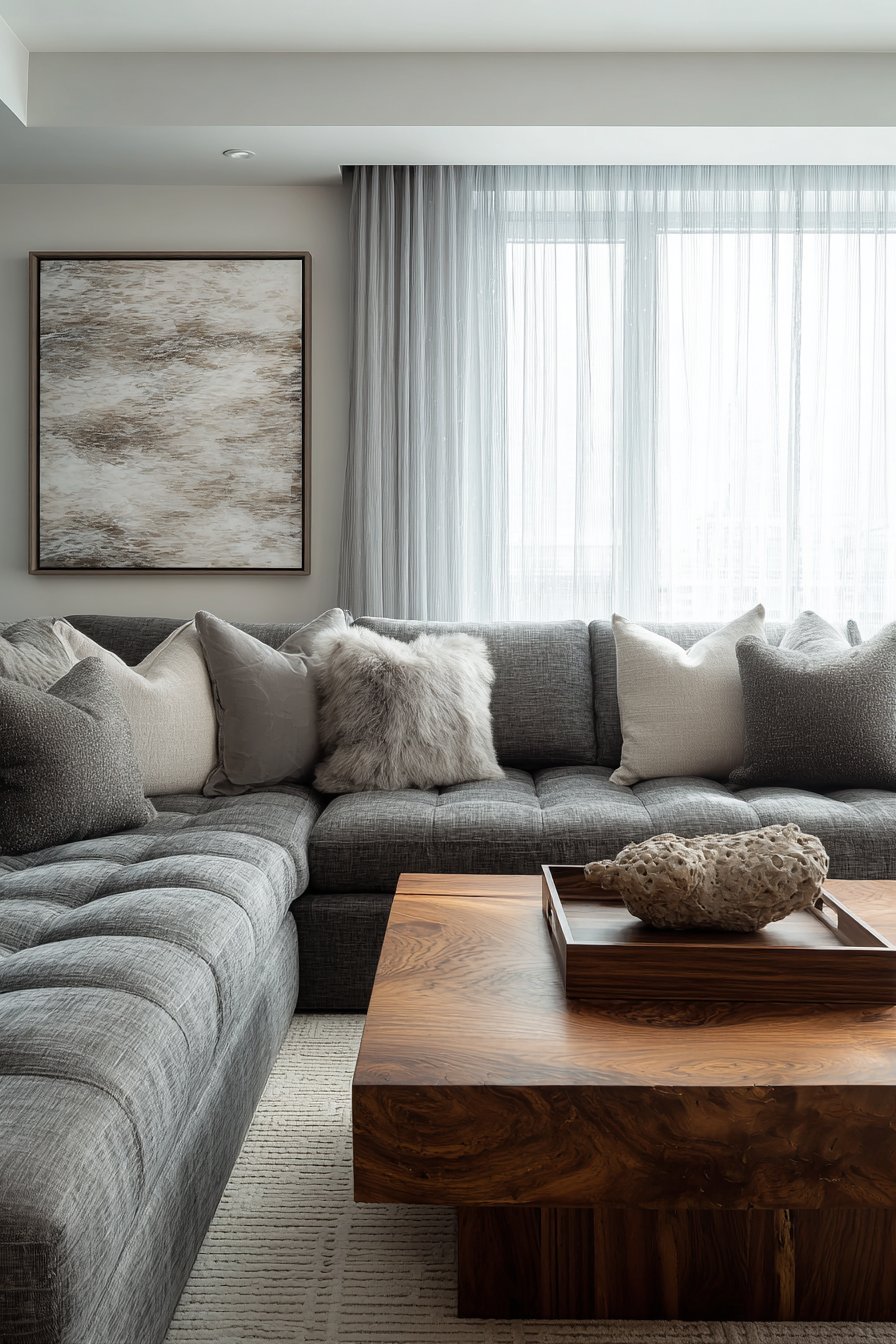
Material variety prevents the neutral palette from feeling flat. Textured linen, smooth velvet, rough-hewn wood, and woven jute each contribute distinct visual interest. The interplay between these surfaces creates richness without relying on bold colors.
Key Design Tips:
- Select sectional sofas with quality linen upholstery for durability and texture
- Incorporate live edge wood pieces to add organic elements to contemporary spaces
- Layer multiple textures through pillows, rugs, and upholstery fabrics
- Use sheer curtains to maximize natural light while maintaining privacy
- Choose large-scale art pieces that complement rather than overwhelm neutral palettes
- Position furniture to create conversation areas while allowing traffic flow
2. Scandinavian Gallery Wall Elegance
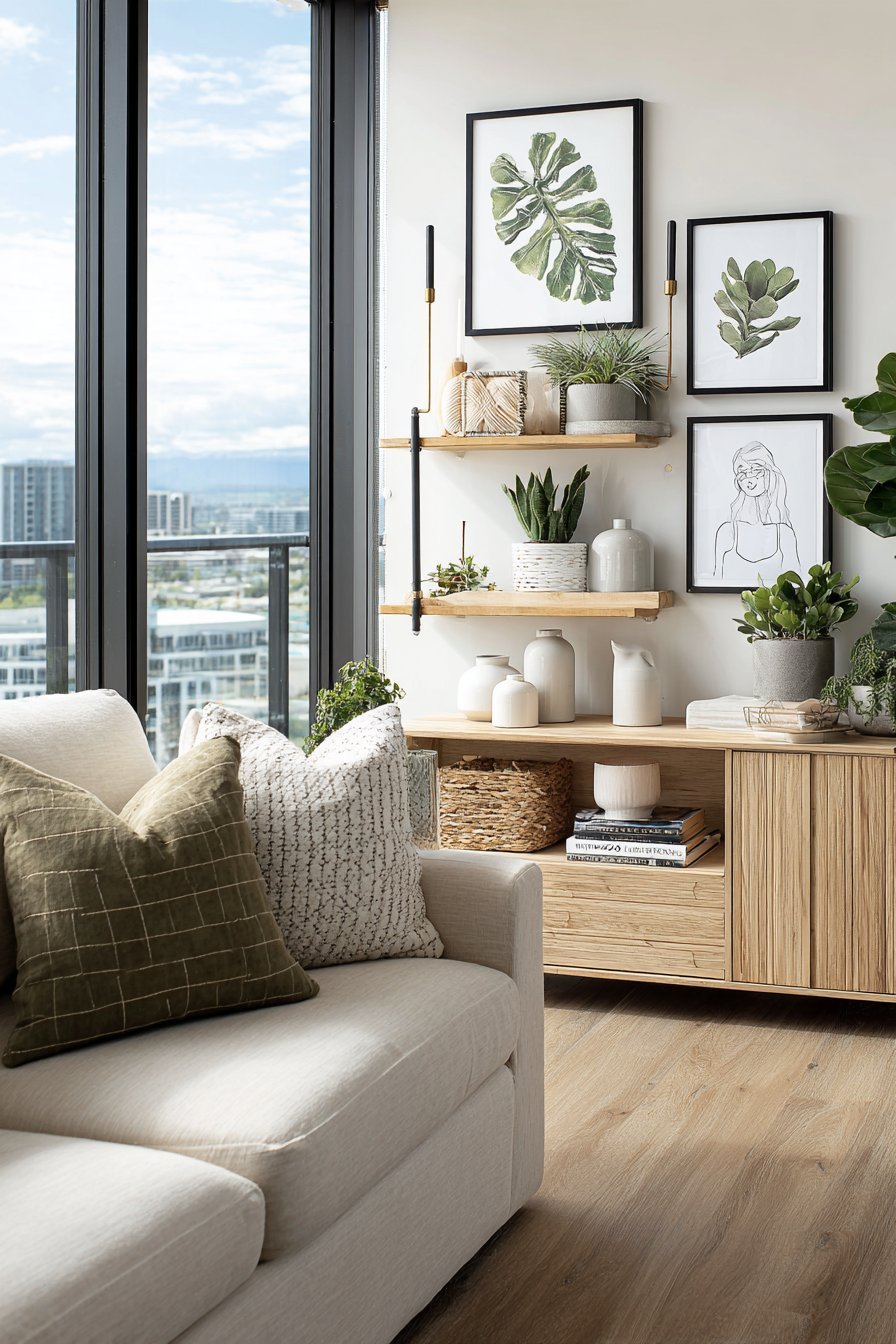
Light oak media console sits below a carefully curated gallery wall arrangement. Black-framed botanical prints mix with minimalist line drawings in varying sizes. The cream-colored sofa with natural linen slipcover provides a soft, neutral backdrop. Simple ceramic vases and coffee table books serve as thoughtful styling elements.
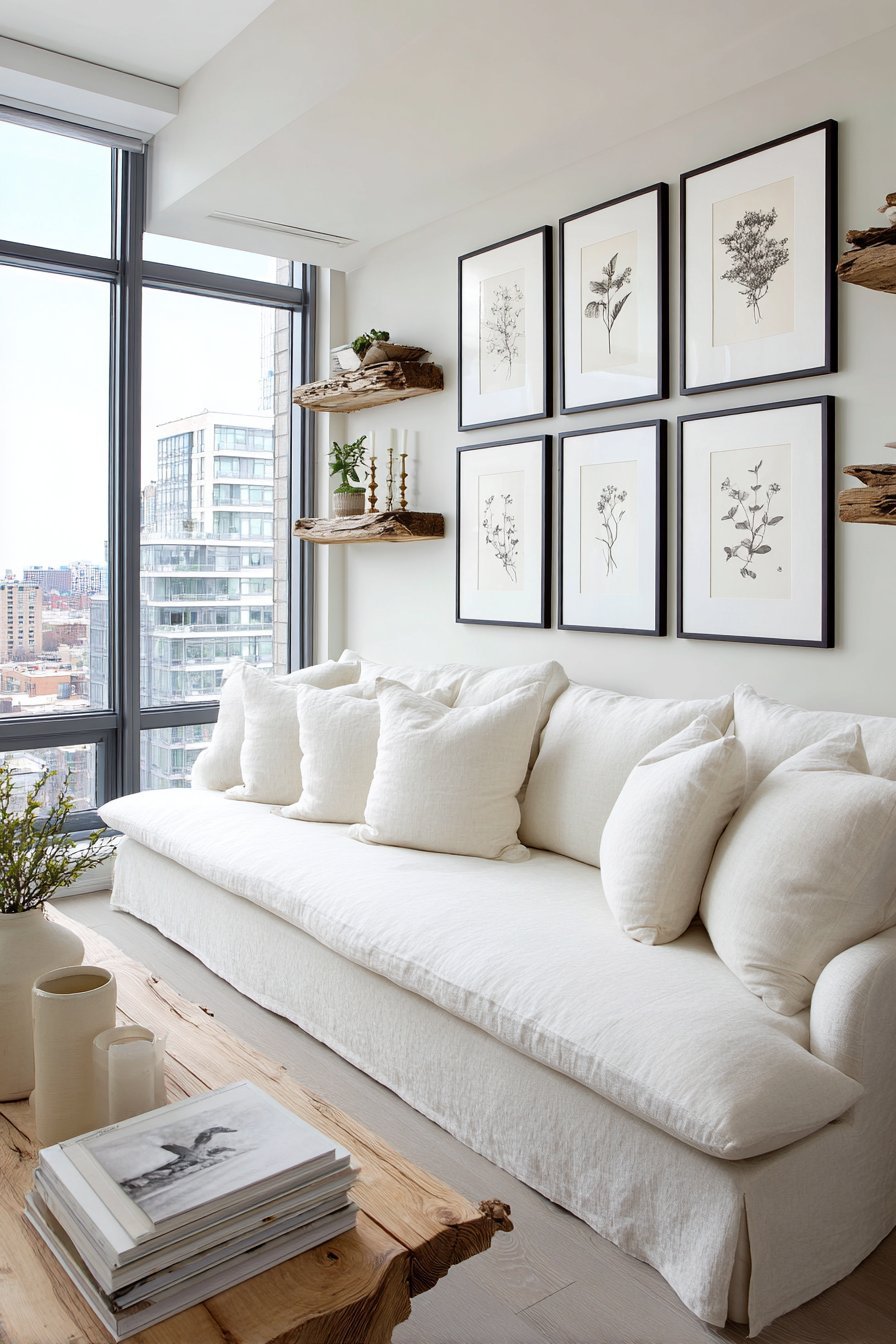
Reclaimed wood floating shelves display small succulents and vintage brass candlesticks. These shelves add dimension to the wall without overwhelming the space. Morning light streams through large windows creating natural highlights on white oak flooring. The sun’s movement throughout the day constantly transforms the room’s appearance.
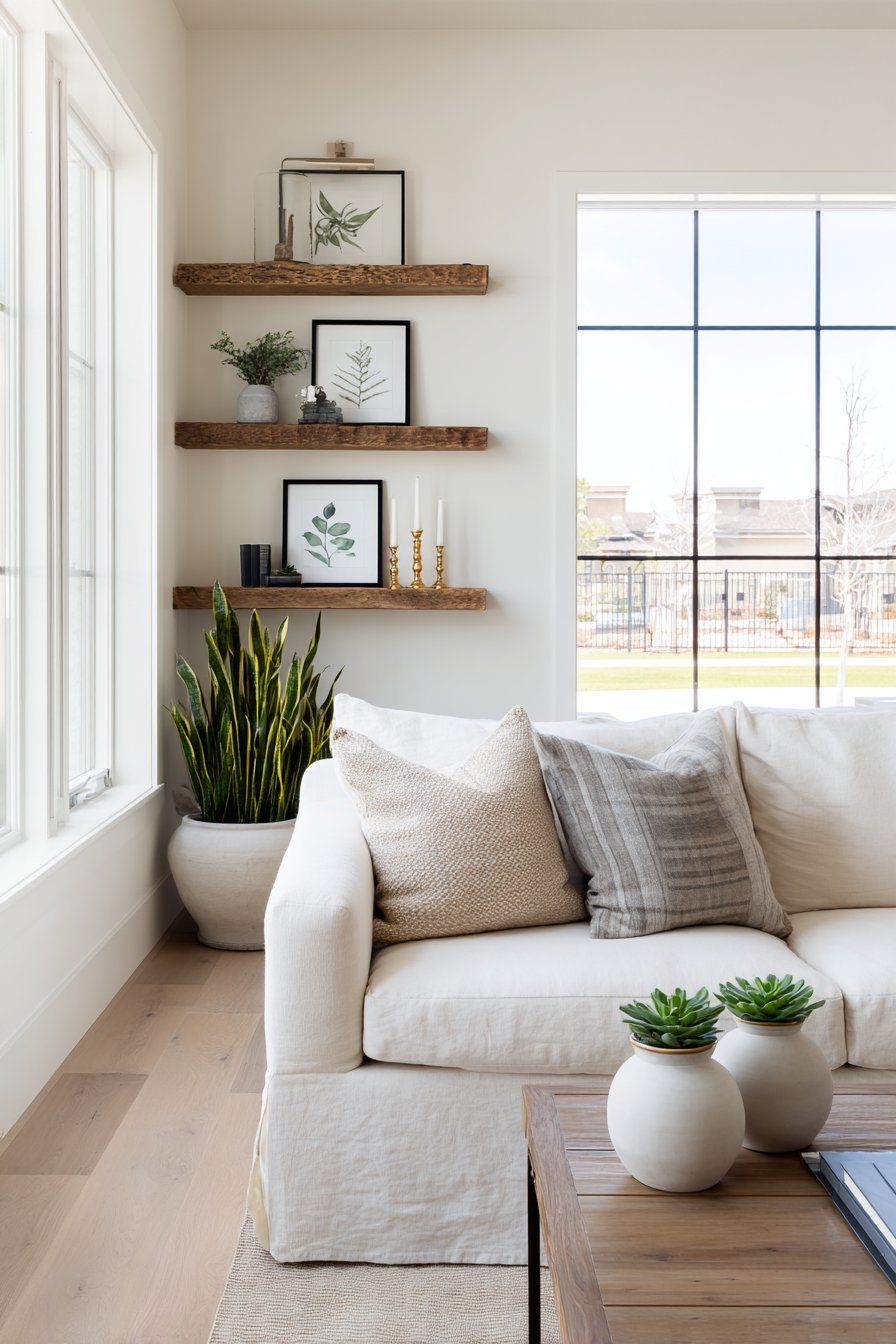
Professional interior photography captures the balanced exposure and careful composition. The interplay between wall art and furnishings demonstrates intentional design thinking. Each element serves a purpose while maintaining the aesthetic clarity Scandinavian design demands.
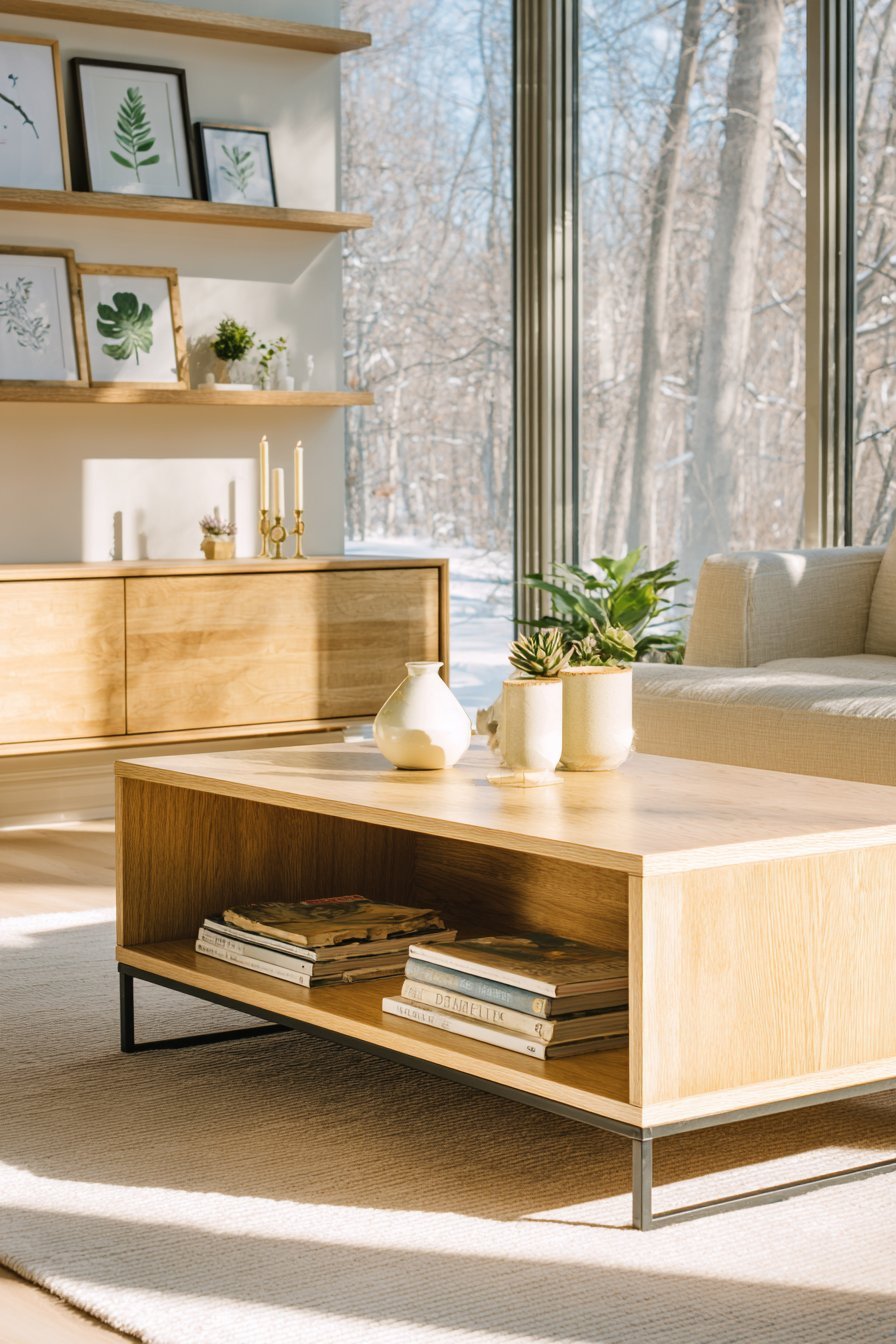
The restrained color palette focuses attention on form and texture. Clean lines dominate the furniture selections while natural materials add warmth. This combination prevents the minimalist approach from feeling cold or sterile.
Key Design Tips:
- Create gallery walls with odd numbers of frames for visual balance
- Mix botanical prints with abstract line drawings for variety
- Use floating shelves to display small decorative objects without cluttering surfaces
- Choose natural linen slipcovers for easy maintenance and casual elegance
- Position furniture to maximize natural light exposure throughout the day
- Select light wood tones to keep small spaces feeling open and airy
3. Bohemian Eclectic Layering
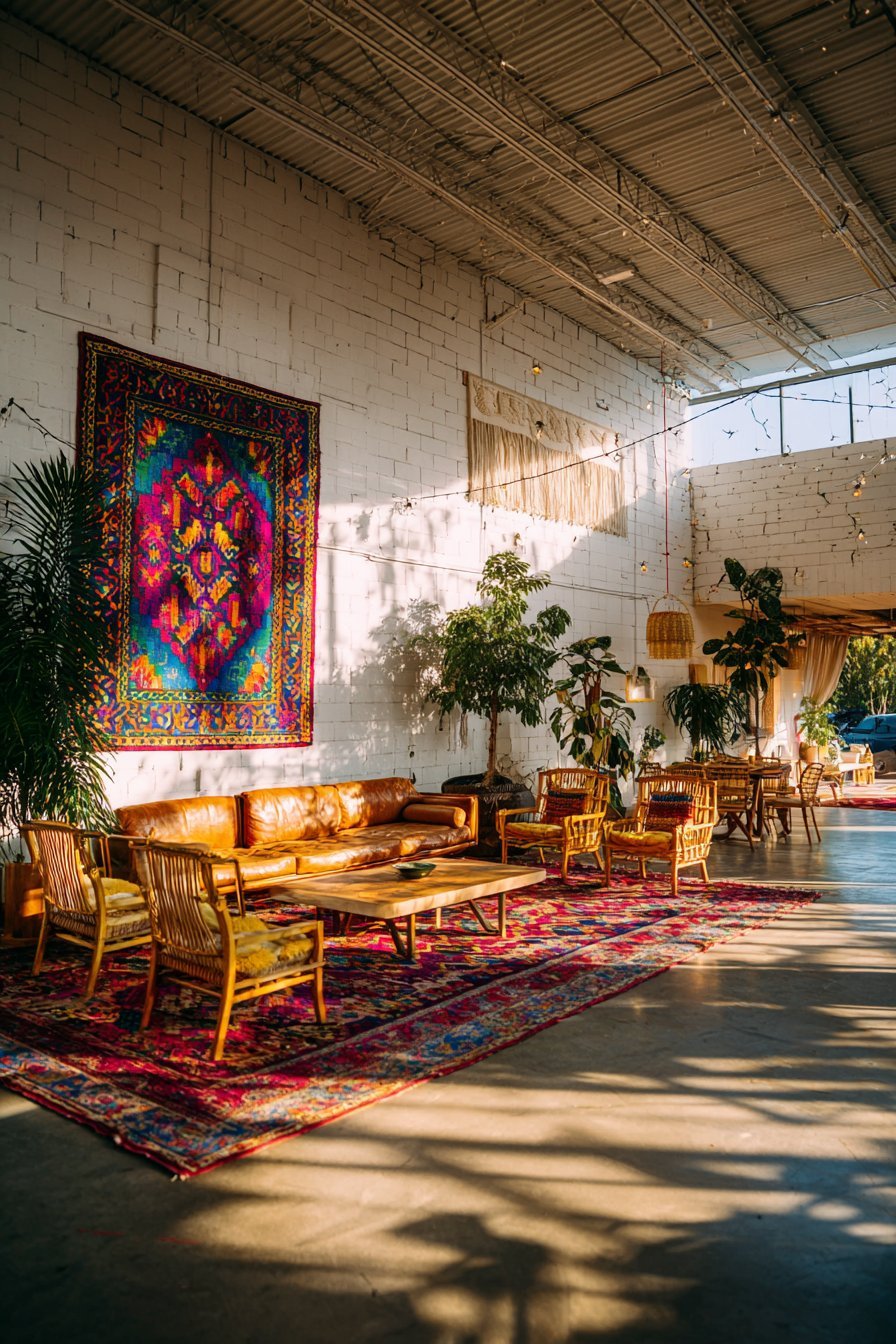
Macramé wall hangings combine with woven baskets in varying sizes to create textural wall interest. A vintage Turkish kilim rug mounted as textile art adds bold pattern and color. The low-profile cognac leather sofa grounds the space with rich, warm tones. Rattan accent chairs introduce natural texture and organic forms.
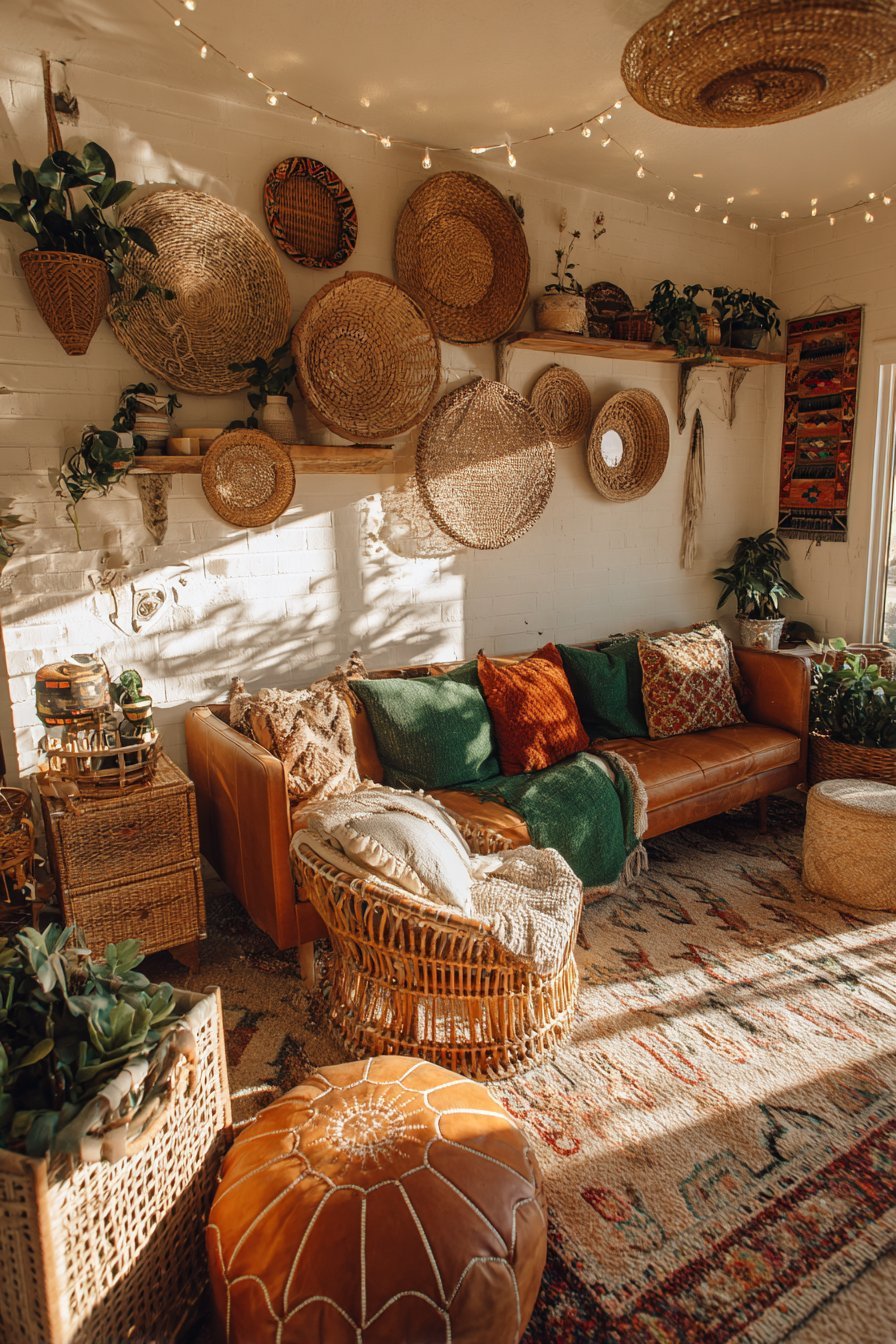
Layered floor pillows in jewel tones create additional flexible seating options. String lights and potted plants soften the space with ambient glow and living greenery. Golden hour sunlight casts warm shadows across the whitewashed brick wall. These shadows enhance the layered, collected aesthetic that defines bohemian style.
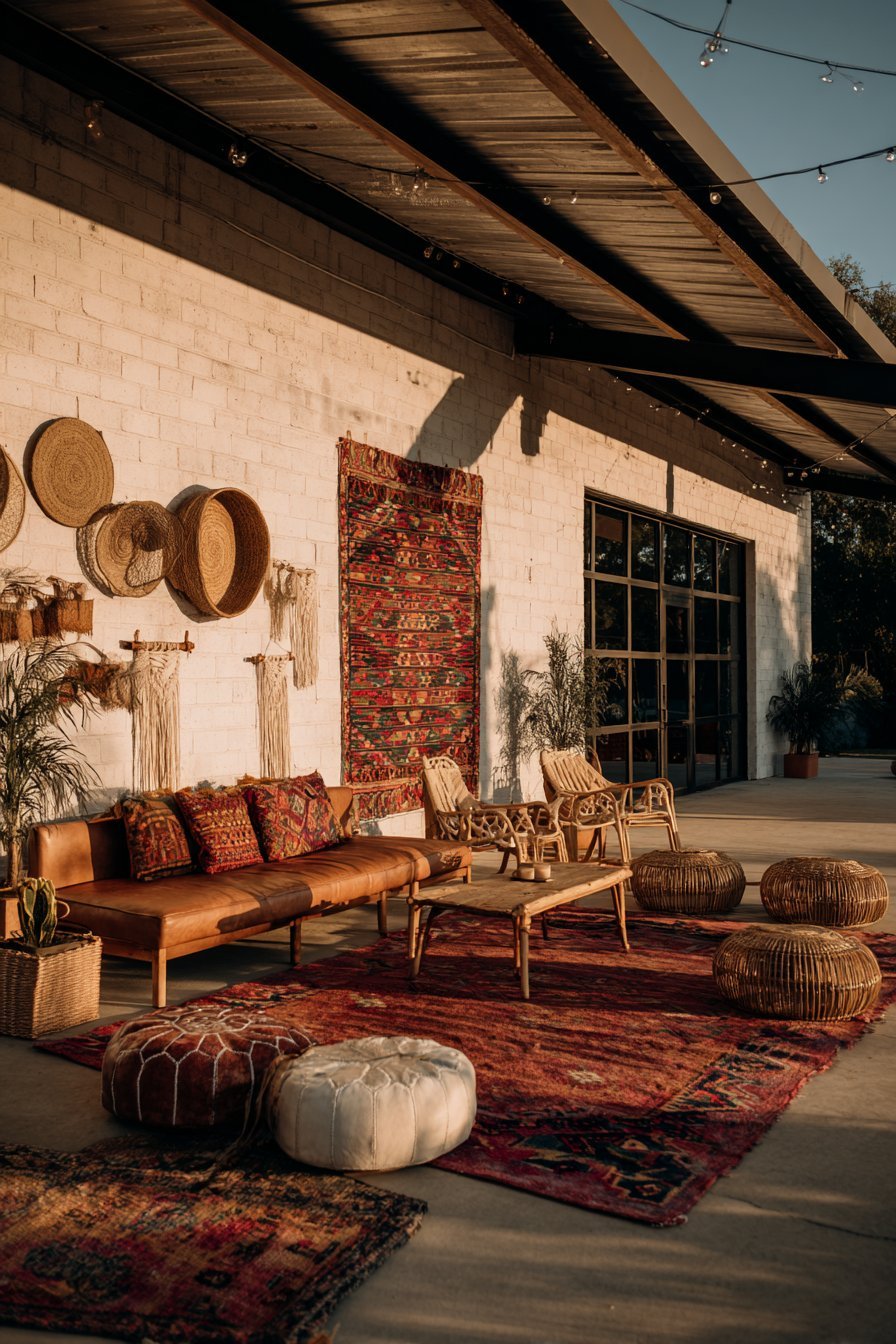
Wide-angle architectural photography captures the room’s eclectic personality. Rich color saturation and detailed texture rendering showcase the diverse materials. Every surface offers something interesting to discover upon closer inspection.
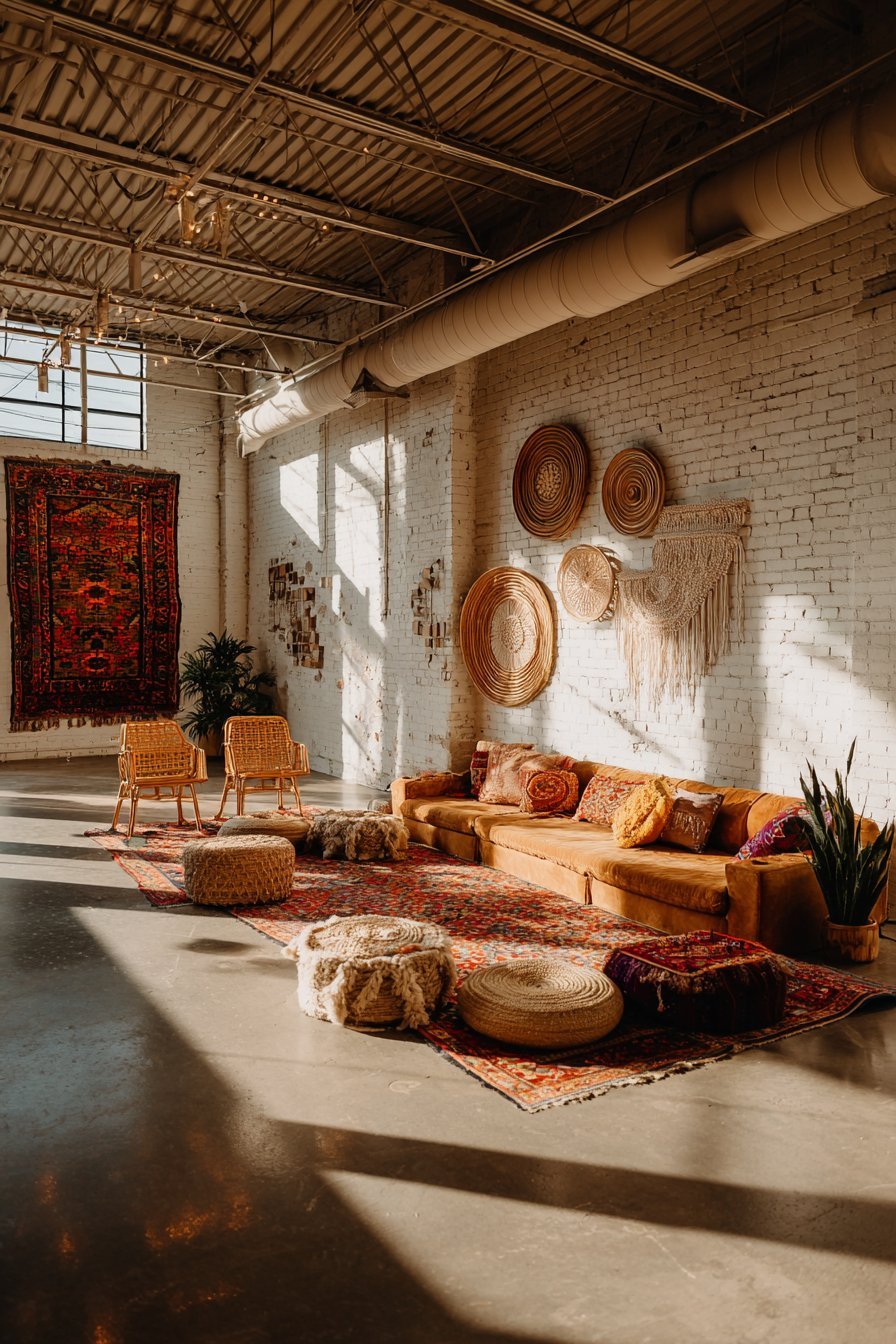
The bohemian approach celebrates accumulated treasures from different sources and eras. Nothing matches perfectly, yet everything works together harmoniously. This requires careful curation rather than random collection.
Key Design Tips:
- Layer textiles through rugs, wall hangings, and throw pillows
- Mix furniture styles and materials for eclectic appeal
- Incorporate global textiles and handcrafted pieces for authenticity
- Use plants abundantly to add life and natural elements
- Choose jewel tones for accent colors against neutral bases
- Allow collections to build gradually rather than purchasing everything at once
4. Modern Farmhouse Sage and Shiplap
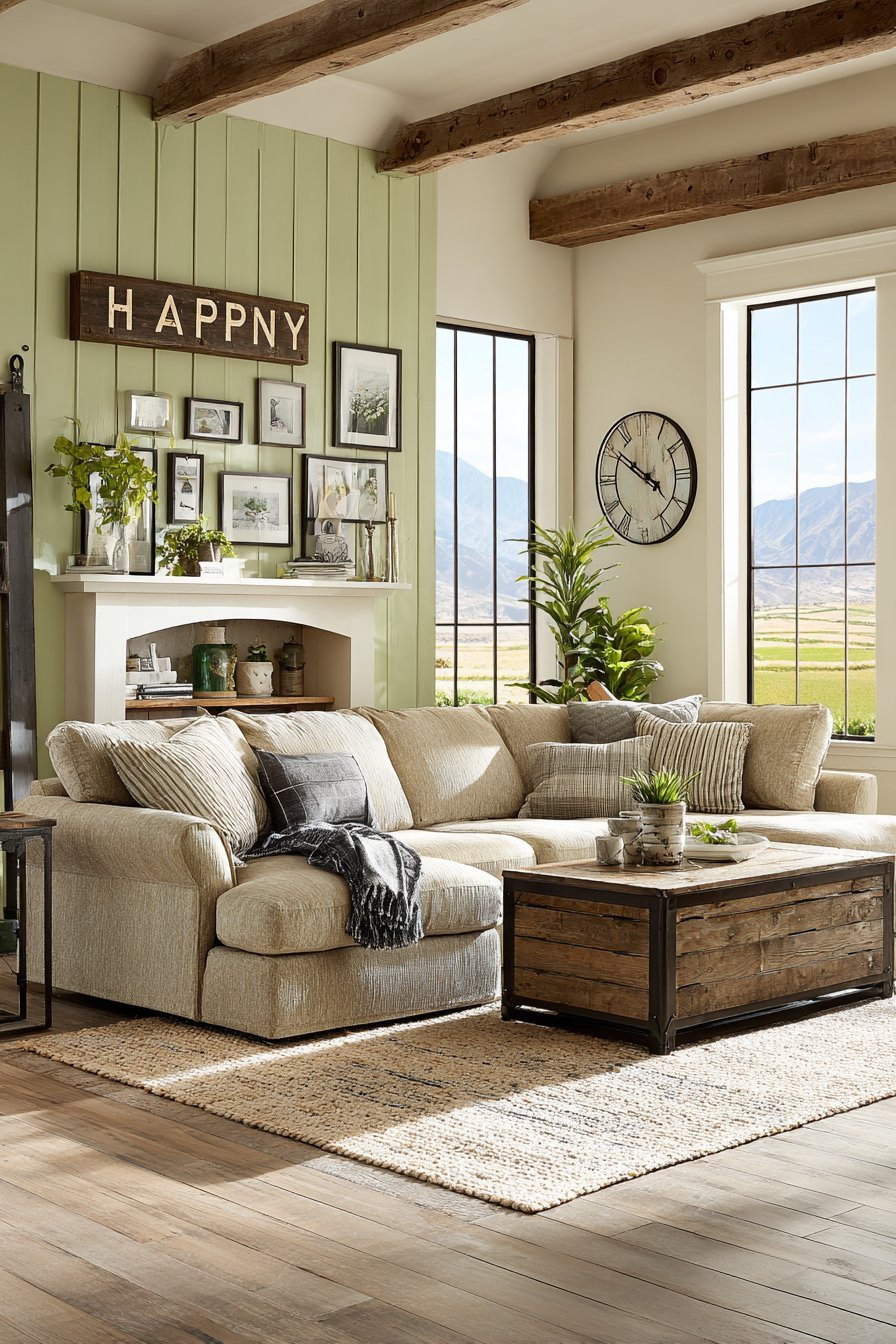
A large rustic wooden sign with hand-painted lettering commands attention above a shiplap accent wall. The wall receives a coat of soft sage green paint. A beige linen sectional with rolled arms provides ample comfortable seating. Distressed wood picture frames in various sizes create a casual gallery wall displaying family photographs.
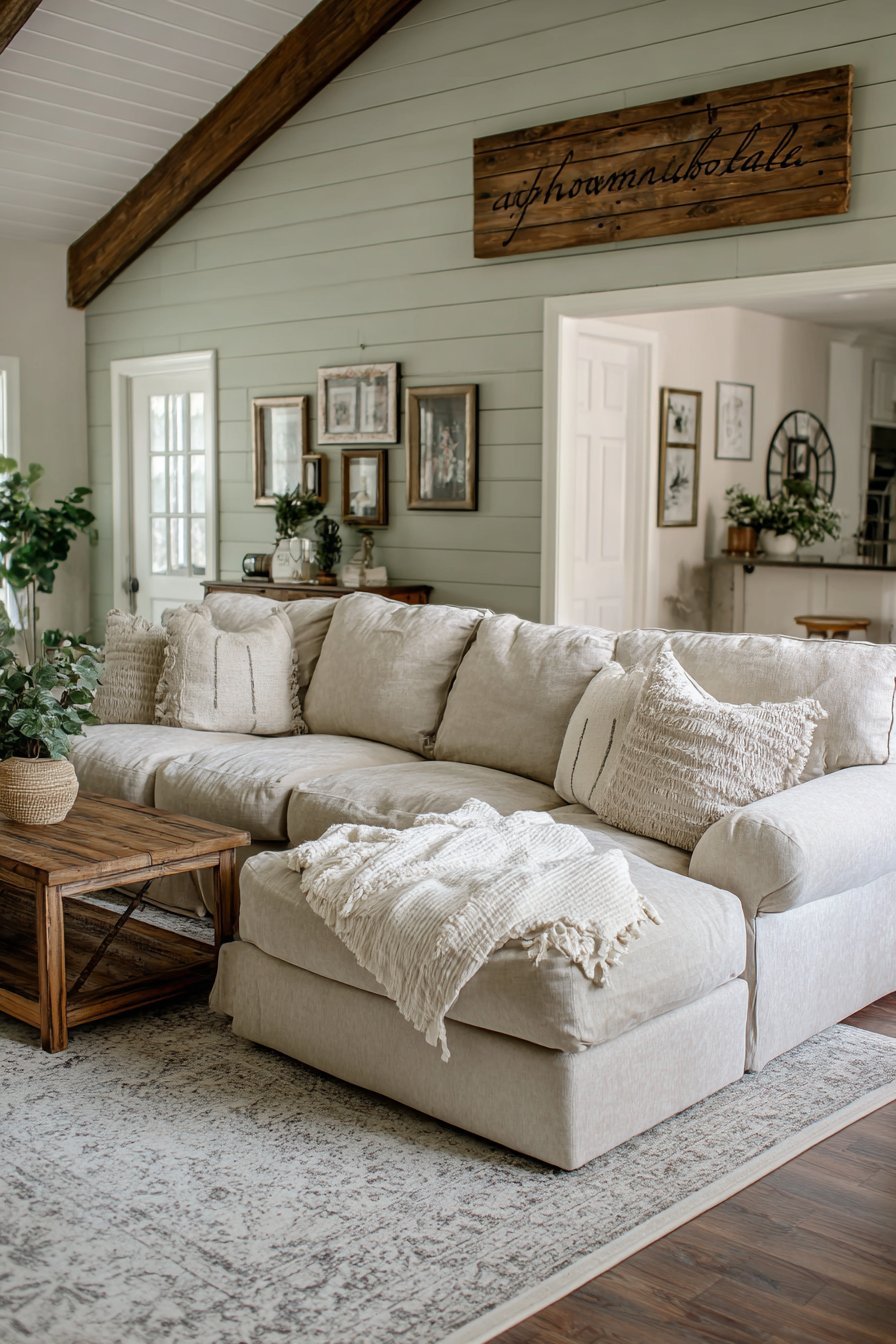
A galvanized metal wall clock adds industrial contrast to the softer elements. Natural light from adjacent windows highlights the mixed textures throughout the space. The warm, lived-in quality defines modern farmhouse aesthetic. Interior design photography captures soft shadows and authentic character.
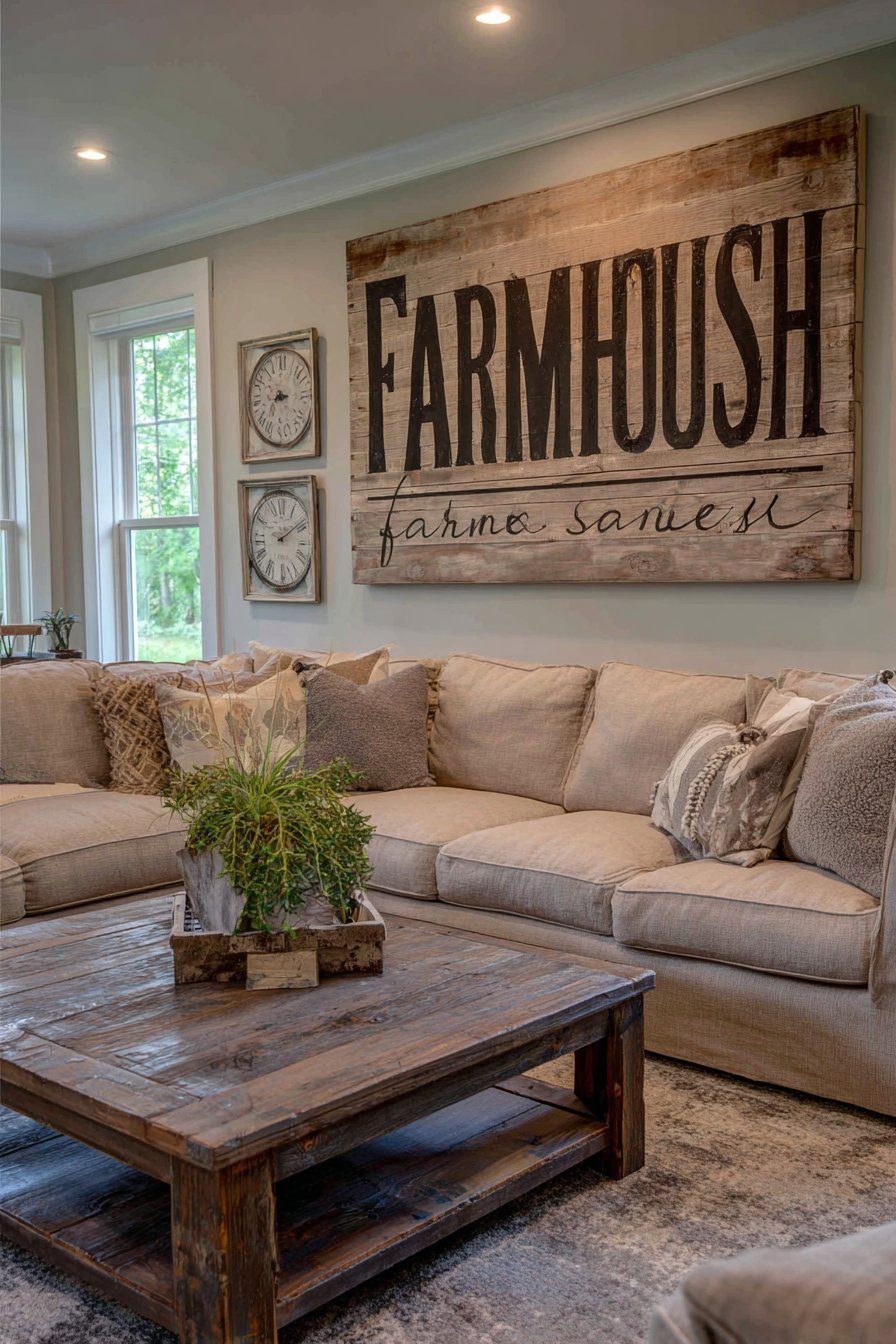
The combination of industrial and traditional elements creates visual interest. Galvanized metal plays against soft linen and weathered wood. These contrasts prevent the style from feeling too precious or formal.
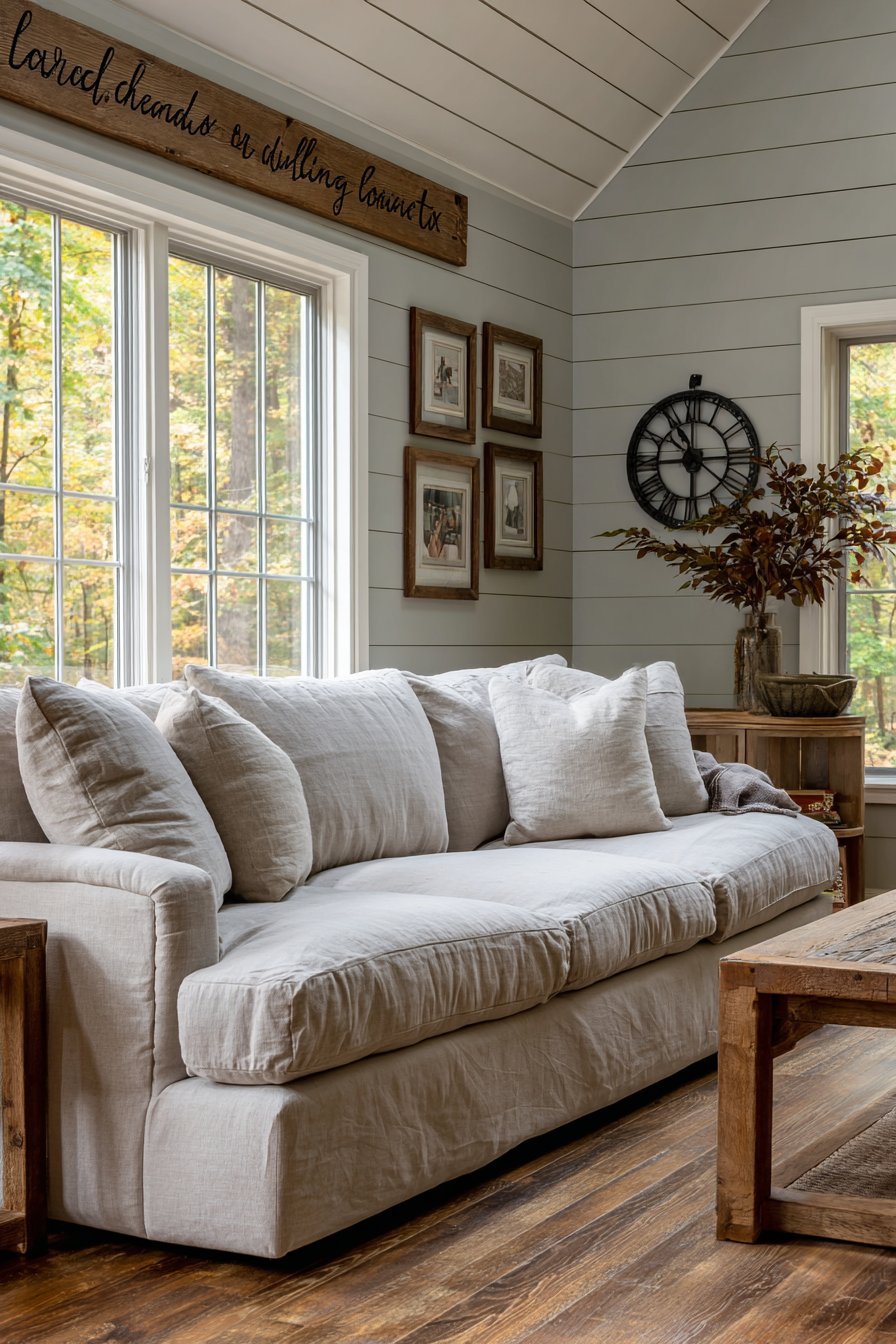
Family photographs personalize the space and tell the residents’ story. The varied frame sizes and finishes add to the collected-over-time appearance. This approach feels more authentic than perfectly matched frame sets.
Key Design Tips:
- Paint shiplap in soft colors rather than traditional white for updated look
- Mix industrial metals with soft textiles for balanced farmhouse style
- Display family photos in mismatched vintage frames for authentic character
- Choose sectionals with classic details like rolled arms for transitional appeal
- Incorporate hand-painted or hand-lettered signs for personal touches
- Use natural light to enhance warm wood tones and soft paint colors
5. Minimalist Monochrome Precision
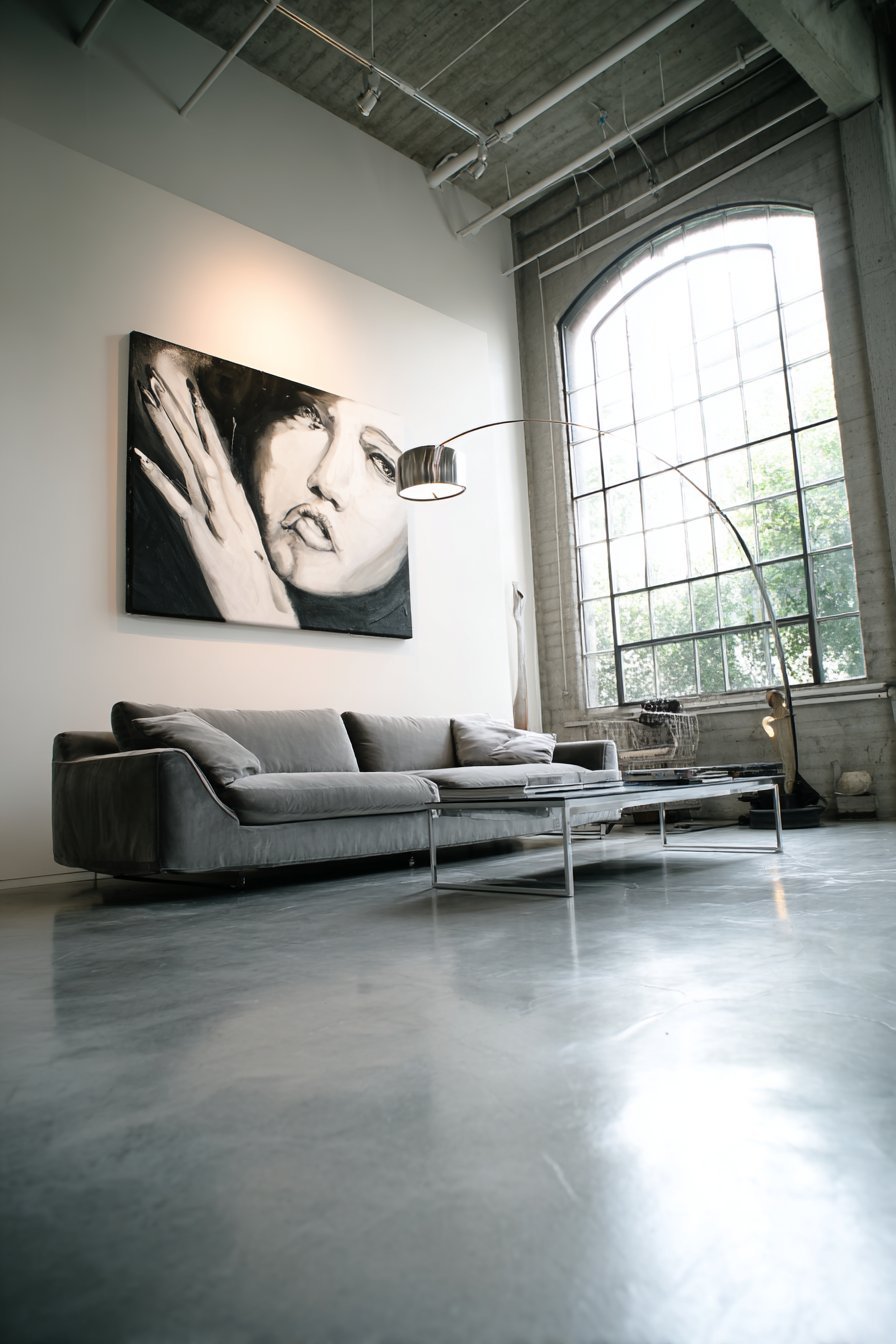
A single oversized black and white photographic print in thin aluminum frame creates dramatic impact. The crisp white wall provides the perfect backdrop for this statement piece. A low-profile grey velvet sofa with clean lines sits beneath the artwork. Polished concrete floors and simple glass coffee table with steel frame maintain geometric precision.
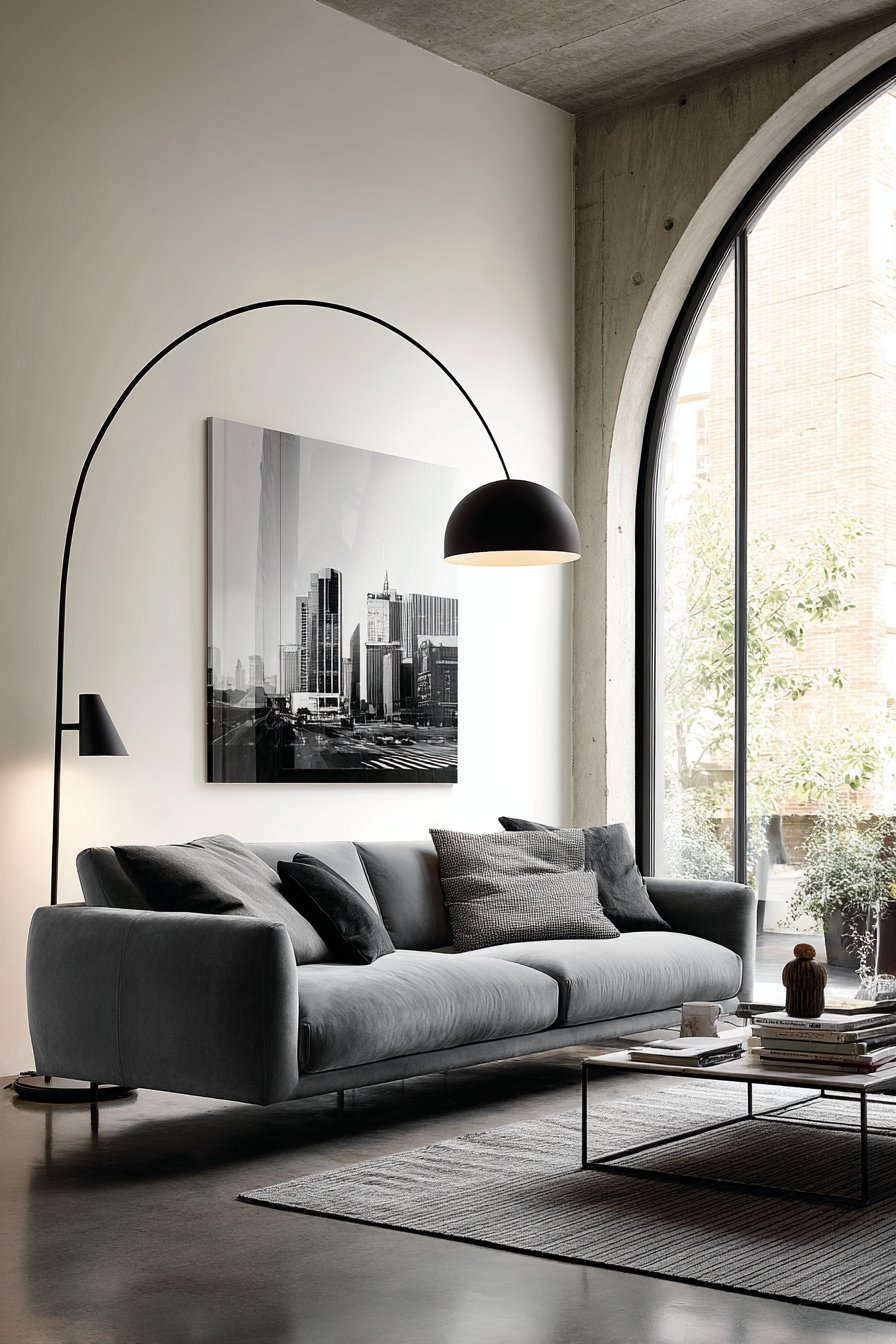
One sculptural floor lamp in matte black provides focused task lighting. Large windows with minimal treatment allow abundant natural light to flood the space. Professional interior photography emphasizes high contrast and balanced exposure. Careful attention to negative space and geometric precision defines the composition.
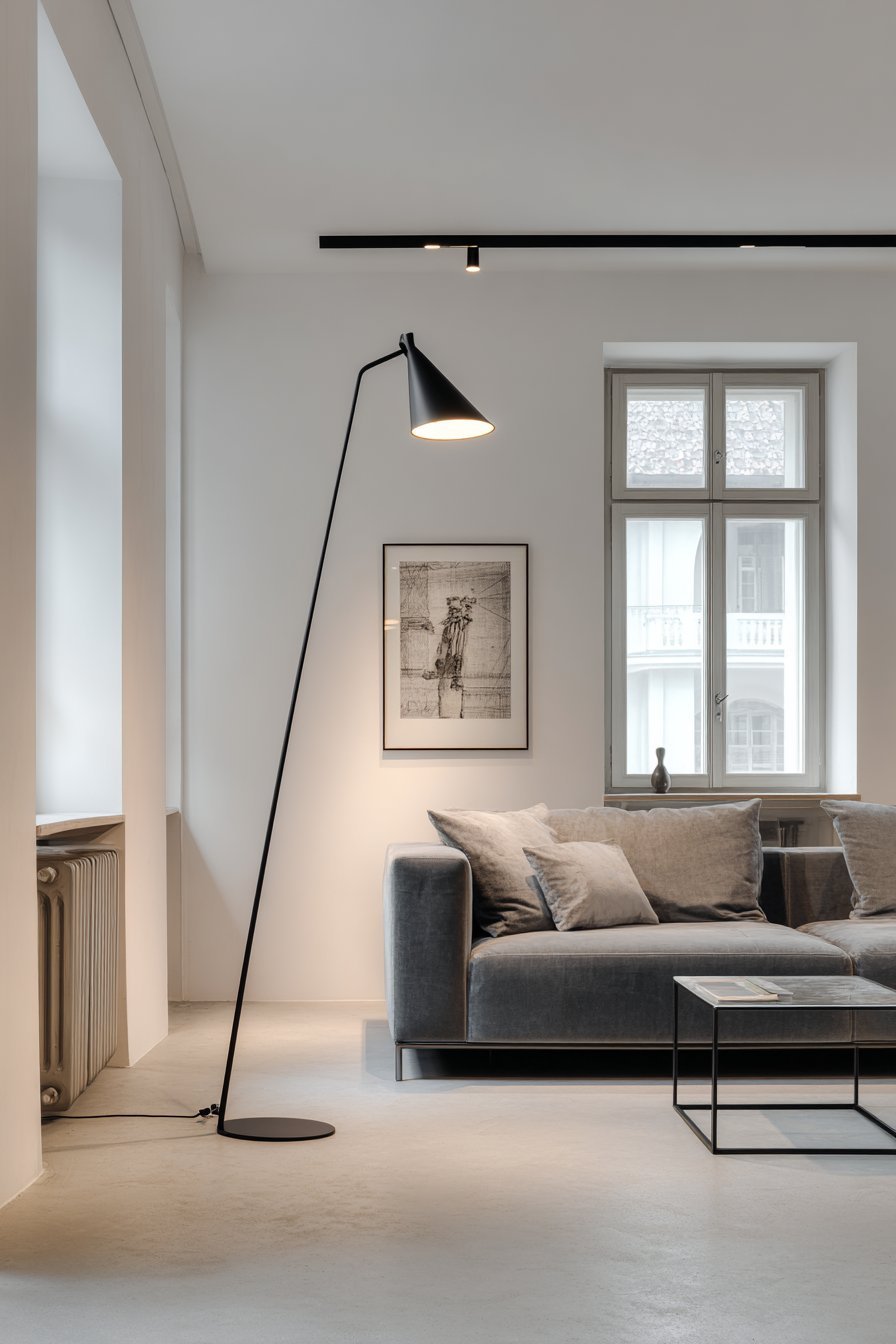
The minimalist approach requires exceptional quality in every selected piece. With fewer items, each element receives greater visual attention. Substandard materials or construction become immediately apparent in minimal spaces.
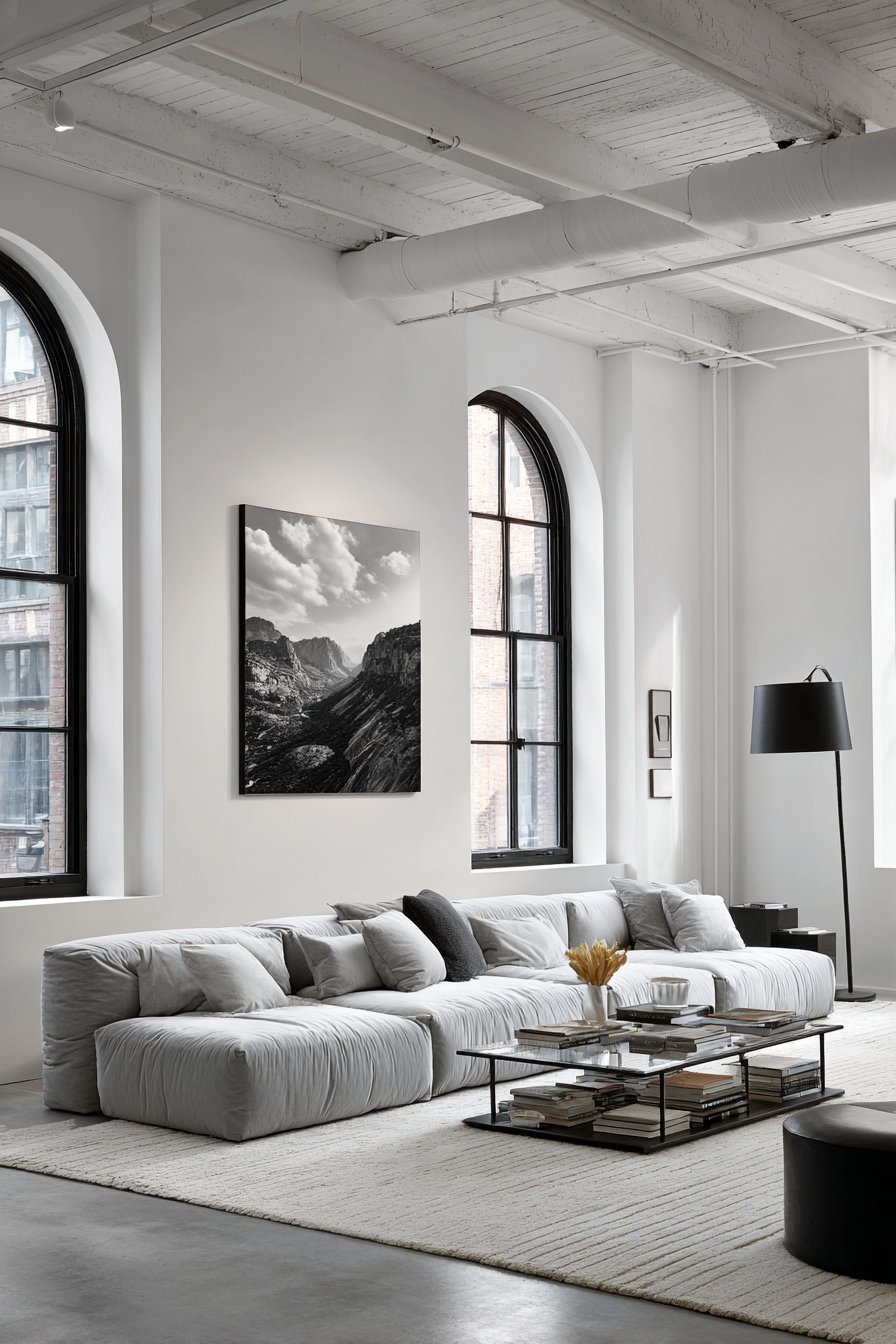
The monochromatic palette focuses attention on form, proportion, and spatial relationships. Texture variations in velvet, concrete, glass, and metal provide subtle visual interest. These material contrasts prevent the limited color scheme from feeling monotonous.
Key Design Tips:
- Invest in single statement art pieces rather than multiple smaller works
- Choose furniture with clean lines and no unnecessary ornamentation
- Use polished concrete for modern industrial aesthetic
- Maximize natural light through minimal window treatments
- Select one high-quality sculptural lighting piece as functional art
- Maintain strict discipline in accessory choices to preserve minimalist integrity
6. Coastal Driftwood Serenity
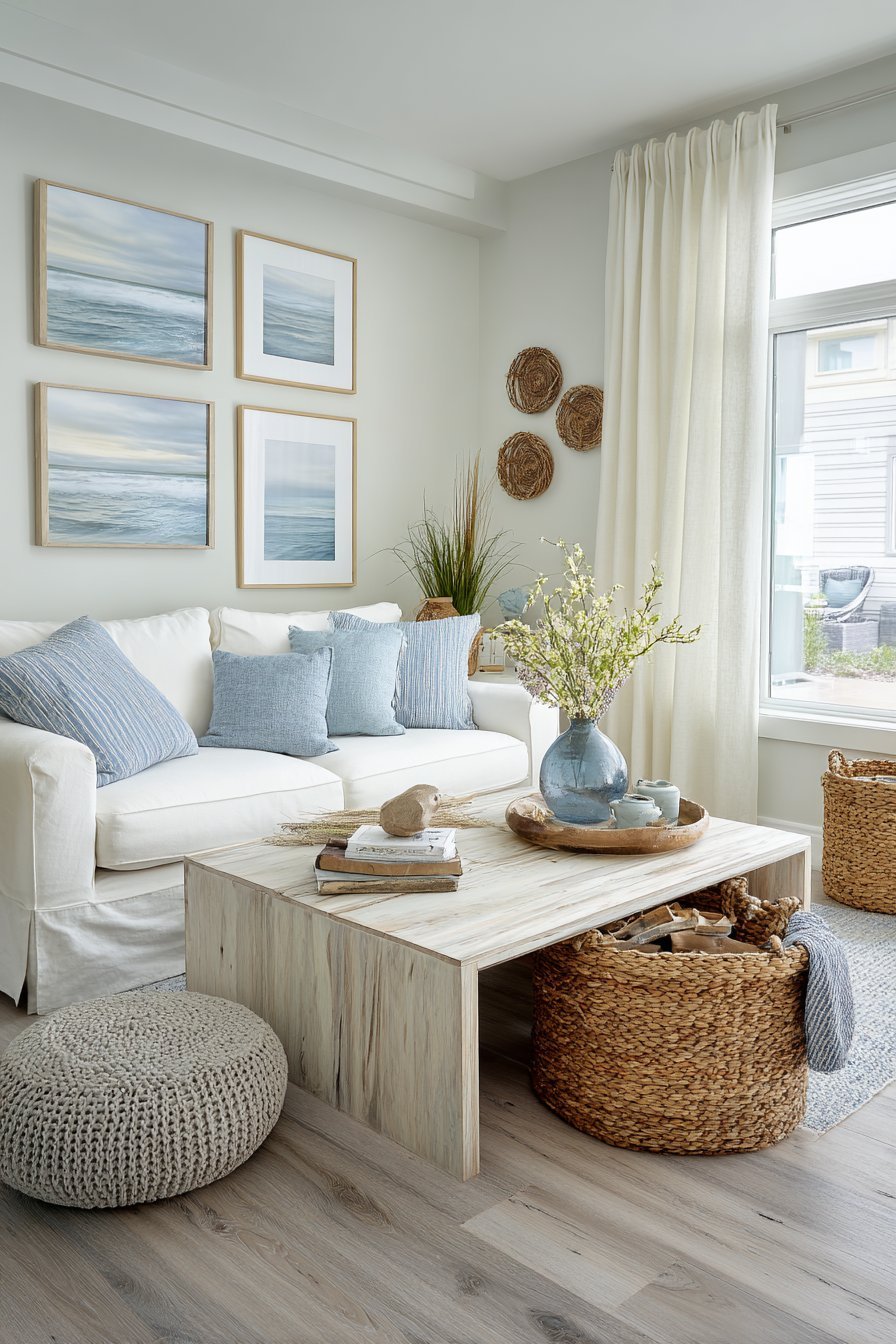
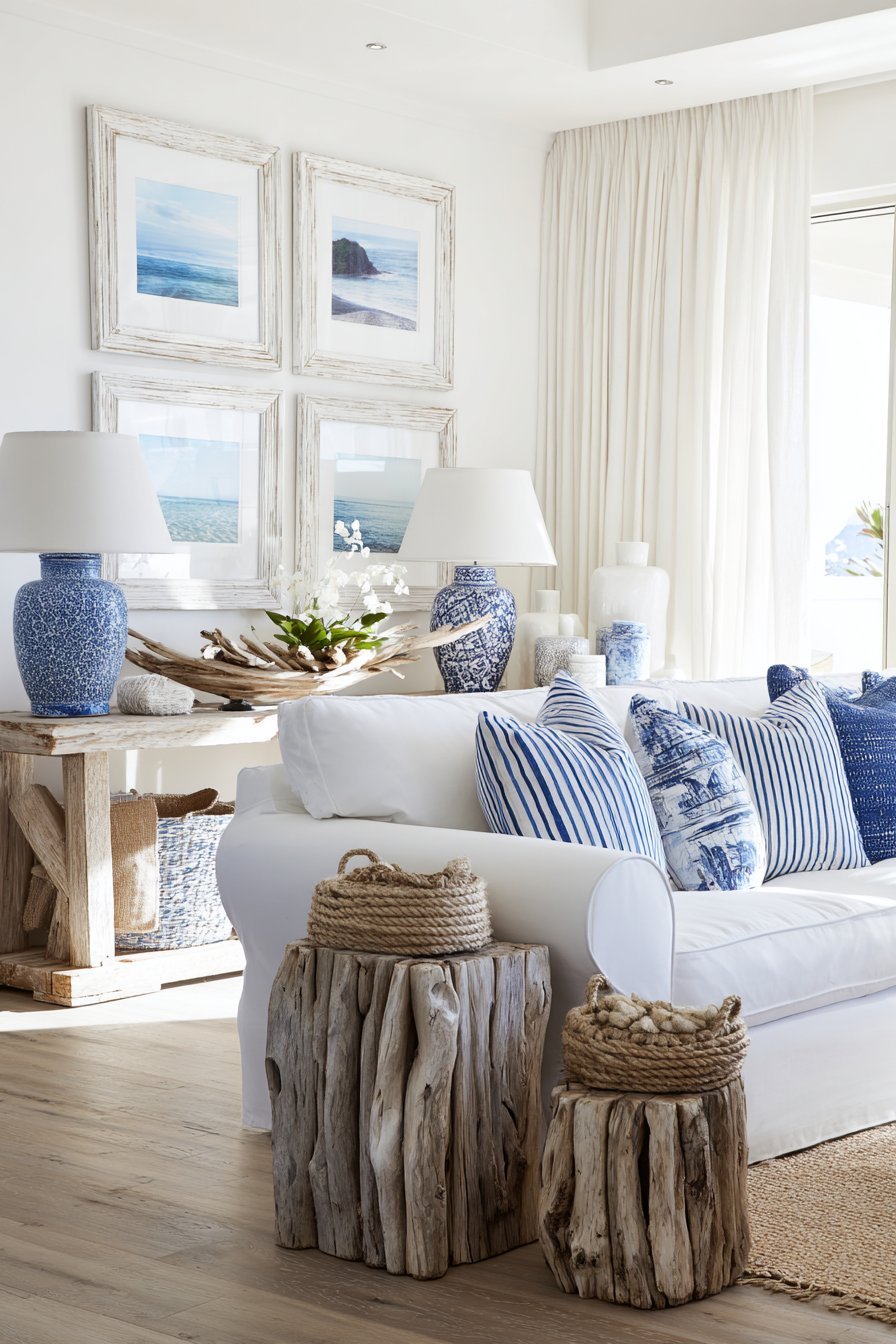
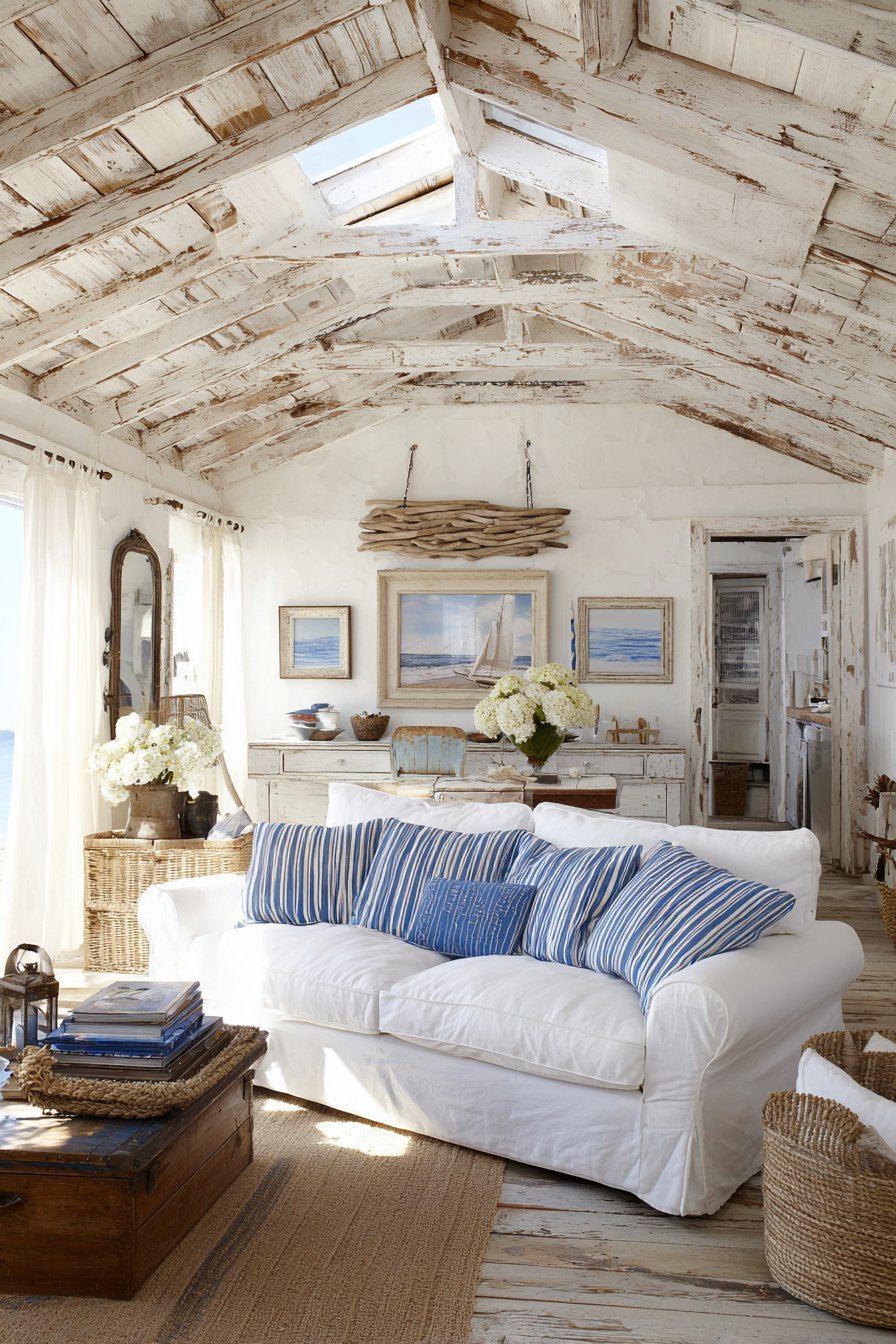
Driftwood pieces, weathered nautical mirrors, and framed seascape watercolors create a coastal gallery wall. Whitewashed frames unify the diverse elements. A slipcovered white sofa with blue and white striped throw pillows anchors the breezy space. Natural woven baskets and rope-wrapped accessories add textural layers.
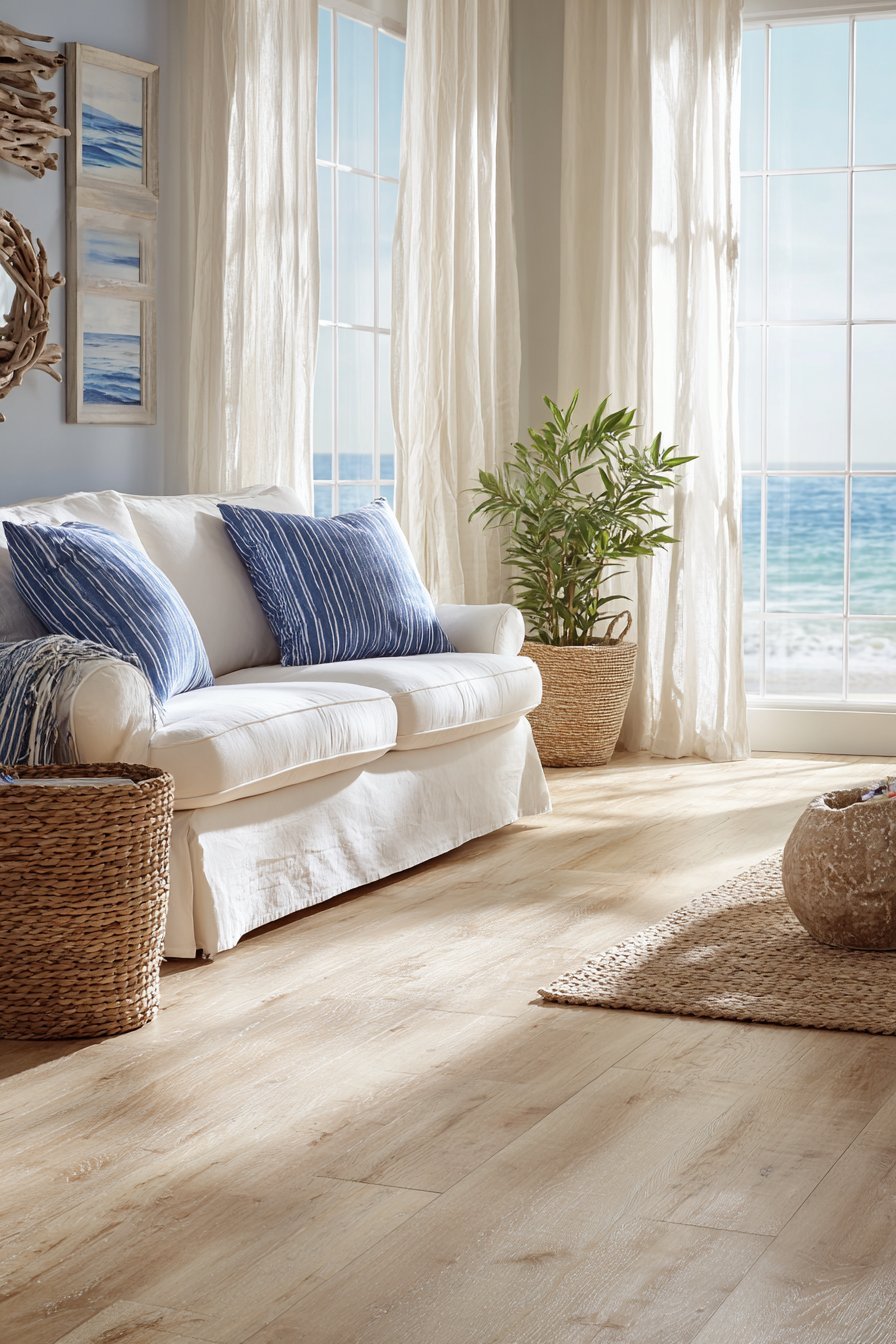
Light oak flooring shows gentle wear patterns that enhance the relaxed aesthetic. Sheer linen curtains filter bright seaside sunlight creating soft diffused illumination. Wide-angle interior photography captures the easy, relaxed atmosphere. Particular attention shows how natural light enhances the coastal color palette.
The coastal style balances casual comfort with sophisticated restraint. Too many nautical references become theme-park kitsch. These curated selections suggest rather than declare coastal living.
Natural materials dominate the space through driftwood, woven fibers, and linen textiles. These organic elements connect the interior to the natural coastal environment. The connection feels authentic rather than forced.
Key Design Tips:
- Collect authentic driftwood pieces during beach walks for personal connection
- Use whitewashed frames to unify diverse coastal artwork
- Choose slipcovered furniture for easy maintenance in sandy environments
- Incorporate rope and woven basket accessories for natural texture
- Select soft blue and white color schemes that reflect sky and surf
- Filter bright coastal sunlight through sheer natural fiber curtains
7. Industrial Loft Metal and Brick
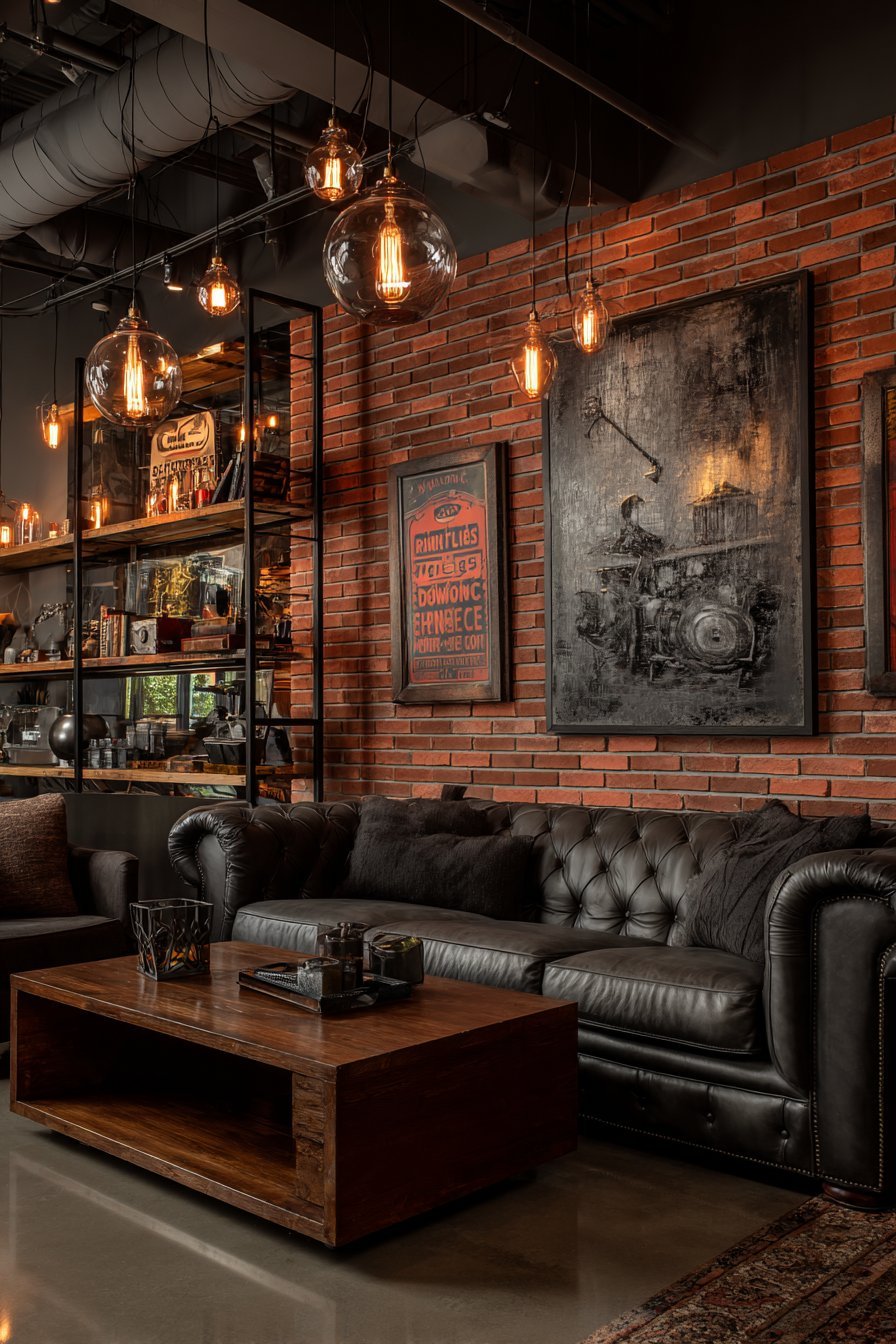
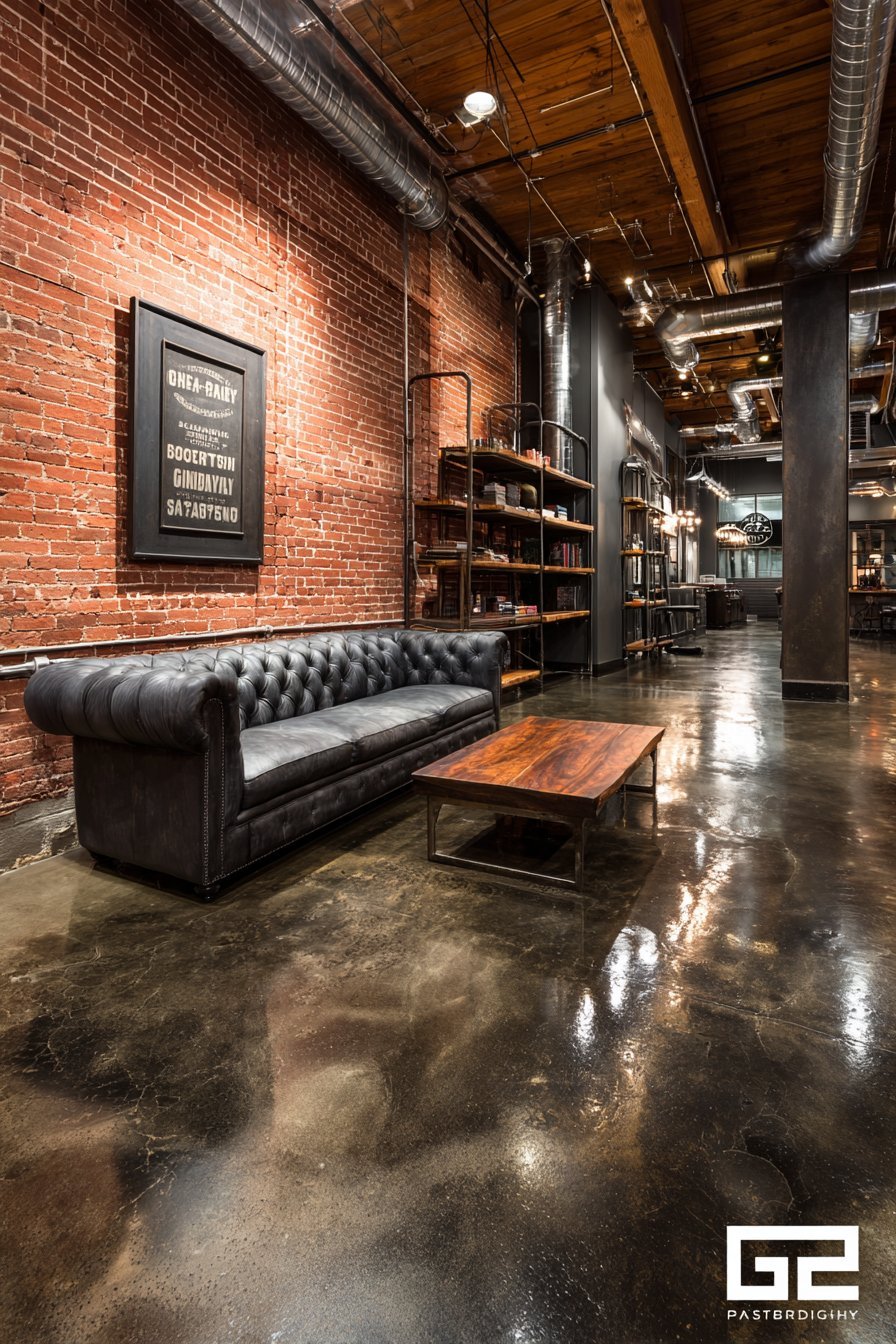
Large-scale metal wall sculptures and vintage factory signage mount on exposed red brick walls. A charcoal grey leather Chesterfield sofa provides rich texture against the raw backdrop. Steel and reclaimed wood shelving units display books and industrial artifacts. Edison bulb pendant lights hang from exposed ductwork creating ambient illumination.
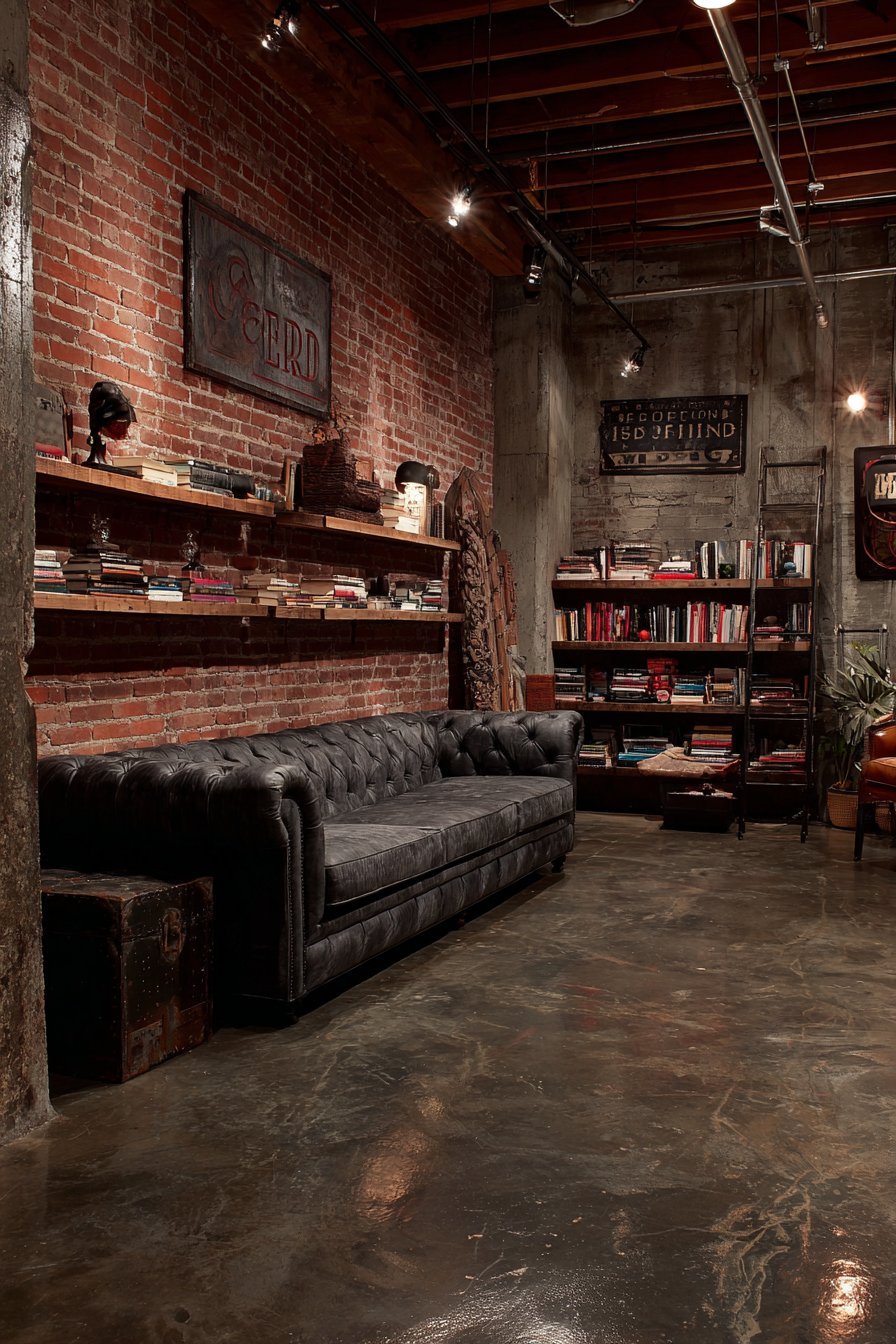
Polished concrete floors reflect the warm ambient lighting throughout the space. Professional interior photography emphasizes material contrasts and dramatic shadows. The authentic aged quality of industrial elements receives careful attention. Every weathered surface tells a story of previous use and purpose.
Industrial design celebrates honest materials and functional beauty. Exposed structural elements become decorative features. The aesthetic works particularly well in converted warehouse and loft spaces.
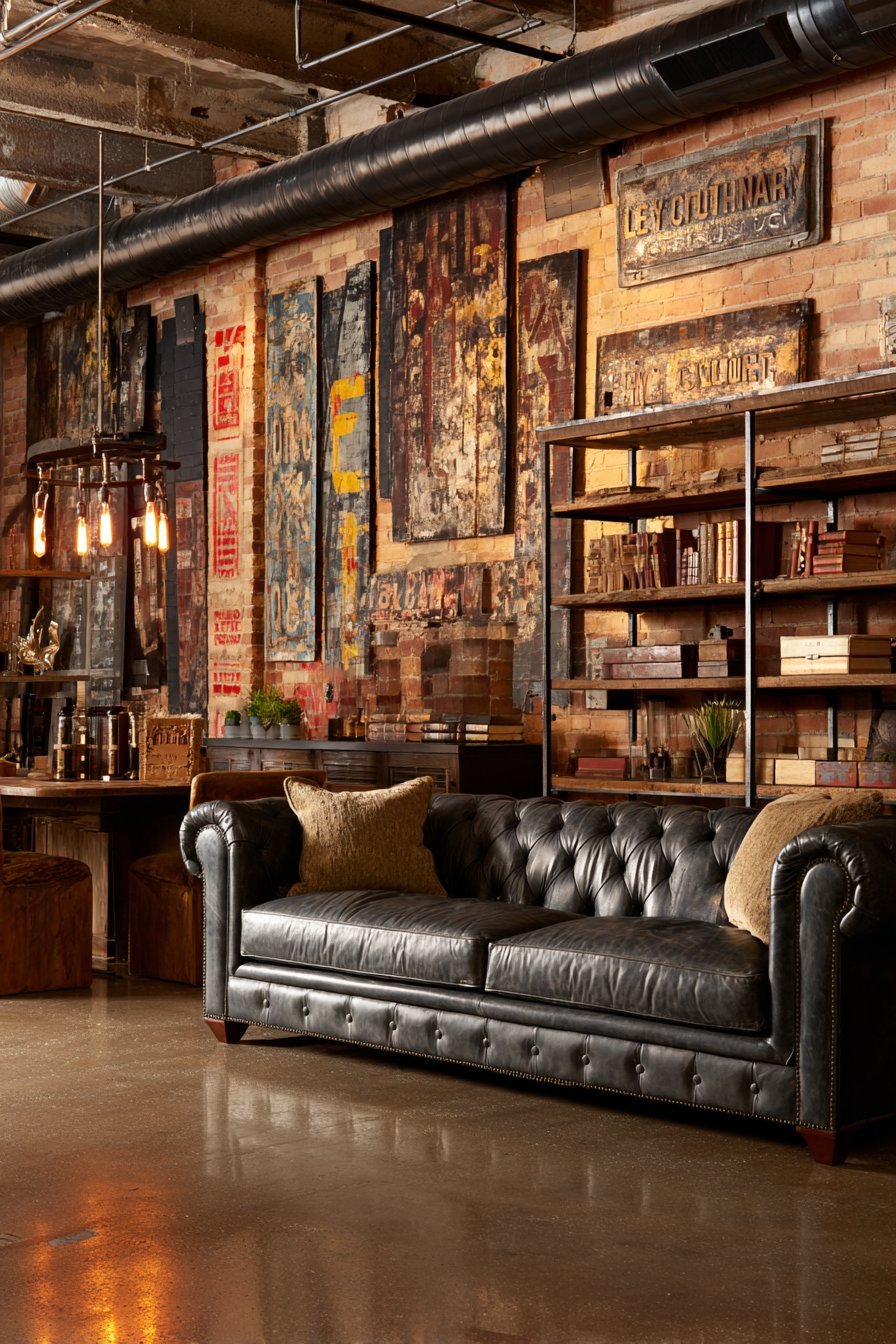
The combination of refined furniture with raw architectural elements creates tension. The tufted leather Chesterfield contrasts beautifully with exposed brick and concrete. This juxtaposition defines successful industrial interior design.
Key Design Tips:
- Preserve original architectural elements like exposed brick and ductwork
- Choose leather furniture that will develop character through aging
- Incorporate authentic vintage industrial pieces rather than reproductions
- Use Edison bulbs for warm light that complements industrial materials
- Mix polished and raw surfaces for visual interest
- Display collections of industrial artifacts as decorative elements
8. Traditional Emerald Velvet Grandeur
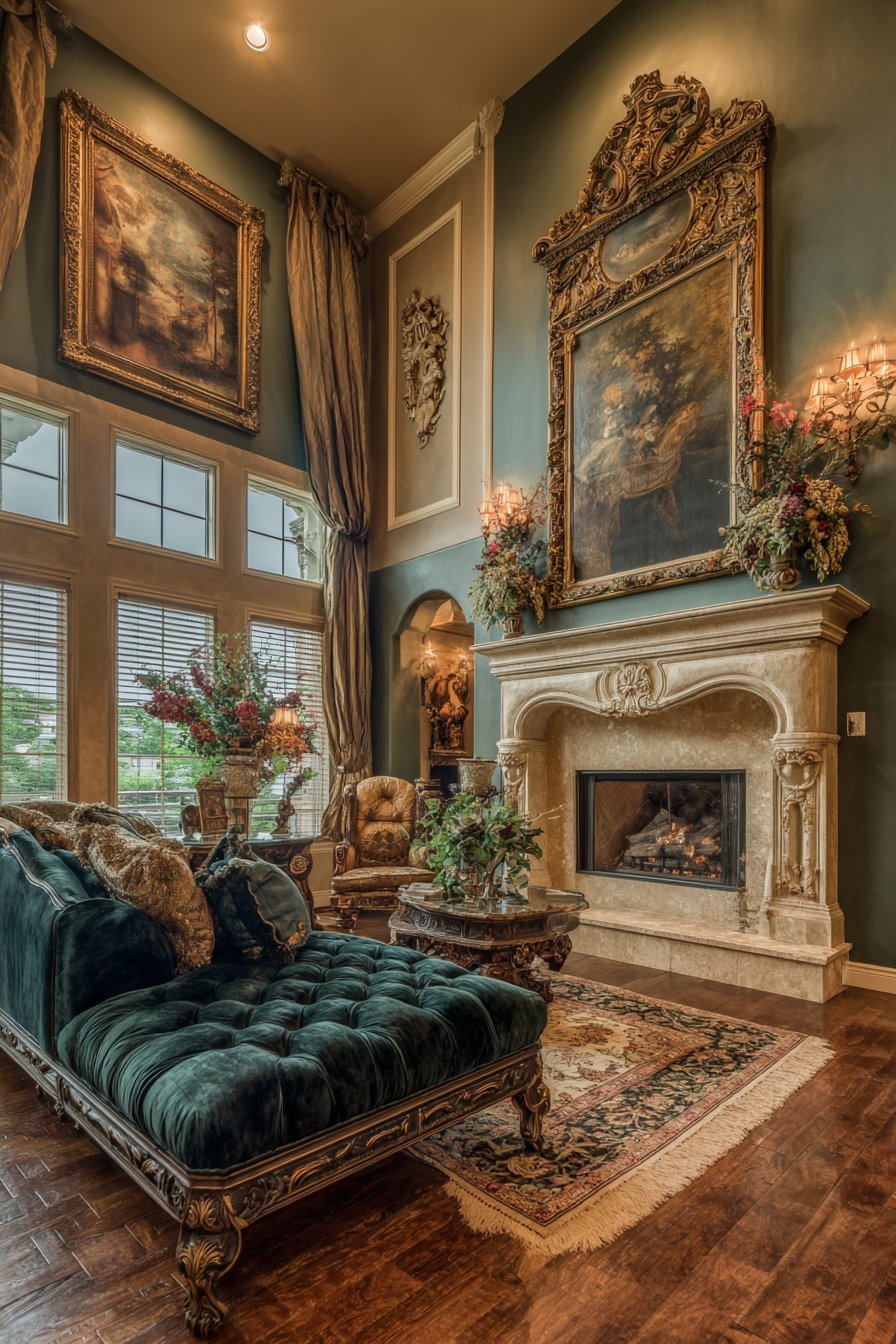
An ornate gilded mirror above a marble fireplace mantel creates classical symmetry. Matching oil paintings in heavy carved frames flank the mirror. A tufted emerald velvet sofa sits on a Persian-style area rug with intricate floral patterns. Crown molding and wainscoting add architectural detail to sage green walls.
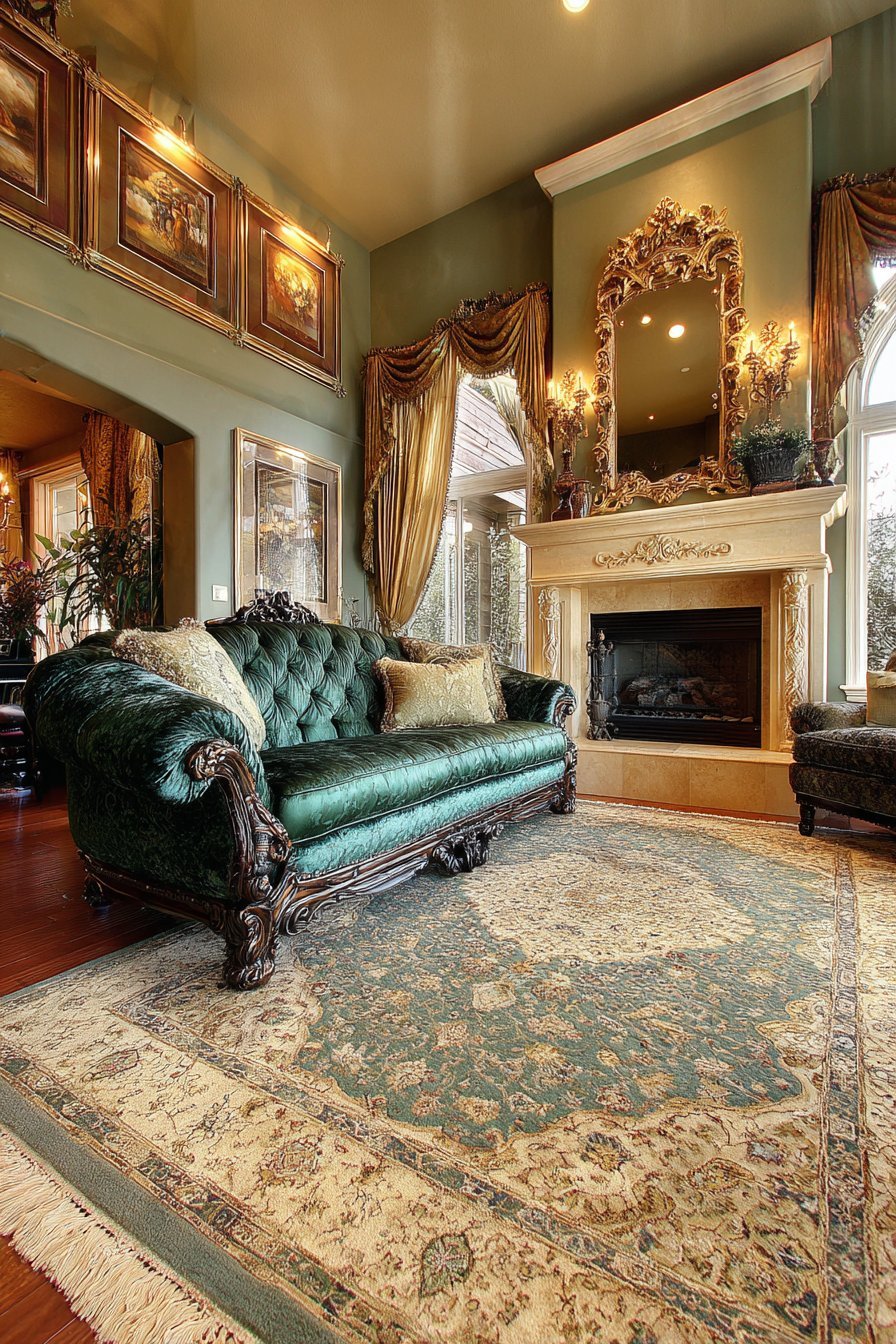
Crystal sconces provide warm accent lighting that enhances the luxurious materials. Natural daylight from tall windows with silk drapery creates soft highlights on polished hardwood floors. Interior design photography captures rich color depth and classical proportions. Attention to luxury material details demonstrates traditional design excellence.
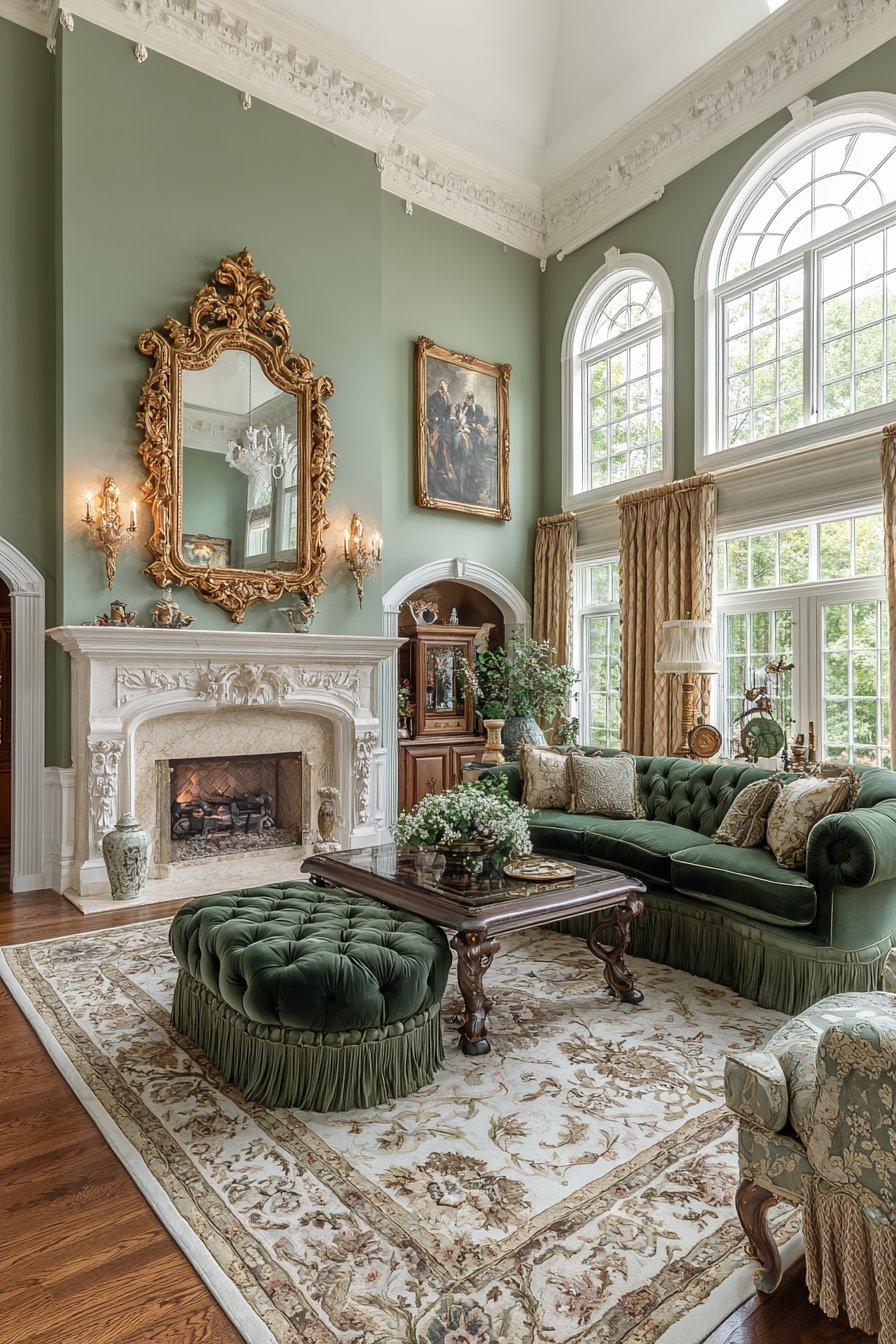
Traditional style requires commitment to quality materials and craftsmanship. Shortcuts become immediately apparent in classical interiors. Investment in genuine materials pays dividends in long-term satisfaction.
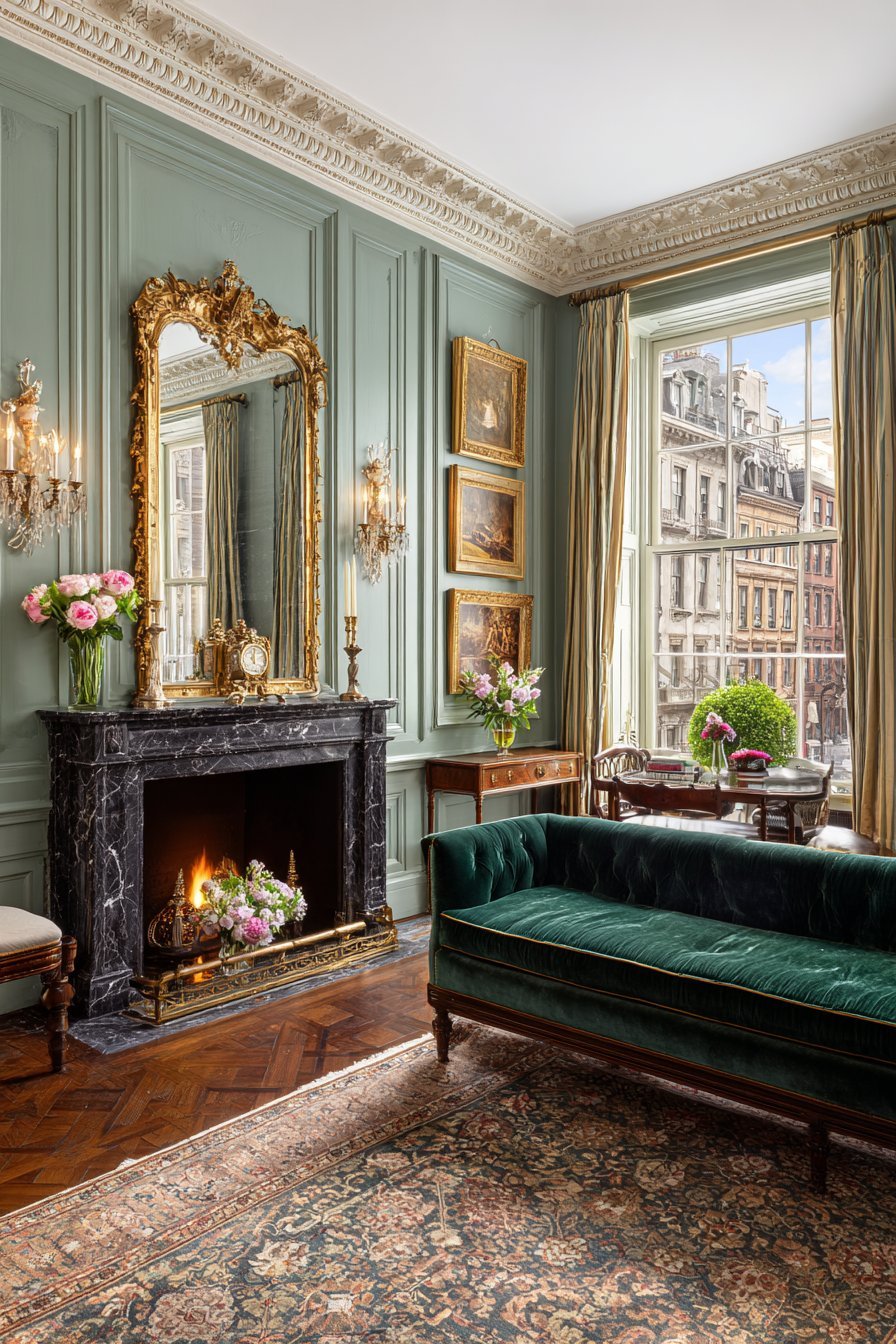
The layered approach to pattern mixing requires confidence and skill. Persian rug patterns play against velvet upholstery and silk draperies. The sage green walls provide a calm backdrop that prevents pattern overload.
Key Design Tips:
- Invest in quality upholstery fabrics like velvet for traditional elegance
- Create symmetrical arrangements with matching pairs of artwork
- Use crown molding and wainscoting to add architectural interest
- Choose Persian or oriental rugs for authentic traditional pattern
- Install crystal sconces for elegant accent lighting
- Select rich jewel tones for upholstery and accent colors
9. Mid-Century Modern Walnut and Orange
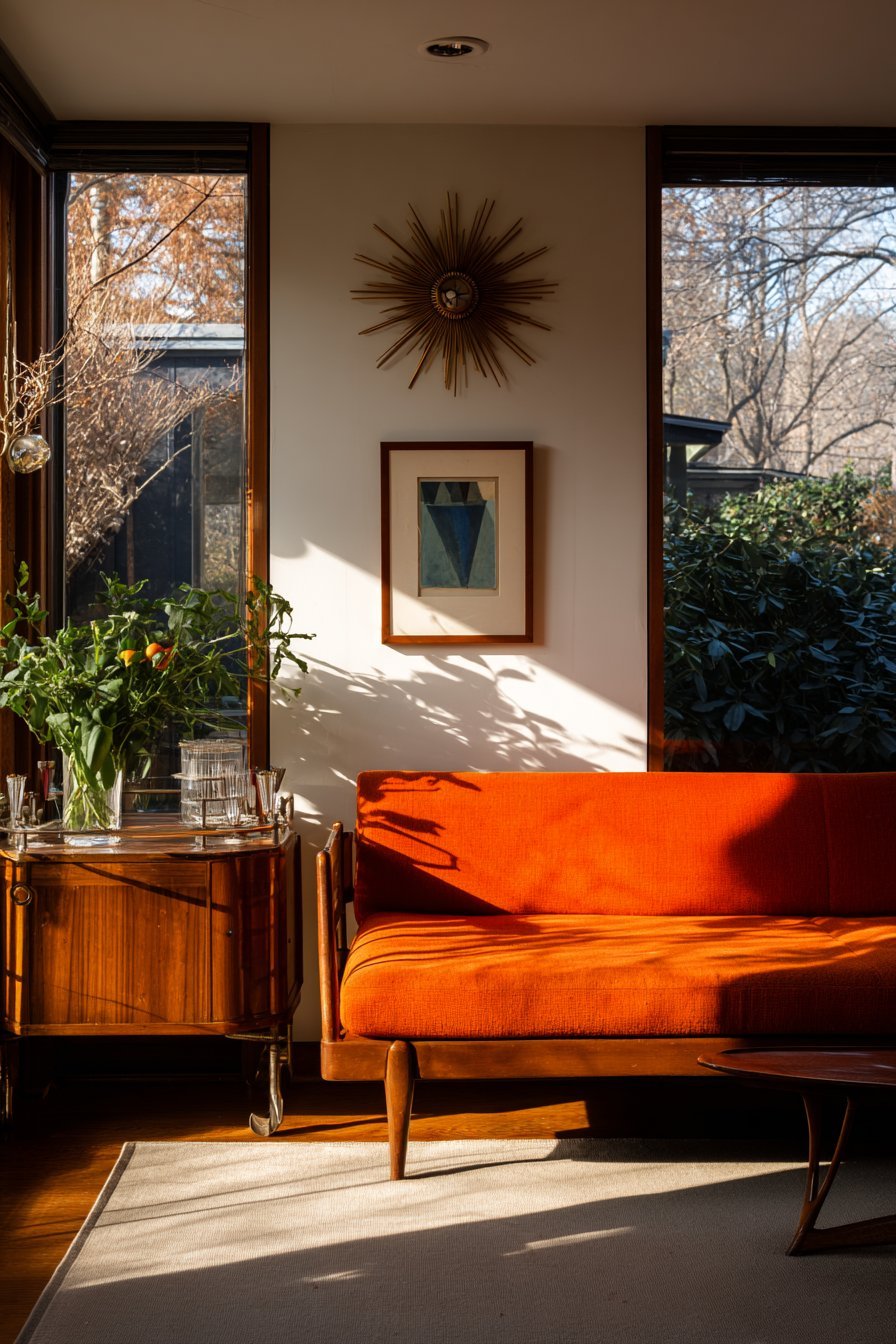
A sunburst wall clock, abstract geometric prints in teak frames, and vintage bar cart create authentic period aesthetic. The low-slung walnut sofa with tapered legs features orange wool upholstery. A kidney-shaped coffee table and tulip side table complete the iconic furniture collection. Large picture windows frame outdoor greenery connecting interior to landscape.
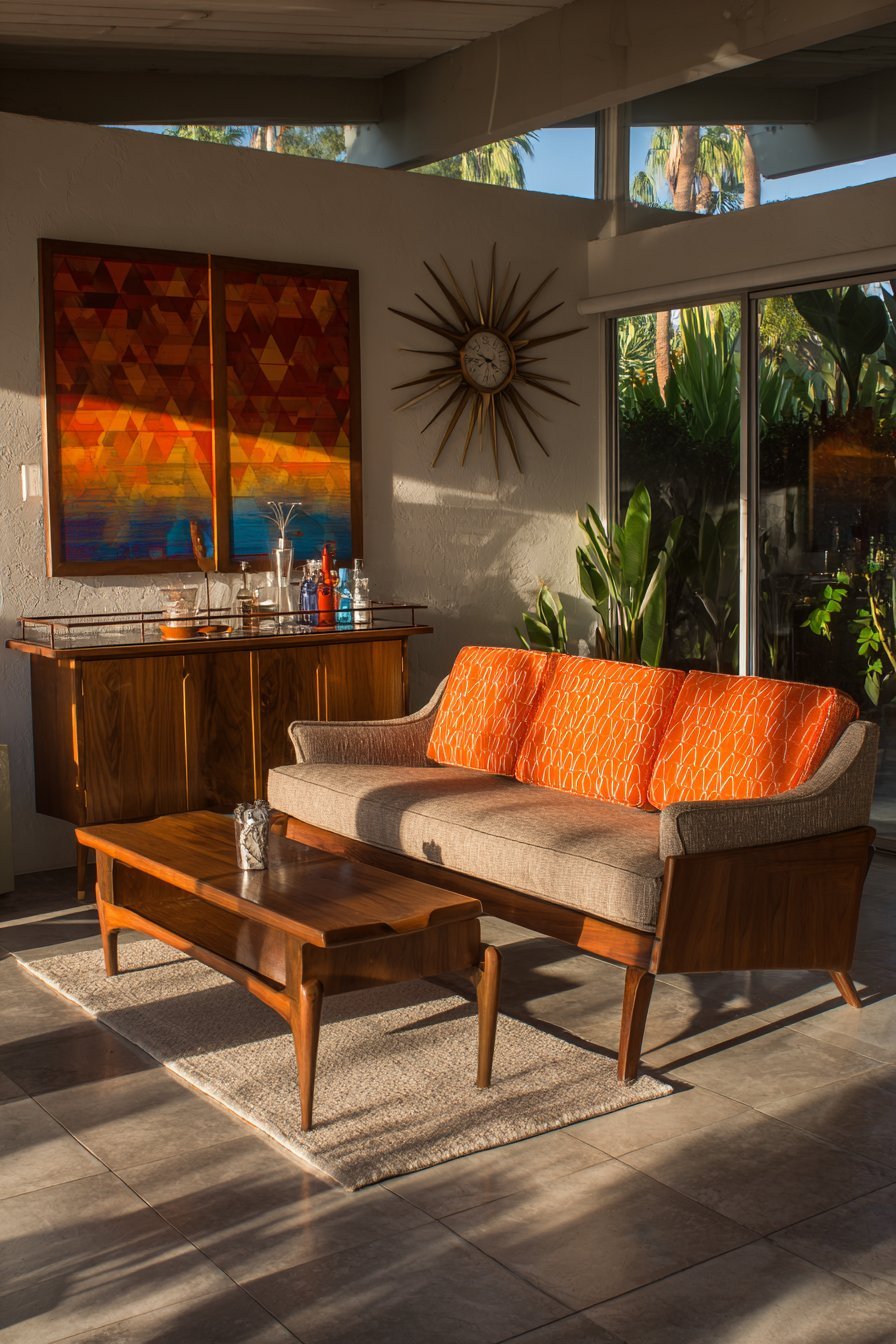
Afternoon light creates dramatic angles and highlights the authentic vintage pieces. Wide-angle photography captures the era-appropriate composition with saturated period colors. Clean lines and organic forms define the mid-century modern vocabulary. Every piece demonstrates the design principles of the 1950s and 1960s.
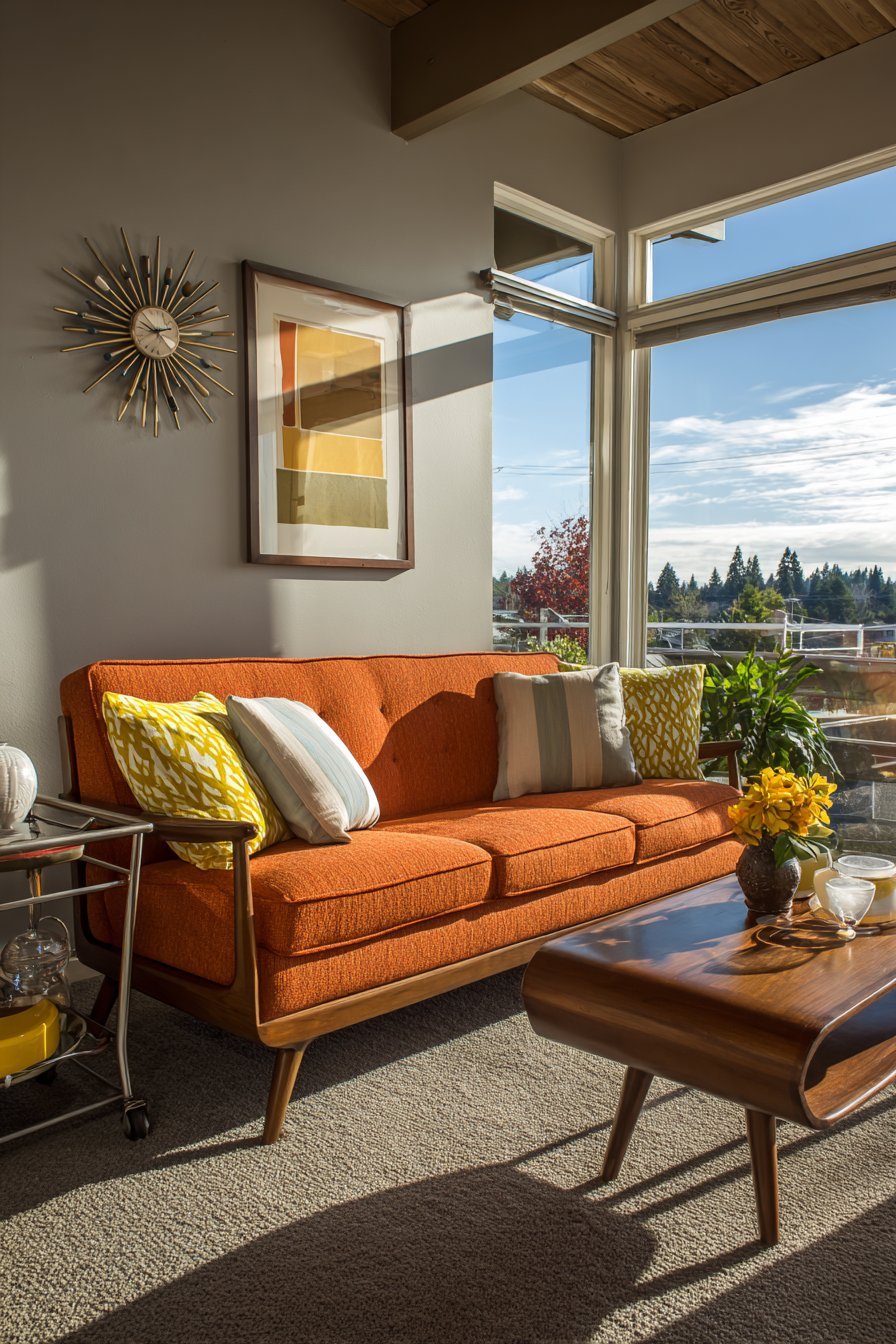
Mid-century modern remains popular because the designs still feel fresh and relevant. Quality vintage pieces often surpass contemporary reproductions in materials and construction. Authentic pieces become investment furniture that appreciates over time.
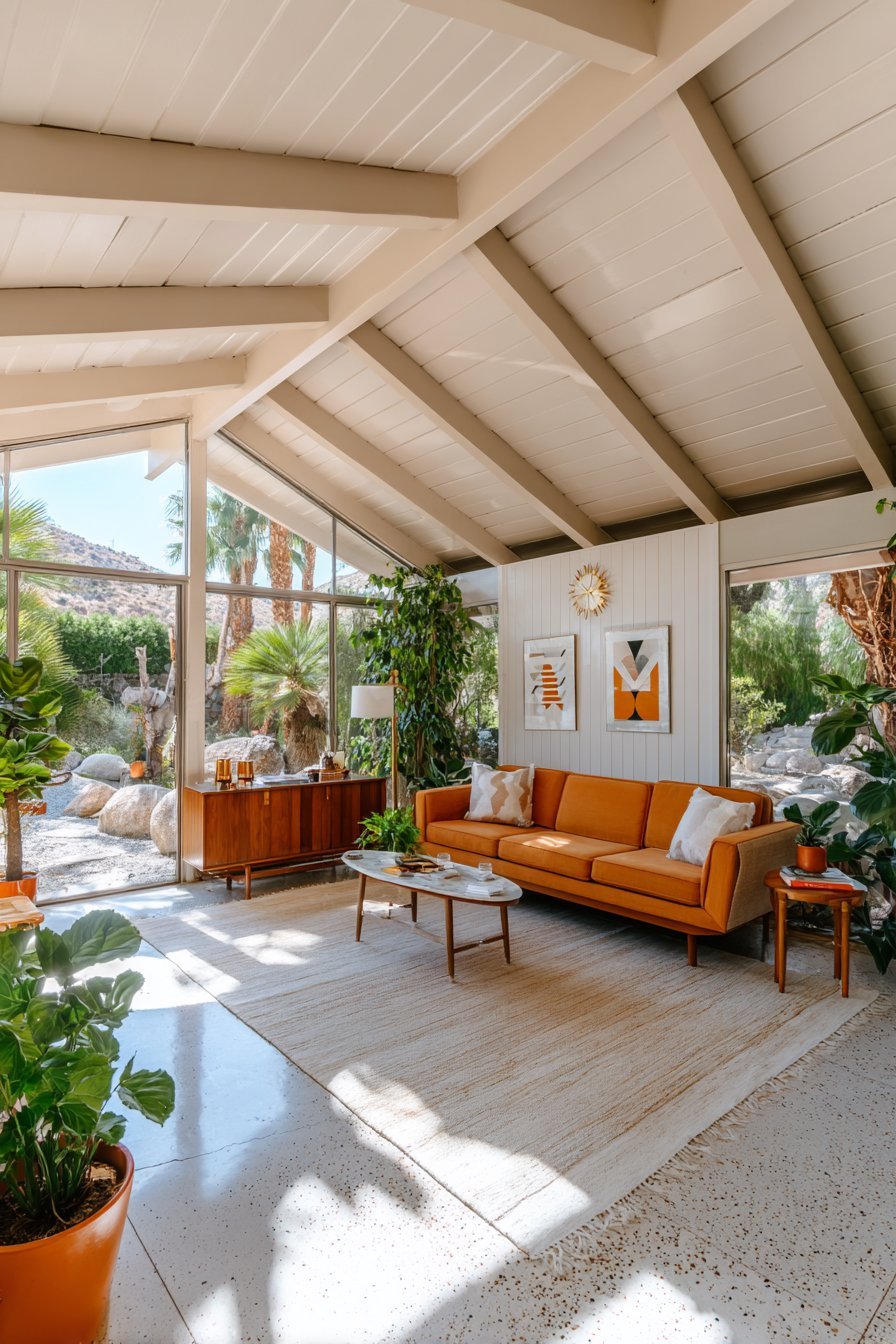
The bold orange upholstery demonstrates the period’s embrace of color. Combined with warm walnut wood tones, the palette feels optimistic and energetic. These colors connect to the post-war era’s forward-looking spirit.
Key Design Tips:
- Source authentic vintage pieces when possible for quality and appreciation
- Choose furniture with characteristic tapered legs and organic forms
- Use bold accent colors like orange, mustard, or teal
- Display period-appropriate accessories like sunburst clocks
- Maximize natural light through large windows with minimal treatments
- Select walnut or teak wood tones for authentic mid-century palette
10. Maximalist Jewel-Tone Abundance
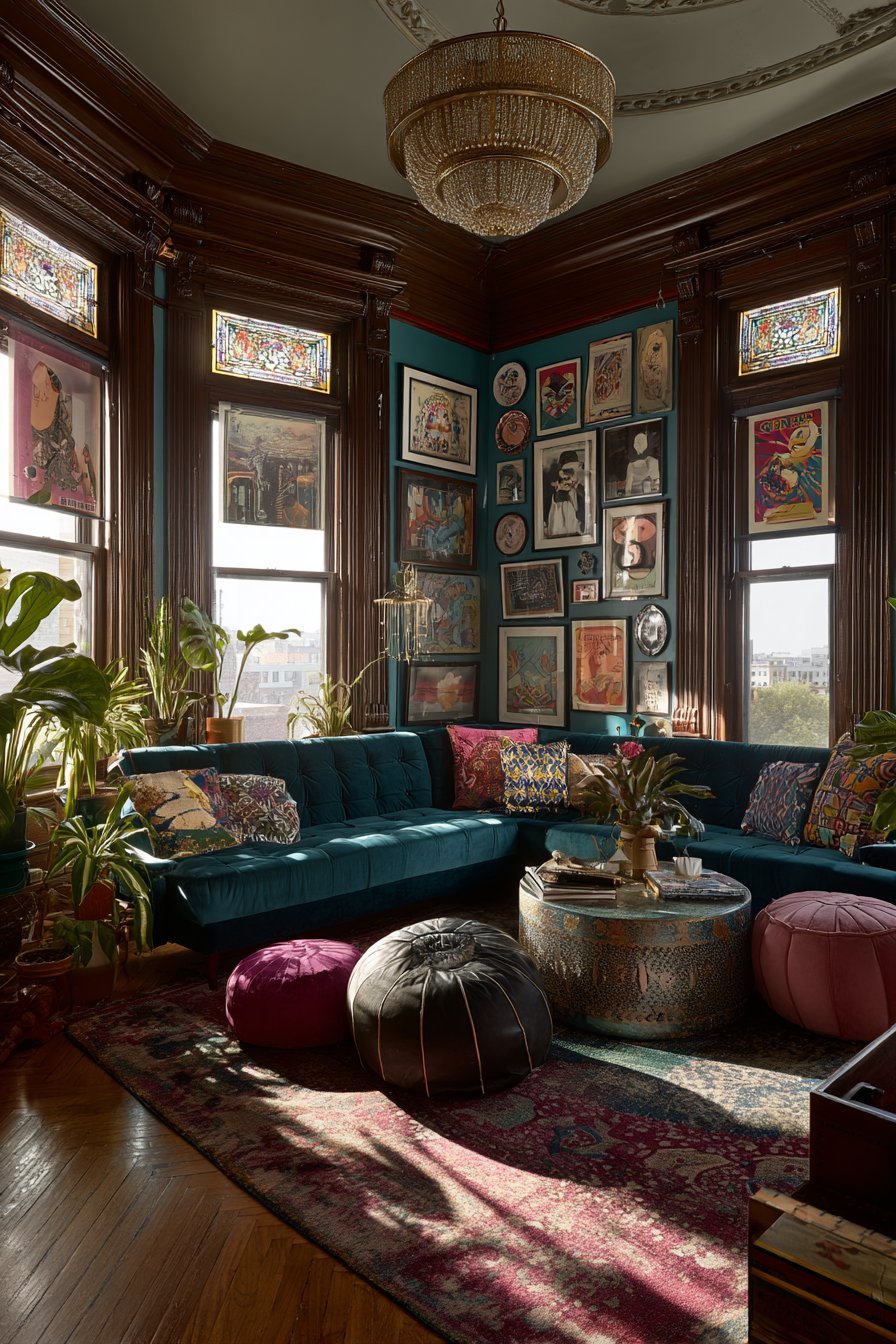
Floor-to-ceiling gallery walls mix vintage posters, contemporary art prints, decorative plates, and small mirrors. Mismatched frames create curated chaos that requires careful planning. A deep teal velvet sofa anchors the vibrant space. Patterned throw pillows, colorful floor poufs, and global textiles layer additional visual interest.
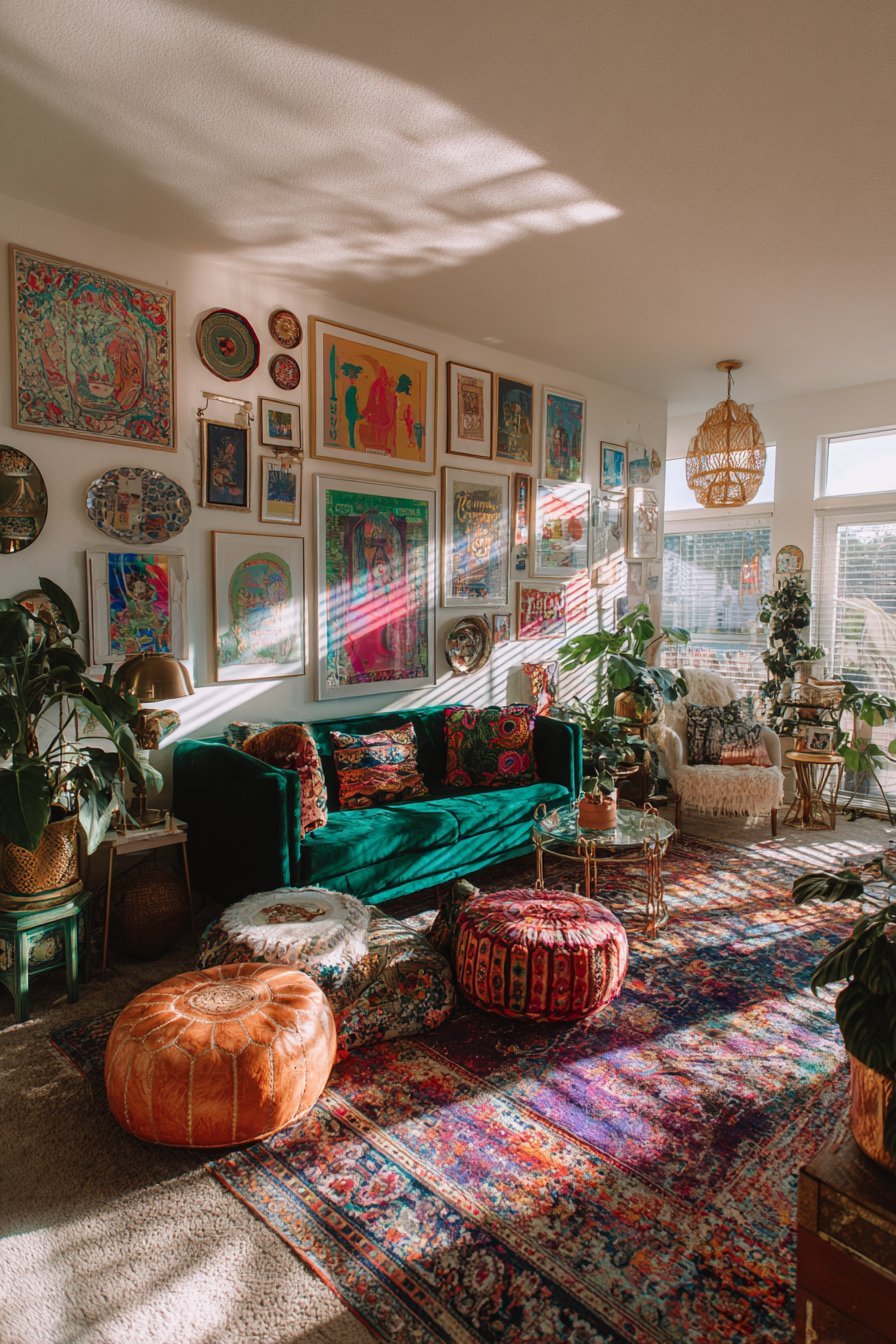
Houseplants in ceramic pots of various colors add life and organic forms. Natural light from multiple windows creates dynamic shadows across the collected treasures. Professional interior photography balances the busy composition while maintaining clarity of individual elements. Each piece remains distinct while contributing to the overall abundance.
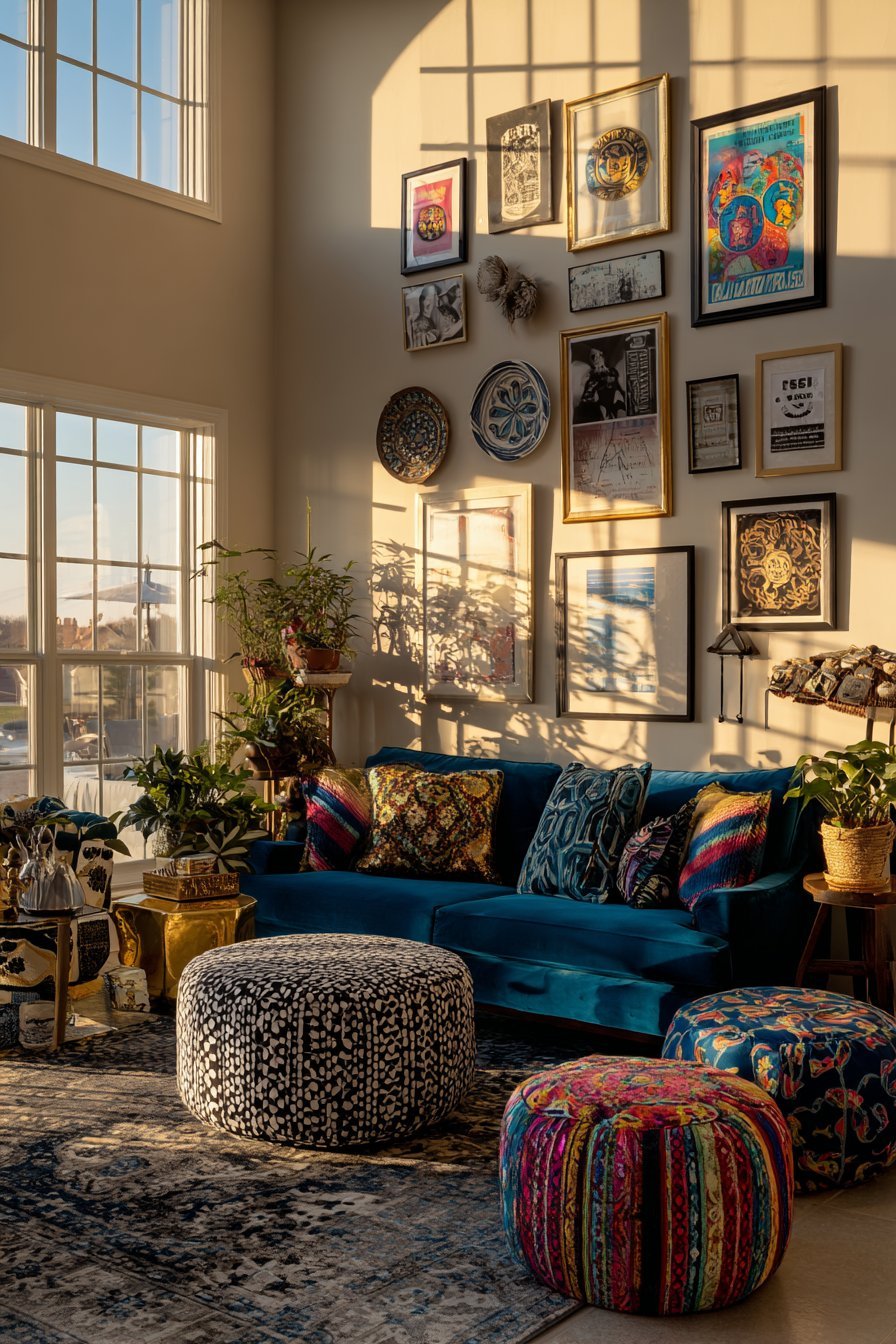
Maximalism requires more curation than minimalism despite appearances. Every addition must earn its place and contribute to the composition. Random accumulation creates clutter rather than designed abundance.
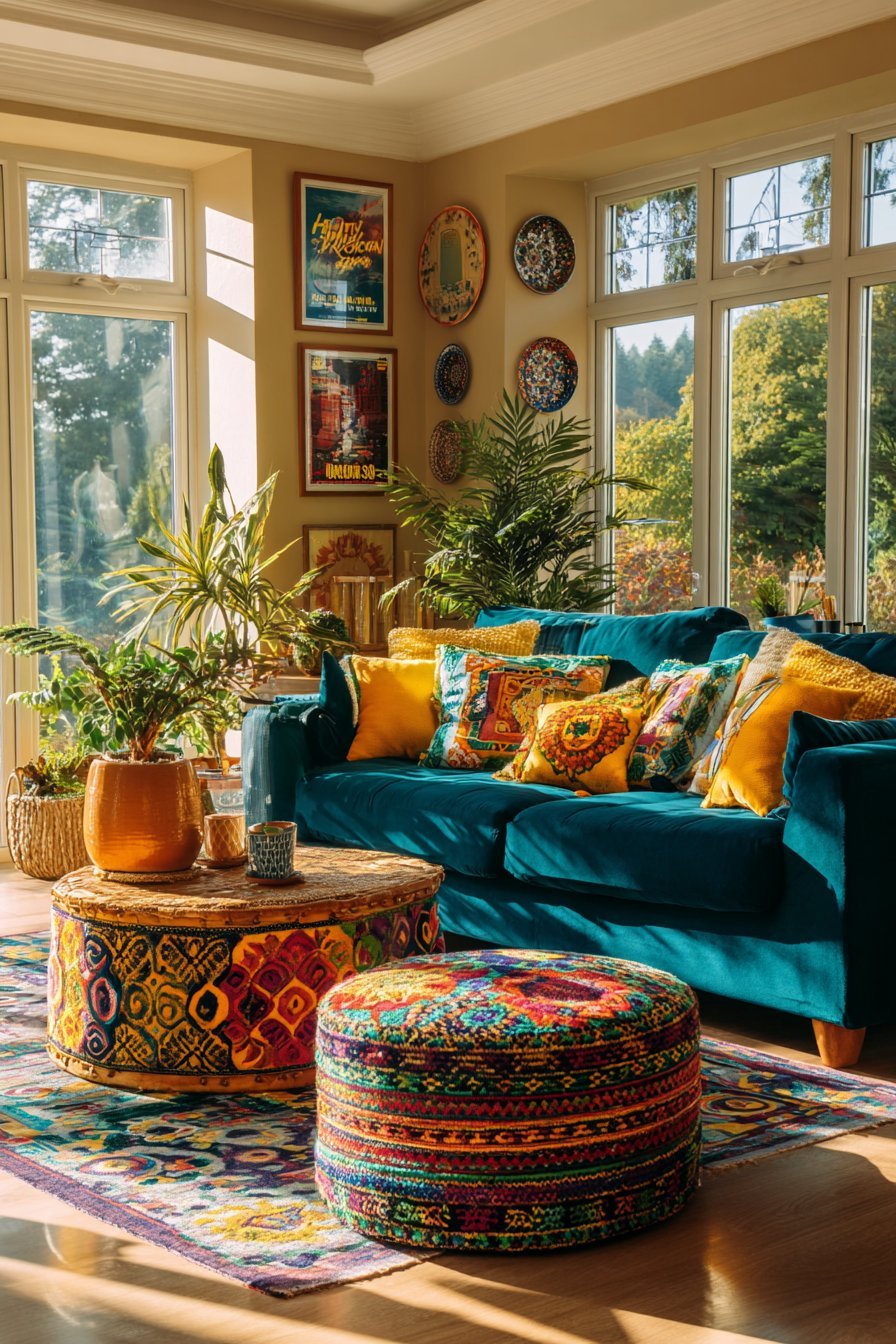
The approach celebrates personality and individuality through collected objects. Maximalist spaces tell rich stories about their inhabitants’ travels and interests. This personal narrative distinguishes maximalism from mere clutter.
Key Design Tips:
- Plan gallery walls carefully before hanging despite casual appearance
- Anchor busy spaces with solid-colored furniture in bold jewel tones
- Layer patterns through textiles while maintaining color cohesion
- Use abundant plants to add life and soften hard edges
- Ensure adequate natural light to prevent crowded spaces from feeling dark
- Curate collections thoughtfully rather than displaying everything owned
11. Contemporary Neutral Bouclé Elegance
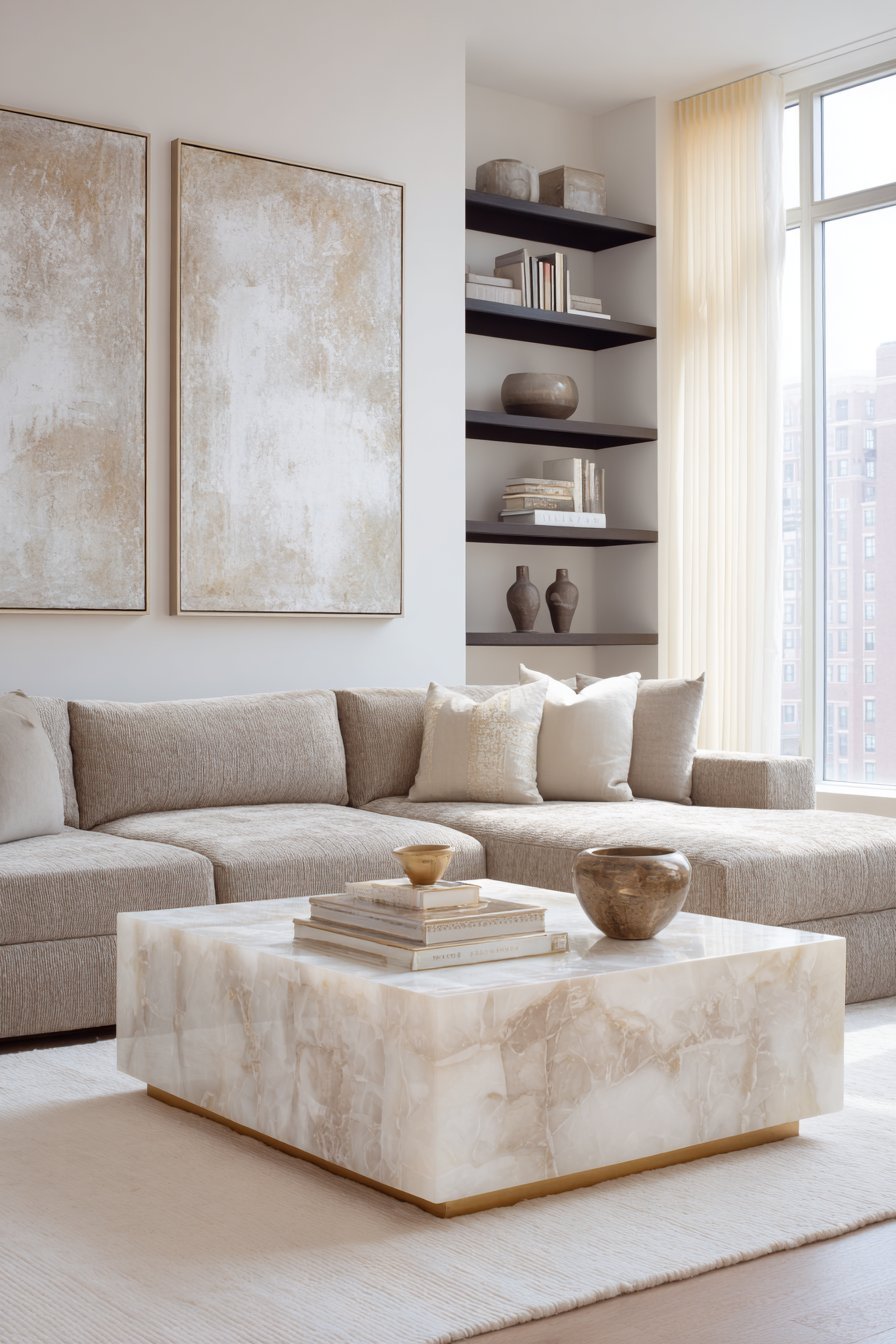
A three-panel triptych of minimalist abstract art in soft beiges and greys hangs above a low-profile modular sofa. The warm taupe bouclé fabric provides subtle texture. A sculptural coffee table in white marble and brass anchors the seating area on cream wool area rug. Floating shelves in matte black metal display ceramic vessels and art books.
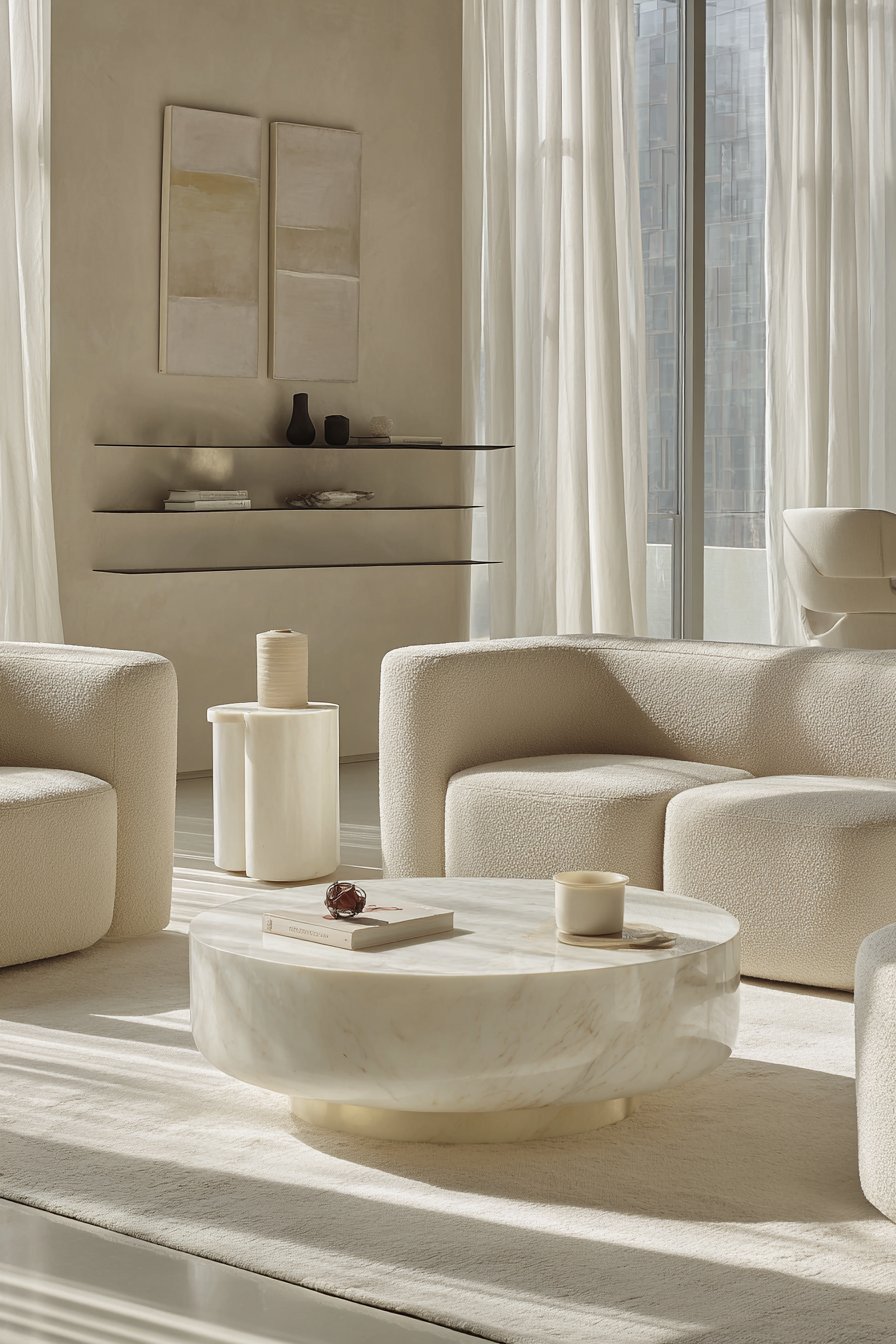
Floor-to-ceiling sheer curtains diffuse bright natural light throughout the space. Professional interior photography captures soft shadows and balanced tones. Emphasis on subtle texture variations within the monochromatic palette creates visual interest. The restrained approach demonstrates sophisticated contemporary design thinking.
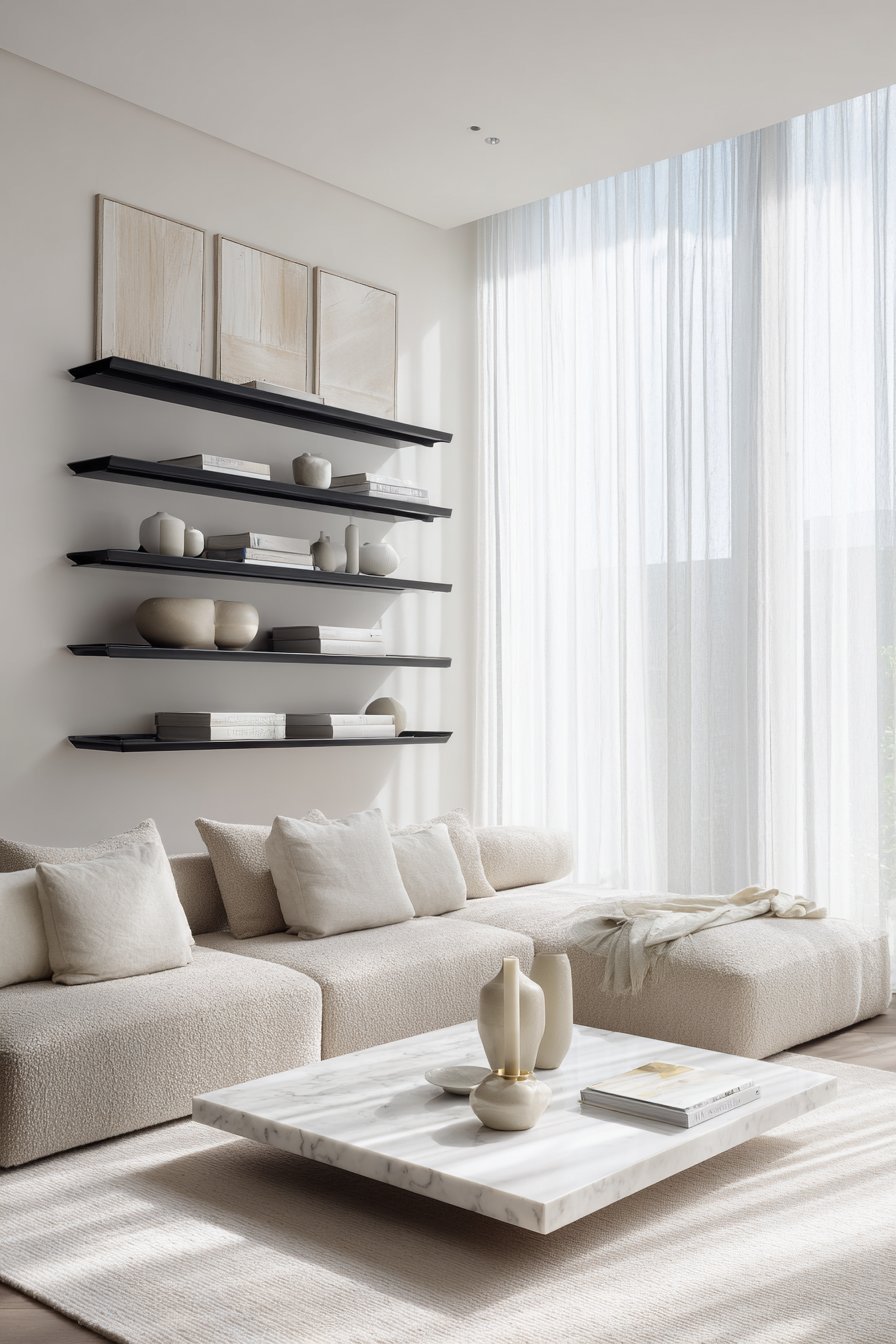
The bouclé fabric trend reflects desire for tactile comfort in contemporary spaces. The nubby texture adds warmth to otherwise sleek modern aesthetics. This textile choice makes minimalism feel more approachable and livable.
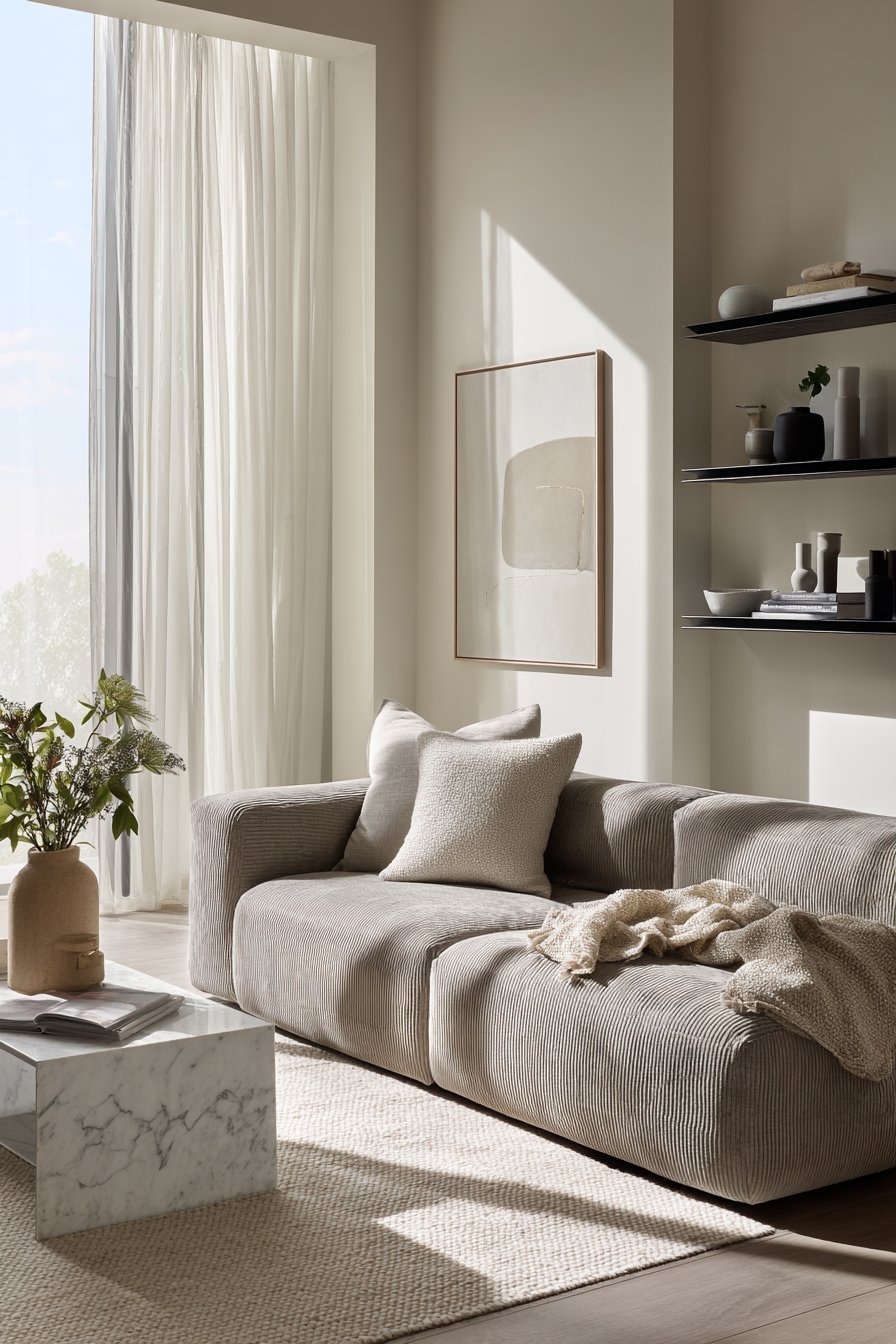
Careful attention to tone variations prevents the neutral palette from reading flat. Warm taupe plays against cool grey and crisp cream. These subtle shifts create depth within the limited color range.
Key Design Tips:
- Choose bouclé upholstery for texture in neutral contemporary spaces
- Create triptychs with related abstract artworks for cohesive impact
- Mix warm and cool neutrals for depth in monochromatic schemes
- Use floating shelves to display curated objects without visual weight
- Select sculptural furniture pieces that function as functional art
- Layer sheer and solid window treatments for light control and privacy
12. Rustic Lodge Stone and Leather
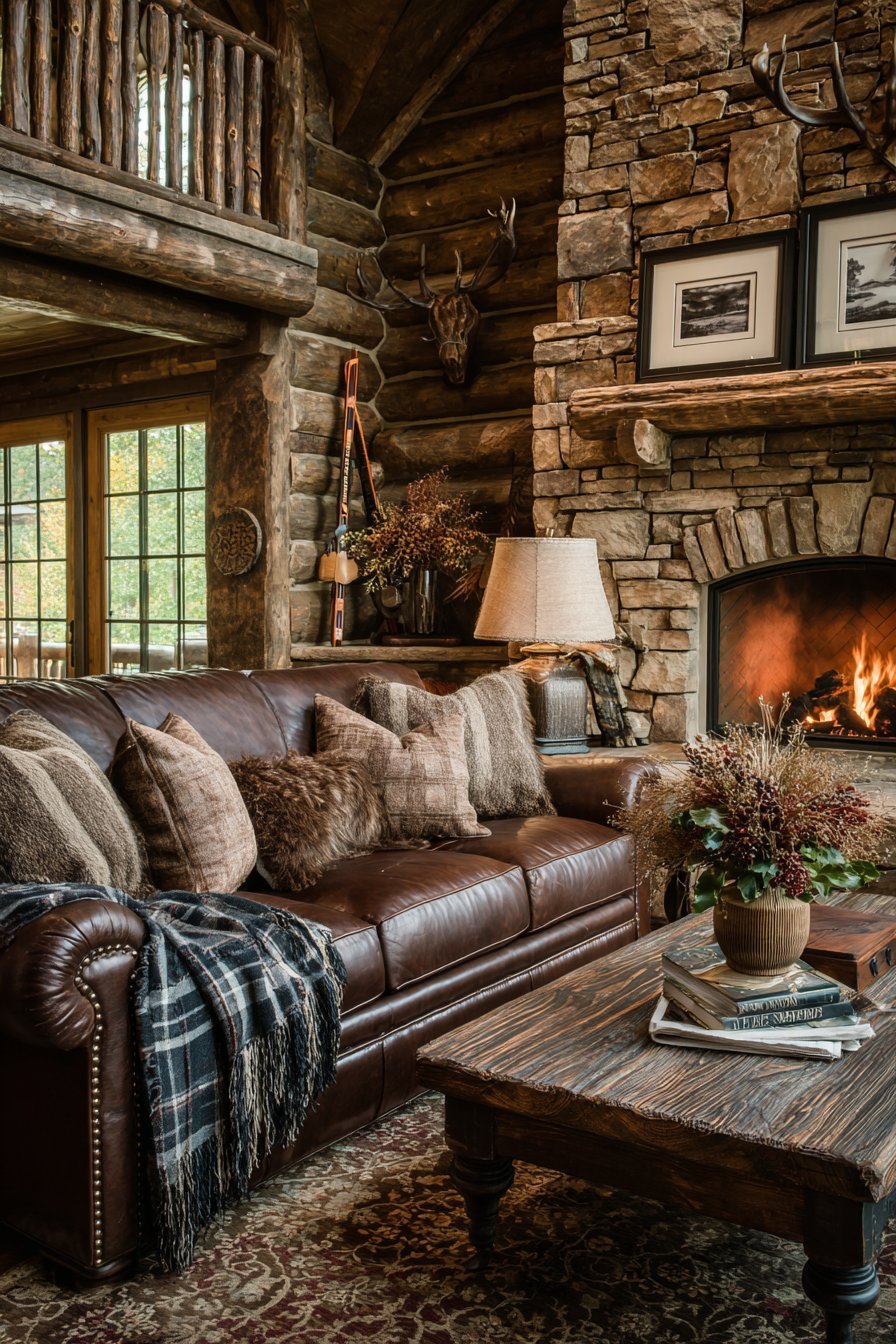
Mounted antlers, vintage wooden skis, and framed nature photography create outdoor-inspired wall displays. Log cabin walls provide authentic rustic backdrop. A deep brown leather sofa with nailhead trim sits before a stone fireplace. Plaid wool throws and faux fur pillows add cozy texture inviting relaxation.
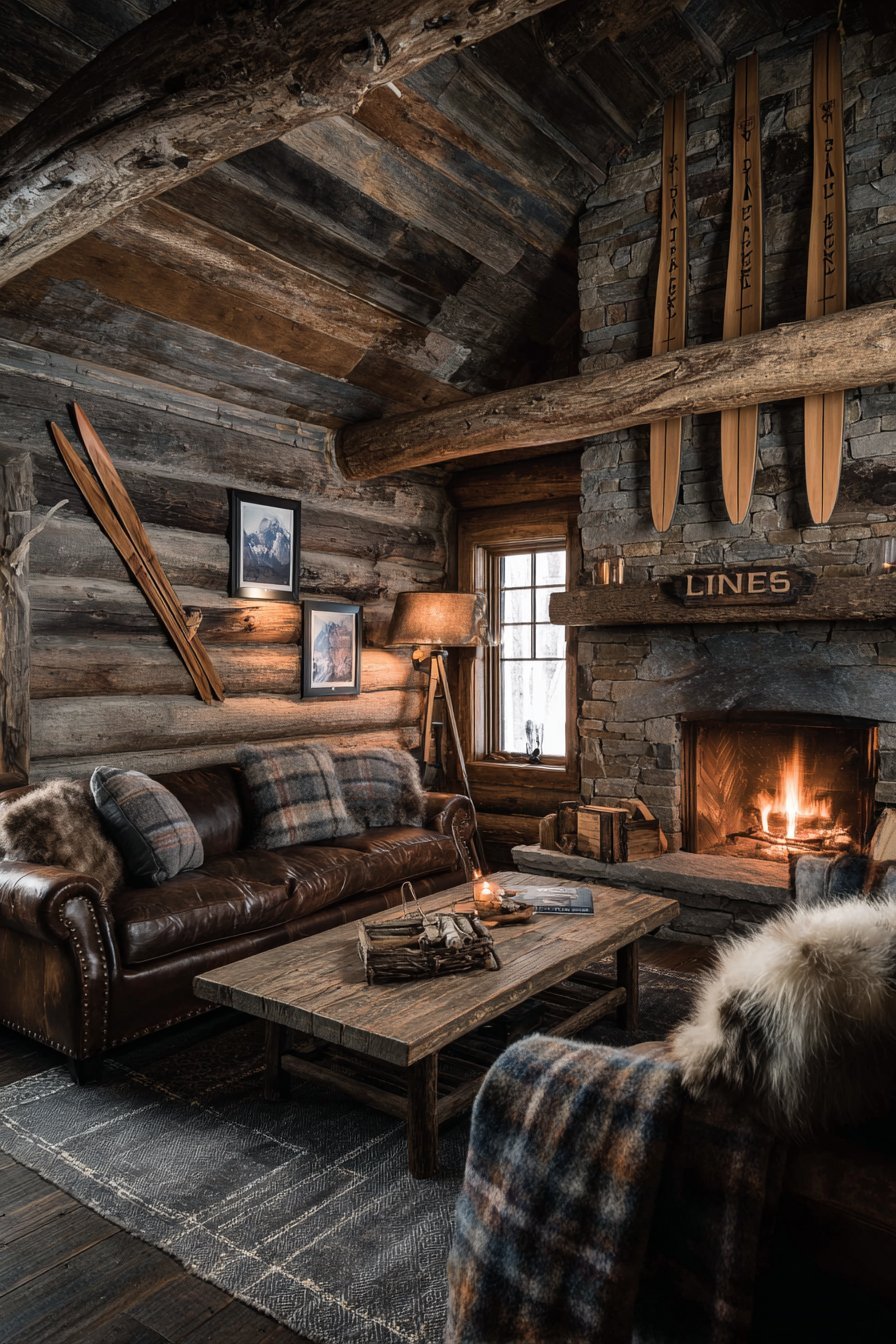
A reclaimed barn wood coffee table shows authentic wear and patina from previous life. Warm lamplight and fireplace glow supplement natural daylight from small windows. Interior design photography emphasizes rich wood tones and natural materials. The inviting cabin atmosphere transports viewers to mountain retreats.
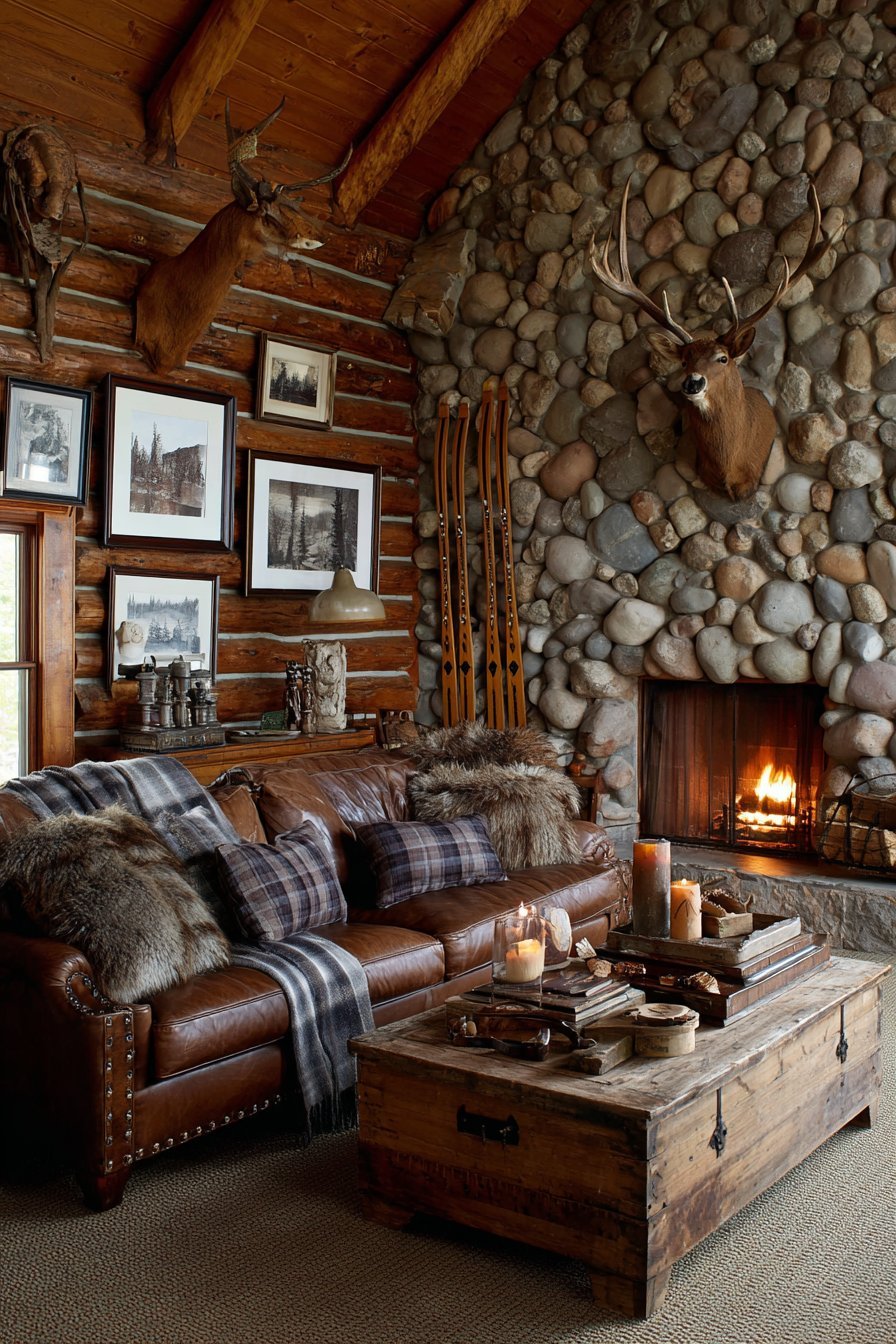
Lodge style celebrates connection to natural environments and outdoor activities. Authentic elements like mounted skis tell stories of winter adventures. These personal touches distinguish thoughtful design from generic cabin decoration.
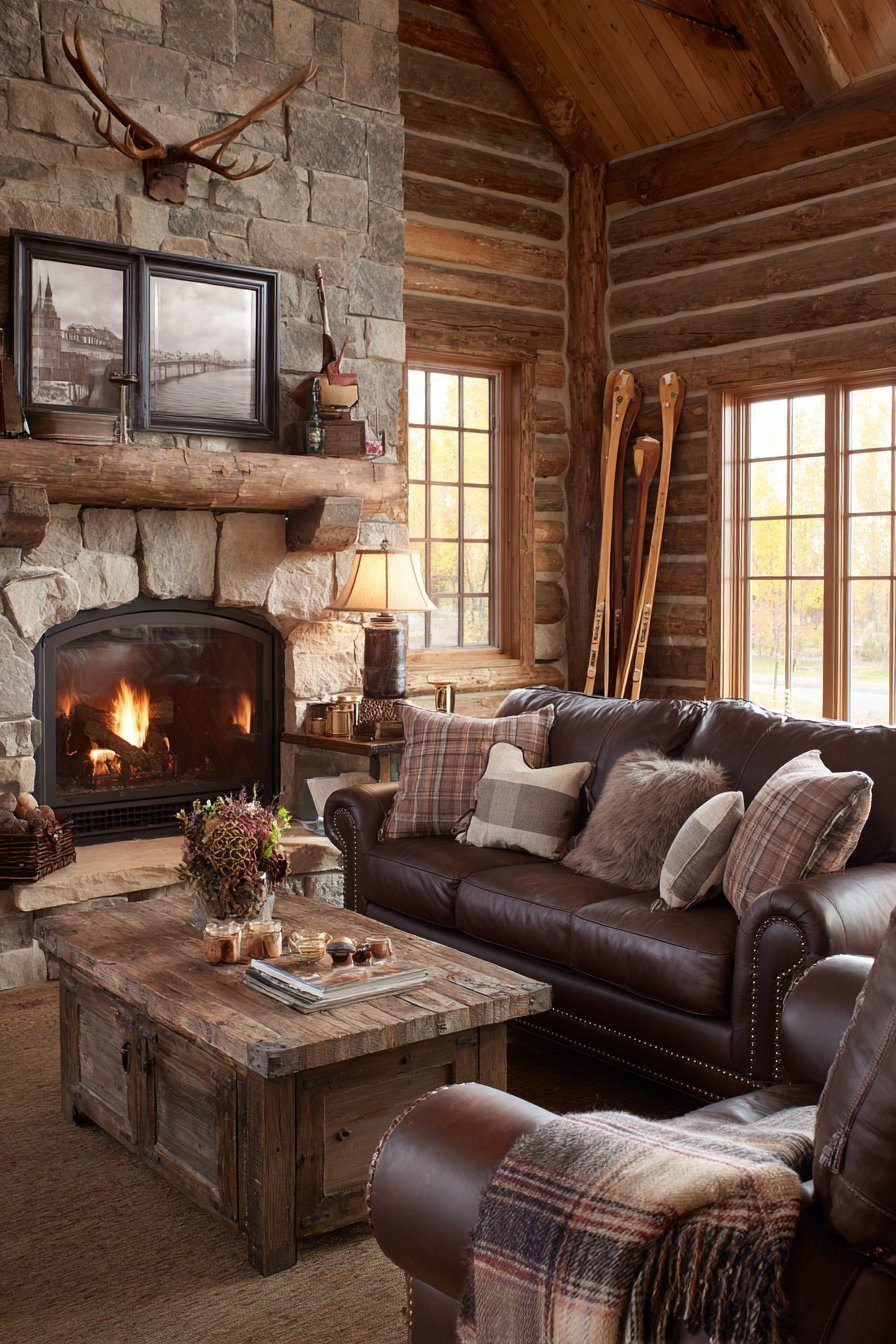
The layering of textiles creates essential warmth in rustic lodge spaces. Plaid wool, faux fur, and leather combine for tactile comfort. These materials invite curling up with a book on cold evenings.
Key Design Tips:
- Display authentic outdoor equipment as wall decor for personal connection
- Choose leather furniture that will develop rich patina over time
- Layer multiple throws and pillows in natural materials for comfort
- Incorporate stone elements through fireplace or accent walls
- Use warm ambient lighting to create cozy evening atmosphere
- Select reclaimed wood pieces with visible wear for authentic character
13. Art Deco Glamorous Geometry
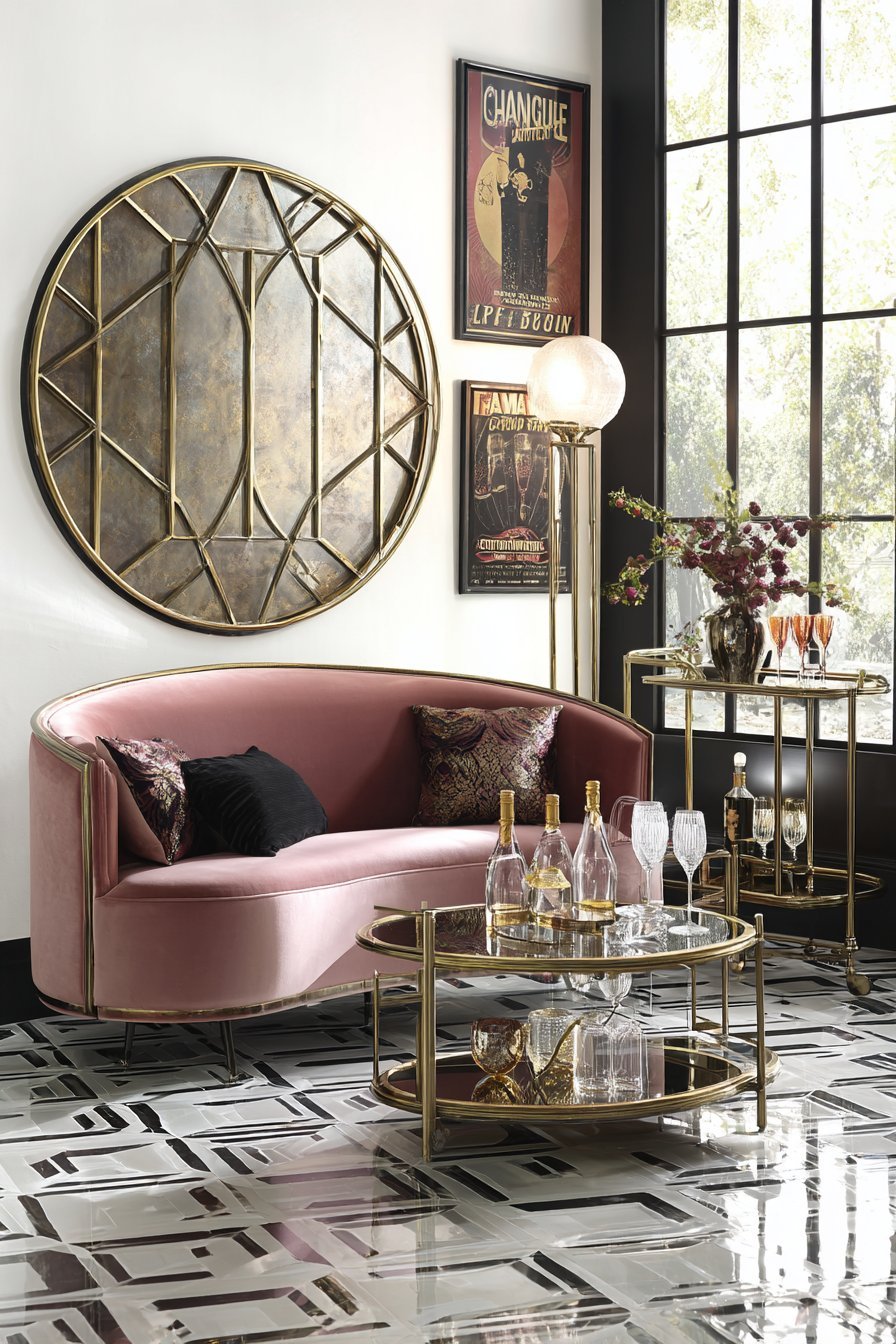
A large circular gold-framed mirror commands attention above geometric metal wall panels. Vintage champagne posters in black lacquer frames complete the sophisticated wall composition. A curved velvet sofa in dusty rose sits on black and white marble-look porcelain tile. A mirrored coffee table and brass bar cart add reflective surfaces that enhance light.
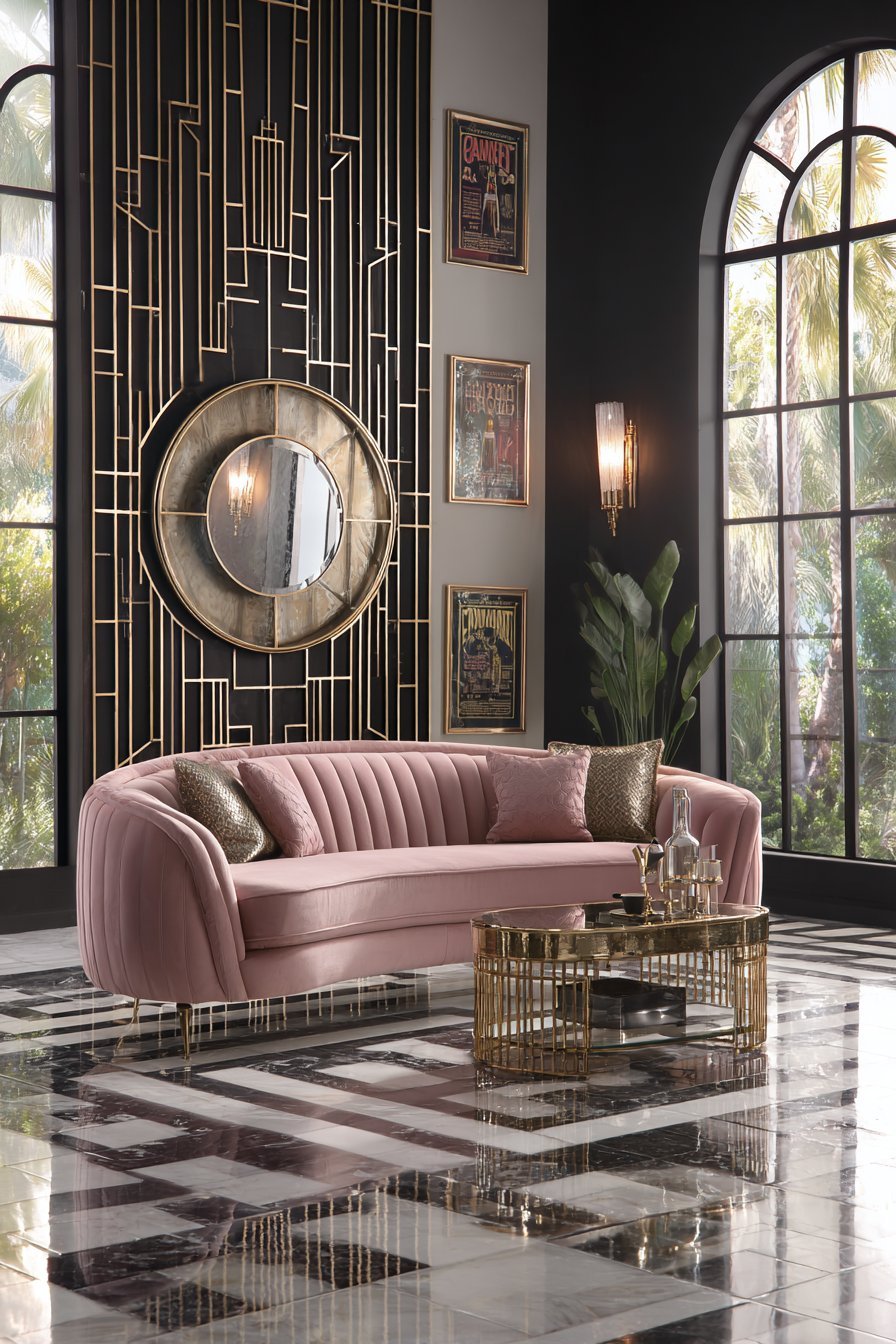
Wall sconces with frosted glass shades provide ambient lighting with period-appropriate style. Natural light from tall windows with black-framed panes creates dramatic contrasts. Professional interior photography highlights luxurious materials and geometric patterns. Sophisticated metallic accents receive particular attention in the lighting and composition.
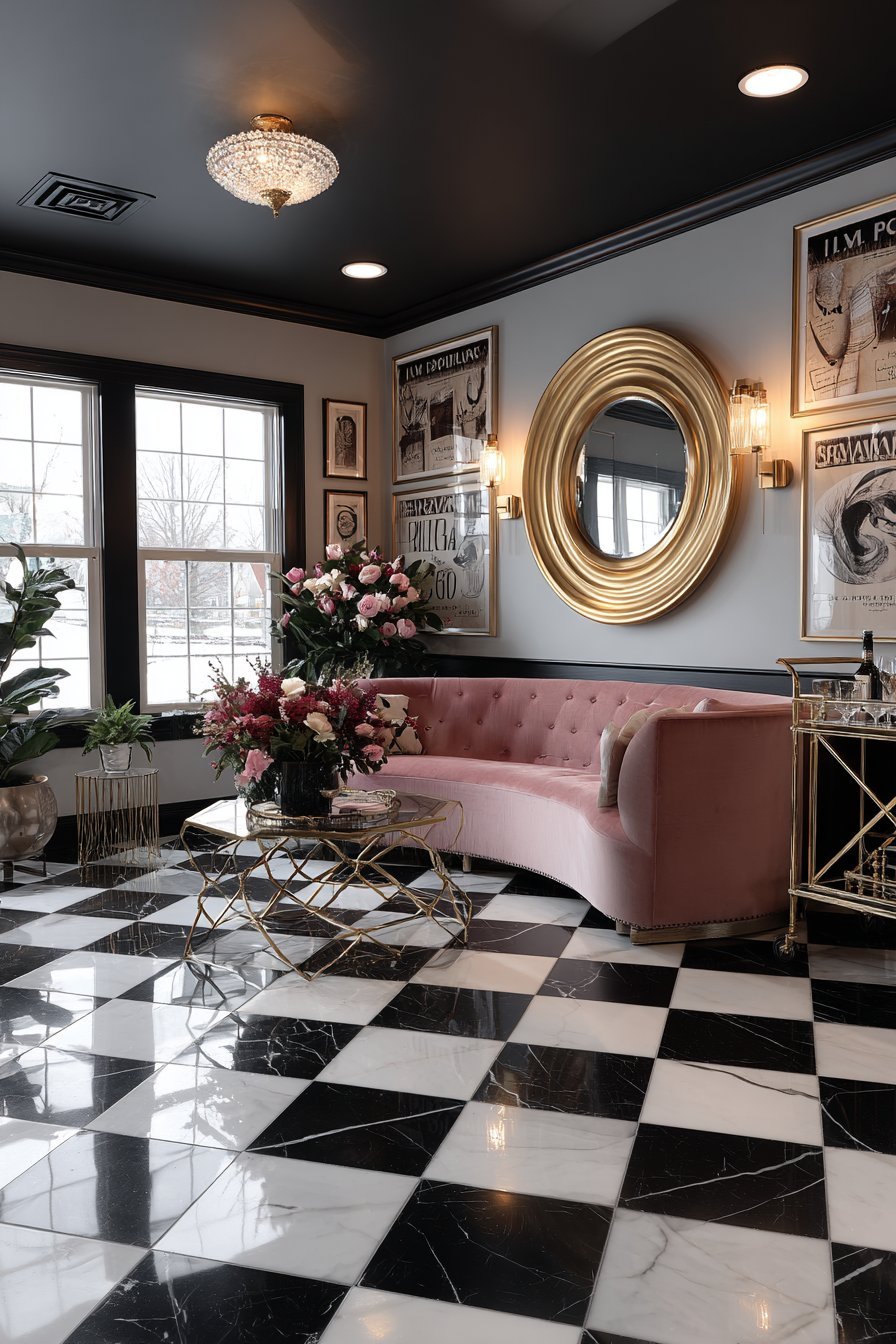
Art Deco celebrates geometric forms and luxurious materials. The style emerged during the 1920s and 1930s as modernism’s glamorous cousin. Today’s interpretations balance period authenticity with contemporary livability.
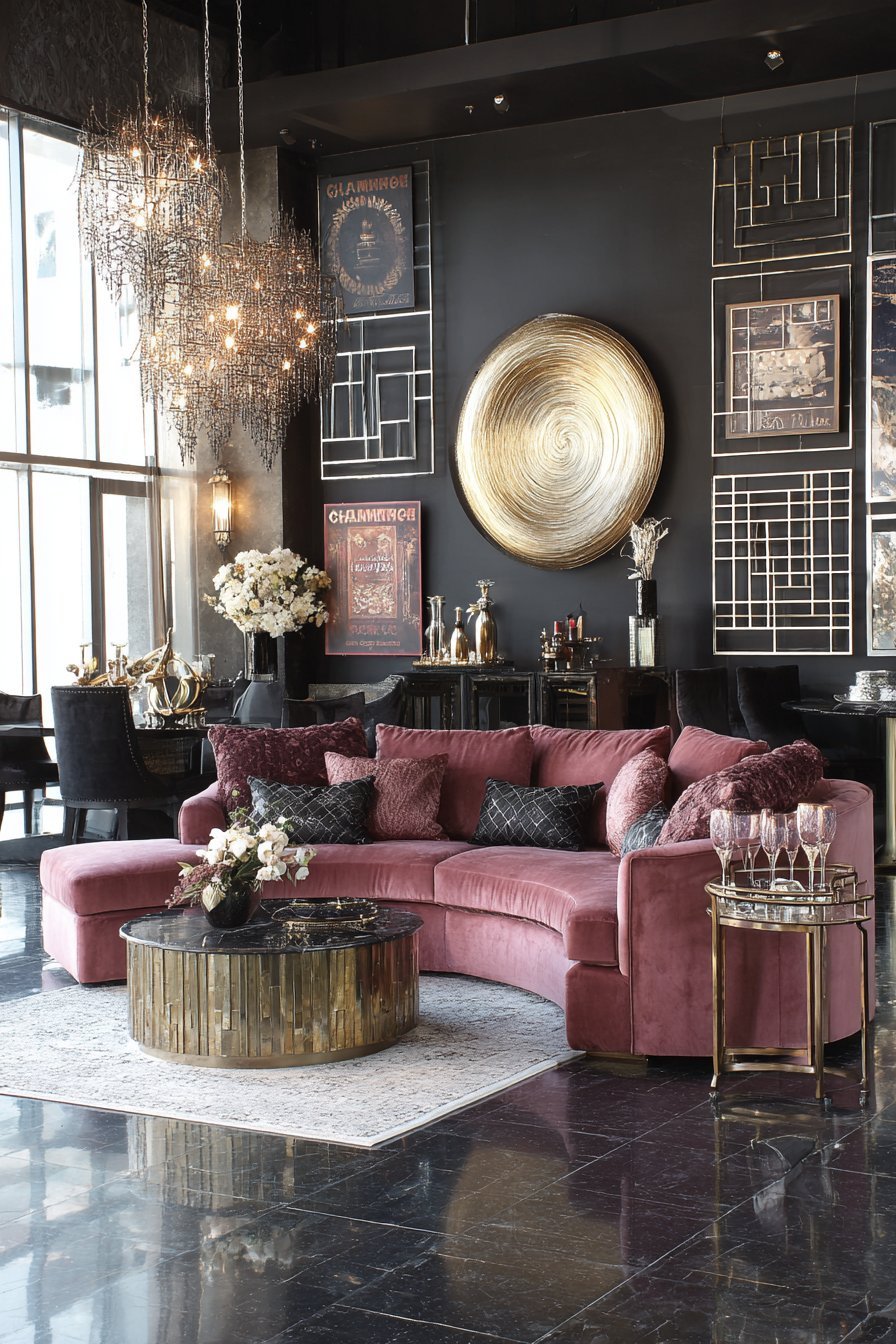
The dusty rose velvet adds feminine softness to the geometric rigidity. This balance prevents Art Deco from feeling cold despite its emphasis on hard materials. The curved sofa echoes the circular mirror creating visual harmony.
Key Design Tips:
- Incorporate geometric patterns through wall panels and tile floors
- Choose curved furniture to soften angular Art Deco elements
- Use metallic finishes in gold and brass for authentic glamour
- Select mirrored furniture to enhance light and create sparkle
- Display vintage posters from the Art Deco period for authenticity
- Install black-framed windows for dramatic architectural impact
14. Small Space Vertical Solutions
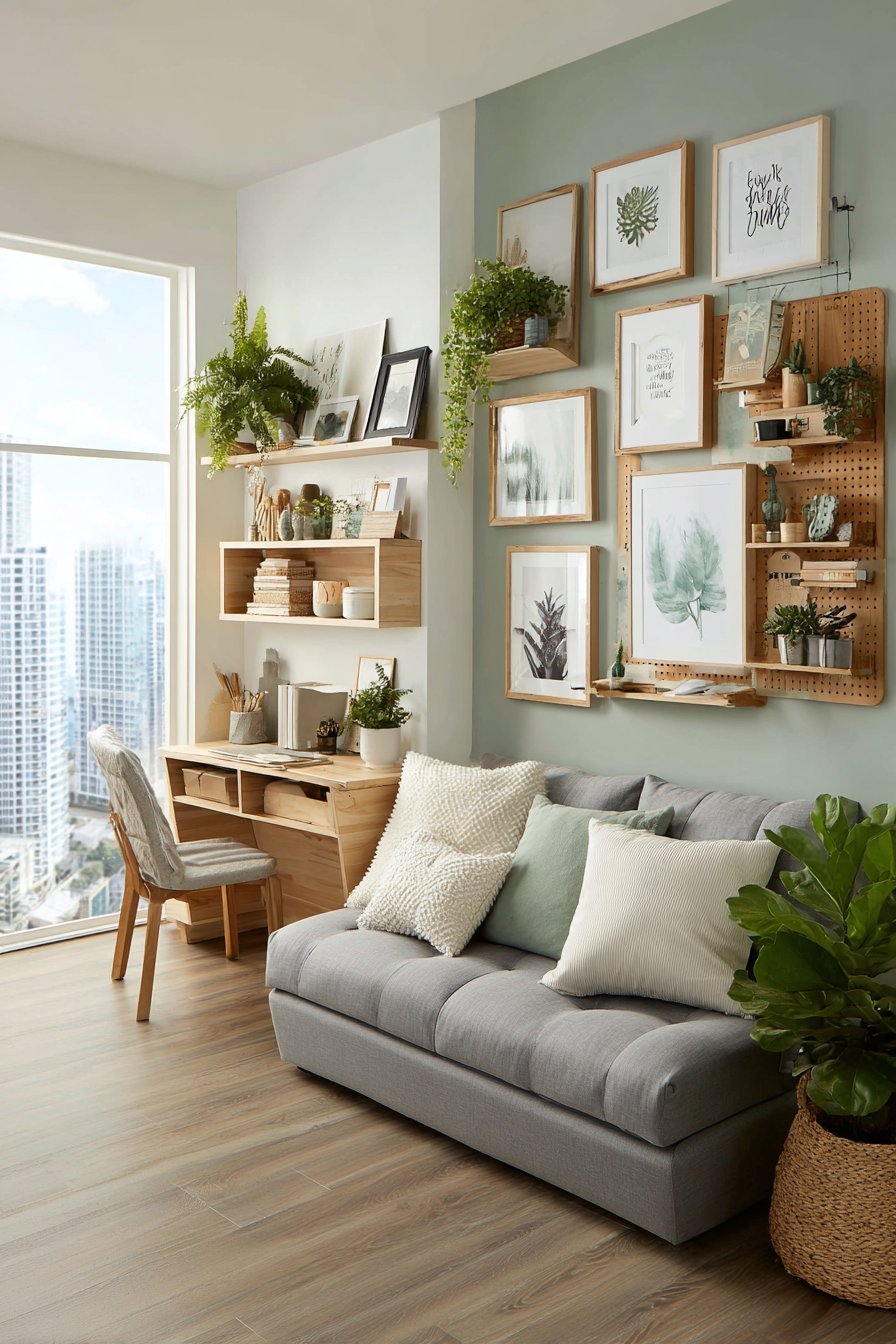
Smart vertical storage solutions integrate with decorative elements throughout the compact space. Floating shelves display plants and books while a fold-down desk features inspirational prints above. A pegboard wall organization system painted sage green combines function and aesthetics. A compact grey loveseat with storage ottoman maximizes seating capacity.
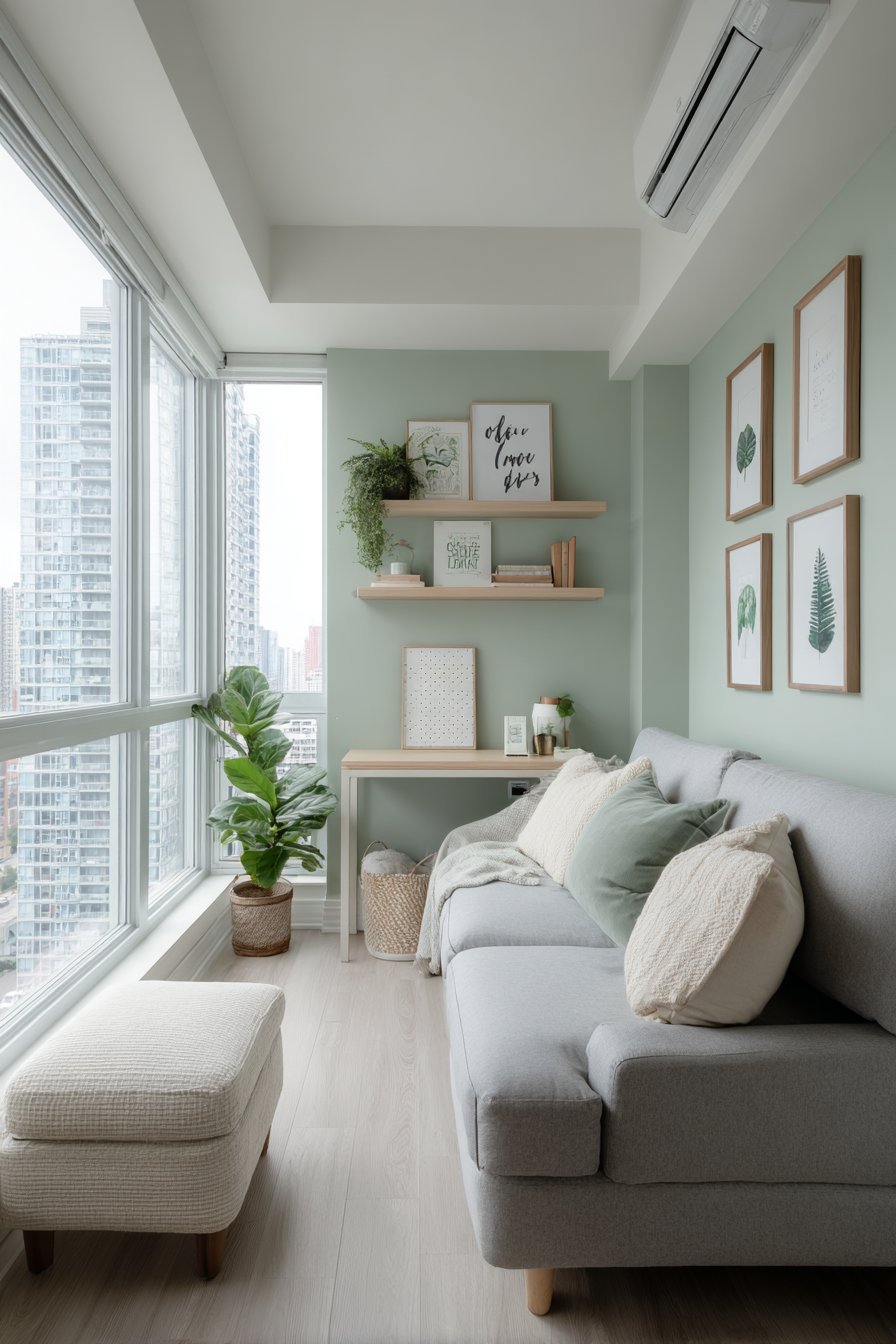
Light wood laminate flooring keeps the limited footprint feeling bright and open. A large mirror opposite the window reflects natural light throughout the room. Wide-angle interior photography shows efficient space utilization while maintaining uncluttered aesthetic. The airy atmosphere belies the room’s actual dimensions.
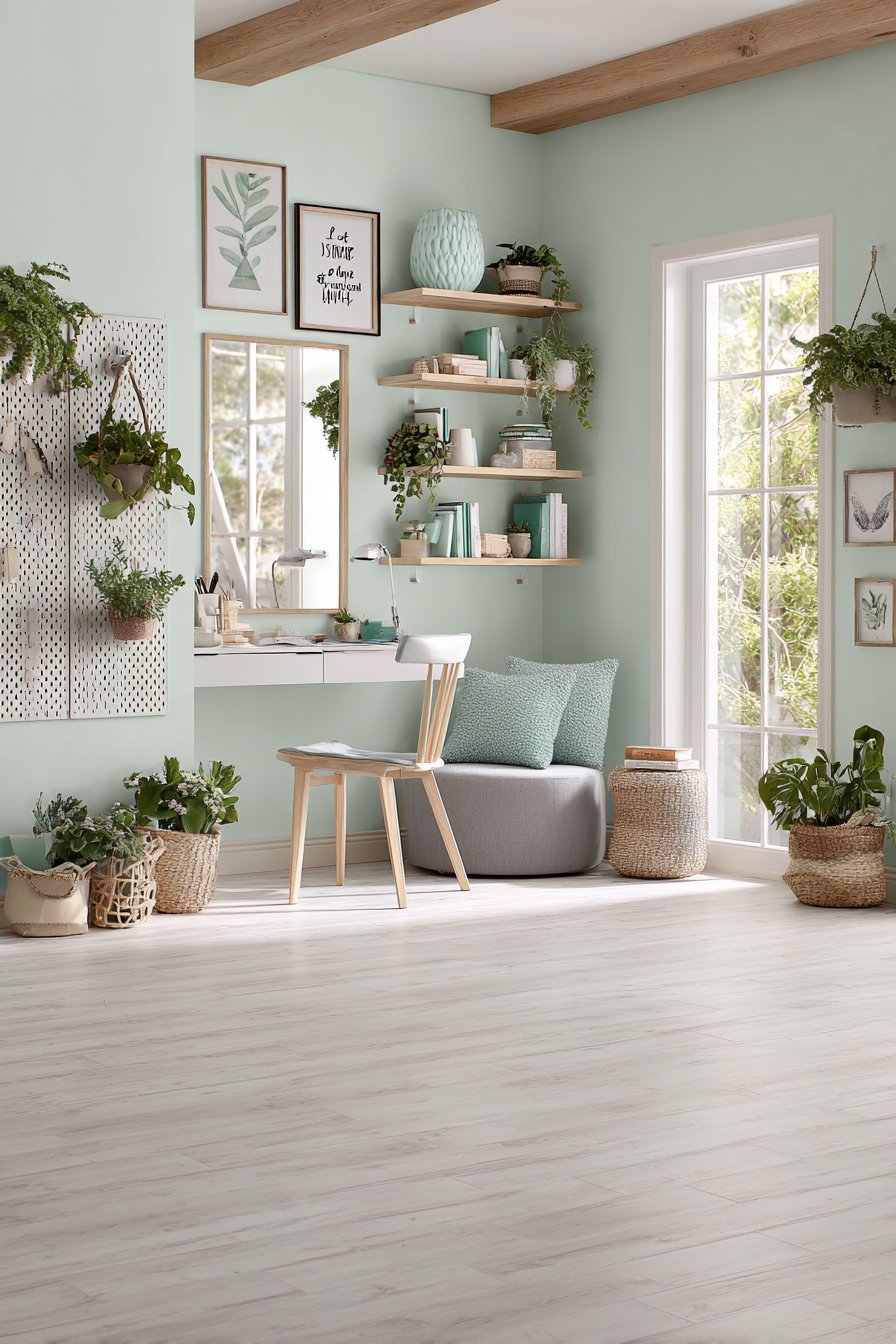
Small space design requires ruthless editing and multi-functional thinking. Every piece must justify its presence through beauty and utility. Purely decorative items become luxuries in limited square footage.
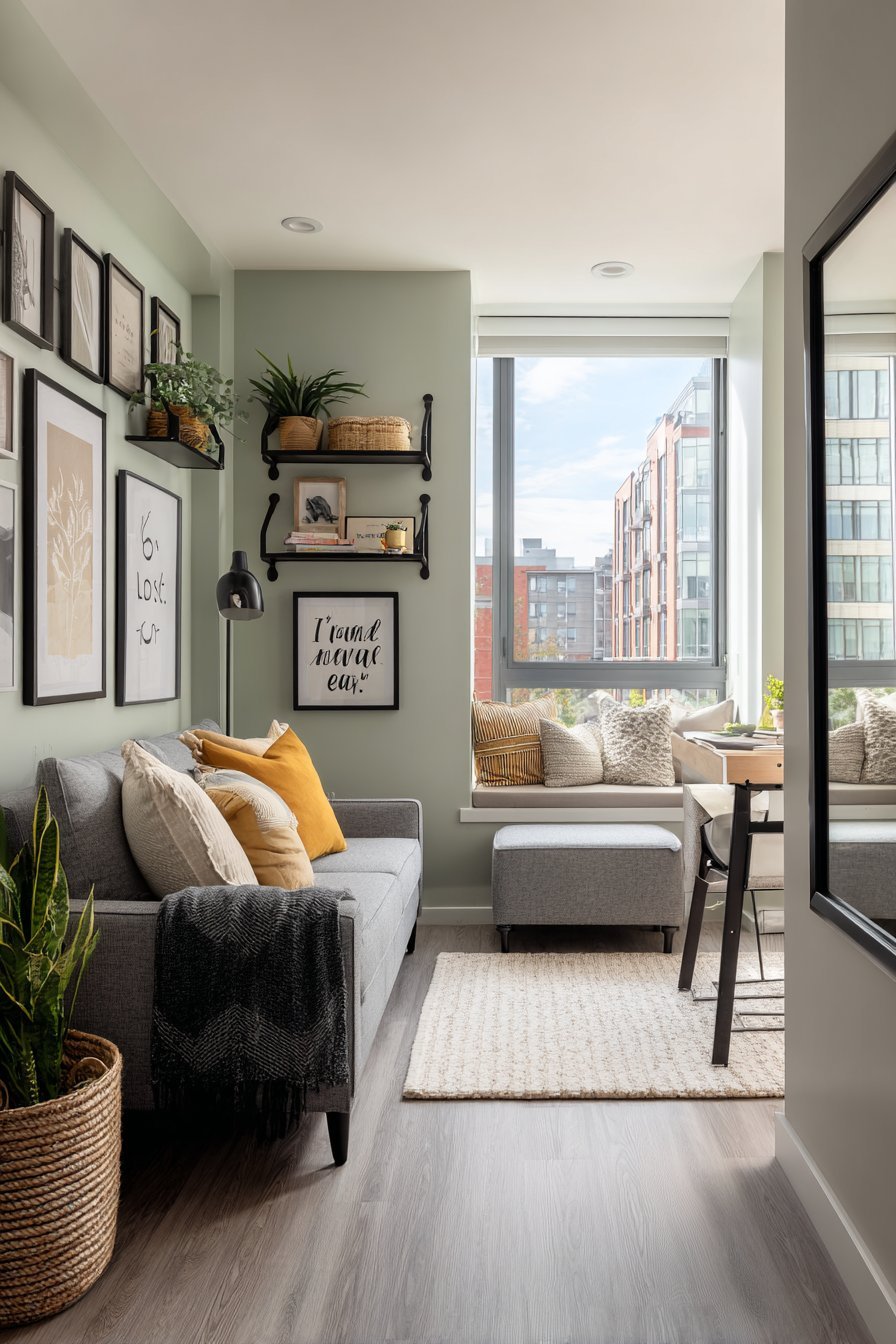
The vertical emphasis draws the eye upward making ceilings feel higher. This visual trick creates impression of greater spaciousness. Floor space remains relatively clear enhancing flow and openness.
Key Design Tips:
- Maximize vertical wall space with floating shelves and wall-mounted storage
- Choose furniture with built-in storage to minimize separate pieces
- Use large mirrors to reflect light and create illusion of space
- Select light-colored flooring to enhance brightness in small rooms
- Paint storage solutions in cohesive colors rather than leaving unfinished
- Keep floor space clear to maximize perceived spaciousness
15. Transitional Bridge Between Eras

A classic gilt-framed landscape painting pairs with modern black and white photography. Coordinating mats and professional framing connect the disparate styles. A neutral linen sofa with both rolled and track arms bridges design periods. The mix of traditional Persian rug and modern acrylic coffee table creates visual interest through contrast.
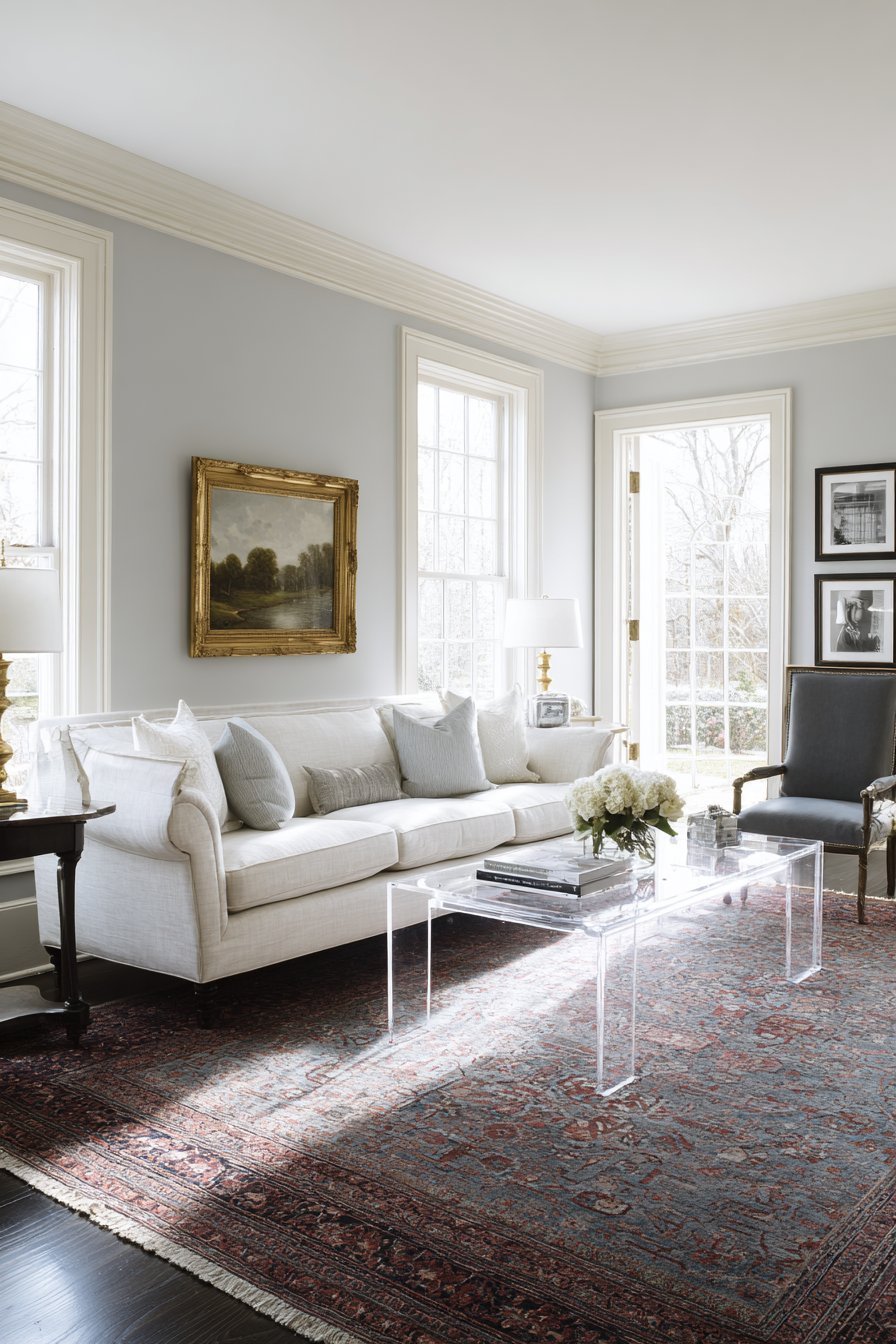
Soft grey walls provide diplomatic backdrop allowing both traditional and contemporary elements to coexist. Natural afternoon light creates dimension across the varied surfaces. Interior design photography emphasizes successful fusion of old and new. The refined color palette maintains cohesion despite style mixing.
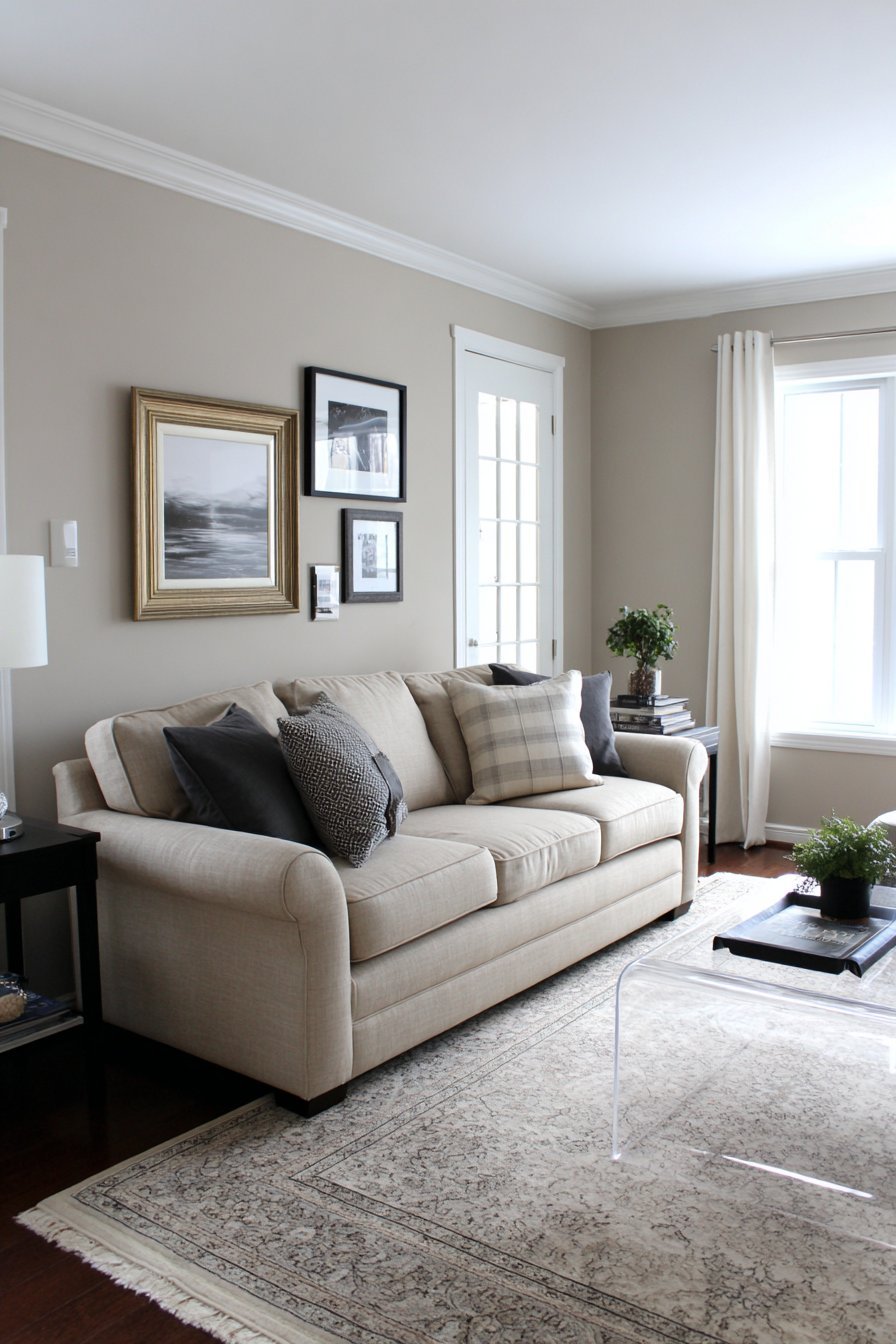
Transitional design serves homeowners who appreciate both traditional comfort and contemporary simplicity. The style allows evolution over time as tastes shift. Pieces can be added or removed without destroying the overall aesthetic.
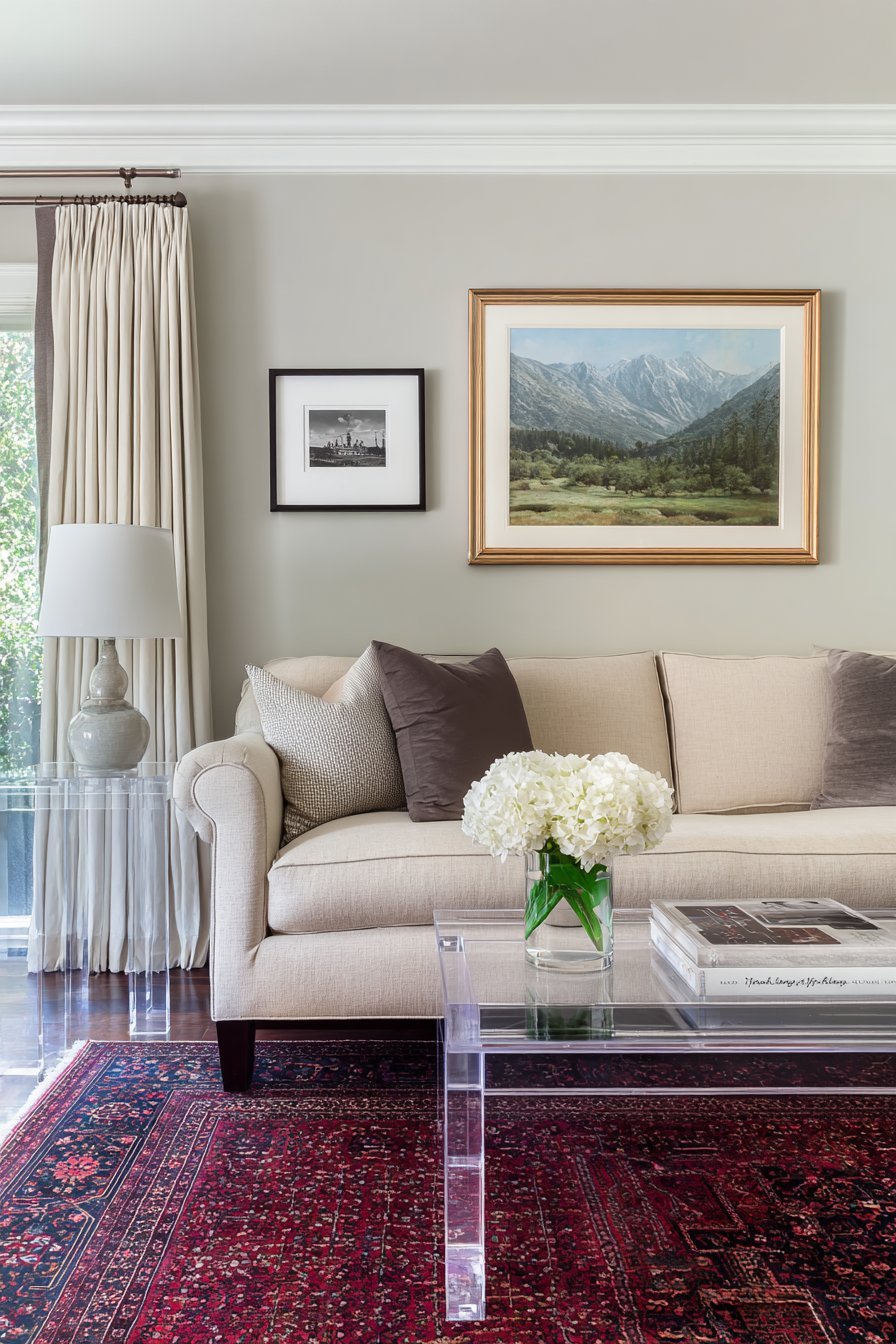
The key to successful transitional design lies in maintaining balance. Neither traditional nor contemporary elements should dominate completely. The fifty-fifty split creates harmonious tension rather than confusion.
Key Design Tips:
- Mix traditional and contemporary art through coordinating frames and mats
- Choose transitional furniture with elements from both design periods
- Use neutral wall colors to allow diverse styles to coexist
- Pair traditional rugs with modern furniture or vice versa
- Maintain balance between old and new elements throughout space
- Select timeless pieces that transcend specific style periods
16. Japandi Zen Minimalism
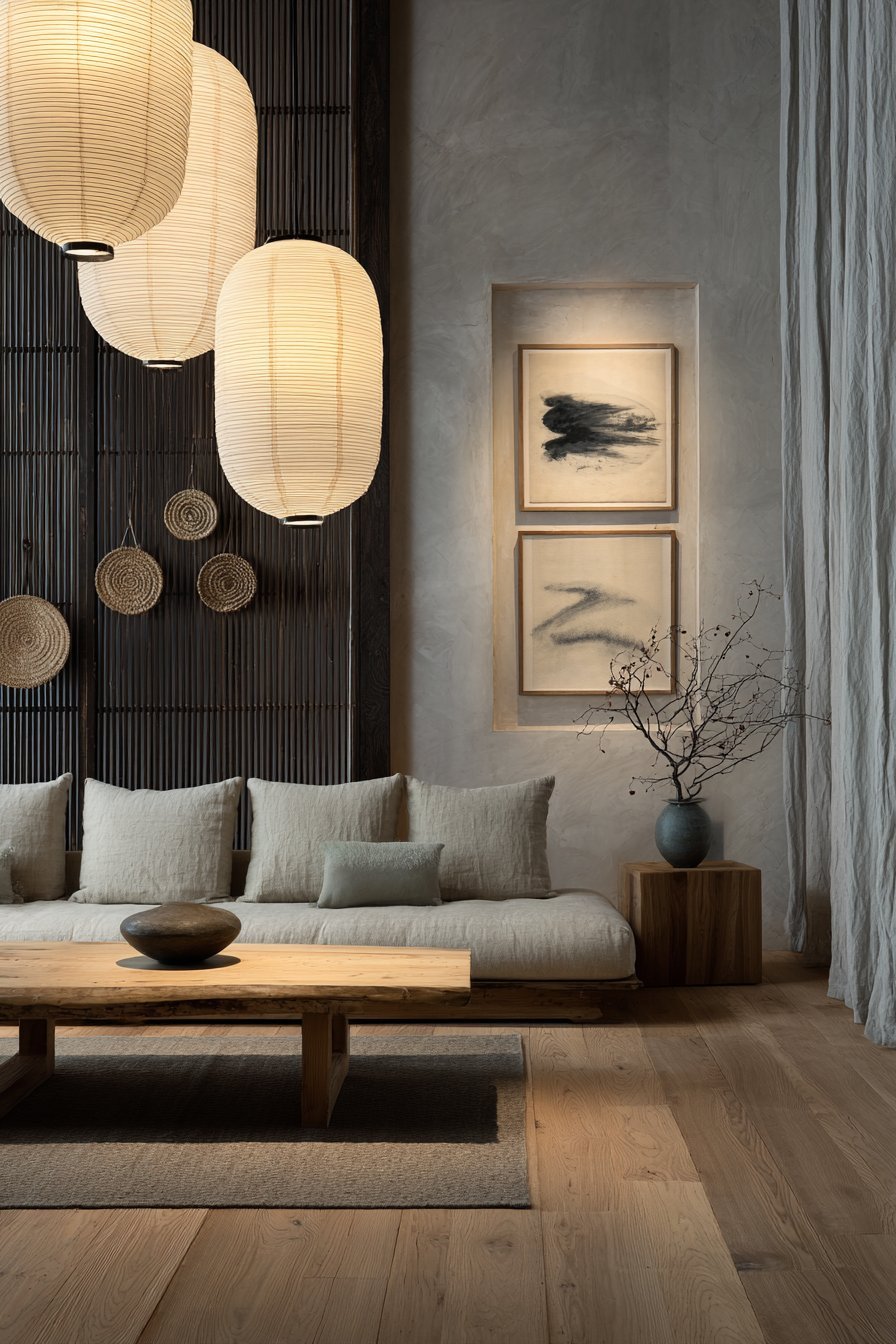
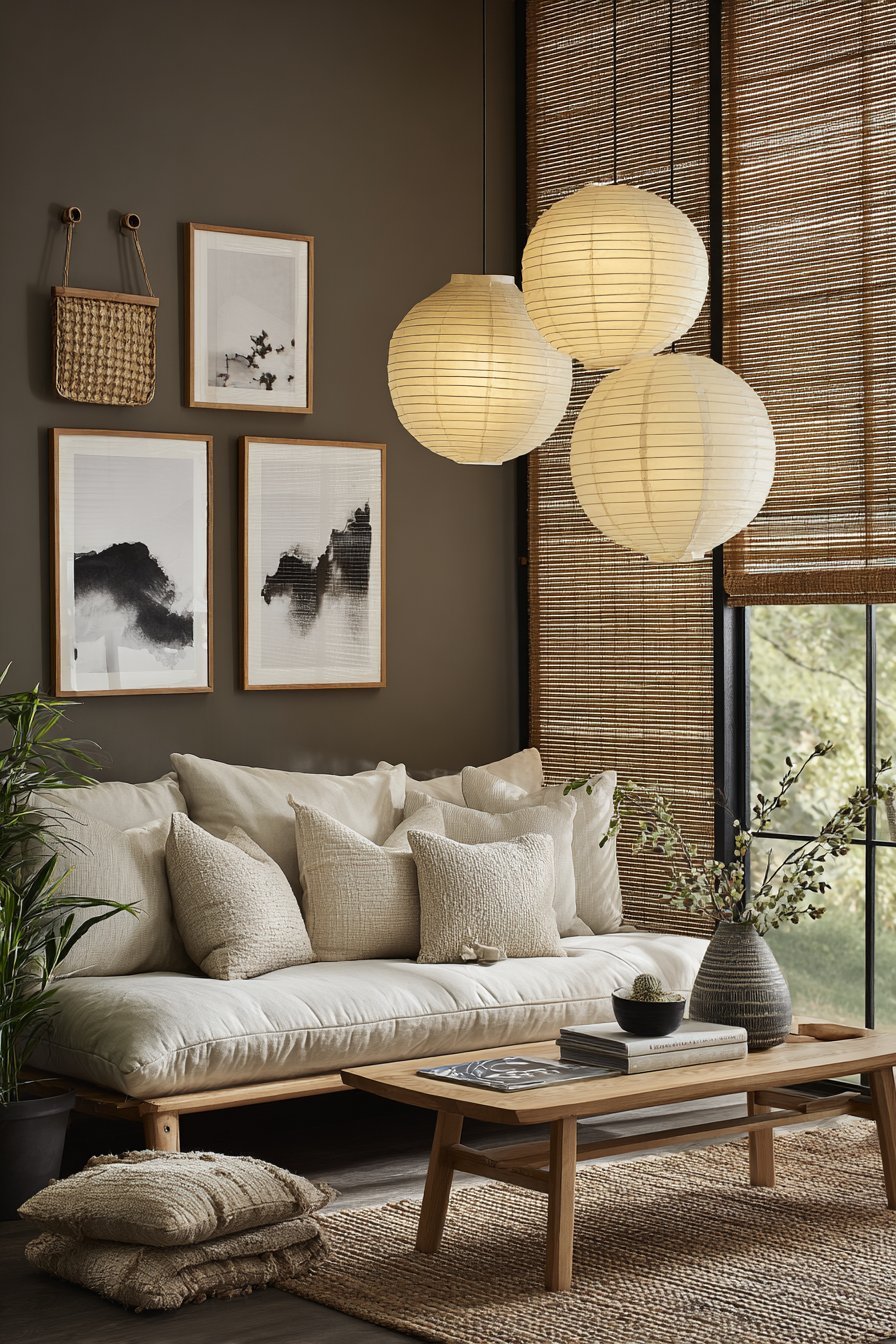
Minimal zen-inspired wall decor includes single ikebana arrangement in wall-mounted niche. Simple black ink brush paintings in natural wood frames provide subtle artistic interest. Functional wooden wall hooks display woven baskets combining beauty and utility. A low-profile sofa in natural linen sits on tatami-style mats connecting to Japanese tradition.
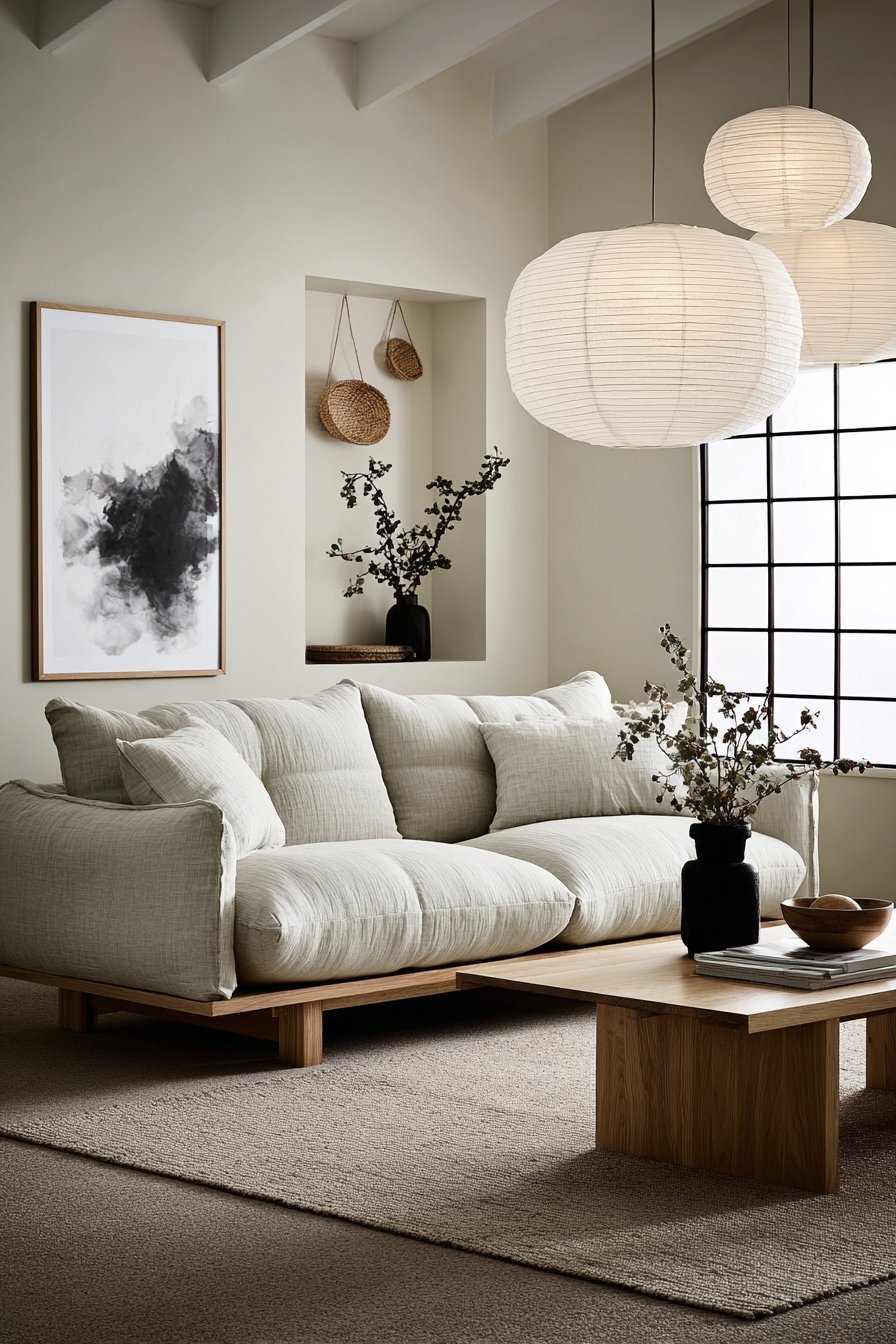
A live edge coffee table in light oak provides organic form within the structured space. Paper lantern pendant lights cast soft ambient glow creating serene atmosphere. Shoji screen-inspired window treatments filter gentle daylight. Professional interior photography captures the harmonious balance of Japanese and Scandinavian design principles.
Japandi combines Japanese minimalism with Scandinavian functionality and warmth. The fusion feels natural as both cultures value simplicity and natural materials. The result offers warmth often missing from purely minimalist spaces.
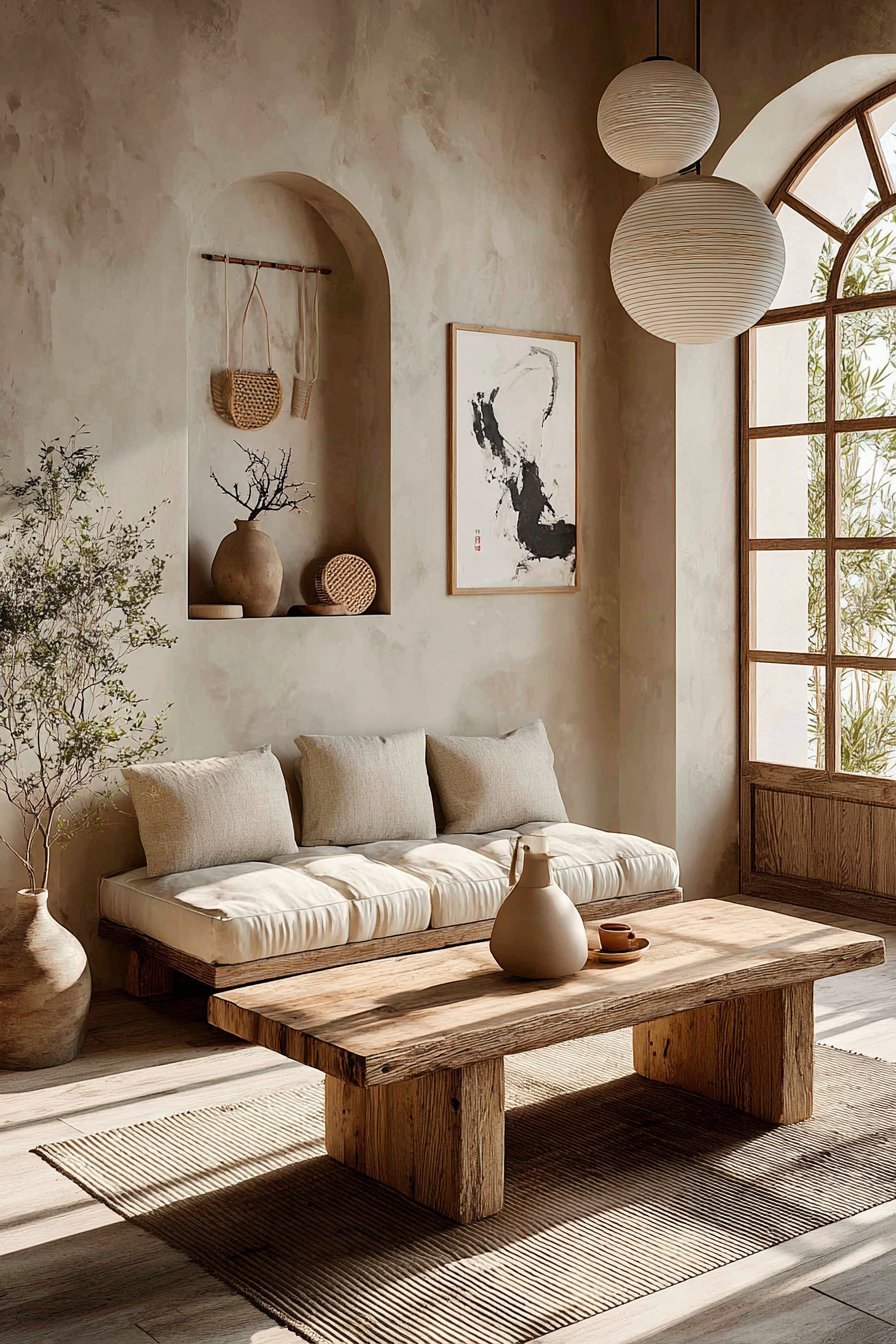
The emphasis on natural materials creates organic connection despite minimal aesthetic. Light oak, natural linen, woven fibers, and paper all reference nature. These materials ground the simplicity in tangible physical reality.
Key Design Tips:
- Incorporate Japanese elements like ikebana and shoji screens thoughtfully
- Choose low-profile furniture reflecting Japanese floor-sitting traditions
- Use natural materials exclusively for authentic Japandi aesthetic
- Install paper lantern lighting for soft diffused illumination
- Display single perfect objects rather than multiple decorative items
- Maintain clear floor space reflecting Japanese spatial principles
17. Terracotta and Navy Color Story
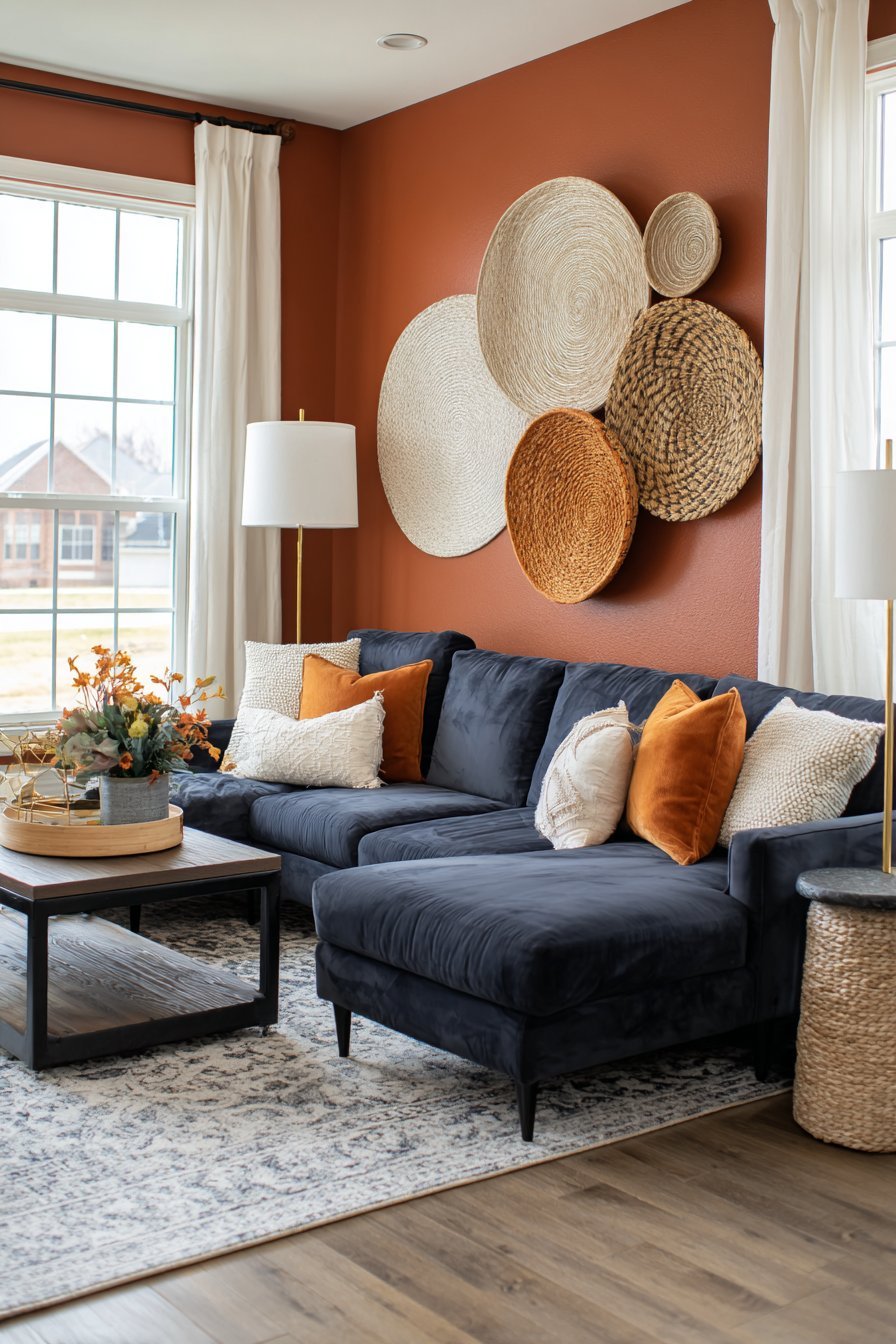
A bold statement wall painted in deep terracotta provides warm backdrop for handwoven wall baskets. The baskets vary in size and natural fiber tones creating textural wall installation. A navy blue velvet sectional provides rich contrast against white oak floors. Throw pillows in mustard yellow, burnt orange, and cream create curated color story.
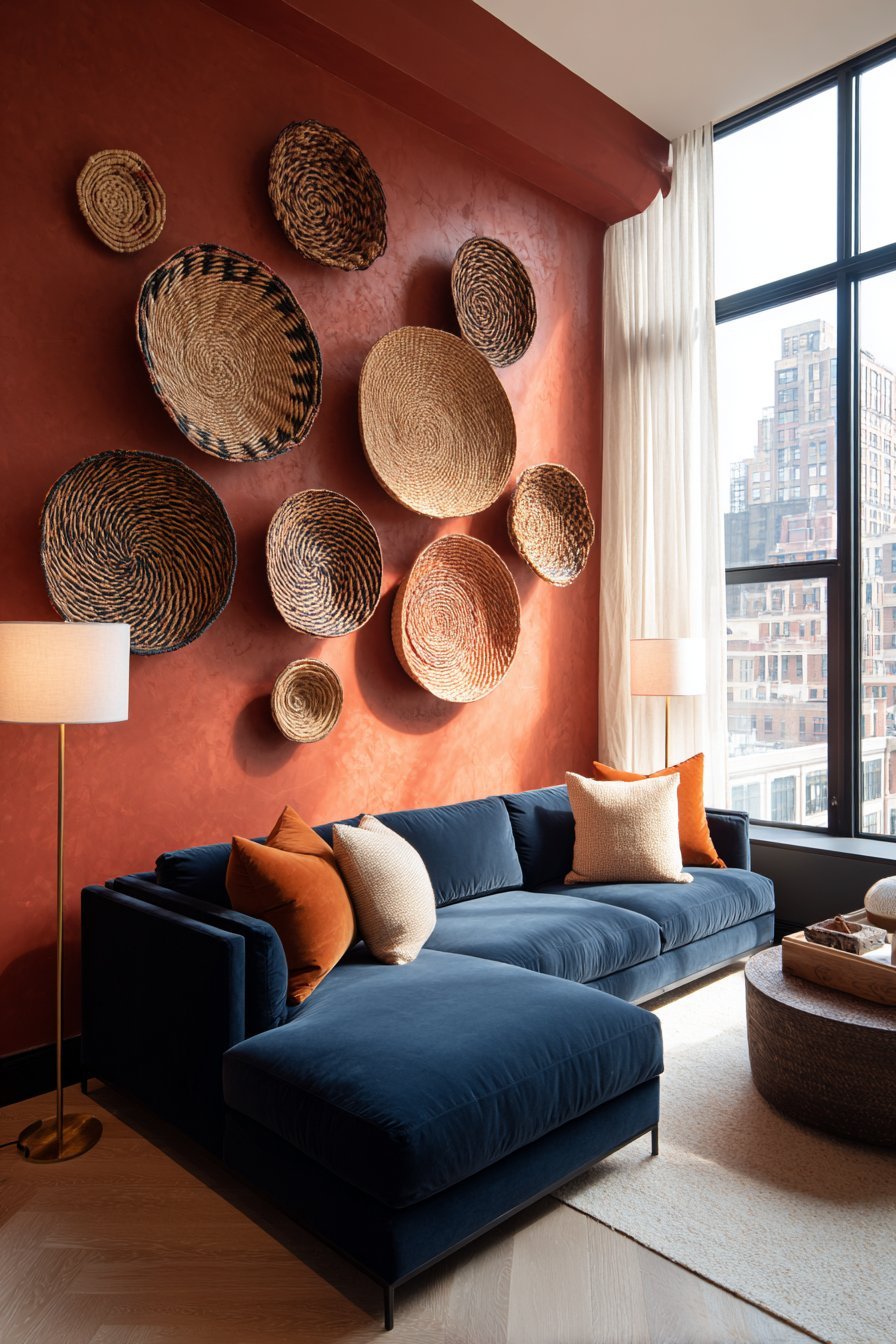
Modern brass floor lamps with white linen shades provide task lighting. Large windows with minimal white curtains allow bright natural light to enhance warm color palette. Wide-angle interior design photography captures vibrant color saturation. Attention focuses on interplay of warm and cool tones throughout the composition.
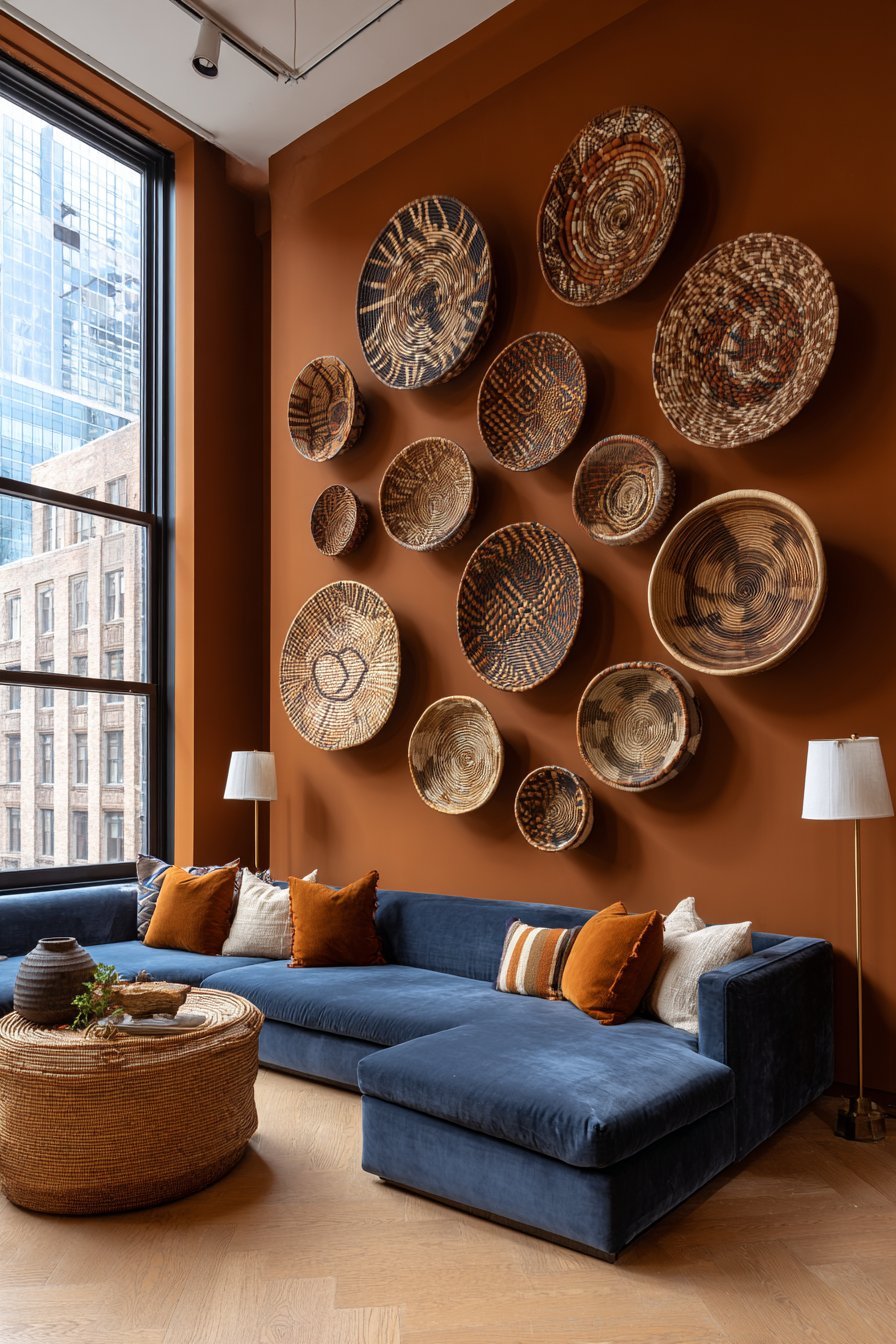
The terracotta and navy combination creates sophisticated warmth. The deep blue prevents the orange from feeling overly rustic or southwestern. This unexpected pairing demonstrates confident color mixing.
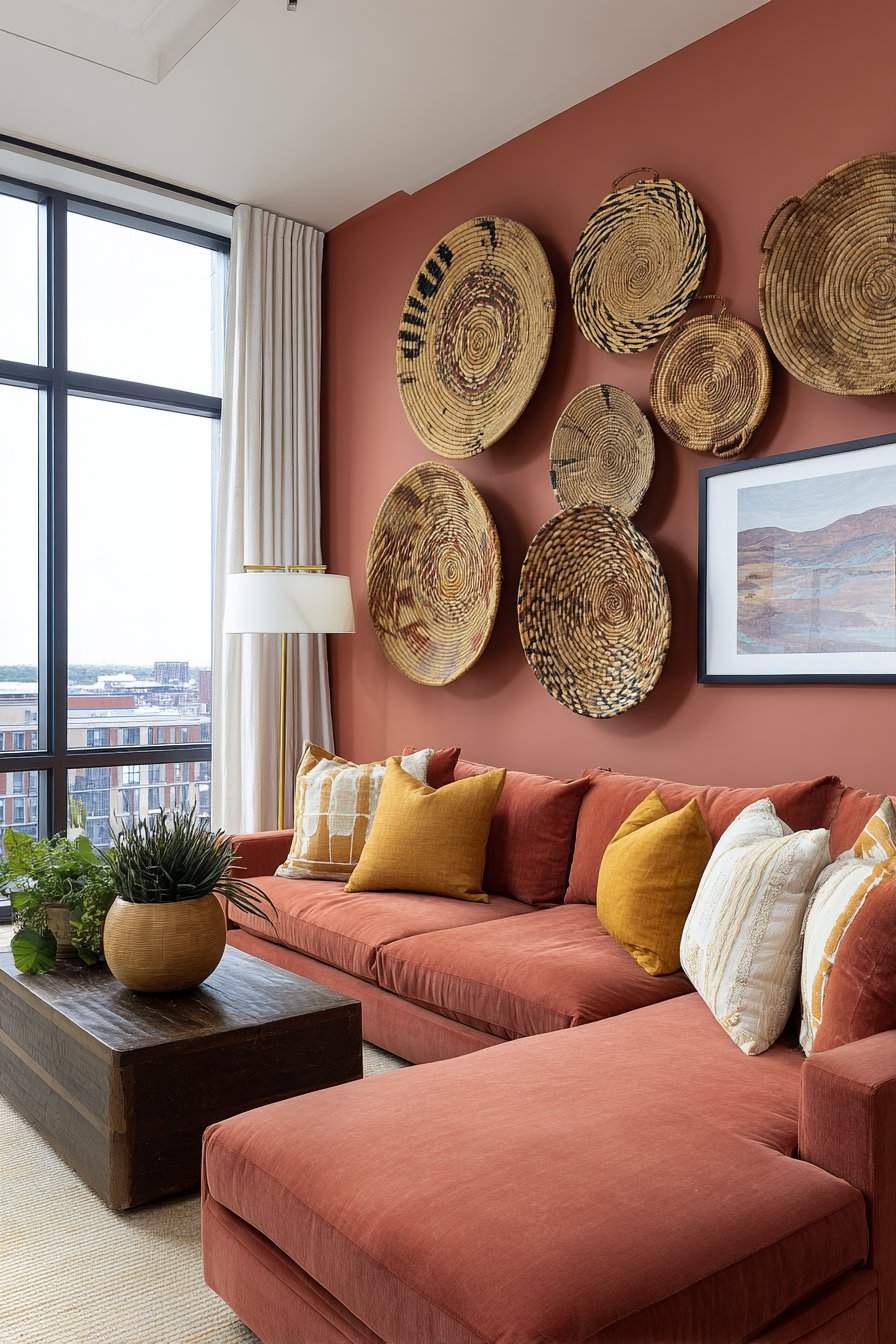
The curated pillow palette extends the color story across the space. Mustard yellow bridges the orange and blue while cream provides visual rest. This thoughtful approach prevents the bold colors from overwhelming.
Key Design Tips:
- Paint single accent walls in bold colors rather than entire rooms
- Choose complementary color schemes like orange and blue for sophistication
- Use handwoven natural fiber baskets as textural wall art
- Select velvet upholstery in jewel tones for rich color saturation
- Curate throw pillow colors to extend and bridge main color story
- Allow natural light to enhance warm paint colors throughout the day
18. French Country Romantic Patina
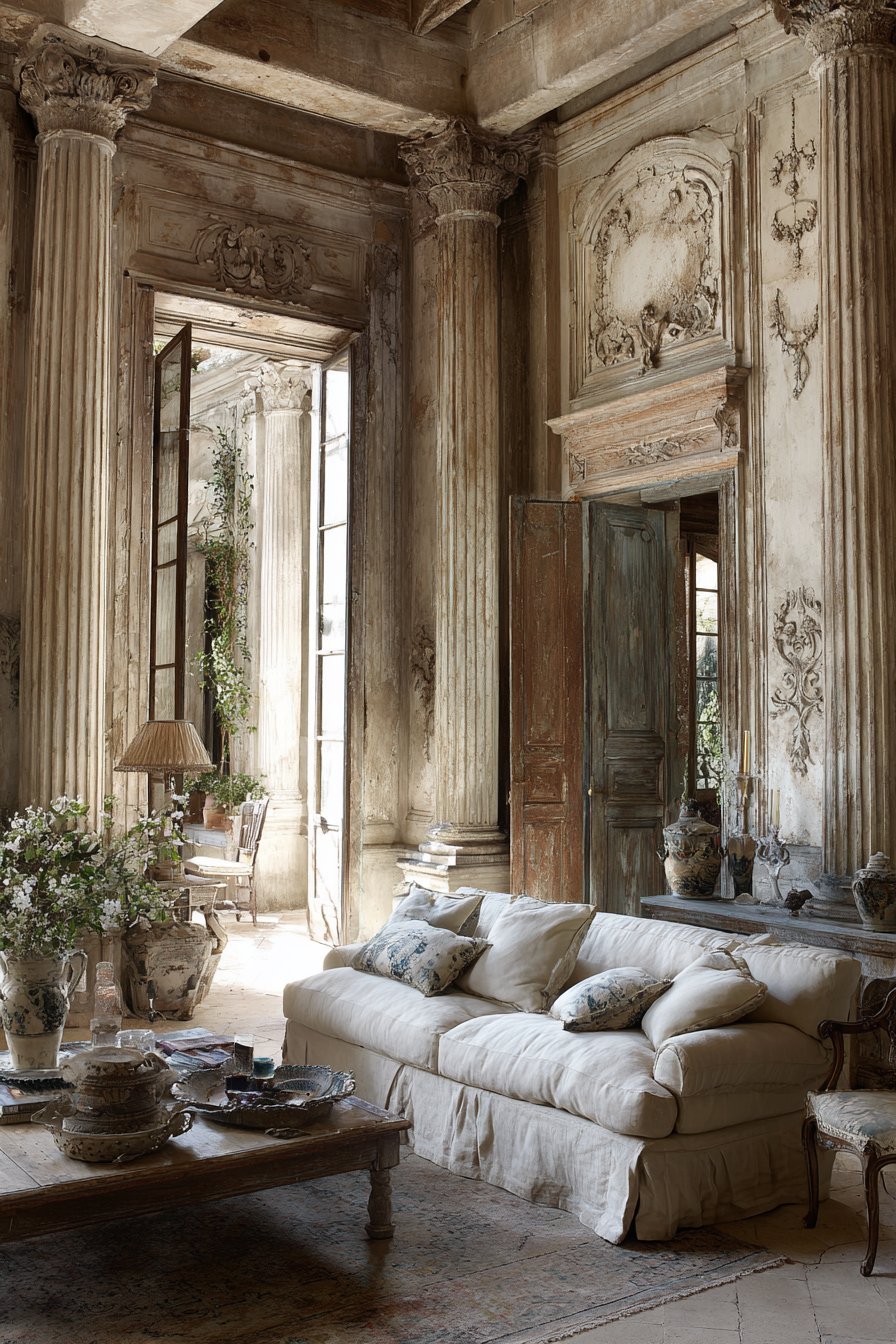
Vintage architectural salvage pieces create unique wall composition. An antique window frame, distressed wooden shutters, and ornate plaster medallions arrange asymmetrically on soft butter yellow walls. A linen slipcovered sofa with ruffled skirt embodies casual elegance. Toile fabric accent pillows and faded Aubusson-style rug add pattern layers.

A weathered wooden coffee table displays French pottery creating vignettes. Natural light from tall windows with simple linen panels creates sun-drenched atmosphere. Interior photography emphasizes aged patina and soft romantic palette. The collected-over-time aesthetic demonstrates authentic French country style.
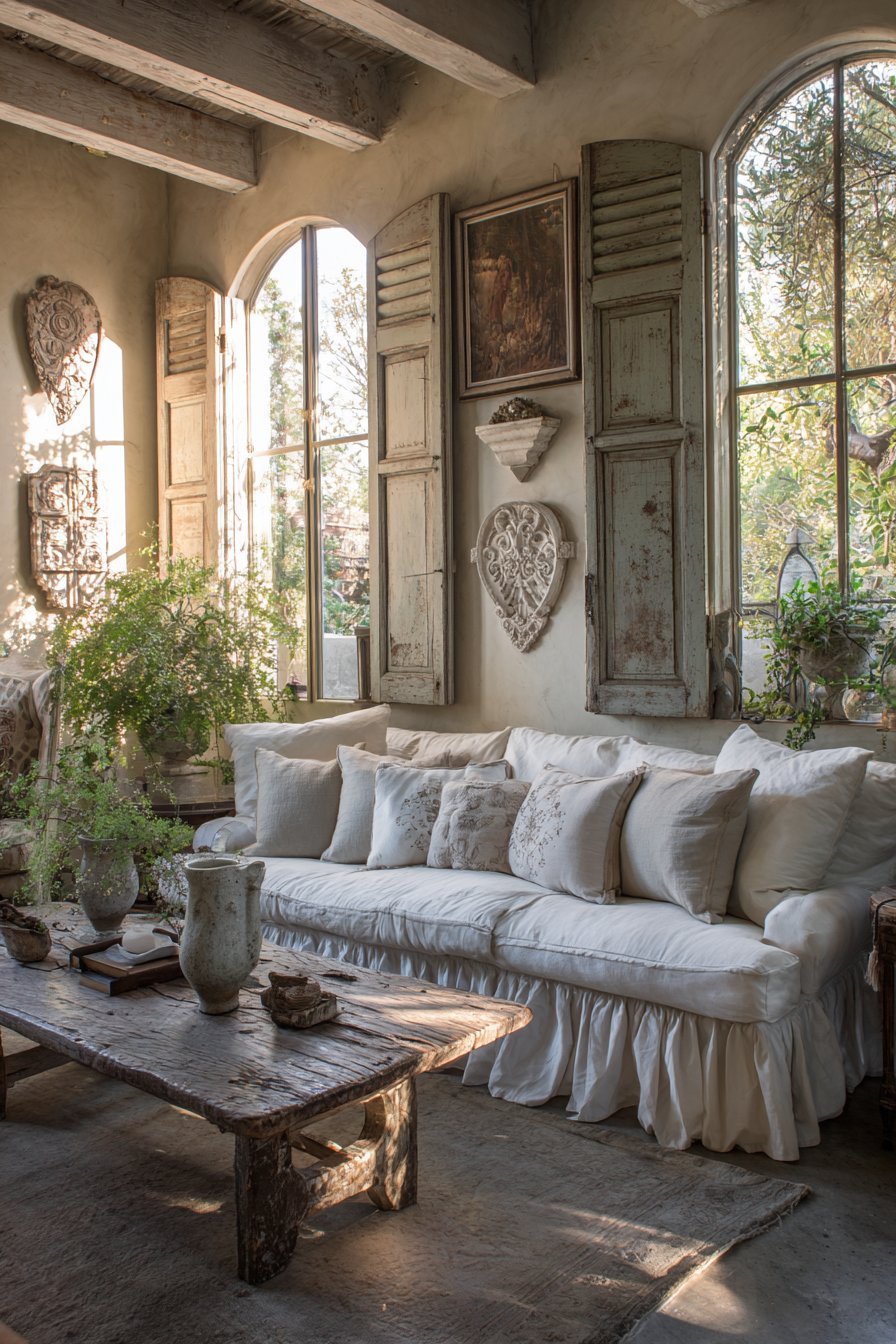
French country celebrates imperfection and accumulated beauty. Nothing looks too new or precious. The weathered finishes suggest generations of loving use and careful preservation.
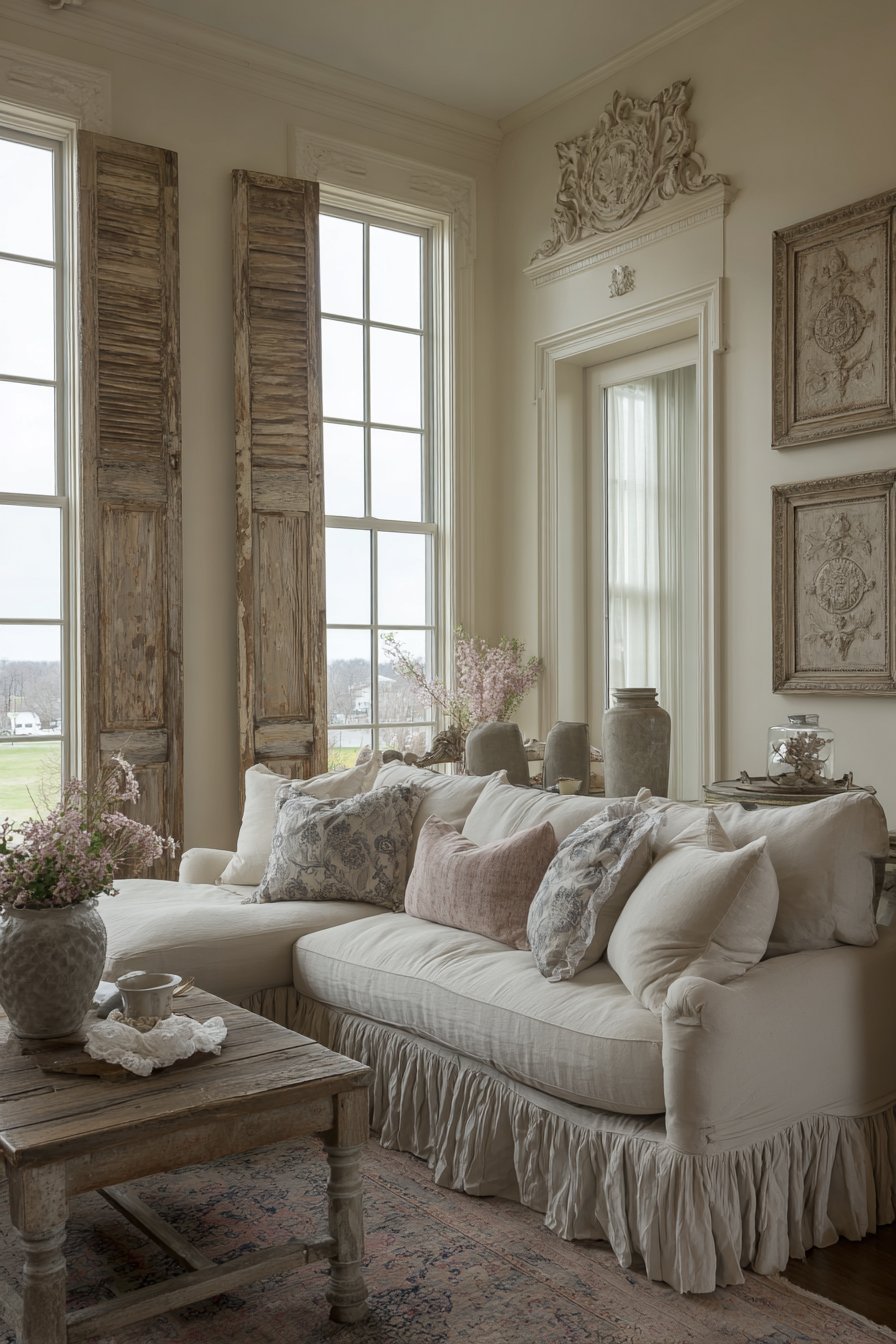
The soft butter yellow walls provide warm glow reminiscent of French countryside light. This warm backdrop enhances the white and cream textiles. The overall effect feels romantic without being overly feminine.
Key Design Tips:
- Source authentic vintage architectural elements from salvage yards
- Choose slipcovered furniture with traditional details like ruffled skirts
- Layer patterns through toile fabrics and traditional area rugs
- Paint walls in soft butter yellow for warm French country glow
- Display collections of French pottery and ironstone
- Use simple natural linen window treatments for casual elegance
19. Modern Organic Natural Materials
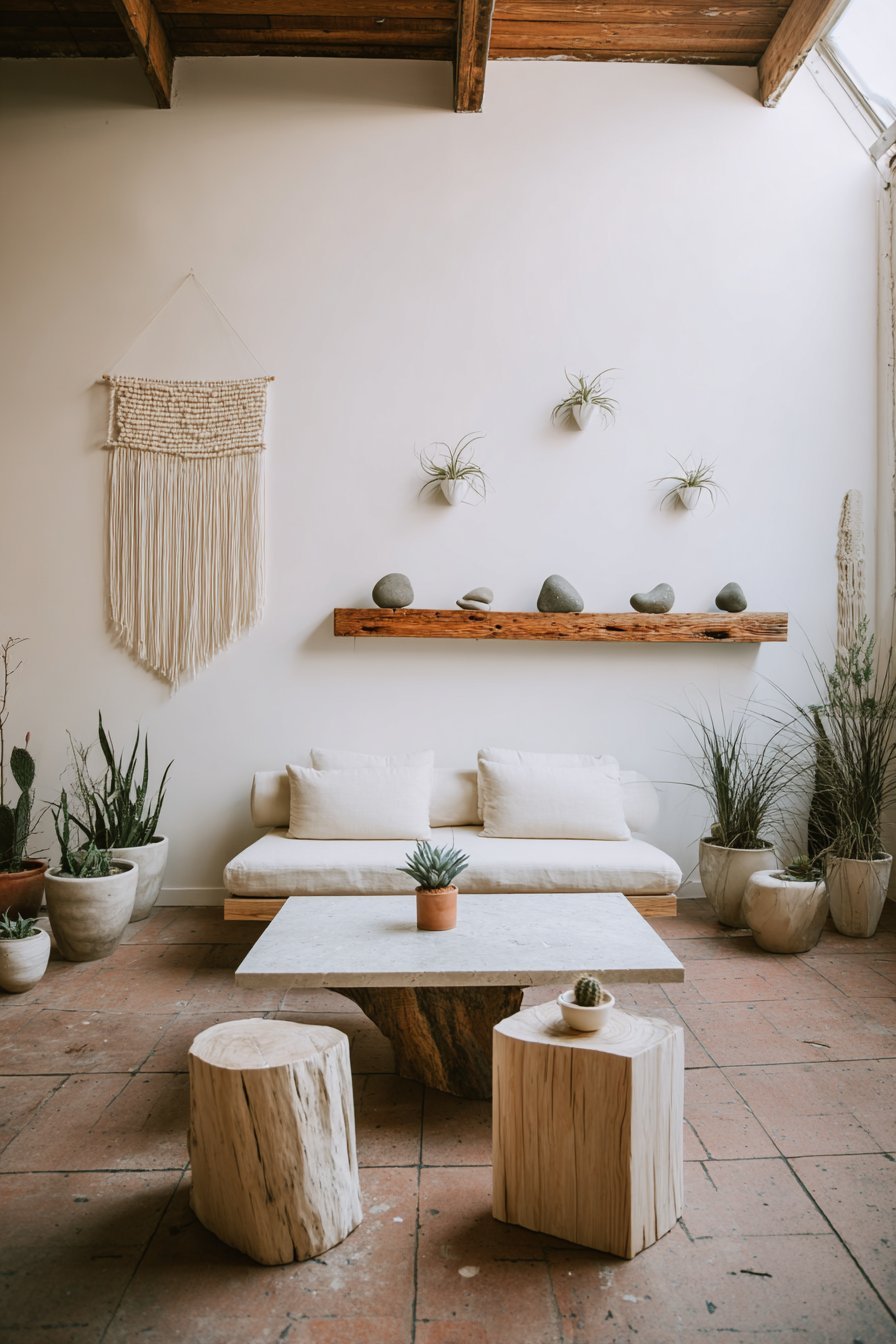
Natural fiber art dominates the wall through large jute and wool woven hanging. Mounted air plants on geometric concrete holders add living elements. A floating live edge walnut shelf displays stone sculptures celebrating organic forms. A low-profile sofa in oatmeal linen grounds the earthy palette with neutral softness.
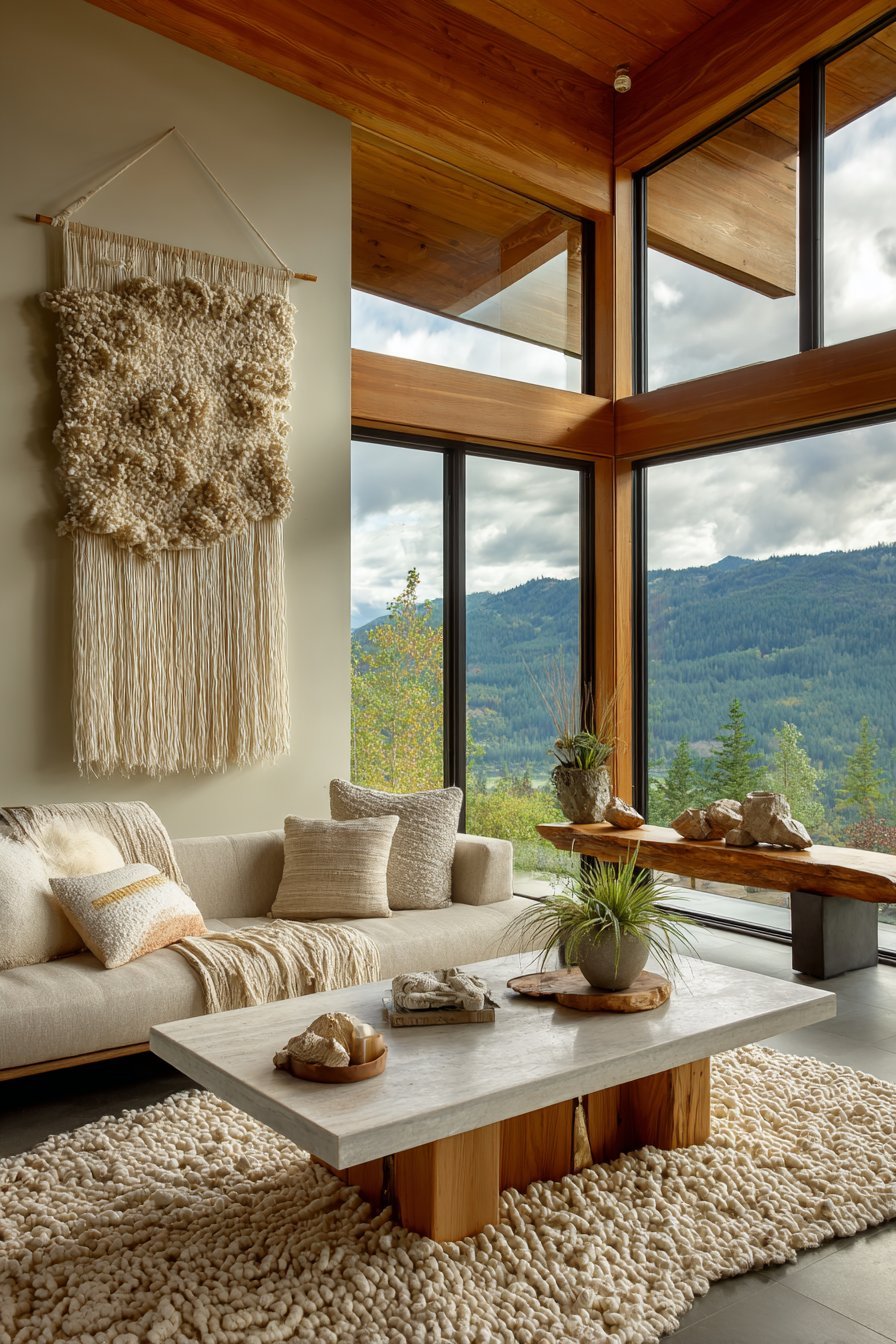
The coffee table combines polished stone top with natural wood base bridging refined and raw. Terracotta floor tiles add warmth and natural color to the foundation. Skylights and large windows provide abundant natural light highlighting raw organic textures. Professional interior photography captures soft even lighting and authentic material qualities.
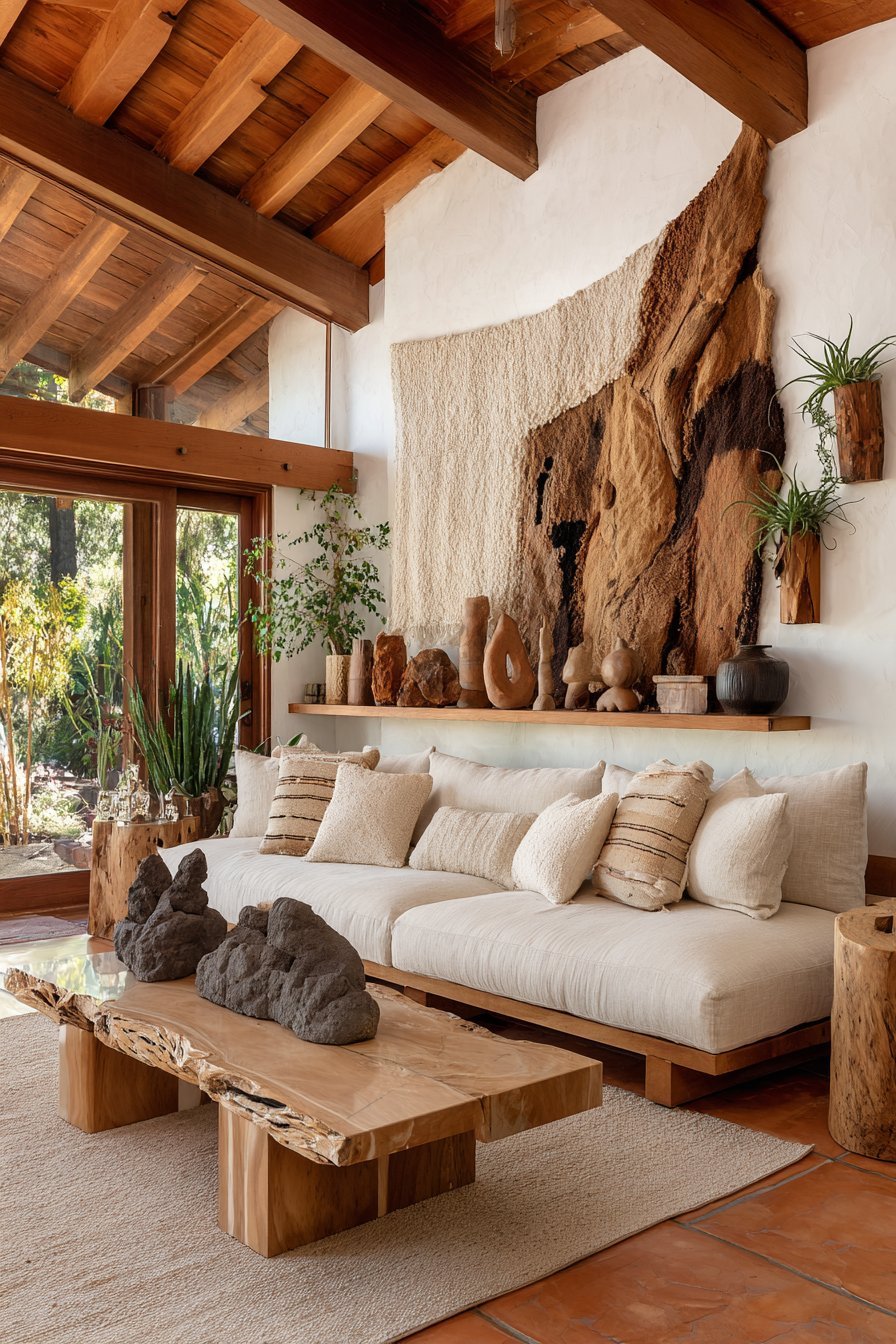
Modern organic design celebrates natural materials in contemporary contexts. The aesthetic rejects synthetic finishes and artificial colors. Every surface references the natural world through material choice.
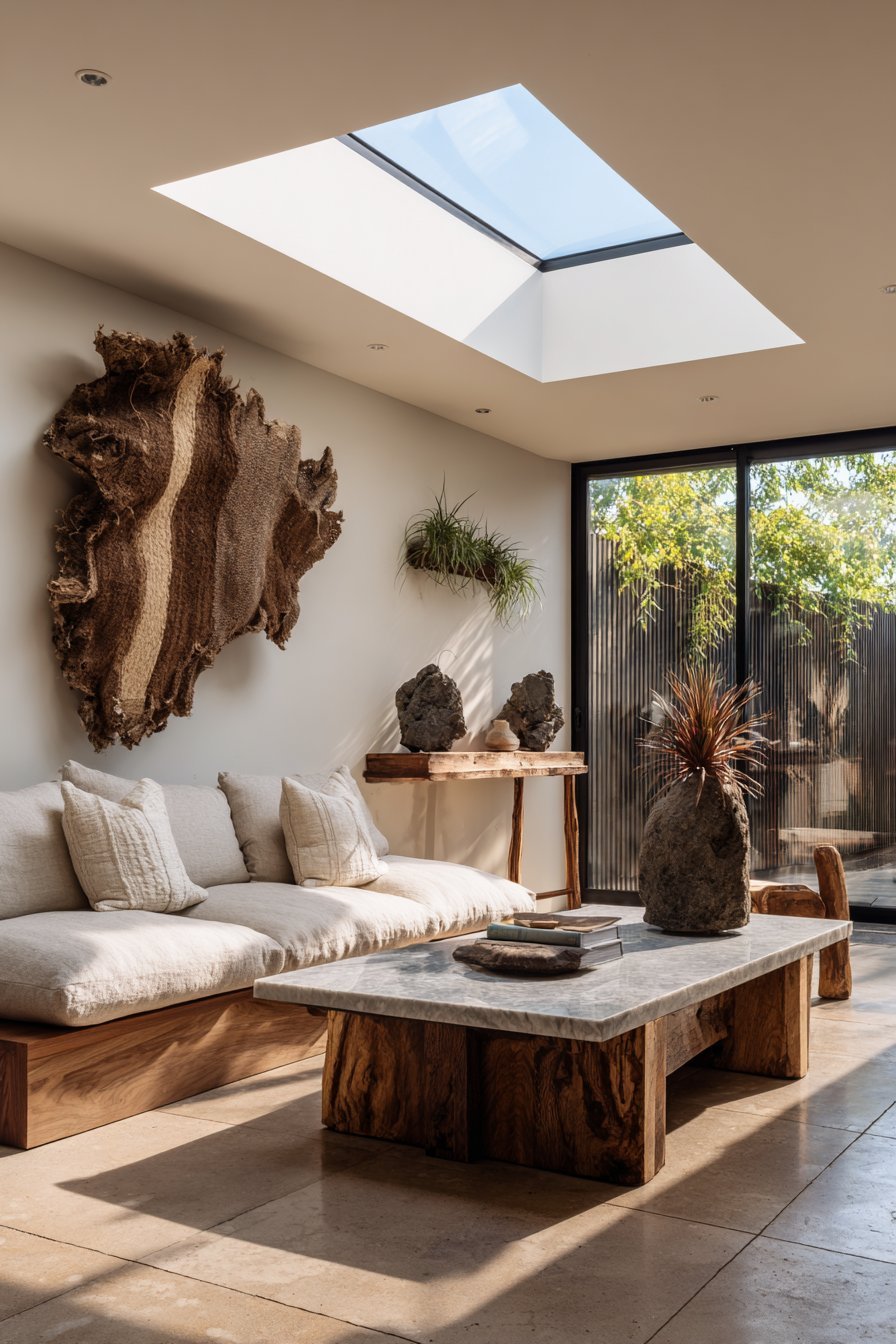
The combination of refined and raw natural materials creates visual interest. Polished stone plays against rough-hewn wood. Smooth linen contrasts with nubby woven fibers. These juxtapositions prevent the natural palette from feeling monotonous.
Key Design Tips:
- Display large-scale fiber art as statement wall pieces
- Incorporate living plants including air plants for organic elements
- Choose furniture combining different natural materials in single pieces
- Use terracotta or stone tiles for warm natural flooring
- Maximize natural light through skylights and large windows
- Select neutral earth-tone palette in natural fiber textiles
20. Hollywood Regency Mirror Glamour
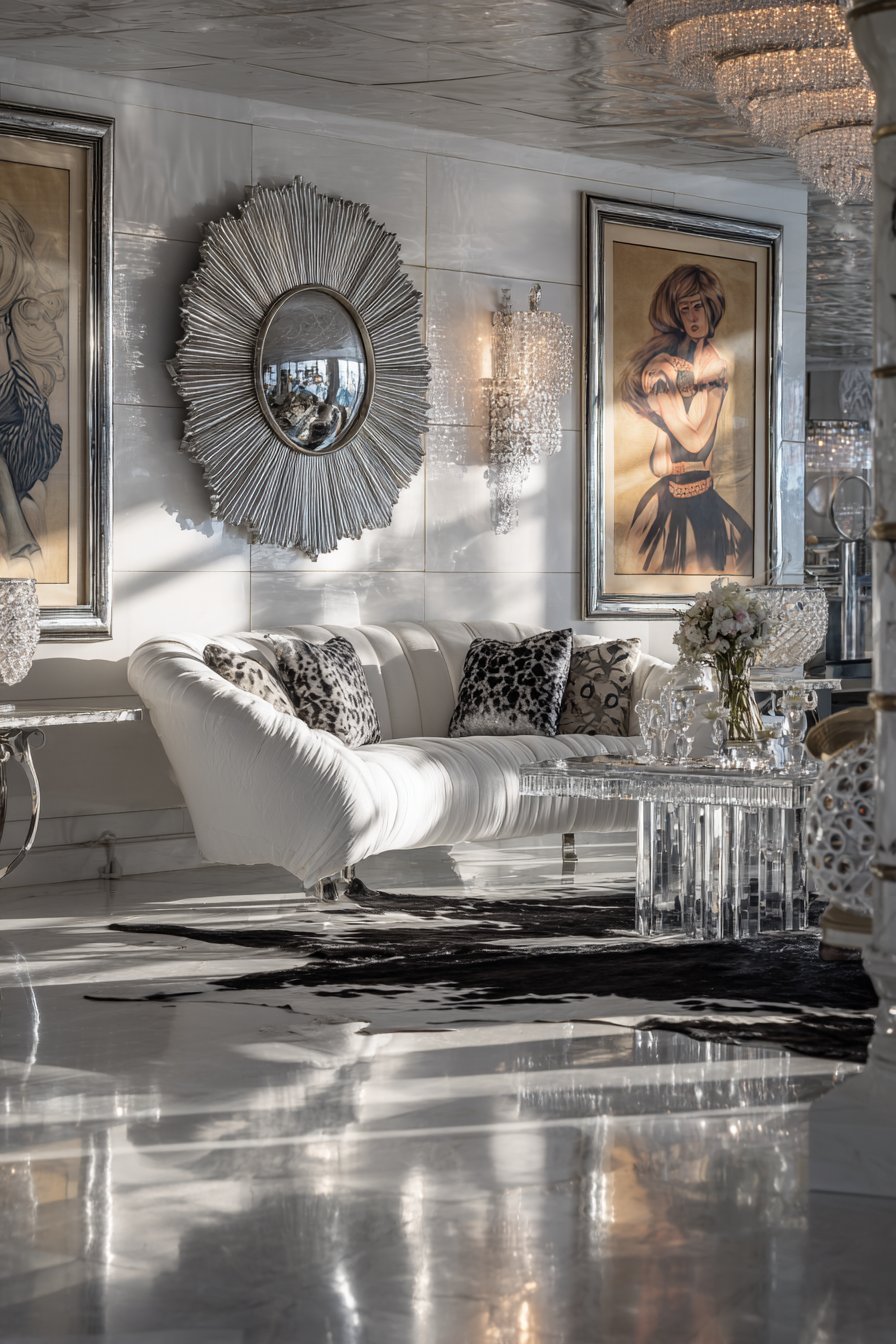
An oversized ornate mirror with beveled edges in silver gilt frame creates dramatic focal point. Crystal wall sconces flank the mirror while matching silver-framed fashion illustrations complete the glamorous composition. A tufted white velvet sofa with acrylic legs sits on black and white cowhide rug. A lucite and brass coffee table adds transparency and sparkle.
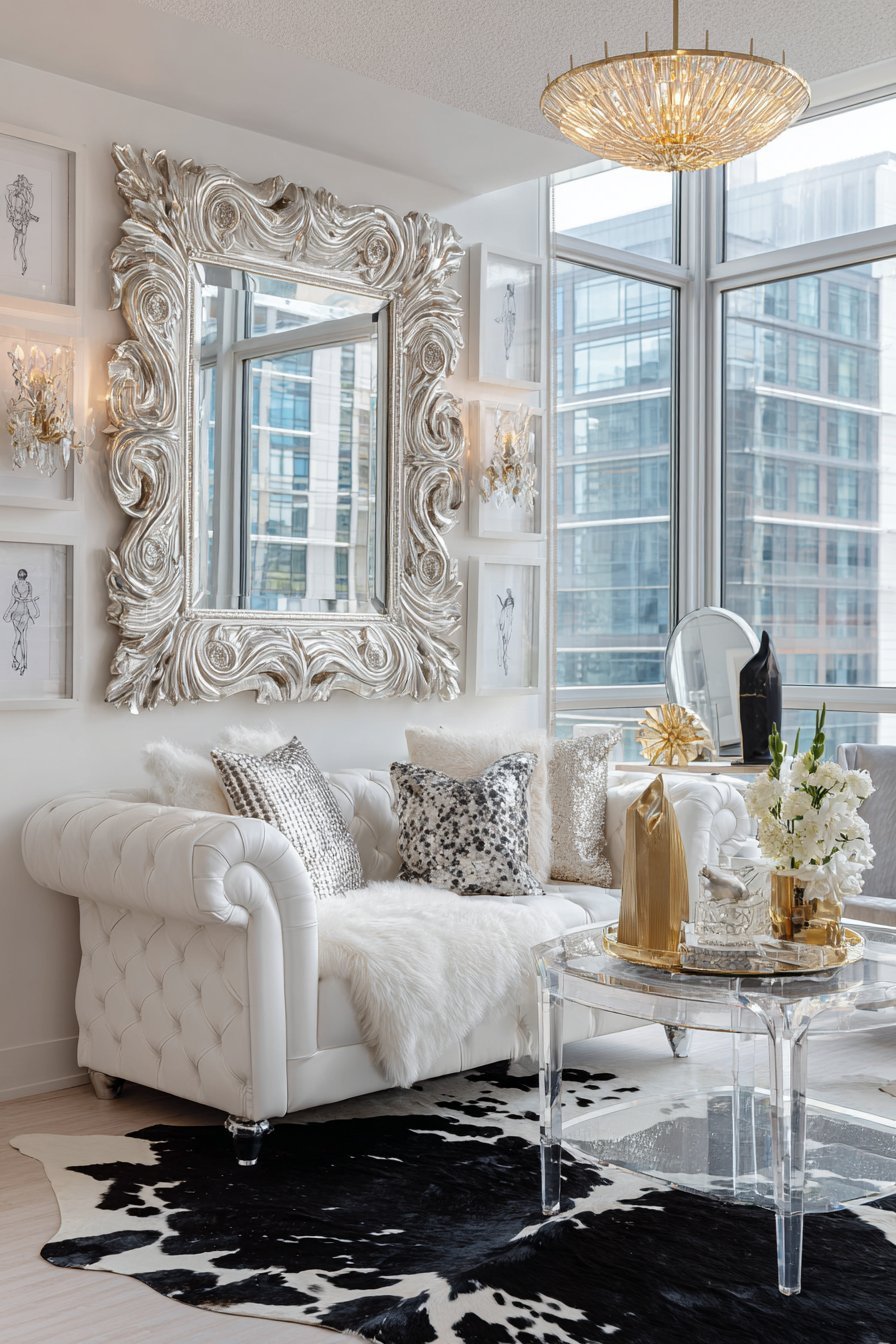
High-gloss white lacquered walls reflect light throughout the space amplifying brightness. Chandelier and natural window light create glamorous illumination from multiple sources. Interior design photography captures luxurious reflective surfaces and dramatic contrasts. High-key lighting emphasizes metallic details and creates sophisticated sparkle.
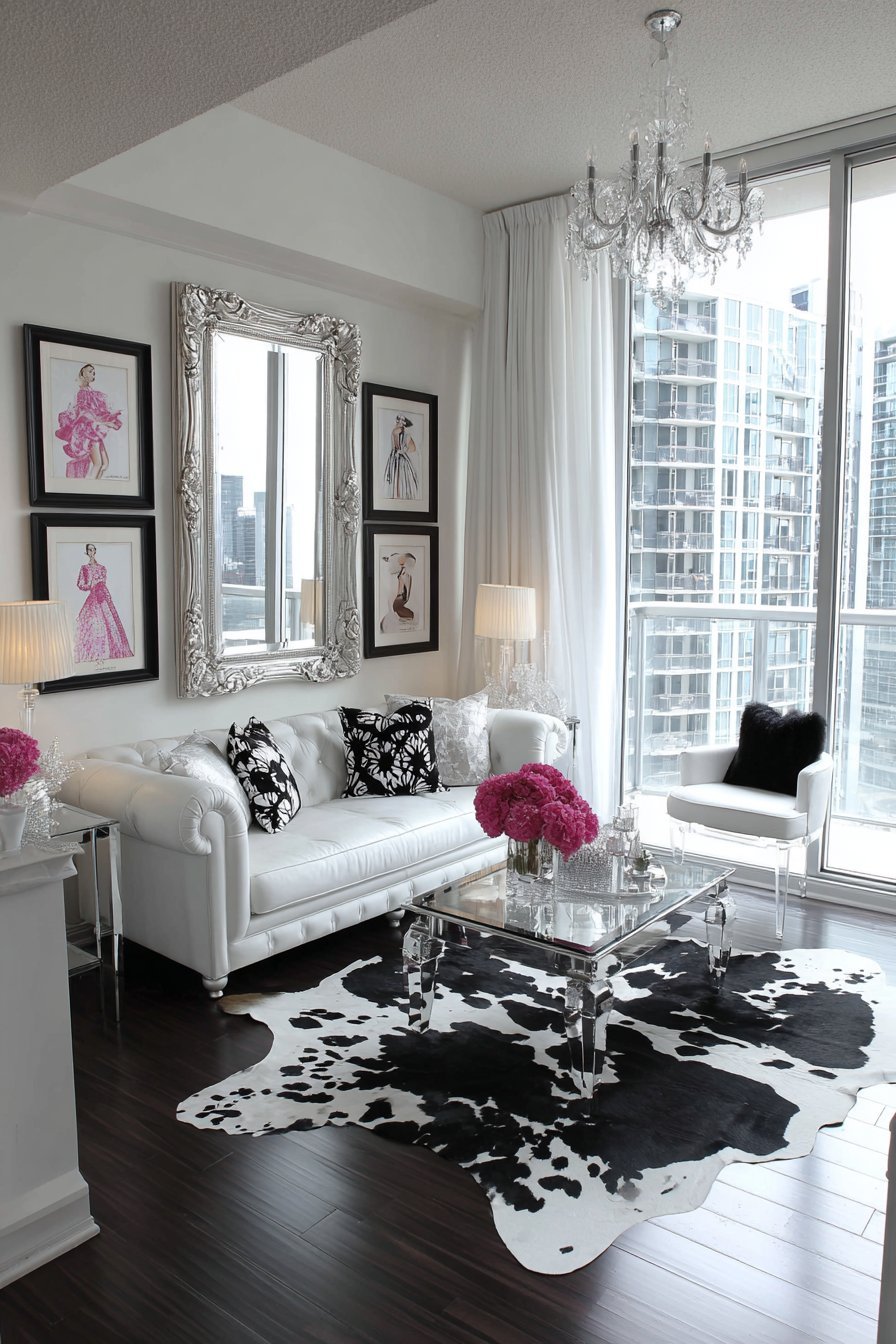
Hollywood Regency celebrates theatrical glamour and unapologetic luxury. The style emerged from Hollywood’s golden age when movie sets influenced residential design. Modern interpretations maintain the drama while updating proportions for contemporary living.
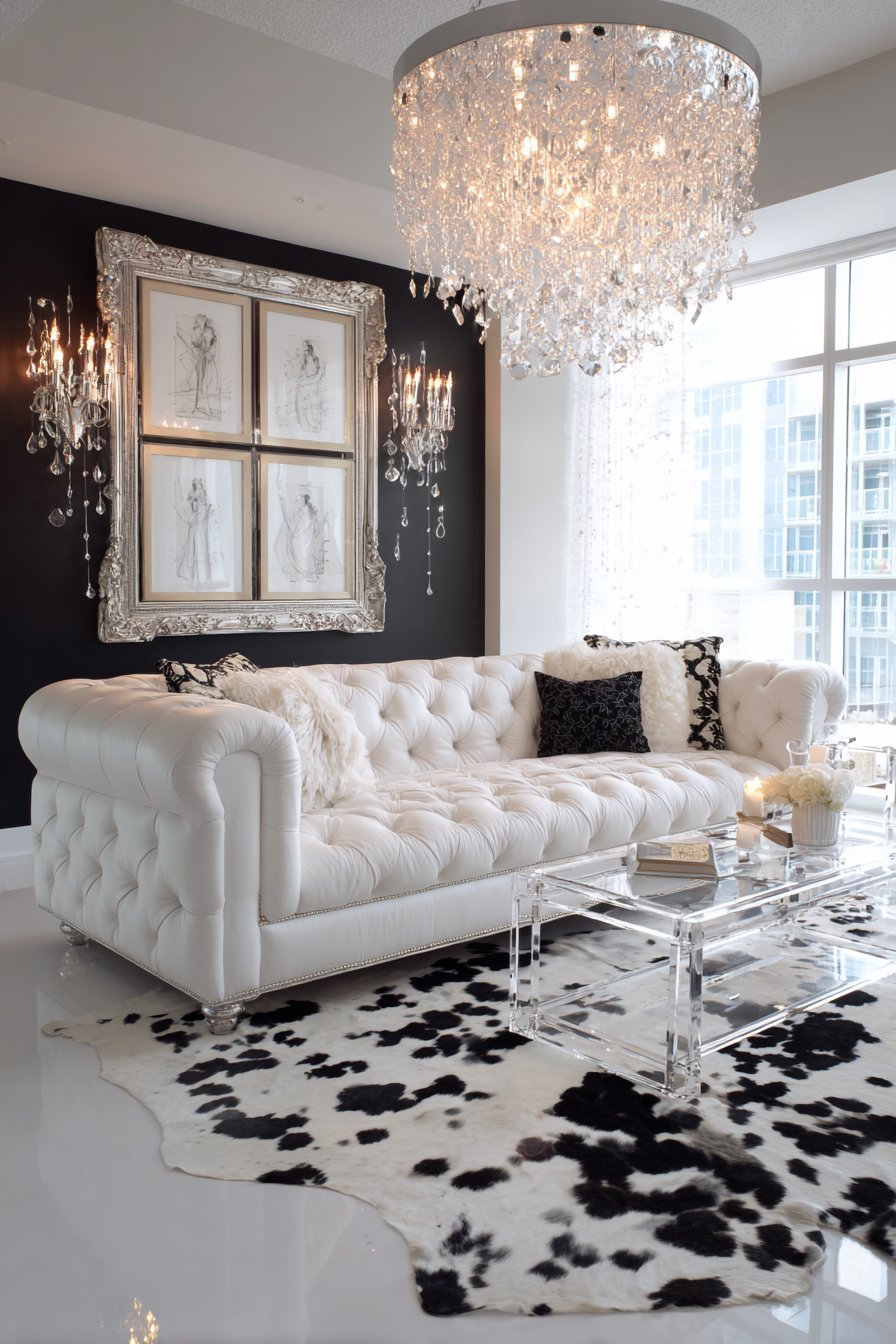
The abundance of reflective surfaces multiplies available light exponentially. Mirrors, crystal, lucite, and lacquered walls all bounce light throughout the space. This creates the bright, sparkling atmosphere essential to the style.
Key Design Tips:
- Choose oversized mirrors as focal points for dramatic impact
- Use high-gloss lacquered walls to maximize light reflection
- Select furniture with glamorous details like tufting and acrylic legs
- Incorporate crystal and metallic finishes throughout accessories
- Layer multiple light sources including chandeliers and sconces
- Choose bold black and white elements for graphic contrast
21. Southwestern Desert Earth Tones
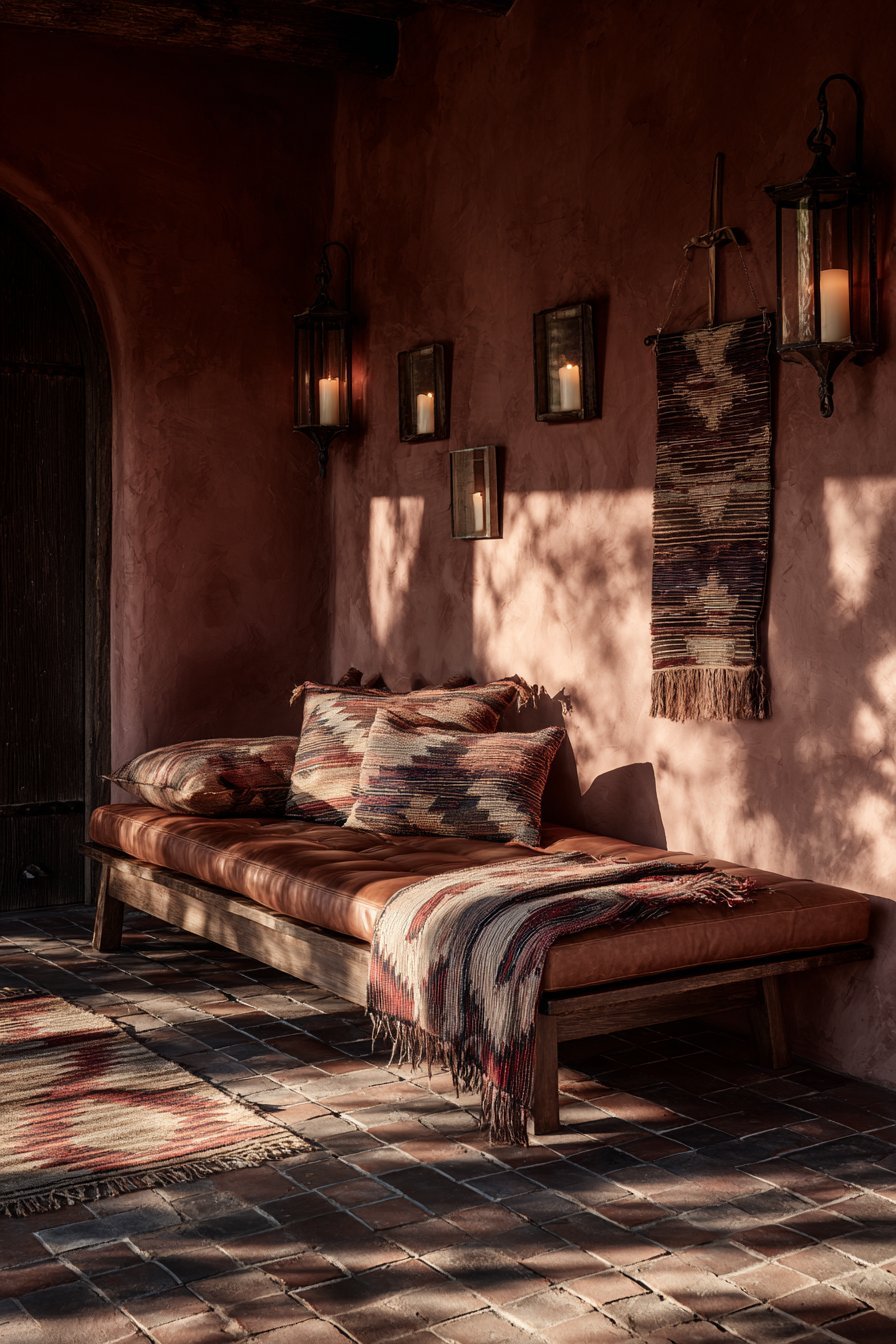
Native American-inspired woven textiles hang as tapestries bringing cultural pattern and color. Rustic wooden crosses and framed desert landscape photography complete the southwestern wall display. A cognac leather sofa with visible grain shows natural wear patterns adding character. Saltillo tile flooring provides authentic southwestern foundation with warm terracotta tones.
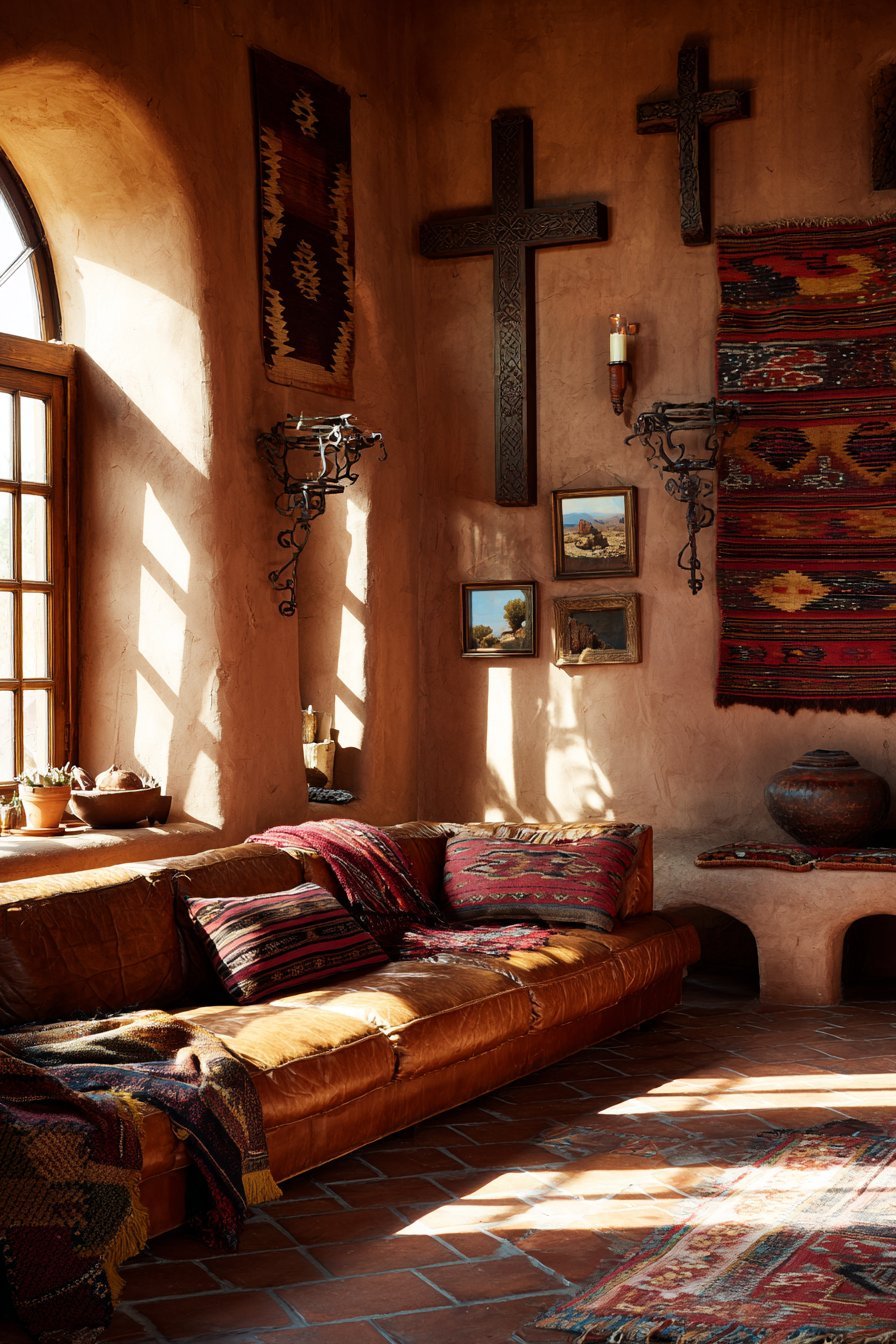
Navajo-pattern throw blankets and pillows add geometric interest through traditional designs. Wrought iron wall-mounted candle sconces provide ambient lighting with old-world character. Adobe-textured walls in warm terracotta show subtle variations enhancing handcrafted appearance. Natural light from small deep-set windows creates dramatic shadows emphasizing the architectural depth.
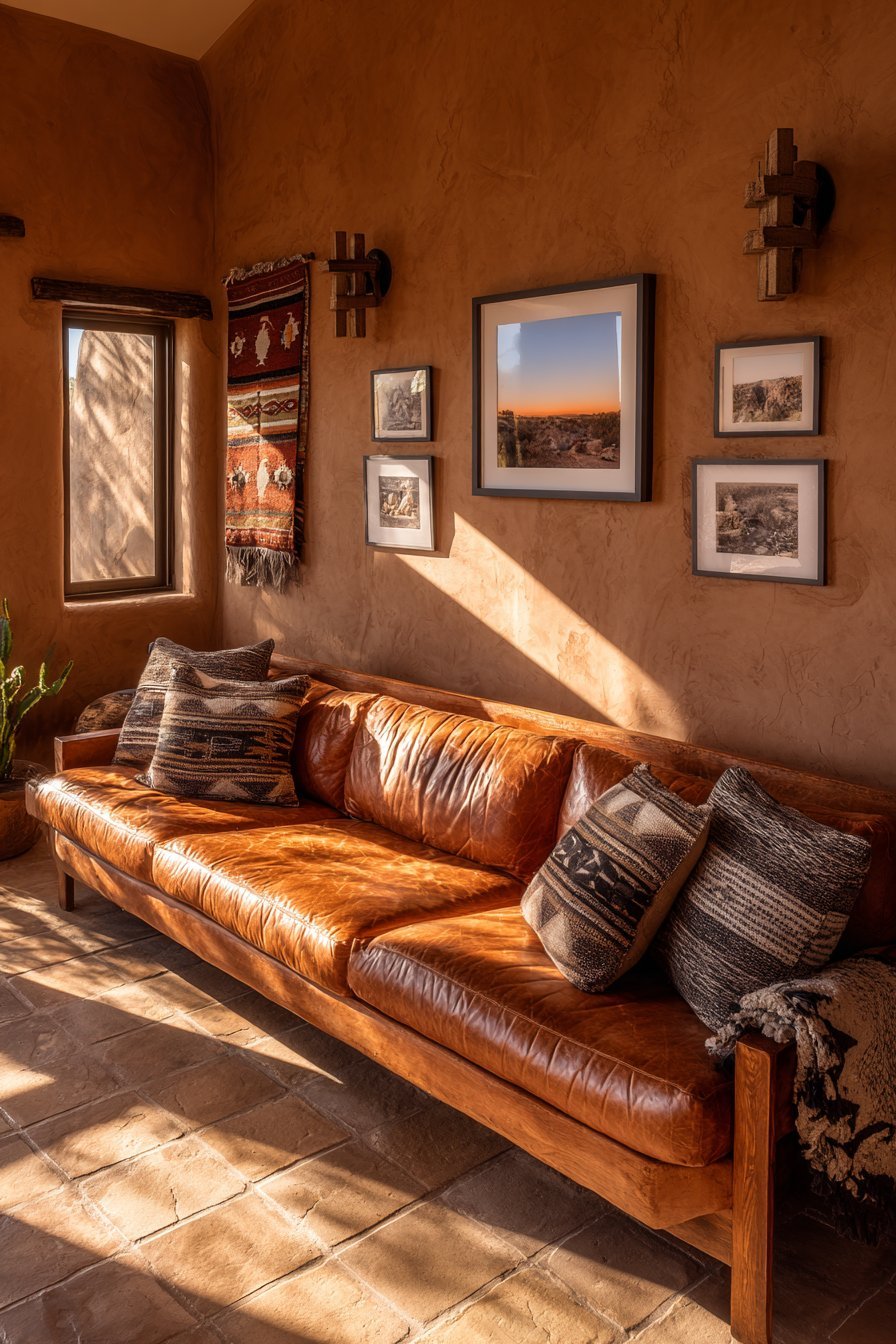
Southwestern style connects to specific regional architecture and cultural traditions. Authentic pieces honor Native American and Spanish colonial influences. Respectful incorporation celebrates these traditions rather than appropriating them superficially.
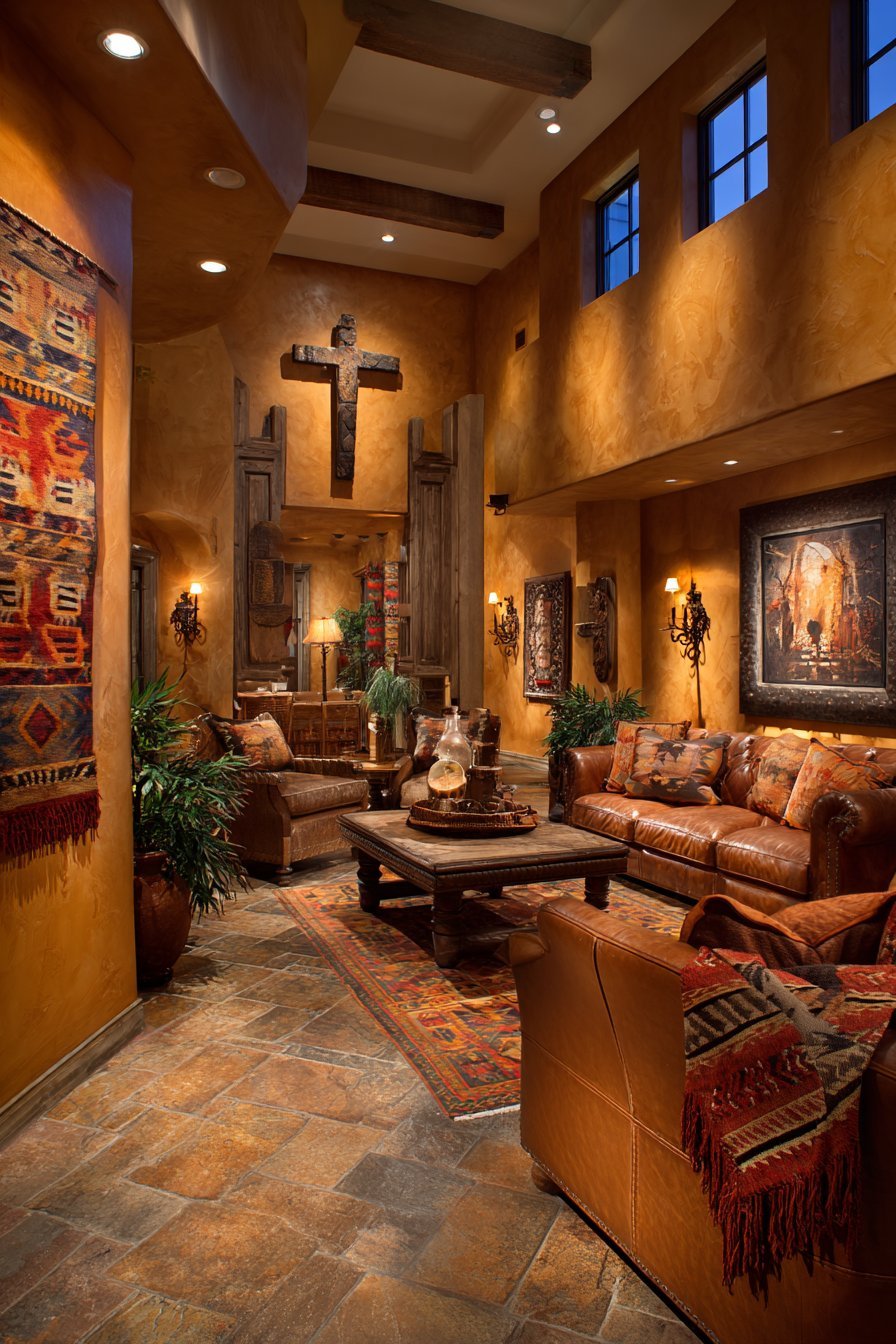
The earth-tone palette reflects the desert landscape’s natural colors. Terracotta, cognac, warm browns, and touches of turquoise all reference the southwestern environment. These colors create warm, inviting spaces perfect for the region’s climate.
Key Design Tips:
- Source authentic Native American textiles from reputable dealers
- Choose leather furniture that will develop natural patina
- Use saltillo or terracotta tiles for authentic southwestern flooring
- Apply adobe or textured plaster wall finishes for handcrafted appearance
- Incorporate wrought iron lighting and hardware for Spanish colonial influence
- Display desert landscape photography celebrating regional natural beauty
22. Scandinavian Hygge Comfort Layers
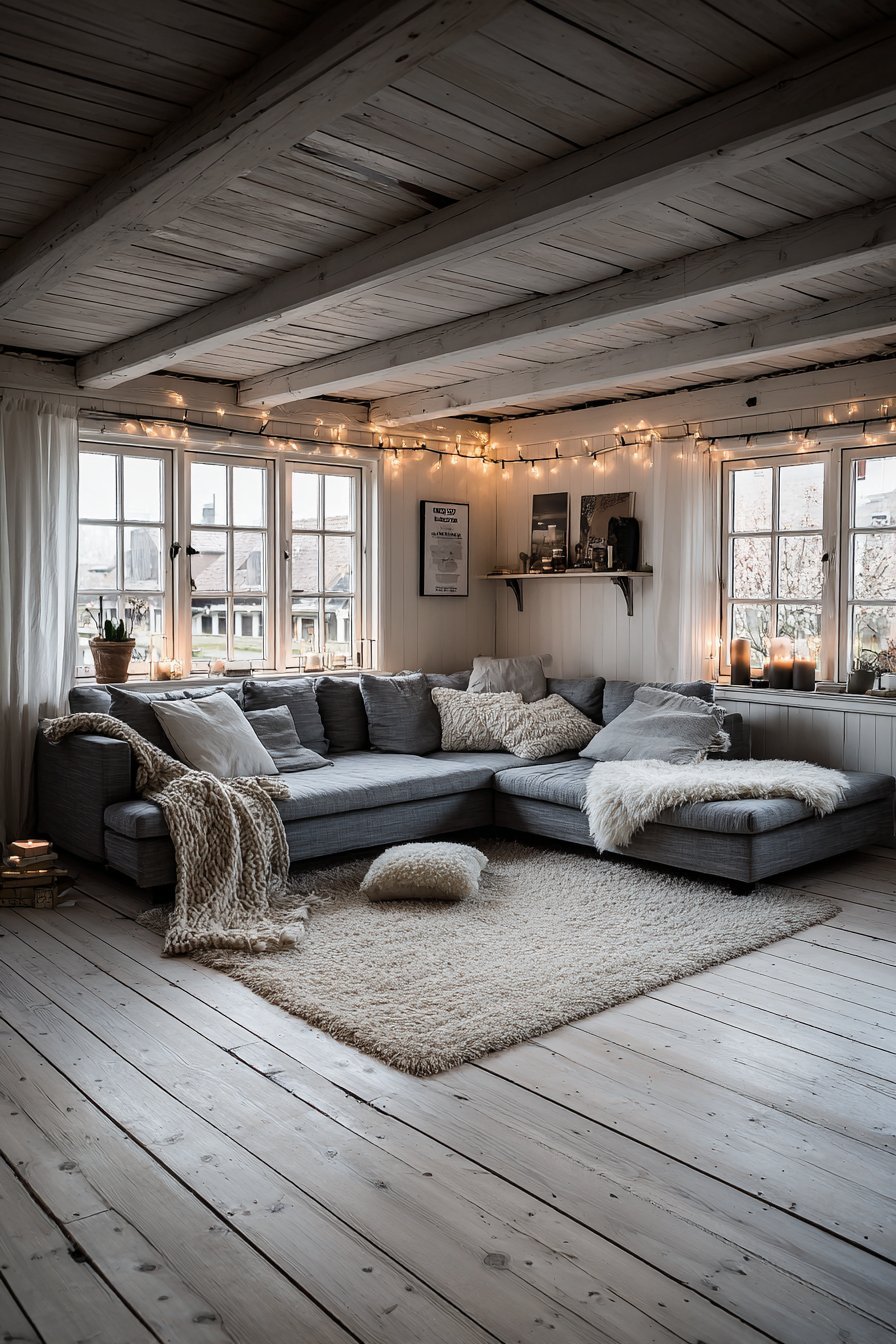
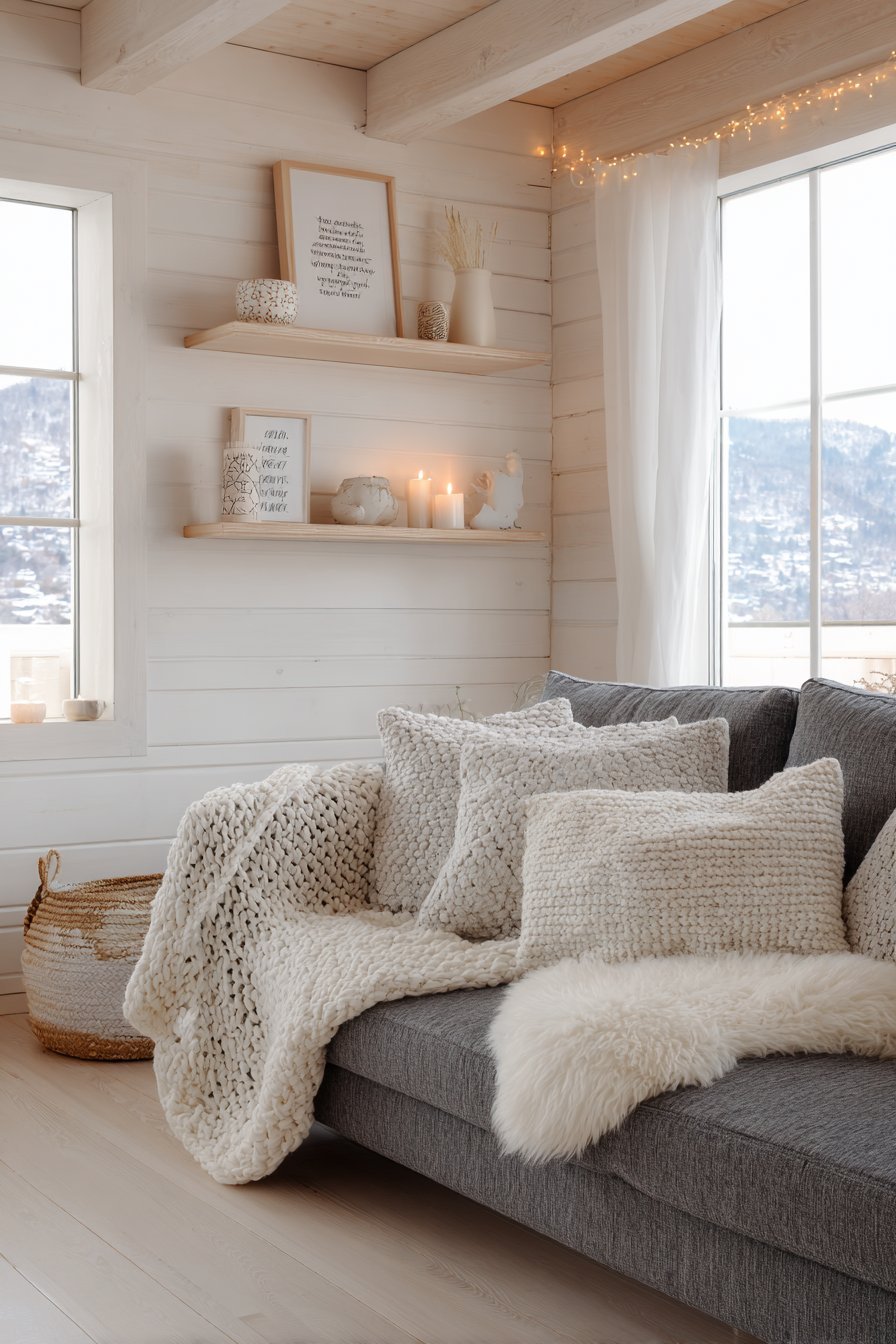
Simple framed nature prints showing Nordic forests combine with minimalist typography quotes. Light ash wood frames maintain the Scandinavian aesthetic throughout the wall display. A deep-seated grey sofa loaded with chunky knit throw blankets and sheepskin pillows invites immediate comfort. White-washed pine floors and walls create bright backdrop maximizing limited northern light.

Floating birch shelves display abundant candles and simple ceramic vessels. String lights add warm ambient glow supplementing natural daylight from large windows with simple white curtains. Interior design photography captures soft even lighting and cozy lived-in quality. Emphasis on texture and comfort defines the hygge philosophy.
Hygge represents Danish concept of cozy contentment and simple pleasures. The philosophy influences Scandinavian interior design significantly. Spaces should invite relaxation and foster feeling of wellbeing through comfort and warmth.
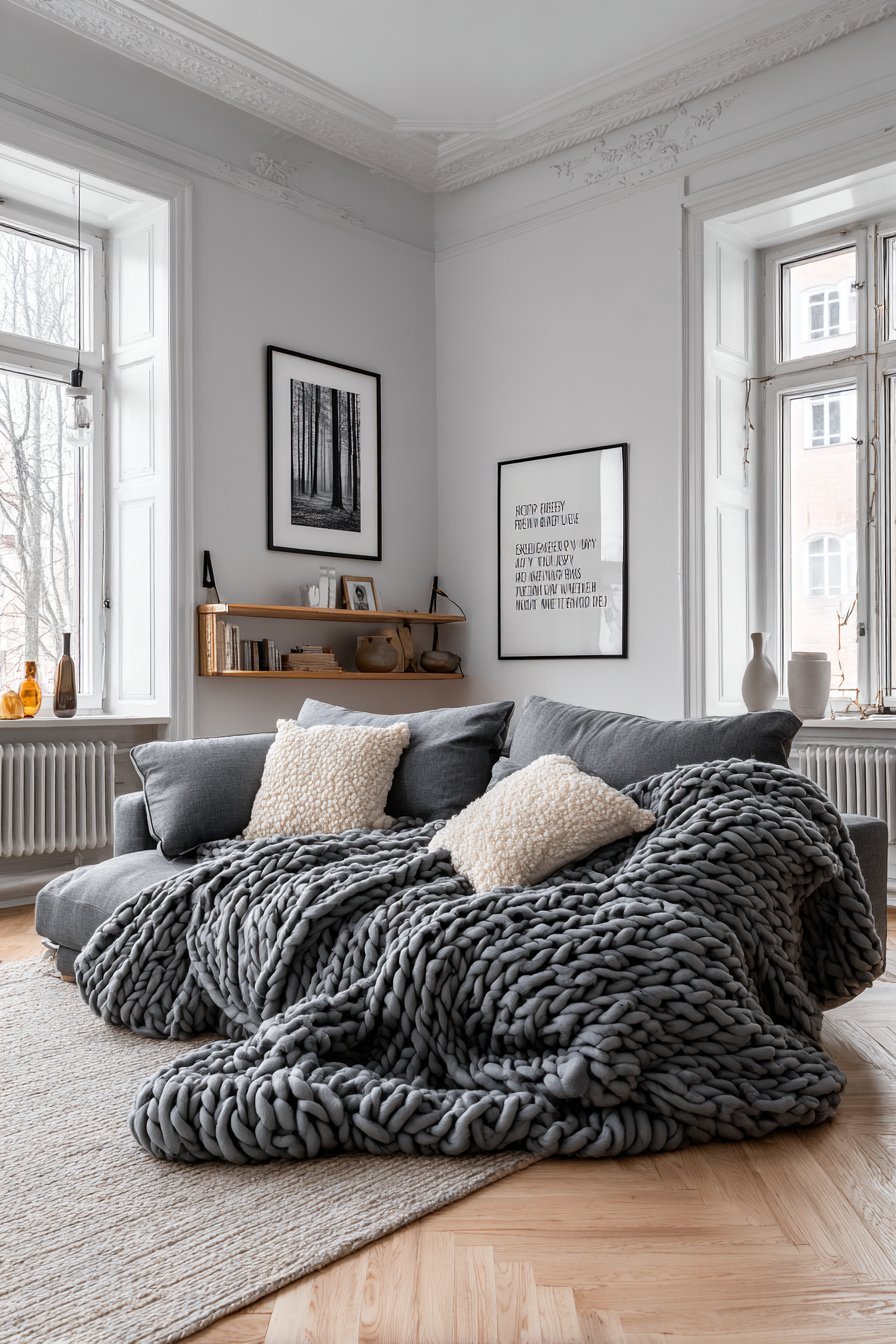
The abundant textiles distinguish hygge from stark minimalism. Chunky knits, sheepskin, and layered throws all contribute tactile warmth. These soft elements make Scandinavian simplicity feel welcoming rather than cold.
Key Design Tips:
- Layer abundant soft textiles including knit throws and sheepskin
- Use light wood tones throughout flooring and furniture
- Display nature prints and simple typography for wall interest
- Incorporate candlelight through multiple candles and holders
- Choose deep comfortable seating that invites lounging
- Add string lights for warm ambient glow during dark months
23. Urban Contemporary Street Art Edge
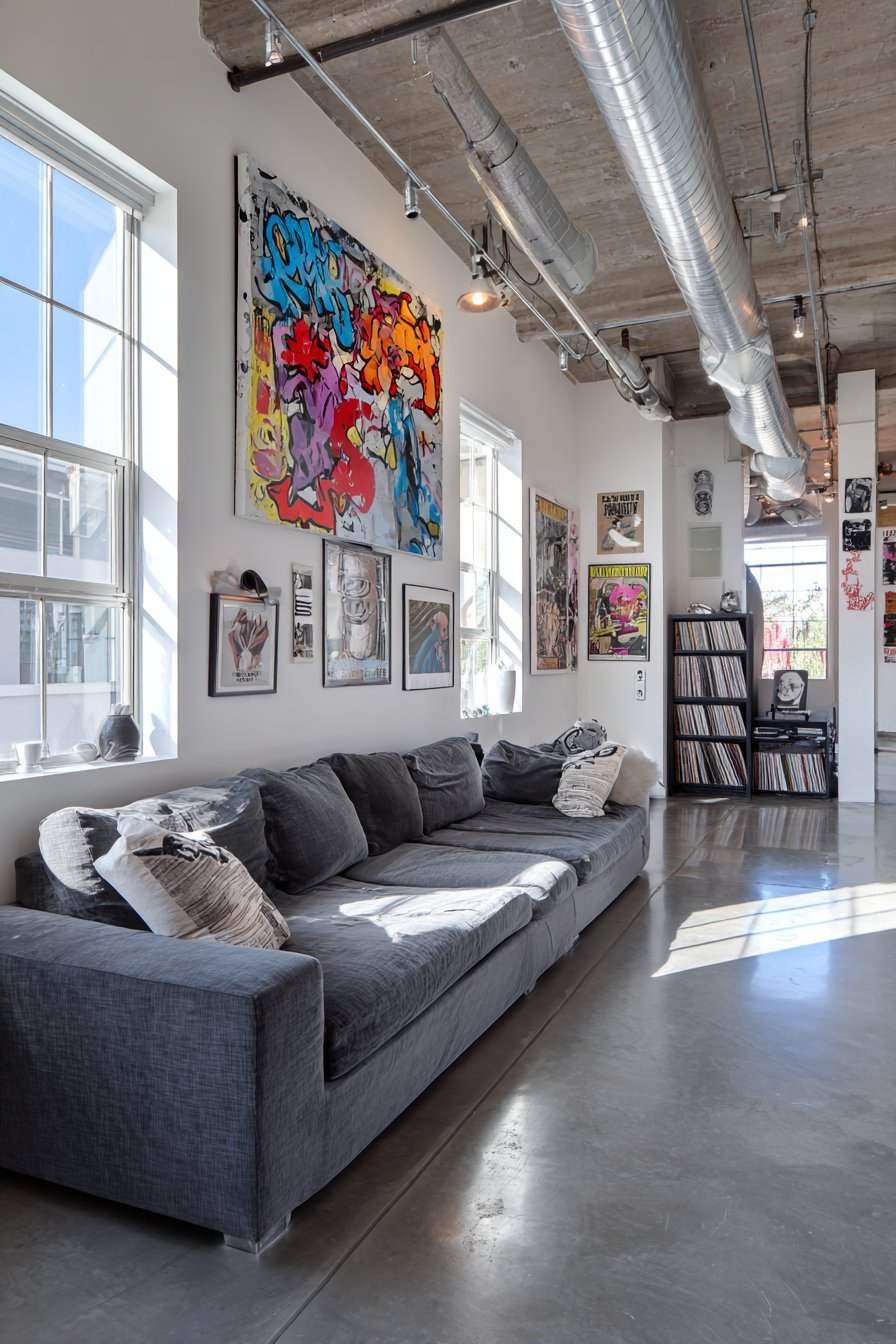
Large-scale street art canvas print in bold colors dominates the wall composition. Smaller graffiti-style pieces and vintage concert posters in slim black frames surround the focal artwork. A charcoal grey modular sofa with low profile suits the urban aesthetic. Polished concrete floors provide industrial foundation while industrial metal shelving units display vinyl records and urban art books.
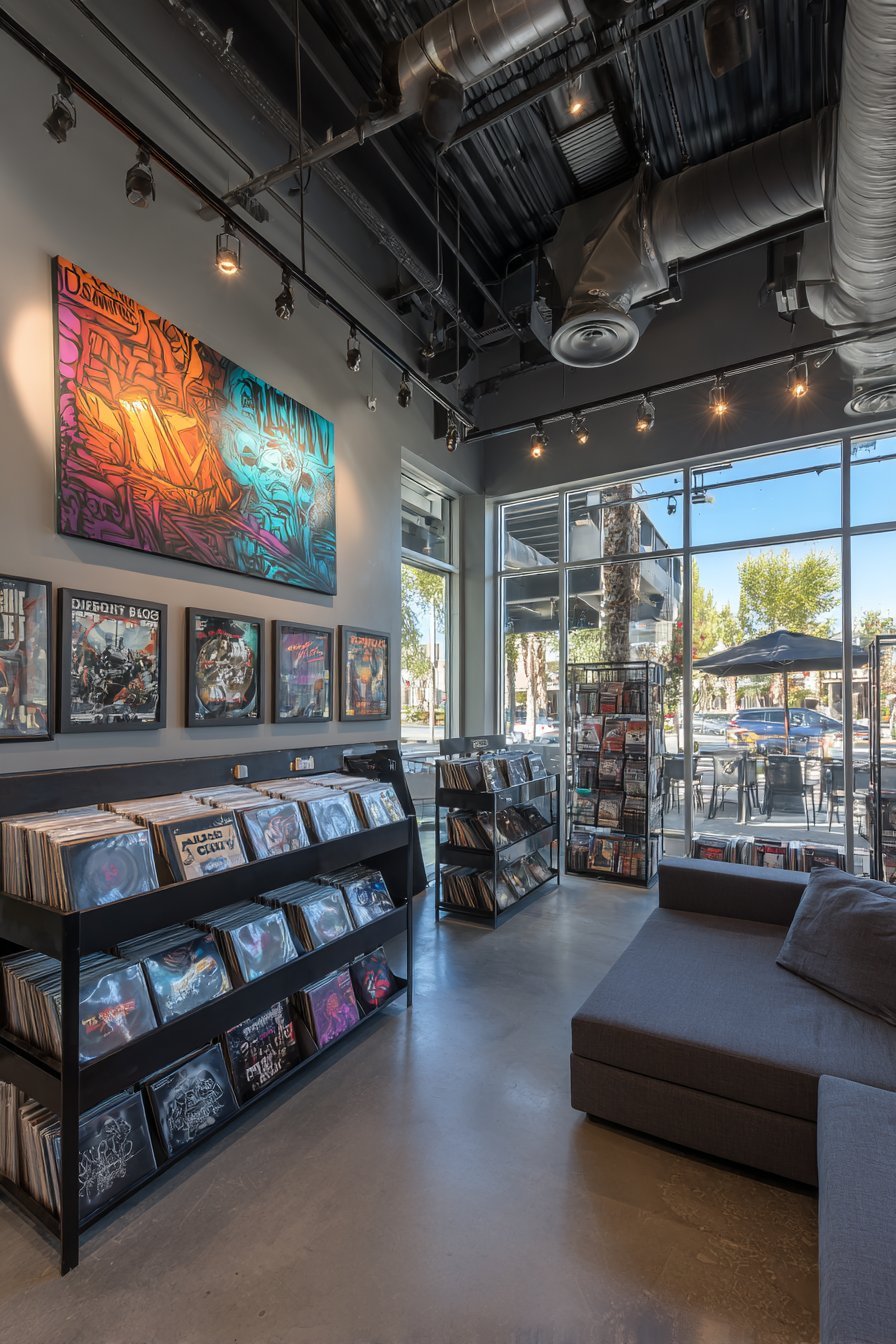
Exposed ductwork and track lighting maintain the edgy warehouse aesthetic throughout. Large warehouse-style windows flood the space with natural light creating bright creative atmosphere. Professional interior photography uses high contrast and saturation capturing youthful energy. The artistic urban vibe celebrates street culture and contemporary art movements.
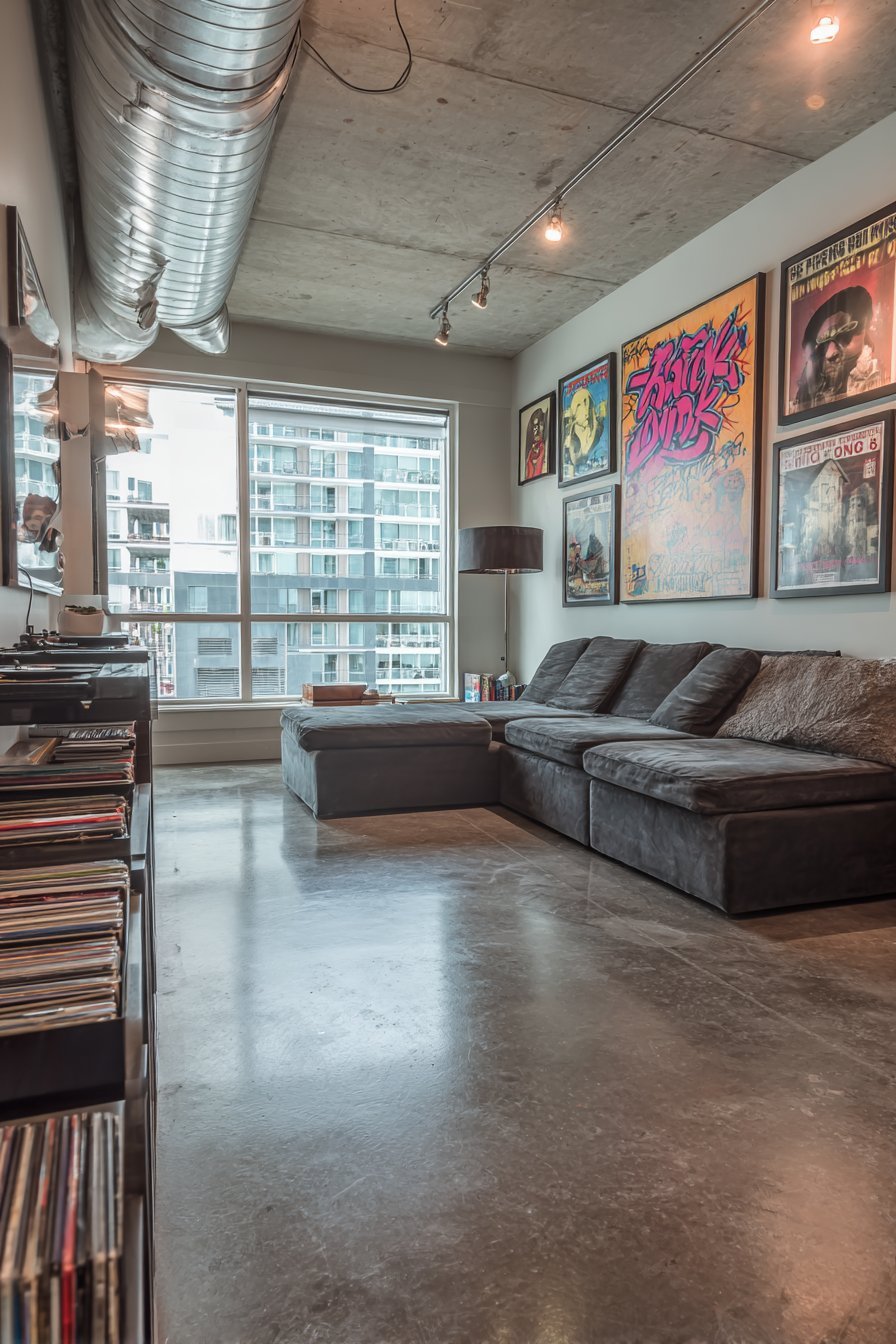
Urban contemporary design embraces street culture and industrial architecture. The aesthetic works particularly well in converted warehouse and loft spaces. Authentic elements reference the building’s original purpose and urban context.
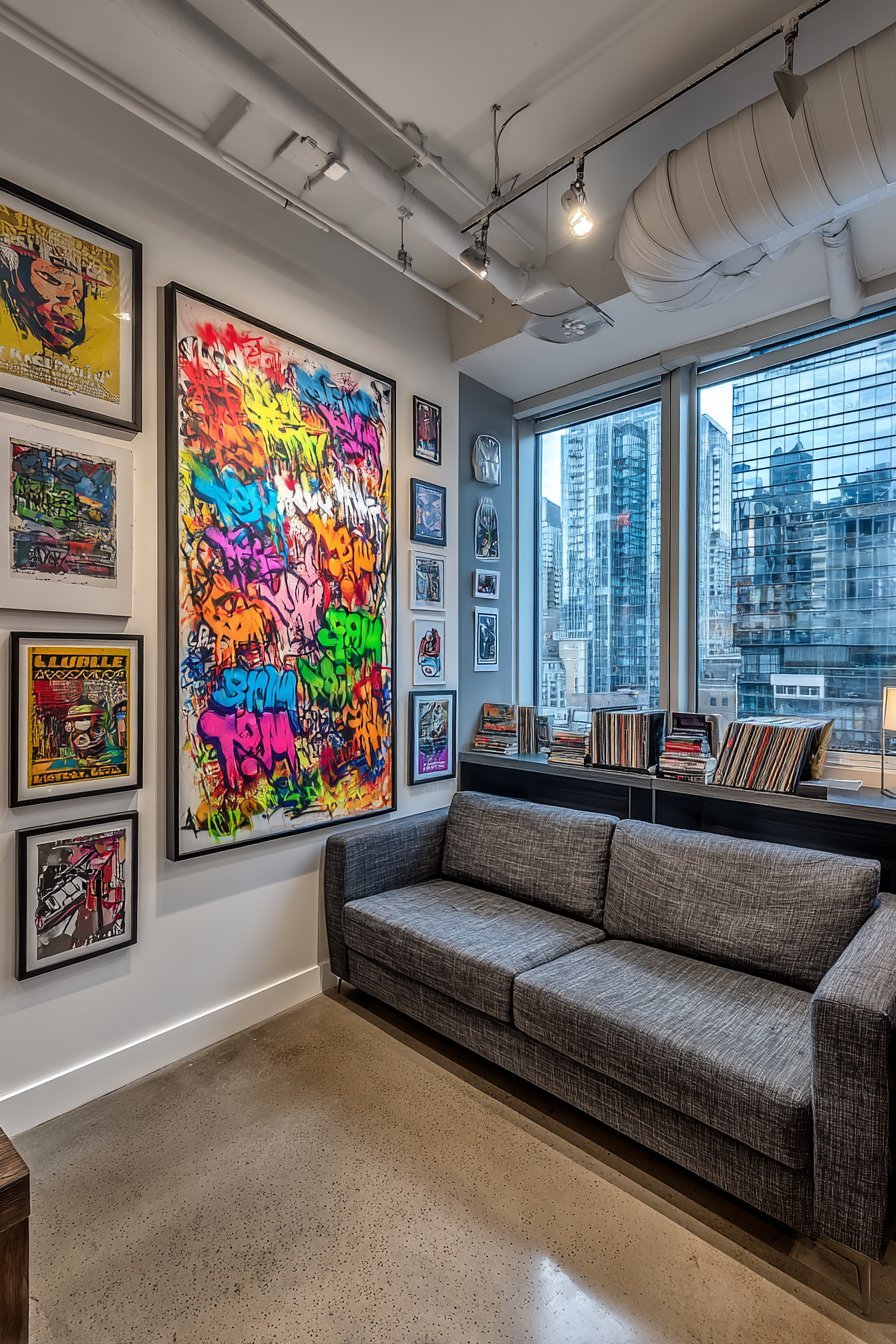
The bold street art introduces vibrant color into otherwise neutral industrial spaces. This pop of artistic energy prevents the concrete and metal from feeling oppressive. The balance creates dynamic environments perfect for creative individuals.
Key Design Tips:
- Display authentic street art or high-quality prints from known artists
- Choose low-profile modular furniture for flexible arrangements
- Use polished concrete or industrial flooring materials
- Incorporate vinyl record collections as decorative and functional elements
- Expose architectural elements like ductwork for authentic industrial aesthetic
- Install track lighting for adjustable illumination and industrial character
24. English Cottage Floral Layers
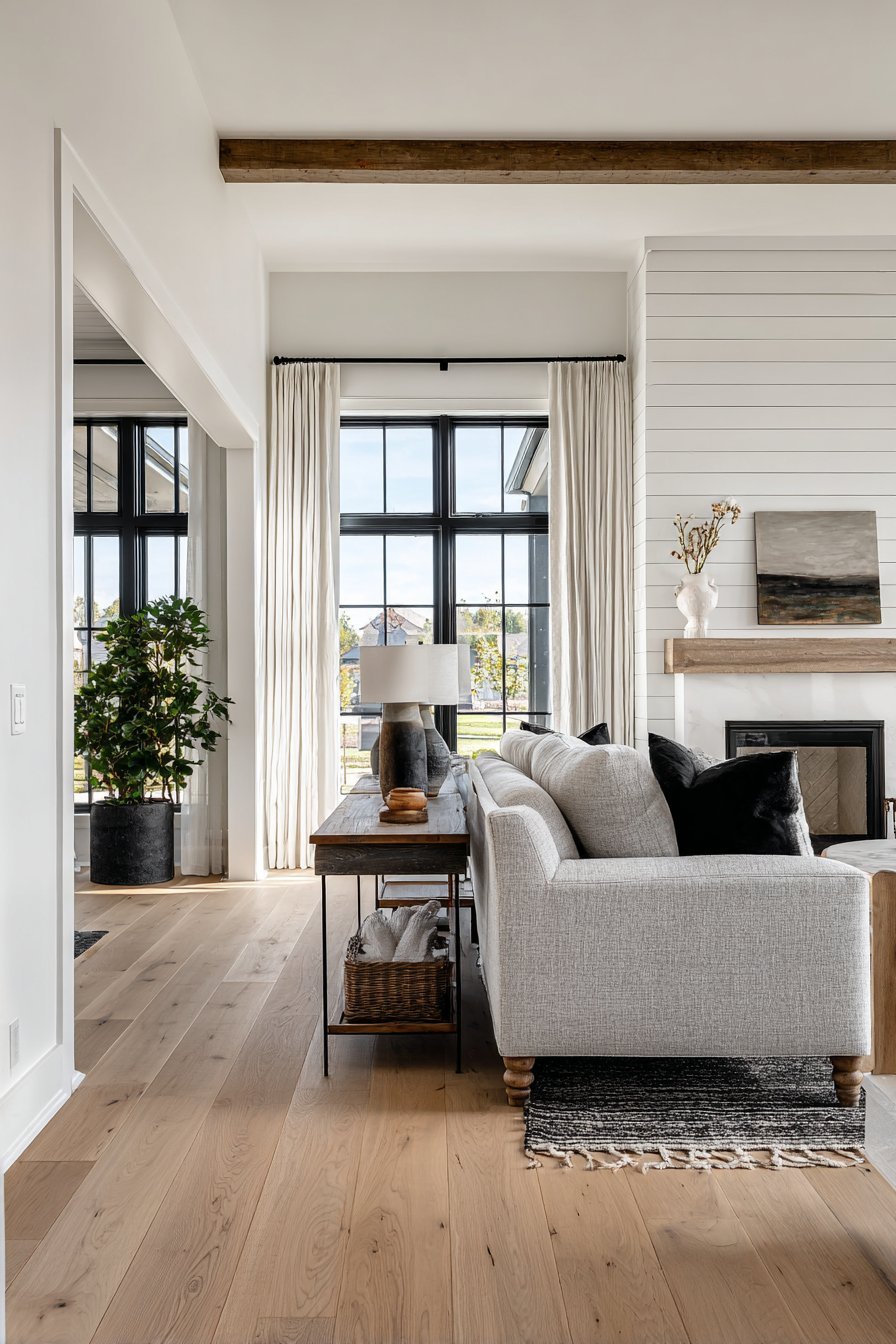
Framed botanical prints in antique gold frames arrange in formal symmetrical pattern. The arrangement sits above a floral chintz sofa with rolled arms and wooden bun feet. Coordinating floral curtains in matching fabric frame leaded glass windows creating pattern continuity. A needlepoint footstool and petit point pillows add handcrafted detail demonstrating traditional needlework.

Dark wood picture rails hold additional smaller frames at varying heights. A faded oriental rug in rose and green tones covers wide-plank oak flooring showing gentle wear. Soft natural light filtered through lace sheers creates gentle romantic atmosphere. Interior photography emphasizes layered patterns, traditional craftsmanship, and timeless English country charm.
English cottage style celebrates accumulated comfort and traditional craftsmanship. The pattern-on-pattern approach requires confidence to execute successfully. Careful coordination through color rather than exact matching creates cohesion.
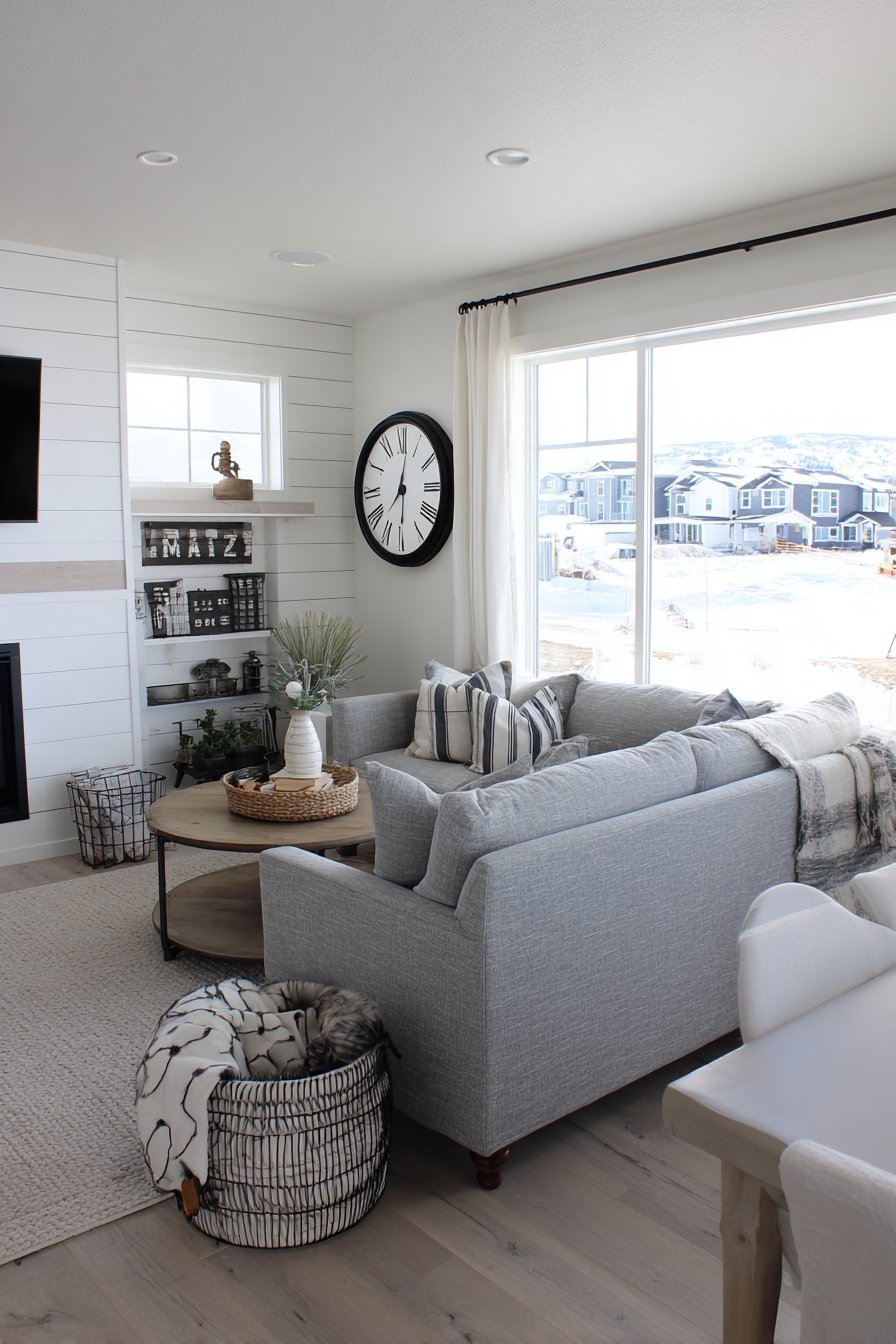
The handcrafted elements distinguish authentic cottage style from mass-produced country decor. Needlepoint, petit point, and botanical prints all reference traditional domestic arts. These touches add personality and heritage to the spaces.
Key Design Tips:
- Layer multiple floral patterns through coordinating rather than matching
- Choose traditional upholstery details like rolled arms and bun feet
- Display botanical prints in symmetrical arrangements for formal appeal
- Incorporate handcrafted needlework through pillows and footstools
- Use picture rails for flexible gallery arrangements
- Filter light through lace or sheer curtains for soft romantic glow
25. Modern Farmhouse Black Barn Door
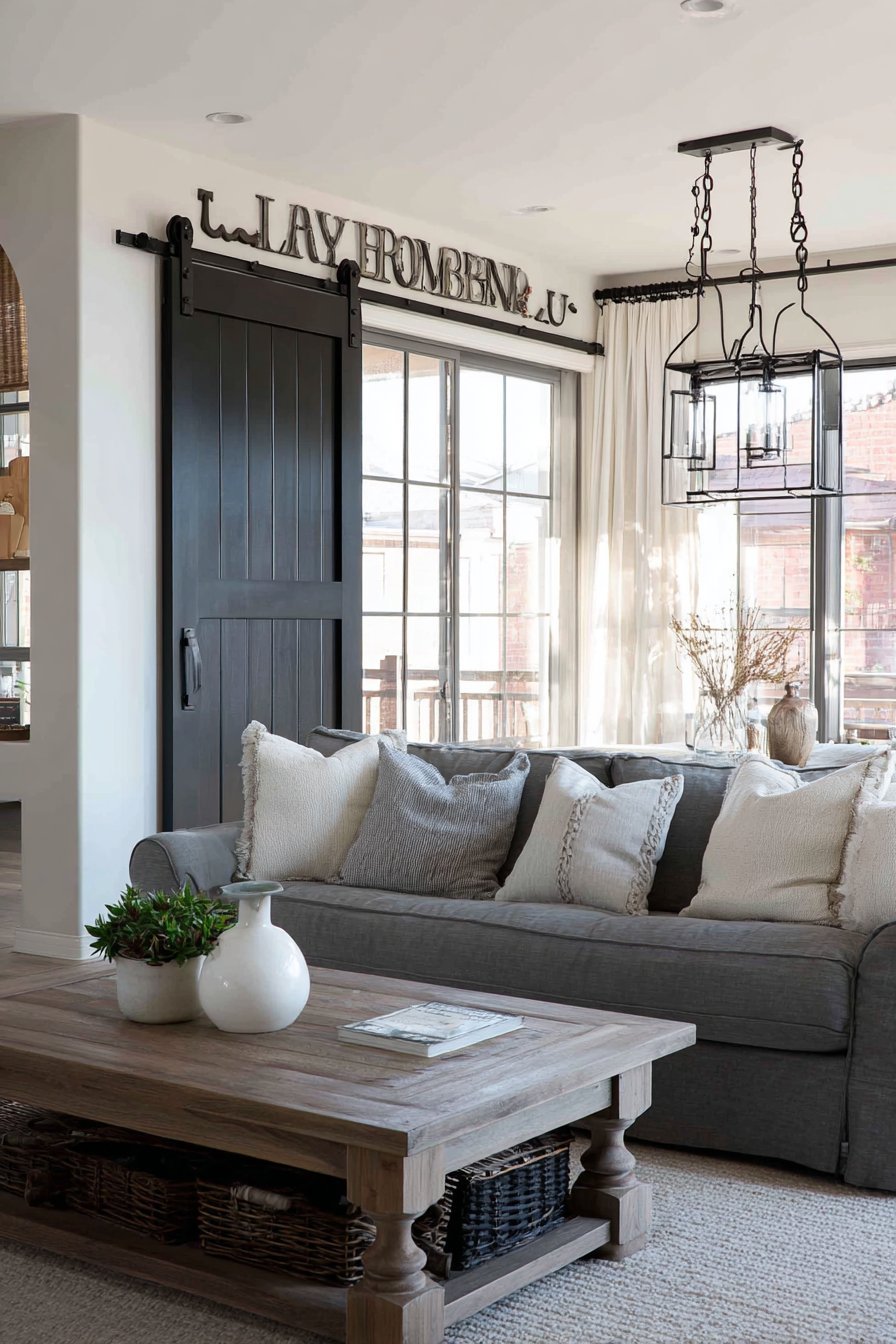
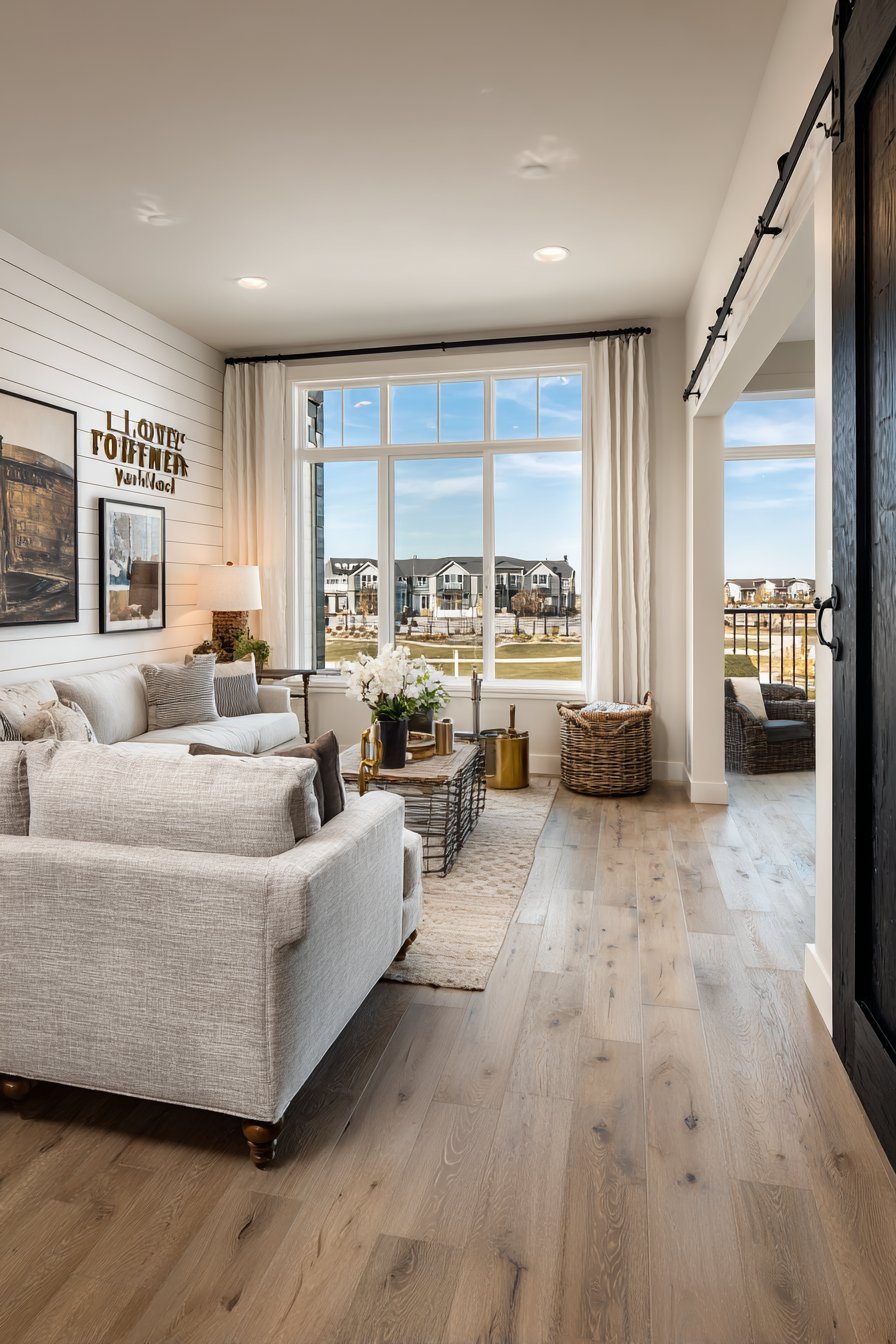
A sliding barn door wall installation painted in matte black serves both functional and artistic purposes. Vintage farm tools and metal letters spelling family words create personalized wall display. A grey linen sofa with turned legs combines comfort with traditional form. Shiplap accent wall in crisp white provides textural interest without color distraction.
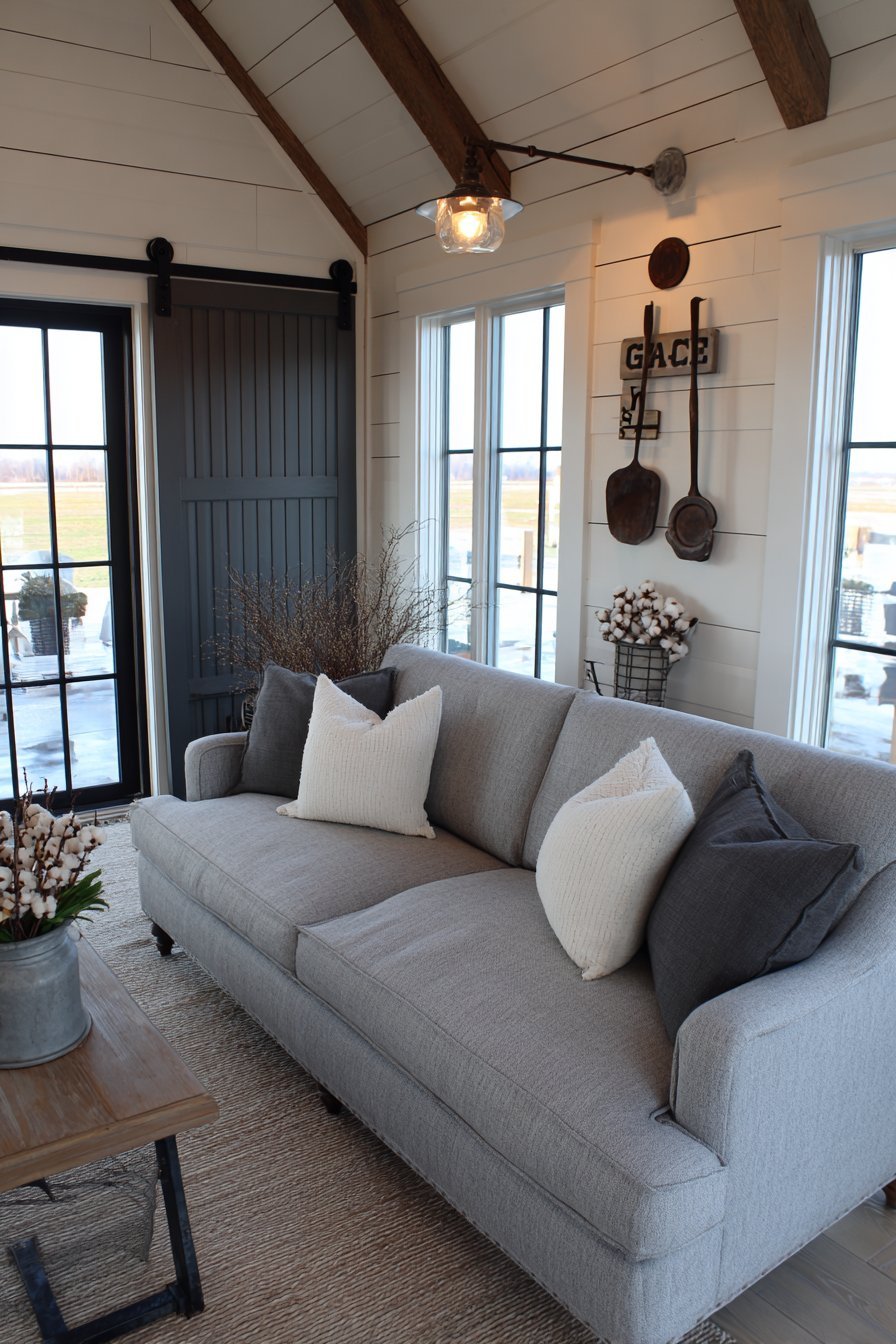
Galvanized metal accents and wire baskets add industrial farmhouse touches throughout. Reclaimed wood beam mantel displays cotton stems and ceramic crocks creating seasonal vignettes. Natural light from multiple windows with simple black rod curtains illuminates white oak floors showing natural grain. Wide-angle interior photography captures fresh updated farmhouse aesthetic with clean lines and edited accessories.
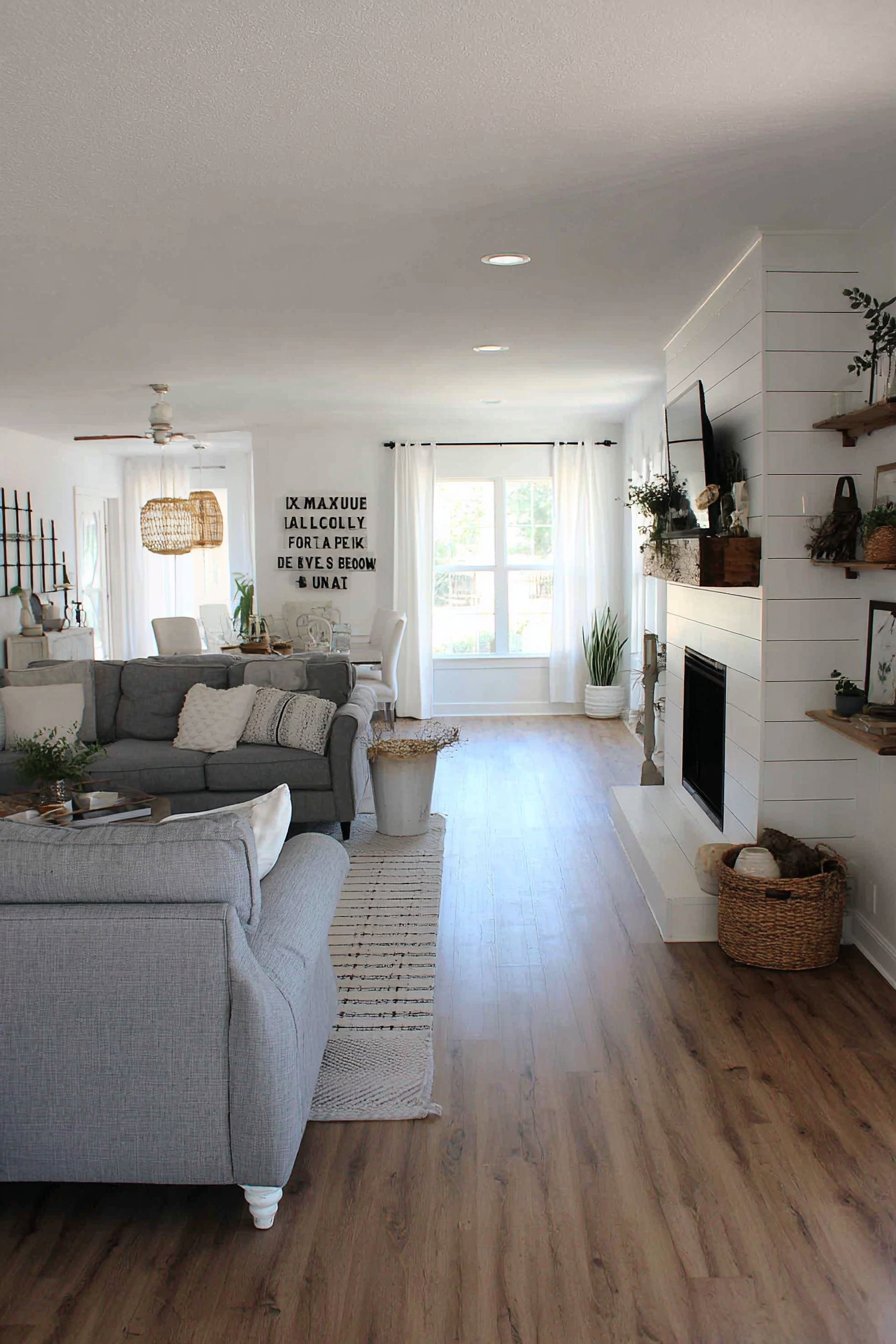
Modern farmhouse updates traditional rural aesthetics for contemporary lifestyles. The style maintains farmhouse warmth while editing out fussy details. Clean lines and simplified color palettes create spaces feeling both fresh and familiar.
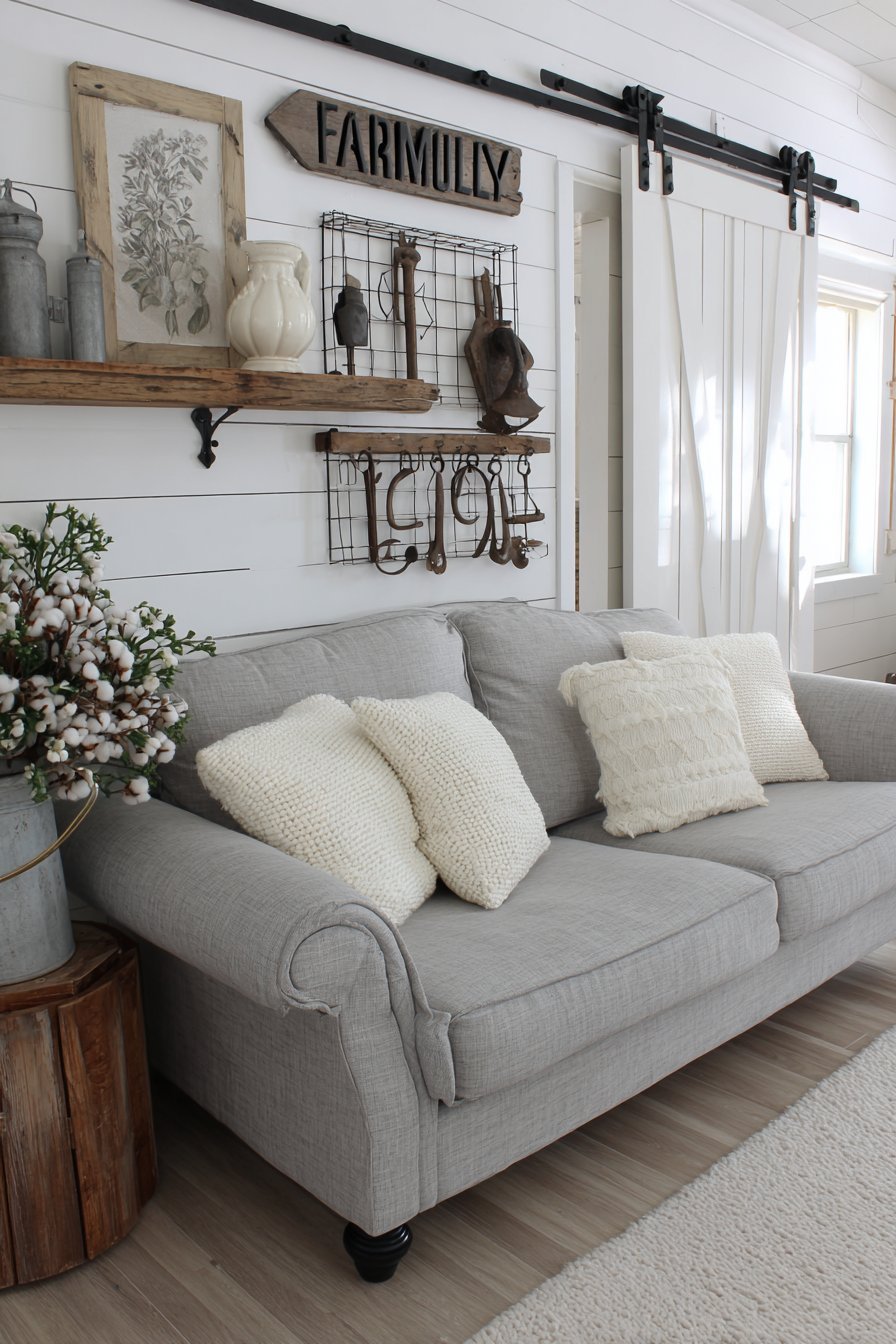
The black accents prevent the style from reading too sweet or country. Matte black barn door hardware, window rods, and metal letters add contemporary edge. This update makes farmhouse style appeal to broader design sensibilities.
Key Design Tips:
- Install functional sliding barn doors as architectural wall elements
- Use matte black finishes for contemporary edge in farmhouse spaces
- Display personalized metal letter signs for family connection
- Choose grey rather than beige upholstery for updated neutral palette
- Incorporate galvanized metal accessories for authentic farm character
- Edit accessories ruthlessly maintaining only meaningful pieces
26. Tropical Resort Botanical Paradise
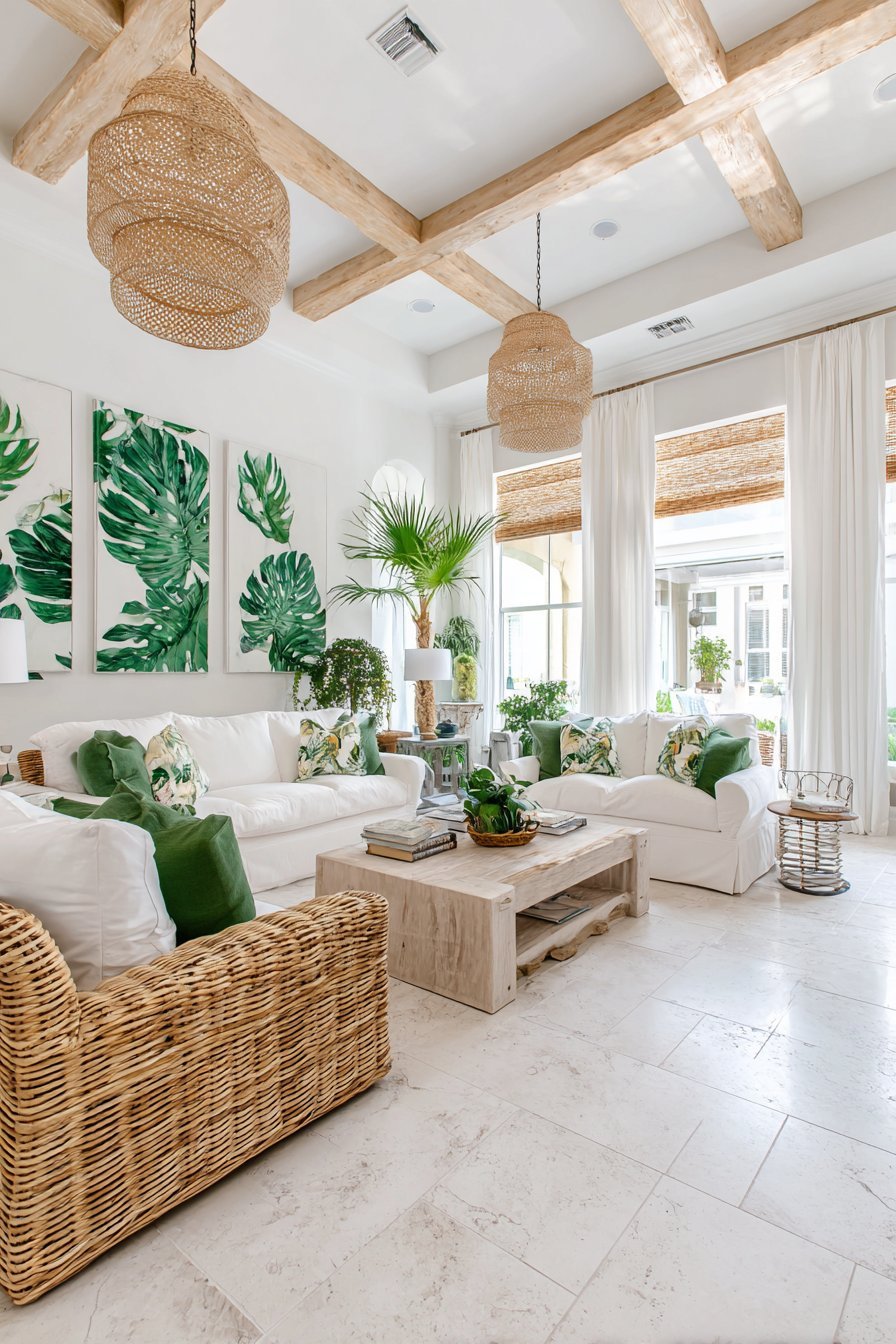
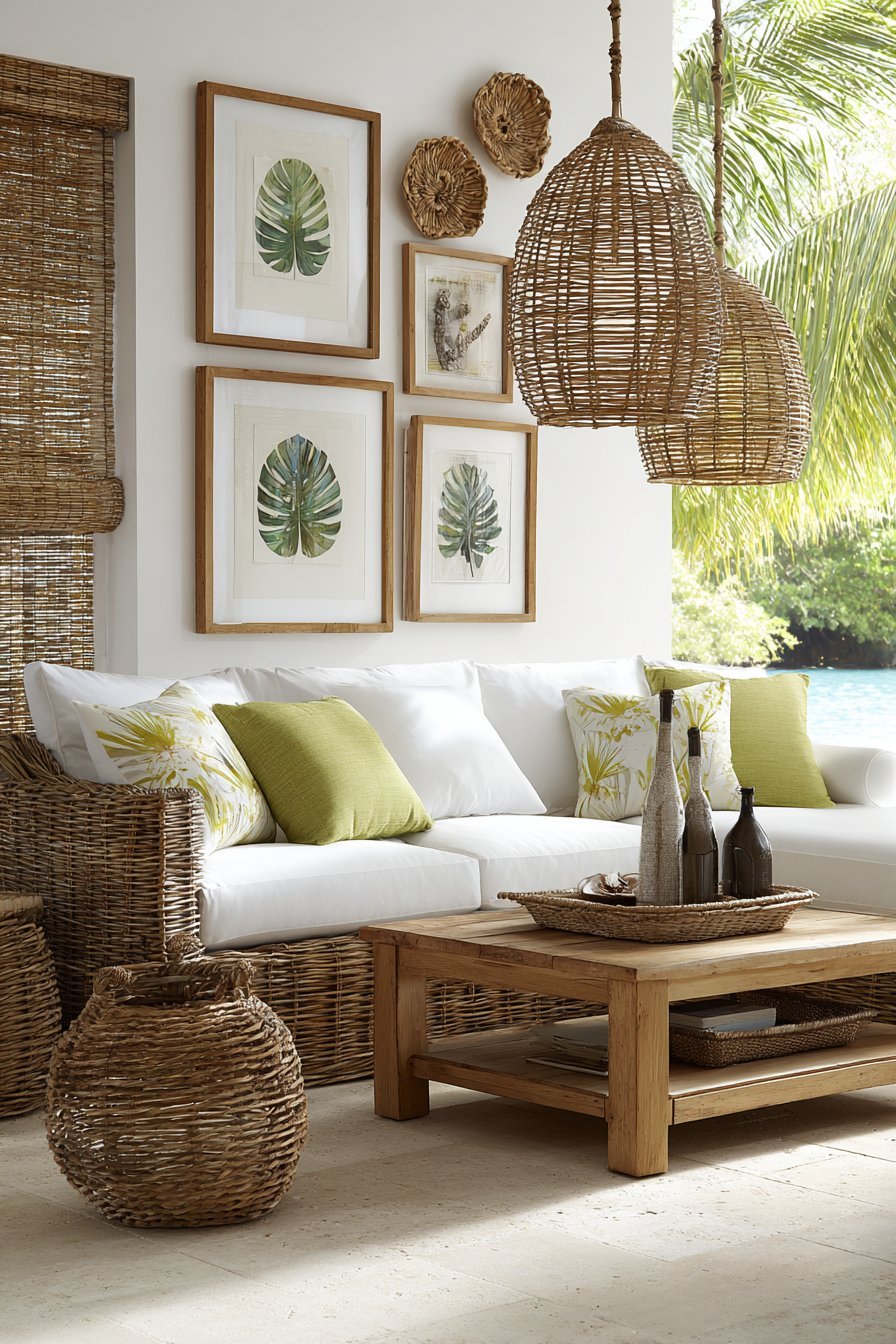
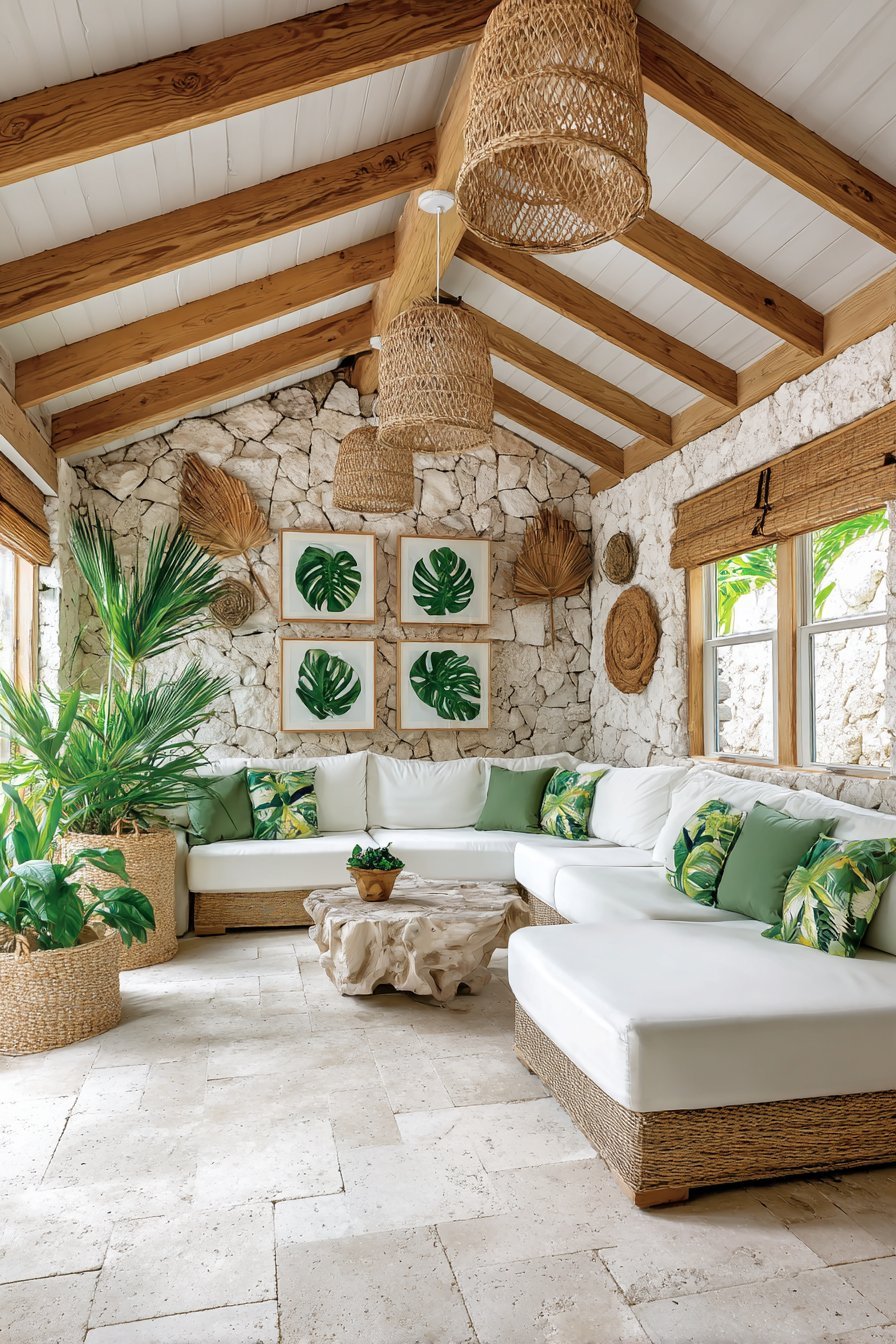
Large-scale banana leaf prints in natural wood frames create bold botanical wall display. Woven rattan wall plates and mounted palm fronds extend the tropical theme throughout. A white linen sectional with natural wicker frame embodies relaxed island living aesthetic. Accent pillows in tropical prints and solid greens add color while maintaining resort sophistication.
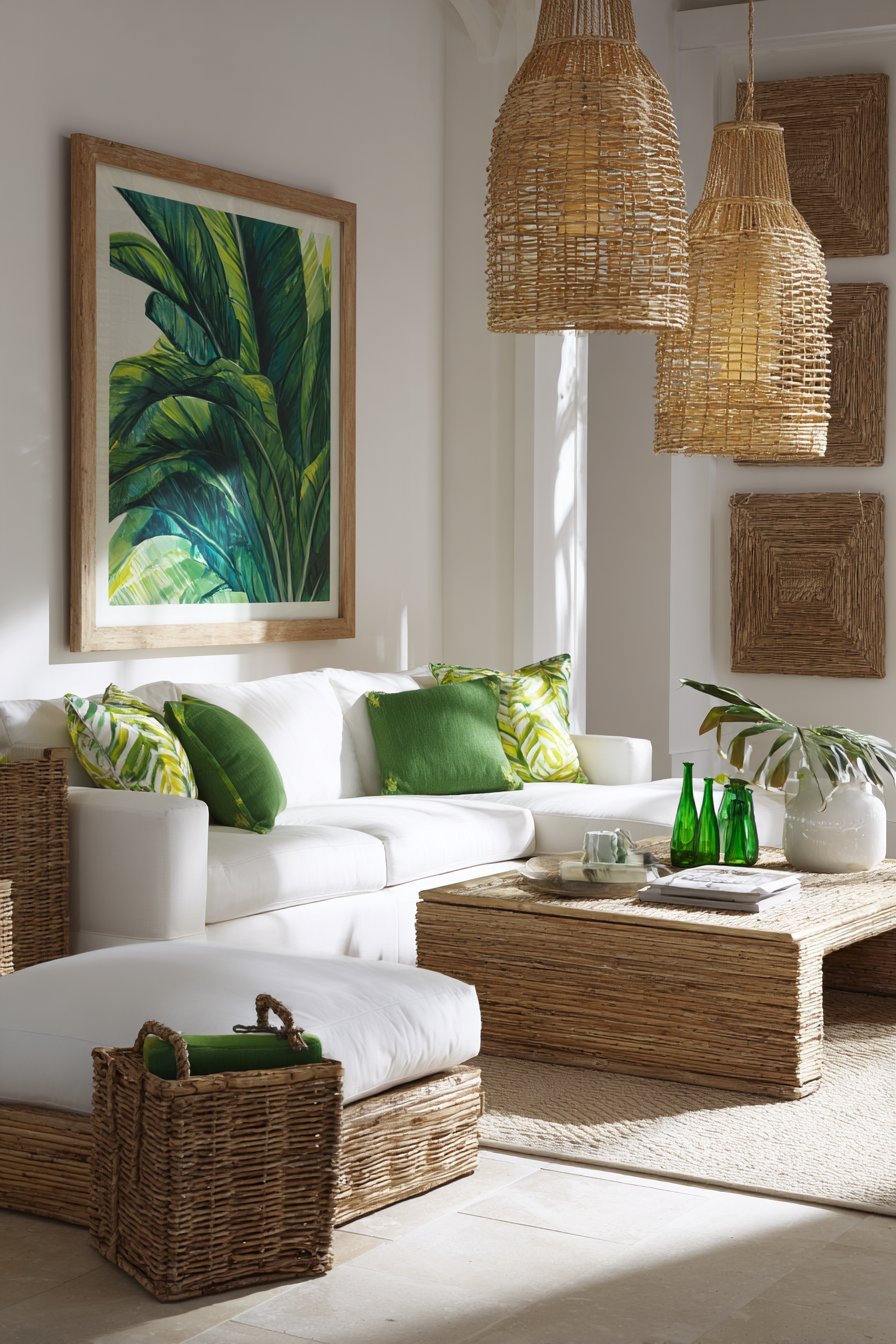
Natural fiber rope pendant lights hang above driftwood coffee table creating textural focal points. Bamboo Roman shades filter bright tropical sunlight while maintaining privacy and view. Limestone tile flooring stays naturally cool underfoot in warm climates. Interior design photography captures bright airy lighting and relaxed vacation atmosphere celebrating lush natural materials.
Tropical resort style brings vacation relaxation into everyday living. The aesthetic works particularly well in warm climates with access to outdoor living. Natural materials connect interior spaces to tropical landscape surroundings.
The botanical prints introduce pattern and color while referencing local flora. Oversized scale makes dramatic impact without overwhelming the space. These prints serve as affordable art alternatives to original paintings.
Key Design Tips:
- Choose botanical prints in large scale for tropical drama
- Use natural wicker and rattan furniture for authentic island aesthetic
- Incorporate driftwood collected from beaches for personal connection
- Install bamboo window treatments for tropical character and light control
- Select limestone or light tile flooring for cool surfaces in warm climates
- Layer natural fiber textures through rope, rattan, and woven elements
27. Masculine Study Leather and Wood
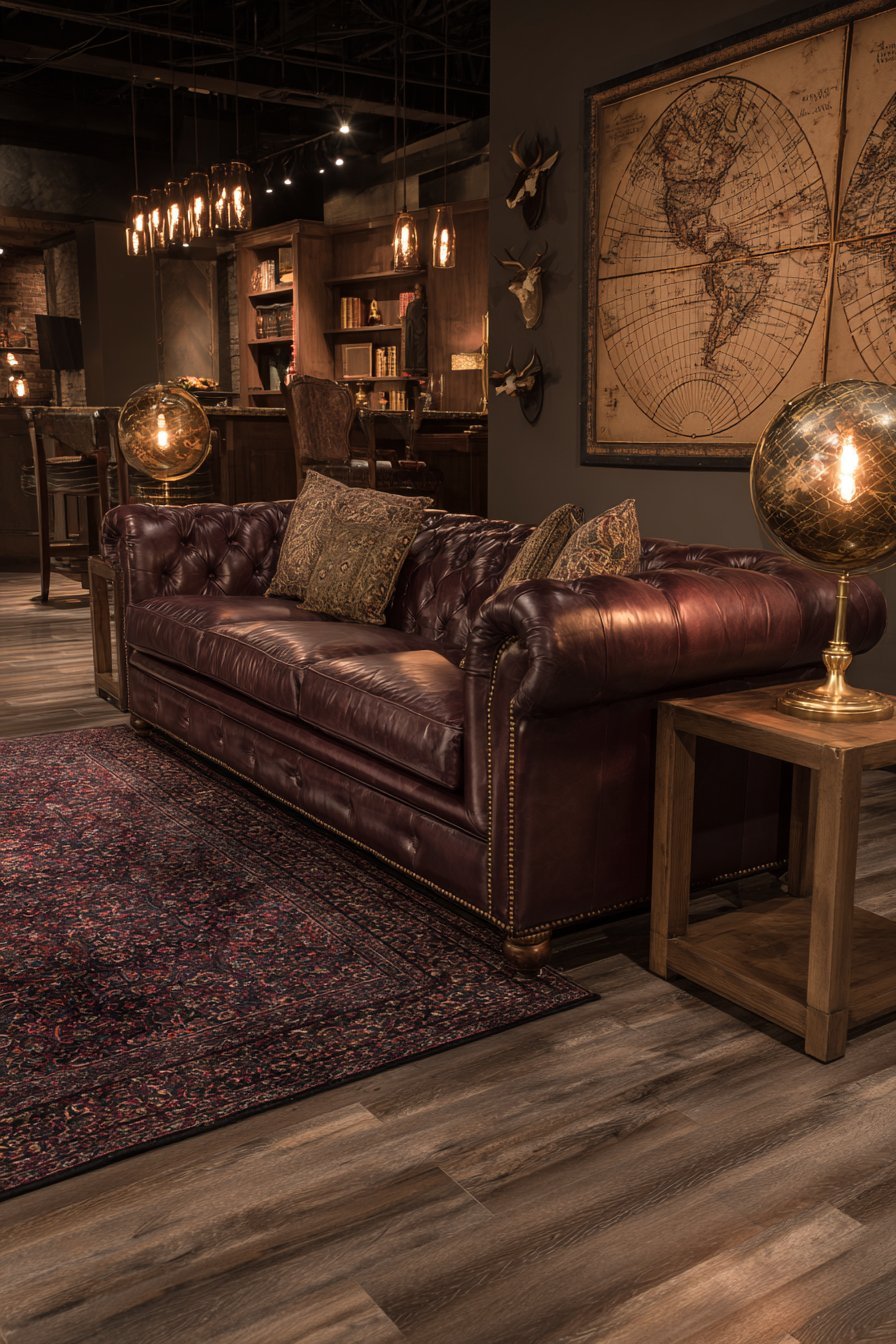
Dark wood framed vintage maps create sophisticated wall display with historical interest. Leather-bound book spines arranged as wall art demonstrate creative repurposing. Mounted hunting trophies create gentleman’s study atmosphere. A deep brown leather Chesterfield sofa shows rich patina and tufted character typical of traditional men’s clubs.
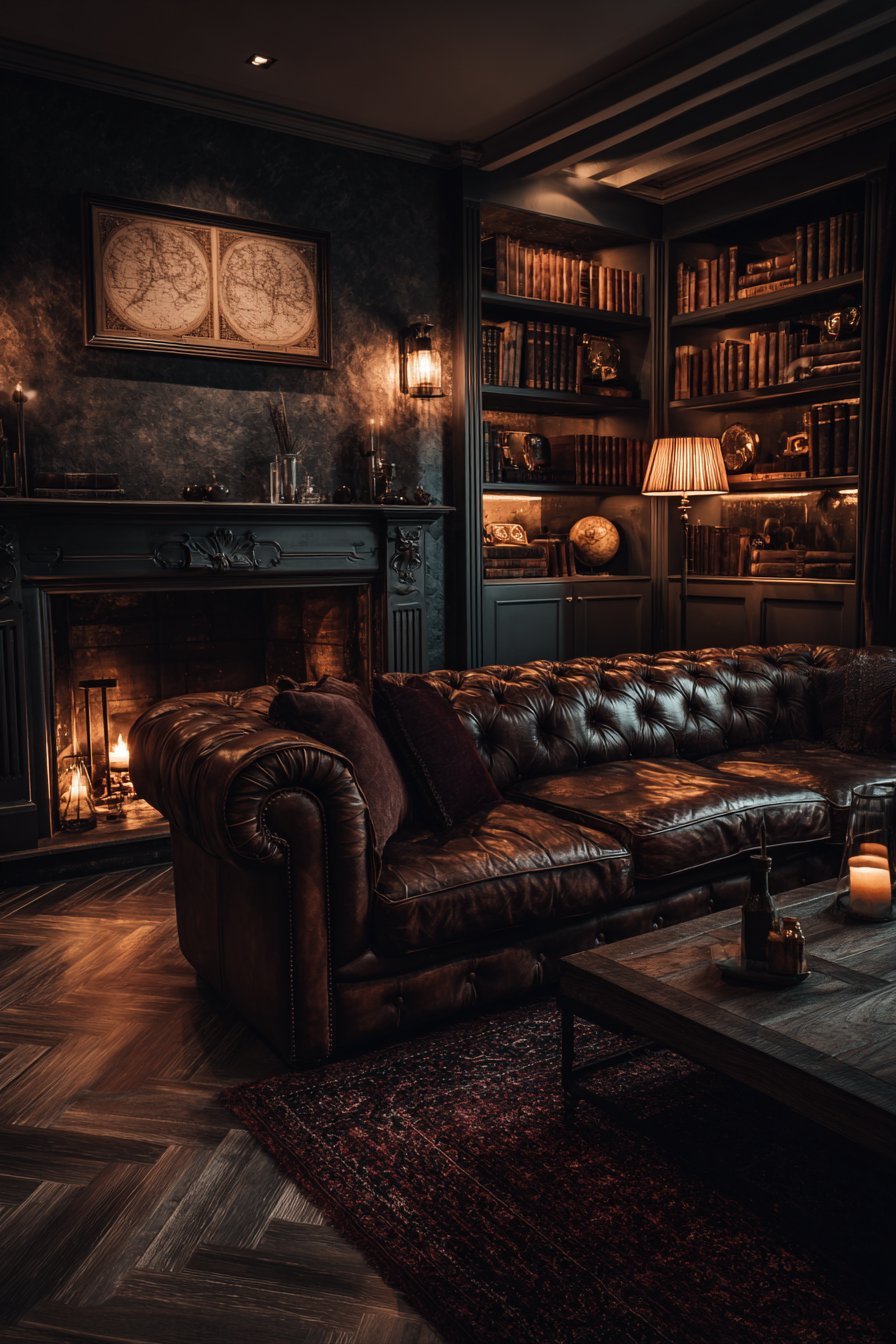
Persian rug in burgundy and navy anchors dark walnut flooring with classic pattern. Built-in bookshelves flank marble fireplace creating architectural symmetry. Brass pharmacy lamps and antique globe add scholarly touches throughout the space. Low ambient lighting from table lamps creates intimate pools of warm illumination perfect for evening reading.
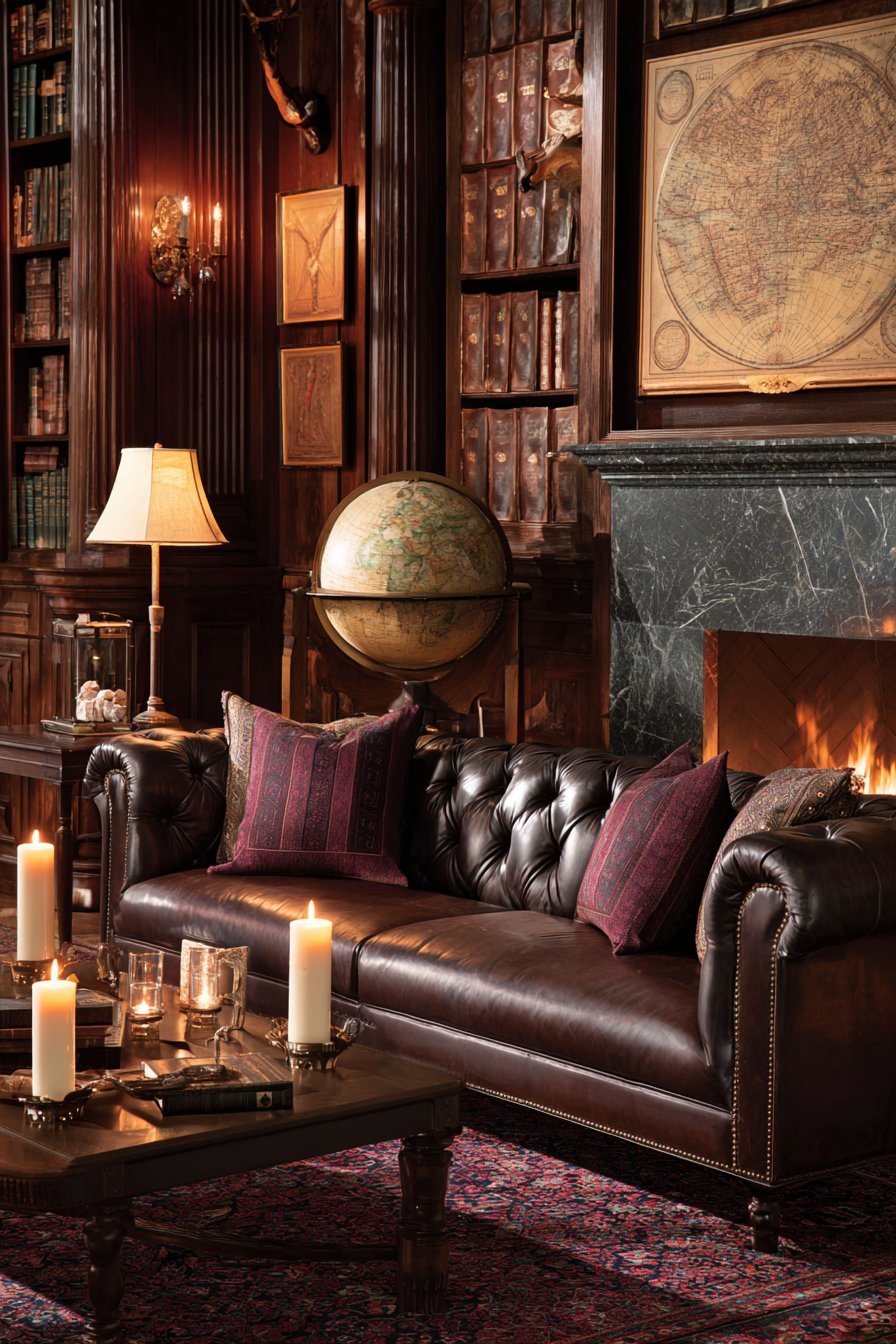
Masculine design celebrates rich materials and sophisticated restraint. Dark woods, leather, and traditional patterns create spaces feeling established and refined. The aesthetic appeals to those who appreciate traditional masculine environments.
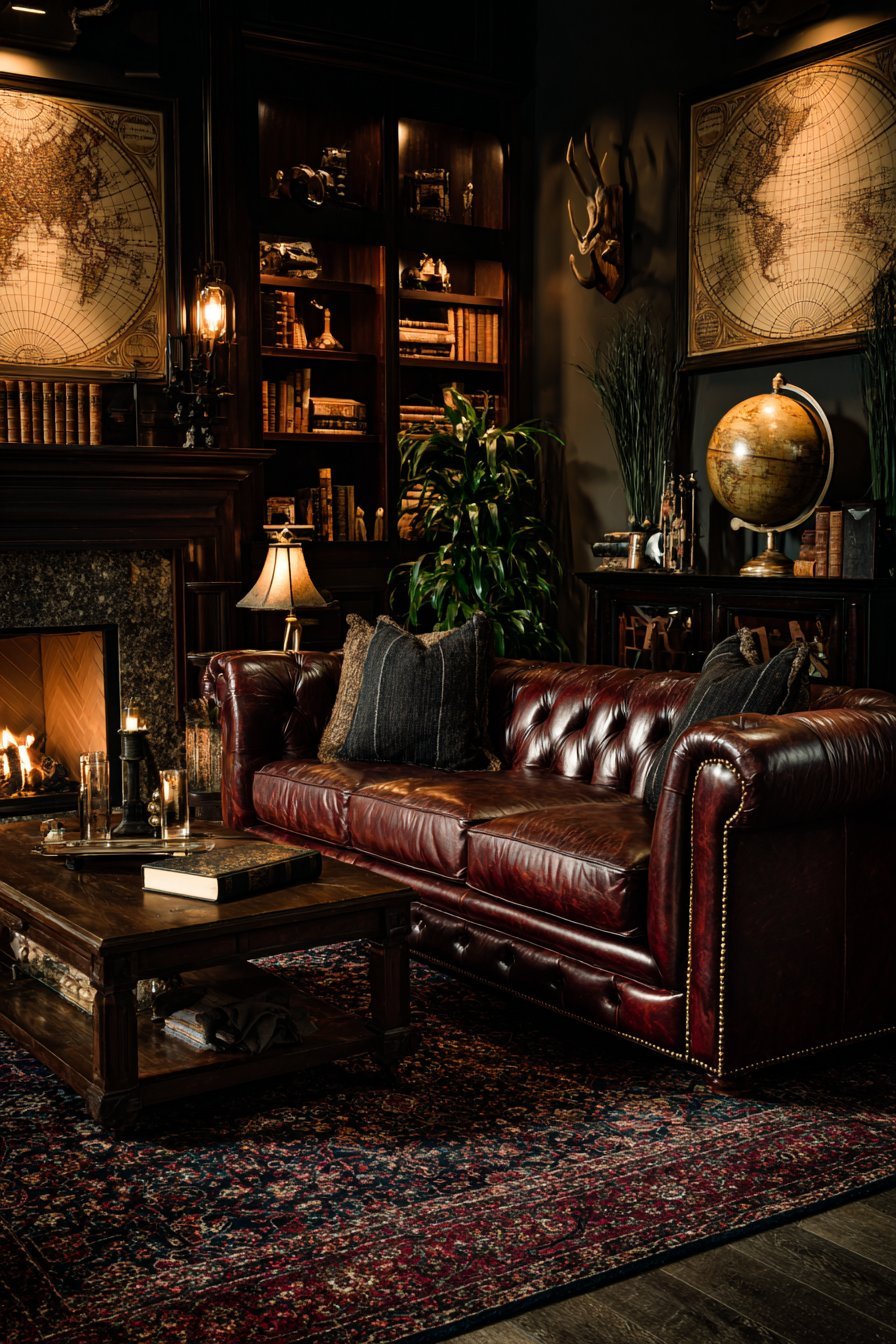
The layered approach to dark tones requires skill to prevent heaviness. Brass accents, firelight, and strategic lighting prevent the space from feeling cave-like. The balance creates cozy intimacy without oppression.
Key Design Tips:
- Display vintage maps and globes for intellectual masculine appeal
- Choose leather furniture with tufting and traditional club chair styling
- Use dark wood tones throughout furniture and architectural elements
- Incorporate brass lighting and accessories for warm metallic accents
- Layer Persian rugs over dark hardwood flooring
- Create library atmosphere through built-in bookshelves and reading lamps
28. Contemporary Coastal Ocean Blues
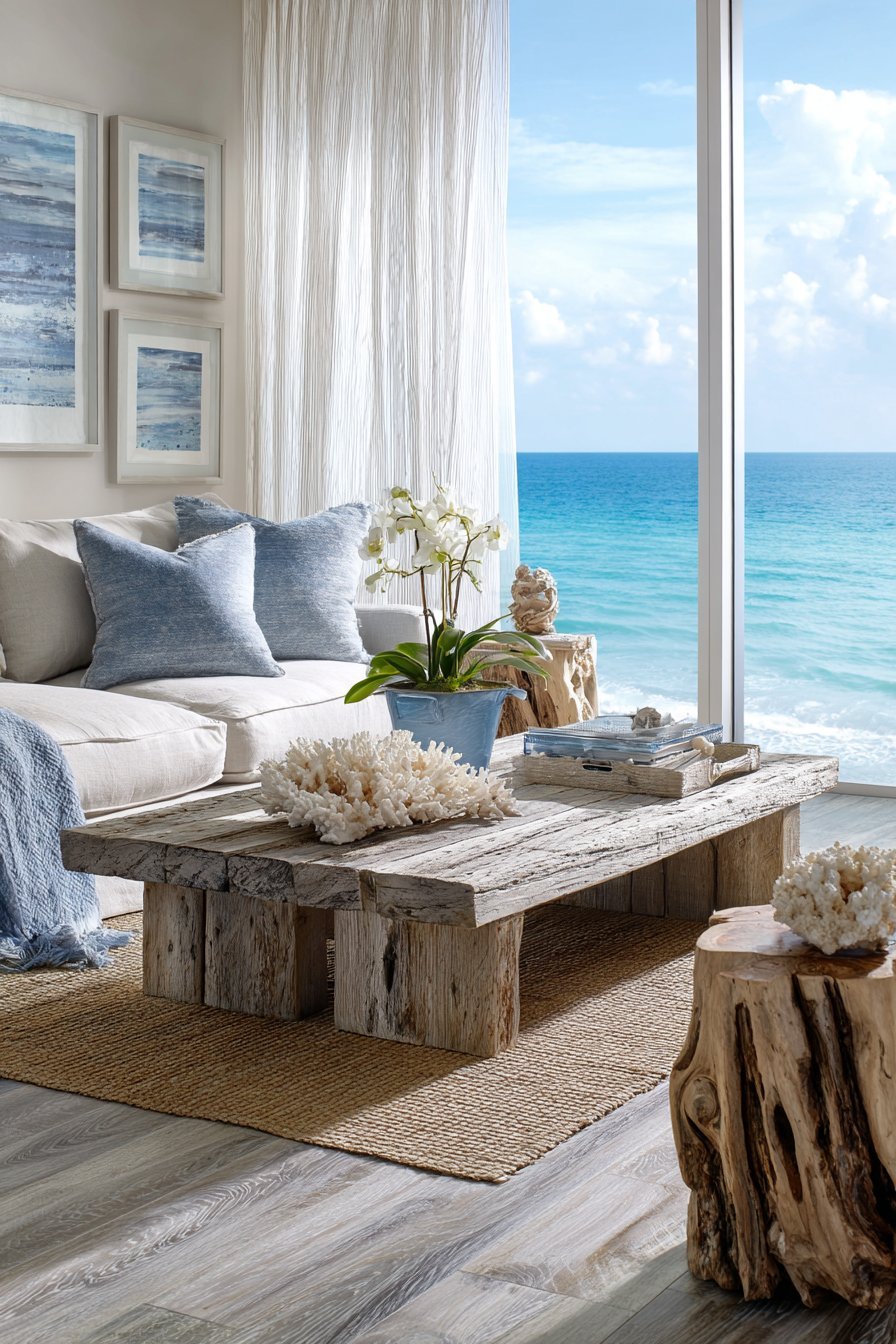
Abstract ocean-inspired artwork in shades of blue, grey, and white creates serene focal wall. Slim white frames maintain clean contemporary aesthetic. Driftwood sculptures and rope-wrapped mirrors extend the coastal theme with natural elements. A slipcovered sectional in sand-colored linen faces floor-to-ceiling windows overlooking water views.
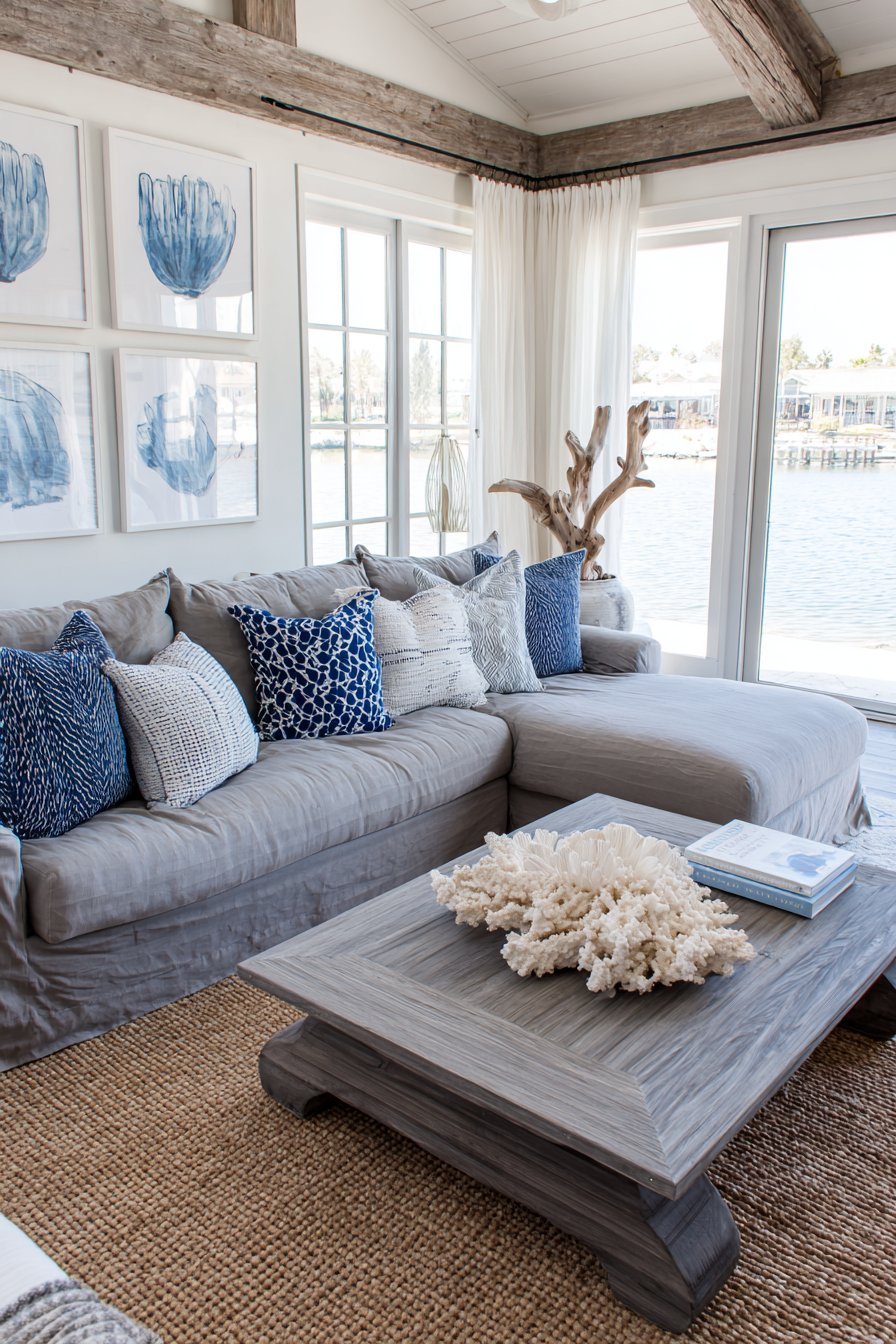
Weathered wood coffee table displays coral specimens and oversized coffee table books. Sisal area rug adds natural texture to whitewashed oak floors. Sheer white curtains billow gently from ocean breezes creating movement and life. Bright natural daylight creates airy sun-bleached atmosphere throughout the space emphasizing seamless indoor-outdoor connection.
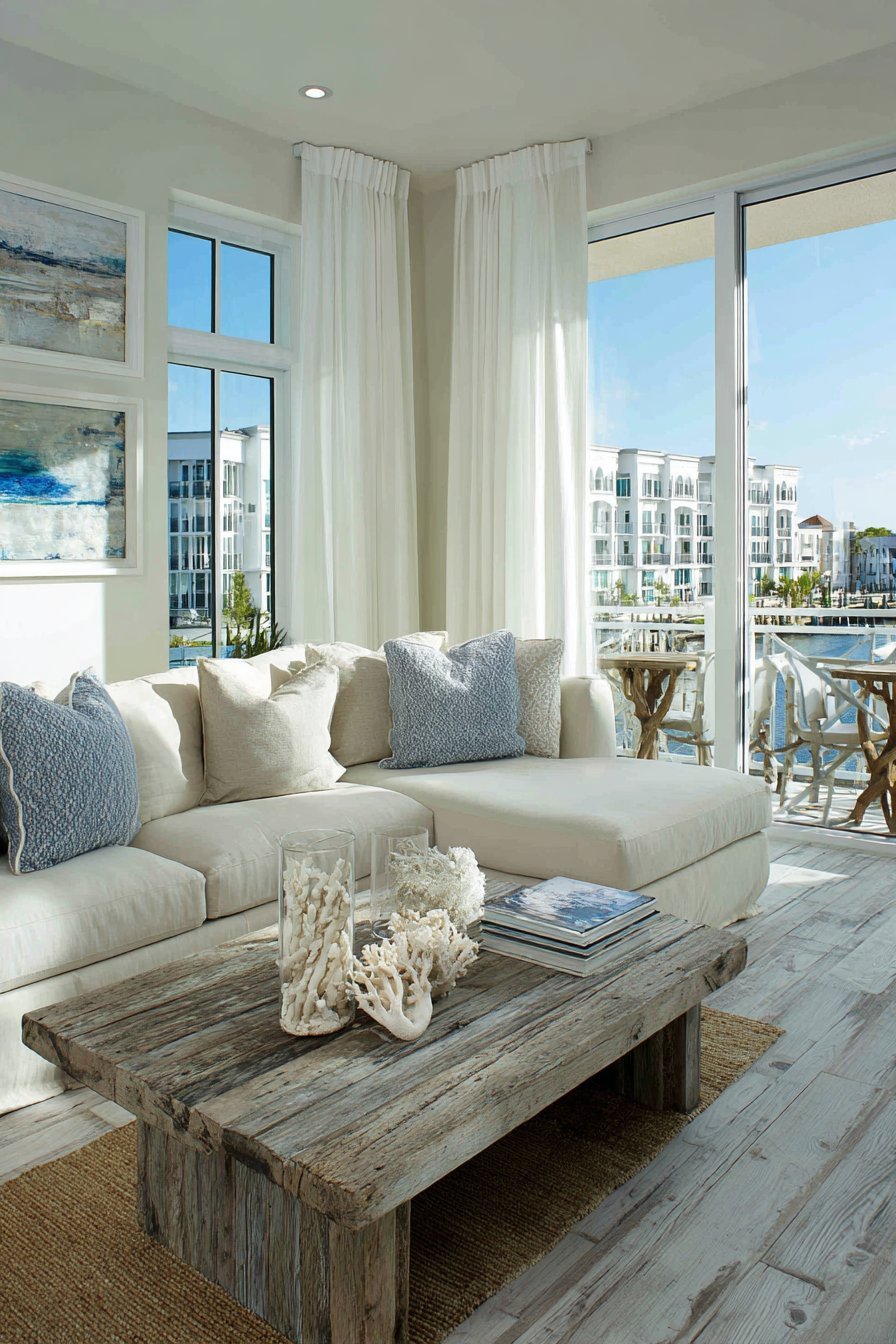
Contemporary coastal style updates traditional beach house aesthetics for modern sensibilities. The approach maintains connection to seaside environment while avoiding nautical clichés. Sophistication replaces kitschy coastal decoration.
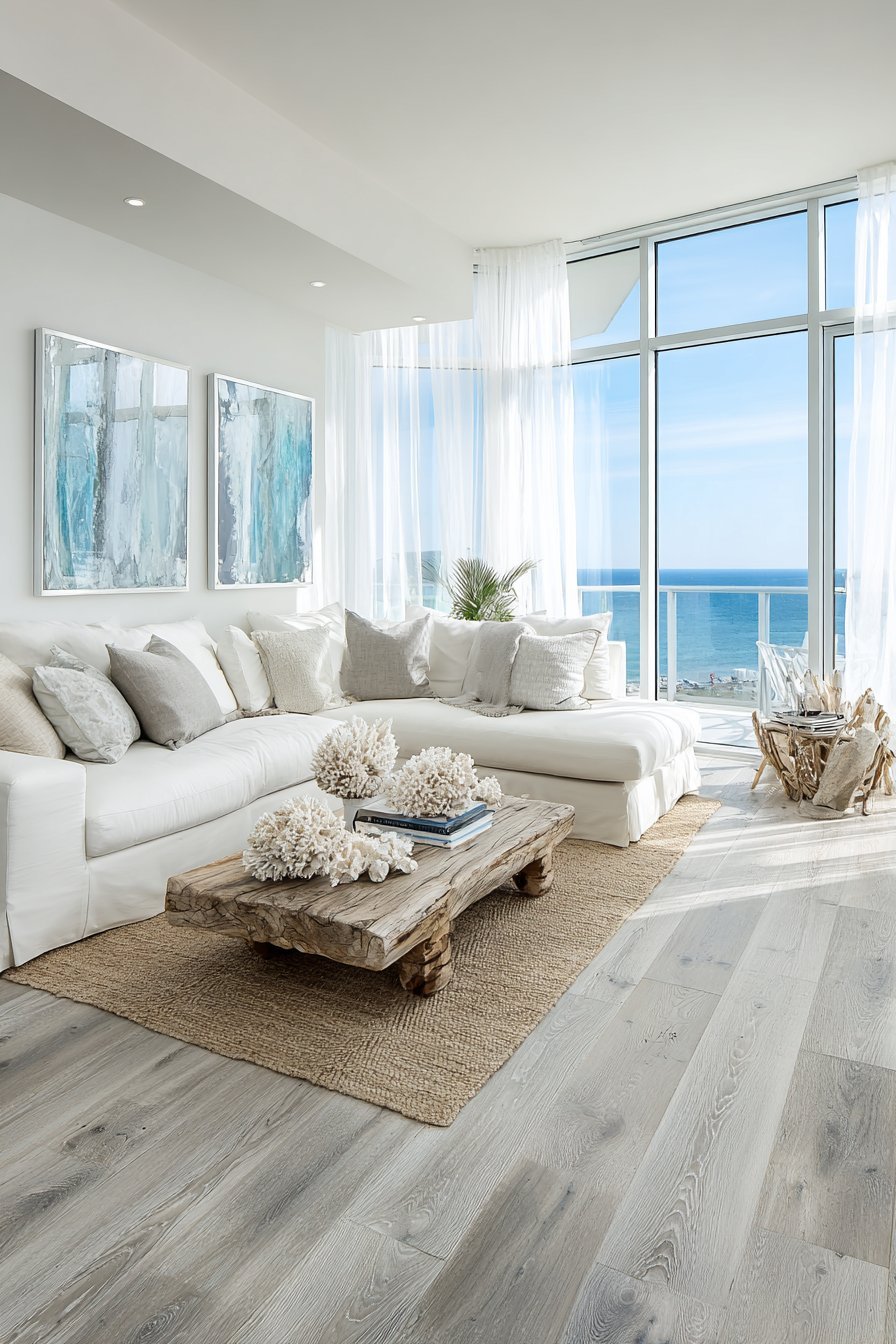
The abstract ocean artwork provides sophisticated alternative to literal seascape paintings. The color palette references water and sand without depicting them directly. This abstraction feels more contemporary and versatile.
Key Design Tips:
- Choose abstract art inspired by ocean rather than literal seascapes
- Use slipcovered furniture for easy maintenance in sandy environments
- Display collected coral and shells as natural sculptural elements
- Install floor-to-ceiling windows to maximize ocean views
- Select whitewashed or light wood flooring for sun-bleached appearance
- Use natural fiber rugs like sisal for coastal texture
29. Vintage Eclectic Flea Market Finds
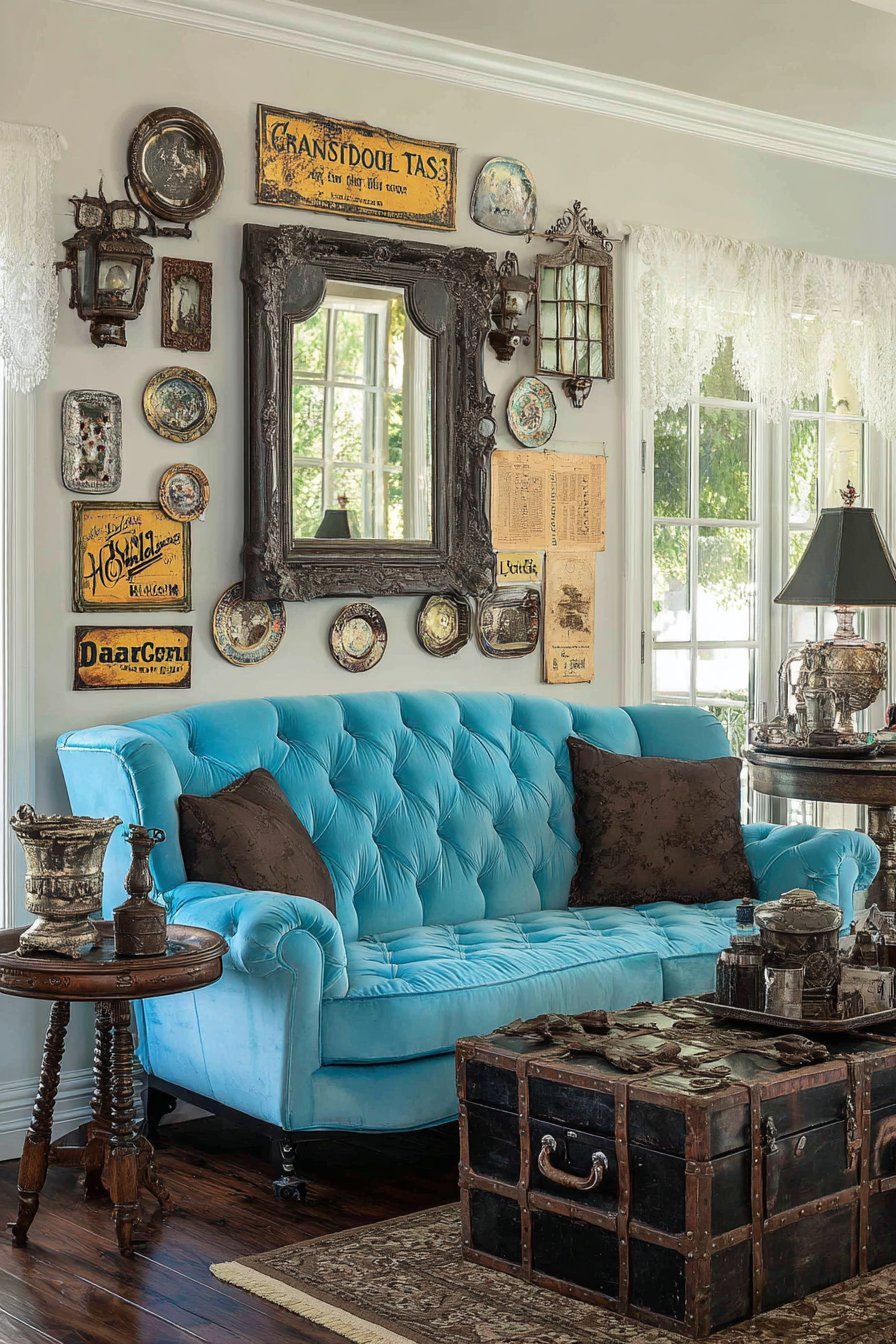
Antique mirrors in ornate frames mix with vintage advertising signs and old window frames. The repurposed window frames serve as unique wall art pieces. A collection of antique plates creates salon-style wall display demonstrating flea market curation skills. A refurbished vintage velvet sofa in peacock blue serves as the anchor piece showing quality restoration work.
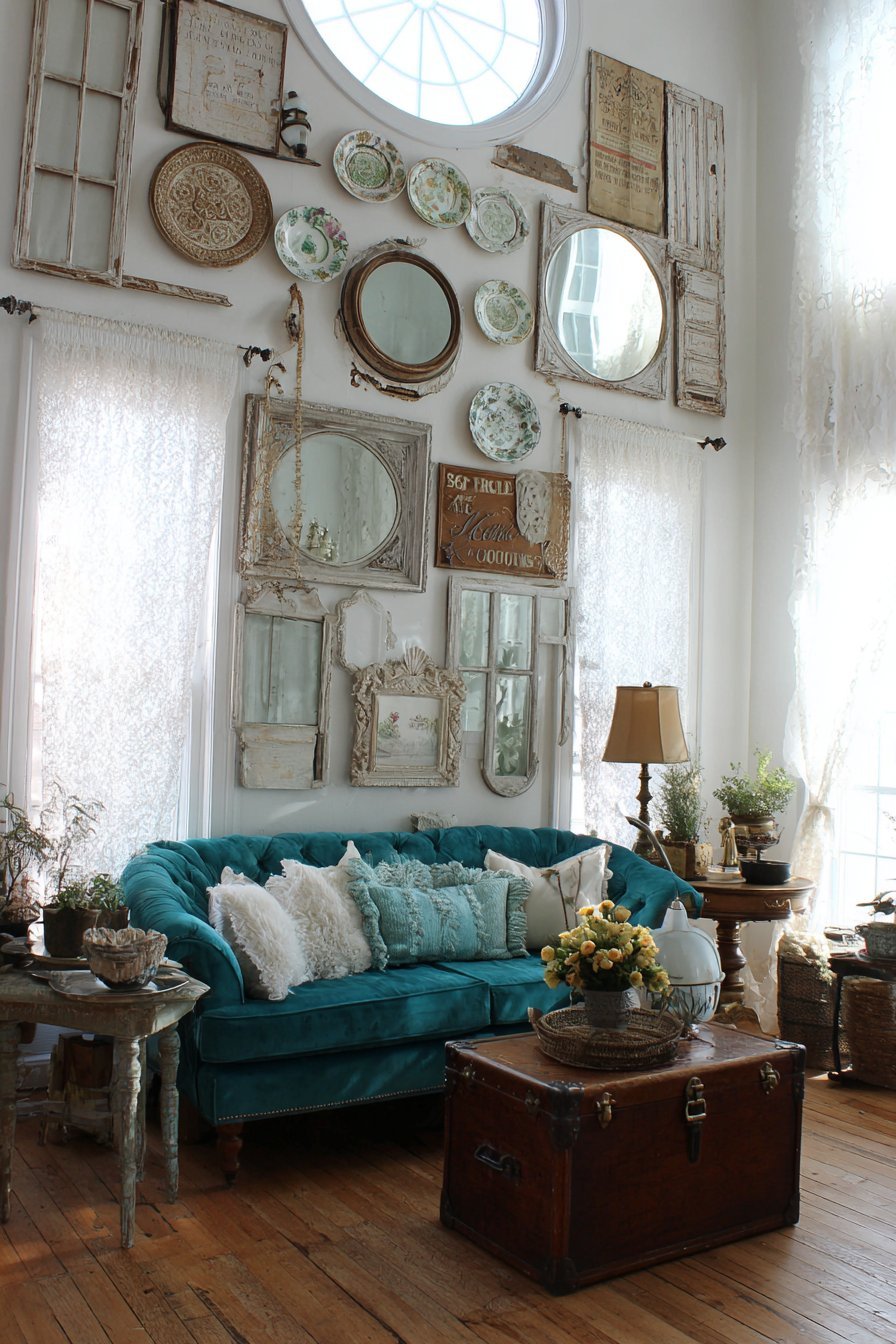
Mismatched side tables and refinished trunk coffee table add character through varied styles. Oriental rugs layer over worn hardwood floors creating rich foundation. Mix of antique lamps provides ambient lighting supplementing natural light from tall windows. Vintage lace curtains filter daylight creating soft romantic illumination throughout the collected space.

Vintage eclectic design celebrates thrift shopping skills and restoration artistry. The style requires patience to source quality vintage pieces. Successful spaces demonstrate curation rather than random accumulation.
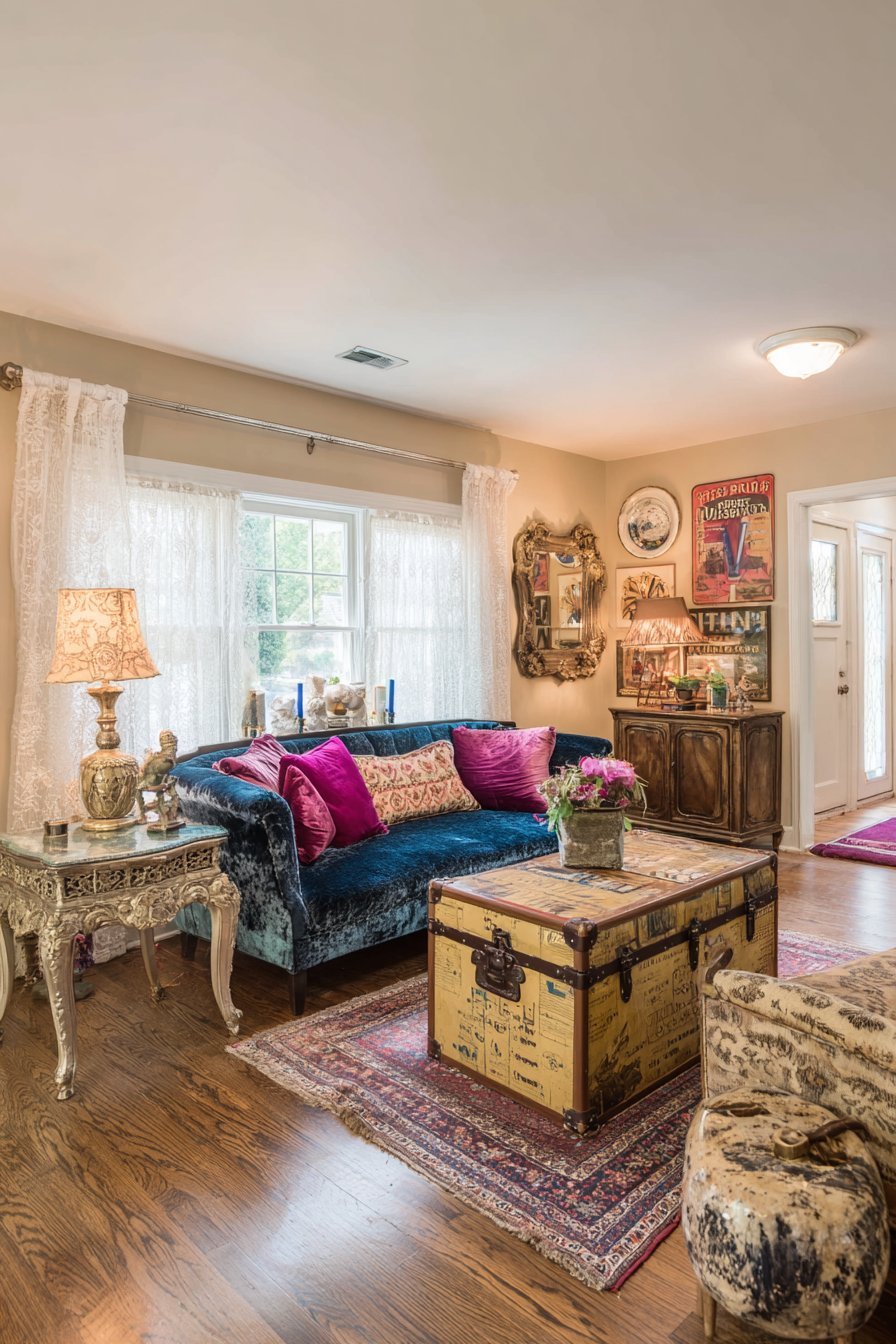
The peacock blue velvet sofa demonstrates how one bold vintage piece anchors eclectic spaces. Quality upholstery in rich color provides focal point among varied furnishings. This anchor prevents the eclecticism from reading as chaos.
Key Design Tips:
- Source vintage pieces from flea markets, estate sales, and antique shops
- Choose one bold vintage statement piece as room anchor
- Mix furniture styles and periods through common color threads
- Layer vintage rugs over existing flooring for warmth and pattern
- Repurpose architectural salvage into unique wall art
- Display collections of vintage items like plates or mirrors as curated installations
30. Moroccan Jewel-Tone Exotic Luxury
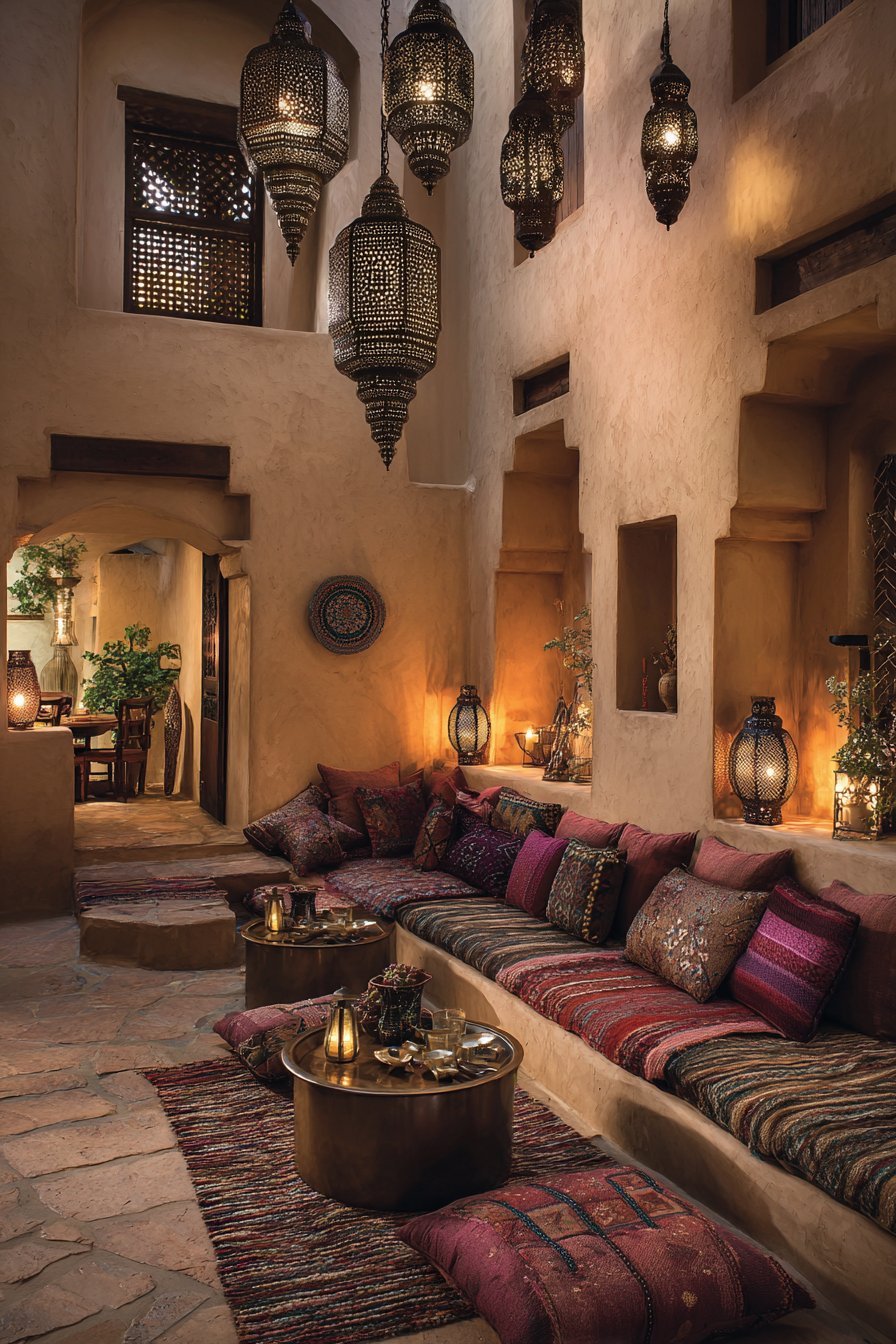
Intricate metal lanterns casting geometric shadows create dramatic wall display. Hand-carved wooden screens serve as architectural wall art demonstrating traditional craftsmanship. Colorful mosaic tile framed pieces add pattern and vibrant color throughout. Low-slung seating with jewel-toned velvet cushions surrounds brass tray tables in traditional Moroccan arrangement.
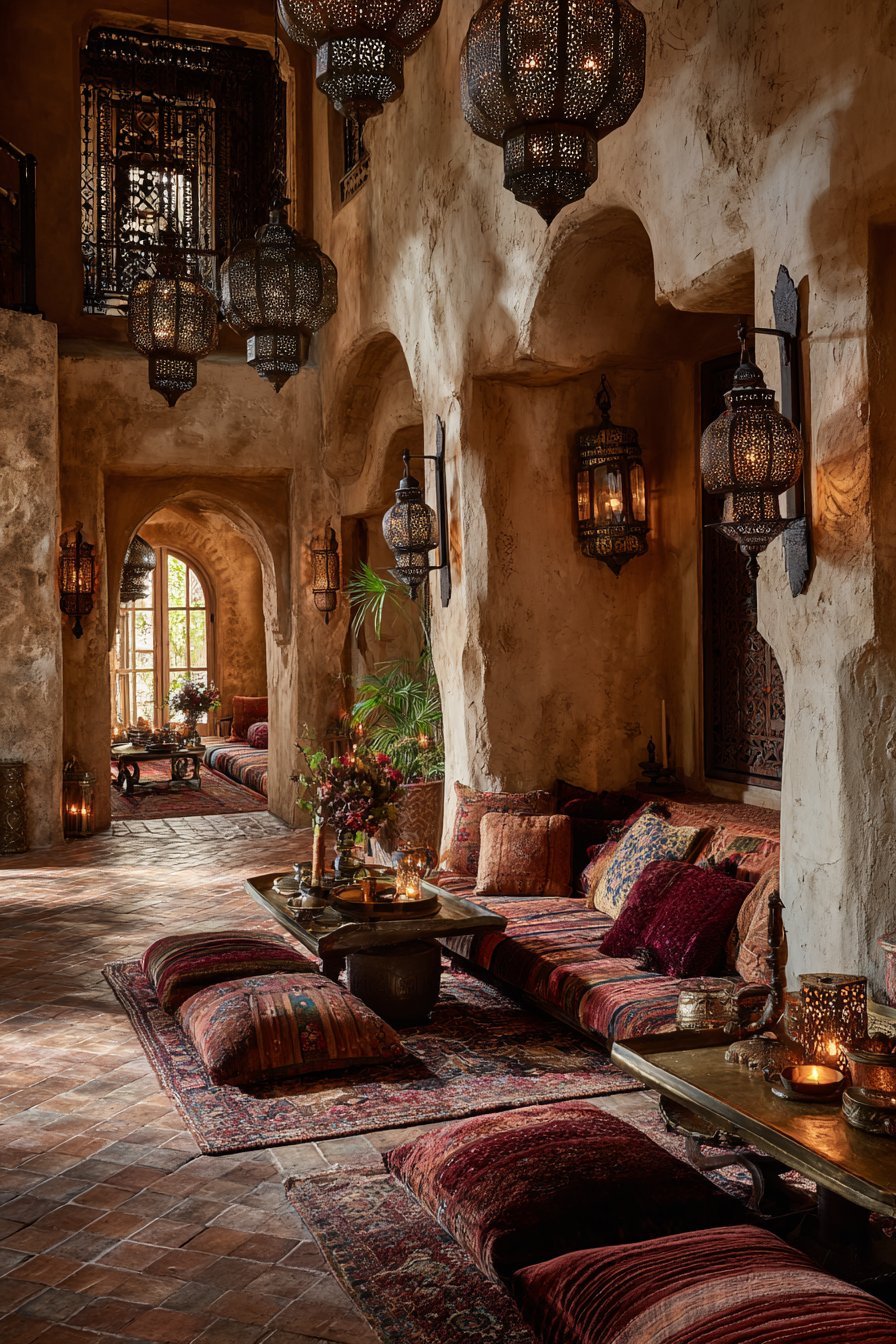
Embroidered silk pillows add luxurious texture and intricate handwork details. Layered Persian and Berber rugs cover terracotta tile floors creating rich foundation. Arched doorways and textured plaster walls painted in warm ochre create architectural interest. Moroccan pendant lights and punched metal candle holders provide warm ambient glow mixing with natural light from small high windows.
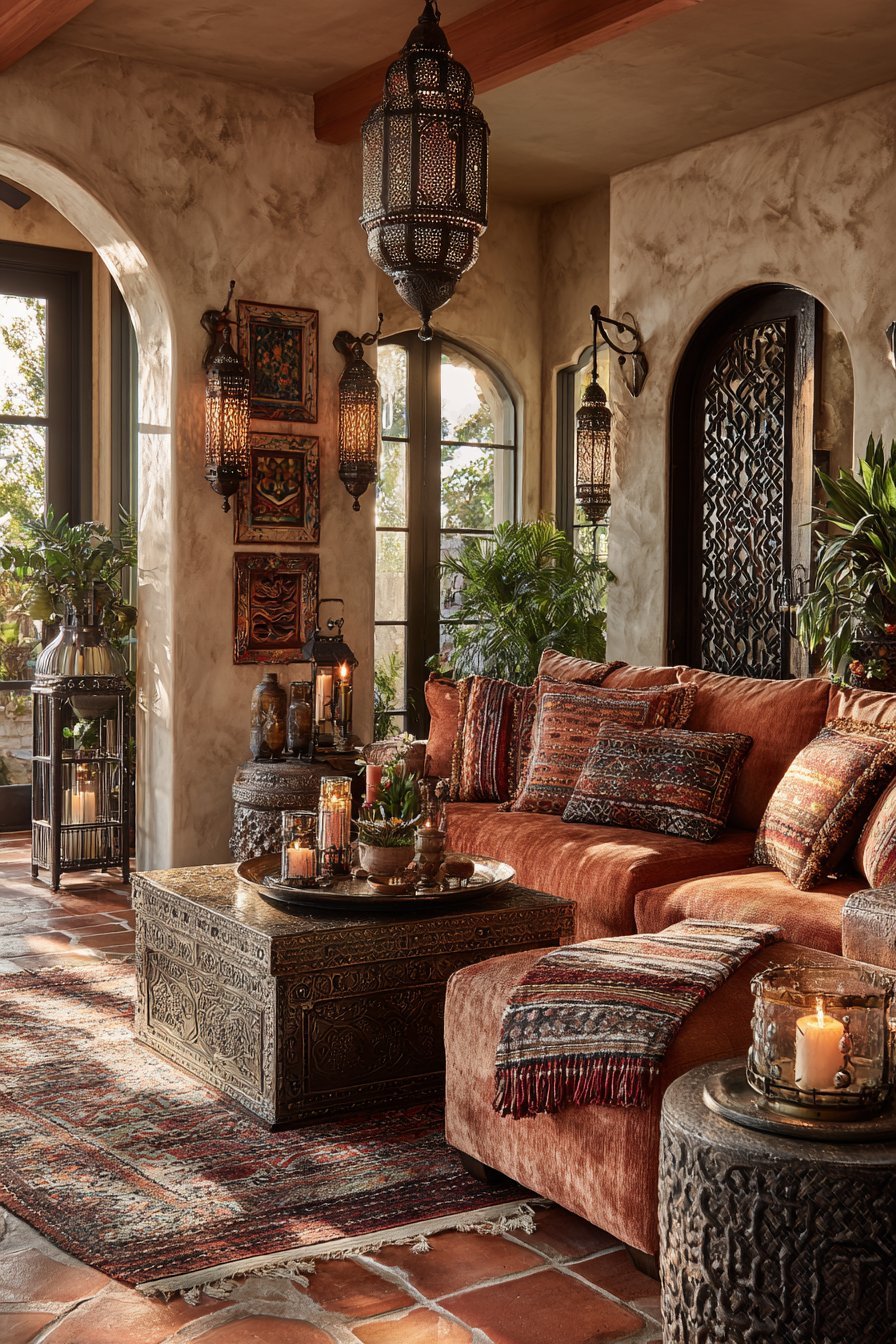
Moroccan design celebrates intricate pattern, rich color, and luxurious textiles. The exotic aesthetic transports inhabitants to North African riads and souks. Successful execution requires commitment to authentic elements and bold color choices.
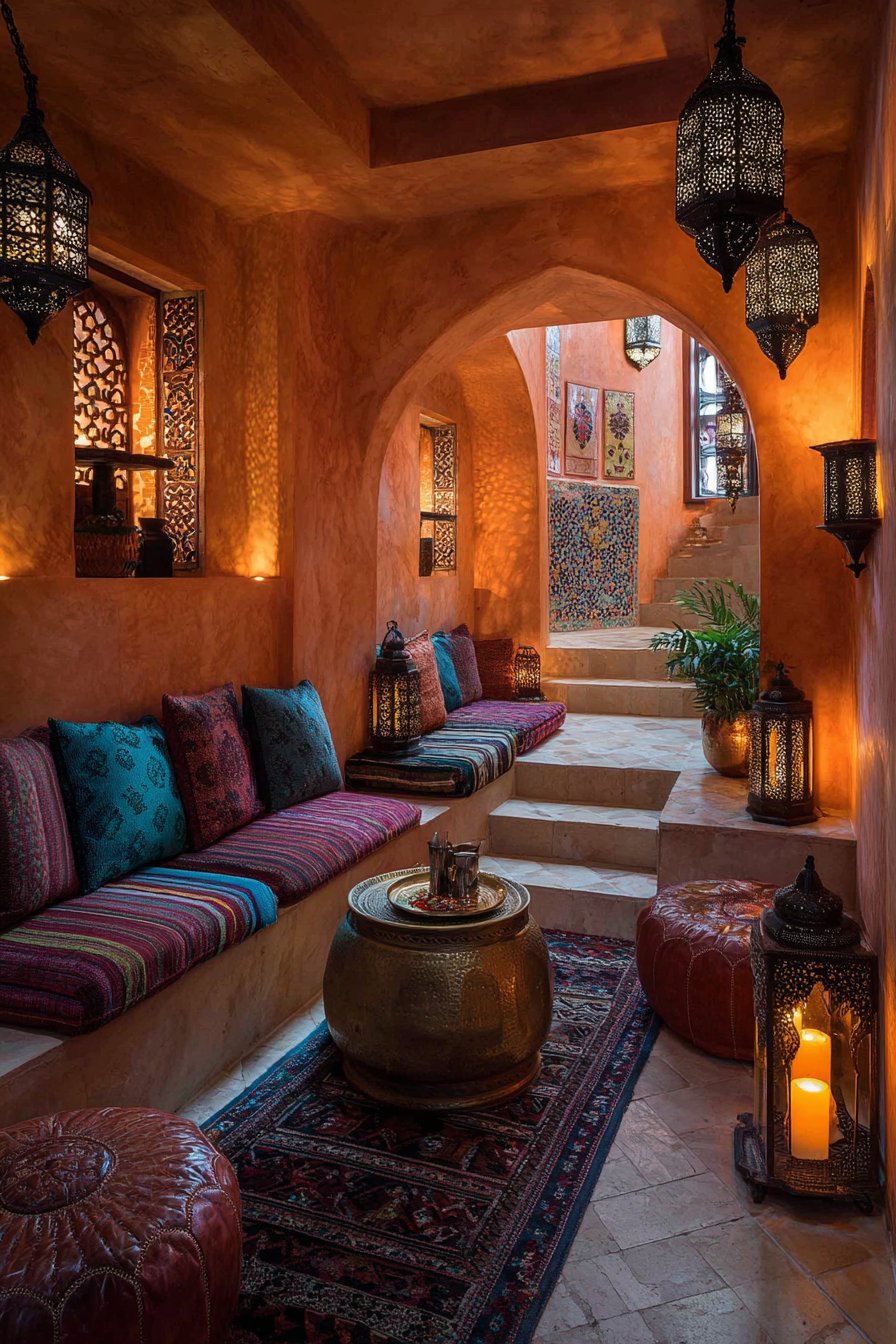
The layered approach to pattern mixing requires confidence and cultural understanding. Geometric tiles, embroidered textiles, and carved wood screens all feature intricate patterns. Warm ochre walls provide unifying backdrop preventing visual chaos.
Key Design Tips:
- Layer multiple rugs in complementary patterns and colors
- Use low-slung seating with abundant cushions for authentic Moroccan style
- Incorporate metal lanterns and punched metal lighting for dramatic shadows
- Choose jewel-tone velvets and silks for cushions and textiles
- Paint walls in warm ochre or terracotta for North African atmosphere
- Display hand-carved wooden screens as functional art and room dividers
Why These Living Room Designs Are the Best
These thirty living room concepts represent diverse approaches to successful interior design. Each demonstrates thoughtful consideration of materials, spatial planning, and aesthetic coherence. The collection showcases versatility while maintaining high design standards throughout different style interpretations.
Contemporary approaches emphasize clean lines and edited palettes creating calm sophisticated environments. Traditional designs celebrate craftsmanship and quality materials that develop character through aging. The spectrum between these poles offers options for every personality and lifestyle preference.
Material choices significantly impact both aesthetics and longevity in living spaces. Natural materials like solid wood, genuine leather, and natural stone age gracefully developing patina. These authentic materials outperform synthetic alternatives in durability and visual appeal over time. The designs presented prioritize quality investments over trendy disposable furnishings.
Color theory applications vary dramatically across the featured concepts. Neutral palettes provide flexibility for evolving tastes while bold jewel tones create immediate personality. Successful color implementation considers natural light exposure, room size, and intended atmosphere. Warm colors advance visually making spaces feel cozier while cool tones recede creating airiness.
Lighting strategies prove essential across all featured designs. Layered approaches combining ambient, task, and accent lighting create functional versatility. Natural light maximization through window treatments and reflective surfaces enhances spaces regardless of style. The interplay between natural and artificial illumination transforms rooms throughout daily cycles.
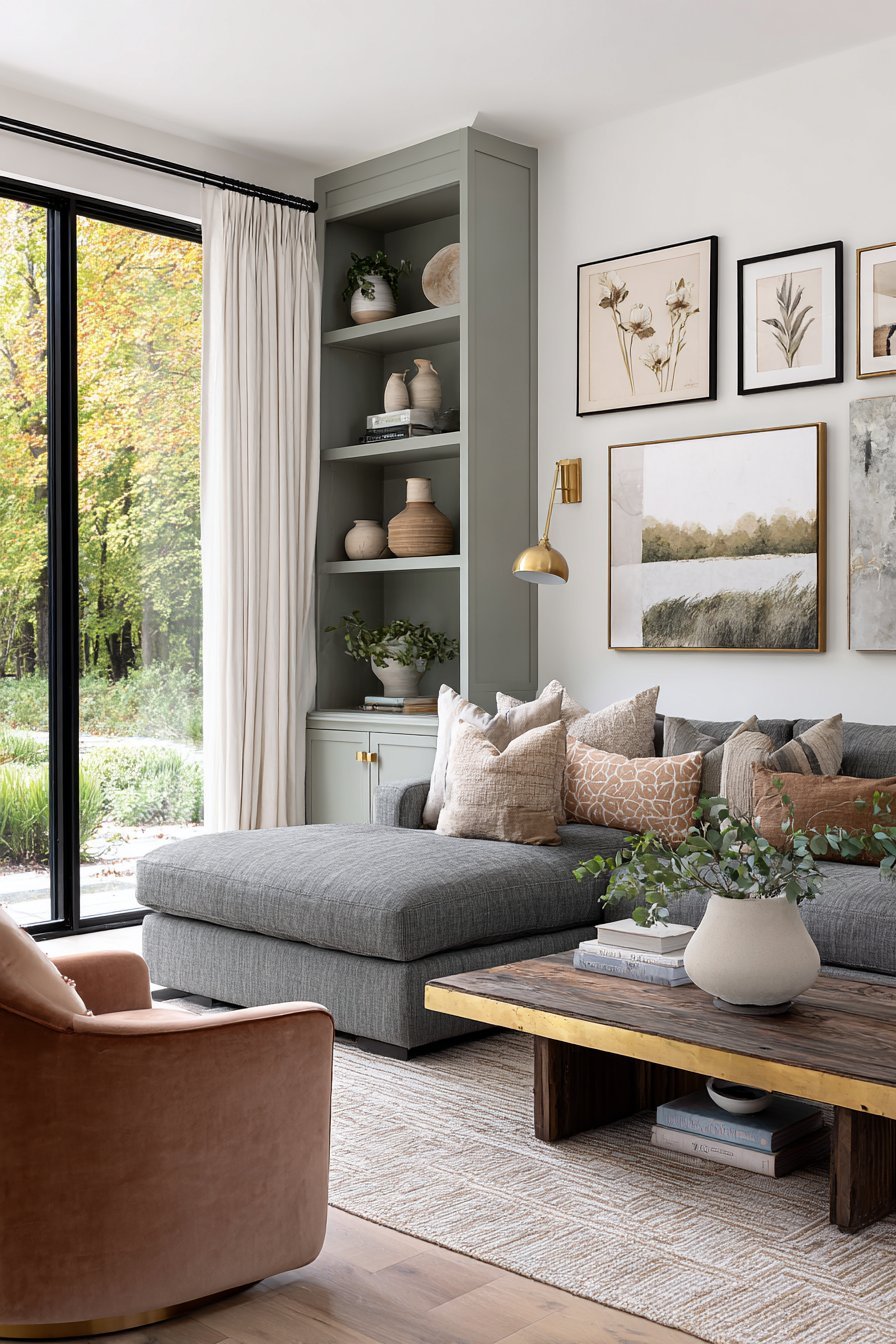
Spatial considerations influence design choices significantly. Small living rooms benefit from vertical emphasis and multi-functional furniture. Open concept spaces require careful furniture arrangement defining conversation areas without blocking flow. The featured designs address various spatial challenges through strategic planning and thoughtful furniture selection.
Sustainability emerges through timeless design choices and quality material selection. Classic pieces transcend trend cycles maintaining relevance across changing preferences. Investment in fewer high-quality items proves more sustainable than accumulating disposable furnishings. These designs demonstrate how thoughtful curation creates lasting value beyond initial aesthetic impact.
Conclusion
These thirty living room designs demonstrate that successful spaces emerge from thoughtful material choices and coherent vision. Quality pieces combined with personal touches create rooms feeling both beautiful and welcoming. The diversity of approaches proves no single correct path exists in interior design.
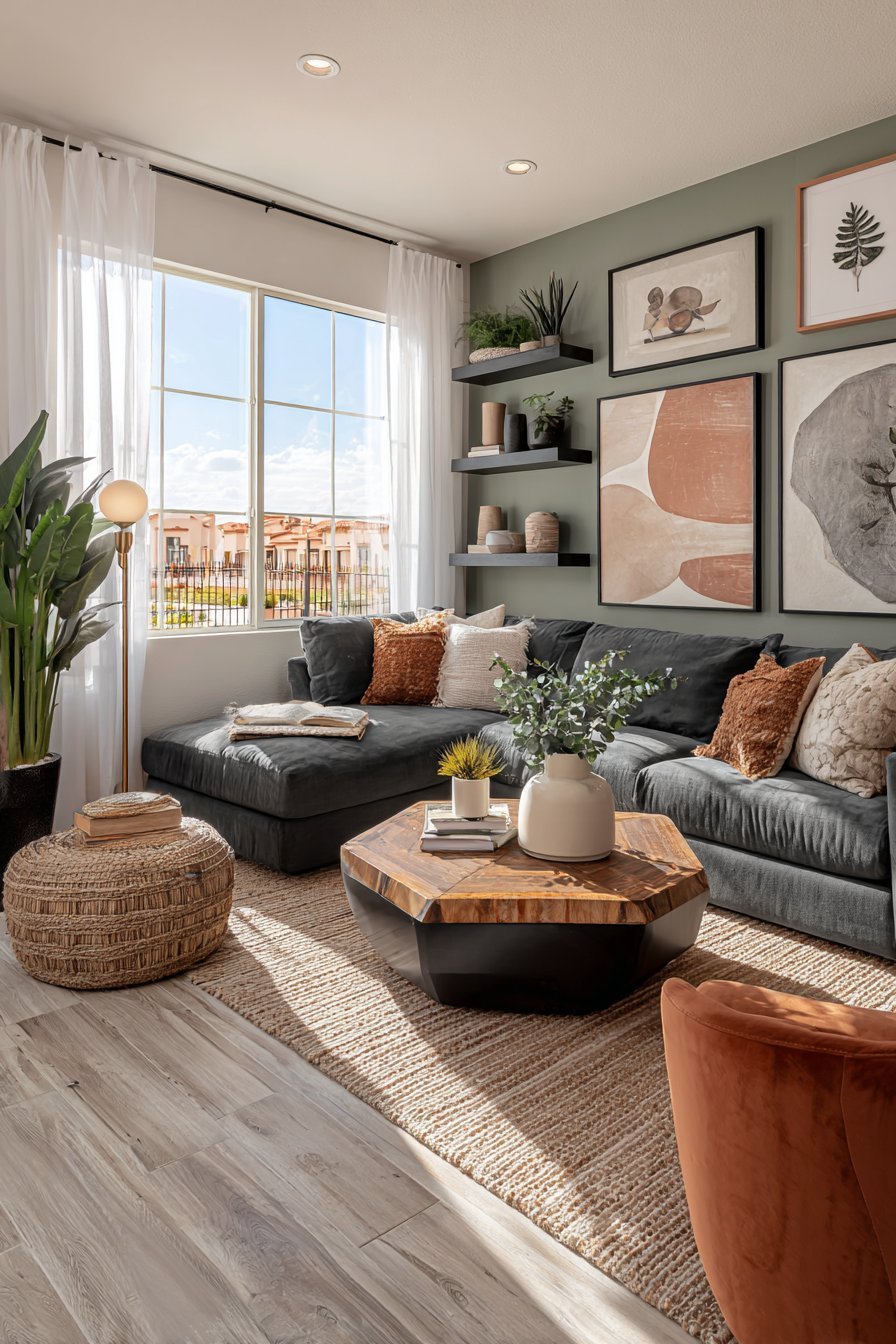
Key takeaways include investing in quality foundational pieces, layering textures for visual interest, and carefully planning lighting schemes. Consider your lifestyle needs alongside aesthetic preferences. Start with neutral foundations allowing flexibility as tastes evolve over time.
Successful living room design balances aesthetic appeal with practical functionality. Your space should reflect personal style while serving daily living needs. Begin implementing these ideas gradually through careful planning and intentional purchases. Transform your living room into the welcoming heart of your home.

