


If you’re standing in a room trying to decide whether it needs a rug or wall-to-wall carpet, you’re really asking two different questions at once: what do I want this room to feel like, and how long do I want to commit to that choice? A rug is the flexible, lower-commitment option — you can layer it over hardwood or existing carpet, take it with you when you move, and swap it out whenever your style changes.
Carpet is the bigger investment: full-room warmth, softness, and sound control that a rug alone can’t fully replicate. Neither one is universally “better” — the right pick depends on the room, your budget, and how long you plan to stay put. Here’s exactly how they compare, room by room.
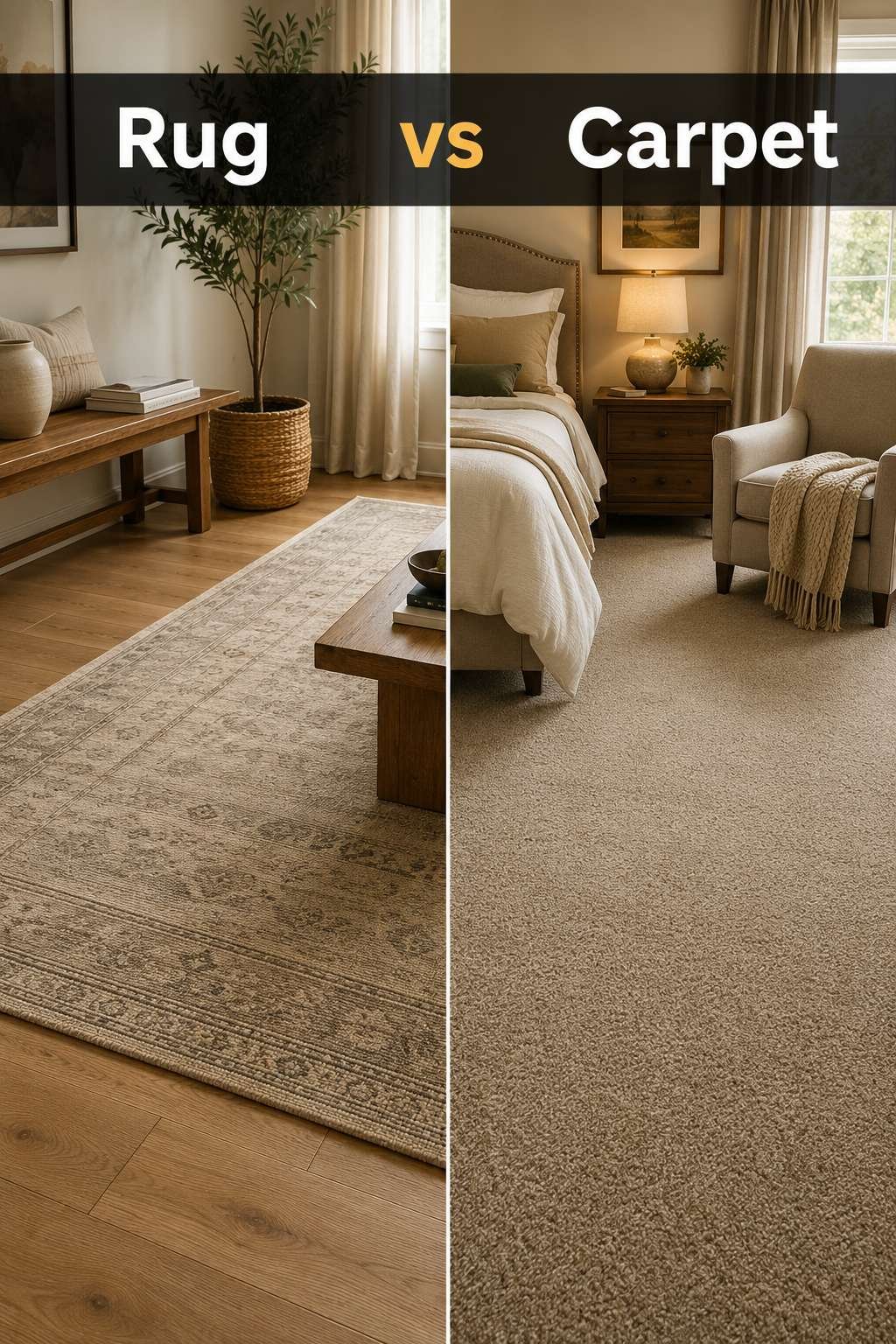
Rug vs Carpet: The Full Comparison
| Criteria | Rug | Carpet |
|---|---|---|
| Cost | $50–$2,000+ depending on size and material | $3–$12 per square foot installed (materials + labor) |
| Durability | Moderate to high, varies by material and foot traffic | Moderate — wears and flattens in high-traffic paths over time |
| Maintenance | Easy — vacuum regularly, rotate seasonally, occasional deep wash | Moderate — vacuum weekly, professional steam clean every 12–18 months |
| Install Difficulty | None — unroll and place, no tools needed | High — professional installation strongly recommended |
| Lifespan | 10–20 years with rotation and care | 8–12 years before matting or wear requires replacement |
| Allergen Retention | Lower — can be fully removed and cleaned | Higher — traps dust and dander deep in the fibers |
| Resale Value | Neutral — doesn’t factor into an appraisal | Can help or hurt depending on condition and color |
What These Numbers Actually Mean in a Real Home
The cost gap looks dramatic on paper, but it’s really about scale: a rug is one purchase for one area, while carpet is priced to cover an entire room from wall to wall, padding included. That’s also why carpet wins on warmth and sound — it’s insulating the whole floor, not just a section of it. The durability numbers tell a similar story: a rug wears unevenly (the center gets more traffic than the edges), so rotating it every few months evens things out and stretches its life well past a decade. Carpet wears more uniformly but can’t be rotated or flipped, so once a traffic pattern sets into the pile, it’s there until replacement. And when it comes to allergens, the difference isn’t about which material collects more dust day to day — it’s about which one you can actually get clean. You can hose down, shake out, or machine-wash many rugs. Carpet has to be cleaned in place, which is why professional steam cleaning is non-negotiable if allergies are a concern. Our rug size chart breaks down the exact measurements to plan around.
Quick Look: Rug vs Carpet at a Glance
Rug
Flexible, portable, and easy to swap — ideal for renters, layering, and rooms that get a style refresh often.
View on Amazon →Carpet
Full-room warmth, comfort, and noise control — a bigger commitment that pays off in bedrooms and shared floors.
View on Amazon →Deep Dive: Rug
A rug makes the most sense when flexibility matters more than wall-to-wall coverage: renters who can’t install flooring, frequent redecorators, anyone layering over existing hardwood or tile, and home offices where a rug won’t wear down under a rolling chair the way carpet does.
Real cost range: $50–$2,000+ depending on size, material, and craftsmanship.
Pros
- Low upfront cost for a single room, easy to compare before buying
- No installation — unroll and place the same day
- Portable — moves with you when you relocate or redecorate
- Easy to fully clean, wash, or replace if damaged
- Wide range of styles and sizes for changing up a room’s look
Cons
- Doesn’t cover the whole floor, leaving exposed flooring around the edges
- Can slip or bunch on hard flooring without a rug pad
- Large, high-quality rugs can get expensive fast
- Edges and corners can curl over time Our how to decorate living room corner guide covers this in more detail.
Deep Dive: Carpet
Carpet earns its cost in rooms where full-floor comfort matters most: bedrooms, upper-floor rooms where noise transfer is a concern, and homes where whole-room warmth and cushioning are the priority over flexibility.
Real cost range: $3–$12 per square foot installed, including padding and labor.
Pros
- Covers every inch of the floor for consistent warmth and softness
- Strong sound dampening between floors and rooms
- Wide range of padding options for extra cushioning and insulation
- Buyers often expect it in bedrooms, which can support resale
Cons
- Traps dust, dander, and allergens deep in the fibers
- Higher installed cost, especially for large rooms
- Stains and matting are often permanent
- Removing or replacing it is a bigger, messier project than swapping a rug
Which One Wins, Room by Room
Small Apartment or Rental
No installation, no deposit risk, and it moves with you on the next lease.
Rug winsBudget Whole-Room Renovation
Affordable builder-grade carpet covers the entire floor in one straightforward install.
Carpet winsLuxury or Formal Living Room
A large, richly patterned wool rug reads as a design statement carpet can’t replicate.
Rug winsHigh-Traffic Household (Kids & Pets)
A washable, spot-treatable rug handles daily messes better than carpet ever will.
Rug winsNursery or Upper-Floor Bedroom
Plush wall-to-wall carpet adds warmth underfoot and cuts noise transfer to the room below.
Carpet winsProfessional Tips
- Layer smart, not either/or — a rug over low-pile carpet or hardwood is a legitimate design move, not a compromise, and it adds warmth without a full re-carpet.
- The biggest regret we hear from homeowners: installing wall-to-wall carpet in a humid or moisture-prone room like a basement, where it traps moisture and odor. Reserve carpet for consistently dry, climate-controlled rooms.
- For resale, neutral low-pile carpet in bedrooms paired with a well-placed rug in living spaces tends to appeal to the widest range of buyers — bold wall-to-wall carpet colors can actually work against you. Our neutral living room ideas has more inspiration along these same lines.
- Budget for padding either way. A quality rug pad or carpet cushion underneath does more for comfort and longevity than most homeowners expect, and skipping it is a common mistake.
- Set a realistic cleaning cadence: vacuum carpet at least weekly and schedule a professional steam clean every 12–18 months. A rug can go longer between deep cleans if you vacuum regularly and rotate it seasonally.
Shop the Winner
If you’re leaning toward a rug, here’s what to get started with — a good rug and the right pad underneath make the difference between a piece that lasts and one that slips, bunches, or wears unevenly within a year.
Best Overall
A mid-pile, stain-resistant area rug in a versatile neutral tone that works across living rooms, bedrooms, and high-traffic zones without a premium price tag.
Best Budget
An affordable synthetic-blend rug with real color and texture options, ideal for renters or a first pass at refreshing a room.
Best Premium
A hand-knotted wool rug built to last decades, with the density and craftsmanship to hold its shape and color even in busy households.
If you’re leaning toward carpet, a rug still earns a spot in the room — a durable entryway runner or accent rug protects high-traffic paths on top of new carpet and covers the areas that show wear first.
See Our Full Best Area Rugs GuideFrequently Asked Questions
Is a rug cheaper than carpet?
For a single room, an area rug is usually cheaper upfront ($50 to $2,000+ depending on size and material) since you’re only buying one piece instead of covering wall to wall. Carpet’s $3 to $12 per square foot installed cost adds up fast in a large room, though it covers the entire floor including areas a rug would leave bare.
Which is better for allergies, rugs or carpet?
Rugs are generally better for allergy sufferers because they can be fully removed, washed, or professionally cleaned, while carpet’s dense fibers trap dust, pet dander, and allergens deep down where a vacuum can’t fully reach.
Can I put a rug over carpet?
Yes, layering a rug over low-pile carpet is common and can add color, definition, or extra cushioning to a room. Use a rug pad or grip underlay so it doesn’t shift or bunch on top of the carpet fibers.
Do rugs or carpets last longer?
A well-made rug can last 10 to 20 years or more, especially if you rotate it periodically, while wall-to-wall carpet typically holds up for 8 to 12 years before matting, staining, or wear patterns make replacement worthwhile.
Which is warmer, rug or carpet?
Wall-to-wall carpet wins for overall warmth because it insulates the entire floor and traps heat across the whole room, while a rug only warms the specific area it covers, leaving surrounding flooring cooler underfoot.
Is wall-to-wall carpet outdated?
Not at all — carpet has moved past its dated reputation, with modern low-pile and textured styles working well in bedrooms and family rooms. It’s simply no longer the automatic default for every room the way it once was.
What size rug do I need for a living room?
As a general rule, a living room rug should be large enough for at least the front legs of your main seating pieces to rest on it, which usually means an 8×10 or 9×12 rug for a standard-sized room.
Does carpet increase home resale value?
Fresh, neutral-toned carpet can make a room feel more finished to buyers and is often expected in bedrooms, but worn or heavily patterned carpet can actually hurt resale value compared to hard flooring with a rug layered on top.
Are rugs easier to clean than carpet?
Yes, smaller and washable rugs can be spot-cleaned, shaken out, or machine washed depending on material, while wall-to-wall carpet requires vacuuming in place and periodic professional steam cleaning since it can’t be removed.
Can you put an area rug over hardwood floors?
Absolutely, and it’s one of the most common uses for an area rug. Add a rug pad underneath to prevent slipping and to protect the hardwood finish from friction and trapped moisture.
Which is better for a rental apartment, rug or carpet?
A rug is almost always the better choice for renters since it requires no installation, doesn’t affect your security deposit, and can move with you, while carpet is a permanent installation you likely can’t change.
Do rugs slip on hardwood floors?
They can, especially lightweight or low-pile rugs, which is why a non-slip rug pad underneath is considered essential on hardwood, tile, or any smooth hard flooring.
Is wall-to-wall carpet good for pets?
Carpet can be comfortable for pets to walk and lie on, but it also absorbs odors, stains, and pet hair more stubbornly than a washable rug, so many pet owners prefer a durable, cleanable rug in high-traffic pet areas instead.
How often should carpet be replaced?
Most wall-to-wall carpet needs replacing every 8 to 12 years depending on foot traffic, padding quality, and maintenance, though high-traffic areas like stairs and hallways often wear out sooner than bedrooms.
What’s the average cost to install carpet per square foot?
Installed carpet typically runs $3 to $12 per square foot including materials, padding, and labor, with the final price depending heavily on carpet fiber quality and room size.
Are rugs bad for babies crawling?
Rugs are actually a popular choice for crawling babies because a soft, low-pile, easy-to-clean rug provides cushioning without the deep fiber buildup of wall-to-wall carpet. Choose a low-VOC, securely padded option.
Which is better for soundproofing, rug or carpet?
Wall-to-wall carpet with padding underneath offers more consistent sound dampening across an entire room or floor, which is why it’s often recommended for apartments and upper-level bedrooms to reduce noise transfer.
Can I use a rug pad under an area rug on carpet?
Yes, a thin grip pad under a rug on top of carpet helps prevent bunching and shifting, though you generally don’t need the thick cushioning pads used for rugs on hard flooring.
Is carpet or a rug better for a home office?
A rug is usually more practical for a home office since it makes it easier to roll desk chairs without wearing down carpet fibers, though a low-pile commercial-grade carpet can also work well with a chair mat.
Which holds up better with kids and pets, rug or carpet?
A durable, washable rug generally holds up better in kid-and-pet-heavy households because stains and messes can be spot-treated or the rug can be fully cleaned, while carpet often shows permanent staining and matting over time.
So — Rug or Carpet?
If you’re a renter, a frequent redecorator, or you want a statement piece that elevates a formal room, an area rug is the smarter buy — it’s portable, budget-flexible, and easy to keep clean. If you’re outfitting a bedroom, nursery, or an upper-floor room where warmth and noise control matter most, wall-to-wall carpet is worth the bigger investment. For most homes, the real answer isn’t rug vs. carpet — it’s rug and carpet, used deliberately in the rooms where each one actually earns its keep.

