


Knowing how to measure a kitchen sink correctly is the difference between a smooth installation and a sink that doesn’t fit your countertop cutout. Whether you’re replacing an old sink or planning a full renovation, accurate measurements save time, money, and a lot of frustration.
This guide walks through every measurement that matters — length, width, bowl depth, cutout size, and faucet spacing — so you can shop with confidence. We’ll also cover the small details that trip people up, like undermount versus drop-in differences and farmhouse sink clearances.
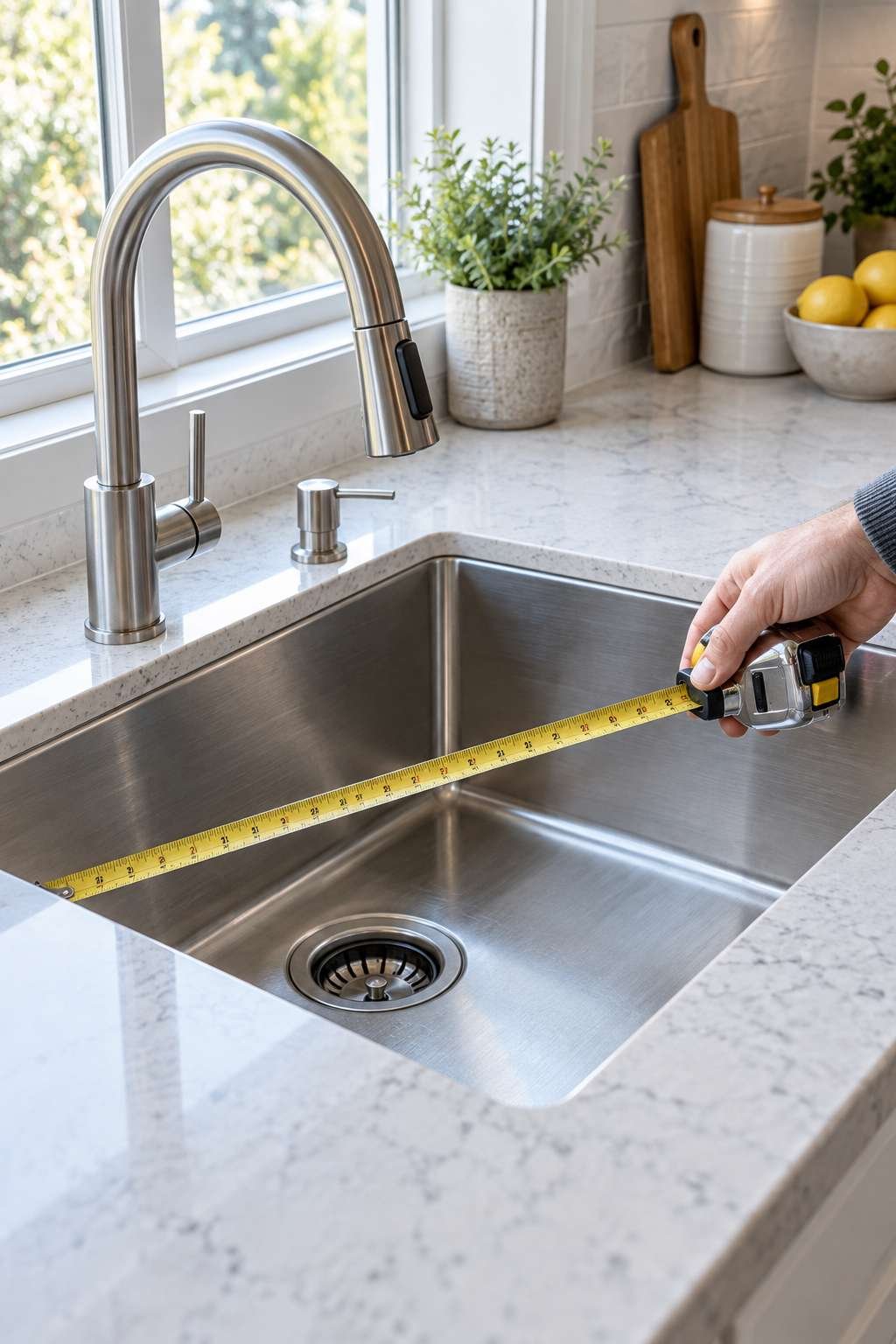
If you’re tackling a bigger kitchen project alongside this, our companion guide on how to measure a kitchen covers the full room, while this one focuses specifically on getting your sink measurements right.
1. Tools You’ll Need to Measure a Kitchen Sink
Before you start, gather a tape measure, a pencil, and a notepad to record every number as you go. A flexible cloth tape measure can help with curved bowl edges that a rigid metal tape struggles to follow accurately.
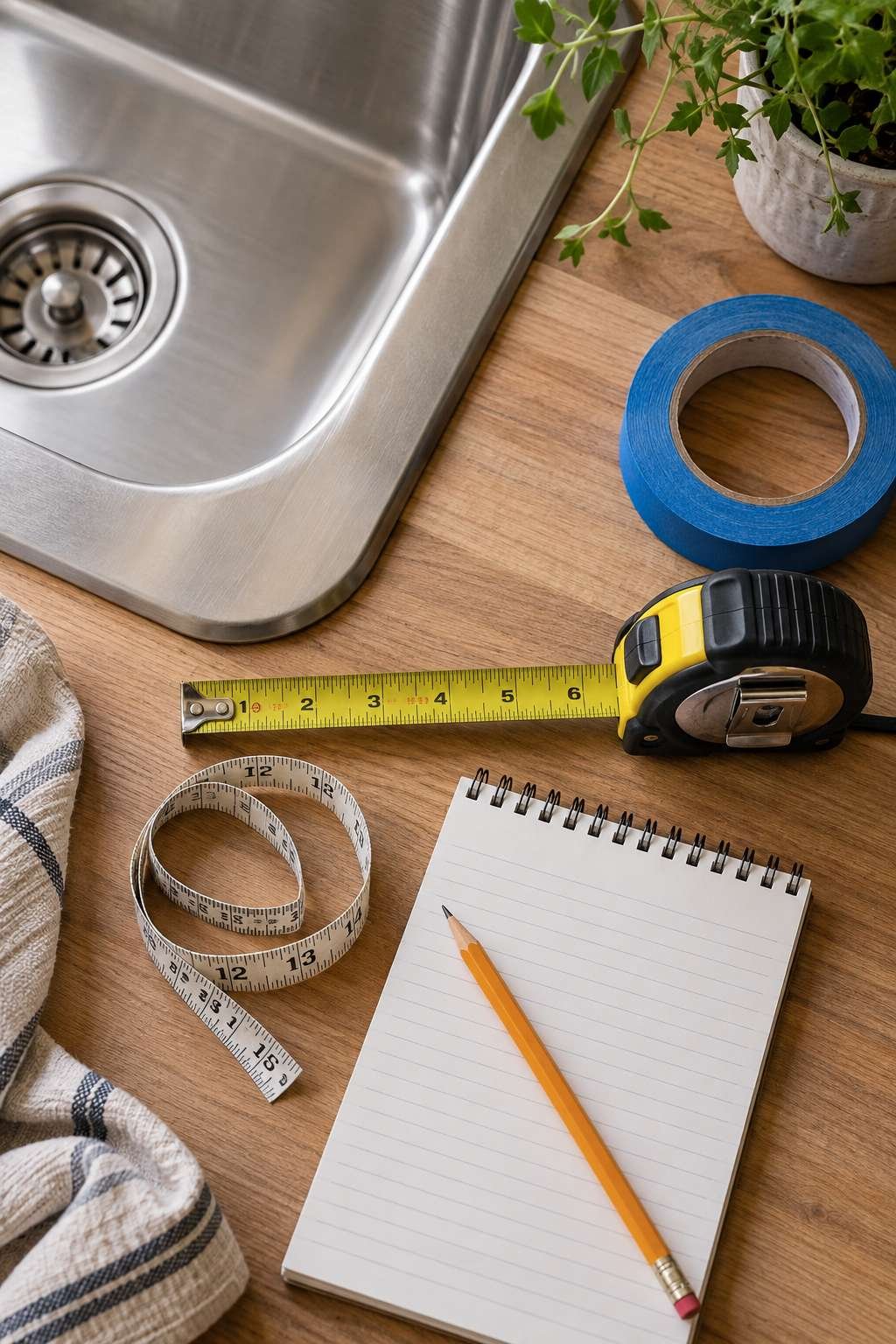
Painter’s tape is also useful for marking reference points directly on the countertop or existing sink. Having a helper hold one end of the tape measure makes longer measurements far more accurate than working alone.
- Tape measure (metal and a flexible cloth option)
- Pencil and notepad to record every measurement
- Painter’s tape for marking reference points
- A helper for longer or awkward measurements
- A flashlight for checking under-sink cabinet space
2. Measuring the Sink’s Overall Length and Width
Start by measuring the sink’s outer length, from the farthest left edge to the farthest right edge, in a straight line. Then measure the outer width, from the front edge to the back edge, at the widest point.
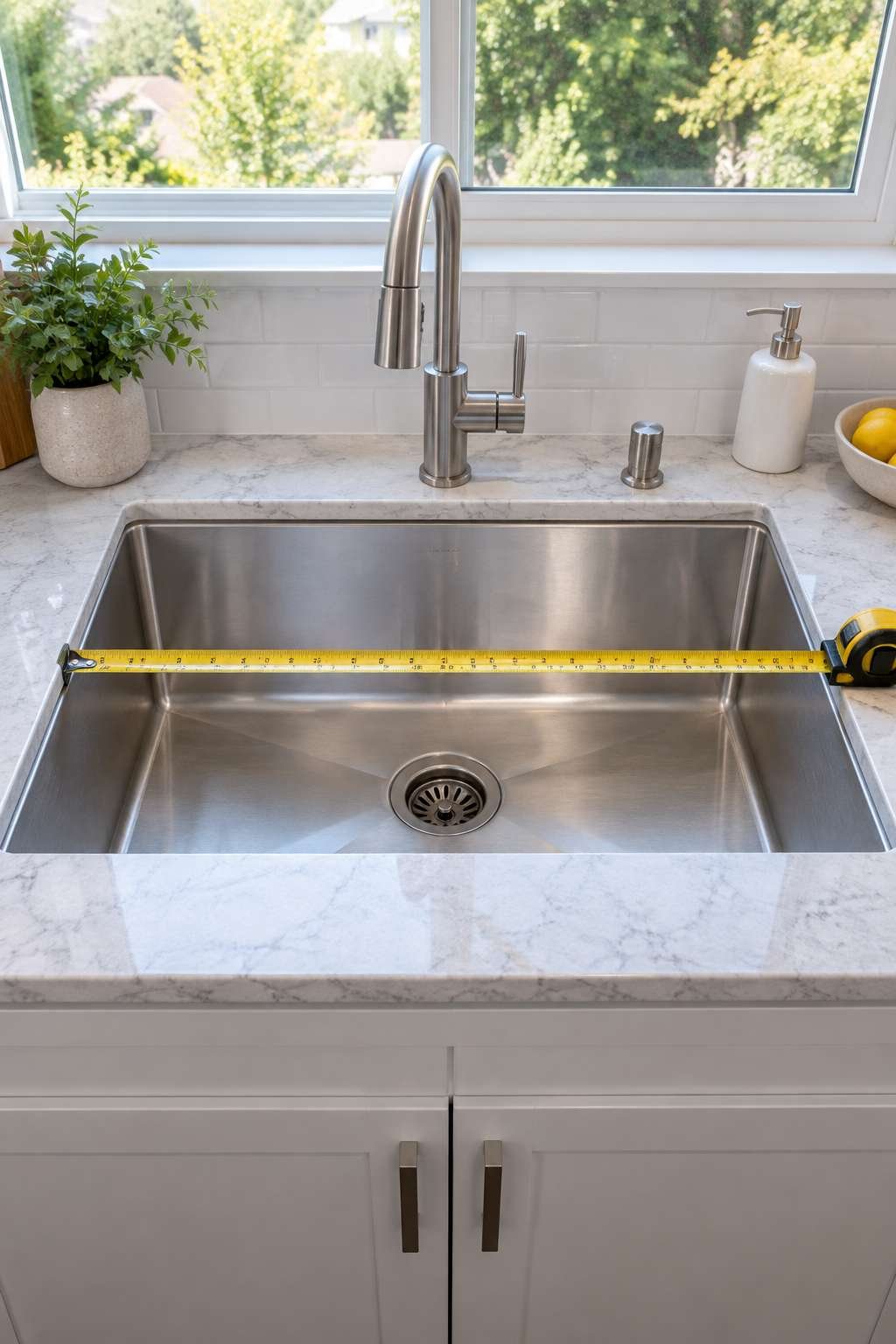
Many people searching for how to measure kitchen sink dimensions skip this basic outer measurement and jump straight to the bowl itself, which leads to sizing mistakes. Always record outer dimensions first, since they determine whether the sink fits your available countertop space at all.
- Measure outer length from the farthest left to right edge
- Measure outer width from front to back at the widest point
- Record measurements in inches for easier comparison shopping
- Double-check both numbers before moving to bowl measurements
3. Measuring Bowl Depth
Bowl depth affects both splash protection and comfort while washing dishes, so it’s worth measuring carefully. Measure from the top rim of the bowl straight down to the lowest point at the bottom.
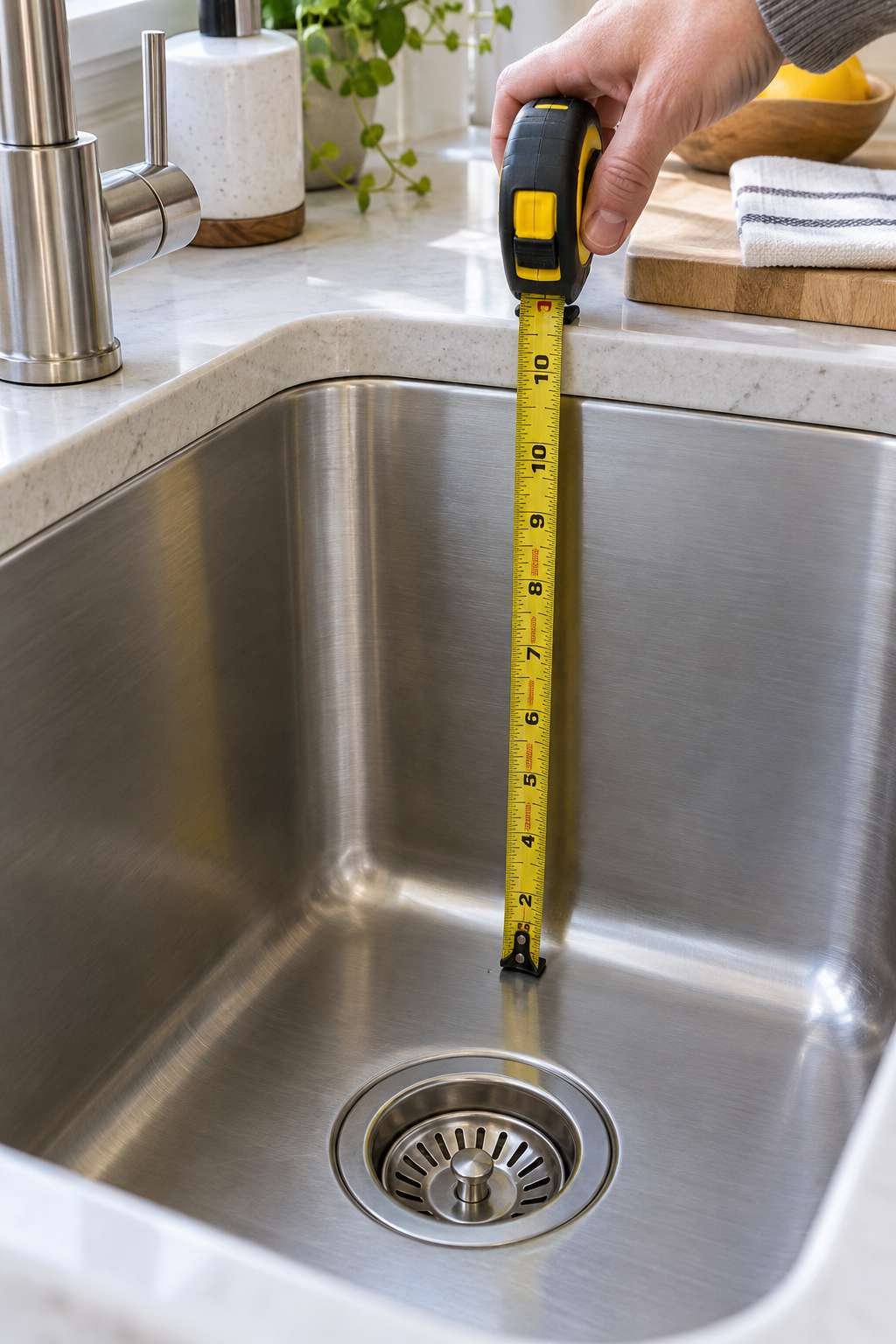
Standard bowl depths typically range from 7 to 10 inches, with deeper bowls better suited for large pots and baking sheets. Shallower bowls can feel more comfortable for shorter users but offer less splash protection during heavy use.
- Measure from the top rim straight down to the bowl’s lowest point
- Standard depth range: roughly 7 to 10 inches
- Deeper bowls suit large pots, baking sheets, and heavy use
- Shallower bowls may feel more comfortable for some users
4. Measuring Single vs Double Bowl Sinks
A single-bowl sink only requires one overall length, width, and depth measurement, making it the simpler option to size. A double-bowl sink adds a center divider measurement, plus individual dimensions for each bowl if they differ in size.
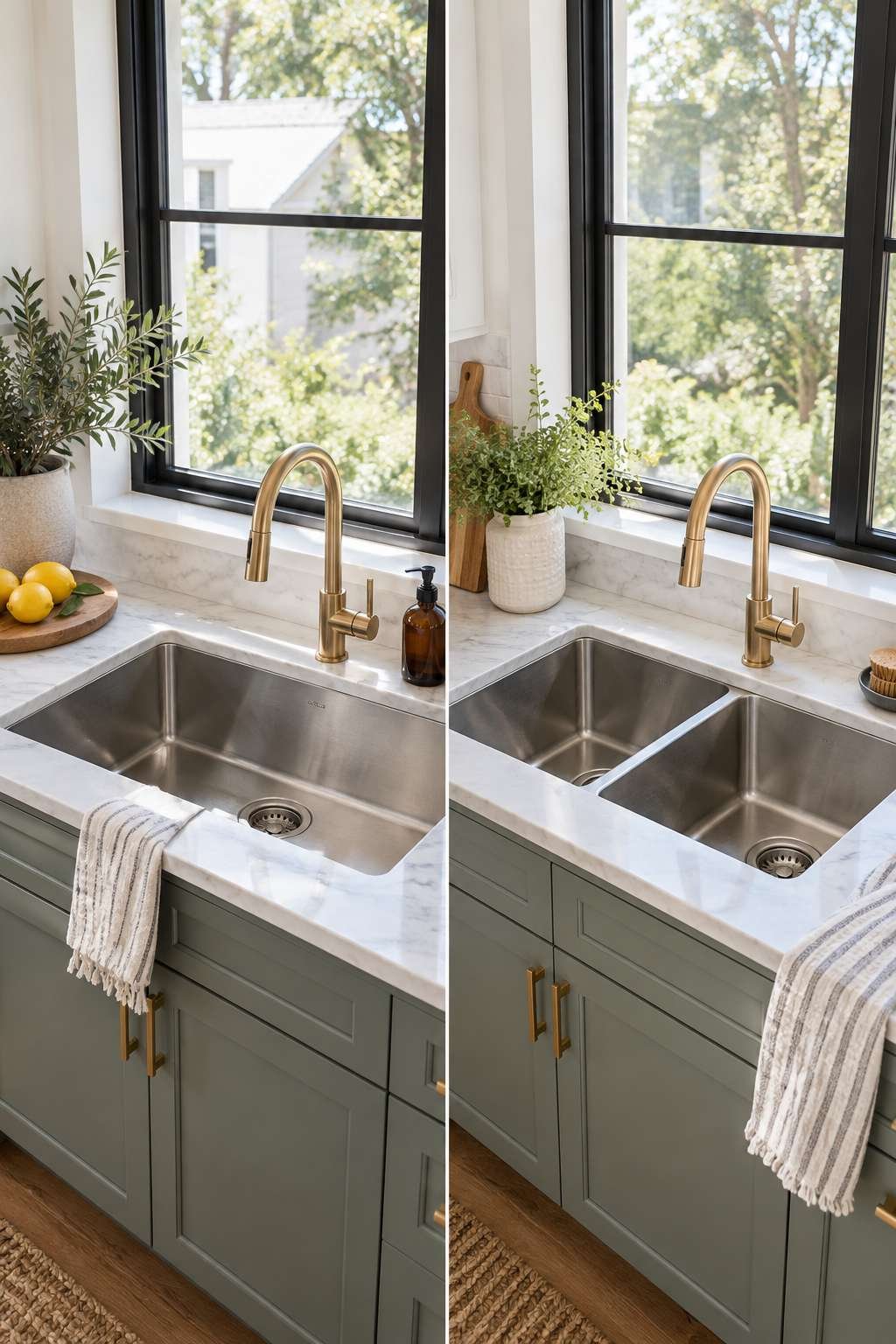
Measure each bowl separately when they’re uneven, noting which side is larger for accurate replacement shopping later. Always measure the divider’s width too, since it affects total usable basin space.
- Single-bowl: one length, width, and depth measurement needed
- Double-bowl: measure each bowl individually plus the divider
- Note if bowls are equal size or one is larger
- Record divider width, since it reduces total usable space
5. Measuring the Cutout Size in Your Countertop
The cutout size in your countertop is often more important than the sink’s outer dimensions when shopping for a replacement. Measure the cutout’s length and width from inside edge to inside edge, not the visible sink rim.
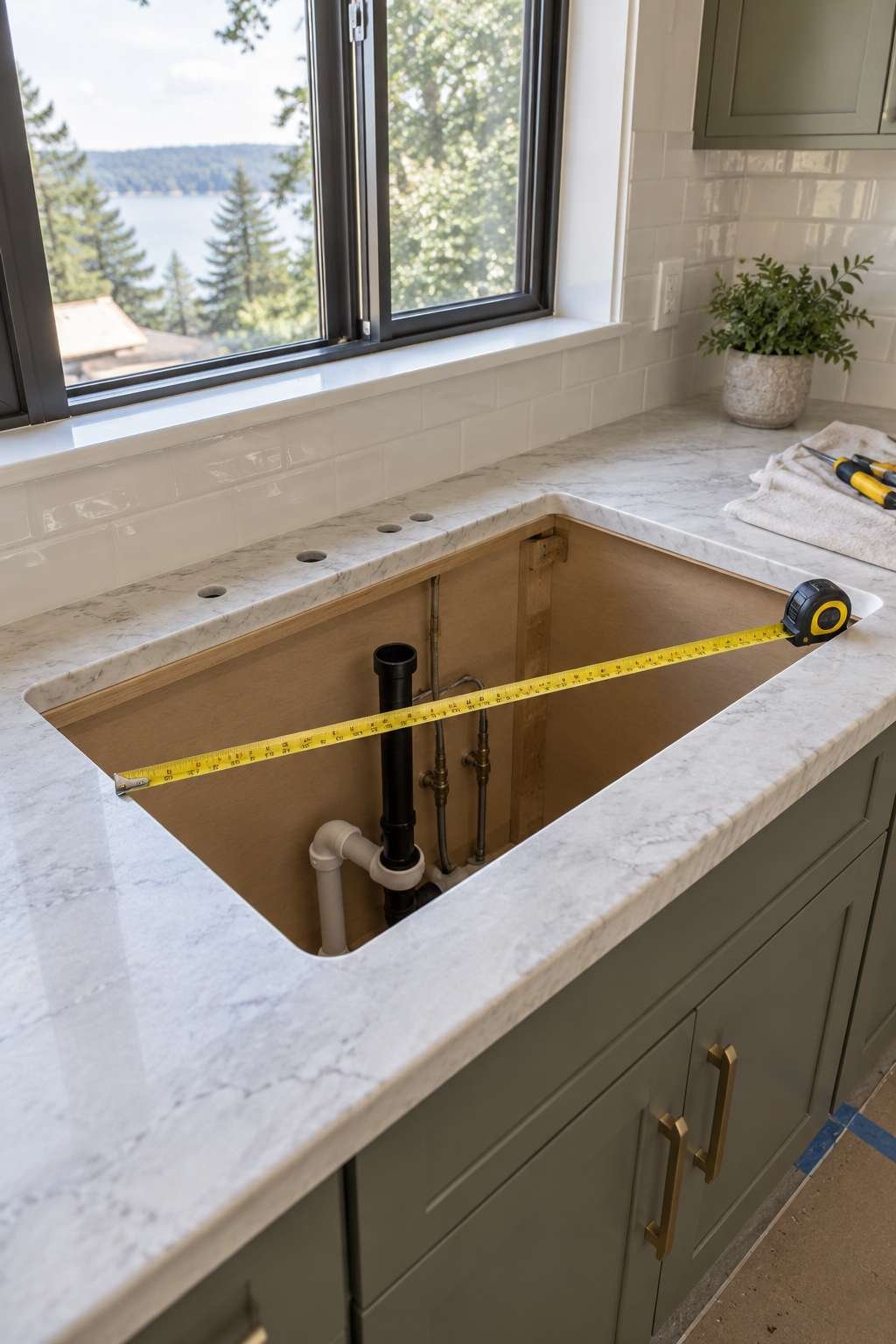
If you’re replacing an existing sink, your new one generally needs a similar or slightly smaller cutout to sit properly. Anyone researching how to measure for a kitchen sink replacement should prioritize this measurement above all others.
- Measure cutout length and width from inside edge to inside edge
- A new sink typically needs a similar or smaller cutout size
- Note cutout corner style (square vs rounded) for a proper fit
- Keep the old cutout template if you removed the previous sink
6. Measuring Faucet Hole Spacing
Faucet hole spacing determines which faucet models will fit your sink or countertop without modification. Measure from the center of one hole to the center of the next, moving left to right across the deck.
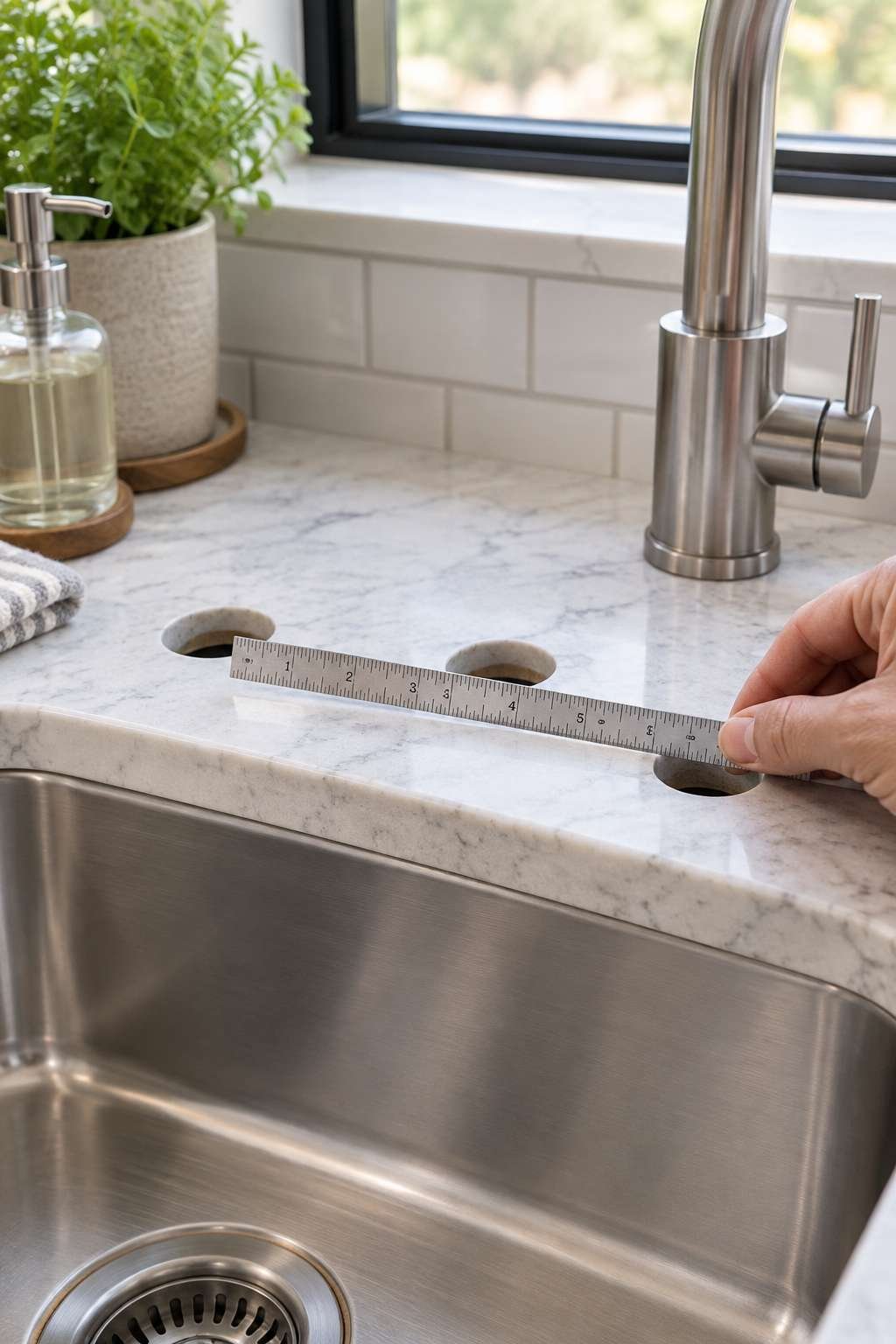
Standard spacing is often 4 or 8 inches between holes, called a “centerset” or “widespread” configuration respectively. Always confirm this measurement before buying a new faucet, since mismatched spacing can require additional drilling or a deck plate.
- Measure hole spacing from center to center, not edge to edge
- Common spacings: 4 inches (centerset) or 8 inches (widespread)
- Count total hole number, including soap dispenser or sprayer holes
- Confirm spacing before purchasing a new faucet separately
7. Undermount vs Drop-In Sink Measurement Differences
Undermount sinks mount beneath the countertop, so their cutout measurement is typically slightly smaller than the sink’s outer dimensions to create a clean, flush seal. Drop-in sinks, by contrast, rest on top of the counter with a visible rim.
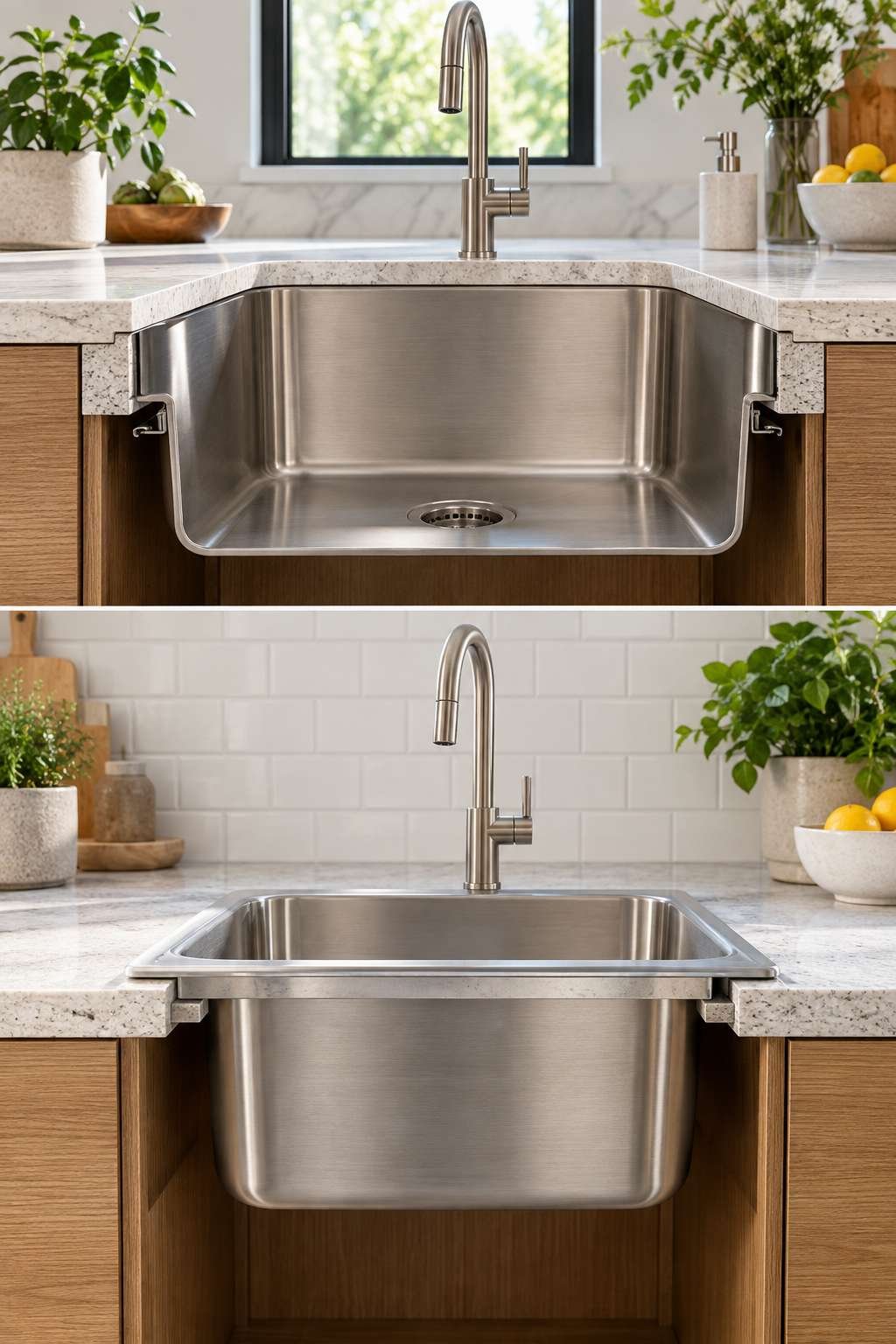
For drop-in sinks, the cutout should be slightly smaller than the outer rim so the sink has something to rest against. Undermount installations require more precise countertop measurements, since there’s no visible lip to hide small errors.
- Undermount: cutout is smaller than the sink’s outer edge
- Drop-in: rim rests on top, cutout is smaller than the rim only
- Undermount requires more precise, error-free measurements
- Confirm your countertop material supports undermount installation
8. Measuring for a Farmhouse or Apron-Front Sink
Farmhouse sinks expose a front panel below the countertop edge, which adds cabinet and clearance measurements beyond a standard sink. Measure the apron’s height and depth in addition to the usual length, width, and bowl depth.
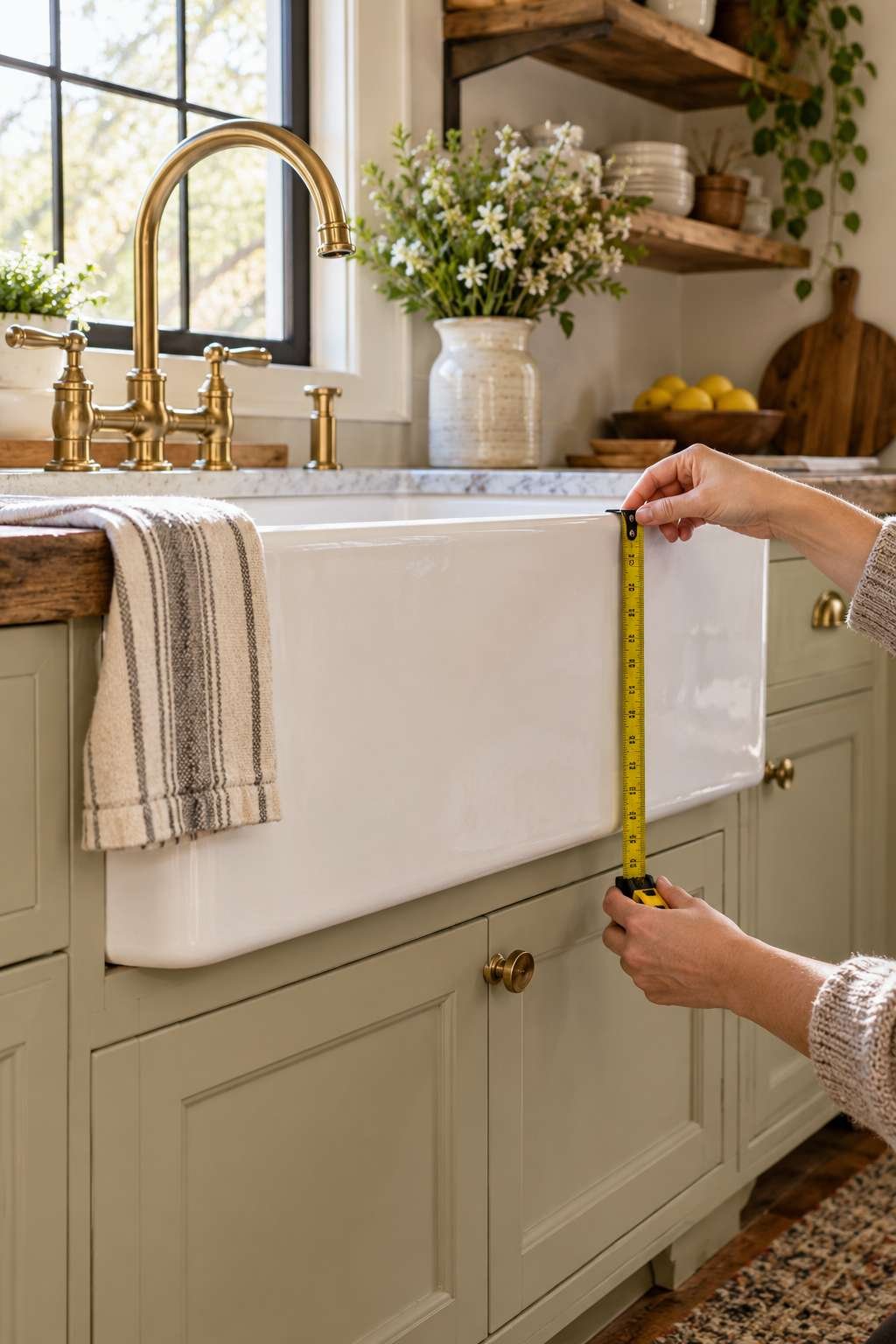
You’ll also need to measure the cabinet opening where the sink will sit, since farmhouse sinks often require cabinet modifications for a proper fit. This is one case where measuring twice before ordering truly matters, given the higher cost of these sinks.
- Measure the apron panel’s height and depth separately
- Measure the cabinet opening width for a farmhouse fit
- Confirm counter depth accommodates the apron’s forward projection
- Check if cabinet modification is needed before ordering
9. Double-Checking Cabinet Clearance
Even with perfect sink measurements, a cramped cabinet underneath can complicate installation or limit storage afterward. Measure the cabinet’s interior width and depth to confirm the sink’s plumbing and mounting hardware will fit comfortably.

If you’re rethinking cabinet layout as part of this project, our guide on how to measure kitchen cabinets covers the full process for planning storage around your new sink. Leaving a few inches of buffer space makes future plumbing repairs far easier too.
- Measure cabinet interior width and depth before finalizing your sink choice
- Leave buffer space around plumbing for easier future repairs
- Check that mounting clips or brackets have room to install properly
- Confirm garbage disposal clearance if you’re keeping or adding one
10. Common Measuring Mistakes to Avoid
One of the most frequent errors is measuring the visible rim instead of the actual cutout size, which leads to ordering the wrong sink entirely. Always measure from the true edges, not just what’s visible from above.
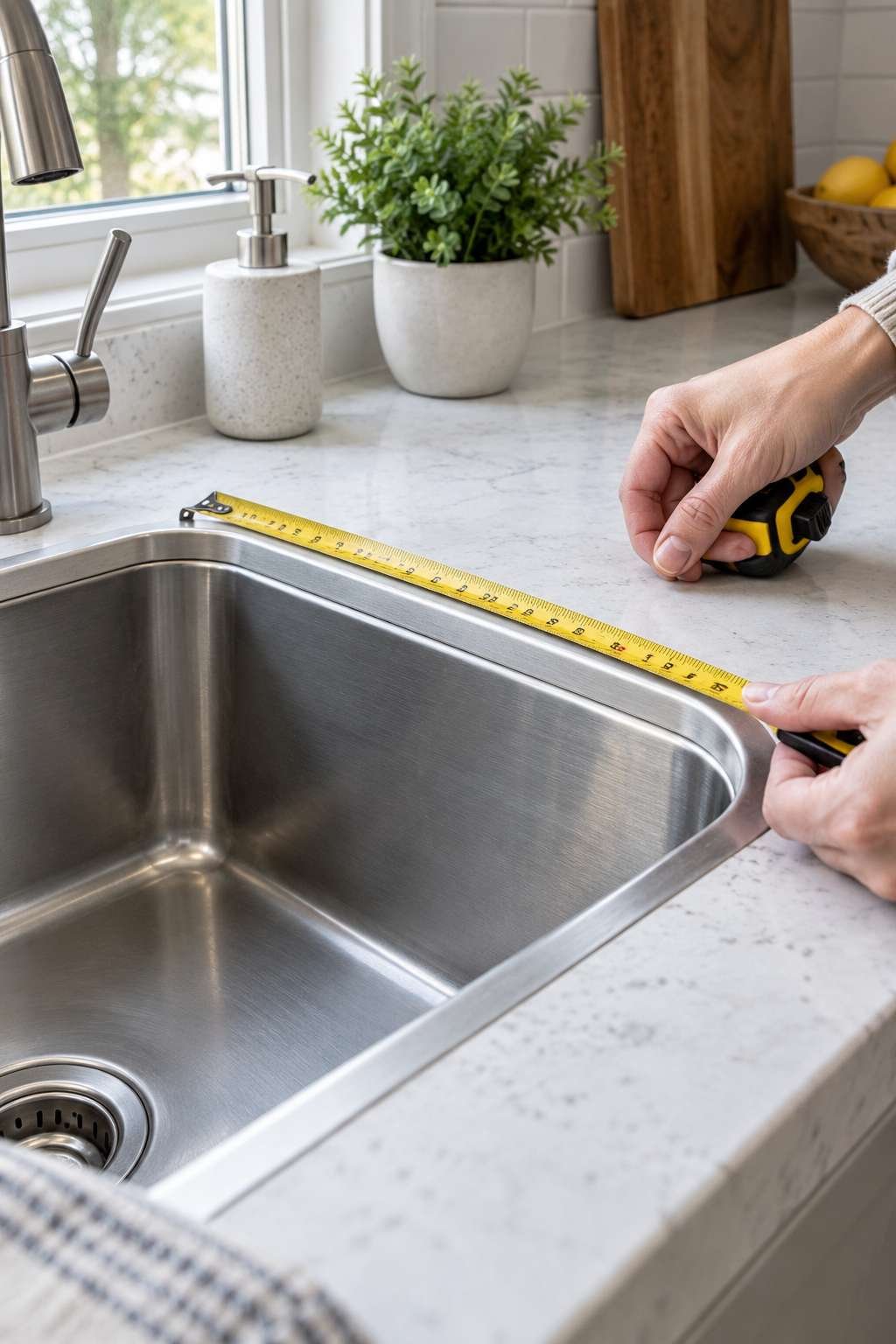
Forgetting to account for faucet hole spacing or cabinet clearance until after purchasing a sink is another common and costly mistake. Take every measurement in this guide before shopping, rather than assuming a “standard” size will automatically fit.
- Measure the actual cutout, not just the visible rim
- Confirm faucet hole spacing before buying a new faucet
- Check cabinet clearance before finalizing a sink purchase
- Never assume “standard” sizing fits your specific kitchen
Frequently Asked Questions
How Do You Measure a Kitchen Sink for Replacement?
Start by measuring your existing cutout size from inside edge to inside edge, since your replacement sink generally needs a similar or slightly smaller footprint. Also measure the old sink’s outer dimensions, bowl depth, and faucet hole spacing so the new sink matches your countertop and existing faucet setup without requiring modifications.
Getting how to measure a kitchen sink right comes down to a handful of key numbers: overall size, bowl depth, cutout dimensions, and faucet spacing. Skipping any one of them is a common reason replacement sinks don’t fit as expected.
Take your time with each measurement, and write everything down before you start comparing sinks online or in store. A little patience upfront makes the actual installation day go far more smoothly.

