


If you’re standing in a flooring showroom trying to decide between hardwood and laminate, you’re really choosing between two different priorities: long-term value and warmth, or budget-friendly durability and ease. Hardwood suits homeowners who plan to stay put, want a floor that adds resale value, and don’t mind the higher upfront cost and occasional refinishing. Laminate suits budget renovations, rentals, and busy households with kids or pets who want a floor that shrugs off scratches without the maintenance routine. Neither one is universally “better” — the right pick depends on the room, your budget, and how long you’re planning to live with the decision.
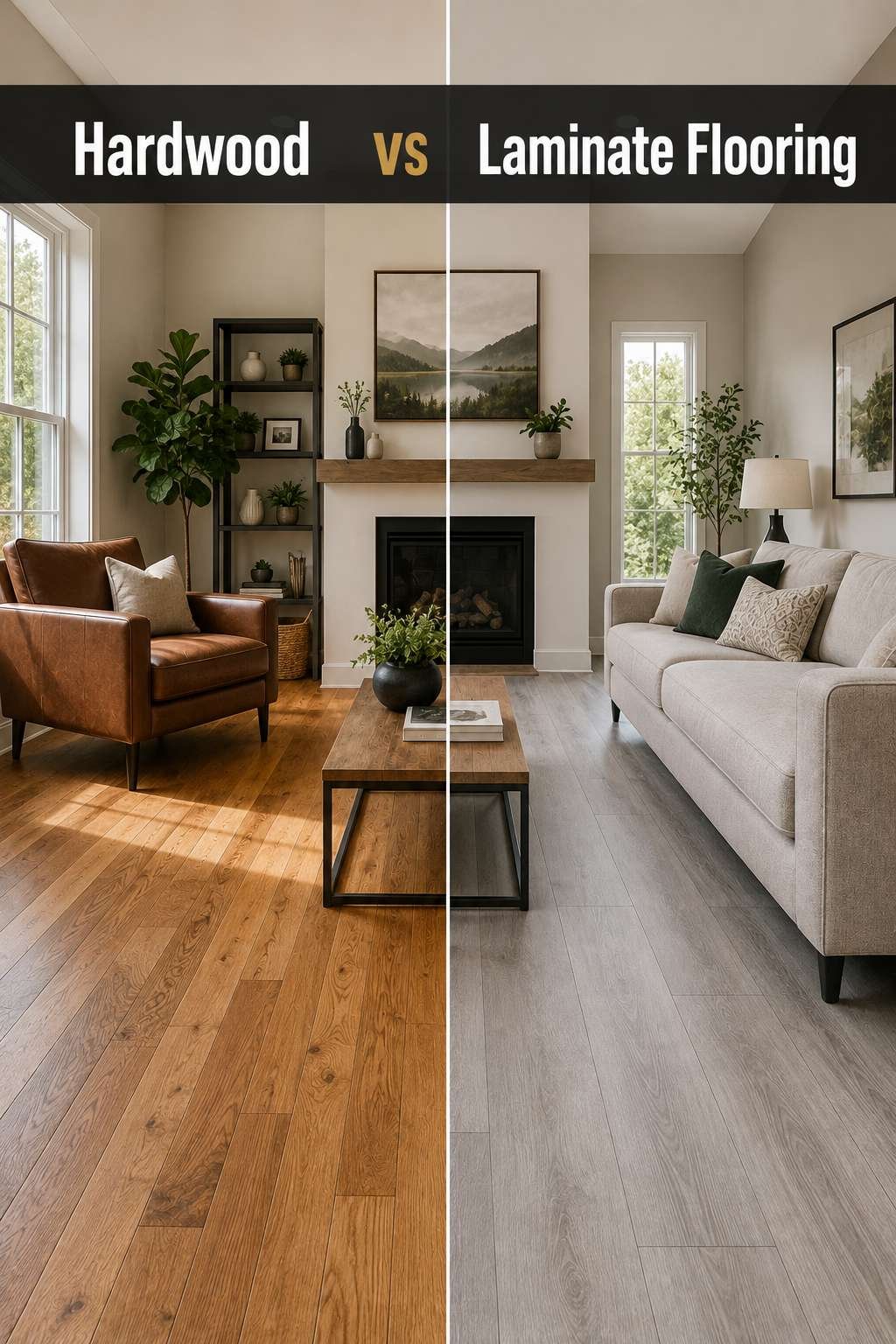
Hardwood vs Laminate Flooring: The Full Comparison
| Criteria | Hardwood Flooring | Laminate Flooring |
|---|---|---|
| Cost (installed) | $6 to $12 per sq ft for solid wood; $4 to $9 for engineered | $2 to $8 per sq ft installed |
| Durability | Very durable overall, but dents and scratches show; can be refinished to remove them | Highly scratch and dent resistant wear layer, but can’t be refinished |
| Maintenance | Regular sweeping plus refinishing every 7 to 10 years | Sweeping and occasional damp mopping, no refinishing needed |
| Install difficulty | Best left to a professional; nail-down or glue-down installation | DIY-friendly click-lock installation |
| Lifespan | 25 to 100+ years with periodic refinishing | 10 to 25 years, then full replacement |
| Moisture resistance | Poor to moderate; not recommended for bathrooms or basements | Moderate; water-resistant lines available for kitchens |
| Resale value | Strong buyer preference, often cited as a value-add by agents | Neutral to slightly positive; seen as a practical upgrade |
In plain terms: hardwood wins on longevity and resale appeal because it can be sanded and refinished instead of replaced, while laminate wins on upfront cost and day-to-day toughness against scratches. The moisture resistance row matters more than people expect — it’s the single biggest reason homeowners regret installing hardwood in a kitchen or laminate in a full bathroom.
Quick Look: Hardwood vs Laminate at a Glance
Hardwood Flooring
Natural, refinishable wood that adds long-term resale value but comes with a higher price tag and less moisture tolerance.
View on Amazon →Laminate Flooring
Budget-friendly, scratch-resistant click-lock flooring that’s easy to DIY but can’t be refinished once it’s worn down. If you’re also weighing vinyl flooring vs tile flooring, that’s worth deciding early too.
View on Amazon →Deep Dive: Hardwood Flooring
Best-fit scenarios: forever homes, living rooms and bedrooms with low moisture exposure, resale-focused renovations, and households willing to invest upfront for a floor that lasts decades with proper care.
Pros
- Adds measurable resale value and buyer appeal
- Can be sanded and refinished multiple times
- Timeless, natural look that suits most design styles
- Ages well when properly maintained
Cons
- Higher upfront material and installation cost
- Vulnerable to warping from water and humidity
- Requires periodic refinishing to stay looking new
- Pet scratches and dents are visible until refinished
Real cost range: $6 to $12 per sq ft installed for solid hardwood; $4 to $9 per sq ft for engineered hardwood, depending on wood species and region.
Deep Dive: Laminate Flooring
Best-fit scenarios: rental properties, budget renovations, basements and high-traffic areas, and households with kids or pets that need a scratch-resistant surface without a big maintenance routine.
Pros
- Significantly lower cost than hardwood
- Scratch and dent resistant wear layer
- DIY-friendly click-lock installation
- Consistent color and pattern that resists fading
Cons
- Cannot be refinished — damage means replacement
- Can sound hollow or echo underfoot
- Adds less resale value than real hardwood
- Moisture can still damage the core layer over time
Real cost range: $2 to $8 per sq ft installed, depending on plank thickness and wear-layer quality.
Which Wins in Your Room? Real Scenarios
Kitchens & moisture-prone spaces
Spills and humidity are constant. Laminate wins — a water-resistant line handles daily moisture far better than hardwood.
Rental & income properties
Budget and easy turnover matter most between tenants. Laminate wins on upfront cost and fast replacement.
High-traffic homes with kids & pets
Scratches from claws and toys add up fast. Laminate wins on day-to-day scratch resistance.
Budget renovations
Every dollar counts and timelines are tight. Laminate wins on install cost and DIY speed.
Luxury & resale-focused spaces
Buyers notice real wood first. Hardwood wins for long-term value and resale appeal.
Professional Tips
- Designer tie-breaker: if the decision is genuinely close, let the room’s moisture level break the tie — hardwood in a dry living room, laminate anywhere near water.
- Common regret mistake: installing hardwood in a kitchen for the look, then dealing with warping near the sink and dishwasher within a few years.
- Resale-value note: agents consistently point to hardwood as a feature buyers ask for by name — laminate rarely gets mentioned in a listing description.
- Maintenance reality-check: hardwood’s refinishing cost (roughly $3 to $5 per sq ft) should be budgeted in from the start, not treated as a surprise expense a decade later.
Shop the Winner
If you’re leaning toward Hardwood Flooring, here’s what to get started with
Best Overall
A pH-balanced hardwood floor cleaner and microfiber mop combo that won’t strip the finish or leave streaks on daily cleans. Our wooden floor ideas has more inspiration along these same lines.
Best Budget
A simple spray-and-mop hardwood cleaner that handles everyday dust and light spills without a big price tag.
Best Premium
A full hardwood care kit with cleaner, polish, and felt furniture pads to protect the finish between refinishing cycles.
If you’re leaning toward Laminate Flooring, here’s what to get started with
Best Overall
A laminate-safe cleaning solution paired with a flat microfiber mop that avoids excess water at the seams.
Best Budget
An affordable laminate floor spray cleaner that cuts through everyday grime without needing a bucket.
Best Premium
A complete laminate care kit including cleaner, scratch-repair filler sticks, and felt pads for furniture legs.
For the full breakdown of every product we recommend, tiered by budget, see our full Best Flooring Care Kits guide. See our what flooring goes with oak cabinets for more direction in this style.
See the Full Flooring Care Kits GuideFrequently Asked Questions
Is hardwood flooring worth the extra cost compared to laminate?
For most homeowners planning to stay long-term or focused on resale value, yes. Hardwood costs more upfront but can be refinished multiple times and is consistently favored by buyers, which often offsets the higher install cost over time.
Can you install laminate flooring in a kitchen?
Yes, especially water-resistant laminate lines designed for kitchens. Standard laminate can still be damaged by standing water, so choose a moisture-rated product and wipe up spills quickly.
How long does hardwood flooring typically last?
Solid hardwood can last 25 to 100 or more years with periodic refinishing, since the wear layer can be sanded down and refinished multiple times over its life.
Does laminate flooring increase home resale value?
Laminate is viewed as a practical upgrade over old or damaged flooring, but it typically doesn’t add resale value the way hardwood does. Buyers tend to see it as neutral rather than a selling point.
Can hardwood floors be installed over concrete?
Engineered hardwood can be installed over concrete slabs with a proper moisture barrier. Solid hardwood generally requires a wood subfloor, so engineered is the more common choice for slab foundations.
Is laminate flooring waterproof?
Most laminate is water-resistant, not fully waterproof. Standing water can seep into seams and swell the core layer over time, so it’s not recommended for full bathrooms or areas prone to flooding.
How often does hardwood flooring need to be refinished?
Typically every 7 to 10 years depending on foot traffic, though lightly used rooms can go longer. Refinishing removes scratches and restores the surface without replacing the floor.
Which is better for homes with dogs, hardwood or laminate?
Laminate generally holds up better against pet claws since its wear layer resists scratching, while hardwood shows scratches more visibly, though it can later be refinished to remove them.
Can you install hardwood or laminate flooring yourself?
Laminate is largely DIY-friendly thanks to click-lock planks that don’t require nails or glue. Hardwood installation is more technical and is usually best left to a professional installer.
What is the average cost difference between hardwood and laminate flooring?
Installed hardwood typically runs $6 to $12 per square foot for solid wood, while laminate typically runs $2 to $8 per square foot installed, depending on material quality and region.
Does laminate flooring scratch easily?
No, laminate’s wear layer is specifically designed to resist scratches and dents, which is one of its biggest advantages over hardwood in high-traffic or pet-heavy households.
Can laminate flooring be repaired if it’s damaged?
Individual damaged planks can sometimes be swapped out, but laminate cannot be sanded or refinished like hardwood. Significant damage usually means replacing the affected planks or the whole floor.
Is hardwood flooring a good choice for a rental property?
It can be, but the higher upfront cost and vulnerability to tenant wear make laminate the more common choice for rentals, where budget and easy replacement between tenants matter more than long-term resale.
How do hardwood and laminate compare for allergy sufferers?
Both are generally better than carpet for allergy sufferers since neither traps dust and allergens. Hardwood has no synthetic wear layer, which some sensitive individuals prefer, though both are easy to keep allergen-free with regular cleaning.
Can you put laminate flooring over hardwood?
Yes, as long as the existing hardwood is flat, structurally sound, and free of major damage. A thin underlayment is typically installed between the two layers.
Does hardwood flooring make noise underfoot compared to laminate?
Laminate can sound hollow or echo-y underfoot, especially over a floating installation, while solidly installed hardwood tends to feel and sound more solid, though a good underlayment reduces this difference.
Which flooring option is more eco-friendly?
It depends on sourcing. Sustainably harvested hardwood is a natural, long-lasting material, while laminate is made from composite wood byproducts, which uses less raw timber per square foot but isn’t fully recyclable.
How do I clean and maintain laminate flooring?
Regular sweeping or vacuuming plus occasional damp mopping with a laminate-safe cleaner is typically all that’s needed. Avoid excess water and steam mops, which can damage the seams over time.
Will laminate flooring look fake or cheap?
Higher-quality laminate with realistic embossed textures can be difficult to distinguish from real wood at a glance, though very budget laminate can look flatter and more uniform up close.
What’s the biggest mistake homeowners make when choosing between hardwood and laminate?
Choosing based on upfront cost alone without factoring in the room’s moisture exposure, household traffic, and how long they plan to stay in the home, which are the factors that actually determine long-term satisfaction.
Final Verdict
Choose hardwood if you’re renovating a forever home, prioritizing resale value, and keeping it away from kitchens, bathrooms, and basements. Choose laminate if you’re working with a tighter budget, furnishing a rental, or need a floor that shrugs off kids, pets, and moisture without a maintenance routine. If you’re still torn, let the room decide: dry, low-traffic living spaces favor hardwood, while kitchens, basements, and busy family rooms favor laminate.

