Choosing between vinyl flooring and tile flooring usually comes down to one real question: do you want the lower cost and warmth of vinyl, or the long-term durability and resale value of tile? Vinyl tends to suit renters, DIYers, and budget-conscious renovations, while tile tends to suit bathrooms, kitchens, and homeowners planning to sell in the next few years. Here’s the full breakdown, room by room, so you can pick with confidence instead of guessing.
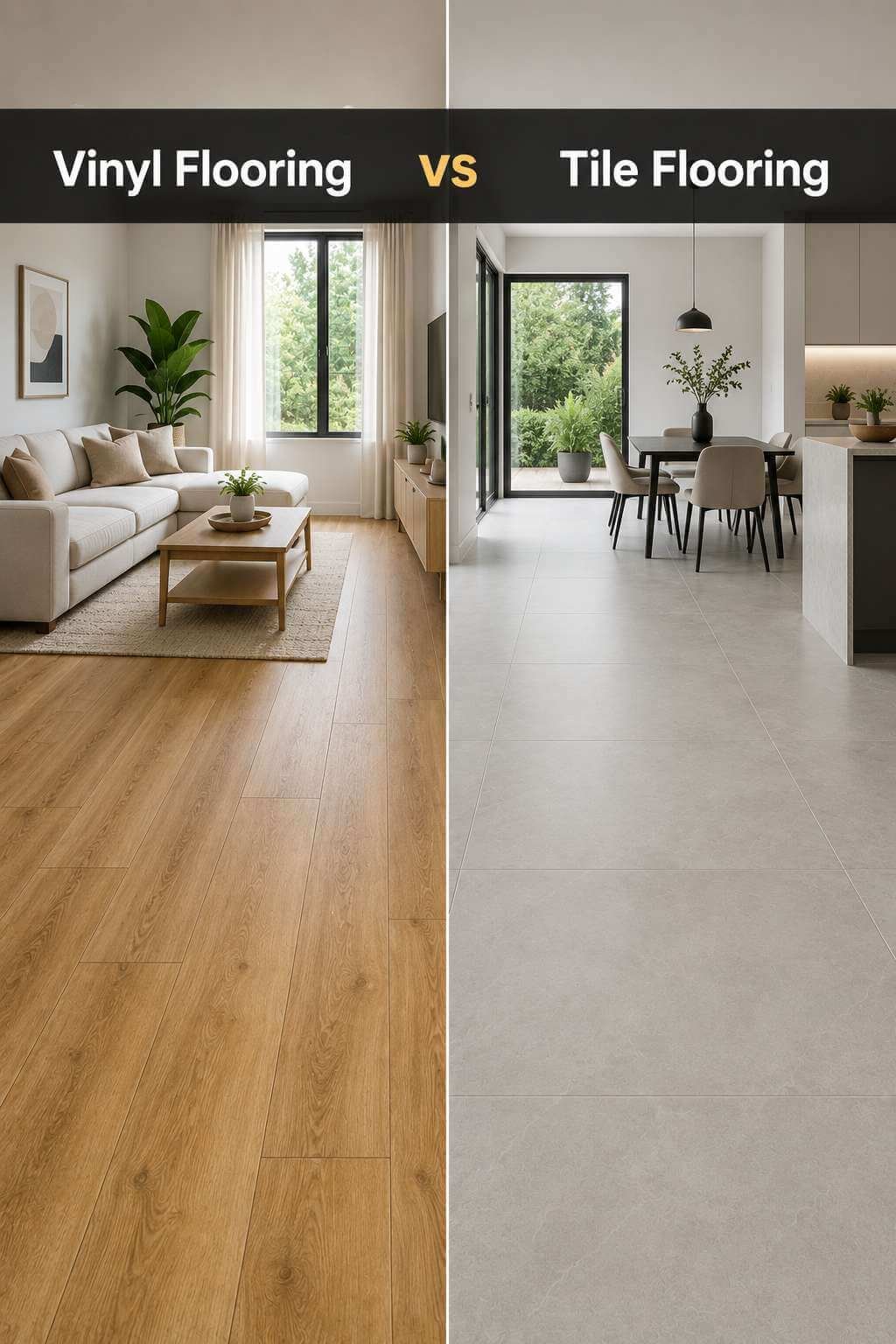
Vinyl Flooring vs Tile Flooring: The Master Comparison
| Criteria | Vinyl Flooring | Tile Flooring |
|---|---|---|
| Cost | $3–$10 per sq ft installed | $5–$18 per sq ft installed |
| Durability | Good — resists scratches, can dent under heavy furniture | Excellent — very hard surface, but can crack from impact |
| Water Resistance | Excellent with waterproof-core products | Excellent, though grout lines need sealing |
| Comfort & Warmth | Warm and cushioned underfoot | Cold underfoot without added radiant heating |
| Maintenance | Low — sweep and mop, no sealing needed | Moderate — grout needs resealing every 1–2 years |
| Install Difficulty | Easy — many click-lock, DIY-friendly options | Difficult — mortar, spacers, cutting; usually professional |
| Lifespan | 10–20 years | 25–50+ years with proper installation |
| Resale Value | Moderate — a nice-to-have, not a major value add | Higher — often recoups more, especially in kitchens/baths |
Those ratings translate into real, everyday differences. A “low maintenance” vinyl floor means you’re not thinking about it — no sealing, no staining grout, just a quick mop. Tile’s “excellent durability” means it can take a dropped cast-iron pan without a mark, but that same hardness is why it feels cold under bare feet in January and why a heavy enough impact can crack a single tile that then needs professional replacement. Vinyl’s comfort comes from its layered, cushioned construction, which is also why it’s more forgiving on dropped dishes and standing for long periods — but that same softness is what allows a heavy dresser leg to leave a dent over time. Our tile design ideas has more inspiration along these same lines.
Quick Look: Vinyl Flooring vs Tile Flooring at a Glance
Vinyl Flooring
Budget-friendly, warm underfoot, and easy to install — ideal for renters, DIYers, and quick refreshes.
View on Amazon →Tile Flooring
Long-lasting, resale-friendly, and built for heavy wear — the pick for permanent, high-value renovations.
View on Amazon →Deep Dive: Vinyl Flooring
Vinyl flooring is the go-to choice for rental units, budget renovations, bedrooms, basements that need extra warmth underfoot, and DIY projects where you want a fast, professional-looking result without hiring a contractor. It’s also a smart pick if you’re renovating to flip a property quickly and want to control costs without sacrificing a polished look. See our what flooring goes with oak cabinets for more direction in this style.
Pros
- Lower material and installation cost
- Warm, cushioned, comfortable underfoot
- Easy DIY click-lock installation
- Fully waterproof core options available
- Wide range of realistic wood- and stone-look styles
Cons
- Can dent under heavy furniture or heels
- Shorter lifespan than tile
- Smaller impact on resale value
- Can look less premium in luxury builds
- Can fade with prolonged direct sunlight exposure
Real cost range: $3–$10 per sq ft installed
Deep Dive: Tile Flooring
Tile flooring is the stronger choice for bathrooms, kitchens, entryways, mudrooms, and any high-traffic hallway that takes a daily beating. It’s also worth the investment if you have radiant floor heating, or if you’re renovating a permanent home you plan to keep — and eventually sell — for years to come. Our wooden floor ideas has more inspiration along these same lines.
Pros
- Extremely durable and long-lasting
- Naturally waterproof surface
- Higher resale value, especially in kitchens and baths
- Wide range of premium looks, including porcelain and stone
- Handles heavy foot traffic without wearing down
Cons
- Cold and hard underfoot without added heating
- More expensive and labor-intensive to install
- Grout lines require periodic maintenance
- Can crack or chip from a dropped heavy object
- Harder and costlier to repair a single damaged tile
Real cost range: $5–$18 per sq ft installed
Which One Wins in Your Room?
Small Bathroom Remodel
Constant moisture around the tub and shower plus close buyer scrutiny make water resistance and finish quality matter most here.
Winner: Tile Flooring
Budget-Friendly Rental Kitchen
Fast, low-cost installation and durability against tenant turnover matter more than long-term resale here.
Winner: Vinyl Flooring
High-Traffic Entryway or Mudroom
Daily dirt, grit, and moisture wear down softer surfaces fast — this is where hardness pays off over the years.
Winner: Tile Flooring
Luxury Open-Concept Living Room
Premium finishes and resale value carry more weight in a luxury build than upfront savings.
Winner: Tile Flooring
Household With Kids and Pets
A cushioned, more forgiving surface handles dropped toys, falls, and pet claws better and is cheaper to spot-repair.
Winner: Vinyl Flooring
Professional Tips Before You Decide
Designer Tie-Breaker & Real-World Advice
- Designer tie-breaker: In small, water-heavy rooms like bathrooms and mudrooms, tile is worth the extra cost — it reads as move-in ready to buyers. Everywhere else, let budget and comfort decide.
- Common regret mistake: Installing vinyl throughout an entire luxury home to save money, then finding buyers expect tile in wet areas at resale.
- Resale-value note: Kitchens and bathrooms are where flooring material most affects buyer perception — that’s where tile’s cost premium pays off the most.
- Maintenance reality-check: Vinyl needs almost no upkeep beyond sweeping and mopping. Tile grout should be resealed roughly every 1–2 years to prevent staining and moisture absorption.
Shop the Winner
If you’re leaning toward vinyl or tile, here’s where to start once you’ve picked your side. For a full breakdown of every option we recommend, see our full Best Flooring Installation Kits guide.
If you’re leaning toward Vinyl Flooring
A full click-lock vinyl plank install kit with underlayment, spacers, and a tapping block.
A basic underlayment and trim kit for a straightforward DIY vinyl install.
A moisture-barrier underlayment kit built for waterproof vinyl in basements and baths.
If you’re leaning toward Tile Flooring
A complete tile install kit with mortar, spacers, and a manual tile cutter.
An essentials kit with spacers, a notched trowel, and grout float.
A professional-grade wet saw and underlayment membrane kit for large-format tile.
Frequently Asked Questions
Is vinyl flooring cheaper than tile?
Yes, in most cases. Installed vinyl flooring typically runs $3 to $10 per square foot, while tile typically runs $5 to $18 per square foot depending on material and labor.
Which lasts longer, vinyl or tile flooring?
Tile lasts longer. Quality tile can last 25 to 50 or more years with proper installation, while vinyl flooring typically lasts 10 to 20 years before it needs replacing.
Is vinyl flooring waterproof?
Many modern vinyl products, especially luxury vinyl plank with a waterproof core, are fully waterproof. Always check the specific product label, since not every vinyl style offers the same water resistance.
Can tile flooring crack?
Yes. Tile is very hard and scratch-resistant, but a heavy dropped object or a shifting subfloor can crack or chip individual tiles, which then need to be replaced.
Is vinyl flooring good for bathrooms?
Waterproof vinyl works well in bathrooms and is budget-friendly, but tile generally holds up better long-term in wet, high-use bathrooms and tends to add more resale value.
Does tile flooring increase home value more than vinyl?
Generally yes. Tile is viewed as a more permanent, premium upgrade, especially in kitchens and bathrooms, and often recoups more of its cost at resale than vinyl.
Can you put vinyl flooring over tile?
In many cases yes, as long as the existing tile is flat, stable, and free of major cracks. Uneven or damaged tile should be repaired or leveled first so the vinyl lays flat.
Is tile flooring cold?
Yes, tile stays cool to the touch without added heating, which some homeowners dislike in bedrooms or bathrooms. Radiant floor heating underneath tile solves this.
How long does luxury vinyl plank flooring last?
Luxury vinyl plank typically lasts 10 to 20 years, depending on the wear layer thickness, foot traffic, and how well it’s maintained.
Is vinyl flooring waterproof enough for a basement?
Waterproof-core vinyl is a popular basement choice because it resists moisture from the subfloor better than many other flooring types, though it isn’t a substitute for fixing an active water intrusion problem.
Which is easier to install, vinyl or tile?
Vinyl is easier to install. Many vinyl products use a click-lock system that’s DIY-friendly, while tile requires mortar, spacers, precise cutting, and is usually best left to a professional.
Does vinyl flooring scratch easily?
Vinyl resists light scratches well thanks to its wear layer, but it can dent under heavy furniture or sharp heels, unlike tile which resists both scratching and denting.
Can pets damage vinyl flooring?
Vinyl is generally forgiving with pets since it’s softer and more cushioned, though long claws can cause light surface scuffs over time. It’s still considered more pet-friendly than tile underfoot.
Is porcelain tile better than ceramic tile?
Porcelain tile is denser and more water-resistant than ceramic, making it a better fit for bathrooms, kitchens, and outdoor areas, though it typically costs more.
How much does it cost to install tile flooring per square foot?
Installed tile flooring typically costs $5 to $18 per square foot, depending on whether you choose ceramic, porcelain, or natural stone, plus labor complexity.
How much does it cost to install vinyl plank flooring per square foot?
Installed vinyl plank flooring typically costs $3 to $10 per square foot, depending on the product tier and whether it’s a DIY or professional install.
Is vinyl flooring good for high-traffic areas?
Vinyl handles moderate to high traffic well, but for the heaviest-traffic areas like entryways and mudrooms, tile generally holds up better over many years.
Does tile flooring need to be resealed?
The grout lines between tiles typically need resealing roughly every 1 to 2 years to prevent staining and moisture absorption. The tile itself usually doesn’t need sealing, aside from natural stone.
Can vinyl flooring be repaired if damaged?
Individual vinyl planks or tiles can often be popped out and replaced, especially with click-lock systems, making spot repairs relatively simple and inexpensive.
Which is better for resale value, vinyl or tile?
Tile generally adds more resale value, particularly in kitchens and bathrooms, because buyers perceive it as a more permanent, higher-end upgrade compared to vinyl.
Final Verdict: Which Should You Choose?
If budget, warmth, and a fast DIY timeline matter most, choose vinyl flooring — it’s the smarter pick for rentals, bedrooms, basements, and homes with kids or pets. If you’re renovating a bathroom, kitchen, or entryway for the long haul, or you’re planning to sell within the next few years, choose tile flooring — the durability and resale value are worth the higher upfront cost.
For a whole-home renovation, most homeowners land on a hybrid: tile in wet, high-traffic rooms, and vinyl everywhere else. That’s not fence-sitting — it’s simply matching the material to the room.