


Choosing between a leather sofa and a fabric sofa comes down to more than which one looks better in the showroom. The right pick depends on how your household actually lives — kids, pets, sunlight, humidity, and how much upkeep you’re realistically willing to do. Leather tends to win on durability and easy wipe-down cleaning. Fabric tends to win on comfort, cost, and color flexibility. Below, we break down exactly where each material pulls ahead, with real cost ranges, room-by-room verdicts, and a clear final recommendation, so you’re not left guessing.
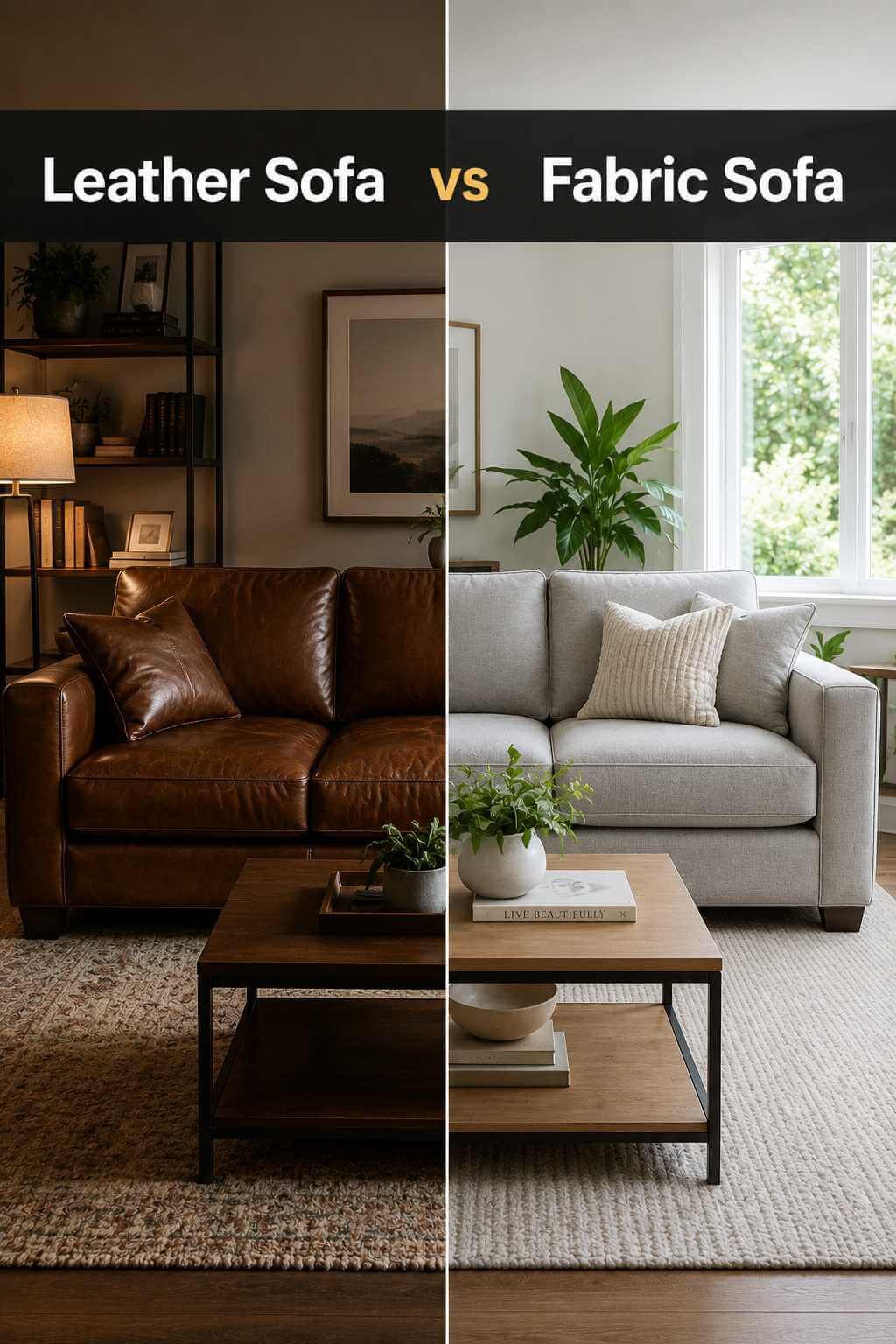
Leather Sofa vs Fabric Sofa: The Full Comparison
| Criteria | Leather Sofa | Fabric Sofa |
|---|---|---|
| Upfront Cost | $1,200–$4,000+ for genuine leather | $600–$2,500 for quality fabric |
| Long-Term Cost | Low — occasional conditioning cream, rare repairs | Moderate — periodic professional cleaning, more frequent reupholstering |
| Durability | 15–25 years with regular care | 7–15 years, depending on weave and use |
| Comfort | Cool in summer, cold in winter, less give | Warmer year-round, softer break-in feel |
| Maintenance | Wipe clean, condition occasionally, avoid direct sun | Vacuum regularly, spot-clean spills fast, deep clean periodically |
| Climate Response | Struggles in high humidity — can feel sticky, mildew risk | Performance weaves handle humidity noticeably better |
| Pet & Kid Friendliness | Resists spills well, but claw marks show | Performance fabrics resist stains, but fur and pilling are common |
| Aesthetic Flexibility | Limited color range, classic look | Huge range of colors, patterns, and textures |
| Resale / Longevity | Holds resale value well if maintained | Lower resale value, visible wear sooner |
The pattern that matters most here: leather asks for less frequent maintenance but is less forgiving of neglect or direct sunlight, while fabric asks for more regular upkeep but recovers more easily from an occasional missed cleaning. If your household is consistent about small habits (wiping spills fast, rotating cushions), fabric’s downsides shrink a lot. If you’d rather do almost nothing between deep cleans, leather’s low-maintenance profile pulls ahead — as long as you keep it out of direct sun. See our small living room decor ideas for more direction in this style.
Quick Look: Leather Sofa vs Fabric Sofa at a Glance
Leather Sofa
Sleek, durable, and easy to wipe clean — built for style that lasts, if you don’t mind occasional conditioning.
View on Amazon →Fabric Sofa
Soft, warm, and endlessly customizable — built for everyday comfort, if you stay on top of spills.
View on Amazon →Deep Dive: Leather Sofa
Leather makes the most sense for households that want a low-maintenance, easy-wipe surface and are willing to pay more upfront for a longer lifespan. It also tends to suit cooler climates, more formal or minimalist living rooms, and allergy-sensitive households, since it doesn’t trap dust or dander the way fabric fibers do.
Pros
- Wipes clean in seconds — spills lift before they stain
- Doesn’t trap pet dander, dust, or odors the way fabric can
- Ages into a rich patina rather than looking worn out
- Holds resale value better when well maintained
- Naturally resistant to dust mites — a plus for allergy-sensitive households
Cons
- Higher upfront cost than most fabric options
- Can crack or fade with prolonged direct sunlight
- Feels cold in winter and can stick to skin in summer heat
- Shows claw marks and scratches from pets more visibly
- Bonded or faux leather can peel within just a few years
Deep Dive: Fabric Sofa
Fabric makes the most sense for families who want a soft, warm everyday seat, renters and frequent movers who need something lighter and slipcover-friendly, and anyone who wants a specific color or pattern to match their space without paying a leather premium.
Pros
- Wide range of colors, patterns, and textures to match any style
- Softer, warmer feel for year-round comfort
- Generally lower upfront cost than leather
- Many performance fabrics resist stains nearly as well as leather
- Easier and cheaper to reupholster than to replace outright
Cons
- More prone to staining if spills aren’t cleaned quickly
- Traps pet hair, dust, and odors more than leather
- Can pill or wear thin in high-traffic spots
- Lower-grade fabrics fade and flatten faster under regular use
- Professional cleaning adds an ongoing cost most owners underestimate
Which Wins in Your Room? Real Scenarios
Small Apartment
Fabric wins.
Lighter to move and easier to match to a small, light-filled space without visually crowding it.
Family with Pets
Leather wins.
Dander doesn’t cling to it, and claw marks are easier to manage than fabric snags and stains.
Humid/Coastal Climate
Fabric wins.
Performance weaves handle humidity far better — leather can feel sticky and carries a mildew risk.
Budget Renovation
Fabric wins.
Lower upfront cost frees up more of the budget for the rest of the room.
Rental-Friendly
Fabric wins.
Slipcovers and lighter frames make it easier to refresh or move between rentals.
Professional Tips
What designers actually tell clients
- Let your climate decide first. Leather works best in dry, temperate regions; fabric — especially performance weaves — is the safer call anywhere humid or hot.
- The most common regret: placing a leather sofa directly in a sun-facing window with no protection. Expect fading and cracking within 2–3 years.
- For resale value, neutral-tone genuine leather holds up best. Bold-pattern fabric sofas are the hardest to resell. Our neutral living room ideas has more inspiration along these same lines.
- Reality-check your maintenance habit, not just the material: leather needs about 15 minutes a month of conditioning; fabric needs a weekly vacuum-and-spot-clean routine to actually stay ahead of wear.
Shop the Winner
Whichever way you’re leaning, keeping your new sofa looking its best starts with the right care routine.
If you’re leaning toward Leather:
If you’re leaning toward Fabric:
Frequently Asked Questions
Is leather or fabric better for a sofa?
It depends on your household. Leather tends to be better for homes with pets or anyone who wants the easiest possible wipe-down cleaning. Fabric tends to be better for comfort, color flexibility, and a lower upfront cost.
Which is more durable, leather or fabric sofa?
Genuine leather typically lasts longer, around 15 to 25 years with regular conditioning. Quality fabric sofas average 7 to 15 years depending on the weave and how much daily use they get. Our guide on how to arrange living room furniture walks through this step by step.
Is a fabric sofa cheaper than leather?
Yes. A quality fabric sofa typically costs 30 to 50 percent less upfront than a comparable genuine leather sofa.
Do leather sofas scratch easily?
Genuine leather resists everyday scuffs well, but pet claws and sharp objects can leave visible marks, especially on lighter-colored finishes.
Are fabric sofas good for pets?
Performance and microfiber fabrics resist stains reasonably well, but fabric in general traps pet hair and dander more than leather does.
How do you clean a leather sofa?
Wipe it down with a damp microfiber cloth, use a leather-specific cleaner for deeper cleaning, and condition it every 6 to 12 months. Avoid harsh chemicals and direct sunlight.
How do you clean a fabric sofa?
Vacuum weekly, spot-clean spills immediately with a mild solution, and do a deeper clean or steam clean every 6 to 12 months depending on use.
Does leather crack over time?
Yes, especially with prolonged sun exposure and low humidity. Regular conditioning slows cracking significantly.
Is fabric warmer to sit on than leather?
Yes. Fabric retains body heat and feels warmer in cold weather, while leather can feel cold and slightly slick at first.
Which sofa material is best for hot climates?
Breathable fabric or a performance weave tends to work better in hot, humid climates, since leather can feel sticky in heat and humidity.
Can you repair a torn leather sofa?
Small tears and scuffs can often be professionally repaired. Larger tears usually require reupholstering or replacing the piece.
Do fabric sofas fade in sunlight?
Yes, especially darker or dyed fabrics. UV-resistant performance fabrics fade more slowly than standard weaves.
Is genuine leather worth the extra cost?
For most households, yes, if you want longevity and easy cleanup. Bonded or faux leather is generally not a good long-term value.
What is the most durable sofa fabric?
Performance fabrics and heavy-duty microfiber tend to outlast natural fibers like linen or basic cotton blends.
Do leather sofas smell?
New genuine leather has a natural scent that fades over time. Lower-quality bonded leather can have a stronger synthetic smell.
Which is better for allergies, leather or fabric?
Leather is generally better for allergies, since it doesn’t trap dust mites, pet dander, or other allergens the way fabric fibers can.
How long does a fabric sofa last?
Typically 7 to 15 years, depending on fabric quality and how much daily traffic the sofa gets.
How long does a leather sofa last?
Typically 15 to 25 years with regular conditioning and care.
Can you put a leather sofa in direct sunlight?
It’s not recommended long-term. Direct UV exposure causes fading, drying, and eventually cracking.
Is microfiber considered fabric or leather?
Microfiber is a synthetic fabric, often marketed as a leather alternative for its soft feel, but it cleans and maintains like fabric, not leather.
Final Verdict
So, leather or fabric? If your household deals with pets, dander, or you just want the easiest possible cleanup, a genuine leather sofa is worth the higher upfront cost. If comfort, color flexibility, and a lower price point matter more — especially in a rental, a humid climate, or a busy family home — a quality fabric sofa is the smarter buy.
The sofa you’ll actually regret is a cheap bonded-leather or thin-weave fabric piece bought purely on price. Spend at the low end of genuine leather, or a mid-tier performance fabric, and either material will serve your home well for over a decade.

