


If you’re standing in your bathroom trying to decide between ripping out the tub for a sleek walk-in shower or keeping things as they are, you’re not alone — it’s one of the most debated calls in any bathroom renovation. A walk-in shower tends to win on daily convenience, accessibility, and a cleaner, more modern look, while a bathtub still wins on resale flexibility, bathing kids, and that end-of-day soak.
The right answer depends less on trends and more on your household, your home’s bathroom count, and how long you plan to stay. Below, we break down the real costs, the resale-value trade-offs nobody talks about, and exactly which option fits which kind of home.
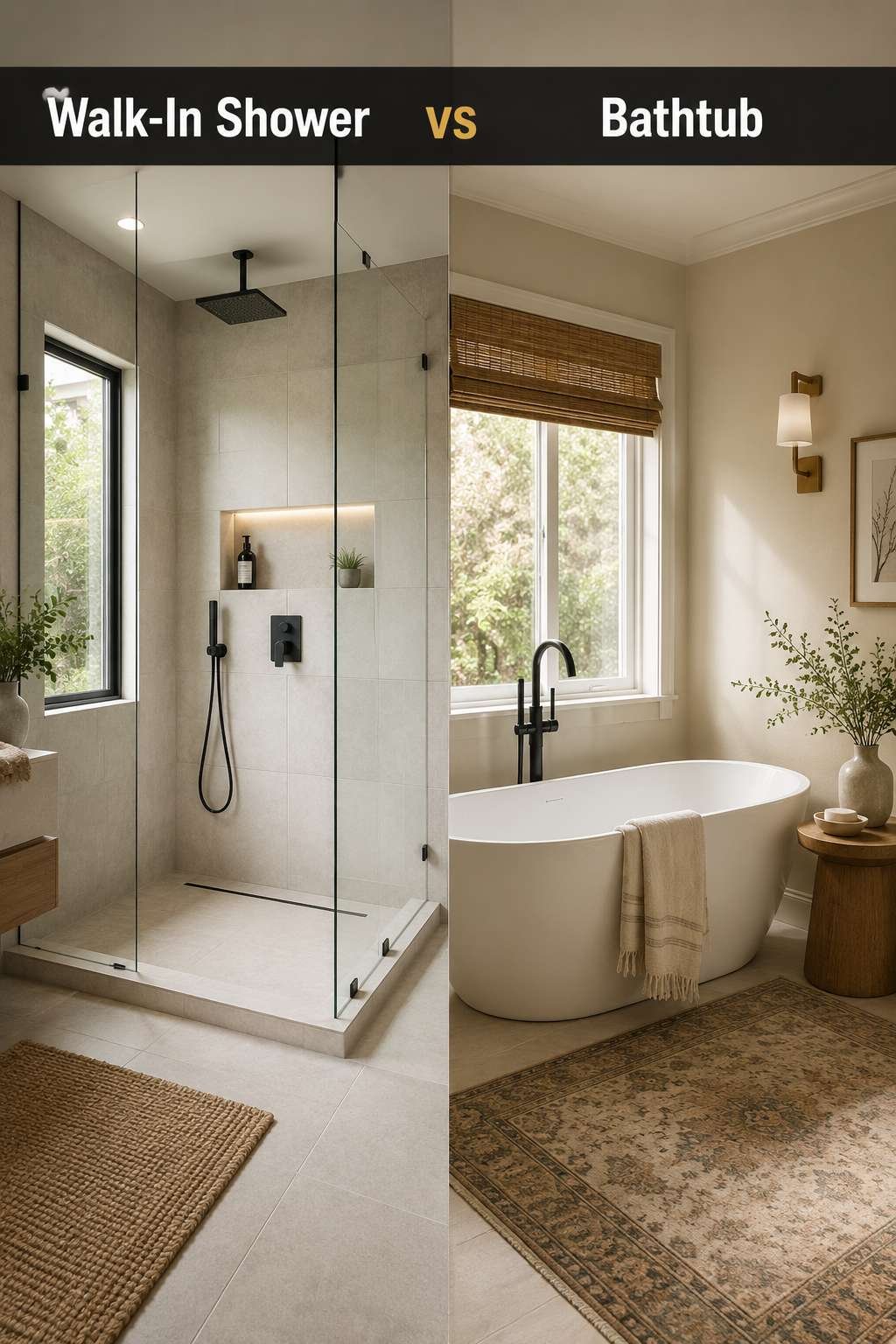
Walk-In Shower vs Bathtub: The Master Comparison
| Criteria | Walk-In Shower | Bathtub |
|---|---|---|
| Upfront Cost | $1,500–$15,000+ depending on whether it’s a conversion or a full curbless build | $500–$8,000+ depending on a basic swap vs. a luxury soaking tub |
| Resale Value | Boosts value in homes with multiple bathrooms; can hurt value if it’s the only bathroom | Preferred baseline in single-bathroom homes and by buyers with young kids |
| Space Required | As small as 32″ x 32″ for a compact curbless design, up to 60″ x 36″ for larger builds | Standard alcove footprint of roughly 60″ x 30″–32″ |
| Maintenance | Squeegee glass after each use and reseal grout roughly every 1–2 years | Occasional refinishing or resealing every 3–5 years |
| Install Difficulty | Moderate to high — often needs replumbing, waterproofing, and new tile | Low to moderate for a like-for-like swap in the same footprint |
| Accessibility & Safety | Curbless entry works well for wheelchairs, walkers, and aging in place | Higher fall risk; stepping over the wall is difficult for limited-mobility users |
| Lifespan | 20–30 years with proper sealing and glass hardware upkeep | 25–35+ years depending on material, especially cast iron or acrylic |
What This Actually Means in a Real Home
Those numbers translate into pretty different day-to-day experiences. The cost spread for a walk-in shower is wide because it depends entirely on whether you’re reusing existing plumbing or moving it — a straight conversion in the same footprint stays affordable, while relocating drains or going fully curbless adds real labor cost. On the resale side, the rule of thumb agents use is simple: never leave a home with zero bathtubs if it only has one bathroom. Space-wise, a walk-in shower can genuinely make a small bathroom feel bigger because there’s no tub wall breaking up the floor plan, but it only pays off that way if the layout is planned carefully. Maintenance is a wash overall — showers trade tub scrubbing for glass squeegeeing and grout care. Our shower size guide is worth checking before you finalize the sizing.
Quick Look: Walk-In Shower vs Bathtub at a Glance
Walk-In Shower
A curbless, glass-enclosed shower built for daily ease, modern style, and long-term accessibility.
View on Amazon →Bathtub
A classic soaking or combo tub that stays flexible for bathing kids, resale appeal, and unwinding at night.
View on Amazon →Deep Dive: Walk-In Shower
Best-fit scenarios: Primary suites in homes with a second bathtub elsewhere, small bathrooms where a curbless design opens up the floor plan, and any household prioritizing accessibility for an aging family member. It’s also the stronger pick for anyone renovating a rarely-used guest bath into a more functional daily-use space.
Pros
- Faster, easier daily use — no stepping over a wall
- Feels more spacious and modern, especially in small bathrooms
- Safer for aging in place with grab bars and a bench
- Easier to keep water contained with a well-sloped pan
Cons
- No option to soak or bathe small children
- Can lower resale value if it’s the home’s only bathroom
- Glass and grout need more frequent upkeep
- Custom curbless builds cost more than a standard swap
Real cost range: roughly $1,500 for a basic insert-based conversion up to $15,000+ for a fully custom curbless build with tile, glass, and replumbing.
Deep Dive: Bathtub
Best-fit scenarios: Single-bathroom homes, family bathrooms with young kids, and any household that wants to preserve broad resale appeal. It’s also the safer default if you’re renovating on a tighter budget and want to avoid replumbing costs.
Pros
- Keeps the bathroom usable for bathing infants and toddlers
- Broadest resale appeal, especially in single-bathroom homes
- Usually cheaper to install as a like-for-like swap
- Doubles as a shower with a tub-shower combo Our shower curtain vs glass door comparison covers that decision in more depth.
Cons
- Higher fall risk for older adults or limited-mobility users
- Stepping over the wall is a daily annoyance for some households
- Refinishing or resealing eventually becomes necessary
- Takes up more visual space in a small bathroom
Real cost range: roughly $500 for a basic tub swap up to $8,000+ for a freestanding luxury soaking tub with new fixtures.
Real Room & Scenario Examples
Small Bathroom
A compact curbless shower opens up a tight floor plan far more than a standard tub footprint can.
Verdict: Walk-In Shower wins
Budget Renovation
A simple insert-based tub-to-shower conversion keeps costs down without a full remodel.
Verdict: Walk-In Shower wins
Luxury Primary Suite
A freestanding soaking tub beside a window becomes the visual centerpiece of an upscale suite.
Verdict: Bathtub wins
Family Bathroom (Kids & Pets)
A tub-shower combo keeps bath time practical for little ones while still working as a daily shower.
Verdict: Bathtub wins
Aging-in-Place / Accessibility
A curbless shower with grab bars and a bench removes the step-over fall risk entirely.
Verdict: Walk-In Shower wins
Professional Tips
Designer Tie-Breakers & Common Regrets
- Never remove your only tub if your home has a single bathroom — it’s the single most common renovation regret we hear about, and it shows up directly in resale offers.
- Keep one tub, upgrade the rest. In multi-bathroom homes, convert the primary or guest bath to a walk-in shower and leave the tub in a secondary bathroom.
- Budget for waterproofing, not just tile. A curbless shower’s real cost driver is proper slope and waterproofing membrane — skimping here is the top cause of leaks and callbacks.
- Plan for resale before you demo if you might sell within 3-5 years; buyer expectations in your specific market matter more than the trend.
- Reseal on a schedule, not when you notice a problem. Grout and caulk both fail quietly — set a yearly reminder for either option.
Shop the Winner
If you’re leaning toward the Walk-In Shower, here’s what to get started with:
Best Overall
A dual-function rainfall and handheld shower system with a sliding bar mount, built for everyday use and easy cleaning. Pair this with our bathroom cleaning checklist to stay on top of the rest.
Best Budget
A simple handheld showerhead with a hose attachment that upgrades an existing fixture without any plumbing changes.
Best Premium
A ceiling-mounted rainfall system paired with a thermostatic valve for consistent temperature and a spa-like feel.
If you’re leaning toward the Bathtub, here’s what to get started with:
Best Overall
A wall-mounted tub filler with a diverter for shower use, striking a balance between function and finish.
Best Budget
A slip-resistant bath mat and a basic tub spout diverter that improve safety and function without a renovation.
Best Premium
A freestanding floor-mounted tub filler with a handheld sprayer, designed to complement a standalone soaking tub.
Frequently Asked Questions
Is a walk-in shower cheaper than a bathtub?
Not always. A simple tub-to-shower conversion can be cheaper than replacing a bathtub, but a full curbless walk-in shower with custom tile and glass usually costs more upfront than a standard bathtub swap. Bathtubs tend to win on raw installation cost; walk-in showers can save money over time on maintenance.
Does removing a bathtub hurt resale value?
It can, but only in specific situations. If your home has only one bathroom, removing the only bathtub can turn away buyers who are house-hunting with young kids. If you have two or more bathrooms, keeping at least one tub elsewhere usually protects your resale value while still letting you upgrade another bathroom to a walk-in shower.
Should a home have at least one bathtub?
Most real estate agents recommend keeping at least one bathtub if your home has more than one bathroom, since it broadens your buyer pool to families with young children. In a single-bathroom home, this matters even more.
How much does a tub-to-shower conversion cost?
A basic tub-to-shower conversion typically runs from around $1,500 for a simple insert-based swap to $6,000 or more for a fully tiled, custom-built shower in the same footprint.
How much does a walk-in shower cost to install?
A walk-in shower typically costs between $3,000 and $15,000 or more, depending on whether it’s a straightforward conversion or a full curbless build that requires replumbing, custom tile, and waterproofing.
What is the smallest size for a walk-in shower?
Most codes and manufacturers require a minimum of about 32 inches by 32 inches for a walk-in shower to feel usable, though many comfortable installs run closer to 36 by 48 inches or larger.
Can you put a walk-in shower in a small bathroom?
Yes. A curbless walk-in shower can actually make a small bathroom feel larger than a bathtub does, since it removes the visual break of a tub wall and can be finished with the same floor tile that continues into the rest of the room.
Is a walk-in shower better for aging in place?
Generally yes. A curbless walk-in shower with grab bars, a bench, and a handheld showerhead removes the step-over hazard of a bathtub, which is one of the most common fall risks in the home for older adults.
What is a curbless shower?
A curbless shower is a walk-in shower built with no raised threshold at the entrance, so the shower floor is level with the rest of the bathroom floor. It’s easier to step into and is often used in accessible or aging-in-place bathroom designs.
Do walk-in showers add value to a home?
They can, particularly in homes with more than one bathroom, primary suite renovations, and markets where buyers prioritize modern, low-maintenance finishes. The value add is smaller or even negative if it leaves the home with zero bathtubs.
Is it a mistake to remove your only bathtub?
It can be, especially if you plan to sell within a few years or live in an area where families with young children make up a large share of buyers. If it’s your only bathroom, most designers recommend keeping a tub-shower combo instead of a shower-only layout.
How long does a walk-in shower installation take?
A basic walk-in shower conversion can take about 3 to 5 days, while a full custom build with new plumbing, tile, and glass can take 1 to 2 weeks or longer.
How long does a tub-to-shower conversion take?
A simple insert-based tub-to-shower conversion can often be completed in 1 to 3 days, while a fully tiled custom conversion typically takes about a week.
Are walk-in showers harder to clean than a tub?
Glass panels need regular squeegeeing to avoid water spots, and grout lines need periodic resealing, but there’s no tub basin to scrub. Most homeowners find a well-sealed walk-in shower comparable in cleaning time to a tub, just with different upkeep tasks.
What maintenance does a walk-in shower need?
Routine maintenance includes squeegeeing glass after each use, resealing grout roughly every 1 to 2 years, and checking the drain and glass door hardware periodically for wear.
What maintenance does a bathtub need?
Bathtubs generally need occasional resealing around the caulk line, periodic refinishing if the surface dulls or chips, and standard cleaning to prevent soap scum buildup, usually every 3 to 5 years for the bigger upkeep tasks.
Is a bathtub better for families with young kids?
Yes, for most families. A bathtub is far easier for bathing infants and toddlers, and a shower-tub combo lets the bathroom still function as a shower for older kids and adults.
Can you convert a shower back into a bathtub later?
Yes, but it usually requires re-plumbing, reframing the space, and re-tiling, which makes it a bigger and more expensive project than the original shower conversion. It’s worth thinking through your long-term plans before removing a tub.
What’s the average lifespan of a walk-in shower vs a bathtub?
A well-installed walk-in shower typically lasts 20 to 30 years with proper sealing, while a quality bathtub, especially cast iron or acrylic, can last 25 to 35 years or more depending on the material and how well it’s maintained.
Which option do most home buyers actually prefer?
Buyer preference splits by household stage: buyers with young children generally look for at least one bathtub, while buyers without kids or those prioritizing a modern primary suite often favor a walk-in shower. Most agents recommend having at least one of each if your home has multiple bathrooms.
Final Verdict
If you have more than one bathroom, the walk-in shower is the smarter upgrade for your primary suite — it’s more accessible, easier to keep clean long-term, and modernizes the space without any real resale downside as long as a tub stays in the house somewhere. If this is your only bathroom, or you have young kids at home now or in the next few years, keep the bathtub, ideally as a tub-shower combo that gives you both. Renovating on a tight budget with no kids in the picture and just want the easiest daily routine? Go with the walk-in shower. Planning to sell within a few years and unsure who’ll be house-hunting? Keep the tub.

