


Standing in the door aisle comparing a solid core door to a hollow core door usually comes down to one quiet question: how much does this room actually need? Solid core doors are the heavier, pricier option built for noise control and durability, the natural fit for bedrooms, home offices, and any wall you share with someone else.
Hollow core doors are light, inexpensive, and perfectly fine for closets and low-traffic spaces where sound privacy barely matters. The short version: don’t upgrade every door in the house, and don’t cheap out on the ones where you’ll regret it. Here’s exactly which is which.
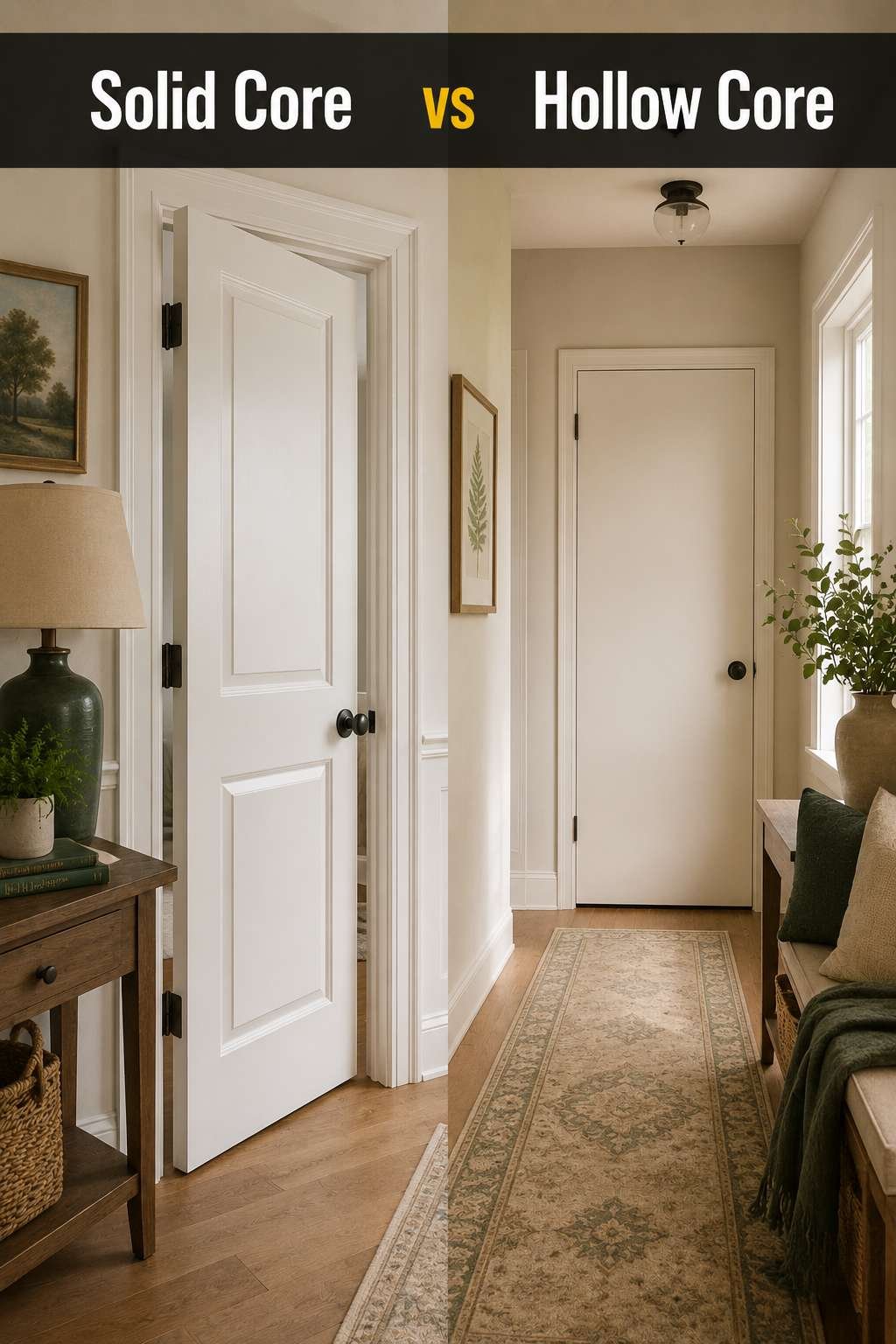
Solid Core vs Hollow Core Door: The Full Comparison
| Criteria | Solid Core Door | Hollow Core Door |
|---|---|---|
| Average Cost (per door) | $100–$300 | $30–$100 |
| Weight (per door) | 110–130 lbs | 15–25 lbs |
| Sound Blocking | Excellent | Fair to Poor |
| Durability | High | Moderate |
| Install Difficulty | Moderate (may need hinge upgrade) | Easy |
| Best-Fit Rooms | Bedrooms, offices, shared walls | Closets, low-traffic rooms |
| Resale Value Impact | Higher | Neutral |
In practice, that weight difference is the real story behind every other row in the chart. A solid core door is dense enough to genuinely dampen a conversation or a TV on the other side, which is why it rates “Excellent” for sound blocking instead of just “Good.” That same density is what makes it resist a slammed door or an accidental kick without denting, and why it needs sturdier hinges to carry the load. A hollow core door, being mostly empty air behind a thin veneer, simply doesn’t have the mass to stop sound or absorb an impact, which is exactly why it’s fine for a closet and a poor match for a bedroom wall shared with a neighbor. Our guide on how to make a barn door walks through this step by step.
Quick Look: Solid Core vs Hollow Core Door at a Glance
Solid Core Door
The quiet, sturdy choice for bedrooms, offices, and any room where noise and durability matter most.
View on Amazon →Hollow Core Door
The lightweight, budget-friendly pick for closets and low-traffic spaces where noise isn’t a concern.
View on Amazon →Deep Dive: Solid Core Door
Solid core doors earn their price tag in every room where quiet actually matters. They’re the right call for a primary bedroom, a home office you take calls in, a bathroom, a nursery, or any interior wall shared with another unit or a noisy living room. The extra weight that makes them harder to install is the same weight that makes them feel like a “real” door instead of a hollow-sounding one. Our how to make a door look like wood guide covers this in more detail.
- Blocks significant sound between rooms
- Feels sturdy and resists dents, punctures, and warping
- Better thermal insulation between spaces
- Reads as a quality upgrade to future buyers
- Doesn’t sound hollow when knocked or bumped
- Heavier, may require upgraded hinges or a reinforced frame
- Costs noticeably more per door
- Harder to install as a solo DIY project
- Special sizes or finishes can mean longer lead times
Deep Dive: Hollow Core Door
Hollow core doors aren’t a compromise everywhere — in the right room, they’re simply the smarter spend. Closets, pantries, laundry rooms, and low-traffic guest rooms don’t need soundproofing or heavy-duty durability, so paying solid-core prices there is money that could go toward the doors that actually need the upgrade.
- Lightweight and easy for a solo DIY install
- Budget-friendly, often a third of solid core pricing
- Works fine with standard hinges, no upgrades needed
- Easy to transport, carry, and swap out
- Poor sound blocking between rooms
- Dents and punctures easily under everyday impact
- Sounds noticeably hollow when knocked
- Shorter realistic lifespan under heavy daily use
Which Door Wins for Your Room?
Small Apartment
Studio or one-bedroom with tight closets and one shared bedroom wall.
Budget Renovation
Whole-house refresh where every dollar is stretched across many rooms.
Luxury Build
New construction or high-end remodel where feel and finish matter.
Rental-Friendly
Landlord-standard replacement doors that are cheap to swap if damaged.
High-Traffic Household
Kids, pets, and doors that get slammed more than they get closed gently.
Professional Tips
- Mix and match on purpose. Most homes should have both — solid core in bedrooms and offices, hollow core in closets. There’s no rule requiring the whole house to match.
- Count your hinges. Solid core doors often need three hinges instead of two to carry the added weight without sagging over time.
- Check the frame first. Confirm your existing door frame can support a solid core door’s weight before ordering, especially in older homes.
- Think resale. A solid core door in the primary bedroom and home office reads as a quality signal to future buyers, even if the rest of the house is hollow core.
- The common regret: installing hollow core in a shared-wall bedroom to save $150 upfront, then living with every conversation and TV show next door for years.
Shop the Winner
If you’re leaning toward Solid Core, here’s what to get started with
Best Overall
A heavy-duty three-pack of hinges rated for solid core door weight, with a self-closing option for added convenience.
Best Budget
A standard steel hinge set still rated for solid core weight, at a lower price point than premium finishes.
Best Premium
A ball-bearing hinge set built for heavier doors, delivering smoother, quieter operation over years of use.
If you’re leaning toward Hollow Core, here’s what to get started with
Best Overall
A door sweep and adhesive weatherstripping kit that closes the sound gaps hollow core doors are prone to.
Best Budget
Basic foam weatherstripping tape, an affordable first step for cutting down draft and light noise leaks.
Best Premium
A full acoustic door seal kit with sweep, side seals, and threshold, getting a hollow core door as close to solid-core-level quiet as possible.
Frequently Asked Questions
What is the difference between a solid core and hollow core door?
A solid core door is filled with dense engineered wood material all the way through, making it heavy, sturdy, and effective at blocking sound. A hollow core door has a thin wood veneer wrapped around a mostly empty cardboard honeycomb interior, making it light, cheap, and much weaker at blocking noise or resisting damage.
Is a solid core door worth the extra cost?
It is worth it for bedrooms, home offices, bathrooms, and any shared-wall room where noise and durability matter. For closets, pantries, and other low-traffic spaces, the extra cost usually is not worth it.
How much heavier is a solid core door than a hollow core door?
A standard solid core interior door typically weighs around 110 to 130 pounds, while a comparable hollow core door weighs only about 15 to 25 pounds, roughly five to seven times lighter.
Do solid core doors need special hinges?
Often yes. Because of the added weight, solid core doors frequently need three hinges instead of two, and heavier-duty hinges rated for the extra load, or the door can sag over time.
Can I use a hollow core door for a bedroom?
You can, and many homes do, but expect noticeably less sound privacy and a door that dents or punctures more easily. If the bedroom shares a wall with a living area or another bedroom, a solid core door is the better long-term choice.
Which door type is better for soundproofing?
Solid core doors are significantly better for soundproofing because their dense interior absorbs and blocks sound waves. Hollow core doors offer only fair to poor sound blocking due to their mostly empty interior.
How much does a solid core door cost?
A standard solid core interior door typically costs between 100 and 300 dollars unfinished or paint-grade, with stained hardwood veneer options running higher.
How much does a hollow core door cost?
A standard hollow core interior door typically costs between 30 and 100 dollars, making it one of the most budget-friendly interior door options.
Are hollow core doors bad?
Not inherently. They are a poor fit for bedrooms or high-traffic rooms because of weak sound blocking and durability, but they are a smart, practical choice for closets, pantries, and other low-traffic spaces.
Can you tell the difference between solid core and hollow core by knocking on it?
Yes. A solid core door produces a dull, dense thud when knocked, while a hollow core door produces a hollow, echoing sound because of the mostly empty interior.
Do solid core doors help with temperature or insulation?
Yes, to a degree. The dense interior of a solid core door provides better thermal insulation than a hollow core door, which can help stabilize temperature between rooms, though neither is a substitute for proper exterior insulation.
What rooms should always get a solid core door?
Bedrooms, home offices, bathrooms, and any room sharing a wall with a neighbor or a noisy living space are the strongest candidates for a solid core door.
What rooms are fine with a hollow core door?
Closets, pantries, laundry rooms, and low-traffic guest rooms are typically fine with a hollow core door, since sound privacy and heavy daily wear are not major concerns there.
Can I mix solid core and hollow core doors in the same house?
Yes, and most homes do. A common approach is solid core for bedrooms and offices, and hollow core for closets and low-traffic rooms, which balances cost against where sound and durability actually matter.
Do solid core doors add resale value?
Solid core doors are generally viewed as a quality signal by buyers, especially in primary bedrooms and home offices, and can support a slightly stronger resale impression compared to a house full of hollow core doors.
How long do hollow core doors last?
With normal, low-traffic use, a hollow core door can last many years, but it is more prone to dents, punctures, and warping under heavy daily use or in high-traffic households.
Can a hollow core door be repaired if it gets a hole or dent?
Minor dents can sometimes be filled with wood filler and sanded smooth, but a punctured hollow core door is difficult to repair invisibly because of the honeycomb interior, and replacement is often the more practical fix.
Is installing a solid core door a DIY job?
It is more difficult than installing a hollow core door because of the extra weight, often requiring a second set of hands, upgraded hinges, and careful frame alignment. It is doable for an experienced DIYer but more forgiving to hire out.
Do solid core doors require a different frame?
Not always a different frame, but the frame and hinges need to be strong enough to support the added weight, so it is worth confirming compatibility before ordering, especially in older homes.
What is the best door type for an apartment or rental?
Hollow core doors are usually the practical choice for rentals since they are inexpensive to replace and match standard landlord expectations, though a solid core upgrade for a shared-wall bedroom can be worth negotiating for if noise is a real issue.
Final Verdict
If you’re only upgrading one or two doors, put solid core in the bedroom, the home office, and any wall you share with another unit or a loud living room. That’s where the extra $100–$200 per door actually buys you something you’ll notice every single day: quiet.
Everywhere else — closets, pantries, laundry rooms, low-traffic guest rooms — hollow core is the right call, not a downgrade. Renters and budget renovators should default to hollow core across the board and treat solid core as a targeted upgrade, not a whole-house requirement. Families with kids or pets, and anyone in a luxury build, should lean solid core in every high-traffic or high-visibility room. Match the door to the room, not the room to whatever’s cheapest at the store.

