


Picking between quartz and marble for a bathroom vanity top comes down to one real trade-off: marble gives you a natural, one-of-a-kind look and a resale boost in the right bathroom, while quartz gives you a material that shrugs off toothpaste, perfume, and daily use without ever needing to be sealed.
Neither is wrong — but the right one depends heavily on which bathroom you’re actually renovating. Quick preview: quartz tends to win in family bathrooms, rentals, and budget remodels, while marble tends to win in powder rooms and luxury primary suites. Here’s the full breakdown.
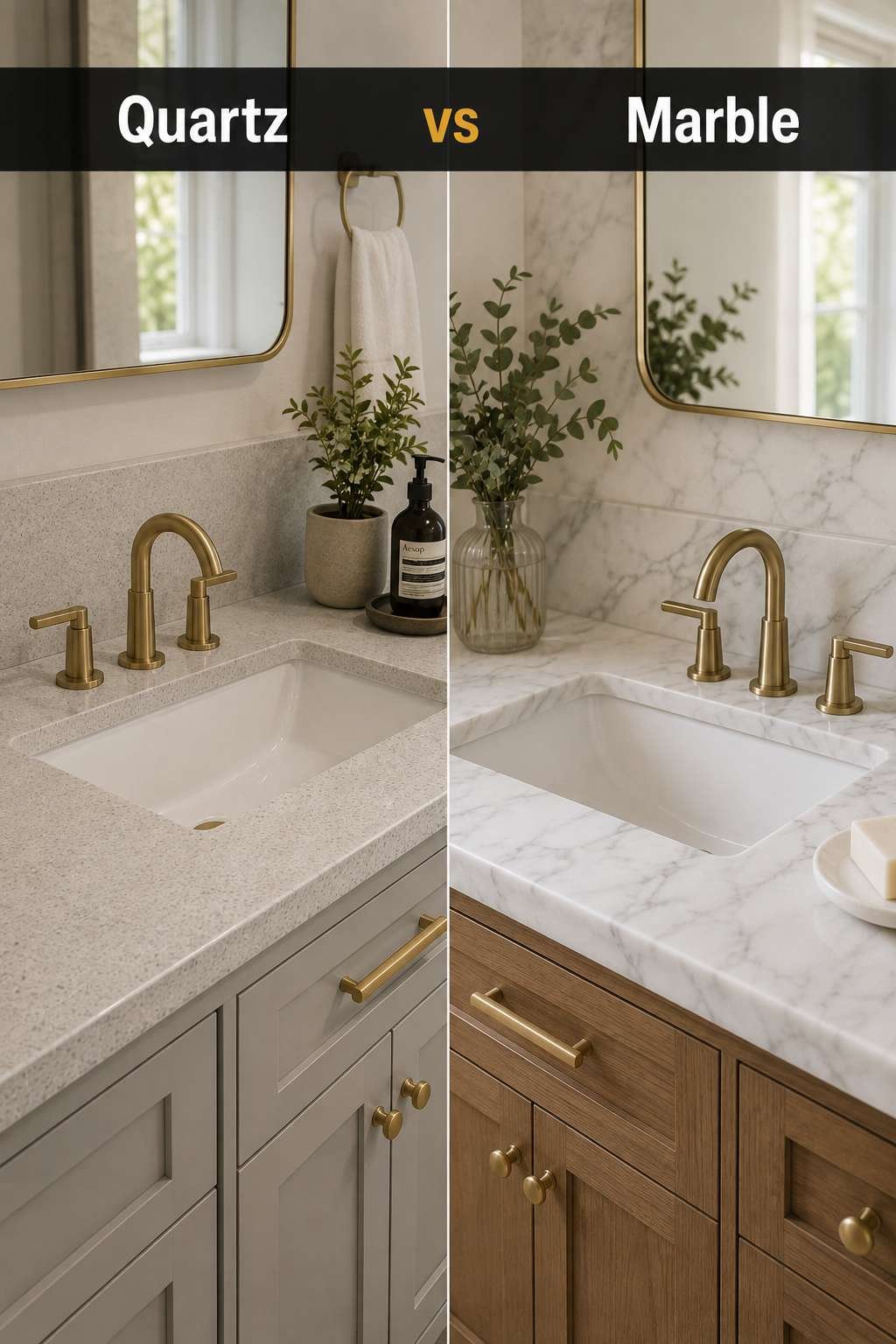
Quartz vs Marble Vanity Top: Master Comparison Chart
| Criteria | Quartz | Marble |
|---|---|---|
| Cost | $50–$100 per sq ft installed | $75–$250+ per sq ft installed (varies widely by slab) |
| Stain Resistance | Excellent — non-porous, resists everyday spills | Poor to fair — porous, stains without regular sealing |
| Etching / Acids | Excellent — unaffected by toothpaste, perfume, or citrus | Poor — etches (dulls) from acidic products like toothpaste or perfume |
| Heat Resistance | Good, but keep curling irons and hot tools off direct contact | Very good — naturally heat-tolerant |
| Maintenance | Minimal — wipe clean, never needs sealing | Moderate to high — reseal every 1–2 years |
| Durability | 20–30+ years with normal household use | 20+ years, but softer and more prone to chips or scratches |
| Aesthetic Range | Wide and consistent, including faux-marble patterns | Unique natural veining — no two slabs are alike |
| Resale Value | Strong in mid-range and family homes | Highest in luxury primary suites and high-end listings |
What this looks like in a real bathroom: leave a swipe of toothpaste on a marble vanity overnight and you’ll likely find a faint dull spot the next morning — that’s etching, not staining, and no amount of scrubbing brings back the polish. Quartz shrugs the same spill off completely. On the other hand, set a curling iron directly on either surface for a few minutes and both can show damage, though marble tolerates brief heat slightly better than quartz’s resin binder. The honest takeaway: quartz is the “install it and forget it” option, while marble asks for a little seasonal attention in exchange for a look nothing engineered can fully replicate. See our vanity mirror ideas for more direction in this style.
Quick Look: Quartz vs Marble at a Glance
Quartz
Low-maintenance engineered stone that resists stains and etching with zero sealing required — built for daily use.
View on Amazon →Marble
Natural stone with one-of-a-kind veining that brings luxury and resale appeal, especially in low-traffic spaces.
View on Amazon →Deep Dive: Quartz Vanity Tops
Quartz is the practical choice — best suited to family bathrooms, rentals, guest baths, and any vanity that sees daily, unglamorous use. If you want a surface you can genuinely stop thinking about once it’s installed, quartz is built for that. Our vanity size charts breaks down the exact measurements to plan around.
Pros
- Non-porous and stain-resistant — no sealing, ever
- Consistent pattern makes matching cabinetry and tile easy Our bathroom cabinet sizes is worth checking before you finalize the sizing.
- More affordable per square foot than most natural marble
- Holds up well in high-humidity, high-traffic bathrooms
Cons
- Can look slightly uniform or less “natural” up close
- Resin binder is vulnerable to prolonged direct heat
- Doesn’t carry the same resale prestige as natural stone in luxury listings
- Edge seams can be more visible on longer vanity runs
Real cost range: roughly $50–$100 per square foot installed for a typical vanity-size top, including fabrication and a standard edge profile.
Deep Dive: Marble Vanity Tops
Marble is the statement choice — best suited to powder rooms, primary suites, and any bathroom where the vanity top is meant to be seen and admired more than hammered with daily use.
Pros
- Genuinely unique veining — no two slabs are alike
- Signals luxury and boosts resale in high-end primary suites
- Naturally cool to the touch and heat-tolerant
- Timeless look that doesn’t date the way trend-driven materials can
Cons
- Porous and prone to etching from toothpaste, perfume, and mouthwash
- Needs resealing roughly every 1–2 years
- More expensive, especially for premium slabs like Calacatta
- Softer stone that can chip or scratch more easily than quartz
Real cost range: roughly $75–$250+ per square foot installed depending on slab grade — Carrara sits at the lower end, while Calacatta and other premium veining patterns run considerably higher.
Which One Wins in Your Bathroom? Real Room Scenarios
Small Powder Room
Marble wins. Light, occasional use lets the veining shine without daily wear risk.
Budget Renovation
Quartz wins. Lower cost per square foot and zero sealing keeps the budget and timeline intact.
Luxury Primary Bath
Marble wins. Resale value and aesthetic prestige matter most here — just budget for sealing.
Rental-Friendly Bathroom
Quartz wins. No sealing duty for landlord or tenant, and it survives inconsistent upkeep.
High-Traffic Family Bathroom
Quartz wins. Kids, toothpaste, and daily chaos are exactly what quartz is built to handle.
Professional Tips
What a designer would tell you before you decide
- Tie-breaker: if you can’t decide, ask how often the room is actually used — daily-use bathrooms lean quartz, occasional-use bathrooms lean marble.
- The #1 regret: forgetting to reseal marble and finding a dull etch ring around the sink within the first year — set a yearly reminder if you choose marble.
- Resale reality: marble moves the needle most in luxury primary suites and high-end listings; in a mid-market family home, buyers often value quartz’s durability just as much.
- Maintenance reality-check: marble needs a pH-neutral cleaner and immediate wipe-ups — vinegar and citrus-based cleaners will etch it, no exceptions.
Shop the Winner
If you’re leaning toward quartz, here’s what to get started with:
Best Overall
A versatile mid-tone quartz vanity top with a honed finish that suits most cabinet colors and holds up to daily family use.
Best Budget
A simple, light gray speckled quartz top that keeps costs down without sacrificing the material’s core durability.
Best Premium
A high-end quartz slab with a realistic marble-look veining pattern for a luxury feel with none of the sealing upkeep.
If you’re leaning toward marble, here’s what to get started with:
Best Overall
A classic white Carrara-style marble top with soft gray veining that suits nearly any bathroom style.
Best Budget
A smaller-format marble top or marble-topped vanity combo that keeps premium looks within a tighter budget.
Best Premium
A dramatic Calacatta-style slab with bold gold-and-gray veining for a true primary suite statement piece.
Frequently Asked Questions
Is quartz or marble better for a bathroom vanity top?
It depends on the bathroom. Quartz is the better all-around choice for busy, high-moisture bathrooms because it resists stains and never needs sealing. Marble is the better choice for a low-traffic powder room or a luxury primary suite where its unique veining and resale appeal matter more than everyday durability.
Does marble stain easily on a bathroom vanity?
Yes, unsealed or under-sealed marble is porous and can stain from makeup, perfume, and hair products. Regular sealing (roughly every 1 to 2 years) significantly reduces the risk, but marble will always be more stain-prone than quartz.
Can toothpaste and perfume damage a marble vanity top?
Yes. Toothpaste, perfume, and mouthwash are all mildly acidic and can etch marble, leaving a dull spot where the finish has been eaten away. Wiping spills immediately and using a marble-safe cleaner helps, but etching is an inherent risk with natural marble.
How much does a quartz vanity top cost installed?
A typical vanity-size quartz top runs roughly $50 to $100 per square foot installed, including fabrication and a standard edge profile. Exact pricing varies by region, edge style, and quartz brand.
How much does a marble vanity top cost installed?
Marble vanity tops typically run $75 to $250 or more per square foot installed. Carrara marble sits at the lower end, while premium slabs like Calacatta can push costs significantly higher.
Is a quartz vanity top real stone?
Quartz vanity tops are engineered stone, typically around 90 percent ground natural quartz mineral combined with resin binders and pigments. It is not a single slab of natural stone the way marble is, which is what gives quartz its consistent, repeatable pattern.
Do quartz vanity tops need to be sealed?
No. Quartz is non-porous thanks to its resin binder, so it never needs sealing, unlike natural stone tops such as marble or granite.
How often do you need to reseal a marble vanity top?
Most marble vanity tops need resealing about once every 1 to 2 years, though high-humidity bathrooms or heavily used vanities may need it more often. A quick water-bead test tells you when it’s time: if water stops beading and soaks in, it’s time to reseal.
Which is more durable, quartz or marble, for a bathroom?
Quartz is generally more durable for daily bathroom use because it resists scratches, stains, and chips better than marble. Marble is a harder mineral in some ways, but it’s more brittle and prone to etching and staining without diligent upkeep.
Does a quartz vanity top look fake compared to marble?
High-quality quartz, especially patterns designed to mimic marble veining, can look very convincing at a glance, but up close its pattern repeats in a way natural marble never does. Buyers who want guaranteed one-of-a-kind veining should choose real marble.
Is marble a good choice for a small powder room?
Yes, a small powder room is one of the best places for marble. It sees light, occasional use rather than daily wear, so the etching and staining risk is much lower, while the natural veining makes a strong style statement in a small space.
Which stone adds more resale value to a bathroom?
Marble tends to add more resale value in luxury primary suites and high-end listings, where buyers specifically look for natural stone. In mid-range family homes, quartz’s durability and low maintenance are often just as appealing to buyers, so the resale gap narrows.
Can you use both quartz and marble in the same bathroom?
Yes, many designers pair a quartz vanity top with marble flooring or a marble accent wall to get the durability of quartz where it’s touched daily and the luxury look of marble where it’s mainly seen, not used.
Is quartz or marble better for a high-traffic family bathroom?
Quartz is the better choice for a high-traffic family bathroom. Its stain and scratch resistance holds up much better against kids’ toothpaste, spilled products, and daily wear than marble’s more delicate surface.
Does heat from styling tools damage quartz or marble vanity tops?
Both can be damaged by direct, prolonged heat, but marble tolerates brief heat exposure slightly better than quartz, whose resin binder can discolor or crack under sustained high heat. Neither should have hot styling tools set directly on the surface.
What’s the biggest regret people have with a marble vanity top?
The most common regret is skipping or forgetting regular sealing, then noticing dull etch marks around the sink from toothpaste and perfume within the first year or two of use.
Is a quartz vanity top low maintenance?
Yes, quartz is one of the lowest-maintenance vanity top materials available. It never needs sealing and typically only requires wiping down with mild soap and water.
How do you clean a marble vanity top without damaging it?
Use a pH-neutral stone cleaner or warm water with mild dish soap, and avoid vinegar, citrus, or other acidic cleaners, which can etch the surface. Wipe up makeup, perfume, and toothpaste spills right away rather than letting them sit.
Is a marble vanity top worth it for a rental property?
Generally no. Marble’s sealing schedule and etching risk make it a poor fit for a rental, where tenants are unlikely to maintain it properly. Quartz is the more practical, durable choice for rental-friendly bathrooms.
Which material has better color stability over time?
Quartz generally holds its color more consistently over time since it’s engineered with stable pigments, though some lower-quality resins can yellow slightly with prolonged UV exposure. Natural marble’s color is permanent to the stone itself, but its polish can dull unevenly in high-use areas without proper care.
Final Verdict
If you want a bathroom vanity you never have to think about again — a rental, a busy family bathroom, or a budget remodel — go with quartz. It resists everything a real bathroom throws at it and costs less to boot. If you’re finishing a powder room or a luxury primary suite where the vanity top is a design centerpiece and you’re willing to reseal it once a year, marble is worth the extra cost and care. The one bathroom where either can genuinely work is a mid-traffic guest bath — in that case, let your budget and your appetite for yearly maintenance make the call.

