


Minimalist and maximalist are the two decorating styles homeowners search side by side more than any others, and for good reason: they sit at opposite ends of the same question — how much visual information do you actually want to live with? Minimalist rooms strip back to clean lines, negative space, and a tight color palette. Maximalist rooms lean into layered pattern, rich color, and collected objects that tell a story.
Neither is objectively “better” — but one of them is almost certainly the better fit for your budget, your maintenance tolerance, and the way you actually live. Here’s the real, decisive breakdown, including which style wins for five common home scenarios.
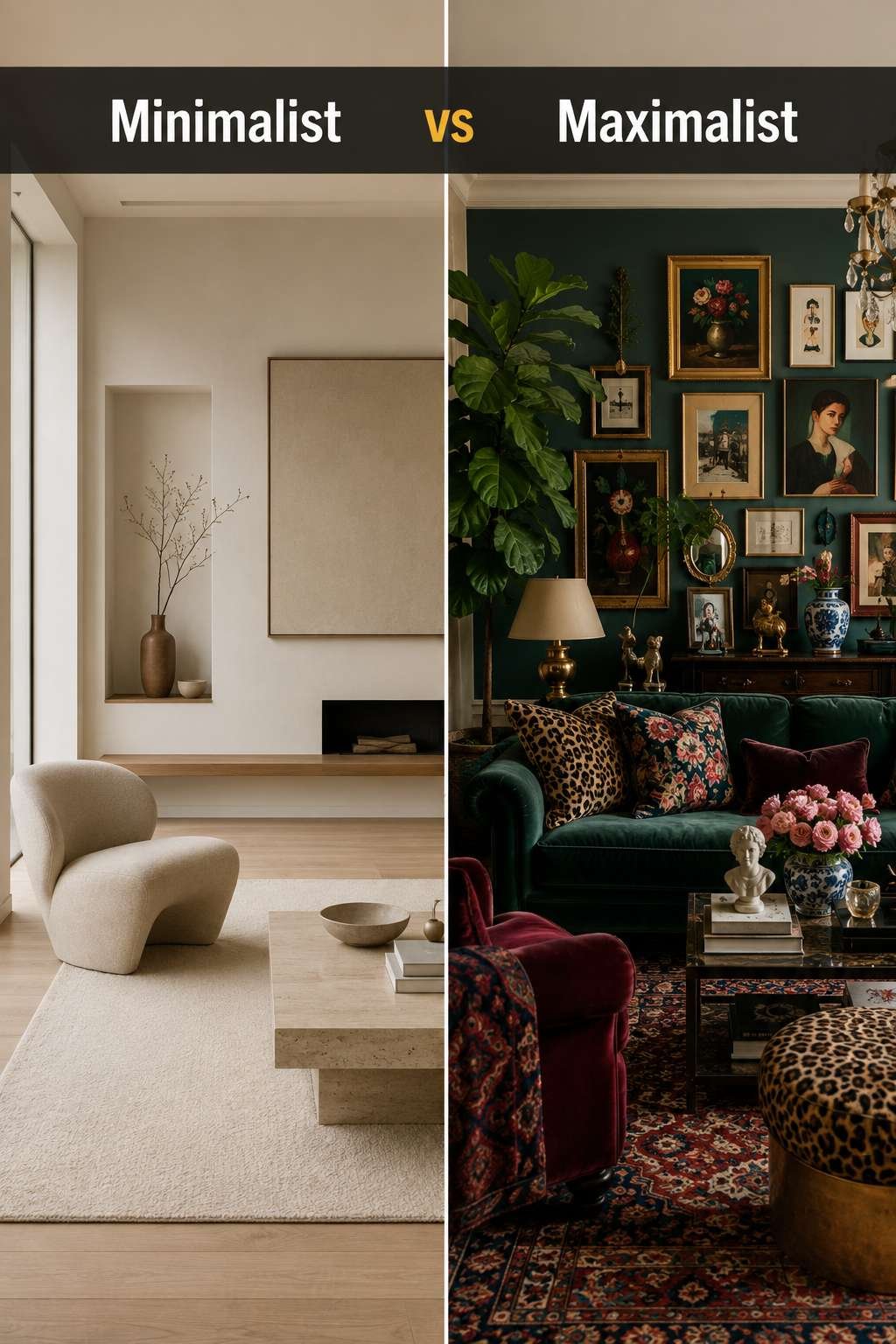
Minimalist vs Maximalist: The Master Comparison Chart
| Criteria | Minimalist | Maximalist |
|---|---|---|
| Cost to Start | $400–$600 | $1,200–$2,000+ |
| Weekly Maintenance | Under 15 min | 30–45 min |
| Ideal Room Size | Compact rooms and studios | Medium to large rooms |
| Design Flexibility Over Time | Easy to update piece by piece | Harder to edit once fully layered |
| Resale / Staging Value | High — appeals to broad range of buyers | Polarizing — can narrow the buyer pool |
| Personality Fit | Calm, low-stimulation preference | Expressive, collector personality |
| Trend Longevity | Steady, rarely feels dated | Cyclical, currently resurging |
What this actually means day to day: minimalist rooms cost less to start and take less time to keep looking good, which is why they’re the safer bet for a first apartment or a home you plan to sell in a few years. Maximalist rooms cost more upfront and take more ongoing care, but they age into something more personal — the layered look gets richer, not staler, as you keep adding pieces you genuinely love. Resale is the one criterion where the gap is widest: neutral, minimalist staging photographs well for nearly any buyer, while a heavily maximalist room asks a buyer to look past your taste to see the bones of the space. Our how to find your home decor style guide covers this in more detail.
Quick Look: Minimalist vs Maximalist at a Glance
Minimalist
Clean lines, a tight neutral palette, and only the pieces that earn their place — built for calm, low-maintenance living.
View on Amazon →Maximalist
Layered pattern, bold color, and collected objects arranged with intention — built for personality and visual richness.
View on Amazon →Deep Dive: Minimalist
Minimalism works best when a home needs to feel bigger, calmer, or easier to maintain than it currently does. It’s the default choice for small footprints, rentals you might leave in a year, and anyone whose stress levels climb in a visually busy room. The 2026 version has moved away from stark, icy white toward warmer neutrals — coffee, mocha, clay, and caramel — paired with natural wood and linen, so “minimalist” no longer means “empty.”
-
Pros
- Lower upfront cost and far less weekly upkeep
- Makes small rooms read larger and calmer Our guide on how to make your room cute walks through this step by step.
- Neutral palette stages well for resale or listing photos
- Easy to refresh one piece at a time without a full redo
-
Cons
- Can feel sterile or impersonal if taken too far
- Fewer places to display sentimental or collected items
- Every remaining piece has to be genuinely good, since there’s nowhere to hide a weak one
Real cost range: roughly $400 to $2,500+ per room, depending mainly on furniture quality and finishes rather than the number of pieces.
Deep Dive: Maximalist
Maximalism works best when a home is permanent, the room is medium-to-large, and the person living in it genuinely enjoys collecting and displaying things. It rewards patience — the best maximalist rooms are built up over months or years, not decorated in a single weekend — and it’s having a real design-world moment in 2026, with “joycore” and curated collected-object looks replacing the more chaotic maximalism of a decade ago. Our guide on how to decorate entrance of home walks through this step by step.
-
Pros
- Room feels personal, warm, and full of story
- Hides minor imperfections and mismatched furniture more easily
- Rewards collecting vintage and sentimental pieces instead of replacing them
- Currently trending upward, with strong 2026 design-industry momentum
-
Cons
- Higher upfront cost and meaningfully more weekly cleaning
- Easy to tip into visual clutter without a clear color or theme plan
- Harder and slower to edit once a room is fully layered
- Can narrow the buyer pool if you’re staging to sell
Real cost range: roughly $1,200 to $6,000+ per room, depending on scale, the number of layers, and whether pieces are new or sourced vintage.
Which Style Wins in Your Room?
Small Studio Apartment
Open floor space matters more than anything else here.
Winner: Minimalist
Budget Renovation / Starter Home
Keep existing furniture, add a few affordable layers.
Winner: Light Maximalist accents on a Minimalist base
Rental-Friendly Space
Nothing permanent, everything has to travel with you.
Winner: Minimalist base with removable Maximalist layers
Luxury / Full Custom Build
Budget and scale exist to support a fully layered look.
Winner: Maximalist
High-Traffic Household (Kids & Pets)
Durability and easy cleanup outrank visual complexity.
Winner: Minimalist
Professional Tips
The designer tie-breaker
If you’re genuinely stuck between the two, start minimalist and add maximalist layers through removable pieces — rugs, throw pillows, art, and objects. It’s far easier to add richness to a calm base than to strip a fully maximalist room back down.
The common regret mistake
The most common regret on the minimalist side is buying cheap “filler” furniture just to have something in the room — with fewer pieces, each one is more visible, so quality matters more, not less. The most common regret on the maximalist side is adding pieces with no unifying color story, which is what tips a room from “curated” into “cluttered.”
The resale-value note
If you expect to sell within the next few years, lean minimalist, at least for the walls and large furniture — you can always add maximalist personality through easily-removed accessories before showings.
The maintenance reality-check
Be honest about your actual cleaning habits before committing to maximalism. Layered textiles, open shelving, and displayed collections all trap dust and need real upkeep — if weekly cleaning already feels like a stretch, a more minimalist room will serve you better long-term.
Shop the Winner
If you’re leaning toward Minimalist, here’s what to get started with
Best Overall
A neutral-toned abstract art print in a slim frame — adds one focal point without competing with the rest of the room.
Best Budget
A matching pair of earth-tone throw pillow covers — an easy way to add warmth without adding visual clutter.
Best Premium
One large-format textured wall piece, like a woven or plaster-style panel, used as a single intentional statement instead of several small ones.
If you’re leaning toward Maximalist, here’s what to get started with
Best Overall
A curated gallery-wall art set with mixed frame styles — an instant way to add layered visual interest to one wall.
Best Budget
A mixed-pattern throw pillow bundle in complementary jewel tones — the fastest, cheapest way to start layering.
Best Premium
An oversized statement art piece or richly textured sculptural object to anchor the room as its focal point.
See our full Best Home Accent Decor guide for the complete shopping breakdown, including sizing and placement advice for both styles.
See Our Full Home Accent Decor Guide →Frequently Asked Questions
What’s the main difference between minimalist and maximalist design?
Minimalist design uses restraint, a limited color palette, and negative space to create a calm room, while maximalist design layers color, pattern, and collected objects to create an expressive, personality-driven room.
Is minimalist or maximalist cheaper to achieve?
Minimalist rooms are usually cheaper to start, typically $400 to $600 per room, because you are buying fewer, simpler pieces. Maximalist rooms usually cost more upfront, often $1,200 or more, since layering requires multiple textiles, art pieces, and objects.
Can you mix minimalist and maximalist styles in one home?
Yes. Many homes use a minimalist base of furniture and wall color, then add maximalist layers through textiles, art, and accessories that can be swapped out without a full redesign.
Which style is better for small apartments?
Minimalist design generally works better in small apartments because open floor space and fewer visual elements make a compact room feel larger, though a restrained, curated version of maximalism can still work in a small space.
Does maximalism make a room feel cluttered?
It can if pieces are added without a plan. Well-executed maximalism is curated around a color story or theme, which reads as intentional and rich rather than cluttered.
Is minimalism boring or cold?
It can feel cold if it is only about removing things. Warm minimalism in 2026 leans on natural wood, tactile textiles, and earthy tones rather than stark white, which keeps the look calm without feeling sterile.
Which style is easier to maintain and clean?
Minimalist rooms are easier to maintain, often under 15 minutes of weekly upkeep, because there are fewer surfaces and objects collecting dust. Maximalist rooms with layered textiles and objects typically need 30 to 45 minutes.
Which style adds more resale value to a home?
Minimalist staging tends to appeal to a broader range of buyers and photographs more neutrally for listings. Maximalist decor can be polarizing to buyers, though it can also make a listing memorable in a crowded market.
How do I know if I’m more minimalist or maximalist?
If you feel calmer in an uncluttered room and dislike visual noise, you likely lean minimalist. If you enjoy collecting, displaying personal items, and mixing pattern and color, you likely lean maximalist.
What is “joycore” and how does it relate to maximalism?
Joycore is a 2026 maximalist trend built around bold colors and playful patterns meant to spark daily happiness. It is a purposeful, curated take on maximalism rather than simply layering more stuff.
Is maximalism just hoarding with better styling?
No. Curated maximalism is intentional, built around a color palette, theme, or collection, and pieces are chosen and arranged deliberately, unlike hoarding, which lacks a design plan.
Can renters do maximalist design without permanent changes?
Yes. Renters can layer rugs, freestanding shelving, patterned throw pillows, removable wallpaper, and framed art without altering walls, which lets them achieve a maximalist look while staying deposit-safe.
What colors work best for minimalist rooms?
Warm neutrals such as sandy beige, warm taupe, soft terracotta, and creamy off-white are currently favored over stark white, paired with natural wood tones.
What colors work best for maximalist rooms?
Deep, moody hues like burgundy, dark green, and chocolate brown are trending for 2026, often combined with a contrasting bright accent such as butter yellow or cornflower blue.
Which style is more pet- and kid-friendly?
Minimalist rooms with durable, easy-clean surfaces and fewer breakable objects are generally more forgiving for households with kids and pets, though maximalist rooms can work with washable textiles and sturdy furniture.
How much does it cost to redecorate a room in each style?
A minimalist refresh typically runs $400 to $600 per room. A fully layered maximalist refresh typically runs $1,200 to $2,000 or more, depending on the number and quality of pieces.
Will maximalism go out of style soon?
Trend surveys show maximalism and eclecticism holding strong for 2026, with designer interest rising rather than fading, though like any trend it will eventually shift as tastes evolve.
Can a minimalist home still feel warm and personal?
Yes. 2026’s version of minimalism favors tactile textures, warm earth tones, and a few meaningful curated objects over stark, empty rooms, which keeps it from feeling impersonal.
What furniture pieces should I invest in for each style?
For minimalist rooms, invest in one well-made statement seat and quality natural-material storage. For maximalist rooms, invest in a strong anchor piece like a patterned sofa or bold rug that the rest of the layers can build around.
Which style do professional designers recommend for first-time homeowners?
Many designers recommend starting with a minimalist base of furniture and wall color, since it is more budget-friendly and adaptable, then layering in maximalist accents over time as taste and budget develop.
The Verdict
If you’re short on time, renting, or planning to sell within a few years — go minimalist. It costs less to start, takes less time to maintain, and stages well for almost any buyer.
If your home is permanent, you genuinely enjoy collecting and displaying objects, and you don’t mind extra weekly upkeep — go maximalist. The 2026 curated, “joycore” version of the style rewards patience with a room that feels unmistakably yours.
For most first-time homeowners furnishing on a real budget, minimalist is the safer default — it’s the version of this decision you can’t really get wrong. Start there, then layer in maximalist accents as your taste, collection, and budget grow.

