


A white kitchen remains one of the most timeless choices in home design, offering a bright, clean canvas that adapts to nearly any style. But without careful planning, an all-white space can quickly feel flat or clinical rather than warm and inviting. The secret lies in layering texture, contrast, and thoughtful details that give the room depth and personality.
From farmhouse charm to sleek modern minimalism, white kitchens can be styled countless ways depending on the materials and accents you choose. This guide covers practical strategies for adding warmth, visual interest, and functionality without sacrificing that crisp, airy feeling white kitchens are known for. Each idea works together to create a space that feels both polished and lived-in.
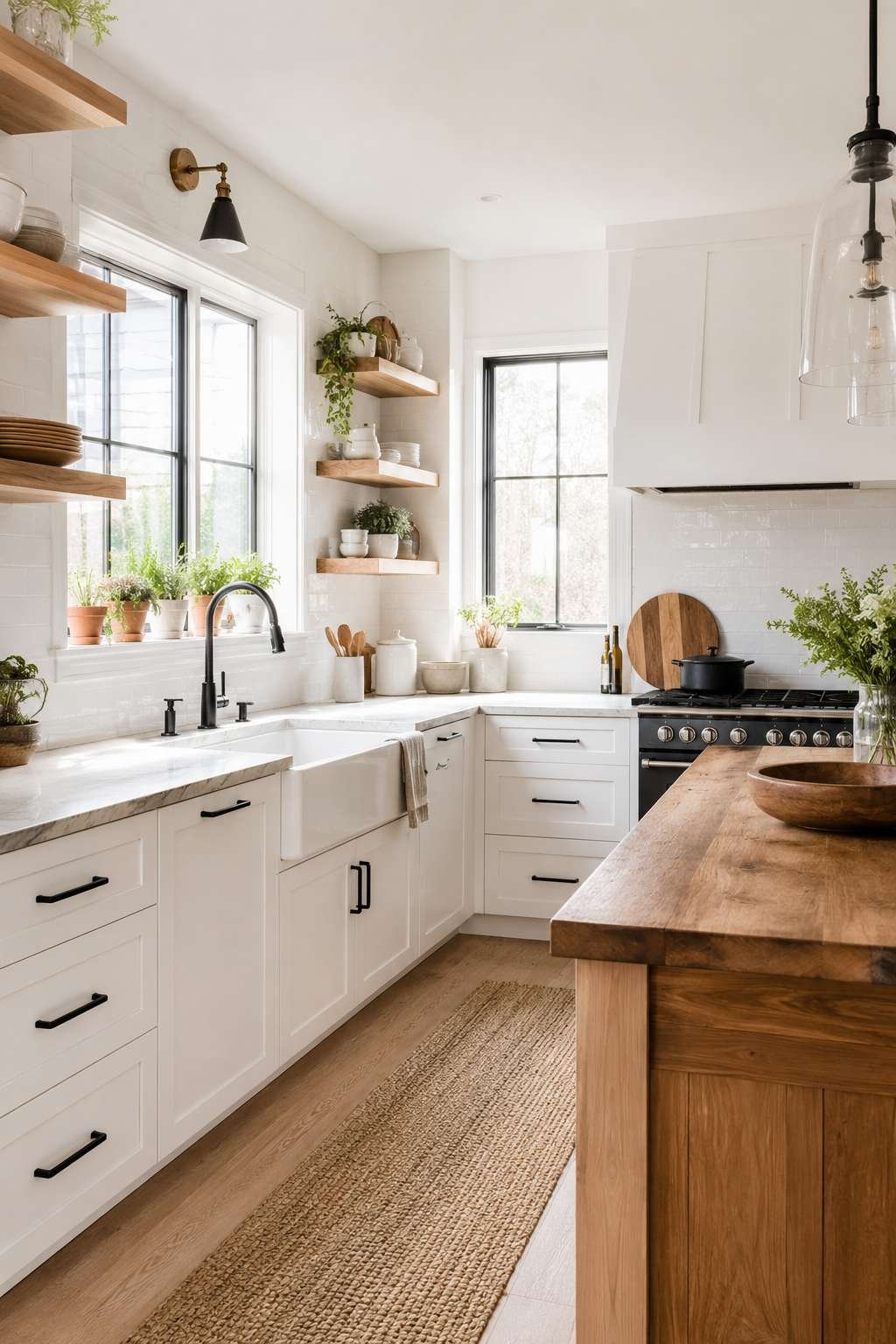
1. Layer Different Shades of White
Using a single flat white throughout the kitchen often reads as sterile rather than sophisticated. Instead, layer multiple whites and off-whites across cabinets, walls, and trim to create subtle depth. A creamy white cabinet paired with a crisp white wall adds dimension without introducing bold color. If you’re also weighing floating shelves vs cabinets, that’s worth deciding early too.
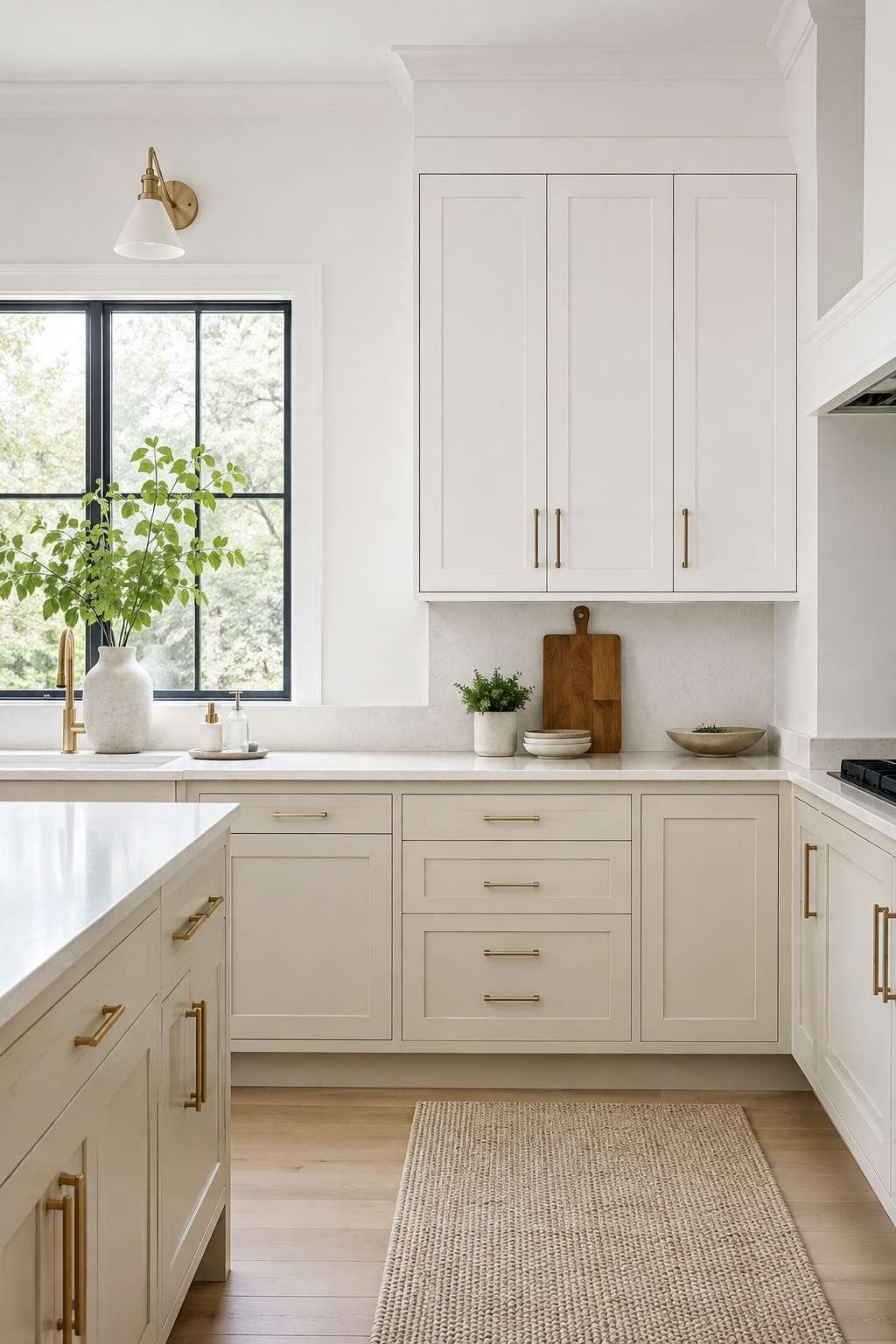
Pay attention to the undertones in each white you select, since mismatched warm and cool tones can clash unexpectedly. Testing swatches side by side under natural light helps confirm they work harmoniously together. This layered approach gives the room a curated, intentional look rather than a flat, one-note finish.
- Test multiple white swatches together before committing
- Match undertones across cabinets, walls, and trim
- Use a slightly warmer white on lower cabinets
- View swatches under natural daylight for accuracy
2. Introduce Warm Wood Accents
Nothing balances the coolness of white quite like natural wood elements. Open shelving in butcher block or reclaimed wood instantly softens an all-white kitchen and adds organic warmth. Wooden bar stools, cutting boards, and a statement dining table all contribute to this grounding effect. See our these open kitchen ideas for more direction in this style.
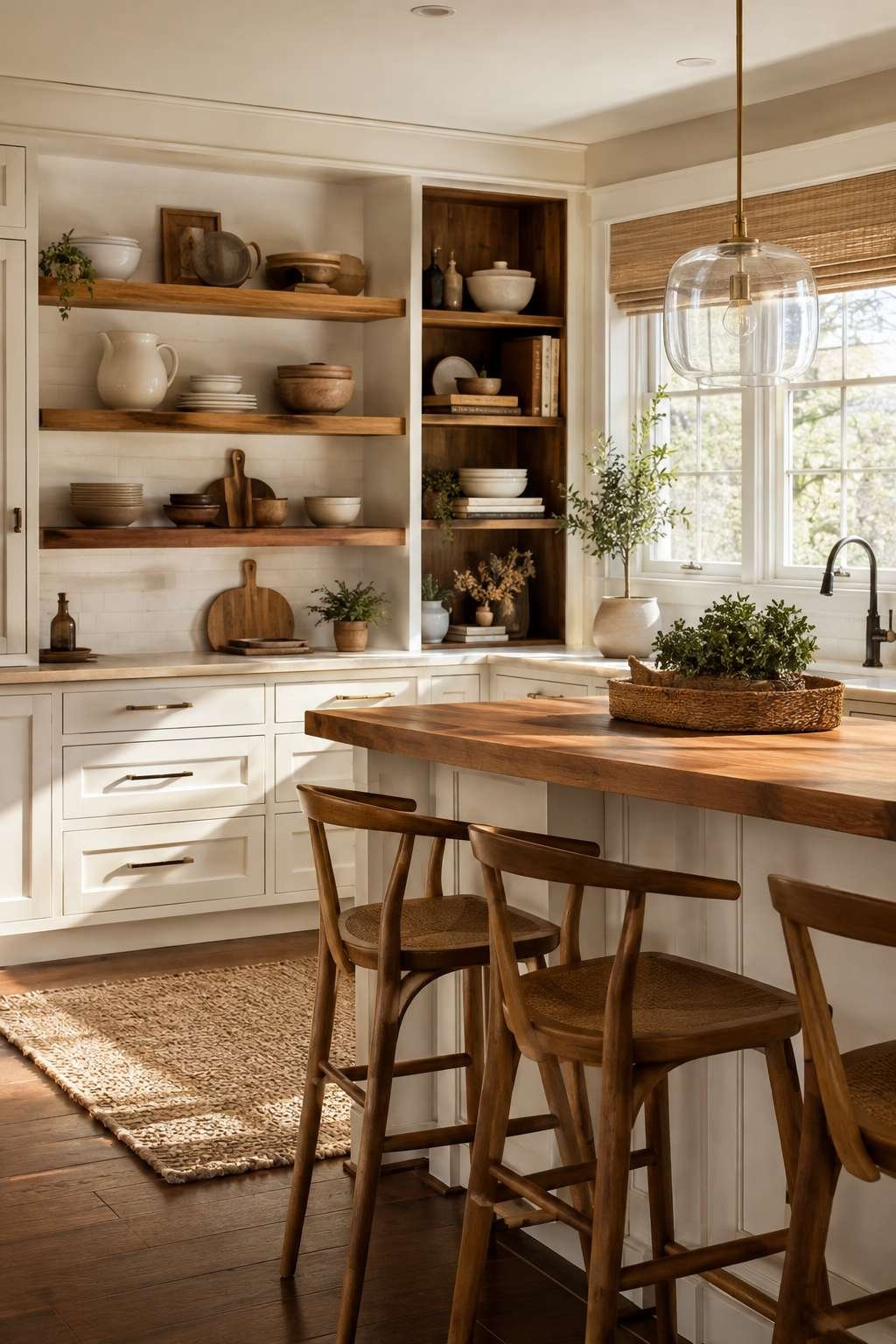
Consider mixing wood tones intentionally rather than matching everything perfectly, since slight variation feels more natural. A honey-toned island paired with darker walnut accents creates visual interest without overwhelming the space. This contrast keeps the kitchen feeling warm, textured, and welcoming.
- Add open wood shelving for organic texture
- Choose wooden bar stools to soften hard edges
- Mix two complementary wood tones for depth
- Use a butcher block island as a focal point. Our the kitchen island ideas has more inspiration along these same lines.
3. Add Black or Brass Hardware Contrast
Crisp white cabinetry becomes far more dynamic with the addition of contrasting hardware. Matte black pulls and knobs create sharp, modern definition against white surfaces. Alternatively, brass or gold hardware introduces a warmer, more traditional feel depending on your desired aesthetic.
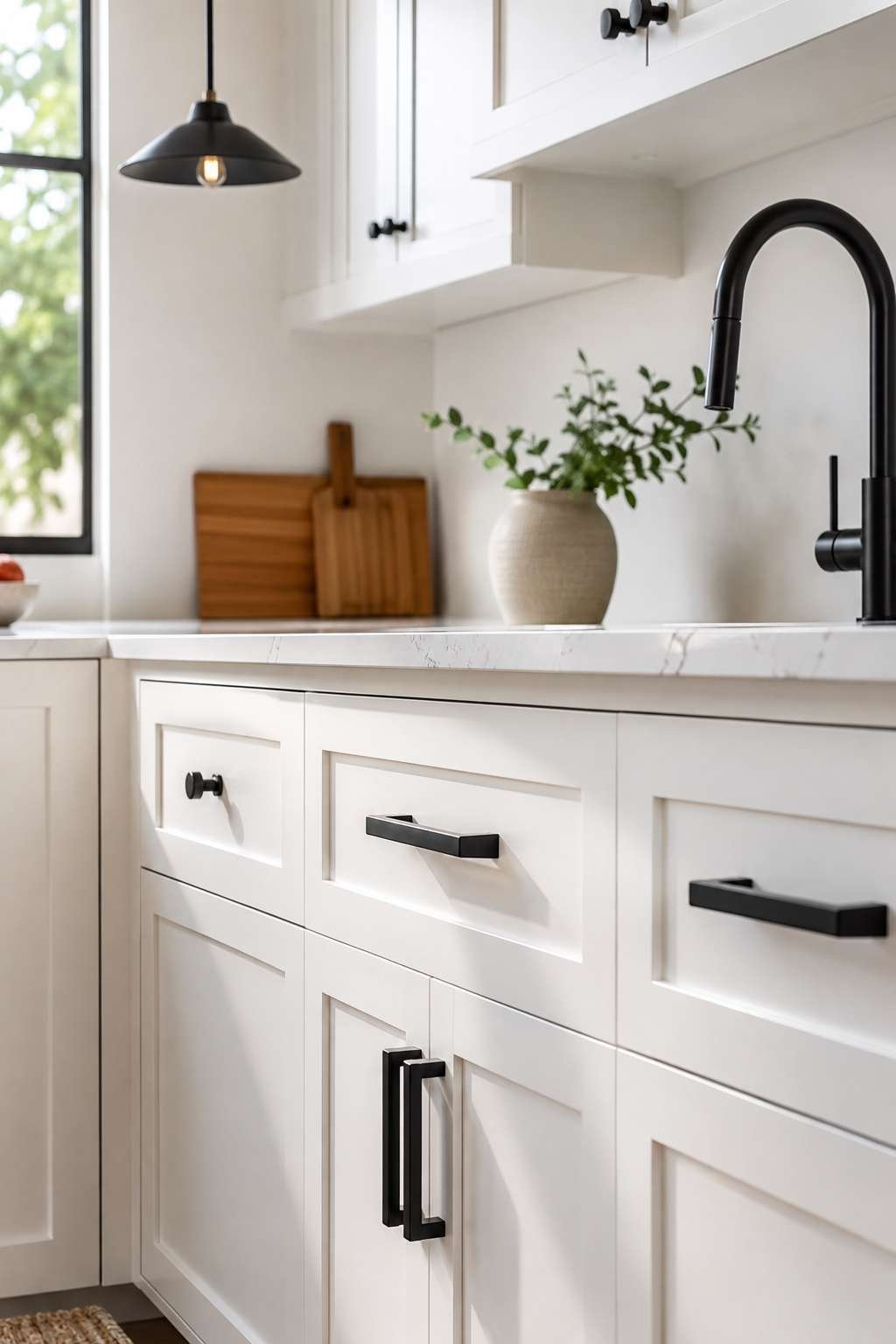
Beyond cabinet hardware, extend this contrast to faucets, lighting fixtures, and cabinet hinges for a cohesive look. Consistency across these small details makes a significant visual difference throughout the entire kitchen. This simple, affordable upgrade transforms a plain white kitchen into a designer-caliber space.
- Choose matte black hardware for modern contrast
- Select brass fixtures for a warmer, classic feel
- Match faucet and lighting finishes to hardware
- Keep hardware style consistent throughout the kitchen
4. Incorporate Natural Textures and Greenery
Texture prevents an all-white kitchen from feeling cold or one-dimensional. Woven baskets, linen tea towels, and a jute runner rug add tactile interest throughout the space. Natural stone countertops with visible veining also introduce subtle pattern without disrupting the overall white palette.
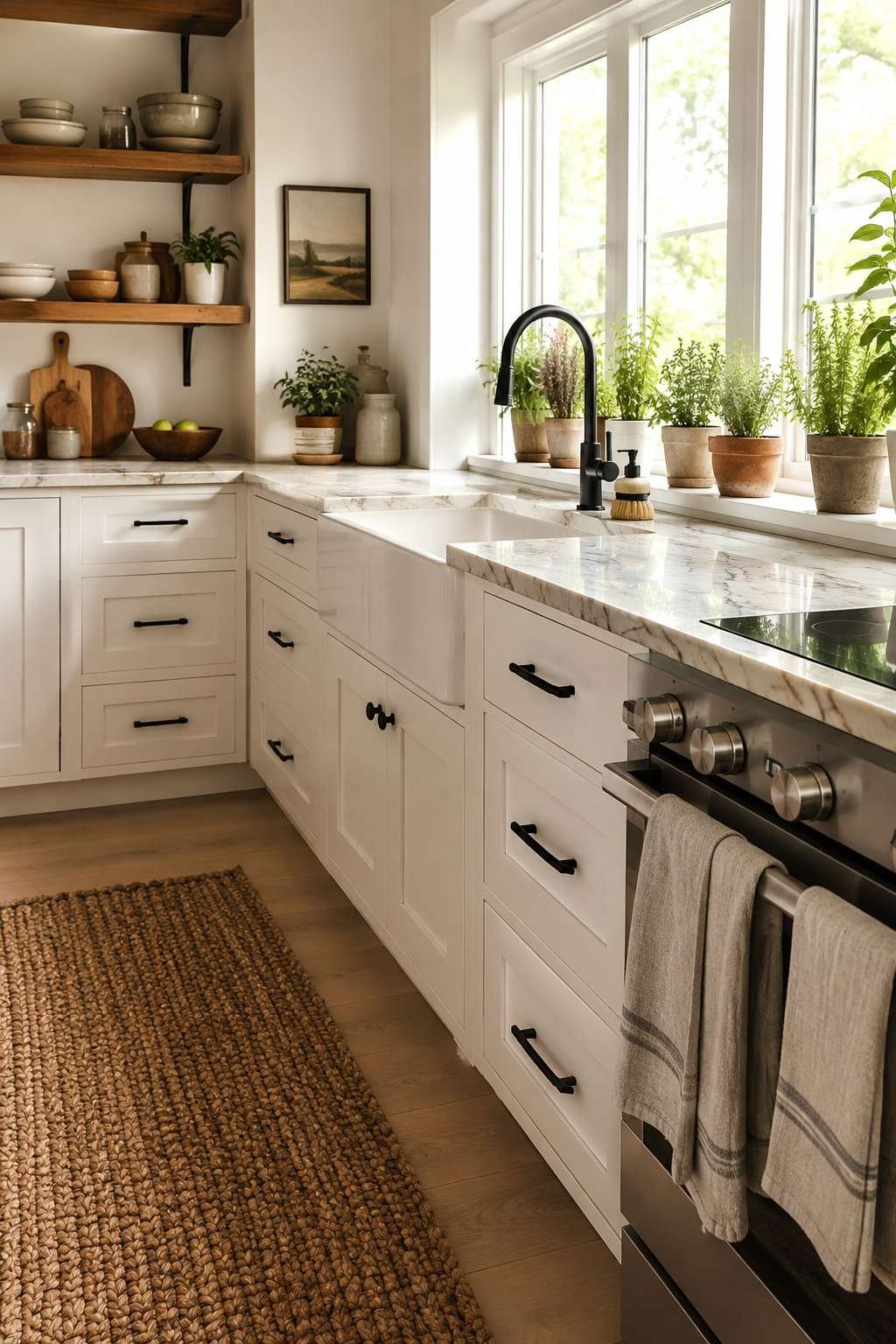
Houseplants and fresh herbs bring life and color into an otherwise neutral kitchen effortlessly. A row of potted herbs on the windowsill or a trailing plant on open shelving softens hard surfaces beautifully. These organic touches make the space feel fresh, inviting, and personal.
- Add a jute or woven rug near the sink
- Choose stone countertops with natural veining
- Place potted herbs on windowsills or shelves
- Use linen textiles for dish towels and curtains
5. Use Color Sparingly Through Accents
A truly successful white kitchen benefits from strategic pops of color rather than staying entirely neutral. A colorful backsplash tile, patterned rug, or set of ceramic bowls introduces personality without overwhelming the space. Choosing just one or two accent colors keeps the look intentional and cohesive.
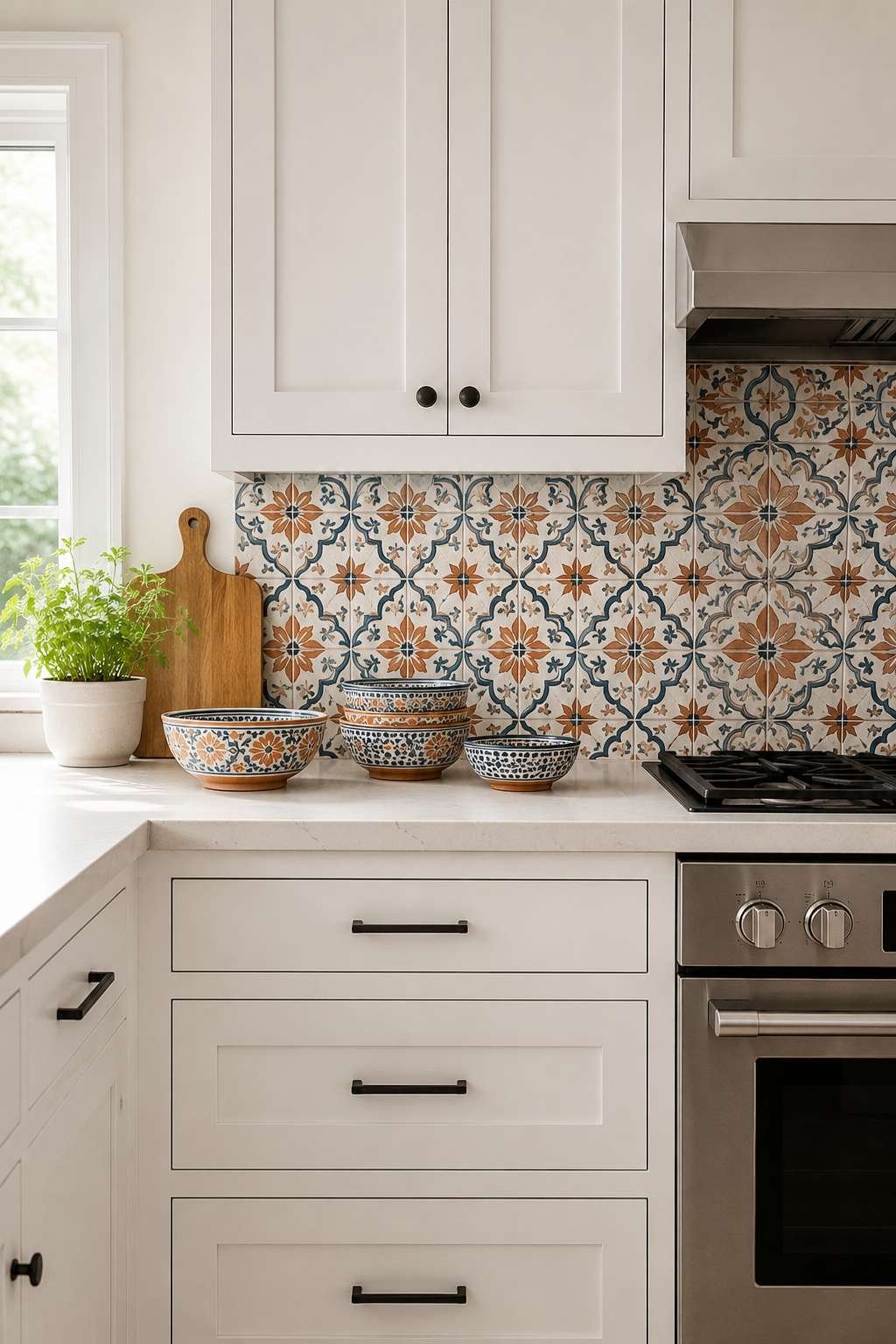
Rotating smaller accents like dish towels, flowers, or artwork allows you to refresh the kitchen’s mood seasonally. This flexibility means your white kitchen can feel completely different with minimal effort or expense. Keeping the base neutral ensures these colorful touches always have room to shine.
- Choose one or two accent colors for cohesion
- Add color through a patterned backsplash or rug
- Rotate seasonal accents like flowers or textiles
- Keep larger surfaces neutral to let accents pop
Styling a white kitchen successfully comes down to balancing contrast, texture, and warmth within a bright, clean foundation. Layering different whites, introducing natural wood, and adding thoughtful hardware all work together to prevent the space from feeling sterile. Small, intentional touches make the biggest difference over time.
Don’t be afraid to experiment with textures and accents until the space feels genuinely yours. A well-styled white kitchen strikes the perfect balance between timeless and personal, proving that neutral doesn’t have to mean boring.

