


Choosing between a fire pit and an outdoor fireplace usually comes down to one real question: do you want a flexible, budget-friendly flame you can set up this weekend, or a permanent architectural feature built to anchor your backyard for decades? A fire pit tends to suit smaller patios, rentals, and tighter budgets, while an outdoor fireplace suits larger yards where you’re building a lasting outdoor living space. Below, we break down the real cost, heat output, upkeep, and resale differences so you can pick with confidence.
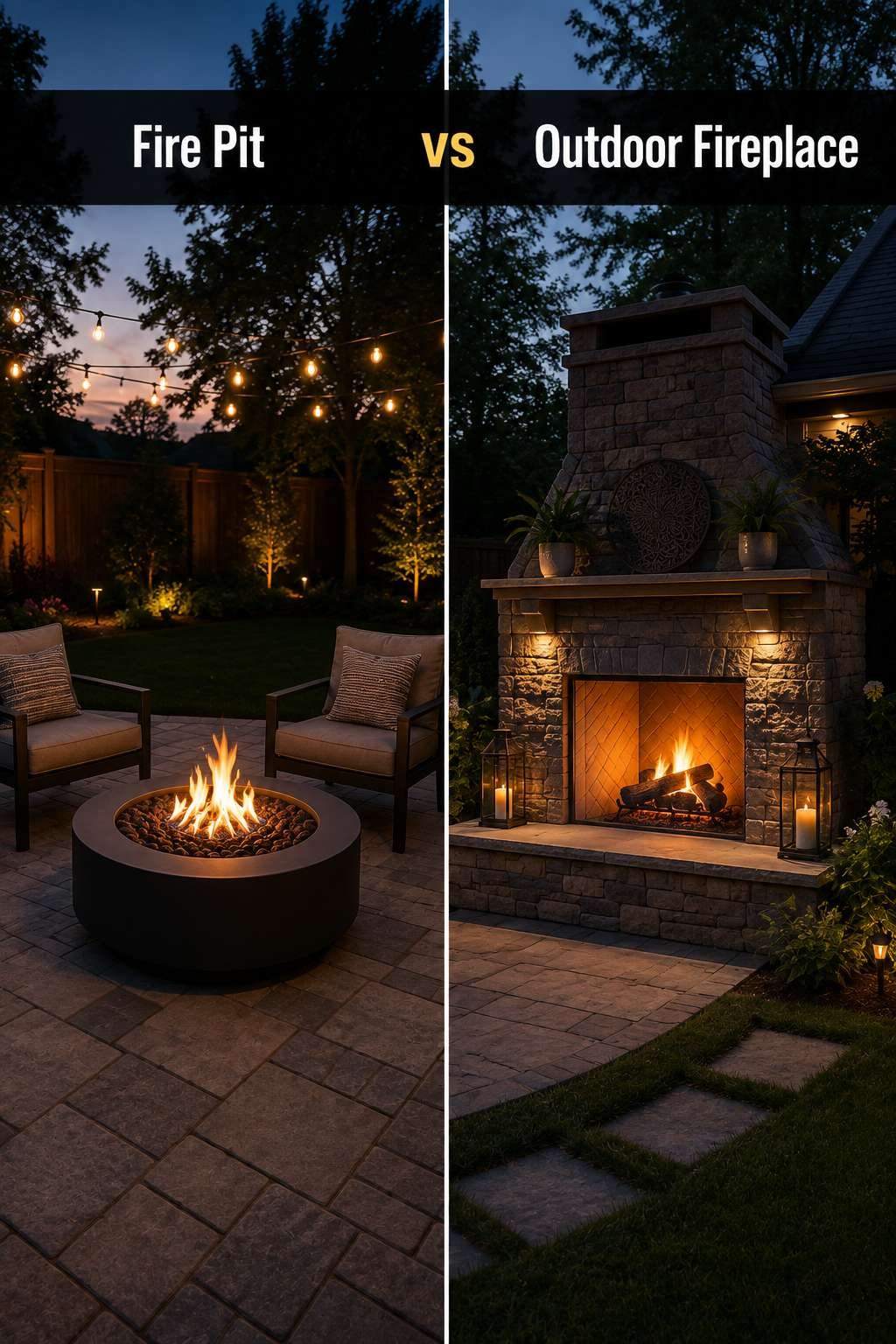
Fire Pit vs Outdoor Fireplace: The Master Comparison
| Criteria | Fire Pit | Outdoor Fireplace |
|---|---|---|
| Average Installed Cost | $100–$800 for a portable steel or cast-iron pit; $500–$2,500 for a built-in stone version | $1,500–$4,000 for a prefab masonry kit; $3,000–$8,000+ for a fully custom stone build |
| Install Difficulty | DIY-friendly — most portable models are ready same-day, built-in versions take a weekend | Usually needs a pro — footing, gas or electrical lines, and masonry can take 1 to 3 weeks |
| Heat Output & Radius | Warms a 3 to 6 foot radius in every direction around the ring | Throws more concentrated heat 6 to 10 feet out, but only in one direction |
| Permitting & HOA | Rarely needs a permit, though some cities set distance-from-structure rules | Often requires a building permit and sometimes HOA design approval first |
| Maintenance | Low — dump ash or swap propane tanks, wipe down between uses | Higher — chimney/flue checks, occasional re-pointing, gas line servicing if applicable |
| Resale / Curb Appeal Value | Modest — a nice bonus feature, but rarely changes a buyer’s offer | Meaningful — reads as a permanent hardscape upgrade, like an outdoor kitchen |
| Lifespan | 10 to 20 years for steel or cast iron with a cover, less if left uncovered | 25+ years for a masonry build with basic upkeep |
In plain terms: a fire pit is the lower-cost, lower-commitment choice that still gets the job done for most backyard hangouts, while an outdoor fireplace is a bigger investment that pays off in heat throw, wind resistance, and how the space feels once it’s built. If your budget or timeline is tight, that alone usually settles it in favor of the fire pit — the fireplace only wins once you’re already planning a larger hardscape project. See our fireplace decor ideas for more direction in this style.
Quick Look: Fire Pit vs Outdoor Fireplace at a Glance
Fire Pit
A portable, budget-friendly flame you can set up this weekend and take with you if you move.
View on Amazon →Outdoor Fireplace
A permanent, architectural fire feature built to anchor your backyard for decades.
View on Amazon →Deep Dive: Fire Pit
A fire pit is the right call when flexibility and cost matter more than making a permanent architectural statement. It works for renters, small yards, and anyone who wants a fire feature running by the weekend instead of after a multi-week build. Our small patio ideas has more inspiration along these same lines.
Pros
- Low upfront cost, often under $500 installed
- DIY-friendly — no permit or contractor needed in most cases
- Portable models move with you if you relocate
- Fits small patios and tight backyard spaces
- Wide range of styles and price points to choose from
Cons
- Less dramatic heat throw than a fireplace Our modern fireplace ideas has more inspiration along these same lines.
- Heat radiates in every direction, wasting warmth outward
- Rarely moves the needle on home resale value
- Portable models can tip, rust, or dent faster over time
- Open flame needs closer supervision around kids and pets
Real cost range: $100–$2,500 installed, depending on whether you go portable or built-in.
Deep Dive: Outdoor Fireplace
An outdoor fireplace is the right call when you’re already investing in a larger backyard build and want a permanent focal point that reads as a real home upgrade, not just a seasonal accessory.
Pros
- Strong visual focal point and curb appeal
- More likely to add real resale value
- Directional heat throws further toward seating
- Contained flame with a chimney feels safer for groups
- Handles wind far better than an open fire pit
Cons
- High upfront cost, often into the thousands
- Longer install timeline, sometimes weeks
- Permits or HOA approval are often required
- Fixed location — can’t take it with you if you move
- Ongoing chimney and masonry maintenance over time
Real cost range: $1,500–$8,000+ installed, depending on prefab kit versus fully custom masonry.
Which One Wins for Your Yard? Real Scenarios
Small Patio
Tight square footage means every foot counts, and a compact or tabletop fire pit fits without crowding seating.
Winner: Fire PitBudget Backyard Refresh
When the goal is the most impact for the least spend, a simple fire pit delivers ambiance without a big line-item cost.
Winner: Fire PitLuxury Backyard Build
A larger, fully hardscaped yard is exactly where a built-in fireplace earns its cost as the anchor feature.
Winner: Outdoor FireplaceRental-Friendly Yard
A portable fire pit needs no permanent structure, so it can leave with you when the lease ends.
Winner: Fire PitHigh-Traffic Family Backyard
Durable masonry and a contained flame hold up better to daily family use than lighter fire pit materials.
Winner: Outdoor FireplaceProfessional Tips
Seating-Circle Logic
Around a fire pit, keep chairs 3 to 4 feet back from the edge so guests get warmth without the heat becoming uncomfortable. A fireplace only throws heat forward, so plan one clear “front row” of seating rather than a full circle.
Heat-Throw Radius Reality
Don’t oversize a fire pit for a small patio — a large ring in a tight space just pushes excess heat toward the fence instead of your seating.
Resale-Value Note
An outdoor fireplace is more likely to show up as a hardscape improvement on a home appraisal. A fire pit is usually treated as a removable accessory, not a structural upgrade.
Maintenance Reality Check
A gas fireplace needs an annual line and connection inspection. A wood-burning fire pit needs regular ash removal, since trapped moisture under ash speeds up rust on steel bowls.
Permit/HOA Reminder
Check your local fire code and HOA guidelines before pouring any footing for a masonry fireplace — retrofitting a permit after construction is far more expensive than pulling one first.
Shop the Winner
If you’re leaning toward a Fire Pit, here’s what to get started with
Best Overall
A mid-size steel fire pit with a spark screen and matching cover, sized for a standard 4 to 6 person patio setup.
Best Budget
A compact portable pit or tabletop propane model, ideal for small patios, balconies, or rentals.
Best Premium
A built-in gas fire pit kit with a stone-look surround for a more polished, permanent-feeling look without full masonry work.
If you’re leaning toward an Outdoor Fireplace, here’s what to get started with
Best Overall
A prefab masonry fireplace kit that balances real stone construction with a shorter, more predictable install timeline.
Best Budget
A freestanding steel outdoor fireplace or chimenea-style unit that mimics the contained, directional feel without a full build.
Best Premium
A custom stone fireplace package with a raised hearth and mantel, built to match a larger luxury hardscape project.
For full product picks and links, see our full Best Fire Pits guide.
Shop Fire Pits & Accessories →Frequently Asked Questions
Is a fire pit or outdoor fireplace cheaper to install?
A fire pit is almost always cheaper. Portable models start around $100, and even a built-in fire pit typically stays under $2,500. An outdoor fireplace usually starts at $1,500 for a prefab kit and can run $8,000 or more for a full custom masonry build.
Can I convert a fire pit into an outdoor fireplace later?
Not directly. A fireplace is a separate structure with a back wall, footing, and often a chimney, so you’d be building a new feature rather than upgrading the fire pit. Many homeowners keep the fire pit and add a fireplace elsewhere in the yard instead of replacing it.
Do I need a permit for a fire pit?
Usually not, but some cities and HOAs set minimum distance-from-structure rules or restrict open wood burning. Always check your local fire code before installing, especially for a built-in version.
Do I need a permit for an outdoor fireplace?
Often, yes. Because a fireplace involves a permanent footing and sometimes gas or electrical lines, most municipalities require a building permit, and some HOAs require design approval before construction starts.
Which one throws more heat?
An outdoor fireplace throws heat further in one direction, often 6 to 10 feet out, because the back and side walls reflect it forward. A fire pit warms a smaller 3 to 6 foot radius in every direction around it.
Which one is safer for a yard with kids or pets?
An outdoor fireplace is generally considered safer because the flame is contained on three sides. A fire pit is open on all sides, so it needs a spark screen and closer supervision around young children or pets.
Can I install a fire pit myself?
Yes, most portable fire pits are ready to use out of the box, and even a built-in gravel-and-paver fire pit is a realistic weekend DIY project for most homeowners.
Can I install an outdoor fireplace myself?
It’s possible with a prefab kit, but most full masonry builds involve a poured footing and sometimes gas lines, so most homeowners hire a mason or hardscape contractor.
Which one adds more resale value to my home?
An outdoor fireplace typically adds more resale value because it reads as a permanent hardscape improvement, similar to an outdoor kitchen. A fire pit is a nice bonus feature but rarely changes a buyer’s offer.
Is a gas fire pit better than a wood-burning one?
Gas fire pits are more convenient, with instant on/off and no ash cleanup, while wood-burning versions give a more authentic crackle and scent but need more maintenance and often more clearance.
Is a gas outdoor fireplace better than a wood-burning one?
Gas is easier to maintain and often allowed in areas with wood-burning restrictions, while wood-burning fireplaces need chimney cleaning but give a more traditional experience. Both are common; the right choice depends on local codes and how often you’ll use it.
How much space do I need for a fire pit?
Plan for roughly a 10 to 12 foot diameter circle, including the pit itself and seating set back a few feet for comfortable heat and safety clearance.
How much space do I need for an outdoor fireplace?
A built-in fireplace structure alone typically needs at least 4 to 6 feet of width, plus additional depth in front for seating, so most builds work best with at least a 12 by 12 foot patio area.
Which one is better for small patios?
A fire pit, especially a compact or tabletop model, fits small patios far more comfortably than a built-in fireplace, which needs more depth and a dedicated footing.
Which one is better for large backyards?
An outdoor fireplace tends to suit larger backyards better, since it acts as a permanent architectural anchor that can organize a bigger seating and entertaining area around it.
How long does an outdoor fireplace build take?
A prefab kit can sometimes be installed in a few days, while a fully custom masonry fireplace with footing, gas lines, and finish work often takes one to three weeks.
What’s the maintenance difference between the two?
A fire pit mainly needs ash removal or a propane tank swap and a cover between uses. An outdoor fireplace needs periodic chimney or flue checks, occasional re-pointing of masonry joints, and gas line servicing if it’s gas-powered.
Can I take a fire pit with me if I move?
A portable fire pit, yes, since it’s freestanding. A built-in fire pit or an outdoor fireplace stays with the house, since both involve permanent construction.
Which one works better in windy climates?
An outdoor fireplace generally performs better in wind because its back and side walls block gusts from scattering sparks or blowing out the flame, which is a common frustration with open fire pits.
Which one should I choose if I want to entertain large groups?
A larger built-in fire pit with surrounding bench seating usually works best for big groups since it allows a full circle of seating, while a fireplace concentrates people along one front-facing row.
Final Verdict
Choose a fire pit if you’re working with a smaller patio, a tighter budget, a rental, or simply want a fire feature running this weekend instead of after a multi-week build. It’s the lower-risk, lower-cost choice, and portable models move with you if your address changes.
Choose an outdoor fireplace if you’re already investing in a larger backyard build and want a permanent focal point that holds up in wind, throws heat further toward seating, and adds real resale value to the home. It costs more and takes longer, but it’s built to last decades, not seasons.
If you’re still unsure, let your yard size decide: small or flexible spaces lean fire pit, larger permanent builds lean fireplace.

