If you’re staring down an empty bedroom wall and trying to decide between a built-in closet and a freestanding wardrobe, the choice usually comes down to three things: how long you’re staying, how much you’re willing to spend, and how much floor space you actually have. A closet wins on capacity and resale value if you own your home and plan to stay put. A wardrobe wins on cost, flexibility, and portability if you’re renting, moving soon, or just need a fast fix for a small room. Below, we break down the real costs, the honest trade-offs, and which one wins for your specific situation.
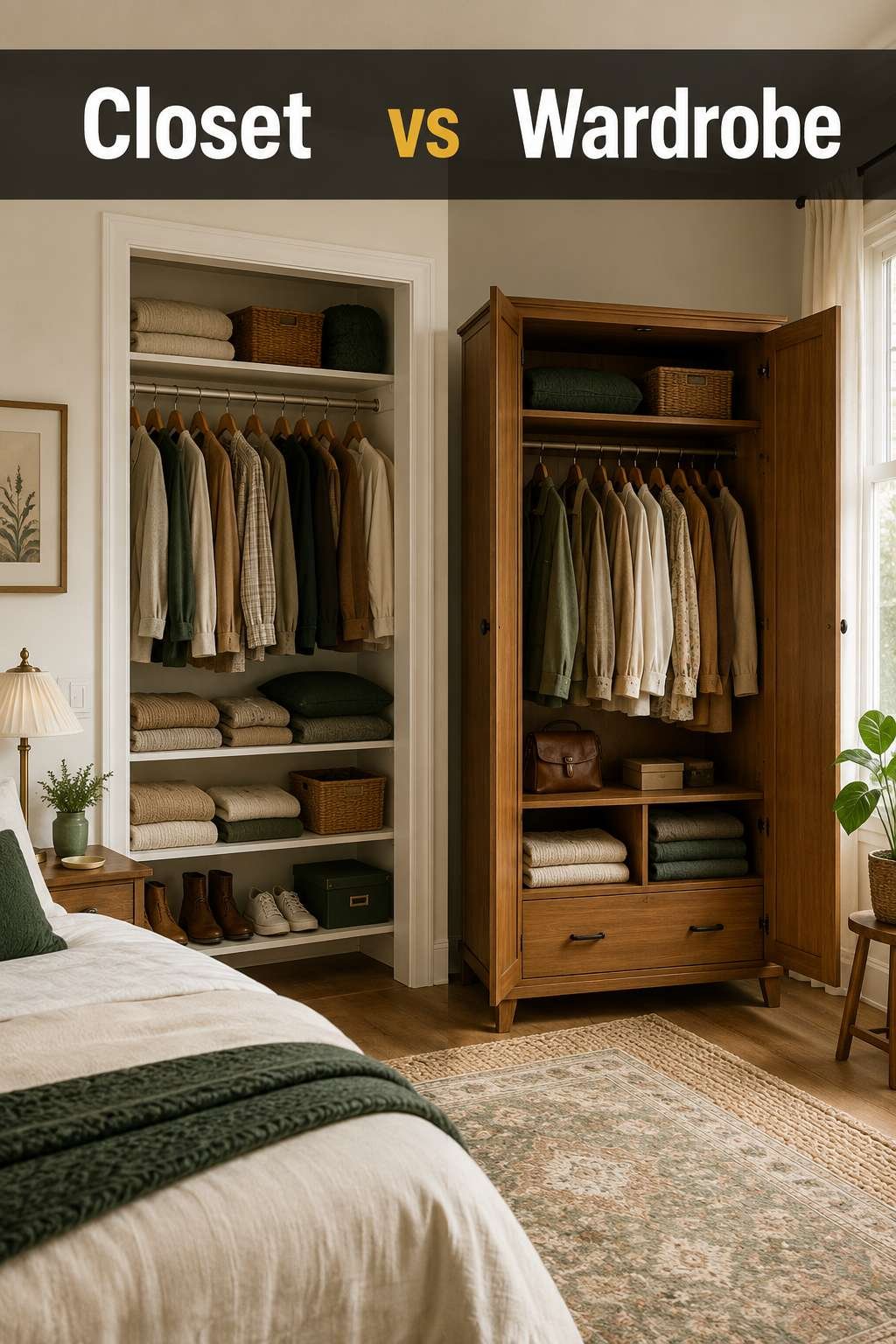
Closet vs Wardrobe: The Master Comparison Chart
| Criteria | Closet | Wardrobe |
|---|---|---|
| Cost | $1,500–$10,000+ installed, depending on size and finish | $300–$1,200, from flat-pack to solid-wood premium |
| Installation | Contractor or carpenter work, typically 1–3 days | Self-assembly in a few hours, no contractor needed |
| Storage Capacity | High — customizable shelving, drawers, and hanging zones | Moderate — fixed layout limited by cabinet size |
| Customization | Fully customizable to the room and your storage habits | Limited to the manufacturer’s fixed configuration |
| Resale Value | Adds real value — a genuine selling point in listings | Neutral — moves with you, doesn’t affect listing value |
| Space Needs | Needs a dedicated nook, recess, or wall to build into | Needs open floor space against a wall, plus door clearance |
| Mobility | None — permanent, stays with the home if you move | High — can be disassembled and moved to a new home |
| Maintenance | Low — occasional dusting and shelf checks | Low to moderate — hinges and casters may loosen over time |
What this actually means in a real bedroom: a closet is the better long-term investment if you own the home, because the upfront cost gets paid back in daily convenience and, eventually, resale value. A wardrobe is the better short-term decision if you’re renting, still furnishing a first place, or simply don’t want to commit to a permanent structure yet. Neither option is objectively “better” — they’re built for different timelines.
Quick Look: Closet vs Wardrobe at a Glance
Closet
A built-in storage space that’s part of your room’s architecture — maximum capacity and resale value, but permanent. Our 29 clever bedroom storage ideas has more inspiration along these same lines.
View on Amazon →Wardrobe
A freestanding cabinet you can assemble, move, and take with you — lower cost and full portability, less capacity.
View on Amazon →Deep Dive: Closet
A built-in closet makes the most sense for homeowners who plan to stay put for several years and want maximum, customizable storage. Best-fit scenarios: primary bedrooms with an existing nook or recess, family homes where shared closet space needs real organization, and any home you’re actively trying to increase the resale value of. The real cost range runs from about $1,500 for a basic reach-in upgrade to $10,000 or more for a fully custom walk-in with an island and premium finishes. Our walk in closet vs reach in closet comparison covers that decision in more depth.
Pros
- Maximizes storage capacity with custom shelving, drawers, and hanging zones
- Adds genuine resale value and shows well in listings
- Built to the exact dimensions of your room, so no wasted space
- No furniture to move or reassemble — it’s part of the house
Cons
- High upfront cost, especially for a full custom build
- Permanent — you can’t take it with you if you move
- Usually requires a contractor and 1–3 days of disruption
- Rarely approved in rental units without landlord sign-off
Deep Dive: Wardrobe
A freestanding wardrobe makes the most sense for renters, frequent movers, and anyone furnishing a room on a tighter timeline or budget. Best-fit scenarios: rental apartments, studio apartments where the wardrobe can double as a room divider, guest rooms, and any space without a natural closet recess to build into. The real cost range runs from about $300 for a solid flat-pack option to $1,200 or more for a premium solid-wood piece.
Pros
- Lower upfront cost than a built-in closet in almost every case
- Fully portable — disassemble and take it to your next home
- No contractor, permit, or landlord approval typically required
- Can double as a room divider or decorative furniture piece
Cons
- Less total storage capacity than a comparable built-in closet
- Fixed configuration — you’re limited to the manufacturer’s layout
- Budget models can loosen at the joints with years of heavy use
- Takes up open floor space that a recessed closet wouldn’t need
Real Room Examples: Which One Wins Where
Small Bedroom
Tight footprint, no existing recess to build into.
Winner: Wardrobe
Rental Apartment
No structural changes allowed without landlord approval.
Winner: Wardrobe
Nursery
Needs low, adjustable storage that grows with the child.
Winner: Small Built-In Closet
Studio Apartment
One open room where storage can double as a divider.
Winner: Wardrobe
Primary Suite / Luxury Build
Ample square footage and a long-term ownership timeline.
Winner: Custom Walk-In Closet
Professional Tips
Designer tie-breaker: if you’re genuinely torn, ask yourself one question — will you still be in this home in five years? If yes, a closet almost always pays for itself in convenience and resale. If you’re not sure, a wardrobe is the lower-regret choice.
Common regret mistake: homeowners who go with the cheapest flat-pack wardrobe for a primary bedroom often replace it within two to three years once the hinges and drawer glides wear out — spending slightly more upfront on a mid-range wardrobe usually costs less over time.
Resale-value note: a converted closet-to-office or closet-to-storage-nook can actually hurt resale in family-oriented markets, since buyers expect bedrooms to have real hanging storage — think twice before repurposing one.
Maintenance reality-check: in humid climates or basements, both options benefit from a dehumidifier or moisture-absorbing packs nearby — untreated wood shelving and wardrobe panels can warp or swell over a few humid seasons.
Shop the Winner
If you’re leaning toward a closet, here’s what to get started with:
Best Overall
A modular wire-and-shelf closet system that adapts to reach-in or walk-in spaces without a full renovation.
Best Budget
A basic adjustable shelving and rod kit that upgrades a bare closet rod-and-shelf setup in an afternoon.
Best Premium
A solid-wood, fully custom drawer-and-shelving system built to your closet’s exact dimensions.
If you’re leaning toward a wardrobe, here’s what to get started with:
Best Overall
A mid-size two-door wardrobe with a mix of hanging space, shelves, and a drawer for everyday essentials.
Best Budget
A compact flat-pack wardrobe that assembles in under two hours and fits most standard bedroom walls.
Best Premium
A solid-wood wardrobe with soft-close hinges and a full-length mirror panel built into one door.
Frequently Asked Questions
What’s the main difference between a closet and a wardrobe?
A closet is a built-in storage space that’s part of the room’s architecture, while a wardrobe is a freestanding piece of furniture you can move or take with you. That single difference drives almost every other trade-off between the two.
Is a wardrobe cheaper than a closet?
Usually, yes. A quality freestanding wardrobe typically runs $300 to $1,200, while a built-in closet with professional installation runs $1,500 to $10,000 or more depending on materials and customization.
Can I install a closet in a rental apartment?
Usually not without written landlord approval, since a built-in closet is a permanent structural change. A wardrobe is almost always the safer, deposit-friendly choice for renters.
Does a built-in closet increase home value?
Yes, generally. Built-in storage is a genuine selling point in listings and appraisals, while a wardrobe is furniture that leaves with you and has no direct impact on resale value.
How much does a custom closet cost?
A basic reach-in closet upgrade starts around $1,500, while a fully custom walk-in system with an island and premium finishes can run $8,000 to $10,000 or more.
How much does a good wardrobe cost?
A solid, well-built wardrobe typically costs $300 to $1,200. Budget flat-pack options start lower, while designer or solid-wood pieces can run higher.
Which is better for a small bedroom, a closet or a wardrobe?
A slim wardrobe usually wins in a small bedroom because it can be sized exactly to an awkward wall and doesn’t require sacrificing a nook to construction. A closet only wins if the room already has a natural recess to build into. See our small walk in closet ideas for more direction in this style.
Can a wardrobe replace a closet completely?
For most households, yes. A well-chosen wardrobe with interior shelving and drawers can cover the same daily storage needs as a modest reach-in closet.
Do wardrobes fall apart easily?
Budget flat-pack wardrobes can loosen at the joints over years of use, especially with heavy daily use. A mid-range or solid-wood wardrobe with real hardware holds up comparably to a closet system.
How long does closet installation take?
A simple reach-in closet update can be done in a day, while a full custom walk-in closet build typically takes one to three days depending on complexity and whether electrical or carpentry work is involved.
Can I take a wardrobe with me when I move?
Yes, that’s one of its biggest advantages. Most wardrobes can be disassembled and reassembled at a new address, something a built-in closet can never do.
What’s better for a nursery, a closet or wardrobe?
A small built-in closet with adjustable, lowered shelving tends to work best for a nursery since it can grow with the child, but a compact wardrobe is a fine substitute in a room too small for a closet.
Do wardrobes need assembly?
Most retail wardrobes ship flat-packed and need a few hours of assembly. Premium solid-wood wardrobes sometimes arrive pre-built or are assembled by a delivery team.
Is a walk-in closet worth the extra cost?
If you’re staying in the home long-term and have the square footage, yes — it adds real daily convenience and resale value. If you might move within a few years, the return on that investment is much less certain.
How much space does a wardrobe need?
Most single wardrobes need about 20 to 24 inches of depth and 30 to 70 inches of width against a wall, plus clearance for the doors to swing or slide open.
Are built-in closets hard to maintain?
No, maintenance is generally low — occasional dusting and shelf checks. The bigger maintenance concern is humidity control in non-climate-controlled spaces, which can warp wood shelving over time.
Can I customize a wardrobe like a closet?
Only partially. Some modular wardrobe systems let you rearrange shelves and drawers, but you’re still working within the manufacturer’s fixed outer frame, unlike a closet that’s built to the room.
What’s the best storage option for a studio apartment?
A wardrobe is usually the better fit for a studio, since it can double as a visual room divider between the sleeping and living areas without any construction.
Do landlords allow wardrobe installation without approval?
In almost every case, yes, since a wardrobe is freestanding furniture rather than a structural change. Always check your lease for any furniture-related restrictions, but this is rarely an issue.
Which option is better long-term, closet or wardrobe?
For a home you own and plan to stay in, a built-in closet wins on value, capacity, and resale. For a rental or a home you expect to leave within a few years, a wardrobe wins on cost, flexibility, and portability.
The Verdict
Choose a closet if: you own your home, plan to stay for several years, and have a wall or nook you can dedicate to it. It costs more upfront but pays back in daily capacity and resale value.
Choose a wardrobe if: you’re renting, moving within a few years, furnishing a studio, or simply don’t have a recess to build into. It’s the lower-cost, lower-regret choice for anyone whose living situation isn’t permanent yet.
There’s no universal winner here — but for your specific timeline and budget, one of these two answers is almost certainly correct.