


Standing in the flooring aisle trying to decide between ceramic tile and vinyl flooring usually comes down to one real question: are you optimizing for long-term durability and resale value, or for upfront cost and ease of installation? Ceramic tile tends to suit homeowners planning to stay put, especially in bathrooms and kitchens where its water resistance and premium look pay off over decades.
Vinyl flooring tends to suit renters, budget renovators, and anyone who wants a warmer, more forgiving floor they can install themselves in a weekend. If you’re short on time, here’s the quick version: tile wins on longevity and resale, vinyl wins on cost, comfort, and speed — the rest of this guide breaks down exactly when each one is the smarter call.
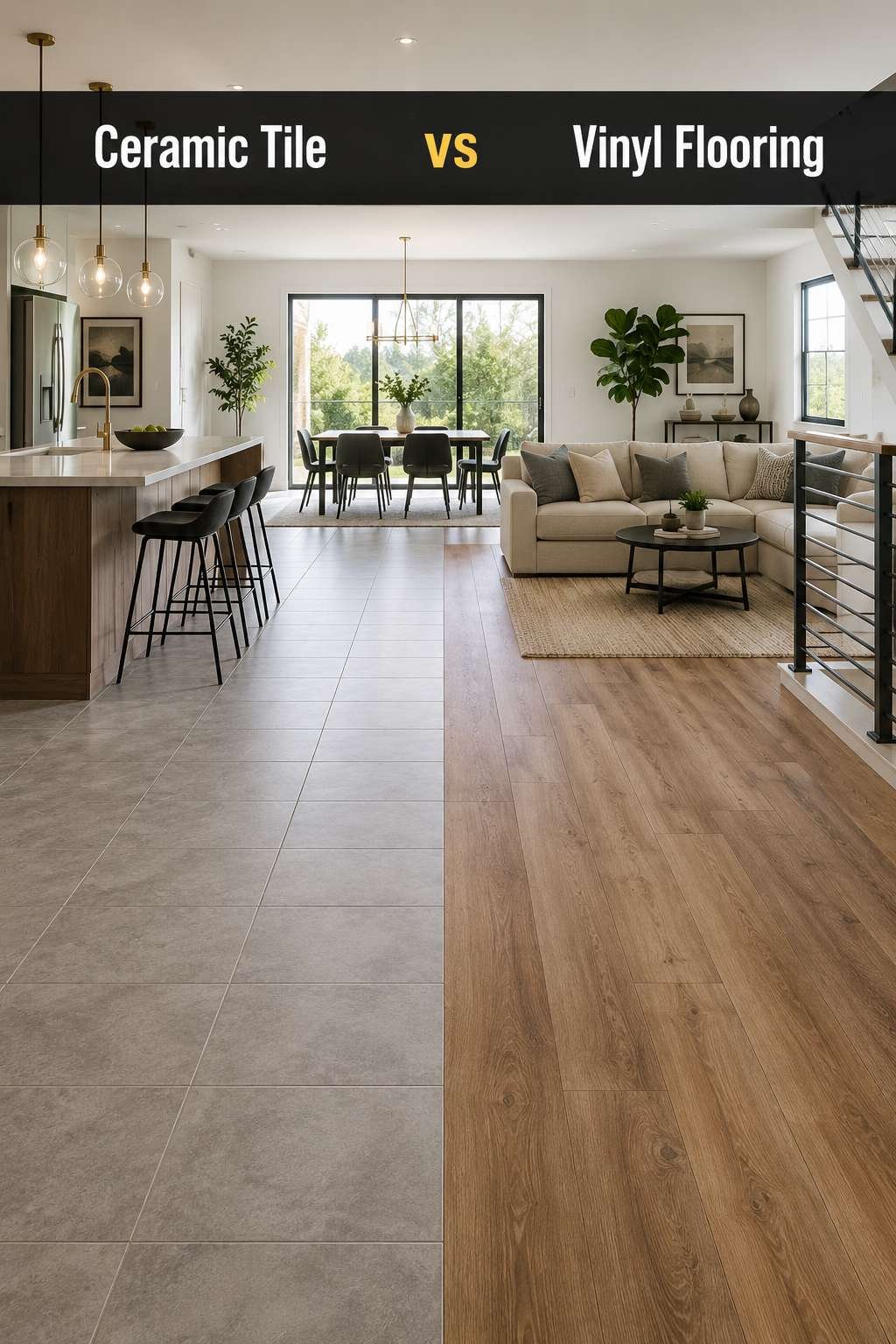
Ceramic Tile vs Vinyl Flooring: The Master Comparison
| Criteria | Ceramic Tile | Vinyl Flooring |
|---|---|---|
| Cost (installed) | $5–$15+ per sq ft, higher for large-format or custom patterns | $2–$7 per sq ft, lower still if installed DIY |
| Lifespan | 25–50+ years with proper installation and care | 10–20 years depending on wear-layer thickness and traffic |
| Water Resistance | Water-resistant surface, but grout lines need periodic sealing | Fully waterproof on most luxury vinyl plank and tile products |
| Maintenance | Sweep and mop, plus resealing grout every 1–2 years | Sweep and mop only, no sealing or resealing required |
| Install Difficulty | Professional installation recommended; substrate prep, cutting, grouting involved | DIY-friendly click-lock or peel-and-stick systems for most homeowners |
| Comfort Underfoot | Hard and cold unless paired with radiant floor heating | Warmer and slightly cushioned, easier on feet and joints |
| Resale Value | High, especially in bathrooms, kitchens, and entryways | Moderate, varies with buyer perception and product quality |
Those ratings translate into real everyday differences. A “25–50+ year lifespan” for tile means most homeowners never replace it — it can outlast several rounds of paint colors and even a kitchen remodel around it. Vinyl’s 10–20 year window means it’s realistic to think of it as a refresh you’ll likely redo once, maybe twice, over the life of the home, which is exactly why it works so well for rentals and starter homes. The maintenance gap is smaller than people expect day-to-day — both are mop-and-go floors — but tile’s grout is the one recurring task vinyl simply doesn’t have. Our tile design ideas has more inspiration along these same lines.
Quick Look: Ceramic Tile vs Vinyl Flooring at a Glance
Ceramic Tile
Durable, water-resistant, and the higher-resale choice for bathrooms and kitchens — best for homeowners staying long-term.
View on Amazon →Vinyl Flooring
Budget-friendly, fully waterproof, and easy to DIY — best for renters, starter homes, and quick refreshes.
View on Amazon →Deep Dive: Ceramic Tile
Ceramic tile is the go-to choice when you want a floor that reads as permanent and high-end — think primary bathrooms, entryways, and kitchens in a forever home. It handles heat, scratches, and heavy furniture better than almost any other flooring type, and a well-installed tile floor is one of the few finishes that can genuinely outlast the rest of the room around it. See our what flooring goes with oak cabinets for more direction in this style.
Best-fit scenarios: primary bathrooms, kitchens, entryways, sunrooms, and any space where long-term durability and resale value matter more than upfront cost or a warm underfoot feel.
Pros
- Exceptional durability and scratch resistance
- Handles heat well, safe near stoves and fireplaces
- Wide range of premium looks, from stone to concrete to marble-effect
- Strong resale value, especially in bathrooms and kitchens
Cons
- Cold and hard underfoot without added heating
- Grout requires periodic resealing and can stain
- Can crack or chip from a heavy dropped object
- Professional installation adds significant labor cost
Real cost range: $5–$15+ per square foot installed.
Deep Dive: Vinyl Flooring
Vinyl flooring — especially modern luxury vinyl plank (LVP) and luxury vinyl tile (LVT) — has become the default choice for budget-conscious renovations and rentals because it’s fast to install, fully waterproof, and genuinely comfortable underfoot. It won’t outlast tile, but for the price and speed, it’s hard to beat. Our wooden floor ideas has more inspiration along these same lines.
Best-fit scenarios: rental units, basements, mudrooms, budget kitchen refreshes, and any household that wants a warmer, quieter, more forgiving floor without a big renovation timeline.
Pros
- Fully waterproof on most modern products
- Warmer and softer underfoot than tile
- DIY-friendly click-lock installation
- Lower upfront cost and faster installation timeline
Cons
- Shorter realistic lifespan than tile
- Can dent or gouge under heavy furniture
- Lower-end products can look and feel less premium
- Generally adds less resale value than tile
Real cost range: $2–$7 per square foot installed.
Real Room Examples: Which Wins Where
Small Bathroom Remodel
Ceramic tile wins — durable, water-resistant, and it visually reads larger with the right large-format layout.
Budget Rental Refresh
Vinyl flooring wins — low cost, fast install, and easy to replace plank-by-plank between tenants.
Luxury Primary Bathroom
Ceramic tile wins — large-format, high-end tile is the material buyers expect in a luxury bathroom build.
High-Traffic Family Mudroom
Vinyl flooring wins — waterproof, scratch-resistant, and far more forgiving with kids, pets, and daily wear.
Budget Starter-Home Kitchen
Vinyl flooring wins — stretches a tight renovation budget further while still looking clean and current.
Professional Tips
- Don’t skip waterproof-rated vinyl in wet rooms. Not all vinyl is fully waterproof — check the product spec before installing it in a bathroom or laundry room.
- Budget for grout sealing from day one with tile. Skipping resealing is the single most common tile regret — it leads to staining and a dated look within a couple of years.
- Match the material to how long you’re staying. If you’re selling within 3–5 years, tile’s resale bump in bathrooms and kitchens is usually worth the extra cost.
- Keep spare vinyl planks after installation. Having a few extra planks on hand makes future spot repairs fast and seamless instead of a full re-floor.
- Choose a textured or matte tile finish for wet areas. Glossy tile looks great but gets slippery when wet — matte or textured finishes are the safer real-world choice.
Shop the Winner
Whichever way you land — ceramic tile or vinyl flooring — the floor’s lifespan comes down to how well you maintain it from day one. Here’s what to get started with for floor cleaning and maintenance, whichever material you choose.
Best Overall
A pH-neutral floor cleaner with a microfiber flat mop system — safe on both sealed grout and vinyl wear layers.
Best Budget
A concentrated all-purpose floor cleaner plus a basic microfiber mop pad set for everyday sweep-and-mop upkeep.
Best Premium
A dedicated grout cleaning and resealing kit paired with a steam mop rated safe for luxury vinyl plank.
See our full Best Floor Cleaning & Maintenance Kits guide for the complete breakdown by material type.
Shop Floor Care Kits →Frequently Asked Questions
Is ceramic tile or vinyl flooring cheaper?
Vinyl flooring is almost always cheaper, both in material cost and installation. Ceramic tile typically runs $5 to $15 or more per square foot installed, while vinyl plank or sheet vinyl usually falls between $2 and $7 per square foot installed.
Which lasts longer, ceramic tile or vinyl flooring?
Ceramic tile generally lasts longer, often 25 to 50 years or more when installed correctly, compared to a typical 10 to 20 year lifespan for vinyl flooring before it needs replacing.
Is vinyl flooring waterproof?
Most modern luxury vinyl plank and luxury vinyl tile products are fully waterproof, not just water-resistant, which makes them a strong choice for bathrooms, laundry rooms, and basements.
Can ceramic tile crack easily?
Ceramic tile can crack or chip from a heavy dropped object or a shifting subfloor, though it resists everyday wear extremely well. Porcelain tile, a denser type of ceramic, is even more resistant to cracking.
Which is better for a bathroom, tile or vinyl?
Both work well in bathrooms. Tile offers a higher-end look and strong resale appeal in a primary bathroom, while waterproof vinyl plank is a budget-friendly, comfortable, slip-resistant option for a secondary bathroom or powder room.
Can I install vinyl flooring myself?
Yes, most luxury vinyl plank products use a click-lock floating installation system designed for confident DIYers, with no adhesive or grout required in most cases.
Is ceramic tile hard to install as a DIY project?
Tile installation is significantly more demanding than vinyl. It requires precise substrate prep, thin-set mortar, cutting tiles to fit, and grouting, so most homeowners hire a professional installer.
Does vinyl flooring look cheap?
Higher-end luxury vinyl plank has closed the visual gap significantly with realistic wood and stone-look textures, though very low-cost sheet vinyl can still look and feel less premium than tile up close.
Which flooring adds more resale value?
Ceramic and porcelain tile generally add more resale value, especially in bathrooms and kitchens, because buyers associate it with a higher-end, more permanent finish.
Is ceramic tile cold underfoot?
Yes, tile conducts and holds cold noticeably more than vinyl, which is one of the most common regrets homeowners mention. Radiant floor heating underneath tile is a popular fix.
Can vinyl flooring be repaired if it’s damaged?
Individual vinyl planks can usually be popped out and replaced if you kept extra matching planks from the original installation, making spot repairs relatively simple.
How often does grout need to be resealed?
Grout should typically be resealed every one to two years to keep it stain- and moisture-resistant, especially in wet areas like showers and kitchen backsplashes.
Which is better for a kitchen, tile or vinyl?
Both perform well in kitchens. Tile offers superior heat and scratch resistance near the stove, while vinyl is more forgiving underfoot for standing and easier on dropped dishes.
Is vinyl flooring pet-friendly?
Yes, vinyl is a popular pet-friendly choice because it’s waterproof, scratch-resistant in higher-quality wear layers, and softer and quieter underfoot than tile for paws and nails.
Can you put vinyl flooring over existing tile?
In many cases yes, as long as the existing tile is flat, structurally sound, and free of major cracks, since floating vinyl plank doesn’t require removing the old floor first.
Does ceramic tile increase home value more than vinyl?
In most markets, yes, particularly in bathrooms and entryways, where appraisers and buyers tend to view tile as a more permanent, higher-quality material than vinyl.
Which flooring is better for a rental property?
Vinyl flooring is generally the better rental choice because of its lower upfront cost, faster installation, and easier plank-by-plank repairs between tenants.
How long does vinyl flooring typically last?
Quality luxury vinyl plank typically lasts 10 to 20 years with normal household use, depending on the thickness of the wear layer and how much foot traffic it sees.
Is ceramic tile slippery when wet?
Glossy ceramic tile can be slippery when wet, so many homeowners choose a textured or matte finish tile, or add slip-resistant coatings, for bathrooms and other wet areas.
Which is more eco-friendly, ceramic tile or vinyl flooring?
Ceramic tile is generally considered more eco-friendly long-term because it’s made from natural materials and lasts far longer, while vinyl is a petroleum-based product with a shorter replacement cycle.
Final Verdict
Choose ceramic tile if: you’re renovating a primary bathroom, kitchen, or entryway in a home you plan to stay in long-term, and you want the strongest resale value and longest lifespan the floor can offer.
Choose vinyl flooring if: you’re working with a tight budget or timeline, installing it yourself, furnishing a rental property, or prioritizing a warmer, more comfortable floor for a high-traffic household with kids or pets.
There’s no universal winner here — but there is a clear right answer for your specific room, budget, and timeline, and the comparison above should make that choice obvious.

