


Standing in the tile aisle comparing ceramic and porcelain can feel harder than it should — they often look nearly identical on the shelf, but they behave very differently once they’re grouted into a floor. Ceramic tends to suit budget-conscious, DIY-friendly projects and lower-traffic rooms, while porcelain earns its higher price in wet areas, busy floors, and anywhere you want the finish to outlast a couple of remodels. The short version: if you’re refreshing a rental or a light-use wall, ceramic is the practical pick; if you’re tiling a bathroom floor, kitchen, entryway, or patio, porcelain is usually worth the extra cost.
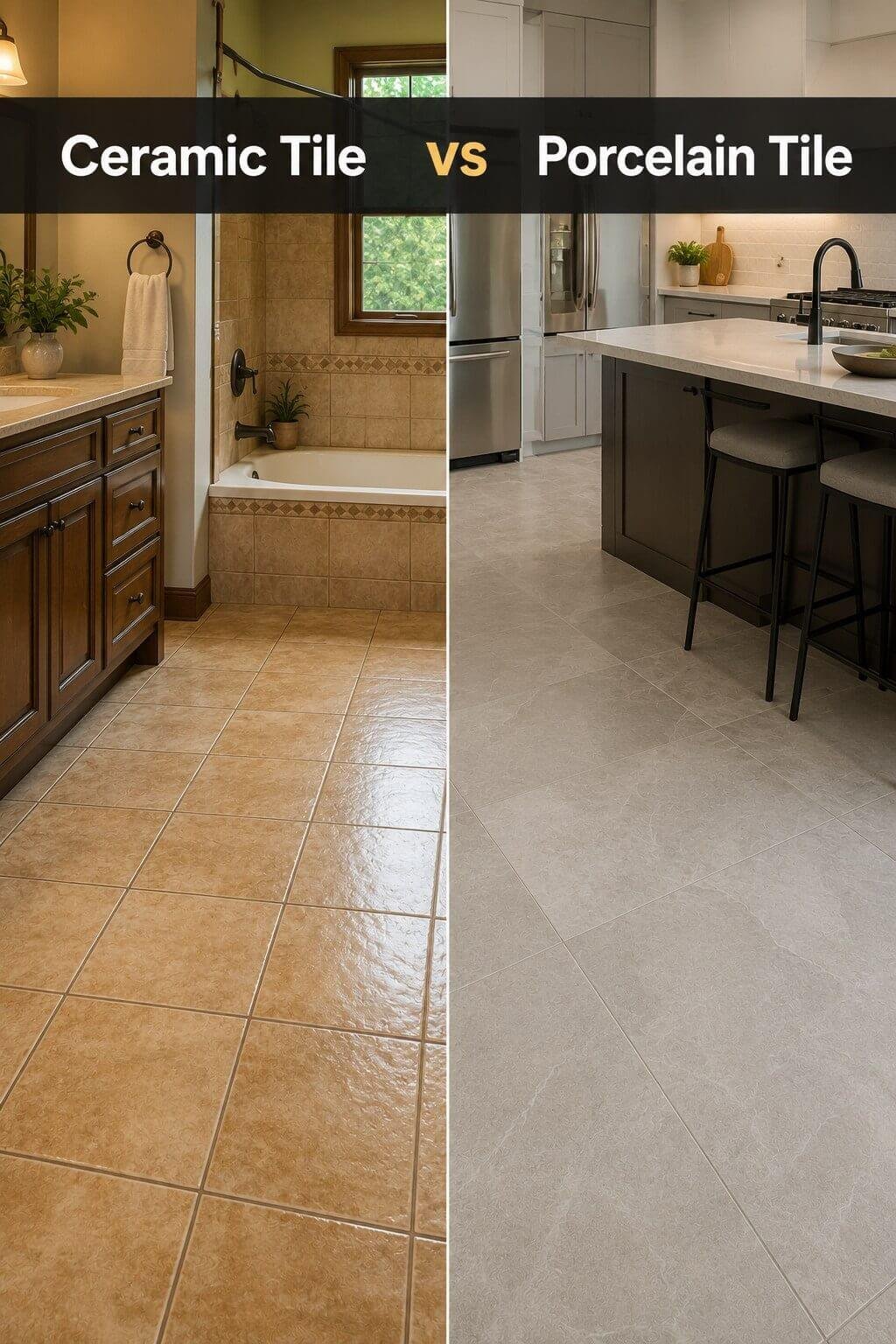
Ceramic vs Porcelain: Full Comparison Chart
Here’s how the two materials stack up across the factors that actually matter once the tile is installed — not just how they look in the showroom. Our tile design ideas has more inspiration along these same lines.
| Criteria | Ceramic Tile | Porcelain Tile |
|---|---|---|
| Cost per Sq. Ft. (Installed) | $4–$10 per sq ft installed | $7–$15 per sq ft installed |
| Water Absorption / PEI Rating | PEI 0–3 · absorbs 3–7% moisture | PEI 4–5 · absorbs under 0.5% moisture |
| Maintenance | Moderate — glaze can chip and show the tile body underneath | Low — dense body resists stains and chip-through |
| Install Difficulty | Easier — cuts with a standard wet saw, DIY-friendly | Harder — needs a diamond blade, often pro-installed |
| Lifespan | 15–20 years with normal use | 25–60+ years with normal use |
| Aesthetic Flexibility | Wide range of glazed colors and patterns | Wide range of stone, wood, and concrete look-alikes |
| Resale Value | Neutral — expected finish in most homes | Seen as a premium upgrade, especially in kitchens and baths |
What These Numbers Actually Mean in Your Home
The PEI rating and water absorption percentage aren’t just spec-sheet trivia — they predict exactly how a floor will age. A tile with 3–7% water absorption, typical of ceramic, will slowly pull in moisture at grout lines and edges, which is why it’s fine on a dry bathroom wall but risky on a shower floor. Porcelain’s sub-0.5% absorption means it barely takes on water at all, so a spilled glass, a leaky dishwasher, or a rainy patio doesn’t threaten the tile itself. The PEI scale works the same way for foot traffic: a PEI 2 ceramic tile that looks perfect in a guest bathroom will visibly dull within a couple of years on a busy kitchen floor, while a PEI 4–5 porcelain tile is built to shrug off exactly that kind of daily wear.
Quick Look: Ceramic Tile vs Porcelain Tile at a Glance
Ceramic Tile
Budget-friendly, easy to DIY, and available in dozens of glazed colors — best for walls and lighter-traffic rooms.
View on Amazon →Porcelain Tile
Denser, more water-resistant, and built to last decades — the stronger choice for wet rooms and high-traffic floors. Our wooden floor ideas has more inspiration along these same lines.
View on Amazon →Deep Dive: Ceramic Tile
Ceramic tile is the right call when the budget matters as much as the finish — it’s the most approachable material for a first DIY tiling project and it covers walls, backsplashes, and light-traffic floors without issue. Real installed cost typically runs $4–$10 per square foot, and glazed ceramic comes in nearly unlimited colors and patterns, which makes it a favorite for feature walls and budget kitchen or bathroom refreshes.
Pros
- Lower material and installation cost
- Easier to cut and install yourself
- Wide variety of glazed colors and patterns
- Lighter weight, easier to handle on walls
Cons
- More prone to chipping and cracking under impact
- Higher water absorption, less ideal for wet areas
- Shorter lifespan than porcelain
- Glaze can wear thin in high-traffic areas over time
Deep Dive: Porcelain Tile
Porcelain tile is the better long-term investment for any space that sees moisture or heavy use — bathrooms, kitchens, entryways, and outdoor patios all benefit from its density. Installed cost typically runs $7–$15 per square foot, higher than ceramic mainly because of the labor involved in cutting a harder material, but that cost is offset by a much longer service life and lower long-term maintenance.
Pros
- Extremely low water absorption, ideal for wet or outdoor areas
- Higher PEI rating handles heavy foot traffic
- Through-body color hides scratches and chips
- Longer lifespan, often 25+ years
Cons
- Higher material and installation cost
- Harder to cut, often requires professional installation
- Heavier, which can complicate wall installations
- Fewer ultra-budget product lines than ceramic
Real Room Examples: Which Tile Wins Where
Small Guest Bathroom
Moisture exposure and splash zones favor a denser, low-absorption tile on the floor.
Winner: Porcelain TileBudget Kitchen Floor Refresh
A sealed glazed ceramic keeps the cost down while still handling everyday cooking-area wear.
Winner: Ceramic TileHigh-Traffic Entryway / Mudroom
Constant foot traffic and tracked-in dirt call for the higher PEI durability porcelain offers.
Winner: Porcelain TileOutdoor Covered Patio
Weather exposure and freeze-thaw risk make porcelain paver tile the safer outdoor choice.
Winner: Porcelain TileRental-Friendly Apartment Update
Lower upfront cost and a quick, simple install make ceramic the practical choice between tenants.
Winner: Ceramic TileProfessional Tips & Common Regret Mistakes
What Installers Wish Homeowners Knew
- Installers often note that the most common ceramic regret is using a standard wall tile on a shower floor — check the PEI and slip-rating before you buy, not after.
- Reseal porcelain grout lines every couple of years even though the tile itself barely absorbs water — grout is still porous regardless of which tile sits next to it.
- Large-format porcelain looks stunning but needs a flatter subfloor than ceramic to avoid lippage between tiles, so budget for floor prep, not just the tile.
- If resale value matters, porcelain in the kitchen and primary bathroom tends to read as a meaningful upgrade to buyers, while ceramic reads as standard-issue.
- For a DIY first project, start with ceramic on a low-stakes wall or backsplash before attempting a porcelain floor — the cutting learning curve is real.
Shop the Winner: Tile Installation & Grout Kits
Whether you’re leaning toward porcelain for a wet or high-traffic space, or ceramic for a budget-friendly refresh, here’s what to get started with either install. See our what flooring goes with oak cabinets for more direction in this style.
Best Overall
A universal installation kit with spacers, a notched trowel, and a grout float that works cleanly on both ceramic and porcelain.
Best Budget
A basic spacer-and-grout kit sized for a straightforward ceramic wall or floor project.
Best Premium
A pro-grade kit with a diamond wet-saw blade and premium grout sealer built for cutting denser porcelain cleanly.
Frequently Asked Questions
What’s the main difference between ceramic tile and porcelain tile?
Ceramic tile is made from a red, white, or brown clay body that’s fired and topped with a glaze, while porcelain tile is made from a denser, more refined clay fired at a higher temperature, which makes it less porous and more durable.
Is porcelain tile more expensive than ceramic tile?
Yes, in most cases. Porcelain typically costs more for both materials and installation because it’s denser and harder to cut, which adds labor time, though budget porcelain lines can sometimes match mid-range ceramic pricing.
Can I install ceramic tile in a bathroom?
Yes, glazed ceramic tile works well on bathroom walls and in light-traffic bathroom floors, but it’s not the best choice for a shower floor or a wet area that sees standing water regularly.
Is porcelain tile waterproof?
Porcelain tile itself has very low water absorption, generally under 0.5 percent, which makes it highly water-resistant, though the grout lines between tiles still need to be sealed to fully block moisture.
Which tile is better for a kitchen floor?
Porcelain tile is usually the better pick for a kitchen floor because it resists moisture, staining, and daily wear better than ceramic, though a budget-conscious kitchen can still do well with a quality glazed ceramic tile.
Can I cut porcelain tile myself?
You can, but porcelain is denser and harder than ceramic, so it typically requires a wet saw with a diamond blade and more careful technique to avoid cracking or chipping the edges.
Does ceramic tile crack easily?
Ceramic tile can chip or crack under heavy impact or if it’s installed on an unstable subfloor, but with a proper installation and normal residential use it holds up well for many years.
How long does porcelain tile last compared to ceramic?
Porcelain tile often lasts 25 years or more and can outlast several decades of daily wear, while ceramic tile typically lasts 15 to 20 years before showing visible wear or chipping.
Is ceramic tile good for outdoor use?
Standard glazed ceramic tile is not recommended outdoors because it absorbs more moisture and can crack in freeze-thaw conditions; porcelain paver tile is the better choice for patios and outdoor spaces.
What is a PEI rating and why does it matter?
The PEI rating measures a tile’s resistance to surface abrasion on a scale of 0 to 5, and it helps you match a tile to the right amount of foot traffic, with lower ratings suited to walls and light-use floors and higher ratings suited to busy floors.
Can porcelain tile look like wood or stone?
Yes, modern porcelain tile is manufactured with realistic wood-look and stone-look finishes that closely mimic natural materials while offering better durability and water resistance.
Is ceramic tile cheaper to install than porcelain?
Generally yes, because ceramic is softer and easier to cut, which reduces labor time and tool wear during installation compared to denser porcelain tile.
Which tile is easier to clean?
Porcelain tile is generally easier to keep clean long-term because its dense, low-absorption surface resists staining, while ceramic’s glaze can wear down over time and become more prone to picking up stains.
Does porcelain tile increase home resale value?
Porcelain tile is often viewed as a premium finish, especially in kitchens and bathrooms, and can contribute positively to resale value compared to standard ceramic tile in the same space.
Can I install porcelain tile over an existing ceramic tile floor?
It’s possible in some cases if the existing floor is flat, stable, and properly prepared, but it typically requires an uncoupling membrane and adds height to the floor, so a professional assessment is recommended first.
What’s the difference between glazed and unglazed porcelain?
Glazed porcelain has a colored, protective coating applied to the surface, while unglazed, full-body porcelain has color running consistently through the entire tile, which means scratches are far less noticeable.
Is ceramic tile a good choice for a rental property?
Yes, ceramic tile’s lower upfront cost and easier installation make it a practical choice for rental properties where budget and quick turnaround between tenants matter more than long-term durability.
Which tile is more slip-resistant?
Slip resistance depends more on the surface texture and finish than on the material itself, but both ceramic and porcelain are available in textured, slip-resistant finishes suited for bathrooms and outdoor areas.
Can ceramic tile be used on walls only, or also floors?
Ceramic tile works well on both walls and floors, though for floors it’s best suited to light-to-moderate traffic areas rather than busy entryways or commercial-style spaces.
Do I need a professional to install porcelain tile?
It’s not strictly required, but because porcelain is harder to cut and less forgiving of installation mistakes, many homeowners choose a professional installer, especially for large-format tile or complex layouts.
The Verdict
If you’re budget-conscious, tackling the install yourself, or refreshing a low-traffic wall or rental unit, ceramic tile is the smarter buy — it costs less, cuts easier, and gets the job done without overspending on durability you won’t use.
If you’re tiling a bathroom floor, kitchen, entryway, mudroom, or anything exposed to water or heavy daily traffic, porcelain tile is worth the higher price — it’s denser, longer-lasting, and far more forgiving of real-life spills and wear. For outdoor patios specifically, stick with porcelain paver tile rated for exterior use.

