


A balcony is one of those spaces that’s easy to half-finish. You buy a chair, maybe a plant, and then it sits there looking more like storage overflow than an actual room. This checklist exists to fix that by breaking balcony decorating into the order it actually needs to happen in — starting with the measurements and rules that determine what you can use, then moving through flooring, furniture, privacy, plants, lighting, and the smaller details that make a space feel finished.
It’s built for renters and homeowners alike, and for balconies of any size, from a narrow Juliet ledge to a full-size terrace. Every item is a real, checkable task rather than a vague idea, so you can work through it section by section and know exactly where you stand. Grab the printable version at the end if you’d rather work from a physical list while you shop and decorate.
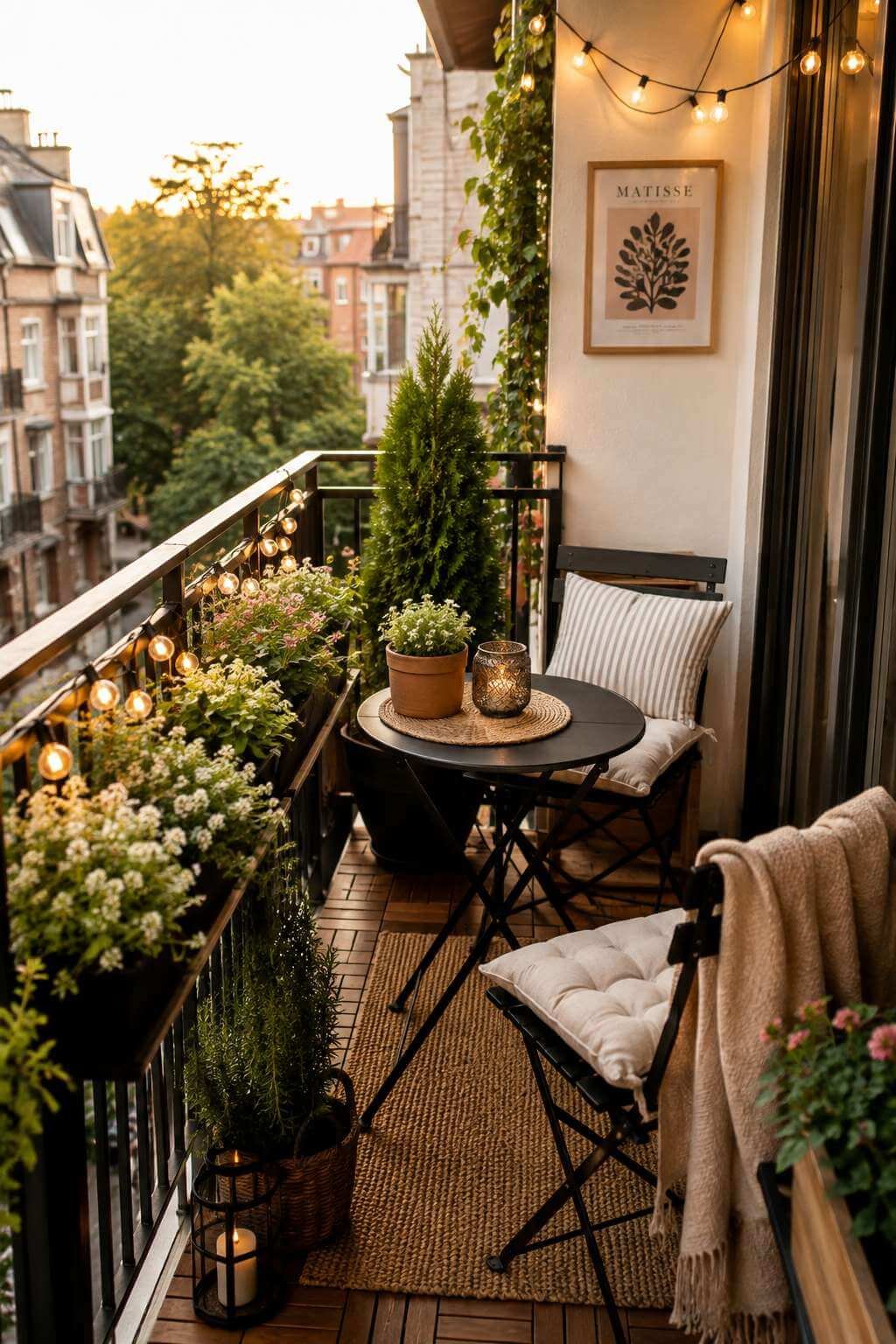
Measure & Assess Your Space
Get the length, width, and railing height so you know exactly what will and won’t fit before you shop.
Confirm your building’s or lease’s weight limit for the balcony floor and railing — an overloaded balcony is a structural risk, not just a decor concern. See our balcony decor ideas for more direction in this style.
Check what’s allowed (drilling, hanging plants over railings, grills, visible clutter) before buying anything that feels permanent.
Watch the light for a full day, since that determines which plants, fabrics, and seating spots will actually work.
Confirm water flows away from your door, not toward it, before adding rugs or furniture that could block it.
Flooring & Foundation
Size it to leave a few inches of bare floor around the edges so water can still drain.
A good option if your floor is bare concrete or an unattractive surface, since they install without tools or adhesive.
Use clear pads under anything with legs to prevent scratching and stop metal legs from rusting onto the surface.
Check the rug or tile backing, especially if the balcony gets rain or morning dew. Our balcony vs terrace comparison covers that decision in more depth.
Furniture & Seating
Resin wicker, teak, aluminum, and powder-coated steel hold up far better outdoors than furniture meant for indoor use.
Base it on the space you actually measured — two chairs and a small table beats four cramped seats.
Worth it if your balcony doubles as a walkway, so you can clear the space when needed.
Useful even on tight balconies — a wall-mounted drop-leaf table works in under 10 square feet.
Use quick-dry foam with removable, washable covers rather than standard indoor foam, which holds moisture and mildews.
Protect cushions and finishes between uses if you don’t have covered outdoor storage.
Privacy & Shade
Target the specific sightline that’s the biggest issue rather than screening the whole railing.
Bamboo, arborvitae, or ornamental grasses work as a living privacy screen if drilling isn’t allowed. If you’re also weighing artificial grass vs natural grass, that’s worth deciding early too.
Use a tension rod so they can be pulled back for sun in colder months.
A small umbrella, retractable awning, or shade sail helps if the balcony gets strong afternoon sun.
Clematis or morning glory fills in over a season for privacy that grows rather than appears all at once.
Plants & Greenery
They add greenery without eating into your usable floor space.
Good for vertical interest, especially on a balcony too small for standing planters.
A wall-mounted pocket planter or tiered shelf helps when floor space is limited.
Small pots near the kitchen-side door give you something useful, not just decorative.
Choose plants rated for your actual hardiness zone and light exposure, not just what looks good at the garden center.
Helpful for anything you can’t check on daily, since balcony pots dry out faster than ground beds.
Lighting
Warm white along the railing or overhead gives the most flattering evening glow, over cool white.
Zero-wiring ambient light that recharges on its own.
Many leases and fire codes prohibit open flame on balconies, so battery versions are the safer default.
A wall sconce or battery puck light near the seating area works well for reading.
A timer or smart plug turns string lights on automatically at dusk without you remembering.
Textiles & Comfort
Solution-dyed acrylic holds its color in direct sun far longer than printed cotton.
Good for cooler evenings — store it in a covered bin when not in use.
Helps if afternoon sun makes west-facing seating unusable.
A small bin or bag means you’re not scrambling before a rainstorm.
A mild soap solution works better than waiting for visible mildew to appear.
Storage & Organization
Holds cushions, tools, and extra plant supplies out of sight.
Hooks or a small shelf keep the floor clear on tight balconies.
Makes it easy to grab covers before weather rolls in.
Clip cords in place rather than leaving them loose underfoot.
Decor & Finishing Touches
Adds depth to a small space and bounces extra light around.
2–3 planters of different heights reads as more intentional than scattering single pots evenly.
A fall wreath or a string of paper lanterns for summer beats redecorating the whole space each season.
Cuts down on tracked-in dirt and marks the transition into the space.
A wind chime, small water feature, or wind spinner gives the space personality beyond furniture and plants.
Safety & Maintenance
Never exceed your building’s stated balcony load limit, even with a manufacturer-rated bracket.
Many buildings restrict grills, propane, and open flame on balconies entirely.
Weigh down umbrellas, small planters, and decor that wind could turn into a falling hazard.
Remove leaves and debris so water doesn’t pool against your door or furniture.
Tighten loose hardware, treat rust spots, and store cushions indoors before the coldest months.
Pro Tips
- ✓Layer lighting at three different heights — string lights overhead, a lantern at table height, and a small uplight on a plant — so the space feels designed after dark, not just lit.
- ✓Stick to a 2–3 color palette across cushions, planters, and accents so a small space reads as curated instead of cluttered.
- ✓Buy furniture before plants — it takes up the most visual and physical space, so it should dictate what else fits.
- ✓Round furniture edges when the balcony is under 30 square feet; sharp corners make tight walkways feel smaller than they are.
- ✓Match planter material to your climate — terracotta cracks in freeze-thaw climates, while resin and fiberglass handle temperature swings better.
- ✓Use mirrors sparingly and angle them to reflect a plant or view, not a wall, so they add depth rather than just glare.
- ✓Choose rust-resistant hardware for anything staying outside year-round, especially on coastal or humid balconies.
- ✓Keep a walking path at least 24–30 inches wide even on tiny balconies, so the space stays usable and not just decorative.
- ✓Repeat one material, like natural wood or black metal, across two or three items to visually tie the whole balcony together.
- ✓Decorate for the view you have — if you’re facing a wall, focus decor and seating inward; if you have a view, keep the railing area open.
Common Mistakes
- ✕Buying oversized furniture that blocks the doorway or walking path — measure clearances before you shop, not after delivery.
- ✕Ignoring the weight limit — overloading a balcony with heavy planters and furniture is a structural risk, not just a decorating choice.
- ✕Using indoor fabric and cushions outside — they trap moisture, mildew fast, and fade within a season.
- ✕Skipping the drainage check — furniture or rugs placed over a drain can send water into your unit or a neighbor’s.
- ✕Making permanent changes on a rental — drilling into railings or walls without checking your lease can cost you your deposit.
- ✕Forgetting nighttime lighting entirely — a balcony that only looks good in daylight gets used half as often.
- ✕Overplanting a small space — too many pots crowds the walkway and makes maintenance harder than it needs to be.
- ✕Choosing decor that can’t handle wind — lightweight items without anchors become hazards, not accents.
- ✕Matching every piece too literally — an all-matching furniture set can look more like a showroom than a lived-in space.
- ✕Waiting to start until you can do “the whole thing” — tackling the checklist section by section gets the balcony usable faster than trying to finish it all at once.
Supplies & Tools
Want this as a printable?
The free printable version of this checklist strips it down to the checkboxes and section labels only — no explanations, just a clean list to carry around while you shop and decorate.
Download the Free Printable Balcony Decorating ChecklistFrequently Asked Questions
How much weight can a balcony hold?
Weight limits vary a lot by building age and construction, but they’re set by your building or municipal code, not decor blogs. Check with your property manager or HOA for the exact number before adding furniture and planters.
Can I decorate a rented balcony without breaking my lease?
Yes, in most cases. Stick to non-permanent solutions like planters, string lights on removable hooks, and furniture rather than drilling into railings or walls, and review your specific lease for any balcony clauses first.
What plants survive best on a balcony?
It depends mostly on your sun exposure and hardiness zone, but sturdy options like succulents, herbs, ornamental grasses, and geraniums tend to handle the wind and heat swings of an elevated space better than delicate annuals.
How do I get privacy on an apartment balcony?
Tall planters, a lattice or bamboo screen, and outdoor curtains on a tension rod are the three most common rental-safe options. Combining two of them usually works better than relying on just one.
What’s the best flooring for a balcony?
A weather-rated outdoor rug or interlocking deck tiles both work well over bare concrete, as long as you leave room around the edges for water to drain.
How do I decorate a small balcony under 20 square feet?
Prioritize one small seating piece, vertical storage and planters instead of floor-based ones, and a single focal point like string lights, since trying to fit everything from a bigger balcony checklist will just crowd the space.
What furniture holds up best outdoors?
Resin wicker, teak, aluminum, and powder-coated steel are the most weather-resistant materials. They resist rust, warping, and fading far longer than furniture designed for indoor use.
How do I keep balcony decor from blowing away?
Anchor lightweight items like small planters and umbrellas, choose heavier furniture bases, and avoid loose paper or fabric decor in favor of weighted or secured pieces.
Do I need a permit to add a privacy screen?
Usually not for a freestanding or clip-on screen, but permanently attached screens or anything that alters the building’s exterior may require HOA or landlord approval, so check before installing anything fixed.
How much does it cost to decorate a balcony?
A basic refresh with a rug, a couple of planters, and string lights can run under $150, while a fully furnished balcony with seating, a table, and privacy elements typically lands between $400 and $800 depending on materials.
A finished balcony doesn’t happen in one trip to the store. It happens by working through the space in order — measuring first, then flooring, furniture, privacy, plants, light, and the small final touches that make it feel like yours.
Print the checklist, start with the assessment section, and check off one category at a time. By the end, you’ll have a balcony you actually use instead of one you just look at through the window.

