


Decorating a bathroom looks simple until you're standing in a half-finished room with a new shower curtain, no towel bar and a mirror that's two inches too wide. Small rooms punish guesswork. Every choice has to fit around plumbing, humidity and not much floor space.
This bathroom decorating checklist puts the work in the order that actually saves time and money: plan and measure first, then walls and surfaces, lighting, hardware, textiles, storage and finally the accents that make the room feel like yours. Each of the 48 items comes with a short note on why it matters, including real measurements you can use instead of guessing.
It works for a guest bath you want ready by Friday, a rental you can't renovate, or a primary bath you're finishing after a remodel. Skip what doesn't apply, check items off as you go, and use the printable version when you head to the store so nothing gets forgotten. You don't need a big budget. You need a sequence that keeps you from buying the wrong thing twice.
Task Difficulty: Easy to moderate
Estimated Time: One weekend to two weeks
Estimated Budget: $150 to $800, depending on scope
Ideal Room: Any bathroom, especially small and guest baths
Best For: Refreshes, renters and new homeowners
Printable Available: Yes, one page
Plan & Measure
Write down three words, such as calm, warm and minimal, and test every purchase against them. It stops random impulse buys from piling up.
Split the money across paint, lighting, textiles and storage. The buffer covers the one item you always forget.
Note the vanity width, the wall height above the toilet and how far the door opens. Skipping this is the most common reason for returns.
Lighting, mirrors and storage should never land on top of these. A rough sketch takes five minutes and saves a lot of drilling regret.
Confirm it runs and vents outside. Poor airflow damages paint, art and textiles faster than any style mistake.
Keep pieces that work, replace anything chipped, rusted or stained, and clear the counters before you start.
Color, Walls & Surfaces
Roughly 60% walls and large surfaces, 30% textiles and vanity, 10% accents. It keeps a small room from feeling busy.
Bathroom light changes a lot between morning and evening. Check swatches at both times before you commit.
Satin or semi-gloss wipes clean and handles humidity. Choose paint labeled for bathrooms and prime any bare patches.
A fresh ceiling and crisp trim make walls look finished. Use a mildew-resistant white.
Clean or replace tired grout lines and re-caulk around the tub and vanity. It is a cheap fix with a big visual payoff.
Bathroom-rated wallpaper, beadboard or a painted arch on one wall adds character without overwhelming the room.
Lighting & Mirrors
Combine general, task and accent lighting so the room works at 7 a.m. and at 10 p.m.
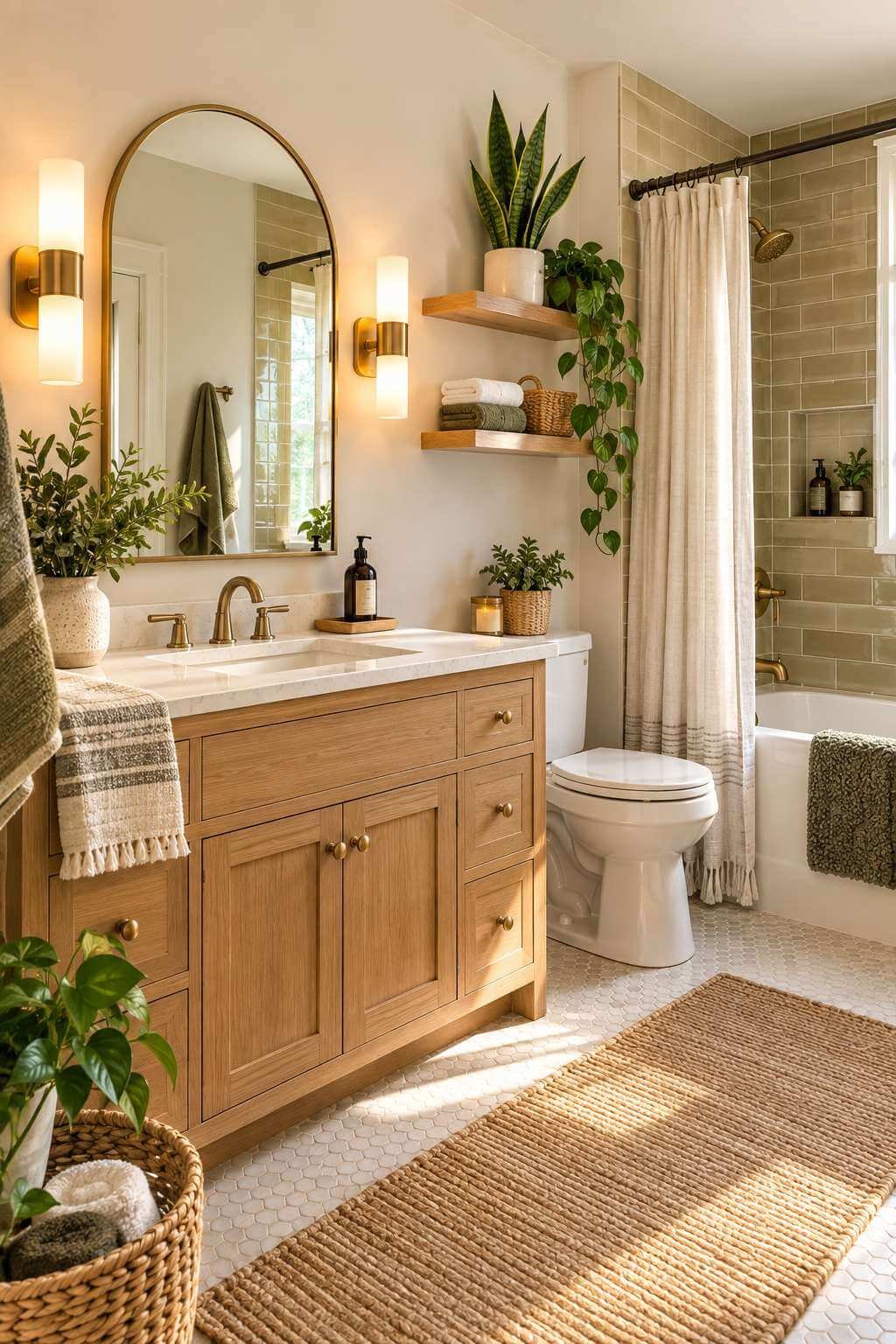
Sconces on both sides of the mirror, around 60 to 66 inches from the floor, light your face evenly. A single overhead light casts shadows.
Look for 2700K to 3000K and a CRI of 90 or more. Skin looks natural and colors read true.
Aim for a mirror about as wide as the vanity, or a few inches narrower, with its center near eye level.
Low light at night keeps you from being jolted awake. Plug-in motion-sensor lights need no wiring.
Anything near a shower needs the right rating. Have a licensed electrician handle any wiring changes.
Hardware, Fixtures & Finishes
Match the faucet, shower trim and towel bars. Add one secondary finish at most so the room feels planned.
A common starting point is about 48 inches from the floor. Hold a folded towel up to the spot before you drill.
Robe and towel hooks near the shower work best at 66 to 72 inches. Add a lower hook for kids.
Around 8 to 12 inches in front of the bowl edge and about 26 inches off the floor is a reliable target.
New hardware is the fastest vanity upgrade. Check the hole spacing before you order.
Replace a corroded curtain rod, showerhead or drain cover so the finish matches everything else.
Textiles & Rugs
Mount the rod high and wide so the curtain makes the ceiling look taller. A washable liner protects the fabric.
Look for a rubber or latex backing so it stays put. Quick-dry cotton or microfiber handles damp floors well.
Bath towels, hand towels and washcloths in two related colors look intentional. Folding beats rolling for a clean look.
They keep visitors from grabbing your bath towel. Keep a spare set within reach.
Frosted film, a moisture-tolerant blind or a light sheer keeps privacy and lets daylight in.
Everything here should survive frequent hot washes. Skip anything dry-clean only.
Storage & Organization
Keep daily items in front and backups behind. Drawer dividers stop the junk-pile effect.
Use bins and a tension rod for spray bottles. Keep cleaning supplies separate from personal items.
A shelf or narrow cabinet uses dead wall space. Leave enough clearance to reach the tank.
Spare toiletries and rolled towels look neat and stay hidden. Lids also keep steam and dust off.
Choose one that fits beside the toilet or vanity, and keep a spare liner underneath.
Keep at least two rolls in a basket or shelf near the toilet so nobody has to ask.
Soap, a dispenser and a toothbrush cup on one tray looks tidy and makes wiping the counter quick.
Art, Plants & Accents
Framed prints under glass, metal or ceramic pieces hold up best. Keep paper and canvas away from the shower.
Pothos, snake plants and ferns cope well. Check that the room gets at least some natural light.
A reed diffuser or a small candle is enough. Keep it light so it doesn't clash with soap.
A wooden stool, a sculptural vase or a bold print. One standout piece is more effective than several.
Clear counters make a small room look larger and keep cleaning simple.
A woven basket, a wood tray or a ceramic dish adds warmth without adding clutter.
Final Walkthrough
The first thing you see should be the mirror, a plant or the towel wall, not the trash can or cleaning bottles.
Turn everything on and check for shadows on your face and glare in the mirror.
Wash your hands, dry them, hang a robe. Everything should be within easy reach.
Soap, hand towel, spare roll, trash can and a working fan. Nothing else is essential.
A quick photo shows what to edit and gives you a before-and-after for next time.
Pro Tips From the Design Side
- Follow the order of operations. Paint and repairs first, then lighting and hardware, then textiles, then accents. Reversing it means repainting around things you just installed.
- Bring a tape measure to the store. Mirrors, rugs and shelves look smaller in a showroom than they do in your bathroom.
- Limit yourself to three finishes. One main metal, one accent metal and one wood tone keeps a small room cohesive.
- Use the mirror as a light source. A larger mirror opposite a window doubles daylight.
- Choose towel colors in advance. Two coordinating colors are easier to keep fresh than a mix of leftovers.
- Go vertical. Wall-mounted shelves and hooks free up floor and counter space in tight rooms.
- Buy the workhorse items first. A good mirror, lighting and towels affect daily use more than decor does.
- Rent-friendly tip. Use tension rods, over-the-door hooks and removable adhesive strips rated for bathrooms in place of drilling.
- Photograph your bathroom before you start. Photos reveal what looks off far faster than standing in the room.
- Keep decorative pieces washable or wipeable. Steam and splashes are constant, so anything that can't be cleaned will look tired quickly.
Common Mistakes and How to Avoid Them
- Buying before measuring. Measure the vanity, walls and door swing first, and bring the numbers shopping.
- Using flat paint near the shower. Choose satin or semi-gloss so moisture wipes off instead of soaking in.
- Relying on one overhead light. Add sconces or a lit mirror at face height to remove shadows.
- Hanging a mirror that is too small. Match it to the vanity width and center it near eye level.
- Mixing too many metal finishes. Pick one main finish and at most one accent.
- Putting paper art next to the shower. Use glass-framed or moisture-safe pieces and hang them away from direct spray.
- Skipping a non-slip mat. Pick a mat with grippy backing, especially if the floor is tile.
- Overstyling the counter. Keep it to three to five items on a tray so the surface stays wipeable.
- Ignoring ventilation. Run the fan during and after showers, and check that it vents outside.
Supplies & Tools
Take the checklist with you
The printable version keeps just the checkboxes, grouped under the same eight sections, on a single page. Print it, keep it on the fridge and bring it to the store.
Frequently Asked Questions
What order should I decorate a bathroom in?
Start with planning and measuring, then do paint and repairs, then lighting and hardware, then textiles and storage, and finish with plants and accents. Doing it in this order avoids repainting around new items.
How do I decorate a bathroom on a budget?
Focus spending on lighting, a good mirror and towels, and save on accents. Paint, new hardware and a shower curtain make the biggest visual change for the least money.
What is the best paint finish for a bathroom?
Satin or semi-gloss is usually the best choice because it wipes clean and resists moisture. Use a paint labeled for bathrooms and make sure the room has good ventilation.
How big should a bathroom mirror be?
A good rule of thumb is a mirror about as wide as the vanity or a few inches narrower. Hang it so the center sits near eye level.
How high should I hang a towel bar?
A common height is around 48 inches from the floor. Hold a folded towel up to the spot first to check that it clears the floor and the wall.
How can I decorate a bathroom without drilling?
Use tension rods, over-the-door hooks, freestanding shelves and removable adhesive strips rated for bathrooms. Check weight limits before hanging anything heavy.
What plants grow well in a bathroom?
Pothos, snake plants and ferns tolerate humidity and low light. The room should still get some natural light or a nearby grow light.
How do I make a small bathroom look bigger?
Use light, cohesive colors, a large mirror and wall-mounted storage. Keep counters clear and limit the number of finishes.
What should a guest bathroom have?
Hand soap, a hand towel, a spare roll of toilet paper, a small trash can with a liner and a working fan. Good lighting and a clean counter matter more than decor.
Should bathroom towels and rugs match?
They don't need to match exactly, but they should share a palette. Two coordinating colors with a bit of texture looks more polished than a perfect match.
The bottom line
A finished bathroom isn’t about expensive pieces. It’s about doing things in the right order, measuring before you buy and keeping the room easy to use every day. Work through the list one section at a time, and a weekend of small decisions adds up to a room that feels complete.

