


A bedroom makeover can go one of two ways: you spend a weekend buying throw pillows and a new lamp, or you actually transform the room, and the difference usually comes down to whether you had a plan before you started shopping.
This checklist walks you through a full bedroom makeover in the order that actually works: plan first, then declutter and clean, then tackle paint and walls, then furniture, then lighting, then textiles, storage, and the finishing touches that make a room feel finished instead of half-decorated. It’s built for anyone taking on a bedroom refresh, whether that’s a fast $300 weekend update or a full $3,000-plus overhaul with new furniture and paint.
Skip a step and it shows. Buy the rug before you’ve settled on wall color and you’ll be matching everything else to the rug instead of the other way around. Hang art before you’ve planned your lighting and you might end up illuminating the wrong wall entirely.
Use this as your master list. Check items off as you go, follow the order, and you’ll end up with a bedroom that actually feels designed, not just decorated.
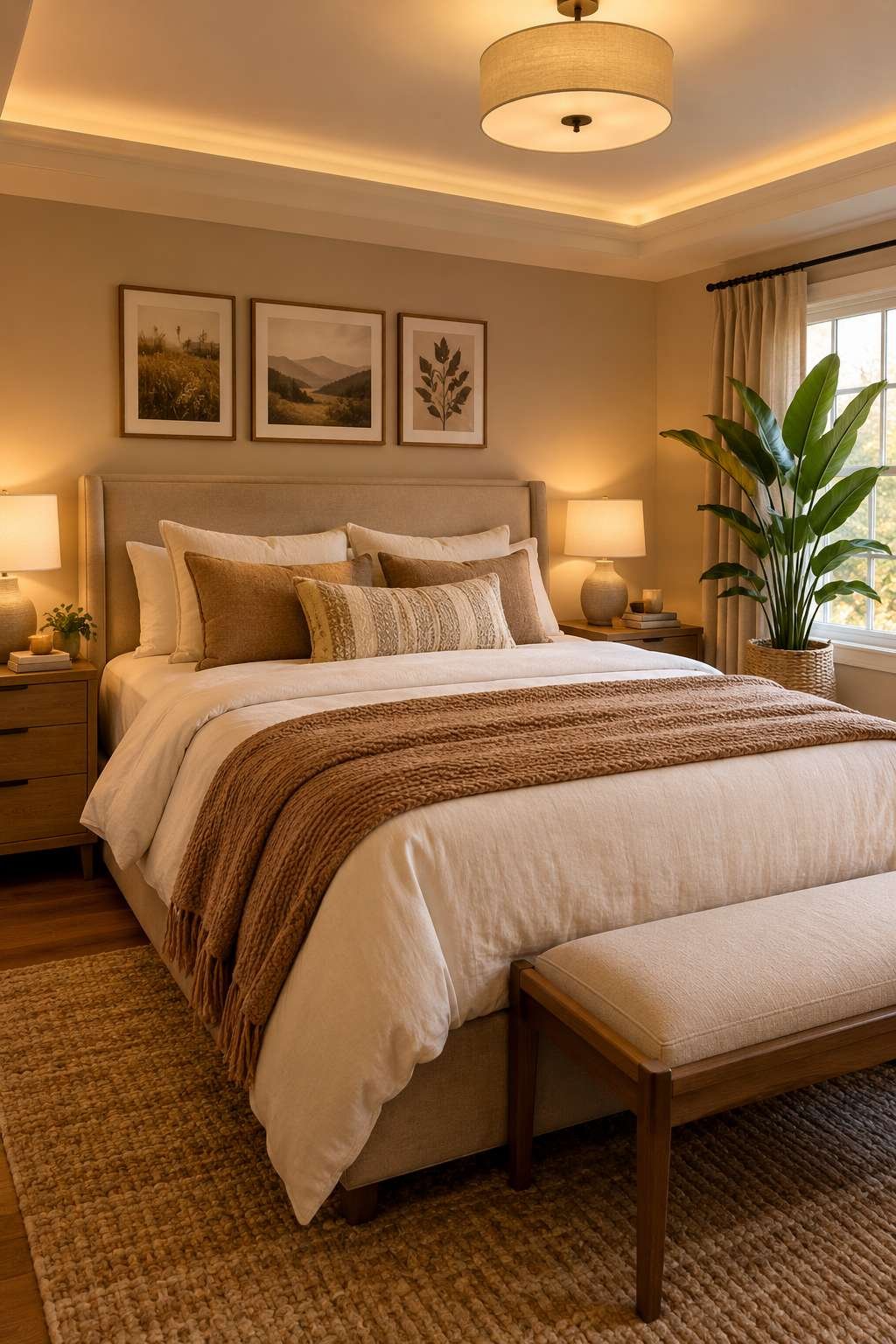
Plan & Set the Foundation
Decide what you’re willing to spend before you buy anything, and split it roughly across furniture, paint, and decor so one category doesn’t eat the whole budget.
Pull 10–15 images that capture the mood you want, whether that’s a Pinterest board or photos saved to your phone, so every purchase gets measured against a consistent vision.
Record wall lengths, ceiling height, window and door placement, and outlet locations; you’ll need these numbers for furniture, curtains, and rug sizing later.
Pick a single style, modern minimalist, warm traditional, coastal, and write it down, so you’re not mixing five aesthetics by the time you’re done.
Choose 2–3 core colors, a wall color, a dominant textile color, and an accent, before you buy anything else.
Block out which weekend covers which phase, especially if paint needs to dry before furniture goes back in.
Declutter & Deep Clean
Empty nightstands, dressers, and shelves completely so you’re working with a blank room, not decorating around clutter.
Go through the closet, drawers, and under-bed storage with three boxes; anything you haven’t used in a year is a strong donate candidate.
Vacuum, then mop or shampoo carpet; a clean floor makes even old furniture look more intentional.
Clean the glass and launder or dust curtains and blinds; natural light is one of the cheapest upgrades in the room.
Dust build-up is the fastest way to make a freshly painted room look tired again.
Take everything out, wipe down shelves and the closet floor, and decide what’s going back in before you reorganize.
Paint & Wall Treatments
Paint 2×2 squares in at least two spots and check them morning and night; lighting changes color more than you’d expect.
Patch holes, sand rough spots, and wipe down walls before painting; skipping prep is the number one reason paint jobs look unfinished.
Use eggshell or satin for bedroom walls; matte hides imperfections but scuffs easily, and semi-gloss reads too clinical.
If you want visual interest without committing to a full room repaint, one accent wall, usually behind the headboard, does the job.
Fresh white trim against a new wall color makes the whole room look sharper for very little extra effort.
Furniture & Big Pieces
Decide if it fits your new style and the room’s scale, or if it’s time for an upgrade; the bed is the visual anchor of the entire room.
If it’s over 7–8 years old or you’re waking up sore, factor a mattress swap into the budget now, before you buy new bedding sized around it.
Match nightstand height to roughly the top of your mattress, and make sure there’s room for a lamp and a glass of water on each.
Keep it if it fits your storage needs and new palette; if it’s undersized or mismatched, this is the moment to swap it.
A reading chair or bench at the foot of the bed makes the room feel finished, but skip it in tight rooms where it’ll just collect clothes.
Decide if a work or beauty nook belongs in this room, and plan its spot before you finalize furniture placement.
Sketch or tape out where each piece goes before moving anything in, factoring in doorway swing and closet access.
Lighting Layers
This is your main, whole-room light, a ceiling fixture, flush mount, or several lamps working together.
Bedside lamps or wall sconces for reading should be bright enough to read by without lighting the whole room.
A floor lamp in a corner, LED strip lighting, or a dimmable lamp adds warmth for evenings.
Dimmers let one fixture do double duty as both bright task light and low mood light.
Decide between blackout curtains for sleep quality or sheers for daytime light, based on how you actually use the room.
Textiles & Soft Furnishings
Pick a duvet or comforter in one of your 2–3 palette colors as the room’s largest textile statement.
Two to four pillows in varied textures, not just colors, keep the bed from looking flat.
Drape one across the foot of the bed for texture and an easy seasonal color swap.
A rug should extend at least 18–24 inches beyond the sides of the bed so it reads as grounding the space, not floating under it.
Mount curtain rods 4–6 inches above the window frame and let panels graze the floor to make ceilings feel taller.
A bench, chair, or headboard in a contrasting texture, velvet, boucle, linen, keeps an all-neutral room from feeling flat.
Storage & Organization
Even a basic add-on shelf or double hang rod dramatically increases usable closet space.
Bins or a storage bed frame put dead space to work for off-season clothes or linens.
Small trays or drawer dividers keep chargers, glasses, and odds and ends from turning into visible clutter.
Dividers keep folded clothes upright and visible instead of collapsing into a pile.
Give keys, jewelry, or pocket items one designated spot so they stop landing on random surfaces.
Decor & Finishing Touches
Anchor art above furniture, nightstands or the dresser, at roughly eye level, not centered on empty wall space.
A mirror opposite a window bounces light around the room and instantly makes it feel larger.
Even one large plant, real or realistic faux, softens hard furniture lines and adds life to the palette.
A candle or diffuser in a scent you associate with rest reinforces the room as a place to unwind.
One shelf or dresser top with 3–5 personal items, books, photos, a small object, keeps the room from feeling like a showroom.
Step back, compare the room to your original mood board, and adjust anything that feels off before calling it done.
Pro Tips
- ✓Buy paint samples before furniture, not after; color decisions ripple into everything else.
- ✓Shop your own house first; a lamp from another room or a mirror in storage might solve a decor gap for free.
- ✓Layer at least three light sources in every bedroom: ambient, task, and accent. A single overhead fixture always reads flat.
- ✓Follow the two-texture rule for an all-neutral palette; pair at least two different textures, like wood and linen, so the room doesn’t go flat.
- ✓Hang curtains higher and wider than the window frame; it’s the single cheapest trick for making ceilings look taller.
- ✓Buy the rug last, not first; it’s easier to match a rug to finished walls and furniture than the reverse.
- ✓Keep nightstands matched in height, not necessarily in style; mismatched styles can look curated, mismatched heights just look accidental.
- ✓Test bedding in daylight and lamp light before committing; color temperature shifts how warm or cool a fabric reads at night.
- ✓Leave at least 24–30 inches of walking space around the bed; cramped clearance makes even a well-decorated room feel unfinished.
- ✓Save your receipts and paint codes; you’ll want the exact match for touch-ups and the return window for furniture that doesn’t work once it’s in the room.
Common Mistakes to Avoid
- ✕Buying furniture before measuring the room. Measure first and tape out the footprint on the floor before you buy anything large.
- ✕Choosing paint color under store lighting. Bring swatches home and check them in your actual room’s light, morning and night, before committing.
- ✕Centering art on the wall instead of the furniture below it. Center art over the furniture piece it hangs above, not the blank wall space.
- ✕Skipping the mood board and buying reactively. Even a rough mood board keeps impulse purchases from clashing with everything else.
- ✕Under-lighting the room with one overhead fixture. Add at least one more light source, like a lamp or sconce, before calling the lighting done.
- ✕Buying a rug too small for the bed. Size up; a too-small rug makes the whole layout look shrunken.
- ✕Ignoring closet storage until last. Tackle closet organization early, since it affects how much dresser and under-bed storage you actually need.
- ✕Matching every accessory to the same one color. Introduce at least one contrasting or neutral accent so the room doesn’t look monochromatic and flat.
- ✕Skipping the final walkthrough. Step back and compare against your mood board before considering the makeover finished; small fixes are easier to catch now than after everything’s back in place.
Supplies & Tools Checklist
Free Printable Bedroom Makeover Checklist
Want to take this checklist off the screen and into the room with you? The printable version has all 46 checklist items with checkboxes only, grouped by the same eight phases, so you can hang it up or carry it around while you shop and work.
Print it, pin it to the fridge, and check items off as you go.
No explanations, no clutter, just the checklist, ready to take with you to the paint aisle or the furniture store.
Download the Free PrintableFrequently Asked Questions
How long does a bedroom makeover take?
Most full bedroom makeovers take one to three weekends, depending on whether you’re painting, waiting on furniture delivery, or doing a lighter refresh. A cosmetic-only update (new textiles, decor, and lighting swaps) can often be done in a single weekend.
How much does a bedroom makeover cost?
A basic refresh, new bedding, paint, and a few decor pieces, typically runs around $300 to $600. A full makeover with new furniture, professional painting, and new lighting can run $2,000 to $3,000 or more, depending on furniture quality.
What order should I do a bedroom makeover in?
Start with planning and budgeting, then declutter and deep-clean, then paint and wall treatments, then bring in furniture, then layer in lighting, textiles, storage, and finally decor. Doing it out of order, buying decor before settling on paint, for example, usually means redoing work later.
Do I need to buy all new furniture for a bedroom makeover?
No. Many makeovers keep the existing bed frame, dresser, or nightstands and simply repaint, refinish, or restyle them. Reassess each piece individually against your new palette and style direction before deciding what to replace.
What’s the best paint sheen for a bedroom?
Eggshell or satin is the most common choice for bedroom walls, both hide minor imperfections while still being easy to wipe clean. Matte hides flaws even better but scuffs more easily, and semi-gloss tends to read too clinical for a bedroom.
How big should my bedroom area rug be?
For a grounded look, a rug should extend at least 18 to 24 inches beyond the sides of the bed. A rug that’s too small will make the whole furniture layout look like it’s floating in the middle of the room.
Should I paint before or after buying furniture?
Paint first whenever possible. It’s much easier to choose furniture and textiles to match a finished wall color than to try to match paint to furniture you already own, and you avoid the risk of drips or splatter on new pieces.
How many throw pillows are too many for a bed?
Two to four pillows is the sweet spot for most beds, enough to add texture and color without making the bed a chore to get into at night. Beyond that, it usually starts working against the room instead of for it.
Can I do a bedroom makeover in a rental?
Yes. Lean on removable wallpaper, peel-and-stick options, and furniture or lighting changes instead of permanent paint if your lease restricts it, and always check your lease terms before making structural or paint changes.
What’s the most budget-friendly change with the biggest impact?
Layered lighting and fresh paint are typically the two highest-impact, lowest-cost changes you can make. Both affect how the entire room feels, not just one corner of it.
You don’t need to do all 46 items in one weekend, and you don’t need a $3,000 budget to make this room feel completely different.
Work through the phases in order, check items off as you go, and let each one build on the last: plan before you paint, paint before you furnish, furnish before you style. By the time you reach the final styling walk-through, you’ll have a bedroom that feels finished on purpose, not decorated in a rush.

