


Standing in the hardware aisle staring at a wall of bar pulls and round knobs is a small decision that somehow feels bigger than it should. Cabinet handles tend to suit busy, modern kitchens where grip and a contemporary look matter most, while cabinet knobs still hold their own in traditional spaces, tight budgets, and smaller cabinet doors where a bulkier pull would look out of place. If you only take one thing from this guide: for most full kitchen remodels today, handles are the stronger all-around pick, especially on drawers, but knobs remain the smarter choice for upper cabinets, rentals, and anyone renovating on a tight budget.
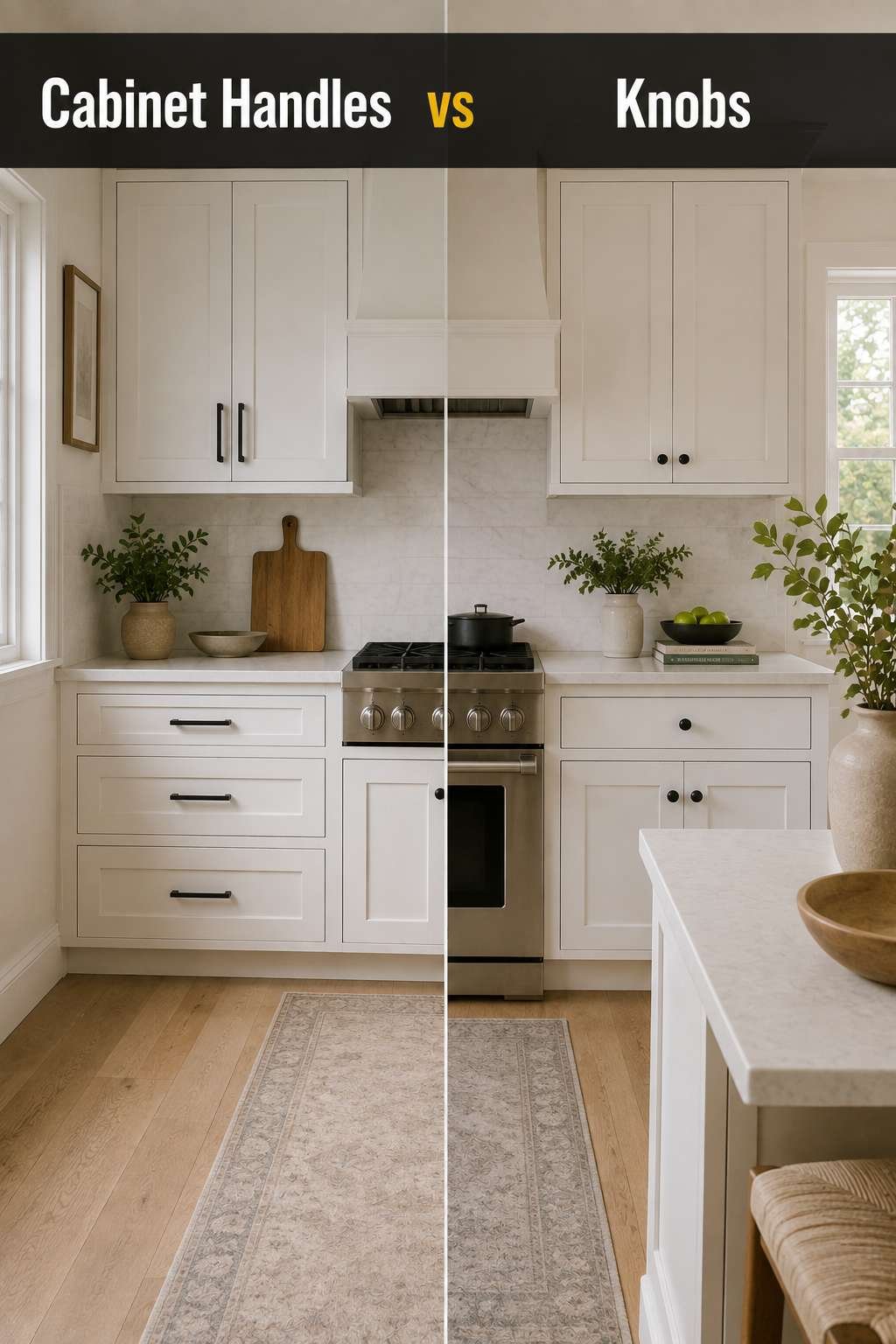
Cabinet Handles vs Knobs: The Full Comparison at a Glance
| Criteria | Cabinet Handles | Cabinet Knobs |
|---|---|---|
| Average Cost | $4–$25 per piece (avg. ~$10) | $2–$12 per piece (avg. ~$5) |
| Durability | 10–20+ years with proper two-point mounting | 8–15 years; single screw can loosen with heavy pulling |
| Maintenance | More surface area to wipe down to avoid visible fingerprints | Smaller surface, so smudges are less noticeable day to day |
| Install Difficulty | Moderate to hard — two holes must align precisely with a jig | Easy — one center hole, forgiving for a DIY weekend project |
| Grip & Accessibility | Full-hand grip, easier for kids, elderly, and arthritic hands | Fingertip grip only, harder to use on wide, heavy drawers |
| Aesthetic Flexibility | Wide range of lengths and styles; strong modern/transitional look | More traditional feel; works well on smaller cabinet doors |
| Resale Value | Preferred in most modern kitchen listings and staging photos | Still a natural fit in traditional or farmhouse-style homes |
What These Ratings Actually Mean in a Real Kitchen
The numbers above translate into real daily friction points once you’re living with your choice. A full-hand grip on a handle matters most at the sink, when your hands are wet or full of groceries — that’s where knobs start to feel fiddly. On the flip side, a wall of small upper cabinets covered in oversized handles can visually overwhelm a small kitchen, which is exactly where knobs earn their keep. Cost differences also compound fast: on a 30-piece kitchen, the gap between an all-knob and an all-handle setup can be $150–$300, which is worth factoring into a renovation budget before you fall in love with a specific finish. If you’re also weighing floating shelves vs cabinets, that’s worth deciding early too.
Quick Look: Cabinet Handles vs Cabinet Knobs at a Glance
Cabinet Handles
Bar-style pulls that give a full-hand grip and a clean, modern line — the go-to choice for busy drawers and contemporary kitchens.
View on Amazon →Cabinet Knobs
Compact round pulls that suit smaller doors and traditional styling, at a lower cost per piece and an easy DIY install.
View on Amazon →Cabinet Handles: Pros, Cons, and Real Cost
Handles are the default choice in most current kitchen renovations, and for good reason — they’re comfortable, they read as updated, and they scale well across a large kitchen island or a wall of drawers. They’re best suited to busy households, modern or transitional kitchens, and anyone prioritizing everyday grip over minimal cost. Our door handles vs door knobs comparison covers that decision in more depth.
Pros
- Full-hand grip is easier and more comfortable for daily use
- Reads as more modern and tends to photograph better for resale
- Available in longer lengths that work well on wide drawers and islands
- Two-point mounting holds up better under frequent, heavy pulling
Cons
- Costs more per piece than a comparable knob
- Requires precise two-hole drilling, so mistakes are hard to hide
- Larger surface area can show fingerprints faster in some finishes
- Can look oversized on small upper cabinet doors
Real cost range: Budget handles run about $4–$8 each, mid-range finishes like brushed nickel or matte black typically land at $8–$18 each, and premium brass or designer bar pulls can reach $20–$40+ each. For a 30-piece kitchen, expect roughly $150–$550 total depending on finish.
Cabinet Knobs: Pros, Cons, and Real Cost
Knobs remain a smart, budget-conscious choice, particularly for traditional kitchens, rental-friendly updates, and smaller cabinet doors where a full bar handle would look out of proportion.
Pros
- Lower cost per piece, which adds up across a full kitchen
- Single-hole install is fast and beginner-friendly
- Smaller footprint suits compact or traditional-style doors
- Less likely to snag clothing or catch on a child’s arm
Cons
- Fingertip-only grip is less comfortable on wide, heavy drawers
- Single mounting point can loosen or spin sooner with heavy use
- Can read as dated in a strictly modern kitchen design
- Offers less visual presence as a design statement piece
Real cost range: Basic knobs run about $2–$5 each, mid-range finishes typically land at $5–$10 each, and premium brass or ceramic designer knobs can reach $10–$20+ each. For a 30-piece kitchen, expect roughly $60–$300 total depending on finish.
Which One Wins in Your Kitchen? Real Room Examples
Small Galley Kitchen
Tight walkway, limited visual space
Budget Renovation
Every dollar matters across 25+ pieces
Luxury Kitchen Build
Statement island, premium finishes
Rental-Friendly Upgrade
Reversible, low-commitment update
High-Traffic Family Kitchen
Kids, guests, constant daily use
Professional Tips Before You Buy
Designer Tie-Breakers & Common Regret Mistakes
- The most common regret: buying all-matching hardware before checking scale — an 8-inch handle can dwarf a narrow upper cabinet door, while a knob can look lost on a wide island drawer. Measure each door and drawer front individually.
- Designer tie-breaker: when truly torn, put handles on every drawer (where grip matters most) and knobs on every door (where grip matters least). This is the single most common professional compromise and it reads as intentional, not indecisive.
- Resale-value note: if you’re renovating to sell within the next few years, matte black or brushed brass handles currently photograph better in listing photos than traditional knobs, even in an otherwise classic kitchen.
- Maintenance reality-check: polished or high-gloss finishes on either style show water spots and fingerprints fastest. If you have kids or host often, a brushed or matte finish will look newer for longer with far less wiping down.
Shop the Winner
If you’re leaning toward Cabinet Handles, here’s what to get started with:
Best Overall
A brushed-nickel or matte-black bar pull set in a mid-length size that works across most standard drawers and doors — the safest starting point for a full-kitchen refresh.
Best Budget
A basic stainless-steel bar handle multi-pack, priced for outfitting a full kitchen without a big upfront spend while still upgrading the grip and look.
Best Premium
A brushed-brass or warm-bronze designer bar pull with a soft-close-friendly mounting plate, suited to a statement kitchen island or a higher-end remodel.
If you’re leaning toward Cabinet Knobs, here’s what to get started with:
Best Overall
A round brushed-nickel knob set sized for standard cabinet doors, versatile enough for both traditional and transitional kitchens.
Best Budget
A basic multi-pack of simple round knobs in a single finish, ideal for a rental upgrade or a full kitchen on a tight budget.
Best Premium
A ceramic or ribbed-brass designer knob set that adds real texture and detail to a farmhouse or classic-style kitchen.
For full product picks, current pricing, and finish comparisons, see our full Best Cabinet Hardware Sets guide.
Shop Cabinet Hardware Sets →Frequently Asked Questions
Are cabinet handles or knobs cheaper?
Knobs are almost always cheaper per piece, typically $2 to $12 versus $4 to $25 for handles. But since handles are often used on fewer, larger drawers, total project cost can end up closer than the per-piece price suggests.
Do I need to drill new holes if I switch from knobs to handles?
Usually yes, since handles need two holes spaced apart instead of one center hole. Some transition plates or backplates can hide old holes, but for a clean look most people redrill using a hardware jig.
What’s the standard spacing for cabinet handles?
Common center-to-center spacing is 3 inches, 4 inches, or 5 inches, though longer handles for wide drawers can run 8 to 12 inches. Always check the manufacturer’s spec before drilling.
Can I mix handles and knobs in the same kitchen?
Yes, and many designers do this on purpose. A common approach is handles on drawers for grip and knobs on upper cabinet doors, as long as the finish stays consistent throughout.
Are cabinet handles better for people with arthritis?
Generally yes. A full-hand grip on a bar handle requires less fine motor control than pinching a small knob, which makes handles a more comfortable everyday choice for arthritic hands.
Do cabinet knobs work well on drawers?
Knobs work fine on smaller or lighter drawers, but on wide, heavy drawers a single knob offers less leverage and can feel awkward to pull evenly.
What size cabinet handle should I buy?
As a rule of thumb, use handles about one-third the width of the drawer or door front, centered, though wider handles are increasingly popular on modern flat-panel cabinets. It’s a similar trade-off to deciding on open shelves vs closed cabinets elsewhere in the space.
Which is easier to install, handles or knobs?
Knobs are easier since they only require one hole and very little alignment. Handles need two precisely spaced holes, so a hardware jig is strongly recommended.
Do handles or knobs show fingerprints more?
Handles have more surface area, so smudges and fingerprints can be more visible, especially in matte black finishes. Brushed and satin finishes on either style hide prints better than polished ones.
Are cabinet handles or knobs better for resale value?
Handles, especially in modern finishes like matte black or brushed brass, tend to photograph better and read as more updated in current listings, though well-chosen knobs still work fine in traditional-style homes.
What’s the best finish for cabinet hardware right now?
Matte black and warm brushed brass are currently the most requested finishes, with brushed nickel remaining a safe, timeless option that pairs with almost any cabinet color.
Can I use the same screws for handles and knobs?
Not usually. Screw length depends on your cabinet door or drawer thickness, and handles vs knobs often ship with different screw lengths, so check the packaging before installing.
Are cabinet knobs outdated?
Not at all. Knobs remain standard in traditional, farmhouse, and cottage-style kitchens and are still a practical, budget-friendly choice for upper cabinet doors in any style.
Should kitchen and bathroom cabinets match hardware?
It’s not required, but matching finish and style across the home creates a more cohesive, intentional look, especially if the rooms are visible from one another.
What length handle should I use for a kitchen island?
Island drawers often look best with longer bar handles, typically 8 to 12 inches, since the wider surface can visually anchor a larger piece of furniture-style cabinetry.
Do handles loosen over time?
Any hardware can loosen with daily use, but handles secured at two points generally stay tighter longer than a single-point knob, which can start to spin or wobble sooner.
Are knobs safer for households with small children?
Knobs are less likely to snag clothing or get caught on a child’s arm compared to protruding bar handles, which some parents consider a small but real safety plus.
How many cabinet knobs or handles do I need for a full kitchen?
Most average kitchens use between 20 and 40 pieces total across doors and drawers. Count every door and drawer front individually before ordering, and buy two or three extra in case of damage.
Can I install cabinet hardware myself without a jig?
You can for knobs, using a simple measuring tape and pencil. For handles, a jig is strongly recommended since even a small misalignment across multiple doors becomes very noticeable.
What’s the difference between a bar pull and a cup pull?
A bar pull is a straight handle mounted from two points on the face of the door or drawer. A cup pull is recessed and gripped from underneath, giving a more vintage or farmhouse look.
The Final Verdict
If you’re renovating a full kitchen today and want one hardware style throughout, go with cabinet handles. They offer better everyday grip, hold up longer under heavy daily use, and currently read as the more updated, resale-friendly choice.
If you’re on a tight budget, updating a rental, or working with a traditional or cottage-style kitchen, knobs are the smarter pick — they cost less, install in minutes, and suit smaller cabinet doors better than a bulky handle ever will.
And if you genuinely can’t choose: put handles on your drawers and knobs on your doors. It’s the professional compromise for a reason — it looks intentional, and it puts the grip where you actually need it most.

