


Standing in your backyard trying to picture a pergola versus a gazebo is where a lot of renovation plans quietly stall. Both add real outdoor living space, both photograph beautifully, and both show up constantly on inspiration boards — but they solve different problems. A pergola is an open, airy structure built for filtered shade and style, while a gazebo is a fully roofed structure built for complete weather protection. If you want string lights, climbing vines, and a space that feels open, you’re leaning pergola. If you want guaranteed shelter from rain and sun no matter the forecast, you’re leaning gazebo. Here’s the full breakdown, cost by cost and scenario by scenario, so you can pick the one you won’t second-guess later.
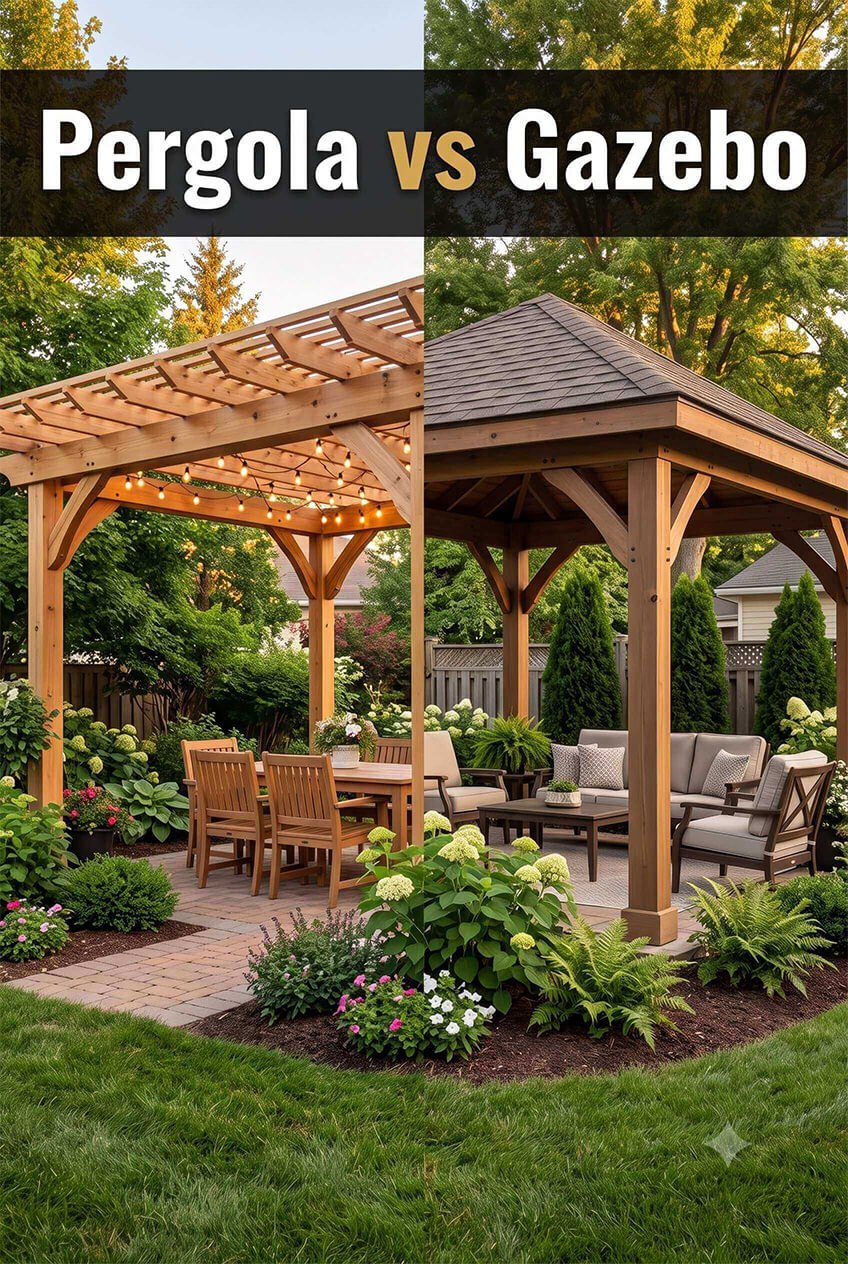
Pergola vs Gazebo: The Master Comparison Chart
| Criteria | Pergola | Gazebo |
|---|---|---|
| Average Cost | $2,000–$10,000+ (kits to fully custom builds) | $3,000–$15,000+ (kits to custom hardtop builds) |
| Weather & Rain Protection | Partial — open slats let some rain and direct sun through | Full — solid roof blocks rain and harsh sun completely |
| Shade Coverage | Filtered and adjustable, especially with louvered or retractable roof options | Full, consistent shade all day without any add-ons |
| Durability & Lifespan | 15–25 years for wood, 30+ years for aluminum or vinyl | 10–20 years for wood, 20–30+ years for steel or hardtop builds |
| Maintenance | Low to moderate — occasional restaining or sealing if wood | Moderate — roof, gutter, and drainage checks needed over time |
| Installation Difficulty | Moderate, with plenty of DIY-friendly kit options | Moderate to high — heavier structure, may require a permit |
| Style Flexibility | High — easy to dress up with curtains, vines, or string lights | Moderate — more of a fixed, defined structure and footprint |
| Resale Value | Solid boost, especially with lighting or an attached design | Strong boost, especially for permanent hardtop builds |
What these numbers mean in a real backyard: a pergola is the more flexible, better-looking investment for readers who want to layer in their own shade solution over time — curtains this year, a retractable canopy next year. A gazebo is the “install it once and stop thinking about it” option, especially if you live somewhere rain shows up uninvited. Neither is objectively better; they’re built for different weather realities and different levels of commitment.
Quick Look: Pergola vs Gazebo at a Glance
Pergola
An open-roof structure built for filtered shade, style, and easy customization — best for readers who want an airy, plant-friendly space.
View on Amazon →Gazebo
A fully roofed structure built for complete weather protection — best for readers who want reliable shade and rain cover with zero add-ons.
View on Amazon →Pergola: Best-Fit Scenarios, Pros & Cons
A pergola makes the most sense if you want a space that feels open and integrated with your garden rather than a standalone box. It’s especially strong for readers who like the idea of evolving the space over time — adding a canopy, curtains, or climbing plants as the years go on, instead of committing to one fixed look.
Pros
- Open, airy look that doesn’t visually shrink a smaller yard Our small patio ideas has more inspiration along these same lines.
- Highly customizable with curtains, vines, lighting, or a retractable canopy
- Generally lighter structure with more DIY-friendly kit options
- Pairs naturally with existing decks and patios It’s a similar trade-off to deciding on deck vs patio elsewhere in the space.
- Lower entry cost for basic kit versions
Cons
- Offers little to no rain protection without an added cover
- Direct sun still gets through unless you add louvers or a canopy
- Wood versions need periodic restaining or sealing Our wood deck vs composite deck comparison covers that decision in more depth.
- Louvered or retractable upgrades add significant cost
Real cost range: roughly $2,000–$10,000+, depending on size, material, and whether you add a louvered or retractable roof system.
Gazebo: Best-Fit Scenarios, Pros & Cons
A gazebo makes the most sense if weather is the deciding factor in whether you actually use your backyard. It’s the stronger choice for readers who host regardless of forecast, live somewhere rain or intense sun is common, or want a space that reads as a permanent architectural feature rather than a garden accent.
Pros
- Full protection from rain and direct sun, no add-ons required
- Reads as a more permanent, higher-value structural feature
- Better suited to heavy daily use and hosting regardless of weather
- Hardtop and steel versions require very little upkeep
Cons
- Generally higher cost than a comparable pergola
- Heavier structure with more involved installation
- Permanent builds may require a local building permit
- Fixed footprint and roofline offer less style flexibility over time
Real cost range: roughly $3,000–$15,000+, with hardtop and fully custom builds landing at the higher end.
Real Scenario Verdicts
Small Urban Patio
A compact concrete patio with limited floor space and a nearby privacy fence.
Verdict: Pergola wins — its open structure keeps a tight space feeling larger instead of boxed in.
Budget Backyard Makeover
A first backyard upgrade with a tight overall renovation budget.
Verdict: Gazebo wins — an affordable pop-up or steel-frame kit delivers full coverage for less than many mid-range pergola builds.
Luxury Poolside Build
An upscale poolside lounge area where sightlines and adjustable shade both matter.
Verdict: Pergola wins — a louvered or retractable roof gives adjustable shade without blocking pool views.
Rental-Friendly Patio
A rented home or apartment patio where nothing can be permanently installed.
Verdict: Gazebo wins — a lightweight, freestanding pop-up canopy needs no anchoring and travels with you.
High-Traffic Family Backyard
A daily-use yard with kids, pets, and frequent outdoor meals.
Verdict: Gazebo wins — full shade and rain coverage hold up better under constant daily use.
Professional Tips & Common Regret Mistakes
What a designer would tell you before you buy
- Don’t choose based on photos alone. The single most common regret is picking a pergola for the look, then realizing it can’t be used during rain season — check your region’s actual weather patterns first.
- Factor in the add-on cost, not just the base price. A basic pergola looks cheaper on paper, but louvered panels or a retractable canopy can push it close to gazebo pricing — price the version you’ll actually want to end up with.
- Resale-wise, permanence reads as value. A well-built, permanent structure — pergola or gazebo — tends to appraise better than anything that looks temporary or bolted-on as an afterthought.
- Maintenance reality-check: if you don’t want a seasonal task on your calendar, lean toward aluminum, vinyl, or hardtop steel over raw wood for either structure.
Shop the Winner
If you’re leaning toward either option, here’s what to get started with. Both a pergola and a gazebo look and function better once you’ve furnished underneath them properly — the right outdoor furniture and shade accessories are what actually make the space usable.
Best Overall
A weather-resistant outdoor sofa or dining set built for the specific coverage level your structure provides.
Best Budget
A simple outdoor rug, cushion set, and string lights to make the space feel finished without a big spend.
Best Premium
A modular outdoor sectional paired with a retractable shade sail or louvered accessory for full climate control.
See our full Best Outdoor Patio Furniture & Shade Accessories guide for specific picks in every budget tier.
See the Full Buying GuideFrequently Asked Questions
What’s the main difference between a pergola and a gazebo?
A pergola is an open-roof structure with slats or beams that filters sunlight, while a gazebo has a solid, usually peaked roof that fully blocks rain and sun.
Which is cheaper, a pergola or a gazebo?
Basic pergola kits are often less expensive than fully covered gazebos, but affordable pop-up gazebo kits can actually undercut a mid-range wood pergola, so cost really depends on the specific style and materials you choose.
Does a pergola provide shade like a gazebo?
A pergola provides filtered, partial shade unless you add a canopy, curtains, or louvered panels, while a gazebo’s solid roof gives full shade by default.
Can a pergola keep out rain?
A standard open-slat pergola will not keep out rain; you’d need to add a retractable canopy, louvered roof panels, or clear roofing panels to get real rain protection.
Which is better for a small backyard, pergola or gazebo?
A pergola typically suits small backyards better because its open structure feels less bulky and visually opens up the space.
Do I need a permit to build a pergola or gazebo?
Many areas require a permit for permanent gazebos and larger attached pergolas, especially above a certain height or footprint, so check your local building codes before you build.
How long does a pergola last?
A well-maintained wood pergola typically lasts 15 to 25 years, while aluminum or vinyl versions can last 30 years or more.
How long does a gazebo last?
A wood gazebo typically lasts 10 to 20 years, while steel-framed or hardtop gazebos can last 20 to 30 years or longer with proper maintenance.
Which adds more resale value, a pergola or a gazebo?
Both can boost resale value, but permanent hardtop gazebos tend to read as a bigger structural upgrade to appraisers, while a well-designed pergola with lighting can add similar appeal at a lower cost.
Can I add a roof or cover to a pergola later?
Yes, many pergolas can be retrofitted with a retractable canopy, louvered roof panels, or a fabric cover to add more weather protection after installation.
Is a gazebo more durable than a pergola in winter or snow?
A solid-roofed gazebo generally handles snow load better than an open pergola, though both need a structure rated for your local snow load if you live in a heavy-snow climate.
Which is easier to install, a pergola or a gazebo?
Pergola kits are often slightly easier to install because they’re lighter and more open, while gazebos, especially hardtop models, tend to involve a heavier structure and more assembly steps.
Can I build a pergola or gazebo myself?
Many kit-based pergolas and gazebos are designed for DIY installation over a weekend, but larger custom or permanent structures are usually best left to a contractor.
What’s the average cost of a pergola?
Most homeowners spend between $2,000 and $10,000 on a pergola, depending on size, material, and whether it’s a kit or a custom build.
What’s the average cost of a gazebo?
Gazebos typically range from $3,000 to $15,000 or more, with hardtop and custom-built versions at the higher end.
Which requires more maintenance, a pergola or a gazebo?
A gazebo generally requires more ongoing maintenance because of its roof, gutters, and drainage system, while a pergola’s maintenance is usually limited to occasional wood sealing or restaining.
Can a pergola or gazebo be attached to my house?
Yes, both structures come in attached versions that connect directly to your home, though attached pergolas are especially popular for extending a covered patio or deck.
Which is better for hosting outdoor dinner parties?
A gazebo’s full shade and weather protection make it more reliable for hosting regardless of weather, while a pergola offers a more open, airy feel for evening gatherings in mild climates.
Do pergolas or gazebos increase home insurance costs?
Permanent structures like a gazebo may need to be reported to your home insurer and could slightly affect your premium, so it’s worth checking with your provider before building either structure.
Which is best for a poolside setup, pergola or gazebo?
A louvered or retractable pergola is often the better poolside choice because it offers adjustable shade without fully blocking pool views, though a gazebo works well if you want guaranteed full coverage.
Final Verdict
Choose a pergola if you want an open, adjustable, plant-friendly space and live somewhere with mild, mostly dry summers — it’s the better fit for small yards, budget-conscious first upgrades with a kit, and poolside builds where sightlines matter.
Choose a gazebo if you want guaranteed shelter with zero add-ons, host regardless of weather, or need a structure that holds up to daily family use — it’s the stronger pick for rainy climates, high-traffic backyards, and rental-friendly pop-up setups.
If you’re still torn, let your climate decide: dry and sunny leans pergola, wet and unpredictable leans gazebo.

