Open kitchen shelves have grown into one of the most popular design trends for modern homes. Unlike closed cabinetry, these shelves put everyday items on full display, turning practical storage into visible style. Learning how to decorate open kitchen shelves means finding the balance between beauty and daily usability.
Every kitchen carries its own character, whether minimalist, farmhouse, or eclectic. Open shelving offers a chance to express that personality while keeping frequently used items within easy reach. This guide covers practical strategies for styling shelves that stay functional and visually appealing. If you’re also weighing the floating shelves vs cabinets, that’s worth deciding early too.
1. Plan a Balanced Layout
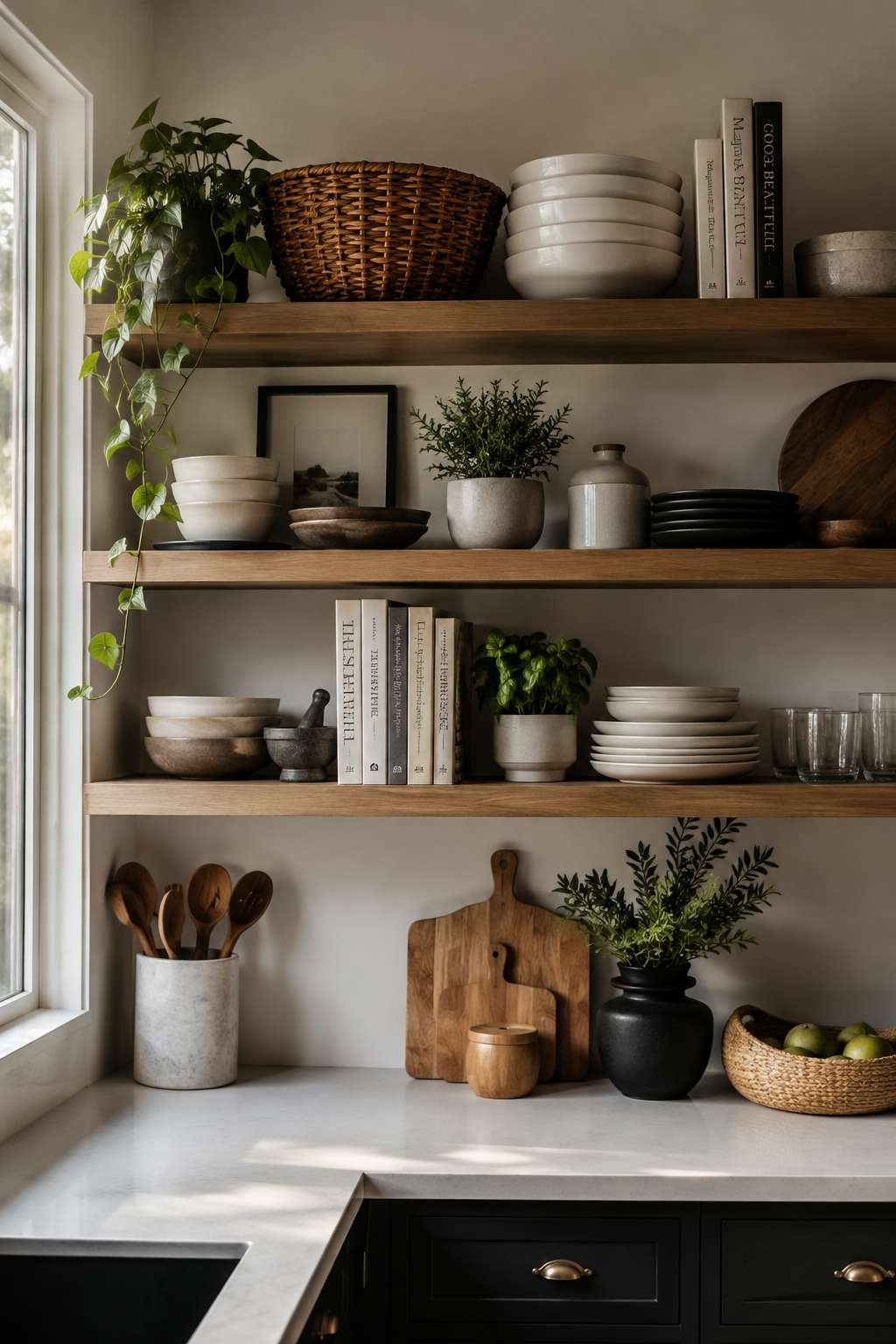
Before adding a single item, it helps to plan a balanced layout across the entire shelf. Dividing the space mentally into sections prevents one area from feeling overloaded while another sits empty. This planning step ensures the final display feels intentional rather than random.
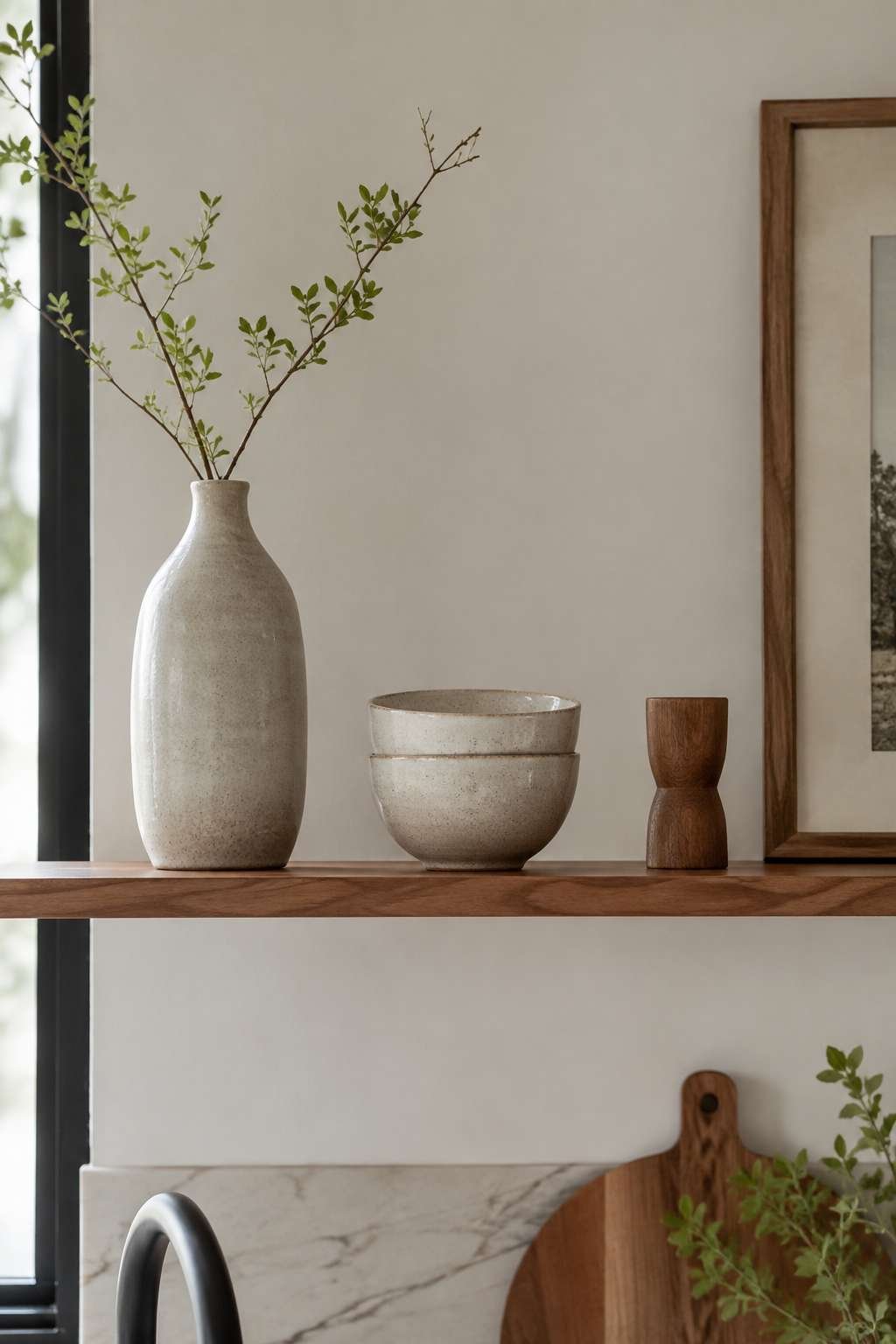
Working in triangular groupings of three items tends to create the most visually pleasing arrangements. Leaving some negative space between groupings allows each item to stand out individually. This approach mirrors techniques used by professional stylists in showroom kitchens.
- Divide shelves into visual sections mentally. It’s a similar trade-off to deciding on open shelves vs closed cabinets elsewhere in the space.
- Group items in odd numbers, like threes
- Leave negative space between groupings
- Avoid overloading one section of the shelf. Our guide on our how to decorate a kitchen shelf walks through this step by step.
- Step back frequently to check overall balance
2. Choose a Cohesive Color Story
A cohesive color story ties the entire shelf display together, even with varied item types. Selecting two or three main tones, like white, wood, and black, keeps the look unified and calm. This approach prevents the shelf from feeling chaotic or mismatched.
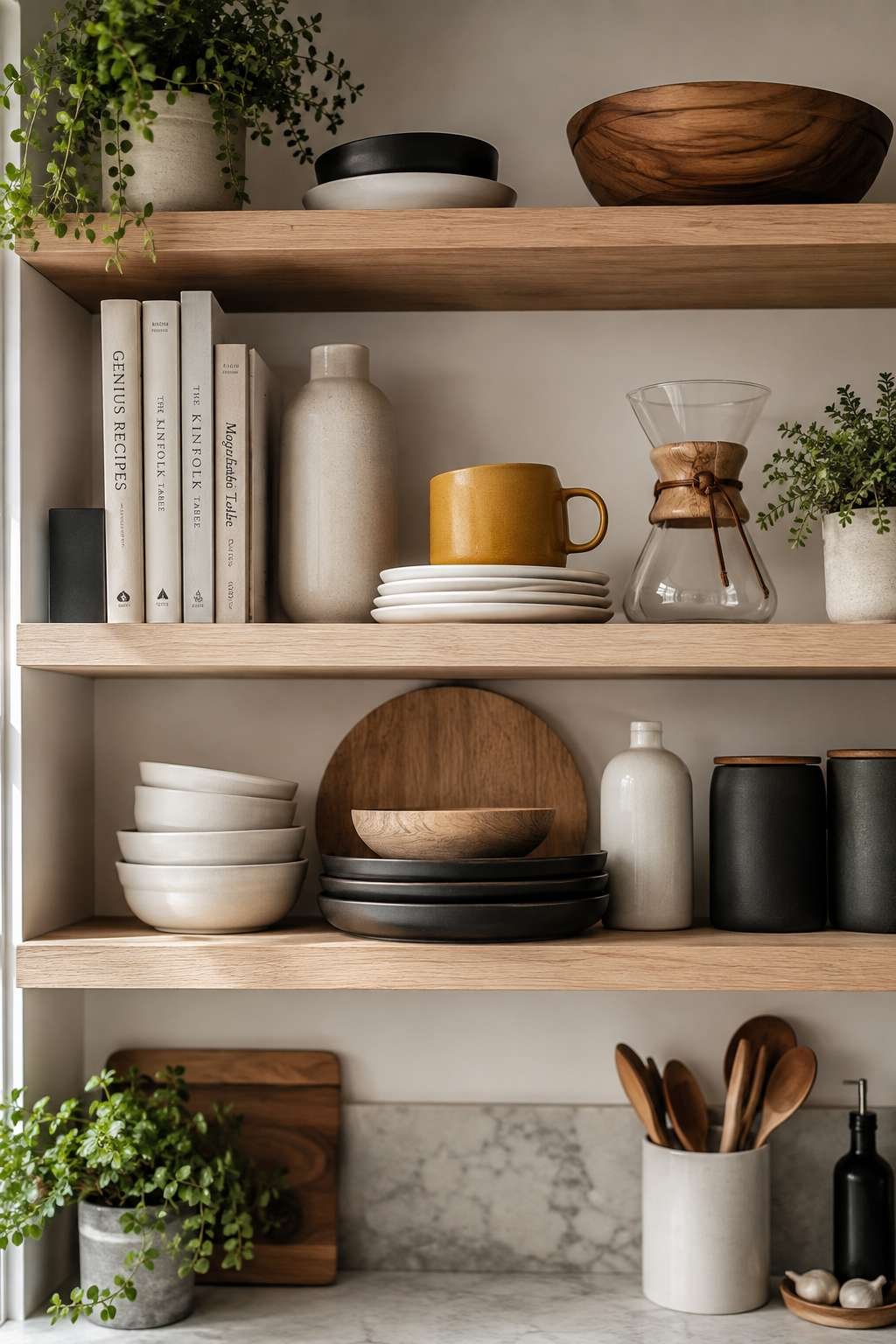
Sticking to neutral bases with one accent color creates flexibility for future additions. New dishware or decor pieces blend naturally when they follow the same established palette. This small planning decision has an outsized impact on the shelf’s finished appearance.
- Select two to three dominant tones
- Use neutral bases for maximum flexibility
- Add one accent color for visual pop
- Keep patterns limited to avoid clutter
- Match the palette to existing kitchen decor
3. Layer Different Heights
Flat, uniform items across a shelf quickly become visually monotonous. Mixing tall vases, medium jars, and short bowls creates a dynamic rhythm the eye naturally follows. This layered height technique is one of the simplest ways to elevate a plain shelf.
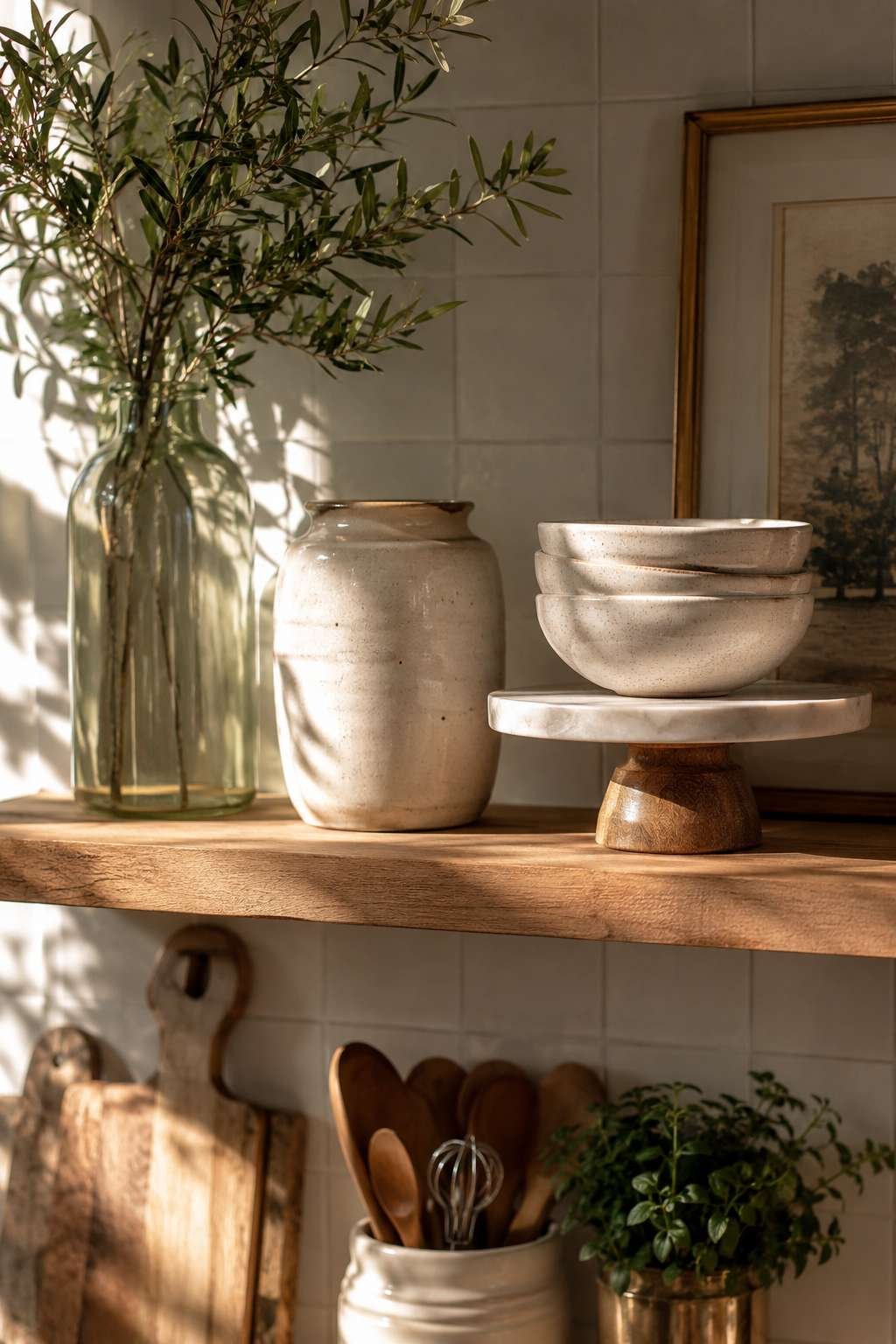
Adding small risers or stands beneath shorter items introduces even more variation. Cake stands, for instance, can elevate a stack of bowls for added dimension. This layering trick makes shelves feel curated rather than simply stocked.
- Mix tall, medium, and short items together
- Use risers to add extra height variation
- Avoid lining items up at the same level
- Try a cake stand for elevated bowls
- Reassess the arrangement from a distance
4. Mix Materials and Textures
Combining different materials and textures keeps open shelves from feeling flat or sterile. Pairing smooth ceramics with woven baskets, wood boards, and glassware adds organic depth. This contrast between rough and smooth surfaces creates visual richness.
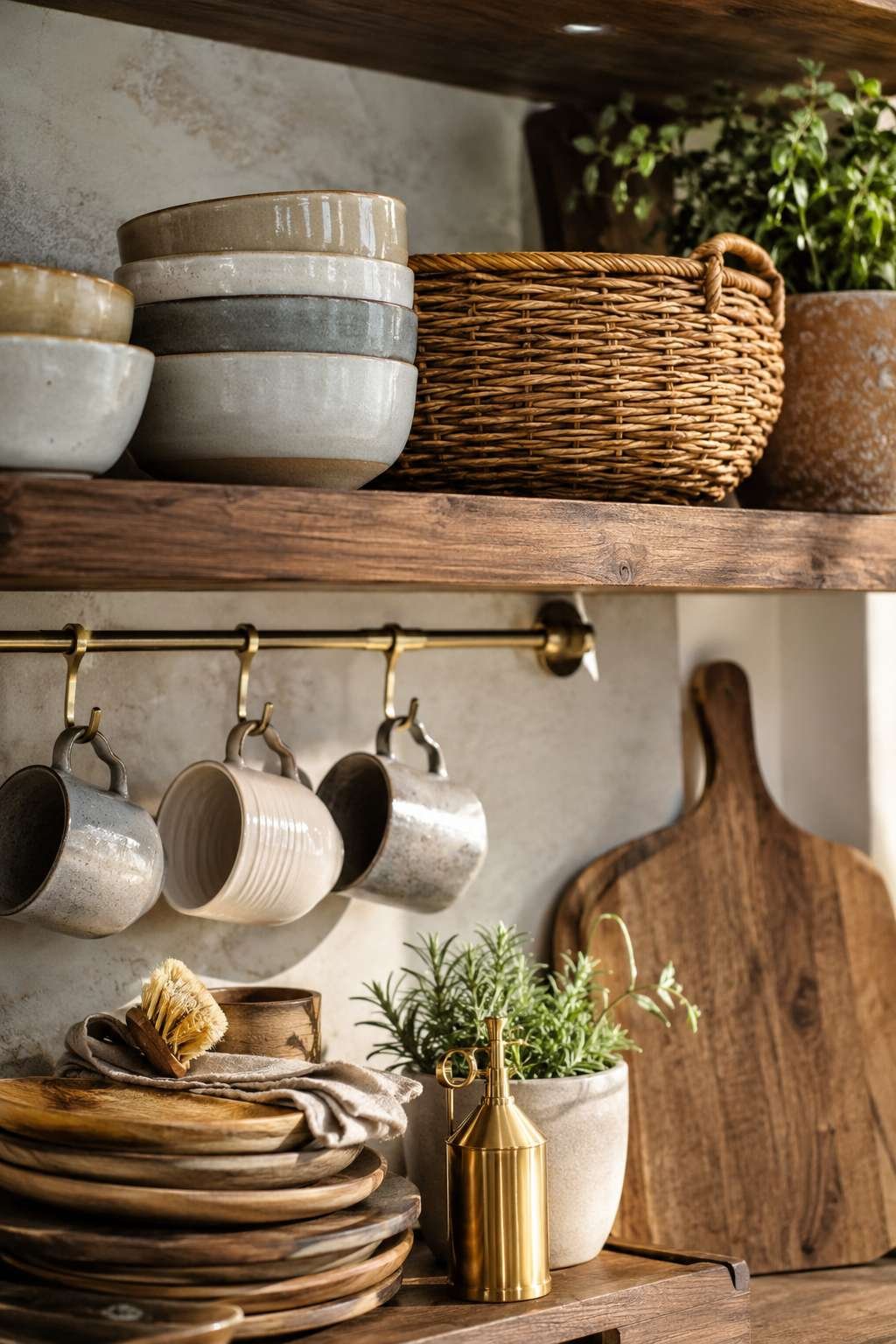
Introducing at least one natural material, like rattan or unfinished wood, softens the overall look. Metal accents, such as brass hooks or trays, add a touch of shine without overwhelming the display. This mix of textures mimics the layered look found in professional interior photography.
- Combine ceramic, wood, and woven textures
- Add one metal accent for subtle shine
- Include a natural fiber item for warmth
- Avoid using only one material throughout
- Balance glossy and matte finishes together
5. Incorporate Greenery
A touch of greenery instantly makes open shelves feel fresh and alive. Small potted herbs, like basil or thyme, serve a dual purpose by adding both beauty and function. Trailing plants draping over the shelf edge soften the overall hard lines.
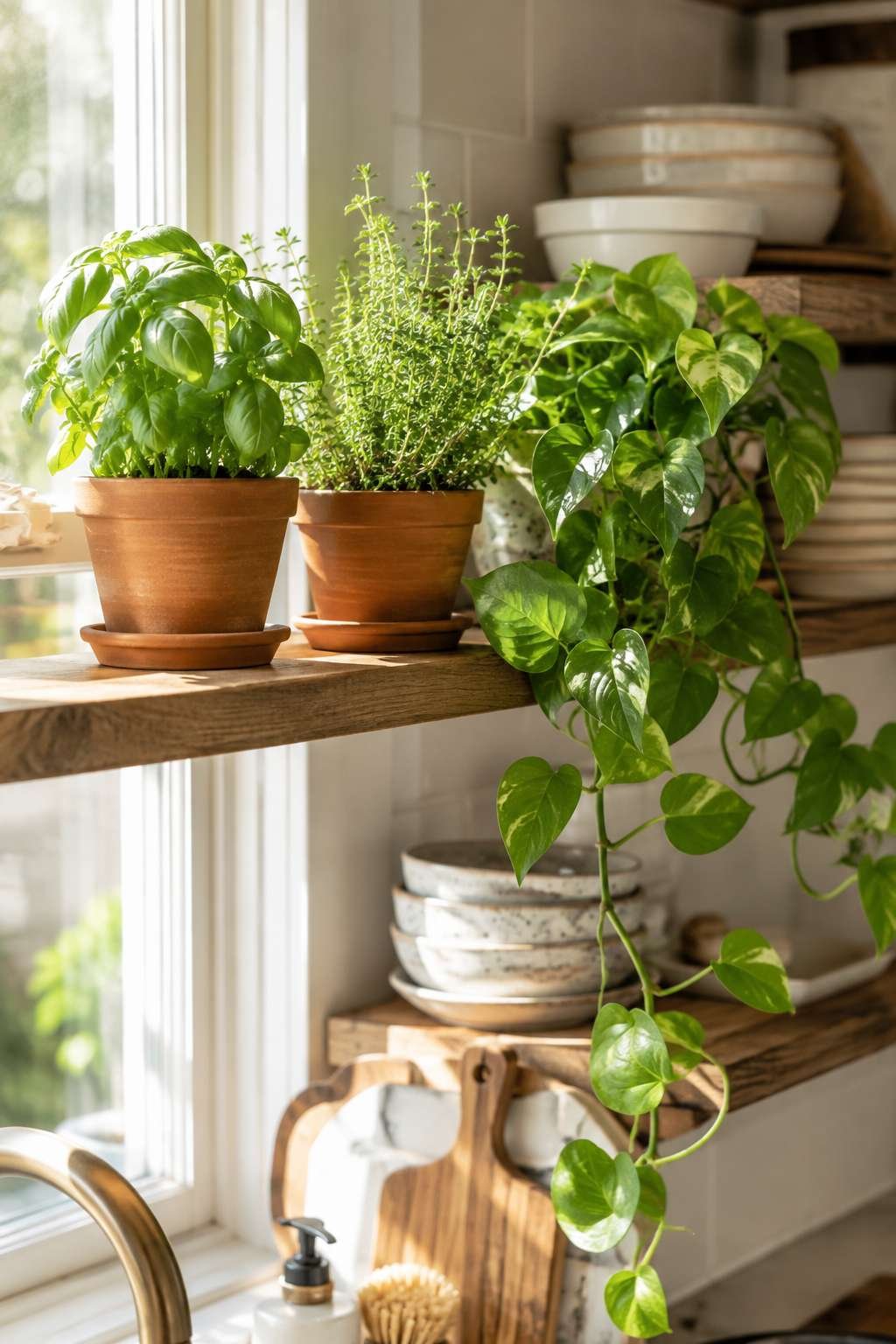
Choosing low-maintenance varieties ensures the plants thrive despite kitchen heat and humidity. Placing them near a window, when possible, supports healthier growth over time. This natural element provides a refreshing contrast to dishware and cookware.
- Add potted herbs for function and beauty
- Use trailing plants to soften shelf edges
- Choose low-maintenance varieties for busy kitchens
- Position plants near available natural light
- Rotate plants seasonally for continued freshness
6. Keep It Edited
Even a beautifully arranged shelf loses impact if it becomes overcrowded with items. Regularly editing the display keeps it feeling fresh and prevents visual fatigue. Removing pieces that no longer serve a purpose maintains a clean, curated appearance.
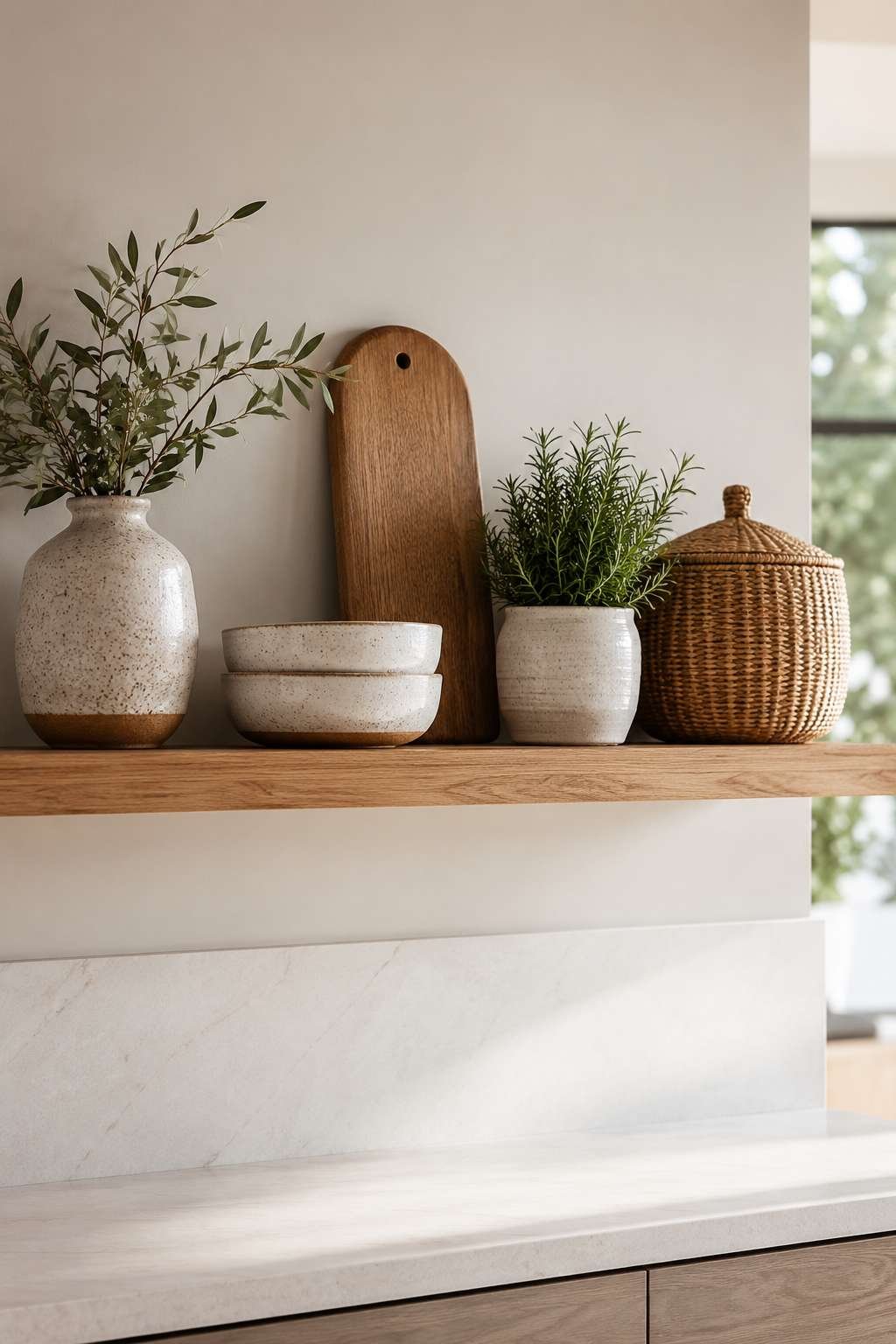
Rotating decor seasonally adds variety without requiring a complete overhaul each time. Swapping warm tones for cooler ones, depending on the season, keeps the kitchen feeling current. This ongoing habit ensures the shelves remain both functional and visually engaging.
- Limit each shelf to five to seven items
- Remove pieces that no longer serve a purpose
- Rotate decor seasonally for variety
- Reassess the display every few months
- Keep a balance of function and decoration
Decorating open kitchen shelves comes down to thoughtful planning and regular maintenance. Balancing height, texture, and color while keeping the display edited creates a look that feels both stylish and practical. Start small, experiment with different combinations, and let the shelves reflect your kitchen’s true character.