Learning how to organize bathroom cabinet space is one of the fastest ways to make your morning routine calmer. A cluttered cabinet hides what you need and wastes precious counter space. Thoughtful interior design turns a chaotic storage spot into a functional, inspiring corner of your home. Different households need different systems, since a busy family bathroom looks nothing like a single-person powder room.
This article covers decluttering strategies, container choices, vertical storage tricks, and long-term maintenance habits. You’ll find ideas for every cabinet size, from a shallow medicine cabinet to a deep vanity base. Whether you’re chasing bathroom cabinet storage ideas for a rental or a forever home, these tips adapt to your space. By the end, you’ll have a repeatable system instead of a one-time cleanup.
1. Assess Your Space and Needs
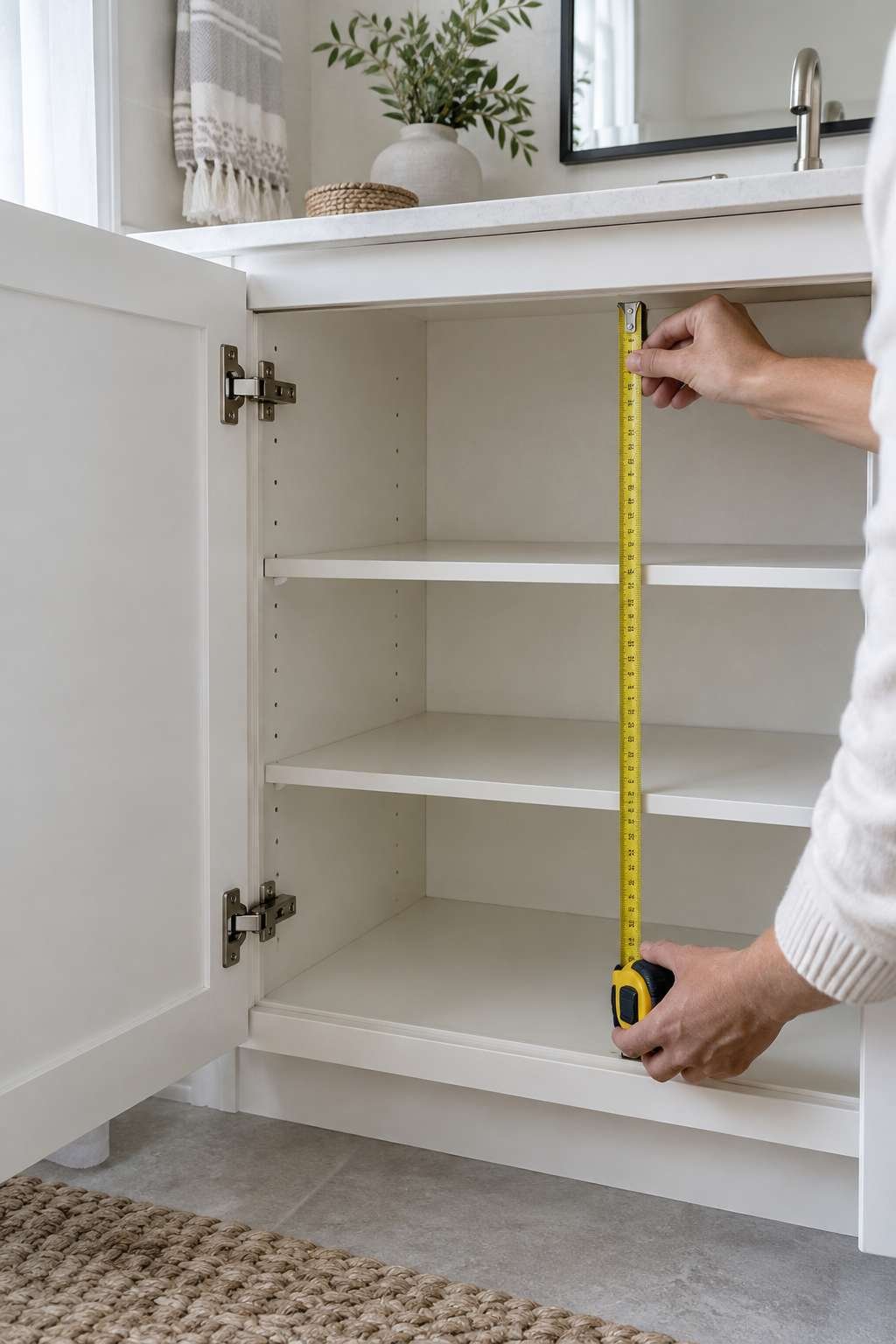
Before buying a single bin, take stock of your cabinet dimensions and shelf layout. Measure the width, depth, and height of every shelf, including the awkward gaps under pipes. Think about who uses this bathroom and what they actually reach for each day. A shared family bathroom needs different zones than a single-user powder room.
Consider how often the door opens and how much daylight or artificial light hits the space. Poor lighting makes small items easy to lose, so a battery-powered puck light can help. Note any moisture issues near the sink, since humidity affects what you can safely store there.
- Measure every shelf before shopping for organizers
- Identify who uses the cabinet and how often
- Check for moisture-prone zones near plumbing
- Note lighting gaps that make items hard to find
- Sketch a rough zone map before you start sorting
2. Declutter Before You Organize
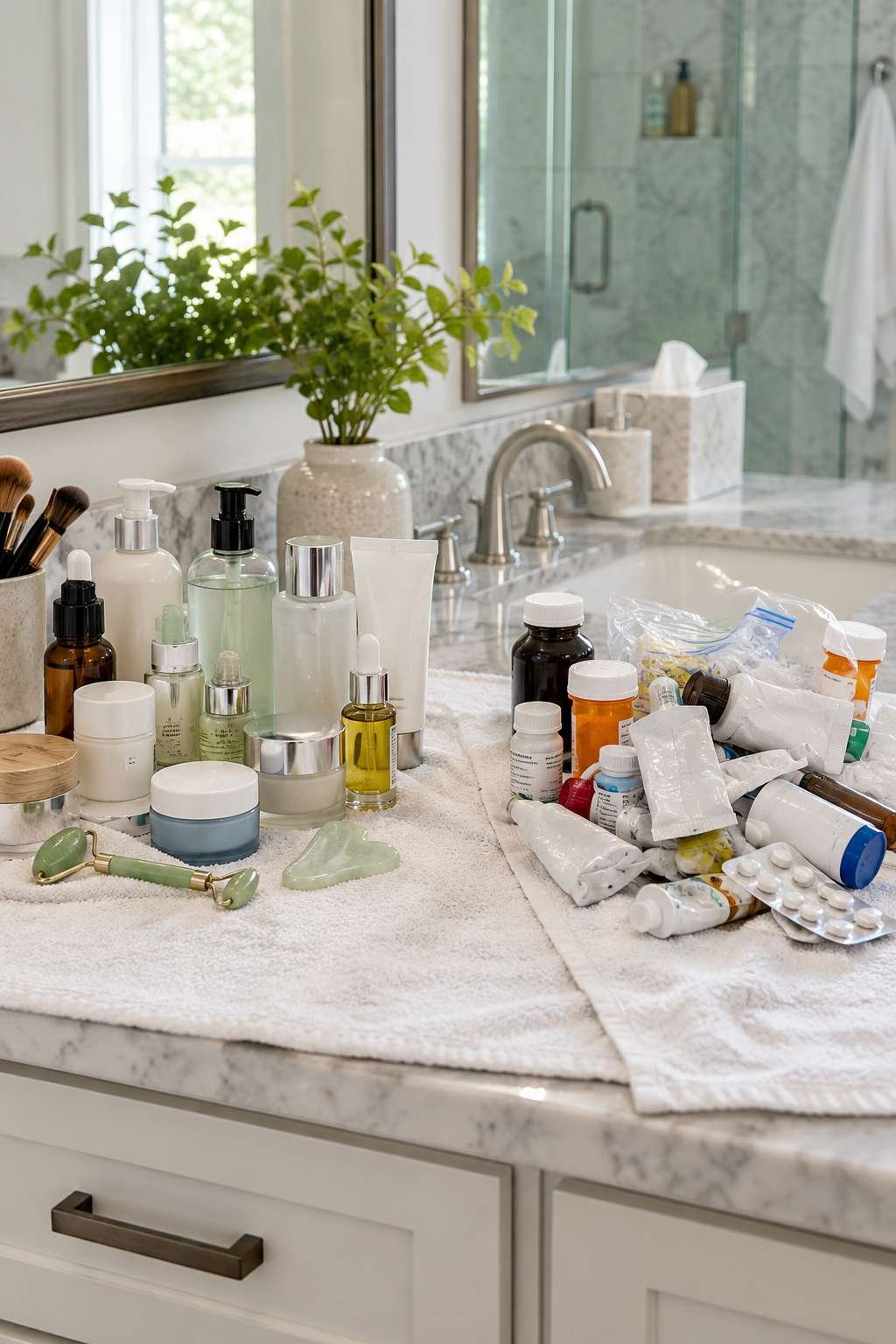
Skipping this step is the biggest mistake people make when tackling bathroom cabinet organization ideas. Pull everything out onto a towel so you can see the full scope of what’s stored. Sort items into keep, toss, and relocate piles as you go. Expired sunscreen, dried-out nail polish, and empty bottles should go straight into the toss pile.
Check expiration dates on skincare products and medications, since many lose effectiveness over time. Anything used less than twice a year probably belongs in a different storage spot. This decluttering pass is what makes every later step actually work.
- Empty the entire cabinet onto a flat surface
- Toss expired or unused skincare and medications
- Relocate rarely used items to a hall closet
- Wipe down shelves before anything goes back in
- Set a timer to keep the process moving
3. Categorize Your Items
Once the clutter is gone, group what remains into clear categories. Common groups include daily essentials, hair tools, first aid, and backup supplies. This step is central to any lasting organizing bathroom cabinets system. Grouping like items together makes it obvious when you’re running low on something.
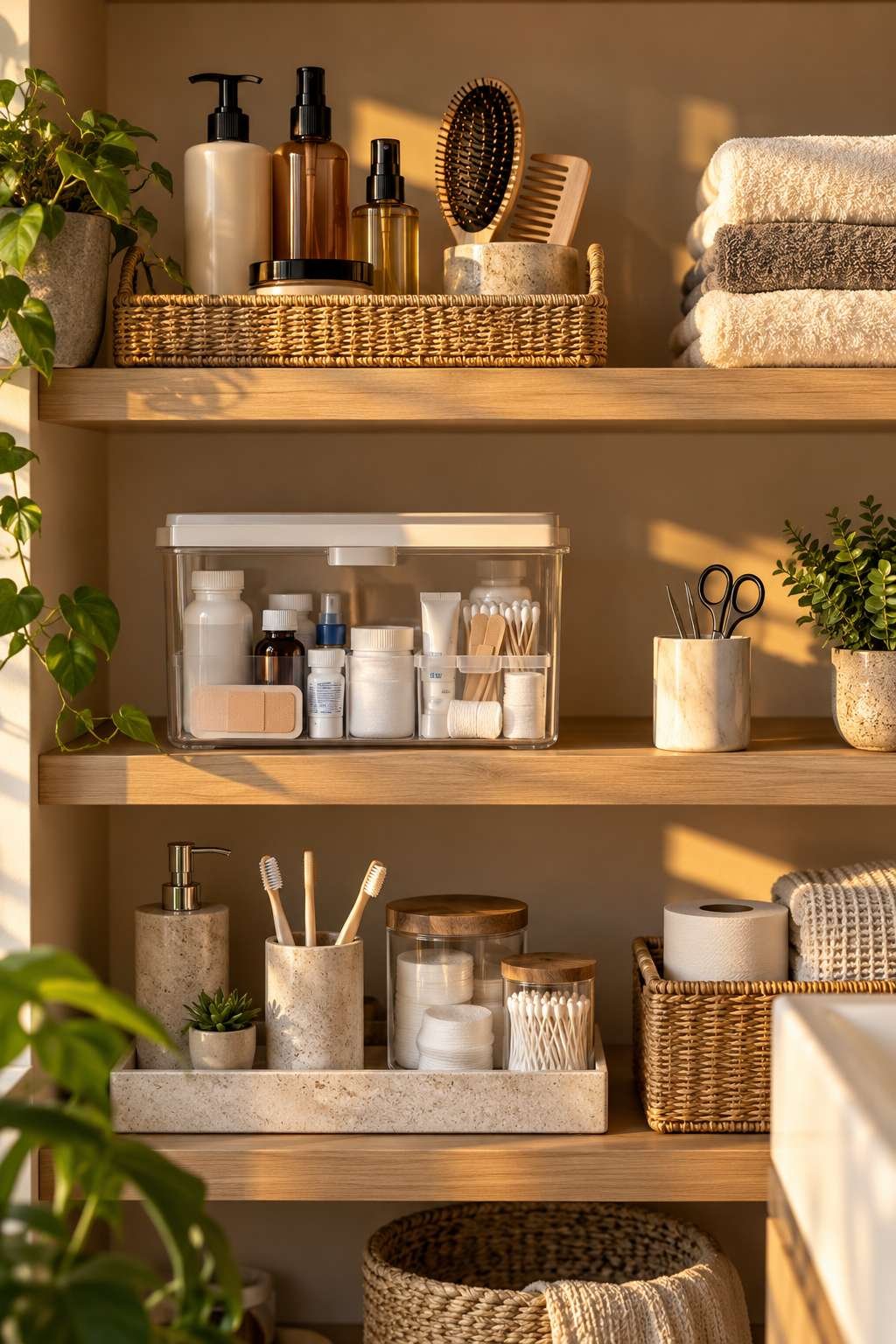
Keep categories broad enough to be practical but specific enough to stay tidy. A hair care zone might hold brushes, ties, and styling products together. Avoid creating so many tiny categories that the system becomes hard to maintain.
- Group items into 4-6 broad categories
- Keep daily essentials separate from backups
- Create a dedicated first-aid grouping
- Avoid overly narrow categories that are hard to maintain
- Reassess categories every few months as needs shift
4. Choose the Right Storage Containers
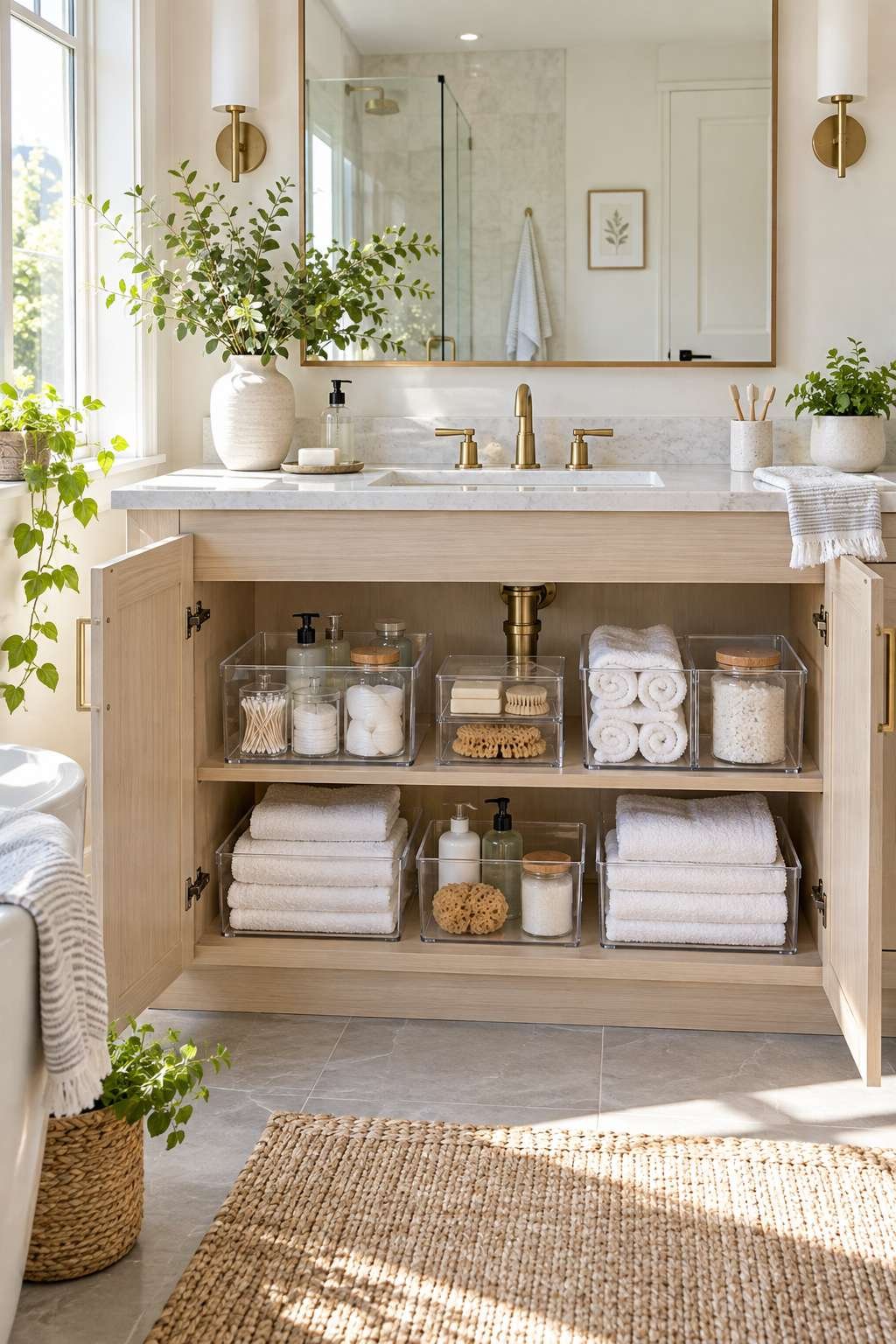
The right containers turn loose clutter into a visually organized system. Clear acrylic bins let you see contents at a glance without digging. Stackable organizers make the most of shallow shelves that waste vertical inches. Choose materials that resist moisture, since bathrooms see constant humidity swings.
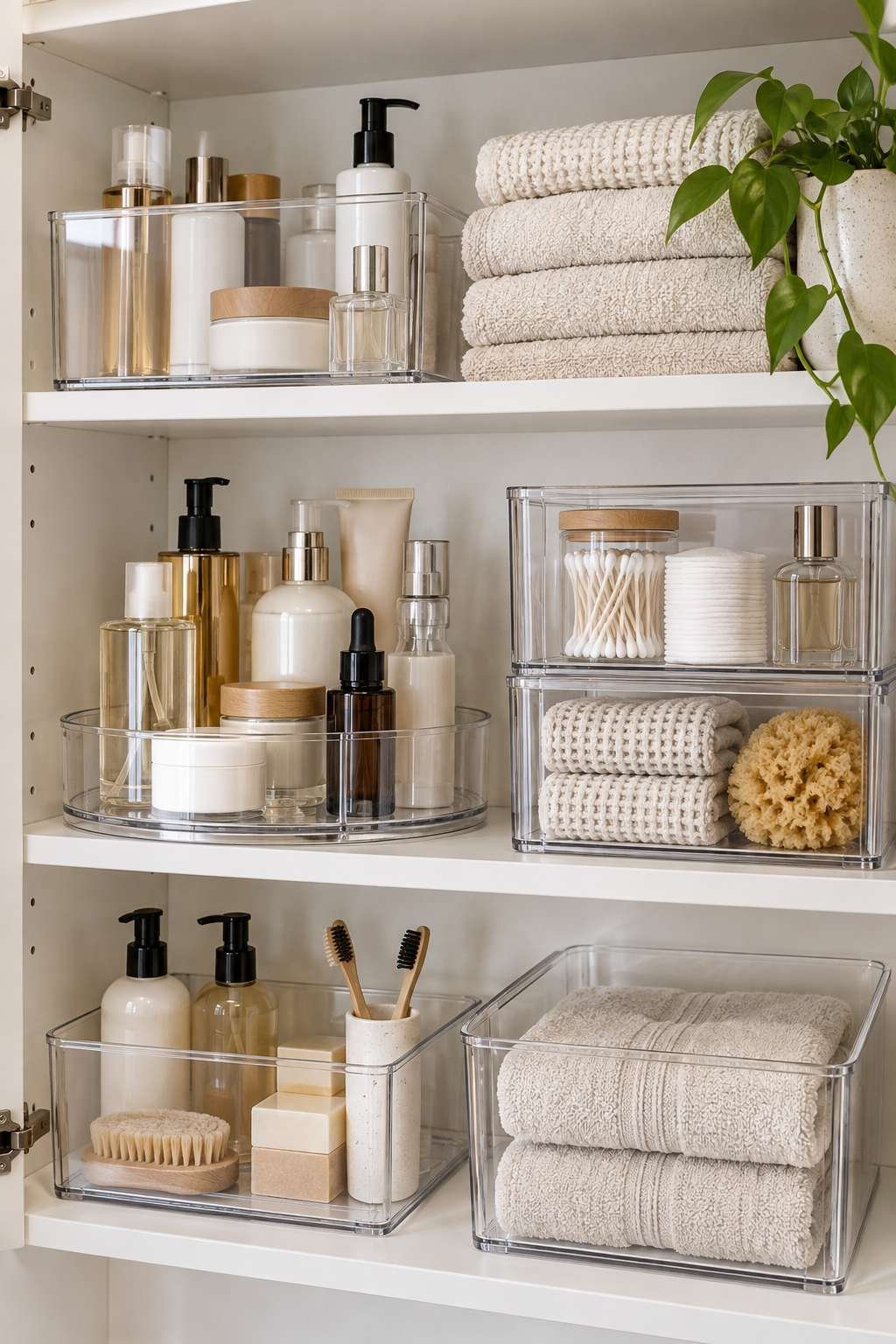
Uniform bin sizes create a cleaner look and make shelf space more predictable. A turntable organizer works well for bottles that get lost in deep corners. Avoid mismatched containers, since they make the cabinet look cluttered even when it’s technically organized.
- Use clear acrylic bins for at-a-glance visibility
- Add a turntable organizer for deep corner shelves
- Choose moisture-resistant materials over cardboard
- Stick to uniform bin sizes for a tidy look
- Reserve one bin as a rotating “backup stock” zone
5. Use Vertical Space Wisely
Most cabinets waste significant vertical storage above stacked items. Adding a small shelf riser doubles usable space without any renovation. Over-the-door organizers turn unused door space into prime real estate for small items. Adhesive hooks on the inside panel hold hair tools without taking up shelf room.
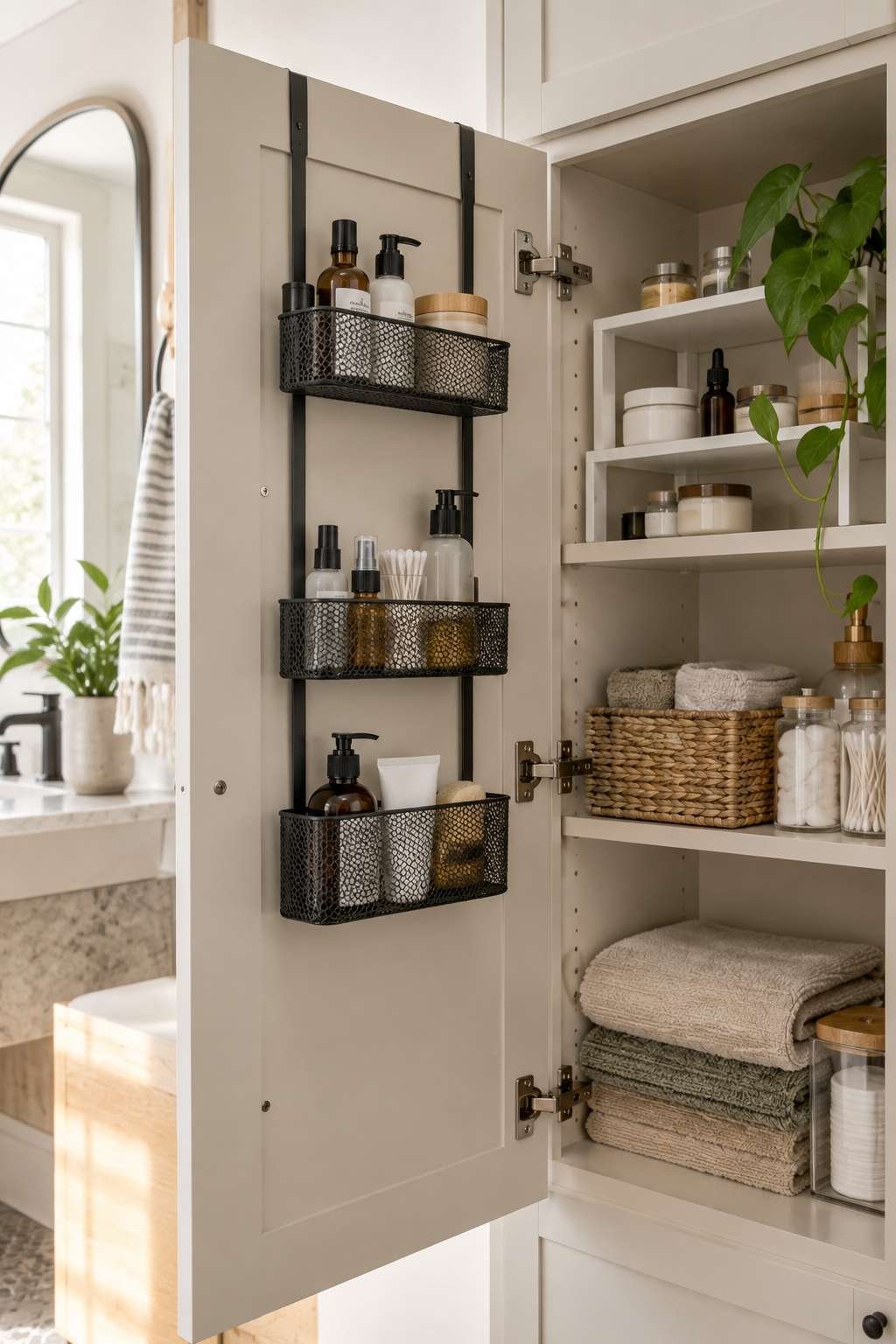
Tension rods installed sideways create a hidden shelf for flat items like trays or cleaning cloths. This kind of space-saving hack is especially useful in small apartment bathrooms. Vertical solutions matter most when floor and counter space are already tight.
- Add a shelf riser to double usable shelf space
- Install an over-the-door organizer for small items
- Use adhesive hooks for hair tools and towels
- Try a sideways tension rod as a hidden shelf
- Reserve top shelves for rarely used backup items
6. Organize by Frequency of Use
Place your most-used items at eye level for quick, effortless access. This daily-use zoning principle saves time during rushed mornings. Items used weekly can move to lower or upper shelves, while seasonal items go furthest back. A toothbrush and floss station near the front makes the daily routine faster.
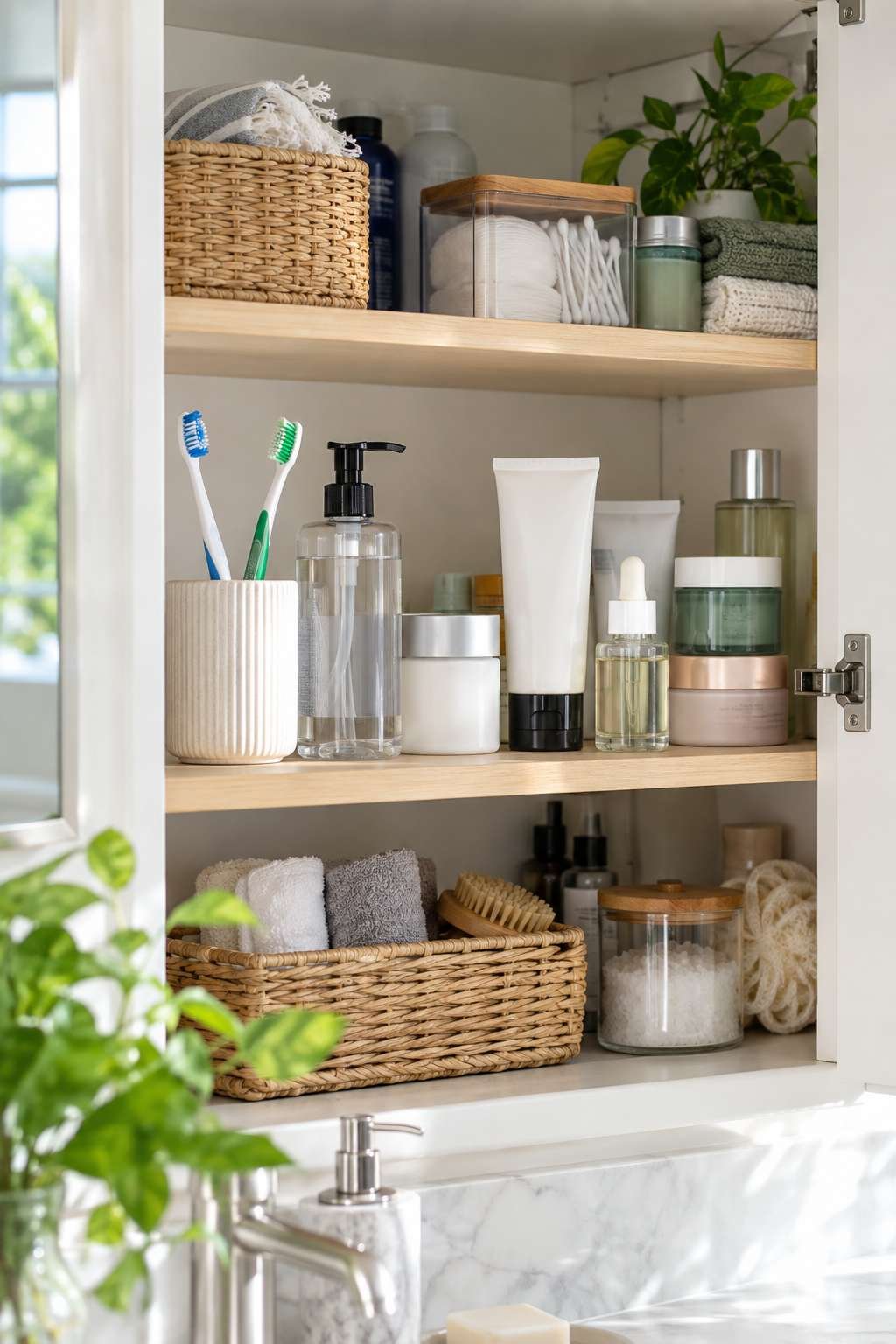
Think through your actual morning routine step by step, not just guessed habits. Watching how you physically move through the space reveals what deserves prime real estate. Rearranging based on real behavior beats guessing at an ideal layout.
- Keep daily items at eye level for easy grabbing
- Store weekly-use products on lower or higher shelves
- Push seasonal or backup items to the back
- Match the layout to your real morning routine
- Reassess placement after a few weeks of use
7. Label Everything for Easy Access
Labels keep an organized cabinet from slowly sliding back into chaos. A label maker creates clean, consistent tags that are easy to read quickly. Labeling bins by category also helps other household members put items back correctly. This small step reduces the mental load of remembering where everything lives.
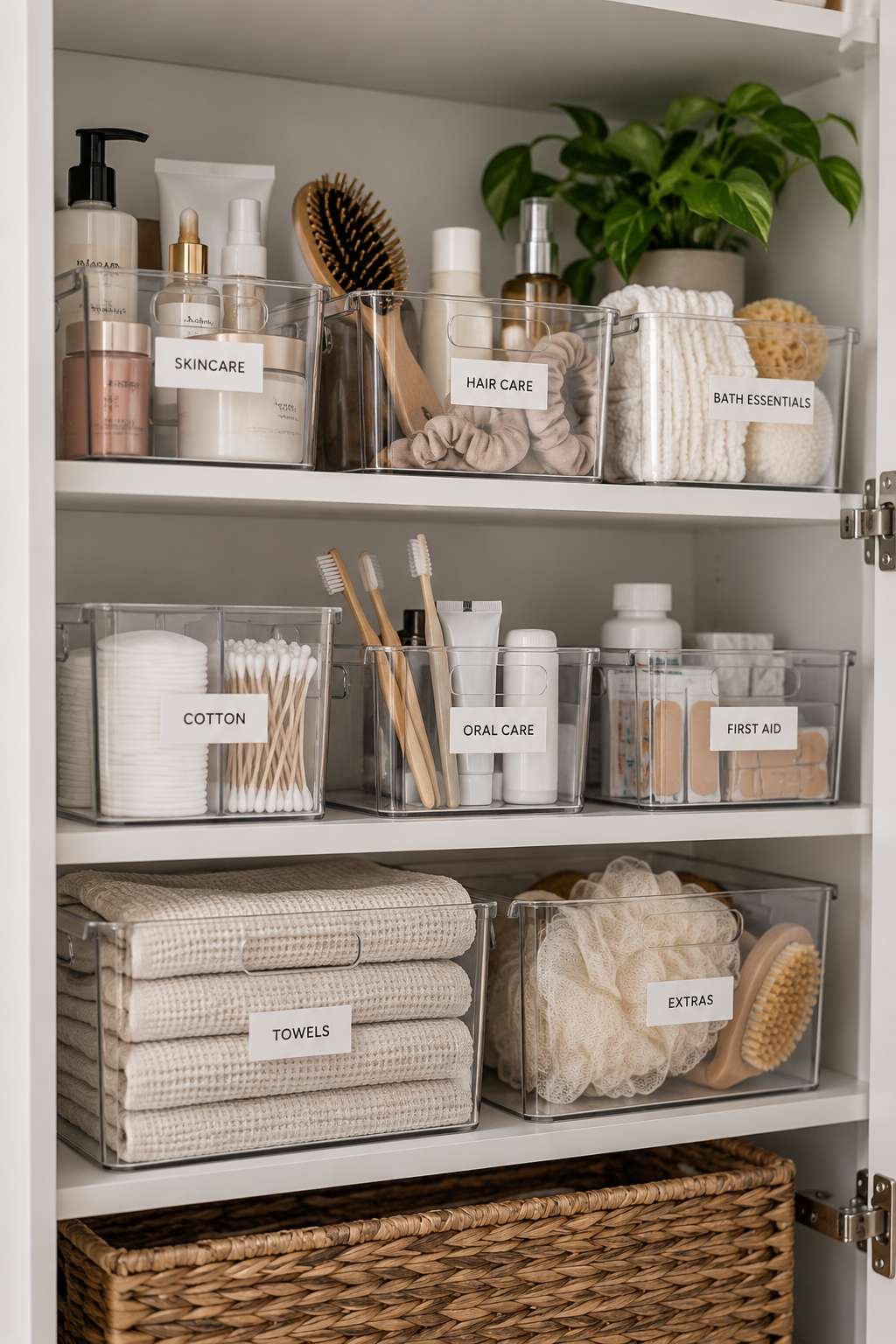
Consider color-coded labels if multiple family members share one cabinet. A kid-friendly labeling system with icons works well for younger children. Clear labeling turns your storage plan into something the whole household can maintain.
- Use a label maker for clean, legible tags
- Color-code labels for shared family cabinets
- Add icon labels for children who can’t read yet
- Label both the bin and the shelf edge
- Update labels whenever categories shift
8. Store Medications and First Aid Safely
Bathroom humidity can degrade medications faster than a cooler, drier location. Consider moving prescription bottles to a bedroom drawer instead of the steamy cabinet. Keep a dedicated first-aid kit stocked with bandages, antiseptic, and basic tools. A childproof lock is essential if young kids can reach the cabinet.
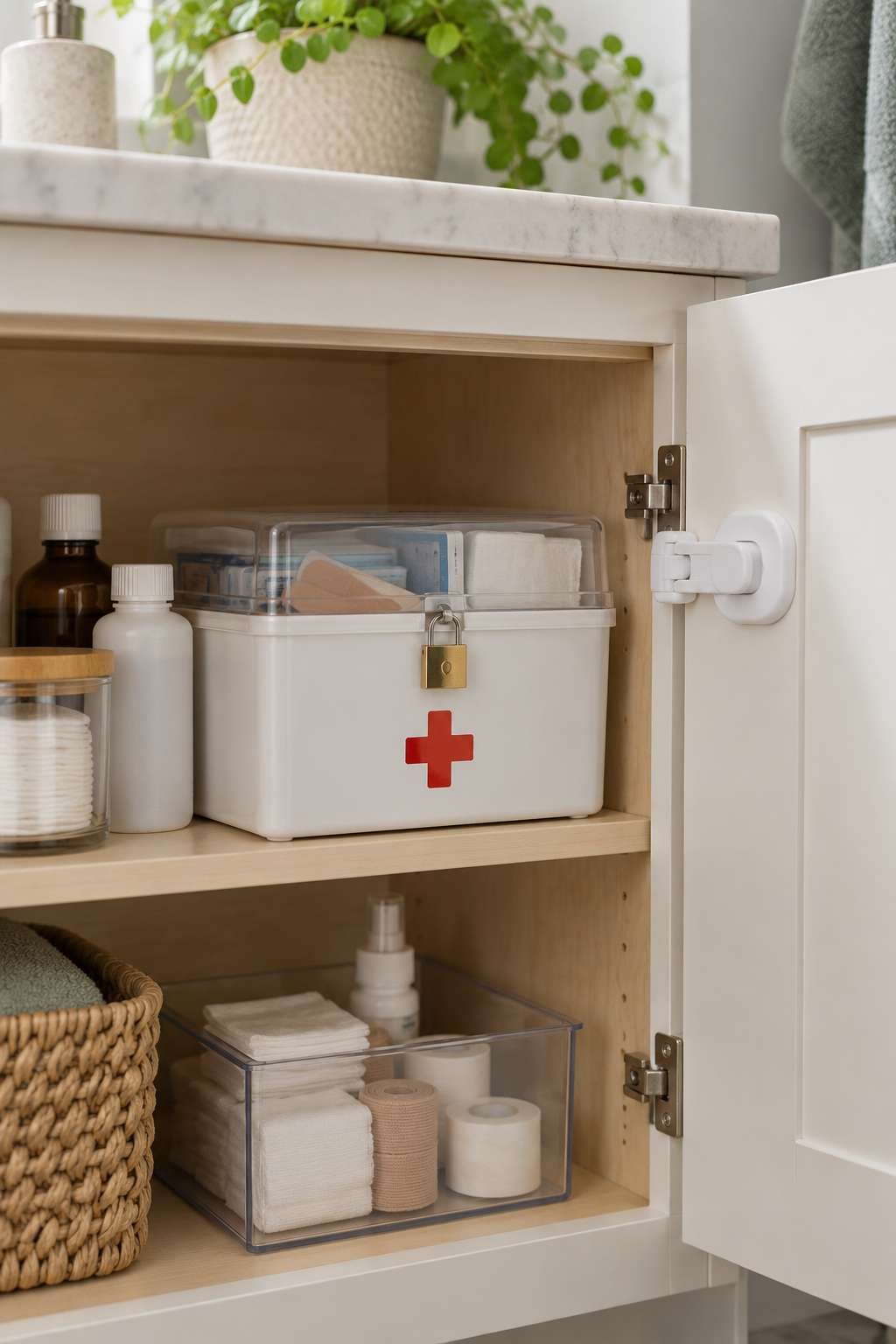
Check medication expiration dates during every seasonal reorganization pass. Store anything potentially dangerous, like sharp tools or strong cleaners, on a high shelf. Safety should always take priority over pure aesthetics in this section.
- Move medications to a cooler, drier location if possible
- Keep a stocked first-aid kit in one clear bin
- Install a childproof lock for cabinets kids can reach
- Store sharp tools and cleaners on high shelves
- Check expiration dates during each seasonal reset
9. Manage Under-Sink Storage
The area under the sink often becomes a catch-all for clutter. Pipes and plumbing create awkward gaps that standard bins don’t fit well. Stackable drawer units designed for tight corners solve this common problem. A pull-out caddy makes cleaning supplies easy to grab without kneeling.
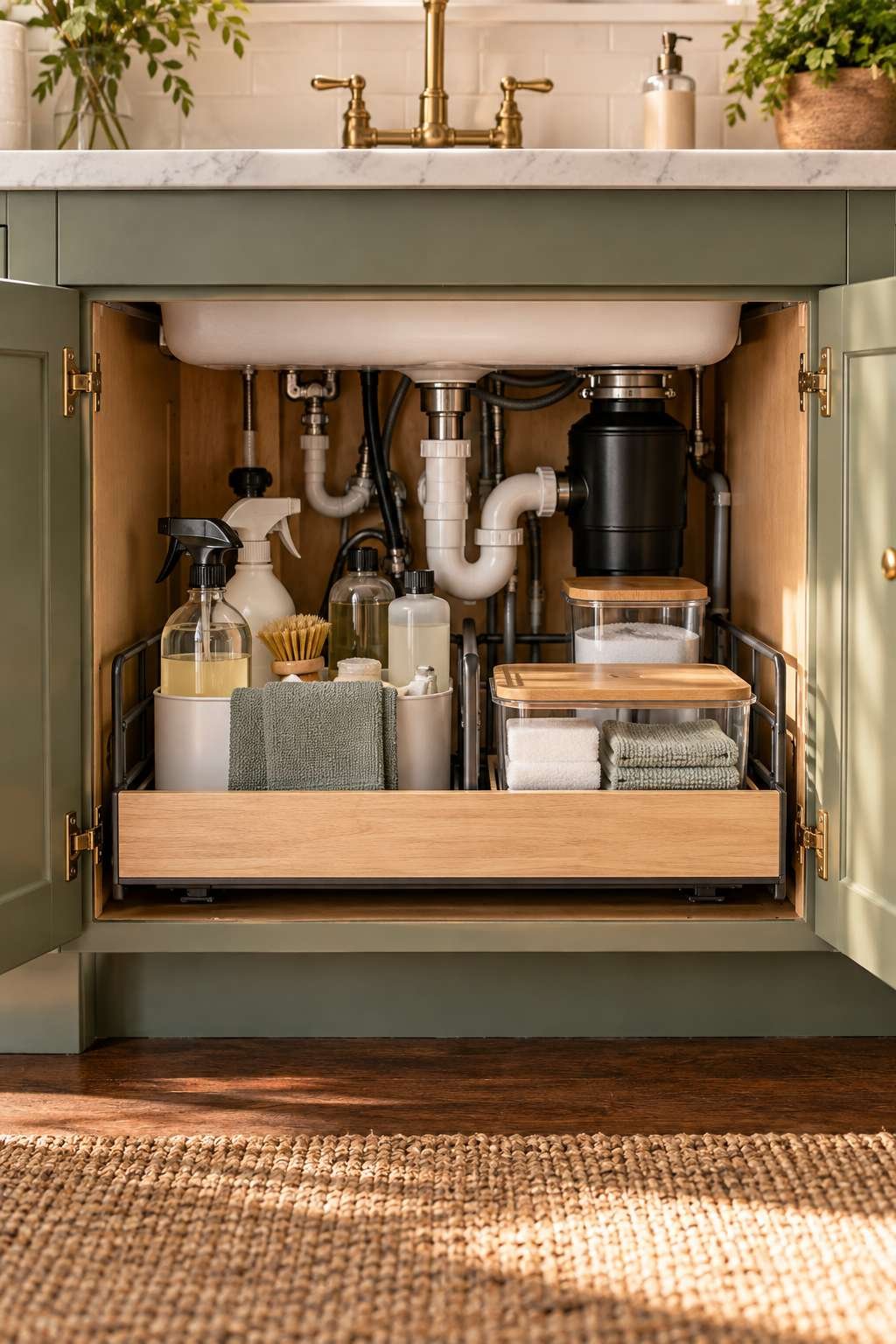
Keep cleaning chemicals separated from personal care items to avoid contamination risk. Under-sink space also benefits from a small tray to catch drips or leaks early. This zone deserves as much planning as the visible upper shelves.
- Use stackable units shaped around plumbing gaps
- Add a pull-out caddy for cleaning supplies
- Separate chemicals from personal care products
- Place a drip tray to catch early leaks
- Check under-sink storage monthly for moisture damage
10. Maintain Your System Long-Term
An organized cabinet only stays that way with regular upkeep. Set a recurring seasonal check-in to declutter and restock as needs change. Five minutes every month keeps small messes from becoming overwhelming projects again. A quick reset habit after shopping trips prevents duplicate purchases from piling up.
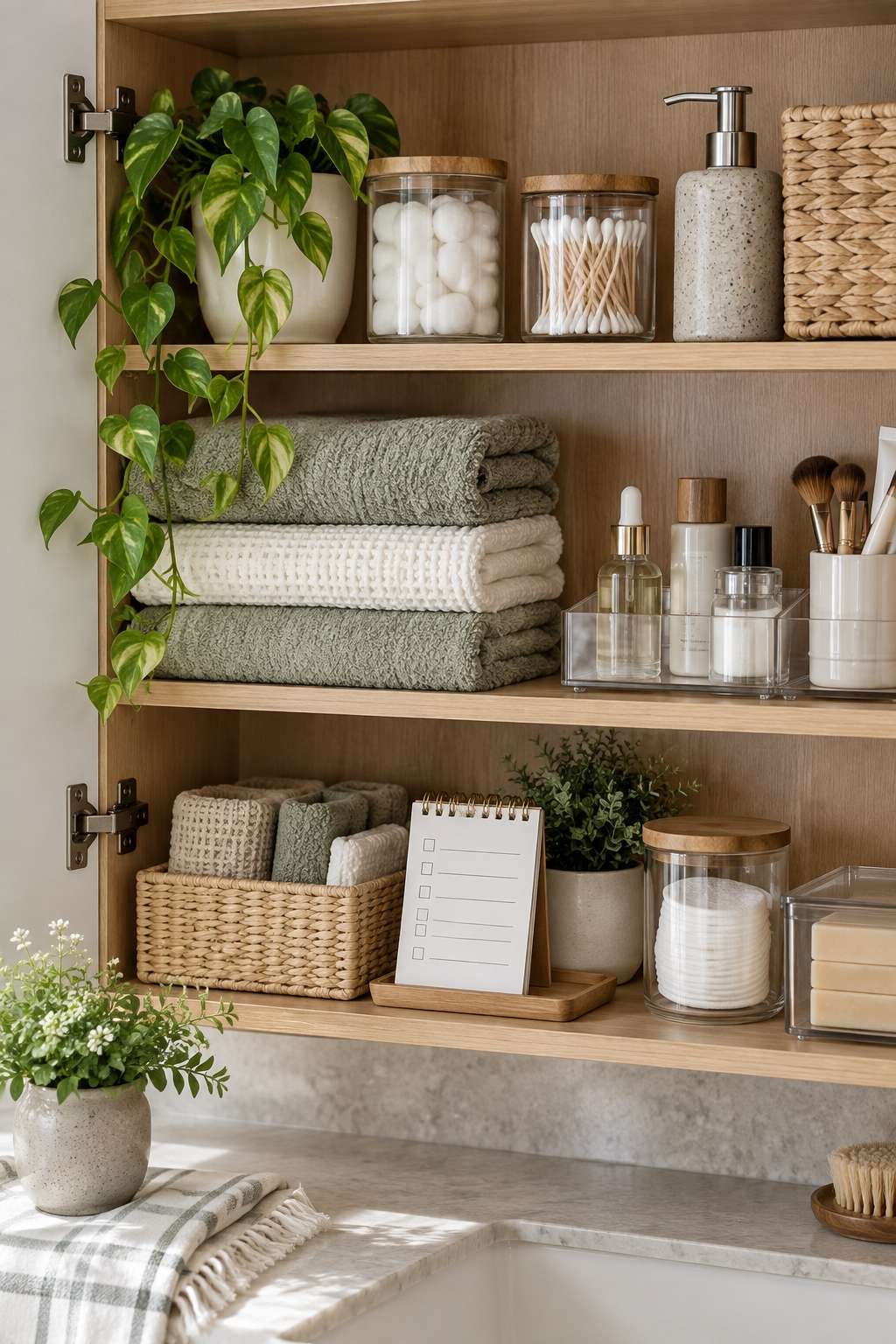
Involve every household member in maintaining the system you’ve built together. Consistency matters more than perfection when it comes to lasting cabinet organization. Small, regular check-ins are far easier than repeating a full overhaul every year.
- Schedule a seasonal five-minute check-in
- Restock backup items right after shopping trips
- Involve household members in the upkeep routine
- Watch for recurring clutter spots and adjust bins
- Revisit categories once a year as needs evolve
Frequently Asked Questions
How often should I reorganize my bathroom cabinet?
A quick seasonal check-in every three months keeps the system working well. This lets you catch expired products and shifting needs before clutter builds up. A full reorganization is usually only needed once a year.
What’s the best way to organize a small bathroom cabinet?
Focus on vertical storage like shelf risers and door organizers to maximize limited space. Clear, stackable bins help small shelves stay visually tidy. Prioritize daily essentials at eye level and push backups to higher shelves.
How do I stop bathroom cabinet clutter from coming back?
Consistent labeling and a seasonal check-in habit are the biggest factors in long-term success. Involving everyone who uses the cabinet also helps items get put back correctly. Small, regular resets prevent the need for another full overhaul.
Should I store medications in the bathroom cabinet?
Bathroom humidity can shorten the shelf life of many medications, so a drier spot is often better. If you must store them there, use a sealed container and childproof lock. Check expiration dates regularly during your seasonal reset.
What containers work best for bathroom cabinet organization?
Clear acrylic bins and stackable organizers are popular for bathroom cabinet storage ideas because they show contents instantly. Moisture-resistant materials hold up better than cardboard in humid conditions. Uniform sizing keeps the overall look clean and cohesive.
How do I organize a bathroom cabinet with limited shelves?
Add shelf risers or a turntable organizer to create more usable levels on a small bathroom cabinet. Over-the-door organizers and adhesive hooks add storage without using shelf space at all. Vertical solutions matter most when square footage is tight.
Conclusion
An organized bathroom cabinet doesn’t need a full renovation, just a thoughtful decluttering process and the right containers. Start small, categorize what you keep, and label everything clearly for the whole household. These habits turn a chaotic storage spot into a space that actually supports your daily routine.
Try one or two ideas from this guide this weekend, then build on them over time. A little consistency goes a long way toward a calmer, more functional bathroom you’ll enjoy using every day.