If you’re standing in your living room trying to decide between an electric fireplace and a gas fireplace, you’re really deciding between two different things: convenience or authenticity. An electric fireplace gets you a cozy glow for the cost of a nice dinner out and a free afternoon.
A gas fireplace gets you real heat and a real flame, for real money and a real installation project. Renters and small-apartment owners tend to land on electric almost by default, while homeowners doing a permanent renovation in a cold climate lean gas more often than not. Below, we’ll walk through the actual numbers so you can make the call with your eyes open, not just your gut.
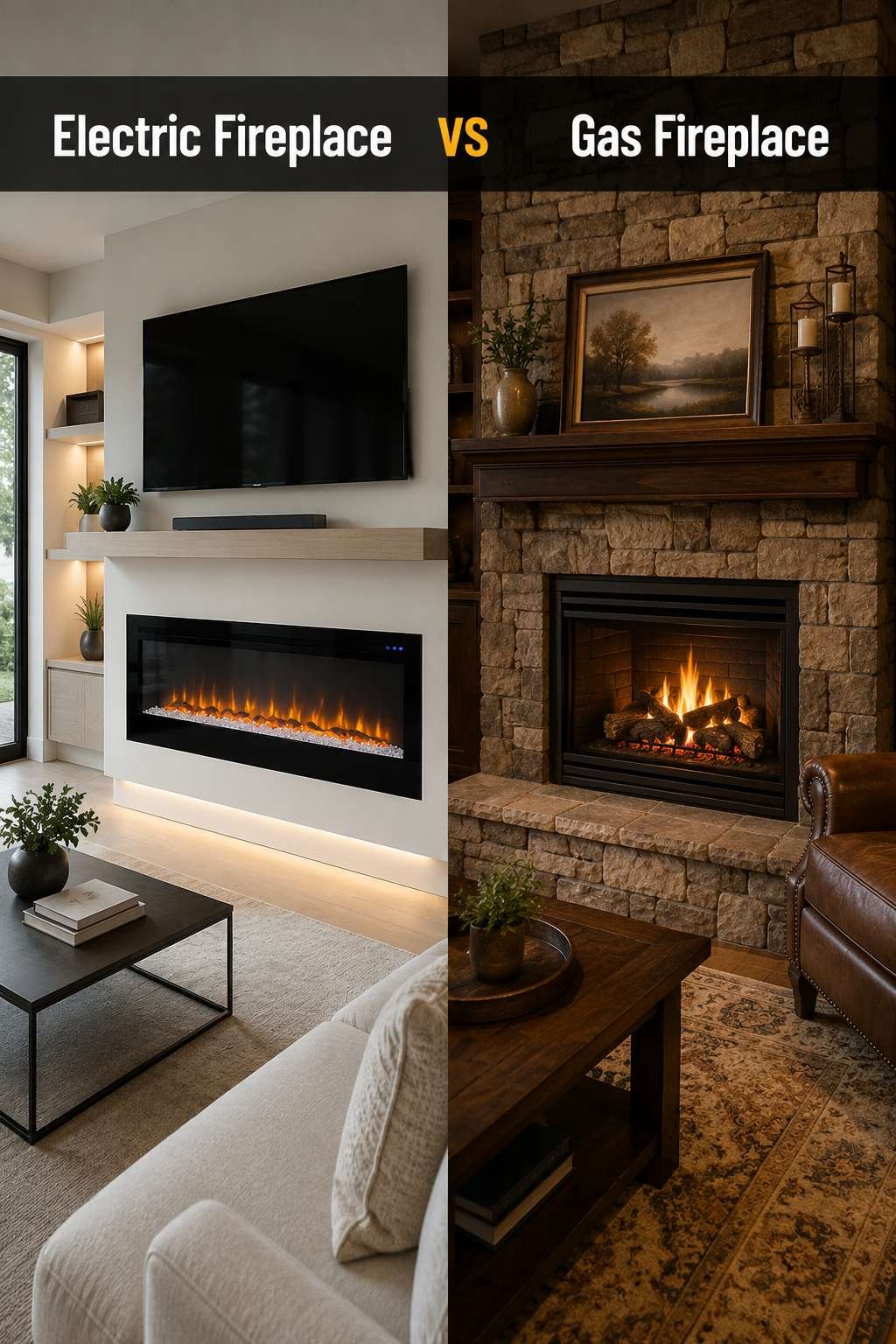
Electric Fireplace vs Gas Fireplace: The Full Comparison
| Criteria | Electric Fireplace | Gas Fireplace |
|---|---|---|
| Installed Cost | $150–$800 | $2,500–$6,000+ |
| Monthly Running Cost | $10–$30 | $15–$45 |
| Heat Output | Up to 5,000 BTU (supplemental heat only) | 20,000–60,000 BTU (can heat a full room) |
| Install Difficulty | Plug into a standard outlet, no professional needed | Licensed technician, gas line, and venting required |
| Maintenance | Occasional dusting, no annual service | Annual professional inspection recommended |
| Lifespan | 10–15 years | 20–30+ years |
| Aesthetic Flexibility | Modern to realistic flame styles, fully adjustable | Realistic true flame only, fixed look |
| Resale Value | Neutral in most markets | Higher in cold-climate homes |
What These Numbers Actually Mean in a Real Home
The cost gap up front is the headline: an electric fireplace can be running the same afternoon you buy it, for less than a month of a typical gas bill. A gas fireplace is a real construction project, so its higher price tag reflects a permanent gas line, venting or a chimney, and a licensed installer, not just the unit itself. On heat, the BTU gap matters more than people expect: an electric fireplace’s 5,000 BTU ceiling means it can take the chill off a home office or bedroom, but it isn’t going to replace your furnace on a genuinely cold night the way a 30,000+ BTU gas insert can. And the lifespan gap is really a maintenance-commitment gap in disguise: a gas fireplace lasting twice as long assumes you’re actually booking that annual inspection every year, not skipping it. Our fireplace decor ideas has more inspiration along these same lines.
Quick Look: Electric Fireplace vs Gas Fireplace at a Glance
Electric Fireplace
Plug-and-play ambiance and light supplemental heat, no venting, no gas line, and it can move with you if you relocate.
View on Amazon →Gas Fireplace
Real flame and real heat output, built to be a permanent, resale-friendly fixture in a cold-climate home.
View on Amazon →Deep Dive: Electric Fireplace
An electric fireplace is the right call when the priority is ambiance, budget, and flexibility over raw heat. It’s the default pick for apartments, rentals, small living rooms, bedrooms, and anywhere a permanent gas line simply isn’t an option. It also tends to win with anyone renovating on a tight timeline, since there’s no permitting or professional install to schedule around. Our how to decorate next to fireplace guide covers this in more detail.
Pros
- Low upfront cost and same-day installation
- No venting, gas line, or chimney required
- Minimal maintenance, no annual inspection
- Safe, cool-touch front for kids and pets
- Portable — can move with you to a new home
Cons
- Limited real heat output, supplemental only
- Doesn’t work during a power outage
- Flame effect reads as less authentic up close
- Shorter typical lifespan than a gas unit
- Minimal impact on resale value
Real cost range: $150–$800 installed, $10–$30 a month to run with regular use.
Deep Dive: Gas Fireplace
A gas fireplace makes sense when you want genuine supplemental heat, a permanent architectural feature, and a detail that reads as a real upgrade to future buyers. It’s the stronger pick for a custom build, a full renovation, or any cold-climate home where the fireplace needs to actually contribute to comfort on a winter night, not just look good. Our modern fireplace ideas has more inspiration along these same lines.
Pros
- Real flame and meaningfully higher BTU output
- Keeps working during a power outage with a standing pilot
- Longer typical lifespan with proper upkeep
- Often boosts resale value in cold climates
- Reads as a genuine architectural feature, not an add-on
Cons
- Significantly higher installed cost
- Requires a licensed installer, gas line, and venting
- Needs an annual professional inspection
- Surface gets genuinely hot, more caution needed with kids and pets
- Usually not possible in a rental or apartment
Real cost range: $2,500–$6,000+ installed, $15–$45 a month to run with regular use.
Which One Wins in Your Room?
Small Apartment / Studio
Space is tight and a gas line isn’t an option. A slim wall-mounted electric insert wins here every time.
Winner: Electric
Budget Basement Remodel
The budget is going toward flooring and lighting first. A freestanding electric stove delivers the look without eating the renovation budget.
Winner: Electric
Luxury Great Room Build
This is a permanent architectural feature in a custom home. A built-in gas fireplace with a real stone surround is the expected standard.
Winner: Gas
Rental-Friendly Space
No permanent modifications are allowed. A portable electric unit can go straight into the corner without touching a landlord’s approval process.
Winner: Electric
High-Traffic Family Living Room
Kids, pets, and a lot of foot traffic. A built-in electric unit with a cool-touch front avoids the hot-glass risk of a real flame.
Winner: Electric
Professional Tips Before You Decide
Designer & Homeowner Reality-Check Notes
- The most common regret isn’t the fireplace, it’s the surround. People underspend on the mantel or surround and end up wanting to redo it a year later — budget for that finish work up front, whichever fireplace you choose.
- If resale is genuinely a priority, ask a local agent before you decide. Gas fireplace value varies a lot by climate; in a mild climate, a gas insert may not recoup its cost the way it would in a cold one.
- Don’t skip the annual gas inspection to save money. Deferred maintenance is the single biggest driver of gas fireplace safety issues and expensive repairs down the line.
- If you love the look of real flame but can’t run a gas line, say so honestly. A higher-end electric insert with a realistic flame effect will satisfy that craving better than a budget unit will.
Shop the Winner
Landed on electric? Here’s where to start looking, broken into three tiers so you can shop by budget instead of scrolling endlessly.
If you’re leaning toward Electric, here’s what to get started with:
Best Overall
A mid-size wall-mount or insert-style electric fireplace with an adjustable flame effect and a real heater, built for daily use in a main living space.
Best Budget
A compact freestanding electric stove or tabletop unit that delivers ambiance and light supplemental heat for a bedroom, office, or apartment.
Best Premium
A large built-in electric insert with a realistic multi-layer flame effect and app or remote control, designed to be the visual anchor of a renovated living room.
If you’re leaning toward Gas, here’s what to get started with:
Best Overall
A standard vented gas insert sized for a typical living room, installed by a licensed technician with venting included in the quote.
Best Budget
A smaller direct-vent gas fireplace or a ventless model where local code allows it, for a lower-cost way into real gas heat.
Best Premium
A full custom masonry or linear gas fireplace with a real stone or tile surround, built as a permanent architectural feature.
Frequently Asked Questions
Is an electric fireplace as good as a gas fireplace?
It depends on what you’re optimizing for. A gas fireplace produces more real heat and a true flame, while an electric fireplace is cheaper, easier to install, and lower maintenance. Neither is objectively better across every category.
Which is cheaper to install, an electric or gas fireplace?
An electric fireplace is almost always cheaper to install, often $150 to $800 for a plug-and-play unit. A gas fireplace typically runs $2,500 to $6,000 or more once you add a gas line, venting, and professional installation.
How much does it cost to run an electric fireplace per month?
Most electric fireplaces cost roughly $10 to $30 a month to run with regular use, depending on your local electricity rate and how many hours a day it’s on.
How much does it cost to run a gas fireplace per month?
A gas fireplace typically costs $15 to $45 a month with regular use, depending on your local natural gas or propane rate and how often you run it.
Do electric fireplaces actually give off heat?
Yes, but as supplemental heat rather than a primary heat source. Most units produce up to around 5,000 BTU, enough to warm a small to medium room, not a whole house.
Can a gas fireplace heat a whole room?
Yes. A vented gas fireplace typically produces 20,000 to 60,000 BTU, which is enough to serve as a real supplemental or even primary heat source for an open living space.
Is an electric fireplace safe for kids and pets?
Generally yes. Most electric units use an LED flame effect with a glass or plastic front that stays cool to the touch, which makes them a common pick for households with small kids or pets.
Is a gas fireplace safe for kids and pets?
It can be, but the glass front and surround get genuinely hot during use, so a safety screen and some household rules are worth having if you have young kids or curious pets.
Can I install an electric fireplace in an apartment or rental?
In most cases, yes. A freestanding or insert-style electric fireplace just needs a standard outlet, no permit or landlord approval is typically required for a plug-in unit.
Can I install a gas fireplace in an apartment or rental?
Usually not without landlord approval, and in many cases it isn’t possible at all. Gas fireplaces require a gas line and venting or a chimney, which is a permanent building modification most rentals won’t allow.
Does a gas fireplace increase home value?
In colder climates, a working gas fireplace is often seen as a real value-add by buyers, since it reads as genuine functional heat rather than just a decorative feature.
Does an electric fireplace increase home value?
An electric fireplace tends to have a more neutral effect on resale value. It’s viewed as a nice amenity, but buyers in cold climates generally don’t weight it the same as a real gas fireplace.
Do electric fireplaces work during a power outage?
No. Since electric fireplaces run entirely on electricity, they stop working the moment the power goes out.
Do gas fireplaces work during a power outage?
A gas fireplace with a standing pilot light will typically keep working during a power outage, since it doesn’t rely on electricity to ignite. Models with electronic ignition may not.
How long do electric fireplaces last?
A quality electric fireplace typically lasts 10 to 15 years, though the LED components in many models can be replaced individually rather than replacing the whole unit.
How long do gas fireplaces last?
A well-maintained gas fireplace typically lasts 20 to 30 years or more, especially with annual professional inspections and cleaning.
Do gas fireplaces need a chimney?
Not always. A vented gas fireplace needs either a chimney or a direct-vent pipe to the outside. A ventless (vent-free) gas fireplace doesn’t require venting, but it has its own safety considerations and isn’t legal in every area.
What maintenance does a gas fireplace need?
Plan on an annual professional inspection to check the burner, gas line, and venting, plus occasional glass and log cleaning. Skipping inspections is one of the most common gas fireplace regrets homeowners report.
What maintenance does an electric fireplace need?
Very little. Occasional dusting of the vents and wiping down the glass front is typically all that’s needed, with no annual service required.
Which fireplace is better for a small apartment?
An electric fireplace is almost always the better fit for a small apartment, since it needs no venting or gas line and can usually be installed without landlord approval.
Final Verdict
If you’re renting, working with a tight budget, or renovating a small space, get the electric fireplace — it’s cheaper, faster, and genuinely the smarter choice for your situation, not just the compromise option. If you’re doing a permanent renovation or custom build in a cold climate and heat performance and resale value actually matter, the gas fireplace is worth the higher upfront cost. The one mistake to avoid is picking gas purely for the “real flame” factor in a small apartment or rental where you’ll never actually get to install it — match the fireplace to your living situation first, then let aesthetics break the tie.