


Decorating a bedroom well is less about buying more and more about buying in the right order. Skip a step — settle on paint before you’ve picked a rug, or hang art before you’ve solved storage — and you end up reworking decisions you thought were finished. This checklist walks through a full bedroom decor project the way a designer would sequence it: layout and furniture placement first, then lighting, color, textiles, storage, wall decor, styling, and the sensory details that make a room actually restful to sleep in.
It’s built for anyone furnishing a bedroom from scratch after a move, refreshing a room that’s felt “almost there” for years, or simply making sure nothing important gets missed before the big purchases go in the cart. Each item includes a short explanation of why it matters, not just what to do, so you can adapt the list to your own room size, budget, and style instead of following it blindly.
Print the simplified version at the end to check items off as you shop, or work straight down this page section by section. Either way, by the time you reach the last box, you’ll have a bedroom that looks intentional, not just filled.
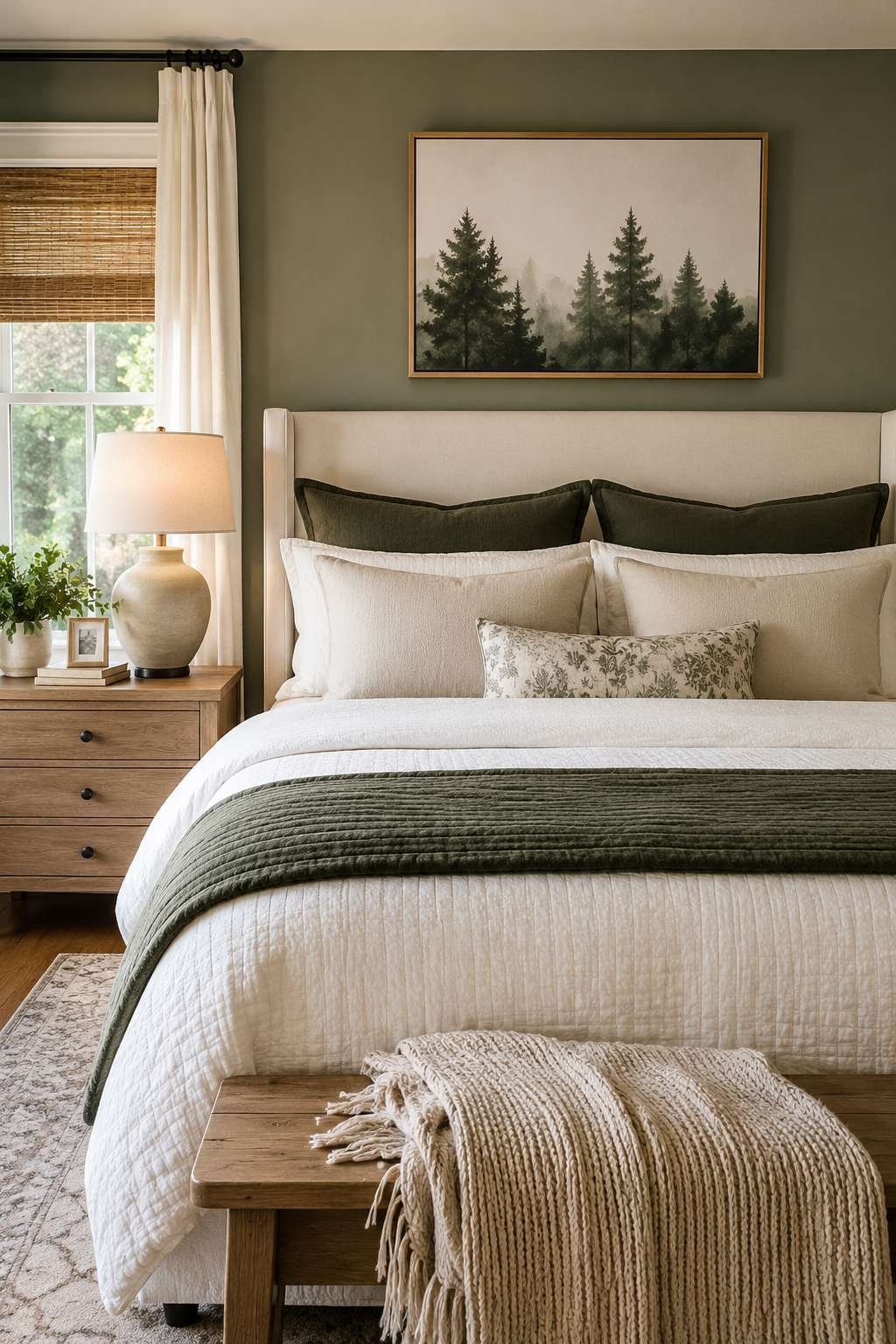
Layout & Furniture Placement
Place it on the wall facing the door, not directly in line with it, so the room feels calm rather than exposed the moment you walk in. Check our bed size chart if you want exact numbers before you shop.
Keep at least 24–30 inches of open space on each side of the bed so it doesn’t feel like an obstacle course.
Bring exact wall lengths to the store; a dresser that’s a couple inches too wide throws off your whole layout.
Trace the walk from door to bed to closet before you place anything, and keep that path clear.
At least the front legs of the bed and nightstands should rest on it, not float on open floor.
Pair a tall dresser with lower nightstands, or use a matching pair on each side of the bed, so no single piece pulls the eye.
If you want a reading chair, small desk, or vanity, plan its footprint before storage furniture fills the remaining space. Our 29 clever bedroom storage ideas has more inspiration along these same lines.
Lighting Layers
A ceiling fixture or flush mount handles the room’s general, everyday light level.
A dedicated bedside lamp lets you read without lighting the whole room.
A wall sconce, LED strip, or small uplight adds mood without competing with the main fixture.
A dimmer switch turns one fixture into three or four different moods.
Stick to warm white (2700–3000K) across every fixture so the room doesn’t mix cool and warm light.
Ceiling, table, and floor or wall level together read as designed, where one overhead bulb reads as unfinished.
Color Palette & Walls
60% dominant wall color, 30% secondary color from bedding and furniture, and 10% accent color from pillows and art.
Paint colors shift with your room’s light throughout the day, so live with a sample for at least 24 hours before committing.
Eggshell or matte suits walls, while semi-gloss holds up better on trim and doors.
It’s a low-commitment way to add depth without repainting the whole room.
Hold swatches next to your flooring and existing furniture, since warm and cool undertones clash more than colors themselves do.
A lighter or matching-white ceiling keeps the room feeling tall; a darker ceiling should be a deliberate choice, not an accident.
Bedding & Textiles
Cotton percale, sateen, and linen each feel different; pick based on how you actually sleep, not the highest number on the label.
This is your main textile statement piece and the largest color block in the room.
Three or five pillows in varied sizes read more intentional than a plain even stack.
It adds texture and color without committing to another full-size textile.
A too-small rug is the single most common textile mistake; it should extend well past the sides of the bed.
Mount the rod 4–6 inches above the window frame and let panels extend past the frame on each side to make the window, and the ceiling, look taller. Our bedroom curtain size has more inspiration along these same lines.
It’s a small detail that finishes the bed from every angle in the room.
Storage & Organization
Closed storage keeps chargers, lotion, and odds and ends out of view.
Measure what won’t fit in the closet before buying a dresser, not after.
This reclaims dead space for off-season bedding or clothes without adding another piece of furniture.
Even a basic double-hang kit can add significant usable space.
Keys, jewelry, and pocket items land somewhere intentional instead of scattering across every surface.
A floating shelf or slim bookcase uses wall space a dresser alone can’t reach.
Wall Decor & Art
Center pieces around 57–60 inches from the floor, the standard gallery height.
A piece hung over the bed should span roughly two-thirds the width of the headboard.
Keep 2–3 inches between frames and plan the full layout on the floor before hammering a single nail.
Placing it opposite, or near, a window makes the room feel brighter and larger.
A wall hanging, fabric panel, or oversized art piece can anchor the bed just as well as an actual headboard.
Not every wall needs to be filled; empty space lets the pieces you do hang stand out.
Finishing Touches & Styling
Combine wood, metal, woven, and ceramic so the room doesn’t read as flat or one-note.
A lamp, a small stack of books, and one personal object is enough; more starts to look cluttered.
Even a small, low-maintenance plant softens hard furniture lines.
Photos, travel finds, or sentimental pieces are what make a room feel like yours instead of a showroom.
A candle or reed diffuser adds a sensory layer that photos alone can’t capture.
Once everything’s placed, remove about one in five items; a slightly-too-full room almost always benefits from subtraction.
Ambiance & Sensory Details
Especially useful if you’re sensitive to early morning light or work irregular hours.
Rugs, curtains, and upholstered furniture all absorb sound; add a white noise machine if the room is otherwise hard-surfaced.
A small fan and breathable, natural-fiber bedding matter more to sleep quality than almost any other decor choice.
A cord and a glowing screen undercut every other styling decision in the room.
A rug beside the bed, or a small basket of slippers, makes the first step out of bed part of the room’s comfort, not an afterthought.
Using the same candle or diffuser scent over time builds a sleep association, the same way a consistent bedtime routine does.
Pro Tips
- ✓Buy your rug and bedding before you pick paint — it’s easier to match paint to fabric than fabric to paint.
- ✓Follow the 60-30-10 color rule so the room has one dominant tone instead of competing colors fighting for attention.
- ✓Hang curtains 4–6 inches above the window frame and as wide as the wall allows — it visually raises the ceiling.
- ✓Stick to odd numbers for pillows and styled objects; they read more natural than even, overly symmetrical groupings.
- ✓Use matching finishes on hardware, lamp bases, and frames, all warm brass or all matte black, to tie the room together.
- ✓Keep bulbs at the same warm color temperature across every fixture in the room.
- ✓Add one curved piece of furniture or decor to soften an otherwise all-square room.
- ✓A bench at the foot of the bed adds both function and a finished, hotel-room feel.
- ✓Float the bed a few inches from the wall rather than pushing it flush, even in a small room — it looks intentional instead of squeezed in.
- ✓Leave about a fifth of every surface empty so the room has room to breathe.
Common Mistakes
- ✕Buying a rug that’s too small. Size up; furniture legs should rest on the rug, not sit beside it.
- ✕Relying on a single overhead light. Add at least one lamp or sconce for a second light source.
- ✕Choosing art that’s too small for the wall. Measure the wall space first, and size up rather than down when in doubt.
- ✕Ignoring furniture scale for the room size. Measure the room before shopping, not after delivery.
- ✕Hanging curtains at the exact width of the window frame. Extend the rod several inches past the frame on each side.
- ✕Letting the nightstand become a catch-all. Limit it to a lamp, a book, and one personal object.
- ✕Skipping window treatments until move-in day. Order them early, since custom sizes often take weeks to arrive.
- ✕Matching every element too perfectly. Mix in at least one unexpected texture or finish so the room doesn’t feel showroom-flat.
- ✕Forgetting to leave a clear traffic path. Walk the route from door to bed to closet before finalizing furniture placement.
- ✕Buying decor before settling on a color palette. Lock in your base color first so every purchase after it has somewhere to belong.
Supplies & Tools
Want to check things off as you shop, instead of scrolling back to this page? The free printable version includes every item from this checklist as a simple, checkbox-only list — no explanations, just the essentials — grouped under the same section headers, ready to print and keep on the fridge or clipped to a moodboard.
Download the Free Printable Bedroom Decor ChecklistFrequently Asked Questions
What order should I decorate my bedroom in?
Start with layout and furniture placement, then lighting, then your color palette, followed by textiles, storage, wall decor, styling, and finally the ambiance details like blackout curtains and scent. Deciding in this order keeps you from repainting around a rug you buy later or hanging art before you know where the furniture lands.
How much does it cost to decorate a bedroom?
A modest refresh using existing furniture can run a few hundred dollars for paint, textiles, and lighting, while furnishing a bedroom entirely from scratch typically falls between $1,000 and $3,000 depending on furniture quality and room size.
What are the bedroom decor essentials I shouldn’t skip?
A properly sized rug, at least two light sources, window treatments, and a cohesive color palette make the biggest visible difference, and these are the items that most often get skipped and most often show.
How do I decorate a small bedroom without it feeling cluttered?
Prioritize furniture that’s scaled correctly for the room, lean on vertical storage instead of adding floor furniture, and edit styled surfaces down to a few items so the space doesn’t feel packed.
What size rug should I use in a bedroom?
In most bedrooms, a rug that extends at least 18 to 24 inches beyond the sides and foot of the bed lets the front legs of the bed and nightstands rest on it, which is the size that reads as intentional rather than undersized.
How many pillows should be on a bed?
Three to five pillows in an odd number and varied sizes is the most common designer approach, enough to layer without needing to relocate them every single night.
How high should I hang curtains?
Mount the rod 4 to 6 inches above the window frame, and extend it past the frame on each side so the panels don’t block the window when open.
Do I need an overhead light in a bedroom?
It’s helpful for general cleaning and getting-ready light, but it shouldn’t be your only source. Pairing it with a bedside lamp and one accent source gives the room the layered lighting that makes it feel finished.
How do I choose a bedroom color palette?
Pick one dominant color for about 60 percent of the room, usually the walls, a secondary color for about 30 percent such as bedding and large furniture, and an accent color for the remaining 10 percent like pillows, art, and small objects.
What’s the best way to style a nightstand?
Limit it to three or four items, typically a lamp, a small stack of books or a tray, and one personal object, so it stays functional instead of becoming a catch-all surface.
How do I make a rental bedroom feel decorated without permanent changes?
Focus on removable-friendly changes like rugs, curtains on tension rods, command-strip art, bedding, and lighting, which give most of the visual impact with none of the wall damage.
How often should I refresh bedroom decor?
Textiles like pillow covers and throws are easy to rotate seasonally, while larger investments like furniture, rugs, and paint typically last 5 to 10 years before a refresh feels necessary.
You don’t need every item on this list to have a bedroom that feels finished — but working through it in order will save you from the two most common decorating regrets: buying furniture that doesn’t fit, and buying decor before you’ve settled on a palette. Start with layout, work your way down, and let the last two sections, styling and ambiance, be the ones you revisit anytime the room needs a refresh. Print the checklist above and keep it nearby while you shop.

