


A patio only earns its keep once it’s actually set up to be used — not just swept off and left with a single chair. This checklist walks through every category that turns a bare slab of concrete or pavers into a space you’ll actually sit in: furniture and seating, lighting, textiles, greenery, decor, shade, entertaining essentials, and the storage habits that keep it all looking good season after season.
It’s built for anyone starting from scratch, refreshing a tired setup, or working with a small balcony-style patio where every item has to earn its spot. Whether you’re furnishing a full backyard entertaining area or just adding enough to make a small rental patio feel like an outdoor room, working through each section in order — furniture first, finishing touches last — keeps the process from turning into a scattered pile of purchases. Print the simplified version at the end and check items off as you go so nothing gets missed along the way.
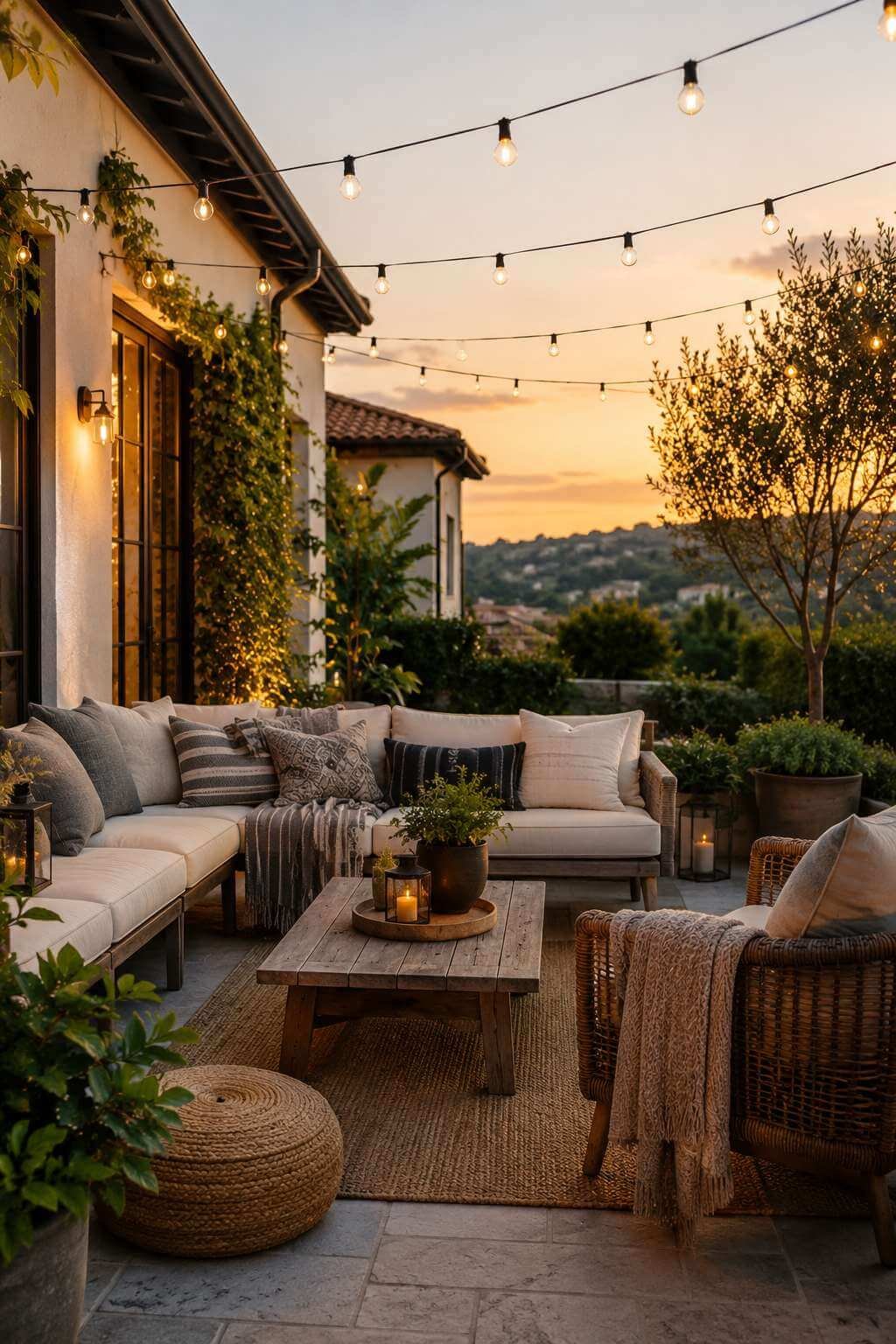
At a Glance
Difficulty: Easy–Moderate
Estimated Time: 1–2 weekends
Estimated Budget: $300–$2,500+
Ideal Space: Any patio, deck, or balcony See our balcony decor ideas for more direction in this style.
Best For: New patios, seasonal refreshes, rentals
Printable Available: Yes, free
Furniture & Seating
Count how many people actually use the space on a normal evening, then add two seats so it doesn’t feel short the moment guests show up.
Every seat should be within arm’s reach of a surface for a drink or plate — a table that’s too small for the group gets skipped entirely. Our small patio ideas has more inspiration along these same lines.
Lounge seating and a dining table serve different purposes — if outdoor meals are a priority, budget for both rather than one multi-purpose piece.
Teak, powder-coated aluminum, and HDPE resin wicker shrug off sun and rain far better than untreated wood or bare metal.
Angling seating toward a central point (a table, a fire feature, or just each other) makes the space feel used rather than staged.
A wobbly chair or table gets avoided fast — check every leg on the actual surface before calling the layout finished.
Lighting
Strung along a pergola beam, fence line, or a simple pole-and-hook setup, overhead string lights do more to set the evening mood than any single lamp.
A lantern or table lamp near where people actually sit makes it possible to read a menu or see food without relying on overhead light alone.
Stairs, a raised threshold, or an uneven walkway need their own low lighting so they’re safe to navigate after dark.
Solar path lights and rechargeable lanterns solve lighting for patios and balconies where running an extension cord isn’t practical or allowed.
A warmer color temperature reads as cozy rather than clinical, and dimmable options let the space shift from daytime bright to evening low. Our cozy backyard ideas has more inspiration along these same lines.
Textiles & Comfort
A polypropylene or PET rug handles moisture without mildewing and visually anchors the seating area the way an indoor rug anchors a living room.
Quick-dry foam sheds rainwater instead of absorbing it, which means far less mildew risk and a faster turnaround after a storm.
Solution-dyed fabric resists fading in direct sun far longer than indoor fabric repurposed for outdoor use.
One or two blankets draped over a chair back extend patio use well into cooler shoulder-season evenings.
A gust of wind can send loose cushions across the yard — simple ties or clips keep everything anchored to the furniture frame.
Greenery & Planters
A pair of larger planters framing the door or main entrance to the patio signals “welcome” before anyone even sits down.
Layering height the way a garden bed would keeps container plants from reading as flat or one-note.
Vertical growing solves the greenery problem on small balconies where floor space for pots is limited.
A plant that thrives in a magazine photo can die fast in the wrong light or hardiness zone — check exposure before falling for the look.
Standing water rots roots and stains pavers or wood decking alike, so drainage and a catch saucer are non-negotiable.
Decor & Accessories
A weatherproof piece on a fence or exterior wall gives the eye somewhere to land and makes a blank wall feel finished.
A tray corrals candles, drinks, or small plants into one intentional grouping instead of a scattered tabletop.
A few swappable pieces — a wreath, a seasonal planter insert — keep the space feeling current without redecorating from scratch each time.
Citronella or eucalyptus-scented candles add ambiance and a mild bug deterrent at the same time.
A single larger focal item does more visual work than several small decorative pieces spread thin across the space.
These small details are what make a patio feel like yours rather than a showroom display.
Shade & Weather Protection
An undersized umbrella leaves half the table in direct sun — measure the table diagonal and size up rather than down.
A fixed shade structure covers more square footage than a single umbrella and defines the seating zone at the same time.
An awning gives adjustable shade without a permanent structure, which is useful for patios that get sun at different angles through the day.
Standing water against the foundation is a bigger problem than any decor choice — confirm drainage before investing in furniture and rugs.
A lightweight umbrella base is the most common cause of a tipped-over umbrella — go heavier than feels necessary, especially in open or windy yards.
Entertaining Essentials
A rolling cart or narrow console keeps drinks and glassware off the main dining table and makes hosting easier.
Even with a coffee table, a couple of small stackable side tables solve the “where do I put my glass” problem when the group grows.
A dedicated outdoor speaker sounds better and lasts longer outside than running an indoor speaker out through a cracked door.
A tabletop or standing repeller covers a seating area more consistently than candles alone, especially for longer evenings.
A small weatherproof bin or cabinet keeps cups and coasters on hand without cluttering the table when they’re not in use.
Storage & Maintenance
A ventilated storage box keeps cushions dry between uses and extends their life far beyond leaving them out on the furniture.
Covers rated for outdoor furniture protect it through winter or the rainy season without needing to move everything indoors.
Keeping a dedicated fabric cleaner on hand makes it easy to spot-treat cushions and rugs before stains set in.
Ceramic planters, certain plants, and electronics often need to come inside before the first hard freeze — decide this ahead of time, not the night of a cold snap.
Once a season, reapply fabric protector spray and check umbrella hinges, furniture bolts, and light fixtures for wear before it becomes a bigger fix.
Pro Tips
- ✓Scale furniture to the space, not the showroom. A sectional that looks right in a big-box store can swallow a small patio — measure the footprint first and mark it out with tape before buying.
- ✓Layer lighting at three different heights. Overhead string lights, a mid-level lantern, and low path lighting together read as intentional in a way one light source alone never does.
- ✓Group decor in odd numbers. Three planters or three lanterns feel more natural to the eye than two or four evenly spaced.
- ✓Pick two or three colors and repeat them. Carrying the same two accent colors across cushions, pots, and accessories keeps a patio from feeling like a random collection of purchases.
- ✓Let the rug anchor the furniture. Front legs of the seating should rest on the rug’s edge — a rug that floats separately under a coffee table alone tends to look like an afterthought.
- ✓Mix materials, not just colors. Pairing metal, wood, and woven textures adds visual depth even within a tight color palette.
- ✓Keep a 3-foot walking path clear. No matter how full the layout gets, leave a comfortable path from the door to the seating area and back.
- ✓Use vertical space on small patios. Wall planters, hanging lights, and railing-mounted pieces free up floor space that a small patio can’t spare.
- ✓Match the style to the house, not just the trend. A coastal-style patio set looks out of place against a modern brick exterior — pull one or two cues from the home’s existing architecture.
- ✓Test the lighting at night before calling it done. A layout that looks great at noon can feel dim or harsh after sunset — do a final walkthrough after dark.
Common Mistakes
- ✗Buying furniture too large for the space. Measure the full footprint, including clearance for chairs to pull out, before ordering anything.
- ✗Skipping weatherproof fabric to save money upfront. Indoor fabric fades and mildews within a season outside — the cost difference shows up fast in replacement purchases.
- ✗Planning only for daytime use. A patio that looks great at 2pm and disappears into darkness at 8pm only gets half used — plan lighting from the start.
- ✗Overcrowding a small space with too many pieces. Pick fewer, better items rather than trying to fit every idea from a mood board onto one small patio.
- ✗Keeping every decor item at the same height. A flat, single-height arrangement of planters and accessories reads as static — vary the heights for visual interest.
- ✗Forgetting bug control until the first bad night. Set up a repellent plan before the season starts rather than scrambling once mosquitoes show up.
- ✗Leaving cushions out through every storm. Even weather-resistant cushions last longer with a quick cover-up or move indoors before heavy rain.
- ✗Placing a rug on a patio with drainage issues. A rug on a surface that holds water traps moisture underneath and mildews fast — confirm drainage first.
- ✗Chasing every seasonal trend at full price. A few well-chosen, durable pieces outlast a cart full of trendy items that feel dated within a year or two.
- ✗Skipping a maintenance routine entirely. Without an annual check of hardware, fabric protector, and hinges, small wear turns into bigger repairs.
Supplies & Tools Checklist
- Tape measure
- Small level, for furniture and shade structures
- Outdoor fabric protector spray
- Drill, for wall-mounted planters or hooks
- Broom and hose, for surface cleanup before styling
Free Downloadable Checklist
Prefer to check things off with a pen in hand? The printable version condenses this into a simple, checkbox-only list grouped by the same categories — furniture, lighting, textiles, greenery, decor, shade, entertaining, and storage — so it’s easy to carry outside or keep on the fridge while you shop.
Download the Free Printable Patio Decorating ChecklistFrequently Asked Questions
How much does it cost to decorate a patio?
A basic refresh with a rug, cushions, and a few planters can run a few hundred dollars, while a full furniture-and-lighting overhaul for a larger space often lands in the low thousands. Start with the furniture and shade budget first, then layer in textiles and decor with whatever remains.
What furniture material lasts longest outdoors?
Teak, powder-coated aluminum, and HDPE resin wicker hold up best against sun, rain, and temperature swings. Untreated wood and uncoated metal tend to warp, rust, or fade within a season or two.
Do I need a rug outside?
An outdoor-rated rug isn’t required, but it visually anchors a seating area and makes a patio feel finished rather than like a leftover slab of concrete. Choose a polypropylene or PET rug made for exterior use so it can handle moisture without mildewing.
How do I decorate a small patio?
Lean on vertical space with hanging planters and wall-mounted decor, choose a compact bistro set instead of a full sectional, and stick to two or three colors so the space doesn’t feel cluttered. A single well-placed rug and one light source can make a small patio feel complete without overcrowding it.
What lighting is best for patios?
Layer ambient string lights overhead with a lower task light near seating or dining, then add path or step lights if there’s any elevation change. Warm-white, dimmable options generally feel more inviting than bright white daylight bulbs.
How do I keep outdoor cushions from getting moldy?
Choose quick-dry foam with a breathable cover, prop cushions up after rain so water doesn’t pool underneath, and store them in a ventilated deck box during long stretches of wet weather. A fabric protector spray reapplied each season also helps shed moisture before it soaks in.
Can I decorate a rental patio without making permanent changes?
Yes — stick to freestanding furniture, potted plants instead of in-ground beds, solar or battery-powered lighting instead of hardwired fixtures, and adhesive hooks rated for outdoor use instead of drilled ones. Everything on this checklist works without a single permanent modification.
What plants work best in patio planters?
Match plants to your actual sun exposure and climate zone rather than what looks best in a photo — succulents and ornamental grasses handle full sun and neglect well, while ferns and hostas prefer shade and consistent moisture. Mixing a tall thriller, a filler, and a trailing spiller in each pot gives an instantly styled look.
How do I keep bugs away without a strong citronella smell?
A standing or tabletop bug-repelling device using heat-activated repellent covers a seating area without the heavy scent of citronella candles. Combine that with a small fan, which disrupts mosquito flight patterns, for coverage that doesn’t rely on smell at all.
When should I start decorating my patio for the season?
Start as soon as overnight temperatures consistently stay above freezing in your area, since that’s when it’s safe to bring cushions, planters, and electronics back outside. Doing a quick surface and drainage check first means the decorating itself goes faster once you actually start.
The bottom line: a patio doesn’t need to be redone all at once. Work through this list one category at a time — furniture and shade first, then textiles and lighting, then the decor and greenery that make it feel finished — and it’ll come together as a space you actually want to spend evenings in, not just a corner of the yard that gets swept off twice a summer.

