


Creating an earthy kitchen brings the beauty of nature indoors through organic materials and warm color palettes. This design approach celebrates authenticity and sustainability. The result is a space that feels grounded, welcoming, and timeless.
Earthy kitchens have become increasingly popular among homeowners seeking refuge from synthetic modern aesthetics. These spaces embrace imperfection and natural aging. They create environments where cooking becomes a sensory experience connected to the natural world. The warmth of wood, the texture of stone, and the patina of aged metals work together harmoniously.
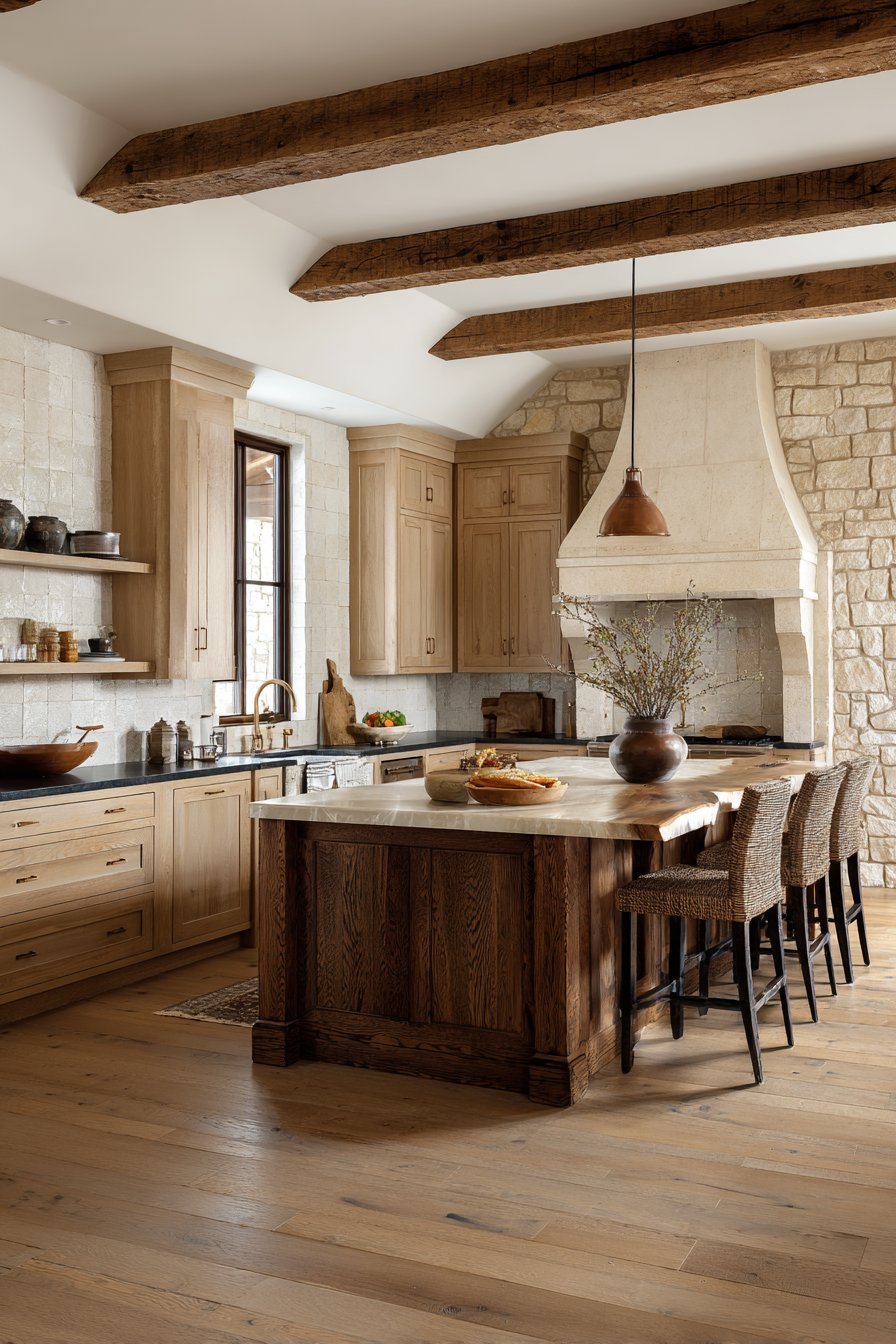
The following designs showcase the versatility of earthy kitchen aesthetics. From rustic farmhouse charm to refined organic elegance, each concept demonstrates how natural materials create functional beauty. These kitchens prove that sustainable choices and stunning design are not mutually exclusive.
1. Reclaimed Oak Cabinetry with Terracotta Floors
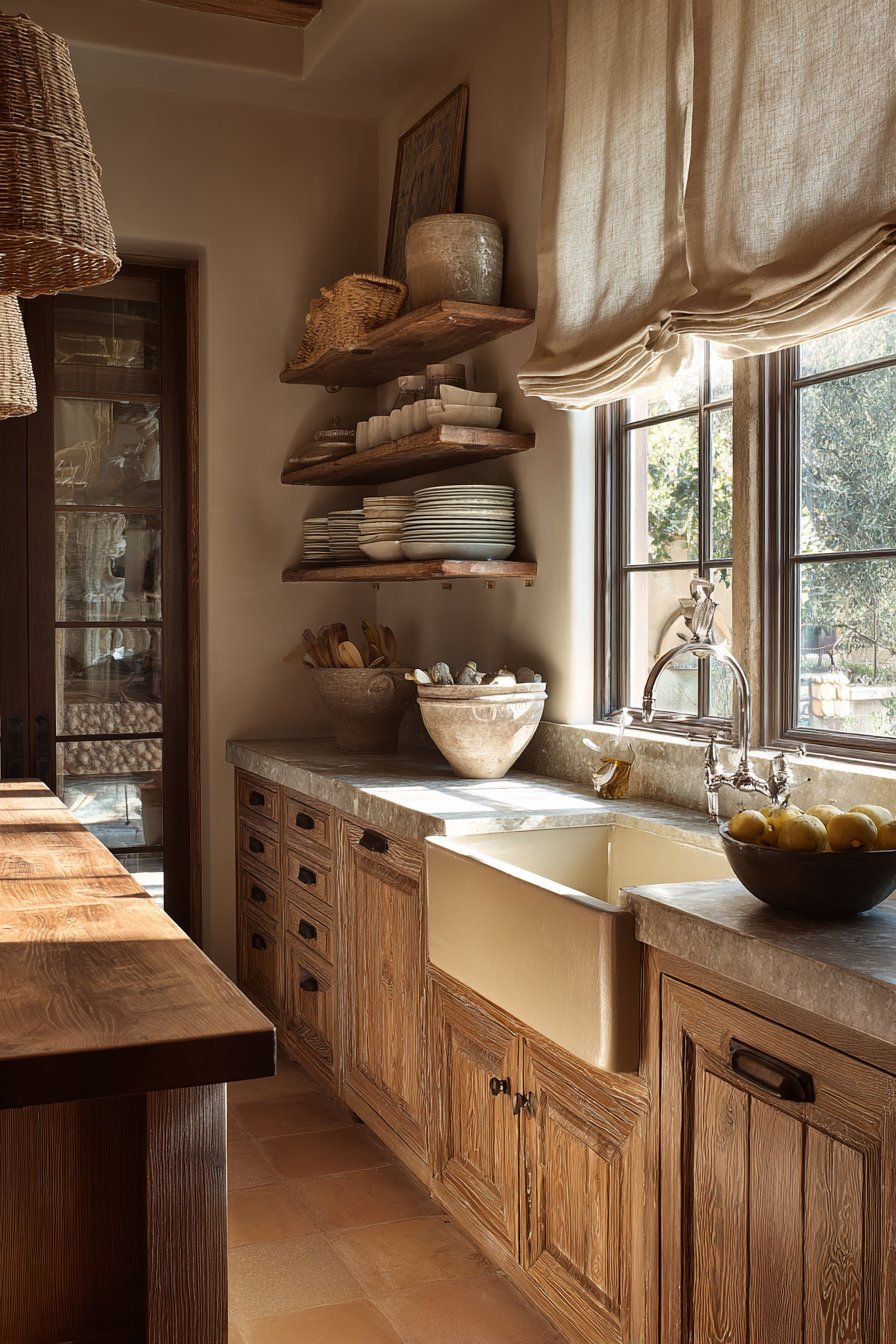
Step into a kitchen where reclaimed oak cabinetry showcases visible wood grain and natural color variations. The cabinets tell stories through their authentic textures. Honed terracotta floor tiles beneath your feet provide subtle texture and warmth. This combination creates an immediate connection to earth and tradition.
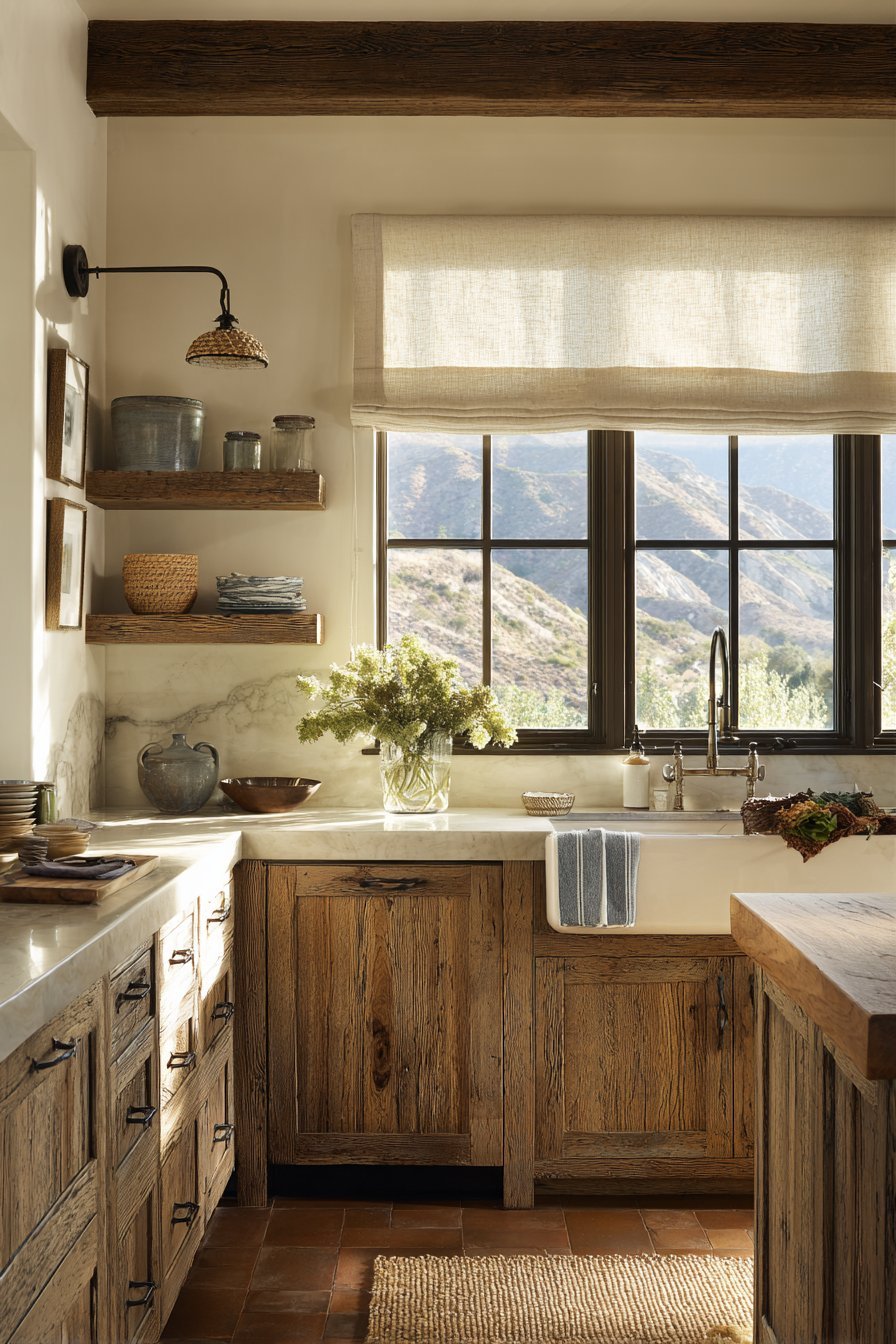
A large farmhouse sink in cream fireclay sits beneath a window dressed with linen roman shades. The natural beige fabric filters sunlight beautifully. Open shelving displays ceramic dishware in clay tones alongside woven baskets. These functional storage solutions double as decorative elements. Soapstone countertops with natural veining offer durable work surfaces that improve with age.
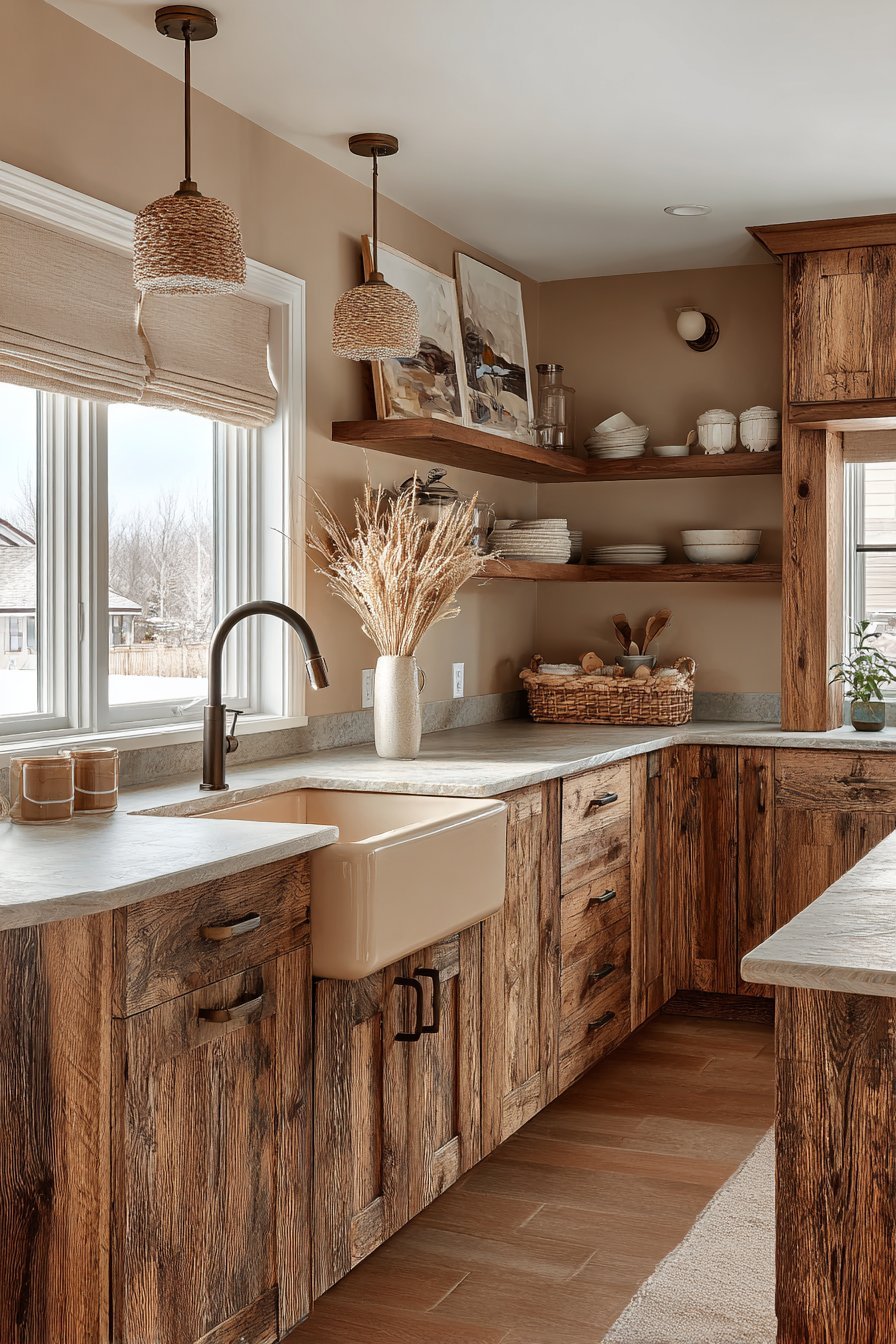
Pendant lights with rattan shades hang gracefully above a wooden prep island. The natural fiber shades cast intricate shadow patterns. Morning light streams through windows, highlighting organic materials throughout the space. The warm earth-tone palette creates a cohesive visual flow.
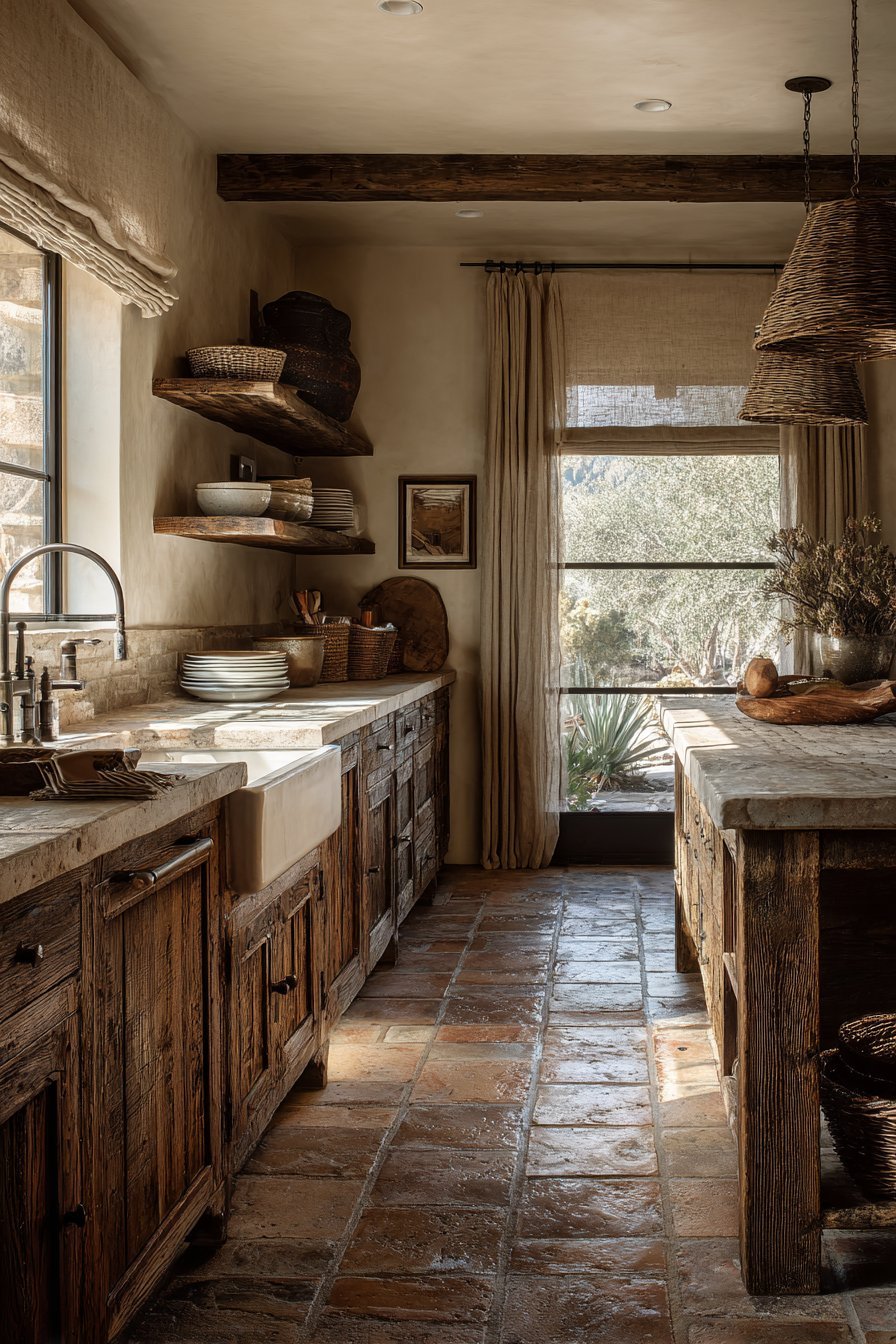
This design proves that reclaimed materials bring unmatched character to kitchen spaces. Every imperfection in the wood grain adds authenticity. The terracotta floors provide durability while maintaining their artisanal appeal over decades.
Key Design Tips:
- Select reclaimed oak with pronounced grain patterns for maximum visual interest
- Choose honed terracotta tiles over glazed versions for authentic texture
- Install fireclay sinks for durability and classic farmhouse appeal
- Display ceramic dishware as decor to reinforce the earthy aesthetic
- Use soapstone countertops that develop beautiful patina over time
2. Handmade Zellige Tile Backsplash
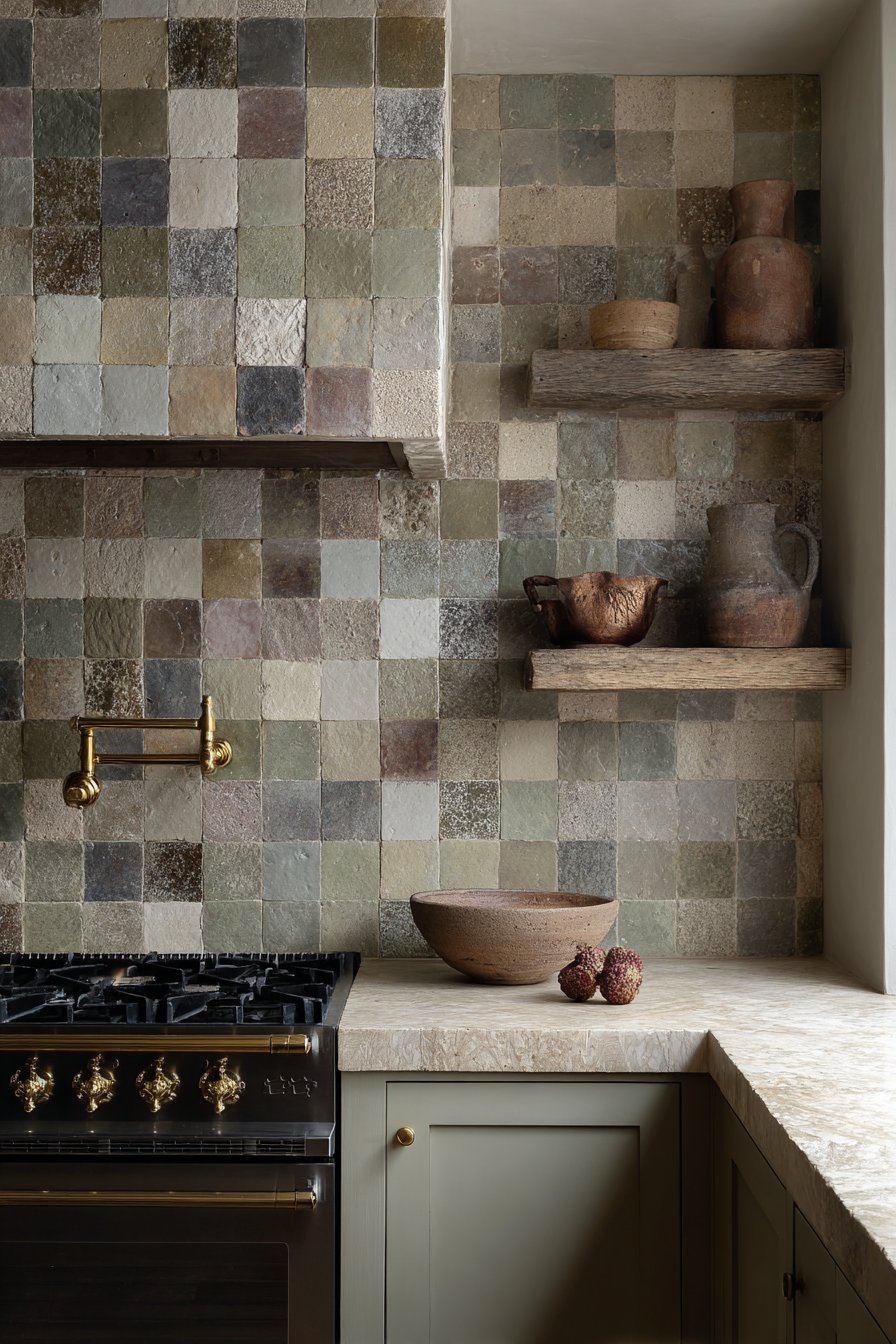
The focal point of this kitchen is a stunning handmade zellige tile backsplash. Terracotta, sage green, and sand tones arrange themselves in traditional subway patterns. The irregular edges and subtle color variations celebrate artisanal craftsmanship. This wall treatment extends from countertop to ceiling behind the cooking range.
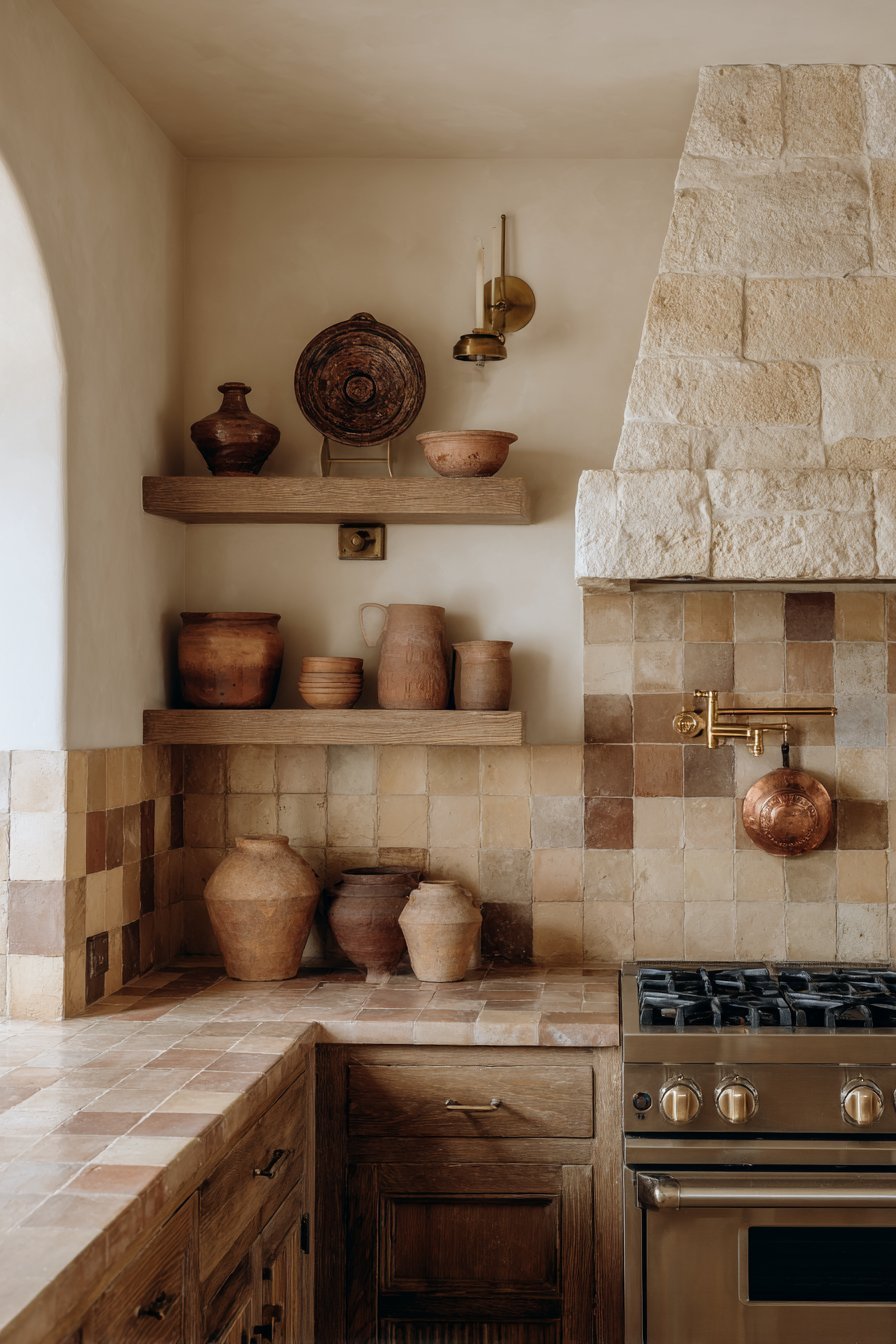
Brass pot filler and range hood brackets add warm metallic accents against the tile. Natural oak floating shelves display earthenware crocks and copper cookware. The handcrafted items complement the tile’s organic quality. Each tile differs slightly from its neighbor, creating living texture.
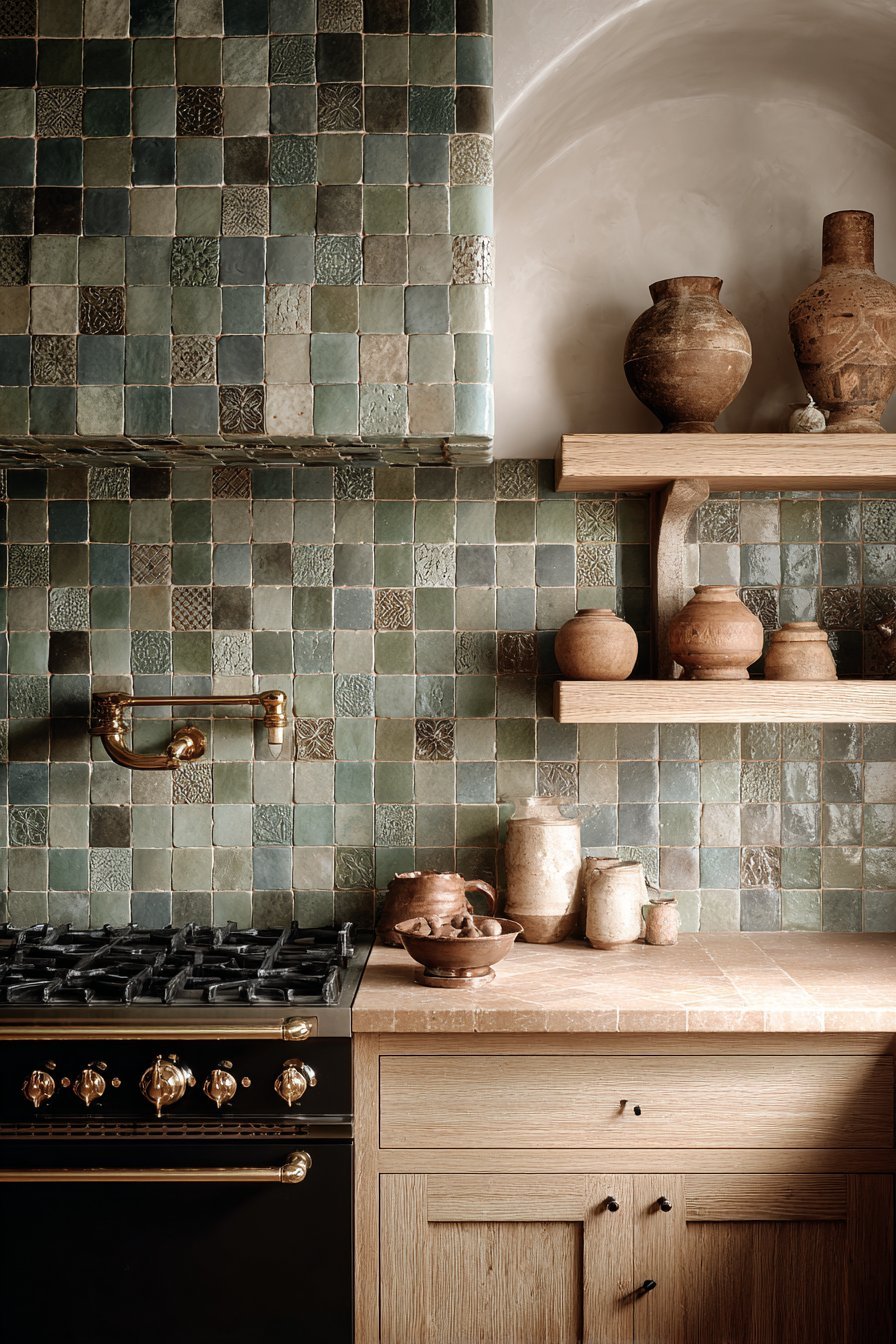
Balanced natural lighting emphasizes the handcrafted tile texture throughout the day. Slight imperfections become design features rather than flaws. The organic color gradations define authentic earthy design principles. This backsplash transforms a functional surface into artwork.
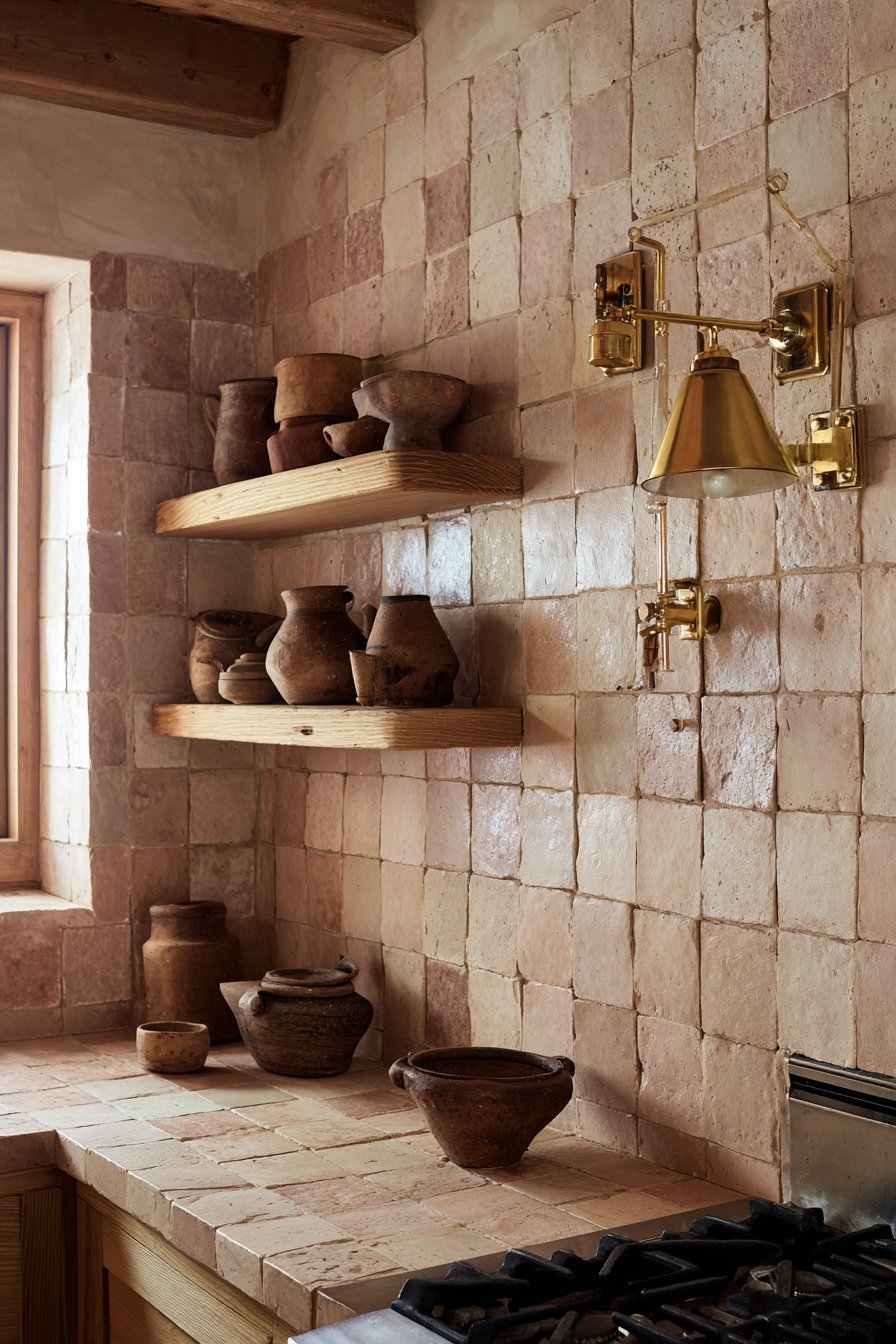
The zellige tiles require minimal maintenance while providing maximum visual impact. Their matte finish resists showing water spots. The installation becomes more beautiful as it ages and develops character.
Key Design Tips:
- Source authentic handmade zellige tiles for genuine texture variations
- Extend backsplash to ceiling height for dramatic architectural impact
- Choose unlacquered brass fixtures that develop natural patina
- Display copper cookware as functional decoration on open shelving
- Accept slight imperfections as hallmarks of artisanal quality
3. Live Edge Walnut Island Centerpiece
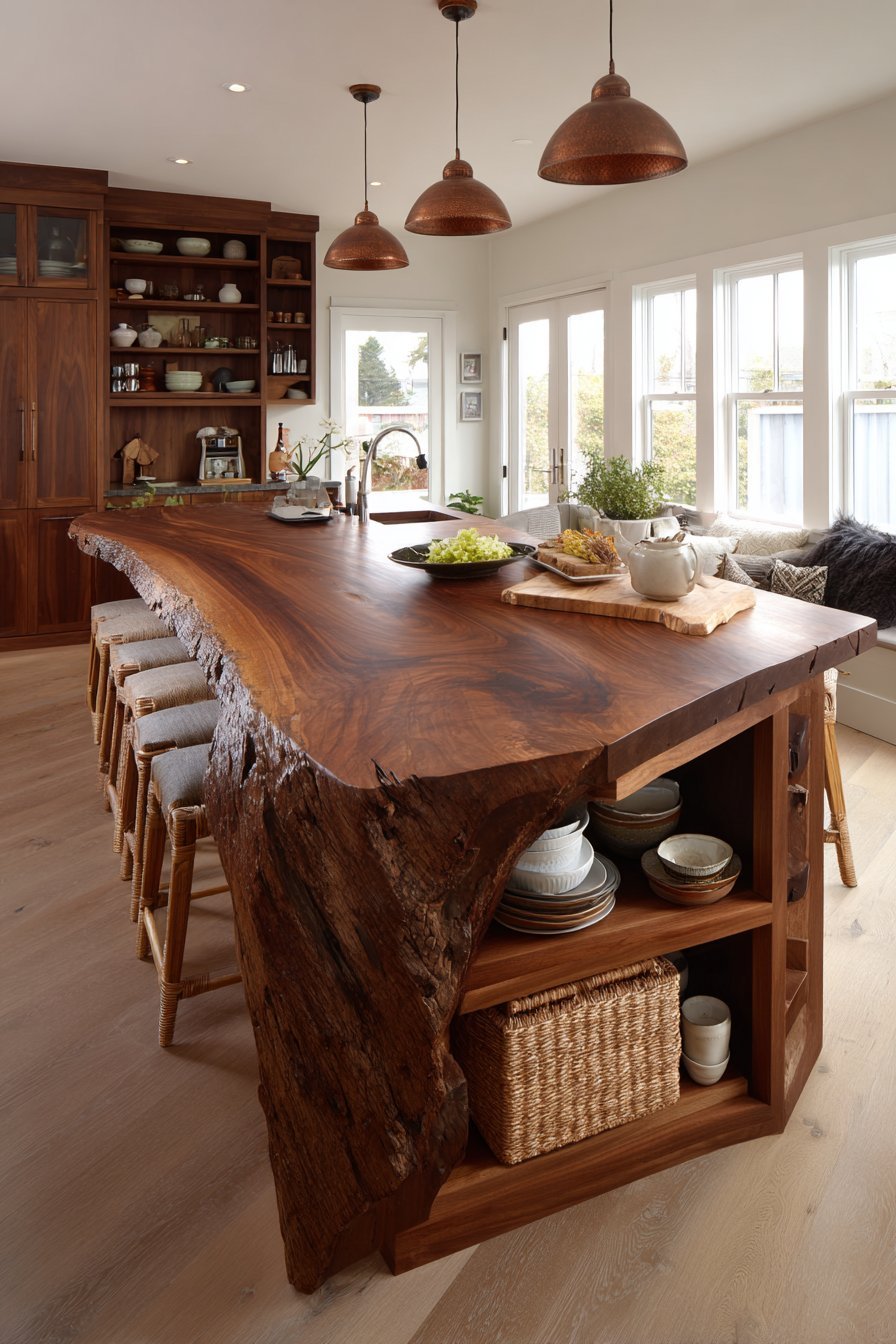
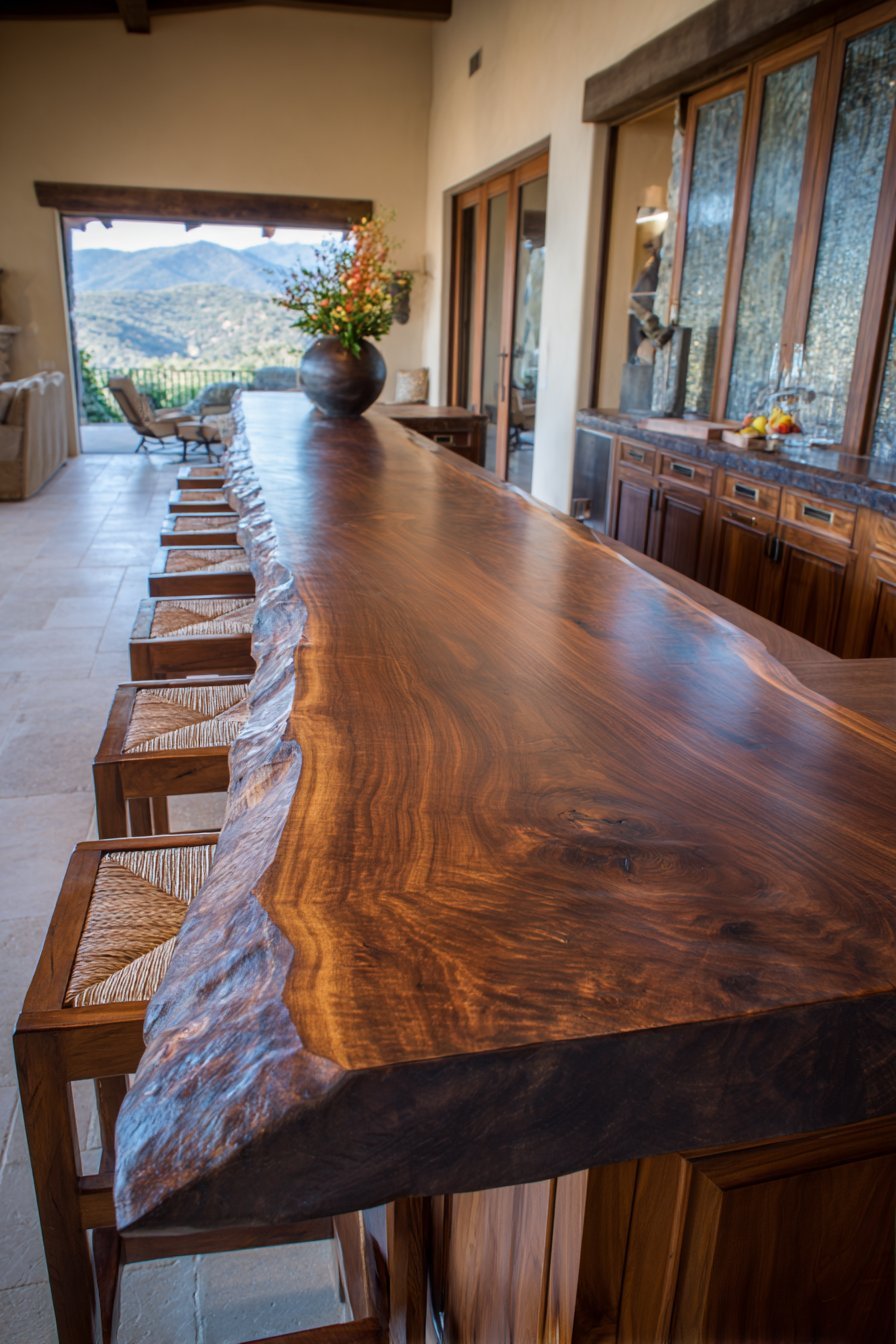
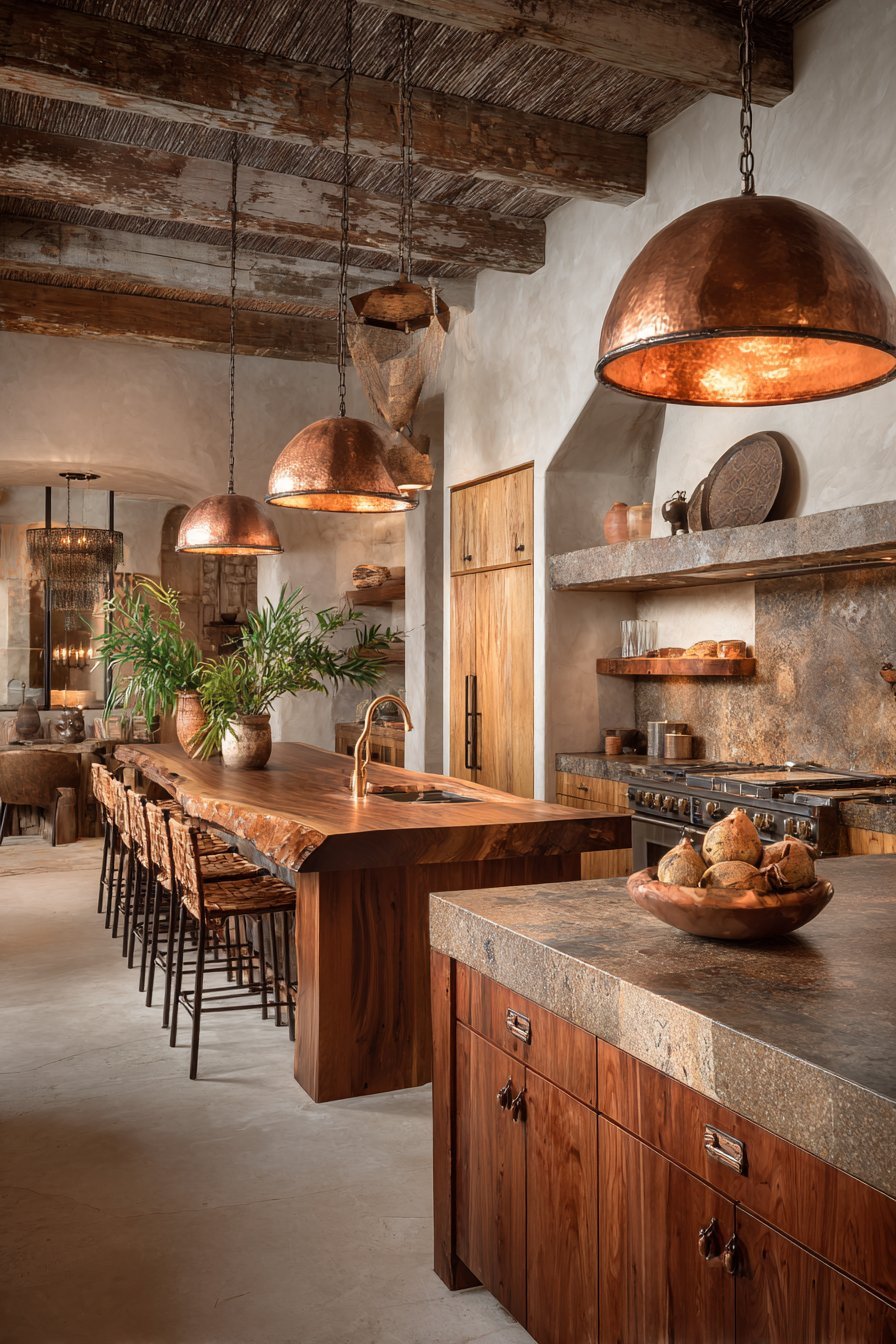
A solid walnut island with live edge detail creates an unforgettable focal point. Natural wood movement and grain patterns showcase the tree’s original beauty. One side preserves the organic edge, bringing forest character indoors. The island features open shelving displaying woven storage baskets and ceramic serving pieces.
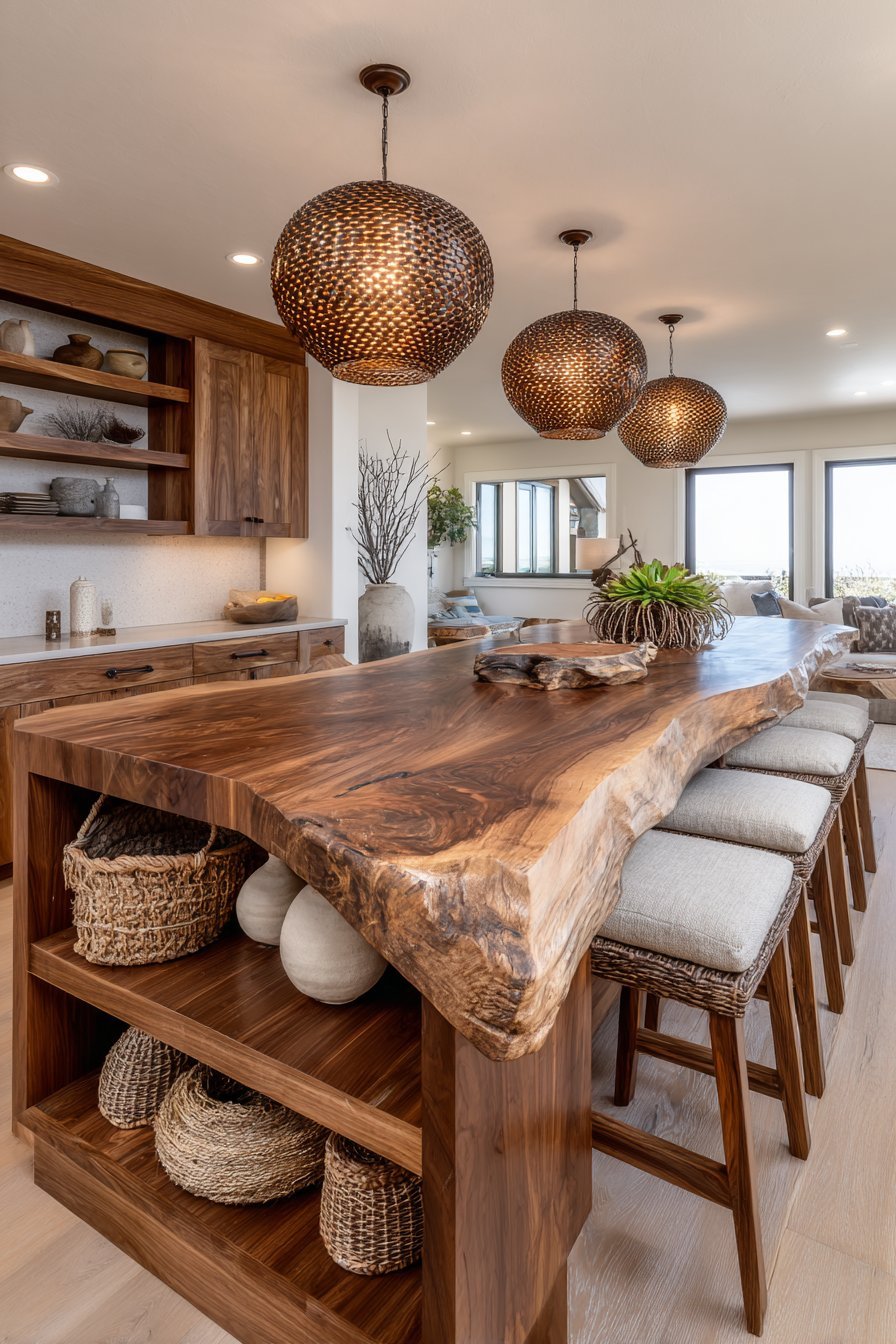
Three rattan counter stools with linen cushions provide comfortable seating. The natural materials create textural harmony. Above, three dome pendant lights with hammered copper finish cast warm ambient light. The varying heights add visual interest and practical illumination.
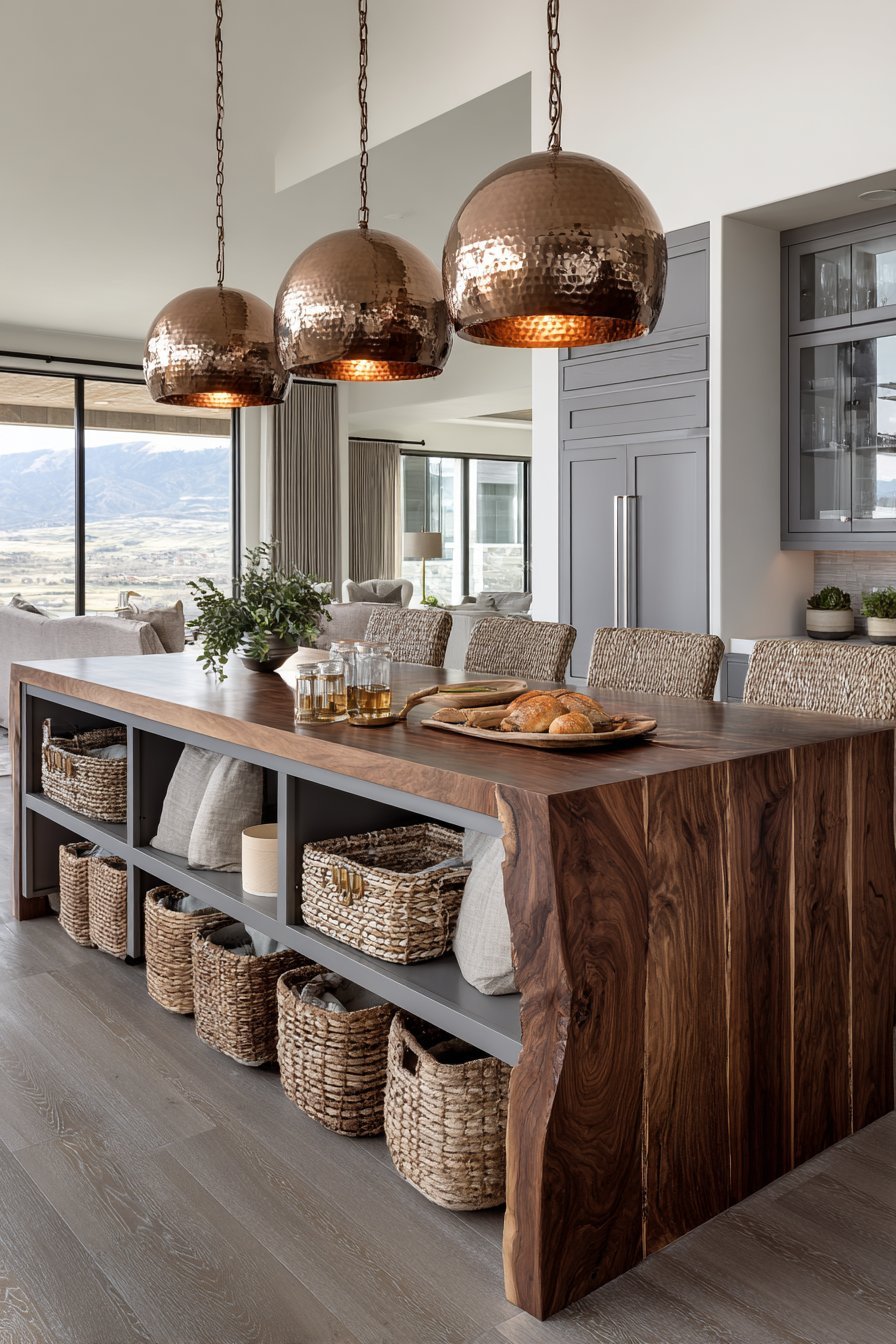
Afternoon light from nearby windows highlights the natural wood character. The grain patterns shift in appearance throughout the day. This dynamic quality keeps the space feeling alive. The organic material palette creates calm sophistication.
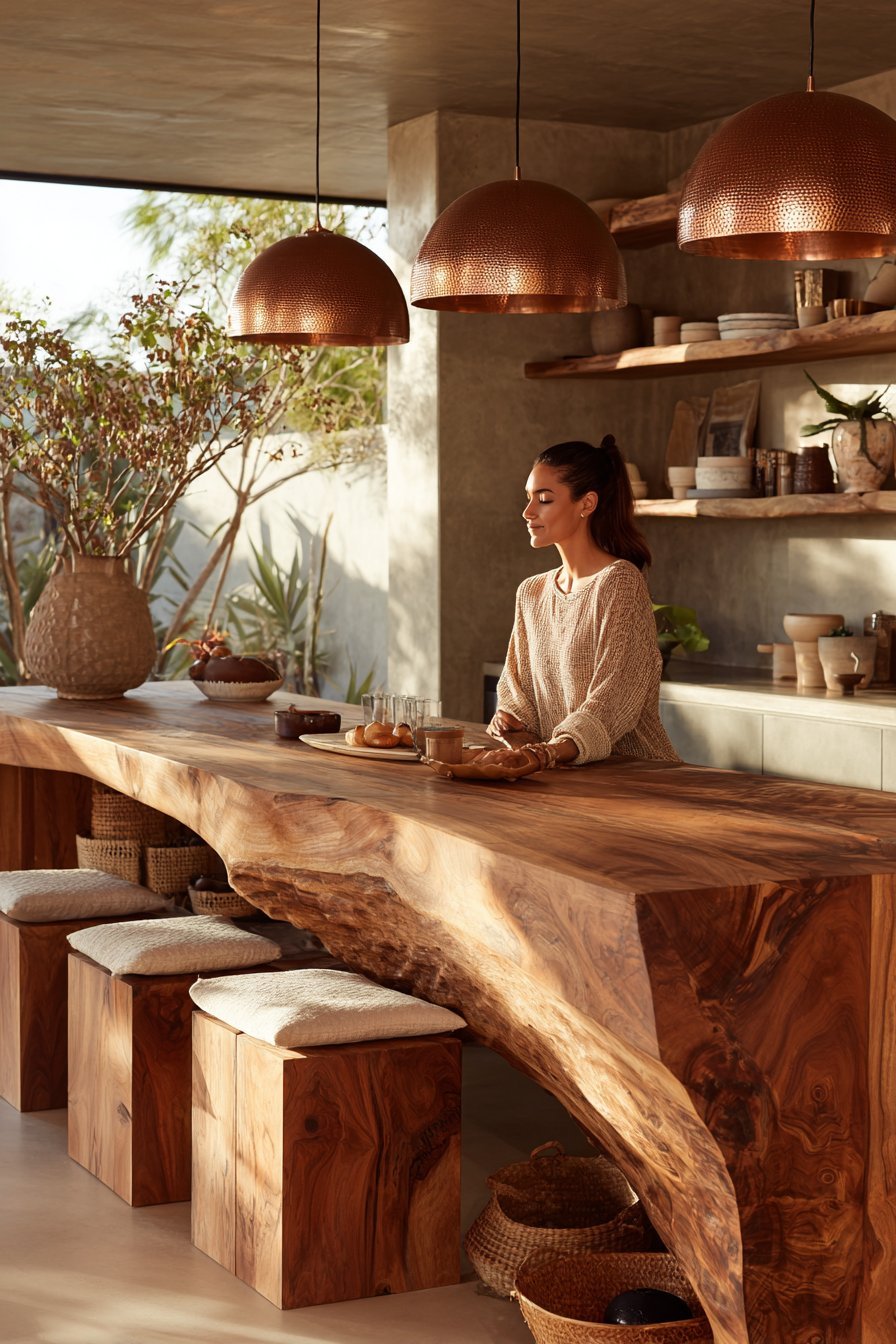
This centerpiece island demonstrates how statement furniture can anchor entire design schemes. The live edge detail costs more but delivers irreplaceable visual value. Guests naturally gravitate toward this authentic natural element.
Key Design Tips:
- Select walnut slabs with cathedral grain for dramatic visual impact
- Preserve live edges on at least one side for organic character
- Use woven baskets for storage that doubles as texture
- Install pendant lights at varying heights for dimensional lighting
- Choose natural fiber seating to maintain material consistency
4. Sage Green and Oak Two-Tone Scheme
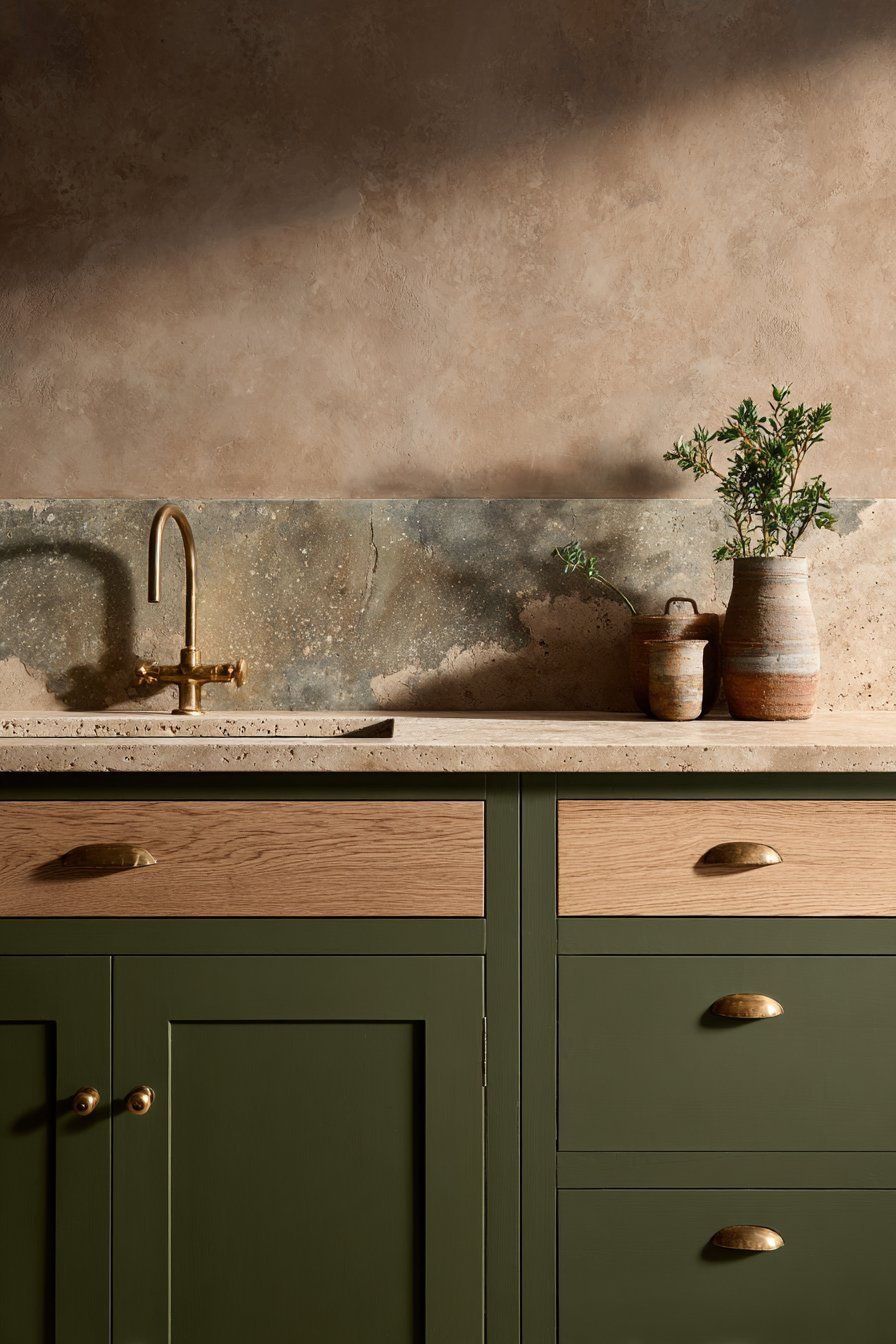
This kitchen features sage green lower cabinets with classic shaker-style doors. Natural oak upper cabinets create a sophisticated two-tone organic palette. The color combination feels fresh yet grounded. Limestone countertops with fossil details provide textural interest and neutral grounding.
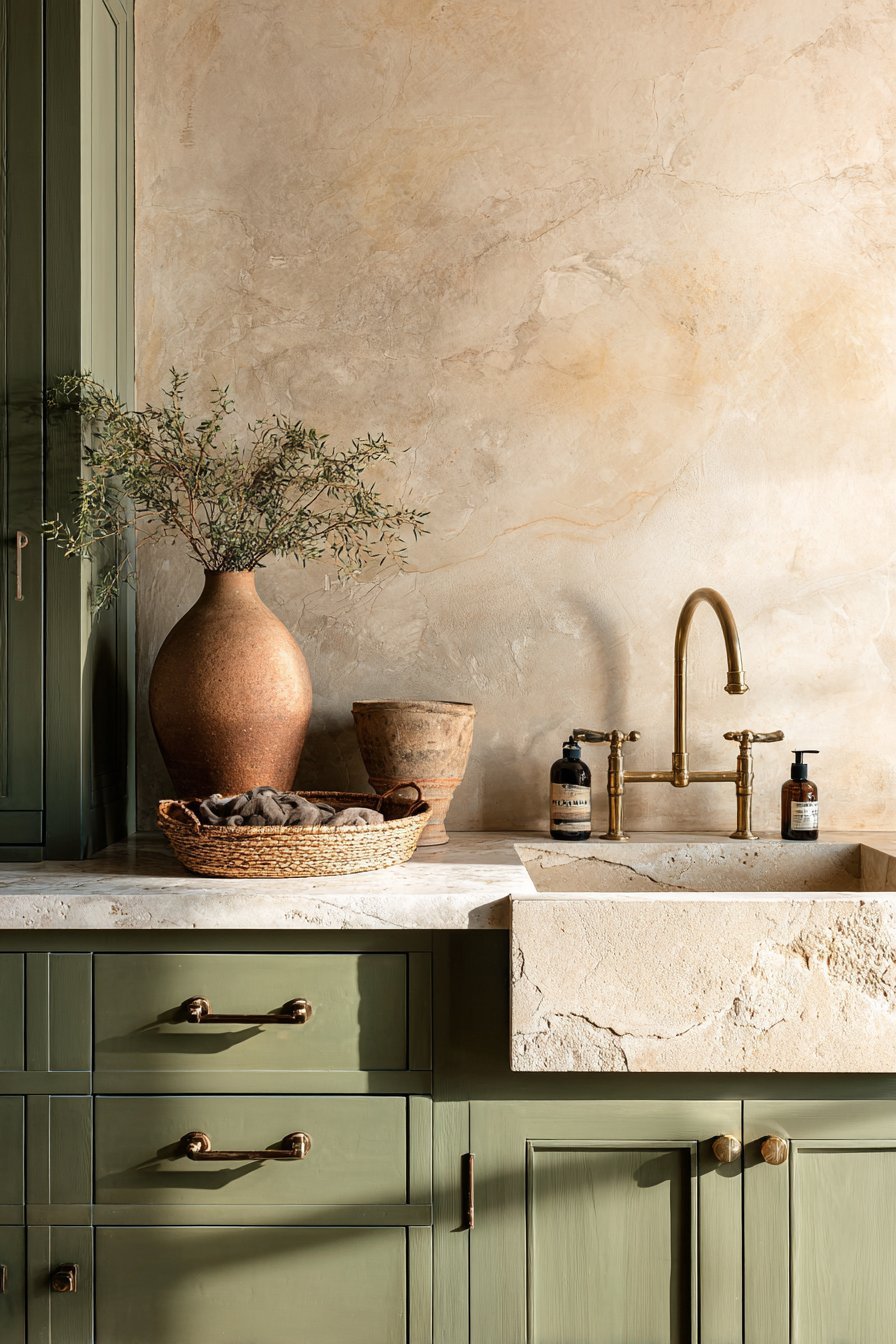
The walls showcase warm clay plaster with subtle texture variations. This natural wall treatment adds depth impossible with standard paint. Vintage brass hardware and farmhouse-style faucet add aged metallic warmth. The brass develops character through daily use.
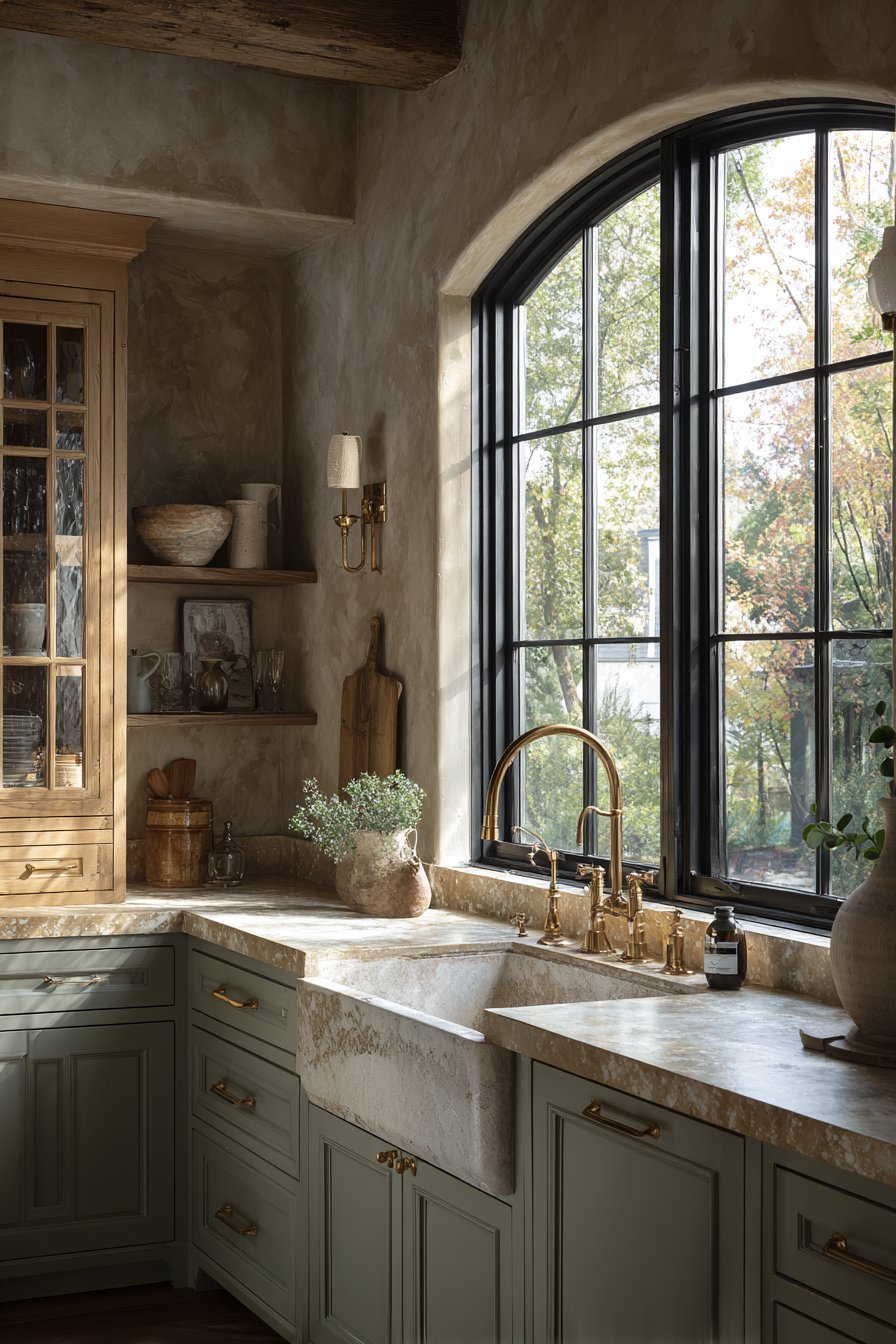
Natural daylight reveals the harmonious earth-tone color relationships throughout the space. Material textures interact beautifully under changing light conditions. The practical elegance suits both cooking and entertaining. This nature-inspired palette never feels dated.
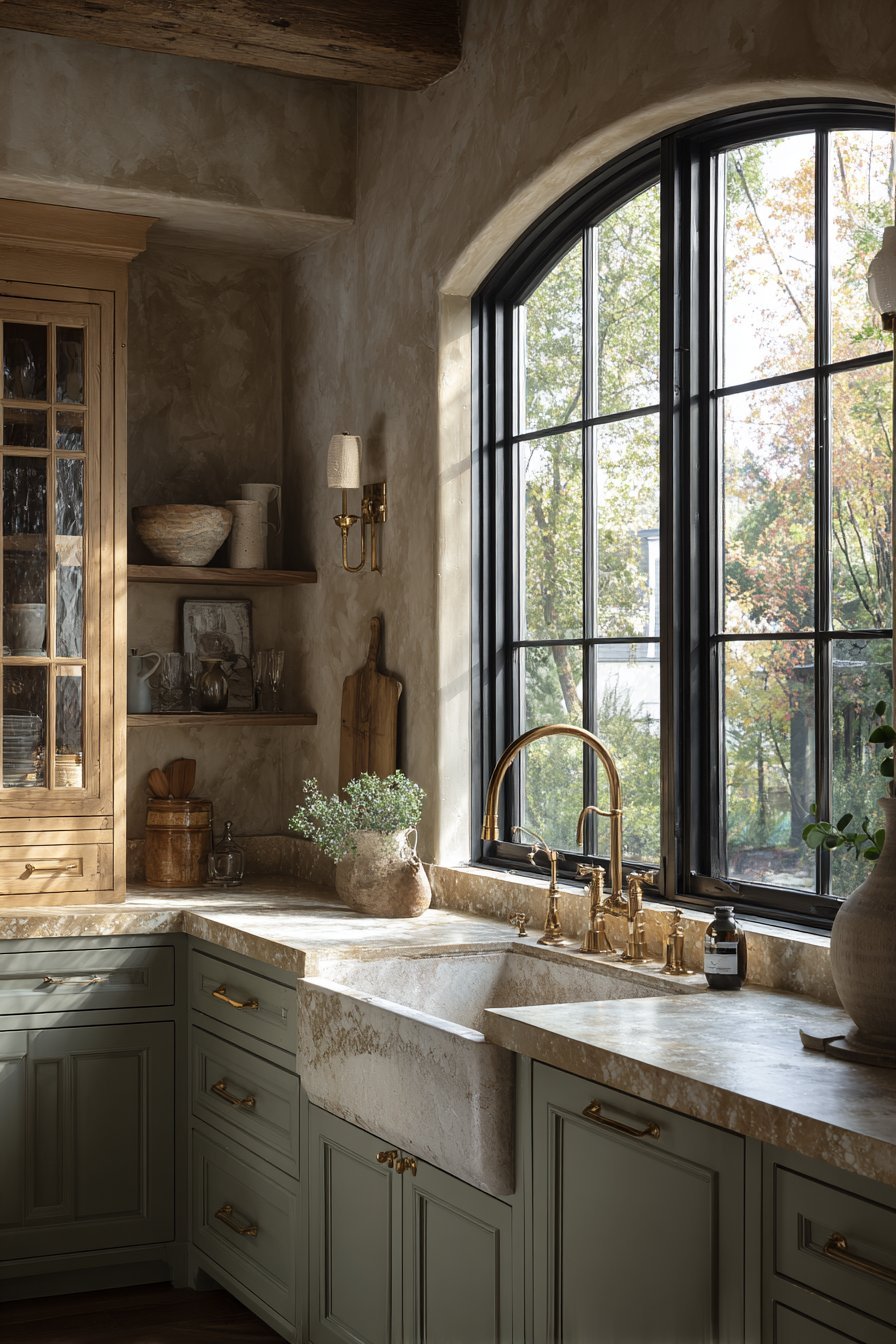
The sage green grounds the design while oak adds warmth above. Limestone bridges the two colors perfectly. This thoughtful color strategy demonstrates sophisticated restraint.
Key Design Tips:
- Paint lower cabinets in muted sage to ground the design
- Use natural oak uppers to add warmth without heaviness
- Select limestone with visible fossil details for conversation pieces
- Apply clay plaster walls for authentic texture and depth
- Install vintage-style brass hardware for timeless appeal
5. Reclaimed Wood Open Shelving Display
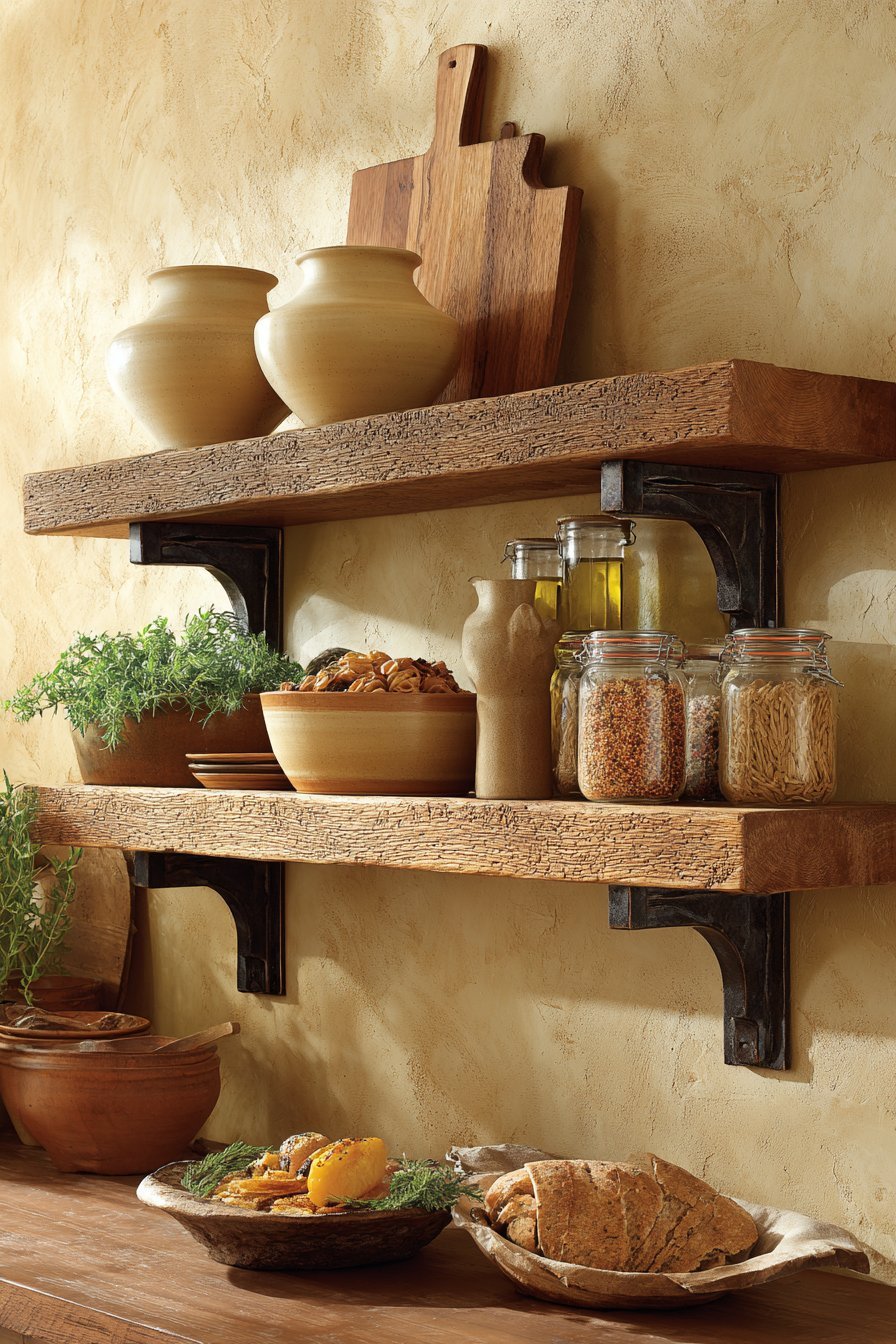
Thick reclaimed wood planks with oil-rubbed bronze brackets create stunning open shelving. A curated collection of natural elements fills the shelves purposefully. Handthrown pottery in cream and terracotta tones sits beside wooden cutting boards. Glass jars of dried goods and potted herbs in clay pots complete the display.
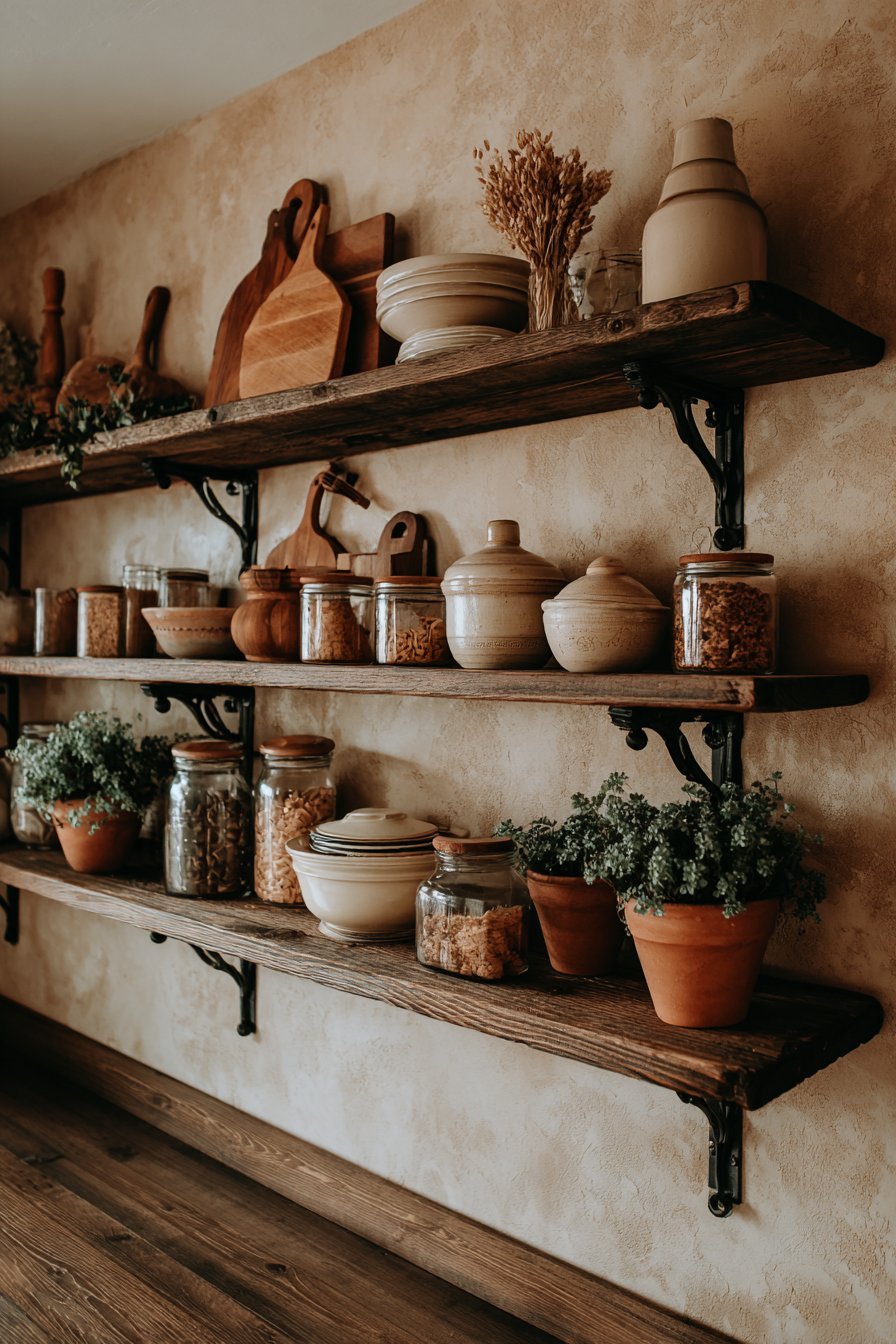
The shelving installs against a wall of natural plaster in warm sand tone. This neutral backdrop allows the displayed items to shine. Soft natural lighting highlights organic textures throughout the day. Material variations become visible as light shifts.
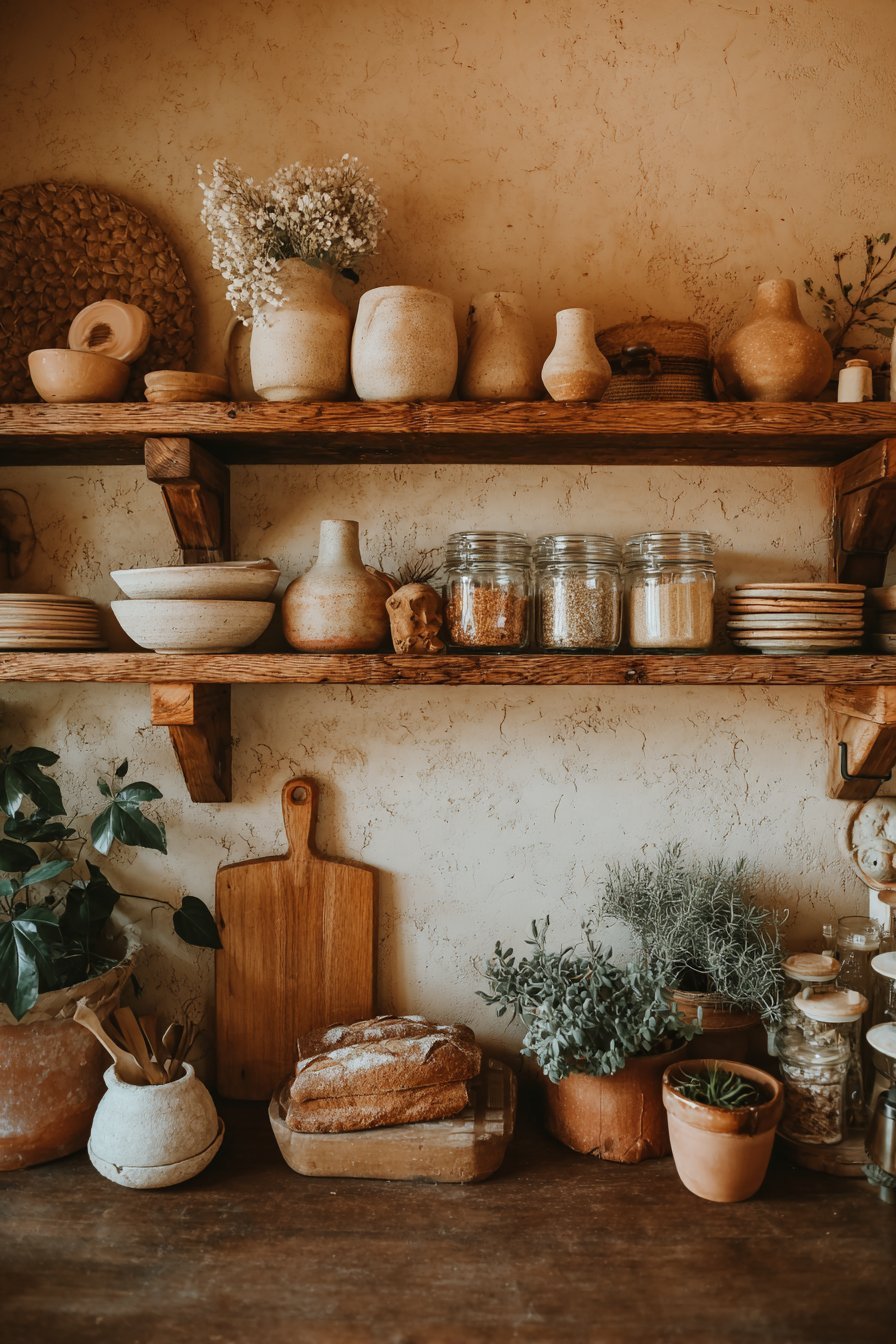
The lived-in warmth of earthy kitchen styling comes through in every detail. Each item serves a function while contributing to the aesthetic. The pottery pieces show glaze variations that add interest. Wooden cutting boards display their unique grain patterns.
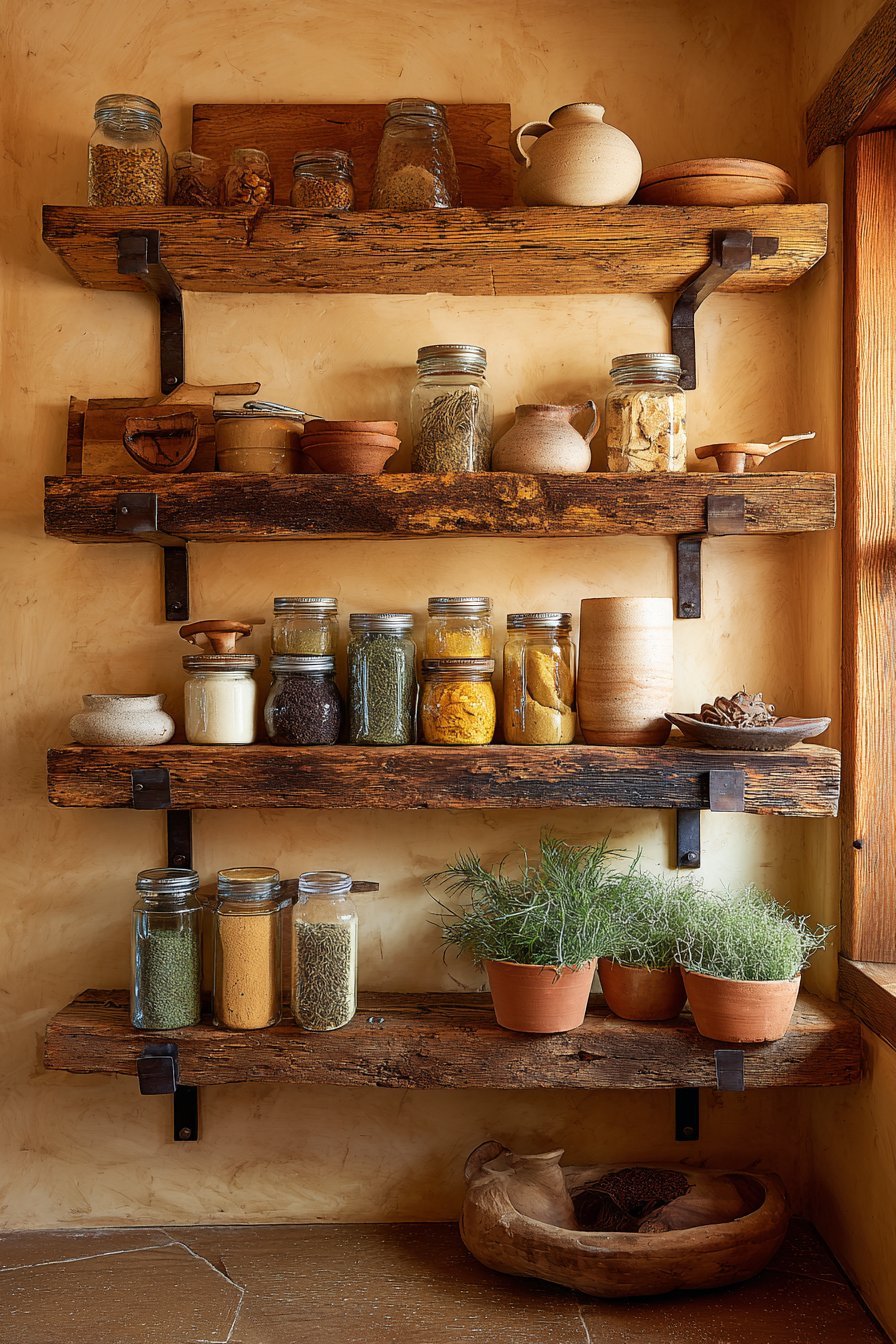
This approach eliminates the sterile feeling of closed upper cabinets. Open shelving requires editing but rewards with personality. The display changes seasonally as herbs grow and items rotate.
Key Design Tips:
- Use reclaimed wood at least two inches thick for substantial presence
- Install oil-rubbed bronze brackets for warm metallic contrast
- Display handthrown pottery to emphasize artisanal quality
- Store dried goods in clear glass jars for functional beauty
- Grow herbs in matching terracotta pots for living decoration
6. Soapstone Farmhouse Sink Station
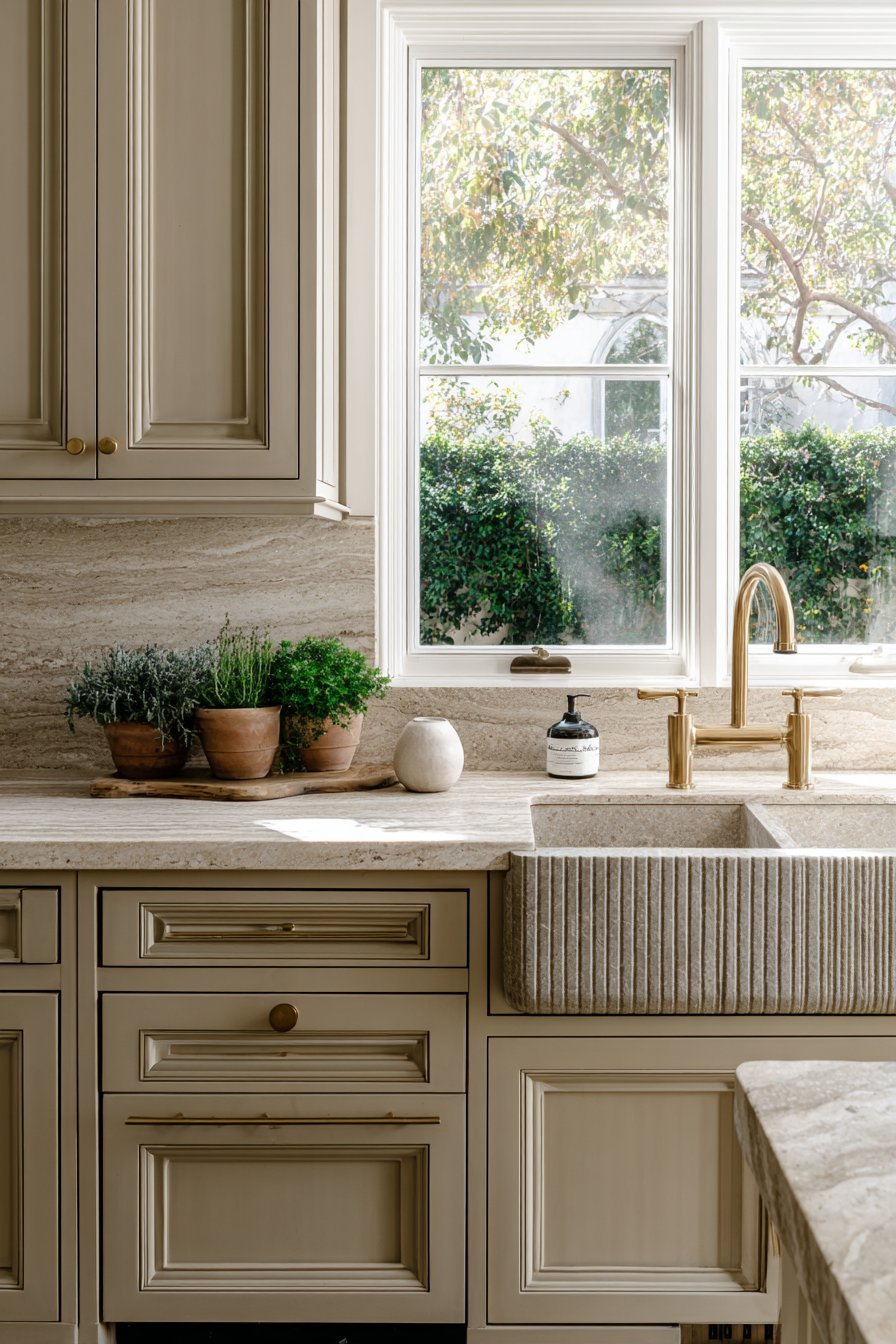
A soapstone farmhouse sink with integrated drainboard anchors this washing station. The surrounding countertops use the same material, showing natural patina and subtle color variations. Soapstone darkens beautifully over time, developing rich character. The cabinetry surrounding the sink wears warm clay terracotta paint with simple brass knobs.
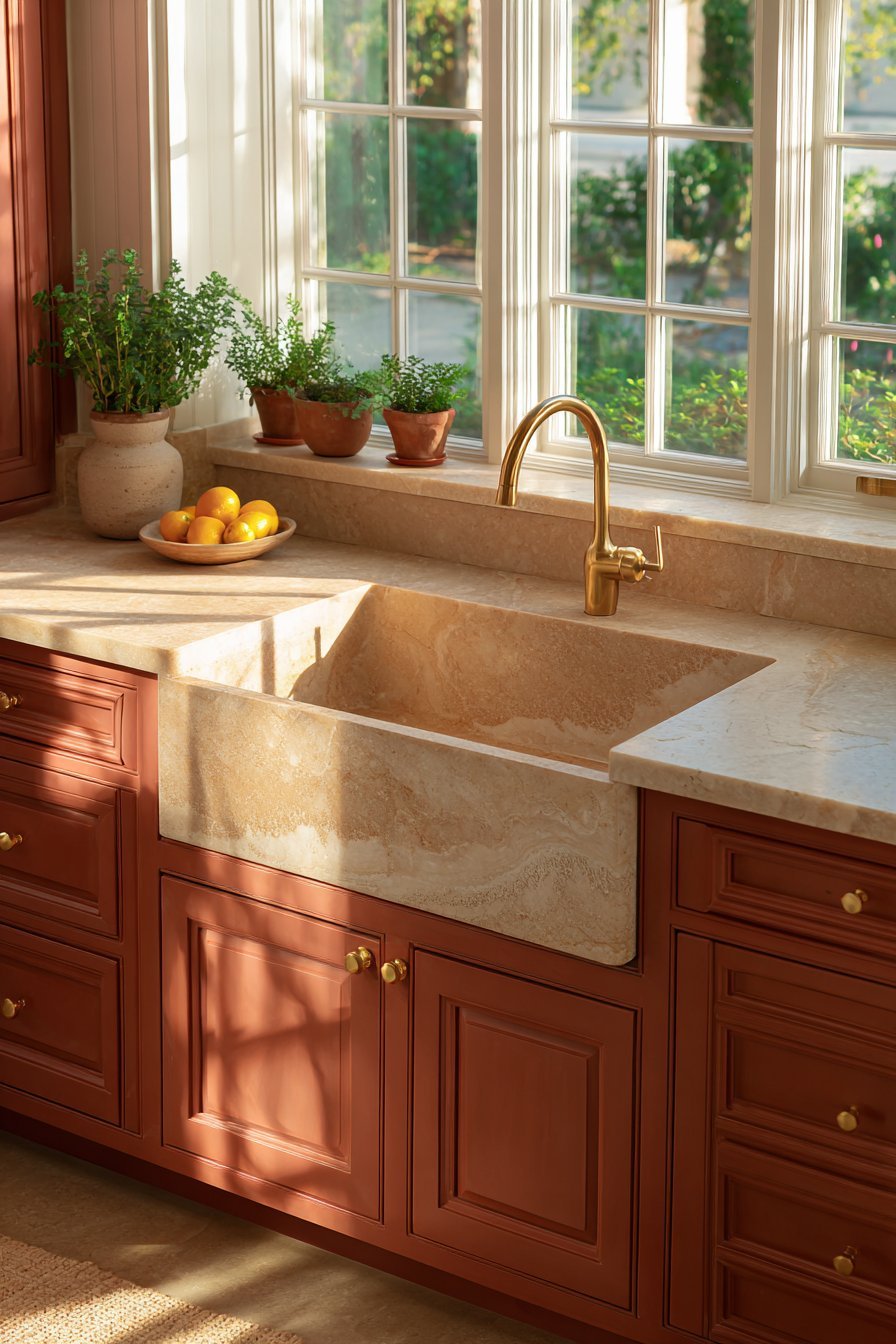
A window above the sink frames views of outdoor greenery perfectly. The sill displays small potted herbs in terracotta containers. Fresh herbs remain within easy reach while adding living beauty. A brushed brass faucet with bridge design complements the organic aesthetic.
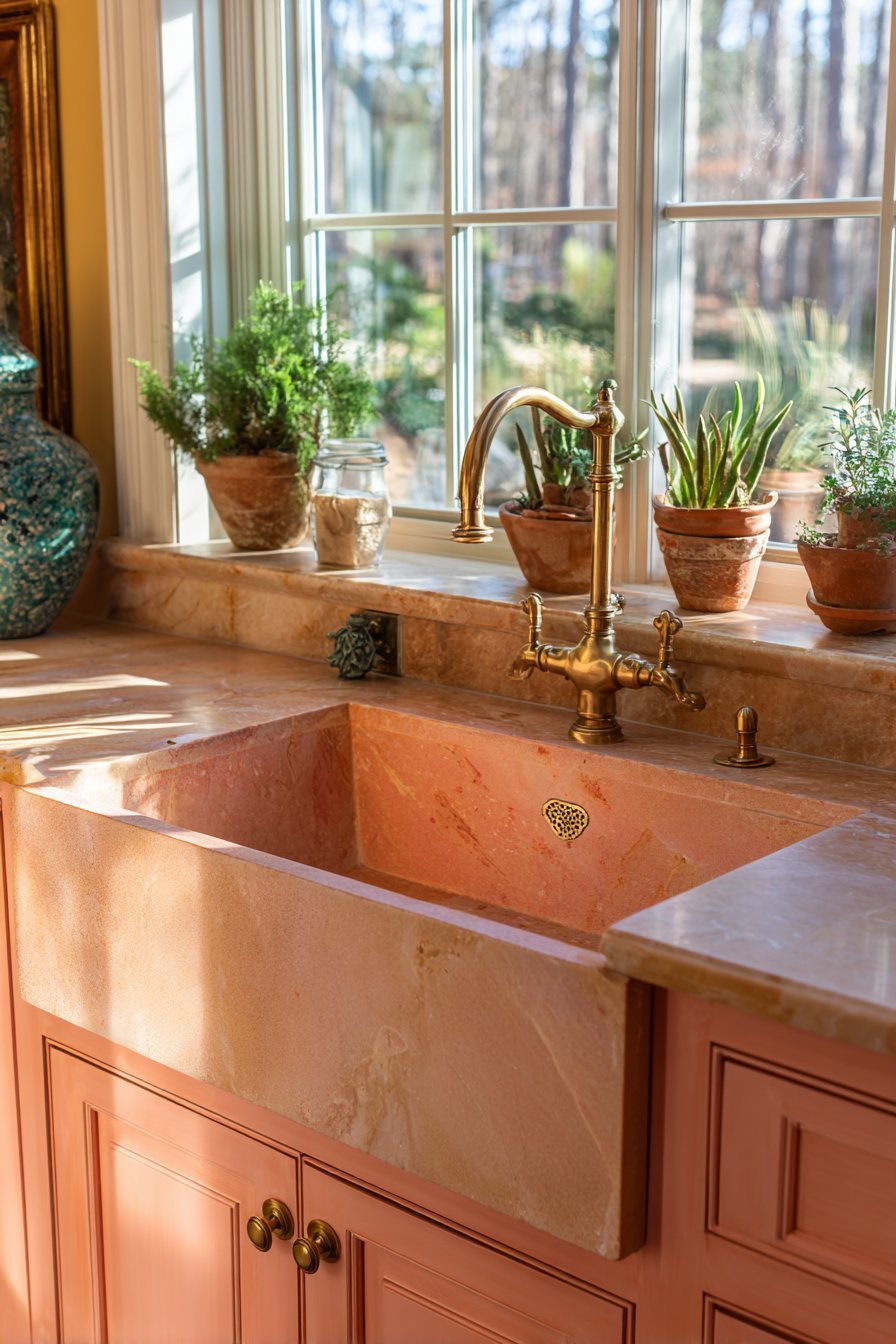
Morning light streams through the window, creating soft shadows across surfaces. The matte texture of soapstone contrasts with warm cabinet color. Water beads beautifully on the honed stone surface. This washing station becomes a pleasure to use daily.
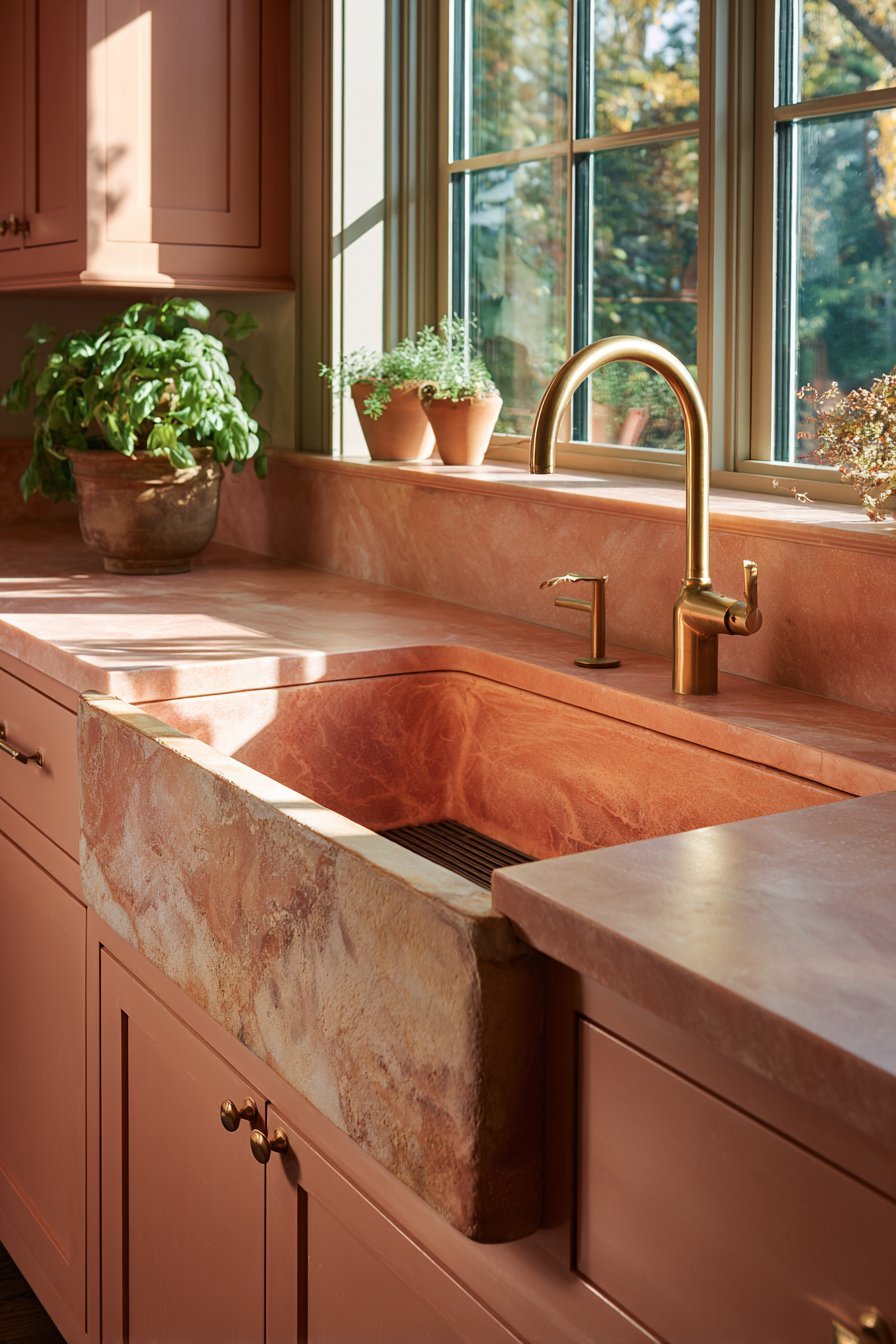
The integrated drainboard eliminates the need for separate drying racks. Soapstone resists staining and requires minimal maintenance. The natural patina that develops adds to its appeal rather than detracting.
Key Design Tips:
- Choose soapstone with integrated drainboard for practical elegance
- Paint surrounding cabinets in terracotta for warm color contrast
- Install bridge-style brass faucet for vintage-inspired functionality
- Display herbs on the window sill for fresh cooking ingredients
- Allow soapstone to develop natural patina without sealing
7. White Oak Pantry with Cork Flooring
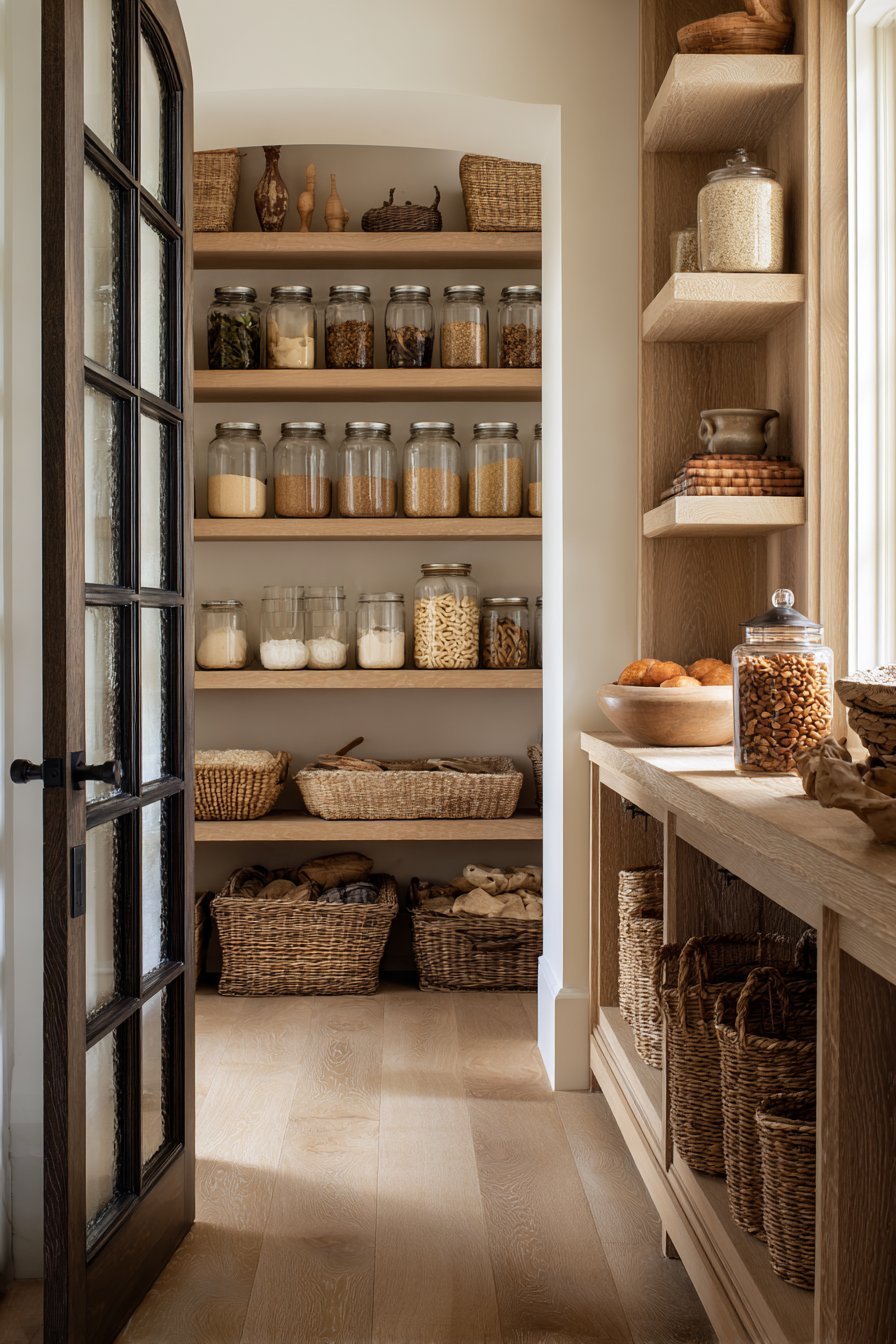
Floor-to-ceiling custom cabinetry in natural white oak showcases prominent grain patterns. The clear finish preserves the wood’s natural beauty. Interior shelving displays provisions in glass jars, woven baskets, and ceramic containers. The organization system uses natural materials throughout.
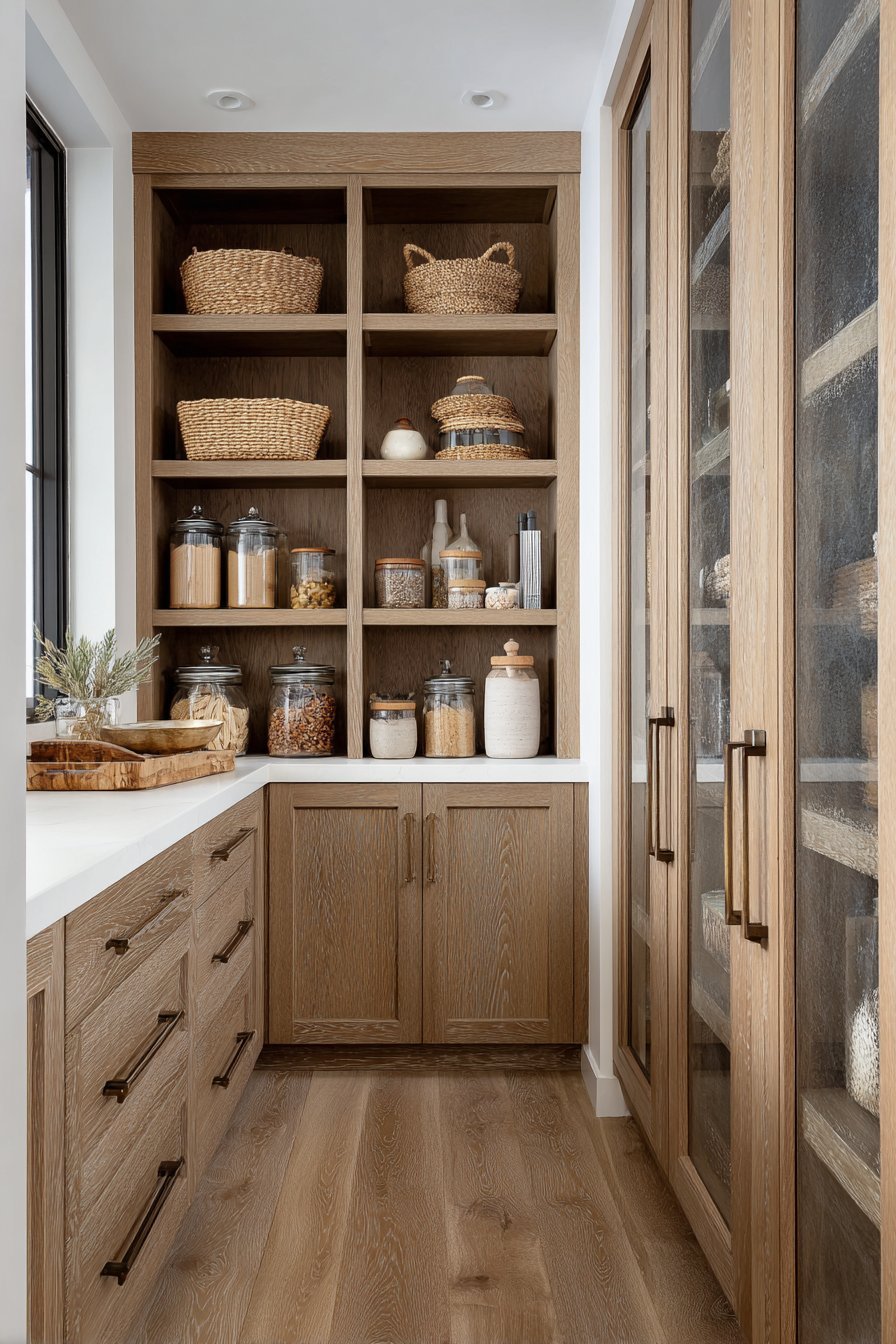
The pantry door features hammered glass panels in bronze frames. This allows light penetration while maintaining privacy. Cork flooring provides sustainable warmth underfoot with natural texture. The material absorbs sound and feels comfortable during long cooking sessions.
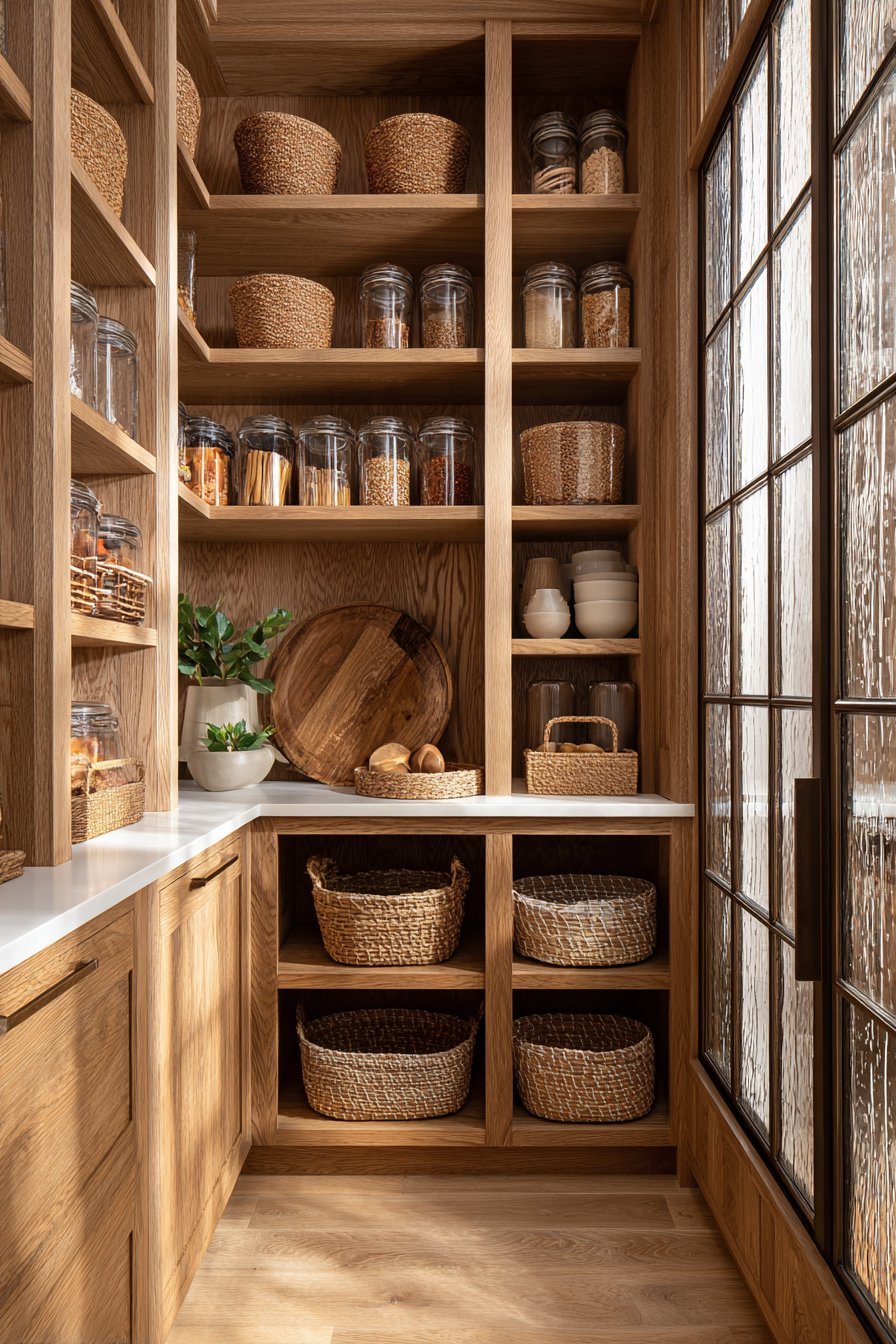
Balanced natural lighting emphasizes wood grain throughout the organized space. Woven textures from baskets add dimensional interest. The practical beauty of natural materials in storage design shines through. Every item has a designated place within reach.
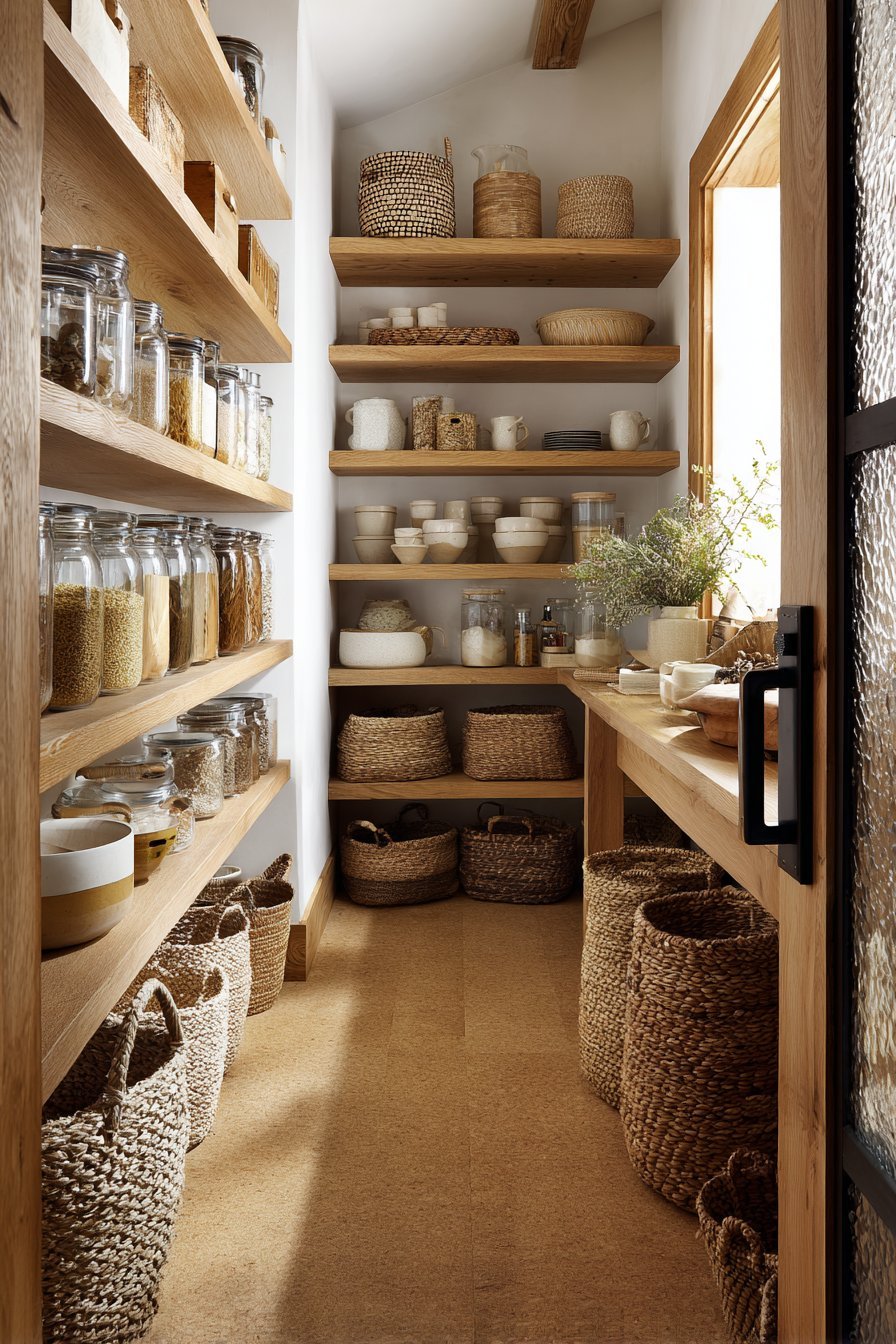
The white oak develops a honey patina over years of use. Cork flooring withstands heavy traffic while remaining environmentally friendly. This pantry proves storage can be both beautiful and functional.
Key Design Tips:
- Select white oak with prominent grain for visual richness
- Use clear matte finish to preserve natural wood color
- Install hammered glass door panels for filtered light
- Choose cork flooring for sustainable comfort underfoot
- Organize with natural containers like glass jars and woven baskets
8. Natural Linen Breakfast Nook
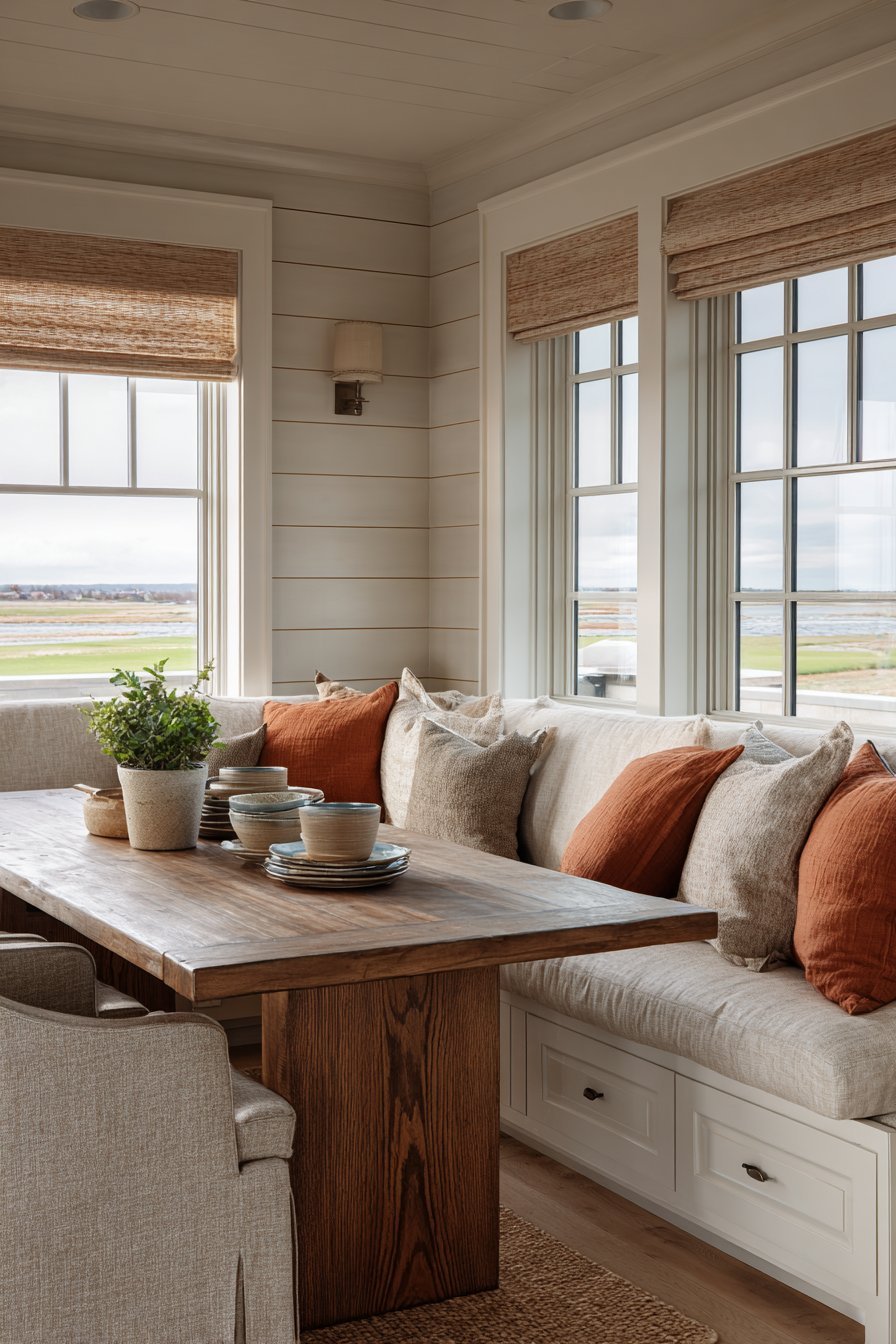
A built-in banquette features cushions upholstered in natural linen. The warm sand tone creates inviting softness. Throw pillows in terracotta and olive green add color accents. A live-edge walnut table centers the space with simple ceramic tableware.
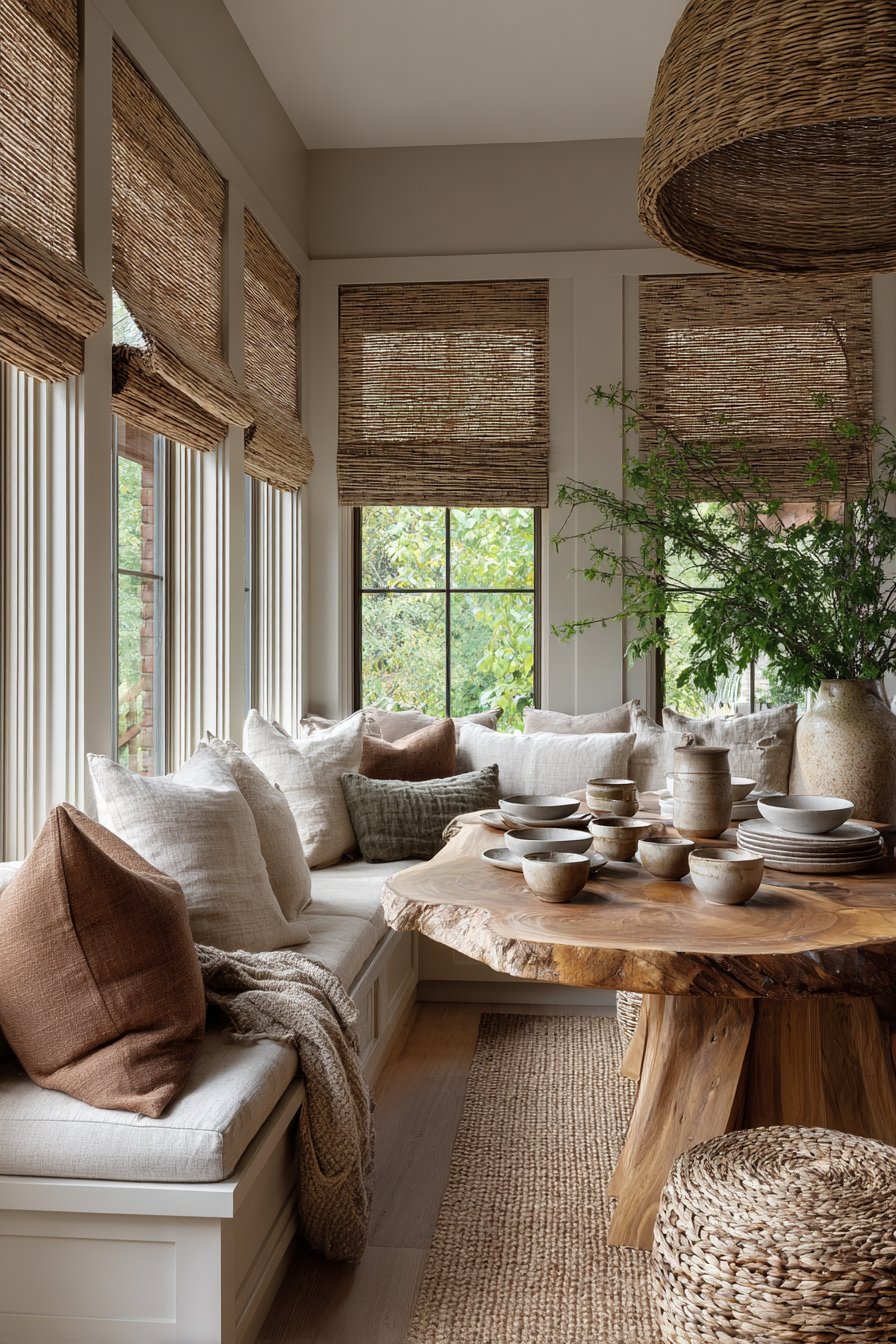
Large windows with bamboo roman shades filter natural light beautifully. The shades provide privacy while maintaining connection to outdoors. Shiplap walls painted in soft sage create subtle texture. A jute rug underneath anchors the entire seating area.
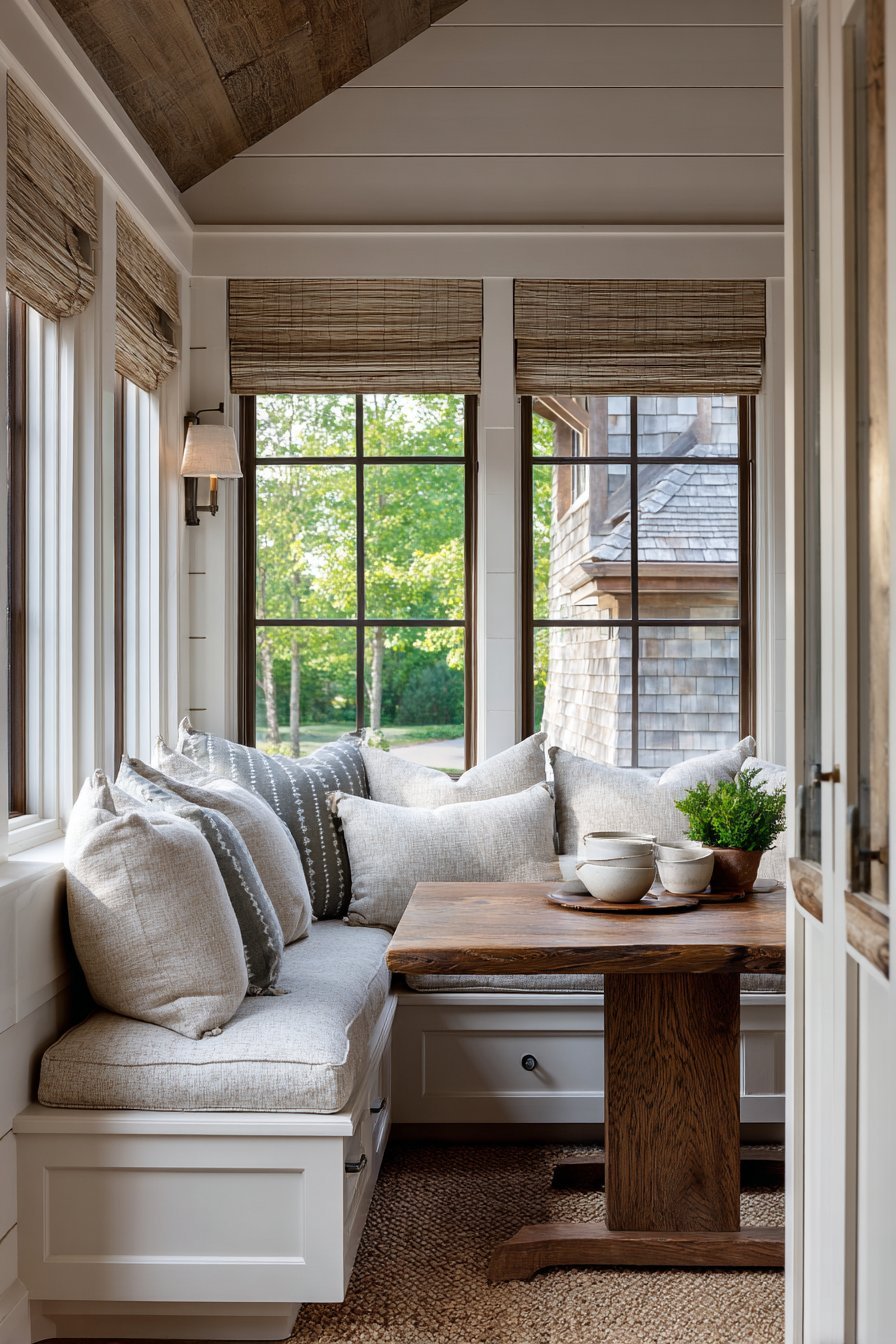
Soft diffused daylight highlights the layered natural textures throughout the nook. The linen cushions invite lingering over morning coffee. Terracotta and olive green pillows warm the neutral foundation. This space encourages family connection and conversation.
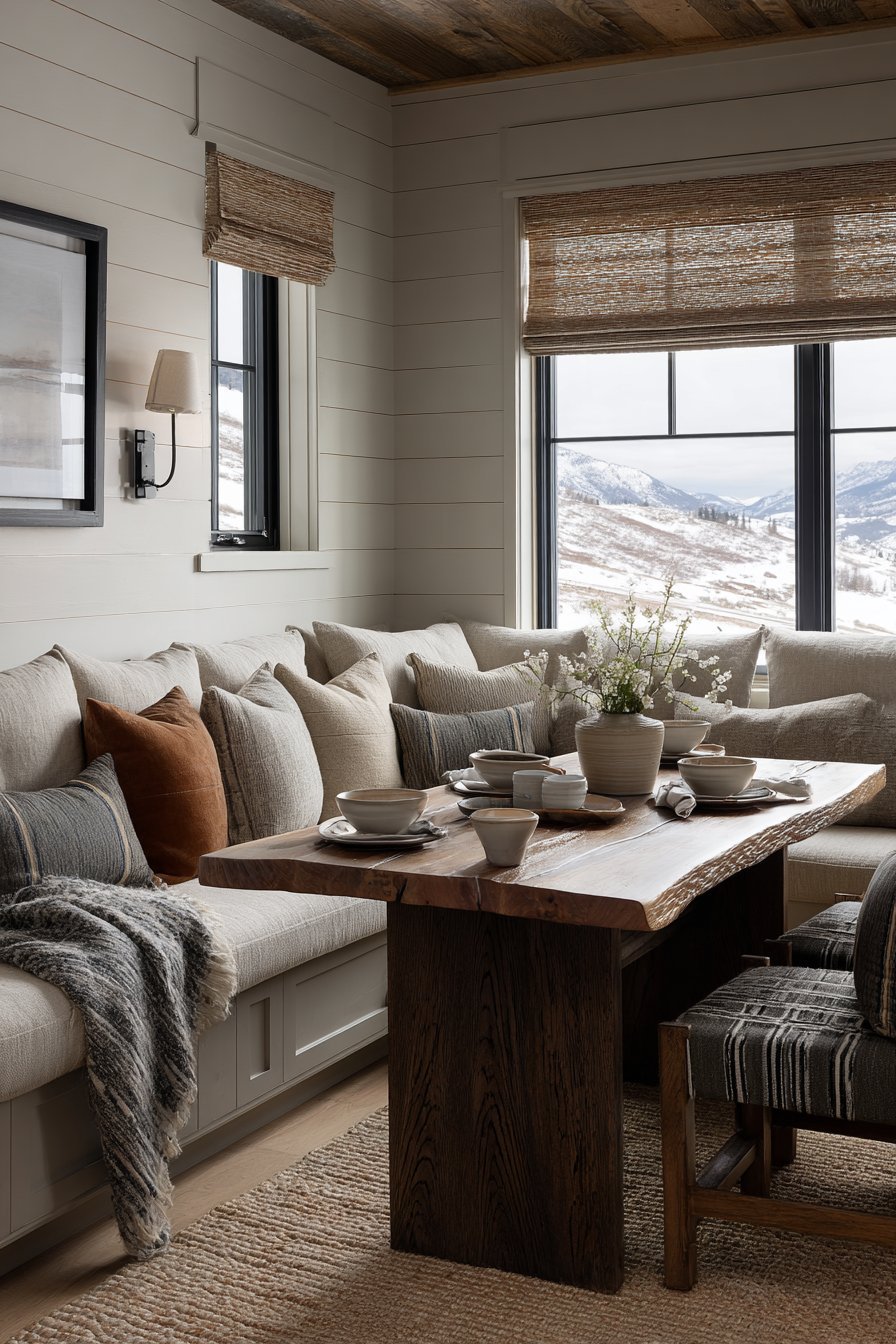
The breakfast nook demonstrates how natural materials create cozy gathering spaces. The live-edge table adds organic sculpture. Bamboo shades bring additional natural fiber texture to the design.
Key Design Tips:
- Upholster banquette cushions in durable natural linen
- Add terracotta and olive throw pillows for earthy color
- Center a live-edge table for organic focal interest
- Install bamboo roman shades for natural light filtering
- Anchor the space with jute rug for additional texture
9. Reclaimed Douglas Fir Ceiling Beams
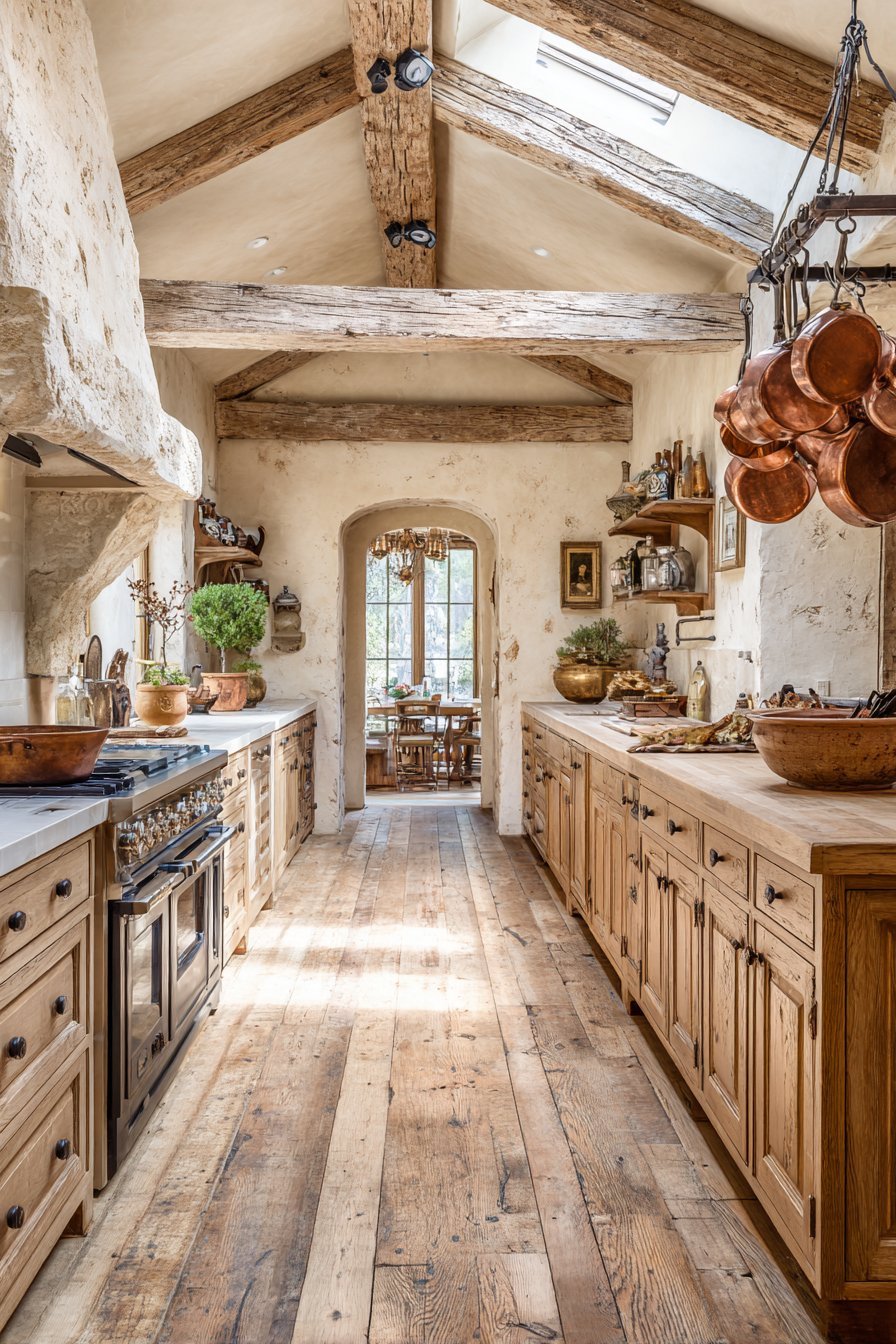
Exposed ceiling beams in reclaimed Douglas fir display natural weathering and age marks. The beams span the kitchen’s length, creating architectural interest. Rustic character comes from authentic aging rather than artificial distressing. Wrought iron pot racks suspend from the beams displaying copper cookware.
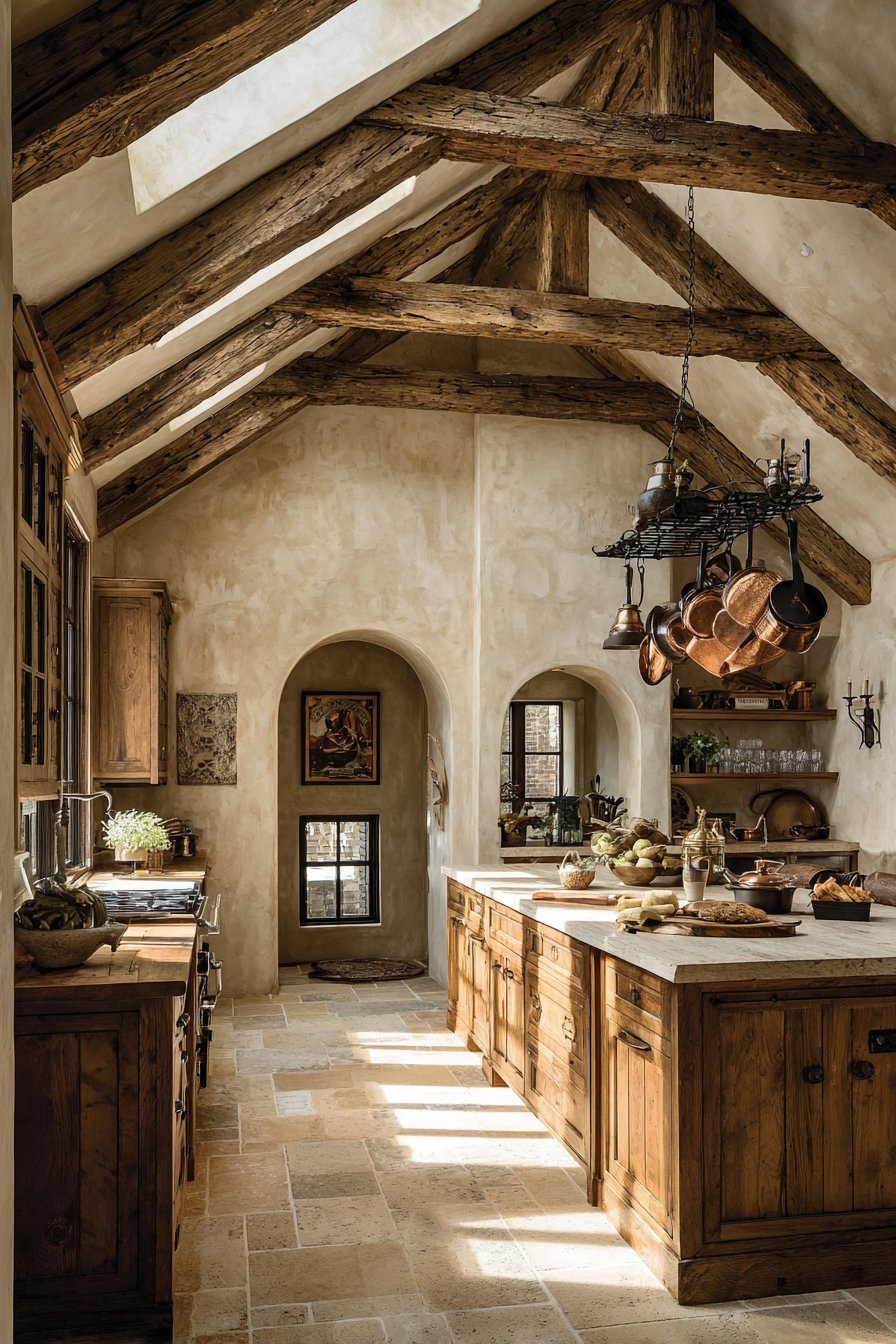
Cabinetry in warm honey-toned oak complements the overhead beams beautifully. Walls in natural lime plaster provide subtle cream-toned texture. The vertical and horizontal wood elements create visual rhythm. Natural light from skylights highlights wood grain and creates dramatic shadows.
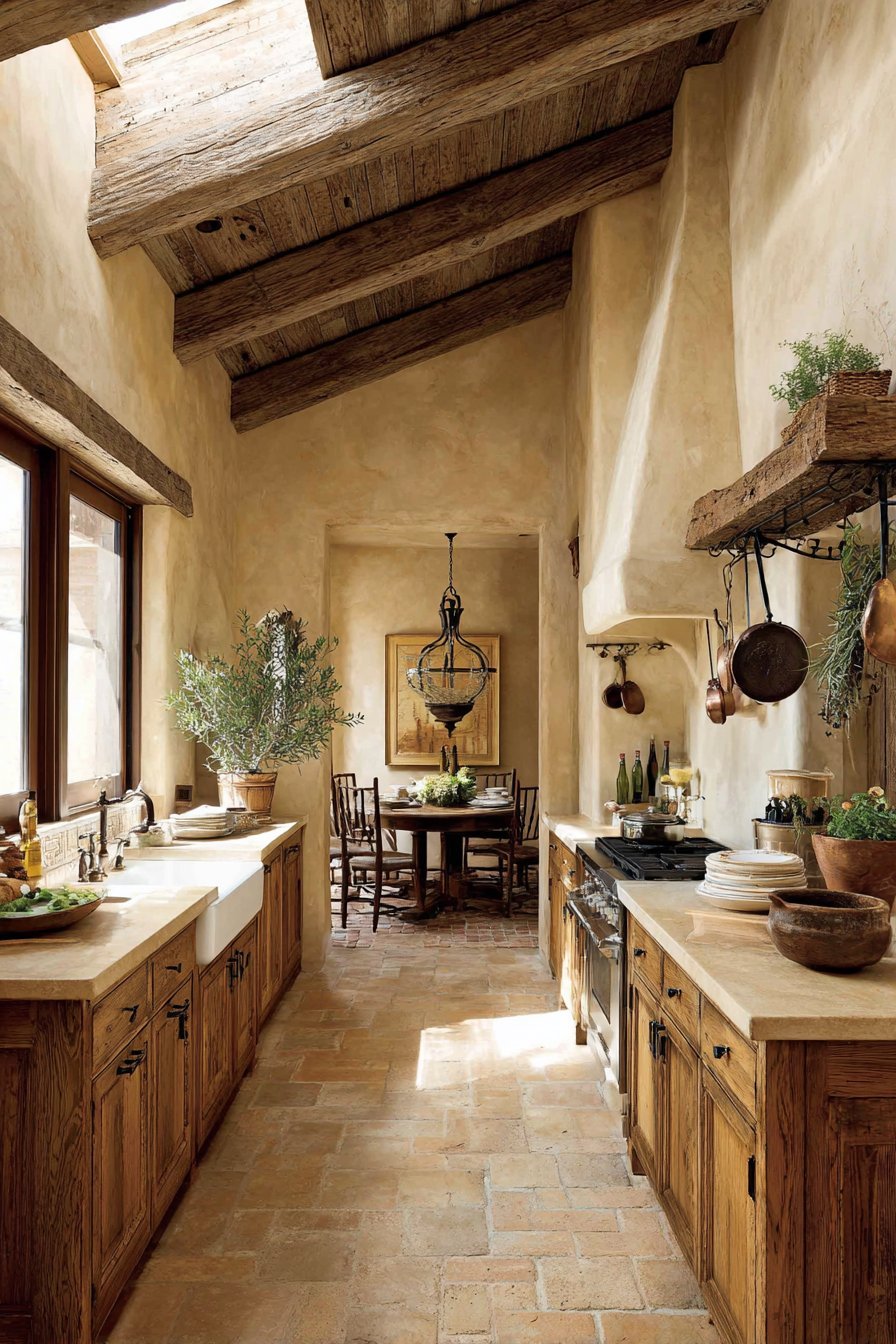
The reclaimed beams add instant history to new construction. Each mark and variation tells a story. The structural elements become decorative features. Copper cookware hanging from iron racks adds functional beauty.
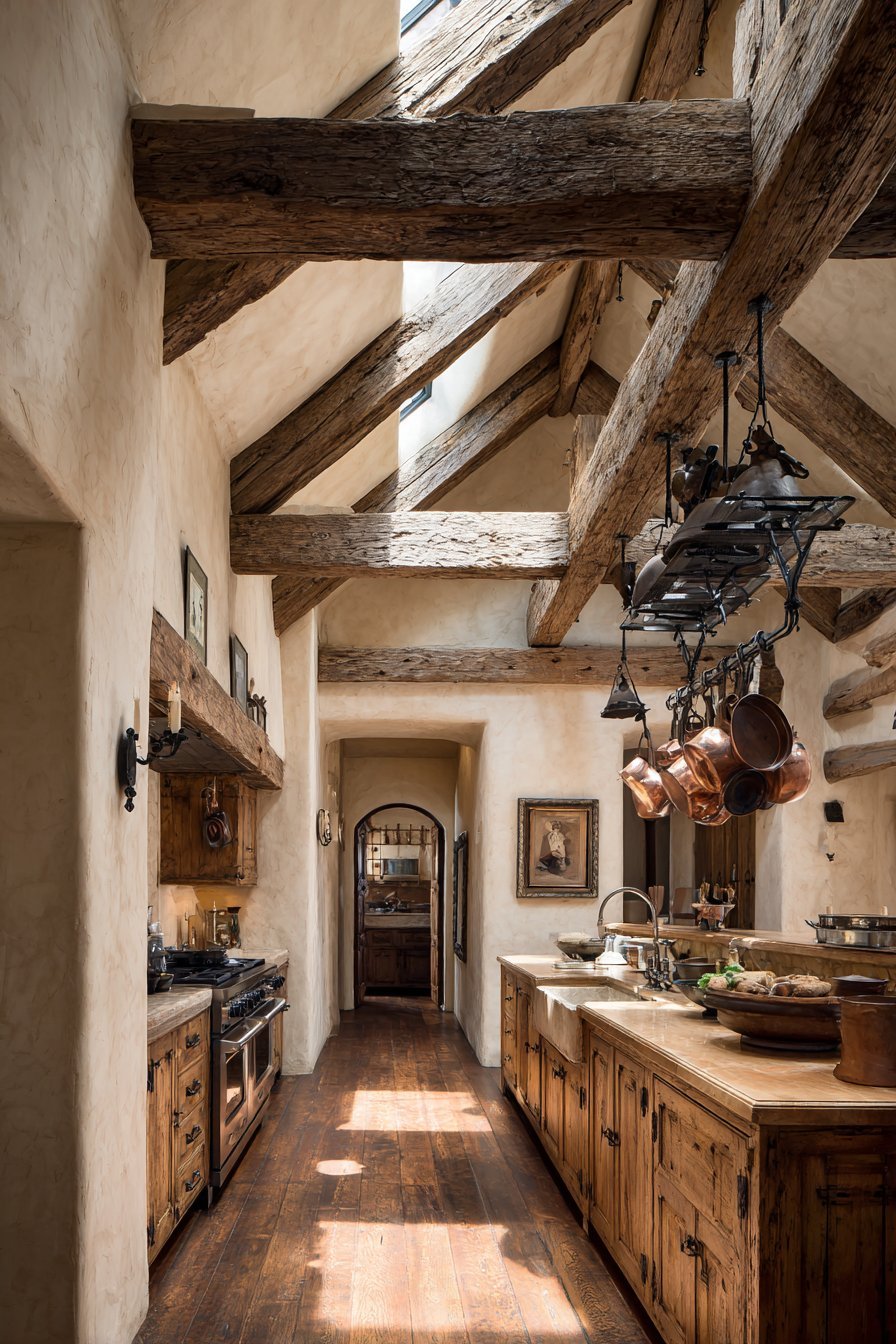
This design proves that ceiling treatments deserve as much attention as floors. The beams draw eyes upward, making spaces feel larger. The natural weathering provides character impossible to replicate artificially.
Key Design Tips:
- Source reclaimed Douglas fir beams with authentic weathering
- Span beams across the kitchen’s full length for impact
- Suspend wrought iron pot racks for functional display
- Apply natural lime plaster walls for subtle texture
- Install skylights to highlight beam character with natural light
10. Marble Countertop Styling Vignette
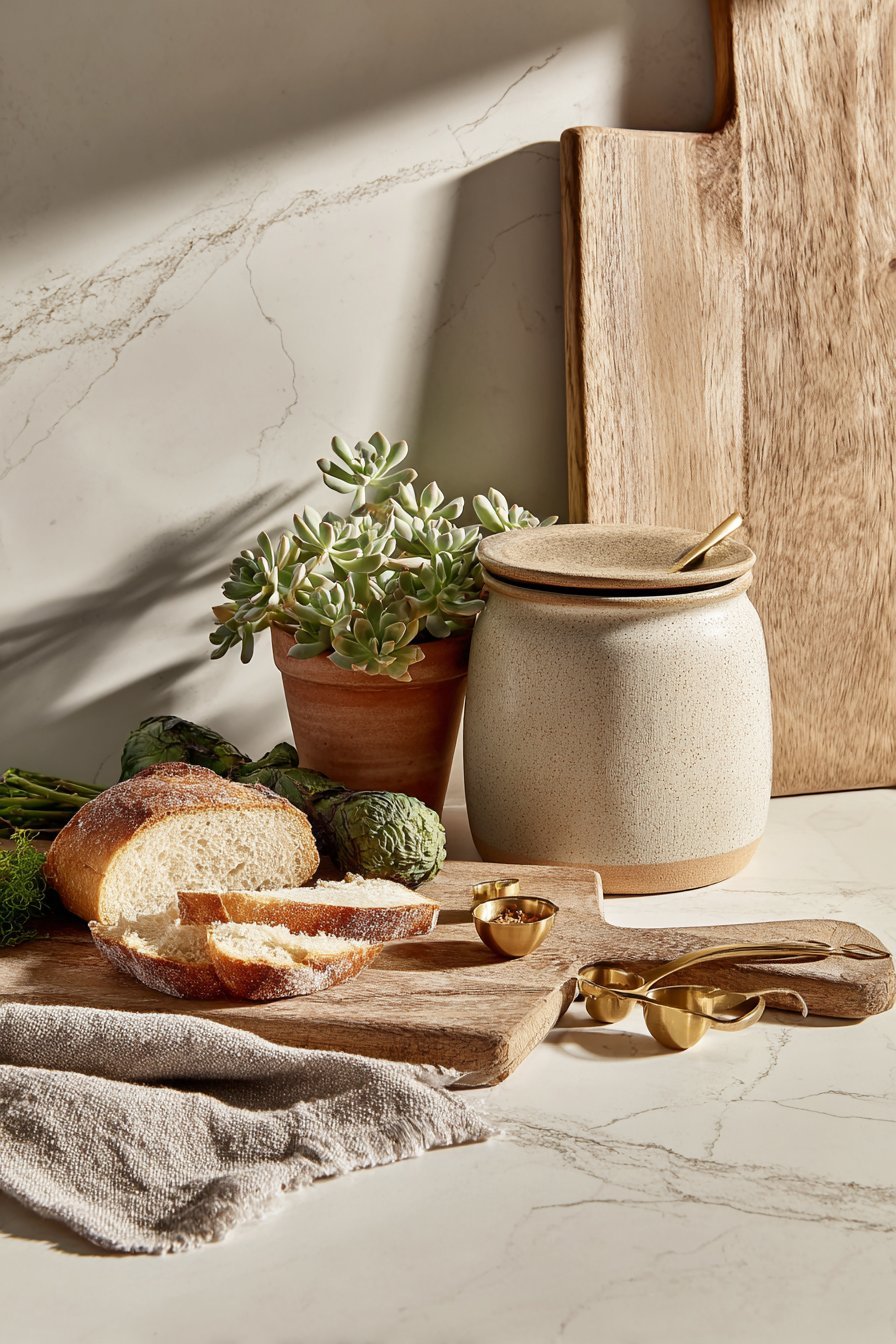
Honed Carrara marble with natural grey veining serves as the work surface. Organic elements style the countertop thoughtfully. A wooden cutting board with breadboard ends displays fresh vegetables artfully. A ceramic utensil crock in matte sand glaze stands ready for use.
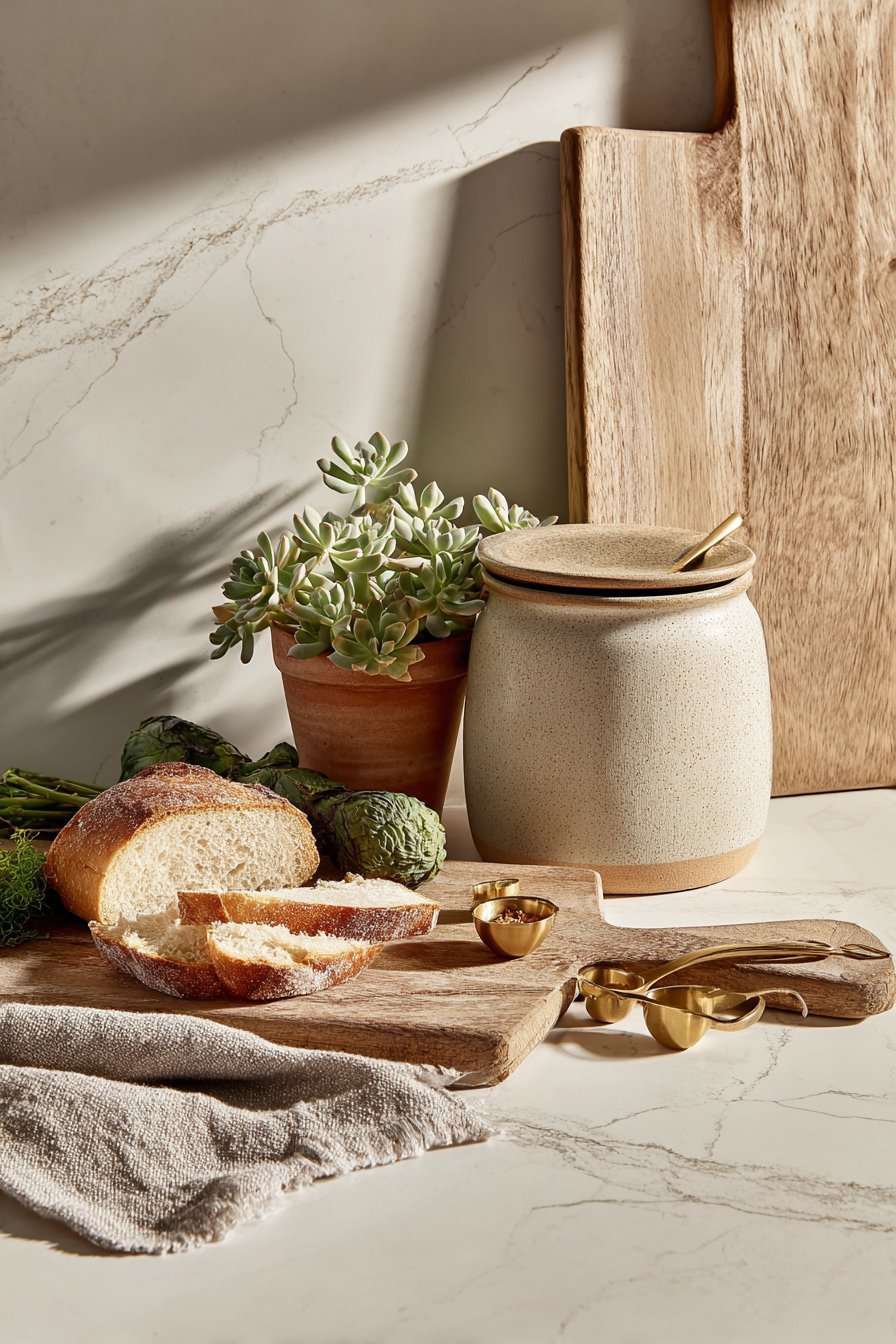
A small potted succulent in unglazed terracotta pot adds living greenery. Brass measuring spoons and a linen kitchen towel in natural flax complete the composition. Soft side lighting emphasizes material textures throughout the vignette. Stone, wood, ceramic, and natural fiber create harmony.
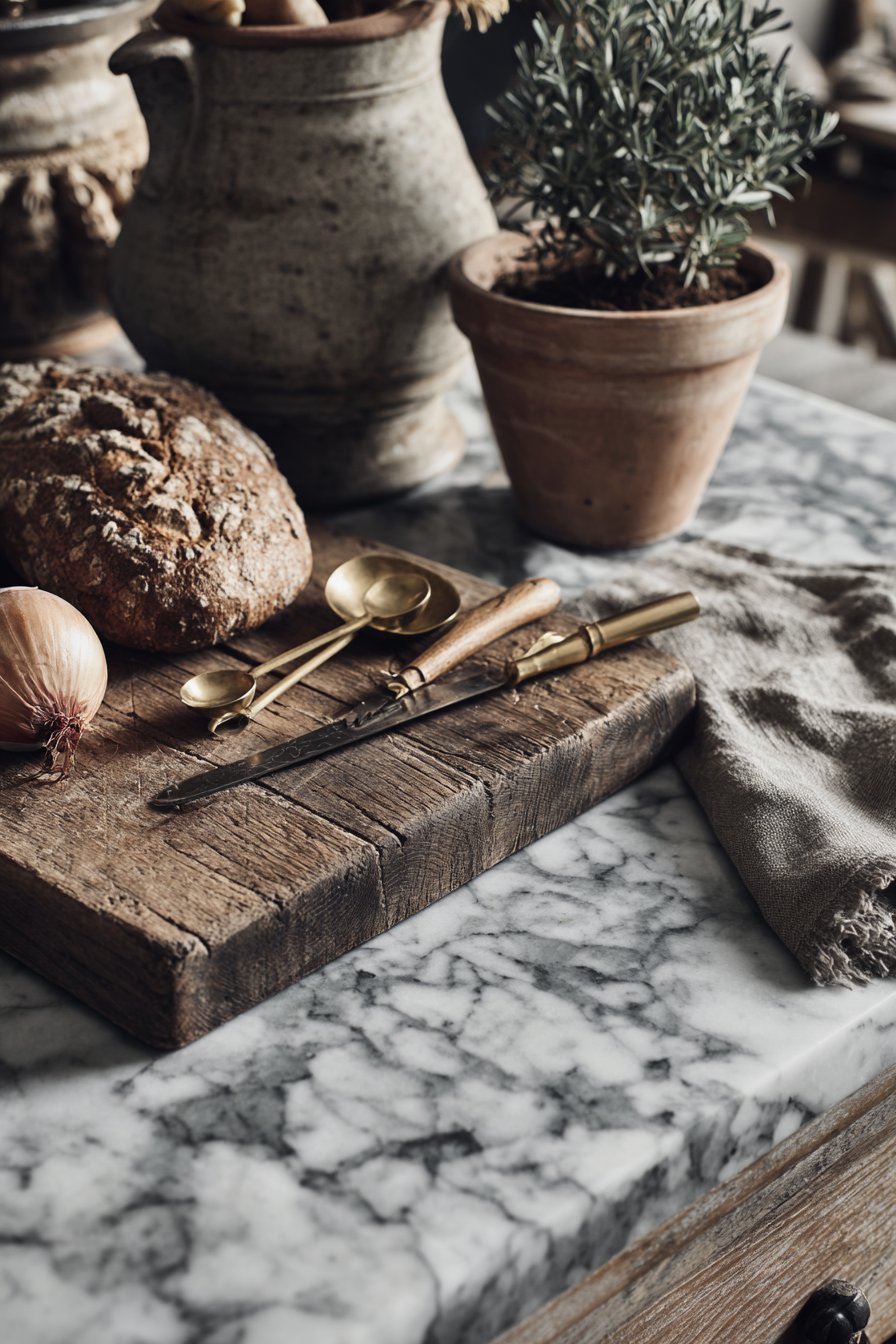
This carefully composed moment demonstrates earthy kitchen styling principles. Each element serves a purpose while contributing to beauty. The marble’s cool elegance balances warm wood tones. Natural materials in various textures create visual interest.
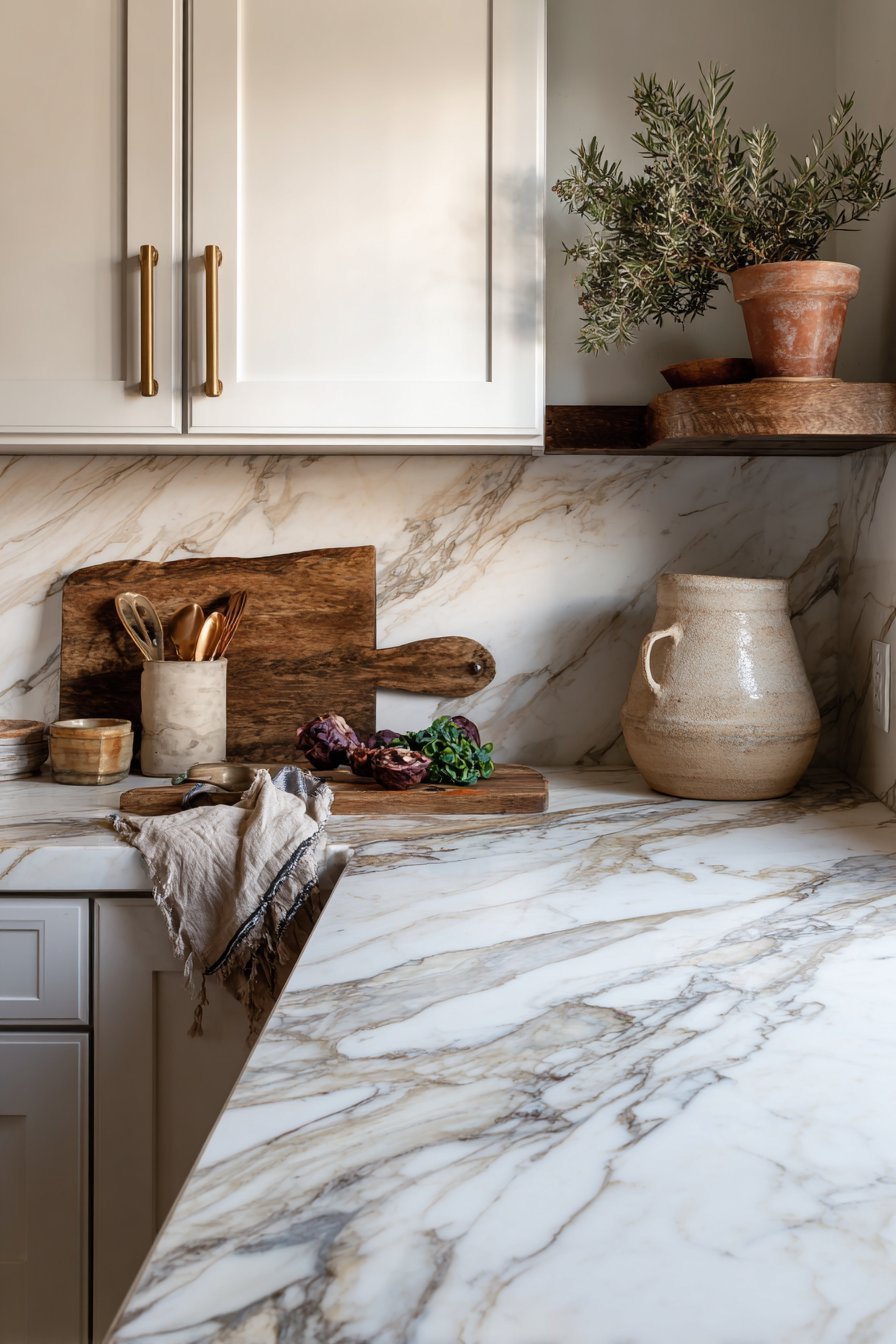
The vignette shows how everyday items become decoration when thoughtfully arranged. Functional tools deserve display when they’re beautiful. This approach eliminates clutter while maintaining accessibility.
Key Design Tips:
- Choose honed Carrara marble for subtle grey veining
- Display wooden cutting boards with visible end grain
- Use matte ceramic crocks for utensil storage
- Add living succulents in unglazed terracotta pots
- Style with brass measuring tools for warm metallic accent
11. Reclaimed Red Clay Brick Accent Wall
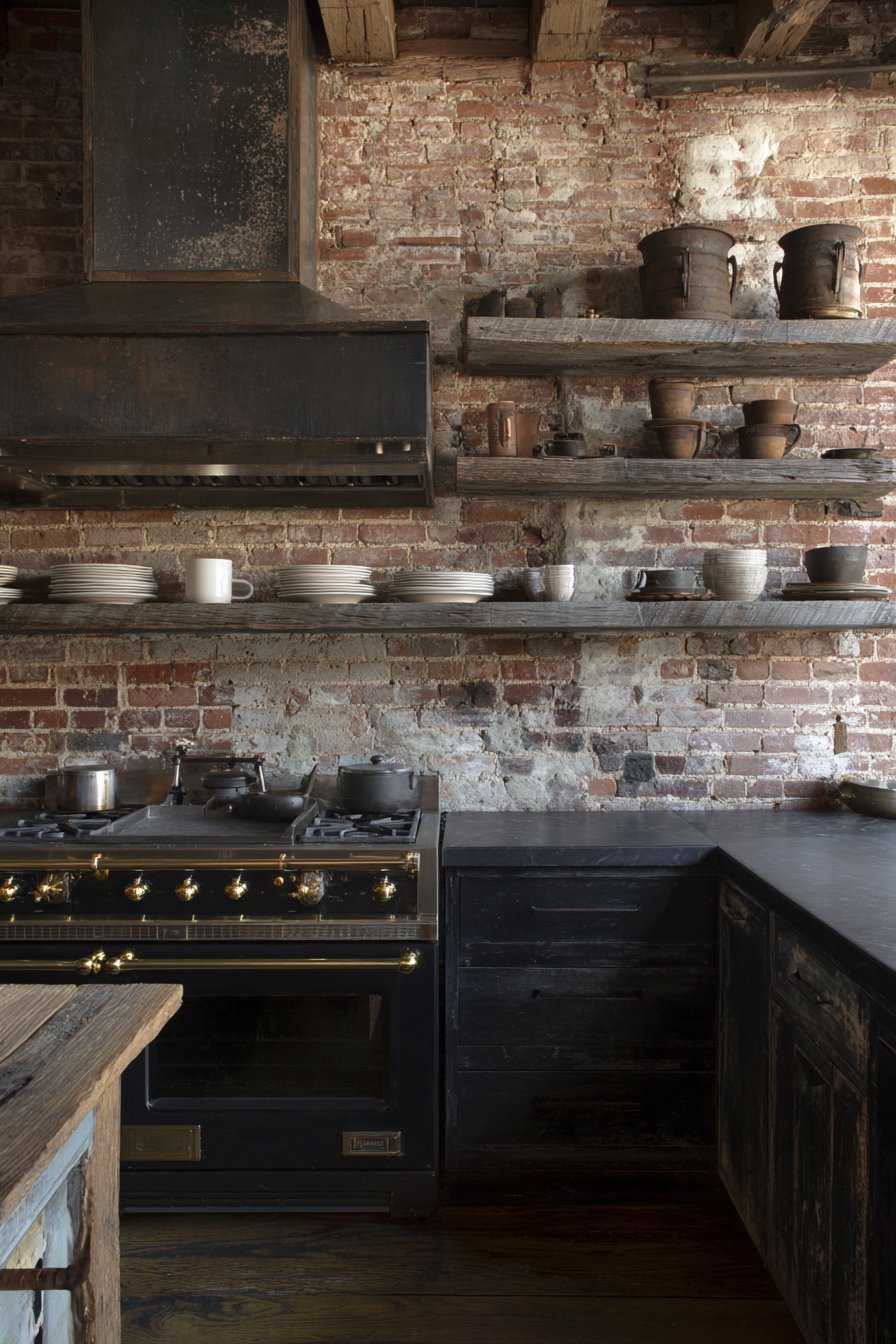
A brick accent wall in reclaimed red clay brick showcases natural color variations. Rust to salmon tones create organic beauty. The brick remains unsealed to show authentic texture and age. This wall serves as backdrop for a professional-style range with brass accents.
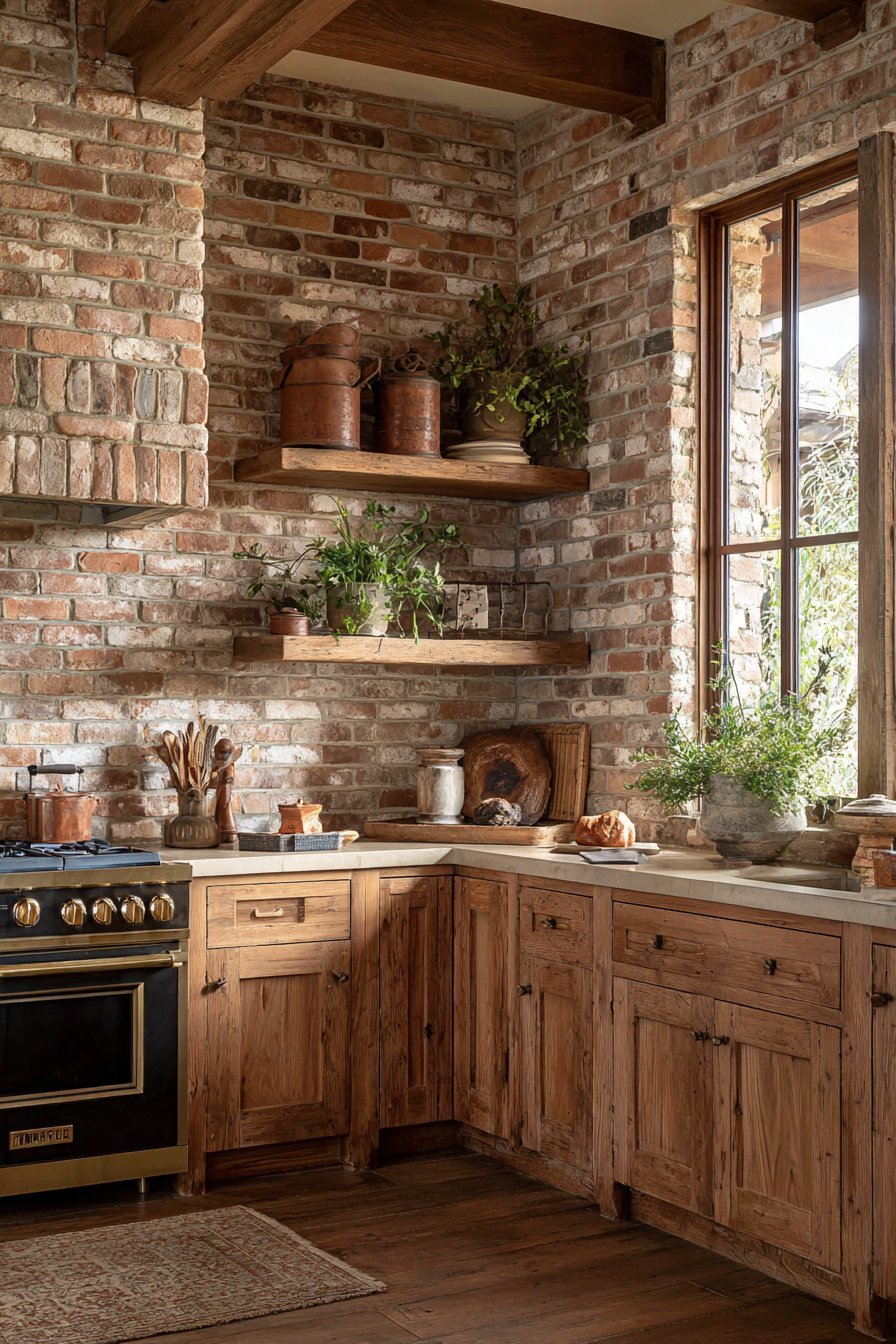
Floating shelves in weathered oak display vintage copper molds and earthenware. The brick’s irregular surface catches natural light, creating depth and shadow. Each brick differs slightly, adding character. The wall anchors the kitchen’s organic aesthetic with timeless material.
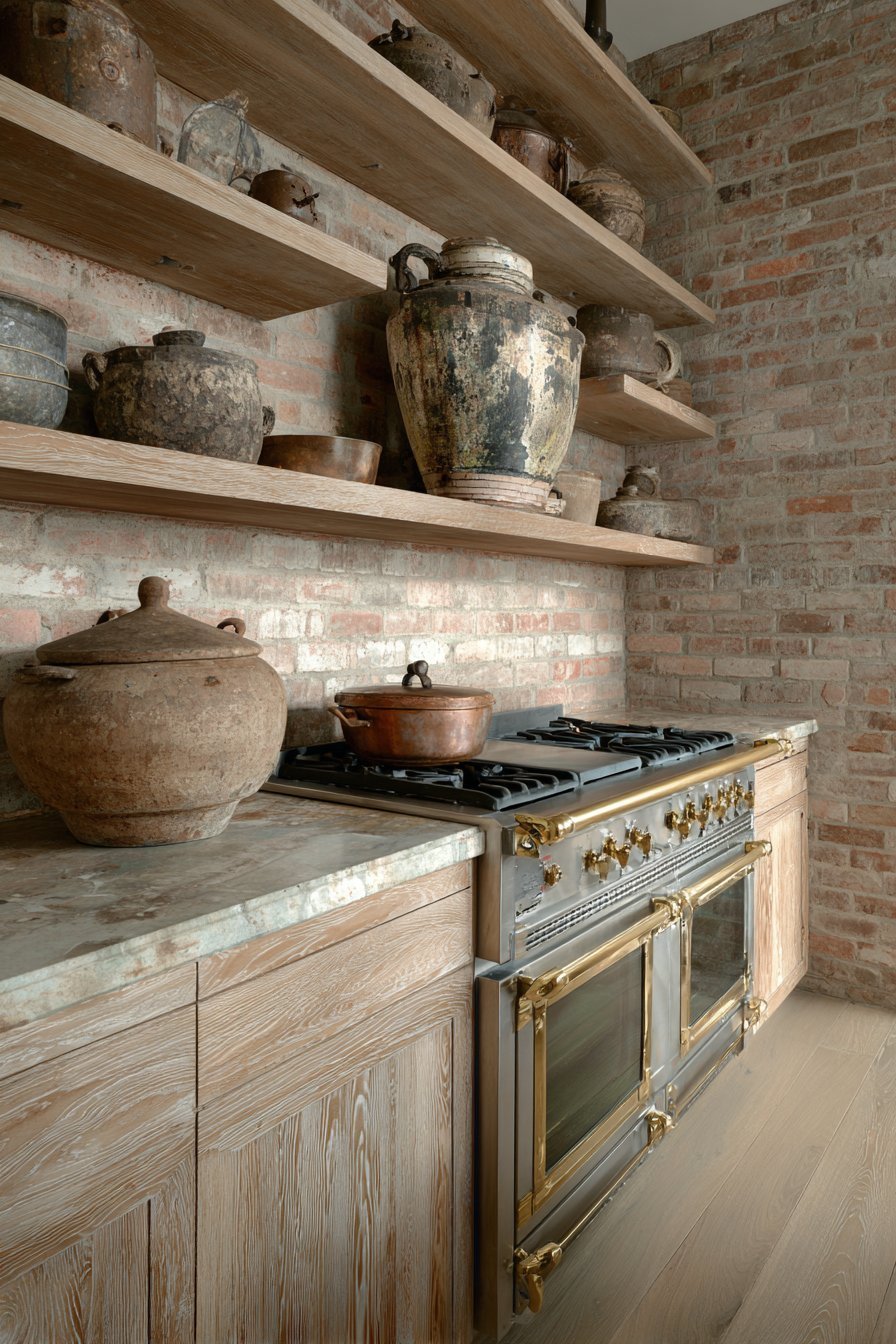
Balanced exposure photography reveals the brick’s natural character beautifully. Subtle mortar lines create geometric pattern. The unsealed surface maintains breathability and authentic appearance. This classic earthy material grounds the entire design.
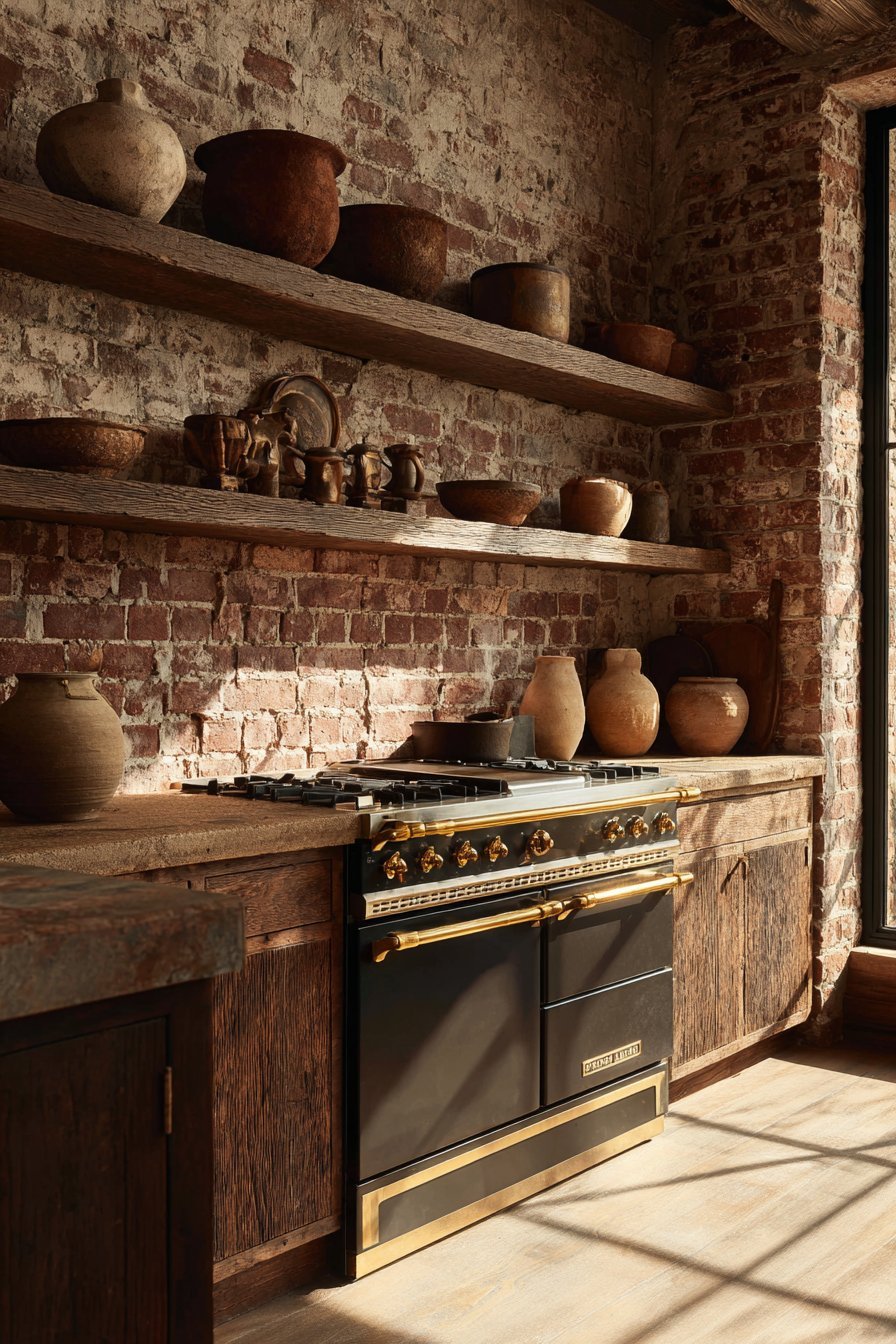
Reclaimed brick brings instant warmth impossible with new materials. The color variations prevent monotony. The texture adds tactile interest to an otherwise smooth kitchen.
Key Design Tips:
- Source reclaimed red clay brick with natural patina
- Leave brick unsealed to preserve authentic texture
- Install floating oak shelves for display against brick
- Use brick as backdrop for professional cooking equipment
- Allow natural color variations from rust to salmon tones
12. Solid Oak Trestle Dining Table
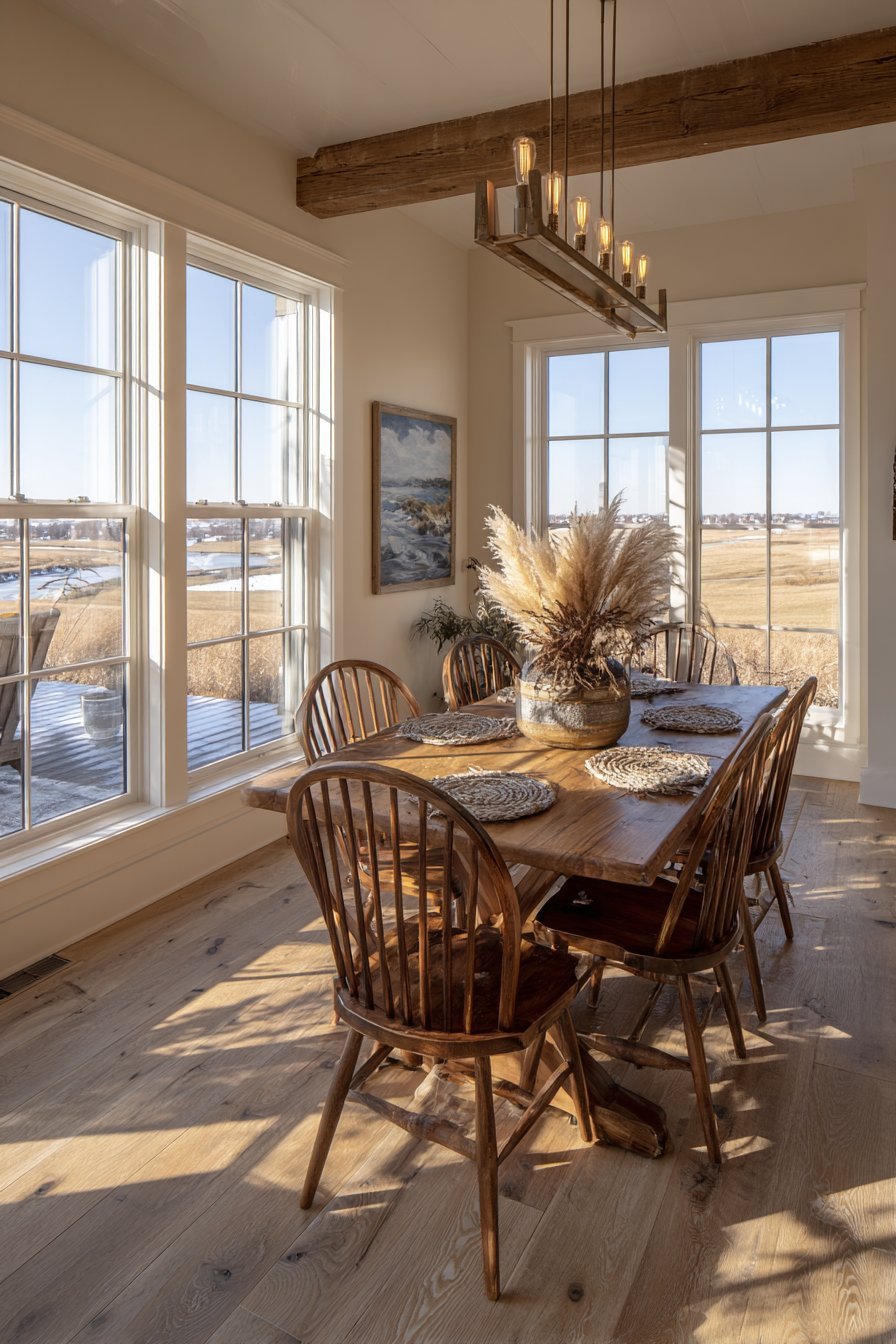
A solid oak trestle table with visible wood grain anchors the dining area. The natural finish preserves the wood’s inherent beauty. Windsor chairs in mixed woods create an organic collected look. The varied wood tones add visual interest without matching perfectly.
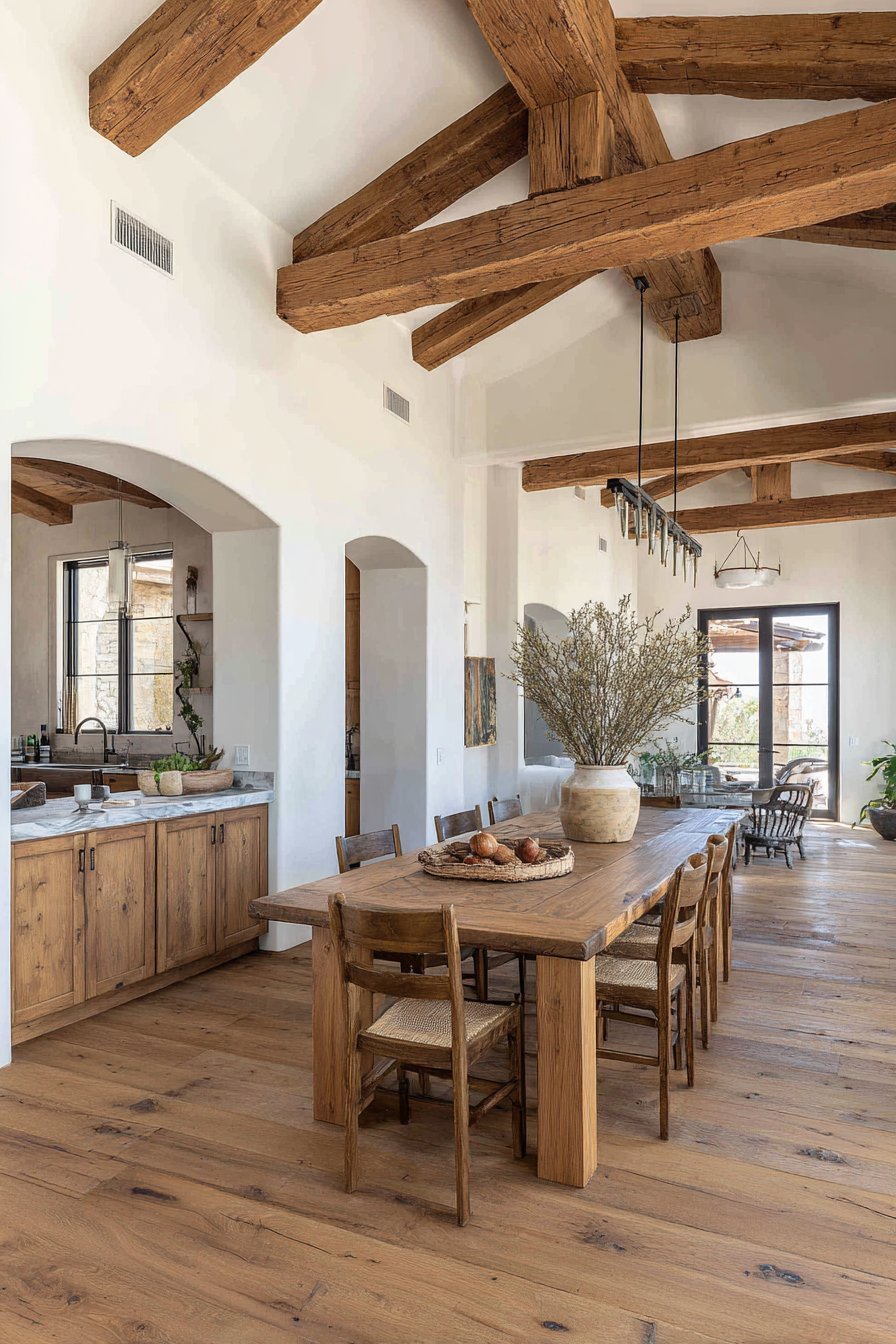
A centerpiece of dried grasses and seed pods sits in a stoneware vessel. This natural sculpture changes seasonally. Overhead, a linear chandelier with Edison bulbs provides warm ambient light. Antique brass frames add metallic warmth. Wide-plank oak flooring with natural knots mirrors the table.
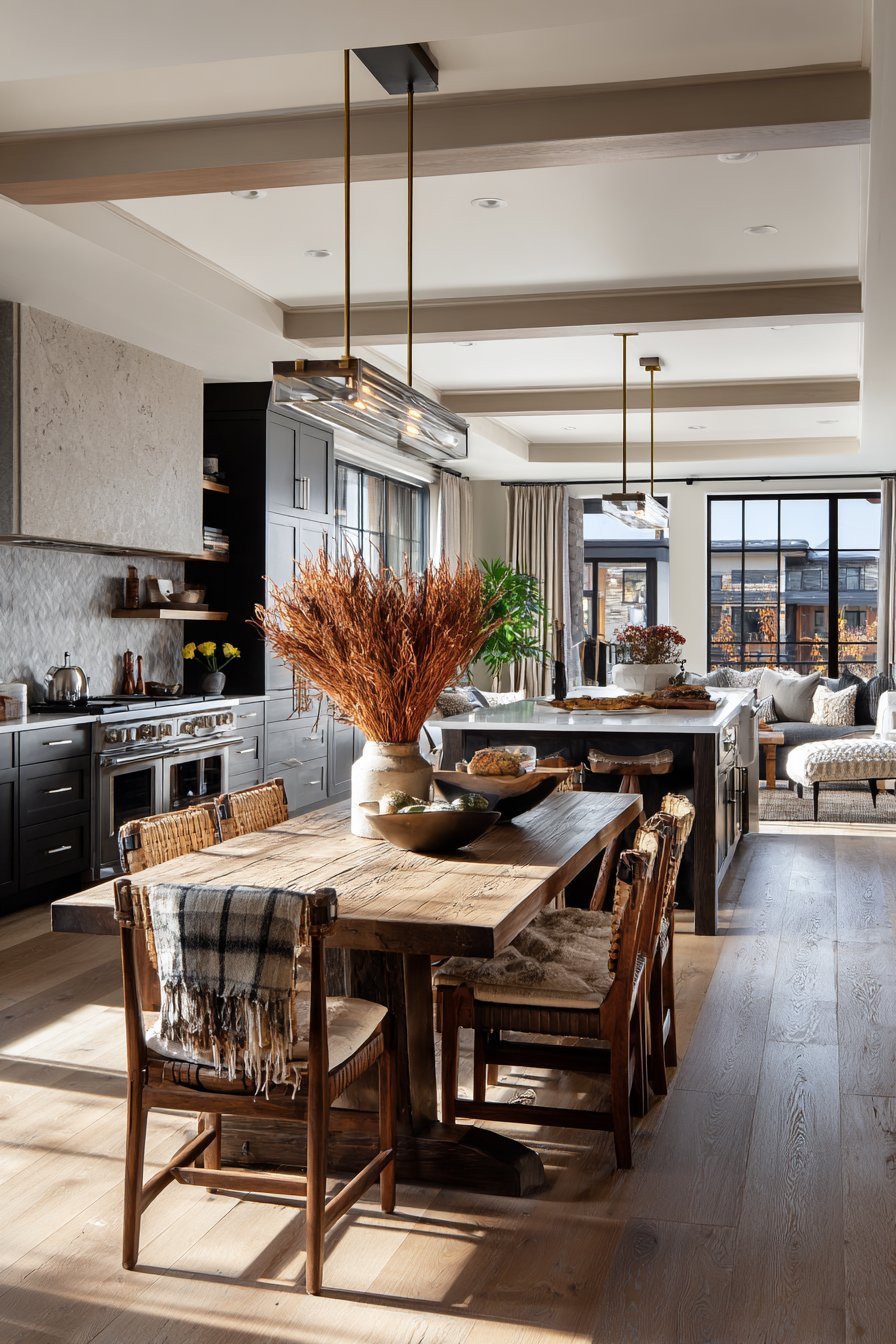
Afternoon light from nearby windows highlights wood tones throughout. Gentle shadows create inviting atmosphere. The gathering space encourages long meals and conversation. Natural materials age beautifully together over time.
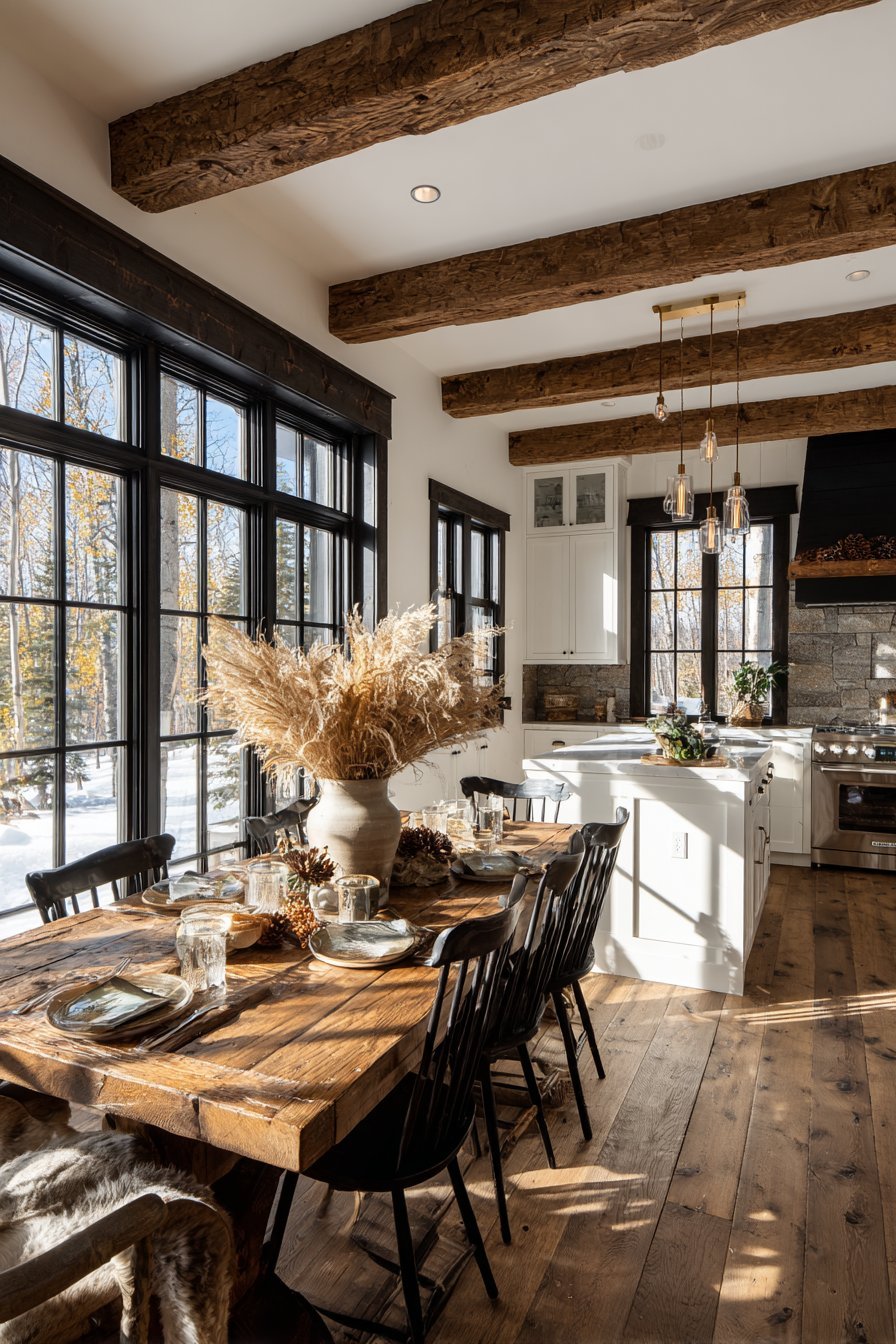
This dining area demonstrates how mixed woods create depth. The trestle base provides sturdy support and architectural interest. Edison bulbs cast flattering warm light perfect for dining.
Key Design Tips:
- Select solid oak table with prominent grain patterns
- Mix wood tones in Windsor chairs for collected character
- Create centerpieces from dried natural materials
- Install linear chandelier with Edison bulbs for warmth
- Use wide-plank oak flooring with natural knots and variation
13. Natural Linen Window Treatments
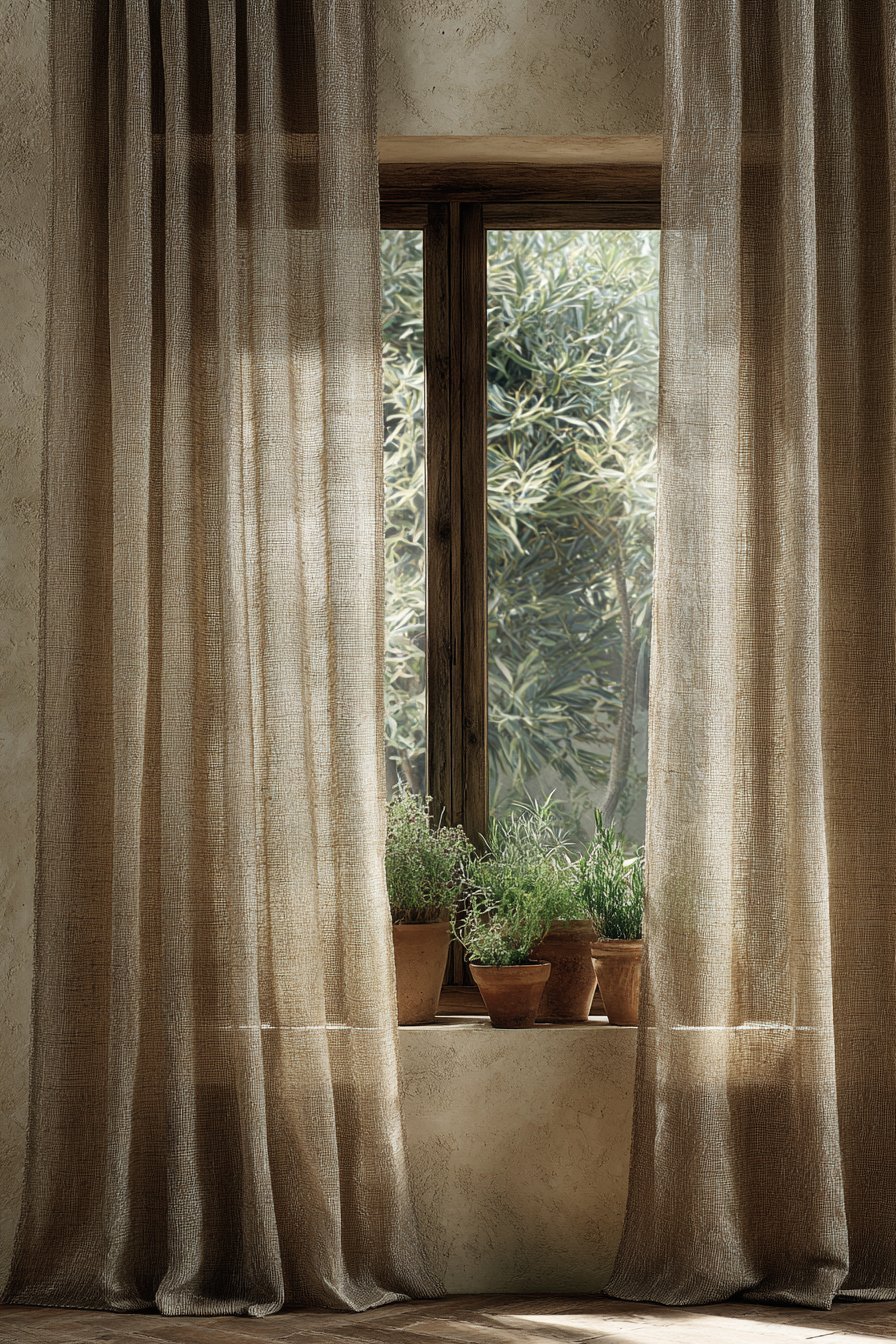
Floor-length curtains in heavyweight natural linen feature visible slub texture. The curtains hang from a simple wooden rod in weathered oak finish. They frame a deep window sill displaying potted herbs. Hand-thrown terracotta pots vary in size, creating organic arrangement.
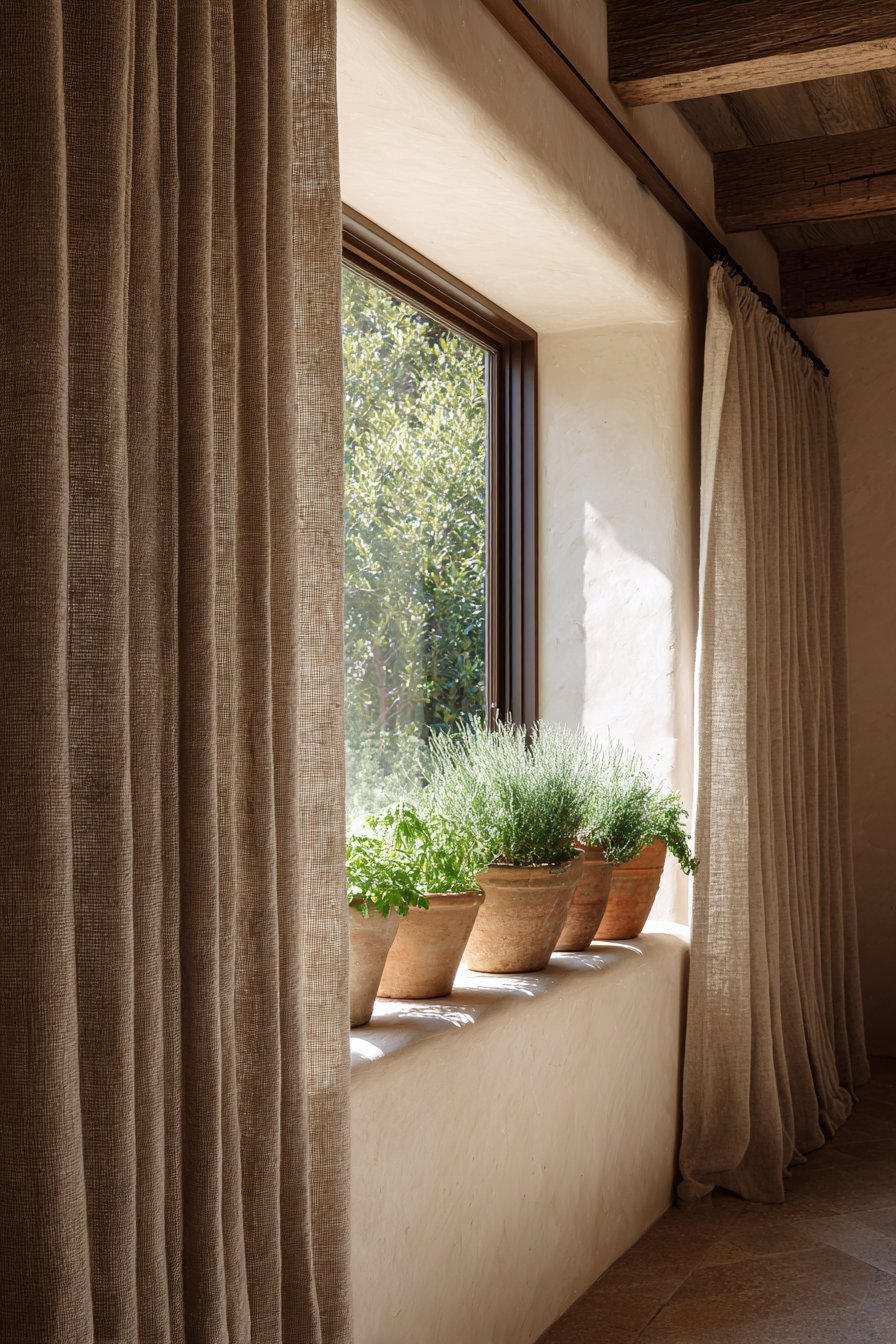
Beyond the window, outdoor greenery connects interior to exterior. Surrounding walls wear warm cream paint with subtle texture. Natural light filters through the linen, creating soft diffused illumination. The organic fabric texture becomes visible in backlight.
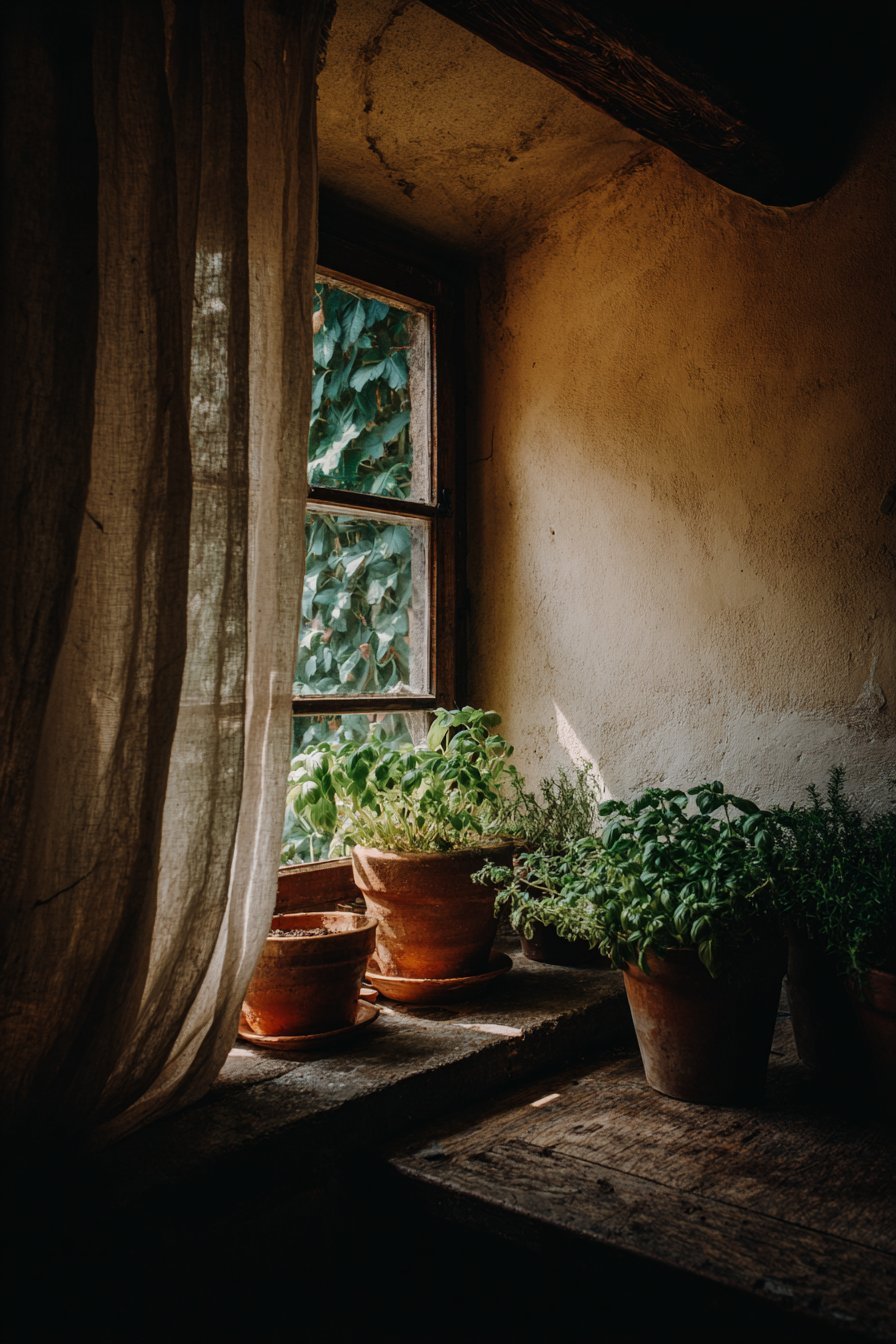
The living herb garden on the sill provides fresh cooking ingredients. Terracotta pots develop beautiful patina over time. The natural linen maintains privacy while preserving light. This window treatment demonstrates functional beauty.
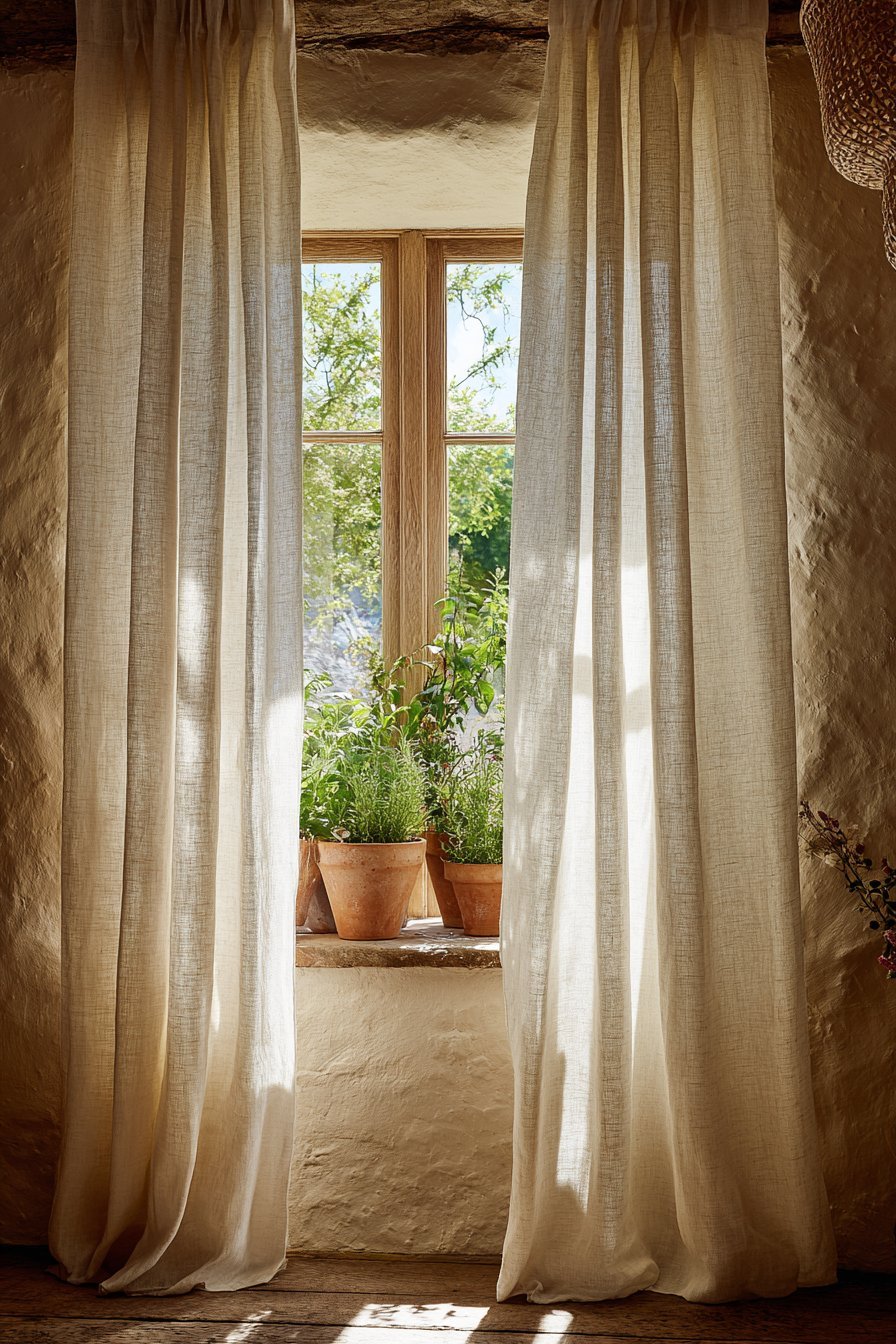
Linen curtains soften hard kitchen surfaces while maintaining the natural aesthetic. The slub texture adds interest without pattern. The weathered oak rod complements other wood tones.
Key Design Tips:
- Choose heavyweight natural linen with visible slub texture
- Hang curtains from weathered oak rods for warmth
- Display herbs in hand-thrown terracotta pots on sills
- Allow natural light to filter through linen for soft glow
- Frame outdoor greenery views to connect inside and outside
14. Warm Grey Concrete Countertops
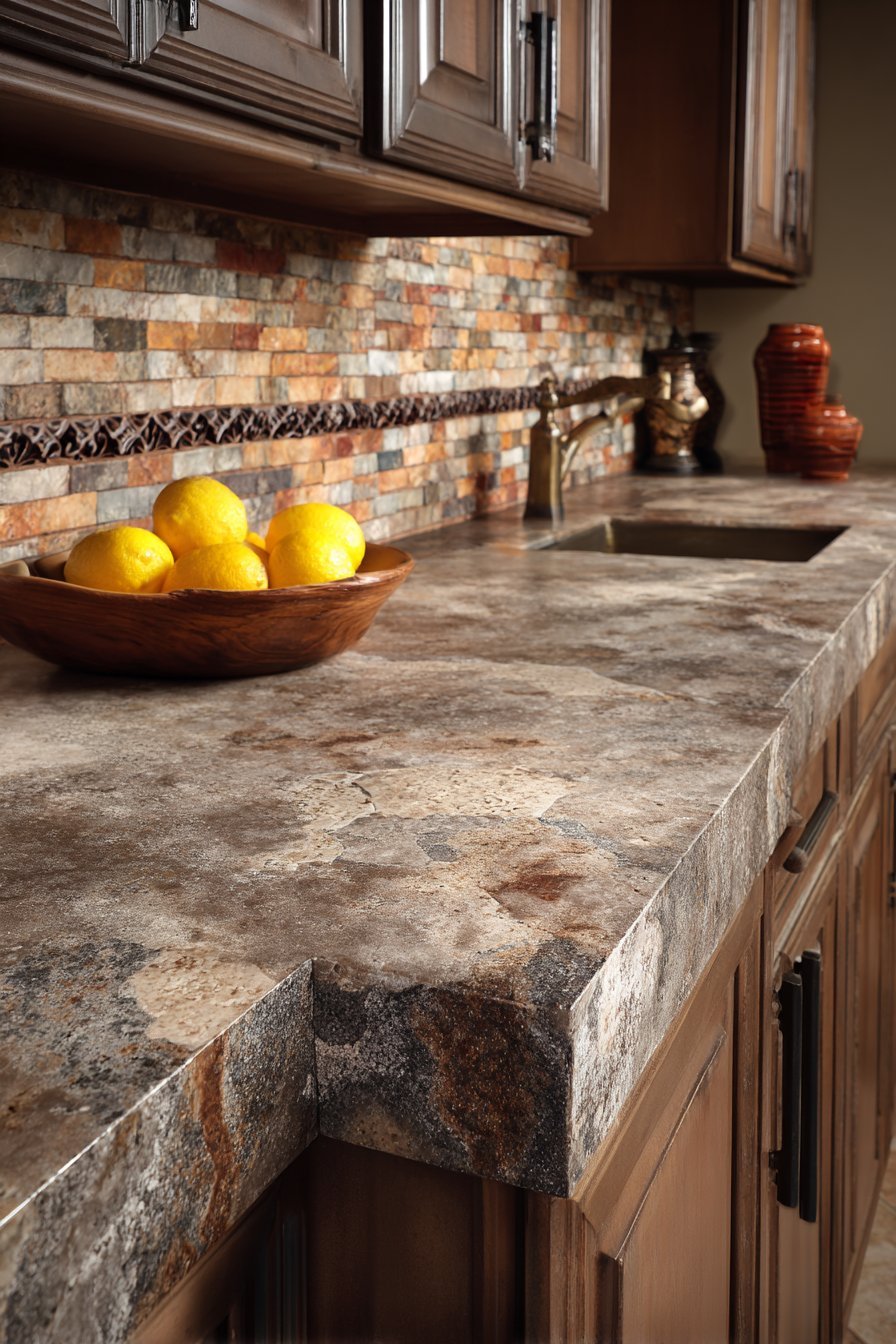
Concrete countertops with integral color in warm grey tone showcase natural aggregate exposure. Subtle trowel marks reveal the hand-applied process. The matte sealed surface pairs beautifully with walnut cabinetry. A backsplash of natural stone in stacked ledger pattern displays rust, cream, and grey tones.
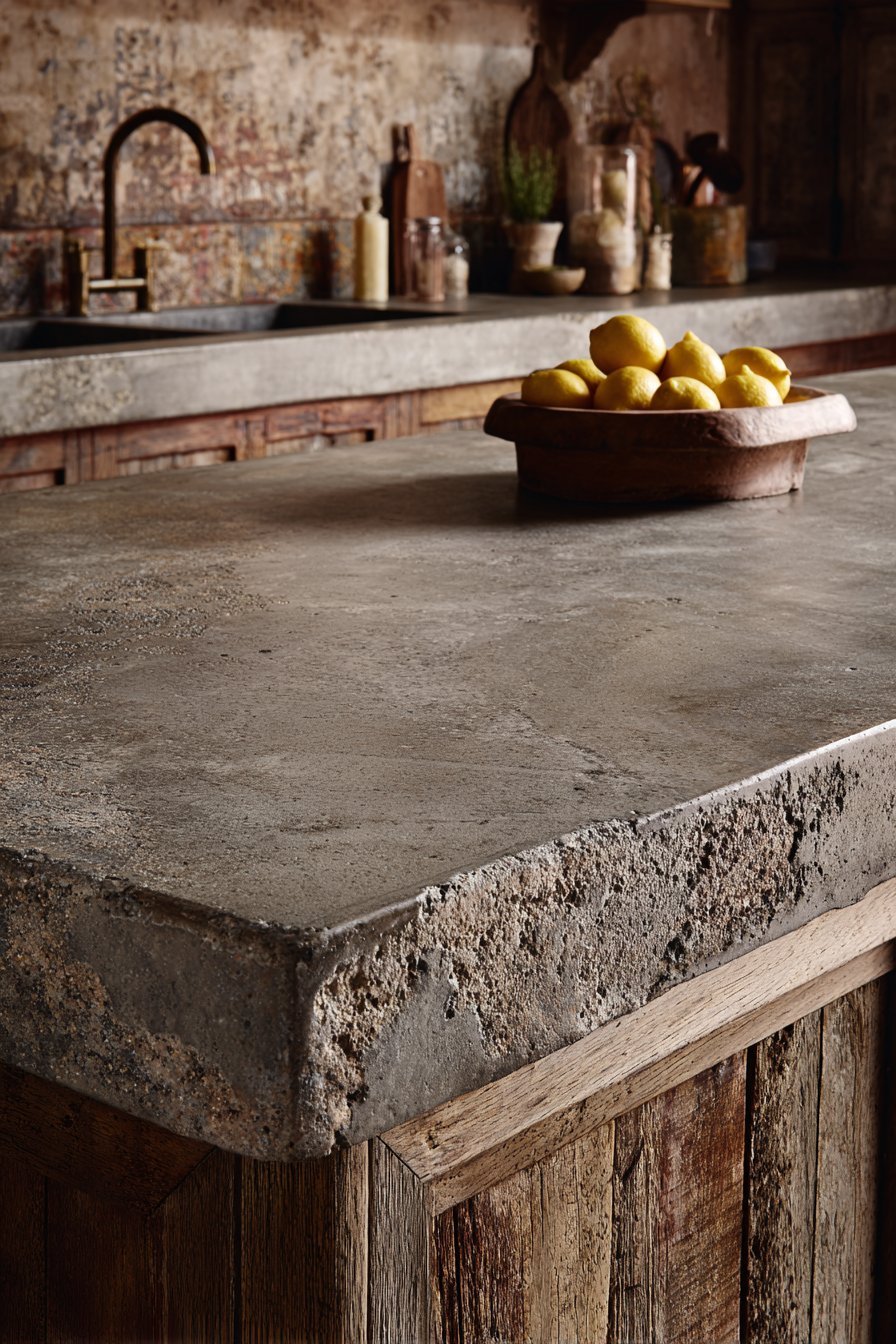
Aged brass fixtures provide warm metallic contrast against cool concrete. A wooden bowl filled with bright lemons adds organic color pop. The concrete’s natural texture and color variations create interest. Industrial materials integrate seamlessly into earthy kitchen design.
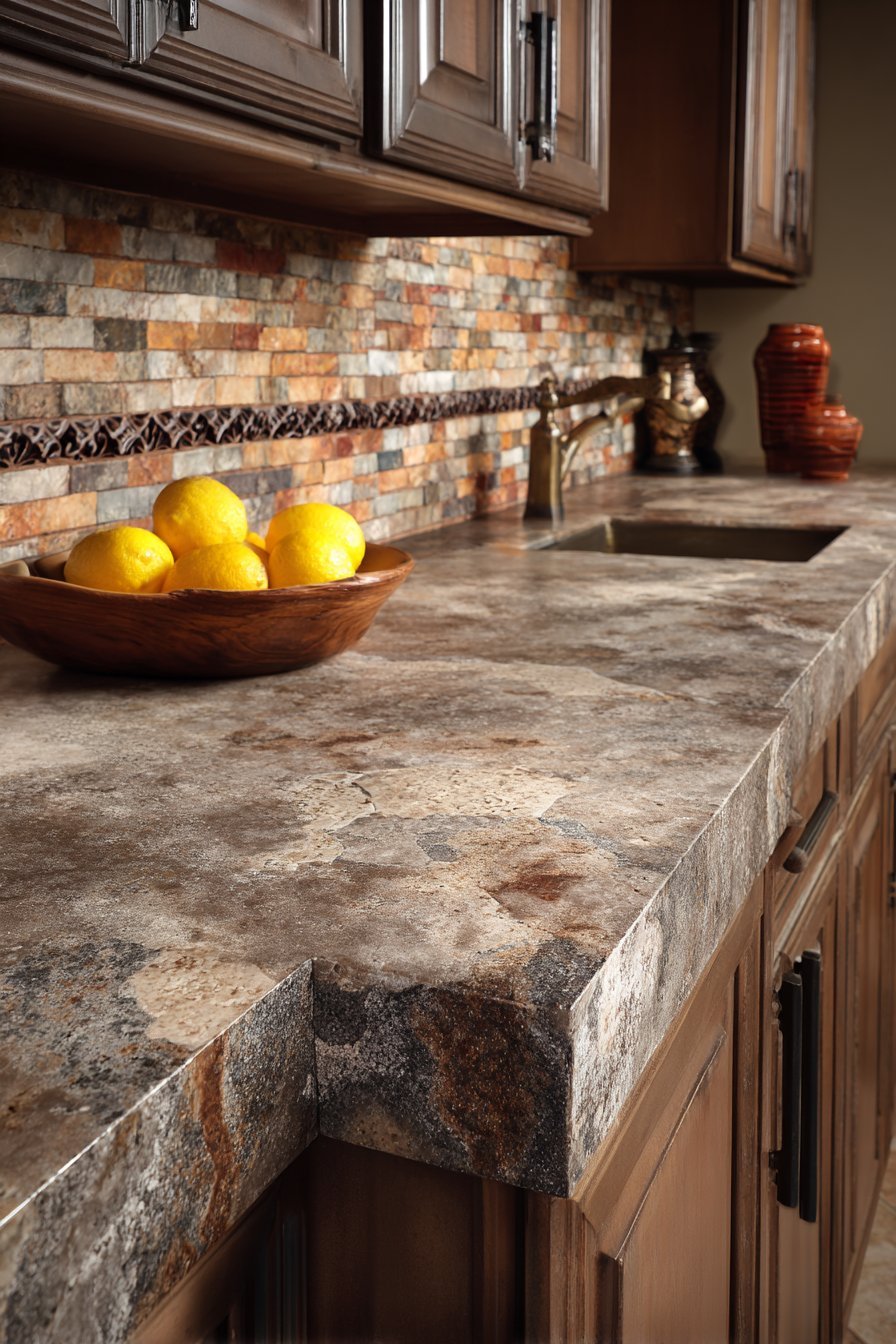
Professional lighting reveals the concrete’s character throughout the day. Aggregate exposure adds subtle sparkle. The trowel marks create one-of-a-kind surface patterns. This material choice proves concrete can feel warm and organic.
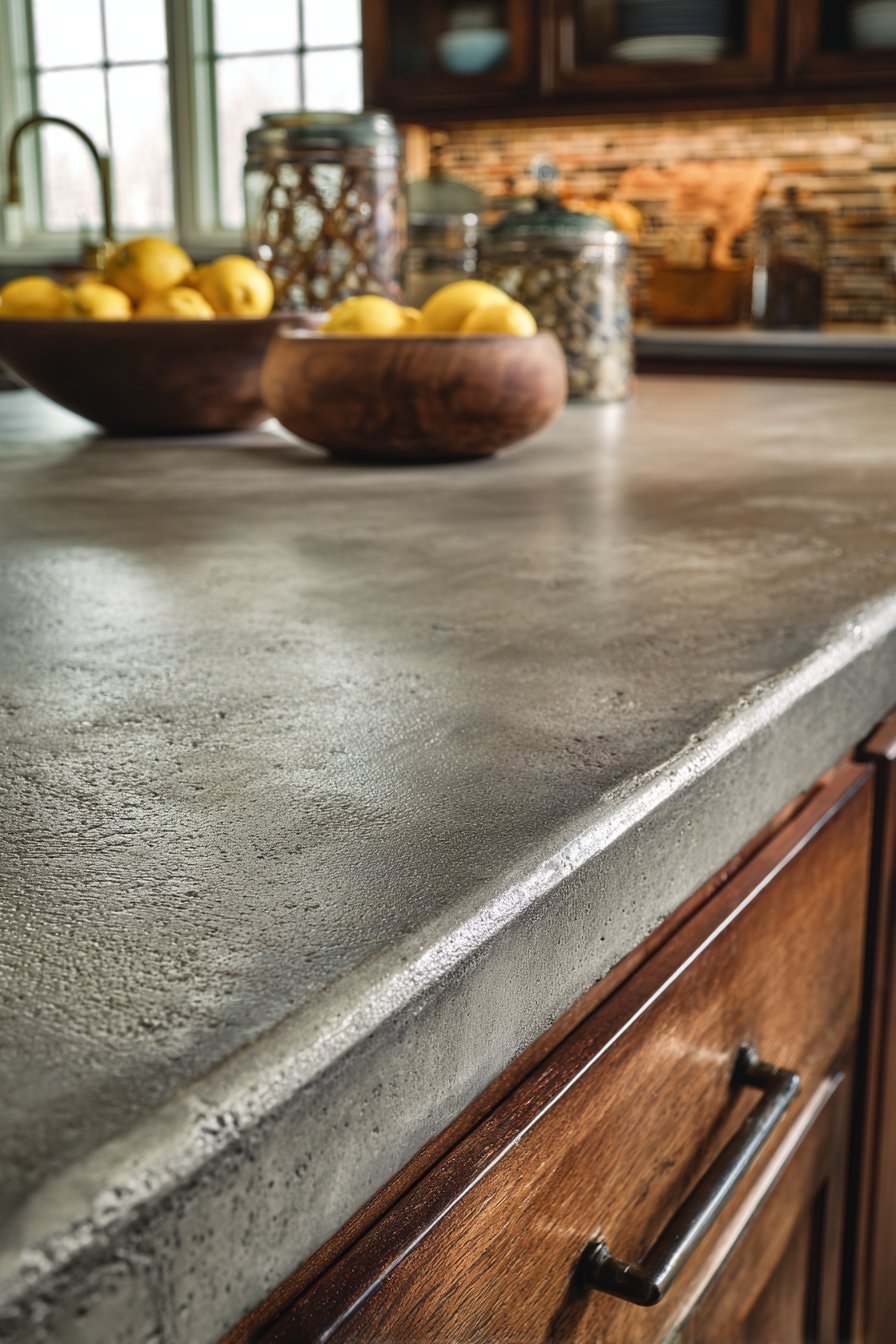
Concrete countertops offer durability and heat resistance for serious cooking. The integral color runs throughout the material. Proper sealing creates low-maintenance surfaces that improve with age.
Key Design Tips:
- Specify warm grey integral concrete color for earthy appeal
- Request trowel finish to reveal hand-crafted character
- Pair concrete with walnut cabinetry for temperature balance
- Install natural stone ledger backsplash for texture
- Use aged brass fixtures for warm metallic contrast
15. Natural Maple Coffee Station
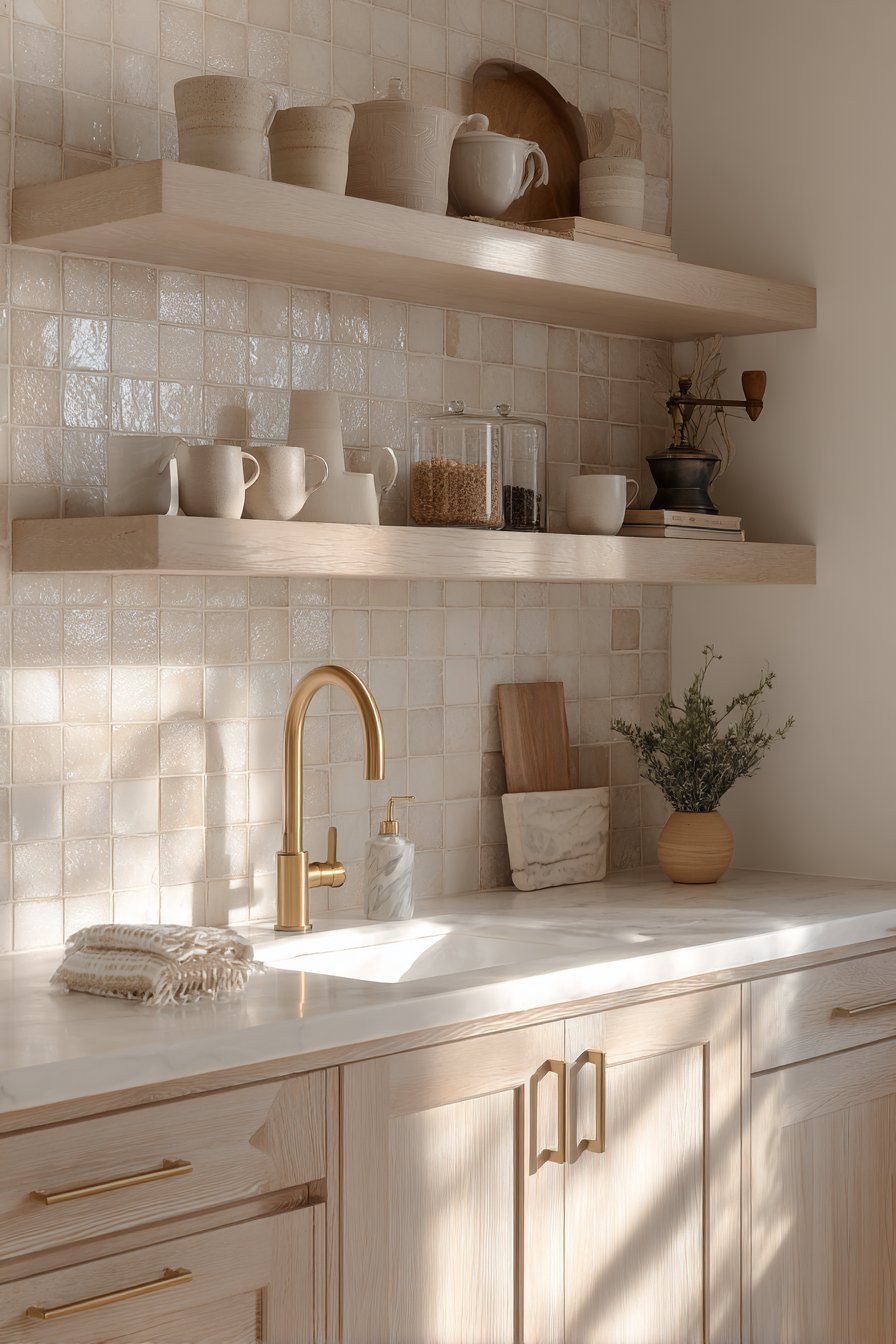
Open shelving in natural maple creates a dedicated coffee station. Ceramic mugs in earth tones line the shelves alongside glass coffee storage jars. A vintage brass coffee grinder adds functional decoration. The shelf backs feature cork tile creating warm textural contrast.
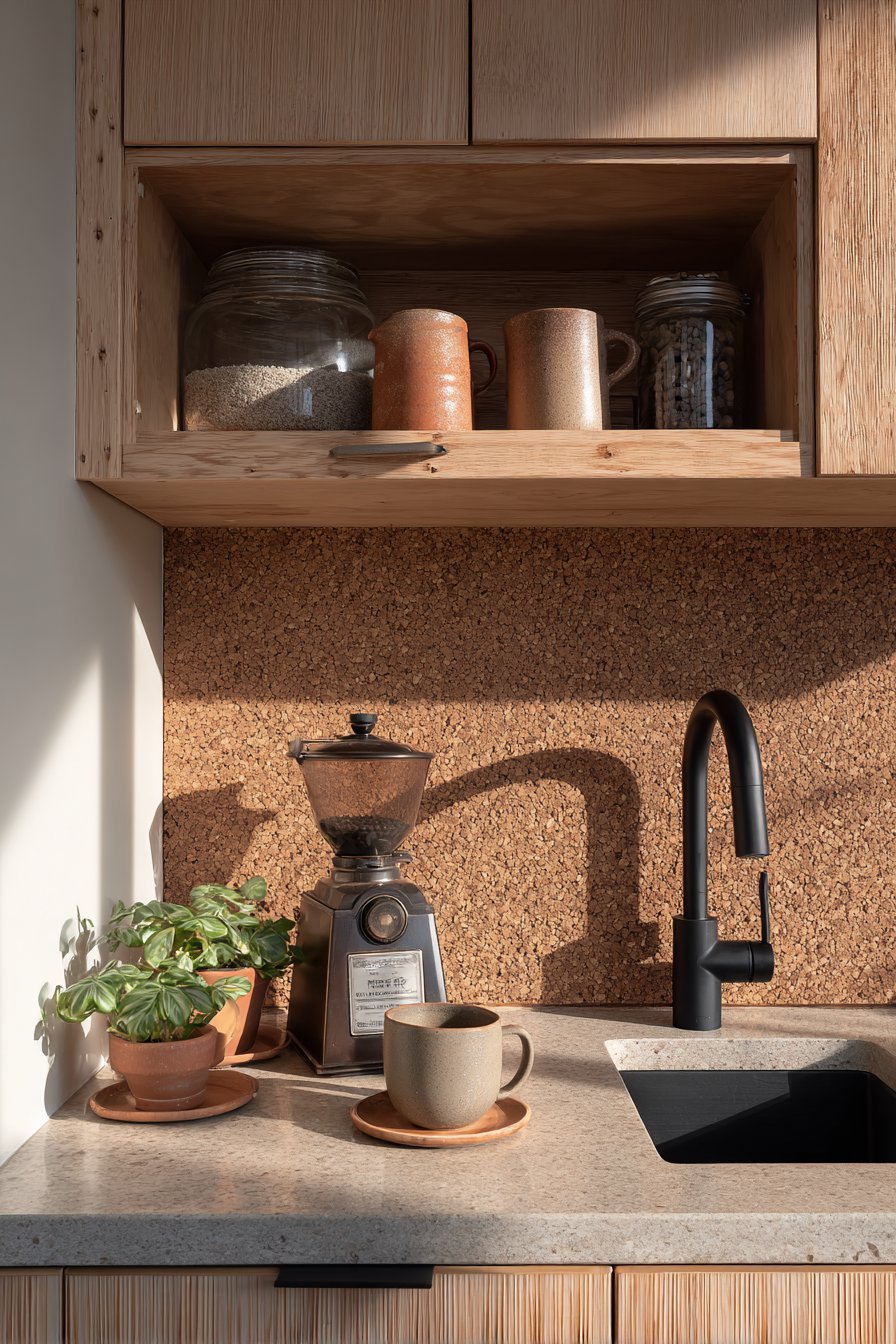
Below, a butcher block countertop provides prep space. A gooseneck faucet in oil-rubbed bronze adds vintage appeal. Small potted plants in clay pots bring greenery to the station. Morning light creates gentle highlights on ceramic glazes and wood grain.
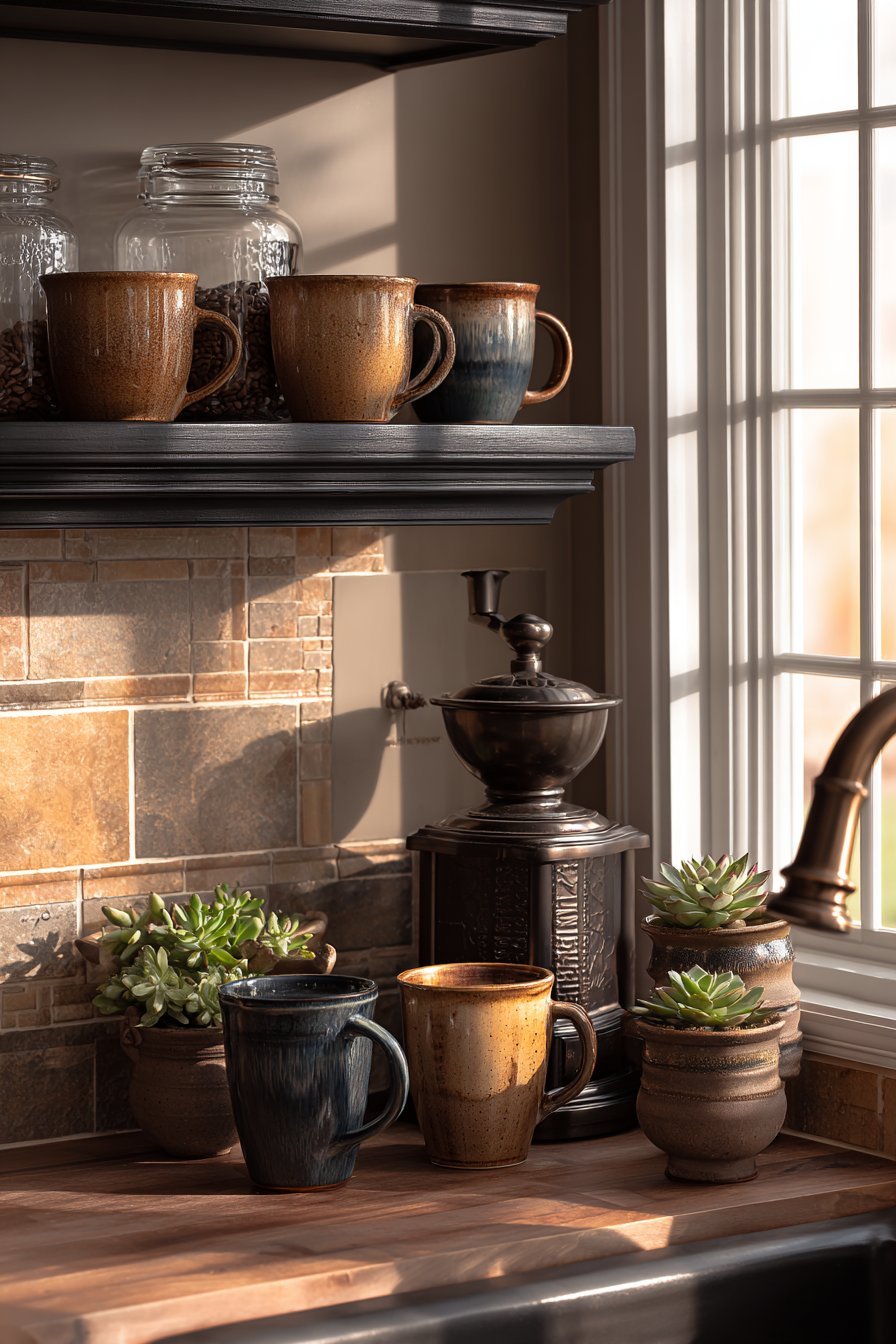
The dedicated coffee nook elevates the morning routine. Natural maple’s light tone keeps the area bright. Cork backing adds sound absorption and visual warmth. This micro-space demonstrates thoughtful design attention.
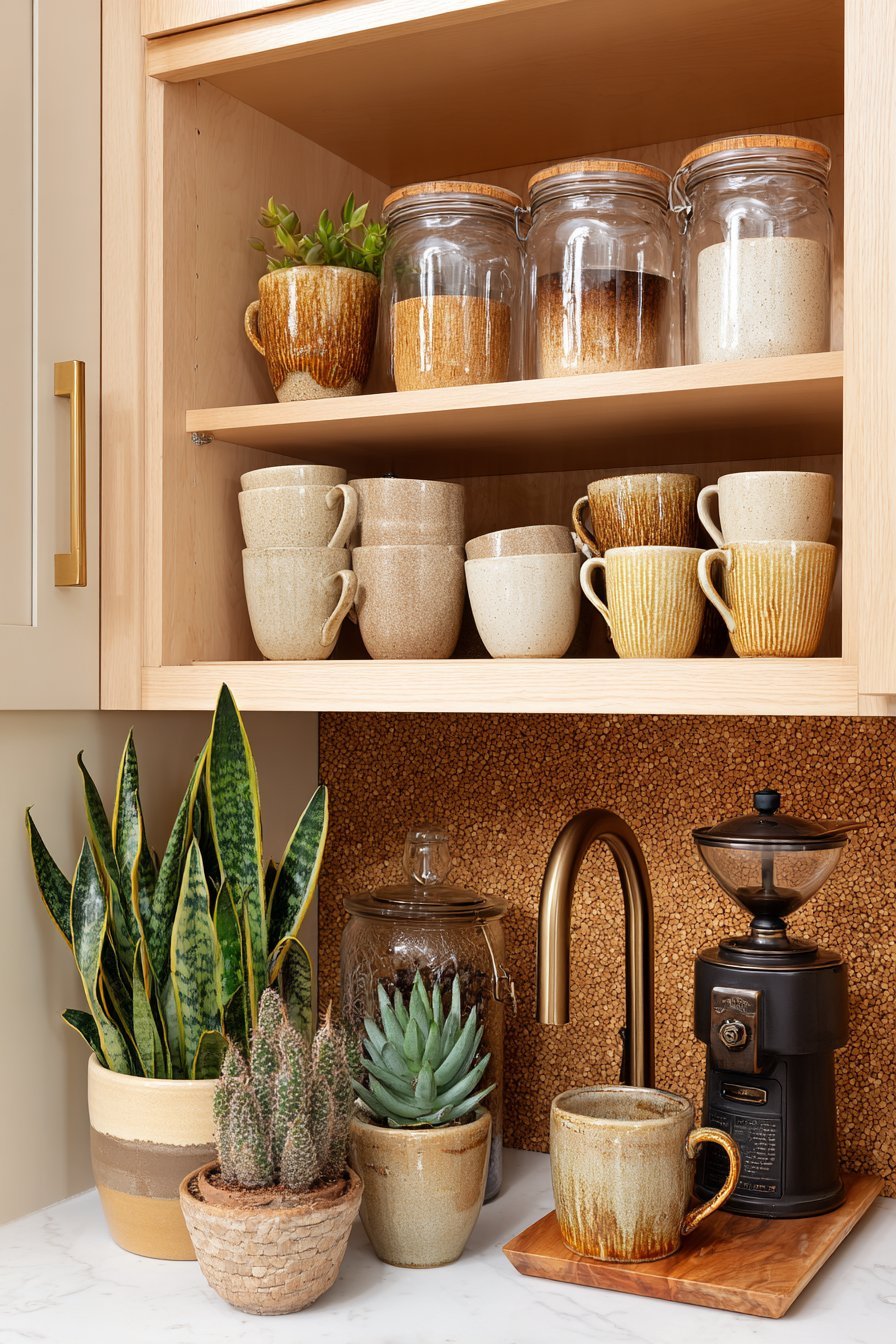
Creating a designated coffee area improves kitchen workflow. The open shelving keeps supplies visible and accessible. The vintage brass grinder becomes sculptural element.
Key Design Tips:
- Use natural maple shelving for light warm wood tone
- Back shelves with cork tile for texture and warmth
- Display ceramic mugs in coordinated earth tones
- Install butcher block counter for coffee prep area
- Add vintage brass grinder for functional decoration
16. Seagrass Pendant Light Fixtures
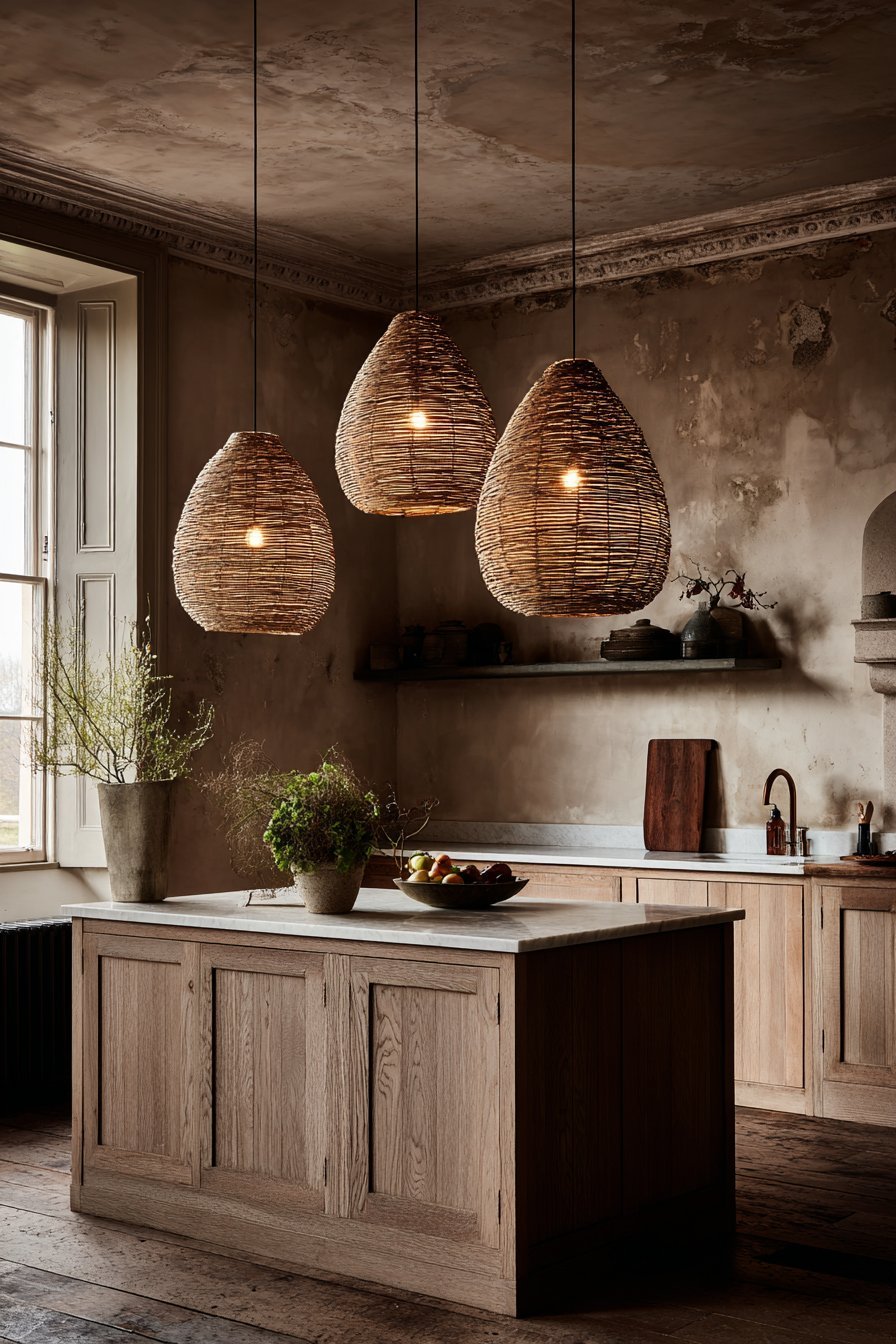
Three large pendant lights feature shades crafted from natural seagrass. The tight weave pattern creates organic texture. The pendants suspend above a kitchen island at varying heights. They cast warm filtered light with subtle pattern projections.
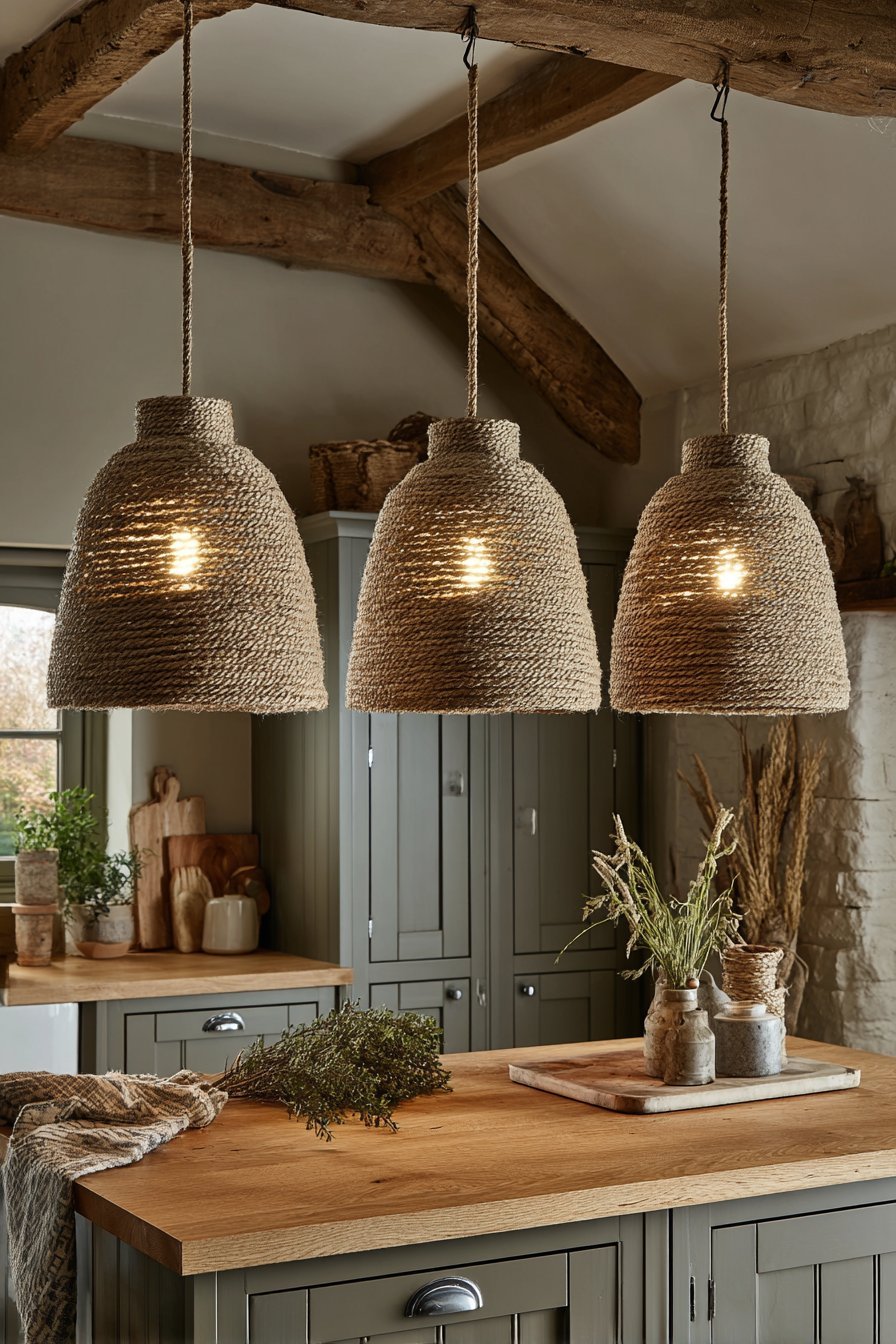
The surrounding kitchen features cabinetry in weathered oak. Natural plaster walls provide neutral backdrop. Evening photography captures the pendants illuminated from within. The woven texture becomes dramatically visible. Warm ambient glow fills the space.
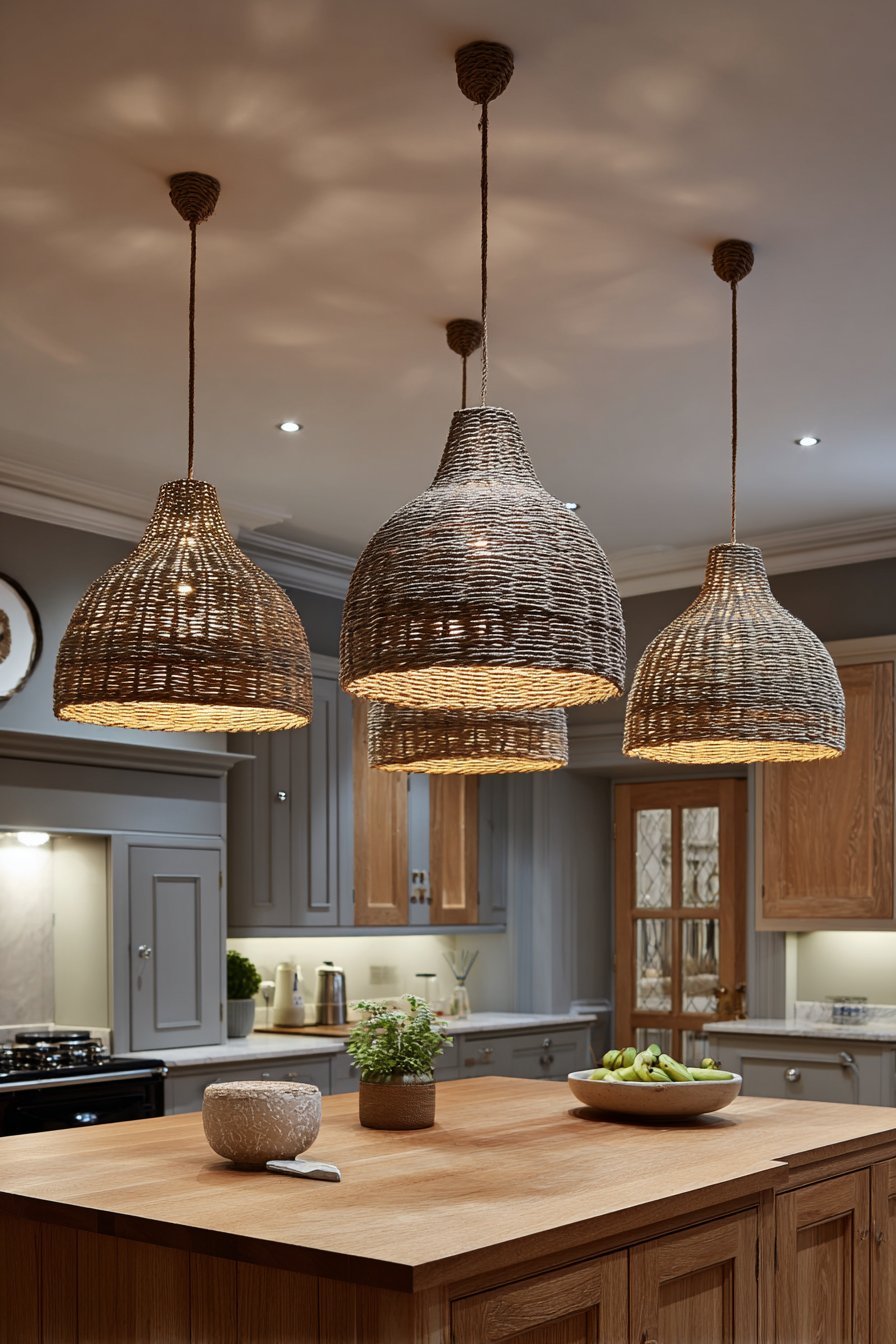
These natural fiber fixtures add sculptural interest during day and night. The varying heights create visual rhythm. Seagrass withstands kitchen conditions while maintaining beauty. The pendants prove lighting can be both functional and artistic.
Natural fiber pendant lights soften modern kitchen architecture. The organic forms contrast with straight cabinet lines. The filtered light creates intimate atmosphere for evening cooking.
Key Design Tips:
- Select seagrass pendants with tight weave for durability
- Hang at varying heights for dimensional interest
- Install above island for task and ambient lighting
- Pair with weathered oak cabinetry for material harmony
- Photograph in evening to showcase illuminated texture
17. Large-Format Terracotta Floor Tiles
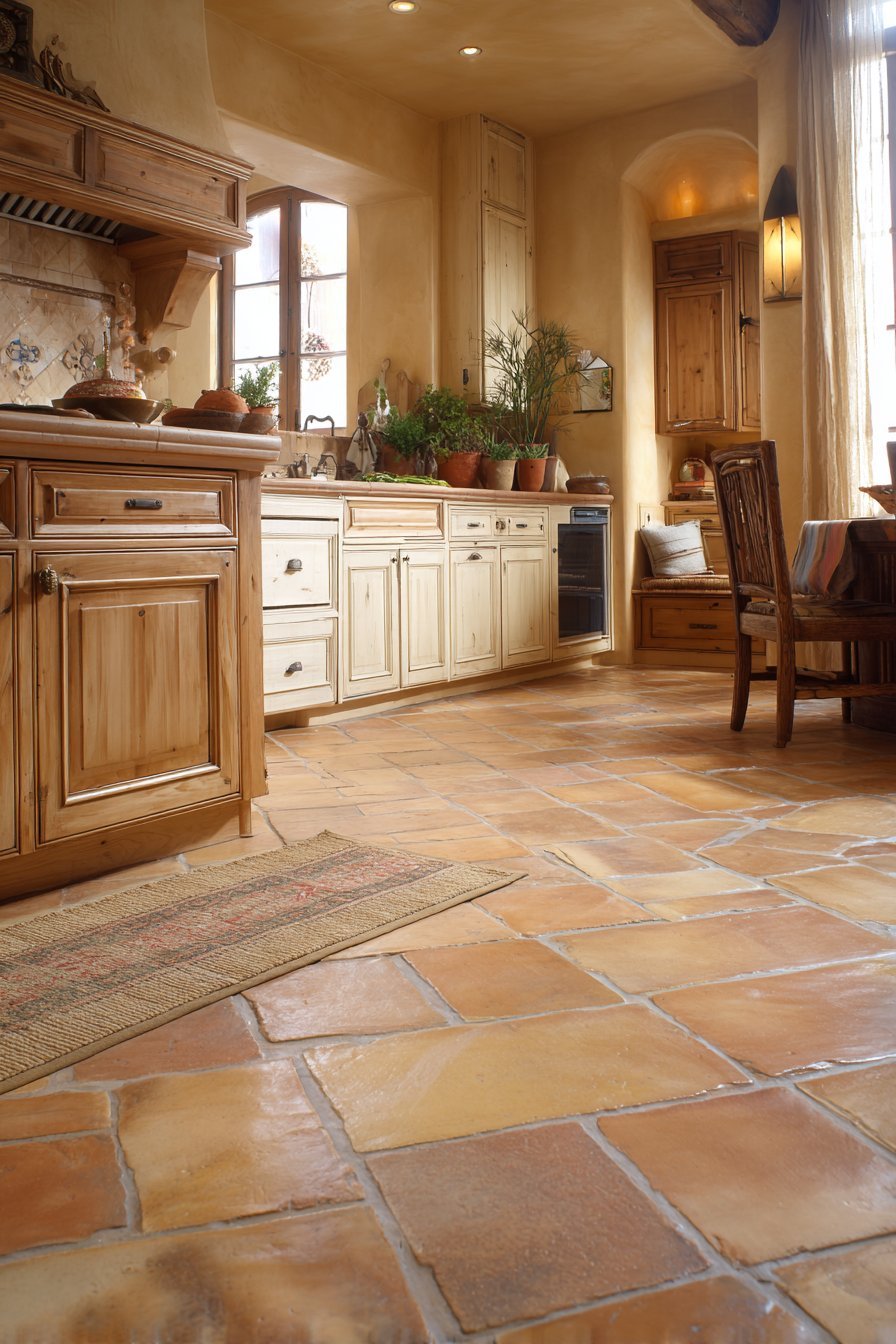
Large-format terracotta tiles in natural clay color cover the floor. Subtle shade variations create organic interest. The traditional running bond pattern provides classic appeal. Tiles show slight surface irregularities from handmade production.
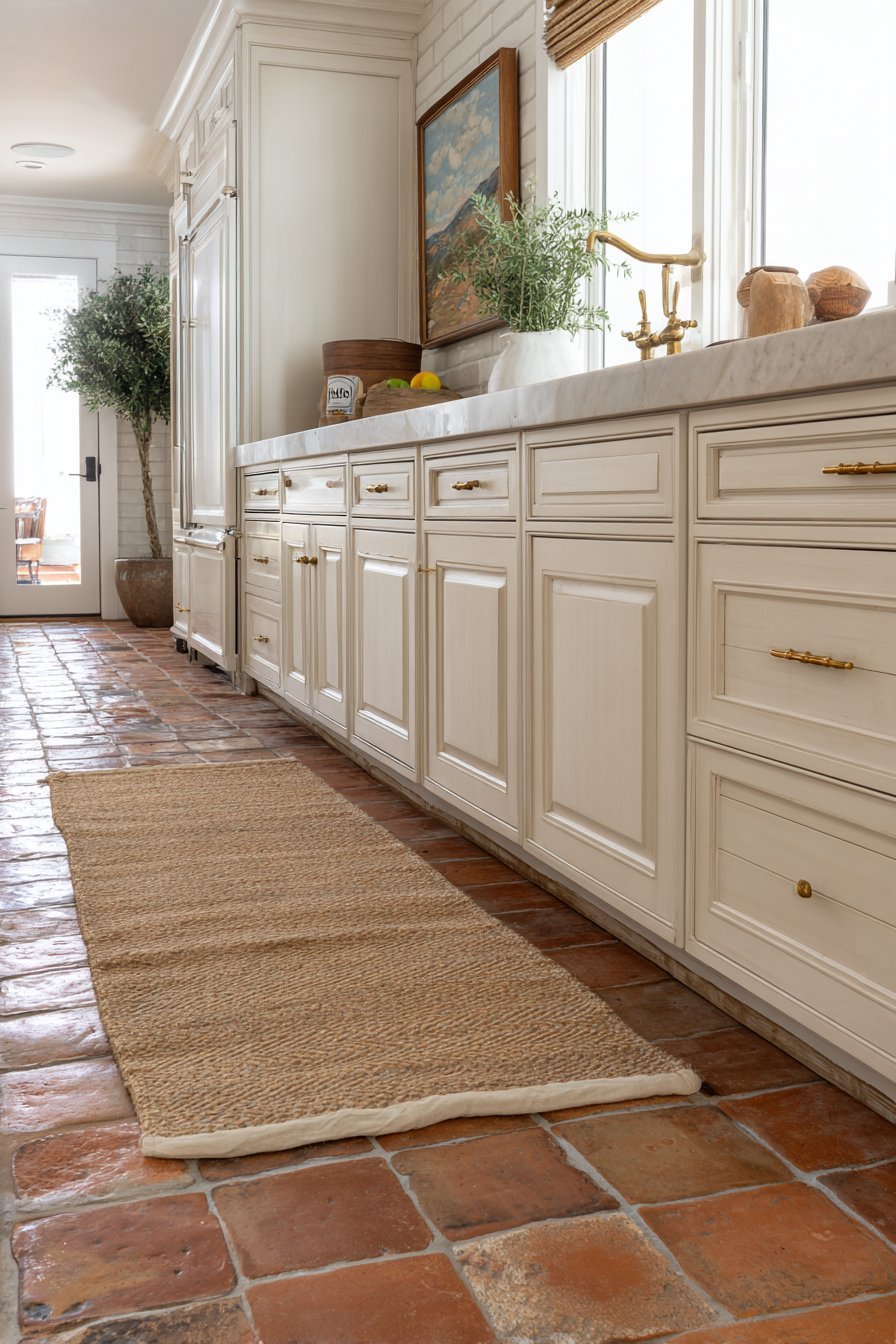
The floor grounds cream cabinetry with brass hardware. Soapstone countertops complement the earthy foundation. A jute rug runner adds texture near the sink area. Low-perspective photography emphasizes the tile field and natural color gradations.
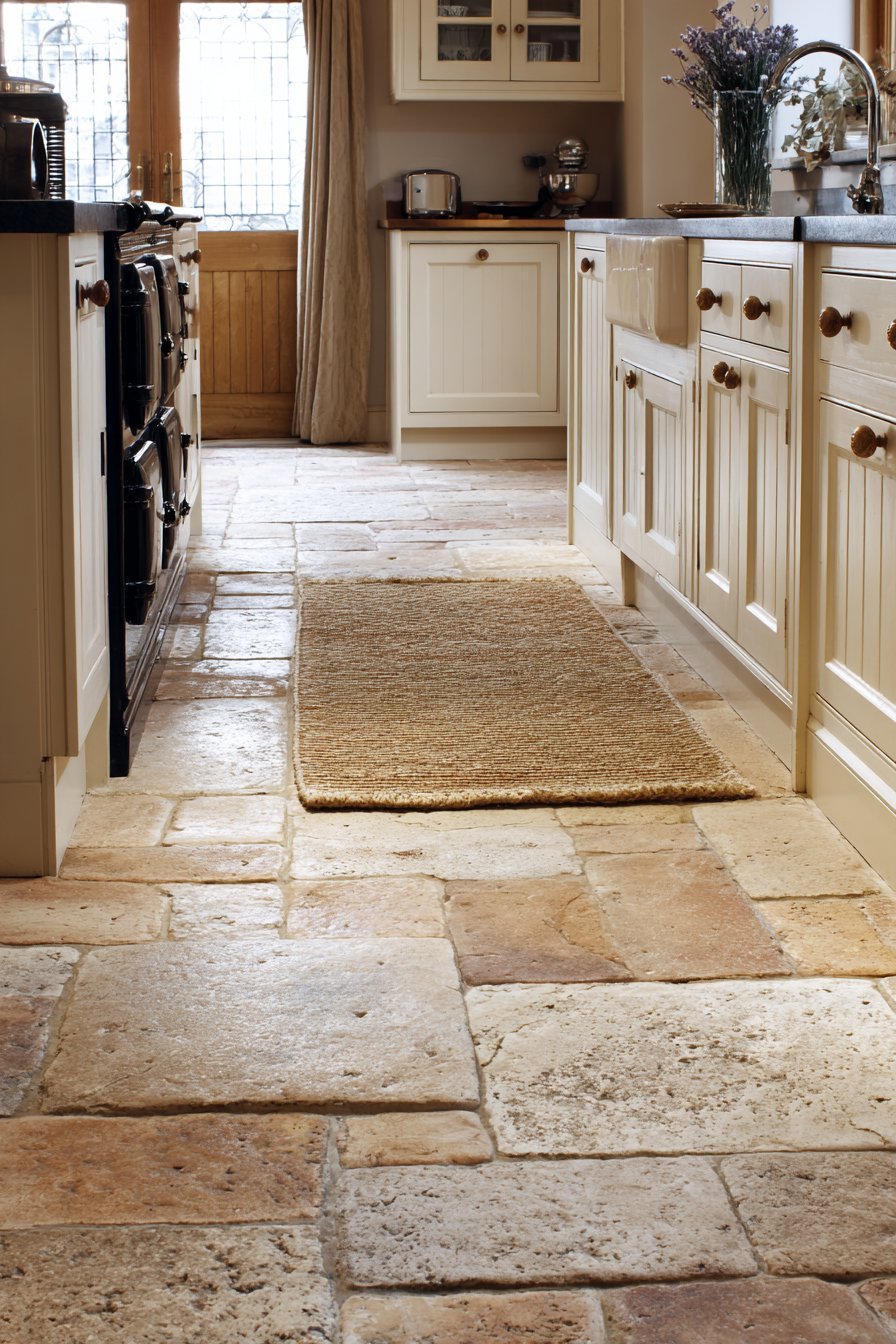
The matte finish provides durability without shine. Terracotta tiles regulate temperature naturally. The handmade irregularities add authentic character. This classic flooring material provides warmth for decades.
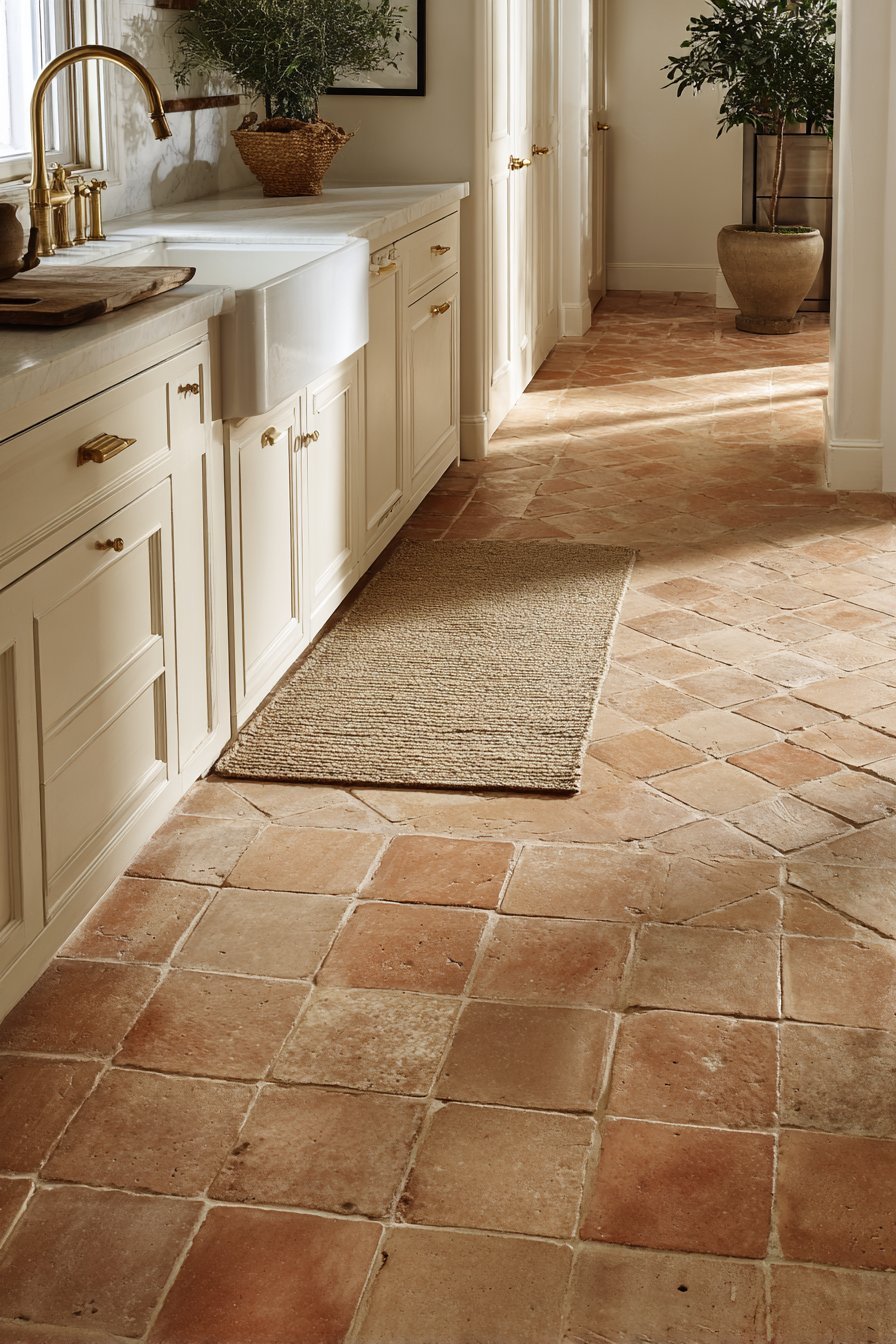
Large-format tiles reduce grout lines for cleaner appearance. The natural clay color works with multiple design schemes. Terracotta improves with age and use.
Key Design Tips:
- Choose large-format terracotta to minimize grout lines
- Select handmade tiles for authentic surface variations
- Lay in running bond pattern for traditional appeal
- Pair with cream cabinetry for temperature balance
- Add jute rugs in high-traffic areas for comfort
18. Hammered Copper Range Hood
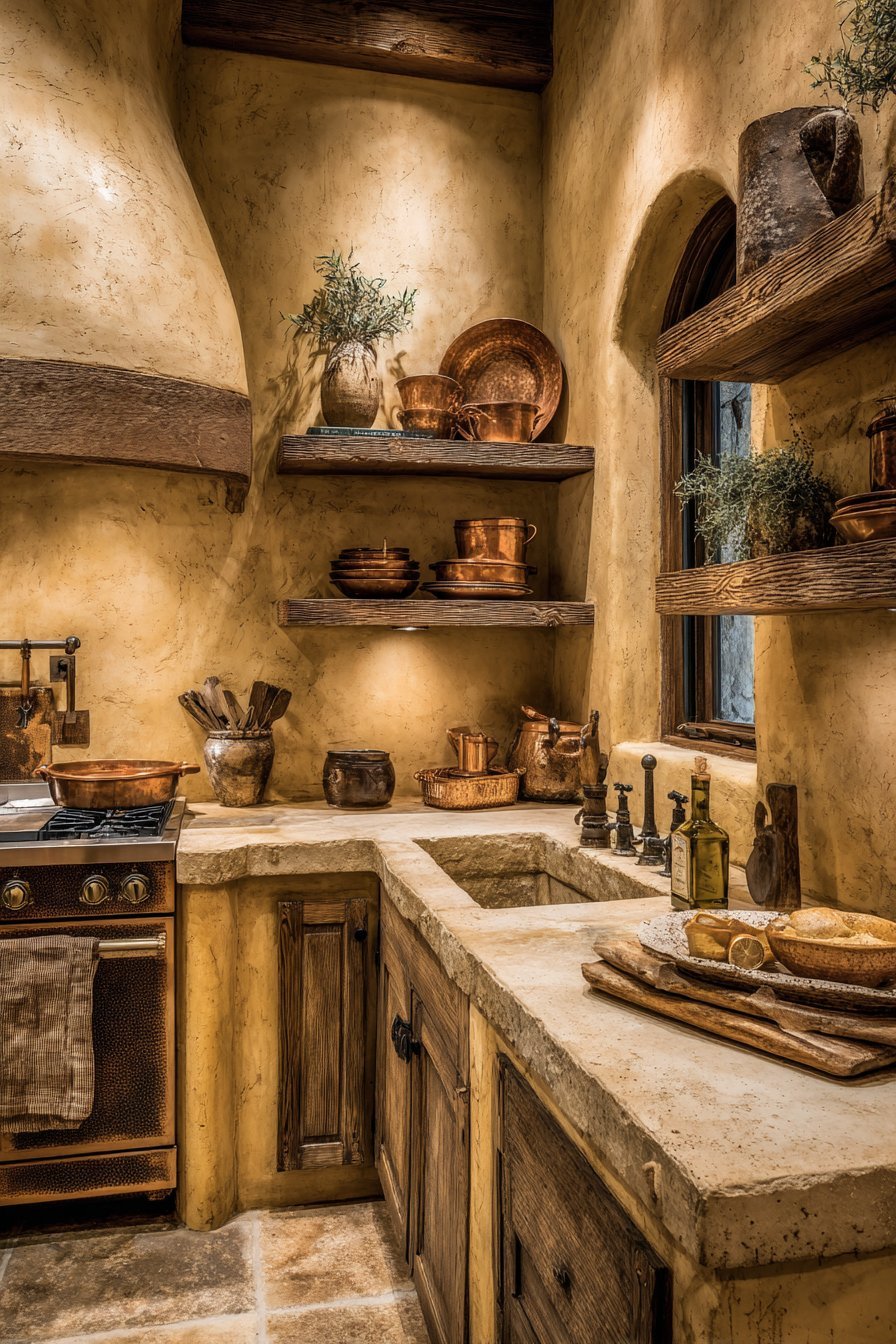
A custom range hood in hammered copper creates dramatic focal point. Natural patina development shows variations from burnished gold to deep bronze. The hand-worked surface demonstrates artisanal quality. The hood’s curved form adds sculptural interest above vintage-style range.

Surrounding walls feature natural plaster in warm sand tone. Open shelving in reclaimed wood displays copper cookware collection. Strategic lighting emphasizes the metal’s texture and color variations. The patina patterns make each hood unique.
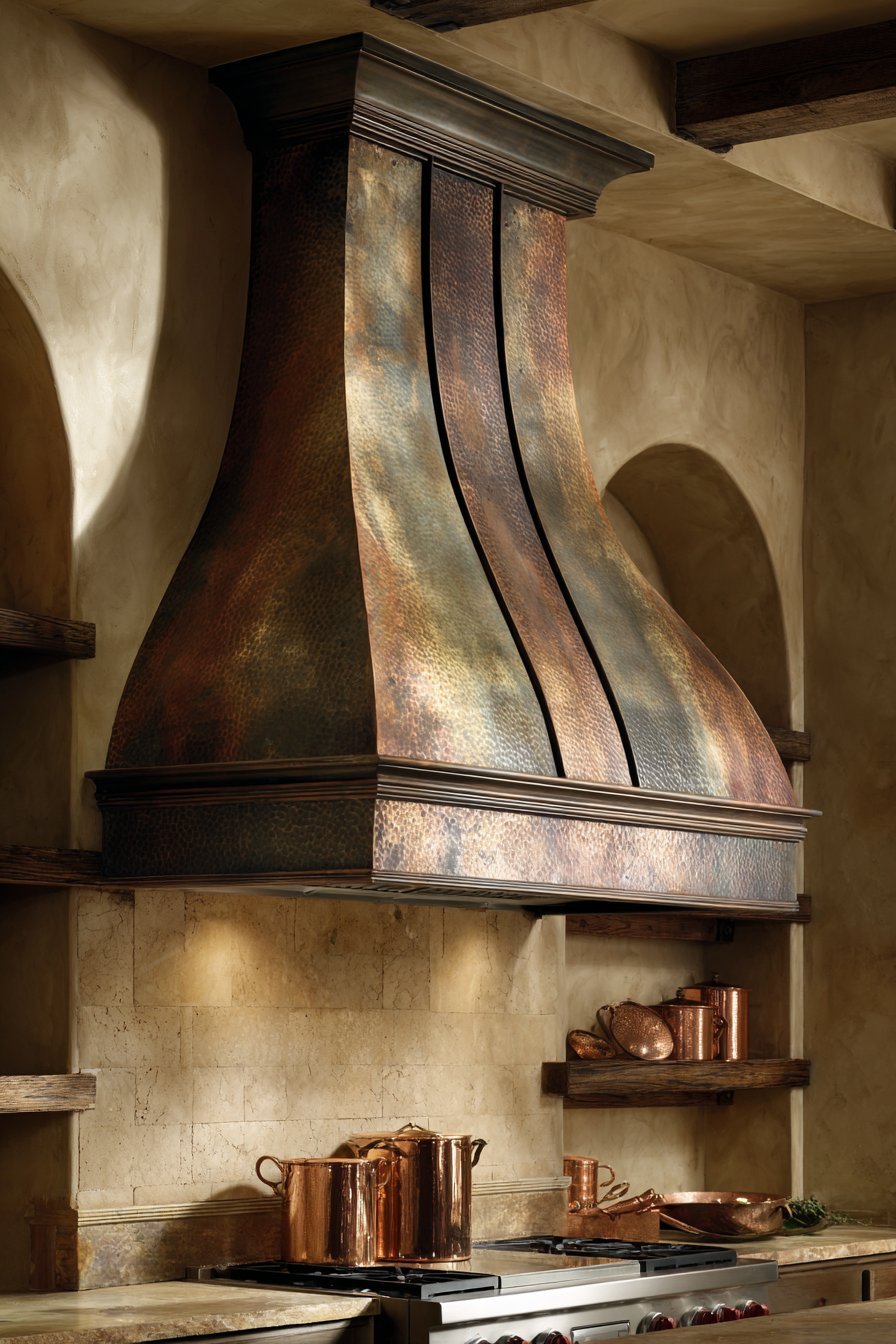
This centerpiece demonstrates copper’s living finish qualities. Daily cooking accelerates beautiful patina development. The hammered texture catches light from multiple angles. Copper proves its status as quintessential earthy material.
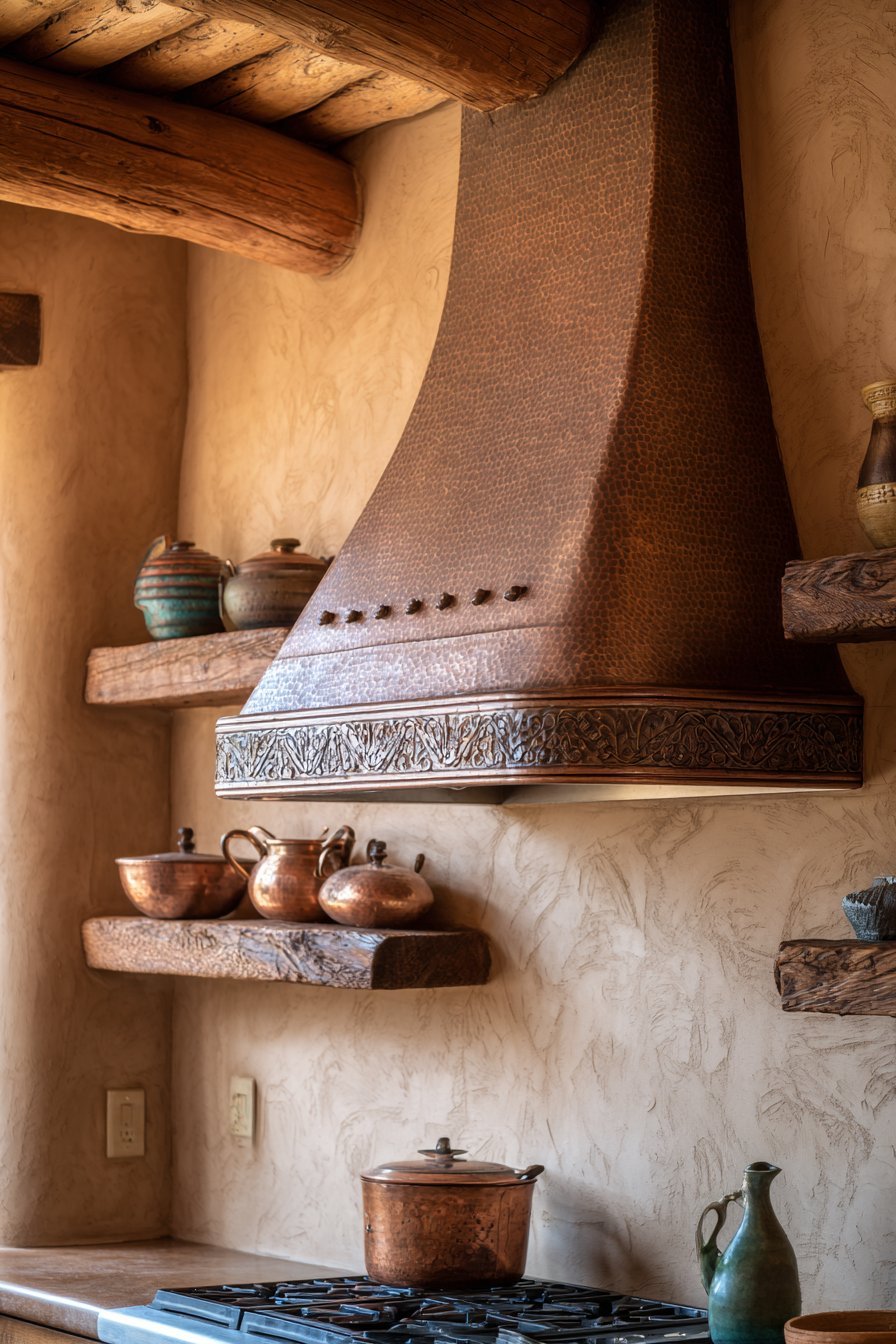
Custom copper hoods require skilled metalworkers but deliver unmatched character. The material naturally resists bacteria. The warm tones complement other natural materials perfectly.
Key Design Tips:
- Commission custom hammered copper hood for unique character
- Allow natural patina to develop without lacquer
- Design curved form for sculptural visual interest
- Display copper cookware on nearby shelving
- Light strategically to emphasize texture and color variations
19. Cedar Window Box Herb Garden
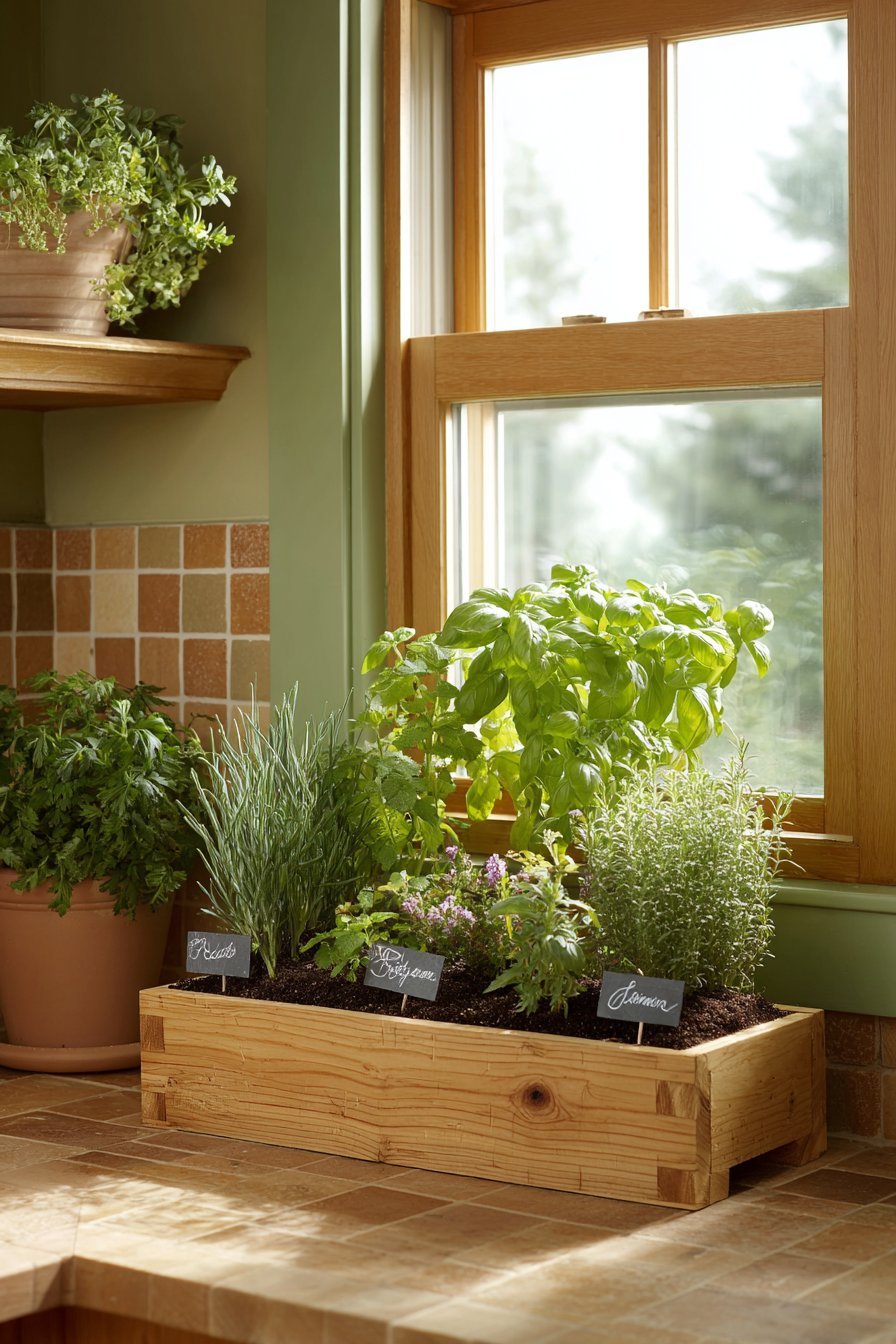
A custom built-in planter box constructed from cedar installs beneath a south-facing window. Natural finish preserves the wood’s color and aroma. Fresh herbs grow in organic potting soil with slate identification markers. The planter brings living beauty indoors.

Surrounding countertops feature butcher block with mineral oil finish. The window trim wears simple pine painted soft sage. Natural terracotta tiles create the backsplash behind. Bright natural daylight showcases the living herbs and wood grain.
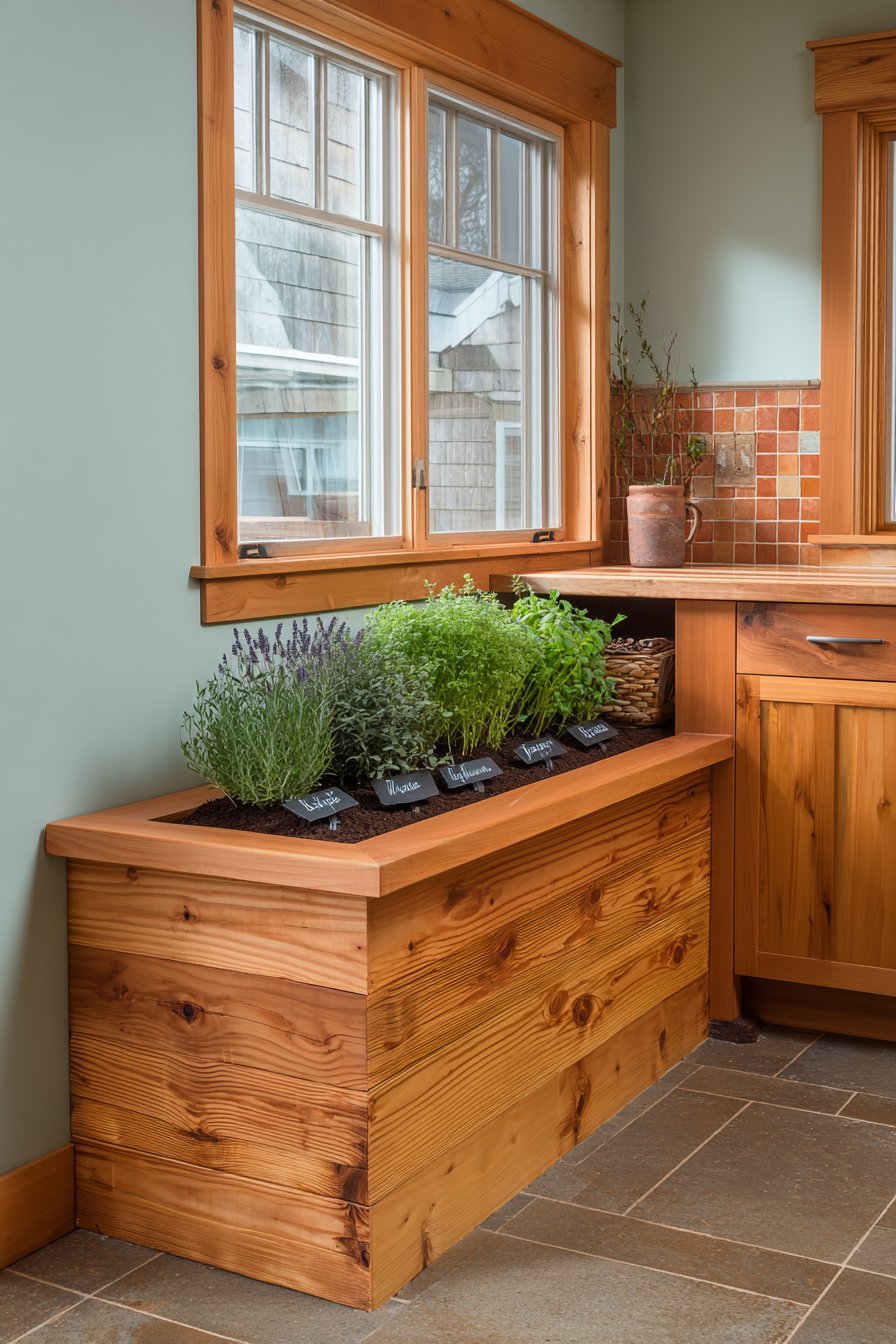
The built-in herb garden provides fresh ingredients year-round. Cedar naturally resists moisture and insects. The living plants connect the kitchen to nature. This practical feature enhances both function and beauty.
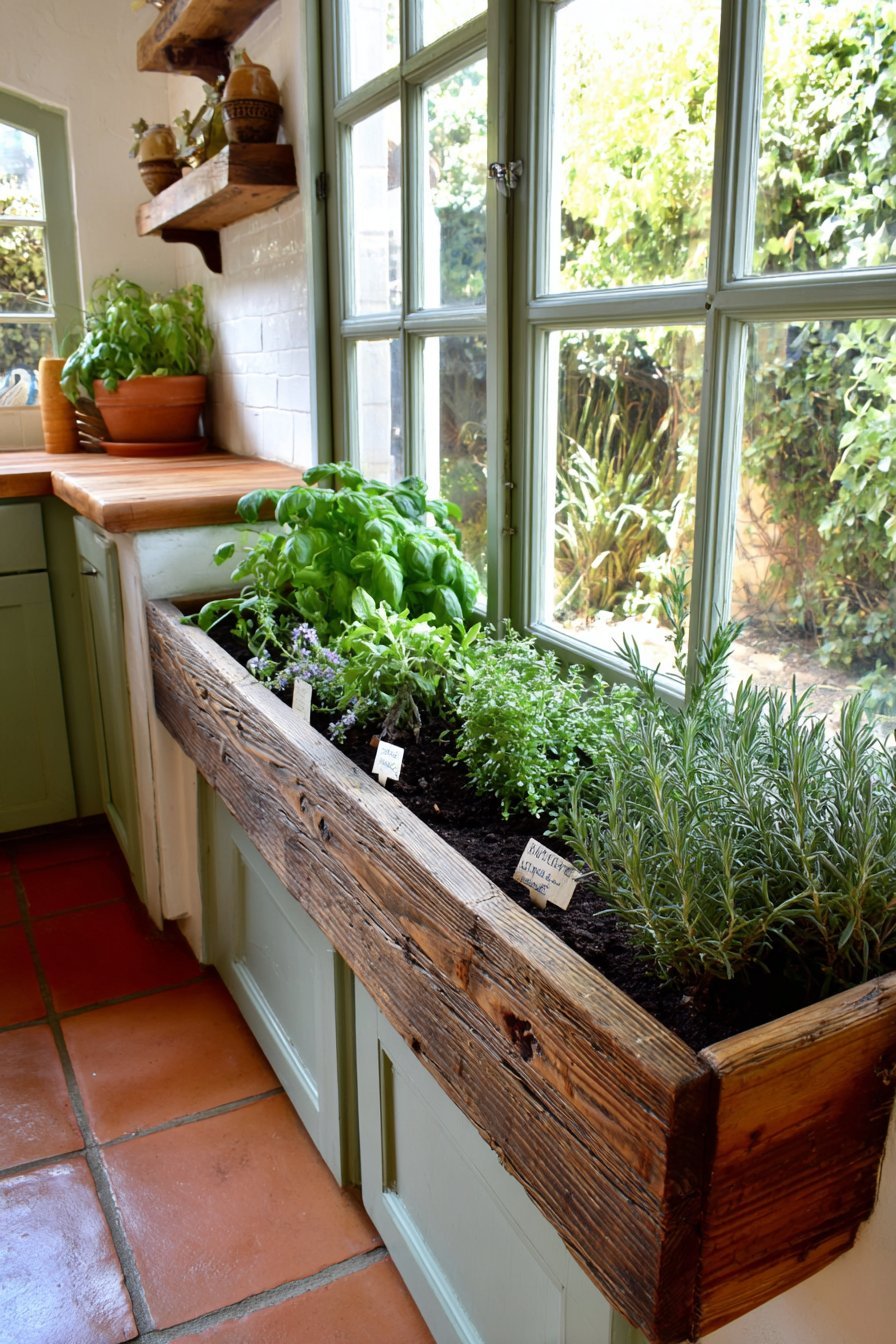
Window herb gardens maximize south-facing light exposure. The cedar planter becomes permanent architectural feature. Fresh herbs improve cooking while purifying air.
Key Design Tips:
- Build planter box from cedar for moisture resistance
- Install beneath south-facing window for optimal light
- Plant variety of cooking herbs in organic soil
- Use slate markers for elegant plant identification
- Surround with butcher block counters for material harmony
20. Unlacquered Brass Hardware Detail
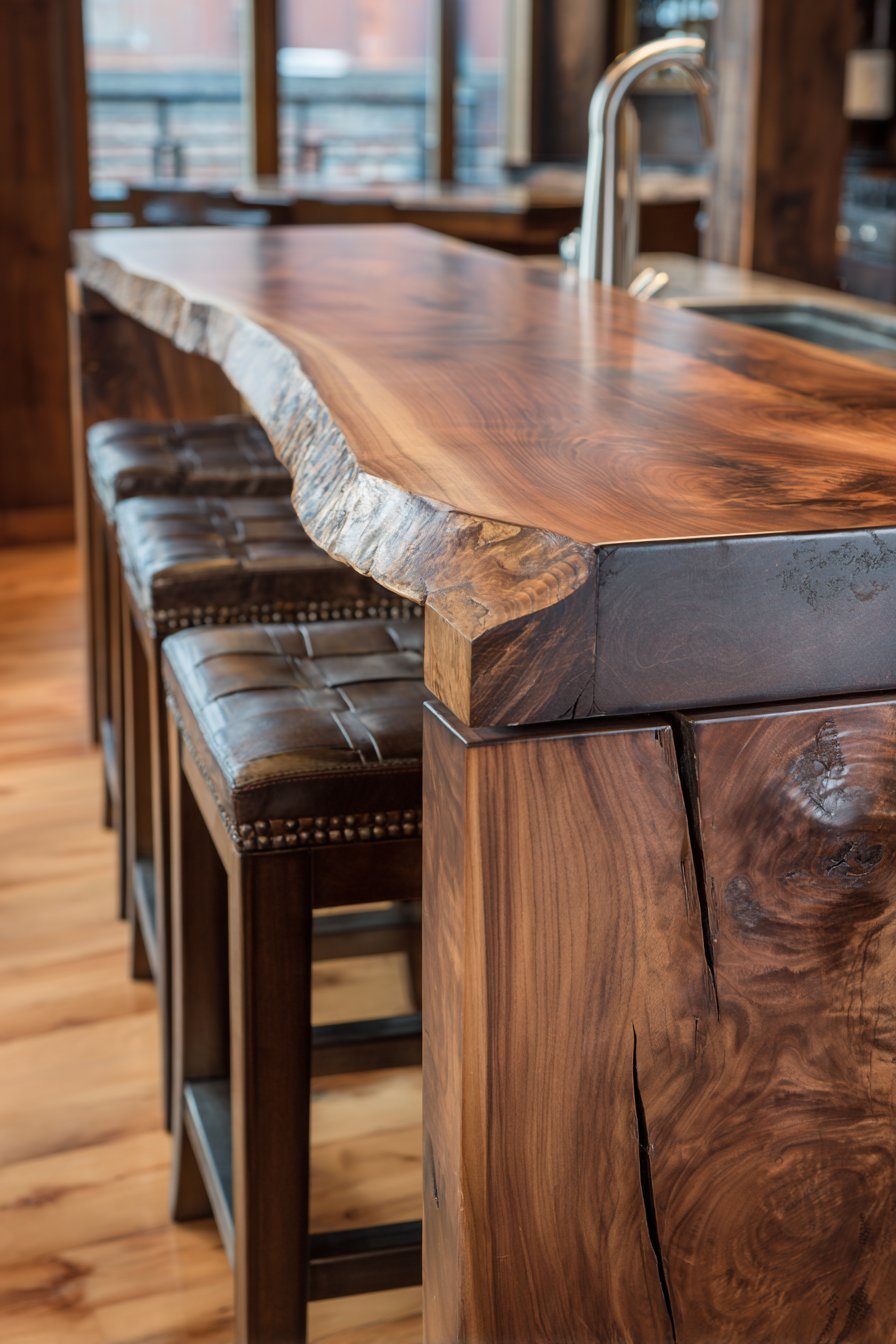
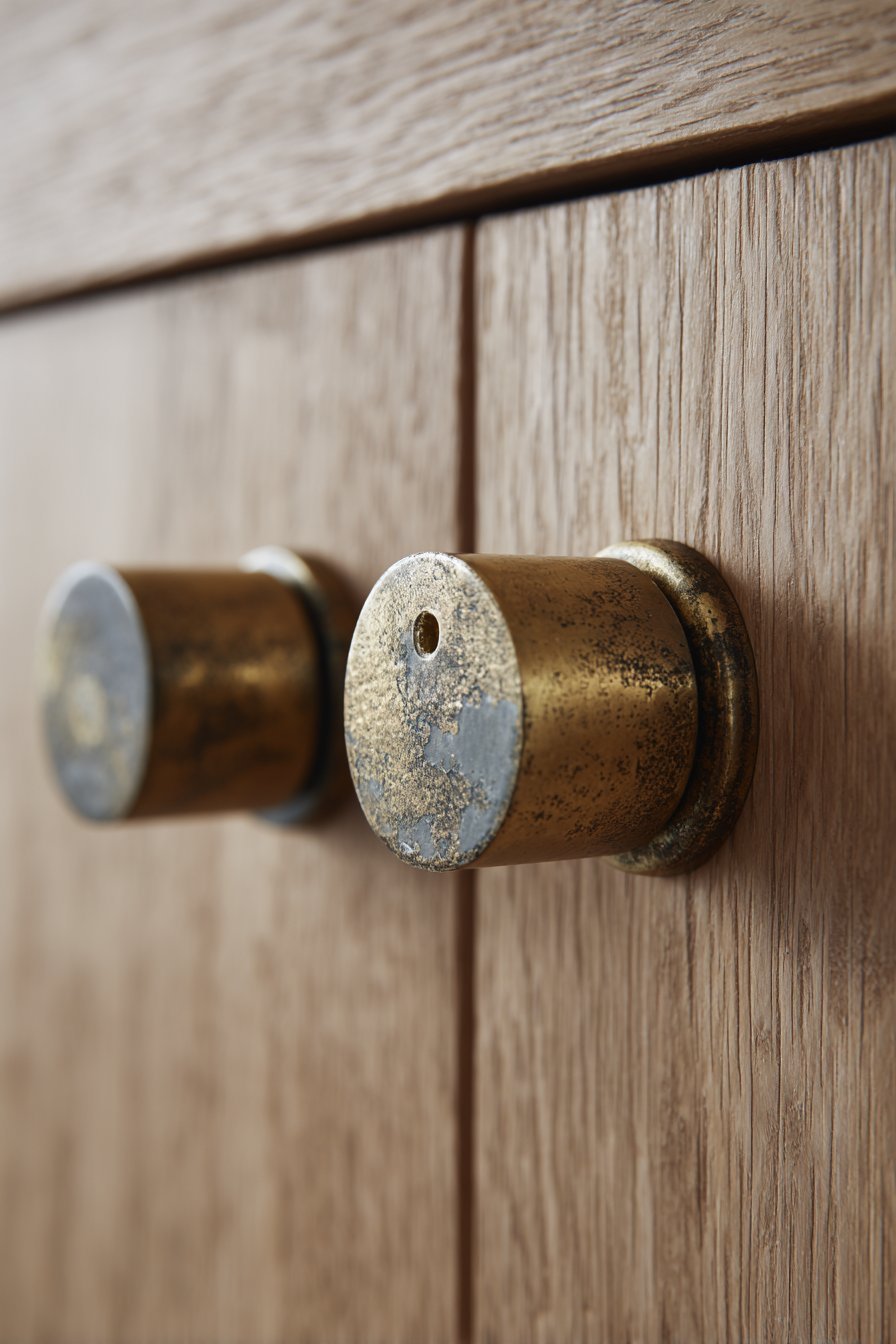
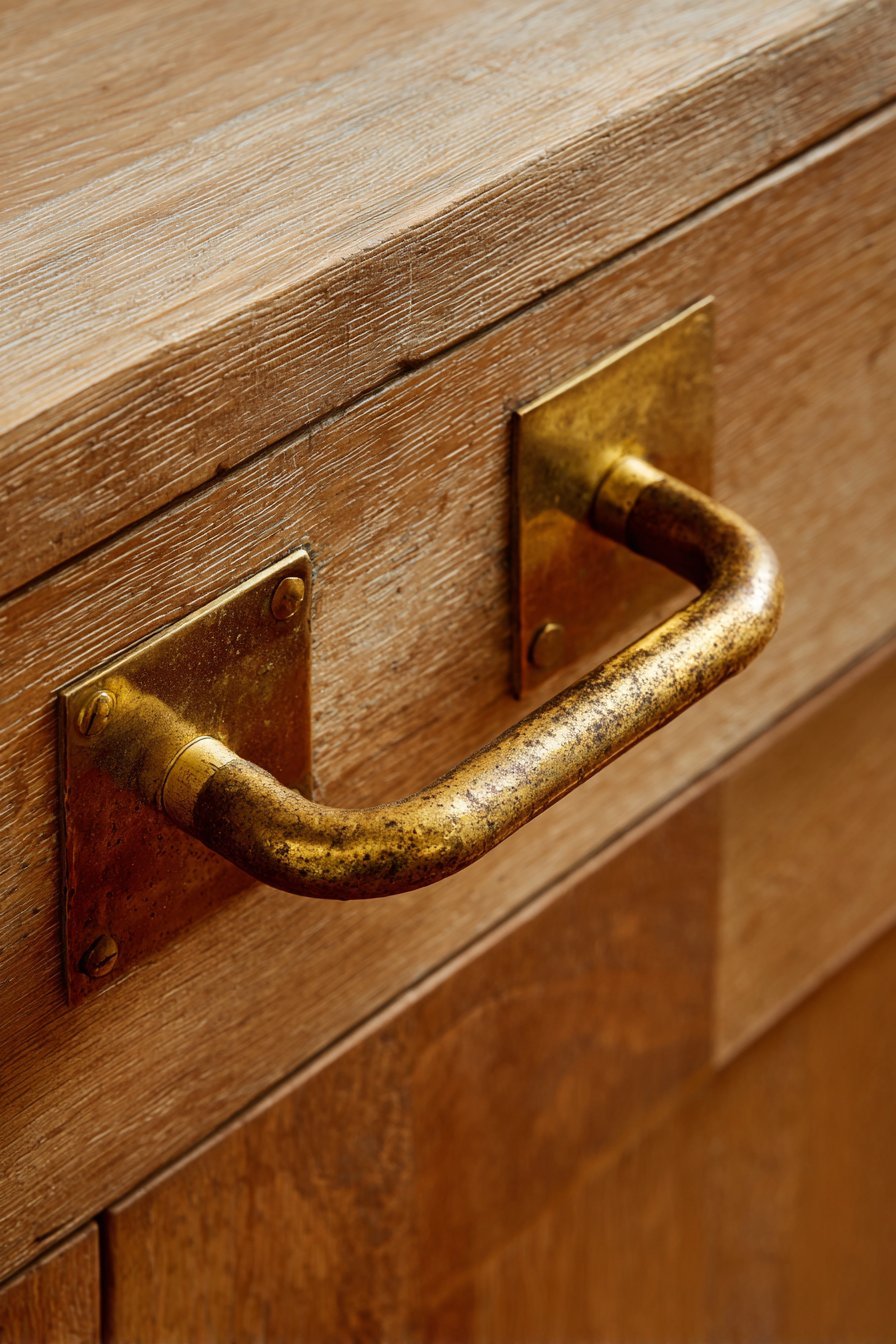
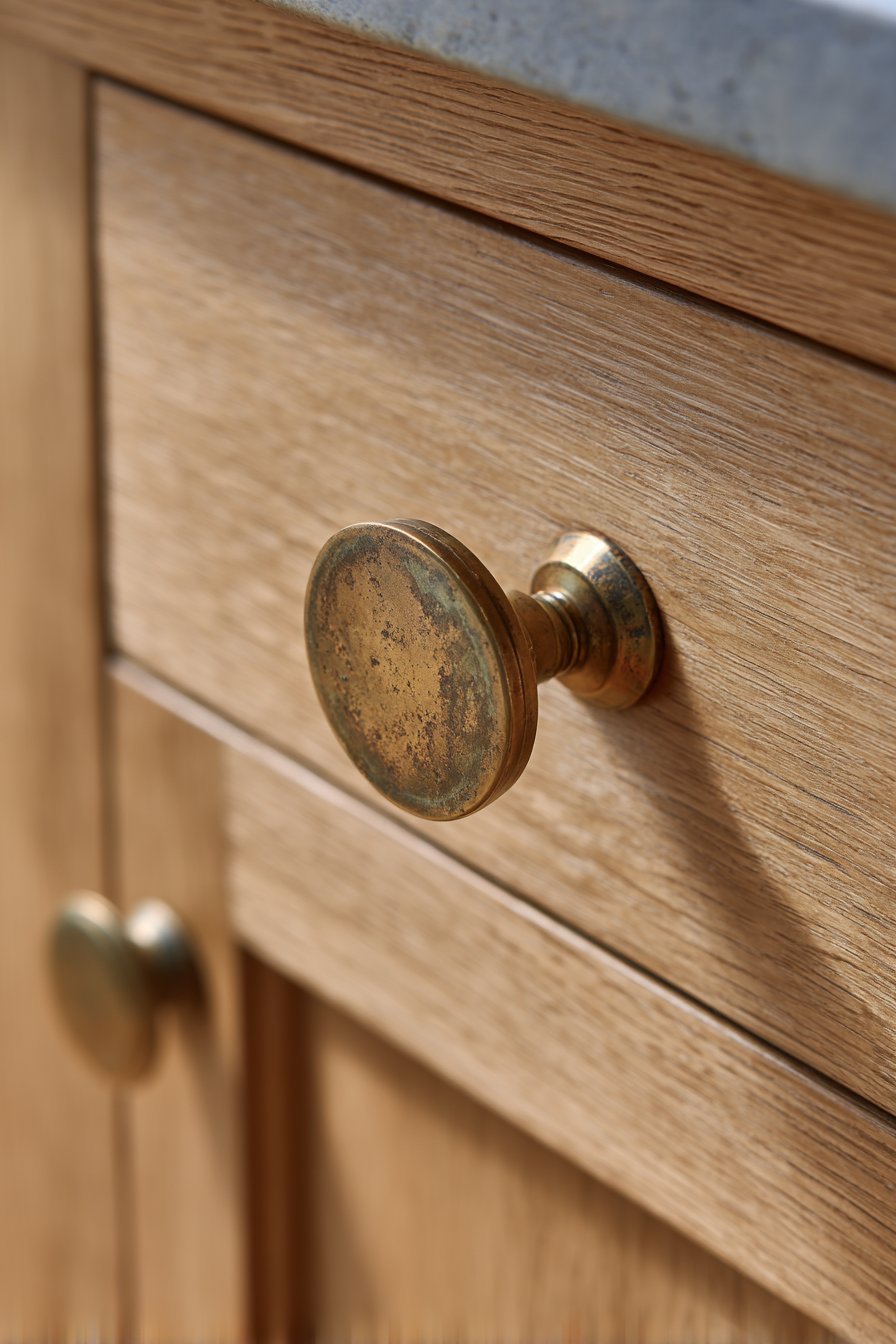
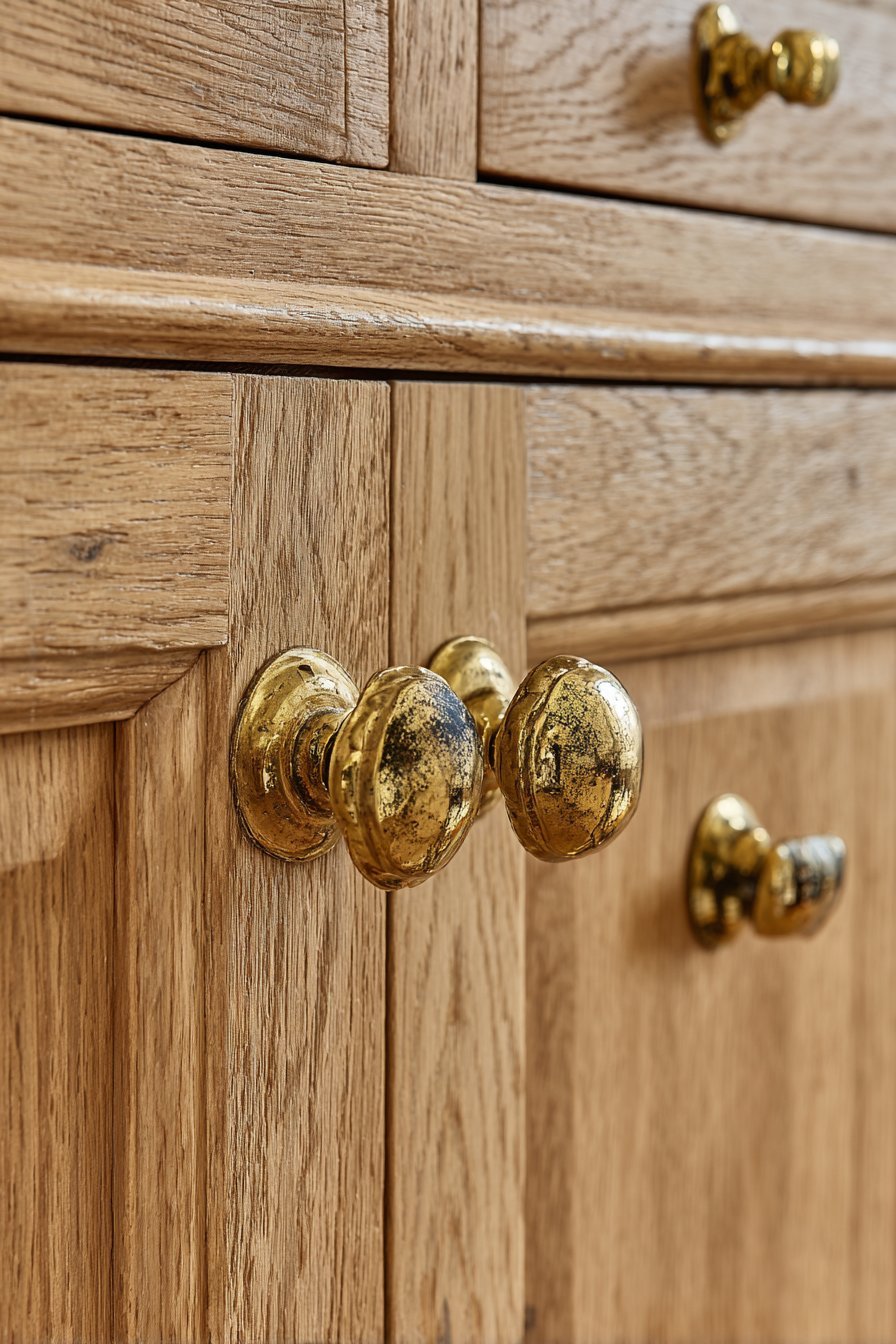
Cabinet pulls and knobs in unlacquered brass develop natural patina beautifully. Daily use creates tarnish variations and fingerprint traces. The brass ages from bright gold to warm bronze tones. The hardware installs on shaker-style oak cabinet doors.
Close-up photography captures the brass aging process. Subtle color shifts create living finish. Natural patina celebrates imperfection and time’s passage. This detail demonstrates how materials improve with age.
Unlacquered brass requires no maintenance while developing character. Each piece ages uniquely based on use patterns. The warm metallic tones complement wood cabinetry. This hardware choice represents commitment to authentic materials.
Living finishes like unlacquered brass tell stories through patina. The aging process creates irreplaceable beauty. Fingerprints become design features rather than marks to remove.
Key Design Tips:
- Specify unlacquered brass to allow natural patina development
- Install on oak shaker cabinets for classic pairing
- Accept tarnish and fingerprints as character marks
- Avoid polishing to preserve authentic aging
- Photograph close-up to showcase patina variations
21. Book-Matched Walnut Waterfall Peninsula
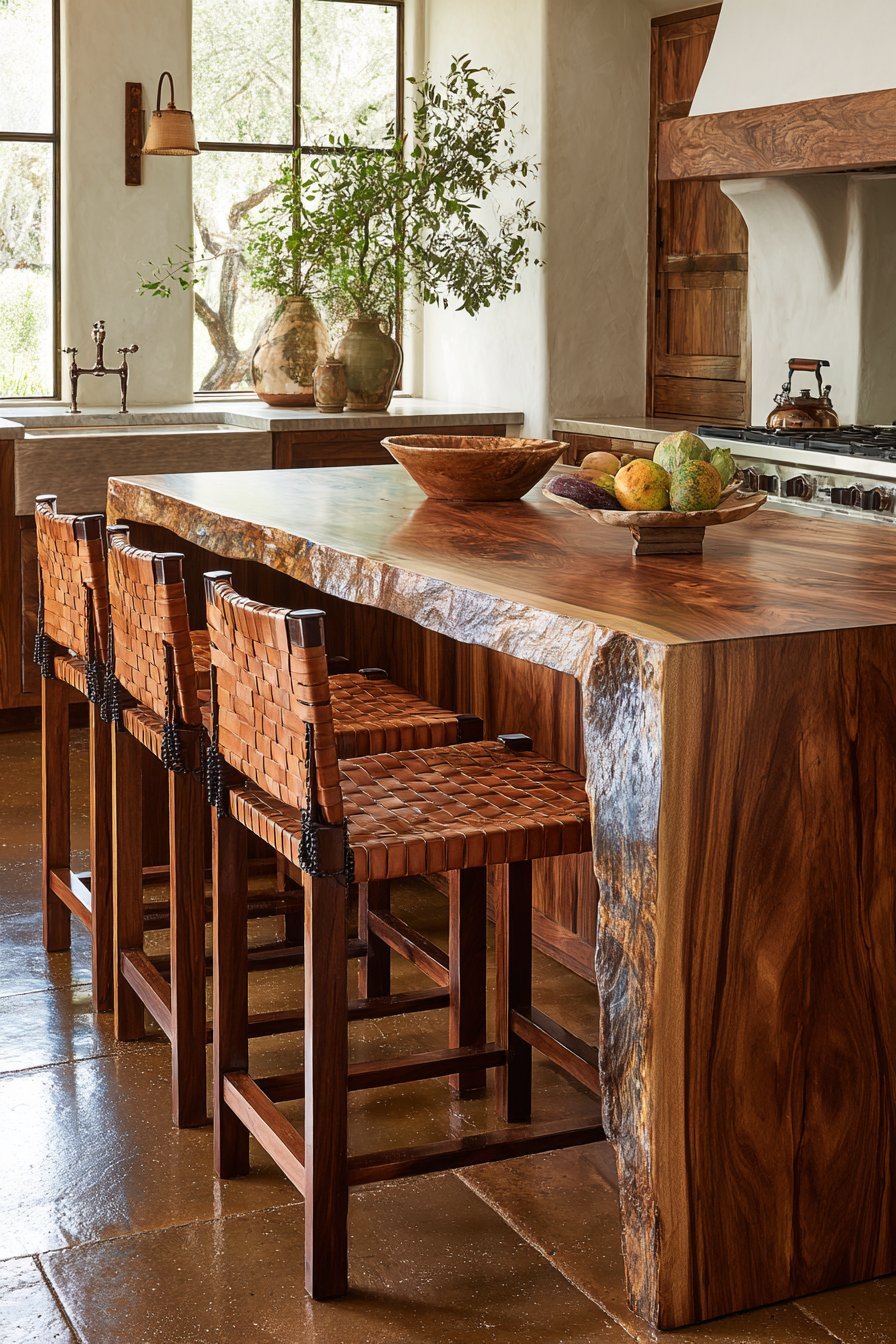
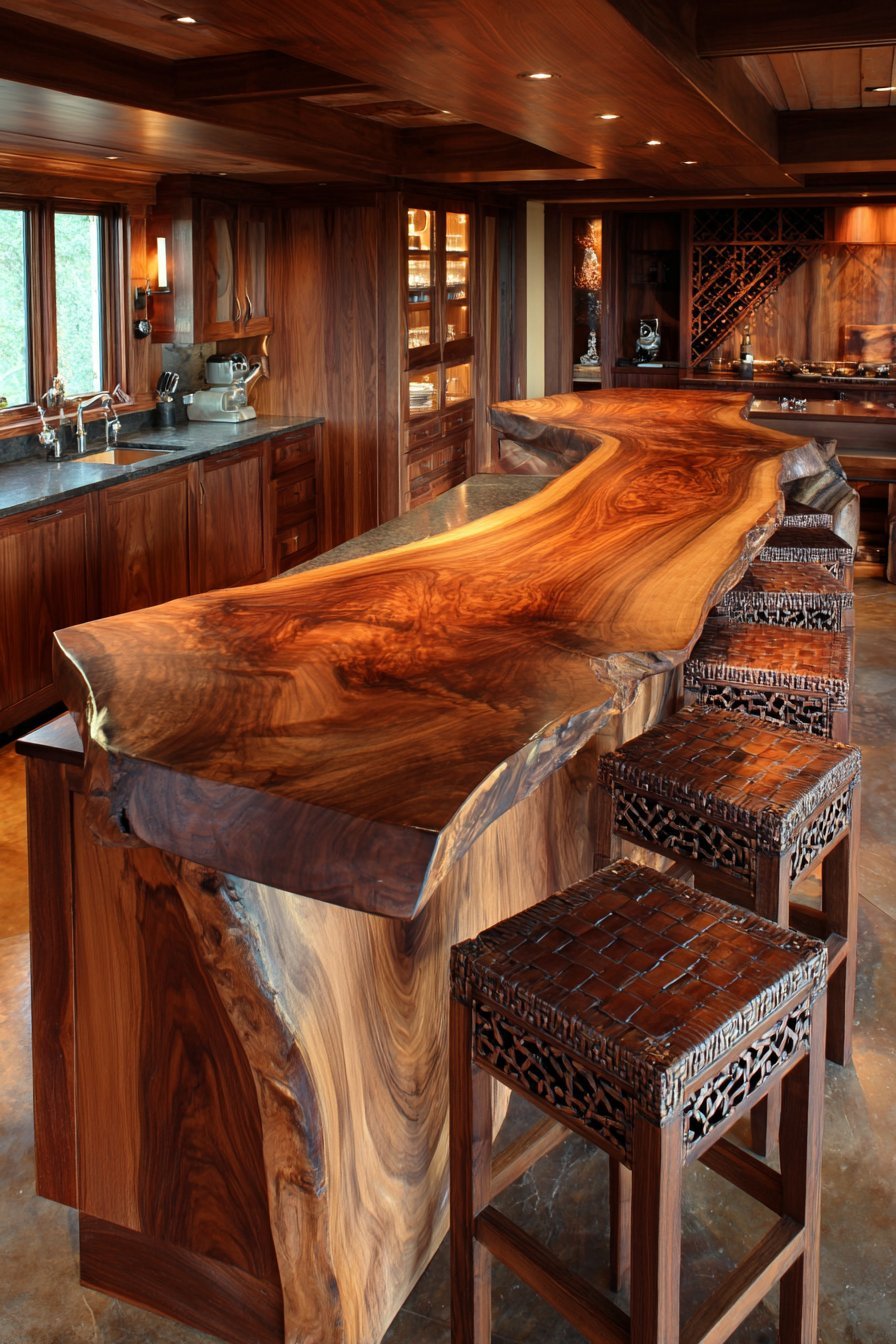
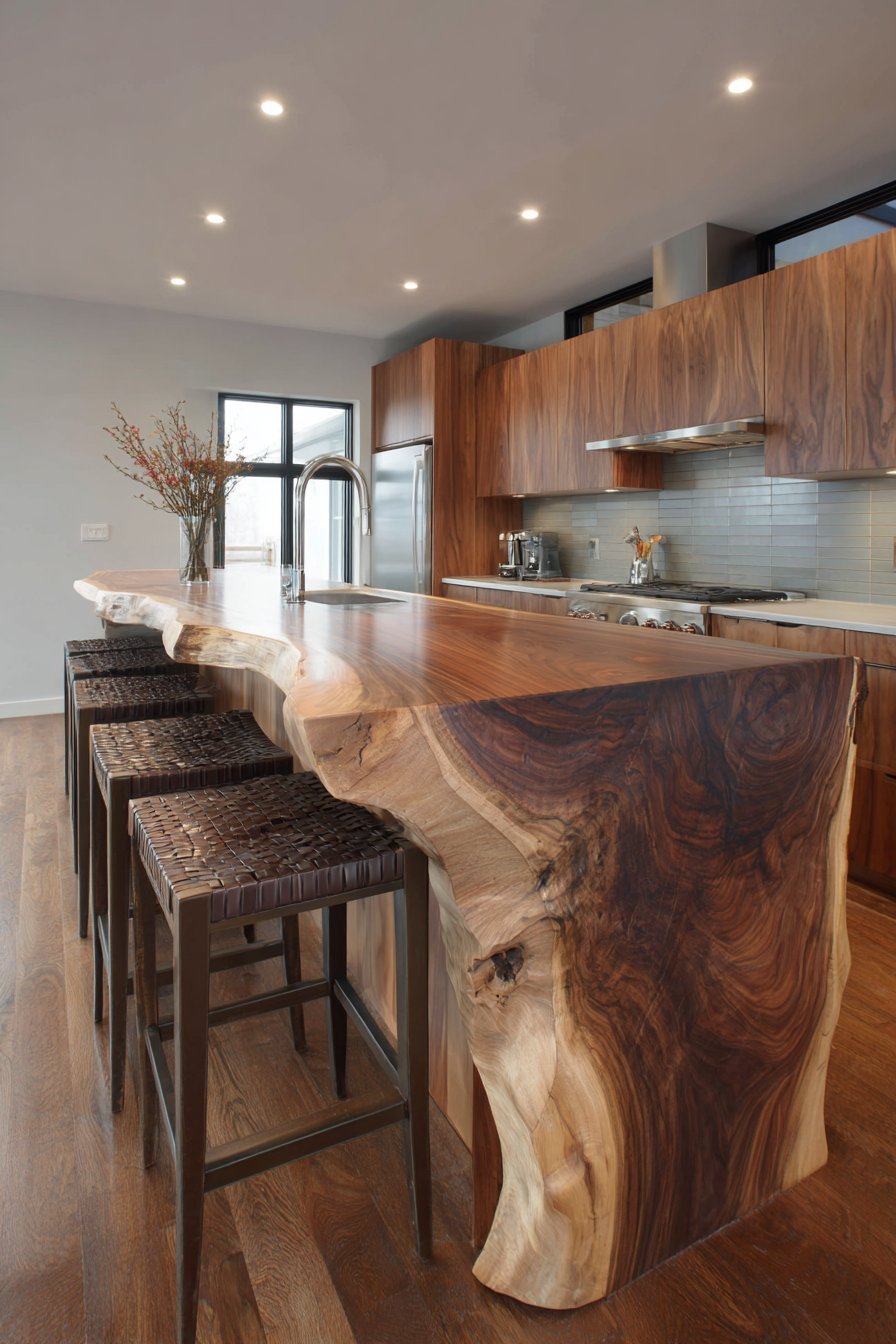
A peninsula features waterfall edge countertops in book-matched walnut slabs. Cathedral grain patterns flow continuously from horizontal to vertical surfaces. Natural color variations range from honey to chocolate brown. The dramatic wood grain creates sculptural focal point.
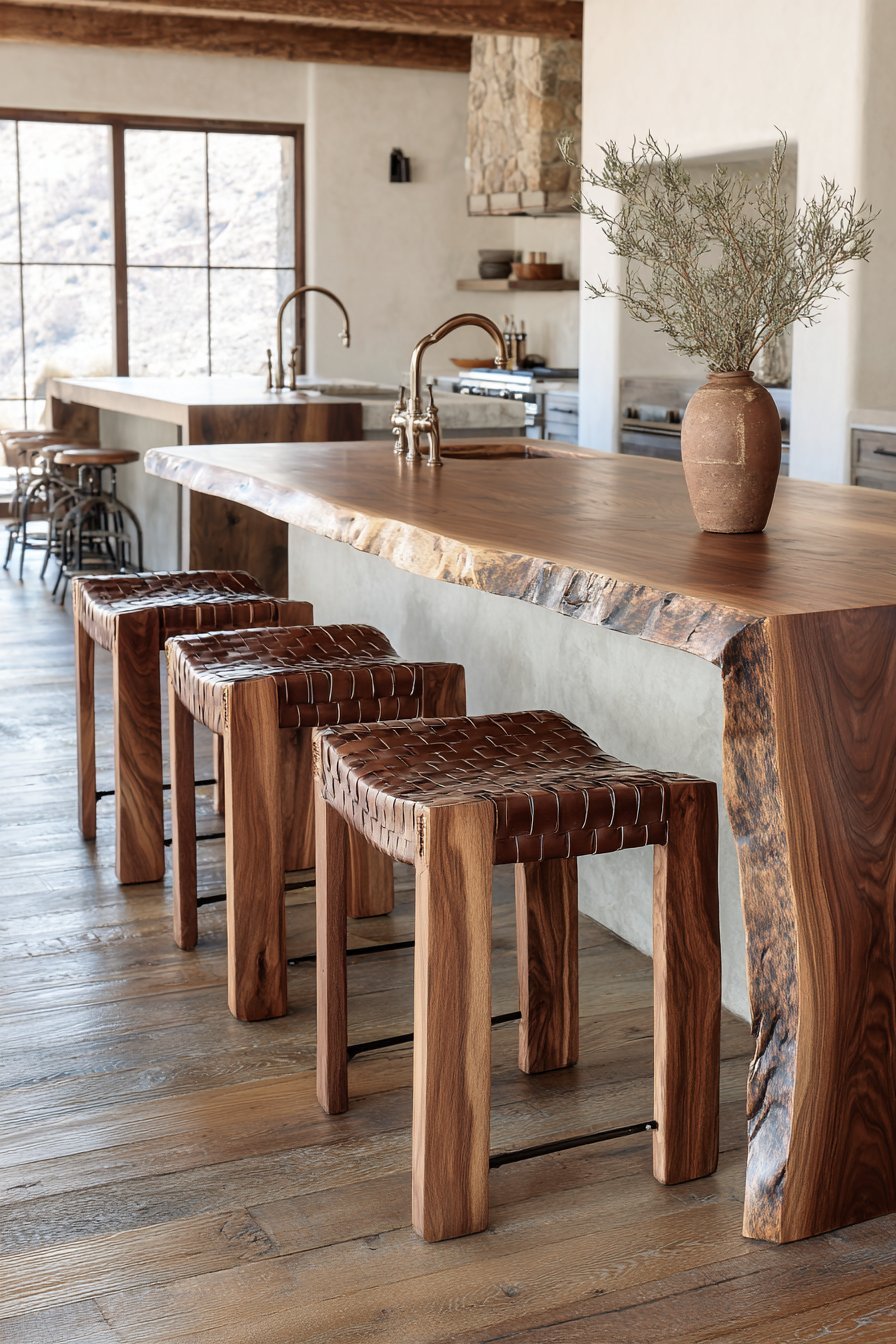
Bar stools with woven leather seats and iron frames provide seating. The peninsula houses storage with simple oak doors below. The continuous grain flow mesmerizes viewers. Natural edge details preserve the wood’s original character.
Wide-angle photography captures the dramatic grain matching. The book-matched pattern mirrors perfectly at the seam. This installation represents significant investment in natural beauty. The walnut becomes functional artwork.
Waterfall edges showcase premium slabs most effectively. Book-matching requires careful material selection and expert fabrication. The result justifies the additional cost through timeless beauty.
Key Design Tips:
- Select book-matched walnut slabs with cathedral grain
- Design waterfall edges to showcase continuous grain flow
- Preserve natural edges where appropriate for character
- Pair with woven leather stools for texture contrast
- Install expert fabrication for seamless grain matching
22. Copper Farmhouse Sink with Hammered Finish
A copper farmhouse sink with hammered finish displays natural patina. Warm tones develop through use and exposure. The sink undermounts in butcher block countertops with visible end grain. Mineral oil finish protects the wood while maintaining natural appearance.
A window above frames garden views with the sill displaying small succulents. Unglazed terracotta pots complement the copper sink. Wall-mounted faucet in oil-rubbed bronze matches the organic aesthetic. Natural window light highlights the metal’s living finish.
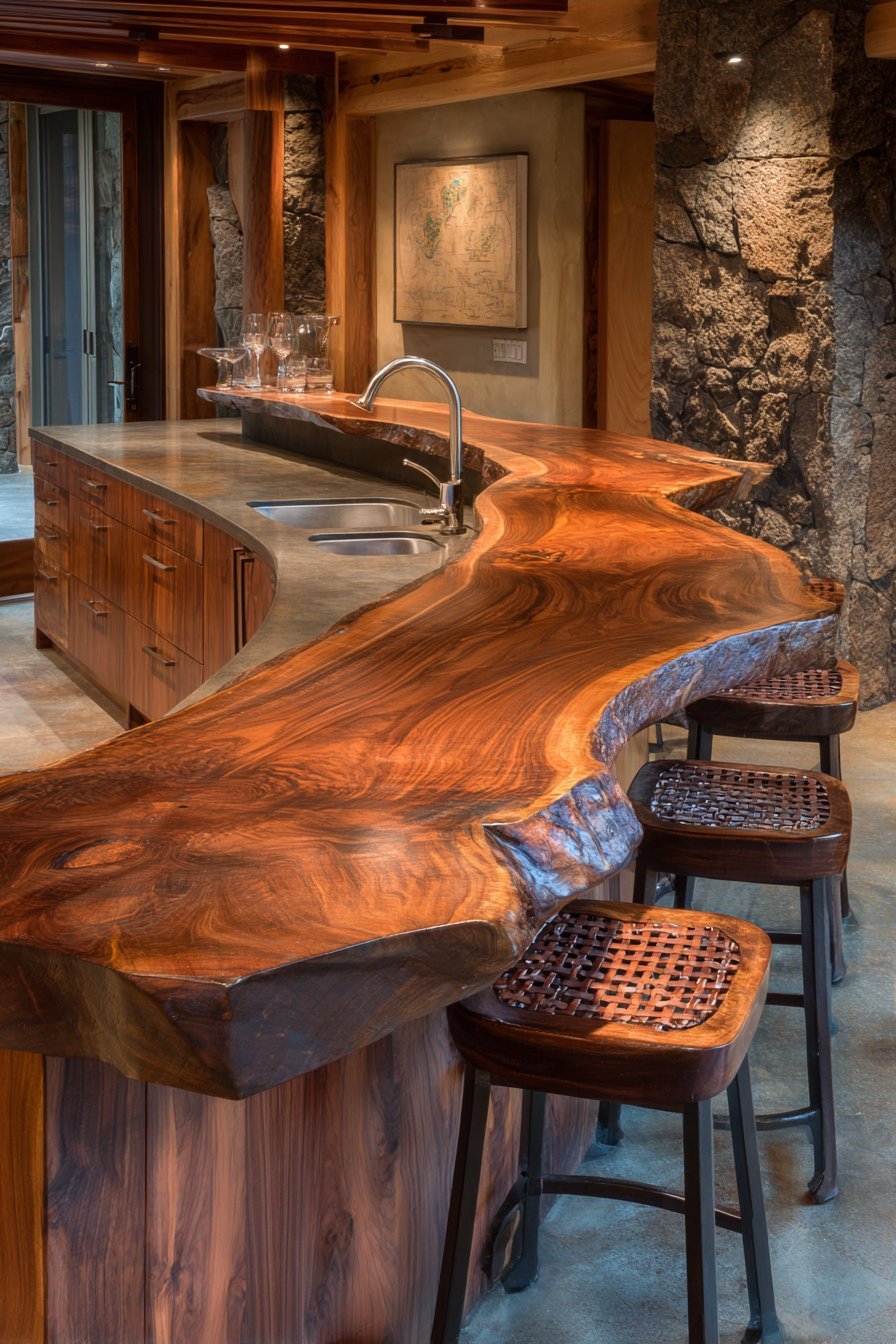
The copper sink develops unique patina over time. Hammered texture hides minor scratches and water spots. The material naturally resists bacteria. This sink proves functional items can be beautiful.
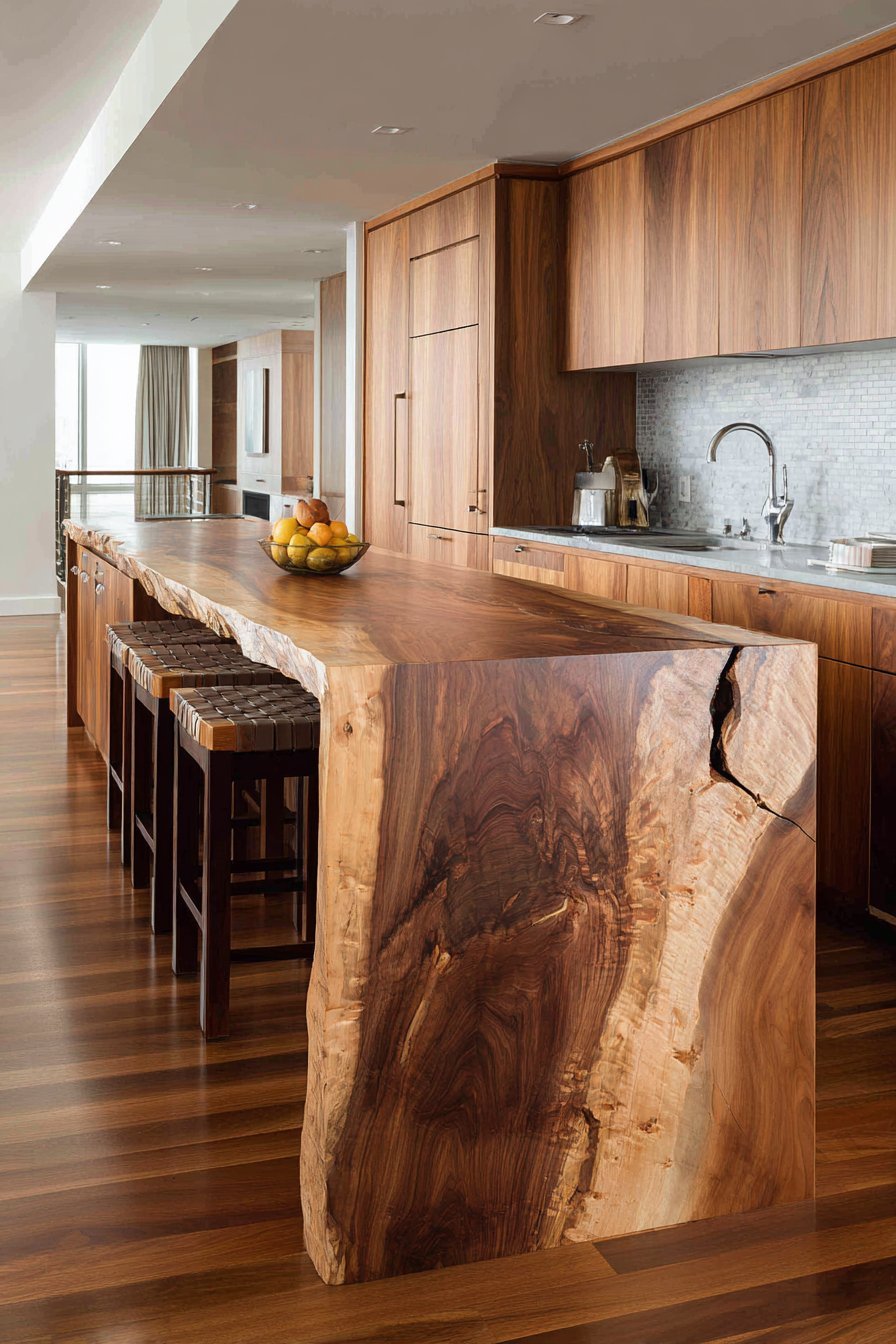
Copper sinks require no harsh chemicals for maintenance. The patina protects the metal naturally. Pairing with butcher block creates cohesive natural material story.
Key Design Tips:
- Choose copper sink with hammered finish for texture
- Allow natural patina to develop without sealing
- Undermount in butcher block for seamless integration
- Install wall-mounted oil-rubbed bronze faucet
- Display succulents in terracotta on window sill
23. Quarter-Sawn White Oak Storage
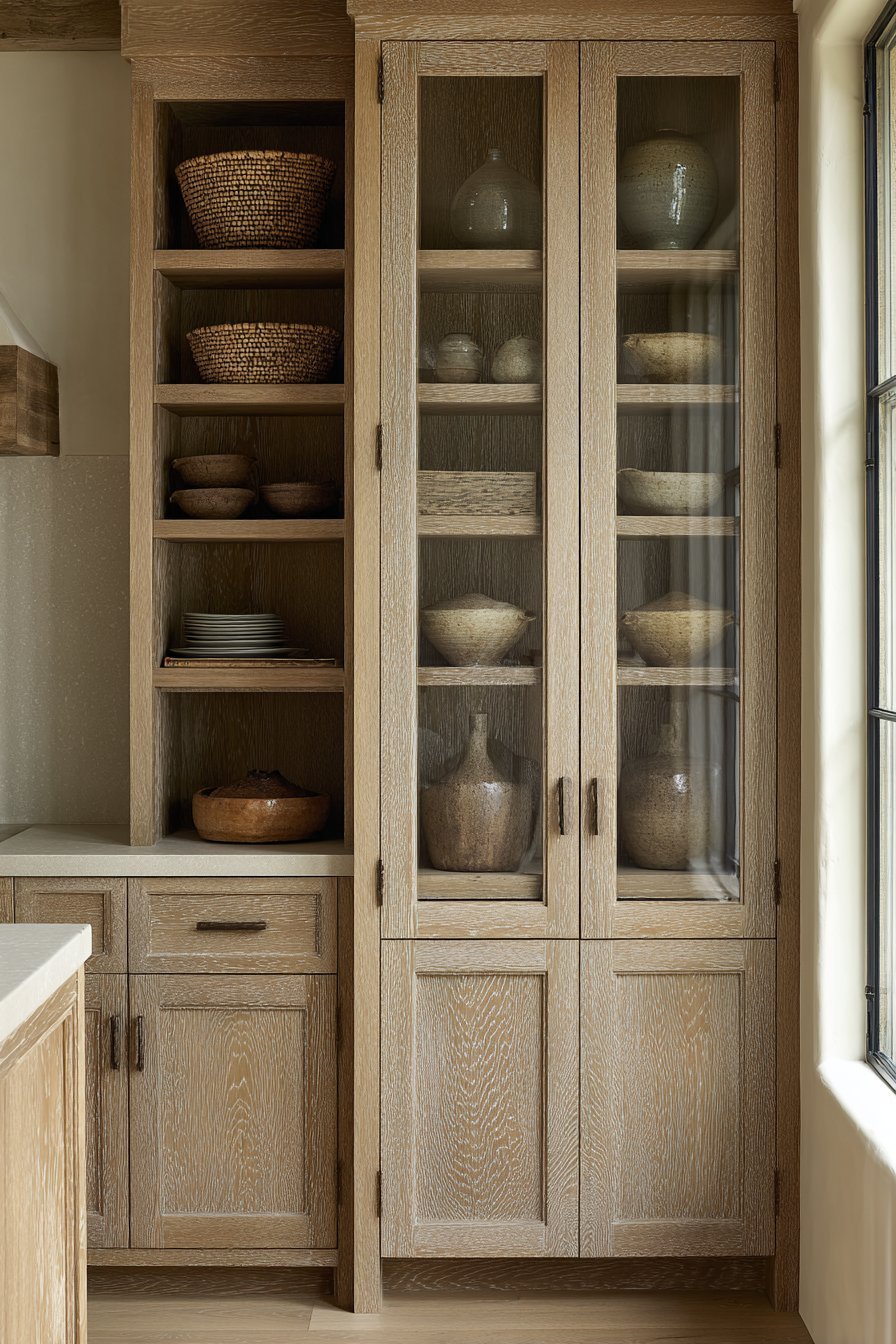
Floor-to-ceiling cabinetry in quarter-sawn white oak displays prominent ray flake figure. Natural oil finish preserves the wood’s color and distinctive grain. Glass-front upper cabinets reveal organized dishware in earth tones. Open cubbies display woven baskets and ceramic vessels.
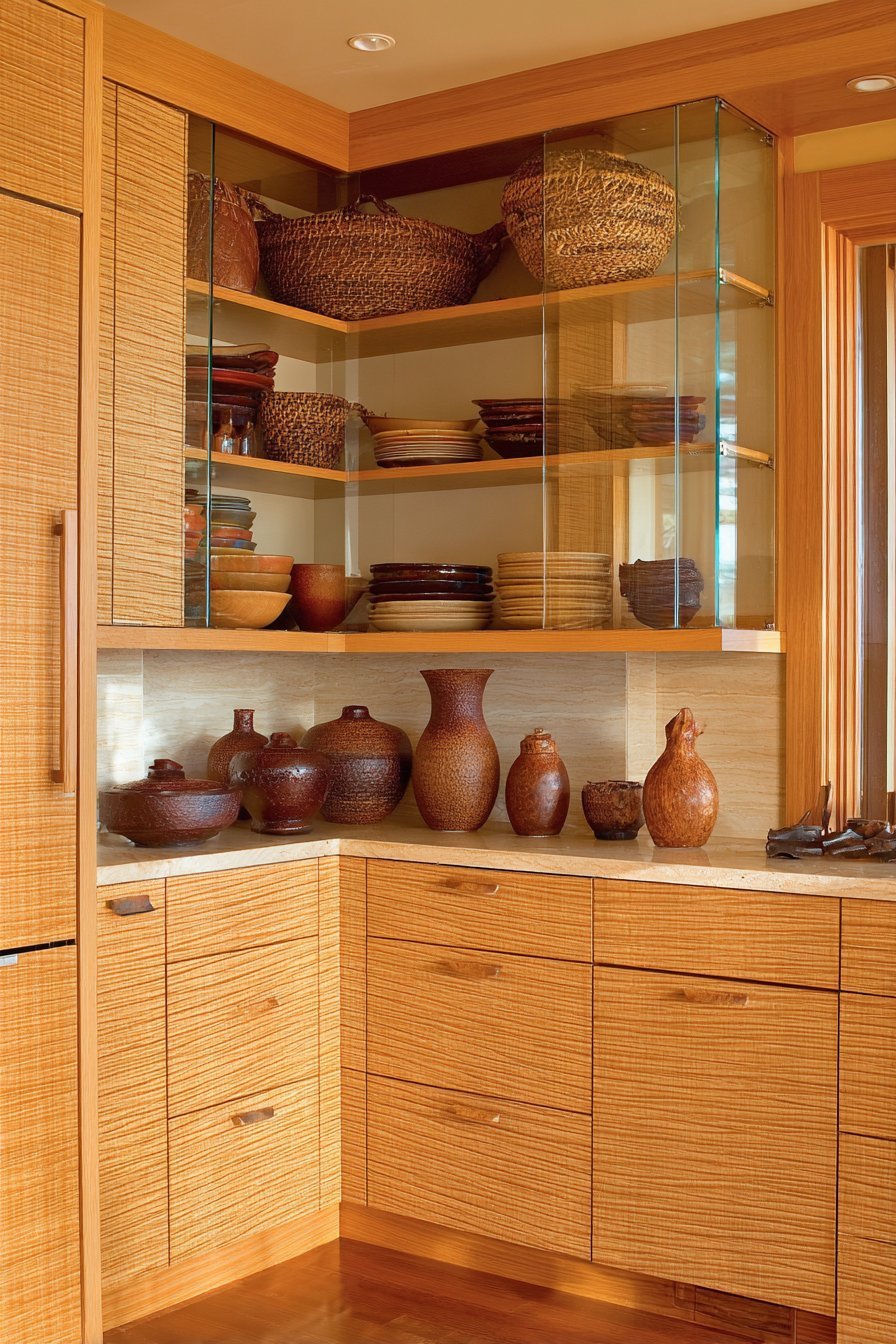
Honed limestone countertops provide neutral balance to warm wood. The oak’s ray flake creates shimmering effect as light shifts. This storage solution combines beauty with practical capacity. Quality hardwood cabinetry creates timeless architecture.
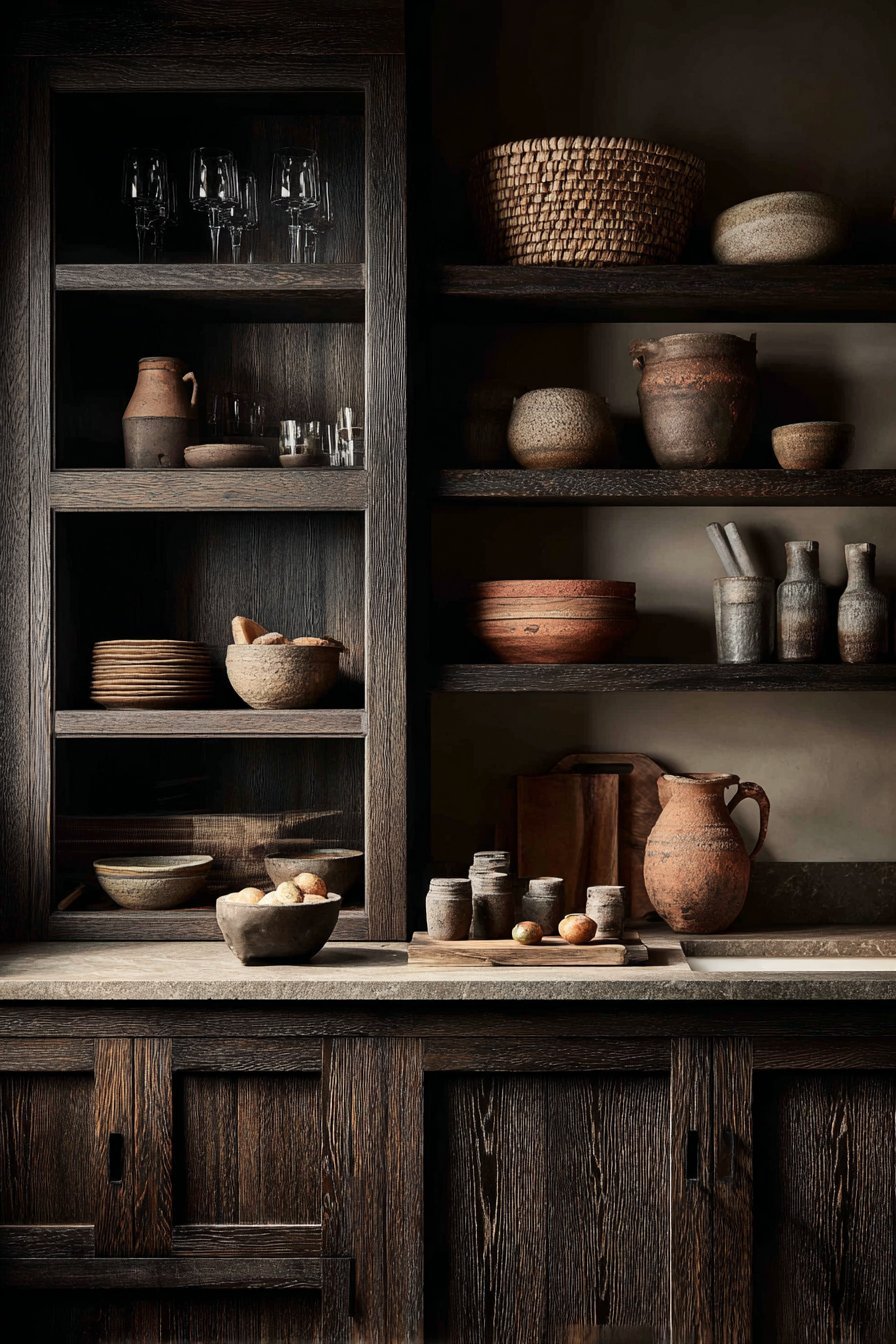
Quarter-sawn oak resists warping better than plain-sawn alternatives. The ray flake pattern adds luxury and interest. Glass fronts keep dust out while displaying collections. This cabinetry will serve generations.
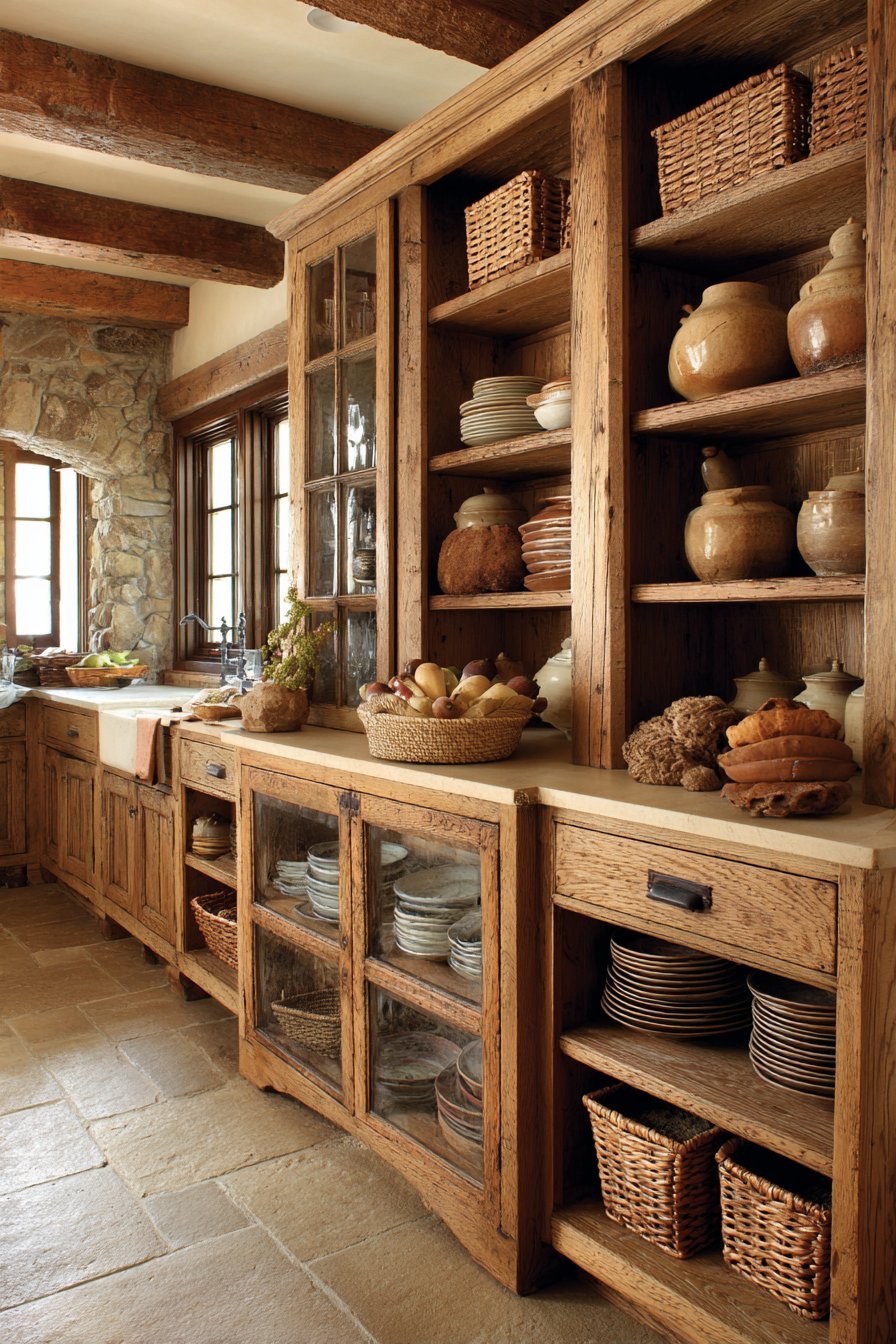
Premium wood species and cuts justify their cost through longevity. The distinctive grain pattern never goes out of style. Proper finishing protects while enhancing natural beauty.
Key Design Tips:
- Select quarter-sawn white oak for ray flake figure
- Apply natural oil finish to preserve color
- Install glass-front uppers to display dishware
- Integrate open cubbies for baskets and vessels
- Pair with honed limestone for neutral grounding
24. Natural Stone Mosaic Backsplash
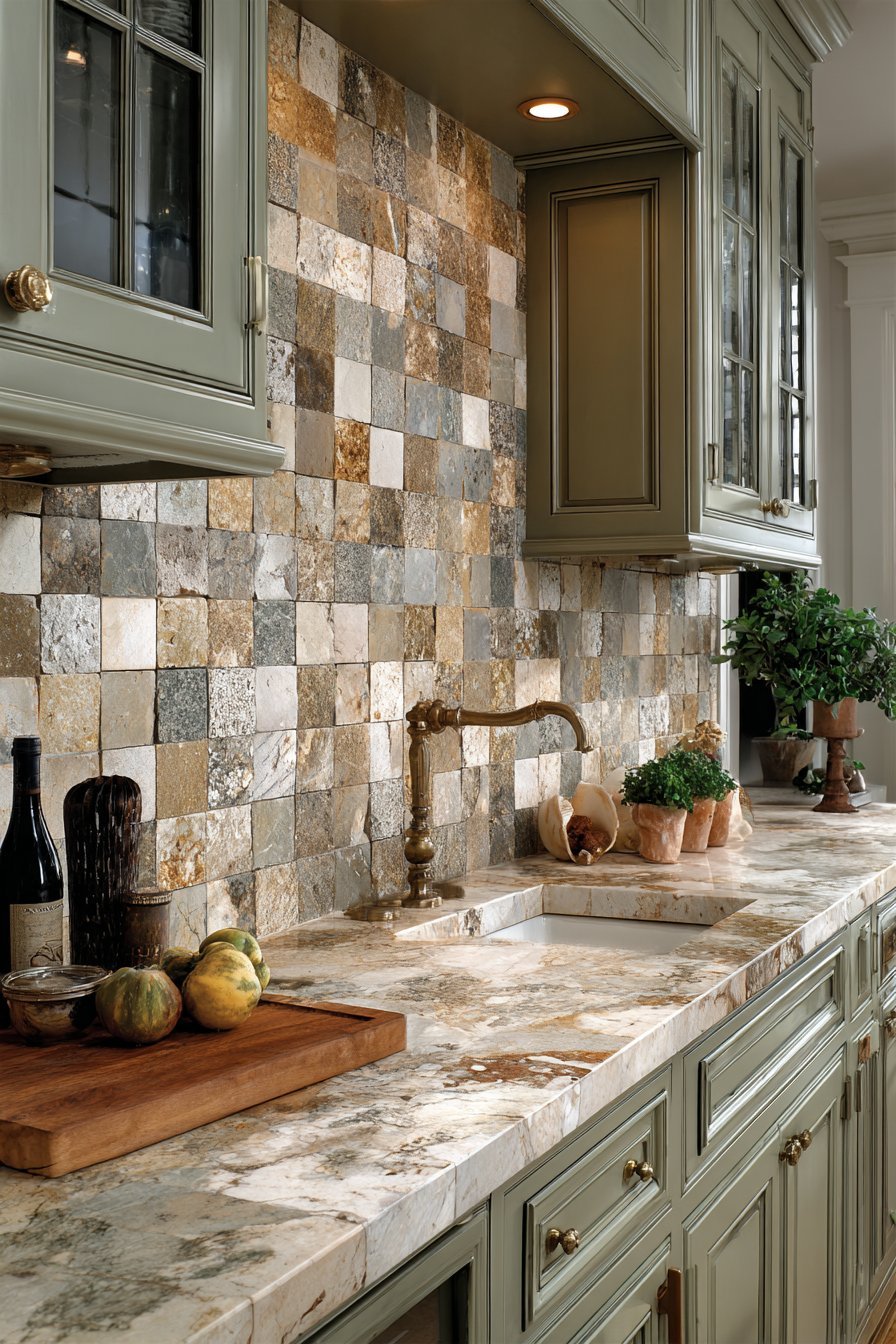
A backsplash features natural stone mosaic in mixed earth tones. Travertine, slate, and limestone create subtle variations. Small square format provides texture and pattern. The stone’s natural cleft surface catches light beautifully.
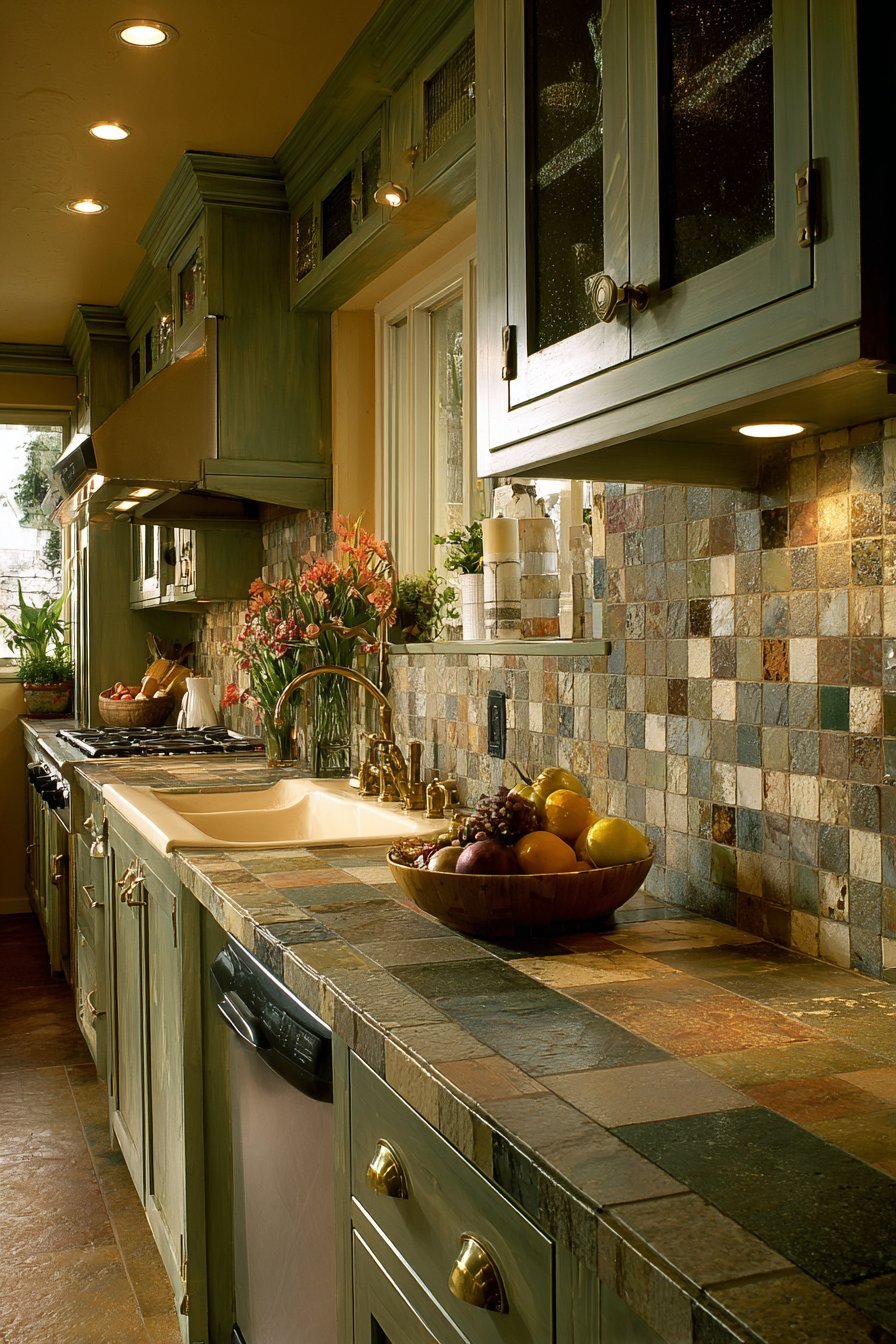
Surrounding elements include sage green cabinetry and butcher block countertops. Brass fixtures add warm metallic accent. The backsplash extends full height between counter and upper cabinets. Side lighting emphasizes stone texture and grout lines.
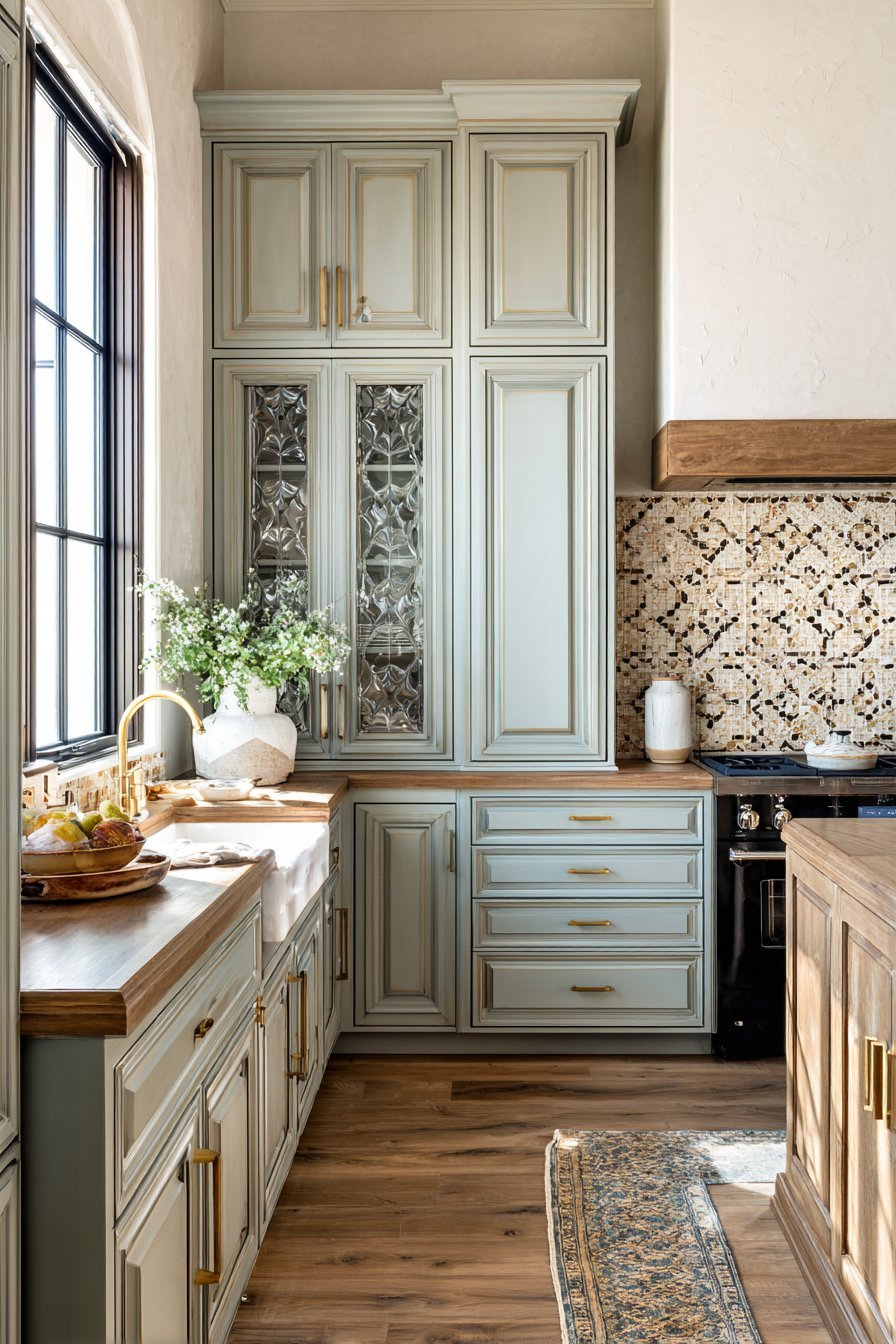
Mixed stone types create depth impossible with single materials. The cleft surface adds dimensional interest. Natural stone brings geological history into the kitchen. Each tile differs slightly in color and texture.
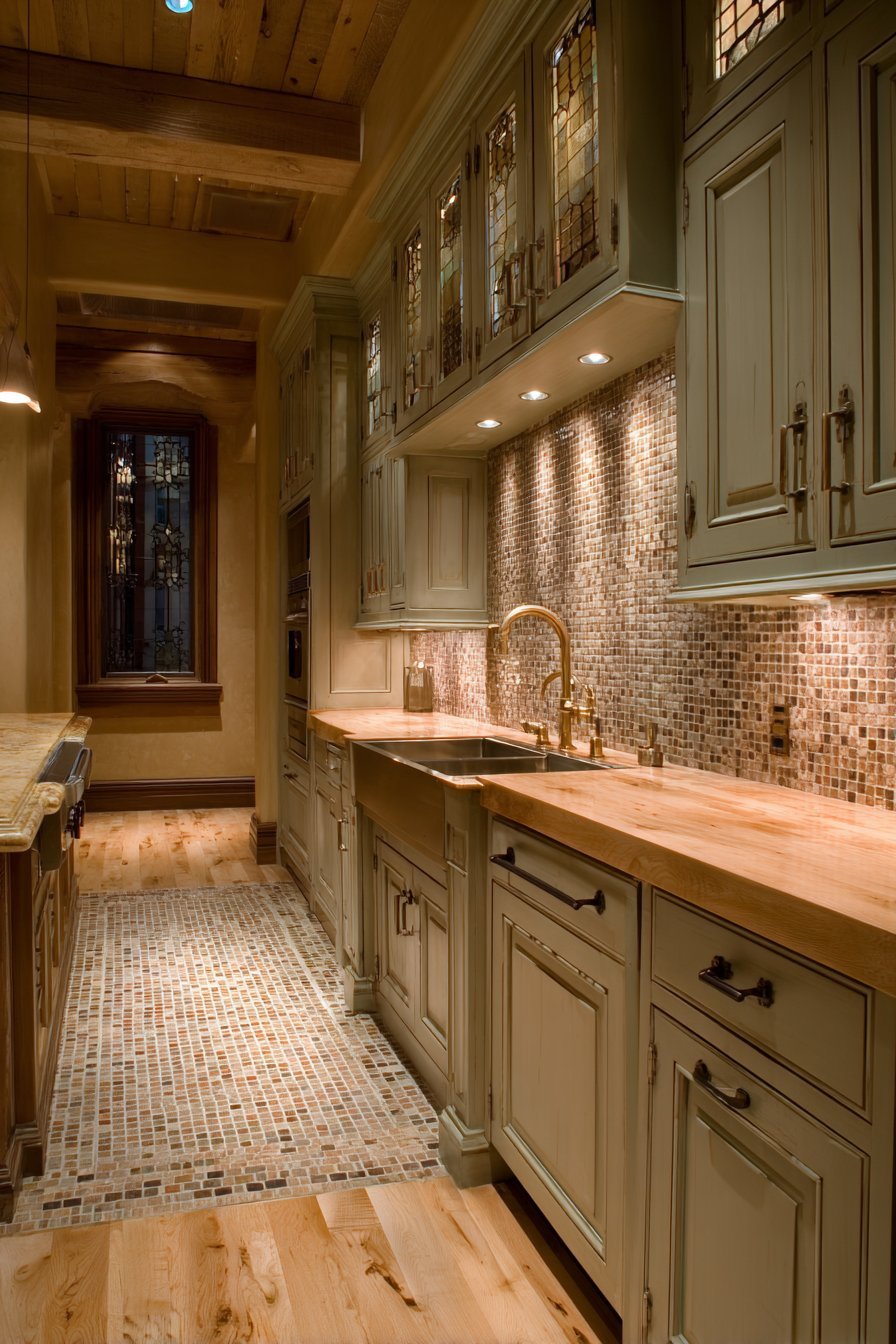
Stone mosaics withstand kitchen conditions while aging gracefully. The small format allows curved installations if needed. Natural variations prevent monotonous appearance.
Key Design Tips:
- Mix travertine, slate, and limestone for color variation
- Choose small square format for textural interest
- Select natural cleft surface over honed for dimension
- Extend full height for architectural impact
- Light from side to emphasize texture and relief
25. Warm Ochre Clay Plaster Walls
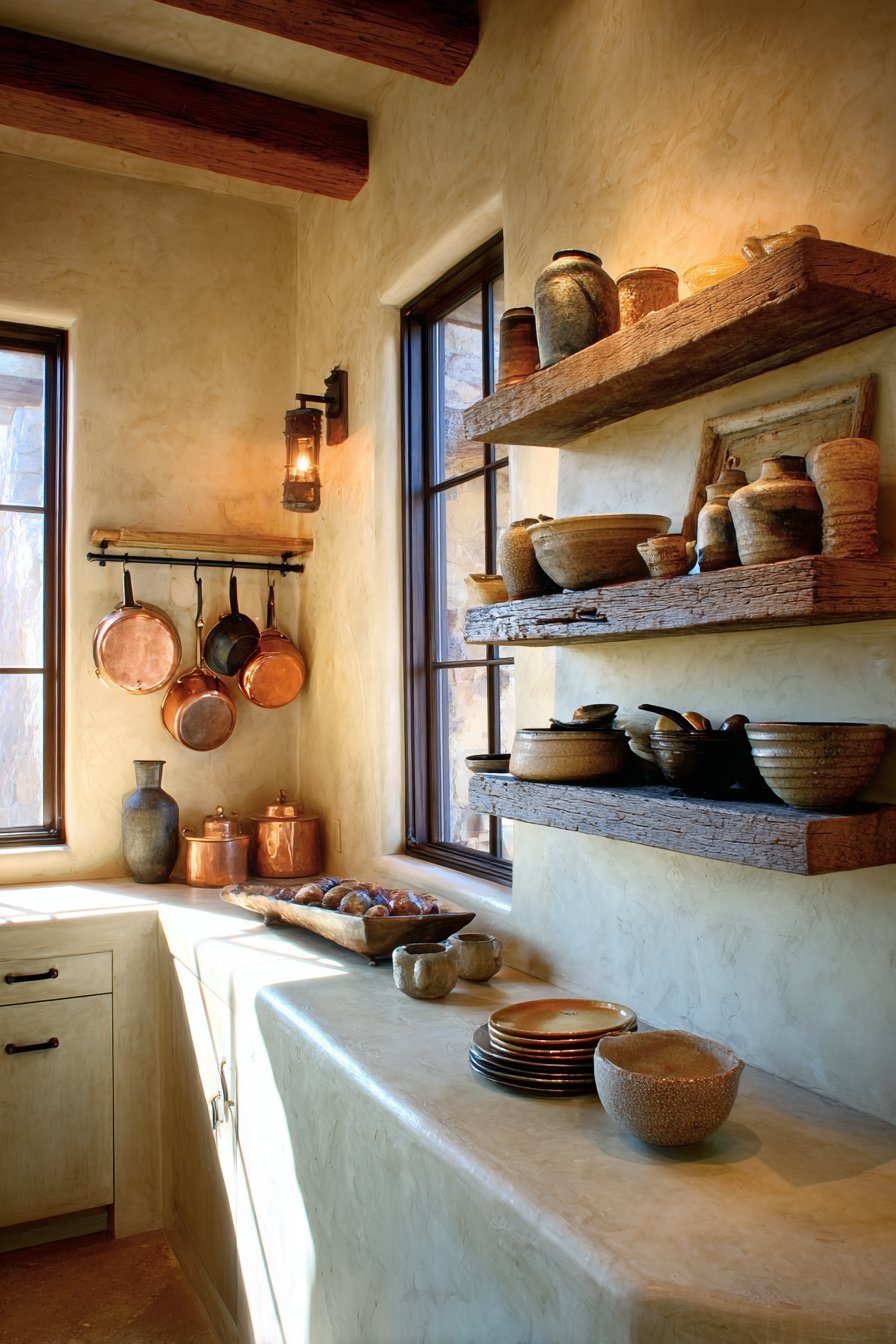
Clay plaster wall finish in warm ochre tone features hand-troweled texture. Natural variation and movement create depth. The plaster provides soft matte backdrop for floating shelves. Reclaimed barn wood shelves display ceramic serving pieces and copper cookware.
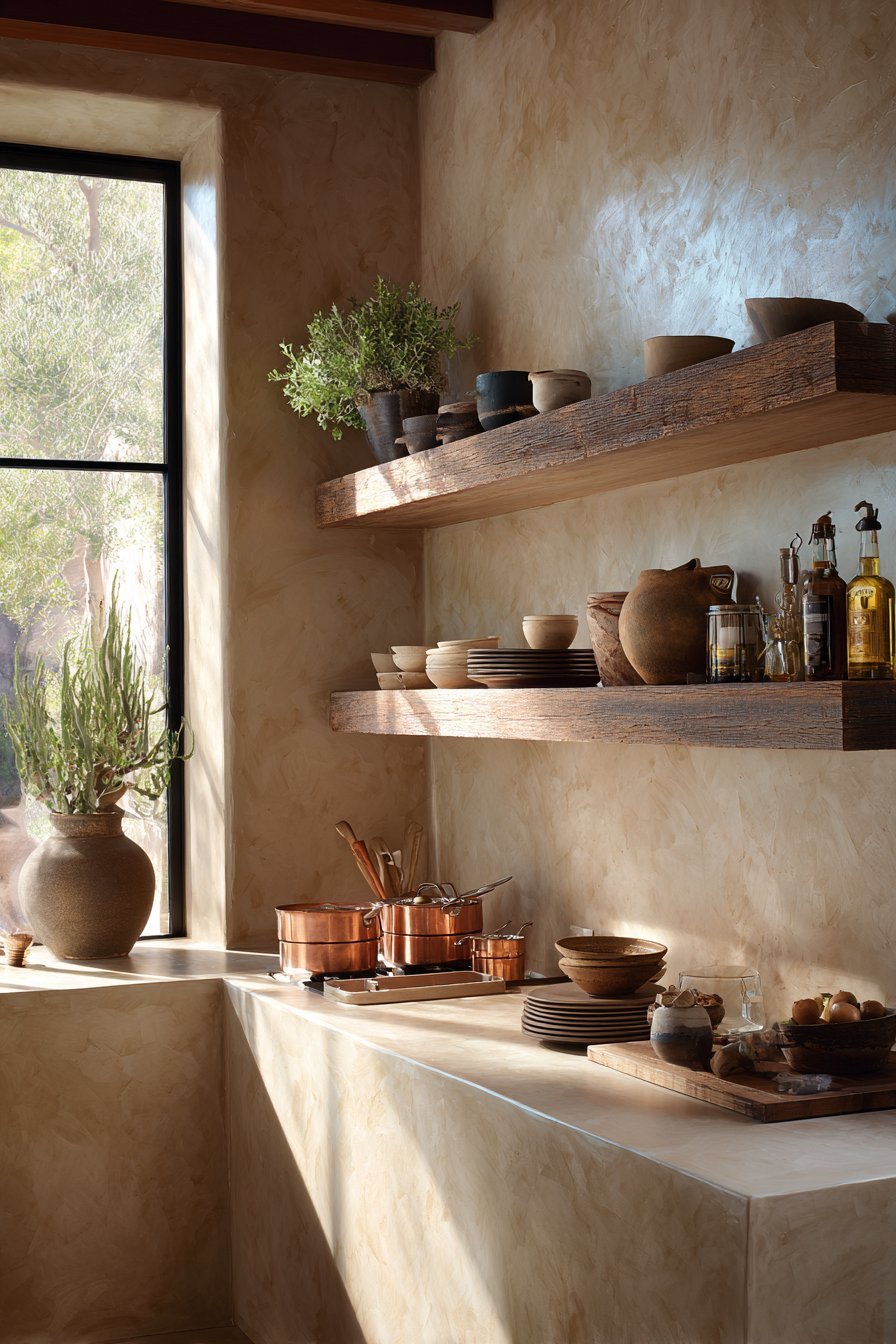
Natural light from nearby windows highlights the plaster’s character. The hand-troweled application creates subtle pattern. This natural wall treatment offers alternative to standard paint. The earthy architectural quality transforms ordinary walls.
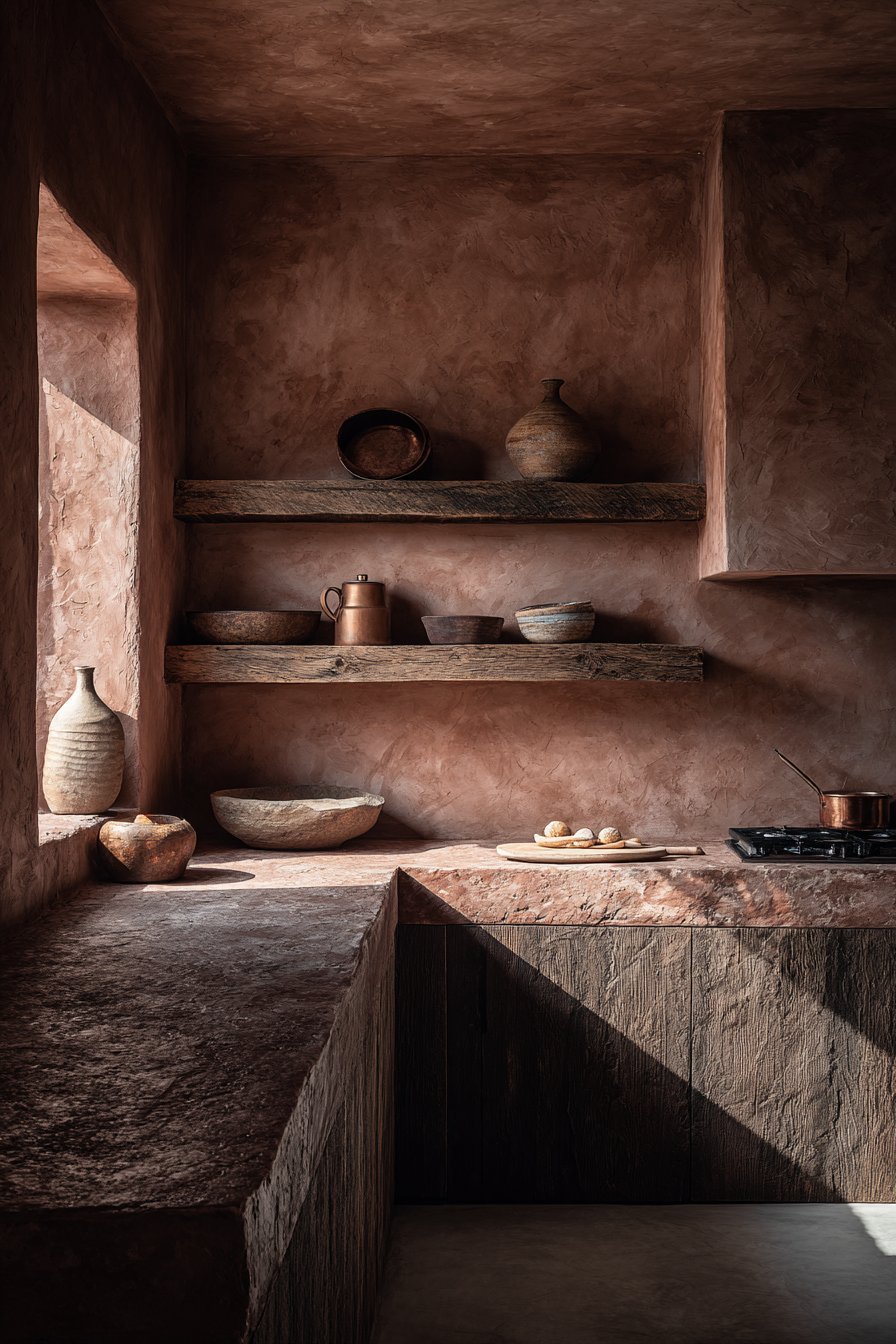
Clay plaster regulates humidity naturally while adding beauty. The material breathes, preventing moisture problems. Hand application ensures no two installations match exactly. The ochre tone adds warmth without overwhelming.
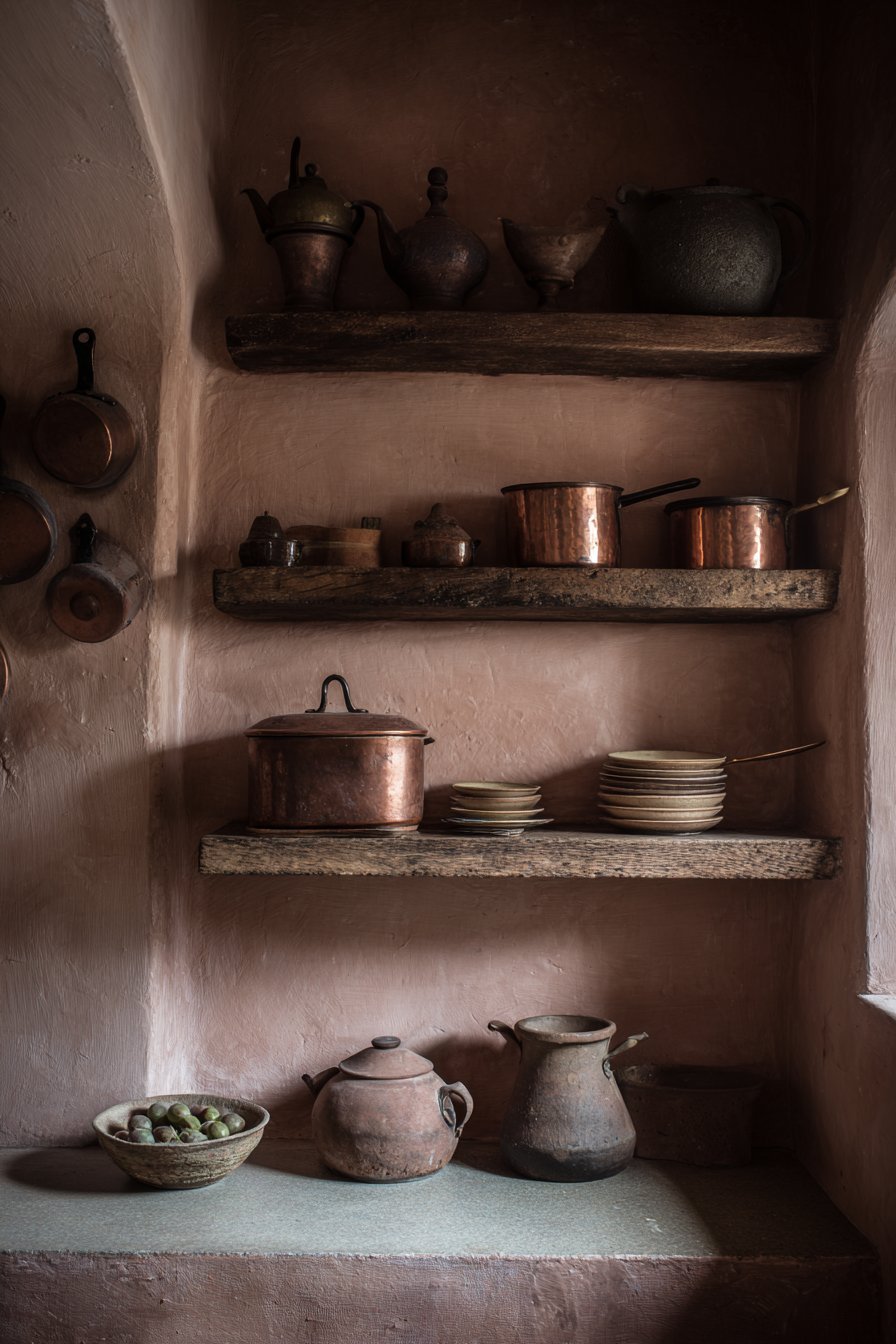
Natural plasters cost more initially but offer unique benefits. The material improves indoor air quality. The depth and texture create architectural interest on flat surfaces.
Key Design Tips:
- Apply clay plaster in warm ochre for earthy warmth
- Hand-trowel for authentic texture and variation
- Install reclaimed barn wood floating shelves
- Allow natural light to highlight plaster depth
- Use as alternative to standard painted walls
26. Edge-Grain Maple Butcher Block Island
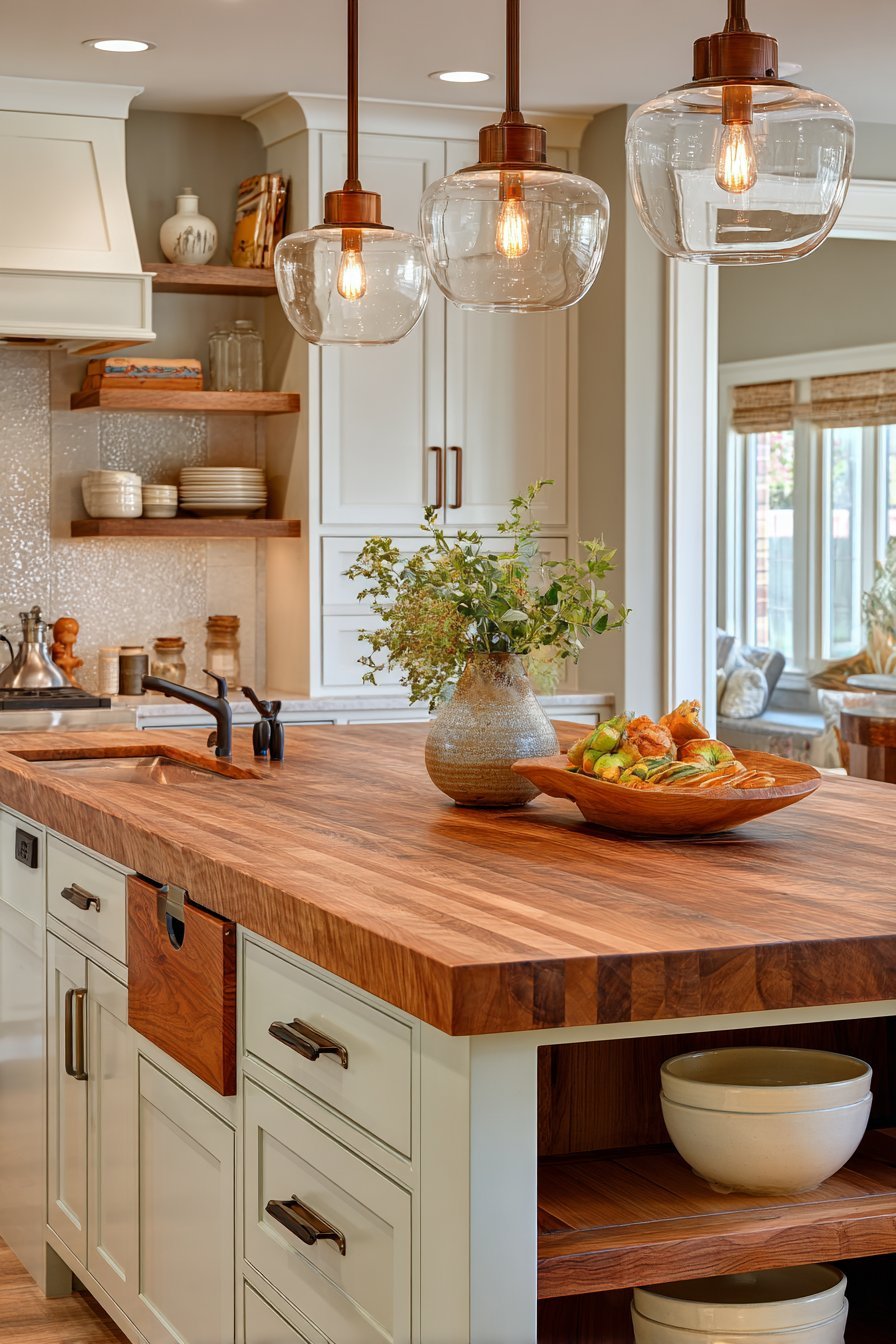
A large butcher block island in edge-grain maple showcases natural color variations. Tight grain pattern creates subtle beauty. Food-safe mineral oil creates low-luster finish. The island includes knife storage slots and integrated compost bin with wooden lid.
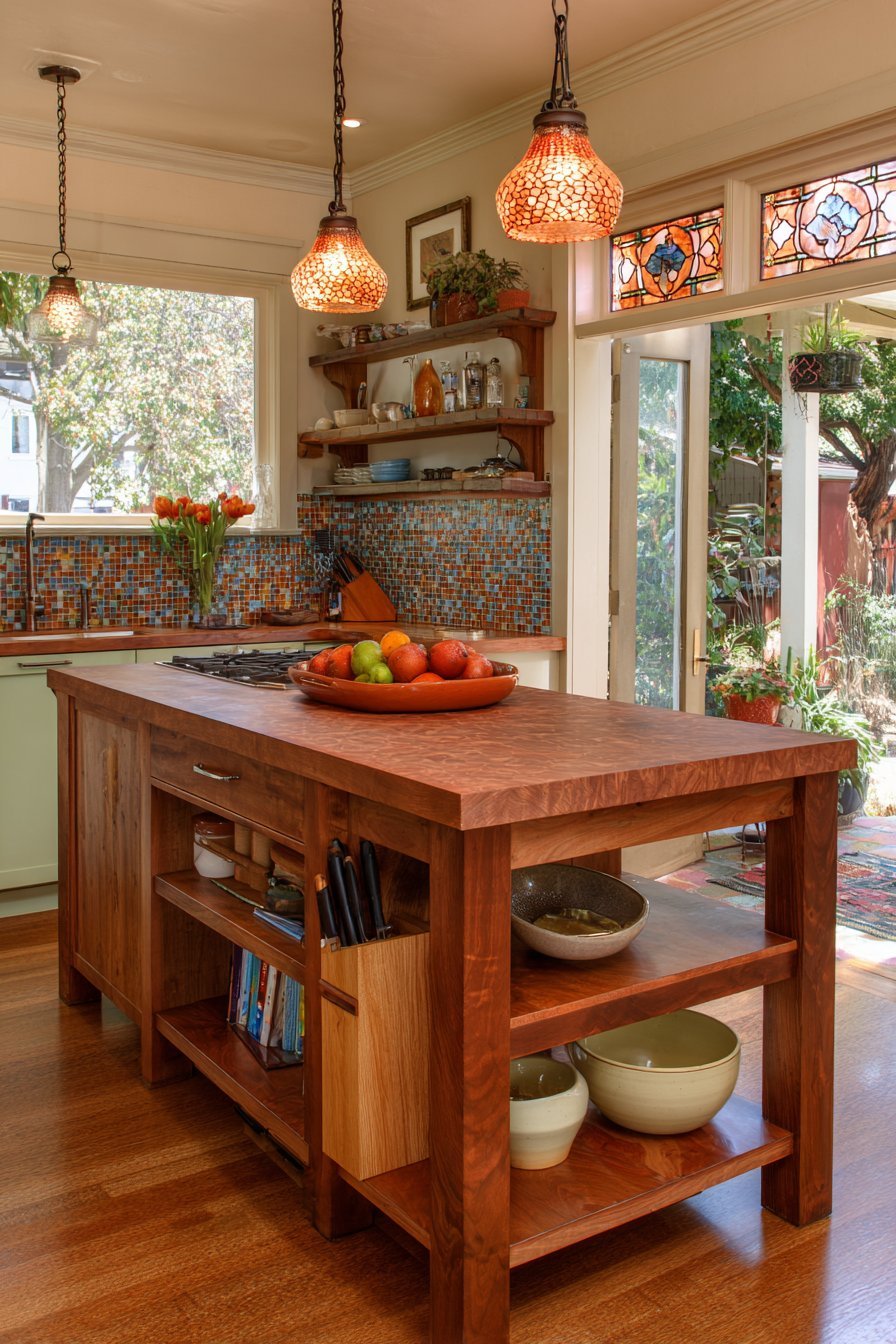
Open shelving displays ceramic mixing bowls in cream and terracotta. Pendant lighting with seeded glass shades hangs above in bronze frames. Natural daylight highlights wood grain throughout the workspace. The warm functional beauty proves wood’s kitchen worthiness.
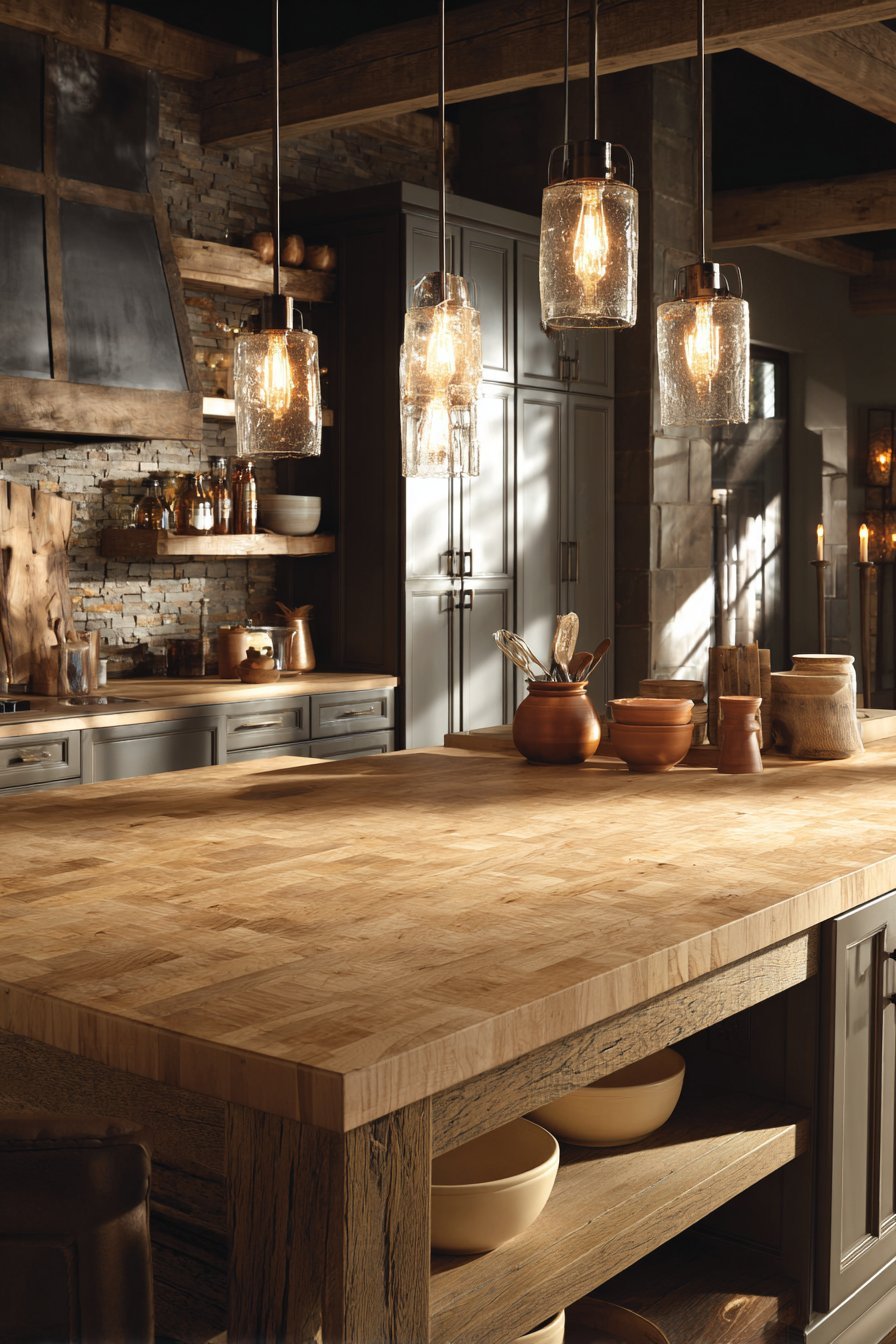
Edge-grain construction provides durability for heavy prep work. Maple’s tight grain resists bacteria naturally. Mineral oil finish requires occasional reapplication but remains food-safe. This work surface improves with use.
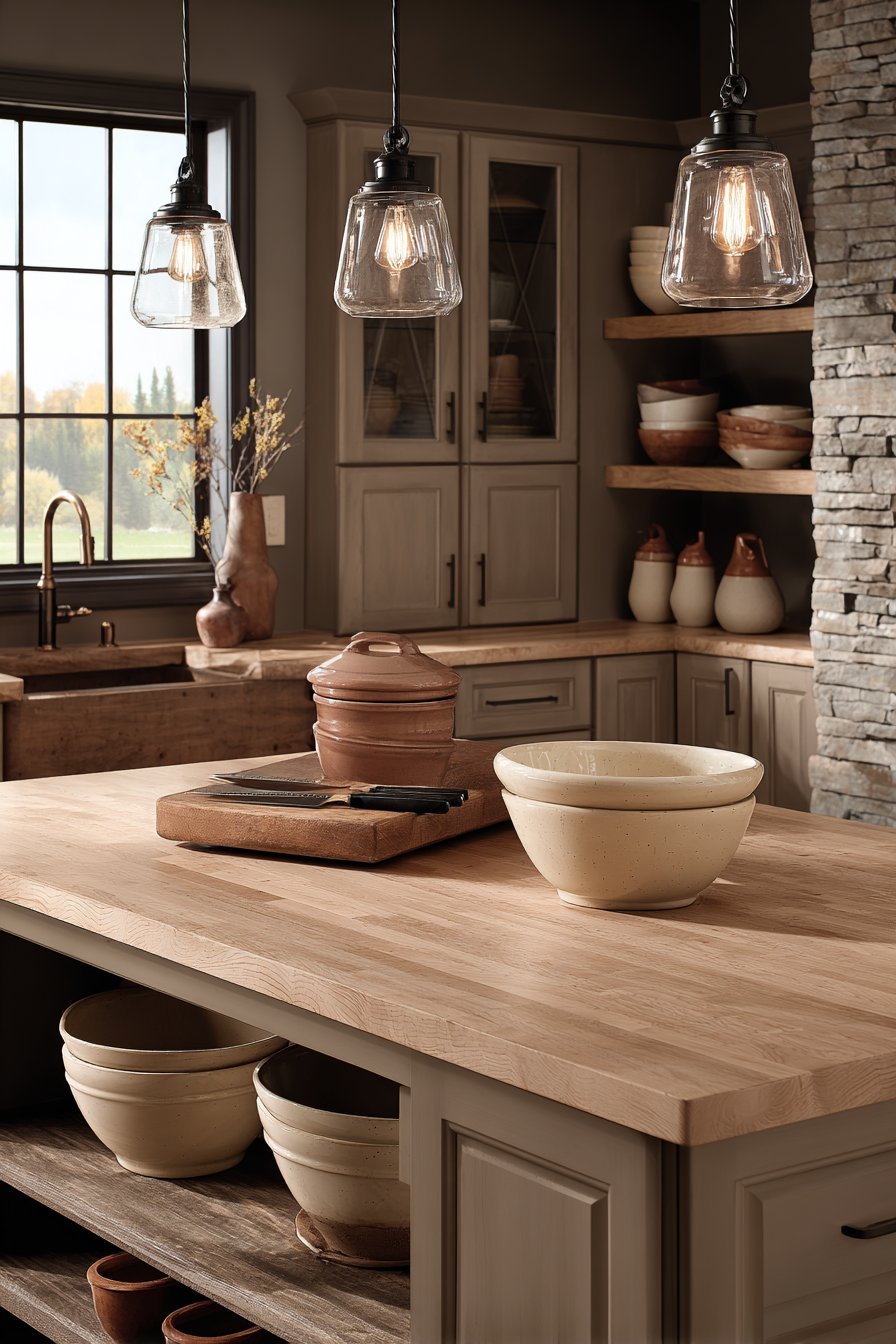
Butcher block islands provide forgiving work surfaces that develop character. Knife slots keep tools organized and protected. Integrated compost bins support sustainable cooking practices.
Key Design Tips:
- Choose edge-grain maple for tight grain and durability
- Finish with food-safe mineral oil for low-luster protection
- Integrate knife slots for organized storage
- Include compost bin with wooden lid for sustainability
- Display ceramic bowls on open shelving for easy access
27. Cream and Terracotta Two-Tone Palette
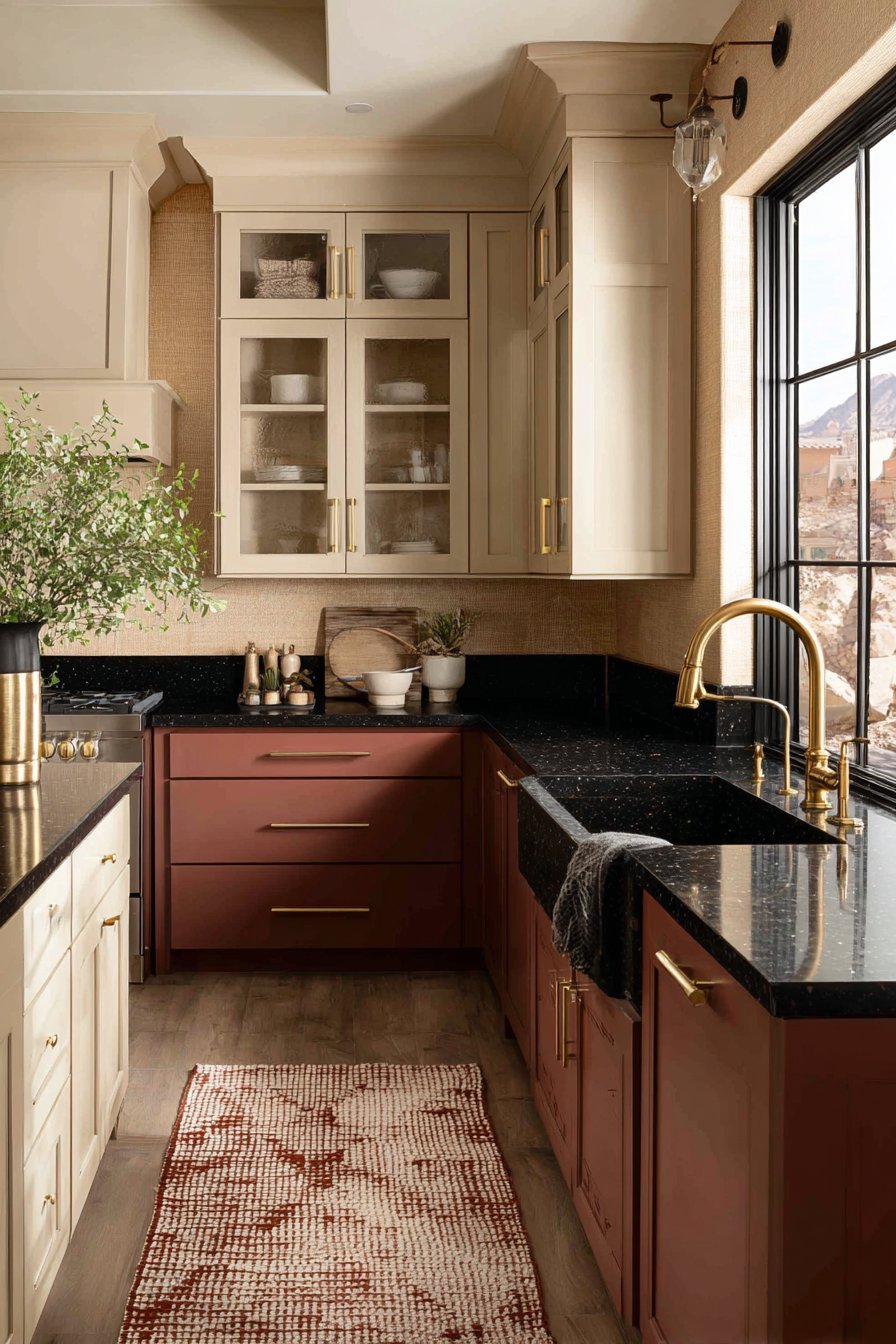
Upper cabinets in warm cream pair with deep terracotta lower cabinets. This grounded two-tone scheme creates visual weight below. Honed black granite countertops with subtle sparkle provide dark anchor. Natural grasscloth walls in wheat tone add textural interest.
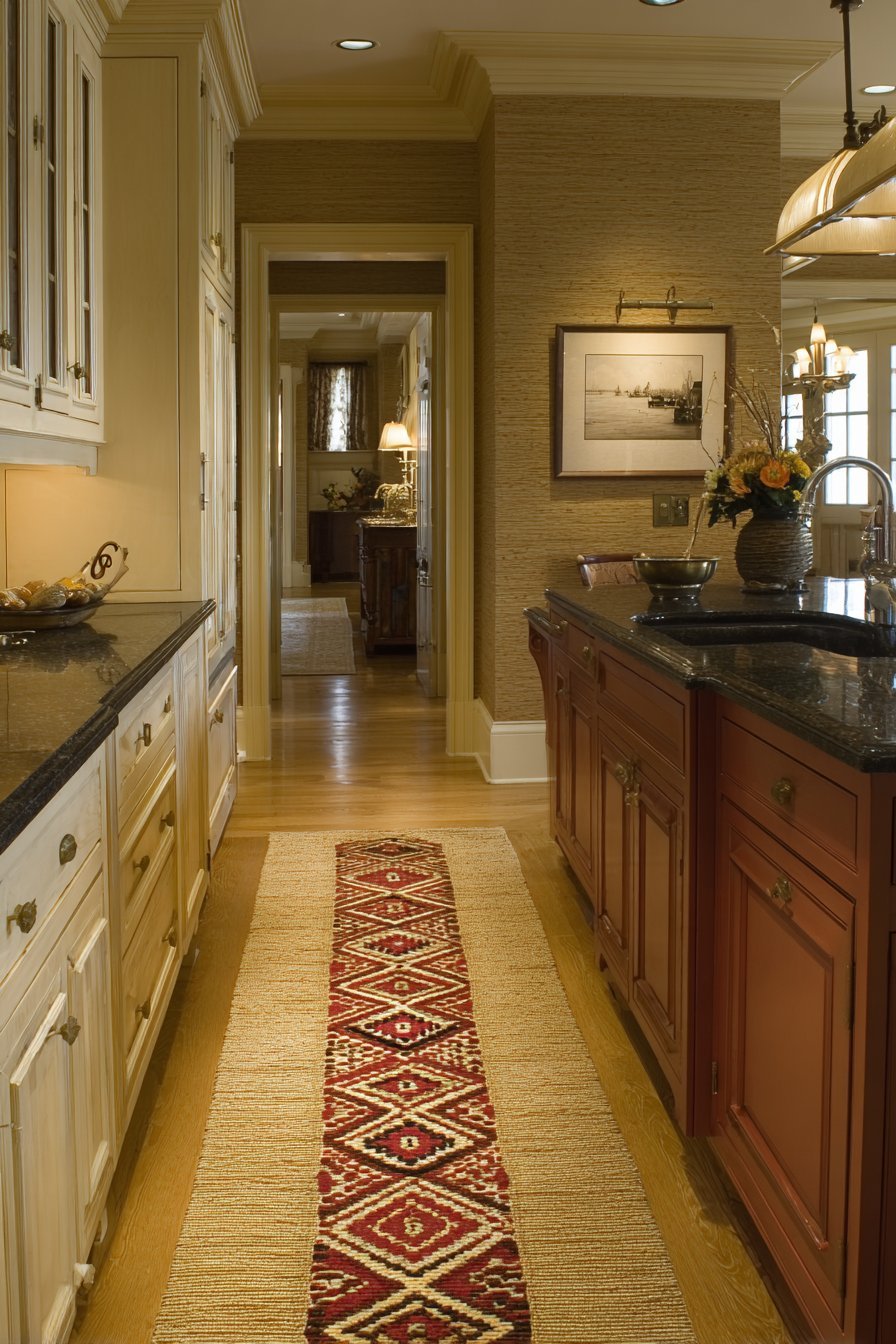
Brass hardware and bridge faucet contribute warm metallic notes. A runner rug in rust and cream geometric pattern continues earth tones. Balanced lighting reveals how this color scheme creates warmth and depth. The palette connects to natural landscape.
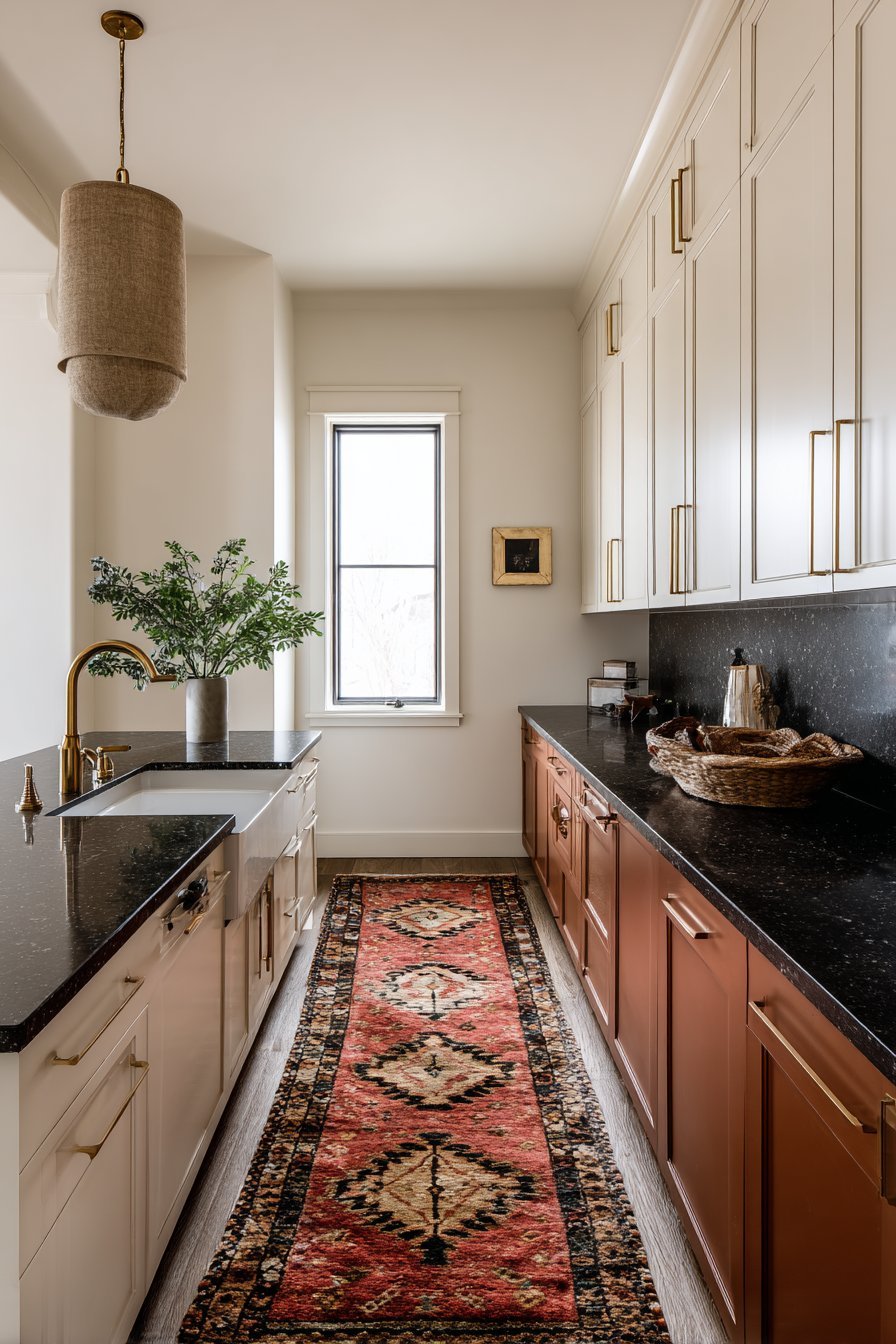
The two-tone approach adds sophistication while maintaining earthy roots. Terracotta grounds the design physically and visually. Black granite provides necessary dark contrast. Grasscloth walls add organic texture.
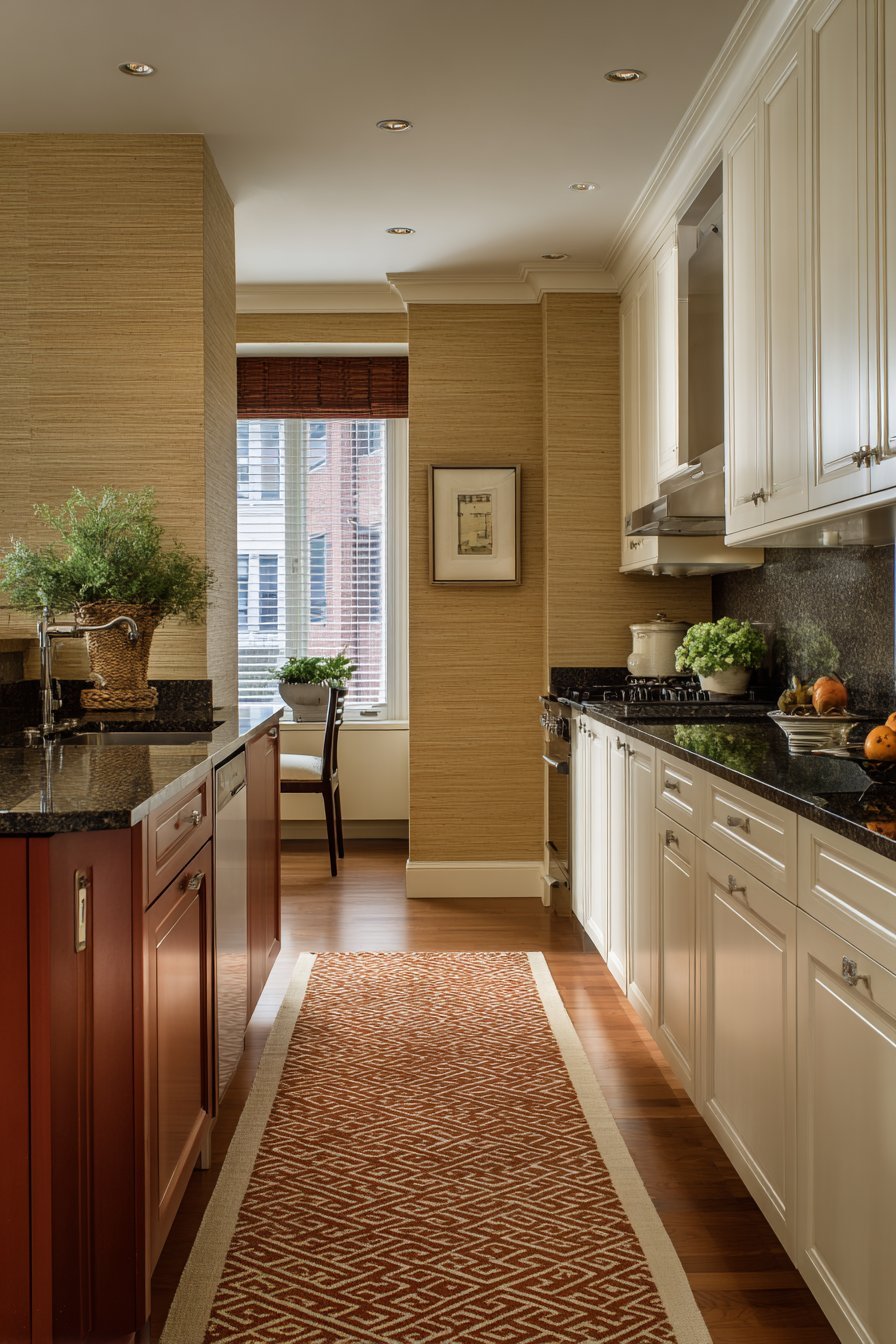
Thoughtful color schemes transform ordinary kitchens into distinctive spaces. The warm palette makes spaces feel inviting. Natural materials in coordinated colors create cohesion.
Key Design Tips:
- Paint upper cabinets warm cream for lightness
- Use deep terracotta on lowers for grounded weight
- Install honed black granite for dark anchor point
- Apply natural grasscloth walls for organic texture
- Add rust and cream geometric rug for pattern
28. Multi-Level Window Sill Herb Garden
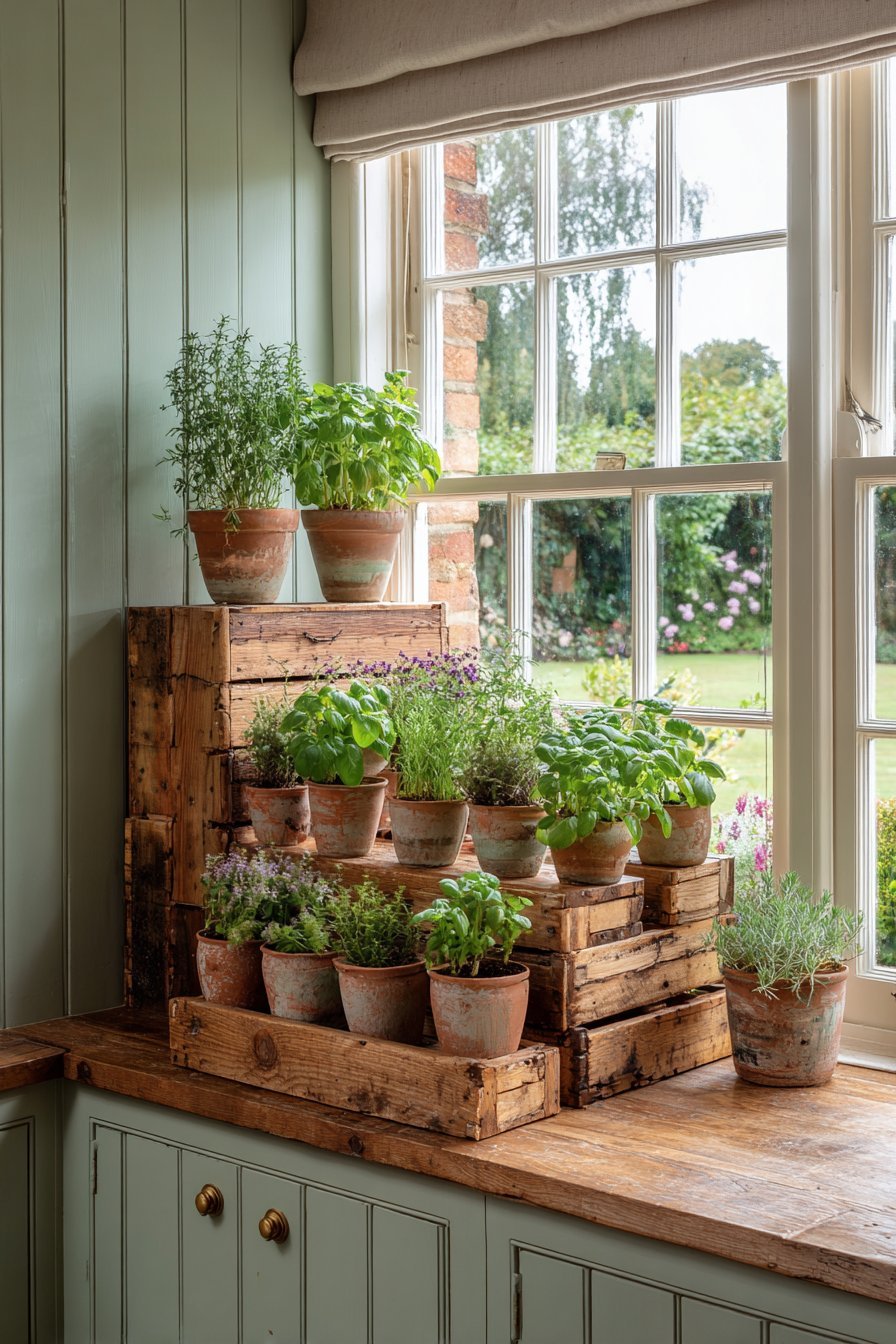
A collection of potted herbs and small plants fills a deep window sill. Vintage terracotta pots vary in size and patina. Reclaimed wood boards create multi-level display. The window sill wears soft sage paint with natural light streaming through.
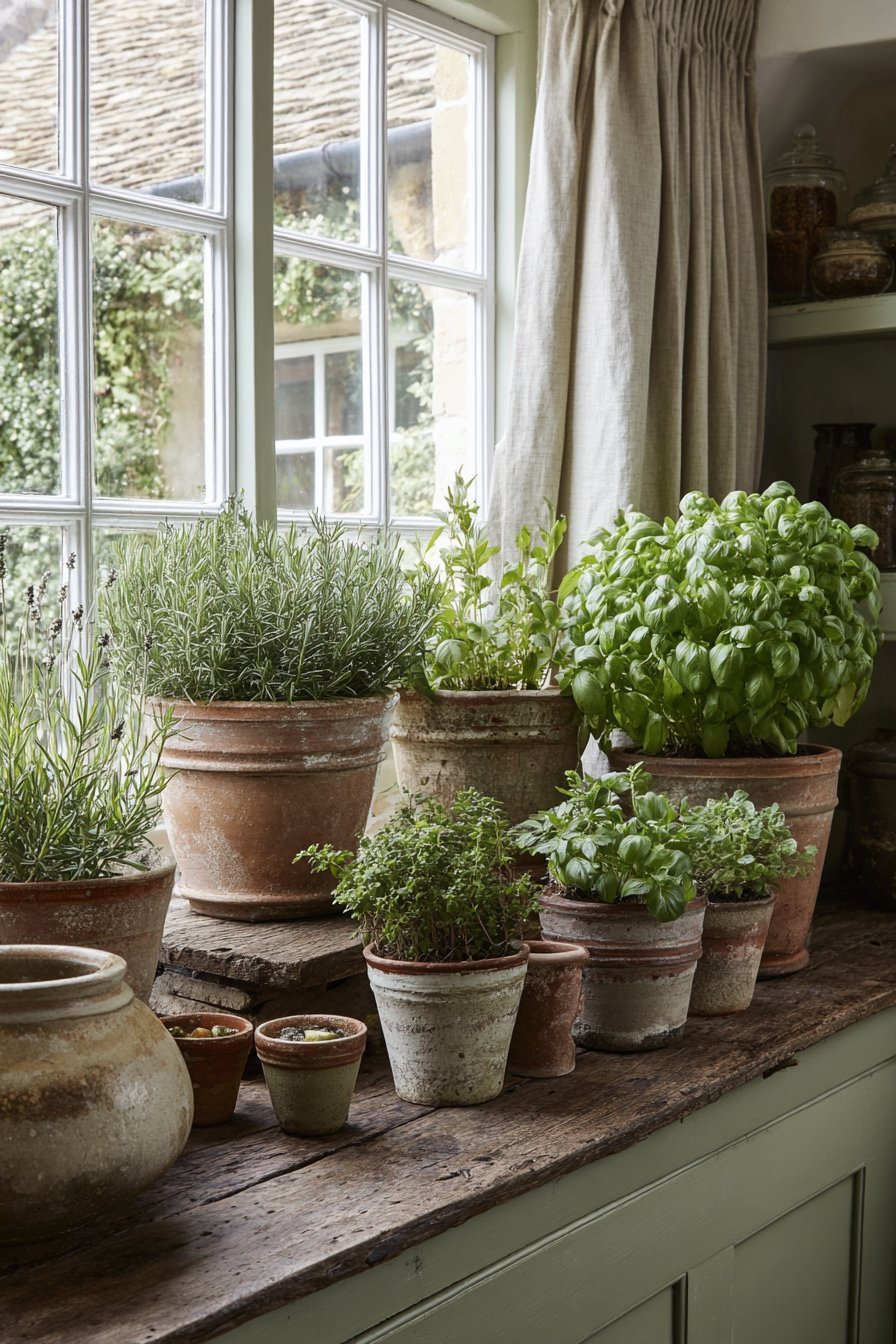
Simple cotton cafe curtains in natural linen frame the view. Garden views extend beyond the window. The functional garden element brings life to the kitchen. Fresh herbs remain accessible for cooking.
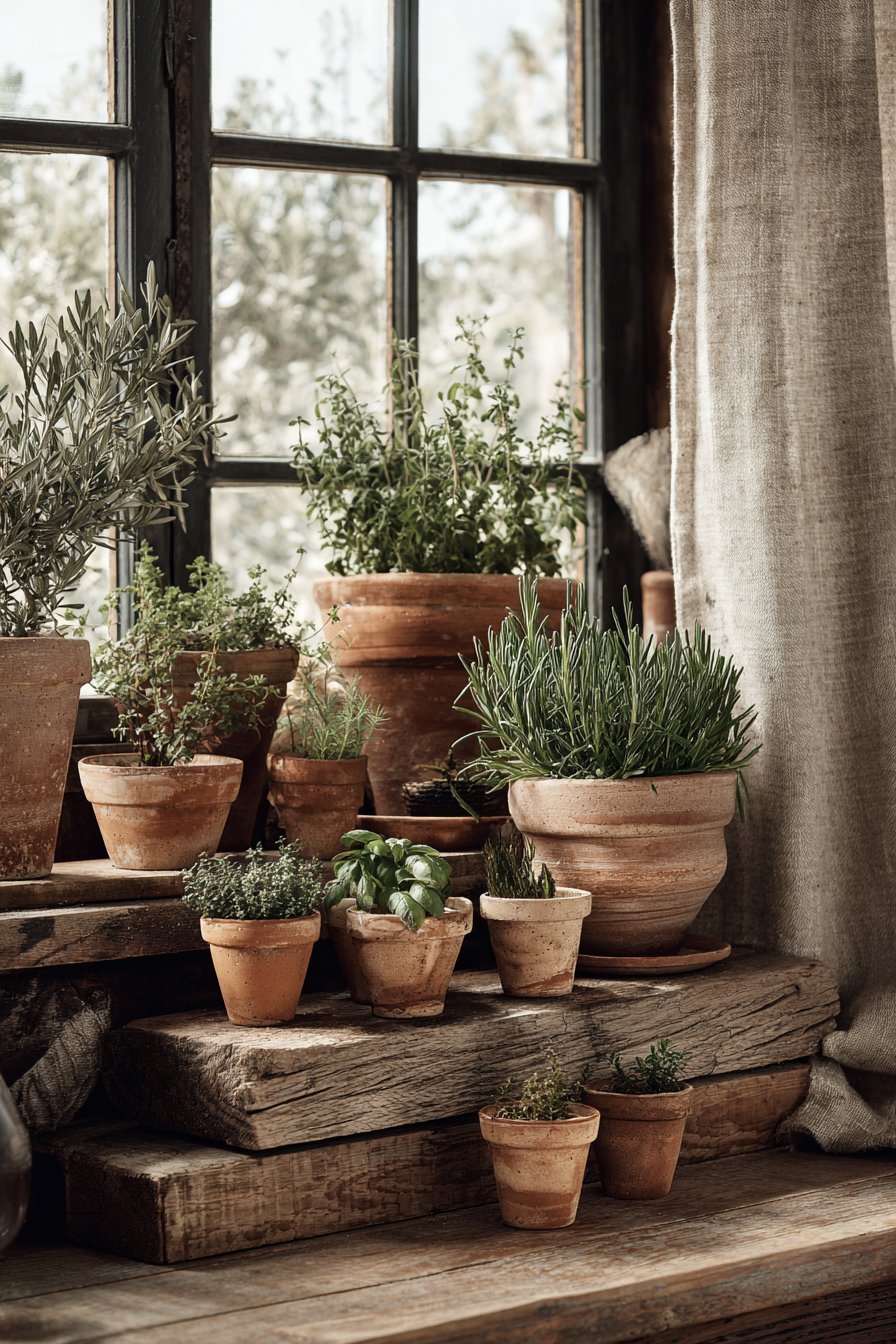
Terracotta develops beautiful patina through watering and sun exposure. Wood display boards add height variation. Living plants purify air while providing ingredients. The window garden connects cooking to growing.
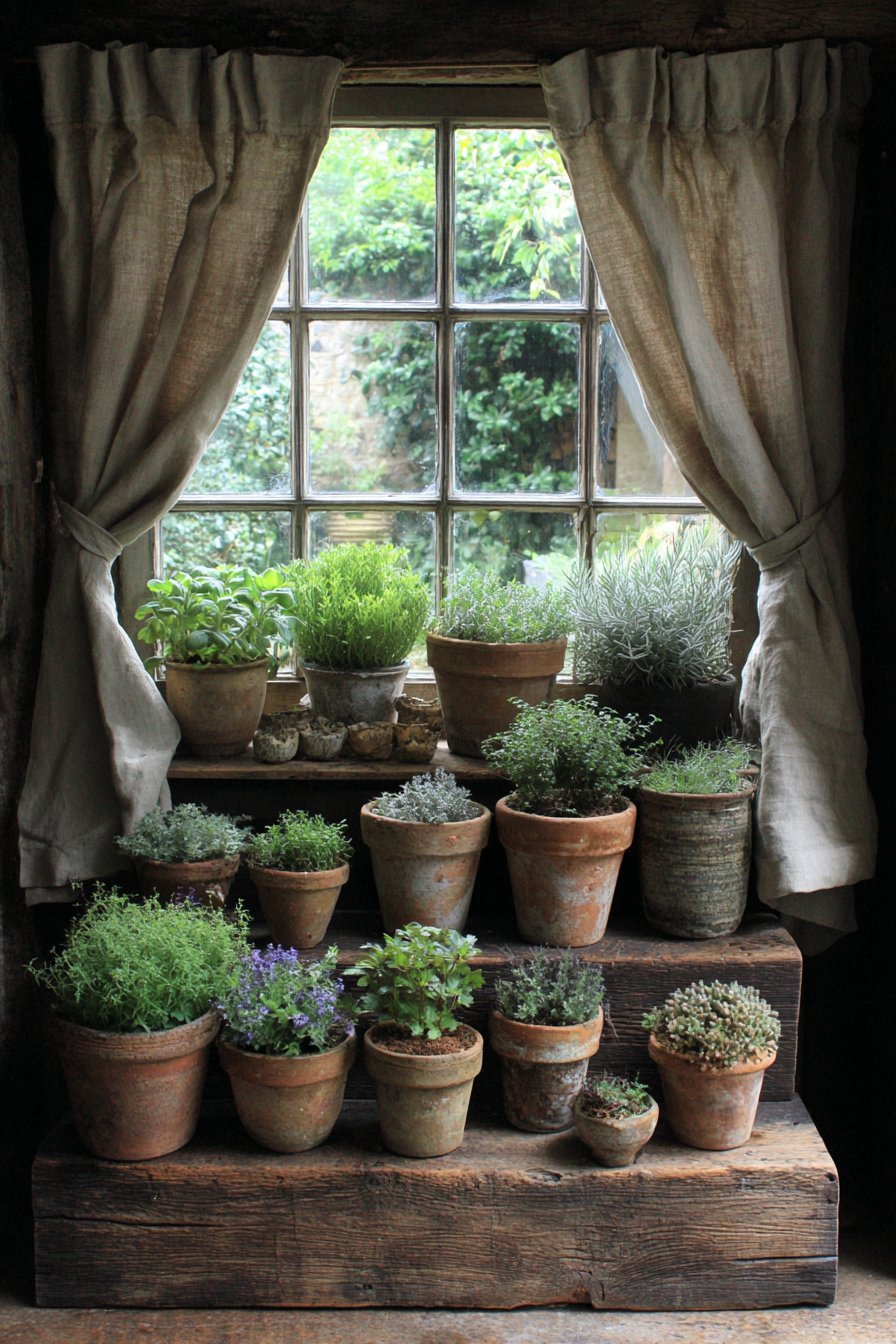
Window sill gardens maximize vertical space for herb cultivation. Mixed pot sizes create visual interest. The living element changes with seasons and harvests.
Key Design Tips:
- Collect vintage terracotta pots in varying sizes
- Build reclaimed wood boards for multi-level display
- Paint sill in soft sage for color coordination
- Hang natural linen cafe curtains for light filtering
- Rotate herbs seasonally for continuous fresh supply
29. Handmade Ceramic Tile Cooking Center
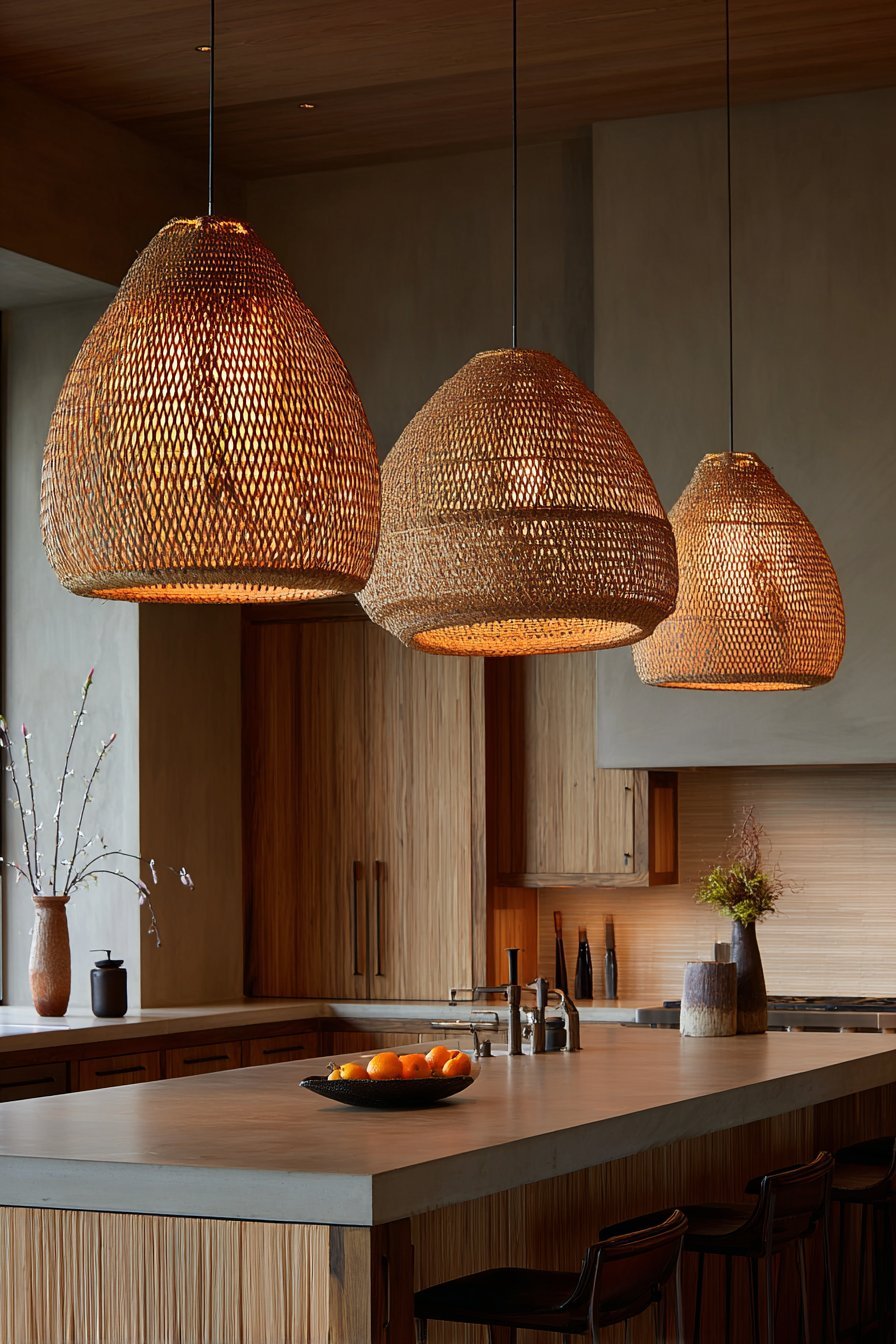
A statement range features vintage-inspired design with brass trim. Custom tile work flanks the range in handmade ceramic tiles. Organic glaze variations display sage, cream, and sand tones. Traditional subway pattern with wide grout lines creates classic appeal.
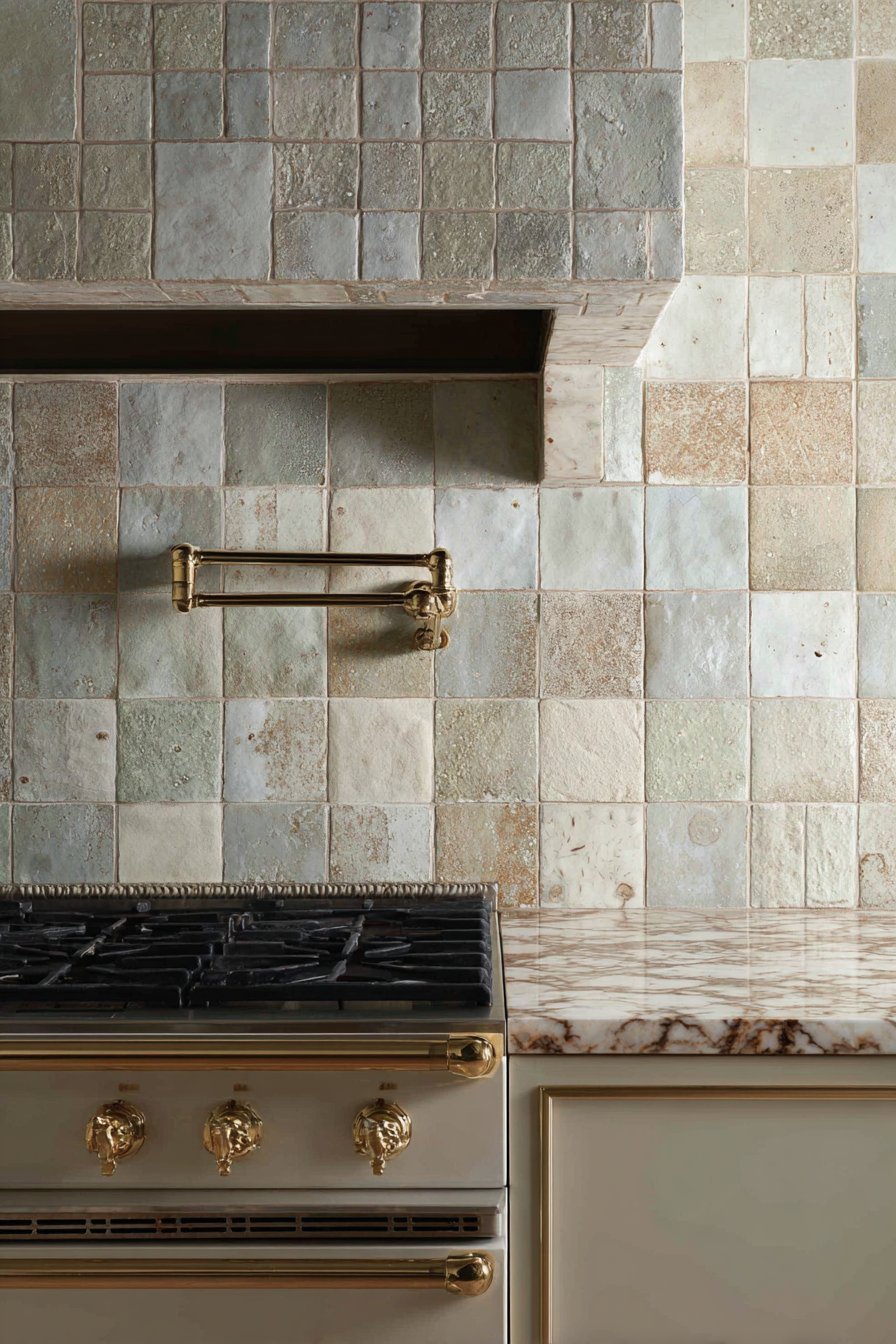
Honed marble countertops with grey veining provide neutral elegance. Pot filler in unlacquered brass shows natural patina development. The cooking center becomes the kitchen’s focal point. Layered natural materials create depth and character.
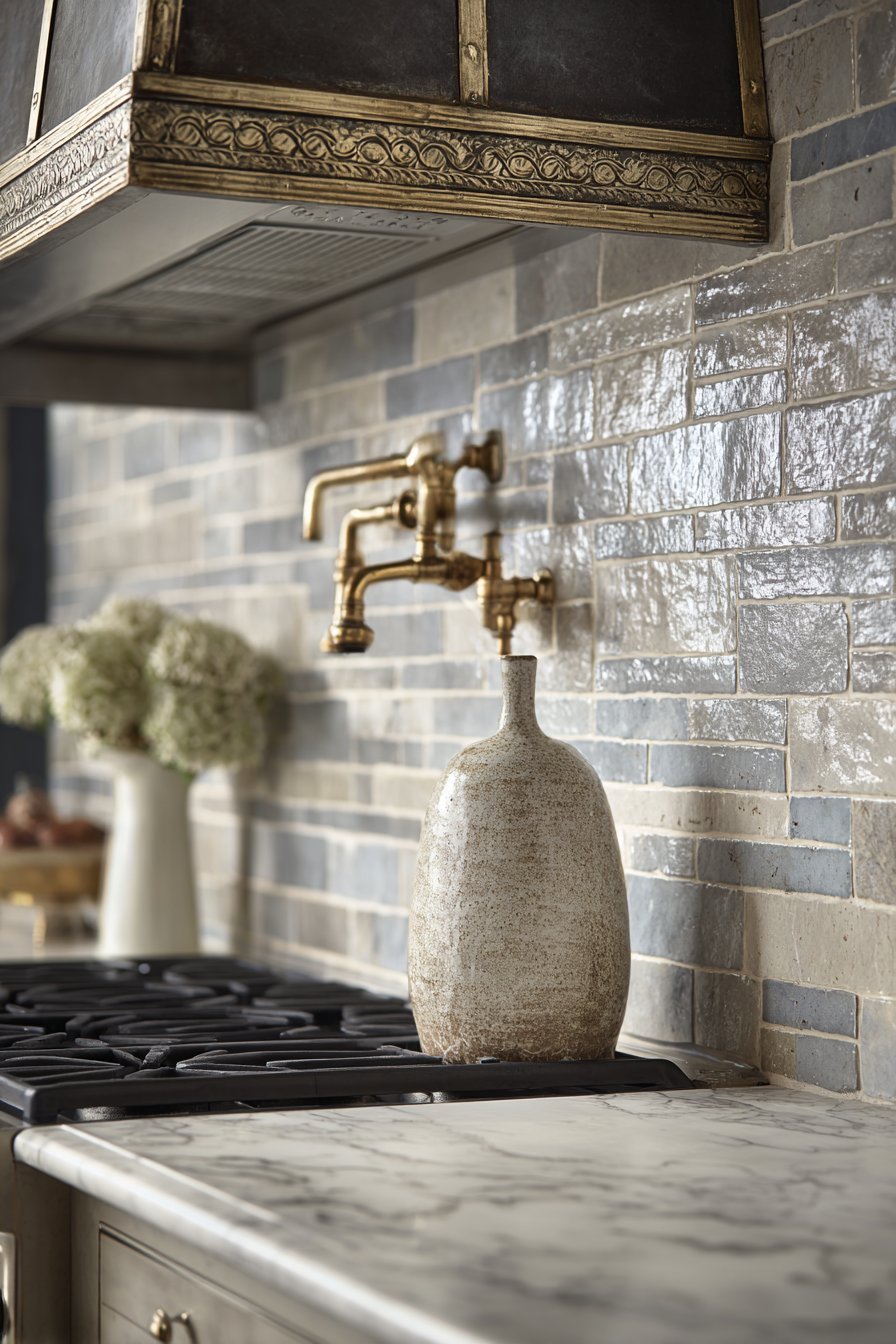
Handmade tiles celebrate imperfection and variation. Wide grout lines emphasize individual tiles. The glaze variations prevent monotony. Brass aging adds living finish quality.
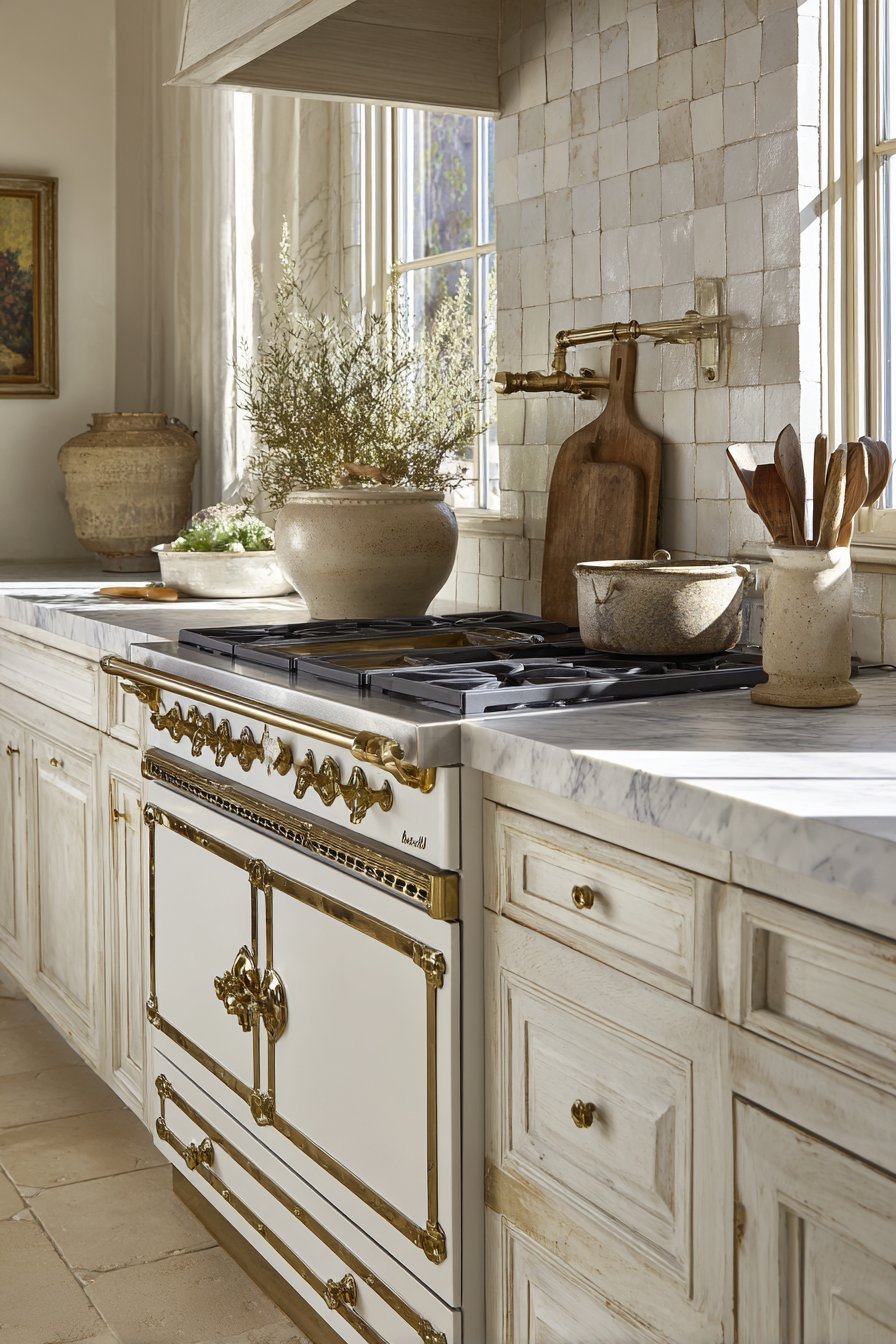
Custom tile installations around ranges create personalized cooking centers. The investment pays dividends through daily beauty. Natural materials age gracefully together.
Key Design Tips:
- Commission handmade ceramic tiles for unique character
- Arrange in subway pattern with wide grout lines
- Choose organic glazes in sage, cream, and sand
- Install unlacquered brass pot filler for patina
- Pair with honed marble for elegant contrast
30. Marble Pastry Insert Baking Station
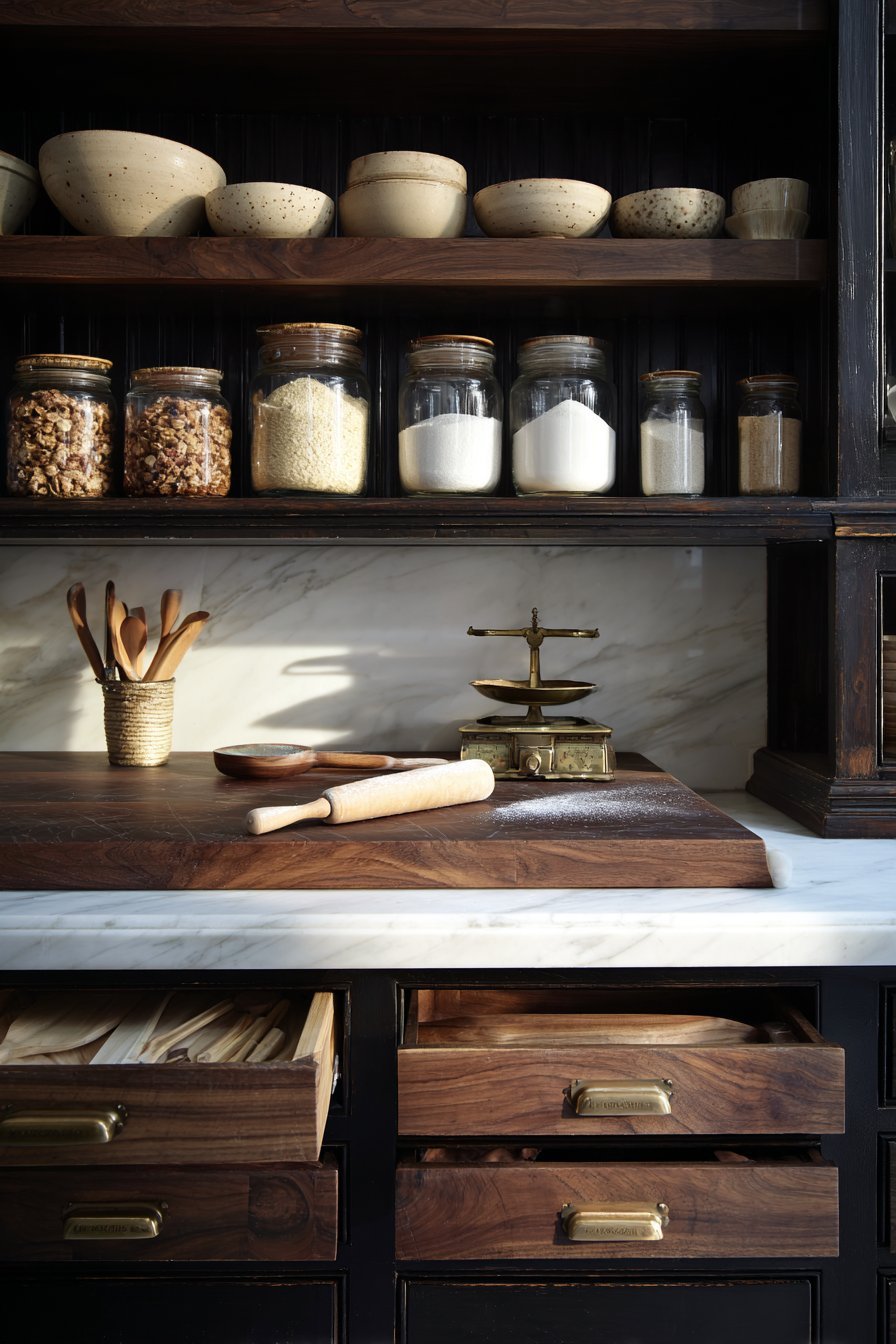
A dedicated baking station features marble countertop insert for pastry work. Walnut butcher block surrounds the marble. Deep drawers below store baking equipment with dovetail joinery. Natural oak drawer fronts show quality construction.
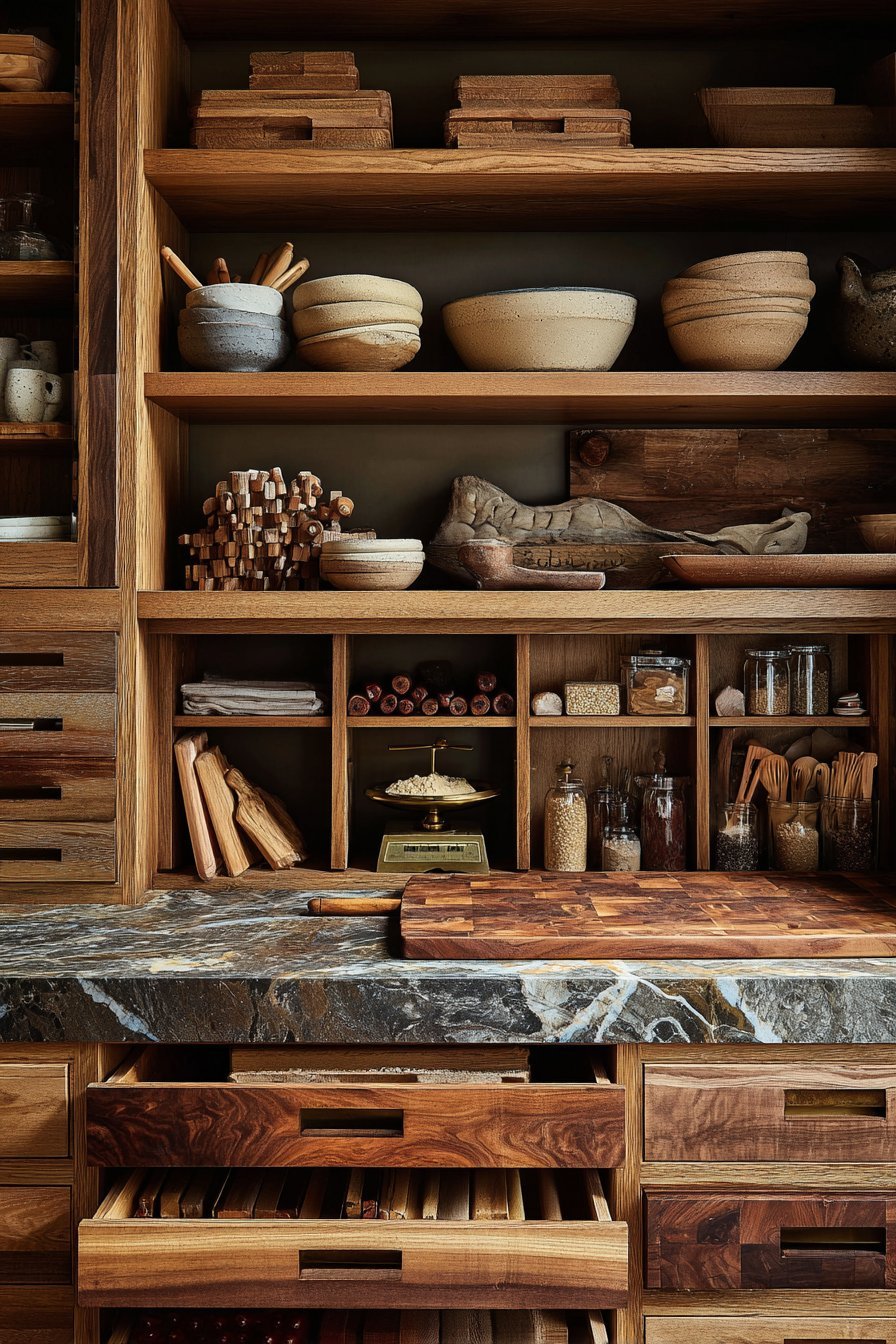
Open shelving above displays stoneware mixing bowls and wooden utensils. Glass storage jars contain flour and sugar. Vintage brass scale adds functional decoration. Soft natural lighting highlights marble veining and wood grain contrast.
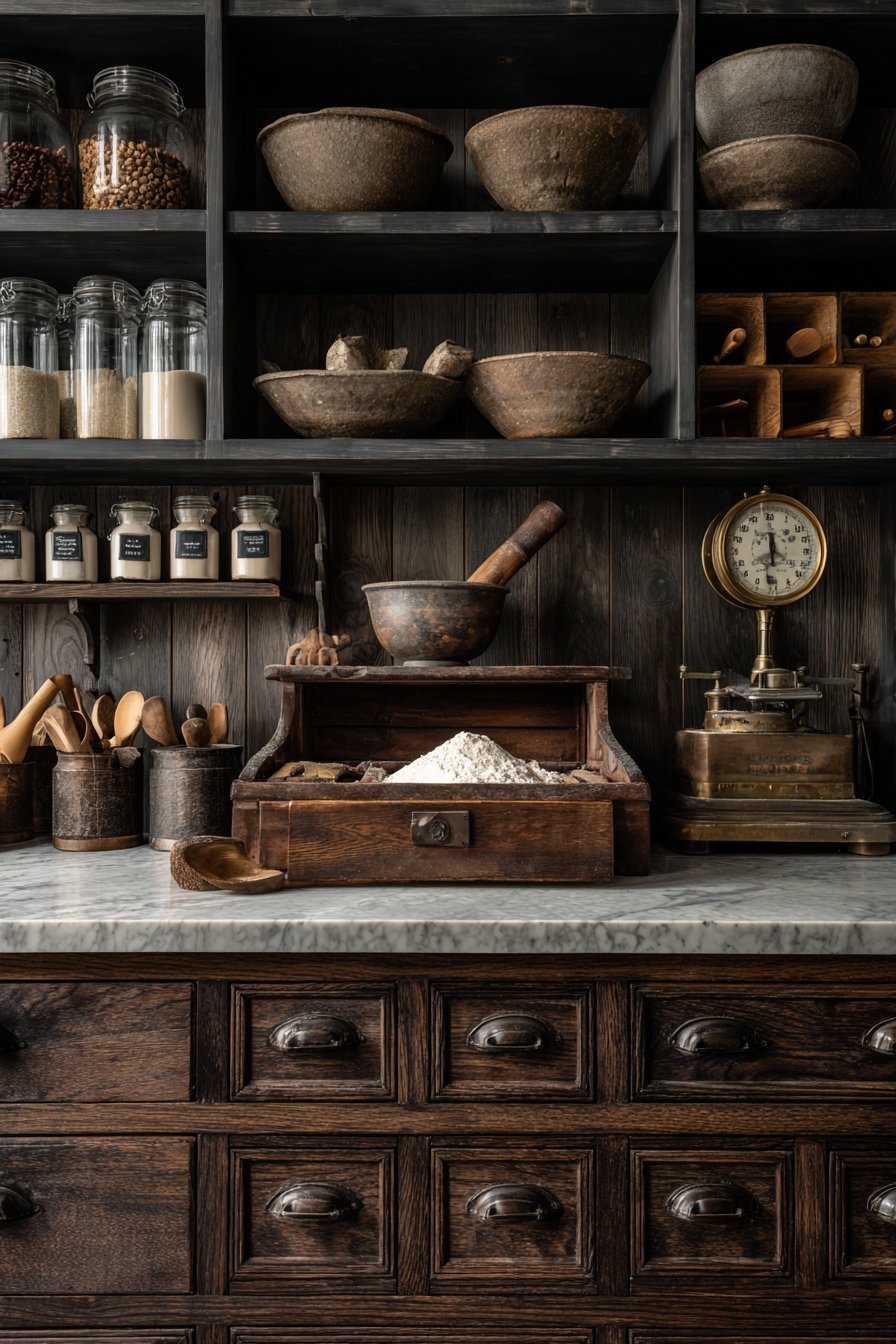
The cool marble keeps pastry dough at ideal temperature. Walnut provides warm work surface for other tasks. Dovetail joinery ensures drawer longevity. The specialized workspace demonstrates thoughtful design.
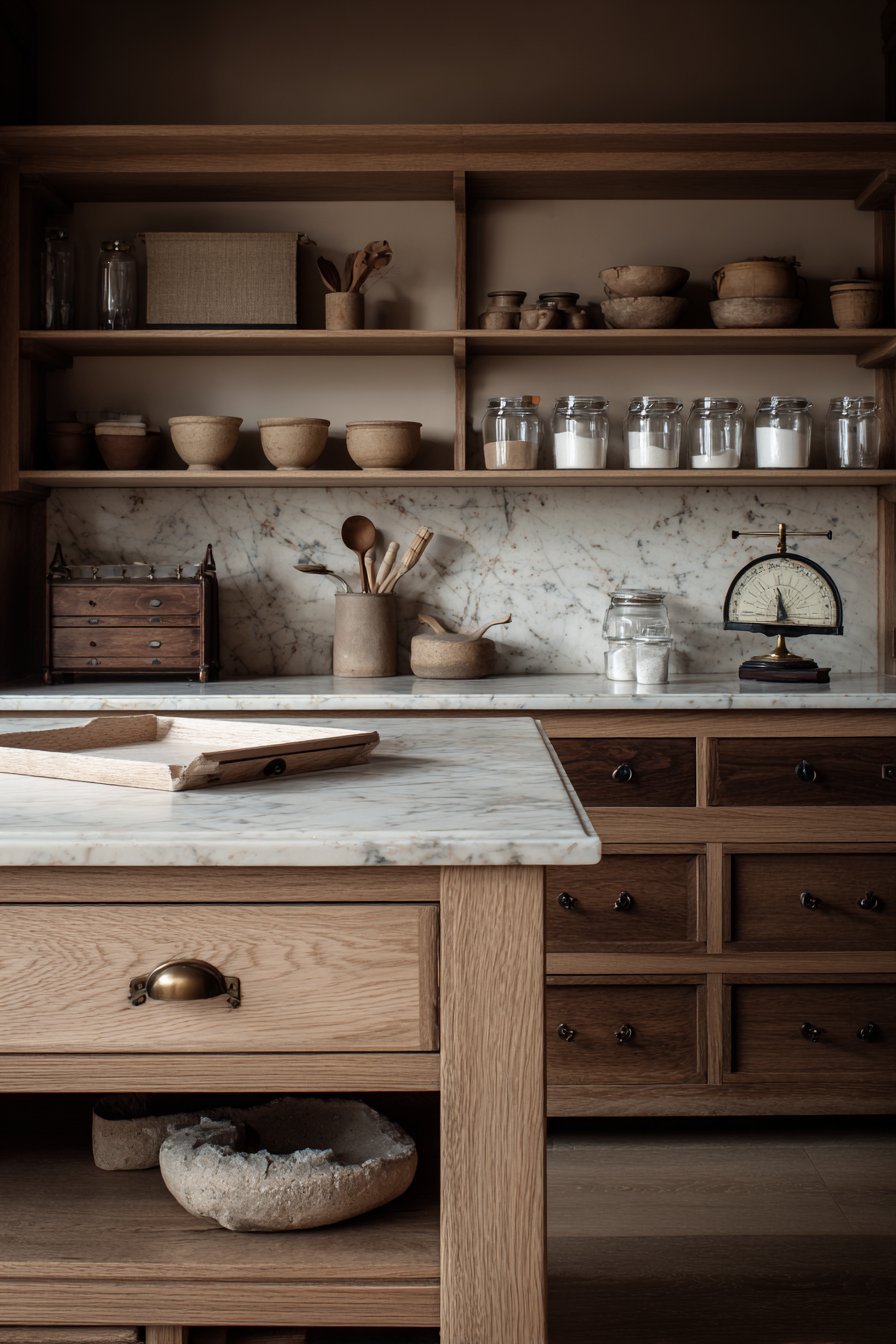
Dedicated baking stations improve workflow efficiency. Marble inserts provide professional pastry surface. Natural materials in this workspace create inspiring environment.
Key Design Tips:
- Install marble insert specifically for pastry work
- Surround with walnut butcher block for temperature variety
- Build deep drawers with dovetail joinery for quality
- Display stoneware bowls on open shelving above
- Add vintage brass scale for functional decoration
Why These Earthy Kitchen Designs Are the Best
These earthy kitchen designs represent the finest approaches to creating warm, sustainable, and timeless culinary spaces. Each concept demonstrates thoughtful consideration of natural materials, organic color palettes, and artisanal craftsmanship. The designs showcase remarkable versatility suitable for various architectural styles and personal preferences.
The incorporation of reclaimed wood, natural stone, and authentic metals adds environmental responsibility to aesthetic excellence. These materials bring irreplaceable history and character that manufactured alternatives cannot replicate. The earthy approach creates comfortable environments where cooking becomes a grounded, sensory experience rather than a sterile task.
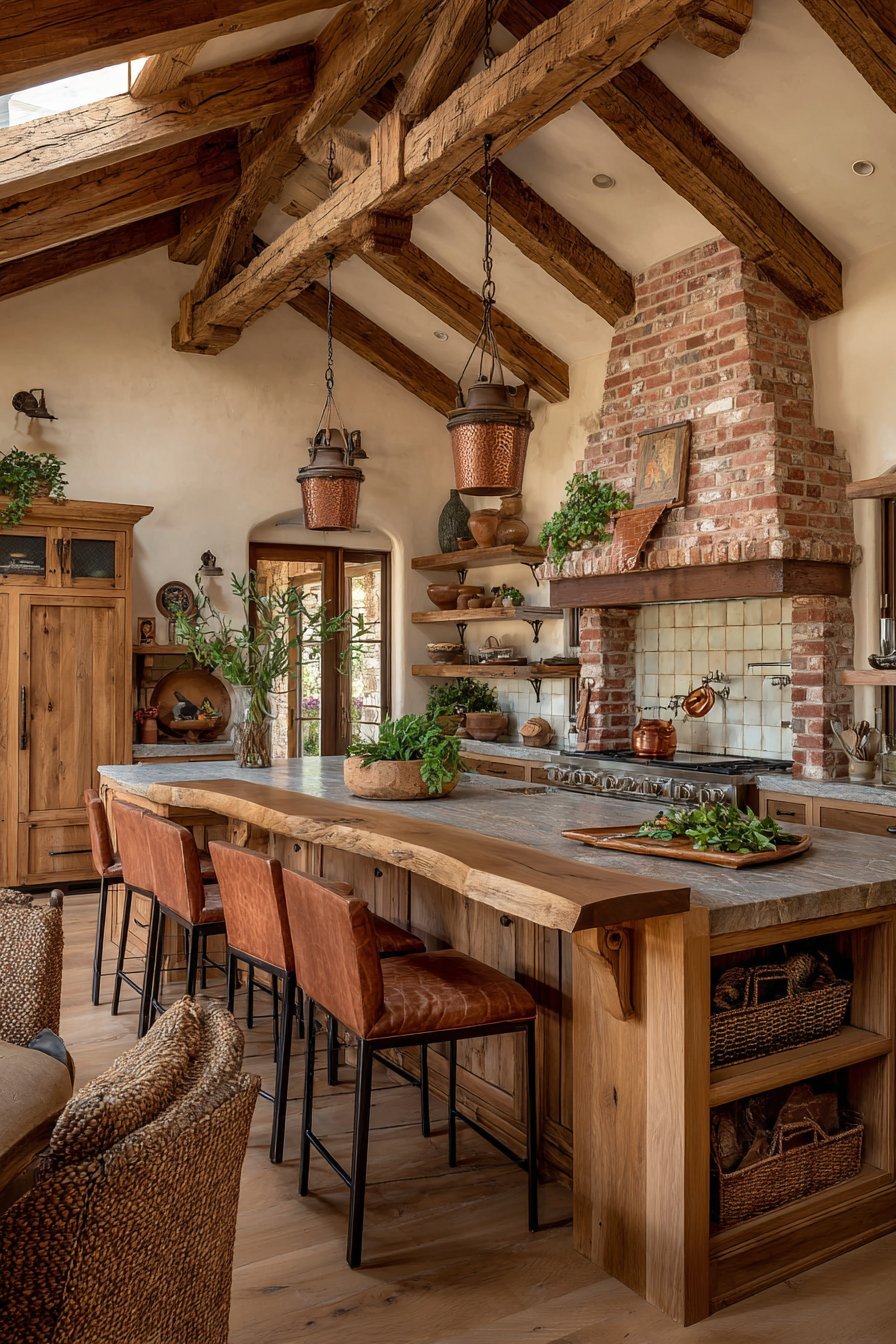
Material diversity within earth-tone parameters prevents monotony while maintaining cohesion. Mixing warm woods like oak and walnut with cool stones like soapstone and marble creates temperature balance. Terracotta tiles, clay plaster, and natural fibers add textural layers that engage multiple senses. Unlacquered brass and hammered copper introduce living finishes that improve through daily interaction.
Color theory applications demonstrate sophisticated restraint throughout these designs. Sage green, terracotta, ochre, and cream tones reference natural landscapes without literal translation. These colors create psychological warmth while maintaining visual calm. The palettes support rather than dominate, allowing materials and textures to provide primary interest.
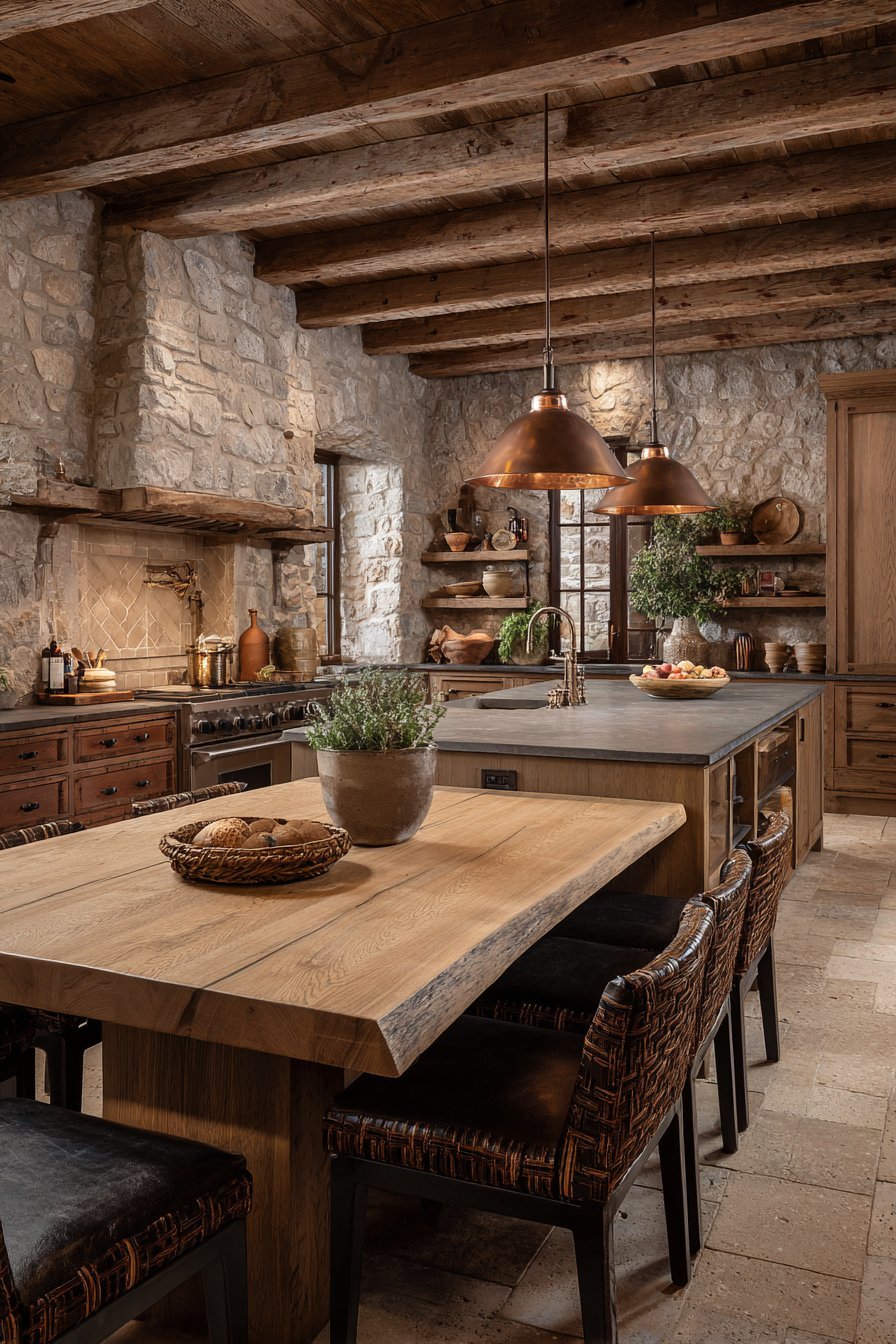
Functional considerations receive equal attention to aesthetic choices. Soapstone and butcher block countertops withstand heavy use while developing beautiful patina. Terracotta floors provide durability for high-traffic areas. Natural materials often perform better than synthetic alternatives while offering superior sustainability credentials.
Spatial applications vary from compact coffee stations to comprehensive whole-room designs. The earthy aesthetic scales effectively, working equally well in small urban kitchens and expansive country homes. Open shelving, live-edge islands, and statement range hoods serve as focal points regardless of square footage. The designs prove that quality materials and thoughtful composition matter more than size.
Longevity defines these approaches both materially and stylistically. Solid wood cabinetry, natural stone counters, and handmade tiles serve generations when properly maintained. The aesthetic transcends temporary trends through connection to timeless natural forms and materials. Investment in quality earthy elements provides superior long-term value compared to frequent replacement of trendy alternatives.
Conclusion
These earthy kitchen designs demonstrate that authentic beauty emerges from honest materials and thoughtful composition. The key takeaways emphasize natural wood, stone, clay, and metal selections that age gracefully. Quality pieces combined with artisanal details create spaces that feel both grounded and inspiring.
Successful earthy design balances aesthetic appeal with environmental responsibility and practical functionality. Start your transformation by introducing one reclaimed wood element or natural stone surface. Layer additional organic materials gradually, allowing your earthy kitchen to evolve naturally. Your dream cooking space awaits through patient material selection and authentic design choices.

