


A minimalist bedroom checklist is exactly what it sounds like: a concrete, step-by-step list for turning a cluttered, overstuffed bedroom into a calmer, more intentional one. It’s built for anyone who’s tired of a room that never quite feels finished, no matter how many throw pillows or storage baskets get added to it. Minimalism isn’t about owning as little as possible for its own sake. It’s about keeping only what’s genuinely useful or meaningful, so the things you do keep actually get noticed instead of disappearing into visual noise.
This checklist covers the full process in order: decluttering and editing what you own, rethinking furniture and layout, narrowing your color palette, layering lighting properly, organizing storage so it stays organized, choosing textiles that add warmth instead of clutter, and finishing with a few sensory details that make the room feel calm rather than just empty. Each section includes real, specific steps rather than vague advice like “declutter your space.” Work through it in order over a weekend, or tackle one section at a time if your schedule doesn’t allow a full overhaul in one go. A free printable version is available at the end if you’d rather work from a physical checklist as you go room to room.
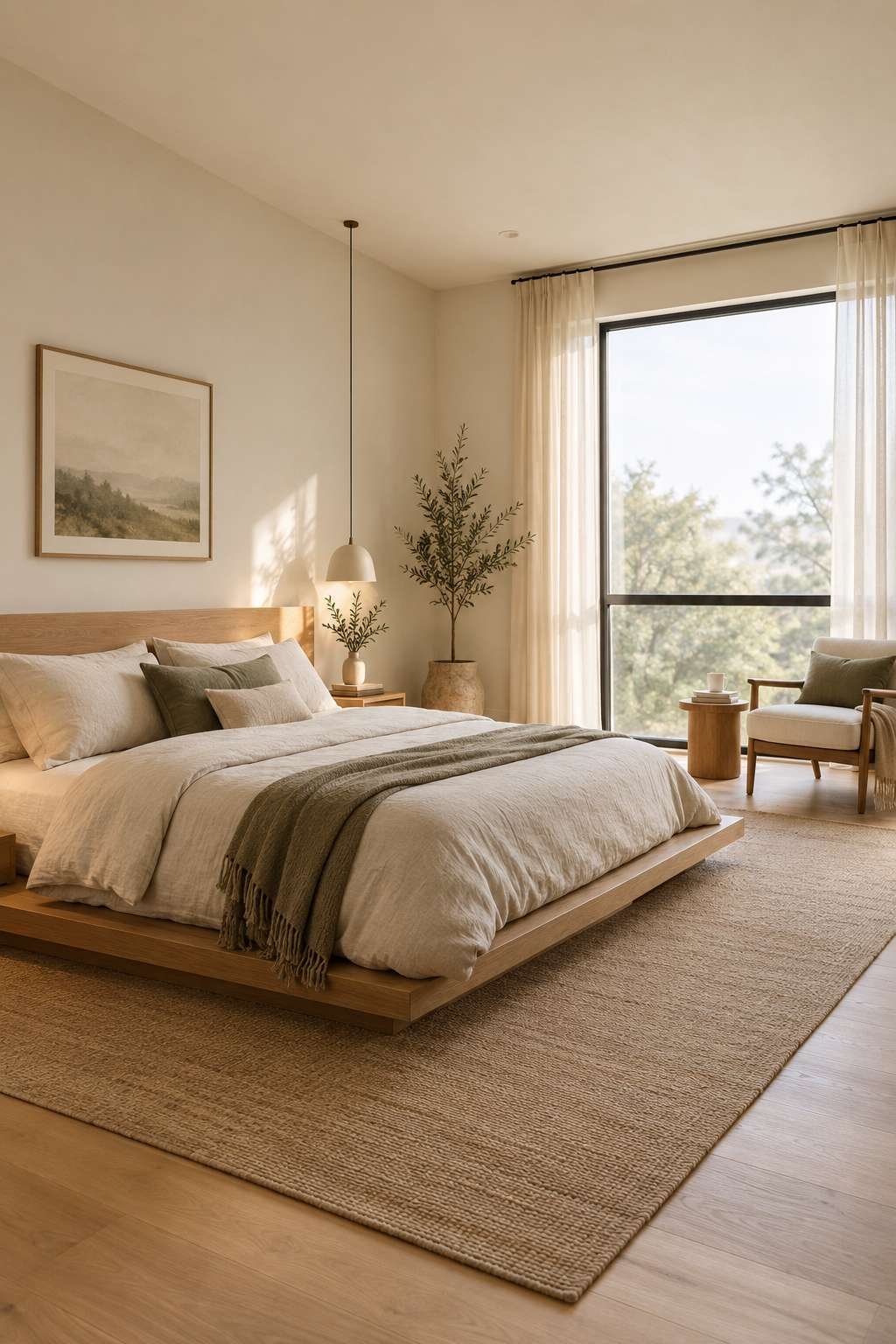
At a Glance
Declutter & Edit Your Belongings
Take everything off dressers, nightstands, and shelves in one pass. Only return pieces that are genuinely useful or that you love looking at every day.
Try the one-year rule: if you haven’t worn it in a year, it’s a donate or unsure candidate, not an automatic keep.
A bedroom needs a bed, somewhere to dress, and some sleep-adjacent storage. Anything beyond that gets questioned first.
Store, don’t display, keepsakes that carry emotional weight but no daily function. Revisit the box in six months.
Under-bed storage looks tidy from a distance but usually just hides clutter. Keep only flat, labeled bins if you use it at all.
A nightstand with one lamp, one book, and one small object reads as calm. Five trinkets reads as clutter no matter how nice each one is.
If replacing the item would cost less than the mental space it’s taking up, let it go.
After the first pass, walk the room again and pull at least one additional item. There’s almost always something you protected out of habit, not need.
Furniture & Layout
Usually the bed. Every other furniture decision should support it rather than compete with it.
Centering the bed on its main wall, with equal space on both sides, makes the room feel intentional rather than squeezed in.
Matched or intentionally mismatched both work, as long as the mismatch reads as a deliberate design choice and not leftover furniture.
Visible floor space beneath dressers and beds makes a small room feel larger and easier to keep clean.
Fewer freestanding pieces means fewer surfaces that collect stuff.
A room can look styled but still feel cramped if you can’t move around the bed without turning sideways.
A reading chair that’s rarely used in the bedroom but already exists in the living room doesn’t need two homes.
Color Palette & Wall Treatment
Warm white, soft greige, or a muted clay all work. The goal is one base tone the eye can rest on.
One dominant neutral, one mid-tone, and one accent keeps the room cohesive without feeling sterile.
Matte finishes diffuse light softly and hide small wall imperfections, which reads as calmer than a glossy sheen.
A single large piece or a tight two-piece grouping has more impact than five small scattered frames.
A bold accent wall works against a minimalist palette. Consistency across all four walls reads more restful.
Minimalist palettes rely on subtle tone shifts, so a color that looks right at noon can look flat or cold at night.
Lighting
Combine ceiling, task, and ambient lighting so the room isn’t dependent on one harsh overhead fixture.
Cooler bulbs read clinical in a bedroom. Warm light supports the calm, restful mood minimalist design is going for.
Being able to lower the light in the evening does more for a calm bedroom atmosphere than almost any decor choice.
Bedside lamps create a softer, lower light source that’s easier on the eyes before sleep.
Cord clips or a simple cord cover keep lighting looking clean instead of tangled.
Swap heavy curtains for lighter, sheer, or linen panels that let daylight in without a plain bare-window look.
Storage & Organization
Socks, chargers, jewelry, and everyday accessories each get one designated spot, not scattered across drawers.
Dividers stop drawers from becoming a single messy pile the moment you’re in a hurry.
Vacuum bags or bins under the bed or in a closet elsewhere free up daily rotation space.
Baskets with lids or drawers hide the small visual noise that open shelves tend to accumulate.
Labels make it far more likely you’ll actually put things back where they belong.
One tray or bowl for keys, wallet, and pocket items prevents them from spreading across every surface.
Closets tend to get skipped in bedroom declutters even though they’re often the most cluttered spot in the room.
A closed hamper keeps dirty clothes from becoming visual clutter between laundry days.
Textiles & Finishing Touches
A duvet, sheets, and pillows that all match tonally look intentional even with texture variation.
More than that usually means nightly pillow-shuffling and daily clutter on top of the bed.
Linen, waffle-weave cotton, or wool add visual interest without needing a printed pattern to do it.
Texture keeps a limited palette from feeling flat or cold.
Floor-to-ceiling curtains in a solid, soft fabric elongate the room and avoid a busy, patterned look.
A rug that’s too small floats under just the bed. Size it to extend under at least the front legs of nearby furniture.
Final Sensory Details
A single plant adds life to the room without introducing visual clutter.
A single calming scent reinforces the restful mood. Too many competing scents undoes it.
Turn phone chargers face-down, cover a TV when not in use, or move devices out of the bedroom altogether if possible.
Putting three or four stray items back in place takes minutes and keeps the space from sliding back into clutter.
Pro Tips
- ✓Start with subtraction, not addition. Buy nothing new until you’ve completed a full declutter pass; most rooms don’t need more storage, they need fewer things.
- ✓Use the “one in, one out” rule going forward. For every new item that enters the bedroom, one existing item leaves.
- ✓Photograph the finished room and compare it weekly. A quick photo makes clutter creep obvious in a way that standing in the room every day doesn’t.
- ✓Keep a donation box permanently in the closet. Toss questionable items in throughout the month instead of waiting for one big session.
- ✓Choose furniture finishes that repeat elsewhere in the room. Matching wood tones or metal finishes create cohesion without extra decor.
- ✓Treat your closet door or headboard wall as negative space. Not every wall needs art; a plain wall gives the eye somewhere to rest.
- ✓Avoid trend-driven decor that will feel dated in a year. Minimalism ages well because it leans on quality basics rather than seasonal trends.
- ✓Test the room with your phone away for a night. Notice whether the space itself still feels calm without a screen as a backup.
- ✓Keep a small “maybe” box for six months before deciding. A time-boxed maybe box removes the pressure of an instant decision.
- ✓Revisit the whole checklist seasonally. A bedroom that’s minimalist in spring can quietly refill by fall.
Common Mistakes
- ✕Confusing “minimalist” with “empty.” A minimalist bedroom still needs warmth and texture. Add at least one textured layer, like a throw or rug, to avoid a cold-feeling room.
- ✕Buying new storage before decluttering. More bins just give clutter more places to hide. Finish the edit first, then buy storage only for what’s left.
- ✕Overlooking the closet. A closet packed with rarely worn clothing undercuts a decluttered-looking room the moment the door opens. Apply the one-year rule inside the closet too.
- ✕Choosing an all-white palette without warmth. Stark white can read sterile rather than serene. Balance it with warm wood tones or natural fiber textures.
- ✕Leaving cords and chargers visible. A single visible cord tangle can undo an otherwise calm room instantly. Route cords along baseboards or behind furniture.
- ✕Skipping a “maybe” pile and forcing every decision immediately. Rushed decluttering leads to regretted donations. Give uncertain items a time-boxed holding period instead.
- ✕Ignoring scale when choosing furniture. Oversized furniture in a small room reads as cluttered even with almost nothing else in the space. Measure first.
- ✕Over-styling nightstands and shelves. Even a “curated” arrangement of five small objects reads as clutter. Cap surfaces at two or three items.
- ✕Treating the makeover as one-and-done. Rooms drift back toward clutter without a light, recurring maintenance habit. Build in a short seasonal reset instead.
Supplies & Tools Checklist
Get the free printable version. This same checklist is available as a simplified, checkbox-only printable you can hang on the closet door or carry room to room — no explanations, just the 45 items organized by section.
Download the Free Printable Minimalist Bedroom ChecklistFrequently Asked Questions
How many items should a minimalist bedroom have?
There’s no fixed number — the goal is that every item earns its place through daily use or genuine value, not that you hit a specific count.
Is minimalist bedroom design expensive?
No — most of the work is removing and reorganizing what you already own; any spending is optional and usually goes toward storage or a few key textiles.
What colors work best in a minimalist bedroom?
Warm neutrals like soft white, greige, or muted clay tend to work best, paired with one or two supporting tones rather than a full color palette.
Can I have a minimalist bedroom with kids or a partner who isn’t minimalist?
Yes — focus the minimalist approach on shared surfaces and storage systems, and give each person a smaller, contained space for their own items.
What do I do with sentimental items I don’t want to display?
Store them in a labeled box outside the main living space rather than displaying or discarding them; you can revisit the decision later.
Do I need to get rid of my nightstands?
No — one nightstand per side is standard in minimalist bedrooms; the goal is limiting what sits on top, not removing the furniture itself.
What’s the difference between minimalist and Scandinavian bedroom design?
Minimalist design prioritizes reducing quantity above all else, while Scandinavian design allows more texture and warmth as long as the space still feels uncluttered.
How do I hide cords in a minimalist bedroom?
Route cords along baseboards with clips, use a cord cover, or position furniture to naturally screen cords from the main sightline.
What flooring works best for a minimalist bedroom?
Any flooring works if it’s paired with one grounding rug in a simple tone; the flooring itself doesn’t need to change for the room to read as minimalist.
How often should I re-declutter a minimalist bedroom?
A quick seasonal check, roughly four times a year, is usually enough to catch clutter creep before it builds up again.
A calm bedroom isn’t about owning less for its own sake — it’s about making room for the things that actually matter to you. Work through this checklist one section at a time, and don’t worry about getting it perfect on the first pass. The goal isn’t a showroom; it’s a room that feels lighter every time you walk into it.
Download the Free Printable Checklist
