A cluttered kitchen makes even simple cooking feel like a chore, and that’s usually a storage problem, not a space problem. Learning how to arrange your kitchen cupboards the right way turns a chaotic collection of pots, plates, and pantry goods into a system you can navigate without thinking. Thoughtful interior design isn’t just about how a room looks — it’s about how effortlessly it functions every single day.
In this guide, you’ll find a practical, room-by-room approach to organizing every cupboard in your kitchen, from the everyday dish cabinet to the awkward corner unit nobody wants to deal with. Whether you’re moving into a new home or finally tackling years of accumulated clutter, these steps will help you build a layout that actually makes sense for how you cook.
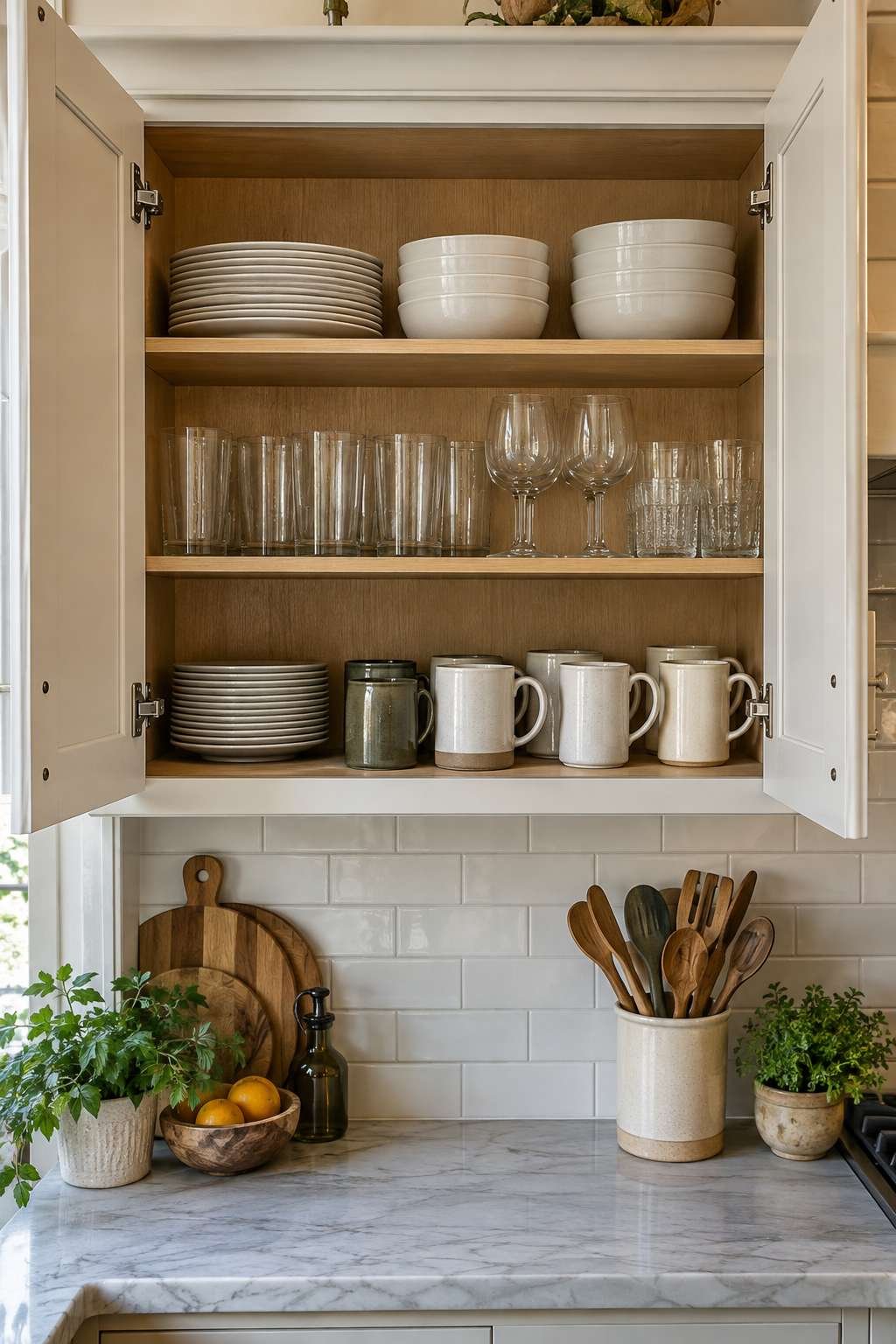
1. Assess Your Kitchen Layout and Storage Needs
Before you touch a single shelf, take stock of what you actually own and how your kitchen is laid out. Walk through your daily cooking routine and notice which cabinets are closest to the stove, sink, and prep counter — these become your prime real estate. Take everything out of your cupboards so you can see the full picture instead of guessing from memory.
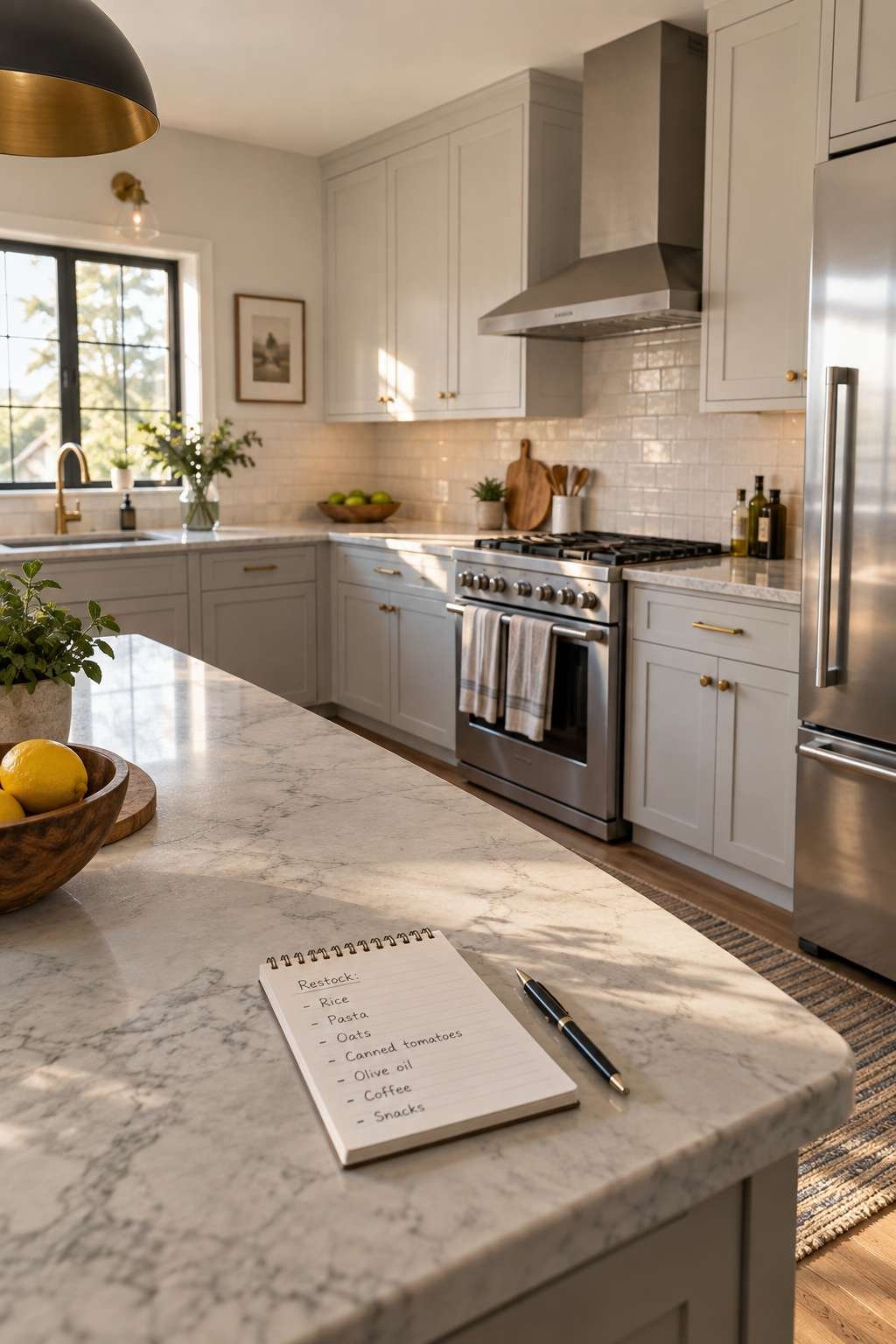
This is also the moment to be honest about what you use and what’s just taking up space. A realistic inventory prevents you from designing a system around items you’ll never touch again.
- Empty every cupboard completely before you begin
- Note which cabinets sit nearest to your main work zones
- Separate items into keep, donate, and discard piles
- Measure shelf heights and depths for awkward-sized cookware
- Photograph the empty cupboards to plan placement visually
- Set aside duplicates you no longer need
2. Group Items by Category and Frequency of Use
Once your cupboards are empty, sort everything into logical categories — bakeware, everyday dishes, small appliances, spices, and so on. This step is the backbone of how to arrange kitchen cupboards in a way that actually holds up over time, because grouping by category (rather than by size or shape) means you’ll always know exactly where to look.
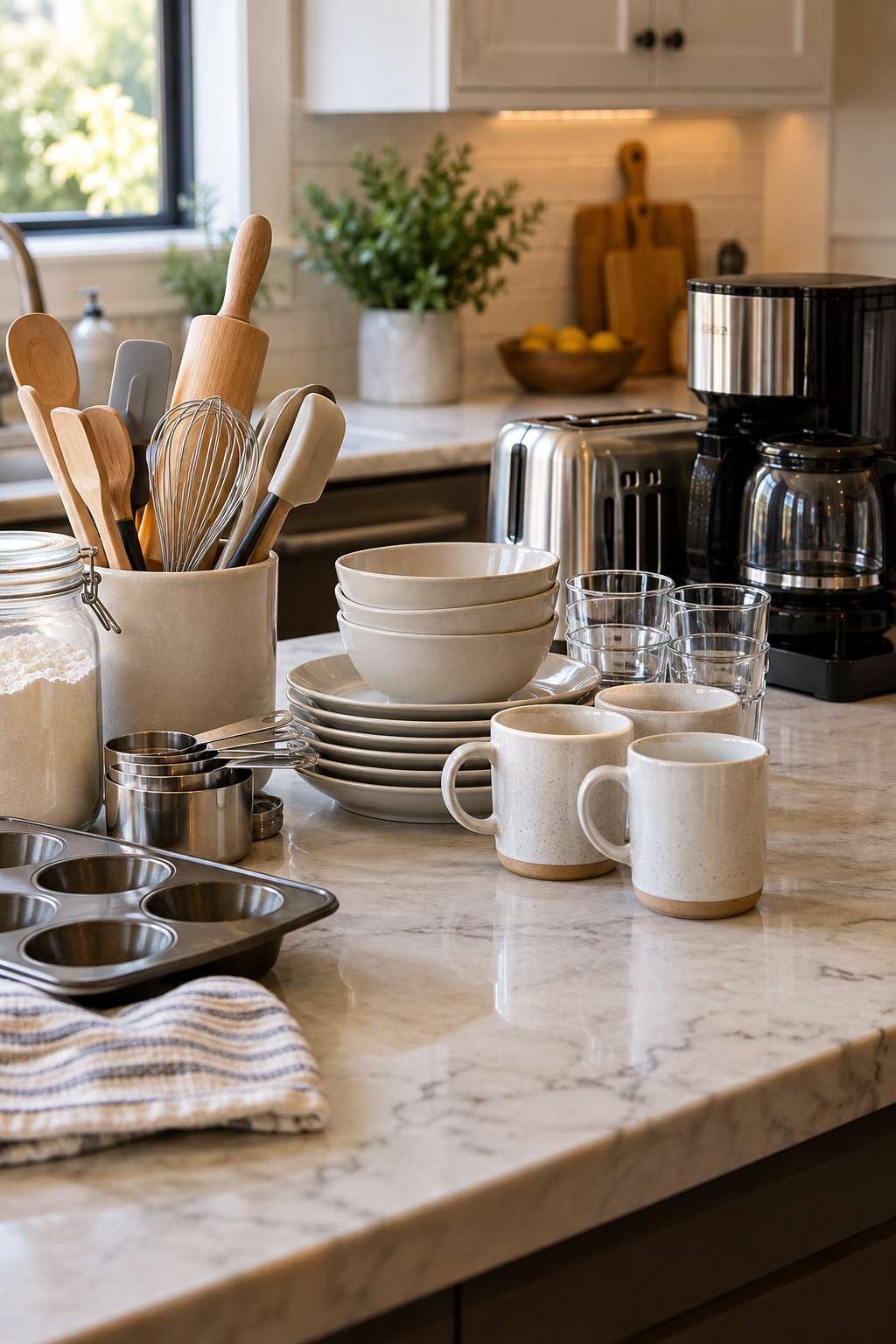
Within each category, separate items further by how often you reach for them. A frequency-based system keeps your most-used tools within arm’s reach while pushing rarely touched items further out of the way.
- Sort by category first: cooking, serving, baking, storage
- Rank items within each category by how often you use them
- Keep daily-use mugs and glasses separate from special-occasion sets
- Group small appliances together even if they’re stored in different spots
- Flag single-use gadgets that could move to a less prime location
- Note any categories that need their own dedicated cupboard
If you’re still deciding where broader categories should physically live, our guide on how to arrange things in kitchen cabinets walks through zoning an entire kitchen room by room.
3. Store Everyday Items at Eye Level
The cupboards between waist and eye height are the most convenient in your kitchen, so they should hold whatever you use constantly. This is prime space for everyday plates, glasses, coffee mugs, and the handful of spices you reach for nightly. Placing these frequently used essentials here cuts down on unnecessary bending and stretching.
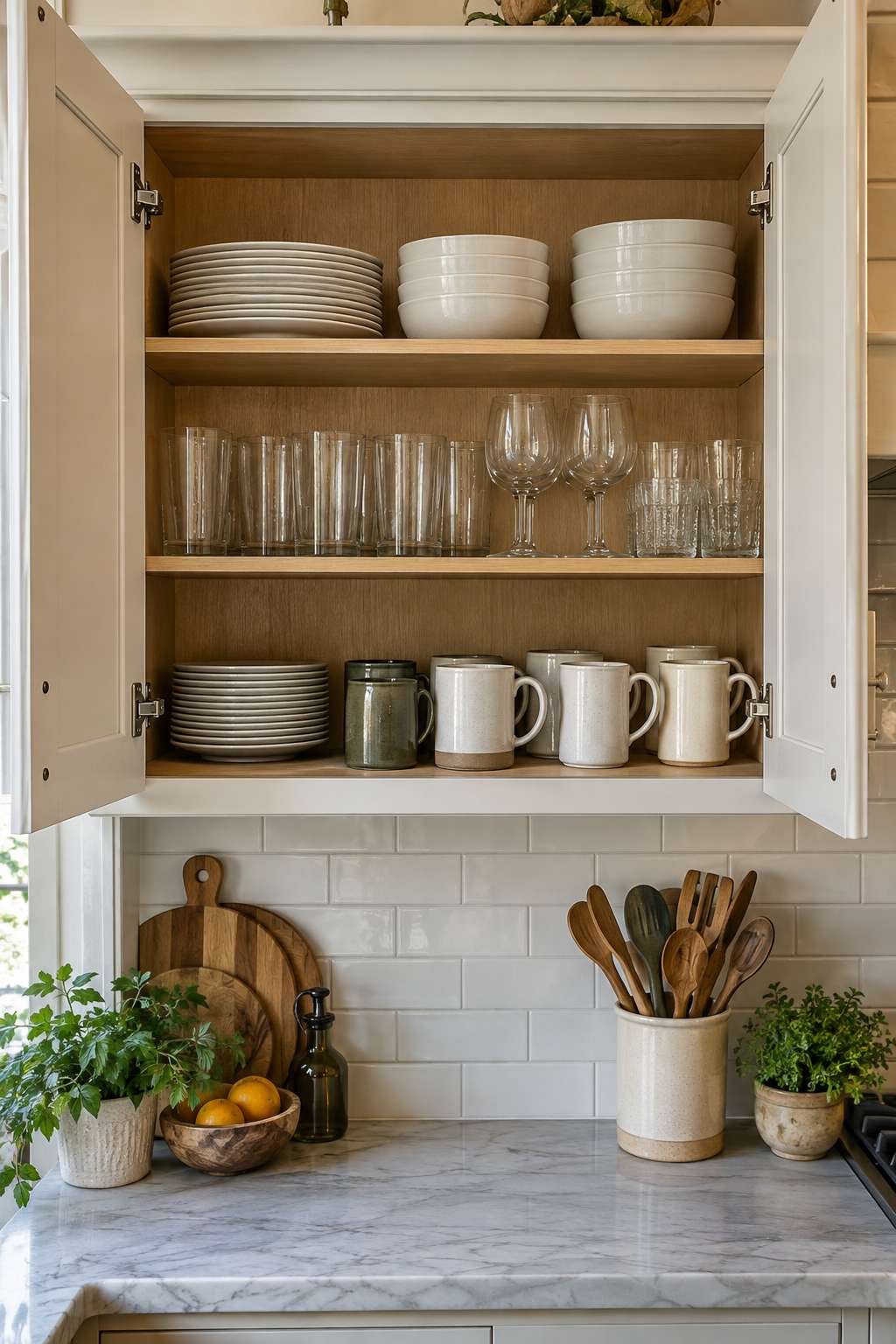
Think about your natural hand motion when you’re cooking or setting the table. Items that pair together, like plates and napkins, should live near each other so a single reach covers the whole task.
- Reserve eye-level shelves for items used almost every day
- Keep everyday glassware near the sink or dishwasher for easy putaway
- Store daily spices within easy reach of the stove
- Pair items that are used together, like mugs and coffee filters
- Avoid stacking eye-level shelves too high to see clearly
- Rotate seasonal dishware out of this zone when not in use
4. Keep Heavy Items on Lower Shelves
Heavy cookware, large mixing bowls, and bulk pantry goods belong on lower shelves, both for safety and ease of access. Bending to grab a heavy stockpot is far safer than reaching overhead for it, and lower cabinets are typically deeper, which suits bulkier items anyway.
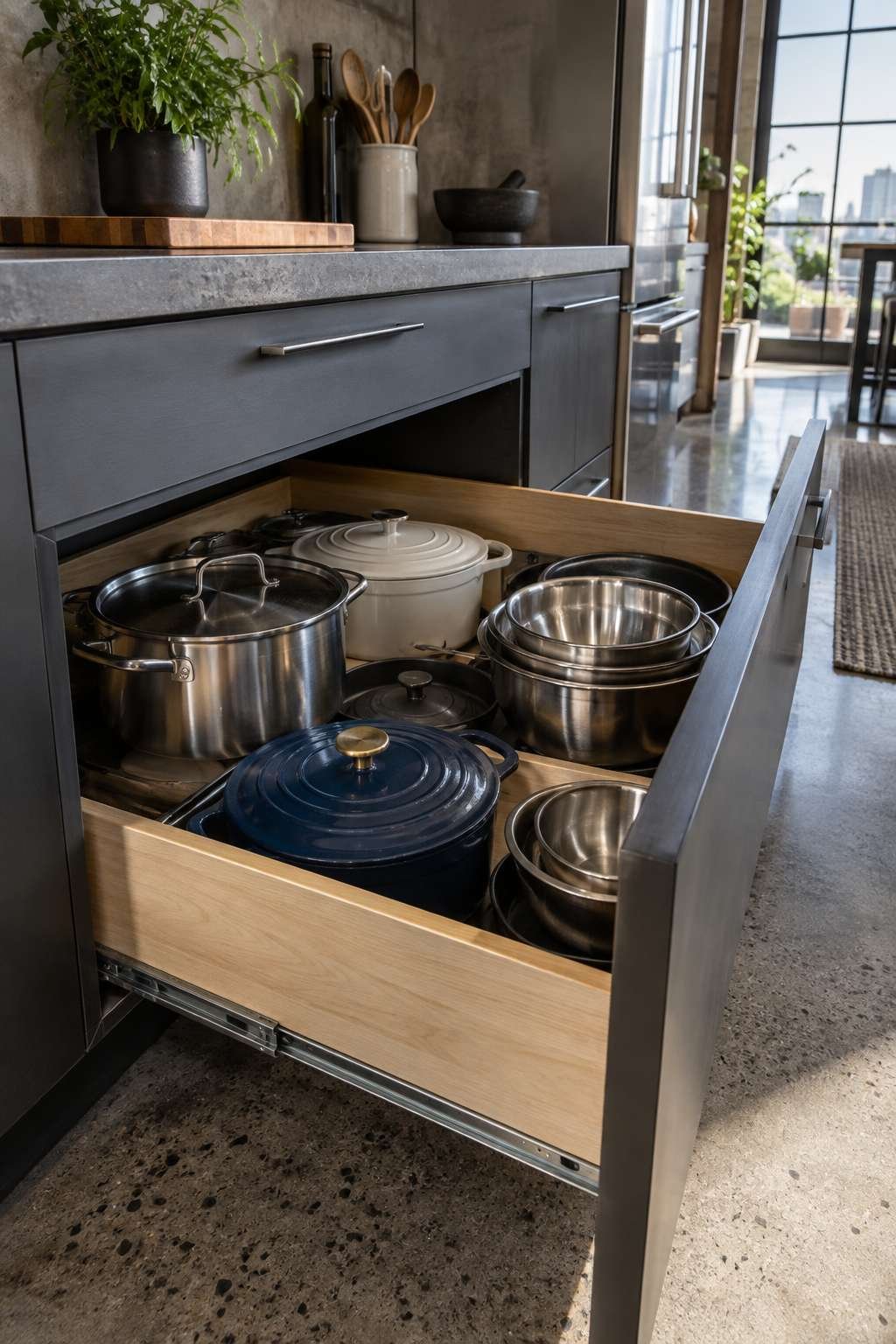
This is also where floor-level pull-out drawers shine, since they let you see everything at a glance instead of digging through stacked pots. If your lower cabinets don’t have drawers, consider adding slide-out shelves to make full use of the depth.
- Store heavy pots, dutch ovens, and stockpots on lower shelves
- Use pull-out drawers for easier access to deep lower cabinets
- Keep bulk pantry staples like flour and rice near the floor
- Nest mixing bowls and pots to save vertical space
- Add non-slip liners to prevent shifting when the drawer opens
- Avoid overloading lower shelves past their weight limit
5. Reserve High Cabinets for Rarely Used Items
The top cabinets, especially ones that require a step stool, are the natural home for things you only use a few times a year. Holiday serving platters, the ice cream maker, and extra vases all belong here rather than competing for space with your daily essentials. This keeps your prime storage zones free for what you actually reach for.
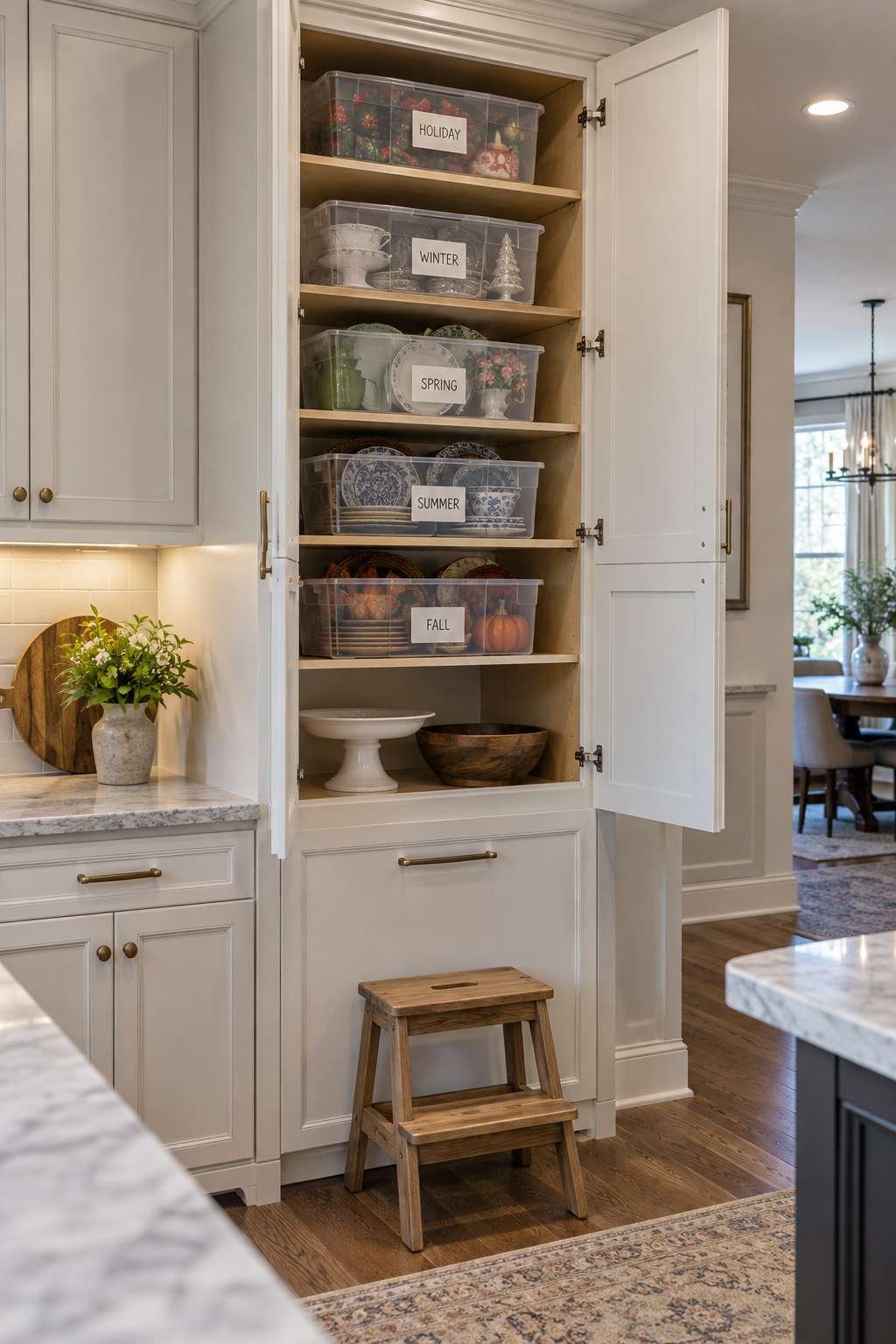
Label boxes or bins on these upper shelves so you’re not pulling everything down just to find one item. A little bit of labeling now saves a lot of frustration during the holidays.
- Store seasonal serveware and holiday dishes up high
- Keep rarely used small appliances on the top shelf
- Use labeled bins to group similar occasional-use items
- Store a step stool nearby for safe, easy access
- Avoid placing anything fragile or heavy directly overhead
- Reassess this cabinet once a year to clear out unused items
6. Organize Pots, Pans, and Bakeware
Cookware is often the bulkiest category in any kitchen, so it deserves a dedicated strategy. Vertical dividers let you slide pans in like books on a shelf, which prevents the frustrating stack-and-shuffle routine every time you need the one on the bottom. A vertical organization system also protects nonstick coatings from scratching against each other.
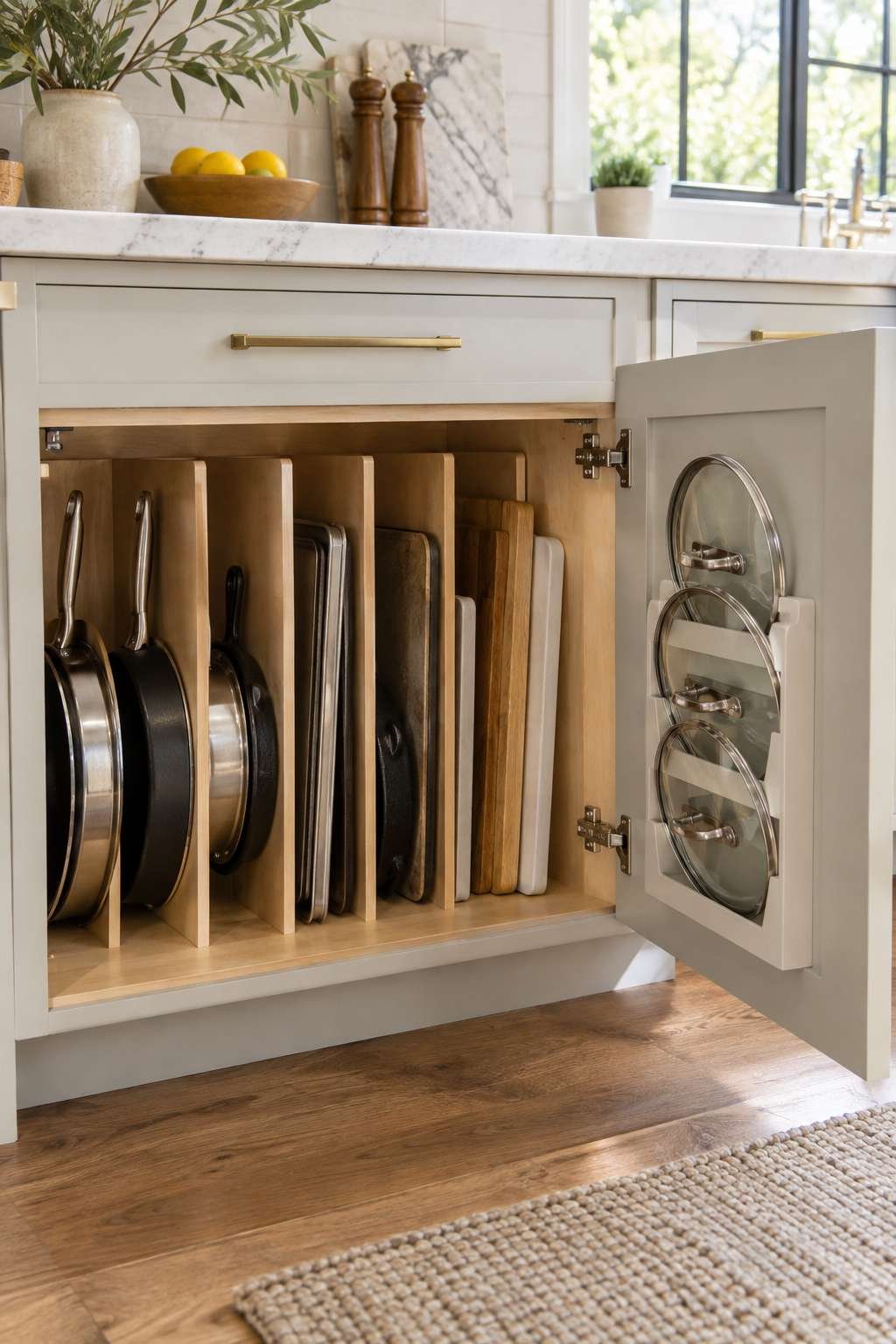
Lids are usually the real culprit behind pot-cabinet chaos. A separate lid rack or a simple tension rod installed inside the cabinet door keeps them upright and out of the way.
- Install vertical dividers for pans, sheet pans, and cutting boards
- Use a lid organizer to keep lids from sliding around
- Nest pots of the same style to save space
- Store cast iron and heavy bakeware on the lowest shelf
- Hang frequently used pans on a wall rack if space allows
- Separate specialty bakeware from everyday cookware
For a wider look at cookware storage alongside your other kitchen zones, see our guide on how to arrange kitchen cabinets.
7. Arrange Plates, Bowls, and Glassware
Dishware benefits enormously from stacking systems designed for its actual shape rather than a flat pile of everything at once. Plate stackers, shelf risers, and cup shelves all add usable vertical space to a single cabinet, letting you store more without cramming pieces together. This kind of smart stacking also reduces the risk of chips and cracks from mismatched stacks.
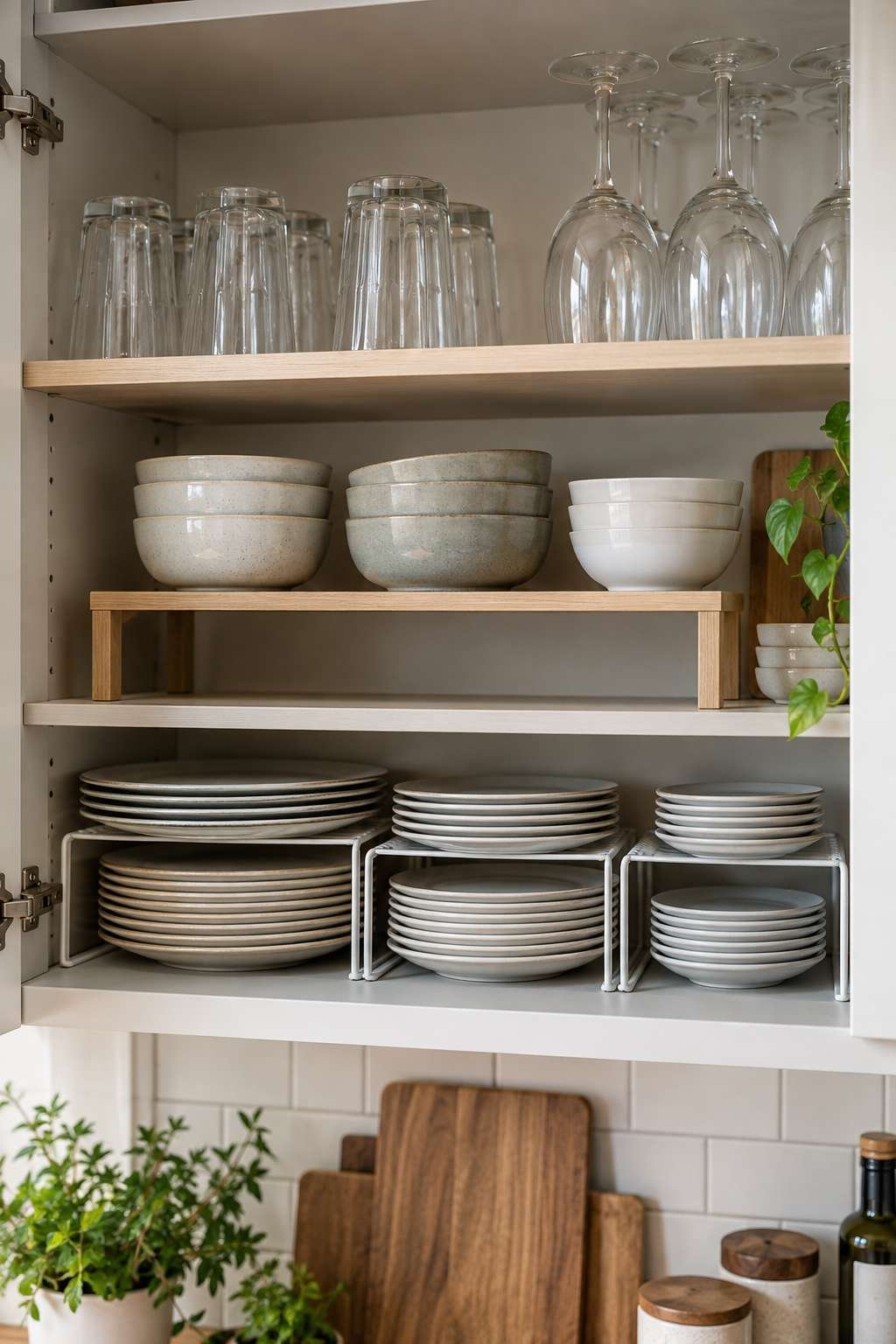
Keep sets together by size, since mixing dinner plates with salad plates in one stack makes every meal setup slower than it needs to be.
- Use plate stackers to separate sizes and prevent chipping
- Add a shelf riser to double your cabinet’s usable space
- Store glassware upside down to keep dust out
- Group mugs on a separate shelf or hanging rack
- Keep matching sets together rather than mixing styles
- Store fragile glassware toward the back, away from the door
8. Set Up a Dedicated Pantry Cabinet
If you have a cabinet that functions as your pantry, treat it like its own small grocery store with clear zones for grains, snacks, canned goods, and baking supplies. Clear, labeled bins make it obvious at a glance what you have and what’s running low, which cuts down on duplicate grocery purchases.
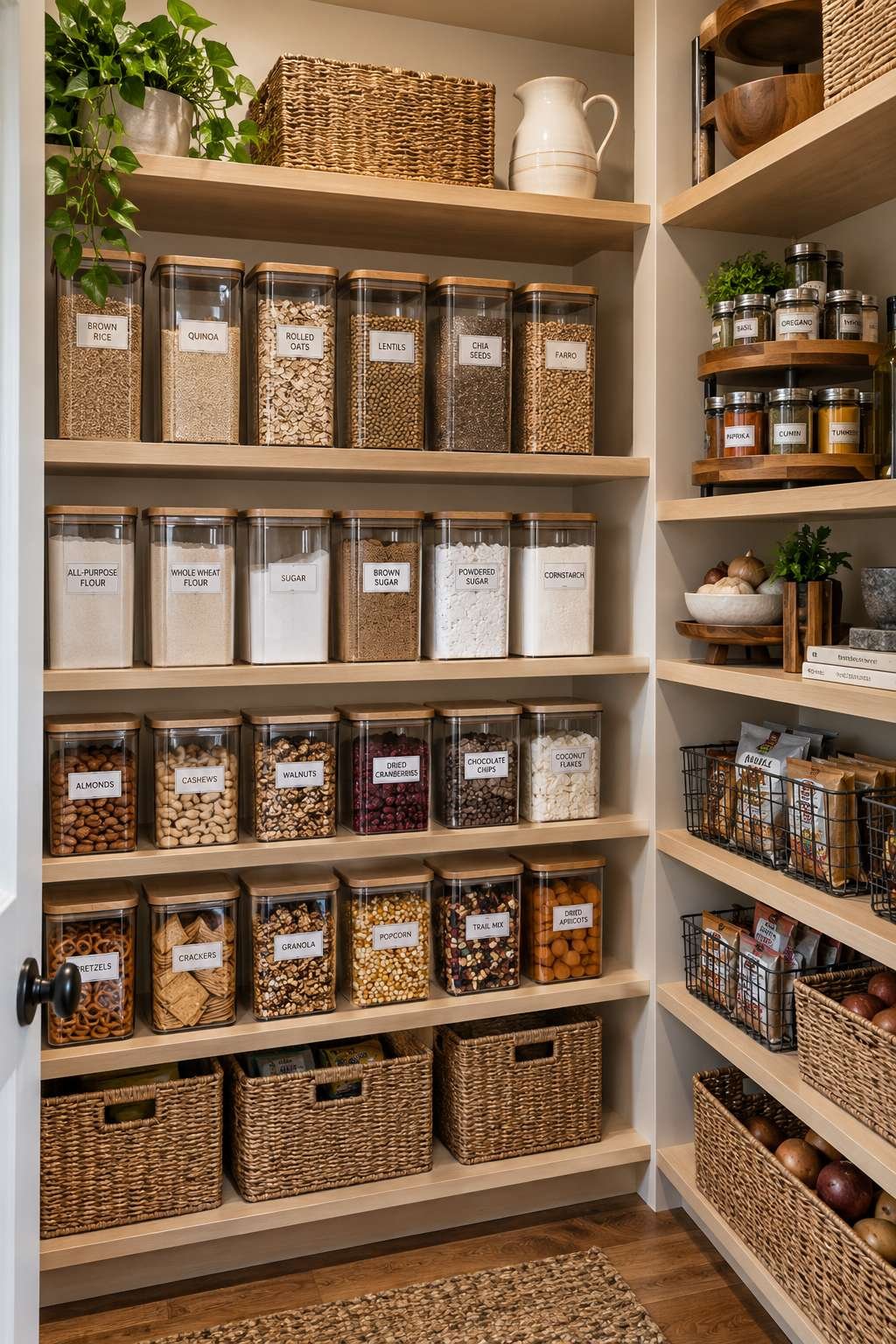
Front-facing labels on jars and containers also help everyone in the household put things back in the right spot, not just the person who organized it in the first place.
- Decant dry goods into clear, labeled containers
- Group similar items together: baking, snacks, canned goods
- Store opened bags in airtight containers to keep them fresh
- Place older items in front so they get used first
- Use a lazy Susan for small jars and spice bottles
- Keep a small notepad nearby to track what’s running low
9. Use Drawer and Shelf Organizers
Even a well-sorted cupboard benefits from physical dividers that keep categories from drifting back into chaos over time. Drawer dividers, shelf risers, and cabinet door racks all add structure that a bare shelf simply can’t provide on its own. These inexpensive organizing tools often make the biggest visible difference for the least effort.
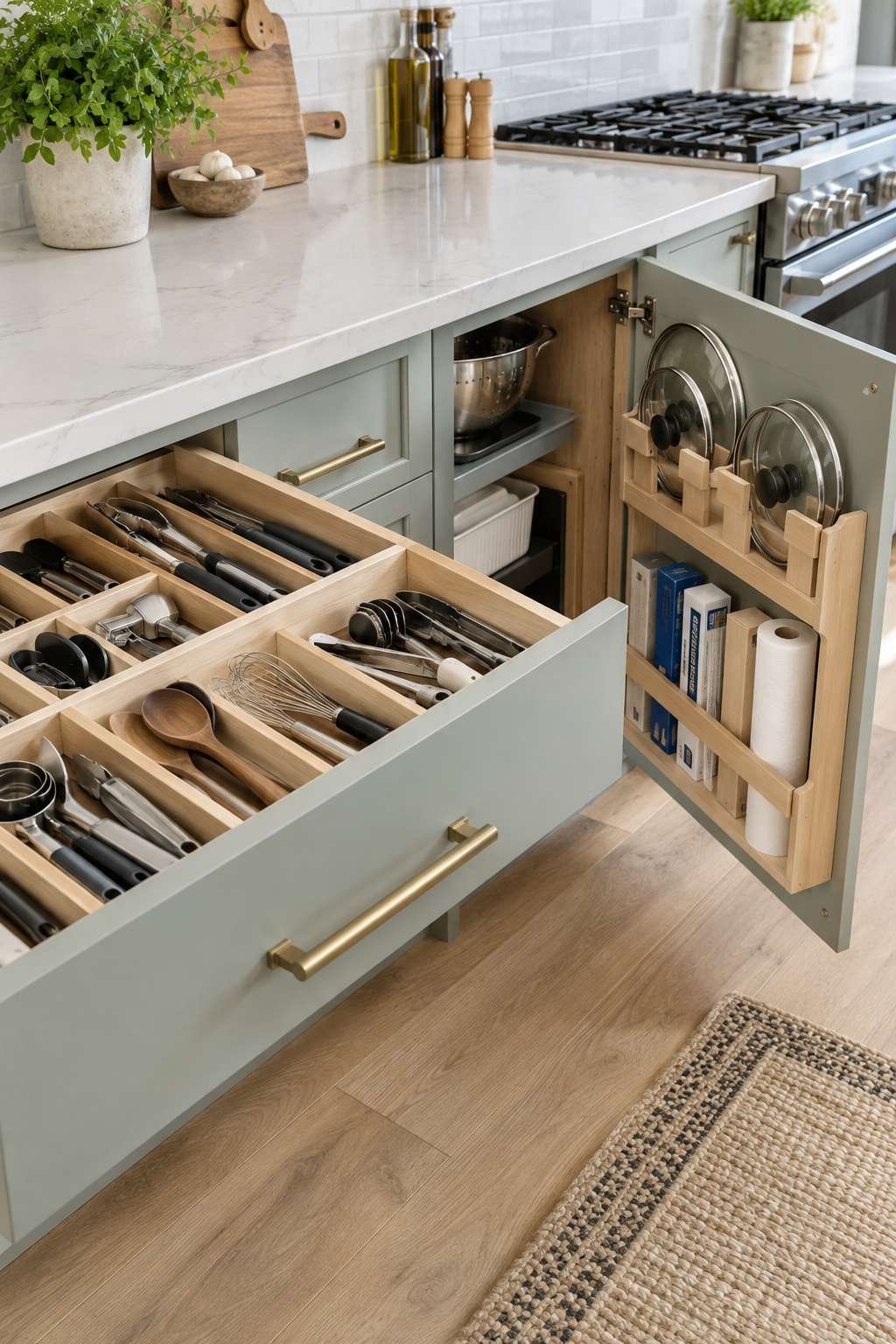
Measure your cabinets before buying organizers, since even a slightly oversized riser or divider can end up wasting more space than it saves.
- Add drawer dividers for utensils and small tools
- Install a lazy Susan in deep corner cabinets
- Use cabinet door racks for lids, foil, and cutting boards
- Add under-shelf baskets to use otherwise wasted vertical space
- Choose adjustable organizers that can grow with your needs
- Avoid over-buying organizers before measuring your actual cabinets
10. Maintain Your System Long-Term
An organized cupboard only stays that way if the system is easy to maintain day to day. Build in a quick reset, like a five-minute tidy after unloading the dishwasher, so items go back where they belong instead of wherever there’s an open spot. A sustainable habit matters far more than a perfect one-time overhaul.
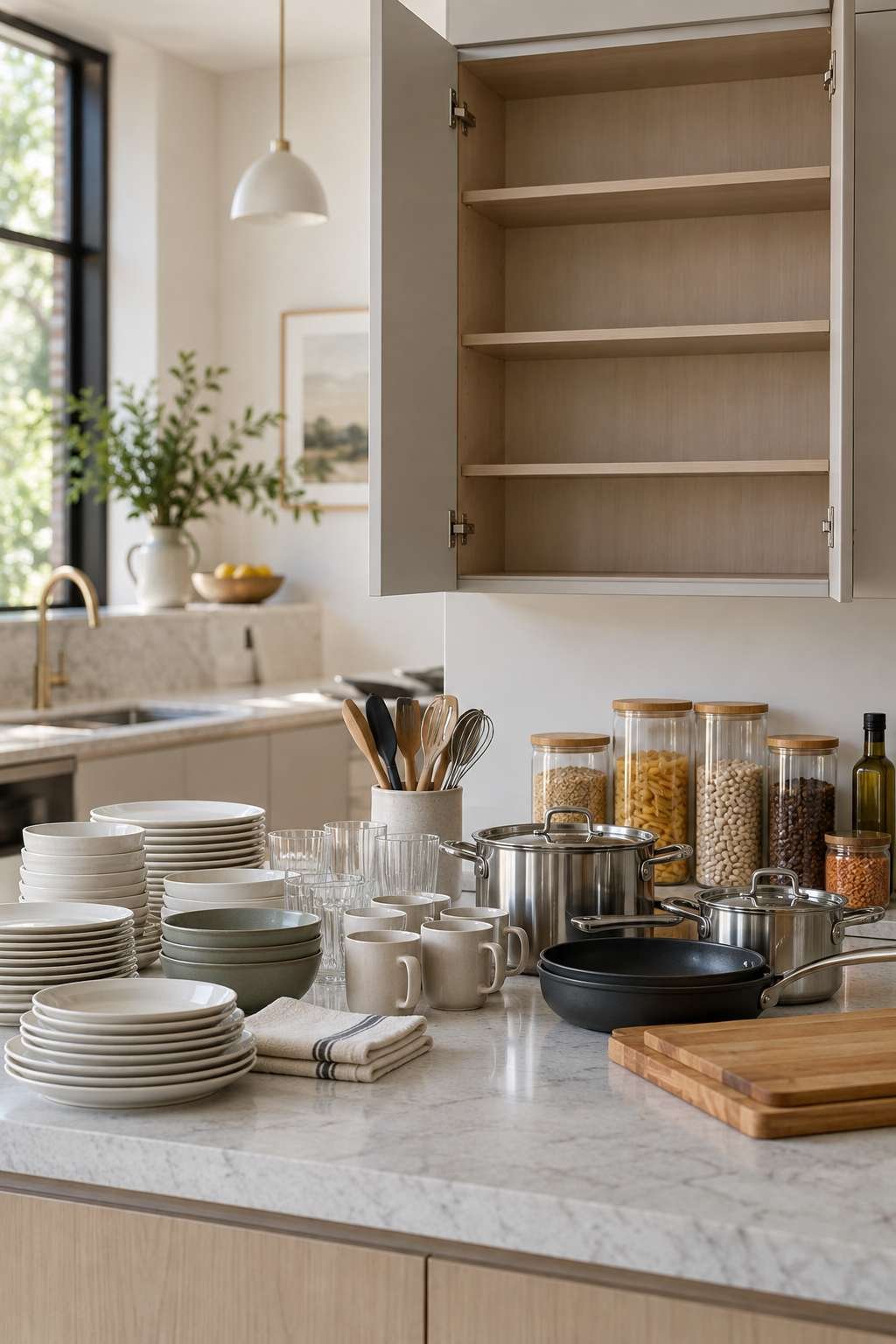
Revisit your setup every few months, especially after holidays or big grocery hauls, since habits and needs naturally shift over time.
- Return items to their designated spot immediately after use
- Do a quick five-minute reset after unloading the dishwasher
- Reassess your system every three to six months
- Involve household members so everyone follows the same layout
- Adjust zones as your cooking habits or family size changes
- Donate or discard items that no longer earn their spot
If you want to extend this same approach beyond the cupboards to the rest of the room, our piece on how to arrange my kitchen covers the full layout from counters to storage.
Arranging your kitchen cupboards well isn’t about achieving a picture-perfect pantry overnight — it’s about building a system that matches how you actually cook and live. Start with one cabinet at a time, apply these principles, and adjust as you go. Once everything has a home, cooking starts to feel less like a search mission and more like the enjoyable part of your day it should be.
Your kitchen will keep evolving as your habits change, and that’s completely normal. Revisit these steps whenever things start to feel cluttered again, and don’t be afraid to experiment with what works best for your own space.