


A washing machine cleans everything except itself, which is exactly why learning how to clean your laundry washer on a regular basis matters more than most people realize. Detergent residue, mineral buildup, and trapped moisture accumulate inside the machine over time, eventually leading to musty odors and even fabric that comes out less clean than it should.
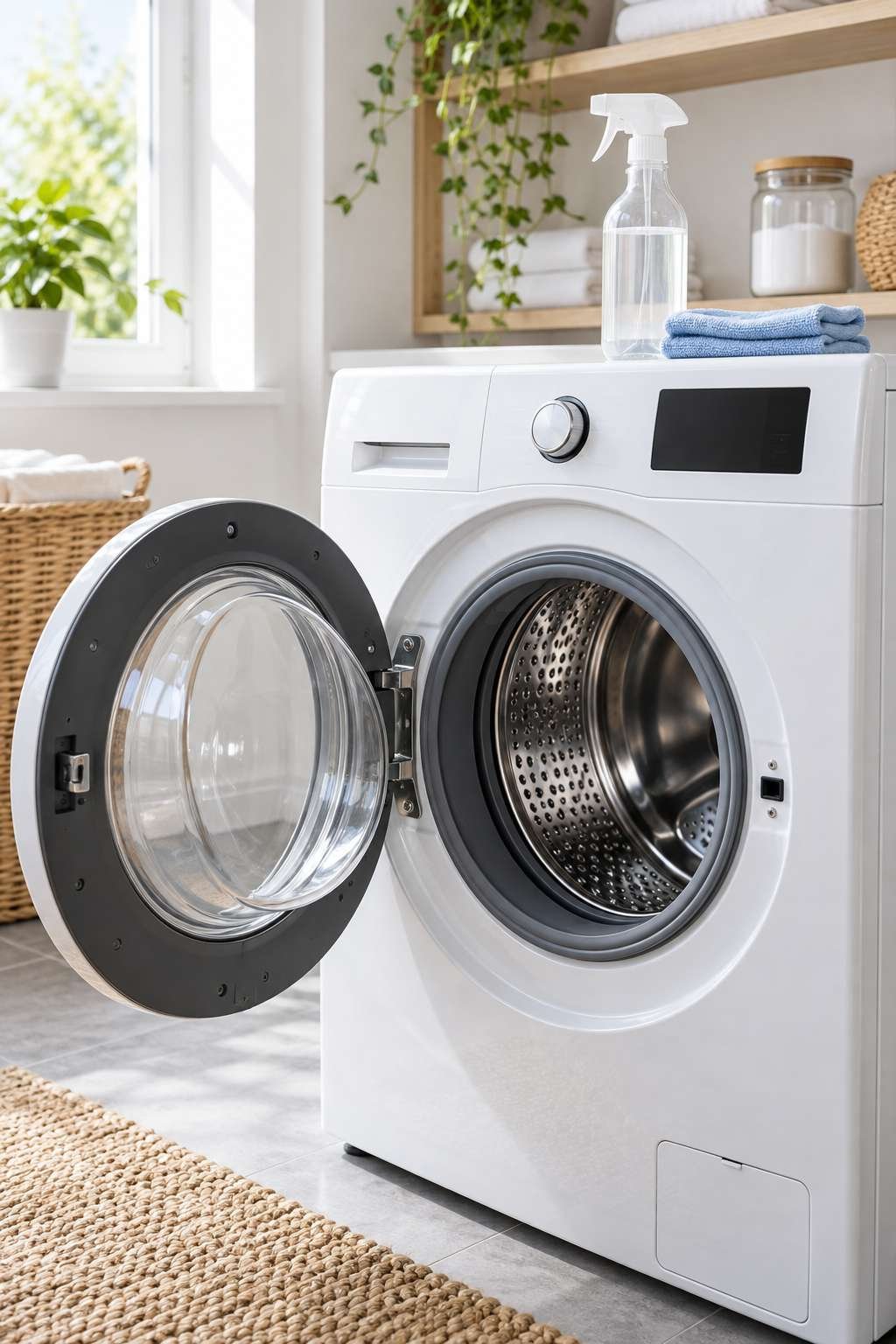
This guide walks through every part of the machine worth cleaning, from the drum to the drain filter, so your washer keeps performing the way it did on day one.
1. Why Regular Washer Cleaning Matters
A dirty washer doesn’t just smell unpleasant — it can actually redeposit residue and bacteria onto your clothes during every subsequent wash. This is especially noticeable with light-colored fabrics, where any buildup tends to show up as dinginess or faint gray staining over time.

If you’ve noticed your whites looking less bright than they used to, a dirty machine is often the hidden culprit. Our guide on how to properly clean white laundry covers the fabric side of that issue, but starting with a clean machine solves the problem at its actual source.
- Understand that a dirty machine can redeposit residue onto clothes
- Recognize dingy whites as a possible sign of machine buildup
- Clean the machine before assuming detergent or fabric is the issue
- Address odor early before it becomes a persistent problem
- Treat machine cleaning as routine maintenance, not a one-time fix
- Expect noticeably fresher results after a thorough cleaning
2. Gather Your Cleaning Supplies
Most washer cleaning tasks require only a few basic supplies: white vinegar, baking soda, a soft-bristle brush, and microfiber cloths. A dedicated washing machine cleaner tablet or liquid can also help for particularly stubborn buildup.
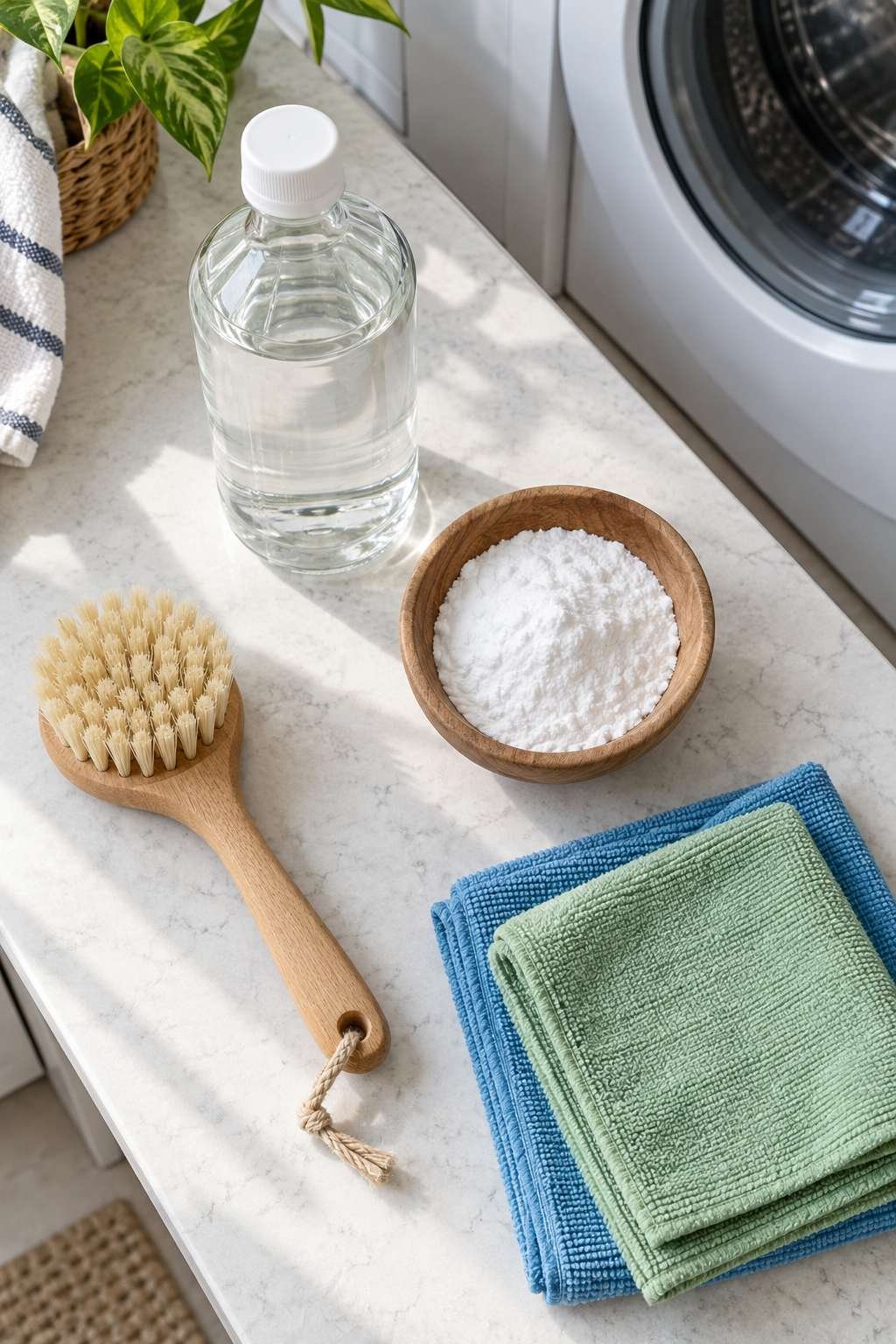
Having everything on hand before you start prevents a half-finished cleaning session, especially since some steps require letting a cycle run for close to an hour.
- Stock white vinegar and baking soda as your core cleaning agents
- Keep a soft-bristle brush for scrubbing the gasket and dispenser
- Use microfiber cloths for wiping down surfaces
- Consider a dedicated washing machine cleaner for tough buildup
- Have rubber gloves on hand for scrubbing tasks
- Set aside roughly an hour for a full top-to-bottom cleaning session
3. Run an Empty Hot-Water Cleaning Cycle
Start with an empty cycle on the hottest water setting, adding either a washing machine cleaner tablet or two cups of white vinegar directly to the drum. This step alone dissolves a significant amount of built-up residue inside the machine.
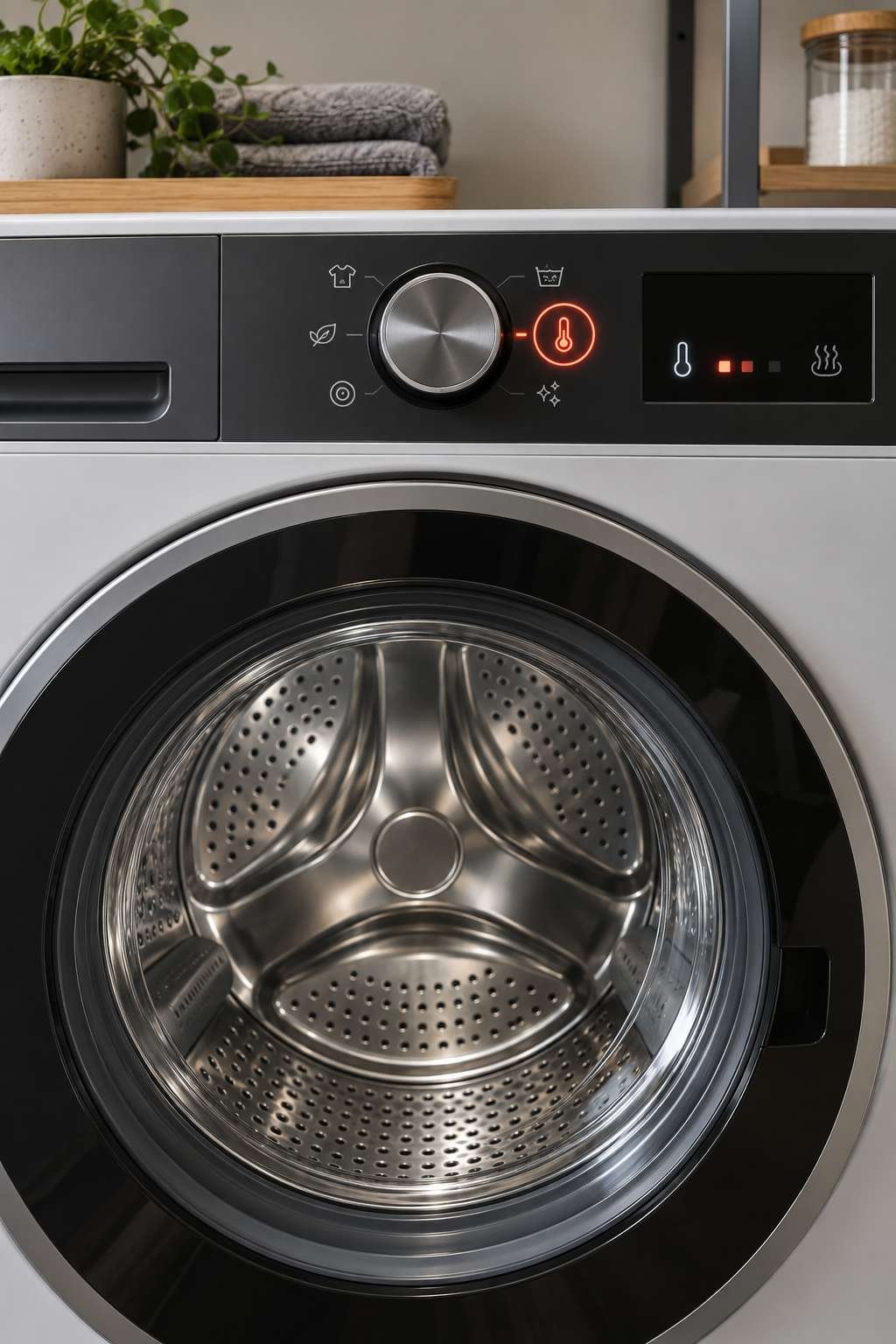
If your machine has a dedicated “clean” or “sanitize” cycle, use that setting specifically, since it’s often designed to run longer and hotter than a standard wash cycle.
- Run the machine empty on the hottest available setting
- Add two cups of white vinegar or a cleaner tablet to the drum
- Use a dedicated clean or sanitize cycle if your machine has one
- Let the full cycle complete without interruption
- Repeat this step monthly as part of regular maintenance
- Follow with a plain water rinse cycle if any residue remains
4. Deep Clean the Detergent Dispenser
The detergent dispenser tray is one of the most overlooked areas, often accumulating a thick paste of dried detergent and fabric softener residue. Most trays are removable, so pull it out and soak it in hot soapy water for at least fifteen minutes.

Use an old toothbrush to scrub into the corners and grooves where residue tends to build up most, then rinse thoroughly before reinserting the tray.
- Remove the detergent dispenser tray if your machine allows it
- Soak the tray in hot soapy water for at least fifteen minutes
- Scrub corners and grooves with an old toothbrush
- Rinse thoroughly before placing the tray back in the machine
- Check the dispenser housing itself for any remaining buildup
- Repeat this step monthly alongside your main cleaning cycle
5. Clean the Door Seal and Gasket
Front-loading machines have a rubber gasket around the door that traps moisture, lint, and hair, making it one of the most common sources of musty odor. Wipe inside every fold of the gasket with a vinegar-dampened cloth, checking carefully for hidden debris.
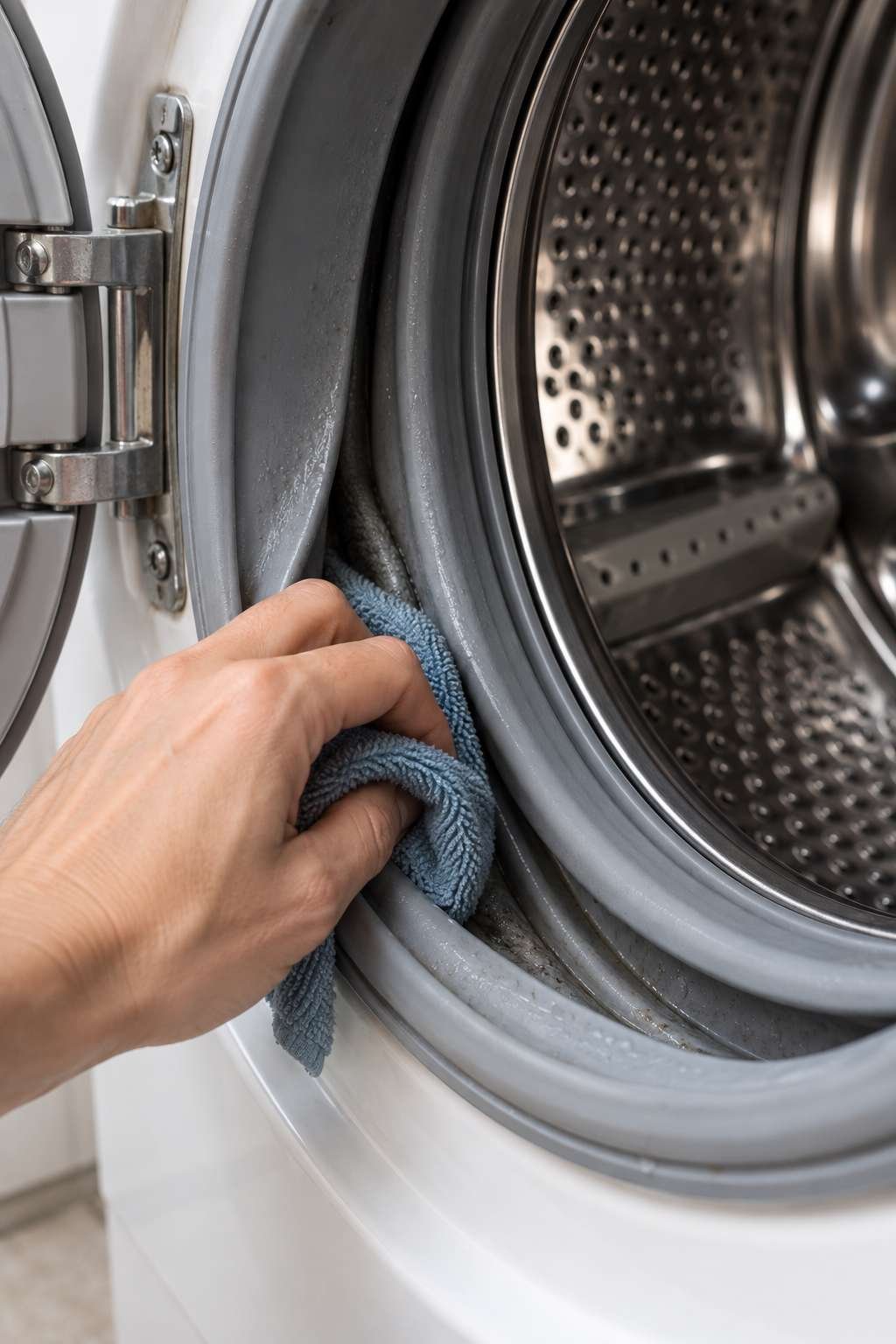
Leave the door open between wash cycles when possible, since trapped moisture in this area is the primary driver of mold and mildew growth over time.
- Wipe every fold of the rubber gasket with a vinegar-dampened cloth
- Check for and remove any trapped lint, hair, or small debris
- Scrub any visible mold spots with a soft brush and vinegar
- Dry the gasket thoroughly after cleaning
- Leave the door open between loads to reduce trapped moisture
- Inspect the gasket weekly if odor has been a recurring issue
6. Clean the Drum Interior
Even with a hot-water cleaning cycle, the drum itself sometimes needs manual attention, especially around visible mineral deposits or residue rings. Wipe the interior surface with a vinegar solution and a soft cloth, paying attention to any small holes or perforations.
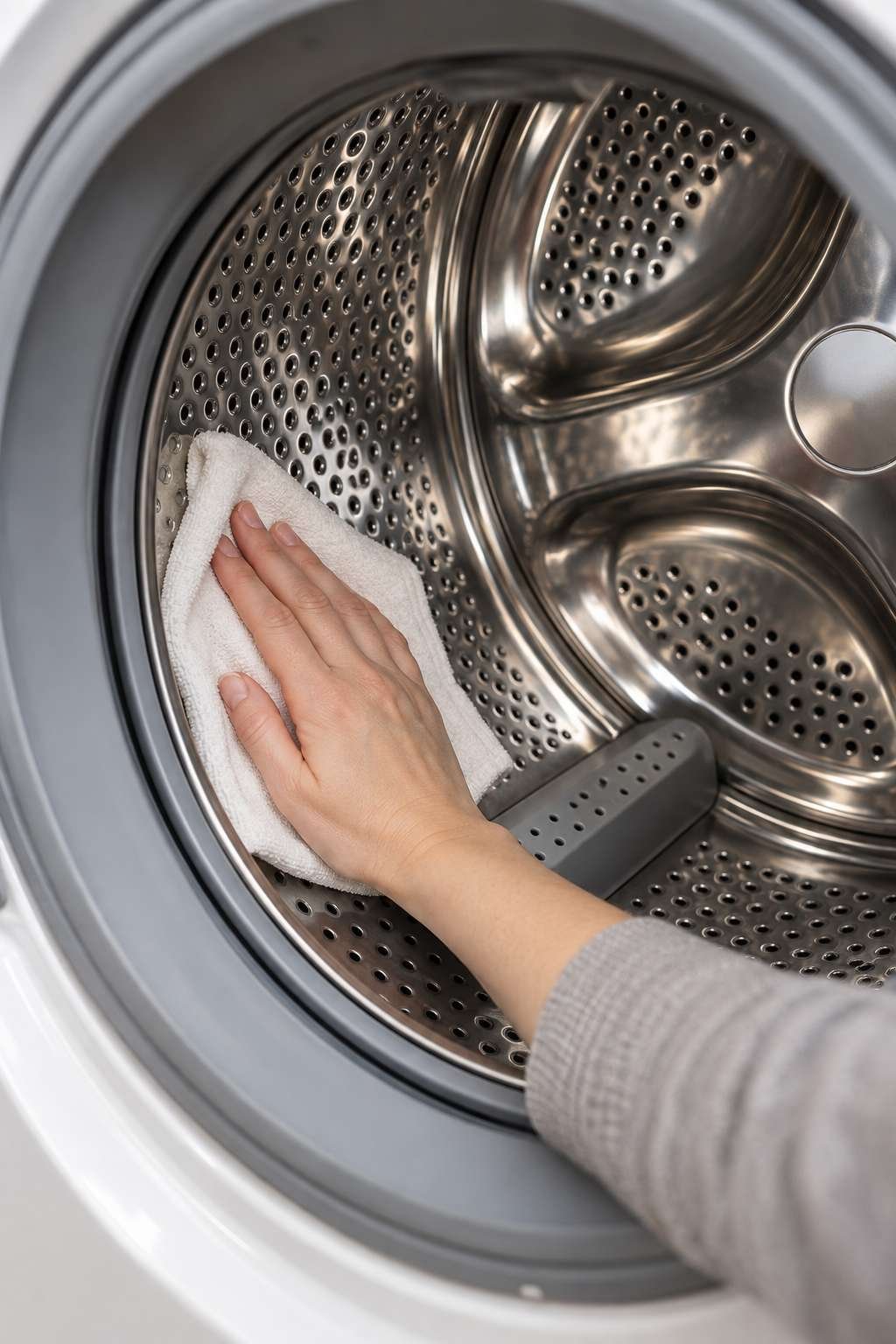
For top-loading machines, check the agitator or impeller area as well, since residue tends to accumulate around moving parts more than flat surfaces.
- Wipe the drum interior with a vinegar-dampened cloth
- Check small holes and perforations for trapped residue
- Inspect the agitator or impeller area in top-loading machines
- Remove any visible mineral deposits with a soft brush
- Run a rinse cycle after manual cleaning to clear loosened debris
- Dry the drum with the door open after cleaning is complete
7. Address the Exterior and Control Panel
The exterior and control panel collect dust, fingerprints, and the occasional detergent splash, all of which are easy to overlook during a deep clean focused on the interior. A damp microfiber cloth handles most exterior surfaces without any special products.
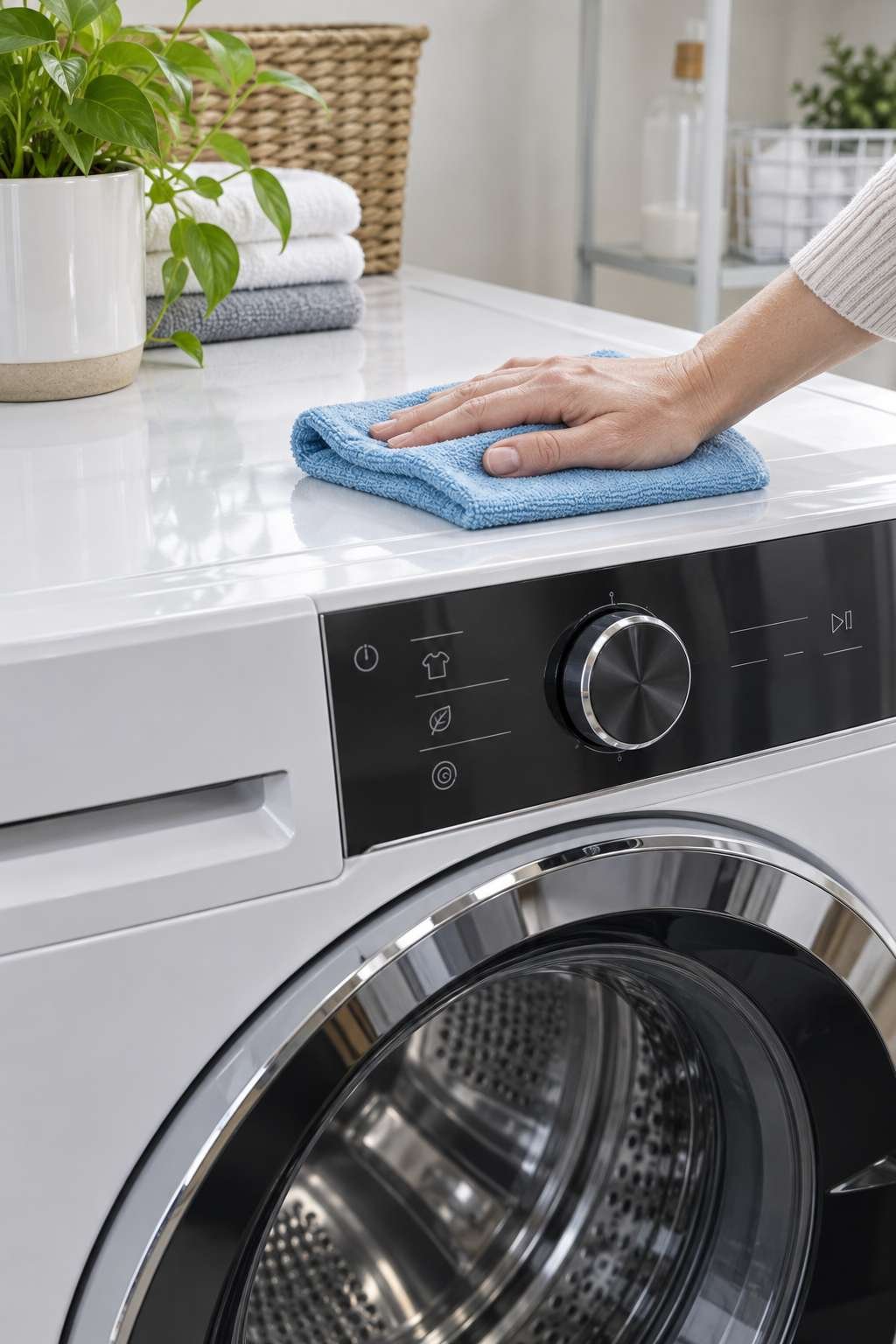
Avoid spraying cleaner directly onto the control panel, since moisture can damage the electronic components; instead, apply cleaner to the cloth first before wiping the panel down.
- Wipe the exterior with a damp microfiber cloth
- Apply cleaner to the cloth first, never directly onto the panel
- Clean around buttons and dials carefully to avoid moisture buildup
- Wipe down the top surface, which often collects dust and lint
- Check behind and around the machine for dust buildup periodically
- Include the exterior in your regular monthly cleaning routine
8. Clean the Drain Filter and Hose
The drain filter traps small items, lint, and debris that could otherwise clog the machine, and it needs periodic emptying to keep drainage working properly. Locate it, usually behind a small panel at the bottom front of the machine, and place a shallow container underneath before opening it.
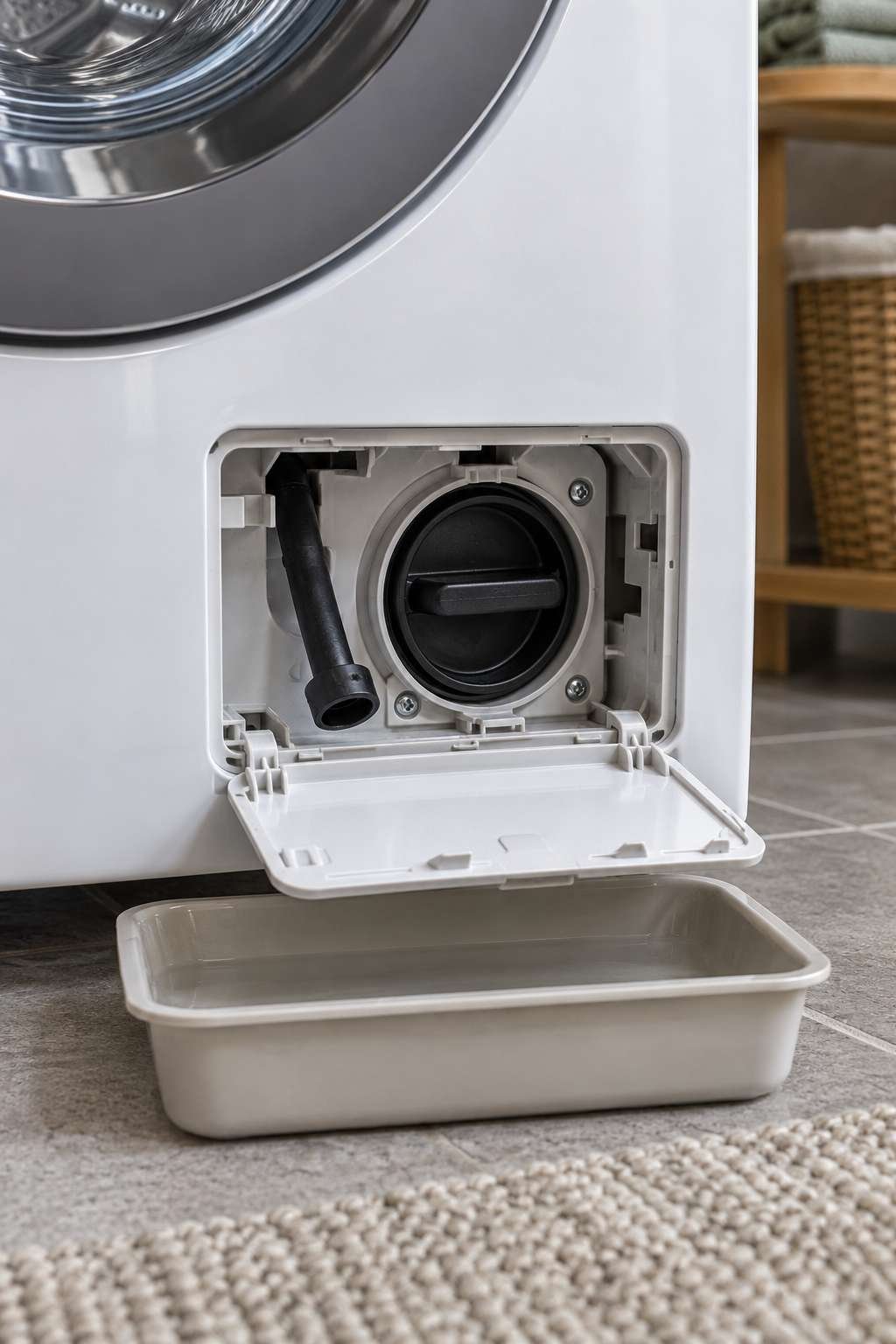
Check the drain hose periodically as well for any visible clogs or kinks that could slow drainage or contribute to standing water and odor.
- Locate the drain filter, usually behind a small front panel
- Place a shallow container underneath before opening the filter
- Remove any trapped lint, coins, or small debris
- Rinse the filter thoroughly before reinserting it
- Check the drain hose for kinks or visible clogs
- Clean the drain filter every one to two months for best results
9. Prevent Future Mold and Odor Buildup
Prevention matters as much as the cleaning itself. Leave the door open after every load to let the drum and gasket air out fully, and avoid leaving wet laundry sitting in the machine for extended periods.
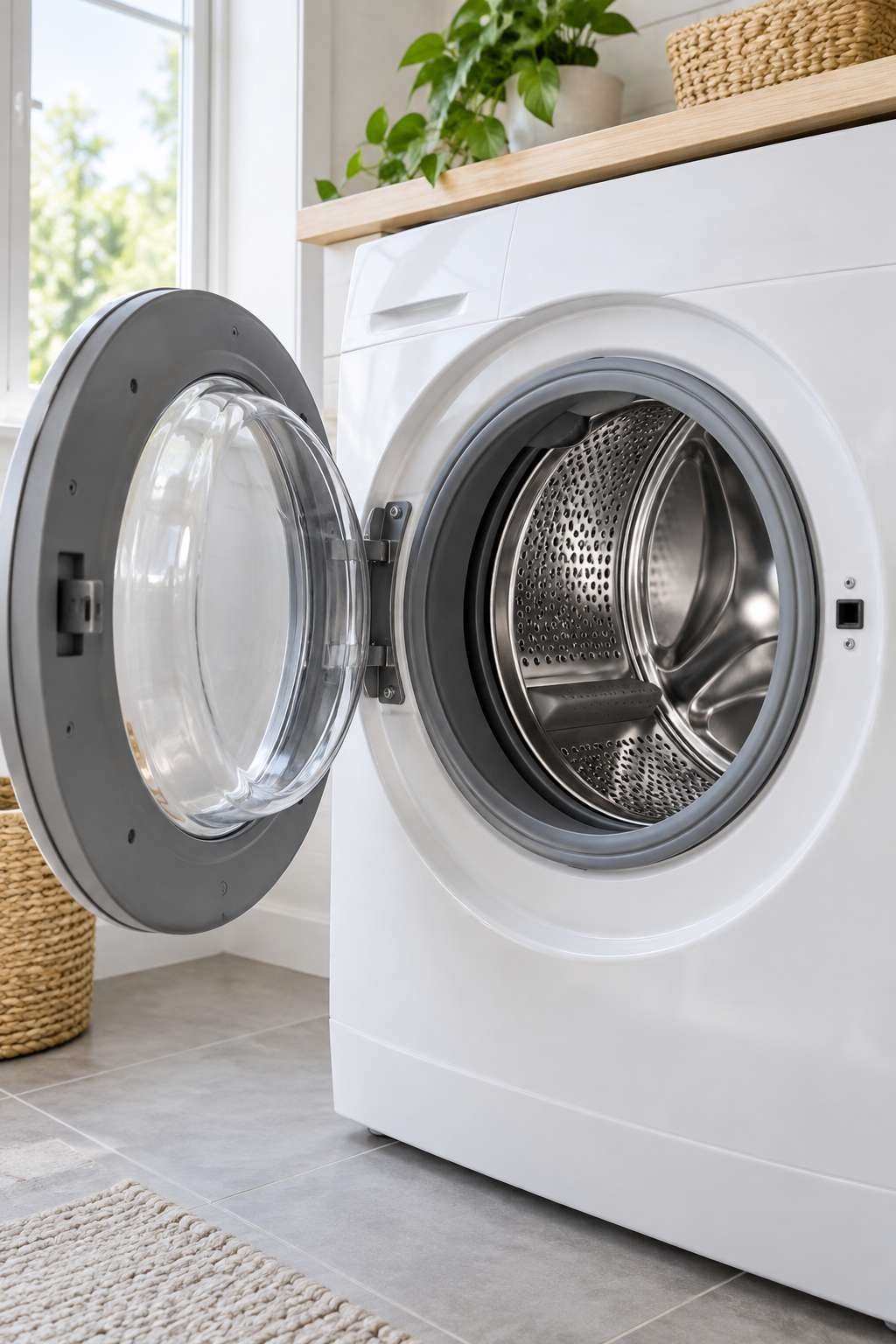
Using the correct amount of detergent, rather than consistently overdosing, also significantly reduces the residue buildup that leads to odor and mold in the first place.
- Leave the machine door open between loads consistently
- Remove wet laundry promptly instead of letting it sit
- Use the correct detergent amount to reduce residue buildup
- Wipe the gasket dry after particularly humid or long wash days
- Avoid using more fabric softener than the recommended amount
- Address any lingering odor immediately rather than letting it build up
10. Set a Regular Cleaning Schedule
A consistent schedule keeps maintenance manageable instead of turning into an overwhelming deep-clean session every few months. Run the hot-water cleaning cycle monthly, wipe the gasket weekly, and check the drain filter every couple of months.
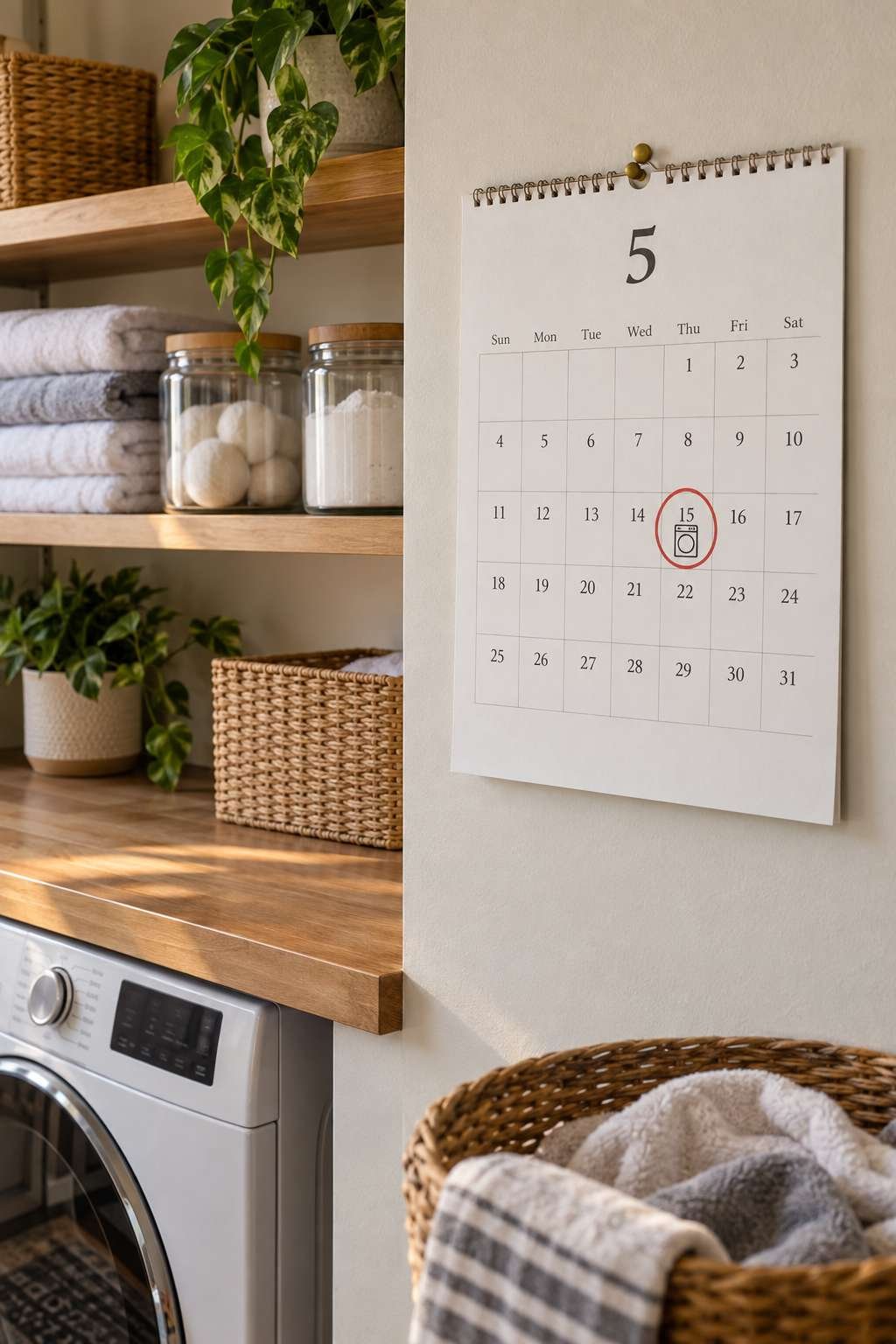
Since your dryer works alongside your washer in the same laundry routine, it’s worth maintaining both together. Our guide on how to clean your laundry dryer covers the equivalent maintenance steps for the other half of your laundry setup.
- Run a hot-water cleaning cycle on the washer monthly
- Wipe the door gasket weekly, especially in humid climates
- Check and empty the drain filter every one to two months
- Deep clean the detergent dispenser monthly alongside the main cycle
- Pair washer maintenance with regular dryer cleaning for full coverage
- Adjust frequency based on household laundry volume and water hardness
Keeping your washer clean is a small, recurring habit that pays off in fresher laundry, less odor, and a machine that lasts longer overall. Start with the hot-water cycle and gasket wipe-down as your baseline routine, then work through the deeper steps like the drain filter and dispenser tray on a monthly basis.
A little consistent attention goes a long way toward keeping the machine that cleans everything else actually clean itself.

