


Baking soda is one of the simplest additions you can make to a laundry routine, but getting how much baking soda for laundry right makes a real difference in results. Too little barely does anything, while too much can leave a gritty residue on fabric. This guide breaks down exactly how much to use for different situations, whether you’re boosting detergent, fighting odor, or wondering how much baking soda in laundry is safe for a regular weekly wash.
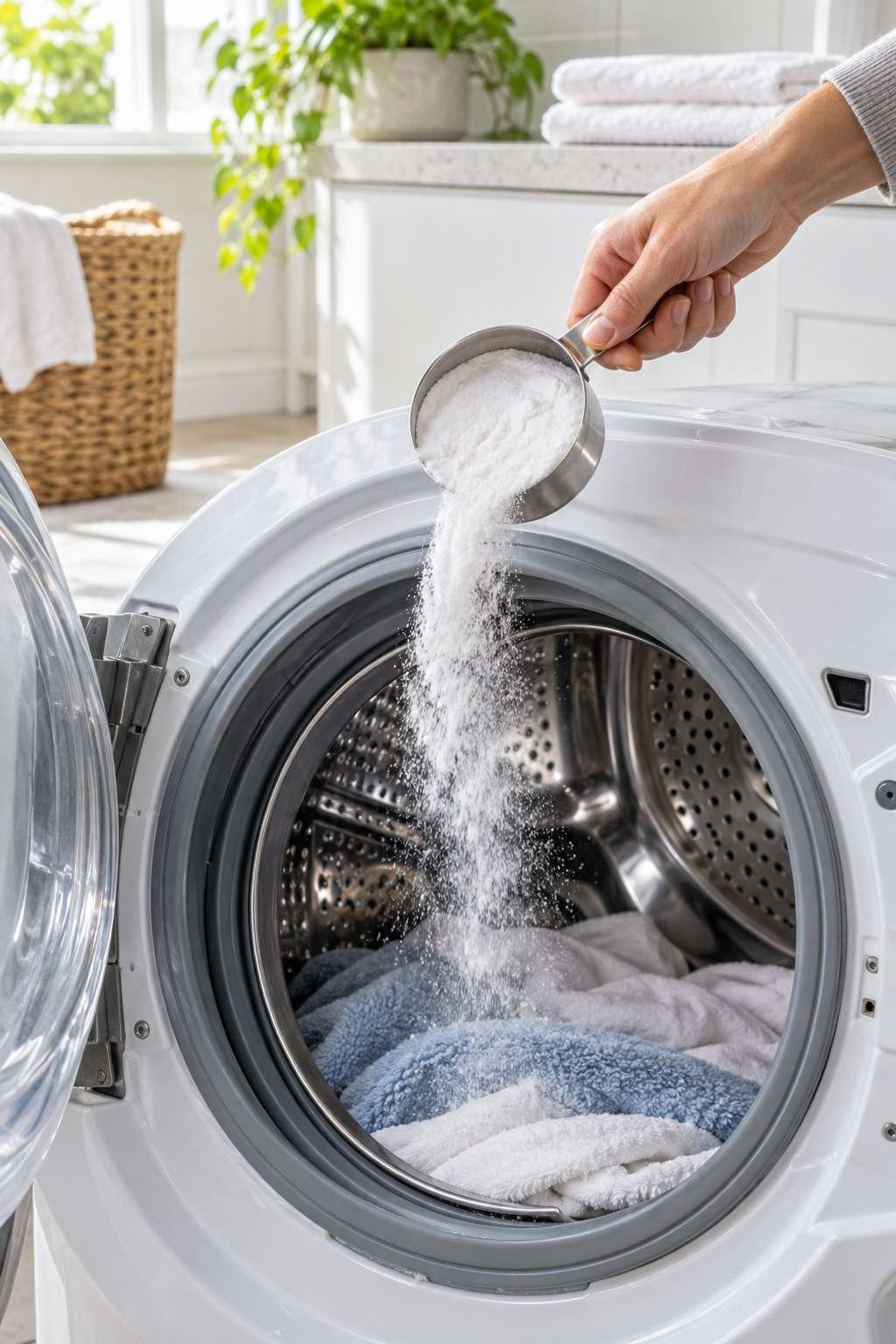
Baking soda works well as a supporting ingredient rather than a detergent replacement, and understanding that distinction shapes how much you should actually be adding to each load.
1. Why Add Baking Soda to Laundry
Baking soda is a mild alkaline compound that helps boost detergent’s cleaning power, neutralize odors, and soften water slightly during the wash cycle. It’s inexpensive, widely available, and gentle enough for most fabric types, making it a popular natural laundry booster.
It’s important to understand that baking soda supports your regular detergent rather than replacing it entirely. For a full walkthrough of the different ways to work it into your routine, our guide on how to use baking soda in laundry covers additional application methods beyond basic dosing.
- Understand baking soda as a booster, not a detergent replacement
- Use it for its mild odor-neutralizing properties
- Rely on it for gentle water-softening in moderately hard water
- Choose it as a natural, inexpensive addition to your routine
- Keep expectations realistic about its cleaning power alone
- Combine it with detergent rather than using it in isolation
2. General Baking Soda Amount Guidelines
For a standard load, half a cup of baking soda added directly to the wash is the most commonly recommended starting point. This amount works well alongside your regular detergent dose without overwhelming the load with residue.
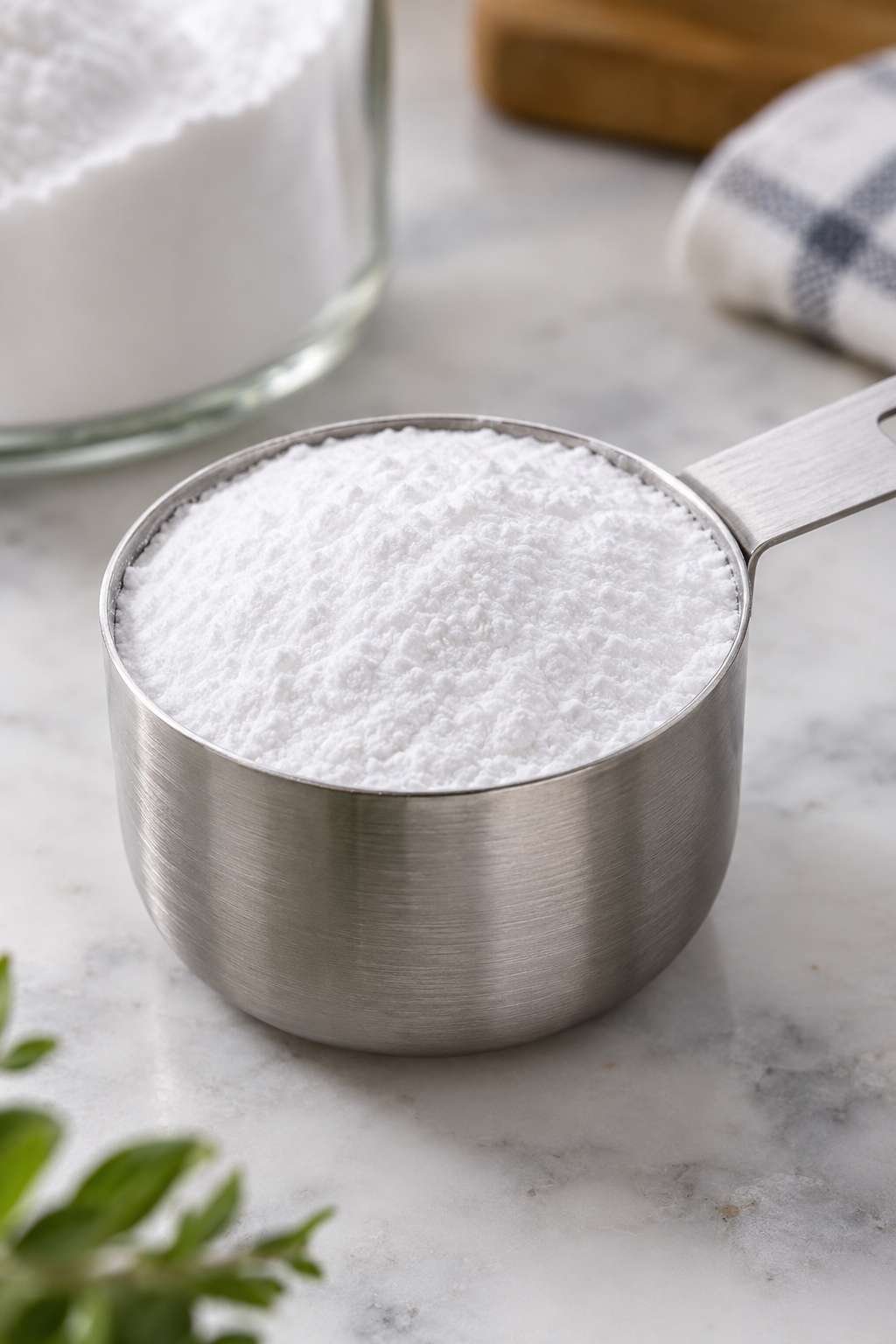
Smaller loads need proportionally less, while very large or heavily soiled loads can handle slightly more without issue. Start with the standard amount and adjust based on results over a few washes.
- Start with half a cup for a standard-sized load
- Reduce to a quarter cup for smaller loads
- Increase slightly, up to a full cup, for very large loads
- Add it directly to the drum along with your clothes
- Avoid adding it to the detergent dispenser compartment
- Adjust gradually rather than doubling the amount at once
3. Adjust for Load Size
Just like detergent, baking soda dosing should scale with how full your machine actually is. A half-full load typically needs about a quarter to a third cup, while a completely full load can use closer to a full cup for noticeable effect.
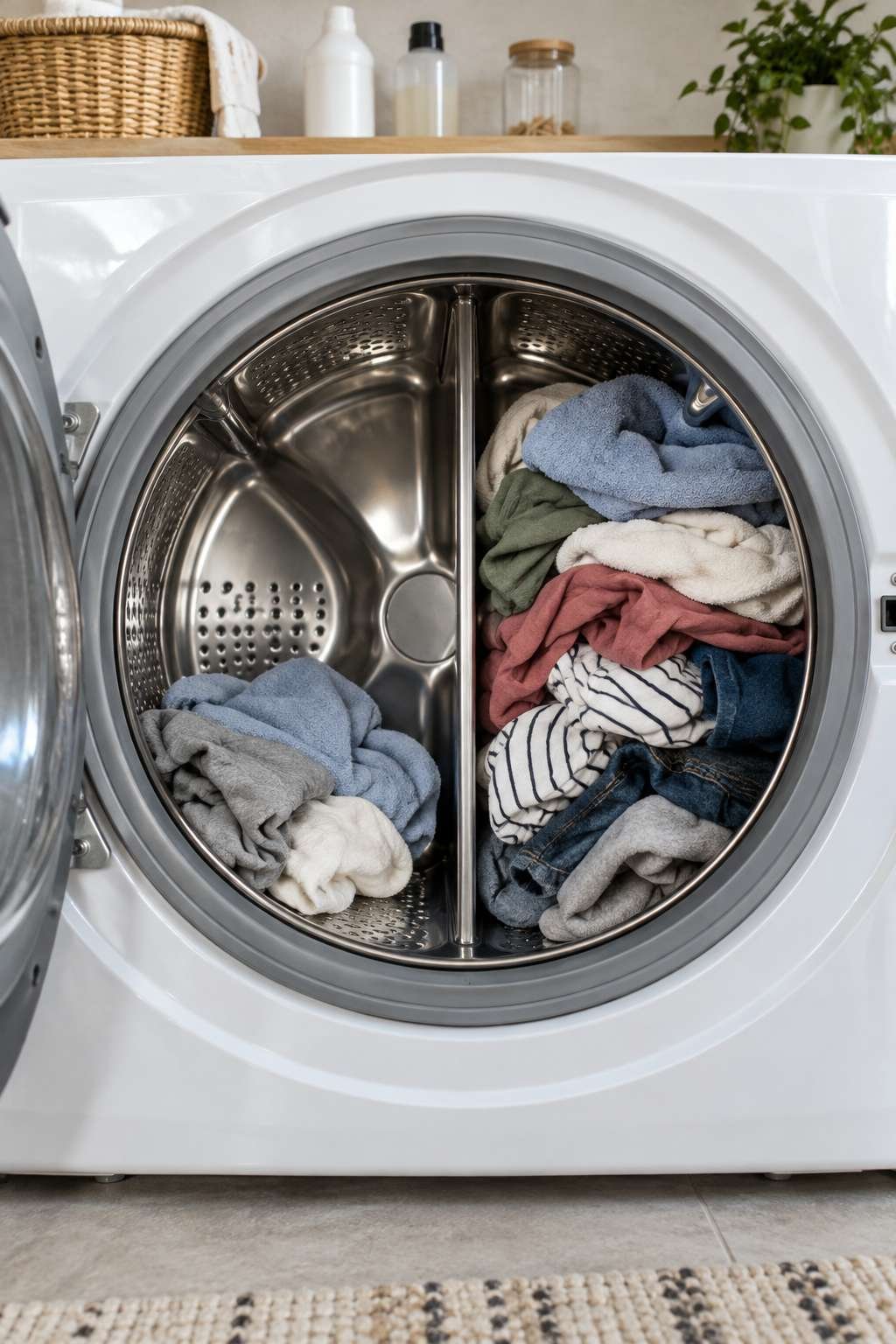
Overestimating load size is a common mistake, so take a moment to honestly assess how full the drum is before measuring out your amount.
- Use roughly a quarter cup for a half-full load
- Use closer to a full cup for a completely full load
- Recalculate when combining multiple small loads together
- Avoid overfilling the drum, which reduces overall effectiveness
- Match your baking soda amount to your detergent amount proportionally
- Keep a measuring cup dedicated to laundry use for consistency
4. Adjust for Water Hardness
Hard water can benefit from a slightly higher amount of baking soda, since it helps counteract mineral buildup that interferes with detergent performance. Soft water generally needs less, since the water itself already allows detergent to work efficiently.
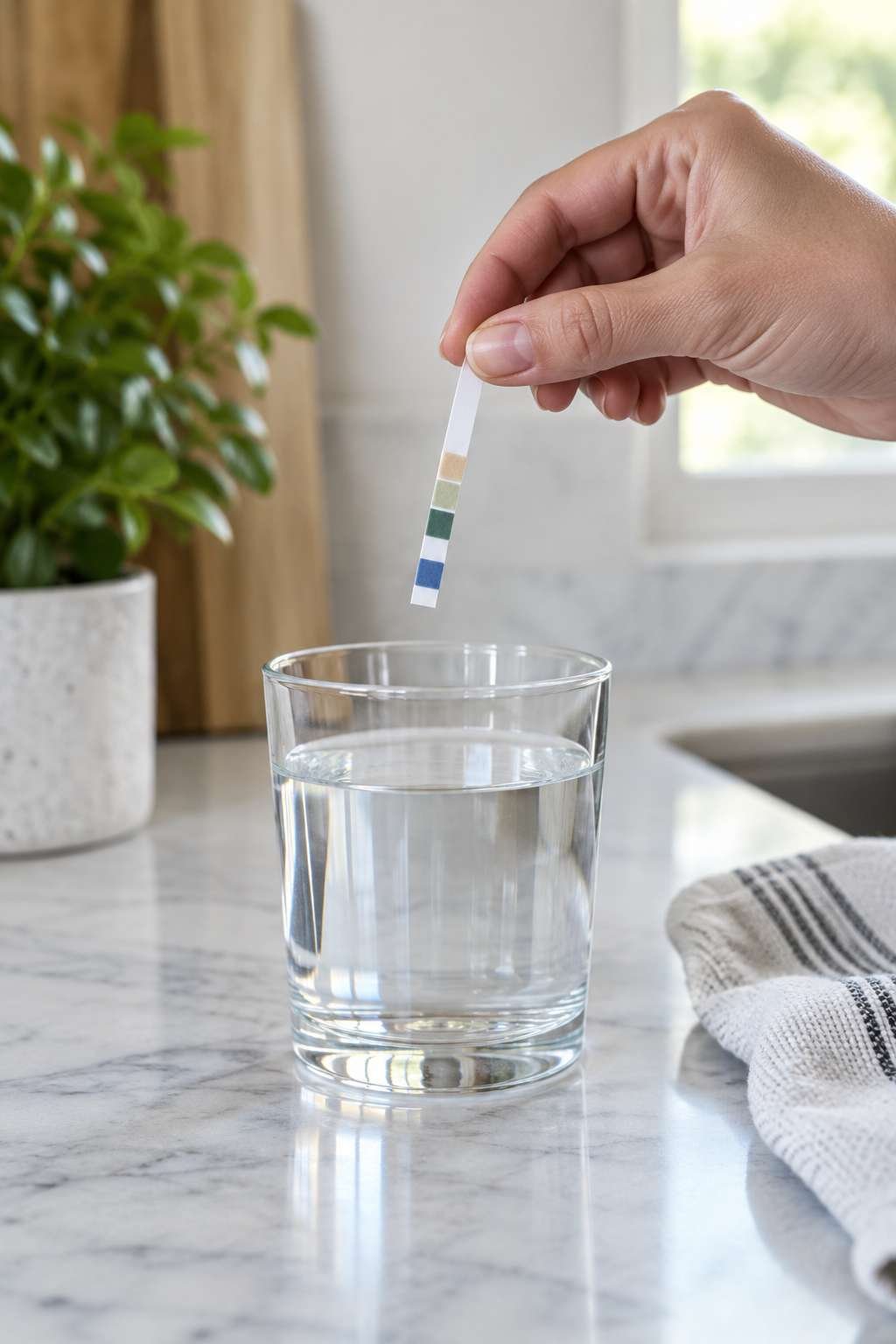
If you’re unsure about your water hardness, a simple test kit can clarify whether you should be adjusting your baking soda amount up or down from the standard recommendation.
- Increase baking soda slightly for known hard water areas
- Reduce the amount if you have naturally soft water
- Test your water hardness if you’re unsure which category applies
- Watch for stiff or scratchy fabric as a hard-water indicator
- Pair baking soda with a water softener in consistently hard water
- Re-test periodically, since water hardness can shift seasonally
5. Using Baking Soda for Odor Removal
For odor-heavy loads like gym clothes or towels, an extra quarter cup beyond your standard amount can help neutralize lingering smells more effectively. Adding it directly to the drum before starting the cycle gives it the most contact time with fabric.
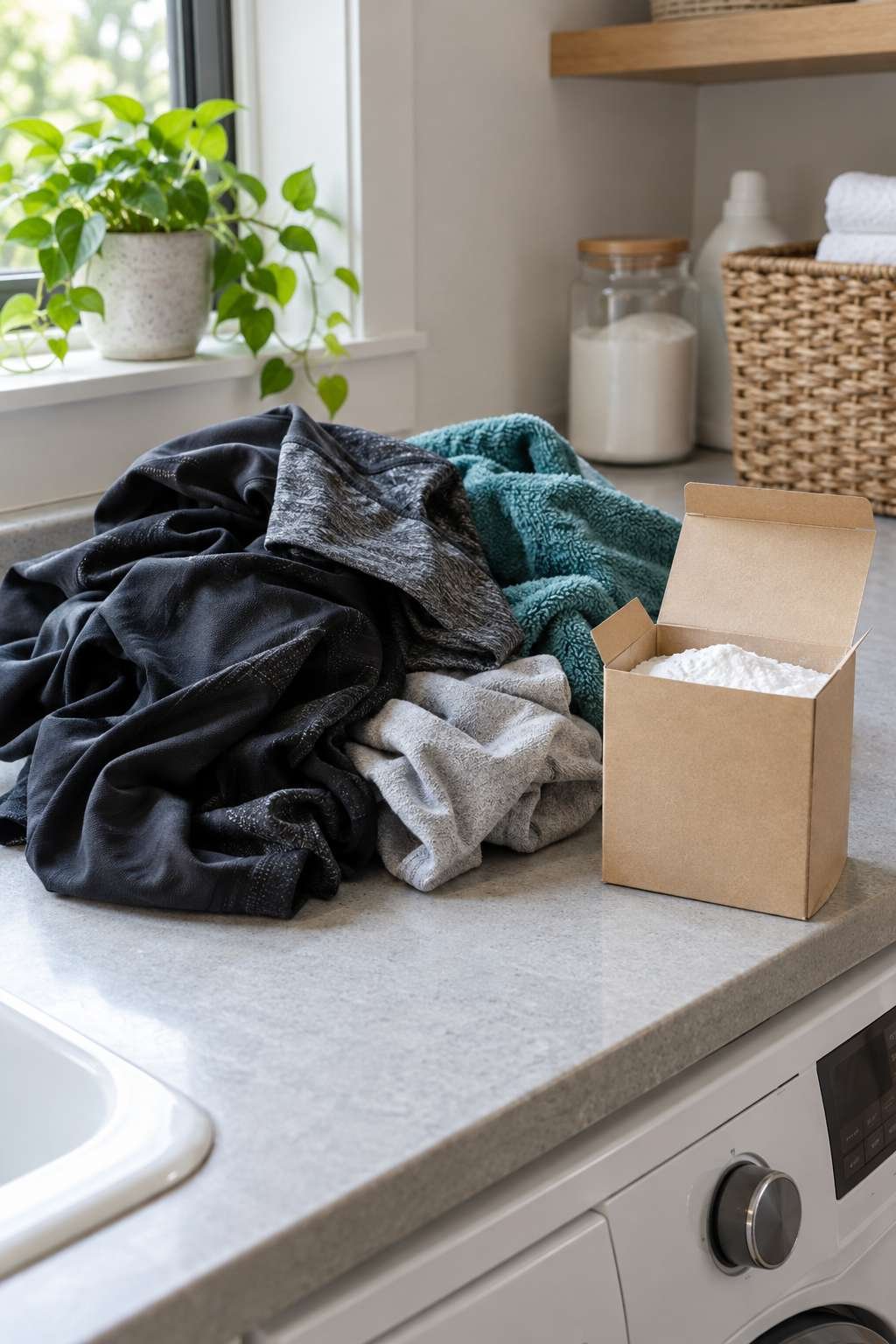
For particularly stubborn odors, letting the load soak briefly with baking soda dissolved in water before running the full cycle often improves results further.
- Add an extra quarter cup for odor-heavy loads specifically
- Dissolve baking soda in water before adding for faster action
- Consider a brief soak for particularly stubborn odor cases
- Focus this approach on towels, gym clothes, and workwear
- Combine with a sanitizing additive for extra odor control if needed
- Air dry odor-treated items when possible for best results
6. Using Baking Soda for Stain Boosting
Baking soda can help lift certain stains when combined with your regular detergent, particularly for grease and food-based stains. Making a paste with a small amount of water and applying it directly to the stain before washing improves results significantly over just adding it to the drum.
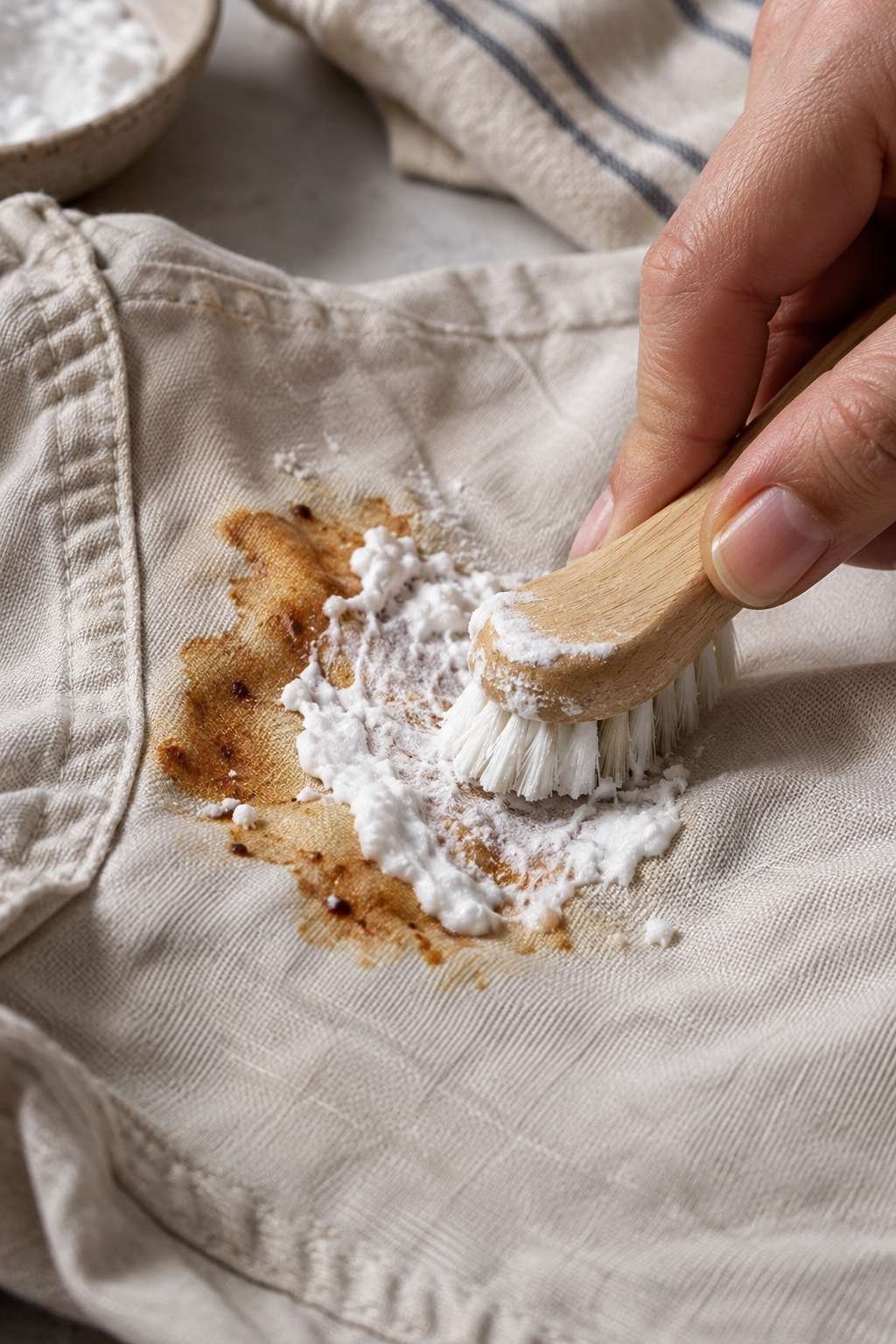
Let the paste sit for at least fifteen minutes before running the wash cycle, giving the baking soda time to begin breaking down the stain before the machine’s agitation takes over.
- Make a paste with baking soda and a small amount of water
- Apply the paste directly to grease or food stains before washing
- Let the paste sit for at least fifteen minutes before the wash
- Combine with your regular detergent for the full cycle
- Avoid relying on baking soda alone for set-in or old stains
- Test the paste on a hidden area first for colorfast fabrics
7. Combining Baking Soda with Detergent
Baking soda works well alongside most detergent formulas, but adding both directly to the drum together, rather than through separate dispensers, generally produces the most consistent results. Avoid combining it with vinegar in the same step, since the two react chemically and can reduce effectiveness.
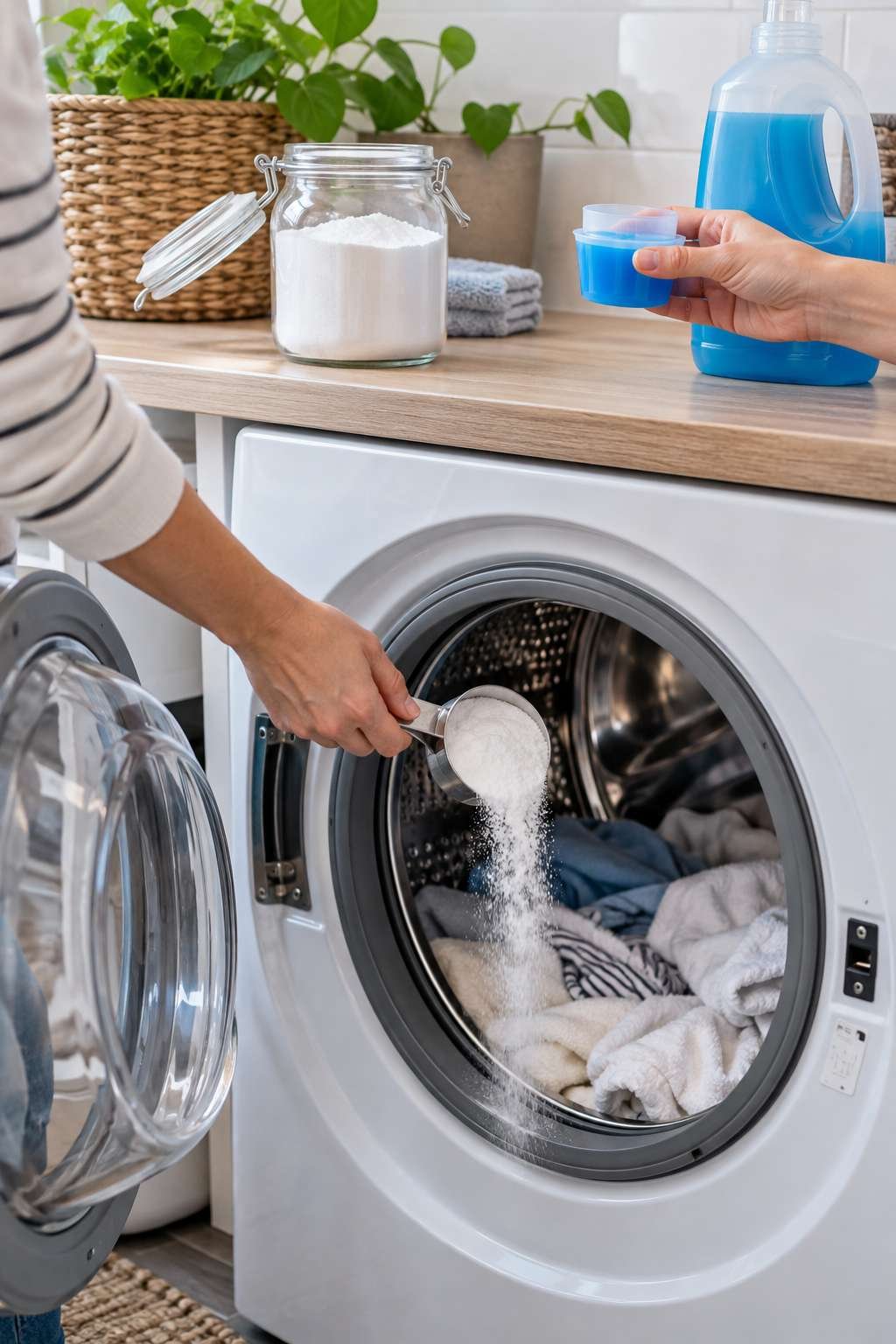
Keep your overall additive routine simple, using baking soda as one supporting ingredient rather than stacking multiple boosters into a single load.
- Add baking soda and detergent directly to the drum together
- Avoid combining baking soda and vinegar in the same wash step
- Keep your additive routine to one or two boosters at most
- Use baking soda consistently rather than only occasionally
- Test a new combination on a small load before committing fully
- Note results over a few washes to fine-tune your routine
8. Baking Soda vs Washing Soda vs Laundry Soda
Baking soda, washing soda, and laundry soda are related but distinct products, and mixing them up can lead to unexpected results. Washing soda is more alkaline and stronger than baking soda, while laundry soda typically refers to a pre-formulated cleaning product rather than a raw ingredient. For a clear breakdown of that difference, our guide explaining what laundry soda actually is compares it directly against baking and washing soda.
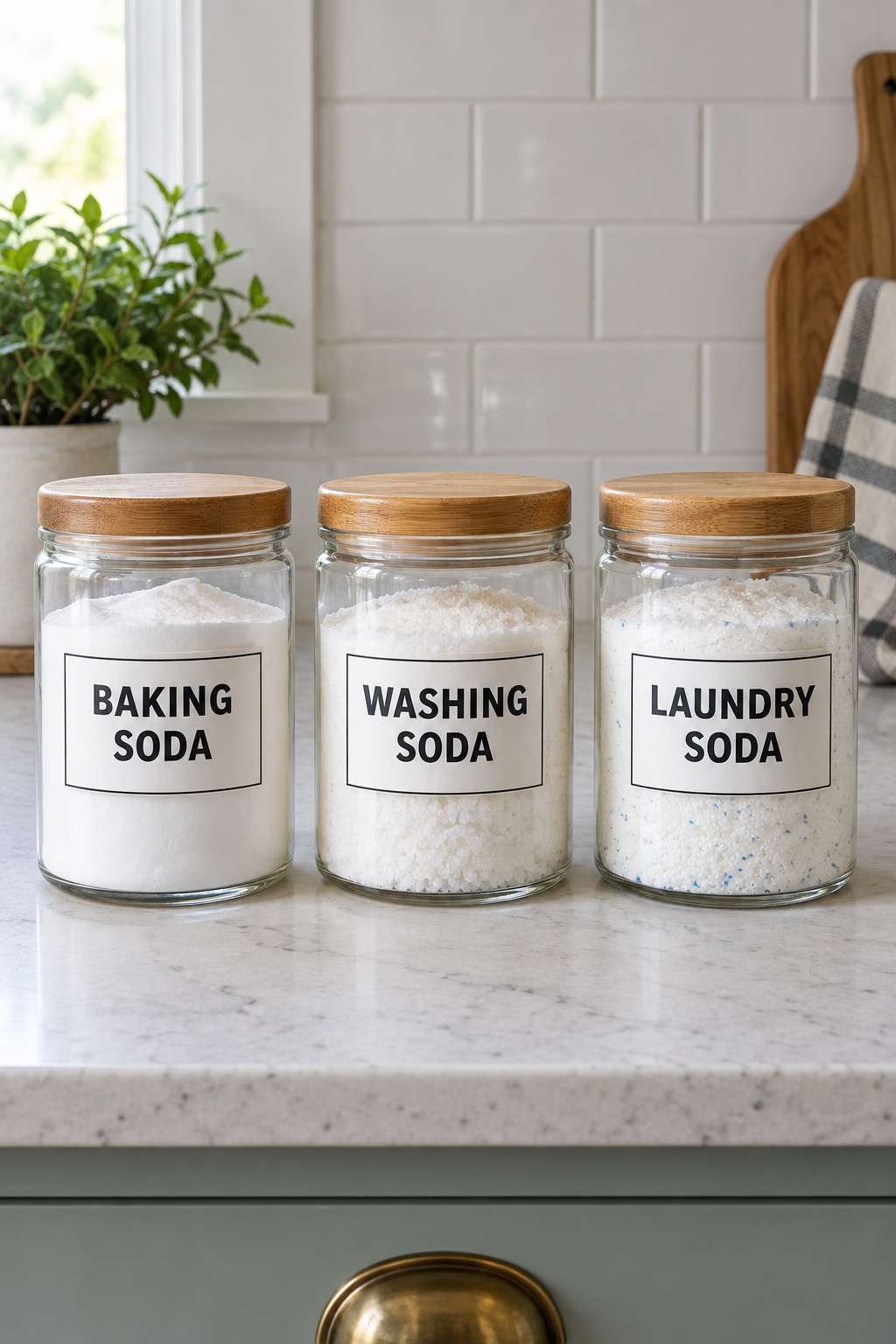
Choosing the right one for your goal — mild boosting versus stronger cleaning power — depends on understanding these distinctions rather than treating the terms interchangeably.
- Understand baking soda as the mildest of the three options
- Recognize washing soda as a stronger, more alkaline alternative
- Know that laundry soda often refers to a pre-made product
- Choose baking soda for gentle, everyday boosting needs
- Reach for washing soda when tackling tougher cleaning jobs
- Avoid substituting one for another without adjusting the amount used
9. Signs You’re Using Too Much or Too Little
Too much baking soda can leave a faint gritty or powdery residue on dark fabric, especially if it hasn’t fully dissolved during the cycle. Too little often means you won’t notice much difference in odor control or detergent performance at all.

If you notice residue, reduce your amount slightly and make sure it’s added early enough in the cycle to fully dissolve. If you’re not seeing any benefit, increase gradually rather than jumping straight to a much larger amount.
- Watch for gritty or powdery residue on dark fabric
- Reduce the amount if residue appears after washing
- Increase gradually if you’re not noticing any real benefit
- Confirm baking soda is dissolving fully during the cycle
- Adjust based on load size and water hardness together
- Reassess your routine every few washes until it feels consistent
10. Tips for Consistent Results
Keep a dedicated measuring cup near your baking soda box so dosing stays consistent between washes. Store the box in a dry, sealed container, since exposure to moisture can cause clumping that makes accurate measuring harder over time.
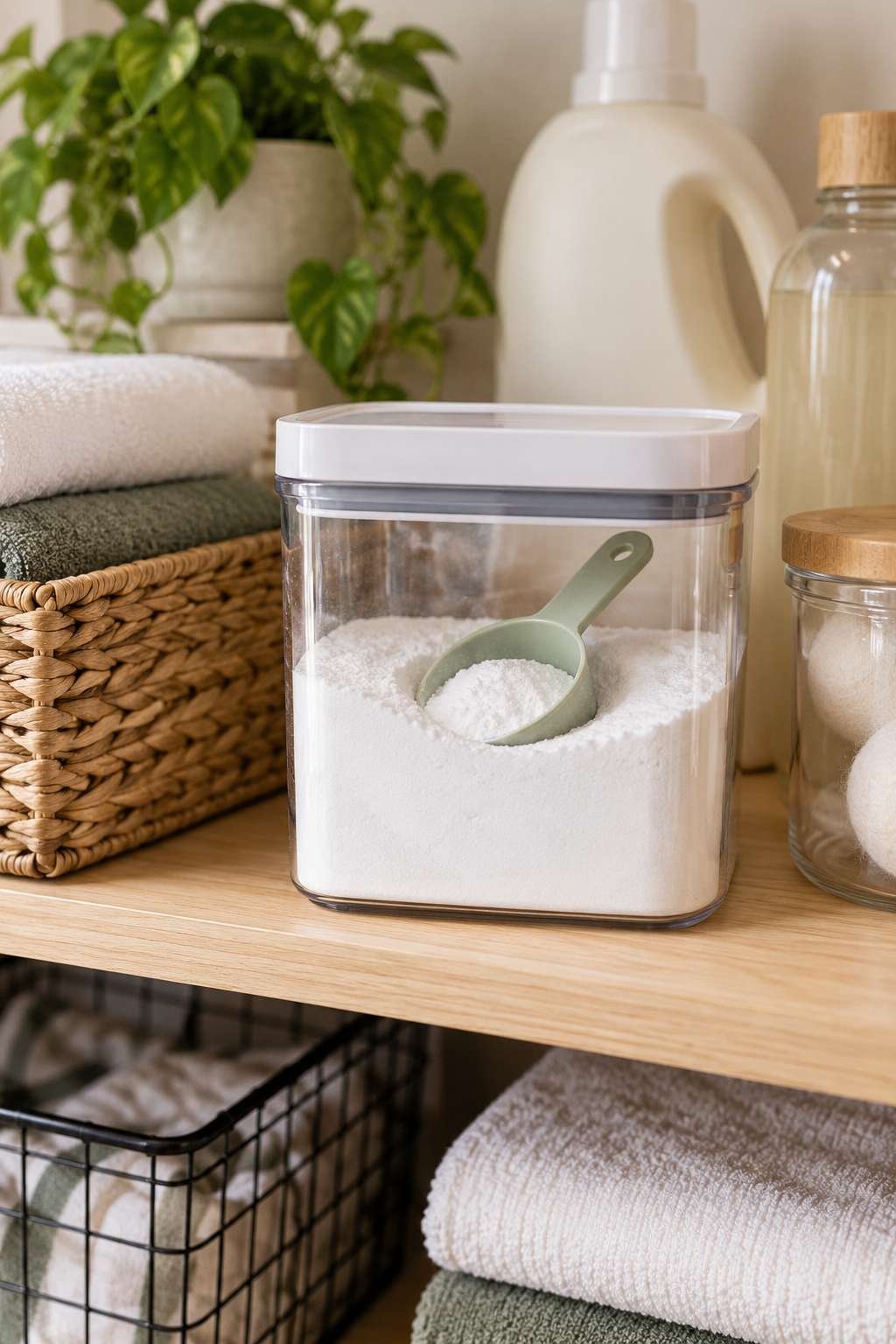
Once you’ve found the right amount for your typical load size and water type, stick with it consistently rather than adjusting every single wash, reserving changes for genuinely different situations like odor-heavy loads or stain treatment.
- Keep a dedicated measuring cup for laundry use only
- Store baking soda in a sealed, dry container
- Stick with your established amount for typical loads
- Reserve adjustments for odor-heavy or stain-specific situations
- Buy in bulk if you use baking soda regularly to save cost
- Revisit your routine if you notice any change in results over time
Getting the right baking soda amount for your laundry comes down to a few simple factors: load size, water hardness, and what you’re actually trying to accomplish, whether that’s odor control, stain boosting, or general detergent support. Start with the standard half-cup guideline and adjust from there based on your own results.
With consistent, correctly measured use, baking soda becomes a reliable part of your laundry routine without any guesswork.

